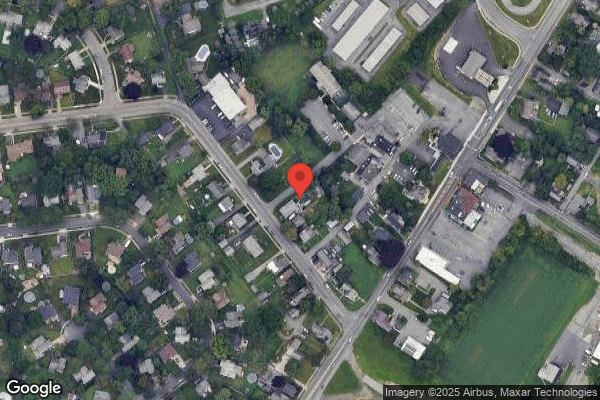
Kirkland Village

One Kirkland Village Circle, BETHLEHEM, PA 18017 (610) 691-4500
Non profit - Corporation 60 Beds PRESBYTERIAN SENIOR LIVING Data: November 2025
Trust Grade
90/100
#62 of 653 in PA
Last Inspection: August 2025

Inspected within the last 6 months. Data reflects current conditions.

Overview

Kirkland Village in Bethlehem, Pennsylvania, has received a Trust Grade of A, indicating it is an excellent facility that is highly recommended. It ranks #62 out of 653 nursing homes in Pennsylvania, placing it well within the top half, and #3 of 12 in Northampton County, meaning only two local options are better. The facility shows an improving trend, as it went from having four issues in 2024 to none in 2025. Staffing is a strong point, with a 5/5 star rating and a turnover rate of 36%, significantly lower than the state average. However, there have been concerns raised, including the failure to notify a resident's family about significant weight loss and not implementing physician orders for daily weight checks, which could affect residents' health monitoring. Overall, Kirkland Village has many strengths, but families should be aware of these specific concerns.

Trust Score
A
90/100
In Pennsylvania
#62/653
Top 9%
Safety Record
Low Risk
No red flags
Inspections
Getting Better
4 → 0 violations
Staff Stability
○ Average
36% turnover. Near Pennsylvania's 48% average. Typical for the industry.
Penalties
✓ Good
No fines on record. Clean compliance history, better than most Pennsylvania facilities.
Skilled Nurses
✓ Good
Each resident gets 69 minutes of Registered Nurse (RN) attention daily — more than 97% of Pennsylvania nursing homes. RNs are the most trained staff who catch health problems before they become serious.
Violations
○ Average
8 deficiencies on record. Average for a facility this size. Mostly minor or procedural issues.
★★★★★
5.0
Overall Rating
★★★★★
5.0
Staff Levels
★★★★★
5.0
Care Quality
★★★★★
5.0
Inspection Score
Stable
2024: 4 issues
2025: 0 issues

The Good

  • 5-Star Staffing Rating · Excellent nurse staffing levels
  • 5-Star Quality Measures · Strong clinical quality outcomes
  • Full Sprinkler Coverage · Fire safety systems throughout facility
  • No fines on record
  • Staff turnover below average (36%)

    12 points below Pennsylvania average of 48%

Facility shows strength in staffing levels, quality measures, fire safety.

The Bad

Staff Turnover: 36%

Near Pennsylvania avg (46%)

Typical for the industry

Chain: PRESBYTERIAN SENIOR LIVING

Part of a multi-facility chain

Ask about local staffing decisions and management

The Ugly 8 deficiencies on record

Sept 2024 4 deficiencies
CONCERN (D)

Potential for Harm - no one hurt, but risky conditions existed

Notification of Changes (Tag F0580)

Could have caused harm · This affected 1 resident

**NOTE- TERMS IN BRACKETS HAVE BEEN EDITED TO PROTECT CONFIDENTIALITY** Based on policy review, clinical record review, and staff interview, it was determined that the facility failed to notify a resi...

Read full inspector narrative →
**NOTE- TERMS IN BRACKETS HAVE BEEN EDITED TO PROTECT CONFIDENTIALITY** Based on policy review, clinical record review, and staff interview, it was determined that the facility failed to notify a resident's responsible party of a significant weight loss for one of 12 sampled residents. (Resident 11) Findings include: Review of the facility policy entitled, Change in Medical Condition, dated August 29, 2024, revealed that staff were to provide timely notification to the resident's representative of significant changes to the resident's physical status. Clinical record review revealed that Resident 11 had diagnoses that included dementia, adult failure to thrive, and dysphagia (difficulty swallowing). Review of the Minimum Data Set (MDS) assessment dated [DATE], revealed the resident had severe cognitive impairment. Review of the resident's weights revealed that on July 4, 2024, the resident weighed 146 pounds (lbs). On August 13, 2024, Resident 11 weighed 124.6 lbs, which was confirmed with a reweigh. On August 19, 2024, Resident 11 weighed 125 lbs. This reflected a 14 percent weight loss in one month. There was no documented evidence that Resident 11's responsible party was notified of the significant weight loss. In an interview on September 12, 2024, at 12:07 p.m., the Administrator confirmed that there was no documented evidence that Resident 11's responsible party was notified of the significant weight loss. Pa. Code 201.29(c) Resident rights.
CONCERN (D)

Potential for Harm - no one hurt, but risky conditions existed

Quality of Care (Tag F0684)

Could have caused harm · This affected 1 resident

Based on clinical record review and staff interview, it was determined that the facility failed to ensure that physician's orders were implemented for one of 12 sampled residents. (Resident 20) Findin...

Read full inspector narrative →
Based on clinical record review and staff interview, it was determined that the facility failed to ensure that physician's orders were implemented for one of 12 sampled residents. (Resident 20) Findings include: Clinical record review revealed that Resident 20 had diagnoses that included chronic kidney disease and heart failure. On June 14, 2024, a physician ordered that staff obtain a daily weight for the resident. A review of Resident 20's weights revealed that there was no documented evidence to support a weight was obtained on September 5, 6, 7, and 8, 2024. In an interview on September 12, 2024, at 11:10 a.m., the Administrator confirmed there was no documentation to support that weights were obtained by staff or refused by Resident 20 on the previously mentioned dates. CFR 483.25 Quality of Care Previously cited 10/26/23 28 Pa. Code 211.12(d)(1)(5) Nursing services.
CONCERN (D)

Potential for Harm - no one hurt, but risky conditions existed

Deficiency F0692 (Tag F0692)

Could have caused harm · This affected 1 resident

**NOTE- TERMS IN BRACKETS HAVE BEEN EDITED TO PROTECT CONFIDENTIALITY** Based on facility policy review, staff interview, and clinical record review, it was determined that the facility failed to adeq...

Read full inspector narrative →
**NOTE- TERMS IN BRACKETS HAVE BEEN EDITED TO PROTECT CONFIDENTIALITY** Based on facility policy review, staff interview, and clinical record review, it was determined that the facility failed to adequately monitor and assess a significant weight change for one of 12 sampled residents. (Resident 11) Findings include: Review of the facility policy entitled, Nutrition Risk Identification, last reviewed August 29, 2024, revealed that the nursing or dietary department would identify residents with a weight loss of five percent total body weight in a 30 day period and a dietician would complete a nutritional evaluation and recommend any changes needed to aid the resident's return to optimal nutritional status. In an interview on September 12, 2024, at 12:10 p.m., the Administrator stated that nursing staff were to obtain a resident's weight and relay any changes to the dietitian. Clinical record review revealed that Resident 11 had diagnoses that included dementia, adult failure to thrive, and dysphagia (difficulty swallowing). Review of the Minimum Data Set (MDS) assessment dated [DATE], revealed the resident had severe cognitive impairment. Review of the current care plan revealed that Resident 11 was at nutritional risk with an intervention for staff to monitor weights. Review of the resident's weights revealed that on July 4, 2024, the resident weighed 146 pounds (lbs). On August 13, 2024, Resident 11 weighed 124.6 lbs, which was confirmed with a reweigh. On August 19, 2024, Resident 11 weighed 125 lbs. There was no documented evidence that the dietitian addressed the significant weight loss. In an interview on September 12, 2024, at 12:07 p.m., the Administrator confirmed that there was no documented evidence that the dietitian addressed the significant weight loss. 28 Pa. Code 211.10(a)Resident care policies. 28 Pa. Code 211.12(d)(1)(3)(5)Nursing services.
CONCERN (D)

Potential for Harm - no one hurt, but risky conditions existed

Infection Control (Tag F0880)

Could have caused harm · This affected 1 resident

Based on facility policy review, clinical record review, observation, and staff interview, it was determined that the facility failed to implement transmission based droplet precautions and use of per...

Read full inspector narrative →
Based on facility policy review, clinical record review, observation, and staff interview, it was determined that the facility failed to implement transmission based droplet precautions and use of personal protective equipment (PPE) to prevent the spread of infection for two of 12 sampled residents. (Residents 15, 23) Findings include: Review of the facility policy entitled, Covid-19 PPE Policy, last reviewed on August 29, 2024, revealed that staff was to wear cleanable or disposable eye wear, non-sterile, disposable isolation gowns, respirator type face masks, and gloves, which were donned and doffed when entering and exiting patients' room and were not to be reused. Review of the facility policy entitled, Droplet Precautions, last reviewed on August 29, 2024, revealed that staff were to clean their hands before entering and when exiting the room, to make sure eyes, nose, and mouth were fully covered before room entry, and to remove face protection before exiting the room. Clinical record review revealed that Resident 15 tested positive for Coronavirus disease 2019 (COVID-19) on September 1, 2024. Review of the care plan revealed that Resident 15 had a recently confirmed case of COVID-19, and that staff were to follow droplet isolation precautions that included gown, gloves, eye protection and an N95 grade respirator. Observation on September 11, 2024, at 10:01 a.m., revealed a food server (S1) entered Resident 15's room while wearing a surgical face mask. S1 did not have on the required PPE and did not remove her face mask when she exited the room at 10:06 a.m . On September 11, 2024, at 10:08 a.m., Registered Nurse (RN1) was observed entering Resident 15's room for six minutes wearing a surgical face mask. RN1 did not have on the required PPE. RN1 was observed giving the resident her medications and exiting the room at 10:14 a.m RN1 did not remove her face mask when she exited the room. Clinical record review revealed that Resident 23 had tested positive for COVID-19 on September 10, 2024, and was on droplet precautions. Review of the care plan revealed that Resident 23 had a recently confirmed case of COVID-19, and staff were to follow droplet isolation precautions. On September 11, 2024, at 9:58 a.m., RN1 was observed entering Resident 15's room while wearing a surgical face mask. RN1 did not have on the required PPE. RN1 was observed giving the resident her medication and exiting the room at 10:03 a.m . RN1 did not remove her face mask when she exited the room. In an interview on September 11, 2024, at 2:47 p.m., the Administrator confirmed that droplet and COVID-19 PPE precautions should have been implemented and the policies were not being followed by staff. 28 Pa. Code 211.10(d) Resident care policies. 28 Pa. Code 211.12(d)(1)(5) Nursing services.
Oct 2023 4 deficiencies
CONCERN (D)

Potential for Harm - no one hurt, but risky conditions existed

Deficiency F0638 (Tag F0638)

Could have caused harm · This affected 1 resident

Based on review of the Resident Assessment Instrument (RAI) User's Manual, clinical record review, and staff interview, it was determined that the facility failed to timely complete a quarterly Minimu...

Read full inspector narrative →
Based on review of the Resident Assessment Instrument (RAI) User's Manual, clinical record review, and staff interview, it was determined that the facility failed to timely complete a quarterly Minimum Data Set (MDS) assessment for one of 13 sampled residents. (Resident 21) Findings include: The Long Term Care Facility RAI User's Manual which provides instructions and guidelines for completing required MDS assessments, (mandated assessments of a residents' abilities and care needs), revised October 2023, indicates that quarterly assessments are to be completed no longer than the Assessment Reference Date (ARD) which refers to the last day of the observation for the look back period that the assessment covers for the resident plus 14 calendar days. Clinical record review revealed that Resident 21 had a quarterly MDS assessment completed on May 24, 2023. Review of the MDS assessments revealed no evidence that any MDS assessment, including a quarterly assessment, had been completed since May 24, 2023. In an interview on October 25, 2023, at 3:18 p.m., the Nursing Home Administrator stated that the MDS quarterly assessment had not been completed in a timely manner as required by the RAI manual.
CONCERN (D)

Potential for Harm - no one hurt, but risky conditions existed

Quality of Care (Tag F0684)

Could have caused harm · This affected 1 resident

**NOTE- TERMS IN BRACKETS HAVE BEEN EDITED TO PROTECT CONFIDENTIALITY** Based on clinical record review, facility policy review, and staff and resident interviews, it was determined that the facility ...

Read full inspector narrative →
**NOTE- TERMS IN BRACKETS HAVE BEEN EDITED TO PROTECT CONFIDENTIALITY** Based on clinical record review, facility policy review, and staff and resident interviews, it was determined that the facility failed to assess and treat wounds for one of 13 sampled residents. (Resident 94) Findings include: Review of the facility policy entitled, Wound Prevention and Wound Care, last reviewed January 6, 2023, revealed that information regarding increased risk for skin breakdown should be obtained prior to resident admission and upon admission a skin assessment would be completed weekly for one month to assess changing risk for skin breakdown. The registered nurse would assess, document, and notify the physician of a new wound. Clinical record review revealed that Resident 94 was admitted to the facility on [DATE], with diagnoses that included diabetes mellitus, end stage renal disease, and hypertension. Review of Resident 94's discharge documentation from the hospital revealed that he had wounds to his left elbow and sacrum. In an interview on October 24, 2023, at 11:30 a.m., Resident 94 stated that he was concerned with pain in his left elbow and wound treatments to his sacrum. He stated that no one has looked at his wounds or provided treatments to them since admission. Resident 94's left elbow was observed at that time and revealed a bandage dated October 19, 2023. Resident 94 further stated that the bandage was placed on his elbow at the hospital prior to admission. There was no documented evidence that the facility assessed Resident 94's wounds, notified the physician, or provided treatments until October 24, 2023, for his sacral wound and October 25, 2023, for his left elbow. In an interview on October 26, 2023, at 9:15 a.m. the Director of Nursing stated that staff were to assess a resident's skin on admission and that there was no documentation to support that Resident 94's wounds were assessed or treated prior to October 24 and 25, 2023. 28 Pa. Code 211.12(d)(1)(5) Nursing services.
CONCERN (D)

Potential for Harm - no one hurt, but risky conditions existed

Accident Prevention (Tag F0689)

Could have caused harm · This affected 1 resident

**NOTE- TERMS IN BRACKETS HAVE BEEN EDITED TO PROTECT CONFIDENTIALITY** Based on clinical record review, review of facility documentation, observation, and staff interview, it was determined that the ...

Read full inspector narrative →
**NOTE- TERMS IN BRACKETS HAVE BEEN EDITED TO PROTECT CONFIDENTIALITY** Based on clinical record review, review of facility documentation, observation, and staff interview, it was determined that the facility failed to implement safety interventions for one of three sampled residents at risk for falls. (Resident 11) Findings include: Clinical record review revealed that Resident 11 was admitted to the facility on [DATE], and had diagnoses that included Parkinson's disease. On August 5, 2023, the resident fell out of bed and was found on the floor. On August 7, 2023, the risk team reviewed the incident and implemented fall mats to each side of the bed as an intervention to prevent injury. Review of the current care plan revealed that the resident was at risk for falls and an intervention for staff to apply fall mats to each side of her bed was implemented on August 7, 2023. On August 17, 2023, Resident 11 was found lying next to her bed on the floor. A nurse's note dated August 17, 2023, revealed that the facility had contacted hospice for fall mats. On September 7, 2023, Resident 11 was found lying on her back beside her bed on the floor. On September 22, 2023, Resident 11 was found on the floor next to her bed. Review of the facility's incident documentation for Resident 11's falls from August 17, 2023, through September 22, 2023, revealed no documented evidence that the fall mats to both sides of the resident's bed were in place at the time of the falls. Observations on October 24, 2023, from 11:00 a.m. through 2:00 p.m., and on October 25, 2023, from 9:15 a.m through 9:40 a.m., revealed Resident 11 in bed without fall mats to each side of her bed. In an interview on October, 26, 2024, at 11:00 a.m. Registered Nurse 1 stated that there was no documented evidence that fall mats were in place during the time of Resident 11's falls. 28 Pa. Code 211.12(d)(1)(5) Nursing services.
CONCERN (D)

Potential for Harm - no one hurt, but risky conditions existed

Medical Records (Tag F0842)

Could have caused harm · This affected 1 resident

**NOTE- TERMS IN BRACKETS HAVE BEEN EDITED TO PROTECT CONFIDENTIALITY** Based on clinical record review and staff interview, it was determined that the facility failed to maintain clinical records tha...

Read full inspector narrative →
**NOTE- TERMS IN BRACKETS HAVE BEEN EDITED TO PROTECT CONFIDENTIALITY** Based on clinical record review and staff interview, it was determined that the facility failed to maintain clinical records that were accurate and complete for two of 13 sampled residents. (Residents 7, 42) Findings include: Clinical record review revealed that Resident 7 had diagnoses that included diabetes. A physician's order dated [DATE], directed staff to administer six units of a diabetes medication (insulin aspart) with each meal when blood glucose level (BGL) (the measurement of sugar found in one's blood) was greater than 100 milligrams per deciliter (mg/dL). A physician's order dated [DATE], directed staff to administer an additional number of insulin aspart units with each meal based on a scale of how much over 150 mg/dL the BGL was at that time. A review of Resident 7's medication administration record revealed that the staff documented the total amount of insulin aspart given to Resident 7 in two places in the administration record 51 of 143 times. In an interview on [DATE], at 1:20 p.m., the Director of Nursing confirmed that staff did not properly document the amount of insulin they gave in the clinical record. Clinical record review revealed that Resident 42 was admitted to the facility on [DATE], with diagnoses that breast cancer and congestive heart failure. A nurse's note dated [DATE], indicated that the resident was resting in bed and had no pain. In an interview on [DATE], at 9:05 a.m., the Director of Nursing stated that the resident died in the facility on [DATE], on hospice. There was a lack of evidence to support that facility staff documented Resident 42's change in condition and notification to the physician and resident representative. In an interview on [DATE], at 9:06 a.m., the Director of Nursing stated that the facility had no documentation to support that staff documented the change in condition for Resident 11 or notification to the physician and resident representative. 28 Pa. Code 211.5(f) Medical records.
Understanding Severity Codes (click to expand)
Life-Threatening (Immediate Jeopardy)
J - Isolated K - Pattern L - Widespread
Actual Harm
G - Isolated H - Pattern I - Widespread
Potential for Harm
D - Isolated E - Pattern F - Widespread
No Harm (Minor)
A - Isolated B - Pattern C - Widespread

Questions to Ask on Your Visit

  • "Can I speak with families of current residents?"
  • "What's your RN coverage like on weekends and overnight?"

Our Honest Assessment

Strengths
  • • Grade A (90/100). Above average facility, better than most options in Pennsylvania.
  • • No major safety red flags. No abuse findings, life-threatening violations, or SFF status.
  • • No fines on record. Clean compliance history, better than most Pennsylvania facilities.
  • • 36% turnover. Below Pennsylvania's 48% average. Good staff retention means consistent care.
Concerns
  • • No significant concerns identified. This facility shows no red flags across CMS ratings, staff turnover, or federal penalties.
Bottom line: Generally positive indicators. Standard due diligence and a personal visit recommended.

About This Facility

What is Kirkland Village's CMS Rating?

CMS assigns Kirkland Village an overall rating of 5 out of 5 stars, which is considered much above average nationally. Within Pennsylvania, this rating places the facility higher than 99% of the state's 100 nursing homes. This rating reflects solid performance across the metrics CMS uses to evaluate nursing home quality.

How is Kirkland Village Staffed?

CMS rates Kirkland Village's staffing level at 5 out of 5 stars, which is much above average compared to other nursing homes. Staff turnover is 36%, compared to the Pennsylvania average of 46%. This relatively stable workforce can support continuity of care.

What Have Inspectors Found at Kirkland Village?

State health inspectors documented 8 deficiencies at Kirkland Village during 2023 to 2024. These included: 8 with potential for harm.

Who Owns and Operates Kirkland Village?

Kirkland Village is owned by a non-profit organization. Non-profit facilities reinvest revenue into operations rather than distributing to shareholders. The facility is operated by PRESBYTERIAN SENIOR LIVING, a chain that manages multiple nursing homes. With 60 certified beds and approximately 41 residents (about 68% occupancy), it is a smaller facility located in BETHLEHEM, Pennsylvania.

How Does Kirkland Village Compare to Other Pennsylvania Nursing Homes?

Compared to the 100 nursing homes in Pennsylvania, Kirkland Village's overall rating (5 stars) is above the state average of 3.0, staff turnover (36%) is near the state average of 46%, and health inspection rating (5 stars) is much above the national benchmark.

What Should Families Ask When Visiting Kirkland Village?

Based on this facility's data, families visiting should ask: "Can I visit during a mealtime to observe dining assistance and food quality?" "How do you handle medical emergencies, and what is your hospital transfer rate?" "Can I speak with family members of current residents about their experience?"

Is Kirkland Village Safe?

Based on CMS inspection data, Kirkland Village has a clean safety record: no substantiated abuse findings (meaning no confirmed cases of resident harm), no Immediate Jeopardy citations (the most serious violation level indicating risk of serious injury or death), and is not on the Special Focus Facility watch list (a federal program monitoring the lowest-performing 1% of nursing homes). The facility has a 5-star overall rating and ranks #1 of 100 nursing homes in Pennsylvania. While no facility is perfect, families should still ask about staff-to-resident ratios and recent inspection results during their visit.

Do Nurses at Kirkland Village Stick Around?

Kirkland Village has a staff turnover rate of 36%, which is about average for Pennsylvania nursing homes (state average: 46%). Moderate turnover is common in nursing homes, but families should still ask about staff tenure and how the facility maintains care continuity when employees leave.

Was Kirkland Village Ever Fined?

Kirkland Village has no federal fines on record. CMS issues fines when nursing homes fail to meet care standards or don't correct problems found during inspections. The absence of fines suggests the facility has either maintained compliance or corrected any issues before penalties were assessed. This is a positive indicator, though families should still review recent inspection reports for the full picture.

Is Kirkland Village on Any Federal Watch List?

Kirkland Village is not on any federal watch list. The most significant is the Special Focus Facility (SFF) program, which identifies the bottom 1% of nursing homes nationally based on persistent, serious quality problems. Not being on this list means the facility has avoided the pattern of deficiencies that triggers enhanced federal oversight. This is a positive indicator, though families should still review the facility's inspection history directly.