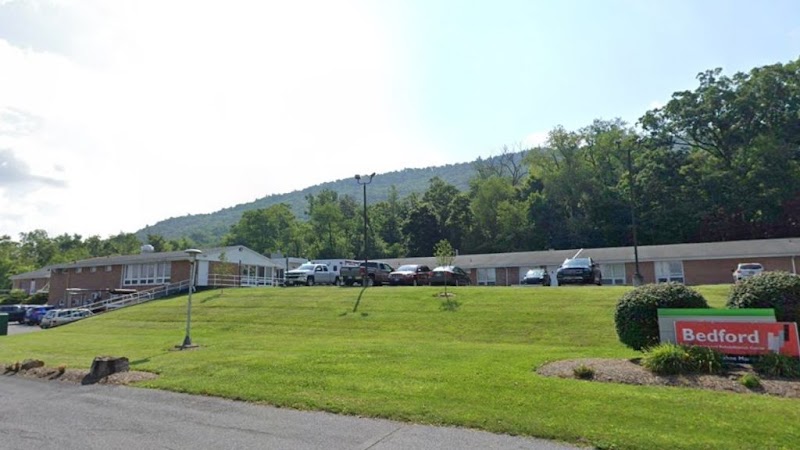
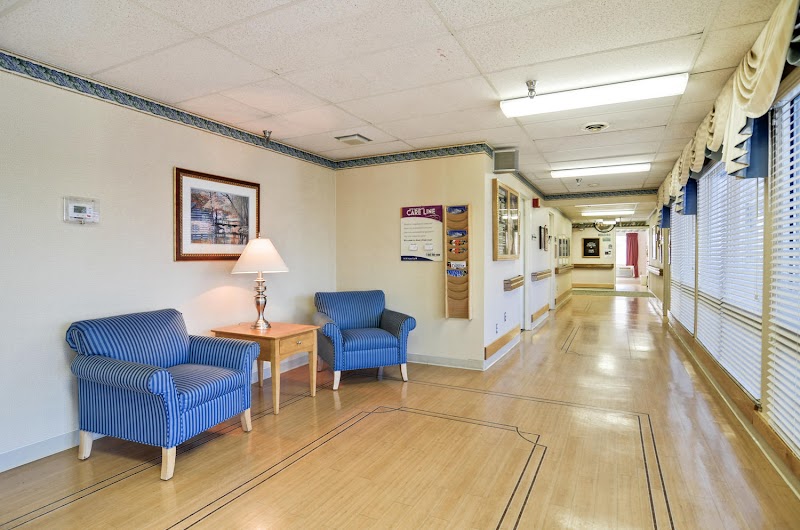
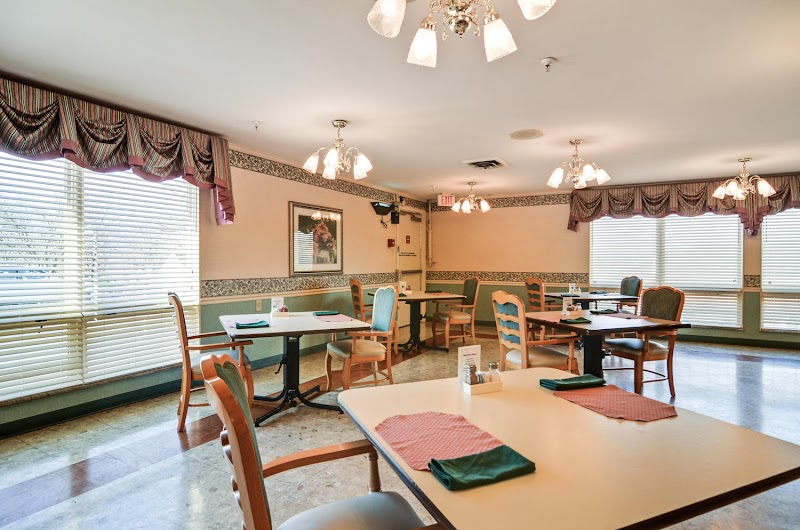
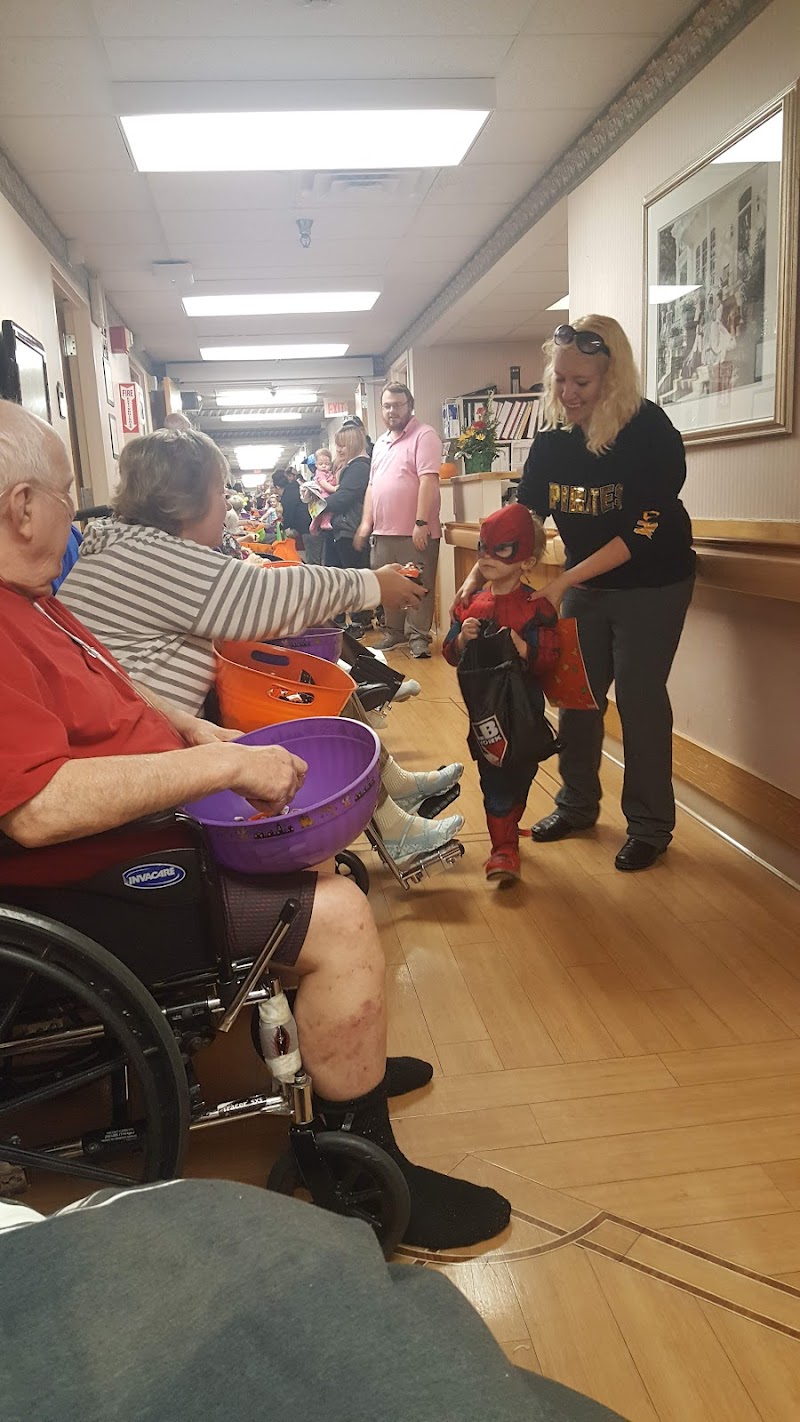

BEDFORD POST ACUTE

136 DONAHOE MANOR ROAD, BEDFORD, PA 15522 (814) 623-9075
For profit - Corporation 72 Beds GENESIS HEALTHCARE Data: November 2025
Trust Grade
50/100
#386 of 653 in PA
Last Inspection: July 2025

Inspected within the last 6 months. Data reflects current conditions.

Overview

Bedford Post Acute has a Trust Grade of C, which means it is average and positioned in the middle of the pack among nursing homes. It ranks #386 out of 653 facilities in Pennsylvania, placing it in the bottom half, but it is the top option in Bedford County, where it ranks #1 out of 2 facilities. The facility shows an improving trend, as the number of issues reported decreased from 17 in 2024 to 11 in 2025. Staffing is a strength, with a 4 out of 5-star rating and a turnover rate of 40%, which is better than the state average. While there were no fines, which is a positive sign, the facility has faced concerns, including failing to complete required safety assessments for residents and ensuring food was served in sanitary conditions.

Trust Score
C
50/100
In Pennsylvania
#386/653
Bottom 41%
Safety Record
Low Risk
No red flags
Inspections
Getting Better
17 → 11 violations
Staff Stability
○ Average
40% turnover. Near Pennsylvania's 48% average. Typical for the industry.
Penalties
✓ Good
No fines on record. Clean compliance history, better than most Pennsylvania facilities.
Skilled Nurses
✓ Good
Each resident gets 72 minutes of Registered Nurse (RN) attention daily — more than 97% of Pennsylvania nursing homes. RNs are the most trained staff who catch health problems before they become serious.
Violations
⚠ Watch
55 deficiencies on record. Higher than average. Multiple issues found across inspections.
★★☆☆☆
2.0
Overall Rating
★★★★☆
4.0
Staff Levels
★★☆☆☆
2.0
Care Quality
★★☆☆☆
2.0
Inspection Score
Stable
2024: 17 issues
2025: 11 issues

The Good

  • 4-Star Staffing Rating · Above-average nurse staffing levels
  • Full Sprinkler Coverage · Fire safety systems throughout facility
  • No fines on record
  • Staff turnover below average (40%)

    8 points below Pennsylvania average of 48%

Facility shows strength in staffing levels, fire safety.

The Bad

2-Star Overall Rating

Below Pennsylvania average (3.0)

Below average - review inspection findings carefully

Staff Turnover: 40%

Near Pennsylvania avg (46%)

Typical for the industry

Chain: GENESIS HEALTHCARE

Part of a multi-facility chain

Ask about local staffing decisions and management

The Ugly 55 deficiencies on record

Sept 2025 1 deficiency
CONCERN (D) 📢 Someone Reported This

A family member, employee, or ombudsman was alarmed enough to file a formal complaint

Potential for Harm - no one hurt, but risky conditions existed

Accident Prevention (Tag F0689)

Could have caused harm · This affected 1 resident

Based on review of facility policies and clinical records, as well as staff interviews, it was determined that the facility failed to ensure that fall/injury prevention interventions were in place for...

Read full inspector narrative →
Based on review of facility policies and clinical records, as well as staff interviews, it was determined that the facility failed to ensure that fall/injury prevention interventions were in place for one of 3 residents reviewed (Resident 1).Findings include: A facility policy for fall management, dated February 14, 2025, indicated that the interdisciplinary team reviews falls. The team will discuss and care plan recommended interventions to reduce the potential for additional falls with the resident and/or resident's representative and document in the care plan and progress note. The care plan will be reviewed and/or revised as indicated. The care Kardex will be updated as appropriate. A quarterly Minimum Data Set (MDS) assessment (a federally mandated assessment of a resident's abilities and care needs) for Resident 1, dated July 23, 2025, revealed that the resident was cognitively impaired, was independent with transfers and ambulation, was occasionally incontinent of urine, received therapy, had one fall since her prior assessment with no injury, and had a diagnosis of Alzheimer's dementia. A nursing note for Resident 1, dated August 1, 2025, at 1:34 a.m., revealed that the resident was sitting on the floor at the foot of her bed. She stated that she slipped and landed on her buttocks. New interventions included recommendations to wear non-skid socks at bedtime. A nursing note for Resident 1, dated August 14, 2025, at 5:06 a.m., revealed that the resident was found in her room lying on the floor on her back with her legs pointed towards her recliner chair. A fall investigation revealed that the resident was unable to describe why she was ambulating so early in the morning. It was determined at the conclusion of the investigation that the resident was most likely ambulating to the bathroom, lost her footing and sustained a fall. A witness statement from Nurse Aide 1, dated August 14, 2025, at 5:06 a.m. revealed that on the morning of August 14, 2025, at approximately 4:43 a.m., she heard a crash in Resident 1's room. Upon entering the resident's room, she saw the resident lying on her back on the floor with her head against her rollator walker and her shoes were by her feet on the floor. There was no documented evidence that the resident was wearing non-skid socks at the time of her fall. Interview with the Director of Nursing on September 3, 2025, at 2:38 p.m. confirmed that Resident 1 was not wearing non-skid socks at the time of her fall on August 14, 2025.28 Pa. Code 211.12(d)(1)(5) Nursing Services.
Jul 2025 9 deficiencies
CONCERN (D)

Potential for Harm - no one hurt, but risky conditions existed

Deficiency F0583 (Tag F0583)

Could have caused harm · This affected 1 resident

**NOTE- TERMS IN BRACKETS HAVE BEEN EDITED TO PROTECT CONFIDENTIALITY** Based on review of facility policies and observations, as well as interviews with staff, it was determined that the facility fai...

Read full inspector narrative →
**NOTE- TERMS IN BRACKETS HAVE BEEN EDITED TO PROTECT CONFIDENTIALITY** Based on review of facility policies and observations, as well as interviews with staff, it was determined that the facility failed to maintain the confidentiality of medical information for one of 25 residents reviewed (Resident 46). Findings include: The facility's policy regarding general dose preparation and medication administration, dated February 14, 2025, indicated that employees are to observe each resident's privacy and rights in accordance with applicable law (including blocking unnecessary access to the Medication Administration Record). Observations during medication administration on July 2, 2025, at 8:04 a.m. revealed that Registered Nurse 1 walked away from the medication cart in the hallway between rooms [ROOM NUMBERS] to administer medications to Resident 46 in room [ROOM NUMBER], and left the laptop on top of the medication cart open and the Medication Administration Record (MAR) for Resident 46 was visible to staff, residents, and visitors in the hallway. Interview with Registered Nurse 1 on July 2, 2025, at 8:16 a.m. confirmed that he did not minimize or close the laptop screen to protect Resident 46's confidential medical information from being viewed by unauthorized people and he should have. Interview with the Director of Nursing on July 2, 2025, at 11:09 a.m. confirmed that laptop screens with confidential medical information should not be left open and visible to staff, residents, and visitors in the hallway. 28 Pa. Code 201.29(a) Resident Rights. 28 Pa. Code 211.5(b) Clinical Records.
CONCERN (D)

Potential for Harm - no one hurt, but risky conditions existed

Abuse Prevention Policies (Tag F0607)

Could have caused harm · This affected 1 resident

Based on review of policies and personnel files, as well as staff interviews, it was determined that the facility failed to ensure that the status of nursing licenses was checked with the State Board ...

Read full inspector narrative →
Based on review of policies and personnel files, as well as staff interviews, it was determined that the facility failed to ensure that the status of nursing licenses was checked with the State Board of Nursing for two of two nurses reviewed (Registered Nurse 2, Licensed Practical Nurse 3), and failed to complete a Nurse Aide Registry verification for one of three nurse aides reviewed (Nurse Aide 4). Findings include: The facility's policy regarding Abuse, neglect, exploitation, and Misappropriation Prevention prom, dated February 14, 2025, indicated that the facility would conduct employee background checks and would not knowingly employ or otherwise engage any individuals who have had a finding entered into the State Nurse Aide Registry concerning abuse, neglect, exploitation, mistreatment of residents or misappropriation of their property; or have a disciplinary action in effect against his or her professional license by a state licensure body as a result finding of abuse, neglect, exploitation, mistreatment of residents or misappropriation of resident property. The personnel file for Registered Nurse 2 revealed a start date of June 25, 2025. However, there was no documented evidence that her license was verified with the state board. The personnel file for Licensed Practical Nurse 3 revealed a start date of May 12, 2025. However, there was no documented evidence that her license was verified with the state board. The personnel file for Nurse Aide 4 revealed a start date of June 23, 2025. However, there was no documented evidence that the nurse aide's standing on the Pennsylvania Nurse Aide Registry was verified until June 28, 2025. Interview with the Human Resources/Payroll Director on July 2, 2025, at 10:57 a.m. confirmed that Registered Nurse 2's start date was June 25, 2025, and that the license was not verified with the State Board of Nursing, but used a contracted company to perform background/licensure checks. She confirmed that License Practical Nurse 3's start date was May 12, 2025, and that the license was not verified with the State Board of Nursing, but used a contracted company to perform background/licensure checks. She also confirmed that Nurse Aide 4 had a start date of June 23, 2025, and that there was no documented evidence that a registry verification was completed prior to her start date, but used an contracted company to perform background/registry checks. 28 Pa. Code 201.14(a) Responsibility of Licensee. 28 Pa. Code 201.18(e)(1) Management.
CONCERN (D)

Potential for Harm - no one hurt, but risky conditions existed

Quality of Care (Tag F0684)

Could have caused harm · This affected 1 resident

Based on facility policy, clinical record reviews, and resident and staff interviews, it was determined that the facility failed to follow physician's orders related to bowel protocols for one of 25 r...

Read full inspector narrative →
Based on facility policy, clinical record reviews, and resident and staff interviews, it was determined that the facility failed to follow physician's orders related to bowel protocols for one of 25 residents reviewed (Resident 45). Findings include: A facility policy for bowel protocol, dated February 14, 2025, indicated that the facility was to ensure that residents are free from complications secondary to constipation. This would be accomplished through adequate assessment tracking, and treatment as indicated. The evening shift nurse would provide medication as ordered according to the following bowel protocol: Give Milk of Magnesia (MOM - an oral laxative) one time if there is no bowel movement after three days at bedtime. If Milk of Magnesia is ineffective, on day four, give a Dulcolax suppository (a laxative inserted rectally). If both Milk of Magnesia and Dulcolax suppository are ineffective, on day five give a saline enema (a liquid inserted rectally to stimulate a bowel movement). The day shift nurse would monitor the daily bowel record to ensure the residents had received successful bowel care results. The day shift supervisor would assess the resident and notify the physician for the residents that did not have successful results for other means of providing bowel relief. A quarterly Minimum Data Set (MDS) assessment (a mandated assessment of a resident's abilities and care needs) for Resident 45, dated May 18, 2025, indicated that the resident was cognitively intact, was frequently incontinent of bowel and urine and required partial to moderate assistance for transfers from chair to bed, sitting and standing, and toilet hygiene. A care plan, dated May 15, 2025, for Resident 45 indicated that she was at risk for complications with the gastrointestinal system due to constipation. Interview with Resident 45 on June 30, 2025, at 10:33 a.m. revealed that she had recently been constipated. Physician's orders for Resident 45, dated May 14, 2025, included orders for staff to administer 30 milliliters (ml) of Milk of Magnesia as needed for no bowel movement after three days; a 10 milligram (mg) Dulcolax suppository as needed if Milk of Magnesia was not effective, to be administered on Day 4 if no bowel movement; and to administer a saline enema as needed if Milk of Magnesia and Dulcolax suppository are ineffective, to be administered on Day 5 of no bowel movement. Review of the bowel record for Resident 45, dated March 2025, indicated that the resident did not have a bowel movement on June 3 through June 8, 2025, a total of six days. Review of the Medication Administration Record (MAR) for Resident 45, dated June 2025, indicated that 30 ml of Milk of Magnesia was administered to the resident on June 6 with ineffective results. Review of the MAR revealed no documented evidence that Dulcolax was administered when Milk of Magnesia was ineffective on Day 4 of not having a bowel movement as ordered, and no documented evidence that a saline enema was administered on Day 5 of no bowel movement, as ordered. Interview with the Director of Nursing on July 2, 2025, at 10:15 a.m. confirmed that bowel protocol was not followed for Resident 45 on the above-mentioned dates. 28 Pa. Code 211.12(d)(5) Nursing Services.
CONCERN (D)

Potential for Harm - no one hurt, but risky conditions existed

Deficiency F0688 (Tag F0688)

Could have caused harm · This affected 1 resident

Based on a review of facility policies and clinical records, as well as staff interviews, it was determined that the facility failed to ensure that physician's recommendations for brace application we...

Read full inspector narrative →
Based on a review of facility policies and clinical records, as well as staff interviews, it was determined that the facility failed to ensure that physician's recommendations for brace application were followed for one of 25 residents reviewed (Resident 25). Findings include: A Quarterly Minimum Data Set (MDS) assessment (a mandated assessment of a resident's abilities and care needs) for Resident 25, dated May 21, 2025, indicated that the resident was cognitively impaired, required moderate assistance for dressing and hygiene, and utilized a walker and a wheelchair. Interview with Resident 25 on June 30, 2025, at 1:29 p.m. revealed that he was to receive a back brace after he had fallen at the facility and broke his back, but he never received it. Hospital discharge records for Resident 25, dated January 5, 2025, revealed that the resident was to have a TLSO Brace (a brace that supports the back and pelvis area to reduce pain and prevent further injury) due to a back fracture. A nursing note for Resident 25, dated January 7, 2025, at 11:27 a.m., revealed that the hospital recommended the TLSO brace, but they did not require a specific company. The facility was unable to obtain a TLSO brace from one medical supplier and another supplier would not be able to provide the brace in a timely manner. The physical therapy department was to obtain a TLSO brace for the resident. Nursing Note for Resident 25, dated January 7, 2025, at 12:15 p.m., revealed that therapy was not able to obtain a TLSO brace and that his daughter would like him to be seen by a brain and spine specialist to obtain his brace. Interview with the Nursing Home Administrator on July 2, 2025, at 1:38 p.m. revealed that Resident 25 did not receive his TLSO brace because his daughter was to take the resident to a brain and spine specialist and purchase the brace but never did. Interview with the Director of Therapy on July 2, 2025, at 12:50 p.m. revealed that she would have been able to purchase the correct brace for Resident 25 and was told not to purchase it. Physical therapy was delayed for several months since he did not have the brace for support. 28 Pa. Code 211.12(d)(3)(5) Nursing services.
CONCERN (D)

Potential for Harm - no one hurt, but risky conditions existed

Pharmacy Services (Tag F0755)

Could have caused harm · This affected 1 resident

Based on review of policies and clinical records, as well as staff interviews, it was determined that the facility failed to maintain accountability for controlled medications (drugs with the potentia...

Read full inspector narrative →
Based on review of policies and clinical records, as well as staff interviews, it was determined that the facility failed to maintain accountability for controlled medications (drugs with the potential to be abused) for one of 25 residents reviewed (Resident 17). Findings include: The facility's policy regarding medication administration, dated February 14, 2025, indicated that documentation of narcotic administration will be done in accordance with applicable law including documenting necessary medication administration treatment information on appropriate forms. A quarterly Minimum Data Set (MDS) assessment (a mandated assessment of a residents abilities and care needs) for Resident 17, dated May 5, 2025, revealed that the resident was cognitively impaired, required extensive assistance with daily care needs, and had diagnosis of Parkinson's (a progressive neurological disease that affects movement), stroke, sarcopenia (a medical condition where there is a loss of muscle mass). Physician's orders for Resident 17, dated September 9, 2024, included an order for the resident to receive 5-325 milligram (mg) of oxycodone-acetaminophen (a narcotic pain medication) to be administered every four hours as needed for pain. Review of the controlled drug record (tracks each dose of a controlled medication) for Resident 17 for May and June 2025 revealed that a 5-325 mg dose of oxycodone-acetaminophen was signed out on May 9, 2025, at 6:30 p.m.; June 4, 2025, at 5:11 a.m.; June 13, 2025, at 5:30 a.m.; and June 16, 2025 at 6:36 p.m. However, a review of the resident's Medication Administration Record (MAR) revealed no documented evidence that the medication was actually administered to the resident on the dates and times listed. Interview with the Director of Nursing on July 2, 2025, at 10:15 a.m. confirmed that there was no documentation of medication administration on the MAR for Resident 17 on the above dates and times and there should have been. 28 Pa. Code 211.9(a)(h) Pharmacy Services. 28 Pa. Code 211.12(d)(1)(5) Nursing Services.
CONCERN (D)

Potential for Harm - no one hurt, but risky conditions existed

Deficiency F0757 (Tag F0757)

Could have caused harm · This affected 1 resident

Based on review of facility policies and clinical record reviews, as well as staff interviews, it was determined that the facility failed to ensure that residents were free from unnecessary psychotrop...

Read full inspector narrative →
Based on review of facility policies and clinical record reviews, as well as staff interviews, it was determined that the facility failed to ensure that residents were free from unnecessary psychotropic medications (medications that affect the mind, emotions and behavior), by failing to ensure that non-pharmacological (non-medication) behavioral interventions (individualized, non-pharmacological approaches to care) were attempted prior to the administration of as needed antianxiety medications (psychotropic medication used to treat anxiety) for one of 25 residents reviewed (Resident 47). Findings include: The facility's policy regarding psychoactive/psychotropic medication use (any medication that affects brain activities associated with mental processes and behavior), dated February 14, 2025, indicated that psychotropic medication management for the resident will involve identifying person-centered non-pharmacological interventions (unless contraindicated) to minimize or discontinue the use of psychotropic medications. A quarterly Minimum Data Set (MDS) assessment (a mandated assessment of a resident's abilities and care needs) for Resident 47, dated April 25, 2025, indicated that the resident was cognitively impaired, was dependent on staff for care needs, received antianxiety medications, and had diagnoses that included restlessness/agitation and dementia. Physician's orders for Resident 47, dated May 28, 2025, included an order for the resident to receive 0.5 milligrams (mg) of Ativan (Lorazepam) (an antianxiety medication) every four hours as needed for anxiety. Review of the Medication Administration Record (MAR) for Resident 47 for May and June 2025 revealed that the resident was administered 0.5 mg of Ativan on May 30 at 11:25 a.m., May 31 at 2:23 p.m., June 11 at 6:30 p.m., June 16 at 9:25 a.m., and June 25 at 3:21 p.m. There was no documented evidence that non-pharmacological behavioral interventions were attempted prior to administering Ativan on the above-mentioned dates and times. Interview with the Director of Nursing on July 1, 2025, at 2:52 p.m. confirmed that non-pharmacological interventions should have been attempted prior to the administration of as needed Ativan to Resident 47 on the above-mentioned dates and times. 28 Pa. Code 211.12(d)(5) Nursing Services.
CONCERN (D)

Potential for Harm - no one hurt, but risky conditions existed

Unnecessary Medications (Tag F0759)

Could have caused harm · This affected 1 resident

Based on review of facility policies, manufacturer's instructions, and clinical records, as well as observations and staff interviews, it was determined that the facility failed to maintain a medicati...

Read full inspector narrative →
Based on review of facility policies, manufacturer's instructions, and clinical records, as well as observations and staff interviews, it was determined that the facility failed to maintain a medication error rate of less than five percent. Findings include: The facility's policy regarding general dose preparation and medication administration, dated February 14, 2025, indicated that facility staff should crush oral medications only in accordance with pharmacy guidelines. Exceptions to Should Not Crush medications may occur when the physician/prescriber orders are documented in the medical record including a statement explaining why crushing the medication will not adversely affect the resident. The facility is to follow manufacturer medication administration guidelines. Manufacturer's instructions for Oxycontin extended-release tables, dated May 2024, included instructions to swallow the tablets whole. Do not break, crush, chew or dissolve the tablets. Doing so can release all the drug at once increasing the risk for overdose. The medication label included instructions to take whole and do not crush. Observations during medication administration on July 2, 2025, revealed that two medication administration errors were made during 29 opportunities for error, resulting in a medication administration error rate of 6.90 percent. An admission Minimum Data Set (MDS) assessment (a mandated assessment of a resident's abilities and care needs) for Resident 46, dated June 13, 2025, indicated that the resident was cognitively impaired, was dependent on staff for care needs, had presence of pain and was taking an opioid (medication used for pain that has the potential to be abused) for pain, and had diagnoses that included a hip fracture, fracture of the right humerus, asthma, and respiratory failure (blood does not have enough oxygen and causes difficulty breathing). Physician's orders for Resident 46, dated June 23, 2025, included an order for the resident to receive 15 milligrams (mg) of Oxycontin ER (Extended-Release) (an opioid) every 12 hours for pain. Observations of medication administration on July 2, 2025, at 8:04 a.m. revealed that Registered Nurse 1 crushed the extended-release tablet of Oxycontin prior to administering the medication to Resident 46. Physician's orders for Resident 46, dated June 7, 2025, included an order for the resident to receive 100 micrograms-5 micrograms of Dulera (Mometasone Furoate-Formoterol Fumarate Dihydrate) (medication used to prevent or control symptoms caused by asthma) with instructions to inhale two puffs daily. Observations of medication administration on July 2, 2025, at 8:04 a.m. revealed that Registered Nurse 1 administered the two puffs of Dulera to Resident 46 and gave him a drink of water following administration. Manufacturer's instructions for Dulera, dated September 2024, included instructions to prevent dryness, hoarseness, and oral yeast infections from developing, gargle/rinse mouth with water and spit out after each use. Do not swallow the rinse water. Interview with Registered Nurse 1 on July 2, 2025, at 8:16 a.m. confirmed that he should not have crushed Resident 46's extended-release tablet of Oxycontin and confirmed that the label on the medication indicated to take whole and not to crush. He indicated that he gave Resident 46 a drink after administering the Dulera inhaler and that is what he usually does. He indicated that he probably should have had the resident rinse his mouth. Interview with the Director of Nursing on July 2, 2025, at 1:03 p.m. confirmed that Resident 46's Oxycontin extended-release tablet should not have been crushed and that the nurse should have had Resident 46 rinse his mouth after administering the Dulera inhaler. 28 Pa. Code 211.12(d)(1)(3)(5) Nursing Services.
CONCERN (D)

Potential for Harm - no one hurt, but risky conditions existed

Deficiency F0761 (Tag F0761)

Could have caused harm · This affected 1 resident

**NOTE- TERMS IN BRACKETS HAVE BEEN EDITED TO PROTECT CONFIDENTIALITY** Based on review of facility policies, as well as observations and staff interviews, it was determined that the facility failed t...

Read full inspector narrative →
**NOTE- TERMS IN BRACKETS HAVE BEEN EDITED TO PROTECT CONFIDENTIALITY** Based on review of facility policies, as well as observations and staff interviews, it was determined that the facility failed to ensure that medications were properly secured in the medication cart. Findings include: The facility's policy regarding general dose preparation and medication administration, dated February 14, 2025, indicated that the facility should ensure that medication carts are always locked when out of sight or unattended. Observations during medication administration on July 2, 2025, at 8:04 a.m. revealed that Registered Nurse 1 walked away from the medication cart in the hallway between rooms [ROOM NUMBERS] to administer medications to Resident 46 in room [ROOM NUMBER] and left the medication cart unlocked, unattended, and out of sight in the hallway when he entered the resident's room. Interview with Registered Nurse 1 on July 2, 2025, at 8:16 a.m. confirmed that the medication cart was not locked, and it should have been. Interview with the Director of Nursing on July 2, 2025, at 11:09 a.m. confirmed that the medication cart should have been locked when unattended. 28 Pa. Code 211.9(a)(1) Pharmacy Services. 28 Pa. Code 211.12(d)(5) Nursing Services.
CONCERN (E)

Potential for Harm - no one hurt, but risky conditions existed

Accident Prevention (Tag F0689)

Could have caused harm · This affected multiple residents

Based on review of clinical record reviews, as well as observations and staff interviews, it was determined that the facility failed to complete safety assessments for three of 25 residents reviewed (...

Read full inspector narrative →
Based on review of clinical record reviews, as well as observations and staff interviews, it was determined that the facility failed to complete safety assessments for three of 25 residents reviewed (Residents 9, 17, 36) who used an air mattress. Findings include: A quarterly Minimum Data Set (MDS) assessment (a mandated assessment of a resident's abilities and care needs) for Resident 9, dated May 30, 2025, revealed that the resident was cognitively impaired, required assistance with daily care needs, had a Stage 3 pressure ulcer (pressure wound that forms as a result of prolonged pressure involving the fat layers beneath the skin), and had diagnoses that included dementia and Parkinson's Disease (a degenerative brain condition that affects muscle control and movement). Physician's orders for Resident 9, dated December 3, 2024, included an order for the resident to have a low air flow mattress (an inflated mattress for pressure relief) to promote skin integrity. Observations on June 30, 2025, at 11:11 a.m. revealed that Resident 9's bed was equipped with an air mattress; however, there was no documented evidence in the resident's clinical record that the use of an air mattress was assessed for potential safety hazards prior to being placed on the resident's bed. Interview with the Director of Nursing on July 2, 2025, at 1:30 p.m. confirmed that Resident 9 did not have an air mattress safety assessment completed regarding potential safety hazards prior to the air mattress being place on the resident's bed. A quarterly MDS assessment for Resident 17, dated May 5, 2025, revealed that the resident was cognitively impaired, required extensive assistance with daily care needs, and had diagnoses that included Parkinson's (a progressive neurological disease that affects movement), stroke, sarcopenia (a medical condition where there is a loss of muscle mass). Observations on June 30, 2025, at 12:13 p.m. revealed that Resident 17's bed was equipped with an air mattress; however, there was no documented evidence in the resident's clinical record that the use of an air mattress was assessed for potential safety hazards prior to being placed on the resident's bed. Interview with the Director of Nursing on July 2, 2025, at 10:15 a.m. confirmed that Resident 17 did not have an air mattress safety assessment completed regarding potential safety hazards prior to the air mattress being place on the resident's bed. A quarterly MDS assessment for Resident 36, dated May 31, 2025, revealed that the resident was cognitively intact, required extensive assistance with daily care needs, and had diagnoses that included a hip fracture and contractures (a shortening and hardening of muscles and tendons) of the left hand and right hip. Observations on June 30, 2025, at 11:13 a.m. revealed that Resident 36's bed was equipped with an air mattress; however, there was no documented evidence in the resident's clinical record that the use of an air mattress was assessed for potential safety hazards prior to being placed on the resident's bed. Interview with the Director of Nursing on July 2, 2025, at 10:55 a.m. confirmed that Resident 36 did not have an air mattress safety assessment completed regarding potential safety hazards prior to the air mattress being place on the resident's bed. 28 Pa. Code 211.12(d)(1)(3)(5) Nursing Services.
Apr 2025 1 deficiency
CONCERN (D) 📢 Someone Reported This

A family member, employee, or ombudsman was alarmed enough to file a formal complaint

Potential for Harm - no one hurt, but risky conditions existed

Quality of Care (Tag F0684)

Could have caused harm · This affected 1 resident

Based on review of policies and clinical records, as well as staff interviews, it was determined that the facility failed to follow policy/protocols set forth regarding alerting the physician of a res...

Read full inspector narrative →
Based on review of policies and clinical records, as well as staff interviews, it was determined that the facility failed to follow policy/protocols set forth regarding alerting the physician of a resident's change in condition, for one of three residents reviewed (Resident 3). Findings include: The facility's emergency and/or alternative physician care policy, dated February 11, 2025, indicated that if a physician's backup coverage does not respond in a timely manner, then the nursing staff will contact the medical director for assistance. The facility's current after hours tele-health physician guidelines indicated that the average response time for a consult is two to five minutes. If there is no response from a physician within five minutes, staff are to re-create the consult using the orange Contact on Call Clinician button. If no response after a second consult, a support number was to be called. An admission Minimum Data Set (MDS) assessment (a mandated assessment of a resident's abilities and care needs) for Resident 3, dated October 26, 2025, indicated that the resident was cognitively intact, had a nephrostomy tube (a tube in the kidney used to drain urine), and had diagnoses that included renal insufficiency. Nursing notes indicated that on March 2, 2025, at 5:20 p.m. Resident 3 was noted to have dark red drainage in her left nephrostomy tube. She indicated to staff that the red drainage started that morning. The resident complained of slight nausea and 5/10 pain to left flank area. Her vital signs were as follows: blood pressure 168/43, heart rate 73, temperature 99.5, respirations 20, and oxygen saturation was 96 percent on 2 liters of oxygen. The registered nurse supervisor was notified. At 5:30 p.m. the charge nurse was notified and a call was placed to the tele-health physician. Nursing notes do not indicate any further calls to the physician. At 6:06 p.m. the family requested the resident be sent to the hospital. The family called 911 and Resident 3 was transferred and admitted to the hospital. At 6:35 p.m. the tele-health physician returned the phone call to the facility. This was one hour and five minutes after the call was placed. Interview with the Director of Nursing (DON) on April 7, 2025, at 3:01 p.m. indicated that all staff are trained on the iPad used for the tele-health physicians. Furthermore, she indicted that call back times have been as fast as two to three minutes, and that she would expect 15 minutes as a reasonable time for a physician to call back. Interview with the Nursing Home Administrator and the DON on April 7, 2025, at 3:52 p.m. confirmed that when the tele-health staff did not respond to the consult for Resident 3 within five minutes, they should have followed facility policy and guidelines and recreated the consult using the orange Contact on Call Clinician button, or contacted the medical director for assistance, and they did not. 28 Pa Code 211.12 (d)(3)(5) Nursing Services.
Aug 2024 15 deficiencies
CONCERN (D)

Potential for Harm - no one hurt, but risky conditions existed

Resident Rights (Tag F0550)

Could have caused harm · This affected 1 resident

**NOTE- TERMS IN BRACKETS HAVE BEEN EDITED TO PROTECT CONFIDENTIALITY** Based on review of facility policies, review of clinical records, observations, and staff interviews, it was determined that the...

Read full inspector narrative →
**NOTE- TERMS IN BRACKETS HAVE BEEN EDITED TO PROTECT CONFIDENTIALITY** Based on review of facility policies, review of clinical records, observations, and staff interviews, it was determined that the facility failed to maintain the dignity of three of 33 residents reviewed (Residents 48, 65, 67) who had an indwelling urinary catheter. Findings include: A facility policy for considerate and respectful treatment, dated March 1, 2024, indicated that staff will refrain from practices that are demeaning to patients, such as keeping urinary catheter bags uncovered. An admission Minimum Data Set (MDS) assessment (a mandated assessment of a resident's abilities and care needs) for Resident 48, dated July 15, 2024, indicated that the resident was understood and able to understand others, required substantial to moderate assistance with personal hygiene care, had an indwelling urinary catheter, and had diagnoses that included renal insufficiency. Physician's orders for Resident 48, dated July 13, 2024, included for staff to place a foley catheter (flexible catheter used to drain urine from the bladder into a drainage collection bag) for urinary drainage. Observations of Resident 48 on July 29, 2024, at 11:00 a.m. while in his room, and at 11:23 a.m. while in the therapy room, revealed that the resident was sitting in his wheelchair with his urinary drainage bag hooked under his wheelchair. The bag was not covered and yellow urine was visible. Review of the clinical record for Resident 65 revealed that the resident was admitted on [DATE], and had diagnoses that included urinary retention, and had a urinary catheter. The care plan for Resident 65, dated July 24, 2024, indicated that the resident required an indwelling foley catheter for urinary retention. Observations of Resident 65 on July 29, 2024, at 11:23 a.m. revealed that the resident sitting in her wheelchair in the therapy room with her urinary drainage bag hooked under her wheelchair. The bag was not covered and yellow urine was visible. Interview with Registered Nurse 6 on July 29, 2024, at 11:23 a.m. confirmed that Residents 48 and 65 did not have privacy covers on their urinary catheter bags. An admission MDS assessment for Resident 67, dated May 27, 2024, indicated that the resident was understood and able to understand others, required assistance from staff for personal care needs, had an indwelling catheter, and had diagnoses that included neurogenic bladder (a type of bladder dysfunction caused by nerve, brain, or spinal cord damage). Physician's orders for Resident 67, dated June 27, 2024, included for the resident to have an indwelling catheter to straight drainage for neurogenic bladder. Observations of Resident 67 on July 29, 2024, at 10:34 a.m. revealed the resident was lying in bed with his urinary drainage bag hooked to the side of his bed visible from the door. It was not covered and yellow urine was visible in the bag. Interview with Licensed Practical Nurse 7 on July 29, 2024, at 10:34 a.m. confirmed that Resident 67 did not have a privacy cover on his urinary drainage bag. Interview with the Nursing Home Administrator on July 29, 2024, at 2:44 p.m. revealed that all urinary drainage bags should have privacy covers on them per the facility policy. 28 Pa. Code 201.29(c) Resident Rights.
CONCERN (D)

Potential for Harm - no one hurt, but risky conditions existed

Transfer Notice (Tag F0623)

Could have caused harm · This affected 1 resident

Based on clinical record reviews and staff interviews, it was determined that the facility failed to notify the resident and legal guardian in writing regarding the reason for hospitalization for two ...

Read full inspector narrative →
Based on clinical record reviews and staff interviews, it was determined that the facility failed to notify the resident and legal guardian in writing regarding the reason for hospitalization for two of 33 residents reviewed (Residents 19, 22). Findings include: A quarterly Minimum Data Set (MDS) assessment (a mandated assessment of a resident's abilities and care needs) for Resident 19, dated June 4, 2024, revealed that the resident was understood, could understand others, and had a diagnosis which included Parkinson's disease, dementia, and chronic obstructive pulmonary disease (COPD - a common lung disease causing restricted airflow and breathing problems). Physician's orders for Resident 19, dated June 19, 2024, included an order for the resident to be sent to the emergency department for evaluation and treatment. A nursing note for Resident 19, dated June 19, 2024, at 10:26 p.m., revealed that the nurse aide yelled to the writer that the resident was choking. The physician was notified of the situation, and the resident was transferred to the emergency department via emergency medical services at 9:00 p.m. There was no documented evidence that a written notice of Resident 19's transfer to the hospital was provided to the resident's responsible party regarding the reason for transfer. An admission MDS assessment for Resident 22, dated June 13, 2024, indicated that the resident was understood and able to understand others, was independent with personal care needs, and had diagnoses that included schizophrenia (a mental disorder that affects a person's ability to think, feel, and behave clearly). Nurse's note for Resident 22, dated May 9, 2024, at 10:50 p.m., revealed that the resident was hallucinating and had increased aggressive behaviors. The physician was notified of the situation, and the resident was transferred to the hospital. There was no documented evidence that a written notice of Resident 22's transfer to the hospital was provided to the resident's responsible party regarding the reason for transfer. Interview with the Director of Nursing on August 1, 2024, at 2:23 p.m. confirmed that the facility did not provide a written notice to the resident or the resident's responsible party when a resident was transferred to the hospital. 28 Pa. Code 201.25 Discharge Policy. 28 Pa. Code 201.29(f)(g) Resident Rights.
CONCERN (D)

Potential for Harm - no one hurt, but risky conditions existed

Assessment Accuracy (Tag F0641)

Could have caused harm · This affected 1 resident

**NOTE- TERMS IN BRACKETS HAVE BEEN EDITED TO PROTECT CONFIDENTIALITY** Based on review of the Resident Assessment Instrument (RAI) User's Manual and clinical records, as well as staff interviews, it ...

Read full inspector narrative →
**NOTE- TERMS IN BRACKETS HAVE BEEN EDITED TO PROTECT CONFIDENTIALITY** Based on review of the Resident Assessment Instrument (RAI) User's Manual and clinical records, as well as staff interviews, it was determined that the facility failed to complete accurate comprehensive Minimum Data Set assessments for two of 33 residents reviewed (Residents 51, 64). Findings include: The RAI User's Manual, dated October 2023, revealed that Section N0415I1 Antiplatelet (a group of medicines that stop blood cells (called platelets) from sticking together and forming a blood clots) Medications was to be coded if an antiplatelet medication was taken by the resident at any time during the seven-day look-back period. Physician's orders for Resident 51, dated August 24, 2023, included an order for the resident to receive 75 milligrams (mg) of Plavix (an antiplatelet) one time a day for clot prevention. Review of the Medication Administration Record (MAR) for Resident 51, dated June and July 2024, revealed that staff had administered the 75 mg of Plavix to the resident on June 27, 2024, through July 4, 2024. An annual Minimum Data Set (MDS) assessment (a mandated assessment of a resident's abilities and care needs) for Resident 19, dated May 14, 2024, revealed that Section NO415I1 was not coded indicating that the resident did not receive an antiplatelet medication during the seven-day look-back assessment period. Interview with the Director of Nursing on July 31, 2024, at 3:12 p.m. confirmed that Resident 51 received an antiplatelet medication during the seven-day look-back period and should have been coded for an antiplatelet medication. The RAI User's Manual, dated October 2023, revealed that Section A2105 Discharge status was to be coded with the type of the discharge. A discharge MDS, dated [DATE], revealed that Resident 64 was discharged and not anticipated to return. Section A210504 was coded as a discharge for a short-term general acute hospital. A nursing note for Resident 64, dated May 16, 2024, revealed that the resident was discharged home in stable condition. Interview with the Director of Nursing on August 1, 2024, at 5:15 p.m. confirmed Resident 64 was discharged home and not to a hospital. 28 Pa. Code 211.5(f) Clinical Records.
CONCERN (D)

Potential for Harm - no one hurt, but risky conditions existed

Comprehensive Care Plan (Tag F0656)

Could have caused harm · This affected 1 resident

**NOTE- TERMS IN BRACKETS HAVE BEEN EDITED TO PROTECT CONFIDENTIALITY** Based on review of policies and clinical records, as well as staff interviews, it was determined that the facility failed to dev...

Read full inspector narrative →
**NOTE- TERMS IN BRACKETS HAVE BEEN EDITED TO PROTECT CONFIDENTIALITY** Based on review of policies and clinical records, as well as staff interviews, it was determined that the facility failed to develop comprehensive care plans that included specific and individualized interventions to address resident care needs for five of 33 residents reviewed (Residents 18, 21, 23, 66, 68). Findings include: The facility's policy regarding person-centered care plans, dated March 15, 2024, revealed that a comprehensive person-centered care plan must be developed for each resident and must describe the services that were to be furnished, any specialized services or specialized rehabilitative services the facility would provide, and any service not provided due to refusal of treatment. A quarterly Minimum Data Set (MDS) assessment (a federally-mandated assessment of a resident's abilities and care needs) for Resident 18, dated May 11, 2024, revealed that the resident was usually understood, could usually understand others, and had a diagnosis which included Multi Drug Resistant Organism (MDRO - bacteria that have become resistant to certain antibiotics, and these antibiotics can no longer be used to control or kill the bacteria). Observations of Resident 18's room on July 29, 2024, at 10:38 a.m. revealed that the resident's name under the room number was highlighted in a green color, and there was an Enhanced Barrier Precautions (an approach of targeted gown and glove use during high contact resident care activities, designed to reduce transmission of MDROs) sign hanging on the resident's door indicating that the resident was on Enhanced Barrier Precautions. There was no documented evidence that a comprehensive care plan that included specific and individualized interventions was developed regarding Resident 18's being on Enhanced Barrier Precautions. Interview with the Director of Nursing on August 1, 2024, at 4:30 p.m. confirmed that there was no documented evidence that a comprehensive care plan that included specific and individualized interventions was developed for Resident 18 regarding her being on Enhanced Barrier Precautions due to her history of MDRO. A quarterly MDS assessment for Resident 21, dated May 12, 2024, revealed that the resident was in a persistent vegetative state, was dependent on staff for personal care needs, had a feeding tube (tube delivers a liquid nutrition and medications formula directly into your digestive system), and had a tracheostomy (a tube that allows oxygen to reach the lungs by creating an opening into the trachea (windpipe) from outside the neck). Observations of Resident 21's room on July 29, 2024, at 11:29 a.m. revealed that the resident's name under the room number was highlighted in a green color, and there was an Enhanced Barrier Precautions sign hanging on the resident's door indicating that the resident was on Enhanced Barrier Precautions. There was no documented evidence that a comprehensive care plan that included specific and individualized interventions was developed regarding Resident 21's being on Enhanced Barrier Precautions. Interview with the Director of Nursing on August 1, 2024, at 5:00 p.m. confirmed that there was no documented evidence that a comprehensive care plan that included specific and individualized interventions was developed for Resident 21 regarding her being on Enhanced Barrier Precautions due to her having a trach and a feeding tube. A quarterly MDS assessment for Resident 23, dated May 28, 2024, revealed that the resident was understood and could usually understand, was independent with his care needs, and had was on oxygen therapy. Physician's orders for Resident 23, dated April 24, 2024, included that the resident was to receive two liters per minute oxygen by nasal cannula (flexible tubes inserted into the nose to deliver oxygen) continuously. There was no documented evidence that a comprehensive care plan to address specific and individualized interventions was developed for Resident 23 regarding his need for continuous oxygen therapy. Interview with the Director of Nursing on August 1, 2024, at 10:34 a.m. confirmed that there was no documented evidence that a comprehensive care plan that included specific and individualized interventions was developed for Resident 23 regarding his need for continuous oxygen therapy. Clinical record review for Resident 66 revealed that she was admitted to the facility on [DATE], with a diagnosis of local infection of the skin and subcutaneous (beneath all the layers of the skin) tissue, acute kidney failure, and dependence on renal dialysis (treatment that helps your body remove extra fluid and waste products from your blood when the kidneys are not able to). Physician's orders for Resident 66, dated July 25, 2024, included that the resident's peripherally-inserted central catheter (PICC- a long, thin tube that goes into the body through a vein in the upper arm) line could be used for blood draws, and that the resident was to receive dialysis treatments every Monday, Wednesday, and Friday at an outside facility. Physician's orders for Resident 66, dated July 26, 2024, included that the resident receive two grams of Ampicillin (an antibiotic) intravenously (through a vein) two times a day for a left hip infection, and that staff monitor the resident's right chest hemodialysis site for signs and symptoms of complications and notify the physician and dialysis center immediately with any urgent problems. There was no documented evidence that a comprehensive care plan to address specific and individualized interventions was developed for Resident 66 regarding her requirement for Enhanced Barrier Precautions due to having a dialysis access port and a PICC line. Interview with the Director of Nursing on August 1, 2024, at 5:00 p.m. confirmed that there was no documented evidence that a comprehensive care plan that included specific and individualized interventions was developed for Resident 66 regarding her requirement for Enhanced Barrier Precautions due to having a dialysis access port and a PICC line. An admission MDS assessment for Resident 68, dated July 26, 2024, indicated that the resident was cognitively intact, required assistance from staff for care needs, was receiving intravenous medication, and had diagnoses that included endocarditis (inflammation of the inside lining of the heart chambers and heart valves). Physician's orders for Resident 68, dated July 19, 2024, included that the resident had a PICC line and confirmation of placement was obtained. There was no documented evidence that a comprehensive care plan to address specific and individualized interventions was developed for Resident 68 regarding her requirement for Enhanced Barrier Precautions due to having a PICC line. Interview with the Director of Nursing on August 1, 2024, at 5:00 p.m. confirmed that there was no documented evidence that a comprehensive care plan that included specific and individualized interventions was developed for Resident 68 regarding her requirement for Enhanced Barrier Precautions due to having a PICC line. 28 Pa. Code 211.12(d)(5) Nursing Services.
CONCERN (D)

Potential for Harm - no one hurt, but risky conditions existed

Deficiency F0657 (Tag F0657)

Could have caused harm · This affected 1 resident

Based on review of clinical records, as well as staff interviews, it was determined that the facility failed to ensure that a resident's care plan was updated/revised to reflect the resident's specifi...

Read full inspector narrative →
Based on review of clinical records, as well as staff interviews, it was determined that the facility failed to ensure that a resident's care plan was updated/revised to reflect the resident's specific care needs for one of 33 residents reviewed (Resident 48). Findings include: An admission Minimum Data Set (MDS) assessment (a mandated assessment of a resident's care needs and abilities) for Resident 48, dated July 15, 2024, indicated that the resident was understood and could understand others, required assistance with personal care needs, was dependent on staff for toileting needs, and had diagnoses that included chronic kidney disease. Physician's orders for Resident 48, dated July 13, 2024, included an order for the staff to insert a foley catheter (flexible tube that drains urine from the bladder into a bag outside the body) for urinary drainage. The current care plan for Resident 48, dated July 9, 2024, indicated that the resident was incontinent of urine. An active care plan, dated July 14, 2024, indicated that the resident had an indwelling foley catheter. Observations of Resident 48 on July 29, 2024, at 11:00 a.m. while in his room, and at 11:23 a.m. while in the therapy room, revealed that the resident was sitting in his wheelchair with his urinary drainage bag hooked under his wheelchair. Interview with The Director of Nursing on August 1, 2024, at 9:37 a.m. revealed that as of July 31, 2024, Resident 48 had an active care plan for urinary incontinence and a foley catheter. The care plan was not revised when the resident was ordered a foley catheter, and continued to indicate that the resident had urinary incontinence when it should not have. 28 Pa. Code 201.24(e)(4) admission Policy. 28 Pa. Code 211.12(d)(5) Nursing Services.
CONCERN (D)

Potential for Harm - no one hurt, but risky conditions existed

Deficiency F0661 (Tag F0661)

Could have caused harm · This affected 1 resident

Based on clinical record reviews and staff interviews, it was determined that the facility failed to ensure that a discharge summary, including a recapitulation of the resident's stay, was completed f...

Read full inspector narrative →
Based on clinical record reviews and staff interviews, it was determined that the facility failed to ensure that a discharge summary, including a recapitulation of the resident's stay, was completed for one of two discharged residents reviewed (Resident 63). Findings include: A nursing note for Resident 63, dated May 1, 2024, revealed that the resident was discharged from the facility at approximately 10:15 a.m. Verbal and written discharge instructions/medications were provided to resident and the resident's son. As of August 1, 2024, there was no documented evidence that a discharge summary that included a recapitulation of the resident's stay was completed for Resident 63. Interview with Medical Records Coordinator on August 1, 2024, at 5:50 p.m. confirmed that there was no documented evidence that a discharge summary was completed for Resident 63. 28 Pa. Code 211.5(d) Clinical Records.
CONCERN (D) 📢 Someone Reported This

A family member, employee, or ombudsman was alarmed enough to file a formal complaint

Potential for Harm - no one hurt, but risky conditions existed

Quality of Care (Tag F0684)

Could have caused harm · This affected 1 resident

Based on review of clinical records, as well as staff interviews, it was determined that the facility failed to ensure that physicians orders were followed for two of 33 residents reviewed (Residents ...

Read full inspector narrative →
Based on review of clinical records, as well as staff interviews, it was determined that the facility failed to ensure that physicians orders were followed for two of 33 residents reviewed (Residents 44, 68). Findings include: A quarterly Minimum Data Set (MDS) assessment (a mandated assessment of a resident's abilities and care needs) for Resident 44, dated May 4, 2024, revealed that the resident was understood and could understand, required assistance from staff for care needs, and had a diagnosis which included dementia. A fall investigation for Resident 44, dated April 25, 2024, at 7:19 p.m., indicated that the resident was observed sitting on the floor. She tried to transfer herself from the wheelchair to the bed without assistance. The resident hit the back of her head on the front wheel of the wheelchair. An assessment was completed and her oxygen saturation (the percentage of oxygen circulating in the blood-with a normal range being greater than 92) was in the low 70's. The physician was notified that of the fall, and orders were received to start neurological checks (evaluates brain and nervous system functioning) and to monitor oxygen saturation for changes. A neurological evaluation flow sheet for Resident 44, dated April 25, 2024, revealed that the document was incomplete from the hours of 8:45 p.m. to 11:30 p.m. A review of the medical record revealed that there was no documented oxygen saturation levels as the physician ordered. Interview with the Director of Nursing on July 31, 2024, at 3:25 p.m. confirmed that there was no documented evidence that oxygen levels were obtained and the neurological evaluation was not fully completed as the physician ordered and should have been. An admission MDS assessment for Resident 68, dated July 26, 2024, indicated that the resident was cognitively intact, required assistance from staff for care needs, was receiving intravenous medication, and had diagnoses that included endocarditis (inflammation of the inside lining of the heart chambers and heart valves). Physician's orders for Resident 68, dated July 20, 2024, included an order for the resident to be weighed daily. Physician's orders, dated July 22, 2024, included an order for the resident to receive 20 milligrams (mg) of furosemide (diuretic medication commonly used to reduce fluid retention) every 24 hours as needed for a weight gain greater that two pounds overnight. Review of the Medication Administration Record (MAR) for Resident 68, dated July 2024, revealed no documented evidence that the resident was weighed on July 23, 27, 28, 29, and 30 as ordered to determine if a dose of furosemide was indicated. Interview with the Director of Nursing on August 1, 2024, at 11:49 a.m. confirmed that Resident 68 was not weighed daily as ordered by the physician and should have been. 28 Pa. Code 211.12(d)(1)(5) Nursing Services.
CONCERN (D)

Potential for Harm - no one hurt, but risky conditions existed

Incontinence Care (Tag F0690)

Could have caused harm · This affected 1 resident

**NOTE- TERMS IN BRACKETS HAVE BEEN EDITED TO PROTECT CONFIDENTIALITY** Based on review of clinical records, as well as staff interviews, it was determined that the facility failed to ensure that phys...

Read full inspector narrative →
**NOTE- TERMS IN BRACKETS HAVE BEEN EDITED TO PROTECT CONFIDENTIALITY** Based on review of clinical records, as well as staff interviews, it was determined that the facility failed to ensure that physician's orders were obtained for an indwelling urinary catheter for one of 33 residents reviewed (Resident 65). Findings include: Clinical record review for Resident 65, including nurses notes, revealed that the resident was admitted on [DATE]; had diagnoses that included urinary retention; and had a foley catheter (tube placed in the body to drain and collect urine from the bladder). There was no documented evidence that a physician's order was obtained to indicate that the resident required a foley catheter. The care plan for Resident 65, dated July 24, 2024, indicated that the resident required an indwelling foley catheter because of urinary retention. Nurse's notes for Resident 65, dated July 22, 2024, at 3:15 p.m., revealed that the resident arrived at the facility for admission by ambulance and had a urinary catheter intact for urinary retention. A nurse's note, dated July 28, 2024, at 9:08 p.m. indicated that the resident's urinary catheter was intact. Observations of Resident 65 on July 29, 2024, at 11:23 a.m. revealed that the resident sitting in her wheelchair in the therapy room with her urinary drainage bag hooked under her wheelchair. Interview with the Director of Nursing on July 30, 2024, at 2:19 p.m. confirmed that Resident 65 did not have a physician's order for her foley catheter from her date of admission on [DATE], until July 29, 2024, and should have. 28 Pa. Code 211.12(d)(5) Nursing Services.
CONCERN (D)

Potential for Harm - no one hurt, but risky conditions existed

Deficiency F0730 (Tag F0730)

Could have caused harm · This affected 1 resident

Based on review of personnel files, as well as staff interviews, it was determined that the facility failed to ensure that nurse aide performance evaluations were completed annually based on hire date...

Read full inspector narrative →
Based on review of personnel files, as well as staff interviews, it was determined that the facility failed to ensure that nurse aide performance evaluations were completed annually based on hire dates for two of five nurse aides reviewed (Nurse Aide 2, Nurse Aide 5). Findings include: A list of nurse aides provided by the facility revealed that based on their months and days of hire, an annual performance evaluation for Nurse Aide 2 was due January 20, 2024. As of July 31, 2024, there was no documented evidence that the annual performance evaluation was completed as required for Nurse Aide 2. A list of nurse aides provided by the facility revealed that based on their months and days of hire, an annual performance evaluation for Nurse Aide 5 was due May 13, 2024. As of July 31, 2024, there was no documented evidence that the annual performance evaluation was completed as required for Nurse Aide 5. Interview with the Nursing Home Administrator on July 31, 2024, at 2:03 p.m. confirmed that there was no evidence that the annual performance evaluation for Nurse Aide 2 and Nurse Aide 5 was completed as required. 28 Pa. Code 201.14(a) Responsibility of Licensee. 28 Pa. Code 201.18(b)(1)(3)(e)(1) Management. 28 Pa. Code 201.20(a)(c) Staff Development.
CONCERN (D)

Potential for Harm - no one hurt, but risky conditions existed

Deficiency F0761 (Tag F0761)

Could have caused harm · This affected 1 resident

Based on review of manufacturer's instructions, facility policies, and clinical records, as well as observations and staff interviews, it was determined that the facility failed to label multi-dose co...

Read full inspector narrative →
Based on review of manufacturer's instructions, facility policies, and clinical records, as well as observations and staff interviews, it was determined that the facility failed to label multi-dose containers of eye drops with the date they were opened in one of two medication carts reviewed (Cart 2). Findings include: Manufacturer's directions for the use of Latanoprost Ophthalmic Solution 0.005 percent (used for the reduction of elevated fluid pressure of the eye), dated November 3, 2023, revealed that once a bottle is opened for use, it may be stored at room temperature for six weeks. The facility's policy regarding the storage of medication, dated March 15, 2024, revealed that medications are stored properly, following manufacturer's or provider pharmacy recommendations, to keep their integrity and to support safe, effective drug administration. Physician's orders for Resident 65, dated July 22, 2023, included an order for the resident to receive one drop of Latanoprost Ophthalmic Solution 0.005 percent in both eyes at nightly at bedtime. Observations of the Cart 2 medication cart on August 1, 2024, at 3:26 p.m. revealed a bottle of Latanoprost Ophthalmic Solution 0.005 percent for Resident 65 that was opened and not dated. There was no evidence to identify when the bottle was opened and when it should be discarded. Interview with Licensed Practical Nurse 8 for the Cart 2 medication cart at the time of observation confirmed that the opened vial of Latanoprost Ophthalmic Solution 0.005 percent for Resident 65 was opened but not dated and it should have been dated when it was opened. Interview with the Director of Nursing on August 1, 2023, at 4:00 p.m. confirmed that the opened bottle of Latanoprost Ophthalmic Solution 0.005 percent for Resident 65 should have been dated when it was opened. 28 Pa. Code 211.12(d)(1) Nursing Services.
CONCERN (D)

Potential for Harm - no one hurt, but risky conditions existed

Deficiency F0849 (Tag F0849)

Could have caused harm · This affected 1 resident

Based on review of facility policies and residents' clinical records, as well as staff interviews, it was determined that the facility failed to ensure that the designated interdisciplinary team membe...

Read full inspector narrative →
Based on review of facility policies and residents' clinical records, as well as staff interviews, it was determined that the facility failed to ensure that the designated interdisciplinary team member obtained the required information from the contracted hospice provider for two of 33 residents reviewed (Residents 29, 34) who received hospice services. Findings include: The facility's policy regarding hospice (specialized care that provides physical comfort and emotional, social and spiritual support for people nearing the end of life), dated March 15, 2024, indicated that the designated interdisciplinary team member will be responsible for obtaining the following from the hospice: most recent hospice plan of care; hospice election form, and the physician's certification and recertification of terminal illness (a form signed by the resident's hospice physician and specific to each patient). An admission Minimum Data Set (MDS) assessment (a mandated assessment of a resident's abilities and care needs) for Resident 29, dated May 19, 2024, revealed that the resident was rarely understood or rarely understood, and had a diagnosis which included bladder cancer. A care plan for Resident 29, dated May 14, 2024, revealed that he received hospice care due to end-stage bladder cancer. There was no documented evidence that Resident 34's clinical record contained the Hospice Benefit of Election form until it was faxed to the facility on July 31, 2024, at 10:02 a.m. by the contracted hospice provider. Interview with the Nursing Home Administrator on July 31, 2024, at 10:07 a.m. confirmed that the Hospice Certification of Terminal Illness had to be faxed over from the contracted hospice provider and that there was no documented evidence that as of July 31, 2024, the Hospice Certification of Terminal Illness was in Resident 29's clinical record. A quarterly MDS assessment for Resident 34, dated June 10, 2024, revealed that the resident was understood, could understand others, had a diagnosis which included dementia, and received hospice care. A care plan for the resident dated June 5, 2024, revealed that the resident started on hospice May 30, 2024. There was no documented evidence that Resident 34's clinical record contained the Hospice Certification of Terminal Illness form until it was faxed to the facility on July 31, 2024, at 9:41 a.m. by the contracted hospice provider. Interview with the Nursing Home Administrator on July 31, 2024, at 10:29 a.m. confirmed that the Hospice Benefit of Election had to be faxed over from the contracted hospice provider and that there was no documented evidence that as of July 31, 2024, the Hospice Benefit of Election was in Resident 34's clinical record. 28 Pa. Code 211.12(d)(3)(5) Nursing Services.
CONCERN (D)

Potential for Harm - no one hurt, but risky conditions existed

Infection Control (Tag F0880)

Could have caused harm · This affected 1 resident

Based on review of established infection control guidelines, facility policy, and residents' clinical records, as well as observations and staff interviews, it was determined that the facility failed ...

Read full inspector narrative →
Based on review of established infection control guidelines, facility policy, and residents' clinical records, as well as observations and staff interviews, it was determined that the facility failed to follow infection control guidelines from the Centers for Medicare/Medicaid Services (CMS) and the Centers for Disease Control (CDC) to reduce the spread of infections and prevent cross-contamination for one of 33 residents reviewed (Resident 21). Findings include: CDC guidance on isolation precautions and Implementation of Personal Protective Equipment (PPE) use in Nursing Homes to Prevent Spread of Multidrug-Resistant Organisms (MDRO's - bacteria that have become resistant to certain antibiotics, and these antibiotics can no longer be used to control or kill the bacteria), dated July 12, 2022, indicates that MDRO transmission is common in skilled nursing facilities, contributing to substantial resident morbidity and mortality and increased healthcare costs. Enhanced Barrier Precautions (EBP) are an infection control intervention designed to reduce transmission of resistant organisms that employs targeted gown and glove use during high contact resident care activities. CMS updated its infection prevention and control guidance effective April 1, 2024. The recommendations now include the use of EBP during high-contact care activities for residents with chronic wounds or indwelling medical devices, regardless of their MDRO status, in addition to residents who have an infection or colonization with a CDC-targeted or other epidemiologically important MDRO when contact precautions do not apply. The facility's policy regarding Enhanced Barrier Precautions (EBP), dated March 15, 2024, indicated that precautions are put in place to reduce the risk of transmission of epidemiologically important microorganisms by direct or indirect contact. The resident's type of precautions were to documented in a care plan A quarterly Minimum Data Set (MDS) assessment (a mandated assessment of a resident's abilities and care needs) for Resident 21, dated May 12, 2024, revealed that the resident was cognitively impaired, required extensive assistance from staff for daily care needs, had a feeding tube (a soft, flexible plastic tube inserted in the gastrointestinal tract to provide nutrition), and a tracheostomy (an opening into the trachea (windpipe) from outside the neck). Physician's orders for Resident 21, dated June 11, 2024, included an order for five milliliters (ml) of Metoclopramide (a medication that relieves symptoms such as nausea, vomiting, heartburn, a feeling of fullness after meals, and loss of appetite) every six hours via feeding tube. Observations during the medication administration on July 30, 2024, at 11:40 a.m. revealed that Resident 21's name under the room number was highlighted in a green color and had signage at the entrance to her room to indicate that infection control measures for EBP were in place. Licensed Practical Nurse 9 had prepared the five ml of Metoclopramide for administration at the medication cart in the hallway outside of Resident 21's room. Licensed Practical Nurse 9 then entered Resident 21's room and obtained and placed the gloves on. She then turned off the tube feeding that was infusing and disconnected the tubing from the feeding tube. She then administered the medication, reconnected the tubing to the feeding tube, and then restarted the resident's tube feeding. However, while accessing the feeding tube, she only wore gloves and did not wear a gown. Interview with the Infection Control Preventionist on July 31, 2024, at 10:30 a.m. confirmed that Resident 21 was on EBP, and that Licensed Practical Nurse 9 should have been wearing a gown and gloves while accessing the resident's feeding tube. Observations during the medication administration on August 1, 2024, at 9:38 a.m. revealed that Resident 21's name under the room number was highlighted in a green color and had signage at the entrance to her room indicate that infection control measures for EBP were in place. Respiratory Therapist 10 was providing respiratory and tracheostomy care. However, while providing respiratory and trach care, he only wore gloves and did not wear a gown. Interview with Respiratory Therapist 10 on August 1, 2024, at 9:42 a.m. revealed that he usually wears both gloves and gown, but he did not during the care observation. Interview with the Infection Control Preventionist on August 1, 2024, at 1:13 p.m. confirmed that Resident 21 was on EBP, and that Respiratory Therapist 10 should have been wearing a gown and gloves while providing respiratory and trach care for the resident. 28 Pa. Code 201.14(a) Responsibility of Licensee. 28 Pa. Code 201.18(e)(1) Management. 28 Pa. Code 211.12(d)(1)(5) Nursing Services.
CONCERN (D)

Potential for Harm - no one hurt, but risky conditions existed

Deficiency F0947 (Tag F0947)

Could have caused harm · This affected 1 resident

Based on a review of a list of nurse aides currently employed by the facility, including their hire dates and training hours, as well as staff interviews, it was determined that the facility failed to...

Read full inspector narrative →
Based on a review of a list of nurse aides currently employed by the facility, including their hire dates and training hours, as well as staff interviews, it was determined that the facility failed to ensure that nurse aides had 12 hours of in-service training annually for three of five nurse aides reviewed (Nurse Aide 1, Nurse Aide 2, Nurse Aide 3). Findings include: A list of nurse aides provided by the facility revealed that based on their months and days of hire: Nurse Aide 1 should have received at least 12 hours of in-service training between June 11, 2023, and June 11, 2024. However, there was no documented evidence that she received at least 12 hours of in-service training as required. Nurse Aide 2 should have received at least 12 hours of in-service training between January 20, 2023, and January 20, 2024. However, there was no documented evidence that she received at least 12 hours of in-service training as required. Nurse Aide 3 should have received at least 12 hours of in-service training between January 16, 2023, and January 16, 2024. However, there was no documented evidence that she received at least 12 hours of in-service training as required. Interview with the Infection Control Preventionist/Staff Educator on August 1, 2024, at 4:38 p.m. confirmed that there was no documented evidence that the above nurse aides received at least 12 hours of in-service training as required. 28 Pa. Code 201.14(a) Responsibility of licensee. 28 Pa. Code 201.18(b)(1)(3)(e)(1) Management. 28 Pa. Code 201.19(7) Personnel Policies and Procedures.
CONCERN (E)

Potential for Harm - no one hurt, but risky conditions existed

Food Safety (Tag F0812)

Could have caused harm · This affected multiple residents

Based on review of work history reports and observations, as well as staff interviews, it was determined that the facility failed to ensure that food was served under sanitary conditions. Findings in...

Read full inspector narrative →
Based on review of work history reports and observations, as well as staff interviews, it was determined that the facility failed to ensure that food was served under sanitary conditions. Findings include: Review of the facility's work history report, dated July 28, 2023, through July 25, 2024, revealed that the vent was inspected and cleaned if necessary monthly with the last time being documented as inspected on July 25, 2024. Observations in the main kitchen during dish washing on July 30, 2024, at 1:28 p.m. revealed that one dietary staff member was placing dirty dishes, cups, utensils, etc. in the dish washer and then another dietary staff member would take the clean dishes, cups, utensils, etc. from the dishwasher and would leave them on the counter beside the dishwasher until she would take the items to be stored. There was a metal shelf that was above and to the left of the dish washer that had clear plastic bins and other miscellaneous items being stored on it. There was a metal shelf next to the oven with clear plastic pitchers on the top shelf. Above the two metal shelves there was a large vent in the ceiling that was approximately two feet by two feet with a thick accumulation of dust on it. Observations during the lunch meal tray preparation on July 31, 2024, at 11:34 a.m. revealed that the large vent in the ceiling above the two metal shelves still had a thick accumulation of dust on the vent. Interview with the Director of Dining Services on July 31, 2024, at 11:47 a.m. confirmed that there was a thick accumulation of dust on the vent above the two metal shelves where clean items were stored. 28 Pa. Code 211.6(f) Dietary Services.
CONCERN (E)

Potential for Harm - no one hurt, but risky conditions existed

QAPI Program (Tag F0867)

Could have caused harm · This affected multiple residents

Based on review of the facility's plans of correction for previous surveys, and the results of the current survey, it was determined that the facility's Quality Assurance Performance Improvement (QAPI...

Read full inspector narrative →
Based on review of the facility's plans of correction for previous surveys, and the results of the current survey, it was determined that the facility's Quality Assurance Performance Improvement (QAPI) committee failed to correct quality deficiencies and ensure that plans to improve the delivery of care and services effectively addressed recurring deficiencies. Findings include: The facility's deficiencies and plans of corrections for a State Survey and Certification (Department of Health) survey ending August 17, 2023, and a complaint investigation survey ending March 27, 2024, revealed that the facility developed plans of correction that included quality assurance systems to ensure that the facility-maintained compliance with cited nursing home regulations. The results of the current survey, ending August 1, 2024, identified repeated deficiencies related to a failure to ensure the accuracy of Minimum Data Set (MDS) assessments (a federally-mandated assessment of a resident's abilities and care needs), developing care plans, care plan timing and revision, storage, and labeling of medications, and maintaining food procurement, storage, preparing and serving. The facility's plan of correction for a deficiency regarding the accuracy of assessment, cited during the survey ending August 17, 2023, revealed that the facility would complete audits and report the results of the audits to the QAPI committee for review. The results of the current survey, cited under F641, revealed that the facility's QAPI committee failed to successfully implement their plan to ensure ongoing compliance with regulations regarding accuracy of assessments. The facility's plan of correction for a deficiency regarding the development of care plans, cited during the survey ending August 17, 2023, revealed that the facility developed a plan of correction that included completing audits and reporting the results of the audits to the QAPI committee for review. The results of the current survey, cited under F656, revealed that the QAPI committee was ineffective in correcting deficient practices related to developing care plans. The facility's plan of correction for a deficiency regarding care plan timing and revision, cited during the surveys ending August 17, 2023, and March 27, 2024, revealed that the facility would complete audits and report the results of the audits to the QAPI committee for review. The results of the current survey, cited under F657, revealed that the facility's QAPI committee failed to successfully implement their plan to ensure ongoing compliance with regulations regarding care plan timing and revision. The facility's plans of correction for deficiencies regarding storage and labeling of medications, cited during the survey ending August 17, 2023, revealed that the facility developed plans of correction that included completing audits and reporting the results of the audits to the QAPI committee for review. The results of the current survey, cited under F761, revealed that the facility's QAPI committee failed to maintain compliance with the regulation regarding storage and labeling of medications. The facility's plan of correction for deficiencies regarding food procurement storage, prepare and serve cited during the survey ending August 17, 2023, revealed that food procurement, storage, preparing and serving would be monitored by QAPI. The results of the current survey, cited under F812, revealed that the QAPI committee was ineffective in maintaining food procurement, storage, preparing and serving. Refer to F641, F656, F657, F761, F812. 28 Pa. Code 201.14(a) Responsibility of Licensee. 28 Pa. Code 201.18(e)(1) Management.
Mar 2024 2 deficiencies
CONCERN (D) 📢 Someone Reported This

A family member, employee, or ombudsman was alarmed enough to file a formal complaint

Potential for Harm - no one hurt, but risky conditions existed

Grievances (Tag F0585)

Could have caused harm · This affected 1 resident

Based on review of policies, resident council meeting minutes, and facility grievance/complaint logs, as well as staff interviews, it was determined that the facility failed to follow its grievance po...

Read full inspector narrative →
Based on review of policies, resident council meeting minutes, and facility grievance/complaint logs, as well as staff interviews, it was determined that the facility failed to follow its grievance policies regarding maintaining a log of all grievances received and failed to ensure that grievances were responded to in a timely manner for one of seven residents reviewed (Resident 4), and failed to include the steps taken to investigate the grievance, a summary of the pertinent findings or conclusion regarding the resident's concerns, or any corrective action taken or to be taken by the facility as a result of the grievance for one of seven residents reviewed (Resident 7). Findings include: The facility's policy regarding grievances/complaints, dated February 28, 2024, indicated that upon receipt of the grievance/concern, the grievance/concern form will be initiated by the staff member receiving the concern and documented on the grievance/concern log. The department manager will contact the person filing the grievance to acknowledge receipt, investigate the grievance, take corrective actions if needed, and notify the person filing the grievance of resolution within 72 hours. A quarterly Minimum Data Set (MDS) assessment (a federally-mandated assessment of a resident's abilities and care needs) for Resident 4, dated February 2, 2024, revealed that the resident was alert and oriented and able to make her needs known. Resident Council Meeting Minutes, dated February 16, 2024, revealed that Resident 4 presented a concern with the lack of staff to get residents into bed at night. The resident indicated that she addressed it with the Director of Nursing. The facility's grievance/complaint logs, dated January 1, 2024, through March 20, 2024, revealed no documented evidence that Resident 4's concern regarding the lack of staff to get residents into bed at night was listed on the facility's grievance/complaint log and/or that the concern was investigated. Interview with the Director of Nursing on March 27, 2024, at 1:55 p.m. revealed that an official grievance form was not completed regarding Resident 4's concern regarding the lack of staff to get residents into bed at night. She indicated that when she came in the next morning, she saw Resident 4, who was still upset, so she talked to her and the resident told her that she was upset that the staff does not like her. When she asked the resident why she felt that way, the resident told her it was because staff would not put her to bed that evening when she wanted to go to bed. The Director of Nursing confirmed that she did not complete a further investigation into the concerns of the resident at that time. A grievance form for Resident 7, dated March 5, 2024, revealed that the resident presented a concern regarding long call bell times at 3:00 a.m. and not getting his pain medications. There was no documented evidence that Resident 7's complaint/grievance was thoroughly investigated, including interviews and/or written statements from the staff who worked during the shift in question, and whether the resident was receiving his pain medications as ordered. There was also no documented evidence of a summary of the findings or conclusion regarding the resident's concerns or corrective actions taken or to be taken by the facility because of the grievance. Interview with the Nursing Home Administrator on March 27, 2024, at 3:50 p.m. confirmed that there was no documented evidence that Resident 7's grievance included interviews with staff regarding the mentioned concerns and no summary of the findings or corrective actions taken or to be taken by the facility. 28 Pa. Code 201.29(c.3)(4) Resident rights.
CONCERN (D) 📢 Someone Reported This

A family member, employee, or ombudsman was alarmed enough to file a formal complaint

Potential for Harm - no one hurt, but risky conditions existed

Deficiency F0657 (Tag F0657)

Could have caused harm · This affected 1 resident

Based on review of facility policy and clinical records, as well as staff interviews, it was determined that the facility failed to ensure that a resident's care plan was updated/revised to reflect th...

Read full inspector narrative →
Based on review of facility policy and clinical records, as well as staff interviews, it was determined that the facility failed to ensure that a resident's care plan was updated/revised to reflect the resident's specific care needs for one of seven residents reviewed (Resident 2). Findings include: A facility policy regarding plans of care, dated February 28, 2024, revealed that the care plan must be customized to each individual patient's preferences and needs. The care plan will be reviewed and revised by the interdisciplinary team after each assessment, including both the comprehensive and quarterly review assessments, and as needed to reflect the response to care and changing needs and goals. A quarterly Minimum Data Set (MDS) assessment (a mandated assessment of a resident's abilities and care needs) for Resident 2, dated February 20, 2024, revealed that the resident was understood, could understand, and had diagnoses that included seizures and traumatic brain injury (TBI - an injury that affects how the brain works). A care plan for the resident, dated March 4, 2024, revealed that the resident had an activities of daily living (ADL) self-care deficit, and that the resident transferred independently. A care plan dated, October 8, 2023, revealed that the resident was non-weight bearing to the bilateral lower extremities, required assistance, and was to be transferred with a mechanical lift (used for a resident who is unable to assist with transferring in and out of a bed or wheelchair or shower chair) with a large size sling. A nursing note for Resident 2, dated December 8, 2023, indicated that the resident was ambulating (walking) independently now. Observations of Resident 2 on March 27, 2024, at 10:25 a.m. revealed that the resident was transferring by herself in and out of bed independently, as well as ambulating throughout the facility independently. There was no documented evidence that Resident 2's care plan was updated/revised/resolved to indicate that the resident did not require the use of a mechanical lift for her transfers. Interview with the Director of Nursing on March 27, 2024, at 1:59 p.m. confirmed that Resident 2's care plan should have been updated to show that the use of a mechanical lift for her transfer had been resolved. 28 Pa. Code 211.12(d)(5) Nursing Services.
Aug 2023 18 deficiencies
CONCERN (D)

Potential for Harm - no one hurt, but risky conditions existed

Abuse Prevention Policies (Tag F0607)

Could have caused harm · This affected 1 resident

Based on review of policies and personnel files, as well as staff interviews, it was determined that the facility failed to complete a registered nurse license check prior to hire for one of one regis...

Read full inspector narrative →
Based on review of policies and personnel files, as well as staff interviews, it was determined that the facility failed to complete a registered nurse license check prior to hire for one of one registered nurse reviewed (Registered Nurse 1). Findings include: The facility's abuse policy, dated February 3, 2023, indicated that the center will screen potential employees for a history of abuse, neglect, or mistreating patients, including attempting to obtain information from previous employers and/or current employers, and checking with the appropriate licensing boards and registries. Review of personnel file for Registered Nurse 1 revealed that she was hired on July 10, 2023, and the Pennsylvania Professional Licensure check was not verified until July 17, 2023, seven days after she was hired. Interview with Human Resources Director on August 16, 2023, at 2:42 p.m. revealed that she thought she did the license check prior to her hire, but she could not locate it so it was redone after her hire. 28 Pa. Code 201.14(a) Responsibility of licensee. 28 Pa. Code 201.18(e)(1)Management.
CONCERN (D)

Potential for Harm - no one hurt, but risky conditions existed

Comprehensive Care Plan (Tag F0656)

Could have caused harm · This affected 1 resident

**NOTE- TERMS IN BRACKETS HAVE BEEN EDITED TO PROTECT CONFIDENTIALITY** Based on review of clinical records and staff interviews, it was determined that the facility failed to ensure that resident-cen...

Read full inspector narrative →
**NOTE- TERMS IN BRACKETS HAVE BEEN EDITED TO PROTECT CONFIDENTIALITY** Based on review of clinical records and staff interviews, it was determined that the facility failed to ensure that resident-centered care plans were developed and implemented for two of 36 residents reviewed (Residents 7, 53). Findings include: A quarterly Minimum Data Set (MDS) assessment (a mandated assessment of a resident's abilities and care needs) for Resident 7, dated May 5, 2023, revealed that the resident was cognitively impaired, dependent on staff for daily care tasks, was receiving an anti-coagulant (blood thinner), and had diagnoses that included diabetes. Physician's orders for Resident 7, dated May 2, 2023, included an order for the resident to receive 5 milligrams (mg) of Eliquis (blood thinner) twice a day, and an order for the resident to receive 1000 mg of Metformin (used to treat diabetes) twice a day. There was no documented evidence that a care plan was developed to address Resident 7's care needs related to the use of an anticoagulant or diabetic medication. Interview with Director of Nursing on August 16, 2023, at 11:22 a.m. confirmed that Resident 7 did not have a care plan to address his anticoagulant or diabetic medication use and that he should. Resident 53's clinical record indicated that he was admitted to the facility on [DATE]. A nursing note, dated August 10, 2023, revealed that Resident 53 had a scabbed area on his right great toe, an abrasion on his left outer thigh, a reddened area to his left buttock, and moisture-associated dermatitis to his scrotum and perineum, and that a preventative ointment was applied. A nursing note, dated August 13, 2023, revealed that the resident had developed a Stage II pressure ulcer (partial thickness skin loss) on his right heel and a deep tissue injury (hidden form of pressure ulcer that damages the tissue under the skin) on his left heel. There was no documented evidence that a care plan was developed to address Resident 53's care needs related to the wounds on his buttock, scrotum, perineum, and right and left heels. Interview with Director of Nursing on August 16, 2023, at 3:10 p.m. confirmed that Resident 53 did not have a care plan to address the specific needs related to all of his wounds and should have. 28 Pa. Code 211.11(d) Resident care plan.
CONCERN (D)

Potential for Harm - no one hurt, but risky conditions existed

Deficiency F0657 (Tag F0657)

Could have caused harm · This affected 1 resident

Based on clinical record reviews, observations, and staff interviews, it was determined that the facility failed to review and revise care plans for one of 36 residents reviewed (Resident 44). Finding...

Read full inspector narrative →
Based on clinical record reviews, observations, and staff interviews, it was determined that the facility failed to review and revise care plans for one of 36 residents reviewed (Resident 44). Findings include: A nursing note for Resident 44, dated July 12, 2023, at 8:56 a.m. revealed that physicial therapy provided the resident with Darco boots (specialty boot) to assist with safer ambulation. An admission Minimum Data Set (MDS) assessment (a mandated assessment of a resident's abilities and care needs) for Resident 44, dated July 18, 2022, indicated that the resident was cognitively impaired, required assistance from staff for her daily care needs, and that she had open lesions on her foot. Observations of Resident 44 on August 14, 2023, at 10:30 a.m. revealed that she had Darco boots on both feet. There was no documented evidence that Resident 44's care plan was updated to reflect that she was to wear the Darco boots. Interview with the Director of Nursing on August 16, 2023, at 12:53 p.m. confirmed that Resident 44's care plan should have been updated to reflect the use of the Darco boots. 28 Pa. Code 211.11(d) Resident care plan. 28 Pa. Code 211.12(d)(5) Nursing services.
CONCERN (D)

Potential for Harm - no one hurt, but risky conditions existed

Incontinence Care (Tag F0690)

Could have caused harm · This affected 1 resident

Based on review of policies and clinical records, as well as staff interviews, it was determined that the facility failed to ensure that residents received proper care for indwelling urinary catheters...

Read full inspector narrative →
Based on review of policies and clinical records, as well as staff interviews, it was determined that the facility failed to ensure that residents received proper care for indwelling urinary catheters for one of 36 residents reviewed (Resident 20). Findings include: The facility's policy regarding indwelling urinary catheters (a tube inserted and held in the bladder to drain urine), dated February 3, 2023, indicated that staff were to document the care provided. A quarterly Minimum Data Set (MDS) assessment (a mandated assessment of a resident's abilities and care needs) for Resident 20, dated July 7, 2023, revealed that the resident was understood, could understand, was totally dependent on staff for her daily care tasks, and had an indwelling urinary catheter. The resident's care plan, dated September 28, 2022, revealed that the resident used an indwelling urinary catheter and staff was to provide catheter care every shift. A review of the indwelling catheter care for Resident 20 for June, July and August 2023 revealed no documented evidence that staff performed indwelling urinary catheter care during the 2:30 p.m. to 10:30 p.m. shift on June 14 and 23, 2023; during the 10:30 p.m. to 6:30 a.m. shift on June 5, 15, 19, 24, 26, and 29, 2023; during the 10:30 p.m. to 6:30 a.m. shift on July 14, 17, and 27, 2023; during the 2:30 p.m. to 10:30 p.m. shift on August 2, 3, and 6 2023; and during the 10:30 p.m. to 6:30 a.m. shift on August 5, 2023. Interview with the Director of Nursing on August 16, 2023, at 1:08 p.m. confirmed that there was no documented evidence that Resident 20's indwelling urinary catheter care was performed on the above dates and times. 28 Pa. Code 211.12(d)(1)(3)(5) Nursing services.
CONCERN (D)

Potential for Harm - no one hurt, but risky conditions existed

Deficiency F0698 (Tag F0698)

Could have caused harm · This affected 1 resident

Based on clinical record reviews and staff interviews, it was determined that the facility failed to ensure that dialysis residents had an active physician's order to attend dialysis outside of the fa...

Read full inspector narrative →
Based on clinical record reviews and staff interviews, it was determined that the facility failed to ensure that dialysis residents had an active physician's order to attend dialysis outside of the facility for one of 36 residents reviewed (Resident 50) and failed to ensure that dialysis residents received their medications on their dialysis days when they were out of the facility for one of 36 residents reviewed (Resident 50). Findings include: An admission Minimum Data Set (MDS) assessment (a mandated assessment of a resident's abilities and care needs) for Resident 50, dated August 11, 2023, indicated that the resident was cognitively impaired, received assistance from staff for his daily care needs, and that he received hemodialysis (a process of purifying the blood for a person whose kidneys are not working normally). The resident's care plan, dated August 4, 2023, indicated that the resident received dialysis. There was no documented evidence in Resident 50's clinical record of a physician's order to receive dialysis services. Physician's orders for Resident 50, dated August 4, 2023, included orders for the resident to receive 81 milligrams (mg) aspirin daily; 10 mg Cetirizine (allergy medicine) daily; 1 mg Folic Acid (supplement) daily; 25 mg Toprol XL (blood pressure medication) daily; and 40 mg Pantoprazole (acid indigestion medication) twice daily. A review of Resident 50's Medication Administration Records (MAR's) for August, 2023 revealed that the resident did not receive aspirin, Cetirizine, Folic Acid, or Pantoprazole on August 9, August 11, or August 16 because he was out of the building for his dialysis treatments. There was no documented evidence in the clinical record that nursing staff attempted to clarify Resident 50's medication orders with the physician to ascertain when to administer them on the resident's dialysis days. Interview with the Director of Nursing on August 17, 2023, at 11:34 a.m. confirmed that Resident 50 did not have an active physician's order to attend dialysis treatments and should have, did not receive the medications listed above as ordered by the physician on days when the resident received dialysis, and that staff should have clarified the orders with the physician regarding what to do about those medications on the resident's dialysis days. 28 Pa. Code 211.12(d)(1) Nursing services. 28 Pa. Code 211.12(d)(3) Nursing services. 28 Pa. Code 211.12(d)(5) Nursing services.
CONCERN (D)

Potential for Harm - no one hurt, but risky conditions existed

Unnecessary Medications (Tag F0759)

Could have caused harm · This affected 1 resident

Based on review of manufacturer's instructions and clinical records, as well as observations and staff interviews, it was determined that the facility failed to maintain a medication administration er...

Read full inspector narrative →
Based on review of manufacturer's instructions and clinical records, as well as observations and staff interviews, it was determined that the facility failed to maintain a medication administration error rate of less than five percent. Findings include: Observations during medication administration on August 15, 2023, revealed that two medication administration errors were made during 25 opportunities for error, resulting in a medication administration error rate of eight percent. Manufacturer's instructions for metoprolol succinate extended-release tablets (used to treat angina (chest pain) and high blood pressure), undated, revealed that the extended-release metoprolol tablets are scored and may be halved; however, swallow the whole or half tablet without chewing or crushing. Manufacturer's instructions for potassium chloride extended-release tablets (used to prevent or to treat low blood levels of potassium), undated, instructed do not crush, chew, break, or suck on the extended-release tablet or capsule, swallow the pill whole. Breaking or crushing the pill may cause too much of the drug to be released at one time. The facility's policy regarding medication administration, dated February 3, 2023, revealed that facility staff should crush oral medications only in accordance with pharmacy guidelines as set forth in resource: Oral Dosage Forms that should Not Be Crushed and/or facility policy. Follow manufacturer's medication administration guidelines. Physician orders for Resident 39, dated October 15, 2021, included an order for the resident to receive one 25 milligram (mg) tablet of metoprolol succinate extended-release one time a day. Observations during the medication administration on August 15, 2023, at 8:15 a.m. revealed that Licensed Practical Nurse 3 was preparing medications for Resident 39. After placing the medications in the medication souffle cup, she placed the medications into a plastic pouch and crushed the medications. She then returned the crushed medications to the medication souffle cups and added pudding. She then administered the medications to the resident. Interview with Licensed Practical Nurse 3 on August 15, 2023, at 8:24 a.m. revealed that Resident 39 is unable to take her medications whole, so that is why she crushed the medications. Physician's order for Resident 5, dated February 22, 2023, included an order for the resident to receive one 10 milliequivalent (mEq) tablet of potassium chloride extended-release one time a day. Observations during the medication administration on August 15, 2023, at 8:22 a.m. revealed that Licensed Practical Nurse 3 was preparing medications for Resident 5. After placing the medications in the medication souffle cup, she placed the medications into a plastic pouch and crushed the medications. She then returned the crushed medications to the medication souffle cups and added pudding. She then administered the medications to the resident. Interview with Licensed Practical Nurse 3 on August 15, 2023, at 3:18 p.m. revealed that Resident 5 has always had his medications crushed. Interview with the Director of Nursing on August 16, 2023, at 11:22 a.m. confirmed that Licensed Practical Nurse 3 should not have crushed Resident 5's and 39's medications prior to administering them to the residents. 28 Pa. Code 211.12(d)(1)(5) Nursing services.
CONCERN (D)

Potential for Harm - no one hurt, but risky conditions existed

Deficiency F0882 (Tag F0882)

Could have caused harm · This affected 1 resident

Based on review of the facility's policies, as well as staff interviews, it was determined that the facility failed to ensure that the designated Infection Preventionist(s) completed specialized train...

Read full inspector narrative →
Based on review of the facility's policies, as well as staff interviews, it was determined that the facility failed to ensure that the designated Infection Preventionist(s) completed specialized training in infection prevention and control. Findings include: The job description for the Infection Preventionist (IP - an expert on practical methods of preventing and controlling the spread of infectious diseases), dated August 30, 2020, was to complete specialized training in infection prevention and control within 90 days of hire. An interview with the Director of Nursing on August 17, 2023, at 1:30 p.m. revealed that the facility's previous Infection Preventionist resigned, and following her departure, the Director of Nursing assumed the duties of the IP, in addition to her assigned role. She confirmed that she had not completed the IP certification training course. 28 Pa. Code 201.18(e)(1) Management. 28 Pa. Code 211.10(d) Resident care policies. 28 Pa. Code 211.12(d)(1)(5) Nursing services
CONCERN (D)

Potential for Harm - no one hurt, but risky conditions existed

Deficiency F0883 (Tag F0883)

Could have caused harm · This affected 1 resident

**NOTE- TERMS IN BRACKETS HAVE BEEN EDITED TO PROTECT CONFIDENTIALITY** Based on review of facility policy, residents' clinical records, and staff interviews, it was determined that the facility faile...

Read full inspector narrative →
**NOTE- TERMS IN BRACKETS HAVE BEEN EDITED TO PROTECT CONFIDENTIALITY** Based on review of facility policy, residents' clinical records, and staff interviews, it was determined that the facility failed to ensure that each resident received pneumococcal immunizations for three of 36 residents reviewed (Residents 23, 31, 43). Findings include: The facility's policy regarding the pneumonia vaccination, dated February 3, 2023, revealed that the center would provide the opportunity to all residents to receive the appropriate pneumococcal vaccinations. A quarterly Minimum Data Set (MDS) assessment (a mandated assessment of a resident's abilities and care needs) for Resident 23, dated May 5, 2023, revealed that the resident was admitted to the facility on [DATE], and that she was not offered a pneumococcal vaccine. An admission MDS assessment for Resident 23, dated May 31, 2023, revealed that the resident was admitted to the facility on [DATE], and that she was not offered a pneumococcal vaccine. A quarterly MDS assessment for Resident 43, dated May 2, 2023, revealed that the resident was admitted to the facility on [DATE], and that she was not offered a pneumococcal vaccine. Interview with the Director of Nursing on August 17, 2023, at 8:44 a.m. revealed that there was no indication in the clinical records that Residents 23, 31, or 43 were offered a pneumococcal vaccine and that they should have been. 28 Pa. Code 201.14(a) Responsibility of licensee. 28 Pa. Code 201.18(b)(1) Management. 28 Pa. Code 211.12(d)(1)(5) Nursing services.
CONCERN (E)

Potential for Harm - no one hurt, but risky conditions existed

Safe Environment (Tag F0584)

Could have caused harm · This affected multiple residents

Based on observations and staff interviews, it was determined that the facility failed to provide a clean and homelike environment in resident rooms for six of 36 residents reviewed (Residents 1, 5, 1...

Read full inspector narrative →
Based on observations and staff interviews, it was determined that the facility failed to provide a clean and homelike environment in resident rooms for six of 36 residents reviewed (Residents 1, 5, 10, 13, 39, 56) and failed to maintain a homelike environment in the hallways outside of resident rooms. Findings include: Multiple observations of Resident 1's room during the survey, including on August 14, 2023, at 11:12 a.m., revealed that the wall behind the head of the resident's bed had multiple scrapes exposing the underlying paint. Multiple observations of Resident 5 and Resident 13's room during the survey, including on August 14, 2023, at 11:33 a.m., revealed that the wall behind the head of each bed had multiple scrapes exposing the underlying paint. Multiple observations of Resident 39's room during the survey, including on August 14, 2023, at 11:35 a.m., revealed that the wall behind the head of the resident's bed had multiple scrapes exposing the underlying paint. Multiple observations of Resident 10 and Resident 56's room during the survey, including on August 14, 2023, at 11:50 a.m., revealed that the wall behind the head of each bed had multiple scrapes exposing the underlying paint. Multiple observations of the carpet in the hallway outside of rooms 104, 105, 109, 122, and in front of the LTC 2 nurses' station during the survey, including on August 14, 2023, between 11:14 a.m. and 11:59 a.m., revealed multiple dark circular stains in the carpet. Interview with the Director of Maintenance on August 17, 2023, at 1:00 p.m. confirmed that the walls behind the heads of the beds in Resident 1's, 5's, 10's, 13's, 39's, and 56's rooms needed to be repaired. He confirmed that the carpets in the hallways needed to be cleaned. He indicated that the carpets in the hallways are cleaned weekly and that if staff notices an area in need of repair and/or cleaning he should be advised. 28 Pa. Code 201.29(j) Resident rights. 28 Pa. Code 207.2(a) Administrator's responsibility.
CONCERN (E)

Potential for Harm - no one hurt, but risky conditions existed

Assessment Accuracy (Tag F0641)

Could have caused harm · This affected multiple residents

Based on review of the Resident Assessment Instrument User's Manual and clinical records, as well as staff interviews, it was determined that the facility failed to complete accurate Minimum Data Set ...

Read full inspector narrative →
Based on review of the Resident Assessment Instrument User's Manual and clinical records, as well as staff interviews, it was determined that the facility failed to complete accurate Minimum Data Set assessments for three of 36 residents reviewed (Residents 20, 24, 41). Findings include: The RAI User's Manual, dated October 2019, revealed that Section M0210 (unhealed pressure ulcers) was to be coded based on the presence of any pressure ulcer/injury (regardless of stage) in the past seven days. The section was to be coded zero (0) No if the resident did not have a pressure ulcer/injury during the seven-day look-back period, or one (1) Yes if the resident had any pressure ulcer/injury (at any stage, or unstageable), and if the section was coded one (1) then Section M0300 (current number of unhealed pressure ulcers/injury at each stage) was to be completed. A diagnosis list for Resident 20, dated July 7, 2023, revealed that the resident had diagnoses that included a Stage 4 pressure ulcer (full thickness skin loss with exposed bone, tendon, or muscle) to the sacral (area at the base of the spine) region. A care plan for the resident, dated September 27, 2022, revealed that the resident had an unstageable ulcer (stage of the wound is not clear) to her coccyx (the area of the tailbone). Physician's orders and Treatment Administration Records (TAR's) for July 2023 revealed that she received wound care to a coccyx pressure ulcer every other day and as needed for soilage. A Quarterly MDS assessment for Resident 20, dated July 7, 2023, revealed that Section M0210 was coded zero (0), indicating that the resident had no unhealed pressure ulcers during the assessment period. The RAI User's Manual, which gives instructions for completing MDS assessments, dated October 2019, revealed that Section N0410F was to be coded to show how many days the resident received an antibiotic during the past seven days (via any route). Physician's orders for Resident 24, dated December 1, 2021, included orders for Bacitracin (an antibiotic ointment) to be applied topically to the resident's tube feeding (tube inserted into the abdomen to provide nutrition) insert site every shift. The resident's Medication Administration Record (MAR) for July and August 2023 revealed that Bacitracin ointment was applied to the resident's tube feed insert July 1 through August 16, 2023. However, a Quarterly MDS assessment for Resident 24, dated May 12, 2023, revealed that Section N0410F was coded zero (0), indicating that the resident did not receive an antibiotic during the seven-day assessment period. The RAI User's Manual, which provides guidance and instructions for the completion of MDS assessments, dated October 2019, indicated that the intent of Section N was to record the number of days, during the seven days of the assessment period, that any type of injection, insulin, and/or select medications were received by the resident. Section N0410G was to be coded with the number of days the resident received a diuretic (water pill). Physician's orders for Resident 41, dated July 11, 2023, included an order for the resident to received 40 milligrams (mg) of lasix (diuretic) daily. A review of Resident 41's Medication Administration Record (MAR), dated July 2023, revealed that the resident received the lasix six of the seven days during the look-back period. An admission MDS assessment for Resident 41, dated July 11, 2023, revealed that Section N0410G indicated that the resident received a diuretic medication zero of seven days during the assessment period. Interview with Registered Nurse Assessment Coordinator (RNAC - a registered nurse who is responsible for the completion of MDS assessments) on August 16, 2023, at 3:34 p.m. confirmed that Resident 20's, 24's and 41's MDS were coded incorrectly. 28 Pa. Code 211.5(f) Clinical records.
CONCERN (E)

Potential for Harm - no one hurt, but risky conditions existed

Deficiency F0658 (Tag F0658)

Could have caused harm · This affected multiple residents

Based on review of The Pennsylvania Code, Professional and Vocational Standards, State Board of Nursing and clinical records, as well as staff interviews, it was determined that the facility failed to...

Read full inspector narrative →
Based on review of The Pennsylvania Code, Professional and Vocational Standards, State Board of Nursing and clinical records, as well as staff interviews, it was determined that the facility failed to ensure that a registered nurse assessment was completed with a change in condition for two of 36 residents reviewed (Residents 7, 44) and failed to follow up with a physician regarding the use of an antibiotic resulting in the resident not receiving the full course of antibiotics for one of 36 residents reviewed (Resident 17). Finding include: The Pennsylvania Code, Title 49, Professional and Vocational Standards, State Board of Nursing, 21.11 (a)(1)(2)(4) indicated that the registered nurse was to collect complete and ongoing data to determine nursing care needs, analyze the health status of individuals and compare the data with the norm when determining nursing care needs, and carry out nursing care actions that promote, maintain and restore the well-being of individuals. The facility's wound care policy, dated Feburary 3, 2023, revealed that wound assessments should be done by a licensed nurse weekly for any wound areas or skin changes. A quarterly Minimum Data Set (MDS) assessment (a mandated assessment of a resident's abilities and care needs) for Resident 7, dated May 5, 2023, revealed that the resident was cognitively impaired and was dependent on staff for his daily care needs. A nursing note for Resident 7, dated June 23, 2023, at 6:38 a.m., revealed that the licensed practical nurse informed the registered nurse that the resident's penis was swollen with blisters on the head. There was no documented evidence in Resident 7's clinical record to indicate that an assessment or follow up was completed by a registered nurse regarding his swollen penis with blisters. Interview with the Director of Nursing on August 16, 2023, at 11:22 a.m. confirmed that there was no assessment or follow up of Resident 7's swollen penis and blisters by a registered nurse. An admission MDS assessment for Resident 44, dated July 18, 2022, revealed that the resident was cognitively impaired, required assistance from staff for her daily care needs, and that she had open lesions on her foot. Physician's orders for Resident 44 included an order for the resident's right foot toes to be cleansed with wound cleanser and betadine to be applied to the wound and then wrapped with kerlix (gauze) daily. An admission note for Resident 44, dated July 11, 2023, revealed that she was admitted to the facility with a gangrenous (tissue death caused by lack of oxygen) right foot toe wounds. As of August 15, 2023, there was no documented evidence to indicate that a registered nurse had been assessing Resident 44's gangrenous foot toe wounds at least weekly or assessing the wounds for signs of healing/deterioration. Interview with the Director of Nursing on August 15, 2023 at 12:53 p.m. revealed that the registered nurse was only assessing pressure injuries on a weekly basis and that she would assess all wounds in the future. An admission MDS assessment for Resident 17, dated July 10, 2023, revealed that the resident was understood and could understand, was cognitively intact, and received an antibiotic. Physician's orders for Resident 17, dated July 3, 2023, included an order for the resident to receive 0.5 inches of 0.3 percent ciprofloxacin HCl opthalmic ointment in both eyes at bed time for five days for an eye infection. Nursing notes for Resident 17, dated July 3, 2023, at 8:50 p.m. and July 4, 2023, at 8:56 p.m. revealed that the ciprofloxacin HCl opthalmic ointment was not available. The resident's Medication Administration Record (MAR) for July 2023 revealed that the resident received the ciprofloxacin HCl opthalmic ointment on July 5, 6, and 7, 2023 at 8:00 p.m. There was no documented evidence that staff notified the physician to extend the order for ciprofloxacin HCl opthalmic ointment to ensure it was administered five days as ordered by the physician on July 3, 2023. Interview with the Director of Nursing on August 15, 2023, at 2:30 p.m. confirmed that Resident 17 did not receive the ciprofloxacin HCl opthalmic ointment to both eyes for five days as ordered on July 3, 2023, and that staff should have obtained an order from the physician to extend it for the full five days. 28 Pa. Code 211.12(d)(1)(5) Nursing services.
CONCERN (E)

Potential for Harm - no one hurt, but risky conditions existed

Pressure Ulcer Prevention (Tag F0686)

Could have caused harm · This affected multiple residents

Based on clinical record reviews, observations, and staff interviews, it was determined that the facility failed to ensure that pressure-relieving interventions were in place as care planned for one o...

Read full inspector narrative →
Based on clinical record reviews, observations, and staff interviews, it was determined that the facility failed to ensure that pressure-relieving interventions were in place as care planned for one of 36 residents reviewed (Resident 28) who was at risk for pressure ulcers. Findings include: An admission Minimum Data Set (MDS) assessment (a mandated assessment of a resident's abilities and care needs) for Resident 28, dated June 16, 2023, revealed that the resident was understood and could understand, required extensive assistance from staff for bed mobility and transfers, and had an unstageable pressure ulcer (the stage of the ulcer is not clear because the wound is covered by a layer of dead tissue) to her left heel that was present on admission. A care plan for Resident 28, dated June 9, 2023, revealed that the resident was at risk for alteration in skin integrity related to her decreased mobility. Interventions included elevating the resident's heels as able and soft boots (used to relieve pressure from specific areas of the foot or ankle affected by injuries, ulcers, or post-surgical wounds) to be worn at all times. A review of Resident 28's clinical record revealed no documented evidence that staff attempted to elevate the resident's heels or that soft boots were worn at all times as care planned. A nursing note for Resident 28, dated July 24, 2023, revealed that the nurse aide called this nurse to the resident's room due to a skin alteration. The resident was noted to have Deep Tissue Injury (DTI - an injury to a patients underlying tissue below the skin's surface that results from prolonged pressure in an area of the body) to her right medial heel measuring 1.5 centimeter (cm) by 0.7 cm. The area is dark purple in color and non-blanchable (discoloration of the skin that does not turn white when pressed). The resident's daughter was at the bedside and is aware. The physician was notified. Interview with the Director of Nursing on August 16, 2023, at 11:22 a.m. confirmed that there was no documented evidence that staff attempted to elevate Resident 28's heels or that soft boots were worn at all times. 28 Pa. Code 211.12(d)(5) Nursing services.
CONCERN (E)

Potential for Harm - no one hurt, but risky conditions existed

Accident Prevention (Tag F0689)

Could have caused harm · This affected multiple residents

Based on review of clinical records and staff interviews, it was determined that the facility failed to ensure that the resident environment was as free from accident hazards as possible by failing to...

Read full inspector narrative →
Based on review of clinical records and staff interviews, it was determined that the facility failed to ensure that the resident environment was as free from accident hazards as possible by failing to ensure that air mattresses were assessed for potential safety hazards for two of 36 residents reviewed (Residents 20, 24). Findings included: A quarterly Minimum Data Set (MDS) assessments (mandated assessments of a resident's abilities and care needs) for Resident 20, dated July 7, 2023, revealed that the resident was was able to make her needs known, was totally dependent on staff for her daily care tasks including with her bed mobility and transfers, and had a diagnosis which included dementia and Parkinson's disease. A care plan for the resident, dated December 6, 2022, revealed that the resident was at risk for an alteration in her skin integrity and that the resident was to have an air mattress. Physician's orders, dated March 9, 2023, included an order for the resident to have an air mattress. Observations of Resident 20 on August 14, 2023, at 11:04 a.m. and August 15, 2023, at 8:30 a.m. revealed that the resident's bed was equipped with an air mattress. There was no documented evidence that a safety assessment of the air mattress was completed prior to its use to determine if there were any potential safety hazards for Resident 20. A quarterly MDS assessment for Resident 24, dated May 12, 2023, indicated that the resident was unable to make her needs known, was dependent on staff for daily care tasks including bed mobility and transfer, and had diagnoses that included cerebral palsy (disorder that affects movement and muscle tone or posture). A physician's order, dated March 9, 2023, included an order for an air mattress. Observations of Resident 24 on August 14, 2023, at 10:52 a.m. and August 16, 2023, at 2:28 p.m. revealed that the resident had an air mattress on her bed. There was no documented evidence that a safety assessment of the air mattress was completed prior to its use to determine if there were any potential safety hazards for Resident 24. Interview with the Director of Nursing on August 16, 2023, at 11:22 a.m. confirmed that there were no assessments for potential safety hazards prior to the air mattress being placed on Resident 20's and 24's beds. 28 Pa. Code 201.14(a) Responsibility of licensee. 28 Pa. Code 201.18(b)(1)(e)(1) Management. 28 Pa. Code 211.11(d) Resident care plan. 28 Pa. Code 211.12(d)(1)(5) Nursing services.
CONCERN (E)

Potential for Harm - no one hurt, but risky conditions existed

Pharmacy Services (Tag F0755)

Could have caused harm · This affected multiple residents

Based on review of policies and clinical records, as well as staff interviews, it was determined that the facility failed to maintain accountability for controlled medications (drugs with the potentia...

Read full inspector narrative →
Based on review of policies and clinical records, as well as staff interviews, it was determined that the facility failed to maintain accountability for controlled medications (drugs with the potential to be abused) for four of 36 residents reviewed (Residents 17, 20, 23, 37). Findings include: The facility's policy regarding medication administration, dated February 3, 2023, indicated that the facility staff were to document necessary medication administration/treatment information on appropriate forms (i.e., when medications were opened, when medications were given, injection site, if medications are refused, as-needed medications). An admission Minimum Data Set (MDS) assessment (a mandated assessment of a resident's abilities and care needs) for Resident 17, dated July 10, 2023, revealed that the resident was understood and could understand, was cognitively intact, had frequent pain, received pain medication as needed, and received an opioid (a controlled pain medication). Physician's orders, dated July 3, 2023, included an order for the resident to receive a 10 milligrams of morphine sulfate (a narcotic pain medication) every two hours as needed for pain. A controlled drug accountability record (tracks each dose of a controlled medication) for Resident 17's morphine sulfate medication revealed that one dose was signed out on the controlled drug log at 8:00 p.m. on July 11, 2023, and at 11:16 p.m. on July 30, 2023, but were not documented on the July 2023 electronic medication administration record. A quarterly MDS assessment for Resident 20, dated July 7, 2023, revealed that the resident was understood, could understand, was totally dependent on staff for her daily care tasks, had a diagnoses that included dementia and Parkinson's disease, and received an opioid five days during the review period. Physician's orders for Resident 20, dated September 27, 2022, included an order for the resident to receive 0.25 milliliter (ml) of a 100 mg/5 ml vial of morphine sulfate every two hours as needed for severe pain. A controlled drug accountability record for Resident 20's morphine sulfate medication revealed that one dose was signed out on the controlled drug log at 4:00 a.m. on July 3, 2023; at 10:50 a.m. on July 26, 2023; at 11:15 a.m. and 6:00 p.m. on July 28, 2023; at 4:55 p.m. on July 30, 2023; at 6:20 a.m. on August 7, 2023; at 9:35 a.m. on August 8, 2023; at 9:10 p.m. on August 14, 2023; and at 12:20 a.m. on August 15, 2023. Interview with the Director of Nursing on August 16, 2023, at 12:49 p.m. confirmed that Resident 20's morphine sulfate was signed out on the narcotic sheet on the above dates and times but not documented as administered on the electronic medical record. A Quarterly MDS assessment for Resident 23, dated May 5, 2023, revealed that the resident was understood and could understand, was cognitively intact, and had no pain. Physician's orders, dated August 8, 2023, included an order for the resident to receive a 5-325 milligrams of Percocet (a narcotic pain medication) every six hours as needed for pain. A controlled drug accountability record for Resident 23's Percocet medication revealed that one dose was signed out on the controlled drug log at 8:00 p.m. on June 28 and 29, 2023; at 11:08 a.m. on July 2, 2023; at 9:00 a.m. on July 29, 2023; at 9:00 p.m. on August 4, 2023; at 3:00 a.m. on August 5, 2023; at 2:30 p.m. on August 7, 2023; and not documented on the June, July or August 2023 electronic medication administration record. Interview with the Director of Nursing on August 16, 2023, at 3:11 p.m. confirmed that Resident 17's and 23's narcotic medication was signed out on the narcotic sheet on the above dates and times but not documented as administered on the electronic medical record. The facility's policy regarding controlled drugs, dated February 3, 2023, indicated that two licensed professionals were required to destroy and document the destruction of controlled substances per state regulations. A quarterly MDS assessment for Resident 37, dated July 7, 2023, revealed that the resident was cognitively impaired, received pain medication routinely, and received an opioid. Physician's orders, dated May 23, 2023, included an order for a 12 micrograms per hour (mcg/hr) Fentanyl patch to be applied once every three days for pain. A controlled drug accountability record for Resident 37's Fentanyl patch revealed that one patch was removed from the resident on June 27 and 30; July 3, 6, 9, 12, 15, 18, 21, 24, 27 and 30; and August 2, 5, and 8, 2023, at 8:00 a.m. However, there was no documented evidence that two staff members signed that the old patch was destroyed after being removed. Interviews with the Director of Nursing and Registered Nurse 2 on August 16, 2023, at 3:11 p.m. and 3:17 p.m., respectively, revealed that two nurses were to sign when a Fentanyl patch was removed and destroyed or make an entry in the progress notes. 28 Pa. Code 211.9(a)(h) Pharmacy services. 28 Pa. Code 211.12(d)(1)(3)(5) Nursing services.
CONCERN (E)

Potential for Harm - no one hurt, but risky conditions existed

Medication Errors (Tag F0758)

Could have caused harm · This affected multiple residents

Based on clinical record reviews and staff interviews, it was determined that the facility failed to ensure that non-pharmacological (non-medication) interventions were attempted prior to the administ...

Read full inspector narrative →
Based on clinical record reviews and staff interviews, it was determined that the facility failed to ensure that non-pharmacological (non-medication) interventions were attempted prior to the administration of as needed anti-anxiety and anti-psychotic medications for two of 36 residents reviewed (Residents 17, 27). Findings include: An admission Minimum Data Set (MDS) assessment (a mandated assessment of a resident's abilities and care needs) for Resident 17, dated July 10, 2023, indicated that the resident was cognitively intact, had no behavior symptoms, and had diagnoses that included anxiety disorder. Physician's orders, dated July 10, 2023, included an order for the resident to receive 0.5 milligrams (mg) of alprazolam (an anti-anxiety medication) every four hours as needed for anxiety. Resident 17's care plan, dated July 13, 2023, revealed that the resident was to receive an anti-anxiety medication as ordered by the physician; however, there were no non-pharmacological interventions to be attempted before offering an as needed psychotropic medication. Resident 17's Medication Administration Records (MAR's) for July and August 2023 revealed that staff administered 0.5 mg of as needed alprazolam for anxiety on July 12 at 8:39 p.m., July 25 at 3:35 a.m. and 7:35 p.m., July 26 at 6:25 p.m., July 26 at 8:26 p.m., July 29 at 1:18 a.m., July 30 at 2:41 a.m., July 31 at 11:33 p.m., August 1 at 5:12 a.m., August 2 at 12:51 a.m., August 3 at 12:07 a.m. and 11:27 p.m., August 4 at 11:41 p.m., August 5 at 9:34 p.m., August 6 at 2:32 a.m. and 11:01 p.m., August 8 at 4:00 a.m. and 11:14 p.m., August 10 at 1:29 a.m., August 11 at 12:29 a.m. and 8:33 p.m., and August 14 at 1:02 a.m. There was no corresponding documentation in Resident 17's clinical record regarding any non-medication interventions that were attempted prior to the administration of alprazolam on the above days and times. Interview with the Director of Nursing on August 16, 2023, at 2:54 p.m. confirmed that there was no evidence that non-pharmalogical interventions were attempted prior to the administration of alprazolam to Resident 17. A Significant Change MDS assessment for Resident 27, dated June 15, 2023, indicated that the resident was severly cognitively impaired, had no behavior symptoms, and had diagnoses that included anxiety. Resident 27's care plan, dated May 22, 2023, revealed that the resident had anxiety. Physician's orders for Resident 27, dated June 26, 2023, included an order for the resident to receive one 1 milliliter (ml) Haldol (a medication to treat anxiety) every six hours as needed for agitation. Resident 27's Medication Administration Records (MAR's) for July and August 2023 revealed that the resident received the Haldol on July 11, July 12, July 13, July 15, July 16, July 17, twice on July 18, July 20, July 22, July 23, July 24, July 26, July 27, July 28, July 29, August 1, August 6 and August 7. There was no corresponding documentation in Resident 27's clinical record regarding any non-medication interventions that were attempted prior to the administration of Haldol on the above days. Interview with the Director of Nursing on August 17, 2023 at 11:34 a.m. confirmed that there was no documented evidence that staff attempted one or more non-medication interventions for Resident 27 prior to administering as needed Haldol on the above dates. 28 Pa. Code 211.12(d)(5) Nursing services.
CONCERN (E)

Potential for Harm - no one hurt, but risky conditions existed

Deficiency F0761 (Tag F0761)

Could have caused harm · This affected multiple residents

Based on review of manufacturer's instructions, facility policies, and clinical records, as well as observations and staff interviews, it was determined that the facility failed to label multi-dose co...

Read full inspector narrative →
Based on review of manufacturer's instructions, facility policies, and clinical records, as well as observations and staff interviews, it was determined that the facility failed to label multi-dose containers of insulin with the date they were opened for four residents (Residents 23, 26, 41, 48), failed to ensure that medications were stored in accordance with currently accepted professional principles for two residents (Residents 23, 41), failed to ensure that medications were properly labeled for two residents (Residents 23, 26), failed to label multi-dose containers of ophthalmic solution with the date they were opened for two residents (Residents 8, 26), and failed to label multi-dose containers of inhalers with the date they were opened for two residents (Residents 41, 58) in one of two medication carts reviewed (LTC-2 Medication Cart). Findings include: Manufacturer's directions for the use of Novolog insulin (a fast-acting insulin used to lower blood sugar levels), dated February 2015, revealed that unused Novolog should be stored in a refrigerator between 36 degrees Fahrenheit (F) to 46 degrees F. After initial use it may be kept at temperatures below 86 degrees F for up to 28 days. Throw away all opened vials after 28 days of use, even if there is insulin left in the vial. Manufacturer's directions for the use of Lispro insulin (a fast-acting insulin used to lower blood sugar levels), dated July 2023, revealed that unused Lispro should be stored in a refrigerator between 36 degrees F to 46 degrees F. After initial use it may be kept at temperatures below 86 degrees F for up to 28 days. Throw away all opened vials after 28 days of use, even if there is insulin left in the vial. Manufacturer's directions for the use of Lantus insulin (a long-acting insulin used to lower blood sugar levels), dated December 2020, revealed that unused Lantus should be stored in a refrigerator between 36 degrees F to 46 degrees F. After initial use it may be kept at temperatures below 86 degrees F for up to 28 days. During this time it can be safely kept at room temperature up to 86 degrees F. Do not use it after this time. Manufacturer's directions for the use of Novolin N insulin (a intermediate-acting insulin used to lower blood sugar levels), dated November 23, 2022, revealed that unused Novolin N should be stored in a refrigerator between 36 degrees F to 46 degrees F. After initial use it may be kept at temperatures below 86 degrees F for up to 42 days. Manufacturer's directions for the use of Levemir insulin (a long-acting insulin used to lower blood sugar levels), dated December 2022, revealed that unused Levemir should be stored in a refrigerator between 36 degrees F to 46 degrees F. After initial use it may be kept at temperatures below 86 degrees F for up to 42 days. The facility's policy regarding storage of medications, dated February 3, 2023, revealed that once any medication or biological package is opened, facility staff should follow manufacturer/supplier guidelines with respect to expiration dates for opened medications. Facility staff should record the date opened on the primary medication container when the medication has a shortened expiration date once opened or opened. If a multi-dose vial of an injectable medication has been opened or accessed, the vial should be dated and discarded within 28 days unless the manufacturer specifies a different date for that opened vial. When an ophthalmic solution or suspension has a manufacturer's shortened beyond use date once opened, facility staff should record the date opened and the date to expire on the container. Facility staff should ensure that the medications and biologicals for each resident are stored in the containers in which they were originally received. Facility staff should ensure that medications and biologicals are stored at their appropriate temperatures. Physician's orders for Resident 23, dated February 22, 2023, included an order for the resident to receive seven units of Novolog insulin if the resident's blood sugar was greater than 300 milligram/deciliter (mg/dL). Physician's orders for Resident 23, dated April 26, 2023, included an order for the resident to receive 35 units of Levemir insulin every morning. Physician's orders for Resident 26, dated November 21, 2022, included an order for the resident to receive four units of Lispro insulin one time a day and six units one time a day. Physician's orders for Resident 26, dated April 26, 2023, included an order for the resident to receive Lispro insulin as per sliding scale (the amount of insulin given is determine by the blood sugar level). Physician's orders for Resident 41, dated August 9, 2023, included an order for the resident to receive 40 units Lantus one time a day and 30 units of Lantus at bedtime. Physician's orders for Resident 41, dated August 16, 2023, included an order for the resident to receive five units of Lispro insulin one time a day. Physician's orders for Resident 48, dated August 9, 2023, included an order for the resident to receive 20 units of Novolin N at bedtime. Observations of the LTC-2 Medication cart on August 17, 2023, at 11:05 a.m. revealed a Novolog flex pen and Levemir flex pen for Resident 23, a Lispro flex pen for Resident 26, and a Novolin N flex pen for Resident 48 that were opened and undated. Observations of the LTC-2 Medication cart on August 17, 2023, at 11:05 a.m. revealed a Novolog flex pen for Resident 23 and a Lantus flex pen and a Lispro flex pen for Resident 41 that were not opened and not stored in the refrigerator until opened. Observations of the LTC-2 Medication cart on August 17, 2023, at 11:05 a.m. revealed that a Levemir flex pen and a Lispro flex pen for Resident 23 were not stored in their own containers and were stored in the same container labeled for her Novolog flex pen, and a Lantus flex pen for Resident 26 was not stored in its own container and was stored in the same container with her Lispro flex pen. Manufacturer's directions for use for Latanoprost (used to treat glaucoma - a condition in which increased pressure in the eye can lead to gradual loss of vision), dated August 2011, revealed that unopened bottle(s) were to be stored under refrigeration at 36 degrees F to 46 degrees F. Once a bottle is opened for use, it may be stored at room temperature up to 77 degrees F for six weeks. Physician's orders for Resident 8, dated March 23, 2021, included an order for the resident to receive one drop of Latanoprost 0.005 percent in both eyes at bedtime. Physician's orders for Resident 26, dated March 25, 2022, included an order for the resident to receive one drop of Latanoprost 0.005 percent in both eyes at bedtime. Observations of the LTC-2 Medication cart on August 17, 2023, at 11:05 a.m. revealed that a bottle of Latanoprost 0.005 percent for Resident 8 and two bottles of Latanoprost 0.005 percent for Resident 26 were opened and undated. Manufacturer's directions for use of Incruse Ellipta (an inhaled medication that works by relaxing muscles in the airways to improve breathing), dated February 2016, indicated to discard Incruse Ellipta six weeks after opening the foil tray or when the counter reads 0, whichever comes first. The date the tray was opened was to be written on the label on the inhaler. Manufacturer's directions for use of fluticasone furoate (used to treat seasonal and year-round allergy symptoms such as stuffy/runny nose, itching, and sneezing), dated May 2023, revealed to discard fluticasone furoate six weeks after opening the tray or when the counter reads 0, whichever comes first. The date the tray was opened was to be written on the label on the inhaler. Physician's orders for Resident 41, dated July 10, 2023, included an order for the resident to inhale one puff of Incruse Ellipta one time a day and inhale one puff of fluticasone furoate one time per day. Physician's orders for Resident 58, dated August 9, 2023, included an order for the resident to inhale one puff of fluticasone furoate one time per day. Observations of the LTC-2 Medication cart on August 17, 2023, at 11:05 a.m. revealed that an inhaler of Incruse Ellipta with instruction on the medication box to discard the inhaler six weeks after opening, and an inhaler of fluticasone furoate with instruction on the medication box to discard the inhaler six weeks after opening for Resident 41, and an inhaler of fluticasone furoate with instruction on the medication box to discard the inhaler six weeks after opening for Resident 58 that were opened and undated. Interview with Licensed Practical Nurse 4 at the time of observation confirmed that the opened insulin flex pens should have been dated with the date they were opened, that the unopened insulin flex pens should have been stored in the refrigerator until they were opened, that the insulin syringes should have been stored in their own labeled container, that the ophthalmic solutions should have been dated when they were opened, and that the inhalers should have been dated with the date that they were opened. Interview with the Director of Nursing on August 17, 2023, at 3:00 p.m. confirmed that the opened insulin flex pens should have been dated with the date they were open, that the unopened insulin flex pens should have been stored in the refrigerator until they were opened, that the insulin syringes should have been stored in their own labeled container, that the ophthalmic solutions should have been dated when they were opened, and that the inhalers should have been dated with the date that they were opened. 28 Pa. Code 211.9(a)(1) Pharmacy services. 28 Pa. Code 211.12(d)(1) Nursing services.
CONCERN (E)

Potential for Harm - no one hurt, but risky conditions existed

Food Safety (Tag F0812)

Could have caused harm · This affected multiple residents

Based on review of facility policies, as well as observations and staff interviews, it was determined that the facility failed to store and prepare food in accordance with professional standards for f...

Read full inspector narrative →
Based on review of facility policies, as well as observations and staff interviews, it was determined that the facility failed to store and prepare food in accordance with professional standards for food service safety by not dating opened food items and not storing food under sanitary conditions. Findings include: The facility's policy regarding food labeling and dating, dated February 3, 2023, revealed that foods that are marked with a manufacturer's use by date that are properly stored can be used until that date as long as the product has not been combined with any other food or prepared in a way including portioning. Once a product has been prepared or portioned, a new use by date is established. Foods in dry storage are in closed, labeled, and dated containers; no open boxes or bags. For products that have been opened, but not fully used, a use by date is included on the label. Room temperature food can be covered, labeled, dated with use by dates and served by the use by date. Observations in the two-door freezer located in the dry storage area of the main kitchen on August 14, 2023, at 9:30 a.m. revealed a zip-lock bag containing chicken breasts with an accumulation of ice on the chicken. The bag of chicken breasts was not labeled with the product but had a use by date on the bag of July 28, 2023. Observations in the dry storage area of the main kitchen on August 14, 2023, at 9:35 a.m. revealed a container with flour inside and the scoop was also being stored inside with the flour. Additionally, there was a plastic bag containing bread crumbs that was open to the air and had a use by date of July 28, 2023. Observations of a two-door prep cooler in the main kitchen by the stove on August 14, 2023, at 9:38 a.m. revealed an unopened package of sliced deli turkey that was dated July 11, 2023, and August 11, 2023. Interview with the Dietary Manager at the time of observations confirmed that the zip-lock bag of chicken breasts was not labeled with the product name and was past the use by date and should have been removed, that the scoop should not have been stored inside the container of flour, the plastic bag containing the bread crumbs was open to the air and past the use by date and should have been removed, and that he was not sure why there were two dates on the package containing the sliced deli turkey and that both dates were past the use by date and should have been removed. Observations in the basement walk-in cooler on August 14, 2023, at 9:41 a.m. revealed an unopened package of sliced ham that was not labeled and/or dated. Interview with the Dietary Manager at the time of observation confirmed that the package containing the sliced ham should have been labeled and dated. Observations in the refrigerator in the TCU pantry next to the nursing station on August 17, 2023, at 11:40 a.m. revealed a stainless steel bowl containing pieces of watermelon that was not labeled and/or dated. Interview with the Director of Nursing at the time of observation confirmed that the bowl containing the watermelon should have been labeled and dated. 28 Pa. Code 211.6(f) Dietary services.
CONCERN (E)

Potential for Harm - no one hurt, but risky conditions existed

QAPI Program (Tag F0867)

Could have caused harm · This affected multiple residents

Based on review of the facility's plans of correction for previous surveys, and the results of the current survey, it was determined that the facility's Quality Assurance Performance Improvement (QAPI...

Read full inspector narrative →
Based on review of the facility's plans of correction for previous surveys, and the results of the current survey, it was determined that the facility's Quality Assurance Performance Improvement (QAPI) committee failed to correct quality deficiencies and ensure that plans to improve the delivery of care and services effectively addressed recurring deficiencies. Findings include: The facility's deficiencies and plans of corrections for State Survey and Certification (Department of Health) surveys ending August 4, 2022, and May 10, 2023, revealed that the facility developed plans of correction that included quality assurance systems to ensure that the facility maintained compliance with cited nursing home regulations. The results of the current survey, ending August 17, 2023, identified repeated deficiencies related to a failure to provide a clean and homelike environment, develop comprehensive care plans, complete accurate Minimum Data Set (MDS) assessments, failure to provide professional nursing services, failure to prevent the development or worsening of pressure injuries, failure to ensure the accountability of controlled substances, and failure to ensure medications were stored/labeled/disposed of in a proper manner. The facility's plan of corrections for deficiencies regarding clean/homelike environment, cited during the survey ending August 4, 2022, revealed that the facility would complete audits and report the results of the audits to the QAPI committee for review. The results of the current survey, cited under F584, revealed that the facility's QAPI committee failed to successfully implement their plan to ensure ongoing compliance with regulations regarding a clean and homelike environment. The facility's plan of corrections for deficiencies regarding MDS inaccuracies, cited during the survey ending August 4, 2022, revealed that the facility would complete audits and report the results of the audits to the QAPI committee for review. The results of the current survey, cited under F641, revealed that the facility's QAPI committee failed to successfully implement their plan to ensure ongoing compliance with regulations regarding MDS inaccuracies. The facility's plan of corrections for deficiencies regarding developing/implementing comprehensive care plans, cited during the surveys ending August 4, 2022, and May 10, 2023, revealed that the facility would complete audits and report the results of the audits to the QAPI committee for review. The results of the current survey, cited under F656, revealed that the facility's QAPI committee failed to successfully implement their plan to ensure ongoing compliance with regulations regarding developing comprehensive care plans. The facility's plan of corrections for deficiencies regarding professional nursing services, cited during the survey ending August 4, 2022, revealed that the facility would complete audits and report the results of the audits to the QAPI committee for review. The results of the current survey, cited under F658, revealed that the facility's QAPI committee failed to successfully implement their plan to ensure ongoing compliance with regulations regarding professional nursing services. The facility's plan of corrections for deficiencies regarding the development/worsening of pressure injuries, cited during the survey ending August 4, 2022, revealed that the facility would complete audits and report the results of the audits to the QAPI committee for review. The results of the current survey, cited under F686, revealed that the facility's QAPI committee failed to successfully implement their plan to ensure ongoing compliance with regulations regarding the development/worsening of pressure injuries. The facility's plan of corrections for deficiencies regarding accountability of controlled substances, cited during the survey ending August 4, 2022, revealed that the facility would complete audits and report the results of the audits to the QAPI committee for review. The results of the current survey, cited under F755, revealed that the facility's QAPI committee failed to successfully implement their plan to ensure ongoing compliance with regulations regarding accountability of controlled substances. The facility's plan of corrections for deficiencies regarding the storage/labeling/disposal of medications, cited during the survey ending August 4, 2022, revealed that the facility would complete audits and report the results of the audits to the QAPI committee for review. The results of the current survey, cited under F761, revealed that the facility's QAPI committee failed to successfully implement their plan to ensure ongoing compliance with the labeling/storage/disposal of medications. Refer to F584, F641, F656, F658, F686, F755, F761. 28 Pa. Code 201.14(a) Responsibility of licensee. 28 Pa. Code 201.18(e)(1) Management.
Jul 2023 1 deficiency
CONCERN (E) 📢 Someone Reported This

A family member, employee, or ombudsman was alarmed enough to file a formal complaint

Potential for Harm - no one hurt, but risky conditions existed

Deficiency F0760 (Tag F0760)

Could have caused harm · This affected multiple residents

Based on review of facility policies and clinical records, as well as staff interviews, it was determined that the facility failed to ensure that it was free from significant medication errors for thr...

Read full inspector narrative →
Based on review of facility policies and clinical records, as well as staff interviews, it was determined that the facility failed to ensure that it was free from significant medication errors for three of five residents reviewed (Residents 1, 3, 4). Findings include: The facility's policy regarding medication administration, dated February 3, 2023, indicated that medications were to be administered as ordered by the physician. A quarterly Minimum Data Set (MDS) assessment (a mandated assessment of a resident's abilities and care needs) for Resident 1, dated May 2, 2023, revealed that the resident was cognitively intact, received insulin, and had diagnoses that included diabetes (a disease that interferes with blood sugar control). A care plan, dated August 16, 2021, indicated that the resident was to receive insulin as ordered by the physician. Physician's orders for Resident 1, dated May 26, 2023, included an order for the resident to receive 10 units of Humalog insulin subcutaneously (injected just under the skin) one time a day related to diabetes. A nursing note, dated July 7, 2023, at 7:01 p.m. revealed that Humalog was not available to give the 4:00 p.m. dose. A nursing note, dated July 8, 2023, at 7:20 a.m. revealed that Humalog insulin was not available but was obtained from the Omnicell/emergency stock and the insulin was administered as ordered. An Omnicell report, dated July 21, 2023, revealed that 3 milliliters (mL) vials of Humalog 100 units/mL were available. Resident 1's Medication Administration Record (MAR) for July 2023 revealed that 10 units of Humalog was not administered on July 7, 2023 at 5:00 p.m. There was no documented evidence that Resident 1's insulin was administered as ordered by the physician. Interview with the Nursing Home Administrator on July 21, 2023, at 1:43 p.m. confirmed that Resident 1's insulin was not administered on July 7, 2023, at 5:00 p.m. as ordered because the nurse did not have access to the Omnicell machine even though the Humalog was available in the Omnicell. A quarterly MDS assessment for Resident 3, dated May 5, 2023, revealed that the resident was cognitively intact, received insulin, and had diagnoses that included diabetes. A care plan, dated August 19, 2022, indicated that the resident received insulin for diabetes. Physician's orders for Resident 3, dated April 26, 2023, included an order for the resident to receive 35 units of Levemir insulin subcutaneously in the morning related to diabetes. Resident 3's MAR for June 2023 revealed that 35 units of Levemir was not administered in the morning on June 7, 23, and 26 2023. There was no documented evidence that Resident 3's insulin was administered as ordered by the physician. A quarterly MDS assessment for Resident 4, dated May 12, 2023, revealed that the resident was cognitively impaired, received insulin, and had diagnoses that included diabetes. A care plan, dated August 19, 2022, indicated that the resident received insulin for diabetes. Physician's orders for Resident 4, dated March 3, 2023, included an order for the resident to receive 20 units of Lantus insulin subcutaneously in the morning related to diabetes. Resident 3's MAR for May and June 2023 revealed that 20 units of Lantus was not administered in the morning on May 2, 3, 6 ,8 and 10, and June 7, 2023. There was no documented evidence that Resident 3's insulin was administered as ordered by the physician. Interview with the Nursing Home Administrator on July 21, 2023, at 1:40 p.m confirmed that there was no documented evidence that insulin was administered as ordered b y the physician to Residents 3 and 4 on the dates and times mentioned above. 28 Pa. Code 211.12(d)(1)(5) Nursing services.
Jul 2023 6 deficiencies
CONCERN (D) 📢 Someone Reported This

A family member, employee, or ombudsman was alarmed enough to file a formal complaint

Potential for Harm - no one hurt, but risky conditions existed

Notification of Changes (Tag F0580)

Could have caused harm · This affected 1 resident

Based on review of policies and clinical records, as well as staff interviews, it was determined that the facility failed to notify the physician in a timely manner following a change in condition for...

Read full inspector narrative →
Based on review of policies and clinical records, as well as staff interviews, it was determined that the facility failed to notify the physician in a timely manner following a change in condition for one of 10 residents reviewed (Resident 2). Findings include: The facility's policy regarding accidents/incidents, dated February 3, 2023, indicated that the physician would be notified of any fall resulting in a head injury, suspected head injury, and/or unwitnessed fall. These residents would be observed for neurological abnormalities by performing neuro checks according to the Neurological Evaluation policy and procedure after the accident/incident occurs. An admission Minimum Data Set (MDS) assessment (a mandated assessment of a resident's abilities and care needs) for Resident 2, dated June 14, 2023, indicated that the resident was understood, could understand, was cognitively intact, required limited assistance from staff for her daily care tasks including transfers, and had diagnoses that included dementia and anxiety. A care plan, dated June 7, 2023, revealed that Resident 2 was at risk for falls due to decreased mobility. A nursing note for Resident 2, dated June 26, 2023, at 8:05 a.m. revealed that the resident was ambulating to the bathroom with a walker and fell on her left hip/Leg. Her blood pressure was elevated at 207/99 millimeters per mercury (mmHg)(normal is 120/80) and her heart rate was 87 beats per minute. The fall occurred at 3:20 a.m. and the resident was alert and oriented and complained of left hip and femur (large leg bone) pain. She also complained at that time of temporal (area on side of the head) pain and reported that her walker contacted her left temporal area. There was no documented evidence that the physician was notified following the resident's fall at 3:20 a.m. An urgent care report, dated June 26, 2023, at 7:18 a.m. revealed that staff notified the Certified Registered Nurse Practitioner (CRNP) that Resident 2 had a fall, hit her left temple, complained of left hip and upper leg pain, complained of urinary frequency, and had an elevated blood pressure. Orders were received to x-ray the left hip and femur, obtain vital signs and neurological checks per the fall protocol, obtain a BMP and CBC (blood work), obtain a urinalysis and culture and sensitivity (tests to identify urinary tract infection), and to give ordered Losartan (used to treat high blood pressure). Interview with the Director of Nursing on July 6, 2023, at 12:24 p.m. confirmed that Resident 2's physician was not notified timely following her fall at 3:20 a.m. that she hit her temple, had complaints of left hip and femur pain, had an elevated blood pressure, and had complaints of urinary frequency. 28 Pa. Code 211.12(d)(1)(3)(5) Nursing services.
CONCERN (D) 📢 Someone Reported This

A family member, employee, or ombudsman was alarmed enough to file a formal complaint

Potential for Harm - no one hurt, but risky conditions existed

ADL Care (Tag F0677)

Could have caused harm · This affected 1 resident

Based on review of polies and clinical records, as well as resident and staff interviews, it was determined that the facility failed to ensure that residents were provided with showers as scheduled fo...

Read full inspector narrative →
Based on review of polies and clinical records, as well as resident and staff interviews, it was determined that the facility failed to ensure that residents were provided with showers as scheduled for three of 10 residents reviewed (Residents 3, 4, 6). Findings include: The facility policy for Activities of Daily Living, dated February 3, 2023, indicated that based on a comprehensive assessment of resident and consistent with a resident's needs and choices, the facility would provide the necessary care and services to ensure that a resident's activities of daily living abilities were maintained or improved and did not diminish unless circumstances of the resident's clinical condition demonstrated that a change was unavoidable. Activities of daily living included bathing, dressing, grooming and oral care. An annual Minimum Data Set (MDS) assessment (a mandated assessment of a resident's abilities and care needs) for Resident 3, dated May 26, 2023, revealed that the resident was understood, could understand, was cognitively intact, was dependent on staff for bathing, and had a diagnosis which included arthritis and Parkinson's disease (brain disorder that causes unintended or uncontrollable movements, such as shaking, stiffness, and difficulty with balance and coordination). Nurse aide documentation revealed that the resident was to receive a bath/shower every Tuesday and Friday. Resident 3's bathing records for June 2023 indicated that she did not receive a bath/shower on Friday June 23, 2023. There was no documented evidence that the resident was offered or refused any showers. A quarterly MDS assessment for Resident 4, dated May 2, 2023, revealed that the resident was understood, could understand, was cognitively intact, was dependent on staff for bathing, and had diagnoses that included a stroke. A care plan, dated March 14, 2018, revealed that one staff was to assist the resident with a shower. Nurse aide documentation revealed that the resident was to receive a bath/shower every Wednesday and Saturday. Resident 4's bathing records for July 2023 indicated that he refused a shower on Wednesday, July 5, 2023. Interview with Resident 4 on July 6, 2023, at 1:22 p.m. revealed that he was upset that he did not receive a shower the prior night, and staff said that he refused a shower when he did not. He indicated that staff never came to get him for his shower and he never refuses to get a shower. A quarterly MDS assessment for Resident 6, dated May 8, 2023, revealed that the resident was cognitively impaired, was dependent on staff for bathing, and had diagnoses that included dementia. A care plan, dated July 28, 2022, revealed that staff was to assist the resident with a bath/shower as needed. Nurse aide documentation revealed that the resident was to receive a bath/shower every Tuesday and Friday. Resident 6's bathing records for June 2023 indicated that she did not receive a bath/shower on Friday, June 23, 2023. There was no documented evidence that the resident was offered or refused any bath or shower. Interview with the Nursing Home Administrator on July 6, 2023, at 3:07 p.m. and 3:22 p.m. confirmed that there was no documented evidence that Residents 3, 4 and 6 received their baths or showers as scheduled on the above dates. 28 Pa. Code 201.14(a) Responsibility of licensee. 28 Pa. Code 211.12(d)(5) Nursing services.
CONCERN (D) 📢 Someone Reported This

A family member, employee, or ombudsman was alarmed enough to file a formal complaint

Potential for Harm - no one hurt, but risky conditions existed

Medical Records (Tag F0842)

Could have caused harm · This affected 1 resident

Based on clinical record reviews and staff interviews, it was determined that the facility failed to maintain clinical records that were complete and accurately documented for two of 10 residents revi...

Read full inspector narrative →
Based on clinical record reviews and staff interviews, it was determined that the facility failed to maintain clinical records that were complete and accurately documented for two of 10 residents reviewed (Residents 4, 9). Findings include: The facility's policy for Activities of Daily Living, dated February 3, 2023, indicated that documentation of activities of daily living (ADL) care was recorded in the medical record and was reflective of the care provided by nursing staff. ADL care would be documented in real time, as close to the time that care was provided and information obtained as possible. A quarterly MDS assessment for Resident 4, dated May 2, 2023, revealed that the resident was understood, could understand, was cognitively intact, was dependent on staff for bathing, and had diagnoses that included a stroke. A care plan, dated March 14, 2018, revealed that one staff was to assist the resident with a shower. Nurse aide documentation revealed that the resident was to receive a bath/shower every Wednesday and Saturday. Resident 4's bathing records for July 2023 indicated that he refused a shower on Wednesday, July 5, 2023. Interview with Resident 4 on July 6, 2023, at 1:22 p.m. revealed that he was upset that he did not receive a shower the prior night, and staff said that he refused a shower when he did not. He indicated that staff never came to get him for his shower and he never refuses to get a shower. A quarterly MDS assessment for Resident 9, dated June 27, 2023, revealed that the resident was understood, could understand, was cognitively intact, required supervision for bathing, and had diagnoses that included heart failure. Nurse aide documentation revealed that the resident was to receive a bath/shower every Wednesday and Saturday. Resident 9's bathing records for June 2023 indicated that she received a shower on Wednesday, June 28, 2023. Interview with Resident 9 on July 6, 2023, at 2:07 p.m. revealed that when there was not enough staff working she would refuse to shower because she did not want to be left sitting for a long time. She indicated that the Wednesday before on June 28, 2023, she refused a shower and washed herself. Interview with Nurse Aide 5 on July 6, 2023, at 1:06 p.m. revealed that she was told by administrative staff that if they could not get resident showers done they were to chart that the resident received a bed bath or refused. Interview with the Nursing Home Administrator on July 6, 2023, at 11:44 a.m. confirmed that staff should accurately document the care provided. 28 Pa Code 211.5(f) Clinical records.
CONCERN (E) 📢 Someone Reported This

A family member, employee, or ombudsman was alarmed enough to file a formal complaint

Potential for Harm - no one hurt, but risky conditions existed

Deficiency F0561 (Tag F0561)

Could have caused harm · This affected multiple residents

Based on review of policies and clinical records, as well as staff interviews, it was determined that the facility failed to ensure that residents/representatives could make choices about aspects of t...

Read full inspector narrative →
Based on review of policies and clinical records, as well as staff interviews, it was determined that the facility failed to ensure that residents/representatives could make choices about aspects of their lives that were significant to them, such as receiving showers for four of 10 residents reviewed (Residents 1, 3, 6, 7). Findings include: The facility policy for Activities of Daily Living (ADL's), dated February 3, 2023, indicated that based on a comprehensive assessment of a resident and consistent with a resident's needs and choices, the facility would provide the necessary care and services to ensure that a resident's activities of daily living abilities were maintained or improved and did not diminish unless circumstances of the resident's clinical condition demonstrated that a change was unavoidable. Activities of daily living included bathing, dressing, grooming and oral care. The purpose of the policy was to ensure ADL's were provided in accordance with accepted standards of practice, the care plan, and the resident's choices and preference. An annual Minimum Data Set (MDS) assessment (a mandated assessment of a resident's abilities and care needs) for Resident 1, dated September 2, 2022, indicated that the resident was cognitively impaired; it was somewhat important for the resident to choose between a tub bath, bed bath, sponge bath or a shower; was dependent for bathing; and had diagnoses that included dementia. A care plan, dated September 14, 2020, revealed that staff was to assist the resident with a bath/shower as needed. Nurse aide documentation revealed that the resident was to receive a bath/shower every Monday and Thursday. Resident 1's shower record, dated June and July 2023, indicated that the resident received a bed bath on June 22 and 26, and received a shower on June 1, 5, 8, 12, 15, 29, and July 3, 2023. There was no documented evidence that the facility obtained the resident's preference to receive a tub bath, bed bath, sponge bath, or a shower. An annual MDS assessment for Resident 3, dated May 26, 2023, revealed that the resident was understood; could understand; was cognitively intact; it was somewhat important for the resident to choose between a tub bath, bed bath, sponge bath or a shower; was dependent on staff for bathing; and had a diagnosis which included arthritis and Parkinson's disease (brain disorder that causes unintended or uncontrollable movements, such as shaking, stiffness, and difficulty with balance and coordination). Nurse aide documentation revealed that the resident was to receive a bath/shower every Tuesday and Friday. Resident 3's bathing records for June and July 2023 indicated that the resident received a bed bath on June 9 and 20, and received a shower on June 6, 13, 16, 27, 30, and July 4, 2023. There was no documented evidence that the facility obtained the resident's preference to receive a tub bath, bed bath, sponge bath, or a shower. An admission MDS assessment for Resident 6, dated August 2, 2022, revealed that the resident was cognitively impaired; it was somewhat important for the resident to choose between a tub bath, bed bath, sponge bath or a shower; was dependent on staff for bathing; and had diagnoses that included dementia. A care plan, dated July 28, 2022, revealed that staff was to assist the resident with a bath/shower as needed. Nurse aide documentation revealed that the resident was to receive a bath/shower every Tuesday and Friday. Resident 6's bathing records for June and July 2023 indicated that she received a bed bath on June 2, 6, 20, and 30, and received a shower on June 9, 13, 16, 27, and July 4, 2023. There was no documented evidence that the facility obtained the resident's preference to receive a tub bath, bed bath, sponge bath or a shower. An admission MDS assessment for Resident 7, dated May 31, 2023, indicated that the resident was understood; could understand; was cognitively intact; indicated that it was very important for the resident to choose between a tub bath, bed bath, sponge bath or a shower; was dependent for bathing; and had cardio-respiratory conditions. A care plan, dated May 25, 2023, revealed that staff was to assist the resident with a bath/shower as needed. Nurse aide documentation revealed that the resident was to receive a bath/shower every Tuesday and Friday. Resident 7's bathing records for June 2023 indicated that she received a bed bath on June 6, 9, 16, and 20, and received a shower on June 13, 23, 27, and 30, 2023. There was no documented evidence that the facility obtained the resident's preference to receive a tub bath, bed bath, sponge bath or a shower. Interview with the Nursing Home Administrator on July 6, 2023, at 11:44 a.m. revealed that the facility did not obtain Residents 1, 3, 6, and 7's preference for bathing. 28 Pa. Code 201.29(j) Resident rights.
CONCERN (E) 📢 Someone Reported This

A family member, employee, or ombudsman was alarmed enough to file a formal complaint

Potential for Harm - no one hurt, but risky conditions existed

Quality of Care (Tag F0684)

Could have caused harm · This affected multiple residents

Based on review of facility policies and clinical records, as well as staff interviews, it was determined that the facility failed to complete neurological assessments after a fall for one of 10 resid...

Read full inspector narrative →
Based on review of facility policies and clinical records, as well as staff interviews, it was determined that the facility failed to complete neurological assessments after a fall for one of 10 residents reviewed (Resident 2). Findings include: The facility policy regarding falls, dated February 3, 2023, indicated that any resident who sustains an injury to the head from a fall and/or has an unwitnessed fall would be observed for neurological abnormalities by performing neuro checks per policy. The facility policy regarding neurological assessments, dated February 3, 2023, indicated that neurological evaluations would be performed as indicated or ordered. When a resident sustained an injury to the head or face and/or had an unwitnessed fall, neurological evaluations would be performed. For the first two hours staff were to assess the resident every 15 minutes, then assess the resident every 30 minutes for two hours, then assess the resident every hour for four hours, and then assess the resident every eight hours until at least 72 hours had elapsed. An admission Minimum Data Set (MDS) assessment (a mandated assessment of a resident's abilities and care needs) for Resident 2, dated June 14, 2023, indicated that the resident was understood, could understand, was cognitively intact, required limited assistance from staff for her daily care tasks including transfers, and had diagnoses that included dementia and anxiety. A care plan, dated June 7, 2023, revealed that Resident 2 was at risk for falls due to decreased mobility. A nursing note, dated June 26, 2023, at 8:05 a.m. revealed that the resident was ambulating to the bathroom with a walker and fell on her left hip/Leg. Her blood pressure was elevated 207/99 millimeters per Mercury (mmHg)(normal is 120/80) and her heart rate was 87 beats per minute. The fall occurred at 3:20 am and the resident was alert and oriented and complained of left hip and femur (large leg bone) pain. She also complained at that time of temporal (area on side of the head) pain and reported that her walker contacted her left temporal area. However, there was no documented evidence that staff obtained neurological checks per the facility policy following the resident's fall at 3:20 a.m. An urgent care report, dated June 26, 2023, at 7:18 a.m. revealed that staff notified the Certified Registered Nurse Practitioner (CRNP) that Resident 2 had a fall, hit her left temple; and complained of left hip and upper leg pain. Orders were received to x-ray the left hip and femur and obtain vital signs and neurological checks per the fall protocol. However, there was no documented evidence that neurological checks were obtained as ordered on June 26, 2023. Interview with the Director of Nursing on July 5, 2023, at 1:40 p.m. confirmed that there was no documented evidence that Resident 2 had neurological checks completed per the facility policy or as ordered by the CRNP on June 26, 2023. 28 Pa. Code 211.12(d)(1)(3)(5) Nursing services.
CONCERN (E) 📢 Someone Reported This

A family member, employee, or ombudsman was alarmed enough to file a formal complaint

Potential for Harm - no one hurt, but risky conditions existed

Deficiency F0836 (Tag F0836)

Could have caused harm · This affected multiple residents

Based on review of nursing schedules and staff interviews, it was determined that the facility failed to operate in compliance with state regulations and codes by failing to provide 2.7 hours before J...

Read full inspector narrative →
Based on review of nursing schedules and staff interviews, it was determined that the facility failed to operate in compliance with state regulations and codes by failing to provide 2.7 hours before July 1, 2023, and 2.87 hours after July 1, 2023, of direct resident care for each resident for 12 of 26 days (24-hour periods) reviewed. Findings include: 28 PA Code Commonwealth of Pennsylvania Long Term Care Licensure Regulations, subsection 211.12(i), dated July 24, 1999, and subsection 211.12(i)(1), dated July 1, 2023, revealed that a minimum number of general nursing care hours shall be provided for each 24-hour period. The total number of hours of general nursing care provided in each 24-hour period shall, when totaled for the entire facility, be a minimum of 2.7 hours of direct resident care for each resident prior to July 1, 2023 and 2.87 hours of direct resident care for each resident after July 1, 2023. Nursing time schedules provided by the facility for the weeks of June 8 through 14, 2023; June 15 through 21, 2023; June 22 through 28, 2023; and June 29 through July 3, 2023, revealed that the facility provided only 2.63 hours of direct care for each resident on June 8, 2023; 2.25 hours of direct care for each resident on June 10, 2023; 2.55 hours of direct care for each resident on June 11, 2023; 2.65 hours of direct care for each resident on June 18, 2023; 2.59 hours of direct care for each resident on June 22, 2023; 2.22 hours of direct care for each resident on June 23, 2023; 2.47 hours of direct care for each resident on June 24, 2023; 2.47 hours of direct care for each resident on June 25, 2023; 2.24 hours of direct care for each resident on June 26, 2023; 2.40 hours of direct care for each resident on July 1, 2023; 2.03 hours of direct care for each resident on July 2, 2023; and 2.62 hours of direct care for each resident on July 3, 2023. Interview with the Nursing Home Administrator on July 6, 2023, at 4:45 p.m. confirmed that staffing was below the required minimum number of nursing care hours for the days listed above. 28 Pa. Code 201.14(g) Responsibility of licensee. 28 Pa. Code 201.18(e)(1) Management. 28 Pa. Code 211.12(i)(1) Nursing services.
May 2023 2 deficiencies
CONCERN (D) 📢 Someone Reported This

A family member, employee, or ombudsman was alarmed enough to file a formal complaint

Potential for Harm - no one hurt, but risky conditions existed

Comprehensive Care Plan (Tag F0656)

Could have caused harm · This affected 1 resident

Based on review of clinical records, as well as staff interviews, it was determined that the facility failed to develop and implement a comprehensive person-centered care plan for each resident that i...

Read full inspector narrative →
Based on review of clinical records, as well as staff interviews, it was determined that the facility failed to develop and implement a comprehensive person-centered care plan for each resident that included specific and individualized interventions for one of 11 residents reviewed (Resident 1). Findings include: A quarterly Minimum Data Set (MDS) assessment (a mandated assessment of a resident's abilities and care needs) for Resident 1, dated February 24, 2023, revealed that the resident was understood, understands, and required extensive assistance from staff for dressing and personal hygiene, and had diagnoses that included stroke and dementia. There was no documented evidence that a care plan was developed and implemented for Resident 1 related to the resident's care needs and requirements to complete her Activities of Daily Living (ADLs are activities related to personal care. They include bathing or showering, dressing, getting in and out of bed or a chair, walking, using the toilet, and eating). Interview with the Nursing Home Administrator on May 10, 2023, at 2:05 p.m confirmed that a care plan was not developed related to Resident 1's care needs and requirements to complete her ADLs, and a care plan should have been developed and implemented. 28 Pa. Code 211.5(f) Clinical records. 28 Pa. Code 211.11(d) Resident care plan. 28 Pa. Code 211.12(d)(5) Nursing services.
CONCERN (D) 📢 Someone Reported This

A family member, employee, or ombudsman was alarmed enough to file a formal complaint

Potential for Harm - no one hurt, but risky conditions existed

ADL Care (Tag F0677)

Could have caused harm · This affected 1 resident

Based on review of clinical records and shower schedules, as well as staff interviews, it was determined that the facility failed to ensure that residents were provided with baths or showers as schedu...

Read full inspector narrative →
Based on review of clinical records and shower schedules, as well as staff interviews, it was determined that the facility failed to ensure that residents were provided with baths or showers as scheduled for two of 11 residents reviewed (Residents 1, 4). Findings include: A quarterly Minimum Data Set (MDS) assessment (a mandated assessment of a resident's abilities and care needs) for Resident 1, dated February 24, 2023, revealed that the resident was understood, could understand, required extensive assistance from staff for dressing and personal hygiene, and had a diagnosis which included Cerebral Vascular Accident (CVA - commonly referred to as a stroke) and dementia. Nurse aide documentation revealed that the resident was to receive a bath/shower every Tuesday and Friday. Resident 1's bathing records for April 2023 indicated that she did not receive a bath/shower on Friday April 7, 2023. There was no documented evidence that the resident was offered and refused any showers. An annual MDS assessment for Resident 4, dated March 21, 2023, revealed that the resident was understood, could understand, required extensive assistance from staff for her daily care needs, and had a diagnosis that included a stroke. A care plan for the resident, dated May 29, 2018, revealed that staff was to assist the resident to bathe/shower as needed. Nurse aide documentation revealed that the resident was to receive a bath/shower every Monday and Thursday. Resident 1's bathing records for April 2023 and May 2023 indicated that she did not receive a bath/shower on Monday, April 17, 2023; Thursday April 6, 2023; and Thursday, May 4, 2023. Her showers were documented as non-applicable on Thursday, April 13 and Thursday, April 20, 2023. There was no documented evidence that the resident was offered and refused any baths or showers. Interview with the Nursing Home Administrator on May 10, 2023, at 2:05 p.m. confirmed that there was no documented evidence that Residents 1 and 4 received and/or refused their baths or showers as scheduled on the above dates. 28 Pa. Code 201.14(a) Responsibility of licensee. 28 Pa. Code 211.12(d)(5) Nursing services.
Understanding Severity Codes (click to expand)
Life-Threatening (Immediate Jeopardy)
J - Isolated K - Pattern L - Widespread
Actual Harm
G - Isolated H - Pattern I - Widespread
Potential for Harm
D - Isolated E - Pattern F - Widespread
No Harm (Minor)
A - Isolated B - Pattern C - Widespread

Questions to Ask on Your Visit

  • "Can I speak with families of current residents?"
  • "What's your RN coverage like on weekends and overnight?"

Our Honest Assessment

Strengths
  • • No major safety red flags. No abuse findings, life-threatening violations, or SFF status.
  • • No fines on record. Clean compliance history, better than most Pennsylvania facilities.
  • • 40% turnover. Below Pennsylvania's 48% average. Good staff retention means consistent care.
Concerns
  • • 55 deficiencies on record. Higher than average. Multiple issues found across inspections.
  • • Grade C (50/100). Below average facility with significant concerns.
Bottom line: Mixed indicators with Trust Score of 50/100. Visit in person and ask pointed questions.

About This Facility

What is Bedford Post Acute's CMS Rating?

CMS assigns BEDFORD POST ACUTE an overall rating of 2 out of 5 stars, which is considered below average nationally. Within Pennsylvania, this rating places the facility higher than 0% of the state's 100 nursing homes. A rating at this level reflects concerns identified through health inspections, staffing assessments, or quality measures that families should carefully consider.

How is Bedford Post Acute Staffed?

CMS rates BEDFORD POST ACUTE's staffing level at 4 out of 5 stars, which is above average compared to other nursing homes. Staff turnover is 40%, compared to the Pennsylvania average of 46%. This relatively stable workforce can support continuity of care.

What Have Inspectors Found at Bedford Post Acute?

State health inspectors documented 55 deficiencies at BEDFORD POST ACUTE during 2023 to 2025. These included: 55 with potential for harm. While no single deficiency reached the most serious levels, the total volume warrants attention from prospective families.

Who Owns and Operates Bedford Post Acute?

BEDFORD POST ACUTE is owned by a for-profit company. For-profit facilities operate as businesses with obligations to shareholders or private owners. The facility is operated by GENESIS HEALTHCARE, a chain that manages multiple nursing homes. With 72 certified beds and approximately 58 residents (about 81% occupancy), it is a smaller facility located in BEDFORD, Pennsylvania.

How Does Bedford Post Acute Compare to Other Pennsylvania Nursing Homes?

Compared to the 100 nursing homes in Pennsylvania, BEDFORD POST ACUTE's overall rating (2 stars) is below the state average of 3.0, staff turnover (40%) is near the state average of 46%, and health inspection rating (2 stars) is below the national benchmark.

What Should Families Ask When Visiting Bedford Post Acute?

Based on this facility's data, families visiting should ask: "Can I visit during a mealtime to observe dining assistance and food quality?" "How do you handle medical emergencies, and what is your hospital transfer rate?" "Can I speak with family members of current residents about their experience?"

Is Bedford Post Acute Safe?

Based on CMS inspection data, BEDFORD POST ACUTE has a clean safety record: no substantiated abuse findings (meaning no confirmed cases of resident harm), no Immediate Jeopardy citations (the most serious violation level indicating risk of serious injury or death), and is not on the Special Focus Facility watch list (a federal program monitoring the lowest-performing 1% of nursing homes). The facility has a 2-star overall rating and ranks #100 of 100 nursing homes in Pennsylvania. While no facility is perfect, families should still ask about staff-to-resident ratios and recent inspection results during their visit.

Do Nurses at Bedford Post Acute Stick Around?

BEDFORD POST ACUTE has a staff turnover rate of 40%, which is about average for Pennsylvania nursing homes (state average: 46%). Moderate turnover is common in nursing homes, but families should still ask about staff tenure and how the facility maintains care continuity when employees leave.

Was Bedford Post Acute Ever Fined?

BEDFORD POST ACUTE has no federal fines on record. CMS issues fines when nursing homes fail to meet care standards or don't correct problems found during inspections. The absence of fines suggests the facility has either maintained compliance or corrected any issues before penalties were assessed. This is a positive indicator, though families should still review recent inspection reports for the full picture.

Is Bedford Post Acute on Any Federal Watch List?

BEDFORD POST ACUTE is not on any federal watch list. The most significant is the Special Focus Facility (SFF) program, which identifies the bottom 1% of nursing homes nationally based on persistent, serious quality problems. Not being on this list means the facility has avoided the pattern of deficiencies that triggers enhanced federal oversight. This is a positive indicator, though families should still review the facility's inspection history directly.