PAVILION AT BRMC, THE
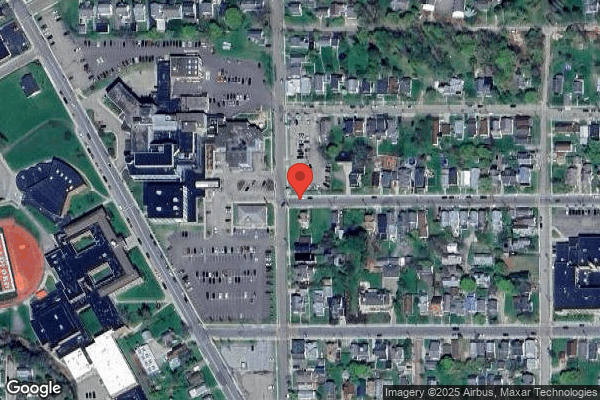
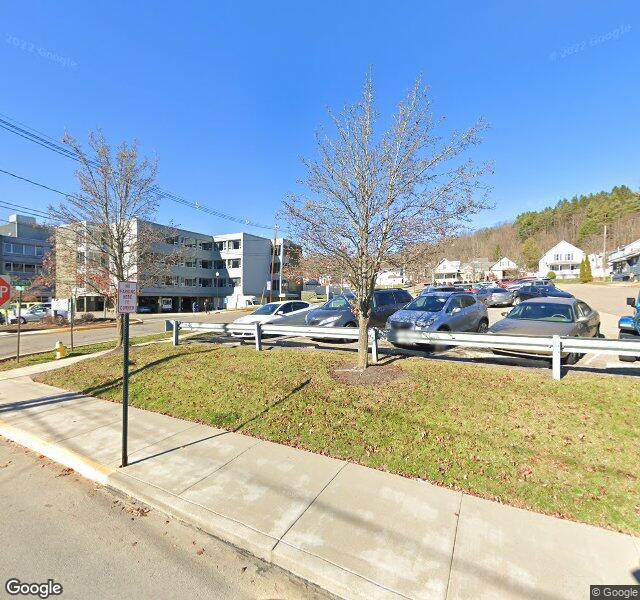
200 PLEASANT STREET, BRADFORD, PA 16701 (814) 362-8293
Non profit - Corporation 95 Beds Independent Data: November 2025
Trust Grade
45/100
#331 of 653 in PA
Last Inspection: December 2024

Within standard 12-15 month inspection cycle. Federal law requires annual inspections.

Overview

The Pavilion at BRMC has received a Trust Grade of D, indicating below-average performance with some concerns about resident care. It ranks #331 out of 653 nursing homes in Pennsylvania, placing it in the bottom half statewide, and #5 out of 6 in McKean County, meaning there is only one local facility rated higher. The facility's situation is worsening, as it has increased from 3 issues in 2023 to 9 in 2024. Staffing is a strong point, receiving a 5/5 rating with a turnover rate of 46%, which is on par with the state average, and they have more RN coverage than 77% of facilities in Pennsylvania. However, there have been serious incidents, including a failure to prevent a resident from falling during toileting, which resulted in a neck fracture, and neglecting to address complaints from residents.

Trust Score
D
45/100
In Pennsylvania
#331/653
Top 50%
Safety Record
High Risk
Review needed
Inspections
Getting Worse
3 → 9 violations
Staff Stability
⚠ Watch
46% turnover. Above average. Higher turnover means staff may not know residents' routines.
Penalties
✓ Good
No fines on record. Clean compliance history, better than most Pennsylvania facilities.
Skilled Nurses
✓ Good
Each resident gets 69 minutes of Registered Nurse (RN) attention daily — more than 97% of Pennsylvania nursing homes. RNs are the most trained staff who catch health problems before they become serious.
Violations
⚠ Watch
12 deficiencies on record. Higher than average. Multiple issues found across inspections.
★★★☆☆
3.0
Overall Rating
★★★★★
5.0
Staff Levels
★★☆☆☆
2.0
Care Quality
★★☆☆☆
2.0
Inspection Score
Stable
2023: 3 issues
2024: 9 issues

The Good

  • 5-Star Staffing Rating · Excellent nurse staffing levels
  • Full Sprinkler Coverage · Fire safety systems throughout facility
  • No fines on record

Facility shows strength in staffing levels, fire safety.

The Bad

3-Star Overall Rating

Near Pennsylvania average (3.0)

Meets federal standards, typical of most facilities

Staff Turnover: 46%

Near Pennsylvania avg (46%)

Higher turnover may affect care consistency

The Ugly 12 deficiencies on record

2 actual harm
Dec 2024 2 deficiencies 2 Harm
SERIOUS (G)

Actual Harm - a resident was hurt due to facility failures

Free from Abuse/Neglect (Tag F0600)

A resident was harmed · This affected 1 resident

**NOTE- TERMS IN BRACKETS HAVE BEEN EDITED TO PROTECT CONFIDENTIALITY** Based on review of facility policies, facility documentation and clinical record, and resident and staff interviews, it was dete...

Read full inspector narrative →
**NOTE- TERMS IN BRACKETS HAVE BEEN EDITED TO PROTECT CONFIDENTIALITY** Based on review of facility policies, facility documentation and clinical record, and resident and staff interviews, it was determined that the facility failed to ensure that one of 19 residents reviewed was free of neglect during care (Resident R5). Findings include: Review of facility policy entitled Resident abuse, neglect, exploitation, and misappropriation of resident property policy, last reviewed 12/28/2023, revealed Neglect: The indifference or disregard for resident care, comfort or safety, resulting in or may result in physical harm, pain, mental anguish, or emotional distress. neglect occurs when the facility is aware of, or should have been aware of goods or services that a resident requires but the facility fails to provide them to the resident resulting in, or may result in physical harm, pain, mental anguish, or emotional distress. Review of facility policy entitiled Fall Protocol, with a policy review date of 12/28/2023, revealed that it is the policy of the Pavilion at BRMC to make every attempt at preventing residents from falling. Review of Resident R5's clinical record revealed an admission date 2/14/2011, with diagnoses that included Alzheimer's Disease (a progressive disease that destroys memory and other important mental functions), major depressive disorder (a mental disorder characterized by persistently depressed mood or loss of interest in activities, causing significant impairment in daily life), history of seizures, muscle weakness, hearing loss, chronic pain, history of falling, age related physical debility, and macular degeneration (an eye disease that causes vision loss). Review of Resident R5's Activities of Daily Living (ADL) related care plan originally dated 5/4/2020 and last reviewed 7/24/2024, revealed resident has an ADL self-care performance deficit related to confusion, poor vision, and extreme hard of hearing (HOH). Toilet transfer is dependent. Transfers requires extensive assistance of two staff members. Toilet use: is an extensive assist of 1-2 assist for toileting and has stress incontinence. Review of R5's Minimum Data Set (MDS-a periodic assessment of resident care needs) Assessment Section GG Functional Abilities and Goals last updated 7/16/2024, revealed that Section GG0130 Self-care revealed Toileting Hygiene: the ability to maintain perineal hygiene, adjust clothes before and after voiding or having a bowel movement, identified that Resident R5 required Substantial/maximal assistance; Section GG0170 F: toilet transfer: the ability to get on and off a toilet or commode revealed that Resident R5 required partial/moderate assistance. Section C Cognitive Patterns revealed that section C0500 brief interview for mental status (BIMS) summary score revealed a score of 01, indicating cognitive impairment. Review of Resident R5's progress notes from 9/26/2024, at 3:05 p.m. revealed, This writer called to second floor for resident observed on bathroom floor. Resident assessed and found to have bruising to front and back of head, and both knees, with the left knee being significantly swollen. MD [Medical Doctor] notified and orders obtained to send resident to ER [Emergency Room] for evaluation. Son notified and agreeable. Report called to ER, and resident transported to ER via stretcher. Review of Resident R5's CT scan report of the cervical spine without contrast dated 9/26/2024, at 4:24 p.m. revealed an acute nondisplaced (broken bone where pieces of bone didn't move far enough to be out of alignment) type 2 dens fracture (Fracture at the base of the odontoid process [also called the dens] which is a bony projection on the C2 vertebrae in the neck) During an interview with the Director of Nursing (DON) and Nursing Home Administrator (NHA) on 12/5/2024, at approximately 1:30 p.m., it was confirmed that a Nurse Aide (NA) employee assisted Resident R5 into the restroom to use the toilet. Resident R5 was assisted onto the toilet and was left unattended in the restroom. Employees were at change of shift and report was given to the next shift. The resident was found on the floor in the restroom by the next shift staff members. Review of a witness statement to the DON and NHA on 9/27/2024 by NA Employee E1, revealed the following information: it was at the end of the shift and Resident R5 came out from the activity and asked if she could be taken to the bathroom. On coming NA's and off going NA's were at the nurse's station and were giving one another report prior to the end of the shift. NA Employee E1 took Resident R5 to the bathroom and stood in the doorway of the bathroom. NA Employee E1 then proceeded to the room doorway and told the evening shift staff members that Resident R5 was on the toilet in the bathroom and would need assisted off. Staff acknowledged that Resident R5 was on the toilet in the bathroom and NA Employee E1 stated that she was going to go home. Interviews with staff members by the DON and NHA that worked the evening shift did acknowledge that NA Employee E1 did pass along that Resident R5 was in the bathroom. Review of a witness statement dated 9/26/2024, from NA Employee E2, who found Resident R5 in the bathroom on 9/26/2024, revealed, I came onto the floor got report, and started getting my list of residents up and ready for dinner. When I entered room [ROOM NUMBER], I heard groaning in the bathroom and upon entering saw [Resident R5] on his/her front on the floor with head and shoulders under the wheelchair, not stuck on anything. I called for the nurse without leaving the resident. Found [Resident R5] on the floor at 2:40 p.m. Review of a witness statement dated 9/27/2024, from NA Employee E3, revealed I worked 6-2 Thursday, 9/26/2024. [Resident R5] got up for lunch. She was in the dining room for lunch. Then when bingo began, [Resident R5] told the activities director that she needed to go to the bathroom. [NA Employee E1] said he/she would take [Resident R5] to the bathroom. Second shift came in and was given report and told that [Resident R5] was on the toilet. The day shift NA's left the floor. During interviews on 12/6/2024, at 9:45 a.m. with NA Employee E4, NA Employee E5, NA Employee E6, and NA Employee E3 it was confirmed that the nursing staff was re-educated regarding fall safety and assisting residents when in the restroom. Resident plans of care are reviewed for levels of assistance and care with baths. All employees interviewed revealed that residents are not to be left unmonitored in the restroom for safety purposes. An interview conducted with Licensed Practical Nurse (LPN) Employee E7 on 12/6/2024, at 10:00 a.m. revealed that it is not the practice of the nursing staff to leave residents in the bathroom unattended. Staff should always be aware someone is in the bathroom to watch or monitor resident for safety. Resident plans of care are reviewed for levels of assistance and care with toileting. During an interview with the DON and NHA on 12/5/2024, at approximately 2:30 p.m. it was confirmed that Resident R5 was placed in the restroom unattended by NA Employee E1 and then was left unattended in the bathroom of room [ROOM NUMBER] at change of shift with Resident R5 being found on the floor resulting in a neck fracture. 28 Pa. Code 201.14(a) Responsibility of licensee 28 Pa. Code 201.18(b)(1)(3) Management 28 Pa. Code 201.18(e)(1) Management 28 Pa. Code 211.10(d) Resident care policies 28 Pa. Code 211.12(d)(1)(2)(5) Nursing services
SERIOUS (G)

Actual Harm - a resident was hurt due to facility failures

Accident Prevention (Tag F0689)

A resident was harmed · This affected 1 resident

**NOTE- TERMS IN BRACKETS HAVE BEEN EDITED TO PROTECT CONFIDENTIALITY** Based on review of facility policy, clinical records, facility documentation, and staff interview, it was determined that the fa...

Read full inspector narrative →
**NOTE- TERMS IN BRACKETS HAVE BEEN EDITED TO PROTECT CONFIDENTIALITY** Based on review of facility policy, clinical records, facility documentation, and staff interview, it was determined that the facility failed to provide proper resident supervision during toileting that resulted in a fall with actual harm of a fracture of the neck (C2 vertebrae) for one of 19 residents reviewed (Resident R5). Findings include: Review of facility policy entitiled Fall Protocol, with a policy review date of 12/28/23, revealed that it is the policy of the Pavilion at BRMC to make every attempt at preventing residents from falling. Review of Resident R5's clinical record revealed an admission date of 2/14/2011, with diagnoses that included Alzheimer's Disease (a progressive disease that destroys memory and other important mental functions), major depressive disorder (a mental disorder characterized by persistently depressed mood or loss of interest in activities, causing significant impairment in daily life), history of seizures, muscle weakness, hearing loss, chronic pain, history of falling, age related physical debility, and macular degeneration (an eye disease that causes vision loss). Review of Resident R5's Activities of Daily Living (ADL) related care plan originally dated 5/4/2020 and last reviewed 7/24/2024, revealed resident has an ADL self-care performance deficit related to confusion, poor vision, and extreme hard of hearing (HOH). Toilet transfer is dependent. Transfers requires extensive assistance of two staff members. Toilet use: is an extensive assist of 1-2 assist for toileting and has stress incontinence. Review of Resident R5's Minimum Data Set (MDS-a periodic assessment of resident care needs) Assessment Section GG Functional Abilities and Goals last updated 7/16/2024, revealed that Section GG0130 Self-care revealed Toileting Hygiene: the ability to maintain perineal hygiene, adjust clothes before and after voiding or having a bowel movement, identified that Resident R5 required Substantial/maximal assistance; Section GG0170 F: toilet transfer: the ability to get on and off a toilet or commode revealed that Resident R5 required partial/moderate assistance. Section C Cognitive Patterns revealed that section C0500 brief interview for mental status (BIMS) summary score revealed a score of 01, indicating cognitive impairment. Review of Resident R5's progress notes from 9/26/2024, at 3:05 p.m. revealed, This writer called to second floor for resident observed on bathroom floor. Resident assessed and found to have bruising to front and back of head, and both knees, with the left knee being significantly swollen. MD [Medical Doctor] notified and orders obtained to send resident to ER [Emergency Room] for evaluation. Son notified and agreeable. Report called to ER, and resident transported to ER via stretcher. Review of Resident R5's CT scan report of the cervical spine without contrast dated 9/26/2024, at 4:24 p.m. revealed an acute nondisplaced (broken bone where pieces of bone didn't move far enough to be out of alignment) type 2 dens fracture (Fracture at the base of the odontoid process [also called the dens] which is a bony projection on the C2 vertebrae in the neck) During an interview with the Director of Nursing (DON) and Nursing Home Administrator (NHA) on 12/5/2024, at approximately 1:30 p.m., it was confirmed that a Nurse Aide (NA) employee assisted Resident R5 into the restroom to use the toilet. Resident R5 was assisted onto the toilet and was left unattended in the restroom. Employees were at change of shift and report was given to the next shift. The resident was found on the floor in the restroom by the next shift staff members. Review of a witness statement to the DON and NHA on 9/27/2024 by NA Employee E1, revealed the following information: it was at the end of the shift and Resident R5 came out from the activity and asked if she could be taken to the bathroom. On coming NA's and off going NA's were at the nurse's station and were giving one another report prior to the end of the shift. NA Employee E1 took Resident R5 to the bathroom and stood in the doorway of the bathroom. NA Employee E1 then proceeded to the room doorway and told the evening shift staff members that Resident R5 was on the toilet in the bathroom and would need assisted off. Staff acknowledged that Resident R5 was on the toilet in the bathroom and NA Employee E1 stated that she was going to go home. Interviews with staff members by the DON and NHA that worked the evening shift did acknowledge that NA Employee E1 did pass along that Resident R5 was in the bathroom. Review of a witness statement dated 9/26/2024, from NA Employee E2, who found Resident R5 in the bathroom on 9/26/2024, revealed, I came onto the floor got report, and started getting my list of residents up and ready for dinner. When I entered room [ROOM NUMBER], I heard groaning in the bathroom and upon entering saw [Resident R5] on his/her front on the floor with head and shoulders under the wheelchair, not stuck on anything. I called for the nurse without leaving the resident. Found [Resident R5] on the floor at 2:40 p.m. Review of a witness statement dated 9/27/2024, from NA Employee E3, revealed I worked 6-2 Thursday, 9/26/2024. [Resident R5] got up for lunch. She was in the dining room for lunch. Then when bingo began, [Resident R5] told the activities director that she needed to go to the bathroom. [NA Employee E1] said he/she would take [Resident R5] to the bathroom. Second shift came in and was given report and told that [Resident R5] was on the toilet. The day shift NA's left the floor. During interviews on 12/6/2024, at 9:45 a.m. with NA Employee E4, NA Employee E5, NA Employee E6, and NA Employee E3 it was confirmed that the nursing staff was re-educated regarding fall safety and assisting residents when in the restroom. Resident plans of care are reviewed for levels of assistance and care with baths. All employees interviewed revealed that residents are not to be left unmonitored in the restroom for safety purposes. An interview conducted with Licensed Practical Nurse (LPN) Employee E7 on 12/6/2024, at 10:00 a.m. revealed that it is not the practice of the nursing staff to leave residents in the bathroom unattended. Staff should always be aware someone is in the bathroom to watch or monitor resident for safety. Resident plans of care are reviewed for levels of assistance and care with toileting. During an interview with the DON and NHA on 12/5/2024, at approximately 2:30 p.m. it was confirmed that Resident R5 was placed in the restroom unattended by NA Employee E1 and then was left unattended in the bathroom of room [ROOM NUMBER] at change of shift with Resident R5 being found on the floor resulting in a neck fracture. 28 Pa. Code 201.14(a) Responsibility of licensee 28 Pa. Code 201.18(b)(1)(3) Management 28 Pa. Code 201.18(e)(1) Management 28 Pa. Code 211.10(d) Resident care policies 28 Pa. Code 211.12(d)(1)(2)(5) Nursing services
Jan 2024 7 deficiencies
CONCERN (D)

Potential for Harm - no one hurt, but risky conditions existed

Resident Rights (Tag F0550)

Could have caused harm · This affected 1 resident

Based on observations, review of facility policy and clinical records, and staff and resident interviews, it was determined that the facility failed to maintain resident dignity by placing a wander gu...

Read full inspector narrative →
Based on observations, review of facility policy and clinical records, and staff and resident interviews, it was determined that the facility failed to maintain resident dignity by placing a wander guard bracelet (a device with a small box on a plastic bracelet placed on an at risk wandering person to alert the staff if that person attempts to exit the facility without staff supervision) on one of two residents reviewed for wander guard usage (Resident R24). Findings include: Review of a facility policy entitled General Safety Practices at The Pavilion dated 12/28/2023, revealed All residents at risk for elopement will be placed on the second floor and a wander guard bracelet will be initiated. Review of Resident R24's clinical record revealed an admission date of 4/15/16, with diagnoses that included hypertension (high blood pressure), heart failure (a condition where the heart cannot supply the body with enough blood), presence of artificial knee joint, and edema (swelling to an area of body due to holding excessive fluid). Review of residents that reside on the second floor locked unit revealed that only eight of 25 residents had wander guards in place. Further review of Resident R24's clinical record revealed, no evidence of an evaluation for elopement risk. Review of MDS Section C - Cognitive Patterns C0500 with assessment dates of 2/24/23, 5/11/23, 8/8/23 and 11/5/23, revealed a BIMS (Brief Interview of Mental Status- cognitive interview to check mental status of a person with a score of zero being severely impaired and 15 being alert and oriented) of 15 on all four dates. Review of MDS Section E Behavior E0900 with assessment dates of 2/24/23, 5/11/23, 8/8/23 and 11/5/23 revealed a Wandering - Presence and Frequency (assessment codes as 0-behavior not exhibited through three indicating that the behavior of this type occurred daily) assessment coded as zero-behavior not exhibited, on all four dates for Resident R24. Observations on 1/2/2024, at 4:06 p.m. revealed a wander guard bracelet on Resident R24's left ankle. Interview with Resident R24 on 1/2/2024, at 4:06 p.m. revealed he/she had the wander guard bracelet placed several years ago due to him/her leaving the facility and going to the store. He/she stated that he/she did not know that they were not allowed to leave the facility, he/she used to sit outside the facility without supervision. When he/she returned to the facility staff placed a wander guard bracelet on Resident R24 and placed Resident R24 on the second floor locked unit. Resident R24 also stated that he/she told the facility he/she would not leave the facility again without staff knowledge. Resident R24 also revealed that he/she had cut the wander guard bracelet off several times and staff would replace it but never asked him/her why he/she kept cutting it off. He/she revealed that he/she is embarrassed by the wander guard bracelet. Resident R24 stated that when he/she goes out to appointments, he/she finds the wander guard bracelet embarrassing and stated, it's my house arrest. During an interview on 1/4/2024, at 3:19 p.m. the DON (Director of Nursing) revealed that facility had no evidence of elopement assessments being completed. He/she also revealed that Resident R24 had cut off his/her wander guard bracelet on several occasions and that facility staff had replaced the wander guard bracelet. Observation on 1/5/2024, at 9:05 a.m. revealed the wander guard bracelet remained on Resident R24's left ankle. During an interview at that time, Resident R24 stated yes I still have the little box, it's embarrassing, my house arrest. Interview with Employee E1 on 1/5/2024, at 8:40 a.m. revealed that he/she has worked at the facility for one year in a full time position on the second floor locked unit. He/she revealed that Resident R24 has had no elopement episodes while he/she was working. Interview with Employee E2 on 1/5/2024, at 8:50 a.m. revealed that he/she has worked at the facility for three years in a full-time position on the second floor locked unit. He/she revealed that Resident R24 has had no elopement episodes while he/she was working. Interview also revealed that Resident R24 has verbally communicated to him/her when he/she was going out into the garden which is part of the second floor locked unit. Interview with DON on 1/4/2024, at 3:19 p.m. he/she confirmed that Resident R24 should have been reassessed for the use of the wander guard bracelet. He/she also confirmed that the use of a wander guard is not appropriate for a resident that is alert and oriented with a BIMS of 15. 28 Pa. Code 201.29(a) Resident rights 28 Pa. Code 211.12(d)(1)(5) Nursing Services
CONCERN (D)

Potential for Harm - no one hurt, but risky conditions existed

Deficiency F0578 (Tag F0578)

Could have caused harm · This affected 1 resident

**NOTE- TERMS IN BRACKETS HAVE BEEN EDITED TO PROTECT CONFIDENTIALITY** Based on review of facility policy and clinical records, and staff interview, it was determined that the facility failed to ensu...

Read full inspector narrative →
**NOTE- TERMS IN BRACKETS HAVE BEEN EDITED TO PROTECT CONFIDENTIALITY** Based on review of facility policy and clinical records, and staff interview, it was determined that the facility failed to ensure a physician's order was completed correctly to indicate the code status as Full Code (CPR/Attempt Resuscitation) or Do Not Resuscitate (DNR/Do Not Attempt Resuscitation-Allow Natural Death) for one of 19 residents reviewed (Resident R39). Findings include: Review of a facility policy Advance Directives-Health Care Proxy, MOLST/POLST, Living Will dated [DATE], revealed All adult individuals in New York State and in Pennsylvania have the right to self-determination in Health Care and the right to express their preferences regarding health care treatment, including decisions to continue or refuse routine or major medical treatment, as well as life-sustaining treatment without which the individual is expected to die. Advance directives such as health care proxies (HCP), living wills and consents to Do Not Resuscitate (DNR) orders allow an adult to express his/her healthcare treatment preferences and wishes, in order to be prepared for those situations in which that individual may be unable to communicate for him/herself. Instructions - It is a BRMC-OGH goal to encourage Health Care Proxy completion among competent patients, and to place those documents in the permanent medical record in ambulatory, acute, and long-term care settings. For patients who are already incapacitated with no proxy, it is a goal to identify surrogate decision makers as early as possible and actively engage them in the care of those patients. Review of Resident 39's clinical record revealed an admission date of [DATE], with diagnoses that included weakness, urinary tract infection, failure to thrive, and Parkinson's disease (a disorder of the central nervous system that affects movement, often tremors). Resident R39's clinical record indicated Full Code on the Code Status Form dated [DATE], signed by Resident R39's power of attorney (POA). A physician order dated [DATE], indicated Resident R39 to be a DNR. Review of Resident R39's clinical record on [DATE], at 2:00 p.m. lacked evidence of a POLST. During an interview on [DATE], at 3:20 p.m. the Registered Nurse Assessment Coordinator (RNAC) provided Resident R39's POLST which indicated a Full Code status. The RNAC confirmed the POLST was not maintained, but should be on Resident R39's clinical record for direction of Resident R39's plan of care. During an interview on [DATE], at 3:25 p.m. the RNAC confirmed Resident R39's code status was documented in error as a DNR as a physician order and should be a Full Code as indicated by the POA and POLST. 28 Pa. Code 201.18 (b)(1)(e)(1) Management 28 Pa. Code 201.29(a) Resident rights 28 Pa. Code 211.10(c) Resident care policies
CONCERN (D)

Potential for Harm - no one hurt, but risky conditions existed

Comprehensive Care Plan (Tag F0656)

Could have caused harm · This affected 1 resident

Based on review of facility policy and clinical records, observations, and staff interviews, it was determined that the facility failed to develop a comprehensive care plan regarding the use of side r...

Read full inspector narrative →
Based on review of facility policy and clinical records, observations, and staff interviews, it was determined that the facility failed to develop a comprehensive care plan regarding the use of side rails for one of 17 residents reviewed (Resident R32). Findings include: Review of a facility policy entitled Resident Care Plan dated 12/28/23, indicated that the facility will develop a comprehensive care plan of care to reflect the needs of the resident, be individualized and resident driven, and utilize nursing assessments, evaluations, etc. Resident R32's clinical record revealed an admission date of 10/19/16, with diagnoses that included dementia, generalized muscle weakness, heart disease, arthritis, and limitations of activities due to disability. Current physician's orders for January 2024, indicated that Resident R32 was to have siderails up on both sides of his/her bed to promote independence with bed mobility and transfers. The clinical record lacked evidence of a care plan to address his/her side rail use. Review of Resident R32's clinical record documentation the daily use of side rails on both sides of his/her bed for November 2023, December 2023, and January 2024. Multiple observations on 1/02/24, and 1/03/24, revealed Resident R32 in bed positioned on his/her side and both half rails were in the up position. During an interview on 1/03/24, at 10:50 a.m. Registered Nurse Employee E3 confirmed that Resident R32 always has his/her side rails up on both sides of the bed. During an interview on 1/04/24, at 11:00 a.m. the Registered Nurse Assessment Coordinator confirmed there was no evidence that a care plan was developed for Resident R32's use of side rails on both sides of the bed. 28 Pa. Code 211.10(c) Resident care policies 28 Pa. Code 211.12(d)(1)(5) Nursing services
CONCERN (D)

Potential for Harm - no one hurt, but risky conditions existed

Respiratory Care (Tag F0695)

Could have caused harm · This affected 1 resident

Based on observations, review of facility policy and clinical records, and staff interview, it was determined that the facility failed to administer supplemental oxygen as ordered and promote cleanlin...

Read full inspector narrative →
Based on observations, review of facility policy and clinical records, and staff interview, it was determined that the facility failed to administer supplemental oxygen as ordered and promote cleanliness regarding respiratory care equipment according to physician orders for one of 19 residents reviewed (Resident R17). Findings include: Review of a facility policy entitled Care of Oxygen Tubing/Nebulizer Tubing and Filters dated 12/28/23, indicated that oxygen concentrator filters will be cleaned monthly. Review of a facility policy entitled Medication Administration dated, 12/28/23, revealed that medications shall be administered in accordance with the orders of the prescribing Healthcare Practitioner, and oxygen administration must have a physician order, the order must be written on the Medication Administration Record (MAR) and the nurse is to monitor oxygen flow rate every shift. Resident R17's clinical record revealed an admission date of 1/25/14, with diagnoses that included chronic obstructive pulmonary disease (a group of diseases that cause airflow blockage and breathing-related problems), heart disease, heart failure, muscle wasting, amputation of left fingers and left foot, high blood pressure, unsteady on feet, and difficulty walking. The most recent physician's order dated 12/25/23, indicated to administer oxygen at two liters per minute (LPM) through a nasal cannula (a device that gives you additional oxygen [supplemental oxygen or oxygen therapy] through your nose), as needed for shortness of breath/wheezing. The December 2023 MAR indicated that Resident R17 was receiving his/her oxygen at two LPM on two-to-three shifts daily. Observations on 1/02/24, at approximately 4:00 p.m. and on 1/03/24, at 8:50 a.m. revealed that Resident R17 was in bed and his/her oxygen concentrator filter was blowing a significant amount gray fluffy substance into the air, and the oxygen flow rate was set at one and a half LPM. During an interview on 1/02/24, at approximately 4:00 p.m. Resident R17 confirmed that he/she was supposed to receive oxygen at two LPM. During an interview on 1/03/24, at 8:55 a.m. the Nursing Home Administrator and Director of Nursing confirmed that upon opening the oxygen concentrator filter casing, the filter was covered with copious amounts of a gray fluffy substance, and had not been cleaned recently, and that the oxygen flow rate was set for one and a half LPM, and that Resident R17 was ordered two LPM. 28 Pa. Code 211.10(c) Resident care policies 28 Pa. Code 211.12(d)(1)(5) Nursing services
CONCERN (D)

Potential for Harm - no one hurt, but risky conditions existed

Deficiency F0700 (Tag F0700)

Could have caused harm · This affected 1 resident

**NOTE- TERMS IN BRACKETS HAVE BEEN EDITED TO PROTECT CONFIDENTIALITY** Based on observations, review of clinical records and facility policy, and staff interviews it was determined that the facility ...

Read full inspector narrative →
**NOTE- TERMS IN BRACKETS HAVE BEEN EDITED TO PROTECT CONFIDENTIALITY** Based on observations, review of clinical records and facility policy, and staff interviews it was determined that the facility failed thoroughly review and assess the use of bed rails prior to their use and review the risk versus benefits of using bed rails with the resident's representative and obtain informed consent for the installation and use of bed rails prior to the installation for two of 19 residents reviewed (Residents R32 and R67). Findings include: Review of a facility policy entitled Side Rails and Use of ½ Side Rails dated 12/28/23, indicated that half side rails may be utilized to assist a resident with bed mobility and transfers or to assist the resident with bed controls but only after an individual Side Rail assessment is completed on admission, quarterly, annually, and as needed. Resident R32's clinical record revealed an admission date of 10/19/16, with diagnoses that included dementia, generalize muscle weakness, heart disease, arthritis, and limitations of activities due to disability. Review of current physician's orders for January 2024, revealed Resident R32 was to have siderails up on both sides of his/her bed to promote independence with bed mobility and transfers. Review of Resident R32's clinical record documentation revealed daily use of side rails on both sides of his/her bed for November 2023, December 2023 and January 2024 Further review of Resident R32's clinical record revealed no evidence of that an individual Side Rail assessment was completed upon admission, quarterly, annually, or as needed, and lacked the required informed consent from the resident/representative for the use of side rails prior to installation. Multiple observations on 1/02/24, and 1/03/24, revealed Resident R32 in bed positioned on his/her side and both half side rails were in the up position. Review of Resident R67's clinical record revealed an admission date of 9/14/23, with diagnoses that included Down Syndrome (genetic condition that causes mild to serious physical and developmental problems), long-term kidney disease, malnutrition, and embolism and thrombosis (clots get stuck in an artery and block blood flow, the blockage starves tissues of blood and oxygen). Review of current physician's orders for January 2024, revealed Resident R67 was to have siderails up on both sides of his/her bed to promote independence with bed mobility and transfers. The clinical record revealed a care plan addressing self-care deficit and included an intervention to use half rails during the provision of care and included access to bed controls. Review of Resident R32's clinical record documentation revealed daily use of side rails on both sides of his/her bed for December 2023, and January 2024. Further review of Resident R67's clinical record revealed an incomplete individual Side Rail assessment dated [DATE] (upon admission) and lacked the required quarterly Side Rail assessment and informed consent from the resident/representative for the use of side rails prior to their installation. During an interview on 1/04/24, at 1:45 p.m. the Nursing Home Administrator and the Director of Nursing confirmed there was lack of evidence that the required periodic side rail assessments were completed, and that informed consents were not obtained from the resident/representative for the use of side rails prior to installation. 28 Pa. Code 211.10(c) Resident care policies 28 Pa. Code 201.18(b)(1) Management
CONCERN (D)

Potential for Harm - no one hurt, but risky conditions existed

Infection Control (Tag F0880)

Could have caused harm · This affected 1 resident

Based on observations, review of clinical records and facility policy and staff interview, it was determined that the facility failed to prevent the potential for cross contamination during a dressing...

Read full inspector narrative →
Based on observations, review of clinical records and facility policy and staff interview, it was determined that the facility failed to prevent the potential for cross contamination during a dressing change for one of 19 residents (Resident R32). Findings include: Review of a facility policy entitled Standard Precautions dated 12/28/23, revealed that staff are expected to change their gloves between tasks and procedures on the same patient after contact with material that may contain a high concentration of microorganisms, and remove gloves promptly after use, before touching non-contaminated items and environmental surfaces. Observation of wound care on 1/03/24, at 3:12 p.m. revealed that Registered Nurse (RN) Employee E3 performed hand hygiene and donned (put on) clean gloves; removed the soiled dressing containing a moderate amount of exudate (a mass of cells and fluid that has seeped out of blood vessels or an organ, especially in inflammation); picked up the multi-use bottle of wound cleanser; applied wound cleanser solution to two, four inch by four inch cotton gauzes; cleansed the wound of a moderate amount of exudate; opened the sealed package of wound dressing (Promogran- cellulose, collagen and silver dressing); used scissors to cut the Promogran to the size of the wound bed; opened the sealed package of Allevyn (dressing indicated for exudate absorption in wound care); applied the Allevyn to the wound; obtained a wound label and used a pen to write the date on the label. During an interview at that time RN Employee E3 confirmed that he/she didn't know if staff was supposed to change gloves and cleanse hands during dressing changes when going from dirty to clean areas. During an interview on 1/04/24, at 1:50 p.m. the Director of Nursing confirmed that staff are to change gloves and perform hand hygiene after removing soiled dressings, and after wound cleansing if exudate present. 28 Pa. Code 211.10(c)(d) Resident Care Policies 28 Pa. Code 211.12 (d)(1)(5) Nursing Services
CONCERN (E)

Potential for Harm - no one hurt, but risky conditions existed

Grievances (Tag F0585)

Could have caused harm · This affected multiple residents

Based on a review of facility policy, facility grievances, and resident and staff interviews, it was determined that the facility failed to provide acknowledgement of a complaint/grievance and activel...

Read full inspector narrative →
Based on a review of facility policy, facility grievances, and resident and staff interviews, it was determined that the facility failed to provide acknowledgement of a complaint/grievance and actively work toward resolution of that complaint/grievance for two of 19 residents reviewed (Residents R9 and R11). Findings include: Review of the facility policy entitled, Pavilion Complaint/Grievance Policy, dated 12/28/23, revealed that the Pavilion grievance official will oversee the Pavilion grievance process, receive and track grievances through their conclusion, will lead any necessary investigation by the facility, will maintain confidentiality of all information associated with grievances, will be responsible in issuing written grievance decision to the resident/resident representative and will coordinate with state and federal agencies as necessary in light of specific allegations. The grievance official of the Pavilion will also take immediate action to prevent potential violation of any resident right while the alleged violation is being investigated. During an interview on 1/03/24, at 10:00 a.m. Resident R9 indicated he/she discussed concerns with administrative staff about being left on the toilet for long periods of time. Resident R9 further indicated administrative staff implied the concern would be addressed, however, no resolve of the grievance had occurred. During an interview on 1/03/24, at 1:00 p.m. Resident R11 indicated he/she discussed several concerns with administrative staff such as a brace for his/her right knee, a dental appointment, cell phone usage by staff during care, and urine collection device not being emptied. Resident R11 indicated further that no resolve of the grievances had occurred. On 1/04/24 at 8:40 a.m., the Nursing Home Administrator (NHA) provided two complaints/grievances from residents/resident representatives for review and there was no evidence that the concerns were investigated, tracked through to a conclusion, and that a written grievance decision was provided to the resident/resident representative. During an interview on 1/05/24, at 10:15 a.m. the Director of Nursing confirmed that the facility lacked evidence that the complaints/grievances for Residents R9 and R11 as noted above, were investigated, tracked through to a conclusion, and that a written grievance decision was provided to Resident R9 and Resident R11. 28 Pa. Code 201.14(a) Responsibility of licensee 28 Pa. Code 201.18(b)(1) Management 28 Pa. Code 201.18(b)(3)(e)(1)(3) Management
Feb 2023 3 deficiencies
CONCERN (D)

Potential for Harm - no one hurt, but risky conditions existed

Quality of Care (Tag F0684)

Could have caused harm · This affected 1 resident

Based on review of clinical records and staff interviews, it was determined that the facility failed to discontinue a medication per physician orders for one of 19 residents reviewed (Resident R39). F...

Read full inspector narrative →
Based on review of clinical records and staff interviews, it was determined that the facility failed to discontinue a medication per physician orders for one of 19 residents reviewed (Resident R39). Findings include: Resident R39's clinical record revealed an admission date of 4/23/20, with diagnoses that included morbid obesity, atrial fibrillation (irregular heartbeat), anxiety, and major depressive disorder. Resident R39's clinical record revealed that on 12/09/22, the physician ordered Ativan (anti-anxiety medication) 0.5 milligrams (mg) by mouth every 24 hours as needed (prn) for anxiety. On 12/20/22, the pharmacist notified the physician that the prn order of Ativan 0.5 mg every 24 hours required a rationale to be extended beyond 14 days. On 12/30/22, the physician's written order indicated Use on PRN basis for anxiety for 2 weeks. Review of Resident R39's clinical record revealed the ordered Ativan 0.5 mg every 24 hours prn for anxiety was not discontinued after 2 weeks and was still an active order on Resident R39's physician orders for 1/01/23-1/31/23 and 2/01/23-present. During an interview on 2/15/23, at approximately 1:00 p.m. the Director of Nursing confirmed that the Ativan order for Resident R39 should have been discontinued per physician orders and was not. 28 Pa. Code 211.5(f) Clinical Records 28 Pa. Code 211.12(d)(1)(5) Nursing Services
CONCERN (D)

Potential for Harm - no one hurt, but risky conditions existed

Medication Errors (Tag F0758)

Could have caused harm · This affected 1 resident

Based on review of clinical records and staff interviews, it was determined that the facility failed to provide evidence that non-pharmacological interventions (interventions attempted to calm a resid...

Read full inspector narrative →
Based on review of clinical records and staff interviews, it was determined that the facility failed to provide evidence that non-pharmacological interventions (interventions attempted to calm a resident other than medication) were attempted prior to the administration of an as needed (PRN) psychotropic (affecting the mind) medication for two of six residents reviewed for unnecessary medications (Residents R36 and R39). Findings include: Review of Resident R36's clinical record revealed an admission date of 11/26/22, with diagnoses that included high blood pressure, chronic obstructive pulmonary disease (a group of disease causes breathing difficulties), and anxiety. A physician order dated 2/6/23, identified to administer Ativan (anti-anxiety medication) 0.5 milligrams (mg) by mouth every six hours as needed (PRN) for agitation. Review of Resident R36's February 2023 Medication Administration Record (MAR) revealed that he/she received PRN Ativan on 2/6/23, and 2/12/23. Review of February 2023 Behavioral Intervention Monthly Flow Record and clinical record progress notes revealed that there was no evidence of non-pharmacological interventions attempted prior to the administration of the PRN Ativan two of two times the Ativan was utilized in February 2023. During an interview on 2/14/23, at 11:00 a.m. Licensed Practical Nurse Employee E2 stated that non-pharmacological interventions should be documented on the Behavioral Intervention Monthly Flow Record and/or in the clinical record progress notes. During an interview on 2/14/23, at 3:20 p.m. the Nursing Home Administrator confirmed that there was no evidence of non-pharmacological interventions being attempted prior to the administration of the PRN Ativan two of the two times it was administered in February 2023. Review of Resident R39's clinical record revealed an admission date of 4/23/20, with diagnoses that included morbid obesity, atrial fibrillation (irregular heartbeat), anxiety, and major depressive disorder. A physician order initiated 12/30/22, identified to administer Ativan 0.5 mg by mouth every 24 hours PRN for anxiety. Review of Resident R39's January 2023 MAR revealed that he/she received PRN Ativan on 1/5/23, 1/14/23, 1/19/23, 1/20/23, and 1/27/23. Review of the January 2023 Behavioral Intervention Monthly Flow Record and clinical record progress notes revealed that there was no evidence of non-pharmacological interventions attempted prior to the administration of the PRN Ativan the five of five times the Ativan was utilized in January 2023. During an interview on 2/15/23, at 1:00 p.m. the Director of Nursing confirmed that there was no evidence of non-pharmacological interventions being attempted prior to the administration of the PRN Ativan five of the five times it was administered in January 2023 for Resident R39. 28 Pa. Code 201.18(b)(1)(3) Management 28 Pa. Code 211.12(d)(1)(2)(3)(5) Nursing services
CONCERN (D)

Potential for Harm - no one hurt, but risky conditions existed

Deficiency F0761 (Tag F0761)

Could have caused harm · This affected 1 resident

**NOTE- TERMS IN BRACKETS HAVE BEEN EDITED TO PROTECT CONFIDENTIALITY** Based on observation and staff interviews, it was determined that the facility failed to appropriately label over-the-counter st...

Read full inspector narrative →
**NOTE- TERMS IN BRACKETS HAVE BEEN EDITED TO PROTECT CONFIDENTIALITY** Based on observation and staff interviews, it was determined that the facility failed to appropriately label over-the-counter stock (multi-dose containers of medications utilized for more than one resident) medications on one of two medication carts (2nd floor). Findings include: During medication pass observation on 2/13/23, between 4:14 p.m. and 4:50 p.m. Residents R28 and R3 received Colace (medication for constipation) per physician orders and Resident R37 received [NAME]-Bid (probiotic) per physician orders from an over-the-counter stock bottle. Inspection of the Colace and [NAME]-Bid bottles revealed that they lacked any resident names for use. During an interview at the time of observation, Licensed Practice Nurse (LPN) Employee E1 confirmed that both the Colace and [NAME]-Bid bottles lacked any resident names. Observation of 2nd floor medication cart on 2/14/23, at 11:42 a.m. revealed that the cart contained open stock medication bottles of Calcium Antacid, Multi-Vitamins with Minerals, Antacid Liquid, Tylenol Liquid, and Vitamin D that lacked any resident names for use. During an interview at the time of observation, LPN Employee E2 confirmed the bottles lacked any resident names. 28 Pa. Code 201.14(a) Responsibility of licensee 28 Pa. Code 211.9(a)(1) Pharmacy services 28 Pa. Code 211.10(c) Resident care policies 28 Pa. Code 211.12(d)(1)(3)(5) Nursing services
Understanding Severity Codes (click to expand)
Life-Threatening (Immediate Jeopardy)
J - Isolated K - Pattern L - Widespread
Actual Harm
G - Isolated H - Pattern I - Widespread
Potential for Harm
D - Isolated E - Pattern F - Widespread
No Harm (Minor)
A - Isolated B - Pattern C - Widespread

Questions to Ask on Your Visit

  • "What safeguards are in place to prevent abuse and neglect?"
  • "Can I speak with families of current residents?"
  • "What's your RN coverage like on weekends and overnight?"

Our Honest Assessment

Strengths
  • • No fines on record. Clean compliance history, better than most Pennsylvania facilities.
Concerns
  • • Multiple safety concerns identified: Federal abuse finding, 2 harm violation(s). Review inspection reports carefully.
  • • 12 deficiencies on record, including 2 serious (caused harm) violations. Ask about corrective actions taken.
  • • Grade D (45/100). Below average facility with significant concerns.
Bottom line: This facility has a substantiated abuse finding. Extreme caution advised. Explore alternatives.

About This Facility

What is Pavilion At Brmc, The's CMS Rating?

CMS assigns PAVILION AT BRMC, THE an overall rating of 3 out of 5 stars, which is considered average nationally. Within Pennsylvania, this rating places the facility higher than 0% of the state's 100 nursing homes. This mid-range rating indicates the facility meets federal standards but may have areas for improvement.

How is Pavilion At Brmc, The Staffed?

CMS rates PAVILION AT BRMC, THE's staffing level at 5 out of 5 stars, which is much above average compared to other nursing homes. Staff turnover is 46%, compared to the Pennsylvania average of 46%. RN turnover specifically is 57%, which is notably high. RNs provide skilled clinical oversight, so turnover in this role can affect medical care quality.

What Have Inspectors Found at Pavilion At Brmc, The?

State health inspectors documented 12 deficiencies at PAVILION AT BRMC, THE during 2023 to 2024. These included: 2 that caused actual resident harm and 10 with potential for harm. Deficiencies causing actual harm indicate documented cases where residents experienced negative health consequences.

Who Owns and Operates Pavilion At Brmc, The?

PAVILION AT BRMC, THE is owned by a non-profit organization. Non-profit facilities reinvest revenue into operations rather than distributing to shareholders. The facility operates independently rather than as part of a larger chain. With 95 certified beds and approximately 66 residents (about 69% occupancy), it is a smaller facility located in BRADFORD, Pennsylvania.

How Does Pavilion At Brmc, The Compare to Other Pennsylvania Nursing Homes?

Compared to the 100 nursing homes in Pennsylvania, PAVILION AT BRMC, THE's overall rating (3 stars) matches the state average, staff turnover (46%) is near the state average of 46%, and health inspection rating (2 stars) is below the national benchmark.

What Should Families Ask When Visiting Pavilion At Brmc, The?

Based on this facility's data, families visiting should ask: "What safeguards and monitoring systems are in place to protect residents from abuse or neglect?" "Can I visit during a mealtime to observe dining assistance and food quality?" "How do you handle medical emergencies, and what is your hospital transfer rate?" "Can I speak with family members of current residents about their experience?" These questions are particularly relevant given the substantiated abuse finding on record.

Is Pavilion At Brmc, The Safe?

Based on CMS inspection data, PAVILION AT BRMC, THE has documented safety concerns. The facility has 1 substantiated abuse finding (meaning confirmed case of resident harm by staff or other residents). The facility has a 3-star overall rating and ranks #1 of 100 nursing homes in Pennsylvania. Families considering this facility should ask detailed questions about what corrective actions have been taken since these incidents.

Do Nurses at Pavilion At Brmc, The Stick Around?

PAVILION AT BRMC, THE has a staff turnover rate of 46%, which is about average for Pennsylvania nursing homes (state average: 46%). Moderate turnover is common in nursing homes, but families should still ask about staff tenure and how the facility maintains care continuity when employees leave.

Was Pavilion At Brmc, The Ever Fined?

PAVILION AT BRMC, THE has no federal fines on record. CMS issues fines when nursing homes fail to meet care standards or don't correct problems found during inspections. The absence of fines suggests the facility has either maintained compliance or corrected any issues before penalties were assessed. This is a positive indicator, though families should still review recent inspection reports for the full picture.

Is Pavilion At Brmc, The on Any Federal Watch List?

PAVILION AT BRMC, THE is not on any federal watch list. The most significant is the Special Focus Facility (SFF) program, which identifies the bottom 1% of nursing homes nationally based on persistent, serious quality problems. Not being on this list means the facility has avoided the pattern of deficiencies that triggers enhanced federal oversight. This is a positive indicator, though families should still review the facility's inspection history directly.