BUCKINGHAM VALLEY REHABILITATION AND NURSINGCENTER
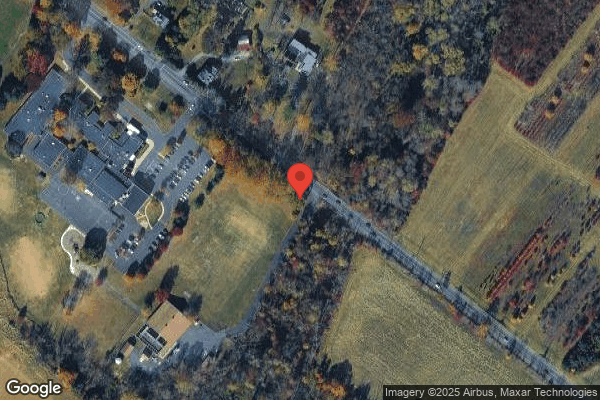

820 DURHAM ROAD, BUCKINGHAM, PA 18912 (215) 598-7181
For profit - Limited Liability company 130 Beds PRESTIGE HEALTHCARE ADMINISTRATIVE SERVICES Data: November 2025
Trust Grade
90/100
#12 of 653 in PA
Last Inspection: August 2025

Inspected within the last 6 months. Data reflects current conditions.

Overview

Buckingham Valley Rehabilitation and Nursing Center has received a Trust Grade of A, indicating it is an excellent facility that is highly recommended. With a state rank of #12 out of 653 nursing homes in Pennsylvania, it sits comfortably in the top tier, and it ranks #2 out of 29 facilities in Bucks County, suggesting only one local option is better. However, the facility's trend is concerning as it has worsened from 2 issues in 2024 to 3 in 2025, indicating a decline in performance. Staffing has a mixed rating with 3 out of 5 stars and a turnover rate of 52%, which is average compared to the state average of 46%. Notably, the facility has no fines on record, which is a positive sign, and it offers average RN coverage, meaning that while there is some oversight, it may not be as high as in other facilities. Despite these strengths, there are specific incidents that raise concerns. For example, the facility failed to assess a resident's ability to self-administer medications, which is important for safety. Additionally, there was a failure to follow a physician's order to administer a medication for a resident with serious health conditions, suggesting lapses in care. Lastly, there were issues with maintaining complete and accurate clinical records for a new resident, which could impact their care plan. Overall, while Buckingham Valley has many strengths, families should be aware of these weaknesses when considering this facility.

Trust Score
A
90/100
In Pennsylvania
#12/653
Top 1%
Safety Record
Low Risk
No red flags
Inspections
Getting Worse
2 → 3 violations
Staff Stability
⚠ Watch
52% turnover. Above average. Higher turnover means staff may not know residents' routines.
Penalties
✓ Good
No fines on record. Clean compliance history, better than most Pennsylvania facilities.
Skilled Nurses
○ Average
Each resident gets 35 minutes of Registered Nurse (RN) attention daily — about average for Pennsylvania. RNs are the most trained staff who monitor for health changes.
Violations
○ Average
10 deficiencies on record. Average for a facility this size. Mostly minor or procedural issues.
★★★★★
5.0
Overall Rating
★★★☆☆
3.0
Staff Levels
★★★★★
5.0
Care Quality
★★★★☆
4.0
Inspection Score
Stable
2024: 2 issues
2025: 3 issues

The Good

  • 5-Star Quality Measures · Strong clinical quality outcomes
  • Full Sprinkler Coverage · Fire safety systems throughout facility
  • No fines on record

Facility shows strength in quality measures, fire safety.

The Bad

Staff Turnover: 52%

Near Pennsylvania avg (46%)

Higher turnover may affect care consistency

Chain: PRESTIGE HEALTHCARE ADMINISTRATIVE

Part of a multi-facility chain

Ask about local staffing decisions and management

The Ugly 10 deficiencies on record

Aug 2025 3 deficiencies
CONCERN (D)

Potential for Harm - no one hurt, but risky conditions existed

Deficiency F0554 (Tag F0554)

Could have caused harm · This affected 1 resident

**NOTE- TERMS IN BRACKETS HAVE BEEN EDITED TO PROTECT CONFIDENTIALITY** Based on facility policy review, observation, clinical record review, and resident and staff interview, it was determined that t...

Read full inspector narrative →
**NOTE- TERMS IN BRACKETS HAVE BEEN EDITED TO PROTECT CONFIDENTIALITY** Based on facility policy review, observation, clinical record review, and resident and staff interview, it was determined that the facility failed to assess a resident's capability to self-administer medications for one of 26 sampled residents. (Resident 7) Findings include:Review of facility policy entitled, Resident Self-Administration of Medication, last reviewed January 20, 2025, revealed that a resident may only self-administer medications after the facility's interdisciplinary team has determined which medications may be self-administered safely. The resident's preference will be documented on the appropriate form and placed in the medical record. The results of the interdisciplinary team assessment are recorded on the Medication Self-Administration Assessment Form which is placed in the resident's medical record. When the interdisciplinary team determines that bedside or in-room storage of medications would be a safety risk to other residents, the medications of residents permitted to self-administer are stored in the medication cart or medication room.Clinical record review revealed that Resident 7 had diagnoses that included limitation of activities due to disability, [NAME]-Danlos Syndrome (a disease that affects the skin, joints, and blood vessel walls), and anxiety disorder. Review of the Minimum Data Set (MDS) assessment, dated April 18, 2025, revealed that Resident 7's cognitive ability was intact.Observations on August 5, 2025, at 11:15 a.m., and on August 6, 2025, at 11:40 a.m., revealed that there were two bottles of Fluticasone nasal spray (a medication used to treat symptoms caused by allergies), one bottle of artificial tears, and one bottle of saline nasal spray unsecured on the bedside table in Resident 7's room. Additionally, there was one bottle of gummy vitamins on the shelving next to Resident 7's bed and unsecured in the resident's room during the observation periods.In an interview on August 5, 2025, at 11:10 a.m., Resident 7 stated that she self-administered the medications daily.There was no documentation to indicate that the facility had assessed Resident 7 for the ability to self-administer the Fluticasone nasal spray, artificial tears, saline nasal spray, and gummy vitamins. The medications were not secured in her room.In an interview on August 7, 2025, at 10:45 a.m., the Director of Nursing confirmed that Resident 7 was not assessed to self-administer the medications as per the facility policy.28 Pa. Code 211.12(d)(1)(3)(5) Nursing Services.
CONCERN (D)

Potential for Harm - no one hurt, but risky conditions existed

Quality of Care (Tag F0684)

Could have caused harm · This affected 1 resident

Based on clinical record review and staff interview, it was determined that the facility failed to implement a physician's order for one of 26 sampled residents. (Resident 4)Findings include: Clinical...

Read full inspector narrative →
Based on clinical record review and staff interview, it was determined that the facility failed to implement a physician's order for one of 26 sampled residents. (Resident 4)Findings include: Clinical record review revealed that Resident 4 had diagnoses that included heart failure, diabetes disease, and chronic kidney disease. A physician's order dated March 25, 2025, directed staff to administer a medication (midodrine hydrochloride) three times a day for hypotension. The medication was to be held if the resident's systolic blood pressure (SBP, the first measurement of blood pressure when the heart beats and the pressure is at its highest) was greater than 120 millimeters of mercury (mm/Hg). Review of Resident 4's medication administration record revealed that staff administered the medication 11 times in June 2025, 17 times in July 2025, and one time in August 2025, when the resident's SBP was greater than 120 mm/Hg. In an interview on August 7, 2025, at 12:15 p.m., the Administrator confirmed that medications were administered outside of the established parameters for Resident 4. 28 Pa. Code 211.12(d)(1)(5) Nursing services.
CONCERN (D) 📢 Someone Reported This

A family member, employee, or ombudsman was alarmed enough to file a formal complaint

Potential for Harm - no one hurt, but risky conditions existed

Medical Records (Tag F0842)

Could have caused harm · This affected 1 resident

Based on facility policy review, facility documentation, and staff interview, it was determined that the facility failed to maintain clinical records that were complete and accurate for one of 26 samp...

Read full inspector narrative →
Based on facility policy review, facility documentation, and staff interview, it was determined that the facility failed to maintain clinical records that were complete and accurate for one of 26 sampled residents. (Resident 136) Review of facility policy entitled, Admissions, last reviewed January 20, 2025, revealed that the admissions process was intended to include obtaining all the information possible about the resident for the development of the comprehensive care plan, and to assist the resident in becoming comfortable in the facility.A review of facility documentation revealed that Resident 136 arrived at the facility on July 10, 2025, at 6:00 p.m., from the hospital for skilled and rehabilitation services, and was received and signed in by staff at 6:09 p.m. Documentation revealed that at 7:12 p.m., the kiosk recorded the resident left the facility with her husband. There was a lack of documentation in the clinical record to support that staff obtained all the information possible about the resident, including identifying information, during the admissions process.In an interview on August 6, 2025, at 1:25p.m., the Director of Nursing confirmed that Resident 136's clinical record did not contain any information about the resident at admission, including identifying information. 28 Pa. Code 211.5(f) Medical records.
Jul 2024 1 deficiency
CONCERN (D)

Potential for Harm - no one hurt, but risky conditions existed

Deficiency F0810 (Tag F0810)

Could have caused harm · This affected 1 resident

**NOTE- TERMS IN BRACKETS HAVE BEEN EDITED TO PROTECT CONFIDENTIALITY** Based on clinical record review, observation, and resident interview, it was determined that the facility failed to ensure that ...

Read full inspector narrative →
**NOTE- TERMS IN BRACKETS HAVE BEEN EDITED TO PROTECT CONFIDENTIALITY** Based on clinical record review, observation, and resident interview, it was determined that the facility failed to ensure that adaptive equipment to assist with eating was provided for two of 26 sampled residents. (Residents 52, 56) Findings include: Clinical record review revealed that Resident 52 had diagnoses that included dysphagia (difficulty swallowing), quadriplegia, muscle weakness, and a lack of coordination. The Minimum Data Set (MDS) assessment dated [DATE], indicated that the resident was alert and oriented. A review of the care plan revealed that the resident had difficulty manipulating utensils at meals with an intervention for staff to provide a rocker knife (an adaptive equipment to cut food) and built up utensils at meals. Observation on June 30, 2024, at 12:47 p.m.,revealed Resident 52 was in bed with her lunch and according to her meal ticket she was to receive a rocker knife and built up utensils. The resident did not have the adaptive equipment. In an interview at that time, Resident 52 stated she often not did receive the rocker knife or built up utensils and it was more difficult to eat without them. Clinical record review revealed that Resident 56 had diagnoses that included hemiplegia (left-side paralysis), stroke, dysphagia, and a lack of coordination. The MDS assessment dated [DATE], indicated that the resident was alert and oriented and required set up help with dining. A review of the care plan revealed that the resident had difficulty feeding himself at meals with an intervention for staff to provide a rocker knife at meals. Observation on June 30, 2024, at 12:40 p.m., revealed Resident 56 in bed with his lunch and according to his meal ticket he was to receive a rocker knife. Resident 56 was observed without the rocker knife. In an interview at that time, Resident 56 stated he often did not receive the rocker knife at meals. 28 Pa. Code 211.12 (d)(1)(5) Nursing services.
Mar 2024 1 deficiency
CONCERN (D) 📢 Someone Reported This

A family member, employee, or ombudsman was alarmed enough to file a formal complaint

Potential for Harm - no one hurt, but risky conditions existed

Unnecessary Medications (Tag F0759)

Could have caused harm · This affected 1 resident

Based on facility policy review, clinical record review, observation, and staff interview, it was determined that the facility failed to maintain a medication error rate less than five percent on one ...

Read full inspector narrative →
Based on facility policy review, clinical record review, observation, and staff interview, it was determined that the facility failed to maintain a medication error rate less than five percent on one of three nursing units. (West Unit) Findings include: A review of the facility policy entitled, Medication Administration, last reviewed January 30, 2024, revealed that staff were to administer medications as ordered by the physician. Medications were to be administered 60 minutes prior to or after the scheduled times unless otherwise specified by the physician. Clinical record review revealed that Resident 1 had diagnoses that included stroke, hypertension (HTN), and arthritic pain. A review of physician's orders dated January 5, 2024, and February 8, 2024, revealed that staff were to administer the following medications at 8:00 a.m. daily: tramadol (a pain medication) 50 mg, and metoprolol (a blood pressure medication) 25 mg. Observation of the medication pass on March 1, 2024, revealed that licensed practical nurse (LPN) 1 administered Resident 1's medications at 9:40 a.m. Clinical record review revealed that Resident 2 had diagnoses that included gastroesophageal reflux disease (GERD), anxiety, seizures, and diabetes. A review of physician's orders dated January 8, 2023, March 14, 2023, June 16, 2023, December 11, 2023, and January 10, 2024, revealed that staff were to administer the following medications at 8:00 a.m. daily: lamotrigine (an anticonvulsant medication) 150 mg, levetiracetam (an anticonvulsant medication) 500 mg, Ativan (an antianxiety medication) 0.5 mg, Novolog (insulin) based on sliding scale parameters, Novolog 70/30 14 units, and omeprazole (a stomach acid reducing medication) 20 mg. Observation of the medication pass on March 1, 2024, revealed that LPN 1 administered Resident 2's medications at 10:00 a.m. The Novolog based on sliding scale parameters was administered at 10:18 a.m. Clinical record review revealed that Resident 4 had diagnoses that included HTN, GERD, urinary retention, and depression. A review of physician's orders dated October 14, 2022, revealed that staff were to administer the following medications at 8:00 a.m. daily: amlodipine (a medication for high blood pressure) 5 mg, and lisinopril (a medication for high blood pressure) 10 mg. A review of physician's orders dated October 14, 2022, July 28, 2023, and January 19, 2024, revealed that staff were to administer the following medications at 9:00 a.m. daily: ferrous sulfate (iron) 325 mg, finasteride (a medication for enlarged prostate) 5 mg, Prozac (an antidepressant medication) 20 mg, and famotidine (a stomach acid reducing medication) 20 mg. Observation of the medication pass on March 1, 2024, revealed that LPN 1 administered Resident 4's medications at 10:36 a.m. In an interview on March 1, 2024, at 9:35 a.m., LPN 1 confirmed that the medication pass was late. Observation during the medication pass on March 1, 2024, from 9:40 a.m. through 10:36 a.m., revealed 24 medication opportunities with 15 medication errors which resulted in a medication error rate of 62.5%. 28 Pa. Code 211.12(d)(1)(5) Nursing services.
Aug 2023 4 deficiencies
CONCERN (D)

Potential for Harm - no one hurt, but risky conditions existed

Assessment Accuracy (Tag F0641)

Could have caused harm · This affected 1 resident

**NOTE- TERMS IN BRACKETS HAVE BEEN EDITED TO PROTECT CONFIDENTIALITY** Based on clinical record review and staff interview, it was determined that the facility failed to complete an accurate Minimum ...

Read full inspector narrative →
**NOTE- TERMS IN BRACKETS HAVE BEEN EDITED TO PROTECT CONFIDENTIALITY** Based on clinical record review and staff interview, it was determined that the facility failed to complete an accurate Minimum Data Set (MDS) assessment for one of 24 sampled residents. (Resident 105) Findings include: Clinical record review revealed that section N of the MDS assessment dated [DATE], indicated that Resident 105 received an insulin injection for all days during the seven-day review period. Review of Resident 105's clinical record revealed that she was not prescribed and did not receive an insulin injection during the seven-day review period, as inaccurately identified on the MDS assessment. In an interview on August 4, 2023, at 11:32 p.m., the Director of Nursing confirmed that Resident 105's MDS assessment was inaccurate.
CONCERN (D)

Potential for Harm - no one hurt, but risky conditions existed

Deficiency F0699 (Tag F0699)

Could have caused harm · This affected 1 resident

Based on clinical record review it was determined that the facility failed to ensure that a resident recieved trauma-informed care in accordance with professional standards of practice for one of 26 s...

Read full inspector narrative →
Based on clinical record review it was determined that the facility failed to ensure that a resident recieved trauma-informed care in accordance with professional standards of practice for one of 26 sampled residents. (Resident 55) Findings include: Clinical record review revealed that Resident 55 had diagnoses that included dementia, recurrent depressive disorder, and PTSD. A review of the psychologist's notes revealed the resident's PTSD was related to experiences related to active military service. Resident 55 was seen in regularly scheduled, semimonthly supportive care visits with psychological services from June 28, 2021, until November 17, 2022. On November 17, 2022, the psychologist recommended a follow up visit within one to two weeks. There was no documentation to support that the resident was seen again for this issue until July 6, 2023. Review of the resident's clinical record revealed that there was no documentation of assessments or trauma-specific interventions to meet the resident's needs for minimizing triggers or additional trauma between November 2022 and July 2023. 28 Pa. Code 211.12(d)(3)(5) Nursing services.
CONCERN (D)

Potential for Harm - no one hurt, but risky conditions existed

Room Equipment (Tag F0908)

Could have caused harm · This affected 1 resident

Based on observation, staff interview, and a review of facility documentation, it was determined that the facility failed to maintain resident care equipment in safe operating condition for two of 26 ...

Read full inspector narrative →
Based on observation, staff interview, and a review of facility documentation, it was determined that the facility failed to maintain resident care equipment in safe operating condition for two of 26 sampled residents. (Residents 43, 75) Findings include: Clinical record review revealed that Resident 43 had diagnoses that included dementia and acute respiratory failure. Resident 43 had an order dated August 2, 2023, that staff provide oxygen via nasal cannula. On August 1, 2023, at 11:15a.m., Resident 43's oxygen concentrator had a heavy buildup of dust on the intake vent. The product manual recommended that the outside of the cabinet should be cleaned every week. In an interview on August 3, 2023, at 9:50 a.m., RN 1 confirmed the oxygen concentrator had a significant accumulation of dust on the vent. Clinical record review revealed that Resident 75 had diagnoses that included chronic obstructive pulmonary disease and chronic respiratory failure. Review of the most recent Minimum Data Set assessment, dated May 22, 2023, revealed the resident had no cognitive impairment and could communicate clearly. Resident 75 had an order dated February 28, 2022, that staff provide oxygen via nasal cannula. On August 1, 2023, at 11:00 a.m., the resident was observed receiving oxygen. There was a heavy buildup of dust on the back of the concentrator at the air intake vent. Resident 75 stated in an interview at that time that the machine does not get cleaned. In an interview on August 3, 2023, at 2:15 p.m., the Administrator stated that maintenance was responsible for keeping the outside of the machines clean. 28 Pa. Code 201.18 (b)(3) Management.
MINOR (B)

Minor Issue - procedural, no safety impact

Deficiency F0806 (Tag F0806)

Minor procedural issue · This affected multiple residents

Based on observations and interviews, review of weekly menus, and clinical record review, it was determined that the facility failed to accommodate each resident's food preferences for four of 26 samp...

Read full inspector narrative →
Based on observations and interviews, review of weekly menus, and clinical record review, it was determined that the facility failed to accommodate each resident's food preferences for four of 26 sampled residents. (Residents 1, 5, 75, 107) Findings include: Review of the lunch menu for Tuesday, August 1, 2023, revealed that baked ham, bread dressing, buttered cabbage, and applesauce were offered for lunch. Alternate choices to the planned meal included turkey sandwich, chicken salad sandwich, and cole slaw. The list of available condiments included tomato, mayonnaise, and ketchup. Review of the menu for breakfast on Thursday, August 3, 2023, revealed that a hard-boiled egg was offered for breakfast. Alternates to the hard-boiled egg included an omelet. Clinical record review revealed that Resident 1 had diagnoses that included chronic kidney disease and hyperlipidemia. Review of the Minimum Data Set (MDS) assessment, dated May 29, 2023, revealed the resident had no cognitive impairment and could clearly communicate. Review of the resident's requested menu items for Tuesday, August 1, 2023, revealed that she requested an alternate menu option of a turkey sandwich, cole slaw, lettuce, tomato, and mayonnaise. The resident was observed eating baked ham, bread dressing, buttered cabbage, and applesauce for lunch on August 1, 2023, at 1:45 p.m. The resident stated this was not the meal that was ordered. Clinical record review revealed that Resident 5 had diagnoses that included esophageal reflux and muscle weakness. Review of the MDS assessment, dated May 7, 2023, revealed the resident had no cognitive impairment and could clearly communicate. Review of the resident's requested menu items for Tuesday, August 1, 2023, revealed that she requested cole slaw, tomato, and ketchup with her meal. The resident was observed eating baked ham, bread dressing, buttered cabbage, and applesauce for lunch on August 1, 2023, at 1:47 p.m. The resident stated this was not the meal that was ordered. Clinical record review revealed that Resident 75 had diagnoses that included chronic obstructive pulmonary disease and chronic respiratory failure. Review of the MDS assessment, dated May 22, 2023, revealed the resident had no cognitive impairment and could clearly communicate. Review of the resident's requested menu items for Tuesday, August 1, 2023, revealed that he requested applesauce, a chicken salad sandwich, cole slaw, tomato, and mayonnaise with his meal. The resident was observed eating baked ham, bread dressing, buttered cabbage, and applesauce for lunch on August 1, 2023, at 1:50 p.m. The resident stated this was not the meal that was ordered. Clinical record review revealed that Resident 107 had diagnoses that included dementia. Review of the MDS assessment, dated July 13, 2023, revealed the resident was confused. Review of the resident's meal ticket that accompanied his lunch meal on Tuesday, August 1, 2023, noted he should have received buttered cabbage and applesauce. In an interview on August 1, 2023, at 1:38 p.m., Resident 107's family member stated that the resident did not receive these items on his lunch tray. 28 Pa. Code 201.14(a) Responsibility of licensee.
Mar 2023 1 deficiency
CONCERN (D) 📢 Someone Reported This

A family member, employee, or ombudsman was alarmed enough to file a formal complaint

Potential for Harm - no one hurt, but risky conditions existed

Deficiency F0558 (Tag F0558)

Could have caused harm · This affected 1 resident

**NOTE- TERMS IN BRACKETS HAVE BEEN EDITED TO PROTECT CONFIDENTIALITY** Based on clinical record review, observation and resident interview, it was determined that the facility failed to provide a rea...

Read full inspector narrative →
**NOTE- TERMS IN BRACKETS HAVE BEEN EDITED TO PROTECT CONFIDENTIALITY** Based on clinical record review, observation and resident interview, it was determined that the facility failed to provide a reasonable accommodation of needs for two of six sampled residents. (Resident 1, 2) Findings include: Clinical record review revealed that Resident 1 had diagnoses that included anxiety, depression, cerebral infarction (stroke), neuromuscular dysfunction of the bladder, and muscle weakness. Review of the Minimum Data Set (MDS) assessment dated [DATE], revealed that Resident 1 required assistance from staff for activities of daily living (ADLs). Observation on March 6, 2023, at 10:36 a.m., revealed that the call bell was activated for Resident 1's room. At 10:37 a.m., Resident 1 was observed in bed and stated that he had activated the call bell to request assistance. Nurse Aide 1 (NA1) had entered Resident 1's room and deactivated the call bell from behind the privacy curtain. NA1 did not ask Resident 1 if he needed assistance. At 10:54 a.m., NA1 was no longer in Resident 1's room, the resident stated that he rang the call bell to request that his urinal be emptied and urinal was observed to be full at that time. In an interview at 11:13 a.m., Resident 1 stated that staff had not returned to respond to his initial request for and urine remained in the urinal. Over 30 minutes had elapsed since Resident 1 initially activated the call bell to request assistance. Clinical record review revealed that Resident 2 had diagnoses that included interstitial cystitis, muscle weakness, depression, anxiety, and quadriplegia. Review of the MDS assessment dated [DATE], revealed Resident 2 required extensive assistance from staff for ADLs. Review of the care plan revealed that the resident had a potential for bowel and bladder incontinence and an alteration in musculoskeletal status. The interventions were for staff to anticipate and meet needs, respond to the call bell and all requests for assistance promptly. Observation on March 6, 2023, at 10:35 a.m., revealed that the call bell was activated for Resident 2's room. At 10:41 a.m., the call bell remained activated, Resident 2 was observed in bed and stated that she had activated the call bell 15 minutes ago, was incontinent of urine and needed to be changed. Resident 2 also stated that staff had been aware of her need to be changed since 9:15 a.m. At 10:48 a.m., Licensed Practical Nurse 1 (LPN 1), entered Resident 2's room and deactivated the call bell. In an interview at 10:50 a.m., Resident 2 stated that LPN 1 had deactivated the call bell and informed the resident that she would tell a nurse aide that Resident 2 needed to be changed. In an interview at 11:42 a.m., Resident 2 stated that she still had not been changed. Over one hour had elapsed since Resident 2's call bell was initially activated to request assistance from staff. 28 Pa. Code 201.29(j) Resident rights. 28 Pa. Code 211.12(d)(1)(5) Nursing services.
Understanding Severity Codes (click to expand)
Life-Threatening (Immediate Jeopardy)
J - Isolated K - Pattern L - Widespread
Actual Harm
G - Isolated H - Pattern I - Widespread
Potential for Harm
D - Isolated E - Pattern F - Widespread
No Harm (Minor)
A - Isolated B - Pattern C - Widespread

Questions to Ask on Your Visit

  • "Can I speak with families of current residents?"
  • "What's your RN coverage like on weekends and overnight?"

Our Honest Assessment

Strengths
  • • Grade A (90/100). Above average facility, better than most options in Pennsylvania.
  • • No major safety red flags. No abuse findings, life-threatening violations, or SFF status.
  • • No fines on record. Clean compliance history, better than most Pennsylvania facilities.
Concerns
  • • No significant concerns identified. This facility shows no red flags across CMS ratings, staff turnover, or federal penalties.
Bottom line: Generally positive indicators. Standard due diligence and a personal visit recommended.

About This Facility

What is Buckingham Valley Rehabilitation And Nursingcenter's CMS Rating?

CMS assigns BUCKINGHAM VALLEY REHABILITATION AND NURSINGCENTER an overall rating of 5 out of 5 stars, which is considered much above average nationally. Within Pennsylvania, this rating places the facility higher than 99% of the state's 100 nursing homes. This rating reflects solid performance across the metrics CMS uses to evaluate nursing home quality.
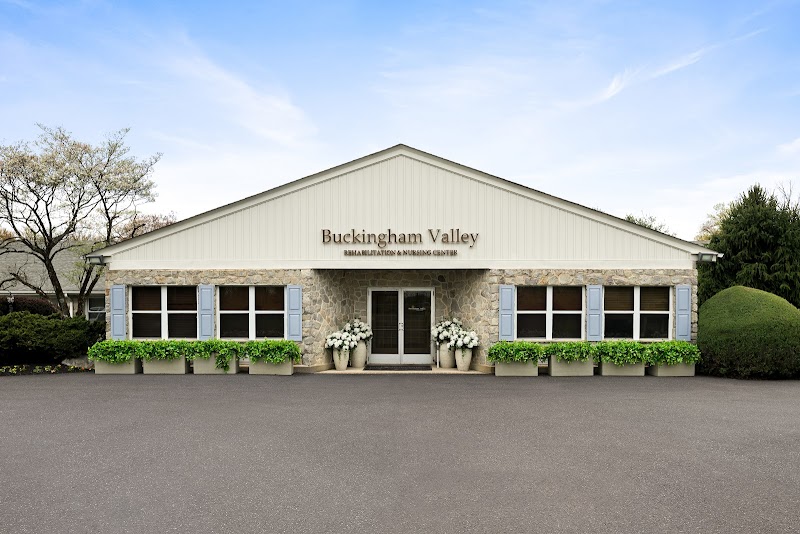
How is Buckingham Valley Rehabilitation And Nursingcenter Staffed?

CMS rates BUCKINGHAM VALLEY REHABILITATION AND NURSINGCENTER's staffing level at 3 out of 5 stars, which is average compared to other nursing homes. Staff turnover is 52%, compared to the Pennsylvania average of 46%.

What Have Inspectors Found at Buckingham Valley Rehabilitation And Nursingcenter?

State health inspectors documented 10 deficiencies at BUCKINGHAM VALLEY REHABILITATION AND NURSINGCENTER during 2023 to 2025. These included: 9 with potential for harm and 1 minor or isolated issues.

Who Owns and Operates Buckingham Valley Rehabilitation And Nursingcenter?

BUCKINGHAM VALLEY REHABILITATION AND NURSINGCENTER is owned by a for-profit company. For-profit facilities operate as businesses with obligations to shareholders or private owners. The facility is operated by PRESTIGE HEALTHCARE ADMINISTRATIVE SERVICES, a chain that manages multiple nursing homes. With 130 certified beds and approximately 122 residents (about 94% occupancy), it is a mid-sized facility located in BUCKINGHAM, Pennsylvania.

How Does Buckingham Valley Rehabilitation And Nursingcenter Compare to Other Pennsylvania Nursing Homes?

Compared to the 100 nursing homes in Pennsylvania, BUCKINGHAM VALLEY REHABILITATION AND NURSINGCENTER's overall rating (5 stars) is above the state average of 3.0, staff turnover (52%) is near the state average of 46%, and health inspection rating (4 stars) is above the national benchmark.

What Should Families Ask When Visiting Buckingham Valley Rehabilitation And Nursingcenter?

Based on this facility's data, families visiting should ask: "Can I visit during a mealtime to observe dining assistance and food quality?" "How do you handle medical emergencies, and what is your hospital transfer rate?" "Can I speak with family members of current residents about their experience?"

Is Buckingham Valley Rehabilitation And Nursingcenter Safe?

Based on CMS inspection data, BUCKINGHAM VALLEY REHABILITATION AND NURSINGCENTER has a clean safety record: no substantiated abuse findings (meaning no confirmed cases of resident harm), no Immediate Jeopardy citations (the most serious violation level indicating risk of serious injury or death), and is not on the Special Focus Facility watch list (a federal program monitoring the lowest-performing 1% of nursing homes). The facility has a 5-star overall rating and ranks #1 of 100 nursing homes in Pennsylvania. While no facility is perfect, families should still ask about staff-to-resident ratios and recent inspection results during their visit.

Do Nurses at Buckingham Valley Rehabilitation And Nursingcenter Stick Around?

BUCKINGHAM VALLEY REHABILITATION AND NURSINGCENTER has a staff turnover rate of 52%, which is 6 percentage points above the Pennsylvania average of 46%. Moderate turnover is common in nursing homes, but families should still ask about staff tenure and how the facility maintains care continuity when employees leave.

Was Buckingham Valley Rehabilitation And Nursingcenter Ever Fined?

BUCKINGHAM VALLEY REHABILITATION AND NURSINGCENTER has no federal fines on record. CMS issues fines when nursing homes fail to meet care standards or don't correct problems found during inspections. The absence of fines suggests the facility has either maintained compliance or corrected any issues before penalties were assessed. This is a positive indicator, though families should still review recent inspection reports for the full picture.

Is Buckingham Valley Rehabilitation And Nursingcenter on Any Federal Watch List?

BUCKINGHAM VALLEY REHABILITATION AND NURSINGCENTER is not on any federal watch list. The most significant is the Special Focus Facility (SFF) program, which identifies the bottom 1% of nursing homes nationally based on persistent, serious quality problems. Not being on this list means the facility has avoided the pattern of deficiencies that triggers enhanced federal oversight. This is a positive indicator, though families should still review the facility's inspection history directly.