CLARION NURSING AND REHAB

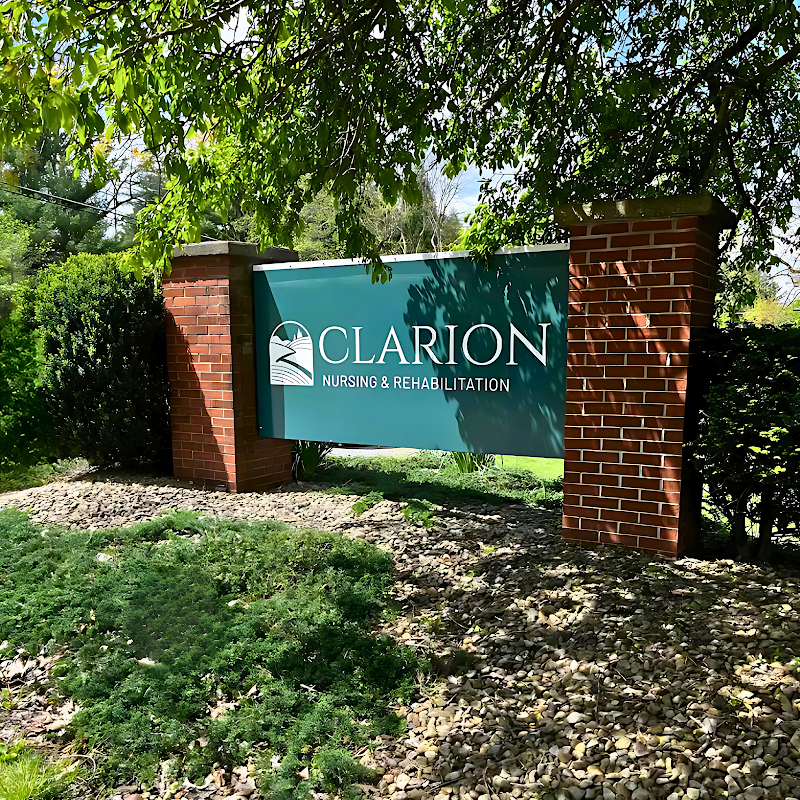
999 HEIDRICK STREET, CLARION, PA 16214 (814) 226-6380
For profit - Corporation 83 Beds VALLEY WEST HEALTH Data: November 2025
Trust Grade
73/100
#161 of 653 in PA
Last Inspection: March 2025

Within standard 12-15 month inspection cycle. Federal law requires annual inspections.

Overview

Clarion Nursing and Rehab has received a Trust Grade of B, indicating it is a good choice among nursing homes, though there may be room for improvement. It ranks #161 out of 653 facilities in Pennsylvania, placing it in the top half, and is the best option among the two facilities in Clarion County. The facility is improving, with issues decreasing from nine in 2024 to four in 2025. However, staffing is a concern, as it has a poor rating of 0 out of 5 stars, with a turnover rate of 42%, which is slightly better than the state average. While the facility has incurred $8,018 in fines, which is considered average, there are notable incidents of concern, such as a failure to properly administer medications according to established standards and not following care plans for resident repositioning and treatment. These shortcomings, alongside the high turnover rate, suggest that while the facility has strengths, such as overall good health inspection results, families should carefully weigh these factors when considering Clarion Nursing and Rehab for their loved ones.

Trust Score
B
73/100
In Pennsylvania
#161/653
Top 24%
Safety Record
Low Risk
No red flags
Inspections
Getting Better
9 → 4 violations
Staff Stability
○ Average
42% turnover. Near Pennsylvania's 48% average. Typical for the industry.
Penalties
○ Average
$8,018 in fines. Higher than 62% of Pennsylvania facilities. Some compliance issues.
Skilled Nurses
○ Average
RN staffing data not reported for this facility.
Violations
⚠ Watch
15 deficiencies on record. Higher than average. Multiple issues found across inspections.
★★★★☆
4.0
Overall Rating
☆☆☆☆☆
0.0
Staff Levels
★★★☆☆
3.0
Care Quality
★★★★☆
4.0
Inspection Score
Stable
2024: 9 issues
2025: 4 issues

The Good

  • Full Sprinkler Coverage · Fire safety systems throughout facility
  • No fines on record
  • Staff turnover below average (42%)

    6 points below Pennsylvania average of 48%

Facility shows strength in fire safety.

The Bad

Staff Turnover: 42%

Near Pennsylvania avg (46%)

Typical for the industry

Federal Fines: $8,018

Below median ($33,413)

Minor penalties assessed

Chain: VALLEY WEST HEALTH

Part of a multi-facility chain

Ask about local staffing decisions and management

The Ugly 15 deficiencies on record

Mar 2025 4 deficiencies
CONCERN (D) 📢 Someone Reported This

A family member, employee, or ombudsman was alarmed enough to file a formal complaint

Potential for Harm - no one hurt, but risky conditions existed

Quality of Care (Tag F0684)

Could have caused harm · This affected 1 resident

**NOTE- TERMS IN BRACKETS HAVE BEEN EDITED TO PROTECT CONFIDENTIALITY** Based on review of facility policy and clinical records, and staff interview, it was determined that the facility failed to ensu...

Read full inspector narrative →
**NOTE- TERMS IN BRACKETS HAVE BEEN EDITED TO PROTECT CONFIDENTIALITY** Based on review of facility policy and clinical records, and staff interview, it was determined that the facility failed to ensure that the resident plan of care was followed for one of 18 residents reviewed (Resident R224). Findings include: Review of facility policy entitled Repositioning dated 1/21/25, indicated that Review the resident's care plan to evaluate for any special needs . Repositioning is critical for a resident who is immobile or dependent upon staff for repositioning. and Residents who are in bed should be on at least an every two hour (q2 hour) repositioning schedule. Review of Resident R224's clinical record revealed an admission date of 3/19/25, with diagnoses that included hypertension (high blood pressure), hypothyroidism (a condition when the thyroid produces low amounts of thyroid hormones), and chronic systolic congestive heart failure (the inability of the heart to maintain an adequate supply of blood to organs and tissues). Review of Resident 224's care plans revealed a plan of care for at risk for alteration in skin integrity related to impaired mobility, with an intervention for turn and reposition every two hours. Review of Resident 224's [NAME] (a source of information for nursing assistants to see care needs for the resident) revealed under resident care Turn and reposition every 2 hours. Observations on 3/26/25, at 10:16 a.m., 10:54 a.m. and 1:05 p.m. revealed Resident R224 was laying in his/her bed on his/her back. Observations on 3/27/25, at 9:40 a.m., 11:30 a.m. and 11:45 a.m. revealed Resident R224 was laying in his/her bed on his/her back. During an interview on 3/27/25, at 11:45 a.m. the Director of Nursing (DON) confirmed that Resident R224 was laying in his/her bed on his/her back. The DON also confirmed that Resident R224 has a care plan with an intervention to be turned and repositioned every two hours. 28 Pa. Code 211.12(d)(3)(5) Nursing services 28 Pa. Code 211.10(c)(d) Resident care policies
CONCERN (D)

Potential for Harm - no one hurt, but risky conditions existed

Deficiency F0688 (Tag F0688)

Could have caused harm · This affected 1 resident

Based on review of facility policy and clinical records, observations, and staff interview, it was determined that the facility failed to ensure that a resident with limited range of motion related to...

Read full inspector narrative →
Based on review of facility policy and clinical records, observations, and staff interview, it was determined that the facility failed to ensure that a resident with limited range of motion related to a contracture (a permanent or temporary tightening of soft tissues and muscles that restricts normal movements) received physician ordered treatment and services to prevent further decrease in range of motion for one of 18 residents reviewed (Resident R19). Findings include: Review of facility policy entitled, Use of Assistive Devices dated 1/21/25, revealed A nurse with responsibility for the resident will monitor for the consistent use of the device and safety in the use of the device. Review of Resident R19's clinical record revealed an admission date of 5/3/23, with diagnoses that included orthopedic aftercare following surgical amputation, myopathy (a disease that attacks muscles making them weak), and muscle spasm. Review of Resident R19's physician's orders revealed an order dated 10/23/24, to place a rolled up washcloth in resident's right hand for contracture until palm grips (a medical device placed on the hand to help with contractures) can be ordered. Change daily. Wash thoroughly with soap and water and dry fully between changes. Observations on 3/25/25, at approximately 3:15 p.m. and again on 3/27/25, at approximately 10:03 a.m. revealed Resident R19 lying in bed with no washcloth or palm grip to his/her right hand. Observations on 3/28/25, at approximately 9:12 a.m. with the Director of Nursing (DON) revealed Resident R19 lying in bed with no washcloth or palm grip to his/her right hand. At that time, the DON confirmed that Resident R19 did not have a washcloth or palm grip on his/her right hand contracture per physician's orders and that either a washcloth or a palm grip should have been in place. 28 Pa. Code 201.18 (b)(1) Management 28 Pa. Code 211.10 (d) Resident care policies 28 Pa. Code 211.12 (d)(1)(3)(5) Nursing services
CONCERN (D)

Potential for Harm - no one hurt, but risky conditions existed

Respiratory Care (Tag F0695)

Could have caused harm · This affected 1 resident

Based on review of facility policy and clinical records, observations, and staff interview, it was determined that the facility failed to provide oxygen according to physician's orders for one of one ...

Read full inspector narrative →
Based on review of facility policy and clinical records, observations, and staff interview, it was determined that the facility failed to provide oxygen according to physician's orders for one of one residents reviewed for respiratory services (Resident R224). Findings include: Review of facility policy entitled Oxygen Administration dated 1/21/25, indicated Verify that there is a physician's order for this procedure. Review the physician's order . for oxygen administration, and Review the resident's care plan . Review of Resident R224's clinical record revealed an admission date of 3/19/25, with diagnoses that included hypertension (high blood pressure), hypothyroidism (a condition when the thyroid produces low amounts of thyroid hormones), and chronic systolic congestive heart failure (the inability of the heart to maintain an adequate supply of blood to organs and tissues). Review of Resident R224's clinical record revealed a physician's order dated 3/20/25, for Oxygen 1.5L/min (liters per minute) only at hours of sleep every night shift. Review of Resident R224's respiratory care plan dated 3/20/25, revealed an intervention for Oxygen at 1.5L/min via NC, (Nasal Cannula-a thin tube with two prongs that fit into the resident's nostrils to deliver oxygen), only at HS (hour of sleep). Observations on 3/25/25, at 3:00 p.m. revealed Resident R224 laying in his/her bed with supplemental oxygen in place being administered via NC. Observations on 3/26/25, at 8:25 a.m. revealed Resident R224 was sitting in the lounge in his/her wheelchair with supplemental oxygen in place being administered via NC. Observations at 10:16 a.m., 10:54 a.m. and 1:05 p.m. revealed Resident R224was laying in his/her bed with supplemental oxygen in place being administered via NC. Observations on 3/27/25, at 9:40 a.m., 11:30 a.m. and 11:45 a.m. revealed Resident R224 was laying in his/her bed with supplemental oxygen in place being administered via NC. During an interview on 3/27/25, at 11:45 a.m. the Director of Nursing confirmed that Resident R224's supplemental oxygen was on and being administered via NC. He/she also confirmed that the oxygen administration was not in accordance with the physician's order dated 3/20/25, for oxygen to be applied only at HS. 28 Pa. Code 211.10(c) Resident care policies 28 Pa. Code 211.12(d)(1)(5) Nursing services
CONCERN (D)

Potential for Harm - no one hurt, but risky conditions existed

Deficiency F0761 (Tag F0761)

Could have caused harm · This affected 1 resident

Based on review of facility policies and manufacturer's guidelines, observations, and staff interviews, it was determined that the facility failed to ensure that medications were properly dated when o...

Read full inspector narrative →
Based on review of facility policies and manufacturer's guidelines, observations, and staff interviews, it was determined that the facility failed to ensure that medications were properly dated when opened and failed to ensure expired medications were discarded in a timely manner in one medication room and in one of two medication carts reviewed (C/B Medication Room and B-Wing Cart). Findings include: Review of a facility policy entitled Storage of Medications dated 1/21/25, indicated that, Outdated, contaminated, or deteriorated medications and those in containers that are cracked, soiled, or without secure closures are immediately removed from stock, disposed of according to procedures for medication disposal. Review of a facility policy entitled Medication Labeling and Storage dated 1/21/25, indicated that, Multi-dose vials that have been opened or accessed are dated and discarded within 28 days unless the manufacturer specifies a shorter or longer date for the open vial. Manufacturer's guidelines for Tubersol PPD (solution used for tuberculosis testing upon admission and for employment), indicated that vials which are entered and in use for 30 days should be discarded. Manufacturer's guidelines for Humalog insulin (a fast-acting insulin used to manage blood sugar levels in people with diabetes), indicated that after opened, vials and pre-filled pens should be discarded after 28 days. Observation on 3/25/25, at approximately 3:30 p.m. of the C/B medication room refrigerator revealed an opened vial of Tubersol PPD without an open date, therefore the staff were unable to determine the discard date and an opened vial of Tubersol PPD with an open date of 2/8/25, therefore the medication was expired. During an interview at that time, Licensed Practical Nurse (LPN) Employee E1 confirmed that the opened Tubersol PPD vial lacked an open date, therefore staff were unable to determine the discard date and that the Tubersol PPD vial with the open date of 2/8/25, was expired and should have been discarded. Observation on 3/25/25, at approximately 3:41 p.m. of the B-Wing medication cart revealed an open injector pen of Humalog insulin with an open date of 2/17/25, therefore the medication was expired. During an interview at that time, LPN Employee E2 confirmed that the injector pen of Humalog insulin with the open date of 2/17/25, was expired and should have been discarded. 28 Pa. Code 211.9(a)(1) Pharmacy services 28 Pa. Code 211.10(c) Resident care policies 28 Pa. Code 211.12(d)(1)(3)(5) Nursing services
Jul 2024 1 deficiency
CONCERN (D) 📢 Someone Reported This

A family member, employee, or ombudsman was alarmed enough to file a formal complaint

Potential for Harm - no one hurt, but risky conditions existed

Deficiency F0836 (Tag F0836)

Could have caused harm · This affected 1 resident

Based on review of facility policy, Pennsylvania Code Title 49. Professional and Vocational Standards, clinical records, and facility documentation, and staff interview, it was determined that the fac...

Read full inspector narrative →
Based on review of facility policy, Pennsylvania Code Title 49. Professional and Vocational Standards, clinical records, and facility documentation, and staff interview, it was determined that the facility failed to follow nursing standards of practice for safe medication administration for one of two residents reviewed for medication administration (Resident R1). Findings include: Review of Facility Policy entitled, Administering Medications, dated 1/2/2024, indicated, 11. The following information is checked/verified for each resident prior to administering medications: a. Allergies to medications. Review of Pennsylvania Code Title 49. Professional and Vocational Standards 21.145. Functions of the Licensed Practical Nurse (LPN) (a)(3) stated, The LPN shall question any order which is perceived as unsafe or contraindicated for the patient or which is not clear and shall raise the issue with the ordering practitioner. If the ordering practitioner is not available, the LPN shall raise the issue with a Registered Nurse (RN) or other responsible person in a manner consistent with the protocols or policies of the facility. and 21.11. General functions of the RN (a)(4) stated, Carries out nursing care actions which promote, maintain and restore the well-being of individuals and (b) The RN is fully responsible for all actions as a licensed nurse and is accountable to clients for the quality of care delivered and (d) The Board recognizes standards of practice and professional codes of behavior, as developed by appropriate nursing associations, as the criteria for assuring safe and effective practice. Review of Resident R1's clinical record revealed an admission date of 7/15/2022, with diagnoses that included chronic obstructive pulmonary disease (disease causing difficulty breathing), cough, edema (retention of fluid in the body), and chronic atrial fibrillation (irregular heartbeat). Keflex (an antibiotic used to treat an infection) was listed as an allergy on admission and is highlighted red in the clinical record. Review of progress notes revealed that on 6/17/2024, at 12:03 p.m. RN Employee E1 contacted the physician and received a verbal order for Keflex (antibiotic) 500 milligrams every eight hours for 10 days for pain, redness, and tenderness of the right lower extremity around a skin tear and that the LPN Employee E2 was notified of the order. On 6/17/2024, at 12:57 p.m. LPN Employee E2 administered the Keflex as ordered by the physician. On 6/17/2024, at 1:20 p.m. RN Employee E1 documented one dose of Keflex, which was listed as an allergy was administered to Resident R1. On 6/17/2024, LPN Employee E2 documented that one dose of Keflex was administered to Resident R1 and that he/she did not notice the allergy until after the dose was given. Review of an investigation initiated on 6/18/2024, by the Director of Nursing (DON) revealed that RN Employee E1 failed to verify Resident R1's allergies prior to placing the order into the facility computer system and contacting the LPN Employee E2 and LPN Employee E2 failed to review Resident R1's clinical record for allergies prior to administering a newly ordered medication. During an interview with LPN Employee E2 on 7/2/2024, at approximately 10:30 a.m. he/she confirmed that the medication was administered to Resident R1 before the allergies were reviewed in the clinical record and that allergies should have been reviewed prior to administering a newly ordered medication. During an interview on 7/2/2024, at approximately 2:00 p.m. the Nursing Home Administrator and the DON confirmed that RN Employee E1 did not review allergies prior to placing a new order into the facility computer system and contacting LPN Employee E2 and LPN Employee E2 did not review Resident R1's allergies prior to administering a newly ordered medication. 28 Pa. Code 211.12(d)(1)(2)(5) Nursing services
Apr 2024 8 deficiencies
CONCERN (D)

Potential for Harm - no one hurt, but risky conditions existed

Deficiency F0561 (Tag F0561)

Could have caused harm · This affected 1 resident

**NOTE- TERMS IN BRACKETS HAVE BEEN EDITED TO PROTECT CONFIDENTIALITY** Based on observation, review of clinical records and facility policy, and resident and staff interviews, it was determined that ...

Read full inspector narrative →
**NOTE- TERMS IN BRACKETS HAVE BEEN EDITED TO PROTECT CONFIDENTIALITY** Based on observation, review of clinical records and facility policy, and resident and staff interviews, it was determined that the facility failed to allow residents the right to make choices about aspects of his or her life in the facility that are significant to the resident for one of 20 residents reviewed (Resident R17). Findings include: Resident R17's clinical record revealed an admission date of 11/10/20, with diagnoses that included diabetes (condition of improper blood sugar control), anxiety (a condition that causes a person to be nervous, uneasy, or worried about something or someone), and Crohn's disease (a chronic inflammation of the digestive tract that leads to abdominal pain and severe diarrhea). Review of facility policy entitled Resident Rights dated 1/2/24, revealed Federal and state laws guarantee certain rights to all residents . These rights include the residents right to, self-determination. Review of Resident R17's Minimum Data Set (MDS- periodic assessment of resident care needs) assessment dated [DATE], indicated that Resident R17 had a Brief Interview for Mental Status (BIMS-tool used to assess cognitive status) of 15 (a score from 13 to 15 indicates intact cognition, or mental status). Review of Resident R17's care plans revealed a care plan focus for activities with interventions that included encourage resident out of room for activities. Further review of care plans revealed a care plan focus for depression with interventions that included involve resident in making his/her own schedule of activities. Review of Resident R17's MDS Section F 0500 dated 8/16/23, indicated that participating in religious services or practices, attending favorite activities, and doing things with a group of people is very important to Resident R17. During an interview with Resident R17 on 4/9/24, at 12:00 p.m. resident shared that he/she wanted to be out of bed for meals including breakfast and that he/she would like to be up in his/her wheelchair to eat. He/she also shared that he/she wants to attend bible study, and other activities but staff does not always have him/her up to attend on a regular basis. Observation on 4/9/24, at 12:00 p.m. revealed Resident R17 was laying in his/her bed dressed in his/her pajamas. Further observations at 2:10 p.m. revealed resident was laying in his/her bed and remained dressed in his/her pajamas, and at 2:13 p.m. resident was observed being assisted by staff getting ready for the day. Observation on 4/10/24, at 10:00 a.m. revealed Resident R17 was laying in his/her bed dressed in his/her pajamas, further observations at 11:34 a.m. revealed resident was laying in his/her bed and remained dressed in his/her pajamas, with further observations on 4/10/24, revealed that at 12:30 p.m. resident was up in his/her wheelchair appropriately dressed. Observation on 4/10/24, at 12:37 p.m. revealed Resident R17 was being assisted to the dining room for lunch when a staff member approached Resident R17 with his/her lunch tray. At the time of observation, Resident R17 was observed being taken back to his/her room to eat his/her lunch. During an interview with Resident R17 on 4/10/24, at 12:45 p.m. he/she shared that he/she was eating in her room because the staff told him/her that lunch was done in the dining room. He/she shared that she eats in the dining room for lunch. Observation on 4/10/24, at 12:55 p.m. of the seating chart in the dining room revealed Resident R17's name on the seating chart posted on the wall in the dining room. Observation on 4/11/24, at 9:35 a.m. Resident R17 was laying in his/her bed dressed in his/her pajamas, further observation on 4/11/24, at 10:35 a.m. revealed resident was up in his/her wheelchair. Interview with Resident R17 on 4/11/24, at 10:40 a.m. revealed he/she shared that he/she wanted to be at a resident council meeting that was scheduled at 10:00 a.m. but he/she had just got out of bed. He/she shared that not getting out of bed in a timely manner happens often. During an interview on 4/12/24, at 11:25 a.m. the Nursing Home Administrator and the Director of Nursing confirmed that residents have the right to be out of bed for meals and activities. They also confirmed that it is not appropriate for staff to not get a resident out of bed per the resident's wishes. 28 Pa. Code 201.29 (a) Resident rights 28 Pa. Code 201.18 (b)(1)(3) Management 28 Pa. Code 211.12(d)(1)(5) Nursing services
CONCERN (D)

Potential for Harm - no one hurt, but risky conditions existed

Deficiency F0583 (Tag F0583)

Could have caused harm · This affected 1 resident

Based on review of facility policy, observations, and staff interview, it was determined that the facility failed to maintain privacy of confidential information during medication administration for o...

Read full inspector narrative →
Based on review of facility policy, observations, and staff interview, it was determined that the facility failed to maintain privacy of confidential information during medication administration for one of three resident units (Unit C). Findings include: Review of a facility policy entitled Confidentiality of Information and Personal Privacy dated 1/2/24, indicated The facility will safeguard the personal privacy and confidentiality of all Resident personal and medical records. Observation on 4/9/24, between 3:50 p.m. and 4:20 p.m. revealed Licensed Practical Nurse (LPN) Employee E1 performing resident medication administration to Residents R5, R10, R26, R28, R45, R47, and R60. The medication cart was parked in the hallway against the wall with the computer screen unlocked and open, sitting on top of the medication cart facing into the hallway with resident information accessible to anyone passing by in the corridor. On each occasion, the LPN proceeded into the resident's room to administer medication where the medication cart / computer screen was out of his/her view and did not cover resident information that was on the computer screen accessible to anyone passing by. During an interview on 4/9/24, at 4:20 p.m. LPN Employee E1 confirmed that he/she left the medication cart unattended and out of his/ her view the computer open and resident information accessible to anyone passing by. 28 Pa. Code 201.14(a) Responsibility of licensee 28 Pa. Code 211.5(b) Medical records 28 Pa. Code 211.12(d)(1)(5) Nursing services
CONCERN (D)

Potential for Harm - no one hurt, but risky conditions existed

Free from Abuse/Neglect (Tag F0600)

Could have caused harm · This affected 1 resident

**NOTE- TERMS IN BRACKETS HAVE BEEN EDITED TO PROTECT CONFIDENTIALITY** Based on review of facility policy and documentation and clinical record, and resident and staff interviews, it was determined t...

Read full inspector narrative →
**NOTE- TERMS IN BRACKETS HAVE BEEN EDITED TO PROTECT CONFIDENTIALITY** Based on review of facility policy and documentation and clinical record, and resident and staff interviews, it was determined that the facility failed to ensure that one of 20 residents reviewed was free of neglect during care. (Resident R8) Findings include: Review of facility policy entitled, Identifying Types of Abuse, dated 1/2/24, revealed that Neglect is the failure of the facility, its employees or service providers to provide goods and services to a resident that are necessary to avoid physical harm, pain, mental anguish, or emotional distress. Neglect occurs when the facility is aware of, or should have been aware of, goods or services that a resident requires but the facility fails to provide them, and this has resulted in (or may result in) physical harm, pain, mental anguish, or emotional distress. Neglect includes cases where the facility's indifference to or disregard for resident care, comfort, or safety results in (or could have resulted in) physical harm, pain, mental anguish, or emotional distress. Review of facility policy entitled, Safe Lifting and Movement of Residents dated 1/2/24, revealed that Resident safety, dignity, comfort, and medical condition will be incorporated into goals and decisions regarding the safe lifting and moving of residents. Review of Resident R8's clinical record revealed an admission date of 7/10/08, with diagnoses that included multiple sclerosis (a disease where the body's immune system attacks the nerves which can cause vision problems, muscle weakness, numbness, feeling tired, difficulty thinking and bowel and bladder dysfunction), dementia (a disease that affects short term memory and the ability to think logically), and chronic obstructive pulmonary disease (when your lungs do not have adequate air flow). Review of Resident R8's Quarterly Minimum Data Set (MDS - an assessment tool used to facilitate the management of care) assessment dated [DATE], revealed under section GG 0170 E, that Resident R8 is dependent on staff for transfers from chair to bed. Review of Resident R8's [NAME] (an easy reference of resident care needs for the nursing assistants to reference), revealed under transferring that Resident R8 transfers with mechanical lift (Sara lift-type of mechanical lift) and required two staff members. Review of Resident R8's Task (section of the clinical record where nursing assistants document in the resident record for care provided), documentation under transfer support provided revealed the resident was a two person physical assist. Review of Resident R8's revision of care plan dated 4/1/24, for transfers revealed that Resident R8 transfers with a mechanical lift (Sara lift) and two staff. Review of Resident R8's active physician orders as of 4/7/24, revealed an order for a Sara lift for all transfers. Review of information submitted by facility dated 4/8/24, and interview with the Nursing Home Administrator and Director of Nursing revealed that Resident R8 was transferred from his/her wheelchair with the Sara lift to his/her bed with assist of one staff member resulting in Resident R8 being lowered to the floor. Review of facility's investigation revealed that NA Employee E3 confirmed on 4/7/24, he/she transferred Resident R8 with the Sara lift without the two staff members as required. NA Employee E3's statement revealed that he/she transferred Resident R8 using the Sara lift without another staff member. NA Employee E3 had Resident R8 sitting on the edge of the bed with the Sara lift still attached to Resident R8 when Resident R8 started to slide off the bed. NA Employee E3 grabbed Resident R8 under the arms and lowered Resident R8 to the floor. Review of documentation submitted by the facility dated 4/8/24, revealed that the facility initiated an investigation, regarding resident neglect on 4/8/24. The investigation revealed that NA Employee E3 was suspended pending investigation. During an interview on 4/12/24, at 11:45 a.m. the Nursing Home Administrator and Director of Nursing confirmed that NA Employee E3 did not get another staff member to assist in the transfer of Resident R8 that required assist of two staff with transfers. They also confirmed that all mechanical lifts must have two staff when in use with a resident. 28 Pa. Code 201.14(a) Responsibility of licensee 28 Pa. Code 201.18(b)(1) Management 28 Pa. Code 201.18(e)(1) Management 28 Pa. Code 211.12(c) Nursing services 28 Pa. Code 211.12(d)(1)(3)(5) Nursing services
CONCERN (D)

Potential for Harm - no one hurt, but risky conditions existed

Respiratory Care (Tag F0695)

Could have caused harm · This affected 1 resident

Based on review of facility policy and clinical records, observations, and staff interview, it was determined that the facility failed to maintain proper care of respiratory equipment for one of two r...

Read full inspector narrative →
Based on review of facility policy and clinical records, observations, and staff interview, it was determined that the facility failed to maintain proper care of respiratory equipment for one of two residents reviewed for respiratory services (Resident R22). Findings include: Review of the facility policy entitled Departmental (Respiratory Therapy) - Prevention of Infection dated 1/2/24, indicated to Wash filters from oxygen concentrators every seven days with soap and water. Rinse and squeeze dry. Resident R22's clinical record revealed an admission date of 1/20/21, with diagnoses that included Diabetes, High Blood Pressure, and Alzheimer's Disease (brain disorder that destroys memory and thinking skills and eventually, the ability to carry out simple tasks). Resident R22's physician's order dated 7/12/23, revealed that oxygen was ordered at two liters per minute for shortness of breath via nasal cannula (tubing that enters into the nostrils to administer oxygen) every shift. Observations on 4/9/24, at 11:21 a.m. and on 4/10/24, at 9:38 a.m. revealed that Resident R22's oxygen concentrator had two filters, one on each side of the concentrator, that contained a gray dusty substance. During an interview on 4/10/23, at 9:56 a.m. Registered Nurse Employee E2 confirmed that the oxygen concentrator filters contained a gray dusty substance and are to be cleaned on a weekly basis. 28 Pa. Code 211.12(d)(1)(5) Nursing services
CONCERN (D)

Potential for Harm - no one hurt, but risky conditions existed

Pharmacy Services (Tag F0755)

Could have caused harm · This affected 1 resident

Based on a review of facility policy and closed clinical records, and staff interview, it was determined that the facility failed to implement procedures to promote accurate and safe disposition of co...

Read full inspector narrative →
Based on a review of facility policy and closed clinical records, and staff interview, it was determined that the facility failed to implement procedures to promote accurate and safe disposition of controlled medication records for one of three closed records reviewed (Resident CR68). Findings include: Review of the facility policy, entitled Disposal of Medications and Medication related Supplies, dated 1/02/24, indicated, Schedule II-V medications remaining in the facility after a resident has been discharged , or the order discontinued, are disposed of in the facility by two licensed nurses or a licensed nurse and a licensed pharmacist as directed by state laws, regulations, and/or the DEA. Review of Resident CR68's closed clinical record revealed admission to the facility on 4/02/13. Resident CR68 ceased to breathe on 2/18/24. Review of Resident CR68's closed clinical record revealed a lack of evidence that two licensed nurses were present and signed on 2/18/24, when 12.5 milliliters of Morphine (a controlled schedule II drug used for pain management and to help with breathing) and 29.75 milliliters of Lorazepam (a controlled schedule IV drug used for anxiety) were transferred to a Federally approved waste container. During an interview on 4/12/24, at 12:40 p.m. the Director of Nursing confirmed that the disposition of medications documentation lacked evidence that two licensed nurses were present and signed on 2/18/24, when 12.5 milliliters of Morphine and 29.75 milliliters of Lorazepam for Resident CR68 were transferred to a Federally approved waste container and that two licensed nurses should always be present and sign when disposing of a controlled drug. 28 Pa. Code 211.9(a)(1)Pharmacy services 28 Pa. Code 211.9(j.1)(3) Pharmacy services 28 Pa. Code 211.12(d)(3) Nursing services
CONCERN (D)

Potential for Harm - no one hurt, but risky conditions existed

Medication Errors (Tag F0758)

Could have caused harm · This affected 1 resident

Based on review of facility policy and clinical records, and staff interview, it was determined that the facility failed to provide evidence that non-pharmacological interventions (interventions attem...

Read full inspector narrative →
Based on review of facility policy and clinical records, and staff interview, it was determined that the facility failed to provide evidence that non-pharmacological interventions (interventions attempted to calm a resident other than medication) were attempted prior to administration of a PRN (as needed) psychotropic (affecting the mind) medication for two of six residents reviewed for unnecessary medications (Residents R39 and R60). Findings include: Review of a facility policy entitled Psychotropic Medication Use dated 1/2/24, indicated that Non-pharmacological approaches are used (unless contraindicated) to minimize the need for medications, permit the lowest possible dose, and allow for discontinuation of medications when possible. Resident R39's clinical record revealed an admission date of 10/19/22, with diagnoses that included dementia (brain disorder that affects memory, thinking, and social abilities), anxiety, and depression. Resident R39's clinical record revealed a physician's order dated 1/12/24, that identified to administer Haldol (medication to treat mental/mood disorders) injection 1 milligram (mg) intramuscular (IM) times one for agitation, combativeness, and anxiety. Resident R39's Medication Administration Record (MAR) for January 2024 revealed that the Haldol was administered on 1/12/24, at 2:41 p.m. Review of the January 2024 MAR and clinical record progress notes revealed that there was no evidence that non-pharmacological interventions were attempted prior to the administration of the Haldol. Resident R39's clinical record revealed a physician's order dated 4/6/24, that identified to administer Lorazepam (medication to treat anxiety) 0.5 mg by mouth every 12 hours PRN for anxiety / agitation for 14-days. Resident R39's MAR for April 2024 revealed that the Lorazepam was used twice between 4/6/24, and 4/20/24. Review of April 2024 MAR and clinical record progress notes revealed that there was no evidence that non-pharmacological interventions were attempted prior to the administration of the PRN Lorazepam two of the two times the Lorazepam was utilized in April 2024. Resident R60's clinical record revealed an admission date of 10/13/23, with diagnoses that included dementia, anxiety, and depression. Resident R60's clinical record revealed a physician's order dated 10/21/23, that identified to administer Vistaril (medication to treat anxiety) 25 mg by mouth every 6 hours PRN for anxiety / agitation. A physician's order dated 10/27/23, identified to administer Vistaril 25 mg by mouth every 6 hours PRN for restlessness. A physician's order dated 12/21/23, identified to administer Vistaril 25 --mg po every 8 hours PRN for anxiety / agitation. A physician's order dated 1/25/24, identified to administer Vistaril 25 mg po every 6 hours PRN for restlessness. Resident R60's MAR for October 2023 revealed that the Vistaril was used 12 times between 10/21/23, and 10/31/23. Review of October 2023 MAR and clinical record progress notes revealed that there was no evidence that non-pharmacological interventions were attempted prior to the administration of the PRN Vistaril nine of the 12 times the Vistaril was utilized in October 2023. Resident R60's MAR for November 2023 revealed that the Vistaril was used eight times between 11/1/23, and 11/16/23. Review of November 2023 MAR and clinical record progress notes revealed that there was no evidence that non-pharmacological interventions were attempted prior to the administration of the PRN Vistaril five of the eight times the Vistaril was utilized in November 2023. Resident R60's MAR for December 2023 revealed that the Vistaril was used four times between 12/21/23, and 12/31/23. Review of December 2023 MAR and clinical record progress notes revealed that there was no evidence that non-pharmacological interventions were attempted prior to the administration of the PRN Vistaril two of the four time the Vistaril was utilized in December 2023. Resident R60's MAR for January 2024 revealed that the Vistaril was used seven times between 1/1/24, and 1/4/24, and 1/25/24, and 1/31/24. Review of January 2024 MAR and clinical record progress notes revealed that there was no evidence that non-pharmacological interventions were attempted prior to the administration of the PRN Vistaril five of the seven times the Vistaril was utilized in January 2024. Resident R60's MAR for February 2024 revealed that the Vistaril was used five times between 2/1/24, and 2/29/24. Review of the February 2024 MAR and clinical record progress notes revealed that there was no evidence that non-pharmacological interventions were attempted prior to the administration of the PRN Vistaril five of the five times the Vistaril was utilized in February 2024. Resident R60's MAR for March 2024 revealed that the Vistaril was used four times between 3/1/24, and 3/17/24. Review of the March 2024 MAR and clinical record progress notes revealed that there was no evidence that non-pharmacological interventions were attempted prior to the administration of the PRN Vistaril four of the four times the Vistaril was utilized in March 2024. During an interview on 4/11/24, at 2:08 p.m. the Director of Nursing confirmed that there was no evidence of non-pharmacological interventions being attempted prior to the administration of the PRN Haldol and the PRN Lorazepam administered for Resident R39 and for the PRN Vistaril administered for Resident R60. 28 Pa. Code 211.12(d)(1)(3)(5) Nursing services 28 Pa. Code 201.18(b)(1)(3) Management
CONCERN (D)

Potential for Harm - no one hurt, but risky conditions existed

Food Safety (Tag F0812)

Could have caused harm · This affected 1 resident

Based on review of a facility policy, observations, and staff interview, it was determined that the facility failed to ensure that food was stored in accordance with standards for food safety in one o...

Read full inspector narrative →
Based on review of a facility policy, observations, and staff interview, it was determined that the facility failed to ensure that food was stored in accordance with standards for food safety in one of two refrigerators reviewed (first floor pantry). Findings include: Review of a facility policy entitled Food Receiving and Storage dated 1/2/24, indicated Beverages are dated when open and discarded after twenty-four (24) hours. Observation on 4/11/24, at approximately 1:35 p.m. revealed a refrigerator in the pantry used for residents on the first floor with two open containers of Imperial Butter Pecan 2.0 Cal Med Pass (a supplement that helps increased calorie intake) with no open date. During an interview on 4/11/24, at the time of observation with Registered Nurse Employee E2, he/she confirmed that the two open containers of Imperial 2.0 Cal Med Pass in the refrigerator should have been dated when opened. He/she also confirmed that the Imperial 2.0 Cal Med Pass should have been discarded due to no open date. 28 Pa. Code 201.14(a) Responsibility of licensee
CONCERN (E)

Potential for Harm - no one hurt, but risky conditions existed

Deficiency F0658 (Tag F0658)

Could have caused harm · This affected multiple residents

**NOTE- TERMS IN BRACKETS HAVE BEEN EDITED TO PROTECT CONFIDENTIALITY** Based on review of rights of medication administration, facility policy, observation, and staff interview, it was determined tha...

Read full inspector narrative →
**NOTE- TERMS IN BRACKETS HAVE BEEN EDITED TO PROTECT CONFIDENTIALITY** Based on review of rights of medication administration, facility policy, observation, and staff interview, it was determined that the facility failed to provide nursing services consistent with professional standards of practice for medication administration during observation of one of three resident units (Unit C). Findings include: Review of Eight Rights of Medication Administration published by [NAME] (a prominent medical publisher that provides essential health information for practitioners, faculty, residents, students and healthcare institutions) on 5/28/2011, rights of medication administration include: Right Patient, Right Medication (includes checking label and checking physician order), Right Dose (includes checking order), Right Route, Right Time, Right Documentation (after administration), Right Reason, and Right Response. Review of facility policy entitled Administering Medications dated 1/2/24, indicated The individual administering the medication checked the label THREE (3) times to verify the right resident, right medication, right dosage, right time, and right method (route) of administration before giving the medication. and The individual administering the medication initials the resident's MAR (medication administration record) on the appropriate line after giving each medication and before administering the next ones. Observation of medication administration pass on 4/9/24, at approximately 3:50 p.m. revealed Licensed Practical Nurse (LPN) Employee E1 logged onto his/her computer located on the top of the medication cart bringing up a list of residents names. The LPN proceeded to obtain medications for Resident R60 that included Buspar (medication to treat anxiety) 15 mg, Gabapentin (medication to treat seizures and/or pain) 100 mg, and Tylenol Extra Strength 500mg, he/she then proceeded to the unit lounge and administer Resident R60's medication. Upon returning to the medication cart, LPN Employee E1 proceeded to obtain medications for Resident R5 that included Duoneb (solution administered via nebulizer for individual with lung disease), he/she then proceeded to Resident R5's room and administer Resident R5's medication. Upon returning to the medication cart, LPN Employee E1 proceeded to move the medication cart down the hallway and then obtained medications for Resident R45 that included Potassium 10 meq (milliequivalent), he/she then proceeded to Resident R45's room and administered Resident R45's medication. Upon returning to the medication cart, LPN Employee E1 was going to proceed to the next resident. During an interview, the surveyor asked LPN Employee E1 if he/she normally completes their medication pass without looking at the resident's MAR and without signing for administration after each resident. LPN Employee E1 stated he/she is always on this hall so they know what the residents get. When asked what they do if there were medication changes, LPN Employee E1 stated he/she gets report and they would find out that way. When asked what they would do if they were not informed of changes in report, LPN Employee E1 stated he/she knows some residents have routine changes, so he/she would look at their MARs first. LPN Employee E1 stated the last place he/she worked he/she was taught to save time he/she could give all the medications and then when he/she was done he/she could go back and sign the MAR and if he/she noticed anything was missed he/she could then go back and give it. LPN Employee E1 then stated if it would make the surveyor feel better he/she would look at their MAR and sign off for medication administration like he/she should. During interview on 4/9/24, at approximately 4:00 p.m. LPN Employee E1 confirmed he/she did not reference the MAR record for Residents R60, R5, and R28 prior to administering the medication nor did he/she document the administration of the medications after each resident. 28 Pa. Code 211.12(c)(d)(1)(5) Nursing services. 28 Pa. Code 211.9 (a)(1) Pharmacy services
May 2023 2 deficiencies
CONCERN (D)

Potential for Harm - no one hurt, but risky conditions existed

Respiratory Care (Tag F0695)

Could have caused harm · This affected 1 resident

Based on review of facility policy and clinical records, observations, and staff interviews, it was determined that the facility failed to provide oxygen according to physician's orders for one of thr...

Read full inspector narrative →
Based on review of facility policy and clinical records, observations, and staff interviews, it was determined that the facility failed to provide oxygen according to physician's orders for one of three residents reviewed for respiratory services (Resident R34). Findings include: Review of facility policy entitled Oxygen Administration dated 1/2/23, revealed Verify that there is a physician's order And Review physician's order for oxygen administration. Review of Resident R34's clinical record revealed an admission date of 7/2/21, with diagnoses that included congestive heart failure (condition where your heart cannot supply enough blood to meet your body's needs resulting in symptoms such as difficulty breathing, swelling, and weakness), anxiety, and high blood pressure. Observation of Resident R34's oxygen flow meter (a medical device used for oxygen flow measurement) on 5/22/23, at 2:45 p.m. revealed the oxygen flow measurement was at 2.5 liters per minute through a nasal cannula (a tube that delivers oxygen to your nose through soft prongs). Observation of Resident R34's oxygen flow meter on 5/23/23, at 10:27 a.m. and again at 11:18 a.m. revealed the oxygen flow measurement was at 2.5 liters per minute through a nasal cannula. Observation of Resident R34's oxygen flow meter on 5/24/23, at 12:12 p.m. revealed the oxygen flow measurement was at 1.5 liters per minute through a nasal cannula. During an interview on 5/24/23, at 12:12 p.m. Registered Nurse (RN) Employee E1 confirmed the oxygen administration level was set at 1.5 liters per minute through a nasal cannula. During review of the clinical record with RN employee E1 on 5/24/23, at 12:14 p.m. it was confirmed that the physician's order dated 3/17/23, was for oxygen at three liters per minute through a nasal cannula and not 2.5 or 1.5 liters. 28 Pa. Code 211.12(d)(1)(3)(5) Nursing services 28 Pa. Code 211.5(f)(g)(h) Clinical records
CONCERN (D)

Potential for Harm - no one hurt, but risky conditions existed

Deficiency F0761 (Tag F0761)

Could have caused harm · This affected 1 resident

Based on review of facility policy, manufacturer's recommendations, observations, and staff interviews, it was determined that the facility failed to assure that medications were properly dated when o...

Read full inspector narrative →
Based on review of facility policy, manufacturer's recommendations, observations, and staff interviews, it was determined that the facility failed to assure that medications were properly dated when opened and discarded in a timely manner in one of two medication rooms and one of two medication carts reviewed. (A wing medication room and C wing medication cart). Findings include: Review of a facility policy entitled Storage of Medications dated 1/02/23, indicated that discontinued, outdated, or deteriorated drugs or biologicals are returned to the dispensing pharmacy or destroyed. Manufacturer's recommendations for Aplisol Tuberculin PPD (solution used for tuberculosis testing upon admission and for employment), indicated that vials in use more than 30 days should be discarded. Manufacturer's recommendations for Levemir (a long-acting insulin), indicated that an opened multiple-dose vial stored at room temperature should be discarded after 42 days. Observations of drug storage on 5/23/23, at approximately 1:10 p.m. in A wing's medication storage room refrigerator revealed an opened vial Aplisol Tuberculin PPD, without an open date, therefore the staff were unable to determine the discard date. During an interview at that time Licensed Practical Nurse (LPN) Employee E3 confirmed that the opened vial of Aplisol Tuberculin PPD lacked an open date and staff were unable to determine the discard date. Observations of drug storage on 5/23/23, at approximately 1:20 p.m. in C wing's medication cart revealed an opened vial of Levemir without an open date, therefore the staff were unable to determine the discard date. During an interview at that time LPN Employee E2 confirmed that the opened Levemir vial lacked an open date and staff were unable to determine the discard date. 28 Pa. Code 211.9(a)(1) Pharmacy services 28 Pa. Code 211.10(c) Resident care policies 28 Pa. Code 211.12(d)(1)(3)(5) Nursing services
Understanding Severity Codes (click to expand)
Life-Threatening (Immediate Jeopardy)
J - Isolated K - Pattern L - Widespread
Actual Harm
G - Isolated H - Pattern I - Widespread
Potential for Harm
D - Isolated E - Pattern F - Widespread
No Harm (Minor)
A - Isolated B - Pattern C - Widespread

Questions to Ask on Your Visit

  • "Can I speak with families of current residents?"
  • "What's your RN coverage like on weekends and overnight?"

Our Honest Assessment

Strengths
  • • No major safety red flags. No abuse findings, life-threatening violations, or SFF status.
  • • 42% turnover. Below Pennsylvania's 48% average. Good staff retention means consistent care.
Concerns
  • • 15 deficiencies on record. Higher than average. Multiple issues found across inspections.
Bottom line: Mixed indicators with Trust Score of 73/100. Visit in person and ask pointed questions.

About This Facility

What is Clarion Nursing And Rehab's CMS Rating?

CMS assigns CLARION NURSING AND REHAB an overall rating of 4 out of 5 stars, which is considered above average nationally. Within Pennsylvania, this rating places the facility higher than 99% of the state's 100 nursing homes. This rating reflects solid performance across the metrics CMS uses to evaluate nursing home quality.

How is Clarion Nursing And Rehab Staffed?

Staff turnover is 42%, compared to the Pennsylvania average of 46%. This relatively stable workforce can support continuity of care.

What Have Inspectors Found at Clarion Nursing And Rehab?

State health inspectors documented 15 deficiencies at CLARION NURSING AND REHAB during 2023 to 2025. These included: 15 with potential for harm.

Who Owns and Operates Clarion Nursing And Rehab?

CLARION NURSING AND REHAB is owned by a for-profit company. For-profit facilities operate as businesses with obligations to shareholders or private owners. The facility is operated by VALLEY WEST HEALTH, a chain that manages multiple nursing homes. With 83 certified beds and approximately 0 residents (about 0% occupancy), it is a smaller facility located in CLARION, Pennsylvania.

How Does Clarion Nursing And Rehab Compare to Other Pennsylvania Nursing Homes?

Compared to the 100 nursing homes in Pennsylvania, CLARION NURSING AND REHAB's overall rating (4 stars) is above the state average of 3.0, staff turnover (42%) is near the state average of 46%, and health inspection rating (4 stars) is above the national benchmark.

What Should Families Ask When Visiting Clarion Nursing And Rehab?

Based on this facility's data, families visiting should ask: "Can I visit during a mealtime to observe dining assistance and food quality?" "How do you handle medical emergencies, and what is your hospital transfer rate?" "Can I speak with family members of current residents about their experience?"

Is Clarion Nursing And Rehab Safe?

Based on CMS inspection data, CLARION NURSING AND REHAB has a clean safety record: no substantiated abuse findings (meaning no confirmed cases of resident harm), no Immediate Jeopardy citations (the most serious violation level indicating risk of serious injury or death), and is not on the Special Focus Facility watch list (a federal program monitoring the lowest-performing 1% of nursing homes). The facility has a 4-star overall rating and ranks #1 of 100 nursing homes in Pennsylvania. While no facility is perfect, families should still ask about staff-to-resident ratios and recent inspection results during their visit.

Do Nurses at Clarion Nursing And Rehab Stick Around?

CLARION NURSING AND REHAB has a staff turnover rate of 42%, which is about average for Pennsylvania nursing homes (state average: 46%). Moderate turnover is common in nursing homes, but families should still ask about staff tenure and how the facility maintains care continuity when employees leave.

Was Clarion Nursing And Rehab Ever Fined?

CLARION NURSING AND REHAB has been fined $8,018 across 1 penalty action. This is below the Pennsylvania average of $33,159. While any fine indicates a compliance issue, fines under $50,000 are relatively common and typically reflect isolated problems that were subsequently corrected. Families should ask what specific issues led to these fines and confirm they've been resolved.

Is Clarion Nursing And Rehab on Any Federal Watch List?

CLARION NURSING AND REHAB is not on any federal watch list. The most significant is the Special Focus Facility (SFF) program, which identifies the bottom 1% of nursing homes nationally based on persistent, serious quality problems. Not being on this list means the facility has avoided the pattern of deficiencies that triggers enhanced federal oversight. This is a positive indicator, though families should still review the facility's inspection history directly.