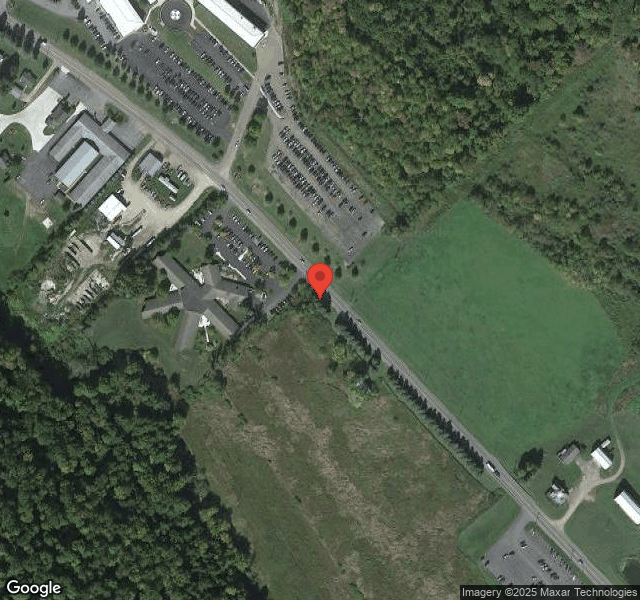

COLE PLACE

1001 EAST SECOND STREET, COUDERSPORT, PA 16915 (814) 274-9300
Non profit - Corporation 44 Beds UPMC SENIOR COMMUNITIES Data: November 2025
Trust Grade
85/100
#18 of 653 in PA
Last Inspection: April 2025

Within standard 12-15 month inspection cycle. Federal law requires annual inspections.

Overview

Cole Place in Coudersport, Pennsylvania has a Trust Grade of B+, indicating it is above average and recommended for families considering care options. It ranks #18 out of 653 facilities in Pennsylvania, placing it in the top half, and #1 out of 2 in Potter County, meaning it is the best local choice. The facility is showing improvement, as issues decreased from 8 in 2024 to 7 in 2025. Staffing is a strong point, with a 5/5 star rating and better RN coverage than 98% of Pennsylvania facilities, although the staff turnover rate is 48%, which is about average for the state. While there are no fines on record, which is positive, there were several concerns noted during inspections, including the potential for infection spread due to improper handling of soiled laundry and failures to document immunization offers for residents, which families should consider when making their decision.

Trust Score
B+
85/100
In Pennsylvania
#18/653
Top 2%
Safety Record
Low Risk
No red flags
Inspections
Getting Better
8 → 7 violations
Staff Stability
⚠ Watch
48% turnover. Above average. Higher turnover means staff may not know residents' routines.
Penalties
✓ Good
No fines on record. Clean compliance history, better than most Pennsylvania facilities.
Skilled Nurses
✓ Good
Each resident gets 143 minutes of Registered Nurse (RN) attention daily — more than 97% of Pennsylvania nursing homes. RNs are the most trained staff who catch health problems before they become serious.
Violations
⚠ Watch
18 deficiencies on record. Higher than average. Multiple issues found across inspections.
★★★★★
5.0
Overall Rating
★★★★★
5.0
Staff Levels
★★★★★
5.0
Care Quality
★★★☆☆
3.0
Inspection Score
Stable
2024: 8 issues
2025: 7 issues

The Good

  • 5-Star Staffing Rating · Excellent nurse staffing levels
  • 5-Star Quality Measures · Strong clinical quality outcomes
  • Full Sprinkler Coverage · Fire safety systems throughout facility
  • No fines on record

Facility shows strength in staffing levels, quality measures, fire safety.

The Bad

Staff Turnover: 48%

Near Pennsylvania avg (46%)

Higher turnover may affect care consistency

Chain: UPMC SENIOR COMMUNITIES

Part of a multi-facility chain

Ask about local staffing decisions and management

The Ugly 18 deficiencies on record

Apr 2025 7 deficiencies
CONCERN (D)

Potential for Harm - no one hurt, but risky conditions existed

Resident Rights (Tag F0550)

Could have caused harm · This affected 1 resident

Based on observation and resident and staff interviews, it was determined that the facility failed to ensure that care and services were provided in a manner that enhanced resident dignity for two of ...

Read full inspector narrative →
Based on observation and resident and staff interviews, it was determined that the facility failed to ensure that care and services were provided in a manner that enhanced resident dignity for two of nine residents sampled (Resident 3 and 11). Findings include: Observation of Resident 3 on April 15, 2025, at 10:20 AM revealed she was in bed in a hospital gown. Resident 3 stated she doesn't have any clothes to wear. She stated that they send her laundry out to get laundered and she does not receive it back timely. Observation of Resident 3's closet at this time revealed there was one shirt hanging in the closet and no pants. Observation of Resident 3 on April 16, 2025, at 10:32 AM revealed she was in bed with a hospital gown on. Resident 3 revealed her clothes have not been returned from laundry. Observation of Resident 11 on April 15, 2025, at 11:37 AM revealed she was in bed in a hospital gown. Resident 11 stated she was wearing a hospital gown due to not receiving her laundry back. She stated she frequently runs out of clothes. She stated the facility sends her personal laundry out of the facility to be laundered and it takes a long time to get her clothes back. Observation of Resident 3's closet at this time revealed no clothes. Observation of Resident 11 on April 16, 2025, at 10:11 AM revealed she was in bed with a hospital gown on. Observation of Resident 11's closet again revealed no clothes. Interview with Employee 4 (environmental services manager) and Employee 5 (operations manager) on April 18, 2025, at 9:28 AM confirmed that the residents' personal laundry gets sent out of the facility to be laundered. They stated that the laundry is collected in resident rooms and picked up from the contracted company four times a week. Employee 4 stated there is no specific timeframe when the laundry is returned. Employee 4 stated it is usually once a week, but sometimes not all the laundry is returned at the same time. Employees 5 stated residents are expected to have 14 days' worth of clothes, but stated there is no facility protocol to ensure residents' have enough clothes. Interview with the Nursing Home Administrator and Director of Nursing on April 18, 2025, at 10:04 AM confirmed the above findings. The facility failed to ensure residents' dignity related to personal laundry. 28 Pa. Code 201.18(b)(1) Management
CONCERN (D)

Potential for Harm - no one hurt, but risky conditions existed

Deficiency F0578 (Tag F0578)

Could have caused harm · This affected 1 resident

**NOTE- TERMS IN BRACKETS HAVE BEEN EDITED TO PROTECT CONFIDENTIALITY** Based on clinical record review and staff interview it was determined that the facility failed to establish clear and consistent...

Read full inspector narrative →
**NOTE- TERMS IN BRACKETS HAVE BEEN EDITED TO PROTECT CONFIDENTIALITY** Based on clinical record review and staff interview it was determined that the facility failed to establish clear and consistent resident wishes regarding advance directives for one of one resident reviewed for advance directive concerns (Resident 118). Findings include: Clinical record review of Resident 118's physical chart revealed a POLST (Physician Orders for Life-Sustaining Treatment, portable medical order form that records residents' treatment wishes so that emergency personnel know what treatment the resident wants in the event of a medical emergency) signed by a physician on [DATE], and signed by Resident 118 that indicated Resident 118 desired CPR (Full Code, cardiopulmonary resuscitation, chest compressions and artificial breathing assistance upon a medical emergency and/or death); however, limited other interventions such as refusing intubation (DNI, do not insert a tube into the airway to help with breathing). Review of active physician orders in Resident 118's electronic medical record instructed staff to implement Full Code treatment. Interview with Employee 1 (registered nurse) on [DATE], at 1:52 PM revealed that should Resident 118 have a medical emergency, she would refer to his electronic medical record (EMR), note that it did not indicate DNR (Do Not Resuscitate) in the top banner of the screen, and initiate cardiopulmonary resuscitation without any limitations. Employee 1 confirmed that the information she reviewed in Resident 118's electronic medical record did not prohibit intubation. Employee 1 confirmed that current physician orders for Resident 118 instructed staff to implement Full Code treatment. Interview with Employee 2 (registered nurse) on [DATE], at 1:56 PM revealed that she would go to Resident 118's EMR first. Employee 2 reviewed Resident 118's EMR chart and said that because it did not note DNR, she would assume she was to implement Full Code treatment. The surveyor reviewed Resident 118's POLST contained in Resident 118's physical chart with Employee 2 who confirmed that the limited interventions to not intubate were not reflected in the EMR physician orders. The surveyor reviewed the DNI omission from Resident 118's electronic physician orders during an interview with the Director of Nursing on [DATE], at 3:44 PM. The facility revised Resident 118's physician order on [DATE] (following the surveyor's questioning) to include the additional instructions to not use intubation. 28 Pa. Code 201.18(b)(1) Management 28 Pa. Code 201.29(a) Resident rights 28 Pa. Code 211.12(d)(1)(5) Nursing services
CONCERN (D)

Potential for Harm - no one hurt, but risky conditions existed

Quality of Care (Tag F0684)

Could have caused harm · This affected 1 resident

Based on clinical record review, observation, and staff interview, it was determined that the facility failed to ensure the appropriate implementation of a physician ordered positioning device for one...

Read full inspector narrative →
Based on clinical record review, observation, and staff interview, it was determined that the facility failed to ensure the appropriate implementation of a physician ordered positioning device for one of three residents reviewed for positioning and mobility concerns (Resident 12). Findings include: Clinical record review for Resident 12 revealed a quarterly MDS (Minimum Data Set, an assessment tool completed at specific intervals to determine resident care needs) dated January 8, 2025, that assessed that he had range of motion (ROM) impairment of his bilateral upper extremities (included shoulder, elbow, wrist, and hand). An active physician's order dated January 8, 2025, instructed staff to apply a splint to Resident 12's right hand per a schedule of: on at bedtime, removed at breakfast, back on after lunch, and off at dinner. Review of a plan of care developed by the facility to address Resident 12's decline in ROM due to contractures (changes to muscles, tendons, and skin that causes stiffness, pain, and loss of movement) that required a restorative nursing program (RNP) for a splint/brace to his right hand revealed that staff were to apply the splint to the right hand after lunch and to remove it before dinner. Nursing documentation dated April 4, 2025, at 10:23 PM revealed that Resident 12 removed his hand brace and was chewing it. Nursing documentation dated April 7, 2025, at 11:01 AM revealed that Resident 12 was sucking on his hand splint, and the Velcro was worn out. The documentation indicated that a new physician's order requested a screen by occupational therapy. Occupational therapy screen documentation dated April 7, 2025, noted that Resident 12's right upper extremity hand splint Velcro was not working, and Resident 12 chewed on the splint. The Velcro was worn down and dirty with fabric ripping off the splint. The documentation stipulated that, This splint type/model remains appropriate; however, a new one will need to be ordered due to current one falling apart from wear and tear. Regarding Pt (patient/resident) being found chewing on splint it is recommended to place tubi-grip sock (tubular elastic material that can be cut to size) over splint to increase longevity of splint and decrease Pt attempt at chewing on splint. The documentation indicated a continuation of the established splinting RNP and hand hygiene. Observation of Resident 12 on April 16, 2025, at 9:14 AM during an interview with Employee 3 (nurse aide) revealed that Resident 12 was not wearing a splint to his right hand while he was in bed because staff needed to watch him (in the common activity area on the unit) so he would not eat the splint. Observation of Resident 12 on April 16, 2025, at 2:04 PM revealed he was in his wheelchair in the common activity area on the unit without any hand splint on his right hand. Interview with Employee 3 on April 16, 2025, at 2:28 PM confirmed that she did not apply Resident 12's right hand splint after lunch. Employee 3 showed the surveyor the available splint for Resident 12, which had tubular cloth pieces meant to separate the fingers of the hand; however, the foam spacers were missing due to Resident 12 chewing the splint. Employee 3 displayed the ineffective Velcro portion of the splint that prohibited the consistent positioning of the splint. Employee 3 stated that she documented the application of the splint although Resident 12 did not wear the splint during her shift. Observation of Resident 12 on April 16, 2025, at 3:40 PM (following the surveyor's questioning) revealed he was in the common activity area on the unit with a splint on his right hand; however, there was no tubi-grip sock over the device as recommended by the occupational therapy screen. There were also no foam spacers separating his fingers. The surveyor reviewed the above concerns regarding Resident 12's right hand splint during an interview with the Nursing Home Administrator and the Director of Nursing on April 17, 2025, at 2:00 PM. 28 Pa. Code 211.12(d)(1)(3)(5) Nursing services
CONCERN (D)

Potential for Harm - no one hurt, but risky conditions existed

Dental Services (Tag F0791)

Could have caused harm · This affected 1 resident

**NOTE- TERMS IN BRACKETS HAVE BEEN EDITED TO PROTECT CONFIDENTIALITY** Based on clinical record review, observation, and family and staff interview, it was determined that the facility failed to obta...

Read full inspector narrative →
**NOTE- TERMS IN BRACKETS HAVE BEEN EDITED TO PROTECT CONFIDENTIALITY** Based on clinical record review, observation, and family and staff interview, it was determined that the facility failed to obtain routine dental services for one of one resident reviewed for dental concerns (Resident 1). Findings include: Family interview with Resident 1's cousin on April 15, 2025, at 2:45 PM revealed that he believed Resident 1's natural teeth were starting to fall out. He did not have knowledge of any professional dental services provided to Resident 1. Observation of Resident 1 on April 16, 2025, at 8:19 AM revealed that she had several natural teeth, some missing teeth, and all visible teeth were discolored. Clinical record review for Resident 1 revealed documentation by the facility's consultant dental provider dated May 28, 2024, that assessed Resident 1 had decay of at least four teeth, a fractured tooth, and heavy plaque (a sticky film of bacteria that forms on teeth; removed with routine dental cleanings and daily brushing and flossing. If left untreated, it can cause cavities, gum disease and other oral health issues) and calculus (also called tartar, hardened plaque) buildup of lower anterior teeth .teeth have recession (loss of oral gum tissue) and root exposure covered by the calculus, and generalized mobility. The documentation did not indicate any treatment to remove the heavy plaque and calculus buildup (e.g., professional dental hygienist cleaning). Nursing documentation dated September 18, 2024, at 4:52 PM revealed that Resident 1 was seen by the consultant dental provider due to, infected gums. The physician ordered the administration of the antibiotic, Augmentin, twice a day for seven days for Resident 1. Documentation by the facility's consultant dental provider dated November 27, 2024, assessed Resident 1 had Very heavy plaque and calculus buildup generalized throughout, but especially heavy calculus on mandibular (lower jaw) teeth . Difficult to thoroughly evaluate all teeth due to buildup present. The documentation continued to note the decay of at least four teeth, a fractured tooth, and noted Advised patient would need to see OS (oral surgeon) for necessary extractions. Patient has previously refused dental treatment due to no pain and progressing cancer. Advised patient to let us know if she starts to have any pain or swelling in her mouth. Section C, Cognitive Patterns (section intended to determine the resident's attention, orientation, and ability to register and recall new information and whether the resident has signs and symptoms of delirium; these items are crucial factors in many care-planning decisions) of a quarterly MDS (Minimum Data Set, an assessment tool completed at specific intervals to determine resident care needs) assessment dated [DATE], revealed Resident 1 had a BIMS (Brief Interview for Mental Status, a brief screener that aids in detecting cognitive impairment) score of three (a score of zero to seven indicates severe cognitive impairment). The assessment also recorded that she had inattentiveness and disorganized thinking. A quarterly MDS dated [DATE], assessed Resident 1's BIMS score as two. The assessment also recorded that she had inattentiveness and disorganized thinking. An annual MDS dated [DATE], noted that Resident 1 had inflamed or bleeding gums or loose natural teeth but did not note that she had obvious cavities and broken natural teeth (as documented by the facility's contracted dental provider). The consultant dental provider's documentation referred to advising Resident 1 of her need to see an oral surgeon for necessary extractions and that Resident 1 had previously refused dental treatment; however, Resident 1's cognitive status (as recorded in her MDS assessments) prevented her from effectively participating in her care planning decisions. The surveyor reviewed the above concerns regarding Resident 1's professional dental services during an interview with the Nursing Home Administrator and the Director of Nursing on April 17, 2025, at 2:00 PM. 28 Pa. Code 211.12(d)(1)(3)(5) Nursing services
CONCERN (E)

Potential for Harm - no one hurt, but risky conditions existed

Infection Control (Tag F0880)

Could have caused harm · This affected multiple residents

Based on a review of select facility policies and procedures, Centers for Disease Control standards, observation, review of personnel payroll records, and staff interview, it was determined that the f...

Read full inspector narrative →
Based on a review of select facility policies and procedures, Centers for Disease Control standards, observation, review of personnel payroll records, and staff interview, it was determined that the facility failed to ensure an environment free from the potential spread of infection related to resident personal laundry processing and COVID-19 work exclusions (Employee 3). Findings include: Observation of the facility's resident personal laundry processing procedure on April 18, 2025, at 9:32 AM with Employee 4 (environmental services manager) and Employee 5 (operations manager) revealed that staff gather resident soiled personal laundry in a mesh bag in the resident's room. Staff transfer the soiled resident laundry from the resident room to a large, open, cart in the nursing unit's soiled utility room in the mesh bag. The mesh bag would not provide leak-resistant protection for staff to prevent the potential contamination of their clothing from resident bodily substances during transport. Observation of nursing unit's soiled utility room with Employees 4 and 5 on April 18, 2025, at 9:35 AM revealed a large, open, bin where mesh bags of soiled resident laundry are held. There was no lid to the bin. Interview with Employees 4 and 5 on the date and time of the observation revealed that nursing staff are instructed to rinse heavily soiled garments in the soiled utility hopper before placing the items in the open cart. The interview confirmed that there were no isolation gowns in the soiled utility room to protect staff clothing from splashes should staff rinse the potentially infectious clothing in the soiled utility room. The action of rinsing any contaminated laundry in the soiled utility room would result in some agitation that could potentially contaminate the air, surfaces, and persons in the soiled utility room (who would not have eye protection or isolation gowns for protection). The interview indicated that staff from the facility's laundry department don gloves to collect the mesh bags from the large open bin to transfer them to their large, lidded, bins for transport to the facility's main soiled utility room on another floor. The interview confirmed that laundry staff do not don an isolation gown before transferring the mesh bags; therefore, there is the potential for uncontained infectious material from the soiled laundry to leak through the mesh bags potentially contaminating the staff's clothing during the transferring of the mesh bags from bin to bin. The action of transferring the mesh bags in the soiled utility room would result in some agitation that could potentially contaminate the air, surfaces, and persons in the soiled utility room (who would not have eye protection or isolation gowns for protection). The surveyor reviewed the above concerns regarding the facility's resident personal laundry processing with the Nursing Home Administrator on April 18, 2025, at 10:30 AM. The facility policy entitled, COVID-19 Testing and Exposure Management, last reviewed on September 6, 2024, revealed that if COVID-19 is confirmed, staff should follow Centers for Disease Control (CDC) guidance Interim Guidance for Managing Healthcare Personnel with SARSCoV-2 (COVID-19) Infection or Exposure to SARS-CoV-2. Conventional return-to-work criteria is that, regardless of vaccination status, staff would return in 10 days or in seven days with a negative test, if asymptomatic or with mild to moderate illness (with improving symptoms). Centers for Disease Control criteria for staff to return to work following COVID-19 infection (https://www.cdc.gov/covid/hcp/infection-control/guidance-risk-assesment-hcp.html?CDC_AAref_Val=https://www.cdc.gov/coronavirus/2019-ncov/hcp/guidance-risk-assesment-hcp.html) revealed that health care personnel (HCP) with mild to moderate illness who are not moderately to severely immunocompromised could return to work after the following criteria have been met: At least seven days have passed since symptoms first appeared if a negative viral test is obtained within 48 hours prior to returning to work (or 10 days if testing is not performed or if a positive test at day 5-7), and At least 24 hours have passed since last fever without the use of fever-reducing medications, and Symptoms (e.g., cough, shortness of breath) have improved. (If using an antigen test (can give results in as little as 15 minutes, do not require laboratory testing for the results), HCP should have a negative test obtained on day 5 and again 48 hours later) CDC permits earlier return to work parameters in situations where contingency or crisis staffing criteria are met (https://www.cdc.gov/covid/hcp/infection-control/mitigating-staff-shortages.html). CDC's mitigation strategies offer a continuum of options for addressing staffing shortages. Contingency strategies followed by crisis strategies are provided to augment conventional strategies and are meant to be considered and implemented sequentially (i.e., implementing conventional strategies followed by contingency strategies followed by crisis strategies). The guidance is for healthcare facilities that are expecting or experiencing staffing shortages due to COVID-19. For example, if, despite efforts to mitigate, HCP staffing shortages occur, facilities might determine that, to ensure the availability of healthcare, certain HCP with suspected or confirmed COVID-19 infection should return to work before the full conventional Return to Work Criteria have been met. Healthcare facilities (in collaboration with risk management) would inform residents and HCP when the facility was utilizing these strategies, specify the changes in practice that should be expected, and describe the actions that would be taken to protect residents and HCP from exposure to COVID-19 if HCP with suspected or confirmed COVID-19 infection are requested to work to fulfill staffing needs. These would include: Understand the local epidemiology of COVID-19-related indicators (e.g., community transmission levels). Communicate with local healthcare coalitions and federal, state, and local public health partners to identify additional HCP (e.g., hiring additional HCP, recruiting retired HCP, using students or volunteers), when needed. Adjusting staff schedules, hiring additional HCP, and rotating HCP to positions that support patient care activities. Cancel all non-essential procedures and visits. Shift HCP who work in these areas to support other patient care activities in the facility. Attempt to address social factors that might prevent HCP from reporting to work, such as need for transportation or housing that allows for physical distancing. Identify additional HCP to work in the facility. As appropriate, request that HCP postpone elective time off from work. Developing regional plans to identify designated healthcare facilities or alternate care sites with adequate staffing to care for patients with SARS-CoV-2 infection. Interview with Employee 3 (nurse aide) on April 16, 2025, at 2:30 PM revealed that she tested positive for COVID-19 twice in the past year. Employee 3 stated that she returned to work approximately five days after her positive test on each occasion but that she had no COVID-19 testing after her initial positive result. Employee 3 stated that she decided to test for COVID-19 because she had symptoms of the common cold each time she tested positive. Review of the facility's submissions to the Department of Health Event Reporting System (ERS, online system established for facilities to comply with required notification to the Department of the facility's reportable events) revealed that Employee 3 tested positive for COVD-19 on November 4, 2024, (ERS report 1047840, day zero). Review of Employee 3's timecard revealed that she worked November 9, 10, 11, 13, and 14 2024, (days 5 through 10) after her positive result. Review of the facility's ERS submissions to the Department revealed that Employee 3 tested positive for COVID-19 on January 2, 2025, (ERS report 1060917). Review of Employee 3's timecard revealed that she worked January 8, 9, and 10, 2025c, (days 6, 7, and 8) after her positive result. The surveyor requested any evidence of COVID-19 testing for Employee 3 dated November 2024, through January 2025, during interviews with the Nursing Home Administrator and the Director of Nursing on April 16, 2025, at 1:00 PM and April 17, 2025, at 2:00 PM; however, the facility did not provide any results during the onsite survey. Interview with the Nursing Home Administrator and the Director of Nursing on April 17, 2025, at 2:00 PM confirmed that the facility had no evidence of additional cases of COVID-19 (besides Employee 3 to support staffing shortages due to COVID-19), had not progressed through any measures between conventional nurse staffing to contingent nurse staffing, nor had any communications with local healthcare coalitions and federal, state, and local public health partners to identify additional HCP that were needed in a contingency staffing situation. The facility had no evidence of measures implemented as an effort to mitigate staffing shortages before implementing CDC's contingency staffing allowances for staff's return to work. The facility permitted Employee 3 to return to work after COVID-19 infection on November 9, 2024 (day 5) and January 8, 2025 (day 6) without any negative COVID-19 testing results, which was outside CDC's conventional strategy parameters. 483.80(a)(1)(2)(4)(e)(f) Infection Prevention and Control Previously cited deficiency 5/10/24 28 Pa. Code 211.12(d)(1)(3)(5) Nursing services
CONCERN (E)

Potential for Harm - no one hurt, but risky conditions existed

Deficiency F0883 (Tag F0883)

Could have caused harm · This affected multiple residents

**NOTE- TERMS IN BRACKETS HAVE BEEN EDITED TO PROTECT CONFIDENTIALITY** Based on a review of select facility policies and procedures, current Centers for Disease Control (CDC) guidelines, clinical rec...

Read full inspector narrative →
**NOTE- TERMS IN BRACKETS HAVE BEEN EDITED TO PROTECT CONFIDENTIALITY** Based on a review of select facility policies and procedures, current Centers for Disease Control (CDC) guidelines, clinical record review, and staff interview, it was determined that the facility failed to document each resident was offered an influenza and pneumococcal immunization, the resident or resident's representative was provided education regarding the benefits and potential side effects of immunizations, and that each resident either received immunization or did not receive immunization for five of five residents reviewed for influenza and pneumococcal immunization concerns (Residents 2, 7, 10, 12, and 14). Findings include: The facility policy entitled, Vaccination Including Influenza, Pneumococcal, and COVID-19 Immunizations, last reviewed September 5, 2024, revealed that when the influenza and pneumococcal vaccines are available at the facility, each resident is offered the vaccine unless the immunization is medically contraindicated, or the resident has already been immunized. Before offering the influenza or pneumococcal vaccine, each resident or the resident representative receives education regarding the benefits and risks and potential side effects associated with the vaccine. The resident's medical record includes documentation that indicates at a minimum the following: That the resident or resident representative was provided education regarding the benefits and potential risks associated with the influenza or pneumococcal vaccine; and Each dose of influenza or pneumococcal vaccine administered to the resident; or If the resident did not receive the influenza or pneumococcal vaccine due to medical contraindication or refusal Clinical record review of Resident 2's immunization record revealed no history of the administration of a pneumococcal vaccine. Resident 2's clinical record contained no evidence that Resident 2 and/or his responsible party was provided education regarding the potential risks and benefits of the pneumococcal vaccine. Current CDC guidelines stipulate that based on shared clinical decision-making (between a physician and a resident/responsible party), adults 65 years or older have the option to get a PCV20 or PCV21 vaccine if they have received both a PCV13 (but not PCV15, PCV20, or PCV21) at any age and PPSV23 at or after the age of [AGE] years old. Clinical record review for Resident 7 revealed that she received a PPSV23 vaccine on September 24, 2001, (when she was [AGE] years old) and a PCV13 vaccine on September 17, 2016, (when she was [AGE] years old). Resident 7's clinical record contained no evidence that the facility ensured Resident 7 or Resident 7's responsible party received education regarding the risks and benefits of the PCV20 or PCV21 immunizations or decided with Resident 7's physician to receive or refuse the PCV20 or PCV21 immunization per current CDC guidelines. Clinical record review for Resident 10 revealed an Acknowledgement of admission Handbook Consent Checklist where Resident 10's responsible party declined consent to a yearly influenza and pneumonia immunization. The document did not include evidence of the provision of education regarding benefits and potential side effects of the influenza or pneumococcal immunizations. Review of Resident 10's immunization record did not include any reference to a pneumococcal or influenza immunization (either received or refused). Clinical record review of Resident 12's immunization record revealed no history of the administration of a pneumococcal vaccine. Resident 12's clinical record contained no evidence that Resident 12 and/or his responsible party was provided education regarding the potential risks and benefits of the pneumococcal vaccine. Clinical record review of Resident 14's immunization record revealed no history of the administration of a pneumococcal vaccine. Resident 14's clinical record contained no evidence that Resident 14 and/or his responsible party was provided education regarding the potential risks and benefits of the pneumococcal vaccine. The surveyor reviewed the above concerns regarding the pneumococcal and influenza immunization status for Residents 2, 7, 10, 12, and 14 during an interview with the Nursing Home Administrator and the Director of Nursing on April 17, 2025, at 2:00 PM. 28 Pa. Code 211.5(f)(i)-(xi) Medical records 28 Pa. Code 211.12(d)(1)(5) Nursing services
CONCERN (E)

Potential for Harm - no one hurt, but risky conditions existed

Deficiency F0887 (Tag F0887)

Could have caused harm · This affected multiple residents

Based on a review of select facility policies and procedures, clinical record review, and staff interview, it was determined that the facility failed to ensure each resident is offered the COVID-19 va...

Read full inspector narrative →
Based on a review of select facility policies and procedures, clinical record review, and staff interview, it was determined that the facility failed to ensure each resident is offered the COVID-19 vaccine (including the opportunity to change their decision), that each resident/responsible party receives education regarding the benefits and risks associated with the vaccine, and that the resident's medical record includes documentation of the education provided and that the vaccine was either administered or refused for three of five residents reviewed for immunization concerns (Residents 2, 7, and 10). The facility also failed to maintain COVID-19 vaccine status of staff and related information as indicated by the Centers for Disease Control and Prevention's National Healthcare Safety Network for one of one staff reviewed (Employee 3). Findings include: The facility policy entitled, Vaccination Including Influenza, Pneumococcal, and COVID-19 Immunizations, last reviewed September 5, 2024, revealed that when the COVID-19 vaccine is available at the facility, each resident and staff member is offered the vaccine unless the immunization is medically contraindicated, or the resident or staff member has already been immunized. Before offering the COVID-19 vaccine, each resident or the resident representative receives education regarding the benefits and risks and potential side effects associated with the vaccine. The resident, resident representative, or staff member can accept or refuse a COVID-19 vaccine and change their decision. The resident's medical record includes documentation that indicates at a minimum the following: That the resident or resident representative was provided education regarding the benefits and potential risks associated with the COVID-19; and Each dose of the COVID-19 vaccine administered to the resident; or If the resident did not receive the COVID-19 vaccine due to medical contraindication or refusal The facility maintains documentation related to staff COVID-19 vaccination that includes at a minimum the following: That staff were provided education regarding the benefits and potential risks associated with the COVID-19 vaccine. Staff were offered the COVID-19 vaccine or information on obtaining the COVID-19 vaccine; and COVID-19 vaccine status of staff (i.e., immunized or not) and related information as indicated by NHSN (Skilled Nursing Facilities only) The COVID-19 vaccine status of residents and staff, including total numbers of residents and staff, numbers of residents and staff vaccinated, numbers of each dose of COVID-19 vaccine received, and COVID-19 vaccination adverse events Clinical record review for Resident 2 revealed a 2024/2025 COVID-19 Vaccine Consent form signed by Resident 2's responsible party on November 14, 2024, that agreed to the administration of the 2024/2025 COVID-19 vaccine. Review of Resident 2's immunization record revealed the facility administered his last COVID-19 vaccine on December 7, 2023. There was no evidence that Resident 2 received the 2024/2025 COVID-19 immunization. Clinical record review of Resident 7's immunization record revealed that the facility documented that she refused a COVID-19 vaccine on March 22, 2021, (four years earlier). There was no evidence in Resident 7's medical record that the facility afforded her the opportunity to change her decision to receive the COVID-19 vaccine since 2021 or offered her education regarding the risks and benefits of the COVID-19 2024/2025 immunization. Clinical record review of Resident 10's immunization record revealed no evidence that she received or refused the COVID-19 immunization. Resident 10's clinical record contained no evidence of education provided regarding the benefits and potential risks of the vaccine. The surveyor reviewed the above concerns regarding the COVID-19 immunization status for Residents 2, 7, and 10, during an interview with the Nursing Home Administrator and the Director of Nursing on April 17, 2025, at 2:00 PM. The surveyor requested information regarding Employee 3's (nurse aide) COVID-19 immunization status during an interview with the Director of Nursing and the Nursing Home Administrator on April 16, 2025, at 1:00 PM and April 17, 2025, at 2:00 PM. The facility did not provide any information regarding Employee 3's COVID-19 vaccination status during the onsite survey. 28 Pa. Code 211.5(f)(i)-(xi) Medical records 28 Pa. Code 211.12(d)(1)(3)(5) Nursing services
May 2024 8 deficiencies
CONCERN (D)

Potential for Harm - no one hurt, but risky conditions existed

Abuse Prevention Policies (Tag F0607)

Could have caused harm · This affected 1 resident

Based on review of select facility policies and procedures, employee personnel records, and staff interview, it was determined that the facility failed to implement an abuse prohibition policy that re...

Read full inspector narrative →
Based on review of select facility policies and procedures, employee personnel records, and staff interview, it was determined that the facility failed to implement an abuse prohibition policy that required a thorough investigation of prospective employee's employment history for two of five newly hired employees reviewed (Employees 4 and 5). Findings include: The facility policy entitled, Abuse, Neglect, Exploitation General Policy, last reviewed without changes on March 11, 2024, revealed a section of the policy titled, Screening. The policy indicated that prior to an employee's first day of employment the facility will make reasonable efforts to obtain personal and/or professional reference information. The documentation will note the conducted attempts and the feedback from the reference will be noted in the employee file as indicated. Review of Employee 4's (Activities Assistant) personnel record revealed a hire date of April 22, 2024. Employee 4's personnel record contained no evidence that the facility attempted to obtain personal and/or professional reference information (whether favorable or unfavorable). This was confirmed with the Nursing Home Administrator (NHA) and Employee 6 (Human Resources) on May 9, 2024, at 12:27 PM. Review of Employee 5's (Service Assistant) personnel record revealed a hire date of March 16, 2024. Employee 5's personnel record contained no evidence that the facility attempted to obtain personal and/or professional reference information (whether favorable or unfavorable). This was confirmed with the NHA and Employee 6 on May 9, 2024, at 12:30 PM. 28 Pa. Code 201.18(b)(3) Management 28 Pa. Code 201.19 Personnel policies and procedures
CONCERN (D)

Potential for Harm - no one hurt, but risky conditions existed

Assessment Accuracy (Tag F0641)

Could have caused harm · This affected 1 resident

**NOTE- TERMS IN BRACKETS HAVE BEEN EDITED TO PROTECT CONFIDENTIALITY** Based on clinical record review and staff interview, it was determined that the facility failed to ensure the accuracy of MDS as...

Read full inspector narrative →
**NOTE- TERMS IN BRACKETS HAVE BEEN EDITED TO PROTECT CONFIDENTIALITY** Based on clinical record review and staff interview, it was determined that the facility failed to ensure the accuracy of MDS assessments for one of eight residents reviewed (Resident 2). Findings include: Clinical record review for Resident 2 revealed a diagnoses list that included: Cerebral Palsy (brain disorder that affects the muscles' ability to move and person's ability to maintain balance and posture) Major Depressive Disorder (mood disorder causing persistent sadness and loss of interest) Generalized Anxiety (excessive worry interfering with daily life) Dementia in other diseases (umbrella category describing mental decline that is severe enough to interfere with daily living) Unspecified Psychosis not due to a substance or known physiological condition (mental state characterized by a loss of touch with reality and may involve hallucinations, delusions, disordered thinking, and behavioral changes) A PASRR (Preadmission Screening Resident Review, assessment tool to make certain that a nursing facility is the most appropriate setting/placement for a resident with mental, intellectual, or other conditions) dated March 18, 2003, and signed by a state utilization management review representative on April 4, 2003, indicated that Resident 2 met the criteria for the target group; and that a PASRR II (assessment tool to identify the need for possible mental, intellectual, or other specialized services required in the nursing facility's plan of care) evaluation was required. Documentation from the Office of Long-Term Living dated April 15, 2003, assessed Resident 2 as needing specialized services; and that she was eligible for the program available to nursing facility residents. Resident 2 was considered by the state level II PASRR process to meet the criteria for services. An annual MDS (Minimum Data Set, an assessment tool completed at specific intervals to determined resident care needs) assessment dated [DATE], assessed Resident 2 as not considered by the state level II PASRR process to have serious mental illness and/or intellectual disability or a related condition. Interview with the Nursing Home Administrator on May 9, 2024, at 10:30 AM confirmed that the coding on the annual MDS was an error; Resident 2 was considered by the level II PASRR process to have a qualifying condition for specialized services. 28 Pa. Code 211.5(f)(ix) Medical records 28 Pa. Code 211.12(d)(1)(3)(5) Nursing services
CONCERN (D)

Potential for Harm - no one hurt, but risky conditions existed

Incontinence Care (Tag F0690)

Could have caused harm · This affected 1 resident

Based on a review of select facility policies and procedures, clinical record review, and staff interview, it was determined that the facility failed to provide treatment and services to prevent or tr...

Read full inspector narrative →
Based on a review of select facility policies and procedures, clinical record review, and staff interview, it was determined that the facility failed to provide treatment and services to prevent or treat urinary tract infections for one of two residents with indwelling catheters (Resident 3) and for one of three residents reviewed for urinary tract infection concerns (Resident 5). Findings include: The facility policy entitled, Urinary Catheters, last reviewed without changes on March 11, 2024, revealed that the facility cited no professional standard (e.g., CDC, Centers for Disease Control) used to develop the policy. Recommendations for prevention of Urinary Tract Infections (UTIs) listed the following: Do not change catheters routinely Maintain closed sterile drainage system Use intermittent method for irrigation Use narrowest, softest tube possible to drain urine The facility policy included to maintain a closed system; however, also included to use an intermittent method for irrigation (which would break the closed, sterile, system). The current CDC Guideline for Prevention of Catheter-Associated Urinary Tract Infections (https://www.cdc.gov/infectioncontrol/guidelines/cauti/) notes that Proper Techniques for Urinary Catheter Maintenance include: If breaks in aseptic technique, disconnection, or leakage occur, replace the catheter and collecting system using aseptic technique and sterile equipment. Changing indwelling catheters or drainage bags at routine, fixed intervals is not recommended. Rather, it is suggested to change catheters and drainage bags based on clinical indications such as infection, obstruction, or when the closed system is compromised. Unless obstruction is anticipated (e.g., as might occur with bleeding after prostatic or bladder surgery) bladder irrigation is not recommended. If obstruction occurs and it is likely that the catheter material is contributing to obstruction, change the catheter. Clinical record review for Resident 3 revealed the following active physician orders: April 29, 2024, indwelling urinary catheter (Foley, a flexible tube inserted into the bladder to drain urine), size 18 French, 10 ml (milliliter) balloon October 27, 2023, change the catheter as needed with a catheter size of 16 French, 10 ml balloon May 31, 2023, change the catheter collection bag as needed Active physician orders for Resident 3 provided instructions to use two different size indwelling catheters. The active physician orders also instructed staff to change the collection bag as needed (breaking the closed system instead of replacing the catheter and collecting system). A plan of care developed by the facility to address Resident 3's risk for infection related to an indwelling catheter included interventions (dated May 24, 2023) to change the drainage bag using aseptic technique PRN (as needed). The plan of care did not include the size catheter used for Resident 3 or the plan regarding for what symptom/need staff should change the indwelling catheter. Nursing documentation dated May 2, 2024, at 12:24 PM revealed that Resident 3 had to have his foley bag changed after a small hole was discovered in it. Staff also noted Resident 3 had a small-to-moderate amount of bloody drainage oozing around the catheter. Facility staff disrupted the closed, sterile, system to change the collection bag but did not change the catheter. Review of Resident 3's MAR/TAR (Medication Administration Record/Treatment Administration Record, electronic documentation of the administration of medications and/or the completion of treatments) dated May 2024 revealed that staff failed to document that staff changed Resident 3's urine collection bag on May 2, 2024. Review of Resident 3's MAR/TAR dated December 2023, January 2024, February 2024, March 2024, and April 2024, revealed the following: Staff changed the urine collection bag (not the indwelling catheter) on December 6, 2023, December 20, 2023, January 20, 2024, February 20, 2024, and April 7, 2024. The facility discontinued the order to routinely change the urine collection bag monthly on March 19, 2024. A physician's order dated April 30, 2024, instructed staff to administer the antibiotic, Levaquin, 750 mg (milligrams) every day for 10 days for treatment of a UTI (urinary tract infection) and blood stream infection. The surveyor reviewed the above concerns regarding Resident 3's indwelling catheter care during an interview with the Nursing Home Administrator and the Director of Nursing on May 8, 2024, at 2:00 PM. A May 8, 2024, revision (following the surveyor's questioning) to Resident 3's physician orders related to indwelling catheter size eliminated the physician orders for a 16 French, 10 ml, catheter. Physician orders instructed staff to utilize an 18 French catheter with a 10 ml balloon. Interview with the Director of Nursing on May 9, 2024, at 11:53 AM reviewed the facility's indwelling catheter policy contradictions, opposition to current CDC guidelines, and lack of professional standards used to develop the facility policy. Interview with the Director of Nursing on May 9, 2024, at 12:53 PM indicated Resident 3 had an indwelling catheter change on March 3, 2024; however, confirmed that there was no clarification in the as needed catheter change order instructing staff when it was appropriate to change the catheter. A physician's order dated May 9, 2024, at 1:34 PM (following the surveyor's questioning) revised Resident 3's physician order to change the catheter PRN for obstruction, leaking, or damaged line. Interview with the Director of Nursing on May 10, 2024, at 11:17 AM confirmed that the facility had no evidence of consults with a urologist for Resident 3 in the past year. Clinical record review for Resident 5 revealed documentation by activities staff dated April 26, 2024, at 11:33 AM that Resident 5 was yelling in her room, crying. Resident 5 stated that, it burns when (she) is trying to pee. The documentation indicated that the activities staff alerted the wing nurse. Review of the Suspected UTI SBAR (Situation, Background, Assessment, and Recommendation, form that nursing uses to communicate a change in the resident's condition to the physician) form provided by the facility indicated that staff use the form to implement best practices and facility protocols where a minimum of one of three criteria are necessary to indicate an active UTI infection. Nurses are directed to check the box to indicate whether criteria are met. If criteria are met, the resident may require a urinalysis with culture and sensitivity testing (laboratory testing of urine to identify an infection and what antibiotics are effective against that infection) or an antibiotic. If criteria are not met, the resident does not need an immediate prescription for an antibiotic but may need additional observation. The first of the three situations on the form was acute dysuria (painful urination) alone. A Suspected UTI SBAR dated April 26, 2024, assessed that Resident 5 had acute dysuria. The registered nurse that completed the form errantly indicated and reported to the physician that the nursing home protocol was not met. Resident 5 did not receive physician orders for a urinalysis or an antibiotic. Interview with the Nursing Home Administration on May 9, 2024, at 1:50 PM confirmed that the SBAR was completed incorrectly by the registered nurse who indicated and reported to the physician that the nursing home protocol was not met. The interview confirmed that the facility had no evidence of any new intervention implemented in response to Resident 5's complaint on April 26, 2024. 28 Pa. Code 211.10(a)(d) Resident care policies 28 Pa. Code 211.12(d)(1)(3)(5) Nursing services
CONCERN (D)

Potential for Harm - no one hurt, but risky conditions existed

Respiratory Care (Tag F0695)

Could have caused harm · This affected 1 resident

Based on clinical record review, observation, and staff and resident interview, it was determined that the facility failed to store CPAP equipment per professional standards of practice for one of thr...

Read full inspector narrative →
Based on clinical record review, observation, and staff and resident interview, it was determined that the facility failed to store CPAP equipment per professional standards of practice for one of three residents reviewed for respiratory concerns (Residents 1) and ensure appropriate respiratory care regarding a flutter valve for one of three residents reviewed (Resident 11). Findings include: Clinical record review for Resident 1 revealed a medical history that included obstructive sleep apnea (OSA, apnea syndromes due primarily to collapse of the upper airway during sleep). A current physician's order for Resident 1 indicated to apply continuous positive airway pressure (CPAP, a non-invasive ventilation machine that involves the administration of air usually through the nose by an external device at a predetermined level of pressure). The current care plan for Resident 1 revealed the resident has apnea during hours of sleep and an intervention included to maintain cleanliness of the CPAP as recommended by the manufacturer. Observation of Resident 1's CPAP mask on May 7, 2024, at 1:04 PM; May 8, 2024, at 10:30 AM; and May 8, 2024, at 2:40 PM revealed the mask was sitting on top of the CPAP machine on a dresser next to the resident's bed and unprotected from dirt and contaminants from the ambient environment. An interview with the Nursing Home Administrator on May 8, 2024, at 2:00 PM revealed that the facility policy is followed regarding cleaning the CPAP masks and the masks should be bagged to protect them from contamination from the ambient environment. An interview with Employee 3, licensed practical nurse, on May 8, 2024, at 2:51 PM revealed that the masks are not placed in an approved protective bag that the employee is aware of, and it was unclear how they are protected from contamination such as dust or debris from the ambient environment. A review of the policy entitled, BiPAP / CPAP Cleaning and Disinfection, last reviewed on March 11, 2024, revealed instructions for cleaning and disinfection of the CPAP equipment; however, it did not address the storage of the mask (i.e., store it in a dedicated cabinet or an approved protective bag) when not in use or after cleaning to prevent contamination from dust or debris from the environment. Interview with Resident 11 on May 7, 2024, at 1:19 PM revealed the resident had a dry, non-productive cough that the resident stated the facility staff and physician were aware of. A current physician order for Resident 11 dated May 1, 2024, at 1:52 PM revealed an order for a flutter valve (a handheld device used to clear the airway from excessive mucus). The order did not contain a frequency on how often the resident should use the device. A follow-up interview with Resident 11 on May 8, 2024, at 1:52 PM revealed the resident had a flutter valve and proceeded to show the surveyor the device. However, the resident was unsure how often to use the flutter valve. The resident further noted that staff did instruct her how to use it once, but the resident has forgotten those instructions. Clinical documentation review for Resident 11 revealed no evidence that the staff were ensuring or documenting the resident was utilizing the device. There was also no documentation regarding follow-up with the resident to ensure the device was being used properly or to clarify the frequency for how often the flutter valve should be used. The above information for Resident 1 and Resident 11 were reviewed in a meeting with the Nursing Home Administrator and Director of Nursing on May 8, 2024, at 2:00 PM. 28 Pa. Code 211.10(a) Resident care policies 28 Pa. Code 211.12(d)(1)(3)(5) Nursing services
CONCERN (D)

Potential for Harm - no one hurt, but risky conditions existed

Unnecessary Medications (Tag F0759)

Could have caused harm · This affected 1 resident

Based on observation and staff interview, it was determined that the facility failed to ensure a medication error rate below five percent (Residents 10 and 120). Findings include: The facility's medic...

Read full inspector narrative →
Based on observation and staff interview, it was determined that the facility failed to ensure a medication error rate below five percent (Residents 10 and 120). Findings include: The facility's medication error rate was 7.14 percent based on 28 medication opportunities with two medication errors. Observation of a medication administration pass on May 8, 2024, at 7:57 AM revealed Employee 3 (licensed practical nurse) prepared medications for administration to Resident 10. Labels on the following medications indicated the scheduled medications prepared would equal nine and one-half tablets as follows: Acetaminophen (over-the-counter analgesic) 325 mg (milligrams) two tablets Calcium citrate (calcium dietary supplement) 200 mg two tablets Cerovite senior (multivitamin) one tablet Glipizide (medication used to lower blood sugar) one-half of a 5 mg tab (2.5 mg) Metformin (medication used to lower blood sugar) 1000 mg one tablet Vitamin B12 (vitamin dietary supplement) 1000 mcg (micrograms) one tablet Vitamin B6 (vitamin dietary supplement) 25 mg one tablet Sertraline (antidepressant medication) 100 mg one tablet Interview with Employee 3 on May 8, 2024, at 8:08 AM confirmed that she had only eight and one-half tablets in the cup prepared for administration to Resident 10. Employee 3 recounted the tablets in the cup, and the number of tablets ordered via the medications' labeling and confirmed that she should have nine and one-half tablets; however, she poured only eight and one-half tablets. Employee 3 determined that she omitted one of the two calcium citrate tablets until after the surveyor's questioning. Continued observation of the medication administration pass on May 8, 2024, at 8:42 AM revealed Employee 3 prepared medications for Resident 120 that included the following: Carvedilol (medication to lower blood pressure) 12.5 mg tablet. The label on the medication instructed the user to take the medication with food. Gemfibrozil (medication to lower bad cholesterol (LDL and triglycerides) and raise good (HDL) cholesterol) one-half of 600 mg tab. The label on the medication instructed the user to take the medication one-half hour before a meal. Magnesium oxide (vitamin dietary supplement) 400 mg tablet. The label on the medication instructed the user to take the medication with a meal. Teaching instructions included in the EMAR (electronic medication administration record, electronic system used by the facility to document the administration of medications) for the Gemfibrozil medication noted, How to Use, which stipulated that the medication is usually taken twice a day (30 minutes before the morning and evening meals). Interview with Employee 3 on May 8, 2024, at 8:55 AM verified the Gemfibrozil label instructions noted to take the medication before a meal; but Resident 120 had already finished her breakfast. Employee 3 confirmed that the schedule for the above three medications for Resident 120 result in the administration of medications to be given with food along with the administration of a medication to be given one-half hour before a meal. Review of Resident 120's clinical record revealed that the facility discontinued the active physician order for Gemfibrozil 600 mg medication on May 8, 2024, at 11:05 AM (following the above observation and staff interview). The surveyor reviewed the above concerns regarding the medication administration pass during an interview with the Nursing Home Administrator and the Director of Nursing on May 8, 2024, at 2:00 PM. 28 Pa. Code 211.12(d)(1)(3)(5) Nursing services
CONCERN (E)

Potential for Harm - no one hurt, but risky conditions existed

Accident Prevention (Tag F0689)

Could have caused harm · This affected multiple residents

Based on observation and staff interview, it was determined that the facility failed to prevent potential accident hazards in the facility's laundry area. Findings include: Observation of the facility...

Read full inspector narrative →
Based on observation and staff interview, it was determined that the facility failed to prevent potential accident hazards in the facility's laundry area. Findings include: Observation of the facility's laundry area and concurrent interview with Employee 1, manager of environmental services, and Employee 2, supervisor of environmental services, on May 9, 2024, at 1:44 PM revealed that the dryer vent and piping had build-up of lint inside the vent/pipe area with significant white lint noted on the ground below the vent. This has the potential of causing a fire. This surveyor reviewed this information during an interview with the Nursing Home Administrator and Director of Nursing home on May 9, 2024, at 2:11 PM 28 Pa. Code 201.18(e)(1) Management 28 Pa. Code 211.10(d) Resident care policies 28 Pa. Code 211.12(d)(1)(3)(5) Nursing services
CONCERN (E)

Potential for Harm - no one hurt, but risky conditions existed

Deficiency F0700 (Tag F0700)

Could have caused harm · This affected multiple residents

Based on observation, review of select facility policies, clinical record review, and staff and resident interview, it was determined that the facility failed to assess for the risk of side rail entra...

Read full inspector narrative →
Based on observation, review of select facility policies, clinical record review, and staff and resident interview, it was determined that the facility failed to assess for the risk of side rail entrapment, for five of five residents reviewed for accident hazards (Residents 3, 4, 6, 7, and 11). Findings include: The facility policy entitled Enabler Bar Policy, last reviewed without changes on March 11, 2024, revealed that the facility will identify and reduce safety risk and hazards commonly associated with the use of enabler bars while also enhancing resident's mobility. The facility identified seven potential zones of bed entrapment. A resident evaluation and screening tool will be used before determining what type of mattress, rail frame, etc. the resident will use to ensure safety prior to the resident getting into bed. If enabler bars are appropriate, staff will incorporate close attention to the design of the bars and relationship between the bars and other parts of the bed and implement interventions to reduce the risk of entrapment. A Bed System Measurement Device Test Results Worksheet (form the facility used to document the assessment of entrapment risk zones) revealed that the facility only assessed zones two (between the bottom of the rail and top of compressed mattress), three (between the edge of the mattress and inside of the rail), and four (between the top of the compressed mattress and the bottom of the rail at the end of the rail. The assessment did not address zone one (within the rail), zone six (between the end of the rail and the side edge of the head or foot board), or zone seven (between head or foot board and end of mattress) as defined by the facility policy. Observation of Resident 6 on May 7, 2024, at 2:55 PM revealed that the resident was in bed with bilateral enabler bars observed on the bed. Clinical record review for Resident 6 revealed a Bed System Measurement Test Results Worksheet dated May 2, 2024, revealed that the facility measured, assessed, and passed enabler bars for zones two, three, and four. Observation of Resident 7 on May 7, 2024, at 2:42 PM revealed that the resident was in bed with bilateral enabler bars observed on the bed. Clinical record review for Resident 7 revealed a Bed System Measurement Test Results Worksheet dated April 11, 2024, revealed that the facility measured, assessed, and passed the enabler bars for zones two, three, and four. There was no documentation indicating that the facility assessed Resident 6 and 7's enabler bars for entrapment zones one, six, or seven. The surveyor reviewed the above information during an interview with the Nursing Home Director and the Director of Nursing on May 9, 2024, at 10:30 AM. Observation of Resident 4 on May 8, 2024, at 10:39 AM revealed the resident was in bed. There were bilateral enabler bars on the bed. A concurrent interview with Resident 4 revealed the resident used the enabler bars to assist with mobility. A review of current physician orders for Resident 4 revealed an order for a bed enabler dated May 10, 2022. A review of the facility documentation for Resident 4 revealed a document titled, Bed System Measurement Device Test Results Worksheet. This document included the measurement of various zones for the enabler bars to determine if these zones would pass/fail. The document noted that the facility measured zones two, three, and four. The assessment did not address zone one, six, or seven A form for Resident 4 titled, Enabler Bar Request Form, dated May 8, 2022, which was a document completed by different disciplines (such as nursing or skilled therapy) to ensure all five steps of the evaluation are completed before the implementation of enabler bars. Step One revealed the following: Resident initial evaluation for enabler bars complete by nursing (utilize tool and document findings in medical record as well as alternatives attempted and why failed). The form noted to determine if the resident was low risk, high risk, or not clear, and the form for Resident 4 indicated that the resident was marked as both a low risk and high risk. The selection of high risk prompted the assessor to STOP; enabler bars will not be added due to risk of injury or not appropriate to enhance independent mobility. Further review of the form revealed no signature to determine what staff member completed the assessment. The facility proceeded to allow enabler bar use for Resident 4 despite that the document indicated a high-risk assessment and inappropriate use of enabler bars. Observation of Resident 11 on May 7, 2024, at 1:15 AM revealed the resident was in bed. There were bilateral enabler bars on the bed. A concurrent interview with Resident 11 revealed the resident used the enabler bars to assist with mobility and to hang stuff on. A review of current physician orders for Resident 11 revealed an order for a bed enabler dated September 21, 2022. A review of the facility documentation for Resident 11 revealed a document titled, Bed System Measurement Device Test Results Worksheet. This document included the measurement of various zones for the enabler bars to determine if these zones would pass/fail. The document noted that the facility measured zones two, three, and four. The assessment did not address zone one, six, or seven. The above information for Resident 4 and Resident 11 was reviewed in a meeting with the Nursing Home Administrator on May 9, 2024, at 10:55 AM. Clinical record review for Resident 3 revealed a physician's order dated May 26, 2023, for the use of a bed enabler. Observation of Resident 3's room on May 8, 2024, at 10:44 AM revealed bilateral assist bars at the head of his bed. His bed was equipped with a headboard and a footboard. An Enabler Bar Request Form dated May 24, 2023, indicated that the first step, Resident initial evaluation for enabler bars complete by nursing, assessed that Resident 3 was both a low risk and a high risk. The selection of high risk prompted the assessor to STOP; enabler bars will not be added due to risk of injury or not appropriate to enhance independent mobility. The facility proceeded to allow enabler bar use for Resident 3 despite that the document indicated a high-risk assessment and inappropriate use of enabler bars. Review of a Bed Rail Evaluation dated January 25, 2024, revealed the licensed practical nurse completed the Bed Rail Evaluation, and the assessment indicated that four zones of entrapment risk were assessed and passed. A Bed System Measurement Device Test Results Worksheet revealed that only zones two, three, and four passed. The assessment did not address four zones. The assessment did not capture zone one, zone six, or zone seven. Interview with the Nursing Home Administrator on May 9, 2024, at 10:29 AM confirmed that the available documentation for Resident 3 did not capture an assessment of zone one, six, or seven, and that the initial checklist assessed Resident 3 at high risk. The interview indicated that the facility could not determine who completed the initial checklist assessment as it did not include a signature. 28 Pa. Code 211.12 (d)(5) Nursing services
CONCERN (E)

Potential for Harm - no one hurt, but risky conditions existed

Infection Control (Tag F0880)

Could have caused harm · This affected multiple residents

Based on observation, clinical record review, and resident and staff interview, it was determined that the facility failed to implement appropriate enhanced barrier transmission-based precautions for ...

Read full inspector narrative →
Based on observation, clinical record review, and resident and staff interview, it was determined that the facility failed to implement appropriate enhanced barrier transmission-based precautions for three of eight residents reviewed (Residents 3, 14, and 120) and failed to ensure an environment free from the potential spread of infection in the facility's laundry area. Findings include: Review of the memo entitled Enhanced Barrier Precautions (EBP, gown and glove use) in Nursing Homes to Prevent the Spread of Multi-drug Resistant Organisms released by the Center for Medicaid and Medicare Services (CMS) on March 20, 2024, with an implementation date of April 1, 2024, revealed that nursing care facilities are to use EBP for residents with chronic wounds or indwelling medical devices (i.e., indwelling urinary catheters) during high-contact resident care activities regardless of their multidrug-resistant organism status. High-contact activity would include things like dressing, transferring, changing linens, providing hygiene, changing briefs, wound care, or device care. A review of the current physician orders for Resident 14 revealed the resident was on isolation precautions and specified enhanced barrier precautions due to methicillin resistant staphylococcus aureus (MRSA, a bacteria that is resistant to certain antibiotics) dated February 7, 2024. The resident also had current orders for daily wound care for a coccyx wound one time daily and as needed for soiling. A review of the current care plan for Resident 14 revealed the resident was on enhanced barrier precautions. An intervention included using proper personal protective equipment (i.e., gowns, gloves, etc.) when performing personal care. admission documentation for Resident 14 dated October 26, 2022, revealed the resident was admitted with the wound on his coccyx. Observation outside of Resident 14's room on May 9, 2024, at 10:16 AM revealed two signs on the wall adjacent to the resident's door that indicated the resident in the room was on Enhanced Barrier Precautions and a gown and gloves must be worn for high-contact resident activities. Another sign indicated to Stop, Precautions Required. Report to Nurse Before Entering. There was a plastic container with several plastic drawers outside of the doorway to the room that contained personal protective equipment such as gowns and gloves to use for care. Observation of wound care for Resident 14 on May 9, 2024, at 10:23 AM revealed Employee 3, licensed practical nurse, entered the resident's room with no gown. Employee 3 proceeded to change the resident's dressing on his coccyx, clean the wound, apply the ordered treatment, and redress the wound. Employee 3 did not utilize a gown and only wore gloves during the high-contact resident activity. An interview with Employee 3 outside of Resident 14's room regarding the signs and personal protective equipment revealed that the employee was unsure if she should have worn a gown and would have to check with the charge nurse. Employee 3 confirmed with Employee 7, registered nurse, that Resident 14 was on enhanced barrier precautions. An interview with the Nursing Home Administrator (NHA) and Director of Nursing on May 9, 2024, at 10:50 AM revealed the wound on Resident 14's coccyx was chronic and the history of MRSA was from a wound on the resident's lower extremity that has since resolved. However, the resident was currently on Enhanced Barrier Precautions due to the current chronic wound since admission. Employee 3 failed to wear the appropriate personal protective equipment during wound care of Resident 14. Clinical record review for Resident 120 revealed that she had a physician ordered Foley (urinary) catheter for a diagnosis of obstructive uropathy (blockage of the urinary system). Observation on May 8, 2024, at 11:30 AM of the hallway outside Resident 120's room revealed that there was no enhanced barrier precaution signage to indicate the need to utilize PPE (personal protective equipment, to prevent infectious disease transmission) and/or no PPE items outside Resident 120's room. Immediate observation thereafter of Resident 120 in her room revealed that she had an indwelling Foley (urinary) catheter device as ordered by her physician. Clinical record review for Resident 3 revealed an active physician order dated April 29, 2024, for staff to maintain an indwelling urinary catheter (flexible tube inserted into the bladder for the purpose of draining urine). A physician's order dated April 30, 2024, instructed staff to administer the antibiotic, Levaquin, 750 mg (milligrams) every day for 10 days for treatment of a urinary tract infection and blood stream infection. Nursing documentation dated May 2, 2024, at 12:24 PM revealed that Resident 3 had to have his indwelling catheter collection bag changed after a small hole was discovered in it. Staff also noted Resident 3 had a small to moderate amount of bloody drainage oozing around the catheter. Observation of Resident 3 on May 8, 2024, at 10:45 AM revealed he was in his room with an indwelling catheter collection bag hanging from his walker. Interview with Employee 8 (nurse aide) on May 8, 2024, at 12:05 PM confirmed that there was no signage in or around Resident 3's room regarding enhanced barrier precautions and no plastic bin with PPE outside his room door. Interview with the Director of Nursing and the Nursing Home Administrator on May 8, 2024, at 2:00 PM confirmed that staff informed them that Resident 3 did not have EBP in place on the date and time of the surveyor's observation. Observation of the facility's laundry area and concurrent interview with Employee 1, manager of environmental services, and Employee 2, supervisor of environmental services, on May 9, 2024, at 1:44 PM revealed that there were no gowns available for staff to utilize when processing soiled items prior to washing and prevent the potential spread of infection in the facility. Further observation revealed that there was no handwashing sink and/or hand sanitizer available in the laundry area for staff to wash and/or clean their hands after handling soiled laundry and prior to touching other surfaces, therefore preventing the potential spread of infection in the facility. This surveyor reviewed the above information during an interview on May 9, 2024, at 2:11 PM with the Nursing Home Administrator and the Director of Nursing. 28 Pa. Code 201.18(b)(1) Management 28 Pa. Code 211.10(d) Resident care policies
Jun 2023 3 deficiencies
CONCERN (D)

Potential for Harm - no one hurt, but risky conditions existed

Deficiency F0692 (Tag F0692)

Could have caused harm · This affected 1 resident

Based on review of select facility policies and procedures, observation, clinical record review, and resident and staff interview, it was determined that the facility failed to implement interventions...

Read full inspector narrative →
Based on review of select facility policies and procedures, observation, clinical record review, and resident and staff interview, it was determined that the facility failed to implement interventions to maintain acceptable parameters of nutrition for one of five residents reviewed for nutritional concerns (Resident 18). Findings include: The facility policy entitled, Weight Change Procedure, last reviewed without changes on January 1, 2023, revealed that all residents will be weighed on admission/readmission, weekly for the first four weeks, and then either monthly or per physician order. Weekly and monthly weights are to be completed on or close to the same date every week/month per facility practices. Additional weights may be obtained at the discretion of the interdisciplinary care team or per physician order. A significant weight change is defined as five percent change in one month, seven and one-half percent in three months, and 10 percent change in six months. The purpose of the procedure included to provide interventions to stabilize weight and promote optimal health. The process steps included that if a discrepancy exists between two successive weights of five pounds or more, the resident will be re-weighed within 24 hours. Nursing will notify the attending physician of the weight change and any recommendations/concerns that may become apparent during the assessment process. All residents with significant weight change will be identified by or referred to the dietitian for further assessment. Weight trends are identified by clinical nutrition staff and discussed weekly during an interdisciplinary team meeting. Results of trends are reviewed monthly as part of the facility QAPI (Quality Assurance and Performance Improvement) plan. The care plan is updated to reflect any interventions that are initiated. Clinical record review for Resident 18 revealed the following weight assessments: March 20, 2023, 178.60 pounds March 23, 2023, 178.20 pounds March 30, 2023, 180.60 pounds April 3, 2023, 197.50 pounds April 24, 2023, assessment documented as, resident resting May 22, 2023, assessment documented as, not applicable May 31, 2023, 164.80 pounds (a 32.7-pound, 16.55 percent, weight loss since the previously documented assessment and a 13.8-pound, 7.72 percent, significant weight loss since her admission to the facility approximately two months earlier) There was no evidence that staff obtained a re-weight in response to the discrepancy between two successive weight assessments of greater than five pounds. There was no evidence that nursing staff notified Resident 18's attending physician or the dietitian. Interview with Resident 18 on May 31, 2023, at 10:24 AM revealed that her experience was that facility staff come to her room and ask her about her meal/food preferences; however, they are not always honored. Resident 18 stated that she has been asking for salads each time that she is asked, but she has not received one. Resident 18 stated that she is receiving nutritional supplements because she is not eating; but she is not eating because she is not getting what she asked for. Resident 18 stated that her family thinks that she is losing weight. Review of food preference documentation dated March 23, 2023, revealed that the form instructed staff to circle food items that the resident dislikes. The documentation included circles around eggs and cold cereal. Food preference documentation dated April 20, 2023, included circles around breakfast potatoes. Food preference documentation dated May 29, 2023, included circles around eggs, cereal, and breakfast potatoes. Observation of Resident 18 during the breakfast meal on June 1, 2023, at 8:15 AM revealed she was in bed, lying flat, awake/responsive, with no meal tray in her room. Staff at a meal delivery cart outside Resident 18's room passed meal trays to the room next to Resident 18. Observation of Resident 18 on June 1, 2023, at 8:35 AM (20 minutes later) revealed that she remained in bed, lying flat, awake/responsive, with no meal tray in her room. Interview with Resident 18 on the date and time of the observation revealed that she did not receive her breakfast tray but did not know why. There were no staff observed passing trays in the hallway. Interview with Employee 4 (licensed practical nurse) on the date and time of the observation revealed that no staff available in the area knew why Resident 18 did not receive her breakfast tray. Employee 4 obtained assistance from a nurse aide to position Resident 18 in her bed and provide her breakfast tray at that time. Food items observed on Resident 18's tray included an egg omelet, hashbrown potatoes, and cold cereal. Resident 18 indicated that she was not likely to eat the meal provided, and she would just prefer toast with condiments or a bagel during breakfast meals. Nutritional services progress note documentation dated May 11, 2023, at 1:49 PM indicated that Resident 18 had a poor appetite and that her meal and fluid intakes were decreased. The writer indicated that the facility would monitor for weight changes, that Resident 18 was scheduled for weekly weight assessments at that time; however, there were no new weight assessments since the previous month. Nutrition Recommendation Form documentation dated June 1, 2023, at 4:41 PM (following the surveyor's questioning), noted that no weekly weights were obtained April 24, 2023, through May 28, 2023. Interview with Employee 1 (registered dietitian) on June 2, 2023, at 10:08 AM confirmed that she notified the physician that there were no weekly weights obtained and that she alerted the Director of Nursing that there were no weekly weights, but none were taken. Employee 1 stated that the food preference documentation reviewed above was incorrect as the form is interpreted by her that if a food is circled it is preferred by the resident (although the instructions on the form instruct circled foods are disliked foods). Employee 1 confirmed that her interview with Resident 18 (after the surveyor's questioning) confirmed that she disliked eggs, breakfast potatoes, and cold cereal, and she preferred either toast or a bagel for breakfast. The surveyor reviewed the above findings regarding Resident 18 with the Nursing Home Administrator on June 2, 2023, at 12:00 PM. 28 Pa. Code 211.10(d) Resident care policies 28 Pa. Code 211.12(d)(1)(3)(5) Nursing services
CONCERN (D)

Potential for Harm - no one hurt, but risky conditions existed

Respiratory Care (Tag F0695)

Could have caused harm · This affected 1 resident

Based on review of select facility policies and procedures, observation, clinical record review, and staff interview, it was determined that the facility failed to apply supplemental oxygen per physic...

Read full inspector narrative →
Based on review of select facility policies and procedures, observation, clinical record review, and staff interview, it was determined that the facility failed to apply supplemental oxygen per physician orders for one of one resident reviewed for supplemental oxygen use concerns (Resident 8). Findings include: The facility policy entitled, Oxygen Delivery, last reviewed without changes on January 1, 2023, revealed that the guidelines observed for general oxygen administration included: Document oxygen therapy in medical record including oxygen saturation per orders Licensed staff may adjust oxygen flow rate that is determined by the attending physician/provider Check physician/provider's order for liter flow rate Clinical record review for Resident 8 revealed an active physician's order dated March 22, 2022, that instructed staff to administer supplemental oxygen at two liters per minute as needed (PRN) via a nasal cannula (flexible tubing with small prongs at one end inserted into the nostrils for the application of supplemental oxygen) for dyspnea (shortness of breath, a feeling of air hunger or chest tightness). Review of Resident 8's plan of care developed by the facility to address her inability to maintain oxygen saturation and her use of supplemental oxygen at two liters per minute listed interventions that included, Check/record oxygen saturation every eight hours and PRN when oxygen is in use. Observation of Resident 8 on May 31, 2023, at 11:56 AM revealed supplemental oxygen in use via a portable tank at three liters per minute. Observation of Resident 8 on June 1, 2023, at 2:00 PM revealed supplemental oxygen in use via a portable tank at three liters per minute. Interview with Employee 2 (registered nurse) on the date and time of the observation revealed that Employee 2 believed that Resident 8's physician's order for oxygen was for three liters per minute continuously. Employee 2 verified the current physician's order for Resident 8 that instructed staff to apply supplemental oxygen only as needed for dyspnea at two liters per minute. Employee 2 verified that there were no assessments documented that indicated Resident 8 was dyspneic. Clinical record review of oxygen saturation assessments for Resident 8 revealed only the four entries below: April 7, 2023, at 5:15 PM, 100 percent on nasal cannula at two to three liters May 1, 2023, at 9:59 PM, 95 percent (no indication of oxygen liter flow) May 3, 2023, at 1:47 AM, 95 percent on nasal cannula at two to three liters May 4, 2023, at 12:10 AM, 94 percent (no indication of oxygen liter flow) There were no oxygen saturation assessments dated May 31, 2023, or June 1, 2023, when the surveyor observed Resident 8's use of supplemental oxygen. Interview with the Director of Nursing on June 1, 2023, at 3:55 PM confirmed that there were no oxygen saturation assessments every eight hours while supplemental oxygen was in use as per Resident 8's plan of care's intervention. A physician's order created June 1, 2023, at 2:07 PM (after surveyor's questioning) instructed staff to apply supplemental oxygen at three liters per minute via nasal cannula continuously. 28 Pa. Code 211.10(d) Resident care policies 28 Pa. Code 211.11(d) Resident care plan 28 Pa. Code 211.12(d)(1)(5) Nursing services
CONCERN (D)

Potential for Harm - no one hurt, but risky conditions existed

Deficiency F0699 (Tag F0699)

Could have caused harm · This affected 1 resident

Based on clinical record review and staff interview, it was determined that the facility failed to identify triggers related to a resident's diagnosis of Post-Traumatic Stress Disorder, to provide cul...

Read full inspector narrative →
Based on clinical record review and staff interview, it was determined that the facility failed to identify triggers related to a resident's diagnosis of Post-Traumatic Stress Disorder, to provide culturally, competent, trauma-informed care and eliminate or mitigate re-traumatization for one of one resident reviewed. (Resident 6). Findings include: Clinical record review for Resident 6 revealed that the facility admitted her on February 5, 2020, with a diagnosis of Post-Traumatic Stress Disorder (PTSD, a mental and behavioral disorder that develops related to a terrifying event). Review of Resident 6's quarterly minimum data set (MDS, an assessment completed by the facility at intervals to determine care needs) assessments, dated March 3, 2023, and January 23, 2023, indicated PTSD was an active diagnosis for Resident 6. Clinical record review of Resident 6's current care plan revealed an identified problem of trauma informed care related to PTSD, with no identified triggers (everyday situations that cause a person to re-experience the traumatic event as if it was reoccurring). The goal was that Resident 6 would not experience re-traumatization over the next 90 days. Interventions identified on the care plan included to notify the physician of any changes in mood or behavior, offer unconditional acceptance, refer to behavioral health professionals as indicated, and when levels of anxiety are high, reassure resident of her safety and security and remain with her. Interview with Employee 3, social services, on June 1, 2023, at 10:27 AM revealed that she does not know what Resident 6's event was that caused her PTSD or what her triggers are. She also indicated that she never asked Resident 6 or her family about her PTSD diagnosis or possible triggers. A psychiatric consult completed on February 10, 2023, and March 30, 2023, identified Resident 6 as having PTSD related to abuse. Interview with the Nursing Home Administrator on June 1, 2023, at 11:30 AM revealed that she is unsure where psychiatric services obtained the information to indicate that Resident 6's PTSD was related to abuse. She also indicated that on June 1, 2023, Employee 3 called and spoke with Resident 6's son, after the surveyor had interviewed her, and the family indicated that they are unaware of Resident 6's PTSD event and triggers. The facility failed to identify and care plan triggers that may retraumatize Resident 6 related to her diagnosis of PTSD. 28 Pa Code 211.12 (a)(d)(3)(5) Nursing services 28 Pa Code 211.11(d) Resident care plan 28 Pa. Code 211.16(a) Social services
Understanding Severity Codes (click to expand)
Life-Threatening (Immediate Jeopardy)
J - Isolated K - Pattern L - Widespread
Actual Harm
G - Isolated H - Pattern I - Widespread
Potential for Harm
D - Isolated E - Pattern F - Widespread
No Harm (Minor)
A - Isolated B - Pattern C - Widespread

Questions to Ask on Your Visit

  • "Can I speak with families of current residents?"
  • "What's your RN coverage like on weekends and overnight?"

Our Honest Assessment

Strengths
  • • Grade B+ (85/100). Above average facility, better than most options in Pennsylvania.
  • • No major safety red flags. No abuse findings, life-threatening violations, or SFF status.
  • • No fines on record. Clean compliance history, better than most Pennsylvania facilities.
Concerns
  • • 18 deficiencies on record. Higher than average. Multiple issues found across inspections.
Bottom line: Generally positive indicators. Standard due diligence and a personal visit recommended.

About This Facility

What is Cole Place's CMS Rating?

CMS assigns COLE PLACE an overall rating of 5 out of 5 stars, which is considered much above average nationally. Within Pennsylvania, this rating places the facility higher than 99% of the state's 100 nursing homes. This rating reflects solid performance across the metrics CMS uses to evaluate nursing home quality.

How is Cole Place Staffed?

CMS rates COLE PLACE's staffing level at 5 out of 5 stars, which is much above average compared to other nursing homes. Staff turnover is 48%, compared to the Pennsylvania average of 46%.

What Have Inspectors Found at Cole Place?

State health inspectors documented 18 deficiencies at COLE PLACE during 2023 to 2025. These included: 18 with potential for harm.

Who Owns and Operates Cole Place?

COLE PLACE is owned by a non-profit organization. Non-profit facilities reinvest revenue into operations rather than distributing to shareholders. The facility is operated by UPMC SENIOR COMMUNITIES, a chain that manages multiple nursing homes. With 44 certified beds and approximately 17 residents (about 39% occupancy), it is a smaller facility located in COUDERSPORT, Pennsylvania.

How Does Cole Place Compare to Other Pennsylvania Nursing Homes?

Compared to the 100 nursing homes in Pennsylvania, COLE PLACE's overall rating (5 stars) is above the state average of 3.0, staff turnover (48%) is near the state average of 46%, and health inspection rating (3 stars) is at the national benchmark.

What Should Families Ask When Visiting Cole Place?

Based on this facility's data, families visiting should ask: "Can I visit during a mealtime to observe dining assistance and food quality?" "How do you handle medical emergencies, and what is your hospital transfer rate?" "Can I speak with family members of current residents about their experience?"

Is Cole Place Safe?

Based on CMS inspection data, COLE PLACE has a clean safety record: no substantiated abuse findings (meaning no confirmed cases of resident harm), no Immediate Jeopardy citations (the most serious violation level indicating risk of serious injury or death), and is not on the Special Focus Facility watch list (a federal program monitoring the lowest-performing 1% of nursing homes). The facility has a 5-star overall rating and ranks #1 of 100 nursing homes in Pennsylvania. While no facility is perfect, families should still ask about staff-to-resident ratios and recent inspection results during their visit.

Do Nurses at Cole Place Stick Around?

COLE PLACE has a staff turnover rate of 48%, which is about average for Pennsylvania nursing homes (state average: 46%). Moderate turnover is common in nursing homes, but families should still ask about staff tenure and how the facility maintains care continuity when employees leave.

Was Cole Place Ever Fined?

COLE PLACE has no federal fines on record. CMS issues fines when nursing homes fail to meet care standards or don't correct problems found during inspections. The absence of fines suggests the facility has either maintained compliance or corrected any issues before penalties were assessed. This is a positive indicator, though families should still review recent inspection reports for the full picture.

Is Cole Place on Any Federal Watch List?

COLE PLACE is not on any federal watch list. The most significant is the Special Focus Facility (SFF) program, which identifies the bottom 1% of nursing homes nationally based on persistent, serious quality problems. Not being on this list means the facility has avoided the pattern of deficiencies that triggers enhanced federal oversight. This is a positive indicator, though families should still review the facility's inspection history directly.