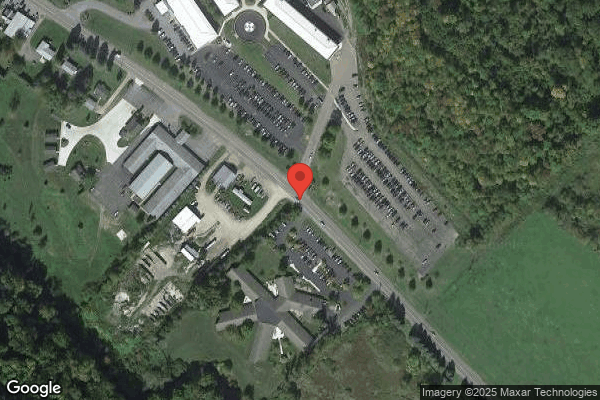

SWEDEN VALLEY MANOR

1028 EAST SECOND STREET, COUDERSPORT, PA 16915 (814) 274-7610
For profit - Corporation 121 Beds HCF MANAGEMENT Data: November 2025
Trust Grade
60/100
#365 of 653 in PA
Last Inspection: August 2025

Inspected within the last 6 months. Data reflects current conditions.

Overview

Sweden Valley Manor has a Trust Grade of C+, which means it is decent and slightly above average compared to other facilities. It ranks #365 out of 653 nursing homes in Pennsylvania, placing it in the bottom half, and is #2 out of 2 in Potter County, indicating there is only one other local option that is better. The facility is improving, with issues decreasing from 11 in 2024 to 7 in 2025. Staffing is a strength here, with a turnover rate of 42%, which is below the Pennsylvania average, suggesting that staff tend to stay and build relationships with residents. While there have been no fines, which is a positive sign, there have been concerns regarding food safety, including dirty kitchen areas and failure to document food temperatures, which could lead to potential health risks. Additionally, there were issues with addressing resident grievances in a timely manner, as one resident reported receiving stained cups for their drinks. Overall, families should weigh these strengths and weaknesses when considering Sweden Valley Manor for their loved ones.

Trust Score
C+
60/100
In Pennsylvania
#365/653
Bottom 45%
Safety Record
Low Risk
No red flags
Inspections
Getting Better
11 → 7 violations
Staff Stability
○ Average
42% turnover. Near Pennsylvania's 48% average. Typical for the industry.
Penalties
✓ Good
No fines on record. Clean compliance history, better than most Pennsylvania facilities.
Skilled Nurses
○ Average
Each resident gets 38 minutes of Registered Nurse (RN) attention daily — about average for Pennsylvania. RNs are the most trained staff who monitor for health changes.
Violations
⚠ Watch
29 deficiencies on record. Higher than average. Multiple issues found across inspections.
★★★☆☆
3.0
Overall Rating
★★★☆☆
3.0
Staff Levels
★★★★☆
4.0
Care Quality
★★★☆☆
3.0
Inspection Score
Stable
2024: 11 issues
2025: 7 issues

The Good

  • 4-Star Quality Measures · Strong clinical quality outcomes
  • Full Sprinkler Coverage · Fire safety systems throughout facility
  • No fines on record
  • Staff turnover below average (42%)

    6 points below Pennsylvania average of 48%

Facility shows strength in quality measures, fire safety.

The Bad

3-Star Overall Rating

Near Pennsylvania average (3.0)

Meets federal standards, typical of most facilities

Staff Turnover: 42%

Near Pennsylvania avg (46%)

Typical for the industry

Chain: HCF MANAGEMENT

Part of a multi-facility chain

Ask about local staffing decisions and management

The Ugly 29 deficiencies on record

Aug 2025 7 deficiencies
CONCERN (D)

Potential for Harm - no one hurt, but risky conditions existed

Deficiency F0571 (Tag F0571)

Could have caused harm · This affected 1 resident

Based on resident and staff interview, clinical record review, and review of a resident fund account facility documents, it was determined that the facility imposed a charge against a resident's perso...

Read full inspector narrative →
Based on resident and staff interview, clinical record review, and review of a resident fund account facility documents, it was determined that the facility imposed a charge against a resident's personal funds for a service which payment is made under Medicaid, for one two residents reviewed (Resident 60).Findings include: Interview with Resident 60 on August 6, 2025, at 9:59 AM revealed that she has new eyeglasses ready to be picked up, but she has to pay for them first. She indicated that she could see out of the glasses that she has but sometimes it is blurry. She said that she would not have her new glasses paid off until October 2025, because she has to pay for them with her monthly allowance of $45.00 dollars. She said since she has to pay for the glasses, she would not receive any personal spending money until October 2025, when her glasses were paid off. Clinical record review for Resident 60 revealed that her current insurance is a Medicaid plan. Further clinical record review revealed that Resident 60 was sent out to a local eye doctor for an acute problem on February 11, 2025. A consult provided to the surveyor from that visit revealed that Resident 60 needed new glasses to improve her vision. An interview with the Nursing Home Administrator (NHA) and Director of Nursing (DON) on August 7, 2025, at 11:13 AM revealed that Resident 60 has new glasses ordered but they are not paid for yet. The NHA confirmed that Resident 60 is paying for her new glasses out of her monthly personal needs allowance (money received by Medicaid residents in a nursing home for personal expenses, $60.00 dollars). Review of Resident 60's Resident trust statement revealed that January 7 to June 24, 2025, revealed a deduction on February 24, 2025, of 78.96 dollars for a medical bill, a deduction on March 13, 2025, of 60.00 dollars for a medical bill, and a deduction on May 8, 2025, of 243.00 dollars for an insurance premium. Interview with the Nursing Home Administrator on May 7, 2025, at 2:12 PM revealed that the deductions in the amount of 78.96 dollars and 60.00 dollars out of Resident 60's resident trust account were to pay for her glasses and the deduction for 243.00 dollars was to pay for her insurance that covers ancillary services such as dental, vision, and podiatry. The NHA indicated that the funds should have come out of Resident 60's patient liability amount (the amount a resident is obligated to pay the facility monthly) as an other medical expense and she indicated the facility will reimburse Resident 60 for the above noted expenses. The NHA also indicated that she spoke with the eye doctor regarding Resident 60's glasses and they were not ordered yet because they do not order them until at least half the money for the glasses is paid. The NHA was made aware with concerns related to Resident 60's personal fund account during a meeting on August 7, 2025, at 2:12 PM The facility failed to ensure Resident 60's personal fund trust account, and her personal needs allowance was utilized appropriately. 28 Pa. Code 201.18(b)(2)(e)(1) Management28 Pa. Code 201.29(a) Resident rights
CONCERN (D)

Potential for Harm - no one hurt, but risky conditions existed

Deficiency F0582 (Tag F0582)

Could have caused harm · This affected 1 resident

Based on clinical record review and staff interview, it was determined that the facility failed to provide required notification to a resident whose Medicare covered services ended for one of three re...

Read full inspector narrative →
Based on clinical record review and staff interview, it was determined that the facility failed to provide required notification to a resident whose Medicare covered services ended for one of three residents reviewed (Resident 107). Findings include: A review of the form Instructions for the Notice of Medicare Non-Coverage (NOMNC) CMS-10123, (a notice that informs the recipient when care received from the skilled nursing facility is ending; and how to contact a Quality Improvement Organization (QIO) to appeal) revealed instructions that a Medicare provider must ensure that the notice is delivered at least two calendar days before Medicare covered services end. The provider must ensure that the beneficiary or their representative signs and dates the NOMNC to demonstrate that the beneficiary or their representative received the notice and understands the termination of services can be disputed. If the provider is personally unable to deliver a NOMNC to a person acting on behalf of an enrollee, then the provider should telephone the representative to advise him or her when the enrollee's services are no longer covered. Confirm the telephone contact by written notice mailed on that same date. Clinical record review for Resident 107 revealed census documentation that indicated the facility admitted her for services paid for by Medicare A on February 14, 2025. The facility discharged Resident 107 to her home/self-care on March 14, 2025. Social services documentation dated March 7, 2025, at 11:21 AM revealed that Resident 107 was making excellent progress with therapy goals and had the potential to discharge to home within seven days. Social services documentation dated March 12, 2025, at 9:53 AM revealed that therapy was recommending home physical therapy for Resident 107's transition to home. Social services documentation dated March 12, 2025, at 12:26 PM revealed that the facility forwarded a referral for home health services to a provider of home health services, and Resident 107's discharge was on track for Friday (March 14, 2025). Social services documentation dated March 14, 2025, at 8:00 AM revealed that Resident 107 discharged home. Interview with the Nursing Home Administrator on August 8, 2025, at 10:15 AM revealed that the facility did not have evidence that Resident 107 received the CMS-10123 notice two days before her discharge from the facility. 28 Pa. Code 201.18(b)(2)(e)(1) Management 28 Pa. Code 201.29(a) Resident rights
CONCERN (D)

Potential for Harm - no one hurt, but risky conditions existed

Abuse Prevention Policies (Tag F0607)

Could have caused harm · This affected 1 resident

Based on review of select facility policies and procedures, employee personnel records, and staff interview, it was determined that the facility failed to implement an abuse prohibition policy that re...

Read full inspector narrative →
Based on review of select facility policies and procedures, employee personnel records, and staff interview, it was determined that the facility failed to implement an abuse prohibition policy that required a thorough investigation of prospective employee's employment history for two of five newly hired employees reviewed (Employees 3 and 4).Findings include: The facility policy entitled Abuse, Neglect, Exploitation and Misappropriation of Resident Property, last reviewed without changes December 10, 2024, revealed it is the policy of the facility to undertake background checks of all employees and to retain on file applicable records of current employees regarding such checks. The facility would attempt to obtain reference checks from prior employees for an applicant. Review of the facility policy entitled Reference Check Request Policy, last reviewed December 10, 2024, revealed the Administrator will be responsible for ensuring that each applicant seeking employment with the facility will be required to complete a release regarding reference checks. Upon receipt of satisfactory evidence of the reference checks, and pending other compliance standards are met, an offer of employment will be made. If receipt of unsatisfactory evidence of the reference check is found, then the applicant will be notified that the offer to employ them will be withdrawn. Review of Employee 3's (housekeeper) personnel record revealed a hire date of June 18, 2025. Employee 3's personnel record contained no evidence that the facility attempted to obtain personal and/or professional reference information (whether favorable or unfavorable). Review of Employee 4's (cook) personnel record revealed a hire date of April 14, 2025. Employee 4's personnel record contained no evidence that the facility attempted to obtain personal and/or professional reference information (whether favorable or unfavorable). Employee 5 (human resources) confirmed these findings for Employees 3 and 4 on August 7, 2025, at 11:45 AM. The findings were reviewed with the Nursing Home Administrator on August 7, 2025, at 12:31 PM. 28 Pa. Code 201.18(b)(3) Management 28 Pa. Code 201.19 Personnel policies and procedures
CONCERN (D)

Potential for Harm - no one hurt, but risky conditions existed

Accident Prevention (Tag F0689)

Could have caused harm · This affected 1 resident

**NOTE- TERMS IN BRACKETS HAVE BEEN EDITED TO PROTECT CONFIDENTIALITY** Based on clinical record review, review of facility documentation, and staff interview, it was determined that the facility fail...

Read full inspector narrative →
**NOTE- TERMS IN BRACKETS HAVE BEEN EDITED TO PROTECT CONFIDENTIALITY** Based on clinical record review, review of facility documentation, and staff interview, it was determined that the facility failed to thoroughly and timely investigate and implement interventions after a resident elopement for one of three residents reviewed (Resident 52). Findings include: Clinical record review revealed Resident 52 was admitted to the facility on [DATE]. An elopement evaluation completed the same day indicated the resident had a history of elopement (leaving unsafely) at home and had wandering behavior. A social service note dated May 30, 2025, indicated the resident had severely impaired cognition related to Alzheimer's disease, had the ability to ambulate without a device, may wander, and was to be monitored for exit-seeking. A social service note dated June 3, 2025, at 8:10 AM revealed that Resident 52 was reviewed by the inter-disciplinary team and was disoriented with poor safety awareness, can ambulate without a device and noted as an elopement risk as evidenced by wandering from her home prior to admission. It was noted to start secure care (a band/bracelet wandering device worn to prevent exit from doors at the facility) and monitor for adjustment. It was noted secure care applied for safety. Further clinical record review for Resident 52 revealed a note dated June 15, 2025, at 3:45 PM indicating facility staff received a call from staff from a hospital across the road from the facility indicating Resident 52 was found there walking around the helipad (location for emergency care helicopters to land) at the hospital. Facility staff went to retrieve the resident and bring her back to the facility. The resident was assessed with no injuries, and a secure care should be on the resident's right ankle. Frequent checks were initiated by nursing at that time. Review of a facility document regarding the incident dated June 15, 2025, at 3:25 PM completed by facility staff noted at 3:20 PM a nursing staff supervisor from the hospital across the road from the facility called the facility notifying them that there was a person with an ankle bracelet walking on the helipad and told them her name, and was asking if the facility had a resident with that name. Facility staff notified the Director of Nursing immediately and the building was searched to locate the resident. A facility staff member went to the hospital to pick the resident up and the resident was back in the facility at 3:40 PM. Every 15-minute observation checks were initiated. There was no documentation provided during the onsite visit to indicate 15-minute checks were completed as noted on the incident investigation on June 15, 2025. Although the facility completed an elopement drill after the incident on the same day on June 15, 2025, there was no evidence of an investigation that revealed how Resident 52 exited the facility with a secure care device on and crossed the road to hospital property until June 17, 2025, two days later. There was no evidence of any all-staff education being implement regarding the elopement or how to prevent the resident or other residents from eloping until June 16, 2025. Nursing documentation dated June 16, 2025, at 9:42 PM revealed Resident 52 had exit seeking behaviors during the 3 PM to 11pm shift with a suitcase packed, was leaving, became physically abusive towards staff, and slapped a staff member when being redirected. There was no evidence of any change in interventions or documentation of every 15-minute checks as the resident continued to exit seek. There was still no evidence of a thorough investigation regarding how Resident 52 was able to exit the facility on June 15, 2025. There was no evidence of any staff statements regarding Resident 52's elopement until June 17, 2025, when it was noted activity staff were present when Resident 52 eloped and assumed to have turned off the door alarm as the secure care is designed to alarm when a device is passing through the door. The staff member did not report the alarm sounding when church volunteers left for the day. There was no evidence all facility staff were then educated on how to respond to the door alarms. There was no evidence of secure care checks on the front door of the facility where the resident exited until June 17, 2025. The above information was reviewed with the Nursing Home Administrator on August 8, 2025, at 12:22 PM. 8 Pa. Code 201.18(b)(1)(e)(1) Management 28 Pa. Code 211.10(c)(d) Resident care policies 28 Pa. Code 211.12(d)(1)(3)(5) Nursing services
CONCERN (D)

Potential for Harm - no one hurt, but risky conditions existed

Deficiency F0692 (Tag F0692)

Could have caused harm · This affected 1 resident

Based on clinical record review and staff interview, it was determined the facility failed to initiate timely interventions for a resident with significant weight loss for one of six residents reviewe...

Read full inspector narrative →
Based on clinical record review and staff interview, it was determined the facility failed to initiate timely interventions for a resident with significant weight loss for one of six residents reviewed for nutrition concerns (Resident 52). Findings include: Clinical record review for Resident 52 revealed the resident had a weight change from June 17, 2025, to July 17, 2025, decreasing from 135.2 pounds to 125.6 pounds reflecting a 9.6-pound, 7.1 percent significant weight loss in 30 days. Further clinical record review revealed a nutrition services note by the registered dietitian dated July 21, 2025, at 6:13 PM that noted the significant weight loss as indicated above and indicated the resident had a decline in meal intakes. The note indicated Boost (nutrition supplement) would be added twice a date for the resident to provide extra calories and fluid to help the resident meet nutritional needs. A review of Resident 52's physician orders revealed Boost two times a day was not ordered for the resident until July 31, 2025, 10 days later. There was no evidence Resident 52 was provided the nutrition supplement prior to this date. As of August 8, 2025, there was no evidence to indicate any further nutrition follow up or any indication explaining that the supplement added on July 21, 2025, was not ordered/provided until July 31, 2025. Resident 52 had refused to be weighed after the July 17, 2025, weight. The above information was reviewed with the Nursing Home Administrator on August 8, 2025, at 11:30 AM. 28 Pa. Code 211.10(d) Resident care policies 28 Pa. Code 211.12(d)(1)(3)(5) Nursing services
CONCERN (D)

Potential for Harm - no one hurt, but risky conditions existed

Infection Control (Tag F0880)

Could have caused harm · This affected 1 resident

Based on review of select facility policies and procedures, observation, clinical record review, and staff interview, it was determined that the facility failed to implement appropriate enhanced barri...

Read full inspector narrative →
Based on review of select facility policies and procedures, observation, clinical record review, and staff interview, it was determined that the facility failed to implement appropriate enhanced barrier precautions for two of 19 residents reviewed (Residents 12 and 13) and implement appropriate transmission-based precautions (TBP) for one of one resident reviewed on TBP (Resident 25). Findings include: Review of the Centers for Medicare and Medicaid Services (CMS) memo entitled, Enhanced Barrier Precautions in Nursing Homes, dated March 20, 2024, revealed that CMS was issuing new guidance for State Survey Agencies and long-term care (LTC) facilities on the use of enhanced barrier precautions (EBP) to align with nationally accepted standards. In 2019, CDC (Centers for Disease Control) introduced a new approach to the use of personal protective equipment (PPE) called Enhanced Barrier Precautions (EBP). In July 2022, the CDC released updated EBP recommendations for Implementation of PPE Use in nursing homes to prevent spread of MDROs. The CDC's, Implementation of Personal Protective Equipment (PPE) Use in Nursing Homes to Prevent Spread of Multidrug-resistant Organisms (MDROs), stipulated that, When implementing Contact Precautions or Enhanced Barrier Precautions, it is critical to ensure that staff have awareness of the facility's expectations about hand hygiene and gown/glove use, initial and refresher training, and access to appropriate supplies. To accomplish this post clear signage on the door or wall outside of the resident room indicating the type of precautions and required PPE (e.g., gown and gloves). For Enhanced Barrier Precautions, signage should also clearly indicate the high-contact resident care activities that require the use of gown and gloves. Nursing care facilities are to use enhanced barrier precautions (EBP, gown and glove use) for residents with chronic wounds or indwelling medical devices (i.e., indwelling urinary catheters) during high-contact resident care activities regardless of their multidrug-resistant organism status. High-contact activity would include things like dressing, transferring, changing linens, providing hygiene, changing briefs, wound care, or device care. Review of CDC guidance at https://www.cdc.gov/long-term-care-facilities/hcp/prevent-mdro/faqs.html, Frequently Asked Questions (FAQs) about Enhanced Barrier Precautions in Nursing Homes, revealed that signs are intended to signal to individuals entering the room the specific actions they should take to protect themselves and the resident. To do this effectively, the sign must contain information about the type of precautions and the recommended PPE to be worn when caring for the resident. Generic signs that instruct individuals to speak to the nurse are not adequate to ensure precautions are followed. CDC has created examples of signs that can be used by facilities to communicate information about Transmission-Based and Enhanced Barrier Precautions. Facilities can use these signs or modify them to create signs that work for their facility. Review of CDC guidance at https://www.cdc.gov/long-term-care-facilities/media/pdfs/Observations-Tool-for-Enhanced-Barrier-Precautions-Implementation-508.pdf, Enhanced Barrier Precautions (EBP) Implementation-Observations Tool (For use in Skilled Nursing Facilities/Nursing Homes only) reiterated that signs are intended to signal to individuals entering the room the specific actions they should take to protect themselves and the resident. To do this effectively, the sign must contain information about the type of precautions and the recommended PPE to be worn when caring for the resident. The EBP sign should also include a list of the high-contact resident care activities for which PPE (gown and gloves) should be worn. Generic signs that instruct individuals to speak to the nurse are not adequate to ensure EBP are followed. Signs should not include information about a resident's diagnosis or the reason for the use of EBP (e.g., presence of a resistant germ, wound). A review of the CDC sign for EBP revealed that the first directive is that everyone must clean their hands, including before entering and when leaving the room. Review of the facility policy entitled, Enhanced Barrier Precautions, last reviewed without changes on December 10, 2024, revealed that it is the policy of the facility to use EBP to prevent transmission of MDROs from an infected or colonized resident through an infection control intervention designed to reduce transmission of resistant organisms that employs targeted gown and glove use during high contact resident care activities. An impervious gown should be worn when high-contact resident care activities are being performed. The policy did not address the placement of a sign to signal to individuals entering the room the specific actions they should take to protect themselves and the resident. Clinical record review for Resident 12 revealed current physician orders dated July 8, 2025, for staff to complete a dressing change to a G-tube (gastrostomy tube, a tube that is placed directly into the stomach through an abdominal wall incision for administration of food, fluids, and medications; also known as a PEG tube) every day and evening shift. Observation of Resident 12's room on August 5, 2025, at 1:25 PM revealed his door was shut. There was no signage or indication that EBP were necessary for Resident 12. Observation and interview with Resident 12 on August 5, 2025, at 1:25 PM revealed that he could lift his shirt to expose his abdomen, which had dark liquid drainage coming from an open area in his abdomen. It was noted that the tip of a tube was outside of Resident 12's abdomen. The surveyor requested assistance from nursing staff on the nursing unit and on August 5, 2025, at 1:28 PM. Employee 2 (licensed practical nurse) entered the room with dry dressings and tape to cover the open site on Resident 12's abdomen. Employee 2 did not don a gown before providing care to Resident 12's G-tube site. Observation of Resident 12's room on August 7, 2025, at 11:57 AM revealed his door was shut. There was no signage or indication that EBP were necessary for Resident 12. Interview with Employee 1 (registered nurse) on August 7, 2025, at 12:03 PM confirmed that there was no signage, or PPE near or in Resident 12's room, to indicate that Resident 12 required EBP. The surveyor reviewed the concerns regarding Resident 12's EBP during an interview with the Nursing Home Administrator and Director of Nursing on August 7, 2025, at 2:00 PM. The facility policy entitled, Transmission Based Precautions - Contact, last reviewed without changes on December 10, 2024, revealed that signage will be placed on the door to signal to individuals entering the room the actions they should take to protect themselves and the resident. Contact precautions require the use of gown and gloves on every entry into a resident's room regardless of the level of care being provided to the resident. Hands must be washed with soap and water (if visibly soiled) or cleansed with alcohol-based hand sanitizer before and after glove removal, after touching potentially contaminated environmental surfaces or items and before taking care of another resident. The policy did not include the availability or placement of PPE or disposal receptacles for the appropriate donning and doffing of PPE before entering and upon exiting the resident room. Clinical record review for Resident 25 revealed active physician orders (dated August 5, 2025) that Resident 25 required contact isolation until his wound healed every shift for E. Coli ESBL (Extended-spectrum beta-lactamases (ESBLs) E. coli are bacteria that can resist some antibiotics and cause serious infections.) related to absence of the left leg above the knee. Physician documentation dated August 2, 2025, at 4:59 PM indicated that Resident 25 was admitted from the hospital with concerns of a septic ulcer on his above-the-knee amputation surgical site which, .had grown an E. coli ESBL as well as Acinetobacter baumanii (bacterium that can cause infections; it is known for its antibiotic resistance, virulence, factors). He is clearly under strict contact isolation. Observation of Resident 25's room on August 6, 2025, at 8:11 AM revealed a sign on his door that read, Contact Isolation Room Entry, PPE Required to Enter: Gown Gloves. The sign on the door did not include any additional information such as hand hygiene before entering and when leaving the room or discarding gloves and gowns before exiting the room. Observation of Resident 25's room on August 7, 2025, at 11:53 AM revealed the same isolation precautions sign. A yellow isolation gown hung from a hook on the hallway-side surface of Resident 25's room door. There was no indication if this was a used or unused gown. Unused gowns were stored in a bin inside the doorway of Resident 25's room and a bin inside the doorway of Resident 25's room contained used gowns. Interview with Employee 1 (registered nurse) on August 7, 2025, at 12:03 PM confirmed that there should not be an isolation gown on the hook on Resident 25's door. Employee 1 discarded the gown in the bin inside the doorway of Resident 25's room. The surveyor reviewed the concerns regarding Resident 25's isolation precautions during an interview with the Nursing Home Administrator and Director of Nursing on August 7, 2025, at 2:00 PM. Clinical record review for Resident 13 revealed a skin progress note dated August 6, 2025, at 12:34 PM indicating the resident was being followed for a Stage 2 pressure ulcer (partial thickness skin loss) to the resident's left heel with a small amount of clear water fluid drainage. A review of Resident 13's physician's orders revealed an order dated February 13, 2025, for the resident to receive a treatment and wound dressing to the area on the left heel daily. Observation of a wound dressing change for Resident 13's left heel completed by Employee 7, registered nurse, and assisted by Employee 8, registered nurse, on August 8, 2025, at 9:14 AM revealed Employee 7 removed Resident 13's old wound dressing, cleansed the area, and provided a new dressing on the heel, while Employee 8 assisted in moving the resident's leg and holding it for the dressing change to be completed. Resident 13's heel was observed with an open area in the center of the wound. Neither employee donned a gown during the wound dressing change for the resident. No EBP signs were observed in Resident 13's room or on the resident's door to alert staff of the additional precautions due to the resident having an open wound. Employee 7 concurrently indicated Resident 13 was not placed on EBP due to the wound not draining. The above information regarding EBP not being implemented for Resident 13 was reviewed with the Director of Nursing and the Nursing Home Administrator on August 8, 2025, at 11:31 AM 28 Pa. Code 211.10(d) Resident care policies 28 Pa. Code 211.12(d)(1)(5) Nursing services
CONCERN (E)

Potential for Harm - no one hurt, but risky conditions existed

Grievances (Tag F0585)

Could have caused harm · This affected multiple residents

Based on observation, review of resident council meeting minutes, and resident and staff interview, it was determined that the facility failed to ensure resident grievances were addressed timely for o...

Read full inspector narrative →
Based on observation, review of resident council meeting minutes, and resident and staff interview, it was determined that the facility failed to ensure resident grievances were addressed timely for one of 13 residents interviewed (Resident 2).Findings include: Interview with Resident 2 on August 5, 2025, at 12:46 PM revealed that she asked for cups of hot water for her hot chocolate and the cups are stained brown. Observation of the clean racks of coffee cups in the kitchen on August 6, 2025, at 10:44 AM with Employee 6 (dietary supervisor) revealed that most of the cups were stained brown. Employee 6 stated that an evening shift dietary staff member is supposed to clean the cups once a week, by soaking and scrubbing them. She stated that the staff are to sign off on the cleaning of the coffee cups weekly. Review of the weekly cleaning tasks documentation for June 23, June 30, July 7, July 14, July 28, and August 4, 2025, revealed staff only de-stained the coffee cups on June 30, and July 23, 2025. Employee 6 confirmed these findings on August 6, 2025, at 10:51 AM. Review of the Resident Council Meeting minutes dated April 28, 2025, revealed residents' concerns about dirty utensils, glasses, and coffee cups remain. Resident Council Meeting minutes dated June 16, 2025, revealed resident dietary concerns are ongoing, and feel that the same concerns from the prior meetings still currently exist. Resident Council Meeting minutes dated July 28, 2025, revealed that the residents' concerns about dirty coffee cups remain. The facility failed to resolve the residents' grievances related to stained coffee cups. The surveyor reviewed the above findings during an interview with the Nursing Home Administrator and Director of Nursing on August 6, 2025, at 2:00 PM. 28 Pa. Code 201.14(a) Responsibility of licensee28 Pa Code: 201.18(b)(2)(3)(e)(1) Management28 Pa. Code 201.29(a) Resident rights28 Pa. Code 211.12(d)(3)(5) Nursing services
Sept 2024 11 deficiencies
CONCERN (D)

Potential for Harm - no one hurt, but risky conditions existed

Deficiency F0554 (Tag F0554)

Could have caused harm · This affected 1 resident

Based on observations, clinical record review, and resident and staff interview, it was determined that the facility failed to administer medication per physician's orders for one of 24 residents revi...

Read full inspector narrative →
Based on observations, clinical record review, and resident and staff interview, it was determined that the facility failed to administer medication per physician's orders for one of 24 residents reviewed (Resident 48). Findings include: Observation of Resident 48 on September 17, 2024, at 2:00 PM revealed the resident was lying in bed watching television. A medicine cup with pills in it was observed on the resident's bedside table beside the bed. As the surveyor began speaking with Resident 48, the resident grabbed the medicine cup and proceeded to dump the cup of pills in his mouth and then his water cup before the resident responded to the surveyor. The resident indicated he had just taken his pills. No staff were present in the room or hall near the resident's room. Clinical record review for Resident 48 revealed a physician's order dated April 9, 2023, indicating the resident may not self-administer, due to no request. Review of Resident 48's medication administration record for September 17, 2024, revealed the resident was documented as being administered Propranolol (a medication used to treat heart problems), Sinemet (a medication used to treat Parkinson's disease), and Seroquel (an antipsychotic medication), at 1:25 PM. In an interview the Nursing Home Administrator and Director of Nursing on September 18, 2024, at 2:10 PM it was confirmed Resident 48 should not have had medications left in his room for self-administration. 28 Pa. Code 211.12(d)(1)(5) Nursing services
CONCERN (D)

Potential for Harm - no one hurt, but risky conditions existed

Safe Environment (Tag F0584)

Could have caused harm · This affected 1 resident

Based on observations and family interview, it was determined that the facility failed to provide a clean, comfortable, homelike environment on one of four nursing units (C Nursing Unit; Residents 7 a...

Read full inspector narrative →
Based on observations and family interview, it was determined that the facility failed to provide a clean, comfortable, homelike environment on one of four nursing units (C Nursing Unit; Residents 7 and 55). Findings include: Observation of the C Unit shower room on September 18, 2024, at 9:25 AM revealed the external sealing located on the floor around the base of the commode was a brownish color and peeling away from the commode in some areas. There was also a significant accumulation of dust on a vent located on the ceiling. An interview with Resident 7's family on September 20, 2024, at 9:00 AM revealed concerns related to the cleanliness of the heating unit on the wall in Resident 7's room. Observation of the heating unit on the wall in Resident 7's room on September 20, 2024, at 9:41 AM revealed an extensive build-up of dust on vents of the unit. There was also an accumulation of debris under the unit. Observation of the heating unit on the wall of Resident 55's room on September 20, 2024, at 9:44 AM revealed an extensive build-up of dust on the vents of the unit. There was also an accumulation of debris under the unit. The above information was reviewed in a meeting with the Nursing Home Administrator and Director of Nursing on September 20, 2024, at 11:57 AM. 483.10(i)(1)-(7) Safe/clean/comfortable/homelike Environment Previously cited deficiency 10/20/23 28 Pa. Code 201.18(b)(3)(e)(2.1) Management
CONCERN (D)

Potential for Harm - no one hurt, but risky conditions existed

Assessment Accuracy (Tag F0641)

Could have caused harm · This affected 1 resident

**NOTE- TERMS IN BRACKETS HAVE BEEN EDITED TO PROTECT CONFIDENTIALITY** Based on clinical record review and staff interview, it was determined that the facility failed to ensure complete and accurate ...

Read full inspector narrative →
**NOTE- TERMS IN BRACKETS HAVE BEEN EDITED TO PROTECT CONFIDENTIALITY** Based on clinical record review and staff interview, it was determined that the facility failed to ensure complete and accurate Minimum Data Set (MDS) assessments for one of 20 residents reviewed (Resident 60). Findings include: Resident 60 was admitted to the facility on [DATE], with a diagnosis of pneumonia from the hospital setting. Review of Resident 60's clinical record revealed a Minimum Data Set Assessment (MDS, a form completed at specific intervals to determine care needs) dated August 17, 2024, that indicated the facility assessed him as still having an active pneumonia infection. There was no documented evidence in Resident 60's clinical record to indicate that he continued to have an active pneumonia infection since April 27, 2024. Interview with the Director of Nursing on September 19, 2024, at 9:40 AM confirmed that Resident 60's pneumonia diagnosis was coded in error on the MDS dated [DATE]. 28 Pa. Code 211.5(f)(ix) Medical records 28 Pa. Code 211.12(d)(1)(5) Nursing services
CONCERN (D)

Potential for Harm - no one hurt, but risky conditions existed

Deficiency F0676 (Tag F0676)

Could have caused harm · This affected 1 resident

Based on clinical record review and staff interview, it was determined that the facility failed to provide care or services to maintain a resident's ambulation status for one of two residents reviewed...

Read full inspector narrative →
Based on clinical record review and staff interview, it was determined that the facility failed to provide care or services to maintain a resident's ambulation status for one of two residents reviewed for ambulation concerns (Resident 15). Findings include: Clinical record review for Resident 15 revealed that she was on a nursing rehabilitation program for ambulation. The program was ordered on November 7, 2023. The program indicated that she was to be ambulated with the assistance of one staff and a wheeled walker. A therapy recommendation form dated October 31, 2023, confirmed the above noted program was a therapy recommended program. Further clinical record review for Resident 15 revealed that there was no documented evidence that the ambulation program was being completed. The Director of Nursing and the Nursing Home Administrator were made aware of concerns related to Resident 15's ambulation program and confirmed the above noted findings on September 19, 2024, at 2:12 PM. The facility failed to provide restorative/rehabilitation services in order to maintain Resident 15's ambulation abilities. 28 Pa. Code 211.12(d)(1)(5) Nursing services
CONCERN (D)

Potential for Harm - no one hurt, but risky conditions existed

Deficiency F0685 (Tag F0685)

Could have caused harm · This affected 1 resident

Based on observation, clinical record review, and resident and staff interview, it was determined that the facility failed to obtain proper treatment to maintain vision for one of two residents review...

Read full inspector narrative →
Based on observation, clinical record review, and resident and staff interview, it was determined that the facility failed to obtain proper treatment to maintain vision for one of two residents reviewed for vision concerns (Resident 1). Findings include: An interview with Resident 1 on September 17, 2024, at 11:37 AM revealed she feels her vision has gotten worse and reported a history of macular degeneration. The resident was unsure when her last vision appointment was. The resident was admitted in 2019. Clinical record review for Resident 1 revealed a diagnosis list that included diabetes mellitus (a disorder of the metabolism that impacts insulin production and causes high blood sugar levels). There was no listed diagnosis for macular degeneration noted in the electronic health record diagnoses list. A review of the current physician orders revealed an order dated February 2, 2020, that indicated that Resident 1 may be seen by the audiologist, dentist, podiatrist, optometrist, and ophthalmologist. A quarterly Minimum Data Set Assessment (MDS, an assessment completed at specific intervals to determine care needs) dated August 21, 2024, noted facility staff assessed the resident as having a BIMS (Brief Interview for Mental Status) of 6, which indicated cognitive impairment. The MDS noted facility staff further assessed the resident as being vision impaired. An MDS progress note dated August 3, 2023, at 4:27 PM revealed that Resident 1 can make needs known and answers questions appropriately. The note further revealed that, Resident has macular degeneration so some trouble with vision. A current care plan for Resident 1 revealed the resident has impaired visual function related to diabetes mellitus. Further clinical record review for Resident 1 revealed no evidence that the facility offered the resident or the resident's responsible party vision services (such as an eye exam). A request was made by the surveyor during a meeting with the Nursing Home Administrator and Director of Nursing on September 18, 2024, at 1:45 PM and September 19, 2024, at 2:27 PM to provide any further documentation for Resident 1 that the facility offered an eye appointment to the resident or the resident's responsible party, the resident/responsible party refused, or any type of related documentation since admission to the facility. A meeting with the Nursing Home Administrator and Director of Nursing on September 20, 2024, at 11:57 AM revealed the facility was unable to find any documentation from a previous appointment or that Resident 1 or the resident's responsible party was offered eye services by the facility. 28 Pa. Code 211.12(d)(1)(3)(5) Nursing services
CONCERN (D)

Potential for Harm - no one hurt, but risky conditions existed

Deficiency F0687 (Tag F0687)

Could have caused harm · This affected 1 resident

Based on observation, clinical record review, and staff and resident interview, it was determined that the facility failed to provide foot care and treatment to avoid medical complications for one of ...

Read full inspector narrative →
Based on observation, clinical record review, and staff and resident interview, it was determined that the facility failed to provide foot care and treatment to avoid medical complications for one of one resident reviewed (Resident 49). Findings include: Interview with Resident 49 on September 17, 2024, at 11:30 AM revealed that he has not seen a podiatrist for his left foot. Observation of Resident 49's left foot during the interview revealed that his toenails were elongated. The nail on the first and second toes were thick and yellow, and so long that they were beginning to curve. Review of Resident 49's clinical record revealed that the facility admitted him on March 30, 2024, with a diagnosis of diabetes. There was no documented evidence in Resident 49's clinical record to indicate the facility initiated diabetic foot care to care for his nails and avoid medical complications, until after this surveyor made observations and spoke with Resident 49 about his foot. Interview with the Director of Nursing on September 19, 2024, at 11:49 AM confirmed the above findings for Resident 49. 28 Pa. Code 211.12(d)(3)(5) Nursing services
CONCERN (D)

Potential for Harm - no one hurt, but risky conditions existed

Unnecessary Medications (Tag F0759)

Could have caused harm · This affected 1 resident

Based on observation, clinical record review, review of select manufacture's guidelines, and staff interview, it was determined that the facility failed to ensure a medication error rate below five pe...

Read full inspector narrative →
Based on observation, clinical record review, review of select manufacture's guidelines, and staff interview, it was determined that the facility failed to ensure a medication error rate below five percent (Resident 11). Findings include: The facility's medication error rate was 7.69 percent based on 26 medication opportunities with two medication errors. Observation of a medication administration pass on September 17, 2024, at 10:20 AM revealed Employee 1, licensed practical nurse, preparing to administer Potassium Chloride (used as a supplement for heart, nerve, and muscle health) 20 MEq (milliequivalent) ER (extended release) and Metoprolol (treats hypertension) 100 mg (milligrams) ER. Employee 1 proceeded to crush both the Potassium Chloride and the Metoprolol extended-release tablets prior to administering them to Resident 11. According to The Institute for Safe Medication Practices, do not crush list, last updated in 2016, revealed that both the Potassium Chloride ER and the Metoprolol ER should not be crushed. Both medications are indicated as slow release. Interview with Employee 1 on September 17, 2024, at 10:30 AM confirmed the above findings for Resident 11. Interview with the Director of Nursing on September 19, 2024, at 2:00 PM also confirmed that Employee 1 should not have crushed the medications administered as noted above to Resident 11. 28 Pa. Code 211.10(a) Resident care policies 28 Pa. Code 211.12(d)(1)(5) Nursing services
CONCERN (D)

Potential for Harm - no one hurt, but risky conditions existed

Dental Services (Tag F0791)

Could have caused harm · This affected 1 resident

Based on clinical record review and resident and staff interview, it was determined that the facility failed to ensure timely dental services for one of one resident reviewed for dental concerns (Resi...

Read full inspector narrative →
Based on clinical record review and resident and staff interview, it was determined that the facility failed to ensure timely dental services for one of one resident reviewed for dental concerns (Resident 29). Findings include: Interview with Resident 29 on September 17, 2024, at 2:08 PM revealed that she was concerned about her top denture that she has never received. She indicated that she was to receive them today, but the dentist indicated that she was not on the list. She said that he did not provide any other information and that he then left the building. She said she has been waiting on this denture since at least June 2024, but that the whole process started much earlier. Clinical record review for Resident 29 revealed a dental consult summary dated August 9, 2023, revealed that dental impressions for upper denture were made. A dental consult summary dated October 17, 2023, revealed that Resident 29 needed to continue treatment with the dentist for denture care. A dental consult summary dated November 10, 2023, revealed that Resident 29's bite registration (taking an impression of her teeth) was completed for her upper denture. A dental consult summary dated December 12, 2023, revealed that the dentist would continue the denture process. A dental consult summary dated February 12, 2024, revealed that the resident was not seen due to being sick with the flu. A dental consult summary dated March 12, 2024, revealed that the dentist tried the new upper denture with Resident 29 and changes needed to be made. The note indicated that the denture would be delivered on the next visit. Further clinical record review revealed no further dental consult visit summary for Resident 29. The Director of Nursing and the Nursing Home Administrator were made aware of the concerns with Resident 29's dentures on September 18, 2024, at 2:08 PM. The facility provided the surveyor with a copy of an email that was between the facility and the consulting dental clinic dated September 17, 2024, at 9:29 AM. The email was initiated from the facility. The email indicated that Resident 29 wanted to be seen by the dental hygienist. The response from the consulting dental clinic revealed that Resident 29's family has declined dental service and that the clinic even had to stop the denture process because the power of attorney declined. Review of Resident 29's clinical record revealed a current order that indicated she was capable of understanding her rights and responsibilities. Review Resident 29's last MDS (Minimum Data Set, an assessment completed at intervals by the facility to determine care needs of the resident) dated June 26, 2024, indicated that she had 15 BIMs (Brief Interview for Mental Status) indicating she is cognitively intact. Review of Resident 29's POA (Power of Attorney) document dated August 11, 2023, indicated that it is only effective if a licensed medical doctor deemed her to be incapable. Interview with Resident 29 on September 20, 2024, at 11:35 AM revealed that she was unaware that the denture process was stopped by her POA. She indicated that someone should have talked to her because she has been waiting for her dentures and still wants them. The Nursing Home Administrator and Director of Nursing were made aware of the above noted information related to Resident 29's dental services in a meeting on September 19, 2024, at 2:12 PM. The facility failed to ensure timely dental services for Resident 29. 28 Pa. Code 211.12(d)(1)(3)(5) Nursing services 28 Pa. Code 211.15. Dental services
CONCERN (E)

Potential for Harm - no one hurt, but risky conditions existed

Deficiency F0688 (Tag F0688)

Could have caused harm · This affected multiple residents

**NOTE- TERMS IN BRACKETS HAVE BEEN EDITED TO PROTECT CONFIDENTIALITY** Based on clinical record review and staff interview, it was determined that the facility failed to implement a restorative nursi...

Read full inspector narrative →
**NOTE- TERMS IN BRACKETS HAVE BEEN EDITED TO PROTECT CONFIDENTIALITY** Based on clinical record review and staff interview, it was determined that the facility failed to implement a restorative nursing program as recommended by therapy to maintain range of motion for four of five residents reviewed (Residents 22, 15, 47, and 64). Findings include: Review of Resident 22's clinical record revealed a Minimum Data Set Assessment (MDS, an assessment completed at specific intervals to determine care needs) dated August 2, 2024, that indicated the facility assessed Resident 22 as having range of motion (ROM) limitations to both sides of her lower extremities. A previous MDS assessment dated [DATE], indicated that the facility assessed Resident 22 as having no ROM limitations to her lower extremities. A physical therapy form entitled Restorative Nursing Program Plan, dated July 12, 2024, indicates that physical therapy implemented a restorative program for nursing staff to complete a lower extremity active range of motion program for Resident 22. There was no documented evidence in Resident 22's clinical record to indicate that the therapy recommended restorative range of motion program was implemented. Interview with the Director of Nursing on September 19, 2024, at 2:04 PM confirmed the above findings for Resident 22. Clinical record review for Resident 15 revealed a plan of care that indicated she was to receive a nursing rehab program that consisted of active range of motion (AROM, exercise using your own muscle strength to move a body part through normal motion) to her bilateral lower extremities. There was no documented evidence in Resident 15's clinical record to indicate that the staff were completing the program as noted in her plan of care. Clinical record review for Resident 47 revealed a plan of care that was initiated on October 12, 2023, that indicated he was to have gentle AROM to his bilateral lower extremities 2-3 sets of 10 repetitions 3 times a week. He also had a recommendation from therapy dated October 5, 2023, that indicated he was to have PROM (Passive Range of Motion, movement of a joint performed by an outside force such as a nurse aide or therapist) to his bilateral upper extremities. The therapy recommendation indicated that this was ordered on October 13, 2023. Further clinical record review revealed that there was no documented evidence in Resident 47's clinical record that indicated he was receiving AROM to his lower extremities or PROM to his upper extremities. Interview with the Director of Nursing and Nursing Home Administrator on September 18, 2024, at 2:10 PM and again on September 19, 2024, at 2:12 PM confirmed the above noted findings related to range of motion programs for Residents 15 and 47. Clinical record review for Resident 64 revealed a quarterly MDS dated [DATE], that indicated facility staff assessed the resident as having a BIMS score of 3 that indicated a severe cognitive impairment level. A physical therapy form for Resident 64 titled Restorative Nursing Program Plan, dated May 11, 2024, indicated that therapy implemented a restorative program for nursing staff to complete an upper extremity (UE) active ROM program as tolerated. An interview with Employee 4, Director of Therapy, on September 20, 2024, at 10:05 AM revealed the above program for Resident 64 was implemented upon discharge from occupational therapy. A review of Resident 64's task list revealed that Resident 64 was to complete an upper extremity active ROM program as tolerated. There was no documented evidence in Resident 64's clinical record to indicate that staff were completing the ROM program, or the resident was refusing to participate. The above information for Resident 64 was reviewed in a meeting with the Nursing Home Administrator and Director of Nursing on September 20, 2024, at 11:57 AM. §483.25(c) Mobility Previously cited 10/20/23 28 Pa. Code 211.12 (d)(1)(5) Nursing services
CONCERN (E)

Potential for Harm - no one hurt, but risky conditions existed

Deficiency F0697 (Tag F0697)

Could have caused harm · This affected multiple residents

Based on clinical record review and resident and staff interview, it was determined that the facility failed to ensure that pain management was provided that was consistent with professional standards...

Read full inspector narrative →
Based on clinical record review and resident and staff interview, it was determined that the facility failed to ensure that pain management was provided that was consistent with professional standards of practice, for one of one resident reviewed (Resident 48). Findings include: In an interview with Resident 48 on September 17, 2024, at 2:00 PM he indicated that he had been having pain in his tail bone area from a recent fall that still hurts. Clinical record review for Resident 48 revealed a physician's order dated July 11, 2022, for the resident to have Acetaminophen (a medication used to treat mild pain) 325 milligrams (mg), two tablets every six hours as needed for a pain level 1-5. Resident 48 had an additional order for Tramadol HCL (a medication used to treat moderate to severe pain) 75 mg every six hours as needed for a pain level of 6-10. A review of Resident 48's medication administration record (MAR) for August 2024, revealed Resident 48 was administered the Tramadol on August 3, 9, 26, and 30 for a pain level of 5, and on August 29, for a pain level documented as 0. There was no evidence Resident 38 was administered the as needed Acetaminophen at all on August 3, 9, 26, or 30, 2024. A review of Resident 48's MAR for September 2024, revealed Resident 48 was administered Tramadol on September 6, for a pain level of 4, and September 7, 8, 9, 16, and 18, for a pain level of 5. There was no evidence Resident 48 was administered any as needed acetaminophen for September as of September 18, 2024. Facility staff did not administer Resident 48's pain medication per the physician ordered pain scale for August and September 2024, as noted above. The above information regarding Resident 48 was reviewed with the Nursing Home Administrator and Director of Nursing on September 19, 2024, at 2:10 PM. 28 Pa Code 211.10(c) Resident care policies 28 Pa Code 211.12(d)(1) Nursing services
CONCERN (F)

Potential for Harm - no one hurt, but risky conditions existed

Food Safety (Tag F0812)

Could have caused harm · This affected most or all residents

Based on observation and staff interview, it was determined the facility failed to store food and maintain food service equipment in a safe and sanitary manner and prevent the potential for food conta...

Read full inspector narrative →
Based on observation and staff interview, it was determined the facility failed to store food and maintain food service equipment in a safe and sanitary manner and prevent the potential for food contamination in the facility's main kitchen. Findings include: An observation of the facility's main kitchen on September 17, 2024, at 11:50 AM with Employee 2, corporate dietitian, revealed the following: The coffee station area contained dried brown liquid spills and dried food splatter on the wall behind the coffee machine, which extended down the wall to the floor area observed under the counter space. The lower shelf of the table area where the coffee dispenser was located contained dust and debris and dried liquid spills, along with a plastic dish rack filled with clear plastic jugs, which the interiors were significantly stained brown making them opaque. A plastic tray beside the rack of pitchers also contained plastic gallon jugs with interior brown staining sitting on the tray, which had dried food debris and dried liquid spills. A carboard box of coffee filters was also sitting on the lower shelf. The box was soiled with dried liquid spills. A small foot pedal trash can under the coffee area had dried debris and spills and dried brown liquid splatter covering the exterior. A carboard box of film wrap was observed lying on top of stacks of dish racks with cups/bowls in them. The exterior box of the film wrap was stained and dirty. Multiple bag in box juices were observed on a rack, with tubing from each box connected to a fountain dispenser above them on a counter. The plastic connecter to the box and the tubing connecting the box to the dispenser from each box was sticky, covered in dust, and some dried juice product was observed on the plastic connection pieces. An air compressor sitting on the floor by the bag in box juice rack was covered in thick dust. A two-door cooler in the tray line area had a broken door rubber gasket. Pieces of the gasket were observed hanging out of the closed cooler door. A white oven mitt was observed sitting on top of a plate warmer positioned by the tray assembly line. The oven mitt was significantly blackened and contained dried food. Four additional oven mitts were significantly stained black and brown with dried food on them and observed sitting beside the tilt skillet. Dietary staff were observed working on the tray line assembling lunch trays, and multiple trays for lunch service were cracked, worn, and stained. A white open plastic cart beside the service line (near the food) was observed with a buildup of dried food debris on the ridges of the top of the cart, dried food and dried liquid spills were observed on the base of the cart and shelf ledges for holding the trays. Pieces of the plastic frame and top were broken off leaving uneven sharp edges. An additional plastic orange and gold open cart beside the tray line that staff used to place resident trays on to deliver to the nursing units was observed with cracks throughout the top and a large hole in the center of the plastic top of the cart. Dried food and dried liquid spills were also observed throughout the cart. A lower shelf of the steam table area was observed with dust, dried food, debris, and dried spills. A large round clear plastic container was observed sitting under the drain area of the steam table on the shelf. The container was significantly stained brown and black. Two large roasting pans and a stack of sheet trays under the steam table area were observed with brown/black burnt on buildup surrounding the pans. As lunch meals were being assembled, an unidentified dietary staff member was observed placing a slice of bread directly on a white shelf area attached to the side of the steam table, obtaining a piece of meat from the steam table and placing it on the bread, topping it with another piece of bread, cutting it in half, then placing in on a plate, which was sitting on the same shelf area. The staff member had been observed obtaining plates, bowls, and other equipment and setting them in the same area as food was plated for lunch prior and after the sandwich was assembled directly on the same surface. Several plastic containers were observed holding loose cereal on a shelf across from the meal tray service line. The exterior of the containers was sticky and contained a buildup of dust and debris. Employee 3, nutrition services supervisor, stated the containers were full of cereal and were cleaned and refilled every three to four days. One container was labeled min wheats, with a date of February 29, 2024, written on the label with no expiration date. Another dietary staff member in the area yelled, we don't use that one as much. One of the containers contained multi-colored rings of cereal and had no label or date. A container was labeled [NAME] Krispies with a date of March 14, 2024, Corn Flakes with a date of March 4, 2024, Frosted Flakes with a date of March 4, 2024, and Bran with a date of March 21, 2024, with no expiration date. A clear plastic sheet protector was observed lying on the shelf under the cereal containers with a list of residents on thickened liquids the sheet protector was covered in dried food/liquid splatter. A black three tier utility cart parked along the wall with a bin of ice cream cups on it by the tray line was soiled with dried spills, food, and dust. Three metal drawers located along the wall under a countertop area were observed with handles broken off two of the drawers. The fronts of the drawers were covered in dust, dried spills, and dried food. A food slicer was observed on the counter beside the drawers covered in a clear plastic bag. The plastic bag had dried food splatter on it. The blade of the slicer and the area below the blade of the slicer had dried food and debris on it. An additional three tier utility cart in the area with a stack of clean additional resident meal trays was soiled and the trays were stained and cracked. The ceiling lights observed throughout the kitchen had visible exterior dust in multiple areas and dead insects with several containing dead insects inside the light covers. A plastic speed rack with a tray of fruit cups on it was observed beside the tray assembly line. The rack had dried white substances on several of the pan shelf ledges and other dried food debris on the rack. A dolly holding racks of bowls beside the line that staff were using for tray assembly was covered in dust and dried food. The tilt skillet contained a dried brown buildup on the top of the lid. The round handle used to operate the skillet was covered in dust and dried food. The flooring area throughout the kitchen under equipment and along all wall edges and corners contained significant black buildup and buildup of dirt and debris. A black tiered cart being used by a dietary staff member to hold clean plates being used for service by the steam table was soiled with dried food and debris buildup in the handle ledge areas. A plastic cabinet mounted to the wall over the microwave area contained black buildup on the front of the cabinet doors extending halfway up the cabinet. The flooring in the dishr oom contained debris and black buildup. The pipes running under the dish machine were covered in dried brown and liquid runs. Two round ceiling vents had visible dust. A control panel door for the dish machine was completely discolored and covered solid in rust colored metal. The exterior of a large garbage can in the dish room was covered in dried liquid runs and dried food. The interior of the bin under the bag contained dried food, stained wrappers, and salt/sugar packets. The light covers in the dish room were dusty and contained dead insects in the interior of the lights The flooring in the three compartment sink area was extremely dirty extending under the sink and along wall edges with a buildup of black debris. Dried liquid splatter was observed all along the wall behind the sink. The door to the dry storage area was observed to have three large metal air vents on the door. The vents were covered in dust. The open metal wire rack shelving in the dry storage room where multiple food products were stored were covered in thick dust surrounding the edges and frames of the shelving units. Multiple lower shelves in the dry storage area six inches off the floor were open wire racks with food products stored on the shelves. There was no solid barrier to prevent the potential of contamination from mop water splash or sweeping debris from reaching the products. Two of the lower open wire rack shelves that did have a sheet of plastic covering holding jugs of oil, cherries, pickles, mayonnaise, and dressings contained dried spills, significant debris, and dust. The flooring in the dry storage area was worn, and dirt and debris were observed under the shelving areas. A bread rack with multiple packs of bread products on it was observed with significant dirt/dust and dried food debris covering the frame/base of the rack. A plastic delivery cart parked beside the bread area holding a purse was observed with soiled shelves, dried food debris, and multiple hairs stuck with dust to the lower shelf edge. A plastic tray was observed on one of shelves in the dry storage area holding multiple plastic serving bowls and lids containing cereal. There was no date to indicate when the cereal was placed in the bowls or when they needed to be used by. The walk-in freezer had significant ice buildup on the flooring to the left and right of the entrance. The shelves had a buildup of ice upon entering the freezer, boxes of food products in the same area inside the door were observed with ice covering the boxes. The lower open wire rack shelves in the freezer within six inches from the floor with food product stored on them did not contain any barrier to protect the products from the potential contamination of mop water splash or sweeping debris. A plastic container of strawberries was on a shelf and coated with frost buildup on the exterior of the container. The exterior of the walk-in cooler and walk-in freezer doors were visibly dirty surrounding the handle areas and diamond plate covering the lower portions of the doors. The walk-in cooler floor contained dried food, grapes, cardboard pieces, and other debris covering the floor and under the shelves. The white wall area observed through the shelf where food products were stored in the cooler was covered in a black substance. Two of the lower open wire rack shelves within six inches from the floor with food products stored on them did not contain any solid barrier to prevent the potential contamination from mop water splash or sweeping debris. Plastic barriers on the remaining shelves were covered in dried food debris and dried spills. The metal shelving throughout was covered in dust and debris. The shelves under the gallons of milk were covered in a dried white flakey substance. A clear hard plastic flat container was observed on one of the shelves in the cooler labeled as jelly. The lid on the container was significantly cracked throughout the lid. The condenser fan covers in the cooler were covered in dust buildup. The exterior of a trash bin located under the hand washing sink was covered in dried spills and dirt. Two additional large garbage cans across from the hand washing sink were observed with significantly soiled exterior lids and base. A round white trash bin next to them in which Employee 2, corporate dietitian, indicated mop heads were in, was black on the exterior with dust and dirt and the lid was broken entirely in half resting on the top of the can. A hallway outside the back kitchen entrance was observed with multiple open boxes of paper products such as foam food containers, cups, and bowls with product taken out of the open boxes. The boxes were stored directly on the floor. The above findings were reviewed with the Nursing Home Administrator and Director of Nursing on September 20, 2024, at 11:13 AM. 483.60 (i)(2) Food store, distribute, maintain, sanitary Previously cited 10/20/23, 12/19/23 28 Pa. Code 201.14 (a) Responsibility of licensee
Oct 2023 11 deficiencies
CONCERN (D)

Potential for Harm - no one hurt, but risky conditions existed

Investigate Abuse (Tag F0610)

Could have caused harm · This affected 1 resident

Based on clinical record review and resident and staff interview, it was determined that the facility failed to thoroughly investigate, implement interventions to prevent, and report an allegation of ...

Read full inspector narrative →
Based on clinical record review and resident and staff interview, it was determined that the facility failed to thoroughly investigate, implement interventions to prevent, and report an allegation of potential staff to resident abuse for one of three residents reviewed for abuse (Residents 32). Findings include: Clinical record review for Resident 32 revealed a progress note dated September 15, 2023, at 6:38 AM that indicated when two staff entered Resident 32's room she was heard repeatedly stating, I don't want her in here. Don't let her in here. When the staff asked her who she was referring to Resident 32 replied, Employee 7. When staff asked resident why, she indicated that Employee 7 was mean but did not elaborate further. Interview with the Director of Nursing (DON) and Nursing Home Administrator (NHA) on October 19, 2023, at 10:54 AM revealed that the allegation noted above was never reported to them and a full investigation was never done. On October 19, 2023, at 10:54 AM the DON provided the surveyor with statements collected on the same date from the two staff members that had the above encounter with Resident 32. The statement provided to the surveyor that was from Employee 5, registered nurse (RN) indicated that all Resident 32 would say is that Employee 7 was mean. The statement provided to the surveyor that was from Employee 6, licensed practical nurse (LPN) indicated that Employee 7 was mean, and that Resident 32 would not elaborate further. Interview with Resident 32 on October 19, 2023, at 1:14 PM revealed that she is afraid of Employee 7, nurse aide. She indicated that Employee 7 is mean to her and sprays water in her face when she showers her, and it hurts her. She said that Employee 7 is rough with her and takes things from her and won't let her have pizza when it comes on her tray. She also said that she did not want Employee 7 taking care of her. The NHA and DON were made aware of the above noted statements from Resident 32 on October 19, 2023, at 2:48 PM. They indicated that they did not investigate because they did not know about the event. They also indicated that Employee 7 has continued to care for Resident 32 with no further concerns identified. Further interview with the NHA and DON on October 19, 2023, at 2:48 PM confirmed that the facility failed to thoroughly investigate, implement interventions to prevent, and report to the appropriate agencies an allegation of potential staff to resident abuse, for the above incidents noted on September 15, 2023, at 6:38 AM. 28 Pa. Code 201.18(e)(1) Management 28 Pa. Code 201.29(a) Resident rights 28 Pa. Code 211.12(d)(1)(3)(5) Nursing services
CONCERN (D)

Potential for Harm - no one hurt, but risky conditions existed

Accident Prevention (Tag F0689)

Could have caused harm · This affected 1 resident

Based on review of select facility policy and procedures, clinical record review, review of facility documents, and staff and resident interview, it was determined that the facility failed to implemen...

Read full inspector narrative →
Based on review of select facility policy and procedures, clinical record review, review of facility documents, and staff and resident interview, it was determined that the facility failed to implement interventions and provide adequate supervision for a resident that smokes (Resident 60). Findings include: A review of the facility Smoking Policy last reviewed without changes on December 19, 2022, revealed that the purpose of the policy is to always provide maximum safety to all residents. It is the intent to provide an environment to allow residents who wish to smoke the opportunity to do so in a safe environment with optimal safety to themselves, other residents, volunteers, visitors, and staff members. Designated supervised smoking times are 9:00 AM to 9:15 AM; 10:30 AM to 10:45 AM; 1:00 PM to 1:15 PM; 3:45 PM to 4:00 PM; and 7:00 PM to 7:15 PM. The policy further noted that residents must be accompanied by staff, family, or properly trained volunteers while smoking. Facility documentation titled Smoking Policy Acknowledgement for Resident 60 dated April 20, 2021, revealed the resident signed the form that acknowledged the resident will adhere to the smoking policies. The form noted a resident smoking assessment was completed and indicated the resident may smoke under the following conditions - supervision is checked. A current care plan for Resident 60 revealed the resident has smoking privileges and noted an intervention that the resident will use a smoking apron, and only smoke during designated times in the designated areas with supervision. A physician's order noted Resident 60 may smoke per facility policy. Documentation dated August 31, 2023, at 11:00 AM revealed Resident 60 was found by staff on his left side on the smoker's patio. He reportedly had lost his balance and had fallen. The resident was having pain in the left upper extremity. The resident was transported to the hospital. Documentation dated August 31, 2023, at 11:46 AM revealed the resident was found to be lying on his left side after reportedly falling. The resident was noted to be a smoker that goes outside regularly for smoking breaks. The resident was .complaining of left shoulder/arm pain. The resident was supported by staff and maintained on his left side and transferred to the hospital. Documentation dated August 31, 2023, at 2:04 PM revealed Resident 60 returned from the hospital. Facility documentation dated August 31, 2023, at 11:00 AM revealed an investigation that indicated Resident 60 was found on the ground on the smoker's patio. The documentation noted no witnesses. An interview with the Nursing Home Administrator (NHA) on October 20, 2023, at 10:02 AM revealed Resident 60 was in the designated area smoking and did not have any direct supervision. The NHA revealed the resident was being monitored by staff walking by the smoking area, but there was no designated staff member responsible for the resident's supervision at the time. The resident was not accompanied by staff, family, or any properly trained volunteers while out smoking as noted in the policy. An interview with Resident 60 on October 20, 2023, at 10:36 AM revealed that it was only himself and another resident in the designated area at the time of the fall. There were no staff present providing supervision. The above information for Resident 60 was reviewed in an interview with the NHA and Director of Nursing on October 20, 2023, at 10:02 AM. 483.25(d)(1)(2) Free of Accident Hazards/Supervision/Devices Previously cited 10/14/22 28 Pa. Code 201.18(b)(e)(1) Management 28 Pa. Code 211.10(d) Resident care policies 28 Pa. Code 211.12(d)(1)(2)(3)(5) Nursing services
CONCERN (D)

Potential for Harm - no one hurt, but risky conditions existed

Deficiency F0692 (Tag F0692)

Could have caused harm · This affected 1 resident

Based on clinical record review and staff interview, it was determined that the facility failed to follow physician orders to maintain acceptable weights regarding nutrition management for one of one ...

Read full inspector narrative →
Based on clinical record review and staff interview, it was determined that the facility failed to follow physician orders to maintain acceptable weights regarding nutrition management for one of one resident reviewed (Resident 68). Findings include: Clinical record review for Resident 68 revealed that her weights were as follows: April 20, 2023, 154.2 pounds May 16, 2023, 153.4 pounds May 18, 2023, 153.2 pounds June 15, 2023, 143.6 pounds (9.6 pounds, 6.2 percent weight loss in one month) June 16, 2023, 143.4 pounds July 6, 2023, 134.6 pounds (19.6 pounds, 12.71 percent weight loss in three months) July 7, 2023, 139.4 pounds July 13, 2023, 134.8 pounds July 20, 2023, 134 pounds July 28, 2023, 134.6 pounds August 4, 2023, 135.8 pounds August 10, 2023, 140.4 pounds August 11, 2023, 132.2 pounds (21.2 pounds, 13.8 percent weight loss in three months) August 20, 2023, 141.0 pounds August 23, 2023, 140.2 pounds September 8, 2023, 142.0 pounds September 14, 2023, 139.8 pounds September 23, 2023, 140.2 pounds September 27, 2023, 140.0 pounds October 5, 2023, 141.4 pounds October 12, 2023, 136.4 pounds October 19, 2023, 136.6 pounds (17.6 pounds, 11.41 percent weight loss in six months) Resident 68's physician ordered the following: On May 9, 2023, for staff to provide her med pass (dietary supplement) 90 milliliters (ml) four times daily (QID). On May 19, 2023, regular diet, texture, and consistency. On July 11, 2023, a speech therapy consultation. On July 18, 2023, regular diet, mechanical soft texture per speech therapy's recommendation. On July 31, 2023, nutrient dense mechanical soft regular diet, and active critical care supplement 1 ounce daily per the registered dietitian recommendation. On September 11, 2023, discontinue active critical care supplement per the registered dietitian. On October 9, 2023, active crucial care 1 ounce daily per the registered dietician recommendation. Review of Resident 68's registered dietitian documentation revealed the following: On May 9, 2023, the dietitian identified that Resident 68's weight had been trending down and most recent weight shows a 7.6-pound loss and added 2 ounces of Med Pass supplement QID. On July 31, 2023, the dietitian noted that Resident 68 had a 19.6-pound (12.7 percent) significant weight loss in 90 days and 23.6 pounds (14.9 percent) weight loss in 180 days and a Stage II pressure ulcer on Resident 68's coccyx. The dietitian recommended an increase in the med pass supplement to 3 ounces (90 ml) QID, though Resident 68 was already on 90 ml of med pass supplement since May 9, 2023, add 1-ounce active supplement daily, and change Resident 68's diet to nutrient dense. On September 10, 2023, the dietitian noted that Resident 68 had a 13-pound (8.4 percent) significant weight loss in 90 days, and 17.4-pound (11 percent) weight loss in 180 days. The dietitian discontinued the active supplement related to a healed pressure injury. On October 9, 2023, the dietitian noted Resident 68 now had 2 pressure injuries to her coccyx and her weight was stable in the past month. The dietitian re-implemented the 1-ounce active supplement daily for wound healing. Review of Resident 68's speech therapy documentation revealed that she received speech therapy from July 12, 2023, through August 9, 2023, for treatment of swallowing dysfunction and was discharged due to reaching her maximum potential in her speech therapy needs. Review of Resident 68's wound documentation revealed that her coccyx wound healed on June 20, 2023, but re-opened on June 27, 2023. The wound healed again on August 14, 2023, but re-opened again on September 26, 2023. There was no documentation that indicated the facility's dietitian identified, monitored, and implemented dietary interventions to Resident 68's weight loss and pressure ulcers between May 9, 2023, and July 31, 2023, and July 31, 2023, and September 10, 2023. This surveyor reviewed the above information during an interview with the Nursing Home Administrator and Director of Nursing on October 19, 2023, at 2:00 PM. 28 Pa. Code 211.10(a) Resident care policies 28 Pa. Code 211.12(d)(3)(5) Nursing services
CONCERN (D)

Potential for Harm - no one hurt, but risky conditions existed

Deficiency F0698 (Tag F0698)

Could have caused harm · This affected 1 resident

**NOTE- TERMS IN BRACKETS HAVE BEEN EDITED TO PROTECT CONFIDENTIALITY** Based on clinical record review and resident and staff interview, it was determined that the facility failed to provide care con...

Read full inspector narrative →
**NOTE- TERMS IN BRACKETS HAVE BEEN EDITED TO PROTECT CONFIDENTIALITY** Based on clinical record review and resident and staff interview, it was determined that the facility failed to provide care consistent with professional standards of practice for one of one resident reviewed for dialysis concerns (Resident 230). Findings include: Clinical record review for Resident 230 revealed that he was a resident of the facility from August 23, 2023, through September 1, 2023. He was readmitted to the facility on [DATE]. Interview with Resident 230 on October 17, 2023, revealed that he goes to dialysis (a process of purifying the blood of a person whose kidneys are not working normally) on Monday, Wednesday, and Friday. He reported that he has a shunt (a surgically created connection to allow direct access to the bloodstream for dialysis) in his left forearm that does not work so he receives dialysis through a tube in his chest. Resident 230 pointed to a central venous catheter (a small tube inserted in the chest to access blood supply and to provide dialysis) that was partially covered by a dressing in the right upper chest that had two access lumens (tubes to access the bloodstream). Resident 230 reported that when he was here previously, he often missed his lunch because he left for dialysis around noon, and he doesn't eat at dialysis. Resident 230 reported that the staff at dialysis are the only ones to care for the central venous catheter and dressing. Review of Resident 230's physician orders revealed that he did not have an order to go to dialysis including the specific days of the week and there were no orders on care of the central venous catheter. Review of Resident 230's dialysis care plan did not include which days of the week he attends dialysis, what time he leaves and returns to the facility, who provides transportation, if he would require a meal before dialysis, if his central venous catheter site would require monitoring after dialysis, or any emergency procedures if bleeding was noted. Observation on October 18, 2023, at 12:00 PM revealed the resident left for dialysis. Concurrently the surveyor questioned why he did not have lunch. Employee 2, licensed practical nurse, reported that sometimes a packed lunch is provided to the resident to take with him and maybe he took a lunch with him. The surveyor went to the kitchen and reviewed the calendar that was sent to the kitchen listing residents who are scheduled for appointments and if the resident would require a meal delivery at an earlier time. Resident 230 was not listed on this form as needing an early lunch. During an interview with Resident 230 on October 19, 2023, at 8:35 AM it was confirmed that he did not have a lunch served to him prior to dialysis on the day before. During an interview with the Nursing Home Administrator and Director of Nursing on October 20, 2023, at 10:11 AM the above findings were confirmed for Resident 230. 28 Pa. Code: 211.11(a)(c) Resident Care policies 28 Pa. Code: 211.12(d)(1)(3)(5) Nursing services
CONCERN (D)

Potential for Harm - no one hurt, but risky conditions existed

Deficiency F0712 (Tag F0712)

Could have caused harm · This affected 1 resident

Based on clinical record review and staff interview, it was determined that the facility failed to ensure that a resident's physician made timely physician visits for one of 20 residents reviewed (Res...

Read full inspector narrative →
Based on clinical record review and staff interview, it was determined that the facility failed to ensure that a resident's physician made timely physician visits for one of 20 residents reviewed (Resident 47). Findings include: Clinical record review for Resident 47 revealed that the facility admitted him on October 6, 2020. Clinical record review for Resident 47 revealed his attending physician documented a progress note on October 26, 2022, at 11:14 PM that he visited the resident on October 18, 2022. Review of a nursing note for Resident 47 dated July 15, 2023, at 8:30 PM revealed that this was the next time he was seen by his physician since October 2022. There was no corresponding note written by the attending physician. Clinical record review for Resident 47 revealed the next attending physician visit was on September 10, 2023, as written in a progress note by the physician on October 15, 2023, at 10:47 AM. The facility failed to ensure timely (every 60 days) physician visits for Resident 47. During an interview with the Director of Nursing on October 20, 2023, at 12:10 PM it was confirmed that Resident 47 did not have every 60-day physician visits. 28 Pa. Code 211.2 Medical Director (a)(3)(9)
CONCERN (D)

Potential for Harm - no one hurt, but risky conditions existed

Deficiency F0801 (Tag F0801)

Could have caused harm · This affected 1 resident

Based on staff interview, it was determined that the facility failed to employ a full-time qualified dietary manager in the absence of a full-time qualified registered dietitian. Findings include: Int...

Read full inspector narrative →
Based on staff interview, it was determined that the facility failed to employ a full-time qualified dietary manager in the absence of a full-time qualified registered dietitian. Findings include: Interview with Employee 4, dietary manager, on October 17, 2023, at 10:58 AM revealed that that there was no full-time qualified registered dietician working on-site and that he was enrolled in a certified dietary manager (CDM) course currently. Review of an email dated January 23, 2023, revealed that Employee 4 received confirmation of enrollment in a CDM. Interview with the Nursing Home Administrator (NHA) and Director of Nursing (DON) on October 18, 2023, at 2:00 PM confirmed that Employee 4 was enrolled in a CDM course and that a qualified dietician was not in the facility full-time. Interview with the NHA and the DON on October 20, 2023, at 10:00 AM revealed that the facility could not provide any documentation that Employee 4 had attended or completed any coursework associated with the CDM course in which he enrolled on January 23, 2023. 28 Pa Code 201.18(e)(1)(6) Management 28 Pa. Code 211.6(c) Dietary services
CONCERN (D)

Potential for Harm - no one hurt, but risky conditions existed

Deficiency F0840 (Tag F0840)

Could have caused harm · This affected 1 resident

**NOTE- TERMS IN BRACKETS HAVE BEEN EDITED TO PROTECT CONFIDENTIALITY** Based on clinical record review and staff interview, it was determined that the facility failed to obtain outside resources from...

Read full inspector narrative →
**NOTE- TERMS IN BRACKETS HAVE BEEN EDITED TO PROTECT CONFIDENTIALITY** Based on clinical record review and staff interview, it was determined that the facility failed to obtain outside resources from the palliative care provider for one of 20 residents reviewed (Resident 47). Findings include: Clinical record review for Resident 47 revealed that he was admitted to the facility on [DATE]. A physician ordered palliative care (specialized medical care for people with a serious illness that focuses on providing relief from pain and other symptoms of the serious illness) on June 26, 2021. During an interview with Resident 47 on October 17, 2023, at 3:15 PM the surveyor required staff's assistance to help understand the resident as his voice was very weak. Review of a palliative care consultation for Resident 47 dated June 29, 2023, revealed that the resident has a long history of Parkinson's Disease (a disorder of the central nervous system that includes uncontrollable movements, stiffness, difficulty with balance and coordination, including walking and talking). The resident was struggling with his disease course. He had worsening anxiety, pain with the slightest movement, and requested multiple times for staff to just allow him to die or to sedate him. The resident was tearful throughout the visit. The Palliative Care provider indicated that the resident would be seen within a week in the facility. Clinical record review for Resident 47 revealed that there were no further palliative care consultations since June 29, 2023, and no indications that the facility followed up with palliative care. During a meeting with the Nursing Home Administrator and Director of Nursing it was confirmed that Resident 47 was ordered palliative care and it was not provided since the last visit in June. 28 Pa. Code 201.21(c) Use of outside resources 28 Pa. Code 211.12(d)(1)(3)(5) Nursing services
CONCERN (E)

Potential for Harm - no one hurt, but risky conditions existed

Safe Environment (Tag F0584)

Could have caused harm · This affected multiple residents

Based on observation and staff and resident interview, it was determined that the facility failed to ensure a safe, clean, and homelike environment on four of four nursing units (Applewood unit, Baybe...

Read full inspector narrative →
Based on observation and staff and resident interview, it was determined that the facility failed to ensure a safe, clean, and homelike environment on four of four nursing units (Applewood unit, Bayberry Unit, Chestnut Unit and Dogwood Unit; Residents 43, 75, 230, 41, 62, and 60). Findings include: Observation of the Bayberry Unit on October 17, 2023, from 10:35 AM through 3:23 PM revealed a strong odor of urine in the hallway, which was stronger near the far end of the hallway and in the room shared by Residents 75 and 43. Observation on October 18, 2023, at 9:57 AM revealed the urine odor continued to be present on Bayberry Unit. During a concurrent interview with Employee 1, housekeeper, about the urine odor in the room shared by Residents 75 and 43, revealed that the room has an odor despite her cleaning. When asked if the room was deep cleaned, Employee 1indicated it has not been deep cleaned in the past month. Employee 2, licensed practical nurse, entered the conversation, and indicated that Resident 43 has a medical problem that also contributed to the odor. Employee 3, nurse aide, indicated that she cleans the mattresses, Residents 75 and 43 recently were provided new mattresses, and that Resident 43 urinates on the floor. Observation of the footboard on Resident 75's bed revealed a three-inch-wide strip the length of the footboard was peeled off exposing particle board. An observation of the privacy curtain for Resident 230 revealed the curtain was soiled with brown spots. An observation of the ceiling above Resident 41's head of the bed revealed that the ceiling had a brown spot that was approximately eight inches. Some of the ceiling was peeling. An observation on October 18, 2023, at 9:52 AM of the fall mat on the floor next to Resident 62's bed revealed the mat had exposed foam in two sections that was approximately 10 inches in length each. The above findings for the environment on Bayberry Unit was reviewed with the Nursing Home Administrator and Director of Nursing in a meeting on October 18, 2023, at 2:25 PM. An additional observation on October 19, 2023, at 11:40 AM on Bayberry Unit revealed the frame of the mechanical lift had a build-up of debris. Concurrently, the surveyor informed the Nursing Home Administrator. Observation of the Dogwood Nursing Unit on October 18, 2023, at 10:09 AM and again on October 19, 2023, at 9:55 AM revealed the following findings in the shower room: A portable oxygen tank on a wheelchair was observed with a nasal cannula attached to the regulator. The oxygen tubing was dated 9/23/23. An interview with the Director of Nursing on October 19, 2023, at 11:06 AM revealed the tubing should be changed weekly. There was a significant amount of dust and debris under the heating vent located in the tub room. A blue pillow was observed with a plastic-like covering. The cover had multiple holes in it which exposed the foam padding. There was a significant amount of dust accumulated on a ceiling vent that was running. Paint was flaking in various areas on the ceiling of the shower stall. A small, brown-colored shelf located along a wall had a substantial build-up of debris and hair on the floor behind it. Observation of the Dogwood Nursing Unit on October 18, 2023, at 10:19 AM and again on October 19, 2023, at 9:55 AM revealed a black-colored coffee cup on the top shelf of the linen cart that was located next to personal hygiene supplies. The cup was filled with multiple packets of sweet'n low, salt, and non-dairy creamers. Observation on the Dogwood Nursing Unit on October 18, 2023, at 10:23 AM revealed the air unit located on the ceiling of the main hallway had a build-up of dust on the vents. Observation of Resident 60's room on October 18, 2023, at 11:06 AM revealed multiple cobwebs on and in the windowsill of the resident's room. A concurrent interview revealed the resident had asked previously to have the cobwebs cleaned, but they were not. Observation of the soiled utility room on Dogwood Nursing Unit on October 19, 2023, at 9:58 AM revealed a significant build-up of multiple cobwebs in the corners of the room and behind a hot water heater. There were multiple small sized, winged insects in the cobwebs and at least four large spiders observed in the various webs. The above findings for the Dogwood Nursing Unit were reviewed with the Nursing Home Administrator and Director of Nursing on October 19, 2023, at 11:13 AM. Observation of Resident 32's room on the Bayberry unit on October 17, 2023, at 3:36 AM revealed a bed controller with wires exposed. There was duct tape near the exposed wires on the controller, but it was no longer covering the wires. Her nightstand had a dusting of white powdery substance on it. A fan and a compact disc player located on the nightstand were covered with the white powder. The outside of her garbage can had dried brown spills on it. The privacy curtain between the beds was off some of the hooks. The privacy curtain right inside the door had brown spots on it. Her wheelchair was sitting at the bottom of her bed and appeared very dirty on the frame and inside of the wheels. Observation on October 17, 2023, at 11:40 AM of Resident 66's room on the Applewood unit revealed a pile of drywall dust on the floor behind the headboard of his bed. The wall behind the headboard was noted to have an area where the drywall was exposed. The windowsill was dirty. The window (right side when looking to the outside), had a big cobweb between the window and the screen that goes across the whole right-side window. Observation of Bayberry unit on October 17, 2023, at 3:30 PM revealed a strong urine odor in the room of Resident 20 and Resident 36. Observation of their rooms on October 18, 2023, at 3:32 PM revealed the strong urine odor was still present. The above findings for Residents 20, 32, 36, and 66 were reviewed with the Nursing Home Administrator and Director of Nursing on October 19, 2023, at 11:13 AM. Observation of the Chestnut Nursing Unit on October 17, 2023, at 11:39 AM, October 18, 2023, at 9:11 AM, and October 19, 2023, at 9:23 AM revealed that upon entering and throughout the hall there was a very strong urine smell. This urine smell intensified when nearing the middle of the hallway. The surveyor reviewed the above information during an interview with the Nursing Home Administrator and Director of Nursing on October 18, 2023, at 2:00 PM. 28 Pa. Code 201.18 Management (e) (2.1)
CONCERN (E)

Potential for Harm - no one hurt, but risky conditions existed

Deficiency F0688 (Tag F0688)

Could have caused harm · This affected multiple residents

Based on clinical record review and staff interview, it was determined that the facility failed to complete restorative range of motion programs on four of four residents reviewed (Residents 1, 32, 55...

Read full inspector narrative →
Based on clinical record review and staff interview, it was determined that the facility failed to complete restorative range of motion programs on four of four residents reviewed (Residents 1, 32, 55, and 68). Findings include: Clinical record review for Resident 32 revealed a progress note dated October 6, 2023, at 7:17 AM that indicated she is receiving occupational and physical therapy and her restorative nursing program will be discontinued. Further clinical record review for Resident 32 revealed that she was on a nursing rehab program for passive range of motion (PROM) to her bilateral upper extremities (BUE) that was discontinued on October 6, 2023. The program order did not indicate specific days or times it was to be completed. Interview with the Director of Nursing (DON) and Nursing Home Administrator (NHA) on October 19, 2023, at 2:40 PM confirmed that Resident 32's PROM did not indicate what days or times it was to be completed. They also indicated that the Restorative nurse aide only works part-time, 3 days a week and the understanding is that if the PROM program is in the nurse aide task, then the nurse aides should be doing it. Review of Resident 32's documentation for her PROM program for the dates of August 6, 2023, to October 4, 2023, revealed that she only received the program 23 days out of 60 days reviewed. Review of occupational therapy evaluation and plan of treatment notes for September 26, 2023, indicated one goal was to fit Resident 32 with a splint to the left hand to increase overall range of motion and to improve skin integrity. They also indicated her base line was that her nails were digging into the left palm and nails on digits (fingers) 1-3 on her left hand were leaving marks in her palm. The occupational therapy assessment summary dated September 26, 2023, indicated the reason for occupational therapy was that Resident 32 had a decline in her BUE ROM , increased pain with ROM, and the need for fitting with a new orthotic (a device that supports or corrects the function of a limb, i.e., splint) to the left hand as fingernails have begun to leave marks in the palms of her hand. Interview with the DON and NHA on October 20, 2023, at 9:15 AM confirmed the above noted findings that Resident 32's BUE ROM program was only completed 23 days out of 60 days, and she experienced a decline in her ROM. The facility failed to prevent a decline in ROM to Resident 32's bilateral upper extremities. Clinical record review for Resident 1 revealed a care plan dated June 14, 2023, for staff to provide and encourage gentle active and passive range of motion (AROM/PROM) to bilateral lower extremities with morning and evening care, bathing, and dressing. Review of task documentation for Resident 1 for August, September, and October 2023, revealed that staff did not document completion of the restorative task or documented not applicable on the following dates: Morning care: August 1, 15, 19, 20, 24, and 29, 2023 September 12, 20, and 25, 2023 October 3, 4, 14, and 15, 2023 Clinical record review for Resident 55 revealed that she was discharged from physical therapy on August 9, 2023, with a recommendation to implement a bilateral lower extremity (BLE, legs) AROM exercise bike, with the resistance setting on four, restorative nursing program (RNP). Review of task documentation for Resident 55 from August and September 2023, revealed that staff did not implement her BLE AROM exercise bike RNP until August 21, 2023, 12 days after Physical Therapy recommended the restorative program, with Resident 55 to complete the RNP three to seven times per week for 15 minutes as needed (PRN) on day shift. The facility discontinued the RNP program on September 8, 2023, 18 days after implementation. Staff documented completion of the restorative task on the following dates: August 23, 2023, tolerated well August 26, 2023, tolerated poorly August 27, 2023, tolerated poorly August 29, 2023, tolerated poorly September 4, 2023, tolerated well September 6, 2023, resident refused Review of Resident 55's restorative nursing documentation dated August 21, 2023, at 1:24 PM confirmed the RNP implementation, noting the program will be attempted and monitored for compliance as resident can have behaviors and at times resist care. Restorative aide educated. Further review of Resident 55's restorative nursing documentation dated September 8, 2023, revealed that staff indicated that Resident 55 was cooperative, with a disagreeable attitude .benefitted from the strengthening program but seems to be overly tired at this time. Will d/c the program at this time with goals met. Review of Resident 55's behavior monitoring for August and September 2023, revealed no behaviors during day shift on the dates the exercise bike RNP was completed. The facility completed Resident 55's exercise bike RNP only two times weekly, not three times weekly as implemented between August 21, 2023, and September 8, 2023. Interview with Employee 9, registered nurse, PRN restorative nurse, on October 20, 2023, at 9:58 AM revealed that the facility had a restorative nurse aide who worked part-time three days per week, indicated that the restorative nurse aide was the only staff member who completed the restorative nurse programs, and confirmed that resident restorative programs are not completed by floor staff if the restorative nurse aide was not available. Employee 9 confirmed Resident 55's exercise bike was to be completed three to seven times weekly and indicated that the task was ordered PRN to allow the restorative nurse aide to not have to complete if she is not available that week. Clinical record review for Resident 68 revealed a current care plan for staff to do gentle PROM BLE during morning and evening care, showers, and dressing. Review of Resident 68's task documentations revealed that staff did not document completion of the restorative task or documented not applicable on the following dates: Morning Care: June 14, 15, 20, and 25, 2023 July 4, 13, and 17, 2023 August 1, 14, 15, 20, 23, and 24, 2023 September 1, 6, 7, and 20, 2023 October 3, 4, 5, 9, 11, 14, and 15, 2023 Evening Care: June 23, 2023 The surveyor reviewed the above information on October 19, 2023, at 2:00 PM, with the Nursing Home Administrator and Director of Nursing. 483.25(c)(2)(3) Increase/prevent Decrease in Rom/mobility Previously cited 10/14/2022 28 Pa. Code 211.10(a)(c)(d) Resident care policies 28 Pa. Code 211.12(c)(d)(1)(3)(5) Nursing services
CONCERN (E)

Potential for Harm - no one hurt, but risky conditions existed

Deficiency F0700 (Tag F0700)

Could have caused harm · This affected multiple residents

Based on observation, clinical record review, and resident and staff interview, it was determined that the facility failed to assess for the risk of side rail entrapment with the use of side rails for...

Read full inspector narrative →
Based on observation, clinical record review, and resident and staff interview, it was determined that the facility failed to assess for the risk of side rail entrapment with the use of side rails for five of 15 residents reviewed for accidents/hazards (Residents 1, 9, 33, 49, and 60). Findings include: Observation of Resident 9 on October 17, 2023, at 11:54 AM revealed the resident had bilateral side rails on the bed. A concurrent interview with Resident 9 revealed the resident utilizes the side rails for positioning purposes. A Nursing Physical Device Review for Resident 9 dated November 8, 2022, revealed the resident uses the bilateral grab bars to aid with bed mobility and repositioning. The facility was unable to provide any documented evidence that the entrapment zones for Resident 9's grab bars were assessed. Observation of Resident 60's bed on October 18, 2023, at 11:06 AM revealed the resident had bilateral side rails. Observation of Resident 60 on October 20, 2023, at 10:36 AM revealed the resident was in bed and had bilateral side rails. A concurrent interview with Resident 60 revealed the resident utilized the side rails to get up and down. A Nursing Physical Device Review for Resident 60 dated November 8, 2022, revealed the resident uses the bilateral grab bars to help with more independent movement and independent positioning in bed. Observation of Resident 33's bed on October 19, 2023, at 10:00 AM revealed the resident had bilateral grab bars. Concurrent interview with the resident revealed he uses them to help him move in and out of bed. The facility was unable to provide any documented evidence that the entrapment zones for Resident 60 and Resident 33's grab bars were assessed. An interview with the Nursing Home Administrator and Director of Nursing on October 19, 2023, at 12:45 PM revealed that there was no evidence that could be provided to indicate the entrapment zones were assessed as required. Observation of Resident 49 on October 17, 2023, at 11:51 AM, October 18, 2023, and October 19, 2023, at 9:30 AM revealed the resident was bed with bilateral one-quarter side rails observed on the bed. Clinical record review for Resident 49 revealed no documentation that the bilateral one-quarter side rails were assessed for the risk of entrapment. Observation of Resident 1 on October 17, 2023, at 11:43 AM, October 18, 2023, at 9:19 AM, and October 19, 2023, at 9:25 AM revealed the resident was in bed with bilateral one-quarter side rails observed on the bed. Clinical record review for Resident 1 revealed no documentation that the bilateral one-quarter side rails were assessed for the risk of entrapment. The surveyor reviewed Resident 49 and Resident 1's one-quarter side rail concerns during an interview with the Director of Nursing on October 19, 2023, at 12:45 PM. 483.25 (n) (1) (3) (4) Bed rails Previously cited 10/14/22 28 Pa. Code 211.12 (d)(5) Nursing services
CONCERN (F)

Potential for Harm - no one hurt, but risky conditions existed

Food Safety (Tag F0812)

Could have caused harm · This affected most or all residents

Based on review of facility documentation, observation, and staff interview, it was determined that the facility failed to store, prepare, and serve food in a manner to prevent the potential spread of...

Read full inspector narrative →
Based on review of facility documentation, observation, and staff interview, it was determined that the facility failed to store, prepare, and serve food in a manner to prevent the potential spread of food borne illness in the main kitchen and the facility's pantry. Findings include: Observation of the facility's kitchen on October 17, 2023, at 10:58 AM revealed that facility staff did not document daily food temperatures on the following dates and meals: Breakfast: October 5, 10, 14, and 15, 2023, the egg, meat, and cereal portion of the meal October 7, 8, 11, 12, and 13, 2023, the fruit, milk, and coffee portion of the meal Lunch: October 3, 7, 8, 11, 12, and 13, 2023, the fruit, dessert, milk, and coffee portion of the meal October 5, 10, 14, and 15, 2023, the soup, sandwich, meat/entrée, ground and pureed meat, starch, pureed starch, vegetable, and pureed vegetable portion of the meal Dinner: October 1, 2, 3, 4, 5, 6, 7, 8, 9, 10, 11, 12, 13, and 16, 2023, the fruit, dessert, milk, and coffee portion of the meal October 14 and 15, 2023, all portions of the meal Further review of the facility's temperature logs revealed the following: There was no temperature monitoring of the facility's walk-in freezer and refrigerator, and the reach-in refrigerator on October 14 and 15, 2023. There was no monitoring of the pot and pan sanitizer concentrations on October 14 and 15, 2023, morning and evening shift. Staff indicated a dash, not a concentration amount as required on October 3, 4, 6, 7, 8, 9, 11, 12, 13, 16, and 17, 2023, morning shift. Further observation of the facility's kitchen on October 17, 2023, at 11:13 AM revealed that there was sliced ham covered with aluminum foil in a shallow pan that was dated October 14, 2023, in the facility's walk-in refrigerator. Interview with Employee 4, dietary manager, on October 17, 2023, at 11:17 AM confirmed that the facility did not have cool down temperature logs for the sliced ham located in the walk-in refrigerator and confirmed that the facility was missing daily food monitoring, freezer, and refrigerator temperatures, and monitoring of the pot and pan sanitizer concentrations. Observation of the facility's pantry revealed the following: In the cupboards: An opened box of single serve hot cocoa packets with at best before date of May 2023. An opened container of creamy peanut butter with a best buy date of September 20, 2023. A ready to serve can of tomato soup with a use by date of April 28, 2023. In the refrigerator: 2 opened boxes of honey thick apple juice that were stuck to the shelves. One box was dated as opened on October 15, 2023, and the second box was dated as opened on October 17, 2023. Both apple juice boxes had a best by date of August 10, 2023. An open gallon of iced tea with an opened date of August 1, 2023, and a sell by date of September 11, 2023 An open bottle of ketchup with a use by date of July 3, 2023 Concurrent interview with Employee 8, licensed practical nurse, confirmed the observation. This surveyor reviewed the above concerns with the Nursing Home Administrator and Director of Nursing during an interview on October 18, 2023, at 2:00 PM. 483.60(i)(1)(2) Food Procurement. store/prepare/serve Sanitary Previously cited 10/14/22 28 Pa. Code 201.14 (a) responsibility of licensee
Understanding Severity Codes (click to expand)
Life-Threatening (Immediate Jeopardy)
J - Isolated K - Pattern L - Widespread
Actual Harm
G - Isolated H - Pattern I - Widespread
Potential for Harm
D - Isolated E - Pattern F - Widespread
No Harm (Minor)
A - Isolated B - Pattern C - Widespread

Questions to Ask on Your Visit

  • "Can I speak with families of current residents?"
  • "What's your RN coverage like on weekends and overnight?"

Our Honest Assessment

Strengths
  • • No major safety red flags. No abuse findings, life-threatening violations, or SFF status.
  • • No fines on record. Clean compliance history, better than most Pennsylvania facilities.
  • • 42% turnover. Below Pennsylvania's 48% average. Good staff retention means consistent care.
Concerns
  • • 29 deficiencies on record. Higher than average. Multiple issues found across inspections.
Bottom line: Mixed indicators with Trust Score of 60/100. Visit in person and ask pointed questions.

About This Facility

What is Sweden Valley Manor's CMS Rating?

CMS assigns SWEDEN VALLEY MANOR an overall rating of 3 out of 5 stars, which is considered average nationally. Within Pennsylvania, this rating places the facility higher than 0% of the state's 100 nursing homes. This mid-range rating indicates the facility meets federal standards but may have areas for improvement.

How is Sweden Valley Manor Staffed?

CMS rates SWEDEN VALLEY MANOR's staffing level at 3 out of 5 stars, which is average compared to other nursing homes. Staff turnover is 42%, compared to the Pennsylvania average of 46%. This relatively stable workforce can support continuity of care.

What Have Inspectors Found at Sweden Valley Manor?

State health inspectors documented 29 deficiencies at SWEDEN VALLEY MANOR during 2023 to 2025. These included: 29 with potential for harm.

Who Owns and Operates Sweden Valley Manor?

SWEDEN VALLEY MANOR is owned by a for-profit company. For-profit facilities operate as businesses with obligations to shareholders or private owners. The facility is operated by HCF MANAGEMENT, a chain that manages multiple nursing homes. With 121 certified beds and approximately 92 residents (about 76% occupancy), it is a mid-sized facility located in COUDERSPORT, Pennsylvania.

How Does Sweden Valley Manor Compare to Other Pennsylvania Nursing Homes?

Compared to the 100 nursing homes in Pennsylvania, SWEDEN VALLEY MANOR's overall rating (3 stars) matches the state average, staff turnover (42%) is near the state average of 46%, and health inspection rating (3 stars) is at the national benchmark.

What Should Families Ask When Visiting Sweden Valley Manor?

Based on this facility's data, families visiting should ask: "Can I visit during a mealtime to observe dining assistance and food quality?" "How do you handle medical emergencies, and what is your hospital transfer rate?" "Can I speak with family members of current residents about their experience?"

Is Sweden Valley Manor Safe?

Based on CMS inspection data, SWEDEN VALLEY MANOR has a clean safety record: no substantiated abuse findings (meaning no confirmed cases of resident harm), no Immediate Jeopardy citations (the most serious violation level indicating risk of serious injury or death), and is not on the Special Focus Facility watch list (a federal program monitoring the lowest-performing 1% of nursing homes). The facility has a 3-star overall rating and ranks #1 of 100 nursing homes in Pennsylvania. While no facility is perfect, families should still ask about staff-to-resident ratios and recent inspection results during their visit.

Do Nurses at Sweden Valley Manor Stick Around?

SWEDEN VALLEY MANOR has a staff turnover rate of 42%, which is about average for Pennsylvania nursing homes (state average: 46%). Moderate turnover is common in nursing homes, but families should still ask about staff tenure and how the facility maintains care continuity when employees leave.

Was Sweden Valley Manor Ever Fined?

SWEDEN VALLEY MANOR has no federal fines on record. CMS issues fines when nursing homes fail to meet care standards or don't correct problems found during inspections. The absence of fines suggests the facility has either maintained compliance or corrected any issues before penalties were assessed. This is a positive indicator, though families should still review recent inspection reports for the full picture.

Is Sweden Valley Manor on Any Federal Watch List?

SWEDEN VALLEY MANOR is not on any federal watch list. The most significant is the Special Focus Facility (SFF) program, which identifies the bottom 1% of nursing homes nationally based on persistent, serious quality problems. Not being on this list means the facility has avoided the pattern of deficiencies that triggers enhanced federal oversight. This is a positive indicator, though families should still review the facility's inspection history directly.