RIDGEVIEW HEALTHCARE AND REHABILITATION CENTER
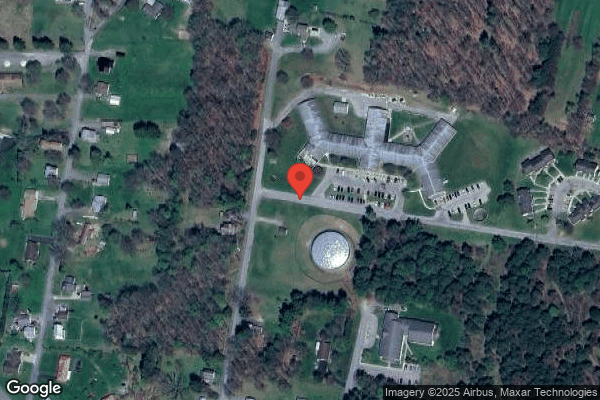

30 FOURTH AVENUE, CURWENSVILLE, PA 16833 (814) 236-0600
For profit - Corporation 131 Beds BONAMOUR HEALTH GROUP Data: November 2025 2 Immediate Jeopardy citations
Trust Grade
1/100
#624 of 653 in PA
Last Inspection: October 2024

Within standard 12-15 month inspection cycle. Federal law requires annual inspections.

Overview

Ridgeview Healthcare and Rehabilitation Center in Curwensville, Pennsylvania, has received a Trust Grade of F, indicating poor performance with significant concerns. It ranks #624 out of 653 facilities in Pennsylvania, placing it in the bottom half, and #4 out of 4 in Clearfield County, meaning there are no better local options. The facility is showing signs of improvement, with issues decreasing from 23 in 2024 to just 1 in 2025. Staffing is rated 4 out of 5 stars, which is a strength, though the turnover rate is 47%, which is around the state average. However, the facility has a concerning $153,566 in fines, higher than 92% of Pennsylvania facilities, and has had critical incidents where residents were placed in immediate jeopardy due to unpaid employee wages, which could impact care quality. Additionally, the facility failed to complete required assessments for many residents in a timely manner, which could affect their care planning.

Trust Score
F
1/100
In Pennsylvania
#624/653
Bottom 5%
Safety Record
High Risk
Review needed
Inspections
Getting Better
23 → 1 violations
Staff Stability
⚠ Watch
47% turnover. Above average. Higher turnover means staff may not know residents' routines.
Penalties
○ Average
$153,566 in fines. Higher than 56% of Pennsylvania facilities. Some compliance issues.
Skilled Nurses
⚠ Watch
Each resident gets only 26 minutes of Registered Nurse (RN) attention daily — below average for Pennsylvania. Fewer RN minutes means fewer trained eyes watching for problems.
Violations
⚠ Watch
56 deficiencies on record. Higher than average. Multiple issues found across inspections.
★☆☆☆☆
1.0
Overall Rating
★★★★☆
4.0
Staff Levels
★★★★☆
4.0
Care Quality
★☆☆☆☆
1.0
Inspection Score
Stable
2024: 23 issues
2025: 1 issues

The Good

  • 4-Star Staffing Rating · Above-average nurse staffing levels
  • 4-Star Quality Measures · Strong clinical quality outcomes
  • Full Sprinkler Coverage · Fire safety systems throughout facility
  • No fines on record

Facility shows strength in staffing levels, quality measures, fire safety.

The Bad

1-Star Overall Rating

Below Pennsylvania average (3.0)

Significant quality concerns identified by CMS

Staff Turnover: 47%

Near Pennsylvania avg (46%)

Higher turnover may affect care consistency

Federal Fines: $153,566

Well above median ($33,413)

Significant penalties indicating serious issues

Chain: BONAMOUR HEALTH GROUP

Part of a multi-facility chain

Ask about local staffing decisions and management

The Ugly 56 deficiencies on record

2 life-threatening
Sept 2025 1 deficiency
CONCERN (D) 📢 Someone Reported This

A family member, employee, or ombudsman was alarmed enough to file a formal complaint

Potential for Harm - no one hurt, but risky conditions existed

Deficiency F0688 (Tag F0688)

Could have caused harm · This affected 1 resident

Based on review of clinical records, observations, and staff interviews, it was determined that the facility failed to ensure that physician-ordered contracture management services were provided as ca...

Read full inspector narrative →
Based on review of clinical records, observations, and staff interviews, it was determined that the facility failed to ensure that physician-ordered contracture management services were provided as care planned for one of 68 residents reviewed (Resident 118). Findings include: A quarterly Minimum Data Set (MDS) assessment (a mandated assessment of a resident's abilities and care needs) for Resident 118, dated August 8, 2025, revealed that the resident was cognitively impaired and was dependent on staff for daily care needs. Physician's orders for Resident 118, dated May 20, 2021, included an order for staff to wash left hand with soap and water and dry, apply splint to prevent contractures with morning care and remove at bedtime. Resident 118's care plan for activities of daily living (ADL- essential and routine tasks that most young, healthy individuals can perform without assistance), dated December 17, 2017, indicated that staff was to wash and dry the left hand and apply the splint with morning care and be removed on the second shift. Observations of Resident 118 on September 17, at 2:15 p.m. revealed the resident was sitting up in his bed and the splint that was to be applied to his left hand was not in place. Interview with Licensed Practical Nurse 3 on September 17, 2025, at 2:29 p.m. confirmed Resident 118 did not have the splint in place to his left hand, and she was unable to locate it. Interview with the Director of Nursing on September 17, 2025, at 3:55 p.m. confirmed that Resident 118's left hand splint should have been applied with morning care. 28 Pa. Code 211.12(d)(5) Nursing services.
Oct 2024 20 deficiencies
CONCERN (D)

Potential for Harm - no one hurt, but risky conditions existed

Deficiency F0554 (Tag F0554)

Could have caused harm · This affected 1 resident

Based on review of facility policies and clinical records, as well as observations and staff interviews, it was determined that facility failed to determine if a resident was safe to self-administer m...

Read full inspector narrative →
Based on review of facility policies and clinical records, as well as observations and staff interviews, it was determined that facility failed to determine if a resident was safe to self-administer medications for one of 138 residents reviewed (Resident 69). Findings include: The facility's self administration of medication policy, dated January 16, 2024, indicated that self-administration was permitted when the interdisciplinary team has determined that it was clinically appropriate and safe for the resident to do so. An annual Minimum Data Set (MDS) for Resident 69, dated July 12, 2024, indicated that the resident was cognitively intact, required assistance for daily care needs, and had diagnoses that included stroke, anxiety, depression, and hypertension (high blood pressure). Physician's orders for Resident 69, dated October 19, 2024, included an order for the resident to receive 25 milligrams (mg) of metoprolol twice a day for hypertension, and to receive 20 mg of omeprazole twice a day for gastroesophageal reflux (GERD - heartburn). Physician's orders for Resident 69, dated March 14, 2024, included an order for the resident to receive 81 mg of aspirin one time a day for cerebral infarction (stroke) and atrial fibrillation (irregular heart beat), and 10 milliequivalent (meq) of potassium chloride once a day for supplement. Physician's orders for Resident 69, dated May 3, 2024, included an order for the resident to receive 75 mg of Pradaxa twice a day for atrial fibrillation. Physician's orders for Resident 69, dated May 8, 2024, included an order for the resident to receive 225 mg of venlafaxine once a day for depressive mood disorder. Physician's orders for Resident 69, dated October 15, 2024, included an order for the resident to receive 5 mg of buspirone three times a day for anxiety. Physician's orders for Resident 69, dated October 19, 2024, included an order for the resident to receive 1 mg of bumetanide twice a day for edema (swelling). Observation of Resident 69 on October 21, 2024, at 11:33 a.m. revealed that the resident was sitting in a wheelchair with her lunch tray in front of her on the over-bed stand. An unsupervised medicine cup with 11 unlabeled pills in it was sitting on the over-bed table. An interview with Resident 69 at that time revealed that she did not know the pills were on her table and that she forgot to take them. An interview with Licensed Practical Nurse 1 on October 21, 2024, at 11:43 a.m. revealed that she did leave medication in Resident 69's room because she thought she was still in bed and was going to take them when she sat up. She did not stay in the room to observe the resident take the medication. Licensed Practical Nurse 1 then offered to remove the medication, but the resident said she was going to take them. Licensed Practical Nurse 1 left the room and Resident 69 took her medication. An interview with the Nursing Home Administrator on October 24, 2024, at 3:45 p.m. confirmed that an assessment to determine if Resident 69 was safe to self-administer her medications was not completed. 28 Pa. Code 211.12(d)(1)(5) Nursing Services.
CONCERN (D)

Potential for Harm - no one hurt, but risky conditions existed

Deficiency F0578 (Tag F0578)

Could have caused harm · This affected 1 resident

Based on review of facility policies and clinical records, as well as staff interviews, it was determined that the facility failed to document the opportunity for the resident and/or resident represen...

Read full inspector narrative →
Based on review of facility policies and clinical records, as well as staff interviews, it was determined that the facility failed to document the opportunity for the resident and/or resident representative to formulate advance directives (instructions regarding the provision of health care and life sustaining measures when the resident is incapacitated), and failed to document the resident's and/or resident representative's decision to accept or decline assistance to formulate advance directives for three of 138 residents reviewed (Residents 37, 40, 53). Findings include: The facility's policy regarding advance directives, dated January 16, 2024, indicated that upon admission, the resident or resident representative will be provided with written information concerning the right to refuse or accept medical or surgical treatment and to formulate an advance directive if he or she chooses to do so. If the resident or resident representative indicates that he or she has not established advance directives, the healthcare center staff will offer assistance in establishing advance directives. The resident or resident representative will be given the option to accept or decline the assistance, and care will not be contingent on either decision. Nursing staff will document in the medical record the offer to assist and the resident's or resident representative's decision to accept or decline assistance. Information about whether or not the resident has executed an advance directive is displayed prominently in the medical record in a section of the record that is retrievable by any staff. If the resident or the resident's representative has executed one or more advance directives, or executes one upon admission, copies of these documents are obtained and maintained in the same section of the resident's medical record and are readily retrievable by any facility staff. The interdisciplinary team will review annually with the resident his or her advance directives to ensure that such directives are still the wishes of the resident. Such reviews will be made during the annual assessment process and recorded in the medical record. A quarterly Minimum Data Set (MDS) assessment (a mandated assessment of a resident's abilities and care needs) for Resident 37, dated September 27, 2024, indicated that the resident was cognitively impaired, was able to be clearly understood and usually able to understand others, required assistance with care needs, and had diagnoses that included diabetes and dementia. An annual MDS assessment for Resident 40, dated May 17, 2024, revealed that the resident was cognitively intact, was clearly understood and clearly able to understand others, required assistance for care needs, and had diagnoses that included chronic kidney disease Stage 3b (moderate to severe loss of kidney function) and peripheral vascular disease (a disease causing poor blood circulation to lower limbs). An annual MDS assessment for Resident 53, dated October 5, 2024, revealed that the resident was cognitively intact, was clearly understood and clearly able to understand others, required supervision to independent with care needs, and had diagnoses that included dementia, diabetes, chronic obstructive pulmonary disease (COPD) (chronic lung disease making breathing difficult), atrial fibrillation (irregular heart rhythm), cerebral infarction (lack of blood supply to the brain resulting in brain death to parts of the brain). Review of Resident 37, 40 and 53's clinical records indicated that they did not have advance directives. There was no documented evidence in the resident's clinical records that indicated the residents and/or their representative was informed of their rights to develop advance directives, no documented evidence that the residents and/or their representatives were provided the opportunity and assistance to formulate an advance directive, and no documented evidence that advanced directives were reviewed with the residents and/or resident representatives annually during the annual assessment process and recorded in the medical record. Interview with the Nursing Home Administrator on October 24, 2024, at 4:00 p.m. indicated that advance directives are addressed with residents during the admission process and noted in the admission paperwork. He indicated that they are uploaded into the documents section of the chart; however, he was not able to produce any advance directives for Residents 37, 40 and 53 or any documented evidence that the residents and/or their representatives were informed of their rights to develop advance directives, that the residents and/or their representatives were provided the opportunity and assistance to formulate an advance directive, or that advanced directives were reviewed with the residents and/or resident representatives annually during the annual assessment process and recorded in the medical record per facility policy. 28 Pa. Code 201.29(a)(d) Resident Rights.
CONCERN (D)

Potential for Harm - no one hurt, but risky conditions existed

Deficiency F0582 (Tag F0582)

Could have caused harm · This affected 1 resident

Based on clinical record reviews and staff interviews, it was determined that the facility failed to provide the required notice to the resident or the resident's representative following the end of t...

Read full inspector narrative →
Based on clinical record reviews and staff interviews, it was determined that the facility failed to provide the required notice to the resident or the resident's representative following the end of their Medicare coverage for one of three residents reviewed (Resident 101) who remained in the facility for long-term care. Findings include: A Skilled Nursing Facility (SNF) Beneficiary Protection Notification Review form, completed by the facility and dated September 12, 2024, revealed that Medicare coverage for Resident 101 started on August 2, 2024, and that his last covered day was September 16, 2024. The form indicated that the facility initiated discontinuation from Medicare Part A coverage and that the resident's benefit days were not exhausted. There was no documented evidence that Resident 101 was provided with an Advance Beneficiary Notice of Noncoverage (ABN - a notice given to Medicare beneficiaries to convey that Medicare is not likely to provide coverage in a specific case). Interview with the Director of Social Services on October 24, 2024, at 10:58 a.m. revealed that the ABN for Resident 101 was not issued because she was not aware of the form and that it needed to be completed. 28 Pa. Code 201.18(e)(1) Management.
CONCERN (D)

Potential for Harm - no one hurt, but risky conditions existed

Transfer Notice (Tag F0623)

Could have caused harm · This affected 1 resident

Based on clinical record reviews and staff interviews, it was determined that the facility failed to notify the resident and legal guardian, in writing, regarding the reason for hospitalization for th...

Read full inspector narrative →
Based on clinical record reviews and staff interviews, it was determined that the facility failed to notify the resident and legal guardian, in writing, regarding the reason for hospitalization for three of 138 residents reviewed (Residents 12, 74, 106). Findings include: A nursing note for Resident 12, dated July 18, 2024, at 1:49 p.m., revealed that the resident was admitted to the hospital with respiratory failure. There was no documented evidence that a written notice of Resident 12's transfer to the hospital was provided to the resident's responsible party regarding the reason for transfer. A nursing note for Resident 74, dated May 15, 2024, at 11:03 a.m., revealed that the resident was admitted to the hospital with uncontrolled bleeding. There was no documented evidence that a written notice of Resident 74's transfer to the hospital was provided to the resident's responsible party regarding the reason for transfer. A nursing note for Resident 106, dated September 28, 2024, 2024, at 7:26 p.m., revealed that the resident was admitted to the hospital with chronic obstructive pulmonary disease. There was no documented evidence that a written notice of Resident 106's transfer to the hospital was provided to the resident's responsible party regarding the reason for transfer. Interview with the Nursing Home Administrator on October 23, 2024, at 9:37 a.m. confirmed that the facility did not provide a written notice to Resident 12, Resident 74, or Resident 106, or to the resident's responsible parties when the residents were transferred to the hospital. 28 Pa. Code 201.25 Discharge Policy. 28 Pa. Code 201.29(f)(g) Resident Rights.
CONCERN (D)

Potential for Harm - no one hurt, but risky conditions existed

Comprehensive Care Plan (Tag F0656)

Could have caused harm · This affected 1 resident

Based on review of facility policies, clinical records, and staff interviews, it was determined that the facility failed to develop a comprehensive care plan that included specific and individualized ...

Read full inspector narrative →
Based on review of facility policies, clinical records, and staff interviews, it was determined that the facility failed to develop a comprehensive care plan that included specific and individualized interventions to address the care needs of residents for two of 138 residents reviewed (Residents 37, 84). Findings include: A facility policy for Comprehensive Person-Centered Care Plans, dated January 16, 2024, included that the interdisciplinary team, in conjunction with the resident and his or her family or legal representative, develops and implements a comprehensive, person-centered care plan for each resident. The comprehensive person-centered care plan is developed within seven days of the completion of the required comprehensive Minimum Data Set (MDS) assessment (a mandated assessment of a resident's abilities and care needs). Assessments of residents are ongoing and care plans are revised as information about the residents' conditions change. A quarterly MDS assessment for Resident 37, dated September 27, 2024, indicated that the resident was cognitively impaired, was able to be clearly understood and usually able to understand others, required assistance with care needs, and had diagnoses that included diabetes and dementia. Physician's orders for Resident 37, dated October 19, 2024, included an order for the resident to receive 0.4 milliliter (ml) of Enoxaparin (anticoagulant-used to prevent blood clots) subcutaneously (injection of medication into the fat layer between the skin and the muscle) daily for four weeks. There was no documented evidence that a care plan was developed to address Resident 37's individual care and treatment needs related to her use of anticoagulant medication. Interview with Nursing Home Administrator on October 23, 2024, at 2:17 p.m. confirmed that a care plan was not developed to address the care needs related to Resident 37's need for anticoagulant medication use and it should have been. An admission MDS assessment for Resident 84, dated September 17, 2024, indicated that the resident was cognitively intact, was incontinent of urine, and had a urinary tract infection. Physician's orders, dated October 1, 2024, included an order for the resident to have a urinary catheter, 18 French (size) with a 10 cubic centimeters (cc) balloon (located on the bladder end of the catheter and filled with sterile water to hold the tube in place) for urinary retention (a condition that makes it difficult to empty the bladder, either partially or completely). A review of the nurse aide documentation, dated October 1 through October 18, 2024, revealed that catheter care was provided each shift. There was no documented evidence that a care plan was developed to address Resident 84's individual care and treatment needs related to his use of a urinary catheter. Interview with the Nursing Home Administrator on October 24, 2024, at 12:17 p.m. confirmed that Resident 84's care plan did not include the use of a urinary catheter prior to him being discharged to the hospital. 28 Pa. Code 201.24(e)(4) admission Policy. 28 Pa. Code 211.12(d)(1)(5) Nursing Services.
CONCERN (D)

Potential for Harm - no one hurt, but risky conditions existed

Deficiency F0657 (Tag F0657)

Could have caused harm · This affected 1 resident

Based on review of facility policies and clinical records, as well as staff interviews, it was determined that the facility failed to ensure that a resident's care plan was updated/revised to reflect ...

Read full inspector narrative →
Based on review of facility policies and clinical records, as well as staff interviews, it was determined that the facility failed to ensure that a resident's care plan was updated/revised to reflect the resident's specific care needs for two of 138 residents reviewed (Residents 33, 81). Findings include: A facility policy for Comprehensive Person-Centered Care Plans, dated January 16, 2024, included that the interdisciplinary team, in conjunction with the resident and his or her family or legal representative, develops and implements a comprehensive, person-centered care plan for each resident. The comprehensive person-centered care plan is developed within seven days of the completion of the required comprehensive Minimum Data Set (MDS) assessment (a mandated assessment of a resident's abilities and care needs). Assessments of residents are ongoing and care plans are revised as information about the residents' conditions change. A quarterly Minimum Data Set (MDS) assessment (a mandated assessment of a resident's abilities and care needs) for Resident 33, dated July 18, 2024, indicated that the resident was cognitively intact and did not receive a diuretic medication (water pill). A current care plan indicated that the resident was receiving a diuretic medication. Review of Resident 33's Medication Administration Record (MAR) for October 2024 and current physician's orders revealed that the resident was not ordered to receive a diuretic. Interview with the Nursing Home Administrator on October 24, 2024, at 12:17 p.m. confirmed that Resident 33's care plan was not revised to reflect that he was not receiving a diuretic. An admission MDS assessment for Resident 81, dated September 27, 2024, indicated that the resident was cognitively intact, was understood and able to understand others, required assistance with care needs, and had an indwelling catheter (a thin, flexible tube inserted into the bladder to drain urine from the bladder). A nurse's note for Resident 81, dated October 3, 2024, at 6:15 p.m. indicated that the resident was ordered to trial discontinuing his foley (indwelling) catheter. Review of Resident 81's Treatment Administration Record (TAR) for October 2024 and review of his current physician's orders revealed that the resident was not ordered to have an indwelling catheter. An active care plan for Resident 81, dated September 20, 2024, indicated that the resident had an indwelling catheter. Interview with the Nursing Home Administrator on October 23, 2024, at 2:17 p.m. confirmed that Resident 81's care plan was not revised to reflect that his foley catheter was discontinued. 28 Pa. Code 201.24(e)(4) admission Policy. 28 Pa. Code 211.12(d)(5) Nursing Services.
CONCERN (D)

Potential for Harm - no one hurt, but risky conditions existed

Accident Prevention (Tag F0689)

Could have caused harm · This affected 1 resident

Based on review of clinical records and facility assessment reports, as well as staff interviews, it was determined that the facility failed to provide the correct consistency of food to one of 138 re...

Read full inspector narrative →
Based on review of clinical records and facility assessment reports, as well as staff interviews, it was determined that the facility failed to provide the correct consistency of food to one of 138 residents reviewed (Resident 71) and failed to complete safety assessments for two of 138 residents reviewed (Residents 85, 100) who used an air mattress. Findings include: A quarterly Minimum Data Set (MDS) assessment (a federally-mandated assessment of the resident's abilities and care needs) for Resident 71, dated September 10, 2024, revealed that the resident was cognitively intact and required a mechanically-altered diet. Physician's order for Resident 71 included an order, dated March 15, 2024, for the resident to receive a pureed texture diet, add sauce and gravy, with nectar consistency liquids (thickened liquids). A nursing note for Resident 71, dated July 25, 2024, revealed that the resident was choking and that the licensed practical nurse had performed the Heimlich maneuver. The resident was choking on his lunch. A witness statement by the Speech Therapist, dated July 25, 2024, revealed that Resident 71 spit out a chunk of chicken when the Heimlich maneuver was performed. An interview with the Speech Therapist on October 22, 2024, at 2:01 p.m. revealed that Resident 71's pureed chicken was not the proper consistency and had chunks in it on July 25, 2024. She stated that she talked to the cook to inform him that the pureed chicken had chunks in it and that a resident had choked on the chunks. A facility policy, dated January 16, 2024, regarding support surface guidelines indicated that any individual at risk for developing pressure ulcers should be placed on a redistribution support surface. Elements of support surfaces that were critical to pressure ulcer prevention and general safety inlcude pressure redistribution. A quarterly MDS assessment for Resident 85, dated September 3, 2024, revealed that the resident was cognitively intact, required partial to moderate assistance to roll from left and right and move from sitting to lying flat on the bed, and had a Stage 4 and Stage 2 pressure ulcers upon admission (Stage 4 - wound caused by pressure that has wound that may expose bone, tendon, or muscle, and Stage 2 - wound caused by pressure that was a shallow open wound). Observations on October 21, 2024, at 12:36 p.m. revealed that Resident 85 was lying in bed, and the bed was equipped with an air mattress; however, there was no documented evidence that the use of an air mattress was assessed for potential safety hazards prior to being placed on the resident's bed. Interview with the Assistant Director of Nursing on on October 24, 2024, at 10:50 a.m. confirmed that there was no assessment for potential safety hazards prior to the air mattress being placed on the Resident 85's bed and there should have been. An admission MDS assessment for Resident 100, dated November 16, 2023, revealed that the resident was cognitively intact, required partial to moderate assistance to roll from left and right and move from sitting to lying flat on the bed, and had a Stage 4 pressure ulcers upon admission. Observations of Resident 100 on October 21, 2024, at 12:27 p.m. of the resident lying in bed revealed that the bed was equipped with an air mattress; however, there was no documented evidence that the use of an air mattress was assessed for potential safety hazards prior to being placed on the resident's bed. Interview with the Assistant Director of Nursing on on October 24, 2024, at 10:50 a.m. confirmed that there was no assessment for potential safety hazards prior to the air mattress being placed on the Resident 100's bed and there should have been. 28 Pa. Code 201.14(a) Responsibility of Licensee. 28 Pa. Code 201.18(b)(1)(e)(1) Management. 28 Pa. Code 211.12(d)(1)(3)(5) Nursing Services.
CONCERN (D)

Potential for Harm - no one hurt, but risky conditions existed

Drug Regimen Review (Tag F0756)

Could have caused harm · This affected 1 resident

Based on clinical record reviews and staff interviews, it was determined that the facility failed to respond timely to a pharmacy recommendation for one of 138 residents reviewed (Resident 74). Findin...

Read full inspector narrative →
Based on clinical record reviews and staff interviews, it was determined that the facility failed to respond timely to a pharmacy recommendation for one of 138 residents reviewed (Resident 74). Findings include: A quarterly Minimum Data Set (MDS) assessment (a federally-mandated assessment of the resident's abilities and care needs) for Resident 74, dated August 23, 2024, revealed that the resident was cognitively intact and had diagnoses that included diabetes. A pharmacy medication regimen review, dated June 4, 2024, revealed that the pharmacist recommended that the physician change the resident's Allopurinol from 50 milligrams (mg) twice per day to 100 mg once per day and that the resident's Zoloft (antidepressant) be moved to morning as it causes insomnia. The physician agreed to the recommendations and made the changes on July 6, 2024, over a month later. An interview with the Nursing Home Administrator on October 23, 2024, at 3:49 p.m. confirmed that the pharmacy medication regimen reviews were not addressed timely for Resident 74 and they should have been. 28 Pa. Code 211.9(f)(3) Pharmacy Services.
CONCERN (D)

Potential for Harm - no one hurt, but risky conditions existed

Deficiency F0761 (Tag F0761)

Could have caused harm · This affected 1 resident

**NOTE- TERMS IN BRACKETS HAVE BEEN EDITED TO PROTECT CONFIDENTIALITY** Based on review of facility policies, as well as observations and staff interviews, it was determined that the facility failed t...

Read full inspector narrative →
**NOTE- TERMS IN BRACKETS HAVE BEEN EDITED TO PROTECT CONFIDENTIALITY** Based on review of facility policies, as well as observations and staff interviews, it was determined that the facility failed to label insulin with the date is was opened in one of three medication carts reviewed (Walnut hall); failed to discard two expired multi-dose vials of insulin in one of three medication carts reviewed (Maple hall); failed to provide a separately-locked, permanently-affixed compartment in the refrigerator for the storage of controlled drugs in one of two medication rooms reviewed (medication room on East Wing); and failed to ensure that medications were properly stored and labeled for one of 138 residents reviewed (Resident 69). Findings include: The facility's policy regarding medication labeling and storage, dated [DATE], indicated that controlled substances (medications with the potential to be abused) and other drugs subject to abuse are separately locked in permanently-affixed compartments. Multi-dose vials that have been opened or accessed (e.g., needle punctured) are dated and discarded within 28 days unless the manufacturer specifies a shorter or longer date for the open vial. Each resident's medications are assigned to an individual cubicle, drawer, or other holding area to prevent the possibility of mixing medications of several residents. Medications and biologicals are stored in packaging, containers, or other dispensing systems in which they are received. Nursing staff is responsible for maintaining medication storage and preparation areas in a clean, safe, and sanitary manner. Manufacturer's directions for the use of Lantus insulin Solostar pen (a long-acting insulin used to lower blood sugar levels), dated [DATE], revealed that unused Lantus should be stored in a refrigerator between 36 degrees Fahrenheit (F) to 46 degrees F. After initial use it may be kept at temperatures up to 86 degrees F for up to 28 days. Observations of the Walnut medication cart on the East Wing on [DATE], at 2:07 p.m. revealed a Lantus insulin Solostar pen for Resident 12 that was opened and not dated. Interview with Licensed Practical Nurse 2 for the Walnut medication cart at the time of observation confirmed that the opened Lantus insulin Solostar pen for Resident 12 was opened and not dated. Manufacturer's instructions for Novolog insulin (injectable medication to lower blood sugar levels), dated February 2015, revealed that the vial of Novolog was to be discarded after 28 days of being opened and manufacturer's instructions for Lantus (injectable medication to lower blood sugar levels), dated [DATE], revealed that the vial of Lantus was to be discarded after 28 days of being opened. Observations of the medication cart on Maple hall on [DATE], at 1:32 p.m. revealed that a multi-use vial of Novolog insulin for Resident 41 was opened and was labeled as being opened on [DATE], and a multi-use vial of Lantus insulin for Resident 6 was opened and was labeled as being opened on [DATE]. Interview with Licensed Practical Nurse 2 at that time confirmed that the Novolog for Resident 41 and the Lantus for Resident 6 should have been discarded 28 days after being opened. Observations in the facility's East Wing medication room refrigerator on [DATE], at 2:19 p.m. revealed an unlocked box not permanently affixed. Licensed Practical Nurse 2 removed the box from the refrigerator to show that the box was not able to be locked, indicating it was broken. The unsecured, unlocked compartment contained Dronabinol (a controlled medication used for nausea, vomiting, and appetite stimulant and is tightly controlled because it may be abused or cause addiction) for Resident 68. Interview with Nursing Home Administrator [DATE], at 2:46 p.m. confirmed that the narcotic box in the refrigerator in the medication room on the East wing, containing a controlled medication for Resident 68, was not locked and permanently affixed. He indicated that he was unaware that the refrigerator was replaced, and the box was never secured to the new refrigerator. An annual Minimum Data Set (MDS) for Resident 69, dated [DATE], indicated that the resident was cognitively intact, required assistance for daily care needs, and had diagnosis that included stoke, anxiety, depression, and hypertension (high blood pressure). Observation of Resident 69 on [DATE], at 11:33 a.m. revealed that the resident was sitting in her wheelchair with her lunch in front of her on the overbed stand. An unsupervised medicine cup containing 11 unlabeled pills was sitting on her overbed table. An interview with Resident 69 at that time revealed that she did not know the pills were on her table and that she forgot to take them. An interview with Licensed Practical Nurse 1 on [DATE], at 11:43 a.m. revealed that she did leave medication in Resident 69's room because she thought she was still in bed and was going to take them when she sat up. She did not stay in the room to observe the resident take the medication, and they were the resident's morning medication. An interview with the Assistant Director of Nursing on [DATE], at 10:50 p.m. confirmed that medications should not have been left unsupervised and unlabeled at the bedside for Resident 69. 28 Pa. Code 211.9(a)(1) Pharmacy Services. 28 Pa. Code 211.12(d)(1) Nursing Services.
CONCERN (D)

Potential for Harm - no one hurt, but risky conditions existed

QAPI Program (Tag F0867)

Could have caused harm · This affected 1 resident

Based on review of the facility's plans of correction for previous surveys, and the results of the current survey, it was determined that the facility's Quality Assurance Performance Improvement (QAPI...

Read full inspector narrative →
Based on review of the facility's plans of correction for previous surveys, and the results of the current survey, it was determined that the facility's Quality Assurance Performance Improvement (QAPI) committee failed to correct quality deficiencies and ensure that plans to improve the delivery of care and services effectively addressed recurring deficiencies. Findings include: The facility's deficiencies and plans of corrections for a State Survey and Certification (Department of Health) survey ending November 16, 2023, as well as a complaint visit on May 13, 2024, revealed that the facility developed plans of correction that included quality assurance systems to ensure that the facility maintained compliance with cited nursing home regulations. The results of the current survey, ending October 24, 2024, identified repeated deficiencies related to inaccurate Minimum Data Set (MDS) assessments, failing to create an individualized plan of care, quality of care, safety/accidents, label/store drugs and biologicals, and food procurement/storage/preparation. The facility's plan of correction for a deficiency regarding inaccurate MDS assessments, cited during the survey ending November 16, 2023, revealed that the facility would complete audits and report the results of the audits to the QAPI committee for review. The results of the current survey, cited under F641, revealed that the facility's QAPI committee failed to successfully implement their plan to ensure ongoing compliance with regulations regarding inaccurate MDS assessments. The facility's plan of correction for a deficiency regarding individualized plan of care, cited during the surveys ending November 16, 2023, and March 4, 2024, revealed that the facility would complete audits and report the results of the audits to the QAPI committee for review. The results of the current survey, cited under F656, revealed that the facility's QAPI committee failed to successfully implement their plan to ensure ongoing compliance with regulations regarding individualized plan of care. The facility's plan of correction for a deficiency regarding quality of care, cited during the survey ending November 16, 2023, revealed that the facility would complete audits and report the results of the audits to the QAPI committee for review. The results of the current survey, cited under F684, revealed that the facility's QAPI committee failed to successfully implement their plan to ensure ongoing compliance with regulations regarding quality of care. The facility's plan of correction for a deficiency regarding safety/accident hazards, cited during the survey ending November 16, 2023, revealed that the facility would complete audits and report the results of the audits to the QAPI committee for review. The results of the current survey, cited under F689, revealed that the facility's QAPI committee failed to successfully implement their plan to ensure ongoing compliance with regulations regarding safety/accident hazards. The facility's plan of correction for a deficiency regarding label/store drugs and biologicals, cited during the survey ending November 16, 2023, revealed that the facility would complete audits and report the results of the audits to the QAPI committee for review. The results of the current survey, cited under F761, revealed that the facility's QAPI committee failed to successfully implement their plan to ensure ongoing compliance with regulations regarding label/store drugs and biologicals. The facility's plan of correction for a deficiency regarding food procurement/storage/preparation, cited during the survey ending November 16, 2023, revealed that the facility would complete audits and report the results of the audits to the QAPI committee for review. The results of the current survey, cited under F812, revealed that the facility's QAPI committee failed to successfully implement their plan to ensure ongoing compliance with regulations regarding food procurement/storage/preparation. Refer to F641, F656, F684, F689, F761, F812. 28 Pa. Code 201.14(a) Responsibility of licensee. 28 Pa. Code 201.18(e)(1) Management.
CONCERN (D)

Potential for Harm - no one hurt, but risky conditions existed

Infection Control (Tag F0880)

Could have caused harm · This affected 1 resident

Based on review of established infection control guidelines and residents' clinical records, as well as observations and staff interviews, it was determined that the facility failed to follow infectio...

Read full inspector narrative →
Based on review of established infection control guidelines and residents' clinical records, as well as observations and staff interviews, it was determined that the facility failed to follow infection control guidelines from the Centers for Medicare/Medicaid Services (CMS) and the Centers for Disease Control (CDC) to reduce the spread of infections and prevent cross-contamination for one of 138 residents reviewed (Resident 81). Findings include: CDC guidance on Implementation of Personal Protective Equipment (PPE) use in Nursing Homes to Prevent Spread of Multidrug-resistant Organisms (MDROs), dated July 12, 2022, indicates that multidrug-resistant organism (MDRO) transmission is common in skilled nursing facilities, contributing to substantial resident morbidity and mortality and increased healthcare costs. Enhanced Barrier Precautions (EBP) are an infection control intervention designed to reduce transmission of resistant organisms that employs targeted gown and glove use during high contact resident care activities. CMS updated its infection prevention and control guidance effective April 1, 2024. The recommendations now include the use of EBP during high-contact care activities for residents with chronic wounds or indwelling medical devices, regardless of their MDRO status, in addition to residents who have an infection or colonization with a CDC-targeted or other epidemiologically important MDRO when contact precautions do not apply. An admission Minimum Data Set (MDS) assessment (a mandated assessment of a resident's abilities and care needs) for Resident 81, dated September 27, 2024, indicated that the resident was cognitively intact, was understood and able to understand others, required assistance with care needs, had arterial and pressure ulcers present on admission, and had a diagnosis of peripheral vascular disease (a disease causing poor blood circulation to lower limbs). A care plan for Resident 81, dated September 20, 2024, revealed that the resident had actual skin breakdown. A care plan for Resident 81, dated October 17, 2024, revealed that the resident had an infection to his left toe. A progress note for Resident 81, dated October 2, 2024, at 10:16 p.m., indicated that the resident was seen by Healing Partners that morning. Documentation revealed that the resident had two unstageable pressure ulcers to the right posterior heel and left heel that were present on admission and that the residents had a total of 18 wounds. A progress note for Resident 81, dated October 16, 2024, at 12:16 p.m., indicated that the resident's left second and third toe wounds had purulent drainage. The Certified Registered Nurse Practitioner was made aware, and orders were received for a wound culture and the resident was started on doxycycline (an antibiotic) twice daily for 10 days. A progress note for Resident 81, dated October 16, 2024, at 5:57 p.m. indicated that the resident was seen by Healing Partners that morning. Documentation revealed that the resident's left second toe and left third toe had new wounds noted and new orders were obtained. The wound culture was done, and they were waiting for the results. A progress note for Resident 81, dated October 18, 2024, at 5:12 p.m. indicated that the wound culture and sensitivity results were received and the nurse practitioner indicated to continue with the doxycycline. Observations of Resident 81 on October 22, 2024, at 9:54 a.m. revealed that the resident had no signage at the entrance to his room or in his room to indicate infection control measures for EBP were in place related to his chronic wounds. A progress note for Resident 81, dated October 23, 2024, at 5:36 p.m., indicated that the resident was seen by Healing Partners that morning. Documentation revealed that the left heel and left third toe were worsening and new orders were obtained for the left heel. Other wounds were noted to be improving with delayed wound closure. Interview with the Infection Preventionist on October 24, 2024, at 10:30 a.m. confirmed that Resident 81 was not currently on EBP and should have been related to his chronic wounds. 28 Pa. Code 201.14(a) Responsibility of Licensee. 28 Pa. Code 201.18(e)(1) Management. 28 Pa. Code 211.12(d)(1)(5) Nursing Services.
CONCERN (D)

Potential for Harm - no one hurt, but risky conditions existed

Deficiency F0883 (Tag F0883)

Could have caused harm · This affected 1 resident

**NOTE- TERMS IN BRACKETS HAVE BEEN EDITED TO PROTECT CONFIDENTIALITY** Based on review of facility policies and clinical records, as well as staff interviews, it was determined that the facility fail...

Read full inspector narrative →
**NOTE- TERMS IN BRACKETS HAVE BEEN EDITED TO PROTECT CONFIDENTIALITY** Based on review of facility policies and clinical records, as well as staff interviews, it was determined that the facility failed to ensure that each resident was offered and/or received the influenza immunization for one of 138 residents reviewed (Resident 43). Findings include: The facility's policy regarding the influenza vaccine, dated January 16, 2024, indicated that all residents and employees who had no contraindications to the vaccine would be offered the influenza vaccine annually to encourage and promote the benefits associated with vaccinations against influenza. Between October 1 and March 31 each year, the influenza vaccine would be offered to residents and employees. A quarterly Minimum Data Set (MDS) assessment (a mandated assessment of a resident's abilities and care needs) for Resident 43, dated September 11, 2024, revealed that the resident could make himself understood and could usually understand others, was cognitively impaired, and did not have the influenza vaccine information assessed. An informed consent form for the influenza vaccine, dated October 31, 2023, revealed that the resident's representative requested that Resident 43 receive the influenza vaccine. Review of the immunization records for Resident 43 revealed no documented evidence that the resident was offered, received, or refused an influenza vaccine since admission on [DATE]. Interview with the Infection Control Nurse on October 22, 2024, at 2:00 p.m. confirmed that the facility had no documented evidence that Resident 43 was offered, received, or refused an influenza vaccine since his admission. 28 Pa. Code 201.14(a) Responsibility of Licensee. 28 Pa. Code 201.18(b)(1) Management. 28 Pa. Code 211.12(d)(1)(5) Nursing Services.
CONCERN (E)

Potential for Harm - no one hurt, but risky conditions existed

Comprehensive Assessments (Tag F0636)

Could have caused harm · This affected multiple residents

Based on review of the Resident Assessment Instrument User's Manual and clinical records, as well as staff interviews, it was determined that the facility failed to ensure that comprehensive admission...

Read full inspector narrative →
Based on review of the Resident Assessment Instrument User's Manual and clinical records, as well as staff interviews, it was determined that the facility failed to ensure that comprehensive admission Minimum Data Set assessments were completed in the required time frame for 57 of 138 residents reviewed (Residents 6, 10, 11, 13, 23, 27, 28, 30, 32, 38, 39, 43, 56, 57, 69, 70, 81, 83, 84, 85, 86, 89, 90, 94, 96, 97, 98, 99, 100, 101, 102, 103, 110, 113, 115, 118, 120, 121, 124, 129, 130, 131, 132, 133, 134, 137, 139, 140, 141, 143, 145, 147, 149, 150, 151, 153, 154). Findings include: The Long-Term Care Facility Resident Assessment Instrument (RAI) User's Manual, which provides instructions and guidelines for completing required Minimum Data Set (MDS) assessments (mandated assessments of a resident's abilities and care needs), dated October 2024, indicated that an admission MDS assessment was to be completed no later than 14 days (admission date + 13 calendar days) following admission. A comprehensive admission MDS assessment for Resident 6, dated July 12, 2024, revealed that the resident's admission MDS assessment was dated as completed on July 27, 2024, which was 16 days after admission. A comprehensive admission MDS assessment for Resident 10, dated August 1, 2024, revealed that the resident's admission MDS assessment was dated as completed on August 18, 2024, which was 18 days after admission. A comprehensive admission MDS assessment for Resident 11, dated September 3, 2024, revealed that the resident's admission MDS assessment was dated as completed on September 18, 2024, which was 16 days after admission. A comprehensive admission MDS assessment for Resident 13, dated June 20, 2024, revealed that the resident's admission MDS assessment was dated as completed on July 16, 2024, which was 27 days after admission. A comprehensive admission MDS assessment for Resident 23, dated June 28, 2024, revealed that the resident's admission MDS assessment was dated as completed on July 16, 2024, which was 19 days after admission. A comprehensive admission MDS assessment for Resident 27, dated July 18, 2024, revealed that the resident's admission MDS assessment was dated as completed on August 5, 2024, which was 29 days after admission. A comprehensive admission MDS assessment for Resident 28, dated September 9, 2024, revealed that the resident's admission MDS assessment was dated as completed on September 30, 2024, which was 22 days after admission. A comprehensive admission MDS assessment for Resident 30, dated September 3, 2024, revealed that the resident's admission MDS assessment was dated as completed on September 24, 2024, which was 22 days after admission. A comprehensive admission MDS assessment for Resident 32, dated August 26, 2024, revealed that the resident's admission MDS assessment was dated as completed on September 10, 2024, which was 16 days after admission. A comprehensive admission MDS assessment for Resident 38, dated September 15, 2024, revealed that the resident's admission MDS assessment was dated as completed on October 8, 2024, which was 24 days after admission. A comprehensive admission MDS assessment for Resident 39, dated October 1, 2024, revealed that the resident's admission MDS assessment was dated as completed on October 16, 2024, which was 16 days after admission. A comprehensive admission MDS assessment for Resident 43, dated June 5, 2024, revealed that the resident's admission MDS assessment was dated as completed on June 20, 2024, which was 16 days after admission. A comprehensive admission MDS assessment for Resident 56, dated September 23, 2024, revealed that the resident's admission MDS assessment was dated as completed on October 9, 2024, which was 17 days after admission. A comprehensive admission MDS assessment for Resident 57, dated September 27, 2024, revealed that the resident's admission MDS assessment was dated as completed on October 11, 2024, which was 15 days after admission. A comprehensive admission MDS assessment for Resident 69, dated July 12, 2024, revealed that the resident's admission MDS assessment was dated as completed on July 30, which was 19 days after admission. A comprehensive admission MDS assessment for Resident 70, dated June 17, 2024, revealed that the resident's admission MDS assessment was dated as completed on July 1, 2024, which was 15 days after admission. A comprehensive admission MDS assessment for Resident 81, dated September 20, 2024, revealed that the resident's admission MDS assessment was dated as completed on October 9, 2024, which was 20 days after admission. A comprehensive admission MDS assessment for Resident 83, dated August 27, 2024, revealed that the resident's admission MDS assessment was dated as completed on September 16, 2024, which was 21 days after admission. A comprehensive admission MDS assessment for Resident 84, dated September 10, 2024, revealed that the resident's admission MDS assessment was dated as completed on October 1, 2024, which was 22 days after admission. A comprehensive admission MDS assessment for Resident 85, dated August 27, 2024, revealed that the resident's admission MDS assessment was dated as completed on September 18, 2024, which was 23 days after admission. A comprehensive admission MDS assessment for Resident 86, dated August 29, 2024, revealed that the resident's admission MDS assessment was dated as completed on September 23, 2024, which was 26 days after admission. A comprehensive admission MDS assessment for Resident 89, dated September 26, 2024, revealed that the resident's admission MDS assessment was dated as completed on October 12, 2024, which was 17 days after admission. A comprehensive admission MDS assessment for Resident 90, dated September 26, 2024, revealed that the resident's admission MDS assessment was dated as completed on October 11, 2024, which was 16 days after admission. A comprehensive admission MDS assessment for Resident 94, dated September 6, 2024, revealed that the resident's admission MDS assessment was dated as completed on September 27, 2024, which was 22 days after admission. A comprehensive admission MDS assessment for Resident 96, dated September 12, 2024, revealed that the resident's admission MDS assessment was dated as completed on October 2, 2024, which was 21 days after admission. A comprehensive admission MDS assessment for Resident 97, dated July 9, 2024, revealed that the resident's admission MDS assessment was dated as completed on July 25, 2024, which was 17 days after admission. A comprehensive admission MDS assessment for Resident 98, dated July 15, 2024, revealed that the resident's admission MDS assessment was dated as completed on August 1, 2024, which was 18 days after admission. A comprehensive admission MDS assessment for Resident 99, dated July 17, 2024, revealed that the resident's admission MDS assessment was dated as completed on August 3, 2024, which was 18 days after admission. A comprehensive admission MDS assessment for Resident 100, dated September 12, 2024, revealed that the resident's admission MDS assessment was dated as completed on October 3, 2024, which was 22 days after admission. A comprehensive admission MDS assessment for Resident 101, dated August 2, 2024, revealed that the resident's admission MDS assessment was dated as completed on August 19, 2024, which was 18 days after admission. A comprehensive admission MDS assessment for Resident 102, dated September 9, 2024, revealed that the resident's admission MDS assessment was dated as completed on October 1, 2024, which was 23 days after admission. A comprehensive admission MDS assessment for Resident 103, dated September 25, 2024, revealed that the resident's admission MDS assessment was dated as completed on October 11, 2024, which was 17 days after admission. A comprehensive admission MDS assessment for Resident 110, dated August 22, 2024, revealed that the resident's admission MDS assessment was dated as completed on September 9, 2024, which was 19 days after admission. A comprehensive admission MDS assessment for Resident 113, dated July 15, 2024, revealed that the resident's admission MDS assessment was dated as completed on August 5, 2024, which was 22 days after admission. A comprehensive admission MDS assessment for Resident 115, dated May 23, 2024, revealed that the resident's admission MDS assessment was dated as completed on June 8, 2024, which was 17 days after admission. A comprehensive admission MDS assessment for Resident 118, dated February 7, 2024, revealed that the resident's admission MDS assessment was dated as completed on September 12, 2024, which was 216 days after admission. A comprehensive admission MDS assessment for Resident 120, dated June 28, 2024, revealed that the resident's admission MDS assessment was dated as completed on July 16, 2024, which was 19 days after admission. A comprehensive admission MDS assessment for Resident 121, dated July 8, 2024, revealed that the resident's admission MDS assessment was dated as completed on July 25, 2024, which was 18 days after admission. A comprehensive admission MDS assessment for Resident 124, dated June 18, 2024, revealed that the resident's admission MDS assessment was dated as completed on July 11, 2024, which was 24 days after admission. A comprehensive admission MDS assessment for Resident 129, dated November 28, 2023, revealed that the resident's admission MDS assessment was dated as completed on December 15, 2023, which was 18 days after admission. A comprehensive admission MDS assessment for Resident 130, dated September 6, 2024, revealed that the resident's admission MDS assessment was dated as completed on September 27, 2024, which was 22 days after admission. A comprehensive admission MDS assessment for Resident 131, dated September 12, 2024, revealed that the resident's admission MDS assessment was dated as completed on October 2, 2024, which was 21 days after admission. A comprehensive admission MDS assessment for Resident 132, dated August 15, 2024, revealed that the resident's admission MDS assessment was dated as completed on August 30, 2024, which was 16 days after admission. A comprehensive admission MDS assessment for Resident 133, dated June 21, 2024, revealed that the resident's admission MDS assessment was dated as completed on July 12, 2024, which was 22 days after admission. A comprehensive admission MDS assessment for Resident 134, dated July 17, 2024, revealed that the resident's admission MDS assessment was dated as completed on August 2, 2024, which was 17 days after admission. A comprehensive admission MDS assessment for Resident 137, dated July 19, 2024, revealed that the resident's admission MDS assessment was dated as completed on August 5, 2024, which was 18 days after admission. A comprehensive admission MDS assessment for Resident 139, dated July 16, 2024, revealed that the resident's admission MDS assessment was dated as completed on August 2, 2024, which was 18 days after admission. A comprehensive admission MDS assessment for Resident 140, dated July 12, 2024, revealed that the resident's admission MDS assessment was dated as completed on August 1, 2024, which was 21 days after admission. A comprehensive admission MDS assessment for Resident 141, dated July 2, 2024, revealed that the resident's admission MDS assessment was dated as completed on July 24, 2024, which was 23 days after admission. A comprehensive admission MDS assessment for Resident 143, dated June 28, 2024, revealed that the resident's admission MDS assessment was dated as completed on July 12, 2024, which was 15 days after admission. A comprehensive admission MDS assessment for Resident 145, dated July 5, 2024, revealed that the resident's admission MDS assessment was dated as completed on July 24, 2024, which was 20 days after admission. A comprehensive admission MDS assessment for Resident 147, dated July 23, 2024, revealed that the resident's admission MDS assessment was dated as completed on August 6, 2024, which was 15 days after admission. A comprehensive admission MDS assessment for Resident 149, dated July 15, 2024, revealed that the resident's admission MDS assessment was dated as completed on August 1, 2024, which was 18 days after admission. A comprehensive admission MDS assessment for Resident 150, dated February 13, 2024, revealed that the resident's admission MDS assessment was dated as completed on September 12, 2024, which was 213 days after admission. A comprehensive admission MDS assessment for Resident 151, dated July 9, 2024, revealed that the resident's admission MDS assessment was dated as completed on July 25, 2024, which was 17 days after admission. A comprehensive admission MDS assessment for Resident 153, dated September 4, 2024, revealed that the resident's admission MDS assessment was dated as completed on September 25, 2024, which was 22 days after admission. A comprehensive admission MDS assessment for Resident 154, dated July 12, 2024, revealed that the resident's admission MDS assessment was dated as completed on July 27, 2024, which was 16 days after admission. An interview with Nursing Home Administrator on October 24, 2024, at 11:29 a.m. confirmed that the admission MDS assessments listed above were not completed within the required time frames. 28 Pa. Code 211.5(f) Clinical Records.
CONCERN (E)

Potential for Harm - no one hurt, but risky conditions existed

Deficiency F0638 (Tag F0638)

Could have caused harm · This affected multiple residents

Based on review of the Resident Assessment Instrument User's Manual and clinical records, as well as staff interviews, it was determined that the facility failed to ensure that Quarterly Minimum Data ...

Read full inspector narrative →
Based on review of the Resident Assessment Instrument User's Manual and clinical records, as well as staff interviews, it was determined that the facility failed to ensure that Quarterly Minimum Data Set assessments were completed within the required timeframe for 42 of 138 residents reviewed (Residents 1, 2, 3, 7, 12, 16, 18, 19, 20, 21, 25, 29, 31, 34, 35, 36, 37, 41, 44, 46, 47, 49, 50, 52, 53, 55, 59, 60, 63, 65, 71, 78, 82, 87, 91, 92, 93, 114, 116, 117, 125, 144). Findings include: The Long-Term Care Facility Resident Assessment Instrument (RAI) User's Manual, which provides instructions and guidelines for completing required Minimum Data Set (MDS) assessments (mandated assessments of residents' abilities and care needs), dated October 2024, indicated that the completion date for a quarterly assessment is the Assessment Reference Date (ARD - the last day of an assessment's look-back period) plus 14 days. A quarterly assessment is due every 92 days (ARD of most recent assessment + 92 days). A quarterly MDS assessment for Resident 1, with an ARD of June 27, 2024, was completed on July 18, 2024, which was eight days late. A quarterly MDS assessment for Resident 2, with an ARD of July 5, 2024, was completed on July 24, 2024, which was six days late. A quarterly MDS assessment for Resident 3, with an ARD of August 2, 2024, was completed on August 22, 2024, which was seven days late. A quarterly MDS assessment for Resident 7, with an ARD of June 18, 2024, was completed on July 3, 2024, which was two days late. A quarterly MDS assessment for Resident 12, with an ARD of July 16, 2024, was completed on July 31, 2024, which was two days late. A quarterly MDS assessment for Resident 16, with an ARD of July 2, 2024, was completed on July 20, 2024, which was five days late. A quarterly MDS assessment for Resident 18, with an ARD of July 30, 2024, was completed on August 16, 2024, which was four days late. A quarterly MDS assessment for Resident 19, with an ARD of July 24, 2024, was completed on August 8, 2024, which was two days late. A quarterly MDS assessment for Resident 20, with an ARD of July 5, 2024, was completed on July 28, 2024, which was 10 days late. A quarterly MDS assessment for Resident 21, with an ARD of August 2, 2024, was completed on August 21, 2024, which was six days late. A quarterly MDS assessment for Resident 25, with an ARD of September 4, 2024, was completed on September 19, 2024, which was two days late. A quarterly MDS assessment for Resident 29, with an ARD of July 11, 2024, was completed on July 29, 2024, which was five days late. A quarterly MDS assessment for Resident 31, with an ARD of July 12, 2024, was completed on July 29, 2024, which was four days late. A quarterly MDS assessment for Resident 34, with an ARD of August 1, 2024, was completed on August 16, 2024, which was two days late. A quarterly MDS assessment for Resident 35, with an ARD of June 27, 2024, was completed on July 18, 2024, which was eight days late. A quarterly MDS assessment for Resident 36, with an ARD of July 12, 2024, was completed on July 29, 2024, which was four days late. A quarterly MDS assessment for Resident 37, with an ARD of June 27, 2024, was completed on July 17, 2024, which was seven days late. A quarterly MDS assessment for Resident 41, with an ARD of September 14, 2024, was completed on September 30, 2024, which was three days late. A quarterly MDS assessment for Resident 44, with an ARD of July 11, 2024, was completed on July 29, 2024, which was five days late. A quarterly MDS assessment for Resident 46, with an ARD of April 17, 2024, was completed on June 18, 2024, which was 63 days late. A quarterly MDS assessment for Resident 47, with an ARD of July 5, 2024, was completed on July 23, 2024, which was five days late. A quarterly MDS assessment for Resident 49, with an ARD of July 2, 2024, was completed on July 22, 2024, which was seven days late. A quarterly MDS assessment for Resident 50, with an ARD of August 28, 2024, was completed on September 12, 2024, which was two days late. Resident 52 had no quarterly assessment in the prior 92 days. A quarterly MDS assessment for Resident 53, with an ARD of July 5, 2024, was completed on July 29, 2024, which was 11 days late. A quarterly MDS assessment for Resident 55, with an ARD of July 16, 2024, was completed on July 31, 2024, which was two days late. A quarterly MDS assessment for Resident 59, with an ARD of August 3, 2024, was completed on August 22, 2024, which was six days late. A quarterly MDS assessment for Resident 60, with an ARD of July 14, 2024, was completed on July 30, 2024, which was three days late. A quarterly MDS assessment for Resident 61, with an ARD of July 2, 2024, was completed on July 21, 2024, which was six days late. A quarterly MDS assessment for Resident 63, with an ARD of July 5, 2024, was completed on July 23, 2024, which was five days late. A quarterly MDS assessment for Resident 65, with an ARD of June 20, 2024, was completed on July 16, 2024, which was 13 days late. A quarterly MDS assessment for Resident 71, with an ARD of July 2, 2024, was completed on July 21, 2024, which was six days late. A quarterly MDS assessment for Resident 78, with an ARD of August 3, 2024, was completed on August 23, 2024, which was seven days late. A quarterly MDS assessment for Resident 82, with an ARD of June 18, 2024, was completed on July 3, 2024, which was two days late. A quarterly MDS assessment for Resident 87, with an ARD of July 24, 2024, was completed on August 8, 2024, which was two days late. A quarterly MDS assessment for Resident 91, with an ARD of July 2, 2024, was completed on July 21, 2024, which was six days late. A quarterly MDS assessment for Resident 92, with an ARD of July 2, 2024, was completed on July 22, 2024, which was seven days late. A quarterly MDS assessment for Resident 93, with an ARD of June 18, 2024, was completed on July 8, 2024, which was seven days late. A quarterly MDS assessment for Resident 114, with an ARD of July 17, 2024, was completed on July 3, 2024, which was four days late. A quarterly MDS assessment for Resident 116, with an ARD of June 19, 2024, was completed on July 8, 2024, which was four days late. A quarterly MDS assessment for Resident 117, with an ARD of July 12, 2024, was completed on July 29, 2024, which was four days late. A quarterly MDS assessment for Resident 125, with an ARD of August 2, 2024, was completed on August 22, 2024, which was seven days late. Resident 144 had no quarterly assessment in the prior 92 days. An interview with Nursing Home Administrator on October 24, 2024, at 11:29 a.m. confirmed that the admission MDS assessments listed above were not completed within the required time frames. 28 Pa. Code 211.5(f) Clinical Records. 28 Pa. Code 211.12(d)(5) Nursing Services.
CONCERN (E)

Potential for Harm - no one hurt, but risky conditions existed

MDS Data Transmission (Tag F0640)

Could have caused harm · This affected multiple residents

Based on review of the Resident Assessment Instrument, clinical records, and the Minimum Data Set validation report, as well as staff interviews, it was determined that the facility failed to transmit...

Read full inspector narrative →
Based on review of the Resident Assessment Instrument, clinical records, and the Minimum Data Set validation report, as well as staff interviews, it was determined that the facility failed to transmit Minimum Data Set (MDS) assessments to the required electronic system, the Centers for Medicare and Medicaid Services (CMS) Quality Improvement and Evaluation System (QIES) Assessment Submission and Processing (ASAP) System, within 14 days of completion for 31 of 138 residents reviewed (Residents 6, 12, 22, 37, 52, 80, 84, 96, 111, 112, 114, 118, 119, 123, 124, 128, 130, 131, 132, 133, 135, 136, 138, 140, 141, 142, 143, 145, 150, 152, 153). Findings include: The Long-Term Care Facility Resident Assessment Instrument (RAI) User's Manual, which provides instructions and guidelines for completing Minimum Data Set (MDS) assessments (mandated assessments of a resident's abilities and care needs), dated October 2023, indicated that Entry/Reentry and Death in Facility tracking record must be completed within seven days of the Event date (section A1600 for Entry/reentry records plus seven days and section A2000 for Discharge/death in facility records plus seven days) and transmitted within 14 days of the Event Date (Section A1600 plus 14 days for Entry/reentry records and Section A2000 plus 14 days for Death in Facility records). Discharge tracking records must be completed and transmitted within 14 days of the Event Date (Section A2000 plus 14 days). A nurse's note for Resident 37, dated October 12, 2024, at 10:06 p.m. indicated that the resident had a left hip x-ray revealing a fracture and was transferred to the hospital. A nurse's note for Resident 37, dated October 16, 2024, at 2:45 p.m. indicated that the resident was readmitted to the facility from the hospital. Review of the clinical record for Resident 37 revealed that a Discharge tracking record and an Entry/reentry record was not completed as of October 24, 2024, at 8:36 a.m. A nursing note for Resident 84, dated September 20, 2024, at 2:21 p.m. revealed that the resident was being admitted to the hospital with diagnoses of renal failure, dehydration, and COVID positive. A nursing note for Resident 84, dated September 20, 2024, at 9:41 p.m. revealed that the resident returned from the hospital with new admission orders. Review of the clinical record for Resident 84 revealed that a Discharge tracking record and an Entry/reentry record were not completed as of October 24, 2024. Interview with the Nursing Home Administrator on October 24, 2024, at 8:27 a.m. confirmed that the Discharge tracking records and an Entry/reentry records. The Long-Term Care Facility Resident Assessment Instrument (RAI) User's Manual, which provides instructions and guidelines for completing required Minimum Data Set (MDS) assessments (federally-mandated assessments of a resident's abilities and care needs), dated October 2024, indicated that comprehensive MDS assessments must be transmitted electronically within 14 days of the Care Plan Completion Date (V0200C2 + 14 days). All other MDS assessments must be submitted within 14 days of the MDS Completion Date (Z0500B + 14 days). The MDS assessment validation report from iQIES (a federal government website for the Centers for Medicare and Medicaid), dated June 1, 2024 to October 18, 2024, revealed that the following MDS assessments were completed late for Residents 6, 12, 22, 52, 80, 96, 111, 112, 114, 118, 119, 123, 124, 128, 130, 131, 132, 133, 135, 136, 140, 141, 142, 143, 145, 150, 152, and 153. The MDS assessment validation report from iQIES, dated June 1, 2023 to October 18, 2024, revealed that the following MDS assessments were submitted late: Resident 13 due September 20, submitted October 7, 2024. Resident 15 due July 6, submitted July 23, 2024. Resident 38 due September 15, submitted October 9, 2024. Resident 43 due June 12, submitted June 20, 2024. Resident 46 due April 17, submitted June 18, 2024. Resident 71 due April 5, submitted June 20, 2024. Resident 95 due September 16, submitted October 18, 2024. Resident 96 due July 2, submitted July 19, 2024. Resident 100 due September 13, submitted October 7, 2024. Resident 110 due September 22, submitted September 6, 2024. Resident 116 due July 8, submitted August 12, 2024. Resident 122 due June 10, submitted September 18, 2024. Resident 126 due June 25, submitted September 18, 2024. Resident 127 due June 18, submitted September 18, 2024. Resident 128 due July 12, submitted July 29, 2024. Resident 133 due August 16, submitted September 6, 2024. Resident 144 due June 10, submitted June 18, 2024. Resident 146 due July 27, submitted September 18, 2024. Resident 147 due July 23, submitted August 7, 2024. Resident 148 due June 9, submitted September 13, 2024. Resident 154 due July 27, submitted August 12, 2024. Interview with the Nursing Home Administrator on October 24, 2024, at 11:39 a.m. confirmed that the above MDS assessments were not submitted in a timely manner. 28 Pa. Code 211.5(f) Clinical Records.
CONCERN (E)

Potential for Harm - no one hurt, but risky conditions existed

Assessment Accuracy (Tag F0641)

Could have caused harm · This affected multiple residents

**NOTE- TERMS IN BRACKETS HAVE BEEN EDITED TO PROTECT CONFIDENTIALITY** Based on review of the Resident Assessment Instrument (RAI) User's Manual and clinical records, as well as staff interviews, it ...

Read full inspector narrative →
**NOTE- TERMS IN BRACKETS HAVE BEEN EDITED TO PROTECT CONFIDENTIALITY** Based on review of the Resident Assessment Instrument (RAI) User's Manual and clinical records, as well as staff interviews, it was determined that the facility failed to complete accurate Minimum Data Set (MDS) assessments for five of 56 residents reviewed (Residents 37, 43, 84, 88, 91). Findings include: The RAI User's Manual, dated October 2023, revealed that Section N0415A1 Antipsychotic Medications (medications used to treat mental health disorders) was to be coded if the resident took the medication during the seven-day look-back period. Section N0450A Antipsychotic Medication Review was to be coded (0) if the resident did not receive an antipsychotic medication and was to be coded (1), (2) or (3) if the resident received an antipsychotic medication. Section N0450B was to be coded (0) if a gradual dose reduction (GDR) was not attempted or (1) if a GDR had been attempted. Section N0450C was to be coded to indicate the date of the last attempted GDR. Physician's orders for Resident 37, dated August 15, 2024, indicated that the resident was to receive 5 milligrams (mg) of olanzapine (an antipsychotic medication) daily related to dementia, mood disturbance, and anxiety. A nurse's note for Resident 37, dated August 15, 2024, at 3:46 p.m., revealed that orders were received for a gradual dose reduction (GDR) of olanzapine to 5 mg daily. Review of the Medication Administration Record (MAR) for Resident 37, dated September 2024, revealed that staff administered 5 mg of Olanzapine daily as ordered. A quarterly MDS assessment for Resident 37, dated September 27, 2024, revealed that Section N0415A1 was not coded, indicating that the resident did not receive an antipsychotic medication and Section N0450 was not coded, indicating that the resident did not receive an antipsychotic medication and did not receive a gradual dose reduction. Interview with the Nursing Home Administrator on October 24, 2024, at 8:36 a.m. confirmed that the MDS assessment for Resident 37 was coded incorrectly. The RAI User's Manual, dated October 2023, revealed that Section O0250A (Influenza Vaccine) was to be coded (0) if the resident did not receive the influenza vaccine, and (1) if the resident did receive the influenza vaccine, Section O0250A was to be completed with the date the influenza vaccine was received, and Section O0250C was to be coded with the reason why the influenza vaccine was not received; (1) if the resident was not in the facility during the flu season; (2) if received outside the facility; (3) if not eligible; (4) if offered and declined; (5) if not offered; (6) inability to obtain influenza vaccine due to a declared shortage; and (9) none of the above. A quarterly MDS assessment for Resident 43, dated September 11, 2024, revealed that the resident did not have his influenza vaccine information assessed. Interview with the Infection Control Nurse on October 22, 2024, at 2:00 p.m. confirmed that the facility had no documented evidence that Resident 43 was offered, received, or refused an influenza vaccine since his admission on [DATE]. The RAI User's Manual, dated October 2023, revealed that Section N0415J1 Hypoglycemic Medications was to be coded if the resident took the medication during the seven-day look-back period. Physician's orders for Resident 84, dated September 10, 2024, included orders for the resident to receive 1000 mg of Metformin (medication used to lower blood sugars) twice a day for diabetes. Review of the MAR for Resident 84, dated September 2024, revealed that staff had administered the Metformin and insulin September 10 through 19, 2024. An admission MDS assessment for Resident 84, dated September 17, 2024, revealed that section N0415J1 was not coded, indicating that the resident did not receive hypoglycemic medication during the seven-day look-back assessment period. Physician's orders for Resident 88, dated August 1, 2023, included orders for the resident to receive 0.5 mg of Risperidone at bedtime and 0.25 mg twice day for vascular dementia with behavioral disturbances. Physician's orders, dated February 14, 2024, included orders for the resident's Risperidone be decreased to 0.25 mg twice a day. Review of the MAR for Resident 88, dated February 2024, revealed that staff started to administer 0.25 mg of Risperidone twice a day on February 14, 2024. A quarterly MDS assessment for Resident 88, dated September 16, 2024, revealed that Section N0415A1 was coded, indicating that the resident received an antipsychotic, and Section N0450C was not coded, indicating that the resident to did not receive a gradual dose reduction. Physician's orders for Resident 91, dated January 20 and 24, 2024, included orders for the resident to receive 25 mg of alogliptin benzoate (medication used to lower blood sugars) daily for diabetes and 8 units of Insulin Glargine subcutaneously twice a day for diabetes. Review of the MAR for Resident 91, dated July 2024, revealed that staff had administered the alogliptin benzoate and insulin glargine July 1 through 31, 2024. A quarterly MDS assessment for Resident 91, dated July 2, 2024, revealed that section N0415J1 was not coded, indicating that the resident to did not receive hypoglycemic medication during the seven-day look-back assessment period. Interview with the Nursing Home Administrator on October 24, 2024, at 8:27 a.m. confirmed that the MDS assessments mentioned above were coded incorrectly. 28 Pa. Code 211.5(f) Clinical Records.
CONCERN (E)

Potential for Harm - no one hurt, but risky conditions existed

Quality of Care (Tag F0684)

Could have caused harm · This affected multiple residents

Based on review of clinical records, as well as staff interviews, it was determined that the facility failed to ensure that physician's orders for medications were followed for four of 138 residents r...

Read full inspector narrative →
Based on review of clinical records, as well as staff interviews, it was determined that the facility failed to ensure that physician's orders for medications were followed for four of 138 residents reviewed (Residents 67, 97, 100, 311). Findings include: A quarterly Minimum Data Set (MDS) assessment (a mandated assessment of a resident's abilities and care needs) for Resident 67, dated September 23, 2024, indicated that the resident was cognitively intact, required assistance from staff for daily care needs, and had diagnosis of hypotension (low blood pressure). Physician's order for Resident 67, dated October 7, 2024, included an order for the resident to receive 10 milligrams (mg) of Midodrine HCL (treats hypotension) every Monday, Wednesday, and Friday, hold if systolic blood pressure (top number) is greater than 130. Physician's order for Resident 67, dated October 19, 2024, included an order for the resident to receive 5 mg Midodrine every Tuesday, Thursday, Saturday, and Sunday and to hold if the systolic blood pressure is greater than 130. Review of Resident 67's Medication Administration Record (MAR), dated October 2024, revealed that staff were not obtaining or documenting the resident's blood pressure results but were administering the Midodrine. Interview with Nursing Home Administrator on October 23, 2024, at 8:30 a.m. confirmed that staff were not obtaining Resident 67's blood pressure prior to administering the Midodrine and they should have been. A quarterly MDS assessment for Resident 97, dated October 1, 2024, revealed that the resident was cognitively impaired, was understood and was able to sometimes understand others, required assistance with daily care needs, received insulin, and had a diagnosis that included diabetes. Physician's orders for Resident 97, dated August 8, 2024, included an order for the resident to receive 10 units of Insulin Lispro (a rapid acting insulin) subcutaneously (injection of medication into the fat layer between the skin and the muscle) for a blood sugar of greater than 400 milligrams per deciliter (mg/dl) and notify the Medical Director (MD). A review of Resident 97's Medication Administration Record (MAR) for August 2024 revealed that the resident's blood sugar on August 17, 2024, at 8:00 a.m. was 490 mg/dl and at 12:00 p.m. it was 515 mg/dl; on August 18, 2024, at 8:00 a.m. it was 450 mg/dl and at 12:00 p.m. it was 450 mg/dl; on August 27, 2024, at 5:00 p.m. it was 450 mg/dl; and on August 29, 2024, at 12:00 p.m. it was 436 mg/dl and at 5:00 p.m. it was 450 mg/dl. There was no documented evidence that the physician was notified of the blood sugars greater than 400 mg/dl on the above-mentioned dates and times. Physician's orders for Resident 97, dated August 30, 2024, included an order for the resident to receive 12 units of Insulin Lispro subcutaneously for a blood sugar of greater than 400 mg/dl and notify the physician. A review of Resident 97's MAR for September 2024 revealed that the resident's blood sugar on September 18, 2024, at 12:00 p.m. was 479 mg/dl. There was no documented evidence that the physician was notified of the blood sugar greater than 400 mg/dl on the above-mentioned date and time. Physician's orders for Resident 97, dated October 1, 2024, included an order for the resident to receive six units of Novolog insulin (a rapid acting insulin) subcutaneously for a blood sugar of 501 mg/dl and above and notify the physician. A review of Resident 97's MAR for October 2024 revealed that the resident's blood sugar on October 12, 2024, at 12:00 p.m. was 569 mg/dl. There was no documented evidence that the physician was notified of the blood sugar that was greater than 400 mg/dl on the above-mentioned date and time. Interview with the Assistant Director of Nursing on October 24, 2024, at 3:14 p.m. confirmed that physician's orders were not being followed for Resident 97 and confirmed that the physician was not notified of the blood sugar results as ordered on the above-mentioned dates and times. An admission MDS assessment for Resident 100, dated September 20, 2024, revealed that the resident was cognitively intact, required assistance from staff for care needs, and had diagnoses that included heart failure. Physician's orders for Resident 100, dated September 18, 2024, included an order for the resident to receive 2.5 milligrams of Midodrine HCL (a medication to treat low blood pressure) with the medication to be held when the systolic blood pressure (SBP - the maximum pressure in the arteries when the heart contracts) was greater and 130 millimeters of mercury (mmHg). A review of Resident 100's Medication Administration Record (MAR) for September and October 2024 revealed that the resident's SBP on September 22, 2024, at 5:00 p.m. was 140 mmHg; on October 2, 2024, at 5:00 p.m. the SBP was 132 mmHg; on October 15, 2024, at 8:00 a.m. the SBP was 132 mmHg; on October 17, 2024, at 8:00 a.m. the SBP was 136 mmHg; on October 22, 2024, at 5:00 p.m. the SBP was 136 mmHg; and on October 23, 2024, at 8:00 a.m. the SBP was 136 mmHg. There was no documented evidence that the medication was held for a SBP above 130 mm Hg on the above-mentioned dates and times. Interview with the Nursing Home Administrator on on October 23, 2024, at 3:33 p.m. confirmed that Resident 100 was administered his medication outside of the parameters per the physican orders and the medication should have been held. admission documentation for Resident 311, dated October 12, 2024, revealed that the resident had diagnoses that included hypertension (high blood pressure). Physician's order for Resident 311, dated October 12, 2024, included an order for the resident to receive 100 mg of Metoprolol every day and to hold if systolic blood pressure was less than 100 or heart rate was less than 60. Review of Resident 311's MAR, dated October 2024, revealed that staff were not obtaining the resident's blood pressure or heart rate prior to administering the Metoprolol. Interview with Nursing Home Administrator on October 23, 2024, at 8:24 a.m. confirmed that staff were not obtaining Resident 311's blood pressure prior to administering the Metoprolol and they should have. 28 Pa. Code 211.12(d)(1)(5) Nursing Services.
CONCERN (E)

Potential for Harm - no one hurt, but risky conditions existed

Deficiency F0757 (Tag F0757)

Could have caused harm · This affected multiple residents

Based on clinical record reviews and staff interviews, it was determined that the facility failed to ensure that residents were free from unnecessary drugs for two of 138 residents reviewed (Residents...

Read full inspector narrative →
Based on clinical record reviews and staff interviews, it was determined that the facility failed to ensure that residents were free from unnecessary drugs for two of 138 residents reviewed (Residents 74, 81). Findings include: A quarterly Minimum Data Set (MDS) assessment (a federally-mandated assessment of the resident's abilities and care needs) for Resident 74, dated August 23, 2024, revealed that the resident was cognitively intact and had diagnoses that included diabetes. Pharmacy Medication Regimen Review for Resident 74, dated August 10, 2024, included recommendation for the physician to discontinue the resident's Arixtra (blood thinner) and to taper the resident's fingerstick monitoring with sliding scale insulin coverage. The physician agreed with the pharmacist recommendations and discontinued the Arixtra and the fingerstick monitoring with sliding scale coverage on September 15, 2024, 36 days later. Resident 74's Medication Administration Records (MAR's) for August and September 2024 revealed that the resident received the Arixtra and the fingerstick monitoring with sliding scale insulin coverage from August 10, 2024, until September 15, 2024. Interview with the Nursing Home Administrator on October 23, 2024, at 3:49 p.m. confirmed that the physician did not address the pharmacy review recommendation timely and that the resident continued to receive the Arixtra and sliding scale insulin coverage. An admission MDS assessment for Resident 81, dated September 27, 2024, indicated that the resident was cognitively intact, was understood and able to understand others, required assistance with care needs, and had diagnoses including atrial fibrillation (irregular heart rhythm) and peripheral vascular disease (a disease causing poor blood circulation to lower limbs). Physician's orders for Resident 81, dated September 22, 2024, included an order for the resident to receive a 14 milligram (mg)/24-hour nicotine transdermal (placed on the skin) patch daily to help with quitting smoking, and remove per schedule. A pharmacy recommendation for Resident 81, dated September 23, 2024, indicated that the resident was recently added on a 14 mg nicotine patch for smoking cessation without a stop date. The pharmacist recommended to taper the nicotine patch to seven mg after six weeks and indicated to evaluate and add an order to discontinue the 14 mg nicotine patch in six weeks and start the seven mg nicotine patch for two weeks then discontinue, if appropriate. The Certified Registered Nurse Practitioner (CRNP) agreed with the recommendations on September 28, 2024, as documented on the pharmacist's recommendations and indicated to add a stop date as per the recommendations. There was no documented evidence in the resident's clinical record that the pharmacy recommendation was completed as recommended by the pharmacist and as agreed upon by the CRNP. Review of the MAR for Resident 81 for September and October 2024 revealed that the resident received a 14 milligram (mg)/24-hour nicotine transdermal patch daily on September 29 and 30, 2024; October 1 through October 12, 2024; and on October 21 and 22, 2024. Interview with the Infection Control Nurse on October 24, 2024, at 1:05 p.m. confirmed that she addressed the pharmacy recommendation for Resident 81 with the CRNP and the nicotine patch was to be decreased with a stop date added as per the pharmacy recommendations; however, this was not done, and it should have been. 28 Pa. Code 211.12(d)(1)(5) Nursing Services.
CONCERN (E)

Potential for Harm - no one hurt, but risky conditions existed

Medication Errors (Tag F0758)

Could have caused harm · This affected multiple residents

Based on clinical record reviews and staff interviews, it was determined that the facility failed to ensure that non-pharmacological (non-medication) interventions were attempted prior to the administ...

Read full inspector narrative →
Based on clinical record reviews and staff interviews, it was determined that the facility failed to ensure that non-pharmacological (non-medication) interventions were attempted prior to the administration of anti-anxiety medications for one of 138 residents reviewed (Resident 43). Findings include: A quarterly Minimum Data Set (MDS) assessment (a mandated assessment of a resident's abilities and care needs) for Resident 43, dated September 11, 2024, indicated that the resident was cognitively impaired, received an antianxiety medication, and had diagnoses that included anxiety. Physician's orders for Resident 43, dated June 6 and October 19, 2024, included orders for the resident to receive 0.5 milligrams (mg) of Ativan (an antianxiety medication) every four hours as needed for mild anxiety and shortness of breath. Resident 43's care plan, dated July 25, 2023, revealed that the resident used an antianxiety medication related to anxiety. Resident 43's Medication Administration Records (MAR's) for September and October 2024 revealed that staff administered as needed Ativan to the resident on September 1 at 9:56 p.m.; September 3 at 9:55 p.m.; September 4 at 10:20 p.m.; September 5 at 10:20 p.m.; September 7 at 8:02 p.m.; September 8 at 12:45 p.m.; September 11 at 10:29 p.m.; September 12 at 8:10 p.m.; September 15 at 4:53 p.m. and 7:35 p.m.; September 16 at 8:11 p.m.; September 17 at 9:28 p.m.; September 18 at 9:31 p.m.; September 21 at 10:30 a.m. and 7:35 p.m.; September 22 at 7:51 p.m.; September 25 at 7:14 p.m.; September 26 at 7:39 p.m.; September 27 at 7:25 p.m.; September 28 at 8:15 p.m.; September 30 at 5:27 p.m. and 9:42 p.m.; October 1 at 9:14 a.m.; October 2 at 12:22 p.m.; October 3 at 9:02 p.m.; October 4 at 9:11 p.m.; October 5 at 10:02 p.m.; October 6 at 7:53 p.m.; October 8 at 9:28 a.m. and 9:12 p.m.; October 9 at 8:20 p.m.; October 10 at 8:04 p.m.; October 11 at 8:25 p.m.; October 12 at 10:0 p.m.; October 13 at 7:56 p.m.; October 14 at 7:50 p.m.; October 15 at 7:58 p.m.; October 16 at 8:45 p.m.; October 18 at 4:00 p.m. and 8:45 p.m.; October 19 at 10:09 p.m.; October 20 at 7:17 p.m.; and October 21 at 9:19 p.m. There was no documented evidence in Resident 43's clinical record regarding any non-medication interventions that were attempted prior to the administration of Ativan on the above days and times. Interview with the Nursing Home Administrator on October 23, 2024, at 8:32 a.m. confirmed that there was no documented evidence of any non-medication interventions attempted prior to the administration of Ativan, and staff were to document the attempts at non-medication interventions. 28 Pa. Code 211.12(d)(3)(5) Nursing Services.
CONCERN (E)

Potential for Harm - no one hurt, but risky conditions existed

Food Safety (Tag F0812)

Could have caused harm · This affected multiple residents

Based on review of facility policies and dishwasher temperature logs, as well as staff interviews, it was determined that the facility failed to record proper dishwasher temperatures for each meal in ...

Read full inspector narrative →
Based on review of facility policies and dishwasher temperature logs, as well as staff interviews, it was determined that the facility failed to record proper dishwasher temperatures for each meal in the main kitchen. Findings include: The facility policy for dish machine temperatures, dated January 16, 2024, revealed that dietary aides were responsible for recording dish machine temperatures each meal period. The wash temperature was to be 150 degrees Fahrenheit (F) and the rinse temperature was to be 180 degrees F. To ensure that the wash and rinse temperatures were properly monitored and controlled, a log was to be completed by those who were directly involved in the dish washing process. Entries were to be made for each meal. Review of the Dish Machine Temperature Log, dated August 21 through October 21, 2024, revealed that from August 21 to September 13, September 15 to September 28, September 29 to October 12, and October 14 to October 21, 2024, there was no documented evidence that proper dish machine temperatures were obtained and recorded for each meal. Interview with the Dietary Manager on October 23, 2024, at 12:49 p.m. confirmed that the dish machine temperature log was not complete and staff should have been recording the dish machine temperature for each meal. 28 Pa. Code 211.6(f) Dietary Services.
May 2024 2 deficiencies
CONCERN (D) 📢 Someone Reported This

A family member, employee, or ombudsman was alarmed enough to file a formal complaint

Potential for Harm - no one hurt, but risky conditions existed

Comprehensive Care Plan (Tag F0656)

Could have caused harm · This affected 1 resident

Based on review of facility policy and clinical records, as well as staff interviews, it was determined that the facility failed to develop care plans for individualized resident care needs for two of...

Read full inspector narrative →
Based on review of facility policy and clinical records, as well as staff interviews, it was determined that the facility failed to develop care plans for individualized resident care needs for two of six residents reviewed (Residents 1, 2). Findings include: The facility's policy regarding care plan development, dated January 16, 2024, indicated that a comprehensive, person-centered care plan that includes measurable objectives and timetables to meet the resident's physical, psychosocial and functional needs is developed and implemented for each resident. An admission Minimum Data Set (MDS) assessment (a mandated assessment of a resident's abilities and care needs) for Resident 1, dated April 25, 2024, revealed that the resident was cognitively impaired, required assistance with care needs, and had no skin impairments. Physician's orders for Resident 1, dated May 4, 2024, included an order for contact precautions (precautions put in place when a resident has a known or suspected illness that is easily transmitted by direct or indirect contact with the resident or items in the resident's environment). Observations of Resident 1 on May 13, 2024, at 9:19 a.m. revealed that the resident was lying in bed and had an isolation station (contains personal protective equipment such as gloves and gowns) on the door and a sign outside of the room indicating the resident was on contact precautions. There was no documented evidence that a care plan was developed to address Resident 1's need for contact precautions. Interview with the Infection Preventionist on May 13, 2024, at 2:13 p.m. confirmed that there was no care plan in place to address Resident 1's need for contact precautions and there should have been. A quarterly MDS assessment for Resident 2, dated March 6, 2024, revealed that the resident was cognitively impaired, required assistance with care needs, and had no skin impairments. A nursing note for Resident 2, dated May 4, 2024, at 12:16 p.m. revealed that the final report from a wound culture was received and showed Methicillin-resistant Staphylococcus aureus (MRSA) (type of staph bacteria resistant to many antibiotics making treatment difficult) growing from both cultures with multiple resistant organisms. Physician's orders for Resident 2, dated May 4, 2024, included orders for 400/80 milligrams of Bactrim (an antibiotic) twice daily for 10 days with probiotic and to initiate contact precautions. A wound note for Resident 2, dated May 8, 2024, revealed that the resident developed a rash on May 7, 2024, possibly due to the Bactrim and the antibiotic was changed. Physician's orders were obtained for the resident to receive Doxycycline 100 mg two times a day for 10 days. Observations of Resident 2 on May 13, 2024, at 9:19 a.m. revealed that the resident lying in bed, an isolation station was on the door, and there was a sign outside of the room indicating the resident was on contact precautions. There was no documented evidence that a care plan was developed to address Resident 2's need for contact precautions and antibiotic therapy. Interview with the Infection Preventionist on May 13, 2024, at 2:13 p.m. confirmed that there was no care plan in place to address Resident 2's need for contact precautions and antibiotic therapy and there should have been. 28 Pa. Code 201.24(e)(4) admission Policy. 28 Pa. Code 211.12(d)(5) Nursing Services.
CONCERN (D) 📢 Someone Reported This

A family member, employee, or ombudsman was alarmed enough to file a formal complaint

Potential for Harm - no one hurt, but risky conditions existed

Infection Control (Tag F0880)

Could have caused harm · This affected 1 resident

Based on review of established infection control guidelines, facility policies, documents, residents' clinical records, and employee files, as well as observations and staff interviews, it was determi...

Read full inspector narrative →
Based on review of established infection control guidelines, facility policies, documents, residents' clinical records, and employee files, as well as observations and staff interviews, it was determined that the facility failed to follow infection control guidelines from the Centers for Medicare/Medicaid Services (CMS) and the Centers for Disease Control (CDC) to reduce the spread of infections and prevent cross-contamination for three of six residents reviewed (Residents 4, 5, 6). Findings include: CDC guidance on isolation precautions for MRSA residents contained in Implementation of Personal Protective Equipment (PPE) use in Nursing Homes to Prevent Spread of Multidrug-resistant Organisms (MDROs), dated July 12, 2022, indicates that multidrug-resistant organism (MDRO) transmission is common in skilled nursing facilities, contributing to substantial resident morbidity and mortality and increased healthcare costs. Enhanced Barrier Precautions (EBP) are an infection control intervention designed to reduce transmission of resistant organisms that employs targeted gown and glove use during high contact resident care activities. CMS updated its infection prevention and control guidance effective April 1, 2024. The recommendations now include the use of EBP during high-contact care activities for residents with chronic wounds or indwelling medical devices, regardless of their MDRO status, in addition to residents who have an infection or colonization with a CDC-targeted or other epidemiologically important MDRO when contact precautions do not apply. An annual Minimum Data Set (MDS) assessment (a mandated assessment of a resident's abilities and care needs) for Resident 4, dated April 7, 2024, revealed that the resident was clearly understood and could understand others, required assistance with care needs, and had a feeding tube (a mechanical device surgically implanted into the stomach to provide nutrition, fluids and medications to a person who is unable to eat or drink by mouth). Physician's orders for Resident 4, dated October 15, 2019, included an order for resident to receive one can (240 cc bolus) of Osmolite 1.5 four times daily via the feeding tube for maintaining caloric and protein intake. Flush and clamp the extension tube after feeding. Physician's orders for Resident 4, dated May 11, 2021, included orders to change his Micro Tube 16 French feeding tube as needed for dislodgement/blockage, add five milliliters (ml) of sterile water to the balloon, flush his feeding tube with 60 ml of water before and after medication administration, cleanse the area around the feeding tube with soap and water every day shift, and apply drain dressing (specialized wound gauze used around tubes, drains and catheters) daily and as needed. Physician's orders, dated October 13, 2022, included an order to flush the feeding tube with 240 ml of water four times daily. Observations of Resident 4 on May 13, 2024, at 1:18 p.m. revealed that the resident had no signage at the entrance to his room or in his room to indicate that infection control measures for EBP were in place related to his feeding tube. Interview with the Infection Preventionist on May 13, 2024, at 3:00 p.m. confirmed that Resident 4 should have been on EBP, and he was not. She confirmed she was unsure of the new guidance for EBP involving feeding tubes, effective April 1, 2024, per CMS and CDC guidelines, and confirmed that she was not following the new regulatory recommendations and she should have been. An admission MDS assessment for Resident 5, dated April 5, 2024, revealed that the resident was understood, understands what is being said, required assistance with care needs, and had an indwelling foley catheter (a thin, flexible tube inserted into the bladder to drain urine from the bladder). A physician's order for Resident 5, dated April 3, 2024, included orders to change the foley catheter bag every four weeks on Thursdays and as needed and to every four weeks on Wednesdays on day shift and as needed for obstruction/dislodgement. Observations of Resident 5 on May 13, 2024, at 1:36 p.m. revealed that the resident had no signage at the entrance to his room or in his room to indicate infection control measures for EBP were in place related to his indwelling catheter. Interview with the Infection Preventionist on May 13, 2024, at 3:00 p.m. confirmed that Resident 5 should have been on EBP, and he was not. She confirmed she was unsure of the new guidance for EBP involving foley catheters, effective April 1, 2024, per CMS and CDC guidelines, and confirmed that she was not following the new regulatory recommendations and she should have been. A quarterly MDS assessment for Resident 6, dated March 21, 2024, revealed that the resident was usually understood, usually understands what is being said, and required assistance with care needs. Observations of Resident 6 on May 13, 2024, at 9:12 a.m. revealed that the resident had an isolation station (contains PPE) on her door with signage outside her door for precautions. Observations on May 13, 2024, at 1:26 p.m. revealed that the isolation station was no longer on the resident's door and signage was removed. Interview with the Infection Preventionist on May 13, 2024, at 2:13 p.m. confirmed that Resident 6 was on precautions related to a multidrug resistant organism (MDRO) (a germ that is resistant to many antibiotics making treatment difficult) in her urine and the precautions were removed this day and the isolation station was removed. She stated she is still learning the new guidance for EBP effective April 1, 2024, per CMS and CDC guidelines, and after reviewing it more, she confirmed that the resident should have remained on EBP due to her history of MDRO in the urine. 28 Pa. Code 201.14(a) Responsibility of Licensee. 28 Pa. Code 201.18(e)(1) Management. 28 Pa. Code 211.12(d)(1)(5) Nursing Services.
Mar 2024 1 deficiency 1 IJ (1 facility-wide)
CRITICAL (L) 📢 Someone Reported This

A family member, employee, or ombudsman was alarmed enough to file a formal complaint

Immediate Jeopardy (IJ) - the most serious Medicare violation

Deficiency F0836 (Tag F0836)

Someone could have died · This affected most or all residents

⚠️ Facility-wide issue

**NOTE- TERMS IN BRACKETS HAVE BEEN EDITED TO PROTECT CONFIDENTIALITY** Based on a review of the facility's accounts payable ledger, as well as interviews with staff, it was determined that the facili...

Read full inspector narrative →
**NOTE- TERMS IN BRACKETS HAVE BEEN EDITED TO PROTECT CONFIDENTIALITY** Based on a review of the facility's accounts payable ledger, as well as interviews with staff, it was determined that the facility failed to operate in compliance with state regulations and codes. The facility's failure created a situation which placed the residents in immediate jeopardy of the likelihood of serious bodily injury, harm or death. Findings include: 28 PA Code Commonwealth of Pennsylvania Long Term Care Licensure Regulations, subsection 201.14(g), dated July 1, 2023, revealed that a facility owner shall pay in a timely manner bills incurred in the operation of a facility that are not in dispute and that are for services without which the resident's health and safety are jeopardized. Information provided by the facility on February 28, 2024, revealed that they had not paid the employees of the facility their due wages for the payroll due February 23, 2024. The amount due to cover the payroll was $189,422.71. Documentation provided by the facility revealed that they received email notification from the payroll company on February 21, 2024, that a wire transfer was required to distribute the payroll for February 23, 2024. Interview with facility's union president revealed that there was a significant chance that many staff would walk off the job if not paid by Friday, March 1, 2024, which would leave the residents without proper staffing to care for all of their needs. The facility's accounts payable ledger, dated February 28, 2024, revealed outstanding balances for: [NAME] Highlands [NAME] lab for $29,325.03. The last payment was made February 28, 2024, for $3000.00. Clearfield [NAME] Primary Care Assoc, Dr. [NAME] for $24,500.00. The last payment was made February 28, 2024, for $3000.00. [NAME] Elevator Corporation for $3056.47. The last payment was made February 22, 2024, for $2868.06. Specialty RX for $45,466.78. The last payment was made on February 22, 2024, for $4000.00. System Technologies for $3,349.58. The last payment was made on August 4, 2023, for $51.06. Wellsky for $3,259.50. The last payment was made on October 2, 2023, $4756.17. On February 28, 2024, at 3:53 p.m. the Director of Nursing was given the Immediate Jeopardy template and informed that the health and safety of the residents were placed in Immediate Jeopardy due to the failure to operate in compliance with state regulations and codes by not paying staff their wages or vendor invoices that were incurred in the operation of the facility. An immediate action plan was submitted and contained the following: In response to the Immediate Jeopardy imposed at Ridgeview Healthcare and Rehabilitation Center regarding vendor payments and payroll dated February 23, 2024. The following is the facility response to the identified concerns with remedy listed for immediate resolution. [NAME] Highlands [NAME] - $29,325.03 Immediate resolution is as follows: A payment was made in the amount of $3,000 on February 28, 2024. The facility Business Office Manager has been in contact with the accounting department of [NAME] Highlands [NAME] to provide accurate invoices reflecting amounts due under the Medicare fee schedule. Upon receipt, payment arrangements will be made accordingly. Clearfield [NAME] Primary Care Associates - $24,500 Immediate resolution is as follows: A payment was made on February 28, 2024, in the amount of $3,000. The Medical Director was contacted by the Nursing Home Administrator on February 28, 2024, regarding past due balances and agreeable to payments to be made monthly moving forward. [NAME] Elevator Corporation - $3,056.47 Immediate resolution is as follows: A payment was made on February 22, 2024, in the amount of $2,868.06. The vendor is current with outstanding invoices. SpecialtyRx - $45,466,78 Immediate resolution is as follows: A payment was made on February 22, 2024, in the amount of $4,000 and in compliance with agreed upon terms with the vendor to be paid $4,000 weekly. System Technologies - $3,349.58 Immediate resolution is as follows: The vendor was paid in full on January 22, 2024. The ledger has been updated. Proof of payment provided. WellSky - $3,259.50 Immediate resolution is as follows: A payment was made on February 28, 2024, in the amount of $1,629.75. Proof of payment provided. Remaining balance will be paid in March 2024. February 23, 2024, Employee Payroll Immediate resolution is as follows: The CEO notified the Nursing Home Administrator on February 28, 2024, that payroll is to be funded with same day deposits by close of business of Friday, March 1, 2024. The facility instituted an employee fund for any monetary needs until payroll processed. Funds were made available via cash, CashApp, Venmo, and PayPal. Adequate staffing requirements are in place under federal and Pennsylvania guidelines for resident care as evidenced in day sheets and employee punch records. The organization is working with Empeon, the payroll vendor, on splitting payrolls of the facilities improving cash flow week to week. Currently, all facilities are paid on the same pay schedule. Effectively, Ridgeview Healthcare and Rehabilitation Center will remain on the same pay schedule; however, four of the facilities will be moved to the opposite week for payroll processing and improved cash flow. Staffing Contingency The Director of Nursing, Assistant Director of Nursing, Infection Preventionist, and the Registered Nurse Assessment Coordinator are all registered nurses. The Human Resources Director and the Dietary Manager are certified nursing assistants. The Nursing Home Administrator will be returning on Friday and is a registered nurse. Additionally, the facility's Nursing Home Administrator and the Human Resources Director have already spoken with both National Healthcare located in [NAME], Pennsylvania and TLC Staffing in Punxsutawney, Pennsylvania, confirming availability. Interviews on March 4, 2024, with Nurse Aide 1 at 9:49 a.m.; Licensed Practical Nurse 2 at 9:49 a.m.; Licensed Practical Nurse 3 at 9:50 a.m.; Licensed Practical Nurse 12 at 9:50 a.m.; Licensed Practical Nurse 13 at 9:51 a.m.; Speech Therapist 4 at 9:52 a.m.; Housekeeping Staff 14 at 9:54 a.m.; Occupational Therapist 15 at 9:55 a.m.; Licensed Practical Nurse 5 (the union president), at 10:10 a.m.; Registered Nurse 7 at 10:15 a.m.; Nurse Aide 8 at 12:41 p.m.; Nurse Aide 10 at 12:53 p.m.; and Nurse Aide 11 at 1:00 p.m., all confirmed that payroll was received. The Immediate Jeopardy was lifted on March 4, 2024, at 3:36 p.m. when it was confirmed that staff received their wages. 28 Pa. Code 201.14(g) Responsibility of Licensee. 28 Pa. Code 201.18(e)(1) Management.
Nov 2023 12 deficiencies
CONCERN (D)

Potential for Harm - no one hurt, but risky conditions existed

Deficiency F0625 (Tag F0625)

Could have caused harm · This affected 1 resident

Based on review of clinical records, as well as staff interviews, it was determined that the facility failed to ensure that the resident and/or the responsible party was notified about the facility's ...

Read full inspector narrative →
Based on review of clinical records, as well as staff interviews, it was determined that the facility failed to ensure that the resident and/or the responsible party was notified about the facility's bed-hold policy upon transfer to the hospital for two of 42 residents reviewed (Residents 3, 5). Findings include: A facility policy for Bed Holds and Returns, dated November 1, 2022, included that all residents/representatives are provided written information regarding the facility and state bed-hold policies, which address holding or reserving a resident's bed during periods of absence (hospitalization or therapeutic leave). Residents, regardless of payor source, are provided written notice about these policies. A Quarterly Minimum Data Set (MDS) assessment (a mandated assessment of a resident's abilities and care needs) for Resident 3, dated September 20, 2023, revealed that the resident was cognitively impaired, required supervision with daily care needs, and had diagnosis that included chronic respiratory failure. Nurses' notes for Resident 3, dated December 22, 2022, at 6:45 p.m., revealed that the resident was admitted to the hospital for a right hip fracture. There was no documented evidence that the resident and/or the responsible party was notified about the facility's bed-hold policy at the time of the above transfers to the hospital for Resident 3. Interview with the Nursing Home Administrator on November 15, 2023, at 11:08 a.m. confirmed that there was no documented evidence that a bed hold notice was issued to Resident 3 or her responsible party and that it should have been. A quarterly MDS assessment for Resident 5, dated September 3, 2023, indicated that the resident was cognitively intact, required extensive assistance from staff for personal care needs, and had diagnosis that included Cerebral Palsy (disability that effects movement, posture, and coordination). A nurse's note for Resident 5, dated March 4, 2023, at 4:55 p.m., revealed that the resident was transferred to the hospital. There was no documented evidence that a bed hold notice was issued to Resident 5 or his responsible party at the time of the transfer to the hospital. Interview with the Nursing Home Administrator on November 16, 2023, confirmed that there was no documented evidence that a bed hold notice was provided to Resident 5 or his responsible party at the time of a transfer to the hospital on March 4 and should have been. 28 Pa. Code 201.29(d) Resident rights. 28 Pa. Code 211.5(f) Clinical records.
CONCERN (D)

Potential for Harm - no one hurt, but risky conditions existed

Assessment Accuracy (Tag F0641)

Could have caused harm · This affected 1 resident

Based on a review of the Resident Assessment Instrument User's Manual and clinical records, as well as staff interviews, it was determined that the facility failed to complete accurate Minimum Data Se...

Read full inspector narrative →
Based on a review of the Resident Assessment Instrument User's Manual and clinical records, as well as staff interviews, it was determined that the facility failed to complete accurate Minimum Data Set assessments for three of 42 residents reviewed (Residents 3, 11, 56). Findings include: The Resident Assessment Instrument (RAI) User's Manual, which gives instructions for completing Minimum Data Set (MDS) assessments (required assessments of a resident's abilities and care needs), dated October 2019, revealed that Section N0410H Opioid Medications (narcotic medications used to treat pain) was to be coded for the number of days the resident used an opioid during the seven-day assessment period. Physician's orders for Resident 3, dated June 28, 2023, included an order for the resident to receive 50 micrograms Fentanyl (an opioid used for pain) every three days. The resident's Medication Administration Record (MAR) for September 2023 revealed that the resident received Fentanyl three out of the seven-day look-back assessment period. A quarterly MDS for Resident 3, dated September 20, 2023, revealed that Section N0401H was coded (0), indicating that the resident did not receive opioid medication during the seven-day look-back assessment period. The RAI User's Manual, dated October 2019, revealed that Section O0100J (1) was to be checked if the resident received dialysis within the last 14 days while not a resident and (2) was to be checked if the resident received dialysis within the last 14 days while a resident. Physician's orders for Resident 11, dated August 9, 2023, included an order for the resident to receive hemodialysis every Monday, Wednesday, and Friday. A quarterly MDS for Resident 11, dated September 27, 2023, revealed that Section O0100J(2) was not checked, indicating that the resident did not receive dialysis during the 14-day assessment period. The Resident Assessment Instrument (RAI) User's Manual, which gives instructions for completing Minimum Data Set (MDS) assessments (required assessments of a resident's abilities and care needs), dated October 2019, revealed that Section N0410H Opioid Medications (narcotic medications used to treat pain) was to be coded for the number of days the resident used an opioid during the seven-day assessment period. Physician's orders for Resident 56, dated June 28, 2023, included an order for the resident to receive 9 milligrams of Xtampza (an opioid used for pain) two times a day. The resident's Medication Administration Record (MAR) for October 2023 revealed that the resident received Xtampza every day during the seven-day look-back assessment period. An annual MDS for Resident 56, dated October 31, 2023, revealed that Section N0401H was coded (0), indicating that the resident did not receive opioid medication during the seven-day look-back assessment period. An interview with the Registered Nurse Assessment Coordinator (RNAC- a registered nurse who is responsible for the completion of MDS assessments) confirmed on November 16, 2023, at 1:11 p.m. that the assessments for Residents 3, 11 and 56 were coded incorrectly. 28 Pa. Code 211.5(f) Clinical records.
CONCERN (D)

Potential for Harm - no one hurt, but risky conditions existed

Comprehensive Care Plan (Tag F0656)

Could have caused harm · This affected 1 resident

Based on review of facility policies, clinical records, and staff interviews, it was determined that the facility failed to develop a comprehensive care plan that included specific and individualized ...

Read full inspector narrative →
Based on review of facility policies, clinical records, and staff interviews, it was determined that the facility failed to develop a comprehensive care plan that included specific and individualized interventions to address the care needs of residents for one of 42 residents reviewed (Resident 11). Findings include: A facility's policy regarding care plans, dated November 1, 2022, included that a comprehensive, person-centered care plan that includes measurable objectives and timetables to meet the resident's physical, psychosocial and functional needs is developed and implemented for each resident. An annual Minimum Data Set (MDS) assessment (a mandated assessment of a resident's abilities and care needs) for Resident 11, dated October 31, 2023, revealed that the resident was cognitively intact and required assistance from staff for daily care needs and had diagnosis that included hypertension and end-stage renal disease. A physician note for Resident 11, dated October 19, 2023, at 4:17 p.m., stated that the resident had presence of a cardiac pacemaker. Physician's orders for Resident 11, dated July 13, 2023, included an order to make sure Medtronic Carelink Monitor (used to monitor pacemaker function) is turned on, check will occur automatically as long as monitor is on. This check will occur in his room at night. There was no documented evidence that a care plan was developed to address Resident 11's individual care and treatment needs related to his use of a cardiac pacemaker. An interview with the Registered Nurse Assessment Coordinator (RNAC- a registered nurse who is responsible for the completion of care plans) confirmed on November 16, 2023, at 1:11 p.m. that there was no care plan in place for Resident 11's care and treatment needs related to his use of a cardiac pacemaker and there should be a care plan in place. 28 Pa. Code 211.11(d) Resident care plans. 28 Pa. Code 211.12(d)(1)(5) Nursing services.
CONCERN (D)

Potential for Harm - no one hurt, but risky conditions existed

Deficiency F0658 (Tag F0658)

Could have caused harm · This affected 1 resident

Based on review of Pennsylvania's Nursing Practice Act, clinical records, and staff interviews, it was determined that the facility failed to clarify physician's orders for one of 42 residents reviewe...

Read full inspector narrative →
Based on review of Pennsylvania's Nursing Practice Act, clinical records, and staff interviews, it was determined that the facility failed to clarify physician's orders for one of 42 residents reviewed (Residents 51) and failed to ensure that a professional (registered) nurse assessed a resident after a change in condition for one of 42 residents reviewed (Residents 69). Findings include: The Pennsylvania Code, Title 49, Professional and Vocational Standards, State Board of Nursing, 21.11 (a)(1)(2)(4) indicated that the registered nurse was to collect complete and ongoing data to determine nursing care needs, analyze the health status of individuals and compare the data with the norm when determining nursing care needs, and carry out nursing care actions that promote, maintain, and restore the well-being of individuals. A quarterly Minimum Data Set (MDS) assessment (mandated to assess the resident abilities and care needs) for Resident 51, dated August 30, 2023, indicated that he was cognitively impaired, was dependent on staff for personal care needs, had an indwelling catheter (a tube inserted into the bladder to drain urine), and had diagnoses that included obstructive neuropathy (condition in which the flow of urine is blocked). A urology consult for Resident 51, dated August 29, 2023, included a recommendation that in one month the foley (a type of indwelling catheter) catheter was to be removed and a trial of voiding (removing an indwelling catheter and assessing for the ability to urinate) completed. Post-void residual (PVR- the amount of urine left in the bladder after urinating) was to be monitored and the urology office notified if the result was greater than 250 milliliters (ml). Review of clinical records for Resident 51, including progress notes and Treatment Administration Records (TAR), revealed no documented evidence that post-void residual was being monitored. Interview with Registered Nurse Supervisor 1 on November 15, 2023, at 1:03 p.m. revealed that the physician's order for the PVR was not entered because the facility did not have a functioning bladder scanner (used to measure the amount of urine in the bladder) to monitor the PVR. She did not recall calling the urology office to inform them or clarifying the order. Interview with the Nursing Home Administrator on November 15, 2023, at 3:07 p.m. confirmed that the urologist was not notified that the facility was unable to monitor PVR as ordered, and should have been. An annual MDS assessment for Resident 69, dated October 10, 2024, indicated the resident was cognitively impaired, was dependent on staff for personal care needs, had a history of falls, and had diagnoses that included dementia. A nurse's note for Resident 69, dated May 13, 2023, at 6:19 p.m., revealed that the resident's responsible party was aware of the incident that had occurred that morning. A review of the incident report for Resident 69, dated May 13, 2023, revealed that there was a fall. There was no documented evidence of the fall in the permanent clinical record and no documented evidence of a registered nurse assessment at the time of the fall. A nurse's note for Resident 69, dated July 31, 2023, at 2:42 p.m., revealed that the resident hit the corner of his right eye on his tray table and received a 0.5-centimeter (cm) laceration. There was no documented evidence in the clinical record that a registered nurse assessed the laceration when it occurred. Interview with the Director of Nursing on November 15, 2023, at 11:12 a.m. confirmed there was no documented evidence of a registered nurse assessment at the time of Resident 69's fall on May 13 and no registered assessment at the time the resident received a laceration to his left eye on July 31, 2023, and there should have been. 28 Pa. Code 211.12(d)(1)(3)(5) Nursing services.
CONCERN (D)

Potential for Harm - no one hurt, but risky conditions existed

Deficiency F0694 (Tag F0694)

Could have caused harm · This affected 1 resident

**NOTE- TERMS IN BRACKETS HAVE BEEN EDITED TO PROTECT CONFIDENTIALITY** Based on review of clinical records, as well as staff interviews, it was determined that the facility failed to ensure that a pe...

Read full inspector narrative →
**NOTE- TERMS IN BRACKETS HAVE BEEN EDITED TO PROTECT CONFIDENTIALITY** Based on review of clinical records, as well as staff interviews, it was determined that the facility failed to ensure that a peripherally-inserted central catheter (PICC - a long, thin tube that is inserted through a vein in the arm and passed through to the larger veins near the heart) was flushed as ordered by the physician for one of 42 residents reviewed (Resident 76). Findings include: admission records for Resident 76 revealed that she was admitted on [DATE], was cognitively intact, and had diagnoses that included chronic respiratory failure and bacteremia (presence of bacteria in the bloodstream). Physician's orders for Resident 76, dated November 3, 2022, included an order for the resident's PICC line to be flushed with 10 cubic centimeters (cc) of normal saline solution (NSS) every shift to maintain patency. Review of the November 2023 Medication Administration Record (MAR) for Resident 76 revealed no documented evidence that the resident's PICC line was flushed as ordered on November 6 on evening shift; November 7 on day shift; November 9 on evening and night shift; on November 11, 13, and 14 on night shift; and on November 15 on day shift. An interview with the Nursing Home Administrator on November 16, 2023, at 2:29 p.m. confirmed that there was no documented evidence that Resident 76's PICC line was flushed as ordered on the above-mentioned dates and times and that it should have been. 28 Pa. Code 211.12(d)(1)(3)(5) Nursing services.
CONCERN (D)

Potential for Harm - no one hurt, but risky conditions existed

Pharmacy Services (Tag F0755)

Could have caused harm · This affected 1 resident

Based on review of policies and clinical records, as well as staff interviews, it was determined that the facility failed to maintain accountability for controlled medications (drugs with the potentia...

Read full inspector narrative →
Based on review of policies and clinical records, as well as staff interviews, it was determined that the facility failed to maintain accountability for controlled medications (drugs with the potential to be abused) for one of 42 residents reviewed (Resident 325). Findings include: The facility's policy regarding the administration of oral medications, dated November 1, 2022, indicated that the nurse will document on the Medication Administration Record (MAR) with their initials, at the appropriate date and time for the medication administered, after witnessing the ingestion of the medication. A quarterly Minimum Data Set (MDS) assessment (a mandated assessment of a resident's abilities and care needs) for Resident 325, dated August 3, 2022, revealed that the resident was cognitively intact, required assistance from staff for daily care needs, and had diagnoses that included a Stage 3 pressure ulcer and acute myeloblastic leukemia in remission. Physician's orders for Resident 325, dated July 23, 2023, included an order for the resident to receive 5 milligrams (mg) of Oxycodone (a controlled pain medication) every six hours as needed for moderate pain and 10 mg of Oxycodone every six hours as needed for severe pain. A review of the controlled drug record (a form that accounts for each tablet/pill/dose of a controlled drug) for Resident 325, dated August 30, 2023; October 12, 2023; October 25, 2023; and October 27, 2023, indicated that one 5 mg tablet of Oxycodone was signed-out for administration to the resident. However, the resident's clinical record, including the MAR and nursing notes, contained no documented evidence that the signed-out tablet of Oxycodone was administered to the resident on these dates. An interview with the Director of Nursing on November 16, 2023, at 1:05 p.m. confirmed that there was no documented evidence that staff administered the controlled drugs to Resident 325 on the dates mentioned above. 28 Pa. Code 211.9(h) Pharmacy services. 28 Pa. Code 211.12(d)(1)(5) Nursing services.
CONCERN (D)

Potential for Harm - no one hurt, but risky conditions existed

Deficiency F0761 (Tag F0761)

Could have caused harm · This affected 1 resident

Based on review of manufacturer's instructions, facility policies, and clinical records, as well as observations and staff interviews, it was determined that the facility failed to label multi-dose co...

Read full inspector narrative →
Based on review of manufacturer's instructions, facility policies, and clinical records, as well as observations and staff interviews, it was determined that the facility failed to label multi-dose containers of insulin with the date they were opened in two of three medication carts reviewed (Walnut Medication Cart on East Wing and Maple Medication Cart on [NAME] Wing). Findings include: Manufacturer's directions for the use of Levemir insulin (a long-acting insulin used to lower blood sugar levels), dated December 2022, revealed that unused Levemir should be stored in a refrigerator between 36 degrees Fahrenheit (F) to 46 degrees F. After initial use it may be kept at temperatures below 86 degrees F for up to 42 days. Manufacturer's directions for the use of Lantus insulin (a long-acting insulin used to lower blood sugar levels), dated December 2020, revealed that unused Lantus should be stored in a refrigerator between 36 degrees F to 46 degrees F. After initial use it may be kept at temperatures below 86 degrees F for up to 28 days. Manufacturer's directions for the use of Humalog/Lispro insulin (a fast-acting insulin used to lower blood sugar levels), dated July 2023, revealed that unused Humalog/Lispro should be stored in a refrigerator between 36 degrees F to 46 degrees F. After initial use it may be kept at temperatures below 86 degrees F for up to 28 days. Throw away all opened vials after 28 days of use, even if there is insulin left in the vial. The facility's policy regarding medication labeling and storage, dated November 1, 2022, revealed that multi-dose vials that have been opened or accessed were to be dated and discarded within 28 days unless the manufacturer specifies a shorter or longer date for the open vial. Physician's orders for Resident 54, dated May 30, 2023, included an order for the resident to receive 10 units of Levemir insulin every evening. Physician's orders for Resident 57, dated September 21, 2022, included an order for the resident to receive Humalog/Lispro insulin as per a sliding scale (the amount of insulin given is determined by the blood sugar level) before meals and at bedtime. Physician's orders for Resident 57, dated March 2, 2023, included an order for the resident to receive 10 units of Humalog/Lispro insulin two times a day with breakfast and lunch and 15 units one time a day in the afternoon with supper. Physician's orders for Resident 325, dated November 3, 2023, included an order for the resident to receive 15 units of Lantus one time a day in the evening. Observations of the Walnut medication cart on the East Wing on November 14, 2023, at 9:22 a.m. revealed a vial of Levemir insulin for Resident 54 that was opened and dated September 23, 2023. Observations of the Maple Medication cart on the [NAME] Wing on November 14, 2023, at 10:05 a.m. revealed a Humalog/Lispro Kwik pen for Resident 57 and a Lantus vial for Resident 325 that were opened and not dated. Interview with Licensed Practical Nurse 3 for the Walnut medication cart at the time of observation confirmed that the opened vial of Levemir insulin for Resident 54 was dated September 23, 2023, and should have been discarded after 42 days per manufacturer's instructions. Interview with Licensed Practical Nurse 4 for the Maple medication cart at the time of observation confirmed that the opened Humalog/Lispro insulin Kwik pen for Resident 57 was not dated and should have been and confirmed that the opened vial of Lantus insulin for resident 325 was not dated and should have been. Interview with the Nursing Home Administrator on November 16, 2023 at 10:10 a.m. confirmed that the opened Levemir insulin, dated September 23, 2023, should have been discarded and it was not, and that the opened Humalog/Lispro Kwik pen and opened Lantus insulin should have been dated and they were not. 28 Pa. Code 211.12(d)(1) Nursing services.
CONCERN (D)

Potential for Harm - no one hurt, but risky conditions existed

QAPI Program (Tag F0867)

Could have caused harm · This affected 1 resident

Based on review of the facility's plans of correction for previous surveys, and the results of the current survey, it was determined that the facility's Quality Assurance Performance Improvement (QAPI...

Read full inspector narrative →
Based on review of the facility's plans of correction for previous surveys, and the results of the current survey, it was determined that the facility's Quality Assurance Performance Improvement (QAPI) committee failed to correct quality deficiencies and ensure that plans to improve the delivery of care and services effectively addressed recurring deficiencies. Findings include: The facility's deficiencies and plans of correction for a State Survey and Certification (Department of Health) survey ending November 10, 2022, revealed that the facility developed plans of correction that included quality assurance systems to ensure that the facility maintained compliance with cited nursing home regulations. The results of the current survey, ending November 16, 2023, identified repeated deficiencies related to accuracy of Minimum Data Sets (MDS), creating and implementing care plans, quality of care, pharmacy services, food procurement/storage/preparation. The facility's plan of correction for a deficiency regarding completing accurate MDS assessments, cited during the survey ending November 10, 2022, revealed that the facility would complete audits and report the results of the audits to the QAPI committee for review. The results of the current survey, cited under F641, revealed that the facility's QAPI committee failed to successfully implement their plan to ensure ongoing compliance with regulations regarding accurate MDS assessments. The facility's plan of correction for a deficiency regarding developing and implementing care plans, cited during the survey ending November 10, 2022, revealed that the facility would complete audits and report the results of the audits to the QAPI committee for review. The results of the current survey, cited under F656, revealed that the facility's QAPI committee failed to successfully implement their plan to ensure ongoing compliance with regulations regarding developing and implementing care plans. The facility's plan of correction for a deficiency regarding quality of care, cited during the survey ending November 10, 2022, revealed that the facility would complete audits and report the results of the audits to the QAPI committee for review. The results of the current survey, cited under F684, revealed that the facility's QAPI committee failed to successfully implement their plan to ensure ongoing compliance with regulations regarding quality of care. The facility's plan of correction for a deficiency regarding pharmacy services, cited during the survey ending November 10, 2022, revealed that the facility would complete audits and report the results of the audits to the QAPI committee for review. The results of the current survey, cited under F755, revealed that the facility's QAPI committee failed to successfully implement their plan to ensure ongoing compliance with regulations regarding pharmacy services. The facility's plan of correction for a deficiency regarding food procurement/storage/preparation, cited during the survey ending November 10, 2022, revealed that the facility would complete audits and report the results of the audits to the QAPI committee for review. The results of the current survey, cited under F812, revealed that the facility's QAPI committee failed to successfully implement their plan to ensure ongoing compliance with regulations regarding food procurement/storage/preparation. Refer to F641, F656, F684, F755, F812. 28 Pa. Code 201.14(a) Responsibility of licensee. 28 Pa. Code 201.18(e)(1) Management.
CONCERN (E)

Potential for Harm - no one hurt, but risky conditions existed

Quality of Care (Tag F0684)

Could have caused harm · This affected multiple residents

Based on review of facility policies, clinical records, and staff interviews, it was determined that the facility failed to ensure that physician's orders were followed for one of 42 residents reviewe...

Read full inspector narrative →
Based on review of facility policies, clinical records, and staff interviews, it was determined that the facility failed to ensure that physician's orders were followed for one of 42 residents reviewed (Resident 51) Findings include: A facility policy for the management of hypoglycemia, dated November 1, 2022, indicated that for asymptomatic (no symptoms) responsive residents with hypoglycemia (blood sugar less than 70 milligrams per deciliter (mg/dl)) staff were to give the resident an oral form of rapidly absorbed glucose (sugar), recheck the blood sugar in 15 minutes, and notify the physician for further orders. A quarterly Minimum Data Set (MDS) assessment (mandated to assess the resident abilities and care needs) for Resident 51, dated August 30, 2023, indicated that he was cognitively impaired, was dependent on staff for personal care needs, and had diagnoses that included diabetes. Review of the September and October 2023 Medication Administration Record (MAR) for Resident 51 revealed that on September 2, 2023, at 8:00 a.m. the resident's blood sugar was 69 milligrams per deciliter (mg/dL); on September 9, 2023, at 8:00 a.m. the resident's blood sugar was 68 mg/dL; on September 27, 2023, at 8:00 a.m. the resident's blood sugar was 69 mg/dL; on September 30, 2023, at 8:00 a.m. the resident's blood sugar was 65 mg/dL; on September 9, 2023, at 12:30 p.m. the resident's blood sugar was 68 mg/dL; and October 10, 2023, at 8:00 a.m. the resident's blood sugar was 63 mg/dL. There was no documented evidence that glucose was administered to the resident, that the resident's blood sugar was rechecked in 15 minutes, or that the physician was notified per facility policy on the dates and times identified. An interview with the Director of Nursing on November 16, 2023, at 8:38 a.m. confirmed that the hypoglycemia policy was not followed when the Resident 51 had a blood sugar below 70 on the above-mentioned dates and times and should have been. 28 Pa. Code 211.12(d)(1)(5) Nursing services.
CONCERN (E)

Potential for Harm - no one hurt, but risky conditions existed

Accident Prevention (Tag F0689)

Could have caused harm · This affected multiple residents

Based on clinical record reviews, observations, and staff interviews, it was determined that the facility failed to ensure that a resident had effective interventions in place for fall prevention for ...

Read full inspector narrative →
Based on clinical record reviews, observations, and staff interviews, it was determined that the facility failed to ensure that a resident had effective interventions in place for fall prevention for one of 42 residents reviewed (Resident 18), failed to safely transfer one of 42 residents reviewed (Resident 20) who required assistance from staff for transfers, and failed to complete safety assessments for one of 42 residents reviewed (Resident 37) who used an air mattress. Findings include: The facility's policy regarding falls, dated November 1, 2022, indicated that the staff will identify interventions related to the resident's specific risks and causes to try to prevent the resident from falling and to try to minimize complications from falling. A quarterly Minimum Data Set (MDS) assessment (a mandated assessment of a resident's abilities and care needs) for Resident 18, dated October 31, 2023, revealed that the resident was cognitively intact, required assistance from staff for daily care needs, and had diagnoses that included high blood pressure. A fall care plan, dated October 28, 2023, revealed that the resident's bed was to be in the lowest position. A nursing note for Resident 18, dated October 28, 2023, revealed that the resident had a fall out of bed and the new intervention was for the resident to have bed in lowest position. Observations on November 15, 2023, at 9:18 a.m. and at 12:50 p.m. revealed that Resident 18's bed was not in the lowest position. Interview with Nurse Aide 2 on November 15, 2023, at 12:50 p.m. confirmed that Resident 18's bed was not in the lowest position. Interview with the Director of Nursing on November 15, 2023, at 1:03 p.m. confirmed that Resident 18 was care planned for the bed to be in the lowest position to prevent falls and the bed should have been in the lowest position. An annual MDS assessment for Resident 20, dated September 8, 2023, indicated that the resident was cognitively intact, required extensive assistance for personal care needs, and had diagnoses that included Multiple Sclerosis (disease that impacts the brain and spinal cord). Physician's orders for Resident 20, dated November 7, 2023, included an order for the resident to be transferred using a Hoyer lift (allows a person to be lifted and transferred with a minimum of physical effort) with assist of two staff. A care plan for Resident 20, dated January 6, 2020, indicated that the resident had a self-care deficit. An intervention, dated November 6, 2023, revealed that the resident was to be transferred using a Hoyer lift and the assistance of two staff. A review of nurse aide documentation for November 2023 indicated that on November 8, 9, 10, 12, and 13 Resident 20 was transferred from a wheelchair to the toilet and the wheelchair to a bed using a stand-and-pivot transfer. Documentation included the resident tolerated the transfer poorly. Observations of Resident 20 on November 13, 2023, at 12:02 p.m. and November 15, 2023, at 12:15 p.m. revealed that the resident sitting in her wheelchair beside her bed in her room. An interview with Resident 20 on November 15, 2023, at 12:15 p.m. confirmed that staff were not using a Hoyer lift for any transfers with the resident. Interview with the Director of Nursing on November 15, 2023, at 2:09 p.m. at 4:47 p.m. confirmed that there was no documented evidence that Resident 20 was being transferred using a Hoyer lift as ordered on the dates identified and she should have been. The facility's policy regarding guidelines for support surfaces, dated November 1, 2022, indicated that staff were to provide assessment of appropriate pressure-reducing and relieving devices for residents at risk for skin breakdown. Elements of support surfaces that were critical to pressure ulcer prevention and general safety include pressure redistribution, moisture control, shear reduction heat dissipation, temperature control, friction control, flammability, and life expectancy. A quarterly MDS assessment for Resident 37, dated October 12, 2023, revealed that the resident was severely cognitively impaired, was dependent on staff for all care areas, and had a Stage 3 pressure ulcer. A fall care plan for Resident 37, dated November 5, 2019, indicated she was to have an alternating air mattress with bolsters as a fall prevention. Physician's orders for Resident 37, dated January 26, 2023, and discontinued July 2, 2023, included an order for an alternating air mattress. Current physician's orders for Resident 37, dated July 2, 2023, included an order for an alternating air mattress with bolsters. A nursing note for Resident 37, dated July 1, 2023, revealed that the resident was found lying on the floor with a bruised to the right eye. Staff attempted to examine her pupils, but the resident closed her eyes tightly and was very rigid. An orbital x-ray would be obtained in the morning. A nursing note for Resident 37, dated July 1, 2023, revealed that there was a possible non-displace fracture of the nasal bone. A new order was received to replace the mattress with a perimeter mattress. Observations on November 13, 2023, at 12:36 p.m. revealed that Resident 37 was lying in bed. The air mattress had bolsters, with the head of bed elevated. Observations on November 16, 2023, at 9:47 a.m. revealed that Resident 37 was lying in bed flat. The air mattress had bolsters in place. There was no documented evidence that Resident 37 was provided air mattress safety assessments. Interview with the Director of Nursing on November 16, 2023, at 10:51 a.m. confirmed that air mattress assessments should have been completed for Resident 37, who fell out of bed and fractured her nose. 28 Pa. Code 211.12(d)(5) Nursing services.
CONCERN (E)

Potential for Harm - no one hurt, but risky conditions existed

Deficiency F0760 (Tag F0760)

Could have caused harm · This affected multiple residents

Based on review of clinical records and staff interviews, it was determined that the facility failed to ensure that it was free from significant medication errors for one of 42 residents reviewed (Res...

Read full inspector narrative →
Based on review of clinical records and staff interviews, it was determined that the facility failed to ensure that it was free from significant medication errors for one of 42 residents reviewed (Resident 51). Findings include: A quarterly Minimum Data Set (MDS) assessment (mandated to assess the resident's abilities and care needs) for Resident 51, dated August 30, 2023, indicated that he was cognitively impaired, was dependent on staff for personal care needs, and had diagnoses that included diabetes (a disease that interferes with blood sugar control), and received insulin. Physician's orders for Resident 51, dated July 3, 2023, included an order for the resident to receive 2 units of insulin aspart (fast acting) insulin if his blood sugar was between 111 milligrams per deciliter (mg/dL) and 149 mg/dl; 3 units of insulin aspart insulin if his blood sugar was between 150 mg/dL and 199 mg/dL; 4 units of insulin aspart insulin if his blood sugar was between 200 mg/dL and 249 mg/dL; 8 units of insulin aspart insulin if his blood sugar was between 250 mg/dL and 299 mg/dL; 10 units of insulin aspart insulin if his blood sugar was between 300 mg/dL and 349 mg/dL; and 12 units of insulin aspart insulin if his blood sugar was between 350 mg/dL and 399 mg/dL. Insulin was to be given after the resident consumed his meal and only half the dose administered insulin if the resident consumed zero percent to 25 percent of his meal. A review of the Medication Administration Records (MAR's) for Resident 5, dated September and October 2023, revealed that on September 11 at 5:30 p.m. the resident's blood sugar was 170 mg/dl, he consumed 15 percent of his meal and was administered 2 units of insulin aspart; on September 16 at 12:30 p.m. the resident's blood sugar was 129, he consumed 25 percent of his meal and was not administered any insulin aspart; on September 17 at 9:00 a.m. the resident's blood sugar was 194, he consumed zero percent of his meal and was not administered any insulin aspart; on September 19 at 5:30 p.m. the resident's blood sugar was 348 mg/dl, he consumed 25 percent of his meal and was administered 8 units of insulin aspart; on September 20 at 5:30 p.m. the resident's blood sugar was 396 mg/dl, he consumed 25 percent of his meal and was administered 12 units of insulin aspart; on September 21 at 5:30 p.m. the resident's blood sugar was 279 mg/dl, he consumed 25 percent of his meal and was administered 8 units of insulin aspart; on October 14 at 8:30 a.m. the resident's blood sugar was 163, his percentage of the meal consumed was not documented and he was not administered any insulin aspart. There was no documented evidence that half of the ordered dose of insulin was administered when the resident consumed zero to 25 percent of his meal as ordered by the physician on these dates and times. Interview with the Assistant Director of Nursing on November 16, 2023, at 11:02 p.m. confirmed that insulin aspart was not administered to Resident 51 as ordered by the physician on the above-mentioned dates and times and it should have been. 28 Pa. Code 211.12(d)(1)(5) Nursing services.
CONCERN (E)

Potential for Harm - no one hurt, but risky conditions existed

Food Safety (Tag F0812)

Could have caused harm · This affected multiple residents

Based on review of facility policies, as well as observations and staff interviews, it was determined that the facility failed to store and prepare food in accordance with professional standards for f...

Read full inspector narrative →
Based on review of facility policies, as well as observations and staff interviews, it was determined that the facility failed to store and prepare food in accordance with professional standards for food service safety by not dating opened food items and not storing food under sanitary conditions. Findings include: The facility's policy regarding food labeling and dating, dated November 1, 2022, revealed that all foods stored in the refrigerator or freezer will be covered, labeled and dated (use by date). Observations in the walk-in freezer on November 13, 2023, at 9:55 a.m. revealed that a portion of frozen ham was dated March 39, 2023, and a bag of frozen cheese was opened and exposed to air and not sealed. The cheese had ice crystals throughout the portion of frozen cheese. Interview with the Dietary Manager at the time of observation confirmed that the frozen ham was dated for the time it was frozen and did not have a use by date and it should have. She also confirmed that the bag of cheese should have been sealed and not open to air. 28 Pa. Code 211.6(f) Dietary services.
Oct 2023 1 deficiency
CONCERN (E) 📢 Someone Reported This

A family member, employee, or ombudsman was alarmed enough to file a formal complaint

Potential for Harm - no one hurt, but risky conditions existed

Room Equipment (Tag F0908)

Could have caused harm · This affected multiple residents

**NOTE- TERMS IN BRACKETS HAVE BEEN EDITED TO PROTECT CONFIDENTIALITY** Based on review of manufacturer's direction for use, as well as observations and staff interviews, it was determined that the fa...

Read full inspector narrative →
**NOTE- TERMS IN BRACKETS HAVE BEEN EDITED TO PROTECT CONFIDENTIALITY** Based on review of manufacturer's direction for use, as well as observations and staff interviews, it was determined that the facility failed to ensure essential equipment was in safe operating condition on the facility's emergency cart in two of two the medical storage areas (East and West) reviewed. Findings include: Manufacturer's directions for Powerheart Automated External Defibrillator (AED - a device that delivers an electric shock through the chest to the heart when it detects an abnormal rhythm), dated 2010, revealed that the AED pads have a limited shelf life and should not be used beyond the expiration dated. Keep a fresh, unopened pair of pads plugged into the AED at all time. Using pads that are damaged or expired may result in improper AED performance. Observations in the East storage area behind the nurses' station on [DATE], at 5:03 p.m. revealed that the crash cart had an AED. The AED pads were connected to the machine and had a expiration date of [DATE]. Interview with Licenced Practical Nurse 1 at that time confirmed that the AED pads were expired and that the registered nurse who was scheduled to work on night shift was assigned to do the equipment checks. Observations in the [NAME] storage area behind the nurses' station on [DATE], at 6:25 p.m. revealed that the crash cart had an AED. The AED pads were connected to the machine and had a expiration date of [DATE]. The basic crash cart checklist, dated August and [DATE], revealed that the East and [NAME] hall crash carts were checked on the first of the month. The crash cart daily checklist, dated August and [DATE], indicated that the AEDS were ready for use on both wings daily. Interview with the Nursing Home Administrator on [DATE], at 6:14 p.m. confirmed that the AED pads are checked daily, should not be expired, and need to be replaced. Interview with the Director of Nursing on [DATE], 2023, at 6:41 p.m. revealed that the facility only has one set of AED pads available that expire on [DATE], and additional AED pads were ordered. 28 Pa. Code 207.2 (a) Administrator's responsibility.
Apr 2023 1 deficiency
CONCERN (E) 📢 Someone Reported This

A family member, employee, or ombudsman was alarmed enough to file a formal complaint

Potential for Harm - no one hurt, but risky conditions existed

Deficiency F0569 (Tag F0569)

Could have caused harm · This affected multiple residents

Based on review of facility financial records and clinical records, as well as staff interviews, it was determined that the facility failed to convey and provide a final accounting of a resident's fun...

Read full inspector narrative →
Based on review of facility financial records and clinical records, as well as staff interviews, it was determined that the facility failed to convey and provide a final accounting of a resident's funds upon discharge from the facility within 30 days as required for seven of seven residents reviewed (Residents 1, 2, 3, 4, 5, 6, 7). Findings include: Physician orders for Resident 1 dated July 22, 2022, indicated that he was discharged to home. A check request form, dated December 20, 2022, revealed that a check was requested in the amount of $398.00 for a refund that was due to Resident 1, as a result of overpayment. The refund to Resident 1 was paid on December 27, 2022 (158 days after being discharged ). A nursing note for Resident 2, dated July 15, 2022, at 7:35 p.m. revealed that the resident ceased to breath and her family member was notified. A facility e-mail, dated December 27, 2022, revealed that a refund for Resident 2 was late and needed paid as soon as possible. A check request form, dated January 12, 2023 revealed that a check was requested in the amount of $1665.30 for a refund that was due to Resident 2's family, as a result of overpayment. As of April 4, 2023, there was no documented evidence that Resident 2's refund was paid out to the resident's family. Interview with the Business Office Manager on April 4, 2023, at 9:01 a.m. revealed that Resident 2 was the only resident refund that had not been paid. She indicated that she was having a hard time getting it paid and that it should have been paid by August 15, 2022. Physician's orders for Resident 3, dated October 20, 2022, indicated that he ceased to breath. A check request form, dated December 21, 2022, revealed that a check was requested in the amount of $648.40 for a refund that was due to Resident 3's family, as a result of overpayment. The refund to Resident 3's family was paid on December 27, 2022 (68 days after being discharged ). Physician orders for Resident 4, dated November 7, 2022, indicated that he ceased to breath. A check request form, dated December 20, 2022, revealed that a check was requested in the amount of $957.00 for a refund that was due to Resident 4's family, as a result of overpayment. The refund to Resident 4's family was paid on December 27, 2022 (52 days after being discharged ). A nursing note for Resident 5, dated October 21, 2022, at 11:52 p.m. revealed that the resident ceased to breathe and her family member was at bedside. A check request form, dated December 20, 2022, revealed that a check was requested in the amount of $1816.70 for a refund that was due to Resident 5's family, as a result of overpayment. The refund to Resident 5's family was paid on December 27, 2022 (68 days after being discharged ). Nursing notes for Resident 6, dated November 1, at 5:04 p.m. and November 6, 2022, at 1:32 p.m. revealed that the resident was transferred to the hospital and ceased to breath. A check request form, dated December 21, 2022, revealed that a check was requested in the amount of $1521.00 for a refund that was due to Resident 6's family, as a result of overpayment. The refund to Resident 6's family was paid on December 27, 2022 (51 days after being discharged ). Physician order for Resident 7 indicated that he was discharged on September 3, 2022. A copy of a check, dated December 27, 2022, revealed that it was made in the amount of $8,613.00 for a refund that was due to Resident 7, as a result of over payment (114 days after being discharged ). Interview with the Business Office Manager on April 4, 2023, at 9:01 a.m. confirmed that the refund checks to the families of Residents 3, 4, 5, 6, and to Residents 1 and 7 were all paid beyond the deadline. 28 Pa. Code 201.29(j) Resident rights 28 Pa. Code 201.18(b)(2) Management
Mar 2023 3 deficiencies 1 IJ (1 facility-wide)
CRITICAL (L) 📢 Someone Reported This

A family member, employee, or ombudsman was alarmed enough to file a formal complaint

Immediate Jeopardy (IJ) - the most serious Medicare violation

Deficiency F0836 (Tag F0836)

Someone could have died · This affected most or all residents

⚠️ Facility-wide issue

Based on a review of vendor invoices, as well as interviews with vendors and staff, it was determined that the facility failed to operate in compliance with state regulations and codes. The facility's...

Read full inspector narrative →
Based on a review of vendor invoices, as well as interviews with vendors and staff, it was determined that the facility failed to operate in compliance with state regulations and codes. The facility's failure created a situation which placed the residents in immediate jeopardy of the likelihood of serious bodily injury, harm or death. Findings include: 28 PA Code Commonwealth of Pennsylvania Long Term Care Licensure Regulations, subsection 201.14(g), dated July 24, 1999, revealed that a facility owner shall pay in a timely manner bills incurred in the operation of a facility that are not in dispute and that are for services without which the resident's health and safety are jeopardized. The facility's Accounts Payable Ledger, dated March 7, 2023, revealed that between February 18, 2022, through March 7, 2023, multiple vendors had submitted invoices for payment for services provided. However, as of March 7, 2023, multiple vendors have not received payment for the services provided. Below is only a partial sample of the vendors that are still owed payment for services provided. An invoice from the vendor that provides fuel for the facility's back up generator, dated February 28, 2023, revealed that the facility owed them $788.28 for fuel that was delivered on August 8, 2022. Interview with the vendor on March 8, 2023, at 3:30 p.m. confirmed that the facility still owed them $788.28 for when fuel was delivered on August 8, 2022, for the backup generator. She indicated that due to the non-payment, they would not deliver any fuel if the facility would call. Information provided by the facility revealed that the vendor for sewage was owed $12,466.83. Interview with the sewage vendor on March 9, 2023, at 8:50 a.m. confirmed that they have not received payment from the facility since November, 2022, and that the facility currently has an outstanding balance of $16,502.76, which includes the facility's bill for the month of February. She indicated that a termination notice will be posted on the facility's door on March 10, 2023, due to non-payment. She indicated that once the notice is posted, if full payment was not received in 10 days, then sewage services would be terminated. An invoice from the vendor that provides service to the facility's resident transport van, dated December 5, 2022, revealed that the vendor was owed $4001.22 for services provided on November 8, 2022. Interview with the vendor on March 9, 2023, at 10:00 a.m. confirmed that they have not received payment from the facility and that the the facility still owed them $4001.22 for the November 8, 2022, service. She indicated that due to the non-payment, they would no longer provide service on the facility's resident transport van. Information provided by the facility revealed that a staffing vendor for nursing services, dated January 31, 2023, revealed that the facility owed them $1,372.50 for staffing provided on September 23, 2022, and $396.00 for staffing provided on October 7, 2022. An interview with the nursing staffing vendor on March 9, 2023, at 9:35 a.m. confirmed that they have not received any payment from the facility for the nursing staffing that was provided on September 23, 2022, and October 7, 2022. They indicated that they would not provide any further nursing staff to the facility due to the non-payment. Information provided by the facility revealed that the facility's hairdresser vendor, dated February 23, 2023, revealed that she was was expecting full payment for the services she had provided by March 10, 2023, and if payment was not received, she was going to terminate her services. Interview with the hairdresser vendor on March 9, 2023, at 10:00 a.m. confirmed that she has not received payment from the facility and was owed approximately $3,357.00. She indicated that today was her last day due to the facility's non-payment. Interview with the Nursing Home Adminstrator on March 8, 2023, at 2:25 p.m. revealed that he has been contacted daily from various vendors used by the facility regarding non-payment for services that they have provided. He indicated that all of the bills that are received by the facility are forwarded to the facility's corporate office. On March 9, 2023, at 1:10 p.m. the Nursing Home Adminstrator was given the Immediate Jeopardy template and informed that the health and safety of the residents were placed in Immediate Jeopardy due to the failure to operate in compliance with state regulations and codes by not paying in a timely manner bills incurred in the operation of a facility. An immediate action plan was submitted and contained the following: The sewage vendor would be paid $12,466.83 and the remaining balance due on March 31, 2023. The backup generator fuel vendor would be paid in full on March 9, 2023. The facility's transport van service vendor would be paid in full on March 9, 2023. The facility's hairdresser vendor would be issued and mailed a check on March 16, 2023. The nursing staff vendor would be paid in full March 9, 2023. Adequate staffing would be provided under Federal and Pennsylvania guidelines. The Nursing Home Administrator will contact each vendor with outstanding balances to establish payment plans in conjunction with the Chief Financial Officer and Controller. All invoices received by the facility will reviewed/approved by the facility's Nursing Home Administrator and then submitted to the company's accounts payable department. On a weekly basis the controller will provide the facility's Nursing Home Adminstrator a statement of invoices paid for the prior week and a monthly statement of accounts payable for all vendors. The Immediate Jeopardy was lifted on March 10, 2023, at 3:10 p.m. when it was confirmed that payments were being made and received by some of the vendors with outstanding balances. 28 Pa. Code 201.14(g) Responsibility of licensee. 28 Pa. Code 201.18(e)(1) Management.
CONCERN (E) 📢 Someone Reported This

A family member, employee, or ombudsman was alarmed enough to file a formal complaint

Potential for Harm - no one hurt, but risky conditions existed

Pressure Ulcer Prevention (Tag F0686)

Could have caused harm · This affected multiple residents

Based on clinical record reviews and staff interviews, it was determined that the facility failed to ensure that nutritional supplements to promote pressure ulcer healing were provided as ordered by t...

Read full inspector narrative →
Based on clinical record reviews and staff interviews, it was determined that the facility failed to ensure that nutritional supplements to promote pressure ulcer healing were provided as ordered by the physician for one of three residents reviewed (Resident 3). Findings include: An annual Minimum Data Set (MDS) assessment for Resident 3, dated November 7, 2022, revealed that the resident was cognitively impaired, required extensive assistance with daily care activities including bed mobility and transfers, was non-ambulatory (could not walk), was incontinent of bowel, and was at risk for developing pressure ulcers. A care plan, dated December 30, 2022, revealed that staff were to provide the diet and supplements as ordered by the physician. A nursing note, dated December 29, 2022, at 4:51 a.m., revealed that during care the nurse aide found a discolored area to the bottom of Resident 3's left foot that measured 4.5 x 4.5 centimeters (cm) and was closed and black in color. While on her back the resident's heels were pressed against the bed causing the deep tissue injury. The physician was notified and orders were received for skin prep (protective film) to be applied to the heels twice a day, her heels were to be floated off the bed, and she was to receive 30 milliliters (mL) of liquid protein twice a day. Resident 3's Medication Administration Records (MAR's) for January 2023 revealed that there was no documented evidence that the liquid protein was received as ordered at 9:00 a.m. on January 3, 4, 6, 7, 8, 9, and 10, and at 8:00 p.m. on January 2, 4, 5, 6, and 8-11, 2023. The MAR notes for the mentioned dates and times indicated that the liquid protein was not in stock, there was none in the building, it was not available at the time, or they were awaiting its arrival Interview with the Assistant Director of Nursing on March 10, 2022, at 6:00 p.m. confirmed that Resident 3 did not receive liquid protein as ordered on the mentioned dates and times, and she was not made aware for a couple days that the liquid protein was not available. 28 Pa. Code 211.12(d)(1)(5) Nursing services.
CONCERN (E) 📢 Someone Reported This

A family member, employee, or ombudsman was alarmed enough to file a formal complaint

Potential for Harm - no one hurt, but risky conditions existed

Administration (Tag F0835)

Could have caused harm · This affected multiple residents

Based on review of job descriptions and the deficiencies cited during the current survey, it was determined that the Nursing Home Administrator (NHA) and the Director of Nursing (DON) failed to assume...

Read full inspector narrative →
Based on review of job descriptions and the deficiencies cited during the current survey, it was determined that the Nursing Home Administrator (NHA) and the Director of Nursing (DON) failed to assume responsibility for effective management of the facility to ensure that the facility operated in compliance with state regulations and codes by not ensuring that bills incurred in the operation of the facility were paid in a timely manner that are not in dispute and that are for services without which the resident's health and safety are jeopardized. Findings include: The job description for the NHA, undated, indicated that they must be knowledgeable of and demonstrate the ability to provide quality care by fostering a safe environment for residents and staff; providing emotional and psychological support for the residents within the facility; direct the day-to-day operation of the facility to ensure the highest degree of quality care is maintained at all times in accordance with current state and federal standards, and implement and enforce company policies and procedures to that end. Review and interpret monthly financial statements and provide information to management as directed. Represent the facility in a positive professional manner when dealing with outside agencies. Ensure that bank deposits are made on a timely basis. The job description for the DON, dated September 6, 2022, indicated that the DON is to provide expert professional knowledge and skills necessary to plan, organize, develop, and direct the overall operation of the resident care department in accordance with all current regulatory standards to ensure the highest degree of quality care. Participate in establishing and managing annual budget for nursing. The deficiencies cited under the Code of Federal Regulatory Groups for Long-Term Care, 483.70(b) Compliance with Federal, State, and Local Laws and Professional Standards (F836), revealed that the NHA and DON failed to fulfill their essential job duties for ensuring the facility operated in compliance with state regulations and codes by not ensuring that bills incurred in the operation of the facility were paid in a timely manner that are not in dispute and that are for services without which the resident's health and safety are jeopardized. Refer to F836. 28 Pa. Code 201.14(a) Responsibility of licensee. 28 Pa. Code 201.18(b)(1) Management. 28 Pa. Code 201.18(e)(1) Management. 28 Pa. Code 211.12(d)(1)(5) Nursing services.
Nov 2022 15 deficiencies
CONCERN (D)

Potential for Harm - no one hurt, but risky conditions existed

Deficiency F0558 (Tag F0558)

Could have caused harm · This affected 1 resident

Based on review of policies and clinical records, as well as observations and resident and staff interviews, it was determined that the facility failed to ensure that a resident's call bell was within...

Read full inspector narrative →
Based on review of policies and clinical records, as well as observations and resident and staff interviews, it was determined that the facility failed to ensure that a resident's call bell was within reach for one of 41 residents reviewed (Resident 20). Findings include: The facility's policy regarding answering call bells, dated December 23, 2021, indicated that when the resident was in bed or confined to a chair, the staff were to make sure the call bell was within easy reach of the resident. A quarterly Minimum Data Set (MDS) assessment (a mandated assessment of a resident's abilities and care needs) for Resident 20, dated August 9, 2022, revealed that the resident was understood, could understand, had unclear speech, was cognitively impaired, and was totally dependent on two staff for assistance with bed mobility and transfers. A care plan for Resident 20, revised on March 16, 2020, revealed that he was at risk for falls with a history of a traumatic brain injury and dementia. New interventions included having the call bell in reach and reinforcement to call for assistance when needed. Observations on November 7, 2022, at 1:24 a.m. revealed that Resident 20 was sitting in bed with the head of the bed up and his call bell was not within his reach. The call bell was draped over the headboard; however, the head of bed was elevated and not accessible to the resident. Resident 20 had unclear speech, but was pointing to the window with his left hand. Certified Registered Nurse Practioner 4 revealed that the resident was difficult to understand, but wanted to get out of bed and go outside. Certified Registered Nurse Practioner 4 placed the call bell in Resident 11's left hand. Interview with Nurse Aide 3 on November 7, 2022, at 1:39 p.m. confirmed that Resident 20 could use his call bell, call bell was not within his reach, and it should have been. Interview with the Assistant Director of Nursing on Novemeber 8, 2022, at 4:10 p.m. revealed that the call bell should have been in reach of the resident.
CONCERN (D)

Potential for Harm - no one hurt, but risky conditions existed

Comprehensive Assessments (Tag F0636)

Could have caused harm · This affected 1 resident

**NOTE- TERMS IN BRACKETS HAVE BEEN EDITED TO PROTECT CONFIDENTIALITY** Based on review of the Resident Assessment Instrument User's Manual and clinical records, as well as staff interviews, it was de...

Read full inspector narrative →
**NOTE- TERMS IN BRACKETS HAVE BEEN EDITED TO PROTECT CONFIDENTIALITY** Based on review of the Resident Assessment Instrument User's Manual and clinical records, as well as staff interviews, it was determined that the facility failed to ensure that comprehensive annual Minimum Data Set assessments were completed within the required time frame for two of 41 residents reviewed (Residents 2, 64). Findings include: The Long-Term Care Facility Resident Assessment Instrument (RAI) User's Manual, which provides instructions and guidelines for completing required Minimum Data Set (MDS) assessments (mandated assessments of a resident's abilities and care needs), dated October 2019, indicated that the MDS Completion Date (Z0500B) must be no later than 13 days after the Entry Date (A1600), and that an annual MDS assessment was to be completed no later than the assessment reference date (ARD - the last day of the assessment's look-back period) plus 14 calendar days. A comprehensive annual MDS assessment for Resident 2 was completed on August 31, 2021. The next comprehensive annual MDS assessment was completed on October 22, 2022, which was 417 days after the previous annual assessment, which was 51 days late. A comprehensive admission MDS assessment for Resident 64, with an ARD of July 25, 2022, was completed on August 2, 2022. Resident 64 was admitted to the facility on [DATE], and the assessment was completed one day late. An interview with the Registered Nurse Assessment Coordinator (RNAC - a registered nurse responsible for the completion of MDS assessments) on November 10, 2022, at 2:10 p.m. confirmed that Resident 2's and Resident 64's comprehensive MDS assessments were not completed within the required timeframe. 28 Pa. Code 211.5(f) Clinical records.
CONCERN (D)

Potential for Harm - no one hurt, but risky conditions existed

Deficiency F0638 (Tag F0638)

Could have caused harm · This affected 1 resident

Based on review of the Resident Assessment Instrument Manual and clinical records, as well as staff interviews, it was determined that the facility failed to ensure that quarterly Minimum Data Set ass...

Read full inspector narrative →
Based on review of the Resident Assessment Instrument Manual and clinical records, as well as staff interviews, it was determined that the facility failed to ensure that quarterly Minimum Data Set assessments were completed within the required timeframe for three of 41 residents reviewed (Residents 8, 50, 63). Findings include: The Long-Term Care Facility Resident Assessment Instrument (RAI) User's Manual, which provides instructions and guidelines for completing Minimum Data Set (MDS) assessments (federally-mandated assessments of a resident's abilities and care needs), dated October 2019, indicated that the assessment reference date (ARD - the last day of the assessment's look-back period) of a quarterly MDS assessment must be no more than 92 days after the ARD of the most recent assessment of any type and was to be completed no later than the ARD plus 14 calendar days. A quarterly MDS assessment for Resident 8, with an ARD of August 23, 2022, was signed as completed on September 7, 2022, which was one day late. A quarterly MDS assessment for Resident 50 with an ARD of August 23, 2022, was signed as completed on September 7, 2022, which was one day late. A quarterly MDS assessment for Resident 63 with an ARD of October 21, 2022, was signed as completed on November 7, 2022, which was three days late. An interview with the Registered Nurse Assessment Coordinator (RNAC - a registered nurse responsible for the completion of MDS assessments) on November 10, 2022, at 2:01 p.m. confirmed that the quarterly MDS assessments listed above were not completed within the required timeframe.
CONCERN (D)

Potential for Harm - no one hurt, but risky conditions existed

Assessment Accuracy (Tag F0641)

Could have caused harm · This affected 1 resident

Based on review of the Resident Assessment Instrument User's Manual and clinical records, as well as staff interviews, it was determined that the facility failed to complete accurate Minimum Data Set ...

Read full inspector narrative →
Based on review of the Resident Assessment Instrument User's Manual and clinical records, as well as staff interviews, it was determined that the facility failed to complete accurate Minimum Data Set assessments for four of 41 residents reviewed (Residents 22, 26, 49, 77). Findings include: The Resident Assessment Instrument (RAI) User's Manual, which gives instructions for completing Minimum Data Set (MDS) assessments (mandated assessments of a resident's abilities and care needs), dated October 2019, revealed that Section N0300 (Injections) was to be coded if the resident received an injection in the last seven days or since admission/entry or reentry if less than seven days, and that Section N0350A (Insulin) was to be coded for the number of days the resident received insulin (an injected medication to lower blood sugar levels). A quarterly MDS assessment for Resident 22, dated October 19, 2022, revealed that Section N0300 was coded one (1), indicating that the resident had an injection on one day of the seven-day assessment period, and Section N0350A was coded zero (0), indicating that the resident did not received insulin during the last seven days. Physician's orders for Resident 22, dated September 5, 2021, included an order for the resident to receive 10 units of Lantus Solution (long acting insulin) 100 units per milliliter at bedtime related to Type II Diabetes Mellitus (disease that impairment in the way the body regulates and uses sugar). A review of the October 2022 medication administration record (MAR) revealed that the resident received the ordered insulin every day during the seven-day look-back period. Interview with Registered Nurse Assessment Coordinator (RNAC - a registered nurse who is responsible for the completion of MDS assessments) on November 10, 2022, at 2:01 p.m. confirmed that sections N0300 and N0350A were coded inaccurately for Resident 22's October 19, 2022 MDS. The RAI User's Manual, dated October 2019, revealed that if a resident used oxygen, then Section O0100C was to be checked if it applied. Physician's orders for Resident 26, dated August 26, 2022, included an order for the resident to receive 2 liters of oxygen per minute every shift for shortness of breath. Resident 26's MAR for August 2022 revealed that she received 2 liters of oxygen every shift from August 26 to 31, 2022 (after the review period). However, a quarterly MDS assessment, dated August 16, 2022, revealed that Section O0100C was checked, indicating that the resident received oxygen during the review period. Interview with the RNAC on November 10, 2022, at 2:09 p.m. confirmed that Section O0100C of Resident 26's MDS assessment of August 16, 2022, was not accurate and should not have been checked to indicate that the resident used oxygen. The Resident Assessment Instrument (RAI) User's Manual, which gives instructions for completing Minimum Data Set (MDS) assessments (mandated assessments of a resident's abilities and care needs), dated October 2019, revealed that Sections C, D, and J were to be completed within the seven-day look-back period by interviewing the resident if they are capable of interviewing. A quarterly MDS assessment for Resident 49, dated August 20, 2022, revealed that Sections C, D, and J were coded - meaning they were not assessed; however, the assessment revealed that the resident was cognitively intact and therefore should have been interviewed. Interview with Registered Nurse Assessment Coordinator (RNAC) on November 10, 2022, at 2:00 p.m. confirmed that Sections C, D, and J were coded incorrectly for Resident 49's quarterly assessment of August 20, 2022. She stated that she was not aware she could interview him any day during the assessment period and thought she could only interview him on the Assessment Reference Date. The Resident Assessment Instrument (RAI) User's Manual, dated October 2019, revealed that Section O0100K (Hospice Care) was to be coded with the number of days the resident received Hospice care (care provided to terminally ill) during the seven-day assessment period and revealed that Section N0410C (Antidepressant Medications) was to be coded with the number of days the resident received an antidepressant medication during the seven-day assessment period. Physician's orders for Resident 77, dated May 28, 2021, included an order for the resident to receive Hospice Care Services. A care plan for Resident 77, initiated August 12, 2020, and updated May 28, 2021, included a plan of care to provide Hospice care to the resident. Physician's orders for Resident 77, dated July 13, 2020, included an order for the resident to receive 7.5 milligrams (mg) of Mirtazapine (antidepressant) daily for an appetite stimulant. A quarterly MDS assessment for Resident 77, dated October 19, 2022, revealed that Section O0100K was coded (0), indicating that the resident did not receive any Hospice Care during the seven days of the assessment period and revealed that Section N0410C was coded (0), indicating that the resident did not receive any antidepressant medications during the seven days of the assessment period. The resident's Medication Administration Record (MAR) revealed that the resident received 7.5 mg of Mirtazapine at bedtime every night during the look-back period. Physician's orders for Resident 77, dated May 25, 2021, included an order for the resident to receive 25 milligrams (mg) of Trazadone (antidepressant) daily. The resident's Medication Administration Record (MAR) revealed that the resident received 25 mg of Trazadone daily during the look-back period. Interview with the Registered Nurse Assessment Coordinator on November 10, 2022, at 2:07 p.m. confirmed that the assessments mentioned above were coded incorrectly. 28 Pa. Code 211.5(f) Clinical records.
CONCERN (D)

Potential for Harm - no one hurt, but risky conditions existed

Comprehensive Care Plan (Tag F0656)

Could have caused harm · This affected 1 resident

Based on clinical record reviews and staff interviews, it was determined that the facility failed to develop comprehensive care plans that included specific and individualized interventions to address...

Read full inspector narrative →
Based on clinical record reviews and staff interviews, it was determined that the facility failed to develop comprehensive care plans that included specific and individualized interventions to address the care needs of one of 41 residents reviewed (Resident 26). Findings include: A quarterly Minimum Data Set (MDS) assessment (a mandated assessment of a resident's abilities and care needs) for Resident 26, dated August 17, 2022, revealed that the resident received an anticoagulant medication (a medication that thins the blood to prevent clots). Physician's orders, dated September 28, 2022, included orders for the resident to receive 5.0 milligrams (mg) of Eliquis (an anticoagulant medication) twice a day related to atrial fibrillation (irregular heart beat), and the resident's Medication Administration Records (MAR's) for October and November 2020 revealed that the resident received Eliquis on October 1 through November 8, 2022. There was no documented evidence that a care plan was developed to address Resident 26's specific and individualized care needs related to receiving an anticoagulant medication. Interview with the Director of Nursing on November 9, 2022, at 10:42 a.m. confirmed that an individualized care plan and interventions were not developed related to Resident 26 receiving anticoagulant medication. 28 Pa. Code 211.11(d) Resident care plan. 28 Pa. Code 211.12(d)(5) Nursing services.
CONCERN (D)

Potential for Harm - no one hurt, but risky conditions existed

Deficiency F0657 (Tag F0657)

Could have caused harm · This affected 1 resident

Based on review of clinical records, as well as staff interviews, it was determined that the facility failed to ensure that a resident's care plan was updated/revised to reflect the resident's specifi...

Read full inspector narrative →
Based on review of clinical records, as well as staff interviews, it was determined that the facility failed to ensure that a resident's care plan was updated/revised to reflect the resident's specific care needs for one of 41 residents reviewed (Resident 61) Findings include: The facility's policy regarding comprehensive, person-centered care plans, dated December 23, 2021, indicated assessments of residents were ongoing and care plans were revised as information about the resident and the resident's condition changed. A quarterly Minimum Data Set (MDS) assessment (a mandated assessment of a resident's abilities and care needs) for Resident 61, dated August 11, 2022, indicated that the resident was cognitively intact, required extensive assistance from staff for bed mobility and dressing, supervision with transfers, ambulation and personal hygiene, limited assist with toileting, and was independent with eating. Physician's orders for Resident 61, dated July 8, 2021, included an order for the resident to have an Average Volume Assured Pressure Support (AVAPS - a device that helps with breathing while sleeping) on at bedtime and when sleeping and to remove per schedule. Physician's orders for the resident, dated August 6, 2021, included an order to discontinue the use of the AVAP. Resident 61's care plan, dated April 28, 2022, included a focus for being at risk for respiratory impairment with an intervention to wear AVAP at bedtime and when sleeping. As of November 8, 2022, the care plan was not updated to reflect that the AVAP had been discontinued. An interview with the Assistant Director of Nursing on November 8, 2022, at 2:56 p.m. confirmed that the care plan was not updated when the AVAP was discontinued, and it should have been. 28 Pa. Code 211.11(d) Resident care plan.
CONCERN (D)

Potential for Harm - no one hurt, but risky conditions existed

Quality of Care (Tag F0684)

Could have caused harm · This affected 1 resident

Based on review of clinical records, as well as staff interviews, it was determined that the facility failed to ensure that residents received care and treatment in accordance with professional standa...

Read full inspector narrative →
Based on review of clinical records, as well as staff interviews, it was determined that the facility failed to ensure that residents received care and treatment in accordance with professional standards of practice, by failing to ensure that physicians' orders were followed for three of 41 residents reviewed (Residents 26, 61, 78). Findings include: The facility's policy regarding medication administration, dated December 23, 2021, indicated that medications are administered in a safe and timely manner and as prescribed. Vital signs are checked and verified for each resident prior to administering medication if necessary. A quarterly Minimum Data Set (MDS) assessment (a mandated assessment of a resident's abilities and care needs) for Resident 26, dated August 17, 2022, indicated that the resident had diagnoses that included hypertension (high blood pressure). Physician's orders for Resident 26, dated June 15, 2022, included an order for the resident to receive 12.5 milligrams (mg) of Metoprolol (a blood pressure medication) twice a day, and to hold the medication if the resident's systolic blood pressure (top number of a blood pressure reading) was less than 100 mmHg (millimeters of mercury). Review of Resident 26's Medication Administration Records (MAR) for April, June, and July 2022 revealed that her systolic blood pressure on April 16 at 8:00 p.m. was 94, on June 17 at 8:00 p.m. was 94, on July 5 at 8:00 a.m. was 98, on July 10 at 8:00 p.m. was 98, and on July 13 at 8:00 p.m. was 98, requiring the Metoprolol to be held; however, it was documented as administered. Interview with the Director of Nursing on November 9, 2022, at 10:42 a.m. confirmed that Resident 26's Metoprolol should have been held on the above dates and times when the resident's systolic blood pressure was below 100 mmHg. A quarterly MDS for Resident 61, dated August 11, 2022, indicated that the resident was cognitively intact and required assistance for daily care needs. A Physician's order for Resident 61, dated October 19, 2022, included an order to give 12.5 milligrams (mg) of Metoprolol Tartrate (medication used to treat high blood pressure) two times a day and hold if the resident's systolic blood pressure was less than 110 mmHg. Review of Resident 61's MAR for October 2022 revealed that her systolic blood pressure on October 10 at 8:00 a.m. was 96, October 20 at 8:00 p.m. was 104, on October 24 at 8:00 p.m. was 100, on October 25 at 8:00 p.m. was 106, on October 26 at 8:00 p.m. was 108, on October 27 at 8:00 p.m. was 106, and on October 29 at 8:00 p.m. was 108, requiring the Metoprolol Tartrate to be held; however, it was documented as administered. An interview with the Director of Nursing on November 8, 2022, at 2:56 p.m. confirmed that Resident 61's Metoprolol Tartrate should have been held on the above dates and times when the resident's systolic blood pressure was below 110 mmHg. The facility's policy regarding management of hypoglycemia, dated December 23, 2022, indicated that if a resident had a blood sugar of less than 70 milligrams per deciliter (mg/dl) the resident should be given an oral form of rapidly absorbed glucose, notify the provider immediately, remain with the resident, and recheck the blood glucose in 15 minutes. A quarterly MDS assessment for Resident 78, dated September 6, 2022, indicated that the resident was cognitively impaired, required assistance for their daily care needs, and had diagnoses that included diabetes. Physician's orders for Resident 78, dated July 8, 2022, included an order that the nurse follow the hypoglycemic protocol of the facility for residents with a blood sugar of less than 70 mg/dl. Review of Resident 78's MAR for October and November 2022 revealed that the resident's blood sugar on October 10 at 8:00 a.m. was 66 mg/dl, on October 13 at 8:00 a.m. was 64 mg/dl, on November 6 at 8:00 a.m. was 60 mg/dl, and on November 8 at 8:00 a.m. was 60 mg/dl. However, there was no documented evidence that staff followed the hypoglycemic protocol, medicated the resident, notified the physician, or rechecked the blood sugar. Interview with the Director of Nursing on November 9, 2022, at 8:48 a.m. confirmed that staff did not follow the facility's hypoglycemic protocol, did not medicate the resident, did not recheck the blood sugar, or notify the physician and they should have. The facility's policies regarding wound care and dressings, dated December 23, 2022, indicated that when a dressing was changed, the new dressing should be labeled with the date and initials of the person applying the dressing. Physician's orders for Resident 78, dated November 2, 2022, included an order for wound care to the hallux (ball of the foot) and arch of her left foot, to be completed every day and evening shift and as needed. Observations of wound care for Resident 78 on November 10, 2022, at 10:44 a.m. with Licensed Practical Nurse 1, revealed that there were two dressings on her left foot and both had a date of November 8, 2022. Licensed Practical Nurse 1 confirmed that the dressings were dated November 8, 2022, indicating that wound care was not completed as ordered on November 9, 2022. Interview with the Assistant Director of Nursing on November 10, 2022, at 11:09 a.m. confirmed that the wound care for Resident 78 was not administered as per the physician's orders. 28 Pa. Code 211.12(d)(1)(5) Nursing services.
CONCERN (D)

Potential for Harm - no one hurt, but risky conditions existed

Deficiency F0730 (Tag F0730)

Could have caused harm · This affected 1 resident

Based on a review of personnel files, as well as staff interviews, it was determined that the facility failed to ensure that nurse aide performance evaluations were completed annually, based on dates ...

Read full inspector narrative →
Based on a review of personnel files, as well as staff interviews, it was determined that the facility failed to ensure that nurse aide performance evaluations were completed annually, based on dates of hire, for one of three nurse aides reviewed (Nurse Aide 2). Findings include: A review of the personnel file for Nurse Aide 2 revealed that she was hired on July 30, 2021. There was no documented evidence that an annual performance evaluation, based on the date of hire, was completed as required for 2022. Interview with the Chief Clinical Officer on November 10, 2022, at 11:05 a.m. confirmed that Nurse Aide 2's annual performance evaluation was not completed and should have been. 28 Pa. Code 201.14(a) Responsibility of licensee. 28 Pa. Code 201.18(b)(1)(3)(e)(1) Management. 28 Pa. Code 201.20(a)(c) Staff development.
CONCERN (D)

Potential for Harm - no one hurt, but risky conditions existed

Deficiency F0741 (Tag F0741)

Could have caused harm · This affected 1 resident

Based on review of facility policies and clinical records, as well as staff interviews, it was determined that the facility failed to develop an individualized behavior plan and behavior monitoring fo...

Read full inspector narrative →
Based on review of facility policies and clinical records, as well as staff interviews, it was determined that the facility failed to develop an individualized behavior plan and behavior monitoring for a resident with exit-seeking behaviors for one of 41 residents reviewed (Resident 22). Findings include: The facility's policy regarding behavioral assessment, intervention, and monitoring, dated December 23, 2021, revealed that behavioral symptoms would be identified using the facility-approved screening tools and the comprehensive assessment. New onset or changes in behavior would be documented regardless of the degree of risk to the resident or others. A quarterly Minimum Data Set (MDS) assessment (a mandated assessment of a resident's abilities and care needs) for Resident 22, dated October 19, 2022, indicated that the resident had severe cognitive impairment, had hallucinations, exhibited wandering behaviors, and was independent for locomotion (moving between locations). The resident's care plan, dated February 20, 2022, indicated that the resident was an elopement risk related to cognitive impairment, with an intervention to redirect to an appropriate area and provide supervision when exit seeking. Observations upon entrance to the facility on November 7, 2022, at approximately 9:35 a.m., revealed that Resident 22 was sitting in her wheelchair at the front entrance exhibiting exit-seeking behavior. Observation of Resident 22 in her wheelchair on November 7, 2022, at 12:34 p.m., revealed that she was sitting by the side door, holding baby dolls, talking about leaving and waiting for Charlotte. Observation of Resident 22 in her wheelchair on November 8, 2022, at 11:41 a.m., revealed that she was at the front entrance exit seeking and trying to call the police. The resident was not redirected away from the door until 11:53 a.m. Observation of Resident 22 in her wheelchair on November 8, 2022, at 2:21 p.m. revealed that she was at the front entrance exit seeking and waiting for someone to pick up her babies. She was not redirected away from the door until 2:43 p.m. Observation of Resident 22 in her wheelchair on November 9, 2022, at 10:32 a.m. revealed that she was at the front entrance exit seeking and demanding that the door be opened. She was not redirected away from the door until 10:37 a.m. Observation of Resident 22 in her wheelchair on November 9, 2022, at 1:46 p.m. revealed that she was in the back hallway near the nurses station on Maple Hall and asked Resident 78 to open the back door. Resident 78 attempted to open the door, but it was locked. Observation of Resident 22 in her wheelchair on November 9, 2022, at 3:34 p.m. revealed that she was at the front entrance exit seeking and yelling. Her agitation increased with attempts to redirect her back to her room . It was not until 3:46 p.m. that the resident was redirected away from the door. Observation of Resident 22 in her wheelchair on November 10, 2022, at 2:43 p.m. revealed that she was at the front entrance exit seeking, and was yelling and agitated when staff said that the door was locked, but when visitors were allowed entry, she became more angry. A social services note for Resident 22, dated November 9, 2022, following her exit-seeking behavior, revealed an increase in exit-seeking behaviors. Redirection was effective at times; however. at other times it increased her agitation. Resident 22 would be added to the list to be seen by the provider. A nursing note for Resident 22, dated November 9, 2022, at 5:17 p.m., indicated an increase in agitation and anxiety. The resident was constantly in the hallway yelling out, packing up belongings and putting them by the door, and yelling at staff when they try to redirect her. She did not have symptoms of a urinary tract infection at that time. The physician was made aware of Resident 22's behaviors and a new order was received to start trazodone (a medication used to treat depression) twice a day, and to give one dose now. Interview with Licenced Practical Nurse 5 on November 9, 2022, at 3:54 p.m. indicated that when redirection does not work for Resident 22, leaving her alone so she is not overwhelmed was best. The resident has had increased exit-seeking behaviors since her roommate was moved to isolation a week or two ago. She has also packed her belongings and has had more wandering. There was no documented evidence that the facility developed an individualized behavior plan and behavior monitoring for Resident 22's increase in exit-seeking behaviors. Interview with the Director of Nursing on November 9, 2022, at 4:03 p.m. confirmed that Resident 22's behaviors were out of the ordinary for her and that redirection had usually worked in the past. Interview with the Chief Clinical Officer on November 10, 2022, at 3:16 p.m. confirmed that there was no behavior monitoring for Resident 22. The resident has been increasingly agitated and redirection has not been successful. In addition, Resident 22 was recently ill and has also had medication changes. 28 Pa. Code 211.12(d)(3) Nursing services. 28 Pa. Code 211.12(d)(5) Nursing services.
CONCERN (D)

Potential for Harm - no one hurt, but risky conditions existed

Pharmacy Services (Tag F0755)

Could have caused harm · This affected 1 resident

Based on review of policies and clinical records, as well as staff interviews, it was determined that the facility failed to maintain accountability for controlled medications (drugs with the potentia...

Read full inspector narrative →
Based on review of policies and clinical records, as well as staff interviews, it was determined that the facility failed to maintain accountability for controlled medications (drugs with the potential to be abused) for one of 41 residents reviewed (Resident 77). Findings include: The facility's policy for discarding and destroying medications, dated December 23, 2021, indicated that all unused non-hazardous controlled substances should be destroyed and disposed of by removing medication from the original container, mix the medication with an undesirable substance, dispose with the regular trash in the presence of two witnesses, document the disposal on the medication disposition record and include the signature of both witnesses. Documentation on the narcotic record would include the name of the resident, the date that the medication was disposed, the name and strength of the medication, the name of the dispensing pharmacy, the quantity disposed, the method of disposition, the reason for disposition and the signature of witnesses. A quarterly Minimum Data Set (MDS) assessment (a mandated assessment of a resident's abilities and care needs) for Resident 77, dated October 19, 2022, revealed that the resident was severely cognitively impaired, was non-ambulatory, needed extensive assistance for all activities of daily living, and received anti-anxiety medication. Physician's orders for Resident 77, dated January 6, 2022, included an order to give the resident 0.25 milligrams (mg) of Ativan (an anti-anxiety medication) every evening for anxiety. The controlled drug accountability log (tracks each dose of a controlled medication) for the Ativan revealed that the dose in the medication card was a 0.5 mg tablet, requiring one-half of the tablet to be disposed of each time the medication was administered. A controlled drug accountability log for Resident 77's Ativan revealed that the 8:00 p.m. dose was signed out on August 20, 21, 22, 23, 24, 25, 26, 28, 29, 30, and 31, 2022, as well as September 1, 2, 3, 4, 5, 6, 8, 10, 13, 16, 20, and 28, 2022. There was no documented evidence to indicate that the unused half of Ativan was destroyed and disposed of by two staff members on the dates listed, as per the facility's policy. Interview with the Director of Nursing on November 9, 2022, at 12:48 p.m. revealed that two nurses were to sign when half of an Ativan tablet was disposed of and confirmed that there was no documented evidence that two nurses destroyed and disposed of Resident 77's unused half of the Ativan tablets. 28 Pa. Code 211.9(h) Pharmacy services. 28 Pa. Code 211.12(d)(1) Nursing services. 28 Pa. Code 211.12(d)(5) Nursing services.
CONCERN (D)

Potential for Harm - no one hurt, but risky conditions existed

Laboratory Services (Tag F0770)

Could have caused harm · This affected 1 resident

Based on review of facility policies and clinical records, as well as staff interviews, it was determined that the facility failed to ensure that laboratory specimens were obtained as ordered by the p...

Read full inspector narrative →
Based on review of facility policies and clinical records, as well as staff interviews, it was determined that the facility failed to ensure that laboratory specimens were obtained as ordered by the physician for one of 41 residents reviewed (Resident 67). Findings include: A comprehensive Minimum Data Set (MDS) assessment (a mandated assessment of a resident's abilities and care needs) for Resident 67, dated October 3, 2022, indicated that the resident was alert and oriented and had diagnoses that included atrial fibrillation (an abnormal heart rhythm). The resident's care plan, most recently updated October 3, 2022, revealed that the resident was medicated with a blood thinner for atrial fibrillation and that staff were to administer the medication per physician's orders. Physician's orders for Resident 67, dated October 10, 2022, included an order for the resident to receive 5 milligrams (mg) of warfarin (a blood thinner) on Tuesday, Thursday, Saturday and Sunday, and 2.5 mg of warfarin on Monday, Wednesday, and Friday and a PT/INR (a test that indicates how much time it takes for the blood to clot) for October 17, 2022. A review of Resident 67's clinical record revealed that staff failed to obtain the PT/INR on October 17, 2022, as ordered. Interview with the Director of Nursing on November 9, 2022, at 12:53 p.m. confirmed that Resident 67 did not have a PT/INR drawn on October 17, 2022, as ordered by the physician and that he should have. 28 Pa. Code 211.12(d)(1)(3)(5) Nursing services.
CONCERN (D)

Potential for Harm - no one hurt, but risky conditions existed

Deficiency F0810 (Tag F0810)

Could have caused harm · This affected 1 resident

Based on clinical record reviews, observations, and staff interviews, it was determined that the facility failed to provide adaptive eating equipment as ordered by the physician for one of 41 resident...

Read full inspector narrative →
Based on clinical record reviews, observations, and staff interviews, it was determined that the facility failed to provide adaptive eating equipment as ordered by the physician for one of 41 residents reviewed (Resident 59). Findings include: A quarterly Minimum Data Set (MDS) assessment (a mandated assessment of a resident's abilities and care needs) for Resident 59, dated August 25, 2022, indicated that the resident was independent with eating after set-up and had diagnoses that included a stroke and hemiplegia/hemiparesis (paralysis or weakness of one side of the body). Physician's orders for Resident 59, dated November 8, 2021, included an order for the resident to be provided with a three-compartment plate (specialized plate to assist with getting food onto utensils) for all meals. A care plan dated, November 18, 2021, indicated that Resident 59 was to use a three-compartment plate. Observations during the lunch meal on November 9, 2022, at 12:38 p.m. revealed that Resident 59's meal was not served on a three-compartment plate. Interview with the Director of Nursing on November 9, 2022, at 2:45 p.m. confirmed that Resident 59 should have been provided with a three-compartment plate as ordered by the physician. 28 Pa. Code 211.12(d)(3) Nursing services. 28 Pa. Code 211.12(d)(5) Nursing services.
CONCERN (E)

Potential for Harm - no one hurt, but risky conditions existed

Deficiency F0692 (Tag F0692)

Could have caused harm · This affected multiple residents

Based on clinical record reviews and staff interviews, it was determined that the facility failed to ensure that a resident maintained her weight and that physician's orders were followed regarding we...

Read full inspector narrative →
Based on clinical record reviews and staff interviews, it was determined that the facility failed to ensure that a resident maintained her weight and that physician's orders were followed regarding weight loss for one of 41 residents reviewed (Resident 31). Findings include: A quarterly Minimum Data Set (MDS) assessment (a mandated assessment of a resident's abilities and care needs) for Resident 31, dated October 17, 2022, revealed that the resident was cognitively impaired, was independent with eating, and had a significant weight loss. A care plan intervention for the resident, dated October 18, 2022, revealed that if she refused meals or ate less than 51 percent, staff were to offer and provide extra nourishment. A dietary note for Resident 31, dated October 5, 2022, revealed that the resident had an 8.7 percent weight loss in one month and that her average appetite was less than 25 percent, with frequent refusals of meals. A review of Resident 31's meal percentage records for October and November 2022 revealed that she ate less than 50 percent of at least one meal every day. A review of the weight records for Resident 31 revealed that her weight on May 6, 2022, was 91.6 pounds; on October 10, 2022, was 84.4 pounds; and on November 2, 2022, was 82.2 pounds (a 10.26 percent loss in 6 months). There was no documented evidence in the clinical record that Resident 31 was offered extra nourishment when she refused or ate less than 50 percent of her meals. Physician's orders for Resident 31, dated October 11, 2022, included an order to weigh the resident on the morning of October 12, 2022; however, there was no documented evidence that she was weighed as ordered. An interview with the Director of Nursing and Registered Dietician on November 10, 2022, at 1:26 p.m. confirmed that Resident 31 was not weighed on October 12, 2022, as ordered and that there was no documented evidence to indicate that Resident 31 was offered extra nourishment when she refused or ate less than 50 percent of her meals and that she should have been. 28 Pa. Code 211.12(d)(3) Nursing services. 28 Pa. Code 211.12(d)(5) Nursing services.
CONCERN (E)

Potential for Harm - no one hurt, but risky conditions existed

Deficiency F0757 (Tag F0757)

Could have caused harm · This affected multiple residents

Based on clinical record reviews and staff interviews, it was determined that the facility failed to ensure that residents were free from unnecessary drugs that were administered as a greater dose tha...

Read full inspector narrative →
Based on clinical record reviews and staff interviews, it was determined that the facility failed to ensure that residents were free from unnecessary drugs that were administered as a greater dose than what was ordered by the physician for one of 41 residents reviewed (Resident 77). Findings include: The facility's policy regarding medication administration, dated December 23, 2021, indicated that the individual administering medications must check the label three times to verify the right resident, right medication, right dosage, right time, and right method (route) of administration before giving the medication. A quarterly Minimum Data Set (MDS) assessment (a mandated assessment of a resident's abilities and care needs) for Resident 77, dated October 19, 2022, revealed that the resident was severely cognitively impaired, was non-ambulatory, needed extensive assistance for all activities of daily living, and received anti-anxiety medication. Physician's orders for Resident 77, dated January 6, 2022, included an order to give resident 0.25 milligrams (mg) of Ativan (an anti-anxiety medication) every evening for anxiety. Resident 77's controlled drug log revealed that the Ativan dose supplied from the pharmacy was 0.5 mg (twice the ordered amount), and therefore required the wasting of half of the tablet prior to administration. The resident's Medication Administration Record (MAR) for September and October 2022 revealed that she received Ativan on September 7, 9, 10, 11, 12, 14, 15, 17, 18, 19, 21, 22, 23, 24, 25, 26, 27, 29, and 30, 2022, and on October 1, 2, 3, 4, 5, 6, 7, 8, 10, 11, and 12, 2022. The controlled drug record revealed that the resident received 0.5 mg of Ativan and not the ordered dose of 0.25 mg on those dates. An interview with the Director of Nursing on November 9, 2022, at 12:48 p.m. revealed that the label on the narcotic medication card indicated the Ativan dose was 0.5 mg, instead of the 0.25 mg that was ordered, and that the resident received 0.5 mg of Ativan instead of 0.25 mg. 28 Pa. Code 211.12(d)(1) Nursing services. 28 Pa. Code 211.12(d)(5) Nursing services.
CONCERN (E)

Potential for Harm - no one hurt, but risky conditions existed

Food Safety (Tag F0812)

Could have caused harm · This affected multiple residents

Based on observations and staff interviews, it was determined that the facility failed to store food in a sanitary manner. Findings include: Observations in the walk-in freezer on November 7, 2022, at...

Read full inspector narrative →
Based on observations and staff interviews, it was determined that the facility failed to store food in a sanitary manner. Findings include: Observations in the walk-in freezer on November 7, 2022, at 10:02 a.m. revealed that there was a large accumulation of ice on the top shelf that extended down onto a box that was labeled raviolis and a box that was labeled pork patties and continued to extend down and onto the next shelf. Interview with the the Dietician on November 7, 2022, at 10:02 a.m. confirmed that the ice build-up should not be there. Interview with the Director of Maintenance on November 9, 2022, at 9:31 a.m. confirmed that the ice build-up should not be there and that dietary staff are to notify him when that occurs. 28 Pa. Code 211.6(f) Dietary services.
Understanding Severity Codes (click to expand)
Life-Threatening (Immediate Jeopardy)
J - Isolated K - Pattern L - Widespread
Actual Harm
G - Isolated H - Pattern I - Widespread
Potential for Harm
D - Isolated E - Pattern F - Widespread
No Harm (Minor)
A - Isolated B - Pattern C - Widespread

Questions to Ask on Your Visit

  • "What changes have you made since the serious inspection findings?"
  • "Can I speak with families of current residents?"
  • "What's your RN coverage like on weekends and overnight?"

Our Honest Assessment

Strengths
  • • Licensed and certified facility. Meets minimum state requirements.
Concerns
  • • Multiple safety concerns identified: 2 life-threatening violation(s), $153,566 in fines. Review inspection reports carefully.
  • • 56 deficiencies on record, including 2 critical (life-threatening) violations. These warrant careful review before choosing this facility.
  • • $153,566 in fines. Extremely high, among the most fined facilities in Pennsylvania. Major compliance failures.
  • • Grade F (1/100). Below average facility with significant concerns.
Bottom line: Trust Score of 1/100 indicates significant concerns. Thoroughly evaluate alternatives.

About This Facility

What is Ridgeview Healthcare And Rehabilitation Center's CMS Rating?

CMS assigns RIDGEVIEW HEALTHCARE AND REHABILITATION CENTER an overall rating of 1 out of 5 stars, which is considered much below average nationally. Within Pennsylvania, this rating places the facility higher than 0% of the state's 100 nursing homes. A rating at this level reflects concerns identified through health inspections, staffing assessments, or quality measures that families should carefully consider.

How is Ridgeview Healthcare And Rehabilitation Center Staffed?

CMS rates RIDGEVIEW HEALTHCARE AND REHABILITATION CENTER's staffing level at 4 out of 5 stars, which is above average compared to other nursing homes. Staff turnover is 47%, compared to the Pennsylvania average of 46%.

What Have Inspectors Found at Ridgeview Healthcare And Rehabilitation Center?

State health inspectors documented 56 deficiencies at RIDGEVIEW HEALTHCARE AND REHABILITATION CENTER during 2022 to 2025. These included: 2 Immediate Jeopardy (the most serious level, indicating potential for serious harm or death) and 54 with potential for harm. Immediate Jeopardy findings are rare and represent the most serious regulatory concerns. They require immediate corrective action.

Who Owns and Operates Ridgeview Healthcare And Rehabilitation Center?

RIDGEVIEW HEALTHCARE AND REHABILITATION CENTER is owned by a for-profit company. For-profit facilities operate as businesses with obligations to shareholders or private owners. The facility is operated by BONAMOUR HEALTH GROUP, a chain that manages multiple nursing homes. With 131 certified beds and approximately 108 residents (about 82% occupancy), it is a mid-sized facility located in CURWENSVILLE, Pennsylvania.

How Does Ridgeview Healthcare And Rehabilitation Center Compare to Other Pennsylvania Nursing Homes?

Compared to the 100 nursing homes in Pennsylvania, RIDGEVIEW HEALTHCARE AND REHABILITATION CENTER's overall rating (1 stars) is below the state average of 3.0, staff turnover (47%) is near the state average of 46%, and health inspection rating (1 stars) is much below the national benchmark.

What Should Families Ask When Visiting Ridgeview Healthcare And Rehabilitation Center?

Based on this facility's data, families visiting should ask: "What changes have been made since the serious inspection findings, and how are you preventing similar issues?" "Can I visit during a mealtime to observe dining assistance and food quality?" "How do you handle medical emergencies, and what is your hospital transfer rate?" "Can I speak with family members of current residents about their experience?" These questions are particularly relevant given the facility's Immediate Jeopardy citations.

Is Ridgeview Healthcare And Rehabilitation Center Safe?

Based on CMS inspection data, RIDGEVIEW HEALTHCARE AND REHABILITATION CENTER has documented safety concerns. Inspectors have issued 2 Immediate Jeopardy citations (the most serious violation level indicating risk of serious injury or death). The facility has a 1-star overall rating and ranks #100 of 100 nursing homes in Pennsylvania. Families considering this facility should ask detailed questions about what corrective actions have been taken since these incidents.

Do Nurses at Ridgeview Healthcare And Rehabilitation Center Stick Around?

RIDGEVIEW HEALTHCARE AND REHABILITATION CENTER has a staff turnover rate of 47%, which is about average for Pennsylvania nursing homes (state average: 46%). Moderate turnover is common in nursing homes, but families should still ask about staff tenure and how the facility maintains care continuity when employees leave.

Was Ridgeview Healthcare And Rehabilitation Center Ever Fined?

RIDGEVIEW HEALTHCARE AND REHABILITATION CENTER has been fined $153,566 across 2 penalty actions. This is 4.4x the Pennsylvania average of $34,615. Fines at this level are uncommon and typically indicate a pattern of serious deficiencies, repeated violations, or failure to correct problems promptly. CMS reserves penalties of this magnitude for facilities that pose significant, documented risk to resident health or safety. Families should request specific documentation of what issues led to these fines and what systemic changes have been implemented.

Is Ridgeview Healthcare And Rehabilitation Center on Any Federal Watch List?

RIDGEVIEW HEALTHCARE AND REHABILITATION CENTER is not on any federal watch list. The most significant is the Special Focus Facility (SFF) program, which identifies the bottom 1% of nursing homes nationally based on persistent, serious quality problems. Not being on this list means the facility has avoided the pattern of deficiencies that triggers enhanced federal oversight. This is a positive indicator, though families should still review the facility's inspection history directly.