GRANDVIEW NURSING AND REHABILITATION
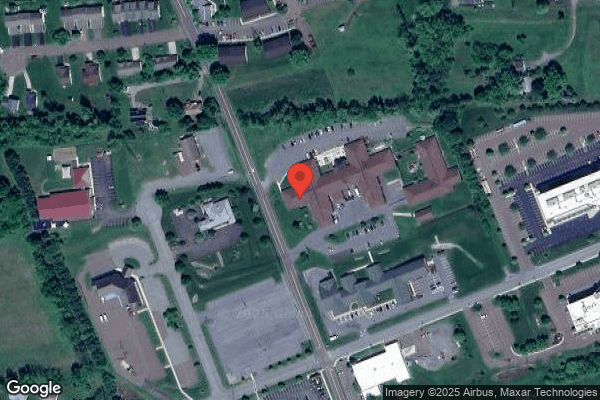
78 WOODBINE LANE, DANVILLE, PA 17821 (570) 275-5240
For profit - Limited Liability company 172 Beds ALLAIRE HEALTH SERVICES Data: November 2025 2 Immediate Jeopardy citations
Trust Grade
0/100
#426 of 653 in PA
Last Inspection: July 2025

Inspected within the last 6 months. Data reflects current conditions.

Overview

Grandview Nursing and Rehabilitation has received a Trust Grade of F, which indicates significant concerns about the quality of care provided. They rank #426 out of 653 facilities in Pennsylvania, placing them in the bottom half, and #2 out of 2 in Montour County, meaning there is only one local facility that is better. The facility's trend is improving, with issues decreasing from 50 in 2024 to 29 in 2025. Staffing is rated average with a 3 out of 5, but the turnover rate is concerning at 63%, which is higher than the state average of 46%. Additionally, the facility has faced $99,868 in fines, which is higher than 87% of Pennsylvania facilities, indicating compliance problems. Specific incidents of concern include a failure to provide emergency care per a resident's advanced directives, putting many residents at risk, and inadequate supervision of a resident known to have exit-seeking behavior, which created immediate health threats. On a positive note, quality measures received a 5 out of 5, indicating that certain aspects of care are excellent, but the overall picture reveals serious weaknesses that families should carefully consider.

Trust Score
F
0/100
In Pennsylvania
#426/653
Bottom 35%
Safety Record
High Risk
Review needed
Inspections
Getting Better
50 → 29 violations
Staff Stability
⚠ Watch
63% turnover. Above average. Higher turnover means staff may not know residents' routines.
Penalties
○ Average
$99,868 in fines. Higher than 53% of Pennsylvania facilities. Some compliance issues.
Skilled Nurses
○ Average
Each resident gets 37 minutes of Registered Nurse (RN) attention daily — about average for Pennsylvania. RNs are the most trained staff who monitor for health changes.
Violations
⚠ Watch
111 deficiencies on record. Higher than average. Multiple issues found across inspections.
★★☆☆☆
2.0
Overall Rating
★★★☆☆
3.0
Staff Levels
★★★★★
5.0
Care Quality
★☆☆☆☆
1.0
Inspection Score
Stable
2024: 50 issues
2025: 29 issues

The Good

  • 5-Star Quality Measures · Strong clinical quality outcomes
  • Full Sprinkler Coverage · Fire safety systems throughout facility
  • No fines on record

Facility shows strength in quality measures, fire safety.

The Bad

2-Star Overall Rating

Below Pennsylvania average (3.0)

Below average - review inspection findings carefully

Staff Turnover: 63%

17pts above Pennsylvania avg (46%)

Frequent staff changes - ask about care continuity

Federal Fines: $99,868

Well above median ($33,413)

Moderate penalties - review what triggered them

Chain: ALLAIRE HEALTH SERVICES

Part of a multi-facility chain

Ask about local staffing decisions and management

Staff turnover is elevated (63%)

15 points above Pennsylvania average of 48%

The Ugly 111 deficiencies on record

2 life-threatening 4 actual harm
Jul 2025 12 deficiencies 1 Harm
SERIOUS (G) 📢 Someone Reported This

A family member, employee, or ombudsman was alarmed enough to file a formal complaint

Actual Harm - a resident was hurt due to facility failures

Free from Abuse/Neglect (Tag F0600)

A resident was harmed · This affected 1 resident

**NOTE- TERMS IN BRACKETS HAVE BEEN EDITED TO PROTECT CONFIDENTIALITY** Based on a review of clinical records, select facility policy, and facility provided investigative documentation, the facility d...

Read full inspector narrative →
**NOTE- TERMS IN BRACKETS HAVE BEEN EDITED TO PROTECT CONFIDENTIALITY** Based on a review of clinical records, select facility policy, and facility provided investigative documentation, the facility displayed past non-compliance by failing to protect one of 32 sampled residents (Resident 25) from neglect by not implementing the individualized care plan intervention for transfers, resulting in actual harm in the form of a left tibial periprosthetic fracture.Findings include: A review of the facility policy titled “Abuse Prevention Program,” last reviewed by the facility in January 2025, revealed it is the facility’s policy that residents have the right to be free from abuse, neglect, misappropriation of resident property, and exploitation. The policy indicates that as part of abuse prevention, the administration shall protect the residents from abuse from anyone, including but not limited to facility staff and other residents. Also, the policy indicates the facility will implement measures to address factors that may lead to abusive situations, for example, providing staff with opportunities to express challenges related to their job and work environment without reprimand or retaliation. A clinical record review revealed Resident 25 was admitted to the facility on [DATE], with diagnoses that include chronic heart failure (a condition that occurs when the heart can't pump enough blood to the body) and polyosteoarthritis (a condition when at least five joints are affected with inflammation). Further clinical record review revealed Resident 25 had a care plan to address activities of daily living (ADLs fundamental care tasks such as bathing, dressing, and transferring) initiated on January 17, 2025. Interventions implemented to assist Resident 25 with her goal of receiving assistance necessary to meet her ADL needs specifically required use of a Hoyer lift (a mechanical device used to transfer persons with limited mobility) with two staff to complete all transfers. A physician’s order also confirmed this requirement as of January 17, 2025. A review of a quarterly Minimum Data Set assessment (MDS a federally mandated standardized assessment process conducted periodically to plan resident care) dated June 19, 2025, revealed that Resident 25 was cognitively intact with a BIMS score of 15 (Brief Interview for Mental Status- a tool within the Cognitive Section of the MDS that is used to assess the resident's attention, orientation, and ability to register and recall new information; a score of 13–15 indicates cognition is intact). A witness statement dated June 12, 2025, provided by Employee 1, Nurse Aide (NA), revealed that on June 12, 2025, Employee 1 was transferring Resident 25 when she heard a crack and reported it to the nurse. Employee 1, NA, explained when she repositioned Resident 25’s legs, she heard the crack. Employee 1, NA, documented that “I transferred her myself because I couldn’t find anyone. I know you’re supposed to have two people for the lift. I feel really bad for what I did. I wouldn’t ever hurt any residents on purpose.” A witness statement dated June 12, 2025, provided by Employee 2, Licensed Practical Nurse (LPN), revealed that on June 12, 2025, at approximately 2:45 PM, Employee 1, NA, made her aware that during a transfer she heard the resident’s knee “pop.” Resident 25 initially presented with no swelling, pain, or discoloration. Employee 2, LPN, indicated that on a follow-up observation on June 12, 2025, at 3:20 PM, Resident 25 presented with swelling to the left knee and reported pain. The RN supervisor was made aware for further evaluation. A progress note dated June 12, 2025, at 8:12 PM revealed Employee 13, Registered Nurse (RN) was called to the resident's bedside by Employee 2, LPN following an injury. At the time of the assessment, Resident 25 appeared to be exhibiting facial cues and verbal indicators of pain. Resident 25 was able to repeat back the events that had occurred. Resident 25 stated she was being transferred by a Hoyer lift, and her leg got caught, and that was when she heard a crack. The resident continued to mention having pain. Pain medication and ice applied. Physician extender notified. It was determined to get quick, appropriate care for the resident, the best course of action was to send her to the emergency room for evaluation. A progress note dated June 12, 2025, at 3:55 PM revealed Resident 25 was transferred to the emergency department at the hospital. A review of hospital emergency department documentation dated June 12, 2025, at 7:41 PM revealed Resident 25 had a history of bilateral total knee arthroplasty (surgical reconstruction or replacement of a joint) as well as a right total hip arthroplasty done in 2019. She had her bilateral distal femur fixed in 2021. The assessment indicated Resident 25's status post-incident with the Hoyer lift was a left tibial periprosthetic type 2 closed fracture (a break in the tibial bone occurring around a knee joint replacement). The plan indicated compressive wraps (elastic bandages to reduce swelling, offer support, and help with pain relief during recovery) for tibial hematoma, maintaining the knee immobilizer, pain control per the primary physician, and a plan pending consultation. A review of the hospital after-visit summary dated June 17, 2025, revealed Resident 25 was seen by orthopedics for her left tibial periprosthetic fracture. She did not require surgery. She cannot walk on her leg, and she should wear a knee immobilizer at all times. Follow-up appointments were scheduled with an orthopedic surgeon. The document indicated new medication, including oxycodone (a narcotic pain medication). A progress note dated June 17, 2025, at 2:12 PM revealed Resident 25 returned from the hospital at 10:45 AM with a diagnosis of a periprosthetic fracture around the internal prosthetic left knee joint and a closed fracture of the proximal end of the left tibia. She had an immobilizer to remain on at all times. The resident was alert and oriented with a pain level 3 out of 10 (0 being least amount of pain and 10 being the worst amount of pain). A physician’s order for a knee immobilizer on Resident 25’s left knee at all times was initiated on June 17, 2025. A physician’s order for Oxycodone HCI Oral Tablet 5 mg with directions to give 2.5 mg by mouth every 4 hours as needed for moderate pain levels 4 through 6 was initiated on June 17, 2025. A physician’s order for Oxycodone HCI Oral Tablet 5 mg with directions to give 5 mg by mouth every 4 hours as needed for moderate pain levels 7 through 10 was initiated on June 17, 2025. A review of the Medication Administration Records dated June 2025 and July 2025 revealed Resident 25 received Oxycodone HCI Oral Tablet 2.5 mg for pain 38 times from June 17, 2025, through July 18, 2025. A review of the Medication Administration Records dated June 2025 and July 2025 revealed Resident 25 received Oxycodone HCI Oral Tablet 5.0 mg for pain 59 times from June 17, 2025, through July 18, 2025. During an interview on July 17, 2025, at 11:05 AM, Resident 25 explained that last month when she was being transferred from her chair to the bed, she was injured. Resident 25 indicated that a female aide with dark hair was helping her to get to bed. She indicated the nurse aide was the only staff present when she was transferred to bed that day. During the transfer, the nurse aide attempted to reposition her, and they both heard a crack. Resident 25 explained that her leg did not hurt at first, but it became painful a little while later. Resident 25 indicated the nurses and physician were in to see her, then sent her to the emergency department for further evaluation. Resident 25 indicated t she has had to wear an immobilizer as her leg heals and described her pain as intermittent at about a level of 6 out of 10 when it is the worst. Resident 25 indicated she takes medication when the pain is bad, and it seems to help. During an interview on July 17, 2025, at 1:15 PM, Employee 1, NA, indicated that on June 12, 2025, at about 2:30 PM, she used the mechanical lift to transfer Resident 25 without the help of any other staff. Employee 1, NA, explained that Resident 25 wanted to get into bed and there were no other staff around, so she hooked her up to the lift and raised her a bit. When she was attempting to adjust the resident’s legs, she heard a “pop” and a “crack.” Employee 1, NA, indicated she went to get the nurse immediately after she heard the crack. Employee 1, NA, explained that she knew that two staff were required to transfer Resident 25, but there were no other staff at that moment. During an interview on July 17, 2025, at approximately 11:15 AM, the Nursing Home Administrator (NHA) indicated the facility identified through their investigation that Employee 1, NA, failed to follow Resident 25’s care plan and physician’s orders, which state she requires an assist of two for all transfers, resulting in serious physical injury (a closed left tibia fracture). This deficiency is cited as past non-compliance. The facility's corrective action plan included the following: Nurse Aide involved in transfer with Resident 25 was suspended pending investigation for neglect on June 12, 2025. Identify all residents who require the assistance of a Hoyer lift for transfer. Review documentation related to staff assistance with the Hoyer lift transfer and ensure the transfer status is correct to the plan of care. Immediate education provided for all working nursing staff on Hoyer lift transfers. Education continued with nursing staff prior to the start of their next shift. Education completed on June 16, 2025. Audits will be completed weekly for eight weeks to ensure that Hoyer lift transfers are completed per the plan of care. Results of audit findings will be reviewed through the Quality Assurance Performance Improvement Committee. The facility's compliance date was June 21, 2025. 28 Pa. Code 201.14 (a) Responsibility of licensee. 28 Pa. Code 201.18 (e)(1) Management. 28 Pa. Code 201.29 (a) Resident rights. 28 Pa. Code 211.10 (c) Resident care policies. 28 Pa. Code 211.12 (d)(5) Nursing services.
CONCERN (D) 📢 Someone Reported This

A family member, employee, or ombudsman was alarmed enough to file a formal complaint

Potential for Harm - no one hurt, but risky conditions existed

Investigate Abuse (Tag F0610)

Could have caused harm · This affected 1 resident

**NOTE- TERMS IN BRACKETS HAVE BEEN EDITED TO PROTECT CONFIDENTIALITY** Based on a review of facility provided documentation, clinical records, the facility's abuse prohibition policy, and staff inter...

Read full inspector narrative →
**NOTE- TERMS IN BRACKETS HAVE BEEN EDITED TO PROTECT CONFIDENTIALITY** Based on a review of facility provided documentation, clinical records, the facility's abuse prohibition policy, and staff interviews, it was determined the facility failed to conduct an investigation to rule out a reported allegation of misappropriation of a resident's finances and failed to report to the State Survey Agency within five working days of the incident, for one resident (Resident 104) out of 32 sampled residents. Findings include:A review of a facility entitled Abuse Prevention Program last reviewed by the facility on January 23, 2025, indicated residents have the right to be free from abuse, neglect, misappropriation of resident property and exploitation. As part of the resident abuse prevention, the administration shall protect the residents from abuse by anyone including but not necessarily limited to facility staff, other residents, consultants, volunteers, staff from other agencies, family members, legal representatives, friends, or any other individuals. All reports of resident abuse, neglect, exploitation, misappropriation of resident property, mistreatment and/or injuries of unknown origin sources (abuse) shall be promptly reported to local, state, and federal agencies (as defined by current regulations) and thoroughly investigated by facility management. Findings of abuse investigations shall also be reported. If an incident or suspected incident of resident abuse, mistreatment, neglect, or injury of unknown origin source is reported, the Administrator shall conduct or assign the investigation to an appropriate individual. The Administrator shall suspend immediately any employee who has been accused of resident abuse, pending the outcome of the investigation. Resident 158's clinical record review revealed he was admitted to the facility on [DATE], with diagnoses that included hemiplegia (is a symptom that involves one-sided paralysis and affects either the right or left side of the body typically caused by brain or spinal cord injuries and conditions) and hemiparesis (is one-sided muscle weakness that happens because of disruptions in the brain, spinal cord or the nerves that connect to the affected muscles) following cerebral infarction (occurs when the blood supply to part of the brain is blocked or reduced and prevents brain tissue from getting oxygen and nutrients and the brain cells begin to die in minutes) affecting right dominant side, dysphagia (difficulty swallowing), and heart failure (happens when the heart cannot pump enough blood and oxygen to support other organs in the body). Review of Resident 158's admission MDS (Minimum Data Set a federally mandated standardized assessment process conducted periodically to plan resident care) assessment dated [DATE], section C Cognitive Patterns revealed the resident had a BIMS score (Brief Interview for Mental Status a tool used to evaluate cognitive impairment and assist with dementia diagnosis) of 15, which indicated the resident was cognitively intact.A review of Resident CR1's clinical record revealed she was admitted to the facility on [DATE], with diagnoses that included alcoholic cirrhosis (is permanent scarring that damages your liver and interferes with its functioning that can lead to liver failure. Cirrhosis is the result of persistent liver damage over many years due to alcohol and drugs abuse, viruses and metabolic factors are the most common causes), encephalopathy (damage or disease that affects the brain), muscle weakness, and insomnia (inability to fall asleep or stay asleep). Review of Resident CR1's 5-day MDS (Minimum Data Set - a federally mandated standardized assessment process conducted periodically to plan resident care) assessment dated [DATE], section C Cognitive Patterns revealed the resident had a BIMS score (Brief Interview for Mental Status a tool used to evaluate cognitive impairment and assist with dementia diagnosis) of 15, which indicated the resident was cognitively intact. A review of a facility provided resident concern form completed by Resident CR1 on June 21, 2025, revealed for the summary of concern section to see witness statement stapled to back of information. Resident CR1's witness statement indicated she was concerned that Employee 4, a Nurse Aide (NA), was accepting money from Resident 158. The statement noted that when she talked to Resident 158, he said when he got discharged that he was planning to give her seven thousand dollars ($7,000.00) for a new car but just gave her twenty dollars ($20.00) for gas last week and told Resident CR1 that she (Employee 4) asked for his credit card, which was with his sister and stated Employee 4 was taking advantage of him. The statement further indicated that Resident 104 told Resident CR1 he had offered Employee 4 his truck, and that he had given her so much money he no longer remembered the total amount. Resident 104 also stated that Employee 4 and her boyfriend were planning to take him home to live with them and take care of him, and that they wouldn't need to worry about paying for anything. Despite the gravity of these statements, the facility's internal concern form left the sections Is this concern an abuse or neglect allegation? and NHA aware? incomplete. The documentation of the facility's investigation noted that the Director of Nursing (DON) and Employee 10, an LPN, interviewed Resident CR1, and determined the concern doesn't really affect resident and resident educated on proper use of concern/grievance form. The resolution section reflected the resident was verbally educated. The form was signed by the Nursing Home Administrator (NHA) on the same day, June 21, 2025.A typed interview summary dated June 23, 2025, indicated the DON spoke with Resident 104, who denied giving Employee 4 money, stating he had purchased pizza for the unit costing twenty dollars. Employee 4 was also interviewed and denied accepting money, confirming the pizza purchase and acknowledging she was aware not to accept money or assistance from residents. However, the document was unsigned and lacked a recorded time of interview or resident attestation.A review of a computer typed interview completed by the facility's DON dated June 23, 2025 (no time noted, not signed by resident or staff) noted she interviewed Resident 104 on June 23, 2025, related to the concern dated June 21, 2025, and noted that Resident 104 denied giving staff member, Employee 4, money. He stated he bought the staff pizza on the unit that cost twenty dollars. Employee 4 was also interviewed and denied accepting money, confirming the pizza purchase and acknowledging she was aware not to accept money or assistance from residents. An interview with the DON and in the presence of the NHA on July 16, 2025, at approximately 12:45 PM, revealed that on July 10, 2025, Employee 4 left work early and resigned without notice the next day. Review of Employee 4's personnel file confirmed she received education on the abuse policy upon hire (February 5, 2025) and re-education on April 23, 2025.The above information was reviewed with the DON and NHA on July 18, 2025, at approximately 11:00 AM, and reported that they reviewed the grievance lodged by Resident CR1 and didn't consider the situation abuse/misappropriation of Resident 104's funds due to Resident 104 being cognitively intact and not reporting that Employee 4 accepted money. However, no other residents or facility staff were interviewed with written and signed witness statements to investigate and determine if abuse/misappropriate existed or occurred.During an on-site survey conducted from July 15 through July 18, 2025, the facility was unable to produce documentation that a formal investigation was initiated or that the findings were submitted to the State Survey Agency within the required five working days. No evidence was provided to show the allegations raised by Resident CR1 regarding the possible misappropriation of Resident 104's personal funds were evaluated under the facility's abuse policies or reported as required.Further interview with the DON and NHA on July 18, 205, at approximately 11:25 AM, confirmed the above information and indicated they did not consider the situation to constitute abuse or misappropriation, and therefore, did not initiate investigation and reporting procedures. 28 Pa. Code 201.14 (a) Responsibility of licensee. 28 Pa. Code 201.18 (e)(1) Management. 28 Pa. Code 201.29 (a) Resident rights. 28 Pa. Code 211.10 (c) Resident care policies. 28 Pa. Code 211.12 (d)(5) Nursing services.
CONCERN (D)

Potential for Harm - no one hurt, but risky conditions existed

Comprehensive Care Plan (Tag F0656)

Could have caused harm · This affected 1 resident

**NOTE- TERMS IN BRACKETS HAVE BEEN EDITED TO PROTECT CONFIDENTIALITY** Based on observation, a review of clinical records, and staff interviews, it was determined the facility failed to develop and i...

Read full inspector narrative →
**NOTE- TERMS IN BRACKETS HAVE BEEN EDITED TO PROTECT CONFIDENTIALITY** Based on observation, a review of clinical records, and staff interviews, it was determined the facility failed to develop and implement a comprehensive person-centered care plan that included specific and individualized interventions to address a resident's need for oxygen therapy for one out of 32 residents sampled (Resident 1) and failed to address a resident's hydration needs for one resident out of 32 sampled (Resident 140).Findings include: A clinical record review revealed Resident 1 was admitted to the facility on [DATE], with diagnoses that include chronic respiratory failure (a condition where the respiratory system is unable to remove carbon dioxide from or provide oxygen to the body), quadriplegia (a form of paralysis affecting all four limbs and the torso), and care related to a tracheostomy (a surgical procedure that creates an opening in the neck to access the trachea for breathing or to bypass an obstruction in the upper airway). A review of the physician’s order revealed Resident 1 was to receive oxygen at 10 liters per minute by nasal cannula or tracheostomy collar (a device made of soft straps or bands that fit around the neck, holding a tube securely within the windpipe) continuously every shift initiated on April 8, 2025. A review of Resident 1’s comprehensive person-centered care plan revealed Resident 1 was at risk for respiratory impairment due to chronic respiratory failure and the presence of a tracheostomy. Interventions implemented to ensure Resident 1 exhibits no acute respiratory distress include oxygen at 2.0 liters per minute (L/min) by nasal cannula or tracheostomy collar, initiated December 12, 2025. A review of Resident 1’s Kardex (a nursing documentation system that provides a quick reference for patient information, including medications, treatments, and care plans) indicated oxygen therapy at 2.0 liters per minute. Observation on July 15, 2025, at 10:30 AM revealed Resident 1 was receiving oxygen at 10.0 liters per minute via tracheostomy tube and collar. During an interview on July 17, 2025, at approximately 1:00 PM, the observations were reviewed with the Director of Nursing (DON) and Nursing Home Administrator (NHA), and they confirmed there was a discrepancy between the physician’s orders and Resident 1’s plan of care and Kardex. Following the interview, the resident’s care plan and Kardex were updated to reflect the current physician’s order. A review of Resident 140's clinical record revealed the resident was admitted to the facility on [DATE], with diagnoses to include Parkinson’s disease (a disorder of the central nervous system that affects movement, often including tremors), and hemiplegia (paralysis of one side of the body) and hemiparesis (weakness on one side of the body) following a cerebral infarction (stroke). An admission Minimum Data Set assessment (MDS-standardized assessment completed at specific intervals to identify specific resident care needs) dated January 15, 2025, indicated the resident was cognitively intact with a BIMS (brief interview to assess cognitive status) score of 15 (13-15 represents cognitively intact responses). MDS Section GG indicated the resident required total staff assistance with eating. Section V of the MDS triggered a Care Area Assessment for Dehydration/Fluid Maintenance, which stated this concern would be addressed in the care plan. A review of Resident 140’s current care plan, dated September 15, 2023, revealed the resident had several nutritional concerns, including gastroesophageal reflux disease (GERD), an altered diet texture due to dysphagia (difficulty swallowing), a history of cerebrovascular accident (stroke), Parkinson’s disease, frequent stomach discomfort including nausea and vomiting, and the presence of only two natural lower teeth. The care plan included goals for the resident to avoid choking or aspiration, minimize episodes of high or low blood sugar, consume more than 75% of meals, maintain a stable weight, avoid dehydration, and maintain adequate nutrition through safe swallowing using compensatory strategies. Interventions listed in the care plan included offering snacks between meals, monitoring for signs of dehydration, monitoring food and fluid intake as needed (PRN), monitoring weight and lab results, notifying the physician of any significant weight changes as needed, offering alternate menu choices, honoring the resident’s preference to eat meals in bed, providing food and beverage preferences when available, providing the prescribed diet, administering supplements, vitamins, and minerals as ordered, taking the resident’s temperature every shift, performing mouth care twice daily, and ensuring the resident received a puree-texture, thin-liquid consistency diet. The resident was documented as dependent for meals and receiving pleasure feeds. The plan also included notifying speech therapy if the resident experienced difficulty chewing or swallowing. However, the care plan failed to identify that Resident 140 was fully dependent on staff for hydration and did not include individualized interventions to ensure the resident’s fluid needs were proactively assessed and met. During an interview with Resident 140 on July 15, 2025, at 11:10 AM, he revealed he is completely dependent on staff for hydration due to tremors and poor coordination. He stated that staff only offered fluids at meals and that he had to use the call bell to request drinks at other times, resulting in long delays. He expressed frustration in these long wait times as he has no means to provide himself with a drink. The findings were reviewed with the Nursing Home Administrator (NHA) on July 17, 2025, at 1:30 PM and confirmed there was no documentation of individualized, person-centered interventions in the care plan that addressed the resident’s dependence for hydration or strategies to proactively meet his hydration needs. 28 Pa Code 211.12 (c)(d)(1)(3)(5) Nursing services.
CONCERN (D)

Potential for Harm - no one hurt, but risky conditions existed

Quality of Care (Tag F0684)

Could have caused harm · This affected 1 resident

**NOTE- TERMS IN BRACKETS HAVE BEEN EDITED TO PROTECT CONFIDENTIALITY** Based on a review of clinical records and staff interview, it was determined the facility failed to provide nursing services con...

Read full inspector narrative →
**NOTE- TERMS IN BRACKETS HAVE BEEN EDITED TO PROTECT CONFIDENTIALITY** Based on a review of clinical records and staff interview, it was determined the facility failed to provide nursing services consistent with professional standards of practice by failing to ensure that licensed nurses followed physician orders for the administration of medications as prescribed to one resident of the 32 sampled residents (Resident 82).Findings include:A review of the facility policy titled Subcutaneous Injections last reviewed by the facility on January 23, 2025, indicated that in preparation of administering subcutaneous (under the skin) injections licensed nursing staff must verify there is a physician's medication order for the procedure. Staff are to verify the order for the resident's name, drug name, dose, time and route of administration.A clinical record review revealed that Resident 82 was admitted to the facility on [DATE], with diagnoses that included type 2 diabetes mellitus (a condition in which the body has difficulty controlling blood sugar and using it for energy) and long-term use of insulin (a hormone that regulates blood sugar).A physician order, dated April 24, 2025, indicated that Resident 82 was to receive Novolog injection solution 100 unit/ml (Insulin Aspart) at a dose of 7 units subcutaneously with meals, and to hold the dose if the resident's blood glucose level (Accu-Chek) was less than 100 mg/dl.According to the resident's Medication Administration Record (MAR) for April 2025, nursing staff administered Novolog insulin injection to the resident on April 28, 2025, at 5:00 PM despite an Accu-Chek reading of 78 mg/dl, which was below the physician prescribed parameter of 100 mg/dl. The resident's June [DATE] indicated that nursing administered Novolog insulin injection to Resident 82 on June 5, 2025, at 5:00 PM but the resident's Accu-Chek was 92 mg/dl, which was below the physician prescribed parameters of 100 mg/dl. Nursing staff again administered Novolog insulin injection to the resident on June 10, 2025, at 5:00 PM for an Accu-Chek reading of 96 mg/dl. During an interview on July 17, 2025, at 10:55 AM the above findings were reviewed with the Director of Nursing and confirmed that Resident 82's Medication Administration Records indicated the resident was administered medication outside of the physician's prescribed parameters for administration.28 Pa. Code 211.12 (c)(d)(1)(3)(5) Nursing Services.
CONCERN (D)

Potential for Harm - no one hurt, but risky conditions existed

Deficiency F0688 (Tag F0688)

Could have caused harm · This affected 1 resident

**NOTE- TERMS IN BRACKETS HAVE BEEN EDITED TO PROTECT CONFIDENTIALITY** Based on clinical record review, review of select facility policy, and staff interview, it was determined the facility failed to...

Read full inspector narrative →
**NOTE- TERMS IN BRACKETS HAVE BEEN EDITED TO PROTECT CONFIDENTIALITY** Based on clinical record review, review of select facility policy, and staff interview, it was determined the facility failed to consistently provide restorative nursing services as planned to maintain mobility to the extent possible for one resident out of 32 residents sampled (Resident 8). Findings include:Findings include:A review of the facility policy titled Restorative Nursing Services, last reviewed on January 23, 2025, revealed that residents will receive restorative nursing care as needed to help promote optimal safety and independence. Further review of the policy revealed the resident's restorative goals and objectives are individualized and resident-centered and are outlined in the residents' plan of care. A review of the clinical record for Resident 8 revealed the resident was admitted to the facility on [DATE], with diagnoses to include Alzheimer's disease (a brain disorder that slowly destroys memory and thinking skills and, eventually, the ability to carry out the simplest tasks) and muscle atrophy (muscle wasting that causes progressive loss of muscle mass and strength). A quarterly Minimum Data Set Assessment (MDS a federally mandated standardized assessment conducted at specific intervals to plan resident care) dated May 17, 2025, revealed the resident was severely cognitively impaired with a BIMS score of 00 (Brief Interview for Mental Status, a tool to assess the residents' attention, orientation, and ability to register and recall new information; a score of 0-7 indicates severe cognitive impairment) and the resident required substantial/maximal assistance for rolling left and right and was dependent for mobility.Further review of the clinical record revealed that physical therapy was provided to the resident from May 13, 2025, until June 13, 2025.A review of the resident's physical therapy Discharge summary dated [DATE], indicated at the time of discharge that the resident required partial to moderate assistance while rolling left and right and was dependent for sitting to lying and lying to sitting on the side of the bed. Discharge recommendations included that Resident 8 was appropriate for ROM (Range of Motion) RNP (Restorative Nursing Program), but it was noted the resident was not participating at that time. Further review of the discharge summary report revealed the range of motion program established and resident trained was ROM to bilateral lower extremities to reduce contractures. A review of Resident 8's care plan in effect through the survey end date of July 18, 2025, revealed the resident had an ADL self-care performance deficit related to decreased mobility and required assistance. There was no evidence of Resident 8's RNP program in their resident-centered care plan. A review of Resident 8's task report (an electronic record that summarized planned resident-centered tasks completed by nursing) and Documentation Survey Report v2 (care tasks completed for the resident) for July 2025 revealed no documented evidence the resident's restorative program was being implemented. Further review of the clinical record for Resident 8 revealed no documented evidence that licensed staff were aware the resident's RNP program was not being implemented as planned to ensure the resident's mobility to the extent possible. The above findings were reviewed during an interview with the Nursing Home Administrator (NHA) on July 17, 2025, at approximately 1:00 PM. The NHA could not provide evidence that the facility consistently implemented the planned restorative nursing program for Resident 8 to maintain functional abilities and deter declines to the extent possible. 28 Pa Code 211.10 (d) Resident care policies.28 Pa Code 211.12(c)(d)(5) Nursing services.
CONCERN (D)

Potential for Harm - no one hurt, but risky conditions existed

Deficiency F0698 (Tag F0698)

Could have caused harm · This affected 1 resident

**NOTE- TERMS IN BRACKETS HAVE BEEN EDITED TO PROTECT CONFIDENTIALITY** Based on observation, clinical record review, select facility policy, and resident and staff interviews, it was determined the f...

Read full inspector narrative →
**NOTE- TERMS IN BRACKETS HAVE BEEN EDITED TO PROTECT CONFIDENTIALITY** Based on observation, clinical record review, select facility policy, and resident and staff interviews, it was determined the facility failed to ensure the availability of necessary emergency supplies for one of three residents reviewed who received hemodialysis (Resident 70). Findings include:According to the National Kidney Foundation, patients receiving hemodialysis (a machine that filters waste, salts, and fluid from the blood when the kidneys are no longer healthy enough to do this work adequately) should have access to emergency care supplies, including at bedside, to promptly respond to complications such as bleeding from the dialysis access site. For residents with an arteriovenous (AV) fistula, a surgically created connection between an artery and a vein commonly used for dialysis access, rapid access to emergency supplies is critical, as complications such as ruptures or bleeds from the site can result in life-threatening blood loss.A review of the facility policy titled Hemodialysis Care, last reviewed by the facility on January 23, 2025, revealed it is the policy of the facility to adhere to established guidelines and physicians' orders related to the care of each resident receiving outpatient hemodialysis services. A review of Resident 70's clinical record revealed the resident was admitted to the facility on [DATE], with diagnoses that included end-stage renal disease (the final stage of kidney decline where the kidneys are no longer able to function to meet the body's needs) with dependence on hemodialysis.A physician's order dated November 13, 2024, directed staff to ensure an emergency kit was present at the bedside. (An emergency dialysis kit typically contains items such as gloves, gauze, medical tape, scissors, and hemostatic dressings to control active bleeding at the fistula site, which can be a medical emergency if not addressed immediately).A review of a quarterly Minimum Data Set assessment (MDS a federally mandated standardized assessment process conducted periodically to plan resident care) dated June 3, 2025, revealed that Resident 70 was cognitively intact with a BIMS score of 15 (Brief Interview for Mental Status a tool within the Cognitive Section of the MDS that is used to assess the resident's attention, orientation, and ability to register and recall new information; a score of 13-15 indicates cognition is intact).The resident's care plan, in effect through the survey end date of July 18, 2025, included interventions such as checking the AV fistula site for signs of infection, bleeding, or swelling and ensuring emergency equipment was available at the bedside.A review of Resident 70's Medication Administration Record (MAR) for July 2025 revealed that it was signed off on July 15, 2025, for the day shift confirming the emergency kit was present at the bedside. However, an observation conducted on July 15, 2025, at 1:45 PM, revealed there were no emergency supplies at Resident 70's bedside. During an interview conducted at that time, the resident confirmed returning from dialysis within the hour and confirmed the absence of emergency supplies in the room.An interview with Employee 3 LPN (licensed practical nurse) on July 15, 2024, at approximately 1:50 PM, confirmed there were no emergency supplies for Resident 70's dialysis access site available in the resident's room. Employee 3 further confirmed the emergency supplies were to be available at the bedside and are usually located on the back of the resident's headboard of their bed. The above findings were reviewed during an interview with the Nursing Home Administrator on July 16, 2025, at approximately 1:00 PM, and confirmed the facility failed to ensure that emergency dialysis access supplies were available as ordered and required by the resident's care plan.28 Pa. Code 211.12 (d)(3)(5) Nursing services.28 Pa.Code 211.10 (d) Resident care policies.
CONCERN (D)

Potential for Harm - no one hurt, but risky conditions existed

Pharmacy Services (Tag F0755)

Could have caused harm · This affected 1 resident

Based on review of select facility policy and controlled substance records, observation, and staff interview, it was determined the facility failed to implement established pharmacy procedures for the...

Read full inspector narrative →
Based on review of select facility policy and controlled substance records, observation, and staff interview, it was determined the facility failed to implement established pharmacy procedures for the reconciliation of controlled substances on one of five medication carts reviewed (Pavilion cart #2).Findings include:A review of facility policy titled Controlled Substances last reviewed by the facility on January 23, 2025, indicated that nursing staff must count controlled medications (medications with high potential for abuse) at the end of each shift. The nurse coming on duty and the nurse going off duty must make the count together. They must document and report any discrepancies to the Director of Nursing Services.An observation of the Pavilion medication cart #2 on July 17, 2025, at 8:35 AM, revealed Employee 5 (Registered Nurse) actively working from the medication cart. A review of a document titled Change of Shift Controlled Medication Count Sheet, identified by Employee 5 as the change of shift controlled substance count sheet for July 2025, for the Pavilion cart #2, revealed that the on-coming nurse and/or off-going nurse failed to sign the sheets during shift change on the following dates to verify completion of the task to count the controlled substances in the respective medication cart:July 6, 2025, 2nd shiftJuly 9, 2025, 2nd shiftJuly 11, 2025, 2nd shiftJuly 11, 2025, 3rd shiftInterview with Employee 3, on July 17, 2025, at 8:38 AM, confirmed the observation and acknowledged the licensed nurses are expected sign the count verification at the change of shift. The facility failed to ensure that licensed nursing staff consistently followed established procedures for the reconciliation of controlled substances in accordance with facility policy to timely identify any discrepancies.28 Pa. Code 211.9(a)(1)(k) Pharmacy services.28 Pa. Code 211.10(d) Resident care policies.28 Pa. Code 211.12 (d)(3)(5) Nursing services.
CONCERN (D)

Potential for Harm - no one hurt, but risky conditions existed

Deficiency F0760 (Tag F0760)

Could have caused harm · This affected 1 resident

**NOTE- TERMS IN BRACKETS HAVE BEEN EDITED TO PROTECT CONFIDENTIALITY** Based on a review of resident clinical records, select facility policy, facility investigative reports, and staff interviews, it...

Read full inspector narrative →
**NOTE- TERMS IN BRACKETS HAVE BEEN EDITED TO PROTECT CONFIDENTIALITY** Based on a review of resident clinical records, select facility policy, facility investigative reports, and staff interviews, it was determined the facility failed to ensure that one of 32 residents reviewed was free of significant medication errors. (Resident 123).Findings include:A review of the facility policy titled Administering Medications, last reviewed on January 23, 2025, revealed that medications shall be administered in a safe and timely manner as prescribed and the individual administering medications must verify the resident's identity before giving the resident their medications. Methods of identifying the resident include checking their identification band, checking their photograph attached to the medical record, and, if necessary, verifying the resident identification with other facility personnel. Further review revealed the individual administering the medication must check the label three times to verify the right resident, right medication, right dosage, right time, and right method of administration before giving the medication.A clinical record review revealed that Resident 123 was admitted to the facility on [DATE], with diagnoses to include hypertension (blood pressure that is higher than normal) and muscle weakness. A review of a quarterly Minimum Data Set assessment (MDS-a federally mandated standardized assessment process conducted periodically to plan resident care) dated June 13, 2025, revealed that Resident 123 had moderately impaired cognition with a BIMS score of 11 (Brief Interview for Mental Status-a tool within the Cognitive Section of the MDS that is used to assess the resident's attention, orientation, and ability to register and recall new information; a score of 8-12 indicates cognition is moderately impaired). A clinical record review for Resident 123 revealed a nurse's progress note from a Registered Nurse (RN) supervisor, dated July 12, 2025, at 8:00 P.M., which revealed that Resident 123 was given the wrong medication by Employee 14, a Licensed Practical Nurse. Further review of the progress note revealed the resident had received Keppra (an anti-convulsant medication to prevent seizures) 500 milligrams (mg), Remeron 15 mg (an anti-depressant), Lyrica 100 mg (an anti-convulsant drug used for various reasons), Trazodone 50 mg (an anti-depressant), and Warfarin 2.5 mg (a blood thinning agent). The RN supervisor then called the physician on call and was directed to send the resident to the emergency room for evaluation due to the resident's age and a recent fall earlier in the day. A review of the clinical record revealed that on July 12, 2025, at 8:26 P.M., Resident 123's blood pressure was 92/54 (normal blood pressure is 120/80). A review of a facility investigative report dated July 14, 2025, revealed that on July 12, 2025, at 8:00 P.M., Resident 123 was given medications not prescribed to him by Employee 14. It was noted that Employee 14 did not verify the resident's identification before administering medications and had never worked on that medication cart or unit prior to and was unfamiliar with the resident. Further review revealed the medications administered, which included Keppra, Lyrica, Remeron, Trazodone, and Warfarin, were those medications of Resident 123's roommate, Resident 95. Resident 123 was assessed after the medication error, and the physician was notified, who then requested a transfer to the emergency department for evaluation. It was noted that Employee 14 would receive education on medication administration and complete a medication competency prior to working the next shift, which was provided in the report. A review of Resident 123's Medication Administration Record for July 2025 revealed the resident was not due for any nighttime medications for 9:00 P.M. Resident 123 received medications that were not prescribed to him. The resident did not have a diagnosis to require these specific medications. A review of Resident 123's hospital clinical records revealed an emergency room provider note, dated July 12, 2025, the resident arrived at 9:26 P.M. for evaluation of a medication error and a fall that occurred earlier that day. It was noted the resident had an unwitnessed fall at 5:00 P.M. that day and was given another resident's medications at 8:00 P.M. Resident 123 was evaluated and then discharged . A review of a nursing progress notes dated July 13, 2025, at 8:05 A.M., revealed Resident 123 returned from the emergency room after observation. It was noted that the resident was lethargic upon arrival and that a computed tomography (CT) scan (a noninvasive medical procedure that uses x-rays to create detailed images of the body) was not performed on the resident due to age and code status. An interview with the Nursing Home Administrator and Director of Nursing confirmed that Employee 13 failed to verify the correct resident and administered the incorrect medications to Resident 123, resulting in a significant medication error.28 Pa. Code 211.10 (d) Resident care policies.28 Pa. Code 211.12 (c)(d)(1)(3)(5) Nursing services.
CONCERN (D)

Potential for Harm - no one hurt, but risky conditions existed

Deficiency F0761 (Tag F0761)

Could have caused harm · This affected 1 resident

**NOTE- TERMS IN BRACKETS HAVE BEEN EDITED TO PROTECT CONFIDENTIALITY** Based on observation, a review of select facility policy, and staff interview, it was determined the facility failed to ensure t...

Read full inspector narrative →
**NOTE- TERMS IN BRACKETS HAVE BEEN EDITED TO PROTECT CONFIDENTIALITY** Based on observation, a review of select facility policy, and staff interview, it was determined the facility failed to ensure that medications and pharmaceutical products were stored in accordance with expiration date guidelines in one of three medication storage areas (Pavilion medication storage room).Findings include:A review of the facility policy titled Storage of Medications last reviewed by the facility on January 23, 2025, indicated all medications will be stored in the pharmacy and/or medication rooms according to the manufacturer's recommendations and sufficient to ensure proper sanitation, temperature, light, ventilation, moisture control, segregation, and security. The pharmacy and all medication rooms are routinely inspected by the consultant pharmacist for discontinued, outdated, defective, or deteriorated medications with worn, illegible, or missing labels. These medications are destroyed in accordance with the Destruction of Unused Drugs Policy. An observation conducted on July 17, 2025, at 9:00 AM in the Pavilion medication storage room revealed ten medication/supplement items that were expired or had illegible expiration dates, as outlined below:1 bottle of Multi-Vitamin with Iron with an expiration date of February 20242 bottles of Aspirin 325 mg with an expiration date of December 20241 bottle of Sodium Bicarbonate (antacid) with an expiration date of January 20251 bottle of Glucosamine and Chondroitin (dietary supplement) with an expiration date of January 20251 bottle of Meclizine (antiemetic) with an expiration date of February 20251 bottle of Glucosamine and Chondroitin with an expiration date of May 20251 bottle of Vitamin E 450 mg with an expiration date of June 20251 bottle of Guaifenesin Liquid (expectorant) with an expiration date of June 20251 bottle of Copper Glycinate (dietary supplement) with an illegible expiration date During an interview with Employee 6 (Licensed Practical Nurse) on July 17, 2025, at 9:11 AM, the staff member confirmed the presence of the expired and improperly labeled medications/supplements in the Pavilion medication storage room.The facility failed to ensure the timely removal of expired medications and supplements, which is not in compliance with manufacturer guidelines and the facility's own policies.28 Pa. Code 211.9 (a)(1)(k) Pharmacy Services.28 Pa. [NAME] 211.10(d) Resident care policies.28 Pa. Code 211.12 (d)(3)(5) Nursing services
CONCERN (D)

Potential for Harm - no one hurt, but risky conditions existed

Deficiency F0883 (Tag F0883)

Could have caused harm · This affected 1 resident

**NOTE- TERMS IN BRACKETS HAVE BEEN EDITED TO PROTECT CONFIDENTIALITY** Based on a review of select facility policy, clinical records, and staff interview, it was determined the facility failed to ens...

Read full inspector narrative →
**NOTE- TERMS IN BRACKETS HAVE BEEN EDITED TO PROTECT CONFIDENTIALITY** Based on a review of select facility policy, clinical records, and staff interview, it was determined the facility failed to ensure the resident or resident's representative was provided education regarding the benefits and potential side effects of the pneumococcal immunization for one of five residents reviewed. (Resident 47)A review of facility policy titled Pneumococcal Vaccine, last reviewed in January 2025, revealed it is the facility's policy that all residents shall be offered pneumococcal vaccines to aid in preventing pneumonia/pneumococcal infections. Furthermore, the policy indicates residents and resident representatives have the right to refuse the vaccination. If refused, appropriate entries shall be documented in each resident's medical record indicating the date of the refusal of the pneumococcal vaccination.A clinical record review revealed Resident 47 was admitted to the facility on [DATE].A review of Resident 47's immunization tab section of the electronic health record revealed pneumovax dose 1 was refused.Further review of the clinical record revealed no documented evidence the facility provided Resident 47 or Resident 47's representative education regarding the benefits and potential side effects of pneumococcal immunization.During an interview on July 18, 2025, at approximately 11:00 AM, Employee 7, Infection Preventionist, confirmed there was no documented evidence in the clinical record indicating Resident 47 or Resident 47's representative was provided education regarding the benefits and potential side effects of pneumococcal immunization. 28 Pa. Code 201.14(a) Responsibility of licensee. 28 Pa. Code 201.18(b)(1) Management. 28 Pa Code 211.5 (f)(iv) Medical records. 28 Pa. Code 211.10(d) Resident care policies.28 Pa code 211.12 (c)(d)(1)(5) Nursing services.
CONCERN (D)

Potential for Harm - no one hurt, but risky conditions existed

Smoking Policies (Tag F0926)

Could have caused harm · This affected 1 resident

**NOTE- TERMS IN BRACKETS HAVE BEEN EDITED TO PROTECT CONFIDENTIALITY** Based on a review of clinical records, relevant facility policies, resident and staff interviews, and direct observations, it wa...

Read full inspector narrative →
**NOTE- TERMS IN BRACKETS HAVE BEEN EDITED TO PROTECT CONFIDENTIALITY** Based on a review of clinical records, relevant facility policies, resident and staff interviews, and direct observations, it was determined the facility failed to follow its established policy and procedures related to safe smoking practices for one of 32 sampled residents (Resident 139).Findings include:Review of the facility policy titled Resident Smoking Policy last reviewed by the facility January 23, 2025, indicated that the facility shall assess residents to determine safe smoking practices while allowing them to smoke supervised or independently. Policy procedure included Smoking supplies for Supervised and Independent residents will be kept in the locked nursing medication room. Residents are not entitled to keep smoking supplies in their possession.A clinical record review revealed that Resident 139 was admitted to the facility on [DATE], with diagnoses to include quadriplegia (partial or complete paralysis of all four limbs and torso), and chronic obstructive pulmonary disease (lung disease that blocks airflow and makes it difficult to breathe).A review of an annual Minimum Data Set assessment (MDS a federally mandated standardized assessment process conducted periodically to plan resident care) dated May 2, 2025, revealed that Resident 139 was cognitively intact with a BIMS score of 15 (Brief Interview for Mental Status- a tool within the Cognitive Section of the MDS that is used to assess the resident's attention, orientation, and ability to register and recall new information; a score of 13-15 indicates cognition is intact).A form titled Smoking Safety dated May 2, 2025, indicated that Resident 139 had been assessed with the ability to safely smoke independently. The assessment indicated that Resident 139 understood and agreed that smoking accessories (cigarettes, lighters, matches, etc.) must be returned to and kept under the control of the facility staff when not in use.An observation on July 16, 2025, at 12:25 PM in resident room revealed that Resident 139 had smoking materials in his room including two (2) cigarette lighters and a pack of cigarettes. At the time of the observation Resident 139 was holding one cigarette in an adapted cigarette holder on his left finger. The two lighters were resting in between his legs on his power wheelchair cushion and the pack of cigarettes was placed on his right leg. During an interview with Resident 139 at the time of the observation, he stated that he is an independent smoker and keeps his smoking supplies in his room in the top drawer of his bedside cabinet. A drawer was observed with a locking mechanism in the resident's bedside cabinet.During an interview on July 16, 2025, at 1:00 PM, the Nursing Home Administrator (NHA) confirmed that per facility policy, all smoking supplies must be secured by staff in the medication storage room when not in use, regardless of a resident's independent smoking status. The NHA was unable to provide evidence that staff were monitoring Resident 139's personal storage of smoking materials to ensure safety compliance.28 Pa. Code 201.18 (b)(1)(e)(1) Management. 28 Pa. Code 209.3 (a) Smoking.28 Pa. Code 211.10 (d) Resident care policies.
CONCERN (F)

Potential for Harm - no one hurt, but risky conditions existed

Food Safety (Tag F0812)

Could have caused harm · This affected most or all residents

Based on observation and staff interview, it was determined the facility failed to maintain acceptable practices for the storage and service of food to prevent the potential for contamination and micr...

Read full inspector narrative →
Based on observation and staff interview, it was determined the facility failed to maintain acceptable practices for the storage and service of food to prevent the potential for contamination and microbial growth in food, which increased the risk of food-borne illness in the dietary department.Findings include:Food safety and inspection standards for safe food handling indicate that everything that comes in contact with food must be kept clean and food that is mishandled can lead to foodborne illness. Safe steps in food handling, cooking, and storage are essential in preventing foodborne illness. You cannot always see, smell, or taste harmful bacteria that may cause illness according to the USDA (The United States Department of Agriculture, also known as the Agriculture Department, is the U.S. federal executive department responsible for developing and executing federal laws related to food).According to the United States Department of Agriculture (USDA), food that is mishandled can become contaminated with invisible, odorless, or tasteless pathogens. Proper storage practices including keeping items off the floor and away from ceilings are critical to preventing contamination. Food and items intended to contact food must be stored in a clean, dry location at least six inches above the floor and at a safe distance from ceilings and structural elements, in accordance with food safety inspection standards. These guidelines are designed to minimize the risk of exposure to dust, condensation, leaks, pests, or physical debris.A review a facility policy entitled Food Receiving and Storage last reviewed by the facility on January 23, 2025, indicated that all foods and goods should be stored in a manner that maintains the integrity of the packaging until ready to be used and all bulk food should be removed from their original packaging, placed in bins, and labeled with a use by date. During the initial tour of the dietary department conducted on July 15, 2025, at 10:21 AM with the dietary manager, the following unsanitary conditions were observed:Unlidded garbage cans containing trash were positioned near the tray line and cook's preparation areas, increasing the risk of contamination from airborne or physical debris in food preparation zones.In both the First Floor East and Ground Floor dry storage areas, multiple cases of disposable dishware and paper products were stored directly on the floor. In some instances, plastic packaging was open and unsealed, exposing the contents to contamination from floor debris, cleaning solutions, and pests.In the Ground Floor dry storage/equipment area, multiple cases of dishware, supplies, and dietary-related materials were stored in close proximity to the ceiling, limiting air circulation and increasing the risk of contamination from overhead surfaces, dust, or ceiling-based hazards.During an interview with the Nursing Home Administrator (NHA) on July 16, 2025, at 1:35 PM, the above observations were reviewed. The NHA acknowledged that the dietary department should be maintained in a sanitary condition to prevent contamination and reduce the risk of foodborne illness.28 Pa. Code 201.18 (e) (2.1) Management. 28 Pa. Code 211.6 (f) Dietary Services.28 Pa. Code 211.10 (d) Resident care policies.
May 2025 2 deficiencies
CONCERN (D) 📢 Someone Reported This

A family member, employee, or ombudsman was alarmed enough to file a formal complaint

Potential for Harm - no one hurt, but risky conditions existed

Accident Prevention (Tag F0689)

Could have caused harm · This affected 1 resident

**NOTE- TERMS IN BRACKETS HAVE BEEN EDITED TO PROTECT CONFIDENTIALITY** Based on a review of clinical records, select facility investigative reports, select facility policy, and staff interviews, it w...

Read full inspector narrative →
**NOTE- TERMS IN BRACKETS HAVE BEEN EDITED TO PROTECT CONFIDENTIALITY** Based on a review of clinical records, select facility investigative reports, select facility policy, and staff interviews, it was determined the facility failed to implement effective safety measures to mitigate fall risk for one out of 12 sampled residents (Resident 1). Findings include: A review of the facility's policy entitled Managing Falls and Fall Risk, last reviewed by the facility on January 23, 2025, revealed that based on previous evaluations and current data, the staff will identify interventions related to the resident's specific risks and causes to try to prevent the resident from falling and to try to minimize complications from falling. A clinical record review revealed Resident 1 was admitted to the facility on [DATE], with diagnoses that included generalized muscle weakness, difficulty in walking, and a history of falling. A quarterly Minimum Data Set Assessment (MDS - a federally mandated standardized assessment conducted at specific intervals to plan resident care) of Resident 1, dated November 16, 2024, revealed the resident was severely cognitively impaired with a BIMS score of 00 (brief interview for mental status, a tool to assess the residents' attention, orientation, and ability to register and recall new information; a score of 0-7 indicates severe cognitive impairment). Review of the resident's care plan, initiated on October 7, 2022, identified the resident as being at risk for falls due to a history of falls. Interventions included: placement of bilateral fall mats, triangular wedges on the upper bilateral sides of the bed, use of a tab alarm while in bed, and maintaining the bed in a low position. A fall risk assessment completed on October 14, 2024, confirmed the resident remained at high risk for falls. Further review of the clinical record revealed physician's orders dated October 15, 2024, for triangular wedges to be positioned at the bilateral upper bed rails while the resident was in bed. These interventions were in place due to a fall that had occurred on October 14, 2024. Further clinical record review revealed a nurse progress note dated November 22, 2024, at 5:30 PM, which revealed that Resident 1 experienced an unwitnessed fall from the bed on the left side and was found lying on the floor on his left side with his upper body on the floor and lower body on the fall mat. Resident 1 stated he wanted to turn from side to side and rolled out of bed. A resident assessment was done at that time and revealed a bump to the left temporal area measuring 0.4 cm with no discoloration. It was noted the bed alarm was not sounding, and that the left-side bed wedge was sitting on the window frame at the time of the fall. The right-side bed wedge was in place at the time of the fall. A facility investigation report dated November 22, 2024, concluded the fall occurred due to failure to follow the resident's plan of care. Specifically, the left-side bed wedge was not in place as required, and the bed alarm, which the resident had a known history of disabling, was nonfunctional at the time of the incident. Post-fall interventions included staff being directed to verify the placement of fall prevention devices at the start and throughout each shift. During an interview conducted on May 28, 2025, at approximately 2:30 PM, the Director of Nursing (DON) confirmed that the facility failed to ensure that effective fall prevention measures were consistently implemented for Resident 1 on November 22, 2024. The DON acknowledged it is the facility's responsibility to ensure that individualized safety interventions are in place and functioning to mitigate fall risks. 28 Pa. Code 201.18 (b)(1)(e)(1) Management. 28 Pa. Code 211.12 (d)(1)(3)(5) Nursing services.
CONCERN (D) 📢 Someone Reported This

A family member, employee, or ombudsman was alarmed enough to file a formal complaint

Potential for Harm - no one hurt, but risky conditions existed

Incontinence Care (Tag F0690)

Could have caused harm · This affected 1 resident

**NOTE- TERMS IN BRACKETS HAVE BEEN EDITED TO PROTECT CONFIDENTIALITY** Based on review of select facility policy and clinical records, and staff interview, it was determined that the facility failed ...

Read full inspector narrative →
**NOTE- TERMS IN BRACKETS HAVE BEEN EDITED TO PROTECT CONFIDENTIALITY** Based on review of select facility policy and clinical records, and staff interview, it was determined that the facility failed to develop and implement an individualized plan to meet the toileting needs of one of 12 sampled residents (Resident 2), including the timely provision of staff assistance with toileting and management of urinary and bowel incontinence. Findings include: A review of facility policy titled Urinary Incontinence - Clinical Protocol provided by the facility on May 28, 2025, revealed that, as appropriate, and based on assessment of the category and causes of incontinence, staff will provide scheduled toileting, prompted voiding, or other interventions to try to improve the individual's continence status. The staff and physician will review the progress of individuals with impaired continence until continence is restored or improved as much as possible, or it is identified that further improvement is unlikely. A review of Resident 2's clinical record revealed she was admitted to the facility on [DATE], with diagnoses that included dementia (a condition characterized by progressive or persistent loss of intellectual functioning, especially with impairment of memory and abstract thinking, and often with personality change, resulting from organic disease of the brain), and chronic kidney disease stage 3B (moderate to severe loss of kidney function). A review of the resident's quarterly Minimum Data Set assessment (MDS - a federally mandated standardized assessment process conducted periodically to plan resident care) dated May 13, 2025, revealed the resident was severely cognitively impaired with a BIMS score of 3 (Brief Interview for Mental Status- a tool within the Cognitive Section of the MDS that is used to assess the resident's attention, orientation, and ability to register and recall new information; a score of 0-7 indicates severe cognitive impairment), she required substantial/extensive assistance from staff for bed mobility, transfers, and toileting, was always incontinent of urine, frequently incontinent of bowel, and was not on a toileting program. A review of the resident's person-centered plan of care, dated July 13, 2023, included a focus area related to toileting and incontinence, with documented problems such as overactive bladder, frequent urinary and bowel incontinence, hemorrhoid pain, urinary pain, recurrent urinary tract infections (UTIs), and atrophic vaginitis (dryness and inflammation of the vaginal wall). Resident goals included maintaining skin integrity and preventing breakdown from incontinence. Interventions included providing hemorrhoid cream, using wet washcloths instead of wipes, applying vaginal cream as ordered, recording incontinent episodes, utilizing protective skin creams, cleansing and drying after incontinent episodes, and use of pull-ups. However, the care plan failed to identify or implement a structured toileting schedule or individualized incontinence program (e.g., check-and-change protocols, scheduled toileting, or prompted voiding) to manage the resident's known incontinence and promote timely care to prevent the potential of skin breakdown. A review of the resident's [NAME] (a nursing information system used to obtain specific care information for each resident) in effect at the time of the survey ending May 28, 2025, failed to include the incontinence management needs of the resident. There was no documented evidence on the [NAME] that staff were instructed to provide the resident with timely toileting or incontinence care. A quarterly toileting review, documented by nursing staff on May 27, 2025, at 2:22 PM, noted that the resident was always incontinent of bladder, frequently incontinent of bowel, had shown decline in continence, and required extensive assist of two staff with toileting. It further documented use of a gait belt for transfers. However, the review did not include individualized interventions such as scheduled toileting or specific timing of care to address or reduce incontinence events. A review of a grievance filed on behalf of Resident 2 by a family member dated May 11, 2025, at 1:30 PM revealed the resident was soaked with urine through her pull ups and pants. A review of Documentation Survey Report v2 (general care nursing tasks completed for the resident) from May 1, 2025, through May 27, 2025, revealed the resident was incontinent of urine 100% of the time, every day during every shift. There was no evidence the facility had developed and implemented a plan to address the resident's toileting needs based on an evaluation of the resident's habits and voiding patterns and assure timely care was provided to meet the resident's toileting needs and manage the resident's urinary incontinence to prevent extended periods of time without toileting, checking for incontinence and changing the resident. An interview with the Director of Nursing on May 28, 2025, at 11:15 AM, confirmed that the facility was unable to provide documented evidence the facility developed and implemented planned incontinence management for Resident 2. 28 Pa. Code 211.12 (d)(1)(3)(5) Nursing services 28 Pa. Code 211.10(a)(d) Resident care policies
Apr 2025 2 deficiencies
CONCERN (E) 📢 Someone Reported This

A family member, employee, or ombudsman was alarmed enough to file a formal complaint

Potential for Harm - no one hurt, but risky conditions existed

Deficiency F0804 (Tag F0804)

Could have caused harm · This affected multiple residents

**NOTE- TERMS IN BRACKETS HAVE BEEN EDITED TO PROTECT CONFIDENTIALITY** Based on observation, resident and staff interviews, review of facility policy, and test tray analysis, it was determined the fa...

Read full inspector narrative →
**NOTE- TERMS IN BRACKETS HAVE BEEN EDITED TO PROTECT CONFIDENTIALITY** Based on observation, resident and staff interviews, review of facility policy, and test tray analysis, it was determined the facility failed to ensure that meals were served at palatable temperatures and in a manner that met resident preferences for 5 out of 9 residents interviewed (Residents 1,2,3,4 and 5), and for one of one test tray meals reviewed during lunch service on the East Unit. Findings included: According to the federal regulatory guidance at 483.60(i)-(2) Food safety requirements - the definition of Danger Zone, found under the Definitions section, specifies that food temperatures between 41°F and 135°F allow rapid growth of pathogenic microorganisms that can cause foodborne illness. Hot foods must be maintained at or above 135°F and cold foods at or below 41°F. Review of the facility policy titled Food Temperatures last reviewed by the facility on January 23, 2025, indicated all hot food items must be cooked to appropriate internal temperatures, held and served at a temperature of at least 135 degrees Fahrenheit. All cold food items must be stored and served at a temperature of 41 degrees Fahrenheit or below. Temperatures should be taken periodically to assure hot foods stay above 135 degrees Fahrenheit and cold foods stay below 41 degrees Fahrenheit during holding and plating process and until food leaves the service area. Foods should be transported as quickly as possible to maintain temperatures for delivery and service. A review of a resident concern form completed by the facility's Registered Dietitian (RD) on April 6, 2025, revealed that Resident 1 reported her lunch on April 3, 2025 (chicken [NAME] with noodles) was served cold. During an interview with Resident 1 on April 9, 2025, at 11:15 AM, reported that her meals were often served cold and not at a palatable temperature. During on-site survey April 9, 2025, interviews were conducted with Residents 2, 3, 4, and 5 and they reported meals were frequently served lukewarm or cold and were unappetizing as a result. A review of the planned lunch menu for April 9, 2025, included hamburger steak with gravy, oven browned potatoes, seasoned green beans, angel food cake, and fruit drink. Observation of the East Unit tray pass on April 9, 2025, at 11:30 AM revealed that the first meal cart arrived on the unit and tray distribution began immediately. The last meal tray was delivered to Resident 2 at 11:55 AM. Tray temperatures obtained for Resident 2 were as follows: Hamburger steak with gravy: 126.1°F Oven browned potatoes: 119°F Seasoned green beans: 113°F Angel food cake: 63°F Fruit drink: 59.9°F A taste analysis of the meal revealed that the hot food items were lukewarm and not served at a palatable temperature. The green beans had an overwhelming oregano flavor that left an aftertaste, and the fruit drink was also lukewarm, further reducing meal palatability. The results of the test tray were discussed with the Nursing Home Administrator (NHA) and the facility's contracted Corporate Dietary Manager on April 9, 2025, at 12:30 PM. The Dietary Manager stated that 135°F was a holding temperature and indicated the hamburger steak temperature of 126.1°F was acceptable. However, this statement was inconsistent with the facility's own policy and failed to address multiple resident concerns regarding cold and unpalatable meals. An interview with the NHA confirmed that the facility had not ensured meals were consistently served at palatable temperatures and in accordance with resident preferences. 28 Pa. Code 201.18 (e)(3) Management
CONCERN (E) 📢 Someone Reported This

A family member, employee, or ombudsman was alarmed enough to file a formal complaint

Potential for Harm - no one hurt, but risky conditions existed

Deficiency F0919 (Tag F0919)

Could have caused harm · This affected multiple residents

**NOTE- TERMS IN BRACKETS HAVE BEEN EDITED TO PROTECT CONFIDENTIALITY** Based on observation, resident and staff interviews, and review of facility policy, it was determined the facility failed to mai...

Read full inspector narrative →
**NOTE- TERMS IN BRACKETS HAVE BEEN EDITED TO PROTECT CONFIDENTIALITY** Based on observation, resident and staff interviews, and review of facility policy, it was determined the facility failed to maintain a fully functioning resident call bell system that ensured direct and timely communication between residents and caregivers for three of nine residents sampled (Residents 4, 5, and 6). Findings include: A review of the facility policy titled Answering Call Bell last reviewed by the facility on January 23, 2025, revealed it is the responsibility of all staff to respond to call bells, as displayed on a scrolling [NAME] on each unit. The policy stated that nurse aides, charge nurses, and RN supervisors are required to carry a pager to receive notifications of activated call bells. Walkie-talkies are to be used to request assistance for two-person tasks. If a pager or call bell device is non-functioning, maintenance must be notified immediately, and residents are to be provided a handbell until the system is repaired. The policy also stated that Administration and the QA Committee will review the timeliness of call bell responses as needed. During an interview conducted on April 10, 2025, at 10:20 AM, Resident 4 stated that she does not frequently use the call bell, but when she does, staff response can take up to an hour. During an interview on April 10, 2025, at 10:35 AM, Resident 5 reported that on some days it takes staff over 30 minutes to respond to her call bell. An observation conducted on the Second Floor [NAME] Wing on April 10, 2025, at 12:50 PM, revealed that visual call bell indicators located above the threshold of each hallway door showed that multiple residents had active call bell requests. However, there was no audible alert to notify staff unless they were physically present in the hallway and could see the visual indicator. During a separate interview on April 10, 2025, at 10:35 AM, Resident 6 also reported that staff sometimes took over 30 minutes to respond to his call bell. An additional observation on the Second Floor East Wing on April 10, 2025, at 1:05 PM, revealed the same issue: visual indicators were present, but there was no audible alert. As with the [NAME] Wing, staff would not be notified unless standing in the hallway. An interview with Employee 1CNA (Certified Nursing Assistant) revealed that although the unit has enough pagers, some pagers were not working correctly. She reported that malfunctioning screens prevented identification of which resident had activated their call bell. She confirmed that if pagers malfunction, the only method to identify an active call bell is by visually checking the hallway signs, as no alternative notification system exists. In contrast, an observation on the First Floor Pavilion Unit revealed that this unit utilized an upgraded call bell system which transmitted alerts directly to the nurses' station, including a monitor display and audible alerts to identify the resident's call. During an interview, Employee 2 (Registered Nurse) stated that the Pavilion Unit system was recently upgraded and has led to faster response times compared to the outdated systems on the second floor. An interview with the Nursing Home Administrator (NHA) on April 10, 2025, at 2:50 PM, confirmed the call bell system on the second floor was not functioning as intended as per manufactures instructions that resulted in delayed resident call bell response. 28 Pa Code 207.2(a) Administrators responsibility 28 Pa Code 205.28 © (1)(4) Nurses station
Feb 2025 5 deficiencies
CONCERN (D) 📢 Someone Reported This

A family member, employee, or ombudsman was alarmed enough to file a formal complaint

Potential for Harm - no one hurt, but risky conditions existed

ADL Care (Tag F0677)

Could have caused harm · This affected 1 resident

**NOTE- TERMS IN BRACKETS HAVE BEEN EDITED TO PROTECT CONFIDENTIALITY** Based on a review of clinical records and staff interviews, it was determined the facility failed to ensure that residents who w...

Read full inspector narrative →
**NOTE- TERMS IN BRACKETS HAVE BEEN EDITED TO PROTECT CONFIDENTIALITY** Based on a review of clinical records and staff interviews, it was determined the facility failed to ensure that residents who were dependent on staff for assistance with activities of daily living were consistently provided showers as planned to maintain adequate personal hygiene for two of 17 residents reviewed (Resident 1 and Resident 2). Findings include: A review of Resident 1's clinical record revealed the resident was admitted to the facility on [DATE], with diagnoses to include hypertension (blood pressure that is higher than normal) and atrial fibrillation (a condition that causes the heart to beat irregularly and sometimes much faster than normal). A quarterly Minimum Data Set Assessment (MDS - a federally mandated standardized assessment conducted at specific intervals to plan resident care) of Resident 1 dated November 29, 2024, indicated the resident required substantial/maximal assistance for showering/bathing. The resident was severely cognitively impaired with a BIMS score of 00 (brief interview for mental status, a tool to assess the residents' attention, orientation, and ability to register and recall new information, a score of 0-7 indicates severe cognitive impairment). A review of the Documentation Survey Report (care tasks completed for the resident) revealed the resident was scheduled to be showered on Mondays and Thursdays, during the dayshift. A review of shower logs and the Documentation Survey Report dated from December 1, 2024, through December 31, 2024, revealed that Resident 1 did not receive a shower on the following dates as scheduled. Monday, December 9, 2024, Thursday, December 12, 2024, Thursday, December 19, 2024, Monday, December 23, 2024, and Thursday, December 26, 2024. A review of shower logs and the Documentation Survey Report dated from January 1, 2025, through January 31, 2025, revealed Resident 1 did not receive a shower on the following dates as scheduled: Monday, January 6, 2025, Thursday, January 9, 2025, Thursday, January 16, 2025, and Monday, January 27, 2025. A review of shower logs and the Documentation Survey Report dated from February 1, 2025, through February 26, 2025, revealed Resident 1 did not receive a shower on the following dates as scheduled: Monday, February 10, 2025, Thursday, February 13, 2025, and Monday, February 24, 2025. A review of the shower logs revealed multiple missed showers, with no documented evidence that the showers were provided or that the resident refused. A review of Resident 2's clinical record revealed the resident was admitted to the facility on [DATE], with diagnoses to include osteoarthritis (a degenerative joint disease that occurs when tissues that cushion the ends of bones within the joints break down) and dementia (a condition characterized by the loss of cognitive functioning such as thinking, remembering, and reasoning, to such an extent that it interferes with a person's daily life and activities). A review of Resident 2's quarterly MDS assessment dated [DATE], indicated the resident required partial/moderate assistance for showering/bathing. The resident was severely cognitively impaired with a BIMS score of 00. A review of the Documentation Survey Report revealed the resident was scheduled to be showered on Tuesdays and Fridays, during the evening shift. A review of shower logs and the Documentation Survey Report dated from December 1, 2024, through February 26, 2025, revealed that Resident 21 did not receive a shower on the following dates as scheduled: Friday, December 6, 2024, Tuesday, December 10, 2024, Tuesday, December 17, 2024, Tuesday, December 24, 2024, Friday, December 27, 2024, Tuesday, December 31, 2024. Tuesday, January 4, 2025, Tuesday, January 28, 2025. Tuesday, February 11, 2025, Friday, February 14, 2025, Friday, February 21, 2025. A review of the shower logs revealed multiple missed showers, with no documented evidence that the showers were provided or the resident refused. During an interview with the Nursing Home Administrator (NHA) and Director of Nursing (DON) on February 26, 2025, at approximately 5:00 PM, both confirmed that the residents should have received their showers as scheduled. However, they were unable to explain why the showers were not provided as planned or documented accordingly. 28 Pa. Code 211.12 (d)(5) Nursing services.
CONCERN (D) 📢 Someone Reported This

A family member, employee, or ombudsman was alarmed enough to file a formal complaint

Potential for Harm - no one hurt, but risky conditions existed

Deficiency F0806 (Tag F0806)

Could have caused harm · This affected 1 resident

Based on observations and staff interviews, it was determined the facility failed to provide food that accommodated residents' allergies, and dietary orders for thickened liquids for two of 8 resident...

Read full inspector narrative →
Based on observations and staff interviews, it was determined the facility failed to provide food that accommodated residents' allergies, and dietary orders for thickened liquids for two of 8 residents reviewed (Residents 7 and 9). Findings include: A review of Resident 7's breakfast meal ticket (a menu-based document that provides essential information about a resident's meal such as diet order, preferences, food allergies, dislikes, dining location, supplements, and adaptive equipment if required, and helps staff accurately prepare and serve meals to residents based on their individual needs and preferences) indicated the resident had an allergy to dairy/milk. Observation of the resident's breakfast meal on February 26, 2025, at 8:24 AM revealed that dietary staff placed a Yoplait original harvest peach yogurt cup on the resident's breakfast tray. Review of the manufacturer's ingredient list for Yoplait original harvest peach yogurt indicated it contains cultured Grade A low fat milk which is a dairy product. Further review of Resident 7's meal ticket also indicated the resident was to receive 4 ounces of honey thickened juice (liquids that are thickened to a honey-like consistency used to help people with swallowing difficulties). Observation of Resident 7's breakfast tray revealed dietary staff had not provided the resident with 4 ounces of honey thick juice on her tray. A review of Resident 9's lunch meal ticket indicated the resident was to receive 8 ounces of honey thickened juice. Observation of resident's lunch tray on February 26, 2025, at 12:02 PM revealed dietary staff had not provided the resident with the ordered 8 ounces of honey thickened juice on his tray. Interview with Employee 1 (nurse aide) on February 26, 2025, at 12:05 PM revealed that dietary staff never put the thickened liquids on the residents' trays, requiring aides to stop meal service and retrieve the thickened liquids from the kitchen. The aide also stated that dietary staff often responded they don't have it. Observation of the kitchen refrigerator on February 26, 2025, at 12:30 PM revealed the presence of honey-thick milk but no honey-thick juice. Observation of the upstairs storeroom on February 26, 2025, at 12:40 PM revealed twenty-eight 4-ounce cups of honey thick water and two cases of honey thick cranberry juice on the storage shelf. Interview with the Dietary Manager on February 26, 2025, at approximately 12:40 PM confirmed dietary staff failed to ensure that residents received meals accommodating their allergies and dietary orders for thickened liquids. 28 Pa. Code 211.6(a) Dietary services 28 Pa. Code 201.29(a) Resident rights 28 Pa Code 211.10(c) Resident care policies 28 Pa. Code 201.18(b)(3) Management
CONCERN (E) 📢 Someone Reported This

A family member, employee, or ombudsman was alarmed enough to file a formal complaint

Potential for Harm - no one hurt, but risky conditions existed

Deficiency F0804 (Tag F0804)

Could have caused harm · This affected multiple residents

Based on observation, review of select facility policy, test tray results, and resident and staff interviews, it was determined the facility failed to serve meals that were palatable and maintained at...

Read full inspector narrative →
Based on observation, review of select facility policy, test tray results, and resident and staff interviews, it was determined the facility failed to serve meals that were palatable and maintained at a safe and appetizing temperature for 3 out of 17 residents sampled (Residents 3, 4, and 5). Findings include: According to the federal regulatory guidance at 483.60(i)-(2) Food safety requirements - the definition of Danger Zone, found under the Definitions section, is food temperatures above 41 degrees Fahrenheit and below 135 degrees Fahrenheit that allow rapid growth of pathogenic microorganisms that can cause foodborne illness. Review of the facility policy titled Food Temperatures last reviewed by the facility on January 23, 2025, indicated all hot food items must be cooked to appropriate internal temperatures, held and served at a temperature of at least 135 degrees Fahrenheit. All cold food items must be stored and served at a temperature of 41 degrees Fahrenheit or below. Temperatures should be taken periodically to assure hot foods stay above 135 degrees Fahrenheit and cold foods stay below 41 degrees Fahrenheit during holding and plating process and until food leaves the service area. Foods should be transported as quickly as possible to maintain temperatures for delivery and service. During an interview with Resident 3 on February 26, 2025, at 8:10 AM, the resident stated, all meals are cold, I haven't had a hot meal yet since I've been here. He continued to state he does not receive condiments on his meal trays, such as sugar, ketchup, salt and pepper. He stated, If I want it, I have to go ask (the kitchen) for it and then they b***h about it. During an interview with Resident 4 on February 26, 2025, at 8:18 AM, the resident stated the food is not hot enough, the eggs are always cold. Everything is always cold. During an interview with Resident 5 on February 26, 2025, at 8:41 AM, the resident stated 98% of the time the food is cold and a lot of times we don't get enough to eat. A test tray evaluation was conducted on the East Wing Nursing Unit on February 26, 2025. The test tray arrived on the Nursing Unit at 11:36 AM. The meal served was ziti with meat sauce, Italian blend vegetables, vanilla pudding, milk, coffee or hot tea. At 12:12 PM, after the last resident was served, food temperatures were recorded in the presence of the dietary manager: Ziti with meat sauce: 111.5°F (Below the required 135°F minimum) Italian blend vegetables: 100.2°F (Below the required 135°F minimum) Vanilla pudding: 90°F (Above the required 41°F minimum) Hot water for tea: 156°F The ziti with meat sauce tasted cool, the noodles were mushy and was not palatable at the temperature it was served. The vegetables were cold and mushy further reducing the palatability of the meal. The vanilla pudding was served in a small plastic container and placed on the dinner plate under the warming lid. The pudding tasted warm and was not palatable at the temperature it was served. An interview with the dietary manager on February 26, 2025, at approximately 12:20 PM confirmed that food must be palatable and served at safe and appetizing temperatures. The dietary manager acknowledged the test tray results did not meet the facility's policy or regulatory requirements. The facility failed to maintain appropriate food temperatures which resulted in meals that were not safe, appetizing, or palatable, affecting resident satisfaction and increasing the risk of foodborne illness. 28 Pa. Code 201.18 (e)(3) Management
CONCERN (E) 📢 Someone Reported This

A family member, employee, or ombudsman was alarmed enough to file a formal complaint

Potential for Harm - no one hurt, but risky conditions existed

Deficiency F0810 (Tag F0810)

Could have caused harm · This affected multiple residents

**NOTE- TERMS IN BRACKETS HAVE BEEN EDITED TO PROTECT CONFIDENTIALITY** Based on clinical record review, observation, and staff interview, it was determined the facility failed to provide adaptive din...

Read full inspector narrative →
**NOTE- TERMS IN BRACKETS HAVE BEEN EDITED TO PROTECT CONFIDENTIALITY** Based on clinical record review, observation, and staff interview, it was determined the facility failed to provide adaptive dining equipment as required and prescribed for two residents out of 8 sampled residents. (Residents 7 and 8). Findings include: A review of the clinical record revealed Resident 7 was admitted to the facility on [DATE], with diagnosis to include cerebral infarction (brain damage that results from a lack of blood to the brain) and dysphagia (difficulty swallowing food or liquid). Review of Resident 7's plan of care, revised on April 29, 2024, indicated the resident had a potential for dehydration and was at risk for malnutrition. Interventions included the use of adaptive equipment. More specifically, the resident was to utilize a two-handled adapted cup with a lid for beverages at all meals. A review of the physician's orders, dated June 30, 2024, confirmed the resident was to utilize a two-handled adapted cup with a lid for beverages at all meals. Observation of Resident 7's breakfast meal ticket (a menu-based document that provides essential information about a resident ' s meal such as diet order, preferences, food allergies, dislikes, dining location, supplements, and adaptive equipment if required, and helps staff accurately prepare and serve meals to residents based on their individual needs and preferences) indicated the resident was to be provided with a two-handled cup with a lid. However, an observation of the breakfast meal tray on February 26, 2025, at 8:24 AM, revealed that the dietary staff failed to provide the physician-ordered adaptive cup to the resident. A review of the clinical record revealed that Resident 8 was admitted to the facility on [DATE], with diagnosis to include dementia with behavioral disturbance (a condition characterized by progressive or persistent loss of intellectual functioning, especially with impairment of memory and abstract thinking, and often with personality change) and polyosteoarthritis (having arthritis in five or more joints at the same time). Review of Resident 8's plan of care revised on April 18, 2024, indicated the resident had a nutritional deficit. Interventions included the use of adaptive equipment. More specifically, the resident was to utilize a Kennedy cup (lightweight, spill-proof drinking cup designed to be easy to hold and grip) at all meals and bedside. A review of the physician's orders, dated April 18, 2024, confirmed that the resident was to utilize a Kennedy cup at all meals and bedside. However, an observation of the breakfast meal tray on February 26, 2025, at 8:28 AM, revealed that the dietary staff failed to provide the physician-ordered Kennedy cup to the resident. An interview with Employee 1 (nurse aide) on February 26, 2025, at 8:30 AM, stated that the dietary staff always forget to place the appropriate adaptive equipment on the residents' trays. She further stated that nursing staff must then stop passing meal trays to retrieve the physician-ordered adaptive equipment from the kitchen, creating an interruption in care and service to the residents. Interview with the Dietary Manager on February 26, 2025, at approximately 5:00 PM, confirmed the facility failed to provide the required adaptive dining equipment as ordered by the physician. 28 Pa. Code 211.12 (d)(3)(5) Nursing services.
CONCERN (F) 📢 Someone Reported This

A family member, employee, or ombudsman was alarmed enough to file a formal complaint

Potential for Harm - no one hurt, but risky conditions existed

Menu Adequacy (Tag F0803)

Could have caused harm · This affected most or all residents

Based on observations, a review of the facility's planned cycle menus, and resident and staff interview it was determined the facility failed follow written planned menus for four of four residents sa...

Read full inspector narrative →
Based on observations, a review of the facility's planned cycle menus, and resident and staff interview it was determined the facility failed follow written planned menus for four of four residents sampled for meals. (Residents 3, 6, 4 and 8). Findings included: Review of the facility policy titled Menu Substitutions last reviewed by the facility January 23, 2025, revealed that menu substitutions will be made after discussion with the director of food and nutrition services whenever possible. Kitchen staff will consult with the director of food and nutrition or designee on any needed menu substitution. All changes to the menu (including the date, menu item substitution, and reason for the substitution) will be recorded. The registered dietitian nutritionist (RDN) or designee will periodically evaluate menu changes and if needed, an appropriate plan of action will be made to correct any concerns. Records of menu substitutions should be retained for 12 months. At the time of the survey ending on February 26, 2025, the facility census was 156 residents. Review of the facility's Week 2 breakfast menu for Wednesday February 26, 2025, revealed the planned menu included: Hot cereal, Egg, cheese and ham biscuit, Banana, Milk, Coffee or tea. Observation of the breakfast meal on Wednesday February 26, 2025, at 8:10 AM revealed food omissions without substitutions: Resident #3's meal tray was missing hot cereal and a biscuit. The resident stated, They don't tell you; it happens almost all the time. The resident provided a copy of the menu and pointed to his tray, stating, Look, they don't give you all that's on the menu. I didn't get a biscuit. Observation at 8:15 AM, Resident #6's meal tray was missing hot cereal and a biscuit. Observation at 8:18 AM, Resident #4's meal tray was missing hot cereal and a biscuit. Observation at 8:25 AM, Resident #8's meal tray was missing hot cereal and a biscuit. Interview with the Dietary Manager on February 26, 2025, at approximately 3:30 PM revealed she started employment with the facility on February 25, 2025. She confirmed that biscuits were missing from the breakfast meal due to being overbaked and deemed unacceptable to serve. However, she could not provide a reason why a substitution was not made. The surveyor requested a copy of the facility's Meal Substitution Record for the months of December 2024, January 2025, and February 2025; however, the facility was unable to provide the Meal Substitution Record for the requested timeframe as required by facility policy. The facility was unable to provide evidence that a system was in place to monitor for food omission or substitutions. An interview with the Nursing Home Administrator and the Dietary Manager on February 26, 2025, at approximately 5:00 PM confirmed the facility was unable locate the Meal Substitution Records and that the facility failed to consistently follow the written planned menus. The facility was unable to provide justification for omission or substitution of menu items as planned. The facility failed to follow written planned menus as required, resulting in food omissions and inconsistent meal service. Additionally, the facility did not maintain a system to monitor food substitutions or omissions, did not ensure required documentation of menu changes, and did not demonstrate compliance with its own policies regarding meal service. 28 Pa. Code 211.6(a) Dietary Services
Jan 2025 8 deficiencies
CONCERN (D) 📢 Someone Reported This

A family member, employee, or ombudsman was alarmed enough to file a formal complaint

Potential for Harm - no one hurt, but risky conditions existed

Deficiency F0557 (Tag F0557)

Could have caused harm · This affected 1 resident

**NOTE- TERMS IN BRACKETS HAVE BEEN EDITED TO PROTECT CONFIDENTIALITY** Based on observations and resident and staff interviews, it was determined the facility failed to provide care and services in a...

Read full inspector narrative →
**NOTE- TERMS IN BRACKETS HAVE BEEN EDITED TO PROTECT CONFIDENTIALITY** Based on observations and resident and staff interviews, it was determined the facility failed to provide care and services in a manner respectful of each resident's personal dignity for one of nine residents observed (Resident 3). Findings include: A clinical record review revealed Resident 3 was admitted to the facility on [DATE], with diagnoses that include Parkinson's disease (a brain disorder that causes unintended or uncontrollable movements, such as shaking, stiffness, and difficulty with balance and coordination). A review of a quarterly Minimum Data Set assessment (MDS-a federally mandated standardized assessment process conducted periodically to plan resident care) dated November 14, 2024, revealed that Resident 3 is cognitively intact with a BIMS score of 13 (Brief Interview for Mental Status- a tool within the Cognitive Section of the MDS that is used to assess the resident's attention, orientation, and ability to register and recall new information; a score of 13-15 indicates cognition is intact). Further review of the MDS, Section GG Function Abilities GG 0130. Self-Care revealed Resident 2 is usually dependent on staff to maintain perineal hygiene, adjust clothes before and after voiding, showering or bathing, and dressing his lower body. An observation on January 15, 2025, at 10:45 AM revealed Resident 3 lying on his back in his bed with his pants pulled down to his thighs and his stomach was exposed. The resident was wearing a white incontinence brief. Resident 3 was visible from the hallway. The privacy curtains were not drawn. The resident's fingers were covered in a yellow-orange film. He had black and tan debris under the tips of his fingernails. The resident was observed to be lying in the position from 10:45 AM until 11:05 AM when two nurse aides entered his room to provide him care. During the twenty-minute observation, other residents and facility staff were observed walking past his room. During an interview on January 15, 2025, at 10:45 AM, Resident 3 indicated that staff were getting him ready earlier this morning and left him with his pants at his thighs. Resident 3 described feeling like a piece of furniture and experiencing anger and frustration regarding his care. He explained that he has Parkinson's disease and is dependent on the facility staff for assistance. Resident 3 indicated he is unable to pull his pants up without assistance. During an interview on January 15, 2025, at approximately 1:30 PM, the Director of Nursing (DON) confirmed that Resident 3 should not be left with his pants at his thighs without privacy curtains drawn. The DON also indicated that residents' fingernails should be cleaned as needed. The DON confirmed that the facility has the responsibility to ensure all residents receive care in a manner that promotes their personal dignity and respect. Refer F550 28 Pa. Code 201.29(a) Resident rights. 28 Pa. Code 211.10(c) Resident care policies. 28 Pa. Code 211.12(d)(3)(5) Nursing services.
CONCERN (D) 📢 Someone Reported This

A family member, employee, or ombudsman was alarmed enough to file a formal complaint

Potential for Harm - no one hurt, but risky conditions existed

Deficiency F0660 (Tag F0660)

Could have caused harm · This affected 1 resident

**NOTE- TERMS IN BRACKETS HAVE BEEN EDITED TO PROTECT CONFIDENTIALITY** Based on a resident representative interview, a clinical records review, and staff interviews, it was determined that the facili...

Read full inspector narrative →
**NOTE- TERMS IN BRACKETS HAVE BEEN EDITED TO PROTECT CONFIDENTIALITY** Based on a resident representative interview, a clinical records review, and staff interviews, it was determined that the facility failed to develop and implement a safe discharge plan for one of the 11 residents reviewed (Resident CR1). Findings included: A clinical record review revealed Resident CR1 was admitted to the facility on [DATE], with diagnoses that included chronic kidney disease (gradual loss of kidney function) and traumatic brain injury (a brain injury caused by a sudden, external force to the head). A review of a discharge Minimum Data Set assessment (MDS-a federally mandated standardized assessment process conducted periodically to plan resident care) dated December 27, 2024, revealed that Resident CR1 is moderately cognitively impaired with a BIMS score of 08 (Brief Interview for Mental Status- a tool within the Cognitive Section of the MDS that is used to assess the resident's attention, orientation, and ability to register and recall new information; a score of 8-12 indicates moderate cognitive impairment). A progress note dated December 17, 2024, at 11:14 AM indicated Resident CR1 requires 30 hours a week of caregiver support. The note indicated an external service provider is assisting with coordinating discharge care. A physical therapy Discharge summary dated [DATE], revealed discharge recommendations for Resident CR1 to receive continued physical therapy services to maximize safe functional mobility. Additionally, the discharge summary indicated recommendations for Resident CR1 to have significant supervision and assistance greater than 12 hours a day due to impaired cognition and safety. A clinical record review revealed no documented evidence indicating the total amount of supervision and assistance that would be available for Resident CR1 upon discharge. An interdisciplinary team Discharge summary dated [DATE], revealed Resident CR1 is to be discharged home on December 27, 2024, with occupational therapy and physical therapy home health services. There was no documented evidence in the discharge summary to include and ensure safe resident medication administration upon discharge. There was no documented evidence in the discharge summary indicating the total amount of supervision and assistance that would be available to the resident upon discharge. During an interview on January 15, 2025, at approximately 11:00 AM, the Director of Nursing (DON) and Director of Social Services (SS) confirmed Resident CR1 was to be discharged to her home. The DON and Director of SS were unable to provide documented evidence that Resident CR1 would receive the required care and services to ensure safe administration of medication upon discharge. The DON and Director of SS confirmed Resident CR1 had moderate cognitive impairment. The DON and Director of SS were unable to provide documented evidence of self-medication training or education. The Director of SS explained that Resident CR1 was discharged with a plan to receive home nursing care, but medication administration was not provided through the planned home health service. The DON confirmed Resident CR1's discharge was not against medical advice. A clinical record review failed to provide documented evidence indicating Resident CR1 received any training or was able to safely self-administer her medications from her admission on [DATE], through her discharge on [DATE]. A physician discharge note dated December 27, 2024, indicating Resident CR1 arrived at the facility fairly altered and confused, did well in therapy, and was to be discharged home. A medication review report dated December 27, 2024, revealed Resident CR1 was discharged with twenty-four medications, including Insulin Glargine Solostar Subcutaneous Solution Pen-Injector 100 unit/ml (Insulin Glargine), with instructions to inject 30 units subcutaneously one time a day for diabetes. During an interview on January 15, 2025, at approximately 1:30 PM, the Director of Nursing (DON) and Nursing Home Administrator (NHA) confirmed it is the facility's responsibility to ensure a safe discharge plan is developed and implemented for each resident. The DON and NHA confirmed that Resident CR1 was hospitalized on [DATE], two days after her discharge. An interview with Resident CR1's resident representative on January 16, 2025, at 10:35 AM revealed Resident CR1 was discharged home on December 27, 2024. Resident CR1's resident representative indicated Resident CR1 lives at home alone and there was no plan in place to ensure Resident CR1 would be able to safely administer her medication upon discharge. Resident CR1's resident representative explained that Resident CR1 was admitted to the emergency department on December 29, 2024, related to the need for continued care. 28 Pa. Code 201.18 (b)(1) Management 28 Pa. Code 211.10 (c) Resident care policies. 28 Pa. Code 211.12 (c)(d)(3)(5) Nursing services.
CONCERN (D) 📢 Someone Reported This

A family member, employee, or ombudsman was alarmed enough to file a formal complaint

Potential for Harm - no one hurt, but risky conditions existed

ADL Care (Tag F0677)

Could have caused harm · This affected 1 resident

Deficiency Text Not Available

Read full inspector narrative →
Deficiency Text Not Available
CONCERN (D) 📢 Someone Reported This

A family member, employee, or ombudsman was alarmed enough to file a formal complaint

Potential for Harm - no one hurt, but risky conditions existed

Deficiency F0806 (Tag F0806)

Could have caused harm · This affected 1 resident

Deficiency Text Not Available

Read full inspector narrative →
Deficiency Text Not Available
CONCERN (E) 📢 Someone Reported This

A family member, employee, or ombudsman was alarmed enough to file a formal complaint

Potential for Harm - no one hurt, but risky conditions existed

Resident Rights (Tag F0550)

Could have caused harm · This affected multiple residents

**NOTE- TERMS IN BRACKETS HAVE BEEN EDITED TO PROTECT CONFIDENTIALITY** Based on observations, a review of clinical records, and resident and staff interviews, it was determined the facility failed to...

Read full inspector narrative →
**NOTE- TERMS IN BRACKETS HAVE BEEN EDITED TO PROTECT CONFIDENTIALITY** Based on observations, a review of clinical records, and resident and staff interviews, it was determined the facility failed to provide care in a manner that promotes each resident's quality of life by failing to respond timely to residents' requests for assistance, including experiences reported by five residents out of the nine residents sampled (Residents 1, 2, 3, 4, and 5). Findings include: A clinical record review revealed Resident 5 was admitted to the facility on [DATE], with diagnoses to include cerebral infarction (brain damage that results from a lack of blood supply). A review of a quarterly Minimum Data Set assessment (MDS-a federally mandated standardized assessment process conducted periodically to plan resident care) dated December 7, 2024, revealed that Resident 5 is cognitively intact with a BIMS score of 13 (Brief Interview for Mental Status- a tool within the Cognitive Section of the MDS that is used to assess the resident's attention, orientation, and ability to register and recall new information; a score of 13-15 indicates cognition is intact). During an interview on January 15, 2025, at 9:30 AM, Resident 5 expressed concerns about long wait times for care. She stated that she often waits over an hour and a half for staff to respond to her call bell when she rings for assistance. A clinical record review revealed Resident 1 was admitted to the facility on [DATE], with diagnoses that include chronic heart failure (a condition that occurs when the heart can't pump enough blood to the body). A review of an admission MDS assessment dated [DATE], revealed that Resident 1 is cognitively intact with a BIMS score of 13 (a score of 13-15 indicates cognition is intact). During an interview on January 15, 2025, at 9:45 AM, Resident 1 indicated that he was admitted to the facility about two weeks ago. He explained that he usually waits about 20 minutes for staff to provide him care after he rings his call bell for assistance. Resident 1 indicated that three times in two weeks he waited over 40 minutes for care. He explained that the staff are wonderful, but there are not enough to care for the residents in a timely manner. A clinical record review revealed Resident 2 was admitted to the facility on [DATE], with diagnoses to include osteomyelitis (bone infection). A review of a quarterly MDS assessment dated [DATE], revealed that Resident 2 is cognitively intact with a BIMS score of 15 (a score of 13-15 indicates cognition is intact). During an interview on January 15, 2025, at 10:20 AM, Resident 1 indicated the facility is very low on staffing. She explained she often waits an hour to an hour and thirty minutes after ringing her call bell for assistance. She indicated that she does not have control over her bowels or bladder and has sat soiled waiting for help. Resident 1 indicated she has brought these concerns to the facility staff and is told that staff is short and there is nothing they can do about the wait times. A clinical record review revealed Resident 4 was admitted to the facility on [DATE], with diagnoses to include chronic obstructive pulmonary disease (COPD is a condition caused by damage to the airways or other parts of the lung that blocks airflow and makes it hard to breathe). A review of an admission MDS assessment dated [DATE], revealed that Resident 4 is cognitively intact with a BIMS score of 14 (a score of 13-15 indicates cognition is intact). During an interview on January 15, 2025, at 10:15 AM, Resident 4 indicated this morning he was incontinent of urine and waited an hour for an aide to respond to his call bell for care. He explained that he often waits a long time for care, and staff do not regularly check him for incontinence unless he requests assistance. A clinical record review revealed Resident 3 was admitted to the facility on [DATE], with diagnoses that include Parkinson's disease (a brain disorder that causes unintended or uncontrollable movements, such as shaking, stiffness, and difficulty with balance and coordination). A review of a quarterly MDS assessment dated [DATE], revealed that Resident 3 is cognitively intact with a BIMS score of 13 (a score of 13-15 indicates cognition is intact). Further review of the MDS, Section GG Function Abilities GG0130. Self-Care revealed Resident 2 is usually dependent on staff to maintain perineal hygiene, adjust clothes before and after voiding, showering or bathing, and dressing his lower body. An observation on January 15, 2025, at 10:45 AM revealed Resident 3 lying on his back in his bed with his pants pulled down to his thighs exposing his stomach and incontinence briefs. Resident 3 was visible from the hallway. The resident was observed to be lying in this position until 11:05 AM when two nurse aides entered his room to provide him care. During an interview on January 15, 2025, at 10:45 AM Resident 3 indicated that staff were getting him ready earlier this morning and left him with his pants at his thighs. He explained that he waits hours for care, and sometimes an entire shift can go by where staff do not provide him care. Resident 3 described feeling like a piece of furniture and experiencing anger and frustration about the long wait times for care. He explained that he has Parkinson's disease and is dependent on the facility staff for assistance. During an interview on January 15, 2025, at approximately 1:30 PM, the Nursing Home Administrator (NHA) and Director of Nursing (DON) verified that all residents at the facility should be treated with dignity and respect and provided care in a manner that promotes each resident's quality of life. The NHA and DON were unable to explain why residents are reporting untimely staff responses to residents' requests for assistance and care. Refer F557 28 Pa. Code 201.18 (e)(1) Management. 28 Pa. Code 201.29 (a) Resident rights. 28 Pa. Code 211.12 (d)(4) Nursing services.
CONCERN (E) 📢 Someone Reported This

A family member, employee, or ombudsman was alarmed enough to file a formal complaint

Potential for Harm - no one hurt, but risky conditions existed

Deficiency F0804 (Tag F0804)

Could have caused harm · This affected multiple residents

Deficiency Text Not Available

Read full inspector narrative →
Deficiency Text Not Available
CONCERN (E) 📢 Someone Reported This

A family member, employee, or ombudsman was alarmed enough to file a formal complaint

Potential for Harm - no one hurt, but risky conditions existed

Deficiency F0810 (Tag F0810)

Could have caused harm · This affected multiple residents

Deficiency Text Not Available

Read full inspector narrative →
Deficiency Text Not Available
CONCERN (F) 📢 Someone Reported This

A family member, employee, or ombudsman was alarmed enough to file a formal complaint

Potential for Harm - no one hurt, but risky conditions existed

Menu Adequacy (Tag F0803)

Could have caused harm · This affected most or all residents

Deficiency Text Not Available

Read full inspector narrative →
Deficiency Text Not Available
Oct 2024 3 deficiencies
CONCERN (D) 📢 Someone Reported This

A family member, employee, or ombudsman was alarmed enough to file a formal complaint

Potential for Harm - no one hurt, but risky conditions existed

Comprehensive Care Plan (Tag F0656)

Could have caused harm · This affected 1 resident

**NOTE- TERMS IN BRACKETS HAVE BEEN EDITED TO PROTECT CONFIDENTIALITY** Based on review of clinical records and staff interview it was determined the facility failed to develop and implement a compreh...

Read full inspector narrative →
**NOTE- TERMS IN BRACKETS HAVE BEEN EDITED TO PROTECT CONFIDENTIALITY** Based on review of clinical records and staff interview it was determined the facility failed to develop and implement a comprehensive person-centered care plan that included specific and individualized interventions to address the resident's needs for intravenous medication administration through a central venous line (PICC catheter) to ensure the safe delivery of antibiotic medications and the care of the line for one out 5 residents sampled. (Resident 1). Findings include: A review of Resident 1's clinical record revealed the resident was admitted to the facility on [DATE], with diagnosis to include, bacterial meningitis (a very serious type of infection that can cause the tissues around the brain to swell, leading to long-term complications and even death) and was admitted to the facility with a PICC line (a peripherally inserted central catheter a long catheter introduced through a vein in the arm and passed through to the larger veins into the heart). An admission Minimum Data Set Assessment (MDS - a federally mandated standardized assessment conducted at specific intervals to plan resident care) dated October 7, 2024, revealed. the resident was severely cognitively impaired with a BIMS score of 5 (Brief Interview for Mental Status a tool to assess the resident's attention, orientation, and ability to register and recall new information a score of 0 through 7 indicates severe, cognitive impairment) , requires extensive staff assistance for activities of daily living, and was admitted on intravenous antibiotic medication delivered through a central venous catheter (PICC line). A review of the resident's plan of care dated October 2, 2024, revealed a care plan for the potential for complications at the IV (intravenous) insertion site. The goal was for the IV site to remain free of signs and symptoms of infection. Interventions included, change the IV site dressing per physician order and as needed if soiled or wet and change IV tubing per physician order or per protocol. A review of physician's orders dated October 2, 2024, revealed the following: Monitor PICC site every shift for infection, line fracture, breakage, dislodgement, pain or swelling every shift and document findings in progress notes. Measure PICC line on admission and every day shift every seven day and record measurement in the progress notes. Change IV tubing every 72 hours. Ensure emergency kit is at the bedside (hemostat{clamp to control bleeding}, tape & 4x4 gauze sponges). Change PICC dressing and clave caps(needleless connectors for IV access) every seven days. Measure arm circumference on admission and every 72 hours. The above mentioned interventions were not on the resident's care plan at the time of the survey. During an interview October 22, 2024, at 2:00 PM the Director of Nursing confirmed the facility failed to ensure that comprehensive care plans were fully developed and implemented. 28 Pa Code 211.12 (d)(5) Nursing services
CONCERN (E) 📢 Someone Reported This

A family member, employee, or ombudsman was alarmed enough to file a formal complaint

Potential for Harm - no one hurt, but risky conditions existed

Deficiency F0658 (Tag F0658)

Could have caused harm · This affected multiple residents

**NOTE- TERMS IN BRACKETS HAVE BEEN EDITED TO PROTECT CONFIDENTIALITY** Based on clinical record review, facility policy review and staff interview, it was determined the facility failed to ensure tha...

Read full inspector narrative →
**NOTE- TERMS IN BRACKETS HAVE BEEN EDITED TO PROTECT CONFIDENTIALITY** Based on clinical record review, facility policy review and staff interview, it was determined the facility failed to ensure that nursing services met professional standards of quality according to the Pennsylvania Code Title 49, Professional and Vocational Standards, by failing to implement nursing practices for the administration of an intravenous medication via central venous catheter for one of 5 residents reviewed (Resident 1). Findings include: According to the Pennsylvania Code Title 49, Professional and Vocational Standards Department of State, Chapter 21 State Board of Nursing, Chapter 21.145 Functions of the LPN (Licensed Practical Nurse) requires the following: The LPN is prepared to function as a member of the health care team by exercising sound nursing judgement based on preparations, knowledge, skills, understandings, and past experiences in nursing situations. The LPN participates in the planning, implementation, and evaluation of nursing care in settings where nursing takes place. (b) The LPN administers medication and carries out the therapeutic treatment ordered for the patient in accordance with the following: (d) The Board recognizes codes of behavior as developed by appropriate practical nursing associations as the criteria for assuring safe and effective practice. Chapter 21.145b. IV therapy curriculum requirements. (f) An LPN may perform only the IV therapy functions for which the LPN possesses the knowledge, skill, and ability to perform in a safe manner, except as limited under § 21.145a (relating to prohibited acts), and only under supervision. as required under paragraph (1). (1) An LPN may initiate and maintain IV therapy only under the direction and supervision of a licensed professional nurse or health care provider authorized. to issue orders for medical therapeutic or corrective measures (such as CRNP, physician, physician assistant, podiatrist, or dentist). (g) An LPN who has met the education and training requirements of § 21.145b (relating to IV therapy curriculum requirements) may perform the following IV therapy functions, except as limited under § 21.145a and only under supervision as required under subsection (f): (1) Adjustment of the flow rate on IV infusions. (2) Observation and reporting of subjective and objective signs of adverse reactions to any IV administration and initiation of appropriate interventions. (3) Administration of IV fluids and medications. (4) Observation of the IV insertion site and performance of insertion site care. (5) Performance of maintenance. Maintenance includes dressing changes, IV tubing changes, and saline or heparin flushes. (6) Discontinuance of a medication or fluid infusion, including infusion devices. (7) Conversion of a continuous infusion to an intermittent infusion. (8) Insertion or removal of a peripheral short catheter. (9) Maintenance, monitoring and discontinuance of blood, blood components and plasma volume expanders. (10) Administration of solutions to maintain patency of an IV access device via direct push or bolus route. (11) Maintenance and discontinuance of IV medications and fluids given via a patient-controlled administration system. (12) Administration, maintenance and discontinuance of parenteral nutrition and fat emulsion solutions. (13) Collection of blood specimens from an IV access device. The facility failed to have a policy available to the survey team regarding LPN's providing care to and administering medications through a central catheter line (a thin, flexible tube that's inserted into a large vein in the body to provide fluids, medication, or blood transfusions). Clinical record review revealed that Resident 1 was admitted to the facility on [DATE] with diagnosis to include, bacterial meningitis (a very serious type of infection which can cause the tissues around the brain to swell, leading to long-term complications and even death) and was admitted to the facility with a PICC line (a peripherally inserted central catheter a long catheter introduced through a vein in the arm and passed through to the larger veins into the heart). A physician's orders dated October 2, 2024, revealed, Penicillin G Potassium in Dextrose (an antibiotic medication) Intravenous Solution 40000 UNIT/ML, Use 100 ml intravenously every 4 hours for bacterial meningitis for 27 Days. A review of an October 2024 Medication Administration Record (MAR) revealed that between October 3, 2024, and October 20, 2024, Employee 1, LPN, Employee 2, LPN, and Employee 3 LPN signed the MAR as administering the IV antibiotic medication to Resident 1 through the PICC line. There was no evidence the LPNs received education or had supervision regarding the administration of IV antibiotics through a PICC line. During an interview on October 23, 2024, at approximately 2:00 PM the director of nursing (DON) confirmed that LPNs in the facility did not receive education regarding the administration of medications through PICC lines. Refer F755 28 Pa. Code 201.20(a) Staff Development. 28 Pa Code 211.12(5) Nursing services.
CONCERN (E) 📢 Someone Reported This

A family member, employee, or ombudsman was alarmed enough to file a formal complaint

Potential for Harm - no one hurt, but risky conditions existed

Pharmacy Services (Tag F0755)

Could have caused harm · This affected multiple residents

**NOTE- TERMS IN BRACKETS HAVE BEEN EDITED TO PROTECT CONFIDENTIALITY** Based on review of clinical records and staff interview, it was determined the facility failed to implement pharmacy procedures ...

Read full inspector narrative →
**NOTE- TERMS IN BRACKETS HAVE BEEN EDITED TO PROTECT CONFIDENTIALITY** Based on review of clinical records and staff interview, it was determined the facility failed to implement pharmacy procedures for medication administration and documentation for one of five residents sampled (Resident 1 ). Finding include: Clinical record review revealed that Resident 1 was admitted to the facility on [DATE] with diagnosis to include, bacterial meningitis (a very serious type of infection which can cause the tissues around the brain to swell, leading to long-term complications and even death) and was admitted to the facility with a PICC line (a peripherally inserted central catheter a long catheter introduced through a vein in the arm and passed through to the larger veins into the heart). A review of physician's orders dated October 2, 2024, revealed, Penicillin G Potassium in Dextrose (an antibiotic medication) Intravenous Solution 40000 UNIT/ML, use 100 ml intravenously every 4 hours for bacterial meningitis for 27 Days. A review of Resident 1's Medication Administration Record for October 2024 revealed on October 8, 2024, at 5:00 PM, October 10, 2024, at 1:00 AM, October 10, 2024, at 5:00 AM, October 19, 2024, at 1:00 PM, and October 21, 2024, at 1:00 PM the antibiotic was not documented as administered. During an interview October 22, 2024, at 2:00 PM, the Director of Nursing confirmed that on the above noted dates, it could not be determined if the doses of the antibiotic medication were administered to the resident. Refer F658 28 Pa Code 211.12 (d)(3)(5) Nursing services. 28 Pa Code 211.9 (a)(1)(j.1)(4)(k) Pharmacy services.
Sept 2024 17 deficiencies
CONCERN (D)

Potential for Harm - no one hurt, but risky conditions existed

Deficiency F0655 (Tag F0655)

Could have caused harm · This affected 1 resident

**NOTE- TERMS IN BRACKETS HAVE BEEN EDITED TO PROTECT CONFIDENTIALITY** Based on clinical record review and staff interview it was determined the facility failed to include, in the resident's baseline...

Read full inspector narrative →
**NOTE- TERMS IN BRACKETS HAVE BEEN EDITED TO PROTECT CONFIDENTIALITY** Based on clinical record review and staff interview it was determined the facility failed to include, in the resident's baseline plan of care, minimum standards of care to fully address the resident's immediate needs upon admission for one resident out 30 sampled (Resident 300) Findings: A review of Resident 300's clinical record revealed the resident was admitted to the facility on [DATE], with diagnoses which included end stage renal disease (a condition that occurs when the kidneys stop functioning) and dependence on renal dialysis (a treatment that removes excess water, waste products, and toxins from the blood when the kidneys are no longer able to function properly). A review of physician's orders revealed an order initially dated September 17, 2024, for the resident to receive dialysis on Tuesdays, Thursdays, and Saturdays at 5:30 AM. Review of Resident 300's baseline care plan failed to identify the resident is dependent on renal dialysis, three times per week. Additionally, the care plan failed to identify any goals and objectives and failed to include interventions that address his current needs related to dialysis. Interview with the Director of Nursing on September 27, 2024, at approximately 1:20 PM confirmed the facility failed to ensure this resident's baseline care plan included the minimum healthcare information necessary to properly care for this resident immediately upon his admission, which would address this resident's specific health and safety concerns to prevent decline or injury. 28 Pa Code 211.12 (d)(1)(2)(3)(5) Nursing Services.
CONCERN (D)

Potential for Harm - no one hurt, but risky conditions existed

Deficiency F0660 (Tag F0660)

Could have caused harm · This affected 1 resident

**NOTE- TERMS IN BRACKETS HAVE BEEN EDITED TO PROTECT CONFIDENTIALITY** Based on a review of clinical records and staff interviews it was determined the facility failed to develop and implement an ind...

Read full inspector narrative →
**NOTE- TERMS IN BRACKETS HAVE BEEN EDITED TO PROTECT CONFIDENTIALITY** Based on a review of clinical records and staff interviews it was determined the facility failed to develop and implement an individualized discharge plan for one of 30 residents reviewed (Resident 134) to reflect the resident's discharge goals. Findings Include: Clinical record review revealed that Resident 134 was admitted to the facility on [DATE], with diagnoses to include alcohol abuse. Review of a quarterly Minimum Data Set Assessment (MDS- a federally mandated standardized assessment process completed at specific intervals to plan resident care) dated August 31, 2024, indicated the resident had a BIMS (brief interview mental screener that aids in detecting cognitive impairment) score of 9 indicating moderate cognitive impairment. The resident was independent with all activities of daily living. During an interview with Resident 134 on September 25, 2024, he indicated he does not want to be in the facility. When asked if social services was assisting him with a potential discharge to the community, he stated that no one was helping him with discharge planning. A review of the clinical record revealed there was no documented evidence of discharge planning for Resident 134's since admission on [DATE] regarding discharge planning. A review of the resident's comprehensive care plan, reviewed during the survey ending September 27, 2024, revealed no documented evidence that an individualized discharge plan was developed, and revised, as needed to reflect the resident's current desire for discharge or long-term placement at the facility. During an interview with the Director of Nursing on September 26, 2024, at 12:00 PM confirmed there was no documented evidence of a current discharge goal and plan for this resident. 28 Pa. Code 201.25 Discharge policy. 28 Pa. Code 211.11(d)e Resident care plan.
CONCERN (D)

Potential for Harm - no one hurt, but risky conditions existed

Quality of Care (Tag F0684)

Could have caused harm · This affected 1 resident

**NOTE- TERMS IN BRACKETS HAVE BEEN EDITED TO PROTECT CONFIDENTIALITY** Based on observation, review of clinical records, and resident and staff interviews it was determined that the facility failed t...

Read full inspector narrative →
**NOTE- TERMS IN BRACKETS HAVE BEEN EDITED TO PROTECT CONFIDENTIALITY** Based on observation, review of clinical records, and resident and staff interviews it was determined that the facility failed to provide services consistent with professional standards of practice by failing to follow physician orders for bowel protocol for one resident (Resident 68) to promote normal bowel activity to the extent practicable and failed to follow physician orders for the consistent application of a prescribed therapeutic measures, wheelchair leg rests, for one resident of 30 sampled (Resident 136). Findings include: According to the American Academy of Family Physicians (The American Academy of Family Physicians is one of the largest medical organizations in the US founded to promote the science and art of family medicine) the primary goal of constipation management should be symptom improvement, and the secondary goal should be the passage of soft, formed stool without straining at least three times per week. A review of the facility policy titled Bowel Protocol last reviewed by the facility, June 2024, indicated the purpose was to promote proper elimination patterns and avoid fecal impaction (when stool becomes stuck in the colon and blocks the bowel). Staff would document BM's (bowel movements)6 every shift, assess the resident's normal elimination pattern and administer laxative as ordered by the medical provider. Staff were to notify the medical provider if no results from the administered medication(s) per the bowel regimen. A review of the clinical record revealed that Resident 68 had physician orders dated April 19, 2024, for the following bowel regimen: - Milk of Magnesia (MOM) Suspension 400 mg/5ML (Magnesium Hydroxide), Give 30 ml by mouth as needed for constipation if no BM (bowel movement) after the second day. -Glycerin Adult Suppository (Laxative) , insert 1 suppository rectally as needed for constipation if no BM on the third day and no result from MOM. -Fleet Oil Enema (Mineral Oil), insert 1 application rectally as needed for constipation if no BM on the fourth day and no result from the suppository. Review of Resident 68's Documentation Survey Report v2 for July 2024, revealed that Resident 68 did not have a bowel movement on July 21, 22, 23, 24, 25, 26, 27, 28, 29, 30, 2024. Review of Resident's Medication Administration Record (MAR) for July 2024, revealed no documented evidence that nursing administered the prescribed bowel protocol during the time period without a bowel movement to promote bowel activity. There was no documented evidence the staff had notified the physician the resident went ten consecutive days, July 21, 22, 23, 24, 25, 26, 27, 28, 29, 30, 2024, without a bowel movement. Review of Resident 68's Documentation Survey Report v2 for August 2024, revealed that Resident 68 did not have a bowel movement on August 24, 25, 26, 27, 28, 2024. Review of Resident's Medication Administration Record (MAR) for August 2024, revealed no documented evidence that nursing administered the prescribed bowel protocol during the time period without a bowel movement to promote bowel activity. There was no documented evidence that staff had notified the physician the resident went five consecutive days, August 24, 25, 26, 27, 28, 2024, without a bowel movement. During an interview with the Director of Nursing (DON) on September 27, 2024, at 9:20 AM, the DON was unable to provide evidence the physician ordered bowel protocol was followed for Resident 68 during the period without bowel activity stated above, nor evidence of timely physician notification. A review of the clinical record revealed that Resident 136 was admitted to the facility on [DATE], with diagnoses to include cerebral infarction (stroke). An annual Minimum Data Set assessment (MDS-standardized assessment completed at specific intervals to identify specific resident care needs) dated July 9, 2024, indicated the resident was severely cognitively impaired, was non-ambulatory, used a wheelchair, and was dependent on staff for mobility. A physician order dated November 9, 2023, noted an order for leg rests on the wheelchair only when transporting the resident. Observation on September 26, 2024, at 9:40 AM revealed Resident 136 was in the hallway in a scoot chair (type of wheelchair which is close to the ground and allows the user mobility by using the feet) without leg rests attached. At this time, Employee 4 (nurse aide) was cueing Resident 136 to lift his feet to transport the resident down the hall. Resident 136 did not respond to the cueing to lift his feet. Employee 4 (nurse aide) then slowly pulled Resident 136 down the hall backwards in the scoot chair. Interview with the rehab therapy director on September 26, 2024, at 11:30 AM confirmed that leg rests were to be applied to Resident 136's scoot chair (allows user mobility by using the feet) during transport for safety, as per physician order. Interview with Employee 4 (nurse aide) on September 26, 2024, at 12:00 PM revealed that Resident 136's wheelchair leg rests were not available to apply to the resident's scoot chair. Observation of Resident 136's room and closet with Employee 4 (nurse aide) confirmed the resident's wheelchair leg rests were not available in the resident's room. During an interview with the director of nursing (DON) on September 26, 2024, at approximately 1:30 PM, the DON confirmed that Resident 136 was to be provided the wheelchair leg rests for transport as ordered. The facility failed to follow physician orders for Resident 136's therapeutic device by ensuring they were available for use. 28 Pa. Code 211.12 (d)(1)(3)(5) Nursing services 28 Pa. Code 211.5(f) Medical records
CONCERN (D)

Potential for Harm - no one hurt, but risky conditions existed

Deficiency F0699 (Tag F0699)

Could have caused harm · This affected 1 resident

**NOTE- TERMS IN BRACKETS HAVE BEEN EDITED TO PROTECT CONFIDENTIALITY** Based on a review of clinical records and staff interview, it was determined the facility failed to develop and implement an ind...

Read full inspector narrative →
**NOTE- TERMS IN BRACKETS HAVE BEEN EDITED TO PROTECT CONFIDENTIALITY** Based on a review of clinical records and staff interview, it was determined the facility failed to develop and implement an individualized person-centered plan to render trauma informed care to a resident with a diagnosis of Post-Traumatic Stress Disorder for one out of 30 residents reviewed (Resident 137). Findings include: A review of the clinical record revealed that Resident 137 was admitted to the facility on [DATE], with diagnoses that included Post Traumatic Stress Disorder (PTSD a mental health condition that's caused by an extremely stressful or terrifying event, either being part of it or witnessing it. Symptoms may include flashbacks, nightmares, severe anxiety and uncontrollable thoughts about the event). The resident's current care plan, in effect at the time of review on September 27, 2024, did not identify the resident's PTSD symptoms or triggers related to this diagnosis and resident specific interventions to meet the resident's needs for minimizing triggers and/or re-traumatization. The facility failed to develop and implement an individualized person-centered plan to address, this resident's diagnosis of PTSD according to standards of practice to promote the resident's emotional well-being and safety. Interview with the Director of Nursing on September 27, 2024, at 10:00 AM confirmed the facility was unable to demonstrate the facility provided culturally competent, trauma-informed care in accordance with professional standards of practice and accounting for resident's experiences and preferences to eliminate or mitigate triggers that may cause re-traumatization of the resident. 28 Pa Code 211.12 (d)(3)(5) Nursing services.
CONCERN (D)

Potential for Harm - no one hurt, but risky conditions existed

Deficiency F0744 (Tag F0744)

Could have caused harm · This affected 1 resident

**NOTE- TERMS IN BRACKETS HAVE BEEN EDITED TO PROTECT CONFIDENTIALITY** Based on a review of clinical records and staff interview, it was determined the facility failed to develop and implement an ind...

Read full inspector narrative →
**NOTE- TERMS IN BRACKETS HAVE BEEN EDITED TO PROTECT CONFIDENTIALITY** Based on a review of clinical records and staff interview, it was determined the facility failed to develop and implement an individualized person-centered plan to address a resident's dementia-related behavioral symptoms for one resident (Resident 38) out of 30 residents sampled. Findings include: A review of the clinical record revealed that Resident 38 was admitted to the facility on [DATE], with diagnoses to include dementia (a chronic condition that causes a loss of cognitive function, such as thinking, remembering, and reasoning, that interferes with daily life) with psychotic disturbances (severe mental disorder that cause abnormal thinking and perceptions). An admission MDS Assessment (Minimum Data Set - a federally mandated standardized assessment completed periodically to plan resident care) dated August 17, 2024, revealed the resident was severely cognitively impaired. A review of a nursing progress note dated August 30, 2024, at 9:46 AM revealed the resident was noted to be screaming and yelling out. When staff questions resident as to what is wrong the resident indicates nothing is wrong. Further it was indicated the resident continued to be heard yelling for her husband and dog. The documentation failed to indicate any interventions attempted to address the resident's behavioral symptoms to meet the resident's needs at that time. A review of a nursing progress note dated August 31, 2024, at 5:29 AM revealed the resident had difficulty sleeping through out the night. The resident was noted to be calling out incoherently and yelling for no apparent reason. It was indicated that staff attempted to redirect the resident however, the resident continued to holler throughout the night. Facility staff failed to identify how they attempted to redirect the resident. The documentation failed to address what interventions the facility staff implemented to try to determine the cause of the yelling and deescalate the resident's behaviors. A review of a nursing progress note dated September 2, 2024, at 5:57 AM revealed the resident was having issues sleeping throughout the night. The resident was hollering out incoherently. The resident had ripped her incontinence brief into pieces on two separate occasions. The resident threw her blankets on the floor and her stuffed animal across the room. Documentation indicated the resident's needs were met but the resident continued to have behaviors. The staff failed to identify how the resident's needs were met since the resident continued to have behaviors. The staff failed to provide the resident with person centered interventions to try and manage the resident behaviors. A review of a nursing progress note dated September 5, 2024, at 6:35 AM revealed the resident had multiple tearful episodes that included the resident screaming out with incoherent stories. Documentation indicated the resident could only be redirected for short periods of time with snacks and 1:1 conversation. A review of a nursing progress note dated September 5, 2024, at 8:04 AM revealed the resident continued to have behaviors of yelling out and arguing with herself. No documented interventions were implemented at that time. A review of a progress note dated September 11, 2024, at 6:29 AM indicated the resident had multiple episodes of screaming out during the night. It was noted the resident was hard to redirect and was very tearful. Staff indicated they offered 1:1 socialization and snacks which have been ineffective in the past. A review of a nursing progress note dated September 12, 2024, at 11:28 PM revealed the resident was behavioral and attempting to climb out of bed. The resident was noted to be calling out. The resident was brought out to the common area for safety. The facility failed to document interventions implemented to address the resident's behavioral health needs. A review of documentation dated September 17, 2024, at 10:54 AM revealed the resident was agitated, restless, and yelling out throughout the shift. The facility failed to identify any interventions implemented to alleviate the resident's behavioral symptoms. A review of a nursing progress note dated September 19, 2024, at 10:14 PM indicated the resident was yelling and screaming out during the shift. It was noted the resident was unable to be redirected. The staff failed to identify how they attempted to redirect the resident or document any interventions attempted to stop the resident's behaviors. A review of a nursing progress note dated September 23, 2024, at 3:33 AM revealed the resident was yelling throughout the night. Staff indicated they attempted to redirect the resident but the resident continued to yell and rip up her incontinence brief. The staff failed to identify how they attempted to redirect the resident and failed to implement person center interventions to address the resident's behaviors. A review of a progress note dated September 23, 2024, at 8:32 AM revealed the resident continued to exhibit behaviors. The resident was noted to be screaming from her room sating she wanted her dog and that she needed help. Further, it was indicated when staff approached her, she would be consoled but as they left the room the behaviors would continue. A review of a nursing progress note dated September 23, 2024, at 3:09 PM indicated the resident was heard screaming from her room. Upon entering the room, the resident was found seated on her bed with her incontinence brief torn to shreds. The resident had stated she wanted someone to get her out of the facility. Documentation indicated staff placed her back in bed and she was and noted she was a tiny bit calmer for a few minutes. No documented evidence was found that facility staff had implemented person center interventions to address the resident's behavioral health needs. A review of the resident's plan of care initially dated August 15, 2024, revealed the resident has cognitive loss related to dementia. The dementia care plan failed to indicate an individualized person-centered plan to address, modify and manage this resident's dementia-related behaviors. The resident's care plan for dementia failed to include individualized interventions based on an assessment of the resident's preferences, social/past life history, customary routines, and interests in an effort to manage the resident's dementia-related behavioral symptoms. A review of the resident's plan of care for the resident being at risk for behavioral symptoms initially dated August 6, 2024, revealed the facility did not identify and add diversional activities to attempt to alleviate the resident's behavioral symptoms until September 24, 2024, during the survey. The facility staff failed to develop and implement effective interventions to manage the dementia care needs and behaviors of Resident 38. An interview with the Nursing Home Administrator on September 27, 2024, at approximately 1:20 PM failed to provide evidence that an effective individualized person-centered plan to address and manage the resident's dementia-related behaviors was implemented. 28 Pa, Code 211.12 (c)(d)(1)(3)(5) Nursing services 28 Pa. Code 201.18(e)(1) Management 28 Pa. Code 2-1.29(a) Resident rights.
CONCERN (D)

Potential for Harm - no one hurt, but risky conditions existed

Medication Errors (Tag F0758)

Could have caused harm · This affected 1 resident

**NOTE- TERMS IN BRACKETS HAVE BEEN EDITED TO PROTECT CONFIDENTIALITY** Based on clinical record review and staff interview, it was determined the facility failed to show adequate monitoring of behavi...

Read full inspector narrative →
**NOTE- TERMS IN BRACKETS HAVE BEEN EDITED TO PROTECT CONFIDENTIALITY** Based on clinical record review and staff interview, it was determined the facility failed to show adequate monitoring of behaviors and potential adverse consequences of psychoactive medication and failed to consistently attempt non-pharmacological interventions prior to the administration of psychoactive drugs for one resident out of 30 residents reviewed (Resident 126). Findings include: Review of Resident 126's clinical record revealed the resident was admitted to the facility on [DATE], with diagnoses which included anxiety, adjustment disorder (a group of symptoms, such as stress, anxiety, feeling sad or hopeless, and physical symptoms that can occur after you go through a stressful life event), and non-traumatic subarachnoid hemorrhage (bleeding in the brain that occurs without head trauma). A review of physician orders revealed the resident had the following orders for Ativan (psychotropic antianxiety medication) : August 6, 2024, Ativan 0.5mg give 1 tablet by mouth every eight hours as needed for anxiety until August 12, 2024. August 19, 2024, Ativan 0.5mg give 1 tablet by mouth every eight hours as needed for anxiety for 14 days. September 4, 2024, Ativan 0.5mg give 1 tablet by mouth every eight hours as needed for traumatic subdural hematoma with agitated states and anxiety for 7 days. September 18, 2024, Ativan 0.5mg give 1 tablet by mouth every eight hours as needed for anxiety for 14 days. A review of an order administration note dated August 11, 2024, at 7:47 PM revealed the resident received a dose of the as needed Ativan. The facility failed to document the specific behaviors the resident was exhibiting for the Ativan to be administered. Non-pharmacological interventions were not attempted prior to the administration of the as needed antianxiety medication. A review of an order administration note dated September 5, 2024, at 12:41 PM revealed the resident received a dose of the as needed Ativan. The facility failed to document the specific behaviors the resident was exhibiting for the Ativan to be administered. Non-pharmacological interventions were not attempted prior to the administration of the as needed antianxiety medication. A review of an order administration note dated September 10, 2024, at 12:11 PM revealed the resident received a dose of the as needed Ativan. The facility failed to document non-pharmacological interventions attempted prior to the administration of the as needed antianxiety medication. A review of an order administration note dated September 11, 2024, at 3:03 PM revealed the resident received a dose of the as needed Ativan. The facility indicated interventions were ineffective but failed to identify what type interventions were implemented and deemed ineffective. A review of an order administration note dated September 19, 2024, at 10:50 AM revealed the resident received a dose of the as needed Ativan. The facility failed to document the specific behaviors the resident was exhibiting for the Ativan to be administered. Non-pharmacological interventions were not attempted prior to the administration of the as needed antianxiety medication. Interview with the Director of Nursing on September 27, 2024, at approximately 1:20 PM confirmed that nursing staff failed to record adequate monitoring for behaviors and confirmed that nonpharmacological interventions were not consistently being attempted prior to the administration of the as needed antianxiety drug. Based on a review of clinical records, facility staffing records, and resident and staff interviews it was determined the facility failed to efficiently deploy sufficient nursing staff to provide timely and quality care to each resident including . residents out of 30 sampled (Residents 101, 68 .). Findings include: A review of the clinical record revealed that Resident 68 was admitted to the facility on [DATE], with diagnoses to include diabetes (body has trouble controlling blood sugar and using it for energy), muscle weakness, and need for assistance with personal care. A review of the quarterly minimum data set assessment (Minimum Data Set - a federally mandated standardized assessment conducted at specific intervals to plan resident care) dated June 13, 2024, revealed the resident was cognitively intact, with a BIMS score of 15 (Brief Interview for Mental Status - a tool to assess cognitive function. A score of 13-15 indicates cognitively intact responses) and required staff assistance for activities of daily living, transferring, and mobility. During an interview with Resident 68 on September 24, 2024, at 12:00 PM, the resident stated that he only gets one shower a week. He reported he would prefer to get more than one shower a week because my hair gets greasy and I wear a brief so sometimes I smell. He reported that he feels he is offered only one shower a week due to staff shortages. He stated, there just aren't enough staff to take care of everyone. A review of the clinical record revealed that Resident 101 was admitted to the facility on [DATE], with diagnoses to include cerebral infarction (stroke). A review of a significant change minimum data set assessment dated [DATE], revealed the resident was cognitively intact, with a BIMS score of 15, and required staff assistance for transferring and mobility. During an interview September 26, 2024, at 12:00 PM, Resident 101 stated that call bells are not timely answered and that he often waits an hour for requests such as a drink. Resident 101 stated that he feels there are not enough staff to answer the call bells timely and to provide showers as often as he would like. Resident 101 stated that he only receives one shower per week. Resident 101 stated that he would like a shower daily but does not feel that the facility would be able to provide a daily shower as per his preference based on limited available staff. Interview with the administrator on September 26, 2024, at 1:15 PM confirmed that call bells should be promptly answered. The administrator failed to provide documented evidence that the decision for only a weekly shower was Resident 101's preference. The facility failed to deploy sufficient nursing staff in a manner to provide quality care and services to residents. 28 Pa. Code 201.5 (f)(ix) Medical records 28 Pa. Code 211.12(c)(d)(1)(3)(5) Nursing services.
CONCERN (D)

Potential for Harm - no one hurt, but risky conditions existed

Dental Services (Tag F0791)

Could have caused harm · This affected 1 resident

Based on review of clinical records and staff interview, it was determined the facility failed to offer routine annual dental services for one Medicaid payor source out of four residents sampled (Resi...

Read full inspector narrative →
Based on review of clinical records and staff interview, it was determined the facility failed to offer routine annual dental services for one Medicaid payor source out of four residents sampled (Resident 77) for dental services. Findings include: Review of the clinical record of Resident 77 revealed admission to the facility on February 9, 2021, and the resident's payor source was Medicaid. There was no documented evidence at the time of the survey ending September 27, 2024, the resident had been offered dental services in the past year. Interview with the Director of Nursing on September 27, 2024, at approximately 9:30 AM confirmed the facility had not offered Resident 77 routine dental services in the past year. 28 Pa. Code 211.12 (c)(d)(3)(5) Nursing services
CONCERN (E)

Potential for Harm - no one hurt, but risky conditions existed

Grievances (Tag F0585)

Could have caused harm · This affected multiple residents

Based on observations, review of select facility policy, and staff interview, it was determined the facility failed to ensure the necessary information for filing a grievance was posted and/or provide...

Read full inspector narrative →
Based on observations, review of select facility policy, and staff interview, it was determined the facility failed to ensure the necessary information for filing a grievance was posted and/or provided/available to residents or their representatives, and failed to make residents aware of the procedure for filing a concern/grievance, written or verbally, and the procedure to file an anonymous grievance as reported by five of five residents (Residents 111, 134, 60, 135, and 46) during a group meeting. Findings include: A review of the facility's policy entitled Grievance Policy (reviewed July 2024) indicated it is the facility's policy all grievances and complaints filed will be investigated and corrective actions will be taken to resolve the grievance. During a group interview conducted on September 25, 2024, at 10:30 AM with 5 alert and oriented residents, five of five residents in attendance (Residents 111, 134, 60, 135, and 46) stated they were unaware of how to file a grievance. The residents were unaware of any information posted in the facility regarding the grievance process and the location of grievance/concern submission boxes to submit an anonymous grievance. Observations of the facility's three nursing units conducted on September 24 and 25, 2024, revealed no postings regarding the facility's grievance policy. During an interview on September 25, 2024, at 10:00 AM with the Nursing Home Administrator and Director of Nursing were unable to provide evidence that residents were given the details of the grievance process to include procedures to identify the grievance official and the procedure for filing a concern/grievance, written or verbal and anonymous if requested, including the locations of boxes to place anonymous grievances. 28 Pa. Code 201.29(a)(b)(1) Resident rights 28 Pa. Code 201.18 (e)(4) Management
CONCERN (E) 📢 Someone Reported This

A family member, employee, or ombudsman was alarmed enough to file a formal complaint

Potential for Harm - no one hurt, but risky conditions existed

Deficiency F0725 (Tag F0725)

Could have caused harm · This affected multiple residents

**NOTE- TERMS IN BRACKETS HAVE BEEN EDITED TO PROTECT CONFIDENTIALITY** Based on a review of clinical records, facility staffing records, and resident and staff interviews it was determined the facili...

Read full inspector narrative →
**NOTE- TERMS IN BRACKETS HAVE BEEN EDITED TO PROTECT CONFIDENTIALITY** Based on a review of clinical records, facility staffing records, and resident and staff interviews it was determined the facility failed to efficiently deploy sufficient nursing staff to provide timely and quality care to each resident including 4 residents out of 30 sampled (Residents 101, 68, 60, and 135). Findings include: A review of the clinical record revealed that Resident 68 was admitted to the facility on [DATE], with diagnoses to include diabetes (body has trouble controlling blood sugar and using it for energy), muscle weakness, and need for assistance with personal care. A review of the quarterly minimum data set assessment (Minimum Data Set - a federally mandated standardized assessment conducted at specific intervals to plan resident care) dated June 13, 2024, revealed the resident was cognitively intact, with a BIMS score of 15 (Brief Interview for Mental Status - a tool to assess cognitive function. A score of 13-15 indicates cognitively intact responses) and required staff assistance for activities of daily living, transferring, and mobility. During an interview with Resident 68 on September 24, 2024, at 12:00 PM, the resident stated he only gets one shower a week. He reported he would prefer to get more than one shower a week because my hair gets greasy and I wear a brief so sometimes I smell. He reported that he feels he is offered only one shower a week due to staff shortages. He stated, there just aren't enough staff to take care of everyone. A review of the clinical record revealed that Resident 101 was admitted to the facility on [DATE], with diagnoses to include cerebral infarction (stroke). A review of a significant change minimum data set assessment dated [DATE], revealed the resident was cognitively intact, with a BIMS score of 15, and required staff assistance for transferring and mobility. During an interview September 26, 2024, at 12:00 PM, Resident 101 stated the call bells are not timely answered and he often waits an hour for requests such as a drink. Resident 101 stated he feels there are not enough staff to answer the call bells timely and to provide showers as often as he would like. Resident 101 stated he only receives one shower per week. Resident 101 stated he would like a shower daily but does not feel that the facility would be able to provide a daily shower as per his preference based on limited available staff. A review of the clinical record revealed that Resident 60 was admitted to the facility on [DATE], with diagnoses to include chronic obstructive pulmonary disease. A review of a significant change minimum data set assessment (Minimum Data Set - a federally mandated standardized assessment conducted at specific intervals to plan resident care) dated September 10, 2024, revealed the resident was cognitively intact, with a BIMS score of 14 (Brief Interview for Mental Status - a tool to assess cognitive function. A score of 13-15 indicates cognitively intact responses) and required staff assistance for activities of daily living, transferring, and mobility. During an interview with Resident 60 on September 25, 2024, at 10:00 AM, the resident stated she only gets one shower a week. She stated sometimes she doesn't even get the one shower a week and then goes up to two weeks without a shower. She further stated she feels she is offered only one shower a week due to staff shortages and the fact that she requires an assist of two in a hoyer lift (mechanical lift). Review of Resident 60's clinical record revealed the resident's tasks indicated the resident was to be showered every Tuesday, this documentation supported the residents statements as only one shower had been documented in the last thirty days with bed baths being completed on the other Tuesdays during the last 30 days. A review of the clinical record revealed that Resident 135 was admitted to the facility on [DATE], with diagnoses to include aphasia (a comprehension and communication reading, speaking, or writing disorder resulting from damage or injury to a specific area in the brain). A review of a quarterly minimum data set assessment (Minimum Data Set - a federally mandated standardized assessment conducted at specific intervals to plan resident care) dated July 22, 2024, revealed the resident was moderately cognitively impaired, with a BIMS score of 9 (Brief Interview for Mental Status - a tool to assess cognitive function) and required staff assistance for activities of daily living, transferring, and mobility. During an interview with Resident 135 on September 25, 2024, at 10:00 AM, the resident stated he only gets one shower a week. Further stated that sometimes he doesn't even get the one shower a week and then goes up to two weeks without a shower. Review of Resident 135's clinical record revealed the resident's tasks indicated the resident was to be showered every Thursday, this documentation supported the residents statements as only one shower had been documented in the last thirty days with bed baths being completed on the other Thursdays during the last 30 days. Based on a review of nurse staffing and resident census and staff interview, it was determined the facility failed to consistently provide minimum general nursing care hours to each resident daily. A review of the facility's staffing levels revealed that on the following dates the facility failed to provide minimum nurse staffing of 3.2 hours of general nursing care to each resident: September 7, 2024, 2024 - 2.96 direct care nursing hours per resident. September 8, 2024 - 3.11 direct care nursing hours per resident. September 14, 2024 - 2.83 direct care nursing hours per resident. September 15, 2024 - 3.13 direct care nursing hours per resident. September 20, 2024 - 3.14 direct care nursing hours per resident. September 21, 2024 - 3.02 direct care nursing hours per resident. September 22, 2024 - 2.73 direct care nursing hours per resident. September 23, 2024 - 3.15 direct care nursing hours per resident. The facility failed to provide sufficient nursing staff to provide the necessary services to meet the clinical, safety and care needs of the residents residing in the facility. Interview with the administrator on September 26, 2024, at 1:15 PM confirmed that call bells should be promptly answered. The administrator failed to provide documented evidence the decision for only a weekly shower was Resident 101's preference and failed to provide evidence that residents were being showered as indicated. The facility failed to deploy sufficient nursing staff in a manner to provide quality care and services to residents. 28 Pa. Code 211.12 (c)(d)(4)(5)(f.1)(3) Nursing services 28 Pa. Code 201.18 (b)(1)(3)(e)(1) Management
CONCERN (E)

Potential for Harm - no one hurt, but risky conditions existed

Deficiency F0761 (Tag F0761)

Could have caused harm · This affected multiple residents

Based on observation, select facility policy review and staff interview, it was determined the facility failed to implement and adhere to procedures to ensure acceptable storage and use by dates for m...

Read full inspector narrative →
Based on observation, select facility policy review and staff interview, it was determined the facility failed to implement and adhere to procedures to ensure acceptable storage and use by dates for multi-dose medications on one of four medication carts and two of two medication storage rooms observed (West medication cart #3, [NAME] medication storage room, and East medication storage room). Findings include: A review of facility policy titled Administering Medications last reviewed by the facility June 2024, revealed the expiration/beyond use date on the medication label must be checked prior to administering. When opening a multi-use container, the date opened shall be recorded on the container. A review of the manufacturer instructions for the storage of Lantus Insulin vials, Insulin Aspart vials, Insulin Lispro vials, and Fiasp vials (medications used to manage diabetes) revealed the vials should be stored in the refrigerator until ready for use. Once the insulin vials are taken out of the refrigerator for use, they may be used for up to 28 days and should discarded after 28 days, even if they still have insulin remaining in the vial. Observation of the [NAME] Hall medication cart #3 on September 26, 2024, at 9:20 AM in the presence of Employee 1 (registered nurse), revealed a vial of Lantus injectable 100 ml opened, used, and dated August 26, 2024, a vial of Lantus injectable 100 ml opened, used, and dated August 27, 2024, two vials of Insulin Aspart injectable 100 ml opened, used, and dated August 27, 2024, a vial of Fiasp insulin injectable 100 ml opened, used, and dated August 26, 2024, and two vials of Fiasp insulin injectable 100 ml opened, used, and dated August 27, 2024. Interview with Employee 1 at the time of the observation on September 26, 2024, at 9:20 AM revealed the above medications were beyond the manufacturers recommended 28-day discard date and the medications should have been removed from the medication cart and discarded. Observation of the medication room on the [NAME] Wing on September 26, 2024, at 9:35 AM, in the presence of Employee 2 (licensed practical nurse) of medication stored in the medication refrigerator, revealed a multi-dose vial of Aplisol (solution used for screening tuberculosis) that had been opened, available for use, and dated August 4, 2024. Review of the manufacturer dosage and administration for Aplisol revealed that vials in use for more than 30 days should be discarded. Interview with Employee 2 at the time of the observation on September 26, 2024, at 9:35 AM confirmed the Aplisol vial was dated when opened on August 4, 2024, and was beyond the manufacturer recommended use by date (30 days) and had not been discarded within 30 days of opening. Observation of the medication room on the East Wing on September 26, 2024, at 9:45 AM, in the presence of Employee 3 (registered nurse) of medication stored in the medication refrigerator, revealed a multi-dose vial of Aplisol that had been opened, available for use, and not dated when opened. Interview with Employee 3 at the time of the observation on September 26, 2024, at 9:45 AM confirmed that the Aplisol vial was opened and not dated. Interview with the Nursing Home Administrator on September 26, 2024, at 1:30 PM, confirmed that the facility failed to adhere to acceptable storage and use by dates for multi-dose medications. 28 Pa. Code 211.9(a)(1)(k) Pharmacy services 28 Pa. Code 211.12(c)(d)(1)(5) Nursing services
CONCERN (E) 📢 Someone Reported This

A family member, employee, or ombudsman was alarmed enough to file a formal complaint

Potential for Harm - no one hurt, but risky conditions existed

Deficiency F0806 (Tag F0806)

Could have caused harm · This affected multiple residents

Based on observation, a review of facility's planned menus, and resident and staff interview it was determined the facility failed to accommodate individual food preferences to the extent possible, to...

Read full inspector narrative →
Based on observation, a review of facility's planned menus, and resident and staff interview it was determined the facility failed to accommodate individual food preferences to the extent possible, to increase resident satisfaction with meals for residents which included 8 residents of 30 residents reviewed (Residents 48, 128, 101, 111, 134, 60, 135, and 46). Findings include: During an interview with Resident 48, a cognitively intact resident, on September 24, 2024, at 11:30 AM the resident stated many times milk or sugar are not provided with meals. Resident 48 also stated at times an alternate meal is not always available for the main entrée and the only choice is a peanut butter and jelly sandwich. Resident 48 stated this morning there was no juice available for breakfast. Review of a grievance filed by Resident 48 on August 23, 2024, revealed a concern there was no bacon for breakfast, no milk, and no sugar. The response to the grievance included that sugar packets were ordered and now available. The response noted gallons of bulk milk were available at the time however, there was no explanation as to why the milk was not provided to the resident. The grievance did not address why bacon was not provided for breakfast. During a group interview conducted on September 25, 2024, at 10:30 AM with 5 alert and oriented residents, five of five residents in attendance (Residents 111, 134, 60, 135, and 46) indicated the facility runs out of items they like on their trays. They stated recently the facility had run out of juice and sugar packets. Observation during the lunch meal in the main dining room on September 24, 2024, at 12:15 PM revealed Resident 128 did not receive the planned vegetable on the menu, green beans, with her lunch. Resident 128 did not receive an alternate vegetable in place of the green beans. Interview with the foodservice director (FSD) at this time confirmed that cooked tomatoes were available as an alternate vegetable for the lunch meal. The FSD confirmed the alternate vegetable was to be offered to residents who did not like green beans. Cooked tomatoes were provided to Resident 128 after the surveyor inquiry and Resident 128 confirmed she likes cooked tomatoes. Interview with the FSD on September 26, 2024, at 10:30 AM confirmed the facility did not have juice for breakfast on September 24, 2024. The FSD confirmed in the past the facility had run out of sugar. During interview with Resident 101, a cognitively intact resident, on September 26, 2024, at 11:45 AM the resident indicated he would like to have a double entrée with his meals. Resident 101 stated when he requests an extra entrée at mealtime he is told that he has to wait until everyone is served and if there is enough of the entree available, then he would be provided an extra serving. Interview with the FSD on September 27, 2024, at 10:30 AM confirmed the ordered food supply was to be in adequate amounts to ensure that menu items and regularly provided foods were available. The FSD confirmed that residents' preferences were to be accommodated to the extent possible. The FSD confirmed staff were to ensure that alternates were offered to residents. 28 PA. Code 201.18 (b)(3)Management. 28 Pa. Code 211.6 (a)Dietary services.
CONCERN (E) 📢 Someone Reported This

A family member, employee, or ombudsman was alarmed enough to file a formal complaint

Potential for Harm - no one hurt, but risky conditions existed

Deficiency F0807 (Tag F0807)

Could have caused harm · This affected multiple residents

Based on review of the Menu Committee Minutes and resident and staff interviews, it was determined the facility failed to ensure that residents' drink preferences were honored for 7 of seven residents...

Read full inspector narrative →
Based on review of the Menu Committee Minutes and resident and staff interviews, it was determined the facility failed to ensure that residents' drink preferences were honored for 7 of seven residents reviewed (Residents 48, 101, 111, 134, 60, 135, and 46). Findings include: Review of Menu Committee Minutes dated, May 1, 2024, revealed that 37 residents were in attendance. During the meeting the residents in attendance were informed that soda will no longer be available unless a resident has an upset stomach. Ginger Ale will be offered in that occurrence. Residents were informed the break room vending machines offer soda (no price provided). Also, BINGO prizes at times consist of soda. During an interview on September 24, 2024, at 11:30AM with Resident 48, a cognitively intact resident, revealed she was upset the facility was no longer offering soda. Resident 48 stated the vending machine price was too high. Resident stated her family has been providing her with soda since the facility had stopped providing soda as a beverage choice. During a group interview conducted on September 25, 2024, at 10:30 AM with 5 alert and oriented residents, five of five residents in attendance (Residents 111, 134, 60, 135, and 46) stated they were very upset the facility was no longer offering soda. All five residents stated they were not made aware prior to the facility removing soda from the menu that it would be removed. They further stated the vending machine price is too high for them and not all their families can accomodate bringing soda in for them. During interview on September 26, 2024, at 11:45 AM Resident 101, a cognitively intact resident, revealed he was upset that the facility was no longer offering soda. Resident 101 stated the vending machine price was too expensive (over $2.00 per bottle). Resident 101 also stated he has no family to bring in soda for him. Resident 101 further stated he does not attend BINGO and even at BINGO you might not win a game in order to get the soda prize. Interview with the foodservice director (FSD) on September 26, 2024, at 10:30 AM confirmed that a few months ago corporate made the decision to not offer soda as a drink preference. The FSD confirmed that Ginger Ale is available for residents when they have an upset stomach. Interview with the administrator on September 26, 2024, at 1:30 PM confirmed that corporate made the decision to remove soda as a beverage preference. The administrator confirmed there were residents at the facility who enjoyed soda as a beverage choice, but soda had no nutritional value and was too expensive to provide to the residents on an as requested basis. The administrator failed to provide documented evidence that residents which included Residents 48, 101, 111, 134, 60, 135, and 46 were provided with drinks based on individual preferences and which the facility had provided as a beverage choice in the recent past. 28 Pa. Code 201.29(a) Resident Rights.
CONCERN (E) 📢 Someone Reported This

A family member, employee, or ombudsman was alarmed enough to file a formal complaint

Potential for Harm - no one hurt, but risky conditions existed

Deficiency F0919 (Tag F0919)

Could have caused harm · This affected multiple residents

**NOTE- TERMS IN BRACKETS HAVE BEEN EDITED TO PROTECT CONFIDENTIALITY** Based on observation, and staff interviews, it was determined the facility failed to consistently provide a fully functioning ca...

Read full inspector narrative →
**NOTE- TERMS IN BRACKETS HAVE BEEN EDITED TO PROTECT CONFIDENTIALITY** Based on observation, and staff interviews, it was determined the facility failed to consistently provide a fully functioning call system to provide direct communication from the resident to the caregivers for three of 3 nursing units. Observations on the Pavilion Nursing Unit on September 26, 2024, at 11:30 AM revealed when call bells are activated resident room numbers will scroll across a [NAME]. Staff assigned to care for residents must have a pager in their possession which is audible. Further observations revealed there were no pagers on the unit behind the nursing station for employees. An interview with Employee 5 RN (registered nurse) on September 26, 2024, at approximately 11:35 AM revealed she did not have a required pager on her to be alerted to the residents' call bells. An interview with Employee 6 NA (nurse aide) on September 26, 2024, at 11:37 AM revealed the employee did not have a pager to be alerted to the residents' call bells. An interview with Employee 7 LPN (license practical nurse) on September 26, 2024, at 11:39 AM revealed it was her first day on the unit and she was not aware she needed to carry a pager for the call bell system, and did not have a pager in her possession. An interview with Employee 8 NA on September 26, 2024, at 11:42 AM revealed there is not enough pagers on the unit for staff and she did not have the required pager in her possession to be alerted if the call bell is activated. An interview with Employee 9 NA on September 26, 2024, at 11:46 AM revealed the employee did have a pager but there normally isn't enough for everyone on the unit. The employee stated if she sees one, she will take it. The employee stated the pagers are required for the call bell system since the bells themselves don't ring. She stated the pager will make a sound when the resident rings their bell. Observations on the [NAME] Nursing Unit on September 26, 2024, at 11:30 AM revealed a basket of pagers were behind the nursing station desk. An interview with Employee 2 (LPN) on September 26, 2024, at 11:35 AM revealed she did not have her pager. An interview with Employee 17 (nurse aide) on September 26, 2024, at approximately 11:40 AM revealed that she did not have her pager. An interview with Employee 19 (nurse aide orientee) on September 26, 2024, at approximately 11:45 AM revealed that he did not have a pager and was trained to watch the scrolling screen located in the halls which identifies when call bells are activated and the location of the resident who needs assistance. An interview with Employee 18 (nurse aide) on September 26, 2024, at approximately 11:55 AM revealed that she had a pager but that it was not working. Observations on the East Nursing Unit on September 26, 2024, at 11:50 AM revealed no pagers were behind the nursing station desk. An interview with Employee 10 NA on September 26, 2024, at 11:56 AM revealed the she did not have a pager and there is only 3 pagers to the unit. The employee indicated there were no pagers to be found that morning at the start of her shift. An interview with Employee 11, NA on September 26, 2024, at approximately 12:00 PM revealed she just came back from her break, and she did not have a pager. When the employee asked where she would get a pager the employee showed the surveyor where they would get the pagers. The pagers were to be located at the nurse's station. The employee confirmed at that time there were not any pagers for her to utilize. A review of the facility regulatory compliance history, revealed the same deficient practice was cited by the State Survey Agency during a survey on March 12, 2024, whereas the call bell system was not properly utilized by failing to ensure staff were aware of the requirement of using a pager to respond to residents' requests for assistance via the nurse call bell system and failed to ensure call system pagers were available for use. At that time, the facility reported that the problem was corrected by audits to ensure there was an adequate supply of pagers available to staff and education was provided regarding the expectation of staff to wear pagers while on duty and report any issues related to the function or availability of the pagers. Interview with the nursing home administrator (NHA) on September 27, 2024, at approximately 9:35 AM confirmed the facility failed to properly utilize the call bell system to provide timely care and services to the residents in the facility. 28 Pa. Code 201.18 (b)(1)(3)(e)(2.1)(3) Management 28 Pa. Code 205.28 (c)(1) Nurses' station. 28 Pa. Code 211.12 (c) Nursing services.
CONCERN (F) 📢 Someone Reported This

A family member, employee, or ombudsman was alarmed enough to file a formal complaint

Potential for Harm - no one hurt, but risky conditions existed

Deficiency F0802 (Tag F0802)

Could have caused harm · This affected most or all residents

Based on observation, resident and staff interviews and a review of meal service delivery schedule it was determined the facility failed to consistently maintain sufficient staffing in the dietary dep...

Read full inspector narrative →
Based on observation, resident and staff interviews and a review of meal service delivery schedule it was determined the facility failed to consistently maintain sufficient staffing in the dietary department to effectively and efficiently carry out the functions of the food and nutrition service department. Findings include: Interview with the food service director (FSD) on September 24, 2024, at 9:30 AM revealed she is also cooking on this date for the breakfast and lunch meals. The FSD noted the food and nutrition services department was attempting to hire additional staff. Interview with Resident 48, a cognitively intact resident, on Tuesday September 24, 2024, at 11:30 AM revealed the past Sunday she did not receive supper until 7:45 PM at night. Review of the facility's Food Cart Delivery Schedule revealed the last cart of lunch trays was expected to arrive on the [NAME] Nursing Unit at 12:30 PM. Observation of the [NAME] Nursing Unit lunch meal on September 24, 2024, revealed the last cart of lunch trays did not arrive until 1:00 PM (30 minute delay). Interview with Resident 101, a cognitively intact resident, on September 26, 2024, at 11:45 AM confirmed his meals have been late at times and the past weekend he did not receive supper until 7:45 PM Interview with the FSD on September 26, 2024, at 1:00 PM confirmed meal trays were often late (greater than 15 minutes of the posted meal time) due to the need for more dietary staff. The FSD confirmed on Sunday September 22, 2024, residents' supper meal trays were late and she was made aware that some residents did not get supper until 7:45 PM. Interview with the nursing home administrator on September 26, 2024, at approximately 1:30 PM failed to provide documented evidence that sufficient staffing to support the operations of the food and nutrition service department were consistently available daily to ensure the timely arrival and delivery of meals to residents as scheduled. 28 Pa. Code 201.18 (e)(1)(3)(6) Management
CONCERN (F) 📢 Someone Reported This

A family member, employee, or ombudsman was alarmed enough to file a formal complaint

Potential for Harm - no one hurt, but risky conditions existed

Food Safety (Tag F0812)

Could have caused harm · This affected most or all residents

Based on observation and staff interview, it was determined the facility failed to maintain acceptable practices for the storage and service of food to prevent the potential for contamination and micr...

Read full inspector narrative →
Based on observation and staff interview, it was determined the facility failed to maintain acceptable practices for the storage and service of food to prevent the potential for contamination and microbial growth in food, which increased the risk of food-borne illness in the kitchen in one of three resident pantries (West Nursing Unit). Findings include: Food safety and inspection standards for safe food handling indicate that everything that comes in contact with food must be kept clean and food that is mishandled can lead to foodborne illness. Safe steps in food handling, cooking, and storage are essential in preventing foodborne illness. You cannot always see, smell, or taste harmful bacteria that may cause illness according to the USDA (The United States Department of Agriculture, also known as the Agriculture Department, is the U.S. federal executive department responsible for developing and executing federal laws related to food). Observation during the initial tour of the kitchen in the presence of the foodservice director (FSD) on September 24, 2024, at 9:20 PM revealed four cases of meat directly on the floor outside the walk-in freezer. Interview with the FSD at this time confirmed that a food delivery was just made to the facility and the cases of meat should have been placed on a pallet to ensure they did not have direct contact with the floor prior to being placed in the freezer. Observation of the [NAME] Nursing Unit resident pantry on September 24, 2024, at 12:00 PM revealed 12 four-ounce containers of milk in the refrigerator with a sell by date of September 19, 2024. Observation of the facility ice machine located on the first floor on September 26, 2024, at 10:00 AM revealed a heavy build-up of a black and pink colored substance on the end of the condensation hose (a hose which drains excess water from the ice machine). Observation on the East Nursing Unit during the lunch meal on September 26, 2024, at 12:50 PM revealed the exterior surface of the food delivery cart which contained resident meal trays was visibly soiled with a build-up of dirt and debris. Observation of the kitchen on September 27, 2024, at 10:00 AM revealed the following sanitation concerns: There was a rag in the handwashing sink. A pan identified as clean, stored on a shelf, was visibly soiled and greasy to touch. The surface of the two-tiered shelf located under the steamer was rusted and visibly soiled. The metal back splash of the stovetop was heavily scorched and in need of cleaning. The perimeter of the floors throughout the kitchen had a build-up of debris and were visibly soiled. There were four stained ceiling tiles above the dishwasher. The chemical bucket lid located under the dishwasher had a build-up of dirt and debris. Brooms located in the broom closet within the kitchen were stored in direct contact with the floor and not on the hooks located in the closet. Interview with the foodservice director on September 27, 2024, at 10:30 AM confirmed the dietary department and resident pantries were to be maintained in a sanitary manner and that expired food items were to be discarded. 28 Pa. Code 201.18 (e)(2.1) Management 28 Pa. Code 211.6 (f) Dietary services
CONCERN (F)

Potential for Harm - no one hurt, but risky conditions existed

Infection Control (Tag F0880)

Could have caused harm · This affected most or all residents

Based on review of select facility policies, the facility's infection control log and staff interview, it was determined the facility failed to maintain and implement a comprehensive program to monito...

Read full inspector narrative →
Based on review of select facility policies, the facility's infection control log and staff interview, it was determined the facility failed to maintain and implement a comprehensive program to monitor and prevent infections in the facility. Findings included: A review of facility policy entitled Infection Prevention and Control Program last reviewed June 2024, indicated the facility must establish an infection prevention and control program under which it identifies, investigates, controls, and prevents infections in the facility. The policy indicated the facility must maintain a record of incidents and corrective actions related to infections. A review of the facility's infection control data revealed the facility's infection control program failed to reflect an operational system to monitor and investigate causes of infection and manner of spread. There was no evidence of a system, which enabled the facility to analyze clusters, changes in prevalent organisms, or increases in the rate of infection in a timely manner. A review of facility infection control logs for September 2023 through September 2024 revealed the facility did not have accurate tracking of infections for the months September 2023 through May 2024. A review of clinical records indicated that Resident 70 was treated for was treated for cellulitis in the month of September 2023. Resident 36 was treated for a urinary tract infection in the month of November 2023. Resident 2 was treated for a urinary tract infection in the month of November 2023. An interview with the Director of Nursing (DON) on September 27, 2024, at approximately 10:35 AM revealed the infection control tracking logs could not be located prior to her starting at the facility in June of 2024. Interview with the Infection Preventionist on September 27, 2024, at approximately 10:45 AM confirmed the facility infection control logs were not complete and failed to maintain a comprehensive program to monitor and prevent infections. The facility failed to demonstrate that its infection control program included, at a minimum, a system for preventing, identifying, reporting, investigating, and controlling infections and communicable diseases for all residents, staff, and visitors following accepted standards and guidelines. 28 Pa. Code 211.12 (c)(d)(1)(5) Nursing services. 28 Pa. Code 211.10(c)(d) Resident care policies.
CONCERN (F)

Potential for Harm - no one hurt, but risky conditions existed

Deficiency F0943 (Tag F0943)

Could have caused harm · This affected most or all residents

Based on review of facility policies and staff training records, as well as staff interviews, it was determined the facility failed to provide dementia management training for five of five employees (...

Read full inspector narrative →
Based on review of facility policies and staff training records, as well as staff interviews, it was determined the facility failed to provide dementia management training for five of five employees (Employees 12, 13, 14, 15, and 16). Findings include: The facility's policy regarding abuse, last reviewed July 2024, revealed that staff were to receive training on abuse and dementia management. Review of the education records/personnel files of employees hired in the last four months, revealed the following: Employee 12 was hired on September 12, 2024. There was no documented evidence that Employee 12 received dementia management training. Employee 13 was hired on September 6, 2024. There was no documented evidence that Employee 13 received dementia management training. Employee 14 was hired on August 1, 2024. There was no documented evidence that Employee 14 received dementia management training. Employee 15 was hired on July 2, 2024. There was no documented evidence that Employee 15 received dementia management training. Employee 16 was hired on July 31, 2024. There was no documented evidence that Employee 16 received dementia management training. Interview with the Director of Nursing on September 27, 2024, at 12:26 p.m. was unable to provide evidence that newly hired staff were trained on dementia care. 28 Pa. Code 201.19 (7) Personnel policies and procedures. 28 Pa. Code 201.18(b)(1) Management. 28 Pa. Code 201.20 (b) Staff development.
Jul 2024 2 deficiencies
CONCERN (D) 📢 Someone Reported This

A family member, employee, or ombudsman was alarmed enough to file a formal complaint

Potential for Harm - no one hurt, but risky conditions existed

Accident Prevention (Tag F0689)

Could have caused harm · This affected 1 resident

**NOTE- TERMS IN BRACKETS HAVE BEEN EDITED TO PROTECT CONFIDENTIALITY** Based on review of clinical records, resident incident/accident reports, and staff interviews, it was determined that the facili...

Read full inspector narrative →
**NOTE- TERMS IN BRACKETS HAVE BEEN EDITED TO PROTECT CONFIDENTIALITY** Based on review of clinical records, resident incident/accident reports, and staff interviews, it was determined that the facility failed to provide adequate staff supervision to monitor a resident to prevent an unsupervised exit from the facility for one resident (Resident 1) out of 10 reviewed. Findings included: A review of the clinical record revealed that Resident 1 was admitted to the facility on [DATE]. The resident's diagnoses included traumatic subdural hemorrhage (brain bleed) and congestive heart failure. A review of Resident 1's quarterly Minimum Data Set assessment (MDS- a federally mandated standardized assessment process conducted periodically to plan resident care) dated March 24, 2024, revealed that the resident was severely cognitively impaired and had behaviors of wandering. A review of an Elopement Risk assessment dated [DATE], revealed the resident independently ambulates, was cognitively impaired, and has wandering behavior. The resident was considered at risk for elopement. A review of the resident's plan of care for mood indicators initiated March 23, 2024, revealed the resident was wandering while on isolation. Further review of the resident's plan of care revealed no new intervention for supervision to monitor the wandering to prevent any exit seeking behaviors. A review of an incident report dated June 23, 2024, at 1:12 PM revealed staff was alerted that Resident 1 was outside of the facility. Further it was indicated that a wanderguard was in place on the resident's left wrist but the wanderguard system was not alarming in the building. The resident indicated at that time she was going to the barn to let the horses in. Further it was indicated the resident was noted by staff to exit the facility through the open front door. The resident had been identified as an elopement risk but her wanderguard did not activate the door alarm when she exited. The resident ambulated to the east side of the main entrance where a staff member was standing and was redirected back into the facility. A review of a written statement from Employee 1 receptionist dated June 26, 2024, indicated the employee was at the desk. He stated Resident 1's wanderguard did not beep by the door and he let her outside. The employee stated he never saw the resident before, and she seemed to walk and talk fine. The employee indicated he let her outside and he didn't know if she was a visitor or resident. A review of a written statement from Employee 2 dietary dated June 23, 2024, indicated the employee was outside on break at the end of the parking lot. The employee stated she saw Resident 1 come outside and was by the smoking area. The employee then indicted the resident walked down to the end of the parking lot. The employee went over to Resident 1 and stayed with her while she called the building multiple times. The employee stated that 2 staff members came out to help her back into the building. A review of a written statement from Employee 2 RN dated September 15, 2023, revealed the employee was informed Resident 55 was unable to be located and the door at the end of the peach hall was not secured and able to be opened. The employee instructed the staff to begin looking for the resident. The employee indicated the resident was found outside on the ground and brought back into the facility. The facility failed to provide appropriate supervision to Resident 1 who has a history of wandering and exit seeking. The facility relied on the wanderguard system to prevent and elopement from the facility, but the system did not function properly. An interview with the Nursing Home Administrator and Director of Nursing on July 25, 2024, at approximately 2:15 PM revealed the wanderguard system did not function properly and confirmed the facility failed to provide adequate supervision of a resident with an increased risk for elopement. 28 Pa Code: 201.19(e)(1) Management 28 Pa Code:201.18(e)(3) Management 28 Pa. Code: 211.12(c)(d)(3)(5) Nursing Services
CONCERN (E) 📢 Someone Reported This

A family member, employee, or ombudsman was alarmed enough to file a formal complaint

Potential for Harm - no one hurt, but risky conditions existed

Safe Environment (Tag F0584)

Could have caused harm · This affected multiple residents

Based on observation, clinical record review, and resident and staff interviews, it was determined that the facility failed to provide housekeeping and maintenance services to maintain a clean and saf...

Read full inspector narrative →
Based on observation, clinical record review, and resident and staff interviews, it was determined that the facility failed to provide housekeeping and maintenance services to maintain a clean and safe resident environment. Findings include: An observation on July 25, 2024, at 10:55 AM revealed the shower room on the pavilion nursing unit had a yellow liquid on the floor. A black mold like substance was noted on the caulking on the floor in the shower. The shower curtain was noted to have multiple dark spots, the caulking around the toilet was brown. There was multiple holes in the shower room door. Further observations on July 25, 2024, at 11:25 AM of the shower room in west nursing unit revealed a black mold substance in the shower on the caulking and on the shower curtain. Observations on July 25, 2024, at 1:20 PM revealed Room E4 was noted to have brown streaks and spots on the toilet. Debris was noted on the floor in the bathroom and bedroom area. There was large brown and black colored stains on the carpet in the bedroom. Food particles were noted on the floor mat. Interview with the Director of Nursing and Nursing Home Administrator on July 25, 2024, at approximately 2:15 PM confirmed that the facility is to be maintained daily to provide a clean and sanitary environment for the residents. 28 Pa. Code 201.18 (e)(2.1) Management
May 2024 3 deficiencies
CONCERN (D) 📢 Someone Reported This

A family member, employee, or ombudsman was alarmed enough to file a formal complaint

Potential for Harm - no one hurt, but risky conditions existed

Notification of Changes (Tag F0580)

Could have caused harm · This affected 1 resident

Based on review of clinical records and select facility policy and staff interview, it was determined that the facility failed to timely consult with the physician regarding significant changes in res...

Read full inspector narrative →
Based on review of clinical records and select facility policy and staff interview, it was determined that the facility failed to timely consult with the physician regarding significant changes in resident condition after a fall with injury, which precipitated an additional fall for one resident out of 15 sampled (Resident 4). Findings include: According to the American Nurses Association Principles for Nursing Documentation, nurses document their work and outcomes and provide an integrated, real-time method of informing the health care team about the patient status. Timely documentation of the following types of information should be made and maintained in a patient record to support the ability of the health care team to ensure informed decisions and high-quality care in the continuity of patient care: Assessments, Clinical problems, Communications with other health care professionals regarding the patient, Communication with and education of the patient, family, and the patient's designated support person and other third parties. A review of facility policy entitled Notification of Changes with a review date of January 2024 revealed that the purpose of this policy is to ensure that the facility promptly informs the resident, consults with the resident's physician, and notifies consistent with his or her authority, resident representative when there is a change requiring notification which may include a clinical complication or an acute condition. Documentation of notification will record the date of time, name of individual who received the notification and any pertinent response to the notice will be made in the clinical record of the resident's clinical record. A review of a facility policy Notification of Change in Condition last reviewed by the facility on March 1, 2023, indicated that the Center was to promptly notify the Patient/Resident, the attending physician, and the Resident Representative (RP) when there is a change in the condition or status. The nurse is to notify the attending physician and RP when there is a significant change in the patient/resident's physical, mental, or psychosocial status and the nurse it to complete an evaluation of the patient/resident and document the evaluation in the medical record. A review of Resident 4's clinical record revealed admission to the facility on July 15, 2020, with diagnoses of displaced spiral fracture of shaft of right tibia (type of broken leg that occurs along the length of the bone below the knee and above the ankle), sprain anterior cruciate ligament of right knee (a tear of the ligament in the knee causing pain and swelling, reducing leg movement), unsteadiness on feet, difficulty walking and muscle weakness. A physician order dated August 3, 2023, at 8:24 AM was noted for the resident to receive Oxycodone HCL (opioid pain medication) 5 milligrams (mg) by mouth every eight hours as needed for moderate to severe pain (4-10) pain in chest and knee and Tylenol (Acetaminophen - non-narcotic pain medication) 325 mg, give two tablets by mouth every four hours as needed for mild pain (1-3 pain). Progress notes dated May 20, 2024, at 5:00 AM revealed that the resident sustained fall and was crawling out of the resident's room yelling for help. Staff found the resident sitting on the floor, outside of the doorway to the resident's room, with the resident's back resting against the door frame both legs extended. Nursing noted that the resident had no complaints of pain or signs and symptoms of injury at this time. Range of motion within normal range, physician notified and emergency contact. However, at 5:39 AM on May 20, 2024, the resident complained of severe pain to the right knee all non-pharmacological interventions were ineffective at this time. Nursing administered Oxycodone HCL 5 mg by mouth. At 8:00 AM on May 20, 2024, nursing conducted a follow-up assessment to the pain medication given at 5:39 AM, which was noted as ineffective with a pain scale rating of seven (out of 10). At 9:00 AM nursing applied a knee brace prior to the resident leaving for an appointment and noted that the resident's right knee was very swollen, noting the tissue of the resident's knee was soft and puffy, as with an effusion (extra fluid buildup in a joint). At the base of the patella (knee), there was a large light ecchymotic (bruise) area. Resident denied much tenderness over the patella (kneecap) but had tenderness over the tibial and fibular heads. There was a large ecchymotic area noted below the resident's elbow of the right forearm. At 9:38 AM a scheduled every shift pain assessment was conducted and revealed that the resident's knee brace was applied. Staff instructed the resident to keep it on for support especially since she reports knee pain and weakness. At 12:20 PM on May 20, 2024, the resident returned from appointment without incident. At 2:06 PM on May 20, 2024, staff administered another dose of Oxycodone 5 mg by mouth for right knee pain, rated as an eight out of ten. There was no indication that the physician was consulted regarding the resident's increased pain and appearance of the resident's knee. Following up to the administration of the pain medication at 2:06 PM, nursing conducted another pain assessment, at 9:14 PM, which revealed that at this time the resident was currently crying with pain. However, nursing noted that she did have relief for approximately five hours and was given Tylenol for pain at this time. Nursing noted that at 9:18 PM the resident was crying in pain rated at an eight out of ten. The resident's next dose of Oxycodone was not due at this time, nursing repositioned the leg and ice was applied. At 9:30 PM the resident requested to use a bedpan. At baseline, the resident walks with a walker and staff supervision to the bathroom. She began to complain of pain of the right lower leg and throughout the evening reported the pain was worsening. She had decreased range of motion active and passive. Previous notes described ecchymotic areas and swelling of the right lower leg both the ecchymosis and swelling had increased. There was no evidence that nursing consulted with the physician at this time regarding the resident's continued pain and increased swelling. At 10:10 PM the resident continued to complain of pain, but gained some relief with Tylenol was sleeping at this time. A progress note dated May 21, 2024, at 1:00 AM revealed that the resident was found self-transferring to the bathroom, during which she fell to the floor. She state that her lower right leg buckled and she fell, right lower extremity from knee to ankle both looked swollen and bruised with purple color. The resident was complaining of pain at level of 10 out of 10. Hoyer (mechanical lift to transfer) lift was needed to transfer off the floor resident. The resident was complaining of her leg hurting too much to put weight on it and requested to go to the ER, new order to transfer to ER noted and 911 services called. At 1:59 AM on May 21, 2024, nursing administered Oxycodone 5 mg by mouth for pain rated at 10 out of 10 of the right knee. At 3:20 AM on May 21, 2024, the resident was transferred to the ER via stretcher. At 5:50 AM it was reported to the facility that the resident was negative for any fractures (break) to extremities including the right ankle. At 9:15 AM on May 21, 2024, the resident returned from the ER with bruising to both legs and arms the Certified Registered Nurse Practitioner (CRNP) was made aware. At 12:14 PM the resident received Oxycodone 5 mg by mouth for pain rated at a 10 of 10 to the right knee. There was no documented evidence at the time of the survey ending May 21, 2024, that the resident's physician was timely consulted regarding the resident's continued severe pain and swelling to the knee prior to the resident's request to go to the ER after the second fall on May 21, 2024 at 1 AM This failure to timely consult with the physician regarding the potential need to alter treatment was confirmed during interview with the Director of Nursing (DON) on May 21, 2024, at 1:45 PM. 28 Pa. Code 211.12 (d)(1)(3)(5) Nursing services 28 Pa. Code 211.10 (a)(d) Resident care policies
CONCERN (D) 📢 Someone Reported This

A family member, employee, or ombudsman was alarmed enough to file a formal complaint

Potential for Harm - no one hurt, but risky conditions existed

Medical Records (Tag F0842)

Could have caused harm · This affected 1 resident

**NOTE- TERMS IN BRACKETS HAVE BEEN EDITED TO PROTECT CONFIDENTIALITY** Based on a review of select facility policy and clinical records and staff interview it was determined the facility failed to ma...

Read full inspector narrative →
**NOTE- TERMS IN BRACKETS HAVE BEEN EDITED TO PROTECT CONFIDENTIALITY** Based on a review of select facility policy and clinical records and staff interview it was determined the facility failed to maintain accurate and complete clinical records, according to professional standards of practice, by failing to record a registered nurse's assessment and communication with other members of interdisciplinary team for one resident out of 15 sampled (Resident 15). Findings include: According to the American Nurses Association Principles for Nursing Documentation, nurses document their work and outcomes and provide an integrated, real-time method of informing the health care team about the patient status. Timely documentation of the following types of information should be made and maintained in a patient record to support the ability of the health care team to ensure informed decisions and high-quality care in the continuity of patient care: Assessments, Clinical problems, Communications with other health care professionals regarding the patient, Communication with and education of the patient, family, and the patient's designated support person and other third parties. A review of facility policy entitled Notification of Changes with a review date of January 2024 revealed that the purpose of this policy is to ensure that the facility promptly informs the resident, consults with the resident's physician and notifies consistent with his or her authority, resident representative when there is a change requiring notification which may include a clinical complication or an acute condition. Documentation of notification will record the date of time, name of individual who received the notification and any pertinent response to the notice will be made in the clinical record of the resident's clinical record. A review of clinical record revealed Resident 15 was admitted to the facility on [DATE], with diagnoses which included dementia (a disorder that affects memory, thinking and interferes with daily life) and muscle weakness. A progress notes dated May 2, 2024, at 6:47 AM revealed that the Occupational Therapy (OT) noted that the resident displayed plus one (the grade or measure of how serious it is) edema (swelling) to the left lower leg. This information was documented and assessed by a Licensed Practical Nurse (LPN) and was reported to a Registered Nurse (RN). There was no documentation of an assessment from a RN or that this finding was communicated to the resident's physician. A progress noted dated May 3, 2024, at 2:18 AM written by an LPN noted the swelling of resident's Resident 15's left lower extremity. A review of progress notes May 6, 2024, at 6:00 AM revealed an assessment performed by an RN after a fall on that date, but did not reference the swelling of the resident's left lower extremity as noted by the OT on May 2, 2024. The physician was notified of the resident's fall, however, the entry did not indicate that the physician was made aware of the lower extremity edema. On May 8, 2024, at 2:30 the resident had another fall, and an assessment was documented by an RN, and did not reference any edema to the left lower extremity. On May 11, 2024, at 10:07 PM an LPN documented that the resident continued to have plus one-non pitting (feels firm without indentation) edema to the left lower extremity. The resident denied pain and was able to move the extremity. The LPN noted that the resident's lower leg was normal color and positive pedal pulse. The LPN elevated the resident's foot and noted that that the RN supervisor was aware. Nursing progress notes dated from May 11, 2024, until May 15, 2024, revealed documentation of assessments performed by an LPN of the resident's left lower extremity edema, but no documented assessments by a registered nurse. There was no documentation of an RN assessment of the resident's left lower leg edema from May 2, 2024, when identified by OT until May 16, 2024, or that the presence of this edema had been communicated to the physician or physician extender. On May 16, 2024, at 1:44 PM the clinical record reflected an assessment performed by the RN noting redness and edema of the left lower extremity of plus two edema not warm to touch, pedal pulse present and physician assistant (PA-C) made aware. At 2:44 PM the PA-C assessed the resident's left lower extremity and noted plus two edema, no redness or warmth. New orders were noted for a left lower extremity venous doppler study (non-invasive ultrasound procedure to evaluate blood flow in veins to identify any blockages or clots that can be a sign of deep vein thrombosis [a condition in which the blood clots form in veins located deep inside the body usually the lower legs, can cause swelling]). On May 17, 2024, at 5:47 PM the results of the left lower extremity doppler were noted as suggestive of an acute (new onset) deep vein thrombosis and superficial thrombophlebitis (inflammation in a vein caused by a blood clot). A new order was noted to start Eliquis (anticoagulant medication [blood thinner]) 5 milligrams (mg) by mouth two times daily for seven days. During an interview with the Director of Nursing (DON) on May 21, 2024, at 12:56 PM the DON stated that an RN and Physician Assistant (PA-C) had assessed the resident on May 8, 2024, (six days after the initial report by the OT) but did not document anything in the resident's medical record. At this time the DON printed a consultation from the EPIC (electronic hospital charting system used by the PA-C, CRNP, and physicians providing care in the facility and affiliated with a nearby hospital system) from this day that revealed the resident asked to be seen by staff for complaints of a fall. Review of systems revealed that the resident had lower extremity edema. The physical exam revealed that extremities have no excess edema or calf tenderness, and range of motion is intact in all extremities. However, there was no documentation in the resident's medical record maintained by the facility that the physician or PA was made aware of the resident's left lower extremity edema or that the resident was assessed by professional nursing or medical staff in a timely manner. An interview with the Nursing Home Administrator (NHA) and DON on May 21, 2024, at approximately 1:45 PM confirmed that the facility's nursing staff failed document assessments and monitoring of changes in resident's condition resulting in inaccurate and incomplete clinical records. 28 Pa. Code 211.5 (f) Medical records 28 Pa. Code 211.12 (c)(d)(1)(5) Nursing services
CONCERN (E) 📢 Someone Reported This

A family member, employee, or ombudsman was alarmed enough to file a formal complaint

Potential for Harm - no one hurt, but risky conditions existed

Quality of Care (Tag F0684)

Could have caused harm · This affected multiple residents

Based on a review of select facility policy and clinical records and staff interviews it was determined that the facility failed to provide nursing services consistent with professional standards of q...

Read full inspector narrative →
Based on a review of select facility policy and clinical records and staff interviews it was determined that the facility failed to provide nursing services consistent with professional standards of quality by failing to ensure that licensed nurses timely administered residents' medications as scheduled for two of 15 reviewed (Resident 2 and 8). Findings included: According to the Pennsylvania Code, Title 49, Professional and Vocational Standards, State Board of Nursing, 21.11 (a)(1)(2)(4) indicates that the registered nurse was to carry out nursing care actions that promote, maintain, and restore the well-being of individuals. The Pennsylvania Code, Title 49, Professional and Vocational Standards, State Board of Nursing, 21.145 Functions of the Licensed Practical Nurse (LPN) (a) The LPN is prepared to function as a member of the health-care team by exercising sound judgement based on preparation, knowledge, skills, understandings and past experiences in nursing situations. The LPN participates in the planning, implementation, and evaluation of nursing care in settings where nursing takes place. 21.148 Standards of nursing conduct (a) A licensed practical nurse shall: (5) Document and maintain accurate records. According to the American Nurses Association Principles for Nursing Documentation, nurses document their work and outcomes and provide an integrated, real-time method of informing the health care team about the patient status. Timely documentation of the following types of information should be made and maintained in a patient's EHR (electronic health record) to support the ability of the health care team to ensure informed decisions and high quality care in the continuity of patient care including Medication Records. A review of facility policy entitled: Medication Administration indicated that medications are administered within 60 minutes of scheduled time. A review of the clinical record of Resident 2 revealed admission to the facility on August 27, 2012, with diagnoses which included Parkinson's disease (a disorder of the central nervous system that affects movement, often including tremors) and paranoid schizophrenia (a disorder that affects a person's ability to think, feel, and behave clearly) A review of Resident 2's Medication Administration Record for May 2024 revealed that the resident was prescribed and scheduled to receive the following medications and supplements: Lisinopril 10 MG tablet by mouth at 9:00 AM Metformin 1000 MG tablet by mouth at 9:00 AM Aspirin 81 MG tablet by mouth at 9:00 AM Vitamin B12 500 MCG tablet by mouth at 9:00 AM Risperdal 1 MG tablet by mouth at 9:00 AM Cholecalciferol 1000 unit tablet by mouth at 9:00 AM Review of the resident's medication administration audit report for May 2024 indicated that on May 13, 2024, the medications scheduled for administration at 9:00 AM were administered at 11:11 AM, 2 hours and 11 minutes after the scheduled time. On May 21, 2024, the resident's medications scheduled for administration at 9:00 AM were administered at 10:44 AM, 1 hour and 44 minutes after the scheduled time. A review of the clinical record of Resident 8 revealed admission to the facility on August 17, 2024, with diagnoses, which hypertension (high blood pressure) and major depressive disorder. A review of Resident 4's Medication Administration Record for May 2024 revealed that the resident was prescribed and scheduled to receive the following medications and supplements: Plavix 75 MG tablet by mouth at 9:00 AM Colace 100 MG tablet by mouth at 9:00 AM Multivitamin tablet by mouth at 9:00 AM Atorvastatin 40 MG tablet by mouth at 9:00 AM Omeprazole 20 MG tablet by mouth at 9:00 AM Metoprolol 25 MG tablet by mouth at 9:00 AM Losartan Potassium 25 MG tablet by mouth at 9:00 AM Apixaban 5 MG tablet by mouth at 9:00 AM Vitamin D3 25 MCG tablet by mouth at 9:00 AM Isosorbide Mononitrate 30 MG tablet by mouth at 9:00 AM Review of the resident's medication administration audit report for May 2024 indicated that on May 14, 2024, the medications scheduled for 9:00 AM were administered at 11:13 AM, 2 hours and 13 minutes after the scheduled time. On May 20, 2024, the medications scheduled for 9:00 AM were administered at 10:31 AM, 1 hour and 31 minutes after the scheduled time. During an interview on May 21, 2024, at 12:00 PM with Employee 1, Licensed Practical Nurse (LPN) revealed that all licensed nursing staff were required to sign a paper distributed by facility management stating that they would stop their medication pass to check dietary meal tray tags at each mealtime. Employee 1, LPN, stated that as a result of this mandate the nurses are late administering scheduled medications to residents. Interview with the Nursing Home Administrator on May 21, 2024, at approximately 2:45 PM confirmed that the late medication administration is not consistent with the professional standards and medications should be received in a timely manner. 28 Pa. Code 211.12 (c)(d)(1)(3)(5) Nursing Services
Apr 2024 7 deficiencies 1 Harm
SERIOUS (G) 📢 Someone Reported This

A family member, employee, or ombudsman was alarmed enough to file a formal complaint

Actual Harm - a resident was hurt due to facility failures

Accident Prevention (Tag F0689)

A resident was harmed · This affected 1 resident

**NOTE- TERMS IN BRACKETS HAVE BEEN EDITED TO PROTECT CONFIDENTIALITY** Based on observations, a review of clinical records, manufacturer's product information, video surveillance footage, employee pe...

Read full inspector narrative →
**NOTE- TERMS IN BRACKETS HAVE BEEN EDITED TO PROTECT CONFIDENTIALITY** Based on observations, a review of clinical records, manufacturer's product information, video surveillance footage, employee personnel files and select facility reports, resident, and staff interviews, it was determined that the facility failed to ensure staff properly utilized an assistive device to prevent a serious injury, a major burn, to one resident (Resident A1) and failed to provide required staff supervision of one resident with dysphagia while eating to decrease the risk of a choking episode, which resulted in the resident's death for one resident (Resident B3) out of 17 residents sampled. Findings include: A review of Resident A1's clinical record revealed that the resident was admitted to the facility September 15, 2023, with diagnoses to include muscle weakness, chronic respiratory failure, convulsions, and obesity. A quarterly Minimum Data Set assessment (MDS - a federally mandated standardized assessment process conducted at specific intervals to plan resident care) dated February 15, 2024, revealed that the resident was cognitively intact with a BIMS score of 13 ( Brief Interview for Mental Status, a tool to assess the resident's attention, orientation, and ability to register and recall new information). The resident had functional limitations in range of motion (ROM) on one side of his body in both his upper, and lower extremity. The assessment noted that during eating, the resident had the ability to use suitable utensils to bring food and /or liquid to the mouth and required supervision or touching assistance. A review of the resident's care plan, initially dated, March 4, 2024, revealed that the resident had an activity of daily living (ADL) self-care deficit with planned intervention for eating to provide partial/moderate assistance. The resident had a current physician order, initially dated September 19, 2023, for supervision with all PO (by mouth) intake and the use of a Kennedy cup (a lightweight spill proof drinking cup that is used with a straw) at all meals and bedside, date-initiated September 20, 2023. An Occupational Therapy treatment encounter note dated April 4, 2024, identified precautions required due to the resident's left sided hemiplegia (paralysis on one side of the body). The resident was able to drink coffee from a Kennedy cup with straw with moderate assistance to manage. A nurses note dated April 6, 2024, at 1:00 PM, indicated that at 12:57 PM the nursing supervisor was called to the resident's room, The resident had spilled hot coffee on himself. The resident's left side was noted to be erythematosus (red) with small blisters forming, with area of redness noted on his forearm. The on-call provider was made aware, and staff were awaiting call back. Cool compress were applied. A nurses note dated April 6, 2024, at 1:14 PM, indicated that at 12:57 PM the MD was made aware of coffee spill. A new order was noted to apply cool compresses to left forearm (LFA) and left side as tolerated. Skin prep to blisters every (Q) shift. Monitor q shift for opening of blisters and notify MD when open. A nurses note dated April 6, 2024, at 1:33 PM, indicated that a coffee cup was on left side of the resident. On his side he was also noted to have a small burn on his left arm that he is not able to use. On the left side of resident was a bigger burn (no measurements noted). Nursing noted that the resident was in distress and visibly upset. Resident was calmed down according to the entry. A review of a Wound Evaluation, dated April 6, 2024, at 1:47 PM, completed by Employee 8, a licensed practical nurse (LPN), revealed that the resident's left front iliac crest burn measured 12-centimeter (cm) x 14 cm width x 0 depth, without exudate, or odor. The resident was experiencing pain rated at 4 on the scale from 0-10. The wound was warm to touch with epithelial tissue. The wound bed was pink with scattered white blisters. The peri wound margins were defined, and the surrounding tissue is warm. Treatment was a cool compress as needed and skin prep to blisters. A review of a Wound Evaluation, dated April 6, 2024, at 1:53 PM, completed by Employee 8, (LPN), indicated that the resident's left antecubital (the crook of the elbow) burn measured 5 cm x 3 cm x 0 depth, without exudate, or odor. The resident was experiencing pain rated at a 4. The wound was warm to touch, and the skin was closed. The wound bed was dark pink with one white blister. The peri wound margins were defined, and the surrounding tissue was warm. Treatment was cool compress as needed and skin prep to blisters. A nurses note dated April 6, 2024, at 2:50 PM, indicated new telephone verbal order was noted to discontinue skin prep and cool compresses. The new order was to apply Silvadene (treatment cream used for wound infections in patients with second- and third-degree burns) and dry dressing to burn areas and blisters to left side and left forearm burn areas and blisters twice a day (BID). At 3:35 PM on April 6, 2024, oxycodone (a narcotic pain medication) HCL 5 mg tablet was given, and was effective for the resident's increased pain due to the burn. A nurses note dated April 6, 2024, at 9:13 PM, revealed reddened areas with blisters, left forearm 4 centimeter (cm) x 6 cm with multiple blisters, left lower quadrant of abdomen 25 cm x 26 cm with multiple blisters and left thigh 4 cm x 5 cm with one blister. A review of facility incident report (IR) completed by Employee 8, a licensed practical nurse (LPN), dated April 6, 2024, at 1:00 PM, revealed that Resident A1 sustained a burn while reaching for his coffee as described above. Review of witness statement Employee 1, nurse aide, dated April 6, 2024, revealed that at lunch time, she delivered Resident A1 tray and set him up to eat. Employee 1 offered to assist the resident to eat and the resident said to let him eat. A review of facility follow up witness statement Employee 1, nurse aide, dated April 7, 2024, revealed there was an empty cup on the resident's tray, and he wanted coffee. Employee 1 stated that the resident's coffee was put in a cup with a handle and lid with a straw ([NAME] Cup). The lid was well closed according to the employee. During an interview on April 10, 2024, at approximately 3: 40 PM, Employee 3, (Therapy Director) confirmed that Resident A1 has minimal function of his left side and requires assistance. She further indicated the resident should not be left alone to eat. During an interview on April 10, 2024, at approximately 4:25 PM, with the alert and oriented Resident A1, he stated that on April 6, 2024, his lunch tray was delivered without coffee. He requested coffee, and his nurse aide, Employee 1, obtained some, and placed it on his overbed table. After Employee 1 exited the room, when resident reached over with his right hand to grab the coffee he spilled onto his left abdomen and ran down his waist to his buttocks. On April 10, 2024, at approximately 5:20 PM, with the resident's permission, an observation of the resident's burn was conducted in the presence of Employee 2, LPN. The resident's burn was visible on his bottom left abdomen, which extended around his back to his buttocks. The burn appeared clean, and measured 24.2 cm x 24.6 cm as measured by Employee 2, LPN. The burn was triangular in shape and appeared slightly red, with scattered areas of purple, and white. Numerous blister like clusters remained, with an open red area in the center that measured 9.8 cm x 5.0 cm as measured by Employee 2, LPN. There was no drainage, or odor. An observation of the left forearm burn revealed a red, open area without drainage or odor, measuring 2.4 cm x 0.5 cm as measured by Employee 2, LPN. An interview with Employee 1, nurse aide, on April 11, 2024 at 9:38 AM revealed that Resident A1 requested coffee with his lunch meal on April 6, 2024. She stated his Kennedy cup was on his lunch tray when she served his meal tray, but it was empty. She stated that she went to the dining room and obtained coffee from the dispenser. She stated she then provided the coffee to the resident, placed the lid on the Kennedy cup and put in a straw. She asked the resident if he needed help and he stated he did not. Interview with Employee 20, nurse aide, on April 11, 2024 at 10:27 AM revealed that on April 6, 2024, she assisted Employee 21, nurse aide, to help change the wet sheets from under Resident A1 after the coffee had spilled. Employee 20 stated she was sure the lid was still on the Kennedy cup because she saw it laying along side of the resident when she helped to change him after the spill. During an observation in the facility's kitchen on April 12, 2024 at 9:15 AM, Employee 22, a dietary aide, provided a Kennedy cup, the type Resident A1 used, for inspection. The cup was a frosted white color but clear enough to see the liquid it contained. She stated that the liquid should only be filled to the fill line. An observation of the cup revealed raised letters on the bottom half of the cup which read Fill Line. The lid of the cup also read Spill Proof. The surveyor proceeded to fill the cup above the fill line with coffee, a straw was placed inside the cup and the cup was then tipped over, which caused the liquid to spill out of the cup around the straw until it reached the fill line and then the spillage stopped. Manufacturer information for the Kennedy cup indicated eliminates leaks and spills. The cup is dishwasher safe up to 180 degrees Farenheit and holds up to 7 ounces of liquid. A review of the facility's video footage from April 6. 2024, conducted on April 12, 2024 at 10:05 AM revealed that on April 6, 2024, at 12:15 PM Employee 1 was observed carrying a meal tray to Resident A1's room. An empty Kennedy cup was visible on its side on the tray. At 12:19 PM Employee 1 was observed leaving resident's room with the empty Kennedy cup and a styrofoam cup in her hand. Employee 1 headed toward the main dining room. She shortly left the dining room and went to the side of the nursing station. Her back was toward the camera and her actions not visible. She turned towards the camera and she had a Styrofoam cup in her hand and the Kennedy cup containing a dark liquid (coffee) at 12:20 PM as she walked towards the camera. The footage revealed that the dark colored liquid (confirmed by Employee 1 to be coffee) in the Kennedy cup was over the fill line. During an interview with Employee 1 on April 12, 2024 ar 9:56 AM she confirmed that the coffee in the Kennedy cup was filled above the fill line, and demonstrated by pointing to the amount she filled the cup as being over the fill line. During interview with Employee 1 on April 12, 2024 at 9:56 AM, while presenting the [NAME] Cup and fill line Employee 1 confirmed that she filled the coffee above the fill line. She pointed at the area of the cup to which she filled the cup with coffee on April 6, 2024, which was above the spill line. Employee 1, was unaware the Kennedy cup would no longer be spill proof if the cup was filled above the designated spill line. A review of the employee's personnel file revealed that Employee 1 was a newly hired nurse aide as of March 28, 2024, and was currently on orientation at the time of the incident. Employee 1 was under the guidance of another nurse aide, Employee 23, who had been employed by the facility as a nurse aide since October 16, 2022. On April 10, 2024, the surveyor team requested to review any food and beverage temperature logs maintained by the facility at resident meal service but the facility did not provide them on April 10, 2024, when requested. There were no logs available for review on April 10, 2024, to show that the facility consistently obtained the temperature of the coffee after brewing, and at point of service to residents. The facility, subsequently provided temperature logs to the surveyors on April 12, 2024. The food/beverage temperature record was dated April 3, 2024, and did not include beverage temperatures at breakfast, but noted that the coffee temperature at the lunch meal was 136 degrees Farenheit. Interview with the NHA on April 12, 2024 at approximately 2:00 PM confirmed, after reenactment observation of the Kennedy cup, that the cup would spill out its contents if filled above the line, The facility failed to ensure Employee 1 was knowledgeable on the correct use of the [NAME] Cup before providing a hot beverage to Resident 1 in that adaptive eating device. As a result of Employee 1 overfilling the Kennedy cup with coffee, the cup was no longer spill proof and the resident spilled the hot coffee on himself sustaining significant and painful burns. Resident B3 was admitted to the facility on [DATE], with diagnoses of unspecified convulsions (medical condition where body muscles contract and relax rapidly and repeatedly, resulting in an uncontrolled shaking of the body), dysphagia ( a condition with difficulty in swallowing food or liquid. This may interfere in a person's ability to eat and drink) oropharyngeal phase (swallowing problems occurring in the mouth and/or the throat) and abnormality of gait (difficulty walking). The resident's plan of care, revised February 6, 2023, indicated that the resident required close supervision with all oral intake secondary to dysphagia. The care plan, dated as created on December 7, 2022, indicated a restorative nursing program for dysphagia 6 to 7 days a week. The resident's care plan, initiated July 15, 2021, included interventions to monitor for signs and symptoms of swallowing dysfunction, coughing/choking during eating, pocketing of food in mouth, inability to control saliva or drooling, which remained in effect at the time of a choking episode the resident experienced on April 3, 2024. A speech language pathologist assessment of the resident dated September 14, 2023, revealed that to promote safe oral intake the following strategies and/or maneuvers were to be used: alteration of liquids and solids, rate modification, bolus size modifications and general swallowing techniques/precautions in an upright position. The speech language pathologist recommended a mechanical soft texture diet (a mechanical soft diet consists of any foods that can be blended, mashed, pureed, or chopped using a kitchen tool such as a knife, a grinder, a blender, or a food processor. These processes break down the structure of foods to make them soft and easy to eat without biting or chewing) with thin liquids and close supervision for oral intake. An evaluation of oral and pharyngeal swallowing (the mass of chewed food transitions from the area behind the mouth into the esophagus (tube to the stomach) function was completed by speech therapy on January 18, 2024, in response to nursing's report that the resident had increased difficulty with chewing. The same recommendations were provided, as noted during the assessment of September 14, 2023, alternate liquids and solids and for the resident to sit upright with close supervision during oral intake. Observation of facility surveillance video camera footage, conducted on April 10, 2024, revealed that on the evening of April 3, 2024, Resident B3 was observed seated in the hallway on the [NAME] side of the facility near the feeding room. The resident was seated upright in a geri-recliner with a tray table in front of him. Staff were observed removing meal trays after the resident meal service, and returning them to food delivery truck in the hallway. At approximately 6:13 PM Employee 17, a nurse aide, was observed to provide Resident B3 with a sandwich. There was no one directly supervising the resident while he was eating the sandwich, nor were any liquids present. Multiple staff members were in the hall cleaning up the evening meal, but were not observed closely monitoring or supervising Resident B3 while he was eating his sandwich. The video footage showed the resident bringing the sandwich to his mouth multiple times. There was no one directly supervising the resident while he consumed the sandwich. At approximately 6:20 PM Employee 18, a nurse aide, walked by Resident B3 who appeared to raise his right hand to which Employee, 18, waved at the resident, walked through the nursing station, went into the backroom and immediately came back out. She stopped at the desk pulled her cellphone out of her pocket and looked at her phone. She then looked up and saw the resident was in distress. She alerted staff. By 6:30 PM, Employee 19, an LPN, came running and initiated the Heimlich Maneuver (emergency procedure that is used to dislodge foreign bodies from the throats of choking victims, abdominal thrusts for conscious victims), which was not successful. Staff brought the resident to the floor since a thready pulse was still palpable and abdominal thrusts continues according to the clinical record). The facility contacted 911 emergency services and the ambulance arrived at 6:37 PM and the paramedic and EMT (emergency medical technician) began CPR (since the resident no longer had a pulse according to facility documentation). Video footage revealed that on April 3, 2024, a 6:38 PM resuscitation efforts were terminated by EMS. Clinical record review revealed that nursing staff determined that the resident was a DNR (do not resuscitate- a physician's order directing a clinician to withhold any efforts to resuscitate a patient in the event of a respiratory or cardiac arrest). Resuscitation efforts were discontinued by the EMT at 6:38 PM. According to the facility investigation the resident was pronounced deceased at 6:40 PM on April 3, 2024. At 7:00 PM the police arrived to speak with EMS and the coroner arrived at 7:30 PM. The body was released to the funeral home at 7:50 PM. A review of a statement written by Employee 17 dated April 3, 2024, confirmed that the resident requested a peanut butter and jelly sandwich, which Employee 17 provided to the resident. Employee 17 stated he cut the sandwich in four pieces. Employee 17 indicated the resident was not on his assignment however, he was familiar with the resident and had provided him with sandwiches in the past. An interview conducted with Employee 17 on April 10, 2024 at approximately 11:30 AM, revealed that the employee confirmed that he provided the resident with a peanut butter and jelly sandwich. He stated that he couldn't remember if he cut the sandwich into three pieces or four pieces. He said he placed it on the table in front of the resident and left to continue his duties. Interview with Employee 19, LPN, on April 11, 2024 at 11:20 AM, the nurse who initiated the Heimlich Maneuver to Resident B3 on April 3, 2024, stated she heard staff scream and ran to assist, she stated she was not assigned to the resident but arrived to help. She stated the resident was choking and she began the Heimlich Maneuver. Employee 19 stated that there was no sandwich on the resident's tray table when she arrived. The facility failed to provide the close supervision the resident, with dysphagia, required while while he was eating the peanut butter and jelly sandwich, which was confirmed upon review of the video surveillance footage. The resident was observed consuming the sandwich for approximately 7 minutes, and appeared to be consuming it in its entirety. Staff were observed to be conducting their duties after the dinner meal. Although this resident was in the hallway he was not being directly supervised while eating this sandwich. There was also no evidence the resident had liquids provided to him in order to alternate between solid food items and liquids as indicated by speech therapy. 28 Pa. Code 211.12 (c)(d)(3)(5) Nursing Services
CONCERN (D) 📢 Someone Reported This

A family member, employee, or ombudsman was alarmed enough to file a formal complaint

Potential for Harm - no one hurt, but risky conditions existed

Deficiency F0694 (Tag F0694)

Could have caused harm · This affected 1 resident

Based on observation, clinical record review and staff and resident interview, it was determined the facility failed to to administer intravenous therapy in accordance with professional standards of p...

Read full inspector narrative →
Based on observation, clinical record review and staff and resident interview, it was determined the facility failed to to administer intravenous therapy in accordance with professional standards of practice for one of one reviewed resident receiving intravenous therapy. (Resident A2) Findings include: A review of the clinical record revealed Resident A2 was admitted to he facility on March 8, 2024, with diagnoses of diabetes mellitus, wound infection, and high blood pressure. The resident had current physician orders initially dated March 10, 2024, for Vancomycin HCL (an antibiotic) intravenous solutions 1250 mg/250 ml, one time a day for osteomyelitis until April 15, 2024. During an interview with Resident A2 conducted on April 10, 2024 at approximately 10:54 AM the resident, who was alert and oriented, the resident was in his room, seated in a wheelchair. Resident A2 stated that last Friday (April 5, 2024), during the day shift, his IV Vancomycin was infused quickly via his PICC (peripherally inserted central catheter, a long catheter introduced through a vein in the arm, then through the subclavian vein into the superior vena cava or right atrium to administer parenteral fluids) line. The resident stated that Employee 24, a Registered Nurse (RN), entered his room to hang his IV. However, Employee 24 (RN) required assistance from Employee 25 Licensed Practical Nurse (LPN) to hang the IV Vancomycin. After starting the IV both Employees 24 and 25 exited the room. Resident A2 stated, that about 40 mins later the IV was completed, which was much earlier, about half the time it normally takes to infuse the IV. The resident stated that Employee 25 LPN re-entered the room, and stated that the resident's IV rate of infusion was set incorrectly, too fast. According to Drugs.com Vancomycin should be administered slowly, at least over one hour, to prevent side effects such as low blood pressure and red man syndrome which is flushing, itching and erythema/redness of the skin. Following the resident's report to the surveyor on April 10, 2024, that his IV was infused quickly, over a short period of time, the surveyor requested any recent medication errors reports, but the facility did not complete an error report on this incorrect IV infusion until surveyor inquiry at the time of the survey. The facility detrmined, that Employee 24, the RN was new and unfamiliar with the IV pump and asked the Employee 25, LPN, to assist her, which he did. The Vancomycin bag directions clearly read infuse over 120 minutes, and the facility confirmed that it ran much quicker. A statement by Employee 24 RN, dated April 11, 2024, following surveyor inquiry, confirmed that she did ask for help from Employee 25, and she placed medication on the IV pump, and went into morning meeting. Employee 25 did not indicate the rate of the medication infusion, but stated she did not disconnect it. Interview with Employee 25, LPN, on April 12, 2024, revealed that he heard the pump ringing and went in to disconnect it. He stated he also flushed the PICC line. When asked about the infusion rate set, he stated he did not remember. Whe he was asked how long it was running Employee 25 stated that he was not sure, despite assisting Employee 24, the RN set up the IV medication. There was no documented evidence in the resident's clinical record, or reported during interview with the resident, of any side he experienced as a result of the rapid IV infusion. Observation of the Vancomycin bag on April 10, 2024, revealed that the label read to infuse intravenously daily over 120 minutes. The facility failed to ensure the IV medication was properly infused as per physician order and medication instructions for use, which was confirmed by interview with the NHA on April 12, 2024, at 3:00 PM. 28 Pa. Code 211.9(a)(1)(c)(d)(k) Pharmacy services 28 Pa. Code 211.12(c)(d)(1)(5)Nursing Services
CONCERN (D) 📢 Someone Reported This

A family member, employee, or ombudsman was alarmed enough to file a formal complaint

Potential for Harm - no one hurt, but risky conditions existed

Deficiency F0804 (Tag F0804)

Could have caused harm · This affected 1 resident

**NOTE- TERMS IN BRACKETS HAVE BEEN EDITED TO PROTECT CONFIDENTIALITY** Based on observation and staff and resident interview it was determined the facility failed to ensure that each resident receive...

Read full inspector narrative →
**NOTE- TERMS IN BRACKETS HAVE BEEN EDITED TO PROTECT CONFIDENTIALITY** Based on observation and staff and resident interview it was determined the facility failed to ensure that each resident received food prepared by methods that conserve flavor and appearance for one resident out of 17 sampled (Resident B1). Findings included: Clinical record review revealed that Resident B1 was admitted to the facility on [DATE], with a fracture of her right femur. During an observation of the refrigerator in the facility's Pavilion Unit, on April 10, 2024 at 9:00 AM, a breakfast tray containing an omelette, apple juice, fruit cup and a carton of milk was observed. The meal ticket on this tray had the name of Resident B1, for a gluten free renal diet, and written on the ticket in blue marker was save tray. During an interview at the time of the observation with Employee 12, a Registered Nurse, she stated that the resident was out at an appointment. When asked when the resident was expected to return, Employee 12 stated the tray should not be kept until the resident's return, and disposed of the meal. Employee 12 stated the resident wanted to eat when she returned, and the facility saved the omelette to be reheated in the microwave and consumed later. The reheating of this meal in the microwave would not ensure the palatability of the food. In response to a deficiency cited under this same requirement during the survey of March 12, 2024, related to a dialysis resident's delayed breakfast and methods for reheating food that ensured their palpability, the facility developed the following plan of correction: Residents receiving dialysis services with chair times requiring a breakfast meal time modification will be interviewed to determine their preference of accommodation. Preferences will be care planned and communicated to dietary for implementation. Dietary staff will be re-educated by the Food Service Director or designee concerning implementing accommodation for dialysis resident meal times based on their expressed preferences. Continental breakfast prior to dialysis and prepared meal upon return will be made available. CDM or designee will audit dialysis meal administration weekly for three weeks and monthly for three months to validate compliance with preferences. Concerns will be corrected upon discovery. Audit results will be presented in the Quality Assurance Performance Improvement Meeting monthly for three months until substantial compliance is achieved and maintained. This plan was to be completed and functional by April 4, 2024. There was no indication why Resident B1's morning appointment could not be accommodated in relationship to the resident's breakfast meal or why the resident could not have been offered the continental breakfast prior to her appointment or been served a freshly prepared meal upon return to the facility. During an interview with Resident B1 on April 10, 2024, at approximately 3:00 PM, the resident stated she returned to the facility that morning, after her appointment at approximately 11:00 AM. By the time she got back, the facility had disposed of her breakfast and did not offer her a new meal tray. The resident stated, at this time she would wait for lunch but she would have loved a piece of toast, but the facility did not provide that upon the resident's request because they ran out of gluten free bread. The resident stated that she waited for lunch to arrive for the first meal of the day. An interview with the dietary manger on April 10, 2024 at 4:30 PM confirmed the facility ran out of gluten free bread. The facility failed to consistently serve the resident palatable food, at desired times, to encourage optimal intake and meal satisfaction. The facility failed to implement their plan of correction from survey ending March 12, 2024, which indicated when residents return from appointments a prepared meal will be provided if the prior meal was missed. 28 Pa. Code 201.18 (e)(1)(3) Management
CONCERN (E) 📢 Someone Reported This

A family member, employee, or ombudsman was alarmed enough to file a formal complaint

Potential for Harm - no one hurt, but risky conditions existed

Quality of Care (Tag F0684)

Could have caused harm · This affected multiple residents

Based on clinical record review and staff interviews it was determined that the facility failed to provide nursing services consistent with professional standards of practice by failing to ensure that...

Read full inspector narrative →
Based on clinical record review and staff interviews it was determined that the facility failed to provide nursing services consistent with professional standards of practice by failing to ensure that licensed and professional nursing staff conducted a timely, and thorough assessment of resident's injury for one resident out of 17 sampled (Resident A1). Findings include: According to the Pennsylvania Code, Title 49, Professional and Vocational Standards, State Board of Nursing, 21.11 (a)(1)(2)(4) indicates that the registered nurse was to carry out nursing care actions that promote, maintain, and restore the well-being of individuals. The Pennsylvania Code, Title 49, Professional and Vocational Standards, State Board of Nursing, 21.145 Functions of the Licensed Practical Nurse (LPN) (a) The LPN is prepared to function as a member of the health-care team by exercising sound judgement based on preparation, knowledge, skills, understandings, and past experiences in nursing situations. The LPN participates in the planning, implementation, and evaluation of nursing care in settings where nursing takes place. 21.148 Standards of nursing conduct (a) A licensed practical nurse shall: (5) Document and maintain accurate records. According to the American Nurses Association Principles for Nursing Documentation, nurses document their work and outcomes and provide an integrated, real-time method of informing the health care team about the patient status. Timely documentation of the following types of information should be made and maintained in a patient's EHR (electronic health record) to support the ability of the health care team to ensure informed decisions and high quality care in the continuity of patient care: · Assessments · Clinical problems · Communications with other health care professionals regarding the patient · Communication with and education of the patient, family, and the patient ' s designated support person and other third parties. A review of Resident A1's clinical record revealed that the resident was admitted to the facility September 15, 2023, with diagnosis to include muscle weakness, chronic respiratory failure, convulsions, and obesity. A quarterly Minimum Data Set assessment (MDS - a federally mandated standardized assessment process conducted at specific intervals to plan resident care) dated February 15, 2024, revealed that the resident was cognitively intact with a BIMS score of 13 ( Brief Interview for Mental Status, a tool to assess the resident's attention, orientation, and ability to register and recall new information) and that he has functional limitations in range of motion (ROM) on one side of his body in both his upper, and lower extremity, and during eating, the ability to use suitable utensils to bring food and /or liquid to the mouth, required supervision or touching assistance. A review of the resident's care plan initially dated, March 4, 2024, revealed that the resident had a focus area of activity of daily living (ADL) self-care deficit, and the intervention to provide partial/moderate assistance with eating. A nurses note dated April 6, 2024, at 1:00 PM, completed by Employee 15, (a Registered Nurse - RN), indicated that at 12:57 PM the nursing supervisor was called to the resident's room. The resident had spilled hot coffee on himself. The resident's left side was noted to be erythematous (red) with small blisters forming, with area of redness noted on his forearm. Responsible party (RP) notified, on-call provider made aware, awaiting call back. A cool compress was applied. A review of a Wound Evaluation, dated April 6, 2024, at 1:47 PM, completed by Employee 8, a licensed practical nurse (LPN), indicating that the resident's left front iliac crest burn measured 12-centimeter (cm) x 14 cm width x 0 depth, without exudate, or odor. The resident was experiencing pain rated at 4 {on a scale of 0 out of 10}, the wound is warm to touch with epithelial tissue. The wound bed was pink with scattered white blisters. The peri wound margins are defined, and the surrounding tissue is warm. Treatment is cool compress as needed and skin prep to blisters. A review of a Wound Evaluation, dated April 6, 2024, at 1:53 PM, completed by Employee 8, (LPN), indicating that the resident's left antecubital (the crook of the elbow) burn measured in length 5 cm x 3 cm width x 0 depth, without exudate, or odor. The resident was experiencing pain rated at a 4, wound is warm to touch, and the skin is closed. The wound bed was dark pink with 1 white blister. The peri wound margins were defined, and the surrounding tissue was warm. Treatment was cool compress as needed and skin prep to blisters. At the time of the burn, April 6, 2024, at approximately 1:00 PM, the only assessment of the burn areas was conducted and documented by LPN, which is outside their scope of practice. It was not until later in the evening, at approximately 9:13 PM, approximately 8 hours after the burn that an RN documented an assessment of the resident's burns. A nurses note dated April 6, 2024, at 9:13 PM, completed by Employee 16, (a Registered Nurse - RN), revealed that the resident had reddened areas with blisters, left forearm 4 centimeter (cm) x 6 cm with multiple blisters, left lower quadrant of abdomen 25 cm x 26 cm with multiple blisters and left thigh 4 cm x 5 cm with one blister. On April 10, 2024, at approximately 5:20 PM, with the resident's permission, an observation in the presence of Employee 2, Licensed Practical Nurse (LPN), revealed that the resident's burn was visible on his bottom left abdomen, and extended around his back to his buttocks. The burn measured 24.2 cm x 24.6 cm as measured by Employee 2, LPN, was triangular in shape, and appeared slightly red, with scattered areas of purple, and white. Numerous blister like clusters remained, with an open red area in the center that measured 9.8 cm x 5.0 cm as measured by Employee 2, LPN. There was no drainage, or odor. An observation of the left forearm found a red, open area without drainage or odor, measuring 2.4 cm x 0.5 cm as measured by Employee 2, LPN. During an interview with the Director of Nursing on April 10, 2024, at approximately 4:05 PM, confirmed that there was no documented evidence of timely, and thorough RN assessment of the resident's burn at the time it was reported, and the RN did not record an assessment until approximately 8 hours after the resident's injury was sustained. Refer F 689 28 Pa. Code 211.12 (c)(d)(1)(5) Nursing services 28 Pa. Code 211.5 (f) Medical records
CONCERN (E) 📢 Someone Reported This

A family member, employee, or ombudsman was alarmed enough to file a formal complaint

Potential for Harm - no one hurt, but risky conditions existed

Deficiency F0800 (Tag F0800)

Could have caused harm · This affected multiple residents

Based on a review of menu committee minutes, and staff, and resident interviews, it was determined the facility failed to ensure effective management and execution of the facility's food and nutrition...

Read full inspector narrative →
Based on a review of menu committee minutes, and staff, and resident interviews, it was determined the facility failed to ensure effective management and execution of the facility's food and nutrition department by failing to demonstrate necessary communication and timely coordination, among and between facility and corporate staff, to ensure that food and nutrition services meet each resident's daily nutritional and dietary needs and choices, and with consideration to the preferences of each resident, including Residents B4 and B5. Findings include: A review of the minutes from the facility's Menu Committee Meeting held on April 3, 2024, the facility informed residents that only pasteurized liquid and shelled eggs can be served in the facility. The minutes noted that there will no longer be fried eggs until pasteurized shelled eggs are purchased. According to the Center for Clinical Standards and Quality/Survey & Certification Group Survey and Certification Memo dated May 20, 2014 CMS provided interpretive guidance and Procedures for Sanitary Conditions, Preparation of Eggs in Nursing Homes. CMS guidance for Nursing Homes: Skilled nursing and nursing facilities should use pasteurized shell eggs or liquid pasteurized eggs to eliminate the risk of residents contracting Salmonella Enteritidis (SE). The use of pasteurized eggs allows for resident preference for soft-cooked, undercooked or sunny-side up eggs while maintaining food safety. In accordance with the Centers for Disease Control and Prevention (CDC) and the U.S. Food and Drug Administration (FDA) standards, skilled nursing and nursing facilities should not prepare nor serve soft-cooked, undercooked or sunny-side up eggs from unpasteurized eggs. Signed health release agreements between the resident (or the resident ' s representative) and the facility that acknowledges the resident's acceptance of the risk of eating undercooked unpasteurized eggs are not permitted. Pasteurized eggs are commercially available and allow the safe consumption of eggs. (1) unpasteurized eggs must be cooked until both the yolk and white are completely firm; For all other forms of egg preparation, including hot holding of eggs, and pooling (combining) of eggs for recipes where more than one egg is broken and the eggs are pooled and used as an ingredient immediately before baking, such as in a meat loaf mixture, muffins or cake, the eggs must be pasteurized or thoroughly cooked to an internal temperature of 160°F (71°C). Interview with Resident B4 on April 10, 2024, at approximately 3:30 PM revealed she enjoyed fried eggs but the facility no longer makes them. Resident B5 also stated during interview on April 10, 2025, that he likes fried eggs and is not happy that he is no longer allowed to have them at meals. Resident B6 stated that he had been served multiple fried eggs during the week in the past, and is very upset that he is no longer allowed to have them. Interview with the Food Service Director on April 10, 2024 revealed that the facility is unable to obtain pasteurized eggs through the food vendor used by the facility's corporate purchasers. The Food Service Director staed that the facility made no efforts to contact other vendors to purchase pasteurized eggs. According to the FSD, the facility's corporate dietitian informed the facility, that pasteurized eggs could be purchased from a local distributor and he would try to purchase them in order to take the residents' preferences into consideration. The FSD stated that during March 2024 the facility discontinued serving fried eggs because they did not have pasteurized eggs and their usual food vendor did not supply them. 28 Pa. Code 201.18 (b)(3)(e)(2)(4) Management
CONCERN (F) 📢 Someone Reported This

A family member, employee, or ombudsman was alarmed enough to file a formal complaint

Potential for Harm - no one hurt, but risky conditions existed

Pharmacy Services (Tag F0755)

Could have caused harm · This affected most or all residents

Based on observation, review of controlled drug shift count records and staff interview, it was determined that the facility failed to implement pharmacy procedures for the reconciliation of controlle...

Read full inspector narrative →
Based on observation, review of controlled drug shift count records and staff interview, it was determined that the facility failed to implement pharmacy procedures for the reconciliation of controlled drugs on nine of nine medication carts (Pavilion 1, 2, 3, East 1, 2, 3, and [NAME] 1, 2, 3). Finding include: A review of an untitled document, identified by Employee 7 Licensed Practical Nurse (LPN), as the change of shift controlled count sheet for April 2024, for the East medication cart # 1 on April 10, 2024, at approximately 8:40 AM, revealed that the on-coming nurse and/or off-going nurse failed to sign the sheets during shift change on the following date to verify completion of the task to count the controlled drugs in the respective medication cart April 6, and 7, 2024. Interview with Employee 7 (LPN), on April 10, 2024, at approximately 8:42 AM, confirmed the observation and acknowledged the licensed nurse are expected sign the count verification at change of shift. A review of an untitled document, identified by Employee 8 (LPN), as the change of shift controlled count sheet for April 2024, for the East medication cart # 2 on April 10, 2024, at approximately 8:44 AM, revealed that the on-coming nurse and/or off-going nurse failed to sign the sheets during shift change on the following date to verify completion of the task to count the controlled drugs in the respective medication cart April 6, and 7, 2024. Interview with Employee 8 (LPN), on April 10, 2024, at approximately 8:47 AM, confirmed the observation and acknowledged the licensed nurse signatures are expected to be signed at change of shift. A review of an untitled document, identified by Employee 9 (LPN), as the change of shift controlled count sheet for April 2024, for the East medication cart # 3 on April 10, 2024, at approximately 8:50 AM, revealed that the on-coming nurse and/or off-going nurse failed to sign the sheets during shift change on the following date to verify completion of the task to count the controlled drugs in the respective medication cart April 3, and 5, 2024. Interview with Employee 9 (LPN), on April 10, 2024, at approximately 8:54 AM, confirmed the observation and acknowledged the licensed nurse signatures are expected to be signed at change of shift. A review of an untitled document, identified by Employee 10 (LPN), as the change of shift controlled count sheet for April 2024, for the [NAME] medication cart # 1 on April 10, 2024, at approximately 8:58 AM, revealed that the on-coming nurse and/or off-going nurse failed to sign the sheets during shift change on the following date to verify completion of the task to count the controlled drugs in the respective medication cart April 1, and 5, 2024. Interview with Employee 10 (LPN), on April 10, 2024, at approximately 9:01 AM, confirmed the observation and acknowledged the licensed nurse signatures are expected to be signed at change of shift. A review of an untitled document, identified by Employee 11 (LPN), as the change of shift controlled count sheet for April 2024, for the [NAME] medication cart # 2 on April 10, 2024, at approximately 9:04 AM, revealed that the on-coming nurse and/or off-going nurse failed to sign the sheets during shift change on the following date to verify completion of the task to count the controlled drugs in the respective medication cart April 1, 5, 6, and 7, 2024. Interview with Employee 11 (LPN), on April 10, 2024, at approximately 9:06 AM, confirmed the observation and acknowledged the licensed nurse signatures are expected to be signed at change of shift. A review of an untitled document, identified by Employee 10 (LPN), as the change of shift controlled count sheet for April 2024, for the [NAME] medication cart # 3 on April 10, 2024, at approximately 9:09 AM, revealed that the on-coming nurse and/or off-going nurse failed to sign the sheets during shift change on the following date to verify completion of the task to count the controlled drugs in the respective medication cart April 2, 5, 7, 9, and 10, 2024. Interview with Employee 10 (LPN), on April 10, 2024, at approximately 9:11 AM, confirmed the observation and acknowledged the licensed nurse signatures are expected to be signed at change of shift. Interview with Employee 13 Registered Nurse Supervisor (RNS), on April 10, 2024, at approximately 9:15 AM, confirmed the above untitled documents are the shift to shift narcotic count sheets, and that the nurse is to sign at change of shift, and that they are unable to provide any additional information at this time. A review of the change of shift controlled medication count sheet for April 2024, for the Pavilion medication cart # 1 on April 10, 2024, at approximately 9:20 AM, revealed that the on-coming nurse and/or off-going nurse failed to sign the sheets during shift change on the following date to verify completion of the task to count the controlled drugs in the respective medication cart April 1, 2, 3, 4, 5, 6, 7, 8, and 9, 2024. Interview with Employee 4 (LPN), on April 10, 2024, at approximately 9:22 AM, confirmed the observation and acknowledged the licensed nurse signatures are expected to be signed at change of shift. A review of the change of shift controlled medication count sheet for April 2024, for the Pavilion medication cart # 2 on April 10, 2024, at approximately 9:25 AM, revealed that the on-coming nurse and/or off-going nurse failed to sign the sheets during shift change on the following date to verify completion of the task to count the controlled drugs in the respective medication cart April 1, 2, 3, 4, 5, 6, 7, 8, and 9, 2024. However, a closer look at the controlled sheet is signed for April 10, 2024, 1 st and 3 rd shift, and beginning of April 11, 2024, when the current date is April 10, 2024. Interview with Employee 5 (LPN), on April 10, 2024, at approximately 9:27 AM, confirmed the observation and acknowledged the licensed nurse signatures are expected to be signed at change of shift. Also confirmed the count sheet is signed out of order, in advancing date. A review of the change of shift controlled medication count sheet for April 2024, for the Pavilion medication cart # 3 on April 10, 2024, at approximately 9:29 AM, revealed that the on-coming nurse and/or off-going nurse failed to sign the sheets during shift change on the following date to verify completion of the task to count the controlled drugs in the respective medication cart April 2, 4, 6, 7, and 8, 2024. Interview with Employee 6 (LPN), on April 10, 2024, at approximately 9:31 AM, confirmed the observation and acknowledged the licensed nurse signatures are expected to be signed at change of shift. Telephone interview with the Nursing Home Administrator (NHA) on April 10, 2024, at approximately 9:58 AM, confirmed that it is his expectation that nursing staff signs the Control Substance logs, at change of shift to demonstrate that they completed the count of the controlled drugs to identify any discrepancies. 28 Pa. Code 211.19(a)(1)(k) Pharmacy services 28 Pa. Code 211.12 (d)(3)(5) Nursing services
CONCERN (F) 📢 Someone Reported This

A family member, employee, or ombudsman was alarmed enough to file a formal complaint

Potential for Harm - no one hurt, but risky conditions existed

Food Safety (Tag F0812)

Could have caused harm · This affected most or all residents

Based on observation and staff interview and review of select facility policies, it was determined the facility failed to maintain acceptable practices for the storage and service of food to prevent t...

Read full inspector narrative →
Based on observation and staff interview and review of select facility policies, it was determined the facility failed to maintain acceptable practices for the storage and service of food to prevent the potential for contamination and microbial growth in food, which increased the risk of food-borne illness. Findings include: Food safety and inspection standards for safe food handling indicate that everything that comes in contact with food must be kept clean and food that is mishandled can lead to foodborne illness. Safe steps in food handling, cooking, and storage are essential in preventing foodborne illness. You cannot always see, smell, or taste harmful bacteria that may cause illness according to the USDA (The United States Department of Agriculture, also known as the Agriculture Department, is the U.S. federal executive department responsible for developing and executing federal laws related to food). A review of the facility policy entitled Date Marking for Food Safety dated March 24, 2024 which indicated The facility adheres to a date marking system to ensure the safety of ready-to-eat, time/temperature control for safety food. Time/temperature control for safety food (formerly potentially hazardous food) includes an animal food that is raw or heat-treated; a plant food that is heat-treated or consists of raw seed sprouts, cut melons, cut leafy greens, cut tomatoes or mixtures of cut tomatoes that are not modified in a way so that they are unable to support pathogenic microorganism growth or toxin formation; or garlic-in-oil mixtures that are not modified in a way so that they are unable to support pathogenic microorganism growth or toxin formation. 1. Refrigerated, ready-to-eat, time/temperature control for safety food (i.e. perishable food) shall be held at a temperature of 41°F or less for a maximum of 7 days. 2. The food shall be clearly marked to indicate the date or day by which the food shall be consumed or discarded. 3. The individual opening or preparing a food shall be responsible for date marking the food at the time the food is opened or prepared. 4. The marking system shall consist of a label, the day/date of opening, and the day/date the item must be consumed or discarded. 5. The discard day or date may not exceed the manufacturer's use-by date, or four days, whichever is earliest. The date of opening or preparation counts as day 1. (For example, food prepared on Tuesday shall be discarded on or by Friday.) 6. The Head Cook, or designee, shall be responsible for checking the refrigerator daily for food items that are expiring, and shall discard accordingly. 7. The Dietary Manager, or designee, shall spot check refrigerators weekly for compliance, and document accordingly. Corrective action shall be taken as needed. 8. Note: prepared, temperature sensitive, foods that are delivered to the nursing units shall be discarded within two hours, if not consumed. These items shall not be refrigerated as the time/temperature controls cannot be verified According to Employee 14, Food Service Director, once thawed Health shakes are good for 14 days. The date of thaw should be placed on the health shake carton. Observation of the Pavilion Unit pantry on April 10, 2024 at 9:00 AM revealed the following food items: 10 peanut butter and jelly sandwich dated April 6, 2024, although not seven days, the bread felt hard to the touch and stiff in appearance; 32 ounce bottle of orange juice with approximately 4 oz left marked with Resident B2's name but no date when opened; 2 - 1.5 quarts of opened ice cream located in the freezer the butter pecan was dated as opened on March 8, 2024, with Resident B3's name the container was 1/4 full with observed freezer burn and ice crystal formation; The Vanilla 1.5 quart opened ice cream was not dated or labeled with a resident name and contained half of the ice cream; Package of Walmart cookies in drawer, with 5 cookies left with best by date of April 2, 2024. An observation of contents removed from [NAME] unit refrigerator at 9:15 AM on April 10, 2024 revealed: 4 defrosted magic cups with no dates when thawed An observation of East unit refrigerator contents at 9:30 AM revealed: 4 Magic Cups, fortified frozen nutrition which were defrosted with no thaw date; 16 ounce open bottle of water half empty with no name to identify to whom it belonged According to the facility's plan of correction for this same requirement cited during the survey of March 12, 2024, the following plan was to be completed and functional by April 4, 2024: Pavilion refrigerator was cleaned and unlabeled food items were discarded, ice pack was removed upon discovery. [NAME] wing refrigerator seal was repaired, unlabeled food items were discarded and thermometer was replaced upon discovery. Walk-in freezer ice was removed by the maintenance department upon discovery. Facility residents have the potential to be affected by this practice. Facility staff will be re-educated concerning these requirements, and the need for food items contained in unit pantries to be labeled and dated. Dietary staff designated to deliver snacks to the units nightly will monitor unit refrigerators, log temperatures and discard any unlabeled or undated items. Food Service Director or designee will audit unit pantries weekly for three weeks and monthly for three months to verify compliance with labeling/dating or items. Maintenance Director will audit walk-in freezer for ice buildup/defrost need weekly as a preventative maintenance task/. Concerns will be corrected upon discovery. Audit results will be presented in the Quality Assurance Performance Improvement Meeting monthly for three months until substantial compliance is achieved and maintained. Interview with the Dietary Manager on April 10, 2024 at 9:45 AM confirmed that the stored food items were to have names and dates when opened and failed to implement their plan of correction for the survey ending March 12, 2024. 28 Pa. Code 201.18 (e)(2.1) Management
Mar 2024 10 deficiencies 1 Harm
SERIOUS (G) 📢 Someone Reported This

A family member, employee, or ombudsman was alarmed enough to file a formal complaint

Actual Harm - a resident was hurt due to facility failures

Deficiency F0726 (Tag F0726)

A resident was harmed · This affected 1 resident

**NOTE- TERMS IN BRACKETS HAVE BEEN EDITED TO PROTECT CONFIDENTIALITY** Based on a review of clinical records and facility investigative reports and staff and family interviews it was determined the f...

Read full inspector narrative →
**NOTE- TERMS IN BRACKETS HAVE BEEN EDITED TO PROTECT CONFIDENTIALITY** Based on a review of clinical records and facility investigative reports and staff and family interviews it was determined the facility failed to provide nursing staff with the appropriate competencies and skills sets necessary to promptly identify and act upon ongoing signs and symptoms of a change in resident condition, and evaluating current resident care needs, which resulted in a delay in treatment of a serious injury, a comminuted impacted hip fracture for one resident (Resident B1), and to maintain the safety of one cognitively impaired resident with behavioral symptoms (Resident A8) out of 22 residents reviewed. Findings include: A review of Resident B1's clinical record revealed that the resident was admitted to the facility on [DATE], with diagnoses to include, osteoarthritis, spinal chronic kidney disease, dementia and a history of falling. The resident was cognitively intact with a BIMS score of 14 (brief interview for mental status - a tool to assess cognitive function, a score of 13 to 15 indicates the resident is cognitively intact) according to a quarterly Minimum Data Set Assessment (MDS - a federally mandated standardized assessment process conducted periodically to plan resident care) dated December 23, 2023. The resident required the assistance of staff for activities of daily living, including bathing, toileting, bed mobility and transfers and ambulated with assistance with a rollator walker. The resident had current physician orders, initially dated September 18, 2023, for Acetaminophen ER (extended release,Tylenol, a non narcotic pain medication) 650 mg, take 1 by mouth every 12 hours for pain management and Tylenol 325 mg, give 2 tabs by mouth every 4 hours as needed for mild to severe pain level 1-10. A facility investigation report and nursing documentation dated January 1, 2024, at 1:41 PM revealed that staff found Resident B1 on the floor in her room, between her bed and the wheelchair, after the resident attempted to self transfer. Nursing noted that the resident sustained no apparent injury, denied discomfort and was able to move all extremities without discomfort. It was noted that the resident's non-skid socks had been applied incorrectly. Staff reapplied the socks. The resident was referred to therapy for evaluation and treatment. A physical therapy evaluation dated January 2, 2024, revealed that the resident had unspecified abnormalities of gait and mobility, muscle weakness and pain. The assessment summary noted that the resident was evaluated and treated after a fall on January 1, 2024. It was noted that the resident presented with a decline in functional ability, increased low back pain and was at risk for falls. A review of a physical therapy service note dated January 12, 2024, indicated that nurse aides alerted therapy that they were having difficulty transferring Resident B1 off the toilet. Therapy assisted the nurse aides into the wheelchair with the assistance of another therapy staff member. The task was completed with dycem (a non-slip surface) placed under the resident's feet to ensure that her feet remained on the floor. The resident's transfer status was changed to transfer assistance of two staff with a rollator walker and the use of a hoyer (mechanical lift) lift as needed. The resident's care plan was updated at this time with this change in transfer status. A facility investigation report and nursing documentation dated January 15, 2024 at 6:45 AM revealed that staff lowered the resident to floor during a transfer to the bathroom. The resident was then seated on the floor with her legs extended in front of her. She was able to move all extremities without pain or limiting range of motion. Resident B1 stated that her knees gave out. The nurse practioner was notified. The resident was placed into her wheelchair via a mechanical lift. A request for another physical therapy screen was sent to therapy for evaluation and treatment. The report indicated that the resident's transfer status was changed on January 12, 2024, indicating that the resident required the assistance of two staff with transfers, and, as needed, use of the hoyer lift for transfers. Employee 12, a nurse aide admitted that she did not review the resident's care card ([NAME]) prior to starting her shift and transferred the resident by herself. A review of an employee witness statement dated January 15, 2024, revealed that Employee 12 stated, I was walking Resident B1 to the bathroom and had to lower her to the floor so I slid her down my legs. She didn't hit anything. Physical therapy was notified after this fall for an additional evaluation. The evaluation, dated January 17, 2024, indicated that the resident needs extensive assistance for sit to stands from the wheelchair. The resident tends to have extensive toe out of the right lower extremity, unable to weight shift to correct. A review of an interviewer statement (between nursing administration and Employee 12) dated January 15, 2024 revealed, Resident B1 is an assist for transfers/ambulation. On January 15, 2024, approximately 6:45 AM Employee 12, nurse aide, stated that she lowered the resident to the floor. Employee 12 transferred Resident B1 as a one assist. Employee 12 stated that she did not check the communication book at the beginning of the shift to see if there were any changes for the resident's ADL status. During an interview March 12, 2024, at approximately 3 PM the Director of Nursing (DON) confirmed that Resident B1 required the assistance of two staff members for transfers and on January 15, 2024, Employee 12 transferred the resident by herself The DON stated that Employee 12 was interviewed regarding the incident, and Employee 12 stated that she did not check Resident 2's care card to ascertain the resident's transfer status prior to transferring her. Employee 12 was suspended pending investigation. A review of an employee disciplinary record dated January 18, 2024 revealed that Employee 12's work performance was not up to established professional standards. The employee was reeducated and returned to work. A facility incident report dated February 4, 2024 at 12:45 AM revealed that staff identified a dark purple bruise was on the resident's left inner thigh measuring 10 cm x 5 cm. Resident B1 reported pain rated at a 4 out of 10 pain scale rating. The intervention planned was to monitor the site until resolved. The resident was also noted to be receiving daily anticoagulant therapy, Coumadin (dose dependent on lab results). A review of nursing documentation dated February 4, 2024 at 05:40 AM Dark purplish bruise remains to mid left thigh inner aspect. Denies pain at this time. No further bruising noted at this time. A review of a therapy progress note dated February 5, 2024, revealed that the resident was seen on this date, seated in her wheelchair complaining of pain rated at an 8 out of 10 pain in her hernia (a hernia usually happens in your abdomen or groin, when one of your organs pushes through the muscle or tissue that contains it. It may look like an odd bulge that comes and goes during different activities or in different positions. It may or may not cause symptoms, such as discomfort or pain) area, the left lower quadrant. Therapy noted that the medical team was made aware. Seated bilateral lower exercises were limited due to the resident's left lower quadrant pain which also affected her lower back. The resident was returned to her room. Therapy notes dated February 8, 2024, revealed that the resident was hesitant to participate in physical therapy session, repeatedly stating that she does not feel like herself, unable to tolerate activity to be able to pivot and walk. Physical therapy notes dated February 12, 2024, revealed the resident is reluctant to trial stands from the wheelchair due to overall decreased motivation and complaints of back pain stating, it hurts pretty bad. A review of physical therapy notes dated February 13, 2024 revealed that the resident requires maximum assistance for toileting. The resident not appearing appropriate for consistent transfers with assistance of 2 staff. Nursing staff was educated on orders for the use of the hoyer lift for all transfers. Physical therapy notes dated February 14, 2024 revealed that due to complaints of pain, fear of falling and overall muscle weakness, {Resident B1} was unable to complete therapy session. She reports pain in her back area as an 8 out of 10 scale. A nursing note dated February 18, 2024 at 6:15 P.M. revealed that the resident complaining of left knee pain stated she bumped it while at an activity yesterday, resident does not want to move it or allow nursing staff to move it, resident requested a warm compress for her knee and nursing staff provided the compress, resident stated it was feeling better with the warmth. asked resident if she would like to elevate it and she said no it hurts to move, offered resident Tylenol and she wanted to see if the warm compress would work or not before taking Tylenol. resident also refused to get into bed at this time. RN supervisors notified and RN supervisor assessed knee. The nurse practioner was notified and ordered a left knee x-ray. The x-ray of the knee was completed February 19, 2024 and negative for a fracture. A review of physical therapy notes dated February 20, 2024, revealed that the resident had limited standing tolerance due to complaints of left knee pain. Physical therapy notes dated February 21, 2024, revealed that Resident B1 remained in bed throughout the morning, declining to get out of bed due to fatigue and left extremity pain. Bed exercises were attempted. The resident was not helping during mobility, and was described as anxious and resistive due to complaints of lower extremity pain and fatigue. The resident did not give specific description of the pain and then begins to state she was not felling well. Physical therapy notes dated February 23, 2024, revealed that The resident was approached in the morning and again in the afternoon for PT services. She is hesitant and resistive to PT services, complaining of fatigue and left extremity pain at rest. She is becoming behavioral with even the attempt to move the wheelchair. She begins to yell that she is having pain in her left extremity. The resident was yelling in pain when the therapist was moving her feet on the wheelchair rests. Therapy services were discontinued at this time due to not making progress. A review of the resident's February 2024 medication administration record (MAR) revealed that staff administered the prn (as needed) Tylenol 325 mg, two tabs, to Resident B1 on February 4, 2024, at 11:22 AM and 6:05 PM and February 17, 2024, at 5:11 PM for complaints of pain. A review of the resident's March 2024 MAR revealed that staff administered the as needed Tylenol 325 mg tabs, to Resident B1 on March 6, 2024 at 2:32 PM A review of nursing documentation dated March 7, 2024 at 11:33 AM revealed a physician order for x-ray of left hip due to the resident's complaints of left hip pain. Prior to the notation of this physician order for an x-ray of the resident's left hip, there was no documented evidence in the clinical record of an assessment of the resident's ongoing pain by licensed professional nursing staff. Since the resident's falls on January 1, 2024, and January 15, 2024, the resident had been complaining of pain in left side and left extremity and decreased participation in physical therapy and ADLs. According to the resident's January 2024 and February 2024 MAR nursing was medicating the resident with Tylenol for complaints of left sided pain. However, there was no documented evidence that the facility's licensed professional nursing staff had consulted with the physician regarding the resident's ongoing signs and symptoms of potential injury and the potential need for further diagnostics and treatment. A review of an x-ray report of the resident's left hip and pelvis dated March 7, 2024 for Resident B1 revealed an acute fracture of the femoral neck. The physician was contacted and the resident was sent to the hospital for evaluation and treatment. A review of hospital documentation dated March 7, 2024 revealed that {Resident B1} presented to the emergency department after she was found to have a left femoral neck fracture at her nursing home. Resident reportedly had her last known fall in January and had been complaining of significant left leg pain since that time. They had previously only x-rayed her femur and knee and did not x-ray of the left hip. This is a [AGE] year-old woman presenting with several weeks of left leg pain and difficulty ambulating patient has had multiple falls in the month of January {'24} and has been having left leg pain and requiring a Hoyer lift. Physical exam did not show any other obvious injuries or tenderness does have significant tenderness of the left hip. X-rays confirmed the left femoral neck fracture. Orthopedics and Trauma Surgery consulted Trauma Surgery admitted the patient plan for likely operative intervention of the hip by Orthopedics. A review of a CT (computed tomography scan is a medical imaging technique used to obtain detailed internal images of the body) dated March 8, 2024 revealed the following: 1. A mildly comminuted fracture (a comminuted fracture refers to a bone that is broken in at least two places. Comminuted fractures are caused by severe traumas) of the left femoral neck is present with 1/2 bone width lateral displacement, impaction and various angulation. 2. Focal hematoma (A collection of blood outside the blood vessels) in the left iliacus (The iliacus is a flat, triangular muscle which fills the iliac fossa) to the fracture, measuring up to 3.6 cm. Orthopedics was consulted by the emergency department and the resident was to proceed to OR (operating room) within 24 hours. Left leg held in shortened and externally rotation position compared to contralateral leg, (+) pain with log roll. The resident had surgery March 8, 2024. The orthopedic surgical report revealed that {Resident B1} with several months of decline in ambulatory status and ongoing pain. She was found to have a chronic left femoral neck fracture. It was believed that this occurred approximately 3 months ago. Prior to her decline in ambulation she was a limited ambulator with the use of a walker. Options which include nonoperative treatment as well as [NAME] ([NAME] procedure, the orthopedic surgeon removes the hip bone and ball, leaving patients without a hip joint) and close. versus hemiarthroplasty. We discussed that due to this being a chronic fracture as well as her health status both cognitively and physically she may do better with a [NAME] procedure. After discussion with the family the decision was made to proceed to a [NAME] they are aware that she will not have a hip but we will be able to be a limited ambulator with bed-to-chair transfers and short ambulation with the help of her walker. During a telephone interview March 12, 2024 at 12 PM, the resident's representative stated that her mother has had a steady decline in her health since her first fall on January 1, 2024. She stated that her mother was in constant pain that was not addressed by the facility. By the time of the second fall on January 15, 2024, the resident's ambulation and transfer abilities had decreased. The resident's representative stated that she reported her concerns regarding her mother's ongoing pain to the facility nursing staff, but those reports were most mostly ignored by the facility. During a telephone interview March 14, 2024 at 10 A.M. the resident's other daughter stated that she lives locally and visited her mother daily. She stated that since her mother's falls in January 2024 her mother's ADL abilities declined. She stated that after the falls her mother could no longer stand and ambulate by herself. The resident's daughter stated that her mother complained about pain and nursing staff said they could not do anything about it. The facility failed to ensure that Employee 12, a nurse aide, demonstrated knowledge of the resident's individual needs and used techniques and skills to maintain resident safety identified on the resident's care plan for providing assistance with transferring. The facility failed to ensure that licensed professional nursing staff consistently assessed the resident's health status, including her ongoing complaints of pain and declines in functional status and ADL abilities, after two falls, to timely identify potential signs and symptoms of injury, and coordinate with other members of the interdisciplinary team, including the physician, to ensure that the resident received timely treatment at the level required for the resident's serious injury. A review of the clinical record of Resident A8 revealed admission to the facility on October 1, 2018, with diagnoses of a psychotic disorder (conditions that affect the mind, where there has been some loss of contact with reality) with delusions (a false belief or judgment about external reality) dysphagia (difficulty swallowing food or liquid), and dementia (a condition in which a person loses the ability to think, remember, learn, make decisions, and solve problems) with agitation. A review of the resident's quarterly MDS dated [DATE], revealed that the resident was severely cognitively impaired with a BIMS score of 3. A review of the resident's current comprehensive plan of care, which was not dated when reviewed during the survey ending March 12, 2024, indicated that Resident A8 was at risk for elopement due to wandering behaviors. The resident self-propelled in the wheelchair was noted to display fidgety and restless behaviors. The resident had a history of wandering into other resident rooms. The care plan noted that if the resident wanders into other resident rooms she is to be assisted toward her room and placed back to bed and provided an activity bag that contained magazines and word search books. A review of Resident A8's clinical record revealed nursing note dated March 3, 2024, at 9:53 PM written by Employee 15, LPN, indicating that staff witnessed the resident drinking from a bottle of aloe peri wash while in the hallway of the [NAME] wing. A written report entitled Unusual Event, written by Employee 15, indicated Employee 16, an LPN, witnessed the resident drinking aloe peri wash. The resident was sucking at the end of the container like a bottle. The peri wash was taken from the resident. The physician assistant was made aware and poison control was contacted. Poison control advised to have resident drink water and observe the resident for any nausea or vomiting. A review of the MSDS (material safety data sheet) for the periwash indicated that if swallowed call physician immediately and rinse mouth and throat with water. A statement written by Employee 16, LPN indicated This nurse was walking towards the nurses station when witnessing resident attempting to drink out of a peri wash bottle. This nurse immediately took bottle from resident. The spray mechanism on the bottle was missing but screw on cap was on the bottle. A nurse aide provided the resident with water to drink. This nurse provided the LPN assigned to the resident with information and immediately alerted the RN supervisor. A telephone interview conducted with Employee 16, LPN, on March 12, 2024, at 5:30 PM revealed that Employee 16 stated that the resident obtained the peri wash bottle from the linen cart that was located in the hallway. She stated they looked but never found the spray mechanism from the bottle. Clinical record documentation from the facility's behavior management team dated March 4, 2024, revealed a note written by the DON which indicated the new intervention developed in response to this incident, was to attach a cup holder to the resident's wheelchair so the resident may have access to drinking while self-propelling in the hallway. A note written by Employee 17, LPN, also indicated that a cup holder would be added to the resident's wheelchair to provide more beverages. It was determined through interview with the facility's DON and corporate nurse on March 12, 2024, at 6:30 PM that nursing staff had left the personal care item, periwash on the linen cart, where it was accessible to the resident self-propelling in the corridor. Following the incident, the facility provided education to nursing staff, on March 5, 2024, to ensure that personal care items are stored in the resident's room and not on the linen cart where they may be accessible to residents and mishandled or consumed. The facility was aware that Resident A8 self-propelled about the facility and displayed restless and figidity behavioral symptoms but nursing staff failed to secure personal care supplies to prevent this cognitively impaired wandering resident from accessing and drinking periwash. 28 Pa. Code 211.12 (c)(d)(1)(3)(5) Nursing Services. 28 Pa. Code 211.5 (f) Medical records
CONCERN (D) 📢 Someone Reported This

A family member, employee, or ombudsman was alarmed enough to file a formal complaint

Potential for Harm - no one hurt, but risky conditions existed

Notification of Changes (Tag F0580)

Could have caused harm · This affected 1 resident

**NOTE- TERMS IN BRACKETS HAVE BEEN EDITED TO PROTECT CONFIDENTIALITY** Based on a review of clinical records and medication error reports and staff interview, it was determined that the facility fail...

Read full inspector narrative →
**NOTE- TERMS IN BRACKETS HAVE BEEN EDITED TO PROTECT CONFIDENTIALITY** Based on a review of clinical records and medication error reports and staff interview, it was determined that the facility failed to timely notify the resident's interested representative of a fall for one out of 22 residents sampled (Resident B1). Findings include: A review of Resident B1's clinical record revealed that the resident was admitted to the facility on [DATE], with diagnoses to include, osteoarthritis, spinal chronic kidney disease, dementia and a history of falling. A facility investigation report and nursing documentation dated January 1, 2024, at 1:41 PM revealed that staff found Resident B1 on the floor in her room, between her bed and the wheelchair, after the resident attempted to self transfer. Nursing noted that the resident sustained no apparent injury, denied discomfort and was able to move all extremities without discomfort. It was noted that the resident's non-skid socks had been applied incorrectly. Staff reapplied the socks. The resident was referred to therapy for evaluation and treatment. There was no documented evidence a the time of the survey ending March 12, 2024, that the designated representative was timely notified of this fall. Refer F726 28 Pa. Code 211.12 (d)(3)(5) Nursing services 28 Pa. Code 201.29 (a) Resident rights
CONCERN (D) 📢 Someone Reported This

A family member, employee, or ombudsman was alarmed enough to file a formal complaint

Potential for Harm - no one hurt, but risky conditions existed

Report Alleged Abuse (Tag F0609)

Could have caused harm · This affected 1 resident

**NOTE- TERMS IN BRACKETS HAVE BEEN EDITED TO PROTECT CONFIDENTIALITY** Based on a review of clinical records, select incident reports and the facility's abuse prohibition policy it was determined tha...

Read full inspector narrative →
**NOTE- TERMS IN BRACKETS HAVE BEEN EDITED TO PROTECT CONFIDENTIALITY** Based on a review of clinical records, select incident reports and the facility's abuse prohibition policy it was determined that the facility failed to thoroughly investigate an injury of unknown source to rule out abuse, neglect or mistreatment as a potential cause of the injury presented by one resident out of 22 sampled (Resident B1). Findings include: Resident B1 was admitted to the facility on [DATE], with diagnoses of chronic kidney disease, osteoarthritis (when cartilage of the joint is worn down) of right shoulder, unsteadiness on feet, unspecified dementia (a condition in which a person loses the ability to think, remember, learn, make decisions, and solve problems) without behaviors and psychotic mood disturbance (conditions that affect the mind, where there has been some loss of contact with reality). A review of a quarterly MDS (minimum data set- a federally mandated standardized assessment conducted at specific intervals to plan resident care) dated January 9, 2024, indicated the resident was cognitively intact with a BIMS of 14 (brief interview for mental status, a tool to assess the residents attention, orientation and ability to register and recall new information, a score of 13-15 equates to being cognitively intact). A review of the facility's policy titled Abuse Prevention dated January 27, 2024, revealed that physical abuse- includes hitting, slapping, punching, kicking. and verbal abuse- any use of oral, written, or gestured language that includes willfully disparaging and derogatory terms to residents or their families. The policy also indicates that allegations of abuse or neglect which are uncovered by investigation and tracking of incident reports will be investigated further and corrective actions taken according to the facility's abuse policies and procedures. A review of a facility report dated February 4, 2024, at 12:45 AM revealed that the resident presented a Dark purple bruise to inner aspect of left thigh. The resident reports 4/10 pain around bruise site. Hardened tissue noted to medial aspect of bruise. Bruise measures 10 cm long x 5 cm wide. Current treatment: Monitor bruising to left inner thigh until resolved. Immediate Action Taken was to monitor bruising to left inner thigh until resolved. Coumadin (medication to prevent blood clots) was on hold related to high laboratory value. Nursing progress notes dated February 5, 2024, at 8:42 AM revealed that the resident complained of left lower quadrant pain resulting in a pain level of 8 out of 10, with 10 being the worst pain. At the time of this complaint the resident was seated in her wheelchair eating breakfast. Although the bruise was identified on February 4, 2024, there was no documented evidence of an evaluation or IDT discussion of the affect the bruise and its relationship to the resident's continued complaints of left lower quadrant pain. Nursing documentation later in the day on February 5, 2024 at 1:16 PM indicated the RN spoke to the resident about the bruise on her thigh and the resident denied staff misconduct when questioned by the RN, but there was no documented evidence that the facility had asked the resident about staff transfer and/or care techniques or other incidents that may have occurred that could have caused the injury. A review of therapy documentation dated throughout the month of February 2024 revealed that the resident continued to complain of left sided pain and displayed decreased functional abilities and ability to participate in activities of daily living declined. Therapy was discontinued February 23, 2024, due to lack of progress and the resident's inability to participate. A review of an x-ray report of the resident's left hip and pelvis dated March 7, 2024, revealed Resident B1 had an acute fracture of the femoral neck. The physician was contacted and the resident was sent to the hospital for evaluation and treatment. At the time of the survey ending March 12, 2024, there was no documented evidence that the facility had timely conducted a thorough investigation into the resident's injury of unknown source. The facility did not interview staff to determine the possible cause of the bruising. facility did not conduct an investigation to determine the causative factor of this bruise to determine if the bruise was caused by injury or potential abuse. The facility did not conduct interviews with facility staff to possibly determine the cause of the bruising and rule out abuse, neglect or mistreatment as a potential cause of the resident's injury. An interview March 12, 2024 at 3 P.M., the Director of Nursing confirmed that Resident B1's injury of unknown origin was not investigated to rule out abuse, neglect or mistreatment as the potential cause. 28 Pa. Code 201.14(a) Responsibility of licensee 28 Pa. Code 201.18(e)(1) Management 28 Pa. Code 201.29(a)(c) Resident Rights 28 Pa. Code 211.12 (c)(d)(3)(5) Nursing Services
CONCERN (D) 📢 Someone Reported This

A family member, employee, or ombudsman was alarmed enough to file a formal complaint

Potential for Harm - no one hurt, but risky conditions existed

Deficiency F0692 (Tag F0692)

Could have caused harm · This affected 1 resident

**NOTE- TERMS IN BRACKETS HAVE BEEN EDITED TO PROTECT CONFIDENTIALITY** Based on review of clinical records and staff and family interview, it was determined that the facility failed to consistently m...

Read full inspector narrative →
**NOTE- TERMS IN BRACKETS HAVE BEEN EDITED TO PROTECT CONFIDENTIALITY** Based on review of clinical records and staff and family interview, it was determined that the facility failed to consistently monitor resident weights to timely identify and act upon a resident's weight loss, and implement necessary nutritional support to promote acceptable nutritional parameters for one resident out of 22 sampled (Resident B1). Findings include: A review of Resident B1's clinical record revealed that the resident was admitted to the facility on [DATE], with diagnoses to include, osteoarthritis, spinal chronic kidney disease, dementia and a history of falling. The resident was cognitively intact with a BIMS score of 14 (brief interview for mental status - a tool to assess cognitive function, a score of 13 to 15 indicates the resident is cognitively intact) according a quarterly Minimum Data Set Assessment (MDS - a federally mandated standardized assessment process conducted periodically to plan resident care) dated December 23, 2023. The resident required the assistance of staff for activities of daily living, including bathing, bed mobility, transfers and eating. The resident's of care for nutrition initiated September 18, 2023, and revised January 5, 2024, and March 7, 2024, revealed the goal that Resident B1's meal intake will be >75% and the resident's weight will be stable between 165-175 lbs. Interventions planned dated September 18, 2023, were to assist with meals as needed, monitor intake as needed, monitor weights and labs as available, notify MD of any significant weight changes as needed, offer menu alternates/ selective menus/ always available menu, provide with food/beverage preferences as available, and provide with diet as ordered. A review of the resident's weight record revealed that an admission weight, September 18, 2023, the resident's weight was 172 pounds. On February 5, 2024, the resident's weight was 173.2 pounds. On February 27, 2024, the resident's weight declined to 157.6, reflecting 15.6 lb, or 9.01% loss of body weight in approximately 22 days. A reweight was obtained March 2, 2024, and the resident's weight had declined to 156.4, an additional 1.2 lbs weight loss, a total of 16.8 lbs or 9.7 lbs weight loss in loss in approximately one month. A review of the resident's meal intakes for January 2024 indicated that Resident B1 consumed 51% to 75% with multiple meal intakes not recorded by staff. A review of Resident B1's documented meal intakes for February 1, 2024 through February 27, 2024, revealed documented meal intakes of 0% to 50 % on most days with multiple meal intakes not recorded by staff. The resident refused meals on several days according to the documentation. A review of nutritional assessment and note dated February 7, 2024 at 2:34 P.M. revealed that Resident B1 was assessed for a Quarterly Nutrition assessment revealing no nausea, vomiting, or diarrhea was noted. The resident had fair to good oral intakes and consumes greater than 50% of most meals. The resident's current Body Weight was 173 lbs; Jan: 176 lbs (-1.7% loss /3 pounds #); Nov: 175# (-1.1%/2#). The entry noted that the resident had no significant weight change x 30, 90 days. Goal remains to provide adequate nutrition to maintain overall health. Will follow up as needed. The resident was not meeting the care planned goal of more than 75% meal consumption, but there was no revision to the resident's plan of care at that time. At the time of the survey ending March 12, 2024, there were no further nutritional assessments conducted or documentation from the dietitian regarding the resident's weight loss noted on February 27, 2024, and again on March 2, 2024. There was no documented evidence that the physician was notified of the weight loss. The resident's weight dropped below the goal range of 165-175 lbs but there was no evidence of reassessment by the dietitian or revision of the resident's care plan. There was no evidence at the time of the survey ending March 12, 2024, that the facility had timely acted upon the resident's weight loss and developed and implemented nutritional support measures to maintain acceptable nutritional parameters and deter progressive weight loss. During a telephone interview on March 14, 2024, at 10 AM the resident's daughter stated that she visited her mother daily. She stated that since her mother's falls, her ADL abilities have been declining. She stated that early in January 2024 Resident B1 was feeding herself, but after the falls, the resident was in a lot of pain and did not want to feed herself. The resident's daughter stated that, at that time she came into the facility daily and assisted her mother with some meals. The residents daughter stated that facility staff knew about her mother's decreased meal intake decline and abilities to feed herself, but did not put interventions in place to address these declines. Interview with the Director of Nursing on March 12, 2024, at 2 P.M. confirmed that the facility was unable to demonstrate timely response to the resident's weight loss. 28 Pa Code 211.10 (c) Resident care policies. 28 Pa Code 211.12 (d)(3)(5) Nursing services.
CONCERN (D) 📢 Someone Reported This

A family member, employee, or ombudsman was alarmed enough to file a formal complaint

Potential for Harm - no one hurt, but risky conditions existed

Deficiency F0697 (Tag F0697)

Could have caused harm · This affected 1 resident

**NOTE- TERMS IN BRACKETS HAVE BEEN EDITED TO PROTECT CONFIDENTIALITY** Based on review of clinical records, select facility policy and reports, and staff and family interviews it was determined that ...

Read full inspector narrative →
**NOTE- TERMS IN BRACKETS HAVE BEEN EDITED TO PROTECT CONFIDENTIALITY** Based on review of clinical records, select facility policy and reports, and staff and family interviews it was determined that the facility failed to timely evaluate increased pain and evaluate potential underlying causes and potential etiology for one resident out of 22 sampled (Resident B1). Findings include: A review of the facility policy for pain assessment and management reviewed January 2024 revealed that the purpose of this procedure is to help the staff identify pain in the resident, and to develop interventions that are consistanet with the resident's goals and needs and that address the underlying causes of pain. Pain management is a multidisciplinary care process that includes the following: assessing the potential for pain; effectively recognizing the presence of pain; identifying the characteristics of pain; addressing the underlying causes of pain; developing and implementing approaches to pain management; identifying and using specific strategies for different levels and sources of pain; monitoring for the effectiveness of interventions; and modifying approaches as necessary. Conduct a comprehensive pain assessment upon admission to the facility, at the quarterly review, whenever there is a significant change in condition and when there is onset of new pain or worsening of existing pain. A review of Resident B1's clinical record revealed that the resident was admitted to the facility on [DATE], with diagnoses to include, osteoarthritis, spinal chronic kidney disease, dementia and a history of falling. The resident was cognitively intact with a BIMS score of 14 (brief interview for mental status - a tool to assess cognitive function, a score of 13 to 15 indicates the resident is cognitively intact) according a quarterly Minimum Data Set Assessment (MDS - a federally mandated standardized assessment process conducted periodically to plan resident care) dated December 23, 2023. The resident required the assistance of staff with activities of daily living, including bathing, bed mobility and transfers, ambulated with assistance with a rollator walker and had no pain and was receiving non-narcotic pain medication. The resident had a current physician order dated September 18, 2023, for Tylenol ER 650 mg (a non narcotic pain medication) one by mouth every 12 hours for chronic pain management. The resident's care plan noted identified that the resident had knee pain, dated September 18, 2023, with a goal that the Resident B1 will be as pain free/comfortable as possible. Interventions planned were the use of the facility's pain Obseravtion tool per facility policy, monitor location of pain, duration, intensity and quality of pain, monitor what makes the pain better or worse, notify the physician of any unrelieved pain, pain medications as ordered, utilize pain scale, offer non-pharmacological intervention prior to as needed pain meds. These non-pharmacological interventions included repositioning the resident and pillows under calves, An incident investigative report and nursing documentation dated January 1, 2024, at 1:41 PM revealed that staff found Resident B1 on the floor in her room, between her bed and the wheelchair, after attempting to self transfer. Nursing identified no apparent injury, the resident denied discomfort, and was able to move all extremities without discomfort. The resident was referred to therapy for evaluation and treatment. A pain assessment dated [DATE], indicated that Resident B1 had no pain. An investigative report and nursing documentation dated January 15, 2024, at 6:45 AM revealed that nursing staff lowered Resident B1 to the floor during a transfer to the bathroom. The resident was sitting on the floor with her legs extended in front of her. She was able to move all extremities without pain or limiting range of motion. Resident B1 stated that her knees gave out. The nurse practioner was notified. Staff placed the resident into her wheelchair via a mechanical lift. A request for a physical therapy screen was sent for evaluation and treatment. A review of a therapy progress note dated February 5, 2024, revealed that Resident B1 was seen seated in her wheelchair, complaining of pain rated at an 8 out of 10 on the pain scale. The resident indicated that the pain was in her hernia area, her left lower quadrant. Therapy made the medical team aware. Seated bilateral lower exercises were limited due to the resident's left lower quadrant pain which also affected her lower back. Staff returned to the resident to her room. Therapy notes dated February 8, 2024, revealed that the resident was hesitant to participate in physical therapy session, repeatedly stating that she does not feel like herself, unable to tolerate activity to be able to pivot and walk. Physical therapy notes dated February 12, 2024, revealed that the resident is reluctant to trial stands from the wheelchair due to overall decreased motivation and complaints of back pain stating, it hurts pretty bad. A review of physical therapy notes dated February 13, 2024, revealed resident requires maximum assistance for toileting. The resident not appearing appropriate for consistent transfers with assistance of 2 staff. Nursing staff was educated on orders for the use of the hoyer lift for all transfers. Physical therapy notes dated February 14, 2024, reveled that due to complaints of pain, fear of falling and overall muscle weakness, {Resident B1} was unable to complete therapy session. She reports pain in her back area as an 8 out of 10 scale. A nursing note dated February 18, 2024 at 6:15 P.M. revealed resident complaining of left knee pain stated she bumped it while at an activity yesterday, resident does not want to move it or allow nursing staff to move it, resident requested a warm compress for her knee and nursing staff provided the compress, resident stated it was feeling better with the warmth. asked resident if she would like to elevate it and she said no it hurts to move to move, offered resident Tylenol and she wanted to see if the warm compress would work or not before taking Tylenol. resident also refused to get into bed at this time. RN supervisors notified and RN supervisor assessed knee. The nurse practioner was notified and ordered a left knee x-ray. The x-ray of the left knee completed February 19, 2024, was negative for a fracture. Physical therapy notes dated February 20, 2024, revealed that the resident had limited standing tolerance due to complaints of left knee pain. A review of physical therapy notes dated February 21, 2024, revealed that {Resident B1} remained in bed throughout the morning, declining to get out of bed due to fatigue and left extremity pain. Bed exercises were attempted. The resident not helping during mobility, anxious and resistive due to complaints of lower extremity pain and fatigue. The resident not giving specific description of pain and then begins to state she is not felling well. Physical therapy notes dated February 23, 2024, revealed The resident was approached in the morning and again in the afternoon for PT services. She is hesitant and resistive to PT services, complaining of fatigue and left extremity pain at rest. She is becoming behavioral with even the attempt to move the wheelchair. She begins to yell that she is having pain in her left extremity. The resident was yelling in pain when the therapist was moving her feet on the wheelchair rests. Therapy services were discontinued at this time due to not making progress. There was no documented evidence that nursing timely conducted a comprehensive pain assessment of the resident due to the resident's ongoing complaints of left sided extremity pain, inability to participate in therapy due to pain, decreased functional abilities and a decline in activities of daily living to and conduct appropriate monitoring for effectiveness of the resident's current pain relieving regimen, to identify how and when to monitor the resident's symptoms and degree of pain relief and assure timely consultation with the physician regarding the adequacy and continued appropriateness of the resident's pain management. A review of nursing documentation dated March 7, 2024 at 11:33 AM revealed a physician order for x-ray of left hip due to complaints of left hip pain. The results of the resident's x-ray of the left hip and pelvis dated March 7, 2024, revealed an acute fracture of the femoral neck. The physician was contacted and she was sent to the hospital for evaluation and treatment. During a telephone interview March 12, 2024 at 12 PM, the resident's representative stated that her mother had a steady decline in her health since her first fall on January 1, 2024. She stated that her mother has been in constant pain that was not addressed by the facility. By the time of her mother's second fall on January 15, 2024, her mother's ambulation and transfer abilities had decreased. The resident's representative stated that her reports of her mother's pain made to the facility were mostly ignored by nursing staff. During a telephone interview March 14, 2024, at 10 AM with the resident's other interested representative, another daughter, who visits daily, the resident's daughter stated since her mothers falls in January 2024, her mother's ADL abilities have declined. She stated that after these falls, her mother could no longer stand and ambulate by herself. The resident's daughter stated that her mother complained about her pain to the staff, but nursing staff said they could not do anything about it. The facility failed to promptly recognize the resident's increased pain and the negative affect it was having on the resident's functional abilities and failed to address the pain promptly. Refer F726 28 Pa Code 211.12 (c)(d)(1)(3)(5) Nursing services 28 Pa. Code 211.10 (a)(d) Resident care policies 28 Pa. Code 211.5 (f) Medical records
CONCERN (D) 📢 Someone Reported This

A family member, employee, or ombudsman was alarmed enough to file a formal complaint

Potential for Harm - no one hurt, but risky conditions existed

Deficiency F0745 (Tag F0745)

Could have caused harm · This affected 1 resident

Based on clinical record review and staff interviews, it was determined the facility failed to provide therapeutic social services to promote the highest practicable mental and psychosocial well-being...

Read full inspector narrative →
Based on clinical record review and staff interviews, it was determined the facility failed to provide therapeutic social services to promote the highest practicable mental and psychosocial well-being of one of the 22 residents reviewed (Residents A7). Findings include: A review of the clinical record of Resident A7 revealed admission to the facility on March 4, 2024, with diagnoses of cancer of the face and neck, for which the resident was receiving radiation treatments, a tracheostomy tube due to tracheostomy (a surgical procedure where a surgeon creates a hole through the neck and into the windpipe in order to deliver oxygen to the lungs safely. A tracheostomy tube is placed into the windpipe to deliver oxygen), adjustment disorder with depressed mood and history of substance abuse with opioid dependency. During an interview with a facility staff member, who did not wish to be identified for fear of retaliation, on March 12, 2024, at approximately 10 AM the employee stated that Resident A7 had expressed thoughts of wanting to kill himself. The resident reportedly made this statement, to the occupational therapist, Employee 13, on March 6, 2024, but staff were told not to report this concern because the resident did not have a plan to harm himself. Further review of Resident A7's clinical record during the survey ending March 12, 2024, revealed no documented evidence that the resident had expressed thoughts or feelings of wanting to kill or harm himself. Interviews with the facility nursing home administrator and director of nursing on March 12, 2024, at 10:00 AM revealed they had no knowledge of any resident who expressed thoughts of wanting to kill or harm themselves at that time. Following survey inquiry, the NHA reported via telephone on March 13, 2024, that Resident A7 did convey thoughts of self harm to an employee on March 6, 2024. According to an interview with the NHA on March 13, 2024, the NHA verified, that Employee 13, the occupational therapist, was evaluating Resident A7 on March 6, 2024, and administered the PHQ-9 (patient health questionnaire - a validated interview that screens for symptoms of depression. It provides a standardized severity score and a rating for evidence of a depressive disorder assessment, used to address mood distress). A statement written by Employee 13 dated March 13, 2024, following surveyor inquiry during the survey ending March 12, 2024, indicated she was evaluating Resident A7 on March 6, 2024 and administered the PHQ-9 assessment, which usually involves the Social Worker according to the RAI Process (resident assessment instrument). The resident informed Employee 13 that he had thoughts that he would be better off dead but reported no plans or thoughts of self harm. Employee 13's late statement indicated that she attempted to call Social Service staff on March 6, 2024, to report the results of the assessment but she was unable to reach her. Employee 13 indicted that called the resident's unit and Employee 7 a licensed practical nurse (LPN) indicated she would tell the Social Worker about the resident's statement. The NHA stated during interview via telephone at 12:30 PM on March 13, 2024, that the Social Worker reportedly completed and documented the results of the PHQ-9 on March 6, 2024, however, when the resident's record was reviewed during the survey on March 12, 2024, there was no documented evidence to support this. The Social Worker placed an entry in the PHQ-9 on March 13, 2024, which read Resident reports feeling frustrated over his medical diagnosis. He reports this being new to him and feeling ugly with the trach. The resident reports no pain or intent of suicidal ideation. Resident was referred to PGS (PsychoGeriatric Services) for medication management and the physician assistant was notified. This was confirmed in the clinical record as a late entry. The social worker signed that she completed the assesment on March 13, 2024, follow surveyor inquiry, and planned on March 14, 2024, to refer the resident to psychiatric services for an evaluation. The resident made statements of psychosocial/emotional distress on March 6, 2024, but there was no documented evidence of timely assessment of the resident's psychosocial status and needs and the provision of therapeutic social services to promote the resident's psychosocial well being by assisting the resident in coping with his distress and feelings of frustration regarding this medical condition and physical appearance. 28 Pa. Code 211.5(f) Medical records 28 Pa. Code 211.16 (a) Social Services.
CONCERN (E) 📢 Someone Reported This

A family member, employee, or ombudsman was alarmed enough to file a formal complaint

Potential for Harm - no one hurt, but risky conditions existed

Deficiency F0804 (Tag F0804)

Could have caused harm · This affected multiple residents

**NOTE- TERMS IN BRACKETS HAVE BEEN EDITED TO PROTECT CONFIDENTIALITY** Based on observation and staff and resident interview it was determined that the facility failed to ensure that each resident re...

Read full inspector narrative →
**NOTE- TERMS IN BRACKETS HAVE BEEN EDITED TO PROTECT CONFIDENTIALITY** Based on observation and staff and resident interview it was determined that the facility failed to ensure that each resident received food prepared by methods that conserve flavor and appearance for one resident out of 22 sampled (Resident B2). Findings included: Clinical record review revealed that Resident B2 was admitted to the facility on [DATE] with diagnosis to include diabetes. The resident was receiveing dialysis treatments and had a current physician order, dated May 23, 2023, for a renal diet. A review of the resident's current care plan in effect at the time of the survey revealed that the resident attends dialysis treatments on Tuesdays, Thursdays and Saturdays, leaving the facility at 5:30 AM During an observation of the refrigerator in the facility's dietary department, on March 12, 2024 at 9:15 AM revealed a breakfast tray containing scrambled eggs, apple sauce and apple juice. During an interview at the time of the observation, the CDM (certified dietary manager) stated that Resident B2 leaves the facility at 5:30 AM for dialysis treatments and her breakfast is cooked and left in the refrigerator. When she returns to the facility much later in the morning, the resident's breakfast tray is heated up in the microwave and served to the resident. The CDM confirmed that the facility does not prepare a fresh meal for the resident upon the resident's return from dialysis to ensure the palatability of the food, regardless of the foods served that may not be palatable after reheating, particularly in the microwave. The CDM also stated that the facility does not serve the resident an early breakfast to allow the resident to eat breakfast before leaving for dialysis. During an interview with this resident upon return the resident's return from hemodialysis on March 12, 2024, at approximately 1:30 PM the resident stated that the reheated food items served taste awful. The resident stated that the facility does not provide her anything to eat before she leaves the building at 5:30 AM, and the dialysis center does not allow food. She resident stated that she does not return to the facility until 11:30 AM and then finally gets breakfast, sometimes just a little before lunch is served. The facility failed to consistently serve the resident palatable, attractive, and appetizing food, at appropriate times, to encourage optimal intake and meal satisfaction.
CONCERN (F) 📢 Someone Reported This

A family member, employee, or ombudsman was alarmed enough to file a formal complaint

Potential for Harm - no one hurt, but risky conditions existed

Menu Adequacy (Tag F0803)

Could have caused harm · This affected most or all residents

**NOTE- TERMS IN BRACKETS HAVE BEEN EDITED TO PROTECT CONFIDENTIALITY** Based on observations, review of the facility's planned written menus, menu extensions, and select facility policy, and staff in...

Read full inspector narrative →
**NOTE- TERMS IN BRACKETS HAVE BEEN EDITED TO PROTECT CONFIDENTIALITY** Based on observations, review of the facility's planned written menus, menu extensions, and select facility policy, and staff interviews, it was determined that the facility failed to follow planned menus, failed to ensure that the facility's dietitian periodically updated the planned menus to reflect variety, the preferences of the current resident population and nutritional adequacy and failed to assure consistent availability of food to serve the emergency menu in the event of an emergency. Findings included: A review of the current facility census at the time of the survey on March 12, 2024, revealed 165 residents were currently residing in the facility. Review of the facility's Week 3 lunch menu for Tuesday March 12, 2024, revealed that the planned menu included breaded baked fish, rice pilaf, buttered carrots, broth, and red white and blue poke cake. However, the observation of the lunch meal on March 12, 2024, at 12:00 PM revealed that unbreaded [NAME] (fish filet) was served in place of the breaded baked fish. Further observation of the lunch tray line revealed a steam table pan of water with individual prepackaged single units of pureed turkey floating in the water in the pan. When a puree consistency diet was needed, the dietary employee removed the plastic packaging and emptied the contents onto the residents plate. Further Review of the facility's Week 3 lunch menu extension for puree consistency for Tuesday March 12, 2024 revealed that the planned menu did not include an extension for pureed diets for portion sizes and nutritional content. Interview with the dietary manager at this time confirmed that the substitution of unbreaded [NAME] for the lunch meal was made because the original entree item, breaded fish, was not received in the weekly food order. She stated that she orders food, based on the weekly menu, but the food order gets changed at the corporate level and she does not know about the changes until the food order arrives at the the facility. She further stated that she received several cases of prepackaged single portion premade puree protein, assorted meats, from a local hospital. She was unable to provide the preparation instructions or serving size planned for the product and the reason for the substitution of puree turkey, for the fish. The dietary manager stated that the facility does not maintain a current a substitution log despite making frequent substitutions to the menu because the facility does not have the food planned on the menu. Review of the facility's Substitution Record for March 2024 revealed that today's lunch planned menu entree, baked breaded fish, was not on the substitution log. A review of a facility dietary policy for emergency feeding plan, dated April 17, 2020, and noted as revised 2023 revealed that the dietary department shall be able to meet the nutritional needs of the residents during a disaster. Menus shall be established for residents that can be prepared with or without pre-preparation or cooking equipment. A sufficient food, 3 day supply of emergency food is located in the disaster inventory. A review of the facility's disaster plan included 3 days of menus and a list of disaster food inventory to include all the foods to be in storage to manage the noted menus for the facility residents. An observation of the dietary department dry storage areas as well as the freezers on March 12, 2024, revealed the three day emergency food supply for the 165 residents included two cases of canned ravioli, a case of grape jelly and 3 cans of kidney beans. There was no frozen food designated as emergency food supply. During an interview with the CDM at the time of the observation, she confirmed that the facility does not current have a 3 day emergency food supply. She stated that the emergency food supply is frequently used when dietary staff does not have enough food to prepare resident meals routinely. She stated that she has not been able to replace the designated emergency food supply from the food ordered and received at the facility. Interview with the registered dietitian on March 12, 2024, at 1:00 PM the RD confirmed that she did not approve the menu changes for March 12, 2024, lunch meal. She stated that she preforms only clinical dietary duties and the CDM runs the kitchen. The menu changes were completed by the food service director and she was unable to confirm that the menu/recipes were reviewed for nutritional adequacy, portion sizes, variety, and appropriate combinations for each therapeutic and mechanically altered diet provided to residents at the facility. She further could not provide the nutritional data for the donated pre-packaged puree protein portions or the preparation directions . Interview with the administrator on March 12, 2024, at 1:00 PM confirmed that the facility was unable to provide evidence that the facility's registered dietitian periodically reviewed and updated the menus, that the facility followed the planned menus as written, that the facility maintained a 3-day emergency food supply and that the facility prepared pureed foods to maintain nutritive value and appearance and served portion sizes of pureed foods to meet nutritional needs of residents. 28 Pa. Code 211.6 (a) Dietary services. 28 Pa. Code 201.18 (e)(2)(3) Management
CONCERN (F) 📢 Someone Reported This

A family member, employee, or ombudsman was alarmed enough to file a formal complaint

Potential for Harm - no one hurt, but risky conditions existed

Food Safety (Tag F0812)

Could have caused harm · This affected most or all residents

Based on observation, staff interview and a review of CMS guidelines, it was determined that the facility failed to maintain acceptable practices for the storage, preparation, and service of food to p...

Read full inspector narrative →
Based on observation, staff interview and a review of CMS guidelines, it was determined that the facility failed to maintain acceptable practices for the storage, preparation, and service of food to prevent the potential for contamination and microbial growth in food, which increased the risk of food-borne illness on the Pavilion Unit Resident Pantry and [NAME] Nursing Care Unit (two of three resident units) and the facility's kitchen and in the service of unpasteurized eggs to residents. Findings include: Food safety and inspection standards for safe food handling indicate that everything that comes in contact with food must be kept clean and food that is mishandled can lead to foodborne illness. Safe steps in food handling, cooking, and storage are essential in preventing foodborne illness. You cannot always see, smell, or taste harmful bacteria that may cause illness according to the USDA (The United States Department of Agriculture, also known as the Agriculture Department, is the U.S. federal executive department responsible for developing and executing federal laws related to food). During observations of the Pavilion Unit resident pantry room on March 12, 2024, at 11 AM, revealed that inside of the refrigerator, the shelves and door storage units, were dirty with food debris and were sticky to touch. There were two opened water bottles, an open soda bottle that were unlabeled as to whom they belonged on the door. There was a tray with 3 sandwiches dated March 10, 2024, on top of second tray of food on the top shelf that were not labeled to identify to whom they belonged. On the second shelf there was an unlabeled/undated personal covered plastic food container of a red/brown food, an unlabeled/undated plastic container of macaroni salad, a plastic grocery bag with an uncovered plate of lasagna, unlabeled and undated, and an undated opened bottle of prune juice. In the freezer section there was a unlabeled/undated, large styrofoam container with food, 4 unlabeled/undated frozen dinner meals and a small container of ice cream undated/unlabeled on the door of the freezer. There was a large therapeutic ice pack, used for resident care stored under the shelf in the freezer. During observations of the [NAME] unit resident pantry the seal on the refrigerator door was observed to broken and did not seal fully. There were multiple sandwiches in the vegetable crisper drawer with dated March 10 and March 11, 2024, that were not labeled to whom they belonged. There were 2 plastic bags as well as a zipped lunch tote containing unlabeled and undated foods in the refrigerator. There was a sheath for a thermometer noted on top of the microwave but no thermometer located on top or around the microwave in the room to take temperatures of reheated/heated foods for safety. According to the Center for Clinical Standards and Quality/Survey & Certification Group Survey and Certification Memo dated May 20, 2014 CMS provided interpretive guidance and Procedures for Sanitary Conditions, Preparation of Eggs in Nursing Homes. CMS guidance for Nursing Homes: Skilled nursing and nursing facilities should use pasteurized shell eggs or liquid pasteurized eggs to eliminate the risk of residents contracting Salmonella Enteritidis (SE). The use of pasteurized eggs allows for resident preference for soft-cooked, undercooked or sunny-side up eggs while maintaining food safety. In accordance with the Centers for Disease Control and Prevention (CDC) and the U.S. Food and Drug Administration (FDA) standards, skilled nursing and nursing facilities should not prepare nor serve soft-cooked, undercooked or sunny-side up eggs from unpasteurized eggs. Signed health release agreements between the resident (or the resident ' s representative) and the facility that acknowledges the resident's acceptance of the risk of eating undercooked unpasteurized eggs are not permitted. Pasteurized eggs are commercially available and allow the safe consumption of eggs. (1) unpasteurized eggs must be cooked until both the yolk and white are completely firm; For all other forms of egg preparation, including hot holding of eggs, and pooling (combining) of eggs for recipes where more than one egg is broken and the eggs are pooled and used as an ingredient immediately before baking, such as in a meat loaf mixture, muffins or cake, the eggs must be pasteurized or thoroughly cooked to an internal temperature of 160°F (71°C). Observation of the facility refrigerator March 12, 2024 at 10 AM revealed a box containing 15 dozen unpasteurized eggs. During an interview with the facility CDM at the time of the observation confirmed that the facility does not purchase pasteurized eggs. She state that the unpasteurized eggs are used to make fried eggs for residents and was unable to state that the CMS guidelines for thorough cooking were consistent met while preparing or cooking with unpasteurized eggs. Observation of the freezer in the facility kitchen revealed a large build up of ice on the ceiling around the light as well as on the ceiling light. There was a large build up of ice on a plastic bench/shelf unit under the fan. An interview with the Nursing Home Administrator (NHA) on March 12, 2024, at 2:15 PM, confirmed that the resident pantries should be maintained in a sanitary manner and freezer should be free from ice buildup to maintain appropriate temperatures. 28 Pa. Code 201.18 (e)(2.1) Management 28 Pa. Code 211.6 (f) Dietary Services
CONCERN (F) 📢 Someone Reported This

A family member, employee, or ombudsman was alarmed enough to file a formal complaint

Potential for Harm - no one hurt, but risky conditions existed

Deficiency F0919 (Tag F0919)

Could have caused harm · This affected most or all residents

**NOTE- TERMS IN BRACKETS HAVE BEEN EDITED TO PROTECT CONFIDENTIALITY** Based on observation, resident and staff interviews and a review of select facility policy, it was determined the facility faile...

Read full inspector narrative →
**NOTE- TERMS IN BRACKETS HAVE BEEN EDITED TO PROTECT CONFIDENTIALITY** Based on observation, resident and staff interviews and a review of select facility policy, it was determined the facility failed to consistently provide a fully functioning call system to maintain direct communication from the resident to the caregivers for six of 22 residents sampled (Residents A1, A2, A3, A4, A5, and A6) Findings include: A review of facility protocol regarding Call Light Response/Purposeful Rounding Expectations dated February 16, 2024, indicated the following: All call bells must be answered in a timely manner. 15 minutes or less is the facilities. Goal as expressed by the Resident Council in order to promote quality of life to the residents. All facility staff are responsible to answer call bells. Anyone out on the unit walking by a room can stick their head and ask what the resident needs. Social service activities, dietary maintenance, office staff etc. Do not turn off a call bell until the resident's need is being met. This means the call bell cannot be turned off and staff say they will be back. Staff are to go into a room and ask what the need is, even if the staff members on their way to do something else. It is encouraged that staff lets the residents know they care and they are working to get the need met. Call bells must be placed within reach at all times. This means when in bed or in a wheelchair. All nurse aides, LPN's and RN's are responsible to carry pagers and answer call bells in a timely manner. Additional pages are carried by ancillary staff and auditing will occur more frequently on all shifts. Charge nurses and RN's MUST be responsible for ensuring call bells are answered in a timely manner. This means assisting the nurse aids and ensuring they are not extended call bells. Accountability is key. The RNS must make sure the LPNS accountable and the LPNS must make the nurse aids accountable. Those that are assigned must have pagers on, the pagers must be audible, not on vibrate or silent and staff must look at them and answer them. Those who do not carry pages should be looking at the [NAME] every time they step on to a unit and assist with any resident's needs if able. Upon arrival on the Pavilion unit at approximately 8:45 AM resident room numbers were scrolling across the [NAME] indicating call bell were activated and residents required/requested assistance. At that time, Resident A2 was heard yelling for help from her room. Nursing employees 1, 2, 3, 4, 5, 6, 7, and 8 were present on the unit and when interviewed and observed, none of these staff was in possession of a pager. Interviews with these employees at this time, these nursing staff members stated that they become aware that a resident's call bell is ringing by looking at the [NAME], but confirmed that they are not able to see if a call bell is ringing, when when they are not in the hallway to see the [NAME]. Employees 6 and 7 stated that there are not enough functioning pagers for nursing staff. Interview with Resident A2 on March 12, 2024, at approximately 1:30 PM revealed that she sometimes has to wait for over an hour for nursing staff to answer her call bell. Interviews with Residents A3, A4, A5 and A6 throughout the day of the survey on March 12, 2024, revealed that these residents stated at times it takes a quite while for nursing staff to answer their call bells. Interview with Employee 9, a nurse aide, at 5:00 PM on March 12, 2024, a nursing employee who wished to remain anonymous, confirmed that the facility does not ensure that all nurse aides have pagers. She did not have one in her possession at the time of the interview. The employee stated that very few licensed nurses assist nurse aides with answering the call bells. This nursing employee also stated that it would make things more efficient if they were able to see and hear the call bells when a resident activated their call bell and required assistance. Observation on the [NAME] unit at 2:30 PM revealed that nursing Employees 10, 11, 12, 13, and 14 did not have their pagers in their possession to respond to call bells. Upon request at the time of the survey ending March 12, 2024, the facility provided random call bell audits to the survey team which revealed no concerns will call bell wait times, despite multiple residents reporting concerns regarding long wait times. A review of the facility regulatory compliance history, revealed that the same deficient practice was cited by the State Survey Agency during a survey on October 22, 2022, whereas the call bell system was not properly utilized by failing to ensure staff were aware of the requirement of using a pager to respond to residents' requests for assistance via the nurse call bell system. At that time, the facility reported that the problem was corrected by audits to ensure staff were wearing the pagers and had use of Walkie talkies. The same concern was again identified by the State Survey Agency on August 11, 2023, when the facility failed to ensure the nursing staff were in possession of pagers to be alerted to the call bells. The facility reported correction by ensuring the pagers were properly charged and functioning and they would contact a vendor to evaluate the call bell system. During interview with the administrative staff at 7:00 PM on March 12, 2024, the NHA was unable to demonstrate that the facility provides pagers to all nursing staff to ensure that the facility consistently maintained a functioning system to maintain direct communication between residents and their caregivers. The NHA also stated that the facility's call bell system no longer has the ability to generate a report of call bell response and wait times, and a repair of the call bell system is not in the facility's capital budget. 28 Pa. Code 205.28 (c)(1) Nurses' station 28 Pa. Code 211.12 (c) Nursing services 28 Pa. Code 201.18 (b)(1)(3)(e)(2.1)(3) Management
Feb 2024 8 deficiencies 1 IJ (1 affecting multiple)
CRITICAL (K) 📢 Someone Reported This

A family member, employee, or ombudsman was alarmed enough to file a formal complaint

Immediate Jeopardy (IJ) - the most serious Medicare violation

Deficiency F0678 (Tag F0678)

Someone could have died · This affected multiple residents

**NOTE- TERMS IN BRACKETS HAVE BEEN EDITED TO PROTECT CONFIDENTIALITY** Based on a review of clinical records, select facility incident reports and policies, and American Heart Association guidelines ...

Read full inspector narrative →
**NOTE- TERMS IN BRACKETS HAVE BEEN EDITED TO PROTECT CONFIDENTIALITY** Based on a review of clinical records, select facility incident reports and policies, and American Heart Association guidelines and staff interviews it was determined that the facility failed to provide emergency care consistent with a resident's advanced directives for one resident (Resident CR1) out of three residents sampled. This failure placed 93 facility residents, desiring cardiopulmonary resuscitation (CPR) in the event of cardiac arrest according to their advanced directive, out of the 169 resident census in the facility, in immediate jeopardy to their health and safety with the potential for death as a result of a similar occurrence. Findings include: Review of the facility's policy and procedure titled Emergency Procedure - Cardiopulmonary Resuscitation last reviewed by the facility [DATE], revealed that if an individual (resident, visitor, staff) is found unresponsive and not breathing normally a licensed/certified staff member shall initiate CPR (Cardiopulmonary Resuscitation) unless it is known that a Do Not Resuscitate (DNR) order that specifically prohibits CPR and external defibrillation exist for that individual or there are obvious signs or irreversible death. According to American Heart Association guidelines presumptive Signs of Death are as follows: The patient is unresponsive; The patient has no respirations; The patient has no pulse; The patient's pupils are fixed and dilated; The patient's body temperature indicates hypothermia: skin is cold relative to the patient's baseline skin temperature; The patient has generalized cyanosis (Bluish skin color due to decreased amounts of oxygen). AHA guidelines for Conclusive (irreversible) Signs of Death are as follows: There is presence of livor mortis (venous pooling of blood in dependent body parts causing purple discoloration of the skin). While these signs of irreversible death would not be expected to be seen in most practice settings, the American Heart Association also includes the following irreversible signs of death: decapitation (separation of the head from the body); decomposition (decay or putrefaction of the body); rigor mortis (stiffness of the limbs and body that develops 2 - 4 hours after death and may take up to 12 hours to fully develop) A review of Resident CR1's clinical record revealed admission to the facility on February 9, 2016, with diagnoses including chronic obstructive pulmonary disease, heart failure, and diabetes. Review of Resident CR1's clinical record revealed a physician order dated [DATE], identifying that the resident was to receive CPR (emergency lifesaving procedure performed when the heart stops beating. Immediate CPR can double or triple chances of survival after cardiac arrest) in the event of cardiac arrest. Review of the Resident CR1's vital signs record revealed that the resident's blood pressure on February 9, 2024, at 1:26 PM was 124/64 mmHg and temperature on February 9, 2024, at 3:38 PM was 97.6 degrees Fahrenheit. A nurses note dated February 10, 2024, at 7:52 AM indicated that this nurse, Employee 4 (RN Supervisor) was called to assess Resident CR1. The RN noted No heartbeat, no lung sounds auscultated (examine patient by listening to sounds from the heart, lungs, or other organs, typically using a stethoscope). Death pronounced at 6:28 AM, but resident appeared to have been deceased for some time (no signs or description documented). Employee 5 (CRNP) called and made aware of death at 6:33 AM. Received new order to 'Release body to mortician.' POA and emergency contact #1(name mentioned), was notified of the death at 6:37 AM. Review of the facility incident report dated February 10, 2024, indicated that at 3:50 AM on February 10, 2024, Employee 6 (nurse aide) was in Resident CR1's room with Employee 7 (LPN working as nurse aide), had pulled the resident up in bed, changed her, and noted the resident was fine at that time. Interview with Employee 3 (an agency LPN) on February 12, 2024, at 12:45 PM confirmed that she was the assigned nurse to Resident CR1's unit and had found the resident unresponsive on the morning of February 10, 2024. Employee 3 confirmed that she was CPR and AED certified. Employee 3 stated that it was an overwhelming night and she was the only LPN on the [NAME] Wing and that there were two nurse aides. Employee 3 stated there were two falls with no injuries that night, along with Resident CR1's death. Employee 3 stated that on the morning of February 10, 2024, she entered Resident CR1's room at approximately 6:20 AM to obtain a blood sugar. Employee 3 called the resident's name, and the resident did not respond. Employee 3 stated that the resident had no pulse, her hands were cold, and the resident's chest was not rising. She called a nurse aide (Employee 3 was unsure of the aide's name) into the room. Employee 3 (LPN) saw on the computer that resident desired CPR. The nurse aide went to get Employee 4 (RN Supervisor). Employee 3 (Agency LPN) stated that she did not start CPR and was waiting for Employee 4 (RN Supervisor) to get instructions. Employee 3 stated she did not know the facility policy for starting CPR, was never trained on the facility's policy, and had never been in the situation before. Employee 3 (Agency LPN) stated that Employee 4 (RN Supervisor) arrived within two minutes and checked the resident. Interview with Employee 4 (RN Supervisor) on February 12, 2024, at 1:20 PM confirmed that she arrived in Resident CR1's room at approximately 6:28 AM on February 10, 2024. At the time she arrived in the room, Resident CR1's one eye was a quarter opened and the other eye was closed, and blue stuff was running out of the side of her mouth which she thought was a candy of some sort. Employee 4 stated that, using a stethoscope, she auscultated the resident's chest and found no breathing and no heartbeat, the resident's face and body were yellow and arms were very cool. Employee 4 stated that she felt the resident was gone for a while. Employee 4 stated that she was not CPR certified and was unaware of who, on duty on that shift was CPR certified. Employee 4 stated that she then called Employee 5 (Certified Registered Nurse Practitioner) who asked Employee 4 if CPR was started and Employee 4 informed the CRNP that CPR had not been initiated. Interview with Employee 8 (LPN) on February 12, 2024, at 2:45 PM revealed that on February 10, 2024, she arrived for work at 6:50 AM to do a double shift. Employee 8 stated that Employee 3 (LPN) told her that she had a rough night, explaining to Employee 8 that when she {Employee 3} went in to Resident CR1's room to check her blood sugar the resident was still warm. Employee 8 (LPN) stated that she did not know why, based on what she heard from Employee 3, that CPR was not started for Resident CR1. Interview with Employee 9 (PA-C Physician Assistant) on February 12, 2024, at 12:20 PM revealed that although she was not at the facility when the incident happened upon reviewing the incident post-occurrence, she was upset because Resident CR1 was a full code and CPR was not started when staff initially found the resident without no pulse and respirations. The facility failed to provide cardio-pulmonary resuscitation (CPR) to a resident who had requested this emergency care and was identified as a full code status. On the morning of February 10, 2024, nursing staff found the resident unresponsive, and described the resident with no heartbeat and no lung sounds auscultated but did not initiate CPR. According to interview with the RN Supervisior, Employee 4, and documentation in the clinical record, the RN did not to perform CPR based on presumptive signs of death and not conclusive irreversible signs of death. The facility's licensed and professional nursing staff did not document specific irreversible signs of death in the resident's clinical record. Interview with Employee 3 (Agency LPN) on February 12, 2024, at 12:45 PM who found the resident, stated that she was aware the resident had an order for CPR, but was unaware of facility procedures for initiating CPR. Employee 4 (RN Supervisor), when interviewed on February 12, 2024, at 1:20 PM was unaware of which staff member during the shift was certified to provide CPR. These failures placed residents who desired CPR in the event of cardiac arrest in immediate jeopardy. The facility was notified of the Immediate Jeopardy on February 12, 2024, at 2:20 PM and the IJ template provided to the facility at 2:30 PM. An immediate plan of correction was requested and received on February 12, 2024. 2024. The plan included: Employee 3 (Agency LPN) and Employee 4 (RN Supervisor) have been re-educated concerning the facility Emergency Procedure - Cardiopulmonary Resuscitation policy and the need to initiate CPR immediately in accordance with resident wishes. Licensed staff education-initiated immediately concerning the Cardiopulmonary Resuscitation policy, the Obvious Clinical Signs of Irreversible Death, nursing documentation related to these signs will continue to be completed with licensed staff prior to their next shift starting on [DATE] with 3 PM to 11 PM shift. Starting with 3 PM -11 PM shift on [DATE] Licensed staff education will be completed regarding the need to initiate CPR immediately in accordance with resident wishes, the location of facility crash carts and AED's (Nursing Supervisors office on East and Pavilion Nursing desk) and where staff can locate the code status for each resident [in Point Click Care(PCC) on the resident face sheet and in the orders]. Facility will designate on the deployment shift each staff member who is certified in CPR. Education will continue prior to each licensed staff member's next shift. Residents code statuses are reflected in PCC on the resident's face sheet and in the resident's orders. Completed [DATE] Director of Nursing or designee will complete an audit of EMR (electronic medical record) code status by [DATE] to validate consistency of records for staff reference. DON or designee will complete an audit of CPR certification on Licensed Facility staff [DATE]. The Immediate Jeopardy was lifted on February 12, 2024, at 5:15 PM upon receipt of the facility's immediate action plan and evidence of its implementation was verified. 28 Pa. Code 211.12 (c)(d)(1)(3)(5) Nursing services. 28 Pa. Code 201.18 (e)(1) Management.
SERIOUS (G) 📢 Someone Reported This

A family member, employee, or ombudsman was alarmed enough to file a formal complaint

Actual Harm - a resident was hurt due to facility failures

Accident Prevention (Tag F0689)

A resident was harmed · This affected 1 resident

**NOTE- TERMS IN BRACKETS HAVE BEEN EDITED TO PROTECT CONFIDENTIALITY** Based on resident and staff interviews and a review of clinical records and select incident reports it was determined that the f...

Read full inspector narrative →
**NOTE- TERMS IN BRACKETS HAVE BEEN EDITED TO PROTECT CONFIDENTIALITY** Based on resident and staff interviews and a review of clinical records and select incident reports it was determined that the facility failed to consistently implement necessary precautionary measures and adequate staff assistance to maintain resident safety during transfers resulting in a serious injuries, a fractured humerus (arm), elbow and wrist, for one resident out of four sampled (Resident B1). Findings include: A review of the clinical record revealed that Resident B1 was admitted to the facility on [DATE], with diagnoses to include cerebral infarction (brain damage that results from a lack of blood), muscle wasting and atrophy (significant shortening of the muscle fibers and loss of overall muscle mass) and hemiplegia (one-sided paralysis) affecting the left side. A review of an admission Minimum Data Set assessment (MDS - a federally mandated standardized assessment process conducted periodically to plan resident care) dated January 5, 2024, revealed that the resident was cognitively intact with a BIMS score of 14 (brief interview for mental status - a tool to assess cognitive function; a score of 13-15 indicates intact cognition). A physician order, dated January 23, 2024, was noted for staff to transfer Resident B1 with the assistance of one staff and the use of a hemi-walker (one-arm walker). During an interview with Resident B1 on February 12, 2024, at 11:09 AM the resident was observed lying in bed with a soft cast applied to her left upper extremity from above her elbow to the end of her fingertips. She stated that she fell a few weeks ago and fractured her shoulder, elbow and wrist during a transfer from the bed to the wheelchair. The resident stated that a nurse aide was rushing her and when she turned to get out of bed, and get into her wheelchair, the aide never locked the wheelchair brakes and the wheelchair slid out from under the resident and she fell to the floor. Resident B1 stated that she does not understand why the facility keeps saying that she tried to get out of bed by herself when the nurse aide was with her the whole time. Review of the facility incident report dated January 26, 2024, at 4:15 PM described the incident as the PA (Physician Assistant) observed resident lying on the floor in her room on her buttock on the right side of her bed in front of her wheelchair. The PA assessed resident while on floor and noted only complaint at that time was discomfort in her left elbow. 2 staff members able to assist resident to a standing position and transfer her to her wheelchair and out to the nursing station. Resident reported that her shoulder was hurting. RN assessed vitals. X-rays ordered for elbow and shoulder. 'On question, resident related that she wanted to get up to her wheelchair and did not want to wait till help came. Nursing note dated January 26, 2024, at 6:47 PM revealed that staff observed Resident B1 observed lying on the floor in her room on her buttocks on the right side of her bed in front of her wheelchair. The physician assistant assessed the resident while the resident was on the floor and noted that the resident's only complaint at the time was discomfort in her left elbow. Two staff members assisted the resident into wheelchair and resident seated at nurses station. Resident reported her shoulder was hurting. RN assessed vitals: 173/113 (blood pressure), 97.9 (temp), 120 (heart rate), 16 (respirations), 96% (oxygen level) on RA (room air). On assessment, the resident had a complaint of pain in left shoulder with movement. Physician assistant present and orders received for x-rays to left elbow and shoulder. Mobile made aware of need for studies. According to this nursing documentation, when staff questioned the resident, she relayed that she wanted to get up into her wheelchair and did not want to wait till help came. Nursing noted that the resident requires frequent reminders of deficits due to CVA (stroke) and need for assistance with all transfer. Resident confirmed that she was aware of same. Neuro checks within normal limits for resident. Review of Employee 1 (nurse aide) witness statement dated January 26, 2024, indicated that at the time of the resident's fall at 4:15 PM on 1/26/24. Employee 1 reported that the nurse told her that Resident B1 needed to be changed. Employee 1 stated she changed Resident B1 and when she left her room, the resident was still in bed. Employee 1 was out of the room for 2-5 minutes when she heard a noise and went back into her room and saw her on the floor. Review of Employee 2 (Physician Assistant) witness statement dated January 29, 2024, indicated that the date of the incident was January 26, 2024, at 4:17 PM. Employee 2 stated that she was alerted that the resident was on the floor. When she entered the room, the resident was sitting upright on the floor on right side of the bed. She had complaints of elbow pain in her left elbow but was able to straighten it and raise her arm with help from her right arm. The wheelchair was in front of her. Employee 2's statement noted that the nurse aide had just turned around to get rid of her soiled linens and the resident attempted to self-transfer. Resident was wearing grippy socks and the wheelchair was locked when I moved it. A nursing note dated January 26, 2024, at 10:14 PM revealed Resident B1 was sent to the emergency department (ED) around 8:00 PM. A nursing note dated January 27, 2024, at 4:05 AM revealed Resident B1 returned from the ED at 5:00 AM with diagnosed fractures. In the emergency department, a splint was applied as well as a shoulder immobilizer. A New order to start oxycodone 5 mg every 4 hours as needed for pain. Orthopedics referral was requested. Review of the x-ray report dated January 26, 2024, at 10:30 PM revealed the resident sustained three fractures as a result of the fall: 1. Acute, comminuted (bone broken into more than two pieces), nondisplaced (bone stays aligned in an acceptable position for healing), mildly impacted (compressed) proximal left humerus (upper arm) fracture. 2. Acute, nondisplaced, impacted radial head (left elbow) fracture. 3. Acute, nondisplaced, mildly angulated (ends of broken bone are at an angle to each other) distal radius (left wrist) fracture. A second interview with Resident B1 on February 12, 2024, at 4:05 PM revealed that on the day of the resident's fall on January 26, 2024, Employee 1 came in to get me out of bed in my wheelchair so I could go to the dining room for dinner. She was helping me to get into my wheelchair. I told her my left foot doesn't work too well cause I'm paralyzed. She was kind of rushing me. Then I turned around to sit and she didn't lock the wheelchair brake. She was holding onto the back of the chair but didn't lock the brakes. When I sat down, it went out from under me, and I fell down on my elbow. The pain shot up my arm. I laid on the floor for quite some time. I don't know why they keep saying I tried to get up myself, it's not true. When the surveyor asked if the facility had obtained a statement from her for her account of the incident, Resident B1 replied oh gosh, I can't remember who they all were but a bunch of them came to ask me what happened, that's why I don't understand why they're lying about what happened. When asked if Employee 1 provided physical assistance during the resident's transfer from the bed to the chair at the time of her fall on January 26, 2024, and if the resident was using the hemi-walker, Resident B1 replied no, she just held the chair so it wouldn't move. She didn't help me. Therapy wants me to use that walker thing, but I forgot to use it, it gets in the way. A review of Resident B2's admission MDS assessment dated [DATE], revealed that the resident was cognitively intact with a BIMS score of 14. Interview conducted with Resident B2, Resident B1's roommate, on February 12, 2024, at 4:20 PM revealed that Resident B2 was present in the room at the time of the fall and that she witnessed the incident. Resident B2 confirmed Employee 1 was helping Resident B1 get out of bed for dinner in the dining room. Resident B2 stated that Employee 1 was holding the wheelchair but didn't think of putting the locks on. When {Resident B1} turned to sit, she hit that floor! I felt so bad for her. Employee 1 stood there and froze. She left out of the room after the fall. When the surveyor asked if she was asked to provide a statement to the facility, Resident B2 replied do you know how many people came to ask us questions?! Honey, I lost track of how many came in. They even woke me up at midnight to ask me questions. Review of the facility provided nurse staffing deployment schedule for January 26, 2024, confirmed Employee 1 was assigned to Resident B1's unit during the day and time the incident occurred. Interview with the Director of Nursing (DON) on February 12, 2024, at approximately 4:45 PM revealed that the facility was unable to provide witness statements from Resident B1 or Resident B2 even though both residents reported multiple staff members interviewed them regarding the circumstances of the fall on January 26, 2024. The facility failed to conduct a thorough investigation into the circumstances of the fall by failing to obtain witness statements from two cognitively intact residents. The facility failed to demonstrate that staff applied preventative safety measures, locking the wheelchair brakes, to prevent a fall and failed to provide the required assistance for a transfer of a resident from the bed to the wheelchair resulting in a fractured arm, elbow and wrist. 28 Pa. Code 211.12 (c)(d)(3)(5) Nursing services.
CONCERN (D) 📢 Someone Reported This

A family member, employee, or ombudsman was alarmed enough to file a formal complaint

Potential for Harm - no one hurt, but risky conditions existed

Safe Environment (Tag F0584)

Could have caused harm · This affected 1 resident

Based on observations and staff interviews, it was determined that the facility failed to provide housekeeping services to maintain a clean and orderly environment on one of the three facility nursing...

Read full inspector narrative →
Based on observations and staff interviews, it was determined that the facility failed to provide housekeeping services to maintain a clean and orderly environment on one of the three facility nursing units (Nursing [NAME] Unit). Findings include: An observation on February 12, 2024, at 10:47 AM in resident room W-14 revealed yellow pieces of food debris and black-gray stains on the floor near the resident's window, two urine collection graduates on the floor in the resident's bathroom, and several brown stains on the window shades. An observation on February 12, 2024, at 10:50 AM in resident room W-17 revealed multiple stains and discolorations on the carpet, plastic clear candy wrappers on the floor, discoloration and stains on the floor carpet, and crumbs and food debris around and under a brown wooden dresser. An observation on February 12, 2024, at 10:53 AM revealed a black substance and discoloration on the floor between the resident rooms and in hallway between resident rooms W-17, W-18, and W-20. An observation on February 12, 2024, at 10:55 AM outside of resident room W-20 revealed a torn gray fabric on the surface of the wall exposing a white material measuring approximately three inches by two inches. An observation on February 12, 2024, at 10:58 AM in the [NAME] Nurse Station Resident Lounge revealed multiple dried yellow liquid floor stains, multiple pieces of food debris, a salt packet, and small pieces of paper on the floor. Dust, dirt, and discolorations on the vent fins of the electric heater was observed. Small tears were observed on the top of the table, along with gray scuffs, and pieces of black and tan debris. A white liquid stain extending approximately 4 feet vertically was observed on the wall in the [NAME] Lounge. An observation on February 12, 2024, at 11:20 AM in resident room W-1 revealed rust marks and scrapes running the length of the heating unit. The resident's bedside table was observed to have yellow and white stains on the base of the metal frame. The toilet in the resident's bathroom was observed to be continuously running. The paint, to the left of the bathroom sink was observed to be peeling, with a white mesh revealed. A buildup of dust was observed on the bathroom air vent. An observation on February 12, 2024, at 11:30 AM outside the [NAME] Dining Hall revealed a red liquid stain on the wall. During an interview on February 12, 2024, at approximately 2:30 PM, the Director of Nursing (DON) and Nursing Home Administrator (NHA) confirmed that the facility is to be maintained in a clean and orderly manner. 28 Pa. Code 201.18 (e)(1)(2.1) Management
CONCERN (D) 📢 Someone Reported This

A family member, employee, or ombudsman was alarmed enough to file a formal complaint

Potential for Harm - no one hurt, but risky conditions existed

Investigate Abuse (Tag F0610)

Could have caused harm · This affected 1 resident

**NOTE- TERMS IN BRACKETS HAVE BEEN EDITED TO PROTECT CONFIDENTIALITY** Based on a review of clinical records, select facility policy, and facility incident reports, and resident, family and staff int...

Read full inspector narrative →
**NOTE- TERMS IN BRACKETS HAVE BEEN EDITED TO PROTECT CONFIDENTIALITY** Based on a review of clinical records, select facility policy, and facility incident reports, and resident, family and staff interviews, it was determined that the facility failed to thoroughly investigate allegations of abuse for two of the 23 residents sampled (Residents C9 and C10) and submit the results of the completed investigations to the State Survey Agency within five working days of the incident. Findings include: A review of facility policy titled Abuse Prevention dated January 27, 2024 revealed that physical abuse- includes hitting, slapping, punching, kicking. and verbal abuse- any use of oral, written, or gestured language that includes willfully disparaging and derogatory terms to residents or their families. The policy also indicates that allegations of abuse or neglect which are uncovered by investigation and tracking of incident reports will be investigated further and corrective actions taken according to the facility's abuse policies and procedures. A clinical record review revealed Resident C9 was admitted to the facility on [DATE], with diagnoses to include osteomyelitis (an infection of the bones) and chronic kidney disease (gradual loss of kidney function). A review of a quarterly Minimum Data Set assessment (MDS - a federally mandated standardized assessment process conducted periodically to plan resident care) dated January 16, 2024 revealed that Resident C9 is cognitively intact with a BIMS score of 15 (Brief Interview for Mental Status- a tool within the Cognitive Section of the MDS that is used to assess the resident's attention, orientation, and ability to register and recall new information; a score of 13-15 indicates cognition is intact). The resident's care plan, noted a behavioral management program was initiated on August 3, 2021, which indicated tossed corner of sheet on my roommate's hand and swore at her. Planned interventions were educate the resident, as needed, on not tossing things at roommates and asking for staff assistance when having issues with roommates. A clinical record review revealed that Resident C10 was admitted to the facility on [DATE], with diagnoses to include Parkinson's disease (a brain disorder that causes unintended or uncontrollable movements, such as shaking, stiffness, and difficulty with balance and coordination) and dementia (a condition characterized by the loss of cognitive functioning such as thinking, remembering, and reasoning, to such an extent that it interferes with a person's daily life and activities). A significant change MDS assessment dated [DATE], revealed that Resident C10 was severely cognitively impaired with a BIMS score of 03. Resident C10's care plan also noted a behavioral management program initiated on December 20, 2023, focused on dementia with psychotic disturbance, terminal anxiety, and swearing at another resident, dated January 2, 2024. Planned interventions were to offer emotional support, active listening, validating concerns and fears through professional acceptance, understanding, empathy, reflection, and the use of silence and summarizing. Resident C9 and Resident C10 were roommates, in room W08 since November 13, 2023. An incident report titled Other dated January 2, 2024, at 14:15 revealed that Resident C9 went to social services and stated that she was fed up with resident and hit her. The incident report indicated that Resident C9 stated, That resident {C10} was yelling profanities at her, and she lifted the sheet off her lap and tossed it on roommate. The incident report indicated that no injuries were observed at the time of the incident. The incident report revealed that the facility identified a predisposing factor that Resident C9 dislikes roommate. A nursing behavior note dated January 3, 2024, at 1:39 PM indicates that behavior management meeting occurred today due to {Resident C9} taking the corner of her sheet and tossing it on her roommate's arm and swearing at her. The resident was educated on not tossing things at other residents. Resident C9 is encouraged to ask staff for assistance when having issues with a roommate. A nursing behavior note dated January 3, 2024, at 1:50 PM indicates that behavior management was held today due to {Resident C10} swearing at her roommate, and roommate {Resident C9} swore at her and tossed the corner of her sheet onto her hand. An attempt was made to interview Resident C10 on February 12, 2024, at 11:35 AM, but the resident did not respond. Resident C10's representative was present and stated during interview that a few weeks ago she was concerned about a phone call she received from the facility. Resident C10's representative explained that she was notified that the resident's roommate was frustrated and threw an object at Resident C10. Resident C10's representative stated that Resident C10 could not describe what happened. During an interview on February 12, 2024, at 2:15 PM, Resident C9 stated that she does not remember any incidents that she has had with roommates. During an interview on February 12, 2024, at approximately 2:30 PM, the Director of Nursing (DON) confirmed that the facility had not submitted the results of a completed investigation into the alleged verbal abuse of Resident C10 by her roommate, as well as Resident C9's allegation of verbal abuse by Resident C10, within five working days of the incident. 28 Pa. Code 201.14 (a) Responsibility of licensee. 28 Pa. Code 201.29 (b)(c) Resident rights.
CONCERN (D) 📢 Someone Reported This

A family member, employee, or ombudsman was alarmed enough to file a formal complaint

Potential for Harm - no one hurt, but risky conditions existed

Administration (Tag F0835)

Could have caused harm · This affected 1 resident

**NOTE- TERMS IN BRACKETS HAVE BEEN EDITED TO PROTECT CONFIDENTIALITY** Based on a review of clinical records, select facility policy and reports, and employee job descriptions and staff interview it ...

Read full inspector narrative →
**NOTE- TERMS IN BRACKETS HAVE BEEN EDITED TO PROTECT CONFIDENTIALITY** Based on a review of clinical records, select facility policy and reports, and employee job descriptions and staff interview it was determined the facility's administration failed to effectively use its resources to promote resident safety by failing to implement established procedures to provide cardiopulmonary resuscitation (CPR) in the event of cardiac arrest according to an resident's advanced directive for one out of three sampled residents (Resident CR1). Findings included: Review of the facility's policy and procedure titled Emergency Procedure - Cardiopulmonary Resuscitation last reviewed by the facility [DATE], revealed that if an individual (resident, visitor, staff) is found unresponsive and not breathing normally a licensed/certified staff member shall initiate CPR (Cardiopulmonary Resuscitation) unless it is known that a Do Not Resuscitate (DNR) order that specifically prohibits CPR and external defibrillation exist for that individual or there are obvious signs or irreversible death. According to American Heart Association guidelines presumptive Signs of Death are as follows: The patient is unresponsive; The patient has no respirations; The patient has no pulse; The patient's pupils are fixed and dilated; The patient's body temperature indicates hypothermia: skin is cold relative to the patient's baseline skin temperature; The patient has generalized cyanosis (Bluish skin color due to decreased amounts of oxygen). AHA guidelines for Conclusive (irreversible) Signs of Death are as follows: There is presence of livor mortis (venous pooling of blood in dependent body parts causing purple discoloration of the skin). While these signs of irreversible death would not be expected to be seen in most practice settings, the American Heart Association also includes the following irreversible signs of death: decapitation (separation of the head from the body); decomposition (decay or putrefaction of the body); rigor mortis (stiffness of the limbs and body that develops 2 - 4 hours after death and may take up to 12 hours to fully develop) A review of Resident CR1's clinical record revealed admission to the facility on February 9, 2016, with diagnoses including chronic obstructive pulmonary disease, heart failure, and diabetes. Review of Resident CR1's clinical record revealed a physician order dated [DATE], identifying that the resident was to receive CPR (emergency lifesaving procedure performed when the heart stops beating. Immediate CPR can double or triple chances of survival after cardiac arrest) in the event of cardiac arrest. Review of the Resident CR1's vital signs record revealed that the resident's blood pressure on February 9, 2024, at 1:26 PM was 124/64 mmHg and temperature on February 9, 2024, at 3:38 PM was 97.6 degrees Fahrenheit. A nurses note dated February 10, 2024, at 7:52 AM indicated that this nurse, Employee 4 (RN Supervisor) was called to assess Resident CR1. The RN noted No heartbeat, no lung sounds auscultated (examine patient by listening to sounds from the heart, lungs, or other organs, typically using a stethoscope). Death pronounced at 6:28 AM, but resident appeared to have been deceased for some time (no signs or description documented). Employee 5 (CRNP) called and made aware of death at 6:33 AM. Received new order to 'Release body to mortician.' POA and emergency contact #1(name mentioned), was notified of the death at 6:37 AM. Review of the facility incident report dated February 10, 2024, indicated that at 3:50 AM on February 10, 2024, Employee 6 (nurse aide) was in Resident CR1's room with Employee 7 (LPN working as nurse aide), had pulled the resident up in bed, changed her, and noted the resident was fine at that time. Interview with Employee 3 (an agency LPN) on February 12, 2024, at 12:45 PM confirmed that she was the assigned nurse to Resident CR1's unit and had found the resident unresponsive on the morning of February 10, 2024. Employee 3 confirmed that she was CPR and AED certified. Employee 3 stated that it was an overwhelming night and she was the only LPN on the [NAME] Wing and that there were two nurse aides. Employee 3 stated there were two falls with no injuries that night, along with Resident CR1's death. Employee 3 stated that on the morning of February 10, 2024, she entered Resident CR1's room at approximately 6:20 AM to obtain a blood sugar. Employee 3 called the resident's name, and the resident did not respond. Employee 3 stated that the resident had no pulse, her hands were cold, and the resident's chest was not rising. She called a nurse aide (Employee 3 was unsure of the aide's name) into the room. Employee 3 (LPN) saw on the computer that resident desired CPR. The nurse aide went to get Employee 4 (RN Supervisor). Employee 3 (Agency LPN) stated that she did not start CPR and was waiting for Employee 4 (RN Supervisor) to get instructions. Employee 3 stated she did not know the facility policy for starting CPR, was never trained on the facility's policy, and had never been in the situation before. Employee 3 (Agency LPN) stated that Employee 4 (RN Supervisor) arrived within two minutes and checked the resident. Interview with Employee 4 (RN Supervisor) on February 12, 2024, at 1:20 PM confirmed that she arrived in Resident CR1's room at approximately 6:28 AM on February 10, 2024. At the time she arrived in the room, Resident CR1's one eye was a quarter opened and the other eye was closed, and blue stuff was running out of the side of her mouth which she thought was a candy of some sort. Employee 4 stated that, using a stethoscope, she auscultated the resident's chest and found no breathing and no heartbeat, the resident's face and body were yellow and arms were very cool. Employee 4 stated that she felt the resident was gone for a while. Employee 4 stated that she was not CPR certified and was unaware of who, on duty on that shift was CPR certified. Employee 4 stated that she then called Employee 5 (Certified Registered Nurse Practitioner) who asked Employee 4 if CPR was started and Employee 4 informed the CRNP that CPR had not been initiated. Interview with Employee 8 (LPN) on February 12, 2024, at 2:45 PM revealed that on February 10, 2024, she arrived for work at 6:50 AM to do a double shift. Employee 8 stated that Employee 3 (LPN) told her that she had a rough night, explaining to Employee 8 that when she {Employee 3} went in to Resident CR1's room to check her blood sugar the resident was still warm. Employee 8 (LPN) stated that she did not know why, based on what she heard from Employee 3, that CPR was not started for Resident CR1. Interview with Employee 9 (PA-C Physician Assistant) on February 12, 2024, at 12:20 PM revealed that although she was not at the facility when the incident happened upon reviewing the incident post-occurrence, she was upset because Resident CR1 was a full code and CPR was not started when staff initially found the resident without no pulse and respirations. The facility failed to provide cardio-pulmonary resuscitation (CPR) to a resident who had requested this emergency care and was identified as a full code status. On the morning of February 10, 2024, nursing staff found the resident unresponsive, and described the resident with no heartbeat and no lung sounds auscultated but did not initiate CPR. According to interview with the RN Supervisior, Employee 4, and documentation in the clinical record, the RN did not to perform CPR based on presumptive signs of death and not conclusive irreversible signs of death. The facility's licensed and professional nursing staff did not document specific irreversible signs of death in the resident's clinical record. Interview with Employee 3 (Agency LPN) on February 12, 2024, at 12:45 PM who found the resident, stated that she was aware the resident had an order for CPR, but was unaware of facility procedures for initiating CPR. Employee 4 (RN Supervisor), when interviewed on February 12, 2024, at 1:20 PM was unaware of which staff member during the shift was certified to provide CPR. These failures placed residents who desired CPR in the event of cardiac arrest in immediate jeopardy. As a result of the failure of licensed staff to initiate CPR for a resident, immediate jeopardy to the health and safety and substandard quality of care was identified at the facility on February 12, 2024. A review of the job description for the Administrator of the facility revealed that the Administrator leads and directs the overall operations of the facility in accordance with customer needs, government regulations, and Company policies, with focus on maintaining excellent care for the residents while achieving the facility's business objectives. Identify and participate in the process improvement initiatives that improve the customer experience, enhance workflow, and/or improve the work environment. Oversee regular rounds to monitor delivery of nursing care, operation of support departments, cleanliness and appearance of the facility, morale of the staff, and ensure resident needs are being addressed. Lead the facility management staff and consultants in developing and working from a business plan that focuses on all aspects of facility operations, including setting priorities and job assignments. A review of the job description for the Director of Nursing (DON) indicated that under the supervision of the administrator, and the Medical Director, the DON is to plan, organize, develop and direct the overall operation of the Nursing Services Department in accordance with current Federal, State, and Local standards, guidelines, and regulations that govern the facility, to ensure that the highest degree of quality care is maintained at all times. The DON plans, develop, organize, implement, evaluate, and direct the nursing service department, as well as its programs and activities, in accordance with current rules, regulations, and guidelines. Develop, maintain, and periodically update written policies, and procedures that govern the day-to-day functions of the nursing services department. Develops methods for coordination of nursing services with other resident services to ensure the continuity of the resident's total regimen of care. Develop methods for coordination of services with other resident services to ensure the continuity of the residents' total regimen of care. The deficiency cited under the Code of Federal Regulatory Groups for Long Term Care, Quality of Life (F678) 483.24(a)(3) Personnel provide basic life support, including CPR, to a resident requiring such emergency care prior to the arrival of emergency medical personnel and subject to related physician orders and the resident's advance directives, revealed that the Administrator and DON failed to fulfill the essential job duties for ensuring the health and safety of the residents and adherence to regulatory guidelines. Refer F678 28 Pa. Code: 201.12 (a) Responsibility of licensee 28 Pa. Code: 201.18 (b)(1)(e)(1) Management 28 Pa. Code:211.12(c) Nursing Services
CONCERN (E) 📢 Someone Reported This

A family member, employee, or ombudsman was alarmed enough to file a formal complaint

Potential for Harm - no one hurt, but risky conditions existed

Quality of Care (Tag F0684)

Could have caused harm · This affected multiple residents

**NOTE- TERMS IN BRACKETS HAVE BEEN EDITED TO PROTECT CONFIDENTIALITY** Based on clinical record review and staff interviews it was determined the facility failed to provide person-centered care follo...

Read full inspector narrative →
**NOTE- TERMS IN BRACKETS HAVE BEEN EDITED TO PROTECT CONFIDENTIALITY** Based on clinical record review and staff interviews it was determined the facility failed to provide person-centered care following a resident's injury by failing to demonstrate consistent monitoring and timely follow-up care required by one resident out of five sampled (Resident 54) Findings include: According to the Pennsylvania Code, Title 49, Professional and Vocational Standards, State Board of Nursing, 21.11 (a)(1)(2)(4) indicates that the registered nurse was to carry out nursing care actions that promote, maintain, and restore the well-being of individuals. The Pennsylvania Code, Title 49, Professional and Vocational Standards, State Board of Nursing, 21.145 Functions of the Licensed Practical Nurse (LPN) (a) The LPN is prepared to function as a member of the health-care team by exercising sound judgement based on preparation, knowledge, skills, understandings, and past experiences in nursing situations. The LPN participates in the planning, implementation, and evaluation of nursing care in settings where nursing takes place. 21.148 Standards of nursing conduct (a) A licensed practical nurse shall: (5) Document and maintain accurate records. According to the American Nurses Association Principles for Nursing Documentation, nurses document their work and outcomes and provide an integrated, real-time method of informing the health care team about the patient status. Timely documentation of the following types of information should be made and maintained in a patient's EHR (electronic health record) to support the ability of the health care team to ensure informed decisions and high-quality care in the continuity of patient care including Medication Records. · Assessments · Clinical problems · Communications with other health care professionals regarding the patient · Communication with and education of the patient, family, and the patient ' s designated support person and other third parties. According to The Pennsylvania Code, Chapter 16.91 State Board of Medicine General Provisions, Subchapter F Minimum Standards of Practice 16.95 Medical records. (a) A physician shall maintain medical records for patients which accurately, legibly and completely reflect the evaluation and treatment of the patient. The components of the records are not required to be maintained at a single location. Entries in the medical record shall be made in a timely manner (c) Clinical information pertaining to the patient which has been accumulated by the physician, either by himself or through his agents, shall be incorporated in the patient's medical record. (d) The medical record shall also include diagnoses, the findings and results of pathologic or clinical laboratory examination, radiology examination, medical and surgical treatment and other diagnostic, corrective or therapeutic procedures. A review of the clinical record revealed Resident was admitted to the facility on [DATE], with diagnosis to include but are not limited to muscle weakness, difficulty walking and artificial knee joint. A review of the resident's MDS assessment dated [DATE], revealed that the resident was cognitively intact with a BIMS score of 14 (brief interview for mental status, a tool to assess the residents attention, orientation and ability to register and recall new information, a score of 13-15 equates to being cognitively intact) Nursing noted on January 7, 2024, at 8:45 PM, that staff found the resident on the floor of the resident's room. The resident sustained a cross shaped cut on her right forehead. The resident reported that she hit her head on the table. The resident was sent to the hospital via ambulance at 8:40 PM, as written in the note, and returned to the facility approximately 11:54 PM on January 7, 2024, with sutures to the laceration to her forehead. According to information from The Cleveland Clinic regarding Incision and Surgical Wound Care, sutures or staples can be removed when a wound heals or closes. The amount of time depends on the size, depth and location of the wound. It could take anywhere from three days to 14 days. A review of the resident's January 2024 and February 2024 Treatment Administration Records (TAR) revealed a physician order dated January 9, 2024, for staff to monitor the sutures above the resident's right eye daily until sutures were discontinued, every dayshift, for signs and symptoms of infection. According to the staff initials on the TAR, staff completed this task from January 9, 2024, through February 16, 2024. However, this order was not discontinued until February 20, 2024. A review of the resident's clinical record conducted on February 12, 2024, revealed no physician orders for suture removal from the resident's forehead wound following the resident's return to the facility on January 7, 2024. There was no documented evidence that nursing staff continued to monitor the resident's sutures from February 16, 2024, until their eventual complete removal on February 20, 2024. Telephone interview and email correspondence received from the facility's NHA on February 20, 2024, at 11:12 AM revealed that a physician was in the facility on January 17, 2024, and attempted to remove sutures from the resident's wound but was unable to remove all the sutures due to a large scab. According to the NHA the physician indicated she will continue to remove the sutures, as able, but did not write any orders in the clinical record. There was no physician progress note in the resident's clinical record, for the January 17, 2024, suture removal and physician visit at the time of the survey ending February 12, 2024. Following surveyor inquiry, a review of a medical progress note dated February 20, 2024, after the survey ending February 12, 2024, indicated that the physician provider removed the remaining 4 sutures from the resident's wound. The physician noted that there was minimal bleeding and a bandage was placed on the resident's forehead. A telephone interview with the NHA on February 20, 2024, confirmed that the resident's remaining sutures were not removed timely and nursing staff were unaware they remained in place since the resident had a scabbed area on her forehead. There was no documented evidence that following the reported removal of six of the ten sutures on January 17, 2024, any further attempts were made to remove the last four sutures until 5 week later on February 20, 2024. There was no documented evidence that licensed and professional nursing staff were consistently monitoring the resident's forehead wound and suture site consistently until all sutures were eventually removed on February 20, 2024. 28 Pa. Code 211.5 (f)(i)(iii)(ix) Clinical records 28 Pa. Code 211.12 (c)(d)(3)(5) Nursing Services
CONCERN (F) 📢 Someone Reported This

A family member, employee, or ombudsman was alarmed enough to file a formal complaint

Potential for Harm - no one hurt, but risky conditions existed

Deficiency F0725 (Tag F0725)

Could have caused harm · This affected most or all residents

**NOTE- TERMS IN BRACKETS HAVE BEEN EDITED TO PROTECT CONFIDENTIALITY** Based on a review of nursing staffing, grievances filed with the facility, the facility assessment, clinical records and residen...

Read full inspector narrative →
**NOTE- TERMS IN BRACKETS HAVE BEEN EDITED TO PROTECT CONFIDENTIALITY** Based on a review of nursing staffing, grievances filed with the facility, the facility assessment, clinical records and resident and staff interviews it was determined that the facility failed to provide sufficient nursing staff to consistently provide timely quality of care and services to maintain the physical and mental well-being of the residents including experiences described by eight residents (C1, C2, C3, A1, B1, B2, B3 and B4), grievances filed by four residents (Residents C4, C5, C6, and C7) and the delay or lack of care experienced by two residents (Resident 54 and CR1) out of 23 sampled residents. Findings include: Review of the facility assessment last reviewed by the facility [DATE], revealed that the facility had 172 resident beds and an average daily census was 157 to 165 residents. The general staffing plan to ensure sufficient staff to meet the needs of the residents at any given time (based on resident acuity) included 1 RN Supervisor 3:00 PM to 7:00 AM and weekend 24 hours; 1 licensed nurse to 15:20 residents on the day and evening shifts and 1 licensed nurse to 35:40 residents on the night shift; and 1 nurse aide to 8:12 residents on the day and evening shifts and 1 nurse aide to 15:20 residents on the night shift. A review of Resident CR1's clinical record revealed admission to the facility on February 9, 2016, with diagnoses including chronic obstructive pulmonary disease, heart failure, and diabetes. Review of Resident CR1's clinical record revealed a physician order dated [DATE], identifying that the resident was to receive CPR (emergency lifesaving procedure performed when the heart stops beating. Immediate CPR can double or triple chances of survival after cardiac arrest) in the event of cardiac arrest. A nurses note dated February 10, 2024, at 7:52 AM indicated that Employee 4 (RN Supervisor) was called to assess Resident CR1. The RN noted No heartbeat, no lung sounds auscultated (examine patient by listening to sounds from the heart, lungs, or other organs, typically using a stethoscope). Death pronounced at 6:28 AM, but resident appeared to have been deceased for some time (no signs or description documented). Employee 5 (CRNP) called and made aware of death at 6:33 AM. Received new order to 'Release body to mortician.' POA and emergency contact #1(name mentioned), was notified of the death at 6:37 AM. Interview with Employee 3 (an agency LPN) on February 12, 2024, at 12:45 PM confirmed that she was the assigned nurse to Resident CR1's unit and had found the resident unresponsive on the morning of February 10, 2024. Employee 3 confirmed that she was CPR and AED certified. Employee 3 stated that it was an overwhelming night and she was the only LPN on the [NAME] Wing and that there were two nurse aides. The facility census for the 11:00 PM to 7:00 AM shift on February 9, 2024, into the morning of February 10, 2024, was 168 residents. The [NAME] Unit had a census of 52 residents. Staffing data confirmed Employee 3 (agency LPN) was the only LPN scheduled to [NAME] Unit (based on facility assessment should have 1 LPN to 35:40 residents) and only two nurse aides (employee 6 and employee 7) were scheduled to work the entire shift on the [NAME] Unit (based on the facility assessment there should be 1 nurse aide to 15:20 residents on the night shift). During interview with Resident A1, a cognitively intact resident on February 12, 2024, at 10:40 AM, Resident A1 stated that nursing staff's response to call bells is terrible. Resident A1 stated that she can do most things herself but worries about the residents who cannot speak for themselves. Resident A1 relayed that the facility is short on nurse staffing and most days she does not even know the name of her assigned nurse aide. She stated that call bell wait times exceed 15 minutes and can even be hours for a response from nursing staff. A clinical record review revealed that Resident C1 revealed a quarterly Minimum Data Set assessment (MDS - a federally mandated standardized assessment process conducted periodically to plan resident care) dated [DATE], indicating that Resident C1 is cognitively intact with a BIMS score of 13 (Brief Interview for Mental Status- a tool within the Cognitive Section of the MDS that is used to assess the resident's attention, orientation, and ability to register and recall new information; a score of 13-15 indicates cognition is intact). During an interview on February 12, 2024, at 11:00 AM, Resident C1 stated that the wait time for nursing staff to respond to her call bell when she rings for assistance is dependent on nurse staffing. She explained that when staffing is good, she only waits about five minutes, but when staffing is not good, she waits up to 50 minutes for assistance. A clinical record review revealed Resident B1 was admitted to the facility on [DATE]. The resident's admission MDS assessment dated [DATE], revealed that Resident B1 is cognitively intact with a BIMS score of 14. Interview with Resident B1 on February 12, 2024, at approximately 11:09 AM, revealed she has waited up to 2 hours for nursing staff to answer her call bell. The resident stated there are times when staff will come in the room, turn off the call bell and then don't come back. She stated that she believes the facility needs more staffing because she and her roommate have to wait excessively long periods of time without receiving assistance from nursing staff. A clinical record review revealed Resident B2 was admitted to the facility on [DATE]. An admission MDS assessment dated [DATE], revealed that Resident B2 is cognitively intact with a BIMS score of 14. Interview with Resident B2 on February 12, 2024, at approximately 11:30 AM, revealed that the resident stated that the inadequate nurse staffing in the facility is a problem. She reported Honey, we are short all the time with staff. They need more aides. We ring the bell and we have to wait. We sh*t. Some aides will say you gotta wait cause we're passing trays. We sit in our sh*t for 2 hours. They come in, ask what you need, turn off the bell, and don't come back. A clinical record review revealed Resident B3 was admitted to the facility on [DATE]. A review of a quarterly MDS assessment dated [DATE], revealed that Resident B3 is cognitively intact with a BIMS score of 15. Interview with Resident B3 on February 12, 2024, at approximately 12:00 PM, revealed that the resident stated I've waited 1-2 hours for someone to come in and help. Ringing the bell is like talking to the wall. He continued to state Yesterday (February 11, 2024), the whole day, I wasn't even changed. He further stated he feels that short staffing is a problem in the facility that creates these long waits for residents to receive personal assistance when requested. A clinical record review revealed Resident B4 was admitted to the facility on [DATE]. A review of a quarterly MDS dated [DATE], revealed that Resident B4 is cognitively intact with a BIMS score of 15. Interview with Resident B4 on February 12, 2024, at approximately 12:10 AM, revealed that the resident stated that he waits over an hour until nursing staff answer his call bell. He stated that nursing staff will come into his room, turn off the call bell light, but never help out. He stated that staff do not come back to provide the assistance and then he must wait all over again. A clinical record review revealed Resident C2 was admitted to the facility on [DATE]. A review of a quarterly MDS assessment dated [DATE] revealed that Resident C2 is cognitively intact with a BIMS score of 15. During an interview on February 12, 2024, at 12:20 PM, Resident C2 stated that the wait times are awful for nursing staff to respond after she rings her bell for assistance. Resident C2 stated, It is hell here. She explained that she has waited 3 hours for staff assistance after ringing her call bell, and many times she waits about an hour for nursing staff to respond. Resident C2 stated that the wait time for nursing staff assistance is especially a problem on the evening shift. She explained that the staff responses today are just a show, because you {State surveyors} are here. A clinical record review revealed Resident C3 was admitted to the facility on [DATE]. An MDS assessment dated [DATE], revealed that Resident C3 is cognitively intact with a BIMS score of 15. During an interview on February 12, 2023, at 12:25 PM, Resident C3 stated that she has concerns with nursing staff response to call bell when she rings for assistance. She explained that she can't tell when she needs to use the bathroom. Resident C3 stated that she has waited 1 hour or more for staff to respond when she needed assistance using the bathroom. She explained that the wait times are the worst on the evening shift. A review of grievances filed with the facility revealed a grievance filed by Resident C6 dated [DATE], indicating that she was not changed on the dayshift or evening shift until 10:30 PM. A grievance dated [DATE], filed by Resident C4 indicated that he had a concern about a long wait time to receive ice water. Resident C4 also indicated that he waited a long time for staff assistance to be put into bed. A grievance dated [DATE], on behalf of Resident C5 indicated that he rings his call bell and can wait three hours for anyone to respond. A grievance dated [DATE], filed by Resident C7 indicated that he was not showered on [DATE] as desired A grievance dated February 7, 2024, filed by Resident C8 indicated that night shift is not getting her out of bed by 6:00 AM and she is missing breakfast in the dining room as she wishes to attend. During an interview with Resident B1 on February 12, 2024, at 11:09 AM the resident was observed lying in bed with a soft cast applied to her left upper extremity from above her elbow to the end of her fingertips. She stated that she fell a few weeks ago and fractured her shoulder, elbow and wrist during a transfer from the bed to the wheelchair. The resident stated that a nurse aide was rushing her and when she turned to get out of bed, and get into her wheelchair, the aide never locked the wheelchair brakes and the wheelchair slid out from under the resident and she fell to the floor. Nursing noted on [DATE], at 8:45 PM, that staff found Resident 54 on the floor of the resident's room. The resident sustained a cross shaped cut on her right forehead. The resident reported that she hit her head on the table. The resident was sent to the hospital via ambulance at 8:40 PM, as written in the note, and returned to the facility approximately 11:54 PM on [DATE], with sutures to the laceration to her forehead. A review of the resident's [DATE] and February 2024 Treatment Administration Records (TAR) revealed a physician order dated [DATE], for staff to monitor the sutures above the resident's right eye daily until sutures were discontinued, every dayshift, for signs and symptoms of infection. According to the staff initials on the TAR, nursing staff completed this task from [DATE], through February 16, 2024. However, this order was not discontinued until February 20, 2024. There was no documented evidence that nursing staff continued to monitor the resident's sutures from February 16, 2024, until their eventual complete removal on February 20, 2024. A telephone interview with the NHA on February 20, 2024, confirmed that all resident's sutures were not removed timely and nursing staff were unaware they remained in place since the resident had a scabbed area on her forehead. There was no documented evidence that following the reported removal of six of the ten sutures on [DATE], any further attempts were made to remove the last four sutures until 5 week later on February 20, 2024. There was no documented evidence that licensed and professional nursing staff were consistently monitoring the resident's forehead wound and suture site consistently until all sutures were eventually removed on February 20, 2024. Interview with the administrator and director of nursing on February 12, 2024, at approximately 3:00 PM failed to provide documented evidence that sufficient nursing staff were being deployed in a manner to consistently provide timely quality of care and services to maintain the physical and mental well-being of the residents at the facility for all nursing shifts. The administrator and director of nursing were unable to explain why residents are reporting untimely staff responses to residents' requests for assistance, which is negatively affecting their quality of life in the facility. Refer to F678, F684, F689 28 Pa. Code 211.12 (c)(d)(1)(2)(5) Nursing services 28 Pa. Code 201.18 (1)(3) Management
CONCERN (F) 📢 Someone Reported This

A family member, employee, or ombudsman was alarmed enough to file a formal complaint

Potential for Harm - no one hurt, but risky conditions existed

Pharmacy Services (Tag F0755)

Could have caused harm · This affected most or all residents

Based on clinical record review and facility documentation and staff interview, it was determined that the facility failed to implement efficient pharmacy procedures for timely acquiring resident medi...

Read full inspector narrative →
Based on clinical record review and facility documentation and staff interview, it was determined that the facility failed to implement efficient pharmacy procedures for timely acquiring resident medications to ensure physician-ordered medications were readily available in a timely manner for one resident out of three sampled (Resident B1). Finding include: Review of Resident B1's clinical record revealed a physician order dated, January 27, 2024, for Oxycodone HCL (opioid pain medication) 5 mg one tablet by mouth every four hours for severe pain 4 to 10 for 3 days for a new diagnosis of fracture of left forearm and left shoulder. Review of Resident B1's January 2024 Medication Administration Record revealed that on January 27, 2024, at 11:09 AM Oxycodone HCL 5 mg was administered to the resident for a complaint of left arm pain. Review of information dated January 28, 2024, submitted by the facility revealed that on January 27, 2024, Employee 12 (LPN) took an Oxycodone IR (opioid pain medication) 5 mg from Resident CR2 PRN (as needed) narcotic card and gave it to Resident B1. Resident CR2 sustained no ill effects and showed no increased signs/symptoms of pain. The physician and responsible party of both residents were made aware. Review of Employee Disciplinary Record for Employee 12 (LPN) revealed that if a medication is not available, the employee will notify the nursing supervisor and check back to ensure a hold or substitution order was given. If a narcotic is not available, it is expected that a substitution order is received. The employee is to call the physician and receive a verbal order. Review of the facility Inventory Snapshot dated January 27, 2024, indicated that the minimum amount of Roxicodone [Oxycodone Hydrochloride (HCL)] 5 mg that was to be on hand in the automated dispensing system was 10 tablets. The listed amount on hand was zero. Interview with Employee 11, an employee who did not wish to be identified, on February 12, 2024, at 12:00 PM revealed that the facility often does not have physician ordered medicine Oxycodone Hydrochloride 5 mg available in the back up automated medication dispensing system kept in the nursing supervisor's office. As a result, the procedure is for staff to contact the physician to receive an order for Percocet 5 mg/325 mg (opioid which contains both Oxycodone and Tylenol) which is available in the automated dispensing system until the Oxycodone Hydrochloride 5 mg is delivered from pharmacy. Interview with the director of nursing (DON) on February 12, 2024, at approximately 1:30 PM failed to provide documented evidence that the automated dispensing system was maintained in a manner to ensure adequate inventory of all medications including Oxycodone HCL 5 mg for resident use when prescribed by the physician. The DON confirmed that physician ordered medications were to be promptly ordered and received from the pharmacy. 28 Pa Code 211.12 (c)(d)(3)(5) Nursing services. 28 Pa Code 211.9 (a)(1)(k)(l)(1)(2) Pharmacy services.
Nov 2023 1 deficiency
CONCERN (D) 📢 Someone Reported This

A family member, employee, or ombudsman was alarmed enough to file a formal complaint

Potential for Harm - no one hurt, but risky conditions existed

Deficiency F0726 (Tag F0726)

Could have caused harm · This affected 1 resident

**NOTE- TERMS IN BRACKETS HAVE BEEN EDITED TO PROTECT CONFIDENTIALITY** Based on a review of clinical records and facility documentation it was determined that the facility failed to provide nursing s...

Read full inspector narrative →
**NOTE- TERMS IN BRACKETS HAVE BEEN EDITED TO PROTECT CONFIDENTIALITY** Based on a review of clinical records and facility documentation it was determined that the facility failed to provide nursing staff with the necessary competencies and skills to timely identify signs and symptoms of potential changes in resident condition and evaluating currently planned care regimens to timely respond to the residents' current needs for two residents out of five sampled (Residents 1 and 3). Findings include: A review of the clinical record revealed that Resident 1 was admitted to the facility on [DATE], with diagnoses to include diabetes, dysphagia (difficulty swallowing) mild intellectual disabilities and a history of falls. A quarterly MDS (Minimum Data Set-a federally mandated standardized assessment conducted at specific intervals to plan resident care) assessment, dated August 14, 2023, indicated that the resident was severely cognitively impaired with Brief Interview for Mental Status (BIMS) score was 4 and required extensive assistance with activities of daily living to include, bed mobility, transfers and toileting, the assessment noted that this resident exhibited no behaviors. The resident's care plan for diabetes, initiated July 6, 2023, indicated that licensed nursing staff are to monitor and record signs and symptoms of glucose imbalance. The resident's care plan indicated that staff are to be aware of early signs of hypoglycemia (high blood glucose levels) may include the following, restlessness, headache and lethargy. The resident was hospitalized in June 2023, and hospital documentation dated June 17, 2023, revealed that the resident's HGBA1C lab value ( a 3 month measure of blood glucose) was noted as 5.5 (normal between 5 and 6). A review of a hospital discharge instruction document dated July 6, 2023, revealed discharge medications including Metformin 500 mg (a diabetic medication) two times a day and Glipizide ( a diabetic medication) 5 mg two times a day, before breakfast and dinner. The instructions included the use of blood glucose monitoring. Upon the resident's readmission to the facility physician orders dated July 7, 2023, included Metformin 500 MG Tablet, 1 tablet two times a day for diabetes and Glipizide Tablet 5 MG. A review of the resident's medication administration record (MAR) dated July 7, 2023, through September 15, 2023, revealed that Resident 1 received the diabetes medications, Metformin and Glipizide daily. A review of a progress note dated September 15, 2023, Employee 2, the resident's attending physician noted will discontinue Metformin and Glipizide at this time, HGBA1C was 5.5 in June. No additional physician progress notes were available during the survey ending November 21, 2023. Nursing noted that on September 12, 2023 at 7:20 P.M. staff responded to Resident 1 on floor in hallway by room [ROOM NUMBER]. The resident had last been seen self propelling in his wheelchair. Nursing noted that the resident had a history of wandering into other resident's rooms. Another resident attempted to redirect this resident from going into the other room but was unsuccessful. This resident fell out of his wheelchair in the process. X-rays obtained were negative for injury. On September 20, 2023, staff found the resident on the floor. A review of a nurses note dated September 20, 2023 at 7:25 P.M. revealed Called to East 15 bathroom and noted resident laying on floor in front of the commode with legs bent and head against metal hand rail. Several bags of unopened cookies noted on resident's wheel chair and underneath him on the floor. Able to rotate resident to assess. The x-ray obtained revealed no injuries at that time. September 23, 2023, the resident fell from the wheelchair in the lobby of the facility. A review of a nurses note dated September 24, 2023 at 3:20 P.M. revealed that the resident had Increased wandering, took snacks (hard pretzel pieces) from another residents room, removed clothing from other residents room becoming more agitated when attempting to redirect and reeducate. Found attempting to assist a female resident out of bed, difficult to redirect stating he could help her, swinging and attempting to bite staff that was attempting to return resident own unit. A review of a behavior management team note dated September 25, 2023 at 4:04 P.M. revealed Reviewed by behavior management due to resident entering other resident's rooms. Intervention added: offer snack. Also noted to be attempting to assist other residents. Will add: Redirect to interventions. Will continue to monitor and review as scheduled and prn. September 30, 2023 found on the floor in another residents bathroom. A review of a nurses note dated September 30, 2023 t 8:51 P.M. revealed Called to room [ROOM NUMBER] east by LPN stating that resident is sitting on the floor in the bathroom. Resident stated that he self-transferred to use the bathroom and when he was done, he attempted to self-transfer back to wheelchair and missed his wheelchair and landed on his buttocks. Assessment reveals no apparent injury. Resident bathroom has an alarm to alert staff when resident is about to use bathroom and independently transfer. However due to the above reason resident goes into other residents' room to use their bathroom. A review of a behavior management review team dated October 2, 2023 at 3:58 P.M. revealed, Reviewed by behavior management due to wandering into other residents rooms. Intervention added: Offer drinks- likes soda (gingerale and chocolate milk). Will continue to monitor and review as scheduled and prn. October 11, 2023 found on the floor next to his bed, incontinent of large amount of bowel movement. A review of a nurses note dated October 11, 2023 at 02:15 A.M., revealed nurse aide observed resident on lying on left side of his bed on the floor when she went to answer his call bell that had just rang. Resident was lying on his back next to his bed. He had regular socks on bilat feet. Incontinent of large amount of urine in attends. October 16, 2023, while pushing another resident in a wheelchair in the hallway, the resident fell to the floor. A review of a nurses note dated October 16, 2023 at 5:22 P.M. revealed, Called to unit by LPN stating that resident placed himself on the floor in the hallway. LPN stated that it was witnessed by nurse aide. Noted resident in a sitting position with wheelchair behind him. As per NA resident was pushing another resident who is in a wheelchair, then out of a sudden resident stopped and gentle placed himself on the floor. Resident stated that he was pushing another resident and got tired and slid out of wheelchair. Resident assisted back to wheelchair with assist of 2. Resident educated not to push other residents. Resident stated understanding.: A review of a behavior management team note dated October 17, 2023 at 3:15 P.M. revealed, Reviewed by behavior management due to pushing other residents' wheelchairs. Intervention added: to assist through congested areas. Will continue to monitor and review as scheduled and prn. On October 20, 2023, staff found the resident on the floor, next to his bed. On October 23, 2023, 12:27 A.M. staff found on the floor, next to his bed A review of a nurses note dated October 23, 2023, at 10:11 P.M., revealed that Resident 1 was noted to have increased behaviors this shift. The resident has been agitated and made several attempts to swing at staff throughout the eveing. Resident not easily redirected. RN supervisor made aware. The resident had a diagnosis of diabetes and his diabetes medications were discontinued on September 15, 2023. The resident's behavior was often managed by providing food, to include cookies, pretzels, soda and chocolate milk. There was no documented evidence that nursing staff had checked the resident's blood sugar levels in response to the resident's increased agitation and behaviors. On October 23, 2023, at 11:45 P.M. the resident incurred a fall in another resident's bathroom A review of a nurses note dated October 23, 2023 at 11:45 P.M. revealed that a nurse aide heard an alarm sounding & upon entering room [ROOM NUMBER] bathroom (another resident's bathroom) the aide observed the resident sitting on his buttocks on the floor in front of the commode with his legs crossed in front of him. The resident was wearing shoes on both feet and his wheelchair was parked at the doorway to bathroom. Resident 1 had been incontinent of a large amount of BM. Resident 1 stated, I had to go to the bathroom. Staff noted that the resident had his usual slight confusion & his usual level of consciousness was noted. A review of a nurses note dated October 25, 2023 at 2:49 P.M., revealed however, that the resident had Increased agitation attempting to enter female residents room, redirection ineffective with female staff more cooperative with male na redirecting to another area. A review of a nurses note dated October 26, 2023 at 06:54 A,M., revealed, Resident 1 showing increased signs and symptoms of aggression and agitation this morning. The resident was attempting to pull/tip linen cart over after staff tried to redirect him from taking all the slipper socks off the cart. After redirection was unsuccessful, the resident continued with increased behaviors and had become verbally abusive to staff and attempting to swing and hit staff. The resident was displaying increased signs and symptoms of aggression and agitation and there was no evidence that nursing staff obtained the resident's blood sugar level based on the resident's diabetes diagnosis and the resident was not receiving diabetes medication or notified the physician of the resident's increased behaviors. A review of a social services note dated October 26, 2023 at 08:54 AM, revealed Supportive visit on October 26, 2023, due to being aggressive and agitated. Ventilation and 1:1 were provided. Will continue to monitor. A review of a nurses notes dated October 26, 2023 at 2:49 P.M., revealed Increased agitation attempts to take food from other residents used meal trays, redirection difficult. Decreasing behavior throughout shift resting in chair in hallway. A nurse's note dated October 27, 2023, at 10:30 AM revealed that Resident 1 was seated in his wheelchair in the west TV room across from nursing station. He did not respond to verbal, tactile or painful stimuli. The resident's attending physician was on nursing unit and assessed the resident and an order was received to transfer the resident to the emergency room for evaluation. Nursing noted on October 27, 2023 at 11:03 AM revealed that Resident 1 was noted to be unresponsive, sitting in the west wing hallway. A Sternal rub performed with no response from the resident. Assessed residents vital signs, Temperature- 97.3 Pulse- 79 oxygen saturation- 77% on room air, blood pressure- 104/50 respirations- 18. Resident placed on 4 liters of oxygen which brought oxygen saturation 84% then increased oxygen to 6 L which brought saturation to 90%. The resident's blood sugar was reading high on glucometer. RN and the Physician were made aware. Resident sent to the hospital for further evaluation. A review of hospital documentation dated October 27, 2023, revealed, Resident 1 was short of breath and not acting himself. Glucose monitoring with emergency medical services, glucose monitoring was noted as 600 (normal 70-110) Hospital documentation dated October 27, 2023 at 1:12 P.M. revealed revealed the resident had AKI (Acute kidney injury also known as acute renal failure (ARF), is a sudden episode of kidney failure or kidney damage that happens within a few hours or a few days) present with hyperglycemia (high blood sugar) and anion gap. Possible DKA (Diabetic ketoacidosis -a condition develops when the body can't produce enough insulin Without enough insulin, the body begins to break down fat as fuel. This causes a buildup of acids in the bloodstream called ketones. If it's left untreated, the buildup can lead to diabetic ketoacidosis) with anion gap, acidosis and ketonuria. It was noted that the patient was suffering Hyperosmolar hyperglycemic state (HHS) is a life-threatening complication of diabetes - mainly Type 2 diabetes. HHS happens when your blood glucose (sugar) levels are too high for a long period, leading to severe dehydration and confusion). A review of lab work at that time revealed a HGBA1C of 9.2. At 2:33 P.M., His blood glucose reading was noted as greater than 500 at that time. At 2:58 P.M., the blood glucose reading remained at greater than 500. Hospital documentation further noted that the resident had non insulin-requiring type 2 diabetes mellitus with an abrupt HgbA1c increase (9.0, recently 6.2). The resident's recent HgbA1c on September 20, 2023, was 6.2 and currently presenting HgbA1c 9.0. Appears he was on both metformin and Glipizide 5mg BID at discharge from the hospital pre-admit to the facility in September 2023, but the facility's discharge medication list does not show these. Suspect his hyperglycemia is secondary to untreated T2DM. There was no evidence at the time of the survey that facility nursing staff identified early signs of increased blood glucose levels and had applied professional nursing judgement and conducted blood glucose monitoring for Resident 1 to timely identify the resident's elevated blood sugars to ensure the resident received timely and necessary treatment at the acuity required. During an interview November 21, 2023 at 2:30 P.M., the Director of Nursing confirmed that licensed and professional nursing staff did not conduct any blood glucose monitoring in response to Resident 1's increasing behaviors. A review of Resident 3's clinical record revealed that the resident was readmitted to the facility on [DATE], with diagnoses that included end stage renal disease [(ESRD) is a condition in which the kidneys do not function normally and requires external support to meet the daily requirements of life), hemodialysis [is a process of purifying blood via a machine that filters wastes, salts and fluid from the blood when one's kidneys are no longer healthy enough to work adequately], severe sepsis [is a life-threatening medical emergency caused by your body's overwhelming response to an infection], and chronic respiratory failure [is a long-term condition that happens when one's lungs cannot get enough oxygen or carbon dioxide into or out of the blood]. A review of Resident 3's hospital discharge summary of active medications as of September 29, 2023, indicated that the resident continue to take all medications until changed or stopped by physician or other health care provider. The following medications were listed to continue: • Atorvastatin [(Lipitor) 80 mg tablet, give one tablet by mouth every other day. • Aspirin 81 mg capsule, take one capsule by mouth in the morning. • Calcium Acetate [Phoslo (Phos Binder) ]667 mg tablets, take tree tablets by mouth three times daily. • Carvedilol (Coreg) 3.125 mg tablet, take one tablet by mouth two times per day with morning and evening meals. • Cetirizine (Zyrtec) 10 mg tablet, take one tablet by mouth every day. • Cinacalcet (Sensipar) 30 mg tablet, take one table by mouth in the morning. • Gabapentin (Neurontin) 100 mg capsule, take one capsule by mouth at bedtime, take one capsule by mouth three times daily and take two capsules by mouth at bedtime. • Pantoprazole [(Protonix) is used to treat certain stomach and esophagus problems such as acid reflux]40 mg tablet, take one tablet by mouth twice daily. • Ropinirole [(Requip) his medication is used alone or with other medications to treat Parkinson's disease] 0.25 mg tablet, take one tablet by mouth at bedtime. • Sevelamer Carbonate (Renvela) 800 mg tablet, take one tablet by mouth in the morning, one tablet at noon, and one tablet in the evening, and take with meals. • Venlafaxine [(Effexor) an antidepressant medication] 75 mg tablet, take one tablet in the morning. • Vitamin D 50 micrograms (2000 UT) capsule, take 2,000 Units by mouth in the morning. A review of Resident 3's clinical record Medication Summary Report dated September 2023, revealed that the following medications that were listed on the hospital discharge summary to continue after discharge, but were not restarted when readmitted to the long term care facility: • Venlafaxine [(Effexor) an antidepressant medication] 75 mg tablet, take one tablet in the morning. • Ropinirole 0.25 mg tablet, take one tablet by mouth at bedtime. • Pantoprazole [(Protonix) 40 mg tablet, take one tablet by mouth twice daily. • Atorvastatin 80 mg tablet, give one tablet by mouth every other day. • Aspirin 81 mg capsule, take one capsule by mouth in the morning. During an interview with the Director of Nursing (DON) on November 21, 2023, at 2:15 PM, stated that during morning report on October 2, 2023, the facility reviewed Resident 3's readmission paperwork and observed that some of the medications listed on the hospital discharge medication summary were note restarted upon the resident's return to the facility. The DON stated that Employee 8, an agency RN Nursing Supervisor, did not transcribe all of Resident 3's medications that were to be continued upon the resident's readmission to the facility. A medication error report for the medications missed from September 29, 2023, through October 2, 2023, was completed. Further interview with the DON on November 21, 2023, at 2:20 PM, confirmed that Employee 8 failed to completely transcribe Resident 3's medications that were to be continued upon readmission to the facility. 28 Pa Code 211.12 (c)(d)(1)(3)(5) Nursing services
Nov 2023 3 deficiencies
CONCERN (D) 📢 Someone Reported This

A family member, employee, or ombudsman was alarmed enough to file a formal complaint

Potential for Harm - no one hurt, but risky conditions existed

Notification of Changes (Tag F0580)

Could have caused harm · This affected 1 resident

Based on review of clinical records, and staff interview, it was determined that the facility failed to timely consult with the physician regarding the potential need to alter treatment due to the res...

Read full inspector narrative →
Based on review of clinical records, and staff interview, it was determined that the facility failed to timely consult with the physician regarding the potential need to alter treatment due to the resident's repeated refusal of a physician ordered medication, for one out of four residents sampled (Resident 22). Findings include: A review of Resident 22's clinical record revealed admission to the facility on October 27, 2023, with diagnoses of chronic obstructive pulmonary disease (COPD), osteoarthritis left knee, right hip, difficulty in walking, and dorsalgia (back pain). A review of current physician orders dated October 27, 2023, Lidoderm (Lidocaine) Patch 5 %, apply topically in the morning related to dorsalgia (back ache). An order administration note, dated November 7, 2023, at 1:50 PM revealed Lidoderm Patch 5 %, apply topically in the morning related to dorsalgia. Resident stated she does not need patch. The resident's October 2023 and November 2023 Medication Administration Record (MAR), indicated Lidoderm Patch 5 %, apply topically for dorsalgia, scheduled for 9:00 AM. According to the MAR on October 28, 29, 30, and 31, 2023, Resident 22 refused the medication, Lidoderm patch and on November 1, 3, 4, 5, 6, 7, and 8, 2023, Resident 22 refused the medication, Lidoderm patch. Resident 22 refused the medication, Lidoderm patch 5%, 11 out of 12 medication administration attempts between the time of October 28, 2023 through, and including November 8, 2023. Interview with the Director of Nursing (DON) on November 8, 2023, at approximately 1:35 PM, indicated she would expect after multiple refusals of a physician ordered medication that the facility make the prescribing physician aware of the resident's refusals. Interview with the physician assistant on November 8, 2023, at approximately 1:38 PM, indicated that the PA-C would expect after 3 refusals of a physician ordered medication that the facility make the prescribing physician aware of the refusals. Interview with the Director of Nursing (DON) on November 8, 2023, at approximately 1:45 PM, confirmed she was unable to provide documented evidence, at the time the survey ended, of timely notification of the physician of the residents continued refusal of the Lidoderm (Lidocaine) patch. 28 Pa Code 211.12 (d)(3)(5) Nursing services
CONCERN (E) 📢 Someone Reported This

A family member, employee, or ombudsman was alarmed enough to file a formal complaint

Potential for Harm - no one hurt, but risky conditions existed

Resident Rights (Tag F0550)

Could have caused harm · This affected multiple residents

**NOTE- TERMS IN BRACKETS HAVE BEEN EDITED TO PROTECT CONFIDENTIALITY** Based on a review of clinical records and grievances lodged with the facility and resident and staff interviews, it was determin...

Read full inspector narrative →
**NOTE- TERMS IN BRACKETS HAVE BEEN EDITED TO PROTECT CONFIDENTIALITY** Based on a review of clinical records and grievances lodged with the facility and resident and staff interviews, it was determined that the facility failed to provide care in a manner and environment that promotes each resident's quality of life by failing to respond timely to residents' requests for assistance, as evidenced by experiences reported by four residents out of 17 sampled (Residents 1, 2, 3 and 22). Findings include: A clinical record review revealed that Resident 1 was admitted to the facility on [DATE]. According to the resident's Minimum Data Set assessment (MDS - a federally mandated standardized assessment process conducted periodically to plan resident care) dated August 4, 2023, the resident is cognitively intact with a BIMS score of 15 (Brief Interview for Mental Status- a tool to assess cognitive function; a score of 13-15 indicates cognition is intact). During an interview on November 8, 2023, at 9:25 AM, Resident 1 stated that when he rings his call bell, it often takes staff about an hour to respond during the evening hours and on the weekends. He stated that he is able to hold his urine for a while but has soiled himself because the wait time for staff assistance is so long. Resident 1 relayed that he believes there is not enough staff working at the facility to provide timely care to the residents. He explained that sometimes he feels frustrated and yells into the hallway for staff to respond to his call for assistance. A clinical record review revealed that Resident 3 was admitted to the facility on [DATE]. According to the resident's Minimum Data Set assessment dated [DATE], the resident is cognitively intact with a BIMS score of 14. During an interview on November 8, 2023, at 9:35 AM, Resident 3 stated that the wait times for staff to respond to her call bell on weekends and during the evening shifts are over an hour. She relayed that she does not need much help, but when she does need to call for assistance, she waits a long time. A clinical record review revealed that Resident 22 was admitted to the facility on [DATE]. According to the resident's Minimum Data Set assessment dated [DATE], the resident is cognitively intact with a BIMS score of 15. During an interview on November 8, 2023, at 1:20 PM Resident 22 stated that there is a problem with insufficient staffing at the facility. She explained that she is new to the facility and has waited over 2 hours for staff to respond to her calls for assistance. She stated that she is angry and embarrassed because she recently sat in her soiled brief for hours waiting for staff assistance. A clinical record review revealed that Resident 2 was admitted to the facility on [DATE]. According to an admission BIMS assessment dated [DATE], the resident has mild cognitive impairment with a BIMS score of 12 During an interview on November 8, 2023, at 1:30 PM, Resident 2 stated that the wait times have been terrible (for staff to respond to her requests for assistance). She explained that she arrived recently at the facility and believes there are very few staff working. Resident 2 stated that she needs help when she has to use the toilet. She explained that she knows she better hold it, because it will be a while before she is going to get assistance from staff. A review of grievances filed with the facility revealed a resident grievance dated October 20, 2023, due to staff's failure to respond to the resident's call for assistance. The grievance indicated that the resident had issues with his call bell and yelled for assistance, but no one responded. A resident grievance dated October 21, 2023, revealed a complaint regarding lack of response to the resident's call bell, and requests for ice water and staff assistance to use the bedside commode. A resident grievance dated October 31, 2023, revealed that the resident was soiled and waited three-four hours to be changed. During an interview on November 8, 2023, at approximately 1:45 PM, the Nursing Home Administrator (NHA) and Director of Nursing (DON) verified that all residents at the facility should be treated with dignity and respect. The NHA and DON were unable to explain why residents are reporting untimely staff responses to residents' calls for assistance, which is causing negatively affecting their quality of life in the facility. 28 Pa. Code 201.29 (a) Resident Rights 28 Pa. Code 201.18 (e)(1) Management
CONCERN (E) 📢 Someone Reported This

A family member, employee, or ombudsman was alarmed enough to file a formal complaint

Potential for Harm - no one hurt, but risky conditions existed

Pharmacy Services (Tag F0755)

Could have caused harm · This affected multiple residents

**NOTE- TERMS IN BRACKETS HAVE BEEN EDITED TO PROTECT CONFIDENTIALITY** Based on observations, review of select facility policy, controlled drug records, and clinical records, and staff interview, it ...

Read full inspector narrative →
**NOTE- TERMS IN BRACKETS HAVE BEEN EDITED TO PROTECT CONFIDENTIALITY** Based on observations, review of select facility policy, controlled drug records, and clinical records, and staff interview, it was determined that the facility failed to implement procedures to promote accurate controlled drug records and timely disposition of resident medications (the process of returning and/or destroying unused medications) to prevent waste. Finding include: Review of facility policy entitled, Disposition of Medications provided at the time of the survey ending [DATE], revealed that it establishes guidance regarding disposition of medications and to implement safe and responsible disposition practices of discontinued medications in order to protect residents and staff from improper diversion or accidental exposure. Further it is indicated medications discontinued by the prescriber order, residents' death, or discharge are either to be destroyed on site or return to the pharmacy for destruction. Controlled substances must be destroyed in the facility using the drug disposal system containing the instant chemical digestion solution. Observations on [DATE], at approximately 9:30 AM of the nursing supervisor's office revealed multiple bags of medications intended for the facility's Cubix system (medication storage). There were multiple boxes and bags of residents' labeled discontinued medications being stored in the nursing supervisor's office. Observations on [DATE], at approximately 9:30 AM revealed Resident CR1's Fentanyl 12 MCG transdermal patches (narcotic opioid pain medication) one empty box and one unopened box dispensed from the pharmacy on [DATE], stored in the nursing supervisor closet. Resident 4's Oxycodone 15 mg (narcotic opioid pain medication) 30 pills dispensed on [DATE], stored in the nursing supervisor's closet. Resident CR2's Morphine Sulfate 30 mg (narcotic opioid pain medication) 28 pills dispensed on [DATE], stored in the nursing supervisor's closet. There was house stock oxycodone 5/325 mg (narcotic opioid pain medication) 20 pills dispensed on [DATE]. There was no signature of the nurse who received these controlled medications. There were 14 pills left in the pack when 18 should have been remaining leaving four pills unaccounted for. There was house stock oxycodone 5/325 mg 20 pills dispensed on [DATE]. There was no signature of the nurse who received the controlled medications. There were 11 pills left in the pack when 20 should have been remaining leaving 9 pills unaccounted for. There was house stock Oxycodone 10 mg 20 pills were dispensed. There were 4 pills not signed out by staff and unaccounted for. There was house stock Oxycodone 5 mg 30 pills were dispensed. There were 6 doses not signed out by staff and unaccounted for. A review of clinical records revealed Resident CR1 was admitted to the facility on [DATE]. The resident had a physician order dated [DATE], and discontinued on [DATE], for a Fentanyl patch 12 MCG/hour apply one patch every 3 days for pain. The resident expired in the facility on [DATE]. The resident's fentanyl patches should have been destroyed per the facility policy on [DATE], when the order was discontinued. There was no documented evidence the facility accounted for how many patches were left when the order was discontinued. The facility stored the narcotic opioid pain medication in the nursing supervisor's closet with no accurate accounting and prevent the potential for drug diversion. A review of Resident 4's clinical record revealed admission to the facility on [DATE]. The resident had a physician order initially dated [DATE], and discontinued on [DATE], for Oxycodone 5 mg give one tablet as needed every 4 hours for pain. The resident's oxycodone tablets should have been destroyed per the facility policy on [DATE], when the order was discontinued but instead was being stored in the nursing supervisor's closet. A review of Resident CR2's clinical record revealed admission to the facility on [DATE], and discharged from the facility on [DATE]. The resident had a physician order initially dated [DATE], and discontinued on [DATE], for Morphine Sulfate 30 mg every 12 hours for chronic pain. The resident's morphine tablets should have been destroyed per the facility policy on [DATE], when the medication was discontinued, and the resident was discharged from the facility. Instead, the medications were being stored in the nursing supervisor's closet. An interview with the Director of Nursing (DON) and Nursing Home Administrator (NHA) on [DATE], at 9:47 AM revealed all the discontinued medications should have been picked up by pharmacy or destroyed per the facility policy and not stock piled in the nursing supervisor's closet. Both the NHA and DON confirmed that the pharmacy comes to the facility twice a day and nursing staff should have given those discontinued medications to the pharmacy and not remaining in the facility. The DON stated no medications dispensed for a particular resident should be stored in the facility for later use in the facility by other residents. She further stated all the controlled drugs, narcotics should have been destroyed when the medications were discontinued. The DON and NHA confirmed the house stock narcotic medications were not being stored properly and should have been entered into the Cubix system when delivered to the facility. The DON confirmed there were multiple narcotic medications missing at the time of the survey from the house stock narcotic medications. An interview with Employee 1, RN, on [DATE], at 9:53 AM revealed that she was aware that discontinued medications were being stored in the nursing supervisor's closet. The employee was unable to state the reason for the practice and why the facility was not returning them to the pharmacy, stating it's something they do, and there are other nurses that do it too. She further stated the other nurses could have gotten rid of them (the drugs) if they wanted to. An interview with an Employee 2, licensed nurse, on [DATE], who wishes to remain anonymous due to fear of retaliation and job loss, stated that the DON instructed the nurses to store discontinued medications in the nursing supervisor's office. The DON has told nurses to dispense other residents discontinued medications from that closet to give to residents residing in the facility their medications if theirs are not available in the facility. An interview with the NHA and DON on [DATE], at approximately 2:30 PM confirmed the facility failed to implement procedures to promote accurate controlled drug records and timely disposition of resident medications. 28 Pa Code 211.12 (c)(d)(1)(3)(5) Nursing services. 28 Pa Code 211.9 (a)(1)(d)(j.1)(1)(2)(3)(4)(5)(k) Pharmacy services.
Oct 2023 4 deficiencies 1 IJ
CRITICAL (J) 📢 Someone Reported This

A family member, employee, or ombudsman was alarmed enough to file a formal complaint

Immediate Jeopardy (IJ) - the most serious Medicare violation

Accident Prevention (Tag F0689)

Someone could have died · This affected 1 resident

**NOTE- TERMS IN BRACKETS HAVE BEEN EDITED TO PROTECT CONFIDENTIALITY** Based on a review of clinical records, select facility policies, and information submitted by the facility, observation, and sta...

Read full inspector narrative →
**NOTE- TERMS IN BRACKETS HAVE BEEN EDITED TO PROTECT CONFIDENTIALITY** Based on a review of clinical records, select facility policies, and information submitted by the facility, observation, and staff interviews, it was determined that the facility failed to provide adequate staff supervision of a resident, with a known history of exit seeking behavior, and conduct planned monitoring of the resident's whereabouts to promptly identify the resident's absence from the facility to assure prompt implementation of established procedures for a missing resident, which placed the resident in immediate jeopardy to his health and safety for one resident out of four residents sampled (Resident 146 ). Findings include: A review of facility policy entitled Elopement Policy and Procedure last reviewed by the facility March 29, 2023, indicated that the facility will provide a safe and secure environment with adequate supervision and assistive devices to prevent elopements and accidents. The definition of elopement is when the resident leaves the premises or a safe area without authorization. A review of the clinical record revealed that Resident 146 was admitted to the facility on [DATE]. The resident's diagnoses included severe protein - calorie malnutrition, fractures of thoracic vertebra, skull, face, ribs and sternum, underweight, fall, difficulty in walking, and dementia. An admission elopement assessment dated [DATE], indicated that the resident was not at risk for elopement at the time of admission. A review of an admission Minimum Data Set assessment (MDS- a federally mandated standardized assessment process conducted periodically to plan resident care) dated June 12, 2023, revealed that the resident was moderately cognitively impaired with a BIMS score (brief interview for mental status a tool that assesses cognition) of 11 (a score of 8-12 indicates moderately impaired cognition), and required limited assist of one staff member for bed mobility, transfers, dressing, toileting, and personal hygiene. A review of Resident 146's plan of care revealed a planned intervention initiated July 27, 2023, to monitor for the resident's exit seeking behaviors. A social service note, dated July 27, 2023, indicated that a discussion was held with the resident's representative about the resident's past placements, social and behavioral history and that the resident was an elopement risk. A physician order was noted July 31, 2023, to conduct every 15 minute checks of the resident to monitor for exiting seeking behavior, and discontinued on August 2, 2023. A physician order was noted August 2, 2023, to conduct every 15-minute checks of the resident every shift to observe for the resident's exit seeking behaviors when outside of facility. The resident's August, 2023 Medication Administration Record (MAR), noted staff documentation indicating that on the 3 PM to 11 PM shift on August 3, 2023, staff had monitored and checked the resident every 15 minutes while outside for exit seeking behavior. A quarterly MDS dated [DATE], revealed that the resident was now severely cognitively impaired with a BIMS score of 6 (a score of 0-7 indicates severely impaired cognition). An Elopement Risk Form dated September 6, 2023, revealed that the resident is disoriented at all times, and exhibits impulsive behavior, but not at risk for elopement, despite the resident's exit seeking behavior and physician order for 15 minute checks while outside. A review of information dated September 22, 2023, submitted by the facility revealed that Resident 146 left the facility without knowledge around 1:30 PM, and at approximately 7:00 PM, the resident's responsible party (RP) called the facility reporting that the resident left the facility to visit friends. The resident's RP brought him back to the facility A nurses note dated September 22, 2023, indicated that around 4:20 PM the resident was identified as missing from the facility. According to the entry, the resident was last seen by staff and other residents at approximately 3:30 PM near the {outside} Gazebo during activities. A day shift nurse came to the nursing office to report that she found a walker laying on the grass near the parking lot. 911 was called around 4:45 PM to report the missing resident and assist with search. The resident's Responsible Party then called facility and notified the staff that resident was being brought back to the facility. The resident was assessed upon return and no injuries were noted. The resident was placed on 1:1 supervision when returned. Nursing documentation dated September 22, 2023, indicated the resident returned to the facility at 7:41 PM on September 22, 2023. A new physician order was noted for a wander guard placed on the resident's right wrist and 1:1 supervision. Documentation from a physician assistant indicated that the PA-C evaluated the resident upon the resident's return to the facility on the evening of September 22, 2023, and noted that the resident left the skilled nursing facility, walking through the local town, and getting a ride to a nearby town located approximately 16 miles away from the facility. The resident was gone approximately 6 hours without (facility) permission and was alone most of the time. The resident had no complaints of pain, no complaints at all, without injury or skin disturbance. Resident stated he was alittle tired and had left the facility to see friends in the nearby town. Review of witness statement provided by Employee 1, nurse aide, dated September 22, 2023, who was assigned to care for Resident 146 on day shift on September 22, 2023, revealed that she had not seen the resident exit seeking, and was not aware of him being outside the building. Employee 1, nurse aide indicated that she last saw the resident at approximately 12:20 PM. A witness statement from Employee 2, nurse aide, dated September 22, 2023, who was assigned to care for Resident 146 on the evening shift on September 22, 2023, revealed that she came to work at 2 PM, and had not seen the resident. A witness statement from Employee 3, Licensed Practical Nurse (LPN), dated September 24, 2023, revealed that she was outside the building on a break at approximately 1:30 PM, and saw Resident 146 walking through the parking lot in front of the facility and they spoke with each other. A witness statement from Employee 4, Licensed Practical Nurse (LPN), not dated, revealed that he did not see the resident during the 4:00 PM medication administration. He began to ask fellow staff members about Resident 146's whereabouts, which initiated the search for the resident. During an interview with the Director of Nursing (DON) on October 18, 2023, at approximately 11:40 AM, the DON confirmed that the social service note dated July 27, 2023, stating that the resident was an elopement risk, was based on an interdisciplinary team (IDT) meeting with the resident's representative, who had informed the facility of the resident's history and behavior. The DON also stated during this interview that the nurses note, dated September 22, 2023, indicating that staff and other residents last saw Resident 146 at approximately 3:30 PM near the Gazebo during activities, was found to be incorrect. During an interview with the Nursing Home Administrator (NHA) on October 18, 2023, at approximately 1:30 PM, it was confirmed that the facility was aware that Resident 146's history of exit seeking behavior as reported by the resident's responsible party during the resident's care conference in July 2023 and was on physician ordered 15 minute checks while outside due to the resident's exit seeking behaviors. The facility staff responsible for conducting these 15 minute safety checks of the resident while outside the facility failed to conduct these checks as planned on September 22, 2023, failing to timely identify the resident's absence from the facility property. Staff had not observed the resident for approximately 3 hours. There was no evidence that staff began to search for the resident's location until approximately 4:20 PM when the medication nurse was unable to locate the resident. Observation of Resident 146 on October 18, 2023, at approximately 3:00 PM, in his room revealed that a right arm wanderguard was in place. The conclusion of the facility's investigation into the elopement was that the resident had hitch hiked a ride to a nearby town, located approximately 16 miles away from the facility. Employee 3, LPN, who on September 22, 2023, had observed and spoken to the resident outside the facility at approximately 1:30 PM, failed to communicate his location to other staff members, including Employee 1, the nurse aide assigned to care for the resident during day shift. Employee 2, the nurse aide on the evening shift September 22, 2023, assigned to the resident failed to conduct visual checks of the resident as assigned failing to follow physician orders for every 15 - minute safety checks for the resident while outside. The resident was missing from the facility for approximately 3 hours (1:30 PM to 4:30 PM) before the facility had recognized his absence and began a search. The facility failed to monitor the resident's whereabouts, every 15 minutes, for 3 hours (1:30 PM to 4:30 PM), when outside the facility, as ordered by the physician. As a result of the failure to adequately supervise a resident's whereabouts to promptly identify the resident's absence and implement procedures for a potential missing resident, Immediate Jeopardy to the health and safety of residents was identified. The Nursing Home Administrator was notified of the Immediate Jeopardy (IJ) and provided the IJ Template on October 18, 2023, at 2:15 PM. This deficiency is cited as past non-compliance. The facility's corrective action plan was that resident 146 was assessed by the Physician Assistant (PA) with no findings. The resident was placed on a 1:1 supervision upon return to facility, was reassessed for wandering and his wandering/risk care plan was updated. He was placed on elopement precautions, and a wandering transmitter was applied. Day and evening shift nurse aides and day shift LPN assigned to resident on September 22, 2023, were suspended pending investigation for failure to fully implement Resident 146 care plan, including implementation of the 15 minute safety checks while outside. Reassess residents for wandering/elopement risk, which resulted without the identification of new residents at risk. Residents with current 15-minute check orders while outside of the building were re-evaluated, without the identification of new residents at risk. Facility initiated a visual check process for each resident assessed to be at risk for elopement by the oncoming nurse aides prior to first rounds, and a protocol that residents with BIMS of 12 or less must be supervised while outside. Facility expanded the reception hours to 8 PM, and modified the late smoking schedule time to 7:30 - 8:00 PM, which was communicated to resident council, staff and families (via call system), and that resident and visitor entrance/exit must occur through the main entrance. Nursing staff will be re-educated concerning the elopement policy and procedure and implementation of care planned wandering/elopement approaches. Nursing staff will be educated concerning the visual check process, which was completed on September 23 - 26, 2023. Director of Nursing (DON)/designee will conduct a random audit of visual check documentation three times weekly for three weeks and monthly for three months. Maintenance Director or designee conducted elopement drills on September 23, 24, and 25, 2023, weekly for four weeks, and monthly thereafter, on varies shifts. The NHA and DON will review facility policies concerning elopement, update as necessary by September 25, 2023, and initiate staff education. NHA revised wandering transmitter tracking system - central supply logs serial number and expiration date upon activation, assigned LPN checks place every shift, day shift unit manager - registered nurse checks function daily. Audit and drill results will be reported at ad hoc Quality Assurance Performance Improvement Committee meeting on September 25, 2023, and will continue at the regularly scheduled monthly meeting until the committee determines sustained compliance has been achieved. Corrective plan was verified as completed as by September 26, 2023. 28 Pa Code 211.12 (c)(d)(3)(5) Nursing Services 28 Pa. Code 201.18 (e)(1) Management
CONCERN (D) 📢 Someone Reported This

A family member, employee, or ombudsman was alarmed enough to file a formal complaint

Potential for Harm - no one hurt, but risky conditions existed

Administration (Tag F0835)

Could have caused harm · This affected 1 resident

Based on a review of clinical records, select facility policy and reports, and employee job descriptions and staff interview it was determined the facility's administration failed to effectively use i...

Read full inspector narrative →
Based on a review of clinical records, select facility policy and reports, and employee job descriptions and staff interview it was determined the facility's administration failed to effectively use its resources to promote resident safety by failing to assure that its staff implemented established procedures to maintain resident safety evidenced by one resident who eloped from the facility without staff awareness and his absence undetected for approximately three hours out of four sampled residents (Resident 146) Findings included: A review of an incident/accident report, facility investigation, and clinical record determined that on September 22, 2023, Resident 146 eloped from the facility and left the grounds without staff knowledge at around 1:30 PM. The conclusion of the facility's investigation, was that the resident had hitch hiked a ride to a nearby town, located approximately 16 miles away from the facility. Employee 3, LPN, who on September 22, 2023, had observed and spoken to Resident 146 outside the facility at approximately 1:30 PM, had failed to communicate his location outside the building to fellow staff members, including Employee 1, a nurse aide, who was assigned to care for him during day shift. Employee 2, a nurse aide, who on September 22, 2023, was assigned to care for Resident 146 on evening shift, had failed to perform visual checks of the resident who was on her assignment, failing to follow physician orders for every 15 - minute safety checks for the resident while outside. The resident was missing from the facility for approximately 6 hours (1:30 PM - 7:30 PM) until his return, according to the clinical record, and documentation that was provided at the time of the survey and interviews with staff. It was approximately 3 hours (1:30 PM to 4:30 PM) before the facility had recognized his absence and began a search. The facility failed to monitor the resident's whereabouts, every 15 minutes, for 3 hours (1:30 PM to 4:30 PM), when he was outside the facility, as ordered by the physician. As a result of the failure to adequately supervise a resident's whereabouts and licensed nursing staff's failure to promptly implement procedures for a potential missing resident, immediate jeopardy to the health and safety and substandard quality of care was identified at the facility on October 18, 2023. A review of the job description for the Administrator of the facility revealed that the administrator is responsible to establish and maintain systems that are efficient and effective to operate the nursing facility in a manner to safely meet resident's needs in accordance with federal, state, and local regulations. Determine the personnel requirements of the facility in collaboration with Department Managers, and the Human Resource Department and hire or arrange for sufficient staff to provide for sound resident care and implement the facility policies and procedures. Develop, maintain, and implement operational policies and procedures to meet resident's need compliance with federal, state, and local requirements. A review of the job description for the Director of Nursing (DON) indicated that under the supervision of the administrator, and the Medical Director, the DON is to plan, organize, develop and direct the overall operation of the Nursing Services Department in accordance with current Federal, State, and Local standards, guidelines, and regulations that govern the facility, to ensure that the highest degree of quality care is maintained at all times. The DON plans, develop, organize, implement, evaluate, and direct the nursing service department, as well as its programs and activities, in accordance with current rules, regulations, and guidelines. Develop, maintain, and periodically update written policies, and procedures that govern the day-to-day functions of the nursing services department. Develops methods for coordination of nursing services with other resident services to ensure the continuity of the resident's total regimen of care. The deficiency cited under the Code of Federal Regulatory Groups for Long Term Care, Quality of Care (F689) 483.25(d)(1)(2) Accidents, revealed that the NHA and DON failed to fulfill the essential job duties for ensuring the safety of the residents and adherence to regulatory guidelines. Refer F689 28 Pa. Code: 201.12 (a) Responsibility of licensee 28 Pa. Code: 201.18(e)(1) Management 28 Pa. Code:211.12(c) Nursing Services
CONCERN (E) 📢 Someone Reported This

A family member, employee, or ombudsman was alarmed enough to file a formal complaint

Potential for Harm - no one hurt, but risky conditions existed

Deficiency F0806 (Tag F0806)

Could have caused harm · This affected multiple residents

Based on observation, a review of the facility's planned menus and resident and staff interview it was determined that the facility failed to provide preferred foods and beverages as planned for one r...

Read full inspector narrative →
Based on observation, a review of the facility's planned menus and resident and staff interview it was determined that the facility failed to provide preferred foods and beverages as planned for one resident (Resident A1) and accommodate individual food and beverage preferences, including the temperature served, to the extent practicable for four residents out of five sampled (Residents A1, A2, A3, and B2). Findings include: Random interviews conducted on October 18, 2023, with four alert and oriented residents, revealed that four residents expressed regarding the unpalatable temperature of food and beverages served and one resident expressed a concern regarding missing food, beverage, and condiment items from her meal tray. During an observation of the lunch meal on October 18, 2023, at 12:19 PM, Resident A1 stated she was not served coffee on her lunch tray as desired. Observation of the resident's meal tray, which was on her overbed tray table, revealed coffee was missing from her meal tray. The resident's meal tray ticket noted that the resident was to receive coffee with her lunch meal. Resident A1, also stated that the kitchen frequently forgets to serve her coffee. She further stated that additional food items are frequently missing from her meal tray, such as oatmeal, yogurt, and condiments that she prefers. Resident A1 continued to express concerns that the temperature of the food and beverages she was being served was not palatable to her. She stated that she rarely received food and beverages at acceptable temperatures for her consumption. The resident stated that The hot foods are never hot. When I do receive coffee, it's so cold, I can't drink it, and I really enjoy hot coffee. During an interview with Resident A2 on October 18, 2023, at 2:30 PM, Resident A2 stated that the the food is mostly cold all the time/ I drink tea and the water they deliver is never hot I have to ask the girls heat it up for me. During an interview with Resident A3 on October 18, 2023, at 2:40 PM, Resident A3 stated we order out a lot cause the food is so bad. He stated that the entrees are always served cold, and he does not feel as though he should have to ask staff to heat it up for him all the time, which delays his meal. During an interview with Resident B2 on October 18, 2023, at 3:30 PM, Resident B2 stated that he is not happy with a lot of the meals and that his preferences are not always accommodated. Resident B2 stated that hamburgers an always available alternate but are not always available. Resident B2 also stated that he has expressed his dissatisfaction with the meals in the past to the facility's food service director. Interview with the food service director on October 18, 2023, at 3:45 PM confirmed that Resident A1's meal ticket was not followed to ensure the resident was served the food and drinks she preferred. The FSD confirmed that facility alternates, menu items, and the residents' preferences are noted on their meal tickets and should be provided. The FSD denied any knowledge of cold food entrees (not hot enough) or beverages not being served based on the residents' preferences for the temperature of their foods and beverages. 28 Pa. Code 211.6 (a) Dietary services
CONCERN (E) 📢 Someone Reported This

A family member, employee, or ombudsman was alarmed enough to file a formal complaint

Potential for Harm - no one hurt, but risky conditions existed

Deficiency F0809 (Tag F0809)

Could have caused harm · This affected multiple residents

Based on review of facility scheduled mealtimes, select facility policy, the minutes from Menu Committee Meetings, and resident and staff interviews the facility failed to ensure the provision of a no...

Read full inspector narrative →
Based on review of facility scheduled mealtimes, select facility policy, the minutes from Menu Committee Meetings, and resident and staff interviews the facility failed to ensure the provision of a nourishing (satisfying to the resident) evening snack when greater than 14 hours elapsed from the supper meal to breakfast the next day for residents including four of five residents interviewed (Residents B2, A1, A2 and A3). Findings include: A review of facility's scheduled mealtimes revealed greater than 14 hours between dinner and breakfast (East Nursing Unit dinner at 4:30 PM and breakfast the next day at 7:45 AM for a total of 15 hours and 45 minutes; [NAME] Nursing Unit dinner at 5:00 PM and breakfast the next day at 8:15 AM for a total of 15 hours and 15 minutes; Pavilion Nursing Unit dinner at 5:30 PM and breakfast the next day at 8:50 AM for a total of 15 hours and 20 minutes. A review of facility policy titled HS (Bedtime) Snacks, dated July 2023, revealed that dietary and nursing staff will be responsible to provide evening supplementation to all residents. The policy procedure included that the dietary department would fill snack bins twice per day; staff will offer a snack in the evening hours; nursing staff is required to pass physician ordered supplementation and document appropriately; and snacks will be available at any time in the kitchen areas and on the units. Review of a facility provided list of food items offered for resident snacks revealed that snacks included bagged snacks such as potato chips, snack mix, and Cheez-its, cheese crackers, cookies, milk, juice, and soda. The list failed to include items which could be provided for residents on altered textured diets such as mechanical soft (foods are soft, finely chopped, or ground) or puree (foods must be a smooth pudding-like consistency). Review of Menu Committee Meeting minutes dated October 4, 2023 revealed that residents expressed concerns that nursing staff inform them that there are no snacks to provide to the residents. Interview with the food service director (FSD) on October 18, 2023 at 10:00 AM failed to provide documented evidence that the residents' concern expressed during the Menu Committee Meeting was addressed by the facility's food and nutrition department and with nursing staff. The FSD stated that food items such as pudding, ice cream, and applesauce are also stocked in pantries/refrigerators on each nursing unit but was unable to provide evidence that pantries/refrigerators are checked on a regular basis to ensure a variety of nourishing evening snacks are consistently maintained and available for provision to the residents. During an interview on October 18, 2023, at approximately 3:30 PM, Resident B2 stated that staff do not offer snacks at bedtime and that residents have to ask for a bedtime snack. During an interview on October 18, 2023, at approximately 12:20 PM, Resident A1 stated that staff do not offer snacks at bedtime. When the resident asks for a bedtime snack, she is frequently told they are out of snacks. During an interview on October 18, 2023, at approximately 2:30 PM. Resident A2 stated that staff may offer a bedtime snack but only maybe once a month, that's why I buy my own. During an interview on October 18, 2023, at approximately 2:40 PM, Resident A3 stated that staff never offer a bedtime snack. He added the only way you'll get one is if you ask-they don't offer, and when you do ask, they tell you We don't have anything down there (in the snack bin). He stated he had voiced his concern regarding the lack of snacks during the October 2023 Resident Council meeting. During an interview on October 18, 2023, at 4:00 PM the nursing home administrator and director of nursing were unable to verify that residents are routinely offered and provided snacks at bedtime as preferred by each resident based on mealtimes exceeding 14 hours between the evening meal and breakfast the next day. 28 Pa. Code 211.12 (d)(3)(5) Nursing Services
Sept 2023 3 deficiencies
CONCERN (D) 📢 Someone Reported This

A family member, employee, or ombudsman was alarmed enough to file a formal complaint

Potential for Harm - no one hurt, but risky conditions existed

Notification of Changes (Tag F0580)

Could have caused harm · This affected 1 resident

**NOTE- TERMS IN BRACKETS HAVE BEEN EDITED TO PROTECT CONFIDENTIALITY** Based on a review of clinical records, and staff interview, it was determined that the facility notify the physician as ordered ...

Read full inspector narrative →
**NOTE- TERMS IN BRACKETS HAVE BEEN EDITED TO PROTECT CONFIDENTIALITY** Based on a review of clinical records, and staff interview, it was determined that the facility notify the physician as ordered for the potential need to alter treatment related to blood sugar level for one resident out of 13 sampled (Resident CR2). Findings include: A review of the clinical record revealed that Resident CR2 was admitted to the facility on [DATE], with diagnoses to include diabetes and hypertension. Resident CR2 had a physician order dated August 22, 2023, for blood glucose monitoring four times daily (6 AM, 11 AM, 4 PM, and 9 PM) with no insulin coverage orders at that time. However, the staff were to inform medical staff if the resident's blood sugar was over 250 milligrams per deciliter (mg/dL) or under 80 mg/dL. Review of the resident's Medication Administration Record (MAR) for August 2023, and September 2023, revealed Accu-checks results on August 23, 2023, at 11:00 a.m. of 258 mg/dL and 4:00 p.m. 308 mg/dL, August 24, 2023 at 9:00 p.m. 256 mg/dL, August 25, 2023 at 11:00 a.m. 261 mg/dL, August 26, 2023 at 6:00 a.m. 263 mg/dL and 4:00 p.m. 326 mg/dL, August 30, 2023 at 9:00 p.m. 265 mg/dL, August 31, 2023 at 6:00 a.m. 257 mg/dL and September 1, 2023 at 6:00 a.m. 74 mg/dL. There was no indication the physician was notified of the above accu-checks other than a nurses notes on August 23, 2023, at 6:51 p.m. which indicated that the RN was made aware of resident's blood sugar of 308, but no indication the physician was notified. A nurses note on August 26, 2023, at 11:13 a.m. indicated that the nurse practitioner was notified. Interview with the Director of Nursing on September 21, 2023 at 1:25 p.m. confirmed that there was no evidence that the physician was notified of the above accu-checks results in accordance with the physician order. 28 Pa. Code 211.12 (d)(1)(3)(5) Nursing services 28 Pa. Code 211.5(f) Medical records
CONCERN (E) 📢 Someone Reported This

A family member, employee, or ombudsman was alarmed enough to file a formal complaint

Potential for Harm - no one hurt, but risky conditions existed

Pressure Ulcer Prevention (Tag F0686)

Could have caused harm · This affected multiple residents

**NOTE- TERMS IN BRACKETS HAVE BEEN EDITED TO PROTECT CONFIDENTIALITY** Based on clinical record review and staff interview it was determined that the facility failed to consistently implement measure...

Read full inspector narrative →
**NOTE- TERMS IN BRACKETS HAVE BEEN EDITED TO PROTECT CONFIDENTIALITY** Based on clinical record review and staff interview it was determined that the facility failed to consistently implement measures planned to promote healing of an identified pressure ulcer for one of three residents sampled (Resident CR2). Findings include: According to the US Department of Health and Human Services, Agency for Healthcare Research & Quality, the pressure ulcer best practice bundle incorporates three critical components in preventing pressure ulcers: Comprehensive skin assessment, Standardized pressure ulcer risk assessment and care planning and implementation to address areas of risk. A review of the clinical record revealed that Resident CR2 was admitted to the facility on [DATE], with diagnoses to include diabetes and hypertension. A review of an Initial Pressure Skin Alteration Form dated August 14, 2023, at 2:54 p.m. revealed that the resident had a Stage II pressure area to his coccyx that measured 7 centimeter (cm) by 7 cm x 0.1 cm. A Wound Assessment Report dated August 16, 2023, indicated that resident had a stage 2 pressure area to the coccyx that measured 2 cm x 0.6 cm x 0.1 cm. A Pressure Weekly/Ongoing Skin Alteration Form dated August 16, 2023, also noted a stage 2 pressure area on the coccyx that measured 2 cm x 0.6 cm x 0.1 cm. However, a Pressure Weekly/Ongoing Skin Alteration Form dated August 23, 2023, revealed that in the last week, the resident's stage 2 pressure sore to the coccyx had significantly increased in size and now measured 13 cm x 7.8 cm x 0.0 cm. The resident's Documentation Survey Report dated August 2023 indicated that the resident had a 4 inch foam cushion to his wheel chair with dycem below and staff were to check placement every shift, a pressure relieving mattress to his bed, and turning and repositioning every 2 hours around the clock. Review of current Resident CR2's plan of care for Potential for Breakdown from Pressure had interventions to include keep sheets clean, dry, and wrinkle free, weekly measurements, and to monitor the effectiveness of the treatment. There was no documentation that staff on the dayshift had checked the placement of the 4 inch foam cushion on August 23 and August 28, on the evening shift August 18, August 21, and August 27, and on night shift August 20, August 24, and August 27, 2023. There was no documented evidence that staff on the evening shift had checked the pressure relieving mattress on the resident's bed on August 23 and August 28, on the evening shift August 18, August 21, and August 27, and on night shift August 20, August 24, and August 27, 2023. There was no documented evidence that staff had turned and repositioned the resident every two hours as planned on August 18 at 2 PM, 4 PM, 6 PM and 8 PM, August 21, at 2 PM, 4 PM, 6 PM and 8 PM, August 18, 2023, at 2 PM, 4 PM, 6 PM and 8 PM, August 26, 2023, at 10 PM, August 27, 2023 at 12 AM, 2 AM, 4 AM, 6 PM and 8 PM, August 28, 2023, at 6 AM, 8 AM, 10 AM and 12 noon, August 30, 2023, at 12 noon and August 31, 2023, at 10 PM. Interview with the Director of Nursing on September 21, 2023 at 2:30 p.m. confirmed that the resident's pressure sore increased in sized and the lack of evidence of the consistent implementation of the interventions/nursing tasks planned for the resident on the Documentation Survey report. 28 Pa. Code 211.12(c)(d)(1)(5) Nursing services 28 Pa. Code 211.10(a)(c)(d) Resident Care Policies 28 Pa. Code 211.5(f) Medical records
CONCERN (E) 📢 Someone Reported This

A family member, employee, or ombudsman was alarmed enough to file a formal complaint

Potential for Harm - no one hurt, but risky conditions existed

Pharmacy Services (Tag F0755)

Could have caused harm · This affected multiple residents

**NOTE- TERMS IN BRACKETS HAVE BEEN EDITED TO PROTECT CONFIDENTIALITY** Based on a review of clinical records and staff interviews it was determined that the facility failed to implement pharmacy proc...

Read full inspector narrative →
**NOTE- TERMS IN BRACKETS HAVE BEEN EDITED TO PROTECT CONFIDENTIALITY** Based on a review of clinical records and staff interviews it was determined that the facility failed to implement pharmacy procedures to assure timely acquiring and administration of medications to two of 13 sampled residents (Resident CR1 and CR3). Findings include: A review of Resident CR1's clinical record revealed that the resident was admitted to the facility on [DATE], status post hospitalization for a displaced fracture of the left fibula with diagnoses that included B-cell Lymphoma and Polyneuropathy. A review of Resident CR1's admission orders dated September 11, 2023, revealed an order for Pregabalin 200mg give one capsule every 12 for neuropathy start time at 9:00 PM. A review of Resident CR1's September 2023 medication administration record (MAR) revealed the resident did not receive his 9:00 PM dose on September 11, 2023, and his 9:00 AM dose on September 12, 2023. An interview with the Director of Nursing (DON) and Nursing Home Administrator(NHA) on September 21, 2023, at 2:23 PM revealed the procedure to follow when a medication is not available from pharmacy is to check the emergency supply to see if the medication is available to be administered and the physician should be made aware if the medication is not available for further instruction. The NHA also stated that facility has access to an emergency pharmacy to receive medications from if the facility cannot receive them timely from their contracted pharmacy which is located in New Jersey. A review of the facility's emergency medication supply revealed the medication pregabalin was present in the Cubex medication storage system, but nursing staff failed to retrieve the medication for administration to the resident as scheduled. An interview with the DON on September 21, 2023, at 2:25 PM revealed that nursing should have obtained the medication from the emergency supply to prevent the resident from missing scheduled doses of the prescribed medication and confirmed that there was no documented evidence the physician was made aware that the resident's prescribed drug, pregabalin was unavailable for administration as ordered to determine if further instruction was necessary. A review of Resident CR3's clinical record revealed that the resident was admitted to the facility on [DATE], with diagnoses that included coronary angioplasty graft and implant [is a procedure used to widen the coronary artery/ies that are blocked or narrowed], history of non-Hodgkin's lymphoma [is a cancer of the immune system that develops from abnormal lymphocytes], neoplasm of the prostate [prostate cancer, a common and often deadly disease in older men], and abnormalities with gait {deviation in the pattern of walking} and mobility. Nursing progress notes dated August 17, 2023, at 12:42 AM, revealed that the resident tested positive for COVID-19. Review of physician's orders dated August 17, 2023, at 7:17 PM, revealed a new orders for Paxlovid (300/100) Oral Tablet Therapy Pack 20 x 150 MG & 10 x 100MG (Nirmatrelvir-Ritonavir) [is used to treat coronavirus disease (COVID-19) in people who have mild to moderate symptoms and have a high risk for COVID-19 complications], give 1 packet by mouth every 12 hours for covid for 5 Days. An Orders - Administration Note dated August 18, 2023, at 1:47 PM, revealed that Paxlovid (300/100) Oral Tablet was not administered because it was not available from pharmacy. Review of the resident's Medication Administration Record (MAR) for August 2023, revealed that the fist dose of Paxlovid was administered on August 18, 2023, at 9:00 PM, 24-hours after the physician's order. Interview with the DON on September 21, 2023, at 2:30 PM, revealed that Paxlovid was not available in the facility's Cubex and that facility's pharmacy should have delivered the medication for Resident CR3's to receive the 9:00 AM Paxlovid dose as ordered. The DON confirmed that Resident CR3 missed the physician prescribed COVID-19 medication at 9:00 AM. Interview with the NHA on September 21, 2023, at approximately 2:45 PM, revealed the facility failed to assure consistent implementation of procedures designed to assure timely acquiring and administration of medications to meet the needs of residents. 28 Pa. Code 211.12 (d)(1)(3)(5) Nursing services 28 Pa. Code 211.9 (a)(1)(d)(k)(l)(1) Pharmacy services
Aug 2023 12 deficiencies
CONCERN (D)

Potential for Harm - no one hurt, but risky conditions existed

Assessment Accuracy (Tag F0641)

Could have caused harm · This affected 1 resident

**NOTE- TERMS IN BRACKETS HAVE BEEN EDITED TO PROTECT CONFIDENTIALITY** Based on a review of clinical records and the Resident Assessment Instrument and staff interviews, it was determined that the fa...

Read full inspector narrative →
**NOTE- TERMS IN BRACKETS HAVE BEEN EDITED TO PROTECT CONFIDENTIALITY** Based on a review of clinical records and the Resident Assessment Instrument and staff interviews, it was determined that the facility failed to ensure the Minimum Data Set Assessments (MDS - a federally mandated standardized assessment conducted at specific intervals to plan resident care) accurately reflected the status of one resident out of 32 sampled (Residents 1). Findings include: A review of Resident 1's Quarterly MDS assessment dated [DATE], Section O0100 Special Treatments, Procedures, and Programs indicated the resident was not receiving dialysis (a procedure to remove waste products and excess fluid from the blood when the kidneys stop working properly). Review of Resident 1's clinical record revealed that the resident received dialysis treatments on May 20, 2023, and May 13, 2023, during the seven day look back period. Interview with the Nursing Home Administrator on August 11, 2023, at approximately 1:15 PM confirmed the resident's MDS assessment was inaccurate.
CONCERN (D)

Potential for Harm - no one hurt, but risky conditions existed

Comprehensive Care Plan (Tag F0656)

Could have caused harm · This affected 1 resident

**NOTE- TERMS IN BRACKETS HAVE BEEN EDITED TO PROTECT CONFIDENTIALITY** Based on a review of clinical records, and staff interview, it was determined that the facility failed to address a resident's s...

Read full inspector narrative →
**NOTE- TERMS IN BRACKETS HAVE BEEN EDITED TO PROTECT CONFIDENTIALITY** Based on a review of clinical records, and staff interview, it was determined that the facility failed to address a resident's skin condition (MASD) on the comprehensive care plan of one out of four sampled residents (Resident 126). Findings include: A review of the clinical record revealed that Resident 126 was most recently admitted to the facility on [DATE], and had diagnosis including dementia (a range of conditions that affect the brain's ability to think, remember, and function normally), edema, overactive bladder, sepsis (an infection of the blood stream), and aphasia (an inability to comprehend or unable to formulate language because of damage to specific brain regions), and benign prostatic hyperplasia (BPH). A review physician order dated March 23, 2023, was noted for the use of a foley catheter to straight drainage every shift, diagnosis: obstructive uropathy due to benign prostatic hyperplasia (BPH). A wound progress note dated April 11, 2023, at 11:27 AM, indicated that the resident's bilateral buttocks were assessed at staff request. Noted MASD (Moisture Associated Skin Disorder- delineates a spectrum of injury characterized by the inflammation and erosion (or denudation) of the epidermis resulting from prolonged exposure to various sources of moisture and potential irritants (e.g urine, stool, perspiration, wound, exudate, and ostomy effluent) to bilateral buttocks. Measures 5 cm x 6 cm x 0.1 cm. Area is open and excoriated. No drainage, no odor. Slight pain voiced. The Physician Assistant (PA) was made aware. New treatment initiated for 1:1:1 (magic mix) cream every shift. Encourage and assist with side-to-side repositioning while in bed. No briefs while in bed. Will continue to monitor. A skin alteration form dated, April 11, 2023, revealed MASD of the bilateral buttocks measuring 5 cm x 6 cm x 0.1 cm. The area was red, excoriated, without drainage or odor. The resident's Treatment Administration Record (TAR) for the months of April 2023 and May 2023, revealed treatment to the resident's MASD from April 11, 2023, through May 8, 2023. A review of Resident 126's comprehensive plan of care (a tool used to organize aspects of patient care) conducted during the survey, revealed that the resident's care plan did not address the resident's moisture associated skin disorder, treatment and specific interventions to prevent recurrence. Interview with the Nursing Home Administrator (NHA), on August 10, 2023, at approximately 8:20 AM, confirmed that the resident received treatment for the MASD, and the MASD was not addressed on the resident's care plan along with preventative measures to address the resident's identified risk factors to prevent recurrence. 28 Pa. Code (d)(3)(5) Nursing services
CONCERN (D)

Potential for Harm - no one hurt, but risky conditions existed

Deficiency F0678 (Tag F0678)

Could have caused harm · This affected 1 resident

**NOTE- TERMS IN BRACKETS HAVE BEEN EDITED TO PROTECT CONFIDENTIALITY** Based on a review of clinical records and select facility policy and staff interviews it was determined that the facility failed...

Read full inspector narrative →
**NOTE- TERMS IN BRACKETS HAVE BEEN EDITED TO PROTECT CONFIDENTIALITY** Based on a review of clinical records and select facility policy and staff interviews it was determined that the facility failed to provide emergency care consistent with one resident's advanced directives for one resident out of 32 residents reviewed (Resident 166). Findings include: Review of the facility's policy and procedure titled Emergency Procedure - Cardiopulmonary Resuscitation last reviewed by the facility [DATE], revealed that if an individual (resident, visitor, staff) is found unresponsive and not breathing normally a licensed/certified staff member shall initiate CPR (Cardiopulmonary Resuscitation) unless it is known that a Do Not Resuscitate (DNR) order that specifically prohibits CPR and external defibrillation exist for that individual or there are obvious signs or irreversible death. According to the national library of medicine, irreversible death is classified as a person having the following: rigor mortis (stiffening of the joints and muscles of a body a few hours after death), dependent lividity (pooling of blood to dependent areas resulting in a red/purple coloration), decapitation (total separation of the head from the body), transection (cut in half), and decomposition (the state or process of rotting) A review of Resident 166's clinical record revealed admission to the facility on [DATE], with multiple diagnoses including congestive heart failure, end stage renal disease, and type 2 diabetes. Review of Resident 166's clinical record revealed a physician order dated [DATE], identifying the resident was to receive CPR (emergency lifesaving procedure performed when the heart stops beating. Immediate CPR can double or triple chances of survival after cardiac arrest) in the event of cardiac arrest. A nurse's note date [DATE], at 10:50 PM indicated that Employee 1, RN, was called to assess the resident as staff informed her that he passed away. Upon arrival to room the resident was cold to touch with no pulmonary or cardiac function. Fingernail beds and fingertips cyanotic and mottling (patterned areas to appear on the skin. It may result from reduced blood flow to the skin. Mottling is not dependent lividity ) present on bilateral lower extremities. Employee 1 checked and found resident listed as CPR. However, the employee did not begin CPR or call the physician immediately, but instead called the resident's emergency contact (a friend) who was not the resident's POA (power of attorney) to make medical decisions and made him aware of situation. The resident's friend did not want CPR initiated. Employee 1 failed to provide CPR to Resident 166 and the resident was pronounced deceased by Employee 1 at 2:30 PM. Interview with the Director of Nursing and Nursing Home Administrator on [DATE], at approximately 1:00 PM, confirmed that nursing staff failed to provide CPR according to the resident's advanced directive. 28 Pa. Code 211.12 (d)(1)(3)(5) Nursing services. 28 Pa. Code 201.18(e)(1) Management.
CONCERN (D)

Potential for Harm - no one hurt, but risky conditions existed

Deficiency F0698 (Tag F0698)

Could have caused harm · This affected 1 resident

**NOTE- TERMS IN BRACKETS HAVE BEEN EDITED TO PROTECT CONFIDENTIALITY** Based on review of clinical record, observation, and staff interview it was determined that the facility failed to ensure the re...

Read full inspector narrative →
**NOTE- TERMS IN BRACKETS HAVE BEEN EDITED TO PROTECT CONFIDENTIALITY** Based on review of clinical record, observation, and staff interview it was determined that the facility failed to ensure the ready availability of necessary emergency supplies for one resident out of four sampled resident receiving hemodialysis (Resident 152). Findings include: According to the National Kidney Foundation patients receiving hemodialysis should keep emergency care supplies on hand. A review of the clinical record revealed that Resident 152 was admitted to the facility on [DATE], with a diagnosis of end stage renal disease, dependence on renal dialysis, and diabetes. A physician order dated March 28, 2023, was noted for the resident to receive dialysis (process of removing waste products and excess fluid from the body when the kidneys are not able to adequately filter the blood) Tuesday, Thursday, and Saturday. A physician order dated March 28, 2023, was noted for staff to monitor the left arm fistula for bruit & thrill every shift, and left forearm (fistula access site) for changes or signs/symptoms of infection. A review of Resident 20's plan of care initiated March 28, 2023, revealed that the resident has a dialysis AV fistula in the left arm, and if the AV fistula were to bleed, utilize pressure with 4 x 4's and tape and contact dialysis. An observation of resident room P 03-1, on August 9, 2023, at approximately 10:45 AM, revealed there was no emergency equipment readily located in the resident's room. A second observation on August 10, 2023, at approximately 11:05 AM, revealed there was no emergency equipment located in the resident's room. A third observation on August 10, 2023, at approximately 11:15 AM, in the presence of Employee 2, Registered Nurse Supervisor (RN), confirmed there was no emergency equipment located in the resident's room. Interview with Employee 2, RN, at that time revealed that each resident in the facility receiving dialysis should have readily available emergency supplies at the bedside. Interview with Nursing Home Administrator (NHA) on August 10, 2023, at approximately 12:10 PM confirmed the need for emergency supplies to be readily available. 28 Pa. Code (d)(3)(5) Nursing services
CONCERN (D)

Potential for Harm - no one hurt, but risky conditions existed

Deficiency F0773 (Tag F0773)

Could have caused harm · This affected 1 resident

**NOTE- TERMS IN BRACKETS HAVE BEEN EDITED TO PROTECT CONFIDENTIALITY** Based on review of select facility policy and clinical records, and staff interviews, it was determined that the facility failed...

Read full inspector narrative →
**NOTE- TERMS IN BRACKETS HAVE BEEN EDITED TO PROTECT CONFIDENTIALITY** Based on review of select facility policy and clinical records, and staff interviews, it was determined that the facility failed to ensure that the ordering practitioner was promptly notified of abnormal laboratory results for one of 32 residents reviewed (Resident 116) to ensure that the resident received timely treatment and services. Findings include: A review of facility policy titled Physician Notification last reviewed by the facility March 29, 2023, revealed that Physicians caring for the residents are to respond in an appropriate and timely manner to acute changes in the resident's condition as indicated by the nursing staff, and to ensure continuity of care. It continues to reveal that the facility will notify the physician of any changes in condition, and fax (or call during office hours) all lab reports recommending action. Further it states that the nurse is to then document in the medical record. A review of the clinical record revealed that Resident 116 was admitted to the facility on [DATE], with diagnoses to include acute and chronic respiratory failure, and cerebrovascular disease (stroke). A review of nursing progress notes revealed that on July 25, 2033, at 11:25 PM a urine sample was obtained, and the RN supervisor and lab were notified. Nursing progress notes dated July 26, 2023, at 6:21 AM, revealed that the urine sample was picked up by the lab. A final laboratory result report dated July 28, 2023, that was sent electronically to the facility at 1:21 PM, revealed that Resident 116 had an abnormal laboratory result as follows: Urine Culture Greater than 100,000 colonies/mL Klebsiella pneumoniae (bacteria) Less than 10,000 colonies/ml mixed normal flora Review of clinical records revealed no nursing notes dated July 28, 2023. There was no documented evidence nursing acknowledged receipt of the resident lab results. There was no documented evidence in the clinical records to indicate that the physician acknowledged receipt/awareness of the abnormal laboratory values on July 28, 2023. Documentation dated July 28, 2023, during a visit by the PA-C (physician assistant), revealed no newly diagnosed medical conditions, no acknowledgement of abnormal labs, and no newly prescribed medications. Two days later, a physician order dated July 31, 2023, was noted for Amoxicillin Pot Clavulanate (antibiotic) 875-125 MG by mouth every 12 hours for UTI (urinary tract infection) for 5 days, was prescribed. Interview with the Director of Nursing (DON) on August 11, 2023, at approximately 1:00 PM, revealed if nursing does not get a response from the physician after laboratory results were received, nursing should reach out to the physician for confirmation that they received the results. The DON confirmed that the facility failed to ensure the physician was promptly notified and responded to Resident 116's abnormal laboratory to assure timely treatment. 28 Pa. Code 211.12 (d)(3)(5) Nursing services.
CONCERN (E)

Potential for Harm - no one hurt, but risky conditions existed

Free from Abuse/Neglect (Tag F0600)

Could have caused harm · This affected multiple residents

**NOTE- TERMS IN BRACKETS HAVE BEEN EDITED TO PROTECT CONFIDENTIALITY** Based on a review of clinical records, the facility's abuse prohibition policy, select facility incident reports, and informatio...

Read full inspector narrative →
**NOTE- TERMS IN BRACKETS HAVE BEEN EDITED TO PROTECT CONFIDENTIALITY** Based on a review of clinical records, the facility's abuse prohibition policy, select facility incident reports, and information submitted by the facility, and staff interview, it was determined that the facility failed to ensure that three residents out of 32 residents sampled were free from physical abuse (Residents 17, 86, and 42). Findings include: A review of a facility policy for Abuse Prevention reviewed by the facility March 29, 2023, revealed that every resident has the right to be free from mistreatment, abuse, neglect, misappropriation of property, and exploitation. The facility will do all that is within its control to prevent occurrences of abuse. Our Abuse Prevention Policy will be managed through a system of employee screening, staff training, resident and family awareness programs, procedures to identify abuse and contributing factors, procedures to report and investigate occurrences, and corrective actions to prevent occurrences of abuse. Clinical record review revealed that Resident 70 had diagnoses, which included dementia (a range of conditions that affect the brain's ability to think, remember, and function normally) and depression. A quarterly Minimum Data Set Assessment (MDS - a federally mandated standardized assessment conducted at specific intervals to plan resident care) dated March 6, 2023, revealed that the resident was severely cognitively impaired with a BIMS score of 3 ( is used as an initial assessment tool to identify a resident' s cognitive function changes (a score of 0-7 indicates severe cognitive impairment) and required one person physical assistance for locomotion in his wheelchair. Clinical record review revealed that Resident 17 had diagnoses, which included cerebral infarction (stroke). An significant change MDS assessment dated [DATE], revealed that the resident was cognitively intact and required staff assistance for activities of daily living. A review of a facility incident report and information dated April 21, 2023, submitted by the facility revealed that at 5:30 AM Resident 17 reported that at approximately 4:00 AM Resident 70 hit her in the right rib area with an open hand not hard. Resident 17 reported that Resident 70 got into her bed and she told him to get out and his response was to hit her with an open hand. Resident 17 stated that she waited to tell someone as he left. Resident 17 was assessed and no injuries were observed. Interventions to prevent reoccurrence was to place a stop sign across Resident 17's doorway to deter wandering residents and a sign on Resident 70's door stating that it is his room. Clinical record review revealed that Resident 86 had diagnoses, which included depression. A quarterly Minimum Data Set assessment dated [DATE], revealed that Resident 86 was cognitively intact and independent with transfers and ambulation. A review of an incident report and information dated May 24, 2023 at 9:00 PM, submitted by the facility revealed that Resident 86 reported that Resident 70 self-propelled into his room. Resident 86 told Resident 70 to get out and Resident 70 grabbed his arm and hit him. Resident 86 sustained a bruise to the right forearm which measured 7.5 cm x 2 cm x 0.7 cm. Interventions implemented following incident of resident physical abuse was to place Resident 70 on every 15 minute visual checks and the consultant pharmacist was requested to do a medication review for Resident 70. A stop sign was placed across Resident 86's doorway to deter wandering residents from entering his room. Clinical record review revealed that Resident 42 had diagnoses which included anxiety. A quarterly Minimum Data Set assessment dated [DATE] revealed that Resident 42 was cognitively intact and independent with transfers and ambulation. A review of an incident report and information dated May 24, 2023, submitted by the facility at 10:23 PM (one hour and 23 minutes after Resident 70 hit Resident 86) revealed that Resident 70 self-propelled into Resident 42's room. When Resident 42 told Resident 70 this is not your room Resident 70 became aggressive and punched her in the arm. Resident 70 was immediately removed from the room. A head-to-toe assessment revealed no bruises or marks on Resident 42. Resident 42 stated that the resident did not hurt her, just upset her. The intervention implemented following the incident was to place a stop sign across Resident 42's doorway to deter wandering residents from entering her room. Interview with the administrator on August 10, 2023 at 2:00 PM confirmed that the facility failed to consistently monitor intrusive wandering and adequately supervise Resident 70 whereabouts and behavior to prevent physical abuse of other residents including Residents 17, 86, and 42. 28 Pa. Code 201.18 (e)(1)(3) Management. 28 Pa. Code 201.29 (a)(c) Resident Rights. 28 Pa. Code 211.12 (c)(d)(3)(5) Nursing Services.
CONCERN (E)

Potential for Harm - no one hurt, but risky conditions existed

Quality of Care (Tag F0684)

Could have caused harm · This affected multiple residents

**NOTE- TERMS IN BRACKETS HAVE BEEN EDITED TO PROTECT CONFIDENTIALITY** Based on a review of clinical records and select facility policy and staff interview, it was determined that the facility failed...

Read full inspector narrative →
**NOTE- TERMS IN BRACKETS HAVE BEEN EDITED TO PROTECT CONFIDENTIALITY** Based on a review of clinical records and select facility policy and staff interview, it was determined that the facility failed to provide nursing services consistent with professional standards of practice by failing to conduct a continuous, thorough nursing assessment after unwitnessed falls for one resident out of three sampled (Resident 87). Findings include: According to the American Nurses Association Principles for Nursing Documentation, nurses document their work and outcomes and provide an integrated, real-time method of informing the health care team about the patient status. Timely documentation of the following types of information should be made and maintained in a patient's EHR (electronic health record) to support the ability of the health care team to ensure informed decisions and high quality care in the continuity of patient care: · Assessments · Clinical problems · Communications with other health care professionals regarding the patient · Communication with and education of the patient, family, and the patient ' s designated support person and other third parties. A review of facility policy entitled Fall Risk/Prevention Policy, last reviewed March 29, 2023, indicated the facility will provide a close monitoring system for those residents at risk for falls, promote optimal resident quality care and treatment, and provide a safe environment for all residents. Post fall follow up, monitor vital signs every shift for 9 shifts, if resident sustained head injury or if fall is unwitnessed also complete neuro - checks. A review of the clinical record revealed that Resident 87 was most recently admitted to the facility on [DATE], with diagnoses that included Parkinson's Disease (a condition that affects the brain and causes problems with movement, balance, and coordination), dementia, chronic kidney disease, and left femur fracture. A quarterly Minimum Data Set assessment (MDS-standardized assessment completed at specific intervals to identify specific resident care needs) dated February 13, 2023, indicated that the resident was moderately cognitively impaired with a BIMS (brief interview to assess cognitive status) score of 10 (8 - 12 represents moderate cognitive impairment) and required extensive assist of 2 staff members for bed mobility, transfers, dressing, toileting, and personal hygiene (combing hair, brushing teeth). A nurses note and incident report dated March 3, 2023, at 7:29 PM, indicated that the nurse aide entered the resident's room and noted her on the floor in sitting position to the left of the bed with her back resting against the bed. Resident states ,I was getting out of bed. The floor was slippery, so I sat down to put my shoes on. Alert with usual loc, pleasant and cooperative, smiling during assessment. Denies pain or discomfort. Able to move upper and lower extremities without complaints of pain or discomfort. Skin integrity intact. No redness or bruising noted at this time. A facility provided Neurological/vital sign check sheet dated March 3, 2023, revealed the staff was to complete checks every 30 minutes for 1 hour, then every 1 hour for 4 hours, then every 4 hours for 24 hours. Checks were not completed March 4, 2023, at 9:45 AM, 1:45 PM, and 5:45 PM. A nurse's note and incident report dated April 4, 2023, at 8:40 AM, indicated that the nurse was in to assess the resident, in response to staff reports that the resident calling out for help. Upon entry to the resident's room the nurse observed the resident on the right side of her bed lying on the floor. Resident states she did not hit her head. She denies pain. Vital signs stable (VSS), blood pressure 144/75, respirations 18, temperature 97.5, oxygen 95% RA, and pulse 77. She was able to move all extremities ([NAME]) per range of motion (ROM) baseline without limitation or pain. Resident was incontinent of large bowel movement (BM). A review of facility provided Medication Administration Record (MAR) for the month of April 2023, indicated that on April 4, 2023, monitor for 9 shifts post fall for decrease in ADL's, change in vitals, pain, ROM decrease, lethargy, decrease in appetite, any new ecchymosis or swelling, neuro - checks if resident sustained head injury, if fall is unwitnessed also complete neuro - checks every shift. The post fall monitoring initiated on April 4, 2023, during the evening shift was not consistently completed evidenced by the absence of documented checks on April 5, 2023, night shift and the 8th shift, April 6, 2023 night shift. A late entry nurses note and incident report dated July 3, 2023, at 6:48 AM, indicated that staff found the resident on the floor next to her bed lying on her stomach. Upon RN assessment VSS, no complaints pain, resident denied hitting her head. Neuro checks were initiated. Interview on August 11, 2023, at approximately 1:00 PM, with the Director of Nursing (DON), confirmed that the neuro checks in response to the unwitnessed falls noted above were not consistently completed according to facility policy and professional standards of practice. 28 Pa. Code 211.5(f) Clinical records 28 Pa. Code 211.12(c)(d)(3)(5) Nursing Services
CONCERN (E)

Potential for Harm - no one hurt, but risky conditions existed

Accident Prevention (Tag F0689)

Could have caused harm · This affected multiple residents

**NOTE- TERMS IN BRACKETS HAVE BEEN EDITED TO PROTECT CONFIDENTIALITY** Based on review of select facility policy, clinical records, information submitted by the facility, and select facility reports ...

Read full inspector narrative →
**NOTE- TERMS IN BRACKETS HAVE BEEN EDITED TO PROTECT CONFIDENTIALITY** Based on review of select facility policy, clinical records, information submitted by the facility, and select facility reports and staff interviews it was determined that the facility failed to provide necessary supervision and/or effective safety measures to prevent an elopement of two out of two sampled residents (Residents 70 and 161) and failed to provide the planned assistance devices and necessary staff assistance with activities of daily living to prevent a fall for one out of one sampled resident (Resident 76). Findings include: A review of facility policy entitled Elopement Policy and Procedure, last reviewed March 29, 2023, indicated that the facility will provide a safe and secure environment with adequate supervision and assistive devices to prevent elopements and accidents. The definition of elopement is when the resident leaves the premises or a safe area without authorization. A review of the clinical record revealed that Resident 70 was admitted to the facility on [DATE]. The resident had diagnoses that include dementia (a range of conditions that affect the brain's ability to think, remember, and function normally) and depression. A review of an admission Minimum Data Set assessment (MDS- a federally mandated standardized assessment process conducted periodically to plan resident care) dated December 27, 2022, revealed that the resident is severely cognitively impaired with a BIMS score (brief interview for mental status -section of MDS that assesses cognition) of 03 (a score of 0-7 indicates severely impaired cognition) and required extensive assistance for bed mobility and transfers. A review of Resident 70's admission Elopement Risk Form (a document used to rate an individual's risk of elopement) dated December 21, 2022, revealed that the resident scored a 4 (a score 10 or greater determines at risk for elopement) and was determined to not be at risk for elopement. A nurses note dated January 2, 2023 at 9:31 PM, indicated that the resident told the LPN (licensed practical nurse) that he was putting his shoes on and getting outta here and asked where the door was. The LPN placed a wander guard (device to alarm the facility if the resident tries to leave) on the resident as a preventative measure. A behavior management note dated January 3, 2023 at 10:35 AM indicated that resident was placed on a behavior management program due to putting shoes on and verbalized desire to leave the building. Wanderguard was applied to left ankle. Will monitor for exit seeking behavior. The following interventions will be utilized: reminisce about traveling, watch sports, the news, game shows, read newspaper- horoscope, comics, sports. Continue to monitor and review as scheduled and as needed. A nurses note dated January 8, 2023 at 4:35 PM indicated that nurse aides found the resident outside the facility and brought him back inside. General assessment completed. Resident denied distress and did not appear to be in any distress. An incident report dated January 8, 2023 indicated that at 4:30 PM Employee 6 (nurse aide) alerted Employee 7 (registered nurse) that the resident was found outside in the parking lot 10 feet from the building. Employee 6 (nurse aide) noted that she went outside for a 15 minute break and saw the resident outside and asked him where he was going and he said he was catching the bus home. Employee 6 (nurse aide) noted that she heard the alarm going off. Employee 6 (nurse aide) brought the resident back inside and told Employee 7 (registered nurse). The resident was reportedly last seen in the resident television lounge around 3:45 - 4:00 PM watching the football game and eating food. Further review of the facility's investigation revealed that a resident count on all units was completed and verified. All doors were checked to make sure they were all secured and properly locked. The admissions door (the door through which the resident eloped) which is key padded (requires a password to enter or exit) was found not appropriately latching. Maintenance was contacted and able to fix the door. Review of information dated May 6, 2023, submitted by the facility revealed that at approximately 1:22 PM the resident exited the facility through the front door. The resident was immediately brought back into the facility and assessed with no injuries. The facility investigation noted that a visitor exited the facility and the resident self-propelled behind the visitor to go outside. Employee 14 (receptionist) responded immediately and was able to redirect the resident as he just got outside the main entrance. The resident's wander guard was in place and did alarm. The resident had been sitting in the lobby prior to the incident. Interview with the Nursing Home Administrator (NHA) on August 10, 2023, at approximately 10:00 AM, confirmed the facility failed to implement effective safety interventions and provide adequate supervision to prevent Resident 70's elopements on January 8, 2023, and May 6, 2023. A review of the clinical record revealed that Resident 161 was admitted to the facility on [DATE]. The resident had diagnoses that include dementia (a range of conditions that affect the brain's ability to think, remember, and function normally), muscle weakness, anxiety, disorientation, difficulty walking, Alzheimer's Disease (a type of dementia that damages the brain and affects memory, thinking, and behavior), and age - related osteoporosis. A review of an admission Minimum Data Set assessment dated [DATE], revealed that the resident is severely cognitively impaired with a BIMS score of three and required extensive assist for bed mobility, transfers, dressing, toileting, and personal hygiene (combing hair, brushing teeth). A review of Resident 161's admission Elopement Risk Form dated June 29, 2023, revealed that the resident scored a 9. A score 10 or greater determines at risk for elopement. However, a further review of the elopement form, section B, indicated that the resident was at risk for elopement and that a wander-guard (wander guard - device to alarm the facility if the resident tries to leave) was applied to her left wrist related to her altered mental status (AMS), urinary tract infection (UTI), and dementia. A review of Resident 161's plan of care initiated June 29, 2023, revealed that the resident's wander guard's function was to be checked daily on 11 PM to 7 AM shift, and that the wander guard placement was to be checked every shift. A nurses note dated June 30, 2023, at 6:28 AM, indicated that the resident required one on one supervision while awake due to increased restlessness. Nursing noted that the resident was wandering in and out of other resident's rooms and rummaging through the personal property of others. Attempting to open carts, drawers and carts. Physically aggressive during attempts to redirect. Screaming loudly at care givers in response to verbal cues. Noted moving furniture throughout the halls. A behavior management review dated June 30, 2023, at 9:47 AM, indicated that the resident was placed on a behavior management program. Wanderguard applied to left wrist due to potential for exit seeking behavior. An activity progress note, dated June 30, 2023, at 11:38 AM, indicated that spoke with daughter to provide additional information about her mom. {Resident 161} was a hairdresser, with a salon in her home. She was also a farmer and very active in mowing the grass and hay, tending to her Black Angus and [NAME] cattle. Daughter reports that the resident used to be up at dawn, but recently not gotten up until 7-8 AM, and she did not like to be up all night. Recently {Resident 161} was feeding the cows all day and not remembering. An activity progress note, dated July 2, 2023, at 1:12 PM, noted that 1:1-Staff redirected the resident out of neighbor's room and back into hers. A nurse's note dated July 2, 2023, at 1:54 PM, indicated that the resident was up and walking around unit, looking for an exit. Has blanket and box of tissues in arm. Attempted to re-direct unsuccessful, Resident still wanting to leave. Reassured resident that she was here for therapy, directed her back to her room. An activity progress note, dated July 11, 2023, at 8:18 AM, 1:1 visit indicated that the resident was redirected out of another resident's room. A late entry nurse's note dated July 15, 2023, at 9:28 PM, indicated that the resident got out the back door of the facility. Staff on the unit heard the wanderguard alarm sounding while in another room caring for another resident. The nurse immediately went to check door and found resident walking on the exit ramp. The resident was escorted back in and safely and the Director of Nursing (DON) was notified after assessment completed. This nurse assessed resident. Stop signs added to the Pavilion (unit) exits. A review of information dated July 15, 2023, submitted by the facility indicated that the resident eloped on July 15, 2023, at 8:00 PM, and was on the outside ramp of the building and was brought back into the building with no injuries. A velcro stop sign was placed across the doorway she exited. An employee witness statement dated July 15, 2023, by Employee 3, Registered Nurse (RN), indicated that the resident has been roaming halls and going into other residents' rooms all day. She repeatedly asked to go upstairs and help to get out of here. Approximately 8:00 PM, I was in another resident's room assisting a certified nursing assistant (CNA) with activity of daily living (ADL) care. The back door alarm began to go off. We made sure the resident we were cleaning was stable and secure, and I went to the door. The door was closed and when I looked out I saw {Resident 161} at the end of the ramp and walking out into the parking lot. I convinced her to return to the unit and assisted her back into the building. On August 9, 2023, at approximately 1:22 PM, Employee 4 (Licensed Practical Nurse) measured the distance from the Pavilion rehab hall exit door (where the resident exited) to the end of the concrete ramp where resident 161 was located (according to the witness statement by Employee 3, RN), was 28 feet. Nursing noted on July 17, 2023, at 6:00 AM, that the resident was frequently wandering throughout the halls, in and out of other residents' rooms. Rummaging through personal belongings, property of other residents. Became physically aggressive during attempts to redirect. A nurses note dated July 21, 2023, at 7:34 PM, indicated that the nurse observed a closed door while looking for the resident and found the resident in the soiled linen room. The nurse asked the resident what she was doing and the resident stated that she had to use the bathroom. The nurse attempted to re-direct the resident to come out and that the nurse would help her to the bathroom. The resident screamed at the nurse, Get out of here! The nurse allowed the resident to wash her hands in the soiled linen room and she came out of the soiled linen room. Nursing noted on July 23, 2023, at 11:21 PM, that the resident resident left the unit through the lounge room door. A nurse aide found her in the parking lot and assisted her back to the unit through the back door. Placed resident in 1:1 status. Information dated July 23, 2023, submitted by the facility indicated that the resident eloped on July 23, 2023, at 3:15 PM, out the Pavilion unit piano lounge. The resident was assigned 1 to 1. After review by the Interdisciplinary team (IDT), 1 to 1 would be continued for evening shifts related to exit seeking timing. An employee witness statement dated July 23, 2023, from Employee 5, a nurse aide, indicated that at about 3:05 PM I saw {Resident 161} walk down long hall. About 10 minutes later I heard the family room door alarm sounding. When I got there, the resident was out past the gazebo, in the parking lot. Employee 4, LPN, witness statement July 23, 2023, revealed when leaving for the day I heard alarm sounding to the door. Upon getting to the door with other CNA's, a family member stated she (Rresident 161) went out, she read the sign, and went out. CNAs got to the resident at the end of the courtyard and directed her back in. On August 9, 2023, at approximately 1:25 PM, Employee 4 (Licensed Practical Nurse) measured the distance from the Pavilion piano - family lounge, exit door (where the resident exited) passed the gazebo, in the parking lot, where Resident 161 was located (according to the witness statement by Employee 5, CNA), was 106 feet. Interview with the Nursing Home Administrator (NHA) on August 10, 2023, at approximately 8:20 AM, confirmed that Resident 161 was known to wander and was at risk for elopement and that the facility failed to consistently provide adequate supervision at the necessary frequency and duration to prevent elopements. A review of the clinical record revealed that Resident 76 was admitted to the facility on [DATE], with diagnoses to include cerebral infarction (stroke) with right sided hemiplegia (paralysis of one side of the body), and muscle weakness. A review of the admission Minimum Data Set assessment dated [DATE], revealed that the resident required extensive assist of 2 persons to perform bed mobility tasks. A review of Resident 76's side rail assessment, dated June 13, 2023, revealed that the resident was not able to roll side to side or sit up in bed without the use of siderails. The assessment further identified Resident 76's need to use side rails for support as an enabler during bed mobility. A review of Resident 76's care plan dated June 13, 2023, revealed that the resident was at risk for falls due to fall history, with an intervention to apply bilateral assist rails. A review of resident incident/accident report revealed that the resident fell out of bed on July 14, 2023, and sustained a hematoma and laceration to the right forehead, a skin tear to the right elbow, a skin tear on the right great toe and right shoulder pain (x-ray negative). The incident report revealed that on July 12, 2023, the resident had changed rooms and the bilateral side rails were not placed on the bed in his new room. The report indicated that Resident 76 was used to holding onto the side rails for rolling and when he rolled during self-care, he automatically reached for the side rail (which was not on the bed) and rolled out of bed. A review of accompanying employee witness statements revealed that only one staff member was performing morning self-care with Resident 76 despite the MDS identifying the resident as requiring extensive assist requiring 2 person assist for bed mobility. Interview with the Director of Nursing (DON) on August 11, 2023, at 10:45 AM confirmed that the planned bed side rails were not in place at the time of the fall on July 14, 2023, and that a second staff member should have been present during the resident's care because the resident required the assistance of two staff members for bed mobility. 28 Pa. Code 211.12 (d)(3)(5) Nursing services
CONCERN (E) 📢 Someone Reported This

A family member, employee, or ombudsman was alarmed enough to file a formal complaint

Potential for Harm - no one hurt, but risky conditions existed

Deficiency F0725 (Tag F0725)

Could have caused harm · This affected multiple residents

**NOTE- TERMS IN BRACKETS HAVE BEEN EDITED TO PROTECT CONFIDENTIALITY** Based on a review of nurse staffing, observations, and staff and resident interviews it was determined that the facility failed ...

Read full inspector narrative →
**NOTE- TERMS IN BRACKETS HAVE BEEN EDITED TO PROTECT CONFIDENTIALITY** Based on a review of nurse staffing, observations, and staff and resident interviews it was determined that the facility failed to provide and/or efficiently deploy sufficient nursing staff to consistently provide timely and quality of care to residents, including timely provision of nursing staff assistance to residents requiring the assistance of two nursing staff members for activities of daily living including two out of 32 sampled residents (Residents 65 and 116). Findings include: A review of the clinical record revealed that Resident 65 was admitted to the facility on [DATE], with diagnoses that included end stage renal disease (kidneys are no longer able to work at a level needed for day-to-day life) and diabetes mellitus. An admission Minimum Data Set assessment (MDS - a federally mandated standardized assessment process completed at specific intervals to plan resident care) dated May 26, 2023, indicated that the resident was cognitively intact with a BIMS [Brief Interview of Mental Status-a tool to assess cognitive function] score of 14 (a score of 13-15 indicates intact cognition), was non-ambulatory, and required extensive assistance of two plus persons physical assistance for bed mobility, transfers, dressing, toilet use, and personal hygiene, was always incontinent of bowel, and had limited range of motion on one side of the upper and lower extremity. Observation of Resident 65 on August 11, 2023, at 9:00 AM revealed that the resident was eating breakfast in the dining room. The resident was observed wearing a hospital gown and a cardigan sweater. Interview with Resident 65 on August 11, 2023, at 10:00 AM revealed that the resident was upset that she had to wear her nightgown (hospital gown) to the dining room. Resident 65 stated that she had asked staff for assistance to get dressed, but that staff replied that they did not have time. Resident 65 stated that she likes to be dressed before breakfast. Resident 65 further stated that, at times, she waits two to four hours to have her brief changed after a bowel movement. Resident 65 confirmed that she was incontinent of bowel and could not use a bedpan. Resident 65 stated that she rings the call bell, but nursing staff do not respond timely. Resident 65 also relayed that other times nursing staff respond and say they will be back with an extra staff person (because she requires the assistance of two staff) but that they do not consistently return to meet her needs timely. A review of the clinical record revealed that Resident 116 was admitted to the facility on [DATE], with diagnoses to include hemiplegia (paralysis) and hemiparesis (muscle weakness), and neuromuscular dysfunction of bladder (lack of bladder control). A quarterly MDS assessment dated [DATE], indicated that the resident was cognitively intact with a BIMS score of 14 (a score of 13-15 indicates intact cognition), was non-ambulatory, and required extensive assistance of two plus persons physical assistance for bed mobility, transfers, toilet use, and personal hygiene, and was frequently incontinent of bowel and bladder. A review of Resident 116's current care plan revealed that the resident required assistance with toileting, and was frequently incontinent of bowel and bladder with interventions for scheduled toileting every 2 hours and as needed. Interview with Resident 116 on August 8, 2023, at 1:23 PM revealed that the resident was concerned that nursing staff do not change her soiled brief timely, as planned, every two hours and as needed for incontinence. The resident reported that nursing staff provide a brief change before she gets out of bed for breakfast at 7:00 AM and not again until after lunch, around 1:00 PM. At least once a week, staff only change her once per shift for incontinence. Resident 116 confirmed that she is incontinent of bowel and bladder and cannot use a bedpan. She stated she understands how difficult it is for staff to change her since she is non-ambulatory and requires the use of a mechanical lift with 2 person assist. The resident explained They don't have time; they tell me they already spend too much time with me. Because I'm a lift situation, they don't want to get me back in bed, especially first shift. On second shift, when they change me, the stupid lift is dead and then I can't get back out of bed. On Saturday and Sunday they said, 'why don't you take a day in bed', so they don't have to get me out. Interview with an Employee 11, who wished to remain anonymous for fear of retaliation, on August 10, 2023, revealed that the mechanical lift batteries are dead all the time, there is no place to charge them on the wall, and half the time you can't find the plugs to charge them. Interview with the Nursing Home Administrator (NHA) on August 11. 2023, at approximately 1:45 PM confirmed that nursing staff should be charging the mechanical lift batteries continuously so to avoid interruptions in care. The NHA also stated she was unaware of missing charging cables or lack of space to charge batteries. Interview with the director of nursing (DON) on August 11, 2023, at 10:30 AM failed to evidence that the facility consistently provides sufficient nursing staff to provide timely and quality of care including timely provision of assistance to Residents 65 and 116 requiring the assistance of two nursing staff members for activities of daily living. 28 Pa. Code 211.12 (c)(d)(4)(5) Nursing services 28 Pa. Code 201.18 (e)(1)(6) Management
CONCERN (E)

Potential for Harm - no one hurt, but risky conditions existed

Food Safety (Tag F0812)

Could have caused harm · This affected multiple residents

Based on observation and staff interview, it was determined that the facility failed to maintain acceptable practices for the storage and service of food to prevent the potential for contamination and...

Read full inspector narrative →
Based on observation and staff interview, it was determined that the facility failed to maintain acceptable practices for the storage and service of food to prevent the potential for contamination and microbial growth in food, which increased the risk of food-borne illness. Findings include: Food safety and inspection standards for safe food handling indicate that everything that comes in contact with food must be kept clean and food that is mishandled can lead to foodborne illness. Safe steps in food handling, cooking, and storage are essential in preventing foodborne illness. You cannot always see, smell, or taste harmful bacteria that may cause illness according to the USDA (The United States Department of Agriculture, also known as the Agriculture Department, is the U.S. federal executive department responsible for developing and executing federal laws related to food). Observation during the initial tour of the kitchen on August 8, 2023, at 9:15 AM, revealed that there were four, four-ounce Healthshakes (dietary beverage supplement) on the shelf in the reach in cooler and five, four-ounce Healthshakes on the shelf in the dining room cooler without a thaw or discard date. The manufacturer label notes to discard the product within fourteen days after thawing. Interview with the dietary manager at this time confirmed the observation. Observation on August 11, 2023 at 12:00 PM revealed the following unsanitary practices with the potential to introduce contaminants into food and increase the potential for food-borne illness: There were three sheet trays of uncovered individual slices of applesauce cake on a cart in the walk-in refrigerator. Three dishwasher rack storage carts were visibly soiled with a heavy build-up of dirt and debris. Interview with the Dietary Manager on August 11, 2023 at 12:00 PM confirmed that the confirmed that the dietary department was to be maintained in a sanitary manner. 28 Pa. Code 211.6 (f) Dietary services 28 Pa. Code 201.18 (e)(2.1) Management
CONCERN (E) 📢 Someone Reported This

A family member, employee, or ombudsman was alarmed enough to file a formal complaint

Potential for Harm - no one hurt, but risky conditions existed

Deficiency F0919 (Tag F0919)

Could have caused harm · This affected multiple residents

**NOTE- TERMS IN BRACKETS HAVE BEEN EDITED TO PROTECT CONFIDENTIALITY** Based on observation, resident and staff interviews and a review of select facility policy, it was determined the facility faile...

Read full inspector narrative →
**NOTE- TERMS IN BRACKETS HAVE BEEN EDITED TO PROTECT CONFIDENTIALITY** Based on observation, resident and staff interviews and a review of select facility policy, it was determined the facility failed to consistently provide a fully functioning call system to provide direct communication from the resident to the caregivers for one of 32 residents sampled (Resident 94) and failed to ensure call bells were within reach for four of 32 residents sampled (Residents 94, 116, 141 and 7). Findings include: A review of facility policy titled Answering Call Bell last reviewed March 29, 2023, indicated that it is every employee's responsibility to answer call bells as noted on the scrolling [NAME] that is on each unit. Each nurse aide, Charge Nurse, and RN Supervisor is responsible to carry a pager on them to be notified of call bells. If the call bell or pager is defective and non-functioning, report this immediately to Maintenance for repair, and provide the resident with a hand bell until repair is complete. RN Supervisors are notified after 10 minutes if a call bell has been on for 10 minutes or longer. Observation on August 8, 2023, at 11:40 AM revealed that while Resident 94 was lying in bed, the resident's call bell was on the floor and out of reach of the resident. Interview with Employee 8 (licensed practical nurse) on August 8, 2023, at 11:42 AM confirmed the observation that Resident 94 did not have access to a call bell and while in bed verified that call bells are to be within a residents reach. Interview with Resident 94 on August 8, 2023, at 11:45 AM revealed that the resident has waited for more than an hour for staff to answer the call bell. Resident 94 reported that many days, staff do not answer it at all. During observation on August 8, 2023, from 11:55 AM until 12:25 PM Resident 94 activated the call bell at 11:55 AM. The call bell alert was visible on a scrolling [NAME] sign located at the nursing station junction. Observation continued for 30 minutes, with no staff member answering the resident's call bell. Multiple staff members were observed walking through the hallway, passing the resident's room. After 30 minutes, the call bell request disappeared from the [NAME] without a staff member entering the resident's room to address the resident's request for assistance or to deactivate the call bell. Interview with Employee 9 (Corporate Registered Nurse) on August 8, 2023, at approximately 1:20 PM, revealed a call bell audit in process a result of Resident 94's call bell activation disappearing from the [NAME]. Employee 9 stated that Resident 94's call bell activation did not appear on the RN supervisor's pager to notify her that the wait time was extended beyond 10 minutes. Observation on August 8, 2023, at 1:35 PM revealed that while Resident 116 was sitting in her wheelchair positioned along the right side of her bed, the call bell was wrapped around the bed rail on the left side of her bed, not within reach of the resident. Observation on August 8, 2023, at 1:40 PM revealed that while Resident 141 was lying in bed, the call bell was on the floor and out of reach of the resident. Interview with Employee 10 (nurse aide) on August 8, 2023, at 1:45 PM confirmed the observation that Residents 116 and 141 did not have access to a call bell. Interview with Employee 13 (nurse aide) on August 10, 2023, at 9:30 AM revealed she was not carrying a pager while providing care to the resident on East wing. She reported that the only one available was not working, despite changing the batteries. Observation on August 10, 2023, at 10:00 AM revealed that while Resident 94 was sitting in his wheelchair on the right side of his bed, the call bell was on the floor on the left side of his bed and out of reach of the resident. Observation on August 10, 2023, at 10:11 AM revealed that while Resident 7 was lying in bed, the call bell was wrapped around the call bell system on the wall, out of reach of the resident. Interview with Employee 12 (licensed practical nurse) on August 10, 2023, at 10:12 AM confirmed the observation that Residents 94 and 7 did not have access to a call bell to summon staff assistance and verified that call bells are to be placed within reach of residents. Observation on August 10, 2023 at 11:50 AM revealed that while Resident 57 was lying in bed, the call bell was wrapped around the back of the resident's bed, out of reach of the resident. Interview with employee 15 (licensed practical nurse) at 11:55 AM confirmed that the call bell was to be placed within Resident 57's reach. Interview with the Nursing Home Administrator on August 10, 2023, at approximately 10:30 AM, verified that call bells are to be placed within reach of each resident at all times, all staff are required to be carrying a pager, and that all pagers should be a proper working order. The NHA confirmed that the facility failed to properly utilize the facility's wireless call bell system to provide timely care and services to the residents in the facility when requested. 28 Pa. Code 205.28 (c)(1) Nurses' station 28 Pa. Code 211.12 (c)(d)(1) Nursing services
CONCERN (F)

Potential for Harm - no one hurt, but risky conditions existed

Menu Adequacy (Tag F0803)

Could have caused harm · This affected most or all residents

Based on observations, a review of the facility's planned cycle menus, and resident and staff interview it was determined that the facility failed follow written planned menus. Findings included: A re...

Read full inspector narrative →
Based on observations, a review of the facility's planned cycle menus, and resident and staff interview it was determined that the facility failed follow written planned menus. Findings included: A review of the current facility census at the time of the survey which began on August 8, 2023, revealed 161 residents were currently residing in the facility. Review of the facility's Week 4 lunch menu for Tuesday August 8, 2023 revealed that the planned menu included herbed chicken breast, mashed potatoes, cauliflower, and pudding (no flavor noted). Observation of the lunch meal on August 8, 2023 at 12:00 PM revealed that ham was served in place of the herbed chicken breast and sweet potatoes were served in place of mashed potatoes. Interview with the dietary manager at this time confirmed that substitutions for the lunch meal were made. The dietary manager noted that the facility does keep a substitution log and frequently substitutions are made due to not having the food items needed based on the planned menu. Review of the facility's Substitution Record for July 2023 revealed that planned menu items such as baked potatoes, pork ribettes, stuffing, English muffins, roast beef, cake, ham and bean soup, tossed salad, biscuits, cornbread, squash, pears, tomato soup, ambrosia, and lasagna all required substitutions due to the items/ingredients to prepare the food items not being available in the facility. Review of the facility's Substitution Record for August 1, 2023, through August 8, 2023, revealed that planned menu items such as pancakes, cookies, chicken corn soup, stuffing, chicken tenders, French fries, brussel sprouts, bread, squash, battered cod, ham, cinnamon toast, sausage, broccoli, mashed potatoes, green beans, and pears all required substitutions due to the items not being available at the facility. On August 1, 2023 cranberry sauce was not available for lunch and no substitution was made. On August 5, 2023 garlic toast was not available for lunch and no substitution was made. On August 6, 2023 bacon was not available for breakfast. Interview with Resident 42 on August 10, 2023 at 12:00 PM confirmed that she has a menu posted in her room. However, Resident 42 stated that what is actually served does not match the menu in her room. An interview with the Dietary Manager on April 11, 2023, at approximately 11:00 AM confirmed that the facility was unable to consistently serve food in accordance with written planned menus due to the items/needed ingredients not being available at the facility. The dietary manager confirmed that food ordering should be completed based on the planned menu and residents' preferences. 28 Pa. Code 211.6(a) Dietary Services
Apr 2023 1 deficiency
CONCERN (E) 📢 Someone Reported This

A family member, employee, or ombudsman was alarmed enough to file a formal complaint

Potential for Harm - no one hurt, but risky conditions existed

Resident Rights (Tag F0550)

Could have caused harm · This affected multiple residents

Based on grievances lodged with the facility and resident and staff interviews, it was determined that the facility failed to provide care in an environment, which promotes each resident's quality of ...

Read full inspector narrative →
Based on grievances lodged with the facility and resident and staff interviews, it was determined that the facility failed to provide care in an environment, which promotes each resident's quality of life by failing to respond timely to residents' request for assistance as reported by nine residents out of 11 interviewed (Residents 1, 2, 3, 4, 5, 6, 7, 8, and 9). Findings include: Review of a Grievance/Resident Concern form that was filed with the facility by Resident 2 and dated March 21, 2023, revealed that the resident voiced concern that on the 3 PM to 11 PM shift she experienced long waits for staff to respond to her call bell when she needed to changed and provided care. Resident 9 filed a grievance with the facility on March 21, 2023, reporting his concern that he had to wait for care for his colostomy bag. Resident 9 relayed that he waited so long for staff to answer his call bell and provide needed care that he had to call his wife and ask her to telephone the nurse's station to inform staff that the resident needed assistance. Interviews conducted March 5, 2023, between 9:30 a.m. and 12:45 PM, with Residents 1, 2, 3, 4, 5, 6, 7, 8, and 9 revealed that each resident expressed concerns and complaints with lengthy waits for staff to respond to their requests for assistance via the nurse call bell system and staff's failure to meet their needs and provide care in a timely manner. These residents resided throughout the facility, and on two of the three resident units in the facility. Resident 1 stated that he has waited up to one hour for nursing staff to answer his call bell. The resident stated that there were times that staff never responded to his call bell and his needs were left unmet. The resident stated that the long wait times mostly occur on the second tour of nursing duty (3 PM - 11 PM shift) most frequently. Resident 1 stated that all shifts were understaffed and that staff were worn out. Interview with Resident 2 revealed that the 2nd and 3rd shift take a long time to answer the bell, if they answer it at all. Since they changed the shift from 6-2 and 2-10, I can't get the second shift to change my brief and I end up sitting in a wet brief for hours. Resident 2 stated she feels the facility was understaffed. Resident 3 reported that she has waited from one hour to up to three hours for staff to answer her call bell. She stated that she has waited an hour or longer for nursing staff assistance when needed. The resident stated that sometimes they (nursing staff) don't come at all. Resident 3 explained that the long wait times for staff assistance was worse on the 2nd shift, and she feels the facility needed more staff to provide direct care to residents. During an interview with Resident 4 the resident stated that on the weekends and evening shifts that she waited hours for care to be provided to her and that sometimes staff never come to answer my call bell to tend to my care needs and I could go an entire shift without care. Resident 4 stated that staff were spread too thin and that the nurse aides try their best, but there is just not enough staff to provide care to all these residents. Interview with Resident 5 revealed that on most days and during all shifts it takes a long time for staff to respond to call bells. I don't want to get anyone in trouble, but it can take a very long time for someone to help. The resident stated that it takes much longer than 15-20 minutes for staff to respond to the call bells. Interview with Resident 6 revealed that it takes 2 or more hours until somebody comes. I try not to use it [call bell] because they never come. Resident 5 reported they don't have enough help. Interview with Resident 7 revealed that most times it took much, much, much longer than 15 minutes to answer call bells on most days and all shifts stating they just don't have enough help, or they don't care. Interview with Resident 8, who was residing in a COVID isolation room revealed that I've waited as long as 4 hours for someone to come. Resident 8 stated that she would activate her call bell and, when staff finally arrive, they turn the light off, and tell her they'll be right back, but do not return to provide the requested care. During an interview with Resident 9, a resident that was totally depended on staff for all his care needs to be met, the resident stated that he has waited an hour to up to three hours for staff to answer his call bell and that this occurred on all shifts. Resident 9 reported that there were times that he had needed care to be performed and that his call bell went unanswered and that he's had to call his wife to have her call the nurse's station to alert staff that he needed help. He stated that the facility is always running short staffed and that it's a crap shoot, you just don't know what you're going to get some days. He continued to report that nursing staff is always stressed and that we [the residents] are told that the facility staffing meets what is required. The resident stated that he thinks that most of the problem with long call bell response times was because the nursing staff do not wear their pagers that alert them when a resident needs assistance. He stated, it was once a facility policy for the nurse aides to always wear pagers when on duty, but now the nurse aides tell me that they were no longer required to wear pagers and were instructed to watch the marquee sign for rooms that needed assistance. An interview with the Nursing Home Administrator (NHA) on April 5, 2023, at 1:30 PM, revealed that a meeting was held with staff on April 4, 2023, during which long call-bell response times were discussed and reviewed the expected response times. The NHA stated that it was expected that staff respond to a resident's call light in 15-minutes or less and that all staff were expected to respond to call lights. Additionally, interview with the Director of Nursing (DON) on March 5, 2023, at 1:45 PM, revealed that it remained policy and the facility expected all nursing staff to wear their pagers during their entire shift and to promptly respond to resident's needs. Interview with the NHA March 5, 2023, at 2:00 PM, confirmed that she was aware that residents had concerns with long call bell response times. However, she was unable to explain why multiple residents were reporting long call bell response times and staff not responding to the call bell at all. The NHA confirmed that call light responses were not always timely and that that requests for assistance were to be completed timely and the delays negatively affected the residents' quality of life in the facility. 28 Pa. Code 211.12 (a)(c)(d)(4)(5) Nursing Services 28 Pa. Code 201.29 (j) Resident rights 28 Pa. Code 201.18 (e)(1) Management
Feb 2023 2 deficiencies
CONCERN (D) 📢 Someone Reported This

A family member, employee, or ombudsman was alarmed enough to file a formal complaint

Potential for Harm - no one hurt, but risky conditions existed

Deficiency F0694 (Tag F0694)

Could have caused harm · This affected 1 resident

**NOTE- TERMS IN BRACKETS HAVE BEEN EDITED TO PROTECT CONFIDENTIALITY** Based on a review of clinical records and staff interviews it was determined that the facility failed to provide person-centered...

Read full inspector narrative →
**NOTE- TERMS IN BRACKETS HAVE BEEN EDITED TO PROTECT CONFIDENTIALITY** Based on a review of clinical records and staff interviews it was determined that the facility failed to provide person-centered care to one resident by failing to timely administer intravenous medications and accurately identify access sites for one resident out of five sampled (Resident CR1). Findings included: A review of the clinical record revealed that Resident CR1 was admitted to the facility on [DATE], with diagnoses that included Methicillin Susceptible Staphylococcus Aureus (MSSA), bacteremia (bacteria in the bloodstream), chronic kidney disease, renal dialysis, kidney transplant, and COVID - 19. A facility form entitled Pre-admission information dated January 21, 2023, indicated that prior to admission to the skilled nursing facility the resident had special equipment needs of IV ABT (antibiotic), oxygen (O2), a right chest-tunneled CVC single lumen, and a dialysis catheter. A review of Resident CR1's care plan dated January 23, 2023, revealed the problem of bacteremia and the presence of a dialysis central line and a single lumen CVC on the resident's right chest wall with planned interventions of IV antibiotic (ABT) as ordered for MSSA Bacteremia until February 5, 2023. A review of an admission Minimum Data Set assessment (MDS - a federally mandated standardized assessment process conducted periodically to plan resident care) dated January 25, 2023, revealed that the resident had received IV medications prior to admission, but was not presently receiving IV medications as a resident of the facility. The resident's hospital Discharge summary dated [DATE], indicated that the hospital provided recommendations to the resident's next health care provider that included to continue Zosyn (an antibiotic) until February 2, 2023, and obtain weekly CBC/differential and CMP until then, along with special instructions for the end date for Zosyn until February 2, 2023. A facility Medication Error Report, dated January 26, 2023, revealed a medication error of omission had occurred whereas the antibiotic drug, Zosyn, was not given following the resident's admission to the facility. The report noted that a new physician order was obtained to begin administration of the IV antibiotic with the last dose scheduled for February 5, 2023. Physician's orders dated January 26, 2023, were noted for for Piperacillin Sod-Tazobactam So Solution (Zosyn) Reconstituted 3 - 0.375 gm. Use 3.37 gram intravenously one time only for bacteremia until January 26, 2023 along with an order also dated January 26, 2023, for Piperacillin Sod-Tazobactam So Solution (Zosyn) Reconstituted 4 - 0.5 gm. Use 4.5 gram intravenously two times a day for MSSA bacteremia until February 5, 2023. A physician order was dated January 29, 2023, and then discontinued on January 30, 2023, was noted to observe Heplock (This medication is used to keep IV catheters open and flowing freely. Heparin helps to keep blood flowing smoothly and from clotting in the catheter by making a certain natural substance in your body (anti-clotting protein) work better) right hand every shift for signs/symptoms of infection, breakage, infiltration, and to flush HL utilizing SASH (saline - administer (medication)- saline-heparin) with med pass two times a day for IV ABX (antibiotic). A review of the resident's Medication Administration Record (MAR) for January, 2023, also indicated to flush the heparin lock, utilizing SASH with med pass two times a day for IV ABX, which was documented as completed for 3 consecutive shifts before being discontinued according to the physician order on January 30, 2023. An orders - administration note dated January 30, 2023, revealed flush HL utilizing SASH with med pass two times a day for IV ABX saline lok discontinued - has central line. Nursing staff failed to use the resident's existing central line in place for the antibiotic therapy and unnecessarily inserted a peripheral line for IV antibiotic administration During an interview on February 7, 2023, at approximately 1:20 PM, with the Director of Nursing (DON), confirmed that the facility's licensed and professional nursing staff failed to identify the absence of a physician order upon the resident's admission to continue the IV antibiotic (Zosyn). The DON also stated that the peripheral IV line in the resident's right hand, that was started January 29, 2023, then discontinued January 30, 2023, was due to the fact that nursing staff failed to recognize the resident had available an unused IV line in place to continue the antibiotic therapy via the single lumen CVC on right chest wall. Nursing staff failed to accurately identify these access sites, both the dialysis access site and the single lumen CVC on the resident's right chest wall and as a result had unnecessarily placed the peripheral IV line in the right hand to begin the IV Zosyn. During an interview on February 7, 2023, at approximately 1:30 PM, with the Nursing Home Administrator (NHA), confirmed that the facility failed to provide person-centered care, by failing to timely administer an IV antibiotic (Zosyn) upon the resident's admission as noted in the hospital discharge instructions and then unnecessarily initiating a peripheral IV when the medication error was identified. Refer F726 28 Pa. Code 211.12 (a)(c)(d)(1)(3)(5) Nursing services.
CONCERN (D) 📢 Someone Reported This

A family member, employee, or ombudsman was alarmed enough to file a formal complaint

Potential for Harm - no one hurt, but risky conditions existed

Deficiency F0726 (Tag F0726)

Could have caused harm · This affected 1 resident

**NOTE- TERMS IN BRACKETS HAVE BEEN EDITED TO PROTECT CONFIDENTIALITY** Based on a review of clinical records and staff interviews it was determined that the facility failed to ensure licensed and pro...

Read full inspector narrative →
**NOTE- TERMS IN BRACKETS HAVE BEEN EDITED TO PROTECT CONFIDENTIALITY** Based on a review of clinical records and staff interviews it was determined that the facility failed to ensure licensed and professional nursing staff possessed the necessary skills and competencies to conduct accurate admission nursing assessments to assure residents receive the necessary care and medications in a timely manner as evidenced by one resident out of five sampled (Resident CR1). Findings include: The Pennsylvania Code, Title 49, Professional and Vocational Standards, State Board of Nursing, 21.11 (a)(1)(2)(4) indicates that the registered nurse was to collect complete ongoing data to determine nursing care needs, analyze the health status of individuals and compare the data with the norm when determining nursing care needs, and carry out nursing care actions that promote, maintain, and restore the well-being of individuals. The Pennsylvania Code, Title 49, Professional and Vocational Standards, State Board of Nursing, 21.145 Functions of the Licensed Practical Nurse (LPN) (a) The LPN is prepared to function as a member of the health-care team by exercising sound judgement based on preparation, knowledge, skills, understandings and past experiences in nursing situations. The LPN participates in the planning, implementation and evaluation of nursing care in settings where nursing takes place. 21.148 Standards of nursing conduct (a) A licensed practical nurse shall: (5) Document and maintain accurate records. According to the American Nurses Association Principles for Nursing Documentation, nurses document their work and outcomes and provide an integrated, real-time method of informing the health care team about the patient status. Timely documentation of the following types of information should be made and maintained in a patient's EHR (electronic health record) to support the ability of the health care team to ensure informed decisions and high quality care in the continuity of patient care: · Assessments · Clinical problems · Communications with other health care professionals regarding the patient · Communication with and education of the patient, family, and the patient ' s designated support person and other third parties. According to the American Nurses Association the Standards of Practice describe a competent level of nursing care as demonstrated by the critical thinking model known as the nursing process. The nursing process includes the components of assessment, diagnosis, out- comes identification, planning, implementation, and evaluation. Nurses' responsibility for medication administration includes ensuring that the right medication is properly drawn up in the correct dose, and administered at the right time through the right route to the right patient. A review of the clinical record revealed that Resident CR1 was admitted to the facility on [DATE], with diagnoses that included Methicillin Susceptible Staphylococcus Aureus (MSSA), bacteremia (bacteria in the bloodstream), chronic kidney disease, renal dialysis, kidney transplant, and COVID - 19. A facility form entitled Pre-admission information dated January 21, 2023, indicated that prior to admission to the skilled nursing facility the resident had special equipment needs of IV ABT (antibiotic), oxygen (O2), a right chest-tunneled CVC single lumen, and a dialysis catheter. The resident's hospital Discharge summary dated [DATE], indicated that the hospital provided recommendations to the resident's next health care provider that included to continue Zosyn (an antibiotic) until February 2, 2023, and obtain weekly CBC/differential and CMP until then, along with special instructions for the end date for Zosyn until February 2, 2023 An admission nursing assessment dated [DATE], 2:34 PM, revealed in section G, skin assessment, identified a vascular area of the tip of left great toe. However, there was no reference to the resident's resident's IV lines (hemodialysis access line, and a single lumen central venous catheter [CVC] on right chest wall for antibiotic therapy) on this nursing admission assessment form. A nurses progress note, dated January 23, 2023, indicated the resident restarted dialysis treatments and would be attending dialysis every Tuesday, Thursday and Saturday. Nursing also noted that the resident had a dialysis access catheter and a single lumen CVC. A review of Resident CR1's care plan dated January 23, 2023, revealed the problem of bacteremia and the presence of a dialysis central line and a single lumen CVC on the resident's right chest wall with planned interventions of IV antibiotic (ABT) as ordered for MSSA Bacteremia until February 5, 2023. A review of an admission Minimum Data Set assessment (MDS - a federally mandated standardized assessment process conducted periodically to plan resident care) dated January 25, 2023, revealed that the resident had received IV medications prior to admission, but was not presently receiving IV medications as a resident of the facility. .During an interview on February 7, 2023, at approximately 12:10 PM, with the Nursing Home Administrator (NHA), confirmed the inaccuracies on the resident's nursing Admission/readmission Form and nurses notes and care plan regarding the presence of the IV lines (hemodialysis line, and a single lumen CVC on right chest wall). The NHA confirmed that the licensed and professional nursing staff conducting the resident's admission nursing assessment should have identified the presence of both the resident's dialysis access site and single lumen CVC on the chest wall that had been used for IV antibiotic administration. A facility Medication Error Report, dated January 26, 2023, revealed a medication error of omission had occurred whereas the antibiotic drug, Zosyn, was not given following the resident's admission to the facility. The report noted that a new physician order was obtained to begin administration of the IV antibiotic with the last dose scheduled for February 5, 2023. Physician's orders dated January 26, 2023, were noted for for Piperacillin Sod-Tazobactam So Solution (Zosyn) Reconstituted 3 - 0.375 gm. Use 3.37 gram intravenously one time only for bacteremia until January 26, 2023 along with an order also dated January 26, 2023, for Piperacillin Sod-Tazobactam So Solution (Zosyn) Reconstituted 4 - 0.5 gm. Use 4.5 gram intravenously two times a day for MSSA bacteremia until February 5, 2023. A physician order was dated January 29, 2023, and then discontinued on January 30, 2023, was noted to observe Heplock (This medication is used to keep IV catheters open and flowing freely. Heparin helps to keep blood flowing smoothly and from clotting in the catheter by making a certain natural substance in your body (anti-clotting protein) work better) right hand every shift for signs/symptoms of infection, breakage, infiltration, and to flush HL utilizing SASH (saline - administer (medication)- saline-heparin) with med pass two times a day for IV ABX (antibiotic). A review of the resident's Medication Administration Record (MAR) for January, 2023, also indicated to flush the heparin lock, utilizing SASH with med pass two times a day for IV ABX, which was documented as completed for 3 consecutive shifts before being discontinued according to the physician order on January 30, 2023. An orders - administration note dated January 30, 2023, revealed flush HL utilizing SASH with med pass two times a day for IV ABX saline lok discontinued - has central line. Nursing staff failed to use the resident's existing central line in place for the antibiotic therapy and unnecessarily inserted a peripheral line for IV antibiotic administration During an interview on February 7, 2023, at approximately 1:20 PM, with the Director of Nursing (DON), confirmed that the facility's licensed and professional nursing staff failed to identify the absence of a physician order upon the resident's admission to continue the IV antibiotic (Zosyn). The DON also stated that the peripheral IV line in the resident's right hand, that was started January 29, 2023, then discontinued January 30, 2023, was due to the fact that nursing staff failed to recognize the resident had available an unused IV line in place to continue the antibiotic therapy via the single lumen CVC on right chest wall. Nursing staff failed to accurately identify these access sites, both the dialysis access site and the single lumen CVC on the resident's right chest wall and as a result had unnecessarily placed the peripheral IV line in the right hand to begin the IV Zosyn. During an interview on February 7, 2023, at approximately 1:30 PM, with the Nursing Home Administrator (NHA), confirmed that the facility failed to provide person-centered care, by failing to conduct an accurate admission nursing assessment, failing to timely obtain the physician orders for the continued administration of the IV antibiotic (Zosyn) upon the resident's admission as noted in the hospital discharge instructions and then nursing staff unnecessarily inserted a peripheral IV when the medication error was identified instead of using the single lumen CVC in place. Refer F 694 28 Pa Code 211.12 (a)(c)(d)(1)(3)(5) Nursing Services 28 Pa. Code 201.20(a) Staff development
Jan 2023 5 deficiencies
CONCERN (D) 📢 Someone Reported This

A family member, employee, or ombudsman was alarmed enough to file a formal complaint

Potential for Harm - no one hurt, but risky conditions existed

Deficiency F0657 (Tag F0657)

Could have caused harm · This affected 1 resident

**NOTE- TERMS IN BRACKETS HAVE BEEN EDITED TO PROTECT CONFIDENTIALITY** Based on a review of clinical records and select investigative reports and staff interview, it was determined that the facility ...

Read full inspector narrative →
**NOTE- TERMS IN BRACKETS HAVE BEEN EDITED TO PROTECT CONFIDENTIALITY** Based on a review of clinical records and select investigative reports and staff interview, it was determined that the facility failed to reviewed and revise the care plan of one resident out of 17 sampled to deter falls and promote resident safety (Resident 14). Findings included: A review of the clinical record revealed that Resident 14 was admitted to the facility on [DATE], with diagnoses of dementia, difficulty walking and muscle weakness. A review of the clinical record revealed that Resident 14 fell in the facility on January 2, 2023 at approximately 10:15 a.m. in the east TV area. Review of a facility investigation into this resident's fall revealed that the resident was found on the floor of the TV area front of his wheelchair. The resident's care plan, in effect at the time of the fall on January 2, 2023, and dated June 13, 2022, indicated that the resident had TAB alarm to his wheelchair and personal chair and staff were to check the alarm every shift (The Pull-Tab Alarm features a pull-string that attaches magnetically to the alarm with garment clip to the resident). The facility's investigation failed to identify if the resident's care planned intervention of a TAB alarm was in place and sounding at the time of the resident's fall on January 2, 2023. The facility's investigation included an interview with Employee 1 (RN), who indicated that there was a PSA (personal safety alarm) on the resident's wheelchair at the time of the fall, but it was squished in the back of the wheelchair and in a position that if the resident was seated it would not activate. The resident's care plan noted the use of a TAB alarm, but a personal safety alarm was reportedly found in the wheelchair at the time of the fall. There was no documented evidence that the resident's care plan accurately reflected the type of safety and fall prevention interventions that were in use by the resident. The facility failed to review and revise the resident's care plan after this fall to ensure the most effective and appropriate fall prevention measures were planned for the resident to prevent future falls. During interview with the Director of Nursing on January 12, 2023 at 3:15 p.m. she was unable to explain why the resident had a PSA on the wheelchair at the time of the fall, but the care plan indicated a TAB alarm was planned for the resident's use. 28 Pa. Code 211.12(a)(c)(d)(1)(5) Nursing Services. 28 Pa. Code 211.11(d)(e) Resident Care Plan.
CONCERN (D) 📢 Someone Reported This

A family member, employee, or ombudsman was alarmed enough to file a formal complaint

Potential for Harm - no one hurt, but risky conditions existed

Pharmacy Services (Tag F0755)

Could have caused harm · This affected 1 resident

**NOTE- TERMS IN BRACKETS HAVE BEEN EDITED TO PROTECT CONFIDENTIALITY** Based on clinical record review and resident and staff interview, it was determined that the facility failed to implement effici...

Read full inspector narrative →
**NOTE- TERMS IN BRACKETS HAVE BEEN EDITED TO PROTECT CONFIDENTIALITY** Based on clinical record review and resident and staff interview, it was determined that the facility failed to implement efficient pharmacy procedures for acquiring resident medications to ensure physician-ordered medications were available in a timely manner for two residents out of 15 sampled (Residents 106 and 110). Finding include: During interview with Resident 106 and Resident 110 on January 12, 2023 between 11:45 a.m. and 12:15 p.m. both residents relayed a concern that they were not receiving medications as ordered by their physician. Review of Resident 106's clinical record revealed a physician order from admission on [DATE], for Tolterodine Tartrate (Detrol- used to treat an overactive bladder and by relaxing the muscles in the bladder, it improves the ability to control your urination) 2 milligrams (mg) twice daily. Review of Resident 106's Medication Administration Record (MAR) for December 2022, indicated that on December 30, 2022 at 9:00 a.m. the Tolterodine Tartrate was not available for administration to the resident. Staff noted that the drug was given December 30, 2022 at 9:00 p.m., but not administered to the resident on December 31, 2022 at 9:00 a.m. because it was again available. During interview with Resident 106 on January 12, 2023 at 1:30 p.m. she confirmed that she missed three doses of the Tolterodine Tartrate medication because it was not available in the facility. Review of Resident 110's clinical record indicated that she had a physicians order from admission on [DATE], for Flurbiprofen Sodium Solution (Ocufen- a non-steroidal anti-inflammatory drug NSAID used in the eye to treat or prevent inflammation of the eye uveitis) 0.03 % and to instill 1 drop in both eyes three times a day for cataracts. Review of Resident 110's MAR for December 2022, indicated that on December 20, 2022, at 8:00 p.m. December 21, 2022 at 9:00 a.m. 1:00 p.m. and 8:00 p.m. this medication was unavailable and not administered to the resident. Interview with Resident 110 on January 12, 2023 at 1:15 p.m. confirmed she did not receive the eye drops on the dates and times noted above. Interview with the Director of Nursing on January 12, 2023 at 2:15 p.m. verified that these medications were not available for administration to these residents. 28 Pa Code 211.12 (c)(d)(3)(5) Nursing services. 28 Pa Code 211.9 (a)(1)(k) Pharmacy services.
CONCERN (E) 📢 Someone Reported This

A family member, employee, or ombudsman was alarmed enough to file a formal complaint

Potential for Harm - no one hurt, but risky conditions existed

Resident Rights (Tag F0550)

Could have caused harm · This affected multiple residents

Based on residents and staff interviews it was determined that the facility failed to provide care in an environment, which promotes each resident's quality of life by failing to respond timely to res...

Read full inspector narrative →
Based on residents and staff interviews it was determined that the facility failed to provide care in an environment, which promotes each resident's quality of life by failing to respond timely to residents' request for assistance as reported by 13 residents out of 15 interviewed (Residents 1, 40, 54, 55, 61, 67, 99, 106, 110, 119, 122, 126 and 162). Findings include: Interview with 15 cognitively intact residents on January 12, 2023, between 9:30 a.m. and 12:30 p.m. revealed that 13 residents reported complaints and concerns with untimely staff response to their requests for assistance via the nurse call bell system and staff's failure to meet their needs and provide care in a timely manner. The residents interviewed resided throughout the facility across all 3 resident units in the facility. Interviews conducted with residents on January 12, 2023, between 9:30 AM to 12:30 PM revealed the following responses from residents: Resident 55 stated that he has waited up to an one hour for nursing staff to answer his call bell. The resident stated that these long waits occur on the second tour of nursing duty most frequently, but do happen on the other shifts. The resident stated that his experience is that the facility is understaffed. Resident 54 stated that she has waited an 1 hour or longer for help from staff when requested and that she feels the facility needed more nursing staff. Resident 1 stated that he has waited from one hour to up to three hours for staff to answer his call bell. The resident stated that he asked nursing staff on the third tour of duty for water around 5 AM this AM. He stated that he also asked the nursing staff on duty during the first shift for water but as of the time of the interview at 11:45 a.m. staff still had not provided with fresh water. Resident 1 stated that the facility needed more help. Resident 119 stated that he waits from 20-30 minutes if not longer for assistance from nursing staff and that he feels the facility was short staffed. Resident 126 stated that she has waited up to an hour or longer for nursing staff to provide assistance when requested and that the facility needed more nursing staff to provide care to residents. Resident 67 relayed that she has waited an hour or longer for nursing staff assistance when needed. The resident stated that sometimes they (nursing staff) don't come at all. Resident 67 explained that the long waits for staff assistance is worse on the 2nd shift and she feels the facility needed more staff to provide direct care to residents. Resident 122 stated that she has waited an hour or longer for nursing staff to respond to the call bell and provide requested care when needed. The resident stated that she felt that the facility needs more nursing staff. Resident 99 stated that she has waited up to an hour or longer for nursing staff to provide requested care. Resident 99 stated that the long waits occur mostly in the mornings. The resident stated that the facility is short staffed and are unable to provide timely resident care. Resident 40 stated that on the weekends and she feels there are not enough nursing staff on duty. Resident 40 stated that she waits more than 30 minutes from assistance from nursing staff when needed. Resident 61 stated that he has waited an hour to up to three hours for staff to answer his call bell. The resident stated that these long waits happen on all shifts of nursing duty and both during the week and on the weekend. Resident 61 stated that the facility is always running short staffed. Resident 106 stated that she has waited from 30 minutes up to 1 ½ hours for nursing staff assistance on all shifts of nursing duty. Resident 106 stated that the delays are worse during the day shift of nursing duty and the facility is short staffed. Resident 162 stated that he has waited up to two hours for staff to answer his call bell and provide requested care. The resident stated that it happens all the time and he feels the facility needs to hire more staff. Resident 110 stated that she has waited at least an hour or longer for help from nursing staff and that she feels the facility needed more nursing staff. Interview with the Administrator on January 12, 2023, at 3:00 p.m. revealed that the administrator was unable to explain why multiple residents are reporting long waits for staff to respond to call bells and requests for assistance timely, which is negatively affecting the residents' quality of life in the facility. Refer F725 28 Pa. Code 211.12 (a)(c)(d)(4)(5) Nursing Services 28 Pa. Code 201.29 (j) Resident rights 28 Pa. Code 201.18 (e)(1) Management
CONCERN (E) 📢 Someone Reported This

A family member, employee, or ombudsman was alarmed enough to file a formal complaint

Potential for Harm - no one hurt, but risky conditions existed

Deficiency F0725 (Tag F0725)

Could have caused harm · This affected multiple residents

**NOTE- TERMS IN BRACKETS HAVE BEEN EDITED TO PROTECT CONFIDENTIALITY** Based on review of nurse staffing, clinical records and grievances lodged with the facility and staff and resident interviews it...

Read full inspector narrative →
**NOTE- TERMS IN BRACKETS HAVE BEEN EDITED TO PROTECT CONFIDENTIALITY** Based on review of nurse staffing, clinical records and grievances lodged with the facility and staff and resident interviews it was determined that the facility failed to provide and/or efficiently deploy sufficient nursing staff to consistently provide timely and quality of care, supervision and assistance to residents to maintain the physical and psychosocial well-being of 16 residents out of 18 sampled (Residents 1, 9, 40, 54, 55, 61, 67, 99, 100, 106, 110, 119, 122, 125, 126 and 162). Findings include: A facility grievance dated December 26, 2022, from Resident 106, revealed that the resident lodged a complaint that the facility did not have enough staff to provide timely and quality of care to residents on December 25, 2022. The resident stated that she did not see any staff that morning until 11:30 a.m. A review of facility nurse staffing data, including deployment sheets from December 25, 2022, revealed that the facility's general nursing hours of direct resident care for each resident on that date was only 2.49. Interview with 15 cognitively intact residents including Resident 106 on January 12, 2023, between 9:30 a.m. and 12:30 p.m. revealed that all 15 residents (Residents 1, 9, 40, 54, 55, 61, 67, 99, 106, 110, 119, 122, 125, 126 and 162) had concerns with insufficient nurse staffing and that they are not receiving timely and quality of care due to inadequate nurse staffing. These residents resided throughout the facility on all 3 nursing units in the facility. During interview with Resident 1 he stated that this morning at approximately 5 AM he asked night shift nursing staff to provide him water and they did not provide it. The resident stated that he then asked dayshift nursing staff for water this morning. As of the time of the interview, on 11:45 a.m., nursing staff still had not provided him with water as requested almost 7 hours earlier. Review of Resident 100's clinical record indicated that he was admitted to the facility on [DATE], and was severely cognitively impaired. Review of Resident 100's Elopement Risk dated December 21, 2022 revealed that the resident was assessed to be at low risk for elopement. However, nurses notes dated January 2, 2023, at 9:31 p.m. revealed that the resident told the LPN that he was putting his shoes on and getting outta here and asked where the door was. The LPN noted in that same entry that a wanderguard was placed on the resident for preventative measures. Another Elopement Risk was completed on January 4, 2023, and the resident was identified as a high risk for elopement. Information dated January 8, 2023, submitted by the facility indicated that Resident 100 was found outside the admissions entrance (lower level of the building and same level as Resident 100's unit) at 4:35 p.m. in his wheelchair. The report indicated that a nurse aide who was out on break saw the resident outside the entrance and brought the resident back in the building through the same entrance. The nurse aide also indicated that the wanderguard system (alarm) was sounding at the door. Review of the nursing time for January 8, 2023, indicated the facility was providing 3.03 general nursing hours of direct resident care for each resident on that day on the day of the resident's elopement, but staff failed to respond to the wanderguard alarm when the resident exited the facility without staff knowledge. The facility failed to efficiently deploy sufficient nursing staff to prevent the elopement and promptly respond to the alarm sounding. Resident 100 was found by staff member on break outside the building. Interview with the administrator on January 12, 2023, at 2:30 p.m. confirmed that nurse staffing was low on December 25, 2022. The NHA was unable to state why 15 residents reported their impression that the facility needed more nursing staff because of long waits for nursing staff and/or failure of nursing staff to respond to their requests and needs timely. The NHA also verified that Resident 100 was able to exit the building through the admissions entrance and nursing staff did not hear the wanderguard alarm sounding. Refer F550 28 Pa. Code 211.12(a)(c)(d)(1)(3)(5) Nursing services 28 Pa. Code 201.18 (b)(3)(e)(1)(2)(3)(6) Management
CONCERN (E) 📢 Someone Reported This

A family member, employee, or ombudsman was alarmed enough to file a formal complaint

Potential for Harm - no one hurt, but risky conditions existed

Deficiency F0925 (Tag F0925)

Could have caused harm · This affected multiple residents

Based on resident and staff interviews and a review of pest control service reports and grievances lodged with the facility it was determined that the facility failed to maintain an effective pest con...

Read full inspector narrative →
Based on resident and staff interviews and a review of pest control service reports and grievances lodged with the facility it was determined that the facility failed to maintain an effective pest control program as reported by seven of 14 residents interviewed (Residents 106, 1, 9, 61, 99, 110 and 122). Findings include: Resident 106 filed a grievance with the facility on December 26, 2022, reporting that she observed small flies in her room. The facility responded to the resident's grievance and on December 29, 2022, an exterminator came to the facility. During interview with Resident 106 on January 12, 2023, she stated that the small flies were still in her room. During interviews with Residents 1, 9, 61, 99, 110, and 122 on January 12, 2023, the residents complained about the continued presence of bugs/flies still in their rooms and throughout the facility. Interview with the Administrator on January 12, 2023, at 2:15 p.m. revealed that the facility was aware of the insects in the facility, but believed that the pest control service recently provided had resolved the problem. 28 Pa. Code 207.2 (a) Administrator's responsibility
Dec 2022 1 deficiency
CONCERN (D) 📢 Someone Reported This

A family member, employee, or ombudsman was alarmed enough to file a formal complaint

Potential for Harm - no one hurt, but risky conditions existed

Accident Prevention (Tag F0689)

Could have caused harm · This affected 1 resident

Based on observation, a review of clinical records, investigative reports, information submitted by the facility and staff interviews, it was determined that the facility failed to ensure that the res...

Read full inspector narrative →
Based on observation, a review of clinical records, investigative reports, information submitted by the facility and staff interviews, it was determined that the facility failed to ensure that the resident's environment was free of potential accident hazards and that the resident was provided necessary staff supervision to prevent an accident with minor injury to one resident out of three sampled residents (Resident 2). Findings include: A review of Resident 2's clinical record revealed that the resident was most recently admitted to the facility March 22, 2022, with diagnosis to include seizures, dementia, obstructive sleep apnea, hypertension, and severe protein - calorie malnutrition. A quarterly Minimum Data Set assessment (MDS - a federally mandated standardized assessment process conducted at specific intervals to plan resident care) dated November 15, 2022, revealed that the resident was severely cognitively impaired with a BIMS score of 2 ( Brief Interview for Mental Status, a tool to assess the resident's attention, orientation, and ability to register and recall new information) and required extensive assistance with eating. A review of the resident's care plan initially dated, March 22, 2022, revealed that the resident had a potential for dehydration with planned interventions for close supervision of all PO (by mouth) intake, restorative nursing program for dysphagia 6 to 7 days per week, which included: 1. cue for rate control during PO intake, (2) if resident demonstrates impulsive behavior during intake, present item 1 at a time, (3) provide cues for self - monitoring to reduce continued presentations while coughing. A nurses note dated December 12, 2022, at 9:45 AM, indicated that the resident spilled coffee on himself at breakfast. When staff assisted the resident back to bed, two pink areas were observed on his upper left thigh that he complained were burning. The medial area is pink and measures 5.5 centimeter (cm) x 1.5 cm x 0 cm and lateral area is pink and measures 7.5 cm x 3.5 cm. In response to the incident the facility's planned action was: Reinforced with aides to keep coffee away from resident reach until coffee cools. Notified the physician assistant (PA) and she gave new order for Silvadene cream (treatment used for wound infections in patients with second- and third-degree burns) daily to pink area on left upper thigh. Cover with dressing. Additionally, the interdisciplinary team review of the incident dated December 12, 2022, at 5:42 PM, that therapy was to evaluate the resident for adaptive equipment such as thermal mugs for hot liquids. Observation of the resident's left thigh (leg) on December 19, 2022, at approximately 1:55 PM, in the presence of Employee 2 Licensed Practical Nurse (LPN), revealed that the medial burn had healed and the lateral burn in healing stages. During this observation Resident 2 appeared comfortable and denied pain. A review of facility incident investigation dated December 12, 2022, at approximately 9:45 AM, Resident 2 had been seated at a dining room table with other residents. Employee 1, a nurse aide, noted in the employee's witness statement, dated December 12, 2022, that the resident asked for a cup of coffee and therapy made it for him (in the microwave) and placed the cup beside Employee 1 to allow the coffee to cool down a bit before serving it to resident. Employee 1 moved the cup of coffee away from the resident, to the corner of the table, to allow time to cool while Employee 1 was feeding another resident seated alongside Resident 2. Employee 1 took eyes off the coffee when Resident 2 grabbed it, and when he was trying to place the cup down on the table it spilled on him. Employee 1 noted that Resident 1 was done eating at the time, and he was trying to put the cup on his tray, but couldn't hold on to it and it spilled. When this happened, Employee 1 was getting straws for the other resident sitting at the table and had turned her back. The facility failed to assure necessary staff supervision to prevent Resident 1 from accessing the hot coffee, which he spilled and sustained second degree burns. On December 12, 2022, the facility educated the therapy department on microwaving - food temperatures. Following surveyor inquiry during the survey of December 19, 2022, the facility provided documented evidence that they disciplined Employee 1 for the incident on December 12, 2022, which was dated December 19, 2022. During interview on December 19, 2022, at approximately 2:15 PM, the Nursing Home Administrator (NHA) confirmed the facility failed to ensure that the resident's environment was free of potential accident hazards and necessary staff supervision to prevent accidents, second degree burns, sustained by Resident 2. 28 Pa. Code 211.12 (a)(c)(d)(1)(5) Nursing services 28 Pa. Code 211.11(d) Resident care plan 28 Pa. Code 201.29 (a)(c) Resident rights
Understanding Severity Codes (click to expand)
Life-Threatening (Immediate Jeopardy)
J - Isolated K - Pattern L - Widespread
Actual Harm
G - Isolated H - Pattern I - Widespread
Potential for Harm
D - Isolated E - Pattern F - Widespread
No Harm (Minor)
A - Isolated B - Pattern C - Widespread

Questions to Ask on Your Visit

  • "What changes have you made since the serious inspection findings?"
  • "What safeguards are in place to prevent abuse and neglect?"
  • "Why is there high staff turnover? How do you retain staff?"
  • "Can I speak with families of current residents?"
  • "What's your RN coverage like on weekends and overnight?"

Our Honest Assessment

Strengths
  • • Licensed and certified facility. Meets minimum state requirements.
Concerns
  • • Multiple safety concerns identified: Federal abuse finding, 2 life-threatening violation(s), Special Focus Facility, 4 harm violation(s), $99,868 in fines, Payment denial on record. Review inspection reports carefully.
  • • 111 deficiencies on record, including 2 critical (life-threatening) violations. These warrant careful review before choosing this facility.
  • • $99,868 in fines. Extremely high, among the most fined facilities in Pennsylvania. Major compliance failures.
  • • Grade F (0/100). Below average facility with significant concerns.
Bottom line: This facility has a substantiated abuse finding. Extreme caution advised. Explore alternatives.

About This Facility

What is Grandview Nursing And Rehabilitation's CMS Rating?

CMS assigns GRANDVIEW NURSING AND REHABILITATION an overall rating of 2 out of 5 stars, which is considered below average nationally. Within Pennsylvania, this rating places the facility higher than 0% of the state's 100 nursing homes. A rating at this level reflects concerns identified through health inspections, staffing assessments, or quality measures that families should carefully consider.
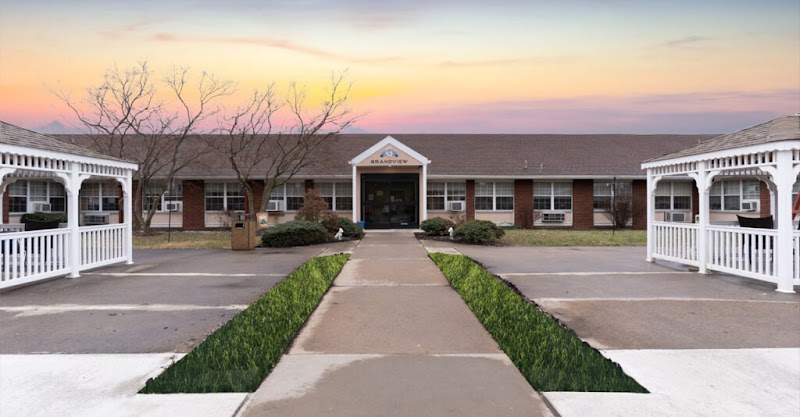
How is Grandview Nursing And Rehabilitation Staffed?

CMS rates GRANDVIEW NURSING AND REHABILITATION's staffing level at 3 out of 5 stars, which is average compared to other nursing homes. Staff turnover is 63%, which is 17 percentage points above the Pennsylvania average of 46%. High turnover can affect care consistency as new staff learn residents' individual needs.

What Have Inspectors Found at Grandview Nursing And Rehabilitation?

State health inspectors documented 111 deficiencies at GRANDVIEW NURSING AND REHABILITATION during 2022 to 2025. These included: 2 Immediate Jeopardy (the most serious level, indicating potential for serious harm or death), 4 that caused actual resident harm, and 105 with potential for harm. Immediate Jeopardy findings are rare and represent the most serious regulatory concerns. They require immediate corrective action.
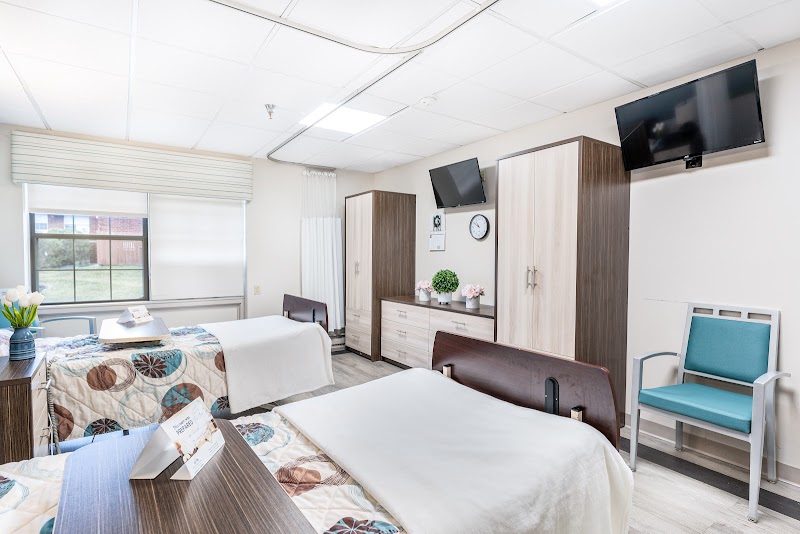
Who Owns and Operates Grandview Nursing And Rehabilitation?

GRANDVIEW NURSING AND REHABILITATION is owned by a for-profit company. For-profit facilities operate as businesses with obligations to shareholders or private owners. The facility is operated by ALLAIRE HEALTH SERVICES, a chain that manages multiple nursing homes. With 172 certified beds and approximately 144 residents (about 84% occupancy), it is a mid-sized facility located in DANVILLE, Pennsylvania.
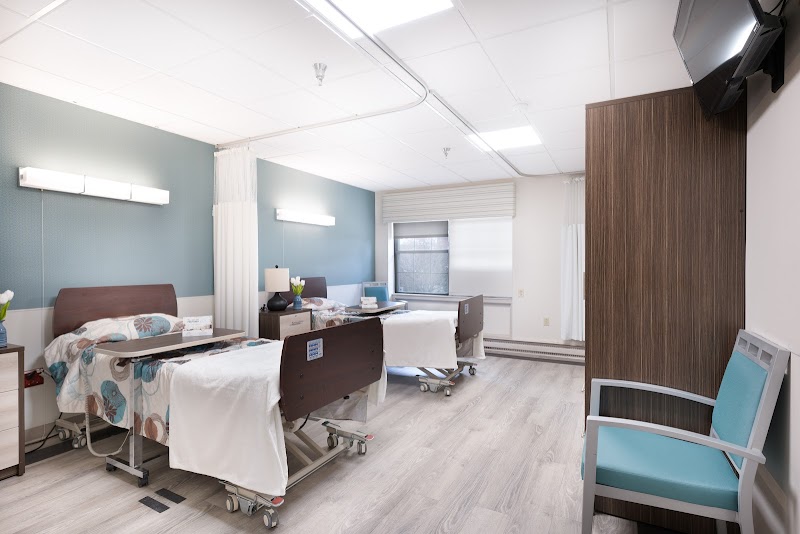
How Does Grandview Nursing And Rehabilitation Compare to Other Pennsylvania Nursing Homes?

Compared to the 100 nursing homes in Pennsylvania, GRANDVIEW NURSING AND REHABILITATION's overall rating (2 stars) is below the state average of 3.0, staff turnover (63%) is significantly higher than the state average of 46%, and health inspection rating (1 stars) is much below the national benchmark.

What Should Families Ask When Visiting Grandview Nursing And Rehabilitation?

Based on this facility's data, families visiting should ask: "What changes have been made since the serious inspection findings, and how are you preventing similar issues?" "What safeguards and monitoring systems are in place to protect residents from abuse or neglect?" "How do you ensure continuity of care given staff turnover, and what is your staff retention strategy?" "Can I visit during a mealtime to observe dining assistance and food quality?" These questions are particularly relevant given the facility's Immediate Jeopardy citations, the substantiated abuse finding on record, and the facility's high staff turnover rate.

Is Grandview Nursing And Rehabilitation Safe?

Based on CMS inspection data, GRANDVIEW NURSING AND REHABILITATION has documented safety concerns. The facility has 1 substantiated abuse finding (meaning confirmed case of resident harm by staff or other residents). Inspectors have issued 2 Immediate Jeopardy citations (the most serious violation level indicating risk of serious injury or death). The facility is currently on the Special Focus Facility watch list (a federal program monitoring the lowest-performing 1% of nursing homes nationwide). The facility has a 2-star overall rating and ranks #100 of 100 nursing homes in Pennsylvania. Families considering this facility should ask detailed questions about what corrective actions have been taken since these incidents.

Do Nurses at Grandview Nursing And Rehabilitation Stick Around?

Staff turnover at GRANDVIEW NURSING AND REHABILITATION is high. At 63%, the facility is 17 percentage points above the Pennsylvania average of 46%. High turnover means new staff may not know residents' individual needs, medications, or preferences. It can also be disorienting for residents, especially those with dementia who rely on familiar faces. Families should ask: What is causing the turnover? What retention programs are in place? How do you ensure care continuity during staff transitions?

Was Grandview Nursing And Rehabilitation Ever Fined?

GRANDVIEW NURSING AND REHABILITATION has been fined $99,868 across 2 penalty actions. This is above the Pennsylvania average of $34,078. Fines in this range indicate compliance issues significant enough for CMS to impose meaningful financial consequences. Common causes include delayed correction of deficiencies, repeat violations, or care failures affecting resident safety. Families should ask facility leadership what changes have been made since these penalties.

Is Grandview Nursing And Rehabilitation on Any Federal Watch List?

GRANDVIEW NURSING AND REHABILITATION is currently an SFF Candidate, meaning CMS has identified it as potentially qualifying for the Special Focus Facility watch list. SFF Candidates have a history of serious deficiencies but haven't yet reached the threshold for full SFF designation. The facility is being monitored more closely — if problems continue, it may be added to the official watch list. Families should ask what the facility is doing to address the issues that led to this status.