HERITAGE POINTE REHABILITATION AND HEALTHCARE CTR
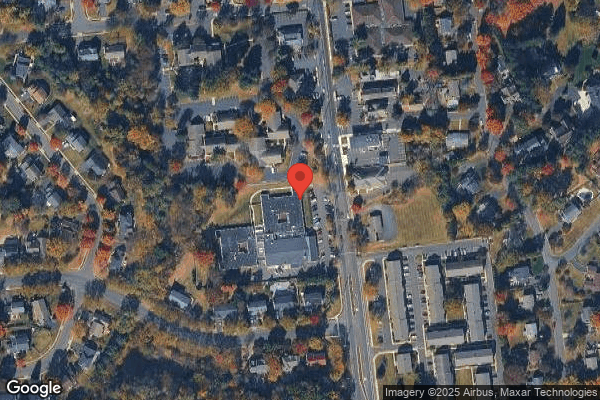

400 SOUTH MAIN STREET, DOYLESTOWN, PA 18901 (215) 348-2980
For profit - Corporation 130 Beds PRESTIGE HEALTHCARE ADMINISTRATIVE SERVICES Data: November 2025
Trust Grade
80/100
#178 of 653 in PA
Last Inspection: December 2024

Within standard 12-15 month inspection cycle. Federal law requires annual inspections.

Overview

Heritage Pointe Rehabilitation and Healthcare Center has a Trust Grade of B+, which means it is above average and recommended for families considering care options. It ranks #178 out of 653 facilities in Pennsylvania, placing it in the top half. The facility is improving, having reduced its issues from 7 in 2023 to 3 in 2024. Staffing is a mixed bag; it has an average rating of 3/5 stars with a turnover rate of 39%, which is better than the state average, indicating a relatively stable workforce. On the downside, there were some concerning findings: food was not stored properly, leading to unsanitary conditions, and one resident lacked a proper care plan addressing their dehydration and dental needs. Additionally, another resident could not access their call bell, which poses a safety risk. Overall, while there are areas needing improvement, the facility shows promise with its positive trends and staffing stability.

Trust Score
B+
80/100
In Pennsylvania
#178/653
Top 27%
Safety Record
Low Risk
No red flags
Inspections
Getting Better
7 → 3 violations
Staff Stability
○ Average
39% turnover. Near Pennsylvania's 48% average. Typical for the industry.
Penalties
✓ Good
No fines on record. Clean compliance history, better than most Pennsylvania facilities.
Skilled Nurses
○ Average
Each resident gets 40 minutes of Registered Nurse (RN) attention daily — about average for Pennsylvania. RNs are the most trained staff who monitor for health changes.
Violations
○ Average
10 deficiencies on record. Average for a facility this size. Mostly minor or procedural issues.
★★★★☆
4.0
Overall Rating
★★★☆☆
3.0
Staff Levels
★★★☆☆
3.0
Care Quality
★★★★☆
4.0
Inspection Score
Stable
2023: 7 issues
2024: 3 issues

The Good

  • Full Sprinkler Coverage · Fire safety systems throughout facility
  • No fines on record
  • Staff turnover below average (39%)

    9 points below Pennsylvania average of 48%

Facility shows strength in fire safety.

The Bad

Staff Turnover: 39%

Near Pennsylvania avg (46%)

Typical for the industry

Chain: PRESTIGE HEALTHCARE ADMINISTRATIVE

Part of a multi-facility chain

Ask about local staffing decisions and management

The Ugly 10 deficiencies on record

Dec 2024 3 deficiencies
CONCERN (D)

Potential for Harm - no one hurt, but risky conditions existed

Comprehensive Care Plan (Tag F0656)

Could have caused harm · This affected 1 resident

**NOTE- TERMS IN BRACKETS HAVE BEEN EDITED TO PROTECT CONFIDENTIALITY** Based on clinical record review, observation, and staff interview, it was determined that the facility failed to develop a compr...

Read full inspector narrative →
**NOTE- TERMS IN BRACKETS HAVE BEEN EDITED TO PROTECT CONFIDENTIALITY** Based on clinical record review, observation, and staff interview, it was determined that the facility failed to develop a comprehensive care plan that addressed individual resident needs as identified in the comprehensive assessment for one of 24 sampled residents. (Resident 10) Findings include: Clinical record review revealed that Resident 10 was admitted to the facility on [DATE], and had diagnoses that included malnutrition, colitis (inflammation of the colon), and dysphagia (difficulty swallowing). The Minimum Data Set Care Area Assessment summary dated November 18, 2024, noted that the resident's dehydration and fluid maintenance and dental care were to be addressed in the care plan. There was no evidence that interventions to address Resident's 10's dehydration and fluid maintenance or dental care included in the current care plan. In an interview on December 5, 2024, at 11:32 a.m., the Director of Nursing confirmed there was no documented evidence that the care areas were addressed in the care plan. 28 Pa. Code 211.12(d)(1)(5) Nursing services.
CONCERN (F)

Potential for Harm - no one hurt, but risky conditions existed

Food Safety (Tag F0812)

Could have caused harm · This affected most or all residents

Based on policy review, staff interview, and observation, it was determined that the facility failed to properly store food and maintain sanitary conditions in the dietary department. Findings includ...

Read full inspector narrative →
Based on policy review, staff interview, and observation, it was determined that the facility failed to properly store food and maintain sanitary conditions in the dietary department. Findings include: Review of the facility's policy entitled, Labeling and Dating, dated October 29, 2024, revealed that leftovers were to be labelled with the date that they were prepared and the use-by date. Prepared foods were to be discarded after seven days. Review of the facility's policy entitled, Staff Attire, dated October 29, 2024, revealed that all staff with facial hair were to have it properly restrained. Observations during the tour of the dietary department on December 3, 2024, at 10:12 a.m., revealed the following: In dry storage, there was food and paper debris on the floor under two sets of shelves storing food items. There was flour on the floor below the bulk container of flour. There were two bulk containers of cereal that had food debris and/or a dried liquid ring on the lids. In reach-in freezer #7, there was an accumulation of a frozen liquid on the bottom of the freezer. In reach-in freezer #6, there was an opened, uncovered box of green beans. There was a layer of food debris along the inside bottom of the freezer. In reach-in cooler #5, there was dried white liquid on the floor under the milk storage. In reach-in cooler #4, there were two opened containers with yogurt that had dripped onto the containers and the shelf below. In reach-in coolers #3 and #5, there was a layer of food debris along the bottom of the inside of the coolers. In reach-in cooler #2, there was an opened bag of shredded carrots that was not dated. There was a large bowl coleslaw labeled use-by November 30 and an opened container of bulk applesauce that was dated November 22, 2024. There was a container with leftover pancakes stored directly on top of bread that was not dated. There was a layer of food debris on the bottom of the cooler. In reach-in cooler #1, there was a large container of cooked green beans that was not dated. There were two containers and one metal lid on the floor under a storage rack of pans and containers. Inside the microwave, there were multiple areas of dried food debris. In an interview on December 3, 2024, at 11:10 a.m., the District Manager of the dietary department (DM 1) confirmed the previously mentioned foods should have been dated and expired items removed. Observation during of the lunch meal service tray line on December 4, 2024, from 12:25 p.m. to 12:43 p.m., revealed Dietary Employee 1 (DE 1) and Dietary Employee 2 (DE 2) were both observed to have facial hair of a full beard and mustache that were not covered. In an interview on December 4, 2024, at 12:50 p.m., the DM 1 confirmed that DE 1 and DE 2 should have been wearing beard guards during meal tray line. 28 Pa. Code 201.14(a) Responsibility of licensee.
MINOR (C)

Minor Issue - procedural, no safety impact

Garbage Disposal (Tag F0814)

Minor procedural issue · This affected most or all residents

Based on observation, it was determined that the facility failed to dispose of trash and refuse properly. Findings include: Observation of the trash compactor area on December 3, 2024, at 10:30 a.m., ...

Read full inspector narrative →
Based on observation, it was determined that the facility failed to dispose of trash and refuse properly. Findings include: Observation of the trash compactor area on December 3, 2024, at 10:30 a.m., revealed various items on the ground next to the trash compactor, including a full bag containing three used briefs, used gloves, used gauze, and several pieces of crushed plastic items. There was a plastic bag containing garbage items that was sticking out from below the trash compactor. 28 Pa Code 201.18(b)(3) Management.
Jan 2023 7 deficiencies
CONCERN (D)

Potential for Harm - no one hurt, but risky conditions existed

Deficiency F0558 (Tag F0558)

Could have caused harm · This affected 1 resident

**NOTE- TERMS IN BRACKETS HAVE BEEN EDITED TO PROTECT CONFIDENTIALITY** Based on clinical record review and observation, it was determined that the facility failed to ensure that a call bell was acces...

Read full inspector narrative →
**NOTE- TERMS IN BRACKETS HAVE BEEN EDITED TO PROTECT CONFIDENTIALITY** Based on clinical record review and observation, it was determined that the facility failed to ensure that a call bell was accessible for one of 24 sampled residents. (Resident 63) Findings include: Clinical record review revealed that Resident 63 had diagnoses that included cerebral infarction (stroke) and left-sided hemiplegia (paralysis of one side of the body). The Minimum Data Set assessment dated [DATE], indicated that the resident had no memory impairment and required staff assistance for activities of daily living including bed mobility, transfers, and toileting. Review of the current care plan revealed that the resident had a self-care deficit related to her impaired mobility and the intervention was for staff to ensure that the resident had a safe environment with a working, reachable call bell and staff was to reinforce the need to call for assistance. On January 3, 2023, at 11:40 a.m., the resident was observed in bed and stated they did not know where the call bell was. The call bell was observed on the floor on the left side of the bed, out of the resident's reach. On January 5, 2023, at 10:52 a.m., the resident was observed in bed. The call bell was wrapped around and hanging on the outside of the bed rail on the left side of the bed, out of the resident's reach 28 Pa. Code 211.12(d)(1)(5) Nursing services.
CONCERN (D)

Potential for Harm - no one hurt, but risky conditions existed

MDS Data Transmission (Tag F0640)

Could have caused harm · This affected 1 resident

Based on clinical record review and staff interview, it was determined that the facility failed to ensure completion of a Minimum Data Set (MDS) assessment for one of 24 sampled residents. (Resident 5...

Read full inspector narrative →
Based on clinical record review and staff interview, it was determined that the facility failed to ensure completion of a Minimum Data Set (MDS) assessment for one of 24 sampled residents. (Resident 59) Findings include: Clinical record review revealed that Resident 59 was discharged from the facility to the hospital on October 9, 2022. There was no evidence that a MDS assessment was completed to reflect the discharge status when the resident was discharged from the facility. In an interview on January 6, 2023, at 10:46 a.m., the Director of Nursing confirmed that the MDS assessment had not been completed when the resident was discharged from the facility on October 9, 2022. 28 Pa. Code 211.5(f) Clinical records.
CONCERN (D)

Potential for Harm - no one hurt, but risky conditions existed

ADL Care (Tag F0677)

Could have caused harm · This affected 1 resident

**NOTE- TERMS IN BRACKETS HAVE BEEN EDITED TO PROTECT CONFIDENTIALITY** Based on clinical record review, observation, and interview, it was determined that the facility failed to provide personal hygi...

Read full inspector narrative →
**NOTE- TERMS IN BRACKETS HAVE BEEN EDITED TO PROTECT CONFIDENTIALITY** Based on clinical record review, observation, and interview, it was determined that the facility failed to provide personal hygiene services for one of three sampled residents who required assistance with activities of daily living. (Resident 71) Findings include: Clinical record review revealed that Resident 71 had diagnoses that included anxiety, muscle weakness, and contracture of the right hand. Review of the Minimum Data Set assessment dated [DATE], revealed that the resident required extensive assistance from staff for personal hygiene. On January 4, 2023, at 10:58 a.m., Resident 71 was observed in bed, his fingernails were long and discolored. In an interview at that time, the resident stated that staff had not offered to cut his fingernails and he would prefer his nails to be trimmed and kept short. On January 5, 2023, at 10:37 a.m., Resident 71 was observed in bed, his fingernails remained long and discolored. The resident again stated that staff did not offer to cut his fingernails. Review of Resident 71's bathing record revealed that staff provided a bed bath on January 4, 2023. There was no documentation provided that indicated Resident 71 refused nail care. In an interview on January 5, 2023, at 2:19 p.m., the Director of Nursing stated that the resident's nails needed to be trimmed and that nail care should have been provided with bathing or as needed. 28 Pa. Code 211.12(d)(1)(5) Nursing services.
CONCERN (D)

Potential for Harm - no one hurt, but risky conditions existed

Quality of Care (Tag F0684)

Could have caused harm · This affected 1 resident

Based on clinical record review and staff interview, it was determined that the facility failed to ensure that physician's orders were implemented for two of 24 sampled residents. (Residents 9, 72) Fi...

Read full inspector narrative →
Based on clinical record review and staff interview, it was determined that the facility failed to ensure that physician's orders were implemented for two of 24 sampled residents. (Residents 9, 72) Findings include: Clinical record review revealed that Resident 9 had diagnoses that included orthostatic hypotension (low blood pressure upon standing), dementia with mild psychotic disturbance, and psychosis. A physician's order dated June 26, 2022, directed staff to administer a medication (midodrine hydrochloride) three times a day to treat the resident's hypotension (low blood pressure). Staff was not to give the medication if the resident had a systolic blood pressure (the first measurement of blood pressure when the heart beats and the pressure is at it's highest) of 130 mm/hg (millimeters of mercury) or more. A review of the November and December 2022, Medication Administration Records (MARs) revealed that staff administered the medication when the resident's systolic blood pressure was over 130 mm/hg; twice in November and five times in December 2022. A physician's order dated November 29, 2022, directed staff to administer medication (risperidone) at bedtime every other day for anxiety and related psychosis for 14 days. Review of the MAR for November 2022, and December 2022, revealed no evidence that the medication was given on November 29, 2022, and December 1, 3, and 5, 2022. During an interview on January 6, 2023, at 10:46 a.m., the Director of Nursing confirmed that Resident 9 received the midodrine hydrochloride when the resident's systolic blood pressure was above 130 mm/hg and that there was no evidence that risperidone was administered as ordered. Clinical record review revealed that Resident 72 had diagnoses that included hypotension (abnormally low blood pressure). On November 1, 2022, a physician ordered that staff administer a medication (midodrine hydrochloride) three times a day to treat the resident's low blood pressure. Staff was not to give the medication if the resident had a systolic blood pressure greater than 130 mm/Hg. A review of the November and December 2022, MARs revealed that staff administered the medication when the resident's systolic blood pressure was over the established parameter one time in November and four times in December 2022. 28 Pa. Code 211.12(d)(1)(5) Nursing services.
CONCERN (D)

Potential for Harm - no one hurt, but risky conditions existed

Pressure Ulcer Prevention (Tag F0686)

Could have caused harm · This affected 1 resident

**NOTE- TERMS IN BRACKETS HAVE BEEN EDITED TO PROTECT CONFIDENTIALITY** Based on clinical record review, and observation, it was determined that the facility failed to provide interventions to prevent...

Read full inspector narrative →
**NOTE- TERMS IN BRACKETS HAVE BEEN EDITED TO PROTECT CONFIDENTIALITY** Based on clinical record review, and observation, it was determined that the facility failed to provide interventions to prevent pressure ulcers for one of 24 sampled residents. (Resident 76) Findings include: Clinical record review revealed that Resident 76 had diagnoses that included diabetes mellitus, muscle weakness and a history of a pressure induced deep tissue injury to the left heel. Review of the Minimum Data Set assessment dated [DATE], revealed that the resident was totally dependent on staff for activities of daily living. A physician's order dated May 19, 2022, directed staff to apply heel boots to both feet while the resident was in bed. On January 3, 2023, at 1:27 p.m., and January 4, 2023, at 10:32 a.m., and 11:42 a.m., Resident 76 was observed in bed, the resident was not wearing heel boots. The boots were observed on the resident's bed side stand. There was no documentation provided that indicated Resident 76 refused the heel boots. 28 Pa. Code 211.12(d)(1)(5) Nursing services.
CONCERN (D)

Potential for Harm - no one hurt, but risky conditions existed

Incontinence Care (Tag F0690)

Could have caused harm · This affected 1 resident

**NOTE- TERMS IN BRACKETS HAVE BEEN EDITED TO PROTECT CONFIDENTIALITY** Based on facility policy review, clinical record review, and staff interview, it was determined that the facility failed to prov...

Read full inspector narrative →
**NOTE- TERMS IN BRACKETS HAVE BEEN EDITED TO PROTECT CONFIDENTIALITY** Based on facility policy review, clinical record review, and staff interview, it was determined that the facility failed to provide services to restore bladder function as much as possible to residents identified with a decline in urinary continence for one of 32 sampled residents. (Resident 24) Findings include: Review of the facility policy entitled, Incontinence, revised January 1, 2023, revealed that based on the resident's comprehensive assessment, all residents who were incontinent would receive appropriate treatment and services to prevent infections and to restore continence to the extent possible. Clinical record review revealed that Resident 24 had diagnoses that included muscle weakness, abnormalities of gait and mobility, and chronic kidney disease. The Minimum Data Set (MDS) assessment dated [DATE], indicated that the resident was occasionally incontinent of bladder and a bowel and bladder evaluation dated May 29, 2022, determined that the resident was continent of bladder. Review of MDS assessments dated August 12 and November 12, 2022, revealed that Resident 24 had a decline in continence and had become frequently incontinent of bladder. Nurse Aide documentation for 30 days prior to January 5, 2023, reflected that the resident continued to experience frequent episodes of urinary incontinence. There was a lack of documentation to support that services were provided to address Resident 24's decline in bladder function. During an interview on January 5, 2023, at 2:25 p.m., the Director of Nursing confirmed that a decline in continence should have been evaluated and resulting interventions implemented. 28 Pa. Code 211.12(d)(1)(5) Nursing services.
CONCERN (D)

Potential for Harm - no one hurt, but risky conditions existed

Deficiency F0809 (Tag F0809)

Could have caused harm · This affected 1 resident

**NOTE- TERMS IN BRACKETS HAVE BEEN EDITED TO PROTECT CONFIDENTIALITY** Based on a review of the facility's meal cart delivery time sheet, clinical record review, observation, and resident and staff i...

Read full inspector narrative →
**NOTE- TERMS IN BRACKETS HAVE BEEN EDITED TO PROTECT CONFIDENTIALITY** Based on a review of the facility's meal cart delivery time sheet, clinical record review, observation, and resident and staff interview, it was determined that the facility failed to ensure that meals were served at regularly scheduled times in accordance with the resident needs for four of 24 sampled residents. (Resident 30, 54, 76, 83) Findings include: Review of the facility's meal schedule revealed that the scheduled time for lunch on the [NAME] wing nursing unit was 12:05 p.m., and the scheduled time for lunch on the North wing nursing unit was 12:10 p.m. Clinical record review revealed that Resident 30 had diagnoses that included diabetes mellitus and end stage renal disease. Review of the Minimum Data Set (MDS) assessment dated [DATE], revealed that the resident was alert and oriented and required supervision for eating. In an interview on January 4, 2023, at 1:32 p.m., Resident 30 stated that lunch typically arrived late. Observation of lunch being served on the North wing on January 4, 2023, revealed that Resident 30 received a lunch tray at 1:34 p.m., over an hour past the scheduled meal time. Clinical record review revealed that Resident 54 had diagnoses that included severe protein calorie malnutrition, and dysphagia. Review of the MDS assessment dated [DATE], revealed that the resident was alert and oriented and required supervision for eating. In an interview on January 3, 2023, at 1:13 p.m., Resident 54 stated that lunch had not yet arrived and was over an hour late. Observation of the lunch being served on the [NAME] wing on January 3, 2023, revealed that Resident 54 received a lunch tray at 1:21 p.m., over an hour past the scheduled meal time. Clinical record review revealed that Resident 76 had diagnoses that included diabetes mellitus, muscle weakness, and anxiety. Review of the MDS assessment dated [DATE], revealed that Resident 76 was cognitively impaired and was totally dependent on staff for eating. Observation of lunch being served on the North wing on January 4, 2023, revealed that Resident 76 received a lunch tray at 1:28 p.m., over an hour past the scheduled meal time. Clinical record review revealed that Resident 83 had diagnoses that included diabetes mellitus, severe protein calorie malnutrition, and anxiety. Review of the MDS assessment dated [DATE], revealed that the resident was alert and oriented and required supervision for eating. In an interview on January 4, 2023, at 1:18 p.m., Resident 83 stated that lunch had not yet arrived and was over an hour late. Observation of lunch being served on the North wing on January 4, 2023, revealed that Resident 83 received a lunch tray at 1:26 p.m., over an hour past the scheduled meal time. In an interview on January 5, 2023, at 12:30 p.m., the Administrator stated that lunch was served later than the scheduled time on the North wing nursing unit on January 4, 2023. In an interview on January 6, 2023, at 12:30 p.m., the Administrator stated that lunch was served later than the scheduled time on the [NAME] wing nursing unit on January 3, 2023.
Understanding Severity Codes (click to expand)
Life-Threatening (Immediate Jeopardy)
J - Isolated K - Pattern L - Widespread
Actual Harm
G - Isolated H - Pattern I - Widespread
Potential for Harm
D - Isolated E - Pattern F - Widespread
No Harm (Minor)
A - Isolated B - Pattern C - Widespread

Questions to Ask on Your Visit

  • "Can I speak with families of current residents?"
  • "What's your RN coverage like on weekends and overnight?"

Our Honest Assessment

Strengths
  • • Grade B+ (80/100). Above average facility, better than most options in Pennsylvania.
  • • No major safety red flags. No abuse findings, life-threatening violations, or SFF status.
  • • No fines on record. Clean compliance history, better than most Pennsylvania facilities.
  • • 39% turnover. Below Pennsylvania's 48% average. Good staff retention means consistent care.
Concerns
  • • No significant concerns identified. This facility shows no red flags across CMS ratings, staff turnover, or federal penalties.
Bottom line: Generally positive indicators. Standard due diligence and a personal visit recommended.

About This Facility

What is Heritage Pointe Rehabilitation And Healthcare Ctr's CMS Rating?

CMS assigns HERITAGE POINTE REHABILITATION AND HEALTHCARE CTR an overall rating of 4 out of 5 stars, which is considered above average nationally. Within Pennsylvania, this rating places the facility higher than 99% of the state's 100 nursing homes. This rating reflects solid performance across the metrics CMS uses to evaluate nursing home quality.

How is Heritage Pointe Rehabilitation And Healthcare Ctr Staffed?

CMS rates HERITAGE POINTE REHABILITATION AND HEALTHCARE CTR's staffing level at 3 out of 5 stars, which is average compared to other nursing homes. Staff turnover is 39%, compared to the Pennsylvania average of 46%. This relatively stable workforce can support continuity of care.

What Have Inspectors Found at Heritage Pointe Rehabilitation And Healthcare Ctr?

State health inspectors documented 10 deficiencies at HERITAGE POINTE REHABILITATION AND HEALTHCARE CTR during 2023 to 2024. These included: 9 with potential for harm and 1 minor or isolated issues.

Who Owns and Operates Heritage Pointe Rehabilitation And Healthcare Ctr?

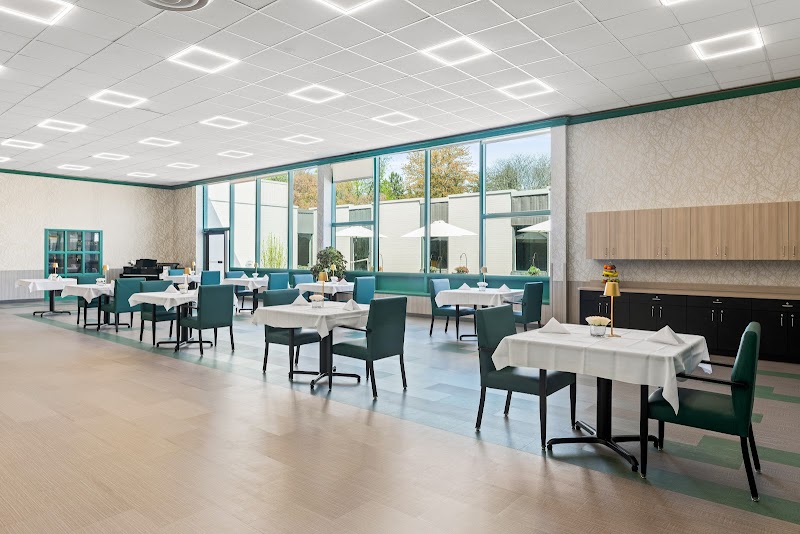
HERITAGE POINTE REHABILITATION AND HEALTHCARE CTR is owned by a for-profit company. For-profit facilities operate as businesses with obligations to shareholders or private owners. The facility is operated by PRESTIGE HEALTHCARE ADMINISTRATIVE SERVICES, a chain that manages multiple nursing homes. With 130 certified beds and approximately 115 residents (about 88% occupancy), it is a mid-sized facility located in DOYLESTOWN, Pennsylvania.
How Does Heritage Pointe Rehabilitation And Healthcare Ctr Compare to Other Pennsylvania Nursing Homes?

Compared to the 100 nursing homes in Pennsylvania, HERITAGE POINTE REHABILITATION AND HEALTHCARE CTR's overall rating (4 stars) is above the state average of 3.0, staff turnover (39%) is near the state average of 46%, and health inspection rating (4 stars) is above the national benchmark.

What Should Families Ask When Visiting Heritage Pointe Rehabilitation And Healthcare Ctr?

Based on this facility's data, families visiting should ask: "Can I visit during a mealtime to observe dining assistance and food quality?" "How do you handle medical emergencies, and what is your hospital transfer rate?" "Can I speak with family members of current residents about their experience?"

Is Heritage Pointe Rehabilitation And Healthcare Ctr Safe?

Based on CMS inspection data, HERITAGE POINTE REHABILITATION AND HEALTHCARE CTR has a clean safety record: no substantiated abuse findings (meaning no confirmed cases of resident harm), no Immediate Jeopardy citations (the most serious violation level indicating risk of serious injury or death), and is not on the Special Focus Facility watch list (a federal program monitoring the lowest-performing 1% of nursing homes). The facility has a 4-star overall rating and ranks #1 of 100 nursing homes in Pennsylvania. While no facility is perfect, families should still ask about staff-to-resident ratios and recent inspection results during their visit.

Do Nurses at Heritage Pointe Rehabilitation And Healthcare Ctr Stick Around?

HERITAGE POINTE REHABILITATION AND HEALTHCARE CTR has a staff turnover rate of 39%, which is about average for Pennsylvania nursing homes (state average: 46%). Moderate turnover is common in nursing homes, but families should still ask about staff tenure and how the facility maintains care continuity when employees leave.

Was Heritage Pointe Rehabilitation And Healthcare Ctr Ever Fined?

HERITAGE POINTE REHABILITATION AND HEALTHCARE CTR has no federal fines on record. CMS issues fines when nursing homes fail to meet care standards or don't correct problems found during inspections. The absence of fines suggests the facility has either maintained compliance or corrected any issues before penalties were assessed. This is a positive indicator, though families should still review recent inspection reports for the full picture.

Is Heritage Pointe Rehabilitation And Healthcare Ctr on Any Federal Watch List?

HERITAGE POINTE REHABILITATION AND HEALTHCARE CTR is not on any federal watch list. The most significant is the Special Focus Facility (SFF) program, which identifies the bottom 1% of nursing homes nationally based on persistent, serious quality problems. Not being on this list means the facility has avoided the pattern of deficiencies that triggers enhanced federal oversight. This is a positive indicator, though families should still review the facility's inspection history directly.