GARDENS AT EASTON, THE
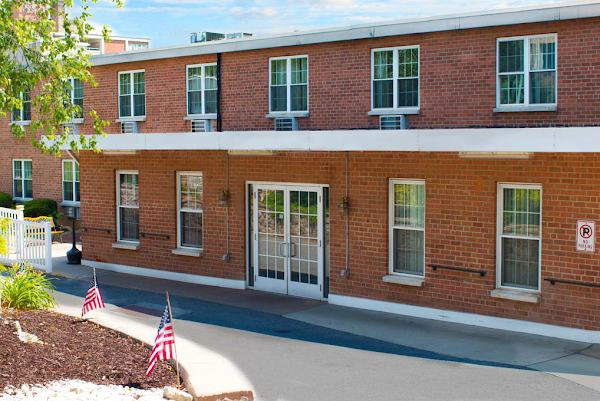

498 WASHINGTON STREET, EASTON, PA 18042 (610) 258-2985
For profit - Limited Liability company 181 Beds PRIORITY HEALTHCARE GROUP Data: November 2025
Trust Grade
83/100
#174 of 653 in PA
Last Inspection: May 2025

Inspected within the last 6 months. Data reflects current conditions.

Overview

The Gardens at Easton has a Trust Grade of B+, which is above average and indicates a recommended facility for families considering care options. Ranked #174 out of 653 nursing homes in Pennsylvania, they are in the top half of facilities statewide, and #7 out of 12 in Northampton County, meaning only a few local options are better. However, the facility is experiencing a worsening trend, with issues increasing from 1 in 2024 to 5 in 2025. Staffing is a strength here, with a 4 out of 5 star rating and a low turnover rate of 28%, much better than the state average of 46%. There have been no fines reported, which is a positive sign, but the RN coverage is concerning as it is less than that of 81% of Pennsylvania facilities, which could impact the quality of care. Specific incidents noted in inspections include a failure to maintain sanitary conditions in the kitchen, evidenced by dirty surfaces and improperly stored food, and issues with the cleanliness and repair of residents' living environments, such as marred walls and broken fixtures. While the facility has strengths in staffing and no fines, these cleanliness and maintenance concerns highlight areas that need improvement.

Trust Score
B+
83/100
In Pennsylvania
#174/653
Top 26%
Safety Record
Low Risk
No red flags
Inspections
Getting Worse
1 → 5 violations
Staff Stability
✓ Good
28% annual turnover. Excellent stability, 20 points below Pennsylvania's 48% average. Staff who stay learn residents' needs.
Penalties
✓ Good
No fines on record. Clean compliance history, better than most Pennsylvania facilities.
Skilled Nurses
⚠ Watch
Each resident gets only 27 minutes of Registered Nurse (RN) attention daily — below average for Pennsylvania. Fewer RN minutes means fewer trained eyes watching for problems.
Violations
○ Average
9 deficiencies on record. Average for a facility this size. Mostly minor or procedural issues.
★★★★☆
4.0
Overall Rating
★★★★☆
4.0
Staff Levels
★★★☆☆
3.0
Care Quality
★★★★☆
4.0
Inspection Score
Stable
2024: 1 issues
2025: 5 issues

The Good

  • 4-Star Staffing Rating · Above-average nurse staffing levels
  • Low Staff Turnover (28%) · Staff stability means consistent care
  • Full Sprinkler Coverage · Fire safety systems throughout facility
  • No fines on record
  • Staff turnover is low (28%)

    20 points below Pennsylvania average of 48%

Facility shows strength in staffing levels, staff retention, fire safety.

The Bad

Chain: PRIORITY HEALTHCARE GROUP

Part of a multi-facility chain

Ask about local staffing decisions and management

The Ugly 9 deficiencies on record

May 2025 5 deficiencies
CONCERN (D)

Potential for Harm - no one hurt, but risky conditions existed

Safe Environment (Tag F0584)

Could have caused harm · This affected 1 resident

**NOTE- TERMS IN BRACKETS HAVE BEEN EDITED TO PROTECT CONFIDENTIALITY** Based on observation, it was determined that the facility failed to maintain residents' environment and equipment in a safe, cle...

Read full inspector narrative →
**NOTE- TERMS IN BRACKETS HAVE BEEN EDITED TO PROTECT CONFIDENTIALITY** Based on observation, it was determined that the facility failed to maintain residents' environment and equipment in a safe, clean, comfortable, and homelike manner on two of three nursing units. (First and Second Floor nursing units) Findings include: Observations on May 13, 2025, from 9:30 a.m. through 2:00 p.m., and May 14, 2025, from 8:45 a.m. through 3:00 p.m., revealed the following environmental issues: In room [ROOM NUMBER] (bed 1) there was paint peeling behind the resident's headboard. In room [ROOM NUMBER] (bed 1) the privacy curtain was torn. In the First Floor community shower room there was a black substance in the far left shower stall, in the middle shower stall, there were chipped tiles in the floor and a missing shower head and faucet, the bottom of the handle on the bathtub had a dark substance on it, and the toilet area had chipped paint on the right side of the wall and a brown substance behind the toilet. Resident 62's wheelchair had a broken and torn left arm rest, the back of the wheelchair was torn, and had loose axles. In the Second Floor dining room, there was dust was in the corners of the room, peeling tape around the two air conditioning units and on the window sills, the curtain on the middle window had a brown stain, and the dining room hand sanitizer dispenser was empty. The heater in the hallway outside of room [ROOM NUMBER] was covered with a black substance and the wall behind it was cracked. The handrails between the dining room and room [ROOM NUMBER], and between rooms 202 to 205, rooms 207 to 209, rooms 216 to 219, rooms 220 to 222, and between rooms [ROOM NUMBERS] had cracked paint and were loose. The bottom of the window curtains in resident rooms 223 (bed 3) and 226 (bed 1), were stained, and the windows were cloudy with a black residue in corners. 28 Pa. Code 201.14(a) Responsibility of licensee. 28 Pa. Code 201.18(b)(1) Management.
CONCERN (D)

Potential for Harm - no one hurt, but risky conditions existed

Assessment Accuracy (Tag F0641)

Could have caused harm · This affected 1 resident

**NOTE- TERMS IN BRACKETS HAVE BEEN EDITED TO PROTECT CONFIDENTIALITY** Based on clinical record review, observation, and staff interview, it was determined that the facility failed to ensure that the...

Read full inspector narrative →
**NOTE- TERMS IN BRACKETS HAVE BEEN EDITED TO PROTECT CONFIDENTIALITY** Based on clinical record review, observation, and staff interview, it was determined that the facility failed to ensure that the Minimum Data Set (MDS) assessments were completed to accurately reflect the residents' current status for two of 32 sampled residents. (Residents 27, 93) Findings include: Clinical record review revealed that Resident 27 had diagnoses that included diabetes mellitus and pulmonary embolism. A physician's order dated April 9, 2025, directed staff to administer an anti-coagulant medication (dabigatran). Review of the MDS assessment dated [DATE], revealed that the resident was on an anti-platelet medication in the last seven days, not an anti-coagulant medication. The MDS inaccurately reflected the use of an anti-platelet medication, as the dabigatran was an anti-coagulant medication. Clinical record review revealed that Resident 93 had diagnoses that included end stage renal disease and chronic congestive heart failure. Review of the nurse practitioner's progress notes dated February 27, 2025, and March 4, 2025, revealed that Resident 93 was on chronic oxygen via nasal cannula. Review of the oxygen saturation summary dated November 18, 2024, through May 7, 2025, revealed that Resident 93 was on oxygen via nasal cannula. Observations on May 13, 2025, at 11:16 a.m. and again on May 14, 2025, at 12:09 p.m., revealed Resident 93 sitting up in bed with oxygen via nasal cannula. Review of the MDS assessment dated [DATE], did not identify the resident was receiving oxygen therapy. In an interview on May 15, 2025, at 2:05 p.m., the Director of Nursing confirmed that Resident 27's and 93's MDS assessments were inaccurate and did not reflect the residents' current status.
CONCERN (D)

Potential for Harm - no one hurt, but risky conditions existed

Respiratory Care (Tag F0695)

Could have caused harm · This affected 1 resident

Based on facility policy review, clinical record review, observation, and resident and staff interview it was determined that the facility failed to obtain a physician's order for oxygen and provide a...

Read full inspector narrative →
Based on facility policy review, clinical record review, observation, and resident and staff interview it was determined that the facility failed to obtain a physician's order for oxygen and provide appropriate care for respiratory equipment for one of 32 sampled residents. (Resident 93) Findings include: Review of the facility policy entitled, Equipment Changing, last reviewed January 8, 2025, revealed that all respiratory therapy equipment should be changed on a weekly basis and as needed when the equipment came in contact with the ground. Clinical record review revealed that Resident 93 had diagnoses that included end stage renal disease and chronic congestive heart failure. Observations on May 13, 2025, at 11:16 a.m. and again on May 14, 2025, at 12:09 p.m., revealed Resident 93 was sitting up in bed with oxygen being administered using a nasal cannula. In an interview at that time, Resident 93 stated that he always wears oxygen except for when going outside to smoke. Review of the nurse practitioner's progress notes dated February 27, 2025, and March 4, 2025, revealed that Resident 93 was on oxygen at all times. Review of the oxygen saturation summary dated November 18, 2024, through May 7, 2025, revealed that Resident 93 was using oxygen via nasal cannula. Review of the May 2025 physician's orders revealed no order for oxygen therapy via nasal cannula. There was also no documented evidence that staff changed the oxygen tubing weekly according to facility policy. In an interview on May 15, 2025, at 1:45 p.m., the Director of Nursing confirmed that the resident should have had a physician's order for the oxygen and that tubing should be changed weekly. 28 Pa. Code 211.12(d)(1)(2)(5) Nursing services.
CONCERN (D)

Potential for Harm - no one hurt, but risky conditions existed

Deficiency F0761 (Tag F0761)

Could have caused harm · This affected 1 resident

Based on a review of facility policy, staff interview, and observation, it was determined that the facility failed to properly store medications on one of three nursing units. (Second Floor nursing un...

Read full inspector narrative →
Based on a review of facility policy, staff interview, and observation, it was determined that the facility failed to properly store medications on one of three nursing units. (Second Floor nursing unit) Findings include: Review of the facility policy entitled, Medication Storage and Labeling, last reviewed January 8, 2025, revealed that medications requiring refrigeration were to be stored in a refrigerator located in the medication room at the nurses' station or other secured location. Medications were to be stored separately from food and were to be labeled accordingly. In an interview on May 14, 2025, at 10:19 a.m., the Administrator stated that the acceptable temperature for a medication refrigerator was to be between 36 degrees Fahrenheit and 46 degrees Fahrenheit. Observation of the Second Floor medication refrigerator on May 14, 2025, at 9:00 a.m., revealed a temperature of 60 degrees Fahrenheit. At 10:02 a.m., the temperature was 58 degrees Fahrenheit. At 12:22 p.m., the temperature was 59 degrees Fahrenheit. At 1:26 p.m., the Maintenance Director confirmed the refrigerator temperature was 54 degrees Fahrenheit. At each observation, there were two opened medications that required refrigeration, Cefepime and Konvomep. Per manufacturer guidelines, these medications were to be stored at a temperature between 36 degrees Fahrenheit and 46 degrees Fahrenheit. In an interview on May 14, 2025, at 3:01 p.m., the Administrator confirmed the temperatures of the Second Floor medication refrigerator were above acceptable temperatures. 28 Pa. Code 201.14(a) Responsibility of licensee. 28 Pa. Code 201.18(b)(3)(e)(2.1) Management. 28 Pa. Code 211.12 (d)(1)(2)(5) Nursing services.
CONCERN (D)

Potential for Harm - no one hurt, but risky conditions existed

Food Safety (Tag F0812)

Could have caused harm · This affected 1 resident

Based on policy review, observation, and staff interview, it was determined that the facility failed to properly store food and maintain sanitary conditions in the dietary department. Findings includ...

Read full inspector narrative →
Based on policy review, observation, and staff interview, it was determined that the facility failed to properly store food and maintain sanitary conditions in the dietary department. Findings include: Review of the facility's policy entitled, Employee Sanitary Practices, dated January 8, 2025, revealed that all staff were to cover all of their hair with a hair restraint. Observations during the tour of the dietary department on May 13, 2025, at 10:22 a.m., revealed the following: There was a blender lid on the floor next to the pot rack. There were four large containers of dry cereal that had a layer of sticky food debris on the outside of the lid and bottom of each container. In the walk-in freezer, there was ice build up and condensation on the three fan vents on the wall. On the floor below the fans, there were multiple spots of ice and condensation. On the two shelves below the fans, there was a box of sherbet and peas that were covered with ice. Next to this, on another shelf, there were two opened boxes of pretzels that were covered with ice. There was a large ice formation on each of two shelves below the fans. Observation during of the lunch meal service tray line on May 14, 2025, from 12:15 p.m. to 12:30 p.m., revealed Dietary Employee (DE) 1 was observed with a mustache that was not covered. In an interview on May 14, 2025, at 12:55 p.m., the Food Service Director confirmed that DE 1 should have been wearing a hair restraint to cover the mustache during the meal tray line. CFR 483.60(i) Food Safety Requirement Previously cited 4/18/24 28 Pa. Code 201.14(a) Responsibility of licensee.
Apr 2024 1 deficiency
CONCERN (F)

Potential for Harm - no one hurt, but risky conditions existed

Food Safety (Tag F0812)

Could have caused harm · This affected most or all residents

Based on observation, it was determined that the facility failed to store and serve food under sanitary conditions in the kitchen. Findings include: Observation of the kitchen and tray line service ...

Read full inspector narrative →
Based on observation, it was determined that the facility failed to store and serve food under sanitary conditions in the kitchen. Findings include: Observation of the kitchen and tray line service on April 16, 2024, at 7:43 a.m., revealed the following: There was a spatula with multiple chips on all sides of the rubber scraper. There were various items, which included boxes of gloves, bandages, Styrofoam bowls, and a bathroom key, on a counter surface. There was a black substance on the wall tiles adjacent to the dish machine. There were multiple areas of chipped tile. A subsequent observation of the kitchen and tray line service on April 17, 2024, at 12:10 p.m., revealed the following: There was a drainpipe that was dripping onto the shelf under the food preparation surface. There was a box of potatoes and a container of oatmeal stored on the shelf. There were various substances splattered on the wall behind that same food preparation surface. Dietary Employee (DE) 1 was wearing gloves and operating the tray line. DE 1 stepped away from the tray line, answered the phone, then returned to the tray line and continued handling resident meal plates and trays without changing gloves or performing hand hygiene. DE 2 was wearing gloves and operating the tray line. DE 2 touched ready to eat food for resident trays, walked away from the tray line, obtained and donned oven mitts for another task. DE 2 took off the oven mitts and returned to tray line wearing the same gloves and continued to plate resident meals, which included touching ready to eat foods, without changing gloves or performing hand hygiene. 28 Pa. Code 201.18 (b)(3)(e)(2.1) Management.
Apr 2023 3 deficiencies
CONCERN (D)

Potential for Harm - no one hurt, but risky conditions existed

Abuse Prevention Policies (Tag F0607)

Could have caused harm · This affected 1 resident

Based on review of facility policy, review of personnel files and staff interview, it was determined that the facility failed to implement the abuse prohibition policy related to employee screening fo...

Read full inspector narrative →
Based on review of facility policy, review of personnel files and staff interview, it was determined that the facility failed to implement the abuse prohibition policy related to employee screening for one of five newly hired employees. (Employee 4) Findings include: Review of the facility policy entitled Abuse Policy, last updated February 1, 2023, revealed that to ensure abuse protection, the facility was to have processes in place to include screening, training, prevention, identification, protection, investigation, reporting and response to allegations of potential abuse and neglect. The policy guidelines included a procedure in preventing abuse and neglect of residents. The abuse prevention program provided policies included screening and protocols for conducting employment background checks including state criminal background check and any other reviews required under the state or federal regulation. Any employee with a positive initial or annual background check was not to be permitted to work until the issue was thoroughly investigated and a suitable determination was made by the facility. The facility policy referenced an appendix that it was unconstitutional for the offenses listed in the Older Protective Services Act to result in a lifetime employment ban without further evaluation. The appendix included the recommendation that the facility perform an individualized risk assessment on a case by case basis and consult with legal counsel regarding employment. Review of the personnel file for Employee 4 revealed a state criminal background check was requested on March 9, 2023. The state criminal background check was noted as compiled on March 21, 2023, with a positive result for a criminal record. The actual start date for Employee 4 was March 29, 2023. The initial background check had a result of pending for control. The final compiled report indicated that Employee 4 had a criminal background. This final report was not obtained until April 26, 2023. As a result, the individualized risk assessment to determine if the employee was suitable for employment was not completed by the facility until April 27, 2023. In an interview on April 27, 2023, the Administrator confirmed that Employee 4 had been working in the facility from March 29, 2023, through April 27, 2023. 28 Pa. Code 201.10 (1)(e) Management 28 Pa. Code 201.14(a) Responsibility of licensee. 28 Pa. Code 201.19 Personnel policies and procedures. 28 Pa. Code 201.29(a) Resident rights.
CONCERN (E)

Potential for Harm - no one hurt, but risky conditions existed

Safe Environment (Tag F0584)

Could have caused harm · This affected multiple residents

**NOTE- TERMS IN BRACKETS HAVE BEEN EDITED TO PROTECT CONFIDENTIALITY** Based on observation during environmental tours, it was determined that the facility failed to maintain residents' environment a...

Read full inspector narrative →
**NOTE- TERMS IN BRACKETS HAVE BEEN EDITED TO PROTECT CONFIDENTIALITY** Based on observation during environmental tours, it was determined that the facility failed to maintain residents' environment and equipment in a clean, functional, sanitary, and homelike manner on three of three nursing units. (First and Second floor nursing units and the Annex) Findings include: Observations on April 25, 2023, from 9:52 a.m., through April 26, 2023, at 10:05 a.m., on the first floor nursing unit revealed that the walls were marred and scratched in resident rooms 111, 112, 117, 119, 122, 123, 124, 127, and 128. In resident room [ROOM NUMBER], the bottom corner of the wall between the bathroom and the room was gouged, the baseboard was missing, the toilet paper holder was broken, and the faucet for the bathroom sink was loose. In resident room [ROOM NUMBER] there was an orange substance on the wall behind the resident's bed, and the privacy curtain between bed. The air conditioner in resident room [ROOM NUMBER] was covered in dirt and a dried pink substance. Observations on April 25, 2023, at 1:48 p.m., on the second floor nursing unit revealed that the walls in resident room [ROOM NUMBER] were marred and scratched. In resident room [ROOM NUMBER] the entire lower back wall underneath the windows was marred, scratched and missing paint. Observations on April 25, 2023, between 9:57 a.m., and 10:14 a.m., on the Annex nursing unit revealed that in room [ROOM NUMBER] there was a piece of molding that was peeling away from the wall by bed four. In addition, the wall was marred. In resident room [ROOM NUMBER], the dresser between beds one and two was missing the second, top drawer. The foot board on bed two and three was cracked. The towel bar was off of the wall and observed on the sink. CFR 483.10(i)(1-7) Safe/Clean/Comfortable/Homelike Environment Previously cited 5/5/22 28 Pa. Code 207.2 (a) Administrator's responsibility.
CONCERN (E)

Potential for Harm - no one hurt, but risky conditions existed

Deficiency F0922 (Tag F0922)

Could have caused harm · This affected multiple residents

Based on review of the facility disaster plan, observation, and staff interview, it was determined that the facility failed to establish written procedures to ensure that potable (drinking) water was ...

Read full inspector narrative →
Based on review of the facility disaster plan, observation, and staff interview, it was determined that the facility failed to establish written procedures to ensure that potable (drinking) water was available to essential areas during periods when there was a loss of normal water supply. Findings include: Review of the facility disaster preparedness assessment last reviewed February 1, 2023, revealed that the facility was to conduct an assessment on an annual basis to determine the readiness of the physical plant and associated supplies/provisions within the facility that would be utilized to manage a crisis or disaster situation. An adequate supply of emergency items and equipment would be maintained in appropriate quantities and in accordance with all applicable regulations to accommodate the needs of residents and staff members. Supplies and equipment would be stored in clearly designated locations and easily accessible during a crisis or disaster situation. Further review of the facility's disaster preparedness assessment revealed that the facility determined a need of 741 gallons of water per day were needed for residents and employees. Observation of the dry storage room on April 26, 2023, at 9:18 a.m., revealed that there were 69 gallons of emergency drinking water stored onsite. In an interview, the Director of Dining Services stated that the facility's emergency water supply was accesible and stored in dry storage. There was no evidence that the facility's disaster plan included provisions to obtain the minimum amount of water required for staff and residents in the event of an emergency. In an interview on April 27, 2023, at 11:04 a.m., the Administrator stated that the facility required a minimum of 247 gallons of water to sustain staff and residents for 24 hours in the event of a loss of normal water supply and that there was only 70 gallons of emergency water onsite. 28 Pa. Code 201.18(b)(1)(3) Management. 28 Pa. Code 209.7(a) Disaster preparedness.
Understanding Severity Codes (click to expand)
Life-Threatening (Immediate Jeopardy)
J - Isolated K - Pattern L - Widespread
Actual Harm
G - Isolated H - Pattern I - Widespread
Potential for Harm
D - Isolated E - Pattern F - Widespread
No Harm (Minor)
A - Isolated B - Pattern C - Widespread

Questions to Ask on Your Visit

  • "Can I speak with families of current residents?"
  • "What's your RN coverage like on weekends and overnight?"

Our Honest Assessment

Strengths
  • • Grade B+ (83/100). Above average facility, better than most options in Pennsylvania.
  • • No major safety red flags. No abuse findings, life-threatening violations, or SFF status.
  • • No fines on record. Clean compliance history, better than most Pennsylvania facilities.
  • • 28% annual turnover. Excellent stability, 20 points below Pennsylvania's 48% average. Staff who stay learn residents' needs.
Concerns
  • • No significant concerns identified. This facility shows no red flags across CMS ratings, staff turnover, or federal penalties.
Bottom line: Generally positive indicators. Standard due diligence and a personal visit recommended.

About This Facility

What is Gardens At Easton, The's CMS Rating?

CMS assigns GARDENS AT EASTON, THE an overall rating of 4 out of 5 stars, which is considered above average nationally. Within Pennsylvania, this rating places the facility higher than 99% of the state's 100 nursing homes. This rating reflects solid performance across the metrics CMS uses to evaluate nursing home quality.
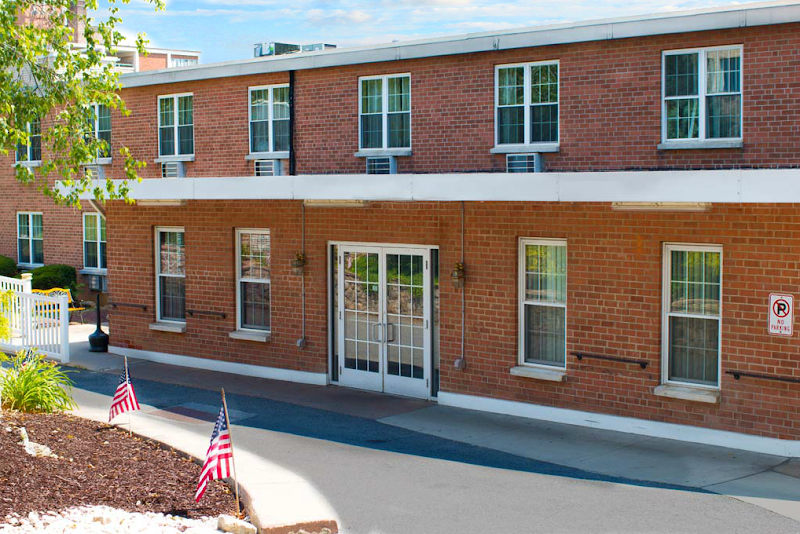
How is Gardens At Easton, The Staffed?

CMS rates GARDENS AT EASTON, THE's staffing level at 4 out of 5 stars, which is above average compared to other nursing homes. Staff turnover is 28%, compared to the Pennsylvania average of 46%. This relatively stable workforce can support continuity of care.

What Have Inspectors Found at Gardens At Easton, The?

State health inspectors documented 9 deficiencies at GARDENS AT EASTON, THE during 2023 to 2025. These included: 9 with potential for harm.

Who Owns and Operates Gardens At Easton, The?

GARDENS AT EASTON, THE is owned by a for-profit company. For-profit facilities operate as businesses with obligations to shareholders or private owners. The facility is operated by PRIORITY HEALTHCARE GROUP, a chain that manages multiple nursing homes. With 181 certified beds and approximately 159 residents (about 88% occupancy), it is a mid-sized facility located in EASTON, Pennsylvania.
How Does Gardens At Easton, The Compare to Other Pennsylvania Nursing Homes?

Compared to the 100 nursing homes in Pennsylvania, GARDENS AT EASTON, THE's overall rating (4 stars) is above the state average of 3.0, staff turnover (28%) is significantly lower than the state average of 46%, and health inspection rating (4 stars) is above the national benchmark.

What Should Families Ask When Visiting Gardens At Easton, The?

Based on this facility's data, families visiting should ask: "Can I visit during a mealtime to observe dining assistance and food quality?" "How do you handle medical emergencies, and what is your hospital transfer rate?" "Can I speak with family members of current residents about their experience?"

Is Gardens At Easton, The Safe?

Based on CMS inspection data, GARDENS AT EASTON, THE has a clean safety record: no substantiated abuse findings (meaning no confirmed cases of resident harm), no Immediate Jeopardy citations (the most serious violation level indicating risk of serious injury or death), and is not on the Special Focus Facility watch list (a federal program monitoring the lowest-performing 1% of nursing homes). The facility has a 4-star overall rating and ranks #1 of 100 nursing homes in Pennsylvania. While no facility is perfect, families should still ask about staff-to-resident ratios and recent inspection results during their visit.

Do Nurses at Gardens At Easton, The Stick Around?

Staff at GARDENS AT EASTON, THE tend to stick around. With a turnover rate of 28%, the facility is 18 percentage points below the Pennsylvania average of 46%. Low turnover is a positive sign. It means caregivers have time to learn each resident's needs, medications, and personal preferences. Consistent staff also notice subtle changes in a resident's condition more quickly.

Was Gardens At Easton, The Ever Fined?

GARDENS AT EASTON, THE has no federal fines on record. CMS issues fines when nursing homes fail to meet care standards or don't correct problems found during inspections. The absence of fines suggests the facility has either maintained compliance or corrected any issues before penalties were assessed. This is a positive indicator, though families should still review recent inspection reports for the full picture.

Is Gardens At Easton, The on Any Federal Watch List?

GARDENS AT EASTON, THE is not on any federal watch list. The most significant is the Special Focus Facility (SFF) program, which identifies the bottom 1% of nursing homes nationally based on persistent, serious quality problems. Not being on this list means the facility has avoided the pattern of deficiencies that triggers enhanced federal oversight. This is a positive indicator, though families should still review the facility's inspection history directly.