GARDENS FOR MEMORY CARE AT EASTON, THE


500 WASHINGTON STREET, EASTON, PA 18042 (610) 253-3573
For profit - Limited Liability company 115 Beds PRIORITY HEALTHCARE GROUP Data: November 2025
Trust Grade
80/100
#177 of 653 in PA
Last Inspection: May 2025

Inspected within the last 6 months. Data reflects current conditions.

Overview

Gardens for Memory Care at Easton has a Trust Grade of B+, which means it is recommended and performs above average compared to other facilities. It ranks #177 out of 653 nursing homes in Pennsylvania, placing it in the top half, and #8 out of 12 in Northampton County, indicating that only a few local options are better. The facility is improving overall, with the number of reported issues decreasing from 2 in 2024 to 1 in 2025. Staffing is a strong point, with a 4 out of 5-star rating and a turnover rate of 40%, which is lower than the state average. Although the facility has not incurred any fines, there are some concerns; for example, they failed to store food properly, which could pose health risks, and they did not provide timely abuse prevention training for some new staff. Additionally, there were several environmental issues, such as loose assist bars and cleanliness concerns in resident areas. Overall, while there are notable strengths, families should be aware of the existing weaknesses and ongoing areas for improvement.

Trust Score
B+
80/100
In Pennsylvania
#177/653
Top 27%
Safety Record
Low Risk
No red flags
Inspections
Getting Better
2 → 1 violations
Staff Stability
○ Average
40% turnover. Near Pennsylvania's 48% average. Typical for the industry.
Penalties
✓ Good
No fines on record. Clean compliance history, better than most Pennsylvania facilities.
Skilled Nurses
○ Average
Each resident gets 35 minutes of Registered Nurse (RN) attention daily — about average for Pennsylvania. RNs are the most trained staff who monitor for health changes.
Violations
○ Average
7 deficiencies on record. Average for a facility this size. Mostly minor or procedural issues.
★★★★☆
4.0
Overall Rating
★★★★☆
4.0
Staff Levels
★★☆☆☆
2.0
Care Quality
★★★★☆
4.0
Inspection Score
Stable
2024: 2 issues
2025: 1 issues

The Good

  • 4-Star Staffing Rating · Above-average nurse staffing levels
  • Full Sprinkler Coverage · Fire safety systems throughout facility
  • No fines on record
  • Staff turnover below average (40%)

    8 points below Pennsylvania average of 48%

Facility shows strength in staffing levels, fire safety.

The Bad

Staff Turnover: 40%

Near Pennsylvania avg (46%)

Typical for the industry

Chain: PRIORITY HEALTHCARE GROUP

Part of a multi-facility chain

Ask about local staffing decisions and management

The Ugly 7 deficiencies on record

May 2025 1 deficiency
CONCERN (E) 📢 Someone Reported This

A family member, employee, or ombudsman was alarmed enough to file a formal complaint

Potential for Harm - no one hurt, but risky conditions existed

Safe Environment (Tag F0584)

Could have caused harm · This affected multiple residents

**NOTE- TERMS IN BRACKETS HAVE BEEN EDITED TO PROTECT CONFIDENTIALITY** Based on observation, it was determined that the facility failed to provide a safe, clean, and comfortable environment on two of...

Read full inspector narrative →
**NOTE- TERMS IN BRACKETS HAVE BEEN EDITED TO PROTECT CONFIDENTIALITY** Based on observation, it was determined that the facility failed to provide a safe, clean, and comfortable environment on two of two nursing units. (Second floor and Third floor) Findings include: Observations on April 29, 2025, from 9:30 a.m. through 12:50 p.m., and on April 30, 2025, from 8:54 a.m. through 11:58 a.m., revealed the following environmental issues: The assist bars on the toilet in room [ROOM NUMBER] were loose and wobbly. The table in the dining room across from room [ROOM NUMBER] was scuffed and damaged. The assist bars on the toilet in room [ROOM NUMBER] were loose and wobbly. The towel racks were loose. The assist bars on the toilet in room [ROOM NUMBER] were loose and wobbly. There was a dried orange substance on the floor in front of the closets for beds three and four. The bathroom doorway in room [ROOM NUMBER] was soiled with a dried brown stain. The heater was damaged. The window curtain in room [ROOM NUMBER] was soiled. For bed two, the fall mat had dust and several dried, gray spots on it and the pedal to control bed height was covered with a layer of dust. The floor in room [ROOM NUMBER] was soiled with a brown substance. The heater was damaged and there was peeling paint by the heater. There was a cracked tile and peeling wallpaper near the window in the dining room. The privacy curtain in room [ROOM NUMBER] (bed one) was soiled with brown stains. 28 Pa. Code 201.14(a) Responsibility of licensee. 28 Pa. Code 201.18(b)(1) Management.
Nov 2024 1 deficiency
CONCERN (D) 📢 Someone Reported This

A family member, employee, or ombudsman was alarmed enough to file a formal complaint

Potential for Harm - no one hurt, but risky conditions existed

Accident Prevention (Tag F0689)

Could have caused harm · This affected 1 resident

**NOTE- TERMS IN BRACKETS HAVE BEEN EDITED TO PROTECT CONFIDENTIALITY** Based on clinical record review, review of facility documentation, and staff interview, it was determined that the facility fail...

Read full inspector narrative →
**NOTE- TERMS IN BRACKETS HAVE BEEN EDITED TO PROTECT CONFIDENTIALITY** Based on clinical record review, review of facility documentation, and staff interview, it was determined that the facility failed to ensure that safety interventions were in place for one of three sampled residents at risk for behavioral symptoms. (Residents 1, 2) Findings include: Clinical record review revealed that Resident 1 had diagnoses that included traumatic brain injury and dementia with behavioral disturbance. Review of the care plan revealed that the resident was to have a stop sign on his door to prevent other residents from entering his room. In addition, staff were to ensure the stop sign was at the door post at all times, deter other residents from entering the room, and replace the stop sign when it was detached. Further review of the care plan revealed that the resident had anxiety and ineffective coping when his belongings were touched. Review of a trauma assessment dated [DATE], revealed that Resident 1 exhibited physical behaviors towards another resident who had intruded on his space. The trigger was identified as other residents wandering into his space. The intervention was for a stop sign to be placed on Resident 1's door. Clinical record review revealed that Resident 2 had diagnoses that included dementia with mood and psychotic disturbance, and anxiety. Review of the care plan revealed that the resident was independent for ambulation. Further review of the care plan revealed that the resident wandered throughout the nursing unit. On November 23, 2024, staff noted that the resident exhibited aggressive behaviors and was wandering into other resident's rooms. Review of facility documentation revealed that on November 24, 2024, Resident 1 exhibited physical behaviors towards Resident 2 after the resident had entered Resident 1's room. There was a lack of evidence to support that the stop sign was in place to deter wandering residents from entering Resident 1's room and prevent potential triggers for behaviors, per Resident 1's plan of care. In an interview on November 27, 2024, at 2:26 p.m., the Administrator confirmed that the stop sign was not in place. CFR 483.25(d)(1)(2) Free of Accident Hazards/Supervision/Devices Previously cited 6/13/2024 28 Pa. Code 211.12(d)(1)(5) Nursing services.
Jun 2024 1 deficiency
CONCERN (D)

Potential for Harm - no one hurt, but risky conditions existed

Accident Prevention (Tag F0689)

Could have caused harm · This affected 1 resident

**NOTE- TERMS IN BRACKETS HAVE BEEN EDITED TO PROTECT CONFIDENTIALITY** Based on clinical record review, facility policy review, observation, and staff interview, it was determined that the facility f...

Read full inspector narrative →
**NOTE- TERMS IN BRACKETS HAVE BEEN EDITED TO PROTECT CONFIDENTIALITY** Based on clinical record review, facility policy review, observation, and staff interview, it was determined that the facility failed to ensure that assessed safety measures were in place for one of six sampled residents at risk for falls. (Resident 20) In addition, the facility failed to ensure that a resident at risk for elopement did not leave the secured nursing unit without staff knowledge for one of three sampled residents who were at risk for elopement. (Resident 75) Findings include: Clinical record review revealed that Resident 20 was admitted to the facility on [DATE], with diagnoses that included Alzheimer's disease, insomnia, and history of falling. Review of the Minimum Data Set (MDS) assessment dated [DATE], revealed that the resident had cognitive impairment. On August 23, 2023, the physician ordered for the resident to have bilateral (both sides) fall mats next to her bed. Review of the care plan revealed that Resident 20 was at risk for falls with an intervention for bilateral fall mats. Observations on June 11, 2024, from 9:09 a.m. through 12:00 p.m., revealed Resident 20 in bed with no fall mats. Review of the facility policy entitled, Elopement last reviewed January 31, 2024, revealed the facility was to provide a safe and secure environment for residents and to be proactive in preventing resident elopements. Elopement was defined as a resident leaving a safe area of the facility without authorization and without the facility's knowledge and supervision. Clinical record review revealed that Resident 75 had diagnoses that included Alzheimer's disease, dementia with severe psychotic disturbance, anxiety, hallucinations, and psychosis. The MDS assessment dated [DATE], revealed that the resident had memory impairment. A review of the care plan revealed that the resident was at risk for elopement due to dementia. There was an intervention for staff to distract her from wandering by offering diversional activities. On December 7, 2023, a physician documented that the resident frequently wanders. Review of the monthly psychoactive medication evaluations for March and April 2024, revealed that the resident had wandering behaviors that included going in and out of rooms, looking for her husband, and checking door knobs. The elopement risk evaluation dated March 3, 2024, indicated that the resident was disoriented, ambulated independently and was considered a high risk for elopment. On April 4, 2024, a nurse documented that the resident had exit-seeking behaviors that included touching alarm buttons, watching staff while opening doors and standing by the front door. Review of an incident report dated May 6, 2024, at 11:10 a.m., revealed that the resident had been found outside of the secured nursing unit in a vestibule area near the front door to the nursing unit, alone without supervision The investigation into the incident revealed that a nurse aide had left the unit and failed to ensure that the door was locked and that no residents followed her out the door. Review of a witness statement from licensed practical nurse (LPN1) revealed that as she was coming into the building she found the resident standing in front of the doors to the second floor nursing unit. LPN1 stated that the Resident 75 said she got locked out and that she was waiting for her husband. Review of a witness statement from a registered nurse RN1 revealed that the resident had been exit-seeking, wandering, and asking where her husband was prior to leaving the secured nursing unit. In an interview on June 13, 2024, at 9:08 a.m,. RN2 stated that the resident had been at risk for elopement and did leave the secured nursing unit without staff knowledge or supervison. 28 Pa. Code 211.12(d)(1)(5) Nursing services.
May 2023 4 deficiencies
CONCERN (D)

Potential for Harm - no one hurt, but risky conditions existed

Deficiency F0692 (Tag F0692)

Could have caused harm · This affected 1 resident

**NOTE- TERMS IN BRACKETS HAVE BEEN EDITED TO PROTECT CONFIDENTIALITY** Based on facility policy review, clinical record review, and staff interview it was determined that the facility failed to monit...

Read full inspector narrative →
**NOTE- TERMS IN BRACKETS HAVE BEEN EDITED TO PROTECT CONFIDENTIALITY** Based on facility policy review, clinical record review, and staff interview it was determined that the facility failed to monitor nutrition for one of 20 sampled residents. (Resident 72) Findings include: Review of the facility policy entitled, Weight Assessment and Interventions, last reviewed January 25, 2023, revealed that staff was to confirm any weight change of more than five pounds. Clinical record review revealed that Resident 72 had diagnoses that included dementia, dysphagia (difficulty swallowing), and psychomotor deficits. Review of the Minimum Data Set assessment dated [DATE], revealed the resident had cognitive impairment and required extensive assistance with eating. Review of the current care plan revealed Resident 72 had a nutritional problem related to dementia, and was to be weighed as ordered. On April 25, 2023, the resident weighed 141.1 pounds (lbs). On May 3, 2023, she weighed 130.6 lbs, a difference of 10.5 lbs and a 7.44 percent loss. On May 4, 2023, the facility dietitian documented a recommendation for a reweight. On May 14, 2023, the facility dietitian documented the reweight was still pending. There was no documented evidence that Resident 72 was reweighed per facility policy or dietitian's recommendation. In an interview on May 23, 2023, at 10:09 a.m., the Director of Nursing confirmed the reweights are expected to be completed the same day as the identified weight change or dietitian's recommendation. 28 Pa. Code 211.12(d)(1)(3)(5) Nursing services.
CONCERN (D)

Potential for Harm - no one hurt, but risky conditions existed

Deficiency F0699 (Tag F0699)

Could have caused harm · This affected 1 resident

**NOTE- TERMS IN BRACKETS HAVE BEEN EDITED TO PROTECT CONFIDENTIALITY** Based on clinical record review and staff interview, it was determined that the facility failed to develop and implement an indi...

Read full inspector narrative →
**NOTE- TERMS IN BRACKETS HAVE BEEN EDITED TO PROTECT CONFIDENTIALITY** Based on clinical record review and staff interview, it was determined that the facility failed to develop and implement an individualized, person-centered plan to render trauma informed care to a resident with a diagnosis of Post-Traumatic Stress Disorder (PTSD) for one of 20 sampled residents. (Resident 75) Findings include: Clinical record review revealed that Resident 75 was admitted to the facility on [DATE], with diagnoses that included schizoaffective disorder, psychosis, and PTSD. A physician's order dated March 16, 2023, directed staff to administer an antianxiety medication, buspirone, twice daily for PTSD. Review of a social services admission assessment dated [DATE], revealed that information related to past trauma and a trauma related care plan was not completed. Review of the resident's clinical record revealed that there were no resident specific interventions to meet the resident's needs for minimizing triggers or re-traumatization. In an interview on May 23, 2023, at 11:11 a.m., the Administrator confirmed that the social services admission assessment that assessed history of trauma and development of a trauma related care plan was not completed. 28 Pa. Code 211.12(c)(d)(3)(5) Nursing services. 28 Pa. Code 211.12 (e) Resident care plan. 28 Pa. Code 211.16(a) Social services.
CONCERN (E)

Potential for Harm - no one hurt, but risky conditions existed

Abuse Prevention Policies (Tag F0607)

Could have caused harm · This affected multiple residents

Based on review of facility policy, review of personnel files, and staff interview, it was determined that the facility failed to provide abuse prevention training with orientation in a timely manner ...

Read full inspector narrative →
Based on review of facility policy, review of personnel files, and staff interview, it was determined that the facility failed to provide abuse prevention training with orientation in a timely manner for three of five newly hired employees as per facility policy. (Employees 1, 2, 4) Findings include: Review of the facility policy entitled Abuse Protection, last reviewed January 25, 2023, revealed that the facility was to have a process in place to include screening, training, prevention, identification, protection, investigation, reporting and response to allegations of potential or actual abuse and neglect. The abuse training was to be provided at the time of hire, annually and as needed. Review of personnel files of newly hired employees revealed the following: Employee 1 was hired on January 24, 2023, as an activities assistant. There was no documentation that the employee had abuse training until April 29, 2023. Employee 2 was hired on February 7, 2023, as a Registered Nurse. There was no documentation that the employee had abuse training until April 28, 2023. Employee 4 was hired on February 7, 2023, as a Licensed Practical Nurse. There was no documentation that the employee had abuse training until May 4, 2023. In an interview on May 22, 2023, at 9:41 a.m., the Administrator stated that there was no documented evidence that the newly hired employees had been provided abuse training in a timely manner as per facility policy. 28 Pa. Code 201.14(a) Responsibility of licensee 28 Pa. Code 201.19 Personnel policies and procedures.
CONCERN (F)

Potential for Harm - no one hurt, but risky conditions existed

Food Safety (Tag F0812)

Could have caused harm · This affected most or all residents

Based on observation and staff interview, it was determined that the facility failed to store food under safe and sanitary conditions in the kitchen. Findings include: Observation of the kitchen on ...

Read full inspector narrative →
Based on observation and staff interview, it was determined that the facility failed to store food under safe and sanitary conditions in the kitchen. Findings include: Observation of the kitchen on May 21, 2023, at 9:32 a.m., revealed a container of diced pears that had been removed from the original packaging and not labeled or dated in a reach-in refrigerator. There was an accumulation of various particles of debris including crumbs on the shelf under the flat top grill. Observation of a second reach-in refrigerator revealed a container of eggs that was not dated, a container of prepared beans dated May 15, 2023, a container of egg salad, and a container of potato salad both dated May 13, 2023. The items were not clearly labeled with dates that indicated if they were dated at production or for the date to be discarded. There was an open bag of french toast that had been removed from the original box in the walk-in freezer that was not dated. In an interview Dietary Employee 1 stated that items removed from their original containers should be dated with a use by date. Prepared foods should be labeled and dated with the date of production and discarded after three days, and that the items identified in the reach in refrigerators were not clearly labeled but had exceeded their storage timeframe, and needed to be discarded. 28 Pa. Code 201.18(b)(3) Management.
Understanding Severity Codes (click to expand)
Life-Threatening (Immediate Jeopardy)
J - Isolated K - Pattern L - Widespread
Actual Harm
G - Isolated H - Pattern I - Widespread
Potential for Harm
D - Isolated E - Pattern F - Widespread
No Harm (Minor)
A - Isolated B - Pattern C - Widespread

Questions to Ask on Your Visit

  • "Can I speak with families of current residents?"
  • "What's your RN coverage like on weekends and overnight?"

Our Honest Assessment

Strengths
  • • Grade B+ (80/100). Above average facility, better than most options in Pennsylvania.
  • • No major safety red flags. No abuse findings, life-threatening violations, or SFF status.
  • • No fines on record. Clean compliance history, better than most Pennsylvania facilities.
  • • 40% turnover. Below Pennsylvania's 48% average. Good staff retention means consistent care.
Concerns
  • • No significant concerns identified. This facility shows no red flags across CMS ratings, staff turnover, or federal penalties.
Bottom line: Generally positive indicators. Standard due diligence and a personal visit recommended.

About This Facility

What is Gardens For Memory Care At Easton, The's CMS Rating?

CMS assigns GARDENS FOR MEMORY CARE AT EASTON, THE an overall rating of 4 out of 5 stars, which is considered above average nationally. Within Pennsylvania, this rating places the facility higher than 99% of the state's 100 nursing homes. This rating reflects solid performance across the metrics CMS uses to evaluate nursing home quality.
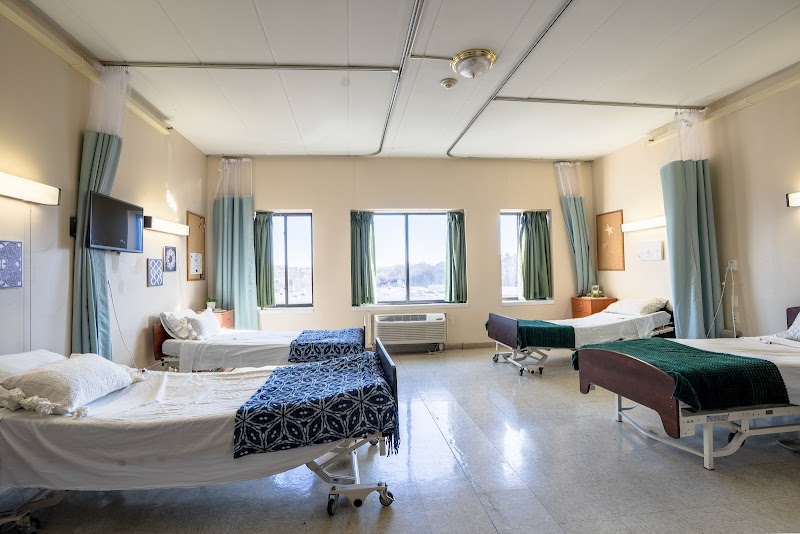
How is Gardens For Memory Care At Easton, The Staffed?

CMS rates GARDENS FOR MEMORY CARE AT EASTON, THE's staffing level at 4 out of 5 stars, which is above average compared to other nursing homes. Staff turnover is 40%, compared to the Pennsylvania average of 46%. This relatively stable workforce can support continuity of care.

What Have Inspectors Found at Gardens For Memory Care At Easton, The?

State health inspectors documented 7 deficiencies at GARDENS FOR MEMORY CARE AT EASTON, THE during 2023 to 2025. These included: 7 with potential for harm.
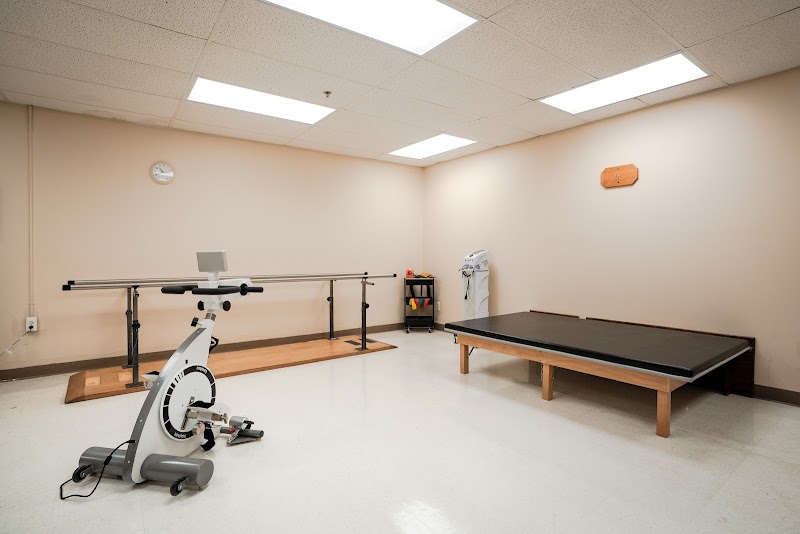
Who Owns and Operates Gardens For Memory Care At Easton, The?

GARDENS FOR MEMORY CARE AT EASTON, THE is owned by a for-profit company. For-profit facilities operate as businesses with obligations to shareholders or private owners. The facility is operated by PRIORITY HEALTHCARE GROUP, a chain that manages multiple nursing homes. With 115 certified beds and approximately 106 residents (about 92% occupancy), it is a mid-sized facility located in EASTON, Pennsylvania.
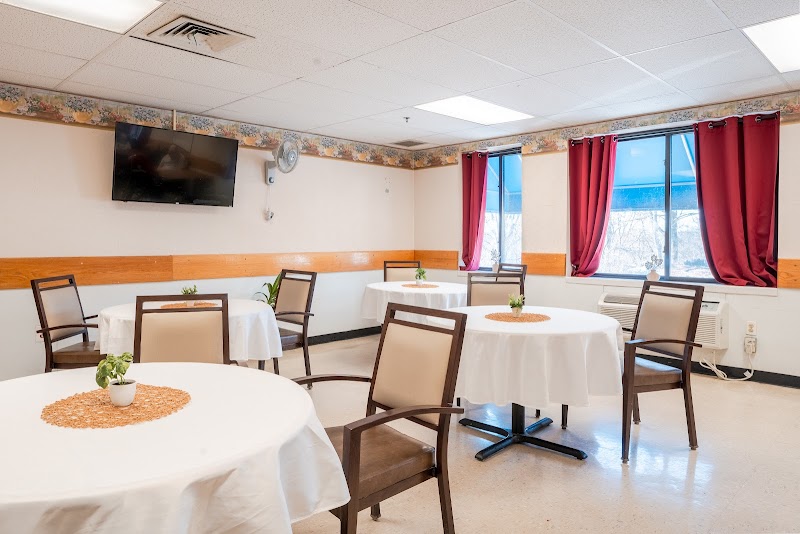
How Does Gardens For Memory Care At Easton, The Compare to Other Pennsylvania Nursing Homes?

Compared to the 100 nursing homes in Pennsylvania, GARDENS FOR MEMORY CARE AT EASTON, THE's overall rating (4 stars) is above the state average of 3.0, staff turnover (40%) is near the state average of 46%, and health inspection rating (4 stars) is above the national benchmark.

What Should Families Ask When Visiting Gardens For Memory Care At Easton, The?

Based on this facility's data, families visiting should ask: "Can I visit during a mealtime to observe dining assistance and food quality?" "How do you handle medical emergencies, and what is your hospital transfer rate?" "Can I speak with family members of current residents about their experience?"

Is Gardens For Memory Care At Easton, The Safe?

Based on CMS inspection data, GARDENS FOR MEMORY CARE AT EASTON, THE has a clean safety record: no substantiated abuse findings (meaning no confirmed cases of resident harm), no Immediate Jeopardy citations (the most serious violation level indicating risk of serious injury or death), and is not on the Special Focus Facility watch list (a federal program monitoring the lowest-performing 1% of nursing homes). The facility has a 4-star overall rating and ranks #1 of 100 nursing homes in Pennsylvania. While no facility is perfect, families should still ask about staff-to-resident ratios and recent inspection results during their visit.

Do Nurses at Gardens For Memory Care At Easton, The Stick Around?

GARDENS FOR MEMORY CARE AT EASTON, THE has a staff turnover rate of 40%, which is about average for Pennsylvania nursing homes (state average: 46%). Moderate turnover is common in nursing homes, but families should still ask about staff tenure and how the facility maintains care continuity when employees leave.

Was Gardens For Memory Care At Easton, The Ever Fined?

GARDENS FOR MEMORY CARE AT EASTON, THE has no federal fines on record. CMS issues fines when nursing homes fail to meet care standards or don't correct problems found during inspections. The absence of fines suggests the facility has either maintained compliance or corrected any issues before penalties were assessed. This is a positive indicator, though families should still review recent inspection reports for the full picture.

Is Gardens For Memory Care At Easton, The on Any Federal Watch List?

GARDENS FOR MEMORY CARE AT EASTON, THE is not on any federal watch list. The most significant is the Special Focus Facility (SFF) program, which identifies the bottom 1% of nursing homes nationally based on persistent, serious quality problems. Not being on this list means the facility has avoided the pattern of deficiencies that triggers enhanced federal oversight. This is a positive indicator, though families should still review the facility's inspection history directly.