SARAH REED SENIOR LIVING
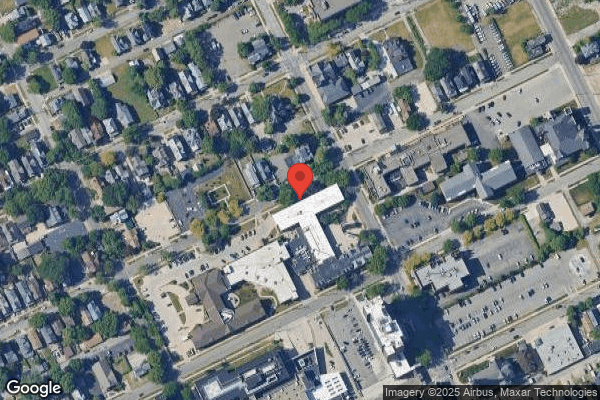

227 WEST 22ND STREET, ERIE, PA 16502 (814) 878-2600
Non profit - Corporation 106 Beds Independent Data: November 2025
Trust Grade
90/100
#118 of 653 in PA
Last Inspection: December 2024

Within standard 12-15 month inspection cycle. Federal law requires annual inspections.

Overview

Sarah Reed Senior Living in Erie, Pennsylvania, has received a Trust Grade of A, which indicates it is an excellent facility that is highly recommended for potential residents. Ranking #118 out of 653 in Pennsylvania places it in the top half of the state's nursing homes, while its county rank of #6 out of 18 shows it is one of the better options in the area. The facility is improving, with a significant reduction in issues from 9 in 2024 to just 1 in 2025. Staffing has a solid rating of 4 out of 5 stars, but the turnover rate is 54%, which is average for Pennsylvania. Although there have been no fines, which is a positive sign, there are concerns regarding RN coverage, as it is lower than 83% of state facilities. Specific incidents noted include failures to properly store food, with expired items found in the kitchen, and a lapse in weight monitoring for a resident, which could affect their health. Overall, while Sarah Reed Senior Living has strong points, families should be aware of these weaknesses as they make their decision.

Trust Score
A
90/100
In Pennsylvania
#118/653
Top 18%
Safety Record
Low Risk
No red flags
Inspections
Getting Better
9 → 1 violations
Staff Stability
⚠ Watch
54% turnover. Above average. Higher turnover means staff may not know residents' routines.
Penalties
✓ Good
No fines on record. Clean compliance history, better than most Pennsylvania facilities.
Skilled Nurses
○ Average
Each resident gets 32 minutes of Registered Nurse (RN) attention daily — about average for Pennsylvania. RNs are the most trained staff who monitor for health changes.
Violations
⚠ Watch
12 deficiencies on record. Higher than average. Multiple issues found across inspections.
★★★★★
5.0
Overall Rating
★★★★☆
4.0
Staff Levels
★★★★★
5.0
Care Quality
★★★★☆
4.0
Inspection Score
Stable
2024: 9 issues
2025: 1 issues

The Good

  • 4-Star Staffing Rating · Above-average nurse staffing levels
  • 5-Star Quality Measures · Strong clinical quality outcomes
  • Full Sprinkler Coverage · Fire safety systems throughout facility
  • No fines on record

Facility shows strength in staffing levels, quality measures, fire safety.

The Bad

Staff Turnover: 54%

Near Pennsylvania avg (46%)

Higher turnover may affect care consistency

The Ugly 12 deficiencies on record

Jun 2025 1 deficiency
CONCERN (D) 📢 Someone Reported This

A family member, employee, or ombudsman was alarmed enough to file a formal complaint

Potential for Harm - no one hurt, but risky conditions existed

Quality of Care (Tag F0684)

Could have caused harm · This affected 1 resident

**NOTE- TERMS IN BRACKETS HAVE BEEN EDITED TO PROTECT CONFIDENTIALITY** Based on review of facility policy and clinical records and staff interview, it was determined that the facility failed to obtai...

Read full inspector narrative →
**NOTE- TERMS IN BRACKETS HAVE BEEN EDITED TO PROTECT CONFIDENTIALITY** Based on review of facility policy and clinical records and staff interview, it was determined that the facility failed to obtain weights according to physician's orders for one of eight residents reviewed for weight loss. (Resident R1). Findings include: A facility policy last reviewed on 12/26/24, entitled Height and weight monitoring, directed that all residents were to be weighed by the 10th of each month. Review of Resident R1's clinical record revealed an admission date of 5/3/25, with diagnoses that included stroke, heart failure, and kidney failure. A physician's order dated 5/3/25, revealed that Resident R1 was to be weighed every day shift starting on the 1st and ending on the 10th every month. As of 6/12/25, review of Resident R1's clinical record revealed no documentation that the resident had been weighed as physician ordered since admission on [DATE]. During an interview on 6/12/25, at approximately 11:35 a.m., the Director of Nursing confirmed that Resident R1 had not been weighed since admission. 28 Pa. Code 211.12(d)(1)(2) Nursing services
Dec 2024 4 deficiencies
CONCERN (D)

Potential for Harm - no one hurt, but risky conditions existed

Deficiency F0655 (Tag F0655)

Could have caused harm · This affected 1 resident

**NOTE- TERMS IN BRACKETS HAVE BEEN EDITED TO PROTECT CONFIDENTIALITY** Based on review of facility policy, clinical records, and staff interview, it was determined that the facility failed to provide...

Read full inspector narrative →
**NOTE- TERMS IN BRACKETS HAVE BEEN EDITED TO PROTECT CONFIDENTIALITY** Based on review of facility policy, clinical records, and staff interview, it was determined that the facility failed to provide a written summary of the baseline care plan and order summary to the resident and/or representative for three of eight residents reviewed (Residents R8, R15, and R60). Findings include: A facility policy entitled, Care Plans dated 2/15/24, stated [NAME] will provide the resident and/or responsible party a copy of the baseline care plan at the new admission care plan meeting, which is typically held within 48 hours of admission. The provision of this will be documented on the New admission Care Plan summary sheet. In addition, the nursing staff will provide the resident/responsible person with: a. A summary of the resident's medications and dietary instructions b. Any services and treatments to be administered by [NAME] or its staff. Resident R8's clinical record revealed an admission date of 11/12/24, with diagnoses that included heart failure, atrial fibrillation (irregular heartbeat), and anxiety. Resident R8's clinical record lacked evidence that a written summary of the baseline care plan and order summary was provided to Resident R8 and/or his/her representative. Resident R15's clinical record revealed an admission date of 8/05/24, with diagnoses that included dementia (a disease that affects short term memory and the ability to think logically), osteoarthritis (a joint disease that causes tissues in the joint to break down over time which can cause stiffness in the joint), and hypothyroidism (a condition when the thyroid produces low amounts of thyroid hormones). Resident R15's clinical record lacked evidence that a written summary of the baseline care plan and order summary was provided to Resident R15 and/or his/her representative. Resident R60's clinical record revealed an admission date of 6/22/24, with diagnoses that included hypertension (high blood pressure), hypothyroidism, and congestive heart failure (the inability of the heart to maintain an adequate supply of blood to organs and tissues). Resident R60's clinical record lacked evidence that a written summary of the baseline care plan and order summary was provided to Resident R60 and/or his/her representative. During an interview on 12/11/24, at 12:30 p.m. the Nursing Home Administrator confirmed that the clinical records of Residents R8, R15, and R60 lacked evidence that a written summary of the baseline care plan and order summary were provided the resident and/or his/her representative upon admission to the facility. 28 Pa. Code 211.10(c) Resident care policies 28 Pa. Code 211.12(d)(3)(5) Nursing services
CONCERN (D)

Potential for Harm - no one hurt, but risky conditions existed

Deficiency F0688 (Tag F0688)

Could have caused harm · This affected 1 resident

Based on review of facility policies and clinical records, observations, and staff interviews, it was determined that the facility failed to ensure that a resident with limited range of motion receive...

Read full inspector narrative →
Based on review of facility policies and clinical records, observations, and staff interviews, it was determined that the facility failed to ensure that a resident with limited range of motion received physician ordered treatment and services to prevent further decrease in range of motion for one of two residents reviewed regarding range of motion (Resident R15). Findings include: Review of facility policy dated 2/15/24, entitled Range of Motion/Contracture Management indicated To increase flexibility and strength, also to prevent and/or decrease contractures. Review of facility policy dated 2/15/24, entitled Splinting indicated Splinting is used to protect joints and surrounding soft tissue. There must be a physician's order for splinting. Resident R15's admission record revealed an admission date of 8/05/24, with diagnoses that included dementia (a disease that affects short term memory and the ability to think logically), osteoarthritis (a joint disease that causes tissues in the joint to break down over time which can cause stiffness in the joint), and hypothyroidism (a condition when the thyroid produces low amounts of thyroid hormones). Resident R15's clinical record revealed a physician's order dated 9/07/24, that identified Left palm protector on at all times except hygiene per patient tolerance. Observations on 12/09/24, at 2:28 p.m. and at 3:10 p.m. revealed Resident R15 lying in bed with no palm protector (a soft round device placed in the palm of the hand to help with contractures and prevent fingers from pushing into the palm causing sores) to left hand. Observations on 12/10/24, at 8:04 a.m. and 10:00 a.m. revealed Resident R15 lying in bed with no palm protector to left hand. Observations on 12/11/24, at 11:35 a.m., at 11:55 a.m., and at 1:10 p.m. revealed Resident R15 lying in bed with no palm protector to left hand. Review of Resident R15's clinical record nursing progress notes lacked evidence that Resident R15 was not tolerating the palm protector. Review of Resident R15's therapy documentation dated 9/06/24, revealed that education was provided to staff upon occupational therapy discharge to make sure resident was wearing the palm protector daily. During an interview on 12/12/24, at 9:30 a.m. the Director of Therapy Employee E3 revealed that Resident R15's palm protector is considered a form of a splint. He/she also confirmed that Resident R15 should be wearing his/her palm protector daily per physician's orders. During an interview on 12/11/24, at 1:10 p.m. Restorative Nurse Employee E1 confirmed that Resident R15 did not have a palm protector on his/her left hand. Employee E1 also confirmed that Resident R15 should wear his/her palm protector daily per physician's orders. 28 Pa. Code 201.18 (b)(1) Management 28 Pa. Code 211.10 (d) Resident care policies 28 Pa. Code 211.12 (d)(1)(3)(5) Nursing services
CONCERN (D)

Potential for Harm - no one hurt, but risky conditions existed

Medication Errors (Tag F0758)

Could have caused harm · This affected 1 resident

Based on review of facility policy, clinical records, and staff interview, it was determined that the facility failed to have the required 14-day stop date or provide a clinical rationale for the cont...

Read full inspector narrative →
Based on review of facility policy, clinical records, and staff interview, it was determined that the facility failed to have the required 14-day stop date or provide a clinical rationale for the continued use of a PRN (as needed) psychotropic (affecting the mind) medication beyond 14 days for two of 21 residents reviewed (Residents R8 and R15). Findings include: A facility policy entitled Psychoactive Medication Policy dated 2/15/24, stated that Orders for psychotropic drugs are limited to 14 days. If the attending physician or prescribing practitioner believe that it is appropriate for the PRN order to be extended beyond 14 days, he or she should document their rationale in the resident's medical record and indicate the duration for the PRN order. PRN orders for anti-psychotic drugs are limited to 14 days and cannot be renewed unless the attending physician or prescribing practitioner evaluated the resident for appropriateness of the medication. Resident R8's clinical record revealed an admission date of 11/12/24, with diagnoses that included heart failure, atrial fibrillation (irregular heartbeat), and anxiety. A physician's order dated 11/12/24, identified to administer Lorazepam (anti-anxiety medication) 0.25 milliliters (ml) by mouth every 2 hours as needed for anxiety, and lacked the required stop date within 14 days or a clinical rationale for continued use beyond 14 days. Resident R15's clinical record revealed an admission date of 8/5/24, with diagnoses that included dementia (a disease that affects short term memory and the ability to think logically), osteoarthritis (a joint disease that causes tissues in the joint to break down over time which can cause stiffness in the joint), and hypothyroidism (a condition when the thyroid produces low amounts of thyroid hormones). A physician's order dated 11/15/24, identified to administer Lorazepam 0.25 milligrams (mg) by mouth every 12 hours as needed for anxiety, and lacked the required stop date within 14 days or a clinical rationale for continued use beyond 14 days. During an interview on 12/11/24, at 12:08 p.m. the Nursing Home Administrator confirmed that Resident R8 and Resident R15's Lorazepam orders lacked the required stop date within 14 days or a clinical rationale for continued use beyond 14 days. 28 Pa. Code 211.12(d)(1)(3)(5) Nursing services
CONCERN (D)

Potential for Harm - no one hurt, but risky conditions existed

Deficiency F0761 (Tag F0761)

Could have caused harm · This affected 1 resident

**NOTE- TERMS IN BRACKETS HAVE BEEN EDITED TO PROTECT CONFIDENTIALITY** Based on review of facility policy, manufacturer's recommendations, observations, and staff interview, it was determined that th...

Read full inspector narrative →
**NOTE- TERMS IN BRACKETS HAVE BEEN EDITED TO PROTECT CONFIDENTIALITY** Based on review of facility policy, manufacturer's recommendations, observations, and staff interview, it was determined that the facility failed to ensure an expired medication was discarded in a timely manner and failed to ensure that a medication was properly dated when opened in one of three medication carts reviewed ([NAME] medication cart). Findings include: Review of a facility policy entitled Medication Storage in the Facility dated [DATE], indicated Medications and biologicals are stored safely, securely, and properly, following manufacturer's recommendations or those of the supplier. Insulin vials are stored in the refrigerator until opened. Then dated and placed in the med cart once opened. Manufacturer's recommendations for Humalog insulin (a fast-acting insulin used to manage blood sugar levels in people with diabetes), indicated that after opened, vials and pre-filled pens should be discarded after 28 days. Manufacturer's recommendations for Lantus insulin (a long-acting insulin used to manage blood sugar levels in people with diabetes), indicated that after opened, vials and pre-filled pens should be discarded after 28 days. Observations of drug storage on [DATE], at approximately 3:33 p.m. of the [NAME] medication cart revealed Humalog insulin with an opened date of [DATE], and an opened Lantus insulin without an open date. During an interview at that time, Registered Nurse Employee E2 confirmed that the Humalog insulins opened date was past 28 days, therefore the expired medication should have been discarded, and that the open Lantus insulin lacked an open date, therefore the staff were unable to determine the discard date. 28 Pa. Code 211.9(a)(1) Pharmacy services 28 Pa. Code 211.12(d)(1)(3)(5) Nursing services
Jun 2024 1 deficiency
CONCERN (E) 📢 Someone Reported This

A family member, employee, or ombudsman was alarmed enough to file a formal complaint

Potential for Harm - no one hurt, but risky conditions existed

Food Safety (Tag F0812)

Could have caused harm · This affected multiple residents

Based on review of facility policy, observations, and staff interview, it was determined that the facility failed to ensure that food was stored in accordance with standards for food safety in one of ...

Read full inspector narrative →
Based on review of facility policy, observations, and staff interview, it was determined that the facility failed to ensure that food was stored in accordance with standards for food safety in one of two walk-in coolers and one of one dry storage areas reviewed in the kitchen. Findings include: Review of facility policy entitled Proper Storage of Fresh, Frozen, Leftover and Opened Food Products dated 2/6/24, indicated If a product is found that is past the use-by date, it is to be disposed of in a proper manner. Another policy entitled Food From Outside Sources dated 2/6/24, indicated unconsumed food will be disposed of consistent with the manufacturing guidelines, food labels . Observation of the kitchen areas on 6/5/24, at 10:10 a.m. revealed an open partially used container of pasta salad in the cooler with a use-by date of 5/30/24, observations in the dry storage area revealed eight cans of pureed ham with an expiration date of March 2024, one open gallon jug of molasses with a use-by date of 10/13/23, and two tubs of baking soda with an expiration date of 5/31/24. During an interview with the Dietary Manager on 6/5/24, at the time of the observations, he/she confirmed that the open container of pasta salad, eight cans of pureed ham, one open gallon of molasses, and two tubs of baking soda were beyond their use-by date and/or expiration dates. He/she also confirmed that the items should have been discarded by their use-by dates and/or expiration dates. 28 Pa. Code 201.14(a) Responsibility of licensee 28 Pa. Code 201.18(b)(1) Management
Mar 2024 4 deficiencies
CONCERN (D)

Potential for Harm - no one hurt, but risky conditions existed

Deficiency F0661 (Tag F0661)

Could have caused harm · This affected 1 resident

Based on review of facility policies, clinical record review and staff interview, it was determined that the facility failed to ensure that a discharge summary, which included a recapitulation of the ...

Read full inspector narrative →
Based on review of facility policies, clinical record review and staff interview, it was determined that the facility failed to ensure that a discharge summary, which included a recapitulation of the resident's stay and the resident's discharge status, physician's final diagnosis and prognosis or cause of death was completed for three of three closed clinical records reviewed (Residents CR94, CR95, and CR96). Findings include: A facility policy last reviewed 2/15/24, entitled Discharge Policy and Procedure indicated that a recapitulation of the resident's stay, a final summary of the resident's status and the disposition of medications would be part of the interdisciplinary summary discharge summary. A facility policy entitled Closed Record Policy dated 2/06/24, indicated that an interdisciplinary discharge summary is to be completed on all discharges from the facility by each member of the interdisciplinary team (IDT) and include: a short summary of resident's stay; final summary of resident status; disposition of medications; IDT on current caseload to sign off with specific instructions; physician's discharge prognosis, discharge diagnosis, cause of death, physician's signature- as applicable; and the summary goes to medical records with the chart. Resident CR94's closed clinical record revealed an admission date of 12/25/23, with diagnoses that included diabetes (condition related to inadequate insulin and high blood sugars), high blood pressure and heart disease. Resident CR94's clinical record revealed the resident was discharged from the facility on 1/2/24. Further review of Resident CR94's clinical record, lacked evidence of a discharge summary having been completed which included a recapitulation of the resident's stay and a final summary of the resident's status. During interview on 3/22/24, at 10:10 a.m. the Director of Nursing (DON) confirmed that Resident CR94's closed clinical records lacked evidence of a discharge summary being completed. Resident CR96's closed clinical record revealed an admission date of 1/07/24, with diagnoses including a broken rib, altered mental status, cognitive communication deficit, and difficulty speaking. Departmental progress notes revealed that Resident CR96 ceased to breath on 2/13/24, at the facility. Resident CR96's closed clinical record revealed that the physician's discharge summary was incomplete and did not include a cause of death. Resident CR95's closed clinical record revealed an admission date of 2/14/24, with diagnoses including dyspnea (shortness of breath), surgery on the circulatory system, and acquired absence of lung. Departmental progress notes revealed that Resident CR95 discharged from the facility on 2/14/24. Resident CR95's closed clinical record revealed that the physician's discharge summary was incomplete and did not include a recapitulation of stay or reason for discharge. During an interview on 3/22/24, at 11:05 a.m. the DON confirmed that Resident CR96's physician's discharge summary was incomplete and did not include the cause of death and that Resident CR95's discharge summary was incomplete and did not include a recapitulation of stay or reason for discharge from the facility. 28 Pa. Code 211.5(d)(f)(xi) Medical records
CONCERN (D)

Potential for Harm - no one hurt, but risky conditions existed

Drug Regimen Review (Tag F0756)

Could have caused harm · This affected 1 resident

Based on review of facility policy and clinical records, and staff interview, it was determined that the facility failed to ensure that the contracted pharmacist provided separate, written reports of ...

Read full inspector narrative →
Based on review of facility policy and clinical records, and staff interview, it was determined that the facility failed to ensure that the contracted pharmacist provided separate, written reports of irregularities identified during the medication regimen review (MRR) for one of five residents reviewed for unnecessary medications (Resident R49). Findings include: A facility policy entitled, Medication Regimen Review and Reporting dated 2/06/24, indicated that findings/recommendations of interim (routine interval) MRR are communicated to the Director of Nursing (DON) or designee and medical director, and that the findings are documented and filed with other consultant pharmacist recommendations in the resident's chart. Resident R49's clinical record revealed an admission date of 3/12/18, with diagnoses including left-sided paralysis post stroke, Type 2 Diabetes (condition of improper insulin levels and blood sugar control), heart failure, irregular heartbeat, and dementia. Resident R49's progress notes revealed MRR's were completed monthly and lacked evidence that documented findings/recommendations/irregularities were communicated to the DON or designee and medical director, and filed with other consultant pharmacist recommendations in the resident's chart. During an interview on 3/21/24, at 12:38 p.m. the DON confirmed there was no evidence that the pharmacist provided irregularities on a separate, written report sent to the medical director and DON for Resident R49. 28 Pa. Code 211.12(d)(1)(3)(5) Nursing services
CONCERN (D)

Potential for Harm - no one hurt, but risky conditions existed

Medication Errors (Tag F0758)

Could have caused harm · This affected 1 resident

Based on review of facility policy and clinical records, and staff interviews, it was determined that the facility failed to provide a clinical rationale and duration for the continued use of a PRN (a...

Read full inspector narrative →
Based on review of facility policy and clinical records, and staff interviews, it was determined that the facility failed to provide a clinical rationale and duration for the continued use of a PRN (as needed) psychotropic (affecting the mind) medication beyond 14 days for two of five residents reviewed (Residents R34 and R50). Findings include: A facility policy entitled Psychotropic Medication Policy dated 2/6/24, indicated that, PRN orders for psychotropic drugs are limited to 14 days. The attending physician or prescriber may extend the order beyond 14 days if he/she believes the order is appropriate. The prescriber must document the rational and duration when extending the order. PRN orders for anti-psychotic drugs are limited to 14 days and cannot be renewed unless the attending physician or prescribing practitioner evaluates the resident. Review of Resident R34's clinical record revealed an admission date of 2/23/23, with diagnoses that included dementia (a disease that affects short term memory and the ability to think logically), anxiety disorder (a disorder that causes a person to be nervous, uneasy, or worried about something or someone), and hypertension (high blood pressure). Review of Resident R34's clinical record revealed a physician's order to administer Lorazepam (anti-anxiety medication), 0.5 milligrams (mg) by mouth every 24 hours PRN for anxiety and lacked the required stop date within 14 days or a clinical rationale for continued use beyond 14 days. Review of a pharmacy recommendation form revealed an order for Lorazepam 0.5 mg every 24 hours PRN which lacked a rational and a duration for the medication. Review of Resident R50's clinical record revealed an admission date of 1/22/24, with diagnoses that included, dementia, hypertension, and traumatic brain injury (a serious condition that affects the brain's function because of a sudden impact or penetration to the head). Review of Resident R50's clinical record revealed a physician's order dated 2/9/24, to administer Lorazepam 0.5 mg by mouth every four hours PRN for anxiety and lacked the required stop date within 14 days or a clinical rationale for continued use beyond 14 days. Further review of Resident R50's clinical record revealed a physician's order dated 2/9/24, to administer Haloperidol (anti-psychotic) 0.5 mg by mouth every four hours PRN for agitation and lacked evidence that the resident was evaluated by the attending physician or prescribing practitioner. There also lacked the required stop date within 14 days or a clinical rationale for continued use beyond 14 days. During an interview on 3/21/24, at 12:54 p.m. the Nursing Home Administrator and Employee E1 confirmed that Resident R34's Lorazepam order and Resident R50's Lorazepam and Haloperidol orders lacked the required stop date within 14 days or a clinical rationale for continued use beyond 14 days. They also confirmed that Resident R50 was not evaluated by the attending physician or prescribing practitioner for the continuation of an anti-psychotic medication. 28 Pa. Code 211.10(c)(d) Resident care policies 28 Pa. Code 211.12(d)(1)(3)(5) Nursing services
CONCERN (E)

Potential for Harm - no one hurt, but risky conditions existed

Food Safety (Tag F0812)

Could have caused harm · This affected multiple residents

Based on review of facility policy, observations, and staff interview, it was determined that the facility failed to ensure that food was stored in accordance with standards for food safety and sanita...

Read full inspector narrative →
Based on review of facility policy, observations, and staff interview, it was determined that the facility failed to ensure that food was stored in accordance with standards for food safety and sanitation in the walk-in freezer located in the main kitchen. Findings include: Review of the facility policy entitled, Refrigerated And Frozen Storage dated 2/6/2024, indicated that, The Food Service Department shall receive all food products in a manner that assures safety and quality of food products. All food items shall be placed on shelves and not on floor of refrigerator or freezer. Observations made during the initial kitchen tour on 3/19/2024, at approximately 11:00 a.m. revealed that there were several food items on the floor in the walk-in freezer located in the main kitchen. Interview conducted with the Food Service Director at that time confirmed the food items should not be on the floor in the walk-in freezer. 28 Pa. Code 211.6(f) Dietary services 28 Pa. Code 201.14(a) Responsibility of licensee 28 Pa. Code 201.18(b)(1) Management
May 2023 2 deficiencies
CONCERN (D)

Potential for Harm - no one hurt, but risky conditions existed

Assessment Accuracy (Tag F0641)

Could have caused harm · This affected 1 resident

Based on review of the Long Term Care Facility Resident Assessment Instrument 3.0 User's Manual 2019 (RAI-assessment guide used to plan the provision of care for residents), clinical records and staff...

Read full inspector narrative →
Based on review of the Long Term Care Facility Resident Assessment Instrument 3.0 User's Manual 2019 (RAI-assessment guide used to plan the provision of care for residents), clinical records and staff interviews, it was determined that the facility failed to ensure that the Minimum Data Set (MDS-federally mandated standardized assessment conducted at specific intervals to plan resident care) assessment accurately reflected the status for one of 19 residents reviewed (Resident R90) Findings include: Review of the RAI manual instructions for Section M0300D1 Stage 4 Pressure Ulcers identified to code the number of currently present and whose deepest anatomical stage is a Stage 4. Review of Resident R90's clinical record revealed an admission date of 9/22/22, with diagnoses that included Gullain Barre Syndrome (disorder in which the body's immune system attacks the nerves), pressure ulcer of the left buttock Stage 3 (full-thickness skin loss), pressure ulcer of sacral region Stage 4 (full-thickness skin loss extending through the muscle, tendon, or bone) and high blood pressure. Review of Resident R90's Quarterly MDS with an Assessment Reference Date (ARD) of 2/14/23, revealed that it was coded as having one Stage 3 pressure ulcer. Clinical record documentation from a wound consultant company dated 11/30/22 and 12/14/22, both revealed the presence of a Stage 3 pressure ulcer to the ischial tuberosity. Additional notes also on the following dates 11/30/22, 12/14/22, 12/29/22, and that continued weekly until 3/22/23, all revealed a Stage 4 pressure ulcer to the sacrum. Clinical record documentation entitled Weekly Wound Nurse Observation dated 1/02/23 through 3/20/23, all indicated a Stage 3 pressure ulcer to the coccyx. Resident R90's MDS with an ARD of 2/14/23, revealed under section M0300D1 as 0 for Stage 4 pressure ulcers. During an interview on 5/25/23, at 1:00 p.m. Registered Nurse Assessment Coordinator Employee E3 confirmed that Resident R90's 2/14/23, MDS was coded that Resident R90 had a Stage 3 pressure ulcer. 28 Pa. Code 201.14(a) Responsibility of licensee 28 Pa. Code 211.5(f) Clinical Records
CONCERN (D)

Potential for Harm - no one hurt, but risky conditions existed

Deficiency F0761 (Tag F0761)

Could have caused harm · This affected 1 resident

**NOTE- TERMS IN BRACKETS HAVE BEEN EDITED TO PROTECT CONFIDENTIALITY** Based on review of facility policy and manufacturer's instructions, observation, and staff interviews it was determined that the...

Read full inspector narrative →
**NOTE- TERMS IN BRACKETS HAVE BEEN EDITED TO PROTECT CONFIDENTIALITY** Based on review of facility policy and manufacturer's instructions, observation, and staff interviews it was determined that the facility failed to properly administer resident medications for one of 19 residents (Resident R38) and discard multi-dose vial of tuberculin (antigen used to detect tuberculosis) within the use by timeframe for one of four medication storage rooms observed ([NAME]) Findings include: Review of facility policy dated 2/16/23, entitled Medication Administration Injectable Vials and Amples indicated multi-dose medications must be dated when opened for determination of discard date based on manufacturer's instructions. Review of facility policy dated 2/16/23, entitled Medication Administration General Guidelines indicated that Medications are to be administered at the time they are prepared. The policy further indicated that The resident is always observed after administration to ensure that the dose was completely ingested. Review of manufacturer's instructions for the Tuberculin multi-dose vial directed that once open, they were to be used within 30-days, then discarded. Observation of Resident R38's room on 5/23/23, at 12:15 p.m. revealed a medication cup filled with multiple unknown medications sitting on the resident's bedside tray table. Review of Resident R38's admission record revealed an admission date of 10/05/18, with diagnoses that included heart disease, chronic kidney disease and diabetes. A Self Administration of Medication assessment dated [DATE], indicated that Resident R38 was not capable of self administering medications. During an interview on 5/23/23, at 12:20 p.m. Registered Nurse Supervisor Employee E2 confirmed that Resident R38's medications should not have been left alone in the room for the resident. Observation of the [NAME] unit medication room on 5/24/23, at 1:35 p.m. revealed a Tuberculin multi-dose bottle was open, dated for 2/13/2023, with a discard date of 3/13/23, or 72-days past the open date. During an interview at the time of observation, Licensed Practical Nurse Employee E1 confirmed that the multi-dose tuberculin vial was past the expiration date. 28 Pa. Code 201.14(a) Responsibility of licensee 28 Pa. Code 211.9(a)(1) Pharmacy services 28 Pa. Code 211.10(c) Resident care policies
Understanding Severity Codes (click to expand)
Life-Threatening (Immediate Jeopardy)
J - Isolated K - Pattern L - Widespread
Actual Harm
G - Isolated H - Pattern I - Widespread
Potential for Harm
D - Isolated E - Pattern F - Widespread
No Harm (Minor)
A - Isolated B - Pattern C - Widespread

Questions to Ask on Your Visit

  • "Can I speak with families of current residents?"
  • "What's your RN coverage like on weekends and overnight?"

Our Honest Assessment

Strengths
  • • Grade A (90/100). Above average facility, better than most options in Pennsylvania.
  • • No major safety red flags. No abuse findings, life-threatening violations, or SFF status.
  • • No fines on record. Clean compliance history, better than most Pennsylvania facilities.
Concerns
  • • 12 deficiencies on record. Higher than average. Multiple issues found across inspections.
Bottom line: Generally positive indicators. Standard due diligence and a personal visit recommended.

About This Facility

What is Sarah Reed Senior Living's CMS Rating?

CMS assigns SARAH REED SENIOR LIVING an overall rating of 5 out of 5 stars, which is considered much above average nationally. Within Pennsylvania, this rating places the facility higher than 99% of the state's 100 nursing homes. This rating reflects solid performance across the metrics CMS uses to evaluate nursing home quality.

How is Sarah Reed Senior Living Staffed?

CMS rates SARAH REED SENIOR LIVING's staffing level at 4 out of 5 stars, which is above average compared to other nursing homes. Staff turnover is 54%, compared to the Pennsylvania average of 46%.

What Have Inspectors Found at Sarah Reed Senior Living?

State health inspectors documented 12 deficiencies at SARAH REED SENIOR LIVING during 2023 to 2025. These included: 12 with potential for harm.

Who Owns and Operates Sarah Reed Senior Living?

SARAH REED SENIOR LIVING is owned by a non-profit organization. Non-profit facilities reinvest revenue into operations rather than distributing to shareholders. The facility operates independently rather than as part of a larger chain. With 106 certified beds and approximately 101 residents (about 95% occupancy), it is a mid-sized facility located in ERIE, Pennsylvania.
How Does Sarah Reed Senior Living Compare to Other Pennsylvania Nursing Homes?

Compared to the 100 nursing homes in Pennsylvania, SARAH REED SENIOR LIVING's overall rating (5 stars) is above the state average of 3.0, staff turnover (54%) is near the state average of 46%, and health inspection rating (4 stars) is above the national benchmark.

What Should Families Ask When Visiting Sarah Reed Senior Living?

Based on this facility's data, families visiting should ask: "Can I visit during a mealtime to observe dining assistance and food quality?" "How do you handle medical emergencies, and what is your hospital transfer rate?" "Can I speak with family members of current residents about their experience?"

Is Sarah Reed Senior Living Safe?

Based on CMS inspection data, SARAH REED SENIOR LIVING has a clean safety record: no substantiated abuse findings (meaning no confirmed cases of resident harm), no Immediate Jeopardy citations (the most serious violation level indicating risk of serious injury or death), and is not on the Special Focus Facility watch list (a federal program monitoring the lowest-performing 1% of nursing homes). The facility has a 5-star overall rating and ranks #1 of 100 nursing homes in Pennsylvania. While no facility is perfect, families should still ask about staff-to-resident ratios and recent inspection results during their visit.

Do Nurses at Sarah Reed Senior Living Stick Around?

SARAH REED SENIOR LIVING has a staff turnover rate of 54%, which is 8 percentage points above the Pennsylvania average of 46%. Moderate turnover is common in nursing homes, but families should still ask about staff tenure and how the facility maintains care continuity when employees leave.

Was Sarah Reed Senior Living Ever Fined?

SARAH REED SENIOR LIVING has no federal fines on record. CMS issues fines when nursing homes fail to meet care standards or don't correct problems found during inspections. The absence of fines suggests the facility has either maintained compliance or corrected any issues before penalties were assessed. This is a positive indicator, though families should still review recent inspection reports for the full picture.

Is Sarah Reed Senior Living on Any Federal Watch List?

SARAH REED SENIOR LIVING is not on any federal watch list. The most significant is the Special Focus Facility (SFF) program, which identifies the bottom 1% of nursing homes nationally based on persistent, serious quality problems. Not being on this list means the facility has avoided the pattern of deficiencies that triggers enhanced federal oversight. This is a positive indicator, though families should still review the facility's inspection history directly.