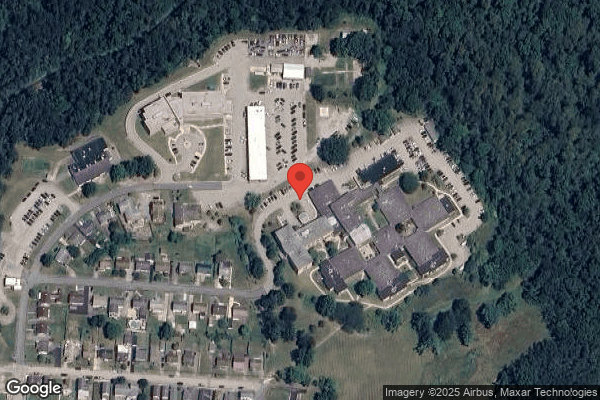

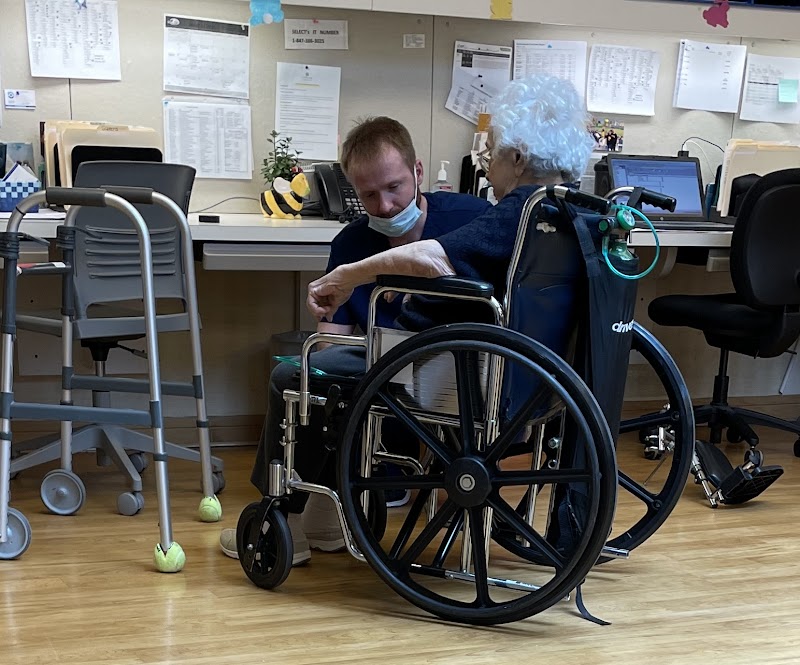
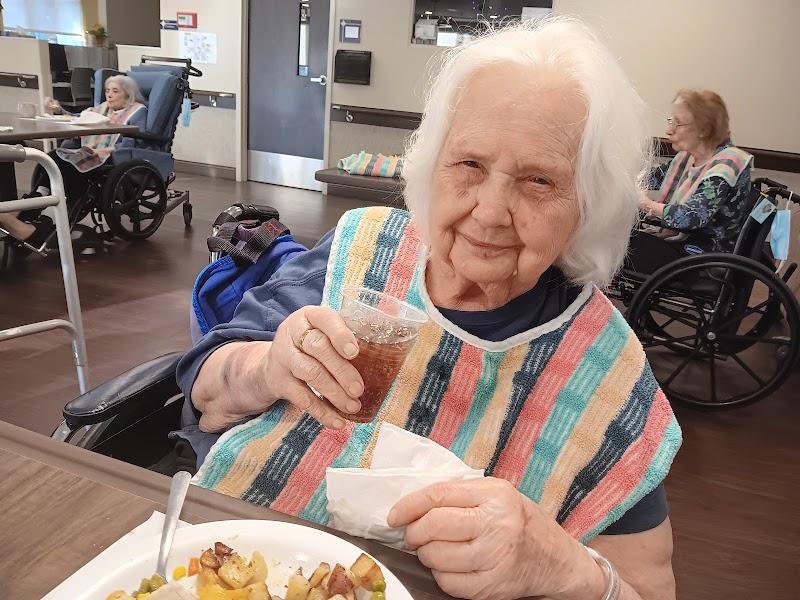
Saint Anne Home

685 ANGELA DRIVE, GREENSBURG, PA 15601 (724) 837-6070
Non profit - Corporation 155 Beds FELICIAN SERVICES Data: November 2025 1 Immediate Jeopardy citation
Trust Grade
3/100
#637 of 653 in PA
Last Inspection: June 2025

Inspected within the last 6 months. Data reflects current conditions.

Overview

Saint Anne Home in Greensburg, Pennsylvania has received a Trust Grade of F, indicating significant concerns about the quality of care provided. Ranking #637 out of 653 facilities in Pennsylvania places it in the bottom half, and #16 out of 18 in Westmoreland County shows that there are only a couple of better options nearby. However, the facility is improving, reducing issues from 32 in 2024 to 13 in 2025, which is a positive trend. Staffing is relatively strong with a 4/5 star rating, but the turnover rate is 47%, which is average for the state. Unfortunately, the home has concerning fines totaling $39,719, indicating compliance problems, and it has less RN coverage than 97% of Pennsylvania facilities, which means there may be gaps in oversight. Specific incidents raised during inspections include that hot liquids were served at unsafe temperatures, resulting in burns for some residents, and a resident was incorrectly transferred, leading to a fracture. Additionally, residents reported that food was not served at proper temperatures, affecting its palatability. While there are strengths in staffing and improvements being made, families should weigh these serious issues when considering this home for their loved ones.

Trust Score
F
3/100
In Pennsylvania
#637/653
Bottom 3%
Safety Record
High Risk
Review needed
Inspections
Getting Better
32 → 13 violations
Staff Stability
⚠ Watch
47% turnover. Above average. Higher turnover means staff may not know residents' routines.
Penalties
✓ Good
$39,719 in fines. Lower than most Pennsylvania facilities. Relatively clean record.
Skilled Nurses
⚠ Watch
Each resident gets only 22 minutes of Registered Nurse (RN) attention daily — below average for Pennsylvania. Fewer RN minutes means fewer trained eyes watching for problems.
Violations
⚠ Watch
61 deficiencies on record. Higher than average. Multiple issues found across inspections.
★☆☆☆☆
1.0
Overall Rating
★★★★☆
4.0
Staff Levels
★★★☆☆
3.0
Care Quality
★☆☆☆☆
1.0
Inspection Score
Stable
2024: 32 issues
2025: 13 issues

The Good

  • 4-Star Staffing Rating · Above-average nurse staffing levels
  • Full Sprinkler Coverage · Fire safety systems throughout facility
  • No fines on record

Facility shows strength in staffing levels, fire safety.

The Bad

1-Star Overall Rating

Below Pennsylvania average (3.0)

Significant quality concerns identified by CMS

Staff Turnover: 47%

Near Pennsylvania avg (46%)

Higher turnover may affect care consistency

Federal Fines: $39,719

Above median ($33,413)

Moderate penalties - review what triggered them

Chain: FELICIAN SERVICES

Part of a multi-facility chain

Ask about local staffing decisions and management

The Ugly 61 deficiencies on record

1 life-threatening 1 actual harm
Jun 2025 12 deficiencies
CONCERN (D)

Potential for Harm - no one hurt, but risky conditions existed

Deficiency F0583 (Tag F0583)

Could have caused harm · This affected 1 resident

Based on review of policies, as well as observations and staff interviews, it was determined that the facility failed to provide confidentiality of residents' personal health information during medica...

Read full inspector narrative →
Based on review of policies, as well as observations and staff interviews, it was determined that the facility failed to provide confidentiality of residents' personal health information during medication administration for one of 51 residents reviewed (Resident 89). Findings include: The facility policy regarding privacy of health information, dated October 10, 2024, indicated that the resident's health information needs to remain private. Observations during medication administration on June 25, 2025, at 9:16 a.m. revealed that Licensed Practical Nurse 1 walked away from the medication cart to assist Resident 89 to his room to administer his medication. Resident 89's personal health information was visible on the computer screen, which was facing the dining room with residents present. Interview with Licensed Practical Nurse 1 on June 25, 2025, at 9:33 a.m. confirmed that she should have covered the residents' personal information when leaving the medication cart by securing the computer screen. Interview with the Quality Assurance and Performance Improvement Registered Nurse on June 25, 2025, at 11:48 a.m. confirmed that the computer screen with Resident 89's personal health information should have been covered when the nurse was not attending the medication cart. 28 Pa. Code 211.5(b) Clinical Records.
CONCERN (D)

Potential for Harm - no one hurt, but risky conditions existed

Assessment Accuracy (Tag F0641)

Could have caused harm · This affected 1 resident

Based on a review of the Resident Assessment Instrument User's Manual and clinical records, as well as staff interviews, it was determined that the facility failed to complete accurate Minimum Data Se...

Read full inspector narrative →
Based on a review of the Resident Assessment Instrument User's Manual and clinical records, as well as staff interviews, it was determined that the facility failed to complete accurate Minimum Data Set (MDS) assessments for three of 51 residents reviewed (Residents 12, 27, 46). Findings include: The Long-Term Care Facility Resident Assessment Instrument (RAI) User's Manual, which gives instructions for completing Minimum Data Set (MDS) assessments (required assessments of a resident's abilities and care needs), dated October 2024, revealed that Section N0415K Anticonvulsant was to be coded if the resident took the medication during the seven-day look-back period. A quarterly MDS assessment for Resident 12, dated June 9, 2025, revealed that the resident was cognitively intact, required assistance from staff for daily care needs, and had medical diagnoses that included bipolar and schizophrenia (mood disorders). Section N0415K of the MDS indicated that the resident did not receive anticonvulsant medication. However, physician's orders for Resident 12, dated July 20, 2024, included orders for the resident to receive 250 mg of Divalproex (anticonvulsant) twice a day, and a review of the resident's June 2025 Medication Administration Record (MAR) revealed that the resident received Divalproex twice a day for the seven-day look-back period. Interview with the Quality Assurance and Performance Improvement Registered Nurse on June 26, 2025, at 9:14 a.m. confirmed that the Resident 12's MDS assessment was coded inaccurately, and that the resident did receive anticonvulsants during the look-back period. The Long-Term Care Facility RAI User's Manual, dated October 2024, indicated that Section B0700 (make self-understood) should be coded with either clearly understood, usually understood, sometimes understood, or rarely/never understood. Section C0100 (should brief interview for mental status be conducted) should be completed if the resident is at least sometimes understood verbally, in writing, or using another method. Section C0100 was to be coded No (0) or Yes (1) to determine whether a Brief Interview for Mental Status (BIMS) (an assessment to determine a resident's cognitive status) should be attempted with the resident. The instructions for determining if a BIMS interview should be attempted indicated that if the resident was at least sometimes understood (verbally or in writing) then the BIMS interview was to be attempted with the resident and coded in Sections C0200 through C0500. If the resident was rarely/never understood, then the BIMS interview was not to be attempted, and a Staff Assessment of Mental Status was to be completed instead and coded in Sections C0600 through C1000. A significant change in status MDS assessment for Resident 27, dated May 7, 2025, indicated that the resident was sometimes understood and sometimes understands. However, Section C0100 was coded (0) No, indicating that the resident was rarely/never understood by others, and a BIMS interview was not attempted with the resident. Interview with the Quality Assurance and Performance Improvement Registered Nurse on June 26, 2025, at 11:11 a.m. confirmed that a BIMS interview should have been attempted with Resident 27. The RAI User's Manual, dated October 2024, revealed that Section N0415F1 (Antibiotics) was to be checked if the resident received an antibiotic during the seven-day assessment period; Section N0415I1 (Antiplatelet Medications) was to be checked if the resident received an antiplatelet medication during the seven-day assessment period; and Section O0110O1 was to be checked if the resident had IV (intravenous) access in the past 14 days. Physician's orders for Resident 46, dated June 6, 2025, included an order for the resident to receive 81 mg of aspirin one time a day related to coronary artery disease and 500 mg of cephalexin (antibiotic) twice a day for five days for a urinary tract infection. Physician's orders, dated June 8, 2025, included orders for the resident to have her IV port flushed with 10 milliliters (mL) of 0.9 percent Sodium Chloride (sterile salt water) every shift and before and after medication administration. The resident's MAR for 2025 revealed that the resident received aspirin every day from June 7 through 12, 2025; received Cephalexin twice day from June 6 through 11, 2025; and had her IV flushed with Sodium Chloride every shift from June 8 through 11, 2025. A significant change MDS assessment for Resident 46, dated June 17, 2025, revealed that Section N0415I1 was not checked, indicating that the resident did not receive any antiplatelet medications during the seven days of the assessment period; Section N0415F1 was not checked, indicating that the resident did not receive any antibiotic medications during the seven days of the assessment period; and Section O0110O1 was not checked, indicating that the resident did not have IV access in the past 14 days. Interview with the RNAC on June 26, 2025, at 9:14 a.m. confirmed that Resident 46's significant change MDS assessment was coded incorrectly. 28 Pa. Code 211.5(f) Clinical records.
CONCERN (D)

Potential for Harm - no one hurt, but risky conditions existed

Pharmacy Services (Tag F0755)

Could have caused harm · This affected 1 resident

Based on review of facility policies and clinical records, as well as staff interviews, it was determined that the facility failed to maintain accountability for controlled medications (drugs with the...

Read full inspector narrative →
Based on review of facility policies and clinical records, as well as staff interviews, it was determined that the facility failed to maintain accountability for controlled medications (drugs with the potential to be abused) for one of 51 residents reviewed (Resident 89). Findings include: A facility policy regarding medication administration, dated October 10, 2024, indicated that the individual administering the medication will initial the resident's Medication Administration Record (MAR) on the appropriate line after giving each medication and before administering the next ones. A quarterly Minimum Data Set (MDS) assessment (a mandated assessment of a resident's abilities and care needs) for Resident 89, dated June 2, 2025, revealed that the resident was cognitively intact, required assistance with daily care needs, and had medical diagnoses that included heart failure and high blood pressure. Physician's orders for Resident 89, dated August 18, 2025, included orders for the resident to receive 50 milligrams (mg) of Tramadol (opioid medication) every six hours for pain. Review of Resident 89's MAR for May 2025 revealed that one 50 mg tablet of Tramadol was signed-out for administration to the resident on May 1 at 8:00 p.m., May 2 at 8:00 p.m., May 8 at 3:00 p.m., May 13 at 8:00 p.m., May 14 at 8:00 p.m., and May 31 at 5:00 p.m. However, the resident's MAR and clinical record contained no documented evidence that the signed-out tablets of Tramadol were administered to the resident on these dates. Interview with the Quality Assurance and Performance Improvement Registered Nurse on June 26, 2025, at 9:14 a.m. confirmed that there was no documented evidence that staff administered the controlled drugs to Resident 89 on the dates mentioned above. 28 Pa. Code 211.9(a)(1) Pharmacy Services. 28 Pa. Code 211.12(d)(1)(3)(5) Nursing Services.
CONCERN (D)

Potential for Harm - no one hurt, but risky conditions existed

Unnecessary Medications (Tag F0759)

Could have caused harm · This affected 1 resident

Based on review of manufacturer's instructions and clinical records, as well as observations and staff interviews, it was determined that the facility failed to maintain a medication administration er...

Read full inspector narrative →
Based on review of manufacturer's instructions and clinical records, as well as observations and staff interviews, it was determined that the facility failed to maintain a medication administration error rate of less than five percent. Findings include: Observations during medication administration on June 25, 2025, revealed that two medication administration errors were made during 35 opportunities for error, resulting in a medication administration error rate of 5.71 percent. Current manufacturer's directions for use of Metoprolol Extended Release (ER) (used to treat high blood pressure, heart failure, and chest pain) revealed that it is preferable to administer with or immediately following meals; however, may administer without regards to meals. May divide tablets in half; do not crush or chew. Crushing modified release dosage forms (e.g., ER tablets) may result in release of excessive doses, variable serum concentrations, and risk of severe adverse effects including fatalities. Physician's orders for Resident 111, dated November 7, 2024, included an order for the resident to receive one 25 milligram (mg) tablet of Metoprolol ER 25 twice a day. Observations during the medication administration on June 25, 2025, at 8:57 a.m. revealed that Licensed Practical Nurse 3 crushed Resident 111's Metoprolol ER along with the other medications that she prepared for the resident, and then administered the crushed Metoprolol ER to the resident at 8:59 a.m. Interview with Licensed Practical Nurse 3 on June 25, 2025, at 9:00 a.m. confirmed that Resident 111's Metoprolol ER should not have been crushed. Interview with the Quality Assurance and Performance Improvement Registered Nurse on June 25, 2025, at 11:50 a.m. confirmed that Resident 111's Metoprolol ER should not have been crushed. Manufacturer's directions for Voltaren 1 percent gel (diclofenac sodium-a topical gel nonsteroidal anti-inflammatory drug used to treat pain), dated March 5, 2018, revealed that in order to apply two grams, Voltaren gel was to be squeezed onto the dosing card evenly up to the two gram line (a 2.25 inch length of gel). Physician's orders for Resident 89, dated March 4, 2024, included an order for the resident to receive two grams of Voltaren 1 percent gel, applied to toes twice daily (morning and bedtime). Observations during medication administration on June 25, 2025, at 9:16 a.m. revealed that Licensed Practical Nurse 1 obtained Resident 89's tube of Voltaren 1 percent gel and squeezed it onto her gloved hand and did not measure the amount. The nurse then applied the gel onto the resident's left toes. Interview with Licensed Practical Nurse 1 on June 25, 2025, at 9:33 a.m. revealed that she routinely applied Resident 89's diclofenac sodium gel in this manner, which was two grams to his left toes. She confirmed that she did not measure the amount of gel. Interview with the Quality Assurance and Performance Improvement Registered Nurse on June 25, 2025, at 11:50 a.m. confirmed that Resident 89's Voltaren gel should have been measured per manufacturer's instructions. 28 Pa. Code 211.12(d)(1)(5) Nursing Services.
CONCERN (D)

Potential for Harm - no one hurt, but risky conditions existed

Deficiency F0761 (Tag F0761)

Could have caused harm · This affected 1 resident

**NOTE- TERMS IN BRACKETS HAVE BEEN EDITED TO PROTECT CONFIDENTIALITY** Based on review of policies, manufacturer's directions for use, and clinical records, as well as observations and staff intervie...

Read full inspector narrative →
**NOTE- TERMS IN BRACKETS HAVE BEEN EDITED TO PROTECT CONFIDENTIALITY** Based on review of policies, manufacturer's directions for use, and clinical records, as well as observations and staff interviews, it was determined that the facility failed to label multi-dose containers of insulin with the date they were opened in one of four medication carts reviewed (Villa [NAME] Garden medication cart), and failed to discard an expired bottle of testing solution for one of four medication room refrigerators reviewed (Villa [NAME] Garden medication room refrigerator). Findings include: The facility's policy regarding medication storage, dated [DATE], revealed that medications and biologicals are stored properly, following manufacturer's or provider pharmacy recommendations, to keep their integrity, and to support safe, effective drug administration. Outdated, contaminated, discontinued or deteriorated medications and those containers that are cracked, soiled, or without secure closures are immediately removed from stock, disposed of according to procedures for medication disposal. The facility's policy regarding medication administration, dated [DATE], revealed that staff were to check the expiration date on package/container. No expired medication will be administered to a resident. The nurse shall place a date opened sticker on the medication if one is not provided by the dispensing pharmacy and enter the date opened. Certain products or package types such as multi-dose vials have a shortened end-of-use dating, once opened, to ensure medication purity and potency. Manufacturer's directions for the use of Lantus insulin (a long-acting insulin used to lower blood sugar levels), undated, revealed that unused Lantus vials and prefilled pens should be stored in a refrigerator between 36 degrees F to 46 degrees F. After initial use it may be kept at temperatures below 86 degrees F for up to 28 days. Manufacturer's directions for the use of Insulin glargine (a long-acting insulin used to lower blood sugar levels), undated, revealed that unused Insulin glargine vials and prefilled pens should be stored in a refrigerator between 36 degrees F to 46 degrees F. After initial use it may be kept at temperatures below 86 degrees F for up to 28 days. Physician's orders for Resident 92, dated [DATE], included an order for the resident to receive 24 units of Lantus insulin daily in the a.m. and 26 units of Lantus insulin daily at bedtime. Physician's orders for Resident 119, dated [DATE], included an order for the resident to receive 10 units of Insulin glargine twice a day. Observation of the medication cart for Villa [NAME] Garden on [DATE], at 11:05 a.m. revealed that the multidose vail of Lantus insulin for Resident 92 and the prefilled pen of Insulin glargine for Resident 119 were opened and were not labeled with the date that they were opened. Interview with Licensed Practical Nurse 4 at that time confirmed that the multidose vail of Lantus insulin and the prefilled pen of Insulin glargine should have been labeled with the dates they were opened. The manufacturer's instructions for Aplisol (a solution injected under the skin to test for tuberculosis - a lung infection) revealed that vials in use more than 30 days should be discarded due to possible oxidation (exposure to oxygen causing it to lose its properties) and degradation (breakdown of the substance causing it to lose its quality) which may affect potency. Observations of the Villa [NAME] Garden medication refrigerator on [DATE], at 11:12 a.m. revealed that there was one multidose vial of Aplisol solution on the top shelf in the refrigerator, with a date as being opened on [DATE] (34 days after opening). Interview with Licensed Practical Nurse 4 at the time of observation confirmed that the Aplisol multidose vial was opened and dated with [DATE], as the date that it was opened and that the Aplisol multidose vial should have been discarded. Interview with the Quality Assurance and Performance Improvement Registered Nurse on [DATE], at 1:00 p.m. confirmed that the multidose vial of Lantus insulin for Resident 92 and the prefilled pen of Insulin glargine for Resident 119 should have been dated with the date they were opened and that the Aplisol multidose vial should have been discarded. 28 Pa. Code 211.9(a)(1) Pharmacy Services. 28 Pa. Code 211.12(d)(3) Nursing Services.
CONCERN (D)

Potential for Harm - no one hurt, but risky conditions existed

QAPI Program (Tag F0867)

Could have caused harm · This affected 1 resident

Based on review of the facility's plans of correction for previous surveys, and the results of the current survey, it was determined that the facility's Quality Assurance Performance Improvement (QAPI...

Read full inspector narrative →
Based on review of the facility's plans of correction for previous surveys, and the results of the current survey, it was determined that the facility's Quality Assurance Performance Improvement (QAPI) committee failed to correct quality deficiencies and ensure that plans to improve the delivery of care and services effectively addressed recurring deficiencies. Findings include: The facility's deficiencies and plans of corrections for State Survey and Certification (Department of Health) surveys ending June 13, 2024; October 22, 2024; and April 21, 2025, revealed that the facility developed plans of correction that included quality assurance systems to ensure that the facility maintained compliance with cited nursing home regulations. The results of the current survey, ending June 18, 2025, identified repeated deficiencies related to failure to provide confidentiality of residents' personal health information, failure to ensure that MDS assessments were accurate, care plan timing and revision, issues with urinary catheters, maintaining a medication error rate below 5 percent, label/store drugs and biologicals, and failure to serve palatable food at appropriate temperatures. The facility's plan of correction for a deficiency for not providing confidentiality of residents' personal health information, cited during the survey ending July 25, 2024, revealed that the facility developed a plan of correction that included completing audits and reporting the results of the audits to the QAPI committee for review. The results of the current survey, cited under F583, revealed that the facility's QAPI committee failed to provide confidentiality of residents' personal health information. The facility's plan of correction for a deficiency regarding inaccurate MDS assessments, cited during the survey ending July 25, 2024, revealed that the facility developed a plan of correction that included completing audits and presenting the results of the audits at the quarterly QAPI meeting. The results of the current survey, cited under F641, revealed that the facility's QAPI committee failed to successfully implement their plan to ensure ongoing compliance with regulations regarding the accuracy of MDS assessments. The facility's plan of correction for a deficiency regarding care plan timing and revision, cited during the survey ending July 25, 2024, revealed that the facility would complete audits and report the results of the audits to the QAPI committee for review. The results of the current survey, cited under F657, revealed that the facility's QAPI committee failed to successfully implement their plan to ensure ongoing compliance with regulations regarding care plan timing and revision. The facility's plan of correction for a deficiency regarding a failure to monitor urinary output, cited during the survey ending July 25, 2024, revealed that the facility would complete audits and the results would be reviewed as part of quality assurance. The results of the current survey, cited under F690, revealed that the facility's QAPI committee was ineffective in maintaining compliance with the regulation regarding incontinent/catheter care and/or toileting. The facility's plans of correction for deficiencies regarding failures to maintain a medication error rate below 5 percent, cited during the survey ending July 25, 2024, revealed that the facility would complete audits and the results would be reviewed as part of quality assurance. The results of the current survey, cited under F759, revealed that the facility's QAPI committee was ineffective in maintaining compliance with the regulation regarding maintaining a medication error rate below 5 percent. The facility's plan of correction for a deficiency regarding storing/labeling medications properly, cited during the survey ending July 25, 2024, revealed that the facility developed a plan of correction that included completing audits and reporting the results of the audits to the QAPI committee for review. The results of the current survey, cited under F761, revealed that the facility's QAPI committee was ineffective in correcting deficient practices related to storing/labeling medications properly. The facility's plan of correction for a deficiency for not serving palatable food at appropriate temperatures, cited during the survey ending July 25, 2024 and November 21, 2025, revealed that the facility developed a plan of correction that included completing audits and reporting the results of the audits to the QAPI committee for review. The results of the current survey, cited under F804, revealed that the facility's QAPI committee failed to maintain compliance with the regulation regarding palatable food and food temperatures. Refer to F583, F641, F657, F690, F759, F761, F804. 28 Pa. Code 201.14(a) Responsibility of Licensee. 28 Pa. Code 201.18(e)(1) Management.
CONCERN (D)

Potential for Harm - no one hurt, but risky conditions existed

Room Equipment (Tag F0908)

Could have caused harm · This affected 1 resident

Based on observations and staff interviews, it was determined that the facility failed to maintain the reach-in refrigerator in proper working condition in the Main Kitchen. Findings include: Observat...

Read full inspector narrative →
Based on observations and staff interviews, it was determined that the facility failed to maintain the reach-in refrigerator in proper working condition in the Main Kitchen. Findings include: Observations in the dietary department's reach-in refrigerator on June 25, 2025, at 11:51 a.m. revealed that the rubber gasket at the bottom of the door was loose and hanging down, and the door would not close easily. Interview with the Chef Manager at that time confirmed that the refrigerator door's rubber gasket was loose and hanging, and should have been repaired. 28 Pa. Code 211.6(f) Dietary Services.
CONCERN (E)

Potential for Harm - no one hurt, but risky conditions existed

Deficiency F0602 (Tag F0602)

Could have caused harm · This affected multiple residents

Based on review of policies, clinical records, and facility investigation information, as well as staff interviews, it was determined that the facility failed to prevent the misappropriation of medica...

Read full inspector narrative →
Based on review of policies, clinical records, and facility investigation information, as well as staff interviews, it was determined that the facility failed to prevent the misappropriation of medication for nine of 51 residents reviewed (Residents 3, 25, 50, 53, 54, 91, 121, 129, 200). Findings include: The facility's policy regarding abuse, dated October 10, 2024, indicated that the facility strictly forbids and prohibited the mistreatment, neglect, verbal, mental, physical and sexual abuse of residents; including corporal punishment or involuntary seclusion and misappropriation of resident property. Misappropriation was defined as the deliberate misplacement, exploitation, or wrongful, temporary or permanent use of a resident's belongings or money without the resident's consent. Information submitted by the facility, dated January 27, 2025, revealed that upon review and audit of the Controlled Substance Dispense Log and interviews with residents, multiple discrepancies were observed, leading to the discovery of diversion of Residents 3, 25, 50, 53, 54, 91, 121, 129, and 200's medications by Licensed Practical Nurse 2. An annual Minimum Data Set (MDS) assessment (required assessment of a resident's abilities and care needs) for Resident 3, dated May 9, 2025, indicated that the resident was cognitively impaired, had pain frequently, and received pain medication as needed. Physician's orders for Resident 3, dated September 13, 2024, included an order for the resident to receive 5 milligrams (mg) of Oxycodone (a controlled opioid pain medication) every four hours as needed for moderate to severe pain. The resident's controlled drug record indicated that one dose of Oxycodone was signed out for administration to the resident on January 18, 2025, at 9:00 p.m. However, the resident's Medication Administration Record (MAR) and clinical record contained no documented evidence that the signed-out dose of Oxycodone was actually administered to the resident on this date and time. A quarterly MDS assessment for Resident 25, dated November 15, 2024, indicated that the resident was cognitively impaired, had no pain present, received pain medication routinely and as needed, and received an opioid (a controlled pain medication). Physician's orders for Resident 25, dated January 24, 2018, included an order for the resident to receive 5 milligrams (mg) of Oxycodone every four hours as needed for pain. The resident's controlled drug record indicated that one dose of Oxycodone was signed-out for administration to the resident on January 24, 2025, at 6:00 p.m. and 10:00 p.m. However, the resident's MAR and clinical record contained no documented evidence that the signed-out doses of Oxycodone were actually administered to the resident on this date and times. A quarterly MDS assessment for Resident 50, dated March 28, 2025, indicated that the resident was cognitively impaired, had pain frequently, and received pain medication as needed. Physician's orders for Resident 50, dated December 24, 2024, included an order for the resident to receive 5-325 mg of Norco (a controlled opioid pain medication) twice daily as needed for pain. The resident's controlled drug record indicated that one dose of Norco was signed out for administration to the resident on January 18, at 8:00 p.m. However, the resident's MAR and clinical record contained no documented evidence that the signed-out dose of Norco was actually administered to the resident on this date and time. A quarterly MDS assessment for Resident 53, dated April 1, 2025, indicated that the resident was cognitively impaired, had pain frequently, and received pain medications routinely and as needed. Physician's orders for Resident 53, dated November 6, 2024, included an order for the resident to receive 10-325 mg of Norco every three hours as needed for moderate to severe pain. The resident's controlled drug record indicated that one dose of Norco was signed out for administration to the resident on January 18, 2025, at 9:00 p.m. However, the resident's MAR and clinical record contained no documented evidence that the signed-out dose of Norco was actually administered to the resident on this date and time. A quarterly MDS assessment for Resident 54, dated January 15, 2025, indicated that the resident was cognitively intact, had pain frequently, and received pain medications as needed. Physician's orders for Resident 54, dated September 26, 2024, included an order for the resident to receive 5-325 mg of Norco twice daily as needed for moderate to severe pain. The resident's controlled drug record indicated that one dose of Norco was signed out for administration to the resident on January 24, 2025, at 4:00 p.m. and 8:00 p.m. However, the resident's MAR and clinical record contained no documented evidence that the signed-out doses of Norco were actually administered to the resident on this date and times. An admission MDS assessment for Resident 91, dated December 9, 2024, indicated that the resident was cognitively impaired and occasionally had pain. Physician's orders for Resident 91, dated December 24, 2024, included an order for the resident to receive 5-325 mg of Norco every eight hours as needed for moderate to severe pain. The resident's controlled drug record indicated that one dose of Norco was signed out for administration to the resident on January 24, 2025, at 8:00 p.m. However, the resident's MAR and clinical record contained no documented evidence that the signed-out doses of Norco were actually administered to the resident on this date and time. A quarterly MDS assessment for Resident 121, dated January 20, 2025, indicated that the resident was cognitively intact, had pain, and received pain medications routinely. Physician's orders for Resident 121, dated September 26, 2025, included an order for the resident to receive 5-325 mg of Norco once daily for pain. The resident's controlled drug record indicated that one dose of Norco was signed out for administration to the resident on January 18, 2025, at 10:00 p.m. However, the resident's MAR and clinical record contained no documented evidence that the signed-out dose of Norco was actually administered to the resident on this date and time. A quarterly MDS assessment for Resident 129, dated January 4, 2025, indicated that the resident was cognitively intact and occasionally had pain. Physician's orders for Resident 129, dated December 29, 2024, included an order for the resident to receive 5-325 mg of Norco every four hours as needed for breakthrough pain. The resident's controlled drug record indicated that one dose of Norco was signed out for administration to the resident on January 24, 2025, at 5:15 p.m. and 9:32 p.m. However, the resident's clinical record, including the MAR's and nursing notes, contained no documented evidence that the signed-out doses of Norco were actually administered to the resident on this date and times. A quarterly MDS assessment for Resident 200, dated December 24, 2024, indicated that the resident was cognitively intact, had pain almost constantly, and received pain medications routinely. Physician's orders for Resident 200, dated January 16, 2025, included an order for the resident to receive 5-325 mg of Norco every four hours as needed for moderate to severe pain. The resident's controlled drug record indicated that one dose of Norco was signed out for administration to the resident on January 24, 2025, at 4:30 p.m. and 8:30 p.m. However, the resident's MAR and clinical record contained no documented evidence that the signed-out doses of Norco were actually administered to the resident on this date and times. The facility's completed investigation information, dated February 3, 2025, revealed that a pattern was noted with Licensed Practical Nurse 2 signing narcotic control sheets for Residents 3, 25, 50, 53, 54, 91, 121, 129, and 200 ordered as needed Norco or Oxycodone and removed the narcotic from the blister card; however, there was no record found of the administration of the medications. Interviews with alert and oriented residents revealed that they did not receive pain medications on the dates and times noted above. Record reviews of the residents that were not alert and oriented revealed that they did not routinely request as needed pain medications. The facility's investigation concluded that Licensed Practical Nurse 2 misappropriated Norco and Oxycodone tablets for Residents 3, 25, 50, 53, 54, 91, 121, 129, and 200. Interview with the Quality Assurance and Performance Improvement Registered Nurse on June 26, 2025, at 1:05 p.m. confirmed that Licensed Practical Nurse 2 misappropriated Norco and Oxycodone tablets for Residents 3, 25, 50, 53, 54, 91, 121, 129, and 200, and the residents never received their medications. She indicated that the police were notified and Licensed Practical Nurse 2 was referred to the Pennsylvania Department of State. 28 Pa. Code 201.14(a) Responsibility of License. 28 Pa. Code 201.18(b)(1) Management. 28 Pa. Code 211.12(d)(3)(5) Nursing Services.
CONCERN (E)

Potential for Harm - no one hurt, but risky conditions existed

Deficiency F0657 (Tag F0657)

Could have caused harm · This affected multiple residents

Based on review of clinical records, as well as staff interviews, it was determined that the facility failed to ensure that care plans were updated/revised to reflect specific care needs for five of 5...

Read full inspector narrative →
Based on review of clinical records, as well as staff interviews, it was determined that the facility failed to ensure that care plans were updated/revised to reflect specific care needs for five of 51 residents reviewed (Resident 6, 59, 64, 104, 119) Findings include: The facility's policy regarding care plans, dated October 10, 2024, revealed that care plans are evaluated at least every 90 days, annually, and if there is a change in a resident's condition which is not limited to incidents and accidents. Also, when a resident has returned from a hospital stay. A care plan must be completed if there is a significant change in condition. Otherwise it is reviewed and revised as necessary. Care plan evaluations determine the effectiveness and efficiency of the plan. Care plans can be reviewed and revised at any time it is necessary. A quarterly Minimum Data Set (MDS) assessments (a mandated assessment of a resident's abilities and care needs) for Resident 6, dated May 29, 2025, indicated that the resident was cognitively impaired and required assistance from staff for daily care needs. The current care plan for Resident 6 revealed that the resident was to be on transmission-based precautions (the second tier of basic infection control and are to be used in addition to standard precautions for patients that may be colonized with certain infectious agents) related to VRE (a type of bacteria that is resistant to the antibiotic Vancomycin) of the urine. Physician's orders for Resident 6, dated March 20, 2025, included an order for the resident to be on transmission-based precautions every shift for VRE of the urine. Physician's orders, dated April 9, 2025, included an order to discontinue the transmission-based precautions. Observations of Resident 6's room on June 25, 2025, at 10:05 a.m. revealed that there was no signage on the resident's door to indicate that the resident was on transmission-based precautions. There was no documented evidence that Resident 6's care plan was revised to reflect that the resident was no longer on transmission-based precautions related to VRE of the urine. Interview with the Quality Assurance and Performance Improvement Registered Nurse on June 25, 2025, at 11:11 a.m. confirmed that Resident 6's care plan was not revised to reflect that the resident was no longer on transmission-based precautions. A care plan for Resident 59, dated March 17, 2025, revealed that the resident was ordered to be in transmission-based precautions related to flu. Physician's orders for Resident 59, dated March 17, 2025, included an order for the resident to be on transmission-based precautions: droplet (used to prevent the spread of pathogens transmitted through respiratory droplets produced when an infected person coughs, sneezes, or talks) every shift for Flu A (a contagious respiratory illness caused by influenza A viruses) times five days. Physician's orders, dated March 23, 2025, included an order to discontinue the transmission-based precautions. Observations of Resident 59's room on June 23, 2025, at 12:26 p.m. revealed that there was no signage on the resident's door to indicate that the resident was on transmission-based precautions related to having the flu. There was no documented evidence that Resident 59's care plan was revised to reflect that the resident was no longer on transmission-based precautions related to having the Flu. Interview with the Quality Assurance and Performance Improvement Registered Nurse on June 25, 2025, at 9:47 a.m. confirmed that Resident 59's care plan was not revised to reflect that the resident was no longer on transmission-based precautions. A quarterly MDS assessment for Resident 64, dated April 8, 2025, indicated that the resident was cognitively intact, required assistance from staff for daily care needs, and had diagnoses that included anxiety and depression. Physician's orders for Resident 64, dated February 28, 2025, included an order for the resident to receive 12.5 milligrams of Seroquel (antipsychotic) twice a day. The care plan for Resident 64, dated June 24, 2024, did not include the use of antipsychotic medication. An interview with the Quality Insurance and Performance Improvement Registered Nurse on June 26, 2025, at 9:14 a.m. confirmed that the care plan was not updated when the antipsychotic was ordered. An admission MDS assessment for Resident 104, dated April 15, 2025, revealed that the resident was cognitively impaired, used oxygen, and had diagnoses that included heart failure and pneumonia. Physician's orders, dated May 16, 2025, included orders for the resident to receive 2-10 liters per minute (lpm) of oxygen via nasal cannula (plastic tube that delivers oxygen through the nose) every shift for hypoxia (low levels of oxygen in body tissues) and staff were to titrate (adjust) the oxygen to keep the resident's oxygen saturation (percentage of oxygen in the blood) greater than 86 percent. Observations of Resident 104 on June 26, 2025, at 10:48 a.m. revealed that she was receiving oxygen at a flow rate of 10 lpm liters per minute via nasal canula. However, a current care plan revealed that the resident was to receive oxygen at 6 lpm to maintain an oxygen saturation greater than 92 percent. Interview with the Quality Assurance and Performance Improvement Registered Nurse on June 25, 2025, at 1:02 p.m. confirmed that Resident 104's care plan was not revised to remove the prior oxygen orders. A quarterly MDS assessment for Resident 119, dated November 30, 2024, revealed that the resident was usually understood and could usually understand others. A care plan for Resident 119, dated September 1, 2024, revealed that the resident was at risk of falls, and that she was an assist of two via a Hoyer lift (allows a person to be lifted and transferred with a minimum of physical effort) for transfers. A care plan dated, October 25, 2024, revealed that the resident required extensive assistance with areas of her Activities of Daily Living (ADL's) and per therapy the resident was a two-person assist for transfers. Physician's orders for Resident 119, dated February 5, 2025, included an order that the resident was an assist of one for transfers. There was no documented evidence that Resident 119's care plan was revised to reflect that the resident was no longer an assist of two for her transfers. Interview with the Quality Assurance and Performance Improvement Registered Nurse on June 25, 2025, at 1:00 p.m. confirmed that Resident 119's care plan was not revised to reflect that the resident was no longer an assist of two for her transfers. 28 Pa. Code 201.24(e)(4) admission Policy.
CONCERN (E)

Potential for Harm - no one hurt, but risky conditions existed

Incontinence Care (Tag F0690)

Could have caused harm · This affected multiple residents

Based on clinical record reviews, as well as resident and staff interviews, it was determined that the facility failed to ensure that urinary output was measured as care planned for one of 51 resident...

Read full inspector narrative →
Based on clinical record reviews, as well as resident and staff interviews, it was determined that the facility failed to ensure that urinary output was measured as care planned for one of 51 residents reviewed (Resident 137) who had an indwelling urinary catheter. Findings include: A quarterly Minimum Data Set (MDS) assessment (a mandated assessment of a resident's abilities and care needs) for Resident 137, dated May 9, 2025, revealed that the resident was understood, could usually understand others, had an indwelling urinary catheter (a tube placed and held in the bladder to drain urine), and had diagnoses that included obstructive uropathy (a condition where there is a blockage in the urinary tract, preventing normal urine flow from the kidneys to the bladder and out of the body). A care plan, dated February 11, 2025, revealed that Resident 137 required an indwelling catheter related to his diagnosis of obstructive uropathy. Staff was to accurately measure and record the resident's output every shift. Review of Resident 137's clinical record revealed that there was no documented evidence that the resident's output was obtained during the dayshift on May, 2, 5, 7, 9, 11, 16, 19, 21, 23, 24, and 26, 2025, and on June 2, 8, 13, 21, and 22, 2025; during the evening shift on May 2, 5, 10, 16, 19, 26, through 28, 2025, and June 7, 8, 21, 22, and 25, 2025; and during the night shift on May 4, through 6, 10, 11, 13, 15, 17, 19, 23, through 26, 29, and 31, 2025, and June 1, 2, 6, through 9, 16, 19, 21, 22, and 25, 2025. Interview with the Quality Assurance and Performance Improvement Registered Nurse on June 26, 2025, at 9:50 a.m. confirmed that there was no documented evidence that Resident 137's output was obtained on the above dates. 28 Pa. Code 211.12(d)(3)(5) Nursing Services.
CONCERN (E)

Potential for Harm - no one hurt, but risky conditions existed

Food Safety (Tag F0812)

Could have caused harm · This affected multiple residents

Based on review of policies, as well as observations and staff interviews, it was determined that the facility failed to store and prepare food under sanitary conditions. Findings include: The facilit...

Read full inspector narrative →
Based on review of policies, as well as observations and staff interviews, it was determined that the facility failed to store and prepare food under sanitary conditions. Findings include: The facility's policy for cleaning the kitchen, dated October 10, 2024, revealed that the dishwasher was to be cleaned at least three times each day, prior to each meal, and cleaned more often with an increased volume of dishes; and the walls were to be cleaned monthly, and more often if needed. Observations in the dishwasher area on June 25, 2025, at 11:51 a.m. revealed that the lower wall that the dishwasher was against had a large build up of a black, removable substance on the tiles and the two upper vents on the dishwasher exhaust had a thick build up of dust and debris on them. Observations of the dishwasher temperature log, dated May and June 2025, revealed that the dishwasher wash temperatures (150-165 degrees Fahrenheit (F) and rinse temperatures (180-195 degrees F) were to be recorded three times a day, before using the dishwasher at each meal and staff were to place their initials next to the temperature. The log did not include dishwasher wash or rinse temperatures for all meals on May 1, 2, 5 through 12, 15 through 18, 20, 22 through 26, and 28 through 31, and June 3 through 14, and 16 through 23, 2025. Interview with the Dietary Manager on June 25, 2025, at 11:51 a.m. confirmed that the wall behind the dishwasher and the dishwasher vents needed cleaned and staff should have been completing the dishwasher temperature log prior to each meal. 28 Pa. Code 211.6(f) Dietary Services.
CONCERN (F)

Potential for Harm - no one hurt, but risky conditions existed

Deficiency F0804 (Tag F0804)

Could have caused harm · This affected most or all residents

**NOTE- TERMS IN BRACKETS HAVE BEEN EDITED TO PROTECT CONFIDENTIALITY** Based on review of policies, as well as observations and interviews with residents and staff, it was determined that the facilit...

Read full inspector narrative →
**NOTE- TERMS IN BRACKETS HAVE BEEN EDITED TO PROTECT CONFIDENTIALITY** Based on review of policies, as well as observations and interviews with residents and staff, it was determined that the facility failed to serve food that was palatable and at proper temperatures. Findings include: The facility's policy regarding food preparation and service, dated October 10, 2024, revealed that food was to be prepared by methods which ensure retention of flavor, appearance, and nutrients. Food was to be maintained at proper temperatures during service and transported in a sanitary manner. Standardized recipes, adjusted to the proper yield for the facility, would be available and used in food preparation. Each type of food was to be served at an acceptable temperature. When holding food temporarily before serving, keep hot foods at 140 degrees Fahrenheit (F) or above and cold foods at 40 degrees F or below. Interview with Resident 63 on June 23, 2025, at 11:04 a.m. revealed that the food was not always warm and she even eats in the dining room. Interview with Resident 93 on June 23, 2025, at 11:10 a.m. revealed that the food was terrible, tasted bad, it was covered with slop, and the temperature varied. A test tray for the lunch meal on the Villa [NAME] nursing unit on June 25, 2025, revealed that the cart left the kitchen at 12:19 p.m., arrived on the nursing unit at 12:21 p.m., and the last resident was served at 12:36 p.m. The test tray was tasted at 12:36 p.m. and the oven roasted potatoes were 104.1 degrees F and the brussel sprouts were 106.2 degrees F. The potato chip chicken was tasted and it was bland and had no flavor. Interview with the Chef Manager on June 25, 2025, at 12:36 p.m. confirmed that the temperatures of the oven roasted potatoes and brussel sprouts was low and the potato chip chicken was prepared without using any seasoning. 28 Pa. Code 211.6(b) Dietary Services.
May 2025 1 deficiency
CONCERN (D) 📢 Someone Reported This

A family member, employee, or ombudsman was alarmed enough to file a formal complaint

Potential for Harm - no one hurt, but risky conditions existed

Free from Abuse/Neglect (Tag F0600)

Could have caused harm · This affected 1 resident

Based on review of facility policies, clinical records, and investigation documents, as well as staff interviews, it was determined that the facility failed to ensure that residents were free from abu...

Read full inspector narrative →
Based on review of facility policies, clinical records, and investigation documents, as well as staff interviews, it was determined that the facility failed to ensure that residents were free from abuse for one of eights residents reviewed (Resident 2). Findings include: The facility's policy for abuse, dated October 10, 2024, indicated that the facility forbids and prohibits the mistreatment, neglect, verbal, mental, physical or sexual abuse of residents. A quarterly Minimum Data Set (MDS) assessment (a mandated assessment of a resident's abilities and care needs) for Resident 2, dated February 19, 2025, revealed that the resident was understood, could understand, was cognitively intact, and had diagnoses that included Parkinson's Disease (a medical condition that affects movement). A nursing note for Resident 2, dated May 8, 2025, at 7:04 p.m., revealed that the resident had a coughing episode after medication administration. His lungs were decreased in all lobes and vital signs taken were temperature of 97.6, pulse of 97 beats per minute, respirations at 18 breaths per minute, blood pressure of 122/64 mmHg, and an oxygen level of 93 percent on room air. The physician was notified and no new orders were received. A facility report, dated May 8, 2025, at 12:03 p.m. indicated that Licensed Practical Nurse (LPN) 1 was administering medication to Resident 2, and the resident made the statement that he takes his pills one at a time on a spoon. LPN 1 stated that she put all of his pills into his mouth at one time. LPN 1 was subsequently fired after the investigation was completed. A witness statement from Nurse Aide 2, dated May 8, 2025 revealed that she went in to retrieve Resident 2's meal tray and found the resident with watery eyes and running nose and he was visibly upset. Resident 2 informed her that he choked when LPN 1 administered all his pills at one time. Nurse Aide 2 informed LPN 1 about Resident 2's distress, and LPN 1 refused to see Resident 1, stating, Oh my God, it was three little pills, he's ok. Nurse Aide 2 had to inform LPN 3 who got the Registered Nurse (RN) to assess the resident. A nursing note, dated May 9, 2025, at 11:25 a.m., revealed that Resident 2's daughter was informed that the resident's diet was downgraded to mechanical soft and will be seen by speech therapy for evaluation and treatment. Interview with Resident 2 on May 21, 2025, at 11:02 a.m. revealed that LPN 1 administered all his pills at one time after he informed her that he takes them one at a time on a spoon. He stated that he began to cough on the pills and tried to get LPN 1 to stay, but she walked away from him. He was able to clear the pills, but continued to cough and developed watery eyes, and runny nose. It was not until Nurse Aide 2 came in to take his tray that the registered nurse was in to assess him. He stated, She almost killed me. Interview with the Director of Therapy on May 21, 2025, at 11:48 a.m. revealed that Resident 2 stated that after the incident he was assessed and he was to have his pills crushed in applesauce, and diet was downgraded to mechanically soft. Interview with LPN 4 on May 21, 2025, at 12:04 p.m., revealed that how a resident takes their pills was in their clinical records, and Resident 2 can tell the nurse how he prefers to take his pills. He used to take them one at a time on a spoon without issue. Interview with the Director of Nursing on May 21, 2025, at 1:03 p.m. confirmed that LPN 1 administered all Resident 2's pills at one time causing physical and emotional distress to the resident and that she should have administered them per the resident's preference, and she should have reported to the registered nurse to assess Resident 2 after he coughed during medication administration and was visibly distressed. 28 Pa. Code 201.14(a) Responsibility of Licensee. 28 Pa. Code 201.18(b)(1)(e)(1) Management. 28 Pa. Code 201.29(j) Resident Rights.
Nov 2024 3 deficiencies 1 IJ (1 affecting multiple)
CRITICAL (K) 📢 Someone Reported This

A family member, employee, or ombudsman was alarmed enough to file a formal complaint

Immediate Jeopardy (IJ) - the most serious Medicare violation

Accident Prevention (Tag F0689)

Someone could have died · This affected multiple residents

**NOTE- TERMS IN BRACKETS HAVE BEEN EDITED TO PROTECT CONFIDENTIALITY** Based on a review of facility policies, clinical records, and investigation reports, as well as observations and staff interview...

Read full inspector narrative →
**NOTE- TERMS IN BRACKETS HAVE BEEN EDITED TO PROTECT CONFIDENTIALITY** Based on a review of facility policies, clinical records, and investigation reports, as well as observations and staff interviews, it was determined that the facility failed to ensure that the environment was free of accident hazards by failing to ensure that hot liquids were served at appropriate temperatures for two of five residents reviewed (Residents 2, 5) resulting in burns to the residents, and failed to ensure that temperatures of hot liquids were taken, per facility policy, prior to serving the hot liquids to the residents. The facility's failure also placed the current residents who will receive hot liquids in Immediate Jeopardy of the likelihood of serious bodily injury, harm, or death. Findings include: The facility policy regarding serving hot liquids, dated October 10, 2024, indicated that dining services will follow the tray assessment schedule and monitor random meals for the temperature of hot liquids prior to delivery to the resident. Temperatures upon delivery to the resident will not exceed 155 degrees Fahrenheit (F). For dining in the remote dining areas, the temperature of hot beverages and soups will be recorded by the dining room server at time of meal service. The temperature of hot liquids will not exceed 155 degrees F at time of delivery to the resident. A quarterly Minimum Data Set (MDS) assessment (a mandated assessment of a resident's abilities and care needs) for Resident 2, dated August 31, 2024, revealed that the resident was cognitively impaired, required assistance from staff for daily care needs, and had diagnoses that include dementia, anxiety, and depression. A care plan for the resident, dated August 11, 2024, revealed that the resident required extensive assistance with her Activities of Daily Living (ADL's - they include bathing or showering, dressing, getting in and out of bed or a chair, walking, using the toilet, and eating) related to impaired mobility. A nursing note for Resident 2, dated November 13, 2024, revealed that the writer was called to the unit at 7:45 a.m. and that the resident had spilled hot coffee on herself. The resident was assessed, and redness was observed to her left upper thigh. No blistering was present, slight discomfort but no extreme pain. A cool compress was applied. When staff give Resident 2 hot liquids, the hot liquids are to be placed in a sippy cup with a lid. A facility incident report for Resident 2, dated November 13, 2024, revealed that the writer was called to the unit at 7:45 a.m. because the resident had spilled hot coffee on herself. The resident was assessed, and redness was observed to her left upper thigh. No blistering was present. When the resident was interviewed, she stated ,I spilled my hot coffee. The hot water temperature was 149 degrees F when checked. However, there was no documented evidence that the temperature of Resident 2's hot coffee was checked prior to being served to her. Interview with the Assistant Nursing Home Administrator on November 21, 2024, at 4:25 p.m. confirmed that there was no documented evidence that the hot coffee was temped prior to the resident receiving it and there should have been. Observations in the [NAME] Courtyard dining room on November 21, 2024, at 11:55 a.m. revealed that Resident 2 was sitting at the dining room table. The Chef Manager came to the kitchen on the unit to temp the hot coffee, which was 171 degrees F. Nurse Aide 1 served the coffee to Resident 2 after it was temped at 171 degrees F, and Resident 2 was observed consuming the hot coffee out of her sippy cup. Interview with Dietary Manager on November 21, 2024, at 1:06 p.m., revealed that the acceptable range to serve coffee is between 145 and 155 degrees F. The Dietary Manager stated that the coffee machine that was currently in the [NAME] Courtyard kitchen and used during lunch was not the facility's coffee machine but one that staff had brought in on an unknown date. She stated that no temperature logs were being completed prior to serving the residents. A quarterly MDS assessment for Resident 5, dated August 19, 2024, revealed that the resident was understood and could understand others. A care plan for the resident, dated August 15, 2024, revealed that the resident required extensive assistance with her ADL's related to impaired mobility. A nursing note for Resident 5, dated August 30, 2024, revealed that the writer was called to the unit at 3:20 p.m. and that the resident was observed lying in bed and a red area was observed to her left upper thigh. The area measured nine centimeters (cm) by 20 cm. The resident stated, I was getting a drink of my hot tea and knocked the cup over. A cool compress was applied. When staff gives the resident hot liquids, they are to be placed in a cup with a lid. The resident was reassessed at 9:20 p.m. and she was resting in bed and had intact blisters observed to left upper thigh. A facility investigation report for Resident 5, dated August 30, 2024, revealed that the writer was called to the unit at 3:20 p.m. The resident was observed lying in bed and a red area was observed to her left upper thigh. The area measured nine centimeters (cm) by 20 cm. When the resident was reassessed, the resident had blisters. When the resident was interviewed, she stated, I was getting a drink of my hot tea and knocked the cup over. The hot water temperature was 185.1 degrees F when checked; however, there was no documented evidence that the temperature of Resident 5's hot tea was checked prior to being served to her. A wound physician's note for Resident 5, dated September 4, 2024, revealed that this was the initial wound encounter with the resident. Measurements of the resident's wound was 6.2 cm by 11.3 cm with no measurable depth. The wound was irregular shaped, full thickness, with mixed second-degree (involve the outer and middle layers of skin) and third degree (a serious wound that damages all three layers of your skin) burns of the resident's left thigh as a result from a coffee spill. Interview with the Assistant Nursing Home Administrator on November 21, 2024, at 4:25 p.m. revealed that she spoke with the nurse who completed the investigation on Resident 5's coffee spill and said that she confirmed that temperature of the hot liquid was taken from the same machine that the resident's hot liquid was obtained from. Interview with the Nursing Home Administrator and the Assistant Nursing Home Administrator on November 21, 2024, at 6:35 p.m. revealed that Resident 5 must have been served the hot tea by nursing staff and that there was no documented evidence that the temperature was obtained prior to the resident receiving the hot tea. On November 21, 2024, at 4:30 p.m. the Nursing Home Administrator was given the Immediate Jeopardy template and informed that the health and safety of current residents were placed in Immediate Jeopardy due to the facility's failure of not obtaining hot liquid temperatures prior to serving to the residents. An immediate action plan was submitted and contained the following: The facility submitted and implemented an immediate action plan that included the facility will immediately review all daily temperature logs for the current dinner meal being served to ensure the temperature falls within current policy guidelines with all staff currently working. The facility will educate all Dining Service staff that the requirement of taking temperatures of hot beverages in the serving container prior to serving these beverages to the residents must be done prior to every meal and documented on the Daily Temperature Log. If the temperature of a hot beverage falls outside the range of 145 degrees Fahrenheit to 155 degrees Fahrenheit, do not serve the beverage until it cools down and is in these parameters. Daily monitoring of Daily Temperature Logs will be done by the Director of Dining Services or designee. The Director of Dining Services or designee will audit weekly for four weeks, then once a month for two months for any allegations of abuse or neglect emphasizing to all employees zero tolerance. Audits will include assessing whether the unit report sheets are up to date and that staff are utilizing these quick reference guides prior to initiating care. All findings will be reported to the Quality Assurance Performance Improvement Committee. If deficient practices are identified, additional corrective action will be taken. The Immediate Jeopardy was lifted on November 21, 2024, at 6:50 p.m. when it was confirmed that the facility had completed education for the current staff working in house and audits of the dinner meal hot coffee temperatures being within policy guidelines. 28 Pa. Code 201.14(a) Responsibility of Licensee. 28 Pa. Code 201.18(b)(1)(e)(1) Management. 28 Pa. Code 211.12(d)(5) Nursing Services.
CONCERN (E) 📢 Someone Reported This

A family member, employee, or ombudsman was alarmed enough to file a formal complaint

Potential for Harm - no one hurt, but risky conditions existed

Deficiency F0804 (Tag F0804)

Could have caused harm · This affected multiple residents

**NOTE- TERMS IN BRACKETS HAVE BEEN EDITED TO PROTECT CONFIDENTIALITY** Based on review of facility policies and information provided by the facility, as well as observations and staff interviews, it ...

Read full inspector narrative →
**NOTE- TERMS IN BRACKETS HAVE BEEN EDITED TO PROTECT CONFIDENTIALITY** Based on review of facility policies and information provided by the facility, as well as observations and staff interviews, it was determined that the facility failed to serve food items at appetizing temperatures. Findings include: The facility's policy regarding taste and temperature control, dated October 10, 2024, revealed that prior to the start of each meal period, there is an evaluation of the taste and temperature of food. Cold foods, such as milk, butter, ice cream, and juices are refrigerated during service or properly iced. Holding temperatures for hot foods will be 140 degrees Fahrenheit (F) or above. Holding temperatures for cold foods will be 40 degrees F or below. All foods will be held at appropriate temperatures, greater than 135 degrees Fahrenheit (F) (or as state regulation requires) for hot holding and less than 41 degrees F for cold food holding. Review of Resident Council meeting minutes, dated October 2024, revealed that the residents on the Villa [NAME] Unit complained about their food being cold on Thursdays and Fridays when the usual dietary aide was not there for the lunch and supper meals. Observations on the Villa [NAME] Unit kitchen on November 21, 2024, at 11:55 a.m. revealed that Dietary Worker 2 placed the prepared food items that she brought from the main kitchen into the steam table. She continued to prepare various items while the residents arrived in the dining room. At 12:15 p.m. once all the residents that eat in the dining room from the Villa [NAME] Unit were in the dining room, she removed three pans that contained white milk, water, and various juices in glasses with lids and no ice in the pans from the refrigerator and placed them on the counter above the steam table. She then began preparing the residents' meals that were in the dining room. After completing the residents that were in the dining room, she began preparing the meals for the residents who eat their meals in their rooms. At 12:52 p.m. the last resident that eats in their room was served. At 12:53 p.m. the temperature of the onion rings was 92 degrees F, the temperature of the Italian Wedding soup was 132.8 degrees F, and the temperature of the white milk was 55.5 degrees F. The onion rings, and Italian Wedding soup were cool to taste and not palatable. The white milk was warm to taste and not palatable. Interview with the Chef Manager at the time of the observation confirmed that the food was not served at a palatable temperature. 28 Pa. Code 201.18(b)(1)(2)(e) Management. 28 Pa. Code 211.6(c) Dietary Services.
CONCERN (E) 📢 Someone Reported This

A family member, employee, or ombudsman was alarmed enough to file a formal complaint

Potential for Harm - no one hurt, but risky conditions existed

Administration (Tag F0835)

Could have caused harm · This affected multiple residents

**NOTE- TERMS IN BRACKETS HAVE BEEN EDITED TO PROTECT CONFIDENTIALITY** Based on review of job descriptions and the deficiencies cited during the current survey, it was determined that the Nursing Hom...

Read full inspector narrative →
**NOTE- TERMS IN BRACKETS HAVE BEEN EDITED TO PROTECT CONFIDENTIALITY** Based on review of job descriptions and the deficiencies cited during the current survey, it was determined that the Nursing Home Administrator (NHA) and the Director of Nursing (DON) failed to assume responsibility for effective management of the facility to ensure that the facility operated in compliance with state regulations and codes by not ensuring that hot liquids were served at appropriate temperatures, without which the residents health and safety are jeopardized for two of five residents reviewed (Resident R2, R5). Findings include: The job description for the NHA, dated May 4, 2021, indicated that the DON is to direct the functions of the Nursing Department in the delivery of care to residents according to accepted professional standards and in accordance with St. [NAME] Home's ethical requirements as described in our Mission, Vision, Value, Pledge and Fundamental Commitment statements found in the Code of Corporate Compliance. The NHA must meet all standards of performance and adhere to all applicable policies, procedures, and regulations. The NHA must perform all functions with or without accommodations in a manner that poses no direct threat to him/herself or to others. The position description for the DON, dated July 12, 2019, indicated that the DON is to direct the functions of the Nursing Department in the delivery of care to residents according to accepted professional standards and in accordance with St. [NAME] Home's ethical requirements as described in our Mission, Vision, Value, Pledge and Fundamental Commitment statements found in the Code of Corporate Compliance. The registered nurse must meet all standards of performance and adhere to all applicable policies, procedures, and regulations. The registered nurse must perform all functions with or without accommodations in a manner that poses no direct threat to him/herself or to others. The deficiencies cited under the Code of Federal Regulatory Groups for Long-Term Care, 483.25(b)(1)(2) Free of Accident Hazards/Supervision/Devices (F689), revealed that the NHA and DON failed to fulfill their essential job duties for ensuring that the residents' environment remained free of accident hazards. Refer to F689. 28 Pa. Code 201.14(a) Responsibility of Licensee. 28 Pa. Code 201.18(e)(1) Management. 28 Pa. Code 211.12(d)(1)(5) Nursing Services.
Aug 2024 2 deficiencies 1 Harm
SERIOUS (G) 📢 Someone Reported This

A family member, employee, or ombudsman was alarmed enough to file a formal complaint

Actual Harm - a resident was hurt due to facility failures

Free from Abuse/Neglect (Tag F0600)

A resident was harmed · This affected 1 resident

Based on review of facility policies, clinical records, and investigation documents, as well as staff and resident interviews, it was determined that the facility failed to ensure that residents were ...

Read full inspector narrative →
Based on review of facility policies, clinical records, and investigation documents, as well as staff and resident interviews, it was determined that the facility failed to ensure that residents were free from abuse and neglect for one of seven residents reviewed (Resident 1) who was transferred incorrectly, resulting in a fracture. Findings include: The facility's abuse policy, dated October 13, 2023, indicated that residents have the right to be free from any verbal, sexual, physical, and mental abuse; corporal punishment; involuntary seclusion; exploitation; and misappropriation of resident property. Residents must not be subjected to abuse by anyone, including but not limited to facility staff, other residents, consultants or volunteers, staff or other agencies serving the individual, family members or legal guardians, friends or other individuals. The intent of the policy is to develop and maintain a proactive process of detection and prevention of resident mistreatment, neglect, abuse, and misappropriation of property. Any staff member found guilty of abusing, neglecting or mistreating residents will be discharged immediately. A quarterly Minimum Data Set (MDS) assessment (a mandated assessment of a resident's abilities and care needs) for Resident 1, dated July 9, 2024, revealed that the resident was cognitively impaired, required assistance with care needs, was dependent for transfers, and had diagnoses that included Alzheimer's disease and osteoporosis (condition that weakens the bones and increases risk for fracture). The current activities of daily living care plan for Resident 1 indicated that the resident required the use of a mechanical lift for transfers. A facility investigation document, dated August 6, 2024, revealed that Nurse Aide 1 (an agency nurse aide) called the facility on August 6, 2024, and reported to Registered Nurse 3 that a fall occurred on August 5, 2024, involving Resident 1. Nurse Aide 1 reported that she went into Resident 1's room on August 5, 2024, and saw her on the floor and Nurse Aide 2 (an agency nurse) was in the resident's room. Nurse Aide 1 stated that Nurse Aide 2 asked her to help pick the resident up. They picked the resident up off the floor and put her in her wheelchair and did not report it to the licensed practical nurse or the registered nurse. The resident was assessed following the report of the incident on August 6, 2024, and she was complaining of severe pain to her left leg with transfers and movement. Her left leg was swollen. The physician was notified, and an x-ray was ordered of the resident's left hip and knee. The x-ray results revealed a minimally impacted supracondylar fracture of the distal left femur. The physician was notified, and the resident was sent to the hospital. A written statement from Registered Nurse 3, dated August 6, 2024, revealed that on August 6, 2024, she received a phone call from Nurse Aide 1, indicating that she had to report an incident that occurred August 5, 2024. She indicated that before breakfast, between 7:00 a.m. and 8:00 a.m., she heard yelling and went into Resident 1's room and found Nurse Aide 2 in the room and Resident 1 was on the floor. Nurse Aide 1 stated that Nurse Aide 2 said the resident did not fall and asked her to help her get the resident up. They both assisted the resident off the floor and into her wheelchair. Neither nurse aide reported the incident to the licensed practical nurse on the unit or the registered nurse supervisor. Registered Nurse 3 assessed the resident after the call indicating that the resident was lying in bed and comfortable at rest but had pain with movement and transfers. She noted the resident's left leg was slightly more swollen than the right leg, and the resident was unable to explain what happened due to her diagnosis of Alzheimer's dementia. She indicated that the medical director was notified, x-rays were ordered to the left knee and leg, the daughter was called and updated, and the Director of Nursing was notified. Human resources contacted the staffing agency and informed them that Nurse Aide 2 was not to return to the facility. Registered Nurse 3 stated that she called Licensed Practical Nurse 4, who revealed that she was not informed of any incident on August 5, 2024. Licensed Practical Nurse 4 also indicated the Resident 1 did not have a hoyer lift pad underneath her at breakfast. Registered Nurse 3 indicated that she was the registered nurse on duty on August 5, 2024, and no nurse aide reported that the resident was on the floor. Registered Nurse 3 indicated that the x-rays were obtained showing a minimally impacted supracondylar fracture of the distal left femur, the medical director was notified, the daughter and Director of Nursing was notified, and the resident was sent to the hospital. Registered Nurse 3 indicated that she called and made a report to the after-hours Area Agency on Aging (AAA). A written statement from Nurse Aide 1, dated August 6, 2024, at 1:41 p.m., revealed that on August 5, 2024, between 7:00 a.m. and 8:00 a.m., while she was trying to find someone to give her report, she heard yelling from a room. She went into Resident 1's room and found Nurse Aide 2 in the resident's room and the resident was on the floor. A written statement from Nurse Aide 2, dated August 7, 2024, at 3:50 p.m., indicated that she started her shift at 6:30 a.m. on August 5, 2024, and when she got there, she went to the Director of Nursing's office, and they told her to go to a certain floor and the night shift came up to the office were she and another nurse aide were waiting to get report. She indicated that she did not get report and it was starting to get late and breakfast was coming, so she started with Resident 1 and went into her room and asked her if she was ready to get up and she said yes. She got her dressed, set her up at the edge of the bed, got her fully dressed, and got the chair close to her bed where she got her up to stand and pivot. She indicated that she did not see Resident 1's hoyer sling in the room at all and did not know she was a hoyer lift, so she helped her stand up and when she did, she fumbled to the floor. She indicated that she helped the resident to the floor and put a pillow behind her, and before she could put the pillow behind her, Nurse Aide 1 came in. Nurse Aide 2 indicated she needed help. Nurse Aide 2 grabbed the resident's arms and she grabbed her legs and lifted her to her wheelchair. She indicated that they both went to tell the nurse and report it to her, and she said she will report it once they got the rest of the people done for breakfast. She indicated that hours later, Nurse Aide 1 went to her and said that Resident 1 was a hoyer lift and she never knew. Description of follow up-action, (as documented on the event report) for Resident 1, dated August 7, 2024, revealed that Nurse Aide 2 was interviewed and indicated that she reported Resident 1's fall to the unit nurse; however, the unit nurse denied being notified. Nurse Aide 1, who was Nurse Aide 2's partner, reported the incident the next day indicating that she thought Nurse Aide 2 had not reported it. Failure to notify the licensed practical nurse who was assigned to Resident 1 was verified. Failure to follow the care plan for Resident 1 to transfer with assist of two or hoyer lift was verified. Review of investigation documentation revealed that Nurse Aide 2 received abuse and neglect training on March 19, 2024. An interview with the Director of Nursing on August 28, 2024, at 5:00 p.m. revealed that Nurse Aide 1 reported Resident 1's fall on August 6, 2024, because she did not believe Nurse Aide 2 reported it. Nurse Aide 2 was not permitted back to the facility. 28 Pa. Code 201.14(a) Responsibility of Licensee. 28 Pa. Code 201.18(b)(e)(1) Management. 28 Pa. Code 201.29(a)(j) Resident Rights. 28 Pa. Code 211.12(d)(5) Nursing Services.
CONCERN (D) 📢 Someone Reported This

A family member, employee, or ombudsman was alarmed enough to file a formal complaint

Potential for Harm - no one hurt, but risky conditions existed

Report Alleged Abuse (Tag F0609)

Could have caused harm · This affected 1 resident

Based on review of clinical records and investigation documents, as well as staff interviews, it was determined that the facility failed to ensure that staff immediately reported a fall with injury fo...

Read full inspector narrative →
Based on review of clinical records and investigation documents, as well as staff interviews, it was determined that the facility failed to ensure that staff immediately reported a fall with injury for one of seven residents reviewed (Resident 1). Findings Include: A quarterly Minimum Data Set (MDS) assessment (a mandated assessment of a resident's abilities and care needs) for Resident 1, dated July 9, 2024, revealed that the resident was cognitively impaired, required assistance with care needs, was dependent for transfers, and had diagnoses that included Alzheimer's disease and osteoporosis (condition that weakens the bones and increases risk for fracture). The current activities of daily living care plan for Resident 1 indicated that the resident required the use of a mechanical lift for transfers. Investigation documentation provided by the facility revealed that Nurse Aide 1 (an agency nurse aide) called the facility on August 6, 2024, and reported to Registered Nurse 3 that a fall occurred on August 5, 2024, involving Resident 1. Nurse Aide 1 reported that she went into Resident 1's room on August 5, 2024, and saw the resident on the floor and Nurse Aide 2 (an agency nurse) was in the resident's room. Nurse Aide 1 stated that Nurse Aide 2 asked her to help pick the resident up. They picked the resident up off the floor and put her in her wheelchair and did not report it to the licensed practical nurse or the registered nurse. Resident 1 was assessed following the report of the incident on August 6, 2024, and she was complaining of severe pain to her left leg with transfers and movement. Her left leg was swollen. The physician was notified, and an x-ray was ordered of the resident's left hip and knee. The x-ray results revealed a minimally impacted supracondylar fracture of the distal left femur. The physician was notified, and the resident was sent to the hospital. A written statement from Registered Nurse 3, dated August 6, 2024, revealed that on August 6, 2024, she received a phone call from Nurse Aide 1 indicating that she had to report an incident that occurred August 5, 2024. She indicated that before breakfast, between 7:00 a.m. and 8:00 a.m., she heard yelling and went into Resident 1's room and found Nurse Aide 2 in the room and Resident 1 was on the floor. Nurse Aide 1 stated that Nurse Aide 2 said the resident did not fall and asked her to help her get the resident up. They both assisted the resident off the floor and into her wheelchair. Neither nurse aide reported the incident to the licensed practical nurse on the unit or the registered nurse supervisor. Registered Nurse 3 assessed the resident after the call indicating that the resident was lying in bed and comfortable at rest but had pain with movement and transfers. She noted the resident's left leg was slightly more swollen than the right leg, and the resident was unable to explain what happened due to her diagnosis of Alzheimer's dementia. She indicated that the medical director was notified, x-rays were ordered to the left knee and leg, the daughter was called and updated, and the Director of Nursing was notified. Human resources contacted the staffing agency and informed them that Nurse Aide 2 was not to return to the facility. Registered Nurse 3 stated that she called Licensed Practical Nurse 4, who revealed that she was not informed of any incident on August 5, 2024. Licensed Practical Nurse 4 also indicated the Resident 1 did not have a hoyer lift pad underneath her at breakfast. Registered Nurse 3 indicated that she was the registered nurse on duty on August 5, 2024, and no nurse aide reported that the resident was on the floor. Registered Nurse 3 indicated that the x-rays were obtained showing a minimally impacted supracondylar fracture of the distal left femur, the medical director was notified, the daughter and Director of Nursing was notified, and the resident was sent to the hospital. Registered Nurse 3 indicated that she called and made a report to the after-hours Area Agency on Aging (AAA). A written statement from Nurse Aide 1, dated August 6, 2024, at 1:41 p.m., revealed that on August 5, 2024, between 7:00 a.m. and 8:00 a.m., while she was trying to find someone to give her report, she heard yelling from a room. She went into Resident 1's room and found Nurse Aide 2 in the resident's room and the resident was on the floor. A written statement from Nurse Aide 2, dated August 7, 2024, at 3:50 p.m., indicated that she started her shift at 6:30 a.m. on August 5, 2024, and when she got there, she went to the Director of Nursing's office, and they told her to go to a certain floor and the night shift came up to the office were she and another nurse aide were waiting to get report. She indicated that she did not get report and it was starting to get late and breakfast was coming, so she started with Resident 1 and went into her room and asked her if she was ready to get up and she said yes. She got her dressed, set her up at the edge of the bed, got her fully dressed, and got the chair close to her bed where she got her up to stand and pivot. She indicated that she did not see Resident 1's hoyer sling in the room at all and did not know she was a hoyer lift, so she helped her stand up and when she did, she fumbled to the floor. She indicated that she helped the resident to the floor and put a pillow behind her, and before she could put the pillow behind her, Nurse Aide 1 came in. Nurse Aide 2 indicated that she needed help. Nurse Aide 2 grabbed the resident's arms and she grabbed her legs and lifted her to her wheelchair. She indicated that they both went to tell the nurse and report it to her, and she said she will report it once they got the rest of the people done for breakfast. She indicated that hours later, Nurse Aide 1 went to her and said that Resident 1 was a hoyer lift and she never knew. Description of follow up-action, (as documented on the event report) for Resident 1, dated August 7, 2024, revealed that Nurse Aide 2 was interviewed and indicated that she reported Resident 1's fall to the unit nurse; however, the unit nurse denied being notified. Nurse Aide 1, who was Nurse Aide 2's partner, reported the incident the next day, indicating that she thought Nurse Aide 2 had not reported it. Failure to notify the licensed practical nurse who was assigned to Resident 1 was verified. Failure to follow the care plan for Resident 1 to transfer with assist of two or hoyer lift was verified. Review of investigation documentation revealed that Nurse Aide 2 received abuse and neglect training on March 19, 2024. An interview with the Director of Nursing on August 28, 2024, at 5:00 p.m. revealed that Nurse Aide 1 reported Resident 1's fall on August 6, 2024, because she did not believe Nurse Aide 2 reported it. Nurse Aide 2 was not permitted back to the facility. 28 Pa. Code 201.18(e)(1) Management. 28 Pa. Code 211.12(d)(5) Nursing Services.
Jul 2024 27 deficiencies
CONCERN (D)

Potential for Harm - no one hurt, but risky conditions existed

Deficiency F0554 (Tag F0554)

Could have caused harm · This affected 1 resident

Based on review of policies and clinical records, as well as observations and staff interviews, it was determined that the facility failed to determine if residents were safe to self-administer medica...

Read full inspector narrative →
Based on review of policies and clinical records, as well as observations and staff interviews, it was determined that the facility failed to determine if residents were safe to self-administer medications for one of 48 residents reviewed (Resident 58). Findings include: The facility's self-administration of medications policy, dated October 13, 2023, indicated that if a resident desired to self-administer medications, they would require a physician's order. The facility's medication administration policy, dated October 13, 2023, indicated that the nurse must stay with the resident until the medication is taken. An annual Minimum Data Set (MDS) assessment (a mandated assessment of a resident's abilities and care needs) for Resident 58, dated June 14, 2024, indicated that the resident was cognitively intact and required extensive assistance from staff with care. Current physician's orders included an order for the resident to receive a 100 mg tablet of Colace (a medication to treat constipation) twice a day; 5 mg of Eliquis (a blood thinning medication), 1 tablet in the a.m.; 800 mg of Renvela (a medication to control phosphorus levels), 3 tablets once a day; 25 mg of Benadryl (a medication to treat allergies), 1 tablet twice a day; and 81 mg of aspirin in the a.m. The resident's record contained no documented evidence that an evaluation was completed to determine if the resident was capable of self-administering medications and no evidence of a physician's order for self-administering medications. Observations during medication administration on July 25, 2024, at 8:25 a.m. revealed that Resident 58 was lying in bed with a medication cup containing the morning doses of the medications listed above and Licensed Practical Nurse 1 was not in the room. Interview with Licensed Practical Nurse 1 on July 25, 2024, at 8:29 a.m. confirmed that she left the room after administering medication to Resident 58 and did not observe the resident taking his medication. Interview with the Director of Nursing on July 25, 2024, at 1:23 p.m. confirmed that there was no assessment completed to determine if Resident 58 was safe to self-administer medications and no physician's order for self-administration. She also confirmed that Licensed Practical Nurse 1 should not have left the morning medications with Resident 58. 28 Pa. Code 211.12(d)(1)(5) Nursing Services.
CONCERN (D)

Potential for Harm - no one hurt, but risky conditions existed

Deficiency F0578 (Tag F0578)

Could have caused harm · This affected 1 resident

Based on review of clinical records, as well as staff interviews, it was determined that the facility failed to ensure that the resident and/or resident representative had an opportunity to develop an...

Read full inspector narrative →
Based on review of clinical records, as well as staff interviews, it was determined that the facility failed to ensure that the resident and/or resident representative had an opportunity to develop an advance directive or assist in formulating an advance directive for three of 48 residents reviewed (Residents 3, 7, 55). Findings include: A quarterly Minimum Data Set (MDS) assessment (a mandated assessment of a resident's abilities and care needs) for Resident 3, dated July 3, 2024, revealed that the resident was cognitively impaired, was understood and able to understand others, required assistance with care needs, and had a diagnosis of dementia. A review of the resident's clinical record revealed no evidence that the resident or their representative was informed of their rights to develop advance directives and no documented evidence that they were provided an opportunity and assistance to formulate one if they chose to do so. A significant change MDS assessment for Resident 7, dated May 26, 2024, revealed that the resident was cognitively impaired, was usually understood and usually understood others, required assistance with care needs, and had diagnoses that included hemiplegia (paralysis or weakness to one side of the body due to brain injury) and stroke. A review of the resident's clinical record revealed no evidence that the resident or their representative was informed of their rights to develop advance directives and no documented evidence that they were provided an opportunity and assistance to formulate one if they chose to do so. A quarterly MDS assessment for Resident 55, dated April 25, 2024, revealed that the resident was cognitively impaired, was understood and understood others, required assistance with care needs, and had a diagnosis of dementia. A review of the resident's clinical record revealed no evidence that the resident or their representative was informed of their rights to develop advance directives and no documented evidence that they were provided an opportunity and assistance to formulate one if they chose to do so. An interview with the Social Service Director on July 25, 2024, at 9:36 a.m. confirmed that the above residents did not have an advance directive. She stated that there was no official admission's person, and there was no official process in place to address advance directives with residents and/or their representatives on admission or periodically during their stay. She revealed that if the residents did not have an advance directive, they were not offered or assisted with formulating one. 28 Pa. Code 201.29(a)(d) Resident Rights.
CONCERN (D)

Potential for Harm - no one hurt, but risky conditions existed

Deficiency F0582 (Tag F0582)

Could have caused harm · This affected 1 resident

Based on clinical record reviews and staff interviews, it was determined that the facility failed to provide the required notice to the resident or the resident's representative following the end of t...

Read full inspector narrative →
Based on clinical record reviews and staff interviews, it was determined that the facility failed to provide the required notice to the resident or the resident's representative following the end of their Medicare coverage or a 48-hour advanced notice for one of three residents reviewed (Resident 122). Findings include: A Skilled Nursing Facility (SNF) Beneficiary Protection Notification Review form, completed by the facility and dated July 23, 2024, revealed that Medicare coverage for Resident 122 started on April 21, 2024, and that her last covered day was May 8, 2024. The form indicated that the facility initiated discontinuation from Medicare Part A coverage and that the resident's benefit days were not exhausted. The form was signed by the resident on May 6, 2024. The facility had no documented evidence that the resident was issued a SNF Beneficiary Protection Notification form or an Advanced Beneficiary Notice (ABN) notice as required. Interview with Social Worker on July 24, 2024, at 2:28 p.m. confirmed that Resident 122 did not have an ABN completed timely. She forgot to issue any ABN notices for any residents. 28 Pa. Code 201.18(e)(1) Management.
CONCERN (D)

Potential for Harm - no one hurt, but risky conditions existed

Deficiency F0583 (Tag F0583)

Could have caused harm · This affected 1 resident

Based on review of policies, as well as observations and staff interviews, it was determined that the facility failed to provide confidentiality of residents' personal health information during medica...

Read full inspector narrative →
Based on review of policies, as well as observations and staff interviews, it was determined that the facility failed to provide confidentiality of residents' personal health information during medication administration for one of 48 residents reviewed (Resident 137). Findings include: The facility policy regarding privacy of health information, dated October 13, 2023, indicated that the resident's health information needs to remain private. Observations during medication administration on July 25, 2024, at 8:27 a.m. revealed that Licensed Practical Nurse 1 walked away from the medication cart to assist Resident 137 with something. Resident 137's personal health information was visible on the computer screen, which was facing the hallway. Interview with Licensed Practical Nurse 1 on July 25, 2024, at 8:33 a.m. confirmed that she should have covered the residents' personal information when leaving the medication cart by securing the computer screen. Interview with the Director of Nursing on July 25, 2024, at 11:51 a.m. confirmed that the computer screen with Resident 137's personal health information should have been covered when the nurse was not attending the medication cart. 28 Pa. Code 211.5(b) Clinical Records.
CONCERN (D)

Potential for Harm - no one hurt, but risky conditions existed

Grievances (Tag F0585)

Could have caused harm · This affected 1 resident

**NOTE- TERMS IN BRACKETS HAVE BEEN EDITED TO PROTECT CONFIDENTIALITY** Based on review of facility policies and grievance records, as well as resident and staff interviews, it was determined that the...

Read full inspector narrative →
**NOTE- TERMS IN BRACKETS HAVE BEEN EDITED TO PROTECT CONFIDENTIALITY** Based on review of facility policies and grievance records, as well as resident and staff interviews, it was determined that the facility failed to make ongoing efforts to resolve a grievance regarding dietary complaints for one of 48 residents reviewed (Resident 5). Findings include: The facility's policy regarding grievances, dated October 13, 2023, indicated that it is the policy of the facility to acknowledge any resident grievance and actively work toward a resolution. The grievance official and/or designee will meet with the party filling the grievance to discuss findings and necessary corrective action. A review of the facility's grievance logs for six months revealed no grievances related to food; however, minutes from the resident council meeting on April 29, 2024, revealed that Resident 5 had concerns with hot food. She documented that it would be nice to have the hot meal cart at all meals. The meals are hotter and taste better. A memo from the Director of Resident and Community Engagement, dated May 2, 2024, revealed that she had spoken with the Dietary Director regarding food concerns including temperatures of food. The Dietary Director stated she would have dietary check to make sure the temperatures are taken properly and food is served at correct temperature. A memo with attached education and a signature page, dated May 4, 2024, revealed that the Dietary Director spoke with dietary staff to make sure temperatures were taken for each meal. Observations of the lunch meal tray line and distribution on July 24, 2024, at 12:14 p.m. revealed that trays were delivered to [NAME] court on a metal, open cart on warmed plates covered by a warmed-plate cover. The cart was not enclosed or insulated. A total of three trays were passed to that unit. The first tray was passed at 12:20 p.m. and the last tray passed was at 12:25 p.m. A test tray for temperature was sampled at 12:25 p.m. The temperature of the foods were as follows: French fries were 108 degrees Fahrenheit (F), the hamburger was 116 degrees (F), and the soup was 153 degrees (F). The French fries and hamburger were cool to taste. Dietary Aide 2, who was temping the foods at the time of the test tray, stated that the food could always be heated up in the microwave if needed. Interview with the Dietary Director on July 25, 2024, at 8:48 a.m. revealed that they have one insulated cart to keep food warm during transport. She stated that the units that have steam tables do not need them and stated she may suggest that they get a couple more. Interview with the Dietary Director on July 25, 2024, at 3:16 p.m. confirmed that dietary staff had been educated on taking food temperatures in the kitchen and that she would have to re-educate them. 28 Pa. Code 201.29(i) Resident Rights.
CONCERN (D)

Potential for Harm - no one hurt, but risky conditions existed

Free from Abuse/Neglect (Tag F0600)

Could have caused harm · This affected 1 resident

**NOTE- TERMS IN BRACKETS HAVE BEEN EDITED TO PROTECT CONFIDENTIALITY** Based on review of facility policies, clinical records, and investigation documents, as well as staff and resident interviews, i...

Read full inspector narrative →
**NOTE- TERMS IN BRACKETS HAVE BEEN EDITED TO PROTECT CONFIDENTIALITY** Based on review of facility policies, clinical records, and investigation documents, as well as staff and resident interviews, it was determined that the facility failed to ensure that residents were free from abuse and neglect for one of 48 residents reviewed (Resident 63). Findings include: The facility's abuse policy, dated October 13, 2023, indicated that residents have the right to be free from any verbal, sexual, physical, and mental abuse; corporal punishment; involuntary seclusion; exploitation; and misappropriation of resident property. Residents must not be subjected to abuse by anyone, including but not limited to facility staff, other residents, consultants or volunteers, staff or other agencies serving the individual, family members or legal guardians, friends or other individuals. The intent of the policy is to develop and maintain a proactive process of detection and prevention of resident mistreatment, neglect, abuse, and misappropriation of property. Any staff member found guilty of abusing, neglecting or mistreating residents will be discharged immediately. A quarterly Minimum Data Set (MDS) assessment (a mandated assessment of a resident's abilities and care needs) for Resident 63, dated, May 29, 2024, revealed that the resident was cognitively impaired, was sometimes understood and sometimes understood others, required assistance with care needs, and had diagnoses that included dementia, Alzheimer's disease, and anxiety. A cognitive care plan for Resident 63, dated March 10, 2023, revealed that the family reported Resident 63 was triggered by showers and gets agitated around 10:00 to 10:30 a.m. and in the evening. A current care plan for Resident 63 regarding her activities of daily living revealed that she was afraid of showers and bathtubs. A facility investigation document, dated January 29, 2024, at 10:30 a.m., revealed that on the morning of January 29, 2024, Nurse Aide 3 and Licensed Practical Nurse 4 were trying to give Resident 63 a shower, which she was refusing. The daughter-in-law, who is also an employee, was bringing other residents back from church and witnessed the interaction with the staff. The daughter-in-law was trying to talk Resident 63 into the shower when Nurse Aide 3 came up and gave Resident 63 a hug while picking her up at the waist and carried her on her hip down the hallway. Resident 63 called out ouch repeatedly until Nurse Aide 3 put her down. Resident 63 stated that hurt while rubbing her right hip. Licensed Practical Nurse 4 reported it to Registered Nurse Supervisor 5. A written statement from Nurse Aide 3, dated January 29, 2024, revealed that on January 29, 2024, she was trying to get Resident 63 to go get a shower, and the resident was very difficult and needed to redirect. Licensed Practical Nurse 4 was present. Nurse Aide 3 stated she did give the resident a hug and lifted her and walked a few steps. She stated that is how she gets her to get a shower by joking with her and relaxing her nerves. She stated that it relaxes her nerves and calms her down a little every shower day. She stated that the resident was very combative and it takes more than one person to help shower her and she did not feel she was being abusive at all. A written statement from Licensed Practical Nurse 4, dated January 29, 2024, revealed that she was walking Resident 63 to the shower room with Nurse Aide 3 when the resident started to give them a hard time and refused to get a bath. She stated that as this was happening, they saw the daughter-in-law, who is also an employee, and she also tried to calm the resident down explaining that she needed to get washed. As the daughter-in-law was explaining this, Nurse Aide 3 went over and gave the resident a hug and picked her up off the floor, holding her around her waist, and carried the resident on her hip all the way from room [ROOM NUMBER] to past the medication room. As she was doing this the resident was yelling ouch repeatedly, approximately three to four times until Nurse Aide 3 put her down. Resident 63 stated that hurt as she was rubbing her right hip. Nurse Aide 3 then proceeded to tell the daughter-in-law that sometimes you just have to be stern with them and not give them an option. Licensed Practical Nurse 4 stated she did tell Nurse Aide 3 that they needed to be gentle and make sure they were not hurting the resident or causing harm. Licensed Practical Nurse 4 stated she discussed the situation with the daughter-in-law afterwards and they both felt the behavior was very inappropriate and reported the situation to Registered Nurse Supervisor 5. A written statement from the daughter-in-law, dated January 29, 2024, revealed that around 10:30 a.m. on January 29, 2024, she was returning residents from mass and Licensed Practical Nurse 4 and Nurse Aide 3 were attempting to encourage Resident 63 to take a bath. Resident 63 was refusing and slightly agitated. She stopped to see if she could assist or talk to the resident about taking a bath. She stated that she, Licensed Practical Nurse 4, and Nurse Aide 3 were standing in the hallway on [NAME] right past the nurse's station talking with the resident, and Nurse Aide 3 bent down and picked the resident up below the waist, around her thigh area, and carried her around the corner to take her to get a bath. After they turned the corner, Resident 63 yelled, Ouch, you are hurting me, you are hurting me, put me down, and Nurse Aide 3 then put her down. Resident 63 stated that Nurse Aide 3 hurt her as she rubbed her right upper hip area. The resident's daughter-in-law stated she was concerned about the resident and walked with her around the corner to the front of the unit where she sat down and was shaken. She sat with her to calm her down and talked with her about taking a bath and she still refused. She stated that Nurse Aide 3 attempted one more time and when she opened the door to the shower room, the resident said no and returned to her room and laid down on her bed. The daughter-in-law also explained that perhaps evening would be a better time for a bath since the resident is usually appears to be in a better mood. A nursing note for Resident 63, dated January 31, 2024, at 2:03 p.m. as a late entry for January 29, 2024, by Registered Nurse 6, revealed that the resident was observed sitting in a chair in the back dining room. The resident was agitated and resistant prior to her bath. The daughter-in-law attempted to calm the resident by talking with the resident. Nurse Aide 3 inappropriately attempted to assist the resident into the tub room. The actions were witnessed by Licensed Practical Nurse 4 and the daughter-in-law. The resident was assessed by Registered Nurse 6 after Licensed Practical Nurse 4 reported the incident. No redness, bruising, bumps or complaints of pain were voiced at time of the assessment. Vital signs were done, and the Medical Director was to see the resident in the morning. Nursing notes for Resident 63, dated January 31, 2024, revealed that the resident was seen by the Medical Director. No injuries or complaints of pain were noted. Description of follow up-action, as documented on the event report for Resident 63, dated January 30, 2024, revealed that Nurse Aide 3 was immediately removed from the unit and sent home until the investigation was completed. Nurse Aide 3 was last trained on resident rights and abuse on July 20, 2023. Added to the description of follow up-action following investigation revealed that, as of February 1, 2024, Nurse Aide 3 was terminated. An interview with Registered Nurse 6 on July 25, 2024, at 6:33 p.m. revealed that she was working the day of the incident with Resident 63 but did not witness the incident. She stated she was asked by Registered Nurse Supervisor 5 to assess the resident after the incident. She confirmed that Nurse Aide 3 was immediately removed from the facility. An interview with the Director of Nursing on July 25, 2024, at 7:00 p.m. revealed that the investigation was completed by Assistant Director of Nursing 7 as she was on vacation at the time of the incident involving Resident 63. Assistant Director of Nursing 7 is no longer employed at the facility and could not be interviewed. The Director of Nursing confirmed that Nurse Aide 3 was sent home and not permitted to work pending the investigation, that all required agencies were notified, and that was she was terminated. 28 Pa. Code 201.14(a) Responsibility of Licensee. 28 Pa. Code 201.18(b)(e)(1) Management. 28 Pa. Code 201.29(a)(j) Resident Rights. 28 Pa. Code 211.12(d)(5) Nursing Services.
CONCERN (D)

Potential for Harm - no one hurt, but risky conditions existed

Deficiency F0602 (Tag F0602)

Could have caused harm · This affected 1 resident

Based on review of facility policies, clinical records, and facility investigation documents, as well as staff interviews, it was determined that the facility failed to prevent the misappropriation of...

Read full inspector narrative →
Based on review of facility policies, clinical records, and facility investigation documents, as well as staff interviews, it was determined that the facility failed to prevent the misappropriation of medication for one of 48 residents reviewed (Resident 111). Findings include: The facility's policy regarding abuse, dated October 13, 2023, indicated that misappropriation included the deliberate misplacement, exploitation, or wrongful, temporary or permanent use of a resident's belongings or money without the resident's consent. A quarterly Minimum Data Set (MDS) assessment (a mandated assessment of a resident's abilities and care needs) for Resident 111, dated May 28, 2024, revealed that the resident was cognitively intact, required extensive assistance for daily care needs, and had a diagnosis of chronic pain. Physician's orders for Resident 111, dated May 29, 2024, included an order for the resident to receive one 350 milligrams (mg) tablet of Carisoprodol (a muscle relaxant) four times a day. A facility investigation document, dated June 1, 2024, at 6:30 a.m. revealed that on June 1, 2024, at 6:30 a.m. Licensed Practical Nurse 8 attempted to perform the narcotic count; however, she could not locate the night shift nurse. Licensed Practical Nurse 8 noticed that Resident 111's controlled narcotic count for Carisoprodol 350 mg was incorrect reflecting a count of 56 pills instead of 55. Licensed Practical Nurse 8 notified the Registered Nurse Supervisor that a controlled medication cassette for Resident 111 appeared to be tampered with. It was observed that slots 52 thru 56 of the blister foil pack had been broken and was covered with surgical tape. The pills that were in the opened areas on the blister pack did not appear to match the remaining pills. Resident 111 was seen by the physician and was at his baseline with no change in mental or physical status. The alleged perpetrator was Licensed Practical Nurse 9, an agency nurse who left the facility before performing the controlled medication count at the end of the shift and had no further contact with residents. The staffing agency that employed Licensed Practical Nurse 9 was notified of the event and was made aware that Licensed Practical Nurse 9 would be questioned during the investigation. The Director of Nursing spoke to Licensed Practical Nurse 9 and scheduled a meeting for June 4, 2024, at 10:00 a.m. to obtain her statement concerning the medication in question. Licensed Practical Nurse 9 did not come to the facility to give her statement and after several unsuccessful attempts to contact her, the Greensburg Police Department was called and came to the facility to identify the pills that were placed in the opened blister pack. The investigation was completed on June 6, 2024, at 4:30 p.m. and the PA State Board of Nursing was notified of the event on June 7, 2024. Interview with the Assistant Administrator on July 25, 2024, at 11:00 a.m. confirmed that the investigation initiated on June 1, 2024, at 6:30 a.m. was completed on June 6, 2024, at 4:30 p.m. and concluded that misappropriation of Resident 111's medication did occur. 28 Pa. Code 201.14(a) Responsibility of License. 28 Pa. Code 201.18(b)(1) Management. 28 Pa. Code 211.12(d)(5) Nursing Services.
CONCERN (D)

Potential for Harm - no one hurt, but risky conditions existed

Transfer Notice (Tag F0623)

Could have caused harm · This affected 1 resident

Based on review of facility policies and clinical records, as well as staff interviews, it was determined that the facility failed to notify the ombudsman in writing regarding the reason for transfers...

Read full inspector narrative →
Based on review of facility policies and clinical records, as well as staff interviews, it was determined that the facility failed to notify the ombudsman in writing regarding the reason for transfers/discharge to hospital for five of 48 residents reviewed (Residents 11, 47, 67, 73, 108). Findings include: The facility's policy regarding Emergent Facility Initiated Discharge/Transfer reporting to the Ombudsman, dated October 13, 2023, indicated that the facility is to report emergent facility discharges/transfers to the State Long Term Care Ombudsman on a monthly basis. A quarterly Minimum Data Set (MDS) assessment (a mandated assessment of a resident's abilities and care needs) for Resident 11, dated August 18, 2024, revealed that the resident was cognitively impaired, was clearly understood and able to understand others, required assistance with care needs, was receiving antipsychotic medications, and had diagnoses that included hyponatremia (low sodium in the blood). Nursing notes for Resident 11, dated September 3, 2024, at 10:27 a.m., revealed that the resident was agitated and was unable to be redirected. The resident then stood up and urinated on the floor. A friend of the resident reported that in the past when Resident 11 acted like this she was septic, and the resident was transported to the emergency room for evaluation. There was no documented evidence that a written notice of Resident 11's transfer to the hospital was provided to the Ombudsman regarding the reason for transfer. Interview with the Director of Nursing on July 25, 2024, at 2:21 p.m. confirmed that the facility did not notify the Ombudsman in writing regarding the reason for Resident 11's transfer/discharge to the hospital. A quarterly MDS assessment for Resident 47, dated May 10, 2024, indicated that the resident was cognitively impaired, required assistance from staff for her daily care needs, and had diagnoses that included Parkinson's disease (a degenerative brain condition that affects muscle control and movement). Nursing notes for Resident 47, dated February 1, 2024, at 4:28 p.m., revealed that the resident had a fall and complained of pain in the back of her head and left hip. Her left leg was externally rotated. She was sent to the hospital and was admitted with a hip fracture. There was no documented evidence that a written notice of Resident 47's transfer to the hospital was provided to the Ombudsman regarding the reason for transfer. Interview with the Director of Nursing on July 24, 2024, at 3:08 p.m. confirmed that the facility did not notify the Ombudsman in writing regarding the reason for Resident 47's transfer/discharge to the hospital. An admission MDS assessment for Resident 67, dated April 6, 2024, indicated that the resident was cognitively intact, required assistance from staff for her daily care needs, and had diagnoses that included heart failure. Nursing notes for Resident 67, dated July 2, 2024, at 10:28 a.m. revealed that the resident was sent to Independence Latrobe Hospital for evaluation. There was no documented evidence that a written notice of Resident 67's transfer to the hospital was provided to the Ombudsman regarding the reason for transfer. Interview with the Director of Nursing on July 25, 2024, at 10:10 a.m. confirmed that the facility did not notify the Ombudsman in writing regarding the reason for Resident 67's transfer/discharge to the hospital. A quarterly MDS assessment for Resident 73, dated May 8, 2024, indicated that the resident was cognitively impaired, required assistance from staff for her daily care needs, and had a Stage 4 pressure ulcer (pressure wound with full thickness tissue loss with exposed bone, tendon or muscle). Nursing notes for Resident 73, dated February 1, 2024, at 1:59 p.m., indicated that the resident was sent to the hospital for evaluation of an unstageable pressure injury (full-thickness pressure injuries in which the base is obscured by slough and/or eschar) to the sacrococcygeal region (lower part of the spine) for surgical debridement and was admitted . There was no documented evidence that a written notice of Resident 73's transfer to the hospital was provided to the Ombudsman regarding the reason for transfer. Interview with the Director of Nursing on July 24, 2024, at 3:08 p.m. confirmed that the facility did not notify the Ombudsman in writing regarding the reason for Resident 73's transfer/discharge to the hospital. An admission MDS assessment for Resident 108, dated April 30, 2024, indicated that the resident was cognitively intact, required assistance from staff for her daily care needs, and had diagnoses that included stroke. Nursing notes for Resident 108, dated July 18, 2024, at 5:35 p.m., revealed that the resident had a fall and was sent to the hospital for evaluation. There was no documented evidence that a written notice of Resident 108's transfer to the hospital was provided to the Ombudsman regarding the reason for transfer. Interview with the Director of Nursing on July 25, 2024, at 10:10 a.m. confirmed that the facility did not notify the Ombudsman in writing regarding the reason for Resident 108's transfer/discharge to the hospital. 28 Pa. Code 201.25 Discharge Policy. 28 Pa. Code 201.29(f)(g) Resident Rights.
CONCERN (D)

Potential for Harm - no one hurt, but risky conditions existed

Comprehensive Care Plan (Tag F0656)

Could have caused harm · This affected 1 resident

Based on review of facility policy and clinical records, as well as staff interviews, it was determined that the facility failed to ensure that a resident's care plan was created to reflect the reside...

Read full inspector narrative →
Based on review of facility policy and clinical records, as well as staff interviews, it was determined that the facility failed to ensure that a resident's care plan was created to reflect the resident's specific care needs for one of 48 residents reviewed (Resident 84). A facility policy dated, October 13, 2023, revealed that the purpose of the interim care plan on admission and comprehensive care plans were driven by the CAA process to address resident concerns and resident unique characteristics, strengths, weakness, preferences, and needs which require interdisciplinary intervention. It will include diagnosis, activity level, diet, medication, treatments, limitations, and specific requests for therapeutic interventions and will provide directions to nursing services with the goal of maintaining health status and addressing acute and chronic illness or discharge plan while providing a safe and therapeutic environment thereby eliminating the need for hospitalization A quarterly Minimum Data Set (MDS) assessment (a mandated assessment of a resident's abilities and care needs) for Resident 84, dated June 8, 2024, revealed that the resident was cognitively impaired, was clearly understood and able to understand others, required assistance with care needs, was receiving antipsychotic medications, and had diagnoses that included depression and dementia. Physician's order for Resident 84, dated April 2, 2024, indicated that the resident was ordered 25 mg of Quetiapine (an antipsychotic medication) twice a day times day for depression/behaviors. Clinical record review for Resident 84 revealed that there was no documented evidence that the care plan was created to reflect the resident's need for antipsychotic medications with a diagnosis of dementia. Interview with the Director of Nursing on July 25, 2024, at 4:10 p.m. confirmed that Resident 84 did not have a care plan developed to reflect the need for antipsychotic medications with a diagnosis of dementia, and it should have been. 28 Pa. Code 201.24(e)(4) admission Policy. 28 Pa. Code 211.12(d)(5) Nursing Services.
CONCERN (D)

Potential for Harm - no one hurt, but risky conditions existed

Accident Prevention (Tag F0689)

Could have caused harm · This affected 1 resident

Based on review of policy and clinical records, as well as observations and staff interviews, it was determined that the facility failed to ensure that the residents' environment remained as free of a...

Read full inspector narrative →
Based on review of policy and clinical records, as well as observations and staff interviews, it was determined that the facility failed to ensure that the residents' environment remained as free of accident hazards as possible by transporting a resident without leg rests for one of 48 residents reviewed (Resident 26). Findings include: The facility's policy for transportation, dated October 13, 2023, revealed that footrests must be used when staff, family, volunteers and healthcare partners are assisting residents who are transported by wheelchair, broad chair or any other chair with attachable footrests to prevent accident/injury. A quarterly Minimum Data Set (MDS) assessment (a federally-mandated assessment of a resident's abilities and care needs) for Resident 26, dated July 2, 2024, revealed that the resident was cognitively impaired, required maximum assistance for all of her care, and used a broda chair (a wheelchair with the ability to tilt and recline). Observations on July 22, 2024, at 2:30 p.m. revealed that Nursing Assistant 10 pushed Resident 26 in a broda chair from her room through the hallway and into the dining room without any leg/footrests while the resident elevated her feet. The leg/footrests were not on the resident's wheelchair. An interview with Nursing Assistant 10 on July 22, 2024, at 2:33 a.m. revealed that she was aware that leg rests were to be used when transporting Resident 26 in her wheelchair. An interview with the Director of Nursing on July 24, 2024, at 8:52 a.m. confirmed that staff, agency staff, and hospice staff should be using leg/footrests on wheelchairs when residents are being transported in their wheelchairs. 28 Pa. Code 211.12(d)(5) Nursing Services.
CONCERN (D)

Potential for Harm - no one hurt, but risky conditions existed

Incontinence Care (Tag F0690)

Could have caused harm · This affected 1 resident

Based on review of facility policies and clinical records, as well as staff interviews, it was determined that the facility failed to ensure that physician's orders for monitoring output were followed...

Read full inspector narrative →
Based on review of facility policies and clinical records, as well as staff interviews, it was determined that the facility failed to ensure that physician's orders for monitoring output were followed for one of 48 residents reviewed (Resident 73) who had an indwelling urinary catheter. Findings include: The facility's policy regarding measuring output, dated October 13, 2023, indicated that output is to be monitored for residents that receive tube feedings, have a foley catheter, edema, dehydration, vomiting, IV fluids, specific diagnoses that require intake and output, and anyone that has a physician's order. A quarterly Minimum Data Set (MDS) assessment (a mandated assessment of a resident's abilities and care needs) for Resident 73, dated May 8, 2024, revealed that the resident was cognitively impaired, required assistance from staff for her daily care needs, and had an indwelling urinary catheter (a thin, flexible tube inserted into the bladder to drain urine from the bladder). Physician's orders for Resident 73, dated February 9, 2024, included an order for staff to monitor intake and output every shift. Resident 73's Treatment Administration Records (TAR's) dated April, May, June and July 2024 revealed that there was no documented evidence that the resident's indwelling catheter output was monitored on all three shifts for the entire month of April; on all three shifts for the entire month of May with the exception of May 8 and May 22 on the night shift; on all three shifts for the entire month of June; and on all three shifts for the entire month of July through and including July 23 with the exception of July 5 on the day shift, July 6 on the evening shift, and July 23 on the night shift. Interview with the Director of Nursing on July 25, 2024, at 3:46 p.m. confirmed that there was no documented evidence that Resident 73's indwelling catheter output was monitored on the dates and shifts noted above. 28 Pa. Code 211.12(d)(5) Nursing Services.
CONCERN (D)

Potential for Harm - no one hurt, but risky conditions existed

Deficiency F0692 (Tag F0692)

Could have caused harm · This affected 1 resident

Based on clinical record reviews and staff interviews, it was determined that the facility failed to ensure that fluid restrictions were being followed for one of 48 residents reviewed (Resident 58) a...

Read full inspector narrative →
Based on clinical record reviews and staff interviews, it was determined that the facility failed to ensure that fluid restrictions were being followed for one of 48 residents reviewed (Resident 58) and failed to ensure that a resident's weight was obtained and documented as per physician's order for a resident with a documented history of weight loss for one of 48 residents reviewed (Resident 73). Findings include: A quarterly Minimum Data Set (MDS) assessment (a mandated assessment of a resident's abilities and care needs) for Resident 58, dated June 14, 2024, indicated that the resident was cognitively intact, required assistance from staff for care, and had a diagnosis of kidney failure. A care plan for Resident 58, dated March 14, 2024, revealed that the resident was to be on a 1500 cc/day fluid restriction allowing 960 cc of fluid from dietary, 240 cc of fluid for day shift, 240 cc of fluid for evening shift, and 60 cc of fluid for night shift. A review of Resident 58's medical record revealed no documented evidence that the fluid restriction was being followed. Interview with the Director of Nursing on July 25, 2024, at 2:29 p.m. confirmed that there was no documented evidence that the fluid restriction was being followed and should have been. A quarterly MDS assessment for Resident 73, dated May 8, 2024, revealed that the resident was cognitively impaired, required assistance from staff for her daily care needs, had a Stage 4 pressure ulcer (pressure wound with full thickness tissue loss with exposed bone, tendon or muscle), and had a significant weight loss. A physician's order for Resident 73, dated April 2, 2024, included an order to obtain weekly weights. A dietician note for Resident 73, dated April 23, 2024, at 11:10 a.m. revealed that the resident had a significant weight loss of 22.8 pounds (15.3 percent) in the last six months. The resident's weight on April 21, 2024 was 126.2 pounds; on March 24, 2024, the weight was 127.2 pounds; and on November 28, 2023, the weight was 149 pounds. Her body mass index was considered normal but her weight loss was not desirable (advanced age). She had an inadequate intake (an average of 35 percent) of mechanical soft meals. She was ordered supplements to help meet nutritional needs and promote weight maintenance and was taking 100 percent of all supplements, and she appeared to be maintaining weight. She was ordered snacks between meals for added calories. She has a Stage 4 pressure area to coccyx and an unstageable pressure ulcer (full-thickness pressure injuries in which the base is obscured by slough and/or eschar) to her left heel and was taking vitamins and supplements to promote wound healing. She was ordered weekly weights to monitor for changes. A review of Resident 73's clinical record, including the Treatment Administration Record (TAR) for April and May 2024, revealed that weights were not obtained as ordered on April 14, April 28, May 12, May 19, and May 26. An interview with the Director of Nursing on July 24, 2024, at 3:37 p.m. confirmed that there was no documented evidence that weights were obtained as ordered for Resident 73 on the dates listed above. 28 Pa. Code 211.12(d)(3)(5) Nursing services.
CONCERN (D)

Potential for Harm - no one hurt, but risky conditions existed

Tube Feeding (Tag F0693)

Could have caused harm · This affected 1 resident

Based on review of facility policies and clinical records, as well as observations and staff interviews, it was determined that the facility failed to ensure that residents who were receiving tube fee...

Read full inspector narrative →
Based on review of facility policies and clinical records, as well as observations and staff interviews, it was determined that the facility failed to ensure that residents who were receiving tube feedings received appropriate treatment and services to prevent complications for one of 48 residents reviewed (Resident 30). Findings include: The facility's policy regarding Enteral Feeding, dated October 13, 2023, indicated that prior to administering enteral feedings, the peg tube should be checked for placement. A quarterly Minimum Data Set (MDS) assessment (a mandated assessment of a resident's abilities and care needs) for Resident 30, dated April 25, 2024, revealed that the resident was cognitively impaired, was usually understood and usually understood others, required assistance with care needs, and had a feeding tube (a mechanical device surgically implanted into the stomach to provide nutrition, fluids and medications to a person who is unable to eat or drink by mouth). The current care plan for Resident 30 indicated that the resident had a need for a feeding tube and that it should be checked for placement. Review of the clinical record for Resident 30 revealed no documented evidence that the feeding tube was being checked for placement per the resident's care plan and per facility policy. Interview with the Director of Nursing on July 25, 2024, at 1:16 p.m. confirmed that there was no documented evidence that Resident 30's feeding tube was being checked for placement as care planned and as per facility policy, and it should have been. 28 Pa. Code 211.12(d)(5) Nursing Services.
CONCERN (D)

Potential for Harm - no one hurt, but risky conditions existed

Deficiency F0698 (Tag F0698)

Could have caused harm · This affected 1 resident

Based on clinical record reviews and staff interviews, it was determined that the facility failed to ensure that dialysis residents had an active physician's order to attend dialysis, failed to obtain...

Read full inspector narrative →
Based on clinical record reviews and staff interviews, it was determined that the facility failed to ensure that dialysis residents had an active physician's order to attend dialysis, failed to obtain physician's orders for the care and monitoring of dialysis sites, and failed to provide communication with dialysis facility for one of 48 residents reviewed (Resident 58). Findings include: The facility's policy regarding care for residents who receive dialysis (mechanical process that cleanses the blood when the kidneys are not functioning properly), dated October 13, 2023, indicated that a physician's order would be obtained for dialysis to establish the days of the week that the dialysis will be given. Observation and a communication form that has been completed by the dialysis clinic will be scanned into the resident's electronic medical record. An annual Minimum Data Set (MDS) assessment (a mandated assessment of a resident's abilities and care needs) for Resident 58, dated July 14, 2021, indicated that the resident was cognitively intact, required assistance from staff for daily care needs, had diagnoses that included kidney failure, and required dialysis treatments. The resident's care plan, dated March 14 2024, indicated that he required dialysis related to renal failure. The current dialysis agreement between the facility and dialysis clinic revealed that the facility will provide care and education for emergency situations regarding the dialysis site for Resident 58. Observations of Resident 58 on July 25, 2024, at 8:20 a.m. revealed that he had a dry gauze dressing on his left inner arm/wrist area. An interview with the resident at that time revealed that he had a fistula (surgical dialysis access site) for dialysis access, but there was no kit in the resident's room for emergency situations. Resident 58 also stated that he does not take any paperwork with him to dialysis but brings back a piece of paper to give to the registered nurse supervisor. Interview with Licensed Practical Nurse 1 on July 25, 2024, at 8:25 a.m. revealed that she was not aware of an emergency kit for Resident 58's room and was not aware of protocol in an emergency situation for Resident 58's fistula. There was no documented evidence in Resident 58's clinical record of a physician's order for dialysis, for the care of his fistula, and no documented evidence of continued communication between the facility and dialysis center. Interview with the Director of Nursing on July 25, 2024, at 2:30 p.m. confirmed that there was no documented evidence of active physician's orders for Resident 58 to attend dialysis, no orders for the care and monitoring of the dialysis site, and no evidence of continued communication between the dialysis center and the facility. 28 Pa. Code 211.12(d)(1)(3)(5) Nursing Services.
CONCERN (D)

Potential for Harm - no one hurt, but risky conditions existed

Deficiency F0730 (Tag F0730)

Could have caused harm · This affected 1 resident

Based on review of personnel files, as well as staff interviews, it was determined that the facility failed to ensure that nurse aide performance evaluations were completed at least annually for two o...

Read full inspector narrative →
Based on review of personnel files, as well as staff interviews, it was determined that the facility failed to ensure that nurse aide performance evaluations were completed at least annually for two of five nurse aides reviewed (Nurse Aides 11 and 12). Findings include: A list of nurse aides provided by the facility revealed that based on their months and days of hire, annual performance evaluations for Nurse Aides 11 and 12 were due between November 2023 and February 2024. As of July 24, 2024, there was no documented evidence that annual performance evaluations were completed as required for Nurse Aides 11 and 12. Interview with the Director of Nursing on July 24, 2024, at 2:35 p.m. confirmed that she could not provide evidence that annual performance evaluations were completed as required for Nurse Aides 11 and 12. 28 Pa. Code 201.14(a) Responsibility of Licensee. 28 Pa. Code 201.18(b)(1)(3)(e)(1) Management. 28 Pa. Code 201.20(a)(c) Staff Development.
CONCERN (D)

Potential for Harm - no one hurt, but risky conditions existed

Deficiency F0744 (Tag F0744)

Could have caused harm · This affected 1 resident

Based on clinical record reviews and staff interviews, it was determined that the facility failed to provide appropriate treatment and services for residents with dementia-related behaviors and failed...

Read full inspector narrative →
Based on clinical record reviews and staff interviews, it was determined that the facility failed to provide appropriate treatment and services for residents with dementia-related behaviors and failed to develop and implement an individual person-centered plan to address dementia-related behavioral symptoms displayed for one of 48 residents reviewed (Resident 3) who had dementia. Findings include: An annual Minimum Data Set (MDS) assessment (a mandated assessment of a resident's abilities and care needs) for Resident 3, dated July 3, 2024, revealed that the resident was cognitively impaired; was clearly understood and able to understand others; required assistance with care needs; was receiving antidepressant, antianxiety and antipsychotic medications; and had diagnoses that included depression, anxiety, and dementia. The current care plan for behavior for Resident 3, dated October 30, 2023, revealed inappropriate behaviors related to dementia that included screaming, hitting at staff, and refusing care and medications. Interventions included to monitor behaviors and attempt to identify patterns, precursors and causes of behaviors; use a consistent, calm, firm approach during periods of inappropriate behavior; attempt to determine the source of agitation by asking opened-ended questions and seek to resolve; maintain a calm environment with limited clutter/distraction; allow resident time and opportunity to express self and verbalize frustrations; and review abnormal behaviors with the interdisciplinary team. Physician's order for Resident 3, dated February 1, 2022, included an order that the resident's behaviors were to be monitored and documented on the Medication Administration Record (MAR) every shift for monitoring as follows: 1-Combative, 2-Resistive, 3-Verbally Aggressive, 4-Socially Inappropriate, 5-Wandering and 6-Disrobing. Interventions for behaviors were to be documented on the MAR every shift as follows: 1-one to one, 2-Activities, 3-Quiet area, remove from situation, 4-Diversional Activity, 5-Food/drink, 6-Medicate, 7-re-approach and 8-Toilet. Physician's order for Resident 3, dated March 31, 2024, included an order for 75 milligrams (mg) of Effexor extended release (an antidepressant medication), two capsules (to equal 150 mg) daily for dementia with psychosis. Physician's order for Resident 3, dated April 2, 2024, included an order for 5 mg of Olanzapine (an antipsychotic medication) daily for Sundowning Dementia with Behaviors. Physician's order for Resident 3, dated April 22, 2024, included an order for 0.5 mg of Lorazepam (an antianxiety medication) three times daily for restlessness/anxiety. A nursing note for Resident 3, dated April 22, 2024, at 1:39 p.m., revealed that the resident was extremely confused and agitated that day. She went into another resident's room and was going through all of her belongings. When asked to leave she stated. I'm taking all of this stuff. I want to put it in my room, and was especially fixated on a clock stating that it was her mother's clock. Resident 3 was in that resident's room approximately a dozen times and got physical with staff when she was asked to leave. A nurse aide asked the nurse to remove the resident as she had a pair of tweezers and told her that she would stab her with them if she got any closer. The nurse was able to talk with the resident and calm her down and was able to get the resident to give her the tweezers. She was removed from the room and brought down to the dining room with the nurse. While in the dining room, Resident 3 grabbed onto another resident's chair and started pulling it. The other resident raised her voice and asked her to stop, and Resident 3 raised her voice back. The other resident then struck Resident 3 with a closed fist to her right arm and Resident 3 struck her back with a closed fist to her left arm. Staff intervened and they were immediately separated. Resident 3 was still very agitated and insisted on going back into another resident's room to take her clock. The doctor was notified, and medication changes were made. A nursing note for Resident 3, dated April 22, 2024, at 2:37 p.m revealed that the registered nurse was called to Resident 3's room at 10:00 a.m. Resident 3 had an altercation with another resident. No injuries were noted. No bumps or bruises were noted. Residents were separated by the licensed practical nurse on duty. The Medical Director examined the resident and made changes to the resident's Ativan (Lorazepam) order. An Electronic Event Report that was submitted on April 23, 2024, related to the incident, indicated that a recent dose reduction of Ativan was thought to be a contributing factor for Resident 3's behaviors and the Medical Director changed the Ativan order so Resident 3 would receive 0.5 mg of Ativan three times daily. Review of Resident 3's MAR for April 2024 revealed that on April 22, 2024, staff did not attempt to implement any of the interventions in place for her behaviors as per physician's orders. There was no documented evidence that an individualized behavior plan was developed with specific, person-centered, or individualized interventions included in the plan to address the resident's behaviors. There was no documented evidence that new behavioral interventions were put in place related to incident on April 22, 2024, to keep other residents safe from Resident 3, who has a history of behaviors related to dementia. Interview with the Director of Nursing on July 25, 2024, at 4:08 p.m. confirmed that staff did not attempt to implement any of the interventions in place for behaviors as per physician's orders related to the incident with Resident 3 on April 22, 2024, there was no individualized behavior plan developed for the resident with specific, person-centered, or individualized interventions included in the plan to address her behaviors and no new behavioral interventions were put in place related to incident on April 22, 2024, to keep other residents safe from Resident 3, who has a history of behaviors related to dementia. 28 Pa. Code 201.24(e)(4) admission Policy. 28 Pa. Code 211.12(d)(5) Nursing Services.
CONCERN (D)

Potential for Harm - no one hurt, but risky conditions existed

Deficiency F0761 (Tag F0761)

Could have caused harm · This affected 1 resident

**NOTE- TERMS IN BRACKETS HAVE BEEN EDITED TO PROTECT CONFIDENTIALITY** Based on review of policies, as well as observations and staff interviews, it was determined that the facility failed to ensure ...

Read full inspector narrative →
**NOTE- TERMS IN BRACKETS HAVE BEEN EDITED TO PROTECT CONFIDENTIALITY** Based on review of policies, as well as observations and staff interviews, it was determined that the facility failed to ensure that medications were properly secured in the medication cart, failed to label medications with the date they were opened in one of eight medication carts reviewed (B100 Room), and failed to ensure the narcotic box was properly affixed in the refrigerator. Findings include: The facility's policy regarding the security of the medication cart, dated October 13, 2023, indicated that the nurse was to secure the medication cart during the medication pass to prevent unauthorized entry, and the medication cart was to be securely locked at all times when out of the nurse's view. Observations on July 25, 2024, at 8:23 a.m. revealed that a medication cart in the hallway was unlocked and unattended by Licensed Practical Nurse 1 when she went into Resident 137's room to provide care to resident. Interview with Licensed Practical Nurse 1 on July 25, 2024, at 8:27 a.m. confirmed that her medication cart should have been locked when unattended. Interview with the Director of Nursing on July 25, 2024, at 11:43 a.m. confirmed that the medication cart should have been locked when unattended by Licensed Practical Nurse 1. The facility's policy regarding medication administration, dated October 13, 2024, revealed that once opened, a multi-dose vial was to have the date it was opened recorded on the container. An undated package insert for Lispro Insulin (used to treat diabetes) revealed that once entered/opened, the vial was to be discarded after 28 days. Observations in the B1001 Medication cart on July 24, 2024, at 9:16 a.m. revealed that an opened vial of Lispro Insulin was not properly labeled with the date it was opened. An interview with Registered Nurse 15 on July 24, 2024, at 9:16 a.m. confirmed that the opened vial of Lispro Insulin was not properly labeled with the date it was opened. An interview with the Director of Nursing on May 25, 2024, at 11:43 a.m. confirmed that an opened vial of Lispro Insulin was not properly labeled with the date it was opened, and it should have been. Observations of the medication refrigerator in the medication room on [NAME] wing on July 24, 2024, at 8:05 a.m. revealed that there was a locked apartment-size refrigerator. Inside the refrigerator was a clear plastic box that was secured to the refrigerator for the storage of narcotic medication; however, the box was not locked, and there was one bottle of Lorazepam oral concentrate (schedule IV anxiety medication) in the unlocked box for Resident 59. Interview with Licensed Practical Nurse 16 at the time of the observation confirmed that the box containing the Lorazepam was not locked because a key broke off in it and it would not lock. Interview with the Director of Nursing on July 24, 2024, at 8:52 a.m. confirmed that the bottle of Lorazepam was stored in an unlocked box. 28 Pa. Code 211.9(a)(1)(k) Pharmacy Services. 28 Pa. Code 211.12(d)(1)(5) Nursing Services.
CONCERN (D)

Potential for Harm - no one hurt, but risky conditions existed

Dental Services (Tag F0791)

Could have caused harm · This affected 1 resident

Based on review of policies and clinical records, as well as resident and staff interviews, it was determined that the facility failed to provide dental services to meet the needs of each resident for...

Read full inspector narrative →
Based on review of policies and clinical records, as well as resident and staff interviews, it was determined that the facility failed to provide dental services to meet the needs of each resident for one of 48 residents reviewed (Resident 8). Findings include: The facility's dental services policy, dated October 13, 2023, indicated that all residents are to be provided annual oral assessments by a licensed dentist/hygienist. A dental progress note for Resident 8, dated May 25, 2023, indicated that the resident was not seen by 360 dental due to her refusal for treatment. There was no documented evidence in the resident's clinical record to indicate a follow-up appointment was attempted. A nursing note for Resident 8, dated December 28, 2023, at 6:00 p.m., indicated that the resident was complaining of right-side facial pain. The resident was crying in pain when she asked for Tylenol. She stated the pain was from her ear to her mouth. A nursing note for Resident 8, dated January 26, 2024, at 1:34 p.m. indicated that the resident had no pain in the past five days and had upper and lower dentures but had not been wearing them. She stated they did not fit well and caused some discomfort. There was no documented evidence in the resident's clinical record to indicate that the resident was seen by a dentist for her ill-fitting dentures. Interview with Resident 8 on July 22, 2024, at 12:35 p.m. revealed that she had no teeth and no dentures in her mouth. She stated that she had dentures but did not have them in because her mouth hurt when she put them in. She stated that she had pain to the right side of her mouth and jaw. Interview with the Corporate Compliance Officer on July 25, 2024, at 6:45 p.m. confirmed that Resident 8 was not seen by the dentist for complaints of ill-fitting dentures or annually and she should have been. 28 Pa. Code 211.12(c)(d)(3)(5) Nursing Services. 28 Pa. Code 211.15(a) Dental Services.
CONCERN (D)

Potential for Harm - no one hurt, but risky conditions existed

Deficiency F0804 (Tag F0804)

Could have caused harm · This affected 1 resident

**NOTE- TERMS IN BRACKETS HAVE BEEN EDITED TO PROTECT CONFIDENTIALITY** Based on facility records and observations, as well as resident and staff interviews, it was determined that the facility failed...

Read full inspector narrative →
**NOTE- TERMS IN BRACKETS HAVE BEEN EDITED TO PROTECT CONFIDENTIALITY** Based on facility records and observations, as well as resident and staff interviews, it was determined that the facility failed to serve food items at palatable temperatures. Findings include: Facility grievance logs revealed no grievances related to food; however, resident council meeting minutes on April 29, 2024, revealed that Resident 5 had concerns with hot food. She documented that it would be nice to have the hot meal cart at all meals. The meals are hotter and taste better. A memo from the Director of Resident and Community Engagement, dated May 2, 2024, revealed that she had spoken with the Dietary Director regarding food concerns, including temperatures of food. She stated she would have dietary check to make sure the temperatures are properly done and food is served at correct temperatures. A memo with attached education from the Dietary Director, dated May 4, 2024, revealed that she had spoken to dietary staff to make sure temperatures are taken for each meal. She had attached a list of employees educated. Observations of the meal trayline in the kitchen on July 24, 2024, at 12:14 p.m. revealed that the last tray for [NAME] Court was placed on the food cart at 12:17 p.m. and the test tray was put on the food cart at 12:18 p.m. The trays were delivered to [NAME] court on a metal open cart on warmed plates covered by a warmed plate cover. The cart was not enclosed or insulated. Trays arrived on the unit at 12:19 p.m. The first tray was passed at 12:20 p.m. and the last tray was passed at 12:25 p.m. A test tray tested for palatable temperature was sampled at 12:25 p.m. The temperature of the foods were as follows: French fries were 108 degrees Fahrenheit (F), hamburger was 116 degrees (F), soup was 153 degrees (F), milk was 57 degrees (F), juice was 67 degrees (F), and the water was 66 degrees Fahrenheit. The fries and hamburger were cool to taste and not palatable. The cold liquids were warm to taste and not palatable. Interview with Dietary Aide 2, who was temping the foods at the time of the test tray, stated that the food could always be heated up in the microwave if needed. Interview with the Chef Manager on July 24, 2024, at 12:35 p.m. confirmed that the food was not served at a palatable temperature. 28 Pa. Code 201.18(b)(1)(2)(e) Management. 28 Pa. Code 211.6(c) Dietary Services.
CONCERN (D)

Potential for Harm - no one hurt, but risky conditions existed

Deficiency F0849 (Tag F0849)

Could have caused harm · This affected 1 resident

Based on clinical record reviews and staff interviews, it was determined that the facility failed to ensure that the designated interdisciplinary team member obtained the required information from the...

Read full inspector narrative →
Based on clinical record reviews and staff interviews, it was determined that the facility failed to ensure that the designated interdisciplinary team member obtained the required information from the contracted hospice provider for two of 48 residents reviewed who were receiving hospice services (Residents 36, 45). Findings include: An agreement between the facility and the hospice provider (end-of-life services) indicated that the hospice provider would maintain medical records for each hospice patient. Such records will be prepared and maintained with federal and state law, rules, regulations, procedures, policies, guidelines, and generally accepted medical record practices. A record of all services provided to the patient and events regarding the patient's care will be located at the facility. A quarterly Minimum Data Set (MDS) assessment (a mandated assessment of a resident's abilities and care needs) for Resident 36, dated June 11, 2024, indicated that the resident was cognitively impaired, required extensive assistance with daily care needs including transfers, was receiving hospice services, and had diagnosis that included Alzheimer's disease, heart failure, and Parkinson's disease (a progressive disorder that affects the nerves). Physician's orders for Resident 36, dated March 14, 2024, revealed that the resident was to receive hospice services from the facility's contracted hospice provider. As of July 24, 2024, there was no documented evidence in the resident's clinical record, or in the hospice provider's clinical record, that the facility obtained updated nursing notes from hospice. Interview with the Director of Nursing on July 24, 2024, at 10:36 a.m. confirmed that Resident 36 did not have updated nursing notes on the hospice chart and that there should have been. A hospice contract, dated March 28, 2023, revealed that the company would promptly and accurately record all physician's orders and medical services, as appropriate, and will provide signed medical record entry for each service. A quarterly Minimum Data Set (MDS) assessment for Resident 45, dated July 8, 2024, indicated that the resident was cognitively impaired, required assistance for her daily care needs, had diagnoses that included cerebral atherosclerosis, and was receiving hospice services. The care plan for Resident 45, dated February 15, 2022, included that the resident was receiving hospice services and hospice staff were to coordinate the resident's care to facilitate the resident's and/or the family's wishes for comfort and symptom management with respect and dignity. As of July 23, 2024, at 3:10 p.m. there was no documented evidence readily available in Resident 45's clinical record, or in the hospice provider's clinical record, that the facility had documentation of the hospice's registered nurse and nurse aide progress notes. Interview with Director of Nursing on July 23, 2024, at 3:10 p.m. confirmed that the communication should be part of the hospice provider's clinical record on the unit but were not. 28 Pa. Code 211.12(d)(3)(5) Nursing Services.
CONCERN (D)

Potential for Harm - no one hurt, but risky conditions existed

QAPI Program (Tag F0867)

Could have caused harm · This affected 1 resident

Based on review of the facility's plans of correction for previous surveys, and the results of the current survey, it was determined that the facility's Quality Assurance Performance Improvement (QAPI...

Read full inspector narrative →
Based on review of the facility's plans of correction for previous surveys, and the results of the current survey, it was determined that the facility's Quality Assurance Performance Improvement (QAPI) committee failed to correct quality deficiencies and ensure that plans to improve the delivery of care and services effectively addressed recurring deficient practices. Findings include: The facility's deficiencies and plans of correction for State Survey and Certification (Department of Health) survey ending, September 14, 2023, revealed that the facility developed plans of correction that included quality assurance systems to ensure that the facility maintained compliance with cited nursing home regulations. The results of the current survey, ending July 25, 2024, identified repeated deficiencies related to unresolved grievances, the accuracy of Minimum Data Set (MDS) assessments (federally-mandated assessments of residents' abilities and care needs), initiating residents' care plans, revising residents' care plans, quality of care, accident hazards, maintaining proper nutrition and hydration status, and hospice care. The facility's plan of correction for a deficiency regarding unresolved grievances, cited during the survey ending September 14, 2023, revealed that the facility developed a plan of correction that included completing audits and reporting the results of the audits to the QAPI committee for review. The results of the current survey, cited under F585, revealed that the facility's QAPI committee failed to maintain compliance with the regulation regarding unresolved grievances. The facility's plan of correction for a deficiency regarding accurate MDS assessments, cited during the survey ending September 14, 2023, revealed that the facility developed a plan of correction that included completing audits and reporting the results of the audits to the QAPI committee for review. The results of the current survey, cited under F641, revealed that the facility's QAPI committee failed to maintain compliance with the regulation regarding completing accurate MDS assessments. The facility's plan of correction for a deficiency regarding the development of resident care plans to reflect their current care needs, cited during the survey ending September 14, 2023, revealed that the facility developed a plan of correction that included completing audits and reporting the results of the audits to the QAPI committee for review. The results of the current survey, cited under F656, revealed that the facility's QAPI committee failed to maintain compliance with the regulation regarding developing residents' care plans. The facility's plan of correction for a deficiency regarding revising residents' care plans to reflect their current care needs, cited during the survey ending September 14, 2023, revealed that the facility developed a plan of correction that included completing audits and reporting the results of the audits to the QAPI committee for review. The results of the current survey, cited under F657, revealed that the facility's QAPI committee failed to maintain compliance with the regulation regarding revising residents' care plans. The facility's plan of correction for a deficiency regarding quality of care, cited during the survey ending September 14, 2023, revealed that the facility developed a plan of correction that included completing audits and reporting the results of the audits to the QAPI committee for review. The results of the current survey, cited under F684, revealed that the facility's QAPI committee failed to maintain compliance with the regulation regarding quality of care. The facility's plan of correction for a deficiency regarding accident hazards, cited during the survey ending September 14, 2023, revealed that the facility developed a plan of correction that included completing audits and reporting the results of the audits to the QAPI committee for review. The results of the current survey, cited under F689, revealed that the facility's QAPI committee failed to maintain compliance with the regulation regarding accidents hazards. The facility's plan of correction for a deficiency regarding proper nutrition and hydration, cited during the survey ending September 14, 2023, revealed that the facility developed a plan of correction that included completing audits and reporting the results of the audits to the QAPI committee for review. The results of the current survey, cited under F692, revealed that the facility's QAPI committee failed to maintain compliance with the regulation regarding maintaining proper nutrition and hydration status. The facility's plan of correction for a deficiency regarding hospice care, cited during the survey ending September 14, 2023, revealed that the facility developed a plan of correction that included completing audits and reporting the results of the audits to the QAPI committee for review. The results of the current survey, cited under F849, revealed that the facility's QAPI committee failed to maintain compliance with the regulation regarding hospice care. Refer to F585, F641, F656, F657, F684, F689, F692, F849. 28 Pa. Code 201.14(a) Responsibility of Licensee. 28 Pa. Code 201.18(e)(1) Management.
CONCERN (D)

Potential for Harm - no one hurt, but risky conditions existed

Infection Control (Tag F0880)

Could have caused harm · This affected 1 resident

Based on review of established infection control guidelines, facility policy, and residents' clinical records, as well as observations and staff interviews, it was determined that the facility failed ...

Read full inspector narrative →
Based on review of established infection control guidelines, facility policy, and residents' clinical records, as well as observations and staff interviews, it was determined that the facility failed to follow infection control guidelines from the Centers for Medicare/Medicaid Services (CMS) and the Centers for Disease Control (CDC) to reduce the spread of infections and prevent cross-contamination for one of 48 residents reviewed (Resident 5). Findings include: CDC guidance on isolation precautions and Implementation of Personal Protective Equipment (PPE) use in Nursing Homes to Prevent Spread of Multidrug-resistant Organisms (MDROs), dated July 12, 2022, indicates that multidrug-resistant organism (MDRO) transmission is common in skilled nursing facilities, contributing to substantial resident morbidity and mortality and increased healthcare costs. Enhanced Barrier Precautions (EBP) are an infection control intervention designed to reduce transmission of resistant organisms that employs targeted gown and glove use during high contact resident care activities. CMS updated its infection prevention and control guidance effective April 1, 2024. The recommendations now include the use of EBP during high-contact care activities for residents with chronic wounds or indwelling medical devices, regardless of their MDRO status, in addition to residents who have an infection or colonization with a CDC-targeted or other epidemiologically important MDRO when contact precautions do not apply. The facility's policy regarding Enhanced Barrier Precautions (EBP), dated April 30, 2024, indicated that before performing high-contact resident care activity which includes transferring, gloves and a gown must be used and properly discarded before exiting the resident room to contain pathogens. A quarterly Minimum Data Set (MDS) assessment (a mandated assessment of a resident's abilities and care needs) for Resident 5, dated July 10, 2024, revealed that the resident was cognitively intact, required extensive assistance from staff for daily care needs, and had a history of CRE (Carbapenem Resistant Enterobacterales - a bacteria that causes infection in people and animals) in her urine. A care plan for Resident 5 regarding EBP, dated July 14, 2024, revealed that the resident had EBP in place due CRE in her urine. Observations of Resident 5 on July 24, 2024, at 10:55 a.m. revealed that the resident had signage at the entrance to her room to indicate that infection control measures for EBP were in place related to a history of CRE in her urine. Nurse Aide 17 had placed Resident 5 in a sling in preperation to use a mechanical lift for a transfer. Nurse Aide 17 had gloves on her hands; however, she was not wearing a gown at the time of the transfer. Interview with Nurse Aide 17 on July 24, 2024, at 10:58 a.m. revealed that she did not wear a gown when transferring Resident 5 and she should have. Interview with the Director of Nursing on July 24, 2024, at 3:32 p.m. confirmed that Resident 5 had EBP, and staff should have been wearing a gown and gloves while transferring the resident. 28 Pa. Code 201.14(a) Responsibility of Licensee. 28 Pa. Code 201.18(e)(1) Management. 28 Pa. Code 211.12(d)(1)(5) Nursing Services.
CONCERN (D)

Potential for Harm - no one hurt, but risky conditions existed

Deficiency F0947 (Tag F0947)

Could have caused harm · This affected 1 resident

Based on a review of employee education records, as well as staff interviews, it was determined that the facility failed to ensure that nurse aides completed the required annual education for two of f...

Read full inspector narrative →
Based on a review of employee education records, as well as staff interviews, it was determined that the facility failed to ensure that nurse aides completed the required annual education for two of five nurse aides reviewed (Nurse Aides 12, 18) Findings include: A facility policy regarding Orientation/Training/Evaluation, dated October 13, 2023, indicated that a minimum of 12 hours of in-service education will be provided to nurse aides annually based on their anniversary hire date (day and month). Review of the employee education file for Nurse Aides 12 and 18 revealed that there was no documented evidence to indicate that a minimum of 12 hours of in-service education was completed annually based on their anniversary hire date (day and month). Interview with the Director of Nursing on July 24, 2024, at 2:35 p.m. confirmed that there was no documented evidence to indicate that Nurse Aides 12 and 18 completed a minimum of 12 hours of in-service education based on their anniversary hire date (day and month) as required. 28 Pa. Code 201.18(b)(3)(e)(1) Management. 28 Pa. Code 201.19 Personnel Policies and Procedures.
CONCERN (E)

Potential for Harm - no one hurt, but risky conditions existed

Deficiency F0657 (Tag F0657)

Could have caused harm · This affected multiple residents

Based on review of facility policy and clinical records, as well as staff interviews, it was determined that the facility failed to ensure that a resident's care plan was updated/revised to reflect th...

Read full inspector narrative →
Based on review of facility policy and clinical records, as well as staff interviews, it was determined that the facility failed to ensure that a resident's care plan was updated/revised to reflect the resident's specific care needs for seven of 48 residents reviewed (Residents 3, 7, 26, 30, 64, 66, 73). Findings include: The facility policy for care plans, dated October 13, 2024, indicated that care plans are to reviewed/rewritten/revised quarterly and/or on an ongoing basis to reflect the changes in the resident and the care that the resident is receiving. An annual Minimum Data Set (MDS) assessment (a mandated assessment of a resident's abilities and care needs) for Resident 3, dated July 3, 2024, revealed that the resident was cognitively impaired, was clearly understood and able to understand others, required assistance with care needs, was receiving antianxiety and antipsychotic medications, and had diagnoses that included depression, anxiety, and dementia. Physician's order for Resident 3, dated April 2, 2024, indicated that the resident was ordered five milligrams (mg) of Olanzapine (an antipsychotic medication) daily for Sundowning Dementia with Behaviors. Physician's order for Resident 3, dated April 22, 2024, indicated that the resident was ordered 0.5 mg of Lorazepam (an antianxiety medication) three times daily for restlessness/anxiety. Clinical record review for Resident 3 revealed that she had a care plan, dated June 22, 2022, for psychotropic medications that addressed antidepressant medications. There was no documented evidence that the care plan was revised to reflect the resident's need for antianxiety and antipsychotic medications. Interview with the Director of Nursing on July 25, 2024, at 1:16 p.m. confirmed that Resident 3's care plan was not revised to reflect the need for antianxiety and antipsychotic medications and it should have been. A significant change MDS assessment for Resident 7, dated May 26, 2024, revealed that the resident was cognitively impaired, was clearly understood and able to understand others, and required assistance with care needs. Clinical record review for Resident 7 revealed that she had a care plan, dated September 10, 2019, for history of falls with a fracture and risk for falls related to her inability to ambulate related to left hemiparesis, muscle weakness, and poor balance. An event report for Resident 7 related to a fall on July 7, 2024, revealed that failure to use her reacher was a contributing fall factor and indicated that both therapy and nursing would re-educate the resident on the importance of using the reacher. There was no documented evidence that the care plan was revised to reflect the resident's need for a reacher to aide in fall prevention. There was no documented evidence in the resident's care plan to address her failure to use to reacher and her need for re-education on the use of the reacher. Interview with the Director of Nursing on July 25, 2024, at 5:01 p.m. confirmed that Resident 7's care plan was not revised to reflect the resident's need for a reacher to aide in fall prevention and was not revised to address her failure to use to reacher and her need for re-education on the use of the reacher. A quarterly Minimum Data Set (MDS) assessment (a mandated assessment of a resident's abilities and care needs) for Resident 26, dated July 2, 2024, revealed that the resident was cognitively impaired, required substantial assistance with care needs, and required a mechanically altered diet. Observations of Resident 26 at lunch on July 23, 2024, at 12:13 revealed the resident had plastic utensils. Review of Resident 26's nutrition care plan did not indicate that the resident was to use plastic utensils. A nurse's note, dated April 27, 2024, revealed that Resident 26 was on a feeding program and required plastic utensils for her safety. Interview with the Director of Nursing on July 25, 2024, at 11:2 a.m. revealed that Resident 26 has been using plastic utensils for a long period of time, and the care plan should have been updated to reflect the use of plastic utensils. A quarterly MDS assessment for Resident 30, dated April 25, 2024, revealed that the resident was cognitively impaired, was usually understood and usually understood others, required assistance with care needs, and had a feeding tube (a mechanical device surgically implanted into the stomach to provide nutrition, fluids and medications to a person who is unable to eat or drink by mouth). Physician's orders for Resident 30, dated June 29, 2024, indicated that the resident's feeding tube was to be flushed with 250 milliliters (ml) of water every four hours. Clinical record review for Resident 30 revealed that she had a nutrition care plan, dated June 26, 2019, that indicated the resident's feeding tube was to be flushed with 175 ml of water every four hours effective October 3, 2023. There was no documented evidence that the care plan was revised to reflect the current order for feeding tube flushes as of June 29, 2024. Interview with the Director of Nursing on July 25, 2024, at 12:38 p.m. confirmed that Resident 30's care plan was not revised to reflect the current order for feeding tube flushes. An annual MDS assessment for Resident 64, dated June 29, 2024, revealed that the resident was cognitively impaired, required extensive assistance from staff for daily care needs, and had diagnoses that included urinary retention (a condition that occurs when a person is unable to empty their bladder). Physician's orders for Resident 64, dated August 1, 2023, included an order for the resident have a urinary catheter (a tube that is inserted into the bladder to drain urine) and an order to discontinue the urinary catheter on August 8, 2023. A review of care plans for Resident 64, dated July 27, 2023, included a care plan for an indwelling catheter related to a history of urinary retention. There was no documented evidence that the care plan was revised to reflect the discontinuation of the urinary catheter on August 8, 2023. Interview with the Director of Nursing on July 25, 2024, at 3:32 p.m. confirmed that Resident 64's care plan, dated July 27, 2023, should have been revised to reflect the discontinuation of the urinary catheter and it was not. A quarterly Minimum Data Set (MDS) assessment for Resident 66, dated June 3, 2024, revealed that the resident was cognitively impaired, required assistance with care needs, and was receiving anticoagulant (a blood thinning medication) medication. Physician's order for Resident 66, dated January 2, 2024, indicated that the resident was ordered 5 mg of Eliquis (anticoagulant medication) twice a day times day for atrial fibrillation (abnormal heartbeat). A care plan for Resident 66, dated January 2, 2024, revealed that the resident was being monitored for side effects of anticoagulant medication, with an intervention for staff to be aware that Xarelto (an anticoagulant medication) drug information, including the mechanism of the medication to indirectly inhibit platelet aggregation induced by thrombin. Interview with the Director of Nursing on July 25, 2024, at 2:45 p.m. confirmed that Resident 66's care plan was not revised to reflect the current ordered anticoagulant medication, and should have been. A quarterly MDS assessment for Resident 73, dated May 8, 2024, indicated that the resident was cognitively impaired, required assistance from staff for her daily care needs, and had a Stage 4 pressure ulcer (pressure wound with full thickness tissue loss with exposed bone, tendon or muscle). Physician's order for Resident 73, dated July 3, 2024, indicated that the resident's wound to her left heel was to be cleansed with normal saline (a sterile solution used for the moistening of wound dressings and wound debridement), apply santyl (a wound debridement treatment) to wound base, top with Calcium alginate (a dressing used to wounds with a high amount of drainage), and cover with a dry dressing daily. Physician's order for Resident 73, dated July 3, 2024, indicated that the resident's wound to her coccyx was to be irrigated with Vashe (a wound cleanser that promotes healing), pat dry, fill with Vashe-soaked gauze, and cover with a dry dressing twice daily. Clinical record review for Resident 73 revealed that she had a care plan, dated February 9, 2024, for skin impairments and pressure ulcers (localized skin and soft tissue injuries that form as a result of prolonged pressure). The care plan indicated that the left heel wound was to be cleansed with normal saline, apply polysporin (antibiotic ointment used to treat minor wounds and skin infections), cover with kerlix/kling (used to secure dressings) to secure daily. The care plan indicated that the Stage 4 pressure ulcer to the coccyx was to be irrigated with Dakin's solution (a solution used to treat and prevent tissue infections), pack wound with Dakin's solution moistened kerlix, cover with abdominal pad, and secure with minimal tape daily and as needed. There was no documented evidence that the care plans were updated to reflect current treatment orders as of July 3, 2024. A wound note for Resident 73, dated April 26, 2024, indicated that the wound to the left calf was resolved. There were no current treatment orders for a pressure ulcer to the left lower buttocks. Clinical record review for Resident 73 revealed that she had a care plan, dated February 10, 2024, for a Stage 2 pressure ulcer (pressure wound with superficial skin loss) to her left lower buttock and a vascular ulcer (ulcers caused by problems with blood flow in the leg veins) to her left central calf. There was no documented evidence that the care plans were updated to reflect that the wounds to the left calf and left lower buttocks were resolved. Interview with the Corporate Compliance Officer on July 25, 2024, at 12:09 p.m. confirmed that the care plans for Resident 73 were not revised to reflect that the current treatments to the wounds on the left heel and coccyx and were not revised to reflect that the left central calf vascular ulcer and pressure ulcer to the left lower buttocks were resolved. 28 Pa. Code 201.24(e)(4) admission Policy. 28 Pa. Code 211.12(d)(5) Nursing Services.
CONCERN (E)

Potential for Harm - no one hurt, but risky conditions existed

Quality of Care (Tag F0684)

Could have caused harm · This affected multiple residents

Based on a review of policies and clinical records, as well as staff interviews, it was determined that the facility failed to follow physician's orders for four of 48 residents reviewed (Residents 43...

Read full inspector narrative →
Based on a review of policies and clinical records, as well as staff interviews, it was determined that the facility failed to follow physician's orders for four of 48 residents reviewed (Residents 43, 58, 65, 125). Findings include: A Quarterly Minimum Data Set (MDS) assessment (a mandated assessment of a resident's abilities and care needs) for Resident 43, dated April 17, 2024, revealed that the resident was cognitively impaired, required extensive assistance for daily care needs, and had diagnoses that coronary artery disease, hypertension (high blood pressure), and was on Eliquis (a medication to prevent blood clots). The resident's care plan, dated April 11, 2024, indicated that the resident was to be assessed for alterations in skin conditions and bleeding. Physician's orders for Resident 43, dated April 11, 2024, included an order for the physician to be notified of side effects of Eliquis such as bruising, bleeding, or complications. A nursing note for Resident 43, dated May 28, 2024, at 9:31 a.m., revealed that staff observed a new bruise to the resident's right arm. There was no documented evidence in Resident's 43 clinical record to indicate that the physician was notified of the new bruise per physician's orders. Interview with the Director of Nursing on July 25, 2024, at 1:54 p.m. confirmed that the physician was not notified regarding Resident 43's new bruise per physician orders and should have been. An Annual MDS assessment for Resident 58, dated June 14, 2024, revealed that the resident was cognitively intact, required extensive assistance for daily care needs, and had diagnoses that included atrial fibrillation (a medical condition where the heart beats are out of sync), hypertension (high blood pressure), and kidney disease. Physician's orders for Resident 58, dated March 15, 202, revealed that the resident was to receive 5 milligrams (mg) of midodrine for hypotension (low blood pressure) three times a day, and the medication was to be held if the resident's systolic blood pressure (top number) was greater than 130 millimeters of mercury (mm/Hg) or diastolic blood pressure (bottom number) was greater than 70 mm/Hg. The medication administration record or MAR for May and June 2024 for Resident 58 revealed that the resident's blood pressure was 119/74 mm/Hg at 2:00 p.m. on May 4, 2024; 128/75 mm/Hg at 8:00 p.m. on May 5, 2024; 127/74 mm/Hg at 8:00 p.m. on May 9, 2024; 113/76 mm/Hg at 2:00 p.m. on May 10, 2024; 118/78 mm/Hg at 8:00 p.m. on May 10, 2024; 124/79 mm/Hg at 2:00 p.m. on May 11, 2024; 120/71 mm/Hg at 8:00 p.m. on May 12, 2024; 116/72 mm/Hg at 4:00 a.m. on May 15, 2024; 119/80 mm/Hg at 8:00 a.m. on May 16, 2024; 124/78 mm/Hg at 2:00 p.m. on May 16, 2024; 110/74 mm/Hg at 8:00 p.m. on May 16, 2024; 114/71 mm/Hg at 8:00 a.m. on May 19, 2024; 106/71 mm/Hg at 4:00 a.m. on May 20, 2024; 140/88 mm/Hg at 4:00 a.m. on May 24, 2024; 126/78 mm/Hg at 8:00 a.m. on May 25, 2024; 151/64 mm/Hg at 8:00 a.m. on June 1, 2024; 138/66 mm/Hg at 2:00 p.m. on June 1, 2024; 155/74 mm/Hg at 4:00 a.m. on June 3, 2024; 110/79 mm/Hg at 8:00 p.m. on June 5, 2024; 106/76 mm/Hg at 8:00 a.m. on June 6, 2024; 101/72 mm/Hg at 2:00 p.m. on June 6, 2024; 105/72 mm/Hg at 8:00 p.m. on June 7, 2024; 130/77 at 8:00 p.m. on June 11, 2024; no vital signs were taken at 2:00 p.m. and 8:00 p.m. on June 14, 2024; 128/76 mm/Hg at 8:00 p.m. on June 17, 2024; 122/81 mm/Hg at 2:00 p.m. on June 18, 2024; 118/73 mm/Hg at 8:00 p.m. on June 18, 2024; 99/77 mm/Hg at 2:00 p.m. on June 19, 2024; 110/73 mm/Hg at 4:00 a.m. on June 21, 2024; 106/84 mm/Hg at 8:00 p.m. on June 25, 2024; and 133/65 mm/Hg at 2:00 p.m. on June 30, 2024. The resident received 5 mg of midodrine on the above dates and times; however, the medication should have been held since the blood pressures were outside of the parameters. Interview with the Director of Nursing on July 25, 2024, at 11:54 p.m. confirmed the above medication should not have been administered and should have been held A quarterly MDS assessment for Resident 65, dated July 25, 2024, revealed that the resident was cognitively intact, required assistance from staff for daily care needs, and had a diagnosis of hypoxia (low levels of oxygen in body tissue). Physician's orders for Resident 65, dated August 26, 2023, included an order for a pulse oximetry (a measurement of oxygen in the blood) to be obtained every shift. The treatment administration record or TAR for July 2024 for Resident 65 revealed that there was no documented evidence that the pulse ox was obtained on July 6, 7, 14 and 20, 2024, as ordered by the physician. Interview with the Director of Nursing on July 24, 2024, at 12:38 p.m. confirmed that there was no documented evidence that Resident 65's pulse oximetry was obtained on the above mentioned dates. An annual MDS assessment for Resident 125, dated July 3, 2024, revealed that the resident was cognitively intact, required assistance from staff for daily care needs, and had diagnoses that included high blood pressure and chronic kidney disease (kidneys are damaged and cannot filter blood properly). Physician's orders for Resident 125, dated June 28, 2024, included an order for intake and output to be obtained every shift. The TAR for July 2024 for Resident 125 revealed no documented evidence that the intake and output was obtained on July 1, 2 ,3, 5 and 6, 2024, as ordered by the physician. Interview with the Director of Nursing on July 24, 2024, at 3:33 p.m. confirmed that there was no documented evidence that Resident 65's intake and output was obtained on the above mentioned dates. 28 Pa. Code 211.12(d)(1)(3)(5) Nursing Services.
CONCERN (E)

Potential for Harm - no one hurt, but risky conditions existed

Unnecessary Medications (Tag F0759)

Could have caused harm · This affected multiple residents

Based on review of clinical records, as well as observations and staff interviews, it was determined that the facility failed to ensure a medication error rate of less than five percent. Findings incl...

Read full inspector narrative →
Based on review of clinical records, as well as observations and staff interviews, it was determined that the facility failed to ensure a medication error rate of less than five percent. Findings include: Observations during medication administration on July 24, 2024, at 9:59 a.m. revealed that eight medication administration errors were made during 28 opportunities for error, resulting in an error rate of 28.57 percent. Current physician's orders for Resident 12 included orders for the resident to receive 35 milliliters (ml) of Valproic acid 250 milligram (mg)/5 ml oral solution twice a day by mouth for a seizure disorder; 30 ml of Lactulose 220 grams/30 ml oral solution (a medicine used as a laxative) twice a day via gastric tube; 1 mg of Klonopin (a medicine used as a sedative) twice a day via gastric tube (tube inserted through the belly that brings nutrition or medication directly to the stomach) for profound mental retardation with agitation; 1 mg of Risperdal (a medicine used as an antipsychotic) twice a day via gastric tube for profound mental deficiency secondary to mental retardation with psychosis; 400 mg of magnesium oxide (a medicine used as a mineral supplement) four times a day via gastric tube for a supplement; 0.125 mg of Levsin (a medicine used as an antispasmodics) twice a day via gastric tube for excessive secretion; 500 mg of Carbamazepine (a medicine used as an anticonvulsant) twice a day via gastric tube; and 2.5 ml of Ferrous sulfate (220 mg/5 ml) oral solution (a medicine used as a mineral supplement) daily via gastric tube. Observations during A hall medication pass on July 24, 2024, at 9:53 a.m. revealed that Licensed Practical Nurse 13 prepared the following medications for Resident 12 to be administered via the gastrostomy tube (feeding tube): ferrous sulfate, Valproic acid, Lactulose, Risperdal, magnesium oxide, Levsin and Carbamazepine. She did not prepare the Klonopin. On July 24, 2024, at 10:01 a.m. Licensed Practical Nurse 13 checked the residual contents of Resident 12's gastrostomy tube via aspiration, resulting in one syringe of approximately 60 ml. Licensed Practical Nurse 13 stated that the amount of gastric residual was too much and did not administer the prepared medications. She contacted her supervisor. Interview with Licensed Practical Nurse 13 on July 24, 2024, at 10:18 a.m. revealed that she was unable to find an order to hold the medication if the residual met a certain amount but was still going to hold them. She also explained that she was not going to prepare the scheduled Klonopin just to waste the medication. Observations on July 24, 2024, at 10:34 a.m. revealed that Licensed Practical Nurse 13 and Registered Nurse Supervisor 14 wasted the seven prepared medications. Licensed Practical Nurse 13 said. I know I made mistakes and I am sorry. The July 2024 Medication Administration Record (MAR) for Resident 12 indicated that the 8:00 a.m. medications were not administered due to excess residual; however, there was no evidence in the clinical record of a physician's order to hold the medications based on a residual amount. Interview with Registered Nurse Supervisor 14 on July 24, 2024, at 3:44 p.m. revealed that the nurse should have prepared all eight medications. She was also told that Licensed Practical Nurse 13 had two syringes full of gastric residual (120 ml) for Resident 12. Interview with Registered Nurse Supervisor 6 on July 25, 2024, at 10:07 p.m. revealed that she received report from Registered Nurse Supervisor 14 indicating that there had been 120 ml of residual for Resident 12. Interview with the Director of Nursing on July 24, 2024, at 5:03 p.m. confirmed that Licensed Practical Nurse 13 did not have over 100 ml of residual contents for Resident 12 and the medications should have been administered. She initiated a medication error report. 28 Pa. Code 211.12(d)(1)(5) Nursing Services.
MINOR (B)

Minor Issue - procedural, no safety impact

Assessment Accuracy (Tag F0641)

Minor procedural issue · This affected multiple residents

Based on a review of the Resident Assessment Instrument User's Manual and clinical records, as well as staff interviews, it was determined that the facility failed to complete accurate Minimum Data Se...

Read full inspector narrative →
Based on a review of the Resident Assessment Instrument User's Manual and clinical records, as well as staff interviews, it was determined that the facility failed to complete accurate Minimum Data Set assessments for three of 48 residents reviewed (Residents 45, 73, 77). Findings include: The Resident Assessment Instrument (RAI) User's Manual, which gives instructions for completing Minimum Data Set (MDS) assessments (mandated assessments of a resident's abilities and care needs), dated October 2023, revealed section O0100K1B (hospice) was to be coded yes if a resident was identified as being in a hospice program for terminally ill persons where an array of services is provided for the palliation and management of terminal illness and related conditions. The care plan for Resident 45, dated February 15, 2022, included that the resident was receiving hospice services with Vitas hospice and hospice staff were to coordinate the care to facilitate the resident's and or the family's wishes for comfort and symptom management with respect and dignity and the resident's and family's requested comfort care/ hospice care. A quarterly MDS assessment for Resident 45, dated July 8, 2024, revealed that Section O0100K1B was checked no, indicating that the resident did not receive hospice services as a resident. The RAI User's Manual, dated October 2023, revealed that Section N0415A (Antipsychotic Medications - medications used to mental disorders) was to be coded if the resident took the medication during the seven-day look-back period. Physician's orders for Resident 73, dated February 10, 2024, included an order for the resident to receive five milligrams of Aripiprazole (an antipsychotic medication) daily for depression. Resident 73's Medication Administration Record for May 2024 revealed that the resident was administered Aripiprazole during the seven-day look-back assessment period. A quarterly MDS assessment for Resident 73, dated May 8, 2024, revealed that N0415A was not coded, indicating that she did not receive an antipsychotic medication during the seven-day look-back assessment period. The RAI User's Manual, dated October 2023, revealed that Sections H0100 through H0300 were to gather information on the use of bowel and bladder appliances and urinary and bowel continence. Section H0100 was to be coded for each appliance that was used at any time in the past seven days. Select none of the above if none of the appliances A-D were used in the past seven days. Section H0300 was to be coded nine (9), not rated if during the seven-day look-back period the resident had an indwelling bladder catheter (a tube held in the bladder to drain urine) or other types of catheters or no urine output for the entire seven days. A quarterly MDS assessment for Resident 73, dated May 8, 2024, revealed that Section H0100A was checked, indicating that the resident had an indwelling urinary catheter, and Section H0300 was coded with a zero (0), indicating that the resident was always continent of urine. Physician's orders for Resident 73, dated February 10, 2024, included an order for the resident to have an indwelling foley catheter connected to the bedside drainage bag every shift. Resident 73's Treatment Administration Record for May 2024 revealed that she received catheter checks for connection to the drainage bag every shift during the review period. The RAI User's Manual, which gives instructions for completing MDS assessments, dated October 2023, revealed that section O0100C1B (oxygen therapy) was to be coded yes if a resident was provided continuous or intermittent oxygen administered via mask, cannula, etc., delivered to a resident to relieve hypoxia in this item. Physician's orders for Resident 77, dated February 10, 2024, included an order for the resident to be provided oxygen at a flow rate of 2 to 5 liters per minute (lpm) as need to maintain an oxygen saturation level of 91 percent or greater via nasal cannula (flexible tubes inserted into the nares to deliver oxygen). A quarterly MDS assessment for Resident 77, dated June 4, 2024, revealed that Section O0100C1B was checked no, indicating that the resident did not receive oxygen therapy as a resident. Interview with the Corporate Compliance Officer on July 25, 2024, at 5:13 p.m. confirmed that the MDS assessments listed above for Residents 45, 73 and 77 were not completed accurately. 28 Pa. Code 211.5(f) Clinical Records.
Sept 2023 16 deficiencies
CONCERN (D)

Potential for Harm - no one hurt, but risky conditions existed

Assessment Accuracy (Tag F0641)

Could have caused harm · This affected 1 resident

Based on review of the Resident Assessment Instrument User's Manual and clinical records, as well as staff interviews, it was determined that the facility failed to complete accurate Minimum Data Set ...

Read full inspector narrative →
Based on review of the Resident Assessment Instrument User's Manual and clinical records, as well as staff interviews, it was determined that the facility failed to complete accurate Minimum Data Set assessments for three of 49 residents reviewed (Residents 22, 101, 103). Findings include: The Resident Assessment Instrument (RAI) User's Manual, which gives instructions for completing Minimum Data Set (MDS) assessments (mandated assessments of a resident's abilities and care needs), dated October 2019, revealed that if the resident had a fall since admission, entry or re-entry, or a prior assessment, then Section J1800 was to be coded (1) Yes, and Section J1900 was to be completed. If the resident had a fall with no injury since admission, entry or re-entry, or a prior assessment then J1900A was to be coded with the number of falls. If the resident had a fall with an injury (skin tears, abrasions, lacerations, superficial bruises, hematoma) since admission, entry or re-entry, or a prior assessment then Section J1900B was to be coded with the number of falls. If the resident had a fall with a major injury (bone fractures, joint dislocations, closed head injuries with altered consciousness, subdural hematoma) since admission, entry or re-entry, or a prior assessment then Section J1900C was to be coded with the number of falls. Nursing notes, dated September 13, 2023, at 10:07 a.m. and 4:43 p.m. revealed that Resident 22 was found lying on the floor in her room. The resident was in her wheelchair and reported that she reached for something on the floor and fell forward. She reported pain to her face, had a 2 centimeter horizontal abrasion and edema (swelling) to her nose, and a CT-scan at the hospital revealed that she had a nasal fracture. A quarterly MDS assessment for Resident 22, dated November 3, 2022, revealed that Section J1800 was coded zero (0), indicating that the resident did not have a fall since admission, entry or re-entry, or the prior assessment and Section J1900C was coded as (0), indicating that the resident did not have a fall and a fracture. Interview with the Director of Nursing on September 14, 2023, at 12:50 p.m. confirmed that Resident 22's fall and fracture on September 13, 2022, was not captured on the quarterly MDS assessment of November 3, 2022, and should have been. The RAI User's Manual, dated October, 2019, revealed that Section O0100 was to be completed with the resident's special treatments, procedures, and programs, and Section O0100C was to be coded for the use of oxygen. Column (1) was to be checked if oxygen was used while not a resident of the facility within the last 14 days, and column (2) was to be checked if oxygen was used while a resident of the facility within the last 14 days. Physician's orders for Resident 101, dated August 24, 2023, included an order for the resident to receive oxygen at 2-5 liters per minute (flow rate) via nasal cannula (tubes that deliver oxygen into the nostrils) to ensure that the oxygen concentration (percentage of oxygen in blood) was greater than 90 percent every shift. The resident's Medication Administration Record (MAR) for August 2023 indicated that the resident used oxygen daily at 2-5 liters per minute from August 25 through 31, 2023. However, an admission MDS assessment for Resident 101, dated August 31, 2023, revealed that Section O0100C, Column 2 was not checked to indicate that the resident used oxygen during the 14-day assessment period. Interview with the Director of Nursing on September 14, 2023, at 12:50 p.m. confirmed that Section O0100C, Column 2, was not coded accurately on Resident 101's MDS assessment of August 31, 2023. The RAI User's Manual, dated October 2019, indicated that Section C of the MDS was to be completed for each resident to identify his/her cognitive status. Section C0100 was to be coded No (0) or Yes (1) depending on whether a Brief Interview for Mental Status (BIMS) should be attempted with the resident and coded in Sections C0200 through C0500. The instructions for determining if a BIMS interview should be attempted indicated that if the resident was at least sometimes understood (verbally or in writing) then the BIMS interview was to be attempted with the resident. If the resident was rarely/never understood, then the BIMS interview was not to be attempted, and a Staff Assessment of Mental Status was to be completed instead and coded in Sections C0600 through C1000. The RAI User's Manual also indicated that if a resident did not answer a question, or all responses were nonsensical, then the BIMS interview was to be stopped after Section C0300 (day of the week), a dash was to be coded in the remaining sections of the interview, a (99) was to be entered in Section C0500, and then a Staff Assessment of Mental Status was to be completed instead and coded in Sections C0600 through C1000. The RAI User's Manual, dated October 2019, indicated that the intent of Section D (mood) was to address mood distress. Section D0100 was to be coded No (0) if the mood interview should not be conducted because the resident was rarely/never understood and coded Yes (1) if the resident mood interview should be conducted because the resident was able to be understood, and the interview was to be coded in Sections D0200, D0300 and D0350. Section D0500 (staff assessment of mood) was to be completed when a resident could not communicate, refused, or was unable to participate. A significant change MDS for Resident 103, dated August 7, 2023, revealed that the resident was understood and could understand others. However, Section C0100 was coded with a (0), indicating that the BIMS interview was not attempted with the resident. Section D0100 was coded with a dash (0), indicating that the mood interview was not attempted with the resident. Interview with the Social Worker responsible for completing Section C and D on the MDS on September 14, 2023, at 8:52 a.m. confirmed that she inaccurately coded the MDS. 28 Pa. Code 211.5(f) Clinical records.
CONCERN (D)

Potential for Harm - no one hurt, but risky conditions existed

Quality of Care (Tag F0684)

Could have caused harm · This affected 1 resident

Based on policies, clinical record reviews, and staff interviews, it was determined that the facility failed to ensure that physician's orders were followed for one of 49 residents reviewed (Resident ...

Read full inspector narrative →
Based on policies, clinical record reviews, and staff interviews, it was determined that the facility failed to ensure that physician's orders were followed for one of 49 residents reviewed (Resident 36). Findings include: The facility's policy on following physican's orders, dated October 11, 2022, revealed that the purpose is to accurately and completely act in accordance with physican orders. A quarterly Minimum Data Set (MDS) assessment (a mandated assessment of a resident's abilities and care needs) for Resident 36, dated August 2, 2023, indicated that the resident was cognitively impaired; required total assistance for bed mobility, transfers, and dressing; had diagnoses that included, stroke, heart disease and joint contratures; and had a current care plan that included interventions to monitor for edema. Physician's orders for Resident 36, dated August 23, 2019, included an order for the resident to wear bilateral TED hose (stockings to prevent blood clots) on in the morning (a.m.) and off in evening (p.m). Observations of Resident 36 on September 11, 2023, at 12:05 p.m. and September 12, 2023, at 12:11 p.m. revealed that the resident was in her bed and her TED hose were not on. Resident 36's Treatment Administration Record (TAR) for August 2023 revealed that her TED hose were documented as off on August 6, 7, 9, 13-15, 20-22, 26-31, 2023. The TAR for September 2023 revealed that her TED hose were documented as off on September 2-12, 2023. There was no documented evidence that Resident 36 refused to wear her TED hose or that staff caring for the resident updated the registered nurse of her refusal. Interview with Nurse Aide 1 on September 12, 2023, at 2:06 p.m. revealed that she did not put on Resident 36's TED hose because she was told that the resident does not wear them. Interview with Licensed Practical Nurse 2 on September 12, 2023, at 12:12 p.m. revealed that Resident 36 is able to let staff know if she wants the TED hose on, and that there should be documentation that she refused. Interview with the Registered Nurse Supervisor 3 on September 12, 2023, at 2:40 p.m. revealed that it was not communicated to her that the resident did not want to wear the TED hose, so they could update the physican or care plan her for refusal. Interview with the Director of Nursing on September 13, 2023, at 12:02 p.m. confirmed that Resident 36 did not have her TED hose on as ordered by the physican, and there was no documentation of refusal. 28 Pa. Code 211.12(d)(1)(5) Nursing services
CONCERN (D)

Potential for Harm - no one hurt, but risky conditions existed

Pressure Ulcer Prevention (Tag F0686)

Could have caused harm · This affected 1 resident

Based on clinical record reviews, observations, and staff interviews, it was determined that the facility failed to ensure that preventative pressure ulcer interventions were applied as recommended an...

Read full inspector narrative →
Based on clinical record reviews, observations, and staff interviews, it was determined that the facility failed to ensure that preventative pressure ulcer interventions were applied as recommended and care planned for one of 49 residents reviewed (Resident 36). Findings include: A quarterly Minimum Data Set (MDS) assessment (a mandated assessment of a residents abilities and care needs) for Resident 36, dated October 11, 2022, revealed that the resident required extensive assistance for daily care tasks and was at risk for pressure ulcers (skin breakdown caused by prolonged, unrelieved pressure) due to limited mobility and contractures. Occupational Therapy care notes, dated September 29, 2022, indicated that Resident 36 would benefit from a positioning device in the left hand. Restorative care notes, dated October 19, 2022, indicated that Resident 36 has pain issues and could only tolerate gentle joint mobilization. Therefore, it was recommended that a rolled wash cloth be placed in the left hand at all times, only to be removed for hygiene purposes. Current care plans indicated that Resident 36 would have a rolled wash cloth in her hand to maintain skin integrity. Observations on September 11, 2023, at 10:51 a.m. and September 12, 2023, at 12:03 p.m. revealed that Resident 36 was lying in her bed, morning care was completed, and a sign on the wall behind her bed indicated that the resident must have a rolled wash cloth in her left hand after hand hygiene. Resident 36 did not have a rolled wash cloth in her left hand. Interview with Licensed Practical Nurse 2 on September 12, 2023, at 12:15 p.m. confirmed that morning hygiene was completed and a rolled wash cloth should have been in Resident 36's left hand as indicated in the sign above her bed. Licensed Practical Nurse 2 then placed a rolled wash cloth in the resident's left hand. Interview with the Director of Nursing on September 13, 2023, at 12:03 p.m. confirmed that a rolled wash cloth should have been in Resident 36's left hand as care planned and recommended by restorative care. 28 Pa. Code 211.12(d)(5) Nursing services.
CONCERN (D)

Potential for Harm - no one hurt, but risky conditions existed

Accident Prevention (Tag F0689)

Could have caused harm · This affected 1 resident

Based on a review of clinical records, as well as staff interviews, it was determined that the facility failed to ensure that a resident's plan of care was followed for fall prevention and transfers f...

Read full inspector narrative →
Based on a review of clinical records, as well as staff interviews, it was determined that the facility failed to ensure that a resident's plan of care was followed for fall prevention and transfers for one of 49 residents reviewed (Resident 29). Findings include: A quarterly Minimum Data Set (MDS) assessment (a mandated assessment of a resident's abilities and care needs) for Resident 29, dated August 9, 2023, revealed that the resident was cognitively impaired, required extensive assist with daily care needs including transfers, and had diagnosis that included dementia. A fall care plan, dated July 6, 2023, revealed that the resident was to be transferred as a two-person assist or stand-up lift as needed. Nursing note for Resident 29, dated August 1, 2023, at 5:51 a.m. revealed that the resident was transferring off the toilet with a nurse aide when she lost her balance. The nurse aide then lowered the resident to the floor. Interview with the Assistant Director of Nursing on September 14, 2023, at 1:45 p.m. confirmed that Resident 29 was transferred with one assist and not a two-person assist for transfers as care planned. 28 Pa. Code 211.10(a) Resident care policies. 28 Pa. Code 211.12(d)(3)(5) Nursing services.
CONCERN (D)

Potential for Harm - no one hurt, but risky conditions existed

Respiratory Care (Tag F0695)

Could have caused harm · This affected 1 resident

Based on clinical record reviews, observations, and staff interviews, it was determined that the facility failed to ensure oxygen tubing and concentrator filters were changed as ordered by the physici...

Read full inspector narrative →
Based on clinical record reviews, observations, and staff interviews, it was determined that the facility failed to ensure oxygen tubing and concentrator filters were changed as ordered by the physician for two of 49 residents (Residents 69, 91). Findings include: A quarterly MDS assessment for Resident 69, dated August 11, 2023, indicated that the resident was cognitively impaired, required assistance from staff for his daily care needs, and that he used oxygen. Physician's orders for Resident 69, dated August 6, 2022, included an order for the resident's air filter on the oxygen concentrator to be cleaned every Saturday night and to change the oxygen tubing at that time. Observations of Resident 69's oxygen tubing on September 11, 2023, at 1:35 p.m. and again on September 14, 2023, at 10:05 a.m. revealed that his oxygen tubing was dated September 2, 2023 and should have been changed September 9, 2023. Interview with Licensed Practical Nurse 5 on September 14, 2023, at 10:55 a.m. revealed that Resident 69's oxygen tubing should have been changed on September 9 and it was not. A quarterly MDS assessment for Resident 91, dated June 22, 2023, revealed that the resident used oxygen and had diagnoses that included chronic obstructive pulmonary disease (group of diseases that cause airflow blockage and breathing-related problems). Physician's orders for Resident 91, dated June 4, 2020, and July 8, 2021, included an order for the resident to receive continuous oxygen at 2-5 liters per minute (lpm - flow rate) via nasal cannula (tubes that deliver oxygen into the nostrils) and to titrate (adjust the flow rate) as needed to ensure an oxygen concentration/pulse oximetry (percentage of oxygen in blood) that was equal to or greater than 90 percent every shift, to change the oxygen tubing every Saturday on night shift, and to change the air filter on the oxygen concentrator every Saturday on night shift. Observations of Resident 91 on September 11, 2023, at 10:59 a.m. revealed that the resident was receiving oxygen at 3 lpm via nasal cannula. Resident 91's TAR's for July and August 2023 revealed that there was no documented evidence that the resident's oxygen tubing and concentrator filter were changed as ordered on July 22 and August 12, 2023. Interview with the Director of Nursing on September 14, 2023, at 1:10 p.m. confirmed that there was no documented evidence that Resident 69 and 91's oxygen tubing and/or concentrator air filters were changed as ordered by the physician on the mentioned dates and times. 28 Pa. Code 211.12(d)(1)(5) Nursing services.
CONCERN (D)

Potential for Harm - no one hurt, but risky conditions existed

Deficiency F0849 (Tag F0849)

Could have caused harm · This affected 1 resident

Based on review of hospice contracts and clinical records, as well as staff interviews, it was determined that the facility failed to ensure that they obtained the required information from the contra...

Read full inspector narrative →
Based on review of hospice contracts and clinical records, as well as staff interviews, it was determined that the facility failed to ensure that they obtained the required information from the contracted hospice provider for two of 49 residents reviewed (Residents 79,103). Findings include: An agreement between the facility and a hospice provider (provider of end-of-life services), dated December 3, 2015, indicated that the hospice provider would provide information to the facility to facilitate coordination of care that included the most recent hospice plan of care specific to each patient, physician certification or recertification, and a hospice benefit of elections form (a form signed to indicate that the individual waives all rights to traditional Medicare Part A payments for treatment related to the terminal illness). A facility policy, dated October 11, 2022, indicated that documentation of Election Form, Physician Certification, and the care plan are on the medical record and scanned into the Electronic Medical Record under the hospice tab. The current list of diagnoses for Resident 79 included dementia, altered mental status, protein calorie malnutrition, Alzheimer's disease and adult failure to thrive. Physician orders for Resident 79, dated July 18, 2023, included an order for a hospice consult and care from the facility's contracted hospice provider. As of September 12, 2023, there was no documented evidence in the resident's clinical record, or in the hospice provider's clinical record, that the facility obtained the hospice provider's current care plan, a physician certification of terminal illness (a form signed by the resident's hospice physician) specific to each patient, and hospice election form from the hospice provider. Interview with the Director of Nursing on September 14, 2023, at 11:46 a.m. confirmed that the forms were not on the resident's clinical records and indicated that they should have been. A significant change MDS for Resident 103, dated August 7, 2023, revealed that the resident was understood and understands, requires extensive assist for daily care needs, had diagnosis that included heart failure, anxiety, depression, and bipolar (mood disorder), and was receiving hospice services. Physician's orders for Resident 103, dated July 30, 2023, revealed that the resident was to receive hospice services from the facility's contracted hospice provider. As of September 14, 2023, there was no documented evidence in the resident's clinical record, or in the hospice provider's clinical record, that the facility obtained the hospice benefit of elections form, certification of terminal illness form, and resident's hospice plan of care. Interview with Director of Nursing on September 14, 2023, at 11:46 a.m. confirmed that the election of benefits, physician certification, and hospice plan of care for Resident 103 were not on the resident's clinical record. 28 Pa. Code 211.12(d)(3) Nursing services.
CONCERN (E)

Potential for Harm - no one hurt, but risky conditions existed

Grievances (Tag F0585)

Could have caused harm · This affected multiple residents

Based on review of policies, as well as interviews with residents and staff, it was determined that the facility failed to ensure that residents and/or their representatives could file a grievance/con...

Read full inspector narrative →
Based on review of policies, as well as interviews with residents and staff, it was determined that the facility failed to ensure that residents and/or their representatives could file a grievance/concern anonymously by failing to ensure that information on how to file a grievance or complaint was available to residents or their representatives without asking. Findings include: The facility's Grievance Process policy, dated October 11, 2022, indicated that anyone may file a grievance anonymously if they chose to do so. During an interview with a group of residents on September 12, 2023, at 2:00 p.m. the residents indicated that they would like to be able to file a grievance or make a statement about something that interests them on a grievance form and that they would like to remain anonymous in doing so; however, they are not aware of any way to file a grievance without giving it to staff. Interview with the Nursing Home Assistant Administrator on September 14, 2023, at 3:49 p.m. revealed that the facility's grievance forms were located behind each nursing station, and that nurses could give the forms to the residents and that the residents could hand the forms to the nurses in an envelope or they could take them to the Nursing Home Assistant Administrator's office; however, the door to her office is secured with an alarm and staff would be aware of any resident entering that hallway. 28 Pa. Code 201.18(e)(1) Management. 28 Pa. Code 201.29(i) Resident rights.
CONCERN (E)

Potential for Harm - no one hurt, but risky conditions existed

Comprehensive Care Plan (Tag F0656)

Could have caused harm · This affected multiple residents

Based on review of policies and clinical records, as well as staff interviews, it was determined that the facility failed to develop care plans for individualized resident care needs for four of 49 re...

Read full inspector narrative →
Based on review of policies and clinical records, as well as staff interviews, it was determined that the facility failed to develop care plans for individualized resident care needs for four of 49 residents reviewed (Residents 44, 45, 69, 70). Findings include: A quarterly Minimum Data Set (MDS) assessment (a mandated assessment of a resident's abilities and care needs) for Resident 44, dated August 12, 2023, indicated that the resident was cognitively impaired, required assistance from staff for her daily care needs, and had a Stage 2 pressure ulcer (partial thickness wound). A physician's order for Resident 44, dated September 13, 2023, included an order for the resident to have medi-honey paste applied to her right upper buttock and covered with gauze once daily. There was no documented evidence that Resident 44's care plan, most recently revised August 12, 2023, included specific and individualized interventions related to her Stage 2 pressure ulcer. An interview with the Assistant Director of Nursing on September 14, 2023, at 3:20 p.m. revealed that there was no care plan in place for Resident 44's Stage 2 pressure ulcer and there should have been. The facility's policy regarding care plans, dated October 11, 2022, revealed that the facility would develop a written plan of care that was individualized for each resident's daily care routines and will be available to staff personnel who have the responsibility for providing care or services to the resident. Physician's orders, dated July 25, 2023, included orders for Resident 45 to have oxygen 2 liters per minute at bedtime and 2-5 liters per minute via nasal cannula as needed for shortness of breath. There was no documented evidence that a care plan was developed to address Resident 45's care needs related to oxygen use. Interview with the Director of Nursing on September 13, 2023, at 3:11 p.m. confirmed that Resident 45 had oxygen, and a care plan that addressed the resident's needs related to oxygen use was not developed. A quarterly MDS assessment for Resident 69, dated August 11, 2023, indicated that the resident was cognitively impaired, required assistance from staff for his daily care needs, and that he used oxygen. Physician's orders for Resident 69, dated August 4, 2022, included an order for the resident to receive oxygen via nasal cannula. There was no documented evidence that Resident 69's care plan, most recently revised August 11, 2023, included specific and individualized interventions related to his use of oxygen. Interview with Assistant Director of Nursing on September 14, 2023, at 1:20 p.m. confirmed that Residents 69's care plan was not individualized regarding the resident's use of oxygen and it should have been. A quarterly MDS assessment for Resident 70, dated June 23, 2023, indicated that the resident was cognitively intact and required assistance from staff for his daily care needs. A physician's order for Resident 70, dated March 2, 2023, included an order for the resident to receive 30 milligrams (mg) Mirtazapine (anti-depressant) daily. There was no documented evidence that Resident 70's care plan, most recently revised June 23, 2023, included specific and individualized interventions related to his depression. Interview with Assistant Director of Nursing on September 14, 2023, at 1:20 p.m. confirmed that Resident 70's care plan was not individualized regarding the resident's use of an anti-depressant and it should have been. 28 Pa. Code 211.11(d) Resident care plan. 28 Pa. Code 211.12(d)(5) Nursing services.
CONCERN (E)

Potential for Harm - no one hurt, but risky conditions existed

Deficiency F0657 (Tag F0657)

Could have caused harm · This affected multiple residents

Based on review of policies and clinical records, as well as observations and staff interviews, it was determined that the facility failed to revise/update care plans for seven of 49 residents reviewe...

Read full inspector narrative →
Based on review of policies and clinical records, as well as observations and staff interviews, it was determined that the facility failed to revise/update care plans for seven of 49 residents reviewed (Residents 10, 36, 47, 48, 49, 62, 69). Findings include: The facility's policy regarding care plans, dated October 11, 2023, indicated that nurses and interdisciplinary team members were responsible for updating the resident's care plan to reflect changes in the resident's status. A quarterly Minimum Data Set (MDS) assessment (a mandated assessment of a resident's abilities and care needs) for Resident 10, dated July 31, 2023, indicated that the resident was cognitively impaired and required assistance from staff for her daily care needs. Resident 10's care plan, dated June 30, 2023, indicated that the resident was medicated with Lovenox (an anti-coagulant); however, the medication had been discontinued. Interview with the Director of Nursing on September 12, 2023, at 2:41 p.m. confirmed that Resident 10's care plan should have been updated to reflect the Lovenox having been discontinued. A physician's order for Resident 36, dated May 4, 2023, included an order to discontinue the resident's catheter. However, the resident's current care plan, dated August 20, 2023, still included a goal and interventions to address the use of an indwelling urinary catheter. An interview with Registered Nurse Supervisor 4 on September 13, 2023, at 11:07 p.m. confirmed that Resident 36's care plan was not revised to reflect that her catheter was discontinued. An interview with the Director of Nursing on September 13, 2023, at 11:52 a.m. confirmed that Resident 36's catheter was removed from the TAR (Treatment Administration Record); however, the resident's care plan was not updated to reflect that the resident no longer had a catheter in place and the care plan should have been updated. A significant change comprehensive MDS assessment for Resident 47, dated July 24, 2023, indicated that the resident was rarely or never understood, rarely or never understood others, and required extensive assistance from staff for her daily care needs. Resident 47's care plan, most recently revised July 24, 2023, included a care plan for the resident to receive anti-psychotic medication; however, the medication was discontinued in July 2023. Interview with the Director of Nursing on September 14, 2023, at 1:10 p.m. revealed that Resident 47's care plan should have been updated to reflect the discontinuation of antipsychotic medications and it was not. A physician's order for Resident 48, dated June 6, 2023, included an order to discontinue the residents' PICC (peripherally inserted central catheter, a long catheter inserted in the arm for long-term medications) line. However, the resident's current care plan, dated August 10, 2023, still included a goal and interventions to address the use of a PICC line. An interview with Registered Nurse Supervisor 4 on September 13, 2023, at 11:07 p.m. confirmed that Resident 48's care plan was not revised to reflect that her PICC line was discontinued. An interview with the Director of Nursing on September 13, 2023, at 11:52 a.m. confirmed that Resident 48's catheter was removed from the MAR (Medication Administration Record); however, the resident's care plan was not updated to reflect that the resident no longer had a PICC line in place and the care plan should have been updated. An annual MDS assessment for Resident 49, dated August 28, 2023, indicated that the resident was cognitively impaired and required assistance from staff for her daily care needs. A physician's order for Resident 49, dated May 25, 2023, included an order for the resident's midline catheter (a long, thin, flexible tube that is inserted into a large vein in the upper arm) line to be discontinued. Resident 49's care plan, most recently revised August 28, 2023, revealed that she had a midline in her left arm. Interview with the Director of Nursing on September 13, 2023, at 1:06 p.m. revealed that Resident 49's care plan should have been updated to reflect the discontinuation of her midline and it was not. A quarterly MDS assessment for Resident 62, dated June 8, 2023, indicated that the resident was cognitively intact and required assistance from staff for her daily care needs. A physician's order for Resident 62, dated June 13, 2023, included an order for the resident to have soft gloves to both hands at all times. Observations of Resident 62 on September 11, 2023, at 2:26 p.m. revealed that she was wearing white, soft cotton gloves. Observations of Resident 62 on September 13, 2023, at 11:26 a.m. revealed that after bathing, the resident was dressed with white cotton gloves. Interview with Licensed Practical Nurse 5 on September 11, 2023, at 2:26 p.m. revealed that Resident 62 wears the gloves to prevent her from scratching herself. Interview with Nurse Aide 1 on September 13, 2023, at 11:26 a.m. revealed that Resident 62 wears the white gloves because she scratches herself a lot. There was no documented evidence that Resident 62's care plan, most recently revised June 8, 2023, included specific and individualized interventions related to her use of soft gloves. An interview with the Assistant Director of Nursing on September 14, 2023, at 11:26 a.m. revealed that Resident 62 did not have a care plan for the use of the white gloves and that she should have. A quarterly MDS assessment for Resident 69, dated August 11, 2023, indicated that the resident was cognitively impaired, required assistance from staff for his daily care needs, and that he had multiple wounds. A review of Resident 69's care plan, most recently revised August 11, 2023, revealed that the resident had cellulitis (skin infection) of the right ankle, and that he was receiving a wound treatment on his right great toe. A review of the resident's Treatment Administration Record (TAR), dated September 2023, indicated that the resident was no longer receiving treatment for cellulitis on his right great toe. An interview with the Assistant Director of Nursing on September 14, 2023, at 2:15 p.m. confirmed that Resident 69's care plan should have been updated to reflect the discontinuation of cellulitis and right great toe treatments. 28 Pa. Code 211.11(d) Resident care plan.
CONCERN (E)

Potential for Harm - no one hurt, but risky conditions existed

Deficiency F0691 (Tag F0691)

Could have caused harm · This affected multiple residents

Based on review of policies and clinical records, as well as staff interviews, it was determined that the facility failed to ensure that residents were provided with proper colostomy care for one of s...

Read full inspector narrative →
Based on review of policies and clinical records, as well as staff interviews, it was determined that the facility failed to ensure that residents were provided with proper colostomy care for one of six residents reviewed (Resident 19). Findings include: A quarterly Minimum Data Set (MDS) assessment (a mandated assessment of a resident's abilities and care needs) for Resident 19, dated August 18, 2023, revealed that the resident was moderately cognitively impaired, required limited to extensive assistance from staff with daily care needs, and had a colostomy (a hole (stoma) in the abdominal wall which allows waste to leave the body). Physician orders, dated May 23, 2023, included an order for the stoma area and peristomal area (area around stoma) be cleansed with warm water, dried thoroughly, and a new appliance applied. The order did not include how frequently the appliance was to be changed. A care plan, dated May 24, 2023, indicated that the resident had a colostomy and the ostomy bag was to be changed when it was loose or leaking, and staff were to change the flange (secures pouch to the body) as needed. Review of the Treatment Administration Records (TAR's) for Resident 19 for July, August and September 2023 revealed there was no documented evidence that the Resident 17's colostomy appliance was changed. Interview with Registered Nurse 6 on September 14, 2023, at 2:31 p.m. revealed that Resident 19's colostomy appliance was a one-piece system and needed to be checked and changed each shift, and confirmed that there was no evidence that the resident's colostomy appliance was being changed. Interview with the Director of Nursing on September 14, 2023, at 2:25 p.m. confirmed that there was no documented evidence when Resident 19's colostomy appliance was changed. 28 Pa. Code 211.12(d)(3)(5) Nursing services.
CONCERN (E)

Potential for Harm - no one hurt, but risky conditions existed

Deficiency F0692 (Tag F0692)

Could have caused harm · This affected multiple residents

Based on review of policies, clinical record reviews, and staff interviews, it was determined that the facility failed to monitor a resident's weight as ordered by the physician for one of 49 resident...

Read full inspector narrative →
Based on review of policies, clinical record reviews, and staff interviews, it was determined that the facility failed to monitor a resident's weight as ordered by the physician for one of 49 residents reviewed (Resident 111). Findings include: The facility's policy regarding weighing residents, dated October 10, 2022, indicated that the purpose was to determine weight gain or loss, as changes in weight are frequent indicators of the resident's condition. A quarterly admission Minimum Data Set (MDS) assessment (a mandated assessment of a resident's abilities and care needs) for Resident 111, dated May 5, 2023, revealed that the resident was severly cognitively impaired, had diagnoses that included Alzheimer's and dementia, and required staff to set up her meals. Current care plans indicated that the resident was at potential risk for altered nutritional status related to her dementia diagnosis. Physician's orders for Resident 111, dated January 6, 2023, revealed that the resident was to be weighed weekly. Resident 111's weight records revealed that her weight was taken on January 4, 2023; April 16, 2023; May 14 and 28, 2023; July 9, and 23, 2023; August 6, 2023; and September 11, 2023. Registered Dietician notes, dated January 6, 2023, at 6:20 p.m., indicated that due to recent weight loss and continued inadequate intake, she recommended weekly weights and supplemental protein drinks with breakfast and lunch. Furthermore, she indicated that the resident's diagnosis of Alzheimer's and dementia likely had a negative impact on her food intake. An interview with the Registered Dietician on September 14, 2023, at 1:13 p.m. indicated that she would expect to see weekly weights documented as ordered by the physician. An interview with the Director of Nursing on September 14, 2023, at 1:30 p.m. confirmed that Resident 111 was not weighed according to the physician's order. 28 Pa. Code 211.12(d)(1) Nursing services. 28 Pa. Code 211.12(d)(5) Nursing services.
CONCERN (E)

Potential for Harm - no one hurt, but risky conditions existed

Deficiency F0760 (Tag F0760)

Could have caused harm · This affected multiple residents

Based on review of policies and clinical records, as well as staff interviews, it was determined that the facility failed to ensure that physician's orders for medications were followed, resulting in ...

Read full inspector narrative →
Based on review of policies and clinical records, as well as staff interviews, it was determined that the facility failed to ensure that physician's orders for medications were followed, resulting in a significant medication errors for two of 49 residents reviewed (Residents 51, 72). Findings include: The facility's policy regarding Medication Administration, dated October 11, 2022, indicated that prescribed medications were to be safely administered in accordance with the physician order and manufacturer's specification. A quarterly Minimum Data Set (MDS) assessment (a mandated assessment of a resident's abilities and care needs) for Resident 51, dated July 27, 2023, revealed that the resident was cognitively intact, required staff assistance for daily care tasks, and medicated with an anticoagulant (blood thinner). The resident's care plan, most recently updated on July 27, 2023, revealed that the resident medicated with an anticoagulant and was to be medicated per physician's orders. Physician's orders for Resident 51, dated July 31, 2023, included an order for the resident to receive 2 milligrams (mg) coumadin (blood thinner) alternating every other day with 1 mg coumadin. Review of Resident 51's Medication Administration Record (MAR), dated August 2023, revealed that the resident did not receive coumadin as ordered on August 6, 2023; August 15, 2023; and August 24, 2023. Interview with the Assistant Director of Nursing on September 14, 2023, at 3:07 p.m. revealed that she was not sure why Resident 51 did not receive her coumadin on August 6, 15, or 24, as ordered by the physician, but that she should have. An annual MDS assessment for Resident 72, dated August 18, 2023, revealed that the resident was moderately cognitively impaired and required extensive to total staff assistance for daily care tasks. Physician's orders for Resident 72, dated April 10 and August 10, 2023, included an order for the resident to receive 5 milligrams (mg) of Midodrine three times daily for low blood pressure and to hold the medication if the resident's systolic blood pressure (top number - pressure during heart beat) was greater than 130 millimeters of Mercury (mmHg) or the diastolic blood pressure (bottom number - pressure when heart is at rest) was greater than 70 mmHg. Resident 72's Medication Administration Record (MAR) dated May, June, July, August and September 2023 revealed that the resident's diastolic blood pressure was greater than 70 mmHg at 6:00 a.m. on May 5 and July 26; at 8:00 a.m. on May 11, and June 4 and 6; at 2:00 p.m. on June 5, July 22 and August 14; and at 8:00 p.m. on June 9, July 14, 27 and 28, and September 2, 2023. The medication was administered to the resident instead of being held per the physician's order. Interview with the Director of Nursing on September 14, 2023, at 2:25 p.m. confirmed that Resident 72 received the Midodrine on the mentioned dates and times and it should have been held. 28 Pa. Code 211.12(d)(1)(3)(5) Nursing services.
CONCERN (E)

Potential for Harm - no one hurt, but risky conditions existed

Food Safety (Tag F0812)

Could have caused harm · This affected multiple residents

**NOTE- TERMS IN BRACKETS HAVE BEEN EDITED TO PROTECT CONFIDENTIALITY** Based on review of policies, as well as observations and staff interviews, it was determined that the facility failed to serve f...

Read full inspector narrative →
**NOTE- TERMS IN BRACKETS HAVE BEEN EDITED TO PROTECT CONFIDENTIALITY** Based on review of policies, as well as observations and staff interviews, it was determined that the facility failed to serve food in accordance with professional standards for food service safety, by failing to ensure that dietary staff wore hair coverings that completely covered their hair. Findings include: The facility's policy regarding hair restraints for dietary employees, dated October 11, 2022, revealed that hair nets were to be worn at all times, and that all the hair should be placed under the hairnet. Observations in the [NAME] Courtyard dining area on September 11, 2023, at 12:34 p.m. revealed that Dietary Aide 7 was plating food items, which included pulled pork and sweet potatoes fries, with a hairnet on that did not fully cover her hair. Approximately three to four inches of hair tendrils fell down on both sides of her head onto her collar. Observations in the [NAME] Courtyard dining area on September 13, 2023, at 8:53 a.m. revealed that Dietary Aide 8 was plating food, which included pancakes, toast, bacon and eggs, with a hairnet on that did not fully cover her hair. Approximately four inches of hair on each side of her forehead and approximately two inches of hair tendrils on both sides of her head were outside the hairnet. Interview with the Director of Dietary on September 13, 2023, at 9:15 a.m. confirmed that Dietary Aide 7 and Dietary Aide 8 should have been wearing hairnets that completely covered their hair. 28 Pa. Code 211.6(f) Dietary services.
CONCERN (E)

Potential for Harm - no one hurt, but risky conditions existed

Medical Records (Tag F0842)

Could have caused harm · This affected multiple residents

Based on review of policies and clinical records, as well as staff interviews, it was determined that the facility failed to maintain clinical records that were accurately documented for one of 49 res...

Read full inspector narrative →
Based on review of policies and clinical records, as well as staff interviews, it was determined that the facility failed to maintain clinical records that were accurately documented for one of 49 residents reviewed (Resident 97). Findings include: The facility policy for medication administration subcutaneous insulin, dated October 11, 2022, indicated that after the insulin is administered staff are to document the injection on the Medication Administration Record (MAR) along with the site. The diagnosis record for Resident 97, dated July 25, 2023, included chronic kidney disease and diabetes (disease that results with too much sugar in the blood). Physician's orders for Resident 97, dated August 9, 2023, included an order for Novolog insulin (fast acting insulin) to be provided four times a day based on the sliding scale coverage order. For a blood sugar of 201-250 mg/dL give 2 units of Novolog insulin; for a blood sugar of 251-300 mg/dL give 4 units of Novolog insulin; for a blood sugar of 351-400 mg/dL give 8 units of Novolog insulin; for a blood sugar of 401-450 mg/dL give 10 units of Novolog insulin; and if the blood sugar is greater than 450 mg/dL give 10 units of Novolog insulin, recheck blood sugar in two hours and follow sliding scale coverage protocol. The MAR for Resident 97 for August 2023 indicated that Novolog insulin was administered with the p.m. blood sugar check on August 11, 2023, for a blood sugar of 296 mg/dL; August 14, 2023, for a blood sugar of 214 mg/dL; on August 16, 2023, for a blood sugar of 277 mg/dL; on August 17, 2023, for a blood sugar of 263 mg/dL; on August 19, 2023, for a blood sugar of 274 mg/dL; on August 20, 2023, for a blood sugar of 326 mg/dL; on August 21, 2023, for a blood sugar of 263 mg/dL; on August 23, 2023, for a blood sugar of 327 mg/dL; on August 26, 2023, for a blood sugar of 210 mg/dL; on August 30, 2023, for a blood sugar of 250 mg/dL; and on August 31, 2023, for a blood sugar of 242 mg/dL (11 times). The MAR for Resident 97 for August 2023 indicated that Novolog insulin was administered with the 4:00 p.m. blood sugar check on August 11, 2023, for a blood sugar of 273 mg/dL; on August 14, 2023, for a blood sugar of 227 mg/dL; on August 17, 2023, for a blood sugar of 234 mg/dL; on August 19, 2023, for a blood sugar of 274 mg/dL; on August 20, 2023, for a blood sugar of 302 mg/dL; on August 21, 2023, for a blood sugar of 230 mg/dL; on August 23, 2023, for a blood sugar of 272 mg/dL; on August 28, 2023, for a blood sugar of 303 mg/dL; and on August 30, 2023, for a blood sugar of 260 mg/dL (9 times). The MAR for Resident 97 for August 2023 indicated that Novolog insulin was administered with the 11:00 a.m. blood sugar check on August 10, 2023, for a blood sugar of 235 mg/dL; on August 11, 2023, for a blood sugar of 227 mg/dL; on August 12, 2023, for a blood sugar of 298 mg/dL; on August 16, 2023, for a blood sugar of 237 mg/dL; on August 17, 2023, for a blood sugar of 210 mg/dL; on August 18, 2023, for a blood sugar of 241 mg/dL; on August 19, 2023, for a blood sugar of 265 mg/dL; on August 20, 2023, for a blood sugar of 310 mg/dL; on August 21, 2023, for a blood sugar of 228 mg/dL; on August 22, 2023, for a blood sugar of 244 mg/dL; on August 23, 2023, for a blood sugar of 275 mg/dL; on August 29, 2023, for a blood sugar of 211 mg/dL; and on August 30, 2023, for a blood sugar of 206 mg/dL (13 times). The MAR for Resident 97 for August 2023 indicated that Novolog insulin was administered with the 7:00 a.m. blood sugar on August 12, 2023, for a blood sugar of 244 mg/dL; on August 20, 2023, for a blood sugar of 206 mg/dL; and on August 21, 2023 for a blood sugar of 225 mg/dL (3 times). The MAR for Resident 97 for September 2023 indicated that Novolog insulin was administered with the evening (p.m.) blood sugar check on September 6, 2023, for a blood sugar of 286 mg/dL; on September 7, 2023, for a blood sugar of 249 mg/dL; on September 8, 2023, for a blood sugar of 282 mg/dL; and on September 11, 2023, for a blood sugar of 268 mg/dL (4 times). The MAR for Resident 97 for September 2023 indicated that Novolog insulin was administered with the 4:00 p.m. blood sugar check on September 2, 2023, for a blood sugar of 243 mg/dL; on September 4, 2023, for a blood sugar of 330 mg/dL, and on September 11, 2023, for a blood sugar of 230 mg/dL (3 times). The MAR for Resident 97 for September 2023 indicated that Novolog insulin was administered with the 11:00 a.m. blood sugar check on September 2, 2023, for a blood sugar of 206 mg/dL and September 8, 2023, for a blood sugar of 237 mg/dL (2 times). There was no documented evidence in the clinical record of the actual amount of insulin that was provided to the resident at these times. Interview with the Director of Nursing on September 12, 2023 at 2:13 p.m. confirmed that there was no documented evidence of the amount of insulin provided on these dates and the nurse should be documenting it on the MAR. 28 Pa. Code 211.5(f) Clinical records.
CONCERN (E)

Potential for Harm - no one hurt, but risky conditions existed

QAPI Program (Tag F0867)

Could have caused harm · This affected multiple residents

Based on review of the facility's plans of correction for previous surveys, and the results of the current survey, it was determined that the facility's Quality Assurance Performance Improvement (QAPI...

Read full inspector narrative →
Based on review of the facility's plans of correction for previous surveys, and the results of the current survey, it was determined that the facility's Quality Assurance Performance Improvement (QAPI) committee failed to correct quality deficiencies and to ensure that plans to improve the delivery of care and services effectively addressed recurring deficiencies. Findings include: The facility's deficiencies and plans of correction for State Survey and Certification (Department of Health) survey ending August 11, 2022, revealed that the facility developed plans of correction that included quality assurance systems to ensure that the facility maintained compliance with cited nursing home regulations. The results of the current survey, ending September 14, 2023, identified repeated deficiencies related to accurate Minimum Data Set Assessments, quality of care, safety/accidents, nutrition/hydration status, and complete and accurate medical records. The facility's plan of correction for a deficiency regarding a failure to maintain accurate Minimum Data Set Assessments, cited during the survey ending August 11, 2022, revealed that audits would be conducted, and the results of the audits would be brought before the QAPI committee for further monitoring. The results of the current survey, cited under F641, revealed that the QAPI committee was ineffective in correcting deficient practices related to accurate Minimum Data Set Assessments. The facility's plan of correction for a deficiency regarding quality of care, cited during the survey ending August 11, 2022, revealed that audits would be conducted, and the results of the audits would be brought before the QAPI committee for further monitoring. The results of the current survey, cited under F684, revealed that the QAPI committee was ineffective in correcting deficient practices related to quality of care. The facility's plan of correction for a deficiency regarding safety/accidents, cited during the survey ending August 11, 2022, revealed that audits would be conducted, and the results of the audits would be brought before the QAPI committee for further monitoring. The results of the current survey, cited under F689, revealed that the QAPI committee was ineffective in correcting deficient practices related to safety/accidents. The facility's plan of correction for a deficiency regarding nutrition/hydration, cited during the survey ending August 11, 2022, revealed that audits would be conducted, and the results of the audits would be brought before the QAPI committee for further monitoring. The results of the current survey, cited under F692, revealed that the QAPI committee was ineffective in correcting deficient practices related to nutrition/hydration. The facility's plan of correction for a deficiency regarding complete and accurate medical records, cited during the survey ending August 11, 2022, revealed that audits would be conducted, and the results of the audits would be brought before the QAPI committee for further monitoring. The results of the current survey, cited under F842, revealed that the QAPI committee was ineffective in correcting deficient practices related to complete and accurate medical records. Refer to F641, F684, F689, F692, F842. 28 Pa. Code 201.14(a) Responsibility of licensee. 28 Pa. Code 201.18(e)(1) Management.
MINOR (B)

Minor Issue - procedural, no safety impact

Deficiency F0574 (Tag F0574)

Minor procedural issue · This affected multiple residents

**NOTE- TERMS IN BRACKETS HAVE BEEN EDITED TO PROTECT CONFIDENTIALITY** Based on observations and staff interviews, it was determined that the facility failed to post contact information for the Penns...

Read full inspector narrative →
**NOTE- TERMS IN BRACKETS HAVE BEEN EDITED TO PROTECT CONFIDENTIALITY** Based on observations and staff interviews, it was determined that the facility failed to post contact information for the Pennsylvania Department of Health on the nursing units or the main bulletin boards. Findings include: Observation on Villa [NAME] Garden Level, Villa [NAME] Garden Level, Villa [NAME] Garden Level, Villa [NAME] Courtyard Level, Villa [NAME] Courtyard Level, Villa [NAME] Courtyard Level, Villa [NAME], and Villa [NAME] nursing units on September 14, 2023, at various times during the day revealed that there were no postings of contact information for the Pennsylvania Department of Health. An interview with the Nursing Home Assistant Administrator on September 14, 2023, at 2:39 p.m. confirmed that there was no posting of the Pennsylvania Department of Health information on the nursing units or on the main bulletin board. The facility failed to provide residents with access to the Pennsylvania Department of Health. 28 Pa. Code 201.29(a)(b)(c)(j) Resident rights.
Understanding Severity Codes (click to expand)
Life-Threatening (Immediate Jeopardy)
J - Isolated K - Pattern L - Widespread
Actual Harm
G - Isolated H - Pattern I - Widespread
Potential for Harm
D - Isolated E - Pattern F - Widespread
No Harm (Minor)
A - Isolated B - Pattern C - Widespread

Questions to Ask on Your Visit

  • "What changes have you made since the serious inspection findings?"
  • "What safeguards are in place to prevent abuse and neglect?"
  • "Can I speak with families of current residents?"
  • "What's your RN coverage like on weekends and overnight?"

Our Honest Assessment

Strengths
  • • Licensed and certified facility. Meets minimum state requirements.
Concerns
  • • Multiple safety concerns identified: Federal abuse finding, 1 life-threatening violation(s), 1 harm violation(s), $39,719 in fines. Review inspection reports carefully.
  • • 61 deficiencies on record, including 1 critical (life-threatening) violation. These warrant careful review before choosing this facility.
  • • $39,719 in fines. Higher than 94% of Pennsylvania facilities, suggesting repeated compliance issues.
  • • Grade F (3/100). Below average facility with significant concerns.
Bottom line: This facility has a substantiated abuse finding. Extreme caution advised. Explore alternatives.

About This Facility

What is Saint Anne Home's CMS Rating?

CMS assigns Saint Anne Home an overall rating of 1 out of 5 stars, which is considered much below average nationally. Within Pennsylvania, this rating places the facility higher than 0% of the state's 100 nursing homes. A rating at this level reflects concerns identified through health inspections, staffing assessments, or quality measures that families should carefully consider.

How is Saint Anne Home Staffed?

CMS rates Saint Anne Home's staffing level at 4 out of 5 stars, which is above average compared to other nursing homes. Staff turnover is 47%, compared to the Pennsylvania average of 46%.

What Have Inspectors Found at Saint Anne Home?

State health inspectors documented 61 deficiencies at Saint Anne Home during 2023 to 2025. These included: 1 Immediate Jeopardy (the most serious level, indicating potential for serious harm or death), 1 that caused actual resident harm, 57 with potential for harm, and 2 minor or isolated issues. Immediate Jeopardy findings are rare and represent the most serious regulatory concerns. They require immediate corrective action.

Who Owns and Operates Saint Anne Home?

Saint Anne Home is owned by a non-profit organization. Non-profit facilities reinvest revenue into operations rather than distributing to shareholders. The facility is operated by FELICIAN SERVICES, a chain that manages multiple nursing homes. With 155 certified beds and approximately 145 residents (about 94% occupancy), it is a mid-sized facility located in GREENSBURG, Pennsylvania.

How Does Saint Anne Home Compare to Other Pennsylvania Nursing Homes?

Compared to the 100 nursing homes in Pennsylvania, Saint Anne Home's overall rating (1 stars) is below the state average of 3.0, staff turnover (47%) is near the state average of 46%, and health inspection rating (1 stars) is much below the national benchmark.

What Should Families Ask When Visiting Saint Anne Home?

Based on this facility's data, families visiting should ask: "What changes have been made since the serious inspection findings, and how are you preventing similar issues?" "What safeguards and monitoring systems are in place to protect residents from abuse or neglect?" "Can I visit during a mealtime to observe dining assistance and food quality?" "How do you handle medical emergencies, and what is your hospital transfer rate?" These questions are particularly relevant given the facility's Immediate Jeopardy citations and the substantiated abuse finding on record.

Is Saint Anne Home Safe?

Based on CMS inspection data, Saint Anne Home has documented safety concerns. The facility has 1 substantiated abuse finding (meaning confirmed case of resident harm by staff or other residents). Inspectors have issued 1 Immediate Jeopardy citation (the most serious violation level indicating risk of serious injury or death). The facility has a 1-star overall rating and ranks #100 of 100 nursing homes in Pennsylvania. Families considering this facility should ask detailed questions about what corrective actions have been taken since these incidents.

Do Nurses at Saint Anne Home Stick Around?

Saint Anne Home has a staff turnover rate of 47%, which is about average for Pennsylvania nursing homes (state average: 46%). Moderate turnover is common in nursing homes, but families should still ask about staff tenure and how the facility maintains care continuity when employees leave.

Was Saint Anne Home Ever Fined?

Saint Anne Home has been fined $39,719 across 2 penalty actions. The Pennsylvania average is $33,476. While any fine indicates a compliance issue, fines under $50,000 are relatively common and typically reflect isolated problems that were subsequently corrected. Families should ask what specific issues led to these fines and confirm they've been resolved.

Is Saint Anne Home on Any Federal Watch List?

Saint Anne Home is not on any federal watch list. The most significant is the Special Focus Facility (SFF) program, which identifies the bottom 1% of nursing homes nationally based on persistent, serious quality problems. Not being on this list means the facility has avoided the pattern of deficiencies that triggers enhanced federal oversight. This is a positive indicator, though families should still review the facility's inspection history directly.