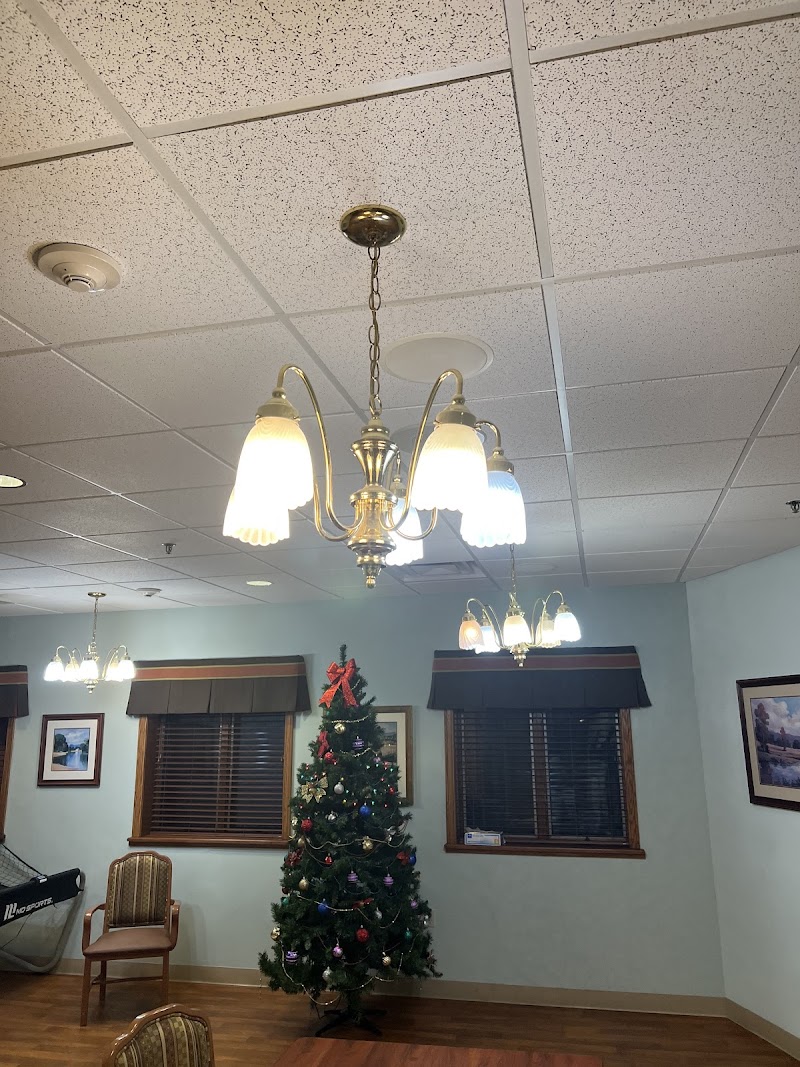
GROVE MANOR

435 NORTH BROAD STREET, GROVE CITY, PA 16127 (412) 458-7800
Non profit - Church related 59 Beds Independent Data: November 2025
Trust Grade
43/100
#429 of 653 in PA
Last Inspection: October 2024

Within standard 12-15 month inspection cycle. Federal law requires annual inspections.

Overview

Grove Manor has received a Trust Grade of D, indicating it is below average and has some concerns regarding care quality. It ranks #429 out of 653 facilities in Pennsylvania, placing it in the bottom half, and is last among the ten nursing homes in Mercer County. The facility is showing improvement, as the number of issues identified decreased from 13 in 2023 to just 3 in 2024. However, staffing is a significant weakness, with only 1 out of 5 stars and a turnover rate of 48%, which is concerning because it suggests instability among caregivers. Additionally, there have been serious incidents of neglect, including the development of severe pressure ulcers due to inadequate monitoring and care, highlighting the need for improvement in resident care practices.

Trust Score
D
43/100
In Pennsylvania
#429/653
Bottom 35%
Safety Record
Moderate
Needs review
Inspections
Getting Better
13 → 3 violations
Staff Stability
⚠ Watch
48% turnover. Above average. Higher turnover means staff may not know residents' routines.
Penalties
✓ Good
$18,837 in fines. Lower than most Pennsylvania facilities. Relatively clean record.
Skilled Nurses
○ Average
RN staffing data not reported for this facility.
Violations
⚠ Watch
16 deficiencies on record. Higher than average. Multiple issues found across inspections.
★★☆☆☆
2.0
Overall Rating
★☆☆☆☆
1.0
Staff Levels
★★☆☆☆
2.0
Care Quality
★★★☆☆
3.0
Inspection Score
Stable
2023: 13 issues
2024: 3 issues

The Good

  • Full Sprinkler Coverage · Fire safety systems throughout facility
  • No fines on record

Facility shows strength in fire safety.

The Bad

2-Star Overall Rating

Below Pennsylvania average (3.0)

Below average - review inspection findings carefully

Staff Turnover: 48%

Near Pennsylvania avg (46%)

Higher turnover may affect care consistency

Federal Fines: $18,837

Below median ($33,413)

Minor penalties assessed

The Ugly 16 deficiencies on record

2 actual harm
Oct 2024 1 deficiency
CONCERN (D)

Potential for Harm - no one hurt, but risky conditions existed

ADL Care (Tag F0677)

Could have caused harm · This affected 1 resident

Based on review of clinical records and facility documentation, and resident family and staff interviews, it was determined that the facility failed to ensure that residents were provided with showers...

Read full inspector narrative →
Based on review of clinical records and facility documentation, and resident family and staff interviews, it was determined that the facility failed to ensure that residents were provided with showers as scheduled for one of 13 residents reviewed (Resident R26). Findings include: Resident R26's clinical record revealed an admission date of 9/16/24, with diagnoses that included dementia, dysphasia (communication disorder affecting the ability to understand and produce language), Parkinsonism (neurodegenerative diseases that cause motor symptoms such as shakes and tremors), and history of falling. During an interview with Resident R26's family member on 10/24/24, at approximately 12:00 p.m., it was disclosed that there were concerns that Resident R26 was not receiving routine showers on his/her designated shower days, and was observed in the same clothes on consecutive days while visiting. Review of Resident R26's care plan with a date initiated of 9/24/24, revealed under interventions Bathing: Prefers a shower and to receive in the afternoon on Wednesdays and Saturdays. Review of an admission Minimum Data Set (a mandated assessment of a resident's abilities and care needs) assessment for Resident R26, dated 9/28/24, revealed that the resident was cognitively impaired, required partial to moderate assistance from staff for showering, and had diagnoses that included dementia. Review of facility documentation revealed that Resident R26 had a shower schedule for Tuesdays and Fridays, that was then was switched to Wednesdays and Saturdays when he/she had a room move. Review of nurse aide documentation for Resident R26 for the time period from 10/11/24 through 10/23/24, revealed no documented evidence that a shower was provided from 10/16/24 until 10/23/24, a time frame of seven days. There was no documented evidence in the clinical record that the resident was offered and/or refused a shower on those identified dates. During an interview on 10/24/24, at approximately 1:30 p.m. the Director of Nursing and Assistant Director of Nursing confirmed that there was no documented evidence that Resident R26 received and/or refused showers as scheduled during the time frame of 10/16/24 through 10/23/24, for a period of seven days. 28 Pa. Code 211.12(d)(5) Nursing Services
Aug 2024 2 deficiencies 2 Harm
SERIOUS (G) 📢 Someone Reported This

A family member, employee, or ombudsman was alarmed enough to file a formal complaint

Actual Harm - a resident was hurt due to facility failures

Free from Abuse/Neglect (Tag F0600)

A resident was harmed · This affected 1 resident

Based on review of facility policies and clinical records and staff interviews, it was determined that the facility failed to ensure that residents were free of neglect during care, which resulted in ...

Read full inspector narrative →
Based on review of facility policies and clinical records and staff interviews, it was determined that the facility failed to ensure that residents were free of neglect during care, which resulted in actual harm of Stage Three (full-thickness skin and tissue loss) pressure ulcer development of the coccyx (small triangular bone at the base of the spinal column), buttocks, and heel for two of two closed records reviewed for pressure areas (Residents CR1 and Resident CR2). Findings include: Review of a facility policy entitled Identifying Resident Neglect dated 7/22/24, revealed Neglect is defined as the failure of the facility, its employees or service providers to provide goods and services to a resident that are necessary to avoid physical pain, mental anguish, or emotional distress. Neglect occurs when the facility is aware of, or should have been aware of, goods or services that a resident requires but the facility fails to provide them and this has resulted in (or may result in) physical harm, pain mental anguish or emotional distress. Review of a facility policy entitled Prevention of Pressure Ulcer/Injury dated 7/22/24, revealed the facility would Assess the resident on admission (within eight hours) for existing pressure/injury risk factors. Repeat the risk assessment weekly and upon any changes in condition. Conduct a comprehensive skin assessment upon admission, including: Skin integrity - any evidence of existing or developing pressure ulcers or injuries; Tissue tolerance - the ability of the skin (and supporting structures) to endure the effects of pressure; and Areas of impaired circulation due to pressure from positioning or medical devices. Inspect the skin on a daily basis when performing or assisting with personal care or ADLs. Identify any signs of developing pressure injuries (i.e. nonblanchable erythema). For darkly pigmented skin, inspect for changes in skin tone, temperature, and consistency. Inspect pressure points (sacrum, heels, buttocks, coccyx, elbows, ischium, trochanter, etc.); Wash the skin after any episodes of incontinence, using pH balanced skin cleanser; Moisturize dry skin daily; and Reposition resident as indicated on the care plan. Resident CR1's clinical record revealed an admission date of 5/08/24, and discharge date of 6/24/24, with diagnoses that included partial intestinal obstruction (a gastrointestinal condition in which digested material is prevented from passing normally through the bowel), muscle weakness, unsteadiness on feet, and need for assistance with personal care. An admission / readmission Nursing Evaluation completed on 5/08/24, at 4:31 p.m. revealed Resident CR1's skin color was warm and unremarkable upon assessment with a pressure area noted as 0.02 cm [centimeter] x 0.02 cm skin tear type - Stage Two (partial thickness loss of dermis presenting as a shallow open ulcer with a red pink wound bed without slough) - to right buttocks. A Braden Scale (assessment used to assist in identifying risk of developing a pressure ulcer) was completed as part of the admission assessment on 5/08/24, at 4:32 p.m. which revealed a total score of 14, indicating Resident CR1 was at a moderate risk for developing pressure ulcers. The assessment further indicated Resident CR1 was at moderate risk for developing pressure ulcers due to very limited sensory perception (ability to feel or communicate discomfort), incontinence, limited physical activity - spends majority of shift in bed or chair, makes occasional slight changes in body or extremity position but unable to make frequent or significant changes independently, poor nutrition, and risk for friction and shear (sliding on sheet causing skin irritation). A Bowel and Bladder Screener dated 5/14/24, revealed Resident CR1 was occasionally incontinent of bowel and bladder, a two person assist, and condition of the skin on genital, perineal, buttocks had non-blanchable redness or small open area. Resident CR1's care plan dated 5/08/24, revealed pressure/skin impairments as focus with interventions as weekly skin assessments to be performed during regularly scheduled bath/shower per facility policy. Follow facility policies/protocol for the prevention of skin breakdown. Notify nurse immediately of any new areas of skin breakdown, redness, bruises, discoloration noted during bath or daily care. Resident CR1's Minimum Data Set (MDS - federally mandated standardized assessment conducted at specific intervals to plan resident care), with an Assessment Reference Date (ARD) of 5/14/24, section GG0170A entitled Mobility (roll left and right: The ability to roll from lying on back to left and right side, and return to lying on the bed) was coded as requiring substantial/maximal assistance of staff to complete task. Section M0100A entitled Determination of Pressure Ulcer Injury Risk - Resident has a pressure ulcer / injury was coded as Yes. Section M0300B1 entitled Number of Stage 2 pressure ulcers was coded 1 and Section M0300C1 entitled Number of Stage 3 pressure ulcers was coded 0. Section M0150 entitled Risk of Pressure Ulcer / Injuries - Is this Resident at risk for developing pressure ulcers/injuries was coded as Yes. Section M1200C entitled Skin and Ulcer/Injury Treatments - Turning and Repositioning program was coded as No. Resident CR1's MDS, with an ARD of 6/24/24, Section M0100A entitled Determination of Pressure Ulcer Injury Risk - Resident has a pressure ulcer / injury was coded as Yes. Section M0300B1 entitled Number of Stage 2 pressure ulcers was coded 0, Section M0300C1 entitled Number of Stage 3 pressure ulcers was coded 1, and Section M0300F1 entitled Number of unstageable pressure ulcers due to coverage of wound bed by slough (dead tissue within a wound, often appearing as yellow, tan, or white material) and/or eschar (dry, dead tissue within a wound) was coded 1. Section M0150 entitled Risk of Pressure Ulcer / Injuries - Is this Resident at risk for developing pressure ulcers/injuries was coded as Yes. Section M1200C entitled Skin and Ulcer/Injury Treatments - Turning and Repositioning program was coded as No. Resident CR1's physician orders revealed an order dated 5/07/24, for weekly skin assessments to be completed every dayshift every Tuesday. A physician order dated 5/07/24, was noted with a discontinue date of 5/09/24, for house ointment/cream after each incontinent episode for prevention and protection every shift for treatment. A physician order dated 6/14/24, revealed Doxycycline Hyclate 100 milligrams two times a day for right gluteus wound for 10 Days. Resident CR1's progress notes dated 5/10/24, revealed Area to right buttocks reassessed and noted to be 2.5 cm x 2.0 cm x 0.2 cm. It is currently a Stage 2 pressure injury. Per her daughter, she has a history of a pressure injury to this location that never completely healed. Area covered with a foam dressing. Further progress notes for Resident CR1 dated 5/24/24, by a Wound Certified Registered Nurse Practitioner (CRNP) indicated resident was seen for wound to the right gluteus (buttocks) noted by staff on admission assessment. Wound: 1 Location: right gluteus Primary Etiology: Pressure Stage/Severity: Stage 3 Wound Status: New Size: 3 cm x 2 cm x 0 cm Wound Base: 0% epithelial, 30 granulation, 70 slough, 0% eschar. Exudate: Moderate amount of Serous. Treatment: Cleanse with 0.125% Dakins solution, apply Medical grade honey. Calcium Alginate, Zinc Oxide to base of wound, secure with Bordered gauze, change daily and PRN (as needed). Continue: offloading pressure on area, side to side turning/repositioning (q 2 hrs), pressure redistribution, keep heels elevated. Further progress notes for Resident CR1 dated 5/31/24, by CRNP revealed wound/skin condition noted Wound Assessment Wound 1 Location: right gluteus Primary Etiology: Pressure Stage/Severity: Stage 3 Wound Status: Worsening Size: 4 cm x 4 cm x 0.5 cm Wound Base: 0% epithelial, 30 granulation, 70 slough, 0% eschar. Exudate: Moderate amount of Serous. Treatment: Cleanse with 0.125% Dakins solution, apply Calcium alginate, Zinc Oxide Paste, SANTYL (NICKEL THICKNESS) to base of wound, secure with Bordered Gauze, change Daily, and PRN. Wound: 2 Location: left heel Primary Etiology: Pressure State/Severity: Stage 3 Wound Status: New Size 2 cm x 1.5 cm x 0 cm Wound Base 0 % epithelial, open dark red/purple nonblanching tissue granulation, 0% slough, 0% eschar. Surgical Wound Debridement with Treatment: Cleanse with normal saline, apply Medical grade honey, Calcium alginate, Zinc Oxide Paste to base of the wound, secure with Bordered gauze, change Daily, and PRN. Further progress notes for Resident CR1 dated 6/21/24, by CRNP revealed Right gluteal wound reclassified due to decline. Wound: 1 right gluteus Primary Etiology: Pressure Stage/Severity: Unstageable Wound Status: Worsening Size 6 cm x 6 cm x 0.5 cm Wound Base: 0% epithelial, 0% granulation, 100% slough, 0% eschar. Exudate: Moderate amount of Serous. Surgical Wound Debridement with Treatment: Cleanse with 0.125% Dakins solution, apply Zinc Oxide Paste, SANTYL (NICKEL THICKNESS), Dakins moistened fluffed gauze to base of the wound, secure with Bordered gauze, change Daily, and PRN. Wound: 2 left heel Primary Etiology: Pressure Stage/Severity: Stage 3 Wound Status: improving with delayed wound closure Size 1.5 cm x 2.5 cm x 0.3 cm Wound Base: 0% epithelial, 100% granulation, 0% slough, 0% eschar. Exudate: Moderate amount of Serous. Treatment: Cleanse with 0.125% Dakins solution, apply Zinc Oxide Paste, Collagen, Silver Alginate to base of the wound, secure with ABD, Rolled gauze, change Daily and PRN. Resident CR1's clinical record lacked evidence that an assessment of the right buttocks was completed by a RN from 5/10/24, to 5/24/24, the time the Stage Two pressure ulcer worsened to a Stage Three pressure ulcer. Resident CR1's clinical record lacked evidence of turning/repositioning, including recommendations from the Wound CRNP dated 5/24/24, for offloading pressure on area, side to side turning/reposition (q2 hrs), pressure redistribution, keep heels elevated. Resident CR1's clinical record lacked evidence that the physician ordered weekly skin assessments were completed from 5/14/24, to the day of discharge 6/24/24. The Stage Two pressure ulcer of the right buttocks worsened to a Stage Three pressure ulcer, and a new Stage Three pressure ulcer was discovered to the left heel during the period elapsed from 5/08/24, to 6/24/24. The Director of Nursing (DON) confirmed lack of skin assessments for Resident CR1 during an interview at 2:26 p.m. on 8/16/24. The Nursing Home Administrator (NHA) confirmed on 8/22/24, at 3:50 p.m. the facility failed to provide skin assessments, interventions in place and monitoring for skin integrity, to prevent the development and/or worsening of pressure ulcers. The facility failed to ensure that Resident CR1 was free from neglect which resulted in actual harm of a Stage Three pressure ulcer wound to right buttocks and Stage Three pressure ulcer wound to left heel. Resident CR2's clinical record revealed an admission date of 7/18/24, and discharge date of 8/09/24, with diagnoses that included cellulitis (bacterial skin infection) of left leg, diverticulitis (an inflammation of infection in one or more small pouches in the digestive tract), non-pressure chronic ulcer (a long-lasting open sore typically caused by poor circulation), and obesity. An admission / readmission Nursing Evaluation completed on 7/18/24, at 1:31 p.m. indicated Resident CR2's skin color was warm and unremarkable upon assessment with no pressure areas or evidence of pressure areas. A Braden Scale was completed as part of the admission assessment on 7/18/24, at 2:07 p.m. revealed /a total score of 16, indicating Resident CR2 was at a low risk for developing pressure ulcers. The assessment further indicated Resident CR2 was at low risk for developing pressure ulcers due to slightly limited sensory perception, incontinence, limited physical activity - spends majority of shift in bed or chair, makes frequent though slight changes in body or extremity position independently, adequate nutrition, and risk for friction and shear (sliding on sheet causing skin irritation). A Bowel and Bladder Screener dated 7/23/24, revealed Resident CR2 was continent of bowel and bladder, a one-person assist, and no redness to the skin on genital, perineal, buttocks. Resident CR2's care plan dated 5/08/24, revealed potential pressure ulcer development as focus with interventions as weekly skin assessments to be performed during regularly scheduled bath/shower per facility policy. Notify nurse immediatel of any new areas of skin breakdown, redness, bruises, discoloration noted during bath or daily care. Resident CR2's MDS, with an ARD of 7/24/24, section GG0170A entitled Mobility (roll left and right: The ability to roll from lying on back to left and right side, and return to lying on the bed) was coded as requiring partial/moderate assistance of staff to complete task. Section M0100A entitled Determination of Pressure Ulcer Injury Risk - Resident has a pressure ulcer / injury was coded as No. Section M0150 entitled Risk of Pressure Ulcer / Injuries - Is this Resident at risk for developing pressure ulcers/injuries was coded as Yes. Section M1200A entitled Skin and Ulcer/Injury Treatments - Pressure reducing device for chair was coded as No, and Section M1200C entitled Skin and Ulcer/Injury Treatments - Turning and Repositioning program was coded as No. Resident CR2's physician orders revealed an order dated 7/18/24, for weekly skin assessments to be completed every dayshift every Thursday. On 7/19/24, Wound CRNP recommendations stated, continue pressure redistribution support surface, continue Foam wheelchair cushion to wheelchair, limit sitting time to 2 hours per episode, Continue: offloading pressure on area, side to side turning/repositioning (q 2 hrs), pressure distribution, keep heels elevated. Resident CR2's progress notes dated 8/04/24, stated Pts [patients] dtr [daughter] concerned re [regarding] pts open sores on buttocks. Did inform the dtr re wound care that was performed during the night. Dtr is concerned re pt going home with open sores. Informed dtr that will have wound care RN and NP assess pt before d/c [discharge]. Dtr. agrees. Further progress notes for Resident CR2's Wound CRNP's progress notes dated 8/09/24, stated Wounds to bilateral glutes noted to have declined on today's exam, Re-education was provided to the staff, patient regarding the patient's wound, dressing care, offloading, and general treatment recommendations. Wound: 3 Location: coccyx Primary Etiology: Pressure Stage/Severity: Stage 3 Wound Status: Worsening Size: 1 cm x 1 cm 1 cm Wound Base: 100% granulation Exudate: Moderate amount of Serous. Treatment: Cleanse with 0.125% Dakins solution, apply Medical grade honey, Calcium alginate, Zinc Oxide Paste to base of the wound, secure with Bordered gauze, change Daily, and PRN. Wound: 5 Location: left gluteus Primary Etiology: Pressure State/Severity: Stage 3 Wound Status: New Size: 1 cm x 1 cm x 1 cm Wound Base: 50% granulation, 50 % slough Exudate: Moderate amount of Serous Treatment: Cleanse with 0.125% Dakins solution, apply Medical grade honey, Calcium alginate, Zinc Oxide Paste to base of the wound, secure with Bordered gauze, change Daily, and PRN. Wound: 6 Location: right gluteus Primary Etiology: Pressure Stage/Severity: Stage 3 Wound Status: New Size 1 cm x 1 cm x 0.3 cm Wound Base: 50% granulation, 50% slough Exudate: Moderate amount of Serous. Treatment: Cleanse with 0.125% Dakins solution, apply Medical grade honey, Calcium alginate, Zinc Oxide Paste to base of the wound, secure with Bordered gauze, change Daily, and PRN. Resident CR2's clinical record lacked evidence of turning/repositioning, including recommendations from Wound CRNP dated 7/19/24, to limit sitting time to 2 hours per episode and to continue offloading presure on area, side to side turning/reposition (q2 hrs), pressure redistribution, keep heels elevated. Resident CR2's clinical record lacked evidence that the physician ordered weekly skin assessments were completed from 7/18/24, to the day of discharge 8/09/24 allowing a Stage Three pressure ulcer to develop on the coccyx, right buttocks, and left buttocks within a 23 day period of time. The DON confirmed lack of skin assessments for Resident CR2 during an interview at 2:26 p.m. on 8/16/24. The NHA confirmed on 8/22/24, at 3:50 p.m. the facility failed to conduct skin assessments, and maintain interventions in place and monitoring for skin integrity, to prevent the development and/or worsening of pressure ulcers and skin conditions. The facility failed to ensure that Resident CR2 was free from neglect which resulted in actual harm of Stage Three pressure ulcer wounds to the coccyx, right buttocks, and left buttocks. 28 Pa. Code 201.14(a) Responsibility of licensee 28 Pa. Code 201.18(b)(1)(2)(3) Management 28 Pa. Code 201.18(e)(1) Management 28 Pa. Code 211.10(d) Resident care policies 28 Pa. Code 211.12(d)(1)(2)(5) Nursing services
SERIOUS (G) 📢 Someone Reported This

A family member, employee, or ombudsman was alarmed enough to file a formal complaint

Actual Harm - a resident was hurt due to facility failures

Pressure Ulcer Prevention (Tag F0686)

A resident was harmed · This affected 1 resident

Based on review of facility policy and clinical record and staff interviews, it was determined that the facility failed to ensure that residents were monitored, adequately assessed, and preventative m...

Read full inspector narrative →
Based on review of facility policy and clinical record and staff interviews, it was determined that the facility failed to ensure that residents were monitored, adequately assessed, and preventative measures were implemented to prevent ulcers from developing or worsening, resulting in actual harm of Stage Three (full-thickness skin and tissue loss) pressure ulcer development of the coccyx (small triangular bone at the base of the spinal column), buttocks, and heel for two of two closed records reviewed for pressure ulcers (Residents CR1 and Resident CR2). Findings include: Review of a facility policy entitled Prevention of Pressure Ulcer/Injury dated 7/22/24, revealed the facility would Assess the resident on admission (within eight hours) for existing pressure/injury risk factors. Repeat the risk assessment weekly and upon any changes in condition. Conduct a comprehensive skin assessment upon admission, including: Skin integrity - any evidence of existing or developing pressure ulcers or injuries; Tissue tolerance - the ability of the skin (and supporting structures) to endure the effects of pressure; and Areas of impaired circulation due to pressure from positioning or medical devices. Inspect the skin on a daily basis when performing or assisting with personal care or ADLs [Activities of Daily Living]. Identify any signs of developing pressure injuries (i.e. nonblanchable erythema). For darkly pigmented skin, inspect for changes in skin tone, temperature, and consistency. Inspect pressure points (sacrum, heels, buttocks, coccyx, elbows, ischium, trochanter, etc.); Wash the skin after any episodes of incontinence, using pH balanced skin cleanser; Moisturize dry skin daily; and Reposition resident as indicated on the care plan. Resident CR1's clinical record revealed an admission date of 5/08/24, and discharge date of 6/24/24, with diagnoses that included partial intestinal obstruction (a gastrointestinal condition in which digested material is prevented from passing normally through the bowel), muscle weakness, unsteadiness on feet, and need for assistance with personal care. An admission / readmission Nursing Evaluation completed on 5/08/24, at 4:31 p.m. revealed that Resident CR1's skin color was warm and unremarkable upon assessment with a pressure area noted as 0.02 cm x 0.02 cm skin tear type - stage two (partial thickness loss of dermis presenting as a shallow open ulcer with a red pink wound bed without slough) - to right buttocks. A Braden Scale (assessment used to assist in identifying risk of developing a pressure ulcer) was completed as part of the admission assessment on 5/08/24, at 4:32 p.m. which revealed a total score of 14, indicating Resident CR1 was at a moderate risk for developing pressure ulcers. The assessment further indicated Resident CR1 was at moderate risk for developing pressure ulcers due to very limited sensory perception (ability to feel or communicate discomfort), incontinence, limited physical activity - spends majority of shift in bed or chair, makes occasional slight changes in body or extremity position but unable to make frequent or significant changes independently, poor nutrition, and risk for friction and shear (sliding on sheet causing skin irritation). A Bowel and Bladder Screener dated 5/14/24, indicated Resident CR1 was occasionally incontinent of bowel and bladder, a two-person assist, and condition of the skin on genital, perineal (skin between genitals and anus), buttocks had non-blanchable redness or small open area. Resident CR1's care plan dated 5/08/24, revealed pressure/skin impairments as focus with interventions as weekly skin assessments to be performed during regularly scheduled bath/shower per facility policy. Follow facility policies/protocol for the prevention of skin breakdown. Notify nurse immediately of any new areas of skin breakdown, redness, bruises, discoloration noted during bath or daily care. Resident CR1's Minimum Data Set (MDS - federally mandated standardized assessment conducted at specific intervals to plan resident care), with an Assessment Reference Date (ARD) of 5/14/24, section GG0170A entitled Mobility (roll left and right: The ability to roll from lying on back to left and right side, and return to lying on the bed) was coded as requiring substantial/maximal assistance of staff to complete task. Section M0100A entitled Determination of Pressure Ulcer Injury Risk - Resident has a pressure ulcer / injury was coded as Yes. Section M0300B1 entitled Number of Stage 2 pressure ulcers was coded 1 and Section M0300C1 entitled Number of Stage 3 pressure ulcers was coded 0. Section M0150 entitled Risk of Pressure Ulcer / Injuries - Is this Resident at risk for developing pressure ulcers/injuries was coded as Yes. Section M1200C entitled Skin and Ulcer/Injury Treatments - Turning and Repositioning program was coded as No. Resident CR1's MDS, with an ARD of 6/24/24, Section M0100A entitled Determination of Pressure Ulcer Injury Risk - Resident has a pressure ulcer / injury was coded as Yes. Section M0300B1 entitled Number of Stage 2 pressure ulcers was coded 0, Section M0300C1 entitled Number of Stage 3 pressure ulcers was coded 1, and Section M0300F1 entitled Number of unstageable pressure ulcers due to coverage of wound bed by slough (dead tissue within a wound, often appearing as yellow, tan, or white material) and/or eschar (dry, dead tissue within a wound) was coded 1. Section M0150 entitled Risk of Pressure Ulcer / Injuries - Is this Resident at risk for developing pressure ulcers/injuries was coded as Yes. Section M1200C entitled Skin and Ulcer/Injury Treatments - Turning and Repositioning program was coded as No. Resident CR1's physician orders revealed an order dated 5/07/24, for weekly skin assessments to be completed every dayshift every Tuesday. A physician order dated 5/07/24, was noted with a discontinue date of 5/09/24, for house ointment/cream after each incontinent episode for prevention and protection every shift for treatment. A physician order dated 6/14/24, revealed Doxycycline Hyclate 100 milligrams two times a day for right gluteus wound for 10 Days. Resident CR1's progress notes dated 5/10/24, revealed Area to right buttocks reassessed and noted to be 2.5 cm [centimeters] x 2.0 cm x 0.2 cm. It is currently a Stage 2 pressure injury. Per her daughter, she has a history of a pressure injury to this location that never completely healed. Area covered with a foam dressing. Further progress notes for Resident CR1 dated 5/24/24, by a Wound Certified Registered Nurse Practitioner (CRNP) indicated resident was seen for wound to the right gluteus (buttocks) noted by staff on admission assessment. Wound: 1 Location: right gluteus Primary Etiology: Pressure Stage/Severity: Stage 3 Wound Status: New Size: 3 cm x 2 cm x 0 cm Wound Base: 0% epithelial, 30 granulation, 70 slough, 0% eschar. Exudate: Moderate amount of Serous. Treatment: Cleanse with 0.125% Dakins solution, apply Medical grade honey. Calcium Alginate, Zinc Oxide to base of wound, secure with Bordered gauze, change daily and PRN (as needed). Continue: offloading pressure on area, side to side turning/repositioning (q 2 hrs), pressure redistribution, keep heels elevated. Further progress notes for Resident CR1 dated 5/31/24, by Wound CRNP revealed wound/skin condition noted Wound Assessment Wound 1 Location: right gluteus Primary Etiology: Pressure Stage/Severity: Stage 3 Wound Status: Worsening Size: 4 cm x 4 cm x 0.5 cm Wound Base: 0% epithelial, 30 granulation, 70 slough, 0% eschar. Exudate: Moderate amount of Serous. Treatment: Cleanse with 0.125% Dakins solution, apply Calcium alginate, Zinc Oxide Paste, SANTYL (NICKEL THICKNESS) to base of wound, secure with Bordered Gauze, change Daily, and PRN. Wound: 2 Location: left heel Primary Etiology: Pressure State/Severity: Stage 3 Wound Status: New Size 2 cm x 1.5 cm x 0 cm Wound Base 0 % epithelial, open dark red/purple nonblanching tissue granulation, 0% slough, 0% eschar. Surgical Wound Debridement with Treatment: Cleanse with normal saline, apply Medical grade honey, Calcium alginate, Zinc Oxide Paste to base of the wound, secure with Bordered gauze, change Daily, and PRN. Further progress notes for Resident CR1 dated 6/21/24, by Wound CRNP revealed Right gluteal wound reclassified due to decline. Wound: 1 right gluteus Primary Etiology: Pressure Stage/Severity: Unstageable Wound Status: Worsening Size 6 cm x 6 cm x 0.5 cm Wound Base: 0% epithelial, 0% granulation, 100% slough, 0% eschar. Exudate: Moderate amount of Serous. Surgical Wound Debridement with Treatment: Cleanse with 0.125% Dakins solution, apply Zinc Oxide Paste, SANTYL (NICKEL THICKNESS), Dakins moistened fluffed gauze to base of the wound, secure with Bordered gauze, change Daily, and PRN. Wound: 2 left heel Primary Etiology: Pressure Stage/Severity: Stage 3 Wound Status: improving with delayed wound closure Size 1.5 cm x 2.5 cm x 0.3 cm Wound Base: 0% epithelial, 100% granulation, 0% slough, 0% eschar. Exudate: Moderate amount of Serous. Treatment: Cleanse with 0.125% Dakins solution, apply Zinc Oxide Paste, Collagen, Silver Alginate to base of the wound, secure with ABD, Rolled gauze, change Daily and PRN. Resident CR1's clinical record lacked evidence that an assessment of the right buttocks was completed by a RN from 5/10/24, to 5/24/24, the time the Stage Two pressure ulcer worsened to a Stage Three pressure ulcer. Resident CR1's clinical record lacked evidence of turning/repositioning, including recommendations from the Wound CRNP dated 5/24/24, for offloading pressure on area, side to side turning/reposition (q2 hrs), pressure redistribution, keep heels elevated. Resident CR1's clinical record lacked evidence that the physician ordered weekly skin assessments were completed from 5/14/24, to the day of discharge 6/24/24. The Stage Two pressure ulcer of the right buttocks worsened to a Stage Three pressure ulcer, and a new Stage Three pressure ulcer was discovered to the left heel during the period elapsed from 5/08/24, to 6/24/24. The Director of Nursing (DON) confirmed lack of skin assessments for Resident CR1 during an interview at 2:26 p.m. on 8/16/24. The Nursing Home Administrator (NHA) confirmed on 8/22/24, at 3:50 p.m. the facility failed to provide skin assessments, interventions in place and monitoring for skin integrity, to prevent the development and/or worsening of pressure ulcers. The facility failed to ensure that Resident CR1 had appropriate interventions in place and was monitored for skin integrity adequately to prevent the development of harm of a Stage Three pressure ulcer wound to right buttocks and Stage Three pressure ulcer wound to left heel. Resident CR2's clinical record revealed an admission date of 7/18/24, and discharge date of 8/09/24, with diagnoses that included cellulitis (bacterial skin infection) of left leg, diverticulitis (an inflammation of infection in one or more small pouches in the digestive tract), non-pressure chronic ulcer (a long-lasting open sore typically caused by poor circulation), and obesity. An admission / readmission Nursing Evaluation completed on 7/18/24, at 1:31 p.m. indicated Resident CR2's skin color was warm and unremarkable upon assessment with no pressure areas or evidence of pressure areas. A Braden Scale was completed as part of the admission assessment on 7/18/24, at 2:07 p.m. revealed a total score of 16, indicating Resident CR2 was at a low risk for developing pressure ulcers. The assessment further indicated Resident CR2 was at low risk for developing pressure ulcers due to slightly limited sensory perception, incontinence, limited physical activity - spends majority of shift in bed or chair, makes frequent though slight changes in body or extremity position independently, adequate nutrition, and risk for friction and shear (sliding on sheet causing skin irritation). A Bowel and Bladder Screener dated 7/23/24, indicated Resident CR2 was continent of bowel and bladder, a one-person assist, and no redness to the skin on genital, perineal, and buttocks. Resident CR2's care plan dated 5/08/24, revealed potential pressure ulcer development as focus with interventions as weekly skin assessments to be performed during regularly scheduled bath/shower per facility policy. Notify nurse immediately of any new areas of skin breakdown, redness, bruises, discoloration noted during bath or daily care. Resident CR2's MDS, with an ARD of 7/24/24, section GG0170A entitled Mobility (roll left and right: The ability to roll from lying on back to left and right side, and return to lying on the bed) was coded as requiring partial/moderate assistance of staff to complete task. Section M0100A entitled Determination of Pressure Ulcer Injury Risk - Resident has a pressure ulcer / injury was coded as No. Section M0150 entitled Risk of Pressure Ulcer / Injuries - Is this Resident at risk for developing pressure ulcers/injuries was coded as Yes. Section M1200A entitled Skin and Ulcer/Injury Treatments - Pressure reducing device for chair was coded as No, and Section M1200C entitled Skin and Ulcer/Injury Treatments - Turning and Repositioning program was coded as No. Resident CR2's physician orders revealed an order dated 7/18/24, for weekly skin assessments to be completed every dayshift every Thursday. On 7/19/24, Wound CRNP recommendations stated, continue pressure redistribution support surface, continue Foam wheelchair cushion to wheelchair, limit sitting time to 2 hours per episode, Continue: offloading pressure on area, side to side turning/repositioning (q 2 hrs), pressure distribution, keep heels elevated. Resident CR2's progress notes dated 8/04/24, stated Pts [patients] dtr [daughter] concerned re [regarding] pts open sores on buttocks. Did inform the dtr re wound care that was performed during the night. Dtr is concerned re pt going home with open sores. Informed dtr that will have wound care RN and NP assess pt before d/c [discharge]. Dtr. agrees. Further progress notes for Resident CR2's Wound CRNP's progress notes dated 8/09/24, stated Wounds to bilateral glutes noted to have declined on today's exam, Re-education was provided to the staff, patient regarding the patient's wound, dressing care, offloading, and general treatment recommendations. Wound: 3 Location: coccyx Primary Etiology: Pressure Stage/Severity: Stage 3 Wound Status: Worsening Size: 1 cm x 1 cm 1 cm Wound Base: 100% granulation Exudate: Moderate amount of Serous. Treatment: Cleanse with 0.125% Dakins solution, apply Medical grade honey, Calcium alginate, Zinc Oxide Paste to base of the wound, secure with Bordered gauze, change Daily, and PRN. Wound: 5 Location: left gluteus Primary Etiology: Pressure State/Severity: Stage 3 Wound Status: New Size: 1 cm x 1 cm x 1 cm Wound Base: 50% granulation, 50 % slough Exudate: Moderate amount of Serous Treatment: Cleanse with 0.125% Dakins solution, apply Medical grade honey, Calcium alginate, Zinc Oxide Paste to base of the wound, secure with Bordered gauze, change Daily, and PRN. Wound: 6 Location: right gluteus Primary Etiology: Pressure Stage/Severity: Stage 3 Wound Status: New Size 1 cm x 1 cm x 0.3 cm Wound Base: 50% granulation, 50% slough Exudate: Moderate amount of Serous. Treatment: Cleanse with 0.125% Dakins solution, apply Medical grade honey, Calcium alginate, Zinc Oxide Paste to base of the wound, secure with Bordered gauze, change Daily, and PRN. Resident CR2's clinical record lacked evidence of turning/repositioning, including recommendations from Wound CRNP dated 7/19/24, to limit sitting time to 2 hours per episode and to continue offloading presure on area, side to side turning/reposition (q2 hrs), pressure redistribution, keep heels elevated. Resident CR2's clinical record lacked evidence that the physician ordered weekly skin assessments were completed from 7/18/24, to the day of discharge 8/09/24 allowing a Stage Three pressure ulcer to develop on the coccyx, right buttocks, and left buttocks within a 23 day period of time. The DON confirmed the lack of skin assessments for Resident CR2 during an interview at 2:26 p.m. on 8/16/24. The NHA confirmed on 8/22/24, at 3:50 p.m. the facility failed to conduct skin assessments, and maintain interventions in place and monitoring for skin integrity, to prevent the development and/or worsening of pressure ulcers and skin conditions. The facility failed to ensure that Resident CR2 had appropriate interventions in place and was monitored for skin integrity adequately to prevent the development of actual harm of Stage Three pressure ulcer wounds to the coccyx, right buttocks, and left buttocks. 28 Pa. Code 201.14(a) Responsibility of licensee 28 Pa. Code 201.18(b)(1)(2)(3) Management 28 Pa. Code 201.18(e)(1) Management 28 Pa. Code 211.10(d) Resident care policies 28 Pa. Code 211.12(d)(1)(2)(5) Nursing services
Nov 2023 11 deficiencies
CONCERN (D)

Potential for Harm - no one hurt, but risky conditions existed

Resident Rights (Tag F0550)

Could have caused harm · This affected 1 resident

Based on review of facility policy and clinical records, observations, and staff interview, it was determined that the facility failed to maintain resident dignity regarding indwelling foley catheters...

Read full inspector narrative →
Based on review of facility policy and clinical records, observations, and staff interview, it was determined that the facility failed to maintain resident dignity regarding indwelling foley catheters (a tube inserted into the bladder to drain urine) for two of 14 residents reviewed (Residents R22 and R160). Findings include: Review of a facility policy entitled, Catheter Care, Urinary dated 7/14/23, indicated that the catheter drainage bag is covered with a privacy bag unless care is being provided. Review of Resident R22's clinical record revealed an admission date of 9/01/23, with diagnoses that included sepsis (systemic bacterial infection), urinary tract infection, inflammation of the bladder, and fluid overload. The clinical record also revealed a physician's order dated 9/01/23, for a foley catheter and care plan entitled Indwelling Catheterdated 9/11/23. Observations on 11/12/23, at 1:15 p.m. and 11/13/23, at 12:59 p.m. revealed Resident R22's foley catheter bag hanging from the resident's bed frame facing the corridor and also on their wheelchair uncovered exposing the bag containing urine to be viewed easily by all who pass by in the corridor, respectively. Review of Resident R160's clinical record revealed an admission date of 11/11/23, with diagnoses that included throat cancer, neuromuscular dysfunction of the bladder (the bladder may not fill or empty correctly due to the nerves and muscles not working together very well), and Parkinson's disease (brain disorder that causes unintended or uncontrollable movements, such as shaking, stiffness, and difficulty with balance and coordination). The clinical record also revealed a physician's order for a foley catheter. Observations on 11/12/23, at 1:14 p.m. and 11/13/23, at 11:50 a.m. revealed Resident R160 in their room with their foley catheter bag hanging without a privacy cover and visitors present in the room. During an interview on 11/13/23, at 12:59 p.m. Licensed Practical Nurse Employee E1 confirmed that the foley catheter bags should be covered with a privacy bag. During an interview on 11/13/23, at 2:45 p.m. the Director of Nursing confirmed that the foley catheter bags should be covered with a privacy bag. Observation on 11/15/23, at 10:02 a.m. revealed Resident R160's foley catheter bag hanging from the resident's bed frame facing the corridor uncovered exposing the bag with urine to be viewed easily by all who pass by in the corridor. During an interview at the time of the observation Registered Nurse Employee E7 confirmed that the catheter bag should have a privacy cover on it. 28 Pa. Code 211.10(c) Resident care policies 28 Pa. Code 211.12(d)(1)(5) Nursing services
CONCERN (D)

Potential for Harm - no one hurt, but risky conditions existed

Deficiency F0583 (Tag F0583)

Could have caused harm · This affected 1 resident

**NOTE- TERMS IN BRACKETS HAVE BEEN EDITED TO PROTECT CONFIDENTIALITY** Based on observations, review of clinical records and facility policies, and staff interview, it was determined that the facilit...

Read full inspector narrative →
**NOTE- TERMS IN BRACKETS HAVE BEEN EDITED TO PROTECT CONFIDENTIALITY** Based on observations, review of clinical records and facility policies, and staff interview, it was determined that the facility failed to maintain confidentiality regarding resident medical information for three of 14 residents reviewed (Residents R10, R15, and R26). Findings include: Review of the facility policy entitled, Computer Terminals/Workstations dated 7/14/23, revealed that computer terminals and workstations will be positioned/shielded to ensure that protected health information (PHI) and facility information is protected from public view or unauthorized access, and that users may not leave their workstation/terminal unattended unless the terminal screen is cleared. Observation on 11/12/23, at 10:16 a.m. revealed that medication cart A was situated outside the nurse's station unattended (no nurses in view of the medication cart) and the computer screen was opened and facing the center of the hallway exposing Resident R15's PHI to public view and unauthorized access. During an interview on 11/12/23, at 10:18 a.m. Registered Nurse Employee E5 confirmed that the computer screen was left open and Resident R15's PHI was visible to the public and unauthorized access, and that staff are to clear/lock their screens when they leave the medication cart. Observation on 11/12/23, at 3:32 p.m. of medication administration revealed that Licensed Practical Nurse (LPN) Employee E4 situated the medication cart near resident room [ROOM NUMBER] and entered resident room [ROOM NUMBER]-B to administer medications and failed to clear/lock the computer screen and exposed Resident R10's PHI that was visible to the public and unauthorized access. During an interview at that time LPN Employee E4 confirmed that he/she is not concerned down this hall as there are no wandering residents and few visitors. Observation on 11/12/23, at 3:36 p.m. of medication administration revealed that LPN Employee E4 left the medication cart near resident room [ROOM NUMBER] and entered resident room [ROOM NUMBER]-A to administer medications and failed to clear/lock the computer screen and exposed Resident R26's PHI that was visible to the public and unauthorized access. During an interview on 11/13/23, at 2:50 p.m. the Director of Nursing and Nursing Home Administrator confirmed that the computer screens should be secured to prevent public view and unauthorized access to resident's PHI. 28 Pa. Code 201.18(b)(2) Management 28 Pa. Code 211.5(b) Medical records
CONCERN (D)

Potential for Harm - no one hurt, but risky conditions existed

Comprehensive Care Plan (Tag F0656)

Could have caused harm · This affected 1 resident

Based on review of facility policy and clinical records, and staff interview, it was determined that the facility failed to develop a comprehensive care plan for one of 14 residents reviewed (Resident...

Read full inspector narrative →
Based on review of facility policy and clinical records, and staff interview, it was determined that the facility failed to develop a comprehensive care plan for one of 14 residents reviewed (Resident R50). Findings include: Review of facility policy entitled Care Plans, Comprehensive Person-Centered dated 7/14/23, stated A comprehensive, person-centered care plan that includes measurable objectives and timetables to meet the resident's physical, psychosocial and functional needs is developed and implemented for each resident. Resident R50's clinical record revealed an admission date of 9/25/23, with diagnoses that included a fracture of the left lower arm bone, fracture of a right arm bone, and Parkinson's Disease (a condition that affects the brain, causing problems with movement, balance, and coordination, with symptoms such as tremors, slowness, stiffness, difficulties speaking, and swallowing). Resident R50's clinical record revealed a physician's order dated 10/5/23, that identified Maintain ROM [Range of Motion - a term used to describe how far you can move a joint or muscle in various directions] brace locked at 90 degrees. No ROM to right elbow. Wrist and finger ROM in therapy Review of Resident R50's comprehensive care plan lacked reference to nursing staff not being permitted to perform ROM or the use of a ROM brace to the right elbow and the brace being locked at 90 degrees and in place at all times. During an interview on 11/15/23, at 2:15 p.m. Director of Nursing confirmed that the resident's care plan had not been developed to address Resident R50's ROM restrictions to the right elbow, wrist, and fingers and use of the ROM brace to the right elbow. 28 Pa. Code 201.14(a) Responsibility of licensee 28 Pa. Code 211.12(d)(3)(5) Nursing services
CONCERN (D)

Potential for Harm - no one hurt, but risky conditions existed

ADL Care (Tag F0677)

Could have caused harm · This affected 1 resident

Based on observations, review of clinical records, and staff interviews, it was determined that the facility failed to provide dining assistance for one of 14 residents reviewed (Resident R19). Findin...

Read full inspector narrative →
Based on observations, review of clinical records, and staff interviews, it was determined that the facility failed to provide dining assistance for one of 14 residents reviewed (Resident R19). Findings include: Review of Resident R19's clinical record revealed an admission date of 9/13/21, with diagnoses that included malnutrition, kyphosis (exaggerated, forward rounding of the upper back), need for assistance with personal care, muscle weakness, and palliative care. The clinical record revealed a physician's order date 9/30/23, to admit to Hospice due to severe protein calorie malnutrition. Review of a care plan entitled ADL Self Care Performance deficit dated 9/14/21, included an intervention for staff to assist Resident R19 with eating. Resident R19's most recent Minimum Data Set (MDS- a standardized assessment tool that measures health status in nursing home residents) dated 10/13/23, Section GG0130A was coded as requiring substantial/maximal assistance with eating. Observations on 11/12/23, at 1:30 p.m. and 11/13/23, at 12:51 p.m. revealed that Resident R19 was in bed with the head of the bed elevated and Resident R19 was slumped forward with the over-the-bed tray table containing his/her uneaten lunch meal at forehead level. During an interview on 11/13/23, at 1:16 p.m. Licensed Practical Nurse Employee E1 confirmed that someone should have been feeding the resident long before this. During an interview on 11/13/23, at 1:23 p.m. the Dietary Manager identified that the cart with the lunch trays left the kitchen approximately 12:15 p.m. 28 Pa. Code 211.12(c) Nursing Services 28 Pa. Code 211.12(d)(1)(3)(5) Nursing Services
CONCERN (D)

Potential for Harm - no one hurt, but risky conditions existed

Quality of Care (Tag F0684)

Could have caused harm · This affected 1 resident

Based on review of facility documents, clinical records, and staff interviews, it was determined that the facility failed to maintain current information related to Hospice services for one of 14 resi...

Read full inspector narrative →
Based on review of facility documents, clinical records, and staff interviews, it was determined that the facility failed to maintain current information related to Hospice services for one of 14 residents reviewed (Resident R19). Findings include: Review of a Hospice services agreement dated 9/13/19, and provided by the facility on 11/14/23, indicated that the facility and Hospice will coordinate the development of a plan of care, Hospice shall assume professional management responsibility for Hospice services including establishment of the plan of care, and Hospice shall provide the most recent plan of care to the facility. Resident R19's clinical record revealed an admission date of 9/13/21, with diagnoses that included malnutrition, kyphosis (exaggerated, forward rounding of the upper back), need for assistance with personal care, muscle weakness, and palliative care. The clinical record also revealed a physician's order dated 9/30/23, to admit to Hospice services for severe protein calorie malnutrition. Review of Resident R19's clinical record revealed a lack of evidence of a Hospice plan of care. During an interview on 11/14/23, at 4:04 p.m. the Nursing Home Administrator confirmed there was no Hospice plan of care provided to the facility. 28 Pa. Code 201.14(a) Responsibility of licensee 28 Pa. Code 201.18(b)(1)(3) Management 28 Pa. Code 211.12(d)(1)(3)(5) Nursing services
CONCERN (D)

Potential for Harm - no one hurt, but risky conditions existed

Respiratory Care (Tag F0695)

Could have caused harm · This affected 1 resident

Based on review of facility policies and clinical records, observations, and staff interview, it was determined that the facility failed to provide oxygen according to physician's orders for one of 14...

Read full inspector narrative →
Based on review of facility policies and clinical records, observations, and staff interview, it was determined that the facility failed to provide oxygen according to physician's orders for one of 14 residents reviewed (Resident R58). Findings include: Review of a facility policy dated 7/14/23, entitled, Oxygen Administration (a process that extracts and purifies oxygen from the surrounding air for a resident to breathe) revealed preparation instructions that identified Verify that there is a physician's order for this procedure. Review of Resident R58's clinical record revealed an admission date of 11/8/23, with diagnoses that included Chronic Venous Hypertension (condition of weak veins in the legs that cannot return the blood from the legs back to the heart) with Bilateral Venous Leg Ulcers (slow-healing sores in both lower legs caused by pooling of oxygen-poor blood), and Diabetes (a condition where the body produces insufficient amounts of insulin, causing high blood sugar). Review of Resident R58's clinical record revealed a physician's order dated 11/8/23, that identified Oxygen via Nasal Canula (a thin tube with two prongs that fits into the resident's nostrils to deliver oxygen) 2 lpm (liters per minute) continuous every shift. Observation on 11/13/23, at 10:26 a.m. revealed Resident R58 in bed with his/her supplemental oxygen in place and the oxygen concentrator liter flow was set at 4 lpm. During an interview on 11/13/23, at 11:45 a.m. Registered Nurse Employee E6 confirmed that Resident R58 was receiving oxygen continuously at 4 lpm and not in accordance with the physician's order dated 11/8/23, for oxygen at 2 lpm continuously. 28 Pa. Code 211.12(d)(1)(5) Nursing services
CONCERN (D)

Potential for Harm - no one hurt, but risky conditions existed

Deficiency F0761 (Tag F0761)

Could have caused harm · This affected 1 resident

**NOTE- TERMS IN BRACKETS HAVE BEEN EDITED TO PROTECT CONFIDENTIALITY** Based on review of facility policy, observations, and staff interviews, it was determined that the facility failed to prevent th...

Read full inspector narrative →
**NOTE- TERMS IN BRACKETS HAVE BEEN EDITED TO PROTECT CONFIDENTIALITY** Based on review of facility policy, observations, and staff interviews, it was determined that the facility failed to prevent the opportunity for unauthorized access of medications on two of two medication carts (Carts A and B) and failed to label multi-dose insulin (medication to treat elevated blood sugar levels) pens with the date they were opened in one of two medication carts (Cart B). Findings include: Review of a facility policy entitled Security of Medication Cart dated 7/14/23, indicated that staff must secure the medication cart during the medication pass to prevent unauthorized entry, medication carts must be always locked when out of the nurse's view, and when the medication cart is not being used it must be locked and parked at the nurse's station. Review of a facility policy entitled Administering Medications dated 7/14/23, indicated that when opening a multi-dose container, the date opened is recorded on the container. Observation on 11/12/23, at 10:18 a.m. revealed that Medication Cart A was situated outside the nurse's station and no nurses were within view of the cart, and the medication cart was unlocked with the drawers facing the hallway. During an interview on 11/12/23, at 10:20 a.m. Registered Nurse (RN) Employee E5 confirmed that the medication cart must be locked when not in use. Observation on 11/12/23, at 1:10 p.m. of medication storage on Medication Cart B revealed opened multi-dose insulin pens labeled for Residents R35, R4, R6, R47, and R27 that lacked a date to identify when they were opened. During an interview at that time Licensed Practical Nurse (LPN) Employee E3 confirmed that the multi-dose insulin pens listed were not labeled with an open date and therefore could not determine the disposal date. Observation on 11/12/23, at 3:32 p.m. of medication administration on Medication Cart A, revealed that LPN Employee E4 parked the medication cart outside of room [ROOM NUMBER] and proceeded to room [ROOM NUMBER] to administer medications and failed to lock the medication cart which was left out of view and unattended in the hallway with the drawers facing the hallway. During an interview at that time LPN Employee E4 stated that he/she is not concerned down this hall as there are no wandering residents and few visitors. Observation on 11/12/23, at 3:36 p.m. of medication administration on Medication Cart A, revealed that LPN Employee E4 parked the medication cart outside of room [ROOM NUMBER] and proceeded to room [ROOM NUMBER] to administer medications and failed to lock the medication cart which was left out of view and unattended in the hallway with the drawers facing the hallway. During an interview on 11/13/23, at 2:50 p.m. the Director of Nursing and Nursing Home Administrator confirmed that the medication carts must be locked unless they are in use, and that all multi-dose containers of medications must be dated when opened to determine the disposal date. 28 Pa. Code 201.18(b)(1) Management 28 Pa. Code 211.9(a)(1) Pharmacy services 28 Pa. Code 211.12(d)(1)(5) Nursing services
CONCERN (D)

Potential for Harm - no one hurt, but risky conditions existed

Food Safety (Tag F0812)

Could have caused harm · This affected 1 resident

Based on review of facility policy, observations, and staff interviews, it was determined that the facility failed to store food and food containers in a safe and sanitary manner in one of one nourish...

Read full inspector narrative →
Based on review of facility policy, observations, and staff interviews, it was determined that the facility failed to store food and food containers in a safe and sanitary manner in one of one nourishment refrigerators. Findings include: Review of a facility policy entitled Food Storage-Unit Pantries/Activity Kitchens dated 7/14/23, revealed that if food items are opened, they will be discarded within three days and that the resident/family member will be notified. Review of a facility policy entitled Food Received from Outside Sources-Other than Nursing Home dated 7/14/23, indicated that foods will be labeled with the resident's name and dated on the day it is brought to the facility and discarded after three days. Observation on 11/12/23, at 10:30 a.m. revealed the nourishment refrigerator at the nurse's station contained: a pepperoni pizza labeled 11/06/23; two containers with solid white substance dated 10/19/23; 1/3 coconut cream pie- not dated; 1/2 empty bottle of Pepsi, no name, no date; quart of buttermilk with a use by date of 11/09/23; half eaten salad dated 11/06/23; small container of possible noodle soup, not dated; one small container of soup and one small container of chili not dated; and one small container of sloppy joes dated 10/31/23. During an interview at that time, Registered Nurse Employee E5 confirmed that the above listed food items should have been dated when they were put in the refrigerator and discarded three days after, and that the night shift nursing staff is responsible for monitoring and discarding unlabeled and/or out of date food items. 28 Pa. Code 201.14(a) Responsibility of licensee 28 Pa. Code 201.18(b)(1)(3) Management
CONCERN (D)

Potential for Harm - no one hurt, but risky conditions existed

Deficiency F0836 (Tag F0836)

Could have caused harm · This affected 1 resident

Based on review of facility policy, clinical records, and Title 49. Professional and Vocational Standards, and staff interview, it was determined that the facility failed to assure that a Registered N...

Read full inspector narrative →
Based on review of facility policy, clinical records, and Title 49. Professional and Vocational Standards, and staff interview, it was determined that the facility failed to assure that a Registered Nurse (RN) conducted and documented a comprehensive resident wound assessment for two of 14 residents reviewed (Residents R6 and R22). Findings include: Review of the Title 49. Professional and Vocational Standards, Department of State Chapter 21, State Board of Nursing, dated 1/15/05, revealed that under Responsibilities of the RN, 21.11, General Functions. (a) The registered nurse assesses human responses and plans, implements, and evaluates nursing care for individuals or families for whom the nurse is responsible, and (b) The registered nurse is fully responsible for all actions as a licensed nurse and is accountable to clients for the quality of care delivered. Review of the 21.141 Definitions, Practice of practical nursing revealed The performance of selected nursing acts in the care of the ill, injured or infirm under the direction of the licensed professional nurse, a licensed physician or a licensed dentist which do not require the specialized skill, judgement and knowledge required in professional nursing. Review of the 21.145 Functions of the LPN [Licensed Practical Nurse], (a) . The LPN participates in the planning, implementation and evaluation of nursing care using the focused assessment in settings where nursing takes place. Review of a facility policy entitled, General Wound Care Policy dated 7/14/23, indicated that skin and wounds are assessed by the Registered Nurse (RN) at the time of admission/discovery and if not possible within two hours. Review of Resident R6's clinical record revealed an admission date of 12/31/20, with diagnoses that included Type 2 Diabetes (condition that affects how the body uses glucose [sugar]), chronic obstructive pulmonary disease (a lung disease that causes airflow blockage and breathing-related problems), irregular heartbeat, and high blood pressure. Review of Resident R6's ongoing wound documentation revealed the discovery of an open area located on his/her right foot (outside)on 8/13/23. The weekly wound assessments were conducted by LPN Employee E8 and lacked evidence that the wounds were assessed by an RN. Review of Resident R22's clinical record revealed an admission date of 9/01/23, with diagnoses including sepsis (systemic bacterial infection), urinary tract infection, inflammation of the bladder, and fluid overload. Review of Resident R22's ongoing wound documentation revealed the discovery of open areas located in his/her left upper arm on 8/22/23, left lower leg (outside) on 9/25/23, and the right thigh on 11/07/23, and that weekly wound assessments were conducted by LPN Employee E8 and lacked evidence that the wounds were assessed by an RN. During an interview on 11/14/23, at 11:41 a.m. LPN Employee E8 confirmed that there was no evidence that Residents R6 and R22's wounds were assessed by an RN, and that he/she conducts the weekly wound assessments. During an interview on 11/14/23, at 3:44 p.m. the Director of Nursing and the Nursing Home Administrator confirmed that assessing wounds was out of the LPN scope of practice, and there was no evidence of RNs assessing wounds. 28 Pa. Code 201.18(e)(1) Management 28 Pa. Code 211.12(d)(1)(5) Nursing services
CONCERN (E)

Potential for Harm - no one hurt, but risky conditions existed

Deficiency F0655 (Tag F0655)

Could have caused harm · This affected multiple residents

Based on review of facility policy, clinical records and staff interview, it was determined that the facility failed to ensure that a baseline care plan was developed/implemented within the required t...

Read full inspector narrative →
Based on review of facility policy, clinical records and staff interview, it was determined that the facility failed to ensure that a baseline care plan was developed/implemented within the required timeframe and failed to ensure that a written copy was provided to residents and resident's representatives for six of 14 residents reviewed (Residents R5, R35, R47, R50, R54, and R58). Findings include: Review of a facility policy entitled, Care Plans - Baseline dated 7/14/23, revealed, A baseline care plan will be developed within 48 hours of the resident's admission. The interdisciplinary team will . implement a baseline care plan to meet the resident's immediate care needs . And The resident and their representative will be provided a summary of the baseline care plan . Resident R5's clinical record revealed an admission date of 8/11/23, with diagnoses that included Multiple Fractures of Ribs, Dementia (symptoms affecting memory, thinking, and social skills), and Chronic Obstructive Pulmonary Disease (COPD-a condition that obstructs air flow in the lungs with symptoms of difficulty breathing, coughing and shortness of breath). Review of Resident R5's clinical record lacked evidence that a baseline care plan was developed / implemented within 48 hours of admission, and that a written summary of the baseline care plan was provided to the resident and resident representative. Resident R35's clinical record revealed an admission date of 9/11/23, with diagnoses that included Dementia, Delusional Disorders (a mental illness that makes people believe false things that seem real to them), and Diabetes (a condition where the body produces insufficient amounts of insulin, causing high blood sugar). Review of Resident R35's clinical record lacked evidence that a baseline care plan was developed / implemented within 48 hours of admission, and that a written summary of the baseline care plan was provided to the resident and resident representative. Resident R47's clinical record revealed an admission date of 8/21/23, with diagnoses that included Coronary Artery Bypass Graft (CABG - a surgery that creates a new path for blood to flow around a blocked, or partially blocked, artery in the heart), COPD, and Muscle Weakness. Review of Resident R47's clinical record lacked evidence that a baseline care plan was developed / implemented within 48 hours of admission, and that a written summary of the baseline care plan was provided to the resident and resident representative. Resident R50's clinical record revealed an admission date of 9/25/23, with diagnoses that included Fracture of Lower End of Left Radius (Bone in lower arm), Fracture of Right Olecranon Process (part of the ulna in the lower arm, near the elbow), and Parkinson's Disease (a condition that affects the brain, causing problems with movement, balance, and coordination, with symptoms such as tremors, slowness, stiffness, difficulties speaking, and swallowing). Review of Resident R50's clinical record lacked evidence that a baseline care plan was developed / implemented within 48 hours of admission, and that a written summary of the baseline care plan was provided to the resident and resident representative. Resident R54's clinical record revealed an admission date of 10/17/23, with diagnoses that included Pneumonia due to Inhalation of Food and Vomit,COPD, and Dysphagia (Difficulty swallowing), Review of Resident R54's clinical record lacked evidence that a baseline care plan was developed / implemented within 48 hours of admission, and that a written summary of the baseline care plan was provided to the resident and resident representative. Resident R58's clinical record revealed an admission date of 11/8/23, with diagnoses that included Chronic Venous Hypertension (Weak veins in the legs that cannot return the blood from the legs back to the heart) with Bilateral Venous Leg Ulcers (Slow-healing sores in both lower legs caused by pooling of oxygen-poor blood), and Diabetes. Review of Resident R58's clinical record lacked evidence that a baseline care plan was developed / implemented within 48 hours of admission, and that a written summary of the baseline care plan was provided to the resident and resident representative. During an interview on 11/14/23, at 10:59 a.m. Registered Nurse Employee E6 confirmed that the baseline care plans were not developed / implemented within 48 hours and there was no evidence that a written summary of the baseline care plan was provided to Residents R5, R35, R47, R50, R54, R58 and their representatives. 28 Pa. Code 201.24 (e)(4) Admissions Policy
CONCERN (E)

Potential for Harm - no one hurt, but risky conditions existed

Infection Control (Tag F0880)

Could have caused harm · This affected multiple residents

Based on observations, review of facility policies, manufacturer's guidelines, Pennsylvania Department of Health PAHAN 694, and clinical records, and staff interviews, it was determined that the facil...

Read full inspector narrative →
Based on observations, review of facility policies, manufacturer's guidelines, Pennsylvania Department of Health PAHAN 694, and clinical records, and staff interviews, it was determined that the facility failed to properly clean and prevent the potential for cross contamination during the use of a blood glucose meter (BGM-a device to collect and measure the level of glucose [sugar] in the blood) for three of 12 residents observed during the administration of medications (Residents R58, R4, and R47), prevent the potential for cross contamination during a dressing change for two of 14 residents (Residents R6 and R22), and failed to ensure SARS-CoV-2 (COVID-19) infection control protocols were followed to help prevent the development and transmission of communicable diseases and infections on one of four nursing units (East Wing). Findings include: Review of the Pennsylvania Department of Health PAHAN 694 dated 5/11/23, instructed facilities to ensure: -health care providers (HCP) who enter the room of a patient with suspected or confirmed COVID-19 infection should adhere to Standard Precautions and use a NIOSH-approved N95 or equivalent or higher-level respirator, gown, gloves, and eye protection (i.e., goggles or a face shield that covers the front and sides of the face). -limit transport and movement of the patient outside of the room to medically essential purposes. -Source control (use of respirators, well-fitting facemasks, or well-fitting cloth masks to cover a person's mouth and nose to prevent spread of respiratory secretions is recommended by those with suspected or confirmed SARS-CoV-2 infection, those residing or working on a unit or area of the facility experiencing a SARS-CoV-2 outbreak. Review of a facility policy entitled, COVID-19 Infection Control and Outbreak Response Toolkit for Long-Term Care, dated 7/14/23, indicated that staff maintain room restrictions and full TBPs ([transmission based precautions] N95 or higher-level respirator, gowns, gloves, and eye protection) for care of residents who are positive for COVID-19 until there are no new cases identified, and if a resident with confirmed or suspected COVID-19 must leave their room, they should wear a facemask (if tolerated). Review of a facility policy entitled, Blood Sampling-Capillary (Finger Sticks) dated, 7/14/23, indicated to ensure that blood glucose meters intended for reuse are cleaned and disinfected between resident use. Review of manufacturer's guidelines for cleaning and disinfecting procedures for the blood glucose meter indicated that the meter was to be cleansed with CaviWipes (intermediate-level disinfecting wipe) towelette or an EPA-registered (antimicrobial products effective against certain blood borne/body fluid pathogens) disinfecting wipe. Review of a facility policy entitled, Handwashing/Hand Hygiene dated 7/14/23, indicated to use an alcohol-based hand rub or soap and water after removing gloves, that the use of gloves does not replace handwashing/hand hygiene, and that the procedure for removing gloves included to perform hand hygiene after glove removal. Observation of medication administration on 11/12/23, between 11:12 a.m. and 12:25 p.m. revealed Licensed Practical Nurse (LPN) Employee E3 performed a blood glucose monitoring using a BGM on Resident R27 and failed to cleanse the meter. Then obtained a blood glucose level with the same BGM from Resident R58, and failed to cleanse the meter, then obtained a blood glucose level with the same BGM from Resident R4, and failed to cleanse the meter, then obtained a blood glucose level with the same BGM from Resident R47. During an interview on 11/12/23, at 12:26 p.m. LPN Employee E3 confirmed that he/she usually cleans the BGM meter two-three times a day and uses alcohol pads. During an interview on 11/13/23, at 2:50 p.m. the Director of Nursing and Nursing Home Administrator confirmed that the BGMs should be cleansed between each resident use. Review of Resident R6's clinical record revealed an admission date of 12/31/20, with diagnoses that included Type 2 diabetes (condition that affects how the body uses glucose [sugar], irregular heartbeat, and high blood pressure. A physician's order dated 11/08/23, revealed for staff to cleanse left outer foot, apply Medi-Honey (type of wound treatment) and Calcium Alginate with silver (type of wound treatment), and cover with bordered gauze. Observation on 11/14/23, at 9:54 a.m. of wound care for Resident R6 revealed that LPN Employee E8 cleansed the wound on Resident R6's left outer foot, changed gloves, and failed to perform hand hygiene, and continued to apply the new dressing. Review of Resident R22's clinical record revealed an admission date of 9/01/23, with diagnoses that included sepsis (systemic bacterial infection), urinary tract infection, inflammation of the bladder, and fluid overload. A physician's order dated 11/03/23, revealed to cleanse left calf leg wound, apply Xeroform and Alginate (wound treatments), ABD (abdominal pad), and wrap with kerlix (type of bandage). A physician's order dated 11/07/23, revealed to cleanse right thigh wound, apply Medi-Honey, 2x2's and bordered gauze. Observation on 11/14/23, at 11:05 a.m. of wound care for Resident R22 revealed that LPN Employee E8 removed the soiled dressing from Resident R22's right thigh, changed gloves, and failed to perform hand hygiene, then continued to cleanse and apply the new dressing. LPN Employee E8 removed the soiled dressing from Resident R22's left outer calf, changed gloves, and failed to perform hand hygiene, then continued to cleanse and apply the new dressing. During an interview at that time, LPN Employee E8 confirmed that he/she should have performed hand hygiene when he/she changed gloves. Review of Resident R37's clinical record revealed an admission date of 12/02/22, with diagnoses that included heart failure, COVID-19, respiratory failure, kidney failure, and history of falling, and physician's orders dated 11/12/23, for COVID isolation for 11 days (11/23/23), 11/12/23, to maintain COVID isolation precautions, and for supplemental oxygen at three liters per minute continuously. Observation on 11/14/23, at 10:43 a.m. revealed that Nurse Aide (NA) Employee E9 entered Resident R37's room (COVID precautions signage posted on the doorway) with his/her N95 mask down below the chin and failed to don (put on) a gown, eye protection and gloves. NA Employee E9 then used bare hands to switch Resident R37's oxygen tubing from the concentrator (machine that takes air from your surroundings, extracts oxygen and filters it into purified oxygen for one to breathe) to a portable oxygen tank on the back of the wheelchair. NA Employee E9 pushed Resident R37 out of his/her room two-thirds of the way down East Wing to the common bath area across from the centrally located nurse's station and failed to offer/apply a mask to Resident R37 for source control measures. During an interview at that time Registered Nurse Employee E2 confirmed that NA Employee E9 should have his/her N95 mask over the mouth and nose, should have donned a gown, gloves and eye protection before entering Resident R37's room, and should only remove Resident R37 from his/her room in case of emergency and offer/apply a mask to Resident R37. During an interview on 11/14/23, at 11:10 a.m. the Director of Nursing and Nursing Home Administrator confirmed that LPN Employee E8 should have performed hand hygiene when he/she changed gloves, and that NA Employee E9 should have his/her N95 mask over the mouth and nose, donned a gown, gloves and eye protection before entering Resident R37's room, and should only remove Resident R37 from his/her room in case of emergency and offer/apply a mask to Resident R37. 28 Pa. Code 201.18(1)(3) Management 28 Pa. Code 211.10(c)(d) Resident Care Policies 28 Pa. Code 211.12(d)(1)(5) Nursing Services
Jun 2023 2 deficiencies
CONCERN (E) 📢 Someone Reported This

A family member, employee, or ombudsman was alarmed enough to file a formal complaint

Potential for Harm - no one hurt, but risky conditions existed

Deficiency F0558 (Tag F0558)

Could have caused harm · This affected multiple residents

Based on observations, review of clinical records and facility policies and staff and resident interviews, it was determined that the facility failed to ensure water was accessible to one of 54 reside...

Read full inspector narrative →
Based on observations, review of clinical records and facility policies and staff and resident interviews, it was determined that the facility failed to ensure water was accessible to one of 54 residents (Resident R1), and failed to ensure the call bell was accessible for resident use for four of 54 residents (Residents R1, R2, R3 and R4). Findings include: Review of the Serving Drinking Water policy, dated 1/04/22 revealed .(11). place the water pitcher and cup within easy reach of the resident . Review of the Call System, Resident policy, dated 1/04/22, stated each resident is provided with a means to call staff directly for assistance from his/her bed, from toileting/bathing facilities and from the floor. Review of Resident R1's clinical record revealed an admission date of 2/14/22, with diagnoses that included Alzheimer's disease, high blood pressure, anxiety, and stomach and kidney problems. During observations on 6/13/23 at 9:48 a.m., at 11:07 a.m., and at 11:55 a.m. Resident R1's water cup was sitting on the night stand behind Resident R1. The cup of water was not located in an area that the Resident could reach the water. During an interview at 11:55 with Resident R1 at 11:55 a.m., Resident R1 confirmed that they did not have any water available. When asked if he/she was thirsty, Resident R1 replied yes. During an interview at 11:58 a.m., the Director of Nursing (DON) confirmed that Resident R1's water was not within reach of the resident and the DON provided the resident with the water. Resident R1 took the water provided and began to drink it. During observations on 6/13/23, at 1:22 p.m., Resident R3's call bell was located behind their back while sitting in a chair. At the time of the observation, Resident R3 confirmed they could not reach the call bell. Observation on 6/13/23, at 1:25 p.m. revealed that Resident R1's call bell was on the floor under the wheelchair. At the time of the observation, Resident R1 confirmed they could not reach the call bell. Observation on 6/13/23, at 1: 33 p.m. revealed that Resident R2's call bell was rolled up and placed behind the resident on the bedside table. Resident R2 confirmed they could not reach the call bell. Observation on 6/13/23, at 1:40 p.m. revealed that Resident R4's call bell was not within reach of the resident. During an interview on 6/13/23, at 1:45 p.m., Licensed Practical Nurse Employee E1 confirmed that Residents R1, R2, R3, and R4's call bells were not within reach of the residents. 28 Pa. Code 201.14(a) Responsibility of licensee 28 Pa. Code 201.18(b)(1) Management 28 Pa. Code 211.12(d)(1)(3)(5) Nursing services
CONCERN (E) 📢 Someone Reported This

A family member, employee, or ombudsman was alarmed enough to file a formal complaint

Potential for Harm - no one hurt, but risky conditions existed

Respiratory Care (Tag F0695)

Could have caused harm · This affected multiple residents

Based on observations, review of clinical records and staff interviews, it was determined that the facility failed to ensure that bedside oxygen concentrators were maintained in a clean and sanitary m...

Read full inspector narrative →
Based on observations, review of clinical records and staff interviews, it was determined that the facility failed to ensure that bedside oxygen concentrators were maintained in a clean and sanitary manner for nine of 15 residents (Residents R4, R5, R6, R7, R9, R10, R12, R13, and R14). Findings include: Review of the Departmental (Respiratory Therapy)- Prevention of Infection policy dated 1/04/22, revealed (7) change the oxygen cannula and tubing every seven days, or as needed .(9) wash filters from oxygen concentrators every seven days with soap and water. Rinse and squeeze dry. Review of Resident R4's clinical record revealed an admission date of 1/30/23, with diagnoses that included respiratory issues. A physician's order dated 2/03/23, revealed change and label tubing weekly every day shift every Friday. Review of Resident R5's clinical record revealed an admission date of 9/13/21, with diagnoses that included heart and breathing problems. A physician's order dated 9/09/22, revealed change and label tubing weekly every day shift every Friday. Review of Resident R6's clinical record revealed an admission date of 7/24/22, with diagnoses that included heart failure and shortness of breath. A physician's order dated 7/29/22, revealed change oxygen tubing weekly on Friday. Review of Resident R7's clinical record revealed an admission date of 5/04/21, with diagnoses that included lung problems and nodule in lung. A physician's order dated 12/10/21, revealed change and label tubing weekly every day shift every Friday. Review of Resident R9's clinical record revealed an admission date of 5/31/23, with diagnoses that included heart failure and high blood pressure. A physician's order dated 6/02/23, revealed change and label tubing weekly every day shift every Friday. Review of Resident R10's clinical record revealed an admission date of 3/25/23, with diagnoses that included lung and circulation problems, seizures, diabetes. A physician's order dated 6/09/23, revealed change and label tubing weekly every day shift every Friday. Review of Resident R12's clinical record revealed an admission date of 1/03/22, with diagnoses that included lung problems and high blood pressure. A physician's order dated 6/03/23, revealed change and label tubing weekly every day shift every Friday. Review of Resident R13's clinical record revealed an admission date of 12/2/22, with diagnoses that included heart problems and infection in the lung. A physician's order dated 4/07/23, revealed change and label tubing weekly every day shift every Friday. Review of Resident R14's clinical record revealed an admission date of 3/10/23, with diagnoses that included heart problems and lung infection. A physician's order dated 4/14/23, revealed change and label tubing weekly every day shift every Friday. During an interview on 6/13/23, at 11:07 a.m. Licensed Practical Nurse (LPN) Employee E1 confirmed that the oxygen tubing was not labeled with the change date and the filters had accumulation of dust and debris on the oxygen concentrators for Residents R4, R5, R6, R7, R9, R12 and R13. During an inteview on 6/13/23, at 11:38 a.m. LPN Employee E2 confirmed that the oxygen tubing was not labeled with the change date and the filters had accumulation of dust and debris on the oxygen concentrators for Residents R10 and R14. 28 Pa. Code 201.14(a) Responsibility of licensee 28 Pa. Code 201.18(b)(1) Management 28 Pa. Code 211.12(d)(1)(3)(5) Nursing services
Understanding Severity Codes (click to expand)
Life-Threatening (Immediate Jeopardy)
J - Isolated K - Pattern L - Widespread
Actual Harm
G - Isolated H - Pattern I - Widespread
Potential for Harm
D - Isolated E - Pattern F - Widespread
No Harm (Minor)
A - Isolated B - Pattern C - Widespread

Questions to Ask on Your Visit

  • "Can I speak with families of current residents?"
  • "What's your RN coverage like on weekends and overnight?"

Our Honest Assessment

Strengths
  • • Licensed and certified facility. Meets minimum state requirements.
Concerns
  • • 16 deficiencies on record, including 2 serious (caused harm) violations. Ask about corrective actions taken.
  • • $18,837 in fines. Above average for Pennsylvania. Some compliance problems on record.
  • • Grade D (43/100). Below average facility with significant concerns.
Bottom line: Trust Score of 43/100 indicates significant concerns. Thoroughly evaluate alternatives.

About This Facility

What is Grove Manor's CMS Rating?

CMS assigns GROVE MANOR an overall rating of 2 out of 5 stars, which is considered below average nationally. Within Pennsylvania, this rating places the facility higher than 0% of the state's 100 nursing homes. A rating at this level reflects concerns identified through health inspections, staffing assessments, or quality measures that families should carefully consider.

How is Grove Manor Staffed?

CMS rates GROVE MANOR's staffing level at 1 out of 5 stars, which is much below average compared to other nursing homes. Staff turnover is 48%, compared to the Pennsylvania average of 46%.

What Have Inspectors Found at Grove Manor?

State health inspectors documented 16 deficiencies at GROVE MANOR during 2023 to 2024. These included: 2 that caused actual resident harm and 14 with potential for harm. Deficiencies causing actual harm indicate documented cases where residents experienced negative health consequences.

Who Owns and Operates Grove Manor?

GROVE MANOR is owned by a non-profit organization. Non-profit facilities reinvest revenue into operations rather than distributing to shareholders. The facility operates independently rather than as part of a larger chain. With 59 certified beds and approximately 53 residents (about 90% occupancy), it is a smaller facility located in GROVE CITY, Pennsylvania.

How Does Grove Manor Compare to Other Pennsylvania Nursing Homes?

Compared to the 100 nursing homes in Pennsylvania, GROVE MANOR's overall rating (2 stars) is below the state average of 3.0, staff turnover (48%) is near the state average of 46%, and health inspection rating (3 stars) is at the national benchmark.

What Should Families Ask When Visiting Grove Manor?

Based on this facility's data, families visiting should ask: "Can you walk me through typical staffing levels on day, evening, and night shifts?" "Can I visit during a mealtime to observe dining assistance and food quality?" "How do you handle medical emergencies, and what is your hospital transfer rate?" "Can I speak with family members of current residents about their experience?" These questions are particularly relevant given the below-average staffing rating.

Is Grove Manor Safe?

Based on CMS inspection data, GROVE MANOR has a clean safety record: no substantiated abuse findings (meaning no confirmed cases of resident harm), no Immediate Jeopardy citations (the most serious violation level indicating risk of serious injury or death), and is not on the Special Focus Facility watch list (a federal program monitoring the lowest-performing 1% of nursing homes). The facility has a 2-star overall rating and ranks #100 of 100 nursing homes in Pennsylvania. While no facility is perfect, families should still ask about staff-to-resident ratios and recent inspection results during their visit.

Do Nurses at Grove Manor Stick Around?

GROVE MANOR has a staff turnover rate of 48%, which is about average for Pennsylvania nursing homes (state average: 46%). Moderate turnover is common in nursing homes, but families should still ask about staff tenure and how the facility maintains care continuity when employees leave.

Was Grove Manor Ever Fined?

GROVE MANOR has been fined $18,837 across 1 penalty action. This is below the Pennsylvania average of $33,267. While any fine indicates a compliance issue, fines under $50,000 are relatively common and typically reflect isolated problems that were subsequently corrected. Families should ask what specific issues led to these fines and confirm they've been resolved.

Is Grove Manor on Any Federal Watch List?

GROVE MANOR is not on any federal watch list. The most significant is the Special Focus Facility (SFF) program, which identifies the bottom 1% of nursing homes nationally based on persistent, serious quality problems. Not being on this list means the facility has avoided the pattern of deficiencies that triggers enhanced federal oversight. This is a positive indicator, though families should still review the facility's inspection history directly.