
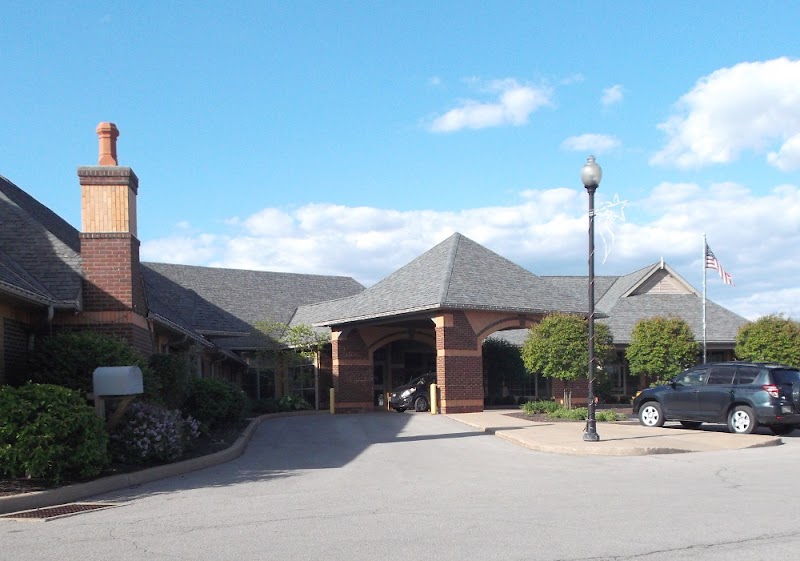
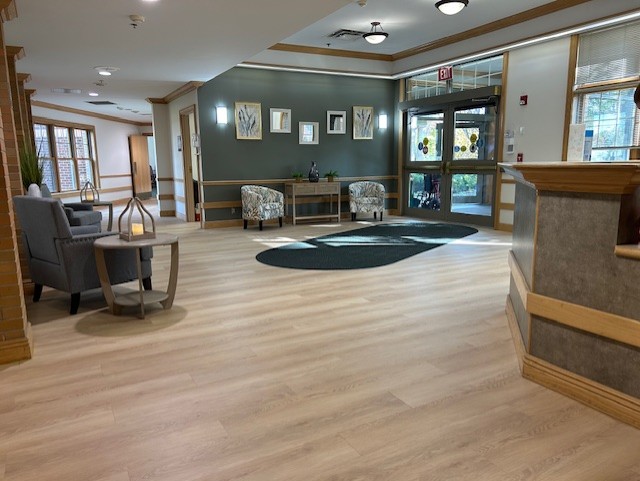
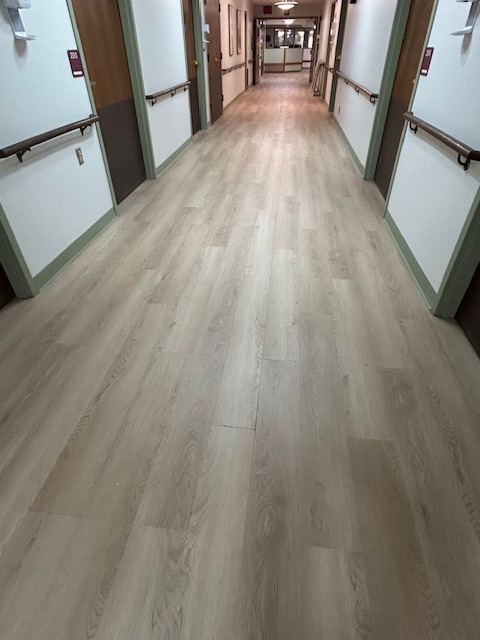
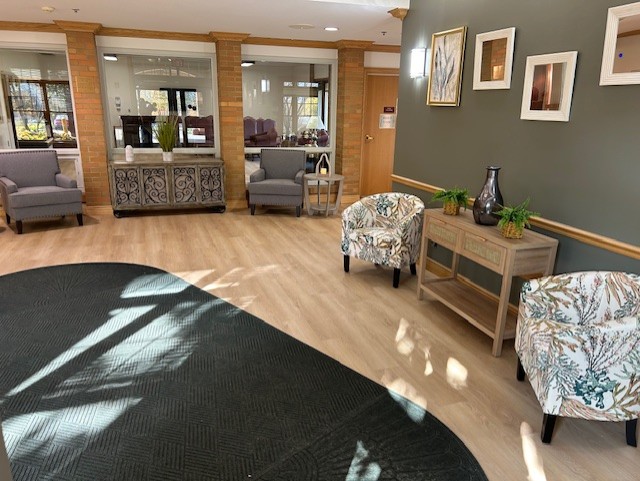
ORCHARD MANOR

20 ORCHARD DRIVE, GROVE CITY, PA 16127 (724) 458-7760
For profit - Limited Liability company 121 Beds Independent Data: November 2025
Trust Grade
73/100
#208 of 653 in PA
Last Inspection: September 2025

Inspected within the last 6 months. Data reflects current conditions.

Overview

Orchard Manor in Grove City, Pennsylvania has a Trust Grade of B, indicating it is a good choice but not without its flaws. It ranks #208 out of 653 nursing homes in Pennsylvania, placing it in the top half of facilities statewide, but only #8 out of 10 in Mercer County suggests there are better local options. The facility is improving, having reduced its issues from five in 2024 to three in 2025. Staffing is a mixed bag, with a 3/5 rating, indicating average levels, and a turnover rate of 46%, which is concerning but aligns with the state average. However, there are some serious concerns, including a recent incident where inadequate supervision led to a resident suffering a laceration requiring stitches and other injuries, as well as issues with care plan updates and oxygen management that could potentially harm residents. Overall, while there are strengths in its rating and improvements, families should be aware of the specific incidents and staff coverage levels.

Trust Score
B
73/100
In Pennsylvania
#208/653
Top 31%
Safety Record
Moderate
Needs review
Inspections
Getting Better
5 → 3 violations
Staff Stability
⚠ Watch
46% turnover. Above average. Higher turnover means staff may not know residents' routines.
Penalties
○ Average
$7,443 in fines. Higher than 70% of Pennsylvania facilities. Some compliance issues.
Skilled Nurses
○ Average
Each resident gets 31 minutes of Registered Nurse (RN) attention daily — about average for Pennsylvania. RNs are the most trained staff who monitor for health changes.
Violations
⚠ Watch
11 deficiencies on record. Higher than average. Multiple issues found across inspections.
★★★★☆
4.0
Overall Rating
★★★☆☆
3.0
Staff Levels
★★★☆☆
3.0
Care Quality
★★★★☆
4.0
Inspection Score
Stable
2024: 5 issues
2025: 3 issues

The Good

  • Full Sprinkler Coverage · Fire safety systems throughout facility
  • No fines on record

Facility shows strength in fire safety.

The Bad

Staff Turnover: 46%

Near Pennsylvania avg (46%)

Higher turnover may affect care consistency

Federal Fines: $7,443

Below median ($33,413)

Minor penalties assessed

The Ugly 11 deficiencies on record

1 actual harm
Sept 2025 3 deficiencies
CONCERN (D)

Potential for Harm - no one hurt, but risky conditions existed

Deficiency F0655 (Tag F0655)

Could have caused harm · This affected 1 resident

Based on review of facility policy, clinical records, and staff interview, it was determined that the facility failed to provide a resident and/or his/her representative with a summary of the baseline...

Read full inspector narrative →
Based on review of facility policy, clinical records, and staff interview, it was determined that the facility failed to provide a resident and/or his/her representative with a summary of the baseline care plan including physician's orders and medications for one of 21 residents reviewed (Resident R60). Findings include: A facility policy entitled Care Plans - Baseline dated 4/01/25, revealed a baseline plan of care to meet the resident's immediate needs shall be developed for each resident within forty-eight (48) hours of admission. To assure that the resident's immediate care needs are met and maintained, a baseline care plan will be developed within forty-eight (48) hours of the resident's admission. The interdisciplinary team will review the healthcare practitioner's orders (e.g., dietary needs, medications, routine treatments, etc.) and implement a baseline care plan to meet the resident's immediate care needs including, but not limited to the following: Initial goals based on admission orders; Physician orders; Dietary orders; Therapy services, Social services; and PASARR recommendations, if applicable. The resident and their representative will be provided a summary of the baseline care plan that includes, but is not limited to the following: The initial goals of the resident; A summary of the resident's medications and dietary instructions; Any services and treatments to be administered by the facility and personnel acting on behalf of the facility; and Any updated information based on the details of the comprehensive care plan, as necessary. Resident R60's clinical record revealed an admission date of 3/28/25, with diagnoses that included Parkinson's disease (a disorder of the central nervous system that affects movement, often including tremors), high blood pressure, orthostatic hypotension (a sudden drop in blood pressure when you stand from a seated or lying down position), and high cholesterol. Review of Resident R60's clinical record lacked evidence that the resident and/or the resident representative was provided a copy of the baseline care plans to include physician orders and medications. During an interview on 9/05/25, at approximately 12:10 p.m. the Director of Nursing confirmed there was no evidence that a copy of the baseline care plan including physician orders and medications was provided to Resident 60 and/or their representative. 28 Pa. Code 211.10(c) Resident Care Plan 28 Pa. Code 211.12 (d)(1)(3)(5) Nursing Services
CONCERN (D)

Potential for Harm - no one hurt, but risky conditions existed

Respiratory Care (Tag F0695)

Could have caused harm · This affected 1 resident

Based on review of facility policy and clinical records, observations, and staff interview, it was determined that the facility failed to provide oxygen and change/date of oxygen tubing according to p...

Read full inspector narrative →
Based on review of facility policy and clinical records, observations, and staff interview, it was determined that the facility failed to provide oxygen and change/date of oxygen tubing according to physician's orders for one of two residents reviewed for respiratory services (Resident R26).Findings include: Review of facility policy entitled Oxygen Administration Procedure dated 4/1/25, indicated Nasal Cannula: generally replaced every 7 days and when visibly soiled or compromised, and Tubing (extension/primary): usually every 14 days unless visibly soiled, cracked, or per manufacturer's guidance. Resident R26's clinical record revealed an admission date of 3/31/23, with diagnoses that included Atrial Fibrillation (A-Fib - irregular and often rapid heartbeat that can lead to stroke, heart failure, and other complications), heart failure (condition when your heart does not pump the blood as well resulting in difficulty breathing, tiredness, and swelling), and high blood pressure. Resident R26's clinical record revealed a physician's order dated 8/29/25, for oxygen at two liters per minute (2L/min) via nasal cannula (N/C - a tube that delivers oxygen to your nose through soft prongs) continuous at HS (bedtime) for shortness of breath; a physician's order dated 8/28/25, to change oxygen concentrator tubing every 2 weeks on 2nd and 15th of each month on 11-7 shift. Observations on 9/2/25, at 11:27 a.m. and 9/3/25, at 9:00 a.m. revealed Resident R26 lying on his/her bed with supplemental oxygen in place and the oxygen concentrator liter flow set at 2 L/min via nasal cannula. Further observation of the oxygen tubing revealed a date of 7/15/25. During an interview on 9/3/25, at 9:00 a.m. Licensed Practical Nurse Employee E1confirmed that Resident R26's nasal cannula was dated 7/15/25 and it should have been changed. 28 Pa. Code 211.10(c) Resident care policies28 Pa. Code 211.12(d)(1)(5) Nursing services
CONCERN (D)

Potential for Harm - no one hurt, but risky conditions existed

Deficiency F0761 (Tag F0761)

Could have caused harm · This affected 1 resident

Based on review of facility policy, manufacturer's recommendations, observations, and staff interviews, it was determined that the facility failed to ensure that medications were properly dated when o...

Read full inspector narrative →
Based on review of facility policy, manufacturer's recommendations, observations, and staff interviews, it was determined that the facility failed to ensure that medications were properly dated when opened and discarded in a timely manner for one of three medication carts reviewed (B Wing medication cart 2). Findings include: Review of a facility policy entitled Labeling of Medication Containers dated 4/01/25, revealed all medications maintained in the facility are properly labeled in accordance with current state and federal guidelines and regulations. Manufacturer's recommendations for Humalog insulin (a type of short-acting insulin), indicated that an opened multiple-dose vial stored at room temperature should be discarded after 28 days. Observations of the B Wing's medication cart 2 on 9/02/25, at 2:10 p.m. revealed an opened vial of Humalog insulin without an open date, therefore the staff were unable to determine the discard date. The Assistant Director of Nursing confirmed at that time, that the opened Humalog insulin vial lacked an opened date, and staff were unable to determine the discard date. During an interview with the Director of Nursing on 9/05/25, at 12:10 p.m. it was confirmed that insulins should be properly labeled with an opened date for staff to determine the discard date. 28 Pa. Code 211.9(a)(1) Pharmacy services 28 Pa. Code 211.10(c) Resident care policies 28 Pa. Code 211.12(d)(1)(3)(5) Nursing services
Oct 2024 5 deficiencies
CONCERN (D)

Potential for Harm - no one hurt, but risky conditions existed

Deficiency F0578 (Tag F0578)

Could have caused harm · This affected 1 resident

**NOTE- TERMS IN BRACKETS HAVE BEEN EDITED TO PROTECT CONFIDENTIALITY** Based on review of facility policy, and clinical records, and staff interview, it was determined that the facility failed to ass...

Read full inspector narrative →
**NOTE- TERMS IN BRACKETS HAVE BEEN EDITED TO PROTECT CONFIDENTIALITY** Based on review of facility policy, and clinical records, and staff interview, it was determined that the facility failed to assure a physician's order was completed to indicate the code status as Full Code (Cardiopulmonary Resuscitation-CPR/Attempt Resuscitation) or Do Not Resuscitate (DNR/Do Not Attempt Resuscitation-Allow Natural Death) for four of 19 residents reviewed (Residents R56, R58, R65, and R225). Findings include: A facility policy entitled Patient Self Determination Act / Resident Rights dated [DATE], indicated The Attending Physician will write an order for any valid Advanced Directive on the Physician Order sheet and document on the progress notes. Resident R56's clinical record revealed an admission date of [DATE], with diagnoses that included dislocated left hip, chronic obstructive pulmonary disease (COPD - a condition that obstructs air flow in the lungs with symptoms of difficulty breathing, coughing, and wheezing) and neurogenic bladder (disorder where normal bladder function is disrupted due to nerve damage). Resident R56's clinical record lacked a physician's order to indicate a code status as Full Code or DNR. Further review of Resident R56's clinical record lacked evidence of an advanced directive, living will, healthcare status form, or Physician Order for Life sustaining Treatment (POLST) on the electronic health record or paper chart. During an interview on [DATE], at 12:28 p.m. the Director of Nursing (DON) and Registered Nurse (RN) Employee E1 confirmed Resident R56's clinical record lacked evidence of a physician's order addressing his/her code status and stated the facility would consider him/her a full code. Further investigation and interview with Admissions Director revealed he/she had documents located in his/her office for Resident R56 indicating he/she was a DNR. During an interview on [DATE], at 12:43 p.m. the DON and RN Employee E1 confirmed the facility failed to obtain a physician's order to honor Resident R56's DNR wishes and would have considered him/her a full code. Resident R58's clinical record revealed an admission date of [DATE], with diagnoses that included malignant neoplasm of colon (a cancerous tumor of the large intestine), cardiac heart failure (a chronic condition in which the heart doesn't pump blood as well as it should), weakness, and repeated falls. Resident R58's clinical record lacked a physician's order to indicate a code status as Full Code or DNR. Resident R65's clinical record revealed an admission date of [DATE], with diagnoses that included fracture of left arm, acute kidney failure (a condition when the kidneys suddenly cannot filter waste from the blood), morbid obesity (a serious condition being more than 100 pounds over your recommended weight), and osteoarthritis (a type of arthritis that occurs when tissue at ends of bones wears down). Resident R65's clinical record lacked a physician's order to indicate a code status as Full Code or DNR. Resident R225's clinical record revealed an admission date of [DATE], with diagnoses that included diabetes mellitus (a chronic disease that occurs when the body has high blood sugar levels), dementia (a disease of the brain affecting mood, behavior, and decision making), protein-calorie malnutrition (weight loss contributed to inadequate protein and calorie intake), and cerebral infarction (a serious condition that occurs when blood flow to the brain is blocked resulting in brain tissue death). Resident R225's clinical record lacked a physician's order to indicate a code status as Full Code or DNR. During an interview on [DATE], at 2:00 p.m. Licensed Practical Nurse (LPN) Employee E2 confirmed that he/she would refer to the electronic health record where all the physician orders could be readily accessed when a resident had a change in condition and the code status would need to be referenced. LPN E2 further confirmed that R225's clinical record lacked a physician order for code status. During an interview on [DATE], at 10:30 a.m. the DON confirmed that Resident R58, Resident R65, and Resident R225's clinical records lacked a physician's order to indicate a code status as Full Code or DNR. 28 Pa. Code 201.18 (b)(1)(e)(1) Management
CONCERN (D)

Potential for Harm - no one hurt, but risky conditions existed

Deficiency F0655 (Tag F0655)

Could have caused harm · This affected 1 resident

Based on review of facility policy, clinical records and staff interview, it was determined that the facility failed to ensure that a baseline care plan was developed/implemented within the required t...

Read full inspector narrative →
Based on review of facility policy, clinical records and staff interview, it was determined that the facility failed to ensure that a baseline care plan was developed/implemented within the required timeframe and failed to ensure that a written copy including a summary of the resident's medications and dietary instructions was provided to residents and residents' representatives for three of five residents reviewed (Residents R56, R65, and R225). Findings include: Review of facility policy entitled, Baseline Care Plan dated 10/1/24, indicated Orchard Manor will develop and implement a baseline care plan for each Resident that includes the instructions needed to provide effective and person centered care of the Resident that meet professional standards of quality of care. The baseline care plan will be developed within 48-hours of a Resident's admission. and A copy of the baseline care plan shall be provided to the Resident and Resident representative in a language that the Resident and/or Resident representative can understand. Resident R56's clinical record revealed an admission date of 9/12/24, with diagnoses that included dislocated left hip, chronic obstructive pulmonary disease (COPD - a condition that obstructs air flow in the lungs with symptoms of difficulty breathing, coughing, and wheezing), and neurogenic bladder (disorder where normal bladder function is disrupted due to nerve damage). Review of Resident R56's clinical record lacked evidence that a baseline care plan was developed / implemented within 48-hours of admission, and that a written summary of the baseline care plan was provided to the resident and resident representative. Resident R65's clinical record revealed an admission date of 8/19/24, with diagnoses that included fracture of left arm, acute kidney failure (a condition when the kidneys suddenly cannot filter waste from the blood), morbid obesity (a serious condition being more than 100 pounds over your recommended weight), and osteoarthritis (a type of arthritis that occurs when tissue at ends of bones wears down). Review of Resident R65s clinical record lacked evidence that a baseline care plan was developed / implemented within 48-hours of admission, and that a written summary of the baseline care plan was provided to the resident and resident representative. Resident R225's clinical record revealed an admission date of 10/25/24, with diagnoses that included diabetes mellitus (a chronic disease that occurs when the body has high blood sugar levels), dementia (a disease of the brain affecting mood, behavior, and decision making), protein-calorie malnutrition (weight loss contributed to inadequate protein and calorie intake), and cerebral infarction (a serious condition that occurs when blood flow to the brain is blocked resulting in brain tissue death). Review of Resident R225's clinical record lacked evidence that a baseline care plan was developed / implemented within 48-hours of admission, and that a written summary of the baseline care plan was provided to the resident and resident representative. During an interview on 10/31/24, at 11:40 a.m. the Registered Nurse Assessment Coordinator (RNAC) confirmed that the baseline care plans were not developed / implemented within 48 hours and there was no evidence that a written summary was provided to Residents R56, R65, and R225 and their representatives. 28 Pa. Code 201.24 (e)(4) Admissions Policy 28 Pa. Code 211.10(c) Resident care policies
CONCERN (D)

Potential for Harm - no one hurt, but risky conditions existed

Incontinence Care (Tag F0690)

Could have caused harm · This affected 1 resident

Based on review of facility policy and clinical records, observations, and staff interview, it was determined that the facility failed to provide appropriate care regarding a urinary catheter (a tube ...

Read full inspector narrative →
Based on review of facility policy and clinical records, observations, and staff interview, it was determined that the facility failed to provide appropriate care regarding a urinary catheter (a tube inserted into the bladder to drain urine into a bag) for one of two residents reviewed for catheters (Resident R56). Findings include: Review of facility policy entitled Indwelling Catheter Use and Removal dated 10/1/24, indicated Catheter bag should be in a cover. Resident R56's clinical record revealed an admission date of 9/12/24, with diagnoses that included dislocated left hip, chronic obstructive pulmonary disease (COPD - a condition that obstructs air flow in the lungs with symptoms of difficulty breathing, coughing, and wheezing) and neurogenic bladder (disorder where normal bladder function is disrupted due to nerve damage). Resident R56's clinical record revealed a physician's order dated 9/13/24, that indicated to Check urinary drainage bag to ensure it is covered Observations on 10/28/24, at 3:30 p.m. and 10/29/24, at 12:50 p.m. revealed that Resident R56 was laying in his/her bed and the urinary drainage bag was hanging from their bed and was visible from the hallway and lacking a privacy cover. During an interview on 10/29/24, at 1:36 p.m. the Director of Nursing confirmed that the catheter drainage bag should be covered. 28 Pa. Code 211.12(d)(1)(5) Nursing Services
CONCERN (D)

Potential for Harm - no one hurt, but risky conditions existed

Respiratory Care (Tag F0695)

Could have caused harm · This affected 1 resident

Based on review of facility policy and clinical records, observations, and staff interview, it was determined that the facility failed to provide oxygen for one of four residents reviewed for respirat...

Read full inspector narrative →
Based on review of facility policy and clinical records, observations, and staff interview, it was determined that the facility failed to provide oxygen for one of four residents reviewed for respiratory services according to physician's orders (Resident R19). Findings include: Review of facility policy entitled Oxygen Therapy via Concentrator or Portable dated 10/1/24, indicated To administer oxygen for the treatment of certain disease or conditions per physician's orders And Nurse responsibility for oxygen therapy includes but isn't limited to checking physician order and set control to the prescribed liters per minute. Resident R19's clinical record revealed an admission date of 2/02/22, with diagnoses that included chronic obstructive pulmonary disease (COPD - a condition that obstructs air flow in the lungs with symptoms of difficulty breathing, coughing, and wheezing), congestive heart failure (CHF - condition where the heart muscle don't pump blood as well causing difficulty breathing and fluid retention), and high blood pressure. Resident R19's clinical record revealed a physician's order dated 9/12/23, for oxygen at three liter per minute (3L/min) via nasal cannula (N/C - a tube that delivers oxygen to your nose through soft prongs) continuous every shift for shortness of breath. Observation of Resident R19's oxygen flow meter (a medical device used for oxygen flow measurement) on 10/28/24, at 4:06 p.m. revealed the oxygen flow measurement was at 5L/min via N/C. At the time of observation Resident R19 stated he/she was not to have their oxygen concentrator set at 5L/min. During an interview at the time of observation Licensed Practical Nurse Employee E3 confirmed the oxygen administration level was set at 5L/min via N/C and did not follow the physician's orders. 28 Pa. Code 211.12(d)(1)(3)(5) Nursing services
CONCERN (D)

Potential for Harm - no one hurt, but risky conditions existed

Infection Control (Tag F0880)

Could have caused harm · This affected 1 resident

Based on review of clinical records and facility policy, observations, and staff interview, it was determined that the facility failed to use appropriate infection control practices for disinfection a...

Read full inspector narrative →
Based on review of clinical records and facility policy, observations, and staff interview, it was determined that the facility failed to use appropriate infection control practices for disinfection and storage of bedpans and wash basins for two of 19 residents reviewed (Residents R29 and R58). Findings include: Review of a facility policy entitled, Disinfection of Bedpans and Urinals, dated 10/01/24, revealed purpose to provide guidelines for disinfection of bedpans and urinals to put on gloves, cover bedpan or urinal before taking it to the bathroom or to the dirty utility room, empty contents (urine & feces) into toilet or hopper, flush the toilet or hopper, rinse bedpan or urinal with cool water to remove feces and urine, pour small amount of disinfectant solution (enough to thoroughly wet all surfaces) on and into bedpan or urinal or spray disinfectant liberally to thoroughly wet the surfaces. (May use a disinfectant cloth instead), wash hands, cover and return bedpan or urinal to resident's cabinet, wash hands. Nursing considerations: disposable bedpans and urinals are for single resident use only. [NAME] with the resident's name and discard upon discharge. Resident R29's clinical record revealed an admission date of 2/14/23, with diagnoses that included injury of head, concussion (a brain injury caused by a blow to the head or shaking of the head and body), fracture of facial bones, and a maxillary fracture (a facial injury to the upper jawbone). Resident R58's clinical record revealed an admission date of 10/02/24, with diagnoses that included malignant neoplasm of colon (a cancerous tumor of the large intestine), cardiac heart failure (a chronic condition in which the heart doesn't pump blood as well as it should), weakness, and repeated falls. Observations on 10/29/24, at 10:30 a.m. and 12:30 p.m. revealed an unlabeled bedpan on the floor of Resident R29 and Resident R58's shared bathroom. Further observations on 10/30/24, at 12:00 p.m. and 1:30 p.m. revealed a bedpan, with a wash basin laying upside down on top of the bedpan, in the residents' shared bathroom. The wash basin was labeled with Resident R29's name. The Registered Nurse Infection Control (RN IC) employee confirmed on 10/30/24, at 1:30 p.m. that the unlabeled bedpan was observed on the floor of Resident R29 and R58's shared bathroom with a wash basin resting on top of the bedpan. The RN IC further confirmed that the bedpan should be labeled with an individual resident's name, sanitized, and stored in a clean bag immediately after use in the individual resident's bedside stand, and the wash basin should also be clean and stored after individual resident use and not laying on the floor. 28 Pa. Code 211.12 (d)(1)(5) Nursing services
Nov 2023 1 deficiency
CONCERN (D)

Potential for Harm - no one hurt, but risky conditions existed

Quality of Care (Tag F0684)

Could have caused harm · This affected 1 resident

Based on review of clinical records, facility policy and facility records, and staff interview, it was determined that the facility failed to follow physician's orders to consult psychology/psychiatry...

Read full inspector narrative →
Based on review of clinical records, facility policy and facility records, and staff interview, it was determined that the facility failed to follow physician's orders to consult psychology/psychiatry per physician orders for one of 17 residents (Resident R23). Findings include: Review of facility policy entitled Psychiatric Consultation dated 3/13/23, indicated that the psychiatrist will complete a follow-up form on all visits, and this form will be located in the resident's medical record. Review of Resident R23's clinical record revealed an admission date of 4/3/2019, with diagnoses that included Dementia with other behavioral disturbance (a disease that affects short term memory and the ability to think logically which include having behaviors such as yelling, hitting individuals, mumbling and banging on objects), hypertension (high blood pressure), atrial fibrillation (irregular heartbeat), and Alzheimer's disease (a disease that affects short term memory and the ability to think logically). Review of Resident R23's clinical record revealed that on 10/9/23, the CRNP (Certified Registered Nurse Practitioner) ordered to Consult Psychology/Psychiatry. Review of Resident R23's clinical record as of 11/8/23, revealed no evidence indicating the psychiatrist had seen Resident R23 per the order to consult dated 10/9/23. Review of psychiatric appointment schedule revealed Resident R23 was on the schedule to be seen in the month of October 2023. The appointment schedule lacked evidence that the resident had been seen during the month of October. During an interview on 11/8/23, at 12:15 p.m. the Director of Nursing (DON) revealed that the psychiatrist makes rounds in the facility every two weeks. During an interview on 11/8/23, at 1:35 p.m. the DON confirmed that Resident R23 was not seen by psychology/psychiatry as ordered and also confirmed that Resident R23 should have been seen by psychology/psychiatry on the following scheduled visit after the consult order was written on 10/9/23. 28 Pa. Code 211.5(f)(ix) Medical records 28 Pa. Code 211.12(d)(1)(5) Nursing Services
Sept 2023 1 deficiency 1 Harm
SERIOUS (G) 📢 Someone Reported This

A family member, employee, or ombudsman was alarmed enough to file a formal complaint

Actual Harm - a resident was hurt due to facility failures

Accident Prevention (Tag F0689)

A resident was harmed · This affected 1 resident

**NOTE- TERMS IN BRACKETS HAVE BEEN EDITED TO PROTECT CONFIDENTIALITY** Based on observations, review of clinical records, facility policies and facility documentation, and staff and resident intervie...

Read full inspector narrative →
**NOTE- TERMS IN BRACKETS HAVE BEEN EDITED TO PROTECT CONFIDENTIALITY** Based on observations, review of clinical records, facility policies and facility documentation, and staff and resident interviews, it was determined that the facility failed to provide adequate supervision that resulted in actual harm including a laceration requiring seven sutures (stitches to close a wound), head injury, and skin tear of forearm, to one of two residents reviewed (Resident R1). Findings include: Review of the facility policy entitled, Comprehensive Care Plan dated 3/13/23, revealed that the care plan will describe at a minimum, the following: (a) the services that are to be furnished to attain or maintain the Resident's highest practical physical, mental and psychosocial well being . 6. Qualified staff responsible for carrying out interventions specified in the care plan will be notified of their roles and responsibilities for carrying out the interventions, initially and when changes are made. Review of the facility policy entitled, Fall Prevention Program dated 3/13/23, revealed that residents that have a fall history will be placed on the fall prevention precautions, .6. fall risk interventions will at a minimum: include educating staff, resident, and family to increase the awareness of residents risk for falling and possible interventions to minimize the risk .8. Certified Nursing Assistants may assist with fall prevention as follows: 9a) follow the interventions as outlined on the care plan and [NAME] [system for resident care information to be relayed to staff] . Review of Resident R1's clinical record revealed an original admission date of 12/14/2017, with diagnoses that included heart failure, weakness of the right side of the body following a stroke, diabetes, difficulty walking, obesity, low back pain, legal blindness, Alzheimer's disease and dementia (condition characterized by progressive, persistent severe impairment of intellectual capacity, including memory loss and confusion). Review of the physician order sheet, dated 9/26/23, revealed that on 1/03/23 an order was written Do Not leave unattended in bathroom. Review of a care plan entitled I am at high risk for falls care plan, revealed don't leave me unattended in the bathroom and was created on 1/03/23. Review of nursing documentation, dated 9/11/23, written by Registered Nurse (RN) Employee E1, stated that Resident R1 experienced leaning back on the toilet for about 20 seconds with some tremors but was still alert and talking. Review of nursing documentation dated 9/14/23, written by RN Employee E2 stated called to hallway due to resident going unresponsive when staff stood Resident R1 up. Resident was unresponsive for approximately three minutes. Upon arrival resident was alert and oriented but unaware of recent incident .Staff reported these episodes usually happened when resident is straining during bowel movement and occasionally when urinating . Review of nursing documentation dated 9/15/23, written by Licensed Practical Nurse (LPN) Employee E3 revealed that he/she was called to the shower room by the Nurse Aide (NA) as Resident R1 had an unresponsive episode while getting on toilet lasting five seconds . Review of nursing documentation dated 9/15/23, written by RN Employee E4 stated the RN was requested to go to Resident R1's room at approximately 4:00 p.m. Resident R1 was found lying on his back in his bedroom in a pool of blood. Resident R1 was noted as having a laceration above his right elbow, an abraded area on his right arm and in between the pinkie and ring finger of the right hand. Notifications were made and resident was sent to hospital. Review of nursing documentation dated 9/15/23, stated the LPN E3 was called to the Resident R1's bathroom. Resident R1 was on the floor in his bathroom on right side, head against door frame, blood on floor. Resident R1 was alert, talking, complained of some discomfort to right eyebrow, no other complaint of pain. Laceration noted to the right eyebrow, skin tear to left forearm and left hand. Wound to head covered with gauze and wrapped with kling Xeroform applied to left arm and wrapped, steri strips to skin tear between finger of left hand. Review of facility incident report and NA Employee E5's statement revealed that Resident R1 was assisted to the bathroom by two staff. NA Employee E5 was with the resident and the second NA left the room. NA Employee E5 left the resident alone in the bathroom to retrieve a brief (incontinence product) for Resident R1. When NA Employee E5 returned, Resident R1 had fallen off the toilet in the bathroom. Observation on 9/26/23, of the location of the briefs revealed that their storage area was approximately 30 plus feet from Resident R1's door. NA Employees E6 and E7 confirmed that the briefs were kept at the location observed which was on the right side of the shower room. Review of hospital records revealed the final diagnoses from Resident R1's admission to the hospital was fall, eye brow laceration requiring seven sutures, head injury, skin tear of forearm without complication and contusion. Observation of Resident R1 on 9/26/23, at 10:15 a.m. noted, healing area from eye brow laceration with discoloring of yellow, purple and black colors with slight swelling still apparent. Left forearm wrapped, small bruised areas noted on both arms and large dark red purple area on the right arm from the elbow to shoulder area. Resident R1 stated at the time of the observation I took a tumble out the door. During an interview on 9/26/23, at 3:24 p.m. the Director of Nursing confirmed that Resident R1 should not have been left unsupervised in the bathroom. The facility failed to provide adequate supervision that resulted in actual harm to Resident R1. 28 Pa. Code 201.14(a) Responsibility of licensee 28 Pa. Code 201.18(b)(1) Management 28 Pa. Code 201.18(b)(3)(e)(1) Management 28 Pa. Code 211.10(d) Resident care policies 28 Pa. Code 211.12(d)(1)(5) Nursing services
Jul 2023 1 deficiency
CONCERN (D) 📢 Someone Reported This

A family member, employee, or ombudsman was alarmed enough to file a formal complaint

Potential for Harm - no one hurt, but risky conditions existed

Medical Records (Tag F0842)

Could have caused harm · This affected 1 resident

Based on review of clinical record and staff interviews, it was determined that the facility failed to have documented evidence of a physician's order for one of three residents reviewed (Resident R1)...

Read full inspector narrative →
Based on review of clinical record and staff interviews, it was determined that the facility failed to have documented evidence of a physician's order for one of three residents reviewed (Resident R1). Findings include: Review of Resident R1's clinical record revealed an admission date of 12/14/17, with diagnoses that included cellulitis (bacterial skin infection causing the affected area to become swollen, inflamed, painful, and warm to the touch) of the left lower leg, atrial fibrillation (irregular heart beat causing the heart to beat too quickly), heart failure, and diabetes. Review of Resident R1's clinical record revealed that Resident R1 was to have a procedure done at the hospital on 6/7/23. A physician's order written on 6/4/23, revealed to hold the medication Eliquis (a medication that makes the blood thin preventing clotting) 5 milligrams (mg) tablet by mouth two times per day, and was to be held starting 6/4/23, at the evening dose and held the following day 6/5/23, for both doses and 6/6/23, both doses for resident safety to prevent bleeding. The medication was normally administered during the 8:00 a.m. and 8:00 p.m. medication passes. A review of the June 2023 Medication Administration Record (MAR) revealed that the medication Eliquis 5 mg by tablet by mouth twice per day, was held according to the written physician's order. Review of Resident R1's clinical record revealed that upon return from the procedure on 6/7/23, the surgeon's office sent post operative instructions with Resident R1 to the facility. The instructions reviewed gave general information to restart all medications previously on the resident's medication list. During an interview with the Registered Nurse (RN) Supervisor on 7/6/23, at 12:30 p.m. it was identified that the surgeon's office was called to double check for resident safety due to bleeding precautions, if Eliquis 5 mg by mouth twice per day should be restarted on 6/7/23. The surgeon's office was unable to be reached and a message was left for a return call. The resident's primary care physician's office was then called for guidance. The Certified Registered Nurse Practitioner (CRNP) was contacted by phone and gave the verbal instruction to hold the medication for bleeding precautions until the surgeon returned call. During a telephone interview with the CRNP on 7/6/23, at 12:36 p.m. it was confirmed that the RN Supervisor contacted him/her on 6/7/23, in the evening questioning if Eliquis 5 mg one tab by mouth twice per day should be restarted that evening after the surgical procedure. The RN Supervisor was informed to hold the medication Eliquis 5 mg by mouth twice per day due to bleeding precautions after surgery until the surgeon could give the clarification to reorder it. The CRNP confirmed that a verbal order was given to the RN Supervisor. Review of Resident R1's clinical record lacked documentation regarding contacting the CRNP and a physician's order regarding the Eliquis medication. Review of physician's orders revealed that on 6/9/23, the surgeon's office returned the call and ordered to restart Eliquis 5 mg one tablet by mouth twice per day. The next dose was reordered to be given on 6/9/23, at the 8:00 p.m. medication pass. Review of the June 2023 MAR revealed that the medication was given as ordered on 6/9/23, during the 8:00 p.m. medication pass. During an interview on 7/6/23, at approximately 1:00 p.m. the Director of Nursing, confirmed that the clinical record lacked documented evidence as to whether the Eliquis was to be restarted on 6/7/23, after the surgical procedure, lacked a written physician's order and lacked documentation that the CRNP had been contacted and gave a verbal order to hold the Eliquis until confirmation by the surgeon's office. 28 Pa. Code 211.12(d)(1)(3)(5) Nursing services 28 Pa. Code 211.5(f) Medical records
Understanding Severity Codes (click to expand)
Life-Threatening (Immediate Jeopardy)
J - Isolated K - Pattern L - Widespread
Actual Harm
G - Isolated H - Pattern I - Widespread
Potential for Harm
D - Isolated E - Pattern F - Widespread
No Harm (Minor)
A - Isolated B - Pattern C - Widespread

Questions to Ask on Your Visit

  • "Can I speak with families of current residents?"
  • "What's your RN coverage like on weekends and overnight?"

Our Honest Assessment

Strengths
  • • Licensed and certified facility. Meets minimum state requirements.
Concerns
  • • 11 deficiencies on record, including 1 serious (caused harm) violation. Ask about corrective actions taken.
Bottom line: Mixed indicators with Trust Score of 73/100. Visit in person and ask pointed questions.

About This Facility

What is Orchard Manor's CMS Rating?

CMS assigns ORCHARD MANOR an overall rating of 4 out of 5 stars, which is considered above average nationally. Within Pennsylvania, this rating places the facility higher than 99% of the state's 100 nursing homes. This rating reflects solid performance across the metrics CMS uses to evaluate nursing home quality.

How is Orchard Manor Staffed?

CMS rates ORCHARD MANOR's staffing level at 3 out of 5 stars, which is average compared to other nursing homes. Staff turnover is 46%, compared to the Pennsylvania average of 46%. RN turnover specifically is 69%, which is notably high. RNs provide skilled clinical oversight, so turnover in this role can affect medical care quality.

What Have Inspectors Found at Orchard Manor?

State health inspectors documented 11 deficiencies at ORCHARD MANOR during 2023 to 2025. These included: 1 that caused actual resident harm and 10 with potential for harm. Deficiencies causing actual harm indicate documented cases where residents experienced negative health consequences.

Who Owns and Operates Orchard Manor?

ORCHARD MANOR is owned by a for-profit company. For-profit facilities operate as businesses with obligations to shareholders or private owners. The facility operates independently rather than as part of a larger chain. With 121 certified beds and approximately 84 residents (about 69% occupancy), it is a mid-sized facility located in GROVE CITY, Pennsylvania.

How Does Orchard Manor Compare to Other Pennsylvania Nursing Homes?

Compared to the 100 nursing homes in Pennsylvania, ORCHARD MANOR's overall rating (4 stars) is above the state average of 3.0, staff turnover (46%) is near the state average of 46%, and health inspection rating (4 stars) is above the national benchmark.

What Should Families Ask When Visiting Orchard Manor?

Based on this facility's data, families visiting should ask: "Can I visit during a mealtime to observe dining assistance and food quality?" "How do you handle medical emergencies, and what is your hospital transfer rate?" "Can I speak with family members of current residents about their experience?"

Is Orchard Manor Safe?

Based on CMS inspection data, ORCHARD MANOR has a clean safety record: no substantiated abuse findings (meaning no confirmed cases of resident harm), no Immediate Jeopardy citations (the most serious violation level indicating risk of serious injury or death), and is not on the Special Focus Facility watch list (a federal program monitoring the lowest-performing 1% of nursing homes). The facility has a 4-star overall rating and ranks #1 of 100 nursing homes in Pennsylvania. While no facility is perfect, families should still ask about staff-to-resident ratios and recent inspection results during their visit.

Do Nurses at Orchard Manor Stick Around?

ORCHARD MANOR has a staff turnover rate of 46%, which is about average for Pennsylvania nursing homes (state average: 46%). Moderate turnover is common in nursing homes, but families should still ask about staff tenure and how the facility maintains care continuity when employees leave.

Was Orchard Manor Ever Fined?

ORCHARD MANOR has been fined $7,443 across 1 penalty action. This is below the Pennsylvania average of $33,153. While any fine indicates a compliance issue, fines under $50,000 are relatively common and typically reflect isolated problems that were subsequently corrected. Families should ask what specific issues led to these fines and confirm they've been resolved.

Is Orchard Manor on Any Federal Watch List?

ORCHARD MANOR is not on any federal watch list. The most significant is the Special Focus Facility (SFF) program, which identifies the bottom 1% of nursing homes nationally based on persistent, serious quality problems. Not being on this list means the facility has avoided the pattern of deficiencies that triggers enhanced federal oversight. This is a positive indicator, though families should still review the facility's inspection history directly.