SPRING CREEK REHABILITATION AND NURSING CENTER
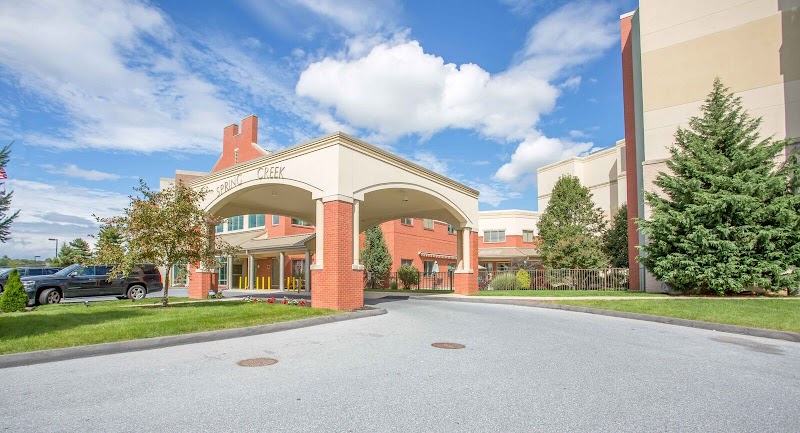
1205 SOUTH 28TH STREET, HARRISBURG, PA 17111 (717) 565-7000
For profit - Limited Liability company 404 Beds Independent Data: November 2025
Trust Grade
35/100
#495 of 653 in PA
Last Inspection: April 2025

Within standard 12-15 month inspection cycle. Federal law requires annual inspections.

Overview

Spring Creek Rehabilitation and Nursing Center has received a Trust Grade of F, indicating significant concerns about the quality of care provided. It ranks #495 out of 653 nursing homes in Pennsylvania, placing it in the bottom half of facilities in the state, and #7 out of 8 in Dauphin County, where only one other local option is better. The facility is improving slightly, as it has reduced its number of issues from 17 in 2024 to 13 in 2025. Staffing is a relative strength here with a 4/5 star rating and a 42% turnover rate, which is below the state average and suggests that staff tend to stay longer. However, there are serious concerns, including incidents where residents experienced harm due to inadequate monitoring during elevated temperatures and a failure to prevent elopement that led to a fall. Additionally, the facility has been cited for not following proper infection control protocols, which underscores the need for families to carefully consider both the strengths and weaknesses of this nursing home.

Trust Score
F
35/100
In Pennsylvania
#495/653
Bottom 25%
Safety Record
Moderate
Needs review
Inspections
Getting Better
17 → 13 violations
Staff Stability
○ Average
42% turnover. Near Pennsylvania's 48% average. Typical for the industry.
Penalties
✓ Good
$26,350 in fines. Lower than most Pennsylvania facilities. Relatively clean record.
Skilled Nurses
○ Average
Each resident gets 35 minutes of Registered Nurse (RN) attention daily — about average for Pennsylvania. RNs are the most trained staff who monitor for health changes.
Violations
⚠ Watch
47 deficiencies on record. Higher than average. Multiple issues found across inspections.
★★☆☆☆
2.0
Overall Rating
★★★★☆
4.0
Staff Levels
☆☆☆☆☆
0.0
Care Quality
★★☆☆☆
2.0
Inspection Score
Stable
2024: 17 issues
2025: 13 issues

The Good

  • 4-Star Staffing Rating · Above-average nurse staffing levels
  • Full Sprinkler Coverage · Fire safety systems throughout facility
  • No fines on record
  • Staff turnover below average (42%)

    6 points below Pennsylvania average of 48%

Facility shows strength in staffing levels, fire safety.

The Bad

2-Star Overall Rating

Below Pennsylvania average (3.0)

Below average - review inspection findings carefully

Staff Turnover: 42%

Near Pennsylvania avg (46%)

Typical for the industry

Federal Fines: $26,350

Below median ($33,413)

Moderate penalties - review what triggered them

The Ugly 47 deficiencies on record

2 actual harm
Jul 2025 1 deficiency 1 Harm
SERIOUS (G) 📢 Someone Reported This

A family member, employee, or ombudsman was alarmed enough to file a formal complaint

Actual Harm - a resident was hurt due to facility failures

Quality of Care (Tag F0684)

A resident was harmed · This affected 1 resident

**NOTE- TERMS IN BRACKETS HAVE BEEN EDITED TO PROTECT CONFIDENTIALITY** Based on a review of clinical records, hospital records, facility documents, and staff interviews, it was determined the facilit...

Read full inspector narrative →
**NOTE- TERMS IN BRACKETS HAVE BEEN EDITED TO PROTECT CONFIDENTIALITY** Based on a review of clinical records, hospital records, facility documents, and staff interviews, it was determined the facility failed to monitor residents and provide care and services during elevated temperatures in resident care areas, resulting in actual harm as evidenced by hyperthermia and respiratory distress for one of eight residents reviewed (Resident 1). Findings include: Hyperthermia is defined as a medical condition characterized by an abnormally high body temperature. Respiratory distress is defined as a condition where a person has difficulty breathing, characterized by increased effort or difficulty taking in enough oxygen. Review of facility provided documentation, dated June 23, 2025, revealed at midnight the rooftop HVAC (Heating, Ventilation, Air Conditioning) unit on the building had a bad compressor and condensing coil. The rooftop HVAC unit was not able to be provided sufficient air conditioning to the common areas, especially on M4 ([NAME] unit 4) and M3 units. Further review of facility documentation revealed, On 6/23/2025, the facility rented 13 one-ton portable air conditioning .to be installed on the unit hallways and dining rooms. The units arrived around 0800 [8:00 AM]. The nursing team assessed residents for symptoms of heat exhaustion. Residents were offered extra fluids. Residents in areas where temperatures were high were moved to another room on the South building. The maintenance team took random temperatures on the unit. The temperature ranges from 82-85 [degrees Fahrenheit (F)]. In the late afternoon, the temperature on M4 and M3 dining rooms rose to 90 degrees. On 6/23/25, clinical services was notified that temperatures were rising on [NAME] units 3 and 4. Temperatures completed for all rooms and common areas. Extra fluids and popsicles were distributed to the residents on M 3 and 4. Vital signs were obtained on M4, and residents assessed. Residents affected by the temperatures were moved to other units. Review of Resident 1's physician's orders revealed diagnoses that included Alzheimer's disease (progressive disease that destroys memory and other important mental functions), traumatic brain injury, vascular dementia with behaviors, and Epilepsy (disorder in which nerve cell activity in the brain is disturbed, causing seizures). Review of Resident 1's progress note titled Late Entry, dated June 23, 2025, at 10:54 PM, read Nursing Note Late Entry: Resident Alert and Oriented assessment completed, no s/s of acute distressed noted. Resident encouraged to continue to stay hydrated. The Late Entry progress note was created on June 25, 2025, at 10:56 AM. Review of Resident 1's progress note titled Late Entry, dated June 23, 2025, at 11:12 PM, read, Late Entry: Note Text: Evaluation of resident completed. Resident shows no s/s of pain or distress. [He/She] denies needs or concerns at this time. The Late Entry progress note was created on June 25, 2025, at 11:19 AM. Review of Resident 1's progress notes revealed a Late Entry dated June 24, 2025, at 8:19 PM, that read Late Entry: Note Text: Resident offered room change; however, resident declined room change at this time. Resident shows no s/s of discomfort or distress and verbalizes understanding to contact staff for any needs or concerns. The Late Entry progress note was created on June 25, 2025, at 11:20 AM. Review of Resident 1's progress note on June 24, 2025, at 6:00 PM, revealed a new order for Acetaminophen (Tylenol) 650 mg by mouth every six hours as needed for Elevated Temperature. A progress note on June 24, 2025, at 7:58 PM, nursing documented Prior to Writer's arrival resident was assisted from [his/her] room, then placed into [his/her] wheelchair and provided a different location X2 and encouraged fluids. After much encouragement. Resident was found back in [his/her] in bed. Upon entering resident's room, call light was not on. Room temperature 87 F (Fahrenheit), personal fan oscillating nearby resident. A progress note date June 24, 2025, at 8:00 PM, revealed the charge nurse documented Writer was alerted by assigned nurse that resident was under respiratory distress. Writer assessed; Resident had medium sized emesis. Increased temperature (Tylenol was administered). Skin warm and intact. Resident is lethargic, Resident has shortness of breath, lung sounds clear, and no cough present, pulse oxygen 90% at room air. Unable to follow simple commands, increased restlessness (reaching into the air and involuntary extremity movements), and no verbal responses. Vital signs as noted in PCC [Point Click Care- documentation system]. Writer obtained a verbal order from [Certified Registered Nurse Practitioner] to send to hospital for eval (evaluation) and treat. An additional progress note on June 24, 2025, at 8:25 PM, read Resident ask to me get out bed and this write put on [his/her] chair, room so hot. Resident stayed on [his/her] wheelchair about 15 minutes and put [himself/herself] in bed. I get up again to stay in hallway because room too hot and after a while [he/she] put [himself/herself] again in bed. I put my persona fan in [his/her] room and take [his/her] temp (temperature), and it was 103.3 and I put ice pack and administered Tylenol 650 mg, and it was effective and with normal range. Then resident mental status was changed and vomit twice and [his/her] temp went up again about 103.4. I call supervisor for further action to be taken. I was with resident all times until the EMS [Emergency Medical Services] arrived because resident was at risk of fall. Additional review of Resident 1's clinical record failed to reveal assessments specific to the risk of hyperthermia or documentation of Resident 1's vital signs, including temperature, pulse (heart rate), respiratory rate, blood pressure and oxygen saturation when the facility was aware of the elevated temperatures. Review of Resident 1's hospital emergency department admission documentation revealed, per EMTs [Emergency Medical Technicians] patient is coming from [facility] where [he/she] was found to be altered for the past 2 hours. [He/She] is in acute respiratory distress on arrival. Patient is critically ill. Unable to provide a history. Patient is very ill appearing. [He/She] is extremely hot to the touch. Even the urine in [his/her] Foley bag that we inserted on arrival feels very warm to the touch. Also, Patient was critically ill on arrival. [He/she] is blood pressure was 80/34 [normal is 120/80] with a temperature of 107.1 Fahrenheit. [He/She] was clearly in acute respiratory distress. During Resident 1's assessment in the emergency department, Resident 1 was intubated (medical procedure where a tube is inserted into the body, most commonly through the mouth or nose and into the trachea [windpipe] to maintain an open airway. This is often done to assist breathing, deliver medication, or provide anesthesia. The tube can be connected to a ventilator to help the patient breathe, especially in cases of respiratory failure or during surgery). Resident 1 was subsequently admitted to the Intensive Care Unit (ICU). Review of the emergency department's clinical impressions dated June 25, 2025, at 12:24 AM, revealed the following diagnoses to include Hyperthermia and Acute respiratory failure. According to additional hospital record review, staff consulted with Resident 1's court-appointed guardian, and The decision was made to transition the patient to comfort care with compassionate extubation (removing an endotracheal tube (ETT), which is the last step in liberating a patient from the mechanical ventilator. Comfort measures orders (actions taken to alleviate pain, suffering, and discomfort in a person who is seriously ill or nearing the end of their life. These measures focus on providing physical, emotional, and spiritual support to ensure a peaceful and dignified passing) were placed after discussing with the whole team. Interviews conducted with the Nursing Home Administrator (NHA) on June 26, 2025, at approximately 10:00 AM, revealed the facility to be experiencing a breakdown of its heating and cooling system. Review of Resident 1's progress notes for June 2025 revealed no evidence of a decline in Resident 1's clinical status, including any abnormal vital signs or respiratory distress prior to the elevated temperatures. Vital signs documented during an assessment on June 17, 2025, revealed vital signs as follows: Temperature: 97.9 °F, Blood Pressure: 128/67, Pulse: 68 bpm, O2 Saturation: 97 and Respiratory Rate: 18 Breaths/min. An interview with the Director of Nursing on June 26, 2025, at 2:00 PM, revealed that staff were instructed to document late entries in the clinical record to capture all assistance provided to the residents during the emergent situation regarding the hot temperatures in the building. The interview also revealed the possibility Resident 1 was already ill and the elevated building temperatures did not help his/her current condition. Interview conducted with the NHA on July 7, 2025, at 1:42 PM, provided no additional information related to Resident 1's hospitalization and status. The facility was unable to provide documentation of vital signs for Resident 1 when the faciity noted the elevated temperature on the nursing unit. The progress notes entered for Resident 1 prior to the change in condition were entered after the Resident was sent to the hospital. There was no evidence that the facility monitored and assessed Resident 1 for hyperthermia after becoming aware of the elevated temperatures on the nursing unit. The facility failed to provide care and services in accordance with professional standards, resulting in a significant decline in Resident 1's health status, as evidenced by hyperthermia and acute respiratory failure, leading to emergency treatment, hospitalization admission, and subsequent comfort care. 28 Pa. Code 201.18 (b) (1) Management 28 Pa. Code 211.12 (d) (1) (3) (5) Nursing Services
Apr 2025 9 deficiencies
CONCERN (D)

Potential for Harm - no one hurt, but risky conditions existed

Grievances (Tag F0585)

Could have caused harm · This affected 1 resident

**NOTE- TERMS IN BRACKETS HAVE BEEN EDITED TO PROTECT CONFIDENTIALITY** Based on review of facility policy, resident and staff interviews, and observations, it was determined that the facility failed ...

Read full inspector narrative →
**NOTE- TERMS IN BRACKETS HAVE BEEN EDITED TO PROTECT CONFIDENTIALITY** Based on review of facility policy, resident and staff interviews, and observations, it was determined that the facility failed to provide residents access to grievance forms for three of eight areas identified ([NAME] 2, [NAME] 3, and [NAME] 4). Findings Include: Review of the facility policy, titled Grievance Process Procedure with a last review date of March 2025, revealed 1. All concerns and questions may be presented to any staff member. Concern forms/boxes are available on South 1, South 2, South 3, South 4, [NAME] 1, [NAME] 2, [NAME] 3, [NAME] 4. During the resident group meeting conducted on April 15, 2025, at 11:00 AM, with eight residents (Residents 48, 59, 77, 94, 215, 230, 244, and 337) revealed that residents are not able to file grievances anonymously due to having to ask staff to get them a blank grievance form behind the nurse's station. Residents revealed the grievance forms are not within reach if they are wheelchair bound and have to ask for assistance retrieving one. Observation conducted on April 16, 2025, at 10:40 AM, on [NAME] 2, revealed a locked grievance box in the hallway by the nurses' station with no grievance forms beside it. There were no grievance forms observed in prominent locations on [NAME] 2. Interview conducted with a staff member who was sitting behind the nurses' station on [NAME] 2 on April 16, 2025, at 10:43 AM, when asked where the blank grievance forms were located, revealed they were in a folder behind the nurses' station, out of reach for residents who are wheel chair bound and inaccessible for residents as they are behind the nurses' station. Observation conducted on April 16, 2025, at 10:56 AM, on [NAME] 3, revealed a locked grievance box in the hallway by the nurses' station, with no grievance forms beside it. Interview conducted with a staff member who was sitting behind the nurses' station on [NAME] 3 on April 16, 2025, at 10:58 AM, revealed that the grievance bin was on the wall beside the locked box, however, a resident with behaviors ripped the bin off, so they have to put it back on the wall. Staff member revealed there were blank grievance forms sitting on top of the counter in the nurses' station, however, there was a medical cart sitting in front of them. Observation conducted on April 16, 2025, at 11:07 AM, on [NAME] 4, revealed a locked grievance box in the hallway by the nurses' station, with no grievance forms beside it. Further observation revealed blank grievance forms located in in a folder behind the nurses' station, in a bin attached to the top part of a door, out of reach for residents who are wheelchair bound an inaccessible for residents as they are behind the nurses' station. Interview conducted with the Nursing Home Administrator on April 17, 2025, at 10:46 AM, revealed that the grievance bins were placed in the hallway at resident height on [NAME] 2, 3, and 4, and that he would expect them to be within resident reach, however, some resident behavior issues result in ripping the bins off of the hallway wall. Further, he stated the facility would need to come up with a solution to keep them in prominent locations to be accessible to residents. 28 Pa code 201.18(b)(2)(3) Management 28 Pa code 201.29(a) Resident rights
CONCERN (D)

Potential for Harm - no one hurt, but risky conditions existed

Deficiency F0657 (Tag F0657)

Could have caused harm · This affected 1 resident

**NOTE- TERMS IN BRACKETS HAVE BEEN EDITED TO PROTECT CONFIDENTIALITY** Based on facility policy review, clinical record review, and staff interviews, it was determined that the facility failed to ens...

Read full inspector narrative →
**NOTE- TERMS IN BRACKETS HAVE BEEN EDITED TO PROTECT CONFIDENTIALITY** Based on facility policy review, clinical record review, and staff interviews, it was determined that the facility failed to ensure that the comprehensive care plan was revised to include changes in the resident's status and plan of care for two of 38 residents reviewed (Residents 148 and 290). Findings include: Review of facility policy, titled Care Plans, Comprehensive Person Centered, with a last revised date of March 2022, and a last review date of March 2025, revealed, in part, 11. Assessments of resident's are ongoing, and care plans are revised as information about the residents and the residents' conditions change; and 12d. The interdisciplinary team reviews and updates the care plan at least quarterly, in conjunction with the required . assessments Review of the clinical record for Resident 148 revealed diagnoses that include dementia (a group of conditions characterized by impairment of at least two brain functions, such as memory loss and judgement) and type 2 diabetes mellitus (body has trouble controlling blood sugar). Resident 148 was admitted to the facility on [DATE], and a dementia diagnoses was was effective July 30, 2021. A review of Resident 148's current care plan was never revised to include a dementia care plan. During a staff interview with the Director of Nursing (DON) on April 17, 2025, at 11:00 AM, the DON revealed the care plan should have been revised to include a dementia care plan. Review of Resident 290's clinical record revealed diagnoses that included dementia (a chronic disorder of the mental processes caused by brain disease, and marked by memory disorders, personality changes, and impaired reasoning), anxiety disorder (mental health disorder characterized by feelings of worry, anxiety, or fear that are strong enough to interfere with one's daily activities), and depression. Review of Resident 290's current physician orders revealed an order for olanzapine (an antipsychotic medication) 5 milligrams, give one tablet at bedtime, dated January 6, 2025. Review of Resident 290's care plan failed to reveal any documentation an antipsychotic medication. Further review of the care plan revealed that he was care planned for receiving an antianxiety medication. Review of Resident 290's physician order history revealed that his antianxiety medication was discontinued on December 24, 2024. During a staff interview with the Nursing Home Administrator and DON on April 17, 2025, at 10:46 AM, the DON confirmed that she would have expected Resident 290's care plan to have been revised when the medication orders changed. 42 CFR 483.21(b)(2) Comprehensive Care Plans 28 Pa. Code 211.10(c) Resident care policies 28 Pa. Code 211.12(d)(2)(3)(5) Nursing services
CONCERN (D)

Potential for Harm - no one hurt, but risky conditions existed

Deficiency F0679 (Tag F0679)

Could have caused harm · This affected 1 resident

**NOTE- TERMS IN BRACKETS HAVE BEEN EDITED TO PROTECT CONFIDENTIALITY** Based on a group meeting with residents, observations, review of facility documentation, and staff interviews, it was determined...

Read full inspector narrative →
**NOTE- TERMS IN BRACKETS HAVE BEEN EDITED TO PROTECT CONFIDENTIALITY** Based on a group meeting with residents, observations, review of facility documentation, and staff interviews, it was determined that the facility failed to provide for an ongoing program of activities designed to meet the interests and physical, mental and psychosocial well-being of the residents for four of eight resident areas (South 2, 3, 4, and [NAME] 4). Findings include: During the resident group meeting conducted on April 15, 2025, at 11:00 AM, with eight residents (Residents 48, 59, 77, 94, 215, 230, 244, and 337) revealed that the facility is short staffed and that activities do not always occur as scheduled. Review of the facility's activity calendar for April 2025 revealed that there was an activity scheduled for 1:00 PM on April 16, 2025, with the activity being activity on unit. Observation conducted on April 16, 2025, at 1:17 PM, on South 2, revealed there were no activities occurring on the unit at that time. Observation conducted on April 16, 2025, at 1:19 PM, on South 3, revealed there were no activities occurring on the unit at that time. Observation conducted on April 16, 2025, at 1:21 PM, on South 4, revealed there were no activities occurring on the unit at that time. Observation conducted on April 16, 2025, at 1:09 PM, on [NAME] 4, revealed there were no activities occurring on the unit at that time. Interview conducted with the Nursing Home Administrator (NHA) on April 16, 2025, at 1:40 PM, revealed that if an activity is scheduled, he would expect it to occur. NHA was unable to provide a description what the activity on unit would consist of on resident units. 28 Pa. code 201.29(j) Resident rights 28 Pa. Code 211.10(d) Resident care policies
CONCERN (D)

Potential for Harm - no one hurt, but risky conditions existed

Quality of Care (Tag F0684)

Could have caused harm · This affected 1 resident

Based on review of the clinical record and staff and resident interviews, it was determined that the facility failed to ensure care and services were provided in accordance with professional standards...

Read full inspector narrative →
Based on review of the clinical record and staff and resident interviews, it was determined that the facility failed to ensure care and services were provided in accordance with professional standards of practice that met each resident's physical, mental, and psychosocial needs for one of 38 residents reviewed (Resident 333). Findings include: Review of Resident 333's clinical record revealed diagnoses that included diabetes mellitus (the body's ability to produce or respond to the hormone insulin is impaired, resulting in abnormal metabolism of carbohydrates and elevated levels of glucose in the blood and urine). Interview with Resident 333 on April 14, 2025, at 1:19 PM, revealed that he receives insulin and that his blood sugars (the amount of glucose in your blood) have been running high, although he is on a medication that does elevate blood sugar. Review of Resident 333's physician orders included: NovoLog (Insulin Aspart- rapid acting insulin) Flex-Pen (disposable dial a dose insulin pen) Inject as per sliding scale: if 0 - 200 = 0 units/ml; 201 - 250 = 2 units/ml; 251 - 300 = 4 units/ml; 301 - 350 = 6 units/ml; 351 - 400 = 8 units/ml ; 401 - 450 = 10 units/ml; 451 - 999 = 12 units/ml and notify provider, subcutaneously (under the skin) before meals, with a start date March 29, 2025. Review of Resident 333's March 2025, Medication Administration Record (MAR - documentation of medications that were administered) failed to document NovoLog administration or blood sugar monitoring on March 30th and 31st. Review of Resident 333's vitals monitoring for blood sugar documented 235 ml/dl on March 30th, 2025, at 5:08 AM, and 155 ml/dl on March 31st, 2025, at 7:06 AM. Per the physician's order, Resident should've received 2 units/ml on March 30th and shouldn't have received any insulin on March 31st. During an interview with the Director of Nursing (DON) on April 17, 2025, at 12:13 PM, it was revealed that the expectation is that documentation would be completed on the MAR. It was also revealed that March 30th the Novolog was administered per DON's conversation with the nurse on duty at that time, and on the 31st the Novolog didn't need to be administered. 28 Pa. Code 201.18(b)(1) Management 28 Pa. Code 211.12(d)(1) Nursing Services
CONCERN (D)

Potential for Harm - no one hurt, but risky conditions existed

Deficiency F0685 (Tag F0685)

Could have caused harm · This affected 1 resident

**NOTE- TERMS IN BRACKETS HAVE BEEN EDITED TO PROTECT CONFIDENTIALITY** Based on clinical record review and staff interviews, it was determined that the facility failed to ensure each resident receive...

Read full inspector narrative →
**NOTE- TERMS IN BRACKETS HAVE BEEN EDITED TO PROTECT CONFIDENTIALITY** Based on clinical record review and staff interviews, it was determined that the facility failed to ensure each resident receives proper treatment to maintain vision abilities for one of 38 residents reviewed (Resident 290). Findings include: Review of Resident 290's clinical record revealed that he was admitted to the facility on [DATE], with diagnoses that included dementia (a chronic disorder of the mental processes caused by brain disease, and marked by memory disorders, personality changes, and impaired reasoning), anxiety disorder (mental health disorder characterized by feelings of worry, anxiety, or fear that are strong enough to interfere with one's daily activities), and glaucoma (a group of eye diseases that can lead to damage of the optic nerve which transmits visual information from the eye to the brain that may cause vision loss if left untreated). Review of Resident 290's clinical record progress notes revealed a note dated August 29, 2024, at 7:30 PM, written by the facility psychology consultant, that indicated that the Resident reported he had vision problems and that his vision problems have negatively impacted his ability to engage in recreational activities. Review of Resident 290's clinical record progress notes revealed a nurse's note dated August 30, 2024, at 7:24 AM, that indicated that his physician had placed orders for consults for resident. Review of Resident 290's clinical record progress notes revealed a physician's progress note dated March 6, 2025, at 9:31 AM, that stated Resident 290 had indicated that he was experiencing acute vision loss. Review of Resident 290's clinical record progress notes revealed a nurse's note dated March 7, 2025, at 2:06 PM, that indicated that the facility eye doctor would not be on site until the end of the month, and that Resident 290's provider was called for guidance. A follow-up nurse's note dated March 7, 2025, at 3:10 PM, indicated that the Resident was complaining of loss of eyesight and to send to the emergency room for evaluation. Review of Resident 290's clinical record progress notes revealed a nurse's note dated March 7, 2025, at 11:50 PM, that indicated the Resident had returned to the facility with a diagnosis of cataracts in both eyes. Review of Resident 290's clinical record progress notes revealed a nurse's note dated April 8, 2025, at 2:34 PM, that indicated he had returned from his eye surgeon appointment and that the office would call to set up cataract surgery and no new orders were given. Review of Resident 290's physician order history revealed an order for optometry consult for bilateral cataract complaint dated August 30, 2024, with a discontinuation date of March 6, 2025. Review of Resident 290's clinical record failed to reveal any optometry consult appointments between August 3, 2024, and his emergency room visit on March 7, 2025. Email communication received from the Director of Nursing (DON) on April 17, 2025, at 12:00 PM, she indicated that she had no additional information to provide for Resident 209's vision concern. In a follow-up email communication received from the DON on April 17, 2025, at 12:06 PM, she indicated that she would have expected nursing staff to have set up an optometry appointment for Resident 290's vision concerns when the consult order was given on August 30, 2024. 28 Pa code 211.12(d)(1)(3)(5) Nursing services
CONCERN (D) 📢 Someone Reported This

A family member, employee, or ombudsman was alarmed enough to file a formal complaint

Potential for Harm - no one hurt, but risky conditions existed

Accident Prevention (Tag F0689)

Could have caused harm · This affected 1 resident

Based on clinical record review, facility incident report review, and staff interviews, it was determined that the facility failed to ensure the resident receives adequate supervision to prevent accid...

Read full inspector narrative →
Based on clinical record review, facility incident report review, and staff interviews, it was determined that the facility failed to ensure the resident receives adequate supervision to prevent accidents for one of 38 residents reviewed (Resident 339). Findings include: Review of Resident 339's clinical record revealed diagnoses that included repeated falls, dementia (a chronic disorder of the mental processes caused by brain disease, and marked by memory disorders, personality changes, and impaired reasoning), adjustment disorder with anxiety (a mental health condition characterized by emotional or behavioral responses to a significant life change or stressor), and urinary retention (incomplete emptying of the bladder or inability to urinate) with the use of an indwelling foley catheter. Review of Resident 339's care plan revealed a care plan focus for falls that included an intervention for 1:1 (one-to-one observation-one staff member to always be with resident). Review of Resident 339's clinical record progress notes revealed an occurrence note written by a nurse dated February 7, 2025, at 9:45 PM, which indicated that Resident 339 was on the floor in front of his dresser, laying on his left side. He was undressed, his anti-skid socks were not in place, and his foley catheter was dislodged and located on his bed with the balloon still inflated. The note further indicated that the nurse was unable to reinsert a foley catheter and that Resident 339 was sent to the emergency room to have his indwelling foley catheter placed. He had no other injuries at the time of the fall. Review of Resident 339's facility provided incident report investigation revealed that education was provided to staff member to not leave a 1:1 resident unattended. Review of Employee 13's witness statement revealed the following information: she had finished giving care to Resident 339 and he was sleeping; she went to the nursing office to talk to someone; she took only 5 minutes to put the trash outside; when she came back staff were going to Resident 339's room because he had fallen; and that she did not imagine that he could fall that quick. During a staff interview with the Director of Nursing (DON) and the Assistant Nursing Home Administrator on April 17, 2025, at 9:10 AM, the DON confirmed that Employee 13 had just stepped outside of room to speak to nurse. She indicated that staff said Resident 339 was sound asleep and had been for a while. The DON indicated that Employee 13 was only away for a couple of minutes and when she returned, he was on floor. The DON indicated that facility practice for 1:1 supervision was usually only for when residents are awake, but that Resident 339 could be fast in his actions and was to be under 1:1 supervision at all times for his safety. During a follow-up staff interview with the Nursing Home Administrator and DON on April 17, 2025, at 10:54 AM, the DON indicated that she did not feel that leaving the room to remove soiled linens and trash after providing care while the Resident was sleeping was inappropriate. She said that it was truly an accident, and that Employee 13 was educated, and no other incidents have occurred while 1:1 supervision at all times has been provided. 201.4(a) Responsibility of licensee 201.18(b)(1) Management 211.12(d)(1)(5) Nursing services
CONCERN (D) 📢 Someone Reported This

A family member, employee, or ombudsman was alarmed enough to file a formal complaint

Potential for Harm - no one hurt, but risky conditions existed

Incontinence Care (Tag F0690)

Could have caused harm · This affected 1 resident

Based on clinical record review and staff interviews, it was determined that the facility failed to ensure residents are assessed and receive appropriate treatment and services for removal of a foley ...

Read full inspector narrative →
Based on clinical record review and staff interviews, it was determined that the facility failed to ensure residents are assessed and receive appropriate treatment and services for removal of a foley catheter as soon as possible for one of nine residents reviewed (Resident 339). Findings include: Review of Resident 339's clinical record revealed diagnoses that included repeated falls, dementia (a chronic disorder of the mental processes caused by brain disease, and marked by memory disorders, personality changes, and impaired reasoning), benign prostatic hyperplasia (a condition in which the flow of urine is blocked due to the enlargement of prostate gland), and urinary retention (incomplete emptying of the bladder or inability to urinate) with the use of an indwelling foley catheter. Review of Resident 339's clinical record progress notes revealed an orders administration note dated February 18, 2025, at 8:14 AM, that indicated his foley catheter was not removed as ordered. Further review of Resident 339's clinical record progress notes revealed a nurse's note dated February 18, 2025, at 10:02 AM, that indicated the urology office was called to reschedule Resident 339's foley catheter removal and office visit appointment for that date. The appointment was rescheduled for February 25, 2025. During a staff interview with Employee 17 (Registered Nurse) on April 16, 2025, at 2:18 PM, she indicated that Resident 339 had an order for staff to remove his foley catheter on February 17, 2025. She indicated that this was entered as an order to be completed by the night shift nurse. The order also included that nursing staff were to complete a bladder scan intermittently and, if urinary retention was noted, the urology office would see him at 10:00 AM, on February 18, 2025. If retention was too extreme before the office visit time, the facility was to send him to the emergency room. Employee 17 indicated that the appointment had to be rescheduled because the night shift nurse did remove Resident 339's foley catheter as ordered. She said that the nurse said she didn't feel it was good for the Resident to go that long without catheter. Employee 17 said that the facility contacted urology office and had to reschedule the appointment for February 25, 2025, for the same process. Employee 17 confirmed that the assigned nurse should have followed the physician's orders for Resident 339. During a staff interview with the Nursing Home Administrator and Director of Nursing (DON) on April 17, 2025, at 10:52 AM, the DON confirmed that she would have expected the nurse to follow Resident 339's physician's order for removing the catheter. 28 Pa code 211.12(d)(1)(5) Nursing services
CONCERN (D)

Potential for Harm - no one hurt, but risky conditions existed

Deficiency F0804 (Tag F0804)

Could have caused harm · This affected 1 resident

Based on review of select food service committee meeting minutes, observation, one meal test tray, and resident and staff interviews, it was determined that the facility failed to provide foods that a...

Read full inspector narrative →
Based on review of select food service committee meeting minutes, observation, one meal test tray, and resident and staff interviews, it was determined that the facility failed to provide foods that are palatable, attractive, and at appetizing temperatures at one of one meal observed. Findings include: Resident interviews with Residents 81, 331, and, 347, obtained April 14, 2025, between 10:30 AM and 11:57 AM, revealed concerns with the temperature of hot food. A test tray completed on South 3rd floor on April 16, 2025, at 12:47 PM, revealed adequate portions size and the food was palatable for taste and texture for a puree diet; however, the temperature of the puree barbecue chicken and puree lima beans weren't palatable for temperature. The test tray was placed on a meal cart and delivered to South 3 unit with other trays being delivered at that time. 18 minutes had elapsed between the time the test tray was prepared from the service line and presented for evaluation. Employee 3 (Food Service Manager) took temperatures of the food items at the time the test tray was served for evaluation. The following were the recorded highest temperatures: puree barbecue chicken- 129.9 degrees Fahrenheit (F) mashed potato w/gravy - 136 degrees F puree lima beans- 120 degrees F puree peanut butter cookie - room temp milk- 43 degrees F During an interview with the Nursing Home Administrator on April 16, 2025, at 2:30 PM, the surveyor revealed concern regarding food temperature of the puree barbecue chicken and puree lima beans. No further information was provided. 28 Pa. Code 201.14. Responsibility of licensee 28 Pa code 211.6 - Dietary Services
CONCERN (E)

Potential for Harm - no one hurt, but risky conditions existed

Infection Control (Tag F0880)

Could have caused harm · This affected multiple residents

Based on observations, facility policy review, clinical record review, Center for Disease Control (CDC) guidelines, and staff interviews, it was determined that the facility failed to ensure staff imp...

Read full inspector narrative →
Based on observations, facility policy review, clinical record review, Center for Disease Control (CDC) guidelines, and staff interviews, it was determined that the facility failed to ensure staff implemented infection control policies to prevent the spread of infection for three of six residents on transmission based precautions reviewed (Residents 212, 277, and 554) and one of five residents observed for medication administration (Resident 171). Findings Include: Facility policy, Isolation precautions, revised September 2022, read, in part, when a resident is placed on Transmission-Based Precautions (TBP), appropriate notification is placed on the room entrance door and on the front of the chart so that personnel and visitors are aware of the need for and type of precaution. The signage informs the staff of the type of Center for Disease Control (CDC) precaution, instructions for use of Personnel Protective Equipment (PPE) and/or instructions to see a nurse before entering the room. When TBP are in effect, non-critical resident-care equipment items such as a stethoscope will be dedicated to a single resident when possible. Contact precautions are implemented for a resident suspected to be infected with microorganisms that can be transmitted by direct contact with the resident or indirect contact with environmental surfaces or resident-care items in the resident's environment. Staff and visitors are to wear: gloves when entering the room and gloves are removed and hand hygiene is performed before leaving the room; and a disposable gown upon entering the room and remove before leaving the room. Facility policy, Enhanced Barrier Precautions (EBPs), April 2024, read, in part, EBPs are utilized to prevent the spread of multi-drug-resistant organisms to residents. A gown and gloves are used during high contact resident care activities when contact precautions do not otherwise apply. Signs are posted on the door indicating the type of precautions and PPE required. Facility policy, Clostridium Difficile (CDI-inflammation of the colon caused by the bacteria clostridium difficile), revised October 2018, read, in part, the primary reservoirs for CDI are infected people and surfaces. Spores can persist on resident-care items and surfaces for several months and are resistant to some common cleaning and disinfection methods. Residents with diarrhea associated with CDI are placed on Contact Precautions. When caring for residents with CDI, staff is to maintain vigilant hand hygiene. Hand washing with soap and water is superior for the mechanical removal of CDI spores from hands. Review of Resident 212's clinical record revealed diagnoses that include Clostridium difficile (C. diff-a bacterium that can cause infections, primarily diarrhea and colitis) and Lupus (a chronic autoimmune disease where the body's immune system mistakenly attacks its own tissues, causing inflammation and damage). Review of the clinical record for Resident 212 revealed the Resident had loose stools (diarrhea) and a positive culture that confirmed C. diff infection (CDI) on April 2, 2025. Based on policy review the facility references Centers for Disease Control Guidelines for infection control, The CDC provides comprehensive guidelines for preventing and managing CDI that included isolate patients with possible C. diff immediately, even if you only suspect CDI. Wear gloves and gown when treating patients, even during short visits. When CDI is confirmed, continue isolation and contact precautions. Clean room surfaces daily with an EPA-approved spore-killing disinfectant while treating a C. diff patient. Observations on April 14, 2025, and April 15, 2025, revealed Resident 212 with EBP signage instead of contact precautions. Resident 212's care plan failed to include wearing a gown during care and touching surface areas, and the enhanced barrier precautions limits the use of a gown. During an interview on April 17, 2025, at 10:15 AM, with Employee 2 (ICP-Infection Control Preventionist) the ICP confirmed that Resident 212 should have signage indicating contact precautions instead of EBP. During an interview with the Director of Nursing (DON) on April 17, 2025, at 11:00 AM the DON confirmed that Resident 212 should have signage indicating contact precautions. Observation of Resident 277 on April 15, 2025, at 11:30 AM, revealed Employee 10 (Nurse Aide) entering Resident 277's room, walk up next to the Resident's bed, asked Resident 277 what he needed, and turned the call bell light off before exiting the room. At no time did Employee 10 apply any personal protective equipment (PPE). Observation of Resident 277 on April 16, 2025, at 10:42 AM, revealed Employee 11 (Nurse Aide) entering Resident 277's room without putting on any PPE and shut the door behind her. Observation of Resident 277 on April 16, 2025, at 11:37 AM, revealed Employee 12 (Activities Aide) entering Resident 277's room, walked up next to the Resident's bed, handed Resident 277 a bag of snacks from the gift shop, and then exited Resident 277's room. At no time did Employee 12 apply any PPE. Review of Resident 277's clinical record revealed diagnoses that included Klebsiella (a type of bacteria normally found in human feces that can cause healthcare-associated infections) and benign prostatic hyperplasia (a condition in which the flow of urine is blocked due to the enlargement of prostate gland). Review of Resident 277's current physician orders revealed an order for Resident 277 to be on contact precautions due to Klebsiella in his urine from April 8, 2025, until April 17, 2025, at 11:59 PM. Review of Resident 277's care plan revealed a care plan for, infection of Klebsiella in urine, with a revision date of April 8, 2025, with an intervention of Isolation-contact precaution. Interview of the DON on April 17, 2025, at 12;15 PM, revealed the expectation that the employees would have used the appropriate PPE. Observations on April 15th, 16th, and 17th, 2025, on the wall to the right of Residents' 554 and 555 room, were two signs. The top sign documented Enhanced Barrier Precautions; wear gloves and gown upon entering room and complete hand hygiene prior to leaving the room; and a letter D in the top left corner. Under the aforementioned sign was another sign containing a red stop sign with handwriting documenting to see the nurse; without notation of window W or door bed D. Interview with Employee 15 (Occupational Therapist) on April 15, 2025, at 10:05 AM, revealed he wasn't sure of the what the infection/concern was in Residents' 554 and 555 room. However, when the sign is present, you must wear the PPE that is stated when providing direct care. Interview with Employee 16 (Registered Nurse) on April 17, 2025, at 9:37 AM, revealed the aforementioned signs on the wall outside of Residents' 554 and 555 room pertained to Resident 554, who has CDI. Review of Resident 554's clinical record revealed diagnoses that included enterocolitis (inflammation of the colon) due to clostridium difficile. Review of Resident 554's physical chart on April 17, 2025, at 9:39 AM, it failed to contain documentation on the outside of the chart the Resident was on contact precautions. Review of Resident 554's current physician orders included: isolation precautions-contact due to clostridium difficile, start date April 2, 2025; Vancomycin 125 milligrams (mg) 1 capsule every 6 hours related to clostridium difficile for 10 Days then, one capsule every 8 hours for 7 days, then one capsule every 12 hours for 7 days, then one capsule one time a day for 7 days, then one capsule every other day for 7 days, then one capsule one time a day every 3 days for 7 days, with a start date of April 2, 2025. Review of Resident 554's care plan included: Infection of clostridium difficile, date-initiated April 2, 2025, revised April 3, 2025. Interventions included: isolation- contact precautions: wash hands with antimicrobial soap upon leaving room taking care not to touch environmental surfaces, date initiated April 2, 2025; and isolation- contact precautions: wear gloves during care, date initiated April 2, 2025; proper handwashing after each contact, date initiated April 2, 2025. Review of Resident 554's bowel tracking documentation revealed loose, watery stool documented for April 2nd through 16th, 2025. Review of Resident 555's (Resident 554's roommate) clinical record documented diagnoses that included a wound on the left lower extremity with use of a wound vacuum. Review of Resident 555's care plan included: at risk for infection related to wound date-initiated April 14, 2025, with an intervention for enhanced barrier precautions, date initiated April 14, 2025. Interview with DON on April 17, 2025, at 10:35 AM, revealed the enhanced barrier precaution pertained to Resident 555, and the transmission-based contact precaution noted by the stop sign pertained to Resident 554. Electronic communication with the DON on April 17, 2025, at 11:23 AM, it was confirmed that Resident 555 doesn't get out of bed or utilize the restroom. The facility failed to delineate the specific infection control practice (enhanced barrier precaution/transmission base precaution) for Residents 554 and 555 per the signage posted outside of the Resident's room. The signage lacked clarity as to which precaution pertained to each Resident. Although gloves and a gown must be worn for both Residents. The transmission-based contact precaution differed in the hand hygiene procedure (hand washing not use of a hand sanitizer) and always use PPE, to include potential contact with surfaces in the room vice just for direct care. Review of Facility policy, titled Administrating Medications, last revised April 2019, revealed that subsection 25 stated, Staff follows established facility infection control procedures (e.g., handwashing, antiseptic technique, gloves, isolation precautions, etc.) for the administration of medications, as applicable. During medication administration observation on April 17, 2025, at approximately 9:18 AM, Employee 14 (Licensed Practical Nurse) was observed preparing medications for administration for Resident 171. Observation revealed one of the medication tablets did not go into the medication cup where Employee 14 was dispensing medication tablets. The medication tablet was observed on the medication cart computer's mouse pad. Once identified by Employee 14, Employee 14 used her bare hand to pick up them medication and place it in the medicine cup. Employee 14 was then observed crushing Resident 171's medications and subsequently administered them at approximately 9:23 AM. During a staff interview on April 17, 2025, at approximately 10:35 PM, the DON revealed that staff should not handle medications with their bare hands and that Employee 14 should have discarded the medication tablet that fell onto the mouse pad. 28 Pa. Code 211.12(d)(1)(3)(5) Nursing services
Mar 2025 1 deficiency
CONCERN (D) 📢 Someone Reported This

A family member, employee, or ombudsman was alarmed enough to file a formal complaint

Potential for Harm - no one hurt, but risky conditions existed

Deficiency F0725 (Tag F0725)

Could have caused harm · This affected 1 resident

Based on facility policy review, observations, clinical record review, and resident and staff interviews, it was determined that the facility failed to ensure sufficient nursing staff to provide nursi...

Read full inspector narrative →
Based on facility policy review, observations, clinical record review, and resident and staff interviews, it was determined that the facility failed to ensure sufficient nursing staff to provide nursing and related services to assure resident safety and attain or maintain the highest practicable physical, mental, and psychosocial well-being of each resident for one of 10 residents reviewed (Resident 2). Findings include: Review of facility policy, titled Administering Medications last revised December 2012, read, in part, Medications shall be administered in a safe and timely manner, and as prescribed. Medications must be administered in accordance with the orders, including any required time frame. Review of Resident 2's clinical record revealed diagnoses that included pancreatitis (inflammation of the pancreas that can cause swelling, pain, and changes in how an organ or tissues work), heart failure (a chronic condition in which the heart doesn't pump blood as well as it should), and hypertension (high blood pressure). Review of Resident 2's physician orders revealed an order for Creon Oral Capsule (a medication that contains digestive enzymes to aid in the breakdown of food), give four capsules by mouth three times a day with meals. The administration times for the medication were noted as 7:30 AM, 11:30 AM, and 5:30 PM daily, consistent with the mealtimes on the nursing unit. Review of Resident 2's care plan revealed a focus area Nutritional Care Plan: at risk for malnutrition related to chronic disease and increased metabolic needs, with a start date of March 13, 2025, with an intervention for administer medications and obtain labs as ordered, with a start date of March 13, 2025. Observation on the South 1 Nursing Unit on March 20, 2025, at 9:30 AM, revealed Resident 2's call light was on above his room. During an interview with Resident 2 on March 20, 2025, between 9:33 AM and 9:44 AM, he revealed that he had stomach issues, and he required a medication called Creon with meals. He further revealed he had his call light on because he still hasn't received the medication, despite that it should have been served with his breakfast meal around 7:30 AM. He stated that he was requesting to have his medication, as well as a lactose free milk to have the medication with some cereal. During an interview with Employee 1 (Registered Nurse Unit Manager) on March 20, 2025, at 9:46 AM, the surveyor revealed the concern with Resident 2 not receiving his Creon with his breakfast meal, and that his call bell had been on for an extended period. Employee 1 revealed the Creon should have been given with his breakfast meal. Observation of the call light system at the nurse's station on March 20, 2025, at 9:46 AM, revealed Resident 2's call light had been on for 24 minutes. The surveyor and Employee 1 went to find Employee 2 (Licensed Practical Nurse) who was found on a different part of the unit passing medications. Employee 1 then went to answer Resident 2's call bell. During an interview with Employee 2 on March 20, 2025, at 9:47 AM, she revealed she had a late start passing medications that morning, because there was a resident on the unit that was having behaviors, and she needed to spend time calming him down. Follow-up interview with Employee 2 on March 20, 2025, at 10:07 AM, revealed she had just administered Resident 2's Creon and made sure he had some milk and cereal while he consumed the medication. She further revealed she was late passing medications as she was overseeing 22 residents, many of which need blood sugar checks in addition to morning medications, and reiterated that she spent extra time calming the resident with behaviors. She stated that she also helped a dependent resident get dressed to go out for a funeral, and that the nurse aide staff was too busy that morning passing meal trays and doing their rounds to help with other tasks. Follow-up interview with Employee 1 on March 20, 2025, at 10:13 AM, revealed she would have helped assist Employee 2 with her duties since she was behind, or call to another unit for assistance, but she got caught up on a phone call with a resident's family member for an extended period of time. She further revealed that there was typically another Registered Nurse Unit Manager assigned to the unit during day shift, but that she was on vacation. Review of Resident 2's clinical record revealed his meal completion for breakfast on March 19, 2025, was documented as 75-100% of the meal eaten at 9:00 AM. Review of Resident 2's Administration History Report noted that on March 19, 2025, he did not receive his Creon medication that should have been served with breakfast until 10:37 AM. During an interview with the Director of Nursing (DON) on March 20, 2025, at 3:25 PM, she revealed that medications should be given timely and per physician order, call bells should be answered timely, and she would expect that staff not report that they are too busy to pass medications on time or answer call bells timely, due to other basic care needs on the unit. She revealed that staff is aware that they could call for assistance from nursing staff on other units, and that Employee 1 should have called Employee 6 (Registered Nurse Unit Manager) for help. She further revealed the incident of the late medication and the long call bell wait time would not have occurred if they were staffed with the other unit manager that was on vacation; however, they had not designated a staff member to replace her that week. Follow-up email correspondence with the DON on March 20, 2025, at 4:21 PM, revealed she was unable to provide information as to why Resident 2 received his Creon late on March 19, 2025. 28 Pa. Code 201.18(b)(1) Management 28 Pa Code 211.12 (c)(d)(1)(3)(5) Nursing services
Mar 2025 1 deficiency
CONCERN (D) 📢 Someone Reported This

A family member, employee, or ombudsman was alarmed enough to file a formal complaint

Potential for Harm - no one hurt, but risky conditions existed

Deficiency F0804 (Tag F0804)

Could have caused harm · This affected 1 resident

**NOTE- TERMS IN BRACKETS HAVE BEEN EDITED TO PROTECT CONFIDENTIALITY** Based on review of select facility grievances, review of the menu and select facility recipes, observation, completion of one me...

Read full inspector narrative →
**NOTE- TERMS IN BRACKETS HAVE BEEN EDITED TO PROTECT CONFIDENTIALITY** Based on review of select facility grievances, review of the menu and select facility recipes, observation, completion of one meal test tray, and resident and staff interviews, it was determined that the facility failed to provide foods that are palatable, attractive, and at appetizing temperatures at one of one meal observed. Findings include: Review of facility grievance log from January 2025, revealed a grievance filed on January 16, 2025, that stated, Resident stated meals are frequently cold. Chicken noodle soup last evening was cold, and bowl was only half full. Also stated tomato soup Monday evening was cold and watery. Review of facility grievance log from January 2025, revealed another grievance filed on January 16, 2025, on behalf of another resident, that states, French toast and bacon was cold when received this morning. Resident stated food is frequently cold. Review of facility menu on March 11, 2025, revealed the lunch menu consisted of Chicken with Lemon Pepper, Fluffy Steamed Rice, Peas & Carrots, and Fruit Jello & Topping. Review of the recipe that was provided for Lemon Pepper Chicken, read, in part, Place chicken in a roasting pan, brush with oil and rub well with seasoning, bake at 350 [degrees Fahrenheit - F] for 45-60 minutes until chicken begins to brown. Review of the recipe that was provided for Steamed Rice, read, in part, Place rice in stock pot or kettle, add water. Bring water to a boil, reduce heat, cover pot & simmer rice 20-25 minutes until done, rice tender, water absorbed & internal temperature of 140 [degrees Fahrenheit]. Fluff rice with service fork, add margarine & season with salt & pepper. The recipe also contained an alternate steamer method for the cooking process. A test tray was completed on March 11, 2025, at 1:17 PM, with Employee 10 (Food Service Director) that included the Chicken with Lemon Pepper, Fluffy Steamed Rice, Peas &Carrots, Fruit Jello (without topping), Milk, and Coffee. The test tray was placed on a meal cart and delivered to [NAME] 3 unit with other trays being delivered at that time; 18 minutes had elapsed between with the test tray was prepared from the service line and presented for evaluation. Employee 10 took temperatures of the food items at the time the test tray was served for evaluation. At that time, the chicken had a recorded highest temperature of 121.4 degrees F and the rice had a recorded highest temperature of 114.7 F; both the chicken and rice were not at appetizing temperatures. In addition, the chicken was opaque white in color, not browned, and tasted and appeared under seasoned. The rice tasted and appeared under seasoned, as well as undercooked. The surveyor discussed the results of the test tray with Employee 10. During an interview with Resident 2 on March 11, 2024, at 1:20 PM, he revealed his lunch lacked flavor and wasn't warm enough. He further revealed that his food is never warm enough. During an interview with the Nursing Home Administrator and the Director of Nursing on March 11, 2025, at 2:18 PM, the surveyor revealed the concern with food palatability and the test tray results. No further information was provided. 28 Pa. Code 201.14. Responsibility of licensee
Feb 2025 1 deficiency
CONCERN (E) 📢 Someone Reported This

A family member, employee, or ombudsman was alarmed enough to file a formal complaint

Potential for Harm - no one hurt, but risky conditions existed

Food Safety (Tag F0812)

Could have caused harm · This affected multiple residents

Based on facility policy review, observations, and staff interviews, it was determined that the facility failed to store food in accordance with professional standards for food service safety in the m...

Read full inspector narrative →
Based on facility policy review, observations, and staff interviews, it was determined that the facility failed to store food in accordance with professional standards for food service safety in the main kitchen. Findings include: Review of facility policy, titled Food Receiving and Storage, last revised March 2023, read, in part, Dry foods that are stored in bins will be removed from original packaging, labeled and dated (use by date). All foods stored in the refrigerator or freezer will be covered, labeled and dated (use by date). Observation of the walk-in freezer in the main kitchen on February 26, 2025, at 9:13 AM, revealed one box of mix vegetables on a lower shelf that was left open to air; one bag of open fish patties not dated; one pan of biscuits not dated, the foil covering the pan was ripped and the biscuits were open to air; one pan of lasagna with the foil covering the pan ripped and the lasagna was exposed to air; one tub of prepared rigatoni pasta not labeled or dated, the lid was not properly sealed and the rigatoni appeared to be freezer burned; one pan of french fries not dated; two bags of hash brown potatoes not dated; and one pan of garlic bread with the foil covering the pan ripped open and exposing the garlic bread to air. Interview with Employee 1 (Food Service Director) on February 26, 2025, at 9:15 AM, revealed the box of mixed vegetables should be closed and not left open to air, and the other food storage containers should be properly sealed. Observation of the dry storage area in the main kitchen on February 26, 2025, at 9:16 AM, revealed a bin of breadcrumbs not labeled or dated; a bin of white rice with a scoop stored inside the bin; and a box of hashbrown potatoes not sealed and left open to air. Interview with Employee 1 on February 26, 2025, at 9:17 AM, revealed bins should be labeled and dated, and scoops should not be stored inside of bins. Observation of the walk-in refrigerator in the main kitchen on February 26, 2025, at 9:18 AM, revealed one open bag of parmesan cheese without an open date or use by date once opened. Interview with Employee 1 on February 26, 2025, at 9:19 AM, revealed he is working on routine education with staff to ensure proper food storage and labeling. During a follow-up interview with the Director of Nursing on February 26, 2025, at 11:23 AM, she revealed her expectation that foods items are labeled and dated per facility policy, and food items are stored in accordance with professional standards. 28 Pa. Code 201.18.(b)(1)(3) Management
Oct 2024 2 deficiencies 1 Harm
SERIOUS (G) 📢 Someone Reported This

A family member, employee, or ombudsman was alarmed enough to file a formal complaint

Actual Harm - a resident was hurt due to facility failures

Accident Prevention (Tag F0689)

A resident was harmed · This affected 1 resident

Based on clinical record review, review of facility investigation, observations and staff interviews, it was determined that the facility displayed past non-compliance in its failure to provide adequa...

Read full inspector narrative →
Based on clinical record review, review of facility investigation, observations and staff interviews, it was determined that the facility displayed past non-compliance in its failure to provide adequate supervision to prevent elopement, which resulted in harm, as evidenced by a fall and knee abrasion for one of four resident's reviewed (Resident 1). Findings include: Review of Resident 1's clinical record revealed diagnoses that included major depressive disorder (a mood disorder that causes a persistent feeling of sadness and loss of interest in things) and generalized muscle weakness. Review of select facility report detailing an elopement that occurred on October 6, 2024, stated, Resident 1 walked to the front door and asked the receptionist to let him out of the door. The receptionist thought he was a visitor, so she opened the door to let him exit and he left the facility at 3:45 AM. At 4:38 AM, a passerby heard him calling for help and noted him lying in the grass. He assisted him to his feet and brought him into the facility. Resident 1 stated he got confused and thought he was dreaming he was at work and left work to go home. Further review of the facility report revealed a RN (Registered Nurse) Assessment was completed and noted an abrasion to the left knee that required first aide. The physician was made aware and ordered lab work and a urinalysis due to new onset confusion. Psychiatric consult was made and Resident 1 was placed on 15-minute checks and was in agreement to move rooms. Resident 1 was moved to a different building and unit due to elevator monitor being in place on the ground floor. Review of Resident 1's physician orders revealed the following treatment orders: Wound Care: Left Knee, one time a day for Wound Care: Left Knee for 3 Days Cleanse Normal Saline (NS) every dressing change. Pat area dry using sterile gauze. Apply Skin Prep to surrounding intact skin to protect from moisture. Monitor for signs of infection (increased redness, warmth, drainage, swelling), with a start date of October 6, 2024, and discontinued on October 7, 2024. Wound Care: Left Knee, every evening shift for Wound Care: Left Knee for 3 Days Cleanse Normal Saline (NS) every dressing change. Pat area dry using sterile gauze. Apply Skin Prep to surrounding intact skin to protect from moisture. Monitor for signs of infection, with a start date of October 8, 2024, and completed on October 11, 2024. During an abbreviated survey on October 15, 2024, , the NHA and DON provided information and documentation of a plan of correction put into place after Resident 1's elopement. Review of the facility's plan of correction revealed that an investigation was initiated, interviews were conducted with staff on the unit and the receptionist, and the receptionist was immediately re-educated and disciplinary action was taken. Resident 1 was moved to the building where monitor was in place to prevent elopements. Resident's POA and physician were notified, and new orders were received. Physician review to be conducted for recent medication changes, the residents care plan was updated for elopement risk, and his information was added to the risk of elopement book. An audit was conducted to determine like residents with elopement risk. Residents with exit seeking behaviors were reviewed to confirm that facility procedures are followed. Review of statement provided by Employee 8 (Receptionist) on October 6, 2024, revealed the following, Front desk, I was sitting here, and resident walked up to the counter around 3:45 AM. He startled me by tapping on the glass window saying let me out. So, I did not pay attention that he was a resident. Around 4:38 AM, a good Samaritan was getting off work and heard [Resident 1] screaming for help. He came in to let me know that he fell and helped him off of the ground and back into the facility. Front desk then called up to nursing supervisor around 4:41 AM, they came down to help [Resident 1] get back to his room. Review of document titled Spring Creek Employee Discipline Report dated October 6, 2024, revealed Employee 8 had received written disciplinary action at a level II offense of a violation related to resident safety. The document was signed by Employee 8. Review of document titled Spring Creek Unit Training Form dated October 6, 2024, revealed Resident access in and out of facility, ex LOA policies, visitor's procedures. Supervisor to be notified of as soon as possible as any situation occurs. Maintain all individuals associated with occurrence until interviewed by on duty RN supervisor. The document was signed by Employee 8. Review of document titled Receptionist Competency Checklist dated April 6, 2024, revealed Competency Trained: Door Alarm and Front Door and Independent Resident's with Badges and LOAs, who can come and go, process for signing out and signing in. The competencies were signed off by Employee 8. Review of facility education titled Spring Creek Unit Training Form dated October 7 and 8, 2024, revealed education detailing that process of LOAs including the form that should be used, these education sheets were signed by all nursing staff members. Review of Resident 1's clinical record revealed he was signed off as receiving 15 minute checks on all shifts since the elopement incident. Review of email correspondence provided revealed an email from the Assistant Director of Nursing to Unit Managers that read, in part, Unit Managers, please review all of your residents for change in condition and possible elopement risks. Any resident that has had a recent change in condition needs to be reviewed for a possible elopement risk. Please complete an elopement risk form. Notify myself of the audit results so corrective action can be taken to ensure resident safety. Review of select facility audit documentation titled Exit Seeking revealed risk forms had been completed for all units. Interview with Employee 3 (Receptionist) on October 15, 2024, at 1:19 PM, revealed the ability for resident LOA is determined by therapy and the doctor. If a resident is determined to go LOA, there needs to be a form completed by the unit and a copy is given to the receptionist. She has paper documentation of which residents are allowed to go out, and they are signed out in a book. Independent LOA residents carry a badge and sign themselves in and out at the reception desk. Visitors are required to sign in and out on a kiosk, and the front door remains locked at all times. Interview with Nursing Home Administrator (NHA) and the Director of Nursing (DON), on October 15, 2024, at 2:18 PM, revealed the precautions they put in place to prevent an incident from occurring again was re-education and disciplinary action for Employee 8. The NHA further revealed Employee 8 was a per-diem employee and the facility currently has a full-time receptionist hired for all three shifts. During a follow-up interview with the NHA and DON on October 15, 2024, at approximately 2:30 PM, the surveyor revealed the concern with the lack of proper supervision to prevent accidents that occurred on October 6, 2024. No further information was provided. During the abbreviated survey, the facility's audits and education were reviewed. Resident 1's clinical record was reviewed and revealed updated precautions. Observations were made of residents and the visitor sign-in/out process. Staff were interviewed about the LOA and visitor sign-in and out process and there were no concerns identified. 28 Pa. Code 201.4(a) Responsibility of Licensee. 28 Pa. Code 201.18(b)(1) Management. 28 Pa. Code 211.12(d)(1)(2)(3) Nursing Services.
CONCERN (D) 📢 Someone Reported This

A family member, employee, or ombudsman was alarmed enough to file a formal complaint

Potential for Harm - no one hurt, but risky conditions existed

Deficiency F0761 (Tag F0761)

Could have caused harm · This affected 1 resident

Based on facility policy review, clinical record review, facility provided documentation review, and staff interviews, it was determined that the facility displayed past non-compliance in its failure ...

Read full inspector narrative →
Based on facility policy review, clinical record review, facility provided documentation review, and staff interviews, it was determined that the facility displayed past non-compliance in its failure to properly secure controlled medications which resulted in missing controlled medications prescribed to Resident 6. Findings include: Review of facility policy titled Controlled Substances, with a revised date of September 2022, revealed [in part] Only authorized licensed nursing and/or pharmacy personnel have access to . controlled substances maintained on premises and controlled substances are separately locked in permanently affixed compartments. Review of Resident 5's clinical record revealed diagnoses that included bipolar disorder (a disorder associated with episodes of mood swings ranging from depressive lows to manic highs), schizophrenia (a mental disorder characterized by delusions, hallucinations, disorganized thoughts, speech, and behavior), and narcolepsy (a chronic neurological disorder that impairs the ability to regulate sleep-wake cycles). Review of Resident 5's progress notes revealed a note dated October 8, 2024, at 2:20 PM that indicated Called to unit for resident having Ativan [a controlled medication used to treat anxiety] found in room. Resident was AOX3 (alert and oriented to person, time, and place), PERRLA (pupils equal, round, reactive to light, and accommodate or the ability to see things near and far) and in NAD [no acute distress]. No c/o [complaints of] pain or discomfort. Resident in no respiratory distress. Resident noted to be drowsy, and does have a narcolepsy diagnosis. Resident denies taking the Ativan, and said someone else did it. He did not know how the pills (18) in the clear plastic container sitting on his nightstand got in his room. Room searched w/ resident present and another Ativan pill found in the glove box on his bedside table. No other pills found. Empty pill pack found in residents bathroom garbage can torn into 4 pieces. No pills found in garbage can. Total found 19. Provider notified and ordered neuro checks [which assess an individual's neurological functions, motor and sensory response, and level of consciousness and allows medical specialists to determine whether a patient ' s neurological functions are working and reacting correctly] q [every] 2 hours for 24 hours and to notify immediately if any change in mental status. Administrator notified. Review of Resident 5's progress notes revealed a note dated October 8, 2024, at 4:46 PM, that indicated Resident refused to go to the hospital. Resident was talked to by two EMT's [Emergency Medical Technician] and charge nurse, and still declined to go to the ED [emergency department]. Review of Resident 5's progress notes revealed a note dated October 8, 2024, at 8:15 PM, that indicated No decreased respirations as resident engaging in conversations with Writer with his eyes closed. Continues with frequent neurological assessments. Self-propels in wheelchair on unit. Room search and shower search was conducted by writer, and no evidence of nonprescribed medications. Plan of care ongoing. Review of Resident 5's physician services progress notes revealed a note by psychiatric services on October 10, 2024, at 7:52 PM, with recommendations for medication changes. Review of Resident 5's physician services progress notes also revealed a note by their primary physician services dated October 10, 2024, at 8:45 PM, that indicated [in part] Resident 5 was seen due to increased behaviors. Per nursing, pt took another resident's Ativan off nursing cart. He was found to have medication at bedside and 11 pills were missing. Per nursing, pt was monitored closely and his own narcotics were held. No adverse reactions noted. Pt seen sitting in room. He adamantly denies taking medication off nursing cart. He is alert and orient x 3. He denies CP [chest pain], SOB [shortness of breath]. The note further indicated that approval was given for the psychiatry recommended medication changes. Review of Resident 5's clinical record progress notes from October 8, 2024, through October 15, 2024, failed to reveal that Resident 5 had experienced any negative outcome from the possible ingestion of the 11 missing Ativan tablets. Review of a facility provided document titled Neurological Record revealed that Resident 5's neuro checks were completed every two hours beginning on October 8, 2024, at 2:00 PM and ending on October 10, 2024, at 6:00 AM, with no changes noted in their neurological status. Review of facility provided documentation revealed a statement from Employee 5 (Licensed Practical Nurse) dated October 8, 2024, that indicated around 8:00 AM that date a pharmacy driver delivered Resident 6's Ativan 1 mg (milligram) tablets in the quantity of 30. Employee 5 indicated another nurse had originally signed for this medication but Resident 6 had now moved to another nursing unit. Employee 5 further checked the card and ensured it matched the narcotic count sheet with it for 30 tablets. Employee 5 then signed for the medication and placed the card in the lock box of their medication cart until Employee 4 was available for direct hand off. Employee 5 indicated that she gave the medication card to Employee 4 at 12:00 PM. Review of facility provided documentation revealed a statement from Employee 4 (Licensed Practical Nurse) dated October 8, 2024, that indicated a coworker gave her Resident 6's medication card at 12:00 PM. Employee 4 indicated that she became distracted when a resident asked for water and ice. Employee 4 indicated that she placed the medication card containing the lorazepam in the narcotic logbook and when she came back the card was gone. Employee 4 indicated that they started a search and located the medication in a resident's room. Review of facility provided documentation revealed a statement from Employee 10 (Nurse Aide) dated October 8, 2024, that indicated they observed Resident 5 in their wheelchair going down the hall. Employee 10 indicated that when they arrived at the nurse's desk, they overheard the nurse's discussing a blister pack of Ativan was missing. Employee 10 indicated that they went to Resident 5's room and found a small clear container of pills, they removed them from the room, and gave them to the unit manager. Employee 10 said that they went back to the room to see if they could find the blister pack and that when they went into the bathroom, they saw that there were a bunch of unused paper towels in the trash can and when they looked underneath them the blister pack was there and that she gave this to the unit manager. Employee 10's statement further indicated that she assisted the Assistant Director of Nursing and another RN search the room again and that was when another tablet was found in a box of gloves sitting on the bedside stand. Review of facility provided documentation revealed that the Nursing Home Administrator (NHA) had called a meeting of the facility Quality Assurance Performance Improvement Committee on October 8, 2024, to review and resolve this incident. This documentation indicated the following plan of correction: 1) the police were notified, and that Resident 5 was interviewed, but continued to deny involvement; 2) Resident 5's legal guardian was also notified and spoke with Resident 5 but was unable to obtain any additional information; 3) additional searches were performed of all common areas on the unit and no additional pills were located; 4) due to being unable to locate the additional eleven missing pills, other residents that are independently mobile on the unit had their vital signs completed and were monitored for changes in condition; 5) Employee 4 was immediately educated, and disciplinary action rendered; 6) counts were completed for controlled medications for every medication cart in the facility and all controlled substances were accounted for with no discrepancies noted; 7) education on the facility Controlled Substances policy was immediately initiated with the licensed nurses and would continue every shift until all licensed nurses were educated; 8) an audit of all medication carts with controlled substances in the facility will be completed daily for one week to ensure no discrepancies arise; and 9) the medical Director was made aware of the Ativan issue and the plan to address the concern. This facility provided documentation indicated that the above plan and findings were reviewed at another Quality Assurance Performance Improvement Committee on October 9, 2024. During a staff interview with the Director of Nursing (DON) on October 15, 2024, at approximately 12:45 PM, she indicated that the police had come to the facility to investigate and provided their business card but said that they could not take any action as there was no evidence that Resident 5 stole the medication. She indicated that Resident 5 nor any of the other residents being monitored had experienced any noted changes in condition. She also confirmed that they could not prove that Resident 5 stole the medication, nor that Resident 5 had ingested the eleven missing tablets. The DON also shared that Employee 10 (Nurse Aide) was a regular staff member on that unit and very familiar with the residents and when they heard the package was missing and noticed Resident 5 was acting out of character they went in Resident 5's room and found the pills immediately bringing them to the nurse. Review of facility audits on October 15, 2024, revealed that the audits were completed daily on each medication cart from October 8-14, 2024, with no discrepancies noted. Review of education sign-in sheets on October 15, 2024, revealed that a total of 65 nurses had received education. During a staff interview with Employee 6 (Licensed Practical Nurse) on October 15, 2024, at 1:20 PM, Employee 6 indicated that when medications are delivered to the unit, the carrier will present the medications to a nurse who would complete a count of the medications and verifies this with the delivery receipt and then signs for the delivery. The nurse is then responsible to put the controlled medications into the lock box and place the reconciliation sheet into the controlled medication logbook. Employee 6 indicated that all non-controlled medication gets placed into the other drawers of the medication cart. During a staff interview with Employee 5 (Licensed Practical Nurse) on October 15, 2024, at 1:26 PM, Employee 5 indicated that when medications are delivered to the unit, the medication nurse checks the actual medications being received against the packing slip to make sure they match and if accurate they sign for the medication receipt. Employee 5 then indicated that uncontrolled medications go into the regular drawers of the cart and that controlled medications go into the narcotic lock box. During a staff interview with Employee 7 (Licensed Practical Nurse) on October 15, 2024, at 1:29 PM, Employee 7 indicated that when medications are delivered to the unit, the nurse checks the paperwork to reconcile the medication counts are correct. Employee 7 indicated that once the counts are completed and noted to be correct medications are then placed in the drawers of the medication cart with controlled medications going into the lock box. Employee 7 indicated that this would be the same process that would be followed if a resident were to transfer from one unit to another. During a final staff interview with the NHA and DON, on October 15, 2024, at approximately 1:45 PM, the DON confirmed that all licensed staff had received the education on the facility Controlled Substances policy. The NHA and DON both confirmed Employee 4 failed to store the medication properly which resulted in the theft of the medication card. They further confirmed they were unable to locate the additional 11 Ativan tablets, they were unable to prove that Resident 5 had stolen the medication card, and they were unable to prove that Resident 5 had ingested the 11 missing Ativan tablets. During the abbreviated survey, the facility's audits and education were reviewed. Observations were made of medication storage and medication carts and nursing staff were interviewed regarding the controlled substances policy. There were no concerns identified. 28 Pa. Code 201.14(a) Responsibility of licensee. 28 Pa. Code 201.18(b)(1) Management. 28 Pa. Code 211.9(a)(1) Pharmacy services. 28 Pa. Code 211.10(d) Resident care policies. 28 Pa. Code 211.12(d)(1)(2) Nursing services.
Jul 2024 2 deficiencies
CONCERN (D) 📢 Someone Reported This

A family member, employee, or ombudsman was alarmed enough to file a formal complaint

Potential for Harm - no one hurt, but risky conditions existed

Deficiency F0602 (Tag F0602)

Could have caused harm · This affected 1 resident

Based on staff interview, record review, and policy review, it was determined that the facility failed to ensure a resident was free from financial exploitation for one of three residents reviewed (Re...

Read full inspector narrative →
Based on staff interview, record review, and policy review, it was determined that the facility failed to ensure a resident was free from financial exploitation for one of three residents reviewed (Resident 1). Findings include: A review of the facility policy, titled Abuse, Neglect, Exploitation or Misappropriation-Reporting and Investigation, last revised September 2022, stated, if resident abuse, neglect, exploitation, misappropriation of resident property or injury of unknown source is suspected, the suspicion must be reported immediately to the administrator, and to other officials according to state law. Exploitation is defined as: An act or course of conduct by a caretaker or other person against an older adult or an older adult's resources, without the informed consent of the older adult or with consent obtained through misrepresentation, coercion or threats of force, that results in monetary, personal or other benefit, gain or profit for the perpetrator or monetary or personal loss to the older adult. A review of the clinical record for Resident 1 on July 8, 2024, at 10:00 AM, revealed clinical diagnoses that included dementia (irreversible, progressive degenerative disease of the brain, resulting in loss of reality contact and functioning ability) and age-related cognitive decline (subtle to severe thinking speed and decline of attention span). A review of Resident 1's Quarterly MDS (Minimum Data set- a periodic assessment of the resident) dated July 5, 2024, reveals a BIMS (brief interview of mental status) score of 6 out of a possible 15, indicating cognitive status is severely impaired. Select document review revealed that a representative from a contracted financial company entered Resident 1's room and had the resident sign a authorization form to withdrawal money from the resident's bank account. Further review revealed that the financial power of attorney (POA) for Resident 1 was never notified about an authorization form or withdraw of $12.000.00 from Resident 1's account; and was only made aware when she went to the bank in April 2024 to make a withdraw for payment to the facility. During an interview with the Nursing Home Administrator (NHA) on July 8, 2024, the NHA confirmed that he informed the financial POA that the consent for the withdraw was obtained by Resident 1 in error, and due to incapacitation of Resident 1, the financial POA should have provided the consent. 28 Pa. Code 201.18(b)(2) Management
CONCERN (D) 📢 Someone Reported This

A family member, employee, or ombudsman was alarmed enough to file a formal complaint

Potential for Harm - no one hurt, but risky conditions existed

Report Alleged Abuse (Tag F0609)

Could have caused harm · This affected 1 resident

Based on staff interviews, facility document review, clinical record review, and policy review, it was determined that the facility failed to follow the facility policy for reporting and investigating...

Read full inspector narrative →
Based on staff interviews, facility document review, clinical record review, and policy review, it was determined that the facility failed to follow the facility policy for reporting and investigating resident exploitation to prevent further exploitation during the investigation for one of three residents reviewed (Resident 1). Findings include: A review of the facility policy, titled Abuse, Neglect, Exploitation or Misappropriation-Reporting and Investigation, last revised September 2022, stated, If resident abuse, neglect, exploitation, misappropriation of resident property or injury of unknown source is suspected, the suspicion must be reported immediately to the administrator, and to other officials according to state law. The administrator or the individual making the allegation immediately reports his or her suspicion to the following persons or agencies: a. The state licensing/certification agency responsible for surveying/licensing the facility. b. The local/state ombudsman. c. The resident's representative. d. Adult protective services (where state law provides jurisdiction in long-term care). e. Law enforcement officials. f. The resident's attending physician. g. The facility medical director. Immediately is defined as within 24 hours that does not involve abuse or result in serious bodily injury. All allegations are thoroughly investigated. The administrator initiates investigations. A review of the clinical record for Resident 1 on July 8, 2024, at 10:00 AM, revealed clinical diagnoses that included dementia (irreversible, progressive degenerative disease of the brain, resulting in loss of reality contact and functioning ability) and age-related cognitive decline (subtle to severe thinking speed and decline of attention span). A review of Resident 1's Quarterly MDS (Minimum Data set- a periodic assessment of the resident) dated July 5, 2024, reveals a BIMS (brief interview of mental status) score of 6 out of a possible 15, indicating cognitive status is severely impaired. Select document review revealed that a representative from a contracted financial company entered Resdient 1's room and had the resident sign a authorization form to withdrawl money from the resident's bank account. Further review revealed that the financial power of attorney (POA) for Resident 1 was never notified about an authorization form or withdraw of $12.000.00 from Resident 1's account. A review of the clinical care conference notes held on May 30, 2024, revealed the family of Resident 1 informed the facility that Resident 1 had a financial POA who should have been notified to provide consent for the withdraw from Resident 1's account. A review of Resident 1's contact list within the clinical record provided the name and phone number of the financial POA for Resident 1. During an interview with Employee 1 (Business Office Manager) on July 8, 2024, at approximately 12:45 PM, Employee 1 provided a copy of Resident 1's account ledger dated January 1, 2024, through July 31, 2024, and pointed to the $12,000.00 withdraw by the facility on March 28, 2024. The Pennsylvania Department of Health never received a facility reported incident regarding the suspicion of exploitation when the facility was informed by the family on May 30, 2024. During an interview with the Nursing Home Administrator (NHA) on July 8, 2024, the NHA confirmed there was no investigation or reporting to the appropriate officials regarding the withdraw of $12,000.00 from Resident 1's account that occurred without a valid consent by the financial POA. 28 Pa. Code 201.18(b)(2) Management
May 2024 10 deficiencies
CONCERN (D)

Potential for Harm - no one hurt, but risky conditions existed

Resident Rights (Tag F0550)

Could have caused harm · This affected 1 resident

Based on review of facility policy, observations, and resident and staff interviews, it was determined that the facility failed to ensure that care and services were provided in a manner that enhanced...

Read full inspector narrative →
Based on review of facility policy, observations, and resident and staff interviews, it was determined that the facility failed to ensure that care and services were provided in a manner that enhanced resident dignity for one of 35 residents observed (Resident 76). Findings include: Review of facility policy titled Dignity last revised February 2021, revealed, Each resident shall be cared for in a manner that promotes and enhances his or her sense of well-being, level of satisfaction with life, and feelings of self-worth and self-esteem. Review of Resident 76's clinical record revealed diagnoses including chronic kidney disease stage 3 (moderately decreased ability of the kidneys to filter toxins from the blood) and osteoarthritis (loss of soft tissue of the joints resulting in stiffness and pain). During observations on May 20, 2024, at approximately 10:49 AM, the door to Resident 76's door was observed to be open. It was observed that Resident 76 was unclothed and the backside of the resident's body was exposed and visible from the hallway. During a resident interview with Resident 76 on May 20, 2024 at approximately 2:04 PM, Resident 76 revealed that she received a bed bath that morning and the staff had spilled the water on the floor; subsequently requiring staff to clean up the water during the bed bath. During the interview Resident 76 reported that she did not realize that her door was left open while unclothed and rolled to her left side. Resident 76 reported that it bothered her that the door was left open exposing her to the hallway; however, did not know it at the time due to not facing the doorway. During an interview on May 23, 2024, at approximately 11:00 AM, Nursing Home Administrator and Director of Nursing revealed they would expect staff to provide care to Resident 76 that did not leave the resident exposed from the hallway. 28 Pa. Code 201.29(j) Resident rights 28 Pa. Code 211.12(d)(1)(5) Nursing services
CONCERN (D)

Potential for Harm - no one hurt, but risky conditions existed

Safe Environment (Tag F0584)

Could have caused harm · This affected 1 resident

Based on resident interview, observation, clinical record review, facility document review, and staff interviews it was determined that the facility failed to provide a homelike environment, including...

Read full inspector narrative →
Based on resident interview, observation, clinical record review, facility document review, and staff interviews it was determined that the facility failed to provide a homelike environment, including a secured lock drawer for personal items, for one of 35 residents reviewed (Resident 88). Findings include: Review of Resident 88's clinical record revealed diagnoses including hypotension (low blood pressure), and schizophreniform disorder (short term mental health disorder that causes symptoms of psychosis such as hallucinations, delusions, and nonsensical/disorganized speech). During a resident interview conducted on May 20, 2024, at approximately 2:10 PM, Resident 88 revealed that the lock on Resident 88's bedside stand drawer did not work and did not lock and secure her personal possessions. Resident 88 stated that the facility was notified approximately one month prior to the interview. During the interview Resident 88 expressed concern about having a drawer that did not lock due to keeping her wallet containing her credit card in the drawer. During the resident interview the lock of Resident 88's drawer was demonstrated to be non-functional. Review of facility maintenance work order submitted by the facility revealed that a work order was submitted on April 29, 2024 for Resident 88's bedside stand, with the concern identified as, side table the lock doesn't work . Review of the work order revealed it included an area to denote who the work order was assigned to, which was documented as, nobody. During a staff interview on May 23, 2024, at approximately 11:00 AM, Nursing Home Administrator revealed that when a work order is completed it should be documented in the work order as completed or closed; however, the work order for Resident 88's bedside table lock, at the time of review, was still open indicating that it was not completed. During the interview, Nursing Home Administrator stated that Resident 88 was provided a new bedside table with an operational lock. 28 Pa code 204.5(f) Resident rooms
CONCERN (D)

Potential for Harm - no one hurt, but risky conditions existed

Assessment Accuracy (Tag F0641)

Could have caused harm · This affected 1 resident

**NOTE- TERMS IN BRACKETS HAVE BEEN EDITED TO PROTECT CONFIDENTIALITY** Based on clinical record review and staff interview, it was determined that the facility failed to ensure that the resident asse...

Read full inspector narrative →
**NOTE- TERMS IN BRACKETS HAVE BEEN EDITED TO PROTECT CONFIDENTIALITY** Based on clinical record review and staff interview, it was determined that the facility failed to ensure that the resident assessment accurately reflected the resident's status for three of 39 residents reviewed (Resident 57, 139, and 168). Findings include: Review of Resident 57's clinical record revealed diagnoses that included obstructive sleep apnea (intermittent airflow blockage during sleep) and pressure-induced deep tissue damage to the right heel. Review of Resident 57's clinical record revealed that they were admitted to the facility on [DATE], and that they had pressure-induced deep tissue damage to the right heel upon admission. Review of Resident 57's physician orders revealed an order for CPAP (Continuous Positive Airway Pressure - a machine that uses mild air pressure to keep breathing airways open while one sleeps) settings: Auto CPAP 4-20cm H20 at bedtime dated April 10, 2024. Review of Resident 57's April 2024, and May 2024, Medication Administration Record documented the use of the CPAP. Review of Resident 57's Quarterly MDS (Minimum Data Set - an assessment tool to review all care areas specific to the resident such as a resident's physical, mental or psychosocial needs) with an ARD (assessment reference date- last day of the assessment period) of February 1, 2024, revealed in Section N. Skin Conditions that their pressure area on their right heel was not coded as being present upon admission. Review of Resident 57's Quarterly MDS with an ARD of May 3, 2024, revealed in Section O. Special Treatments, Procedures and Programs that they were not coded as receiving the CPAP. During an interview with the Nursing Home Administrator and Director of Nursing on May 23, 2024, at 11:19 AM, the Director of Nursing indicated that both of Resident 57's aforementioned MDS's had been modified and confirmed that she would expect MDS to be completed accurately. Review of Resident 139's clinical record documented diagnoses that included sleep apnea (sleep disorder in which breathing repeatedly stops and starts) and chronic obstructive pulmonary disease (lung disease that block airflow and make it difficult to breathe). Review of Resident 139's physician orders included CPAP (continuous positive airway pressure-a machine that uses mild air pressure to keep breathing airways open while you sleep)/BIPAP (bilevel positive airway pressure- a non-invasive ventilation devise that helps people breath by suppling pressurize air into their lungs through a mask) settings: 16 cm water 14 breath/min every night shift with start date January 9, 2024, at 11:00 PM. Review of Resident 139's February 2024, and April 2024 Medication Administration Record documented use of CPAP/BiPAP. Review of Resident 139's March 1, 2024, and April 16, 2024, quarterly MDS failed to document use of non-invasive mechanical ventilator. Further review of Resident 139's clinical record on May 23, 2024, at 11:50 AM modifications to the March 1st and April 16th, 2024, MDSs were completed on May 22, 2024, to include documentation for use of a non-invasive mechanical ventilator. Electronic communication with the Director of Nursing on May 23, 2024, at 2:32 PM revealed the MDS should've been coded accurately to include use of non-invasive mechanical ventilator. Review of Resident 168's clinical record revealed diagnoses that included: end stage renal disease (a condition where the kidneys reach advanced state of loss of function), hyperkalemia (high potassium levels in the blood), and diabetes mellitus (a metabolic disorder in which the body has high sugar levels for prolonged periods of time) During an interview with Resident 168 on May 20, 2024, at 11:33 AM, he revealed he has been on dialysis (a blood purifying treatment given when kidney function is not optimum) for three years. Review of Resident 168's physician orders revealed he has an order for hemodialysis (a machine that filters wastes, salts and fluid from your blood when your kidneys are no longer healthy enough to do this work adequately), with a start date of December 26, 2023. Review of Resident 168's Quarterly MDS with ARD of April 29, 2024, under Section O- Special Treatments, Procedures, and Programs, subsection O0110 J1. Dialysis, Resident 168 was marked No indicating he does not receive dialysis services. During an interview with the DON on May 23, 2024, at 11:50 AM, she revealed his aforementioned MDS was marked in error that he was not receiving dialysis, and she would expect Resident 168's MDS assessment to be completed accurately. 28 Pa. Code 211.5(f) Medical records. 28 Pa. Code 211.12(c)(d)(3)(5) Nursing Services
CONCERN (D) 📢 Someone Reported This

A family member, employee, or ombudsman was alarmed enough to file a formal complaint

Potential for Harm - no one hurt, but risky conditions existed

Deficiency F0725 (Tag F0725)

Could have caused harm · This affected 1 resident

Based on clinical record review, resident interviews, observations, resident group interviews, facility policy review and staff interviews, it was determined that the facility failed to provide adequa...

Read full inspector narrative →
Based on clinical record review, resident interviews, observations, resident group interviews, facility policy review and staff interviews, it was determined that the facility failed to provide adequate staffing levels to provide a timely response to call bell requests for six of eight units (Main 1, Main 2, South 1, South 2, South 3, and South 4). Findings include: Review of facility policy titled, Answering the Call Light, last revised September 2022, revealed the policy's purpose stated, The purpose of this procedure is to ensure timely responses to the resident's requests and needs. Review of a subsection of the policy titled, Steps in the Procedure, it stated, 1. Answer the resident call system immediately . During an interview with Resident 558 on May 20, 2024, at 9:40 AM, they indicated that the facility needs more help and that they often have to wait between 45 minutes and an hour for their call bell to be answered. During an interview on May 20, 2024 at 11:16 AM, Resident 185 indicated sometimes it takes 1 hour and 25 minutes for staff to answer her call bell. During an interview with Resident 557 on May 20, 2024, at 12:01 PM, they indicated that they have experienced long call bell wait times sometimes up to an hour. During an interview with Resident 304 on May 20, 2024, at 1:26 PM, they indicated that they often wait a long time for their call bell to be answered. Review of Resident 231's clinical record revealed diagnoses including chronic kidney disease stage 3 (moderately decreased ability of the kidneys to filter toxins from the blood) and contracture of the right shoulder and right hand (tightening of the muscles, tendons and other tissues that causes joints to have decreased range of motion and movement). During observations on May 20, 2024, Resident 231's call bell was observed to be turned on at 11:39 AM. It was observed that staff did not answer Resident 231's call bell until 12:19 PM, which was a total of 40 minutes that Resident 231 waited for staff assistance. During a staff interview on May 21, 2024, at approximately 1:30 PM, Director of Nursing revealed that the facility would expect staff to answer call bells in a timely manner and that 40 minutes was not considered timely. During a Resident group meeting on May 21, 2024, from 1:30 PM to 2:10 PM, with Residents 17, 50, 79, 142, and 211, Resident 17 indicated that they had to wait two hours to get a shower after putting on their call bell and asking for one. Resident 79 indicated that staff typically respond timely, but sometimes they have to wait longer than expected because they might be helping other people. Review of Resident Council meeting minutes for February 24, 2024, revealed that residents voiced that they felt the facility needed more staff. Review of Resident Council meeting minutes for March 28, 2024, revealed that residents voiced staffing concerns. Review of Resident Council meeting minutes for April 25, 2024, revealed that residents voiced concerns that staff were being taken from S4 and sent to assist other floors. 28 Pa code 211.12(d)(1)(5) Nursing services
CONCERN (D)

Potential for Harm - no one hurt, but risky conditions existed

Menu Adequacy (Tag F0803)

Could have caused harm · This affected 1 resident

**NOTE- TERMS IN BRACKETS HAVE BEEN EDITED TO PROTECT CONFIDENTIALITY** Based on observations and resident and staff interviews, it was determined that the facility failed to ensure the menus were fol...

Read full inspector narrative →
**NOTE- TERMS IN BRACKETS HAVE BEEN EDITED TO PROTECT CONFIDENTIALITY** Based on observations and resident and staff interviews, it was determined that the facility failed to ensure the menus were followed and a substitution was provided for a dessert not available at one of one meals observed. Findings include: During an interview with Resident 180 on May 20, 2024, at 2:28 PM, he revealed he doesn't always get what is on the menu or what is listed on his meal tickets. Observation of tray line meal service on May 22, 2024, between 12:25 PM and 12:50 PM, failed to reveal desserts being served on trays. During an interview with Employee 2 (Certified Dietary Manager) on May 22, 2024, at 12:44 PM, revealed desserts would be served on the units as the dessert was sherbet for regular diets and vanilla wafers for the consistent carbohydrate restricted diet, but they vanilla wafers were not available to order that week, so those residents should get a cookie instead. When the surveyor questioned if the dietitian was aware of the substitution, she stated I forgot to tell her. Employee 4 (Registered Dietitian) was in the kitchen office at the time and signed the substitution log for a cookie in place of vanilla wafers, only three delivery carts were left to be delivered to the floors for lunch at that time. Tour of [NAME] 2nd floor on May 22, 2024, at 12:55 PM, failed to reveal desserts served to residents on the floor. Interview with Resident 139 on May 22, 2024, at 12:50 PM, she revealed she didn't receive a dessert on her lunch tray, and she would have liked one. Interview with Resident 127 on May 22, 2024, at 12:56 PM, revealed she was finished eating her lunch and was not served dessert, and would have preferred to have dessert with her meal. Interview with Resident 50 on May 22, 2024, at 12:58 PM, revealed he was finished eating his lunch and was not served dessert, and would have preferred to have dessert with his meal. Interview with Resident 236 on May 22, 2024, at 1:02 PM, revealed he was finished eating his lunch and his tray had been taken by nursing staff, he said he was not served dessert and would have preferred to have dessert with his meal. Interview with Resident 288 on May 22, 2024, at 1:04 PM, revealed he was finished eating his lunch and his tray had been taken by nursing staff, he said he was not served dessert and would have preferred to have dessert with his meal. During an interview with Employee 3 (Licensed Practical Nurse) on May 22, 2024, at 1:05 PM, she revealed desserts usually come on the trays during lunch, and she was not aware nursing staff should be serving desserts on the unit that day. Review of Resident 127 and 236 tray tickets from lunch service on May 22, 2024, revealed they should have been served a sherbet cup for dessert. Review of Resident 50, 139, and 288 tray tickets from lunch service on May 22, 2024, revealed they should have been served vanilla wafers for dessert. During an interview with the Nursing Home Administer on May 22, 2024, at 1:54 PM, the surveyor revealed the concern with the five residents who didn't receive dessert at lunch that day, as well as the observations of the entire [NAME] 2nd floor unit not provided dessert at lunch, the surveyor also questioned how staff would know what to substitute for dessert for the carbohydrate controlled diets, as the dietitian was just made aware and signed off on the substitution with only 3 of 13 meal carts left to be delivered to the units. During a follow-up interview with the Nursing Home Administer on May 23, 2024, at 11:05 AM, he revealed he would have expected dessert to be provided at the lunch meal on May 22, 2024, and that a substitute dessert in place of the vanilla wafers should have been provided. 28 Pa. Code 201.14(a) Responsibility of licensee
CONCERN (D)

Potential for Harm - no one hurt, but risky conditions existed

Food Safety (Tag F0812)

Could have caused harm · This affected 1 resident

**NOTE- TERMS IN BRACKETS HAVE BEEN EDITED TO PROTECT CONFIDENTIALITY** Based on facility policy reviews, observations, and staff interviews, it was determined that the facility failed to store food a...

Read full inspector narrative →
**NOTE- TERMS IN BRACKETS HAVE BEEN EDITED TO PROTECT CONFIDENTIALITY** Based on facility policy reviews, observations, and staff interviews, it was determined that the facility failed to store food and utilize equipment in accordance with professional standards for food service safety in the main kitchen and on eight of eight nursing unit pantry areas. Findings include: Review of facility policy, titled Food Receiving and Storage last revised March 2023, read, in part, Dry foods that are stored in bins will be removed from original packaging, labeled and dated (use by date). All foods stored in the refrigerator or freezer will be covered, labeled and dated (use by date). Beverages must be dated when opened and discarded after three days. Review of facility policy titled Food and Nutrition Services Use By Dating Guidelines not dated, read, in part, Ready to eat foods including prepared salads have a use by date of seven days after opening. Frozen foods stored in the freezer have a use by date of three months after opening and properly closed. Review of facility policy titled Foods Brought by Family/Visitors last revised October 2017, read, in part, Perishable foods must be stored in re-sealable containers with tight fitting lids in a refrigerator. Containers will be labeled with the resident's name, the item, and the use by date. The nursing staff will discard perishable foods on or before the use by date. The nursing and/or food service staff will discard any foods prepared for the resident that show obvious signs of potential foodborne danger. Observation of the dry storage area in the main kitchen on May 20, 2024, at 9:10 AM, revealed a bin of rice with a scoop in the rice. Interview with Employee 2 (Certified Dietary Manager) on May 20, 2024, at 9:11 AM, revealed scoops should not be stored directly in food, and that there is a hook at the top of the bin for the scoops. Observation of walk-in refrigerator 1 on May 20, 2024, at 9:12 AM, revealed: one container of chocolate pudding labeled use by May 12, 2024; one container of pickles labeled use by May 5, 2024; one open container of Amish style salad with an open date of April 29, 2024; one container of chocolate pudding labeled use by May 1, 2024; one container of diced pears not dated; and one tray of individual puddings not dated. Observation of walk-in freezer 1 on May 20, 2024, at 9:15 AM, revealed one box of croissants labeled use by November 8, 2023. Observation of the walk-in refrigerator 1 and walk-in freezer 1 temperature logs on May 20, 2024, at 9:16 AM, failed to reveal recorded temperatures on May 14, 16-18, 2024, AM and PM shifts; and May 19, 2024, PM shift. Observation in the main kitchen on May 20, 2024, at 9:17 AM, revealed a container of salt with a spoon in the salt. Observation of the walk-in freezer 2 temperature log on May 20, 2024, at 9:22 AM, failed to reveal recorded temperatures on May 14, 16-18, 2024, AM and PM shifts; and May 19, 2024, PM shift. Observation of the ice machine in the main kitchen on May 20, 2024, at 9:23 AM, failed to reveal an air gap between the drainpipe from the ice machine and the floor drain. Observation of the three-compartment sink temperature log in the main kitchen on May 20, 2024, at 9:28 AM, failed to reveal a recorded concentration of the sanitizer water on May 7, 8, 10-12, and 16, 2024, for breakfast, lunch, and dinner. Observation in the main kitchen on May 20, 2024, at 9:32 AM, revealed a bin of flour with a scoop in the flour. Observation of the [NAME] 1st Floor pantry area freezer on May 20, 2024, at 9:37 AM, revealed a blue bag of frozen dinners and three of them were expired; three bins of ice cream labeled 7-1-23 that were heavily freezer burned; and seventeen individual sherbet cups not labeled with use by dates. Observation of the [NAME] 1st Floor pantry area refrigerator on May 20, 2024, at 9:40 AM, revealed a container of fortified nutritional shake open without an open date. Observation of the [NAME] 2nd Floor pantry area refrigerator on May 20, 2024, at 9:49 AM, revealed an open container of mango juice without an open date; one tray of puddings not dated; one open thickened lemon water without an open date; and one open thickened apple juice without an open date. Observation of the [NAME] 2nd Floor pantry area freezer on May 20, 2024, at 9:50 AM, revealed two individual sherbet cups not labeled with use by dates; and a frozen meal without a resident's name that was dated use by March 22, 2024. Observation of the [NAME] 3rd Floor pantry area refrigerator on May 20, 2024, at 9:57 AM, revealed two individual puddings not dated; one individual applesauce not dated; one open thickened lemon water without an open date; and one open thickened cranberry juice without an open date. Observation of the [NAME] 4th Floor pantry area refrigerator on May 20, 2024, at 10:01 AM, revealed one open thickened cranberry juice without an open date. Observation of the [NAME] 4th Floor pantry area freezer on May 20, 2024, at 10:02 AM, revealed three individual sherbet cups not labeled with use by dates; and an open container of Amish style macaroni salad not labeled with a resident name. Observation of the [NAME] 1st, 2nd, and 4th Floor pantry areas on May 20, 2024, between 9:35 AM and 10:00 AM, revealed bins containing a variety of snacks, including some that weren't individually labeled with use by dates. Observation of the South 1st Floor pantry area freezer on May 20, 2024, at 10:10 AM, revealed three individual sherbet cups not labeled with use by dates. Observation of the South 2nd Floor pantry area freezer on May 20, 2024, at 10:15 AM, revealed two individual sherbet cups not labeled with use by dates. Observation of the South 3rd Floor pantry area freezer on May 20, 2024, at 10:20 AM, revealed forty-three individual sherbet cups not labeled with use by dates. Observation of the pantry area on South 2nd, 3rd and 4th floor nursing units, on May 20, 2024, between 10:14 AM and 10:25 AM, revealed bins containing a variety of snacks, including some that weren't individually labeled with use by dates. During an interview with Employee 2 on May 20, 2024, at 10:25 AM, the surveyor revealed the concerns of the initial tour of the kitchen and pantries, Employee 2 confirmed she would expect labeling and dating and management of kitchen equipment in accordance with professional standards. Interview with the Nursing Home Administrator on May 21st, 2024, at 12:59 PM, revealed it is the facility's expectation that food and beverages are labeled and dated with use by dates per facility policy and discarded once expired, and food items and kitchen equipment are stored and utilized in accordance with professional standards. 28 Pa. Code 211.6(f) Dietary services 28 Pa. Code 201.18(b)(3)(e)(2.1) Management
CONCERN (E)

Potential for Harm - no one hurt, but risky conditions existed

Transfer Notice (Tag F0623)

Could have caused harm · This affected multiple residents

Based on clinical record review and staff interview it was determined that the facility failed to notify the representative of the Office of the State Long-Term Care Ombudsman of resident transfers in...

Read full inspector narrative →
Based on clinical record review and staff interview it was determined that the facility failed to notify the representative of the Office of the State Long-Term Care Ombudsman of resident transfers in writing to include the reason for the transfer or discharge, date of transfer, and location of transfer, for four of ten resident records reviewed for hospitalizations (Residents 7, 13, 35, and 101). Findings include: Review of Resident 7's clinical record revealed a diagnosis including Parkinson's disease (brain disorder that results in uncontrollable muscle movements, stiffness, and difficulty with balance and body coordination) and emphysema (disease of the lungs that results in poor respiratory gas exchange). Review of Resident 7's clinical record revealed that Resident 7 was transferred to the hospital on February 2, 2024 and returned to the facility on February 9, 2024. Review of available information revealed the facility did not provide a notice of transfer to the Office of the State Long-Term Care Ombudsman for Resident 7's February 2, 2024 hospital transfer. During a staff interview on May 23, 2024, at approximately 11:00 AM, Nursing Home Administrator (NHA) confirmed that the facility did not send notice of transfer to the Office of the State Long-Term Care Ombudsman for Resident 7's February 2, 2024 hospital transfer. Review of Resident 13's clinical record documented diagnoses that included hydronephrosis (excess fluid in the kidney causing urine to back up) with ureteral stricture (narrowing of the muscular tube that carries urine from the kidney to the bladder), history of urinary tract infection, and congestive heart failure (the heart doesn't pump blood as it should). Review of Resident 13 clinical record documented transfer to the hospital on March 15, 2024, and returned to the facility on March 20, 2024. During an interview with the NHA on May 22, 2024, at 9:55 AM, the NHA indicated that the facility was unable to provide documentation that the Pennsylvania State Ombudsman was notified of Resident 13's transfer to the hospital in March 2024, due to staffing change and the facility couldn't access a particular staff members electronic mail. Review of Resident 35's clinical record revealed diagnoses including atrial fibrillation (irregular heart beat) and hypertension (elevated/high blood pressure). Review of Resident 35's clinical record revealed that Resident 35 was transferred to the hospital on March 15, 2024 and returned to the facility on March 20, 2024. Review of available information revealed the facility did not provide a notice of transfer to the Office of the State Long-Term Care Ombudsman for Resident 35's March 15, 2024 hospital transfer. During a staff interview on May 23, 2024, at approximately 11:00 AM, the NHA confirmed that the facility did not send notice of transfer to the Office of the State Long-Term Care Ombudsman for Resident 35's March 15, 2024 hospital transfer. Review of Resident 101's clinical record revealed diagnoses that included chronic respiratory failure (long term condition in which the respiratory system is unable to adequately exchange oxygen and carbon dioxide in the body), throat cancer, and aphasia (language disorder that affects a person's ability to communicate). Review of Resident 101's clinical record revealed that they were transferred to the hospital on March 15, 2024, and returned to the facility on March 30, 2024. During an interview with the Nursing Home Administrator (NHA) on May 22, 2024, at 9:45 AM, the NHA indicated that the facility was unable to provide documentation that the Pennsylvania State Ombudsman was notified of Resident 101's transfer to the hospital in March 2024, due to staffing change and the facility couldn't access a particular staff members electronic mail. Electronic communication with the Pennsylvania State Ombudsman on May 22, 2024, at 10:44 AM, revealed that the facility had not provided notice of transfers for March 2024, prior to May 21, 2024, at 5:11 PM. During a final interview with the Nursing Home Administrator on May 22, 2024, at 2:00 PM the surveyor revealed that the Pennsylvania State Ombudsman confirmed the facility had not provided notice of transfers for March 2024, prior to May 21, 2024, at 5:11 PM. The NHA confirmed that he had no other information to offer and that he would expect the reporting to have occurred in a timely manner. 28 Pa code 201.18(b)(3) Management
CONCERN (E)

Potential for Harm - no one hurt, but risky conditions existed

Comprehensive Care Plan (Tag F0656)

Could have caused harm · This affected multiple residents

**NOTE- TERMS IN BRACKETS HAVE BEEN EDITED TO PROTECT CONFIDENTIALITY** Based on facility policy review, observations, clinical record reviews, and staff interviews, it was determined that the facilit...

Read full inspector narrative →
**NOTE- TERMS IN BRACKETS HAVE BEEN EDITED TO PROTECT CONFIDENTIALITY** Based on facility policy review, observations, clinical record reviews, and staff interviews, it was determined that the facility failed to develop a comprehensive person-centered care plan to address the resident's medical, physical, mental, and psychosocial needs for two of 39 records reviewed (Residents 57 and 185). Findings include: Review of facility policy titled Care Plans, Comprehensive Person-Centered, with a last review date of March 20, 2024, revealed [in part] 2. The comprehensive, person-centered care plan is developed within seven days of the completion of the required MDS{Minimum Data Set-an assessment tool to review all care areas specific to the resident such as a resident's physical, mental or psychosocial needs}assessment (Admission, Annual or Significant Change in Status), and no more than 21 days after admission. 7. The comprehensive, person-centered care plan: b. describes the services that are to be furnished to attain or maintain the resident's highest practicable physical, mental, and psychosocial well-being; and e. reflects currently recognized standards of practice for problem areas and conditions; and 12. The interdisciplinary team reviews and updates the care plan c. when the resident has been readmitted to the facility from a hospital stay. Observation of Resident 57's room on May 20, 2024, at 11:41 AM, revealed the presence of a [NAME] remote pacemaker check device on their nightstand. Review of Resident 57's clinical record revealed diagnoses that included cerebral infarction (a stroke-damage to the brain from interruption of its blood supply) and the presence of a pacemaker. Further review of Resident 57's clinical record revealed that they were admitted to the facility on [DATE], and had hospital stays with subsequent readmissions to the facility on January 8, 2024, and April 9, 2024. Review of Resident 57's current physician orders revealed orders for Eliquis (a blood thinner medication) 2.5 milligrams by mouth two times a day dated April 9, 2024; a remote pacemaker check on July 10, 2024, dated May 9, 2024; and an in-office pacemaker check on January 16, 2025, dated May 1, 2024. Review of Resident 57's current care plan failed to reveal the presence of their pacemaker or their use of an anticoagulant medication as well as all appropriate safety precautions for both. Review of Resident 57's care plan history failed to reveal the presence of their pacemaker or their use of an anticoagulant medication as well as all appropriate safety precautions for both since their original admission to the facility on December 8, 2024. During an interview with the Nursing Home Administrator (NHA) and Director of Nursing (DON) on May 22, 2024, at 1:27 PM, the DON indicated that anticoagulant use and precautions should be included in the care plan. Email communication received from the DON on May 22, 2024, at 6:00 PM, revealed Resident 57's care plan was revised to include the pacemaker and anticoagulant use as well as appropriate safety precautions. During an interview on May 20, 2024, at 11:08 AM with Resident 185, she revealed she was receiving an intravenous (IV) antibiotic for an infection. An observation was made of a midline IV catheter (a long flexible tube inserted into a large vein in the upper arm) in Resident 185's upper right arm. Review of Resident 185's clinical record revealed diagnoses that included bacteremia (bacteria in the blood) and sepsis (when the body's response to an infection causes injury to its own tissues and organs). Review of Resident 185's physician orders revealed an order dated April 29, 2024, for ceftriaxone sodium (antibiotic) two grams intravenously one time a day. Review of Resident 185's comprehensive plan of care revealed Resident 185 did not have a care plan focus area developed that addressed the IV catheter. Email communication received on May 23, 2024, from the DON, revealed Resident 185's care plan had been updated to include a focus area for the IV catheter. The DON stated the facility expected that care plans be completed accurately. 28 Pa. Code 211.12(d)(2)(3)(5) Nursing services.
CONCERN (E)

Potential for Harm - no one hurt, but risky conditions existed

Respiratory Care (Tag F0695)

Could have caused harm · This affected multiple residents

Based on review of facility policies, observations, record reviews, and staff interviews it was determined that the facility failed to provide respiratory care/oxygen services consistent with professi...

Read full inspector narrative →
Based on review of facility policies, observations, record reviews, and staff interviews it was determined that the facility failed to provide respiratory care/oxygen services consistent with professional standards of practice for four of 39 residents reviewed (Residents 13, 57, 139, and 605). Findings include: Review of facility policy CPAP (continuous positive airway pressure machine that uses mild air pressure to keep breathing airways open while you sleep)/BiPAP (bilevel positive airway pressure- a non-invasive ventilation device that helps people breathe by supplying pressurized air into their lungs through a mask) Support, revised March 2015, read, in part, mask and tubing are to be cleaned daily by placing in warm soapy water for five minutes, rinse with warm water and allowed to air dry between uses. Review of facility policy Administering Medications Through a Small Volume Nebulizer, revised October 2010, read, in part, store equipment in a plastic bag with the resident's name and date. Review of Resident 13's clinical record documented diagnoses that included congestive heart failure (the heart doesn't pump blood as it should). Resident 13's physician orders included Ipratropium-Albuterol Inhalation Solution (medications used to prevent bronchospasm in patients with asthma) 0.5-2.5 (3) MG/3ML (Ipratropium-Albuterol) 3 ml inhale orally two times a day for Wheezing, start date March 21, 2024, scheduled to be administered at 9:00 AM and 9:00 PM. During an interview with Resident 13 on May 20, 2024, at 11:10 AM it was stated she wears the nebulizer mask in the morning and at night. It was also revealed that she requires staff must assist her to utilize the mask. Observations on May 20, 2024, at 11:10 AM, and May 21, 2024, at 1:29 PM the nebulizer mask was on top of the nightstand and not covered. Review of Resident 13's medication administration record (documentation of medication administered) documented the Albuterol was administered as ordered May 19th at 9:00 PM, May 20th at 9:00 PM and May 21st at 9:00 AM and 9:00 PM. During an interview with the Director of Nursing (DON) on May 23, 2024, at 1:30 PM it was revealed that Resident 13's nebulizer mask should be stored in a plastic bag. Review of Resident 57's clinical record revealed diagnoses that included obstructive sleep apnea (intermittent airflow blockage during sleep) and cerebral infarction (stroke damage to the brain from interruption of its blood supply). Review of Resident 57's physician orders revealed an order for CPAP settings: Auto CPAP 4-20cm H20 at bedtime dated April 10, 2024. Observation of Resident 57 on May 20, 2024, at 10:59 AM, revealed their CPAP mask was hanging off their nightstand and was not bagged. Observation of Resident 57 on May 21, 2024, at 10:21 AM, revealed their CPAP mask was lying on their nightstand and was not bagged. During a follow-up interview with NHA and DON on May 22, 2024, at 2:06 PM, the DON confirmed that Resident 57's CPAP mask should be bagged when not in use. Review of Resident 139's clinical record documented diagnoses that included sleep apnea (sleep disorder in which breathing repeatedly stops and starts), and chronic obstructive pulmonary disease (lung disease that blocks airflow and makes it difficult to breathe). Review of Resident 139's physician orders included CPAP/BIPAP settings: 16 cm water 14 breath/min every night shift with start date January 9, 2024, at 11:00 PM. Observation in Resident 139's room on May 20, 2024, at 9:48 AM the BiPAP mask was on top of a plastic bag on nightstand which was positioned behind the resident. Per Resident 139 the mask should be in the bag. It was also revealed that she needs help taking the BiPAP mask on and off and storing it. Employee 5, Licensed Practical Nurse, entered and exited Resident 139's room on May 20, 2024, at 9:54 AM. Additional observations in Resident 139's room on May 20th at 10:02 AM and 2:14 PM, and May 21st at 1:19 PM the BiPAP mask remained on top of the plastic bag on the nightstand. Electronic mail communication with the DON on May 22, 2024, at 11:00 AM it was revealed that Resident 139's BiPAP mask should be covered when stored. Review of Resident 605's clinical record revealed diagnoses that included: acute respiratory failure with hypoxia (a condition where the lungs cannot provide enough oxygen to the body or remove enough carbon dioxide) and muscle weakness. Observation in Resident 605's room on May 20, 2024, at 11:07 AM, revealed she was out of her room at the time and her oxygen mask was laying out on her bed. Observation in Resident 605's room on May 20, 2024, at 12:46 PM, revealed staff had been in the room to take her tube feeding supplies down, and the mask was still lying out on her bed. Observation in Resident 605's room on May 21, 2024, at 11:17 AM, revealed her mask was laying on the floor beside her oxygen tank. During an interview with Resident 605 on May 21, 2024, at 11:18 AM, she revealed she wears oxygen at night. Review of Resident 605's physician orders revealed an order for oxygen as needed with a start date of May 12, 2024. During an interview with the DON on May 23, 2024, at 11:10 AM, she revealed she would expect Resident 605's oxygen mask to be cleaned and bagged when not in use. 28 Pa Code 211.12(d)(1)(2) Nursing Services
CONCERN (E)

Potential for Harm - no one hurt, but risky conditions existed

Deficiency F0761 (Tag F0761)

Could have caused harm · This affected multiple residents

Based on surveyor observations, facility policy, and staff interview, it was determined that the facility failed to discard expired medications for one of eight medication carts (S2) observed and fail...

Read full inspector narrative →
Based on surveyor observations, facility policy, and staff interview, it was determined that the facility failed to discard expired medications for one of eight medication carts (S2) observed and failed to place opened dates on medications in two of eight medication carts (M3 and S2) observed. Findings Include: Review of facility policy titled, Storage of Medications, with a revision date of August 2020, read in part, medications and biologicals are stored safely, securely and properly, following manufacturer's recommendations or those of the supplier. General Guidance, 8. Outdated, contaminated, or deteriorated medications and those in containers that are cracked, soiled, or without secure closures are immediately removed from inventory, disposed of according to procedures for medication disposal, and reordered from the pharmacy if a current order exists. Expiration Dating (Beyond-Use Dating), 5. When the original seal of a manufacturer's container or vial is initially broken, the container or vial will be dated. Observation of the M3 medication cart on May 21, 2024, at 10:09 AM, revealed one open Humalog Kwik pen with no open date. Observation of the S2 medication cart on May 22, 2023, at 10:00 AM, with Employee 6 and Employee 7, revealed one open Humalog Kwick pen with no open date, one open Lantus Solostar pen with no open date, one open Levemir multidose vial with no open date, one open Lantus multidose vial with no open date, one open Bupivacain 25% multidose vial with no open date, and one open Humalog multidose vial with no open date. Further observation of the S2 medication cart revealed one open Lantus Solostar pen with an open date of March 26, 2024, one open Insulin Glargine -yfgn multidose vial with an open date of April 10, 2024, and one open Fiasp multidose vial with an open date of April 16, 2024. During a staff interview on May 22, 2024, at 10:00 AM, with Employee 6, it was revealed multidose vials and medication pens should be dated when opened. During a staff interview on May 22, 2024, at 1:43 PM, with the Nursing Home Administrator (NHA) and Director of Nursing (DON), the surveyor notified the NHA and DON of the aforementioned observations. The DON stated that it is the facility's expectation that multidose vials and pens be dated when opened and expired medications be removed from medication carts and disposed of. 28 Pa. Code 201.18(b)(1) Management 28 Pa. Code 211.9(a)(1) Pharmacy services
Apr 2024 2 deficiencies
CONCERN (D) 📢 Someone Reported This

A family member, employee, or ombudsman was alarmed enough to file a formal complaint

Potential for Harm - no one hurt, but risky conditions existed

Deficiency F0582 (Tag F0582)

Could have caused harm · This affected 1 resident

Based on clinical record review, document review and staff interview it was determined that the facility failed to ensure the resident is refunded all monies within thirty days of discharge from the f...

Read full inspector narrative →
Based on clinical record review, document review and staff interview it was determined that the facility failed to ensure the resident is refunded all monies within thirty days of discharge from the facility for one of one residents reviewed for billing and accounting services (Resident 3 ). Findings Include: Review of Resident 3's clinical record revealed an admission date to the facility as August 11, 2023. The clinical record also revealed Resident 3 passed away on October 14, 2023. Review of the facility's form titled Refund Request Form, dated March 19, 2024 submitted to the facility's Corporate Office, revealed a request that a refund be issued to Resident 3's spouse in the amount of $6210.00 due to an overpayment to the facility due to the death of Resident 3. An interview with the Business Office Manager (Employee 4) on April 16, 2024, at approximately 1:25 PM confirmed the facility owes Resident 3/or family a refund as the facility bills one month in advance. The interview revealed Resident 3's family paid his bill timely and Employee 4 also confirmed she requested a check for a refund of Resident 3's monies, and had not followed up. The interview revealed Employee 4 to take ownership of the delay and non follow up regarding the issuance of a refund to Resident 3's family and/or estate. A final interview with the Nursing Home Administrator, on April 16, 2024, at 1:28 PM confirmed acknowledgement of the facility not refunding the monies owed to Resident 3's family and/or estate and provided a copy of a check dated April 16, 2024, in the amount owed and addressed to be mailed to Resident 3's spouse. 28 Pa. Code 201.14 (a) Responsibility of licensee
CONCERN (D) 📢 Someone Reported This

A family member, employee, or ombudsman was alarmed enough to file a formal complaint

Potential for Harm - no one hurt, but risky conditions existed

Quality of Care (Tag F0684)

Could have caused harm · This affected 1 resident

Based on clinical record review and staff interview it was determined that the facility failed to ensure that residents receive treatment and care in accordance with professional standards of practice...

Read full inspector narrative →
Based on clinical record review and staff interview it was determined that the facility failed to ensure that residents receive treatment and care in accordance with professional standards of practice and the comprehensive person-centered plan of care for one of six residents reviewed (Resident 4). Findings Include: Review of Resident 4's clinical record revealed diagnoses that included Diabetes Mellitus Type II ( A long-term condition in which the body has trouble controlling blood sugar and using it for energy) and a pressure ulcer to his heel/foot. Review of Resident 4's physician orders revealed a verbal telephone order, dated March 11, 2024, that read Hibiclens External Liquid 4% .Apply to Entire Body topically on time only for Surgery Prep until 03/26/2024 .Cleanse the entire body thoroughly with wash except face. Hibiclens is an antiseptic skin cleanser. According to Resident 4's clinical record, the resident was scheduled for an outpatient surgical procedure on March 26, 2024. Review of Resident 4's Medication Administration Record, dated March 1, 2024- March 31, 2024 revealed no documentation of the application of the Hibiclens Liquid prior to Resident 4's scheduled surgery procedure on March 26, 2024. An interview with the Director of Nursing, on April 16, 2024, at 2:00 PM confirmed the Hibiclens was not applied prior to Resident 4 leaving the facility for the scheduled surgery. A subsequent electronic correspondence with the Director of Nursing, on April 18, 2024, revealed staff reported the Hibiclens solution was not available for staff to apply to Resident 4 prior to his surgical procedure. Continued review of Resident 4's clinical record revealed a document addressed to Resident 4's attending physician, titled Dietary Recommendations dated January 26, 2024, that read Please consider to aid in wound healing. 1. Add Vitamin C 500 mg [milligrams] BID [twice per day] x [for] 14 days. 2. Add Zinc Sulfate 220 mg once daily x 14 days. Further reivew of Resident 4's clinical record revealed an additional Dietary Recommendation form, addressed to the attending physician, dated February 5, 2024 with the same recommendations as the form dated January 26, 2024. Review of Resident 4's February Mediation Administration Record revealed the facility began to administer the recommended and ordered Vitamin C on February 13, 2024 and the Zinc beginning February 14, 2024. An interview with the Director of Nursing confirmed the attending physician had not addressed the recommendations initially, in January 2024, causing the mediations to be administered beginning February 13, 2024 after the second request. 28 Pa. Code 201.14 (a) Responsibility of licensee 28 Pa. Code 211.12 (d) (1) (5) Nursing services
Feb 2024 1 deficiency
CONCERN (D) 📢 Someone Reported This

A family member, employee, or ombudsman was alarmed enough to file a formal complaint

Potential for Harm - no one hurt, but risky conditions existed

Notification of Changes (Tag F0580)

Could have caused harm · This affected 1 resident

Based on clinical record, facility document review, and staff interview, it was determined that the facility failed to notify a resident representative of an accident that resulted in an emergency tra...

Read full inspector narrative →
Based on clinical record, facility document review, and staff interview, it was determined that the facility failed to notify a resident representative of an accident that resulted in an emergency transfer immediately for one of three residents reviewed for falls (Resident 3). Findings include: Review of facility policy, titled Change in Resident's Condition or Status, last revised Feburary 2021, revealed the facility policy was, [The facility will] promptly [notify] the resident, his or her attending physician, and the resident representative of changes in the resident's medical/mental condition and/or status . Review of Resident 3's clinical record on February 20, 2024, at approximately 10:00 AM, revealed diagnoses that included Alzheimer's dementia (irreversible, progressive degenerative disease of the brain that leads to decreased contact with reality and decreased ability to perform activities of daily living) and chronic kidney disease stage 3 (decreased ability of the kidneys to filter toxins from the blood). Review of Resident 3's Quarterly Minimum Data Set (MDS - standardized assessment too utilized to identify a residents physical, emotional, and psychosocial needs) with an assessment reference date of January 25, 2024, revealed that section C - Cognitive Patterns, Brief Interview for Mental Status (15 question assessment tool utilized to quickly gauge a residents cognitive ability) revealed that Resident 3 scored 00 of 15, indicating severe cognitive deficit. Review of a facility incident report dated February 10, 2024, revealed that on February 10, 2024, Resident 3 suffered an unwitnessed fall at approximately 11:00 PM. Further review of the incident report revealed that during an assessment after the fall, Resident 3 had pain and could not bear weight (stand) on her right leg. According to the incident report, the physician was notified on February 10, 2024, at 11:15 PM, at which time the physician provided an order for Resident 3 to be transported to the hospital via emergency ambulance transport for evaluation and treatment. Review of Resident 3's interdisciplinary progress notes revealed that on February 10, 2024, at 11:33 PM, Employee 1 (Registered Nurse [RN]) documented a note which stated, This RN responded to call from staff with a fall. Upon arrival resident alert. Resident [3] on the floor in front of the bed [sic], not resident's room. Resident [3] wanders at baseline. Resident [3] laying in semi fetal position on her left side. With assistance resident able to extend both her lower extremities with varying degrees of discomfort noted. Returning to fetal position when left be. No open areas or bruising noted. Attempted to stand resident with severe pain noted. Resident then lifted manually to a W/C [wheelchair] with assist of three staff members. Once sitting in W/C noted that residents' right knee bend compared to left knee bend considerably shorter to waist area. On palpation no acute deficit noted as well as no significant pain induced. Pulses to bilateral feet faintly equally palpable. No overt edema noted, resident able to wiggle toes. PERRLA. Resident was last visualized by unit staff minutes before wandering the hallways on the unit, which is her baseline. Mood returned to baseline once placed inW/C. C/o of right leg discomfort with inability to obtain comfortable position. Resident sta[t]es she does feel better in W/C vs laying on the floor. Tylenol administered. Neuro checks started. MD provider phoned updated with current VS and suspicion of possible fracture, from unwitnessed fall. Order noted to send resident to ER for evaluation and treatment. Family to be phoned and updated after EMS transports resident by unit LPN. Review of facility's incident report revealed that the facility staff documented that Resident 3's Responsible Party was not notified until the following morning, February 11, 2024, at 7:31 AM. Review of Resident 3's interdisciplinary progress notes revealed that after the aforementioned progress note entered on February 10, 2024, at 11:33 PM, there was no documented note until February 11, 2024, at 8:07 AM, which was entered by Employee 2 (Licensed Practical Nurse). The note indicated that Resident 3 had suffered a fracture of the right femoral bone which required surgical intervention. During a staff interview on February 20, 2024, at approximately 1:00 PM, Director of Nursing (DON) revealed it was the facility's expectation that staff notify family and/or a Resident's Representative in a timely manner. During the interview, the DON revealed that approximately eight hours between Resident 3's fall and 7:30 AM the following morning, was not considered timely. 28 Pa code 201.18 (b)(1) Management 28 Pa code 211.12 (d)(1)(5) Nursing services
Oct 2023 1 deficiency
CONCERN (E) 📢 Someone Reported This

A family member, employee, or ombudsman was alarmed enough to file a formal complaint

Potential for Harm - no one hurt, but risky conditions existed

Deficiency F0804 (Tag F0804)

Could have caused harm · This affected multiple residents

**NOTE- TERMS IN BRACKETS HAVE BEEN EDITED TO PROTECT CONFIDENTIALITY** Based on observation, resident council meeting and grievance review, completion of one meal test tray, review of select facility...

Read full inspector narrative →
**NOTE- TERMS IN BRACKETS HAVE BEEN EDITED TO PROTECT CONFIDENTIALITY** Based on observation, resident council meeting and grievance review, completion of one meal test tray, review of select facility documents, and staff interviews, it was determined that the facility failed to provide foods and beverages that were at an appetizing temperature at one of one meals. Findings include: Review of facility document, titled Resident Tray Assessment, revealed that hot foods and hot beverages should be served above 135 degrees Fahrenheit (F - a unit of measure), and cold foods and beverages should be served below 41 degrees F. Interview with Employee 4 (Dietary Manager) revealed it is the facility standard that hot foods and hot beverages should be served above 135 degrees F, and cold foods and beverages should be served below 41 degrees F. Review of Resident Council Meeting Minutes from September 28, 2023, revealed, One resident was concerned about the coffee not being hot. Review of August 2023 Concern Log revealed Resident 1 filed a grievance on August 25, 2023, that his lunch was cold. A test tray was completed on October 23, 2023, at 1:21 PM, utilizing lunch tray served from the tray line in the main facility kitchen. The test tray was served and placed in a closed food cart approximately two minutes prior to being delivered to the [NAME] Hall third Floor (other trays for room service were being delivered there also at that time). The test tray included: ravioli, salad, chilled pineapple, garlic bread, coffee, and milk. Test tray temperatures were taken by Employee 4, and revealed: ravioli was 129 degrees F, not acceptable chilled pineapple was 62.9 degrees F, not acceptable milk was 44.6 degrees F, not acceptable, and coffee was 93 degrees F, not acceptable. Interview with Employee 4 on October 23, 2023, at 1:21 PM, the surveyor revealed the concern with the test tray temperatures, and Employee 4 revealed they are working to improve meal service. Interview with the Nursing Home Administrator on October 23, 2023, at 3:13 PM, the surveyor revealed the concern with the test tray temperatures. No further information was provided. 28 Pa. Code 211.6 (d) Dietary services
Jul 2023 1 deficiency
CONCERN (D) 📢 Someone Reported This

A family member, employee, or ombudsman was alarmed enough to file a formal complaint

Potential for Harm - no one hurt, but risky conditions existed

Pharmacy Services (Tag F0755)

Could have caused harm · This affected 1 resident

**NOTE- TERMS IN BRACKETS HAVE BEEN EDITED TO PROTECT CONFIDENTIALITY** Based on clinical record review and staff interview, it was determined that the facility failed to provide routine drugs to its ...

Read full inspector narrative →
**NOTE- TERMS IN BRACKETS HAVE BEEN EDITED TO PROTECT CONFIDENTIALITY** Based on clinical record review and staff interview, it was determined that the facility failed to provide routine drugs to its residents and ensure procedures to assure the accurate acquiring, receiving, dispensing, and administering of all drugs to meet the needs of each resident for one of three residents reviewed (Resident 2). Findings Include: Review of Resident 2's clinical record revealed diagnoses that included acute osteomyelitis (bone infection) of left ankle and foot, bacteremia (bacteria in the blood), and Type 2 Diabetes Mellitus. Further review of Resident 2's clinical record revealed that he was admitted to the facility on [DATE], at approximately 2:30 PM. Review of Resident 2's physician orders revealed an order dated July 13, 2023, at 3:05 PM, for IV (intravenous) Unasyn (a combination antibiotic of ampicillin and sulbactam), every six hours, with a start date of July 13, 2023, at 6:00 PM. Review of Resident 2's Medication Administration Record revealed that Resident 2 did not receive the Unasyn on July 13, 2023, at 6:00 PM; July 14, 2023, at 12:00 AM; and July 14, 2023, at 6:00 AM. Review of Resident 2's progress note on July 13, 2023, at 9:30 PM, revealed the pharmacy was contacted to inquire about the arrival of the IV Unasyn. The pharmacy stated that the medication has not yet left, but the medication would be put as STAT since the 6:00 PM dose was missed and the next dose was due at 12:00 AM. Review of Resident 2's progress note on July 14, 2023, at 6:19 AM, revealed that another phone call was placed to the pharmacy to inquire about the Unasyn. The pharmacy stated that the medication left the dispatch office at 11:30 PM on July 13, 2023, for delivery between 6:00 AM and 7:00 AM. The provider was made aware that Resident 2 missed three doses of the IV Unasyn. Review of pharmacy delivery revealed that the IV Unasyn was signed for by the nurse as being received on July 14, 2023, at 8:31 AM. During an interview with the Nursing Home Administrator and Director of Nursing on July 26, 2023, at 1:15 PM, they stated that the pharmacy is located in New Jersey and delivers to the facility twice a day, in the AM and the PM. They stated that pharmacy could not fill Resident 2's medication without a physician order and the physician couldn't place the order until the Resident was in the facility. They stated that the Unasyn order was placed too late to be on the PM delivery, so it was delivered with the next delivery on the following day. They stated that, since the Unasyn is a compound antibiotic, it has to come from their main pharmacy provider and the local pharmacy they contract with is not able to provide the IV Unasyn. 28 Pa. Code 201.14 (a) Responsibility of licensee 28 Pa. Code 201.18 (b)(1) Management 28 Pa. Code 211.9 (f)(2) Pharmacy services
Jul 2023 11 deficiencies
CONCERN (D)

Potential for Harm - no one hurt, but risky conditions existed

Abuse Prevention Policies (Tag F0607)

Could have caused harm · This affected 1 resident

Based on review of facility policy, information submitted by the facility, facility investigative report, and staff interviews, it was determined that the facility failed to implement their establishe...

Read full inspector narrative →
Based on review of facility policy, information submitted by the facility, facility investigative report, and staff interviews, it was determined that the facility failed to implement their established procedures for identification, investigation, and protection of residents in response to potential abuse of one of 46 residents reviewed (Resident 67). Findings include: Review of facility policy, titled Abuse and Neglect - Clinical Protocol last revised September 2022, revealed Identify and investigate all possible incidents of abuse, neglect, mistreatment, or misappropriation of resident property. Investigate and report any allegations within timeframes required by federal requirements. Review of facility investigative report submitted on June 29, 2023, at 3:32 PM, revealed an incident had occurred on June 26, 2023, that Resident 67 was punched in the face by Resident 109. Further review revealed Resident 67 did not report the incident until June 28, 2023. Review of statement provided by Employee 9 on June 28, 2023, read, On Monday I was walking along the hallway and heard an altercation in the dining room. Review of statement provided by Employee 10 on June 29, 2023, read, On June 26, 2023 I was passing my medications when Resident 51 came out of another resident's room then stated 'I missed some drama.' He stated 'Resident 67 told me Resident 109 hit him.' When I saw Resident 67 after passing [medications], Resident 67 only complained of dinner not being baked ziti. Employees 9 failed to investigate and report suspicions of abuse within timeframes required by federal requirements. Employee 10 failed to investigate and report allegations of abuse within timeframes required by federal requirements. Interview with Employee 8 on July 13, 2023 at approximately 9:30 AM, revealed she would expect staff to follow the abuse policy and education provided in accordance with professional standards. Employee 8 further revealed additional education was provided to Employee 10 regarding investigating alleged abuse following the incident. Interview with Nursing Home Administrator on July 13, 2023, at 1:45 PM, revealed he would expect suspicions of abuse to be investigated per policy and professional standards. 28 Pa. Code 201.18(e)(1) Management 28 Pa. Code 201.29(a) Resident rights
CONCERN (D)

Potential for Harm - no one hurt, but risky conditions existed

Assessment Accuracy (Tag F0641)

Could have caused harm · This affected 1 resident

Based on clinical record review and staff interviews, it was determined that the facility failed to ensure that the resident assessment accurately reflected the resident's status for two of 46 residen...

Read full inspector narrative →
Based on clinical record review and staff interviews, it was determined that the facility failed to ensure that the resident assessment accurately reflected the resident's status for two of 46 residents reviewed (Residents 188 and 254). Findings include: Review of Resident 188's clinical record revealed diagnoses that included hypertension (high blood pressure) and muscle weakness. Review of Resident 188's Significant Change MDS (Minimum Data Set - an assessment tool to review all care areas specific to the resident such as a resident's physical, mental or psychosocial needs) with the assessment reference date (last day of the assessment period) of April 14, 2023, revealed in section J Health Conditions question 1700C that Resident 11 had not experienced any fractures related to a fall in the six months prior to admission/entry or readmission. Further review of Resident 188's clinical record revealed that they were sent to the hospital on March 28, 2023, after they reported complaints of pain to their left hip and buttocks, and indicated they had fallen the day before but had put themselves back to bed. Resident 188 was admitted to the hospital with diagnosis of a large pelvic bone abnormality, including a mass and probable pathologic fracture (a break in bone that occurs as a result of weakness of the bone structure that leads to decreased mechanical resistance to normal mechanical loads). Resident 188 returned to the facility on April 7, 2023. During an interview with Employee 1 (Assistant Nursing Home Administrator) on July 13, 2023, at 8:45 AM, she confirmed that the MDS was coded incorrectly and that a modification was completed. Review of Resident 254's clinical record on July 13, 2023, revealed diagnoses that included adult failure to thrive (adult FTT- syndrome of weight loss, decreased appetite, poor nutrition, and inactivity, often accompanied by dehydration, depressive symptoms, impaired immune function, and low cholesterol), major depressive disorder (a mood disorder that causes a persistent feeling of sadness and loss of interest in things), and hypothyroidism (decreased production of thyroid hormones). Review of Resident 254's clinical record revealed a physician note dated May 15, 2023, stating, FTT / malnutrition / Wt [weight] loss - need encouragement. Further review of clinical record revealed a nutrition note dated June 12, 2023, stating, meets criteria for severe PCM [protein calorie malnutrition] per hospital RD [Registered Dietitian] on June 5, 2023. Review of Resident 254's care plan revealed a focus area of Hx [History] of weight loss, with a low BMI (body mass index) and diagnosis Adult Failure to Thrive and Severe PCM last revised June 12, 2023. Review of Resident 254's Quarterly MDS with assessment reference date (ARD) of June 16, 2023, revealed Section I: Active Diagnoses, subsection I5600. Malnutrition (protein or calorie) or at risk for malnutrition, was not assessed to indicate that Resident 254 had a diagnosis of PCM. Review of Resident 254's Medicare- 5 Day MDS with ARD of June 16, 2023, revealed Section I: Active Diagnoses, subsection I5600. Malnutrition (protein or calorie) or at risk for malnutrition, was not assessed to indicate that Resident 254 had a diagnosis of PCM. During a staff interview on July 13, 2023, at approximately 11:45 AM, Employee 1 confirmed that Resident 254's MDS assessments with ARD June 16, 2023, should have included the diagnosis of PCM, Employee 1 further revealed both Resident 254's Quarterly and Medicare- 5 Day MDS with ARD of June 16, 2023, were coded incorrectly and that a modification was completed. Interview with Nursing Home Administrator on July 13, 2023, at 1:45 PM, revealed it was the facility's expectation that the Resident MDS would be coded accurately. 28 Pa. Code 211.5(f) Clinical records
CONCERN (D)

Potential for Harm - no one hurt, but risky conditions existed

Comprehensive Care Plan (Tag F0656)

Could have caused harm · This affected 1 resident

Based on clinical record reviews and resident and staff interviews, it was determined that the facility failed to develop and/or implement a comprehensive person-centered care plan for four of 42 reco...

Read full inspector narrative →
Based on clinical record reviews and resident and staff interviews, it was determined that the facility failed to develop and/or implement a comprehensive person-centered care plan for four of 42 records reviewed (Residents 19, 112, 188, and 690). Findings include: Review of Resident 19's clinical record on July 12, 2023, revealed diagnoses that included Cirrhosis of the liver (a type of liver damage where healthy cells are replaced by scar tissue) and Type 2 diabetes (a long-term medical condition in which your body doesn't use insulin properly, resulting in unusual blood sugar levels). Review of Resident 19's physician orders, last order review date of June 1, 2023, indicated that Resident 19 was ordered to be on Oxygen (continuous) at 4 L/min via nasal cannula< with a start date of June 6, 2023. Review of Resident 19's comprehensive plan of care on July 11, 2023, did not have any information regarding the use of oxygen included in the comprehensive plan of care. Interview with Director of Nursing (DON) on July 12, 2023, revealed that Resident 19's plan of care should have included the use of oxygen. Review of Resident 19's comprehensive plan of care on July 12, 2023, revealed that it was updated to include the use of oxygen, with a focus area indicating Resident requires use of Oxygen to maintain oxygenation (date initiated 7/12/2023). Review of Resident 112's clinical record revealed diagnoses that included end stage renal disease (loss of kidney function), anxiety (a feeling of worry, nervousness, or unease), diabetes mellitus (the body's ability to produce or respond to the hormone insulin is impaired, resulting in abnormal metabolism of carbohydrates and elevated levels of glucose in the blood and urine), history of falling, depend renal dialysis, and unspecified visual loss. Interview with Resident 112 on July 10, 2023, at 10:57 AM, it was revealed that he is blind in his right eye, and that his vision in left eye is worse. Resident 112 stated that he was seen by an eye doctor recently, has asked to seen again, and, as of July 10th, 2023, hasn't been seen or informed that an appointment has been scheduled. He further revealed that eye glasses don't help. Review of vision consult dated May 5, 2023, documented visual acuity of right eye as blind, peripheral vision decreased, positive for mild cataracts in both eyes, and no active retinopathy; follow-up in six months. Review of Resident 112's care plan on July 11, 2023, revealed no focus or problem area pertaining to vision. Further review of Resident 112's care plan on July 12, 2023, documented a focus area for impaired vision related to blindness, date initiated July 12, 2023. Interventions included eye exam/consult as needed, and report eye pain or decrease in vision, date initiated July 12, 2023. Interview with DON on July 12, 2023, at 3:30 PM, revealed the facility wasn't aware the Resident was having a concern with his vision; to her knowledge, he wasn't seen by the eye Doctor at the facility. It was also revealed that the Resident is able to see without any alteration in his care needs, therefore, blindness in right eye was care planned. Interview with the Nursing Home Administrator (NHA) on July 13, 2023, at 11:30 AM, to inform of the concern that Resident 112's visual deficit/blindness in right eye wasn't documented on the care plan. No further information was provided. Review of Resident 188's clinical record revealed diagnoses that included hypertension (high blood pressure) and muscle weakness. Further review of Resident 188's clinical record revealed that they tested positive for COVID-19 on July 5, 2023. Review of Resident 188's care plan on July 12, 2023, revealed that a care plan had not been developed for their active COVID-19 infection. During an interview with the Employee 1 (Assistant Nursing Home Administrator) on July 13, 2023, at 9:45 AM, she provided a copy of Resident 188's revised care plan and confirmed that their care plan should have been updated when they were diagnosed with COVID-19. Review of Resident 690's clinical record on July 12, 2023, revealed diagnoses that included Post-Traumatic Stress Disorder (PTSD - a disorder that develops in some people who have experienced a shocking, scary, or dangerous event) and hypertension. Review of Resident 690's Trauma Informed Care Evaluation that was completed on July 2, 2023, revealed that section 2, under Care Plan, should have a focus of: PASRR Level II evaluation determined that Specialized Services are required while in this Skilled Nursing Facility related to: (Goal) Acute anxiety episodes will be relieved, Resident will demonstrate effective coping behavior and express positive feelings regarding my trauma, and Resident will reside in the least restrictive environment and have access to transition services in accordance with the resident goals and preferences. Review of Resident 690's comprehensive plan of care on July 11, 2023, did not include any information regarding PTSD. Interview with DON on July 12, 2023, revealed that Resident 690's comprehensive plan of care should have included a focus area of PTSD. Review of Resident 690's comprehensive plan of care on July 12, 2023, revealed that a focus area was added to include the following relating to PTSD: PASRR Level II evaluation, related to: Anxiety/GAD, Bipolar Disorder, determined that resident does not meet the mental health criteria for further review. Has PTSD from serving in the military. Prefers not to have any male caregivers. A second focus area was added to the comprehensive plan of care relating to PTSD, which included: At risk for changes in mood related to bipolar and PTSD. A third focus area was added to the comprehensive care plan relating to PTSD which included: Potential to exhibit behaviors that are a result of past trauma(s), which may impact my moods or behaviors as evidence by a dx of PTSD, resident has experienced combat exposure, intrusive memories, and sexual violence. A fourth focus area was added to Resident 690's comprehensive care plan to include: Verbal/physical agitation/aggression (yelling/screaming/cursing) related to PTSD and Bipolar. The initiation date on the comprehensive care plan for the aforementioned focus areas was dated July 12, 2023. 28 Pa. Code 211.11(d) Resident Care Plans
CONCERN (D)

Potential for Harm - no one hurt, but risky conditions existed

Quality of Care (Tag F0684)

Could have caused harm · This affected 1 resident

**NOTE- TERMS IN BRACKETS HAVE BEEN EDITED TO PROTECT CONFIDENTIALITY** Based on clinical record review and staff interviews, it was determined that the facility failed to ensure care and services are...

Read full inspector narrative →
**NOTE- TERMS IN BRACKETS HAVE BEEN EDITED TO PROTECT CONFIDENTIALITY** Based on clinical record review and staff interviews, it was determined that the facility failed to ensure care and services are provided in accordance with professional standards of practice that will meet each resident's physical, mental, and psychosocial needs for three of 46 residents reviewed (Residents 66, 197, and 240). Findings include: Review of Resident 66's clinical record revealed diagnoses that included hypotension (low blood pressure), anxiety (a feeling of worry, nervousness, or unease), and depression (feelings of severe despondency and dejection). Review of Resident 66's physician orders included Midodrine HCl (medication used to treat low blood pressure) Tablet 5 milligrams (unit of measure) three times a day for low blood pressure, hold if systolic blood pressure (measures the pressure in your arteries when your heart bets, the fist number designation in a blood pressure reading) is greater than 130, with a start date of [DATE]. Review of Resident 66's [DATE] Medication Administration Record (MAR) documented Midodrine was administered when Resident 66 had a systolic blood pressure greater than 30 on the following dates: at 9:00 AM on the [DATE]th, 16th, and 29th, 2023; and at 2:00 PM on the [DATE]th, 2023. During an interview with the Director of Nursing (DON) on [DATE], at 1:00 PM, it was revealed that the expectation is for staff to administer medication per physician orders. Review of Resident 197's clinical record revealed diagnoses that included hydronephrosis (a condition characterized by excess fluid in a kidney due to a backup of urine), urinary retention (difficulty urinating and completely emptying the bladder), hypertension (elevated blood pressure), and major depressive disorder (a mental health disorder characterized by persistently depressed mood or loss of interest in activities, causing significant impairment in daily life). Review of Resident 197's progress notes revealed a note dated [DATE], stating that during the Resident's care plan meeting with Resident 197 and Resident 197's Responsible Party, Resident 197 expressed her desire to change her code status from DNR/DNI (do not resuscitate/do not intubate) to a Full Code/CPR. The note further stated that the social worker completed the Golden Rod form (a facility form that lists the resident's code status wishes, which is signed by the resident and/or their responsible party and a facility witness), the new form was placed in Resident 197's paper chart and nursing staff was notified. Review of Resident 197's paper chart clinical record revealed a facility Golden Rod form in the front of the chart, dated [DATE], indicating that Resident 197 wished to be a Full Code. The form was signed by the Resident, verbal consent given by the Resident's Responsible Party, and witnessed by the social worker. Review of Resident 197's current care plan revealed a care plan for Full Code, initiated [DATE]. Review of Resident 197's current physician orders revealed an order dated [DATE], for DNR/DNI. During interviews with multiple licensed staff members throughout the facility, each stated that, if a Resident becomes unresponsive and they needed to determine the Resident's code status, they would go to the Resident's paper clinical record and refer to the Golden Rod form or the Resident's POLST form (Pennsylvania Orders for Life Sustaining Treatment). During an interview with the DON on [DATE], at 11:06 AM, she confirmed that the physician order for Resident 197's code status should have been changed to a Full Code when Resident 197 requested to change her code status. In a follow-up interview with the DON on [DATE], at 12:45 PM, she stated that the unit managers educated the staff to refer to the Resident's Golden Rod or POLST forms when determining a Resident's code status. Review of Resident 240's clinical record revealed diagnoses that included: End stage renal disease (ESRD- failure of kidney function to remove toxins from blood), hypertension, and diabetes mellitus (a form of diabetes that is characterized by high blood sugar, insulin resistance, and relative lack of insulin). Review of Resident 240's physician orders revealed an order for hydralazine Oral Tablet 25 MG (milligram- unit of measure) Give 25 mg by mouth every eight hours as needed for SBP (systolic blood pressure) greater than 160 related to hypertension, with a start date of [DATE]. Review of Resident 240's care plan on [DATE], included a focus area of: Renal insufficiency related to ESRD. Dependence of Hemodialysis. Interventions included, Administer medications per physician orders, with a revision date of [DATE]. Review of Resident 240's July MAR (Medication Administration Record- documentation for medication/treatment administered or monitored), revealed four dates: [DATE], 5, and 7, 2023, when Resident 240's SBP met criteria to administer the medication hydralazine with no documentation that hydralazine was administered. Interview with the DON on [DATE], at 12:59 PM, revealed no documentation to support hydralazine was given when SBP met criteria to administer the medication. DON further revealed she would expect the hydralazine to be given as per physician order and she would expect the care plan to be followed. 28 Pa. Code 201.18(b)(1) Management 28 Pa. Code 211.10(a)(c) Resident care policies 28 Pa. Code 211.12(d)(1)(5) Nursing services
CONCERN (D) 📢 Someone Reported This

A family member, employee, or ombudsman was alarmed enough to file a formal complaint

Potential for Harm - no one hurt, but risky conditions existed

Accident Prevention (Tag F0689)

Could have caused harm · This affected 1 resident

**NOTE- TERMS IN BRACKETS HAVE BEEN EDITED TO PROTECT CONFIDENTIALITY** Based on clinical record review, review of select facility documentation, and staff interviews, it was determined that the facil...

Read full inspector narrative →
**NOTE- TERMS IN BRACKETS HAVE BEEN EDITED TO PROTECT CONFIDENTIALITY** Based on clinical record review, review of select facility documentation, and staff interviews, it was determined that the facility failed to provide adequate supervision to prevent accidents, resulting in a resident elopement for one of 42 residents reviewed (Resident 318). Findings include: Review of Resident 318's clinical record revealed diagnoses that included Wernicke's Encephalopathy (a type of brain injury often associated with chronic alcohol abuse that occurs due to a vitamin B1 deficiency, resulting in lack of muscle coordination, irregular eye movements, and confusion) and alcohol abuse with alcohol-induced mood disorder. Review of elopement risk assessment dated [DATE], revealed that Resident 318 was determined to be an elopement risk and that a wanderguard/alarming security bracelet was placed on Resident 318. Review of Resident 318's physician orders that would have been active at the time of the elopement (July 4, 2023)revealed an order to check his alarming security bracelet placement each shift, effective May 24, 2023. Review of facility investigation documentation revealed that on July 4, 2023, at approximately 11:45 AM, through the window, Employee 14 (Nurse Aide) saw Resident 318 running outside of the back of the building. Employee 14 immediately informed the charge nurse and went outside to retrieve Resident 318. Employees 15 (Activities Staff) and 16 (Maintenance Staff) were present in the back of building and observed Resident 318 in the parking lot. Together the staff escorted Resident 318 back inside the building. Further review revealed that, upon investigation, it was determined that prior to Resident 318 being observed outside, he was to have been supervised one-on-one by Employee 17 (Activity Aide) in the courtyard. During an interview with Employee 14 on July 10, 2023, at approximately 11:15 AM, she revealed that when she was working on the first floor nursing unit, she was noticed Resident 318 jogging in the back parking lot. She stated she dropped everything and ran outside. When she got outside, she noted Employees 15 and 16 by the smoking area. Employee 14 revealed that Employee 15 spoke to Resident 318 in Spanish and persuaded him to come inside willingly. During an interview with Employee 15 on July 10, 2023, at 12:00 PM, she revealed that, while she was on her break on July 4, 2023, out of the corner of her eye, she saw someone running. She recognized him as Resident 318. She noted that he was wearing a long sleeve shirt and appeared to be drenched in sweat. She revealed that she spoke to him in Spanish and convinced him to willingly return to the facility with her. During an interview with Employee 1 (Assistant Nursing Home Administrator) on July 10, 2023, at 10:53 AM, she revealed that, upon investigation, it was determined that Employee 17 brought Resident 318 down from his unit into the courtyard for outside time. Since Resident 318 was an elopement risk, he was to be supervised one-on-one while off of his unit. She revealed the expectation for one-on-one supervision is that the Resident is within reach or at least within sight of staff at all times. Employee 1 further revealed that it was discovered that Employee 17 allowed Resident 318 to ambulate unsupervised in the courtyard while Employee 17 stayed inside the activity room (which opens into the courtyard). While unsupervised, it was discovered that Resident 318 used a patio chair to climb over the locked fence at the end of the courtyard, then proceeded from the front, around the side, and then to the back of the building. Finally, Employee 1 revealed that Employee 17 admitted that he was aware that Resident 318 should not have been out of sight. Employee 17 was terminated from employment following the incident. 28 Pa. Code 201.18(b)(1)(e)(1) Management
CONCERN (D)

Potential for Harm - no one hurt, but risky conditions existed

Respiratory Care (Tag F0695)

Could have caused harm · This affected 1 resident

Based on policy review, observation, record review, and resident and staff interviews, it was determined that the facility failed to provide respiratory care/oxygen services consistent with profession...

Read full inspector narrative →
Based on policy review, observation, record review, and resident and staff interviews, it was determined that the facility failed to provide respiratory care/oxygen services consistent with professional standards of practice of one of 45 residents reviewed (Resident 28). Findings include: Review of facility policy, titled Administering Medication through a small Volume Nebulizer revised October 2010, read, in part: check the treatment record, assemble the equipment, dispense medication into nebulizer, remain with resident for treatment, administer therapy until medication is gone, rinse and disinfect the nebulizer equipment with warm soapy water and allow to dry, store in a plastic bag with the resident name and date on it, change equipment every seven days. Also, the following information should be recorded in the resident's medical record: date, time, and length of treatment, amount of medication administered, name title and initials of person administering the treatment. Review of Resident 28's diagnoses included congestive heart disease (CHD - a chronic condition in which the heart doesn't pump blood as well as it should), asthma (a respiratory condition marked by spasms in the bronchi of the lungs causing difficulty breathing), anxiety (a feeling of worry, nervousness, or unease), and depression (feelings of severe despondency and dejection). Review of Resident 28's physician orders: included Ipratropium-Albuterol Solution (medication used to treat asthma) 0.5-2.5 (3) MG/3ML one application inhale orally every eight hours as needed for congestion, with a start date of October 6, 2022. Review of Resident 28's July 2023 Medication Administration Record (MAR- documentation of medications administered) revealed no documentation for the month of July 2023 for Ipratropium-Albuterol. Review of Resident 28's June 2023 MAR revealed Ipratropium Albuterol Solution was documented as administered, with effectiveness on June 25th, 2023, at 3:18 AM, and on June 26th, 2023, at 12:09 AM. Observation on July 10, 2023, at 10:27 AM, the nebulizer was uncovered on Resident 28's night stand with a clear liquid in the reservoir. During an interview with Resident 28 on July 10, 2023, at 10:27 AM, it was revealed that the nurse filled the medication in the nebulizer and the Resident didn't need it, so the nurse left it on the bedside table. Observation in Resident 28's room with Employee 6 (Registered Nurse) on July 10, 2023, at 12:28 PM, the nebulizer was uncovered on Resident 28's night stand with a clear liquid in the reservoir. At that time, Resident 28 stated that on Saturday the agency nurse brought in the nebulizer treatment, and the Resident hadn't asked for it. During an interview with Employee 6 on July 10, 2023, at 12:31 PM, it was revealed that medicine should not be left at the bed side and the inhaler should've been stored in a bag. Interview with the Nursing Home Administrator and Director Of Nursing on July 13, 2023, at 11:18 AM, it was revealed that expectation is that the nebulizer medication not be left at the bed side and that the nebulizer be stored in a plastic bag. 28 Pa code 211.12(d)(1)(2)-Nursing Services
CONCERN (D)

Potential for Harm - no one hurt, but risky conditions existed

Medication Errors (Tag F0758)

Could have caused harm · This affected 1 resident

**NOTE- TERMS IN BRACKETS HAVE BEEN EDITED TO PROTECT CONFIDENTIALITY** Based on Federal Food and Drug Administration guidelines, policy review, clinical record review, and staff interview, it was det...

Read full inspector narrative →
**NOTE- TERMS IN BRACKETS HAVE BEEN EDITED TO PROTECT CONFIDENTIALITY** Based on Federal Food and Drug Administration guidelines, policy review, clinical record review, and staff interview, it was determined that the facility failed to ensure that residents were free of unnecessary psychotropic medications for two of six residents by failing to identify target behaviors for one resident (Resident 320), and by failing to ensure indication for use included review of potential risks and benefits with a resident or resident's representative party for one resident (Resident 192). Findings include: Review of the Federal Food and Drug Administration's medication information, last revised 2005, for Haldol revealed a black box warning (strictest and most serious type of medication warning and indicates serious or life-threatening side effects) of, Increased Mortality in Elderly Patients with Dementia-Related Psychosis: Elderly patients with dementia-related psychosis treatment with antipsychotic drugs are at an increased risk of death . Review of Resident 192's clinical record on July 10, 2023, at approximately 1:00 PM, revealed diagnoses that included dementia (irreversible, progressive degenerative disease of the brain that results in decreased contacts with reality and decreased ability to perform activities of daily living) and hypertension (elevated/high blood pressure). Review of Resident 192's physician orders revealed an order that started on June 22, 2023, for ABH gel (combination of medications) that included 1 milligram (mg - metric unit of measure) of Ativan, an antianxiety medication; 25 mg of Benadryl (antihistamine medication used to treat itching); and 1 mg of Haldol (an antipsychotic medication), applied topically to the skin every eight hours as needed for agitation. The order for the ABH gel was reviewed and renewed on July 8, 2023. Review of Resident 192's clinical record, including physician progress notes, psychiatric consultation progress notes, and interdisciplinary progress notes, revealed no documented discussion with Resident 192's Representative Party regarding the potential risks and potential benefits associated with the use of an antipsychotic medication for Resident 192. During a staff interview on July 13, 2023, at approximately 11:30 AM, Director of Nursing (DON) revealed that the facility did not have a process in place which included documenting the provision or discussion of the potential risks and potential benefits of an antipsychotic medication. Review of facility policy, titled Antipsychotic Medication Use with a last review date of March 22, 2023, revealed: 16. Staff will observe, document, and report to the Attending Physician information regarding the effectiveness of any interventions, including antipsychotic medications. Review of Resident 320's clinical record revealed that they were admitted to the facility on [DATE], with diagnoses that included schizophrenia (a mental health disorder characterized by thoughts or experiences that seem out of touch with reality, disorganized speech or behavior, and decreased participation in daily activities; difficulty with concentration and memory may also be present) and depression. Review of Resident 320's current physician orders revealed an order for olanzapine 7.5 milligrams give one tablet by mouth at bedtime, with an original order date of April 4, 2023. Review of Resident 320's care plan revealed focus areas of resistive/noncompliant with treatment/care, initiated on April 6, 2023, and last revised on April 14, 2023; and verbal/physical agitation/aggression (pushing)-can be physically aggressive towards staff during care, initiated on April 10, 2023, and last revised on April 10, 2023. Review of Resident 320's Medication Administration Records from April 2023 through July 2023 revealed that the Resident's target behaviors identified on their care plan had not been included in their orders and, therefore, no tracking/monitoring/recording of Residents behaviors was being completed. Identified concern was shared with the Nursing Home Administrator and DON on July 12, 2023, at 6:25 PM, via email communication and during an interview on July 13, 2023, at 11:05 AM. During an interview with the Employee 1 (Assistant Nursing Home Administrator) on July 13, 2023, at 1:07 PM, Employee 1 revealed that the Resident's behavior monitoring was added today, and confirmed that it should have been in place since their admission to the facility. 28 Pa. Code 211.12(d)(1)(3)(5) Nursing services
CONCERN (D)

Potential for Harm - no one hurt, but risky conditions existed

Laboratory Services (Tag F0770)

Could have caused harm · This affected 1 resident

Based on clinical record reviews and resident and staff interviews, it was determined that the facility failed to ensure that laboratory specimens were obtained/processed as ordered by the physician f...

Read full inspector narrative →
Based on clinical record reviews and resident and staff interviews, it was determined that the facility failed to ensure that laboratory specimens were obtained/processed as ordered by the physician for one of 45 residents reviewed (Resident 28). Findings include: Review of Resident 28's clinical record documented diagnoses that included history of urinary tract infections and lower back pain. During an interview with Resident 28 on July 10, 2023, at 10:22 AM, it was revealed that she had her urine tested, and was treated with an antibiotic for a urinary tract infection. Resident 28 stated that her urine was retested, but she hasn't heard about the test result. Resident 28 complained about back pain and continuing to urinate frequently. Further review of Resident 28's clinical record documented progress note on June 22, 2023, that the Resident complained of painful urination, new order for Pyridium (medication used to treat pain or burning, increased urination or urge to urinate) three times a day for two days, urine culture sensitivity pending. On June 23, 2023, the urine culture was reviewed and a new order for Ceftin (antibiotic used to treat bacterial infection) twice a day for seven days. On July 5, 2023, a new order for a complete blood count (CBC - laboratory test that provide information about the cells in a person's blood) and urinalysis with culture and sensitivity was ordered. On July 6th, the Resident complained of painful urination. On July 12, 2023, the CBC and urinalysis results were reported to the physician. A new order for Ceftin for seven days to treat urinary tract infection. Review of urinalysis obtained by clean catch on July 10, 2023, revealed results documented elevated white blood cell count, positive for bacteria, mucous present, and sensitivity gram negative bacilli isolated. Review of Resident 28's physician orders included Cefuroxime (antibiotic used to treat bacterial infection) 250 milligram every 12 hours for seven days to treat urinary tract infection, start date July 12, 2023, at 9:00 PM. During an interview with Director of Nursing on July 13, 2023. at 9:30 AM, it was revealed that urinalysis was ordered and obtained on July 5, 2023, and that the lab didn't pick it up the urine sample when the blood work for the Complete Blood Count was obtained. It was revealed that it takes several days to obtain the urinalysis results and, therefore, staff didn't realize for several days that the lab failed to retrieve the urine sample from the refrigerator. Another sample was collected on July 10, 2023, and the physician reviewed the results and ordered an antibiotic on July 12, 2023, at 9:00 PM. The facility failed to ensure a physician ordered urine test was submitted to the laboratory timely. 28 Pa. Code 211.12(d)(5) Nursing services
CONCERN (D)

Potential for Harm - no one hurt, but risky conditions existed

Menu Adequacy (Tag F0803)

Could have caused harm · This affected 1 resident

Based on observations and resident and staff interviews, it was determined that the facility failed to follow a Resident's established dietary restriction for one of 42 residents reviewed (Resident 32...

Read full inspector narrative →
Based on observations and resident and staff interviews, it was determined that the facility failed to follow a Resident's established dietary restriction for one of 42 residents reviewed (Resident 320). Findings include: Review of Resident 320's clinical record revealed diagnoses that included hypertension (high blood pressure) and depression. Further review of Resident 320's clinical record and current physician orders revealed they were lactose intolerant (the inability to fully digest sugar [lactose] in dairy products). During an interview with Resident 320 on July 10, 2023, at 10:54 AM, they indicated that they are lactose intolerant, that they get regular milk on their tray, and that they do not get creamer for their coffee on their tray. Observation of Resident 320's breakfast tray on July 13, 2023, at 9:17 AM, revealed they received whole milk for breakfast and there was no creamer present. Review of the meal ticket on the tray revealed that at the very top of the ticket in the Allergies section, that Resident 320 was lactose intolerant, but the ticket also indicated that whole milk was to be provided. In the section of the tray ticket labeled Likes, there was a notation that stated intolerant to fluid milk only, and in the section labeled Dislikes, there was a notation that stated Beverage Preference: Lactaid all meals (lactose free milk). Observation of Resident 320's breakfast tray was immediately shown to Employee 11 who indicated they would have to call the dietician because they do the meal tickets and there may be a reason for it. The Nursing Home Administrator, Employee 1 (Assistant Nursing Home Administrator), and the Director of Nursing on July 13, 2023, were made aware of observation at approximately 11:10 AM. During an interview with Employee 1 on July 13, 2023, at 11:45 AM, she provided a statement from Employee 12 that indicated they gave the Resident the milk because she asked for some milk just for her coffee. It was also discussed then that Resident 320 also reported that they never get creamer for their coffee. During an interview with Employee 13 (Dietician) on July 13, 2023, at 11:49 AM, Employee 13 revealed that they recently had a system update and that this update deleted 2% milk which was also where they would capture that Lactaid milk was to be provided. She further indicated that they had completed an audit and found that they have five residents that are to get Lactaid, and this Resident's ticket was the only one that didn't get updated. She further shared that the Lactaid is placed on the tray in the kitchen. She confirmed that the Resident should not have received the whole milk. Employee 13 also indicated that they would update the ticket for the Lactaid milk and would include the Resident's desire to have creamer for their coffee. On July 13, 2023, at 12:38 PM, Employee 13 provided a copy of a revised meal ticket that reflected that the whole milk had been changed to Lactaid and that give coffee for creamers had been added. Pa code 211.6(a)(b) - Dietary Services
CONCERN (D) 📢 Someone Reported This

A family member, employee, or ombudsman was alarmed enough to file a formal complaint

Potential for Harm - no one hurt, but risky conditions existed

Deficiency F0925 (Tag F0925)

Could have caused harm · This affected 1 resident

Based on observation, resident and staff interviews, and pest control reports, it was determined that the facility failed to maintain an effective pest control program so that the facility is free fro...

Read full inspector narrative →
Based on observation, resident and staff interviews, and pest control reports, it was determined that the facility failed to maintain an effective pest control program so that the facility is free from pests for three of 42 residents (Residents 212, 231, and 290). Findings include: During an interview with Resident 212 on July 11, 2023, at 10:06 AM, they revealed that there had been a mouse in their room. Immediate observation of the room revealed that there was a sticky trap noted on floor by the heating/air conditioning unit. Further observation revealed there were numerous small, oval shaped, dark colored particles that appeared to be mouse droppings in Resident 212's closet. These particles were also noted to be in a pair of shoes that Resident 212 indicated they do not wear. Resident 212 also shared that they were afraid of mice. During an interview with Resident 231 on July 10, 2023, at 12:27 PM, they reported that there were mouse droppings in the bottom drawer of their night stand and that they saw mouse about week ago. Resident 231 indicated that they had told four people, but nothing had happened. Immediate observation of the bottom drawer of the nightstand revealed numerous small, oval shaped, dark colored particles that appeared to be mouse droppings. There was nothing else present in the drawer. Observations of Resident 212's and Resident 231's rooms were shared with the Nursing Home Administrator (NHA), Assistant Nursing Home Administrator, and the Director of Nursing on July 13, 2023, at approximately 10:40 AM, for further follow-up. Observation of Resident 212's room on July 13, 2023, at 9:37 AM, revealed the closet had been cleaned of the particles and the shoes were no longer present. Observation of Resident 231's room on July 13, 2023, at 9:27 AM, revealed that the bottom drawer of night stand had been cleared of the particles. Interview with Resident 231 at the time of observation revealed it was done yesterday. During an interview with Resident 290 on July 11, 2023, at 10:07 AM, it was revealed that her daughter cleans the inside of her night stand each time she visits, had placed all of her items in plastic container due to seeing mouse droppings, and it was noted that housekeepers had reported seeing mice in the closet. Observation in Resident 290's room on July 11, 2023, at 10:07 AM, there were mouse droppings on the floor in the closet and in the middle and bottom drawer of the night stand. Review of facility provided pest control vendor report dated June 28, 2023, revealed that 68 First Strike Bait traps had been placed throughout the facility. The report further indicated that they had inspected and treated interior and exterior for all insect and rodent activity. Further, interior of the facility, inspected, scanned, and replaced bait in all rodent devices; 30 rodent bait traps were checked without activity and none were noted with activity; and that they spoke to several employees about possible related issues with none reported at present time. Review of facility provided pest control vendor report dated July 6, 2023, revealed that 28 First Strike Bait traps had been placed on the fourth floor. The report further indicated that they had inspected and treated the fourth floor for rodent activity, placed bait in stations throughout the fourth floor. During an interview with the NHA on July 13, 2023, at 12:56 PM, the NHA confirmed that they have had issues with mice and when it occurs they contact their pest control vendor. 28 Pa. Code 2017.2(a)Administrator's responsibility
CONCERN (E)

Potential for Harm - no one hurt, but risky conditions existed

Food Safety (Tag F0812)

Could have caused harm · This affected multiple residents

Based on observation, review of facility policy, and staff interviews, it was determined that the facility failed to store and serve food/beverages in accordance with professional standards for food s...

Read full inspector narrative →
Based on observation, review of facility policy, and staff interviews, it was determined that the facility failed to store and serve food/beverages in accordance with professional standards for food safety in the kitchen. Findings include: Review of facility policy, titled Food And Nutrition Services 'use By' Dating Guidelines, no date, read, in part, the manufacturer's expiration date, when available, is used for unopened items. Ready to eat items maintained within temperature controls are to be used by seven days after opening. Thawed pork, under refrigeration, should be used in five days. Review of facility policy, titled Food Receiving and Storage, revised March 2023, read, in part, maintain clean storge areas, and all foods in refrigerator and freezer are to be covered, labeled, and date marked with a use by date. Observation in the main kitchen area on July 10, 2023, at 8:45 AM, revealed no screen in the opened window on the wall to right as you enter the kitchen. During an interview with Employee 2 (Food Service Director) on July 10, 2023, at 8:57 AM, revealed the aforementioned window should be closed. Observation in the dry storeroom on July 10, 2023, at 8:47 AM, revealed one 25 pound open bag of Japanese style toasted bread crumbs with contents partially removed, not securely closed; and inside of a black plastic garbage can was a one 25 pound open bag of rice - the garbage can was not of food grade material. During an interview with Employee 2 on July 10, 2023, at 8:58 AM, revealed that the facility has ordered kitchen supplies to include storage bins. Observation on July 10, 2023, at 8:49 AM, revealed a one 25 pound box rice, with contents partially removed and not securely closed. During an interview with Employee 2 on July 10, 2023, at 9:01 AM, revealed the rice should be securely closed. Observation in the walk-in refrigerator on July 10, 2023, at 9:00 AM, revealed one half full 16 pound box of thawed pancakes. Observation of the box documented that the product is to be kept frozen. During an interview with Employee 2 on July 10, 2023, at 9:04 AM, revealed that the pancakes were on the menu Sunday, pulled from freezer July 8th, 2023, and was unsure how long the product is good for once thawed. Observation in the walk-in refrigerator on July 10, 2023, at 9:10 AM, revealed one open case of 72 count thawed corn bread muffins, with date marked July 6, 2023. Observation of the box revealed it documents to keep frozen. During an interview with Employee 2 on July 10, 2023, at 9:10 AM, it was revealed the product was delivered and stored in the freezer, and was pulled from the freezer July 5th, 2023, for use on July 6th, 2023, to be served with Chili. It was revealed that the facility receives food deliveries on Monday and Thursday. Observation in the walk-in refrigerator on July 10, 2023, at 9:11 AM, revealed six dozen assorted Danish, thawed and not date marked. During an interview with Employee 2 on July 10, 2023, at 9:10 AM, it was revealed that the Danish should be marked with a dated. Observation in the walk-in refrigerator on July 10, 2023, at 9:12 AM, revealed 3/4 of a case of thawed blueberry muffins, the box documented keep frozen, and it was date marked June 29, 2023. During an interview with Employee 2 on July 10, 2023, at 9:12 AM, it was revealed that the blueberry muffins were pulled from the freezer the day prior to being on the menu. Review of facility menu revealed blueberry muffins were last on the menu July 2nd, 2023. Observation in the walk-in refrigerator on July 10, 2023, at 9:15 AM, revealed: one case of sliced white bread dated June 26, 2023; two cases of sliced bread dated June 29th, 2023; and three cases sliced bread dated July 3rd, 2023. All aforementioned bread was thawed. Observation of the box documented to keep frozen, to pull to room temperature 12 to 24 hours prior to use, and that the product was good for five days at room temperature. Interview with Employee 2 on July 10, 2023, at 9:15 AM, revealed that, when the aforementioned product is delivered, it is placed in the refrigerator and pulled to the bread rack in the kitchen the day prior to use. Observation in the walk-in freezer on July 10, 2023, at 9:18 AM, revealed one sleeve of opened sausage patties not date marked; and 1/2 an opened case diced carrots not securely closed. Interview with Employee 2 on July 10, 2023, at 9:19 AM, it was revealed that the sausage should be marked with a date and the carrots should be securely closed. Observation in the prep area of the main kitchen on July 10, 2023, at 9:24 AM, revealed the fans on wall at the base of the ceiling contained a dark brown fuzzy substance. During an interview with Employee 2 on July 0, 2023, at 9:25 AM, it was revealed that maintenance is responsible for cleaning the fans. Observation in the kitchen near the tray line on July 10, 2023, at 9:27 AM, revealed the following items were on the bread rack and not marked with a date: six bags of wheat bread, 1.5 sleeves of bagels, three hamburger buns in a bag, two packages of dinner rolls, and one package sub rolls. During an interview with Employee 2 on July 10, 2023, at 9:28 AM, it was revealed that bread is pulled from the refrigerator Sunday evening for breakfast on Monday. It was also revealed that the bread should be marked with a date when pulled from the refrigerator, and that is good for five days at room temperature. Interview with Employee 1 (Assistant Nursing Home Administrator) on July 12, 2023, at 11:49 AM, it was revealed that the facility hired a company to come in and clean the kitchen and they came in about a week ago, cleaned the dish room area and left. The facility is in the process of obtaining an outside company to assist with cleaning the kitchen, to include the fans. The missing screen has been replaced. It was also revealed that all of the thawed bread products in the refrigerator were discarded, new product was ordered and is now stored in the freezer until use; and will be date marked when removed from the freezer. It was also revealed that two food grade storage bins were ordered to store the rice and bread crumbs in. During tray line observation on July 12, 2023, at 12:04 PM, revealed the top of the refrigerator at the beginning of tray line that was against the steam table, which contained hot food, contained a grey fuzzy substance. During an interview with Employees 2 and 3 (Regional Food Service Director) on July 12, 2023, at 12:19 PM, acknowledged that the top of the refrigerator should be cleaned. 28 Pa code 211.6(b)(d) - Dietary Services
Jun 2023 1 deficiency
CONCERN (D) 📢 Someone Reported This

A family member, employee, or ombudsman was alarmed enough to file a formal complaint

Potential for Harm - no one hurt, but risky conditions existed

Free from Abuse/Neglect (Tag F0600)

Could have caused harm · This affected 1 resident

Based on facility incident report review, policy review, clinical record review, and staff interview, it was determined that the facility failed to ensure each resident the right to be free from physi...

Read full inspector narrative →
Based on facility incident report review, policy review, clinical record review, and staff interview, it was determined that the facility failed to ensure each resident the right to be free from physical abuse for one of three residents reviewed (Resident 1). Findings Include: Review of the facility's policy, titled Abuse, Neglect, Exploitation and Misappropriation Prevention Program revised April 2021, reads, in part, Residents have the right to be free from abuse. The policy continues, the prevention program consists of a facility wide commitment .to establish and maintain a culture of compassion and caring for all residents and particularly those with behavioral, cognitive or emotional problems. Review of Resident 1's physcian orders revealed diagnoses that included traumatic brain injury (Brain dysfunction caused by an outside force, usually a violent blow to the head. Traumatic brain injury often occurs as a result of a severe sports injury or car accident. Immediate or delayed symptoms may include confusion, blurry vision, and concentration difficulty), restlessness (an inability to rest and continuously moving), and agitation (a state of anxiety or nervous excitement). Review of a facility incident report dated May 27, 2023, reads family came into the facility stating the resident [Resident 1] was abused by the [nurse aide] (Employee 4). Also, Employee 4 accused of placing resident roughly in bed and pushing his leg. Review of Employee 4's written statement dated May 28, 2023, revealed Around 11 PM, I went to relieve [nurse aide] for break. I was sitting on left side of bed in chair. The resident [Resident 1] kept continually throwing his legs out of the side of the bed. In order to keep [Resident 1] safe , I kept pulling his leg to the center of the bed. Resident [Resident 1] is very strong and resistant to repositioning. Further review of the facility's investigation revealed that the family member reporting abuse recorded a cellphone video of the interaction between Resident 1 and Employee 4. The facility reviewed the video and determined the report of abuse to be substantiated. The facility immediately suspended Employee 4 at the time of the report of the alleged abuse, and terminated Employee 4's employment on June 1, 2023. Assessment of Resident 1 revealed no injury to the resident. An interview with the Nursing Home Administrator on June 6, 2023, at 8:40 AM, confirmed the facility regarded Employee 4's actions with Resident 1 to be physical abuse and the facility immediately implemented staff education, resident evaluations, assessments, and interviews. 28 Pa. Code 201.14 (a) Responsibility of licensee 28 Pa. Code 201.18 (b) (1) Management 28 Pa. Code 201.29 (j) Resident rights
May 2023 3 deficiencies
CONCERN (D) 📢 Someone Reported This

A family member, employee, or ombudsman was alarmed enough to file a formal complaint

Potential for Harm - no one hurt, but risky conditions existed

Safe Environment (Tag F0584)

Could have caused harm · This affected 1 resident

**NOTE- TERMS IN BRACKETS HAVE BEEN EDITED TO PROTECT CONFIDENTIALITY** Based on observation and staff interview, it was determined that the facility failed to maintain a safe, clean, comfortable, and...

Read full inspector narrative →
**NOTE- TERMS IN BRACKETS HAVE BEEN EDITED TO PROTECT CONFIDENTIALITY** Based on observation and staff interview, it was determined that the facility failed to maintain a safe, clean, comfortable, and homelike interior on one of eight nursing units ([NAME] second floor). Finding include: Observation on May 15, 2023, at 11:30 AM, in the presence of Employee 1 (Licensed Practical Nurse), revealed an accumulation of nut shells, a plastic wall anchor, condiment packets, and dust and food particles inside the grate of Resident 3's room heating/cooling unit. Observation also revealed the bottom section of the unit to be rust-colored. During an immediate interview with Employee 1, she revealed that updates are in progress for the building. During an interview with the Director of Nursing on May 15, 2023, at 2:12 PM, she confirmed that the heating/cooling unit in Resident 3's room would be cleaned and repaired. 28 Pa. Code 207.2(a) Administrator's responsibility
CONCERN (D) 📢 Someone Reported This

A family member, employee, or ombudsman was alarmed enough to file a formal complaint

Potential for Harm - no one hurt, but risky conditions existed

Deficiency F0657 (Tag F0657)

Could have caused harm · This affected 1 resident

Based on observation, facility incident report review, clinical record review, and staff interview, it was determined that the facility failed to ensure that the resident care plan was reviewed and re...

Read full inspector narrative →
Based on observation, facility incident report review, clinical record review, and staff interview, it was determined that the facility failed to ensure that the resident care plan was reviewed and revised to reflect the resident's current status for one of nine residents reviewed (Resident 3). Findings include: Review of Resident 3's clinical record revealed diagnoses that included history of falling and dementia (loss of memory, language, problem-solving, and other thinking abilities that are severe enough to interfere with daily life). Observation in Resident 3's room on May 15, 2023, at 11:00 AM, revealed a fall mat next to his bed. Review of facility incident report revealed that Resident 3 experienced a fall out of bed on March 21, 2023. Further review of the report revealed that immediate action taken following the fall included placing a fall mat next to the bed. Review of Resident 3's current care plan failed to reveal that the care plan was updated to reflect his use of a fall mat. During an interview with the Director of Nursing on May 15, 2023, at 2:12 PM, revealed that the facility self-identified concerns with accuracy of care plans, and that Resident 3's care plan was scheduled for review on May 16, 2023. 28 Pa. Code 211.5(f) Clinical records 28 Pa. Code 211.12(d)(1)(5) Nursing services
CONCERN (D) 📢 Someone Reported This

A family member, employee, or ombudsman was alarmed enough to file a formal complaint

Potential for Harm - no one hurt, but risky conditions existed

Accident Prevention (Tag F0689)

Could have caused harm · This affected 1 resident

Based on observation, clinical record review, facility incident report review, and staff interviews, it was determined that the facility failed to implement appropriate interventions based on individu...

Read full inspector narrative →
Based on observation, clinical record review, facility incident report review, and staff interviews, it was determined that the facility failed to implement appropriate interventions based on individual resident needs to promote resident safety and prevent falls for one of nine residents reviewed (Resident 3). Findings include: Review of Resident 3's clinical record revealed diagnoses that included history of falls and dementia (loss of memory, language, problem-solving, and other thinking abilities that are severe enough to interfere with daily life). Review of facility incident report revealed that Resident 3 experienced a fall on April 22, 2023, while attempting to transfer from his wheelchair to his bed. Review of Multidisciplinary Rehab Screening/Communication Form dated April 24, 2023, revealed Resident 3 was screened by therapy due to his recent fall, and a recommendation was made for an anti-rollback system to be installed on his wheelchair. Review of Resident 3's care plan revealed a focus area related to a risk for falls, with an intervention of an anti-rollback system to his wheelchair. This intervention was effective April 24, 2023. Observation of Resident 3's wheelchair on May 15, 2023, at 11:30 AM, failed to reveal an anti-rollback system. During an interview with Employee 1 (Licensed Practical Nurse) at the time of observation, she confirmed that the anti-rollback system was not present on Resident 3's chair. She also revealed that she had placed a work order to have it installed. During an interview with the Director of Nursing on May 15, 2023, at 2:30 PM, she confirmed that a work order to install the anti-rollback system to Resident 3's chair was created on April 24, 2023, but it had not yet been installed. She also revealed the expectation that installation should have happened within 72 hours of the work order creation. 28 Pa. Code 201.14(a) Responsibility of licensee 28 Pa. Code 201.18(b)(1)(e)(1) Management 28 Pa. Code 211.12(d)(1)(3)(5) Nursing services
Understanding Severity Codes (click to expand)
Life-Threatening (Immediate Jeopardy)
J - Isolated K - Pattern L - Widespread
Actual Harm
G - Isolated H - Pattern I - Widespread
Potential for Harm
D - Isolated E - Pattern F - Widespread
No Harm (Minor)
A - Isolated B - Pattern C - Widespread

Questions to Ask on Your Visit

  • "Can I speak with families of current residents?"
  • "What's your RN coverage like on weekends and overnight?"

Our Honest Assessment

Strengths
  • • 42% turnover. Below Pennsylvania's 48% average. Good staff retention means consistent care.
Concerns
  • • 47 deficiencies on record, including 2 serious (caused harm) violations. Ask about corrective actions taken.
  • • $26,350 in fines. Higher than 94% of Pennsylvania facilities, suggesting repeated compliance issues.
  • • Grade F (35/100). Below average facility with significant concerns.
Bottom line: Trust Score of 35/100 indicates significant concerns. Thoroughly evaluate alternatives.

About This Facility

What is Spring Creek Rehabilitation And Nursing Center's CMS Rating?

CMS assigns SPRING CREEK REHABILITATION AND NURSING CENTER an overall rating of 2 out of 5 stars, which is considered below average nationally. Within Pennsylvania, this rating places the facility higher than 0% of the state's 100 nursing homes. A rating at this level reflects concerns identified through health inspections, staffing assessments, or quality measures that families should carefully consider.
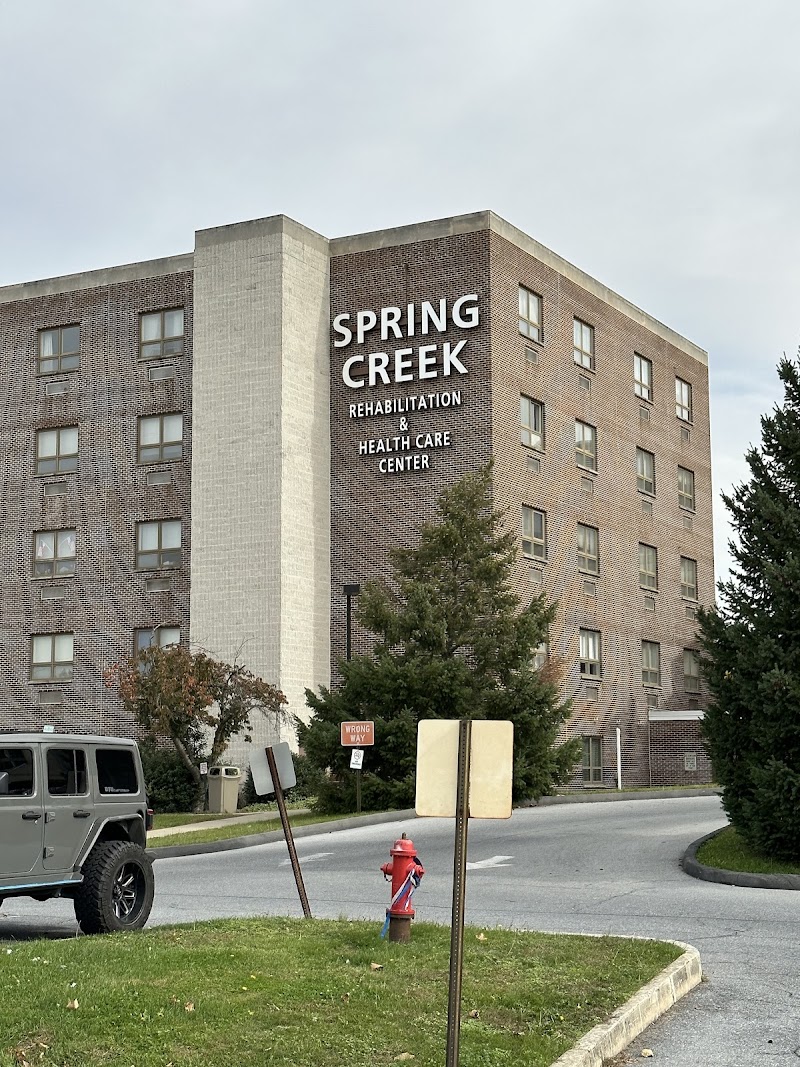
How is Spring Creek Rehabilitation And Nursing Center Staffed?

CMS rates SPRING CREEK REHABILITATION AND NURSING CENTER's staffing level at 4 out of 5 stars, which is above average compared to other nursing homes. Staff turnover is 42%, compared to the Pennsylvania average of 46%. This relatively stable workforce can support continuity of care.

What Have Inspectors Found at Spring Creek Rehabilitation And Nursing Center?

State health inspectors documented 47 deficiencies at SPRING CREEK REHABILITATION AND NURSING CENTER during 2023 to 2025. These included: 2 that caused actual resident harm and 45 with potential for harm. Deficiencies causing actual harm indicate documented cases where residents experienced negative health consequences.
Who Owns and Operates Spring Creek Rehabilitation And Nursing Center?

SPRING CREEK REHABILITATION AND NURSING CENTER is owned by a for-profit company. For-profit facilities operate as businesses with obligations to shareholders or private owners. The facility operates independently rather than as part of a larger chain. With 404 certified beds and approximately 361 residents (about 89% occupancy), it is a large facility located in HARRISBURG, Pennsylvania.
How Does Spring Creek Rehabilitation And Nursing Center Compare to Other Pennsylvania Nursing Homes?

Compared to the 100 nursing homes in Pennsylvania, SPRING CREEK REHABILITATION AND NURSING CENTER's overall rating (2 stars) is below the state average of 3.0, staff turnover (42%) is near the state average of 46%, and health inspection rating (2 stars) is below the national benchmark.

What Should Families Ask When Visiting Spring Creek Rehabilitation And Nursing Center?

Based on this facility's data, families visiting should ask: "Can I visit during a mealtime to observe dining assistance and food quality?" "How do you handle medical emergencies, and what is your hospital transfer rate?" "Can I speak with family members of current residents about their experience?"

Is Spring Creek Rehabilitation And Nursing Center Safe?

Based on CMS inspection data, SPRING CREEK REHABILITATION AND NURSING CENTER has a clean safety record: no substantiated abuse findings (meaning no confirmed cases of resident harm), no Immediate Jeopardy citations (the most serious violation level indicating risk of serious injury or death), and is not on the Special Focus Facility watch list (a federal program monitoring the lowest-performing 1% of nursing homes). The facility has a 2-star overall rating and ranks #100 of 100 nursing homes in Pennsylvania. While no facility is perfect, families should still ask about staff-to-resident ratios and recent inspection results during their visit.

Do Nurses at Spring Creek Rehabilitation And Nursing Center Stick Around?

SPRING CREEK REHABILITATION AND NURSING CENTER has a staff turnover rate of 42%, which is about average for Pennsylvania nursing homes (state average: 46%). Moderate turnover is common in nursing homes, but families should still ask about staff tenure and how the facility maintains care continuity when employees leave.

Was Spring Creek Rehabilitation And Nursing Center Ever Fined?

SPRING CREEK REHABILITATION AND NURSING CENTER has been fined $26,350 across 2 penalty actions. This is below the Pennsylvania average of $33,342. While any fine indicates a compliance issue, fines under $50,000 are relatively common and typically reflect isolated problems that were subsequently corrected. Families should ask what specific issues led to these fines and confirm they've been resolved.

Is Spring Creek Rehabilitation And Nursing Center on Any Federal Watch List?

SPRING CREEK REHABILITATION AND NURSING CENTER is not on any federal watch list. The most significant is the Special Focus Facility (SFF) program, which identifies the bottom 1% of nursing homes nationally based on persistent, serious quality problems. Not being on this list means the facility has avoided the pattern of deficiencies that triggers enhanced federal oversight. This is a positive indicator, though families should still review the facility's inspection history directly.