EMBASSY OF HUNTINGDON PARK
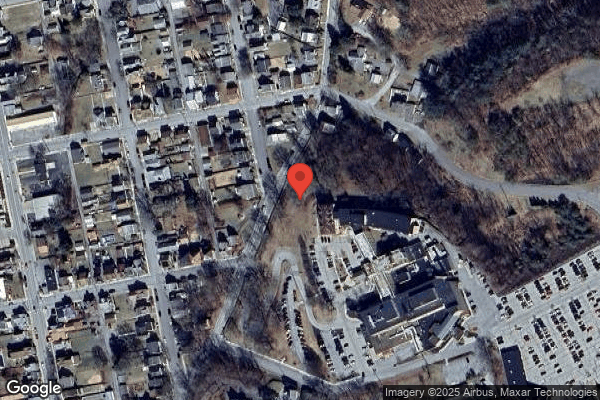

1229 WARM SPRINGS AVENUE, HUNTINGDON, PA 16652 (814) 643-4210
For profit - Corporation 93 Beds EMBASSY HEALTHCARE Data: November 2025
Trust Grade
50/100
#415 of 653 in PA
Last Inspection: April 2025

Within standard 12-15 month inspection cycle. Federal law requires annual inspections.

Overview

Embassy of Huntingdon Park has received a Trust Grade of C, indicating it is average and in the middle of the pack among nursing homes. It ranks #415 out of 653 facilities in Pennsylvania, placing it in the bottom half, while it is #2 out of 3 in Huntingdon County, suggesting only one local option is better. The facility's trend is stable, with 8 reported issues in both 2024 and 2025. Staffing is rated 2 out of 5 stars, with a 54% turnover rate, which is average compared to the state average of 46%. While the facility has no fines, it has concerning RN coverage, being lower than 93% of Pennsylvania facilities, which may impact the quality of care. Specific incidents include a failure to submit required staffing data electronically, which is a compliance issue, and instances where physician orders for medication and pressure ulcer treatments were not properly followed. This indicates potential risks in the quality of care provided. Overall, while there are some positive aspects, such as the absence of fines, families should be aware of the compliance issues and staffing concerns when considering this facility.

Trust Score
C
50/100
In Pennsylvania
#415/653
Bottom 37%
Safety Record
Low Risk
No red flags
Inspections
Holding Steady
8 → 8 violations
Staff Stability
⚠ Watch
54% turnover. Above average. Higher turnover means staff may not know residents' routines.
Penalties
✓ Good
No fines on record. Clean compliance history, better than most Pennsylvania facilities.
Skilled Nurses
⚠ Watch
Each resident gets only 23 minutes of Registered Nurse (RN) attention daily — below average for Pennsylvania. Fewer RN minutes means fewer trained eyes watching for problems.
Violations
⚠ Watch
36 deficiencies on record. Higher than average. Multiple issues found across inspections.
★★☆☆☆
2.0
Overall Rating
★★☆☆☆
2.0
Staff Levels
★★★☆☆
3.0
Care Quality
★★☆☆☆
2.0
Inspection Score
Stable
2024: 8 issues
2025: 8 issues

The Good

  • Full Sprinkler Coverage · Fire safety systems throughout facility
  • No fines on record

Facility shows strength in fire safety.

The Bad

2-Star Overall Rating

Below Pennsylvania average (3.0)

Below average - review inspection findings carefully

Staff Turnover: 54%

Near Pennsylvania avg (46%)

Higher turnover may affect care consistency

Chain: EMBASSY HEALTHCARE

Part of a multi-facility chain

Ask about local staffing decisions and management

The Ugly 36 deficiencies on record

Aug 2025 2 deficiencies
CONCERN (E) 📢 Someone Reported This

A family member, employee, or ombudsman was alarmed enough to file a formal complaint

Potential for Harm - no one hurt, but risky conditions existed

Quality of Care (Tag F0684)

Could have caused harm · This affected multiple residents

Based on review of facility policy and clinical record reviews, as well as staff interviews, it was determined that the facility failed to ensure that physician's orders regarding medication administr...

Read full inspector narrative →
Based on review of facility policy and clinical record reviews, as well as staff interviews, it was determined that the facility failed to ensure that physician's orders regarding medication administration were followed for one of seven residents reviewed (Resident 2). Findings include: The facility policy for medication administration dated July 10, 2025, indicated that medications are administered by licensed nurses, or other staff that are legally authorized to do so in this state, as ordered by the physician and in accordance with professional standards of practice. A quarterly Minimum Data Set (MDS) assessment (a mandated assessment of a resident's abilities and care needs) for Resident 2, dated June 24, 2025, revealed that the resident was cognitively intact, required assistance with personal care needs, and had diagnoses that included heart failure. Physician's orders for Resident 2 dated October 31, 2024, included an order for the resident to receive 50 milligrams (mg) of Metoprolol Succinate (medication used to treat high blood pressure) every day for hypertension (high blood pressure). A nurse's note for Resident 2 dated March 6, 2025, revealed that the physician was in the facility, reviewed the resident's medications, and gave orders to decrease the resident's Metoprolol to 25 mg daily. Review of the Medication Administration Record (MAR) for Resident 2 revealed that the resident did not receive the 25 mg of Metoprolol Succinate daily between March 7, 2025 and July 28, 2025. Physician's orders for Resident 2, dated July 28, 2025, included an order for the resident to receive 25 mg of Metoprolol Succinate every day for hypertension (high blood pressure). Interview with Nursing Home Administrator on August 19, 2025, at 9:46 p.m. confirmed that Resident 2's order for 50 mg of Metoprolol was decreased to 25 mg daily on March 6, 2025; however the new order was never added to the MAR and the resident did not receive any Metoprolol Succinate between March 7 and July 28, 2025. 28 Pa. Code 211.12(d)(1)(5) Nursing Services.
CONCERN (E) 📢 Someone Reported This

A family member, employee, or ombudsman was alarmed enough to file a formal complaint

Potential for Harm - no one hurt, but risky conditions existed

Pressure Ulcer Prevention (Tag F0686)

Could have caused harm · This affected multiple residents

Based on review of policies and clinical records, as well as staff interviews, it was determined that the facility failed to ensure that treatments for pressure ulcers were provided as ordered by the ...

Read full inspector narrative →
Based on review of policies and clinical records, as well as staff interviews, it was determined that the facility failed to ensure that treatments for pressure ulcers were provided as ordered by the physician for one of seven residents reviewed (Resident 3). Findings include: The facility's policy for wound management, dated July 10, 2025, indicated that wound treatments would be provided in accordance with physician's orders, including the cleansing method, type of dressing, and frequency of dressing change.A quarterly Minimum Data Set (MDS) assessment for Resident 3, dated July 16, 2025, revealed that the resident was understood and could understand, was cognitively impaired, was incontinent of bowel and bladder, and was at risk for developing pressure ulcers. A nursing note, dated August 15, 2025, at 8:30 p.m. revealed that Resident 3 had a fluid filled blister to the right abdomen measuring 1.5 x 1.5 centimeters (cm). Physician's orders, dated August 15, 2025, included an order for skin prep (protective barrier) to be applied to the blister on her abdomen every day and evening shift. The resident's care plan, dated August 16, 2025, included that the resident was to avoid tight clothing and treatments to the blister were to be completed as ordered by the physician.Resident 3's Treatment Administration Records (TAR's) for August 2025, revealed that there was no documented evidence that the treatment to the blister on Resident 3's abdomen was completed every day and evening shift as ordered by the physician.Interview with the Nursing Home Administrator on August 19, 2025, at 7:42 p.m. confirmed that there was no documented evidence that Resident 3's treatments to the blister on her abdomen were completed as ordered by the physician.28 Pa. Code 211.12(d)(1)(5) Nursing services.
Apr 2025 6 deficiencies
CONCERN (D)

Potential for Harm - no one hurt, but risky conditions existed

Report Alleged Abuse (Tag F0609)

Could have caused harm · This affected 1 resident

Based on review of facility policies, clinical records, and investigation documents, as well as staff interviews, it was determined that the facility failed to ensure that staff reported an allegation...

Read full inspector narrative →
Based on review of facility policies, clinical records, and investigation documents, as well as staff interviews, it was determined that the facility failed to ensure that staff reported an allegation of verbal abuse in a timely manner for one of 34 residents reviewed (Resident 5). Findings include: The facility's abuse policy, dated January 9, 2025, indicated that staff would report any incidents of suspected abuse immediately to administration. A quarterly Minimum Data Set (MDS) assessment (a mandated assessment of a resident's abilities and care needs) for Resident 5, dated January 17, 2025, indicated that the resident was cognitively impaired, required assistance from staff with daily care tasks, and had diagnoses that included hydrocephalous (excess of fluid on the brain). Facility investigation documents, dated January 10, 2025, revealed that Nurse Aide 1 was assisting Nurse Aide 2 transfer Resident 5 to her wheelchair on January 5, 2025, at breakfast. Nurse Aide 1 heard Nurse Aide 2 yelling loudly at Resident 5. The resident asked the nurse aide if she could have her shoes on and she overheard Nurse Aide 2 tell the resident, No you cannot have your shoes on with the way you were acting getting ready, you don't deserve your shoes. Interview with the Nursing Home Administrator on April 10, 2025, at 10:35 a.m. confirmed that Nurse Aide 1 did not immediately report the allegation of abuse on January 5, 2025. She stated that she was not notified of the incident until January 10, 2025, and immediately suspended the Nurse Aide 2 to rule out abuse. 28 Pa. Code 201.18(e)(1) Management.
CONCERN (D)

Potential for Harm - no one hurt, but risky conditions existed

Deficiency F0773 (Tag F0773)

Could have caused harm · This affected 1 resident

Based on review of facility policies and clinical records, as well as staff interviews, it was determined that the facility failed to obtain laboratory studies as ordered by the physician for one of 3...

Read full inspector narrative →
Based on review of facility policies and clinical records, as well as staff interviews, it was determined that the facility failed to obtain laboratory studies as ordered by the physician for one of 34 residents reviewed (Resident 27). Findings include: A facility policy related to anticoagulation therapy, dated January 9, 2025, indicated that the facility will implement the procedure for the treatment/management of residents receiving anticoagulation therapy (i.e. low molecular weight heparin or warfarin/coumadin). The facility in collaboration with the physician will provide therapeutic coagulation for the resident while attempting to decrease the potential morbidity and mortality associated with anticoagulation therapy. The charge nurse will obtain an order from the physician for any pertinent labs for monitoring of the anticoagulation therapy. The nurse will notify the physician and document the results of the prothrombin time and international normalized ratio (PT/INR-blood tests that determine how long it takes the blood to clot). A quarterly Minimum Data Set (MDS) assessment (a mandated assessment of a resident's care needs and abilities) for Resident 27, dated March 17, 2025, revealed that the resident was cognitively impaired, required assistance with care needs, was taking an anticoagulant medication (a medication that thins the blood), and had diagnoses that included atrial fibrillation (an abnormal heart rhythm) and a history of cerebral infarction (lack of blood supply to the brain resulting in brain death to parts of the brain). A nursing note for Resident 27, dated February 7, 2025, at 9:00 a.m. revealed that the resident had a critically high PT/INR (body takes longer to form blood clots and increases the risk for bleeding). The results were sent to the Certified Registered Nurse Practitioner (CRNP) and new orders were obtained to give 10 milligrams (mg) of Vitamin K (used to reverse the effects of coumadin resulting in critically high PT/INR results) and continue to hold the coumadin (an anticoagulant) and repeat the PT/INR the following a.m. A nursing note for Resident 27, dated February 8, 2025, at 2:39 p.m. revealed that the resident had her PT/INR completed. The CRNP was notified, and orders were obtained to restart the resident's coumadin dose of 4.5 mg daily. Physician's orders for Resident 27, dated February 8, 2025, included an order for the resident to receive 4 mg and 0.5 mg of warfarin (coumadin) daily for a total of 4.5 mg daily. Physician's orders for Resident 27, dated February 8, 2025, included an order for the resident to have an INR blood test on Wednesday, February 12, 2025. There was no documented evidence that the INR blood test was completed on February 12, 2025, as ordered by the physician. Interview with Nursing Home Administrator on April 10, 2025, at 11:30 a.m. confirmed that Resident 27's INR was not completed on February 12, 2025, as ordered by the physician. 28 Pa. Code 211.12(d)(1)(3)(5) Nursing Services.
CONCERN (D)

Potential for Harm - no one hurt, but risky conditions existed

Infection Control (Tag F0880)

Could have caused harm · This affected 1 resident

**NOTE- TERMS IN BRACKETS HAVE BEEN EDITED TO PROTECT CONFIDENTIALITY** Based on review of established infection control guidelines, facility policy, and residents' clinical records, as well as observ...

Read full inspector narrative →
**NOTE- TERMS IN BRACKETS HAVE BEEN EDITED TO PROTECT CONFIDENTIALITY** Based on review of established infection control guidelines, facility policy, and residents' clinical records, as well as observations and staff interviews, it was determined that the facility failed to follow infection control guidelines from the Centers for Medicare/Medicaid Services (CMS) and the Centers for Disease Control (CDC) to reduce the spread of infections and prevent cross-contamination for one of 34 residents reviewed (Resident 41). Findings include: CDC guidance on isolation precautions and Implementation of Personal Protective Equipment (PPE) use in Nursing Homes to Prevent Spread of Multidrug-Resistant Organisms (MDRO's - bacteria that have become resistant to certain antibiotics, and these antibiotics can no longer be used to control or kill the bacteria), dated July 12, 2022, indicates that MDRO transmission is common in skilled nursing facilities, contributing to substantial resident morbidity and mortality and increased healthcare costs. Enhanced Barrier Precautions (EBP) are an infection control intervention designed to reduce transmission of resistant organisms that employs targeted gown and glove use during high contact resident care activities. CMS updated its infection prevention and control guidance effective April 1, 2024. The recommendations now include the use of EBP during high-contact care activities for residents with chronic wounds or indwelling medical devices, regardless of their MDRO status, in addition to residents who have an infection or colonization with a CDC-targeted or other epidemiologically important MDRO when contact precautions do not apply. The facility's policy regarding EBP, dated January 9, 2025, indicated that EBP's referred to the use of gown and gloves for the use during high contact resident care activities for residents known to be colonized or infected with a MDRO as well as those at increased risk of MDRO acquisition (e.g., residents with chronic wounds). An order for EBP's will be obtained for residents with any of the following: 1.) Wounds (e.g., chronic wounds such as pressure ulcers, diabetic foot ulcers, unhealed surgical wounds, and chronic venous stasis ulcers), and/or indwelling medical devices (e.g. central lines, hemodialysis catheters, urinary catheters, feeding tubes, tracheostomy/ventilator tubes) even if the resident is not known to be infected or colonized with a MDRO and 2.) Infection or colonization with any resistant organisms targeted by the CDC and epidemiologically important MDRO when contact precautions do not apply. A quarterly Minimum Data Set (MDS) assessment (a mandated assessment of a resident's abilities and care needs) for Resident 41, dated February 13, 2025, indicated that the resident was admitted to the facility on [DATE], was cognitively intact, required assistance with care needs, had an indwelling catheter (a thin, flexible tube inserted into the bladder to drain urine from the bladder), a wound infection, a Stage 4 pressure ulcer (pressure wound with full thickness tissue loss with exposed bone, tendon or muscle) present on admission, and had a diagnosis of neurogenic bladder (bladder lacks control due to nerve or muscle problems) and a Stage 4 pressure ulcer. Physician's orders for Resident 41, dated December 3, 2024, included an order for the resident to have a urinary (foley) catheter (an indwelling catheter) for neurogenic bladder. Physician's orders for Resident 41, dated April 4, 2025, included an order for staff to apply saline wet-to-dry dressing to the buttocks wound with nystatin powder crusting to the peri wound, apply xtrasorb dry dressing (a dressing used to a wound with a high amount of drainage), and hold in place with medipore tape (cloth medical tape) in the evening. A care plan for Resident 41, dated November 15, 2024, revealed that the resident had an indwelling foley catheter for neurogenic bladder. A care plan for Resident 41, dated November 14, 2024, revealed that the resident had a pressure ulcer to her sacrum. care plan for Resident 41, dated January 16, 2025, revealed that the resident required EBPs for wounds and catheter. There was no documented evidence that EBP were implemented for Resident 41 until January 16, 2025. Interview with the Assistant Director of Nursing/Infection Preventionist on April 9, 2025, at 10:22 a.m. indicated that Resident 41 was on EBP when she was admitted ; however, there was no documented evidence that she was on EBP when she was admitted . She indicated there was no order and the care plan was initiated after she came off contact precautions (used to prevent the spread of infection passed through direct contact with an infected person or their environment) for an MDRO in January 2025. The Director of Nursing indicated that she was treated for an MDRO in January and when the contact precautions were discontinued, they continued the EBP. 28 Pa. Code 201.14(a) Responsibility of Licensee. 28 Pa. Code 201.18(e)(1) Management. 28 Pa. Code 211.12(d)(1)(5) Nursing Services.
CONCERN (E)

Potential for Harm - no one hurt, but risky conditions existed

Quality of Care (Tag F0684)

Could have caused harm · This affected multiple residents

Based on review of facility policies and clinical records, as well as staff interviews, it was determined that the facility failed to ensure that physician's orders were followed for one of 34 residen...

Read full inspector narrative →
Based on review of facility policies and clinical records, as well as staff interviews, it was determined that the facility failed to ensure that physician's orders were followed for one of 34 residents reviewed (Resident 20), failed to administer insulin per manufacturer's instructions for one of 34 residents reviewed (Resident 78), and failed to follow wound recommendations for one of 34 residents reviewed (Resident 80). Findings include: A quarterly Minimum Data Set (MDS) assessment (a mandated assessment of a resident's care needs and abilities) for Resident 20, dated March 3, 2025, indicated that the resident was cognitively intact, received insulin, and had diagnoses that included diabetes. Physician's orders for Resident 20, dated March 19, 2025, included an order for the resident to receive 17 units of Humalog (fast acting insulin) subcutaneously with meals for diabetes. The insulin was to be held if the resident's blood sugar was less than 100 milligrams/deciliter (mg/dL) The Medication Administration Record (MAR) for Resident 20 for January, March, and April 2025 revealed that the resident received 17 units of Humalog insulin at 7:30 a.m. on January 2 for a blood sugar of 89 mg/dL; on January 3 for a blood sugar of 91 mg/dL; on March 4 for a blood sugar of 99 mg/dL; on March 17 for a blood sugar of 96 mg/dL; at 11:30 a.m. on March 31 for a blood sugar of 99 mg/dL; at 4:30 p.m. on January 2 for a blood sugar of 84 mg/dL; on January 20 for a blood sugar of 96 mg/dL; and on April 1 for a blood sugar 92 mg/dL. Interview with the Director of Nursing on April 9, 2025, confirmed that Resident 20's Humalog insulin should have been held on the dates and times mentioned above. A quarterly MDS assessment for Resident 78, dated March 12, 2025, revealed that the resident was cognitively intact, required assistance with care needs, received insulin, and had a diagnosis of diabetes. Physician's orders for Resident 78, dated October 31, 2024, included an order for the resident to receive Humalog insulin (a fast-acting medication used to lower blood sugar) to be administered per a sliding scale (dose is based on a person's blood sugar) before meals. Review of the resident's Medication Administration Record (MAR) for March and April 2025 revealed that the resident's blood sugar was scheduled to be taken at 7:00 a.m., 11:00 a.m., and 4:00 p.m. with insulin to be administered per the sliding scale. Manufacturer's instructions for Humalog insulin, dated March 2013, indicated that Humalog insulin should be given within 15 minutes before a meal or immediately after a meal. Resident 78 is scheduled to receive her breakfast tray between 7:30 and 7:35 a.m., her lunch tray between 11:30 and 11:35 a.m. and her supper tray between 4:30 and 4:35 p.m. A review of Resident 7's MAR for March and April 2025 revealed that the resident's blood sugars were checked, and she received Humalog insulin on the following dates and times: March 2 at 3:03 p.m.; March 4 at 3:13 p.m.; March 6 at 3:13 p.m.; March 7 at 3:58 p.m.; March 8 at 3:58 p.m.; March 9 at 3:35 p.m.; March 10 at 3:11 p.m.; March 12 at 10:42 a.m.; March 13 at 10:47 a.m.; March 16 at 3:34 p.m.; March 17 at 6:41 a.m.; March 17 at 10:38 a.m.; March 18 at 6:37 a.m.; March 18 at 10:39 a.m.; March 18 at 3:27 p.m.; March 19 at 3:59 p.m.; March 20 at 3:20 p.m.; March 21 at 6:21 a.m.; March 21 at 10:51 a.m.; March 21 at 3:17 p.m.; March 22 at 6:37 a.m.; March 22 at 3:35 p.m.; March 23 at 10:42 a.m.; March 23 at 3:42 p.m.; March 24 at 3:51 p.m.; March 25 at 3:49 p.m.; March 26 at 10:20 a.m.; March 27 at 10:29 a.m.; March 27 at 3:38 p.m.; March 28 at 3:49 p.m.; March 29 at 3:33 p.m.; April 1 at 3:31 p.m.; April 2 at 6:54 a.m.; April 2 at 10:43 a.m.; April 2 at 3:20 p.m.; April 5 at 3:31 p.m.; and April 7 at 3:26 p.m. Interview with the Nursing Home Administrator on April 9, 2025, at 1:16 p.m. confirmed that Resident 78's Humalog insulin was not being administered as per the manufactures instructions. The facility's wound treatment policy, dated January 9, 2025, revealed that to promote wound healing of various types of wounds, it was the policy of the facility to provided evidence-based treatments in accordance with current standards of practice and physician orders. Wound treatments would be provided in accordance with physician orders, and in the absence of treatment orders, the licensed nurse would notify the physician to obtain treatment orders. An admission MDS assessment for Resident 80, dated January 15, 2025, indicated that the resident was cognitively impaired, had an infection to his foot, and had diagnoses that included Alzheimer's dementia. A wound consult, dated January 16, 22, and 30, 2025, revealed that Resident 20 had frost bite wounds to his first and second toes on the left and right feet. It was recommended that betadine (antiseptic solution) be placed on the wound bed on the first and second toes of the left and right feet twice a day and left open to air. Physician's orders, dated January 16, 2025, included orders for betadine be applied to the wound base of the first and second toes of the right foot. Review of Resident 80's Treatment Administration Records for January and February 2025 revealed that there was no documented evidence that the treatment of betadine to the resident's left first and second toes was completed twice a day as recommended by the wound consultant. Interview with the Director of Nursing on April 9, 2025, at 12:13 p.m. confirmed that Resident 80's treatments to the left toes were not applied as recommended by the wound consultant. 28 Pa. Code 211.12(d)(1)(5) Nursing Services.
CONCERN (E)

Potential for Harm - no one hurt, but risky conditions existed

Pressure Ulcer Prevention (Tag F0686)

Could have caused harm · This affected multiple residents

Based on review of policies and clinical records, as well as staff interviews, it was determined that the facility failed to follow pressure ulcer treatment recommendations from a wound consultation f...

Read full inspector narrative →
Based on review of policies and clinical records, as well as staff interviews, it was determined that the facility failed to follow pressure ulcer treatment recommendations from a wound consultation for one of 34 residents reviewed (Resident 11). Findings include: The facility's wound treatment policy, dated January 9, 2025, revealed that to promote wound healing of various types of wounds, it was the policy of the facility to provided evidence-based treatments in accordance with current standards of practice and physician orders. Wound treatments would be provided in accordance with physician orders, and in the absence of treatment orders, the licensed nurse would notify the physician to obtain treatment orders. A quarterly Minimum Data Set (MDS) assessment (a mandated assessment of a resident's abilities and care needs) for Resident 11, dated March 12, 2025, indicated that the resident was cognitively impaired, required assistance for her care needs, and had a Stage 3 pressure ulcer (full thickness tissue loss, subcutaneous fat may be visible but bone, tendon or muscle is not exposed). A wound consultation for Resident 11, dated January 15, 22, and 30, 2025, revealed that the resident had a Stage 3 (full thickness tissue loss) pressure sore on her coccyx (lower end of the spine) and the plan was to apply collagen (helps wounds heal by attracting new skin cells to the wound) to the base of the wound and zinc (used to treat minor skin irritation) to the peri-wound (skin surrounding the wound) daily. Review of Resident 11's Treatment Administration Records for January and February 2025 revealed that the treatments to the coccyx did not include the application of collagen to the wound bed daily from January 15 through February 5, 2025. A wound consultation for Resident 11, dated February 19, 2025, revealed that the resident had a Stage 3 pressure sore on her coccyx, and the plan was to apply bacitracin ointment and collagen to the base of the wound daily. Review of Resident 11's Treatment Administration Records for February 2025 revealed that there was no treatment applied to the coccyx from February 20 through 26, 2025. Interview with Director of Nursing on April 9, 2025, at 12:13 p.m. confirmed that the treatments to Resident 11's coccyx on the mentioned dates above were not being completed as recommended by the wound consultant and should have been. 28 Pa. Code 211.12(d)(5) Nursing Services.
CONCERN (E)

Potential for Harm - no one hurt, but risky conditions existed

Food Safety (Tag F0812)

Could have caused harm · This affected multiple residents

Based on review of policies, as well as observations and staff interviews, it was determined that the facility failed to store, prepare, distribute and serve food in accordance with professional stand...

Read full inspector narrative →
Based on review of policies, as well as observations and staff interviews, it was determined that the facility failed to store, prepare, distribute and serve food in accordance with professional standards for food service safety. Findings include: The facility's policy regarding food safety, dated January 9, 2025, indicated that all food, non-food items and supplies used in food preparation shall be stored in such a manner as to prevent contamination to maintain the safety and wholesomeness of the food for human consumption, and all food should be covered labeled and dated with the date it was opened. Observations in the walk-in cooler on April 7, 2025, at 9:20 a.m. revealed that there were five trays of chicken and five trays of broccoli that were covered with plastic wrap and not dated with the date they were prepared. Observations in the walk-in freezer on April 7, 2025, at 9:30 a.m. revealed that there were opened bags of carrots, green beans, corn and dinner rolls not secured and not labeled with the date they were opened. Observations in the main kitchen on April 7, 2025, at 9:43 a.m. revealed that the scoop for the flour was stored inside the bin with the flour, and the scoop for the rice was stored inside the bin with the rice. Interview with the Dietary Manager on April 7, 2025, at 9:45 a.m. confirmed that all food items should be covered, labeled and dated with the date they were opened or prepared and the scoops for the flour and rice should not be stored in the bins with the flour and rice. The facility's policy regarding uniform dress code for the food service worker, dated January 9, 2025, revealed that all hair should be clean and hair nets should cover all hair at all times. Observations in the main kitchen on April 9, 2025, at 11:20 a.m. during the lunch service revealed that Dietary Worker 3 was plating food and her hair was not completely covered with a hair net. Dietary Worker 5 was placing covers on the plates and silverware on the trays and her hair was not completely covered with a hair net. Dietary Worker 4 was making sandwiches in the food prep area and her hair was not completely covered with a hair net. The facility's policy regarding cleaning of food contact and non-food contact surfaces, dated January 9, 2025, indicated that non-food contact surfaces should be cleaned as often as necessary to be kept free from an accumulation of dust, dirt, food particles and other debris. Observation in the main kitchen on April 9, 2025, at 1:00 p.m. revealed that there was a blower fan on a kitchen cart that was blowing air in the kitchen. The fan was coated with dust and debris on the inside and outside surfaces. Observation in the main kitchen on April 9, 2025, at 1:34 p.m. revealed that a shelving unit where pans and cookie sheets where stored was covered with dust and debris. Interview with the Dietary Manager on April 9, 2025, at 1:45 p.m. confirmed that dietary workers should be wearing hair nets that cover all of their hair and that all food and non-food contact surfaces should be cleaned as often as necessary to be kept free from an accumulation of dust, dirt, food particles and other debris. 28 Pa. Code 211.6(f) Dietary Services.
May 2024 8 deficiencies
CONCERN (D)

Potential for Harm - no one hurt, but risky conditions existed

ADL Care (Tag F0677)

Could have caused harm · This affected 1 resident

Based on review of facility policies and clinical records, as well as observations and staff interviews, it was determined that the facility failed to provide appropriate services to maintain personal...

Read full inspector narrative →
Based on review of facility policies and clinical records, as well as observations and staff interviews, it was determined that the facility failed to provide appropriate services to maintain personal grooming and hygiene for one of 29 residents reviewed (Resident 13) who was dependent for care. Findings include: The facility's policy regarding personal care, dated April 16, 2024, revealed that nail care cleaning and trimming should be completed as needed, unless the resident is a diabetic or has another reason it should not be done. In such cases a nurse or podiatrist (a medical specialist who helps with problems that affect feet or lower legs) will provide care. A quarterly Minimum Data Set (MDS) assessment (a mandated assessment of a resident's abilities and care needs) for Resident 13, dated February 19, 2024, revealed that the resident was understood, could understand others, and had diagnoses that included Alzheimer's and dementia. The resident's care plan, dated February 26, 2020, revealed that the resident had an Activities of Daily Living (ADL) self-care performance deficit related to activity intolerance, limited mobility, and required extensive assistance from staff with bathing. A bathing report for Resident 13, dated May 2024, revealed that the resident was to receive a shower during the evening on Tuesdays and Fridays, and that the resident was last showered on Friday, May 17, 2024, at 3:06 p.m. Observations of Resident 13 on May 18, 2024, at 12:03 p.m. and May 21, 2024, at 8:32 a.m. and 11:10 a.m. revealed that the resident's fingernails extended beyond the tip of her fingers and had a dark substance underneath them. Interview with Nurse Aide 1 on May 21, 2024, at 11:10 a.m. confirmed that Resident 13 had a dark substance underneath her fingernails and should have had them cleaned either during her shower or any time before or after when staff observed that these tasks needed done. 28 Pa. Code 211.12(d)(5) Nursing Services.
CONCERN (D)

Potential for Harm - no one hurt, but risky conditions existed

Accident Prevention (Tag F0689)

Could have caused harm · This affected 1 resident

Based on review of clinical records and facility investigation documents, as well as staff interviews, it was determined that the facility failed to ensure that interventions were in place and functio...

Read full inspector narrative →
Based on review of clinical records and facility investigation documents, as well as staff interviews, it was determined that the facility failed to ensure that interventions were in place and functioning to prevent behaviors for one of 29 residents reviewed (Resident 66). Findings include: An admission Minimum Data Set (MDS) assessment (a federally-mandated assessment of the resident's abilities and care needs) for Resident 66, dated February 4, 2024, revealed that the resident was understood, was able to understand what was being said, was cognitively intact, had behaviors affecting others, and required assistance with care needs. A care plan for Resident 66, dated January 30, 2024, revealed that the resident was observed displaying sexually inappropriate behavior. Review of a facility incident report, dated February 29, 2024, revealed that it was reported by staff that Resident 66 had his hand on another resident's genitals over his pants in the hallway. The other resident was removed from the situation and the registered nurse was made aware. It was noted that both residents were in wheelchairs and immediately separated. Resident 66 remained in the hallway for a short period of time before he began attempting to stop other residents from self-propelling down hallway with his wheelchair. Resident 66 was taken to his room. The registered nurse asked Resident 66 why he touched another resident, and he did not answer. No verbal communication was expressed from Resident 66 during the assessment. Resident 66's care plan related to sexually inappropriate behaviors was revised on February 29, 2024 to include the intervention for a motion alarm to be placed on the resident's door frame. A nursing note for Resident 66, dated February 29, 2024, at 4:11 p.m. revealed that a motion alarm was placed on Resident 66's door. The care plan was revised again on March 1, 2024. to add the intervention that Resident 66 must be supervised by staff when out of his room. Observations on May 19, 2024, at 2:59 p.m. revealed Resident 66 was in his room, lying in bed. Upon entering his room, the alarm on his doorway did not sound. Licensed Practical Nurse 2, who was in the hallway outside of the resident's room, was informed that the alarm was not functioning. She checked the alarm and stated it was in the off position and turned it on. She confirmed that the alarm should have been on. Licensed Practical Nurse 2 also revealed that staff should be checking the function of the alarm daily. After the door alarm was turned on, a nurse aide walked into Resident 66's room and the alarm did not sound again. Licensed Practical Nurse 2 and the nurse aide attempted to get the alarm working and it was still not functioning properly. Licensed Practical Nurse 2 stated she would have maintenance look at it. Interview with the Nursing Home Administrator on May 20, 2024, at 12:02 p.m. confirmed that the motion alarm on Resident 66's door frame should have been functioning properly and also confirmed that there was no documented evidence that the alarm was being monitored for function and placement. 28 Pa. Code 201.14(a) Responsibility of Licensee. 28 Pa. Code 201.18(b)(1)(e)(1) Management. 28 Pa. Code 211.12(d)(1)(3)(5) Nursing Services.
CONCERN (D)

Potential for Harm - no one hurt, but risky conditions existed

Pharmacy Services (Tag F0755)

Could have caused harm · This affected 1 resident

Based on review of policies and clinical records, as well as staff interviews, it was determined that the facility failed to maintain accountability for controlled medications (drugs with the potentia...

Read full inspector narrative →
Based on review of policies and clinical records, as well as staff interviews, it was determined that the facility failed to maintain accountability for controlled medications (drugs with the potential to be abused) for two of 29 residents reviewed (Residents 28, 48). Findings include: The facility's policy regarding medication administration, dated April 16, 2024, indicated that staff were to sign the Medication Administration Record (MAR) after administering medications and if the medication was a controlled substance, staff were to sign the narcotic book. An admission Minimum Data Set (MDS) assessment (a federally-mandated assessment of the resident's abilities and care needs) for Resident 28, dated March 26, 2024, revealed that the resident was understood, able to understand what was being said, required assistance with care needs, had an unstageable pressure ulcer to sacrum, and had complaints of pain. A physician's order for Resident 28, dated March 29, 2024, included an order for the resident to receive 2.5 milligrams (mg) of oxycodone (narcotic pain reliever) every six hours as needed for moderate to severe pain. Resident 28's controlled drug accountability records for April 2024 revealed that staff signed out doses of oxycodone for administration to the resident on April 1 at 8:00 p.m. and April 12 at 2:30 p.m. However, there was no documented evidence in the MAR that the oxycodone was administered to the resident on the dates and times listed. Interview with the Nursing Home Administrator on May 21, 2024, at 1:56 p.m. confirmed that there was no documented evidence that staff administered the signed-out doses of oxycodone to Resident 28 on the above dates and times. An admission MDS assessment for Resident 48, dated April 7, 2024, revealed that the resident was alert and oriented, received as-needed pain medications, had pain occasionally, and received an opiod (narcotic pain reliever). Physician's orders for Resident 48, dated May 15, 2024, included an order for the resident to receive 5 mg of oxycodone (narcotic pain reliever) every four hours as needed for moderate to severe pain. Resident 48's controlled drug accountability records for May 2024 revealed that staff signed out doses of oxycodone for administration to the resident on May 1 at 8:45 p.m., May 5 at 7:45 p.m., May 8 at 6:15 p.m., May 14 at 5:50 a.m., and May 16 at 8:50 a.m.; however, there was no documented evidence in the MAR that the oxycodone was actually administered to the resident on the dates and times listed. Interview with the Nursing Home Administrator on May 21, 2024, at 12:10 p.m. confirmed that there was no documented evidence that staff administered signed-out doses of oxycodone to Resident 48 on the above dates and times. 28 Pa. Code 211.9(a)(1) Pharmacy Services. 28 Pa. Code 211.12(d)(1)(5) Nursing Services.
CONCERN (D)

Potential for Harm - no one hurt, but risky conditions existed

QAPI Program (Tag F0867)

Could have caused harm · This affected 1 resident

Based on review of the facility's plans of correction and the results of the current survey, it was determined that the facility's Quality Assurance Performance Improvement (QAPI) committee failed to ...

Read full inspector narrative →
Based on review of the facility's plans of correction and the results of the current survey, it was determined that the facility's Quality Assurance Performance Improvement (QAPI) committee failed to correct quality deficiencies and ensure that plans to improve the delivery of care and services effectively addressed recurring deficiencies. Findings include: The facility's deficiencies and plans of correction for a State Survey and Certification (Department of Health) surveys ending April 27, 2023, and July 21, 2023, revealed that the facility developed plans of correction that included quality assurance systems to ensure that the facility-maintained compliance with cited nursing home regulations. The results of the current survey ending May 21, 2024, identified repeated deficiencies regarding care plan timing and revision, grooming and personal and oral hygiene, and ensuring that the resident's environment remained free from accident hazards. The facility's plan of correction for a deficiency regarding a failure to update resident care plans, cited during the survey ending April 27, 2023, revealed that the facility developed a plan of correction that included completing audits and reporting the results of the audits to the QAPI committee for review. The results of the current survey, cited under F657, revealed that the facility's QAPI committee failed to successfully implement their plan to ensure ongoing compliance with regulations regarding updating residents' care plans. The facility's plans of correction for deficiencies regarding maintaining grooming and personal and oral hygiene, cited during the survey ending April 27, 2023, revealed that audits would be conducted, and the results of the audits would be brought before the QAPI committee for further monitoring. The results of the current survey, cited under F677, revealed that the QAPI committee was ineffective in maintaining compliance with the regulation regarding grooming and personal and oral hygiene. The facility's plan of correction for a deficiency regarding a failure to ensure that the resident environment remained free from accident hazards, cited during the surveys ending April 27, 2023, and July 21, 2023, revealed that the facility developed a plan that included completing audits and reporting the results of the audits to the QAPI committee for review. The results of the current survey, cited under F689, revealed that the QAPI committee failed to successfully implement their plan to ensure ongoing compliance with the regulations to ensure that the resident's environment remained free from accident hazards. Refer to F657, F677, F689. 28 Pa. Code 201.14(a) Responsibility of Licensee. 28 Pa. Code 201.18(e)(1) Management.
CONCERN (E)

Potential for Harm - no one hurt, but risky conditions existed

Deficiency F0657 (Tag F0657)

Could have caused harm · This affected multiple residents

Based on review of policies and clinical records, as well as staff interviews, it was determined that the facility failed to ensure that care plans were updated to reflect changes in residents' care n...

Read full inspector narrative →
Based on review of policies and clinical records, as well as staff interviews, it was determined that the facility failed to ensure that care plans were updated to reflect changes in residents' care needs for three of 29 residents reviewed (Residents 28, 39, 75). Findings include: The facility's policy regarding care plans, dated April 16, 2024, indicated the comprehensive care plan will be reviewed and revised as necessary, when a resident experiences a status change. The care plan will be updated with the new or modified interventions. An admission Minimum Data Set (MDS) assessment (a federally-mandated assessment of the resident's abilities and care needs) for Resident 28, dated March 26, 2024, revealed that the resident was understood, able to understand what was being said, required assistance with care needs, had an unstageable pressure ulcer to sacrum, received intravenous therapy (administration of fluids and/or medications directly into a person's vein), and received an antibiotic. A care plan for Resident 28, dated March 22, 2024, revealed that the resident had a midline (a thin tube inserted into a vein and used long-term for the administration of fluids and/or medications) and was receiving an antibiotic. A nursing note, dated May 3, 2024, at 1:50 a.m. revealed that Resident 28's midline and antibiotic were discontinued; however, as of May 20, 2024, the care plan was not updated or resolved. Interview with the Nursing Home Administrator on May 20, 2024, at 3:09 p.m. confirmed that Resident 28's midline and the antibiotic were discontinued and that the care plan for the midline and antibiotic should have been resolved and it was not. An admission MDS assessment for Resident 39, dated April 11, 2024, revealed that the resident was understood, able to understand what was being said, required assistance with care needs, had a diabetic foot ulcer and a surgical wound, received intravenous therapy, and had diagnoses including multidrug resistant organism (MDRO) (a germ that is resistant to many antibiotics making treatment difficult) and osteomyelitis (infection of the bone) of left ankle and foot. A nursing note, dated April 23, 2024, at 8:27 a.m. revealed that Resident 39's contact isolation precautions were discontinued and the antibiotic therapy was completed. Enhanced barrier precautions were ordered. A care plan for Resident 39, dated April 5, 2024, revealed that the resident was on isolation/quarantine precautions for Methicillin-resistant Staphylococcus aureus (MRSA) (type of staph bacteria resistant to many antibiotics making treatment difficult) and Vancomycin-resistant Enterococcus (VRE) (bacteria resistant to the antibiotic vancomycin) with an intervention to discontinue precautions as soon as the infection no longer exists. Interview with the Nursing Home Administrator on May 21, 2024, at 12:57 p.m. confirmed that Resident 39's care plan for isolation/quarantine precautions for MRSA and VRE should have been resolved and it was not. A nursing note, dated May 11, 2024, at 12:42 a.m., revealed that Resident 75 was admitted to the facility with a wound vac (treatment that uses pressure to help close wounds and increase healing) to her right knee. Physician's orders, dated May 11, 2024, included orders for the wound vac dressing to be changed every Monday, Wednesday, and Friday and the negative pressure setting be 150 mmHg (millimeters of mercury) continuously. Resident 75's current care plan indicated that the resident had skin impairments and treatments were to be provided as ordered; however, there was no documented evidence that Resident 75's care plan was revised to reflect the need for a wound vac to the right knee. Interview with the Nursing Home Administrator on May 21, 2024, at 11:41 a.m. confirmed that Resident 75's care plan was not updated to include Resident 75's need for a wound vac to the right knee. 28 Pa. Code 211.12(d)(5) Nursing Services.
CONCERN (E)

Potential for Harm - no one hurt, but risky conditions existed

Deficiency F0694 (Tag F0694)

Could have caused harm · This affected multiple residents

Based on review of policies and clinical records, as well as staff interviews, it was determined that the facility failed to flush an intravenous (IV) line and to change an intravenous line dressing a...

Read full inspector narrative →
Based on review of policies and clinical records, as well as staff interviews, it was determined that the facility failed to flush an intravenous (IV) line and to change an intravenous line dressing and caps (caps that disinfect IV ports) as ordered by the physician for one of 29 residents reviewed (Resident 48). Findings include: The facility's policy regarding intravenous (IV) catheters (a tube placed in a vein that can be used to deliver fluids and/or medications), dated September 17, 2019, revealed that when a resident was ordered intravenous medication, a 10 milliliter (ml) saline flush (a method used to clean a catheter of blood or medication) was to be administered before and after each medication that was infused. An admission Minimum Data Set (MDS) assessment (a mandated assessment of a resident's abilities and care needs) for Resident 48, dated April 7, 2024, indicated that the resident was cognitively intact and received IV medications. A nursing note, dated April 1, 2024, at 11:15 a.m., revealed that Resident 48 was admitted to the facility and had a double lumen (two ports) PowerHickman midline (a catheter that is placed in a peripheral vein for long-term administration of fluids and/or medication) present in the right chest. Physician's orders, dated April 4, 5, and 15, 2024, included orders for resident's central line be flushed with 5-10 mL of saline before and after medication administration, a maintenance flush every shift, and to administer 750 milligrams (mg) of levofloxacin (antibiotic) intravenously for 10 administrations related to a MRSA (Methicillin Resistant Staphylococcus Aureus - drug resistant organism) infection. Resident 48's Medication Administration Record (MAR) for April 2024 revealed that the resident received 750 mg of levofloxacin on April 2 to 11, 2024, at 8:00 a.m.; however, there was no documented evidence that Resident 48's midline was flushed before and after the administration of levofloxacin on April 2 to 4, 2024. There was also no documented evidence that the resident's intravenous line dressing and caps were changed as ordered on May 3 and 10, 2024, or that the midline was flushed with 5-10 mL of saline every shift on April 14, 16, 18 ,and 22, and May 2 and 10, 2024. Interview with the Nursing Home Administrator on May 21, 2024, at 12:57 p.m. confirmed that there was no documented evidence that Resident 48's midline line dressings and caps were changed as ordered, that the midline was flushed every shift with saline, or that the midline was flushed before and after the administration of levofloxacin on the dates mentioned above. 28 Pa. Code 211.12(d)(5) Nursing Services.
CONCERN (E)

Potential for Harm - no one hurt, but risky conditions existed

Food Safety (Tag F0812)

Could have caused harm · This affected multiple residents

Based on facility policies, observations, and staff interviews, it was determined that the facility failed to ensure that ice was prepared and stored under sanitary conditions in one of two ice machin...

Read full inspector narrative →
Based on facility policies, observations, and staff interviews, it was determined that the facility failed to ensure that ice was prepared and stored under sanitary conditions in one of two ice machines observed, and failed to ensure that food in the main kitchen was stored in accordance with professional standards for food service safety. Findings include: The facility policy for cleaning the ice machines and ice storage containers, dated April 16, 2024, indicated that all ice machines will be cleaned monthly, at a minimum, with approved sanitizing agent. Observations of the second-floor ice machine on the May 21, 2024, at 8:20 a.m. revealed a dark, removable substance on the inside of the ice machine in the area where water flows and ice is dispensed. Interview with the Assistant Maintenance Director on May 21, 2024, at 1:51 p.m. confirmed that the ice machine had a dark, removable substance inside the ice machine. He stated that he had cleaned the first-floor ice machine at the beginning of the month and that the machine on the second floor was overdue to be cleaned. Cleaning schedules provided by the Assistant Maintenance Director on May 21, 2024, at 2:03 p.m. confirmed that the first-floor ice machine was cleaned on May 10, 2024. There was no documented evidence to indicate that the second-floor ice machine had been cleaned for the month of May. Interview with the Nursing Home Administrator on May 21, 2024, at 2:33 p.m. confirmed that there was no documented evidence to indicate that the second-floor ice machine had been cleaned for the month of May. The facility policy regarding food storage, dated April 16, 2024, revealed that all foods stored under refrigeration or freezer must be stored in the proper order based on standard Hazard Analysis Critical Control Point (HACCP) guidelines for refrigeration and freezer storage. Observations in the kitchen's main walk-in refrigerator on May 18, 2024, at 9:40 a.m. revealed a large brick of cheese, dated May 17, 2024, that was unsealed and open to air. Observations in the kitchen's main preparation area revealed a large container of brown rice, covered with plastic wrap, dated with an expiration date of February 2022. Interview with the Dietary Manager on May 18, 2024, at the time of observation, confirmed that the cheese should have been sealed and not open to air and that the expired rice should have been discarded. 28 Pa. Code 211.6(f) Dietary Services. 28 Pa. Code 207.4 Ice Containers and Storage.
CONCERN (F)

Potential for Harm - no one hurt, but risky conditions existed

Staffing Data (Tag F0851)

Could have caused harm · This affected most or all residents

Based on facility requirements according to the Affordable Care Act (ACA), review of Payroll Based Journal (PBJ) Staffing Data Reports, and staff interviews, it was determined that the facility failed...

Read full inspector narrative →
Based on facility requirements according to the Affordable Care Act (ACA), review of Payroll Based Journal (PBJ) Staffing Data Reports, and staff interviews, it was determined that the facility failed to electronically submit direct care staffing information for one of four quarters reviewed (fiscal year quarter one 2024). Findings include: Review of Section 6106 of the ACA requires facilities to electronically submit direct care staffing information (including agency and contract staff) based on payroll and other auditable data to the Centers for Medicare and Medicaid Services (CMS). Submission must be received by the end of the 45th calendar day (11:59 p.m. Eastern Standard Time) after the last day of each fiscal quarter to be considered timely. First quarter reporting includes data from October 1st through December 31st and is due by February 14th. Second quarter reporting includes data from January 1st through March 31st and is due by May 15th. Third quarter reporting includes data from April 1st through June 30th and is due by August 14th. Fourth quarter reporting includes July 1st through September 30th and is due by November 14th. Review of PBJ staffing data reports for fiscal year quarter one 2024 (October 1- December 31) revealed that the facility triggered for Failed to Submit Data for the Quarter. Interview with the Nursing Home Administrator on May 21, 2024, at 10:34 a.m. confirmed that the PBJ report for fiscal quarter one for 2024 was not submitted. 28 Pa. Code 201.18(b)(3)Management.
Jul 2023 2 deficiencies
CONCERN (D) 📢 Someone Reported This

A family member, employee, or ombudsman was alarmed enough to file a formal complaint

Potential for Harm - no one hurt, but risky conditions existed

Accident Prevention (Tag F0689)

Could have caused harm · This affected 1 resident

Based on a review of facility policy, facility investigative reports, and clinical records, as well as staff interviews, it was determined that the facility failed to provide adequate safety measures ...

Read full inspector narrative →
Based on a review of facility policy, facility investigative reports, and clinical records, as well as staff interviews, it was determined that the facility failed to provide adequate safety measures to prevent accidents during care for two of three residents reviewed (Resident 2, 3), which resulted in injury. Findings include: The facility's policy regarding fall prevention, dated February 23, 2023, indicated that each resident will be assessed for fall risk and receive care and services in accordance with their individualized level of risk to minimize the likelihood of falls. Staff were to provide additional interventions as directed by the resident's assesment including assistive devices and caregiver education. A significant Change Minimum Data Set (MDS) assessment (a mandated assessment of a resident's abilities and care needs) for Resident 2, dated June 14, 2023, indicated that the resident was cognitively impaired, had no speech, was rarely/never understood, and required extensive assistance of two for bed mobility (positioning in bed). Resident 2 was on hospice services and was on an anticoagulant (blood thinning) medication. A care plan for Resident 2, dated January 6, 2020, indicated that the resident required assistance of two staff for bed mobility. A post-fall nursing note for Resident 2, dated July 11, 2023, at 8:15 p.m. revealed that she was assessed for injury. There was a laceration over the left eye brow that measured 3.2 centimeters (cm) by 0.2 cm with jagged edges, a laceration on the left elbow that measured 2.2 cm by 0.1 cm, and an abrasion to the left knee that measured 2 cm by 2 cm. The resident was transferred back to bed with a full-body mechanical lift with the assistance of three staff. The areas were cleansed with normal saline solution, and direct pressure was applied to the left eye brow laceration to stop the bleeding. A nursing note for Resident 2, dated July 11, 2023, at 9:00 p.m., revealed that a registered nurse had been notified by staff that the resident was on the floor. The resident was observed lying on the floor on her left side in a semi-fetal position, with a moderate amount of bleeding noted from a head laceration and left elbow skin tear. Both areas were cleansed with normal saline solution and direct pressure was applied for 15 minutes. The facility's fall investigation, dated July 11, 2023, determined that Nurse Aide 1 was providing incontinence care to Resident 2 by herself at the time of the fall. A witness statement revealed that while moving the resident from one side of the bed to the other side, Resident 2 fell out of the bed. An interview with the Nursing Home Administrator on July 20, 2022, at 2:30 p.m. confirmed that Resident 2 required a two-person assist with bed mobility, and that Nurse Aide 1 was walking around the bed when the resident fell out. An annual MDS assessment for Resident 3, dated May 2, 2023, indicated that the resident was cognitively impaired and was totally dependent for transfers with the assistance of two staff. A care plan for Resident 3, dated August 4, 2020, revealed a deficit in self-care performance and indicated that the resident required a full-body mechanical lift for transfers. A nursing note for Resident 3, dated July 17, 2023, at 12:40 p.m. revealed that the resident was sitting on a shower chair holding her legs out in front of her. There was blood on the floor and running down the posterior left lower extremity. A hematoma was noted on the posterior left leg with a skin tear in the middle. A hematoma was also noted on the front left lower extremity. The hematoma was dark purple/black on the front and purple/black on the posterior with a skin tear. Resident 3 complained of pain only when cleaning and dressing the hematomas and skin tear. A witness statement from Nurse Aide 2 on July 18, 2023, at 2:45 p.m. indicated that she was aware that Resident 3 required a mechanical lift for transfers, but it was not used because there was another resident on the toilet, and to be quick the staff utilized a stand-and-pivot transfer to the shower chair. A witness statement from Nurse Aide 3 on July 18, 2023, and July 19, 2023, at 10:30 a.m. revealed that he did not know the transfer status for Resident 3, and that the hematoma on the front of the lower leg had previously been there prior to the transfer to the shower chair, but staff failed to report it. The facility's fall investigation, dated July 18, 2023, determined that facility staff failed to use a full body mechanical lift to transfer the resident. An interview with the Regional Director of Nursing on July 20, 2023, at 2:30 p.m. confirmed that the care team that transferred Resident 3 to the shower chair did not use a lift as per care needs due to time restraints. 28 Pa. Code 211.12(d)(1)(5) Nursing services.
CONCERN (D) 📢 Someone Reported This

A family member, employee, or ombudsman was alarmed enough to file a formal complaint

Potential for Harm - no one hurt, but risky conditions existed

Medical Records (Tag F0842)

Could have caused harm · This affected 1 resident

Based on clinical record reviews and staff interviews, it was determined that the facility failed to ensure that clinical records were complete and accurately documented for one of three residents rev...

Read full inspector narrative →
Based on clinical record reviews and staff interviews, it was determined that the facility failed to ensure that clinical records were complete and accurately documented for one of three residents reviewed (Resident 1). Findings include: A quarterly Minimum Data Set (MDS) assessment (mandated assessment of a resident's abilities and care needs) for Resident 21, dated July 10, 2023, indicated that the resident was severely cognitively impaired and required extensive assistance from staff for daily care tasks. A licensed practical nurse's note for Resident 2, dated July 7, 2023, indicated that she was sitting on her buttocks on the floor in front of her broda chair near the short hall. A fall investigation, dated July 7, 2023, at 6:30 p.m., revealed that Resident 1 was found sitting on her buttocks on the floor in front of her broda chair near the short hall nurse's station. There was no documented evidence that a registered nurse assessment was documented in the clinical record. Interview with the Director of Nursing on July 20, 2023, 3:18 p.m. confirmed that the resident was assessed by a registered nurse and confirmed that there was no documentation of the assessment in the clinical record. 28 Pa. Code 211.5(f) Clinical records.
Apr 2023 18 deficiencies
CONCERN (D)

Potential for Harm - no one hurt, but risky conditions existed

Deficiency F0554 (Tag F0554)

Could have caused harm · This affected 1 resident

Based on review of policies and clinical records, as well as observations and resident and staff interviews, it was determined that facility failed to determine if residents were safe to self-administ...

Read full inspector narrative →
Based on review of policies and clinical records, as well as observations and resident and staff interviews, it was determined that facility failed to determine if residents were safe to self-administer medications for one of 35 residents reviewed (Resident 4). Findings include: The facility's policy regarding medication administration, dated February 23, 2023, indicated that medications are administered by licensed nurses, or other staff who are legally authorized to do so in this state, as ordered by the physician and in accordance with professional standards of practice. Compliance guidelines indicate that the licensed nurse is to observe resident consumption of the medication. Residents may self-administer their own medications only if the attending physician, in conjunction with the interdisciplinary care planning team, has determined that they have the decision-making capacity to do so safely. A quarterly Minimum Data Set (MDS) assessment (a mandated assessment of a resident's abilities and care needs) for Resident 4, dated February 2, 2023, indicated that the resident was alert, oriented and required supervision for her daily care needs. Observations on April 26, 2023, at 7:38 a.m. revealed that Resident 4 wheeled herself to the hallway from her room and stated to Licensed Practical Nurse (LPN) 1 that one of her medications was missing. Licensed Practical Nurse 1 stated to the resident that she put all of her medications in the medication cup and that Resident 4 must have dropped one on the floor. Licensed Practical Nurse 1 went in to the resident's room, found a pill lying on the floor on the right side of the resident's bed, picked it up, placed it in the medication cup then gave it back to Resident 4. Interview with LPN 1 at that time revealed that she did not observe Resident 4 take her medications but left them with the resident and should not have. Medication Administration Records (MAR's) for Resident 4 for April 26, 2023, indicated that LPN 1 administered the resident's medications at 7:15 a.m. and the medications included atenolol and doxazosin (medications to treat high blood pressure) and famotidine (a medication for gastro-esophageal reflux disease). There was no documented evidence in Resident 4's clinical record of an evaluation to determine if the resident was capable of self-administering her medications. Interview with Licensed Practical Nurse 1 on April 26, 2023, at 7:41 a.m. confirmed that she gave Resident 4 the medication cup with medications in it and left the room. Interview with the Nursing Home Administrator on April 26, 2023, at 11:35 a.m. confirmed that LPN 1 should have witnessed Resident 4 taking her medications and also confirmed that an assessment to determine if the resident was capable of self-administration was not completed. 28 Pa. Code 211.10(c) Resident care policies 28 Pa. Code 211.12(d)(1)(5) Nursing services.
CONCERN (D)

Potential for Harm - no one hurt, but risky conditions existed

Abuse Prevention Policies (Tag F0607)

Could have caused harm · This affected 1 resident

Based on review of facility policies, Pennsylvania laws and personnel records, as well as staff interviews, it was determined that the facility failed to verify new employees' standing with the Pennsy...

Read full inspector narrative →
Based on review of facility policies, Pennsylvania laws and personnel records, as well as staff interviews, it was determined that the facility failed to verify new employees' standing with the Pennsylvania State Board of Nursing for two of five new employees reviewed (Licensed Practical Nurse 2, Registered Nurse 3), failed to ensure that Pennsylvania State Police background checks were completed for two of five new employees reviewed (Human Resources Manager, Registered Nurse 3), and failed to ensure that Federal Bureau of Investigation (FBI) background checks were completed for one of five new employees reviewed (Human Resources Manager). Findings include: The facility's policy regarding abuse, dated February 23, 2023, indicated that the facility would conduct a criminal background check in accordance with Pennsylvania law and facility policy, and check with all applicable licensing and certification authorities to ensure that employees hold the requisite license and/or certification status to perform their job functions and do not have a disciplinary action in effect against his or her professional licence by a state licensure agency as a result of a finding of abuse, neglect, exploitation or misappropriation of property. Chapter 5, Section 502(a)(1) of Pennsylvania Act 169, dated December 18, 1996, indicated that a criminal history report was to be obtained from the State Police for all applicants. Section 501 defined State Police as The Pennsylvania State Police. Section 506 indicated that the facility could employ applicants on a provisional basis for a single period not to exceed 30 days if the applicant has applied for the Pennsylvania State Police criminal history record and the applicant provides a copy of the request form. The personnel file for Licensed Practical Nurse 2 revealed that she was hired on April 16, 2023. There was no documented evidence that her license was checked with the State Board until April 26, 2023 (10 days after hire). The personnel file for Registered Nurse 3 revealed that she was hired on December 3, 2022, and there was no documented evidence that her license was checked with the State Board until April 26, 2023 (144 days after hire). A Pennsylvania State Police background check was completed on April 24, 2022, which was 142 days after being hired. The personnel file for the Human Resources Manager revealed that she was hired on December 13, 2022, and a Pennsylvania State Police background check was completed on February 22, 2023, which was 71 days after being hired. The personnel file for the Human Resources Manager revealed that she lived outside of Pennsylvania within the past two years and an FBI background check was not completed. Interview with the Nursing Home Administrator on April 26, 2023, at 2:28 p.m. confirmed that Licensed Practical Nurse 2 did not have her licensure verification completed prior to employment, Registered Nurse 3 did not have a State Police criminal background check completed per facility policy and her licensure verification was not completed prior to employment, and the Human Resources Manager did not have State Police and FBI criminal background checks completed per facility policy. 28 Pa. Code 201.14(a) Responsibility of licensee. 28 Pa. Code 201.18(e)(1) Management.
CONCERN (D)

Potential for Harm - no one hurt, but risky conditions existed

Comprehensive Care Plan (Tag F0656)

Could have caused harm · This affected 1 resident

Based on review of clinical records and observations, as well as staff interviews, it was determined that the facility failed to ensure that resident-centered care plans were developed and implemented...

Read full inspector narrative →
Based on review of clinical records and observations, as well as staff interviews, it was determined that the facility failed to ensure that resident-centered care plans were developed and implemented for one of 35 residents (Resident 10) reviewed who was in need of dental services, and for one of 35 residents (Resident 32) reviewed to accurately monitor his fluid restriction or his dialysis access site. Findings include: A quarterly Minimum Data Set (MDS) assessment (a mandated assessment of a resident's abilities and care needs) for Resident 10, dated March 21, 2023, revealed that the resident was cognitively impaired and dependent on staff for daily care tasks including oral care. A hospital discharge summary for Resident 10, dated July 7, 2022, indicated that the resident would benefit from seeing an oral surgeon for full extraction. Observations of Resident 10 on April 25, 2023, at 10:26 a.m. revealed that the resident had several broken teeth in her mouth. There was no documented evidence that a care plan was developed to address Resident 10's care needs related to her oral care or dental needs. Interview with the Nursing Home Administrator on April 27, 2023, at 10:05 a.m. confirmed that Resident 10's care plan did not address her care needs related to her oral care or dental needs. The facility's policy regarding fluid restriction, dated Feburary 23, 2023, indicated that fluids consumed should be recorded as accurately as possible. A quarterly MDS for Resident 32, dated March 8, 2023, revealed that the resident was cognitively intact, required extensive assistance from staff for daily care tasks and received dialysis (mechanical cleansing of the blood to remove waste products when the kidneys are not functioning properly). A physician's order for the resident, dated February 9, 2023, included an order for the resident to have a 1.5 liter fluid restriction (drink no more than 1.5 liters of fluid per day). The resident's care plan, dated December 1, 2021, indicated that staff were to monitor fluid restrictions. Resident 32's dialysis care plan, dated March 15, 2023, indicated that staff were to check his dialysis access site every shift and to document the results. There was no documented evidence that Resident 32's care plan was followed to reflect his current plan of care regarding accurately monitoring his fluid intake or monitoring his dialysis access site. Interview with the Nursing Home Administrator on April 27, 2023, at 10:05 a.m. confirmed that Resident 32's care plan was not implemented regarding accurately recording his fluid intake or monitoring his dialysis access site. 28 Pa. Code 211.11(d) Resident care plan.
CONCERN (D)

Potential for Harm - no one hurt, but risky conditions existed

Deficiency F0658 (Tag F0658)

Could have caused harm · This affected 1 resident

Based on review of Pennsylvania's Nursing Practice Act, facility policies, and clinical records, as well as staff interviews, it was determined that the facility failed to report accurate medication d...

Read full inspector narrative →
Based on review of Pennsylvania's Nursing Practice Act, facility policies, and clinical records, as well as staff interviews, it was determined that the facility failed to report accurate medication doses to the physician for one of 35 residents reviewed (Resident 11). Findings include: The Pennsylvania Code, Title 49, Professional and Vocational Standards, State Board of Nursing, 21.11 (a)(1)(2)(4) indicated that the registered nurse was to collect complete and ongoing data to determine nursing care needs, analyze the health status of individuals and compare the data with the norm when determining nursing care needs, and carry out nursing care actions that promote, maintain and restore the well-being of individuals. The facility's policy regarding administering medication, dated February 23, 2023, indicated that medications would be administered in accordance with the orders and the physician/Certified Registered Nurse Practitioner (CRNP) was to be notified of the results of every PT/INR (test used to check clotting time) draw, directions for the next time it was to be drawn, verification of the Coumadin dose to be given, and the notification and directions documented. A quarterly Minimum Data Set (MDS) assessment (a mandated assessment of a resident's abilities and care needs) for Resident 11, dated April 3, 2023, indicated that the resident was cognitively impaired, required extensive to total dependence on staff for daily care tasks, and was receiving an anticoagulant (blood thinner). Physician's orders for Resident 11, dated February 7, 2023, included an order for the resident to receive 4.0 milligrams (mg) of Coumadin (a blood thinner) in the afternoon every Wednesday, and 3 mg of Coumadin on Monday, Tuesday, Thursday, Friday, Saturday and Sunday for atrial fibrillation (an abnormal heart rhythm). A laboratory result, dated March 28, 2023, revealed that Resident 11's INR was 2.32 (normal result 2.0-3.0) and staff wrote on the laboratory report that the resident's current dose of Coumadin was 5 mg Monday, Tuesday, and Thursday, and 4 mg on Wednesday, Friday, Saturday and Sunday. The physician reviewed the laboratory report and instructed staff to continue the current dose. However, Resident 11's Medication Administration Record (MAR) for March 2023 revealed that the resident was receiving 3 mg of Coumadin on Monday, Tuesday, Thursday, Friday, Saturday and Sunday, and 4 mg on Wednesday. A laboratory result, dated April 11, 2023, revealed that Resident 11's INR was 1.89 and staff wrote on the laboratory report that the resident's current dose of Coumadin was 5 mg Monday, Tuesday, Thursday, Friday and Saturday, and 4 mg on Wednesdays. The physician reviewed the laboratory report and instructed staff to continue the current dose. However, Resident 11's Medication Administration Record (MAR) for April 2023 revealed that the resident was receiving 3 mg of Coumadin on Monday, Tuesday, Thursday, Friday, Saturday and Sunday, and 4 mg on Wednesdays. Interview with the Nursing Home Administrator on April 26, 2023, at 11:48 a.m. confirmed that staff were documenting the wrong dose of Coumadin on the laboratory report, which was reviewed by the physician. 28 Pa. Code 211.12(d)(5) Nursing services.
CONCERN (D)

Potential for Harm - no one hurt, but risky conditions existed

Deficiency F0675 (Tag F0675)

Could have caused harm · This affected 1 resident

Based on review of facility policies and clinical records, as well as observations and staff interviews, it was determined that the facility failed to ensure that residents were positioned appropriate...

Read full inspector narrative →
Based on review of facility policies and clinical records, as well as observations and staff interviews, it was determined that the facility failed to ensure that residents were positioned appropriately while eating for one of 35 residents reviewed (Resident 42). Findings include: The facility's policy regarding meal supervision and assistance, dated February 23, 2023, indicated that the resident should be positioned so his or her head and upper body are as upright as possible, with the head tipped slightly forward. A quarterly Minimum Data Set (MDS) assessment (a mandated assessment of a resident's abilities and care needs) for Resident 42, dated March 8, 2023, indicated that the resident was cognitively impaired and dependent on two staff for daily care needs including eating. The resident's care plan, dated March 13, 2023, indicated that the resident was at risk for weight loss and aspiration and should be fed in an upright position. Observations of Resident 42 on April 24, 2023, at 11:54 a.m. revealed that the resident was sitting in her specialized chair with the rear end tilted back for safety/positioning when her meal was served. Her head was level with the top of the table and she had to reach up and over the table to reach her food. Interview with Nurse Aide 5 on April 24, 2023, at 11:58 a.m. confirmed that Resident 42's chair should have been placed in the upright position for the meal and that she should not have had to reach up and over the table to feed herself. Interview with the Nursing Home Administrator on April 24, 2023, at 1:51 p.m. confirmed that Resident 42 should have been seated in the upright position while eating. 28 Pa. Code 211.10(a) Resident care policies. 28 Pa. Code 211.10(c) Resident care policies. 28 Pa. Code 211.10(d) Resident care policies. 28 Pa. Code 211.12(d)(1)(2)(5) Nursing services.
CONCERN (D)

Potential for Harm - no one hurt, but risky conditions existed

Quality of Care (Tag F0684)

Could have caused harm · This affected 1 resident

Based on a review of facility policies and clinical records, as well as staff interviews, it was determined that the facility failed to follow physician's orders for one of 35 residents reviewed (Resi...

Read full inspector narrative →
Based on a review of facility policies and clinical records, as well as staff interviews, it was determined that the facility failed to follow physician's orders for one of 35 residents reviewed (Resident 32). Findings include: The facility's policy regarding administering medication, dated February 23, 2023, indicated that medications would be administered in accordance with the physician's orders. A quarterly Minimum Data Set (MDS) assessment (a mandated assessment of a resident's abilities and care needs) for Resident 32, dated March 8, 2023, revealed that the resident was cognitively intact, required extensive assistance from staff for daily care tasks, and had diagnoses that included diabetes (blood sugar disorder). Physician's orders for the resident, dated June 26, 2022, included an order for the resident to receive 4 units Novolog (insulin) and to hold the insulin if the blood sugar was less than 100 milligrams/deciliter (mg/dL). Review of Resident 32's Medication Administration Record (MAR), dated April 2023, revealed that on April 5, 2023, the resident's blood sugar was 96 mg/dL and the resident received 4 units Novolog insulin. On April 14, 2023, the resident's blood sugar was 98 mg/dL and the resident received 4 units Novolog insulin. Interview with the Nursing Home Administrator on April 27, 2023, at 11:44 a.m. confirmed that Resident 32 should not have received insulin on April 5, 2023, or April 14, 2023. 28 Pa. Code 211.12(d)(1) Nursing services. 28 Pa. Code 211.12(d)(3) Nursing services. 28 Pa. Code 211.12(d)(5) Nursing services.
CONCERN (D)

Potential for Harm - no one hurt, but risky conditions existed

Pressure Ulcer Prevention (Tag F0686)

Could have caused harm · This affected 1 resident

Based on clinical record reviews and staff interviews, it was determined that the facility failed to provide care for pressure ulcers in accordance with professional standards of practice, by failing ...

Read full inspector narrative →
Based on clinical record reviews and staff interviews, it was determined that the facility failed to provide care for pressure ulcers in accordance with professional standards of practice, by failing to follow recommendations from wound consultations for one of 35 residents reviewed (Resident 70), which resulted in a delay in treatment. Findings include: A quarterly Minimum Data Set (MDS) assessment (a mandated assessment of a resident's abilities and care needs) for Resident 70, dated January 9, 2023, revealed that the resident was cognitively impaired, required extensive assistance from staff for daily care tasks, and had a Stage IV pressure ulcer (full thickness tissue loss with exposed bone, tendon or muscle). A wound consult for Resident 70, dated January 19, 2023, revealed that the resident had a wound on her sacrum (lower part of the spine), was to have calcium alginate with silver (an absorbent dressing that helps prevent infections) applied to the wound daily, and it was recommended to start 500 milligrams (mg) of Ceftin (antibiotic) twice a day for 14 days. A review of Resident 70's Medication Administration Record for January 2023 revealed that Ceftin was not started as recommended by the wound clinic on January 19, 2023. A nursing note, dated January 24, 2023, at 9:00 a.m. revealed the resident had an elevated temperature overnight. At 1:44 p.m. the physcian was in and was updated regarding Resident 70's elevated temperature, and ordered laboratory tests, blood cultures, and a flu swab. The physician spoke to the wound clinic and updated them on the resident's condition and wondered if the resident had an infected wound. Physician's orders, dated January 24, 2023, included orders for the resident to receive 500 mg of Cipro (antibiotic) daily for 14 days and 500 mg of Ceftin daily for 14 days. An interview with the Nursing Home Administrator on April 27, 2023, at 3:24 p.m. confirmed that the recommendation from the wound clinic to start Ceftin on January 19, 2023, was missed and later picked up by the physician on January 24, 2023. 28 Pa. Code 211.12(d)(1)(3)(5) Nursing services.
CONCERN (D)

Potential for Harm - no one hurt, but risky conditions existed

Accident Prevention (Tag F0689)

Could have caused harm · This affected 1 resident

Based on a review of clinical records, as well as observations and staff interviews, it was determined that the facility failed to ensure that each resident received assistance devices to prevent acci...

Read full inspector narrative →
Based on a review of clinical records, as well as observations and staff interviews, it was determined that the facility failed to ensure that each resident received assistance devices to prevent accidents for two of 35 residents reviewed (Residents 9, 53). Findings include: A comprehensive Minimum Data Set (MDS) assessment (a mandated assessment of a resident's abilities and care needs) for Resident 9, dated January 16, 2023, revealed that the resident was cognitively impaired and required extensive assistance for daily care needs, including transfers and locomotion. Observation of Resident 9 on April 24, 2023, at 11:26 a.m. revealed that the resident was sitting in a wheelchair while being transported to the dining room by Nurse Aide 5. There were no footrests on his wheelchair to prevent his feet from dragging during the transport. A quarterly MDS for Resident 53, dated February 27, 2023, indicated that the resident was cognitively impaired and required extensive assistance for daily care needs, including transfers and locomotion. Observations of Resident 53 on April 24, 2023, at 11:27 a.m. revealed that the resident was sitting in her wheelchair while being transported to the dining room by Nurse Aide 5. There were no footrests on her wheelchair to prevent her feet from dragging during the transport. An interview with Nurse Aide 5 on April 24, 2023, at 11:32 a.m. confirmed that the residents should have had footrests on their wheelchairs to prevent injury during the transport. An interview with the Nursing Home Administrator on April 24, 2023, at 1:51 p.m. confirmed that footrests should have been used when transporting Residents 9 and 53 in their wheelchairs. 28 Pa. Code 211.10(c)(d) Resident care policies. 28 Pa. Code 211.12(d)(5) Nursing services.
CONCERN (D)

Potential for Harm - no one hurt, but risky conditions existed

Deficiency F0692 (Tag F0692)

Could have caused harm · This affected 1 resident

Based on review of facility policies and clinical records, as well as staff interviews, it was determined that the facility failed to ensure that residents maintained acceptable parameters of nutritio...

Read full inspector narrative →
Based on review of facility policies and clinical records, as well as staff interviews, it was determined that the facility failed to ensure that residents maintained acceptable parameters of nutritional status, by failing to ensure timely notification of the dietician and timely intervention for weight loss for one of 35 residents reviewed (Resident 9). Findings include: The facility's current policy regarding weight assessment and weight change revealed that if a resident had a weight change of 5 percent or more since the last weight assessment a re-weight would be done the next day for confirmation. A comprehensive Minimum Data Set (MDS) assessment (a mandated assessment of a resident's abilities and care needs) for Resident 9, dated January 16, 2023, revealed that the resident was cognitively impaired and required extensive assistance for daily care needs. Resident 9's weight records revealed that he experienced a 44.2 pound (17.89 percent) weight loss in one month when his weight dropped from 247 pounds on October 1, 2022, to 202.8 pounds on November 2, 2022. There was no documented evidence that the resident's weight was retaken the next day for confirmation or that the dietitian was notified about the resident's significant weight loss. Interview with the Nursing Home Administrator on April 27, 2023, at 2:08 p.m. confirmed that there were delays in notifying the dietician about Resident 9's significant weight loss and that he was not re-weighed per the facility's policy. 28 Pa. Code 211.12(d)(3)(5) Nursing services.
CONCERN (D)

Potential for Harm - no one hurt, but risky conditions existed

Deficiency F0760 (Tag F0760)

Could have caused harm · This affected 1 resident

Based on review of policies and clinical records, as well as staff interviews, it was determined that the facility failed to provide medication as ordered by the physician, resulting in significant me...

Read full inspector narrative →
Based on review of policies and clinical records, as well as staff interviews, it was determined that the facility failed to provide medication as ordered by the physician, resulting in significant medication errors for one of 35 residents reviewed (Resident 52). Findings include: The facility's policy regarding administering medication, dated February 23, 2023, indicated that medications would be administered in accordance with the orders. A significant change Minimum Data Set (MDS) assessment (a mandated assessment of a resident's abilities and care needs) for Resident 52, dated February 20, 2023, indicated that the resident was cognitively impaired, was receiving an anticoagulant (blood thinner), and had diagnoses that included atrial fibrillation (an abnormal heart rhythm). The resident's care plan, dated July 23, 2021, revealed that staff were to administer Coumadin as ordered by the physician. Physician's orders for Resident 52, dated January 14, 2023, included an order for the resident to receive 2.0 milligrams (mg) of Coumadin (a blood thinner) daily. The resident's Medication Administration Record (MAR) for January and February 2023 indicated that 2 mg of Coumadin was not administered daily from January 17 through February 14, 2023, at which time a physician's order was received to start 2 mg Coumadin daily. Interview with the Nursing Home Administrator on April 27, 2023, at 2:23 p.m. indicated that the resident went to the hospital on January 16, 2023, and the Coumadin order was not renewed upon her return, which resulted in her not receiving Coumadin until February 14, 2023. 28 Pa. Code 211.12(d)(1)(5) Nursing services.
CONCERN (D)

Potential for Harm - no one hurt, but risky conditions existed

Laboratory Services (Tag F0770)

Could have caused harm · This affected 1 resident

Based on review of facility policies and clinical records, as well as staff interviews, it was determined that the facility failed to ensure that laboratory specimens were obtained as ordered by the p...

Read full inspector narrative →
Based on review of facility policies and clinical records, as well as staff interviews, it was determined that the facility failed to ensure that laboratory specimens were obtained as ordered by the physician for one of 35 residents reviewed (Resident 52). Findings include: The facility's policy for Coumadin (blood thinner) monitoring, dated February 23, 2023, indicated that it was the responsibility of the nurse to update the Medication Administration Record (MAR) with the new Coumadin dose order and the PT/INR orders for laboratory draws. There was to always be a date for the next laboratory draw to eliminate the chance of the draw being omitted or forgotten. A significant change Minimum Data Set (MDS) assessment (a mandated assessment of a resident's abilities and care needs) for Resident 52, dated February 20, 2023, indicated that the resident was cognitively impaired, was receiving an anticoagulant (blood thinner), and had diagnoses that included atrial fibrillation (an abnormal heart rhythm). The resident's care plan, dated July 23, 2021, revealed that staff were to administer Coumadin as ordered by the physician. Physician's orders for Resident 52, dated January 14, 2023, included an order for the resident to receive 2.0 milligrams (mg) of Coumadin (a blood thinner) daily and to check the PT/INR (a test that indicates how much time it takes for the blood to clot) on January 20, 2023. A review of Resident 52's clinical record revealed that staff failed to obtain the PT/INR on January 20, 2023, as ordered. Interview with the Nursing Home Administrator on April 27, 2023, at 2:23 p.m. confirmed that Resident 52 did not have a PT/INR drawn on January 20, 2023, as ordered by the physician and should have. 28 Pa. Code 211.12(d)(1)(3)(5) Nursing services.
CONCERN (D)

Potential for Harm - no one hurt, but risky conditions existed

Dental Services (Tag F0791)

Could have caused harm · This affected 1 resident

**NOTE- TERMS IN BRACKETS HAVE BEEN EDITED TO PROTECT CONFIDENTIALITY** Based on review of facility policy and clinical records, as well as observations and staff interviews, it was determined that th...

Read full inspector narrative →
**NOTE- TERMS IN BRACKETS HAVE BEEN EDITED TO PROTECT CONFIDENTIALITY** Based on review of facility policy and clinical records, as well as observations and staff interviews, it was determined that the facility failed to offer routine annual dental services for one resident with the Medicaid payor source out of 35 residents reviewed (Resident 10). Findings include: The facility's policy regarding dental services, dated February 23, 2023, revealed that routine and emergency dental services are available to meet the resident's oral health services in accordance with the resident's assessment and plan of care. A quarterly Minimum Data Set (MDS) assessment (a mandated assessment of a resident's abilities and care needs) for Resident 10, dated March 21, 2023, revealed that the resident was admitted to the facility on [DATE], her current payor source was Medicaid, she was cognitively impaired, and was dependent on staff for daily care tasks including oral care. A hospital discharge summary for Resident 10, dated July 7, 2022, indicated that the resident would benefit from seeing an oral surgeon for full extraction. Observations of Resident 10 on April 25, 2023 at 10:26 a.m. revealed that the resident had several broken teeth in her mouth. There was no documented evidence that Resident 10 had ever seen a dentist or was scheduled for a consult with an oral surgeon. Interview with the Nursing Home Administrator on April 27, 2023, at 10:05 a.m. confirmed that Resident 10 had never seen the dentist or had a consult with an oral surgeon. 28 Pa. Code 211.12(c)(d)(3)(5) Nursing services 28 Pa. Code 211.15(a) Dental services
CONCERN (D)

Potential for Harm - no one hurt, but risky conditions existed

Deficiency F0868 (Tag F0868)

Could have caused harm · This affected 1 resident

Based on review of attendance records for the facility's Quality Assurance Committee, as well as staff interviews, it was determined that the facility failed to ensure that Quality Assurance meetings ...

Read full inspector narrative →
Based on review of attendance records for the facility's Quality Assurance Committee, as well as staff interviews, it was determined that the facility failed to ensure that Quality Assurance meetings were held at least quarterly. Findings include: Review of the attendance records for the facility's Quality Assurance Committee meetings revealed that there were no records of a meeting held during the third quarter of 2022 (July, August and September 2022) and the fourth quarter of 2022 (October, November and December 2022). Interview with the Nursing Home Administrator on April 27, 2023, at 12:55 p.m. confirmed that there were no records of any Quality Assurance meetings held during the third and fourth quarters in 2022. 28 Pa. Code 201.18(e)(1)(2)(3) Management
CONCERN (D)

Potential for Harm - no one hurt, but risky conditions existed

Infection Control (Tag F0880)

Could have caused harm · This affected 1 resident

Based on review of policies, as well as observations and staff interviews, it was determined that the facility failed to ensure that proper infection control practices were followed while providing me...

Read full inspector narrative →
Based on review of policies, as well as observations and staff interviews, it was determined that the facility failed to ensure that proper infection control practices were followed while providing medications for one of 35 residents reviewed (Resident 4). Findings include: The facility's medication administration policy, dated February 23, 2023, indicated that staff medications are administered by licensed nurses, or other staff who are legally authorized to do so in this state, as ordered by the physician and in accordance with professional standards of practice, in a manner to prevent contamination or infection. A quarterly Minimum Data Set (MDS) assessment (a mandated assessment of a resident's abilities and care needs) for Resident 4, dated February 2, 2023, indicated that the resident was alert, could understand, and required supervision for her daily care needs. Observations on April 26, 2023, at 7:38 a.m. revealed that Resident 4 wheeled herself to the hallway from her room and stated to Licensed Practical Nurse 1 that one of her medications was missing. Licensed Practical Nurse 1 stated to the resident that she put all of her medications in the medication cup and that Resident 4 must have dropped one on the floor. Licensed Practical Nurse 1 went in to the resident's room, found a pill lying on the floor on the right side of the resident's bed, picked it up, placed it in the medication cup then gave it back to Resident 4. Interview with Licensed Practical Nurse 1 on April 26, 2023, at 7:41 a.m. confirmed that she picked up a pill from the floor and placed it back in Resident 4's medication cup and should not have. Interview with the Nursing Home Administrator on April 26, 2023, at 11:35 a.m. confirmed that Licensed Practical Nurse 1 should not have picked up a pill from the floor and placed it back in Resident 4 's medication cup. 28 Pa. Code 211.12(d)(1)(5) Nursing services.
CONCERN (E)

Potential for Harm - no one hurt, but risky conditions existed

Deficiency F0657 (Tag F0657)

Could have caused harm · This affected multiple residents

Based on review of policies and clinical records, as well as observations and interviews with residents and staff, it was determined that the facility failed to update a resident's plan of care to ref...

Read full inspector narrative →
Based on review of policies and clinical records, as well as observations and interviews with residents and staff, it was determined that the facility failed to update a resident's plan of care to reflect their current needs for one of 34 residents reviewed (Resident 55). Findings include: The facility's policy for comprehensive person-centered care plans, dated February 23, 2023, indicated that the facility will develop and implement a comprehensive, person-centered care plan for each resident. The care plans are revised as information about the residents and their conditions change. A quarterly Minimum Data Set (MDS) assessment (a mandated assessment of a resident's abilities and care needs) for Resident 55, dated March 6, 2023, indicated that the resident was understood; could understand; was cognitively intact; required extensive to total assistance from staff with bed mobility, transfers, personal hygiene, and toileting; was independent with eating after set up; and had diagnoses that included peripheral vascular disease (poor blood circulation) and diabetes. A care plan for Resident 55, dated November 11, 2022, revealed an impaired dental status as evidenced by being edentulous (no natural teeth) and had dentures. An initial dental exam/evaluation for Resident 55, dated April 15, 2023, indicated that the resident had upper dentures that were in adequate condition and fit within normal limits. Resident 55 was encouraged to remove the denture at night and clean them. An interview with Resident 55 on April 24, 2023, at 12:38 p.m. revealed that her upper dentures had been thrown away by facility staff and had not been replaced. The resident said she was unsure when this had occurred. Interview with Licensed Practical Nurse 4 on April 25, 2023, revealed that she was unaware that Resident 55 had dentures, but after a review of the resident's clinical record, she confirmed that Resident 55 was admitted with an upper plate. As of April 26, 2023, there was no documented evidence that a care plan was revised to reflect that Resident 55 did not have dentures. Interview with the Nursing Home Administrator on April 26, 2023, at 1:12 p.m. confirmed that the care plan was not updated to indicate that Resident 55 did not have dentures. 28 Pa. Code 211.11(d) Resident care plan.
CONCERN (E)

Potential for Harm - no one hurt, but risky conditions existed

ADL Care (Tag F0677)

Could have caused harm · This affected multiple residents

Based on a review of facility policies and clinical records, as well as resident and staff interviews, it was determined that the facility failed to provide showers for two of 35 residents reviewed, (...

Read full inspector narrative →
Based on a review of facility policies and clinical records, as well as resident and staff interviews, it was determined that the facility failed to provide showers for two of 35 residents reviewed, (Residents 30, 33). Findings include: The facility's policy regarding the personal care procedure, dated February 23, 2023, indicated that the facility was to provide as much assistance as needed to each resident including baths and shower care tasks. A quarterly Minimum Data Set (MDS) assessment (a mandated assessment of a resident's abilities and care needs) for Resident 30, dated February 2, 2023, revealed that the resident was alert and oriented and required extensive assistance with bathing. The resident's current care plan indicated that she required extensive assistance with bathing and showering. The facility's current shower schedule for Resident 30's nursing unit revealed that the resident was to receive a shower during the day shift (7:00 a.m. to 3:00 p.m.) on Wednesdays and Saturdays. During a meeting with a group of residents on April 24, 2023, at 2:00 p.m., Resident 30 verbalized that she did not get her scheduled shower on Saturday April 22, 2023, during the day shift. Review of Resident 30's bath/shower reports for April 2023 revealed no documented evidence that Resident 30 received a shower on her scheduled shower days of Wednesdays and Saturdays. An admission MDS for Resident 33, dated March 2, 2023, revealed that the resident was understood and could understand; was cognitively impaired; totally dependent on staff for bathing; found it somewhat important to be able to choose between a tub bath, shower, bed bath, or sponge bath; and had diagnoses that included respiratory failure and above-the-knee amputation of the left leg. A care plan for Resident 33, dated February 24, 2023, revealed that she had a deficit in self care performance due to fatigue, impaired balance, left above-the-knee amputation, and activity intolerance. The facility's current shower schedule for Resident 33 revealed that she was to receive a shower during the evening shift (3:00 p.m. to 11:00 p.m.) twice a week on Tuesdays and Saturdays. During a meeting with a group of residents on April 24, 2023, at 2:00 p.m., Resident 33 verbalized that she did not get a scheduled shower on Saturday April 22, 2023, during the evening shift. Interview with Resident 33 on April 27, 2023, revealed that when staff are busy they give her a basin of water to wash up in her room, but she prefers to shower in the evening after supper on her scheduled shower days so she can go to bed early. Review of Resident 33's bath/shower task reports for February, March and April 2023 revealed no documented evidence that Resident 33 received a shower on her scheduled shower days since admission. Interview with the Nursing Home Administrator on April 27, 2023, at 7:45 a.m. confirmed that there was no documented evidence to indicate that Resident 30 and Resident 33 were showered according to their care plans and previously stated schedules. 28 Pa. Code 211.12(d)(5) Nursing services.
CONCERN (E)

Potential for Harm - no one hurt, but risky conditions existed

Incontinence Care (Tag F0690)

Could have caused harm · This affected multiple residents

Based on review of facility policies and clinical records, as well as staff interviews, it was determined that the facility failed to ensure that residents received care and treatment in accordance wi...

Read full inspector narrative →
Based on review of facility policies and clinical records, as well as staff interviews, it was determined that the facility failed to ensure that residents received care and treatment in accordance with professional standards of practice by failing to change an indwelling urinary catheter as ordered by the physician for one of 35 residents reviewed (Resident 25). Findings include: The facility's policy regarding urinary catheters, dated February 23, 2023, revealed that urinary catheters would not be changed at a specific routine interval, but would be changed based on individual resident needs unless otherwise ordered by the physician. A quarterly Minimum Data Set (MDS) assessment (a mandated assessment of a resident's abilities and care needs) for Resident 25, dated March 6, 2023, revealed that the resident was understood, usually understands, was moderately cognitively impaired, required limited to extensive assistance from staff for her daily care tasks, had an indwelling urinary catheter (a tube inserted and held in the bladder to drain urine), and had diagnoses that included neurogenic bladder (a lack of bladder control due to a brain, spinal cord, or nerve condition). Physician's orders for Resident 25, dated December 14, 2022, included an order for the resident to have an indwelling urinary catheter and it was to be changed every month. A care plan, dated November 6, 2022, revealed that staff were to change the resident's indwelling catheter monthly per the physician's order. Treatment Administration Records (TAR's) and nursing notes for January and February 2023 revealed that Resident 25's urinary catheter was not changed every month. Interview with the Nursing Home Administrator on April 26, 2023, at 11:05 a.m. confirmed that there was no documented evidence that Resident 25's urinary catheter was changed every month and should have been. 28 Pa. Code 211.12(d)(3)(5) Nursing services.
CONCERN (E)

Potential for Harm - no one hurt, but risky conditions existed

QAPI Program (Tag F0867)

Could have caused harm · This affected multiple residents

Based on review of the facility's plans of correction and the results of the current survey, it was determined that the facility's Quality Assurance Performance Improvement (QAPI) committee failed to ...

Read full inspector narrative →
Based on review of the facility's plans of correction and the results of the current survey, it was determined that the facility's Quality Assurance Performance Improvement (QAPI) committee failed to correct quality deficiencies and ensure that plans to improve the delivery of care and services effectively addressed recurring deficiencies. Findings include: The facility's deficiencies and plans of correction for a State Survey and Certification (Department of Health) survey ending May 18, 2022, revealed that the facility developed plans of correction that included quality assurance systems to ensure that the facility-maintained compliance with cited nursing home regulations. The results of the current survey ending April 27, 2023, identified repeated deficiencies regarding care plan timing and revision, an environment that is free from accident hazards, and an effective infection control program. The facility's plan of correction for a deficiency regarding a failure to update resident care plans, cited during the survey ending May 18, 2022, revealed that the facility developed a plan of correction that included completing audits and reporting the results of the audits to the QAPI committee for review. The results of the current survey, cited under F657, revealed that the facility's QAPI committee failed to successfully implement their plan to ensure ongoing compliance with regulations regarding updating residents' care plans. The facility's plan of correction for a deficiency regarding a failure to ensure that the resident environment remained free from accident hazards, cited during the survey ending May 18, 2022, revealed that the facility developed a plan that included completing audits and reporting the results of the audits to the QAPI committee for review. The results of the current survey, cited under F689, revealed that the QAPI committee failed to successfully implement their plan to ensure ongoing compliance with the regulations to ensure that the resident environment remained free from accident hazards. The facility's plan of correction for a deficiency regarding a failure to maintain an effective infection control program, cited during the survey ending May 18, 2022, revealed that the facility developed a plan of correction that included completing audits and reporting the results of the audits to the QAPI committee for review. The results of the current survey, cited under F880, revealed that the facility's QAPI committee failed to successfully implement their plans to ensure ongoing compliance with regulations regarding infection control. Refer to F657, F689, F880. 28 Pa. Code 201.14(a) Responsibility of licensee.
Understanding Severity Codes (click to expand)
Life-Threatening (Immediate Jeopardy)
J - Isolated K - Pattern L - Widespread
Actual Harm
G - Isolated H - Pattern I - Widespread
Potential for Harm
D - Isolated E - Pattern F - Widespread
No Harm (Minor)
A - Isolated B - Pattern C - Widespread

Questions to Ask on Your Visit

  • "Can I speak with families of current residents?"
  • "What's your RN coverage like on weekends and overnight?"

Our Honest Assessment

Strengths
  • • No major safety red flags. No abuse findings, life-threatening violations, or SFF status.
  • • No fines on record. Clean compliance history, better than most Pennsylvania facilities.
Concerns
  • • 36 deficiencies on record. Higher than average. Multiple issues found across inspections.
  • • Grade C (50/100). Below average facility with significant concerns.
Bottom line: Mixed indicators with Trust Score of 50/100. Visit in person and ask pointed questions.

About This Facility

What is Embassy Of Huntingdon Park's CMS Rating?

CMS assigns EMBASSY OF HUNTINGDON PARK an overall rating of 2 out of 5 stars, which is considered below average nationally. Within Pennsylvania, this rating places the facility higher than 0% of the state's 100 nursing homes. A rating at this level reflects concerns identified through health inspections, staffing assessments, or quality measures that families should carefully consider.

How is Embassy Of Huntingdon Park Staffed?

CMS rates EMBASSY OF HUNTINGDON PARK's staffing level at 2 out of 5 stars, which is below average compared to other nursing homes. Staff turnover is 54%, compared to the Pennsylvania average of 46%. RN turnover specifically is 71%, which is notably high. RNs provide skilled clinical oversight, so turnover in this role can affect medical care quality.

What Have Inspectors Found at Embassy Of Huntingdon Park?

State health inspectors documented 36 deficiencies at EMBASSY OF HUNTINGDON PARK during 2023 to 2025. These included: 36 with potential for harm.

Who Owns and Operates Embassy Of Huntingdon Park?

EMBASSY OF HUNTINGDON PARK is owned by a for-profit company. For-profit facilities operate as businesses with obligations to shareholders or private owners. The facility is operated by EMBASSY HEALTHCARE, a chain that manages multiple nursing homes. With 93 certified beds and approximately 87 residents (about 94% occupancy), it is a smaller facility located in HUNTINGDON, Pennsylvania.

How Does Embassy Of Huntingdon Park Compare to Other Pennsylvania Nursing Homes?

Compared to the 100 nursing homes in Pennsylvania, EMBASSY OF HUNTINGDON PARK's overall rating (2 stars) is below the state average of 3.0, staff turnover (54%) is near the state average of 46%, and health inspection rating (2 stars) is below the national benchmark.

What Should Families Ask When Visiting Embassy Of Huntingdon Park?

Based on this facility's data, families visiting should ask: "Can you walk me through typical staffing levels on day, evening, and night shifts?" "Can I visit during a mealtime to observe dining assistance and food quality?" "How do you handle medical emergencies, and what is your hospital transfer rate?" "Can I speak with family members of current residents about their experience?" These questions are particularly relevant given the below-average staffing rating.

Is Embassy Of Huntingdon Park Safe?

Based on CMS inspection data, EMBASSY OF HUNTINGDON PARK has a clean safety record: no substantiated abuse findings (meaning no confirmed cases of resident harm), no Immediate Jeopardy citations (the most serious violation level indicating risk of serious injury or death), and is not on the Special Focus Facility watch list (a federal program monitoring the lowest-performing 1% of nursing homes). The facility has a 2-star overall rating and ranks #100 of 100 nursing homes in Pennsylvania. While no facility is perfect, families should still ask about staff-to-resident ratios and recent inspection results during their visit.

Do Nurses at Embassy Of Huntingdon Park Stick Around?

EMBASSY OF HUNTINGDON PARK has a staff turnover rate of 54%, which is 8 percentage points above the Pennsylvania average of 46%. Moderate turnover is common in nursing homes, but families should still ask about staff tenure and how the facility maintains care continuity when employees leave.

Was Embassy Of Huntingdon Park Ever Fined?

EMBASSY OF HUNTINGDON PARK has no federal fines on record. CMS issues fines when nursing homes fail to meet care standards or don't correct problems found during inspections. The absence of fines suggests the facility has either maintained compliance or corrected any issues before penalties were assessed. This is a positive indicator, though families should still review recent inspection reports for the full picture.

Is Embassy Of Huntingdon Park on Any Federal Watch List?

EMBASSY OF HUNTINGDON PARK is not on any federal watch list. The most significant is the Special Focus Facility (SFF) program, which identifies the bottom 1% of nursing homes nationally based on persistent, serious quality problems. Not being on this list means the facility has avoided the pattern of deficiencies that triggers enhanced federal oversight. This is a positive indicator, though families should still review the facility's inspection history directly.