

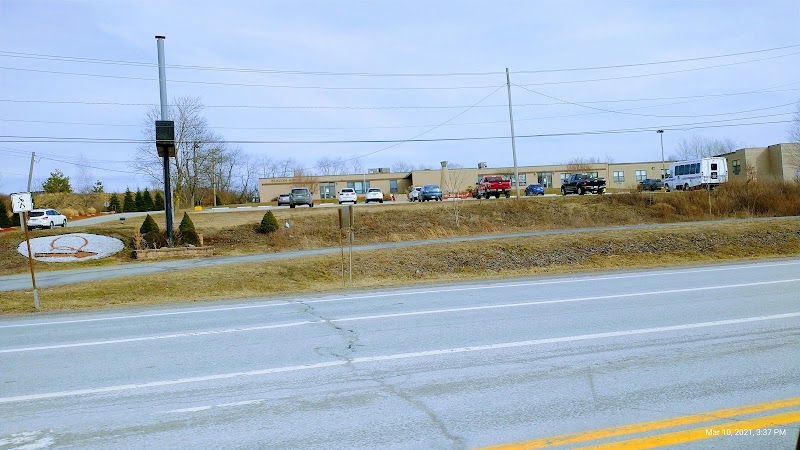
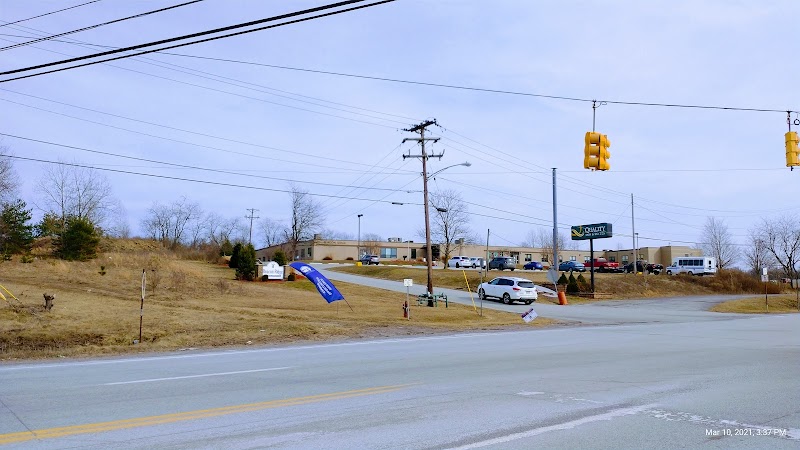
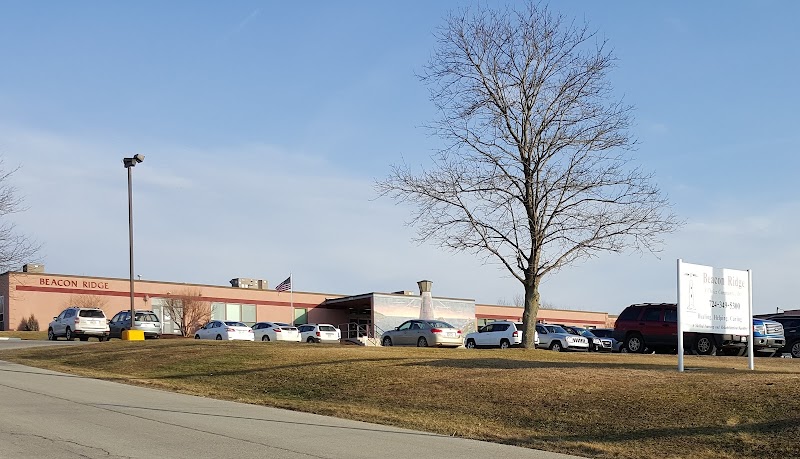
BEACON RIDGE

1515 WAYNE AVENUE, INDIANA, PA 15701 (724) 349-5300
Non profit - Corporation 118 Beds Independent Data: November 2025
Trust Grade
60/100
#259 of 653 in PA
Last Inspection: May 2025

Inspected within the last 6 months. Data reflects current conditions.

Overview

Beacon Ridge in Indiana, Pennsylvania, has a Trust Grade of C+, which means it is decent and slightly above average. It ranks #259 out of 653 facilities in Pennsylvania, placing it in the top half, and #2 out of 5 in Indiana County, indicating only one local option is better. The facility is improving, with issues decreasing from 15 in 2024 to 8 in 2025. Staffing is a strength, earning 4 out of 5 stars with a turnover rate of 44%, which is slightly below the state average, suggesting stable staff who know the residents well. However, there were concerning incidents, such as food not being stored properly and a lack of cleanliness in resident rooms, which the facility needs to address to ensure residents' safety and comfort. Additionally, while there are no fines on record, the facility has less RN coverage than 89% of Pennsylvania facilities, which may limit oversight of care.

Trust Score
C+
60/100
In Pennsylvania
#259/653
Top 39%
Safety Record
Low Risk
No red flags
Inspections
Getting Better
15 → 8 violations
Staff Stability
○ Average
44% turnover. Near Pennsylvania's 48% average. Typical for the industry.
Penalties
✓ Good
No fines on record. Clean compliance history, better than most Pennsylvania facilities.
Skilled Nurses
⚠ Watch
Each resident gets only 27 minutes of Registered Nurse (RN) attention daily — below average for Pennsylvania. Fewer RN minutes means fewer trained eyes watching for problems.
Violations
⚠ Watch
34 deficiencies on record. Higher than average. Multiple issues found across inspections.
★★★☆☆
3.0
Overall Rating
★★★★☆
4.0
Staff Levels
★★★★☆
4.0
Care Quality
★★★☆☆
3.0
Inspection Score
Stable
2024: 15 issues
2025: 8 issues

The Good

  • 4-Star Staffing Rating · Above-average nurse staffing levels
  • 4-Star Quality Measures · Strong clinical quality outcomes
  • Full Sprinkler Coverage · Fire safety systems throughout facility
  • No fines on record
  • Staff turnover below average (44%)

    4 points below Pennsylvania average of 48%

Facility shows strength in staffing levels, quality measures, fire safety.

The Bad

3-Star Overall Rating

Near Pennsylvania average (3.0)

Meets federal standards, typical of most facilities

Staff Turnover: 44%

Near Pennsylvania avg (46%)

Typical for the industry

The Ugly 34 deficiencies on record

May 2025 8 deficiencies
CONCERN (D)

Potential for Harm - no one hurt, but risky conditions existed

Comprehensive Care Plan (Tag F0656)

Could have caused harm · This affected 1 resident

Based on review of facility policy and clinical records, as well as staff interviews, it was determined that the facility failed to ensure that a care plan was created to reflect the resident's specif...

Read full inspector narrative →
Based on review of facility policy and clinical records, as well as staff interviews, it was determined that the facility failed to ensure that a care plan was created to reflect the resident's specific care needs for one of 38 residents reviewed (Resident 7). Finding include: A facility policy, dated January 2, 2025, revealed that a comprehensive, person-centered care plan that includes measurable objectives and timetables to meet the resident's physical, psychosocial and functional needs is developed and implemented for each resident. It will aid in preventing or reducing decline in the resident's functional status and/or functional levels and assessments of residents are ongoing and care plans are revised as information about the residents and the resident's conditions change. An annual Minimum Data Set (MDS) assessment (a mandated assessment of a resident's abilities and care needs) for Resident 7, dated, May 5, 2025, revealed that the resident was cognitively intact, required assistance with daily care needs, and had a diagnosis of Parkinson's disease. Clinical record review for Resident 7 revealed that there was no documented evidence that a care plan was created to address specific care needs related to Parkinson's disease. Interview with the Nursing Home Administrator on May 21, 2025, at 10:48 a.m. confirmed that Resident 7 did not have a care plan developed to address her specific care needs related to Parkinson's disease, and it should have been. 28 Pa. Code 201.24(e)(4) admission Policy. 28 Pa. Code 211.12(d)(5) Nursing Services.
CONCERN (D)

Potential for Harm - no one hurt, but risky conditions existed

Accident Prevention (Tag F0689)

Could have caused harm · This affected 1 resident

Based on a review of clinical records, as well as resident and staff interviews, it was determined that the facility failed to safely transfer one of 38 residents reviewed (Resident 62) who required a...

Read full inspector narrative →
Based on a review of clinical records, as well as resident and staff interviews, it was determined that the facility failed to safely transfer one of 38 residents reviewed (Resident 62) who required assistance from staff for transfers. Findings include: An admission minimum data set (MDS) assessment (a mandated assessment of a resident's abilities and care needs) for Resident 62, dated March 4, 2025, indicated that he was alert and oriented, required moderate assistance for daily care needs, and assist of one for transfers with wheeled walker and gait belt. Observations of Resident 62 on May 22, 2025, at 8:24 a.m. revealed that Nurse Aide 2 transferred the resident from a seated position to his wheelchair by using the back of his pants while there was a gait belt on the back of his wheelchair. Interview with Nurse Aide 2 on May 22, 2025, at 8:26 a.m. revealed that she was aware of Resident 62's transfer status and that she did not use a gait belt for the transfer instead she used the back of his pants for the transfer. Interview with Nursing Home Administrator on May 22, 2025, at 2:08 p.m. confirmed that Resident 62 should have been transferred with the use of a gait belt and he was not. 28 Pa. Code 211.12(d)(5) Nursing Services.
CONCERN (D)

Potential for Harm - no one hurt, but risky conditions existed

Pharmacy Services (Tag F0755)

Could have caused harm · This affected 1 resident

Based on review of facility policies and clinical records, as well as staff interviews, it was determined that the facility failed to maintain accountability for controlled medications (drugs with the...

Read full inspector narrative →
Based on review of facility policies and clinical records, as well as staff interviews, it was determined that the facility failed to maintain accountability for controlled medications (drugs with the potential to be abused) for one of 38 residents reviewed (Resident 35). Findings include: A facility policy regarding medication administration, dated January 2, 2025, indicated that the individual administering the medication initials the resident's Medication Administration Record (MAR) on the appropriate line after giving each medication and before administering the next ones. A quarterly Minimum Data Set (MDS) assessment (a mandated assessment of a resident's abilities and care needs) for Resident 35, dated February 26, 2025, indicated that the resident was cognitively intact, required assistance with care needs, and was taking an opioid medication (medications with the potential to be abused used to treat pain). Physician's orders for Resident 35, dated January 30, 2025, included an order for the resident to receive 5-325 milligrams (mg) of Hydrocodone-Acetaminophen (a narcotic pain medication) every six hours as needed for pain. Review of the controlled drug record (a form that accounts for each tablet/pill/dose of a controlled drug) for Resident 35, dated February, March, April and May 2025, revealed that a 5-325 mg tablet of Hydrocodone-Acetaminophen was signed out on February 22 at 10:00 p.m.; February 23 at 5:30 a.m. and 9:00 p.m.; March 8 at 9:00 p.m.; March 9 at 8:30 a.m.; March 10 at 3:15 a.m.; March 20 at 9:06 p.m.; March 22 at 9:00 p.m.; March 23 at 6:00 a.m.; March 23 at 9:00 p.m.; March 24 at 6:00 a.m.; March 30 at 8:47 p.m.; April 9 at 6:00 a.m.; April 10 at 9:00 p.m.; April 11 at 6:00 a.m.; April 11 at 9:51 p.m.; April 22 at 6:00 a.m.; May 10 at 9:34 p.m.; and May 11 at 9:26 p.m. However, there was no documented evidence in Resident 35's clinical record, including the MAR, that the signed-out doses of Hydrocodone-Acetaminophen were administered to the resident on the above-mentioned dates and times. Interview with the Director of Nursing on May 21, 2025, at 1:38 p.m. confirmed that there was no documented evidence in Resident 35's clinical record to indicate that the signed-out doses of Hydrocodone-Acetaminophen were administered to the resident on the above-mentioned dates and times. 28 Pa. Code 211.9(a)(1) Pharmacy Services. 28 Pa. Code 211.12(d)(1)(3)(5) Nursing Services.
CONCERN (D)

Potential for Harm - no one hurt, but risky conditions existed

Unnecessary Medications (Tag F0759)

Could have caused harm · This affected 1 resident

**NOTE- TERMS IN BRACKETS HAVE BEEN EDITED TO PROTECT CONFIDENTIALITY** Based on review of facility policies, manufacturer's instructions, and clinical records, as well as observations and staff inter...

Read full inspector narrative →
**NOTE- TERMS IN BRACKETS HAVE BEEN EDITED TO PROTECT CONFIDENTIALITY** Based on review of facility policies, manufacturer's instructions, and clinical records, as well as observations and staff interviews, it was determined that the facility failed to maintain a medication error rate of less than five percent. Findings include: A facility policy regarding medication administration, dated January 2, 2025, indicated that medications are administered in accordance with prescriber orders, including any required time frame. The individual administering the medication checks the label three times to verify the right resident, right medication, right dosage, right time, and right method (route) of administration before giving the medication. Each nurses' station has a current Physician's Desk Reference (PDR) and/or other medication reference available. Observations during medication administration on May 21, 2025, revealed that three medication administration errors were made during 29 opportunities for error, resulting in a medication administration error rate of 10.34 percent. A quarterly Minimum Data Set (MDS) assessment (a mandated assessment of a resident's abilities and care needs) for Resident 32, dated May 6, 2025, indicated that the resident was cognitively impaired, required assistance from staff for care needs, and had diagnoses that included hypertension (high blood pressure). Physician's orders for Resident 32, dated March 30, 2023, included an order for the resident to receive 25 milligrams (mg) of Metoprolol Succinate ER (Extended-Release) tablet daily related to hypertension. Observations of medication administration on May 21, 2025, at 8:16 a.m. revealed that Licensed Practical Nurse 1 crushed the extended-release tablet of Metoprolol Succinate prior to administering the medication to Resident 32. Interview with Licensed Practical Nurse 1 on May 21, 2025, at 9:50 a.m. confirmed that she should not have crushed Resident 32's extended-release tablet of Metoprolol Succinate. A quarterly MDS assessment for Resident 55, dated April 4, 2025, indicated that the resident was cognitively impaired, required assistance from staff for care needs, and had diagnoses that included obstructive uropathy (blockage of the urinary tract) and benign prostatic hyperplasia (enlarged prostate). Physician's orders for Resident 55, dated December 5, 2023, included an order for the resident to be administered a 0.4 mg capsule of Tamsulosin HCL daily related to benign prostatic hyperplasia. Observations of medication administration on May 21, 2025, at 7:48 a.m. revealed that Licensed Practical Nurse 5 removed the contents of the Tamsulosin HCL capsule, placed the contents in applesauce, and administered the medication to Resident 55. Manufacturer's instructions for Tamsulosin HCL indicated that the capsules should not be crushed, chewed or opened. Interview with Licensed Practical Nurse 5 on May 21, 2025, at 9:44 a.m. confirmed that she removed the contents of the Tamsulosin HCL capsule prior to administering the medication to Resident 55 and that she was not aware that the medication should not be removed from the capsule. An admission note for Resident 129, dated May 20, 2025, indicated that the resident had diagnoses that included heart disease and presence of right artificial hip joint. Physician's orders revealed that the resident was admitted to the facility on [DATE], with an order for aspirin 325 milligrams (mg) give one tablet daily for blood clot prevention related to right artificial hip joint. Observations of medication administration on May 21, 2025, at 8:24 a.m. revealed that Licensed Practical Nurse 6 administered aspirin 81 mg instead of the ordered dose of 325 mg. Interview with Licensed Practical Nurse 6 on May 21, 2025, at 11:25 a.m. confirmed that she administered aspirin 81 mg instead of the physician ordered dose of 325 mg. Interview with the Nursing Home Administrator on May 21, 2025, at 3:35 p.m. confirmed that Resident 32's metoprolol succinate extended-release table should not have been crushed, that the contents of the Tamsulosin HCL capsule should not have been removed prior to administering the medication to Resident 55, and that Resident 129 should not have received aspirin 81 mg, but rather the correct physician-ordered dose of aspirin 325 mg. 28 Pa. Code 211.12(d)(1)(3)(5) Nursing Services.
CONCERN (D)

Potential for Harm - no one hurt, but risky conditions existed

QAPI Program (Tag F0867)

Could have caused harm · This affected 1 resident

Based on review of the facility's plans of correction for previous surveys, and the results of the current survey, it was determined that the facility's Quality Assurance Performance Improvement (QAPI...

Read full inspector narrative →
Based on review of the facility's plans of correction for previous surveys, and the results of the current survey, it was determined that the facility's Quality Assurance Performance Improvement (QAPI) committee failed to correct quality deficiencies and ensure that plans to improve the delivery of care and services effectively addressed recurring deficiencies. Findings include: The facility's deficiencies and plans of corrections for State Survey and Certification (Department of Health) survey ending June 6, 2024, revealed that the facility developed plans of correction that included quality assurance systems to ensure that the facility maintained compliance with cited nursing home regulations. The results of the current survey, ending May 22, 2025, identified repeated deficiencies regarding safety and accident hazards, failure to provide proper catheter care, and failure to ensure the accountability of controlled substances. The facility's plan of correction for a deficiency regarding safety and accident hazards, cited during the survey ending June 6, 2024, revealed that the facility would complete audits and report the results of the audits to the QAPI committee for review. The results of the current survey, cited under F689, revealed that the facility's QAPI committee failed to successfully implement their plan to ensure ongoing compliance with regulations regarding safety and accident hazards. The facility's plan of correction for a deficiency regarding a failure to provide proper catheter care, cited during the survey ending June 6, 2024, revealed that the facility would complete audits and the results would be reviewed as part of quality assurance. The results of the current survey, cited under F690, revealed that the facility's QAPI committee was ineffective in maintaining compliance with the regulation regarding catheter care. The facility's plan of corrections for deficiencies regarding accountability of controlled substances, cited during the survey ending June 6, 2024, revealed that the facility would complete audits and report the results of the audits to the QAPI committee for review. The results of the current survey, cited under F755, revealed that the facility's QAPI committee failed to successfully implement their plan to ensure ongoing compliance with regulations regarding accountability of controlled substances. Refer to F689, F690 and F755. 28 Pa. Code 201.14(a) Responsibility of Licensee. 28 Pa. Code 201.18(e)(1) Management.
CONCERN (E)

Potential for Harm - no one hurt, but risky conditions existed

Safe Environment (Tag F0584)

Could have caused harm · This affected multiple residents

**NOTE- TERMS IN BRACKETS HAVE BEEN EDITED TO PROTECT CONFIDENTIALITY** Based on review of facility policies, as well as observations and staff interviews, it was determined that the facility failed t...

Read full inspector narrative →
**NOTE- TERMS IN BRACKETS HAVE BEEN EDITED TO PROTECT CONFIDENTIALITY** Based on review of facility policies, as well as observations and staff interviews, it was determined that the facility failed to provide a clean and homelike environment in residents' rooms for five of 38 residents reviewed (Resident 1, 13, 25, 29, 75). Findings include: The facility's policy regarding homelike environment, dated January 2, 2025, indicated that the facility staff and management were to the extent possible maximize the characteristics of the facility that reflect a personalized homelike setting including a clean, sanitary, and orderly environment. Observations of Resident 1's room on May 22, 2025, at 9:10 a.m. revealed that there was a large area of dried chipping paint, approximately 24 inches by 10 inches above the heating/cooling unit. Interview with the Maintenance Director on May 22, 2025, at 9:40 a.m. revealed that he was not aware of the chipping paint and indicated that with all the rain lately that moisture must be coming in the walls. An annual Minimum Data Set (MDS) assessment (a mandated assessment of a resident's abilities and care needs) for Resident 13, dated December 2, 2024, indicated that the resident was cognitively intact, was understood and able to understand others, was independent for care needs, and had diagnoses that included anxiety and manic depression. An admission MDS assessment for Resident 29, dated December 18, 2024, indicated that the resident was cognitively intact, was understood and able to understand others, required supervision to moderate assistance for care needs, and had diagnoses that included orthostatic hypotension (low blood pressure with changes in body position) and diabetes mellitus. Observations of Resident 13 and 29's room [ROOM NUMBER] on May 19, 2025, at 11:20 a.m. revealed that there was an area of broken dry wall, approximately 18 inches by 18 inches, near the packaged terminal air conditioner (PTAC - a self-contained through-the-wall heating and air conditioning unit). There was also a resident blanket rolled up sitting on the window sill and the wall was starting to bubble under the paint on either side of the window. In the corner of the window was a three-inch line of a black/grey, removable substance. The wall trim below the wall was pulling away from the wall and in some areas lying on the floor. The window sill was loose and breaking apart in the corner. Interview with Residents 13 and 29 at the time of the observations revealed that they put a blanket on the windowsill to block out the cold draft. A little bit ago some of the pieces of the wall fell on the floor, and maintenance staff cleaned it up, and said they would be back to clean it up. However they have not returned to fix anything. Observations of Resident 13 and 29's room on May 22, 2025, at 9:52 a.m. revealed the PTAC and window conditions were the same and the blanket was now wet. Interview with Resident 29 at the time of the observations indicated no staff have come in to fix the area. Interview with Maintenance Director on May 22, 2025, at 11:23 a.m. revealed that maintenance concerns from nursing are communicated with paper slips that are picked up daily. He confirmed that the areas of dry wall were in need of repair, water was coming in through the window causing water damage to the windowsill making it loose and breaking apart, the paint and wall trim had water damage, there was a black, removable substance on the corner of the window, and that the areas were not homelike. There was no work order that he was aware of in the system, and he was not aware this room needed such repairs. He also indicated that the flashing above the window may be a concern, which allows water to come in behind the stucco. Observations of Resident 25's room on May 22, 2025, at 9:21 a.m. revealed that there was an area of broken out drywall, approximately seven inches by seven inches on the wall below the window next to the floor. Observations of Resident 75's room on May 22, 2025, at 9:30 a.m. revealed that there was an area of dried visibly chipping paint, approximately 12 inches by 10 inches above the heating/cooling unit. Interview with the Maintenance Director on May 22, 2025, at 9:52 a.m. revealed that he was not aware of the chipping paint in rooms [ROOM NUMBERS], or the broken drywall in Resident 75's room. He indicated that it was unacceptable and that his staff would be correcting the concerns. 28 Pa. Code 207.2(a) Administrator's Responsibility.
CONCERN (E)

Potential for Harm - no one hurt, but risky conditions existed

Deficiency F0657 (Tag F0657)

Could have caused harm · This affected multiple residents

Based on review of facility policies and clinical records, as well as staff interviews, it was determined that the facility failed to ensure that care plans were updated/revised to reflect a resident'...

Read full inspector narrative →
Based on review of facility policies and clinical records, as well as staff interviews, it was determined that the facility failed to ensure that care plans were updated/revised to reflect a resident's specific care needs for three of 38 residents reviewed (Residents 35, 47, 50). Findings include: A facility policy regarding comprehensive person-centered care plans, dated January 2, 2025, indicated that comprehensive, person-centered care plans are developed within seven days of the completion of the required comprehensive Minimum Data Set (MDS) assessment (a mandated assessment of a resident's abilities and care needs). Assessments of residents are ongoing, and care plans are revised as information about the residents and the resident's conditions change. A quarterly MDS assessment for Resident 35, dated February 26, 2025, indicated that the resident was cognitively intact, required assistance with care needs, and had a diagnosis of hypertension (high blood pressure). A care plan for Resident 35, dated September 16, 2024, indicated that the resident was receiving a diuretic (a medication used to treat fluid retention and hypertension) related to edema (fluid retention in body tissues) and hypertension. Review of Resident 35's clinical record, including review of the resident's Medication Administration Record (MAR), revealed no documented evidence that the resident was receiving a diuretic. Interview with the Nursing Home Administrator on May 21, 2025, at 2:02 p.m. confirmed that Resident 35's care plan should have been revised to reflect that he was not receiving a diuretic. A quarterly MDS assessment for Resident 47, dated March 1, 2025, indicated that the resident was cognitively intact, was understood, usually understands, was independent with care needs, and had a diagnoses of dementia, anxiety, depression, and bipolar disease (shifts in mood, energy, and activity levels, encompassing both periods of manic and depression). A care plan for Resident 47, dated March 3, 2023, indicated that the resident was an elopement risk and a wanderer with impaired safety awareness. The care plan included an intervention to have a code alert bracelet at all times numbered 9000-0434J with an expiration date of April 21, 2024. Physician orders for Resident 47, dated March 22, 2025, included an order to have code alert bracelet on at all times numbered 9000-0434M with expiration date October 25, 2025, and checked for placement every shift. Observations of Resident 47 on May 21, 2025, at 11:11 a.m. revealed that the resident was lying in bed. Licensed Practical Nurse 1 checked the alert bracelet and it was labeled 9000-0434M with an expiration date of October 25, 2025. Interview with the Nursing Home Administrator on May 21, 2025, at 2:01 p.m. confirmed that Resident 47's care plan should have been revised to reflect the correct code alert bracelet information. An annual MDS assessment for Resident 50, dated May 7, 2025, indicated that the resident was cognitively impaired, was usually able to make herself understood and was usually able to understand others, and required assistance with care needs. A care plan for Resident 50, dated February 17, 2025, indicated that the resident had a urinary tract infection with an intervention that included to give antibiotic therapy as ordered. Review of Resident 50's clinical record, including review of the resident's Medication Administration Record (MAR), revealed no documented evidence that the resident had a urinary tract infection and no documented evidence that she was receiving an antibiotic. Interview with the Nursing Home Administrator on May 22, 2025, at 10:11 a.m. indicated that she believed Resident 50's care plan should have stayed in effect related to her MDS. 28 Pa. Code 211.12(d)(5) Nursing Services.
CONCERN (E)

Potential for Harm - no one hurt, but risky conditions existed

Incontinence Care (Tag F0690)

Could have caused harm · This affected multiple residents

Based on review of facility policies and clinical records, as well as observations and staff interviews, it was determined that the facility failed to ensure that residents received proper care for in...

Read full inspector narrative →
Based on review of facility policies and clinical records, as well as observations and staff interviews, it was determined that the facility failed to ensure that residents received proper care for indwelling urinary catheters (a flexible catheter used to drain urine from the bladder into a drainage collection bag) for three of 38 residents reviewed who had an indwelling urinary catheter (Residents 4, 7, 10). Findings include: The facility's policy regarding urinary catheter care, dated January 2, 2025, indicated that staff are to be sure the catheter tubing and drainage bag are kept off the floor. An annual Minimum Data Set (MDS) assessment (a mandated assessment of a resident's abilities and care needs) for Resident 4, dated May 7, 2025, revealed that the resident was severely cognitively impaired, required assistance with daily care, had an indwelling urinary catheter, and had a diagnosis of neuromuscular dysfunction of the bladder (nerve damage to the bladder). A care plan for Resident 4, dated March 19, 2023, revealed that the resident had an indwelling urinary catheter and staff were to ensure that the drainage bag was off the floor and below the level of the bladder. Observations of Resident 4 on May 21, 2025, at 10:32 a.m. revealed that the resident was sitting in her broda chair (customized wheelchair) in the Bayside lounge. Nurse Aide 3 entered the lounge and transported the resident approximately 18-20 feet back to her room to brush her hair prior to the resident's beautician appointment. Her indwelling urinary catheter drainage bag was connected underneath her wheelchair, as the resident was being transported, approximately four inches of the bottom of the dignity bag drug across the floor. Interview with the Director of Nursing, Infection Preventionist, and Nurse Aide 3 on May 21, 2025, at 10:35 a.m. confirmed that Resident 4's indwelling urinary catheter dignity bag should not have been in direct contact with the floor. All three staff remarked that it is a challenge to keep the dignity bags off the floor due to some of the chairs being so low to the floor. An annual MDS assessment for Resident 7, dated, May 5, 2025, revealed that the resident was cognitively intact, required assistance with daily care needs, and had an indwelling urinary catheter (a soft flexible tube inserted into the bladder to drain urine), Physician's orders for Resident 7, dated April 29, 2025, included an order for the indwelling catheter to be changed every 30 days. Review of Resident 7's Treatment Administration Record (TAR) for May 2025 revealed no documented evidence that the catheter change for May 5, 2025, was completed. Interview with the Nursing Home Administrator on May 21, 2025, at 10:41 a.m. confirmed that there was no documented evidence that Resident 7's indwelling catheter was changed every 30 days as ordered on May 5, 2025, and it should have been. A quarterly MDS assessment for Resident 10, dated March 2, 2025, revealed that the resident was cognitively intact, required assistance with care needs, had an indwelling urinary catheter, and had a diagnosis of obstructive uropathy (blockage of the urinary tract). A care plan for Resident 10, dated March 16, 2022, revealed that the resident had an indwelling urinary catheter, and staff were to ensure that the drainage bag was off the floor, below bladder level, and that the tubing was secured to avoid pulling or trauma. Physician's orders for Resident 10, dated November 11, 2024, included an order for staff to check the resident's catheter bag and tubing every shift for proper positioning (below bladder level and off the floor) and cover for dignity. Observations of Resident 10 on May 19, 2025, at 11:34 a.m. revealed that the resident was sitting in her wheelchair in her room. Her indwelling urinary catheter drainage bag was connected underneath her wheelchair with the dignity bag half on and half off with part of the drainage bag exposed. The indwelling urinary catheter tubing was lying in direct contact with the floor. During an interview with Licensed Practical Nurse 4 on May 19, 2025, at 11:46 a.m., Resident 10 proceeded to wheel herself towards this writer and the nurse, dragging the indwelling urinary catheter tubing on the floor. The nurse indicated that she knew the catheter bag had to be off the floor and that her concern with the catheter tubing being on the floor was that the resident may step on it. Interview with the Nursing Home Administrator on May 19, 2025, at 3:15 p.m. confirmed that Resident 10's indwelling urinary catheter tubing should not have been in direct contact with the floor. 28 Pa. Code 211.12(d)(3)(5) Nursing Services.
Jun 2024 15 deficiencies
CONCERN (D)

Potential for Harm - no one hurt, but risky conditions existed

Deficiency F0557 (Tag F0557)

Could have caused harm · This affected 1 resident

Based on clinical record reviews, observations, and staff interviews, it was determined that the facility failed to maintain the dignity of one of 33 residents reviewed (Resident 75) who had an indwel...

Read full inspector narrative →
Based on clinical record reviews, observations, and staff interviews, it was determined that the facility failed to maintain the dignity of one of 33 residents reviewed (Resident 75) who had an indwelling urinary catheter. Findings include: An admission Minimum Data Set (MDS) assessment (a mandated assessment of a resident's abilities and care needs) for Resident 75, dated May 2, 2024, indicated that the resident was cognitively impaired, required partial to maximum assist with personal hygiene care, and had diagnoses that included stroke. A care plan for Resident 75, dated May 31, 2024, revealed that the resident had a Foley catheter (partially flexible tube that collects urine from the bladder and leads to a drainage bag) and that care included keeping her urine drainage bag covered in order to promote dignity. Physician's orders for Resident 75, dated May 30, 2024, included an order for the resident to have a Foley catheter. Observations of Resident 75 on June 5, 2024, at 8:54 a.m. revealed the resident lying in bed with her Foley catheter drainage bag attached to the side of her bed visible from the hallway and not inside a privacy bag. Interview with Registered Nurse 1 on June 5, 2024, at 8:59 a.m. confirmed that Resident 75's urinary catheter drainage bag did not have a cover or privacy bag on it, and it should have. Interview with the Director of Nursing on June 5, 2024, at 12:26 p.m. confirmed that Resident 75 did not have a dignity bag on her Foley catheter drainage bag at the time of the observations, and she should have. 28 Pa. Code 201.29(c) Resident Rights.
CONCERN (D)

Potential for Harm - no one hurt, but risky conditions existed

Deficiency F0658 (Tag F0658)

Could have caused harm · This affected 1 resident

Based on review of Pennsylvania's Nursing Practice Act, facility policies, and clinical records, as well as staff interviews, it was determined that the facility failed to clarify questionable physici...

Read full inspector narrative →
Based on review of Pennsylvania's Nursing Practice Act, facility policies, and clinical records, as well as staff interviews, it was determined that the facility failed to clarify questionable physician's orders for one of 33 residents reviewed (Resident 5). Findings include: The Pennsylvania Code, Title 49, Professional and Vocational Standards, State Board of Nursing, 21.11 (a)(1)(2)(4) indicated that the registered nurse was to collect complete and ongoing data to determine nursing care needs, analyze the health status of individuals and compare the data with the norm when determining nursing care needs, and carry out nursing care actions that promote, maintain and restore the well-being of individuals. An admission Minimum Data Set (MDS) assessment (a federally-mandated assessment of a resident's abilities and care needs) for Resident 5, dated May 7, 2024, indicated that the resident had moderate cognitive impairment, had pressure ulcers, and diagnoses that included a stroke. A care plan, dated April 30, 2024, revealed that Resident 5 was at risk for developing pressure ulcers, and treatments were to be administered as ordered. A wound note for Resident 5, dated May 3, 2024, revealed the resident had a pressure-induced deep tissue injury (injury below the skin) on the right heel that measured 5.0 x 5.0 x 0.1 centimeters (cm) with recommendations to apply skin prep (forms a protective barrier) to the area twice a day. Physician's orders for Resident 5, dated May 3, 2024, included orders to apply skin prep to the resident's right heel twice a day. However, the resident's Treatment Administration Record (TAR) for May 3, 2024, through May 31, 2024, revealed that skin prep was applied to the resident's left heel twice a day and not the right heel. There was no documented evidence that Resident 5's physician's order to apply skin prep to the resident's left heel was clarified with the physician due to the resident's deep tissue injury to the right heel. Interview with the Director of Nursing on June 5, 2024, at 12:25 p.m. confirmed that the treatment order to the left heel should have been clarified.
CONCERN (D)

Potential for Harm - no one hurt, but risky conditions existed

Pressure Ulcer Prevention (Tag F0686)

Could have caused harm · This affected 1 resident

Based on clinical record reviews and staff interviews, it was determined that the facility failed to follow recommendations from a wound consultation for one of 33 residents reviewed (Resident 5). Fin...

Read full inspector narrative →
Based on clinical record reviews and staff interviews, it was determined that the facility failed to follow recommendations from a wound consultation for one of 33 residents reviewed (Resident 5). Findings include: An admission Minimum Data Set (MDS) assessment (a federally-mandated assessment of a resident's abilities and care needs) for Resident 5, dated May 7, 2024, indicated that the resident had moderate cognitive impairment, pressure ulcers, and diagnoses that included a stroke. A care plan, dated April 30, 2024, revealed that the resident was at risk for developing pressure ulcers, and treatments were to be administered as ordered. A wound note, dated May 24, 2024, revealed the resident had a Stage III pressure ulcer on the right gluteus (buttocks) that measured 5.0 x 5.0 x 0.1 centimeters (cm) with recommendations to apply Santyl (removes dead tissue) to the area twice a day. However, the resident's Treatment Administration Record (TAR), dated May 2024, revealed that there was no documented evidence that Santyl was applied to the resident's right gluteus twice a day as recommended by the wound clinic on May 24, 2024. Interview with the Director of Nursing on June 5, 2024, at 12:25 p.m. confirmed that the recommendation to the right buttocks was not followed. 28 Pa. Code 211.12(d)(1)(3)(5) Nursing Services.
CONCERN (D)

Potential for Harm - no one hurt, but risky conditions existed

Accident Prevention (Tag F0689)

Could have caused harm · This affected 1 resident

Based on review of policies, clinical records, and investigation documents, as well as observations and staff interviews, it was determined that the facility failed to provide an environment that was ...

Read full inspector narrative →
Based on review of policies, clinical records, and investigation documents, as well as observations and staff interviews, it was determined that the facility failed to provide an environment that was free of accident hazards by failing to follow physician's orders and care-planned interventions for diets for one of 33 residents reviewed (Resident 29), failed to ensure that care-planned interventions were in place at the time of a fall for one of 33 residents reviewed (Resident 26), failed to follow physician's orders and care-planned interventions to prevent skin breakdown for one of 33 resident's reviewed (Resident 42), and failed to ensure that safe wheelchair transport techniques were used for one of 33 residents reviewed (Resident 79). Findings Include: An annual Minimum Data Set (MDS) assessment (a mandated assessment of a resident's abilities and care needs) for Resident 26, dated May 9, 2024, revealed that the resident was cognitively impaired, was dependent on staff for personal care needs, had diagnosis that included Alzheimer's disease, and had a history of falls. A care plan for Resident 26, dated January 10, 2019, indicated that the resident was a high risk for falls and included an intervention, dated March 3, 2023, that the resident wear shoes when out of bed. Review of a fall investigation for Resident 26, dated October 20, 2023, at 7:30 p.m., included a witness statement by Nurse Aide 3 indicating that he had witnessed the resident fall from her chair and that Resident 26 was wearing yellow grip socks at the time of the fall. Interview with Assistant Director of Nursing on June 6, 2024, at 12:35 p.m. confirmed that Resident 26 was wearing slipper socks at the time of her fall from a chair on October 20, 2023, and she should have been wearing shoes per her care plan. A quarterly MDS assessment for Resident 29, dated February 20, 2024, revealed that the resident was understood, could understand others, and had a diagnosis which included Cerebral Vascular Accident (CVA - commonly known as a stroke) with hemiplegia (paralysis on one side of the body). A care plan for the resident, dated September 7, 2022, revealed that the resident had a self-care performance deficit related to a left hemiplegia and was able to feed herself after set up. A care plan, dated September 8, 2018, revealed that the resident had a potential nutritional problem related to CVA and dysphagia (a medical term for difficulty swallowing). Staff was to provide and serve the resident's diet as ordered. The resident was to receive a regular, mechanical soft/chopped diet (foods that can be successfully and safely swallowed), and regular liquids. Physician's orders for Resident 29, dated November 27, 2023, included an order for the resident to receive a regular, mechanical soft/chopped texture, regular consistency diet. A nursing note for Resident 29, dated February 21, 2024, at 12:47 p.m. revealed that the resident expressed having something in her throat at lunch time. The resident was unsure of what food it was. Staff assisted the resident to clear her throat. The resident was able to breathe without difficulty, the writer provided the resident with fluids, and after several sips the resident was able to cough up the food. The resident coughed up a whole, fully intact chicken nugget. Speech therapy and the supervisor were notified. The resident was to have chopped meat. Education was provided to the floor and kitchen staff. Interview with the Director of Nursing on June 4, 2024, at 12:20 p.m. confirmed that Resident 29 was not served her lunch meal as ordered on February 21, 2024. A quarterly Minimum Data Set (MDS) assessment (a mandatory assessment of a resident's abilities and care needs) for Resident 42, dated March 5, 2024, revealed that the resident was cognitively impaired, had weekly skin checks, and required assistance for daily care tasks. The resident's care plan, dated December 13, 2023, revealed that she has frail/thin skin with decreased functional ability. Physician's orders, dated December 25, 2023, included an order for the resident to wear bilateral (both) upper extremity Geri sleeves (a protective arm sleeve that assists in the prevention of skin tears) and to remove them for care and reapply. Observations on June 5, 2024, at 1:00 p.m. and 1:50 p.m. revealed that Resident 42 was sitting in the dining area and her room, respectively, and did not have her bilateral Geri sleeves on her arms. Interviews with Nurse Aides 2 and 4 on June 5, 2024, at 1:50 p.m. revealed that the resident's daughter prefers the resident to wear long sleeves and a sweater. They preceded to look for the Geri sleeves and found one in the resident's drawer and placed it on her but did not find the second one in her room. The resident is not care planed to use sweaters and long sleeves instead of the Geri sleeves. Interview with Registered Nurse 1 on June 5, 2024 at 2:04 p.m. confirmed that Resident 42 was ordered bilateral Geri sleeves and they should be on her arms. Interview with the Director of Nursing on June 5, 2024, at 2:15 p.m. confirmed that Resident 42 has frail skin and a physcian order to wear bilateral upper extremity Geri sleeves, and they were not on the resident and should have been. An admission Minimum Data Set (MDS) assessment (a mandatory assessment of a resident's abilities and care needs) for Resident 79, dated May 29, 2024, revealed that the resident was minimally cognitively impaired and required assistance for daily care tasks and transport. The resident's care plan, dated May 24, 2024, revealed that he was at risk for falls. Observations on June 4, 2024, at 10:20 a.m. revealed that Resident 79 was being pushed through the hallway in a wheelchair by Nurse Aide 4 and the wheelchair leg rests were in place and down. The resident had socks on his feet, but his feet were between the footrests dangling less than one inch above the floor. Interview with Nurse Aide 4, at that time, indicated that she knew his footrests were in place but did not realize he did not have his feet resting on them. There was no documented evidence that Resident 79 was assessed as being safe to hold his feet up while being transported in a wheelchair. Interview with the Nursing Home Administrator on June 4, 2024, at 1:10 p.m. confirmed that Resident 79 has a history of falls and that his feet should have been resting on the footrests during transport, and they were not. 28 Pa. Code 201.14(a) Responsibility of Licensee. 28 Pa. Code 201.18(b)(1)(e)(1) Management. 28 Pa. Code 211.12(d)(1)(5) Nursing Services.
CONCERN (D)

Potential for Harm - no one hurt, but risky conditions existed

Incontinence Care (Tag F0690)

Could have caused harm · This affected 1 resident

Based on review of policies and clinical records, as well as observations and staff interviews, it was determined that the facility failed to ensure that interventions were in place to prevent urinary...

Read full inspector narrative →
Based on review of policies and clinical records, as well as observations and staff interviews, it was determined that the facility failed to ensure that interventions were in place to prevent urinary tract infections for one of 33 residents reviewed (Resident 5) who had an indwelling urinary catheter. Findings include: The facility's policy regarding urinary catheter care, dated January 16, 2024, indicated that the catheter tubing and drainage bag were to be kept off the floor. An admission Minimum Data Set (MDS) assessment (a mandated assessment of a resident's abilities and care needs) for Resident 5, dated May 7, 2024, revealed that the resident had moderate cognitive impairment, had an indwelling urinary catheter (a tube inserted and held in the bladder to drain urine), and had diagnoses that included neurogenic bladder (bladder dysfunction caused by nervous system conditions). Physician's orders, dated April 29, 2024, included an order for the resident to have an indwelling urinary catheter. Observations of Resident 5 on June 5, 2024, at 9:13 a.m. revealed that the resident was in bed, and the catheter tubing was positioned under a fall mat that was on the floor beside her bed and in contact with the floor. Interview with Nurse Aide 5 on June 5, 2024, at 9:17 a.m. confirmed that Resident 5's catheter tubing was on the floor under the fall mat and it should not have been. Interview with the Director of Nursing on June 5, 2024, at 12:25 p.m. confirmed that Resident 5's catheter tubing should not be on the floor. 28 Pa. Code 211.12(d)(1)(5) Nursing Services.
CONCERN (D)

Potential for Harm - no one hurt, but risky conditions existed

Respiratory Care (Tag F0695)

Could have caused harm · This affected 1 resident

Based on review of policies and clinical records, as well as observations and staff interviews, it was determined that the facility failed to ensure that oxygen tubing and a nasal canula remained off ...

Read full inspector narrative →
Based on review of policies and clinical records, as well as observations and staff interviews, it was determined that the facility failed to ensure that oxygen tubing and a nasal canula remained off the floor for one of 33 residents reviewed (Resident 42). The facility's policy regarding oxygen therapy, dated January 16, 2024, indicated that oxygen was to be administered safely and in accordance with physician's orders. A quarterly Minimum data Set (MDS) assessment (a mandated assessment of a resident's abilities and care needs) for Resident 42, dated March 5, 2024, revealed that the resident was cognitively impaired and had diagnoses that included chronic respiratory failure with hypoxia (a serious condition that causes low blood oxygen) and a history of generalized anxiety. A care plan, dated August 29, 2023, indicated that Resident 42 was to receive continuous oxygen while sleeping due to a respiratory disease. Physician's orders for Resident 42, dated April 11, 2024, included an order for the resident to receive continuous oxygen at a flow rate of 2 liters per minute via nasal cannula (a tube that delivers oxygen into the nostrils) while sleeping. Observations of Resident 42 awake in her room on June 5, 2024, at 1:38 p.m. revealed that her oxygen tubing and nasal canula were curled up on the floor beside the oxygen concentrator (an oxygen delivery device) with the tubing and nasal cannula in contact with the floor. Interview with Nurse Aide 2 on June 5, 2024, at 1:40 p.m. confirmed that Resident 42 wears her oxygen while sleeping and that the oxygen tubing and nasal canula should not be in contact with the floor. Interview with the Director of Nursing on June 5, 2024, at 2:18 p.m. confirmed that Resident 42's oxygen tubing and nasal canula should not be in contact with the floor. 28 Pa. Code 211.12(d)(3)(5) Nursing Services.
CONCERN (D)

Potential for Harm - no one hurt, but risky conditions existed

Deficiency F0773 (Tag F0773)

Could have caused harm · This affected 1 resident

Based on review of facility policies and clinical records, as well as staff interviews, it was determined that the facility failed to obtain a physician's order for an invasive procedure to collect a ...

Read full inspector narrative →
Based on review of facility policies and clinical records, as well as staff interviews, it was determined that the facility failed to obtain a physician's order for an invasive procedure to collect a specimen for a laboratory test for one of 33 residents reviewed (Resident 58). Findings include: The facility's policy regarding intermittent catheterization (the insertion and removal of a catheter several times a day to empty the bladder), dated January 16, 2024, indicated that staff was to verify that there is a physician's order for this procedure. A quarterly Minimum Data Set (MDS) assessment (a mandated assessment of a resident's abilities and care needs) for Resident 58, dated December 25, 2024, revealed that the resident was usually understood and could usually understand others. A care plan for the resident, dated September 23, 2021, indicated that the resident had a potential for discomfort due to urinary retention (when the bladder does not empty completely or at all). Staff was to perform intermittent catheterization as ordered by the physician and as needed. Physician's orders for Resident 58, dated December 19, 2023, included an order for staff to obtain a Urine Flex (the laboratory first performs a chemical urine test to detect abnormalities such as blood, protein, glucose, and indirect indicators of bacterial infection) for nausea/vomiting and elevated temperature. A nursing note for Resident 58, dated December 19, 2023, at 11:14 a.m. revealed that the writer attempted to straight cath (an invasive procedure in which a plastic tube is inserted into the bladder) the resident this a.m. and was unable to obtain urine at that time. A nursing note at 11:09 p.m. revealed that urine was obtained from the resident via female cath for the Urine Flex as ordered. A nursing note for Resident 58, dated April 8, 2024, at 5:58 a.m. revealed that the writer attempted to obtain urine via straight cath for the resident's yearly urine micro albumin (checks for small amounts of albumin in the urine which could be the first sign of kidney disease) times two attempts. They were unable to obtain enough urine for the lab to test to be completed. Interview with the Assistant Director of Nursing on June 5, 2024, at 12:20 p.m. confirmed that there was no evidence that a physician's order was obtained for Resident 58 to be catheterized to obtain the urine specimens on the above dates. 28 Pa. Code 211.12(d)(1)(3)(5) Nursing Services.
CONCERN (D)

Potential for Harm - no one hurt, but risky conditions existed

Deficiency F0805 (Tag F0805)

Could have caused harm · This affected 1 resident

Based on review of clinical records and investigation documents, as well as staff interviews, it was determined that the facility failed to ensure that residents were provided the proper food consiste...

Read full inspector narrative →
Based on review of clinical records and investigation documents, as well as staff interviews, it was determined that the facility failed to ensure that residents were provided the proper food consistency as ordered by the physician for one of 33 residents reviewed (Resident 29). This deficiency was cited as past non-compliance. Findings include: A quarterly Minimum Data Set (MDS) assessment (a mandated assessment of a resident's abilities and care needs) for Resident 29, dated February 20, 2024, revealed that the resident was understood, could understand others, and had a diagnosis which included Cerebral Vascular Accident (CVA - commonly known as a stroke) with hemiplegia (paralysis on one side of the body). A care plan for the resident, dated September 7, 2022, revealed that the resident had an Activities of Daily Living (ADL) self-care performance deficit related to a left hemiplegia, and that the resident was able to feed herself after set up. A care plan, dated September 8, 2018, revealed that the resident had a potential nutritional problem related to CVA and dysphagia (a medical term for difficulty swallowing). Staff were to provide and serve the resident's diet as ordered. The resident was to receive a regular, mechanical soft/chopped diet (provides foods provide foods that can be successfully and safely swallowed) and regular liquids. Physician's orders for Resident 29, dated November 27, 2023, included an order for the resident to receive a regular, mechanical soft/chopped texture, regular consistency diet. A nursing note for Resident 29, dated February 21, 2024, at 12:47 p.m. revealed that the resident expressed having something in her throat at lunch time. The resident was unsure of what food it was. Staff assisted the resident to clear her throat. The resident was able to breathe without difficulty, the writer provided the resident with fluids, and after several sips the resident was able to cough up the food. The resident coughed up a full/intact chicken nugget. Speech therapy and the supervisor were notified. The resident's diet was to have her meat chopped. Education was provided to the floor and kitchen staff. Interview with the Director of Nursing on June 4, 2024, at 12:20 p.m. confirmed that Resident 29 was not served her lunch meal as ordered on February 21, 2024. Following the incident with Resident 29 on February 21, 2024, the facility's corrective actions included: Nursing staff were educated on the need for importance of following the correct diet order/texture as well as reading the tray card tickets for accuracy. All dietary staff were educated on the importance of following the correct diet order/texture as well as reading the tray card tickets for accuracy. All involved staff were written up for providing and serving the incorrect diet texture. Tray accuracy audit tools are in place and will be completed accordingly. It will be available for the manager in charge of the dining room to complete. The dietary team will complete randomized tray accuracy audits to ensure proper accuracy for the next 10 days. The dietary team will then review results and tamper down if appropriate. Meal ticket/diet check accuracy process: The cook reads the meal ticket and plates the food based on what they chose, as well as the diet and texture that is ordered. Then the first dietary aide receives the meal ticket, as well as the plate of food to put on the tray along with the dessert. The tray is then sent down the line to add beverages as well as condiments if needed then placed in the delivery cart then delivered to the floors for the tray pass. An audit of resident diets was completed. A review of the facility's corrective actions revealed that they were in compliance with F805 on February 21, 2024. 28 Pa. Code 211.12(d)(3)(5) Nursing Services.
CONCERN (D)

Potential for Harm - no one hurt, but risky conditions existed

Infection Control (Tag F0880)

Could have caused harm · This affected 1 resident

Based on review of policies and clinical records, as well as observations and staff interviews, it was determined that the facility failed to ensure that proper infection control practices were follow...

Read full inspector narrative →
Based on review of policies and clinical records, as well as observations and staff interviews, it was determined that the facility failed to ensure that proper infection control practices were followed during wound care for two of 33 residents reviewed (Residents 45, 59). Findings include: The facility's policy regarding hand hygiene, dated January 16, 2024, indicated that hand hygiene is an important infection control measure to prevent illness in skilled nursing homes, and that hands should be sanitized or washed before and after the use of gloves. An admission Minimum Data Set (MDS) assessment (a mandated assessment of a resident's abilities and care needs) for Resident 59, dated April 21, 2024, revealed that the resident was moderately cognitively impaired, had diagnoses that included peripheral vascular disease (a circulatory condition that reduces blood flow to the limbs). Physician's orders, dated May 24, 2024, included an order to cleanse the left foot with normal saline solution, pat dry, apply betadine, a heel cushion and soft rolled gauze wrap. Observations on June 4, 2024, at 2:05 p.m. revealed that Licensed Practical Nurse 8 removed Resident 59's right and left foot dressing; removed her gloves, and without performing hand washing or sanitizing her hands; donned new gloves; cleansed the left foot with normal saline solution, patted it dry, applied betadine, a heel cushion and soft rolled gauze wrap; and then removed her gloves, and without performing hand washing or sanitizing her hands, donned new gloves. Licensed Practical Nurse 8, then cleansed the right foot with normal saline solution; patted it dry; applied betadine, a heel cushion and a soft rolled gauze wrap; removed her gloves; and washed her hands. A quarterly Minimum Data Set (MDS) assessment (a mandated assessment of a resident's abilities and care needs) for Resident 45, dated May 20, 2024, revealed that the resident was severely cognitively impaired and had diagnoses that included peripheral vascular disease. Physician's orders, dated May 24, 2024, included an order to cleanse the third digit of the right foot with normal saline solution, pat dry, apply medihoney (a healing cream) and a calcium alginate dressing (specialty dressing used for high drainage) to the wound. Observations on June 4, 2024, at 2:41 p.m. revealed that Licensed Practical Nurse 8 cleansed Resident 45's wound on the third digit of his right foot with normal saline solution, patted it dry, applied medihoney and a calcium alginate dressing to the wound base, removed her gloves to begin care on a second wound, and donned new gloves without performing hand washing or sanitizing her hands. Interview with Licensed Practical Nurse 8 on June 4, 2024, at 3:10 p.m. confirmed that while performing wound care on Resident 45 and 59, she did not perform hand hygiene after removing her gloves and donning new gloves. Interview with the Director of Nursing on June 4, 2024, at 3:18 p.m. confirmed that Licensed Practical Nurse 8 should have washed her hands or sanitized them after removing her gloves and before donning new gloves, and she did not. 28 Pa. Code 211.12(d)(1)(5) Nursing Services.
CONCERN (E)

Potential for Harm - no one hurt, but risky conditions existed

Quality of Care (Tag F0684)

Could have caused harm · This affected multiple residents

Based on review of policies and clinical records, as well as staff interviews, it was determined that the facility failed to provide nutritional supplements as ordered by the physician for one of 33 r...

Read full inspector narrative →
Based on review of policies and clinical records, as well as staff interviews, it was determined that the facility failed to provide nutritional supplements as ordered by the physician for one of 33 residents reviewed (Resident 1), failed to ensure that the hypoglycemic protocol was followed for two of 33 residents reviewed (Residents 3, 38), failed to ensure physician's orders for medications were followed for one of 33 residents reviewed (Resident 48); and failed to ensure that physician's orders for bowel protocols/medications were followed for two of 33 residents reviewed (Residents 7, 74). Findings include: A quarterly Minimum Data Set (MDS) assessment (a mandated assessment of a resident's abilities and care needs) for Resident 1, dated February 27, 2024 revealed that the resident was cognitively impaired and had the potential for decreased nutritional intake. Physician's orders, dated April 30, 2024, included orders for the resident to receive a four ounce Mighty Shake (nutritional supplement) with each meal. The resident's care plan, dated May 14, 2024, indicated that the resident had a recent decrease in appetite. Observations of Resident 1's lunch tray on June 4, 2024, a 12:35 p.m. and breakfast tray on June 5, 2024, at 8:35 a.m. revealed that there was no Mighty Shake on the tray. Interview with Nurse Aide 2 on June 5, 2024, at 8:37 a.m. confirmed that the electronic record shows the order for Mighty Shake supplements, and that Resident 1 previously received Mighty Shakes on her meal trays, but there was none today. Interview with the Nursing Home Administrator on June 5, 2024, at 9:00 a.m. confirmed that Resident 1 did not receive her supplemental nutrition in the form of a Mighty Shake as per physician order, and she should have. A significant change MDS assessment for Resident 3, dated May 16, 2024, revealed that the resident was understood and able to understand others, required partial to maximum assistance with personal hygiene care, and had diagnoses that included diabetes. Physician's orders for Resident 3, dated April 3, 2024, included an order for staff to follow hypoglycemic interventions that included to give the resident 15 grams of glucose (sugar) if their blood glucose level was less than 70 milligrams/deciliter (mg/dl) and to recheck their blood sugar in 15 minutes. Review of the Medication Administration Record (MAR) for Resident 3, dated May 2024 and June 2024, revealed that on May 7, 2024, at 6:34 a.m. the resident's blood sugar was 65 mg/dl; on May 8, 2024, at 6:06 a.m. the resident's blood sugar was 66 mg/dl; on May 26, 2024, at 6:30 a.m. the resident's blood sugar was 61 mg/dl; and on June 5, 2024, at 6:12 a.m. the resident's blood sugar was 62 mg/dl. There was no documented evidence that the 15 grams of glucose was administered to Resident 3 or that the resident's blood sugar was rechecked in 15 minutes on these identified dates and times. An interview with the Director of Nursing on June 5, 2024, at 12:26 p.m. confirmed that Resident 3's physician's orders for hypoglycemia were not followed as ordered on the above-mentioned dates and times. An admission MDS assessment for Resident 38, dated May 23, 2024, revealed that the resident was cognitively intact, required set-up or clean-up assistance with personal hygiene, and had diagnoses that included diabetes. Physician's orders for Resident 38, dated May 17, 2024, included orders for the staff to follow hypoglycemic interventions that included to give the resident 15 grams of glucose (sugar) if their blood glucose level was less than 70 milligrams/deciliter (mg/dl) and to recheck their blood sugar in 15 minutes. Review of the MAR for Resident 38, dated May 2024, revealed that on May 27, 2024, at 9:00 p.m. the resident's blood sugar was 58 mg/dl, and on May 28, 2024, at 5:28 a.m. the resident's blood sugar was 68 mg/dl. There was no documented evidence that the 15 grams of glucose was administered to Resident 38 or that the resident's blood sugar was rechecked in 15 minutes on these identified dates and times. An interview with the Director of Nursing on June 5, 2024, at 12:25 p.m. confirmed that Resident 38's physician's orders for hypoglycemia were not followed as ordered on the above-mentioned dates and times. A quarterly MDS assessment for Resident 48, dated June 3, 2024, revealed that the resident was cognitively intact, was independent with personal hygiene, and had diagnoses that included diabetes. Physician's orders for Resident 48, dated January 31, 2024, included orders for the resident to receive 4 units of insulin lispro one time of day and 8 units of insulin lispro two times a day at mealtimes. Resident 48 was to receive only half the dose of insulin ordered if she only ate half of her meal and no insulin if she refused her meal. Review of meal intake records for Resident 48, dated March, April, and May 2024, revealed that on March 9, 2024, at 6:00 p.m. the resident ate 50 percent of her meal; on March 26, 2024, at 9:00 a.m. the resident ate 25 percent of her meal; on March 31, 2024, at 1:00 p.m. the resident ate 50 percent of her meal; on April 1, 2024, at 9:00 a.m. the resident ate 25 percent of her meal; on April 2, 2024, at 9:00 a.m. the resident ate zero percent of her meal; on April 4, 2024, at 1:00 p.m. the resident ate 50 percent of her meal; on April 6, 2024, at 1:00 p.m. the resident ate 50 percent of her meal; on April 12, 2024, at 9:00 a.m. the resident ate 50 percent of her meal; on April 16, 2024, at 6:00 p.m. the resident ate 25 percent of her meal; on April 20, 2024, at 1:00 p.m. the resident ate zero percent of her meal; on May 13, 2024, at 6:00 p.m. the resident ate 25 percent of her meal; on May 14, 2024, at 6:00 p.m. the resident ate 50 percent of her meal; on May 19, 2024, at 9:00 a.m. the resident ate 25 percent of her meal; on May 21, 2024, at 6:00 p.m. the resident ate 25 percent of her meal; and on May 23, 2024, at 6:00 p.m. the resident ate 25 percent of her meal. Review of the MARs for Resident 48, dated March, April, and May 2024, revealed that the resident was given the full dose of insulin on the above dates and times when she ate 50 percent or less of her meal. Interview with the Assistant Director of Nursing on June 6, 2024, at 12:35 p.m. confirmed that insulin orders were not followed as ordered for Resident 48 on the above-mentioned dates and times. A quarterly MDS assessment for Resident 7, dated April 15, 2024, revealed that the resident was cognitively impaired, was always incontinent of bowel movements, and had diagnoses that included a stroke. Physician's orders for Resident 7, dated December 14, 2022, included orders for the resident to receive two 8.6 milligrams (mg) tablets of Senna as needed for constipation if no bowel movement for two days, a 10 mg bisacodyl suppository rectally as needed if no bowel movement for three days, and Fleets enema to be given rectally as needed if no bowel movement for four days. The resident's care plan, dated November 9, 2022, indicated that the resident was at risk for constipation and the bowel protocol was to be followed. Review of Resident 7's bowel records for March, April, and May 2024, revealed that there was no documented evidence that the resident had a bowel movement from March 2 through 5, April 6 through 9, and May 20 through 23, 2024. Review of the March, April and May 2024 MARs for Resident 7 revealed that staff did not initiate or follow the bowel protocol as ordered by the physician. Interview with the Director of Nursing on June 5, 2024, at 2:56 p.m. confirmed that the physician's orders for bowel medications were not followed for Resident 7. An admission MDS assessment for Resident 74, dated April 11, 2024, revealed that the resident was cognitively intact, required set-up or clean-up assist with personal hygiene, was frequently incontinent of bowel, and had diagnoses that included a right hip fracture. Physician's orders for Resident 74, dated April 5, 2024, included an order to give one 8.6 mg tablet of Senna if the resident did not have a bowel movement in two days, a 10 mg Bisacodyl suppository if the resident did not have a bowel movement in three days, and a Fleets enema if the resident did not have a bowel movement in four days. Review of the bowel record for Resident 74, dated May 2024 and June 2024, revealed that the resident did not have a bowel movement on May 15 through May 17, 2024; May 27 through May 30, 2024; and June 1 through June 3, 2024. A review of the MAR and nursing notes for Resident 74, dated May 2024 and June 2024, revealed no documented evidence that the facility followed the bowel protocol as ordered. Interview with the Nursing Home Administrator on June 5, 2024, at 2:15 p.m. confirmed that the bowel protocol was not followed for Resident 74 on the above-mentioned dates. 28 Pa. Code 211.12(d)(3)(5) Nursing Services.
CONCERN (E)

Potential for Harm - no one hurt, but risky conditions existed

Pharmacy Services (Tag F0755)

Could have caused harm · This affected multiple residents

Based on review of policies and clinical records, as well as staff interviews, it was determined that the facility failed to maintain a complete and accurate accounting of controlled medications (medi...

Read full inspector narrative →
Based on review of policies and clinical records, as well as staff interviews, it was determined that the facility failed to maintain a complete and accurate accounting of controlled medications (medications with the potential to be abused) for two of 33 residents reviewed (Residents 7, 58). Findings include: The facility's policy regarding controlled substances, dated January 16, 2024, indicated that each controlled substance prescription is documented in the resident's medical record with the date, time and signature of the person administering the prescription. The prescription is recorded in the patient's health record and recorded on the Medication Administration Record (MARs). A quarterly Minimum Data Set (MDS) assessment (a mandated assessment of a resident's abilities and care needs) for Resident 7, dated April 15, 2024, indicated that the resident was cognitively impaired, had pain occasionally, received pain medication routinely and as needed, received an opioid (a controlled pain medication). Physician's orders for Resident 7, dated January 9, 2023, included an order for the resident to receive 5 milligrams (mg) of Oxycodone (a narcotic pain medication) twice a day as needed for buttock pain related to pressure areas for a pain scale of 4-10 (on a scale of 1 to 10, where 10 is the worst pain). Resident 7's controlled drug records for March 2024 indicated that a dose of Oxycodone was signed-out for administration on March 22, 2024, at 7:30 p.m. and March 31, 2024, at 9:00 p.m. However, the resident's clinical record, including the MAR, contained no documented evidence that the sign-out doses of Oxycodone were actually administered to the resident on those dates/times. A quarterly Minimum Data Set (MDS) assessment (a mandated assessment of a resident's abilities and care needs) for Resident 58, dated March 22, 2024, indicated that the resident was cognitively intact and had diagnoses that included anxiety. Physician's orders for Resident 58, dated March 18, 2024, included an order for the resident to receive one 0.5 mg tablet of Lorazepam (a controlled medication used to treat anxiety) every 12 hours as needed for anxiousness/restlessness related to anxiety. Resident 58's controlled drug records for April and May 2024 indicated that a dose of Lorazepam was signed-out for administration on April 17, 2024, at 9:00 p.m.; April 19, 2024, at 9:00 a.m.; April 30, 2024, at 9:00 p.m.; May 1, 2024, at 9:00 p.m.; May 2, 2024, at 11:00 p.m.; May 20, 2024, at 9:00 p.m.; and May 30, 2024, at 9:00 p.m. However, the resident's clinical record, including the MAR, contained no documented evidence that the sign-out doses of Lorazepam were actually administered to the resident on those dates/times. Interview with the Assistant Director of Nursing on June 6, 2024, at 12:35 p.m. confirmed that there was no documented evidence that the doses of Oxycodone and Lorazepam that were signed-out by nurses were actually administered to Residents 7 and 58 on the above dates/times. 28 Pa. Code 211.12(d)(1)(5) Nursing Services.
CONCERN (E)

Potential for Harm - no one hurt, but risky conditions existed

Medication Errors (Tag F0758)

Could have caused harm · This affected multiple residents

Based on review of clinical records, as well as staff interviews, it was determined that the facility failed to ensure that non-pharmacological (non-medication) interventions were attempted prior to t...

Read full inspector narrative →
Based on review of clinical records, as well as staff interviews, it was determined that the facility failed to ensure that non-pharmacological (non-medication) interventions were attempted prior to the administration of anti-anxiety medications for one of 33 residents reviewed (Resident 58). Findings include: A quarterly Minimum Data Set (MDS) assessment (a mandated assessment of a resident's abilities and care needs) for Resident 58, dated March 22, 2024, indicated that the resident was cognitively intact and had diagnoses that included anxiety. A care plan for the resident, dated November 9, 2021, revealed that the resident was at risk for mood decline/anxiety. If the resident had any signs/symptoms of anxiety, staff was to attempt to identify the source and eliminate it if possible. Staff will allow the resident to express feelings/concerns. Staff will offer emotional support and empathetic listening as needed. De-escalation preferences included music, books, TV, and friends. If the resident was restless, staff will check on the resident's needs (pain, hunger, thirst, toilet, etc.). Physician's orders for Resident 58, dated March 18, 2024, included an order for the resident to receive one 0.5 mg tablet of Lorazepam (a medication used to treat anxiety) every 12 hours as needed for anxiousness/restlessness related to anxiety. Resident 58's Medication Administration Records (MARs) for April and May 2024 revealed that staff administered the one 0.5 mg tablet of Lorazepam for anxiousness/restlessness on April 8, 2024, at 8:29 a.m.; April 18, 2024, at 8:29 p.m.; April 26, 2024, at 9:59 p.m.; April 27, 2024, at 9:37 p.m.; April 28, 2024, at 9:27 p.m.; May 2, 2024, at 9:08 p.m.; May 5, 2024, at 8:08 p.m.; May 6, 2024, at 9:00 p.m.; May 9, 2024, at 8:22 p.m.; May 10, 2024, at 9:18 p.m.; May 13, 2024, at 8:55 p.m.; May 24, 2024, at 9:00 p.m.; May 25, 2024, at 9:00 p.m.; May 26, 2024, at 9:21 p.m.; May 27, 2024, at 9:21 p.m.; May 28, 2024, at 9:00 p.m.; and May 29, 2024, at 9:07 p.m. There was no documented evidence that non-medication interventions were attempted prior to the administration of Lorazepam. Interview with the Assistant Director of Nursing on June 5, 2024, at 12:20 p.m. confirmed that there was no documented evidence that staff attempted non-medication interventions prior to administering the as needed Lorazepam to Resident 58 on the above-mentioned dates and times. 28 Pa. Code 211.12(d)(5) Nursing Services.
CONCERN (E)

Potential for Harm - no one hurt, but risky conditions existed

Deficiency F0761 (Tag F0761)

Could have caused harm · This affected multiple residents

**NOTE- TERMS IN BRACKETS HAVE BEEN EDITED TO PROTECT CONFIDENTIALITY** Based on review of facility policies, as well as observations and staff interviews, it was determined that the facility failed t...

Read full inspector narrative →
**NOTE- TERMS IN BRACKETS HAVE BEEN EDITED TO PROTECT CONFIDENTIALITY** Based on review of facility policies, as well as observations and staff interviews, it was determined that the facility failed to properly date medications after they were opened in two of three medication rooms reviewed (Landings and Bayside), and failed to discard expired medical supplies. Findings include: The facility's policy regarding medication storage and disposal, dated [DATE], revealed that the facility would properly date medication vials after they were opened and remove outdated supplies from the facility inventory. Observations in the Landing medication room refrigerator on [DATE], at 12:12 p.m. revealed that there was one 30 ml (milliliter) bottle of Ativan opened and undated. Interview with Licensed Practical Nurse 6 on [DATE], at 12:18 p.m. confirmed that the Ativan was open and should have been labeled with the date it was opened. Observations in the Bayside medication room refrigerator on [DATE], at 12:24 p.m. revealed that there was one opened and undated multi-dose vial of insulin Glargine (a type of long acting insulin). There was also 43 blue-top and 63 pink-top blood collection tubes that expired February 29, 2024, and [DATE], respectively. Interview with Registered Nurse 7 on [DATE], at 12:42 p.m. confirmed that the opened insulin vial should have been dated, and the expired blood collection tubes should have been discarded. Interview with the Nursing Home Administrator on [DATE], at at 2:20 p.m. confirmed that the opened vials of insulin and Ativan should have been dated upon opening, and the blood collection tubes were expired and should have been discarded. 28 Pa. Code 211.9(a)(1) Pharmacy Services.
CONCERN (E)

Potential for Harm - no one hurt, but risky conditions existed

QAPI Program (Tag F0867)

Could have caused harm · This affected multiple residents

Based on review of the facility's plans of correction for previous surveys, and the results of the current survey, it was determined that the facility's Quality Assurance Performance Improvement (QAPI...

Read full inspector narrative →
Based on review of the facility's plans of correction for previous surveys, and the results of the current survey, it was determined that the facility's Quality Assurance Performance Improvement (QAPI) committee failed to maintain compliance with nursing home regulations and ensure that plans to improve the delivery of care and services effectively addressed recurring deficiencies. Findings include: The facility's deficiencies and plans of correction for State Survey and Certification (Department of Health) survey ending July 27, 2023, revealed that the facility developed plans of correction that included quality assurance systems with audits to ensure that the facility maintained compliance with cited nursing home regulations. The results of the audits were to be reported to the QAPI committee for review. The results of the current survey, ending June 6, 2024, identified repeated deficiencies regarding professional standards being met, quality of care, that the resident's environment was free of accident hazards, urinary catheter care, issues with oxygen therapy, preventing issues with the accountability of controlled medications (drugs with the potential to be abused), ensuring that food was properly stored, and following infection control practices. The facility's plan of correction for a deficiency regarding a failure to clarify physician's orders, cited during the survey ending July 27, 2023, revealed that the facility developed a plan of correction that included completing audits and reporting the results of the audits to the QAPI committee for review. The results of the current survey, cited under F658, revealed that the facility's QAPI committee failed to successfully implement their plans to ensure ongoing compliance with regulations regarding the clarification of physician's orders. The facility's plan of correction for a deficiency regarding quality of care, cited during the survey ending July 27, 2023, revealed that the facility developed a plan of correction that included completing audits and reporting the results of the audits to the QAPI committee for review. The results of the current survey, cited under F684, revealed that the facility's QAPI committee failed to successfully implement their plan to ensure ongoing compliance with regulations regarding quality of care. The facility's plans of correction for deficiencies regarding ensuring that the resident environment was free of accident hazards, cited during the survey ending on July 27, 2023, revealed that audits would be conducted and the results of the audits would be brought before the QAPI committee for further monitoring. The results of the current survey, cited under F689, revealed that the QAPI committee was ineffective in maintaining compliance with the regulation regarding ensuring that the environment was free of accident hazards. The facility's plan of correction for a deficiency regarding a failure to provide proper incontinent and catheter care and/or toileting, cited during the survey ending July 27, 2023, revealed that the facility would complete audits and the results would be reviewed as part of quality assurance. The results of the current survey, cited under F690, revealed that the facility's QAPI committee was ineffective in maintaining compliance with the regulation regarding incontinent/catheter care and/or toileting. The facility's plan of correction for a deficiency regarding a failure to provide oxygen therapy as ordered by the physician, cited during the survey ending July 27, 2023, revealed that the facility would complete audits and the results would be reviewed as part of quality assurance. The results of the current survey, cited under F695, revealed that the facility's QAPI committee was ineffective in maintaining compliance with the regulation regarding providing oxygen therapy as ordered by the physician. The facility's plan of correction for a deficiency regarding the failure to account for controlled medications, cited during the survey ending July 27, 2023, revealed that the facility would complete audits and the results would be reviewed as part of quality assurance. The results of the current survey, cited under F755, revealed that the facility's QAPI committee was ineffective in correcting deficient practices related to the accountability of controlled medications. The facility's plan of correction for a deficiency regarding appropriate food storage cited during the survey ending July 27, 2023, revealed that the facility would complete audits and the results would be reviewed as part of quality assurance. The results of the current survey, cited under F812, revealed that the facility's QAPI committee was ineffective in maintaining compliance with the regulation regarding food storage. The facility's plans of correction for deficiencies regarding infection control practices, cited during the survey ending July 27, 2023, revealed that the facility would complete audits and report the results of the audits to the QAPI committee for review. The results of the current survey, cited under F880, revealed that the facility's QAPI committee failed to successfully implement their plan to ensure ongoing compliance with regulations regarding infection control practices. Refer to F658, F684, F689, F690, F695, F755, F812, F880. 28 Pa. Code 201.14(a) Responsibility of Licensee. 28 Pa. Code 201.18(e)(1) Management.
CONCERN (F)

Potential for Harm - no one hurt, but risky conditions existed

Food Safety (Tag F0812)

Could have caused harm · This affected most or all residents

Based on review of facility policies, as well as observations and staff interviews, it was determined that the facility failed to store and prepare food in accordance with professional standards for f...

Read full inspector narrative →
Based on review of facility policies, as well as observations and staff interviews, it was determined that the facility failed to store and prepare food in accordance with professional standards for food service safety by failing to store food under sanitary conditions, failing to ensure that a microwave used to reheat resident food was clean (Bayside Nourishment Center), and failing to ensure that ice was made and stored in sanitary ice machines for one of two ice machines (Bayside Nourishment Center). Findings include: The facility's policy regarding food and supply storage, dated January 16, 2024, revealed that most, but not all, products contain an expiration date. The words sell-by, best-by, enjoy-by, or use-by should precede the date. The sell-by date is the last date that food can be sold or consumed; do not sell products in retail areas or place them on patient trays/resident plates past the date on the product. Foods past the use-by, sell-by, best-by, or enjoy by date should be discarded. Cover, label, and date unused portions and open packages. Products are good through the close of business on the date notes on the label. Date and rotate items: first in, first out (FIFO). Discard food past the use-by or expiration date. The facility's policy regarding thawing frozen meat/poultry/seafood, dated January 16, 2024, indicated to count the day the raw meat was removed from the freezer as day one; it must be cooked by the end of +4 days. Label with the date it was removed from the freezer and date by which it must be used by. Add a yellow dot to the orange label to indicate a product that is thawing. If the package leaks as it thaws, the meat poultry must be used as soon as it thaws (usually +2 days). Observations in the main kitchen of the walk-in freezer on June 3, 2024, at 9:21 a.m. revealed that there was a clear plastic bag that contained Danishes that was out of the original packaging carton that was not dated with the date that they were opened and/or a use by date. There was a clear plastic bag that contained dinner rolls that was out of the original packaging carton that was not dated with the date that they were opened and/or a use by date. Interview with the [NAME] Manager at the time of observation confirmed that the Danishes and dinner rolls should have been dated with the date that they were opened and a use by date. Observations in the main kitchen of the walk-in cooler on June 3, 2024, at 9:24 a.m. revealed that on the bottom shelf there was a metal pan that contained a five-pound roll of ground hamburger that had a red juice in the bottom of the metal pan. There was a date of May 28, 2024, on the package. However, there was no date when the ground meat was removed from the freezer to be thawed, and there was no date as to when the ground meat was to be cooked by. Interview with the [NAME] Manager at the time of observation revealed that the date on the package was the date that they took the ground meat from the freezer to be thawed. Interview with the Regional Dietary Manager on June 3, 2024, at 1:04 p.m. confirmed that staff should have placed an orange sticker on the pan that had the ground meat thawing to indicate the date when the product was removed from the freezer to be thawed and should also have a date when it was to be cooked by. Observations of the microwave used to reheat resident food in the Bayside Nourishment Center June 6, 2024, at 8:57 a.m. revealed that there was food splattered on the inside of the door, all three inside walls, the top inside wall, and on the plate and bottom wall. Interview with the Staff Development/Registered Nurse at the time of the observation confirmed that the microwave needed to be cleaned. Observations of the ice machine in the Bayside Nourishment Center on June 6, 2024, at 9:03 a.m. revealed that the drainpipe coming from the ice machine extended down into and past the rim of a funnel-shaped pipe that extended up from the floor drain. There was no air gap between the end of the ice machine's drain pipe and the floor drain. Interview with the Director of Maintenance on June 6, 2024, at 2:53 p.m. confirmed that the ice machine in the Bayside Nourishment Center did not have an air gap between the drain pipe and the floor drain for back-flow prevention. 28 Pa. Code 211.6(f) Dietary Services.
Jul 2023 11 deficiencies
CONCERN (D)

Potential for Harm - no one hurt, but risky conditions existed

Deficiency F0658 (Tag F0658)

Could have caused harm · This affected 1 resident

Based on review of Pennsylvania's Nursing Practice Act, facility policies, and clinical records, as well as staff interviews, it was determined that the facility failed to ensure that an assessment wa...

Read full inspector narrative →
Based on review of Pennsylvania's Nursing Practice Act, facility policies, and clinical records, as well as staff interviews, it was determined that the facility failed to ensure that an assessment was completed by a registered nurse for a change in condition for one of 31 residents reviewed (Resident 19). Findings include: The Pennsylvania Code, Title 49, Professional and Vocational Standards, State Board of Nursing, 21.11 (a)(1)(2)(4) indicated that the registered nurse was to collect complete and ongoing data to determine nursing care needs, analyze the health status of individuals and compare the data with the norm when determining nursing care needs, and carry out nursing care actions that promote, maintain and restore the well-being of individuals. The facility's policy for change in condition, dated January 11, 2023, indicated that a nursing assessment of a resident will occur with any change in the resident's condition and the nursing assessment would be documented in the nursing notes. An admission Minimum Data Set (MDS) assessment (a mandated assessment of a resident's abilities and care needs) for Resident 19, dated April 26, 2023, indicated that she was alert and oriented, required limited assistance of one for bed mobility and transfers, one-person assist for ambulation in her room, and one-person supervision/assistance for dressing, hygiene and set up assist for meals. A restorative note for Resident 19, dated May 23, 2023, indicated that she continued on a restorative nurse program for ambulation and dressing/grooming. Her ambulation varied from 20-150 feet, and she performed her dressing/grooming independently after setup. A nurse's note for Resident 19, dated June 7, 2023, at 6:40 p.m. indicated that she was lethargic (decreased energy, diminished energy, mental capacity and motivation) and was a hard two assist with transfers. She was co-operative but unable to assist with any care. There was no documented evidence of a registered nurse assesment until June 8, 2023, at 11:45 a.m. when the physician was notified of the change. A nursing note for Resident 19, dated June 8, 2023, at 1:58 p.m. indicated that the resident's daughter requested that she be transferred to the emergency room. A nursing note, dated June 8, 2023, at 5:38 p.m. indicated that she was admitted to the hospital with the diagnosis of atrial fibrillation (irregular heart rhythm) and diabetic ketoacidosis (a serious diabetes complication when there is an overload of ketones in your blood that can lead to diabetic coma or death). Interview with Licensed Practical Nurse 1 on July 26, 2023, at 10:03 a.m. revealed that she had never known Resident 19 to be lethargic and that the registered nurse should have been notified. Interview with the Director of Nursing on July 27, 2023, at 10:31 a.m. confirmed that there was no documented evidence of an assessment by a registered nurse at the time of Resident 19's change in condition and that one should have been done. 28 Pa. Code 211.12(d)(1)(3)(5) Nursing services.
CONCERN (D)

Potential for Harm - no one hurt, but risky conditions existed

Accident Prevention (Tag F0689)

Could have caused harm · This affected 1 resident

Based on clinical record reviews, observations, and staff interviews, it was determined that the facility failed to ensure that fall prevention interventions were in place as care planned for one of 3...

Read full inspector narrative →
Based on clinical record reviews, observations, and staff interviews, it was determined that the facility failed to ensure that fall prevention interventions were in place as care planned for one of 31 residents reviewed (Resident 34). Findings include: The facility's policy regarding fall management, dated January 11, 2023, indicated that the purpose was to reduce the risk of falls and prevent injury. A Quarterly Minimum Data Set (MDS) assessment (a mandated assessment of a resident's abilities and care needs) for Resident 34, dated May 17, 2023, revealed that the resident was severely cognitively impaired, required extensive assistance from staff for bed mobility and transfers, and used a broda chair (a specialized chair used to provide support and positioning) for mobility. An incident note, dated March 9, 2023, indicated that the resident slid from her broda chair to the floor. The resident's care plan, revised on March 10, 2023, indicated that she had impaired memory, a history of falls, and was to have dycem on the seat of her chair. Observations of Resident 34 on July 26, 2023, at 11:01 a.m. revealed that she was self-propelling in her broda chair and there was no dycem on the seat of the chair. A fall risk assessment for Resident 34, dated May 16, 2023, indicated that the resident was a high risk for falls due to impulsiveness and poor safety awareness, and that the current plan of care for dycem to the seat of the broda chair will continue. Interview with Licensed Practical Nurse 2 on July 26, 2023, at 11:05 a.m. confirmed that there was no dycem on the seat of Resident 34's broda chair. Interview with the Rehabilitation Supervisor on July 26, 2023, at 11:10 a.m. confirmed that dycem should be on the seat of Resident 34's broda chair as care planned. Interview with the Nursing Home Administrator on July 27, 2023, at 12:19 p.m. confirmed that there was no dycem on the seat of Resident 34's broda chair, and there should have been. 28 Pa. Code 211.12(d)(5) Nursing services.
CONCERN (D)

Potential for Harm - no one hurt, but risky conditions existed

Incontinence Care (Tag F0690)

Could have caused harm · This affected 1 resident

Based on review of clinical records, as well as staff interviews, it was determined that the facility failed to ensure that residents received care and treatment in accordance with professional standa...

Read full inspector narrative →
Based on review of clinical records, as well as staff interviews, it was determined that the facility failed to ensure that residents received care and treatment in accordance with professional standards of practice by failing to complete a voiding trial as ordered by the physician for one of 31 residents reviewed (Resident 77) who had an indwelling urinary catheter. Findings include: An admission Minimum Data Set (MDS) assessment (a mandated assessment of a resident's abilities and care needs) for Resident 77, dated June 19, 2023, revealed that the resident usually understood others and was usually understood, required extensive assistance from staff for personal care needs, had in indwelling urinary catheter (a flexible tube that is inserted into the bladder to drain urine), and had diagnoses that included dementia and urinary tract infection. A nursing note for Resident 77, dated June 28, 2023, revealed that the resident had not voided (urinated) since his foley catheter was removed at the urologist office that morning. An assessment was completed, and the urologist office was notified. New orders were obtained to reinsert the foley catheter due to urinary retention. A nursing note for Resident 77, dated June 29, 2023, revealed that the facility received a call from the urologist office and new orders were received to begin a voiding trial in two weeks. Physician's orders for Resident 77, dated June 29, 2023, included an order for staff to insert a foley catheter (type of indwelling urinary catheter) due to urinary retention, and in two weeks begin a voiding trial (done to determine if a person can urinate without a urinary catheter in place) two times a day. A nursing note for Resident 77 dated July 17, 2023, revealed that staff contacted the urologist's office to clarify the length of time that the voiding trial should be completed. The urologist requested the trial be completed in a 24-hour period and then notify the urology office of pass or fail results. Physician's orders for the resident, dated July 17, 2023, included the voiding trial with instructions to empty the foley catheter drainage bag, clamp the foley catheter for 30 minutes, unclamp the foley catheter, and measure the amount of urine output two times a day and follow up with the urologist regarding pass or fail results. A nursing note for Resident 77, dated July 21, 2023, revealed that staff contacted the urologist regarding the resident's unsuccessful voiding trial. New orders were obtained to discontinue the voiding trial and for the foley catheter to remain in place. Review of the Medication Administration Record (MAR) for Resident 77 for July 13-20, 2023, revealed that the voiding trial was not completed on July 14, 2023, at 11:58 p.m. because the catheter was in place and there was no start date or cutoff date for the order; was not completed on July 15, 2023, at 9:47 p.m. because the catheter must be removed before the voiding trial can begin; was not completed on July 16, 2023, at 9:31 p.m. because the catheter was in place; was not completed on July 19, 2023, at 10:21 p.m. because the catheter was still in place; and was not completed on July 20, 2023 at 11:59 p.m. because the resident had a catheter and was sleeping. There was no documented evidence of how much urine was obtained on the days and times that the voiding trial was documented as completed; therefore, there was no documentation to prove if the voiding trial was a pass or fail. Interview with Registered Nurse 3 on July 27, 2023, at 8:49 a.m. revealed that she was unfamiliar with the voiding trial orders to clamp the foley for Resident 77. Her experience with voiding trials involved removing the foley catheter to determine if the resident could void. Interview with the Infection Control Nurse and the Director of Nursing on July 27, 2023, at 12:23 p.m. confirmed that the order for Resident 77's voiding trial should have been clarified for better understanding by staff. There were no parameters identified regarding the amount of urine output required to determine if clamping the foley was successful or not, and there was no documentation of the urine output obtained after clamping the foley to determine a pass or fail voiding trial. Additionally, there was no documented evidence to indicate that the voiding trial was unsuccessful, as reported to the urologist. 28 Pa. Code 211.12(d)(3)(5) Nursing services.
CONCERN (D)

Potential for Harm - no one hurt, but risky conditions existed

Respiratory Care (Tag F0695)

Could have caused harm · This affected 1 resident

Based on review of policies and clinical records, as well as observations and staff interviews, it was determined that the facility failed to place signs that indicated oxygen-in-use for two of 31 res...

Read full inspector narrative →
Based on review of policies and clinical records, as well as observations and staff interviews, it was determined that the facility failed to place signs that indicated oxygen-in-use for two of 31 residents reviewed (Residents 66, 71). Findings include: The facility's policy regarding oxygen therapy, dated January 11, 2023, indicated that a sign would be in place indicating that oxygen was in use. A quarterly Minimum Data Set (MDS) assessment (a mandated assessment of a resident's abilities and care needs) for Resident 66, dated May 18, 2023, revealed that the resident was cognitively intact, used supplemental oxygen, had diagnoses that included anemia, and had a history of pulmonary embolism (a blood clot in the lung). Physician's orders, dated September 3, 2023, included orders for Resident 66 to receive oxygen at a flow rate of 2 liters per minute by nasal cannula (tubes that deliver oxygen into the nostrils). Observations of Resident 66 on July 24, 2023, and July 25, 2023 at 1:36 p.m. and 8:25 a.m., respectively, revealed that the resident was in bed with oxygen in place via nasal cannula at 2 liters per minute. There was no signage in place indicating that oxygen was in use, per the facility's policy. A quarterly Minimum Data Set (MDS) assessment (a mandated assessment of a resident's abilities and care needs) for Resident 71, dated June 9, 2023, revealed that the resident used supplemental oxygen and had diagnoses that included chronic respiratory failure (a lung condition which causes difficulty breathing). Physician's orders, dated March 22, 2022, included orders for the resident to receive oxygen at a flow rate of 2 liters per minute via nasal cannula. Observation of Resident 71 on July 24, 2023, and July 25, 2023, at 2:01 p.m. and 8:31 a.m. respectively, revealed that the resident was in his bed with the oxygen in use and the flow rate was 2 liters per minute. There was no signage in place indicating that oxygen was in use, per the facility's policy. An interview with the Nursing Home Administrator on July 26, 2023, at 9:26 a.m confirmed that Residents 66 and 71 were receiving oxygen and that there was no signage in place indicating that oxygen was in use, per the facility's policy. 28 Pa. Code 211.12(d)(3) Nursing services. 28 Pa. Code 211.12(d)(5) Nursing services.
CONCERN (D)

Potential for Harm - no one hurt, but risky conditions existed

Medical Records (Tag F0842)

Could have caused harm · This affected 1 resident

Based on review of facility policy and clinical records, as well as resident and staff interviews, it was determined that the facility failed to maintain clinical records that were complete and accura...

Read full inspector narrative →
Based on review of facility policy and clinical records, as well as resident and staff interviews, it was determined that the facility failed to maintain clinical records that were complete and accurately documented for one of 31 residents reviewed (Resident 44). Findings include: A facility policy for medication administration, dated January 11, 2023, indicated that the nurse responsible for administering the medication was responsible for charting the drug. The medication shall be charted as soon after the medication administration as possible. Each dose of a medication shall be initialed on the Medication Administration Record (MAR). A quarterly Minimum Data Set (MDS) assessment (a mandated assessment of a resident's abilities and care needs) for Resident 44, dated June 26, 2023, revealed that the resident was cognitively intact, was independent with personal care needs, was receiving surgical wound care and intravenous medications, and had diagnoses that included osteomyelitis (infection in a bone). Physician's orders for Resident 44, dated June 22, 2023, included an order for the resident to receive 1250 milligrams (mg) of Vancomycin intravenously (given through a needle or tube inserted into a vein) two times a day for osteomyelitis. Review of the July 2023 MAR for Resident 44 revealed no documented evidence that the Vancomycin was administered on July 10 at 6:00 a.m., July 18 at 6:00 a.m., July 19 at 6:00 a.m., July 21 at 6:00 p.m., and July 22 at 6:00 p.m. as ordered. Interview with the Director of Nursing on July 27, 2023, at 12:14 p.m. confirmed that Resident 44 received the IV Vancomycin as ordered and also confirmed that it should have been documented after being administered but was not. 28 Pa Code 211.5(f) Clinical records. 28 Pa. Code 211.12(d)(5) Nursing services.
CONCERN (D)

Potential for Harm - no one hurt, but risky conditions existed

Infection Control (Tag F0880)

Could have caused harm · This affected 1 resident

Based on review of policies and clinical records, as well as observations and staff interviews, it was determined that the facility failed to ensure that proper infection control practices were follow...

Read full inspector narrative →
Based on review of policies and clinical records, as well as observations and staff interviews, it was determined that the facility failed to ensure that proper infection control practices were followed during medication administration for one of 31 residents reviewed (Resident 54). Findings include: The facility's policy regarding medication administration, dated January 11, 2023, indicated that gloves shall be worn for administration of injections. The facility's policy for injectable medication administration indicated to administer medications via subcutaneous (given under the skin), intradermal (given between the layers of the skin), and intramuscular (given in a muscle) routes in a safe, accurate, and effective manner. Examination gloves are required for the procedure of giving an injectable medication. A quarterly Minimum Data Set (MDS) assessment (a mandated assessment of a resident's abilities and care needs) for Resident 54 dated May 8, 2023, revealed that the resident was cognitively intact, was independent with personal care needs, had a diagnosis of diabetes (disease that occurs with high blood sugar), and was receiving insulin (medication to treat high blood sugar). Physician's orders for Resident 54, dated February 12, 2023, included an order for the resident to receive five units of Humalog solution (a type of insulin) subcutaneously two times a day, and sliding scale (dose varies based on blood sugar levels) Humalog insulin subcutaneously two times a day. Observations on July 26, 2023, at 7:53 a.m. revealed that Licensed Practical Nurse 1 administered 7 units of Humalog insulin into the right upper arm of Resident 54 without donning gloves prior to the administration. An interview with Licensed Practical Nurse 1 at the time of the observation revealed that she was unsure if she was required to wear gloves to give and injection. An interview with the Director of Nursing on July 26, 2023, at 2:49 p.m. confirmed that gloves should be worn when giving an injection as stated in the facility policy. 28 Pa. Code 211.12(d)(1)(5) Nursing services.
CONCERN (E)

Potential for Harm - no one hurt, but risky conditions existed

Quality of Care (Tag F0684)

Could have caused harm · This affected multiple residents

Based on review of clinical records, as well as staff interviews, it was determined that the facility failed to ensure that physician's orders for medications were followed for one of 31 residents rev...

Read full inspector narrative →
Based on review of clinical records, as well as staff interviews, it was determined that the facility failed to ensure that physician's orders for medications were followed for one of 31 residents reviewed (Resident 10). Findings include: A quarterly Minimum Data Set (MDS) assessment (a mandated assessment of a resident's abilities and care needs) for Resident 10, dated June 13, 2023, revealed that the resident was cognitively impaired, required extensive assistance with personal care needs, had a diabetic foot ulcer, was receiving hospice services, received scheduled and as-needed pain medication, and had diagnosis that included diabetes and stroke. Physician's orders for Resident 10, dated February 17, 2023, included orders for the resident to receive 60 milligrams (mg) of Cardizem (treats high blood pressure) two times a day, to be held if her systolic blood pressure (top number in a blood pressure reading) was less than 100 mm/Hg and held if her heart rate was less than 80 beats per minute (bpm). A review of the Medication Administration Record (MAR) for Resident 10, dated July 2023, revealed that on July 2 at 8:00 p.m. the resident's heart rate was 60 bpm; on July 4 at 9:00 a.m. it was 74 bpm; on July 5 at 8:00 p.m. it was 71 bpm; on July 6 at 9:00 a.m. it was 75 bpm; on July 7 at 9:00 a.m. it was 78 bpm; on July 11 at 8:00 p.m. it was 70 bpm; on July 23 at 8:00 p.m. it was 72 bpm; and on July 24 at 8:00 p.m. it was 75 bpm. The Cardizem dose was administered on the above dates and times when it should have been held, according to the physician's orders. Physician's orders for Resident 10, dated March 31, 2023, included orders for the resident to receive a 25 micrograms (mcg) per hour (HR) Duragesic (a narcotic pain medication) transdermal (medication is absorbed through the skin) patch every three days and to be removed per schedule. A review of the MAR for Resident 10 for June and July 2023 revealed that the resident was administered a 25mcg/HR Duragesic patch on June 29 at 9:00 p.m., July 2 at 9:00 p.m., and July 5 at 9:00 p.m.; however, a review of the controlled drug record (a form that accounts for each tablet/pill/dose of a controlled drug) for Resident 10 for June and July 2023 indicated that a 25mcg/HR Duragesic patch was administered on June 29 at 9:00 p.m., July 1 at 9:00 p.m., July 4 at 9:00 p.m., and July 5 at 9:00 p.m. The controlled drug record also revealed that the Duragesic patch administered on July 1 was removed on July 4 at 9:00 p.m. The discrepancies between the documentation in the MAR and the controlled drug record caused the inability to determine if the Duragesic patch was administered as ordered by the physician. Interview with the Nursing Home Administrator on July 26, 2023, at 10:15 a.m. confirmed that Cardizem was administered to Resident 10 on the above-mentioned dates and times when it should not have been given, according to physician's orders. Interview with the Nursing Home Administrator on July 27, 2023, at 12:16 p.m. confirmed that the controlled drug record for Resident 10's Duragesic patch did not match the MAR, and that Duragesic was signed out as administered more frequently than every three days and signed out as administered on days when it was not ordered. 28 Pa. Code 211.12(d)(1)(5) Nursing services.
CONCERN (E)

Potential for Harm - no one hurt, but risky conditions existed

Tube Feeding (Tag F0693)

Could have caused harm · This affected multiple residents

Based on review of facility policies and clinical records, as well as staff interviews, it was determined that the facility failed to ensure that physician's orders for enteral feedings (a tube insert...

Read full inspector narrative →
Based on review of facility policies and clinical records, as well as staff interviews, it was determined that the facility failed to ensure that physician's orders for enteral feedings (a tube inserted through the abdomen and into the stomach to provide nutrition to people who cannot obtain it by mouth) were followed for one of 31 residents reviewed (Resident 9). Findings include: The facility's policy for enteral feedings, dated January 11, 2023, indicates that all enteral tubes be checked every four hours to ensure visual verification that the tube is in place, correct feeding formula is infusing (if appropriate), and formula is infusing at the correct rate (if appropriate). It also includes placement check and enteral tube checks are completed, and enteral feedings and flushes will be documented on the Medication Administration Record (MAR). An admission Minimum Data Set (MDS) assessment (a mandated assessment of a resident's abilities and care needs) for Resident 9, dated June 26, 2023, revealed the resident was cognitively intact, required extensive assistance from staff for personal care needs, had a diagnosis of cancer of the tongue, and had an enteral feeding tube. Physician's orders for Resident 9, dated July 11, 2023, included an order for the resident to receive Jevity 1.5 (enteral feeding) at 70 cubic centimeters (cc) an hour every day from 3:00 p.m. to 8:00 a.m. Review of the MAR for Resident 9 for July 2023 revealed that the Jevity 1.5 was being administered daily at 3:00 p.m.; however, there was no documented evidence to show how long the tube feeding was administered or how much was administered daily. Interview with the Nursing Home Administrator on July 26, 2023, at 3:04 p.m. confirmed that there was no documented evidence that Resident 9's tube feedings were administered as ordered by the physician. 28 Pa. Code 211.12(d)(3) Nursing services. 28 Pa. Code 211.12(d)(5) Nursing services.
CONCERN (E)

Potential for Harm - no one hurt, but risky conditions existed

Deficiency F0694 (Tag F0694)

Could have caused harm · This affected multiple residents

Based on review of facility policies and clinical records, as well as staff interviews, it was determined that the facility failed to ensure that long-term intravenous catheters were flushed and intra...

Read full inspector narrative →
Based on review of facility policies and clinical records, as well as staff interviews, it was determined that the facility failed to ensure that long-term intravenous catheters were flushed and intravenous catheter site dressings were changed per facility policy for one of 31 residents reviewed (Resident 77). Findings include: The facility's policy regarding central venous and midline catheters (tubes inserted into a vein that can be used to deliver fluids and/or medications), dated January 11, 2023, revealed that the catheters should be flushed (a method used to clean a catheter of blood or medication) at regular intervals and before and after it is used for the administration of medication. The date and time that medication was administered, the type of solution used for flushing, and the amount administered should be recorded in the resident's medical record. The facility's current policy regarding peripheral intravenous (IV) dressing changes indicated that staff are to change the dressing if it becomes damp, loosened, or visibly soiled and at least every five to seven days. The date, time, type of dressing and reason for the dressing change should be documented in the resident's medical record. An admission Minimum Data Set (MDS) assessment (a mandated assessment of a resident's abilities and care needs) for Resident 77, dated June 19, 2023, revealed that the resident usually understood others and was usually understood, required extensive assistance from staff for personal care needs, and had diagnoses that included dementia and urinary tract infection. Physician's orders for Resident 77, dated June 13, 2023, included orders for the resident to receive 2 grams of Cefepime (an antibiotic) intravenously two times a day for urinary tract infection. A physician's order for the resident, dated June 19, 2023, included an order to change Sorbaview (dressing and catheter securement device that helps protect patients from central line-associated bloodstream infections and complications) dressing every seven days and as needed. Review of the July 2023 Medication Administration Record (MAR) for Resident 77 revealed that the resident received IV Cefepime (an antibiotic) from June 13, 2023, through June 20, 2023; however, there was no documented evidence that the resident's IV catheter was flushed before and after receiving the medication per the facility's policy. There was also no documented evidence that the IV site dressing was changed every seven days between June 13, 2023, and June 25, 2023, as ordered. Interview with the Director of Nursing on July 27, 2023, at 12:19 p.m. confirmed that there was no documented evidence that Resident 77's midline was flushed before and after its use for medication administration per facility policy and no documented evidence that the midline site dressing was changed per policy or as ordered. 28 Pa. Code 211.12(d)(1)(3)(5) Nursing services.
CONCERN (E)

Potential for Harm - no one hurt, but risky conditions existed

Pharmacy Services (Tag F0755)

Could have caused harm · This affected multiple residents

Based on facility policies and clinical records, as well as staff interviews, it was determined that the facility failed to maintain accountability for controlled medications (drugs with the potential...

Read full inspector narrative →
Based on facility policies and clinical records, as well as staff interviews, it was determined that the facility failed to maintain accountability for controlled medications (drugs with the potential to be abused) for two of 31 residents reviewed (Residents 10, 44). Findings include: The facility's policy for medication administration, dated January 11, 2023, revealed that the nurse responsible for administering the medication was responsible for charting the drug. The medication shall be charted as soon after the medication administration as possible. Each dose of a medication shall be initialed on the Medication Administration Record (MAR). A quarterly Minimum Data Set (MDS) assessment (a mandated assessment of a resident's abilities and care needs) for Resident 10, dated June 13, 2023, revealed that the resident was cognitively impaired, required extensive assistance with personal care needs, had a diabetic foot ulcer, was receiving hospice services, received scheduled and as-needed pain medication and had diagnoses that included diabetes and stroke. Physician's orders for Resident 10, dated January 9, 2023, included an order for the resident to receive 5 milligrams (mg) of oxycodone (a narcotic pain medication) twice a day as needed for pain. Physician's orders for Resident 10, dated March 31, 2023, included an order for the resident to receive a 25 micrograms (mcg) per hour duragesic transdermal patch (narcotic pain medication that is absorbed through the skin) every three days and to remove per the schedule. Review of the July 2023 controlled drug record (a form that accounts for each tablet/pill/dose of a controlled drug) for Resident 10 revealed that a 5 mg oxycodone tablet was signed out on July 17 at 8:00 p.m.; July 20 at 9:00 p.m.; July 21 at 9:00 a.m.; July 22 at 9:00 a.m.; July 23 at 9:00 a.m.; and July 24 at 9:00 p.m.; and a 25mcg/hour duragesic patch was signed out on July 1 at 9:00 p.m. and July 4 at 9:00 p.m. However, there was no documented evidence in Resident 10's clinical record, including the Medication Administration Record (MAR) that the signed-out doses of controlled medications were administered to the resident on the above-mentioned dates and times. A quarterly MDS assessment for Resident 44, dated June 26, 2023, revealed that the resident had a diagnosis of osteomyelitis (infection in a bone), was cognitively intact, independent with personal care needs, had a surgical wound, and was receiving as-needed pain medication. Physician's orders for Resident 44, dated June 21, 2023, included an order for the resident to receive 5 mg of oxycodone every six hours as needed for pain. Review of the June and July 2023 controlled drug record for Resident 44 revealed that a 5 mg oxycodone tablet was signed out on June 14 at 9:00 p.m.; June 21 at 9:00 p.m.; June 24 at 9:00 p.m.; July 5 at 9:00 p.m.; July 7 at 6:00 p.m.; July 10 at 9:00 p.m.; and July 22 at 9:00 a.m. However, there was no documented evidence in Resident 44's clinical record, including the Medication Administration Record (MAR) that the signed-out doses of controlled medications were administered to the resident on the above-mentioned dates and times. Interview with the Nursing Home Administrator on July 26, 2023, at 3:03 p.m. confirmed that there was no documented evidence in the clinical records to indicate that the signed-out doses of controlled medications mentioned above were administered to Residents 10 and 44. 28 Pa. Code 211.9(h) Pharmacy services. 28 Pa. Code 211.12(d)(1) Nursing services. 28 Pa. Code 211.12(d)(5) Nursing services.
CONCERN (E)

Potential for Harm - no one hurt, but risky conditions existed

Food Safety (Tag F0812)

Could have caused harm · This affected multiple residents

Based on review of policies, as well as observations and staff interviews, it was determined that the facility failed to maintain a clean and sanitary environment in one of three nourishment rooms (La...

Read full inspector narrative →
Based on review of policies, as well as observations and staff interviews, it was determined that the facility failed to maintain a clean and sanitary environment in one of three nourishment rooms (Landings), as well as in one of two ice machines located on the nursing units (Landings), and failed to serve food in accordance with professional standards for food service safety, by failing to ensure that dietary staff wore hair coverings that completely covered their hair. Findings include: The facility's policy regarding sanitation and infection prevention, dated January 11, 2023, revealed that proper sanitation practices are observed in all phases of food production and service. Observations in the nourishment room on the Landings unit on July 25, 2023, at 8:48 a.m. revealed that there was a black, removable substance noted when a paper towel was slid along the inside lid of the ice machine. Observations behind the ice machine at that time revealed a kitchen serving tray on the floor with a towel that had approximately 10-15 dotted areas of a black, mold-like substance. This same black, mold-like substance was noted on the outside plastic tubing that ran from behind the ice machine into the drain, as well as approximately three inches on the floor and approximately two inches up the wall in the corner behind the ice machine. Interview with Housekeeper 4 on July 25, 2023, at 9:12 a.m. confirmed that the inside of the ice machine should not have a black, removable substance inside, and that the area on the floor behind the ice machine should not have any areas of a black, mold-like substance. The facility's policy regarding dress guidelines for dietary employees, dated January 11, 2023, revealed that hair nets were to be worn by all staff while in the kitchen. Observations in the kitchen on July 25, 2021, at 11:38 a.m. revealed that Dietary Aide 5 was plating food items that included swiss steak, roasted potatoes and corn, with a hairnet on that did not fully cover the back of her hair. Approximately two to three inches of hair was exposed on the nape of her neck. Observations in the kitchen at the same time revealed that Dietary [NAME] 6 was handling uncovered plates of food with a hairnet on that did not fully cover her hair. There were approximately two to three inches of hair tendrils that were exposed outside of the hairnet. Interview with the Dietary Manager and System Director on July 25, 2023, at 11:49 a.m. confirmed that the employee hairnets should be worn in such a way that no hair is outside the hairnet. Interview with the Maintenance Director and Housekeeping Supervisor on July 26, 2023, at 2:44 p.m. and July 27, 2023, at 10:47 a.m., respectively, confirmed that the inside of the ice machine lid should not have a black, removable substance, and that the nourishment rooms are cleaned daily; therefore, the area on the floor behind the ice machine should not have any areas of a black, mold-like substance. 28 Pa. Code 211.6(f) Dietary services.
Understanding Severity Codes (click to expand)
Life-Threatening (Immediate Jeopardy)
J - Isolated K - Pattern L - Widespread
Actual Harm
G - Isolated H - Pattern I - Widespread
Potential for Harm
D - Isolated E - Pattern F - Widespread
No Harm (Minor)
A - Isolated B - Pattern C - Widespread

Questions to Ask on Your Visit

  • "Can I speak with families of current residents?"
  • "What's your RN coverage like on weekends and overnight?"

Our Honest Assessment

Strengths
  • • No major safety red flags. No abuse findings, life-threatening violations, or SFF status.
  • • No fines on record. Clean compliance history, better than most Pennsylvania facilities.
  • • 44% turnover. Below Pennsylvania's 48% average. Good staff retention means consistent care.
Concerns
  • • 34 deficiencies on record. Higher than average. Multiple issues found across inspections.
Bottom line: Mixed indicators with Trust Score of 60/100. Visit in person and ask pointed questions.

About This Facility

What is Beacon Ridge's CMS Rating?

CMS assigns BEACON RIDGE an overall rating of 3 out of 5 stars, which is considered average nationally. Within Pennsylvania, this rating places the facility higher than 0% of the state's 100 nursing homes. This mid-range rating indicates the facility meets federal standards but may have areas for improvement.

How is Beacon Ridge Staffed?

CMS rates BEACON RIDGE's staffing level at 4 out of 5 stars, which is above average compared to other nursing homes. Staff turnover is 44%, compared to the Pennsylvania average of 46%. This relatively stable workforce can support continuity of care.

What Have Inspectors Found at Beacon Ridge?

State health inspectors documented 34 deficiencies at BEACON RIDGE during 2023 to 2025. These included: 34 with potential for harm.

Who Owns and Operates Beacon Ridge?

BEACON RIDGE is owned by a non-profit organization. Non-profit facilities reinvest revenue into operations rather than distributing to shareholders. The facility operates independently rather than as part of a larger chain. With 118 certified beds and approximately 79 residents (about 67% occupancy), it is a mid-sized facility located in INDIANA, Pennsylvania.

How Does Beacon Ridge Compare to Other Pennsylvania Nursing Homes?

Compared to the 100 nursing homes in Pennsylvania, BEACON RIDGE's overall rating (3 stars) matches the state average, staff turnover (44%) is near the state average of 46%, and health inspection rating (3 stars) is at the national benchmark.

What Should Families Ask When Visiting Beacon Ridge?

Based on this facility's data, families visiting should ask: "Can I visit during a mealtime to observe dining assistance and food quality?" "How do you handle medical emergencies, and what is your hospital transfer rate?" "Can I speak with family members of current residents about their experience?"

Is Beacon Ridge Safe?

Based on CMS inspection data, BEACON RIDGE has a clean safety record: no substantiated abuse findings (meaning no confirmed cases of resident harm), no Immediate Jeopardy citations (the most serious violation level indicating risk of serious injury or death), and is not on the Special Focus Facility watch list (a federal program monitoring the lowest-performing 1% of nursing homes). The facility has a 3-star overall rating and ranks #1 of 100 nursing homes in Pennsylvania. While no facility is perfect, families should still ask about staff-to-resident ratios and recent inspection results during their visit.

Do Nurses at Beacon Ridge Stick Around?

BEACON RIDGE has a staff turnover rate of 44%, which is about average for Pennsylvania nursing homes (state average: 46%). Moderate turnover is common in nursing homes, but families should still ask about staff tenure and how the facility maintains care continuity when employees leave.

Was Beacon Ridge Ever Fined?

BEACON RIDGE has no federal fines on record. CMS issues fines when nursing homes fail to meet care standards or don't correct problems found during inspections. The absence of fines suggests the facility has either maintained compliance or corrected any issues before penalties were assessed. This is a positive indicator, though families should still review recent inspection reports for the full picture.

Is Beacon Ridge on Any Federal Watch List?

BEACON RIDGE is not on any federal watch list. The most significant is the Special Focus Facility (SFF) program, which identifies the bottom 1% of nursing homes nationally based on persistent, serious quality problems. Not being on this list means the facility has avoided the pattern of deficiencies that triggers enhanced federal oversight. This is a positive indicator, though families should still review the facility's inspection history directly.