JULIA POUND CARE CENTER
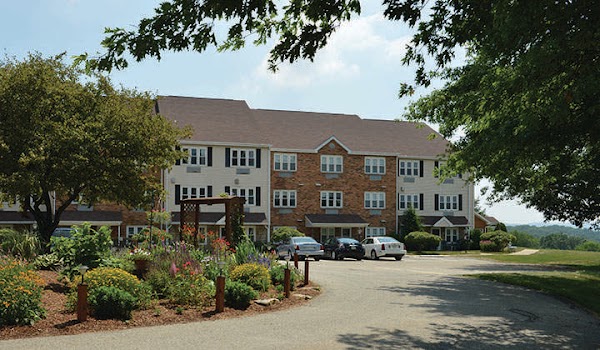
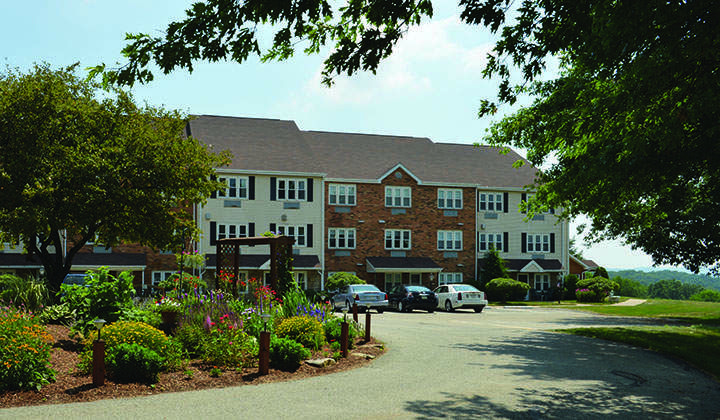
1155 INDIAN SPRINGS ROAD, INDIANA, PA 15701 (724) 464-1600
Non profit - Corporation 96 Beds PRESBYTERIAN SENIOR LIVING Data: November 2025
Trust Grade
60/100
#298 of 653 in PA
Last Inspection: June 2025

Inspected within the last 6 months. Data reflects current conditions.

Overview

Julia Pound Care Center holds a Trust Grade of C+, which indicates it is slightly above average but still has room for improvement. It ranks #298 out of 653 facilities in Pennsylvania, placing it in the top half, and #3 out of 5 in Indiana County, meaning only two local options are better. The facility is currently improving, with issues decreasing from 19 in 2024 to 7 in 2025. Staffing is rated average with a turnover rate of 40%, which is below the state average of 46%, suggesting that staff are generally stable. Notably, the center has not incurred any fines, which is a positive sign. However, there are some concerns. Recent inspections found that dietary staff did not consistently wear appropriate hair coverings, risking food safety. Additionally, there were significant medication errors for one resident, indicating that physician orders were not properly followed. Lastly, there was a failure to maintain accountability for controlled medications for two residents, which raises concerns about medication management. Overall, while Julia Pound Care Center has strengths in staffing stability and a lack of fines, families should be aware of the specific incidents that reflect areas needing attention.

Trust Score
C+
60/100
In Pennsylvania
#298/653
Top 45%
Safety Record
Low Risk
No red flags
Inspections
Getting Better
19 → 7 violations
Staff Stability
○ Average
40% turnover. Near Pennsylvania's 48% average. Typical for the industry.
Penalties
✓ Good
No fines on record. Clean compliance history, better than most Pennsylvania facilities.
Skilled Nurses
○ Average
Each resident gets 35 minutes of Registered Nurse (RN) attention daily — about average for Pennsylvania. RNs are the most trained staff who monitor for health changes.
Violations
⚠ Watch
36 deficiencies on record. Higher than average. Multiple issues found across inspections.
★★★☆☆
3.0
Overall Rating
★★★☆☆
3.0
Staff Levels
★★★☆☆
3.0
Care Quality
★★★☆☆
3.0
Inspection Score
Stable
2024: 19 issues
2025: 7 issues

The Good

  • Full Sprinkler Coverage · Fire safety systems throughout facility
  • No fines on record
  • Staff turnover below average (40%)

    8 points below Pennsylvania average of 48%

Facility shows strength in fire safety.

The Bad

3-Star Overall Rating

Near Pennsylvania average (3.0)

Meets federal standards, typical of most facilities

Staff Turnover: 40%

Near Pennsylvania avg (46%)

Typical for the industry

Chain: PRESBYTERIAN SENIOR LIVING

Part of a multi-facility chain

Ask about local staffing decisions and management

The Ugly 36 deficiencies on record

Jun 2025 7 deficiencies
CONCERN (D)

Potential for Harm - no one hurt, but risky conditions existed

Assessment Accuracy (Tag F0641)

Could have caused harm · This affected 1 resident

**NOTE- TERMS IN BRACKETS HAVE BEEN EDITED TO PROTECT CONFIDENTIALITY** Based on review of the Resident Assessment Instrument User's Manual and clinical records, as well as staff interviews, it was de...

Read full inspector narrative →
**NOTE- TERMS IN BRACKETS HAVE BEEN EDITED TO PROTECT CONFIDENTIALITY** Based on review of the Resident Assessment Instrument User's Manual and clinical records, as well as staff interviews, it was determined that the facility failed to complete accurate comprehensive Minimum Data Set assessments for four of 33 residents reviewed (Residents 12, 18, 72, 81). Findings include: The Long-Term Care Facility Resident Assessment Instrument (RAI) User's Manual, which provides guidance and instructions for the completion of Minimum Data Set (MDS) assessments (mandated assessments of residents' abilities and care needs), dated October 2024, indicated that Section B was to be completed for each resident to document the resident's ability to understand and communicate with others. Section B0700 was to be coded zero (0) if the resident was understood by others, one (1) for usually understood, two (2) for sometimes understood, and three (3) for rarely/never understood. Section C was to be completed for each resident to identify his/her cognitive status. Section C0100 was to be coded No (0) or Yes (1) depending on whether a Brief Interview for Mental Status (BIMS) should be attempted with the resident and coded in Sections C0200 through C0500. The instructions for determining if a BIMS interview should be attempted indicated that if the resident was at least sometimes understood (verbally or in writing) then the BIMS interview was to be attempted with the resident. If the resident was rarely/never understood, then the BIMS interview was not to be attempted, and a Staff Assessment of Mental Status was to be completed instead and coded in Sections C0600 through C1000. A significant MDS assessment for Resident 12, dated March 19, 2025, revealed that Section B0700 was coded two (2), indicating that the resident was sometimes understood by others. However, Section C0100 was coded (0) No, indicating that the resident was rarely/never understood by others, and Sections C0200 through C0500 (the BIMS interview) were not completed. A quarterly MDS assessment for Resident 18, dated April 3, 2025, revealed that Section B0700 was coded zero (0), indicating that the resident was understood by others. However, Section C0100 was coded (0) No, indicating that the resident was rarely/never understood by others, and Sections C0200 through C0500 (the BIMS interview) were not completed. A quarterly MDS assessment for Resident 72, dated March 19, 2025, revealed that Section B0700 was coded two (2), indicating that the resident was sometimes understood by others. However, Section C0100 was coded (0) No, indicating that the resident was rarely/never understood by others, and Sections C0200 through C0500 (the BIMS interview) were not completed. Interview with the Social Worker on June 5, 2025, at 9:54 a.m. confirmed that Section C0100 was coded inaccurately on the above MDS assessments for Residents 12, 18, and 72. The RAI User's Manual, dated October 2024, indicated that the intent of Section A was to record the discharge status of the resident. Section A2105 was to be coded with the location of the resident's discharge. A nursing note for Resident 81, dated March 12, 2025, indicated that the resident was transferred to the local hospital where he was admitted for acute care. However, a discharge tracking MDS, dated [DATE], indicated that Resident 81 was discharged to a nursing home. An interview with the Registered Nurse Assessment Coordinator (registered nurse responsible for accurate reporting information) on June 5, 2025 at 10:44 a.m. confirmed that Resident 81 was discharged to the hospital and not to a nursing home. She confirmed that she entered the wrong discharge location on Resident 81's discharge tracking MDS. 28 Pa. Code 211.5(f) Clinical Records.
CONCERN (D)

Potential for Harm - no one hurt, but risky conditions existed

Deficiency F0657 (Tag F0657)

Could have caused harm · This affected 1 resident

Based on review of facility policies and clinical records, as well as staff interviews, it was determined that the facility failed to ensure that a resident's care plan was updated/revised to reflect ...

Read full inspector narrative →
Based on review of facility policies and clinical records, as well as staff interviews, it was determined that the facility failed to ensure that a resident's care plan was updated/revised to reflect the resident's specific care needs for two of 33 residents reviewed (Residents 27, 60). Findings include: A facility policy regarding care plans, dated March 12, 2025, indicated that the facility will comprehensively evaluate and re-evaluate a resident's need for service and develop a plan to promote their highest practicable level of functioning. The care plan will be reviewed and evaluated for intervention effectiveness and updated electronically as needed. A quarterly Minimum Data Set (MDS) assessment (a mandated assessment of a resident's abilities and care needs) for Resident 27, dated May 20, 2025, indicated that the resident was cognitively intact, required assistance with care needs, had limited range of motion (the full movement potential of a joint) to her lower extremities on both sides, and had diagnoses that included muscular dystrophy (disease that causes progressive weakness and loss of muscle mass). A restorative care plan for the resident, dated February 25, 2025, included a program for restorative splint/brace assistance for bilateral PRAFO boots (used to help manage many ankle/foot abnormalities) with kickstand to the outside of the boots at all times as the resident tolerates with instructions to remove for hygiene, skin checks, and range of motion. Observations of Resident 27 on June 3, 2025, at 2:17 p.m.; June 4, 2025, at 12:52 p.m.; and June 5, 2025, at 9:06 a.m. revealed that the resident did not have PRAFO boots applied to her bilateral lower extremities. Interview with the resident on June 5, 2025, at 9:06 a.m. revealed that she stopped wearing those boots a long time ago because they hurt her feet and indicated that therapy had taken them away because she was not wearing them. Interview with the therapy manager on June 5, 2025, at 10:05 a.m. confirmed that Resident 27's PRAFO boots were discontinued about a month or two ago due to the resident declining to wear them. Interview with the Assistant Director of Nursing on June 5, 2025, at 12:01 p.m. confirmed that Resident 27's restorative care plan should have been revised to reflect that the resident was no longer using the PRAFO boots. A quarterly MDS assessment for Resident 60, dated May 12, 2025, indicated that the resident was cognitively intact, required maximum assistance from staff for care, and was always incontinent of urine. The resident's care plan, dated May 2, 2025, indicated that the resident had frequent urinary tract infections and that staff were to assess urinary output, record the amount, type, color, and odor. A nursing note for Resident 60, dated April 30, 2025, revealed that the resident no longer had an indwelling urinary catheter and that she was now incontinent of urine. There was no documented evidence that Resident 60's care plan was updated with revised and/or new urinary incontinence interventions after her indwelling urinary catheter was removed. Interview with the Director of Nursing on June 5, 2025, at 12:30 p.m. confirmed that Residents 60's care plan should not have indicated that the resident's urine output was to be monitored or recorded. 28 Pa. Code 211.12(d)(5) Nursing Services.
CONCERN (D)

Potential for Harm - no one hurt, but risky conditions existed

Pharmacy Services (Tag F0755)

Could have caused harm · This affected 1 resident

Based on review of facility policies and clinical records, as well as staff interviews, it was determined that the facility failed to maintain accountability for controlled medications (drugs with the...

Read full inspector narrative →
Based on review of facility policies and clinical records, as well as staff interviews, it was determined that the facility failed to maintain accountability for controlled medications (drugs with the potential to be abused) for two of 33 residents reviewed (Resident 42, 72). Findings include: A facility policy for medication administration, dated March 12, 2025, indicated that the individual who administers the medication records the administration on the resident's Medication Administration Record (MAR) directly after the medication is given. A quarterly Minimum Data Set (MDS) assessment (a mandated assessment of a resident's abilities and care needs) for Resident 42, dated May 15, 2025, indicated that the resident was cognitively intact, required assistance with care needs, and was taking an opioid medication (medications with the potential to be abused used to treat pain). Physician's orders for Resident 42, dated October 23, 2024, included an order for the resident to receive two 50 milligrams (mg) tablets of Tramadol (a narcotic pain medication) to equal 100 mg every eight hours as needed for moderate to severe pain. Review of the controlled drug record (a form that accounts for each tablet/pill/dose of a controlled drug) for Resident 42, dated April and May 2025, revealed that two 50 mg tablets of Tramadol were signed out on April 14 at 5:00 p.m.; May 10 at 5:15 a.m. and 4:20 p.m.; May 21 at 6:50 p.m.; May 25 at 1:50 a.m.; and May 31 at 12:19 a.m. However, there was no documented evidence in Resident 42's clinical record, including the MAR, that the signed-out doses of Tramadol were administered to the resident on the above-mentioned dates and times. Interview with the Assistant Director of Nursing on June 5, 2025, at 10:34 a.m. confirmed that there was no documented evidence in Resident 42's clinical record to indicate that the signed-out doses of Tramadol were administered to the resident on the above-mentioned dates and times. A quarterly MDS assessment for Resident 72, dated March 19, 2025, indicated that the resident was cognitively impaired, required assistance from staff for daily care needs, and had diagnoses that included dementia and chronic pain syndrome. Physician's orders for Resident 72, dated February 25, 2025, included an order for the resident to receive 50 milligrams (mg) of Tramadol (a controlled pain medication) every 12 hours as needed for moderate pain. A review of the controlled drug record (a form that accounts for each tablet/pill/dose of a controlled drug) for Resident 72, dated April, May, and June 2025, that one 50 mg tablet of Tramadol was signed out for administration to the resident on April 10 at 11:32 p.m.; April 18 at 11:00 p.m.; May 9 at 5:00 a.m.; May 28 at 11:15 p.m.; May 31, at 11:40 p.m.; and June 1 at 12:05 a.m. However, there was no documented evidence in the resident's clinical record to indicate that the signed-out tablets of Oxycodone were administered to the resident on the above-mentioned dates and times. An interview with the Assistant Director of Nursing on June 5, 2025, at 12:21 p.m. confirmed that there was no documented evidence that staff administered the controlled drugs to Resident 72 on the dates mentioned above. 28 Pa. Code 211.9(a)(1) Pharmacy Services. 28 Pa. Code 211.12(d)(1)(3)(5) Nursing Services.
CONCERN (D)

Potential for Harm - no one hurt, but risky conditions existed

Deficiency F0761 (Tag F0761)

Could have caused harm · This affected 1 resident

**NOTE- TERMS IN BRACKETS HAVE BEEN EDITED TO PROTECT CONFIDENTIALITY** Based on review of facility policies, as well as observations and staff interviews, it was determined that the facility failed t...

Read full inspector narrative →
**NOTE- TERMS IN BRACKETS HAVE BEEN EDITED TO PROTECT CONFIDENTIALITY** Based on review of facility policies, as well as observations and staff interviews, it was determined that the facility failed to properly date medications after they were opened in two of three medication carts reviewed (Highlands 1 and Highlands 2), and failed to discard expired medical supplies in one of two medication rooms reviewed (Highlands). Findings include: The facility's policy regarding medication storage, dated [DATE], revealed that the facility would store medications and biologicals safely, securely and properly. In addition, when the original seal of the manufacturer's container is initially broken, a date opened and expired date sticker shall be placed on the container. Observations in Highlands medication cart 2 on [DATE], at 9:36 a.m. revealed that there were two containers of 1 percent diclofenac sodium (pain reliever) topical gel, one container of 0.1 percent triamcinolone (steroid used to decrease inflammation) cream, and two containers of 12 percent ammonium lactate (treats dry itchy skin) topical cream in use with the seal broken, that did not have the date opened and date expired sticker on them. Observations in the Highlands 100-200 hall medication room black storage box on [DATE], at 9:50 a.m. revealed that there was one unsealed 10 milliliter (ml) normal saline flush (a syringe filled with salt water solution to flush intravenous ports) that expired on [DATE]; one 3 cc syringe with a needle attached that expired [DATE]; twelve angiocaths (a thin plastic tube inserted into a vein using a needle, allowing for the administration of fluids and medications), including three 22 gauge angiocaths that expired on [DATE], and one that expired on [DATE]; four 24 gauge angiocaths that expired on [DATE], and five 24 gauge angiocaths that expired [DATE]. In addition, there were two culture and sensitivity test kits that expired [DATE]; two blood drawing needles and three claves (rubber needless connectors) that expired [DATE]; one 15 ml bottle of hemoccult developer that expired [DATE], and 32 hemoccult test screening cards that expired [DATE]. Interview with Licensed Practical Nurse 1 on [DATE], at 10:00 a.m. confirmed that the above listed gels and creams were in use with the seals broken; therefore, an open date and expiration date sticker should have been placed on them. Also, outdated medical equipment should be discarded and not in circulation. Observations in Highlands medication cart 1 on [DATE], at 9:43 a.m. revealed that there was one 30 gram container of 0.1 percent triamcinolone acetonide cream that was opened and not dated with the open date or expiration date. Interview with Licensed Practical Nurse 2 on [DATE], at 9:48 a.m. confirmed that the triamcinolone acetonide cream was in use with the seal broken and should have been marked with an opening date and expiration date, and it was not. Interview with the Director of Nursing on [DATE], at 2:43 p.m. confirmed that expired equipment should not be in circulation, and that opened medications should be properly labeled as per facility policy. 28 Pa. Code 211.9(a)(1) Pharmacy Services.
CONCERN (D)

Potential for Harm - no one hurt, but risky conditions existed

QAPI Program (Tag F0867)

Could have caused harm · This affected 1 resident

Based on review of the facility's plans of correction for previous surveys, and the results of the current survey, it was determined that the facility's Quality Assurance Performance Improvement (QAPI...

Read full inspector narrative →
Based on review of the facility's plans of correction for previous surveys, and the results of the current survey, it was determined that the facility's Quality Assurance Performance Improvement (QAPI) committee failed to correct quality deficiencies and ensure that plans to improve the delivery of care and services effectively addressed recurring deficiencies. Findings include: The facility's deficiencies and plans of corrections for State Survey and Certification (Department of Health) survey ending July 11, 2024, revealed that the facility developed plans of correction that included quality assurance systems to ensure that the facility maintained compliance with cited nursing home regulations. The results of the current survey, ending June 5, 2025, identified repeated deficiencies related accuracy of assessments, care plan timing and revision, pharmacy services, and food safety. The facility's plan of correction for a deficiency regarding accuracy of assessments, cited during the survey ending July 11, 2024, revealed that accuracy of assessments would be monitored by QAPI. The results of the current survey, cited under F641, revealed that the QAPI committee was ineffective in maintaining compliance with regulation regarding accuracy of assessments. The facility's plan of correction for a deficiency regarding care plan timing and revision, cited during the survey ending July 11, 2024, revealed that the care plan timing and revision would be monitored by QAPI. The results of the current survey, cited under F657, revealed that the QAPI committee was ineffective in maintaining compliance with regulation regarding care plan timing and revision. The facility's plan of correction for a deficiency regarding pharmacy services, cited during the survey ending July 11, 2024, revealed that pharmacy services would be monitored by QAPI. The results of the current survey, cited under F755, revealed that the QAPI committee was ineffective in maintaining compliance with regulation regarding pharmacy services. The facility's plan of correction for a deficiency regarding food safety, cited during the survey ending July 11, 2024, revealed that food safety would be monitored by QAPI. The results of the current survey, cited under F812, revealed that the QAPI committee was ineffective in maintaining compliance with food safety. Refer to F641, F657, F755, F812. 28 Pa. Code 201.14(a) Responsibility of Licensee. 28 Pa. Code 201.18(e)(1) Management.
CONCERN (D)

Potential for Harm - no one hurt, but risky conditions existed

Infection Control (Tag F0880)

Could have caused harm · This affected 1 resident

Based on a review of established infection control guidelines, facility policy, and residents' clinical records, as well as observations and staff interviews, it was determined that the facility faile...

Read full inspector narrative →
Based on a review of established infection control guidelines, facility policy, and residents' clinical records, as well as observations and staff interviews, it was determined that the facility failed to follow infection control guidelines from the Centers for Medicare/Medicaid Services (CMS) and the Centers for Disease Control (CDC) to reduce the spread of infections and prevent cross-contamination for one of 33 residents reviewed (Resident 67). Findings include: Current CDC guidance on isolation precautions and Implementation of Personal Protective Equipment (PPE) use in Nursing Homes to Prevent Spread of Multidrug-Resistant Organisms (MDRO's - bacteria that have become resistant to certain antibiotics, and these antibiotics can no longer be used to control or kill the bacteria), dated July 12, 2022, indicates that MDRO transmission is common in skilled nursing facilities, contributing to substantial resident morbidity and mortality and increased healthcare costs. Enhanced Barrier Precautions (EBP) are an infection control intervention designed to reduce transmission of resistant organisms that employs targeted gown and glove use during high contact resident care activities. CMS updated its infection prevention and control guidance effective April 1, 2024. The recommendations now include the use of EBP during high-contact care activities for residents with chronic wounds or indwelling medical devices, regardless of their MDRO status, in addition to residents who have an infection or colonization with a CDC-targeted or other epidemiologically important MDRO when contact precautions do not apply. The facility's policy regarding Enhanced Barrier Precautions (EBP), dated March 12, 2025, revealed that the required PPE during high contact resident activities included gloves and gown being donned (worn) with high-contact care activity (which includes wound care). An admission Minimum Data Set (MDS) assessment (a mandated assessment of a resident's abilities and care needs) for Resident 67, dated May 15, 2025, revealed that the resident was cognitively intact and had pressure ulcers. A physician's order for Resident 67, dated June 2, 2025, included an order for the resident to have Enhanced Barrier Precaution isolation. Observations of wound care for Resident 67 on June 4, 2025, at 11:15 a.m. revealed that there was no signage posted outside the resident's door to alert staff of the need for EBP. Licensed Practical Nurse 6 entered the room and completed wound care on Resident 67 without donning a gown per the EBP requirements. Interview with Registered Nurse Supervisor 7 on June 4, 2025, at 12:20 p.m. confirmed that Resident 67 should have had EBP signage at his door to alert staff of the necessary PPE when performing care on his pressure ulcer. Interview with the Assistant Director of Nursing on June 4, 2025, at 12:50 p.m. confirmed that Resident 67 should have had a sign outside his room indicating that he was on EBP and that Licensed Practical Nurse 6 should have worn a gown when performing wound care. 28 Pa. Code 211.12(d)(1)(5) Nursing Services.
CONCERN (E)

Potential for Harm - no one hurt, but risky conditions existed

Food Safety (Tag F0812)

Could have caused harm · This affected multiple residents

Based on review of facility policies, as well as observations and staff interviews, it was determined that the facility failed to ensure that dietary staff wore appropriate hair coverings. Findings in...

Read full inspector narrative →
Based on review of facility policies, as well as observations and staff interviews, it was determined that the facility failed to ensure that dietary staff wore appropriate hair coverings. Findings include: The facility's policy regarding personal hygiene, dated March 12, 2025, indicated that food is prepared, stored and distributed in a safe and sanitary manner preventing the spread of food borne illness. Observations in the 100-200 hall kitchenette during service for the lunch meal on June 2, 2025, at 11:48 a.m. revealed that Dietary Aide 3 was plating baked beans and hot dogs. Dietary Aide 3 had approximately three-inch tendrils of hair on each side of her head, and approximately two inches of loose hair on the nape of her neck that was not covered by her hairnet. Observations in the 100-200 hall kitchenette during service for the lunch meal on June 3, 2025, at 12:10 p.m. revealed that Dietary Aide 3 was plating hamburgers on a bun, and at the same time, she was standing over dishes of uncovered vanilla pudding. Dietary Aide 3 had approximately two inches of hair on each side of her head, and approximately two inches of loose hair on the nape of her neck that was not covered by her hairnet. Dietary Aide 4 was assisting the meal preparation by filling drinks and placing them on the trays. As she placed the drinks on the trays she passed over 13 dishes of uncovered pudding. Dietary Aide 4 had approximately three to four inches of hair on her bangs that was outside of her hairnet. Observations of Dietary Aide 5 revealed that she was assisting with plating hamburgers while standing over uncovered pudding dishes. Dietary Aide 5 had approximately two inches of hair on the nape of her neck that was not covered with a hairnet. Interview with the Dietary Manager on June 3, 2025, at 12:15 p.m. confirmed that Dietary Aides 3, 4, and 5 should have had their hair covered when plating and working around uncovered food in the 100-200 hall kitchenette. 28 Pa. Code 211.6(f) Dietary Services.
Dec 2024 3 deficiencies
CONCERN (D) 📢 Someone Reported This

A family member, employee, or ombudsman was alarmed enough to file a formal complaint

Potential for Harm - no one hurt, but risky conditions existed

Quality of Care (Tag F0684)

Could have caused harm · This affected 1 resident

Based on clinical record reviews, as well as staff interviews, it was determined that the facility failed to follow physician's orders for one of five residents reviewed (Resident 3). Findings include...

Read full inspector narrative →
Based on clinical record reviews, as well as staff interviews, it was determined that the facility failed to follow physician's orders for one of five residents reviewed (Resident 3). Findings include: A quarterly Minimum Data Set (MDS) assessment (a mandatory assessment of a resident's abilities and care needs) for Resident 3, dated November 14, 2024, revealed that the resident was sometimes understood, could sometimes understand others, and had diagnoses that included diabetes and dementia. Physician's orders for Resident 3, dated November 1, 2024, included that the resident receive 5 milligrams (mg) of olanzapine (used to treat the symptoms of schizophrenia) at bedtime. Review of Resident 3's Medication Administration Record (MAR), dated November 2024, revealed that there was no documented evidence that the resident received this medication on November 11, 2024, or on November 29, 2024. Physician's orders for Resident 3, dated November 1, 2024, included that the resident receive two 325 mg tablets of Tylenol at bedtime. Review of the resident's MAR, dated November 2024 and December 2024, revealed that there was no documented evidence that the resident received this medication on November 17, 2024, or on December 13, 2024, as ordered. Physician's orders for Resident 3, dated November 1, 2024, included that the resident receive 250 mg probiotic (supplements intended to maintain or improve the good bacteria in the body) capsule at bedtime. Review of the resident's MAR, dated November 2024 and December 2024, revealed that there was no documented evidence that the resident received this medication on November 17, 2024, or on December 13, 2024, as ordered. Physician's orders for Resident 3, dated November 1, 2024, included that the resident receive 15 mg tablets of buspirone (antianxiety medication) twice a day. Review of the resident's MAR, dated November 2024 and December 2024, revealed that there was no documented evidence that the resident received the nighttime dose of this medication on November 17, 2024, or on December 13, 2024, as ordered. Physician's orders for Resident 3, dated November 1, 2024, included that the resident receive 30 mg tablets of duloxetine (used to treat depression and anxiety) twice a day. Review of the resident's MAR, dated November 2024 and December 2024, revealed that there was no documented evidence that the resident received the nighttime dose of this medication on November 17, 2024, or on December 13, 2024, as ordered. Physician's orders for Resident 3, dated November 1, 2024, included that the resident receive 15 mg of mirtazapine (antidepressant) at bedtime. Review of the resident's MAR, dated November 2024 and December 2024, revealed that there was no documented evidence that the resident received this medication on November 17, 2024, or on December 13, 2024, as ordered. Physician's orders for Resident 3, dated November 1, 2024, included that the resident receive 20 mg of rosuvastatin (used to treat high cholesterol) once a day. Review of the resident's MAR, dated November 2024 and December 2024, revealed that there was no documented evidence that the resident received this medication on November 17, 2024, or on December 13, 2024, as ordered. Physician's orders for Resident 3, dated November 3, 2024, included that the resident receive two 10 milliequivalent (mEq) capsules of potassium chloride (medication used to prevent or to treat low blood levels of potassium) twice a day. Review of the resident's MAR, dated November 2024 and December 2024, revealed that there was no documented evidence that the resident received the nighttime dose of this medication on November 17, 2024, or on December 13, 2024, as ordered. Interview with the Director of Nursing on December 16, 2024, at 4:20 p.m. confirmed that there was no documented evidence that the resident received the above-mentioned medications as ordered. 28 Pa. Code 211.12(d)(1)(3)(5) Nursing Services.
CONCERN (D) 📢 Someone Reported This

A family member, employee, or ombudsman was alarmed enough to file a formal complaint

Potential for Harm - no one hurt, but risky conditions existed

Medical Records (Tag F0842)

Could have caused harm · This affected 1 resident

Based on review of clinical records, as well as resident and staff interviews, it was determined that the facility failed to maintain clinical records that were complete and accurately documented for ...

Read full inspector narrative →
Based on review of clinical records, as well as resident and staff interviews, it was determined that the facility failed to maintain clinical records that were complete and accurately documented for one of five residents reviewed (Resident 3). Findings include: A quarterly Minimum Data Set (MDS) assessment (a mandatory assessment of a resident's abilities and care needs) for Resident 3, dated November 14, 2024, revealed that the resident was sometimes understood, could sometimes understand others, and had a diagnosis which included diabetes and dementia. Review of nurse aide documentation, dated December 3, 2024, revealed that the resident ate 100 percent of her lunch meal. Review of a grievance investigation related to Resident 3, dated December 3, 2024, revealed that Resident 3's lunch tray was removed from her room at 3:45 p.m. by the Director of Nursing, and the resident did not eat anything on that tray. Interview with the Director of Nursing on December 16, 2024, at 4:20 p.m. confirmed that nurse aide documentation of the resident's lunch meal on December 3, 2024, was documented incorrectly. 28 Pa. Code 211.5(f) Clinical Records 28 Pa. Code 211.12(d)(5) Nursing Services.
CONCERN (E) 📢 Someone Reported This

A family member, employee, or ombudsman was alarmed enough to file a formal complaint

Potential for Harm - no one hurt, but risky conditions existed

Deficiency F0760 (Tag F0760)

Could have caused harm · This affected multiple residents

Based on clinical record reviews and staff interviews, it was determined that the facility failed to ensure that physician's orders were followed, resulting in significant medication errors for one of...

Read full inspector narrative →
Based on clinical record reviews and staff interviews, it was determined that the facility failed to ensure that physician's orders were followed, resulting in significant medication errors for one of six residents reviewed (Resident 3). Findings include: A quarterly Minimum Data Set (MDS) assessment (a mandatory assessment of a resident's abilities and care needs) for Resident 3, dated November 14, 2024, revealed that the resident was sometimes understood, could sometimes understand others, and had diagnosis which included diabetes and dementia. Physician's orders for Resident 3, dated November 1, 2024, included for the resident to have her blood glucose (amount of sugar in the blood) level checked before meals and at bedtime, receive 25 units of Lantus Solostar (long-acting insulin used to treat high blood sugar) twice a day, and 6 units of insulin lispro (fast acting insulin used to treat high blood sugar) three times a day. Physician's orders, dated November 1, 2024, also included for the resident to receive 2 units of insulin lispro if her blood sugar was between 150 milligrams per deciliter (mg/dL) and 199 mg/dl; 4 units of insulin lispro if her blood sugar was between 200 mg/dL and 249 mg/dL; 6 units of insulin lispro if her blood sugar was between 250 mg/dL and 299 mg/dL; 8 units of insulin lispro if her blood sugar was between 300 mg/dL and 349 mg/dL; 10 units of insulin lispro if her blood sugar was between 350 mg/dL and 399 mg/dL; and 12 units of insulin lispro if her blood sugar was between 400 mg/dL and 450 mg/dL. Review of the Medication Administration Record (MAR) for Resident 3, dated November 2024 and December 2024, revealed no documented evidence that the resident received 25 units of Lantus Solostar insulin at bedtime as ordered on December 13. There was no documented evidence that the resident received 6 units of insulin lispro at breakfast time as ordered on November 13, 17, 21, 22, and 28, and December 12; no documented evidence that the resident received 6 units of insulin lispro at lunch time as ordered on November 17, 21, 22, and 28, and December 4, 10, and 12; and no documented evidence that the resident received 6 units of insulin lispro at suppertime as ordered on November 28 and December 10. Review of the MAR revealed that there was no documented evidence that the resident's blood sugar was checked before breakfast on November 13, 21, and 28 and December 12, and at bedtime on December 13, and no sliding scale insulin coverage was provided. Review of the MAR revealed that the resident's blood glucose before lunch on November 17 was 172 mg/dL, requiring 2 units of insulin lispro; however, there was no documented evidence that it was administered to the resident. The resident's blood glucose before lunch on November 28 was 164 mg/dL, requiring 2 units of insulin lispro; however, there was no documented evidence that it was administered to the resident. The resident's blood glucose before supper on November 28 was 361 mg/dL, requiring 10 units of insulin lispro; however, there was no documented evidence that it was administered to the resident. The resident's blood glucose before supper on December 10 was 244 mg/dL, requiring 4 units of insulin lispro; however, there was no documented evidence that it was administered to the resident. Interview with the Director of Nursing on December 16, 2024, at 4:20 p.m. confirmed that there was no documented evidence that the resident received blood glucose checks and insulin as ordered on the above-mentioned dates and times. 28 Pa. Code 211.12(d)(1)(3)(5) Nursing Services.
Jul 2024 15 deficiencies
CONCERN (D)

Potential for Harm - no one hurt, but risky conditions existed

Deficiency F0578 (Tag F0578)

Could have caused harm · This affected 1 resident

Based on review of facility policies and clinical records, as well as staff interviews, it was determined that the facility failed to address and document the opportunity to formulate advance directiv...

Read full inspector narrative →
Based on review of facility policies and clinical records, as well as staff interviews, it was determined that the facility failed to address and document the opportunity to formulate advance directives and failed to document in the resident's clinical record the resident's decision to accept or decline assistance to formulate advance directives for one of 37 residents reviewed (Resident 70). Findings include: The facility's policy regarding advance directives (instructions regarding the provision of health care and life sustaining measures when the resident is incapacitated), dated March 13, 2024, indicated that if the resident does not have an advance directive, facility staff must inform the resident or resident representative of their right to establish one as set forth in the laws of the state and provide assistance if the resident wishes to execute one or more directive(s). Facility staff must document in the resident's medical record these discussions and any advance directive(s) that the resident executes. A quarterly Minimum Data Set (MDS) assessment (a mandated assessment of a resident's abilities and care needs) for Resident 70, dated May 10, 2024, revealed that the resident was cognitively intact, was understood and able to understand others, and required assistance with care needs. An admission checklist for Resident 70, dated September 25, 2023, indicated that the resident did not have advance directives and that information on advance directives were given to the resident. However, there was no documented evidence in the resident's clinical record that assistance was offered to formulate advance directives, and there was no documented evidence as to the resident's decision to accept or decline assistance to formulate advance directives. Interview with the Nursing Home Administrator on July 10, 2024, at 11:03 a.m. confirmed that there was no documented evidence in Resident 70's clinical record that assistance was offered to formulate advance directives, and there was no documented evidence as to the resident's decision to accept or decline assistance to formulate advance directives. 28 Pa. Code 201.29(a)(d) Resident Rights.
CONCERN (D)

Potential for Harm - no one hurt, but risky conditions existed

Safe Environment (Tag F0584)

Could have caused harm · This affected 1 resident

Based on observations and staff interviews, it was determined that the facility failed to provide a clean, homelike environment for one of 37 residents reviewed (Resident 27). Findings include: The fa...

Read full inspector narrative →
Based on observations and staff interviews, it was determined that the facility failed to provide a clean, homelike environment for one of 37 residents reviewed (Resident 27). Findings include: The facility's policy titled housekeeping department operations, dated March 13, 2024, revealed that the policy objective was to provide a safe, clean environment for residents. A comprehensive Minimum Data Set (MDS) assessment (a mandated assessment of a resident's abilities and care needs) for Resident 27, dated July 3, 2024, revealed that the resident was cognitively intact, required assistance with most daily care needs, and had diagnoses that included heart failure and osteoarthritis (a type of arthritis that effects the bone). Observations of Resident 27 sitting in his wheelchair on July 8, 2024, at 11:42 a.m. and July 9, 2024, at 12:18 p.m. revealed that there was a moderate accumulation of removable dust/debris on the wheels and the metal supports under the chair. Interview with Housekeeper 1 on July 9, 2024, at 2:05 p.m. confirmed that Resident 27's wheelchair was cleaned in June as per their documented cleaning process. However, she also confirmed that the wheelchairs are also cleaned as needed and that Resident 27's wheelchair had a heavy layer of dirt and debris and should have been clean. Interview with the Licensed Practical Nurse 2 on July 9, 2024, at 2:08 p.m. confirmed that Resident 27's wheelchair had an accumulation of removable dust/debris on the wheels and the metal supports under the chair. Interview with the Nursing Home Administrator on July 9, 2024, at 3:00 p.m. confirmed that the removable dust, dirt and debris on Resident 27's wheelchair should not have been there, and it should have been cleaned. 28 Pa. Code 201.29(j) Resident Rights. 28 Pa. Code 207.2(a) Administrator's Responsibility.
CONCERN (D)

Potential for Harm - no one hurt, but risky conditions existed

Free from Abuse/Neglect (Tag F0600)

Could have caused harm · This affected 1 resident

Based on review of facility policies, clinical records, and investigation documents, as well as staff interviews, it was determined that the facility failed to ensure that residents were free from abu...

Read full inspector narrative →
Based on review of facility policies, clinical records, and investigation documents, as well as staff interviews, it was determined that the facility failed to ensure that residents were free from abuse from a resident who wanders for one of 37 residents reviewed (Resident 64). Findings include: The facility's policy for abuse, dated March 13, 2024, indicated each resident is provided with a safe environment where they are not subject to mental, physical, verbal, and sexual abuse. Residents must not be subjected to abuse by anyone, including but not limited to facility staff, other residents, consultants or volunteers, staff of other agencies, serving the resident, family members, or legal guardians, friends, or other individuals. Abuse was defined as the willful infliction of injury, unreasonable confinement, intimidation, or punishment with resulting physical harm, pain, or mental anguish. Willful meant the individual must have acted deliberately, not that the individual must have intended to inflict injury or harm. A quarterly Minimum Data Set (MDS) assessment (a mandated assessment of a resident's abilities and care needs) for Resident 64, dated March 26, 2024, indicated that the resident was understood and could understand others, had no behaviors, required assistance with daily care needs, and had diagnoses that included dementia and bipolar disease (a mental health condition that causes extreme mood swings). An annual MDS assessment for Resident 78, dated June 24, 2024, indicated that the resident was usually understood and could usually understand others, had no behaviors, required partial to maximum assistance with daily care needs, and had diagnoses that included dementia. A review of the clinical record for Resident 78 revealed that he had episodes of being loud and verbally aggressive, wandered in and out of other residents' rooms, and wore a wanderguard (a device that allows caregivers to monitor the activity of high risk or wandering residents who are cognitively impaired). A nurse's note for Resident 78, dated July 4, 2024, at 4:15 a.m. revealed that he was in Resident 64's room. He was witnessed to be almost on top of Resident 64, threatening to kill him. A nurse's note for Resident 64, dated July 4, 2024, at 4:49 a.m., revealed that staff heard Resident 64 screaming. A nurse witnessed Resident 64 in bed with Resident 78 standing over him, yelling at him, and Resident 64 reported that Resident 78 was hitting him and put his hands around his neck. A nurse's note for Resident 64, dated July 4, 2024, at 4:59 a.m., revealed that at 3:50 a.m. staff performed a physical assessment on Resident 64 after Resident 78 was near him, and that Resident 64 was observed to have reddened areas around his neck and chest. Resident 64 was reported stating, I don't want to see that man near me, I don't want to see him ever again. A statement from Registered Nurse 3 regarding the incident on July 4, 2024, revealed that Resident 64 reported to her that Resident 78 jumped on me and hit me all over my body, my legs, trunk, and face. He had his hands around my neck. I was asleep and then I was being attacked. Interview with the Director of Nursing on July 11, 2024, at 1:45 p.m. confirmed that they did not have a plan in place for Resident 78's wandering other than the wanderguard because it is a behavior that you cannot stop. The Director of Nursing also confirmed that Resident 78 did hit and threatened to kill Resident 64. 28 Pa. Code 201.14(a) Responsibility of Licensee. 28 Pa. Code 201.18(b)(1)(e)(1) Management. 28 Pa. Code 201.29(j) Resident Rights.
CONCERN (D)

Potential for Harm - no one hurt, but risky conditions existed

Transfer Notice (Tag F0623)

Could have caused harm · This affected 1 resident

Based on clinical record reviews and staff interviews, it was determined that the facility failed to notify the resident and legal guardian in writing regarding the reason for hospitalization for four...

Read full inspector narrative →
Based on clinical record reviews and staff interviews, it was determined that the facility failed to notify the resident and legal guardian in writing regarding the reason for hospitalization for four of 37 residents reviewed (Residents 23, 36, 46, 67). Findings include: A significant Minimum Data Set (MDS) assessment (a mandated assessment of a resident's abilities and care needs) for Resident 23, dated June 24, 2024, indicated that the resident was cognitively impaired, required assistance from staff for her daily care needs, and had diagnoses that included dementia. Nursing notes for Resident 23, dated June 16, 2024, at 10:30 a.m. and 4:56 p.m., revealed that the resident was unresponsive, then vomited bright red blood and clots. She was transferred to the hospital and admitted with GI (gastro-intestinal) bleeding. There was no documented evidence that a written notice of Resident 23's transfer to the hospital was provided to the resident's responsible party regarding the reason for transfer. A quarterly MDS assessment for Resident 36, dated April 24, 2024, indicated that the resident was cognitively intact, usually understood and was usually able to understand others, and required assistance from staff for her daily care needs. She had diagnoses listed in her clinical record that included muscular dystrophy and non-Alzheimer's dementia. Nursing notes for Resident 36, dated June 4, 2024, at 6:04 p.m., revealed that the resident complained of chest pain and difficulty breathing and was transferred to the hospital emergency room. There was no documented evidence that a written notice of Resident 36's transfer to the hospital was provided to the resident's responsible party regarding the reason for transfer. Interview with the Nursing Home Administrator on July 10, 2024, at 2:07 p.m. confirmed that the facility did not provide a written notice to Resident 36's responsible party when the resident was transferred to the hospital with the reason for transfer. A significant MDS assessment for Resident 46, dated May 23, 2024, indicated that the resident was cognitively impaired, usually understood and was usually able to understand others, and required assistance from staff for her daily care needs. She had diagnoses listed in her clinical record that included anxiety, depression, schizoaffective disorder, and dementia. Nursing notes for Resident 46, dated April 29, 2024, at 1:15 p.m., revealed that the resident had an increase in behaviors and resistance to care and was transferred to the hospital to behavioral health. There was no documented evidence that a written notice of Resident 46's transfer to the hospital was provided to the resident's responsible party regarding the reason for transfer. Interview with the Nursing Home Administrator on July 10, 2024, at 8:56 a.m. confirmed that the facility did not provide a written notice to Resident 46's responsible party when the resident was transferred to the hospital with the reason for transfer. A quarterly MDS assessment for Resident 67, dated May 11, 2024, indicated that the resident was cognitively intact, was dependent on staff for her daily care needs, and had diagnoses that included urinary tract infection and paraplegia (paralysis that occurs in the lower half of the body). Nursing note for Resident 67, dated April 25, 2024, at 11:24 a.m., revealed that the resident had increased swelling in her legs. The physician was notified, and the resident was transferred to the hospital for evaluation. Nursing note for Resident 67, dated May 1, 2024, at 7:45 a.m., revealed that the resident was complaining of severe abdominal pain. The physician examined the resident at her bedside and gave orders to send her to the hospital for evaluation and treatment. There was no documented evidence that a written notice of Resident 67's transfer to the hospital was provided to the resident's responsible party regarding the reason for transfer. Interview with the Nursing Home Administrator on July 10, 2024, at 12:32 p.m. confirmed that the facility did not provide a written notice to the resident or the resident's responsible party when a resident was transferred to the hospital. 28 Pa. Code 201.25 Discharge Policy. 28 Pa. Code 201.29(f)(g) Resident Rights.
CONCERN (D)

Potential for Harm - no one hurt, but risky conditions existed

Deficiency F0625 (Tag F0625)

Could have caused harm · This affected 1 resident

Based on review of facility policies and clinical records, as well as staff interviews, it was determined that the facility failed to ensure that the resident and/or the responsible party was notified...

Read full inspector narrative →
Based on review of facility policies and clinical records, as well as staff interviews, it was determined that the facility failed to ensure that the resident and/or the responsible party was notified about the facility's bed-hold policy upon transfer to the hospital for four of 37 residents reviewed (Residents 23, 36, 46, 67). Findings include: The facility's policy for Bed Holds, dated March 13, 2024, indicated that all residents and/or their representatives shall be notified of the bed-hold policy, in writing through the admission agreement, on or before admission and upon transfer to the hospital. A significant Minimum Data Set (MDS) assessment (a mandated assessment of a resident's abilities and care needs) for Resident 23, dated June 24, 2024, indicated that the resident was cognitively impaired, required assistance from staff for her daily care needs, and had diagnoses that included dementia. Nursing notes for Resident 23, dated June 16, 2024, at 10:30 a.m. and 4:56 p.m., revealed that the resident was unresponsive, then vomited bright red blood and clots. She was transferred to the hospital and admitted with GI (gastro-intestinal) bleeding. There was no documented evidence that the resident and/or the responsible party was notified about the facility's bed-hold policy at the time of the above transfers to the hospital for Resident 23. A quarterly MDS assessment for Resident 36, dated April 24, 2024, indicated that the resident was cognitively intact, usually understood and was usually able to understand others, and required assistance from staff for her daily care needs. She had diagnoses listed in her clinical record that included muscular dystrophy and non-Alzheimer's dementia. Nursing notes for Resident 36, dated June 4, 2024, at 6:04 p.m., revealed that the resident complained of chest pain and difficulty breathing and was transferred to the hospital emergency room. There was no documented evidence that Resident 36's responsible party was notified of the facility's bed hold policy at the time of the above transfer to the hospital. Interview with the Nursing Home Administrator on July 10, 2024, at 2:07 p.m. confirmed that there was no documented evidence that Resident 36's responsible party was notified about the facility's bed-hold policy at the time of the above transfer to the hospital. A significant MDS assessment for Resident 46, dated May 23, 2024, indicated that the resident was cognitively impaired, usually understood and was usually able to understand others, and required assistance from staff for her daily care needs. She had diagnoses listed in her clinical record that included anxiety, depression, schizoaffective disorder, and dementia. Nursing notes for Resident 46, dated April 29, 2024, at 1:15 p.m. revealed that the resident had an increase in behaviors and resistance to care and was transferred to the hospital to behavioral health. There was no documented evidence that Resident 46's responsible party was notified about the facility's bed-hold policy at the time of the above transfer to the hospital. Interview with the Nursing Home Administrator on July 10, 2024, at 8:56 a.m. confirmed that there was no documented evidence that Resident 46's responsible party was notified about the facility's bed-hold policy at the time of the above transfer to the hospital. A quarterly MDS assessment for Resident 67, dated May 11, 2024, indicated that the resident was cognitively intact, was dependent on staff for her daily care needs, and had diagnoses that included urinary tract infection and paraplegia (paralysis that occurs in the lower half of the body). Nursing note for Resident 67, dated April 25, 2024, at 11:24 a.m., revealed that the resident had increased swelling in her legs. The physician was notified, and the resident was transferred to the hospital for evaluation. Nursing note for Resident 67, dated May 1, 2024, at 7:45 a.m., revealed that the resident was complaining of severe abdominal pain. The physician examined the resident at her bedside and gave orders to send her to the hospital for evaluation and treatment. There was no documented evidence that the resident and/or the responsible party was notified about the facility's bed-hold policy at the time of the above transfers to the hospital for Resident 67. Interview with the Nursing Home Administrator on July 10, 2024, at 12:32 p.m. confirmed that there was no documented evidence that a bed-hold notice was provided to residents or their responsible party at the time of a transfer to the hospital. 28 Pa. Code 201.29(d) Resident Rights. 28 Pa. Code 211.5(f) Clinical Records.
CONCERN (D)

Potential for Harm - no one hurt, but risky conditions existed

Comprehensive Assessments (Tag F0636)

Could have caused harm · This affected 1 resident

**NOTE- TERMS IN BRACKETS HAVE BEEN EDITED TO PROTECT CONFIDENTIALITY** Based on review of the Resident Assessment Instrument User's Manual and clinical records, as well as staff interviews, it was de...

Read full inspector narrative →
**NOTE- TERMS IN BRACKETS HAVE BEEN EDITED TO PROTECT CONFIDENTIALITY** Based on review of the Resident Assessment Instrument User's Manual and clinical records, as well as staff interviews, it was determined that the facility failed to ensure that comprehensive admission Minimum Data Set assessments were completed in the required time frame for three of 37 residents reviewed (Residents 103, 104, 105). Findings include: The Long-Term Care Facility Resident Assessment Instrument (RAI) User's Manual, which provides instructions and guidelines for completing required Minimum Data Set (MDS) assessments (mandated assessments of a resident's abilities and care needs), dated October 2023, indicated that an admission MDS assessment was to be completed no later than 14 days following admission. An admission MDS assessment for Resident 103, dated March 31, 2024, revealed that the resident was admitted to the facility on [DATE], and the resident's admission MDS assessment was dated as completed on April 8, 2024, which was 15 days after admission. An admission MDS assessment for Resident 104, dated May 7, 2024, revealed that the resident was admitted to the facility on [DATE], and the resident's admission MDS assessment was dated as completed on May 20, 2024, which was 20 days after admission. An admission MDS assessment for Resident 105, dated May 29, 2024, revealed that the resident was admitted to the facility on [DATE], and the resident's admission MDS assessment was dated as completed on June 7, 2024, which was 16 days after admission. An interview with Registered Nurse Assessment Coordinator (RNAC - a registered nurse who is responsible for the completion of MDS assessments) on July 11, 2024, at 2:14 p.m. confirmed that Resident 103, 104 and 105's admission MDS assessments were completed late. 28 Pa. Code 211.5(f) Clinical Records.
CONCERN (D)

Potential for Harm - no one hurt, but risky conditions existed

Assessment Accuracy (Tag F0641)

Could have caused harm · This affected 1 resident

Based on a review of the Resident Assessment Instrument User's Manual and clinical records, as well as staff interviews, it was determined that the facility failed to complete accurate Minimum Data Se...

Read full inspector narrative →
Based on a review of the Resident Assessment Instrument User's Manual and clinical records, as well as staff interviews, it was determined that the facility failed to complete accurate Minimum Data Set assessments for two of 37 residents reviewed (Residents 60, 64). Findings include: The Resident Assessment Instrument (RAI) User's Manual, which gives instructions for completing Minimum Data Set (MDS) assessments (mandated assessments of a resident's abilities and care needs), dated October 2023, revealed that Section N0415F (Antibiotic Medications - medications used to treat infections) was to be coded if the resident took the medication during the seven-day look-back period. Physician's orders for Resident 60, dated June 8, 2024, included an order for the resident to receive one gram of Ceftazidime (antibiotic medication) intravenously (administration of fluids and/or medications directly into a person's vein) every eight hours for seven days for a urinary tract infection (infection involving any part of the urinary system including the kidney, ureters, bladder and urethra). Resident 60's Medication Administration Record for June 2024 revealed that the resident was administered Ceftazidime during the seven-day look-back assessment period. A significant change Minimum Data Set (MDS) assessment (a mandated assessment of a resident's abilities and care needs) for Resident 60, dated June 14, 2024, revealed that N0415F was not coded, indicating she did not receive an antibiotic medication during the seven-day look-back assessment period. The RAI User's Manual, dated October 2023, indicated that Section B0700 (make self-understood) should be coded with either clearly understood, usually understood, sometimes understood, or rarely/never understood. Section C0100 (should brief interview for mental status be conducted) should be completed if the resident is at least sometimes understood verbally, in writing, or using another method. Section C0100 was to be coded No (0) or Yes (1) to determine whether a Brief Interview for Mental Status (BIMS) (an assessment to determine a resident's cognitive status) should be attempted with the resident. The instructions for determining if a BIMS interview should be attempted indicated that if the resident was at least sometimes understood (verbally or in writing) then the BIMS interview was to be attempted with the resident and coded in Sections C0200 through C0500. If the resident was rarely/never understood, then the BIMS interview was not to be attempted, and a Staff Assessment of Mental Status was to be completed instead and coded in Sections C0600 through C1000. A quarterly MDS assessment for Resident 64, dated March 26, 2024, revealed that Section B0700 was coded clearly understood and Section C0100 was coded (no) indicating that a BIMS interview was not to be attempted. An interview with the Registered Nurse Assessment Coordinator (RNAC- a registered nurse who is responsible for the completion of MDS assessments) confirmed on July 11, 2024, at 2:13 p.m. that the assessments for Residents 60 and 64 were coded incorrectly. 28 Pa. Code 211.5(f) Clinical Records.
CONCERN (D)

Potential for Harm - no one hurt, but risky conditions existed

Comprehensive Care Plan (Tag F0656)

Could have caused harm · This affected 1 resident

Based on review of facility policies and clinical records, as well as staff interviews, it was determined that the facility failed to ensure that baseline care plans included the information and instr...

Read full inspector narrative →
Based on review of facility policies and clinical records, as well as staff interviews, it was determined that the facility failed to ensure that baseline care plans included the information and instructions needed to provide person-centered care for two of 37 residents reviewed (Residents 25, 35). Findings include: The facility's policy regarding care plans, dated March 13, 2024, indicated that a baseline care plan is person-centered care plan designed to include the resident's basic healthcare information needed to care for the resident. It must be completed within forty-eight hours of admission and include initial goals based on admission orders, physician orders, dietary orders, therapy services, social services, address resident health and safety concerns, and identify needs for supervision, behavioral interventions, and assistance with care as necessary. The comprehensive care plan, which is derived from the baseline care plan and is triggered by care area assessments, will be entered into the electronic health record system. A quarterly Minimum Data Set (MDS) assessment (a mandated assessment of a resident's abilities and care needs) for Resident 25, dated June 9, 2024, revealed that the resident was moderately cognitively impaired and received a diuretic (water pill). Physician's orders for Resident 25, dated June 7, 2024, included an order to administer 40 milligrams (mg) of Furosemide water pill) daily. A review of the resident's Medication Administration Record (MAR) for July 2024 revealed she received Furosemide from July 1 through July 11, 2024. There was no documented evidence that a care plan was developed to address Resident 25's individual care needs related to receiving a diuretic. An interview with the Director of Nursing on July 10, 2024, at 1:00 p.m. confirmed that a care plan to address Resident 25's use of a diuretic was not developed. An admission MDS assessment for Resident 35, dated June 30, 2024, revealed that the resident was cognitively intact, experienced hallucinations, required assistance from staff for care needs, had diagnoses that included dementia, and was receiving supplemental oxygen. Physician's orders for Resident 35, dated June 24, 2023, included that the resident receive 3 milliliters (ml) of ipratropium albuterol (medication to treat wheezing and shortness of breath) every six hours as needed for shortness of breath. Physician's orders for Resident 35, dated June 30, 2023, included that the resident receive four liters of supplemental oxygen as needed for shortness of breath at bedtime and while sleeping during the day. Nurse's note for Resident 35, dated June 24, 2024, at 9:31 p.m., revealed that the resident was admitted to the facility at 1:00 p.m. with a diagnosis of dementia with behavior disturbance, has intermittent confusion, and was reporting that a mouse was in her pants. She was heard to have upper airway wheezes (high-pitched whistling sound made while breathing) and shortness of breath when lying flat. Nurse's note for Resident 35, dated July 1, 2024, revealed that the resident was using supplemental oxygen, was short of breath with exertion, and was yelling out that rats were in her bed. There was no documented evidence that a care plan was developed to address Resident 35's individual care and treatment needs related to her dementia with hallucinations or her altered respiratory status with the use of supplemental oxygen. Interview with the Director of Nursing on July 11, 2024, at 1:40 p.m. confirmed that a care plan to address the care needs related to Resident 35's dementia with hallucinations or her altered respiratory status with the use of supplemental oxygen was not developed and should have been. 28 Pa. Code 211.12(d)(1) Nursing Services.
CONCERN (D)

Potential for Harm - no one hurt, but risky conditions existed

Deficiency F0657 (Tag F0657)

Could have caused harm · This affected 1 resident

Based on review of clinical records, as well as staff interviews, it was determined that the facility failed to ensure that care plans were updated to reflect changes in care needs for one of 37 resid...

Read full inspector narrative →
Based on review of clinical records, as well as staff interviews, it was determined that the facility failed to ensure that care plans were updated to reflect changes in care needs for one of 37 residents reviewed (Resident 60). Findings include: A significant Minimum Data Set (MDS) assessment (a mandated assessment of a resident's abilities and care needs) for Resident 60, dated June 14, 2024, revealed that the resident was cognitively intact, was clearly understood and able to understand others, required assistance with care needs, had a foley catheter (a thin, flexible tube inserted into the bladder to drain urine from the bladder), had a urinary tract infection (infection involving any part of the urinary system including the kidney, ureters, bladder and urethra) in the last 30 days, and had a diagnosis that included neurogenic bladder (bladder lacks control due to nerve or muscle problems). Physician's orders for Resident 60, dated February 24, 2024, indicated that the resident was ordered 50 milligrams of Nitrofurantoin daily every Monday, Wednesday, and Friday for history of recurrent urinary tract infections. Clinical record review for Resident 60 revealed that she had a care plan, dated June 11, 2024, for recurrent urinary tract infections related to neurogenic bladder. There was no documented evidence that the care plan was revised to reflect Resident 60's need for a long-term antibiotic related to her history of recurrent urinary tract infections. Interview with the Director of Nursing on July 11, 2024, at 2:13 p.m. confirmed that Resident 60's care plan was not revised to reflect the need for long-term antibiotic related to her history of recurrent urinary tract infections and it should have been. 28 Pa. Code 211.12(d)(5) Nursing Services.
CONCERN (D)

Potential for Harm - no one hurt, but risky conditions existed

Quality of Care (Tag F0684)

Could have caused harm · This affected 1 resident

Based on review of facility policies and clinical records, as well as staff interviews, it was determined that the facility failed to ensure that physician's orders for medications were followed for t...

Read full inspector narrative →
Based on review of facility policies and clinical records, as well as staff interviews, it was determined that the facility failed to ensure that physician's orders for medications were followed for two of 37 residents reviewed (Residents 62, 80). Findings include: The facility's policy regarding medication administration, dated March 13, 2024, revealed that medications are administered as prescribed in accordance with good nursing principles and only by persons legally authorized to do so. Right resident, right drug, right dose, right route, and right time are applied for each medication being administered. Medications are administered in accordance with written orders of the prescriber. A quarterly Minimum Data Set (MDS) assessment (a mandated assessment of a resident's abilities and care needs) for Resident 62, dated May 2, 2024, indicated that the resident was cognitively intact, required assistance from staff for her daily care needs, and had diagnoses that included atrial fibrillation (irregular heart beat) and dementia. Physician's orders for Resident 62, dated December 2, 2023, included an order for the resident to receive 75-50 milligrams (mg) of Triamterene-hydrochlorothiazide (a blood pressure medication) daily, and to hold the medication if the resident's systolic blood pressure (top number of a blood pressure reading) was below 110 millimeters of mercury (mmHg). Resident 62's Medication Administration Record (MAR) for May and June 2023 indicated that Triamterene-hydrochlorothiazide was administered on May 5 when the resident's blood systolic blood pressure was 94 mmHg, May 7 when the resident's blood systolic blood pressure was 100 mmHg, May 10 when the resident's blood systolic blood pressure was 105 mmHg, June 12 when the resident's blood systolic blood pressure was 102 mmHg, June 14 when the resident's blood systolic blood pressure was 86 mmHg, June 16 when the resident's blood systolic blood pressure was 94 mmHg, June 25 when the resident's blood systolic blood pressure was 80 mmHg, and June 28 when the resident's blood systolic blood pressure was 90 mmHg. Interview with the Director of Nursing on July 10, 2024, at 1:00 p.m. confirmed that staff did not follow the physician-ordered parameters for Resident 62's Triamterene-hydrochlorothiazide on the above dates and times. An admission MDS assessment for Resident 80, dated June 21, 2024, indicated that the resident was sometimes understood and could sometimes understand others, required substantial to moderate assistance with daily care needs, and had diagnoses that included dementia. Physician's orders for Resident 80, dated June 21, 2024, included for the resident to receive 0.25 milliliters (ml) of Lorazepam (antianxiety medication) 2 milligram (mg)/ml oral concentrate as needed for anxiety. Review of the controlled drug record (a form that accounts for each tablet/pill/dose of a controlled drug) for Resident 80, dated June 21, 2024, indicated that 0.5 ml of Lorazepam was administered on July 22, 2024, at 7:30 a.m. and at 1:30 p.m. Interview with the Director of Nursing on July 9, 2024, at 3:30 p.m. confirmed that the Resident 80 was not administered that correct dose of Lorazepam as ordered by the physician on the above-mentioned dates and times. 28 Pa. Code 211.12(d)(1)(5) Nursing Services.
CONCERN (D)

Potential for Harm - no one hurt, but risky conditions existed

Deficiency F0849 (Tag F0849)

Could have caused harm · This affected 1 resident

Based on review of clinical records, as well as staff interviews, it was determined that the facility failed to obtain the required information from the contracted hospice provider for two of four hos...

Read full inspector narrative →
Based on review of clinical records, as well as staff interviews, it was determined that the facility failed to obtain the required information from the contracted hospice provider for two of four hospice residents reviewed (Residents 8, 34). Findings include: The facility's policy regarding the hospice program, dated March 13, 2024, indicated that the resident acknowledges that he or she has been given a full explanation and understands the purpose of hospice care, with the focus on providing comfort and support to the resident. The hospice provider will have a contract with the facility and a modified plan of care. An quarterly MDS assessment for Resident 8, dated June 14, 2024, revealed that the resident was moderately cognitively intact, required assistance from staff for her daily care needs, and was receiving hospice services (end-of-life services). A hospice Election of Benefit document (a form signed to indicate that the individual waives all rights to traditional Medicare Part A payments for treatment related to the terminal illness) for Resident 8, dated August 23, 2023, revealed that the resident was receiving hospice services effective August 23, 2023. In the Election of Benefit document it states that the resident would be re-evaluated for continued hospice eligibility (recertification) at the end of each hospice benefit period in the order of two 90-day periods and every 60 days thereafter. As of July 9, 2024, there was no documented evidence in the resident's clinical record, or in the hospice provider's clinical record, that the facility obtained the hospice recertification of terminal illness from the hospice provider. Interview with the Nursing Home Administrator on July 9, 2024, at 3:25 p.m. confirmed that there was no documented evidence in Resident 8's clinical record, or in the hospice provider's clinical record, that the facility obtained the hospice recertification of terminal illness from the hospice provider. An annual MDS assessment for Resident 34, dated June 12, 2024, revealed that the resident was cognitively intact, required assistance from staff for his daily care needs, and was receiving hospice services (end-of-life services). A hospice Election of Benefit document (a form signed to indicate that the individual waives all rights to traditional Medicare Part A payments for treatment related to the terminal illness) for Resident 34, dated March 17, 2023, revealed that the resident was receiving hospice services effective March 17, 2023. In the Election of Benefit document it states that the resident would be re-evaluated for continued hospice eligibility (certification/recertification) at the end of each hospice benefit period in the order of two 90-day periods and every 60 days thereafter. As of July 9, 2024, there was no documented evidence in the resident's clinical record, or in the hospice provider's clinical record, that the facility obtained the hospice certification/recertification of terminal illness from the hospice provider. Interview with the Nursing Home Administrator on July 9, 2024, at 2:32 p.m. confirmed that there was no documented evidence in Resident 34's clinical record, or in the hospice provider's clinical record, that the facility obtained the hospice certification/recertification of terminal illness from the hospice provider. 28 Pa. Code 211.12(d)(3)(5) Nursing Services.
CONCERN (D)

Potential for Harm - no one hurt, but risky conditions existed

QAPI Program (Tag F0867)

Could have caused harm · This affected 1 resident

Based on review of the facility's plans of correction for previous surveys, and the results of the current survey, it was determined that the facility's Quality Assurance Performance Improvement (QAPI...

Read full inspector narrative →
Based on review of the facility's plans of correction for previous surveys, and the results of the current survey, it was determined that the facility's Quality Assurance Performance Improvement (QAPI) committee failed to correct quality deficiencies and ensure that plans to improve the delivery of care and services effectively addressed recurring deficiencies. Findings include: The facility's deficiencies and plans of corrections for a State Survey and Certification (Department of Health) survey ending August 13, 2023, and a complaint investigation survey ending May 29, 2024, revealed that the facility developed plans of correction that included quality assurance systems to ensure that the facility-maintained compliance with cited nursing home regulations. The results of the current survey, ending July 11, 2024, identified repeated deficiencies related to a failure to ensure the accuracy of Minimum Data Set (MDS) assessments, resident records being complete and accurate, and hospice services. The facility's plan of correction for a deficiency regarding the accuracy of assessment, cited during the survey ending August 13, 2023, revealed that the facility would complete audits and report the results of the audits to the QAPI committee for review. The results of the current survey, cited under F641, revealed that the facility's QAPI committee failed to successfully implement their plan to ensure ongoing compliance with regulations regarding accuracy of assessments. The facility's plan of correction for a deficiency regarding a failure ensure that the medical records were complete and accurate, cited during the survey ending on May 29, 2024, revealed that the facility would complete audits and report the results of the audits to the QAPI committee for review. The results of the current survey, cited under F842, revealed that the QAPI committee was ineffective in maintaining compliance with the regulation regarding complete and accurate medical records. The facility's plan of correction for a deficiency regarding hospice records, cited during the survey ending August 13, 2023, revealed that the facility would complete audits and report the results of the audits to the QAPI committee for review. The results of the current survey, cited under F849, revealed that the facility's QAPI committee failed to successfully implement their plan to ensure ongoing compliance with regulations regarding hospice services and records. Refer to F641, F842, F849. 28 Pa. Code 201.14(a) Responsibility of Licensee. 28 Pa. Code 201.18(e)(1) Management.
CONCERN (E)

Potential for Harm - no one hurt, but risky conditions existed

Pharmacy Services (Tag F0755)

Could have caused harm · This affected multiple residents

Based on facility policies and clinical records, as well as staff interviews, it was determined that the facility failed to maintain accountability for controlled medications (drugs with the potential...

Read full inspector narrative →
Based on facility policies and clinical records, as well as staff interviews, it was determined that the facility failed to maintain accountability for controlled medications (drugs with the potential to be abused) for two of 37 residents reviewed (Residents 67, 80). Findings include: A facility policy for medication administration, dated January 11, 2023, indicated that the individual that administers the medication dose records the administration on the resident's MAR directly after the medication is given. A quarterly Minimum Data Set (MDS) assessment (a mandated assessment of a resident's abilities and care needs) for Resident 67, dated May 11, 2024, indicated that the resident was cognitively intact, was dependent on staff for her daily care needs, and had diagnoses that included urinary tract infection and paraplegia (paralysis that occurs in the lower half of the body). Physician's orders for Resident 67, dated November 22, 2023, included an order for the resident to receive 5 milligrams (mg)/325 mg of Hydrocodone-Acetaminophen (a narcotic pain medication) every eight hours as needed for pain. Review of the controlled drug record (a form that accounts for each tablet/pill/dose of a controlled drug) for Resident 67, dated April 2024 and May 2024, indicated that 5 mg/325 mg of hydrocodone-acetaminophen was signed out as administered on April 4 at 6:50 p.m., April 11 at 11:15 p.m., April 18 at 9:00 a.m., April 18 at 10:45 p.m., May 2 at 10:14 p.m., and May 22 at 2:00 a.m. Review of the Medication Administration Record (MAR) for Resident 67, dated April 2024, and May 2024, revealed no documented evidence that the signed-out doses of hydrocodone-acetaminophen were administered on the above-mentioned dates and times. Interview with the Director of Nursing on July 11, 2024, at 3:18 p.m. confirmed that there was no documented evidence that the signed-out doses of hydrocodone-acetaminophen were administered to Resident 67 on the above-mentioned dates and times. An admission MDS assessment for Resident 80, dated June 21, 2024, indicated that the resident was cognitively impaired, required substantial to maximum assist for daily care needs, and had diagnoses that included dementia. Physician's orders for Resident 80, dated June 21, 2024, included for the resident to receive 0.5 mg of Lorazepam (an anti-anxiety medication) oral concentrate every six hours as needed for anxiety or restlessness. Review of the controlled drug record for Resident 80, dated June 2024, revealed that on June 22 at 1:30 p.m. the amount of Lorazepam remaining in the resident's Lorazepam medication bottle was 29 ml. On June 22, 2023, at 5:30 p.m. after 0.25 ml of Lorazepam was administered, there was 14 ml of Lorazepam left in the resident's Lorazepam medication bottle. Review of the resident's MAR, dated June 2024, revealed no documented evidence that a dose of Lorazepam was administered on June 22, 2024, between 1:30 p.m. and 5:30 p.m. Review of a facility incident investigation related to missing narcotics, dated June 22, 2024, revealed that there was no documented evidence to account for the 14.75 ml of missing Lorazepam for Resident 80 identified on June 22 at 5:30 p.m. Review of the controlled drug record for Resident 80, dated June and July 2024, indicated that 0.5 mg of Lorazepam was signed out as administered on July 2 at 7:24 p.m., July 5 at 12:35 a.m., and July 5 at 6:35 a.m. Review of Resident 80's MAR, dated July 2024, revealed no documented evidence that 0.5 mg of Lorazepam was administered on that above-mentioned dates and times. Interview with the Director of Nursing on July 9, 2024, at 3:30 p.m. confirmed that an investigation was completed that revealed there was no accountability for the 14.75 ml of Lorazepam missing from Resident 80's Lorazepam medication bottle on June 22. An interview with the Director of Nursing on July 10, 2024, at 10:14 a.m. confirmed that there was no documented evidence that the signed-out doses of Lorazepam were administered to Resident 80 on July 2 at 7:24 p.m. and July 5 at 12:35 a.m. and 6:35 a.m. 28 Pa. Code 211.9(h) Pharmacy Services. 28 Pa. Code 211.12(d)(1)(5) Nursing Services.
CONCERN (E)

Potential for Harm - no one hurt, but risky conditions existed

Food Safety (Tag F0812)

Could have caused harm · This affected multiple residents

Based on review of policies, observations, and staff interviews, it was determined that the facility failed to ensure that nutritional drinks in the medication room and pantry were not expired (Crossr...

Read full inspector narrative →
Based on review of policies, observations, and staff interviews, it was determined that the facility failed to ensure that nutritional drinks in the medication room and pantry were not expired (Crossroads). Findings include: The facility policy regarding food storage, dated March 13, 2024, revealed that food is stored under safe and sanitary conditions to prevent injury and food-borne illness. Observations in the Crossroads medication room on July 10, 2024, at 8:30 a.m. revealed that there were nine Nepro nutritional milkshakes (a protein drink generally used for dialysis residents) that expired in June 2024. Observations in the Crossroads pantry refrigerator on July 10, 2024, at 8:51 a.m. revealed that there were nine Nepro nutritional milkshakes that expired in May 2024. Interview with the Dietary Manager on July 10, 2024, at 8:58 a.m. confirmed that 18 expired Nepro nutritional milkshakes were in circulation on the Crossroads unit and should have been previously discarded. 28 Pa code 211.6(f) Dietary Services.
CONCERN (E)

Potential for Harm - no one hurt, but risky conditions existed

Medical Records (Tag F0842)

Could have caused harm · This affected multiple residents

Based on review of clinical records, as well as resident and staff interviews, it was determined that the facility failed to maintain clinical records that were complete and accurately documented for ...

Read full inspector narrative →
Based on review of clinical records, as well as resident and staff interviews, it was determined that the facility failed to maintain clinical records that were complete and accurately documented for one of 37 residents reviewed (Resident 60). Findings include: A significant Minimum Data Set (MDS) assessment (a mandated assessment of a resident's abilities and care needs) for Resident 60, dated June 14, 2024, revealed that the resident was cognitively intact, was clearly understood and able to understand others, required assistance with care needs, had an indwelling catheter (a thin, flexible tube inserted into the bladder to drain urine from the bladder), had a urinary tract infection (infection involving any part of the urinary system including the kidney, ureters, bladder and urethra) in the last 30 days, and had a diagnosis that included neurogenic bladder (bladder lacks control due to nerve or muscle problems). Clinical record review for Resident 60 revealed that she had a care plan, dated February 12, 2024, for an indwelling catheter that included an intervention to provide catheter care every shift. Interview with Resident 60 on July 11, 2024, at 12:59 p.m. revealed that she was admitted to the hospital for a bad urinary tract infection and said the hospital stated it was because of bad catheter care. She stated that the nurse aides do good catheter care, but it is difficult because her legs are contracted, and they have to pull them apart to clean her. Review of the daily nurse aide charting for Resident 60 on day shift through the months of April, May, June and July of 2024 revealed that there was no documented evidence that catheter care was completed on April 3, April 4, April 5, April 6, April 11, April 14, April 24, April 28, April 29, April 30, May 1, May 3, May 7, May 25, May 28, May 30, May 31, June 1, June 3, June 24, June 25, June 27, June 28, June 30, July 7, and July 9, 2024. Review of the daily nurse aide charting for Resident 60 on evening shift through the months of April, May, June and July of 2024 revealed that there was no documented evidence that catheter care was completed on April 5, April 13, April 25, May 6, May 8, May 28, June 1, June 20, June 22, June 30, July 2, July 6, and July 7, 2024. Review of the daily nurse aide charting for Resident 60 on night shift through the months of April, May, June and July of 2024 revealed that there was no documented evidence that catheter care was completed on April 13, April 25, May 3, May 6, May 8, May 9, May 10, May 12, May 13, May 19, May 20, June 6, June 9, June 20, and June 21, 2024. Interview with the Director of Nursing on July 11, 2024, at 3:01 p.m. confirmed there was no documented evidence that catheter care was completed for Resident 60 on the above stated dates and shifts. 28 Pa. Code 211.5(f) Clinical Records. 28 Pa. Code 211.12(d)(5) Nursing Services.
May 2024 1 deficiency
CONCERN (D) 📢 Someone Reported This

A family member, employee, or ombudsman was alarmed enough to file a formal complaint

Potential for Harm - no one hurt, but risky conditions existed

Medical Records (Tag F0842)

Could have caused harm · This affected 1 resident

Based on review of clinical records, as well as resident and staff interviews, it was determined that the facility failed to maintain clinical records that were complete and accurately documented for ...

Read full inspector narrative →
Based on review of clinical records, as well as resident and staff interviews, it was determined that the facility failed to maintain clinical records that were complete and accurately documented for three of five residents reviewed (Residents 1, 2, 5). Findings include: A quarterly Minimum Data Set (MDS) assessment (a mandated assessment of a resident's abilities and care needs) for Resident 1, dated April 30, 2024, revealed that the resident was cognitively intact, was dependent on staff for personal hygiene care, and had diagnoses that included dementia. Review of nurse aide documentation for Resident 1, dated March and April, 2024, revealed that care provided by a nurse aide was not documented by the dayshift nurse aide on March 4, 9, 27, and April 15, 16, 18, 20, 22, 24, 2024. A quarterly MDS assessment for Resident 2, dated May 24, 2024, revealed that the resident was cognitively intact, required substantial to maximum assist for personal hygiene care, and had diagnoses that included Multiple Sclerosis. Review of nurse aide documentation for Resident 2, dated March, April, and May 2024, revealed that care provided by a nurse aide was not documented by the dayshift nurse aide on March 4, 5, 14, 20, 31; April 11, 24, 28, 29; or May 3, 25, 2024. A quarterly MDS assessment for Resident 5, dated April 22, 2024, revealed that the resident was severely cognitively impaired, was dependent on staff for all personal care needs, and had diagnoses that included dementia. Review of nurse aide documentation for Resident 5, dated March, April, and May 2024, revealed that care provided by a nurse aide was not documented by the dayshift nurse aide on March 4, 5, 10, 27, and 29, 2024, or by the evening shift nurse aide on March 11, 2024. Care provided by a nurse aide was not documented by the dayshift nurse aide on April 16, 18, 25, 28, and 29, or by the evening shift nurse aide on April 22, 2024; and care provided by a nurse aide was not documented by the dayshift nurse aide on May 12 and 17, 2024, or on the evening shift on May 13, 19, and 25, 2024. An interview with the Assistant Director of Nursing on May 29, 2024, at 2:09 p.m. confirmed that documentation of care provided by nurse aides was not complete and accurate for Residents 1, 2, and 5 on the above-mentioned dates and shifts. 28 Pa Code 211.5(h) Clinical Records. 28 Pa. Code 211.12(d)(5) Nursing Services.
Aug 2023 8 deficiencies
CONCERN (D) 📢 Someone Reported This

A family member, employee, or ombudsman was alarmed enough to file a formal complaint

Potential for Harm - no one hurt, but risky conditions existed

Resident Rights (Tag F0550)

Could have caused harm · This affected 1 resident

Based on a review of facility policies and clinical records, as well as staff interviews, it was determined that the facility failed to ensure that a resident's dignity was maintained for one of 38 re...

Read full inspector narrative →
Based on a review of facility policies and clinical records, as well as staff interviews, it was determined that the facility failed to ensure that a resident's dignity was maintained for one of 38 residents reviewed (Resident 1). Findings include: The facility's policy regarding call lights, dated April 26, 2023, indicated that staff members who are alerted of an activated call light are responsible for responding promptly to promote a secure atmosphere for residents. A quarterly Minimum Data Set (MDS) assessment (a federally-mandated assessment of a resident's abilities and care needs) for Resident 1, dated July 22, 2023, revealed that the resident was alert and oriented, able to make her needs known, and required extensive assistance from staff for daily care needs including toileting, hygiene, and transfers. Interview with Resident 1 on August 28, 2023, at 11:51 a.m. revealed that she had to wait for an extended period of time for staff to respond to her call bell. She stated that she had a bowel movement and waited 53 minutes for staff to assist her off the bed pan. A call bell log for Resident 1, dated August 28, 2023, revealed that it took staff 53 minutes to respond to the resident's call bell. Interview with the Nursing Home Administrator on August 31, 2023, at 1:50 p.m. revealed that the call bell wait time was excessive and not acceptable. 28 Pa. Code 201.29(j) Resident rights.
CONCERN (D)

Potential for Harm - no one hurt, but risky conditions existed

Deficiency F0561 (Tag F0561)

Could have caused harm · This affected 1 resident

Based on review of policies and clinical records, as well as resident and staff interviews, it was determined that the facility failed to honor residents' preferences, such as their preference to have...

Read full inspector narrative →
Based on review of policies and clinical records, as well as resident and staff interviews, it was determined that the facility failed to honor residents' preferences, such as their preference to have a shower or a tub bath, for three of 38 residents reviewed (Residents 1, 63, 76). Findings include: A quarterly Minimum Data Set (MDS) assessment (a federally-mandated assessment of a resident's abilities and care needs) for Resident 1, dated July 22, 2023, revealed that the resident was alert and oriented, able to make her needs known, and required extensive assistance from staff for daily care needs including bathing. Resident 1's care plan, dated April 27, 2023, revealed that the resident preferred to have showers. Interview with Resident 1 on August 28, 2023, at 11:51 a.m. revealed that she preferred to get a shower, but staff never have time, so she gets a bed bath. Resident 1's shower record for August and July 2023 indicated that the resident received a bed bath on seven of 13 scheduled bath days instead of a shower, per her preference. Interview with the Director of Nursing on August 30, 2023, at 12:14 a.m. confirmed that Resident 1 was not showered per her preference and that she should have been. A quarterly MDS for Resident 63, dated August 23, 2023, revealed that the resident was understood, could understand, was cognitively intact, and was dependent on staff for bathing. Resident 63's care plan, dated May 16, 2023, revealed that she preferred a shower on Wednesdays and Saturdays in the mornings. The facility's current shower schedule, undated, indicated that Resident 63 was to receive a shower twice weekly on Wednesdays and Saturdays in the mornings. Review of the resident's bathing records for August 2023 revealed that the resident received a full-body bath/shower on August 7, 2023, and refused a shower on August 18, 2023, in the evening and again on August 19, 2023, in the morning; however, there was no documented evidence in the clinical record to indicate that Resident 63 was offered and/or refused a shower on any other days in August 2023. Interview with the Assistant Director of Nursing on August 31, 2023, at 8:58 a.m. confirmed that Resident 63 received only one shower in August and that she should have been showered or offered a shower at least twice a week on her preferred shower days. A quarterly MDS for Resident 76, dated June 30, 2023, revealed that the resident was always understood, could always understand others, was cognitively intact, and required assistance from staff for daily living tasks such as bathing. Resident 76's care plan, dated August 25, 2023, revealed that the resident's preference was to receive a shower twice weekly in the mornings, on Wednesdays and Saturdays. Resident 76's bath/shower schedule for July and August 2023 revealed that she was offered a shower once weekly on Mondays, not on her preferred days of Wednesdays and Saturdays. Interview with the Director of Nursing on August 30, 2023, at 2:43 p.m. revealed that she was aware of Resident 76's preference to shower twice weekly and that she was not receiving or being offered two showers weekly on her preferred days. 28 Pa. Code 201.29(j) Resident rights.
CONCERN (D)

Potential for Harm - no one hurt, but risky conditions existed

Assessment Accuracy (Tag F0641)

Could have caused harm · This affected 1 resident

Based on review of the Resident Assessment Instrument User's Manual and clinical records, as well as staff interviews, it was determined that the facility failed to complete accurate comprehensive Min...

Read full inspector narrative →
Based on review of the Resident Assessment Instrument User's Manual and clinical records, as well as staff interviews, it was determined that the facility failed to complete accurate comprehensive Minimum Data Set assessments for three of 38 residents reviewed (Residents 3, 8, 37). Findings include: The Long Term Care Resident Assessment Instrument (RAI) User's Manual, which gives instructions and guidelines for completing Minimum Data Set (MDS) assessments (mandated assessments of residents' abilities and care needs), dated October 2019, indicated that Section I (active diagnoses) was to be completed for residents' diseases that had a documented diagnosis in the last 60 days, and that have a direct relationship to the resident's current functional status, cognitive status, mood or behavior status, medical treatments, nursing monitoring, or risk of death during the seven-day look back period. A quarterly MDS assessment for Resident 3, dated July 22, 2023, revealed that the resident had diagnosis that included dementia (disease that affects the memory), depression, bipolar disorder (mental illness that affects a person's mood), and post-traumatic stress disorder (PTSD) (a mental and behavioral disorder that develops related to a terrifying event). A review of Resident's 3 clinical record, physician progress notes, and psychiatric progress notes revealed that the resident did not have a diagnosis of PTSD. An interview with the Registered Nurse Assessment Coordinator dated August 29, 2023, at 1:54 p.m. confirmed that Resident 3 MDS was inaccurately coded and the resident did not have a diagnosis of PTSD. The RAI User's Manual, dated October 2019, indicated that Section C of the MDS was to be completed for each resident to identify his/her cognitive status. Section C0100 was to be coded No (0) or Yes (1) depending on whether a Brief Interview for Mental Status (BIMS) should be attempted with the resident and coded in Sections C0200 through C0500. The instructions for determining if a BIMS interview should be attempted indicated that if the resident was at least sometimes understood (verbally or in writing) then the BIMS interview was to be attempted with the resident. If the resident was rarely/never understood, then the BIMS interview was not to be attempted, and a Staff Assessment of Mental Status was to be completed instead and coded in Sections C0600 through C1000. The RAI User's Manual also indicated that if a resident did not answer a question, or all responses were nonsensical, then the BIMS interview was to be stopped after Section C0300 (day of the week), a dash was to be coded in the remaining sections of the interview, a (99) was to be entered in Section C0500, and then a Staff Assessment of Mental Status was to be completed instead and coded in Sections C0600 through C1000. The RAI User's Manual, dated October 2019, indicated that the intent of Section D (mood) was to address mood distress. Section D0100 was to be coded No (0) if the mood interview should not be conducted because the resident was rarely/never understood and coded Yes (1) if the resident mood interview should be conducted because the resident was able to be understood, and the interview was to be coded in Sections D0200, D0300 and D0350. Section D0500 (staff assessment of mood) was to be completed when a resident could not communicate, refused, or was unable to participate. A quarterly MDS assessment for Resident 8, dated June 19, 2023, revealed that the resident was understood and could understand others. However, Section C0100 was coded with a (0), indicating that the BIMS interview was not attempted with the resident. Section D0100 was coded with a dash (0), indicating that the mood interview was not attempted with the resident. Interview with the Registered Nurse Assessment Coordinator on August 31, 2023, at 1:40 p.m. confirmed that Resident 8's MDS was coded incorrectly. The (RAI) User's Manual, dated October 2019, revealed that Section N0410F (Antibiotic Medications - medications used to treat infections) was to be coded with the number of days the resident received an antibiotic medication during the seven-day assessment period. A significant change MDS assessment for Resident 37, dated July 31, 2023, revealed that the resident was understood and could understand others. However, Section C0100 was coded with a (0), indicating that the BIMS interview was not attempted with the resident. Section D0100 was coded with a dash (0), indicating that the mood interview was not attempted with the resident. Section N0410F was coded (4), indicating that the resident did not receive antibiotic medication for six out of the seven days during the look-back assessment period. The Medication Administration Record (MAR) for Resident 37 for July 2023 revealed that the resident received antibiotics on six of the seven days in the look-back period. Interview with the Registered Nurse Assessment Coordinator on August 29, 2023, at 3:28 p.m. confirmed that Resident 37's MDS was coded incorrectly. 28 Pa. Code 211.5(f) Clinical records.
CONCERN (D)

Potential for Harm - no one hurt, but risky conditions existed

ADL Care (Tag F0677)

Could have caused harm · This affected 1 resident

Based on clinical record reviews and staff interviews, it was determined that the facility failed to ensure that dependent residents were provided with the necessary services to maintain personal hygi...

Read full inspector narrative →
Based on clinical record reviews and staff interviews, it was determined that the facility failed to ensure that dependent residents were provided with the necessary services to maintain personal hygiene, by failing to provide showers as scheduled for one of 38 residents reviewed (Resident 93). Findings include: An admission Minimum Data Set (MDS) assessment (a mandated assessment of a resident's abilities and care needs) for Resident 93, dated August 24, 2023, revealed that the resident was understood and could understand others, required moderate assistance for care, and had diagnoses that included a hip fracture. A social services note for Resident 93, dated August 26, 2023, revealed that the resident was confused. The facility's shower schedule, undated, indicated that Resident 93 was to receive a shower twice weekly on Tuesdays and Fridays in the morning. As of August 30, 2023, Resident 93's bathing records revealed that he had not been showered or offered a shower since his admission August 18, 2023. Interview with the Director of Nursing on August 31, 2023, at 2:02 p.m. confirmed that Resident 93 had not received a shower since his admission and that he should have. 28 Pa. Code 211.12(d)(5) Nursing services.
CONCERN (D)

Potential for Harm - no one hurt, but risky conditions existed

Respiratory Care (Tag F0695)

Could have caused harm · This affected 1 resident

Based on clinical record reviews, observations, and staff interviews, it was determined that the facility failed to ensure that oxygen was administered according to physician's orders for one of 38 re...

Read full inspector narrative →
Based on clinical record reviews, observations, and staff interviews, it was determined that the facility failed to ensure that oxygen was administered according to physician's orders for one of 38 residents reviewed (Resident 48). Findings include: A quarterly Minimum Data Set (MDS) assessment (a mandated assessment of a resident's abilities and care needs) for Resident 48, dated May 26, 2023, indicated that the resident was cognitively intact and required extensive assistance with all of her daily care needs and that she used oxygen. Physician's orders for Resident 48, dated April 9, 2022, included an order for the resident to use continuous oxygen at a flow rate of three liters per minute via nasal cannula (tubes placed into the nostrils) for a diagnosis of chronic obstructive pulmonary disease. The resident's care plan, dated January 9, 2017, revealed that she had an alteration in breathing patterns and had a need for continuous oxygen therapy. Observation on August 29, 2023, at 12:21 p.m. revealed that Resident 48 was sitting up in her bed with an oxygen cannula in place in her nose and talking to her son. While Resident 48 was speaking she became short of breath. Observation of the oxygen concentrator revealed that the oxygen tubing was not connected to the concentrator. An interview with the resident at that time confirmed that she could not feel any oxygen coming from the cannula in her nose. An interview with Licensed Practical Nurse 1 on August 29, 2023, at 12:30 p.m. confirmed that Resident 48 was ordered to have continuous oxygen at three liters per minute and that the oxygen tubing was not connected to the oxygen concentrator. 28 Pa. Code 211.12(d)(5) Nursing services.
CONCERN (D)

Potential for Harm - no one hurt, but risky conditions existed

Dental Services (Tag F0791)

Could have caused harm · This affected 1 resident

**NOTE- TERMS IN BRACKETS HAVE BEEN EDITED TO PROTECT CONFIDENTIALITY** Based on review of facility policy and clinical records, as well as observations and staff interviews, it was determined that th...

Read full inspector narrative →
**NOTE- TERMS IN BRACKETS HAVE BEEN EDITED TO PROTECT CONFIDENTIALITY** Based on review of facility policy and clinical records, as well as observations and staff interviews, it was determined that the facility failed to offer routine annual dental services and emergency dental care for two of 38 residents reviewed (Residents 8, 48) who had Medicaid as their payor source. Findings include: The facility's policy regarding dental services, dated April 26, 2023, revealed that the facility must assist residents in obtaining routine and 24-hour emergency dental care. A quarterly Minimum Data Set (MDS) assessment (a mandated assessment of a resident's abilities and care needs) for Resident 8, dated June 19, 2023, revealed that the resident was cognitively impaired, was dependent on staff for daily care tasks including oral care, and that his current payor source was Medicaid. A nursing note for Resident 8, dated July 3, 2023, indicated that there was an interdisciplinary team meeting concerning a crown (a tooth shaped cap) noted to have come loose from the resident's mouth. The registered nurse assessed and no issue to tooth was noted. The dental provider of choice was to be contacted for an appointment. The responsible party and doctor were both notified. No new orders at this time. There was no documented evidence in Resident 8's clinical record to indicate that a dental provider was contacted for an appointment regarding the crown that had come loose. Interview with the Nursing Home Administrator on August 31, 2023, at 9:00 a.m. confirmed that Resident 8 had not seen the dentist or had a dental consult to address the crown that had come loose in his mouth. A quarterly MDS assessment for Resident 48, dated May 26, 2023, revealed that the resident was cognitively intact, required extensive assistance from staff for daily care including oral care, and that her current payor source was Medicaid. Interview with Resident 48 on August 29, 2023, at 11:59 a.m. revealed that she had not seen a dentist since her admission to the facility in 2021. She stated that she requested to see a dentist, and as of August 29, 2023, nothing had been done. Interview with the Nursing Home Administrator on August 31, 2023, at 9:00 a.m. confirmed that Resident 48 had not seen the dentist since admission on [DATE], and that she should have. 28 Pa. Code 211.12(c)(d)(3)(5) Nursing services. 28 Pa. Code 211.15(a) Dental services.
CONCERN (D)

Potential for Harm - no one hurt, but risky conditions existed

Deficiency F0849 (Tag F0849)

Could have caused harm · This affected 1 resident

Based on review of hospice contracts and clinical records, as well as staff interviews, it was determined that the facility failed to ensure that the designated interdisciplinary team member obtained ...

Read full inspector narrative →
Based on review of hospice contracts and clinical records, as well as staff interviews, it was determined that the facility failed to ensure that the designated interdisciplinary team member obtained the required information from the contracted hospice provider for two of two hospice residents reviewed (Residents 25, 37). Findings include: An agreement between the facility and a hospice provider (provider of end-of-life services), dated April 13, 2023, indicated that the hospice provider would provide information to the facility to facilitate coordination of care that included the most recent hospice plan of care specific to each patient, documentation of communication between hospice and the facility to ensure that patient needs are addressed 24 hours per day, and a hospice benefit of elections form (a form signed to indicate that the individual waives all rights to traditional Medicare Part A payments for treatment related to the terminal illness). A quarterly Minimum Data Set (MDS) assessment (a mandated assessment of a resident's abilities and care needs) for Resident 25, dated August 13, 2023, revealed that the resident was understood and could understand and required extensive assistance for daily care needs. Physician's orders for Resident 25, dated May 3, 2023, included an order for the resident to receive hospice services from the facility's contracted hospice provider. As of August 30, 2023, there was no documented evidence in the resident's clinical record or in the hospice provider's clinical record of communication between hospice and the facility per the agreement. Interview with the Nursing Home Administrator on August 30, 2023, at 1:17 p.m. confirmed that there was no documented evidence in Resident 25's clinical record or in the hospice provider's clinical record of communication between hospice and the facility per the agreement. A significant change MDS assessment for Resident 37, dated July 31, 2023, revealed that the resident was understood and could understand, and required extensive assistance for all care. Physician's orders for Resident 37, dated July 31, 2023, revealed that the resident was to receive hospice services from the facility's contracted hospice provider. As of August 30, 2023, there was no documented evidence in the resident's clinical record, or in the hospice provider's clinical record, that the facility obtained the hospice benefit of elections form, certification of terminal illness form, and the resident's hospice plan of care and nursing notes. Interview with the Nursing Home Administrator on August 30, 2023, at 9:48 a.m. confirmed that there was no documented evidence that Resident 37's clinical records and/or the hospice clinical records contained the hospice benefit of elections form, certification of terminal illness form, or the resident's hospice plan of care and nursing notes. 28 Pa. Code 211.12(d)(3) Nursing services. 28 Pa. Code 211.12(d)(5) Nursing services.
CONCERN (D)

Potential for Harm - no one hurt, but risky conditions existed

Infection Control (Tag F0880)

Could have caused harm · This affected 1 resident

Based on review of policies and clinical records, as well as observations and staff interviews, it was determined that the facility failed to ensure that proper infection control practices were follow...

Read full inspector narrative →
Based on review of policies and clinical records, as well as observations and staff interviews, it was determined that the facility failed to ensure that proper infection control practices were followed during wound care for one of 38 residents reviewed (Resident 88). Findings include: The facility's policy regarding hand hygiene, dated April 26, 2023, indicated that hand hygiene is an important infection control measure to prevent illness in skilled nursing homes, and that hands should be sanitized or washed before and after the use of gloves, gowns, and or masks. A wound consult note, dated August 24, 2023, revealed that Resident 88 had a pressure ulcer on her coccyx (tailbone) that measured 2.0 x 1.6 x 0.3 centimeters (cm). Physician's orders, dated August 24, 2023, included an order to cleanse the coccyx with normal saline solution (salt water), pat dry, apply medihoney (a mixture of two honeys) to wound base, and cover with calcium alginate dressing (a wound dressing). Observations on August 30, 2023, at 1:01 p.m. revealed that Licensed Practical Nurse 2 cleansed Resident 88's coccyx with normal saline solution, patted it dry, removed her gloves and donned new gloves, then applied medihoney and the calcium alginate dressing without performing hand washing or sanitizing her hands. Interview with Licensed Practical Nurse 2 on August 30, 2023, at 1:19 p.m. confirmed that she did not perform hand hygiene after removing her gloves and donning new gloves. Interview with the Director of Nursing on August 31, 2023, at 9:11 a.m. confirmed that Licensed Practical Nurse 2 should have washed her hands or sanitized them after removing her gloves and before donning new gloves. 28 Pa. Code 211.12(d)(1)(5) Nursing services.
Aug 2023 2 deficiencies
CONCERN (D) 📢 Someone Reported This

A family member, employee, or ombudsman was alarmed enough to file a formal complaint

Potential for Harm - no one hurt, but risky conditions existed

Grievances (Tag F0585)

Could have caused harm · This affected 1 resident

Based on review of policies and clinical records, as well as staff interviews, it was determined that the facility failed to ensure that prompt efforts were made to resolve grievances/concerns for one...

Read full inspector narrative →
Based on review of policies and clinical records, as well as staff interviews, it was determined that the facility failed to ensure that prompt efforts were made to resolve grievances/concerns for one of four residents reviewed (Resident 4). Findings include: The facility's policy regarding grievance, complaints, and suggestions, dated April 26, 2023, indicated that when a resident or their representative voices a concern to direct care providers about resident services or service decisions, it would be documented by the staff member on a Corporate Grievance Complaint and or Suggestion Form and communicated to the supervisor on the date the concern was known. Resolution of the concern was desired within three to five working days from the date the concern was filed. Resident Council meeting minutes, dated June 9, 2023, revealed that when asked about nursing services, Resident 4 reported that he had waited one hour to be helped. An annual Minimum Data Set (MDS) assessment (a mandated assessment of a resident's abilities and care needs) for Resident 4, dated August 2, 2023, revealed that the resident was alert and oriented, required extensive assistance of two staff for all care needs, was continent of bowel, and occasionally incontinent of bladder. Review of the facility's concern logs for June 2023 revealed no evidence that a concern form was completed for Resident 4, and there was no documented evidence that his concern was addressed. Interview with Resident 4 on August 16, 2023, at 2:20 p.m. confirmed that he had waited over an hour for care and does not know what the facility has done to resolve the concern. Interview with the Nursing Home Administrator on August 16, 2023, at 12:50 p.m. confirmed that there was no documented evidence of efforts to resolve Resident 4's concern. The concern was not documented on a concern form or investigated, and it should have been. 28 Pa. Code 201.29(i) Resident rights.
CONCERN (D) 📢 Someone Reported This

A family member, employee, or ombudsman was alarmed enough to file a formal complaint

Potential for Harm - no one hurt, but risky conditions existed

Quality of Care (Tag F0684)

Could have caused harm · This affected 1 resident

Based on review of clinical records, as well as staff interviews, it was determined that the facility failed to ensure that physician's orders were followed for one of four residents reviewed (Residen...

Read full inspector narrative →
Based on review of clinical records, as well as staff interviews, it was determined that the facility failed to ensure that physician's orders were followed for one of four residents reviewed (Resident 2). The deficiency is being cited as past non-compliance. Findings include: The facility's policy on transcription of physician orders, dated April 26, 2023, indicated that physician orders will be transcribed accurately with the date of order, frequency, and reason for treatment. An admission Minimum Data Set (MDS) assessment (a mandated assessment of a resident's abilities and care needs) for Resident 2, dated July 14, 2023, indicated that the resident was cognitively intact, required extensive assist for daily care needs, and had diagnosis that included high blood pressure, diabetes mellitus, and fracture of the lower end of right tibia (bone located in the lower leg). A fracture clinic consultation report for Resident 2, dated July 18, 2023, and completed by a physician, revealed that the resident was at the clinic for follow-up related to a fractured right leg. Physician's orders for the resident, dated July 18, 2023, included orders to continue with ace wraps daily and to complete skin integrity checks with ace wraps off. Resident 2's Treatment Administration Record (TAR) and clinical records for July 2023 revealed no documented evidence that daily skin integrity checks were being completed. Interview with the Director of Nursing on August 16, 2023, at 11:54 a.m. confirmed that daily skin integrity checks under Resident 2's ace wrap were not being performed because there was a transcription error, and the order was not entered into the resident's electronic health record. A review of the facility's plan of correction revealed that a facility audit was completed for residents utilizing splints, casts, and braces. Skin checks were completed for residents utilizing these devices; no skin issues were identified. Physician orders were reviewed to ensure daily skin checks underneath these devices were in place. Education to licensed staff regarding the need for daily skin checks underneath splints, casts, and braces for residents utilizing devices, except where the physician order stated to not remove the device, was completed August 9, 2023. A facility audit for any residents who attended appointments in the last three weeks was completed to ensure that new physician orders from the consultant physician were entered into the electronic medical record system and implemented. Education to licensed staff on their responsibility to enter physician orders received from consultant physicians at residents' appointments were entered into the resident's electronic health record was completed August 9, 2023. Interviews with staff throughout the facility during the on-site investigation on August 15, 2023, revealed that they had been educated and were knowledgeable about the facility's policy regarding physician orders transcription and documentation of skin integrity with residents utilizing splints, casts and braces. A review of the facility's corrective actions revealed that they were in compliance with F684 on August 9, 2023. Interview with the Director of Nursing on August 16, 2023, at 2:15 p.m. revealed staff education was completed and ongoing audits are to be discussed during the monthly Quality Assurance meeting. 28 Pa. Code 211.12(d)(1)(5) Nursing services.
Understanding Severity Codes (click to expand)
Life-Threatening (Immediate Jeopardy)
J - Isolated K - Pattern L - Widespread
Actual Harm
G - Isolated H - Pattern I - Widespread
Potential for Harm
D - Isolated E - Pattern F - Widespread
No Harm (Minor)
A - Isolated B - Pattern C - Widespread

Questions to Ask on Your Visit

  • "Can I speak with families of current residents?"
  • "What's your RN coverage like on weekends and overnight?"

Our Honest Assessment

Strengths
  • • No major safety red flags. No abuse findings, life-threatening violations, or SFF status.
  • • No fines on record. Clean compliance history, better than most Pennsylvania facilities.
  • • 40% turnover. Below Pennsylvania's 48% average. Good staff retention means consistent care.
Concerns
  • • 36 deficiencies on record. Higher than average. Multiple issues found across inspections.
Bottom line: Mixed indicators with Trust Score of 60/100. Visit in person and ask pointed questions.

About This Facility

What is Julia Pound's CMS Rating?

CMS assigns JULIA POUND CARE CENTER an overall rating of 3 out of 5 stars, which is considered average nationally. Within Pennsylvania, this rating places the facility higher than 0% of the state's 100 nursing homes. This mid-range rating indicates the facility meets federal standards but may have areas for improvement.
How is Julia Pound Staffed?

CMS rates JULIA POUND CARE CENTER's staffing level at 3 out of 5 stars, which is average compared to other nursing homes. Staff turnover is 40%, compared to the Pennsylvania average of 46%. This relatively stable workforce can support continuity of care.

What Have Inspectors Found at Julia Pound?

State health inspectors documented 36 deficiencies at JULIA POUND CARE CENTER during 2023 to 2025. These included: 36 with potential for harm.

Who Owns and Operates Julia Pound?

JULIA POUND CARE CENTER is owned by a non-profit organization. Non-profit facilities reinvest revenue into operations rather than distributing to shareholders. The facility is operated by PRESBYTERIAN SENIOR LIVING, a chain that manages multiple nursing homes. With 96 certified beds and approximately 84 residents (about 88% occupancy), it is a smaller facility located in INDIANA, Pennsylvania.

How Does Julia Pound Compare to Other Pennsylvania Nursing Homes?

Compared to the 100 nursing homes in Pennsylvania, JULIA POUND CARE CENTER's overall rating (3 stars) matches the state average, staff turnover (40%) is near the state average of 46%, and health inspection rating (3 stars) is at the national benchmark.

What Should Families Ask When Visiting Julia Pound?

Based on this facility's data, families visiting should ask: "Can I visit during a mealtime to observe dining assistance and food quality?" "How do you handle medical emergencies, and what is your hospital transfer rate?" "Can I speak with family members of current residents about their experience?"

Is Julia Pound Safe?

Based on CMS inspection data, JULIA POUND CARE CENTER has a clean safety record: no substantiated abuse findings (meaning no confirmed cases of resident harm), no Immediate Jeopardy citations (the most serious violation level indicating risk of serious injury or death), and is not on the Special Focus Facility watch list (a federal program monitoring the lowest-performing 1% of nursing homes). The facility has a 3-star overall rating and ranks #1 of 100 nursing homes in Pennsylvania. While no facility is perfect, families should still ask about staff-to-resident ratios and recent inspection results during their visit.

Do Nurses at Julia Pound Stick Around?

JULIA POUND CARE CENTER has a staff turnover rate of 40%, which is about average for Pennsylvania nursing homes (state average: 46%). Moderate turnover is common in nursing homes, but families should still ask about staff tenure and how the facility maintains care continuity when employees leave.

Was Julia Pound Ever Fined?

JULIA POUND CARE CENTER has no federal fines on record. CMS issues fines when nursing homes fail to meet care standards or don't correct problems found during inspections. The absence of fines suggests the facility has either maintained compliance or corrected any issues before penalties were assessed. This is a positive indicator, though families should still review recent inspection reports for the full picture.

Is Julia Pound on Any Federal Watch List?

JULIA POUND CARE CENTER is not on any federal watch list. The most significant is the Special Focus Facility (SFF) program, which identifies the bottom 1% of nursing homes nationally based on persistent, serious quality problems. Not being on this list means the facility has avoided the pattern of deficiencies that triggers enhanced federal oversight. This is a positive indicator, though families should still review the facility's inspection history directly.