
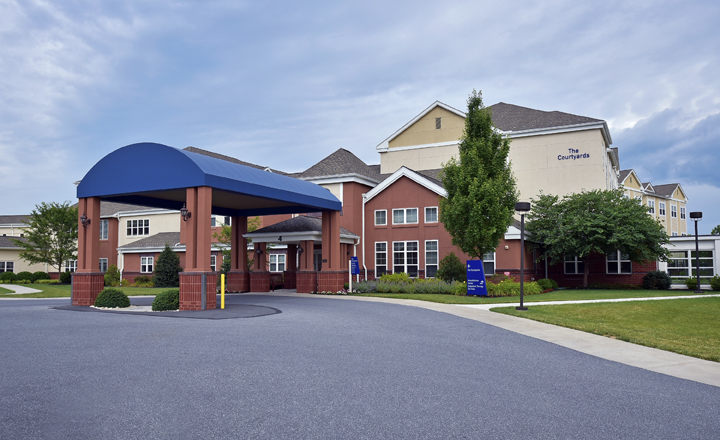

BRETHREN VILLAGE

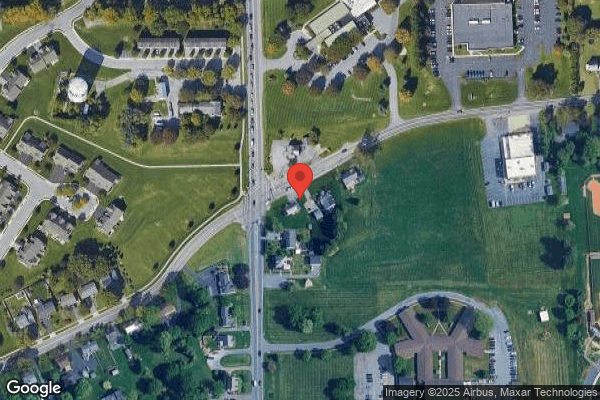
3001 LITITZ PIKE, LANCASTER, PA 17606 (717) 569-2657
Non profit - Corporation 120 Beds Independent Data: November 2025
Trust Grade
26/100
#389 of 653 in PA
Last Inspection: February 2024

Within standard 12-15 month inspection cycle. Federal law requires annual inspections.

Overview

Brethren Village in Lancaster, Pennsylvania, has received a Trust Grade of F, indicating significant concerns about care quality and safety. Ranking #389 out of 653 facilities in Pennsylvania places it in the bottom half, and #21 out of 31 in Lancaster County shows that only a few options are available locally. The facility's trend is stable, with 4 serious issues noted in both 2024 and 2025, pointing to ongoing problems without improvement. Staffing is a relative strength with a rating of 4 out of 5 stars and a turnover rate of 28%, which is well below the state average, suggesting experienced staff. However, there are serious deficiencies, including incidents of neglect that led to severe harm for residents, such as a fracture and untreated wounds that resulted in infections requiring hospitalization. While staffing is stable, the overall quality of care raises significant concerns.

Trust Score
F
26/100
In Pennsylvania
#389/653
Bottom 41%
Safety Record
High Risk
Review needed
Inspections
Holding Steady
4 → 4 violations
Staff Stability
✓ Good
28% annual turnover. Excellent stability, 20 points below Pennsylvania's 48% average. Staff who stay learn residents' needs.
Penalties
✓ Good
$8,190 in fines. Lower than most Pennsylvania facilities. Relatively clean record.
Skilled Nurses
○ Average
Each resident gets 36 minutes of Registered Nurse (RN) attention daily — about average for Pennsylvania. RNs are the most trained staff who monitor for health changes.
Violations
○ Average
8 deficiencies on record. Average for a facility this size. Mostly minor or procedural issues.
★★☆☆☆
2.0
Overall Rating
★★★★☆
4.0
Staff Levels
★★★★☆
4.0
Care Quality
★★☆☆☆
2.0
Inspection Score
Stable
2024: 4 issues
2025: 4 issues

The Good

  • 4-Star Staffing Rating · Above-average nurse staffing levels
  • 4-Star Quality Measures · Strong clinical quality outcomes
  • Low Staff Turnover (28%) · Staff stability means consistent care
  • Full Sprinkler Coverage · Fire safety systems throughout facility
  • No fines on record
  • Staff turnover is low (28%)

    20 points below Pennsylvania average of 48%

Facility shows strength in staffing levels, quality measures, staff retention, fire safety.

The Bad

2-Star Overall Rating

Below Pennsylvania average (3.0)

Below average - review inspection findings carefully

Federal Fines: $8,190

Below median ($33,413)

Minor penalties assessed

The Ugly 8 deficiencies on record

4 actual harm
Aug 2025 1 deficiency 1 Harm
SERIOUS (G) 📢 Someone Reported This

A family member, employee, or ombudsman was alarmed enough to file a formal complaint

Actual Harm - a resident was hurt due to facility failures

Free from Abuse/Neglect (Tag F0600)

A resident was harmed · This affected 1 resident

Based on review of facility policy and procedure, clinical record, facility documentation, and staff interviews, it was determined the facility failed to ensure that one of three residents reviewed we...

Read full inspector narrative →
Based on review of facility policy and procedure, clinical record, facility documentation, and staff interviews, it was determined the facility failed to ensure that one of three residents reviewed were free from neglect during care resulting in actual harm causing a subcapital humeral fracture for Resident 1. Findings include: Review of facility policy titled Freedom from Abuse, Neglect, and Exploitation, last revised October 2024, revealed neglect is the failure of the facility, its Team Members or service providers to provide care, goods, or services to a Resident necessary to avoid physical harm, pain, mental anguish, or emotional distress. Review of Resident 1's diagnosis sheet revealed diagnoses of Hemiplegia and Hemiparesis (weakness and paralysis) following Cerebral Infarction (stroke) affecting dominate side, severe protein-calorie malnutrition, history of falling, and contractures of the right elbow and hand. Review of Resident 1's care plan revealed a care plan for limited physical mobility related to Cerebrovascular Accident (stroke) with right sided weakness, including an intervention for Extensive two (person) assist for transfers, initiated January 25, 2025. Review of Resident 1's Care Kardex under Bed Mobility revealed Resident 1 was to have 2 person assist for transfers. Review of Resident 1's Quarterly Minimum Data Set (MDS-periodic assessment of resident needs), dated July 1, 2025, revealed Resident 1 required assistance from staff while transferring and had weakness on one side of their body. Review of Resident 1's progress notes revealed a Nursing Note on July 30, 2025, at 5:16 p.m. indicating Resident reported to a CNA (certified nurse aide) on 3-11 shift that [he/she] felt a pop in [his/her] right shoulder after being helped by one CNA today. Resident is a 2A (two person assist). [Resident] complained of pain in [his/her] right shoulder and tenderness as noted when moving RUE (right upper extremity) . Order obtained from provider for STAT (immediate) Xray of the right shoulder and Humerus (long bone of the upper arm) to r/o (rule out) and fracture or dislocation. Review of information submitted by the facility on July 30, 2025, to the Department of Health revealed, RN Supervisor immediately went to assess resident. Scheduled Tylenol administered by charge nurse and effective. Interview completed by nursing staff and social worker. Order obtained from provider for STAT Xray of the right shoulder and humerus Investigation is completed. (AP-alleged perpetrator) was an agency CNA who confessed to giving the resident a bear hug. Agency aware and CNA DNR'd (Do Not Return). Review of Resident 1's x-ray report, dated July 30, 2025, revealed a subcapital (part of the bone closest to the shoulder) humeral fracture. Review of facility investigation into the injury revealed a witness statement from licensed nursing employee E3 interviewing Resident 1 on July 30, 2025, indicating Resident 1 said, when she (staff member) went to lift me over she was standing next to the wheelchair and I was by the recliner and she said ‘oh', and all of a sudden I heard a pop. You couldn't miss it. It was loud. She said, ‘I'm sorry' and kept asking ‘Do you feel better? Is it ok now?' And I said, ‘not right now I don't.' then she was ready to leave and gathered her things. Further review of facility investigation into incident revealed an interview of nursing employee E4 by licensed nursing employee E5 on August 1, 2025, at 11:20 a.m. indicated, I asked her exactly what happened. She stated, ‘I bear hugged [resident] and transferred [resident] alone.' ‘I am so sorry [resident] got hurt.' ‘She didn't tell me she hurt [resident]. Further review of the facility investigation of the injury revealed the facility substantiated the allegation of neglect for not following the care plan for the resident to have the assistance of two staff members while transferring the resident. Interview with the Nursing Home Administrator and the Director of Nursing on August 26, 2025, at 1:30 p.m. confirmed Resident 1 was not transferred according to resident's individual care plan causing actual harm to Resident 1 when Resident 1 sustained a fractured humerus as a result of the improper transfer. 28 Pa. Code 201.14(a) Responsibility of licensee 28 Pa. Code 201.18(b)(1)(3)(e)(1) Management 28 Pa. Code 211.10(d) Resident care policies 28 Pa. Code 211.12(c)(d)(1)(5) Nursing services
Feb 2025 3 deficiencies 2 Harm
SERIOUS (G) 📢 Someone Reported This

A family member, employee, or ombudsman was alarmed enough to file a formal complaint

Actual Harm - a resident was hurt due to facility failures

Free from Abuse/Neglect (Tag F0600)

A resident was harmed · This affected 1 resident

**NOTE- TERMS IN BRACKETS HAVE BEEN EDITED TO PROTECT CONFIDENTIALITY** Based on review of facility policy, clinical records, hospital records, and staff interviews, it was determined the facility fai...

Read full inspector narrative →
**NOTE- TERMS IN BRACKETS HAVE BEEN EDITED TO PROTECT CONFIDENTIALITY** Based on review of facility policy, clinical records, hospital records, and staff interviews, it was determined the facility failed to provide necessary services of consistent wound treatment and ensure correct wound medication was applied to an unstageable wound (obscured full-thickness skin and tissue loss). The failure caused actual harm to Resident CL1 when the wound deteriorated and become infected resulting in hospitalization and unnecessary pain for one of three residents reviewed. (Resident CL1) Findings include: Review of the facility's policy titled Freedom from Abuse, Neglect, and Exploitation last revised in [DATE], revealed, facility is committed to interacting with and treating its Residents with dignity and respect. While a resident at or in the care of the facility, each resident is to be free from Abuse, exploitation, fraud, misappropriation of property, harassment, neglect, and mistreatment. Neglect is defined as the failure of the facility, its Team Members, or service providers to provide care, goods, or services to a Resident necessary to avoid physical harm, pain, mental anguish, or emotional distress. Review of Resident CL1's diagnosis list includes thoracic spinal cord injury, and Diabetes (group of metabolic disorders characterized by a high blood sugar level over a prolonged period). Review of Resident CL1's admission Braden Scale (scale used for predicting pressure sore risk) completed on [DATE], revealed resident was At Risk for developing pressure ulcers. Review of Resident CL1's admission skin assessment revealed Resident CL1 was admitted to the facility on [DATE], with an improving Stage 3 Pressure Ulcer (full thickness skin loss) to the coccyx (commonly known as the tail bone is a small triangular bone located at the bottom of the spine) with a measurement of 1.2 x 1.0 x 0 cm (centimeter). Review of Resident CL1's physician order dated [DATE], revealed a new wound treatment to cleanse the coccyx/sacrum with normal saline and apply Medihoney (dressing that aids and supports debridement and a moist wound healing environment in acute and chronic wounds and burns) and Calcium Alginate (wound dressing used to absorb wound exudate) then cover with dressing daily in the evening and as needed. Review of Resident CL1's [DATE], Treatment Administration Record (TAR) and progress notes failed to reveal documented evidence of Resident CL1's unstageable coccyx wound was treated on [DATE], [DATE], and [DATE]. Interview conducted with Licensed Nursing Employee E4 on February 5, 2025, at 1:30 p.m., revealed the daily Medihoney wound treatment order expired on [DATE], and was not renewed by nursing. The as needed treatment order remained and was administered on [DATE]. Further interview with licensed nursing Employee E4 confirmed the daily wound treatment order should have been renewed on [DATE]. Review of Resident CL1's clinical record failed to reveal documentation of the attending physician being notified of the missed wound care treatments on [DATE], [DATE], and [DATE]. Review of Resident CL1's Wound and Skin Evaluation dated [DATE], at 7:22 a.m., revealed Resident CL1's coccyx wound was deeper with new slough (layer of dead, yellow or white tissue that covers the wound bed) areas distal to the opening. The wound was identified as unstageable pressure ulcer with measurement of 1.0 x 4.3 x 2.5 cm. with 100% slough. A new treatment of Santyl (topical medication used for removing damaged or burned skin to allow for wound healing and growth of healthy skin) was recommended. Review of Resident CL1 physician's order dated [DATE], revealed a wound care order to cleanse the coccyx/sacral wound with normal saline, apply a Santyl pack with Calcium Alginate then cover it with a foam dressing daily. Interview with the Nursing Home Administrator (NHA) on February 5, 2025, at 1:00 p.m. revealed when the wound nurse assessed the resident's coccyx wound on [DATE], he/she discovered that the Santyl medication was not available but the Treatment Administration Record was documented as treatment was administered. Facility investigation revealed the Santyl medication was incorrectly entered in the computer which resulted in the medication not being delivered. The Santyl medication was re-ordered. Interview with licensed nurse Employee E3 on February 5, 2025, at 2:00 p.m. revealed on [DATE], Resident CL1's Santyl medication was not available in the facility, the nurse stated the wound was instead cleansed with normal saline and was lightly packed with Calcium Alginate then covered with a foam dressing. Employee E3 reported the same treatment without the santyl was done on [DATE], and [DATE]; since the Santyl medication was still not available. Employee E3 reported she/he assumed the medication would be delivered soon and did not call the pharmacy to follow up on the medication, did not inform the supervisor that medication was not available, and did not inform the physician that the medication was not available and therefore treatment order was not done as ordered on [DATE], [DATE], and [DATE]. Review of Resident R1's nursing progress notes dated [DATE], at 2:00 p.m., revealed the wound dressing was replaced due to soilage, awaiting delivery of Santyl from the pharmacy, the order was re-entered in the computer. Review of the pharmacy delivery records revealed Resident CL1's Santyl medication wasn't delivered to the facility until [DATE], four days after it was ordered by the physician. Review of Resident CL1's Wound and Skin Evaluation, dated [DATE] 8:18 a.m., revealed Resident CL1's coccyx wound was determined unstageable with a measurement of 4.9 x 4.4 x 2.5 cm. with 4.0 cm tunneling (wound that progressed to form passageways underneath the surface of the skin) at 6 o'clock, 100% slough with increased moderate purulent (product of inflammation that contains pus (e.g., leukocytes, bacteria, and liquefied necrotic debris), and moderate odor. Further review of same document revealed a wound culture was ordered and collected due to purulent discharge and odor in the area and resident's body temperature of 102 F (farenheit) recorded the previous evening. Resident CL1's current temperature was 99.9 F (normal body temperature range for adults is 97.0 - 99.0 F). Review of the wound culture report dated February 1, 2025, revealed Resident CL1's coccyx wound was positive for the following organisms: Staphylococcus Aureus, Enterococcus Avium, Enterococcus Faecalis, and Morganella Morganii. Review of CL1's clinical records revealed Resident CL1's wound treatment was changed, antibiotic treatment was started, and Resident CL1 was scheduled to be seen by a wound specialist. Review of the wound consult dated February 3, 2025, revealed the Patient (Resident CL1) with a Stage 4 Pressure Ulcer (Full-thickness skin and tissue loss) of sacrum, diffuse necrotic tissue (The death of the cells in the body tissue) in the base. Skin exam revealed Stage 4 sacral ulcer with necrotic tissue, foul odor, (+) rough exposed bone. The same report revealed that the physician attempted to do debridement (Removal of dead, infected, or damaged tissue from a wound), but the patient was sensate unable to accomplish much. The physician recommended operative debridement in the Operating Room and Intravenous (IV) (medication administered in vein) antibiotics. Review of Resident CL1's clinical record revealed Resident CL1 was sent to the hospital on February 4, 2025. Review of the hospital record document titled History and Physical, dated February 5, 2025, revealed patient (Resident CL1) was seen in the wound clinic by surgery [physician's name] and tried to debride the diffuse necrotic base, but the patient did not tolerate it due to pain. admission was requested for debridement under general anesthesia. The resident was placed on IV antibiotics and was referred to surgery for wound debridement. Review of information dated [DATE] submitted by the facility, on Janaury 29, 2025 revealed the faciltiy substantiated neglect for Employee E3 and Employee was reeducated. The above information was conveyed to the Nursing Home Administrator and Director of Nursing on February 6, 2025, at 2:30 p.m. The facility failed to provide wound treatment to Resident CL1's unstageable coccyx consistently and failed to ensure the correct wound treatment was administered. This failure resulted in actual harm to Resident CL1 causing the wound to deteriorate, become infected, leading to hospitalization where added surgical procedures added unnecessary pain. 28 Pa. Code 201.14(a) Responsibility of licensee Previously cited [DATE] 28 Pa. Code 201.18(b)(1)(3)(e)(1) Management Previously cited [DATE] 28 Pa. Code 201.18(e)(3) Management Previously cited [DATE] 28 Pa. Code 211.12(c)(d)(1)(3)(5) Nursing services Previously cited [DATE]
SERIOUS (G) 📢 Someone Reported This

A family member, employee, or ombudsman was alarmed enough to file a formal complaint

Actual Harm - a resident was hurt due to facility failures

Pressure Ulcer Prevention (Tag F0686)

A resident was harmed · This affected 1 resident

**NOTE- TERMS IN BRACKETS HAVE BEEN EDITED TO PROTECT CONFIDENTIALITY** Based facility policy review, clinical record review, hospital record review, facility documentation review, and staff interview...

Read full inspector narrative →
**NOTE- TERMS IN BRACKETS HAVE BEEN EDITED TO PROTECT CONFIDENTIALITY** Based facility policy review, clinical record review, hospital record review, facility documentation review, and staff interviews, it was determined that the facility failed to provide consistent and appropriate treatment for an Unstageable Pressure Ulcer (obscured full-thickness skin and tissue loss), resulting in wound deterioration, infection, and hospitalization for one of three residents reviewed (Resident CL1). Findings include. Review of the facility's policy titled Skin Care/Integrity, last revised in February 2024, revealed that the facility's policy is to identify residents at risk for impairment in skin integrity, initiate appropriate preventative interventions, and provide treatment to promote healing, prevent infections, and prevent the development of pressure ulcers. Review of the facility's policy titled Pressure Wounds, last reviewed in May 2024, revealed wounds in the category of pressure will have an appropriate treatment to promote the healing process. Review of Resident CL1's diagnosis list includes thoracic spinal cord injury, neuromuscular dysfunction of bladder, and Diabetes (group of metabolic disorders characterized by a high blood sugar level over a prolonged period). Review of Resident CL1's admission skin assessment revealed Resident CL1 was admitted to the facility on [DATE], with an improving Stage 3 Pressure Ulcer (Full thickness skin loss) measuring 1.2 x 1.0 cm to the coccyx (commonly known as the tail bone, is a small triangular bone located at the bottom of the spine). A wound treatment order was in place. Review of Resident CL1's admission Braden Scale (scale used for predicting pressure sore risk) completed on December 28, 2024, revealed resident was At Risk for developing pressure ulcers. Review of Resident CL1's care plan revealed that the skin impairment care plan was developed on December 28, 2024, with interventions as follows: chair cushion; adequate nutrition; resident education; turning and positioning; incontinent care and to provide wound treatment as ordered. Review of the physician's order dated January 3, 2025, revealed a wound treatment to cleanse the coccyx/sacrum with normal saline and apply Medihoney (dressing that aids and supports debridement and a moist wound healing environment in acute and chronic wounds and burns) and Calcium Alginate (wound dressing used to absorb wound exudate) then cover with dressing daily in the evening and as needed. Review of the Wound and Skin Evaluation dated January 16, 2025, at 7:39 a.m., revealed Resident CL1's coccyx wound was unstageable with a measurement of 2.0 x 1.2 x 1.5 cm. with 80% slough (non-viable yellow, tan, gray, green or brown tissue; usually moist, can be soft, stringy and mucinous in texture. Slough may be adherent to the base of the wound or present in clumps throughout the wound bed) with moderate serous drainage (watery, clear, or slightly yellow/tan/pink fluid that has separated from the blood and presents as drainage) with no signs of infection. Wound treatment remained Medihoney and Calcium Alginate. Review of Resident R1's January 2025, Treatment Administration Record (TAR) and progress notes failed to reveal documented evidence that Resident CL1's unstageable coccyx wound was treated on January 20, January 22, and January 23, 2025. Review of Resident R1's clinical records failed to reveal the attending physician was notified of the missed wound care treatments on January 20, January 22, and January 23, 2025. Interview conducted with Licensed Nursing Employee E4 on February 5, 2025, at 1:30 p.m., confirmed there were no documented evidence of the physcian being notified of the missed wound treatments. Review of the Wound and Skin Evaluation dated January 23, 2025, at 7:22 a.m., revealed Resident CL1's coccyx wound was unstageable with a measurement of 1.0 x 4.3 x 2.5 with 100% slough and moderate serous drainage with no evidence of infection. The same note revealed deteriorating, the area was deeper with new slough areas distal to the opening. A new treatment of Santyl (topical medication used for removing damaged or burned skin to allow for wound healing and growth of healthy skin) was recommended. Review of Resident R1's physician's order dated January 23, 2025, revealed a wound care order to cleanse the Coccyx/sacral wound with normal saline apply a Santyl pack with Calcium Alginate then cover it with a foam dressing daily. Review of the pharmacy delivery records revealed that Resident CL1's Santyl medication was not delivered to the facility until January 27, 2025, four days after it was ordered by the physician. Interview with licensed nurse Employee E3 was conducted on February 5, 2025, at 2:00 p.m. Employee E3 reported that on January 24, 2025, Resident CL1's Santyl medication was not available, the nurse stated the wound was instead cleansed with normal saline and was lightly packed with a Calcium Alginate then covered with foam dressing. Employee E3 reported the same treatment was done on January 25, and January 26, 2025, since Santyl medication was still not available. Employee E3 reported that she/he assumed the medication would be delivered soon. Employee E3 reported she/he did not call the pharmacy to follow up on the medication, did not inform the supervisor the medication was not available, and did not inform the physician the treatment order was not appropriately done. Review of the Wound and Skin Evaluation, dated January 28, 2025, at 8:18 a.m., revealed Resident CL1's coccyx wound was unstageable with a measurement of 4.9 x 4.4 x 2.5 cm. with 4.0 cm tunneling (wound that progressed to form passageways underneath the surface of the skin) at 6 o'clock, 100% slough with increased moderate purulent (Is any product of inflammation that contains pus (e.g., leukocytes, bacteria, and liquefied necrotic debris), and moderate odor. Additional review of the same note revealed, a wound culture was ordered and collected due to purulent discharge and odor in the area and a temperature of 102 F the night before. The current temperature was 99.9 F (normal body temperature range for adults is 97.0 - 99.0 F). Review of the wound culture report dated February 1, 2025, revealed Resident CL1's coccyx wound was positive for the following organisms: Staphylococcus Aureus, Enterococcus Avium, Enterococcus Faecalis, and Morganella Morganii. Review of Resident CL1's clinical records revealed wound treatment was changed to continuous negative pressure wound vacuum at 125 mm Hg on January 29, 2025. The resident was placed on antibiotics and was scheduled for a wound clinic consult. Review of the wound consult dated February 3, 2025, revealed the patient had a Stage 4 Pressure Ulcer (Full-thickness skin and tissue loss) of sacrum, diffuse necrotic tissue (death of the cells in the body tissue) in the base. Skin exam revealed Stage 4 sacral ulcer with necrotic tissue, foul odor, (+) rough exposed bone. The same report revealed that the physician attempted to do debridement (Removal of dead, infected, or damaged tissue from a wound), but the patient was sensate unable to accomplish much. Pre procedure wound area was 48.24 cm2 (square centimeter), post debridement measurements were 6.7 x 7.2 x 5.6 cm with 76-100% slough and 1-25% eschar. The physician recommended operative debridement in the Operating Room and Intravenous (IV) (medication administered in vein) antibiotics. Review of Resident CL1's clinical records revealed Resident was sent to the hospital on February 4, 2025. Review of the hospital record History and Physical, dated February 5, 2025, revealed patient was seen in the wound clinic by surgery [physician's name] and tried to debride the diffuse necrotic base, but the patient did not tolerate it due to pain. admission (hospital) was requested for debridement under general anesthesia. The same note revealed that the diagnosis of admission was Pressure Injury of the sacral region, stage 4. The patient was placed on IV antibiotics and was referred to surgery for debridement. The above information was discussed with the Nursing Home Administrator and the Director of Nursing on February 5, 2025, at 2:30 p.m. The facility failed to ensure Resident CL1 was provided with consistent and appropriate wound treatment on her/his sacral wound which resulted in actual harm when the wound deteriorated and became infected causing hospitalization and a surgical procedure that led to unnecessary pain. 28 Pa. Code 201.14(a) Responsibility of licensee Previously cited 4/6/23 28 Pa. Code 201.18(b)(1)(3)(e)(1) Management Previously cited 4/6/23 28 Pa. Code 201.18(e)(3) Management Previously cited 4/6/23 28 Pa. Code 211.12(c)(d)(1)(3)(5) Nursing services Previously cited 4/6/23
CONCERN (D) 📢 Someone Reported This

A family member, employee, or ombudsman was alarmed enough to file a formal complaint

Potential for Harm - no one hurt, but risky conditions existed

Deficiency F0658 (Tag F0658)

Could have caused harm · This affected 1 resident

Based on review of the Pennsylvania Professional Nursing Practice Act, facility policy and procedure review, clinical records review and staff interviews it was determined the facility failed to ensur...

Read full inspector narrative →
Based on review of the Pennsylvania Professional Nursing Practice Act, facility policy and procedure review, clinical records review and staff interviews it was determined the facility failed to ensure that staff met the professional standards for a licensed nurse in following a physician's wound care order for one of three residents reviewed (Resident CL1). Finding Include: The Professional Code, Title 49, Professional and Vocational Standards (Pennsylvania Professional Nursing Practice Act), Chapter 21.145(a) states that the Licensed Practical Nurse (LPN) is prepared to function as a member of the health-care team by exercising sound nursing judgement based on preparation, knowledge, and experience in nursing competency. The LPN participates in the planning, implementation, and evaluation of nursing care, using focused assessment in settings where nursing takes place. Chapter 21.145 (3) states, an LPN shall follow the written, established policies and procedures of the facility that are consistent with the Act. A review of the facility's policy titled Skin Care/Integrity, last revised in February 2024, revealed that the facility's policy is to identify residents at risk for impairment in skin integrity, initiate appropriate preventative interventions, and provide treatment to promote healing, prevent infections, and prevent the development of pressure ulcers. A review of the facility's policy titled Pressure Wounds, last reviewed in May 2024, revealed that wounds in the category of pressure will have an appropriate treatment to promote the healing process. A review of the physician's order dated January 3, 2025, revealed a wound treatment to cleanse the coccyx/sacrum with normal saline and apply Medihoney (A dressing that aids and supports debridement and a moist wound healing environment in acute and chronic wounds and burns) and Calcium Alginate (A wound dressing used to absorb wound exudate) then cover with dressing daily in the evening and as needed. A review of the January 2025, Treatment Administration Record (TAR) and progress notes revealed no documented evidence that Resident CL1's unstageable (Obscured full-thickness skin and tissue loss) coccyx (commonly known as the tail bone is a small triangular bone located at the bottom of the spine) wound was treated on January 20, 22, and 23, 2025. Clinical records review failed to reveal that the physician was notified of the missed wound care treatment on January 20, 22, and 23, 2025. A review of the physician's order dated January 23, 2025, revealed a wound care order to cleanse the Coccyx/sacral wound with normal saline apply a Santyl pack with Calcium Alginate then cover it with a foam dressing daily. A review of the pharmacy delivery records revealed that Resident CL1's Santyl medication was not delivered to the facility until January 27, 2025, four days after it was ordered by the physician. An interview with licensed nurse Employee E3 was conducted on February 5, 2025, at 2:00 p.m. Employee E3 reported that on January 24, 2025, Resident CL1's Santyl medication was not available, the nurse reported that the wound was instead cleansed with normal saline and was lightly packed with a Calcium Alginate then covered with foam dressing. Employee E3 reported that the same treatment was done on January 24, and 25, 2025, since Santyl medication was still not available. Employee E3 reported that she/he assumed that the medication would be delivered soon. Employee E3 reported that she/he did not call the pharmacy to follow up on the medication, did not inform the supervisor that medication was not available, and did not inform the physician that the wound treatment order was not followed for three days. The above was conveyed with the Nursing Home Administrator and Director of Nursing on February 5, 2025, at 2:00 p.m. The facility failed to ensure that the staff met the professional standard on providing appropriate and ordered treatment to Resident CL1's coccyx wound. 28 Pa. Code 201.14(a) Responsibility of licensee Previously cited 4/6/23. 28 Pa. Code 201.18(b)(1)(3)(e)(1) Management Previously cited 4/6/23. 28 Pa. Code 201.18(e)(3) Management Previously cited 4/6/23. 28 Pa. Code 211.12(c)(d)(1)(3)(5) Nursing services Previously cited 4/6/23. 28 Pa. 211.10(c) Resident care policies .
Apr 2023 3 deficiencies 1 Harm
SERIOUS (G) 📢 Someone Reported This

A family member, employee, or ombudsman was alarmed enough to file a formal complaint

Actual Harm - a resident was hurt due to facility failures

Free from Abuse/Neglect (Tag F0600)

A resident was harmed · This affected 1 resident

**NOTE- TERMS IN BRACKETS HAVE BEEN EDITED TO PROTECT CONFIDENTIALITY** Based on clinical records, facility documentation review, and resident and staff interview, it was determined that the facility ...

Read full inspector narrative →
**NOTE- TERMS IN BRACKETS HAVE BEEN EDITED TO PROTECT CONFIDENTIALITY** Based on clinical records, facility documentation review, and resident and staff interview, it was determined that the facility failed to ensure that the resident was free from neglect by not providing two-person assistance needed during transfers or providing the proper equipment during a transport for two of 32 residents reviewed (Residents 14 and 91) causing actual harm to Resident 14. Findings Include: Review of Resident 14's diagnosis list included a diagnosis of intracranial hemorrhage (stroke) and Hemiplegia non-dominate left side (inability to move one side of the body). Review of Resident 14's care [NAME] revealed as of January 30, 2023 Resident 14 was to have the foot pedals of the wheelchair removed while in the room as resident prefers to self-propel independently when in room. Utilize wheelchair foot pedals when assisting resident with mobility in the hallway. Review of Resident 14's care plan revealed interventions to prevent falls including an intervention initiated October 11, 2021, to encourage foot pedals when assisting resident with wheelchair mobility in the hallway. Review of Resident 14's progress notes revealed a nursing entry dated January 30, 2023, at 2:05 p.m. revealed CNA (Certified Nursing Assistant) pushing resident in WC (wheelchair) to dining room. Resident left foot caught on floor causing resident to fall forward, land on floor face down. Resident able to roll on left side to a seated position, resident assisted to WC by three employees, Pressure held to nose d/t (due to) bleed. Further review of Resident 14's progress notes revealed Resident 14 was having nose bleeds but not reporting any pain or discomfort in his/her face. Additional review of Resident 14's clinical record revealed a progress note dated February 6, 2023, at 4:26 p.m. indicating family is requesting [Resident 14] be sent to the ER (Emergency Room) for epistaxis (nosebleed). Review of documentation from the hospital stay of February 6-7, 2023, revealed the resident was admitted with diagnosis of epistaxis due to trauma, closed bilateral (both sides) nasal bone fractures, concussion, fall from wheelchair, acute blood loss anemia (low blood cell count) and coagulopathy (inability of blood to clot). Interview with Resident 14 on March 29, 2023, at 1:00 p.m. confirmed when she had the fall on January 30, 2023, she did not have the foot pedals on the wheelchair at the time of the fall. Resident 14 stated she was not asked if she wanted them or not and didn't want to say anything because she thought the CNA was busy at the time. Resident 14 confirmed that the foot pedals have been used every time when transferred outside of her room since her fall. Interview with the Director of Nursing on March 29, 2023, at 11:00 a.m. revealed Nursing Employee E4 resigned from her position and no longer worked at the facility after January 30, 2023. Interview with the Nursing Home Administrator on March 30, 2023, at 9:30 a.m. confirmed Resident 14's foot pedals were not placed on the wheelchair as both the care plan and care [NAME] instructed when transferring Resident 14 in the hallway. Review of documention provided by the facility revealed facility substantiated the allegation of neglect against the nurse aide who failed to follow care [NAME] and care plan by not providing foot pedals to wheelchair during transport. Resident 14 sustained a fall due to the facility staff not following Resident 14's care plan and care [NAME] interventions of placing foot pedals on the wheelchair while transporting the resident in the hallway causing actual harm when Resident 14 was transferred to the hospital and diagnosed with facial fractures. Review of facility audits of foot pedal placement and education provided to all nursing staff revealed the education provided was regarding wheelchair and use of foot pedals but did not address ensuring safety during transfers. Review of Resident 91's diagnosis list revealed Parkinson's Disease (disorder of the central nervous system that affects movement, often including tremors), a history of falls, and a left femur (thigh bone) fracture. Review of Resident 91's Minimum Data Set (MDS- standardized assessment tool that measures health status in long-term care residents) dated January 7, 2023, revealed that the resident had severe cognitive impairment. The MDS also revealed that the resident requires extensive two-people assistance with transferring. Review of Resident 91's current care plan for safety revealed an intervention initiated on July 12, 2022, for two-person assistance with transferring with a rolling walker. Review of Resident 91's nursing progress notes dated February 26, 2023, at 2:09 a.m., revealed resident was lowered by an aide to the knees during the transfer from a recliner to a wheelchair. The resident became weak during the transfer and needed to be lowered to the ground, unable to complete the transfer. The resident had slight redness to the right knee but denied pain/discomfort. The resident was able to stand and was placed in a wheelchair with two staff assistants. Review of the facility documentation, and fall investigation, revealed that on February 26, 2023, at 1:43 p.m., the resident was lowered to their knees during a transfer from a recliner to the wheelchair. Records revealed non-licensed employee E3 transferred the resident by herself/himself. Review of non licensed Employee E3's statement dated March 8, 2023, revealed that she/he was aware of the resident's care plan to have two-person assistance with transferring, but the other aide was not on the unit and the nurse was occupied assisting another resident. Interview with the Director of Nursing on March 30, 2023, at 10:00 a.m., confirmed that the facility failed to ensure Resident 91 was free from neglect by not providing two-person assistance with transferring contributing to the resident's fall. 483.13 - Resident Behavior and Facility Practices, 10-1-1998 edition 28 Pa. Code 201.14(a) Responsibility of licensee 28 Pa. Code 201.18(b)(1)(3)(e)(1) Management 28 Pa. Code 201.18(e)(3) Management 28 Pa. Code 211.12(c)(d)(1)(3)(5) Nursing services
CONCERN (D)

Potential for Harm - no one hurt, but risky conditions existed

Quality of Care (Tag F0684)

Could have caused harm · This affected 1 resident

**NOTE- TERMS IN BRACKETS HAVE BEEN EDITED TO PROTECT CONFIDENTIALITY** Based on clinical record review and interviews with staff, it was determined that the facility failed to follow physician orders...

Read full inspector narrative →
**NOTE- TERMS IN BRACKETS HAVE BEEN EDITED TO PROTECT CONFIDENTIALITY** Based on clinical record review and interviews with staff, it was determined that the facility failed to follow physician orders and failed to follow a wound doctor's wound recommendation for 2 out of 22 residents reviewed (Resident 87 and Resident 102). Findings include: Review of Resident 87's clinical record revealed a diagnosis of Hypertensive Chronic Kidney Disease (high blood pressure is caused by kidney disease). Further review revealed a physician's order for Metoprolol Succinate Extended Release (24-hour) tablet of 25mg (a medication that helps lower blood pressure) to be given a half tablet (12.5 mg) by mouth two times a day. Hold if heart rate is less than 60. Call if the blood pressure is less than 90/60 or greater than 160/100. Review of Resident 87's Medication Administration Record (MAR) revealed on the morning of December 9 and December 19, 2022, the medication was given when the resident's heart rate was below 60 (57 and 58 respectively) and in the evening on December 27 and 28, 2022, (55 and 52). Further review of the March 2023 MAR revealed that the resident received Metoprolol on March 21 and March 22 in the evening when the resident's heart rate was below 60 (recorded as 53 and 55 respectively). Interview with the Nursing Home Administrator on March 30, 2023, at 8:50 a.m. revealed that the medication was not given according to physician's orders for the dates mentioned above. Review of Resident 102's clinical records and wound evaluation report revealed resident was admitted to the facility on [DATE], with a wound lesion to the right foot's second toe, with a measurement of 1.0 x 0.9 cm (centimeter). Review of the Nurse Practitioner's (NP) notes dated February 7, 2023, revealed Resident 102 with an open wound to the second toe due to a calloused lesion debrided by a podiatrist (medical specialist that deals with problems affecting feet or lower legs) with problems affecting feet or lower legs). Further review of Nurse Practitioner's progress note revealed resident was to follow up outpatient wound clinic for further treatment and to continue triple antibiotic ointment and band aide until seen by the wound clinic doctor. Review of Resident 102's clinical record failed to reveal a wound treatment order to the right foot second toe initiated and therefore no treatment was completed. Review of Resident 102's wound consult dated February 22, 2023, revealed the right second toe with ulcer and exposed, with prior partial amputation. No acute infection but concern for chronicity. A wound care recommendation was made as follows: Wash the wound with soap and water scrubbing gently. Rinse well, pat dry, apply Iodosorb (Used to treat and kill bacteria in wounds) then cover with Kling. Further review of Resident 102's clinical records failed to reveal the recommended Iodosorb wound treatment was initiated as an order and therefore no treatment to the right foot's second toe was completed. Review of the Treatment Administration Record (TAR) revealed Iodosorb wound treatment to the right foot's second toe was only initiated on March 3, 2023, after another wound clinic consult on March 1, 2023. Additional review of Resident 102's clinical record revealed Resident 102 did not have documented evidence that her/his right foot second toe wound treatment was done from admission, February 6, 2023, until March 2, 2023. Interview with the Director of Nursing was conducted on March 30, 2023, at 10:00 a.m. The Director of Nursing was unable to answer why Resident 102's right foot and second toe open wound upon admission were not treated timely. The Director of Nursing reported that the nurse spoke to the physician regarding the wound consult report on February 22, 2023, but confirmed wound treatment recommendation was not placed as an order and therefore was not done. The facility failed to ensure Resident 102's wound treatment recommendation for an open wound to the right foot and second toe from a wound doctor was implemented. 28 Pa. Code 211.12 (c) Nursing services 28 Pa. Code 211.12 (d)(1)(3)(5) Nursing services
CONCERN (D)

Potential for Harm - no one hurt, but risky conditions existed

Medication Errors (Tag F0758)

Could have caused harm · This affected 1 resident

Based on clinical records review, and staff interview, it was determined that the facility failed to ensure non-pharmacological interventions were attempted, and documented indications were provided b...

Read full inspector narrative →
Based on clinical records review, and staff interview, it was determined that the facility failed to ensure non-pharmacological interventions were attempted, and documented indications were provided before the administration of as-needed anti-anxiety medication for one of 22 residents reviewed (Resident 27). Findings include: Review of Resident 27's physician order dated November 28, 2022, revealed resident with complaints of anxiety and nervousness. An order for Klonopin (medication to treat anxiety) 0.25 mg (milligram) daily as needed was made. Review of Resident 27's December 2022, Medication Administration Record (MAR) revealed that from December 1, 2022, until December 14, 2022, as needed Klonopin was administered to Resident 27 ten times without an appropriate indication and was administered nine times without attempting to provide a non-pharmacological intervention before administering the medication. Interview with the Director of Nursing (DON) was conducted on March 30, 2023, at 10:00 a.m. The Director of Nursing reported the resident asked for the medication. The Director of Nursing confirmed that an appropriate indication other than anxiety should have been documented. The Director of Nursing confirmed a non-pharmacological intervention should have been attempted before administering as-needed anti-anxiety medication to resident 27. The facility failed to ensure appropriate indication was documented and non-pharmacological interventions were attempted before administering as-needed anti-anxiety medication to Resident 27. 28 Pa. Code 211.12 (c) Nursing services 28 Pa. Code 211.12 (d)(1)(3)(5) Nursing services
Apr 2022 1 deficiency
CONCERN (D)

Potential for Harm - no one hurt, but risky conditions existed

Comprehensive Assessments (Tag F0636)

Could have caused harm · This affected 1 resident

Based on observation, interviews, and record reviews it was determined the facility failed to ensure the accuracy of assessments for two of 32 residents reviewed. (Residents 29 and 33) Findings Includ...

Read full inspector narrative →
Based on observation, interviews, and record reviews it was determined the facility failed to ensure the accuracy of assessments for two of 32 residents reviewed. (Residents 29 and 33) Findings Include: Review of Resident 29's quarterly Minimum Data Set (MDS-periodic assessment of resident needs), dated January 18, 2022, revealed the resident had a stage 2 pressure ulcer (wound with partial thickness of skin and tissue). Review of Resident 29's clinical record revealed the resident was only documented having an area of Moisture Associated Skin Damage (MASD- inflammation or skin erosion due to a long time exposure to moisture) at the time of the assessment. Interview with Licensed nursing Employees E3 and E4 on April 7, 2022 at 11:00 a.m. revealed Resident 29 has never had a pressure ulcer and did have an area of MASD at the time of the MDS assessment in January 2022. Review of Resident 33's most recent quarterly Minimum Data Set (MDS-periodic assessment of resident needs), dated January 24, 2022, revealed the resident was coded as having a restraint because the chair that was being used impaired the resident from standing. Observations of the resident and the resident's room on all days of the survey revealed Resident 33 was sitting in a wheelchair in a common area or a recliner in the resident's room next to the bed. Review of Resident 33's clinical record revealed no documented evidence the resident had a restraint in use. Interview with Licensed Nursing Employees E3 and E4 on April 7, 2022 at 11:00 a.m. revealed Resident 33 only either sits in the wheelchair or the recliner and can stand on her own when using either of these chairs. Further interview revealed Resident 33 never was considered having a restraint due to using a chair. Interview with the Nursing Home Administrator and Director of Nursing on April 7, 2022 at 11:45 a.m. confirmed the MDS assessments for Residents 29 and 33 were coded inaccurately. 28 Pa Code 211.5(f) Clinical Records 28 Pa Code 211.12(d)(1)(3)(5) Nursing Services
Understanding Severity Codes (click to expand)
Life-Threatening (Immediate Jeopardy)
J - Isolated K - Pattern L - Widespread
Actual Harm
G - Isolated H - Pattern I - Widespread
Potential for Harm
D - Isolated E - Pattern F - Widespread
No Harm (Minor)
A - Isolated B - Pattern C - Widespread

Questions to Ask on Your Visit

  • "What safeguards are in place to prevent abuse and neglect?"
  • "Can I speak with families of current residents?"
  • "What's your RN coverage like on weekends and overnight?"

Our Honest Assessment

Strengths
  • • 28% annual turnover. Excellent stability, 20 points below Pennsylvania's 48% average. Staff who stay learn residents' needs.
Concerns
  • • Multiple safety concerns identified: Federal abuse finding, 4 harm violation(s). Review inspection reports carefully.
  • • 8 deficiencies on record, including 4 serious (caused harm) violations. Ask about corrective actions taken.
  • • Grade F (26/100). Below average facility with significant concerns.
Bottom line: This facility has a substantiated abuse finding. Extreme caution advised. Explore alternatives.

About This Facility

What is Brethren Village's CMS Rating?

CMS assigns BRETHREN VILLAGE an overall rating of 2 out of 5 stars, which is considered below average nationally. Within Pennsylvania, this rating places the facility higher than 0% of the state's 100 nursing homes. A rating at this level reflects concerns identified through health inspections, staffing assessments, or quality measures that families should carefully consider.

How is Brethren Village Staffed?

CMS rates BRETHREN VILLAGE's staffing level at 4 out of 5 stars, which is above average compared to other nursing homes. Staff turnover is 28%, compared to the Pennsylvania average of 46%. This relatively stable workforce can support continuity of care.

What Have Inspectors Found at Brethren Village?

State health inspectors documented 8 deficiencies at BRETHREN VILLAGE during 2022 to 2025. These included: 4 that caused actual resident harm and 4 with potential for harm. Deficiencies causing actual harm indicate documented cases where residents experienced negative health consequences.

Who Owns and Operates Brethren Village?

BRETHREN VILLAGE is owned by a non-profit organization. Non-profit facilities reinvest revenue into operations rather than distributing to shareholders. The facility operates independently rather than as part of a larger chain. With 120 certified beds and approximately 114 residents (about 95% occupancy), it is a mid-sized facility located in LANCASTER, Pennsylvania.

How Does Brethren Village Compare to Other Pennsylvania Nursing Homes?

Compared to the 100 nursing homes in Pennsylvania, BRETHREN VILLAGE's overall rating (2 stars) is below the state average of 3.0, staff turnover (28%) is significantly lower than the state average of 46%, and health inspection rating (2 stars) is below the national benchmark.

What Should Families Ask When Visiting Brethren Village?

Based on this facility's data, families visiting should ask: "What safeguards and monitoring systems are in place to protect residents from abuse or neglect?" "Can I visit during a mealtime to observe dining assistance and food quality?" "How do you handle medical emergencies, and what is your hospital transfer rate?" "Can I speak with family members of current residents about their experience?" These questions are particularly relevant given the substantiated abuse finding on record.

Is Brethren Village Safe?

Based on CMS inspection data, BRETHREN VILLAGE has documented safety concerns. The facility has 1 substantiated abuse finding (meaning confirmed case of resident harm by staff or other residents). The facility has a 2-star overall rating and ranks #100 of 100 nursing homes in Pennsylvania. Families considering this facility should ask detailed questions about what corrective actions have been taken since these incidents.

Do Nurses at Brethren Village Stick Around?

Staff at BRETHREN VILLAGE tend to stick around. With a turnover rate of 28%, the facility is 18 percentage points below the Pennsylvania average of 46%. Low turnover is a positive sign. It means caregivers have time to learn each resident's needs, medications, and personal preferences. Consistent staff also notice subtle changes in a resident's condition more quickly.

Was Brethren Village Ever Fined?

BRETHREN VILLAGE has been fined $8,190 across 1 penalty action. This is below the Pennsylvania average of $33,161. While any fine indicates a compliance issue, fines under $50,000 are relatively common and typically reflect isolated problems that were subsequently corrected. Families should ask what specific issues led to these fines and confirm they've been resolved.

Is Brethren Village on Any Federal Watch List?

BRETHREN VILLAGE is not on any federal watch list. The most significant is the Special Focus Facility (SFF) program, which identifies the bottom 1% of nursing homes nationally based on persistent, serious quality problems. Not being on this list means the facility has avoided the pattern of deficiencies that triggers enhanced federal oversight. This is a positive indicator, though families should still review the facility's inspection history directly.