HOMESTEAD VILLAGE, INC
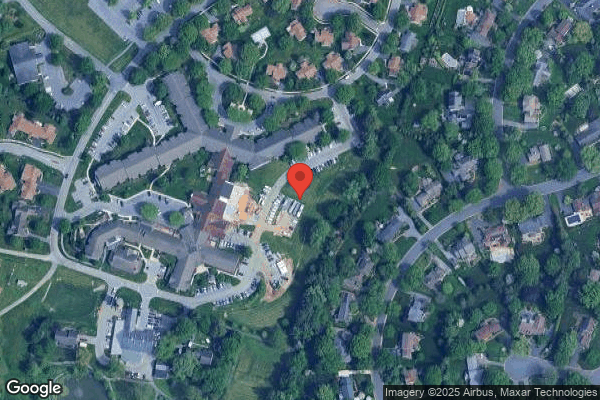

1800 VILLAGE CIRCLE, LANCASTER, PA 17604 (717) 397-4831
Non profit - Corporation 60 Beds Independent Data: November 2025
Trust Grade
90/100
#56 of 653 in PA
Last Inspection: February 2025

Within standard 12-15 month inspection cycle. Federal law requires annual inspections.

Overview

Homestead Village, Inc. has received an impressive Trust Grade of A, indicating excellent quality and a high recommendation for families considering this nursing home. Ranked #56 out of 653 facilities in Pennsylvania, they are in the top half, and #5 out of 31 in Lancaster County, meaning there are only four local options rated higher. The facility is improving, having reduced reported issues from five in 2024 to just two in 2025, and they maintain strong staffing ratings with a 5/5 score and a turnover rate of only 33%, significantly lower than the state average. However, families should be aware of some concerns, including incidents where a missing opioid medication patch was not adequately investigated, and failure to monitor the weights of several residents, which could impact nutrition management. On a positive note, there have been no fines recorded, indicating compliance with regulations, and the facility offers average RN coverage, ensuring that residents receive necessary nursing care.

Trust Score
A
90/100
In Pennsylvania
#56/653
Top 8%
Safety Record
Low Risk
No red flags
Inspections
Getting Better
5 → 2 violations
Staff Stability
○ Average
33% turnover. Near Pennsylvania's 48% average. Typical for the industry.
Penalties
✓ Good
No fines on record. Clean compliance history, better than most Pennsylvania facilities.
Skilled Nurses
✓ Good
Each resident gets 53 minutes of Registered Nurse (RN) attention daily — more than average for Pennsylvania. RNs are trained to catch health problems early.
Violations
○ Average
7 deficiencies on record. Average for a facility this size. Mostly minor or procedural issues.
★★★★★
5.0
Overall Rating
★★★★★
5.0
Staff Levels
★★★★☆
4.0
Care Quality
★★★★☆
4.0
Inspection Score
Stable
2024: 5 issues
2025: 2 issues

The Good

  • 5-Star Staffing Rating · Excellent nurse staffing levels
  • 4-Star Quality Measures · Strong clinical quality outcomes
  • Full Sprinkler Coverage · Fire safety systems throughout facility
  • No fines on record
  • Staff turnover below average (33%)

    15 points below Pennsylvania average of 48%

Facility shows strength in staffing levels, quality measures, fire safety.

The Bad

Staff Turnover: 33%

13pts below Pennsylvania avg (46%)

Typical for the industry

The Ugly 7 deficiencies on record

Feb 2025 2 deficiencies
CONCERN (D)

Potential for Harm - no one hurt, but risky conditions existed

Deficiency F0692 (Tag F0692)

Could have caused harm · This affected 1 resident

Based on facility policy, clinical record review, and staff interview, it was determined that the facility failed to obtain and monitor weights for one of three residents reviewed for nutrition (Resid...

Read full inspector narrative →
Based on facility policy, clinical record review, and staff interview, it was determined that the facility failed to obtain and monitor weights for one of three residents reviewed for nutrition (Resident 20). Findings include: Review of facility policy, Weight Management/Weight Loss, revised July 12, 2022, revealed that monthly weights will be taken by qualified staff during the first 5 days of each month and documented in the electronic medical record after being verified by licensed staff. If a +/- 5 lb [pound] discrepancy exists, the resident should be reweighed immediately with nurse verifying weight. If unable to verify immediately reweight will be obtained on the following day. Additionally, if a weight loss/gain of 5 or more pounds is noted, dietitian is to be notified in a timely manner for follow up and recommendations. Review of Resident 20's clinical record revealed recorded weights of 121.4 pounds on January 4, 2025; 121.4 pounds on January 5, 2025; 108.4 pounds on February 5, 2025, with a reweight on February 6, 2025, of 107.6 pounds. (loss of 13.8pounds or11.37% in one month) Further review of Resident 20's clinical record revealed a dietary note dated February 10, 2025, indicating the resident's weight. Further review of the same dietary note failed to reveal recommendations to address the weight loss. Interview with Employee E3 on February 21, 2025 at 11:30 a.m. confirmed that further dietary interventions should have been implemented to address Resident 20's weight loss. 28 Pa. Code 211.5(f) Clinical Records 28 Pa. Code 211.10(c) Resident Care Policies 28 Pa. Code 211.12(d)(1)(3)(5) Nursing Services
CONCERN (D)

Potential for Harm - no one hurt, but risky conditions existed

Medication Errors (Tag F0758)

Could have caused harm · This affected 1 resident

Based upon clinical record review, it was determined the facility failed to ensure monitoring for effectiveness and side effect monitoring for psychotropic medications was completed for one of five re...

Read full inspector narrative →
Based upon clinical record review, it was determined the facility failed to ensure monitoring for effectiveness and side effect monitoring for psychotropic medications was completed for one of five residents reviewed (Resident 6). Findings include: Review of Resident 6's clinical record revealed Resident 6 had been receiving Trazodone (anti-depressant medication) for insomnia since March 2024. Further review of Resident 6's clinical record failed to reveal evidence of monitoring for side effects and/or effectiveness of Trazodone since the medication was initiated in March 2024. Interview with the Director of Nursing on February 21, 2025, at 10:00 a.m. confirmed that no monitoring for side effects or effectiveness was documented since March 2024 to present when Resident 6 was receiving Trazodone. 28 Pa. Code 211.12(d)(1)(2)(3) Nursing Services Previously cited 3/1/2024
Mar 2024 5 deficiencies
CONCERN (D)

Potential for Harm - no one hurt, but risky conditions existed

Assessment Accuracy (Tag F0641)

Could have caused harm · This affected 1 resident

**NOTE- TERMS IN BRACKETS HAVE BEEN EDITED TO PROTECT CONFIDENTIALITY** Based upon clinical record review and interview, it was determined the facility failed to accurately complete a discharge Minimu...

Read full inspector narrative →
**NOTE- TERMS IN BRACKETS HAVE BEEN EDITED TO PROTECT CONFIDENTIALITY** Based upon clinical record review and interview, it was determined the facility failed to accurately complete a discharge Minimum Data Set Assessment upon discharge for one of three records reviewed (Resident 51). Findings include: Review of Resident 51's clinical record revealed Resident 51 was admitted to the facility on [DATE], and was discharged to home on January 19, 2024. Review of Resident 51's discharge Minimum Data Set (MDS - periodic assessment of resident needs) dated January 19, 2024, revealed Resident 51 was discharged to an acute care facility. Interview with the Director of Nursing on March 1, 2024, at 10:00 a.m. confirmed Resident 51's discharge MDS was inaccurate and should have reflected Resident 51 was discharged to home. 28 Pa. Code 211.5(f) Clinical Records
CONCERN (D)

Potential for Harm - no one hurt, but risky conditions existed

Pressure Ulcer Prevention (Tag F0686)

Could have caused harm · This affected 1 resident

**NOTE- TERMS IN BRACKETS HAVE BEEN EDITED TO PROTECT CONFIDENTIALITY** Based on facility policy, clinical record review, and staff interview, it was determined that the facility failed to timely iden...

Read full inspector narrative →
**NOTE- TERMS IN BRACKETS HAVE BEEN EDITED TO PROTECT CONFIDENTIALITY** Based on facility policy, clinical record review, and staff interview, it was determined that the facility failed to timely identify a pressure ulcer for one of six residents reviewed (Resident 43). Findings include: Review of facility policy, Altered skin integrity: Assessment, prevention, and treatment, last revised February 2023 revealed that the Braden Scale for Predicting Pressure Ulcer Risk should be completed quarterly. The policy also revealed that weekly skin checks will be completed in the resident's record. Review of Resident 43's clinical record revealed Resident 43 was admitted to the facility on [DATE] Review of Resident 43's clinical record revealed the resident had a diagnosis of spinal stenosis (a condition where spinal column narrows and compresses the spinal cord), Low back pain, Radiculopathy (pinched nerve due to increased pressure causing numbness, weakness, and pain), (lumbar region), Spondylosis of lumbar region (degeneration of the vertebra of lumbar region), Other Intervertebral Disc Degeneration of lumbar region (occur when cushioning in spine weakens causing weakness and numbness in back, neck, and legs) and Osteoporosis (weakening of the bones). Review of Resident 43's clinical record revealed Resident 43's Braden Scale Assessment (tool used to evaluate a resident's risk of developing pressure ulcers) dated January 19, 2024 indicated Resident 43 was At Risk of developing pressure ulcer/wound. Review of Resident 43's Minimum Data Set (MDS - periodic assessment of resident care needs) dated January 25, 2024, revealed the resident experiences pain daily and prevents the resident from sleeping and participating in therapy. The MDS assessment further revealed the resident was at risk for skin breakdown. The MDS assessment also indicated that the resident was frequently incontinent of urine and occasionally incontinent of bowel. Review of Resident 43's clinical record including weekly Skin assessment dated [DATE], and January 31, 2024, revealed the resident's skin was intact at the time of the assessment. Review of Resident 43's clinical record revealed a progress note dated February 2, 2024 (17:23) indicating, Message left at Pain management office due to resident's reports of increased pain in LE (lower extremity) and numbness/tingling in right leg and left leg, more in right per resident following spinal injection. Injection site on low back bruised, no warmth, no redness, no drainage. Awaiting call back. [Provider] CRNP (Certified Registered Nurse Practitioner) updated on call to pain management. Review of Resident 43's clinical record including nursing note dated February 4, 2024, which revealed, [Resident] has reported increased low back pain since [his/her] spinal steroid injection (anti-inflammatory medicine) on January 29, 2024. Nursing contacted office for recommendations February 2, 2024: Cannot assess effectiveness of epidural as it is too early. Two weeks out date is February 12, 2024. Previous shift reported to oncoming nurse that an open area was observed this a.m. to sacrum [triangular bone at the base of the spine] measuring 4.2 cm (centimeters) x 1.5 cm with 100% slough [yellow, tan, gray, green or brown] to wound bed. Staff reports resident slept in recliner past x 2 nights per resident request as it helps with the discomfort. Review of Resident 43's clinical record revealed a nursing progress note dated February 14, 2024, indicating the unstageable pressure ulcer has been classified as a stage 3 pressure ulcer (full thickness skin loss exposing subcutaneous tissue). Further review of the same progress note revealed Resident 43 experiencing pain during wound treatment. Review of Resident 43's initial wound consult dated February 20, 2024, revealed the wound was reclassified to Stage 3 pressure ulcer with new measurements of 4.0 x 1.5 x 0.2 cm by the wound doctor on February 20, 2024. Review of Resident 43's care plans revealed a care plan for skin integrity was initiated and developed on February 4, 2024, with interventions of Encourage resident to nap in bed to offload sacral area; Do incontinence care to prevent skin breakdown; House stock barrier cream to be applied to prevent skin breakdown; and Keep skin clean and dry. Resident 43 was discharged home on February 29, 2024, and therefore unavailable for an interview or observation of wound conducted. The facility's failure to notify the physician of Resident 43's increased pain, resulted in a delay in identifying an unstageable pressure ulcer to the resident's sacrum. This facility deficient practice was discussed with the Nursing Home Administrator and Director of Nursing on March 1, 2024, at 11:50. 28 Pa. Code 201.14(a) Responsibility of licensee 28 Pa. Code 201.18(b)(1)(3)(e)(1) Management 28 Pa. Code 211.5(f) Clinical records 28. Pa. Code 211.12(c)(d)(1)(3)(5) Nursing services
CONCERN (D)

Potential for Harm - no one hurt, but risky conditions existed

Drug Regimen Review (Tag F0756)

Could have caused harm · This affected 1 resident

Based on clinical record review and staff interview, it was determined that the facility failed to ensure that a rationale for not making a change in the medication was documented by the physician for...

Read full inspector narrative →
Based on clinical record review and staff interview, it was determined that the facility failed to ensure that a rationale for not making a change in the medication was documented by the physician for a medication regime review (MRR) for one of five residents reviewed (Resident 12). Findings include: Review of Resident 12's clinical record revealed that a MRR was completed on November 14, 2023. The MRR included a recommendation to consider a gradual dose reduction of Quetiapine (antipsychotic medication) due to questionable need with stable behaviors. The physician responded no change with no rationale documented. Interview with the Nursing Home Administrator on March 1, 2024, at 12:11 a.m. confirmed the physician did not provide a rationale. 483.45 Pharmacy Services 28 Pa. Code 211.5(f) Clinical records 28 Pa. Code 211.12(c) Nursing services 28 Pa. Code 211.12(d)(3) Nursing services 28 Pa. Code 211.12(d)(1)(5) Nursing services
CONCERN (E)

Potential for Harm - no one hurt, but risky conditions existed

Accident Prevention (Tag F0689)

Could have caused harm · This affected multiple residents

**NOTE- TERMS IN BRACKETS HAVE BEEN EDITED TO PROTECT CONFIDENTIALITY** Based upon observation and clinical record review, it was determined the facility failed to adequately investigate a missing ext...

Read full inspector narrative →
**NOTE- TERMS IN BRACKETS HAVE BEEN EDITED TO PROTECT CONFIDENTIALITY** Based upon observation and clinical record review, it was determined the facility failed to adequately investigate a missing extended-release opioid medication patch and failed to provide lock free doors to resident bathrooms for one of 18 residents reviewed (Resident 35) and three of three nursing units. Findings include: Review of Resident 35's physician orders revealed an order for Buprenorphine 5 mcg/hr [micrograms per hour] apply one patch transdermally every day shift every 7 days. Apply 1 patch topically every 7 days; remove old before applying new. Review of Resident 35's February 2024 Medication Administration Record (MAR) revealed a Butrans patch was applied on February 8, 2024, and another patch was due to be applied on February 15, 2024. Review of Resident 35's clinical progress notes dated February 13, 2024, revealed Staff unable to locate Butrans [Buprenorphine - Schedule III opioid pain medication] patch. Caregivers reported patch was on back in am, when nurse went to confirm placement of patch, patch was missing. Full body check completed and room searched, but unable to locate patch. [physician] updated and gave order to wait on next schedule day to apply new patch. Interview with the Director of Nursing on March 1, 2024, at 11:00 a.m. failed to reveal evidence that any further investigation was conducted to locate the missing Butrans opioid patch. The facility failed to conduct a thorough investigation to determine the location or cause of the missing Butrans opioid patch. Review of Resident 35's clinical progress notes dated October 4, 2023, revealed Resident is often locking herself in the bathroom and is not safe. Work order placed into Worxhub for maintenance to replace with doorknob so that resident is not able to lock for safety concerns. Observation of Resident 35's bathroom door and all bathroom doors on all three nursing units revealed bathroom doors had door locks in place. Resident 35's doorknob was not replaced with a non-locking doorknob. Interview with nursing personnel on the [NAME] nursing unit on February 29, 2024, at 11:00 a.m. revealed nursing personnel identified a key ring with an item to unlock the bathroom doors. Upon attempting to unlock the door, the item on the key ring failed to unlock the door. Interview with the Director of Nursing on February 29, 2024, at 11:30 a.m. revealed a second item on the key ring that opened the locked bathroom doors and also revealed all key rings have an item to unlock the doors and extra keys are located the Director of Nursing's office. Nursing personnel were unaware of the correct item to use to unlock the bathroom doors on the nursing units. The above information was conveyed to the Nursing Home Administrator on March 1, 2024, at 11:00 a.m. 28 Pa. Code 201.18(a)(b)(1) Management
CONCERN (E)

Potential for Harm - no one hurt, but risky conditions existed

Deficiency F0692 (Tag F0692)

Could have caused harm · This affected multiple residents

Based on facility policy, clinical record review, and staff interview, it was determined that the facility failed to obtain and monitor weights for three of four residents reviewed for nutrition (Resi...

Read full inspector narrative →
Based on facility policy, clinical record review, and staff interview, it was determined that the facility failed to obtain and monitor weights for three of four residents reviewed for nutrition (Residents 12, 36, and 45). Findings include: Review of facility policy, Weight Management/Weight Loss, revised July 12, 2022, revealed that monthly weights will be taken by qualified staff during the first 5 days of each month and documented in the electronic medical record after being verified by licensed staff. If a +/- 3 lb [pound] discrepancy exists, the resident should be reweighed immediately with nurse verifying weight. If unable to verify immediately reweight will be obtained on the following day. Additionally, if a weight loss/gain of 3 or more pounds is noted, dietitian is to be notified in a timely manner for follow up and recommendations. Review of Resident 12's clinical record revealed an admission weight of 147.0 pounds on August 28, 2023. Resident's weight was recorded as 135.8 pounds on January 4, 2024 and 129.4 pounds on February 1, 2024, with a reweight on February 2, 2024 of 127.4 pounds (loss of 8.4 pounds or 6.2% in one month). Further review of the clinical record revealed that a nutrition/dietary progress note on February 26, 2024, (24 days after the reweight was obtained) indicated that the resident triggered on the monthly weight report for significant weight loss. No further recommendations were initiated. Interview with Employee E3 on March 1, 2024, at 11:15 a.m. revealed that potentially would expect some intervention to be put into place due to significant weight loss over one month and progressive weight loss since admission. Review of Resident 36's clinical record revealed a weight of 99.0 pounds on January 1, 2024, and a weight of 83.8 pounds on February 1, 2024 (loss of 15.2 pounds or 15.4% in one month). Further review revealed that a reweight was not obtained. Interview with Employee E3 on March 1, 2024, at 11:15 a.m. confirmed that a reweight should have been completed. Review of Resident 45's clinical record revealed a weight of 204.8 pounds on January 2, 2024, and 188.4 pounds on February 1, 2024( loss of 16.4 pounds or 8.00% in one month). Further review revealed that a reweight was not obtained. Review of nutrition assessment of February 4, 2024, noted significant weight loss. Interview with Employee E3 on March 1, 2024, at 11:15 a.m. confirmed that a reweight should have been obtained so an accurate assessment could be completed. Employee E3 indicated that a reweight should be obtained for a 5 pound change for a resident over 100 pounds and a 3 pound change for a resident under 100 pounds. A reweight should have been completed within 24 hours. 28 Pa. Code 211.5(f) Clinical Records 28 Pa. Code 211.10(c) Resident Care Policies 28 Pa. Code 211.12(d)(1)(3)(5) Nursing Services
Understanding Severity Codes (click to expand)
Life-Threatening (Immediate Jeopardy)
J - Isolated K - Pattern L - Widespread
Actual Harm
G - Isolated H - Pattern I - Widespread
Potential for Harm
D - Isolated E - Pattern F - Widespread
No Harm (Minor)
A - Isolated B - Pattern C - Widespread

Questions to Ask on Your Visit

  • "Can I speak with families of current residents?"
  • "What's your RN coverage like on weekends and overnight?"

Our Honest Assessment

Strengths
  • • Grade A (90/100). Above average facility, better than most options in Pennsylvania.
  • • No major safety red flags. No abuse findings, life-threatening violations, or SFF status.
  • • No fines on record. Clean compliance history, better than most Pennsylvania facilities.
  • • 33% turnover. Below Pennsylvania's 48% average. Good staff retention means consistent care.
Concerns
  • • No significant concerns identified. This facility shows no red flags across CMS ratings, staff turnover, or federal penalties.
Bottom line: Generally positive indicators. Standard due diligence and a personal visit recommended.

About This Facility

What is Homestead Village, Inc's CMS Rating?

CMS assigns HOMESTEAD VILLAGE, INC an overall rating of 5 out of 5 stars, which is considered much above average nationally. Within Pennsylvania, this rating places the facility higher than 99% of the state's 100 nursing homes. This rating reflects solid performance across the metrics CMS uses to evaluate nursing home quality.

How is Homestead Village, Inc Staffed?

CMS rates HOMESTEAD VILLAGE, INC's staffing level at 5 out of 5 stars, which is much above average compared to other nursing homes. Staff turnover is 33%, compared to the Pennsylvania average of 46%. This relatively stable workforce can support continuity of care.

What Have Inspectors Found at Homestead Village, Inc?

State health inspectors documented 7 deficiencies at HOMESTEAD VILLAGE, INC during 2024 to 2025. These included: 7 with potential for harm.

Who Owns and Operates Homestead Village, Inc?

HOMESTEAD VILLAGE, INC is owned by a non-profit organization. Non-profit facilities reinvest revenue into operations rather than distributing to shareholders. The facility operates independently rather than as part of a larger chain. With 60 certified beds and approximately 47 residents (about 78% occupancy), it is a smaller facility located in LANCASTER, Pennsylvania.

How Does Homestead Village, Inc Compare to Other Pennsylvania Nursing Homes?

Compared to the 100 nursing homes in Pennsylvania, HOMESTEAD VILLAGE, INC's overall rating (5 stars) is above the state average of 3.0, staff turnover (33%) is significantly lower than the state average of 46%, and health inspection rating (4 stars) is above the national benchmark.

What Should Families Ask When Visiting Homestead Village, Inc?

Based on this facility's data, families visiting should ask: "Can I visit during a mealtime to observe dining assistance and food quality?" "How do you handle medical emergencies, and what is your hospital transfer rate?" "Can I speak with family members of current residents about their experience?"

Is Homestead Village, Inc Safe?

Based on CMS inspection data, HOMESTEAD VILLAGE, INC has a clean safety record: no substantiated abuse findings (meaning no confirmed cases of resident harm), no Immediate Jeopardy citations (the most serious violation level indicating risk of serious injury or death), and is not on the Special Focus Facility watch list (a federal program monitoring the lowest-performing 1% of nursing homes). The facility has a 5-star overall rating and ranks #1 of 100 nursing homes in Pennsylvania. While no facility is perfect, families should still ask about staff-to-resident ratios and recent inspection results during their visit.

Do Nurses at Homestead Village, Inc Stick Around?

HOMESTEAD VILLAGE, INC has a staff turnover rate of 33%, which is about average for Pennsylvania nursing homes (state average: 46%). Moderate turnover is common in nursing homes, but families should still ask about staff tenure and how the facility maintains care continuity when employees leave.

Was Homestead Village, Inc Ever Fined?

HOMESTEAD VILLAGE, INC has no federal fines on record. CMS issues fines when nursing homes fail to meet care standards or don't correct problems found during inspections. The absence of fines suggests the facility has either maintained compliance or corrected any issues before penalties were assessed. This is a positive indicator, though families should still review recent inspection reports for the full picture.

Is Homestead Village, Inc on Any Federal Watch List?

HOMESTEAD VILLAGE, INC is not on any federal watch list. The most significant is the Special Focus Facility (SFF) program, which identifies the bottom 1% of nursing homes nationally based on persistent, serious quality problems. Not being on this list means the facility has avoided the pattern of deficiencies that triggers enhanced federal oversight. This is a positive indicator, though families should still review the facility's inspection history directly.