LANGHORNE GARDENS HEALTH & REHABILITATION CENTER
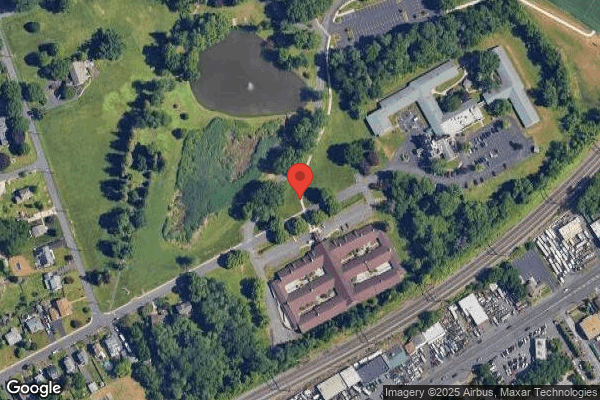
350 MANOR AVENUE, LANGHORNE, PA 19047 (215) 757-7667
For profit - Corporation 119 Beds SABER HEALTHCARE GROUP Data: November 2025
Trust Grade
90/100
#66 of 653 in PA
Last Inspection: November 2024

Within standard 12-15 month inspection cycle. Federal law requires annual inspections.

Overview

Langhorne Gardens Health & Rehabilitation Center has received an impressive Trust Grade of A, indicating it is highly recommended and ranks in the top tier of nursing homes. In Pennsylvania, it is ranked #66 out of 653 facilities, placing it in the top half, and #6 out of 29 in Bucks County, meaning only five local options are better. The facility's trend is improving, with the number of issues decreasing from four in 2023 to just one in 2024. Staffing is a relative strength, with a solid rating of 4 out of 5 stars and a turnover rate of 44%, which is below the state average of 46%. Notably, the facility has not incurred any fines, signaling good compliance with regulations. However, there have been concerns regarding food safety and sanitary conditions. Recent inspections revealed issues such as improperly stored food and a lack of proper sanitation practices in the kitchen. For example, food storage bins contained undated items, and there were problems with the sanitizer concentration in the dishwashing area. Additionally, the facility failed to complete a required assessment for a resident upon discharge, which raises concerns about thoroughness in resident care. Overall, while there are strengths in staffing and quality measures, families should be aware of these sanitation issues when considering this facility.

Trust Score
A
90/100
In Pennsylvania
#66/653
Top 10%
Safety Record
Low Risk
No red flags
Inspections
Getting Better
4 → 1 violations
Staff Stability
○ Average
44% turnover. Near Pennsylvania's 48% average. Typical for the industry.
Penalties
✓ Good
No fines on record. Clean compliance history, better than most Pennsylvania facilities.
Skilled Nurses
○ Average
Each resident gets 34 minutes of Registered Nurse (RN) attention daily — about average for Pennsylvania. RNs are the most trained staff who monitor for health changes.
Violations
○ Average
9 deficiencies on record. Average for a facility this size. Mostly minor or procedural issues.
★★★★★
5.0
Overall Rating
★★★★☆
4.0
Staff Levels
★★★★★
5.0
Care Quality
★★★★☆
4.0
Inspection Score
Stable
2023: 4 issues
2024: 1 issues

The Good

  • 4-Star Staffing Rating · Above-average nurse staffing levels
  • 5-Star Quality Measures · Strong clinical quality outcomes
  • Full Sprinkler Coverage · Fire safety systems throughout facility
  • No fines on record
  • Staff turnover below average (44%)

    4 points below Pennsylvania average of 48%

Facility shows strength in staffing levels, quality measures, fire safety.

The Bad

Staff Turnover: 44%

Near Pennsylvania avg (46%)

Typical for the industry

Chain: SABER HEALTHCARE GROUP

Part of a multi-facility chain

Ask about local staffing decisions and management

The Ugly 9 deficiencies on record

Nov 2024 1 deficiency
CONCERN (D)

Potential for Harm - no one hurt, but risky conditions existed

Comprehensive Assessments (Tag F0636)

Could have caused harm · This affected 1 resident

**NOTE- TERMS IN BRACKETS HAVE BEEN EDITED TO PROTECT CONFIDENTIALITY** Based on clinical record review and staff interview, it was determined that the facility failed to complete a comprehensive asse...

Read full inspector narrative →
**NOTE- TERMS IN BRACKETS HAVE BEEN EDITED TO PROTECT CONFIDENTIALITY** Based on clinical record review and staff interview, it was determined that the facility failed to complete a comprehensive assessment for one of 24 sampled residents. (Resident 2) Findings include: Clinical record review revealed that Resident 2 expired and was discharged from the facility on [DATE]. There was no Minimum Data Set (MDS) assessment completed to reflect the resident's discharge from the facility. In an interview on [DATE], at 9:57 a.m., the Administrator confirmed an MDS assessment had not been completed for Resident 2's discharge from the facility.
Nov 2023 4 deficiencies
CONCERN (D)

Potential for Harm - no one hurt, but risky conditions existed

Pressure Ulcer Prevention (Tag F0686)

Could have caused harm · This affected 1 resident

Based on clinical record review, observations, and staff interview, it was determined that the facility failed to provide interventions to prevent pressure ulcers for one of 29 sampled residents. (Res...

Read full inspector narrative →
Based on clinical record review, observations, and staff interview, it was determined that the facility failed to provide interventions to prevent pressure ulcers for one of 29 sampled residents. (Resident 57) Findings include: Clinical record review revealed that Resident 57 had diagnoses that included aphasia, hemiplegia, and hemiparesis affecting the right dominant side following a cerebral infarction (difficulty communicating combined with muscle weakness and paralysis on the right side of the body after a stroke), dementia, unspecified,(a mild or mixed form of cognitive impairment), and diabetes mellitus (a disease that affects how the body uses blood sugar). Review of the Minimum Data Set assessment, dated November 6, 2023, revealed that Resident 57 had cognitive impairment, required extensive assistance from staff for bed mobility and dressing, and was at risk for developing pressure ulcers/injuries. On February 9, 2023, the physician ordered that Prevalon boots (a soft boot to elevate heels and reduce pressure) were to be placed on both feet while the resident was in bed for prevention of skin breakdown. Review of the care plan revealed that the resident was at risk for alteration in skin integrity due to right-sided weakness secondary to a stroke. There was an intervention for staff to elevate his heels and provide Prevalon boots when in bed . Observation on November 28, 2023, at 9:50 a.m., November 29, 2023, at 9:45 a.m. and 10:45 a.m., November 30, 2023, at 11:45 a.m. and at 1:35 p.m, revealed Resident 57 was in bed without Prevalon boots In an interview on November 30, 2023, at 12:25 p.m., the Director of Nursing confirmed that Resident 57 should have had the Prevalon boots applied to his feet while in bed. 28 Pa Code 211.12 (d)(1)(5) Nursing services.
CONCERN (D) 📢 Someone Reported This

A family member, employee, or ombudsman was alarmed enough to file a formal complaint

Potential for Harm - no one hurt, but risky conditions existed

Accident Prevention (Tag F0689)

Could have caused harm · This affected 1 resident

**NOTE- TERMS IN BRACKETS HAVE BEEN EDITED TO PROTECT CONFIDENTIALITY** Based on clinical record review, observation, and staff interview, it was determined that the facility failed to implement safet...

Read full inspector narrative →
**NOTE- TERMS IN BRACKETS HAVE BEEN EDITED TO PROTECT CONFIDENTIALITY** Based on clinical record review, observation, and staff interview, it was determined that the facility failed to implement safety interventions for one of five residents at risk for falls. (Resident 103) Findings include: Clinical record review revealed Resident 103 had diagnoses that included seizures, traumatic brain injury, and anxiety. The Minimum Data Set assessment dated [DATE], revealed Resident 103 required staff assistance for bed mobility and transfers. Review of the care plan identified that the resident was at risk for falls related to confusion. Review of progress notes dated September 30, 2023, revealed the resident was found on the floor after an attempt to stand and self transfer. The care plan was revised at that time and included an intervention for staff to place fall mats to both sides of the bed while the resident was in bed. Observations on November 29, 2023, at 11:16 a.m., and November 30, 2023, at 9:34 a.m. and 11:00 a.m., revealed Resident 103 was in bed and there was only one fall mat in place on one side of the bed. In an interview on November 30, 2023, at 11:52 a.m., the Director of Nursing confirmed Resident 103 should have had fall mats on both sides of the bed. 28 Pa. Code 211.12(d)(1)(5) Nursing services.
CONCERN (D)

Potential for Harm - no one hurt, but risky conditions existed

Incontinence Care (Tag F0690)

Could have caused harm · This affected 1 resident

**NOTE- TERMS IN BRACKETS HAVE BEEN EDITED TO PROTECT CONFIDENTIALITY** Based on review of facility policy, clinical record review, and observation, it was determined that the facility failed to ensur...

Read full inspector narrative →
**NOTE- TERMS IN BRACKETS HAVE BEEN EDITED TO PROTECT CONFIDENTIALITY** Based on review of facility policy, clinical record review, and observation, it was determined that the facility failed to ensure that adequate catheter care was provided for one of three sampled residents with an indwelling urinary catheter. (Resident 78) Findings included: Review of the facility policy entitled, Indwelling Urinary Catheter Care Procedures, dated January 10, 2023, revealed that when a resident had a urinary catheter, an intervention was to prevent the urine in the tubing and drainage bag from flowing back into the bladder. Staff was to ensure that the urinary drainage bags be held or positioned lower than the bladder at all times, but not on the floor. Clinical record review revealed that Resident 78 was admitted to the facility on [DATE], with diagnoses that included stroke and urine retention. The Minimum Data Set assessment dated [DATE], indicated that the resident required extensive assistance from staff for activities of daily living and had an indwelling urinary catheter. The current care plan revealed that Resident 78 had an indwelling catheter and was at increased risk for infection. On November 28, 2023, from 1:47 p.m. to 2:10 p.m., Resident 78 was observed in bed with her catheter drainage bag hanging off the bed and directly touching the floor. 28 Pa. Code 211.12(d)(1)(5) Nursing services.
CONCERN (F)

Potential for Harm - no one hurt, but risky conditions existed

Food Safety (Tag F0812)

Could have caused harm · This affected most or all residents

Based on facility policy review, observation, and staff interview, it was determined that the facility failed to properly store food and maintain sanitary conditions in the dietary department and on o...

Read full inspector narrative →
Based on facility policy review, observation, and staff interview, it was determined that the facility failed to properly store food and maintain sanitary conditions in the dietary department and on one of two unit pantries. (Green wing) Findings include: Review of the policy entitled, Storage of Dry Food, last reviewed January 10, 2023, revealed that food was to be stored in a manner to avoid contamination and protect food quality. Review of the policy entitled, Storage of Refrigerated Foods, last reviewed January 10, 2023, revealed that refrigerated items were to be labeled and dated and bulk condiments were to be dated with date opened. Observations during the kitchen tour on November 27, 2023, beginning at 9:35 a.m., revealed the following: In dry storage, there were three large bins. One bin contained several packages of pasta, loose pasta that had spilled from a package, and multiple condiment packets. The second bin contained undated pasta packages and condiment packets. The third bin contained flour and the lid did not cover the length of the bin, which exposed the flour to the air. In the walk in cooler, there was an opened container of barbecue sauce that was not dated. In the trayline cooler, there were two pitchers of cranberry and orange juice that were not dated or labeled. There were two cups of poured prune juice that were not dated or labeled. In the freezer, there were two packages of spinach removed from the original packaging and not dated. In an interview on November 27, 2023, at 10:00 a.m., the Food Service Director confirmed the items should have been labeled and dated and were not. Observation of the [NAME] wing unit pantry on November 29, 2023, at 11:10 a.m., revealed the inside of the microwave contained dried food debris and a black substance. Inside the refrigerator, there were multiple rust spots that were along the length of the back panel. The water drain line inside the refrigerator had a brown substance. In an interview on November 29, 2023, at 11:20 a.m., Licensed Practical Nurse (LPN) 1 confirmed the microwave and refrigerator were used for residents, CFR 483.60(i) Food Safety Requirement Previously cited 12/6/22 28 Pa. Code 201.14(a) Responsibility of licensee. 28 Pa. Code 201.18(e)(2.1) Management.
Dec 2022 4 deficiencies
CONCERN (D)

Potential for Harm - no one hurt, but risky conditions existed

Deficiency F0561 (Tag F0561)

Could have caused harm · This affected 1 resident

**NOTE- TERMS IN BRACKETS HAVE BEEN EDITED TO PROTECT CONFIDENTIALITY** Based on clinical record review, resident interview, and staff interview, it was determined that the facility failed to provide ...

Read full inspector narrative →
**NOTE- TERMS IN BRACKETS HAVE BEEN EDITED TO PROTECT CONFIDENTIALITY** Based on clinical record review, resident interview, and staff interview, it was determined that the facility failed to provide showers as scheduled/preferred to one of 22 sampled residents. (Resident 51) Findings include: Clinical record review revealed that Resident 51 had diagnoses that included muscle weakness. Review of the Minimum Data Set assessment dated [DATE], revealed that the resident was totally dependent on staff for bathing. In an interview on December 5, 2022, at 11:55 a.m., Resident 51 stated that he preferred a shower and staff did not always offer to provide a shower per his schedule. Review of the bathing schedule revealed that Resident 51 was scheduled to receive a shower every Wednesday and Saturday during the evening shift. There was a lack of documentation to support that Resident 51 was offered a shower four of nine times in October 2022, and two of nine times in November 2022. In an interview on December 6, 2022, at 12:22 p.m., the Director of Nursing stated there was no evidence that the resident was bathed/showered in accordance with the schedule. 28 Pa. Code 201.29(j) Resident rights. 28 Pa. Code 211.12(d)(1)(5) Nursing services.
CONCERN (D)

Potential for Harm - no one hurt, but risky conditions existed

Quality of Care (Tag F0684)

Could have caused harm · This affected 1 resident

**NOTE- TERMS IN BRACKETS HAVE BEEN EDITED TO PROTECT CONFIDENTIALITY** Based on clinical record review and staff interview, it was determined that the facility failed to ensure physician's orders wer...

Read full inspector narrative →
**NOTE- TERMS IN BRACKETS HAVE BEEN EDITED TO PROTECT CONFIDENTIALITY** Based on clinical record review and staff interview, it was determined that the facility failed to ensure physician's orders were implemented for one of 22 sampled residents. (Resident 97) Findings include: Clinical record review revealed that Resident 97 had diagnoses that included diabetes mellitus. Review of the Minimum Data Set assessment dated [DATE], revealed that Resident 97 required extensive assistance from staff for activities of daily living. A physician's order dated June 23, 2022, directed staff to administer insulin lispro solution three units, three times daily for diabetes. Staff were to hold the medication if the resident's blood sugar was below 150 milligrams per deciliter (mg/dl). Review of the medication administration records for October, November, and December 2022, revealed that staff administered the insulin 79 of 121 times when the resident's blood sugar was less than 150 mg/dl. In an interview on December 6, 2022, at 10:29 a.m., the Director of Nursing confirmed that staff administered the insulin outside of the established parameters. CFR 483.25 Quality of care Previously cited 9/6/22 28 Pa. Code 211.12(d)(1)(5) Nursing services.
CONCERN (D) 📢 Someone Reported This

A family member, employee, or ombudsman was alarmed enough to file a formal complaint

Potential for Harm - no one hurt, but risky conditions existed

Pharmacy Services (Tag F0755)

Could have caused harm · This affected 1 resident

**NOTE- TERMS IN BRACKETS HAVE BEEN EDITED TO PROTECT CONFIDENTIALITY** Based on clinical record review, staff interview, and resident interview, it was determined that the facility failed to ensure t...

Read full inspector narrative →
**NOTE- TERMS IN BRACKETS HAVE BEEN EDITED TO PROTECT CONFIDENTIALITY** Based on clinical record review, staff interview, and resident interview, it was determined that the facility failed to ensure that a physician ordered medication was obtained from the pharmacy for one of 22 sampled residents. (Resident 31) Findings include: Clinical record review revealed that Resident 31 had diagnoses that included diabetes. Review of the Minimum Data Set assessment dated [DATE], revealed the resident had no memory impairment and received insulin injections. On November 3, 2022, the physician ordered staff to administer Lantus insulin 50 units two times a day. The ongoing care plan revealed the resident was to be administered insulin as ordered by the physician to control unstable blood sugar related to diabetes. During an interview on December 4, 2022, at 12:55 p.m., the Resident stated the morning dose of insulin was not received and that doses were missed in the past. Review of medication administration records revealed the resident did not receive the Lantus insulin on November 19, 2022, at 9:00 a.m., and 5:00 p.m., and December 4, 2022, at 9:00 a.m. During an interview on December 4, 2022, at 1:05 p.m., LPN 1 stated the insulin was ordered from the pharmacy but was not delivered in time for that morning's dose. Review of nursing documentation for the dates of the missed insulin doses revealed that the medication had not been delivered from the pharmacy. CFR 483.45 Pharmacy Services Previously cited 1/12/22 28 Pa. Code 211.12(d)(1)(3)(5) Nursing services.
CONCERN (F)

Potential for Harm - no one hurt, but risky conditions existed

Food Safety (Tag F0812)

Could have caused harm · This affected most or all residents

Based on observation and staff interview, it was determined that the facility failed to prepare, store, and serve food under sanitary conditions in the kitchen. Findings include: Observations during...

Read full inspector narrative →
Based on observation and staff interview, it was determined that the facility failed to prepare, store, and serve food under sanitary conditions in the kitchen. Findings include: Observations during the tour of the kitchen on December 4, 2022, at 9:44 a.m., revealed the following: an open, unsealed bag of thickener powder and a bag of granola with a use by date of August 4, 2022. The dispenser nozzle for the juice machine was directly on a box of cranberry juice and a wet substance had dripped onto three boxes of food items below the nozzle. During observation of the low temperature dish machine, a strip was utilized to test the sanitizer concentration following three dishwashing cycles. The sanitizer concentration was less than 50 parts per million (ppm) on each test. Observations during a subsequent tour of the kitchen on December 4, 2022, at 10:55 a.m., revealed the sanitizer concentration continued to be less than 50 ppm on repeat testing. There were various particles of debris and a white substance on the floor of the walk-in refrigerator. There was a frozen substance on the floor of the walk-in freezer. In an interview on December 5, 2022, at 1:01 p.m., the Director of Dietary Services confirmed that the dish machine did not dispense sanitizer or achieve the appropriate concentration of sanitizer solution during the observations on December 4, 2022. 28 Pa. Code 201.18(b)(3) Management.
Understanding Severity Codes (click to expand)
Life-Threatening (Immediate Jeopardy)
J - Isolated K - Pattern L - Widespread
Actual Harm
G - Isolated H - Pattern I - Widespread
Potential for Harm
D - Isolated E - Pattern F - Widespread
No Harm (Minor)
A - Isolated B - Pattern C - Widespread

Questions to Ask on Your Visit

  • "Can I speak with families of current residents?"
  • "What's your RN coverage like on weekends and overnight?"

Our Honest Assessment

Strengths
  • • Grade A (90/100). Above average facility, better than most options in Pennsylvania.
  • • No major safety red flags. No abuse findings, life-threatening violations, or SFF status.
  • • No fines on record. Clean compliance history, better than most Pennsylvania facilities.
  • • 44% turnover. Below Pennsylvania's 48% average. Good staff retention means consistent care.
Concerns
  • • No significant concerns identified. This facility shows no red flags across CMS ratings, staff turnover, or federal penalties.
Bottom line: Generally positive indicators. Standard due diligence and a personal visit recommended.

About This Facility

What is Langhorne Gardens Health & Rehabilitation Center's CMS Rating?

CMS assigns LANGHORNE GARDENS HEALTH & REHABILITATION CENTER an overall rating of 5 out of 5 stars, which is considered much above average nationally. Within Pennsylvania, this rating places the facility higher than 99% of the state's 100 nursing homes. This rating reflects solid performance across the metrics CMS uses to evaluate nursing home quality.

How is Langhorne Gardens Health & Rehabilitation Center Staffed?

CMS rates LANGHORNE GARDENS HEALTH & REHABILITATION CENTER's staffing level at 4 out of 5 stars, which is above average compared to other nursing homes. Staff turnover is 44%, compared to the Pennsylvania average of 46%. This relatively stable workforce can support continuity of care.

What Have Inspectors Found at Langhorne Gardens Health & Rehabilitation Center?

State health inspectors documented 9 deficiencies at LANGHORNE GARDENS HEALTH & REHABILITATION CENTER during 2022 to 2024. These included: 9 with potential for harm.

Who Owns and Operates Langhorne Gardens Health & Rehabilitation Center?

LANGHORNE GARDENS HEALTH & REHABILITATION CENTER is owned by a for-profit company. For-profit facilities operate as businesses with obligations to shareholders or private owners. The facility is operated by SABER HEALTHCARE GROUP, a chain that manages multiple nursing homes. With 119 certified beds and approximately 113 residents (about 95% occupancy), it is a mid-sized facility located in LANGHORNE, Pennsylvania.

How Does Langhorne Gardens Health & Rehabilitation Center Compare to Other Pennsylvania Nursing Homes?

Compared to the 100 nursing homes in Pennsylvania, LANGHORNE GARDENS HEALTH & REHABILITATION CENTER's overall rating (5 stars) is above the state average of 3.0, staff turnover (44%) is near the state average of 46%, and health inspection rating (4 stars) is above the national benchmark.

What Should Families Ask When Visiting Langhorne Gardens Health & Rehabilitation Center?

Based on this facility's data, families visiting should ask: "Can I visit during a mealtime to observe dining assistance and food quality?" "How do you handle medical emergencies, and what is your hospital transfer rate?" "Can I speak with family members of current residents about their experience?"

Is Langhorne Gardens Health & Rehabilitation Center Safe?

Based on CMS inspection data, LANGHORNE GARDENS HEALTH & REHABILITATION CENTER has a clean safety record: no substantiated abuse findings (meaning no confirmed cases of resident harm), no Immediate Jeopardy citations (the most serious violation level indicating risk of serious injury or death), and is not on the Special Focus Facility watch list (a federal program monitoring the lowest-performing 1% of nursing homes). The facility has a 5-star overall rating and ranks #1 of 100 nursing homes in Pennsylvania. While no facility is perfect, families should still ask about staff-to-resident ratios and recent inspection results during their visit.

Do Nurses at Langhorne Gardens Health & Rehabilitation Center Stick Around?

LANGHORNE GARDENS HEALTH & REHABILITATION CENTER has a staff turnover rate of 44%, which is about average for Pennsylvania nursing homes (state average: 46%). Moderate turnover is common in nursing homes, but families should still ask about staff tenure and how the facility maintains care continuity when employees leave.

Was Langhorne Gardens Health & Rehabilitation Center Ever Fined?

LANGHORNE GARDENS HEALTH & REHABILITATION CENTER has no federal fines on record. CMS issues fines when nursing homes fail to meet care standards or don't correct problems found during inspections. The absence of fines suggests the facility has either maintained compliance or corrected any issues before penalties were assessed. This is a positive indicator, though families should still review recent inspection reports for the full picture.

Is Langhorne Gardens Health & Rehabilitation Center on Any Federal Watch List?

LANGHORNE GARDENS HEALTH & REHABILITATION CENTER is not on any federal watch list. The most significant is the Special Focus Facility (SFF) program, which identifies the bottom 1% of nursing homes nationally based on persistent, serious quality problems. Not being on this list means the facility has avoided the pattern of deficiencies that triggers enhanced federal oversight. This is a positive indicator, though families should still review the facility's inspection history directly.