STATESMAN HEALTH & REHABILITATION CENTER
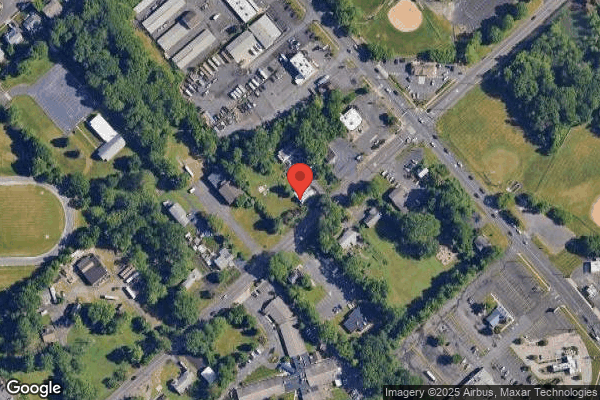
2629 TRENTON ROAD, LEVITTOWN, PA 19056 (215) 943-7777
For profit - Corporation 101 Beds SABER HEALTHCARE GROUP Data: November 2025
Trust Grade
70/100
#236 of 653 in PA
Last Inspection: November 2024

Within standard 12-15 month inspection cycle. Federal law requires annual inspections.

Overview

Statesman Health & Rehabilitation Center in Levittown, Pennsylvania, has a Trust Grade of B, which indicates it is a good choice for families looking for care, as it performs solidly compared to other facilities. It ranks #236 out of 653 statewide, placing it in the top half of Pennsylvania nursing homes, and #20 out of 29 in Bucks County, meaning only a few local options are better. The facility is improving, with issues decreasing from 23 in 2024 to just 2 in 2025, although the staffing rating is average with a turnover rate of 49%. Notably, there have been no fines recorded, which is a positive sign, and the RN coverage is average; however, the facility has faced concerns, such as inadequate incontinence care for some residents and failure to properly monitor blood sugar levels for insulin-dependent residents. Additionally, there were issues with proper garbage disposal leading to unsanitary conditions, which need to be addressed to enhance the overall care environment.

Trust Score
B
70/100
In Pennsylvania
#236/653
Top 36%
Safety Record
Low Risk
No red flags
Inspections
Getting Better
23 → 2 violations
Staff Stability
⚠ Watch
49% turnover. Above average. Higher turnover means staff may not know residents' routines.
Penalties
✓ Good
No fines on record. Clean compliance history, better than most Pennsylvania facilities.
Skilled Nurses
○ Average
Each resident gets 35 minutes of Registered Nurse (RN) attention daily — about average for Pennsylvania. RNs are the most trained staff who monitor for health changes.
Violations
⚠ Watch
28 deficiencies on record. Higher than average. Multiple issues found across inspections.
★★★★☆
4.0
Overall Rating
★★★☆☆
3.0
Staff Levels
★★★★★
5.0
Care Quality
★★★☆☆
3.0
Inspection Score
Stable
2024: 23 issues
2025: 2 issues

The Good

  • 5-Star Quality Measures · Strong clinical quality outcomes
  • Full Sprinkler Coverage · Fire safety systems throughout facility
  • No fines on record

Facility shows strength in quality measures, fire safety.

The Bad

Staff Turnover: 49%

Near Pennsylvania avg (46%)

Higher turnover may affect care consistency

Chain: SABER HEALTHCARE GROUP

Part of a multi-facility chain

Ask about local staffing decisions and management

The Ugly 28 deficiencies on record

Sept 2025 1 deficiency
CONCERN (E) 📢 Someone Reported This

A family member, employee, or ombudsman was alarmed enough to file a formal complaint

Potential for Harm - no one hurt, but risky conditions existed

Quality of Care (Tag F0684)

Could have caused harm · This affected multiple residents

**NOTE- TERMS IN BRACKETS HAVE BEEN EDITED TO PROTECT CONFIDENTIALITY** Based on review of clinical records, facility policy, and staff and resident interviews, it was determined that the facility fai...

Read full inspector narrative →
**NOTE- TERMS IN BRACKETS HAVE BEEN EDITED TO PROTECT CONFIDENTIALITY** Based on review of clinical records, facility policy, and staff and resident interviews, it was determined that the facility failed to ensure residents received quality care related to incontinence care for and medication administration for three of twenty-one residents reviewed (R5, R57, R114) Findings include: Review of facility policy “Medication Administration/ Disposition”, revised September 2023, revealed medications should be administered in a safe and timely manner, and as prescribed. Facility staff involved in the administration of resident care will be knowledgeable of the policies and procedures regarding pharmacy services including medication administration. Medications, both prescription and non-prescription, shall be administered under the orders of the attending physician or the physician's designee. Clinical record review revealed Resident R5 was admitted to the facility on [DATE] with a diagnosis that included Rhabdomyolysis (muscles break down and release toxins into blood and kidneys), hypertension (high blood pressure), and congestive heart failure (condition that happens when your heart can't pump blood well enough to meet the body's needs). Interview with Resident R5 on September 3, 2025 at 9:40 a.m. revealed he/she has been receiving his/her evening medication late. Review of Resident R5 medication administration record (MAR) from August 20, 2025 – August 26, 2025 revealed the following medications being administered late: - Atorvastatin to be given at 9:00 p.m. for hyperlipidemia o 8/22/25 documented on 8/23/25 at 12:20 a.m. - Carvedilol 3.125 mg to be given at 9:00 p.m. for hypertension o 8/21/25 documented at 12:20 a.m. - Cyclobenzaprine 5 mg to be given three times day for muscle spasm o 8/21/25 scheduled for 9:00 p.m. and documented at 12:20 a.m. - Eliquis 5 mg every 12 hours a -fib o 8/21/25 scheduled for 9:00 p.m. and documented on 8/23/25 at 12:20 a.m. The reasoning for the late medication administration was documented as “charted late”. Clinical record review revealed Resident R114 was admitted to the facility on [DATE] with a diagnosis that included hypertension, neuropathy (nerve damage that affects hands and feet), and muscle spasms. Interview on September 3, 2025 at 9:55 a.m. revealed he/she has been receiving his/her evening medication late, which has resulted in poor sleep. Review of Resident R114 medication administration record (MAR) from August 20, 2025 – August 26, 2025 revealed the following medications being administered late: - Atorvastatin 10 mg to be given at 9:00 p.m. for hyperlipidemia o 8/29/25 documented on 8/30/25 at 12:47 a.m. o 8/21/25 documented at 10:49 p.m. - Cardizem 240 mg to be given at 9:00 a.m. for hypertension o 8/27/25 documented at 10:21 a.m. o 8/30/25 documented at 11:21 a.m. - Gabapentin 600 mg three times a day for nerve pain o 8/29/25 scheduled for 9:00 a.m. given at 10:21a.m. o 8/29/25 scheduled for 1:00 p.m. given at 3:01p.m. - Glipizide 5 mg to be given at 8:00 a.m. for Diabetes Mellitus o 8/27/25 documented at 10:21 a.m. o 8/28/25 documented at 9:44 a.m. o 8/20/25 documented at 11:21 a.m. o 9/1 documented at 9:22 - Paroxetine 10 mg to be given at 9:00 p.m. for depression o 8/29/25 documented at 8/30/25 at 12:47 p.m. o 8/31/25 documented at 10:29 p.m. - Ropinirole 1 mg to be given at 9:00 p.m. for restless leg o 8/29/25 documented at 8/30/25 at 12:47 a.m. o 8/30/25 documented at 10:49 p.m. The reasoning for the late medication administration was documented as “charted late”. Resident Council meeting was held on September 4, 2025 at 10:30 a.m. with 10 residents in attendance. Three residents (R72, R100, R92) reported receiving their evening medications late/or missed doses of medications. Interview with Employee E2, Director of Nursing, on September 4, 2025 at 10:16 a.m. confirmed Resident R5 and Resident R114 MAR's were not documented in a timely manner and medications are allowed to be administered an hour before and an hour after the scheduled medication time. 28 Pa. Code 211.12(d)(1)(3)(5) Nursing Services. 28 Pa. Code 211.12(d)(1)(5) Nursing services.
Apr 2025 1 deficiency
CONCERN (E) 📢 Someone Reported This

A family member, employee, or ombudsman was alarmed enough to file a formal complaint

Potential for Harm - no one hurt, but risky conditions existed

Quality of Care (Tag F0684)

Could have caused harm · This affected multiple residents

Based on review of clinical records, and interview with staff, it was determined that the facility failed to ensure that a rational was provided for the discontinuation of blood sugar monitoring for 6...

Read full inspector narrative →
Based on review of clinical records, and interview with staff, it was determined that the facility failed to ensure that a rational was provided for the discontinuation of blood sugar monitoring for 6 of 6 residents reviewed who were insulin dependent (Resident R1, R2, R3, R4, R5, R6). Findings include: Interview with the Assistant Director of Nursing conducted on April 8, 2025, at approximately 12:00 p.m. revealed that the facility is discontinuing blood sugar check orders related to resident blood sugar trends and A1C blood test (blood test that provides an average of your blood sugar levels over the previous 2- 3 months). Continued interview revealed that there is no facility policy regarding discontinuing blood sugar checks for residents with diabetes diagnosis and receiving insulin. Interview with the Director of Nursing conducted on April 8, 2025, at approximately 1:00 p.m. revealed the facility is discontinuing blood sugar check orders related to resident blood sugar trends and A1C blood test. Further interview confirmed that there is no facility policy regarding discontinuing blood sugar checks for residents with diabetes diagnosis and receiving insulin. Continued interview revealed that upon discharging Accu-Chek (blood glucose measuring system used for home monitoring of glucose) orders, practitioners must document the clinical reasoning to support why the order was discontinued. Documentation must occur in the resident's progress notes. Phone interview with the Medical Director, Employee E4, conducted on April 8, 2025, at 1:22 p.m. revealed that he was not aware that blood sugar check orders were being discontinued for residents with standing insulin orders, and that he was informed of this two hours ago. Further interview revealed that blood sugar checks need to be checked on regular intervals no matter the trends. A statement received on Wednesday April 9, 2025, via electronic communication, from the Facility Administrator, confirmed that when modifying or discontinuing blood sugar checks and after reviewing and confirming the orders with the MD(s) a progress note should have been placed identifying that this had occurred. Clinical record review and interview conducted with the Assistant Director of Nursing, Employee E3, on April 8, 2025, at approximately 2:30 p.m. confirmed that blood sugar check orders have been discontinued for Resident R1, R2, R3, R4, R5, R6 while receiving insulin. Continued interview confirmed there was no documented evidence identifying that the blood sugar check order has been discontinued. Further interview confirmed the residents' clinical records failed to reveal clinical reasoning identified for the discontinued blood sugar check orders for Resident R1, R2, R3, R4, R5, R6. 28 Pa Code 211.12(d)(5) Nursing services
Nov 2024 7 deficiencies
CONCERN (D) 📢 Someone Reported This

A family member, employee, or ombudsman was alarmed enough to file a formal complaint

Potential for Harm - no one hurt, but risky conditions existed

Deficiency F0553 (Tag F0553)

Could have caused harm · This affected 1 resident

**NOTE- TERMS IN BRACKETS HAVE BEEN EDITED TO PROTECT CONFIDENTIALITY** Based on staff and family interviews and the review of clinical records, it was determined that the facility failed to ensure th...

Read full inspector narrative →
**NOTE- TERMS IN BRACKETS HAVE BEEN EDITED TO PROTECT CONFIDENTIALITY** Based on staff and family interviews and the review of clinical records, it was determined that the facility failed to ensure that residents had the right to participate in the development and implementation of a person-centered plan of care for 2 out of 20 residents reviewed (Resident R61 and R71). Findings include: Review of October 2024 physician orders for Resident R61 indicated that the resident was admitted into to the facility on July 1, 2024 with diagnosis of muscle weakness and seizures (sudden, uncontrolled electrical disturbance in the brain which can cause changes in behavior, movements, feelings, and consciousness), pancreatitis (a condition in which the pancreas becomes inflamed); anemia (an individual does not have enough healthy red blood cells which can result in fatigue and unexplained weakness); paraplegia (a form of paralysis that affects the lower half of an individual's body and their ability to walk), heart failure (an individual's heart can't supply enough blood to meet the body's needs), deep vein thrombosis and end stage renal disease (the gradual loss of kidney function). Review of the resident's admission Minimum Data Set Assessment (MDS- a periodic assessment of a resident's needs) dated July 7, 2024 indicated that the resident was alert and oriented. During a phone interview with Resident R61's mother/responsible party, on November 5, 2024 at 9:36 a.m. the resident's mother reported that she spoke with the social worker (Employee E13) in July 2024 regarding having the resident transferred closer to where the resident is from. The resident's mother reported that she never heard anything back from the social worker at the facility, so when she came up to the facility the Tuesday, Wednesday, and Thursday after Labor Day the resident's mother stated that she provided the social worker with a list of 6 facilities that are in the area of where the resident and his family resided, in addition to the names of and the names 3 dialysis centers. The resident's mother stated that she was calling up everyday and left voicemail messages for the social worker and the Director of Nursing (DON) to call her back to get an update on the status of Resident R61's discharge, but the resident's mother reported that she did not receive any phone calls back. The resident's mother was asked if she ever received a verbal notification from the social worker or anyone else from the facility regarding a care plan meeting, or a written notification from the facility for a care plan meeting regarding here son's care at the facility. Review of the resident's clinical record did not show evidence of any documentation of the resident and/or his responsible party ever receiving any notification of a care plan meeting, or that any care plan meeting ever occurred since his admission on [DATE]. Review of the November 2021 physician orders for Resident R71 included the following diagnosis's: diabetes (a medical condition that occurs when an individual's blood sugar is too high); respiratory failure (a condition when an individual does not have enough oxygen in their blood and can result in symptoms that include, shortness of breath, confusion and fatigue) morbid obesity, in addition to heart failure, and end stage renal disease. Review of the resident's August 21, 2024 Quarterly MDS indicated that the resident was alert and oriented. During an interview with Resident R71 on November 8, 2024 at 2:13 p.m. reported that she has not had a care plan meeting in a while. Review of the resident's clinical record from February 2024 through November 2024 did not show evidence of any documentation of the resident and/or her responsible party ever receiving any notification of a care plan meeting, or that any care plan meeting ever occurred since his admission on [DATE]. During an interview with the social worker (Employee E13) on November 12, 2024 at 12:05 p.m. regarding the process for notifying residents and their responsible parties regarding care plan meetings, the social worker reported that she tries to give the resident and/or responsible party at least 30 days' notice, and will adjust the date/time as needed if it does not work for them. It was discussed with the social worker that there was no documentation regarding care plan notifications for Resident R61 and R71, or that a care plan occurred for Resident R61 and Resident R71. It was also discussed that Resident R61's mother reported that she had never been invited to one or attended one at any time during her resident's stay at the facility. It was also discussed with the social worker that Resident R71 reported that she was never invited to one or attended one anytime this year. It was confirmed by the social worker that no information could be produced to show evidence that either resident were invited to a meeting and had the right to participate in the development and implementation of his or her person-centered plan of care. The facility failed to ensure that Resident R61 and Resident R71 had the right to participate in the development and implementation of their person-centered plan of care. 28 Pa Code 201.29 (c) Resident rights.
CONCERN (D) 📢 Someone Reported This

A family member, employee, or ombudsman was alarmed enough to file a formal complaint

Potential for Harm - no one hurt, but risky conditions existed

Deficiency F0558 (Tag F0558)

Could have caused harm · This affected 1 resident

**NOTE- TERMS IN BRACKETS HAVE BEEN EDITED TO PROTECT CONFIDENTIALITY** Based on observations of care and services, reviews of clinical records and interviews with residents and staff, it was determin...

Read full inspector narrative →
**NOTE- TERMS IN BRACKETS HAVE BEEN EDITED TO PROTECT CONFIDENTIALITY** Based on observations of care and services, reviews of clinical records and interviews with residents and staff, it was determined that the facility failed to provide care preferences and reasonable accommodations for the adaptive equipment used to enhance mobility and bathing for one of three residents reviewed. (Resident R10) Findings include: Review of Resident R10 annual comprehensive assessment (MDS-an assessment of care needs) dated August 16, 2024 indicated that Resident R10 was cognitively intact with impairments on both sides of lower extremities. The assessment revealed that the resident required maximal assistance with functional abilities for showering and bathing, the use of a wheeelchair for ambulation. The resident was occasionally incontinent of bladder and occasionally experiencing pain. Continued review of the MDS revealed that the resident had a Stage II (ulcer involveing loss of the top layers of the skin) pressure sore, the resident received physical therapy and that the established goal set was for the resident to be discharge to the community. Interview with Resident R10 at 11:00 a.m., on November 4, 2024 revealed that the resident did not get out of bed into his wheel chair; because he was not able to be positioned upright or properly with his back aligned and supported by the back of the chair, the mechanical lift sling that was used to transfer him from the bed to the wheel chair was small and rubbing against his skin during a transfer causing skin irritation. The resident verbalized that the chair itself was too small and uncomfortable; evidenced by getting caught as the nursing staff began a transfer with the mechanical lift either from the bed to the wheel chair or from the wheel chair to the bed. Further interview with Resident R10 revealed that the residenthad not been accommodated with a shower for several months. The resident was informed by the nursing and physical therapy staff that he would not be able to fit through the doorway into the central shower room on the C wing nursing unit. Clinical record review revealed that the physical therapy staff evaluated Resident R10 on January 18, 2024 and indicated that this resident was able to sit in a wheel chair with an upright posture with elevating leg rests. At this time the therapy department indicated that Resident R10 was receiving range of motion exercises of the bilateral lower extremities to prevent joint contractures. Clinical record review revealed that the physical therapy department evaluated Resident R10 on August 15, 2024 and indicated that Resident R10 was able to use a draw sheet under legs while in bed with staff assistance and safely move to the edge of the bed foe edge of the bed sitting. Clinical record review revealed that on August 22, 2024 the physical therapist assessed and educated Resident R10 and staff to institute bed mobility exercises to strengthen core muscles while in bed. The assessment indicated that modified abdominal crunches, throwing and catching a ball forward side to side and reaching for a ball from each side of the bed. Clinical record review for Resident R10 indicated that this resident was evaluated by the wound practitioner on October 29, 2024 and the evaluation indicated that this resident had a stage II pressure area located on the left buttock; measuring .8cm by .6 centimeters (cm) by .1 cm with 100% epithelialized tissue. The practitioner's recommendations for the nursing staff were to cleanse all skin folds with bathing. The practitioner also indicated that the importance of daily bathing was discussed with Resident R10 to prevent skin breakdown and infections of the tissues. Clinical record review revealed that on November 25, 2023 the physicial therapy department measured Resident R10's body from hip to hip and the Resident was 35 inches. At this time the therapy department indicated that the bariatric wheel chair was 30 inches wide. Resident R10 reported to the therapy department that this bariatric wheel chair was too tight for him. Interview with the nursing staff ( Employees E7, E8, E9 and E10) between 9:30 a.m. and 11:00 a.m., on November 4 through November 8, 2024 revealed that Resident R10 did not fit in the wheel chair provided for him by the physical therapy department. The nursing staff reported that it was too snug around the hip/waist area for Resident R10. The nursing staff also reported that they had not offered Resident R10 a shower with a bariatric shower chair; because the chairs they have on the C wing nursing unit were not bariatric designed. Observations of the bariatric shower chair that the facility had on the B wing nursing unit confirmed that this chair when used with Resident R10 was too large to fit through the shower room doorway on the nursing unit. Interview with the physical therapist, Employee E4 at 1: 00 p.m., on November 5, 2024 confirmed that the wheel chair as assigned to Resident R10 by the physical therapy department was trialed and tested on [DATE]. The results of the attempted seating were that the chair was too tight, not comfortable and ill-fitting for proper positioning and use by Resident R10. Clinical record review for Resident R10 revealed that there was no care plan developed to address accommodation of medical and physical needs for adaptive equipment to enhance mobility and bathing for Resident R10. Interview with Nursing Home Administrator, Employee E1 and the Director of nursing, Employee E2 at 2:00 p.m., on November 5, 2024 confirmed the lack of care plan development and implementation for the adaptive equipment (wheel chair and shower chair) and a restorative exercise program for bed mobility, draw sheet repositioning, turning and exercising upper and lower extremities and core strengthening with weighted ball tossing and lifting for Resident R10. 28 Pa. Code 211.12(d)(1)(3) Nursing services 28 Pa. Code 201.14(a) Responsibility of licensee 28 PA Code 201.18(b)(1)(3)(e)(1) Management 28 PA Code 211.5(f)(ii)(iii)(viii)(ix) Medical records
CONCERN (D) 📢 Someone Reported This

A family member, employee, or ombudsman was alarmed enough to file a formal complaint

Potential for Harm - no one hurt, but risky conditions existed

Comprehensive Care Plan (Tag F0656)

Could have caused harm · This affected 1 resident

**NOTE- TERMS IN BRACKETS HAVE BEEN EDITED TO PROTECT CONFIDENTIALITY** Based on staff interview and the review of the clinical record, it was determined that the facility failed to ensure that a pers...

Read full inspector narrative →
**NOTE- TERMS IN BRACKETS HAVE BEEN EDITED TO PROTECT CONFIDENTIALITY** Based on staff interview and the review of the clinical record, it was determined that the facility failed to ensure that a person-center plan of care was developed for a resident with a history of deep vein thrombosis (blood clots) and anticoagulant medications for 1 out of 20 residents reviewed (Resident R61). Findings include: Review of October 2024 physician orders for Resident R61 include the diagnose of muscle weakness, seizures (sudden, uncontrolled electrical disturbance in the brain which can cause changes in behavior, movements, feelings, and consciousness), pancreatitis (a condition in which the pancreas becomes inflamed); anemia (an individual does not have enough healthy red blood cells which can result in fatigue and unexplained weakness); paraplegia (a form of paralysis that affects the lower half of an individual's body and their ability to walk) and heart failure (an individual's heart can't supply enough blood to meet the body's needs). The resident also had a diagnoses of deep vein thrombosis and end stage renal disease (the gradual loss of kidney function). Review of September 2024 physician's order included a physician's order for Eliquis (a medication used to prevent serious blood clots from forming due to a certain irregular heartbeat) with a start date of August 30, 2024 and a discharge date of September 18, 2024. Review of a nursing note dated September 18, 2024 at 2:02 p.m. indicated that the resident complained of being in pain and feeling uncomfortable while at dialysis. A review of a nursing note on September 18, 2024 at 9:40 p.m. indicated that the resident was admitted to the hospital with partial bowel obstruction. Review of the resident's hospital Discharge summary dated [DATE], indicated that the resident's Eliquis was held due to concerns to having low hemoglobin levels. The hospital indicated in the above referenced discharge summary that the resident's Eliquis management should be followed up with the resident's primary care physician. Follow up with PCP (primary care physician) regarding Eliquis management. Review of the resident's person-centered plan of care did not include an updated plan of care documenting that the resident was no longer being treated with any anticoagulants and did not include any services, treatments or interventions that may have needed to be implemented related to the changes in the resident's physician's orders. During a discussion with the Director of Nursing (DON) on November 12, 2024 at 4:00 p.m. that there was no person-centered plan of care for the resident related to the discharge of the resident's anticoagulant that was being prescribed to prevent blood clots. 28 Pa. Code 211.12(c(1) )Nursing services 28 Pa. Code 211.12(d)(1) Nursing services 28 Pa. Code 211.12(d)(5) Nursing services
CONCERN (D) 📢 Someone Reported This

A family member, employee, or ombudsman was alarmed enough to file a formal complaint

Potential for Harm - no one hurt, but risky conditions existed

Deficiency F0660 (Tag F0660)

Could have caused harm · This affected 1 resident

Based on staff interviews, review of facility policy and the review of the clinical record, it was determined that the facility failed to develop and implement an effective discharge planning process ...

Read full inspector narrative →
Based on staff interviews, review of facility policy and the review of the clinical record, it was determined that the facility failed to develop and implement an effective discharge planning process for 1 out of 20 residents reviewed (Resident R61). Findings include: Review of the facility policy, Discharge Planning Policy, with a revision date of September 24, 2024, indicated that the discharge needs of each resident will be identified and will develop a discharge plan that focuses on the resident's discharge goals, the preparation of residents to be active partners and effectively transition the resident to post discharge care, and the reduction of factors leading to preventable readmissions. The policy also stated that the discharge plan will include: the regular re-evaluation of residents to identify changes that need to be made in the resident's discharge plan; the involvement of the interdisciplinary team (the physician, nurse, nurse aide, food and nutritional services staff), in addition to the resident and/or his/her responsible party. Review of October 2024 physician orders for Resident R61 indicated that the resident was admitted into to the facility on July 1, 2024 with diagnosis that included muscle weakness, seizures (sudden, uncontrolled electrical disturbance in the brain which can cause changes in behavior, movements, feelings, and consciousness); pancreatitis (a condition in which the pancreas becomes inflamed); anemia (a medical condition in which an individual does not have enough healthy red blood cells, and can which can result in fatigue and unexplained weakness); paraplegia (a form of paralysis that affects the lower half of an individual's body and their ability to walk), and heart failure (an individual's heart can't supply enough blood to meet the body's needs). The resident also had a diagnosis of deep vein thrombosis (blood clots) and end stage renal disease (the gradual loss of kidney function) that required hemodialysis treatment 3 times a week. During a phone interview with Resident R61's mother/responsible party, on November 5, 2024 at 9:36 a.m., the resident's mother reported that she spoke with the social worker (Employee E13) in July 2024 regarding having the resident transferred closer to where she and the resident are from. The resident's mother reported that she never heard anything back from the social worker at the facility, so when she came up to the facility the Tuesday, Wednesday, and Thursday after Labor Day in September 2024. The resident's mother reported during the interview that on one of the above referenced days that she visited her son, she provided the social worker with a list of 6 facilities and 3 dialysis centers that are in the area of where the resident previously resided prior to his transfer to the facility in July 2024. The resident's mother stated that she was calling up everyday and left voicemail messages for the social worker and the Director of Nursing (DON) to call her back to get an update on the status of Resident R61's discharge, but the resident's mother reported that she did not receive any phone calls back from either individual. Review of the resident's clinical record, including the resident's person-centered plan of care, did not include any evidence of the implementation and documentation of a discharge planning process for Resident R61. During an interview with the social worker on November 7, 2024 at 12:48 p.m. the social worker reported that the discharge plan for the resident was for the resident to be transferred back up to the area where the resident's mother was, and where he originally resided, prior to admission into the facility on July 1, 2024. The social worker also reported that the resident would also need to be connected to a dialysis center for his treatments The social worker confirmed that there was no documentation in the clinical record, or in the resident's person-centered plan of care related to any discharge plan/planning for the resident that she completed on behalf of the resident. 28 Pa. Code 201.29 (c) Resident rights
CONCERN (D) 📢 Someone Reported This

A family member, employee, or ombudsman was alarmed enough to file a formal complaint

Potential for Harm - no one hurt, but risky conditions existed

Quality of Care (Tag F0684)

Could have caused harm · This affected 1 resident

Based on staff interviews, review of facility policy and the review of clinical records, it was determined that the facility failed to notify the physician regarding a change in Resident R61's meal an...

Read full inspector narrative →
Based on staff interviews, review of facility policy and the review of clinical records, it was determined that the facility failed to notify the physician regarding a change in Resident R61's meal and fluid consumption for 1 out of 20 residents reviewed (Resident R61). Findings include: Review of the facility policy, Change in Condition, with a revision date of June 27, 2024, indicated that a resident's significant change in condition is a decline or improvement in the resident's status that will not normally resolve itself without intervention by staff or by implementing standard disease-related clinical interventions; impacts more than one are of the resident's health status and or requires interdisciplinary reviewed and /or revision to the care plan. The policy also indicated the physician and the resident/family and responsible party will be notified when there has been an accident involving the resident .a significant change in the resident's physician/emotional/mental condition and a need to alter the resident's treatment, including a change in provider orders .when there is a consistent refusal of treatment or medications. Continued review of the policy indicated that the nurse will gather information prior to contacting the physician with information that includes, but not limited to resident vital signs (temperature, pulse, respirations and pulse ox), most recent labs, a description of the problems and information on when the change in condition started. The policy also stated that the nurse will record d the information related to the change in condition and subsequent events and notifications in the resident's health records. Review of October 2024 physician orders for Resident R61 indicated that the resident was admitted into to the facility on July 1, 2024 with diagnoses of muscle weakness and seizures (sudden, uncontrolled electrical disturbance in the brain which can cause changes in behavior, movements, feelings, and consciousness), pancreatitis (a condition in which the pancreas becomes inflamed); anemia (an individual does not have enough healthy red blood cells which can result in fatigue and unexplained weakness); paraplegia (a form of paralysis that affects the lower half of an individual's body and their ability to walk) and heart failure (an individual's heart can't supply enough blood to meet the body's needs). The resident also had a diagnosis of deep vein thrombosis and end stage renal disease (the gradual loss of kidney function) that required hemodialysis treatment 3 times a week. Review of the resident's admission Minimum Data Set Assessment (MDS- a periodic assessment of a resident's needs) dated July 7, 2024, indicated that the resident was alert and oriented. Review of the resident's clinical record indicated that the resident did not consume any meals on October 18, 2024. Breakfast was documented as not taken, Lunch was documented as not taken, and dinner was documented as not taken by the resident's nursing assistant. The resident was also documented as having consumed a total of 2 liquid supplements of 120 milliliters each (240 milliliter), and 2 servings of a fluid that equaled total 110 milliliters each (220 milliliters), which is a total of 15.5 ounces of a combination of fluids/supplements for that day. Review of the resident's meal consumption log for October 18, 2024, also documented the resident as consuming, 76-100% of a third supplement. Continued review of the clinical record did not show evidence that the physician was notified of the resident's meal and fluid consuptions so any instructions, orders, and/or further assessments could be provided. During an interview on November 12, 2024, at 12:49 p.m. with the registered nurse supervisor (Employee E14) for Resident R61, Employee E14 reported that he worked 7:00 a.m. on October 18, 2024 until 7:00 p.m. on October 14, 2024. Employee E13 reported that the resident was transferred to his unit on October 18, 2024, and that he was not notified that he did not eat breakfast from the unit that he transferred from. It was discussed with Employee E14 that the resident was transferred to Employee E14's unit prior to lunch. Employee E14 also reported that he was not made aware by the resident's assigned nurse aide (Employee E15) that the resident did not eat lunch or dinner on October 18, 2024. 28 Pa Code 201.18 (b)(1) Management 28 Pa. Code 211.10 (c) Resident care policies 28 Pa. Code 211.12 (c)(d)(1)(3) Nursing services
CONCERN (D)

Potential for Harm - no one hurt, but risky conditions existed

Deficiency F0698 (Tag F0698)

Could have caused harm · This affected 1 resident

**NOTE- TERMS IN BRACKETS HAVE BEEN EDITED TO PROTECT CONFIDENTIALITY** Based on review of clinical records, observations, interviews with staff and residents, it was determined that the facility fail...

Read full inspector narrative →
**NOTE- TERMS IN BRACKETS HAVE BEEN EDITED TO PROTECT CONFIDENTIALITY** Based on review of clinical records, observations, interviews with staff and residents, it was determined that the facility failed to ensure the availability of necessary emergency tool kit for one resident, out of the six residents receiving hemodialysis (R36). Findings include: A review of the clinical record revealed that Resident R36 was admitted to the facility on [DATE], with a diagnosis of End Stage Renal Disease. Review of physician order for Resident R36, dated August 26, 2024, indicated an order to receive dialysis on Monday, Wednesday, and Friday. The physician order also indicated for an emergency tool kit (clamp, gauze, and tape) with the Resident R36, at all times during every shift, day shift, and night shift, at bedside. An observation and interview with Resident R36, on November 5, 2024, at 9:44 a.m., revealed there was no emergency tool kit located in the resident's room, or with the resident, or any Emergency Clamp at bedside. Absence of emergency tool kit was confirmed with Resident R36 and a Licensed Nurse, Employee E11, on November 5, 2024, at 9:46 a.m. 28 Pa. Code 211.10(c) Resident care policies 28 Pa. Code 211.12(d)(1)(3)(5) Nursing services
CONCERN (D)

Potential for Harm - no one hurt, but risky conditions existed

Deficiency F0760 (Tag F0760)

Could have caused harm · This affected 1 resident

Based on observation, interview, and clinical record review, it was determined that the facility failed to correctly administer medications in accordance with physician orders, for one of seven reside...

Read full inspector narrative →
Based on observation, interview, and clinical record review, it was determined that the facility failed to correctly administer medications in accordance with physician orders, for one of seven residents' medication administration observed, resulting in a significant medication error (Resident R21). Findings include: On November 6, 2024, at 10:28 a.m., observed that Employee E12, a Registered Nurse, administered to Resident R21, the medicine, Furosemide tablet 40 mg, one tablet by mouth. Review of physician order for R21, revealed an order to administer Furosemide tablet 40 mg, two tablets, by mouth, for Obstructive and Reflux Uropathy (Obstructive Uropathy occurs when urine cannot drain through the urinary tract; urine backs up into the kidneys and may cause them to become swollen. Obstructive Uropathy is a prevalent cause of acute kidney injury that can potentially lead to death or irreversible and permanent tissue damage leading to chronic kidney disease). At the time of the observation, interview with Employee E12, confirmed the above findings. The facility incurred a medication error rate of 3.85%. Pa Code:211.12(d)(1)(2)(5) Nursing Services.
Oct 2024 1 deficiency
MINOR (B) 📢 Someone Reported This

A family member, employee, or ombudsman was alarmed enough to file a formal complaint

Minor Issue - procedural, no safety impact

Transfer Requirements (Tag F0622)

Minor procedural issue · This affected multiple residents

Based on review of facility documentation and interviews with staff, it was determined that the facility failed to notify the Office of the State Long-Term Care Ombudsman of facility-initiated emergen...

Read full inspector narrative →
Based on review of facility documentation and interviews with staff, it was determined that the facility failed to notify the Office of the State Long-Term Care Ombudsman of facility-initiated emergency transfers and discharges as required. Findings include: Documentation of notification to the Office of the State Long-Term Care Ombudsman of facility-initiated emergency transfers and discharges for the past six months was requestedon October 1, 2024, at 10:48 a.m. from Employee E2, Director of Nursing (DON). A follow-up telephone call with the Administrator on October 2, 2024, at 11:03 a.m. confirmed that they had received the request, that they were working on this request, and they would send the information electronically by email. A telephone interview with the DON on October 2, 2024, at 1:32 p.m. confirmed that the facility did not have documentation to prove that the facility sent the notification to the Office of the State Long-Term Care Ombudsman of facility-initiated emergency transfers and discharges for the past six months. She indicated that the facility had been sending this electronically by email though January 2024, and in February 2024, the facility started faxing the information, but did not have the confirmation pages showing the date, time, phone number and number of pages sent. 28 Pa Code 201.14(a) Responsibility of licensee 28 Pa Code 201.18(b)(2) Management
Feb 2024 15 deficiencies
CONCERN (D)

Potential for Harm - no one hurt, but risky conditions existed

Deficiency F0557 (Tag F0557)

Could have caused harm · This affected 1 resident

Based on the review of clinical records, facility investigation, and interviews with residents and staff, it was determined that the facility failed to treat residents with respect and dignity for thr...

Read full inspector narrative →
Based on the review of clinical records, facility investigation, and interviews with residents and staff, it was determined that the facility failed to treat residents with respect and dignity for three of 20 residents reviewed. (Resident R242, R37, R39) Findings Include: Review of facility investigation dated October 16, 2023, revealed that Resident R242 reported that his nurse aide said she wished the facility would stop taking heavy ass people to save her back while turning him for care on October 15, 2023. Review of statement from Employee E13, nurse aide, who provided care to Resident R242, confirmed that she stated to her co-worker that she wishes that the facility would stop taking heavy ass people to save her back while repositioning Resident R242 to provide care. Interview with the facility administrator and director of nursing on January 29, 2024, at approximately 2:00 p.m. confirmed the statement made by the Nurse aide, Employee E13. On February 1, 2024, at 9:23 a.m. an interview was held with Resident R37 who reported that during the third week of January 2024, the Director of Nursing (DON), Employee E2, came into his room and stated to him you stink, this room sticks, we need to open the window.Resident R37 stated that he felt disrespected and had no desire to cooperate with DON to get my room cleaned. On February 1, 2024, at 9:30 a.m. an interview was held with Resident R39. Resident R39 reported that he sometimes refuses showers because of the disadvantageous, dissmissive and adverse facial expressions portrayed by the Nurse aide staff who offer a shower to the resident. Resident R39 revealed I would get negative vibes and facial expressions from staff which discourges me to take a shower, I know they are short of staff and I do not want to be a burden. On February 1, 2024, at 11:20 a.m. an interview with Director of Nursing, Employee E2 confirmed that Resident R37 has a comprehensive care plan developed to address the shower refusals; however, there was no documentation if the interdisciplinary team address the root cause of shower refusals. 28 Pa. Code 201.18(b)(2) Management. 28 Pa. Code 201.29(a) Resident rights. 28 Pa. Code 201.29(c) Resident rights
CONCERN (D)

Potential for Harm - no one hurt, but risky conditions existed

Deficiency F0558 (Tag F0558)

Could have caused harm · This affected 1 resident

**NOTE- TERMS IN BRACKETS HAVE BEEN EDITED TO PROTECT CONFIDENTIALITY** Based on review of facility policy, observations, resident and staff interview, it was determined that the facility failed to an...

Read full inspector narrative →
**NOTE- TERMS IN BRACKETS HAVE BEEN EDITED TO PROTECT CONFIDENTIALITY** Based on review of facility policy, observations, resident and staff interview, it was determined that the facility failed to answer call bells in a timely manner for four of 20 residents (Residents R34, R57, R82, R25), failed to accommodate the residents' needs related to having access wheelchair accessible bathroom including sink and toilet for one of the two residents reviewed (Resident R72) and the use of bed rails for 2 out of 20 residents observed.(Resident R25 and Resident R18) Findings include: Review of the facility Resident Communication System and Call Light Policy dated February 24, 2023, indicated It is the policy of the facility to provide residents with a means of communicating with staff. A call system is instilled in each resident room and toilet/bath areas. The facility responds to resident needs and requests. On January 29, 2024, at 10:30 a.m. an observation was taken place on the B unit nursing station that call bell monitor was ringing in room A8-D and was on for 23 minutes before it was answered. After it was answered an interview was held with licensed nurse, Employee E5 in room A8 where there four four residents residing. On January 29, 2024, at 10:30 a.m. an interview was conducted with licensed nurse, Employee E5 at the bedside of Resident R34 that call bell was registered on the call bell monitor screen in the nursing station but that when Employee E5 responded to the call bell, it was Resident R82 located in room A8-B bed. Further interview confirmed by Employee E5 that the call bell response time was 23 minutes and employee E5 stated I know that you don't have to tell me that. Employee E5 was not aware why the call bell was not functioning properly for bed A8D and was shut down by A8B. On January 30, 2024, at 10:12 a.m. an interview was conducted with Resident R25 who's call bell was observed to be behind the pillow and not in a reachable position. Nursing HomeAdministrator, Employee E1 confirmed the observation and readjusted the call bell so it could be in reachable position for the resident. On January 29, 2024, at 1:10 p.m. an interview was conducted with Resident R295 who reported that call bell is not being answered for a lot time especially over the weekend and night shift staff disappear on the weekend and night shift. On February 1, 2024, at 9:38 a.m. bed A8-D call bell was observed to be behind the bed not in a reachable position. Employee E15 confirmed and helped to reach the call bell to conduct the testing of the call bell. On February 1, 2024, at 9:39 a.m. a call bell monitor at the A nursing station was monitored and A8-C response time was documented in 21 minutes. When an interview was conducted with Resident R57 located in A8-C it revealed they don't answer it referring to staff. On February 1, 2024, an observation with the housekeeping Director, employee E15 confirmed that R34's call bell was on the floor, not in a reachable position and his bed was in the high position. Employee E15 stated to R34 I'll get you a call bell clip. On January 30, 2024, at 10:02 a.m. an interview was conducted with Resident R25 which revealed railing were taken off last week, I'm unable to turn or reposition myself. On January 30, 2023, at 1:09 p.m. an interview was conducted with ADON, Employee E12 revealed that last week there was an incident with the resident who got hurt due to bed rail and all bed rails were taken off. Employee E12 further reported that this week rehabilitation department is going around and screaming residents who actually needs them. On January 30, 2024, at 1:13 p.m. an interview with Rehabilitation Director, Employee E16 who confirmed that Resident R25 does need bed rails to reposition himself in bed. Observation conducted on January 29, 2023, at 9:27 am during the tour of Unit B revealed that Resident R18 was in bed with no rails on both sides and a floor mat was on the floor mat next to Resident R18's bed. Further observation revealed that an overhead table was next to Resident R18's bed. Further on the overhead table was a phone and a Styrofoam water pitcher with a small amount of liquid inside. Further observation revealed that the top of the overhead table, and the phone was wet. Further, the floor below the overhead table and the floor mat were wet. Interview with Resident R18 conducted at the time of the observation revealed that Resident R18 used to have a bed rail on the top part of his bed which he used to turn himself whenever he needed to reach his phone from the overhead table beside his bed. Further, Resident R18 also revealed that the bed rails were removed a few days ago. And that since the bed rails was removed, he was no longer able to turn himself to reach his phone. Further Resident R18 revealed that earlier in the morning, he tried to reach for his phone on the overhead table next to his bed, he had a lot of difficulty reaching it and tipped the water pitcher over in the process and spilled water on his phone and the table. Follow-up observation of Resident R18 together with Rehab director conducted on January 30, 2024, at 1:10 p.m. revealed that resident was in bed without a bed rail as an enabler. Interview with Rehabilitation Director, Employee E16 conducted at the time of the observation revealed that Resident R18 was using a half bed rail an enabler which allowed Resident R1 to turn independently while in bed. Further interview with Employee E16 revealed that Resident R18's bedrail was removed the week before and that it was removed before he received a request from nursing to do an evaluation to determine if resident could further benefit from the use of half rail as an enabler. Further, Employee E16 revealed that the evaluation has not been completed for Resident R18 yet. Interview with conducted Rehabilitation Director, Employee E16 on January 31, 2024, at 1:20 pm revealed that he completed the evaluation for Resident R18 for safety with bed rails for use as an enabler and recommended that resident be provided with bed rail for bed mobility. Review of Resident R18's clinical record revealed that Resident R18 was admitted to the facility on [DATE], with the diagnoses of but not limited to Muscle Weakness, Type 2 Diabetes, Abnormalities of Gait and Mobility, Acute myocardial Infarction. Review of facility bed mobility documentation for January 2024 revealed that Resident R18 required limited to extensive assistance for bed mobility Review of Resident R18's quarterly MDS dated [DATE], revealed that section C0500, BIMS brief interview for mental status) Summary Score revealed a score of 13 suggesting that resident was cognitively intact. Section GG - Functional Abilities and Goals, A. Roll left and right: The ability to roll from lying on back to left and right side, and return to lying on back on the bed, was coded 02 (Substantial/maximal assistance - Helper does more than half the effort. Helper lifts or holds trunk or limbs and provides more than half the effort). Section G0110. Activities of Daily Living (ADL) Assistance A. Bed mobility - how resident moves to and from lying position, turns side to side, and positions body while in bed or alternate sleep furniture was coded 3- Extensive assistance (resident involved in activity; staff provide weight-bearing support) under Self-Performance and was coded 3 -Two+ persons physical assist, under Support. Review of Resident R18's self-care deficit care plan initiated on September 8, 2023, revealed that under interventions: evaluate resident for adaptive equipment, promote independence and dignity. Further review of Resident R18's clinical record revealed no documented evidence or reason for removing Resident R18's half bedrail that he was using for bed mobility. Further, Resident R18's half bed rail was removed before an evaluation was conducted by the occupational therapy to determine the appropriateness of the use of a half bed rail causing Resident R1 to loose his ability to function at his highest practicable function. On January 30, 2024, at 1:35 p.m. an interview was conducted in room A4 with Resident R 72 and who had a friend visiting Resident R28. Resident R72 reported that she/he was moved to room A6 on January 27, 2024, due to her roommate being on hospice and unable to perform her independent daily hygiene because her wheelchair does not pass thru the restroom due to the structure of the toilet being in her way. Resident R72 reported that she has not brushed her teeth since her move, washed her hands, or washed her face due to the not having accommodation to get to the sink with her wheelchair. Resident R72 further reported they didn't even ask me if I would like to change my roommate. It happened last Friday referring to January 27, 2024. Resident R72's further stated CNAs (nurse aides) barely have time to get me dressed and leave to the next resident. Surveyor made observation that the structure of the restroom in room A6 was not accommodating Resident R72 due to the having enough walking space but not having enough of space to pass by the toilet to get to the sink using a bariatric wheelchair. Resident had a commode next to her bed as a way to use the restroom. Resident R72 further reported after the move I approached Director of Nursing, Employee E2 and she didn't even allowed me to speak, but said it's already done, I felt like she treated me like a child and walked away. Resident R28 also reported that her room B33 is also structured the same way and she/he is unable to get to the sink. I can't recall when the last time was I brushed my teeth. On January 30, 2024, at 1:53 p.m. surveyor spoke to the Nursign Home Administrator and Director of Nursing, Employee E2 and reported the concern immediately. On January 30, 2024, at 2:15 p.m. an interview was held in room A6 with Rehabilitation Director, Employee E16 who confirmed that Resident R72 is no weight bearing. The resident had both toes amputed therefore she/he was consider no weight bearing. The resident was able to transfer herself with visual assistance and needed the toilet bars to support her when using the toilet. Resident R72 does need to be in a different room where she could have an entrance to the restroom from the sink side to use her sink, and toilet independently. Employee E16 did confirm that commode which was next to the bedside of the resident was not appropriate as it's a temporary item for short term for resident who have c-deff infection (bacteria present in the large intestine, watery diarrhea 10-15 times a day) or diarrhea, but as it was given to Resident R72 to use for permanent. Employee E16 further reported we encourage residents to have independence with their hygiene and Resident R72 is able to be independent with appropriate accommodations. On January 30, 2024 at 2:25 p.m. a nursing assistant, Employee E3 was interviewed regarding Resident R72 and her hygiene. Employee E3 reported when Resident R72 was moved form A5 to A6 room I noticed right away that she/he was not able to brush her teeth, hands independently even to get to the sink because the way the restroom structure. I notified DON, Employee E2 and advised we need to move Resident 72 to room A7 because of the toilet being structure on the other side and giving Resident R72 access to the sink . DON reported absolutely not because there's a resident who is short term resident and Resident R72 needs to be moved to with a short term resident. Another option was provided to Resident R14 but that room had the same structure of the restroom as room A6 and Resident did not want to move into A14 because there was a roommate who did not speak English. Employee E3 further reported I asked her to move from A5 to A6 but Resident R72 did not wanted to move but she/he did not mind as long as the structure of the restroom would be the same as in A5. However, I'm just an aide at the end of the day and I need to do what my higher up tell me to do. Clinical record was conducted for Resident R72 which revealed admission date on January 5, 2024 from the hospital with diagnosis of muscle weakness, morbid (severe obesity due to excess calories), other acute osteomyelitis left ankle and foot, type 2 diabetes with mild nonproliferative diabetic retinopathy with macular edema bilateral, legal blindness as defined in USA, dependence on renal dialysis, hypertensive heart and chronic kidney diseases with heart failure and stage 1 through stage 4 chronic kidney disease, difficulty in walking, chronic embolism and thrombosis of unspecified vein, peripheral vascular diseases, anemia in chronic kidney and hypertension. Review of the Resident R72's Minimal Data Set assessment dated [DATE], indicated that a Brief Interview for Mental Status (BIMS) score of 15 which revealed that the resident was cognitively intact. Physical Evaluation dated January 6, 2024 noted No WB (weight baring) order from hospital notes, however, patient reports she is able to WANT for transfers n surgical shoe. Transfer = CGA:Sit -Stand +SBA. It further notes that Resident R72 difficulty in walking. Transfer Goal: Patient will safely perform functional transfers with modified Independence for correct use of Assitive Devise, for proper positioning before/during transfer, for correct hand/foot placement, for safe maneuvering in small spaces and for safety while turning in order to facilitate increased participation with functional daily activities and return to prior level of functional abilities. 28 Pa. Code: 201.29(j) Resident rights. 28 Pa. Code: 211.10(d) Resident care policies. 28 Pa. Code: 211.12(d)(3)(5) Nursing services.
CONCERN (D)

Potential for Harm - no one hurt, but risky conditions existed

Deficiency F0561 (Tag F0561)

Could have caused harm · This affected 1 resident

Based on clinical record reviews and resident and staff interviews, it was determined that the facility failed to support and accommodate a resident's choices and preferences for one of two residents ...

Read full inspector narrative →
Based on clinical record reviews and resident and staff interviews, it was determined that the facility failed to support and accommodate a resident's choices and preferences for one of two residents reviewed (Resident R72). Findings include: Review of Resident R72's quarterly Minimum Data Set (MDS) assessment (a mandated assessment of a resident's abilities and care needs), dated January 12, 2024, revealed that the resident was cognitively intact. Review of Resident R72's clinical record revealed an admission date on January 5, 2024 with the resident's diagnoses of muscle weakness, morbid (severe obesity due to excess calories), other acute osteomyelitis left ankle and foot, type 2 diabetes with mild nonproliferative diabetic retinopathy with macular edema bilateral, legal blindness as defined in USA, dependence on renal dialysis, hypertensive heart and chronic kidney diseases with heart failure and stage 1 through stage 4 chronic kidney disease, difficulty in walking, chronic embolism and thrombosis of unspecified vein, peripheral vascular diseases, anemia in chronic kidney and hypertension. Physical Evaluation dated January 6, 2024, noted No WB (weight bearing) order from hospital notes, however, patient reports she is able to want for transfers in surgical shoe. On January 30, 2024, at 1:35 p.m. an interview was conducted in room A4 with Resident R72 who reported that she/he was moved to room A5 on January 27, 2024, to accommodate her as the roommate was on hospice. With the room transfer Resident R72 was unable to perform her independence of daily hygiene as it was not wheelchair accessible bathroom. Resident R72 further reported they didn't even ask me if I would like to change my roommate. It happened last Friday referring to January 27, 2024. Resident R72 further reported after the move I approached Director of Nursing, Employee E2 and she didn't even allow me to speak, but said it's already done, I felt like she treated me like a child and walked away. On January 30, 2024, at 1:53 p.m. an interview with Administrator and Director of Nursing, Employee E2 revealed that both were not aware that Resident R72 had no wheelchair bathroom accommodation in the current room where she was moved. On January 30, 2024, at 2:25 p.m. a nursing assistant, Employee E3 was interviewed revealed when Resident R72 was moved from A3 to A4 room I noticed right away that she/he was not able to brush her teeth, hands independently even to get to the sink because the way the restroom structure. I notified DON, Employee E2 and advised we need to move Resident 72 to room A7 because of the toilet being structure on the other side and giving Resident R72 access to the sink . DON reported absolutely not because there's a resident who is short term resident and Resident R72 needs to be moved to with a short-term resident. On January 30, 2024, 2:45 p.m. an interview was held with Resident R72's prior roommate, Resident R309 who reported I didn't request a private room and didn't mind Resident R72 to be my roommate. On January 30, 2024, 3:06 p.m. an interview was held with Social Worker Director, Employee E19 who reported that room change was completed by the policy of offering Resident R72 a room change. Room Change notification dated January 27, 2024, revealed the reason for the room change room management under comments roommate not doing well. Needed privacy with multiple families. Discussed with resident and she agreed. However, based on the resident's statement and nursing aid the room change was not changed to accommodate Resident's R72 wheelchair bathroom accommodation. 28 Pa. Code 201.29(j) Resident Rights. 28 Pa. Code 211.12(d)(3)(5) Nursing Services.
CONCERN (D)

Potential for Harm - no one hurt, but risky conditions existed

Deficiency F0583 (Tag F0583)

Could have caused harm · This affected 1 resident

Based on review of facility policy, observation, and staff interview, it was determined that the facility failed to maintain the confidentiality of residents' medical information and phone communicati...

Read full inspector narrative →
Based on review of facility policy, observation, and staff interview, it was determined that the facility failed to maintain the confidentiality of residents' medical information and phone communication on two of six nursing units (A unit). Findings include: During a screaming observation on January 29, 2024, at 1:25 p.m. the medication cart used by Licensed Nurse, Employee E5 outside of room A15 on the A unit was left unattended with the computer screen open with identifiable information so any passerby could see resident personal and confidential information. On January 29, 2024, at 1:28 p.m. Employee E12, Assisting Director of Nursing was asked to do an observation in room A15 with Resident R295 and came across the medication cart, recognized the unattended cart and lowered the top screen of the computer. It was confirmed by ADON that licensed nurse, Employee E5 was not near on the A wing unit & hallway, but in some resident's room administering medication. Employee E12 ADON confirmed the observation of medication cart being unattended. 28 Pa. code: 211.5(b) Clinical records. 28 Pa. Code: 201.29(i) Resident Rights 28 Pa. Code: 211.12(d)(3) Nursing Services
CONCERN (D) 📢 Someone Reported This

A family member, employee, or ombudsman was alarmed enough to file a formal complaint

Potential for Harm - no one hurt, but risky conditions existed

Free from Abuse/Neglect (Tag F0600)

Could have caused harm · This affected 1 resident

**NOTE- TERMS IN BRACKETS HAVE BEEN EDITED TO PROTECT CONFIDENTIALITY** Based on review of facility policy, clinical record review, and interviews with residents and staff, it was determined that the ...

Read full inspector narrative →
**NOTE- TERMS IN BRACKETS HAVE BEEN EDITED TO PROTECT CONFIDENTIALITY** Based on review of facility policy, clinical record review, and interviews with residents and staff, it was determined that the facility failed to ensure that one resident remained free from abuse of 20 residents reviewed. (Resident R3) Findings include: Review of facility policy, Pennsylvania Resident Abuse revised August 30, 2023, revealed that the facility will not tolerate abuse, neglect, mistreatment, exploitation of residents, and misappropriation of resident property by anyone. Further review revealed that it is the facility policy to investigate all allegations, suspicions and incidents of abuse, neglect, involuntary seclusion, intimidation, exploitation of residents, misappropriation of resident property and injuries of unknown source. Further review of facility policy revealed that facility staff must immediately report all such allegations to the administration . Review of Resident R3's admission MDS (Minimum Data Set - a mandatory periodic resident assessment tool), dated December 22, 2023, revealed that the resident was admitted to the facility on [DATE], and had a BIMS score of 15, indicating cognitive intactness. Interview with Resident R3 was conducted on January 30, 2024, at 10:54 a.m. revealed that the nurses call the resident a racist. Resident R3 stated to the surveyor that he voiced an allegation of verbal abuse to the Physician, Employee E14, on January 18, 2024, during noon; and to the Assistant Director of Nursing (ADON), Employee E12, on January 18, 2024, in the evening. An interview was conducted with the Physician, Employee E14, on January 31, 2024, at 2:57 p.m. Employee E14 stated that on January 18, 2024, at approximately 12:00 p.m. Resident R3 was telling me he was being accused of being racist by nursing staff and that the nurses were making other inappropriate racial accusations towards the resident. Employee E14 further stated, I didn't report it . I ignored it . I blew it off and confirmed that he failed to recognize and report verbal abuse. The above-mentioned findings and abuse training for the physician, Employee E14, was requested during an interview with the facility administration, which was conducted on January 31, 2024, at approximately 3:30 p.m. On February 1, 2024, at 11:20 a.m. the facility provided three copies of Child abuse Identification and Reporting certificate for Employee E14. During an interview with the facility administrator, Employee E1, on February 1, 2024, at 12:14 a.m. the administrator confirmed that the Physician, Employee E14, signed the abuse policy training that morning. 28 Pa Code 201.18(b)(1) Management 28 Pa Code 201.18(b)(c) Management 28 Pa Code 201.29(c) Resident rights
CONCERN (D)

Potential for Harm - no one hurt, but risky conditions existed

Assessment Accuracy (Tag F0641)

Could have caused harm · This affected 1 resident

Based on clinical record review and interview with staff, it was determined that the facility did not ensure that resident assessments accurately reflected resident status related to discharge for one...

Read full inspector narrative →
Based on clinical record review and interview with staff, it was determined that the facility did not ensure that resident assessments accurately reflected resident status related to discharge for one of four closed records reviewed (Resident R302). Findings include: Review of the discharge MDS assessment (Minimum Data Set, a periodic assessment of resident care needs) for the resident dated December 20, 2023, revealed that in section A, Identification Information, it was documented that the resident was discharged to an Planned. Interview with the MDS Coordinator, Employee E10, on February 1, 2024, at 12:16 p.m. confirmed that Resident R302's discharge should have been coded as Unplanned as the resident only been at the facility for two days and did not complete the rehabilitation. The discharge status had been coded in error. February 2, 2024, at 12:40 p.m. it was confirmed by the Administrator, Employee E1 that Resident R302's MDS was coded in error. 28 Pa. Code 211.5(f) Clinical records
CONCERN (D)

Potential for Harm - no one hurt, but risky conditions existed

Deficiency F0658 (Tag F0658)

Could have caused harm · This affected 1 resident

Based on review of Pennsylvania's Nursing Practice Act, facility policies, interviews and residents' clinical records, as well as staff interviews, it was determined that the facility failed to ensure...

Read full inspector narrative →
Based on review of Pennsylvania's Nursing Practice Act, facility policies, interviews and residents' clinical records, as well as staff interviews, it was determined that the facility failed to ensure that treatments and medication were performed in accordance with professional practices for one of one residents reviewed (Resident 295). Findings include: The Pennsylvania Code, Title 49, Professional and Vocational Standards, State Board of Nursing 21.11 (a)(1)(2)(4) indicated that the registered nurse was responsible for assessing human responses and plans, implementing nursing care, analyzing/comparing data with the norm in determining care needs, and carrying out nursing care actions that promote, maintain and restore the well-being of individuals. On January 30, 2024, 1:10 p.m. an interview was held with Resident R295 who reported that I have pain during my care, there's not enough powder for my soreness in my butt anal area. Resident R295 reference a Nystatin medication powder that was on her tray and said it's almost out and I need this for nursing assistance when they do my care to provide. Resident R295 confirm that nursing assistance when provide incontinence administer prescribed Nystatin medication powder. On January 29, 2024, at 1:28 p.m. Employee E12 Assisting Director of Nursing was asked to come make observation of Nystatin powder to be on the Resident R295's tray and based on the physician order dated January 24, 2024, for apply to under b/l breasts topically every shift for fungal rash for 14 days not for anal area. Employee E12 confirmed the observation and took away the powder. On January 29, 2024, at 2:14 p.m. an interview was held with License nurse, Employee E6 who confirmed that Resident R295 has a anal rash she does allow nursing aides, (CNAs) to administer Nystatin medication powder when they are providing incontinence as it's a burden to go in and out of the medication storage where the medication is accessible. Employee E6 confirmed that she delegated the administration of the medication to the nursing aide. Resident 295's clinical record revealed admission to the facility on January 21, 2024, with muscle weakness, gastro-esophageal reflux disease without episodes (chronic condition characterized by the backward flow of stomach acid and occasionally bile into the esophagus, leading to irritation, inflammation, and various symptoms), hypothyroidism (medical condition characterized by an underactive thyroid gland, which fails to produce sufficient thyroid hormones to meet the body's needs) abdominal distension (increase in the girth or size of the abdomen, often resulting from the accumulation of gas, fluid, or solid masses within the abdominal cavity). Review of nursing notes upon admission dated on January 21, 2024, mentioned dry scaly skin with BLLE (bilateral left leg) redness. ABD (abdominal) folds, under b/l (bilateral) breast redness ad B/L buttocks redness. Review of Resident R295's physician order revealed an order dated January 24, 2024, for Nystatin powder to apply to under b/l breasts topically every shift for fungal rash for 14 days not for anal area. Continued review of physician orders revealed Nystatin-Triamcinolone external cream 100000-o.1 Unit/GM-% was prescribed on January 22, 2024 to apply to b/l buttock, abdomen fold topically two times a day for irritation redness itching for 10 days. 28 Pa. Code 211.10(c) Resident care policies 28 Pa. Code 211.12(d)(1)(5) Nursing services
CONCERN (D) 📢 Someone Reported This

A family member, employee, or ombudsman was alarmed enough to file a formal complaint

Potential for Harm - no one hurt, but risky conditions existed

Quality of Care (Tag F0684)

Could have caused harm · This affected 1 resident

**NOTE- TERMS IN BRACKETS HAVE BEEN EDITED TO PROTECT CONFIDENTIALITY** Based on closed record review, review of facility documents and interview with staff, it was determined that the facility failed...

Read full inspector narrative →
**NOTE- TERMS IN BRACKETS HAVE BEEN EDITED TO PROTECT CONFIDENTIALITY** Based on closed record review, review of facility documents and interview with staff, it was determined that the facility failed to ensure that a physician's orders was followed related a psychotropic medication one of four closed records reviewed. (Resident R302) Findings include: Review of the closed record revealed that Resident 302 was admitted to the facility on [DATE], and discharged on December 20, 2023, with a bipolar disorder current episode manic severe with psychotic features (a mental health condition characterized by episodes of mania (or hypomania) and depression. When someone experiences a manic episode with psychotic features, it means they are in a state of elevated mood, energy, and sometimes psychosis). Review of hospital records indicated that Resident R302 was prescribed Quetiapine 25 milligrams (mg) tablet commonly known as Seroquel take 1.5 tablets, 37.5 mg total by mouth 3 times a day. Last time given December 18, 2023, to treat agitation. Review of the clinical record at the facility did not indicate that this medication was ordered by the facility physician, nor a continuation of care was followed for resident admitted from hospital, related to psychotropic medication. Review of Nurse practitioner, Employee E21's progress notes dated December 19, 2023 revealed bipolar d/o (disorder). There was no other note related to continuation or discontinue for psychotropic medication- Quetiapine. On February 2, 2024, at 11:42 p.m. an interview was conducted with the Director of Nursing, Employee E2, who reported that facility's protocol is to get Resident R302's psychiatry consultation before prescribing psychotropic medication. Further review of clinical record indicated Resident R302 had a psychiatry consultation on December 20, 2024 which resulted with the following recommendations Bipolar disorder current episode manic severe with psychotic features Recommendations and Plan:-Continue Melatonin 10 mg HS ( at night)-Continue Namenda 5 mg BID (twice a day)-Continue supportive care, anticipate needs-Bipolar disorder stable, monitor behavior, will f/u (follow up) as needed. Chart review/Staff discussion: There was no documentation to continue or discontinue Quetiapine. On February 2, 2024, at 12:05 p.m. a telephone interview was held with physician, Employee E22 who confirmed that the protocol when the residents gets admitted to the hospital shall continue all of the hospital medications until the facility physician evaluates the resident and makes the necessary changes. The facility should have provided the prescribed of Quetiapine 25 mg tablet commonly known as Seroquel take 1.5 tablets (37.5 mg total by mouth 3 times a day to the Resident R302. Employee E22 confirmed the above medication should have been provided. 28 Pa. Code 201.29 (d) Resident's rights 28 Pa. Code 211.12 (c) Nursing services 28 Pa. Code 211.12(d)(3) Nursing services
CONCERN (D)

Potential for Harm - no one hurt, but risky conditions existed

Tube Feeding (Tag F0693)

Could have caused harm · This affected 1 resident

**NOTE- TERMS IN BRACKETS HAVE BEEN EDITED TO PROTECT CONFIDENTIALITY** Based on review of facility policy, review of clinical record, observations, and interviews with staff and residents, it was det...

Read full inspector narrative →
**NOTE- TERMS IN BRACKETS HAVE BEEN EDITED TO PROTECT CONFIDENTIALITY** Based on review of facility policy, review of clinical record, observations, and interviews with staff and residents, it was determined that the facility failed to administer a resident's tube flushes per physician orders for one of one resident reviewed receiving enteral nutrition. (Resident R79). Findings include: Review of facility policy titled, Enteral Feeding Tube Policy dated, December 22, 2023, revealed that tube flushes must be performed according to physician direction or, n the absence of an order . Further review revealed that the enteral tube sites will be monitored daily and observed for drainage quantity, odor, and appearance. Review of Resident R79's clinical record revealed the resident was admitted to the facility on [DATE], with diagnoses including malnutrition (occurs when the body doesn't get enough nutrients) and had a feeding tube (PEG- abdominal). Review of nutrition progress notes for Resident R79 revealed a note dated, December 20, 2023, which stated that the resident not receiving tube feeding or IV. Further review revealed that the resident received water flushes to maintain PEG tube patency. A review of physician orders revealed an enteral order dated, January 18, 2024, flush peg tube with 120 mL of water every 12 hours; every shift to maintain patency. Observations of Resident 79's peg tube on February 2, 2024, at 11:43 a.m. revealed that the feeding tube was cluttered with dried dark brown contents on the inside of the tube. The feeding tube was observed a darkened brown color and no longer clear. The tube had dark brown debris on the outside of the tube and on the tube clip. Interview with Resident R79 on February 1, 2024, at 11:43 a.m. revealed that the tube had been clogged with dried, dark brown clumps for weeks. Resident R79 stated that when a nurse aide came to flush the tube only one time, last week, and that the resident told the nurse aide that she wanted the tube cleaned before a water flush because it is dirty, and the gunk will go inside me. Interview with the Licensed Practical Nurse, Employee E11, during the time of the observation, on February 1, 2023, at 11:43 a.m., confirmed that the resident's tube was clogged with what appeared to be dried up, dark brown, feeding formula and that the tube has not been flushed for weeks. Employee E11 confirmed that the outside of the feeding tube and clip contained brown colored debris and acknowledged the unsanitary tube feeding conditions and infection control concerns. Further interview confirmed that tube feeding flushes were not provided for Resident R79 according to physician orders and that the administration documentation was not accurate. Interview with the Nurse Supervisor, Employee E5, on February 1, 2024, at 12:01 p.m., confirmed that Resident R79's tube feeding was clogged with dark brown clumps on the inside of the tube and dark brown debris on the outside of the feeding tube, and acknowledged that the dark brown clumps appeared to be dried up formula. Further interview revealed that the formula must've dried out over several weeks as it appeared dark brown in color. Further review of Resident R79's clinical record failed to reveal documentation of Resident R79 refusing water flushes. 28 Pa. Code 211.10 (a) Resident care policies 28 Pa. Code 211.12 (c) Nursing Services
CONCERN (D)

Potential for Harm - no one hurt, but risky conditions existed

Deficiency F0742 (Tag F0742)

Could have caused harm · This affected 1 resident

**NOTE- TERMS IN BRACKETS HAVE BEEN EDITED TO PROTECT CONFIDENTIALITY** Based on clinical record reviews and interviews with staff, it was determined that the facility failed to provide mental health ...

Read full inspector narrative →
**NOTE- TERMS IN BRACKETS HAVE BEEN EDITED TO PROTECT CONFIDENTIALITY** Based on clinical record reviews and interviews with staff, it was determined that the facility failed to provide mental health services to a resident with a mental disorder for one of 20 residents reviewed (Resident R302). Review of the closed record revealed that Resident 302 was admitted to the facility on [DATE], and discharged on December 20, 2023, with a bipolar disorder current episode manic severe with psychotic features (is a mental health condition characterized by episodes of mania (or hypomania) and depression. When someone experiences a manic episode with psychotic features, it means they are in a state of elevated mood, energy, and sometimes psychosis). Hospital record indicated Resident R302 had a prescription of Quetiapine 25 mg tablet commonly known as Seroquel take 1.5 tablets (37.5 mg total by nouth 3 times a day. Last time given December 18, 2023, to treat agitation. Review of the clinical record at the facility did not indicate that this medication was ordered by the facility physician, nor a continuation of care was followed for resident admitted from hospital, related to psychotropic medication. Further review of clinical file indicated a nurse practitioner, Employee E21 evaluated Resident R302 on December 19, 2023 and bipolar d/o was mentioned with no assessment or mentioned about mental health bipolar treatment or to continue or discontinue the need for psychotropic medication. On February 2, 2024, at 11:42 p.m. an interview was conducted with the director of nursing, Employee E2 who reported that facility physician did ordered and the protocol is to get Resident R302 psychiatry consultation before prescribing psychotropic medication. Further review of clinical file indicated Resident R302 had a psychiatry consultation on December 20, 2024 which resulted with the following recommendations Bipolar disorder current episode manic severe with psychotic features Recommendations and Plan:-Continue Melatonin 10 mg HS-Continue Namenda 5 mg BID-Continue supportive care, anticipate needs-Bipolar disorder stable, monitor behavior, will f/u as needed Chart review/Staff discussion: There was no documentation to continue or discontinue Seroquel. On February 2, 2024, at 12:05 p.m. a telephone interview was held with physician, Employee E22 who confirmed that the protocol when the residents gets admitted to the hospital shall continue all of the hospital medications until the facility physician evaluates the resident and makes the necessary changes. The facility should have provided the prescribed of Quetiapine 25 mg tablet commonly known as Seroquel take 1.5 tablets (37.5 mg total by mouth 3 times a day to the Resident R302. Employee E22 confirmed the above medication should have been provided. 28 Pa. Code 201.14(a) Responsibility of licensee 28 Pa. Code 201.18(b)(1) Management 28 Pa Code 211.12(d)(1) Nursing services 28 Pa Code 211.12(d)(5) Nursing services
CONCERN (D)

Potential for Harm - no one hurt, but risky conditions existed

Deficiency F0800 (Tag F0800)

Could have caused harm · This affected 1 resident

Based on observation, clinical record review and resident and staff interview, it was determined that the the faciltiy failed to provide a diet in accordance with resident's preference for one of 20 r...

Read full inspector narrative →
Based on observation, clinical record review and resident and staff interview, it was determined that the the faciltiy failed to provide a diet in accordance with resident's preference for one of 20 residents reviewed. (Resident R43) Finding include: Review of physician's order for Resident R43 revealed an order for LCS (limited concentrated sweets) Double Protein diet, Regular texture, thin consistency with an order date of February 4, 2023. Review of Resident R43's lunch meal ticket dated January 29, 2024, revealed that diet order was Regular double protein, low concentrated sweets, thin liquids. Further, meal ticket indicated a note stating: 2X Protein, no beets regular milk. Interview with Resident R43 conducted on January 29, 2024, 12:03 p.m. revealed that she doesn't get the right amount of food. Further Resident R43 revealed that she was supposed to get double protein but only gets one portion. Observation of Resident R43's meal tray conducted at the time of the interview revealed that there was one bun with a grayish brown patty in the bun with fries on the side. Further, there was a small bowl of lettuce, a small carton of low-fat milk, 118ml cup of apple juice and two cups of coffee. Interview with Food Service Director, Employee E9 conducted on January 29, 2024, at 12:14 a.m. confirmed that Resident R43 only had one bun with meat. Further, Employee E9 also confirmed that the one bun with meat is equivalent to one serving of protein Interview with facility dietician Employee E20 conducted on January 29, 2024, at 12:27 pm confirmed that resident was on double protein. Further dietician revealed that Resident R43 needs the double protein and that as long as its ordered, it has to be provided to her and that she should have been provided with double protein. 28 Pa. Code 211.10(c) Resident care policies
CONCERN (D)

Potential for Harm - no one hurt, but risky conditions existed

Deficiency F0847 (Tag F0847)

Could have caused harm · This affected 1 resident

**NOTE- TERMS IN BRACKETS HAVE BEEN EDITED TO PROTECT CONFIDENTIALITY** Based on review of facility documents and review of clinical record and staff and resident interviews, it was determined that th...

Read full inspector narrative →
**NOTE- TERMS IN BRACKETS HAVE BEEN EDITED TO PROTECT CONFIDENTIALITY** Based on review of facility documents and review of clinical record and staff and resident interviews, it was determined that the facility failed to ensure a resident and resident's representative had the capacity to understand the terms of a binding arbitration agreement for 4 of 5 residents reviewed (Residents R72, R86, R29, R59). Findings include: On October 30, 2024, at 1:22 p.m. an interview was held with Resident R86 who reported when asked if arbitration agreement was explained. R86 responded not really explained I remember signing but I didn't understand it, no on explained to me about 30 days or what arbitration process was. Review of the resident's Minimum Data Set (assessment of resident care needs), indicated that a Brief Interview for Mental Status (BIMS) dated December 7, 2023, revealed Resident R86 had a BIMS score indicated 15 - cognitively intact. Review of Resident R86's Binding Arbitration Agreement (a binding agreement by the parties to submit to arbitration all or certain disputes which have arisen or may arise between them in respect of a defined legal relationship, whether contractual or not. The decision is final, can be enforced by a court, and can only be appealed on very narrow grounds) indicated she signed the document on admission on [DATE]. On October 30, 2024, at 1:39 p.m. an interview was held with Resident R72 reported not really explained not that I remember explained to me when asked if arbitration agreement was explained. Review of the resident's MDS, indicated that a Brief Interview for Mental Status (BIMS) dated January 4, 2024, indicated Resident R70 had a BIMS score indicated 15 - cognitively intact. Review of Resident R72's Binding Arbitration Agreement indicated that the document was signed on admission on [DATE]. On January 31, 2024, at 11:00 a.m. a Resident Council Meeting was held with seven alert and oriented Residents (R31, R59, R29, R69, R3, R78, R42). During the question about if arbitration agreement has been explained to resident during admission Resident R29 reported I never signed anything like that referencing arbitration agreement. Resident R59 reported I did not know what I was signing. Review of Resident R29's MDS, indicated that a Brief Interview for Mental Status (BIMS) dated November 19, 2023, indicated Resident R29 had a BIMS score indicated 15 - cognitively intact. Review of Resident R59's MDS, indicated that a Brief Interview for Mental Status (BIMS) dated December 15, 2023 indicated Resident R59 had a BIMS score indicated 15 - cognitively intact. Review of Resident R29's Binding Arbitration Agreement indicated she signed the document on admission on [DATE]. Review of Resident R59's Binding Arbitration Agreement indicated she signed the document on admission on [DATE]. On January 31, 2024, at 11:50 a.m. an interview with admission Director, Employee E4 who educates residents upon Arbitration process reported that when residents come in, I take the iPad and go over everything following the verbiage by reading the arbitration agreement paragraph by paragraph to residents. When asked if Employee E4 explains arbitration agreement in a form and manner including a language that the resident or his/her representative understands, the response of Employee E4 was I do not tell them in my own language I read the paper agreement to them. When asked what is arbitration? Employee E4 responded sue any damages and will use mediator vs going into the court. When asked if anything else is mentioned to see if Employee E4 covers the right of not requiring biding arbitration as a condition of admission or right to revote the contract within the 30 days? Employee E4 responded from the top of my hand I can't recall. 28 Pa. Code: 201.14(a)(c)(d)(e) Responsibility of licensee. 28 Pa. Code: 201.18(e)(1) Management
CONCERN (D)

Potential for Harm - no one hurt, but risky conditions existed

Infection Control (Tag F0880)

Could have caused harm · This affected 1 resident

**NOTE- TERMS IN BRACKETS HAVE BEEN EDITED TO PROTECT CONFIDENTIALITY** Based on observations, review facility policy and review of facility documents and interview with staff, it was determined that ...

Read full inspector narrative →
**NOTE- TERMS IN BRACKETS HAVE BEEN EDITED TO PROTECT CONFIDENTIALITY** Based on observations, review facility policy and review of facility documents and interview with staff, it was determined that the facility did not maintain an effective infection prevention program related to hand hygiene during wound care observation and medication administration for five of eight residents observed. (Residents R295, R4, R84, R48, R65 and R8) Findings: Review of facility policy on hand hygiene with most recent revision date of May 3, 2023, under section Policy: Hand washing is the most important component for preventing the spread of infection. Use of gloves does not replace the need for hand cleaning by either hand rubbing or hand washing. Under section procedure. #1. Proper hand washing technique is to be accomplished when visibly dirty or contaminated with proteinaceous material, or visibly soiled with blood or other body fluids, or if exposure to potential spore forming organisms is strongly suspected or proven. And after using the restroom. #2. Referable to use an alcohol-based rub for routine hand antisepsis in all other clinical situations described in item 3A to 3F listed below. If hands are not visibly soiled. Alternatively wash hands with soap and water. #3. Perform hand hygiene: a. Before and after having contact with residents. b. After removing gloves. C. before handling an invasive device regardless of whether or not gloves are used for resident care. D. after contact with body fluids or secretions, mucous membranes, non-intact skin and/or would dressings. e. If moving from a contaminated body site to a clean body site during resident care. f. After contact with inanimate object including medical equipment in the immediate vicinity of the resident. Review of Resident R 295's clinical record revealed that Resident R295 was admitted to the facility on [DATE], with diagnoses of Muscle Weakness, Type 2 Diabetes Mellitus, Morbid Obesity, Cellulitis of the right and left lower limb, Chronic Venous Hypertension with Ulcer to Both Lower Extremity. Review of Resident R295's physician orders revealed an order for Nystatin-Triamcinolone External Cream 100000-0.1 UNIT/GM-% (Nystatin-Triamcinolone) Apply to b/l buttock, abdomen fold topically two times a day for irritation redness itching for 10 Days-Start Date-January 23, 2024. Observation of Resident R295's environment prior to the start of the wound care conducted February 1, 2024, at 10:45 am revealed an overhead table with water cups, a computer tablet and other items on top of the overhead table. Wound care observation for Resident R295 conducted on February 1, 2024, at 10:58 a.m. with Licensed nurse, Employee E17 and Unit Manager, Employee E5 revealed that Employee E17 was wearing the same gloves she used to prepare the dressing supplies. Further, while preparing and setting-up the wound care supplies for Resident R295, Employee E17 placed the dressing supplies on the overhead table without disinfecting the table or without using a clean drape and a barrier between the table and the dressing supplies. Further, cups, computer tablet and other items were on top of the overhead table wound care supplies. Further observation revealed that Licensed nurse, Employee E17 proceeded to pick up the Nystatin-triamcinolone cream using her left hand and while holding the tube of Nystatin- triamcinolone cream with her left hand, Employee E17 touched the opening of Nystatin-triamcinolone cream opening and scooped up cream and applied it to Resident R295's buttocks. Further, observation revealed that after applying the Nystatin-triamcinolone cream to Resident R295's buttocks, Employee E17 did not wash her hands. Further, Employee E17 proceeded to touch the opening of the cream tube and scooped up more cream with the same unwashed finger without sanitizing her hands or changing her gloves and applied more cream on Resident R295's buttocks. Observation of wound treatment to Resident R295's abdomen revealed that Employee E17 touched the opening of Nystatin-triamcinolone cream opening and scooped up cream and applied it to Resident R295's abdomen. Further, observation revealed that after applying the Nystatin-triamcinolone cream to Resident R295's abdominal fold, Employee E17 did not wash her hands. Further, Employee E17 proceeded to touch the opening of the cream tube and scooped up more cream with the same unwashed finger without sanitizing her hands or changing her gloves and applied more cream on Resident R295's abdominal fold. Interview with nurse Licensed nurse, Employee E17 and Employee E5 conducted at the time of the observation confirmed that Employee E17, did not disinfect the overhead table or put a clean drape over it prior to setting up the wound care supplies on the table. Further Employee E17 and Employee E5 also confirmed that water cups, a computer tablet and other items were on the same over head table next to the wound care supplies. Further interview with Licensed nurse, Employee E17 and Unit manager, Employee E5 confirmed that employee touched the opening of Nystatin-triamcinolone cream opening and scooped up cream and applied it to Resident R295's buttocks. Further, Employee E17 and Employee E5 also confirmed that after applying the Nystatin-triamcinolone cream to Resident R295's buttocks, Employee E17 did not wash her hands. Further Employee E17 and Employee E5 also confirmed that Employee E17 proceeded to touch the opening of the cream tube and scooped up more cream with the same unwashed finger/hands without sanitizing her hands or changing her gloves and applied more cream on Resident R295's buttocks. Further, Employee E17 and Employee E5 confirmed that employee touched the opening of Nystatin-triamcinolone cream opening and scooped up cream and applied it to Resident R295's abdomen. Further, Employee E17 and Employee E5 also confirmed that after applying the Nystatin-triamcinolone cream to Resident R295's abdominal fold, Employee E17 did not wash her hands. Further Employee E17 and Employee E5 also confirmed that Employee E17 proceeded to touch the opening of the cream tube and scooped up more cream with the same unwashed finger/hands without sanitizing her hands or changing her gloves and applied more cream on Resident R295's abdominal fold. Medication administration observation conducted on January 30, 2024, at 8:55 am with Licensed nurse, Employee E18 revealed that after administering medication for Resident R87, Employee E18 proceeded to prepare and administered Resident R4's medication without sanitizing or washing her hands. Further observation revealed that Licensed nurse, Employee E18 proceeded to prepare and administered Resident R48's medication without sanitizing or washing her hands. Further observation revealed that Licensed nurse, Employee E18 went back to Resident R4 to administer another medication which Employee E18 forgot to give previously. Further, Employee E18 proceeded to prepare and administer Resident R4's medication without sanitizing or washing her hands. Further observation revealed that Employee E18 proceeded to prepare and administer Resident R82 without sanitizing or washing her hands. Further observation revealed that Licensed nurse, Employee E18 proceeded to prepare and administer Resident R65's medication without sanitizing or washing her hands. Interview with Licensed nurse, Employee E18 confirmed that she did not wash her hands between residents during medication administration. 28 Pa. Code 211.12(d)(1)(3)(5) Nursing services
CONCERN (D) 📢 Someone Reported This

A family member, employee, or ombudsman was alarmed enough to file a formal complaint

Potential for Harm - no one hurt, but risky conditions existed

Safe Environment (Tag F0921)

Could have caused harm · This affected 1 resident

Based on the review of facility records, observations and interviews with resident and staff, it was determined that the facility failed to ensure a sanitary environment on one three of three nursing ...

Read full inspector narrative →
Based on the review of facility records, observations and interviews with resident and staff, it was determined that the facility failed to ensure a sanitary environment on one three of three nursing units observed. (C unit) Finding Include: On January 29, 2024, at approximately 10:07 a.m. a significant urinal odor was detected on the C unit near room C43. On February 1, 2024, at 9:23 a.m. an observation was taken place with Housekeeping Director, Employee E15 who reported room B27 has a significant unsanitary odor. The root cause Employee E15 reported that Resident R39 and Resident R37 refuse care. Both residents agreed to take showers as it was their shower days and investigate where the significant odor was coming and prevent future reoccurrences. On February 1, 2024, at 10:03 a.m. an observation with the housekeeping Director, Employee E15 confirmed a strong urine smell in room C43 and stated, we'll get someone in here immediately. There were four male residents resigning in the room. On February 1, 2024, at 11:20 a.m. the Director of Nursing, Employee E2 revealed that Resident R39 and Resident R37 have care plans and progress notes documenting refusals of care from October 29, 2023, for Resident R37 and for Resident R39 from July 5, 2022. On February 1, 2024, at 11:25 a.m. an observation was taken place with Housekeeping Director, Employee E15 who reported that they Resident R39's mattress was disposed to outdoor as it was contaminated and saturated with significant and unsanitary urinal odor. The smell of urine significant improved with in the last two hours from the original smell. During the observations it was requested multiple times to provide to the survey team the deep schedule validation documentation from the housekeeping Director, Employee E15 for room B27 and C43 and it was not provided. 28 Pa. Code 201.14 (a) Responsibility of licensee. 28 Pa. Code 201.18 (b)(1) Management.
CONCERN (F)

Potential for Harm - no one hurt, but risky conditions existed

Garbage Disposal (Tag F0814)

Could have caused harm · This affected most or all residents

Based on observations and an interview with staff, it was determined that the facility did not ensure that garbage and refuse was disposed of properly. Finding include: An initial tour of the Food Ser...

Read full inspector narrative →
Based on observations and an interview with staff, it was determined that the facility did not ensure that garbage and refuse was disposed of properly. Finding include: An initial tour of the Food Service Department was conducted on January 29, 2024, at 9:55 a.m. with Employee E9, Food Service Director, which revealed the following: Observations in the receiving area revealed piles of cardboard and leaves at the receiving enterance door which allowed pest harborage (conditions or place where pests can obtain water or food, nest, or obtain shelter). Further observation in the receiving area revealed significant amount of cigarette buds (50-100 count), at the door. Interview with the Food Service Director conducted on January 29, 2024, at approximately 10:26 a.m. confirmed the above mentioned findings. Further interview revealed that the food receiving area was also a smoking area for staff and acknowledged that the cigarette buds should have been cleaned up to maintain sanitary conditions in the food receiving area. 28 Pa. Code 201.18(b)(3) Management 28 Pa. Code 201.14(a) Responsibility of Licensee
Oct 2023 2 deficiencies
CONCERN (D) 📢 Someone Reported This

A family member, employee, or ombudsman was alarmed enough to file a formal complaint

Potential for Harm - no one hurt, but risky conditions existed

Deficiency F0692 (Tag F0692)

Could have caused harm · This affected 1 resident

**NOTE- TERMS IN BRACKETS HAVE BEEN EDITED TO PROTECT CONFIDENTIALITY** Based on review of facility policy, review of clinical records, resident and staff interviews, it was determined that the facili...

Read full inspector narrative →
**NOTE- TERMS IN BRACKETS HAVE BEEN EDITED TO PROTECT CONFIDENTIALITY** Based on review of facility policy, review of clinical records, resident and staff interviews, it was determined that the facility failed to monitor meal and nutritional supplement consumption for one of six residents reviewed. (Resident CL1) Findings include: Review of facility policy, Weights Policy revised February 1, 2020, revealed that a significant weight change is defined as 5% weight loss of more in one month; 7.5% or more in three months; and 10% or more in six months. Review of Resident CL1's admission Minimum Data Set (MDS - federally mandated assessment of a resident's abilities and care needs) dated August 16, 2023 revealed that the resident was admitted to the facility on [DATE], and had the diagnoses including diabetes a chronic disease that occurs either when the pancreas does not produce enough insulin or when the body cannot effectively use the insulin it produces), renal disease (a condition characterized by a gradual loss of kidney function over time), and liver failure (when the liver has shut down or is shutting down). Review of Resident CL1's clinical records revealed Resident CL1 had a documented weight of 123.4 pounds on August 9, 2023, and a weight of 114.4 pounds on August 30, 2023; indicating a significant weight loss of 7% twenty-one days. Review of physician orders revealed an order dated August 16, 2023, for the following dietary supplements: Med Pass, two times a day for malnutrition, sandwich in the evening for protein malnutrition. and Magic Cup three times a day for weight management with all meals. Review of Resident CL1's Medication Administration Records for August and September of 2023 failed to reveal documented evidence hat the three prescribed nutrition supplements were provided to the resident. Further review failed to reveal documented evidence of supplement daily percent intakes of the prescribed nutritional supplements by Resident CL1. Further review of nursimg progress notes progress notes revealed no documented evidence regarding Resident CL1's acceptance or refusals of the prescribed supplements. Interview with the Registered Dietitian, Employee E3, on October 27, 2023, at 11:50 a.m. confirmed that there was no documented evidence of supplement percentage intakes to evaluate the nutrition interventions for Resident CL1. The dietitian stated that the nursing staff monitors supplement intakes by exception and confirmed that she had not observed the resident being offered and accepting of the nutritional interventions as she visits the facility only two times per week. During interview on October 26, 2023, at 3:05 p.m. with the Director of Nursing, Employee E1, and Nursing Home Administrator, Employee E2, it was confirmed that there was no daily monitoring evidence for Resident CL1's nutrition supplement daily percent intakes. Employee E1 and Employee E2 acknowledged that without documented evidence of nutrition supplement intakes for resident CL1, the facility failed to monitor and evaluate nutrition interventions for CL1, who was experiencing impaired nutrition. 28 Pa. Code 211.5 (f) Clinical records 28 Pa. Code 211.6 (d) Dietary services 28 Pa. Code 211.12 (c)(5) Nursing Services
CONCERN (D) 📢 Someone Reported This

A family member, employee, or ombudsman was alarmed enough to file a formal complaint

Potential for Harm - no one hurt, but risky conditions existed

Medical Records (Tag F0842)

Could have caused harm · This affected 1 resident

**NOTE- TERMS IN BRACKETS HAVE BEEN EDITED TO PROTECT CONFIDENTIALITY** Based on review of facility policy, review of clinical records, resident and staff interviews, it was determined that the facili...

Read full inspector narrative →
**NOTE- TERMS IN BRACKETS HAVE BEEN EDITED TO PROTECT CONFIDENTIALITY** Based on review of facility policy, review of clinical records, resident and staff interviews, it was determined that the facility failed to monitor meal and nutritional supplement consumption for one of six residents reviewed. (Resident CL1) Findings include: Review of facility policy, Weights Policy revised February 1, 2020, revealed that a significant weight change is defined as 5% weight loss of more in one month; 7.5% or more in three months; and 10% or more in six months. Review of Resident CL1's admission Minimum Data Set (MDS - federally mandated assessment of a resident's abilities and care needs) dated August 16, 2023 revealed that the resident was admitted to the facility on [DATE], and had the diagnoses including diabetes a chronic disease that occurs either when the pancreas does not produce enough insulin or when the body cannot effectively use the insulin it produces), renal disease (a condition characterized by a gradual loss of kidney function over time), and liver failure (when the liver has shut down or is shutting down). Review of Resident CL1's clinical records revealed Resident CL1 had a documented weight of 123.4 pounds on August 9, 2023, and a weight of 114.4 pounds on August 30, 2023; indicating a significant weight loss of 7% twenty-one days. Review of physician orders revealed an order dated August 16, 2023, for the following dietary supplements: Med Pass, two times a day for malnutrition, sandwich in the evening for protein malnutrition. and Magic Cup three times a day for weight management with all meals. Review of Resident CL1's Medication Administration Records for August and September of 2023 failed to reveal documented evidence hat the three prescribed nutrition supplements were provided to the resident. Further review failed to reveal documented evidence of supplement daily percent intakes of the prescribed nutritional supplements by Resident CL1. Further review of nursimg progress notes progress notes revealed no documented evidence regarding Resident CL1's acceptance or refusals of the prescribed supplements. Interview with the Registered Dietitian, Employee E3, on October 27, 2023, at 11:50 a.m. confirmed that there was no documented evidence of supplement percentage intakes to evaluate the nutrition interventions for Resident CL1. The dietitian stated that the nursing staff monitors supplement intakes by exception and confirmed that she had not observed the resident being offered and accepting of the nutritional interventions as she visits the facility only two times per week. During interview on October 26, 2023, at 3:05 p.m. with the Director of Nursing, Employee E1, and Nursing Home Administrator, Employee E2, it was confirmed that there was no daily monitoring evidence for Resident CL1's nutrition supplement daily percent intakes. Employee E1 and Employee E2 acknowledged that without documented evidence of nutrition supplement intakes for resident CL1, the facility failed to monitor and evaluate nutrition interventions for CL1, who was experiencing impaired nutrition. 28 Pa. Code 211.5 (f) Clinical records 28 Pa. Code 211.6 (d) Dietary services 28 Pa. Code 211.12 (c)(5) Nursing Services
Apr 2023 1 deficiency
CONCERN (D)

Potential for Harm - no one hurt, but risky conditions existed

Quality of Care (Tag F0684)

Could have caused harm · This affected 1 resident

**NOTE- TERMS IN BRACKETS HAVE BEEN EDITED TO PROTECT CONFIDENTIALITY** Based on observations, reviews of resident clinical records, reviewof facility policies and procedures, and interviews with staf...

Read full inspector narrative →
**NOTE- TERMS IN BRACKETS HAVE BEEN EDITED TO PROTECT CONFIDENTIALITY** Based on observations, reviews of resident clinical records, reviewof facility policies and procedures, and interviews with staff and residents, it was determined that the facility failed to follow physician orders for three of seven residents reviewed. (R12, R30, R31) Findings include: Observation of Resident R12 during the tour of the Unit C Wing conducted on April 3, 2023, at 8:56 a.m. revealed that Resident R12 was observed in bed with oxygen via nasal cannula connected to an oxygen concentrator. Further observation revealed that the oxygen concentrator flow meter reading at eye level was 1.5 liters/minute. Review of Resident R12's clinical record revealed that Resident R12 was admitted to the facility on [DATE]. Resident R12's current diagnoses included; CHF (Chronic Obstructive Pulmonary Disease- a group of lung diseases that block the airflow and make it difficult to breath), Acute Respiratory Failure (occurs when the air sacks of the lungs cannot release enough oxygen into the blood), and Anxiety Disorder (A mental health disorder characterized by feelings of worry, anxiety, or fear that are strong enough to interfere with one's daily activities). Review of resident R12's admission MDS Assessment Section C0500 BIMS score (Brief Interview of Mental Status) dated March 4, 2023, revealed a score of 12 suggesting that Resident R12 was moderately impaired in cognition, Section O (C) Special Treatments, Procedure and Programs revealed that resident R12 was on oxygen. Review of Resident R12's care plan revealed a plan of care for CHF and Oxygen therapy. Review of Resident R12's April 2023 physician order revealed a current order for Oxygen at 2LPM (liters/minute) every shift. Follow-up observation of Resident R12, conducted on April 4, 2023, 12:33 p.m., with the Director of Nursing confirmed that, the oxygen concentrator flow meter at eye level was 1.5 liters/minute. Review of the clinical records of Resident R30 revealed that the resident was admitted to the facility on [DATE] with the R30 diagnoses of Multiple Sclerosis (a disease in which the immune system eats away at the protective covering of nerves, and it causes many different symptoms, including vision loss, pain, fatigue, and impaired coordination), and Neuromuscular Dysfunction of Bladder (Neuromuscular Dysfunction of Bladder happens when the relationship between the nervous system and bladder function is disrupted by injury or disease). On April 5, 2023, at 10:49 a.m., Resident R30 was observed with a urinary foley catheter with 15 FR size, and 5 CC balloon. (A Foley Catheter is a sterile tube that is inserted into a person's bladder to drain urine from the bladder of individuals with obstruction of normal urinary flow, Foley Catheter is held in place with a balloon at the end, which is filled with sterile water to prevent the catheter from being removed from the bladder; the French scale is used to measure the size of a catheter and abbreviated as FR.; it is the measure of the outer diameter of a catheter). Review of physician order dated February 7, 2023, for Resident R30, indicated that there was order for an indwelling urinary foley catheter with 18 FR, with 10 CC Balloon. On April 5, 2023, at 10:52 a.m., during an interview with Licensed nurse, Employee E4, it was confirmed that the catheter size observed on Resident R30 was not the catheter size ordered by the physician. Review of the clinical records of Resident R31 revealed that the resident was admitted to the facility on [DATE], with the diagnoses of Fibromyalgia (widespread muscle pain and tenderness), and Polyneuropathy (the simultaneous malfunction of many peripheral nerves throughout the body). On April 5, 2023, at 8:15 a.m., it was observed a Licensed Nurse, Employee E3, administered Ferrous Sulfate Oral Tablet, 325 milligrams (mg), by mouth to Resident R31. (Ferrous Sulfate Tablet is an iron supplement used to treat or prevent low Iron levels in blood). Review of physician order dated, December 7, 2022, for Resident R31, revealed an order for Ferrous Gluconate Tablet 324 (38 Fe) mg, give 1 tablet, by mouth, every 12 hours, every Monday, Wednesday, Friday for anemia. Further review of medication literature indicated; the main difference between Ferrous Sulfate and Ferrous Gluconate is how much elemental iron they contain; Ferrous Sulfate is 20% elemental iron by weight, while Ferrous Gluconate is around 12% elemental iron by weight. On April 5, 2023, at 8:17 a.m., it was observed; a Licensed Nurse, Employee E3, applied Lidocaine Patch 5 %, to the lower back of Resident R31. Review of physician order dated, December 29, 2022, for Resident R31, revealed an order for Lidocaine Patch 4 %, apply to back topically, one time a day for back pain. Interview with Licensed nurse, Employee E3, at the time of the findings confirmed these observations. 28 Pa Code:201.18(a)(b)(1)(3) Management. 28 Pa Code:211.12(d)(1)(5) Nursing services.
Understanding Severity Codes (click to expand)
Life-Threatening (Immediate Jeopardy)
J - Isolated K - Pattern L - Widespread
Actual Harm
G - Isolated H - Pattern I - Widespread
Potential for Harm
D - Isolated E - Pattern F - Widespread
No Harm (Minor)
A - Isolated B - Pattern C - Widespread

Questions to Ask on Your Visit

  • "Can I speak with families of current residents?"
  • "What's your RN coverage like on weekends and overnight?"

Our Honest Assessment

Strengths
  • • No major safety red flags. No abuse findings, life-threatening violations, or SFF status.
  • • No fines on record. Clean compliance history, better than most Pennsylvania facilities.
Concerns
  • • 28 deficiencies on record. Higher than average. Multiple issues found across inspections.
Bottom line: Mixed indicators with Trust Score of 70/100. Visit in person and ask pointed questions.

About This Facility

What is Statesman Health & Rehabilitation Center's CMS Rating?

CMS assigns STATESMAN HEALTH & REHABILITATION CENTER an overall rating of 4 out of 5 stars, which is considered above average nationally. Within Pennsylvania, this rating places the facility higher than 99% of the state's 100 nursing homes. This rating reflects solid performance across the metrics CMS uses to evaluate nursing home quality.
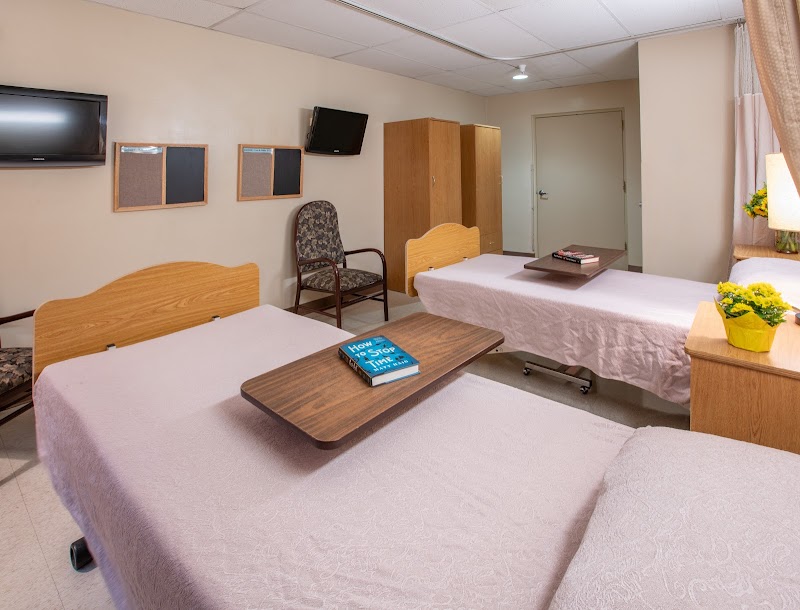
How is Statesman Health & Rehabilitation Center Staffed?

CMS rates STATESMAN HEALTH & REHABILITATION CENTER's staffing level at 3 out of 5 stars, which is average compared to other nursing homes. Staff turnover is 49%, compared to the Pennsylvania average of 46%. RN turnover specifically is 56%, which is notably high. RNs provide skilled clinical oversight, so turnover in this role can affect medical care quality.

What Have Inspectors Found at Statesman Health & Rehabilitation Center?

State health inspectors documented 28 deficiencies at STATESMAN HEALTH & REHABILITATION CENTER during 2023 to 2025. These included: 27 with potential for harm and 1 minor or isolated issues.
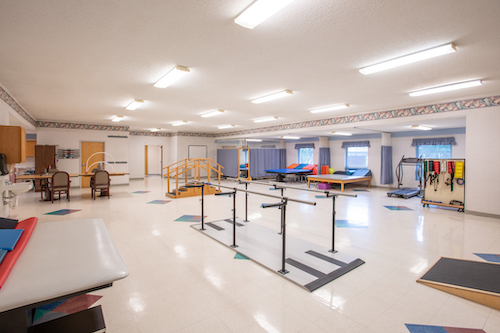
Who Owns and Operates Statesman Health & Rehabilitation Center?

STATESMAN HEALTH & REHABILITATION CENTER is owned by a for-profit company. For-profit facilities operate as businesses with obligations to shareholders or private owners. The facility is operated by SABER HEALTHCARE GROUP, a chain that manages multiple nursing homes. With 101 certified beds and approximately 95 residents (about 94% occupancy), it is a mid-sized facility located in LEVITTOWN, Pennsylvania.

How Does Statesman Health & Rehabilitation Center Compare to Other Pennsylvania Nursing Homes?

Compared to the 100 nursing homes in Pennsylvania, STATESMAN HEALTH & REHABILITATION CENTER's overall rating (4 stars) is above the state average of 3.0, staff turnover (49%) is near the state average of 46%, and health inspection rating (3 stars) is at the national benchmark.

What Should Families Ask When Visiting Statesman Health & Rehabilitation Center?

Based on this facility's data, families visiting should ask: "Can I visit during a mealtime to observe dining assistance and food quality?" "How do you handle medical emergencies, and what is your hospital transfer rate?" "Can I speak with family members of current residents about their experience?"

Is Statesman Health & Rehabilitation Center Safe?

Based on CMS inspection data, STATESMAN HEALTH & REHABILITATION CENTER has a clean safety record: no substantiated abuse findings (meaning no confirmed cases of resident harm), no Immediate Jeopardy citations (the most serious violation level indicating risk of serious injury or death), and is not on the Special Focus Facility watch list (a federal program monitoring the lowest-performing 1% of nursing homes). The facility has a 4-star overall rating and ranks #1 of 100 nursing homes in Pennsylvania. While no facility is perfect, families should still ask about staff-to-resident ratios and recent inspection results during their visit.

Do Nurses at Statesman Health & Rehabilitation Center Stick Around?

STATESMAN HEALTH & REHABILITATION CENTER has a staff turnover rate of 49%, which is about average for Pennsylvania nursing homes (state average: 46%). Moderate turnover is common in nursing homes, but families should still ask about staff tenure and how the facility maintains care continuity when employees leave.

Was Statesman Health & Rehabilitation Center Ever Fined?

STATESMAN HEALTH & REHABILITATION CENTER has no federal fines on record. CMS issues fines when nursing homes fail to meet care standards or don't correct problems found during inspections. The absence of fines suggests the facility has either maintained compliance or corrected any issues before penalties were assessed. This is a positive indicator, though families should still review recent inspection reports for the full picture.

Is Statesman Health & Rehabilitation Center on Any Federal Watch List?

STATESMAN HEALTH & REHABILITATION CENTER is not on any federal watch list. The most significant is the Special Focus Facility (SFF) program, which identifies the bottom 1% of nursing homes nationally based on persistent, serious quality problems. Not being on this list means the facility has avoided the pattern of deficiencies that triggers enhanced federal oversight. This is a positive indicator, though families should still review the facility's inspection history directly.