OAK GLEN HEALTHCARE AND REHABILITATION CENTER
15 Ridgecrest Circle, LEWISBURG, PA 17837 (570) 524-2271
For profit - Limited Liability company 226 Beds Independent Data: November 2025
Trust Grade
60/100
#325 of 653 in PA
Last Inspection: August 2025

Inspected within the last 6 months. Data reflects current conditions.

Overview

Oak Glen Healthcare and Rehabilitation Center has received a Trust Grade of C+, indicating that it is slightly above average but still has room for improvement. It ranks #325 out of 653 facilities in Pennsylvania, placing it in the top half, and is the best option among three facilities in Union County. However, the facility’s trend is worsening, with issues increasing from 8 in 2024 to 12 in 2025, which raises concerns about the quality of care. Staffing is a significant weakness, reflected by a low rating of 0 out of 5 stars, with a turnover rate of 48%, which is around the state average. While the facility has not incurred any fines, it has been cited for several concerning practices, such as failing to properly maintain food safety standards, not addressing grievances related to call bell responses for multiple residents, and not ensuring infection control measures were followed, which could put residents at risk.

Trust Score
C+
60/100
In Pennsylvania
#325/653
Top 49%
Safety Record
Low Risk
No red flags
Inspections
Getting Worse
8 → 12 violations
Staff Stability
⚠ Watch
48% turnover. Above average. Higher turnover means staff may not know residents' routines.
Penalties
✓ Good
No fines on record. Clean compliance history, better than most Pennsylvania facilities.
Skilled Nurses
○ Average
RN staffing data not reported for this facility.
Violations
⚠ Watch
30 deficiencies on record. Higher than average. Multiple issues found across inspections.
★★★☆☆
3.0
Overall Rating
☆☆☆☆☆
0.0
Staff Levels
★★★☆☆
3.0
Care Quality
★★★☆☆
3.0
Inspection Score
Stable
2024: 8 issues
2025: 12 issues

The Good

  • Full Sprinkler Coverage · Fire safety systems throughout facility
  • No fines on record

Facility shows strength in fire safety.

The Bad

3-Star Overall Rating

Near Pennsylvania average (3.0)

Meets federal standards, typical of most facilities

Staff Turnover: 48%

Near Pennsylvania avg (46%)

Higher turnover may affect care consistency

The Ugly 30 deficiencies on record

Sept 2025 1 deficiency
CONCERN (D) 📢 Someone Reported This

A family member, employee, or ombudsman was alarmed enough to file a formal complaint

Potential for Harm - no one hurt, but risky conditions existed

Deficiency F0804 (Tag F0804)

Could have caused harm · This affected 1 resident

Based on observations, and resident and staff interview, it was determined that the facility failed to provide food and drink that was palatable and served at palatable temperatures on one of three op...

Read full inspector narrative →
Based on observations, and resident and staff interview, it was determined that the facility failed to provide food and drink that was palatable and served at palatable temperatures on one of three open nursing units (Evergreen, Residents 2 and 3).Findings include: Interview with Resident 2 on September 24, 2025, at 11:16 AM revealed the resident chooses to eat meals in his room. Resident 2 stated sometimes the coffee and food are cold. Interview with Resident 3 on September 24, 2025, at 11:40 AM revealed the resident chooses to eat meals in the dining room and stated the coffee is cold. Observation of the lunch meal service on the Evergreen unit on September 24, 2025, at 12:17 PM, where Residents 2 and 3 reside, revealed dietary and nursing staff serving resident's lunch in the unit dining room from a steam table located in the same room. Nursing staff were observed passing beverages to residents seated in the dining room from a beverage cart that had pitchers water, and iced tea, as well as plastic gallon containers of milk, and air pots (containers utilized to hold hot beverages and dispense them) of hot water, coffee, and decaffeinated coffee. As resident meal service for those seated in the dining room was nearing completion at 12:40 PM nursing staff in the dining room were observed setting up trays on three small carts in the dining room that held three trays in the interior of the cart. Staff were placing two resident meals on one tray beside one another in the cart. Trays were also placed on the top of the cart. The staff poured beverages into cups and placed them on the trays without covers. Staff were observed obtaining coffee from one of the air pots on the beverage cart with coffee only sputtering out of the air pot, half filling a coffee cup, and placing it uncovered on one of the trays on a cart. Staff were overheard stating to another staff member that all the coffee was gone. At 12:49 PM the coffee above was placed on the tray that was still being assembled with food that dietary staff were plating from the steam table. The plates of food were placed on trays in the cart and trays on top of the cart. Two trays on top of the cart were observed to have all food/beverages served in disposable foam items. The beverage cups did not have lids, nor did a foam bowl of tomato soup, a plastic lid was over the foam plate of the main meal. Hot food inside the cart was plated on non-disposable plates and placed on the trays, the last meal did not have a lid over the hot entree. At 12:51 PM Employee 1, nurse aide, was observed wheeling this cart to a hallway on the unit and began passing the trays to resident rooms with the trays containing foam products served first to isolation rooms. At 1:17 PM Resident 2's tray was taken off the cart as staff were obtaining it to pass to the resident. Resident 2's meal/side dishes and beverages were on the tray with another resident meal to the other side of the tray with no cover over the meal on the plate. Employee 1 indicated the meal was not covered as there were not enough plate covers in the dining room. Resident 2's meal was also observed to have plastic utensils. Employee 2 indicated there was not enough silverware in the dining room for all the trays, Employee 2 also indicated there were no lids available for the coffee mugs or cold beverage cups. Employee 2's meal was tested for temperature and palatability as follows, beef stroganoff was lukewarm at 104 degrees Fahrenheit (F), carrots were mushy and lukewarm at 103.5 degrees F, half-filled cup of coffee was 99.1 degrees F, tomato soup was lukewarm at 104.8 degrees F, and the milk was only slightly chilled at 53.7 degrees F. Interview with Employee 2, food service manager, on September 24, 2024, at 2:00 PM confirmed an adequate supply of silverware, food and beverages, and lids should be available for service on the nursing units and the temperatures noted above were outside acceptable temperatures for palatability at the time of service. The above information was reviewed with the Nursing Home Administrator on September 24, 2025, at 2:35 PM. 28 Pa. Code 201.14(a) Responsibility of licensee 28 Pa. Code 201.18(b)(3) Management
Aug 2025 11 deficiencies
CONCERN (D)

Potential for Harm - no one hurt, but risky conditions existed

Resident Rights (Tag F0550)

Could have caused harm · This affected 1 resident

Based on observation and staff interview, it was determined that the facility failed to ensure resident dignity during dining on one of three open nursing units (Memory Care, Residents 18 and 36). Fin...

Read full inspector narrative →
Based on observation and staff interview, it was determined that the facility failed to ensure resident dignity during dining on one of three open nursing units (Memory Care, Residents 18 and 36). Findings include:An observation of the lunch meal service in the Memory Care unit on August 19, 2025, at 11:48 AM revealed multiple residents seated in the dining room awaiting the lunch meal. Resident 36 and Resident 18 were observed seated at a table together with beverages in front of them. Employee 15, nurse aide, was observed placing a sandwich on the table in front of Resident 36 and stated, Don't touch that yet because [Resident 18] doesn't have anything, as Employee 15 proceeded to deliver a sandwich to another table. Immediately as Employee 15 was walking to another table, Resident 36 picked up the sandwich, and as Employee 15 was walking back by the resident Employee 15 stated, I told you not to touch that yet. Resident 36 responded, I know, I was just looking to see what kind it was. At 12:00 PM Resident 36 was observed taking the last bite of the sandwich with Resident 18 watching as Employee 15 was completing other tasks in the dining room, the hot lunch meal had not yet arrived on the nursing unit to be served. At 12:10 PM hot food service began on the unit. Resident 36 was served a plate of hot food items at 12:11 PM, and Resident 18 was still waiting for a meal. Resident 18 was not provided a meal until 12:12 PM, although Resident 36 who was sitting with her had already been served and consumed a sandwich, and was served a hot meal first. The above findings were reviewed with the Nursing Home Administrator and Director of Nursing on August 20, 2025, at 2:43 PM. 28 Pa. Code 201.29(a) Resident rights
CONCERN (D)

Potential for Harm - no one hurt, but risky conditions existed

Deficiency F0559 (Tag F0559)

Could have caused harm · This affected 1 resident

**NOTE- TERMS IN BRACKETS HAVE BEEN EDITED TO PROTECT CONFIDENTIALITY** Based on clinical record review and resident and staff interviews, it was determined that the facility failed to ensure that wri...

Read full inspector narrative →
**NOTE- TERMS IN BRACKETS HAVE BEEN EDITED TO PROTECT CONFIDENTIALITY** Based on clinical record review and resident and staff interviews, it was determined that the facility failed to ensure that written notice, including the reason for a room change, was provided to a resident prior to a facility-initiated room change for one of one resident reviewed for concerns related to resident choice (Resident 107).Findings include: Observation of Resident 107 on August 20, 2025, at 11:03 AM revealed he was in a wheelchair in front of the nursing unit's nurses' station. Interview with Resident 107 on August 20, 2025, at 11:03 AM revealed that he believed that he was moving from the [NAME] nursing unit to the Evergreen nursing unit on this date, before lunch. Resident 107 stated that he was not sure why he was moving to a new room or to what room he was moving. Resident 107 stated that he was not shown any rooms on a different nursing unit and that if staff told him a room number it would mean nothing to him without seeing it. Resident 107 stated I hope not, when asked if he was going to have a roommate (Resident 107 did not have a roommate in his current room on the [NAME] nursing unit). Resident 107 stated that he was told he would be moving to a new room a couple days ago. Clinical record review for Resident 107 revealed social services documentation from Employee 7 (social worker) dated August 19, 2025, at 3:40 PM that A 72-hour meeting was held this afternoon with the ID (interdisciplinary) team. His goal is for a short term stay to his home, where he lives with his wife. He is scheduled for surgery in September. (Resident 107) and this writer had a conversation regarding a room change to the long-term care wing until his surgery September and he is agreeable. A call was placed to his wife to discuss planning with her. Interview with Employee 7 on August 21, 2025, at 9:45 AM reviewed the above social services documentation for Resident 107. Employee 7 confirmed that there was no written documentation given to Resident 107 and/or his responsible party of why the room move was required. The facility also could provide no documentation to evidence that Resident 107 was given the opportunity to see the new location or meet his new roommate. Employee 7 confirmed that Resident 107 would now have a roommate, but he had not had a roommate before this room change. The surveyor reviewed the above concerns regarding Resident 107's room and roommate change during an interview with the Nursing Home Administrator, Director of Nursing, and Employee 5 (assistant director of nursing), on August 21, 2025, at 2:00 PM. 28 Pa. Code 201.14(a) Responsibility of licensee 29 Pa. Code 201.29(a) Resident rights 28 Pa. Code 211.12(d)(3) Nursing services
CONCERN (D) 📢 Someone Reported This

A family member, employee, or ombudsman was alarmed enough to file a formal complaint

Potential for Harm - no one hurt, but risky conditions existed

ADL Care (Tag F0677)

Could have caused harm · This affected 1 resident

Based on observation, clinical record review, and resident and staff interview, it was determined that the facility failed to provide assistance with activities of daily living (ADL) for dependent res...

Read full inspector narrative →
Based on observation, clinical record review, and resident and staff interview, it was determined that the facility failed to provide assistance with activities of daily living (ADL) for dependent residents for two of two residents reviewed for ADL concerns (Residents 107 and 90). Findings include: Clinical record review for Resident 107 revealed that the facility admitted him on August 14, 2025 (Thursday). Observation of Resident 107 on August 20, 2025, at 11:09 AM revealed that his hair appeared uncombed and oily. Resident 107 presented with facial hair indicative of numerous days without shaving. Interview with Resident 107 on the date and time of the observation revealed that he had not received a shower yet at the facility. Resident 107 also confirmed that no staff had assisted him with shaving since his admission to the facility. Resident 107 stated that on this day, nursing staff supplied him with shaving equipment. Interview with Employee 8 (licensed practical nurse) on August 20, 2025, at 11:10 AM confirmed that she provided Resident 107 shaving equipment on this date. Review of a Documentation Survey Report (electronic documentation of resident care needs completed by nurse aide staff) dated August 2025 revealed that Resident 107 was to receive a shower on Wednesday and Saturday evenings. Nurse aide staff did not document the provision of a shower until August 20, 2025, at 11:42 PM (following the surveyor's observation). Resident 107 was totally dependent on the physical assistance of two staff for the shower. There was no evidence that staff offered Resident 107 a shower before August 20, 2025. Resident 107 did not receive a shower on Saturday, August 16, 2025. The surveyor reviewed the above concerns regarding Resident 107's assistance with ADL needs during an interview with the Nursing Home Administrator, Director of Nursing, and Employee 5 (assistant director of nursing) on August 21, 2025, at 2:00 PM. Observation of Resident 90 on August 20, 2025, at 12:33 PM revealed he was sitting at the dining room table for lunch with very scruffy whiskers extending from his lip, cheeks, and down to his neck. The resident stated he needed to shave. Clinical record review for Resident 90 revealed a quarterly MDS (minimum data set, an assessment completed at periodic intervals of time to assess resident care needs), dated July 22, 2025, which indicated facility staff assessed the resident as requiring partial/moderate assistance for personal hygiene and the resident had a BIMS (brief interview of mental status) score of two, indicating severe cognitive impairment. Resident 90's facial hair was reviewed with the Nursing Home Administrator and Director of Nursing on August 20, 2025, at 3:32 PM. In a follow up observation of Resident 90 on August 21, 2025, at 12:18 PM he was seated at a dining room table eating lunch. It appeared the resident's face and neck had been shaved but remained spotty with whiskers in areas of his face and lip. Resident 90 indicated, They shaved me this morning. Resident 90 stated, I like a clean shave, that is how I did it at home, and has a young chap. That is how we had to be on the farm. The above findings for Resident 90 were reviewed with the Nursing Home Administrator and Director of Nursing on August 21, 2025, at 2:20 PM. 28 Pa. Code 211.12(d)(1)(5) Nursing services
CONCERN (D) 📢 Someone Reported This

A family member, employee, or ombudsman was alarmed enough to file a formal complaint

Potential for Harm - no one hurt, but risky conditions existed

Accident Prevention (Tag F0689)

Could have caused harm · This affected 1 resident

**NOTE- TERMS IN BRACKETS HAVE BEEN EDITED TO PROTECT CONFIDENTIALITY** Based on review of select facility policies and procedures, clinical record review, observation, and staff interview, it was det...

Read full inspector narrative →
**NOTE- TERMS IN BRACKETS HAVE BEEN EDITED TO PROTECT CONFIDENTIALITY** Based on review of select facility policies and procedures, clinical record review, observation, and staff interview, it was determined that the facility failed to implement interventions to prevent resident elopement for one of two residents reviewed for elopement concerns (Resident 15).Findings include: The facility policy entitled, Wandering Residents, implemented March 20, 2025, indicated that the facility ensures that residents who exhibit wandering behavior and/or are at risk for elopement receive adequate supervision to prevent accidents, and receive care in accordance with their person-centered plan of care addressing the unique factors contributing to wandering. The facility is equipped with door locks/alarms and all high-risk areas are secured. The facility shall establish and utilize a systematic approach to monitoring and managing residents at risk for unsafe wandering including identification and assessment of risk, evaluation and analysis of hazards and risks, implementing interventions to reduce hazards and risks, and monitoring for effectiveness and modifying interventions when necessary. Residents will be monitored for unsafe wandering upon admission and throughout their stay by the interdisciplinary care plan team. The interdisciplinary team will evaluate the unique factors contributing to risk to develop a person-centered care plan. Interventions to increase staff awareness of the resident's risk, modify the resident's behavior, or to minimize risks associated with hazards will be added to the resident's care plan and communicated to appropriate staff. The effectiveness of interventions will be evaluated, and changes will be made as needed. Any changes or new interventions will be communicated to relevant staff. The facility policy entitled, Elopements, effective March 20, 2025, indicated that it is the facility's policy to ensure the safety and well-being of all residents by implementing proactive measures to prevent elopement and establishing a clear, immediate response protocol in the event a resident is missing or attempts to leave the facility unsafely. Staff will investigate and report all cases of missing residents. A Risk Assessment will be completed on admission to the skilled nursing facility and quarterly. If identified as at risk for hazardous wandering or elopement, the resident's care plan will include strategies and intervention to maintain the resident's safety. When a departing individual returns to the facility, the charge nurse will examine the resident for injuries, notify the attending physician, notify the resident's representative of the incident, complete and file Report of Incident/Accident, and document the event in the resident's medical record. The Elopement policy referred to a Risk Assessment. The Elopement Evaluation assessment in the electronic medical record indicated that any score value of one or higher indicates a risk of elopement. Clinical record review for Resident 15 revealed an Elopement Evaluation dated June 16, 2025, that included a score of zero (no risk for elopement). Behavior note documentation dated July 5, 2025, at 1:24 PM noted that staff were attempting to keep Resident 15 in view as he was, nonstop attempting unattended transfers standing up on his own, breaks not locked, toileted several times unsure why he keeps standing up. Denies pain or discomfort. I gave him his cell phone he called his daughter but that only obscured him for five minutes, will continue to keep busy attempted to sit at table with snack and drink, refused, had him in by TV, he wheeled down to back door several times pushing till alarm sounded. Resident 15's clinical record did not contain evidence that staff repeated an Elopement Evaluation in response to the above noted behavior. Review of plans of care developed by the facility for Resident 15 revealed no person-centered plan of care addressing the unique factors contributing to his wandering. The clinical record did not include additional interventions implemented to reduce the hazard of Resident 15's wandering that risked his safety should he exit the nursing unit or facility building unattended. Interview with the Nursing Home Administrator, Director of Nursing, and Employee 5 (assistant director of Nursing) on August 21, 2025, at 2:00 PM revealed that the main door to the nursing unit on which Resident 15 resided ([NAME]) on July 5, 2025, was not equipped with door locks/alarms at that time. The facility provided a letter dated August 14, 2025, that the Department approved a special locking arrangement for the [NAME] nursing unit that included keypad access. The interview confirmed that the lobby and facility main exit door was and is not continuously monitored by staff or equipped with door locks/alarms during normal business hours. The surveyor also reported that a sign on the door exiting the [NAME] nursing unit included the five-digit code necessary to exit the unit on this date (any person with the cognitive and physical abilities to read and enter a code could exit the unit without staff knowledge or assistance). Nursing documentation dated July 7, 2025, at 3:07 PM revealed that Resident 15 was wandering without purpose on the unit, and he was in and out of other resident rooms. Nursing documentation dated July 7, 2025, at 8:11 PM revealed that Resident 15 had, .gotten out to reception area X4 (four times), doors opened to the outside which made alarms sound, and he was redirected. Continues to wander without purpose. Has been toileted multiple times. Daughter was called about what has been going on and RN (registered nurse) supervisor has come up to the unit to help out. Behavior note documentation dated effective July 7, 2025, at 9:48 PM revealed that Resident 15 was redirected several times. He was going to the door to attempt to exit. Review of plans of care developed by the facility to address Resident 15's care needs revealed that the facility did not develop a care plan to specifically address his potential to exit the nursing unit and building. The facility initiated a plan of care on July 7, 2025, that noted only that Resident 5, may exhibit distressed moods such as being verbally aggressive, restless, wandering or sexually inappropriate towards staff. The plan of care did not include interventions to prevent the accident hazard of Resident 15 leaving the nursing unit and/or building unattended (e.g., alarms, one-to-one supervision, door locks, etc.). Nursing documentation dated July 10, 2025, at 4:37 PM noted that Resident 15 was confused with memory loss, was anxious and agitated, had chronic unwanted wandering behavior, and that he, .wanders without purpose and goes in and out of other resident rooms. Gets agitated and then needs to be redirected. Nursing documentation dated July 13, 2025, at 7:54 AM revealed that Resident 15 was, .becoming increasingly aggressive with staff, trying to exit the building and is (in) other residents' rooms. Nursing documentation dated July 13, 2025, at 1:50 PM noted that Resident 15 did not follow commands, had severe cognitive impairment affecting all areas of judgement, was agitated and anxious, had insomnia (difficulty falling or staying asleep), and wandered at night. Resident 15 was assessed as having chronic behavior that would potentially cause harm to himself or others. The documentation stipulated that Resident 15, .wanders without purpose on the unit in w/c (wheelchair). Goes in and out of other resident rooms. Setting alarms off to exit doors as he tries to get out. Ramming his w/c into staff, walls, and doors. Can be redirected sometimes but he then uses profanity because he gets worked up. Nursing documentation dated July 27, 2025, at 11:03 AM revealed that Resident 15 continued to wander without purpose on the nursing unit; he was, running his w/c into staff and walls, exit seeking for his wife and her vehicle. The documentation indicated that staff attempted distraction to redirect him. Resident 15's clinical record did not contain evidence that staff repeated an Elopement Evaluation in response to the above noted behaviors by Resident 15 on July 7, 10, 13, and 27, 2025. Review of an Electronic Reporting System (ERS, mandatory electronic reporting of facility incidents to the Department) event (Event 1109353) submitted by the facility on Monday, July 28, 2025, at 4:59 PM revealed that on Sunday, July 27, 2025, at 6:40 PM Resident 15 was observed in his wheelchair in the facility parking lot. The submitted information noted, Prior to incident resident was not noted to be an elopement risk. Review of an incident investigation dated July 27, 2025, at 8:40 PM revealed that the Director of Nursing initiated the investigation. There was no clinical record progress note documentation completed on July 27, 2025, that indicated Resident 15 left the facility unattended (eloped) in accordance with the facility policy that stipulated, When a departing individual returns to the facility, the charge nurse shall examine the resident for injuries, notify the attending physician, notify the resident's representative of the incident, complete and file Report of Incident/Accident, and document the event in the resident's medical record. An Elopement Evaluation completed by the Director of Nursing on July 28, 2025, at 9:56 AM indicated that Resident 15 wandered aimlessly or was non-goal-directed, but he did not have a pattern of wandering behavior and his wandering behavior was not likely to affect the safety or well-being of himself or others (despite the above documentation of his wandering behavior in other residents' rooms, outside the nursing unit, and unsuccessful and successful attempts to leave the building). The assessment also indicated that his wandering behavior was not likely to affect the privacy of others. Incident note documentation dated July 29, 2025, at 12:39 PM indicated that the interdisciplinary team reviewed an incident that staff observed Resident 15 in the facility parking lot and that he was immediately returned to the nursing unit by staff and placed on Q (every) 15 minute checks for 24 hours to monitor behaviors. The facility alarmed the main exit/entrance door to the nursing unit and placed stop signs on the doors. The documentation specifically reiterated that, Prior to incident resident was not identified as an elopement risk. An Elopement Evaluation dated August 5, 2025, at 9:12 PM continued to indicate that Resident 15's wandering behavior was not likely to affect the safety or well-being of himself or others or affect the privacy of others even though he exhibited the behavior and presented the potential to wander in and out of other residents' rooms. Despite several documented entries of Resident 15's wandering behavior that included wandering in and out of resident rooms, interrupted attempts to leave the nursing unit, and exiting the nursing unit to the unsecured main lobby, the facility did not identify Resident 15 as an elopement risk until staff found him in the parking lot of the facility. The surveyor reviewed with above concerns with the Nursing Home Administrator, Director of Nursing, and Employee 5 on August 21, 2025, at 2:00 PM. 28 Pa. Code 211.10(d) Resident care policies 28 Pa. Code 211.12(d)(1)(5) Nursing services
CONCERN (D)

Potential for Harm - no one hurt, but risky conditions existed

Deficiency F0726 (Tag F0726)

Could have caused harm · This affected 1 resident

Based on review of facility documentation, and staff interview, it was determined that the facility failed to ensure that nursing staff possessed the appropriate competencies and skill sets related to...

Read full inspector narrative →
Based on review of facility documentation, and staff interview, it was determined that the facility failed to ensure that nursing staff possessed the appropriate competencies and skill sets related to the care and assessment of residents with indwelling catheters and medication administration for three of four employees reviewed (Employees 4, 11, and 14). Findings include: A review of the facility Resident Matrix (CMS-802, form used to identify pertinent care categories for residents who reside in the facility) documentation revealed that the facility had a total of 15 residents with indwelling urinary catheters within the 100 resident census. A review of sampled residents of the current resident population revealed that the facility had multiple residents that received medications. A request by the surveyor for staff competencies that included indwelling catheter care and medication administration was made for Employee 4 (registered nurse), Employee 11 (licensed practical nurse), and Employee 14 (licensed practical nurse). The facility provided multiple trainings for the above individuals; however, there were no competency evaluations or associated documented competency demonstrations that were noted for indwelling catheter care and medication administration. An interview with Employee 6, registered nurse, on August 22, 2025, at 11:23 AM revealed the facility was unable to produce any documentation that the above employees had completed competency evaluations in the areas requested. The facility failed to ensure staff exhibited the appropriate competencies and skill sets to provide nursing and related services necessary for each resident. 28 Pa Code 201.20(a)(6)(d) Staff development
CONCERN (D)

Potential for Harm - no one hurt, but risky conditions existed

Deficiency F0802 (Tag F0802)

Could have caused harm · This affected 1 resident

Based on staff interviews it was determined that the facility failed to have sufficient competent dietary staff to perform essential kitchen duties (Employee 2).Findings include:Observation and interv...

Read full inspector narrative →
Based on staff interviews it was determined that the facility failed to have sufficient competent dietary staff to perform essential kitchen duties (Employee 2).Findings include:Observation and interview with Employee 2, dietary aide, on August 19, 2025, at 9:30 AM revealed the employee was washing breakfast dishes and flatware in the dish room area of the main kitchen with an industrial dish washing machine. Upon request of the dish machine temperature log (documentation of machine wash and rinse temperatures to ensure proper sanitization), Employee 2 indicated she was not aware of the temperature log. Employee 2 indicated she had worked at the facility as a dietary aide for one month and was working independently as she had served food on one of the nursing units, washed some items in a dishwasher on the unit, and then came to the main kitchen to wash additional items. Employee 2 then stated another employee who works as a dish washer comes in later in the morning, but she was responsible to get the breakfast dishes/utensils washed before the dish washer comes in. Employee 2 indicated she was not aware the dish machine temperatures needing checked when washing dishes and was not aware of how to do it, record them, or what to do if the machine was not meeting the temperature requirements and was never shown this since being hired. In an interview with Employee 1, dining director, on August 19, 2025, at 3:20 PM Employee 1 indicated there was no evidence to indicate Employee 2 was trained and competent to be performing dishwashing or any essential dietary aide duties on her own since her hire date with the facility on July 22, 2025. Employee 2 indicated there was no evidence in writing that any dining/dietary staff were sufficiently trained and competent to be performing dietary duties. The above information was reviewed with the Nursing Home Administrator on August 20, 2025, at 2:45 PM. 28 Pa. Code 201.18(e)(6) Management.28 Pa. Code 201.20(b) Staff Development.
CONCERN (D)

Potential for Harm - no one hurt, but risky conditions existed

Medical Records (Tag F0842)

Could have caused harm · This affected 1 resident

Based on clinical record review and staff interview, it was determined that the facility failed to maintain clinical records that were complete and accurate for three of 20 residents reviewed (Residen...

Read full inspector narrative →
Based on clinical record review and staff interview, it was determined that the facility failed to maintain clinical records that were complete and accurate for three of 20 residents reviewed (Residents 4, 82, and 105). Findings include: Clinical record review for Resident 4 revealed a care plan that noted the resident has a potential alteration in nutritional status related to the medical history. An intervention included to provide and serve diet and supplements as ordered and monitor intake and record every meal. Further review of Resident 4's care plan revealed the resident has a pressure ulcer and an intervention included to monitor nutritional status. The care plan instructed staff to serve the diet as ordered and monitor intake and record. A review of Resident 4's meal intakes for the last 30 days revealed the following days were not recorded as directed in the resident's care plan:July 26, 2025August 5, 2025August 9, 2025August 15, 2025August 18, 2025 Clinical record review for Resident 82 revealed a care plan that noted the resident has a potential alteration in nutritional status related to the medical history. An intervention included to provide and serve diet and supplements as ordered and monitor intake and record every meal. A review of Resident 4's meal intakes for the last 30 days revealed the following days were not recorded as directed in the resident's care plan: July 26, 2025August 5, 2025August 9, 2025August 15, 2025August 18, 2025 The above information was reviewed in a meeting with the Nursing Home Administrator and Director of Nursing on August 21, 2025, at 2:15 PM. A follow-up interview with the Director of Nursing on August 22, 2025, at 12:34 PM confirmed the meals were not documented on the above dates for Resident 4 and 82. Review of the policy titled, Disposal of Medications and Medication-Related Supplies, last reviewed on January 16, 2025, noted that medication destruction occurs only in the presence of at least two licensed healthcare professionals or according to regulations and applicable law. Closed clinical record review revealed nursing documentation for Resident 105 dated August 8, 2025, at 5:02 PM that noted the resident had ceased breathing and heart tones were absent with a time of death of 3:30 PM. Review of the medication disposition for Resident 105 revealed the resident had the following controlled substances prescribed: Lorazepam (a medication used to treat various concerns such as anxiety and agitation) 0.5 milligrams (mg), give half a tablet (0.25 mg) sublingually every four hours as needed for terminal restlessness for 14 days; and morphine (a medication used to treat pain and shortness of breath) 20 milligrams per milliliter (ml), give 0.25 ml (5 mg) sublingually every hour as needed for pain / shortness of breath. Further review of Resident 105's disposition of medication log revealed that 30.5 tablets of lorazepam were marked as destroyed on August 8, 2025, by Employee 11, licensed practical nurse. However, there was no noted witness that attested to the destruction of the medication. The area marked WITNESS was blank. Further review of Resident 105's disposition of medication log revealed that 13 ml of Morphine was marked as destroyed on August 8, 2025, by Employee 11, licensed practical nurse. However, there was no noted witness that attested to the destruction of the medication. The area marked WITNESS was blank. An interview with Employee 5, Assistant Director of Nursing, on August 21, 2025, at 11:10 AM revealed the facility is unable to find any documentation with dual signatures. The above information was reviewed in a meeting with the Nursing Home Administrator and Director of Nursing on August 21, 2025, at 2:15 PM. 28 Pa. Code 211.5(f) Medical records 28 Pa. Code 211.12(d)(1)(3)(5) Nursing services
CONCERN (D)

Potential for Harm - no one hurt, but risky conditions existed

Deficiency F0883 (Tag F0883)

Could have caused harm · This affected 1 resident

**NOTE- TERMS IN BRACKETS HAVE BEEN EDITED TO PROTECT CONFIDENTIALITY** Based on review of select facility policies, clinical record review, and staff interview it was determined that the facility fai...

Read full inspector narrative →
**NOTE- TERMS IN BRACKETS HAVE BEEN EDITED TO PROTECT CONFIDENTIALITY** Based on review of select facility policies, clinical record review, and staff interview it was determined that the facility failed to administer a pneumococcal vaccine to a resident who consented to and was eligible to receive it for one of five residents selected for vaccination review (Resident 53).Findings include: The facility policy entitled, Infection Control - Vaccination Policy, last reviewed January 16, 2025, revealed that the purpose of the policy is to prevent infection and control the potential spread of COVID-19, influenza, and pneumococcal pneumonia through adherence to Centers for Disease Control and Prevention (CDC) vaccination guidelines and recommendations. Each resident is offered immunization unless it is medically contraindicated, or the resident has already received the vaccine. Refer to the CDC guidelines for vaccine type and timing: CDC Pneumococcal Vaccine Timing. CDC Pneumococcal Vaccine Timing for Adults (https://www-new.cdc.gov/pneumococcal/downloads/Vaccine-Timing-Adults-JobAid.pdf) instructs that a complete series would be a PCV13 (Prevnar 13, pneumococcal conjugate vaccine) at any age, a PPSV23 (Pneumovax 23, pneumococcal polysaccharide vaccine) at greater than or equal to 65 years, and together with the resident, vaccine providers may choose to administer PCV20 (Prevnar 20, 20-valent pneumococcal conjugate vaccine) or PCV21 (CAPVAXIVE, 21-valent conjugate vaccine) to adults greater than or equal to [AGE] years old who have already received the PCV13 (but not PCV15, PCV20, or PCV21) at any age and PPSV23 at or after the age of [AGE] years old. The CDC stipulates that, Based on shared clinical decision-making, decide whether to administer one dose of PCV20 or PCV21 at least 5 years after the last pneumococcal vaccine dose. Clinical record review for Resident 53 revealed that the facility admitted him on April 19, 2022, at age [AGE] years old. Resident 53's immunization history documentation indicated that he received the pneumococcal polysaccharide PPV23 (Pneumovax 23) vaccine before his admission to the facility on December 6, 2007 (when he was [AGE] years old). Resident 53 received the pneumococcal conjugate PCV 13 (Prevnar 13) vaccine before his admission to the facility on March 4, 2016 (when he was [AGE] years old). Resident 53's clinical record contained no evidence that the interdisciplinary team, in coordination with Resident 53 and/or his responsible party, reviewed his condition to decide whether to administer one dose of PCV20 or PCV21 at least 5 years after the last pneumococcal vaccine dose (March 4, 2016). A Resident Vaccination Consent Form signed by Resident 53's responsible party on November 5, 2024, indicated that he consented to pneumococcal vaccinations for Resident 53. Interview with Employee 6 (infection control prevention coordinator) on August 21, 2025, at 3:40 PM confirmed that Resident 53 was not offered a pneumococcal vaccine despite consent to receive and CDC guidance to offer. The surveyor reviewed the above pneumococcal findings for Resident 53 with the Nursing Home Administrator on August 22, 2025, at 9:31 AM. 28 Pa. Code 211.12(d)(1)(5) Nursing services
CONCERN (E)

Potential for Harm - no one hurt, but risky conditions existed

Grievances (Tag F0585)

Could have caused harm · This affected multiple residents

**NOTE- TERMS IN BRACKETS HAVE BEEN EDITED TO PROTECT CONFIDENTIALITY** Based on a review of select facility policies and procedures, the facility's grievance documentation, observation, and resident ...

Read full inspector narrative →
**NOTE- TERMS IN BRACKETS HAVE BEEN EDITED TO PROTECT CONFIDENTIALITY** Based on a review of select facility policies and procedures, the facility's grievance documentation, observation, and resident and staff interview, it was determined that the facility failed to implement effective corrective action in response to a resident's grievance related to staff call bell response for seven of seven residents reviewed for call bell response concerns (Residents 20, 108, 111, 48, 93, 107, and 3).Findings include: Review of the facility policy entitled, Call Light Policy, effective March 20, 2025, revealed that the call system will be monitored regularly to ensure it is functioning properly. The call light must be kept accessible to the resident at all times. Any malfunctioning call lights must be reported to maintenance or the supervisor immediately. If necessary, staff will use the manual bell as indicated. Review of a Resident Concern Form dated July 17, 2025, revealed that Resident 20 (who resided on the Evergreen unit) voiced concerns related to call bells. Resident 20 reported that staff will respond to a call bell, say they will return, but at times that takes a while. The facility indicated that actions taken included random call bell audits and staff education, Be sure to answer call bells in a timely manner. If you need help closing the request, tell the resident, get assistance, return to do tasks. Documentation provided by the facility indicated that the facility performed call bell audits only on the Evergreen nursing unit. The facility utilizes three nursing units to accommodate the resident census (Evergreen, Memory Care, and [NAME]). Observation of the [NAME] nursing unit on August 19, 2025, at 2:41 PM revealed Resident 108 was in the bathroom in his room, on the toilet, yelling for staff assistance. The light outside Resident 108's room was not lit to indicate the activation of a call bell. Observation of the call bell device in Resident 108's bathroom revealed a light to indicate Resident 108 activated the call bell. Resident 108 stated that staff told him that they would be right back, but he had been waiting too long. Resident 108 was unable to state how long he had been in the bathroom; however, Resident 108 stated that he waited an hour and 10 minutes this morning for someone to respond to his call bell while he was in the bathroom. Interview with Employee 8 (licensed practical nurse) on August 19, 2025, at 2:44 PM revealed that she also could not get the call bell light indicator outside Resident 108's room to work and that she believed it was likely a battery failure. Employee 8 confirmed that staff walking by Resident 108's room would not know that Resident 108 activated a bathroom call bell to obtain staff assistance. Interview with Resident 111 (who resided on the [NAME] nursing unit) on August 19, 2025 (Tuesday), at 1:21 PM revealed that she arrived at the facility on Saturday (August 16, 2025); and had no functioning call bell to summon staff assistance. Resident 111 stated that she had to yell for staff. Resident 111 showed the surveyor a tap bell on her overbed table that the facility provided her on her first night to obtain staff assistance, but Resident 111 stated that she did not believe that any staff would hear the tap bell if she used it. Observation of Resident 111's bed revealed a white push-button, call bell device clipped to her bed. Resident 111 stated that no staff instructed her regarding the use of that device. The cord to the push-button device was not connected to the facility's call bell system. The call bell light outside Resident 111's room did not activate when the push-button device was used. Resident 111 stated that she was told not to go to the bathroom alone; however, she cannot wait as long as it takes for staff to respond if she wants to avoid being incontinent. Resident 111 stated that she can wait 40 minutes for staff to respond to her request for help. Interview with Employee 8 (licensed practical nurse) on August 19, 2025, at 2:24 PM confirmed that Resident 111 did not have a functioning call bell besides the tap bell on her overbed table. Employee 8 confirmed that staff on the other side of the nursing unit or inside the nurses' station (enclosed in glass) would not hear the metal tap bell if Resident 111 used it. Employee 8 confirmed that the facility gave Resident 111 the tap bell because she did not have a device that was connected to the facility's call bell system. Interview with Resident 48 (who resided on the [NAME] nursing unit) on August 20, 2025, at 12:04 PM revealed that her opinion was call bells are a joke. Resident 48 reported that during the previous shift, at 4:00 AM she activated her call bell because she needed to use the bathroom. Resident 48 stated that no staff responded to her call bell, and there was complete silence out there (the hallway); and that she figured out a way to get out of bed and to the toilet herself. Resident 48 stated that when she felt she was done in the bathroom, she activated the bathroom call light and had to wait 35 minutes before staff responded. Observation of the [NAME] nursing unit on August 20, 2025, at 11:29 AM revealed Resident 93's call bell was activated. Resident 93's call bell activation continued through 11:44 AM (15 minutes). Interview with Resident 93 on August 21, 2025, at 1:22 PM revealed that her experience with call bell response times was terrible, pretty bad, and routinely between 15 and 30 minutes before staff respond. Resident 93 stated that two days ago she received visitors while she was in the dining room for the evening meal. Resident 93 stated that her visitors remained with her in the dining room during their visit and activated the call bell device in the dining room before they left at 7:30 PM. Resident 93 stated that she sat alone in the dining room without staff response for one and one-half hours. Resident 93 stated that she believed that she saw the light on the call bell device light; therefore, she believed that the call bell device functioned normally and that the problem was just staff's response to the call bell activation. Interview with Resident 107 (who resided on the [NAME] nursing unit) on August 20, 2025, at 11:01 AM revealed that there are times when he activated his call bell, but he would just lay there and wait and wait and wait, for staff to respond. Resident 107 reported that sometimes staff will respond, report that they will return, but they never do. Interview with Resident 3 (who resided on the [NAME] nursing unit) on August 20, 2025, at 9:55 AM revealed that the staff's response to his call bell can be quite a while. Resident 3 stated that the previous night, between 6:00 PM and 7:00 PM, he waited 45 minutes to an hour for staff to respond to empty his urinal. During the interview, Resident 3 activated his call bell at 9:57 AM because the electrical pump used to infuse his intravenous medication began alarming indicating that his infusion was complete. Staff from the skilled therapy department reported to Resident 3's doorway at 9:59 AM and stated that they would obtain assistance from the nurse to disconnect the intravenous infusion. On August 20, 2025, at 10:04 AM (seven minutes after the call bell activation) Employee 9 (nurse aide) entered Resident 3's room, deactivated his call bell, and stated that she would obtain the assistance of the nurse. Employee 9 could not meet Resident 3's need; however, deactivated his call bell. Review of the documentation of staff education following Resident 20's grievance related to call bells on July 17, 2025, revealed that Employee 9 did not acknowledge the education. Six of six residents interviewed on the [NAME] nursing unit reported concerns regarding staff response to their call bells. The surveyor reviewed the above concerns observed and reported by residents on the [NAME] nursing unit with the Nursing Home Administrator, the Director of Nursing, and Employee 5 (assistant director of nursing) on August 21, 2025, at 2:00 PM. 28 Pa. Code 211.12(d)(1)(3)(5) Nursing services
CONCERN (E)

Potential for Harm - no one hurt, but risky conditions existed

Infection Control (Tag F0880)

Could have caused harm · This affected multiple residents

Based on review of select facility policies and procedures, clinical record review, observation, and resident and staff interview, it was determined that the facility failed to ensure an environment f...

Read full inspector narrative →
Based on review of select facility policies and procedures, clinical record review, observation, and resident and staff interview, it was determined that the facility failed to ensure an environment free from the potential spread of infection for two of two residents reviewed for antibiotic use (Residents 107 and 111), for three of three residents reviewed for transmission based precautions (Residents 3, 48, and 51), and for the facility's water management program.Findings include: The facility policy entitled, Contact Precautions, effective March 20, 2025, indicated that the purpose of the policy is to use contact precautions for residents known or suspected of having infectious diseases or epidemiologically significant pathogens transmitted by direct resident contact or by contact with items in the resident's environment. Gloves should be worn when entering the room and while providing care for a resident. Gloves should be removed before leaving the resident's room and hand hygiene should be performed immediately. The Contact Precautions sign utilized by the facility noted that, Everyone is required to gown and gloves. Wear a gown and gloves and dispose of them prior to exit. Clinical record review for Resident 107 revealed that the facility admitted him on August 14, 2025. admission physician orders for Resident 107 included the following: Contact Precautions for ESBL (Extended-spectrum beta-lactamases (ESBL) are a type of enzyme or chemical produced by some bacteria. ESBL enzymes make some antibiotics ineffective in treating bacterial infections) every shift until August 18, 2025. Amoxicillin-Pot Clavulanate (Augmentin, a penicillin-type antibiotic that treats bacterial infections) tablet 875-125 mg (milligrams) give one tablet by mouth two times a day for urinary tract infection for four days. Review of a laboratory report for a urine culture and sensitivity collected August 7, 2025 (during Resident 107's hospitalization) revealed that Resident 107's urine was infected with: Greater than 100,000 colonies of Enterococcus species (Enterococcal infections are caused by a group bacteria called enterococci, which normally reside in the intestines of healthy people but sometimes cause infection)Greater than 10,000 to 100,000 colonies of E. Coli ESBL (E. Coli, Escherichia coli, bacterium commonly found in the lower intestine; ESBL-producing E. coli are bacteria that can resist some antibiotics and cause serious infections) The medication sensitivity list on the laboratory report indicated that the medication Augmentin was only noted as susceptible for E. Coli, not the Enterococcus species. Another commonly used antibacterial medication, Macrobid (Nitrofurantoin) was susceptible for both organisms infecting Resident 107's urine. Interview with Employee 6 (registered nurse/infection preventionist) on August 21, 2025, at 3:35 PM revealed that the facility had no evidence that staff reviewed the urinalysis report from the hospital to determine if the bacterial organisms infecting Resident 107's urine was susceptible to the Augmentin antibiotic prescribed in Resident 107's admission physician orders. Employee 6 confirmed that there was no evidence that facility staff confirmed with Resident 107's primary care physician that the Augmentin medication was the preferred treatment for Resident 107's urinary tract infection based on the culture and sensitivity laboratory report. Interview with Resident 111 on August 19, 2025, at 1:53 PM revealed that she contracted a urinary tract infection so severe that it affected her kidneys and was infecting her bloodstream. Resident 111 stated that she was still taking the antibiotic for the infection. Clinical record review for Resident 111 revealed that the facility admitted her on August 16, 2025. An admission physician order dated August 16, 2025, instructed staff to administer Cephalexin (a cephalosporin antibiotic that fights bacteria in your body) 500 mg oral capsule three times a day for Resident 111's urinary tract infection for 10 Days. Review of Resident 111's MAR (Medication Administration Record, electronic documentation of the administration of medications by licensed nursing staff) dated August 2025, revealed that Resident 111 received the Cephalexin medication starting August 16, 2025, at 8:30 PM until discontinued on August 21, 2025, at 10:04 AM. The surveyor requested all urinalysis testing laboratory reports available for Resident 111 to support the use of her antibiotic therapy during an interview with the Nursing Home Administrator, Director of Nursing, and Employee 5 (assistant director of nursing) on August 20, 2025, at 2:15 PM and repeated the request to the Nursing Home Administrator on August 22, 2025, at 9:31 AM. Interview with the Nursing Home Administrator on August 22, 2025, at 11:12 AM confirmed that the facility had no evidence that facility staff obtained pertinent urinalysis testing reports for Resident 111 to support the use of the Cephalexin medication.Clinical record review for Resident 3 revealed that the facility admitted him on July 28, 2025, with diagnoses that included bacteremia (infection detected in the blood) that required contact isolation precautions starting July 28, 2025, and potentially ending August 30, 2025. A care plan initiated by the facility on August 5, 2025, noted that Resident 3 was receiving intravenous medications for MRSA bacteremia (infection of the blood caused by Methicillin Resistant Staphylococcus Aureus, a bacteria that is resistant to many commonly used antibiotics) starting July 31, 2025. The care plan indicated that the facility initiated contact precautions. Observation of Resident 3's doorway on August 19, 2025, at 2:34 PM revealed a sign that indicated the implementation of contact precautions. The sign indicated that everyone entering the room was to wear a gown and gloves. An organizer on Resident 3's door included disposable isolation gowns and gloves. During an interview with Resident 3 on August 20, 2025, at 9:57 AM he initiated his call bell to obtain staff assistance because his intravenous antibiotic infusion was completed, and the electronic pump was beeping repeatedly. During the continued interview with Resident 3 on August 20, 2025, at 10:04 AM Employee 9 (nurse aide) entered Resident 3's room without donning any PPE to turn his call bell off. The device was lying on Resident 3's bed and would have been touched repeatedly by Resident 3. Employee 9 did not perform hand hygiene before exiting Resident 3's room.The surveyor doffed PPE at Resident 3's room door upon completion of the resident interview on August 20, 2025, at 10:26 AM and observed that there was no hand sanitizer to perform hand hygiene before leaving, or immediately upon leaving, Resident 3's room. Interview with Employee 10 (nurse aide) on the date and time of the observation confirmed that there was no alcohol hand sanitizer readily available near Resident 3's room to perform hand hygiene when doffing PPE at his doorway. The surveyor and Employee 10 noted a wall-mounted hand sanitizer dispenser several resident rooms away from Resident 3's room at the corner of a different hallway. Clinical record review for Resident 48 revealed that the facility admitted her on August 2, 2025. An active physician's order dated August 4, 2025, instructed staff to implement contact precautions for Resident 48's diagnosis of Keratoconjunctivitis (bacterial or viral infection of the eye). Nursing documentation dated August 5, 2025, at 3:58 PM indicated that a physician ordered Erythromycin (antibiotic) ointment on Resident 48's admission for the Keratoconjunctivitis diagnosis.A plan of care initiated by the facility on August 11, 2025, reiterated that Resident 48 had an eye infection and staff were to maintain contact precautions. Observation of Resident 48's room doorway on August 20, 2025, at 11:26 AM revealed a sign to indicate the implementation of contact precautions and a plastic bin outside the room door that contained disposable isolation gowns and gloves. There was no alcohol-based hand sanitizer visible around Resident 48's doorway. Observation of Resident 48's room on August 20, 2025, at 11:58 AM revealed Employee 16 (nurse aide) entered Resident 48's room without donning PPE (e.g., gloves) and obtained Resident 48's meal tray from an overbed table. The surveyor reviewed the above transmission-based precautions concerns with the Nursing Home Administrator, Director of Nursing, and Employee 5 on August 20, 2025, at 2:15 PM. Review of the facility roster matrix (CMS-802, electronic form that is used to identify pertinent care categories for each resident in the facility) on August 19, 2025, revealed that Resident 51 required transmission-based precautions. Plans of care developed by the facility to address Resident 51's care needs revealed that Resident 51 had a skin abscess (painful bump formed under the skin typically from a bacterial infection that may present with redness, warmth, and drainage) of the left hip area. The plans of care indicated that the facility initiated Enhanced Barrier Precautions (EBP, the use of gowns and gloves for high-contact resident care activities such as dressing, transferring, providing hygiene, incontinence care, wound care, and device care) due to Resident 51's increased risk for infection related to a wound and history of MRSA on August 19, 2025; and discontinued them on the same date. Observation of Resident 51's doorway on August 21, 2025, at 2:06 PM revealed a sign that indicated the implementation of contact precautions. Review of Resident 51's clinical record contained no physician order, nursing documentation, or plan of care that indicated the implementation of contact precautions for Resident 51. The surveyor reviewed the concern regarding the inability to find a reference for contact isolation precautions in Resident 51's care plan, physician orders, or nursing documentation during an interview with the Nursing Home Administrator on August 22, 2025, at 9:31 AM. Interview with Employee 6 on August 22, 2025, at 11:29 AM indicated that the facility obtained information in Resident 51's hospital discharge instructions that required the implementation of contact precautions. Employee 6 confirmed she updated Resident 51's physician orders and care plan following the surveyor's questioning regarding the contact precautions. Review of hospital discharge instructions for Resident 51 dated August 7, 2025, revealed instructions that Resident 51 required contact isolation, and she had an, .open sore on leg that was present prior to admission. A wound culture laboratory report collected July 28, 2025, confirmed that Resident 51's wound had many Staphylococci aureus present that were oxacillin resistant (MRSA). Review of Resident 51's plan of care revealed that the facility initiated the intervention of contact precautions on her care plan on August 22, 2025, after the surveyor's questioning. Review of Resident 51's active physician orders revealed an order dated August 22, 2025, for staff to implement contact precautions for MRSA. Review of the facility's, Water Management Program, dated June 19, 2025, revealed that primary prevention strategy refers to the approaches to prevention and control of Legionella infections in health care facilities with no identified cases. Legionella is a bacteria found in water that can cause a serious type of pneumonia (Legionnaires' disease, lung infection). The policy explanation and compliance guidelines stipulated that in the absence of Legionella infections for a period of at least one year, the facility shall implement primary prevention strategies. Primary prevention strategies included:Cold water shall be stored and distributed below 68 degrees FahrenheitHot water shall be stored above 140 degrees Fahrenheit and circulated at a minimum return temperature of 124 degrees FahrenheitTemperature control logs taken for hot and cold waterThe program also stipulated that, In some areas, it may be necessary to verify that your cold-water temperature is not any warmer than 70 degrees to help in the prevention of Legionella bacteria growth in the water system. Record results in the water temperature log. The surveyor requested evidence (e.g., temperature logs) to ensure that the facility distributed cold water below 68 degrees Fahrenheit and that hot water was stored above 140 degrees Fahrenheit and circulated at a minimum return of 124 degrees Fahrenheit during an interview with the Nursing Home Administrator, Director of Nursing, and Employee 5 on August 20, 2025, at 2:15 PM. A handwritten note from the Nursing Home Administrator on August 21, 2025, revealed that, cold water storage testing is not applicable due to not having cold water storage. The temperature logs provided by the facility indicated water temperatures of 102 to 115 degrees Fahrenheit from April 1, 2025, through August 15, 2025. The facility failed to provide evidence that hot water temperatures ever met the 124 to 140 degree requirement, or that cold water temperatures were maintained below 68 degrees. The surveyor reviewed the above concerns regarding the facility's water management program during an interview with the Nursing Home Administrator, Director of Nursing, and Employee 5 on August 21, 2025, at 2:00 PM. The facility failed to implement measures stipulated in their program to prevent the potential for Legionella and other opportunistic waterborne pathogen growth. 28 Pa. Code 201.18(b)(1)(3)(e)(1)(2.1) Management 28 Pa. Code 211.10(d) Resident care policies 28 Pa. Code 211.12(d)(1)(3)(5) Nursing services
CONCERN (F)

Potential for Harm - no one hurt, but risky conditions existed

Food Safety (Tag F0812)

Could have caused harm · This affected most or all residents

**NOTE- TERMS IN BRACKETS HAVE BEEN EDITED TO PROTECT CONFIDENTIALITY** Based on observation and staff interview, it was determined that the facility failed to store and serve food and maintain food s...

Read full inspector narrative →
**NOTE- TERMS IN BRACKETS HAVE BEEN EDITED TO PROTECT CONFIDENTIALITY** Based on observation and staff interview, it was determined that the facility failed to store and serve food and maintain food service equipment in accordance with professional standards for food service safety in the facility's main kitchen, and two of three open nursing units (Memory Care and Evergreen). Findings include: An observation in the facility's main kitchen on August 19, 2025, with Employee 1, dining director, revealed the following: Tile flooring extending through the corridor to enter the kitchen food preparation and food storage areas and extending in front of the dishwashing area was significantly dull, blackened, and contained dried spills, dirt, and debris, which was also observed in the corners of the doorway entrance to the area. Three hot food mobile carts were observed just inside the kitchen. Employee 1 indicated they were used to transport pans of food to the nursing units for meal service. The interior base of all three was soiled with dried spills and dried food debris. Employee 3, cook, was observed preparing food in the kitchen with a full beard and facial hair, which was not covered. Flooring throughout the main kitchen was sticky to walk on. A significant buildup of dirt and debris was observed under the ice machine, the preparation table beside the ice machine, and extended along the wall with the pipes and where the flooring meets the wall to the storage racks on the same wall. Significant debris was also observed on the floor under the cook and hold unit extending to the fryer area. A foot pedal trash can under the handwashing sink located by the ice machine was significantly blackened and contained dried spills and dried food on the exterior of the can. Two large clear plastic storage containers were observed on the preparation table beside the ice machine with both containing white powder like substances. Neither container had a label identifying the contents, when it was placed in the container, or when it needed used by. Employee 1 indicated one container was sugar and one was flour. Two additional clear plastic containers with white powder-like substances in them were observed sitting next to the griddle/cooktop area neither of which contained a label identifying the contents or when they were placed in the containers or needed used by. Employee 1 indicated one of the containers was salt and the other was thickener. Metal wire shelving units with bowls, platters, and inverted plastic food storage containers stored on the bottom shelves six inches from the floor did not contain any solid barrier to prevent potential contamination from floor debris when sweeping or splash from mopping. Lower shelves of preparation tables located in front of the griddle and cook top areas were soiled with dried food debris, dried spills, and grease drippings. Shelving under the griddle area was soiled with pots and pans stored on the shelves. A stand mixer located on a small table between the preparation tables in front of the griddle/cook top area appeared to have a clean mixing bowl and was not in use. The mixer was upright and not covered to protect the mixing bowl from debris and dust particles. The metal mixer guard was coated in a white powdery substance, which stuck to the metal frame. A dried white liquid substance was observed on the sides of the mixer body and base. Four potholders observed on the preparation table were observed stained, blackened, and with dried food on them. A large gray trash bin was observed uncovered by the soak sink and with dried brown and white liquid down the sides of its exterior. A floor storage riser was observed in the dairy cooler with boxes of gallons of milk stored on it. The riser was covered with black debris, and the grooves on the surface of the riser were filled with clear liquid with particles in it. A food storage rack was observed in the dairy cooler with a full-size hotel pan on it. The pan was not labeled or dated and contained pieces of what appeared to be pieces of breaded fish, although Employee 1 later identified the food as a partially used container of lemon bars. A three-tier black cart was also observed in the dairy cooler, with a large plastic tub of iced tea on the top shelf. The top shelf was covered in a liquid spill. A used and empty metal bowl with a whisk in it was on the second shelf of the cart. A storage shelf in the dairy cooler was observed with a large plastic bin labeled as sweet tea. The bin did not have a lid on it. A lid was observed sitting on a tray near the shelf beside two empty plastic pitchers that were stained brown. Shelving units in the dry storage room with boxes of salt, sugar, sweetener, and lemon juice packets on them were soiled with particles from the packets. A large rectangular clear plastic bin was observed on a bottom shelf in the dry storage room containing a crumb like substance. The bin was not labeled or dated. Employee 1 indicated the bin contained breadcrumbs. Cobwebs were observed hanging from several lower shelves in the dry storage area. Three packages of hot dog rolls and one package of hamburger rolls were observed on a rack in the main kitchen. There was no date to indicate when they were placed there or when they needed used by. Employee 1 indicated the bread comes in frozen and he was aware the bread products needed dated as to when they are pulled from the freezer or when they need used by after pulling them from the freezer, but staff did not date them. Observation of the Memory Care unit kitchen on August 19, 2025, at 12:15 PM revealed a single door freezer unit labeled with a sign on the exterior stating, Does not work. Maybe unplug. The unit was on with no food items stored in it, but the interior base of the unit was soiled with dried food debris, a loose piece of balled up plastic wrap, and a large black empty tub. A single door cooler beside the freezer was observed with a buildup of ice extending across the base of the condenser the entire width of the cooler and hanging down two inches. Drips of water were observed slowly dripping from the bottom of the ice. The entire interior base of the cooler was observed covered with a pool of water. A pan containing a package of ham slices was wide open with no label or date as well as a six inch deep pan full of water with a block of butter and a snack pack of pudding floating in the pan was observed sitting on the interior base of the cooler in the collected water. A pan of six shell eggs was also observed on a shelf in the cooler with dried food on the exterior of the shells. The eggs had no date as to when they were placed there or when they needed used by. An additional pan beside the eggs with a lid on it was observed with an opaque liquid pulled on the top of the lid. When removing the lid to the pan the liquid spilled off on to the shelf. The pan contained shredded cheese. The pan was not labeled or dated. Three open partially used containers of scrambled egg mix, a half-used gallon of milk, and two open containers of thickened orange juice were in the cooler with no open dates. A plate with two waffles on it and a plate with meat, potatoes, and vegetables, both covered in plastic wrap were observed on the top shelf of the cooler. The plates were not dated or labeled. Water was observed pooled on top of the plastic wrap as it was dripping down from the ice collected above the plates. A can of whipped topping was observed in the back of the cooler with no lid. A follow up observation of the Memory Care Unit kitchen on August 20, 2025, at 10:14 AM revealed nine clear plastic cups sitting on the ledge of the kitchen serving area next to a water dispenser. The cups were stained brown. The single door cooler noted above remained with the buildup of ice hanging from the condenser unit. The cooler now contained two bins of shell eggs with no date. A clear pitcher with a yellow/orange colored liquid in it with sediment collected at the bottom of the pitcher extending three inches high in the pitcher was observed in the cooler. The pitcher was not labeled or dated. Two packs of hot dog rolls were observed on a shelf in the Memory Care Unit kitchen with no date as to when they were placed there or when they needed used by. Two potholders in a basket beside the steam table were soiled and stained. The above findings regarding the facility's main kitchen and Memory Care unit kitchen were reviewed with the Nursing Home Administrator and Director of Nursing on August 20, 2025, at 2:45 PM. Observation of the dining area on Evergreen Nursing Unit on August 19, 2025, at 2:01 PM revealed the following: Two clear containers, one labeled Chex and the other rice crisp, were partially filled with cereal and were not labeled with an open date or expiration date. A plastic storage container on the top of a storage cupboard contained multiple drawers that were labeled with use by dates on the outside of the drawers. Several drawers contained items that were past the use by dates: Mustard packets labeled with a use by date of August 15, 2025.Salt packets labeled with a use by date of July 30, 2025.Pepper packets labeled with a use by date of July 30, 2025.Relish packets labeled with a use by date of July 28, 2025.[NAME] dressing packets labeled with a use by date of August 16, 2025.French dressing packets labeled with a use by date of August 16, 2025.Lemon juice packets labeled with a use by date of July 30, 2025.Apple butter labeled with a use by date of June 29, 2025.Sweet and low packets labeled with a use by date of July 30, 2025. Drawers holding adaptive equipment contained debris in the bottom of the drawers and was sticky to the touch in areas. The cabinet doors to the cupboard with the microwave and juice dispenser were sticky and had a black, greasy substance accumulating on the front, bottom of the cabinet doors. A plastic pushcart contained a box of milk chocolate mix packets. The box was placed in a liquid substance. Observation of the pantry area on Evergreen Nursing Unit on August 19, 2025, at 2:18 PM revealed the following: A large peanut butter container in the cupboard was sticky and contained a build-up of dried peanut butter on the outside. A refrigerator contained two containers of a lemonade-colored liquid with no label or dates. A second refrigerator contained an open package of cheese with no labels or dates and was open to the ambient air. There was a package of sliced ham lunch meat with no labels or dates. There were two peeled onions in a bag with no labels or dates. The above information was reviewed with Employee 1, Director of Dining Services, on August 19, 2025, at 2:31 PM. Observation on August 19, 2025, at 11:30 AM of the serving area in the dining room on Evergreen Nursing Unit, revealed two bags of hot dog buns found in the dining room with no expiration date noted on the bag, and four loaves of bread with the date July 21, 2025. It could not be determined if this was an expiration date. Employee 13, dietary cook, confirmed the above findings. Further observations of the area revealed that the floor felt greasy and was slippery when walking. A shelf located under the counter connected with the steam table revealed the shelf was littered with dirt and debris, much of which appeared to be breadcrumbs and multiple drops of an oily substance. A square metal container was noted with the lid to be ajar and a basting brush standing inside. Upon further inspection, it was half filled with a yellow viscous substance that appeared to be melted butter. There was no date on this container. Also on the shelf was a large, nearly full, tub of peanut butter sitting on the shelf, and an expiration date appeared to be rubbed off. No open or use by date could be identified on the peanut butter tub. The outside of the tub felt greasy to the touch and there was peanut butter on top of the lid. The shelf contained a pile of white potholders that appeared to be extremely soiled, noted with red and brown stains, and were damp to the touch. All the above items were reviewed with Employee 13, dietary cook, at the time of observation. At 11:45 AM, Employee 13 concurrently began to place items bought from the main kitchen onto the steam table in the dining room to serve the lunch meal. Upon request to view the food temperature logs for the meal service Employee 13 revealed that the binder had no paper inside with any logged temperatures. Employee 13 continued to plate food from the steam table without taking any temperatures. Further investigation of this lunch service revealed that all the individually packaged condiments that were being utilized, including syrup, jelly, crackers, mustard, relish, ketchup, and mayonnaise, were inside separate zip lock bags. There were no expiration dates on the individual items, and no dates on the bags to indicate when they were filled or when the items were set to expire. This observation was verified with Employee 12, dietary aide. The above information was reviewed with the Nursing Home Administrator and the Director of Nursing on August 20, 2025, at 2:25 PM. An additional observation of the lunch meal service on the Evergreen Nursing Unit on August 21, 2025, at 12:55 PM revealed that although there was a temperature log form located in the binder, no temperatures had been taken of the food served. Employee 12, dietary aide, verified that no temperatures had been taken for the lunch meal service. The above information was reviewed with the Nursing Home Administrator and the Director of Nursing on August 21, 2025, at 2:10 PM. 483.60(i)(2) Store, prepare, food safe and sanitaryPreviously cited 9/27/24 28 Pa. Code 201.14(a) Responsibility of Licensee
Sept 2024 8 deficiencies
CONCERN (D)

Potential for Harm - no one hurt, but risky conditions existed

Deficiency F0578 (Tag F0578)

Could have caused harm · This affected 1 resident

**NOTE- TERMS IN BRACKETS HAVE BEEN EDITED TO PROTECT CONFIDENTIALITY** Based on clinical record review and staff interview, it was determined that the facility failed to establish clear and consisten...

Read full inspector narrative →
**NOTE- TERMS IN BRACKETS HAVE BEEN EDITED TO PROTECT CONFIDENTIALITY** Based on clinical record review and staff interview, it was determined that the facility failed to establish clear and consistent resident wishes regarding advance directives for one of five residents reviewed (Resident 66). Findings include: Clinical record review for Resident 66 revealed a current physician's order initiated on [DATE], that indicated her code status (the type of emergency care to be initiated if the resident's heart stops or they stop breathing) to be DNR (Do not resuscitate). Further clinical record review revealed a facility form entitled, Decision of Agent, Guardian, or Health Care Representative Cardiopulmonary Resuscitation (CPR, an emergency procedure that combines chest compressions and rescue breathing when a person's heartbeat or breathing has stopped) Status of Incompetent Resident that indicated the Resident's health care agent did not wish to decide at this time regarding the resident's CPR status. The form was signed and dated [DATE]. The Director of Nursing and Nursing Home Administrator were made aware of concerns related to Resident 66's code status form and physician orders on [DATE], at 1:52 PM. Interview with the Nursing Home Administrator on [DATE], at 10:02 AM confirmed the above noted findings related to Resident 66's code status form and physician order not matching. 28 Pa. Code 211.5(f) Clinical records 28 Pa. Code 211.12(d)(1)(3)(5) Nursing services
CONCERN (D)

Potential for Harm - no one hurt, but risky conditions existed

Deficiency F0676 (Tag F0676)

Could have caused harm · This affected 1 resident

Based on clinical record review and staff interview, it was determined that the facility failed to provide care or services to maintain a resident's ambulation status for one of two residents reviewed...

Read full inspector narrative →
Based on clinical record review and staff interview, it was determined that the facility failed to provide care or services to maintain a resident's ambulation status for one of two residents reviewed for ambulation concerns (Resident 17). Findings include: Clinical record review for Resident 17 revealed a Restorative Program Note dated September 5, 2024, at 1:30 PM that indicated she would start a new restorative program for ambulation. The program details include for her to be ambulated with a front wheeled walker in straight paths with the assistance of one staff with one staff to follow with a wheelchair. Review of the task documentation (electronic documentation of care provided) for the dates of September 5-25, 2024, revealed a task for Restorative ambulation to be completed every shift. Interview with Employee 6 (Assistant Director of Nursing) on September 26, 2024, at 2:00 PM revealed that the expectation was for the task to be completed once a day. She said it was scheduled every shift so that if one shift did not get the task done, the next shift could do it. Further clinical record review revealed that the task did not get completed at least one time a day on September 16, 18, 21, 22, 23, 24, and 25, 2024. On those dates the documentation revealed that Resident 17 refused on dayshift and the evening shift documentation revealed that the task was documented as not applicable on all the dates except September 25, 2024, which was left blank. There was no further documentation in the clinical record indicating that Resident 17's plan was reviewed related to her refusals or why the restorative ambulation task was not applicable to Resident 17 on evening shift. The Nursing Home Administrator and Director of Nursing were made aware of the above noted findings related to Resident 17's restorative ambulation program on September 27, 2024, at 9:40 AM. The facility failed to provide care or services to maintain a resident's ambulation status. 28 Pa. Code 211.12(d)(1)(5) Nursing services
CONCERN (D)

Potential for Harm - no one hurt, but risky conditions existed

Deficiency F0688 (Tag F0688)

Could have caused harm · This affected 1 resident

Based on observations, clinical record review, and staff interview, it was determined that the facility failed to appropriately use a positional device related to contractures for one of two residents...

Read full inspector narrative →
Based on observations, clinical record review, and staff interview, it was determined that the facility failed to appropriately use a positional device related to contractures for one of two residents reviewed (Resident 80). Findings include: Observation of Resident 80 on September 25, 2024, at 9:20 AM revealed she was sitting in the dining room with a travel neck pillow positioned behind her neck. Resident 80's neck naturally is contracted forward and to her left. The bulk of the travel pillow was positioned with the middle directly on the back of her neck, essentially pushing her neck further forward. Review of Resident 80's clinical record revealed an admission Minimum Data Set Assessment (MDS, an assessment completed at specific intervals to determine care needs) dated July 10, 2024, that indicated the facility assessed Resident 80 as having range of motion limitations to one side of both her upper and lower extremities. There was no documented evidence to indicate the use of a travel neck pillow in Resident 80's clinical record until after this surveyor's observations. Observation of Resident 80 on September 26, 2024, at 9:07 AM revealed she was sitting in the lounge area, again with the bulk of a travel pillow positioned directly behind her neck, pushing her neck further forward. Interview with Employee 1, occupational therapist, on September 26, 2024, at 9:10 AM indicated that the travel pillow was being used for comfort and that the bulk of the pillow should be positioned to the left side of her neck for support. There was no documented evidence in Resident 80's clinical record to indicate that's how her neck pillow should be positioned. Interview with Employee 2, nurse aide, on September 26, 2024, at 9:15 AM revealed that she places the bulk of the travel pillow directly behind Resident 80's neck, and that she swivels the bulk of the pillow to the front of her neck when they help Resident 80 eat. There was no documented evidence in Resident 80's clinical record to indicate that nursing staff are to move the travel pillow when feeding her. There was no documented evidence in Resident 80's clinical record to indicate how and when nursing staff are to use the travel neck pillow, or that nursing staff were instructed on its use for Resident 80. Interview with Employee 1, on September 26, 2024, at 9:31 AM confirmed the above findings for Resident 80. §483.25(c) Mobility Previously cited 10/27/23 28 Pa. Code 211.12 (d)(1)(5) Nursing services
CONCERN (D)

Potential for Harm - no one hurt, but risky conditions existed

Medical Records (Tag F0842)

Could have caused harm · This affected 1 resident

Based on clinical record review and staff interview, it was determined that the facility failed to ensure a complete medical record was accessible to the survey team timely for one of six residents re...

Read full inspector narrative →
Based on clinical record review and staff interview, it was determined that the facility failed to ensure a complete medical record was accessible to the survey team timely for one of six residents reviewed (Residents 10). Findings include: The surveyor reviewed the requirement for resident electronic health records (surveyor access to any information that should be a part of the resident's medical record) during an entrance conference interview with the Nursing Home Administrator and Director of Nursing on September 24, 2024, at 8:53 AM. Clinical record review for Resident 10 on September 24, 2024, at 11:19 AM (first day of the onsite survey) with the Nursing Home Administrator and Employee 6 (assistant director of nursing) revealed that the surveyors' access to the electronic medical record did not permit the review of all physician orders available for Resident 10. The physician orders available did not include any medications or advance care planning decisions for Resident 10. Interview with the Nursing Home Administrator on September 24, 2024, at 12:15 PM indicated that the facility's information technology department updated the surveyor's profile, and the surveyor should have access to all Resident 10's medical record information. The surveyor continued to attempt to access Resident 10's physician orders on September 24 and 25, 2024, without success. The surveyor addressed the issue of inaccessibility to Resident 10's complete electronic medical record again during an interview with the Nursing Home Administrator, Director of Nursing, and Employee 6 on September 25, 2024, at 1:58 PM (near the end of the second day of the onsite survey). The surveyor addressed the issue of inaccessibility to Resident 10's complete electronic medical record again during an interview with the Nursing Home Administrator on September 26, 2024, at 11:11 AM (the third day of the onsite survey). The surveyor reviewed the impediment of the survey process due to the lack of access to the medical record. Interview with the Nursing Home Administrator on September 26, 2024, at 12:36 PM revealed that the facility's information technology department staff changed the surveyor's user profile to now permit access to Resident 10's electronic medical record. The facility failed to ensure that surveyors received access to electronic medical records timely. 28 Pa. Code 211.5(f) Medical records 28 Pa. Code 211.12(d)(3) Nursing services
CONCERN (D)

Potential for Harm - no one hurt, but risky conditions existed

Deficiency F0887 (Tag F0887)

Could have caused harm · This affected 1 resident

Based on clinical record review and staff interview it was determined that the facility failed to offer the COVID-19 vaccine to one of five residents reviewed for immunizations (Resident 59). Findings...

Read full inspector narrative →
Based on clinical record review and staff interview it was determined that the facility failed to offer the COVID-19 vaccine to one of five residents reviewed for immunizations (Resident 59). Findings include: Current CDC guidelines at https://www.cdc.gov/covid/vaccines/stay-up-to-date.html recommend that everyone ages six months and older should get a 2024-2025 COVID-19 vaccine. Vaccine protection decreases over time, so it is important to stay up to date with your COVID-19 vaccine. This includes people who have received a COVID-19 vaccine before and people who have had COVID-19. Interview with Employee 7 (registered nurse/infection control prevention coordinator) on September 26, 2024, at 8:47 AM indicated that any information regarding a resident's vaccination history is contained in the electronic medical record under the immunization section. Employee 7 stated, that's what I go by. Clinical record review for Resident 59 revealed that the facility admitted him on August 19, 2022, and his most recent COVID-19 booster was administered on February 14, 2023. Resident 59's medical record contained no evidence that the facility offered any additional doses of the COVID-19 vaccine. Interview with Employee 8 (licensed practical nurse), Employee 4 (registered nurse), and Employee 9 (medical records) on September 27, 2024, from 11:18 to 11:52 AM confirmed that the evidence available in Resident 59's electronic and physical medical records indicated that Resident 59 received his last COVID-19 immunization in February 2023, and that there was no evidence that either Resident 59 or his responsible party refused another COVID-19 booster immunization that would prohibit another vaccine in 2024. The surveyor reviewed the above concerns regarding Resident 59's COVID-19 immunization during an interview with the Nursing Home Administrator on September 27, 2024, at 11:50 AM. 28 Pa. Code 211.5(f) Medical records 28 Pa. Code 211.12(d)(1)(5) Nursing services
CONCERN (E)

Potential for Harm - no one hurt, but risky conditions existed

Safe Environment (Tag F0584)

Could have caused harm · This affected multiple residents

Based on observations, and staff and family interview, it was determined that the facility failed to provide adequate maintenance services to maintain an orderly environment in a main hallway of the f...

Read full inspector narrative →
Based on observations, and staff and family interview, it was determined that the facility failed to provide adequate maintenance services to maintain an orderly environment in a main hallway of the facility (Resident 29). Findings include: Interview with Resident 29's family on September 24, 2024, at 11:20 AM revealed that the facility has had a leaking roof in the hallway for a while now. Observation of a hallway located near the facility's beauty shop on September 26, 2024, at 10:12 AM revealed that the roof was leaking through the ceiling tiles onto the carpeted area. The hallway connects nursing units and provides residents with access to services such as the beauty salon, human resources, therapy, and administration. The facility had two large trash cans placed under the leak attempting to catch the dripping water. There were two large ceiling tiles that were saturated with water with holes in them that were dripping water into the trash cans and surrounding carpet. There was a six-foot area of wet carpet surrounding the trash cans. There was a musty wet odor that was noticeable from around the corner of the leaking roof. Interview with Employee 3, director of maintenance, on September 26, 2024, at 10:14 AM confirmed that the roof has been leaking as long as he has been employed, which has been since January 2024. Employee 3 indicated that the facility obtained a quote to fix the leak, but the facility has stalled on it since. Review of the facility's roofing quote revealed that the facility obtained the quote on May 24, 2024. Interview with the Administrator on September 26, 2024, at 12:30 PM confirmed the above findings and indicated that the facility has been trying to get it fixed. 28 Pa. Code 207.2(a) Administrators Responsibility
CONCERN (E)

Potential for Harm - no one hurt, but risky conditions existed

Quality of Care (Tag F0684)

Could have caused harm · This affected multiple residents

**NOTE- TERMS IN BRACKETS HAVE BEEN EDITED TO PROTECT CONFIDENTIALITY** Based on review of select facility policies and procedures, clinical record review, observation, and staff and resident intervie...

Read full inspector narrative →
**NOTE- TERMS IN BRACKETS HAVE BEEN EDITED TO PROTECT CONFIDENTIALITY** Based on review of select facility policies and procedures, clinical record review, observation, and staff and resident interview, it was determined that the facility failed to provide the highest practicable care regarding cardiac pacemakers and central venous catheters for three of 19 residents reviewed (Residents 27, 61, and 82). Findings include: Clinical record review for Resident 27 revealed nursing documentation dated September 9, 2024, at 7:45 PM that Resident 27, .returned to facility. Report from hospital staff that line was kinked, and they were able adjust it. It is now patent. Active physician orders for Resident 27 included instructions to change a PICC line (Peripherally Inserted Central Catheter, thin, soft, flexible tube inserted through a vein in the arm and passed through to the larger veins near the heart for the administration of fluids or medication) intravenous dressing every Wednesday. The orders also included instructions to instill heparin (an anticoagulant medication that prevents blood clotting) lock flush solution, five milliliters, intravenously one time a day for line maintenance. Observation of Resident 27 on September 24, 2024, at 2:37 PM revealed a dressing around her right bicep with white netting visible over the dressing. Interview with Resident 27 on the date and time of the observation revealed that she had an intravenous access site in her right arm to receive an antibiotic medication. Resident 27 stated that the facility sent her to the emergency room once since she was admitted to the facility because the staff could not get antibiotic to go through, thought it was clogged, went to the emergency room and was x-rayed, that didn't find anything, all they did was replace the bandage and fix a kink. Observation of Resident 27 and her room revealed no indication of any emergency procedures in place in the event of a central venous catheter line complication (bleeding or breakage) or limb restriction to prevent the inadvertent use of her right arm for venipuncture or blood pressures. Interview with Employee 4 (registered nurse) on September 25, 2024, at 12:49 PM confirmed that there were no instructions on Resident 27's care plan that related to not using her right arm for venipuncture or blood pressure assessments. The care plan also did not include what measures were to be implemented in the event of a potential complication like bleeding or the breakage of the intravenous tubing. The interview also confirmed that there was no information for nurse aide staff on the electronic [NAME] (electronic documentation that informs staff providing care to a resident of individualized needs and precautions) that pertained to a PICC line. The interview also confirmed that there were no physician orders or instructions to monitor the tubing length or circumference of the affected arm to ensure that there was no migration of, or complication from, the intravenous tubing. Observation of Resident 27's room with Employee 4 confirmed that there was no signage or indication of restrictions or emergency procedures relating to the PICC line use. The surveyor requested any facility policy or procedure relating to the planning of care for a resident with a central line intravenous access device during an interview with the Nursing Home Administrator, Director of Nursing, and Employee 6 (assistant director of nursing), on September 25, 2024, at 2:00 PM. Information provided by the facility the morning of September 26, 2024, revealed that the facility did not have a policy or procedure related to the emergency care for PICC lines. Interview with Resident 61 on September 24, 2024, at 1:03 PM revealed that staff removed an intravenous access site from her left arm the day before. She stated that she had antibiotic therapy for approximately six weeks after diagnoses of an infection she sustained after the insertion of a cardiac pacemaker (medical device inserted under the skin of the upper chest to treat abnormalities of the electrical system of the heart) and a new valve in her heart. Observation of Resident 61's room revealed an unused intravenous pump without any medication or tubing attached to the pump. Resident 61 confirmed that she had no pacemaker check device in her room. Resident 61 stated that she had a machine in her apartment at the personal care facility she lived in, but what good is it (machine), when it was in her apartment while she resided at the facility. Clinical record review for Resident 61 revealed a diagnoses list that included the presence of a cardiac pacemaker dated August 1, 2024, and instructions for pacemaker checks as ordered dated September 9, 2024. Interview with Employee 4 on September 25, 2024, at 12:52 PM revealed that the plan of care developed by the facility for Resident 61 did not include the use of a pacemaker check machine. The plan of care indicated that Resident 61 had a dual chamber pacemaker (two wires attached to two chambers of the heart) related to complete heart block (disruption of the electrical signals between the upper portions and lower portion of the heart that are necessary for the heart to beat; can result in a very slow or no heartbeat). The care plan noted that Resident 61 had an appointment with her cardiologist in approximately one year on August 8, 2025. Interview with the Nursing Home Administrator, Director of Nursing, and Employee 6 on September 26, 2024, at 1:30 PM confirmed that the facility did not contact Resident 61's primary care physician or cardiologist to determine if Resident 61 required the use of remote monitoring (pacemaker check machine) while in the facility. The facility staff did not ask Resident 61 if she utilized a pacemaker check machine at home. Interview with Resident 82 and her daughter on September 24, 2024, at 12:41 PM revealed that she had an intravenous access site above her right upper arm for the administration of antibiotics following an infection of surgical hardware that caused her surgical wound to bust open. Resident 82 stated that she broke her left arm in several places. The intravenous access site was not visible under Resident 82's clothing. Observation of Resident 82's room and person revealed no indication that special measures were necessary (e.g., limb restriction or emergency procedures) due to the presence of an intravenous access site. Nursing documentation dated September 18, 2024, at 5:28 PM revealed that Resident 82 was admitted following hospitalization related to a September 11, 2024, surgical drainage of humerus (arm) incision requiring surgical debridement (cleaning out of unhealthy tissue/material) of the left arm. She then was noted to have MRSA (Methicillin Resistant Staphylococcus Aureus, an infection caused by bacteria that is resistant to commonly used antibiotics) and was started on intravenous Vancomycin (antibiotic). Special care needs indicated that Resident 82 had a right intrajugular central venous line (IJ CVC, intravenous line inserted into a larger central vein, the internal jugular vein, in the neck area). Active physician orders for Resident 82 instructed staff to obtain vital signs (that would include a blood pressure assessment) every shift. The physician orders did not include emergency procedures to use in the event of a complication from Resident 82's IJ CVC (e.g., bleeding or abnormality of tubing patency). Interview with Employee 4 on September 25, 2024, at 12:29 PM confirmed that there was no mention of Resident 82's IJ CVC on her [NAME] used by the nurse aides who could complete assessments of her vital signs and perform daily care (like bathing). The interview also confirmed that there were no emergency procedures in place on the plan of care developed by the facility for Resident 82's right IJ CVC. Review of Resident 82's MAR and TAR (Medication Administration Record and Treatment Administration Record, electronic documentation of medications and treatments completed by licensed staff) dated August and September 2024, revealed no evidence of a dressing change to Resident 82's IJ CVC. Interview with Employee 4 on September 27, 2024, at 10:56 AM indicated that she changed the IJ CVC dressing on Resident 82's site on September 20th; however, she had no physician's order to do so. Employee 4 stated that she changed the dressing because Resident 82 was complaining about the patency (that the dressing was beginning to fall off) of the dressing. Employee 4 confirmed that she did not document the dressing change in Resident 82's medical record. Employee 4 stated that all dressing procedures at the facility are the same regardless of PICC insertion site (IJ vs peripheral) and that the procedure is to change the dressing every seven days using a central line dressing kit. Employee 4 stated that she based her care decision for Resident 82 on education received through mandatory in-service education regarding how to care for central lines. The interview confirmed that there was no evidence that staff were measuring exposed tubing from central lines to verify that there was no migration of the access tubing for any resident reviewed for intravenous concerns during this onsite survey. Review of the course content of education provided to staff entitled, Rapid Review: Central Venous Catheter Care, revealed that individuals with a central venous catheter, or CVC, are at risk for infections and complications. Transparent dressings are changed every five to seven days or when soiled. The education did not address emergency measures (e.g., direct pressure or tube clamping) in the event of bleeding or ongoing assessments (e.g., measuring the limb for edema or the tubing length for migration) necessary for residents with a CVC. Review of Resident 82's medical record revealed that staff obtained new physician orders after the surveyor's questioning, dated September 25, 2024, to obtain blood pressure assessments from Resident 82's lower extremities, that Resident 82 had a restriction to using the upper extremities, and that staff should change the dressing to Resident 82's right chest weekly and as needed for dislodgement. 483.25 Quality of Care Previously cited deficiency 10/27/23 28 Pa. Code 211.12(d)(1)(3)(5) Nursing services
CONCERN (E)

Potential for Harm - no one hurt, but risky conditions existed

Food Safety (Tag F0812)

Could have caused harm · This affected multiple residents

Based on observation and staff interview, it was determined that the facility failed to store food items and maintain equipment in a sanitary manner in the facility's main kitchen. Findings included:...

Read full inspector narrative →
Based on observation and staff interview, it was determined that the facility failed to store food items and maintain equipment in a sanitary manner in the facility's main kitchen. Findings included: Initial tour of the facility's main kitchen with Employee 5, General Dietary Manager, on September 24, 2024, between 9:15 AM and 9:40 AM revealed the following: A large circulating fan in the dishwashing area had a significant build-up of dust on the protective guards. The dry storage room contained an open container of peanut butter with no open date on it. A walk-in freezer had a package of croissants that were open and uncovered, exposing several of them to the ambient air. A walk-in cooler had the following findings: a head of celery on a shelf that was not covered exposing it to ambient air; five unused packages of butter in a cardboard box that were partially open and another partially used package of butter that was open and not dated; an open package of mixed vegetables that had a build-up of moisture on the package and no open date on it; two large onions and one partially used onion with an expired facility use by date of 9/11/24. A second walk-in cooler had the following findings: a container of heavy cream with a facility use by date of 9/22/24; a box of cooked chicken with a facility use by date of 9/21/24; an opened package of provolone cheese with a facility use by date of 9/23/24. Two stainless steel shelves on a perimeter wall were noted to have a build-up of debris and dust. One of the shelves had a dead winged insect on it. A knife rack attached to the wall had a build-up of dust on the rack and the section of the wall behind the rack. The Nursing Home Administrator and Director of Nursing were notified of the findings on September 25, 2024, at 2:18 PM. 42 CFR 483.60(i) Food Procurement, Store-Sanitary Previously cited 10/27/23 28 Pa. Code 201.14(a) Responsibility of licensee
Oct 2023 9 deficiencies
CONCERN (D)

Potential for Harm - no one hurt, but risky conditions existed

Deficiency F0554 (Tag F0554)

Could have caused harm · This affected 1 resident

Based on review of select facility policy and procedures, observation, and staff and resident interview, it was determined that the facility failed to determine a resident's capability to self-adminis...

Read full inspector narrative →
Based on review of select facility policy and procedures, observation, and staff and resident interview, it was determined that the facility failed to determine a resident's capability to self-administer their medications for one of 19 residents reviewed (Resident 12). Findings include: Review of the policy titled, Self-Administration of Medications, revealed that residents have a right to self-administer medications if the interdisciplinary team has determined that it is clinically appropriate and safe for the resident to do so. Observation of Resident 12 on October 24, 2023, at 11:32 AM revealed the resident had Biofreeze Gel (a medication used to relieve minor aches and pain) and Fluticasone nasal spray (a medication used to treat certain nasal conditions and seasonal allergies) on the bedside table. A concurrent interview revealed Resident 12 used the gel for aches and the nasal spray for a clogged nose. Current physician orders for Resident 12 revealed an order for fluticasone propionate 50 microgram (mcg) / actuation nasal spray suspension as needed; administer two sprays each nostril every 24 hours for allergies. The order indicated the spray may be kept at the bedside. There was no physician order for the Biofreeze Gel. Clinical record review for Resident 12 revealed no evidence that an assessment was completed to determine if the resident was safe to self-administer the medications. Employee 6, Assistant Director of Nursing, provided a document titled, Assessment for Self Administration of Medications, dated October 27, 2023, after surveyor questioning about self-administration. The documented also noted an interdisciplinary team evaluation dated October 27, 2023. A concurrent interview with Employee 6 on October 27, 2023, at 12:29 PM revealed that an assessment for self-administration of medications for Resident 12 was done after it was brought to their attention. 28 Pa. Code 201.18(b)(1)(3)(e)(1) Management 28 Pa. Code 211.12(d)(1)(3)(5) Nursing services
CONCERN (D)

Potential for Harm - no one hurt, but risky conditions existed

Abuse Prevention Policies (Tag F0607)

Could have caused harm · This affected 1 resident

Based on review of select facility policies, clinical record review, and staff interview, it was determined that the facility failed to develop and implement an abuse prohibition policy to ensure a co...

Read full inspector narrative →
Based on review of select facility policies, clinical record review, and staff interview, it was determined that the facility failed to develop and implement an abuse prohibition policy to ensure a complete and thorough investigation of an incident involving the potential for abuse for one of 19 residents reviewed (Resident 60). Findings include: The policy entitled Resident Rights - Abuse and Crimes against last reviewed without changes on September 21, 2023, revealed that residents have the right to be free from abuse, neglect, misappropriation of resident property, and exploitation. The administrator or designee is responsible for initiating an investigation as soon as reasonably practicable and completing the investigation in a timely manner. Results of all investigations of alleged violations must be reported within five working days of the incident. Upon receiving any allegations of abuse, neglect, exploitation, misappropriation of resident property, or injury of unknown source, the administrator/designee is responsible for determining what actions (if any) are needed for the protection of residents. The individual conducting the investigation should review the documentation and evidence, interview the person reporting the incident and any witnesses to the incident, and document the investigation completely and thoroughly. Upon conclusion of the investigation, the investigator records the findings of the investigation on approved documentation forms and provides the completed documentation to the administrator. Clinical record review for Resident 60 revealed nursing documentation dated August 24, 2023, at 1:50 AM, which indicated that while Employee 1, licensed practical nurse, was passing bedtime medications they observed a bruise on the resident's left forearm. Resident 60 was unsure how the bruise occurred but indicated potentially from showering or when another resident had entered her room unexpectedly. The bruise was scattered and measured 5.5 centimeter (cm) by 1 cm with slight redness with light purple discoloration. Staff informed the supervisor, the resident's responsible party, and physician. Review of the facility's investigation dated August 23, 2023, revealed that both aides overnight completed statements; however, neither one of them worked the previous night. Review of Employee 1's witness statement reveled that this area was not there the night prior (August 22, 2023). Review of Employee 2 and 3's, nurse aide's, witness statements revealed no knowledge of Resident 60's bruise and confirmed that neither worked the evening/night prior. There were no additional witness statements provided for Resident 60's bruise of unknown origin investigation dated August 23, 2023. Review of the facility's schedule for August 22 and 23, 2023, confirmed Employees 2 and 3 did not work in the facility on August 22, 2023. The facility did not fully investigate Resident 60's bruise of unknown origin. This surveyor reviewed this information during an interview with the Nursing Home Administrator on October 26, 2023, at 2:12 PM. 28 Pa. Code 201.18(b)(1)(3) Management 28 Pa. Code 201.19 Personnel policies and procedures 28 Pa. Code 201.29(a) Resident rights 28 Pa. Code 211.12(d)(1)(5) Nursing services
CONCERN (D)

Potential for Harm - no one hurt, but risky conditions existed

Assessment Accuracy (Tag F0641)

Could have caused harm · This affected 1 resident

Based on clinical record review and staff interview, it was determined that the facility failed to ensure complete and accurate Minimum Data Set (MDS) assessments for one of 19 residents reviewed (Res...

Read full inspector narrative →
Based on clinical record review and staff interview, it was determined that the facility failed to ensure complete and accurate Minimum Data Set (MDS) assessments for one of 19 residents reviewed (Residents 87). Findings include: Review of Resident 87's clinical record revealed a Minimum Data Set Assessment (MDS, a form completed at specific intervals to determine care needs) dated October 2, 2023, indicating that the facility assessed her as being discharged to the hospital. A nursing progress noted dated September 21, 2023, at 7:55 AM indicated that Resident 87 was discharged from the facility with home health services. Interview with the Administrator and Director of Nursing on October 26, 2023, at 2:01 PM confirmed that Resident 87's MDS was coded in error for discharge status. 483.20(g) Accuracy of Assessments Previously cited 10/21/22 28 Pa. Code 211.5(f)(ix) Medical records 28 Pa. Code 211.12(d)(1)(5) Nursing services
CONCERN (D)

Potential for Harm - no one hurt, but risky conditions existed

ADL Care (Tag F0677)

Could have caused harm · This affected 1 resident

Based on observation, clinical record review, and resident, responsible party, and staff interview, it was determined that the facility failed to provide a dependent resident assistance with nail care...

Read full inspector narrative →
Based on observation, clinical record review, and resident, responsible party, and staff interview, it was determined that the facility failed to provide a dependent resident assistance with nail care for one of one resident reviewed for activities of daily living (Resident 11). Findings include: A phone interview with the responsible party for Resident 11 on October 25, 2023, at 10:41 AM revealed concerns related to the resident's fingernail care and reported the nails were long with dirt under them. The responsible party reported speaking to several people several times about the concerns, but the concerns were not corrected. Observation of Resident 11's fingernails on October 25, 2023, at 11:12 AM with Employee 8, nurse aide, revealed the resident's nails were long with obvious black colored debris noted under the right thumb and pointer finger. The resident voiced, They look terrible. A concurrent interview with Employee 8 revealed the fingernails may be long because the resident is a diabetic and staff would have to check with the nurse prior to trimming. Clinical documentation for Resident 11 dated October 12, 2023, at 2:13 PM revealed the resident Requires complete assistance with ADLs (activities of daily living). Clinical record review for Resident 11 revealed a comprehensive Minimum Data Set Assessment (MDS, an assessment completed at specific intervals to determine care needs) dated August 25, 2023, that indicated the resident had a BIMS (Brief Interview for Mental Status) score of 3, which indicated the resident had cognitive impairment. The MDS further noted the resident requires extensive assistance of one staff member to maintain personal hygiene. The current care plan for Resident 11 revealed the resident had a self-care deficit related to the medical history and staff were to help complete any task that the resident is unable to do independently. A review of the recent activities for Resident 11 revealed a group activity titled Glam on September 24, 2023, at 2:09 PM that was marked as S for resident attendance. An interview with Employee 9, Activities Director, on October 26, 2023, at 2:26 PM indicated that Glam is an activity where residents get their nails filed and painted. The S documented for Resident 11 indicated the resident was sleeping. There were no additional Glam activities noted for Resident 11 since that date. The above information for Resident 11 were reviewed in a meeting with the Nursing Home Administrator and Director of Nursing on October 25, 2023, at 2:23 PM. 28 Pa. Code 211.12(d)(1)(3)(5) Nursing services
CONCERN (D)

Potential for Harm - no one hurt, but risky conditions existed

Deficiency F0688 (Tag F0688)

Could have caused harm · This affected 1 resident

Based on clinical record review and staff interview, it was determined that the facility failed to provide physician ordered services to maintain a resident's range of motion for one of four residents...

Read full inspector narrative →
Based on clinical record review and staff interview, it was determined that the facility failed to provide physician ordered services to maintain a resident's range of motion for one of four residents reviewed (Residents 19). Findings include: Clinical record review for Resident 19 revealed a current 's order for staff to provide restorative continuous AROM (active range of motion, movement of the body in an attempt to maintain a resident's ability) with assistance as needed (PRN) to her bilateral (BL) shoulders, elbows, and wrists for two sets of 10 repetitions each and restorative continuous PROM (passive range of motion) to her BL knees and ankles for three sets of 10 repetitions each. Review of task documentation for Resident 19 for August, September, and October 2023, revealed that staff did not document completion of the restorative task on the following dates: AROM BL Shoulders, Elbows, and Wrists August 29, 2023 September 4, 6, 16, and 29, 2023 October 17, 2023 PROM BL Knees and Ankles- August 29, 2023 September 6, 16, and 29, 2023 October 17, 2023 The surveyor reviewed the above information on October 26, 2023, at 2:22 PM with the Nursing Home Administrator and Director of Nursing. 483.25(c)(1)-(3) Increase/prevent Decrease In Rom/mobility Previously cited 10/21/22 28 Pa. Code 211.10(a)(c)(d) Resident care policies 28 Pa. Code 211.12(c)(d)(1)(3)(5) Nursing services
CONCERN (D)

Potential for Harm - no one hurt, but risky conditions existed

Accident Prevention (Tag F0689)

Could have caused harm · This affected 1 resident

Based on observation, clinical record review, and staff interview, it was determined that the facility failed to implement interventions to prevent falls and/or injuries for one of seven residents rev...

Read full inspector narrative →
Based on observation, clinical record review, and staff interview, it was determined that the facility failed to implement interventions to prevent falls and/or injuries for one of seven residents reviewed (Resident 60). Findings include: Clinical record review for Resident 60 revealed a current physician's order for staff to check the (motion) alarm to ensure that it is intact to the door to decrease intrusions in the room by other residents. Observation of Resident 60 on the following dates and times revealed that the motion alarm did not sound upon entry to her room: October 24, 2023, at 9:47 AM and 10:02 AM October 25, 2023, at 10:45 AM October 26, 2023, at 10:21 AM Concurrent interview on October 26, 2023, at 10:21 AM with the Director of Nursing (DON) confirmed that Resident 60's motion alarm did not sound upon entry to her room. The DON replaced Resident 60's alarm. 483.25(d)(1)(2) Free Of Accident Hazards/supervision/devices Previously cited 10/21/22 28 Pa. Code 201.18(e)(1) Management 28 Pa. Code 211.10(d) Resident care policies 28 Pa. Code 211.12(d)(1)(3)(5) Nursing services
CONCERN (D)

Potential for Harm - no one hurt, but risky conditions existed

Incontinence Care (Tag F0690)

Could have caused harm · This affected 1 resident

**NOTE- TERMS IN BRACKETS HAVE BEEN EDITED TO PROTECT CONFIDENTIALITY** Based on clinical record review, review of select facility policies and procedures, and staff interview, it was determined that ...

Read full inspector narrative →
**NOTE- TERMS IN BRACKETS HAVE BEEN EDITED TO PROTECT CONFIDENTIALITY** Based on clinical record review, review of select facility policies and procedures, and staff interview, it was determined that the facility failed to provide appropriate treatment and services regarding bladder incontinence for one of two residents reviewed (Resident 4). Findings include: The policy entitled Urinary Incontinence-Clinical Protocol, last reviewed on September 21, 2023, indicates that the facility's physician will look for findings related to continence, categorize the incontinence as urge, stress, overflow, or functional, and will address the treatable causes of urinary retention and incontinence. The policy further indicates that nursing staff will identify, and document circumstances related to the incontinence, and based on assessment of the category and causes of incontinence, will provide scheduled toileting, prompted voiding, or other interventions to try to improve the individual's continence status. Review of Resident 4's clinical record revealed a Minimum Data Set Assessment (MDS, an assessment completed at specific intervals to determine care needs) dated September 19, 2023, that indicated that the facility assessed her as being frequently incontinent of bladder, and that a urinary toileting program has not been attempted. The facility also assessed Resident 4 as being able to understand others, be understood, having adequate vision and hearing. The MDS dated [DATE], also indicated that the facility assessed Resident 4 as only needing the supervision of one staff member for bed mobility, transfers, walking in her room, and toilet use. There was no documented evidence in Resident 4's clinical record to indicate that the facility's physician or nursing staff assessed Resident 4 to determine the type of urinary incontinence, or to develop an individualized toileting program or plan of care. Interview with the Administrator on October 27, 2023, at 9:15 AM confirmed the above findings for Resident 4. 28 Pa. Code 201.18(b)(1) Management 28 Pa. Code 211.10(c)(d) Resident care policies 28 Pa. Code 211.12(d)(1)(5) Nursing services
CONCERN (E)

Potential for Harm - no one hurt, but risky conditions existed

Quality of Care (Tag F0684)

Could have caused harm · This affected multiple residents

Based on clinical record review, observation, and staff interview, it was determined that the facility failed to provide the highest practicable care regarding physician ordered medications for one of...

Read full inspector narrative →
Based on clinical record review, observation, and staff interview, it was determined that the facility failed to provide the highest practicable care regarding physician ordered medications for one of 19 residents reviewed (Resident 70). Findings include: Clinical record review for Resident 70 revealed a current physician's order dated March 2, 2023, for staff to administer Oxybutynin Chloride (for incontinence) 2.5 milligrams (mg) every day by mouth for one week (March 9, 2023) then stop. Observation of a medication administration pass on October 24, 2023, at 9:00 AM with Employee 7, licensed practical nurse, revealed that she administered Oxybutynin 2.5 mg by mouth to Resident 70. Review of Resident 70's clinical documentation revealed that staff continued to administer Resident 70's Oxybutynin until after the surveyor identified the concern on October 26. 2023. The surveyor reviewed the above information during an interview on October 26, 2023, at 10:00 AM with the Nursing Home Administrator. 483.25 Quality of Care Previously cited 10/21/22 28 Pa. Code 211.10(c) Resident care policies 28 Pa. Code 211.12(c)(d)(1)(3)(5) Nursing Services
CONCERN (E)

Potential for Harm - no one hurt, but risky conditions existed

Food Safety (Tag F0812)

Could have caused harm · This affected multiple residents

Based on observation and staff interview, it was determined that the facility failed to store food items in a safe and sanitary manner in the facility's main kitchen and on one of six nursing units (E...

Read full inspector narrative →
Based on observation and staff interview, it was determined that the facility failed to store food items in a safe and sanitary manner in the facility's main kitchen and on one of six nursing units (Evergreen Nursing Unit). Findings include: A tour of the facility's main kitchen with Employee 4 (Kitchen Operations Manager) and Employee 5 (General Manager) on October 24, 2023, at 9:03 AM revealed the following concerns: The ceiling in the dishwashing area had a section of chipped and missing paint. A concurrent interview with Employee 4 revealed it was unclear what had damaged the ceiling. There was an accumulation of debris on the floor under the stainless steel shelves adjacent to the dishwasher against the wall. An outside entrance leading to the dumpsters had a barrel full of grease positioned on a pallet adjacent to a storm drain. There was a large accumulation of dead leaves under the pallet. The lid was partially ajar, and grease was visible at the lip of the barrel. Employee 5 reported the grease was from the facility fryers and it was unclear how long it had been there. A large stick of butter was found open in a walk-in cooler. There was no open date noted. A Hershey's chocolate syrup bottle was open in the dry goods storage area. There was no open date. A manufacturer's note directly on the bottle indicated to refrigerate after opening. The Nursing Home Administrator and Director of Nursing were notified of the above findings on October 25, 2023, at 2:33 PM. Observation of the food serving area in the dining room on the Evergreen Nursing Unit on October 24, 2023, at 11:04 AM revealed various dried stains and dried splashes on eight panes of the windows located behind the food service area. Observation of the pantry area on the Evergreen Nursing Unit on October 26, 2023, at 11:58 AM revealed the following: There were various items found on the floor under the ice machine that included: a can of soda, packaged cookies, a granola bar, food wrappers, a balled-up napkin, five packaged graham cracker snack packs, a fruit bar, a pen, a plastic cup, and a triggered mouse trap There were dried, brown colored stains on the wall behind the trash can with an accumulation of coffee grounds on the floor behind the trash receptacle. There was an accumulation of debris under the cooler and four cans of soda. A wood cupboard had a knife on top of it that had the blade wrapped in a paper towel covered in dust and a dry-rotted rubber band. There was also a packaged fruit snack bar discarded on top of the cupboard. The Nursing Home Administrator and Director of Nursing were notified of the findings from the Evergreen Nursing Unit on October 26, 2023, at 2:07 PM. 483.60(i)(1)(2) Food Procurement. store/prepare/serve Sanitary Previously cited 10/21/22 28 Pa. Code 201.14(a) Responsibility of licensee
Jul 2023 1 deficiency
CONCERN (D) 📢 Someone Reported This

A family member, employee, or ombudsman was alarmed enough to file a formal complaint

Potential for Harm - no one hurt, but risky conditions existed

Notification of Changes (Tag F0580)

Could have caused harm · This affected 1 resident

**NOTE- TERMS IN BRACKETS HAVE BEEN EDITED TO PROTECT CONFIDENTIALITY** Based on review of select facility policy and procedures, clinical record review, and staff interview, it was determined that th...

Read full inspector narrative →
**NOTE- TERMS IN BRACKETS HAVE BEEN EDITED TO PROTECT CONFIDENTIALITY** Based on review of select facility policy and procedures, clinical record review, and staff interview, it was determined that the facility failed to notify the resident representative of a resident's transfer to the emergency room for one of four residents reviewed for notifications (Resident CR1). Findings include: A review of the policy titled Physician and Family Member Responsible Party Notification, last reviewed without changes in April 2023, revealed that the purpose was to maintain an open line of communication regarding the resident's condition between the resident, the resident's primary physician, responsible party, and facility. The policy noted that unless otherwise instructed by the resident, the facility will notify the resident's next of kin or responsible party when the resident is involved in any accident or incident that results in an injury, there is a significant change in the resident's physical/mental/psychosocial status, and/or it is necessary to transfer the resident to the hospital. Closed clinical record review for Resident CR1 revealed a comprehensive MDS (Minimum Data Set, an assessment tool completed at specific intervals to determine resident care needs) dated February 1, 2023, which noted that staff assessed the resident as having cognitive impairment as evidenced by a BIMS (Brief Interview for Mental Status) score of 11. Closed clinical record review for Resident CR1 revealed nursing documentation dated March 17, 2023, at 3:47 PM that noted the resident went on a leave of absence to the [NAME] Life Center at 8:10 AM, was then taken to a cardiology appointment, and then admitted to the hospital with a diagnosis of atrial fibrillation (an irregular heart rhythm that can lead to blood clots in the heart). Hospital documentation dated March 17, 2023, at 9:56 AM revealed Resident CR1 has a surgical history of a pacemaker (an implanted device in the body to control the electrical impulses of the heart) and presented to the emergency room at the request of the pacemaker clinic due to tachycardia. The documentation further noted Resident CR1 went to the pacemaker clinic for a routine appointment. At the time of the arrival in the emergency room, the resident was tachycardic (a rapid heart rate) and was hypertensive (high blood pressure). The documentation noted the resident was admitted to the hospital due to atrial fibrillation with rapid ventricular rate (RVR). There was no evidence in the clinical record to indicate that Resident CR1's emergency contact was notified at the time of the transfer of the transport to the emergency room from the cardiology appointment. An interview with the Nursing Home Administrator on July 5, 2023, at 10:57 AM revealed that nursing staff should have notified the appropriate contact of Resident CR1's transfer to the hospital. However, the Nursing Home Administrator further noted she believed it was the responsibility of the [NAME] Life Center to notify the emergency contact of the transfer to the emergency room since she went there prior to the appointment. The facility was unable to provide any documented evidence that the emergency contact was notified by either facility. The facility failed to notify Resident CR1's designated emergency contact of the transfer to the emergency room from a routine cardiology appointment. The above information was reviewed in an interview with the Nursing Home Administrator and Director of Nursing on July 5, 2023, at 3:00 PM. 28 Pa. Code 201.14(a) Responsibility of Licensee 28 Pa Code 211.12 (d)(3)(5) Nursing services
Understanding Severity Codes (click to expand)
Life-Threatening (Immediate Jeopardy)
J - Isolated K - Pattern L - Widespread
Actual Harm
G - Isolated H - Pattern I - Widespread
Potential for Harm
D - Isolated E - Pattern F - Widespread
No Harm (Minor)
A - Isolated B - Pattern C - Widespread

Questions to Ask on Your Visit

  • "Can I speak with families of current residents?"
  • "What's your RN coverage like on weekends and overnight?"

Our Honest Assessment

Strengths
  • • No major safety red flags. No abuse findings, life-threatening violations, or SFF status.
  • • No fines on record. Clean compliance history, better than most Pennsylvania facilities.
Concerns
  • • 30 deficiencies on record. Higher than average. Multiple issues found across inspections.
Bottom line: Mixed indicators with Trust Score of 60/100. Visit in person and ask pointed questions.

About This Facility

What is Oak Glen Healthcare And Rehabilitation Center's CMS Rating?

CMS assigns OAK GLEN HEALTHCARE AND REHABILITATION CENTER an overall rating of 3 out of 5 stars, which is considered average nationally. Within Pennsylvania, this rating places the facility higher than 0% of the state's 100 nursing homes. This mid-range rating indicates the facility meets federal standards but may have areas for improvement.
How is Oak Glen Healthcare And Rehabilitation Center Staffed?

Staff turnover is 48%, compared to the Pennsylvania average of 46%.

What Have Inspectors Found at Oak Glen Healthcare And Rehabilitation Center?

State health inspectors documented 30 deficiencies at OAK GLEN HEALTHCARE AND REHABILITATION CENTER during 2023 to 2025. These included: 30 with potential for harm.
Who Owns and Operates Oak Glen Healthcare And Rehabilitation Center?

OAK GLEN HEALTHCARE AND REHABILITATION CENTER is owned by a for-profit company. For-profit facilities operate as businesses with obligations to shareholders or private owners. The facility operates independently rather than as part of a larger chain. With 226 certified beds and approximately 0 residents (about 0% occupancy), it is a large facility located in LEWISBURG, Pennsylvania.
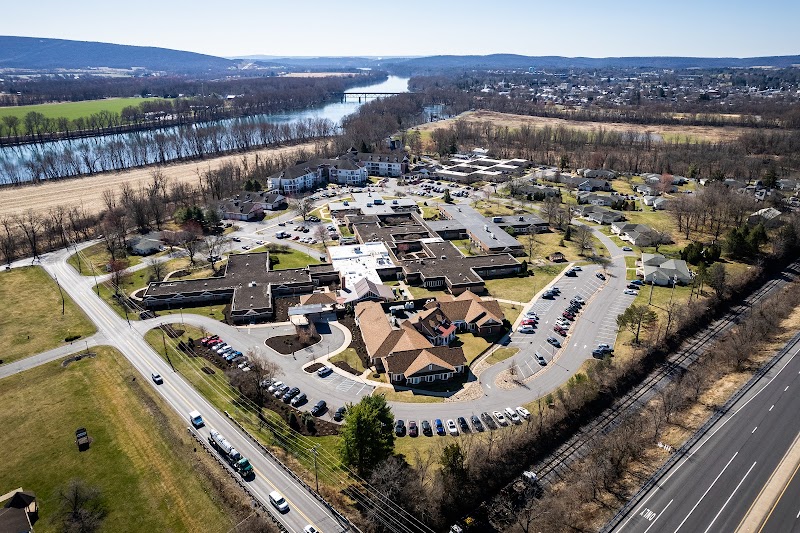
How Does Oak Glen Healthcare And Rehabilitation Center Compare to Other Pennsylvania Nursing Homes?

Compared to the 100 nursing homes in Pennsylvania, OAK GLEN HEALTHCARE AND REHABILITATION CENTER's overall rating (3 stars) matches the state average, staff turnover (48%) is near the state average of 46%, and health inspection rating (3 stars) is at the national benchmark.

What Should Families Ask When Visiting Oak Glen Healthcare And Rehabilitation Center?

Based on this facility's data, families visiting should ask: "Can I visit during a mealtime to observe dining assistance and food quality?" "How do you handle medical emergencies, and what is your hospital transfer rate?" "Can I speak with family members of current residents about their experience?"

Is Oak Glen Healthcare And Rehabilitation Center Safe?

Based on CMS inspection data, OAK GLEN HEALTHCARE AND REHABILITATION CENTER has a clean safety record: no substantiated abuse findings (meaning no confirmed cases of resident harm), no Immediate Jeopardy citations (the most serious violation level indicating risk of serious injury or death), and is not on the Special Focus Facility watch list (a federal program monitoring the lowest-performing 1% of nursing homes). The facility has a 3-star overall rating and ranks #1 of 100 nursing homes in Pennsylvania. While no facility is perfect, families should still ask about staff-to-resident ratios and recent inspection results during their visit.

Do Nurses at Oak Glen Healthcare And Rehabilitation Center Stick Around?

OAK GLEN HEALTHCARE AND REHABILITATION CENTER has a staff turnover rate of 48%, which is about average for Pennsylvania nursing homes (state average: 46%). Moderate turnover is common in nursing homes, but families should still ask about staff tenure and how the facility maintains care continuity when employees leave.

Was Oak Glen Healthcare And Rehabilitation Center Ever Fined?

OAK GLEN HEALTHCARE AND REHABILITATION CENTER has no federal fines on record. CMS issues fines when nursing homes fail to meet care standards or don't correct problems found during inspections. The absence of fines suggests the facility has either maintained compliance or corrected any issues before penalties were assessed. This is a positive indicator, though families should still review recent inspection reports for the full picture.

Is Oak Glen Healthcare And Rehabilitation Center on Any Federal Watch List?

OAK GLEN HEALTHCARE AND REHABILITATION CENTER is not on any federal watch list. The most significant is the Special Focus Facility (SFF) program, which identifies the bottom 1% of nursing homes nationally based on persistent, serious quality problems. Not being on this list means the facility has avoided the pattern of deficiencies that triggers enhanced federal oversight. This is a positive indicator, though families should still review the facility's inspection history directly.