GREENWOOD CENTER FOR REHABILITATION AND NURSING
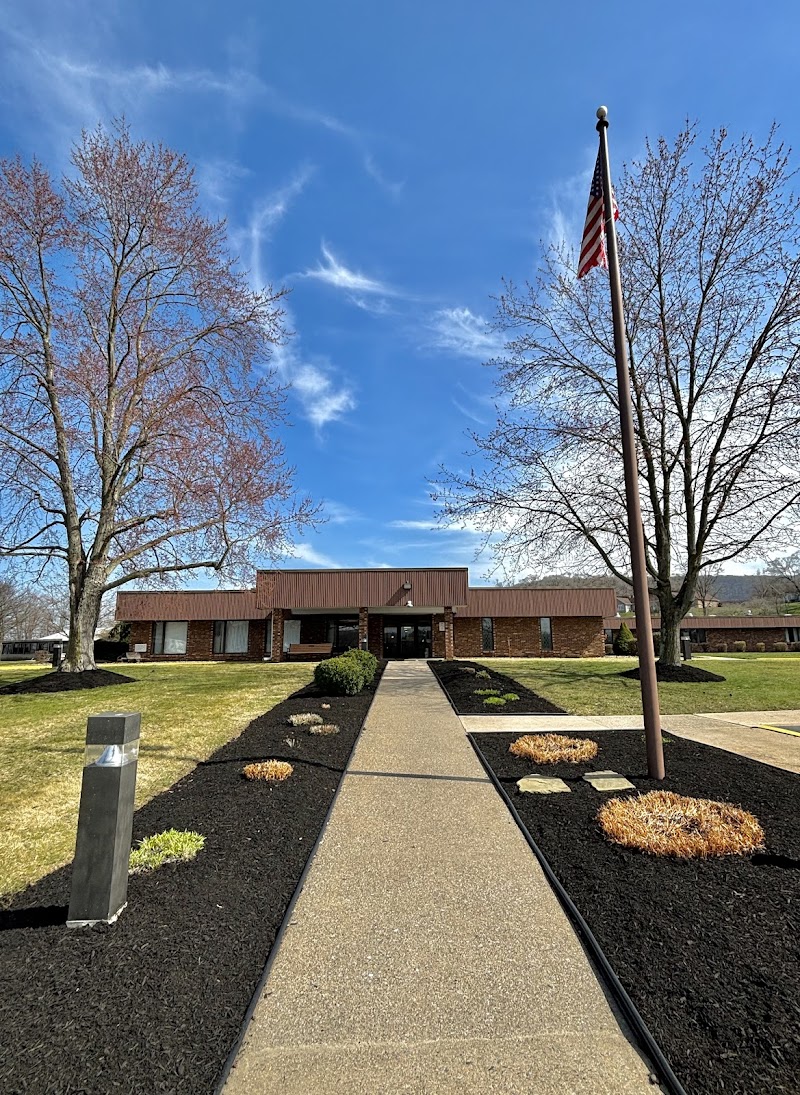
276 GREEN AVE EXTENDED, LEWISTOWN, PA 17044 (717) 242-1416
For profit - Corporation 134 Beds MORDECHAI WEISZ Data: November 2025
Trust Grade
35/100
#428 of 653 in PA
Last Inspection: March 2025

Within standard 12-15 month inspection cycle. Federal law requires annual inspections.

Overview

Greenwood Center for Rehabilitation and Nursing has received a Trust Grade of F, indicating significant concerns about the facility's overall quality. With a state ranking of #428 out of 653 in Pennsylvania, they are in the bottom half of facilities in the state, and they rank #3 out of 3 in Mifflin County, meaning only one local option is better. While the facility is on a trend of improvement, reducing issues from 26 in 2024 to 19 in 2025, there are still serious concerns, including a finding that staff failed to follow food safety standards, risking potential foodborne illness. Staffing is a weakness here, with a low RN coverage that is less than 90% of Pennsylvania facilities, and while turnover is average at 56%, the overall staffing rating is poor at 1 out of 5 stars. The facility also faces significant fines totaling $25,216, which is concerning, as it suggests ongoing compliance issues.

Trust Score
F
35/100
In Pennsylvania
#428/653
Bottom 35%
Safety Record
Moderate
Needs review
Inspections
Getting Better
26 → 19 violations
Staff Stability
⚠ Watch
56% turnover. Above average. Higher turnover means staff may not know residents' routines.
Penalties
✓ Good
$25,216 in fines. Lower than most Pennsylvania facilities. Relatively clean record.
Skilled Nurses
⚠ Watch
Each resident gets only 21 minutes of Registered Nurse (RN) attention daily — below average for Pennsylvania. Fewer RN minutes means fewer trained eyes watching for problems.
Violations
⚠ Watch
69 deficiencies on record. Higher than average. Multiple issues found across inspections.
★★☆☆☆
2.0
Overall Rating
★☆☆☆☆
1.0
Staff Levels
★★★★★
5.0
Care Quality
★☆☆☆☆
1.0
Inspection Score
Stable
2024: 26 issues
2025: 19 issues

The Good

  • 5-Star Quality Measures · Strong clinical quality outcomes
  • Full Sprinkler Coverage · Fire safety systems throughout facility
  • No fines on record

Facility shows strength in quality measures, fire safety.

The Bad

2-Star Overall Rating

Below Pennsylvania average (3.0)

Below average - review inspection findings carefully

Staff Turnover: 56%

Near Pennsylvania avg (46%)

Frequent staff changes - ask about care continuity

Federal Fines: $25,216

Below median ($33,413)

Moderate penalties - review what triggered them

Chain: MORDECHAI WEISZ

Part of a multi-facility chain

Ask about local staffing decisions and management

Staff turnover is elevated (56%)

8 points above Pennsylvania average of 48%

The Ugly 69 deficiencies on record

1 actual harm
Mar 2025 18 deficiencies
CONCERN (D)

Potential for Harm - no one hurt, but risky conditions existed

Deficiency F0568 (Tag F0568)

Could have caused harm · This affected 1 resident

**NOTE- TERMS IN BRACKETS HAVE BEEN EDITED TO PROTECT CONFIDENTIALITY** Based on clinical record review and family and staff interview, it was determined that the facility failed to provide a personal...

Read full inspector narrative →
**NOTE- TERMS IN BRACKETS HAVE BEEN EDITED TO PROTECT CONFIDENTIALITY** Based on clinical record review and family and staff interview, it was determined that the facility failed to provide a personal funds quarterly statement for one of one resident reviewed for personal funds concerns (Resident 25). Findings include: Clinical record review for Resident 25 revealed that her sister was designated as her first emergency contact and her responsible party. An active physician's order dated [DATE], assessed Resident 25 as incapable of understanding (her rights and responsibilities). Interview with Resident 25's sister on [DATE], at 11:44 AM revealed that she has never received an accounting statement of her sister's personal funds. Resident 25's sister confirmed that Resident 25's social security income is automatically forwarded to the facility for her care, and that she has obtained money from the business office to buy incidentals for her sister. Resident 25's sister stated that she did not know the balance in her sister's personal funds account. The surveyor reviewed the above concerns regarding Resident 25's personal funds quarterly statement during an interview with the Nursing Home Administrator and the Director of Nursing on [DATE], at 2:00 PM. The surveyor requested evidence that Resident 25's sister signed an authorization for the facility to establish a personal fund for Resident 25. A resident fund management service (RFMS) report dated from [DATE], through [DATE], provided by the facility on [DATE], revealed that the facility was designated as the representative payee and that Resident 25's name was on the statement; however, neither Resident 25's sister's name nor address was printed on the statement. The statement indicated that Resident 25 had $5,899.69 in her account as of [DATE]. The facility did not provide an authorization that stipulated Resident 25's sister agreed to the personal funds account as of [DATE], at 3:20 PM. During an interview with Employee 1, business office manager, on [DATE], at 3:20 PM the surveyor reviewed the concern that Resident 25's sister's name and address was not noted on the accounting statement provided for Resident 25, that there was no evidence that the facility provided Resident 25's sister a quarterly statement of her personal funds, and that the facility did not provide an authorization signed by Resident 25's sister that established the personal fund. Interview with Employee 1 on [DATE], at 8:30 AM revealed that the RFMS authorization available from the facility dated [DATE], did not include written authorization (a signature) from Resident 25's responsible party to establish a personal funds account. The authorization form was signed only by a facility representative. The form indicated that the statement address was Resident 25's sister's address. Employee 1 indicated that Resident 25's mother was Resident 25's responsible party until she died, and Resident 25's sister has been the family member involved in her care since that time. The facility could not provide an authorization signed by either Resident 25's mother or Resident 25's sister to establish a personal funds account. 28 Pa. Code 201.14(a) Responsibility of licensee 28 Pa. Code 201.29(a) Resident rights
CONCERN (D)

Potential for Harm - no one hurt, but risky conditions existed

Deficiency F0578 (Tag F0578)

Could have caused harm · This affected 1 resident

**NOTE- TERMS IN BRACKETS HAVE BEEN EDITED TO PROTECT CONFIDENTIALITY** Based on clinical record review and staff interview, it was determined that the facility failed to involve a resident in establi...

Read full inspector narrative →
**NOTE- TERMS IN BRACKETS HAVE BEEN EDITED TO PROTECT CONFIDENTIALITY** Based on clinical record review and staff interview, it was determined that the facility failed to involve a resident in establishing advance directives for one of 32 residents reviewed (Resident 93). Findings include: Clinical record review for Resident 93 revealed the resident was admitted to the facility on [DATE]. Review of a 5-day admission MDS (minimum data set, an assessment completed at periodic intervals of time to assess resident care needs) completed on [DATE], revealed facility staff assessed the resident as having a BIMS (brief interview of mental status) score of 15, indicating the resident was cognitively intact. Record review for Resident 93 also revealed a POLST (Pennsylvania orders for lift sustaining treatment) dated [DATE], that indicated Resident 93 desired to be a full code (attempt CPR (cardiopulmonary resuscitation) when the person has no pulse and is not breathing). The POLST was signed by the resident's sister who was listed as an emergency contact and a responsible party in the resident's clinical record. There was no evidence to indicate Resident 93 was involved in making the decision regarding her resuscitation. A quarterly MDS dated [DATE], for Resident 93 revealed the resident was again assessed as having a BIMS score of 15, indicating the resident was cognitively intact. Further record review for Resident 93 revealed the resident's electronic record reflected an active order for the resident to be a DNR (do not resuscitate, do not perform CPR if the person has no pulse and is not breathing). A new POLST for the resident dated February 19, 2025, was identified and indicated the resident was changed to a DNR. The POLST dated February 19, 2025, was signed by the resident's son who was listed as an emergency contact for the resident. There was no evidence Resident 93 was involved in making the decision regarding her wishes for resuscitation. Facility staff were not able to provide any evidence Resident 93 was involved in the decision regarding her resuscitation status on [DATE], or February 19, 2025, or that the resident was deemed not capable of being involved or making decisions regarding her health. The above information was reviewed with the Nursing Home Administrator and Director of Nursing on [DATE], at 2:40 PM. 28 Pa. Code 211.12(d)(1)(3)(5) Nursing services
CONCERN (D)

Potential for Harm - no one hurt, but risky conditions existed

Deficiency F0602 (Tag F0602)

Could have caused harm · This affected 1 resident

Based on clinical record review, review of select policies and procedures, and staff and resident interview, it was determined that the facility failed to thoroughly investigate and notify the appropr...

Read full inspector narrative →
Based on clinical record review, review of select policies and procedures, and staff and resident interview, it was determined that the facility failed to thoroughly investigate and notify the appropriate agencies of an identified incident of potential resident misappropriation of property (money) for one of two residents reviewed for abuse concerns (Resident 36). Findings include: Review of the facility's active policy entitled Abuse Prevention Program, revealed it is the facility's policy to have the residents be free from abuse, neglect, misappropriation of resident property and exploitation. The policy indicates all reports of resident abuse, neglect, exploitation, misappropriation of resident property, mistreatment and/or injuries of unknown source will be promptly reported to local, state, and federal agencies (as defined by the current regulations) and thoroughly investigated by facility management. The individual conducting the investigation will at a minimum, review the completed documentation forms, review the resident's medical record to determine events leading up to the incident, interview the person(s) reporting the incident, interview any witnesses to the incident, interview the resident, roommate, family members, and visitors, and other residents to who the accused employee provides care or services to. In an interview with Resident 36, of March 25, 2025, at 12:58 PM the resident stated he has lost a wallet with money in it at the facility, and another time just money out of the wallet. Resident 36, who presented during the interview as significantly visually impaired held up his wrist and stated a key hanging from a bracelet on his wrist was to a locked drawer he now had in his room. Resident 36 indicated in the interview noted above that he can't see, but heard someone in his drawer by his bed, one time he lost 40 dollars and another time he lost a wallet and 50 some dollars. He stated he was never refunded any money, and didn't know what ever happened with the investigation, but he did get a key to have a drawer locked in his room. Resident 36 indicated there is a couple staff that he now allows to get items for him from the drawer since he can't see. Resident 36 did not give specific dates of the incidents. Clinical record review for the last three months for Resident 36 did not reveal any documentation of any incidents of reported misappropriation of any property for the resident. Further information was requested from the Nursing Home Administrator and Director of Nursing on March 27, 2025, at 2:40 PM. On March 28, 2025, at 11:36 AM a typed document was provided by social services entitled, with Resident 36's name and Missing Money Investigation, the typed document included a summary of conversations between social services, administration and a typed summary of email conversations between facility staff and unknown persons. The document indicated that social services was informed on December 18, 2024, at 1:09 PM that Resident 36 was missing 40 dollars and that the resident stated he had a bifold wallet in his bedside drawer and 40 dollars was in the wallet brought in by a family member recently. Resident 36 was last aware of the cash being in the wallet on December 14, 2024, and the resident was alleging agency staff may have taken the money as he heard them opening and closing the drawer at some point. The document further noted Resident 36 stated he was told the staff member was looking for cream, or looking for a comb, stating the staff knew he could not see. The resident indicated he was fed up with this as it was now $95 that had been stolen from him. Information under the same date on the document indicated the resident agreed to a key at the time to lock the bedside drawer. Continued entries on the typed document indicated administration was aware on December 18, 2024, of the resident's allegation of missing money and requested staff pull schedules and start the process of reviewing staff who worked in the hall where the resident resides, and statements were to be collected from the staff. A follow up entry on the document dated December 20, 2024, confirmed the resident's family member did leave the resident two 20-dollar bills on a recent visit to the facility. It was also noted Resident 36 then shared a specific name of someone he feels may have been involved in the missing money. There was no evidence of any staff statements, roommate statements, or an alleged perpetrator statement. The next entry on the document was not dated until March 20, 2025, over three months later, noting Resident 36, was asking for an update on the missing money from December 2024. On March 27, 2025, it was noted on the typed document, A call to the Area Agency on Aging finds the issue unsubstantiated. There was no further evidence on the missing money investigation for Resident 36. There was no evidence of any review of schedules, or staff interview/statements regarding the missing money, when the allegation was presented in December 2024. There was no evidence of notification to local law enforcement, or the Department of Health field office as required. A grievance was identified for Resident 36 dated March 27, 2024, a year prior, referencing the resident's first report of a missing wallet, as the resident referenced above of an incident occurring prior to the December 2024, incident. Interview with the Director of Nursing on March 28, 2025, at 12:24 PM confirmed the facility had no evidence of a completed investigation of Resident 36's missing money reported on December 18, 2024, or that it was reported to local law enforcement of the Department of Health field office as required. 28 Pa. Code 201.14 (a) Responsibility of licensee 28 Pa. Code 201.18 (e)(1) Management
CONCERN (D)

Potential for Harm - no one hurt, but risky conditions existed

Abuse Prevention Policies (Tag F0607)

Could have caused harm · This affected 1 resident

Based on a review of select facility policies and procedures, a review of select personnel records, and staff interview, it was determined that the facility failed to complete required background chec...

Read full inspector narrative →
Based on a review of select facility policies and procedures, a review of select personnel records, and staff interview, it was determined that the facility failed to complete required background check screening for one of five newly hired employees reviewed (Employee 3) Findings include: In accordance with Act 13 Elder Abuse Mandatory Reporting and Act 169 Criminal Background Checks, nursing facilities are required to obtain a criminal background check on all newly hired employees. Facilities are required to obtain the Pennsylvania State Police (PSP) background check within 30 days of hire on all prospective employees. If the applicant has not been a Pennsylvania resident for the two years before application, they will need to have a PSP criminal history background check completed and a Federal Bureau of Investigation (FBI) Background Check. The facility policy entitled, Criminal History Background Check Policy, last reviewed without changes on January 29, 2025, revealed that if the applicant/employee has been a resident of Pennsylvania for more than two years, the criminal history information will be obtained from the Pennsylvania State Police. If the applicant/employee has been a resident of Pennsylvania for less than two years, the criminal history information will be obtained from the Federal Bureau of Investigation (FBI) through fingerprint-based background checks. Review of Employee 3's (licensed practical nurse) personnel record revealed that the facility hired her on January 21, 2025. A consent to conduct a criminal background check signed by Employee 3 on November 13, 2024, indicated that her most recent previous address was not in Pennsylvania, but in Virginia. An Acknowledgement and Provisional Employment from Pennsylvania form signed by Employee 3 on November 13, 2024, stipulated that she was not a resident of Pennsylvania for the past two years. Employee 3 listed a previous address in Virginia. Employee 3's personnel record did not contain evidence that the facility obtained an FBI criminal background check for the employee who was not a resident of Pennsylvania for two years preceding her hire date. Interview with Employee 2 (human resources) on March 27, 2025, at 9:30 AM, 10:30 AM, and 11:24 AM indicated that the facility had no further evidence of an FBI criminal background check for Employee 3. Interview with the Director of Nursing on March 28, 2025, at 12:45 PM confirmed that the facility could not provide evidence that the facility identified the need for an FBI criminal background check for Employee 3 before the surveyor's questioning. 483.12(b)(1)-(5)(ii)(iii) Develop/implement Abuse/neglect Policies Previously cited deficiency 3/29/24 28 Pa. Code 201.14(a) Responsibility of licensee 28 Pa Code 201.18(b)(1)(3)(e)(1) Management 28 Pa Code 201.19(8) Personnel policies and procedures
CONCERN (D)

Potential for Harm - no one hurt, but risky conditions existed

ADL Care (Tag F0677)

Could have caused harm · This affected 1 resident

**NOTE- TERMS IN BRACKETS HAVE BEEN EDITED TO PROTECT CONFIDENTIALITY** Based on clinical record review, observation, and staff and resident interview, it was determined that the facility failed to pr...

Read full inspector narrative →
**NOTE- TERMS IN BRACKETS HAVE BEEN EDITED TO PROTECT CONFIDENTIALITY** Based on clinical record review, observation, and staff and resident interview, it was determined that the facility failed to provide personal and oral hygiene assistance for dependent residents for three of three residents reviewed for activities of daily living (ADL) concerns (Residents 110, 36, and 93). Findings include: Observation of Resident 110 on March 25, 2025, at 12:46 PM revealed that his fingernails were several millimeters longer than the tips of his fingers and were discolored. Interview with Resident 110 on the date and time of the observation revealed that he required the assistance of staff to trim his fingernails. Resident 110 stated that staff told him that they would trim them; however, no one has. Clinical record review for Resident 110 revealed a plan of care initiated by the facility on September 25, 2024, due to Resident 110's deficits in ADL self-care performance. Interventions listed on the plan of care instructed staff to check Resident 110's nail length and trim and clean his nails on the day he received bathing assistance. The surveyor reviewed the above concern regarding Resident 110's fingernails during an interview with the Nursing Home Administrator and the Director of Nursing on March 26, 2025, at 2:00 PM. Observation of Resident 110 on March 28, 2025, at 11:40 AM revealed that his fingernails were clipped to an appropriate length. Interview with Resident 110 on the date and time of the observation confirmed that staff trimmed his fingernails after he and the surveyor spoke on March 25, 2025. An observation and interview of Resident 93 on March 25, 2025, at 12:20 PM revealed a buildup of a white/yellow substance on the resident's lower teeth near the gumline and between her teeth. Resident 93 indicated she does not brush her teeth and staff do not assist her in doing so. A 5-day MDS (minimum data set, an assessment completed at periodic intervals of time to assess resident care needs) dated February 13, 2025, indicated facility staff assessed Resident 93 as requiring substantial/maximum assistance for oral hygiene. A review of Resident 93's dental records revealed the resident was seen by the dentist at the facility on August 27, 2024. The dentist noted soft plaque/food debris buildup was heavy on the residents teeth and that the resident had an upper denture and some lower natural teeth. The dental report indicated the patient was instructed to clean the denture, remove it at night, and action to the nursing home staff indicated the patient needs help with daily oral hygiene. Resident 93 was again seen by the dentist on October 2, 2024, noting actions required by nursing home staff as patient needs help with daily oral hygiene, please make sure she removes dentures at bedtime, cleans them, and soaks them overnight. Resident 93 was again seen by the dentist on March 14, 2025, where she received a dental cleaning, and it was again noted as soft plaque/food debris buildup on the teeth as heavy with the action required by the nursing home staff again stating the patient needs help with daily oral hygiene. There was no evidence to indicate facility staff brushed Resident 93's lower natural teeth as she had received the dental cleaning on March 14, 2025, and buildup was observed on the resident's lower teeth as noted above on March 25, 2025. The above information regarding Resident 93 was reviewed with the Nursing Home Administrator and Director of Nursing on March 27, 2025, at 2:40 PM. An observation of Resident 36 on March 25, 2025, at 12:48 PM revealed he was lying in bed. The resident's finger nails on both hands significantly extended past the end of the fingers 1/4 inch or greater and appeared brown and black underneath the nail. Resident 36 indicated he can't see, and staff usually trims them, but they just happened to be observed at the longest point. Review of a quarterly MDS dated [DATE], revealed facility staff assessed the resident as dependent on staff for personal hygiene needs, and the resident's vision was severely impaired. The above information regarding Resident 36 was reviewed with the Nursing Home Administrator and Director of Nursing on March 27, 2025, at 2:30 PM. 483.24(a)(2) ADL Care Provided for Dependent Residents Previously cited deficiency 3/29/24 and 9/5/24 28 Pa. Code 211.12(d)(1)(5) Nursing services
CONCERN (D)

Potential for Harm - no one hurt, but risky conditions existed

Deficiency F0679 (Tag F0679)

Could have caused harm · This affected 1 resident

Based on family and staff interview, and review of facility documents, it was determined that the facility failed to provide an ongoing program of activities designed to meet the individual needs and ...

Read full inspector narrative →
Based on family and staff interview, and review of facility documents, it was determined that the facility failed to provide an ongoing program of activities designed to meet the individual needs and interests for one of three residents reviewed (Resident 101). Findings include: An interview with Resident 101's responsible party revealed concerns that there are no activities in the evenings on the 200 hall, memory care unit. Review of the facility activity calendars for January, February, and March 2025, revealed that there were no activities scheduled after 4:00 PM. Interview with the Director of Nursing and the Activity Director on March 27, 2025, at 2:15 PM confirmed the above noted findings related to the activity program for Resident 101 and the 200 hall. The facility failed to provide an ongoing program of activities to meet the needs of Resident101 and the 200 hall residents. 28 Pa. Code 201.29 (a) Resident rights
CONCERN (D)

Potential for Harm - no one hurt, but risky conditions existed

Quality of Care (Tag F0684)

Could have caused harm · This affected 1 resident

Based on clinical record review, observation, and resident and staff interview, it was determined that the facility failed to provide the highest practicable care regarding physician ordered intervent...

Read full inspector narrative →
Based on clinical record review, observation, and resident and staff interview, it was determined that the facility failed to provide the highest practicable care regarding physician ordered interventions and treatments for one of 24 residents (Resident 42); and regarding an implanted cardiac pacemaker for one of 24 residents reviewed (Resident 30). Findings include: Clinical record review for Resident 42 revealed current physician orders for the following: Geri sleeves to all four extremities and remove for care every shift for skin alterations Bilateral fall mats in place while resident was in bed every shift Observation of Resident 42 revealed the following: On March 26, 2025, at 1:55 PM Resident 42 was in bed resting. On March 27, at 1:05 PM Resident 42 was dressed in the solarium in their wheelchair. On March 27, 2025, at 2:06 PM Resident 42 was in bed resting. No Geri sleeves were observed on Resident 42's four extremities and no bilateral fall mats were observed while Resident 42 was in bed during the above observations. The above information was reviewed during an interview on March 27, 2025, at 2:20 PM with the Nursing Home Administrator and Director of Nursing. Interview with Resident 30 on March 26, 2025, at 9:58 AM revealed that he had a cardiac pacemaker (surgically implanted medical device with wires attached to heart muscle to deliver electrical impulses to maintain a normal heart rhythm when an abnormality in the heart rhythm is detected). Resident 30 stated that he has a machine at home that performs cardiac pacemaker checks. Resident 30 stated that, to the best of his knowledge, there was no monitoring of his pacemaker while he resided at the facility. Clinical record review for Resident 30 revealed a diagnoses list that included the presence of a cardiac pacemaker. Plans of care developed by the facility to identify Resident 30's medical care needs did not address the presence of an implanted cardiac pacemaker. Available active physician orders did not include care and services for an implanted cardiac pacemaker. No physician order addressed the use of a machine to monitor Resident 30's implanted cardiac pacemaker. The surveyor reviewed the above concerns regarding Resident 30's implanted cardiac pacemaker during an interview with the Nursing Home Administrator and the Director of Nursing on March 26, 2025, at 2:00 PM. A plan of care initiated by the facility following the surveyor's questioning stipulated that Resident 30 had a cardiac pacemaker related to a diagnosis of atrial fibrillation (an irregular heart rhythm that can cause fatigue, palpitations, dizziness and stroke (brain damage from either a blood clot or bleeding in the brain). Nursing documentation following the surveyor's questioning dated March 27, 2025, at 6:53 PM revealed that Resident 30 reported to the staff that he has a machine that is in his home that checks his (pacemaker) appliance. Resident 30 stated that he had, no set schedule for pacemaker checks, that the cardiology office does not call him ahead of time, and that he does not have to, do anything special, for the report to run. Resident 30 stated that, as long as I'm within so many feet of my machine, they just run a report. I never know it even happens until they call me afterward and say that everything looks fine. The staff indicated that they would call Resident 30's family to inquire about bringing Resident 30's pacemaker machine into the facility while he is residing there. Nursing documentation dated March 27, 2025, at 7:08 PM revealed that staff contacted Resident 30's responsible party emergency contact to request that the family bring Resident 30's pacemaker check machine to the facility to allow for routine pacemaker checks while in the facility. 483.25 Quality of Care Previously cited 2/27/25 and 6/18/24 28 Pa. Code 211.10(c) Resident care policies 28 Pa. Code 211.12(c)(d)(1)(3)(5) Nursing services
CONCERN (D)

Potential for Harm - no one hurt, but risky conditions existed

Accident Prevention (Tag F0689)

Could have caused harm · This affected 1 resident

Based on clinical record review and staff interview, it was determined that the facility failed to implement interventions to prevent future falls or accidents for two of three residents reviewed for ...

Read full inspector narrative →
Based on clinical record review and staff interview, it was determined that the facility failed to implement interventions to prevent future falls or accidents for two of three residents reviewed for falls (Residents 93 and 110). Findings include: An interview and observation of Resident 93 on March 25, 2025, at 12:23 PM revealed she had been to the hospital recently for stitches in her head after she fell when she was trying to reach over and pick something up off the floor from the bed. A reddened area was observed on the right side of her eyebrow. Clinical record review for Resident 93 revealed a medical practitioner's note dated March 11, 2025, at 3:23 PM that indicated the resident was being seen as a follow up to an emergency room visit due to a fall with a laceration requiring eight stiches. Further clinical record review for Resident 93 revealed she was admitted to the facility from the hospital on May 8. 2024, after repeated falls at her prior place of living. Resident 93 was noted to have a fall in the facility on August 8, 2024, sustaining a skin tear to her elbow. The resident was educated to use her call bell for assistance and a sign was to be placed in her room as a reminder to use the bell. Clinical record review revealed that Resident 93 fell on November 7 and 17, 2024, attempting to transfer in her room. Interventions included reminding the resident to use the call bell and ensure the sign was in place. Resident 93's care plan did reflect the addition every two-hour toileting on November 8, 2024, and non-skid strips to the floor on the right side of the resident's bed on November 20, 2024. Clinical record review revealed that Resident 93 fell on December 1, 2024, at 7:30 PM. Resident 93 was found on her bathroom floor after she had removed her clothing and was in the bathtub and had got herself up from the floor and placed herself on the toilet. No injury was noted. The nurse aides assisted the resident with evening care and placed the resident in bed, although no new immediate interventions to prevent Resident 93 from falling/injury were identified. Clinical record review revealed that Resident 93 was found on the floor of her room scooting on her bottom towards the bathroom on December 2, 2024, at 5:04 AM, less than 10 hours after the fall the evening of December 1, 2024, noted above. A nursing follow up note dated December 2, 2024, at 5:57 AM indicated the resident stated to the writer she got out of bed because she had to pee. Resident 93 was noted to have pain in her face with a bruise noted to her left cheekbone area and left knee. Staff were requested to place gripper socks on the resident and educated her on using the call bell for assistance. On December 30, 2024, at 2:00 PM it was noted that Resident 93 was again found on the floor of her room as she attempted to self-transfer from her bed to her recliner. Resident 93 was again reminded to use her call bell for transfers. There were no new interventions identified. A nursing note dated March 11, 2025, at 5 12:08 AM noted the nurse was called to the unit at midnight as Resident 93 was found sitting on the floor next to her bed with a large amount of bleeding noted. A laceration was identified above her eyebrow. Resident 93 was transferred to the emergency room for treatment and received eight sutures to the area by her right eyebrow. The Director of Nursing confirmed there was no further information to indicate additional measures/interventions were implemented to prevent falls/injury for Resident 93 since November 20, 2024, after Resident 93 sustained falls on December 1, 2, and 30, 2024. Resident 93 then fell on March 11, 2025, requiring sutures to a laceration sustained from a fall. Clinical record review for Resident 110 revealed nursing documentation dated for Tuesday, March 1, 2025, at 4:12 AM that staff entered Resident 110's room to find him sitting on the floor beside his bed. Resident 110's clinical record (physician orders, progress notes or care plan interventions) contained no evidence that the facility implemented any new fall prevention interventions in response to Resident 110's fall on March 1, 2025. Nursing documentation dated March 3, 2025, at 3:30 AM revealed that staff again found Resident 110 on the floor in his room after his roommate activated his call bell to inform staff that Resident 110 was on the floor. Review of the plan of care developed by the facility to address Resident 110's fall risk revealed that staff implemented three new interventions (fall mats, low bed, and a toileting program) after Resident 110's fall on March 3, 2025. Interview with the Director of Nursing on March 28, 2025, at 12:05 PM confirmed that the facility did not have evidence of the implementation of any new fall prevention intervention following Resident 110's fall on March 1, 2025. 483.25 (d)(1)(2) Free of Accident Hazards/Supervision/Devices Previously cited 3/29/24 28 Pa. Code 211.12(d)(1)(5) Nursing services
CONCERN (D) 📢 Someone Reported This

A family member, employee, or ombudsman was alarmed enough to file a formal complaint

Potential for Harm - no one hurt, but risky conditions existed

Deficiency F0694 (Tag F0694)

Could have caused harm · This affected 1 resident

Based on closed clinical record review, select facility policies and procedures, and staff interviews, it was determined that the facility failed to ensure that intravenous catheters were assess and m...

Read full inspector narrative →
Based on closed clinical record review, select facility policies and procedures, and staff interviews, it was determined that the facility failed to ensure that intravenous catheters were assess and maintained per the resident plan of care for one of one resident reviewed (Resident 120). Findings include: Review of the policy entitled Midline Dressing Changes, last reviewed by the facility on January 29, 2025, indicates that the facility will change a resident's midline (an access line placed in an arm to administer medications) catheter 24 hours after its insertion, then every five to seven days. Nursing staff are to document the date and time of the dressing change, description of insertion site, and any noted complications. Review of Resident 120's clinical record revealed nursing documentation dated October 29, 2024, at 4:59 AM that indicated a midline was to be placed for intravenous (IV) access. The physician's order dated October 29, 2024, indicated nursing staff were to administer Rocephin (used to treat bacterial infections) 1 gm (gram) every day for 10 days through the IV. Review of Resident 120's plan of care for intravenous care dated November 5, 2024, seven days after insertion, indicated that nursing staff were to change Resident 120's IV dressing every seven days, flush both ports before and after medication administration, and monitor for signs and symptoms of infection. There was no documented evidence in Resident 120's closed clinical record to indicate that nursing staff changed her midline IV access dressing, flushed ports before and after medication administration, or monitored the site for signs and symptoms of infection. Interview with the Director of Nursing on March 31, 2025, at 1:55 PM confirmed the above finding for Resident 120. 28 Pa. Code 211.9(a)(1)(k) Pharmacy services 28 Pa. Code 211.10 (a)(c)(d) Resident care policies 28 Pa. Code 211.12(d)(1)(3)(5) Nursing services
CONCERN (D)

Potential for Harm - no one hurt, but risky conditions existed

Respiratory Care (Tag F0695)

Could have caused harm · This affected 1 resident

Based on observation, clinical record review, and staff interview, it was determined that the facility failed to provide appropriate respiratory care and services for one of one resident reviewed (Res...

Read full inspector narrative →
Based on observation, clinical record review, and staff interview, it was determined that the facility failed to provide appropriate respiratory care and services for one of one resident reviewed (Resident 42). Findings include: According to the American Association for Respiratory Care proper cleansing of respiratory (nebulizer) equipment reduces infection risk. The longer a dirty nebulizer sits and is allowed to dry, the harder it is to clean thoroughly. Parts of the aerosol drug delivery device should be rinsed and then washed with soap and hot water after each treatment. Once completely dry, store the nebulizer cup and mouthpiece in a zip lock bag. Clinical record review for Resident 42 revealed the following current physician orders: Change the oxygen tubing weekly and as needed (PRN) every night shift every Sunday Change humidifier bottle (to help prevent dry nostrils [nose] while on oxygen) once weekly on Sunday during night shift and PRN Observation of Resident 42 revealed the following: On March 25, 2025, (Tuesday), at 12:15 PM Resident 42's oxygen tubing was dated March 16, 2025 (Sunday, nine days prior). On March 26, 2025 (Wednesday), at 12:43 PM and 1:55 PM Resident 42's oxygen tubing was now dated March 23, 2025 (Sunday, three days prior). On March 27, 2025, at 1:05 PM Resident 42's oxygen tubing continued to be dated March 23, 2025. There was no humidification bottle attached to Resident 42's oxygen during any of the observations. Clinical record review for Resident 42 revealed that on March 23, 2025, staff documented completion of Resident 42's oxygen tubing and humidification cannister changes but failed to change the tubing and/or apply a humidification bottle. On March 26, 2025, at 1:55 PM observation, interview, and review of Resident 42's oxygen tubing and humidification staff documentation occurred with the Director of Nursing (DON). The DON acknowledged that staff did not change Resident 42's tubing on March 23, 2025, changed it between the surveyor observations on March 25, 2025, and March 26, 2025, and backdated the tubing to March 23, 2025. The DON reveled that Resident 42 was not to have humidified oxygen ordered and/or administered. 483.25(i) Respiratory/tracheostomy Care and Suctioning Previously cited 3/29/24 28 Pa. Code 211.10 (c)(d) Resident care policies 28 Pa. Code 211.12(d)(1)(5) Nursing services
CONCERN (D)

Potential for Harm - no one hurt, but risky conditions existed

Deficiency F0700 (Tag F0700)

Could have caused harm · This affected 1 resident

**NOTE- TERMS IN BRACKETS HAVE BEEN EDITED TO PROTECT CONFIDENTIALITY** Based on a review of select facility policies and procedures, clinical record review, observation, and staff interview, it was d...

Read full inspector narrative →
**NOTE- TERMS IN BRACKETS HAVE BEEN EDITED TO PROTECT CONFIDENTIALITY** Based on a review of select facility policies and procedures, clinical record review, observation, and staff interview, it was determined that the facility failed to thoroughly assess the potential entrapment risks from the use of bed rails for one of five residents reviewed for accident hazards (Resident 10). Findings include: The facility policy entitled, Bed Safety, last reviewed without changes on January 29, 2025, indicated that the facility would strive to provide a safe sleeping environment for the resident. The resident's sleeping environment shall be assessed by the interdisciplinary team, considering the resident's safety, medical conditions, comfort, and freedom of movement, as well as input from the resident and family regarding previous sleeping habits and bed environment. Inspection by maintenance staff of beds and related equipment is part of the regular bed safety program to identify risks and problems including potential entrapment risks. The facility will ensure that bed side rails are properly installed using the manufacturer's instructions and other pertinent safety guidance to ensure proper fit (e.g. avoid bowing, ensure proper distance from the headboard and footboard, etc.); and identify additional safety measures for residents who have been identified as having a higher than usual risk for injury including entrapment (e.g. altered mental status, restlessness, etc.). References referred to at the end of the facility policy included the FDA (The United States Food and Drug Administration) Hospital Bed System Dimensional and Assessment Guidance to Reduce Entrapment. The FDA Hospital Bed System Dimensional and Assessment Guidance to Reduce Entrapment, is guidance that identifies key parts of the body at risk for entrapment, describes potential entrapment areas or zones, and recommends maximum and minimum dimensional limits of gaps or openings in hospital bed systems. Three key body parts at risk for life-threatening entrapment in the seven zones of a hospital bed system discussed in this guidance are the head, neck, and chest. To reduce the risk of head entrapment, openings in the bed system should not allow the widest part of a small head (head breadth measured across the face from ear to ear) to be trapped. FDA is using a head breadth dimension of 120 mm (4.75 inches) as the basis for its dimensional limit recommendations. To reduce the risk of neck entrapment, openings in the bed system should not allow a small neck to become trapped. FDA is recommending 60 mm (two and three-eighths inches) as an appropriate dimension for neck diameter. The openings in a bed system should be wide enough not to trap a large chest through the opening between split rails. FDA concurs with the dimension of 318 mm (12.5 inches) to represent chest depth for the population vulnerable to entrapment and has used this dimension as the basis for its recommended dimensional limits. This guidance describes seven zones in the hospital bed system where there is a potential for patient entrapment. Zone six is the space between the end of the rail and the side edge of the headboard or footboard. This space may present a risk of either neck entrapment or chest entrapment. Information provided by the facility's bed manufacturer, Direct Supply, indicated that maintenance is typically responsible for testing and auditing the bed systems to verify that the hardware is in safe, functioning condition. The documentation stipulated that there are seven entrapment zones that have been identified by the FDA. The zones five through seven were not pointed out in the Bed Entrapment Grid but they are identified as: Zone five: space that occurs when a head and foot side rail (split rail) is used on the same side of a bed. Zone six: space that occurs between the end of the rail and the side edge of the headboard or footboard. This space can create a risk of either neck or chest entrapment. This gap can change when raising or lowering the head or foot sections of the bed. This space may increase, decrease, or become less accessible or disappear entirely. Zone seven: space that occurs between the inside surface of the headboard or footboard and the end of the mattress. This space can create a risk of head entrapment. Per the information, Zones five, six, or seven will keep the bed from passing the overall inspection. Observation of Resident 10's room on March 26, 2025, at 10:32 AM revealed bed rails mounted to the head of her bed bilaterally. Resident 10's bed was also equipped with a headboard and a footboard. A Bed System Measurement Device Test Results Worksheet (form the facility utilized to document the assessment of potential entrapment zones) dated January 14, 2025, noted an assessment of zones one through four. There was no documentation of an assessment for zone 6 although Resident 10's bed was equipped with a headboard. Interview with Employee 7, environment director, on March 28, 2025, at 12:08 PM indicated that maintenance staff measure six potential zones for resident bed entrapment; however, these six zones are not documented on the form in the resident's medical record and the facility did not have measurements that define when a space posed a risk versus passed inspection (e.g., a space measured greater than 12.5 inches). Review of the list of diagnoses in Resident 10's medical record included conversion disorder with seizures or convulsions (mental health condition that causes physical symptoms such as involuntary jerking motions) dated December 20, 2022. A review of Resident 10's medication regime revealed three medications (Lamictal, Keppra, and Depakote) designated for the treatment of a seizure disorder (a sudden, involuntary, burst of electrical activity in the brain that can affect awareness, movements, sensations or behaviors). A Side Rail and Entrapment assessment dated [DATE], for Resident 10, revealed that staff assessed Resident 10 as not having epilepsy or other involuntary movements, which may cause entrapment. A Side Rail and Entrapment assessment dated [DATE], for Resident 10 revealed that staff did not complete the second question of the Entrapment Risk Assessment portion of the assessment. The question required a yes or no response to whether Resident 10 had epilepsy or other involuntary movements, which may cause entrapment. Both assessments used to assess Resident 10's side rail entrapment risks failed to include her diagnosis of epilepsy. The surveyor reviewed the above concerns regarding Resident 10's use of side rails during an interview with the Director of Nursing on March 28, 2025, at 12:00 PM. 483.25(n)(1)-(4) Bed Rails Previously cited deficiency 3/29/24 28 Pa. Code 211.12(d)(1)(3)(5) Nursing services
CONCERN (D)

Potential for Harm - no one hurt, but risky conditions existed

Deficiency F0744 (Tag F0744)

Could have caused harm · This affected 1 resident

**NOTE- TERMS IN BRACKETS HAVE BEEN EDITED TO PROTECT CONFIDENTIALITY** Based on clinical record review and staff interview, it was determined that the facility failed to develop and implement an indi...

Read full inspector narrative →
**NOTE- TERMS IN BRACKETS HAVE BEEN EDITED TO PROTECT CONFIDENTIALITY** Based on clinical record review and staff interview, it was determined that the facility failed to develop and implement an individualized person-centered care plan to address dementia and cognitive loss displayed by two of three residents reviewed (Residents 39 and 99). Findings include: Clinical record review for Resident 39 revealed the facility admitted her on October 12, 2024. A diagnosis of Dementia (loss of memory, language, problem-solving, and other thinking abilities that interfere with daily life) was added to her diagnosis list on October 22, 2024. A review of Resident 39's admission Minimum Data Set Assessment (MDS, a form completed at specific intervals to determine care needs) dated October 18, 2024, indicated that the facility determined a care plan for dementia and cognitive loss would be developed. A review of Resident 39's care plan revealed that there was no indication that the facility had developed and implemented a person-centered care plan to address the resident's dementia and cognitive loss. Clinical record review for Resident 99 revealed the facility admitted her on September 3, 2024, with a diagnosis of dementia. A review of Resident 99's admission MDS dated [DATE], indicated that the facility determined that a care plan for dementia and cognitive loss would be developed. A review of Resident 99's care plan revealed that there was no indication that the facility had developed and implemented a person-centered care plan to address the resident's dementia and cognitive loss The above noted findings were reviewed with the Director of Nursing and Nursing Home Administrator on March 27, 2025, at 2:10 PM. An Interview with the Director of Nursing on March 28, 2025, at 10:30 AM confirmed that the facility failed to develop a person-centered care plan related to dementia for Residents 39 and 99. 483.40(b)(3) Dementia Treatment and Services Previously cited 3/29/2024 28 Pa Code 211.12 (d)(1)(3)(5) Nursing services
CONCERN (D)

Potential for Harm - no one hurt, but risky conditions existed

Infection Control (Tag F0880)

Could have caused harm · This affected 1 resident

Based on observation, clinical record review, and resident and staff interview, it was determined that the facility failed to implement enhanced barrier precautions for one of two residents reviewed f...

Read full inspector narrative →
Based on observation, clinical record review, and resident and staff interview, it was determined that the facility failed to implement enhanced barrier precautions for one of two residents reviewed for infection control concerns (Resident 173). Findings include: Review of the Centers for Medicare and Medicaid Services (CMS) memo entitled, Enhanced Barrier Precautions in Nursing Homes, dated March 20, 2024, revealed that nursing care facilities are to use enhanced barrier precautions (EBP, gown and glove use) for residents with chronic wounds or indwelling medical devices (i.e., indwelling urinary catheters) during high-contact resident care activities regardless of their multidrug-resistant organism status. High-contact activity would include things like dressing, transferring, changing linens, providing hygiene, changing briefs, wound care, or device care. Interview with Resident 173 on March 25, 2025, at 3:31 PM revealed that she has had a surgical wound open, that will not heal completely, since November 2024. Observation of Resident 173's room on the date and time of the interview revealed no evidence that the facility implemented enhanced barrier precautions for Resident 173. Clinical record review for Resident 173 revealed nursing documentation dated March 24, 2025, at 12:41 PM that per report from the hospital staff, Resident 173 had a laminectomy (surgical procedure that removes a portion of the vertebra, bones that form the spine) in November 2024. The surgical site on admission to the hospital was draining, she received services from a wound specialist, and she had a dry dressing intact to the surgical site. Nursing documentation dated March 24, 2025, at 6:51 PM revealed that Resident 173 arrived at the facility. Resident 173 had a possible abscess (collection of infectious fluids, pus) on her surgical area from a laminectomy in November and presented with an open surgical incision on her lower back that was draining clear fluids. The staff assessed the wound with yellow slough (unhealthy tissue of a wound bed that complicates healing). Interview with Employee 8 (licensed practical nurse) on March 25, 2025, at 3:42 PM confirmed that there was no indication at Resident 173's doorway or in her room that alerted staff or visitors of the implementation of enhanced barrier precautions. Clinical record review for Resident 173 revealed a physician's order dated March 25, 2025, at 4:37 PM (following the surveyor's questioning) for staff to implement enhanced barrier precautions every shift due to the presence of a wound. The surveyor reviewed the above concerns regarding the implementation of EBP for Resident 173 during an interview with the Nursing Home Administrator and the Director of Nursing on March 26, 2025, at 2:00 PM. 483.80(a)(1)(2)(4)(e)(f) Infection Prevention and Control Previously cited deficiency 3/29/24 28 Pa. Code 211.12(d)(1)(5) Nursing services
CONCERN (E)

Potential for Harm - no one hurt, but risky conditions existed

Safe Environment (Tag F0584)

Could have caused harm · This affected multiple residents

Based on observation and resident and staff interview, it was determined that the facility failed to provide adequate housekeeping and maintenance services to ensure a clean, safe, and orderly environ...

Read full inspector narrative →
Based on observation and resident and staff interview, it was determined that the facility failed to provide adequate housekeeping and maintenance services to ensure a clean, safe, and orderly environment on three of five nursing halls (100, 200, and 400 Nursing Halls, Residents 16, 42, 91, and 101). Findings include: Clinical record review for Resident 91 revealed that the facility admitted him on March 5, 2025. On March 25, 2025, at 12:10 PM the drywall to the right of Resident 91's wall heater was marred and gouged. Concurrent interview with Resident 91 revealed that this occurred before their admission. On March 26, 2025, at 1:59 PM the drywall was marred behind Resident 42's head of the bed. Concurrent interview with the Director of Nursing acknowledged the drywall concerns for both Resident 91 and 42. Observation of Resident 16's room on March 25, 2025, at 11:27 AM revealed marring and uneven drywall on the wall outside the bathroom and between the closets. The bathroom walls were also marred. A cobweb was observed hanging from the wall to the center ceiling light in the bathroom. Dirt and debris was observed on the floor along the edge and corners of the bathtub. A light bulb was not working in the light fixture above the resident's sink. A follow up observation of Resident 16's room and bathroom on March 27, 2025, at 9:41 AM revealed the above observations remained unchanged. Observation of Resident 101's room on March 25, 2025, at 10:57 AM revealed loose dirt in a corner behind the door along with a candy wrapper. The wall behind the door was all marred. The bathroom door frame and the bathroom door were all marred, and the wood was visible at the bottom of the bathroom door. The bathroom wall near the wall register was patched but not painted. The above information was reviewed with the Nursing Home Administrator and Director of Nursing on March 27, 2025, at 2:40 PM. 28 Pa. Code 201.18(b)(3) Management
CONCERN (E)

Potential for Harm - no one hurt, but risky conditions existed

Deficiency F0680 (Tag F0680)

Could have caused harm · This affected multiple residents

Based on staff interview it was determined the facility failed to employ qualified activity personnel to oversee the facility's activity program (Employee 6) Findings included: Interview with Employee...

Read full inspector narrative →
Based on staff interview it was determined the facility failed to employ qualified activity personnel to oversee the facility's activity program (Employee 6) Findings included: Interview with Employee 6, Activity Director, on March 28, 2025, at 12:17 PM revealed that she was promoted from her nurse aide position to the activity director on February 17, 2025. Interview with the Director of Nursing on March 28, 2025, at 1:00 PM confirmed that Employee 6's qualifications were a certified nurse aide and that she did not possess the regulatory qualifications required to oversee the facility's activity programs. The facility failed to employee a qualified activity professional. 28 Pa Code: 201.3 (i)(ii) Resident activities coordinator. 28 Pa. Code: 201.18(b)(3) Management.
CONCERN (E)

Potential for Harm - no one hurt, but risky conditions existed

Dental Services (Tag F0791)

Could have caused harm · This affected multiple residents

Based on clinical record review and resident and staff interview, it was determined that the facility failed to ensure routine prophylactic dental services for three of six residents reviewed for dent...

Read full inspector narrative →
Based on clinical record review and resident and staff interview, it was determined that the facility failed to ensure routine prophylactic dental services for three of six residents reviewed for dental concerns (Residents 10, 39, and 109). Findings include: Clinical record review for Resident 39 revealed an admission MDS (an assessment completed at intervals by the facility to determine care needs of the resident) dated October 18, 2024, that indicated she was edentulous (had no teeth) and had upper and lower dentures. Further clinical record review revealed no evidence that Resident 39 was seen by a dental provider or afforded the opportunity to receive dental services for prophylactic (routine) care. Interview with the Director of Nursing on March 27, 2025, at 2:02 PM confirmed the above noted findings that there was no evidence Resident 39 was provided or afforded the opportunity for prophylactic dental services. Interview with Resident 10 on March 26, 2025, at 10:18 AM indicated that she had natural teeth, had a history of having five teeth extracted, but she had not received professional dental prophylactic cleanings in the past year. Progress note documentation by the facility's consultant dentist dated April 30, 2024, noted that Resident 10's teeth had moderate soft plaque (soft, sticky film of bacteria built up on the teeth and gum line), light hard calculus deposits (tartar, hardened plaque), moderate gingival inflammation (earliest stage of gum disease), and that she was at moderate risk for caries (cavities, tooth decay). The plan indicated that the last adult prophylactic treatment occurred on June 14, 2023 (almost a year earlier); and that the next annual exam was anticipated for October 30, 2024. Resident 10's medical record did not contain evidence of professional dental services for the remainder of the 2024 year. Progress note documentation by the facility's consultant dentist dated February 4, 2025, noted that .patient was scheduled to be treated today, but was not treated. Reason: Patient was unavailable: not transported to tx. (treatment) room. Interview with the Director of Nursing on March 28, 2025, at 10:30 AM revealed that the facility had no evidence Resident 10 received routine dental hygienist services for adult prophylactic dental cleanings in the past year. The interview confirmed that, although the plan from the dentist required another visit in October 2024, there was no evidence that this appointment occurred. The Director of Nursing stated that staff did not take Resident 10 to the dental treatment room in February 2025, because she had conjunctivitis (infection in the eye or eyelid); however, there was no indication that Resident 10 was rescheduled for the next month for professional dental services. Interview with Resident 109 on March 25, 2025, at 1:31 PM revealed that she had natural teeth, a chipped front tooth, and that she did not receive professional dental services since residing in the facility (admission date of November 14, 2024). Resident 109 stated that she had a dental appointment arranged before her admission to the facility; however, she had to cancel that appointment due to her medical conditions that resulted in her admission to the facility. Resident 109 stated that she had not received professional dental prophylactic cleanings since June or July 2024. Clinical record review of a plan of care initiated by the facility on December 10, 2024, noted that Resident 109 had a broken tooth. A consent form for the facility's contracted dental provider dated January 31, 2025, indicated that Resident 109 consented for professional dental services. Interview with the Director of Nursing on March 28, 2025, at 10:30 AM indicated that the facility could not add Resident 109 to the list of residents planned for the contracted dental provider in February 2025, due to the late date of Resident 109's consent for services. The interview indicated that the facility did not have evidence of an attempt to obtain professional dental services by the contracted provider in March 2025. The interview indicated that the contracted dental provider makes monthly visits to the facility. 28 Pa. Code 211.12(d)(1)(3)(5) Nursing services
CONCERN (F)

Potential for Harm - no one hurt, but risky conditions existed

Food Safety (Tag F0812)

Could have caused harm · This affected most or all residents

The facility failed to store and prepare food in accordance with professional standards for food safety in the main kitchen and on one of three nursing units (100/300 solarium pantry). Findings includ...

Read full inspector narrative →
The facility failed to store and prepare food in accordance with professional standards for food safety in the main kitchen and on one of three nursing units (100/300 solarium pantry). Findings include: The United States Food and Drug Administration (FDA) Cooling Cooked Time/Temperature Control for Safety Foods and the FDA Food Code: for Food Employees stipulates that the FDA Food Code requires a two-step cooling process for cooked food: a two-hour rapid cool from 135 degrees Fahrenheit to 70 degrees Fahrenheit followed by a four-hour window where foods must be cooled to 41 degrees Fahrenheit or less. This means that within two hours, the food must be cooled from cooking temperature (135 degrees Fahrenheit) to 70 degrees Fahrenheit to eliminate risk of pathogen growth. Over the next four hours the food must be cooled from 70 degrees Fahrenheit to 41 degrees Fahrenheit or less. If 70 degrees Fahrenheit is reached before two hours, you have the remaining time to reach 41 degrees Fahrenheit or less. Observation of a walk-in freezer in the facility's main kitchen on March 25, 2025, at 10:11 AM with Employee 9, dietary manager, revealed the following foods identified as leftovers available for additional resident food service: Vegetable soup, two six-quart containers labeled March 23, 2025 Bar-B-Cue pork labeled February 27, 2025 Ham and bean soup labeled March 2, 2025 Loose fish portions labeled March 21, 2025 Turkey labeled March 10, 2025 A review of the Cooling Log provided by Employee 9 revealed that 11 food items recorded from March 8 through 23, 2025 had no temperature assessments after 1.5 hours of cooling. The last temperature taken for 10 of the 11 food items ranged from 58 to 69 degrees Fahrenheit 1.5 hours after placed in cooling equipment. The corrective active grid included on the form instructed that if food was not below 41 degrees at six hours, discard. The cooling log did not indicate that the five leftover items observed in the freezer reached 41 degrees within six hours or less. Observation of the dry storage area of the facility's main kitchen on March 25, 2025, at 10:13 AM with Employee 9 revealed approximately one-half of a one-gallon container of vegetable oil that was labeled with a used by date of March 2, 2025. Employee 9 confirmed that this product was still accessible for food preparation use. An opened container labeled pure lemon extract (labeled as arrived April 11, 2024) with less than one-quarter left in the container had no label when staff opened the food product or when staff should use the product by (discard date). Observation of the facility's main kitchen shelving on March 25, 2025, at 10:26 AM with Employee 9 revealed a container marked as thickener with the scoop used by staff to dispense the product stored inside the container, in direct contact with the food product. CMS State Operations Manual Appendix PP, Guidance to Surveyors for Long Term Care Facilities, 483.60(i)(1)-(2) Food safety requirements, stipulates that a potential cause of foodborne outbreaks is improper cleaning (washing and sanitizing) of equipment and protecting equipment from contamination via splash, dust, grease, etc. Dishwashing machines use either heat or chemical sanitization methods. Manufacturer's instructions must always be followed. The general recommendations according to the U.S. Department of Health and Human Services, Public Health Services, and the Food and Drug Administration Food Code for each method note that for low temperature dishwashing (chemical sanitization) the water temperature during the wash cycle is to be 120 degrees Fahrenheit. The chemical solution must be maintained at the correct concentration, based on periodic testing, at least once per shift, and for the effective contact time according to manufacturer's guidelines. Observation of the main kitchen dishwasher on March 25, 2025, at 10:45 AM with Employee 9 revealed that the first cycle observed revealed a water temperature of 100 degrees Fahrenheit during the wash cycle and 110 degrees Fahrenheit during the rinse cycle. A second cycle observed with Employee 9 revealed a water temperature of 118 degrees during the wash cycle and 128 degrees during the rinse cycle. Observation of labeling on the dishwasher machine stipulated that water temperatures should be a minimum of 120 degrees Fahrenheit for both the wash and rinse temperatures. Observation of the main kitchen dishwasher on March 26, 2025, at 9:32 AM with Employee 9 revealed that the first cycle observed revealed a water temperature of 110 degrees Fahrenheit during the wash cycle. A second cycle observed with Employee 9 revealed that the water temperature again reached a plateau at 110 degrees Fahrenheit. Interview with Employee 10, dietitian, and Employee 9 on March 26, 2025, at 11:23 AM indicated that the facility's dishwasher maintenance contractor was contacted regarding the water temperatures recorded from the machine. The facility did not have a resolution to the findings during the onsite survey. Chapter 8 of the 2018 International Plumbing Code, 802.3.1 Air gap, stipulates that the air gap between the indirect waste pipe and the flood level rim of the waste receptor shall not be less than twice the effective opening of the indirect waste pipe. Chapter 8 of the 2018 International Plumbing Code, 802.3.2 Air break, stipulates that an air break shall be provided between the indirect waste pipe and the trap seal of the waste receptor. Observation of the facility's main kitchen ice machine on March 25, 2025, at 10:58 AM revealed no visible air gap between the indirect waste pipe and the floor drain. Interview with Employee 7, environment director, on the date and time of the observation revealed that she did not believe that there was another air gap between the ice machine's indirect waste pipe and the facility's waste line. Interview with Employee 7 on March 25, 2025, at 12:05 PM revealed that the facility's equipment maintenance contractor would be onsite the following day to repair the omitted air gap for the main kitchen and two other ice machines in the facility. Observation of the facility's main kitchen ice machine on March 27, 2025, at 11:12 AM revealed an air gap between the machine's indirect waste pipe and the floor drain. Observation of the 100/300 hallway solarium pantry on March 26, 2025, at 11:10 AM revealed a three-compartment divider on the counter that contained numerous individual packages of jellies, tea bags, sugar packets, and various condiments. Interview with Employee 11 (speech therapist) on the date and time of the observation confirmed that there was no decipherable date on the products to ensure safe consumption. Employee 11 stated that she believed that the container was communal condiments that anyone could use. Interview with Employee 12, assistant dietary manager, on March 26, 2025, at 11:20 AM, revealed that, .they (nursing staff) take stuff off the cart provided by dietary and store them themselves in the solarium, which are then items available for resident use. Employee 12 confirmed that there is no monitoring of the expiration dates for those items and those individual items are not marked with a date received, opened, or expired. Observation of the main kitchen with Employee 10, dietitian, on March 26, 2025, at 11:23 AM revealed a male dietary worker on the food service line with a mustache and facial beard hair not contained under a covering. Employee 10 directed the male employee to don a face covering over his facial hair. The surveyor reviewed the above concerns regarding the facility's main kitchen and 100/300 solarium pantry during an interview with the Nursing Home Administrator on March 26, 2025, at 2:00 PM. 483.60(i)(1)-(2) Food safety requirements Previously cited deficiency 3/29/24 28 Pa. Code 201.14(a) Responsibility of licensee 28 Pa. Code 201.18(e)(2.1) Management 28 Pa. Code 211.6(f) Dietary services
MINOR (B)

Minor Issue - procedural, no safety impact

Transfer Notice (Tag F0623)

Minor procedural issue · This affected multiple residents

Based on clinical record review and staff interview, it was determined that the facility failed to notify the State Ombudsman of a transfer to the hospital with the required information for three of s...

Read full inspector narrative →
Based on clinical record review and staff interview, it was determined that the facility failed to notify the State Ombudsman of a transfer to the hospital with the required information for three of six residents reviewed (Residents 77, 93, and 110). Findings include: Clinical record review for Resident 77 revealed that they were transferred to the hospital on February 13, 2025, after there was a change in their condition. There was no documentation that the facility provided written notification to the State Ombudsman as required regarding the transfer. The above information was reviewed during an interview with the Director of Nursing on March 28, 2025, at 10:51 AM. Clinical record review for Resident 93 revealed the resident was sent to the hospital on February 6, 2025, for a change in condition and admitted . There was no documentation that the facility provided written notification to the State Ombudsman as required regarding the transfer. The Director of Nursing confirmed the above findings for Resident 93 in an interview on March 27, 2025, at 12:48 PM. Clinical record review for Resident 110 revealed nursing documentation dated January 17, 2025, at 1:41 PM that the hospital admitted him for dehydration (loss of more fluid than what is consumed; the body does not have enough water and other fluids to carry out its normal functions), hypotension (low blood pressure), and altered mental status. His BNP (B-type natriuretic peptide (BNP), a chemical produced by the heart in response to an overload of pressure that is often found with congestive heart failure (CHF, inability of the heart to pump effectively resulting in an overload of fluid in the body) was elevated at 8,000 (for people who don't have heart failure, normal BNP levels are less than 100 picograms per milliliter (pg/mL). BNP levels over 100 pg/mL may be a sign of heart failure). Interview with the Director of Nursing on March 26, 2025, at 3:30 PM and March 27, 2025, at 12:45 PM revealed that the facility did not notify the State Ombudsman of Resident 110's hospitalization on January 17, 2025. The person responsible to make State Ombudsman notifications did not do so unless a resident was permanently discharged from the facility. 483.15(c)(3)-(6)(8) Notice Requirements Before Transfer/discharge Previously cited 3/29/2024 28 Pa. Code 201.14 (a) Responsibility of license 28 Pa. Code 201.29(a) Resident rights
Feb 2025 1 deficiency 1 Harm
SERIOUS (G) 📢 Someone Reported This

A family member, employee, or ombudsman was alarmed enough to file a formal complaint

Actual Harm - a resident was hurt due to facility failures

Quality of Care (Tag F0684)

A resident was harmed · This affected 1 resident

**NOTE- TERMS IN BRACKETS HAVE BEEN EDITED TO PROTECT CONFIDENTIALITY** Based on clinical record review and staff interview it was determined that the facility failed to provide the highest practicabl...

Read full inspector narrative →
**NOTE- TERMS IN BRACKETS HAVE BEEN EDITED TO PROTECT CONFIDENTIALITY** Based on clinical record review and staff interview it was determined that the facility failed to provide the highest practicable care regarding physician ordered diagnostic testing for one of three residents reviewed (Resident CR1) and physician ordered medications that resulted in hospitalization for one of three residents reviewed resulting in harm (renal failure and digoxin toxicity) (Resident 1). Findings include: Closed clinical record review for Resident CR1 revealed physician documentation by Employee 2 (physician) dated January 20, 2025, at 12:35 PM that indicated Resident CR1 presented with a cough. The assessment indicated that Resident CR1 had a viral upper respiratory infection (URI, affecting the sinuses and throat). Physician orders included to obtain a chest x-ray. A telephone physician's order from Employee 3 (certified registered nurse practitioner) dated January 20, 2025, at 10:57 AM instructed staff to obtain an oropharyngeal specimen (a type of sample collection method used in medical testing; it involves taking a sample from the middle part of the throat (pharynx) just beyond the mouth) for influenza (viral infection of the nose, throat and lungs) and COVID-19 testing. A verbal physician's order from Employee 4 (physician) dated January 21, 2025, at 10:30 AM repeated an instruction for staff to obtain an oropharyngeal specimen for influenza testing. A verbal physician's order from Employee 3 dated January 21, 2025, at 3:36 PM repeated an instruction for staff to obtain an oropharyngeal specimen for influenza testing. Physician documentation by Employee 3 dated January 21, 2025, at 8:41 PM indicated that the chest x-ray dated January 20, 2025, for Resident CR1, showed mild CHF (congestive heart failure, inability of the heart to pump effectively, which results in the accumulation of fluid in the body), and Employee 3 ordered the administration of Lasix (a diuretic medication used to remove excess fluid from the body). Resident CR1's closed clinical record contained no evidence that staff obtained an oropharyngeal specimen for influenza or COVID-19 testing. Nursing documentation dated January 27, 2025, at 9:08 PM revealed that Resident CR1's daughter called the facility with concerns that Resident CR1 was declining (lethargic, decreased mental acuity, decrease in consciousness; not eating, grabbing for things that were not present in the room) and requested that the facility send Resident CR1 to the emergency room. Nursing documentation dated January 27, 2025, at 9:18 PM indicated that the facility sent Resident CR1 to the emergency room. Hospital Discharge Summary documentation dated February 5, 2025, revealed that Resident CR1 was admitted to the hospital on [DATE], with diagnoses that included bilateral pulmonary embolus (blood clots in both lungs that block blood vessels within the lungs) with influenza A. Interview with Employee 1 (registered nurse) and Employee 2 on February 27, 2025, at 1:45 PM, and Employee 1 on February 27, 2025, at 2:24 PM, confirmed the above findings for Resident CR1. Clinical record review for Resident 1 revealed documentation by Employee 3 dated December 22, 2024, at 12:47 PM that Resident 1 had an overall decline, increased generalized weakness, poor appetite, and low blood sugars. Employee 3 informed the family that Resident 1 had not been eating or drinking well for the past couple of weeks. The decision was made to send Resident 1 to the emergency room. Nursing documentation dated December 22, 2024, at 8:16 PM indicated that the emergency room staff admitted Resident 1 to the hospital. A hospital History and Physical dated December 22, 2024, indicated that Resident 1's presenting problems were hyperkalemia (high blood potassium levels), AKI (acute kidney injury, a sudden decline in the ability of your kidneys to work and perform their normal functions), UTI (urinary tract infection), and pneumonia (lung infection). Hospital Discharge Instructions dated December 29, 2024, instructed, Your medications have changed. Start taking Amlodipine (Norvasc, medication that lowers blood pressure by relaxing the blood vessels) on December 30, 2024. Stop taking Digoxin (medication used to help make the heart beat stronger and with a more regular rhythm) 125 mcg (micrograms), Lisinopril (medication used to lower blood pressure) 5 mg (milligrams), Metformin ER (medication used to lower blood sugar) 500 mg, and potassium chloride (mineral supplement used to prevent or to treat low blood levels of potassium) ER 10 mEq (milliequivalents). Physician progress note documentation by Employee 2 dated December 30, 2024, at 9:58 AM stipulated that the facility readmitted Resident 1 on December 29, 2024, and that a Medicine reconciliation and management was also done. I obtained and reviewed the discharge information. I reviewed the need for diagnostic tests/treatments and/or follow up on pending diagnostic tests/treatment. The same documentation indicated a continuation of the medications Metformin, Digoxin, and Lisinopril. Interview with Employee 2 on February 27, 2025, at 1:45 PM revealed that the December 29, 2024, discharge instructions for Resident 1 did not include a dated initial from him, which is his customary practice after reviewing hospital discharge orders. Employee 2 stated that he may not have had this document at the time of his review of Resident 1 when she returned to the facility after her hospitalization. Review of Resident 1's medication administration record (MAR, electronic documentation of the administration of medications) dated December 2024, revealed that staff continued to administer the following medications upon Resident 1's readmission from the hospital: Digoxin 125 mcg in the morning every other day Lisinopril 5 mg daily Metformin ER 500 mg daily Potassium chloride ER 20 mEq daily The MAR did not indicate the start of the medication, Amlodipine. Nursing documentation dated February 13, 2025, at 4:47 PM indicated that Resident 1 was in her room yelling for help. Resident 1 was lethargic with confusion and stated that she did not feel well but could not explain why. Her skin was dusky in color, she could not hold her head up, and she was incontinent of a very large liquid stool. Nursing documentation dated February 14, 2025, at 12:11 AM revealed that Resident 1's blood pressure was low at 86/48 mm Hg (millimeters of mercury, the American Heart Association outlines a normal blood pressure reading of 130/80 mm Hg for adults.), her heart rate was low at 28 (The American Heart Association outlines a target heart rate for someone [AGE] years old or older as 75 to 128 beats per minute, bpm), she was pale in color, with increased respiratory effort, oxygen saturation was low on room air at 89 percent (normal oxygen saturation is greater than 90 percent). The writer contacted a provider on call who instructed staff to send Resident 1 to the hospital for evaluation. EMS (emergency medical service) personnel arrived at Resident 1's room and Resident 1's heart rate on a monitor varied from 24 to 32 bpm, and her blood pressure was 70/50 mm Hg. Resident 1 was transported out of the facility by EMS staff at 11:45 PM, .in guarded condition. Nursing documentation dated February 14, 2025, at 1:55 AM revealed that the hospital emergency department admitted Resident 1 for hyperkalemia (high blood potassium; potassium level was 8.8), and AKI with BUN of 96 mg/dL (blood urea nitrogen, test to measure the amount of urea nitrogen in your blood to see how well the kidneys are working, normal 6 to 20 milligrams per deciliter); creatinine 3.8 mg/dL (waste product of muscle breakdown, normal 0.5 to 1.0 milligrams per deciliter); and GFR of 12 (glomerular filtration rate, measure of how well your kidneys are removing waste from your blood, normal greater than 60). Review of hospital cardiology consult documentation dated February 14, 2025, at 10:42 AM revealed that Resident 1 was seen regarding hypotension (low blood pressure) and bradycardia (slow heart rate). Pt (patient) was discharged from (the hospital) to (the nursing home) back in Dec (December) where her digoxin, lisinopril and potassium were to be stopped but in review of the (nursing home) MR (medical record) and medication administration these medications were still being given, which then resulted pt to become (sic) back to (the hospital) in CHB (complete heart block) with AKI and digoxin toxicity. Her digoxin level was not drawn until later in admission after getting IVF (intravenous fluids) and her HR (heart rate) and electrolytes and kidney function starting to improve. And her digoxin level was elevated still at 1.9 ng/mL (nanograms per milliliter), which makes me assume it was even higher on admission. Recent admission in December with severe AKI (acute kidney injury) on CKD (chronic kidney disease) and at that time digoxin and lisinopril were discontinued given hyperkalemia and bradycardia .review of her med list from the nursing home indicates that despite discontinuation request in December has still been receiving metformin, lisinopril, potassium and digoxin, which have contributed to her current level of renal failure .digoxin should be discontinued, given her renal failure should not ever be resumed. The hospital Discharge summary dated [DATE], at 3:27 PM, noted that Resident 1 was found severely bradycardic with HR in the twenties. Resident 1 was also found to have severe hyperkalemia of 8.8 mm/L (normal 3.5 to 5.1 millimoles per liter). Resident 1's AKI on CKD with metabolic acidosis (condition where blood becomes too acidic) and digoxin toxicity had since resolved. Of note, patient was discharged from (the hospital) to nursing home in December and it was recommended to stop digoxin, lisinopril and oral potassium but per nursing MR and medication administrations this (sic) were still being given. Which may have contributed to patient's current presentation. Interview with Employees 1 and 2 on February 27, 2025, at 1:45 PM confirmed that the facility did not implement Resident 1's hospital discharge physician orders for medication changes on December 29, 2024, and that staff continued to administer the medications until Resident 1's rehospitalization on February 14, 2025. 483.25 Quality of Care Previously cited deficiency 5/29/24 28 Pa. Code 211.2(d)(3) Medical director 28 Pa. Code 211.10(c) Resident care policies 28 Pa. Code 211.12(d)(1)(3)(5) Nursing services
Sept 2024 1 deficiency
CONCERN (D) 📢 Someone Reported This

A family member, employee, or ombudsman was alarmed enough to file a formal complaint

Potential for Harm - no one hurt, but risky conditions existed

ADL Care (Tag F0677)

Could have caused harm · This affected 1 resident

Based on clinical record review and staff interview it was determined that the facility failed to provide bathing assistance for a dependent resident for one of six residents reviewed (Resident 1). Fi...

Read full inspector narrative →
Based on clinical record review and staff interview it was determined that the facility failed to provide bathing assistance for a dependent resident for one of six residents reviewed (Resident 1). Findings include: Clinical record review for Resident 1 revealed a plan of care developed by the facility to address her deficits to perform activities of daily living (bathing, dressing, toileting, etc.) related to her diagnoses of dementia (disease that affects memory, thinking and interferes with daily life) and Parkinson's disease (a degenerative brain condition that affects muscle control and movement). The plan of care indicated that Resident 1 preferred a shower and that she required extensive assistance by staff for bathing or showering. Review of Resident 1's Task List (electronic documentation completed by nurse aide staff to record care for a resident's activities of daily living) documentation dated July, August, and September 2024, revealed that Resident 1 was to receive a shower weekly. The nurse aide staff documented the following: July 1, 2024, bed bath July 8, 2024, shower July 15, 2024, shower July 22, 2024, not applicable July 29, 2024, no documentation of care August 12, 2024, shower August 19, 2024, shower August 26, 2024, no documentation of care September 2, 2024, bed bath The facility failed to provide evidence of bathing assistance, in accordance with Resident 1's preferences, on July 1, 22, and 29, 2024; August 26, 2024; and September 2, 2024. The surveyor reviewed the above findings during an interview with the Nursing Home Administrator and the Director of Nursing on September 5, 2024, at 2:00 PM. 483.24(a)(2) ADL Care Provided for Dependent Residents Previously cited deficiency 3/29/24 28 Pa. Code 211.12(d)(1)(5) Nursing services
May 2024 1 deficiency
CONCERN (D) 📢 Someone Reported This

A family member, employee, or ombudsman was alarmed enough to file a formal complaint

Potential for Harm - no one hurt, but risky conditions existed

Quality of Care (Tag F0684)

Could have caused harm · This affected 1 resident

Based on clinical record review and staff interview, it was determined that the facility failed to provide the highest practicable care regarding physician ordered vital signs for one of six residents...

Read full inspector narrative →
Based on clinical record review and staff interview, it was determined that the facility failed to provide the highest practicable care regarding physician ordered vital signs for one of six residents reviewed (Resident 1). Findings include: Clinical record review for Resident 1 revealed a physician's order dated May 2, 2024, for vital signs (measurements of the body's most basic functions to include body temperature, pulse rate, respiration rate, and blood pressure) to be completed every eight hours for three days. Review of Resident 1's clinical documentation revealed that the facility only obtained his vital signs on May 2, 2024, at 6:00 PM, during the three days that they were to be obtained, from May 2-5, 2024. The Director of Nursing confirmed the above noted findings during an interview on May 29, 2024, at 11:25 AM. 28 Pa. Code 211.10(c) Resident care policies 28 Pa. Code 211.12(c)(d)(1)(3)(5) Nursing services
Mar 2024 23 deficiencies
CONCERN (D)

Potential for Harm - no one hurt, but risky conditions existed

Abuse Prevention Policies (Tag F0607)

Could have caused harm · This affected 1 resident

Based on review of select facility policies and procedures, review of employee personnel records, observation, and staff interview, it was determined that the facility failed to investigate a resident...

Read full inspector narrative →
Based on review of select facility policies and procedures, review of employee personnel records, observation, and staff interview, it was determined that the facility failed to investigate a resident's injuries of unknown origin for one of 25 residents sampled (Resident 75) and failed to implement its abuse prohibition policy pertaining to screening for one of five newly hired employees reviewed (Employee 1). Findings include: Review of the facility policy entitled Abuse Prevention Program, last reviewed January 4, 2024, revealed all reports of resident abuse, neglect, exploitation, misappropriation of resident property, mistreatment, and/or injuries of unknown source (abuse) will be thoroughly investigated by facility management. The current facility policy entitled Abuse, Neglect, Exploitation, and Misappropriation last reviewed without changes on January 4, 2024, revealed that the facility will not tolerate abuse, neglect, exploitation of its residents or the misappropriation of resident property and will undertake background checks on all employees. Prior to hiring a new employee, the facility will conduct a criminal background check in accordance with Pennsylvania law and facility policy. Observation of Resident 75 on March 27, 2024, at 10:25 AM revealed a large purple bruise on Resident 75's left upper arm, a smaller bruise on her right upper arm, and a bruise to the top of Resident 75's right hand. An interview with the Nursing Home Administrator and Director of Nursing on March 29, 2024, at 10:41 AM revealed the facility had no evidence that they investigated Resident 75's bruises to rule out abuse. Review of Employee 1's, activity assistant, personnel record revealed that the facility hired her on December 20, 2023. Employee 1's personnel record did not reveal evidence that the facility completed a background check prior to hire and/or access to residents. This surveyor reviewed this information during an interview with the Director of Nursing on March 29, 2024, at 12:45 PM. 483.12(b)(1) Prohibit and prevent abuse, neglect, and exploitation of residents and misappropriation of resident property. Previously cited 4/14/23. 28 Pa. Code 201.18(e)(1) Management 28 Pa. Code 201.29(a)(c) Resident rights
CONCERN (D)

Potential for Harm - no one hurt, but risky conditions existed

Assessment Accuracy (Tag F0641)

Could have caused harm · This affected 1 resident

Based on clinical record review and staff interview, it was determined that the facility failed to ensure complete and accurate Minimum Data Set (MDS) assessments for one of 25 residents reviewed (Res...

Read full inspector narrative →
Based on clinical record review and staff interview, it was determined that the facility failed to ensure complete and accurate Minimum Data Set (MDS) assessments for one of 25 residents reviewed (Resident 110). Findings include: Review of Resident 110's clinical record revealed the facility admitted her on January 12, 2024. A review of Resident 110's admission Minimum Data Set Assessment (MDS, a form completed at specific intervals to determine care needs) dated January 18, 2024, noted staff assessed Resident 110 as utilizing a limb restraint less than daily. Observation of Resident 110 on March 26, 2024, at 11:04 AM, and March 27, 2024, at 9:42 AM revealed no evidence of a limb restraint. Review of Resident 110's physician orders did not include evidence of Resident 110 utilizing a restraint. An interview with the Director of Nursing on March 28, 2024, at 10:52 AM confirmed the MDS was incorrect, and Resident 110 never utilized a restraint. 28 Pa. Code 211.5(f) Clinical records 28 Pa. Code 211.12(d)(1)(5) Nursing services
CONCERN (D)

Potential for Harm - no one hurt, but risky conditions existed

Comprehensive Care Plan (Tag F0656)

Could have caused harm · This affected 1 resident

**NOTE- TERMS IN BRACKETS HAVE BEEN EDITED TO PROTECT CONFIDENTIALITY** Based on clinical record review and resident and staff interview, it was determined that the facility failed to develop and impl...

Read full inspector narrative →
**NOTE- TERMS IN BRACKETS HAVE BEEN EDITED TO PROTECT CONFIDENTIALITY** Based on clinical record review and resident and staff interview, it was determined that the facility failed to develop and implement a comprehensive person-centered care plan to maintain the highest practicable care for one of one resident reviewed (Residents 50). Findings Include: Clinical record review for Resident 50 revealed a psychiatry note dated [DATE], that indicated she wanted to die so she can be with her babies. The note indicated that she did not have a plan and that she stated she would never harm herself. Further review of the psychiatry note revealed that Resident 50 indicated that she mourns her son's death. She stated he died one- and one-half days after he was born, and she never got to hold him. She also reported that she mourns the loss of multiple pregnancies that ended in miscarriage and cycles through the grieving process when the anniversary date of these events occurs. The note also indicated that she hears her deceased mother's voice and seeing her deceased mother from time to time. The note also indicated that a safety plan was developed, and the resident agrees to tell nursing staff should she begin to have feelings of suicidal ideation. The resident does not appear to be of immediate threat but recommends monitoring resident closely for any changes in condition or worsening of symptoms of depression. Review of Resident 50's current care plan revealed no evidence of a plan of care to address Resident 50's concerns related to wanting to die related to miscarriages and the death of her infant son and hearing her deceased mother's voice. Interview with the Director of Nursing on [DATE], at 10:34 AM confirmed the above noted findings related to Resident 50's care plan. The facility failed to implement a person center care plan to maintain the highest practicable care for Resident 50. 28 Pa. Code 211.12(d)(5) Nursing services
CONCERN (D)

Potential for Harm - no one hurt, but risky conditions existed

Deficiency F0657 (Tag F0657)

Could have caused harm · This affected 1 resident

Based on clinical record review and family and staff interview, it was determined that the facility failed to promote resident and/or responsible party involvement with care plan development for one o...

Read full inspector narrative →
Based on clinical record review and family and staff interview, it was determined that the facility failed to promote resident and/or responsible party involvement with care plan development for one of one resident reviewed (Resident 101). Findings include: Clinical record review for Resident 101 revealed that the facility conducted care plan meetings for her on August 4, 2023, September 6, 2023, and November 20, 2023. During a telephone interview with Resident 101's responsible party on March 26, 2024, at 1:51 PM she revealed that she only attended one care plan meeting and that she did not get invited to other ones. She indicated that she had to invite herself to the one she did attend by requesting a meeting. The Director of Nursing (DON) was made aware of the concern related to Resident 101's care plan meetings on March 27, 2024, at 2:00 PM. The Director of Nursing provided the surveyor with evidence that Resident 101's responsible party attended a meeting on March 18, 2024. The DON also confirmed at this time that this was a meeting that was requested by Resident 101's responsible party. Interview with the DON at 11:02 AM March 29, 2024, revealed that there was no evidence that Resident 101's responsible party was invited to attend her care plan meetings that were held on August 4, 2023, September 6, 2023, and November 20, 2023. The facility failed to promote resident and/or responsible party involvement with care plan development for Resident 101. 483.21(b)(2)(E) Care Plan Timing and Revision Previously cited 4/14/23 28 Pa. Code 211.10(a) Resident care policies
CONCERN (D)

Potential for Harm - no one hurt, but risky conditions existed

Deficiency F0688 (Tag F0688)

Could have caused harm · This affected 1 resident

**NOTE- TERMS IN BRACKETS HAVE BEEN EDITED TO PROTECT CONFIDENTIALITY** Based on clinical record review and staff interview, it was determined that the facility failed to provide services to maintain ...

Read full inspector narrative →
**NOTE- TERMS IN BRACKETS HAVE BEEN EDITED TO PROTECT CONFIDENTIALITY** Based on clinical record review and staff interview, it was determined that the facility failed to provide services to maintain a resident's range of motion for one of 5 residents reviewed (Resident 44). Findings include: Clinical record review revealed a quarterly MDS (Minimum Data Set, an assessment completed at specific intervals to determine resident care needs) dated August 2, 2023, noting staff assessed Resident 44 as having no upper or lower extremity impairments. Review of physical therapy documentation revealed Resident 44 was discharged from physical therapy on August 4, 2023. A review of Resident 44's physical therapy discharge summary revealed his prognosis to maintain his current level of function would be good with consistent staff follow-through. The physical therapy discharge summary noted the facility does not offer restorative nursing programs. Further review of Resident 44's clinical record revealed his next quarterly MDS assessment dated [DATE], nursing staff assessed Resident 44 as having a limited range of motion to his bilateral lower extremities. Nursing staff again assessed Resident 44 as having a limited range of motion to his bilateral lower extremities on his most recent annual MDS assessment dated [DATE]. The facility failed to ensure Resident 44 received appropriate treatment and services to maintain his range of motion (ROM, movement of the body to maintain a resident's ability) or prevent further decrease in his range of motion. An interview with Employee 4 (director of rehabilitation) confirmed he was not made aware of Resident 44's decline in range of motion. He also confirmed that the facility does not have a restorative nursing program to maintain residents' level of function when discharged from therapy services. The findings for Resident 44 were reviewed with the Nursing Home Administrator and Director of Nursing during a meeting on March 28, 2024, at 2:15 PM 28 Pa. Code 211.12(d)(1)(5) Nursing services
CONCERN (D)

Potential for Harm - no one hurt, but risky conditions existed

Accident Prevention (Tag F0689)

Could have caused harm · This affected 1 resident

Based on observation, review of select facility policies, facility documents, clinical record review, and staff and resident interview, it was determined that the facility failed to implement appropri...

Read full inspector narrative →
Based on observation, review of select facility policies, facility documents, clinical record review, and staff and resident interview, it was determined that the facility failed to implement appropriate interventions to prevent falls for one of five residents reviewed for falls (Resident 52). Findings include: In an interview an observation of Resident 52 on March 26, 2024, at 1:33 PM the resident was observed in bed with several steri strips (strips used to heal wounds by pulling two sides of a wound together) on his left hand. Resident 52 stated he fell out of bed a couple days ago. Clinical record review for Resident 52 revealed a nursing note dated March 20, 2024, at 4:11 PM, which noted when the resident was being changed, the resident rolled out of bed, landed on his knees, then rolled onto his right side, and hit his head on the wheel of the bed. It was also noted the resident's knees were red and excoriated, and a hematoma was present on the left side of his head. A nursing note dated March 21, 2024, at 1:14 AM for Resident 52 noted the resident's hand was assessed status post fall, and a 5 cm (centimeter) by 4.3-centimeter skin tear was noted to the back of the resident's left hand, and the resident stated he got it from the fall. It was noted the area was cleansed and steri strips were applied to all edges. A review of facility documentation of the incident dated March 20, 2024, at 5:42 PM indicated a nurse aide was providing care of the resident while in bed and the resident rolled out of the bed away from the nurse aide. An attached staff statement noted the staff member was providing incontinence care to the resident and the call bell came out of the wall, so the staff member turned to plug it back in and when she turned back toward the resident he was on the floor. The staff member noted the resident was getting his brief changed at the time of the incident. A review of a quarterly MDS (minimum data set, an assessment completed at periodic intervals of time to assess resident care needs) completed on February 10, 2024, revealed facility staff assessed the resident as being dependent on staff to roll left and right, dependent on staff for hygiene, and the resident had impaired range of motion on both upper extremities. Further review of a state only MDS assessment of the same date, facility staff assessed the resident as requiring extensive assistance of two plus person physical assistance for bed mobility. Further clinical record review for Resident 52 revealed a physician's order listed under behaviors dated February 14, 2023, indicating the resident is to have two people in the room at all times with care. Review of documentation did not indicate whether Resident 52 was demonstrating any behaviors at the time of the incident, but it was evident that care was being provided at the time of the incident when a nurse aide turned away to attend to a different task. There was no evidence to indicate another staff member was present as ordered for two for care as a behavioral intervention. Resident 52 did roll out of bed while receiving care and sustained minor injuries. The above information was reviewed with the Director of Nursing on March 29, 2024, at 11:00 AM. 483.25(d)(1)(2) Free of Accident Hazards Previously cited 4/14/23 28 Pa. Code 201.18(b)(1)(e)(1) Management 28 Pa. Code 211.12(d)(1)(3)(5) Nursing services
CONCERN (D)

Potential for Harm - no one hurt, but risky conditions existed

Incontinence Care (Tag F0690)

Could have caused harm · This affected 1 resident

Based on clinical record review and staff interview, it was determined that the facility failed to assess and implement individualized interventions to promote bowel and bladder continence for one of ...

Read full inspector narrative →
Based on clinical record review and staff interview, it was determined that the facility failed to assess and implement individualized interventions to promote bowel and bladder continence for one of two residents reviewed for incontinence (Resident 115). Findings include: On March 29, 2024, at 12:35 PM The Director of Nursing (DON) indicated that the facility did not have a policy on evaluating resident bowel and bladder incontinence. Clinical record review for Resident 115 revealed a care plan that was initiated on March 4, 2024, that indicated she was incontinent of bowel and bladder. Further clinical record review for Resident 115 revealed a bowel and bladder program screener dated March 9, 2024, that indicated she was always continent of bladder and never incontinent of bowel. Care plans initiated March 4, 2024, indicated that Resident 115 is incontinent of bowel and incontinent of bladder. Review of Resident 115's task documentation (computerized documentation of the care provided) revealed that Resident 115 was documented as being incontinent of bowel 15 times and bladder 15 times from March 3 to 27, 2024. Review of Resident 115's most recent MDS (Minimum Data Assessment, an assessment performed by the facility at intervals to document care needs) dated March 3, 2024, revealed that Resident 115 was occasionally incontinent of bowel and frequently incontinent of bladder. The MDS also indicated that Resident 115 had a BIMS (Brief interview for mental status, an assessment used to monitor cognition) score of 15 indicating she was cognitively intact. Interview with the Director of Nursing on March 29, 2024, at 12:35 PM confirmed the above noted inconsistencies related to Resident 115's bowel and bladder continence. She confirmed that there was no evidence that the facility further assessed Resident 115 to implement interventions to promote bowel and bladder continence. The facility failed to appropriately assess and implement individualized interventions to promote bowel and bladder continence for Resident 115. 28 Pa. Code 21.12(d)(1)(5) Nursing services
CONCERN (D)

Potential for Harm - no one hurt, but risky conditions existed

Deficiency F0692 (Tag F0692)

Could have caused harm · This affected 1 resident

Based on clinical record review and staff interview, it was determined that the facility failed to implement interventions to promote acceptable parameters of nutrition for one of six residents review...

Read full inspector narrative →
Based on clinical record review and staff interview, it was determined that the facility failed to implement interventions to promote acceptable parameters of nutrition for one of six residents reviewed (Resident 42). Findings include: Clinical record review revealed the facility admitted Resident 42 on January 23, 2024. Further review of Resident 42's clinical record revealed the following weight assessments: January 23, 2024, 145 pounds January 29, 2024, 127.8 pounds (a 17.2 pound, an 11.8 percent severe weight loss) January 30, 2024, 127.8 pounds February 2, 2024, 127.0 pounds February 7, 2024, 124.2 pounds February 13, 2024, 122.6 pounds Further review of Resident 42's clinical record revealed a nutrition progress note dated January 30, 2024, which noted resident showing a weight loss, request a re-weight. A nutrition progress note dated January 31, 2024, revealed Resident 42 was noted to have a 16.8-pound weight loss over seven days. The registered dietician recommended fortified foods for added calories for weight stabilization. An addendum was added to the note indicating Resident 42 has an allergy to lactose and recommends double protein portions at meals for Resident 42, instead of fortified foods. A nutrition progress note dated February 14, 2024, noted Resident 42 continues with slow weight loss. Review of Resident 42's clinical record revealed no evidence that the facility implemented the registered dietician's recommendation of double protein portions at meals. An interview with Employee 5 (assistant director of nursing) on March 29, 2024, at 10:37 AM confirmed the above findings for Resident 42 and stated the facility had no further documentation addressing Resident 42's severe weight loss. 28 Pa. Code 211.10(d) Resident care policies 28 Pa. Code 211.12(d)(1)(3)(5) Nursing services
CONCERN (D)

Potential for Harm - no one hurt, but risky conditions existed

Respiratory Care (Tag F0695)

Could have caused harm · This affected 1 resident

Based on observation, clinical record review, and staff interview, it was determined that the facility failed to provide appropriate respiratory care and services for one of three residents reviewed (...

Read full inspector narrative →
Based on observation, clinical record review, and staff interview, it was determined that the facility failed to provide appropriate respiratory care and services for one of three residents reviewed (Resident 75). Findings include: Observation of Resident 75 on March 27, 2024, at 9:39 AM revealed Resident 75 was in her room with oxygen on and running at 3 liters per minute. Observation of Resident 75 on March 27, 2024, at 10:28 AM revealed she was in the dining room without oxygen. Further observation revealed Resident 75's oxygen was running in her room at 3 liters per minute, with the nasal cannula tubing lying across Resident 75's bed. Review of Resident 75's clinical record revealed there was no physician's order for Resident 75 to receive oxygen. An interview with Employee 5 (assistant director of nursing) confirmed the above findings for Resident 75. Employee 5 indicated she was unsure when staff began administering Resident 75's oxygen but noted documentation in Resident 75's clinical record that Resident 75 utilized oxygen starting on March 22, 2024. Nursing staff obtained an order for Resident 75's oxygen after the surveyor's questions on March 27, 2024. The above findings regarding Resident 75 were reviewed with the Nursing Home Administrator and Director of Nursing on March 27, 2024, at 2:00 PM. 28 Pa. Code 211.12(d)(1)(5) Nursing services
CONCERN (D)

Potential for Harm - no one hurt, but risky conditions existed

Deficiency F0697 (Tag F0697)

Could have caused harm · This affected 1 resident

Based on clinical record review and staff interview, it was determined that the facility failed to provide the highest practicable care regarding physician ordered pain medications for one of four res...

Read full inspector narrative →
Based on clinical record review and staff interview, it was determined that the facility failed to provide the highest practicable care regarding physician ordered pain medications for one of four residents reviewed (Resident 91). Findings include: Review of Physiopedia's and Wikipedia's definition of the numeric pain rating scale (parameters) from zero to 10 indicated that no pain was identified as zero, mild pain was identified as one to three, moderate pain was identified as four to six, and severe pain was identified as seven to 10. Clinical record review for Resident 91 revealed physician's orders for the following pain medications: Ordered on April 20, 2023, Acetaminophen (Tylenol, for mild pain) 325 milligrams (mg) 2 tablets by mouth (PO) every 6 hours as needed (PRN) for pain 1-4. Ordered on August 8, 2023, and discontinued on July 15, 2024, Tramadol (for moderate to severe pain) 50 mg PO every 4 hours PRN for pain. Ordered on January 15, 2024, Tramadol (for moderate to severe pain) 50 mg PO every 4 hours PRN for pain 6-10. Review of Resident 91's August, September, October, November, and December 2023 and January, February, and March 2024 MAR (medication administration record, a form to document medication administration) revealed the following: Staff administered the following PRN pain medications: Acetaminophen 325 mg 2 tablets PO every 6 hours PRN for pain 1-4 August 1, 2023, at 7:56 PM for a pain level of 5. August 2, 2023, at 8:15 PM for a pain level of 5. August 6, 2023, at 7:50 PM for a pain level of 5. August 11, 2023, at 8:26 PM for a pain level of 5. August 19, 2023, at 7:42 PM for a pain level of 5. August 20, 2023, at 4:18 AM for a pain level of 7. September 8, 2023, at 2:19 PM for a pain level of 5. September 13, 2023, at 3:26 PM for a pain level of 8. October 18, 2023, at 4:32 PM for a pain level of 5. October 31, 2023, at 12:54 PM for a pain level of 5. November 13, 2023, at 7:41 PM for a pain level of 8. November 27, 2023, at 8:30 PM for a pain level of 7. November 28, 2023, at 8:01 PM for a pain level of 5. November 29, 2023, at 6:58 PM for a pain level of 5. December 3, 2023, at 8:10 PM for a pain level of 7. December 13, 2023, at 10:09 PM for a pain level of 7. December 15, 2023, at 8:26 PM for a pain level of 7. December 17, 2023, at 8:18 PM for a pain level of 6. December 27, 2023, at 9:02 PM for a pain level of 5. January 13, 2024, at 7:39 PM for a pain level of 7. February 3, 2024, at 8:02 PM for a pain level of 5. February 28, 2024, at 12:53 PM for a pain level of 5. March 4, 2024, at 8:04 PM for a pain level of 6. March 10, 2024, at 7:52 PM for a pain level of 6 March 19, 2024, at 12:50 PM for a pain level of 5. March 23, 2024, at 7:45 PM for a pain level of 6. March 24, 2024, at 1:58 PM for a pain level of 6. Tramadol 50 mg PO every 4 hours PRN for pain 6-10 February 5, 2024, at 7:34 PM for a pain level of 5. The surveyor reviewed Resident 91's pain information and not following the parameters during an interview with Employee 5, registered nurse, assistant director of nursing, on March 29, 2024, at 10:11 AM. 483.25(k) Pain Management Previously cited 4/14/23 28 Pa. Code 211.12(c)(d)(1)(3)(5) Nursing services
CONCERN (D)

Potential for Harm - no one hurt, but risky conditions existed

Deficiency F0698 (Tag F0698)

Could have caused harm · This affected 1 resident

Based on clinical record review, observations, and staff and resident interview, it was determined that the facility failed to ensure the availability of necessary emergency supplies for two out of th...

Read full inspector narrative →
Based on clinical record review, observations, and staff and resident interview, it was determined that the facility failed to ensure the availability of necessary emergency supplies for two out of three residents reviewed receiving hemodialysis (Residents 70 and 90). Findings include: Clinical record review for Resident 70 revealed the resident had an AV fistula (a connection that's made between an artery and a vein for dialysis access) in his left wrist for dialysis treatment. A physician's order for Resident 70 dated March 22, 2024, indicated the resident was to receive hemodialysis (a machine that performs a basic function of the kidney by cleansing the blood of impurities) every Tuesday, Thursday, and Saturday at a dialysis center. An additional physician's order dated March 22, 2024, indicated the resident was to have and emergency dialysis kit at bedside to contain two sterile 4x4's, hemostats (a tool used to control bleeding), and tape, and to replace the kit if needed. An observation and interview with Resident 70 on March 26, 2024, at 2:50 PM the resident stated he receives dialysis treatment every Tuesday, Thursday, and Saturday. Observation of the resident's room did not reveal any emergency kit visible in the room. Clinical record review for Resident 90 revealed the resident is ordered to receive hemodialysis on Tuesdays, Thursdays, and Saturdays, at a dialysis center as indicated in the resident's physician order dated March 21, 2024. A review of Resident 90's plan of care revealed the resident has an AV fistula in his left upper extremity and an emergency dialysis kit is to be kept as his bedside as added on March 22, 2024. An observation of Resident 90's room on March 26, 2024, at 1:48 AM did not reveal any visible emergency kit in the resident's room. A follow up observation of Resident 70's and Resident 90's room on March 27, 2024, at 10:55 AM with employee 6, licensed practical nurse, revealed no emergency kit in Resident 70 or Resident 90's room. Employee 6 indicated both residents had recently moved rooms and the emergency kits must not have moved with the residents. In an interview with the Nursing Home Administrator and Director of Nursing on March 27, 2024, at 2:20 PM the above findings regarding Resident 70 and Resident 90 were reviewed. 28 Pa. Code 211.12 (d)(1)(3)(5) Nursing services
CONCERN (D)

Potential for Harm - no one hurt, but risky conditions existed

Deficiency F0699 (Tag F0699)

Could have caused harm · This affected 1 resident

**NOTE- TERMS IN BRACKETS HAVE BEEN EDITED TO PROTECT CONFIDENTIALITY** Based on clinical record review and resident and staff interview, it was determined that the facility failed to identify trigger...

Read full inspector narrative →
**NOTE- TERMS IN BRACKETS HAVE BEEN EDITED TO PROTECT CONFIDENTIALITY** Based on clinical record review and resident and staff interview, it was determined that the facility failed to identify triggers related to a resident's diagnosis of Post-Traumatic Stress Disorder, to provide culturally, competent, trauma-informed care and eliminate or mitigate re-traumatization for one of one resident reviewed (Resident 50). Findings include: Clinical record review for Resident 50 revealed a quarterly Minimum Data Set (MDS, an assessment completed by the facility at intervals to determine care needs of the resident) assessment dated [DATE], that indicated she had an active diagnosis of PTSD (Post Traumatic Stress Syndrome, a mental and behavioral disorder that develops from experiencing a traumatic event). Interview with Resident 50 on [DATE], at 10:35 AM revealed that she has PTSD from being raped by her mom's brother and by her father, after her mother died. She also indicated that she was beaten in a past relationship. A psychiatric note dated [DATE], revealed that Resident 50 indicated she mourns the death of her son who died a day and a half after he was born. She indicated that she never got to hold him. She also mourns the loss of multiple pregnancies that ended in miscarriage and cycles through the grieving process when the anniversary date of these events occurs. Clinical record review of Resident 50's current care plan revealed a care plan problem that indicated she is at risk for adverse effects related to the use of antipsychotic (used to treat psychosis) medications for a diagnosis of anxiety (intense, excessive and persistent worry and fear about everyday situations) bipolar (a disorder associated with episodes of mood swings ranging from depressive lows to manic highs), schizophrenia (a serious mental illness that affects how a person thinks, feels and behaves), and PTSD. The care plan did not identify Resident 50's triggers that may retraumatize her related to her diagnosis of PTSD. Interview with the Director of Nursing on [DATE], at 11:00 AM confirmed the above noted findings related to Resident 50's diagnosis of PTSD. The facility failed to identify care plan triggers that may retraumatize Resident 50 related to her diagnosis of PTSD. 28 Pa Code 211.12 (d)(3)(5) Nursing services
CONCERN (D)

Potential for Harm - no one hurt, but risky conditions existed

Deficiency F0700 (Tag F0700)

Could have caused harm · This affected 1 resident

**NOTE- TERMS IN BRACKETS HAVE BEEN EDITED TO PROTECT CONFIDENTIALITY** Based on observation, clinical record review, and staff and family interview, it was determined that the facility failed to asse...

Read full inspector narrative →
**NOTE- TERMS IN BRACKETS HAVE BEEN EDITED TO PROTECT CONFIDENTIALITY** Based on observation, clinical record review, and staff and family interview, it was determined that the facility failed to assess for the risk of side rail entrapment, for three of five residents reviewed for side rails (Residents 74, 104, and 105). Findings include: Clinical record review for Resident 105 revealed that she was admitted on [DATE], with an assessment that indicated she did not need to utilize side rails. On January 30, 2024, a physician ordered Resident 105 to utilize bilateral (both sides) side rails to (her) bed for positioning. There was no documentation after the January 30, 2024, order that indicated the bilateral side rails were assessed to ensure the side rails were appropriate and the resident's ability to utilize them. Observation of Resident 105 on March 26, 2023, at 12:03 PM revealed that she was dressed and sitting in a chair. There were bilateral side rails observed on the bed. The surveyor reviewed the above information during an interview with the Director of Nursing on March 29, 2024, at 11:19 AM. An observation of Resident 104 on March 26, 2024, at 12:47 PM revealed the resident was in bed. Enabler bars were observed on each side of the bed. A family member who was present indicated the resident does not use the bars to move in bed as she has no muscle ability to do so. Clinical record review for Resident 104 revealed a state only MDS (minimum data set assessment, an assessment completed at periodic intervals of time to assess resident care needs) dated March 1, 2024, in which facility staff assessed the resident as having a BIMS (brief interview of mental status) score of one, indicating severe cognitive impairment, and that the resident required extensive assistance of two plus persons for bed mobility. Further review revealed a siderail consent form dated July 28, 2023, one day after Resident 104 was admitted to the facility signed by Resident 104's responsible party, although a box indicating whether the responsible party did or did not consent to the rails was not checked. A side rail assessment form for Resident 104 completed on July 28, 2023, again one day after admission, revealed the resident was non-ambulatory, no history of falls, and no to the question of, Does the resident want the side rail raised. A side rail assessment dated [DATE], for Resident 104 indicated the resident was currently using the side rail for support or positioning, and the resident uses the side rail as an enabler to promote independence. There was no evidence to indicate Resident 104 had the physical ability to utilize an enabler bar. There was no evidence facility staff assessed the enabler bars that were present on Resident 104's bed for the risk of entrapment. An observation of Resident 74 on March 27, 2024, at 10:42 AM revealed enabler bars on both sides of the resident's bed. Clinical record review for Resident 74 revealed a significant change MDS dated [DATE], in which facility staff assessed the resident as having a BIMS score of zero, indicating severe cognitive impairment, impairment on both sides of her upper body for range of motion, and dependent on staff for bed mobility. The review also identified the resident had a diagnosis of dementia since December 13, 2022. The last side rail assessment for Resident 74 completed by facility staff was dated July 21, 2023. The side rail assessment indicated that if a yes answer was indicated for any of the entrapment risk questions and the facility was still intending to prescribe bedrails, a clear reasoning must be documented. The first entrapment risk question listed as Does the resident have dementia, confusion, learning disability, agitation, unable to comprehend or distressed? was listed with an answer of no, despite the resident having a dementia diagnosis. The assessment also indicated a yes answer to the question, Does the resident refuse the use of bed rails? but also then noted dementia in the box as an alternative method. A quarterly MDS dated [DATE], near the time the last side rail assessment was completed and indicated staff assessed the resident as a BIMS of one, and extensive assistance of two plus person physical assist for bed mobility. There was no evidence to indicate Resident 74 could utilize the bilateral enabler bars observed on her bed or that any staff indicated the resident had the ability to utilize the enabler bars. In an interview with the Director of Nursing on March 29, 2024, at 11:00 AM the finding for Residents 104 and 74 were reviewed. The Director of Nursing indicated the side rail assessments appeared to be completed on admission and the enabler bars were just left on the resident's beds. 483.25 (n) (1) (3) (4) Bed rails Previously cited 4/14/23 28 Pa. Code 211.12 (d)(5) Nursing services
CONCERN (D)

Potential for Harm - no one hurt, but risky conditions existed

Deficiency F0726 (Tag F0726)

Could have caused harm · This affected 1 resident

Based on review of facility documentation and staff interviews, it was determined that the facility failed to ensure that nursing staff possessed the appropriate competencies and skill sets related to...

Read full inspector narrative →
Based on review of facility documentation and staff interviews, it was determined that the facility failed to ensure that nursing staff possessed the appropriate competencies and skill sets related to the care and assessment of residents with enteral tube feeding, catheter care, medication administration, and dressing changes for two of six employee competencies reviewed (Employees 11 and 12). Findings include: A review of the facility documentation revealed that the facility had a total of 124 residents receiving medications, 10 residents with indwelling catheters (insertion of a tube into the bladder to remove urine), six residents with pressure ulcers, and two residents with enteral tube feedings (device that allows liquid food to enter your stomach or intestine through a tube). A request for nursing staff competencies for enteral tube feeding, catheter care, medication administration, and dressing changes revealed the facility was unable to provide any for Employees 11 and 12 (licensed practical nurses). The findings were reviewed with the Nursing Home Administrator and Director of Nursing on March 28, 2024, at 2:55 PM. Further interview with the Director of Nursing on March 29, 2024, at 10:58 AM confirmed the facility could provide no documentation that ensured Employees 11 and 12 have specific competencies and skill sets to care for the residents' needs listed above. 28 Pa Code 201.20(a) Staff development
CONCERN (D)

Potential for Harm - no one hurt, but risky conditions existed

Antibiotic Stewardship (Tag F0881)

Could have caused harm · This affected 1 resident

Based on clinical record review and staff and responsible party interview, it was determined that the facility failed to monitor antibiotic use for one of one resident reviewed for a urinary tract inf...

Read full inspector narrative →
Based on clinical record review and staff and responsible party interview, it was determined that the facility failed to monitor antibiotic use for one of one resident reviewed for a urinary tract infection (Resident 74). Findings include: In an interview with a responsible party for Resident 74 on March 26, 2024, at 1:01 PM, the responsible party indicated the resident had been sick and had to go to the hospital as she had a urinary tract infection. Clinical record review for Resident 74 revealed the resident was sent to the emergency room from the facility on February 13, 2024, for abdominal pain, and not eating. Review of Resident 74's emergency room visit summary dated February 13, 2024, revealed the resident received multiple studies and lab work at the emergency room, which included a urinalysis with culture and sensitivity and results were pending. The resident was returned to the facility with a diagnosis of hypernatremia (an elevated sodium level), headache, and loss of appetite. Resident 74 received intravenous fluids at the emergency room and was returned to the facility with a change in an antipsychotic medication to be reviewed by psychiatry, but no other medication changes or additions. There was no diagnosis of a urinary tract infection listed on the report. A nursing note dated February 14, 2024, at 1:40 PM noted the resident was sent to the hospital last evening with a diagnosis of a urinary tract infection and the nurse practitioner was made aware and ordered extra fluids for 48 hours and directed nursing to wait for the culture and sensitivity results of the resident's urine to arrive. A late entry nurse practitioner note dated February 19, 2024, for February 16, 2024, at 2:03 PM noted Resident 74's emergency room visit, and that the resident was stable, and to continue medications and treatment regimen as ordered with no new orders. There was no mention of the urine culture and sensitivity or indication an antibiotic was needed. A review of the final culture and sensitivity report faxed and printed with a date of February 16, 2024, from Resident 74's urinalysis obtained at the emergency room on February 13, 2024, indicated a final result of no significant growth. A review of physician's orders for Resident 74 revealed the resident was ordered Macrobid (an antibiotic) 100 milligrams, by mouth two times a day for seven days for a urinary tract infection on February 18, 2024. A late entry physician's note entered on March 15, 2024, for February 18, 2024, at 8:39 PM noted the resident had no issues or concerns since the last visit, and laboratory and imaging studies were reviewed and discussed with nursing with the resident's current medications reviewed, which did not include Macrobid or any antibiotic. The note indicated no changes or acute distress. There was no documentation to indicate the resident had a urinary tract infection or required the use of an antibiotic. A nursing note dated February 19, 2024, at 1:40 AM noted the resident was started on Macrobid for a urinary tract infection, and the resident is confused but had no current complaints of urinary discomfort or burning. Clinical record review for Resident 74 revealed a diagnosis of dementia since December 13, 2022. There was no physician documentation or evidence provided by the facility during the onsite visit to indicate why Resident 74 was ordered the Macrobid for a urinary tract infection on February 18, 2024, and the urine obtained during the emergency room visit on February 13, 2024, was cultured, and resulted in no growth. In an interview with the Director of Nursing on March 29, 2024, at 11:00 AM it was confirmed there was no information as to why Resident 74 was ordered the antibiotic as indicated above. 28 Pa. Code 211.10(d) Resident care policies 28 Pa. Code 211.12(d)(1)(3)(5) Nursing services
CONCERN (D)

Potential for Harm - no one hurt, but risky conditions existed

Deficiency F0883 (Tag F0883)

Could have caused harm · This affected 1 resident

Based on clinical record review and staff interview, it was determined that the facility failed to ensure a resident received or was offered pneumococcal conjugate vaccines for one of five residents r...

Read full inspector narrative →
Based on clinical record review and staff interview, it was determined that the facility failed to ensure a resident received or was offered pneumococcal conjugate vaccines for one of five residents reviewed for immunization concerns (Resident 4). Findings include: Clinical record review for Resident 4 revealed that the facility admitted her on October 6, 2022. Further clinical record review revealed that the facility documented on admission that Resident 4 previously had a pneumovax 23 (a vaccine administered to prevent pneumonia) on March 1, 2007. There was no evidence in Resident 4's clinical record that indicated she was offered pneumococcal conjugate vaccines (vaccines that prevent against bacteria that cause pneumonia) Review of the document published April 1, 2022, by the Center for Disease Control and Prevention, entitled Pneumococcal Vaccine Timing for Adults, Resident 4 should have been offered a pneumococcal conjugate vaccine. Interview with Employee 2, Registered Nurse, Infection Preventionist, on March 29, 2024, at 12:30 PM confirmed the above noted findings for Resident 4. The facility failed to follow-up with the pneumococcal vaccinations for Resident 4 and ensure the resident received the appropriate vaccinations as recommended. 28 Pa. Code 201.14(a) Responsibility of licensee 28 Pa. Code 201.18(b)(1) Management 28 Pa. Code 211.12(d)(1)(3)(5) Nursing services
CONCERN (E)

Potential for Harm - no one hurt, but risky conditions existed

Deficiency F0625 (Tag F0625)

Could have caused harm · This affected multiple residents

Based on clinical record review and staff interview, it was determined that the facility failed to ensure that the resident or resident representative received written notice of the facility bed hold ...

Read full inspector narrative →
Based on clinical record review and staff interview, it was determined that the facility failed to ensure that the resident or resident representative received written notice of the facility bed hold policy at the time of transfer for three of six residents reviewed for hospitalizations (Residents 41, 75, and 221). Findings include: Clinical record review revealed that Resident 41 was transferred to the hospital on November 8, 2023, after they had a change in condition. There was no documentation available that the facility provided written notice regarding a bed hold to the resident and/or the resident's responsible party upon transfer out to the hospital. Clinical record review revealed that Resident 221 was transferred to the hospital on March 1, 2024, after they had a change in condition. There was no documentation available that the facility provided written notice regarding a bed hold to the resident and/or the resident's responsible party upon transfer out to the hospital. The surveyor reviewed the above information for during an interview with the Director of Nursing on March 28, 2024, at 12:39 PM and March 29, 2024, at 11:19 AM. Clinical record review for Resident 75 revealed that she was transferred to the hospital on December 33, 2023, due to a fall. There was no documentation available that the facility provided written notice regarding a bed hold to the resident and/or Resident 75's responsible party upon transfer out of the facility. Interview with the Director of Nursing on March 29, 2024, at 11:35 AM confirmed that the facility did not provide a written bed hold notice to Resident 75 or his responsible party. 28 Pa. Code 201.14(a) Responsibility of licensee 28 Pa. Code 201.29(f) Resident rights
CONCERN (E)

Potential for Harm - no one hurt, but risky conditions existed

ADL Care (Tag F0677)

Could have caused harm · This affected multiple residents

**NOTE- TERMS IN BRACKETS HAVE BEEN EDITED TO PROTECT CONFIDENTIALITY** Based on clinical record review, observation, and staff and resident interview, it was determined that the facility failed to pr...

Read full inspector narrative →
**NOTE- TERMS IN BRACKETS HAVE BEEN EDITED TO PROTECT CONFIDENTIALITY** Based on clinical record review, observation, and staff and resident interview, it was determined that the facility failed to provide bathing assistance for residents dependent on staff assistance for five of six residents sampled for activities of daily living (Residents 52, 60, 64 and 96), and the facility failed to provide a resident with transfer assistance out of bed for a resident dependent on staff assistance, for one of six residents sampled. (Resident 92). Findings include: Clinical record review for Resident 60 revealed that he is to have a bed bath on Fridays dayshift due to wound dressings. Review of Resident 60's care plan for self-care deficit revealed that he required one assist with his activities of daily living. He also had a care plan intervention that indicated he was to receive a bed bath related to dressings on both of his lower legs. Review of Resident 60's task documentation (computerized documentation of care that is done for the resident) revealed that he did not have his complete bed bath on Friday March 1, 8, 15, or 22, 2024. Interview with the Director of Nursing on March 29, 2024, at 10:29 AM confirmed the above noted finding related to Resident 60's bathing. Clinical record review for Resident 96 revealed that the facility completed an admission MDS (Minimum Data Set, an assessment tool completed at specific intervals to determine resident care needs) on December 26, 2023, which indicated that she was not cognitively intact and that she needed partial to moderate assistance on staff to shower. Staff interviewed family who indicated that it was very important to choose between a tub bath, shower, bed bath, or sponge bath. Review of Resident 96's January, February, and March 2024, care plan documentation revealed that staff was to provide a bath on Mondays during day shift. Task documentation revealed that there was no documentation that staff provided a bath or shower to her. Observation of Resident 96 on March 27, 2023, at 11:08 AM revealed that she was in the activity room. Her hair was stringy and unkempt. Clinical record review for Resident 92 revealed that the facility completed a quarterly MDS on February 2, 2024, which indicated that she was cognitively intact, was diagnosed with multiple sclerosis, and that she was dependent on a staff member to complete transfers from the bed to chair. Interview with Resident 92 on March 26, 2024, at 12:45 PM revealed that she transfers via a Hoyer lift (a device to lift a person) out of bed and would like to be out of bed by 10:00 AM daily, but frequently has to wait until second shift staff arrive to get out of bed. She indicated that it was after 2:00 PM yesterday (March 25, 2024) until staff were able to get her up. Observation of and interview with Resident 92 on March 27, 2024, at 11:41 AM revealed that she was still in bed. She indicated that she would like to get up into her chair but would probably be evening shift until they (staff) get her up. Interview with the Nursing Home Administrator and the Director of Nursing on March 27, 2024, at 1:45 PM and with the Director of Nursing on March 29, 2024, at 11:17 AM acknowledged that staff were not getting residents up timely, and that staff were not providing showers or baths to residents. In an interview with Resident 64 on March 26, 2024, at 1:21 PM, the resident stated she had been doing things for herself at the facility. Resident 64 stated, If they think I am getting 24-hour care here, I am not. Resident 64 continued stating she has washed up in the bathroom and has not had an actual shower in five weeks, and she likes showers. Resident 64 stated she was aware everyone had their night to get one but was not sure what happened. The resident stated she has been given a basin in her room and has just washed up in her bathroom. Clinical record review for Resident 64 revealed a 5-day MDS dated [DATE], that revealed facility staff assessed the resident as requiring partial/moderate assistance with shower/bathing. Further clinical record review for Resident 64 revealed the resident had a scheduled task to receive a shower/bath every Wednesday evening shift since January 22, 2024. A review of Resident 64's bathing records report obtained March 28, 2024, for the last 30 days, revealed no data found. There was no evidence to indicate Resident 64 had received a shower, been offered a shower, or refused a shower in the last 30 days. An observation of Resident 52 on March 26, 2024, at 1:35 PM revealed the resident was in bed. Resident 52's hair appeared greasy with extensive dandruff and flaking and peeling skin throughout his hair. Resident 52 indicated he believed he was to be showered twice a week, and then thought it may have changed to Tuesdays, but did not recall his last shower. Resident 52 indicated he had seen a dermatologist prior and was supposed to use a special shampoo. A review of Resident 52's physician orders revealed the resident was ordered Nizoral External Shampoo 2% (a medicated shampoo to treat dandruff) to be applied to the scalp topically every evening shift Mondays, Wednesdays, and Fridays for dandruff. A review of Resident 52's treatment record for March 2024, revealed Resident 52 had only received the shampoo March 20, 2024, and was documented as refused all other times. A review of the manufacturer instructions for use of the Nizoral shampoo indicated it was to be applied to wet hair and scalp, lathered, left on for 3-5 minutes and rinse thoroughly. Clinical record review for Resident 52's quarterly MDS dated [DATE], revealed facility staff assessed the resident as requiring substantial/maximum assistance to shower/bathe. A review of Resident 52's bathing schedule and preference per the resident's task list in the resident's electronic record revealed the resident had two shower tasks listed, one to receive shower/baths every Wednesday and Saturday day shift, and another to receive a shower/bath every Wednesday evening shift. A review of Resident 52's bathing records from February 28 to March 27, 2024, did not reveal any evidence the resident received a bath or shower. All entries in the time frame noted were marked as not applicable. Review of additional bathing information for Resident 52 provided by the facility indicated the resident was documented as receiving a shower on February 7, 2024, and refused a shower on February 24, 2024. In an interview with the Director of Nursing on March 29, 2024, at 11:00 AM the Director of Nursing confirmed there was no evidence to indicate Resident 64 was offered or refused a shower as indicated above, or that Resident 52 received or was offered a shower from February 28 to March 27, 2024, and was unsure how the resident was to receive the medicated shampoo when it was not correlated with the days the resident was to receive a shower to complete washing the resident's hair. 28 Pa Code 211.12(d)(5) Nursing services
CONCERN (E)

Potential for Harm - no one hurt, but risky conditions existed

Deficiency F0744 (Tag F0744)

Could have caused harm · This affected multiple residents

**NOTE- TERMS IN BRACKETS HAVE BEEN EDITED TO PROTECT CONFIDENTIALITY** Based on clinical record review and staff interview, it was determined that the facility failed to develop and implement individ...

Read full inspector narrative →
**NOTE- TERMS IN BRACKETS HAVE BEEN EDITED TO PROTECT CONFIDENTIALITY** Based on clinical record review and staff interview, it was determined that the facility failed to develop and implement individualized person-centered care plans to address dementia and cognitive loss displayed by four of four residents reviewed (Residents 17, 43, 44, 94). Findings include: Clinical record review for Resident 17 revealed the facility admitted her on July 19, 2022, with diagnoses including dementia (loss of memory, language, problem-solving, and other thinking abilities that interfere with daily life). A review of Resident 17's most recent annual Minimum Data Set Assessment (MDS, a form completed at specific intervals to determine care needs) dated June 9, 2023, indicated that the facility assessed Resident 17 as having a diagnosis of dementia. The facility determined that a care plan for dementia and cognitive loss would be developed. A review of Resident 17's care plan revealed that there was no indication that the facility had developed and implemented a person-centered care plan to address the resident's dementia and cognitive loss. Clinical record review for Resident 43 revealed the facility admitted him on July 11, 2020, with diagnoses including dementia. A review of Resident 43's Minimum Data Set assessment dated [DATE], indicated that the facility assessed Resident 43 as having a diagnosis of dementia. The facility determined that a care plan for dementia and cognitive loss would be developed. A review of Resident 43's care plan revealed that there was no indication that the facility had developed and implemented a person-centered care plan to address the resident's dementia and cognitive loss. Clinical record review for Resident 44 revealed the facility admitted him on June 9, 2022, with diagnoses including dementia. A review of Resident 44's most recent annual Minimum Data Set assessment dated [DATE], indicated that the facility assessed Resident 44 as having a diagnosis of dementia. The facility determined that a care plan for dementia and cognitive loss would be developed. A review of Resident 44's care plan revealed that there was no indication that the facility had developed and implemented a person-centered care plan to address the resident's dementia and cognitive loss. Clinical record review for Resident 94 revealed the facility admitted her on June 22, 2023, with diagnoses including dementia. A review of Resident 94's admission Minimum Data Set assessment dated [DATE], indicated that the facility assessed Resident 94 as having a diagnosis of dementia. The facility determined that a care plan for dementia and cognitive loss would be developed. A review of Resident 94's care plan revealed that there was no indication that the facility had developed and implemented a person-centered care plan to address the resident's dementia and cognitive loss. The findings were reviewed with the Nursing Home Administrator and Director of Nursing during a meeting on March 28, 2024, at 2:25 PM. Further interview with the Director of Nursing confirmed the facility had no further documentation that the facility developed and implemented an individualized person-centered care plan to address Residents 17, 43, 44, and 94's dementia and cognitive loss. 28 Pa Code 211.12 (d)(1)(3)(5) Nursing services
CONCERN (E)

Potential for Harm - no one hurt, but risky conditions existed

Infection Control (Tag F0880)

Could have caused harm · This affected multiple residents

**NOTE- TERMS IN BRACKETS HAVE BEEN EDITED TO PROTECT CONFIDENTIALITY** Based on review of select policies and staff interview, it was determined that the facility failed to implement an effective Wat...

Read full inspector narrative →
**NOTE- TERMS IN BRACKETS HAVE BEEN EDITED TO PROTECT CONFIDENTIALITY** Based on review of select policies and staff interview, it was determined that the facility failed to implement an effective Water Management Program for the prevention and control of water-borne contaminants, such as Legionella (a bacteria that may cause Legionnaires' Disease, a serious type of pneumonia). Findings include: The CDCs (Centers for Disease Control and Prevention) current Water Management Program Toolkit, Practical Guide to Implementing Industry Standards, indicated that many buildings need a water management program to reduce the risk for Legionella (bacteria that can grow and spread in water systems and can cause a serious type of pneumonia (lung infection) known as Legionnaires' disease) growing and spreading within their water system and devices. Developing and maintaining a water management program is a multi-step process that requires continuous review. Steps to building an effective Legionella water management program include: A description of the building's water system using flow diagrams and a written description to include details like connections to the municipal water supply, how water is distributed, and location of water heaters/boilers. Identification of potentially hazardous conditions such as areas where water temperature could promote Legionella growth or where water flow might be low. Control measures (such as heating, adding disinfectant, or cleaning) that include where and how to monitor them. Control limits are the maximum value, minimum value, or range of values that are acceptable for the control measure. Determine what corrective actions or contingency responses to take when control measures are outside the control limits established. Review of documents provided by Employee 3 (Director of Maintenance) on March 29, 2024, at 12:45 PM related to the facility's water management program revealed that the information provided was a source water assessment summary for the Municipal Authority of the [NAME] of Lewistown, Mifflin County for the month of November 2003. She also provided a document entitled, Pennsylvania Department of Environmental Protection Division of Drinking Water Management Maximum Contaminant Levels and Maximum Residual Disinfectant Levels that was dated April 2006. Concurrent interview of Employee 3 revealed that she did not have a flow diagram of the facilities water system. She also indicated that this was her first year back and that the information from the previous maintenance director could not be located. On March 29, 2024, at 1:07 PM Employee 3 provided a document entitled, Legionella Water Management Plan [NAME] Village, dated February 30, 2024. The policy was missing page 2, and the facility did not provide the missing page when the surveyor inquired about it. Concurrent interview with Employee 3 revealed that the facility sends their water out to be tested as the [NAME] does not test for legionella. She stated that it was due by the end of April this year. Employee 3 indicated the results for last year's test were not available. She also indicated that she could not provide evidence that the facility identified areas of potentially hazardous conditions such as areas where water temperature could promote Legionella growth or where water flow might be low, control measures that include where and how to monitor them, control limits that are acceptable for the control measures, or corrective actions or contingency responses to take when control measures are outside the control limits. The surveyor reviewed the above concerns regarding the facility's water management program during a meeting with the Nursing Home Administrator on March 29, 2024, at 1:45 PM. The facility failed to develop and maintain a water management program to reduce the risk for Legionella growing and spreading within their water system and devices. 28 Pa. Code 201.14(a) Responsibility of licensee 28 Pa. Code 201.18(b)(1) Managment 28 Pa. Code 211.10(d) Resident care policy
CONCERN (E)

Potential for Harm - no one hurt, but risky conditions existed

Deficiency F0947 (Tag F0947)

Could have caused harm · This affected multiple residents

Based on review of facility staff education records and staff interview, it was determined that the facility failed to ensure that all nurse aide staff completed a minimum of 12 hours of in-service ed...

Read full inspector narrative →
Based on review of facility staff education records and staff interview, it was determined that the facility failed to ensure that all nurse aide staff completed a minimum of 12 hours of in-service education training each year for three of three nurse aides reviewed (Employees 1, 2, and 3). Findings include: During an interview with the Nursing Home Administrator and the Director of Nursing on April 12, 2023, at 2:00 PM the surveyor requested evidence of annual in-service education for the three nurse aide staff as follows: Employee 8, nurse aide, hired March 14, 2022. Employee 9, nurse aide, hired December 7, 2021. Employee 10, nurse aide, hired January 31, 2022. Interview with the Director of Nursing on March 29, 2024, at 11:00 AM confirmed that the facility had no evidence of any in-service education for Employees 8, 9, or 10, that included dementia training, abuse prevention training, and any areas of weakness or resident special care needs in the past year. 483.95 (g)(g 1-4) Training requirements Previously cited 4/14/23 28 Pa. Code 201.18(b)(3) Management 28 Pa. Code 201.20(a)(d) Staff development 28 Pa. Code 211.12(c) Nursing services
CONCERN (F)

Potential for Harm - no one hurt, but risky conditions existed

Food Safety (Tag F0812)

Could have caused harm · This affected most or all residents

Based on observation and staff interview, it was determined the facility failed to store food to prevent the potential spread of food borne illness and maintain food service/storage equipment in a san...

Read full inspector narrative →
Based on observation and staff interview, it was determined the facility failed to store food to prevent the potential spread of food borne illness and maintain food service/storage equipment in a sanitary manner in the facility's main kitchen and one of three dining areas nursing units (100/300 dining room). Findings include: An observation of the facility's main kitchen on March 26, 2024, at 9:58 AM revealed the following: A large white bin next to the ice machine contained a white powdery substance. The bin was labeled as flour and dated September 7, 2023, with a use by date of March 7, 2024. An additional white bin next to the flour also contained a white powdery substance and was not labeled or dated. Employee 7, dietary manager, indicated it was thickener in the bin. An air vent on the front of the industrial ice machine was covered in dust on the exterior and interior of the vent. The lower shelf of a preparation table holding a food processor was dusty and contained dried particles on the shelf. A shelf extending from the wall over the above preparation table was observed with several plastic containers of spices on it. Debris from the various spice containers was observed all over the shelf. One container of rotisserie chicken seasoning was labeled with an open date of March 2, 2023, and expiration date of March 2, 2024. The walk-in cooler had several wire storage racks with food stored on them. Liners on the bottom shelf were soiled with dried liquid spots and dirt and debris. One lower shelf contained a cardboard box with packages of ground beef in the box. Pooled red liquid was observed in the bottom of the box. The shelf beside the box contained dried brown liquid spots. A clear plastic container labeled as corn meal was observed in the dry storage area with a use by date of January 4, 2024. A three-tier cart with food supplies on it was observed in the main production area where staff were observed cooking items on the stove top. The lower shelves of the cart contained dried food, debris, and dust. The lower shelf of the steam table area was dusty and contained crumbs and dried food. A metal storage rack located outside the dish room area across from the steam tables had visible dust hanging from the frame of the shelf throughout the rack. Flooring throughout the kitchen under shelving units and equipment had a black buildup that was not visible in the main paths of the kitchen area. A vent unit in the hood of the dish machine was covered in thick dust buildup. The white wall behind the area of the dish machine where staff were observed placing dirty dishes into the machine was covered in a black buildup, which extended to the metal backsplash area. Observation of the walk-in freezer revealed several plastic storage bins labeled with various food items. Employee 7 indicated the items were leftovers saved for future use. Review of four of the containers revealed labels reading chicken noodle soup 3/14/24-4/14/24, broccoli cheese soup 3/18/24 - 4/18/24, beef tips 3/21/24-4/21/24, and smoked sausage 3/24/24-4/25/25. Concurrently upon review of the kitchen cool down log utilized for saving cooked products for future use, with Employee 7, there was no evidence that the products noted were cooled down in a manner to prevent the potential of food borne illness by assuring the food was cooled to 70 degrees Fahrenheit within two hours, and to 41 degrees Fahrenheit within 6 hours. Observation of the 100/300 hall dining room area revealed a refrigerator stored with items for resident use. The refrigerator had dried liquid spills in the door, lower shelf, and back wall of the refrigerator. The above findings were reviewed with the Nursing Home Administrator and Director of nursing on March 28, 2024, at 2:30 PM. 483.60 (i)(2) Food storage safe and sanitary Previously cited 4/14/23 28 Pa. Code 201.14(a) Responsibility of licensee
MINOR (B)

Minor Issue - procedural, no safety impact

Transfer Notice (Tag F0623)

Minor procedural issue · This affected multiple residents

**NOTE- TERMS IN BRACKETS HAVE BEEN EDITED TO PROTECT CONFIDENTIALITY** Based on clinical record review and staff interview, it was determined that the facility failed to notify a resident and/or thei...

Read full inspector narrative →
**NOTE- TERMS IN BRACKETS HAVE BEEN EDITED TO PROTECT CONFIDENTIALITY** Based on clinical record review and staff interview, it was determined that the facility failed to notify a resident and/or their responsible party in writing of a transfer to the hospital for four of six residents reviewed (Residents 41, 60, 75, and 221). Findings include: Clinical record review for Resident 41 revealed that they were transferred to the hospital on November 8, 2023, after a change in their condition. There was no documentation that the facility provided written notification to the resident or the resident's responsible party regarding the transfer that included the required contents: the reason for the transfer, the effective date of the transfer, the location to which the resident was transferred, contact and address information for the Office of the State Long-Term Care Ombudsman, and information for the agency responsible for the protection and advocacy of individuals with developmental disabilities. Clinical record review for Resident 221 revealed that they were transferred to the hospital on March 1, 2024, after there was a change in their condition. There was no documentation that the facility provided written notification to the resident, or their responsible party as required regarding the transfer that included the required contents. The surveyor reviewed the above information for Residents 41 and 221 during an interview with the Director of Nursing on March 28, 2024, at 12:39 PM and March 29, 2024, at 11:19 AM. Clinical record review for Resident 75 revealed the resident was transferred and admitted to the hospital on [DATE], returning to the facility on January 2, 2024. There was no evidence to indicate that Resident 75's responsible party was provided written notification to include the above-required contents. Further review of facility documentation revealed there was no documented evidence that the facility notified the Office of the State Long-Term Care Ombudsman of Resident 75's transfer to the hospital. The Director of Nursing confirmed the above-noted findings regarding Resident 75's transfer notices during a meeting on March 29, 2024, at 11:35 AM. Clinical record review for Resident 60 revealed that the resident was transferred to the hospital and admitted on [DATE], returning to the facility on November 1, 2023. There was no evidence to indicate that Resident 60's responsible part was provided with written notification to include the above-required contents. Further review of facility documentation revealed that there was no evidence that the facility notified the Office of the State Long-Term Care Ombudsman of Resident 60's transfer to the hospital. The Director of Nursing confirmed the above-noted findings regarding Resident 60's transfer notices during a meeting on March 29, 2024, at 12:20 PM. 28 Pa. Code 201.14 (a) Responsibility of license 28 Pa. Code 201.29(a) Resident rights
Jan 2024 1 deficiency
CONCERN (D) 📢 Someone Reported This

A family member, employee, or ombudsman was alarmed enough to file a formal complaint

Potential for Harm - no one hurt, but risky conditions existed

Infection Control (Tag F0880)

Could have caused harm · This affected 1 resident

Based on review of facility documentation, clinical record review, and staff interview, it was determined that the facility failed to ensure an environment free from the potential spread of infection ...

Read full inspector narrative →
Based on review of facility documentation, clinical record review, and staff interview, it was determined that the facility failed to ensure an environment free from the potential spread of infection for one of six residents reviewed (Resident 1). Findings include: Clinical record review for Resident 1 revealed that she was diagnosed with end stage kidney failure, which required dialysis. Further review revealed that she tested positive for COVID-19 on December 16, 2023, while in the facility, and was placed on isolation. She attended dialysis on December 18, 2023. Upon return from dialysis on December 18, 2023, at 9:57 PM, staff documented that Resident 1 left for dialysis via a non-emergent transport company at 3:20 PM and returned from dialysis via the non-emergent transport company at 7:20 PM . The non-emergent transport company stated they were unaware of Resident 1 being COVID-19 positive upon returning to facility this evening. The non-emergent company (stated) that dialysis (was) also unaware as Resident 1 was not isolated nor masked at dialysis. Review of dialysis and facility communication with dialysis documentation confirmed that there was no documentation that indicated the facility notified either the non-emergent transport company or the dialysis center that Resident 1 had tested COVID-19 positive on December 16, 2023, so they could take appropriate infection control steps to mitigate transmission of COVID-19 during resident transport and while Resident 1 received dialysis services. This surveyor reviewed the above information during an interview on January 12, 2024, at 2:45 PM with the Nursing Home Administrator and the Director of Nursing. 28 Pa. Code 211.10(d) Resident care policies 28 Pa. Code 211.12(d)(1) Nursing services
Aug 2023 1 deficiency
CONCERN (D) 📢 Someone Reported This

A family member, employee, or ombudsman was alarmed enough to file a formal complaint

Potential for Harm - no one hurt, but risky conditions existed

Deficiency F0557 (Tag F0557)

Could have caused harm · This affected 1 resident

Based on clinical record review, observation, and staff interview, it was determined that the facility failed to assist a resident to retain and use personal possessions for two of five residents revi...

Read full inspector narrative →
Based on clinical record review, observation, and staff interview, it was determined that the facility failed to assist a resident to retain and use personal possessions for two of five residents reviewed (Residents 1 and 2). Findings include: Observation of Resident 1 and 2's bathroom on August 16, 2023, at 3:20 PM and concurrent interview with the Director of Nursing (DON), revealed that there were many unlabeled/unidentified resident personal care items located in a plastic basin on the floor under the sink, in a graduated plastic container on the right side of the sink, and in a woven wooden basket with a clothe interior sitting on top of the toilet. These resident personal care items included shampoo, lotion, toothpaste, denture gel, and skin barrier creams. The toothpaste, denture gel, and one container of lotion were missing their lids and had the contents of the respective items on the outside of the container. There was a lid lying in the sink which was identified by the DON as the lid to the denture gel. There was an unidentified/labeled white denture cup that was closed and sitting beside the woven basket on top of the toilet. An unlabeled open bottle of lotion was sitting on top of the white denture cup. There were also four unlabeled and unbagged bed pans sitting on top of a second plastic basin. This second basin was sitting on the floor underneath the sink and beside the plastic basin with resident personal care items. The DON confirmed the observations and acknowledged that resident personal care items were to be identified/labeled with the resident's name to identify the respective resident's personal possessions. 28 Pa. Code 201.18(f) Management 28 Pa. Code 201.29(c.3)(4) Resident rights 28 Pa. Code 211.12(d)(3) Nursing services
Apr 2023 20 deficiencies
CONCERN (D)

Potential for Harm - no one hurt, but risky conditions existed

Deficiency F0554 (Tag F0554)

Could have caused harm · This affected 1 resident

Based on observation, clinical record review, and staff interview, it was determined that the facility failed to assess for the clinical appropriateness of self-administration of medications for one o...

Read full inspector narrative →
Based on observation, clinical record review, and staff interview, it was determined that the facility failed to assess for the clinical appropriateness of self-administration of medications for one of one resident reviewed (Residents 97). Findings include: Observation during medication administration on April 13, 2023, at 9:00 AM with Employee 7, licensed practical nurse (LPN), revealed she prepared medications for Resident 97 to include Ancro Ellipta Inhaler (used to treat chronic lung disease) 62.5 micrograms/25 micrograms one puff every day. As Employee 7 prepared the medications for Resident 97 she indicated to the surveyor that the resident self-administers the inhaler. Employee 7 and the surveyor entered Resident 97's room. Employee 7 administered Resident 97's oral medications to her and then she handed her the Ancro Ellipta Inhaler. Resident 97 administered one dose, according to the instructions, and then Employee 7 handed her a glass of water. Resident 97 took a drink of the water, swished it around in her mouth and then swallowed it. She then took a second drink, swished it around in her mouth and swallowed it. Interview with Employee 7 on April 13, 2023, at 10:35 AM confirmed that the directions for the inhaler and the expectation was for Resident 97 to rinse and then spit out the water, not swallow it. She also indicated that she did not know if an assessment was completed on Resident 97 to determine if she is appropriate to self-administer the inhaler. Interview with the Director of Nursing on April 14, 2023, at 9:30 AM revealed that a self-administration of medication safety screen was not completed on Resident 97 until April 13, 2023, at 1:57 PM after the surveyor discussed this with Employee 7. The facility failed to assess for the clinical appropriateness of self-administration of medications for Resident 97. 28 Pa. Code 201.18(b)(1)(e)(1) Management 28 Pa. Code 211.12(d)(1)(5) Nursing services
CONCERN (D) 📢 Someone Reported This

A family member, employee, or ombudsman was alarmed enough to file a formal complaint

Potential for Harm - no one hurt, but risky conditions existed

Deficiency F0567 (Tag F0567)

Could have caused harm · This affected 1 resident

Based on review of resident billing statements and family and staff interview, it was determined that the facility failed to provide resident fund accounting statements for one of eight residents revi...

Read full inspector narrative →
Based on review of resident billing statements and family and staff interview, it was determined that the facility failed to provide resident fund accounting statements for one of eight residents reviewed for personal funds concerns (Resident 16); and failed to have a system in place to ensure resident ready access to their personal funds as required. Findings include: Interview with Resident 16's son-in-law on April 13, 2023, at 10:43 AM revealed that the facility had not submitted a billing statement to Resident 16's responsible party since her admission to the facility on January 13, 2023. The interview indicated that Resident 16 had dementia (disease that affects memory, thinking, and the ability to independently manage activities of daily living) and had no capability to manage her own financial affairs. The surveyor requested Resident 16's billing statements since her admission to the facility during an interview with Employee 5 (regional business office manager) on April 13, 2023, at 1:15 PM. Employee 5 stated that the facility policy/practice is to forward a monthly statement to residents and/or their responsible parties listing charges for their personal liability for care and any credits. Employee 5 stated that since the most recent sale of the facility to new ownership, she had not received all the new facility policies pertaining to resident funds. The surveyor requested accounting for Resident 16 during an interview with the Nursing Home Administrator and the Director of Nursing on April 13, 2023, at 2:00 PM. Interview with Employee 5 on April 14, 2023, at 10:36 AM revealed that Resident 16's billing statements for February and March 2023, did not include a resident or resident responsible party's contact information (e.g., name and address); therefore, the statements did not go to anyone. Employee 5 stated that the business office staff, at the time of the monthly statement mailings, should have identified the omission and corrected it immediately; however, this was not done for Resident 16. Employee 5 stated that the omission had been corrected on April 2023's statement to now reflect Resident 16's daughter's contact information following the surveyor's questioning. The April 1, 2023, statement for Resident 16 reflected a credit of $13,940.70. Interview with Employee 5 on April 13, 2023, at 1:15 PM revealed that she did not have a policy or procedure that the facility ensured resident access to their personal funds on weekends, holidays, and after regular business hours (e.g., 8:00 AM to 4:00 PM on weekdays). Employee 5 stated that there was a safe in the business office that can only be accessed by her, the Nursing Home Administrator, and the previous business office manager (who no longer worked at the facility). Employee 5 stated that, on average, she was in the facility approximately two days a week. Employee 5 confirmed that the previous business office manager and the Nursing Home Administrator worked Monday through Friday during normal business hours. Employee 5 confirmed that there was no process in place to ensure staff (e.g., nursing staff or managers on duty) had access to the business office safe or a petty cash fund to obtain money amounts of 50 dollars or less on the same day if a resident requested it on a weekend or holiday. Employee 5 stated that, after the surveyor's questioning, the facility now initiated staff education that the facility implemented a petty cash fund process with available receipts for residents to access their personal funds if neither she nor the Nursing Home Administrator was in the building. 28 Pa. Code 201.18(b)(2)(e)(1) Management 28 Pa. Code 201.29(a) Resident rights
CONCERN (D)

Potential for Harm - no one hurt, but risky conditions existed

Abuse Prevention Policies (Tag F0607)

Could have caused harm · This affected 1 resident

Based on clinical record review, review of select facility policies and procedures, and staff interview, it was determined that the facility failed to implement its established abuse prevention proced...

Read full inspector narrative →
Based on clinical record review, review of select facility policies and procedures, and staff interview, it was determined that the facility failed to implement its established abuse prevention procedures for injuries of unknown origin for one of two residents sampled (Resident 29). Findings include: The policy entitled Abuse Investigating and Reporting, last reviewed without changes on February 14, 2023, revealed that all reports of resident abuse, neglect, exploitation, misappropriation of resident property, mistreatment and/or injuries of unknown source should be thoroughly investigated by facility management. The investigator conducting the investigation will interview staff members on all shifts who have had contact with the resident during the period of the alleged incident and review all events leading up to the alleged incident. The policy entitled Investigating injuries, last reviewed without changed on February 14, 2023, revealed an injury of unknown source defined as an injury that was not observed by any person or the source of the injury could not be explained by the resident and the injury is suspicious because of the location of the injury. Clinical record review for Resident 29 revealed a nursing progress note dated March 15, 2023, at 10:26 AM that revealed nurse aides noticed a bruise on her left middle finger with slight swelling. A progress noted dated March 15, 2023, at 12:49 PM revealed that Resident 29's power of attorneys were notified of the bruise on the left middle finger and that the resident did not remember how it was bruised or what she may have done to it. Further clinical record review revealed a progress noted dated March 16, 2023, at 5:05 PM that revealed the left hand x-ray was normal. Review of the facility investigation into Resident 29's bruise on her left middle finger revealed that Resident 29 (Brief interview for mental status score was 5 indicating severe impairment) did not know what or how the bruise happened. There was no evidence that a thorough investigation was completed to include interviewing staff members on all shifts who have had contact with the resident during the period of the alleged incident. Interview with the Director of Nursing on April 14, 2023, at 11:52 AM confirmed that a full investigation into Resident 29's bruise to rule out abuse was not done. The facility failed to thoroughly investigate Resident 29's injury of unknown origin to rule out abuse. 483.12(b)(1)-(3) Develop/Implement Abuse/Neglect Policies Previously cited deficiency 4/22/22 28 Pa. Code 201.18(b)(1)(e)(1) Management 28 Pa. Code 201.14(a)(c) Responsibility of ilcensee 28 Pa. Code 201.29(a)(c) Resident rights 28 Pa. Code 211.12(c)(d)(1)(3)(5) Nursing services
CONCERN (D)

Potential for Harm - no one hurt, but risky conditions existed

Deficiency F0637 (Tag F0637)

Could have caused harm · This affected 1 resident

**NOTE- TERMS IN BRACKETS HAVE BEEN EDITED TO PROTECT CONFIDENTIALITY** Based on clinical record review and staff interview, it was determined that the facility failed to complete a significant change...

Read full inspector narrative →
**NOTE- TERMS IN BRACKETS HAVE BEEN EDITED TO PROTECT CONFIDENTIALITY** Based on clinical record review and staff interview, it was determined that the facility failed to complete a significant change Minimum Data Set Assessment (MDS) for one of 22 residents reviewed (Resident 100). Findings include: Review of the Resident Assessment Instrument (RAI) 3.0 User's Manual (reference used to complete an MDS) revealed that the facility must conduct a comprehensive assessment of a resident within 14 days after the facility determines, or should have determined, that there has been a significant change in the resident's physical or mental condition. Clinical record review for Resident 100 revealed on March 14, 2023, she had a fall taking herself to the bathroom. She was transported to the emergency room and admitted with a fracture of her left hip. She returned to the facility on March 16, 2023. Further clinical record review for Resident 100 revealed a comprehensive MDS (Minimum Data Set assessment, an assessment completed by the facility to determine resident care needs) dated December 14, 2022, that indicated Resident 100 was limited assistance with bed mobility and transfer. Review of her comprehensive MDS dated [DATE], revealed that she declined and required extensive assist with bed mobility and transfers. Review of the RAI revealed that the staff should complete a significant change MDS when a resident has a decline or improvement that will not normally resolve itself without interventions by staff, impacts more than one area of the resident's health status, and requires interdisciplinary review and or revision of the care plan. Interview with the Director of Nursing on April 14, 2023, at 10:15 AM revealed that the facility did not complete a significant change MDS assessment for Resident 100. 28 Pa. Code 211.12(d)(5) Nursing services
CONCERN (D)

Potential for Harm - no one hurt, but risky conditions existed

Deficiency F0657 (Tag F0657)

Could have caused harm · This affected 1 resident

**NOTE- TERMS IN BRACKETS HAVE BEEN EDITED TO PROTECT CONFIDENTIALITY** Based on clinical record review and resident, staff, and family interview, it was determined that the facility failed to develop...

Read full inspector narrative →
**NOTE- TERMS IN BRACKETS HAVE BEEN EDITED TO PROTECT CONFIDENTIALITY** Based on clinical record review and resident, staff, and family interview, it was determined that the facility failed to develop and revise comprehensive care plans and failed to facilitate resident representative participation in a resident's plan of care for three of 22 residents reviewed (Residents 41, 74, and 157). Findings include: Interview with Resident 41's wife on April 11, 2023, at 11:43 AM revealed that she did not attend her husband's care plan meetings because the facility required her to walk through the building to the nursing unit where her husband resided, and she feared the risk of COVID-19 infection. Resident 41's wife denied that she was given the opportunity to attend a care plan meeting via teleconference. Resident 41's wife stated that she, .would attend every one (meeting), if permitted to utilize a teleconference system. Clinical record review for Resident 41 revealed that he had no resident representation during care plan meetings dated August 30, 2022, November 29, 2022, and February 28, 2023. The facility did not provide evidence of a care plan meeting from April 2022 through May 2022. Interview with Employee 6 (social services) on April 13, 2023, at 12:27 PM confirmed that she had no documentation in Resident 41's clinical record of any conversations with Resident 41's wife regarding the availability of teleconferencing to attend care plan meetings. Interview with Employee 6 on April 13, 2023, at 1:10 PM reiterated that Resident 41 did not have a representative at his care plan meetings for the past year, and there was no evidence of steps taken by the facility to have one participate. The facility failed to provide evidence of an explanation in Resident 41's medical record why the participation of his representative was determined not practicable for the development of his care plan. The facility was unable to provide evidence in the medical record that the interdisciplinary team acknowledged Resident 41 did not have a representative at his care plan conferences for a year or any steps the facility took to include Resident 41's representative. Social services documentation dated April 13, 2023, at 4:37 PM (following the surveyor's questioning) revealed that Resident 41's wife accepted the invitation to participate in Resident 41's care plan scheduled for May 2, 2023. Clinical record review for Resident 74 revealed an active physician's order dated June 20, 2022, to admit Resident 74 to the facility's contracted hospice provider. A significant change MDS (Minimum Data Set, an assessment tool completed at specific intervals to determine resident care needs) dated February 13, 2023, assessed Resident 74 as not receiving hospice services. Interview with the Director of Nursing and the Nursing Home Administrator on April 13, 2023, at 2:00 PM indicated that Resident 74 was no longer receiving hospice services, and that staff failed to discontinue the physician's order for hospice services at the time of the discharge from their services. Nursing documentation dated April 13, 2023, at 4:52 PM indicated that Resident 74 was discharged from hospice services effective February 3, 2023. Active plans of care in Resident 74's medical record during the onsite survey included the following: Nutrition risk initiated March 22, 2022, that was updated on August 5, 2022, to include the intervention of hospice as indicated. Hospice/end of life care initiated June 20, 2022, that included the interventions of chaplain visits as needed, refer to the facility's contracted hospice provider, and social services as needed. Potential for complications related to psychoactive medications that initiated the intervention of hospice services on August 18, 2022. The facility failed to revise Resident 74's plans of care upon the discontinuation of hospice services. Clinical record review for Resident 157 revealed that the facility admitted him on March 24, 2023. Nursing documentation dated March 25, 2023, at 5:18 PM revealed that Resident 157 was wandering, exit-seeking, taking food from other residents, having auditory hallucinations, and threatening staff with physical violence. Nursing documentation dated March 27, 2023, at 1:07 PM revealed that Resident 157 was inappropriately getting into the nursing unit's refrigerator, flushing things down the toilet, and making inappropriate statements to staff and other residents for which his antipsychotic medication dose was increased. Nursing documentation dated March 28, 2023, at 11:15 PM revealed that Resident 157 was hitting windows, yelling, and grabbing staff inappropriately for which his antidepressant medication dose was increased. Nursing documentation dated March 29, 2023, at 6:17 PM revealed that Resident 157 was threatening to kill others. Nursing documentation dated March 29, 2023, at 9:45 PM revealed that Resident 157 struck a staff member in the back and ripped her shirt. Nursing documentation dated March 30, 2023, at 2:22 AM revealed that Resident 157 was attempting to enter the staff break room, was pushing staff, struck one nurse aide in the ribs, and punched another nurse aide. Nursing documentation dated March 30, 2023, at 7:45 AM revealed that Resident 157 was non-compliant, aggressive, unable to be redirected, and combative with staff. Resident 157 was combative with police officers who were there to transport him to the emergency room, which required his restraint in handcuffs. An admission MDS assessment dated [DATE], assessed Resident 157 as having physical behavioral symptoms, verbal behavioral symptoms, and other behavioral symptoms at least daily that triggered the cognitive loss/dementia care assessment area; and that the care area would be addressed in a care plan. Nursing documentation dated March 31, 2023, at 7:50 PM revealed that Resident 157 needed redirection multiple times as he was going in and out of other residents' rooms. Resident 157 was scaring female residents and he twisted the arms of staff members. Nursing documentation dated April 5, 2023, at 9:27 PM revealed that Resident 157 was wandering, refusing to sit and eat, entering other residents' rooms, and responding to auditory hallucinations having discussions with himself about killing people. Plans of care developed for Resident 157 noted that he had wandering behaviors; however, did not address his hallucinations, verbal aggression, and physical aggression that were severe enough to result in his transfer to the emergency room. Interview with the Nursing Home Administrator and the Director of Nursing on April 13, 2023, at 2:00 PM confirmed the above findings for Resident 157. 28 Pa. Code 211.11(d) Resident care plans 28 Pa. Code 211.12(d)(1)(5) Nursing services
CONCERN (D)

Potential for Harm - no one hurt, but risky conditions existed

Deficiency F0661 (Tag F0661)

Could have caused harm · This affected 1 resident

Based on closed clinical record review and staff interview, it was determined that the facility failed to ensure a discharge summary for a resident's anticipated discharge for one of three discharged ...

Read full inspector narrative →
Based on closed clinical record review and staff interview, it was determined that the facility failed to ensure a discharge summary for a resident's anticipated discharge for one of three discharged residents reviewed (Resident 73). Findings include: Closed clinical record review for Resident 73 revealed nursing documentation dated April 1, 2023, at 1:11 PM that discharge instructions (to include medications, treatments, appointments, and home health services) were reviewed with Resident 73. The documentation indicated that the facility discharged Resident 73 to home. Resident 73's closed clinical record did not include a recapitulation of her stay in the facility that included her response to treatments or therapy; pertinent lab, radiology, and consultation results; or the course of illnesses listed in her admission diagnoses list: pneumonia (infection of the lungs), Fournier gangrene (bacterial flesh-eating disease of the area between the genitals and rectum), and necrotizing fasciitis (bacterial infection that results in the death of parts of the body's soft tissue, severe disease of sudden onset that spreads rapidly). Interview with the Director of Nursing on April 14, 2023, at 12:30 PM, confirmed the above findings for Resident 73. 28 Pa. Code 211.5(f) Clinical records 28 Pa. Code 211.12(d)(1)(3)(5) Nursing services
CONCERN (D)

Potential for Harm - no one hurt, but risky conditions existed

Deficiency F0680 (Tag F0680)

Could have caused harm · This affected 1 resident

Based on review of select personnel records and staff interview, it was determined that the facility failed to ensure the necessary qualifications of the activities program director (Employee 8). Find...

Read full inspector narrative →
Based on review of select personnel records and staff interview, it was determined that the facility failed to ensure the necessary qualifications of the activities program director (Employee 8). Findings include: Interview with Employee 8 (activities director) on April 14, 2023, at 10:49 AM (while reviewing the qualifications for 483.24(c)(2) Qualifications of Activity Professional and her employment application), revealed that although she had experience working in the activities department of other facilities, she had no specialized recreational or activities training to qualify her as an activities professional (qualified therapeutic recreation specialist or an activities professional). Employee 8 stated that she had no training pertaining to the unique needs of the resident population with a dementia diagnosis (disease that limits memory, thinking, and the ability to perform activities of daily living independently). The interview confirmed that she directed the facility's activities program and supervised other staff in the department. Interview with the Nursing Home Administrator and the Director of Nursing on April 14, 2023, at 1:30 PM confirmed that the facility had no further evidence that Employee 8 completed any certification or training course to qualify her as a therapeutic recreation specialist or activities professional. 28 Pa. Code 201.18(b)(3)(e)(2)(6) Management 28 Pa. Code 201.19 Personnel policies and procedures
CONCERN (D) 📢 Someone Reported This

A family member, employee, or ombudsman was alarmed enough to file a formal complaint

Potential for Harm - no one hurt, but risky conditions existed

Accident Prevention (Tag F0689)

Could have caused harm · This affected 1 resident

Deficiency Text Not Available

Read full inspector narrative →
Deficiency Text Not Available
CONCERN (D)

Potential for Harm - no one hurt, but risky conditions existed

Pharmacy Services (Tag F0755)

Could have caused harm · This affected 1 resident

Based on review of select facility policies and procedures, closed clinical record review, and staff interview, it was determined that the facility failed to account for the disposition of controlled ...

Read full inspector narrative →
Based on review of select facility policies and procedures, closed clinical record review, and staff interview, it was determined that the facility failed to account for the disposition of controlled substances for one of three discharged residents reviewed (Resident 73). Findings include: The facility policy entitled, Discarding and Destroying Medications, last reviewed without changes on February 14, 2023, indicated that medications will be disposed of in accordance with federal, state, and local regulations governing management of non-hazardous pharmaceuticals, hazardous waste, and controlled substances. The policy indicated that family members, or other persons lawfully entitled to dispose of the resident's property, may also dispose of the resident's controlled substances. For unused, non-hazardous controlled substances that are not disposed of by an authorized collector, the EPA (environmental protection agency) recommends destruction and disposal of the substance with other solid waste following steps that include the documentation of the disposal on the medication disposition record that would include the signatures of at least two witnesses. Interview with the Director of Nursing on April 14, 2023, at 12:30 PM, 12:50 PM, and 1:30 PM, confirmed that the facility would not allow a family member to dispose of controlled substances while a resident resided in the facility; therefore, the above policy provided could pertain to the campus's assisted living division only. A facility policy provided by the Director of Nursing on April 17, 2023, (following the completion of the onsite survey) at 11:34 AM entitled, Discharge Medications, last reviewed without changes on February 14, 2023, noted that, Controlled substances may not be released to the resident upon discharge. Closed clinical record review for Resident 73 revealed nursing documentation dated April 1, 2023, at 1:11 PM that discharge instructions (to include medications, treatments, appointments, and home health services) were reviewed with Resident 73. The documentation indicated that the facility discharged Resident 73 to home with all belongings and medications. An Individual Patient Controlled Substance Administration Record (form the facility uses to document the receipt and administrations of narcotic medications) form dated March 23, 2023, indicated that staff attested to the receipt of 98 doses of 15 milligram (mg) Oxycodone (narcotic analgesic) tablets for Resident 73. The form included the following fields for staff to complete upon the disposition of any remaining doses: Date of discontinuance or disposition Amount remaining First witness staff name Second witness staff name Staff documented individual Oxycodone doses administered to Resident 73 from March 25, 2023, through April 1, 2023, that resulted in a count of 79 tablets remaining. The form did not indicate the date or disposition of the remaining Oxycodone tablets that included the signatures of two witnesses. An Individual Patient Controlled Substance Administration Record form dated March 23, 2023, indicated that staff attested to the receipt of 59 doses of 15 mg MS Contin (morphine sulfate, a narcotic analgesic) tablets for Resident 73. Staff documented individual MS Contin doses administered to Resident 73 from March 26, 2023, through April 1, 2023, that resulted in 48 tablets remaining. The form did not indicate the date or disposition of the remaining MS Contin tablets that included the signatures of two witnesses. An Individual Patient Controlled Substance Administration Record form dated March 12, 2023, indicated that staff attested to the receipt of 90 doses of 200 mg Pregabalin (Lyrica, an anticonvulsant that decreases pain signals that are sent by damaged nerves in the body) capsules for Resident 73. Staff documented individual Lyrica doses administered to Resident 73 from March 13, 2023, through April 1, 2023, that resulted in 39 capsules remaining. The form did not indicate the date or disposition of the remaining Lyrica capsules that included the signatures of two witnesses. Interview with the Director of Nursing on April 14, 2023, at 12:50 PM confirmed the above findings for Resident 73's controlled substance medication disposition. 28 Pa. Code 211.9(j)(k) Pharmacy services 28 Pa. Code 211.12(d)(1)(3)(5) Nursing services
CONCERN (D) 📢 Someone Reported This

A family member, employee, or ombudsman was alarmed enough to file a formal complaint

Potential for Harm - no one hurt, but risky conditions existed

Deficiency F0761 (Tag F0761)

Could have caused harm · This affected 1 resident

Based on review of select facility policies and procedures, clinical record review, observation, and staff interview, it was determined that the facility failed to ensure accurate labeling of medicati...

Read full inspector narrative →
Based on review of select facility policies and procedures, clinical record review, observation, and staff interview, it was determined that the facility failed to ensure accurate labeling of medication for one of three residents observed for medication administration (Resident 80). Findings include: The facility policy entitled, Administering Medications, last reviewed without changes on February 14, 2023, revealed that the individual administering the medication must check the label three times to verify the right resident, right medication, right dosage, right time, and right method (route) of administration before giving the medication. Observation of a medication administration pass for Resident 80 on April 12, 2023, at 8:24 AM revealed Employee 4 (licensed practical nurse) prepared two Sertraline HCl (Zoloft, an antidepressant medication) 50 milligram (mg) tablets for administration. The label on the medication packaging indicated that Resident 80 was to receive one 50 milligram tablet of Zoloft. Clinical record review for Resident 80 revealed an active physician's order, dated September 22, 2022, to administer two 50 mg Sertraline HCl tablets one time a day, give 100 mg. Interview with Employee 4 on April 12, 2023, at 8:53 AM (after she crushed the medication for administration), confirmed that the medication label instructed the user to administer one tablet; however, the physician's order (active since September 22, 2022) instructed the user to administer two tablets to equal 100 milligrams. Employee 4 confirmed that the labeling on the medication indicated that the pharmacy refilled this medication on March 26, 2023; however, the instructions did not reflect the physician's order, active since September 2022, for administration. The surveyor reviewed the above findings during an interview with the Director of Nursing and the Nursing Home Administrator on April 12, 2023, at 2:00 PM. 28 Pa. Code 211.9(a)(1)(f)(2)(3)(h)(k) Pharmacy services 28 Pa. Code 211.12(d)(1)(3)(5) Nursing services
CONCERN (D)

Potential for Harm - no one hurt, but risky conditions existed

Medical Records (Tag F0842)

Could have caused harm · This affected 1 resident

Based on clinical record review and staff interview, it was determined that the facility failed to have a complete and accurate clinical record for two of 22 residents reviewed (Residents 74 and 83). ...

Read full inspector narrative →
Based on clinical record review and staff interview, it was determined that the facility failed to have a complete and accurate clinical record for two of 22 residents reviewed (Residents 74 and 83). Findings include: Clinical record review for Resident 74 revealed an active physician's order dated June 20, 2022, to admit Resident 74 to the facility's contracted hospice provider. A significant change MDS (Minimum Data Set, an assessment tool completed at specific intervals to determine resident care needs) dated February 13, 2023, indicated that Resident 74 did not receive hospice services. The surveyor requested clarification regarding Resident 74's physician order to implement hospice services versus the MDS assessment that indicated Resident 74 did not receive hospice services during an interview with the Nursing Home Administrator and the Director of Nursing on April 12, 2023, at 2:00 PM. The interview also requested any evidence in Resident 74's clinical record that hospice services were discontinued. Information provided by the facility (email communication between the facility and the contracted hospice provider) the morning of April 13, 2023, indicated that hospice services for Resident 74 were discontinued on February 3, 2023; however, the active physician order was not discontinued in her medical record. Review of Resident 74's electronic medical record on April 13, 2023, at 11:31 AM revealed that the physician's order for hospice services remained active in Resident 74's medical record. Review of progress note documentation in Resident 74's medical record made no reference to the discontinuation of hospice services in February 2023. The surveyor reviewed the continued inconsistency in Resident 74's medical record with the Nursing Home Administrator and the Director of Nursing on April 13, 2023, at 2:00 PM. Nursing documentation dated April 13, 2023, at 4:52 PM confirmed that Resident 74 was discharged from hospice services effective February 3, 2023, per the facility's contracted hospice provider. Clinical record review for Resident 83 revealed psychotropic progress note documentation on February 24, 2023, at 3:55 PM to instruct staff to check the placement of a wanderguard (device worn by a resident to signal exit from a defined area to a potentially unsafe area) to her left ankle every shift. The documentation indicated that the device was placed on February 21, 2023. Resident 83's clinical record contained no information regarding an incident or new symptom that warranted the placement of a wanderguard device in February 2023. Review of the facility's reported incidents via Pennsylvania Department of Health's Electronic Reporting System (ERS, electronic system by which long term care facilities in the state report mandatory incidents affecting resident health and safety to the Department as required) revealed that the facility reported Resident 83 eloped from the building on February 21, 2023. An incident investigation dated February 21, 2023, at 7:09 PM confirmed that after a fire alarm activated in the facility, staff noted Resident 83 was outside on the sidewalk, very confused, and crying. Interview with the Nursing Home Administrator and the Director of Nursing on April 12, 2023, at 2:00 PM, and April 13, 2023, at 2:00 PM, confirmed that Resident 83's clinical record contained no documentation (e.g., nursing progress note or assessment for injuries) regarding her elopement on February 21, 2023. The interview confirmed that the incident investigation is not part of Resident 83's clinical record; therefore, although Resident 83's plan of care was updated to include a wanderguard device on February 21, 2023, there was no indication of why the facility implemented this intervention on that date. 28 Pa. Code 211.5(f) Clinical records 28 Pa. Code 211.12(d)(1)(5) Nursing services
CONCERN (D)

Potential for Harm - no one hurt, but risky conditions existed

Deficiency F0886 (Tag F0886)

Could have caused harm · This affected 1 resident

Based on review of select facility policies, review of the facility's COVID-19 resident and staff testing, and staff interview, it was determined that the facility failed to conduct testing of staff a...

Read full inspector narrative →
Based on review of select facility policies, review of the facility's COVID-19 resident and staff testing, and staff interview, it was determined that the facility failed to conduct testing of staff and residents (100 Nursing Unit, Employee 9; Residents 55 and 95). Findings include: Review of the current facility policy entitled Greenwood Village Testing Schedule for Covid 19, last reviewed without changes on March 20, 2023, revealed that staff and contracted employees will be tested for Covid-19 symptomatically. There is no routine testing at this time. Any staff member that tests positive for Covid-19 must test again on Day 5. There is currently no routine testing for residents already residing in the facility. If suspected of having Covid-19, residents will be tested at that time. If a positive resident was identified, the roommate will be tested on Day 1, 3, and 5 post exposure. Review of the facility's staff Covid-19 testing list revealed that Employee 9, nurse aide, tested positive for Covid-19 on March 9, 2023, and March 14, 2023. Interview with the Director of Nursing on April 14, 2023, at 11:54 AM revealed that the facility utilizes contract tracing with a positive Covid-19, noting that a resident's roommate will be tested when the resident is Covid-19 positive. Interview with Employee 10, licensed practical nurse, unit manager, on April 14, 2023, at 12:10 PM revealed that Employee 9 worked on the 100 Nursing Unit prior to testing Covid-19 positive on March 9, 2023. Review of the facility's resident Covid-19 testing list revealed that Resident 55, who resides on the 100 Nursing Unit, tested positive for Covid-19 on March 11, 2023, two days after Employee 9 worked on the 100 Nursing Unit and tested Covid-19 positive. There was no documentation that the facility tested Resident 95, Resident 55's roommate, for Covid-19 when Resident 55 was identified as Covid-19 positive. There was no documentation that the facility completed Covid-19 contact tracing after Employee 9 tested positive for Covid 19. This surveyor reviewed the above information during an interview with the Nursing Home Administrator and Director of Nursing on April 14, 2022, at 1:45 PM. 28 Pa. Code: 201.14(a) Responsibility of licensee 28 Pa. Code: 201.18(b)(1)(e)(1) Management 28 Pa. Code: 211.12 (c) Nursing services 28 Pa. Code 211.12(a)(d) Resident care policies
CONCERN (E) 📢 Someone Reported This

A family member, employee, or ombudsman was alarmed enough to file a formal complaint

Potential for Harm - no one hurt, but risky conditions existed

Deficiency F0569 (Tag F0569)

Could have caused harm · This affected multiple residents

Based on review of facility documentation, clinical record review, and staff and family interview, it was determined that the facility failed to convey and provide a final accounting of resident's fun...

Read full inspector narrative →
Based on review of facility documentation, clinical record review, and staff and family interview, it was determined that the facility failed to convey and provide a final accounting of resident's funds upon discharge from the facility within 30 days as required, for nine of 10 residents reviewed related to billing (Residents 156, 208, 214, 209, 206, 210, 211, 212, and 213). Findings include: Closed clinical record review for Resident 156 revealed that the facility discharged the resident on December 16, 2021. Review of Resident 156's financial statement dated April 1, 2023, revealed that the resident had a credit balance owed by the facility in the amount of $4,918.00. Closed clinical record review for Resident 208 revealed that the facility discharged the resident on August 24, 2022. Review of Resident 208's financial statement dated April 1, 2023, revealed that the resident had a credit balance owed by the facility in the amount of $2,632.00. Closed clinical record review for Resident 214 revealed that the facility discharged the resident on January 29, 2023. Review of Resident 214's financial statement dated April 1, 2023, revealed that the resident had a credit balance owed by the facility in the amount of $1,158.00. Closed clinical record review for Resident 209 revealed that the facility discharged the resident on March 31, 2022. Review of Resident 209's financial statement dated April 1, 2023, revealed that the resident had a credit balance owed by the facility in the amount of $242.00. Closed clinical record review for Resident 206 revealed that the facility discharged the resident on January 1, 2022. Review of Resident 206's financial statement dated April 1, 2023, revealed that the resident had a credit balance owed by the facility in the amount of $2,173.34. Closed clinical record review for Resident 210 revealed that the facility discharged the resident on August 10, 2022. Review of Resident 210's financial statement dated April 1, 2023, revealed that the resident had a credit balance owed by the facility in the amount of $22.00. Review of facility documentation dated March 13, 2023, revealed that the facility requested a refund for Resident 210 to the corporate accounting department. Interview with Resident 210's family on April 13, 2023, at 11:00 AM confirmed that Resident 210 had been discharged from the facility in August 2022. They notified both Employee 5, corporate business office manager, and the Nursing Home Administrator (NHA) of the outstanding credit balance at least six weeks ago. Resident 210's family had not received payment at the time of the interview. Closed clinical record review for Resident 211 revealed that the facility discharged the resident on January 3, 2023. Review of Resident 211's financial statement dated April 1, 2023, revealed that the resident had a credit balance owed by the facility in the amount of $409.78. Closed clinical record review for Resident 213 revealed that the facility discharged the resident on September 30, 2022. Review of Resident 213's financial statement dated January 1, 2023, revealed that the resident had a credit balance owed by the facility in the amount of $3,204.40. Review of facility documentation dated March 23, 2023, revealed that the facility requested a refund for Resident 213 to the corporate accounting department. Closed clinical record review for Resident 212 revealed that the facility discharged the resident on January 9, 2023. Review of Resident 212's financial statement dated April 1, 2023, revealed that the resident had a credit balance owed by the facility in the amount of $7,293.72. The facility owed residents or their responsible party credit balances that was greater than 30 days totaling $18,849.23. Interview on April 13, 2023, at 1:18 PM and April 14, 2023, at 10:42 AM with Employee 5 revealed that there was no documentation available at the time of the survey indicating that the facility had paid out the monies due to the resident or the resident's responsible party. Interview with the NHA and Director of Nursing on April 14, 2023, at 1:45 PM confirmed that resident's credit balances owed by the facility were not paid out in a timely manner as required. 28 Pa. Code 201.29(j) Resident rights 28 Pa. Code 201.18(b)(2) Management
CONCERN (E) 📢 Someone Reported This

A family member, employee, or ombudsman was alarmed enough to file a formal complaint

Potential for Harm - no one hurt, but risky conditions existed

Safe Environment (Tag F0584)

Could have caused harm · This affected multiple residents

Based on observation and staff and resident interview, it was determined that the facility failed to provide adequate housekeeping and maintenance services to ensure a clean, safe, and orderly environ...

Read full inspector narrative →
Based on observation and staff and resident interview, it was determined that the facility failed to provide adequate housekeeping and maintenance services to ensure a clean, safe, and orderly environment on three of five nursing units (300, 400, 500 Nursing Unit, Residents 43, 94, 29, 60, and 306). Findings include: Observation of Resident 43's bathroom on April 11, 2023, at 11:57 AM revealed the drywall was scuffed and gouged measuring one foot long by 4 inches wide on the wall beside the resident's toilet. In Resident 43's room, there was a 9-inch tall by 3 inches wide area at the corner of the closet where the drywall was gouged, scuffed, ripped, and/or missing. Observation of Resident 94's room on April 14, 2023, at 9:17 AM revealed that there were several brown colored stains near the bottom of the privacy curtain between the two beds. The surveyor reviewed the above information during an interview with the Nursing Home Administrator and Director of Nursing on April 12, 2023, at 2:45 PM and on April 14, 2023, at 10:00 AM. Observation of the kitchenette area for the 400/500 hallway on April 11, 2023, at 12:15 PM revealed dirt along the cove base around the kitchen sink and cupboard area. Three drawers in the kitchen had dried spills and crumbs in them. The lounge area across from the 400/500 hallway nurse's station had a recliner chair that had red/brown stains on the arms, stains on the seat, and a rip on the chair back and arm. Observation of Resident 29's room on April 12, 2023, at 11:23 AM revealed the wall behind her headboard was marred with paint missing. The privacy curtain had brown spills on it and stains. Her bathroom wall was marred towards the bottom on both left and right side as you entered the bathroom. The edges of the bathroom door were all marred. The surveyor reviewed the above noted findings related to the 400/500 kitchenette and Resident 29's room with the Nursing Home Administrator and Director of Nursing on April 12, 2023, at 2:12 PM. An observation of Resident 306's bathroom on April 11, 2023, at 11:57 AM revealed a household style bathtub with a small hole one inch in diameter on the front of the tub. The bathtub ledges were dirty with black streaks, and the interior contained several brown and black dirty spots and debris. Non-slip stickers were observed blackened and with most of the stickers peeling or peeled off. The interior bathroom door was significantly marred towards the bottom with a large section broken off near the hinge side of the door. A tray table observed near Resident 306's bed contained dried spillage down the side of the table post and the base of the table was covered in dust. In an interview with Resident 306 on April 12, 2023, at 9:36 AM, the resident stated bathtub was not used and that it was not allowed to be used, that all resident's showered in the large shower room. An observation of Resident 60's bathroom on April 11, 2023, at 12:11 PM revealed a bathtub with dust and debris on the interior of the bathtub, non-slip stickers were observed blackened and peeling or peeled off in the tub. A laminated sign was observed lying in the base of the tub with instructions on how to discard isolation PPE. The resident was not on isolation. Resident 60 concurrently indicated she utilizes the bathroom, but she does not bathe in the tub. An observation of the 400/500 hall nursing station on April 11, 2023, at 12:22 PM revealed a square vent in the ceiling directly above the nursing station, which contained a buildup of dust. An additional larger rectangular ceiling vent beside the nursing station was significantly covered in thick dust. The carpeting in front of and beside the nursing station was visibly soiled with multiple large areas of what appeared as smeared food. An observation of the 100/300 hall shared dining area on April 12, 2023, at 9:25 AM revealed a sink and nourishment area in the dining room. The ice machine vents located on the front of the machine contained a thick dust with visible buildup on the interior of the vents. The interior of the cabinet under the sink was visibly warped and caving in the center of the interior base. Loose brown and black debris covered the interior of the cabinet. Three drawers in the cabinet area were empty but contained crumbs and debris. A garbage can in the dining room had visible dried spills/splatter on the exterior of the can. The above information regarding Resident 306, Resident 60, the 100/300 dining room, and 400/500 nursing station was reviewed with the Nursing Home Administrator and Director of Nursing on April 12, 2023, at 2:40 PM. 483.10(i) Clean and sanitary environment Previously cited 2/6/23 28 Pa. Code 201.18(b)(3) Management 28 Pa. Code 207.2(a) Administrator's responsibility
CONCERN (E)

Potential for Harm - no one hurt, but risky conditions existed

Quality of Care (Tag F0684)

Could have caused harm · This affected multiple residents

Based on clinical record review and staff interview, it was determined that the facility failed to provide the highest practicable care regarding physician ordered medications and interventions for on...

Read full inspector narrative →
Based on clinical record review and staff interview, it was determined that the facility failed to provide the highest practicable care regarding physician ordered medications and interventions for one of 22 residents reviewed (Resident 79). Findings include: Clinical record review for Resident 79 revealed physician orders for the following: On March 8, 2022, staff were to complete vital signs on day and evening shift. On July 21, 2022, staff were to check a pulse and blood pressure prior to administering Metoprolol Tartrate (a medication for high blood pressure) 25 milligrams (mg) one-half tablet by mouth twice daily. Staff were to hold the medication if the systolic blood pressure (when the heart contracts) was less than 90 mmHg (millimeters of Mercury), if the diastolic blood pressure (when the heart rests) was less than 60 mmHg, or if the pulse was less than 55 beats per minute. Review of Resident 79 clinical record revealed that there was no documentation that indicated that staff were completing vital signs or monitoring Resident 79's blood pressure or pulse prior to administering the Metoprolol as ordered by the physician. The surveyor reviewed the above information during an interview on April 13, 2023, at 2:45 PM with the Nursing Home Administrator and Director of Nursing. 28 Pa. Code 211.10(d) Resident care policies 28 Pa. Code 211.12(c)(d)(1)(3)(5) Nursing services
CONCERN (E)

Potential for Harm - no one hurt, but risky conditions existed

Deficiency F0697 (Tag F0697)

Could have caused harm · This affected multiple residents

Based on clinical record review and staff interview, it was determined that the facility failed to provide the highest practicable care regarding physician ordered pain medications for one of three re...

Read full inspector narrative →
Based on clinical record review and staff interview, it was determined that the facility failed to provide the highest practicable care regarding physician ordered pain medications for one of three residents reviewed (Resident 97). Findings include: Clinical record review for Resident 97 revealed physician's orders for the following pain medications: Ordered on June 29, 2022, and discontinued on January 23, 2023: Tramadol 50 milligrams (mg) one tablet by mouth (PO) every 6 hours as needed (PRN) for pain severe measuring 7-10 Ordered on November 18, 2022, and discontinued on February 6, 2023: Acetaminophen Tablet 325 mg two tablet by PO every 6 hours PRN for pain measuring 1-6. Ordered on January 23, 2023, and discontinued on February 6, 2023: Tramadol 50 mg one tablet PO every 4 hours PRN for moderate and severe pain. Ordered on February 6, 2023: Acetaminophen 325 mg 2 tablets PO every 6 hours PRN for pain measuring 1-4 Tramadol 50 mg one tablet by PO every 4 hours PRN for moderate and severe pain measuring 5-10. Notify the physician for pain over 8 not resolved with medication. Review of Resident 97's January, February, and March 2023 MAR (medication administration record, a form to document medication administration) revealed the following: The facility identified pain utilizing the following pain scale: No pain 0 Mild pain 1-3 Moderate pain 4-7 Severe pain 8-10 Staff administered the following PRN pain medications: Acetaminophen 325 mg 2 tablets PO every 6 hours PRN for pain measuring 1-4 February 17, 2023, at 9:54 PM for a pain level of 8. February 19, 2023, at 6:23 PM for a pain level of 7. February 21, 2023, at 12:16 PM for a pain level of 6. February 28, 2023, at 1:54 PM for a pain level of 0. March 5, 2023, at 12:08 PM for a pain level of 8. March 6, 2023, at 1:41 AM for a pain level of 8. March 20, 2023, at 5:44 PM for a pain level of 6. March 24, 2023, at 12:15 PM for a pain level of 6. March 27, 2023, at 2:03 PM for a pain level of 8. March 30, 2023, at 8:14 PM for a pain level of 7. April 2, 2023, at 2:23 PM for a pain level of 8. April 2, 2023, at 8:26 PM for a pain level of 7. April 7, 2023, at 2:30 PM for a pain level of 9. April 9, 2023, at 8:35 PM for a pain level of 8. April 2, 2023, at 2:23 PM for a pain level of 7. Tramadol 50 mg one tablet PO every 6 hours PRN for pain severe measuring 7-10 January 2, 2023, 10:20 PM, for a pain level of 6. January 12, 2023, 3:19 PM, for a pain level of 6 January 17, 2023, 7:45 AM, for a pain level of 6 Tramadol 50 mg one tablet by PO every 4 hours PRN for moderate and severe pain measuring 5-10. Notify the physician for pain over 8 not resolved with medication. February 13, 2023, at 4:27 PM for a pain level of 4. March 2, 2023, at 3:48 PM for a pain level of 8. Staff indicated U (unknown) for a pain resolution. There was no documentation that staff notified Resident 97's physician. Tramadol 50 mg one tablet PO every 4 hours PRN for moderate and severe pain. February 4, 2023, at 9:15 PM for a pain level of 3. Staff did not administer Resident 97's pain medications according to the physician ordered pain scale level(s). The surveyor reviewed Resident 97's pain information during an interview with the Nursing Home Administrator and Director of Nursing on April 13, 2023, at 2:45 PM. 483.25(k) Pain Management Previously cited 4/22/22 28 Pa. Code 211.12(c)(d)(1)(3)(5) Nursing services
CONCERN (E) 📢 Someone Reported This

A family member, employee, or ombudsman was alarmed enough to file a formal complaint

Potential for Harm - no one hurt, but risky conditions existed

Deficiency F0700 (Tag F0700)

Could have caused harm · This affected multiple residents

Based on observation, clinical record review, and staff interview, it was determined that the facility failed to assess for the risk of side rail entrapment for 7 of 17 residents reviewed for accident...

Read full inspector narrative →
Based on observation, clinical record review, and staff interview, it was determined that the facility failed to assess for the risk of side rail entrapment for 7 of 17 residents reviewed for accident hazards (Residents 7, 29, 43, 86, 94, 97, and 306 ). Findings include: An observation of Resident 306 on April 12, 2023, at 9:36 AM revealed the resident sitting on the edge of the bed. Bilateral enabler bars were observed on the bed. Resident 306 indicated the bars were used to help move in bed. Clinical record review for Resident 306 did not reveal any evidence the bilateral enabler bars were assessed for the risk of entrapment. In an interview with the Nursing Home Administrator and Director of Nursing on April 14, 2023, at 12:53 PM it was confirmed there was no evidence Resident 306's entrapment zones were checked for the risk of entrapment. Clinical record review for Resident 29 revealed a physician's order dated March 9, 2023, that indicated she was to have bilateral enabler bars on her bed to assist with bed mobility and transfers. Observation of Resident 29's room on April 12, 2023, at 11:15 AM revealed bilateral enabler bars on her bed. She was not in the bed at the time. Observation of Resident 29 on April 13, 2023, at 9:40 AM revealed her in bed with bilateral enabler bars up. Clinical record review for Resident 29 did not reveal any evidence the bilateral enabler bars were assessed for the risk of entrapment. The facility was unable to provide documentation that Resident 29 was assessed for risk related to entrapment zones. Interview with the Director of Nursing on April 14, 2023, at 10:20 AM confirmed the above noted findings related to Resident 29's enabler bars. Observation of Resident 86's room on April 12, 2023, at 9:29 AM revealed assist rails mounted to the head of his bed bilaterally. Review of Resident 86's plan of care developed by the facility to address his need for assistance with bed mobility and transfers, initiated on March 28, 2022, revealed an intervention list that included: Assess half rail(s) utilization upon admission, quarterly and as needed (initiated March 28, 2022) Encourage (Resident 86) to utilize half rail(s) for bed mobility and transfers (initiated March 28, 2022) Resident to utilize bilateral enabler bars to assist with bed mobility and transfers (initiated March 28, 2022) The surveyor requested evidence of an assessment of Resident 86's assist bars for potential entrapment risks during an interview with the Nursing Home Administrator and the Director of Nursing on April 12, 2023, at 2:00 PM, and April 13, 2023, at 2:00 PM. Maintenance Logbook Documentation dated April 8, 2022, indicated that Resident 86 did not have rails present. There was no indication of an assessment of potential entrapment risks from Resident 86's bilateral assist rails. The facility failed to provide any assessment of potential entrapment risks from Resident 86's use of bilateral half rails. Interview with the Director of Nursing on April 14, 2023, at 10:20 AM confirmed that the facility had no further evidence of an assessment of the entrapment risks for Resident 86. Clinical record review for Resident 7 revealed a current physician order for two enabler bars to assist with bed mobility and transfers. Observation of Resident 7's room on April 11, 2023, at 1:45 PM and April 12, 2023, at 9:25 AM revealed that Resident 7 was in bed sleeping and there were bilateral enabler bars up on each side of her bed. There was no documentation available indicating that the facility assessed Resident 7 for the bilateral enabler bars to her bed to determine a need and if it was appropriate for the resident. There was no assessment regarding potential areas of entrapment for Resident 7's bilateral enabler bars. Clinical record review for Resident 43 revealed a current physician order for a left side enabler bar to assist with bed mobility. Interview with Resident 43 on April 12, 2023, at 9:15 AM revealed that he needed his left enabler for mobility. Concurrent observation of Resident 43's bed confirmed this enabler bar was on the left side of the bed. There was no documentation available indicating that the facility assessed Resident 43 for the left side enabler bar to his bed to determine a need and if it was appropriate for the resident. There was no assessment regarding potential areas of entrapment for Resident 43's left side enabler bar. Clinical record review for Resident 94 revealed that the facility readmitted him on December 21, 2022. There were no orders or care plans for Resident 94 to have bilateral enabler bars. Observation of Resident 94's room on April 12, 2023, at 9:28 AM and at 12:40 PM revealed that she was in bed and there were bilateral enabler bars up on each side of the bed. There was no documentation available indicating that the facility assessed Resident 94 for the bilateral enabler bars to her bed to determine a need and if it was appropriate for the resident. There was no assessment regarding potential areas of entrapment for Resident 94's bilateral enabler bars. Clinical record review for Resident 97 revealed that she had a care plan for side rails as ordered. Review of Resident 97's orders revealed that she did not have an order for side rails. A side rail assessment completed on January 10, 2023, revealed that Resident 97 requested bilateral one-quarter side rails to promote independence. Observation of Resident 97's room on April 12, 2023, at 9:27 AM revealed that Resident 97 was in bed sleeping and there were bilateral side rails up on each side of the bed. There was no documentation available indicating that the facility assessed Resident 97 regarding potential areas of entrapment for Resident 97's bilateral side rails. The surveyor reviewed Resident 7, 43, 94, and 97's enabler bar and side rail concerns during an interview with the Director of Nursing on April 14, 2023, at 10:00 AM. 483.25 (n) (1) (3) (4) Bed rails Previously cited 4/22/22 28 Pa. Code 211.12 (d)(5) Nursing services
CONCERN (E)

Potential for Harm - no one hurt, but risky conditions existed

Drug Regimen Review (Tag F0756)

Could have caused harm · This affected multiple residents

Based on clinical record review and staff interview, it was determined that the facility failed to ensure the resident's attending physician addressed pharmacy recommendations for three of five reside...

Read full inspector narrative →
Based on clinical record review and staff interview, it was determined that the facility failed to ensure the resident's attending physician addressed pharmacy recommendations for three of five residents reviewed (Residents 17, 83, and 97). Findings include: Clinical record review for Resident 17 revealed a pharmacy recommendation dated December 14, 2022, requesting a Gradual dose reduction (GDR) or a progress note by the physician as to why a GDR was clinically contraindicated for Buspirone (a medication used to treat anxiety) 5 milligrams 2 tablets twice a day. Further clinical record review revealed that there was no response to the pharmacy recommendation from Resident 17's physician. Interview with the Director of Nursing on April 14, 2023, at 11:16 AM confirmed the above noted findings related to Resident 17's pharmacy recommendation. Clinical record review for Resident 83 revealed consultant pharmacist progress note documentation dated September 16, 2022, at 11:20 AM that indicated a readmission medication regimen review resulted in recommendations. Documentation by the consultant pharmacist provided by the facility dated September 21, 2022, (not in Resident 83's clinical record) indicated that there were no recommendations from the consultant pharmacist's visit. The surveyor reviewed the discrepancy between the consultant pharmacist's progress note of September 16, 2022, and the documentation provided by the facility dated September 21, 2022, during an interview with the Director of Nursing on April 14, 2023, at 11:47 AM. The facility was unable to provide documentation of the recommendation the consultant pharmacist determined necessary on September 16, 2022. Consultant pharmacist documentation dated November 14, 2022, at 1:11 PM revealed there was a report regarding details of his review. A consultant pharmacist report dated November 14, 2022, requested a GDR of Resident 83's Mirtazapine (antidepressant). There was no indication in Resident 83's clinical record of a physician's response to this recommendation. Consultant pharmacist documentation dated December 7, 2022, at 2:20 PM revealed there was a report regarding details of his review. A consultant pharmacist report dated December 7, 2022, requested a GDR of Resident 83's Quetiapine (Seroquel, an antipsychotic). There was no indication in Resident 83's clinical record of a physician's response to this recommendation. Interview with the Director of Nursing on April 14, 2023, at 11:47 AM confirmed the above findings for Resident 83. Clinical record review for Resident 97 revealed that the consultant pharmacist completed a medication review on November 14, 2022. The pharmacist identified that Resident 97 was on Buspirone (a psychoactive medication) 10 milligrams twice daily and requested that the physician address the need for a GDR of the medication. On December 17, 2022, the consultant pharmacist identified a potential severe drug interaction between Resident 97's Tramadol and Buspirone medications and requested her physician evaluate the risk and/or benefits of these medications. There was no documentation indicating that the physician or facility responded to either of the consultant pharmacist recommendations. This surveyor reviewed the above information during an interview with Nursing Home Administrator and the Director of Nursing on April 14, 2023, at 1:45 PM. 483.45(c)(1)(2)(4)(5) Drug Regimen Review, Report Irregularities, Act On Previously cited 4/22/22 28 Pa. Code 211.2(a) Physician services 28 Pa. Code 211.9(k)Pharmacy services 28 Pa. Code 211.12(d)(3) Nursing services
CONCERN (E) 📢 Someone Reported This

A family member, employee, or ombudsman was alarmed enough to file a formal complaint

Potential for Harm - no one hurt, but risky conditions existed

Deficiency F0947 (Tag F0947)

Could have caused harm · This affected multiple residents

Based on review of facility staff education records and staff interview, it was determined that the facility failed to ensure that all nurse aide staff completed a minimum of 12 hours of in-service ed...

Read full inspector narrative →
Based on review of facility staff education records and staff interview, it was determined that the facility failed to ensure that all nurse aide staff completed a minimum of 12 hours of in-service education training each year for three of three nurse aides reviewed (Employees 1, 2, and 3). Findings include: During an interview with the Nursing Home Administrator and the Director of Nursing on April 12, 2023, at 2:00 PM the surveyor requested evidence of annual in-service education for the three nurse aide staff as follows: Employee 1, nurse aide, hired December 15, 2021 Employee 2, nurse aide, hired December 7, 2021 Employee 3, nurse aide, hired December 7, 2021 Interview with the Director of Nursing on April 13, 2023, at 1:59 PM confirmed that the facility had no evidence of any in-service education for Employees 1, 2, or 3, that included dementia training, abuse prevention training, and any areas of weakness or resident special care needs in the past year. 28 Pa. Code 201.18(b)(3) Management 28 Pa. Code 201.19 Personnel policies 28 Pa. Code 201.20(a)(c)(d) Staff development 28 Pa. Code 211.12(c) Nursing services
CONCERN (F)

Potential for Harm - no one hurt, but risky conditions existed

Food Safety (Tag F0812)

Could have caused harm · This affected most or all residents

Based on observation and staff interview, it was determined that the facility failed to store food and maintain food preparation equipment in a safe and sanitary manner in the main kitchen. Findings ...

Read full inspector narrative →
Based on observation and staff interview, it was determined that the facility failed to store food and maintain food preparation equipment in a safe and sanitary manner in the main kitchen. Findings include: Observation in the main kitchen on April 11, 2023, at 10:07 AM revealed the following: A metal worktable holding lids for plate coverings contained a buildup of dust debris and was sticky to touch on the lower shelf of the table. The back of the tilt skillet, tilt kettle, double stack ovens, and the piping running behind them contained a thick buildup of dust and debris, which was hanging off the pipes in some areas. A metal shelf holding several containers of herbs and spices was covered in debris. A three-tier plastic cart was located beside an employee prepping salad items and placing them on the cart. The lower two shelves of the cart contained dried debris and dried food splatter. Two lower shelves in the dry storage where breadcrumbs, salt, metal pans, and colanders were stored contained significant dust and debris on the shelving. A floor drain in front of the tilt skillet, which contained a large opening in the metal covering over the hole to the drain contained a buildup of dried food in the hole under the cover to the drainpipe. The sprinkler head cages, and condenser unit fan covers in the walk-in cooler had visible buildup of dust. A pan of sausage was observed on a shelf directly beside a pan of ready to use lettuce. The front vent covers of the ice machine were dirty with a thick buildup of dust. The filters under the vent covers were covered in thick buildup. The above findings were reviewed with the Nursing Home Administrator and Director of Nursing on April 12, 2023, at 2:40 PM. 28 Pa. Code 211.6 (c) Dietary services
Feb 2023 3 deficiencies
CONCERN (D) 📢 Someone Reported This

A family member, employee, or ombudsman was alarmed enough to file a formal complaint

Potential for Harm - no one hurt, but risky conditions existed

Safe Environment (Tag F0584)

Could have caused harm · This affected 1 resident

Based on observation and staff interview, it was determined that the facility failed to maintain a safe clean environment for four of six residents reviewed (Residents 3, 5, 7, and 1). Findings includ...

Read full inspector narrative →
Based on observation and staff interview, it was determined that the facility failed to maintain a safe clean environment for four of six residents reviewed (Residents 3, 5, 7, and 1). Findings include: Observation of Resident 3's bathroom medicine cabinet on February 3, 2023, at 10:36 AM revealed the whole bottom shelf to have some type of white tape over it. Under the tape in the right hand corner of the bottom shelf rust could be seen through the tape and down the edge of the shelf. Observation of Resident 5's bathroom medicine cabinet on February 3, 2023, at 11:12 AM revealed the right hand side of the bottom shelf was rusted. Observation of the bathroom also revealed paint chips all over the floor near the wall to the left of the sink. Observation of Resident 7's bathroom medicine cabinet on February 3, 2023, at 12:05 PM revealed the right hand side of the bottom shelf was rusted. Observation of Resident 1 and 8's bathroom medication cabinet on February 3, 2023, at 1:05 PM revealed that the bottom shelf under a denture cup was rusted. The Nursing Home Administrator and Director of Nursing were made aware of the environmental concerns during an interview on February 3, 2023, at 1:30 PM. 28 Pa. Code 201.18(b)(3) Management 28 Pa. Code 207.2(a) Administrator's responsibility
CONCERN (D) 📢 Someone Reported This

A family member, employee, or ombudsman was alarmed enough to file a formal complaint

Potential for Harm - no one hurt, but risky conditions existed

ADL Care (Tag F0677)

Could have caused harm · This affected 1 resident

Based on clinical record review and staff interview, it was determined that the facility failed to provide personal hygiene for one of six residents reviewed (Resident 1). Findings include: Clinical r...

Read full inspector narrative →
Based on clinical record review and staff interview, it was determined that the facility failed to provide personal hygiene for one of six residents reviewed (Resident 1). Findings include: Clinical record review for Resident 1 revealed that the facility completed a quarterly MDS (Minimum Data Set, an assessment tool completed at specific intervals to determine resident care needs) on November 3, 2022, which indicated that that she was totally dependent on one staff member for showers. Review of Resident 1's November and December 2022 and January and February 2023 task intervention (an action intended to improve the resident's health and comfort) and nursing documentation revealed that staff was to provide showers on Tuesday and Friday during day shift. Task and nursing documentation revealed that staff provided a shower or bed bath to Resident 1 on the following dates: November 21, 2022, shower December 23, 2022, bed bath, 32 days later January 13, 2023, shower, 21 days later January 27, 2023, shower, 14 days later February 3, 2023, shower, 7 days later Interview with the Director of Nursing on February 6, 2023, at 11:55 AM acknowledged that staff were not providing showers to Resident 1 per the established shower schedule. 483.24(a)(2) Adl Care Provided For Dependent Residents Previously cited 4/22/22 28 Pa. Code 211.12(d)(1)(5) Nursing services
CONCERN (E) 📢 Someone Reported This

A family member, employee, or ombudsman was alarmed enough to file a formal complaint

Potential for Harm - no one hurt, but risky conditions existed

Deficiency F0885 (Tag F0885)

Could have caused harm · This affected multiple residents

Based on review of the facility's testing logs and staff interviews, it was determined that the facility failed to disseminate cumulative updates for residents, their representatives, and families fol...

Read full inspector narrative →
Based on review of the facility's testing logs and staff interviews, it was determined that the facility failed to disseminate cumulative updates for residents, their representatives, and families following confirmed staff and/or resident infections of COVID-19 (viral infection typically causing respiratory disease) for eight of eight residents reviewed (Residents 1, 2, 3, 4, 5, 6, 7, and 8). Findings include: Interview with the Director of Nursing on February 3, 2022, at 12:11 PM revealed that the facility's mechanism of notifying residents and/or their responsible parties of COVID-19 infections is to send emails to responsible parties and place signage on the front door. If the resident is capable, the Director of Nursing or designee tells them in person. Review of the facility's testing logs dated January 30, 2023, revealed that the facility identified two residents who tested positive for COVID-19 while in the facility on January 19, 2023, and January 21, 2023. There was no documentation indicating that the facility notified the resident and/or the residents responsible party of the confirmed resident cases of COVID-19 after October 4, 2022, as required. Interview with the Administrator and Director of Nursing on February 3, 2023, at 1:00 PM confirmed the above findings. 28 Pa. Code 201.18(e)(1) Management 28 Pa. Code 201.29(a) Resident rights
Understanding Severity Codes (click to expand)
Life-Threatening (Immediate Jeopardy)
J - Isolated K - Pattern L - Widespread
Actual Harm
G - Isolated H - Pattern I - Widespread
Potential for Harm
D - Isolated E - Pattern F - Widespread
No Harm (Minor)
A - Isolated B - Pattern C - Widespread

Questions to Ask on Your Visit

  • "Why is there high staff turnover? How do you retain staff?"
  • "Can I speak with families of current residents?"
  • "What's your RN coverage like on weekends and overnight?"

Our Honest Assessment

Strengths
  • • Licensed and certified facility. Meets minimum state requirements.
Concerns
  • • 69 deficiencies on record, including 1 serious (caused harm) violation. Ask about corrective actions taken.
  • • $25,216 in fines. Higher than 94% of Pennsylvania facilities, suggesting repeated compliance issues.
  • • Grade F (35/100). Below average facility with significant concerns.
  • • 56% turnover. Above average. Higher turnover means staff may not know residents' routines.
Bottom line: Trust Score of 35/100 indicates significant concerns. Thoroughly evaluate alternatives.

About This Facility

What is Greenwood Center For Rehabilitation And Nursing's CMS Rating?

CMS assigns GREENWOOD CENTER FOR REHABILITATION AND NURSING an overall rating of 2 out of 5 stars, which is considered below average nationally. Within Pennsylvania, this rating places the facility higher than 0% of the state's 100 nursing homes. A rating at this level reflects concerns identified through health inspections, staffing assessments, or quality measures that families should carefully consider.
How is Greenwood Center For Rehabilitation And Nursing Staffed?

CMS rates GREENWOOD CENTER FOR REHABILITATION AND NURSING's staffing level at 1 out of 5 stars, which is much below average compared to other nursing homes. Staff turnover is 56%, which is 10 percentage points above the Pennsylvania average of 46%. High turnover can affect care consistency as new staff learn residents' individual needs. RN turnover specifically is 62%, which is notably high. RNs provide skilled clinical oversight, so turnover in this role can affect medical care quality.

What Have Inspectors Found at Greenwood Center For Rehabilitation And Nursing?

State health inspectors documented 69 deficiencies at GREENWOOD CENTER FOR REHABILITATION AND NURSING during 2023 to 2025. These included: 1 that caused actual resident harm, 66 with potential for harm, and 2 minor or isolated issues. Deficiencies causing actual harm indicate documented cases where residents experienced negative health consequences.

Who Owns and Operates Greenwood Center For Rehabilitation And Nursing?

GREENWOOD CENTER FOR REHABILITATION AND NURSING is owned by a for-profit company. For-profit facilities operate as businesses with obligations to shareholders or private owners. The facility is operated by MORDECHAI WEISZ, a chain that manages multiple nursing homes. With 134 certified beds and approximately 123 residents (about 92% occupancy), it is a mid-sized facility located in LEWISTOWN, Pennsylvania.

How Does Greenwood Center For Rehabilitation And Nursing Compare to Other Pennsylvania Nursing Homes?

Compared to the 100 nursing homes in Pennsylvania, GREENWOOD CENTER FOR REHABILITATION AND NURSING's overall rating (2 stars) is below the state average of 3.0, staff turnover (56%) is near the state average of 46%, and health inspection rating (1 stars) is much below the national benchmark.

What Should Families Ask When Visiting Greenwood Center For Rehabilitation And Nursing?

Based on this facility's data, families visiting should ask: "How do you ensure continuity of care given staff turnover, and what is your staff retention strategy?" "Can you walk me through typical staffing levels on day, evening, and night shifts?" "Can I visit during a mealtime to observe dining assistance and food quality?" "How do you handle medical emergencies, and what is your hospital transfer rate?" These questions are particularly relevant given the facility's high staff turnover rate and the below-average staffing rating.

Is Greenwood Center For Rehabilitation And Nursing Safe?

Based on CMS inspection data, GREENWOOD CENTER FOR REHABILITATION AND NURSING has a clean safety record: no substantiated abuse findings (meaning no confirmed cases of resident harm), no Immediate Jeopardy citations (the most serious violation level indicating risk of serious injury or death), and is not on the Special Focus Facility watch list (a federal program monitoring the lowest-performing 1% of nursing homes). The facility has a 2-star overall rating and ranks #100 of 100 nursing homes in Pennsylvania. While no facility is perfect, families should still ask about staff-to-resident ratios and recent inspection results during their visit.

Do Nurses at Greenwood Center For Rehabilitation And Nursing Stick Around?

Staff turnover at GREENWOOD CENTER FOR REHABILITATION AND NURSING is high. At 56%, the facility is 10 percentage points above the Pennsylvania average of 46%. Registered Nurse turnover is particularly concerning at 62%. RNs handle complex medical decisions and coordinate care — frequent RN changes can directly impact care quality. High turnover means new staff may not know residents' individual needs, medications, or preferences. It can also be disorienting for residents, especially those with dementia who rely on familiar faces. Families should ask: What is causing the turnover? What retention programs are in place? How do you ensure care continuity during staff transitions?

Was Greenwood Center For Rehabilitation And Nursing Ever Fined?

GREENWOOD CENTER FOR REHABILITATION AND NURSING has been fined $25,216 across 2 penalty actions. This is below the Pennsylvania average of $33,331. While any fine indicates a compliance issue, fines under $50,000 are relatively common and typically reflect isolated problems that were subsequently corrected. Families should ask what specific issues led to these fines and confirm they've been resolved.

Is Greenwood Center For Rehabilitation And Nursing on Any Federal Watch List?

GREENWOOD CENTER FOR REHABILITATION AND NURSING is not on any federal watch list. The most significant is the Special Focus Facility (SFF) program, which identifies the bottom 1% of nursing homes nationally based on persistent, serious quality problems. Not being on this list means the facility has avoided the pattern of deficiencies that triggers enhanced federal oversight. This is a positive indicator, though families should still review the facility's inspection history directly.