BETHLEN HM OF THE HUNGARIAN RF OF AMERICA

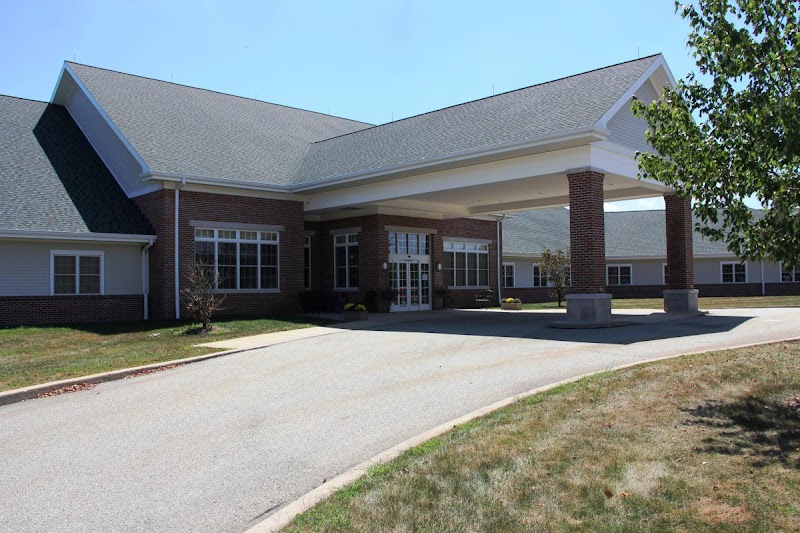
66 CAREY SCHOOL ROAD, LIGONIER, PA 15658 (724) 238-6711
Non profit - Corporation 76 Beds CONCORDIA LUTHERAN MINISTRIES Data: November 2025
Trust Grade
53/100
#388 of 653 in PA
Last Inspection: September 2025

Inspected within the last 6 months. Data reflects current conditions.

Overview

Bethlen Home of the Hungarian Reformed Federation of America has a Trust Grade of C, which means it is average and in the middle of the pack among nursing homes. It ranks #388 out of 653 in Pennsylvania, placing it in the bottom half, but #4 out of 18 in Westmoreland County indicates only three local options are better. The facility is improving, with a decrease in issues from 25 in 2024 to 17 in 2025. Staffing is a strength, rated 4 out of 5 stars with a turnover of only 30%, significantly lower than the state average. However, there are concerns, including the use of unnecessary psychotropic medications for some residents and failure to properly inform families about hospital transfers. Overall, while there are strengths in staffing and improvement in conditions, families should be aware of these operational weaknesses.

Trust Score
C
53/100
In Pennsylvania
#388/653
Bottom 41%
Safety Record
Low Risk
No red flags
Inspections
Getting Better
25 → 17 violations
Staff Stability
✓ Good
30% annual turnover. Excellent stability, 18 points below Pennsylvania's 48% average. Staff who stay learn residents' needs.
Penalties
✓ Good
No fines on record. Clean compliance history, better than most Pennsylvania facilities.
Skilled Nurses
✓ Good
Each resident gets 44 minutes of Registered Nurse (RN) attention daily — more than average for Pennsylvania. RNs are trained to catch health problems early.
Violations
⚠ Watch
63 deficiencies on record. Higher than average. Multiple issues found across inspections.
★★☆☆☆
2.0
Overall Rating
★★★★☆
4.0
Staff Levels
★★☆☆☆
2.0
Care Quality
★★☆☆☆
2.0
Inspection Score
Stable
2024: 25 issues
2025: 17 issues

The Good

  • 4-Star Staffing Rating · Above-average nurse staffing levels
  • Low Staff Turnover (30%) · Staff stability means consistent care
  • Full Sprinkler Coverage · Fire safety systems throughout facility
  • No fines on record
  • Staff turnover is low (30%)

    18 points below Pennsylvania average of 48%

Facility shows strength in staffing levels, staff retention, fire safety.

The Bad

2-Star Overall Rating

Below Pennsylvania average (3.0)

Below average - review inspection findings carefully

Chain: CONCORDIA LUTHERAN MINISTRIES

Part of a multi-facility chain

Ask about local staffing decisions and management

The Ugly 63 deficiencies on record

Sept 2025 14 deficiencies
CONCERN (D)

Potential for Harm - no one hurt, but risky conditions existed

Resident Rights (Tag F0550)

Could have caused harm · This affected 1 resident

Based on review of facility policies, review of clinical records, observations, and staff interviews, it was determined that the facility failed to maintain the dignity of one of 42 residents reviewed...

Read full inspector narrative →
Based on review of facility policies, review of clinical records, observations, and staff interviews, it was determined that the facility failed to maintain the dignity of one of 42 residents reviewed (Resident 102) who had an indwelling urinary catheter.Findings include: A facility policy for considerate and respectful treatment, dated June 19, 2025, indicated that staff will refrain from practices that are demeaning to patients, such as keeping urinary catheter bags uncovered. Physician's orders for Resident 102, dated August 29, 2025, included an order for staff to place a foley catheter (flexible catheter used to drain urine from the bladder into a drainage collection bag) for urinary drainage. Observations of Resident 102 on September 2, 2025, at 11:37 a.m. revealed the resident was lying in bed with her urinary drainage bag hooked to the side of his bed visible from the door. It was not covered, and yellow urine was visible in the bag. Interview with Registered Nurse 1 on September 2, 2025, at 11:37 a.m. confirmed that Residents 102 did not have a privacy cover on her urinary catheter bag. Interview with the Nursing Home Administrator on September 2, 2025, at 1:03 p.m. revealed that all urinary drainage bags should have privacy covers on them per the facility policy. 28 Pa. Code 201.29(c) Resident Rights.
CONCERN (D)

Potential for Harm - no one hurt, but risky conditions existed

Safe Environment (Tag F0584)

Could have caused harm · This affected 1 resident

Based on review of policies, as well as observations and staff interviews, it was determined that the facility failed to maintain a clean and homelike environment for one of 42 residents reviewed (Res...

Read full inspector narrative →
Based on review of policies, as well as observations and staff interviews, it was determined that the facility failed to maintain a clean and homelike environment for one of 42 residents reviewed (Resident 66). Finding include:The facility's policy regarding resident's rights, dated June 19, 2025, indicated that the facility was to provide a clean comfortable and homelike environment. A quarterly Minimum data Set (MDS) assessment (a mandated assessment of a resident's abilities and care needs) for Resident 66, dated August 8, 2025, revealed that the resident was cognitively intact and had diagnoses that included congestive obstructive pulmonary disease (a lung disease that makes it difficult to breath) and diabetes. Observations on September 1, 2025, at 10:45 a.m. and 2:30 p.m., September 2, 2025 at 1:30 p.m., September 3, at 11:50 a.m. and September 4, 2025, at 8:24 a.m., revealed that the resident was in his room lying on his bed facing the television. It was noted that the wall directly behind his bed, that was visible when you walked into his room, had approximately 20 black and white gouges in the drywall. These gouges varied in length from approximately eight to 22 inches long and covered an area that measured approximately 30 inches wide.Interview with the Director of Maintenance on September 5, 2025, at 8:24 a.m. revealed that he was not aware of the markings in the drywall in Resident 66's room. He indicated that the previous headboards in that room had bolts on the back of them, and when staff moved the bed up and down it apparently gouged the wall. He indicated that the drywall should not be in such poor condition, and that he will be covering the area with a textured recycled plastic.Interview with the Director of Nursing on September 5, 2025, at 8:53 a.m. confirmed that the drywall behind Resident 66's bed should be free of discoloration, scratches and gouges, and it was not. 28 Pa. Code 201.29(j) Resident Rights.28 Pa. Code 207.2(a) Administrator's Responsibility.
CONCERN (D)

Potential for Harm - no one hurt, but risky conditions existed

Quality of Care (Tag F0684)

Could have caused harm · This affected 1 resident

Based on review of clinical records, as well as staff interviews, it was determined that the facility failed to ensure that physician's orders were followed for one of 42 residents reviewed (Resident ...

Read full inspector narrative →
Based on review of clinical records, as well as staff interviews, it was determined that the facility failed to ensure that physician's orders were followed for one of 42 residents reviewed (Resident 114).Findings include:Physician's orders for Resident 114, dated August 27, 2025, included an order for the resident to receive 1000 milligrams (mg) of Acetaminophen by mouth three times a day for pain and 650 mg of Acetaminophen by mouth every 4 hours as needed for pain, not to exceed 3,000 mg's per 24 hours.Review of the Medication Administration Record (MAR) for Resident 114 for August and September 2025 revealed that the resident received 3,650 mg of Acetaminophen on August 30, 2025 and September 1, 2025.Interview with the Director of Nursing on September 3, 2025, at 11:14 a.m. confirmed that Resident 114's dose of Acetaminophen did exceed the maximum dose for a 24 hour period on the above mentioned dates.28 Pa. Code 211.12(d)(1)(5) Nursing Services.
CONCERN (D)

Potential for Harm - no one hurt, but risky conditions existed

Accident Prevention (Tag F0689)

Could have caused harm · This affected 1 resident

Based on clinical record reviews, observations, and staff interviews, it was determined that the facility failed to ensure that each resident received assistance devices to prevent accidents for one o...

Read full inspector narrative →
Based on clinical record reviews, observations, and staff interviews, it was determined that the facility failed to ensure that each resident received assistance devices to prevent accidents for one of 42 residents reviewed (Resident 110). Findings include:An admission Minimum Data Set (MDS) assessment (a mandated assessment of a resident's abilities and care needs) for Resident 110, dated August 30, 2025, revealed that the resident was cognitively intact, required assistance from staff for daily care needs, and had diagnoses that included abnormalities of gait and mobility.Physician's orders for Resident 110, dated August 23, 2025, included an order to ensure wheelchair leg rests are in place to secure resident's feet when transported.Observation on September 5, 2025, at 10:45 a.m. revealed that the resident was transported in his chair by Registered Nurse 2 down the hallway to the activity room. Interview with Registered Nurse 2 at the time of the observation confirmed that she did not apply leg rests to Resident 110's chair prior to transporting the resident, and she should have. Interview with the Nursing Home Administrator on September 5, 2025, at 12:25 p.m. confirmed that leg rests should have been in place as ordered when transporting Resident 110.28 Pa. Code 211.10(c)(d) Resident Care Policies.28 Pa. Code 211.12(d)(5) Nursing Services.
CONCERN (D)

Potential for Harm - no one hurt, but risky conditions existed

Incontinence Care (Tag F0690)

Could have caused harm · This affected 1 resident

Based on review of policies and clinical records, as well as resident and staff interviews, it was determined that the facility failed to provide appropriate care for one of 42 residents reviewed (Res...

Read full inspector narrative →
Based on review of policies and clinical records, as well as resident and staff interviews, it was determined that the facility failed to provide appropriate care for one of 42 residents reviewed (Resident 102) who had an indwelling urinary catheter. Findings include: The facility's policy regarding catheter care (a tube placed and held in the bladder to drain urine), dated June 19, 2025, indicated that residents with indwelling catheters should receive appropriate catheter care.A care plan for urinary catheter for Resident 102, dated August 29, 2025 included that staff will perform foley catheter care every shift and staff are to monitor urinary output every shift.Physician's orders for Resident 102 dated August 29, 2025, included an order for foley catheter care every shift.Resident 102's Treatment Administration Records (TAR's) for August 2025 and September 2025 revealed no documented evidence that catheter care was completed or that urinary output was being documented. Interview with the Nursing Home Administrator on September 5, 2025, at 10:49 a.m. confirmed that Resident 102's urinary catheter output should have been documented and catheter care should have been completed, and it was not. 28 Pa. Code 211.12(d)(1)(5) Nursing services.
CONCERN (D)

Potential for Harm - no one hurt, but risky conditions existed

Respiratory Care (Tag F0695)

Could have caused harm · This affected 1 resident

**NOTE- TERMS IN BRACKETS HAVE BEEN EDITED TO PROTECT CONFIDENTIALITY** Based on review of policies and clinical records, as well as observations and staff interviews, it was determined that the facil...

Read full inspector narrative →
**NOTE- TERMS IN BRACKETS HAVE BEEN EDITED TO PROTECT CONFIDENTIALITY** Based on review of policies and clinical records, as well as observations and staff interviews, it was determined that the facility failed to ensure an oxygen concentrator and filter was cleaned and tubing and humidification were changed per physician's orders for one of 42 residents reviewed (Resident 74), and failed to obtain an order for oxygen for one of 42 residents reviewed (Resident 97). Findings include:A Quarterly Minimum Data Set (MDS) assessment (a mandated assessment of a resident's abilities and care needs) for Resident 74, dated July 31, 2025, indicated that the resident was cognitively impaired, was dependent on staff for daily care needs and had a diagnoses that included Chronic Obstructive Pulmonary Disease (a progressive lung disease that causes ongoing inflammation and narrowing of the airways, making it difficult to breathe). Physician's orders for Resident 74, dated December 4, 2024, included an order for the night nurse to check every week on Wednesdays, if oxygen used, to makesure filter is cleaned and oxygen tubing and humidifier has been changed every night shift every 7 day(s) for oxygen maintenance. Review of Resident 74's Treatment Administration Record (TAR) for September 2025 revealed that on September 3, 2025 it was documented that the concentrator filter was cleaned and that the tubing and humidifier was changed on the night shift. Physician's orders for Resident 74, dated April 8, 2025, included an order to change oxygen tubing and humidifier, clean concentrator and filter every night shift every Tuesday. Review of Resident 74's TAR for September 2025 revealed that on September 2, 2025, it was documented that the oxygen tubing and humidifier were changed and that the concentrator and filter was cleaned.Observation September 3, 2025, at 10:03 a.m. revealed that the oxygen concentrator and filter had a thick removable substance on them and the oxygen tubing and humidifier were dated August 27, 2025.Interview with the Director of Nursing on September 3, 2025, at 11:14 a.m. confirmed that the oxygen concentrator and filter did have a thick removable substance on them and the oxygen tubing and humidifier were dated August 27, 2025, indicating that they were not cleaned or changed as documented in Resident 74's September TAR.The facility's policy regarding oxygen therapy, dated June 19, 2025, indicated that oxygen was to be administered in accordance with physician's orders. An admission MDS assessment for Resident 97, dated September 3, 2025, revealed that the resident was cognitively intact and had diagnoses that included pleural effusion (excess fluid between the lungs and chest wall) and atrial fibrillation (an irregular heart rate causing poor blood flow). Review of the clinical record revealed that Resident 97 was admitted on [DATE] with no oxygen in place. A nursing note dated August 31, 2025, revealed that Resident 97 developed wheezing and a moist cough, the physician ordered a chest x-ray and breathing treatments. A progress note dated September 1, 2025, indicated that Resident 97 had oxygen running at 2 liters per minute via nasal cannula (a thin flexible tube under the nose to deliver oxygen).Observations of Resident 97 on September 1, 2025, at 11:10 a.m. and 1:50 p.m. on September 2, 2025 at 2:23 p.m. and September 3, 2025, at 10:48 a.m. revealed that the resident was in her room receiving oxygen from an oxygen concentrator (electrical machine that concentrates oxygen from the air) that was set at 2.0 liters per minute. A review of physician orders for Resident 97, revealed no order for oxygen. Interview with the Nursing Home Administrator on September 3, 2025, at 12:26 p.m. confirmed that Resident 97 had oxygen flowing at a rate of 2 liters per minute continuously without a physician's order, and that there should have been an order for oxygen on the resident's chart, and there was not.28 Pa. Code 211.12(d)(1)(3)(5) Nursing Services.
CONCERN (D)

Potential for Harm - no one hurt, but risky conditions existed

Drug Regimen Review (Tag F0756)

Could have caused harm · This affected 1 resident

Based on review of policy and clinical records, as well as staff interviews, it was determined that the facility failed to respond timely to a pharmacy recommendation for one of 42 residents reviewed ...

Read full inspector narrative →
Based on review of policy and clinical records, as well as staff interviews, it was determined that the facility failed to respond timely to a pharmacy recommendation for one of 42 residents reviewed (Resident 84).Findings include: A facility policy for drug regimen review, dated June 19, 2025, revealed that a summary of all recommendations is provided to the Director of Nursing and Facility Medical Director every month. The timing of the recommendations should be responded to prior to the next medication review. A Quarterly Minimum Data Set (MDS) assessment (a mandated assessment of a resident's abilities and care needs) for Resident 84, dated August 15, 2025, revealed that the resident was cognitively intact, required partial care from staff, and was medicated with an antianxiety medication. A pharmacy consultant note for Resident 84, dated May 15, 2025, revealed that the pharmacist recommended that the physician attempt a Gradual Dose Reduction for the residents order of 25mg Zoloft. A pharmacy consultant note for Resident 84, dated August 15, 2025, revealed that the pharmacist recommended that the physician attempt a Gradual Dose Reduction for the residents order of 25mg Zoloft since August 2025.An interview with the Nursing Home Administrator on September 5, 2025, at 12:57 p.m. confirmed that there was no documented evidence the pharmacist medication regimen review was addressed by the physician from May 2025 until August 2025 and should have been addressed sooner.28 Pa. Code 211.9(f)(3) Pharmacy Services.
CONCERN (D)

Potential for Harm - no one hurt, but risky conditions existed

Deficiency F0761 (Tag F0761)

Could have caused harm · This affected 1 resident

**NOTE- TERMS IN BRACKETS HAVE BEEN EDITED TO PROTECT CONFIDENTIALITY** Based on review of facility policies and medication package inserts, as well as observations and staff interviews, it was determ...

Read full inspector narrative →
**NOTE- TERMS IN BRACKETS HAVE BEEN EDITED TO PROTECT CONFIDENTIALITY** Based on review of facility policies and medication package inserts, as well as observations and staff interviews, it was determined that the facility failed to discard expired medical supplies/biologicals, and failed to label multi-dose containers of medications with the date they were opened in one of two medication rooms reviewed (tri west medication room). Findings include: The facility's policies regarding medication storage and disposal, dated [DATE], revealed that the facility would not use outdated supplies, and properly date medication vials after they were opened. An undated package insert for tubersol (medication used to test for tuberculosis) indicated that the medication was to be discarded 30 days after it was entered.Observations in the Tri west medication room on [DATE], at 9:54 a.m. revealed that there were 47 packets of blood collection sets that expired [DATE], three blood collection tubes, two blue and one purple which expired [DATE], and one vial of tuber sol that was open and not dated with the open date.Interview with Licensed Practical Nurse 3 on [DATE], at 10:08 a.m. confirmed that the blood collection sets and blood collection tubes were in current circulation for staff to use, and they were expired. She also confirmed that the tubersol was opened and not dated with an opened date on the box or vial. Interview with the Nursing Home Administrator on [DATE], at 12:49 a.m. confirmed that the 47 vacutainer blood collection sets and three blood collection tubes should not be in circulation if they were expired, and the vial of tubersol should have been dated when it was opened. 42 CFR 483.45(g)(h)(1)(2) Label/Store Drugs and Biologicals.28 Pa. Code 211.9(a)(1) Pharmacy services.
CONCERN (D)

Potential for Harm - no one hurt, but risky conditions existed

Food Safety (Tag F0812)

Could have caused harm · This affected 1 resident

Based on review of facility policies, as well as observations and staff interviews, it was determined that the facility failed to serve food in accordance with professional standards for food service ...

Read full inspector narrative →
Based on review of facility policies, as well as observations and staff interviews, it was determined that the facility failed to serve food in accordance with professional standards for food service safety by failing to ensure that dietary staff wore beard coverings that completely covered their beard during food handling, and failed to ensure that food items were stored in accordance with professional standards for food service safety in one of three nursing unit pantry refrigerators (100 hall).Findings include:The facility's dietary policy regarding personal hygiene, dated June 19, 2025, revealed that all dietary staff are to wear a hair restraint (hairnet, hat and/or beard restraint) to prevent hair from contacting food.Observations in the kitchen on September 4, 2025, at 12:01 p.m. revealed that the dietary director was in the kitchen where food was being plated without a beard guard.Interview with the Dietary Director on September 4 ,2025, at 12:05 p.m. revealed that he only wears a beard guard when he is cooking and not in the food preparation area.Interview with the Nursing Home Administrator on September 5, 2025, at 12:46 p.m. confirmed that the Dietary Director should have had all of his beard covered.Observations inside the residents' food refrigerator in the medication room on the 100 unit on September 4, 2025, at 10:23 a.m. revealed 2 open, unnamed and undated containers of macaroni salad and an open and undated container or coleslaw.Interview with Licensed Practical Nurse 4 on September 4, 2025, at 10:25 a.m. revealed that the food for the residents should have their name and date on the containers.Interview with the Dietary Director on September 5, 2025, at 12:05 p.m. revealed that food stored in the residents' refrigerators should have a resident's name and date on them.28 Pa. Code 211.6(f) Dietary services.
CONCERN (D)

Potential for Harm - no one hurt, but risky conditions existed

Medical Records (Tag F0842)

Could have caused harm · This affected 1 resident

Based on a review of clinical records and facility investigations, as well as staff interviews, it was determined that the facility failed to ensure that residents' clinical records were complete and ...

Read full inspector narrative →
Based on a review of clinical records and facility investigations, as well as staff interviews, it was determined that the facility failed to ensure that residents' clinical records were complete and accurately documented for one of 42 residents reviewed (Resident 6).Findings include: A Quarterly Minimum Data Set (MDS) assessment (a mandated assessment of a resident's abilities and care needs) for Resident 6, dated June 16, 2025, indicated that the resident was cognitively impaired, required substantial assistance with care needs, and was receiving enteral nutrition PEG feedings (a method of providing nutrients directly into the gastrointestinal (GI) tract through a feeding tube into the stomach or intestines). Review of nurse aide documentation for Resident 6, dated August and September 2025, revealed that there was no nurse aide documentation completed for PEG feeds and amount consumed of pleasure feeds on August 1, 2025 for day shift, August 3, 2025 for day and evening shift, August 9, 2025 for day shift, August 18, 2025 for day shift, August 20, 2025 for day and night shift, August 23, 2025 for night shift, August 31, 2025 for night shift. September 3, 2025 for night shift, and September 4, 2025, for evening shift. Not applicable (NA) was documented for PEG feeds and amount of pleasure feeds consumed for day shift on August 3, 4, 6, 7, 10, 11, 13, 14, 15, 17, 19, 21, 22, 23, 24, 29, 31, 2025, September 1, 2, 3, 5, 2025; for evening shift on August 3, 4, 6, 7, 9, 10, 11, 12, 14, 15, 16, 17, 21, 22, 23, 24, 25, 26, 27, 28, 29, 30, 31, 2025, September 1, 2, and 3, 2025; for night shift on August 1, 2, 3, 4, 5, 6, 7, 8, 9, 10, 11, 12, 13, 14, 15, 16, 17, 18, 19, 21, 22, 24, 25, 26, 27, 28, 29, 30, 2025. Review of nurse aide documentation for Resident 6, dated August and September 2025, revealed that there was no nurse aide documentation for providing a pleasure feed to the resident on the day shift of August 1, 2, 9, 2025 and September 4, 2025; for evening shift on August 1 and 18, 2025, and September 4, 2025. NA was documented for night shift on August 23, 2025; for day shift on August 15 and 25, 2025; for evening shift on August 25, 2025; and for night shift on August 2, 3, 4, 5, 6, 7, 8, 10, 11, 12, 13, 14, 16, 17, 18, 19, 21, and 25, 2025. Interview with the Registered Dietician on September 3, 2025, at 12:13 p.m. revealed that the amounts of tube feed and pleasure feeds ingested by the resident should be documented in the resident's chart. Interview with the Nursing Home Administrator on September 3, 2025, at 1:52 p.m. confirmed that Resident 6 was receiving her tube feeds and pleasure feeds however, staff were not documenting in the clinical record and should have been.28 Pa. Code 211.5(f) Clinical Records.
CONCERN (D)

Potential for Harm - no one hurt, but risky conditions existed

QAPI Program (Tag F0867)

Could have caused harm · This affected 1 resident

Based on review of the facility's plans of correction for previous surveys, and the results of the current survey, it was determined that the facility's Quality Assurance Performance Improvement (QAPI...

Read full inspector narrative →
Based on review of the facility's plans of correction for previous surveys, and the results of the current survey, it was determined that the facility's Quality Assurance Performance Improvement (QAPI) committee failed to correct quality deficiencies and ensure that plans to improve the delivery of care and services effectively addressed recurring deficiencies.Findings include: The facility's deficiencies and plans of corrections for a State Survey and Certification (Department of Health) survey ending August 15, 2024, revealed that the facility developed plans of correction that included quality assurance systems to ensure that the facility-maintained compliance with cited nursing home regulations. The results of the current survey, ending September 5, 2025, identified repeated deficiencies related to safe, clean, comfortable, homelike environment, accurate Minimum Data Set assessments, labeling storage drugs and biologicals, and food procurement. The facility's plan of correction for a deficiency regarding safe, clean, comfortable, homelike environment, cited during the survey ending August 15, 2024, revealed that the facility would complete audits and report the results of the audits to the QAPI committee for review. The results of the current survey, cited under F584, revealed that the facility's QAPI committee failed to successfully implement their plan to ensure ongoing compliance with regulations regarding safe, clean, comfortable, homelike environment. The facility's plan of correction for a deficiency regarding completing accurate MDS assessments, cited during the survey ending August 15, 2024, revealed that the facility would complete audits and report the results of the audits to the QAPI committee for review. The results of the current survey, cited under F641, revealed that the facility's QAPI committee failed to successfully implement their plan to ensure ongoing compliance with regulations regarding accurate MDS assessments. The facility's plan of correction for a deficiency regarding labeling storage drugs and biologicals, cited during the survey ending September 21, 2023, revealed that the facility would complete audits and report the results of the audits to the QAPI committee for review. The results of the current survey, cited under F761, revealed that the facility's QAPI committee failed to successfully implement their plan to ensure ongoing compliance with regulations regarding labelingstorage drugs and biologicals. The facility's plan of correction for a deficiency regarding proper food procurement, cited during the survey ending August 15, 2024, revealed that the facility would complete audits and report the results of the audits to the QAPI committee for review. The results of the current survey, cited under F812, revealed that the facility's QAPI committee failed to successfully implement their plan to ensure ongoing compliance with regulations regarding food procurement. Refer to F584, F641, F761, F812. 28 Pa. Code 201.14(a) Responsibility of Licensee. 28 Pa. Code 201.18(e)(1) Management.
CONCERN (E)

Potential for Harm - no one hurt, but risky conditions existed

Deficiency F0605 (Tag F0605)

Could have caused harm · This affected multiple residents

Based on review of clinical records, as well as staff interviews, it was determined that the facility failed to ensure that residents were free from unnecessary psychotropic medications for two of 42 ...

Read full inspector narrative →
Based on review of clinical records, as well as staff interviews, it was determined that the facility failed to ensure that residents were free from unnecessary psychotropic medications for two of 42 residents reviewed (Resident 39, Resident 40).Findings include: The facility's policy regarding psychotropic medications (any medication that affects brain activities associated with mental processes and behavior), dated June 19, 2025, indicated that residents only receive psychotropic medications when other nonpharmacological interventions are clinically ineffective. A Quarterly Minimum Data Set (MDS) assessment (a mandated assessment of a resident's abilities and care needs) for Resident 39, dated June 23, 2025, revealed that the resident was cognitively impaired, usually understood, able to sometimes understand others, was dependent on staff for care needs, had verbal, physical, and other behaviors, and had diagnoses that included anxiety and depression. Physician's orders for Resident 39, dated September 10, 2024, included an order for medication monitoring of anti-anxiety medication every shift to monitor for side effects of medications and documentation of non-pharmacological interventions. Physician's orders for Resident 39, dated June 22, 2025, included an order for the resident to receive 0.5 milligrams (mg) of Ativan (a psychotropic medication used to treat anxiety) every four hours as needed for anxiety. Review of the Medication Administration Record (MAR) for Resident 39 for June 2025, July 2025, and August 2025 revealed that the resident was administered 0.5 mg of Ativan on the following dates and times: June 15, 2025, at 12:52 a.m.; June 17, 2025, at 3:28 a.m.; July 13, 2025, at 6: 50 p.m.; August 3, 2025, at 7:12 p.m.; August 5, 2025 at 6:43 a.m.; August 7, 2025 at 6:41 p.m.; August 8, 2025 at 12:06 p.m.; August 19, 2025 at 2:29 p.m.; August 20, 2025 at 12:28 a.m.; August 28, 2025 at 7:11 a.m. and 9:53 p.m.; and August 31, 2025 at 9:47 a.m. There was no documented evidence that non-pharmacological interventions were attempted prior to administering Ativan on the above stated dates and times. A quarterly MDS assessment for Resident 40, dated August 28, 2025, revealed that the resident was cognitively impaired, was sometimes understood, able to sometimes understand others, was dependent on staff for care needs, had verbal, physical, and other behaviors, and had diagnoses that included non-Alzheimer's Dementia. Physician's orders for Resident 40, dated May 14, 2025, included an order for medication monitoring of anti-anxiety medication every shift to monitor for side effects of medications and documentation of non-pharmacological interventions. Physician's orders for Resident 40, dated December 17, 2024, included an order for the resident to receive 0.5 milligrams (mg) of Ativan (a psychotropic medication used to treat anxiety) every eight hours as needed for anxiety. Review of the Medication Administration Record (MAR) for Resident 40 for July 2025 and August 2025 revealed that the resident was administered 0.5 mg of Ativan on the following dates and times: July 6, 2025, at 3:35 a.m.; July 7, 2025, at 7:06 p.m.; July 9, 2025, at 6:54 a.m.; July 15, 2025 at 10:15 a.m.; July 16, 2025 at 12:04 a.m. and 5:06 p.m.; August 3, 2025, at 7:12 p.m.; August 5, 2025 at 6:43 a.m.; August 7, 2025, at 6:41 p.m.; August 8, 2025 at 12:06 p.m.; August 13, 2025 at 11:49 a.m. and 8:22 p.m.; August 19, 2025 at 2:29 p.m.; August 20, 2025 at 12:28 a.m.; August 28, 2025 at 7:11 a.m. and 9:53 p.m.; and August 31, 2025, at 9:47 a.m. There was no documented evidence that non-pharmacological interventions were attempted prior to administering the Ativan on the above dates and times. Interview with the Nursing Home Administrator on September 5, 2025, at 12:50 p.m. confirmed that non-pharmacological interventions were not attempted prior to administering 0.5mg Ativan for Resident 39 and Resident 40 on the above dates and times. 28 Pa. Code 211.12(d)(5) Nursing Services.
CONCERN (E)

Potential for Harm - no one hurt, but risky conditions existed

Deficiency F0628 (Tag F0628)

Could have caused harm · This affected multiple residents

Based on review of policies and clinical records, as well as staff interviews, it was determined that the facility failed to notify the resident and the resident's representative, in writing regarding...

Read full inspector narrative →
Based on review of policies and clinical records, as well as staff interviews, it was determined that the facility failed to notify the resident and the resident's representative, in writing regarding the reason for transfer to the hospital, to ensure that a bed-hold notice was provided to the resident's responsible party and that the ombudsman was notified of the transfer to the hospital, for three of 42 residents reviewed (Residents 4, 84, 94). Findings include:The facility's policy regarding bed-holds and returns, dated June 19, 2025, indicated that residents and/or representatives are informed (in writing) of the facility bed-hold policies. The facility's policy regarding discharge/ transfer notices indicated that a written notice will be provided to the resident and the resident's representative.A quarterly MDS assessment for Resident 4, dated July 12, 2025, indicated that the resident was cognitively intact, required assistance from staff for all daily care needs, and had a diagnoses that included chronic obstructive pulmonary disease with a history of respiratory failure.Nursing notes for Resident 4, dated July 2, 2025, at 10:00 a.m., revealed that the resident presented with involuntary jerking movements, lethargy and increased swelling of the legs, she was transferred to the hospital and was admitted .There was no documented evidence that written notification of transfer was provided to Resident 4 or the resident's representative, no documented evidence that a bed-hold notice was provided to the resident's responsible party, and no documented evidence that the ombudsman was notified of her transfer to the hospital as required.Interview with the Director of Nursing on September 3, 2025, at 3:12 p.m. confirmed that for Resident 4, there was no written notification of hospital transfer provided to them or their representatives, that a bed-hold notice was not provided to their responsible party, and that the ombudsman was not notified of the transfer to the hospital as required. An annual MDS assessment for Resident 84, dated May 3, 2025, indicated that the resident was cognitively intact, required minimal assistance from staff for all daily care needs, and had diagnoses that included heart failure and end stage renal (kidney) disease.A nursing note for Resident 84, dated April 28, 2025, at 9:17 a.m., revealed that the resident was not responding as normal. She stated that she had fallen but couldn't remember when and had a visible bruise on her forehead. Her son requested she be sent to the hospital for evaluation. She was admitted to the hospital with a diagnosis of anemia, hematoma (bruise) on the forehead post fall, Gastro-intestinal bleed, and diverticulosis (a medical condition where bulging pouches form in the walls of the intestine).There was no documented evidence for Resident 84 that a written notification of transfer was provided to the ombudsman, or that a bed-hold notice was provided to the resident's responsible party.A discharge MDS assessment for Resident 94, dated June 9, 2025, revealed that the resident was cognitively impaired and required maximum assistance from staff for daily care needs.A nursing note for Resident 94, dated June 4, 2025, at 10:49 a.m., revealed that the resident was coughing up blood, had blood coming from her rectum, and to send the resident to the emergency room.There was no documented evidence for Resident 94 that written notification of transfer was provided to the resident's representative and ombudsman, or that a bed-hold notice was provided to the resident's responsible party.Interview with the Director of Nursing on September 5, 2025, at 11:12 a.m. confirmed that for Residents 84 and 94 there was no written notification of hospital transfers provided to the ombudsman, that a bed hold notice was provided, or that a written notice of transfer was provided to the responsible party for Resident 94. 28 Pa. Code 201.29(j) Resident Rights.
CONCERN (E)

Potential for Harm - no one hurt, but risky conditions existed

Assessment Accuracy (Tag F0641)

Could have caused harm · This affected multiple residents

Based on review of the Resident Assessment Instrument User's Manual and clinical records, as well as staff interviews, it was determined that the facility failed to complete accurate Minimum Data Set ...

Read full inspector narrative →
Based on review of the Resident Assessment Instrument User's Manual and clinical records, as well as staff interviews, it was determined that the facility failed to complete accurate Minimum Data Set assessments for four of 42 residents reviewed (Residents 5, 40, 41, 69). Findings include:The Long-Term Care Facility Resident Assessment Instrument (RAI) User's Manual, which provides guidance and instructions for the completion of Minimum Data Set (MDS) assessments (mandated assessments of a resident's abilities and care needs), dated October 2024, indicated that the intent of Section N0415B Antianxiety, Section N0415C Antidepressant, Section N0415F Antibiotic, and Section N0415I Anticonvulsant Medications were to be coded if the resident took the medication during the seven-day lookback period. Section O0110H1b was to be coded if the resident received IV medications (medication that goes through the veins) while a resident within the last 14 days.Physician's orders for Resident 5, dated July 1, 2025, included an order for the resident to receive 500 milligrams of Metronidazole (an antibiotic) one time a day. An annual Minimum Data Set (MDS) assessment (a mandated assessment of a resident's abilities and care needs) for Resident 5, dated July 28, 2025, revealed that Section N0415F indicated that the resident did not receive an antibiotic in the last seven days. However, a review of Resident 5's July 2025 Medication Administration Record (MAR) revealed that the resident did receive 500 mg of Metronidazole during the last seven days of the look-back period.Physician's orders for Resident 40, dated December 17, 2025, included an order for the resident to receive 0.5 mg Ativan (an anti-anxiety medication) every 8 hours as needed. A Quarterly MDS for Resident 40, dated August 5, 2025, revealed that Section N0415B indicated the resident did not receive an antianxiety medication in the last seven days. However, a review of Resident 40's July and August, 2025 MAR revealed that the resident did receive 0.5mg Ativan during the last seven days of the look-back period.Physician's orders for Resident 41, dated July 2, 2025, included an order for the resident to receive 2 grams of Ceftriaxone (an antibiotic) Intravenously (IV) one time a day for one administration. An admission MDS assessment for Resident 41, dated July 9, 2025, revealed that Section O0110H1b indicated the resident did not receive IV antibiotics during the last 14 days of the look-back period. However, a review of Resident 41's, July 2025 MAR revealed that the resident did receive 2 grams of Ceftriaxone IV during the last 14 days of the look-back period.Physician's orders for Resident 69, dated November 26, 2024 included an order for the resident to receive 75 mg of Topiramate (an anticonvulsant) daily. Physician's orders for Resident 69, dated October 14, 2023 included an order for the resident to receive 150 mg of Wellbutrin (an antidepressant). Physician's orders for Resident 69, dated May 3, 2023, included an order for the resident to receive 5 mg of Buspirone (an antianxiety) twice a day An annual MDS assessment for Resident 69, dated July 23, 2025, revealed that Section NO415B, Section NO415C, and Section NO415I indicated that the resident did not receive the medications during the seven-day look-back period. However, a review of Resident 69's MAR for July 2025, revealed that the resident did receive 75 mg of Topiramate, 150 mg of Wellbutrin and 5 mg of Buspirone during the seven-day look-back period.Interview with the Nursing Home Administrator on September 4, 2025 at 12:28 p.m. confirmed that the MDS assessments for Residents 5, 40, 41, and 69 were coded inaccurately. 28 Pa. Code 211.5(f) Clinical records.
Jun 2025 2 deficiencies
CONCERN (D) 📢 Someone Reported This

A family member, employee, or ombudsman was alarmed enough to file a formal complaint

Potential for Harm - no one hurt, but risky conditions existed

Pressure Ulcer Prevention (Tag F0686)

Could have caused harm · This affected 1 resident

**NOTE- TERMS IN BRACKETS HAVE BEEN EDITED TO PROTECT CONFIDENTIALITY** Based on review of clinical records, as well as staff interviews, it was determined that the facility failed to ensure that a re...

Read full inspector narrative →
**NOTE- TERMS IN BRACKETS HAVE BEEN EDITED TO PROTECT CONFIDENTIALITY** Based on review of clinical records, as well as staff interviews, it was determined that the facility failed to ensure that a resident with pressure ulcers received the necessary treatment and services consistent with professional standards of practice for one of eight residents reviewed (Resident 3). Findings include: An admission Minimum Data Set (MDS) assessment (a mandated assessment of a resident's abilities and care needs) for Resident 3, dated March 31, 2025, revealed that the resident was admitted to the facility on [DATE], was cognitively intact, required maximum staff assistance for care, and had a Stage 1 pressure ulcer. A wound care note, dated April 7, 2025, revealed that Resident 3 had a Stage 2 pressure wound on the left buttock. A care plan for Resident 3, dated March 24, 2025, revealed that the resident was to have barrier cream applied to her buttocks three times a day to prevent skin breakdown. A review of Resident 3's clinical record revealed that there was no documented evidence that the barrier cream was applied to the resident's buttock on March 24, 2025, during the evening shift; March 25, 2025, during the evening and night shift; March 26, 2025, during the day, evening, and night shift; March 27, 2025, during the day and night shift; March 28, 2025, during the day shift; March 29, 2025, during the day and night shift; March 30, 2025, during the evening shift; March 31, 2025, during the night shift; April 2, 2025, during the evening shift; April 3, 2025, during the day shift; and April 6, 2025, during the evening shift. An interview with the Director of Nursing on June 18, 2025, at 11:15 a.m. confirmed that there was no documented evidence that the barrier cream was applied to Resident 3's buttock on the above dates and times and should have been to prevent further skin breakdown to her buttock. 28 Pa. Code 211.12(d)(3)(5) Nursing Services.
CONCERN (D) 📢 Someone Reported This

A family member, employee, or ombudsman was alarmed enough to file a formal complaint

Potential for Harm - no one hurt, but risky conditions existed

Incontinence Care (Tag F0690)

Could have caused harm · This affected 1 resident

Based on review of facility policy, clinical records, and staff interviews, it was determined that the facility failed to ensure that physician's orders were followed for one of eight residents review...

Read full inspector narrative →
Based on review of facility policy, clinical records, and staff interviews, it was determined that the facility failed to ensure that physician's orders were followed for one of eight residents reviewed (Resident 1) who had an indwelling urinary catheter. Findings include: The facility's policy regarding indwelling urinary catheter's revealed that the nursing staff were to review the physician's orders prior to inserting an indwelling urinary catheter (a tube inserted into the bladder to continuously drain urine) or a straight catheter (a tube inserted into the bladder to obtain a sample of urine and then removed) for a urine sample. A quarterly Minimum Data Set (MDS) assessment (a mandated assessment of a resident's abilities and care needs) for Resident 1, dated April 30, 2025, revealed that the resident was cognitively intact and required assistance from staff for her daily care needs. A nursing note for Resident 1, dated February 19, 2025, revealed that an indwelling urinary catheter was inserted for urinary retention; however, there was no documented evidence that a physician's order was obtained prior to inserting the indwelling urinary catheter. A nursing note for Resident 1, dated April 13, 2025. revealed that staff obtained a urine sample via straight catheter; however, there was no documented evidence that staff obtained a physician's order for the procedure. A nursing note for Resident 1, dated May 7, 2025, revealed that staff obtained a urine sample via straight catheter; however, there was no documented evidence that staff obtained a physician's order for the procedure. Interview with the Director of Nursing on June 18, 2025, at 11:14 a.m. confirmed that staff failed to obtain a physician's order prior to inserting an indwelling urinary catheter or performing a straight catheter to obtain a urine sample for Resident 1. 28 Pa. Code 211.12(d)(5) Nursing Services.
Mar 2025 1 deficiency
CONCERN (D) 📢 Someone Reported This

A family member, employee, or ombudsman was alarmed enough to file a formal complaint

Potential for Harm - no one hurt, but risky conditions existed

Food Safety (Tag F0812)

Could have caused harm · This affected 1 resident

Based on review of facility policies, as well as observations and staff interviews, it was determined that the facility failed to ensure that food stored in the residents' refrigerators/freezers was p...

Read full inspector narrative →
Based on review of facility policies, as well as observations and staff interviews, it was determined that the facility failed to ensure that food stored in the residents' refrigerators/freezers was properly dated, labeled, and secured in two of four refrigerators observed (100 and 500 hall kitchenettes). Findings include: The facility's date marking policy for food safety, dated November 27, 2024, indicated that all food brought in for residents or stored for resident use will be secured and clearly dated and labeled. Observations of the resident's refrigerator/freezer in the 100-hall kitchenette on March 27, 2025, at 9:10 a.m. revealed the following items that were opened and undated and/or unlabeled: a 32-ounce container of chicken broth, 24-ounce jar of pickles, two half-gallon containers of milk, two 24 ounce half-gallon containers of raspberry ice tea, 46 ounce container of thickened apple juice, 48 ounce containers of macaroni and potato salad, and a 20 ounce bag of chicken chunks, which additionally was open to the air. Observations of the resident's refrigerator/freezer in the 500-hall kitchenette on March 27, 2025, at 9:20 a.m. revealed undated and/or unlabeled items, including one pint and one quart of vanilla ice cream. In addition, the quart of vanilla ice cream was open to the air. Interview with the Director of Nursing on March 27, 2025, at 10:03 a.m. confirmed that all items in the residents' refrigerators/freezers should have been secured, dated, and labeled. 28 Pa. Code 211.6(f) Dietary Services.
Dec 2024 2 deficiencies
CONCERN (D) 📢 Someone Reported This

A family member, employee, or ombudsman was alarmed enough to file a formal complaint

Potential for Harm - no one hurt, but risky conditions existed

Deficiency F0658 (Tag F0658)

Could have caused harm · This affected 1 resident

Based on review of Pennsylvania's Nursing Practice Act and clinical records, as well as staff interviews, it was determined that the facility failed to ensure that an assessment was completed by a pro...

Read full inspector narrative →
Based on review of Pennsylvania's Nursing Practice Act and clinical records, as well as staff interviews, it was determined that the facility failed to ensure that an assessment was completed by a professional (registered) nurse after an injury occurred for one of 10 residents reviewed (Resident 2). Findings include: The Pennsylvania Code, Title 49, Professional and Vocational Standards, State Board of Nursing, 21.11 (a)(1)(2)(4) indicated that the registered nurse was to collect complete and ongoing data to determine nursing care needs, analyze the health status of individuals and compare the data with the norm when determining nursing care needs, and carry out nursing care actions that promote, maintain, and restore the well-being of individuals. A facility policy, dated November 27, 2024, regarding accidents and incidents, indicated that falls require an incident and accident reports, with the nurse entering the information to the appropriate form or system within 24 hours of the occurrence and will document all pertinent information. The supervisors or other designee will be notified of the incident or accident. Any injuries will be assessed by the licensed nurse or practitioner, and the affected individual will not move until safe to do so. A quarterly minimum data set (MDS) assessment (mandated to assess the resident abilities and care needs) for Resident 2, dated October 30, 2024, revealed that the resident was usually understood and could usually understand others, was moderately cognitively impaired, required supervision and touch assistance with ambulation and transfers, and had wandering behaviors. A witnessed fall investigation and nurse's note completed by Licensed Practical Nurse 2, dated December 6, 2024, revealed that while receiving shift report Resident 2 attempted to sit in front of the piano in front of the nurse's station, but missed the stool and landed on her buttocks on the floor. There was no documented evidence in Resident 2's clinical record to indicate that a registered nurse assessment was conducted for Resident 2's fall. An interview with Licensed Practical Nurse 2 on December 30, 2024, at 5:40 p.m. revealed that he and the other licensed practical nurse who was going off shift witnessed the fall, and they responded immediately, but does not recall a registered nurse assessing Resident 2. An interview with Director of Nursing on December 30, 2024, at 2:27 p.m. confirmed that there was no documented evidence that a registered nurse assessment was completed after Resident 2 fell on December 6, 2024, and there should have been. She explained that there have been many call offs, and she has been covering shifts and working the floor in addition to her Director of Nursing duties 28 Pa. Code 211.12(d)(1)(3)(5) Nursing Services.
CONCERN (D) 📢 Someone Reported This

A family member, employee, or ombudsman was alarmed enough to file a formal complaint

Potential for Harm - no one hurt, but risky conditions existed

Medical Records (Tag F0842)

Could have caused harm · This affected 1 resident

Based on review of clinical records, as well as resident and staff interviews, it was determined that the facility failed to maintain clinical records that were complete and accurately documented for ...

Read full inspector narrative →
Based on review of clinical records, as well as resident and staff interviews, it was determined that the facility failed to maintain clinical records that were complete and accurately documented for one of four residents reviewed (Resident 3). Findings include: A facility policy, dated November 27, 2024, regarding accidents and incidents, indicated that falls require an incident and accident reports, with the nurse entering the information to the appropriate form or system within 24 hours of the occurrence and will document all pertinent information. The documentation should include the date, time, nature of the incident, location, initial findings, immediate interventions, notifications and orders obtained or follow-up interventions. A quarterly minimum data set (MDS) assessment (mandated to assess the resident abilities and care needs) for Resident 3, dated October 21, 2024, indicated that the resident was sometimes able to understand others; was sometimes understood by others; was severely cognitively impaired; required supervision and touch assistance with ambulation, bed mobility, and transfers; required substantial assistance with hygiene, toileting, and dressing;had diagnoses that included Alzheimer's disease and wandering behaviors. A care plan for Resident 3, dated February 5, 2024, indicated that she was a risk for falls or injury. A fall investigation by Licensed Practical Nurse 1, dated December 24, 2024, revealed that Resident 3 was walking behind staff after completion of morning care. Resident 3 fell backwards onto her buttocks in the bathroom doorway with her walker still standing. A review of Resident 3's clinical record revealed no documented evidence of the resident's fall or an assessment by a registered nurse. Interview with Licensed Practical Nurse 1, dated December 30, 2024, at 3:33 p.m., indicated that she and the registered nurse on duty assessed Resident 3 following the fall on December 24, 2024. She confirmed that she did not write an additional nursing note in the clinical record because the investigation should have linked to the progress notes. The registered nurse should have written an additional note following the incident. Interview with the Director of Nursing on December 30, 2024, at 2:27 p.m. confirmed that there was no documented evidence of Resident 3's fall or assessment by a registered nurse in the clinical record, and there should have been. 28 Pa. Code 211.5(f) Clinical Records 28 Pa. Code 211.12(d)(5) Nursing Services.
Aug 2024 16 deficiencies
CONCERN (D)

Potential for Harm - no one hurt, but risky conditions existed

Deficiency F0578 (Tag F0578)

Could have caused harm · This affected 1 resident

Based on review of clinical records, as well as staff interviews, it was determined that the facility failed to ensure that the resident and/or resident representative had an opportunity to develop an...

Read full inspector narrative →
Based on review of clinical records, as well as staff interviews, it was determined that the facility failed to ensure that the resident and/or resident representative had an opportunity to develop an advance directive or assist in formulating an advance directive for one of 32 residents reviewed (Resident 11). Findings include: A quarterly Minimum Data Set (MDS) assessment (a mandated assessment of a resident's abilities and care needs) for Resident 11, dated July 5, 2024, revealed that the resident was cognitively impaired and had absence of speech; However, the MDS indicated that she had no impairment with short and long-term memory and had some difficulty making decisions in new situations only. She was dependent with care needs and had diagnoses that included hemiplegia and hemiparesis (paralysis or weakness to one side of the body due to brain injury), cerebral infarction (lack of blood supply to the brain resulting in brain death to parts of the brain), and aphasia (a disorder that affects speaking or understanding language) due to a stroke. Review of Resident 11's medical records indicated that she did not have advance directives. There was no documented evidence in the resident's medical record that indicated the resident and/or her representative was informed of their rights to develop advance directives, no documented evidence that the resident and/or her representative was provided the opportunity and assistance to formulate an advance directive, and no documented evidence that advanced directives were addressed with the resident and/or resident representative periodically throughout her course of stay. Interview with the Nursing Home Administrator on August 14, 2024, at 9:20 a.m. confirmed that there was no evidence in Resident 11's medical records that indicated the resident and/or her representative was informed of their rights to develop advance directives, no documented evidence that the resident and/or her representative was provided the opportunity and assistance to formulate an advance directive, and no documented evidence that advanced directives were addressed with the resident and/or resident representative periodically throughout her course of stay. 28 Pa. Code 201.29(a)(d) Resident Rights.
CONCERN (D)

Potential for Harm - no one hurt, but risky conditions existed

Deficiency F0637 (Tag F0637)

Could have caused harm · This affected 1 resident

Based on review of the Resident Assessment Instrument User's Manual and clinical records, as well as staff interviews, it was determined that the facility failed to ensure that a significant change Mi...

Read full inspector narrative →
Based on review of the Resident Assessment Instrument User's Manual and clinical records, as well as staff interviews, it was determined that the facility failed to ensure that a significant change Minimum Data Set assessment was completed for one of 32 residents reviewed (Resident 38). Findings include: The Long-Term Care Facility Resident Assessment Instrument (RAI) User's Manual, which provides instructions and guidelines for completing required Minimum Data Set (MDS) assessments (mandated assessments of a resident's abilities and care needs), dated October 2023, indicated that a significant change MDS assessment (significant change - a major decline or improvement in a resident's status that meets specific criteria, including the initiation of hospice) was to be completed no later than 14 days from the date the significant change was identified. Physician's orders, dated July 8, 2024, for Resident 38 indicated that the resident was ordered hospice services related to a terminal prognosis of heart failure. There was no documented evidence that the facility completed a significant change MDS assessment after Resident 38 was placed on hospice services. Interview with the Director of Nursing and the Director of Case Management on August 15, 2024, at 2:00 p.m. confirmed that a significant change MDS assessment was not completed for Resident 38 and should have been. 28 Pa. Code 211.5(f) Clinical Records.
CONCERN (D)

Potential for Harm - no one hurt, but risky conditions existed

Assessment Accuracy (Tag F0641)

Could have caused harm · This affected 1 resident

Based on review of the Resident Assessment Instrument User's Manual and clinical records, as well as staff interviews, it was determined that the facility failed to complete accurate comprehensive Min...

Read full inspector narrative →
Based on review of the Resident Assessment Instrument User's Manual and clinical records, as well as staff interviews, it was determined that the facility failed to complete accurate comprehensive Minimum Data Set assessments for two of 32 residents reviewed (Residents 41, 59). Findings include: The Resident Assessment Instrument (RAI) User's Manual, which gives instructions for completing Minimum Data Set (MDS) assessments (mandated assessments of a resident's abilities and care needs), dated October 2023, indicated that Section P0200E was to be coded to capture the use of wander/elopement alarms. The section was to be coded zero (0) for not used, one (1) for used less than daily, or two (2) for used daily. Physician's orders for Resident 41, dated May 23, 2024, included orders for the resident to use a wanderguard alarm. Review of Resident 41's Treatment Administration Records (TAR) for June 2024 indicated that the resident used a wanderguard alarm for the entire month of June 2024. A quarterly MDS assessment for Resident 41, dated June 7, 2024, revealed that Section P0200E was coded with a zero (0), indicating that the resident did not use a wanderguard alarm. Physician's orders for Resident 59, dated July 14, 2024, included orders for the resident to use a wanderguard alarm. Review of Resident 59's TAR for July 2024 indicated that the resident used a wanderguard alarm during the assessment period. An admission MDS assessment for Resident 59, dated July 17, 2024, revealed that Section P0200E was coded with a zero (0), indicating that the resident did not use a wanderguard alarm during the look-back period. The RAI Manual, dated October 2023, indicated that Section E0900 was to be coded to capture wandering presence and frequency. The section was to be coded zero (0) indicating that wandering behavior was not exhibited, one (1) indicating behavior occurred 1-3 days, two (2) indicating behavior occurred 4-6 days or three (3) indicating behavior occurred daily. A nursing note for Resident 59, dated July 14, 2024, indicated that the resident was observed outside in the parking lot by a visitor and brought back into the building by activity staff. The resident was instructed that he is not to go outside without family or staff. The Medical Director and family were notified, and a wanderguard bracelet was applied to his left ankle. Review of clinical records for Resident 59 revealed no further instances of wandering behaviors. An admission MDS assessment for Resident 59, dated July 17, 2024, revealed that Section E0900 was coded zero (0) indicating that wandering behavior was not exhibited during the look-back period. Interview with the Director of Case Management (a registered nurse who is responsible for overseeing the completion and accuracy of MDS assessments) on August 14, 2024, at 1:57 p.m. confirmed that the above MDS assessments for Residents 41 and 59 were not accurate. 28 Pa. Code 211.5(f) Clinical Records.
CONCERN (D)

Potential for Harm - no one hurt, but risky conditions existed

Comprehensive Care Plan (Tag F0656)

Could have caused harm · This affected 1 resident

**NOTE- TERMS IN BRACKETS HAVE BEEN EDITED TO PROTECT CONFIDENTIALITY** Based on review of facility policy and clinical records, as well as staff interviews, it was determined that the facility failed...

Read full inspector narrative →
**NOTE- TERMS IN BRACKETS HAVE BEEN EDITED TO PROTECT CONFIDENTIALITY** Based on review of facility policy and clinical records, as well as staff interviews, it was determined that the facility failed to develop and implement a comprehensive person-centered care plan for three of 32 residents reviewed (Resident's 15, 59, 285). Findings: A facility policy, dated December 1, 2023, revealed that the facility will develop and implement a baseline care plan for each resident that includes the instructions needed to provide effective and person-centered care of the resident that meet professional standards of quality care. An admission Minimum Data Set (MDS) assessment (a mandated assessment of a resident's abilities and care needs) for Resident 15, dated July 29, 2024, revealed that the resident was cognitively intact, required assistance from staff for her daily care needs, and had diagnoses that included a right below-the-knee amputation and diabetes. Observations of Resident 15 on August 12, 2024, at 12:30 p.m. revealed that the resident had a prosthetic leg in her room that she used daily due to the amputation of her right leg below the knee. There was no documented evidence that a care plan was developed to address Resident 15's individual care and treatment needs related to the use of a prosthetic leg. Interview with the Assistant Director of Nursing on August 14, 2024, at 10:35 a.m. confirmed that a care plan to address the care needs related to Resident 15's use of a prosthetic leg was not developed and should have been. An admission MDS assessment for Resident 59, dated July 17, 2024, indicated that the resident was cognitively intact, required assistance with care needs including toileting and hygiene, was frequently incontinent of urine, and occasionally incontinent of bowel. Review of Resident 59's toileting, hygiene, and bowel and bladder records indicated that the resident had episodes of incontinence of bowel and bladder through the months of July and August 2024 and required assistance with toileting hygiene. There was no documented evidence that a care plan was developed to address Resident 59's incontinence or his need for assistance with toileting hygiene. Interview with the Assistant director of Nursing on August 14, 2024, at 2:04 p.m. confirmed that a care plan to address the care needs related to Resident 59's incontinence and need for assistance with toileting hygiene was not developed and should have been. Review of the clinical record revealed that Resident 285 was admitted on [DATE], and had diagnoses that included the presence of a cardiac pacemaker (a small battery-powered device implanted in the body to monitor the heart's rhythm and rate). Physician's orders for Resident 285, dated August 10, 2024, included an order for the resident to receive 5 milligrams (mg) of Apixaban (anticoagulant) twice daily. Physician's orders for Resident 285, dated August 11, 2024, included an order for the resident to receive 75 mg of Clopidogrel Bisulfate (antiplatelet medication) once daily. There was no documented evidence that a care plan was developed to address Resident 285's individual care and treatment needs related to her use of anticoagulant and antiplatelet medication. Interview with the Assistant Director of Nursing on August 14, 2024, at 1:43 p.m. confirmed that a care plan to address the care needs related to Resident 285's anticoagulant and antiplatelet medication use was not developed and should have been. 28 Pa. Code 201.24(e)(4) admission Policy. 28 Pa. Code 211.12(d)(1)(5) Nursing Services.
CONCERN (D)

Potential for Harm - no one hurt, but risky conditions existed

Deficiency F0658 (Tag F0658)

Could have caused harm · This affected 1 resident

**NOTE- TERMS IN BRACKETS HAVE BEEN EDITED TO PROTECT CONFIDENTIALITY** Based on clinical record reviews, staff interviews, and observations, it was determined that the facility failed to clarify and/...

Read full inspector narrative →
**NOTE- TERMS IN BRACKETS HAVE BEEN EDITED TO PROTECT CONFIDENTIALITY** Based on clinical record reviews, staff interviews, and observations, it was determined that the facility failed to clarify and/or obtain physician's orders for three of 32 residents reviewed (Residents 11, 59, 81). Findings include: A quarterly Minimum Data Set (MDS) assessment (a mandated assessment of a resident's abilities and care needs) for Resident 11, dated July 5, 2024, indicated that the resident was cognitively impaired, required assistance with care needs, and had a feeding tube (a mechanical device surgically implanted into the stomach to provide nutrition, fluids and medications to a person who is unable to eat or drink by mouth). Review of Resident 11's clinical record revealed special instructions that indicated she was to receive her medications through her feeding tube. Current physician's orders for Resident 11 included orders for the resident to receive two 325 milligrams (mg) tablets of Acetaminophen by mouth every four hours as needed for pain or fever, two 8.6 mg tablets of Senna (a laxative) by mouth at bedtime, 4 mg of Ondansetron HCl (a medication used to treat nausea) by mouth every eight hours as needed for nausea/vomiting, and 2.5 mg of Warfarin sodium (a medication used to thin the blood) by mouth at bedtime. Interview with the Assistant Director of Nursing on August 14, 2024, at 8:55 a.m. confirmed that the medications for Resident 11 listed above should have been clarified to reflect that the resident was to receive the medications by way of the feeding tube. An admission MDS assessment for Resident 59, dated July 17, 2024, indicated that the resident was cognitively intact, required assistance with care needs, and had a feeding tube. A care plan for the resident's feeding tube, dated July 11, 2024, indicated that the resident was to receive medications and flushes as ordered. Current physician's orders for Resident 59, included orders for the resident's feeding tube placement to be checked prior to medications and flushes, for the resident to receive two 325 mg tablets of Acetaminophen by mouth every four hours as needed for pain or fever, 4 mg of Ondansetron HCl (a medication used to treat nausea) by mouth every eight hours as needed for nausea/vomiting, 30 milliliters (ml) of Milk of Magnesia (a laxative) by mouth by every 72 hours as needed for constipation for no bowel movement by the morning of the third day and 30 ml by mouth every 24 hours as needed for constipation, 50 mg of Trazadone (an antidepressant used to aid sleep) by mouth at bedtime, 5 mg of Escitalopram Oxalate (a medication used to treat depression) by mouth daily, and 81 mg of Aspirin by mouth daily. Interview with the Assistant Director of Nursing on August 13, 2024, at 1:21 p.m. confirmed that the medications for Resident 59 listed above should have been clarified to reflect that the resident was to receive the medications by way of the feeding tube. Resident 81 was admitted to the facility on [DATE], with a diagnosis of quadriplegia (paralysis of both arms and legs) due to a ground-level fall at home resulting in a neck fracture. Observations during an interview with Resident 81 on August 13, 2024, at 12:34 p.m. revealed bilateral PRAFO boots (device that floats the heel and maintains the ankle in a neutral 90 degree position to help prevent foot drop, pressure ulcers and contractures) lying on a chair in the corner of his room. The resident indicated that they were custom made boots from the hospital that are to be worn to prevent foot drop (a symptom of weakness or paralysis of the muscles that lift the foot). Interview with the Therapy Manager on August 13, 2024, at 3:51 p.m. revealed that Resident 81 did have Pressure Relief Ankle Foot Orthosis (PRAFO) (custom-fitted AFO that can help manage ankle/foot abnormalities or injuries)in his room and indicated they would have needed to be ordered from the hospital on discharge for therapy to have looked at them. Discharge orders from the hospital for Resident 81, dated August 6, 2024, revealed that the resident was to wear bilateral PRAFO two hours on and two hours off. There was no documented evidence that staff notified the physician and clarified if there should have been an admission order for Resident 81 to wear the bilateral PRAFO's. Observations during an interview with Resident 81 on August 13, 2024, at 12:34 p.m. revealed that the resident was wearing a left hand/wrist splint that the resident indicated was used to stabilize his hand so he could use the controls on his motorized chair. Review of therapy notes for Resident 81, dated August 8, 2024, revealed that the resident was ordered a new left wrist cock-up splint to use with wheelchair mobility. Interview with the Therapy Manager on August 13, 2024, at 3:51 p.m. revealed that Resident 81 was wearing a left wrist cock-up splint to stabilize his hand so he could use the control to his motorized chair. There was no documented evidence in the resident's clinical record that the splint was ordered. Interview with the Director of Nursing on August 13, 2024, at 3:15 p.m. confirmed that Resident 81's orders for the PRAFO's were missed on the resident's discharge orders and should have been ordered at the time of admission and confirmed that there were no orders in place for Resident 81's left wrist cock-up splint. 28 Pa. Code 211.12(d)(1)(3)(5) Nursing Services.
CONCERN (D)

Potential for Harm - no one hurt, but risky conditions existed

Quality of Care (Tag F0684)

Could have caused harm · This affected 1 resident

Based on clinical record reviews and staff interviews, it was determined that the facility failed to perform a physical assessment after an elopement for one of 32 residents reviewed (Resident 29). Fi...

Read full inspector narrative →
Based on clinical record reviews and staff interviews, it was determined that the facility failed to perform a physical assessment after an elopement for one of 32 residents reviewed (Resident 29). Findings include: The facility's policy regarding elopements and wandering residents, dated December 1, 2024, revealed that when a resident elopes (leaves the premises without authorization), a registered nurse will perform a physical assessment upon return and document and report the findings to the physician. A quarterly Minimum Data Set (MDS) assessment (a mandated assessment of a resident's abilities and care needs) for Resident 29, dated May 15, 2024, indicated that the resident was severely cognitively impaired, required assistance with daily care needs, and had diagnoses that included dementia with Lewy bodies (a progressive neurogenic disorder that leads to a decline in thinking, reasoning, memory and often includes sleep disturbances). A nursing note for Resident 29, dated December 29, 2023, at 3:04 a.m., indicated that the resident expressed that she was tired and wanted to go to bed. She walked to her room and ten minutes later the door alarms went off. Staff went to see what was going on and deactivated the alarm to find out that she was outside wondering around the fenced-in area. There was no documented evidence that following her elopement a physical assessment was done by a registered nurse, with documentation of findings sent to the physician. Interview with the Director of Nursing on August 15, 2024, at 1:12 p.m. confirmed that staff did not complete a physical assessment after Resident 29 eloped from the facility on December 29, 2024, and they should have. 28 Pa. Code 211.12(d)(5) Nursing Services.
CONCERN (D)

Potential for Harm - no one hurt, but risky conditions existed

Deficiency F0692 (Tag F0692)

Could have caused harm · This affected 1 resident

Based on review of facility policies and clinical record, as well as staff interviews, it was determined that the facility failed to ensure that fluid restrictions were being followed and documented p...

Read full inspector narrative →
Based on review of facility policies and clinical record, as well as staff interviews, it was determined that the facility failed to ensure that fluid restrictions were being followed and documented per physician's orders and failed to ensure that a resident's weight was obtained and documented as per physician's order for one of 32 residents reviewed (Resident 4). Findings include: A facility policy regarding fluid restriction, dated December 1, 2023, indicated that the nurse will obtain and verify the physician's order for the fluid restriction, which will include the breakdown of the amount of fluid per 24 hours to be distributed between food, nutrition, and nursing departments, and will be recorded on the medication record or other format as per facility protocol. A quarterly Minimum Data Set (MDS) assessment (a mandated assessment of a resident's abilities and care needs) for Resident 4, dated May 27, 2024, indicated that the resident was cognitively intact, required assistance with care needs, required supplemental oxygen, and had diagnoses that included congestive heart failure (the heart cannot pump blood as well as it should, causing weight gain due to fluid to build up in the lungs and lower legs), chronic respiratory failure (blood does not have enough oxygen and causes difficulty breathing), and chronic obstructive pulmonary disease (chronic lung disease making breathing difficult). Physician's orders for Resident 4, dated May 21, 2024, included an order for the resident to be on a 2,000 Cubic centimeter (cc) fluid restriction per day. She was to receive 1440 cc of fluids from dietary, 480 cc of fluids from nursing, and 80 cc at nursing discretion. A review of Resident 4's Medication Administration Record (MAR) for May, June, July and August 2024 and a review of clinical records revealed no documented evidence that the resident's fluid restriction was being documented and followed as per physician's orders. Physician's orders for Resident 4, dated June 20, 2024, indicated that the resident was ordered to be weighed every other day in the morning and documented. A review of Resident 4's Treatment Administration Record (MAR) for June, July and August 2024 and review of clinical records revealed that weights were not obtained as ordered on June 21, 25, 29, 2024; July 19, 2024; and August 2 and 6, 2024. An interview with the Director of Nursing on August 15, 2024, at 2:07 p.m. confirmed that there was no documented evidence that Resident 4's fluid restriction was being followed and documented as per physician's orders, and no documented evidence that weights were obtained and documented as ordered on the dates listed above. 28 Pa. Code 211.12(d)(3)(5) Nursing Services.
CONCERN (D)

Potential for Harm - no one hurt, but risky conditions existed

Medication Errors (Tag F0758)

Could have caused harm · This affected 1 resident

Based on review of facility policies and clinical records, as well as staff interviews, it was determined that the facility failed to ensure that residents were free from unnecessary psychotropic medi...

Read full inspector narrative →
Based on review of facility policies and clinical records, as well as staff interviews, it was determined that the facility failed to ensure that residents were free from unnecessary psychotropic medications by failing to ensure that non-pharmacological (non-medication) behavioral interventions (individualized, non-pharmacological approaches to care) were attempted prior to the administration of as needed antianxiety medications for one of 32 residents reviewed (Residents 63). Findings include: The facility's policy regarding psychotropic medications (any medication that affects brain activities associated with mental processes and behavior), dated December 1, 2023, indicated that residents who use psychotropic drugs shall receive non-pharmacological interventions to facilitate reduction or discontinuation of the psychotropic drugs. Non-pharmacological interventions that have been attempted, and the target symptoms for monitoring, shall be included in the documentation. As needed orders for all for all psychotropic medications shall be used only when the medication is necessary to treat a diagnosed specific condition that is documented in the clinical record, and for a limited duration. An admission Minimum Data Set (MDS) assessment (a mandated assessment of a resident's abilities and care needs) for Resident 63, dated June 2, 2024, indicated that the resident was cognitively impaired, required assistance with care needs, had behaviors not affecting others, and had diagnoses that included Alzheimer's disease, dementia and depression. Physician's orders for Resident 63, dated June 25, 2024, included an order for the resident to receive 0.5 milligrams (mg) of Ativan every 24 hours as needed for sobbing. Physician's orders for Resident 63, dated July 3, 2024, included an order for the resident to receive 0.5 mg of Ativan daily as needed for sobbing. Physician's orders for Resident 63, dated July 9, 2024, included an order for the resident to receive 0.5 mg of Ativan twice daily as needed for sobbing. Physician's orders for Resident 63, dated July 16, 2024, included an order for the resident to receive 0.5 mg of Ativan twice daily for 30 days as needed for sobbing. Physician's orders for Resident 63, dated August 13, 2024, included an order for the resident to receive 0.5 mg of Ativan twice daily for 30 days as needed for anxiety. Review of the Medication Administration Record (MAR) for Resident 63 for June, July and August 2024 revealed that the resident was administered 0.5 mg of Ativan on the following dates and times: June 26 at 11:57 a.m., June 27 at 5:26 p.m., June 28 at 7:19 p.m., June 29 at 8:00 p.m., June 30 at 8:20 p.m., July 2 at 7:01 p.m., July 4 at 4:55 p.m., July 5 at 7:15 p.m., July 8 at 8:00 p.m., July 9 at 11:30 a.m. and 7:24 p.m., July 10 at 8:31 a.m. and 4:57 p.m., July 11 at 7:33 a.m. and 7:06 p.m., July 12 at 6:30 p.m. and 10:29 p.m., July 14 at 2:58 p.m., July 16 at 8:41 a.m. and 7:34 p.m., July 17 at 7:27 a.m. and 6:25 p.m., July 19 at 4:37 p.m., July 20 at 8:04 a.m. and 6:05 p.m., July 21 at 11:00 a.m. and 7:00 p.m., July 22 at 4:08 p.m., July 23 at 7:39 p.m., July 25 at 10:49 a.m. and 4:59 p.m., July 26 at 10:03 a.m. and 7:47 p.m., July 27 at 12:54 p.m., July 28 at 1:10 p.m., July 29 at 7:46 p.m., July 30 at 1:00 p.m. and 5:58 p.m., July 31 at 8:00 a.m. and 7:00 p.m., August 1 at 6:35 p.m. and 11:19 p.m., August 3 at 9:44 a.m., August 6 at 7:40 a.m., August 7 at 12:00 p.m., August 8 at 9:00 a.m., August 9 at 9:15 a.m. and 7:08 p.m., August 10 at 9:00 p.m., and August 12 at 9:11 a.m. There was no documented evidence that non-pharmacological behavioral interventions were attempted prior to administering Ativan on these dates and times. Interview with the Assistant Director of Nursing on August 15, 2024, at 1:18 p.m. confirmed that non-pharmacological interventions should have been attempted prior to the administration of Ativan to Resident 63 on the above dates and times. 28 Pa. Code 211.12(d)(5) Nursing Services.
CONCERN (D)

Potential for Harm - no one hurt, but risky conditions existed

Deficiency F0761 (Tag F0761)

Could have caused harm · This affected 1 resident

Based on review of physican's orders, as well as observations and staff interviews, it was determined that the facility failed to ensure that the facility's emergency controlled medications (narcotics...

Read full inspector narrative →
Based on review of physican's orders, as well as observations and staff interviews, it was determined that the facility failed to ensure that the facility's emergency controlled medications (narcotics) were properly secured in one of one medication rooms reviewed. Findings include: The facility's policy regarding the storage of medications, dated December 1, 2023, indicated that narcotic medications were to be stored behind a double lock and secured in a narcotics box in the refrigerator. Observations on August 12, 2024, at 1:55 p.m. revealed that the facility's emergency narcotic medications were stored in the medication room inside an unsecured refrigerator and could easily be removed from the medication room. Interview with Registered Nurse 2 on August 12, 2024, at 2:00 p.m. confirmed that the refrigerator containing the narcotic box was not secured to the refrigerator and that the narcotic box contained narcotics. Interview with the Assistant Director of Nursing on August 14, 2024, at 12:53 p.m. confirmed that the emergency narcotic medications should have been secured in the refrigerator and were not. 28 Pa. Code 211.9(a)(1) Pharmacy Services.
CONCERN (D)

Potential for Harm - no one hurt, but risky conditions existed

Deficiency F0804 (Tag F0804)

Could have caused harm · This affected 1 resident

Based on review of facility policies, resident interviews, observations, and staff interviews, it was determined that the facility failed to serve food items at appetizing temperatures. Findings inclu...

Read full inspector narrative →
Based on review of facility policies, resident interviews, observations, and staff interviews, it was determined that the facility failed to serve food items at appetizing temperatures. Findings include: The facility's policy regarding food safety requirements, dated December 1, 2023, revealed that foods and beverages shall be distributed and served in a manner to prevent contamination, and food shall be maintained at a proper temperature and out of the danger zone. Observations on the 300 hall on August 12, 2024, at 11:15 p.m. revealed a cart with an opened half-gallon container of white milk, chocolate milk, cranberry juice, orange juice, and iced tea, as well as opened cans of soda that were not in cold containers. Observations on the 300 hall on August 14, 2024, at 12:11 p.m. revealed a cart with iced tea without a lid on it being stored on top of the cart and not in a cold container. There were also half-gallon containers of milk, juice, and iced tea being stored on top of cart both inside and outside of the cold containers. The milk container and several other containers were warm to the touch. Interview with Nutritional Aide 5 on August 14, 2024, at 1:12 p.m. revealed that the liquids being stored on the cart were going to be placed back into the refrigerator to be served at the next meal. Interview with the Director of Nutritional Services on August 14, 2024, at 1:17 p.m. revealed that the temperature of the chocolate milk was 60.0 degrees Fahrenheit and the cranberry juice was 57.9 degrees Fahrenheit and confirmed that these drinks were available to be served to residents at those temperatures and should not have been.
CONCERN (D)

Potential for Harm - no one hurt, but risky conditions existed

Food Safety (Tag F0812)

Could have caused harm · This affected 1 resident

Based on review of policies, as well as observations and staff interviews, it was determined that the facility failed to store and prepare food in accordance with professional standards for food servi...

Read full inspector narrative →
Based on review of policies, as well as observations and staff interviews, it was determined that the facility failed to store and prepare food in accordance with professional standards for food service safety. Findings include: The facility's policy regarding food labeling and dating, dated December 1, 2023, revealed that all foods stored in the refrigerator or freezer will be covered, labeled, and dated. Observations of the walk-in refrigerator on August 12, 2024, at 8:55 a.m. revealed an opened and undated container of cherries, three storage containers, one tray of peas, two pans of chicken, and one tray of breadsticks in a cart that were not dated. Observations of the walk-in freezer on August 12, 2024, at 9:10 a.m. revealed a half bag of onion rings, a half bag of french fries, and a bag containing three pitas that were opened and not dated or labeled. Interview with the Dietary Manager on August 12, 2024, at 9:13 a.m. confirmed that that the food items mentioned above should have been labeled and/or dated but were not. 28 Pa. Code 211.6(f) Dietary Services.
CONCERN (D)

Potential for Harm - no one hurt, but risky conditions existed

QAPI Program (Tag F0867)

Could have caused harm · This affected 1 resident

Based on review of the facility's plans of correction for previous surveys, and the results of the current survey, it was determined that the facility's Quality Assurance Performance Improvement (QAPI...

Read full inspector narrative →
Based on review of the facility's plans of correction for previous surveys, and the results of the current survey, it was determined that the facility's Quality Assurance Performance Improvement (QAPI) committee failed to correct quality deficiencies and ensure that plans to improve the delivery of care and services effectively addressed recurring deficiencies. Findings include: The facility's deficiencies and plans of corrections for a State Survey and Certification (Department of Health) survey ending September 21, 2023, revealed that the facility developed plans of correction that included quality assurance systems to ensure that the facility-maintained compliance with cited nursing home regulations. The results of the current survey, ending August 14, 2024, identified repeated deficiencies related to accurate Minimum Data Set assessments, comprehensive and individualized care plans, professional standards, quality of care, tube feeding management, and food procurement. The facility's plan of correction for a deficiency regarding completing accurate MDS assessments, cited during the survey ending September 21, 2023, revealed that the facility would complete audits and report the results of the audits to the QAPI committee for review. The results of the current survey, cited under F641, revealed that the facility's QAPI committee failed to successfully implement their plan to ensure ongoing compliance with regulations regarding accurate MDS assessments. The facility's plan of correction for a deficiency regarding developing and implementing comprehensive individualized care plans, cited during the survey ending September 21, 2023, revealed that the facility would complete audits and report the results of the audits to the QAPI committee for review. The results of the current survey, cited under F656, revealed that the facility's QAPI committee failed to successfully implement their plan to ensure ongoing compliance with regulations regarding developing and implementing comprehensive individualized care plans for each resident. The facility's plan of correction for a deficiency regarding services meeting professional standards, cited during the survey ending September 21, 2023, revealed that the facility would complete audits and report the results of the audits to the QAPI committee for review. The results of the current survey, cited under F658, revealed that the facility's QAPI committee failed to successfully implement their plan to ensure ongoing compliance with regulations regarding professional standards. The facility's plan of correction for a deficiency regarding quality of care, cited during the survey ending September 21, 2023, revealed that the facility would complete audits and report the results of the audits to the QAPI committee for review. The results of the current survey, cited under F684, revealed that the facility's QAPI committee failed to successfully implement their plan to ensure ongoing compliance with regulations regarding quality of care. The facility's plan of correction for a deficiency regarding tube feeding management, cited during the survey ending September 21, 2023, revealed that the facility would complete audits and report the results of the audits to the QAPI committee for review. The results of the current survey, cited under F693, revealed that the facility's QAPI committee failed to successfully implement their plan to ensure ongoing compliance with regulations regarding tube feeding management. The facility's plan of correction for a deficiency regarding proper food procurement, cited during the survey ending September 21, 2023, revealed that the facility would complete audits and report the results of the audits to the QAPI committee for review. The results of the current survey, cited under F812, revealed that the facility's QAPI committee failed to successfully implement their plan to ensure ongoing compliance with regulations regarding food procurement. Refer to F641, F656, F658, F684, F693, F812. 28 Pa. Code 201.14(a) Responsibility of Licensee. 28 Pa. Code 201.18(e)(1) Management.
CONCERN (E)

Potential for Harm - no one hurt, but risky conditions existed

Safe Environment (Tag F0584)

Could have caused harm · This affected multiple residents

Based on observations and staff interviews, it was determined that the facility failed to provide a clean and homelike environment. Findings include: Observations in the lounge area on the 400 hall on...

Read full inspector narrative →
Based on observations and staff interviews, it was determined that the facility failed to provide a clean and homelike environment. Findings include: Observations in the lounge area on the 400 hall on August 12, 2024, at 11:15 a.m. revealed a five-gallon bucket on a cart containing old food scraps. Observations in the 300, 400, and 500 halls on August 14, 2024, at 12:26 p.m. revealed a five-gallon bucket with food scraps in it on each hallway. In the 500 hallway the bucket on a cart was at the beginning of the hallway across from the nurses' station, in the 300 hall the bucket was halfway down the hallway in front of resident rooms, and in the 400 hallway the bucket was in the lounge area directly behind a resident who was sitting on a couch eating lunch. Staff are scraping leftover food into each of the buckets on the hallways and placing the dishes under the bucket on the cart. Interview with Nurse Aide 1 on August 14, 2024, at 12:45 p.m. revealed that the buckets were disgusting and embarrassing, that family members have made statements regarding the buckets full of old food being left in the hallways and in the lounge area, and that they should not be scraping the plates into buckets in the resident's lounge areas and in living areas. Interview with Registered Nurse 2 on August 14, 2024, at 12:26 p.m. revealed that kitchen staff put an uncovered five-gallon bucket on the food carts for every meal for nurse aides to scrape the leftover food from residents' plates and trays into them. The nurse aides will then wheel the food cart with bucket to the front of the hallways and kitchen staff will come and wheel the uncovered buckets through the facility to the kitchen. The plates should not be scraped into buckets in the hallways and lounge areas; however, that is the direction given from administration. Interview with Assistant Director of Nursing and Infection Preventionist on August 14, 2024, at 2:15 p.m. confirmed that scraping the leftover food into five-gallon buckets on the carts that sit in the hallways during and after meals with the uncovered buckets full of old food is not homelike. 28 Pa. Code 207.2(a) Administrator's Responsibility.
CONCERN (E)

Potential for Harm - no one hurt, but risky conditions existed

Transfer Notice (Tag F0623)

Could have caused harm · This affected multiple residents

Based on review of facility policies and clinical records, as well as staff interviews, it was determined that the facility failed to notify the resident and resident representative in writing regardi...

Read full inspector narrative →
Based on review of facility policies and clinical records, as well as staff interviews, it was determined that the facility failed to notify the resident and resident representative in writing regarding the reason for transfer to hospital, and failed to notify the ombudsman for the hospitalizations for five of 32 residents reviewed (Residents 4, 7, 14, 41, 69). Findings include: The facility's policy for Admission, Transfer and Discharge Notification, dated December 1, 2024, indicated that upon transfer to the hospital the resident and resident representative will be notified in writing, and the ombudsman will be notified. A quarterly Minimum Data Set (MDS) assessment (a mandated assessment of a resident's abilities and care needs) for Resident 4, dated May 27, 2024, indicated that the resident was cognitively intact, required assistance with care needs, required supplemental oxygen and had diagnoses that included congestive heart failure (the heart cannot pump blood well enough to meet the body's needs), chronic respiratory failure (blood does not have enough oxygen and causes difficulty breathing), and chronic obstructive pulmonary disease (chronic lung disease making breathing difficult). A nursing note for Resident 4, dated May 15, 2024, indicated that the resident was lethargic and did not feel well, stating that her heart felt funny. The Medical Director was notified, and the resident was sent to the hospital. She was admitted with pulmonary edema (fluid in the lungs) and hypercarbia (too much carbon dioxide in the blood). Review of Resident 4's clinical record revealed no documented evidence that the resident representative was notified in writing of the purpose for the resident's transfer, and no evidence that the ombudsman was notified of the May 15, 2024, hospitalization. An annual MDS assessment for Resident 7, dated June 1, 2024, indicated that the resident was cognitively impaired, required assistance from staff for her daily care needs, and had diagnoses that included hypertension and kidney failure. A nursing note, dated June 21, 2024, for Resident 7 indicated that the resident was unresponsive, and she was transferred to the emergency department. Review of Resident 7's clinical record revealed no documented evidence that the resident representative was notified in writing of the purpose for resident's transfer, and no evidence that the ombudsman was notified of the June 21, 2024, hospitalization. A quarterly MDS assessment for Resident 14, dated July 24, 2024, indicated that the resident was cognitively impaired, required assistance from staff for her daily care needs, and had diagnoses that included cerebral palsy (a group of neurological disorders that affect a person's ability to move, balance, and maintain posture). A nursing note, dated May 25, 2024, for Resident 14 indicated that the resident was unresponsive and was transferred to the emergency department. Review of Resident 14's clinical record revealed no documented evidence that the resident representative was notified in writing of the purpose for resident's transfer, and no evidence that the ombudsman was notified of the hospitalization on May 25, 2024. A quarterly MDS assessment for Resident 41, dated June 7, 2024, indicated that the resident was severely cognitively impaired, required assistance from staff for daily care needs, and had diagnoses that included high blood pressure, dementia and stroke. A nursing note, dated May 21, 2024, for Resident 41 indicated that the resident sustained a laceration to her head and was transferred and admitted to the hospital. Review of Resident 41's clinical record revealed no documented evidence that the resident representative was notified in writing of the purpose for resident's transfer, and no evidence that the ombudsman was notified of the hospitalization on May 21, 2024. An admission MDS assessment for Resident 69, dated May 16, 2024, indicated that the resident was cognitively intact, required maximum assistance from staff for daily care needs, and had diagnoses that included benign prostatic hyperplasia (BPH, a medical condition that causes an enlarged prostate). A nursing note, dated May 17, 2024, for Resident 69 indicated that the resident was experiencing abdominal pain, and the bladder scan showed urinary retention. The medical doctor was notified and new orders were received to send the resident to the emergency department for evaluation. Review of Resident 69's clinical record revealed no documented evidence that the resident representative was notified in writing of the purpose for the resident's transfer, and no evidence that the ombudsman was notified regarding the hospitalization on May 17, 2024. Interview with the Director of Nursing on August 15, 2024, at 1:09 p.m. confirmed that there was no documented evidence in the clinical records of Residents 4, 7, 14, 49 and 69 that the resident representatives were notified in writing of the purpose for the transfers and no evidence that the ombudsmen were notified of the hospitalizations. 28 Pa. Code 201.25 Discharge Policy. 28 Pa. Code 201.29(f)(g) Resident Rights.
CONCERN (E)

Potential for Harm - no one hurt, but risky conditions existed

Deficiency F0657 (Tag F0657)

Could have caused harm · This affected multiple residents

Based on review of facility policies and clinical records, as well as staff interviews, it was determined that the facility failed to ensure that care plans were updated/revised to reflect changes in ...

Read full inspector narrative →
Based on review of facility policies and clinical records, as well as staff interviews, it was determined that the facility failed to ensure that care plans were updated/revised to reflect changes in care needs for five of 32 residents reviewed (Residents 4, 29, 38, 41, 63). Findings include: The facility's policy regarding care plans, dated December 1, 2023, included that care plans were to be revised as changes in the resident's condition dictated and should reflect the professional services that were responsible for each element of care. A quarterly Minimum Data Set (MDS) assessment (a mandated assessment of a resident's abilities and care needs) for Resident 4, dated May 27, 2024, indicated that the resident was cognitively intact, required assistance with care needs, required supplemental oxygen, and had diagnoses that included congestive heart failure (the heart cannot pump blood as well as it should causing weight gain due to fluid to build up in the lungs and lower legs), chronic respiratory failure (blood does not have enough oxygen and causes difficulty breathing), and chronic obstructive pulmonary disease (chronic lung disease making breathing difficult). Physician's orders for Resident 4, dated May 21, 2024, included an order for a 2,000 cubic centimeter (cc) fluid restriction per day. She was to receive 1440 cc of fluids from dietary, 480 cc of fluids from nursing, and 80 cc at nursing discretion. There was no documented evidence that Resident 4's care plan was revised to reflect her need for fluid restriction. Interview with the Director of Nursing on August 15, 2024, at 2:07 p.m. confirmed that Resident 4's care plan was not revised to reflect the need for fluid restriction and it should have been. A quarterly MDS assessment for Resident 29, dated May 15, 2024, indicated that the resident was severely cognitively impaired, required assistance with daily care needs, and had diagnoses that included dementia with Lewy bodies (a progressive neurogenic disorder that leads to a decline in thinking, reasoning, memory and often includes sleep disturbances). A nursing note, for Resident 29, dated December 29, 2023, at 3:04 a.m., indicated that the resident expressed that she was tired and wanted to go to bed, walked to her room, and ten minutes later the door alarms went off. Staff went to see what was going on and deactivated the alarm to find out that she was outside wondering around the fenced-in area. There was no documented evidence that Resident 29's care plan was revised to reflect interventions to prevent further elopements. Interview with the Director of Nursing on August 15, 2024, at 1:14 p.m. confirmed that Resident 29's care plan was not revised to reflect interventions to prevent the resident from additional elopements, and it should have been. A quarterly MDS assessment for Resident 38, dated May 31, 2024, indicated that the resident was cognitively intact and had diagnoses that included hospice and atrial fibrillation (an irregular rapid heart beat). Physician's orders for Resident 38, dated September 7, 2023, included an order for the resident to receive 150 milligrams (mg) of Pradaxa (a blood thinner) twice a day, and physician's orders for Resident 38, dated September 14, 2023, included an order to discontinue the Pradaxa. There was no documented evidence that Resident 38's care plan was updated to reflect the discontinuation of Pradaxa. Interview with Licensed Practical Nurse 3 on August 13, 2024, at 3:29 p.m. confirmed that Resident 38 no longer received Pradaxa and that it should not be on his current care plan. Interview with the Assistant Director of Nursing on August 13, 2024, at 3:57 p.m. confirmed that Resident 38's care plan should have been updated to reflect the discontinuation of Pradaxa, and it was not. A quarterly MDS assessment for Resident 41, dated June 7, 2024, indicated that the resident was severely cognitively impaired and had diagnoses that included dementia with behavioral disturbances and a history of elopement (leaving the facility due to confusion or memory loss). Physician's orders for Resident 41, dated May 23, 2024, included an order for the resident to wear a wanderguard (a bracelet worn on the wrist or ankle to monitor a resident's whereabouts for safety purposes) There was no documented evidence that Resident 41's care plan was updated to reflect the use of a wanderguard. Interview with the Assistant Director of Nursing on August 14 2024, at 2:45 p.m. confirmed that Resident 41's care plan should have been updated to reflect the implementation of a wanderguard, and it was not. An admission MDS assessment for Resident 63, dated June 2, 2024, indicated that the resident was cognitively impaired, required assistance with care needs, had behaviors not affecting others, and had diagnoses that included Alzheimer's disease, dementia and depression. A review of the clinical record for Resident 63 revealed that she had episodes of sobbing since June 18, 2024. A care plan for psychotropic medication, dated May 28, 2024, indicated that the resident received antidepressant medication. Physician's orders for Resident 63, dated July 16, 2024, included an order for the resident to receive 0.5 mg of Ativan twice daily for 30 days as needed for sobbing. Physician's orders for Resident 63, dated August 13, 2024, included an order for the resident to receive 0.5 mg of Ativan twice daily for 30 days as needed for anxiety. There was no documented evidence in the clinical record to indicate that Resident 63's care plan was revised to include the use of antianxiety medication or her episodes of sobbing. Interview with the Director of Nursing on August 15, 2024, at 2:03 p.m. confirmed that Resident 63's care plan was not revised to reflect her need for antianxiety medications and confirmed that her care plan was not revised to reflect her sobbing. 28 Pa. Code 201.24(e)(4) admission Policy. 28 Pa. Code 211.12(d)(5) Nursing Services.
CONCERN (E)

Potential for Harm - no one hurt, but risky conditions existed

Tube Feeding (Tag F0693)

Could have caused harm · This affected multiple residents

**NOTE- TERMS IN BRACKETS HAVE BEEN EDITED TO PROTECT CONFIDENTIALITY** Based on review of facility policies and clinical records, as well as observations and staff interviews, it was determined that ...

Read full inspector narrative →
**NOTE- TERMS IN BRACKETS HAVE BEEN EDITED TO PROTECT CONFIDENTIALITY** Based on review of facility policies and clinical records, as well as observations and staff interviews, it was determined that the facility failed to obtain physician's orders for the care and services related to tube feedings for one of 32 residents reviewed (Resident 81). Findings include: A facility's policy regarding gastrostomy feeding, dated December 1, 2023, indicated that placement of the gastrostomy tube (a mechanical device surgically implanted into the stomach to provide nutrition, fluids and medications to a person who is unable to eat or drink by mouth) will be done by placing a stethoscope to the stomach and injecting 10 cubic centimeters (cc) of air. A facility policy regarding gastric tube care, dated December 1, 2023, indicated that gastric tube care was to be done to prevent irritation and skin breakdown, prevent odor and prevent discomfort, and was to be documented in the Treatment Administration Record (TAR). Resident 81 was admitted to the facility on [DATE], with a diagnosis of quadriplegia (paralysis of both arms and legs) due to a ground-level fall at home resulting in a neck fracture. A provider note for Resident 81, dated August 7, 2024, indicated the resident had a feeding tube. Special instructions noted in the resident's clinical record revealed that the resident was NPO (nothing by mouth) status and was to receive his medications by way of his gastrostomy tube. Current physician's orders for Resident 81, dated August 8, 2024, included orders for the resident's feeding tube to be flushed with 250 cc's of water every four hours, six times a day for hydration, and for the resident to receive 250 milliliters (ml) of two calorie HN Enteral Feed (high calorie, high protein nutritional supplement) by way of bolus (method for delivering nutrition through a feeding tube using a syringe) administration four times daily after meals and at bedtime. Review of Resident 81's clinical record revealed no documented evidence that orders were obtained for NPO status; to verify placement of the feeding tube prior to administration of feedings, flushes and medications; to flush the feeding tube between and after medication administration; or to address the resident's need for tube feeding care. Observations on August 13, 2024, at 12:30 p.m. revealed that Resident 81 was receiving his tube feeding by way of a feeding pump at the rate of 250 ml per hour. Interview with the resident at this time revealed that he sometimes gets his feedings bolus and sometimes get his feedings by way of the pump. Interview with Licensed Practical Nurse 4 on August 13, 2024, at 12:25 p.m. revealed that at times Resident 81 requests his tube feedings be given by way of the pump because the resident states his stomach gets too full when it is given bolus. She stated that the pump is set to deliver the tube feeding at 250 ml per hour. She stated they administer the flushes the same at times depending on the resident's preference. There is no documented evidence that orders were obtained for Resident 81 to receive his bolus tube feedings by way of the feeding pump. Interview with Assistant Director of Nursing on August 13, 2024, at 2:26 p.m. confirmed that the resident did not have an order to reflect Resident 81's NPO status; did not have an order to check the feeding tube for placement prior to administering tube feedings, flushes and medication administration; did not have an order for feeding tube care; and did not have an order to administer bolus tube feedings and water flushes for hydration via the tube feeding pump. 28 Pa. Code 211.12(d)(1)(3)(5) Nursing Services.
Jun 2024 1 deficiency
CONCERN (D) 📢 Someone Reported This

A family member, employee, or ombudsman was alarmed enough to file a formal complaint

Potential for Harm - no one hurt, but risky conditions existed

Deficiency F0658 (Tag F0658)

Could have caused harm · This affected 1 resident

**NOTE- TERMS IN BRACKETS HAVE BEEN EDITED TO PROTECT CONFIDENTIALITY** Based on review of Pennsylvania's Nursing Practice Act, clinical records, and staff interviews, it was determined that the facil...

Read full inspector narrative →
**NOTE- TERMS IN BRACKETS HAVE BEEN EDITED TO PROTECT CONFIDENTIALITY** Based on review of Pennsylvania's Nursing Practice Act, clinical records, and staff interviews, it was determined that the facility failed to clarify physician's orders for one of four residents reviewed (Resident 2). Findings include: The Pennsylvania Code, Title 49, Professional and Vocational Standards, State Board of Nursing, 21.11 (a)(1)(2)(4) indicated that the registered nurse was to collect complete and ongoing data to determine nursing care needs, analyze the health status of individuals and compare the data with the norm when determining nursing care needs, and carry out nursing care actions that promote, maintain, and restore the well-being of individuals. An admission Minimum Data Set (MDS) assessment (a mandated assessment of a resident's abilities and care needs) for Resident 2, dated June 17, 2024, indicated that he was understood and able to understand, required partial to moderate assistance with personal hygiene care, had diagnoses that included acute respiratory failure, and was receiving oxygen. Physician's orders for Resident 2, dated June 11, 2024, included an order for the resident to receive oxygen at two liters per minute at bedtime for pneumonia. A physician's note for Resident 2, dated June 12, 2024, indicated that the resident continue with oxygen at two liters per minute via nasal cannula (a small flexible tube used to deliver extra oxygen into your nose). A nursing note for Resident 2, dated June 17, 2024, at 3:20 p.m., revealed that the resident was receiving oxygen via nasal cannula and was not experiencing shortness of breath. Review of vital sign records for Resident 2, dated June 2024, revealed that on June 12 at 3:57 p.m., June 13 at 10:13 a.m., June 14 at 3:34 p.m., June 16 at 3:53 p.m., and June 17 at 4:18 p.m. the resident was receiving oxygen via nasal cannula. Observations of Resident 2 on June 19, 2024, at 9:05 a.m. revealed that the resident was sitting in a wheelchair in his room with oxygen being provided via nasal cannula at two liters per minute. Interview with Resident 2 and his wife on June 19, 2024, at 12:54 p.m. revealed that the resident had been receiving oxygen throughout the day and night since his readmission on [DATE]. Interview with the Director of Nursing on June 19, 2024, at 1:29 p.m. confirmed that the resident was receiving oxygen during the day since his readmission on [DATE], and that the physician's order for the resident to receive oxygen at bedtime should have been clarified with the physician. 28 Pa. Code 211.12(d)(1)(3)(5) Nursing Services.
May 2024 4 deficiencies
CONCERN (D) 📢 Someone Reported This

A family member, employee, or ombudsman was alarmed enough to file a formal complaint

Potential for Harm - no one hurt, but risky conditions existed

Deficiency F0678 (Tag F0678)

Could have caused harm · This affected 1 resident

**NOTE- TERMS IN BRACKETS HAVE BEEN EDITED TO PROTECT CONFIDENTIALITY** Based on review of the facility's policies and residents' clinical records, as well as staff interviews, it was determined that ...

Read full inspector narrative →
**NOTE- TERMS IN BRACKETS HAVE BEEN EDITED TO PROTECT CONFIDENTIALITY** Based on review of the facility's policies and residents' clinical records, as well as staff interviews, it was determined that the facility failed to ensure that the resident's code status was clarified for one of seven residents reviewed (Resident 5). Findings include: The facility's policy regarding Physician Orders for Life Sustaining Treatment (POLST), dated [DATE], revealed that residents would be questioned upon admission about their preferences for resuscitation in the event of cardiac or respiratory arrest. The nurse will clarify physician discussions regarding the residents' diagnoses and prognosis with the resident and/or responsible party, as well as resuscitation status, existence of Advance Directives and/or Durable Power of Attorney. A stated desire to not have resuscitation instituted in the presence of a deteriorating, irreversible medical condition will be referred to the physician for discussion of the consequences of a DNR order. An annual Minimum Data Set (MDS) assessment (a mandated assessment of a resident's abilities and care needs) for Resident 5, dated [DATE], revealed that the resident had severe cognitive impairment. Physician's orders, dated [DATE], included an order for the resident to be a DNR (no attempt to revive in the event of cardiac arrest) and a POLST located in the resident's hard chart at the nurse's station, dated [DATE], for the resident to be a full code (to be provided CPR in the event of cardiac arrest). Interview with Registered Nurse 1 on [DATE], at 11:30 a.m. revealed that she was not certain which code status Resident 5 was to be, a full code or a DNR, since both were listed on the resident's chart as his code status. Interview with the Director of Nursing on [DATE], at 1:02 p.m. revealed that Resident 5's code status should have been clarified so that only one code status would remain on his medical chart and staff would know what to do in the case of an emergency. 28 Pa. Code 211.12(d)(1)(5) Nursing Services.
CONCERN (D) 📢 Someone Reported This

A family member, employee, or ombudsman was alarmed enough to file a formal complaint

Potential for Harm - no one hurt, but risky conditions existed

Deficiency F0694 (Tag F0694)

Could have caused harm · This affected 1 resident

Based on review of policies and clinical records, as well as staff interviews, it was determined that the facility failed to ensure that a peripherally-inserted central catheter (PICC - a long, thin t...

Read full inspector narrative →
Based on review of policies and clinical records, as well as staff interviews, it was determined that the facility failed to ensure that a peripherally-inserted central catheter (PICC - a long, thin tube that is inserted through a vein in the arm and passed through to the larger veins near the heart) was flushed according to facility policy for one of seven residents reviewed (Resident 6). Findings include: The facility's policy regarding Intravenous Administration, dated December 1, 2023, revealed that the PICC line was to be flushed before and after each administration with 10 milliliters of normal saline. An admission Minimum Data Set (MDS) assessment (a mandated assessment of a resident's abilities and care needs) for Resident 5, dated April 25, 2024, revealed that the resident was cognitively intact, required assistance for daily care needs, and diagnoses that included osteomyelitis of the left foot (an infection in the foot) requiring intravenous medications. Physician's orders for Resident 6, dated May 7, 2024, included an order for the resident to receive 50 milligrams of Tigecycline solution (intravenous antibiotic medication) for osteomyelitis two times a day. Review of the May 2024 Medication Administration Record (MAR) for Resident 6 revealed no documented evidence that the resident's PICC line was flushed before and after each administration of intravenous antibiotic medication, per the facility policy. An interview with the Director of Nursing on May 13, 2024, at 1:27 p.m. confirmed that there was no documented evidence that Resident 6's PICC line was flushed before and after each administration of intravenous antibiotic medication, per the facility policy. 28 Pa. Code 211.12(d)(1)(3)(5) Nursing Services.
CONCERN (E) 📢 Someone Reported This

A family member, employee, or ombudsman was alarmed enough to file a formal complaint

Potential for Harm - no one hurt, but risky conditions existed

Deficiency F0761 (Tag F0761)

Could have caused harm · This affected multiple residents

Based on review of facility policies and manufacturer's guidelines, as well as observations and staff interviews, it was determined that the facility failed to monitor medication refrigerator temperat...

Read full inspector narrative →
Based on review of facility policies and manufacturer's guidelines, as well as observations and staff interviews, it was determined that the facility failed to monitor medication refrigerator temperatures on one of two nursing units (300/400/500 unit). Findings include: The facility's policy regarding medication storage, dated December 1, 2023, indicated that all medications housed on the premises will be stored in the medication room according to manufacturer's recommendations and sufficient to ensure proper sanitation, temperature, light, ventilation, moisture control, segregation and security. All medications requiring refrigeration will be stored within 36-46 degrees Fahrenheit. Charts are kept on each refrigerator, and temperature levels are recorded daily by the charge nurse or other designee. Observations of the first refrigerator in the 300/400/500 medication room on May 13, 2024, at 1:39 p.m. revealed three vials of Humalog insulin, three vials of Aplisol (tuberculosis skin testing solution), one vial of Lantus insulin, two Ozempic pens (medication used for diabetes), 1 vial of Prevnar (pneumonia vaccination), one bottle of Protonix (liquid), seven Aspart insulin pens, three Trulicity insulin pens, and two Humira pens (medication used for arthritis). Observations of the second refrigerator revealed two tubes of Latanoprost eye drops, one bottle of Protonix (liquid), one Ozempic pen, six Aspart insulin pens, one glargine insulin vial, two Humulin R insulin pens, one Levemir pen, four Basaglar insulin pens, four Lantus insulin pens, one Prolia pen (medication used for bone loss), and two Daptomycin intravenous bags (antibiotic medication). There was no documented evidence that temperatures were monitored daily to ensure the medications were stored within 36 to 46 degrees Fahrenheit per the manufacturer's recommendations for these two refrigerators from July 2022 to May 13, 2024. Interview with Registered Nurse 1 on May 13, 2024, at 1:39 p.m. confirmed that there was no evidence to indicate that temperatures were monitored daily for the two refrigerators in the 300/400/500 medication room, per manufacturer's recommendations since July 2022. Interviews with the Director of Nursing on May 13, 2024, a 2:20 p.m. confirmed there was no documentation that the 300/400/500 medication refrigerators were being monitored daily to maintain temperatures between 36 and 46 degrees Fahrenheit. 28 Pa. Code 211.9(a)(1) Pharmacy Services. 28 Pa. Code 211.12(d)(1) Nursing Services.
CONCERN (E) 📢 Someone Reported This

A family member, employee, or ombudsman was alarmed enough to file a formal complaint

Potential for Harm - no one hurt, but risky conditions existed

Food Safety (Tag F0812)

Could have caused harm · This affected multiple residents

Based on review of facility policies, as well as observations and staff interviews, it was determined that the facility failed to ensure that food was served under sanitary conditions. Findings inclu...

Read full inspector narrative →
Based on review of facility policies, as well as observations and staff interviews, it was determined that the facility failed to ensure that food was served under sanitary conditions. Findings include: The facility's policy regarding personal hygiene, dated December 1, 2023, revealed that all dietary staff must wear hair restraints (e.g., hairnet, hat and /or beard restraint) to prevent hair from contacting food and to prevent contamination of food by food service employees. Observations in the main kitchen during service for the lunch meal on May 13, 2024, at 11:33 a.m. revealed that Dietary Aide 2 was placing meal tickets and silverware on the trays and Dietary Aide 3 was placing the food on the plates in the tray line. Dietary Aides 2 and 3 had hair nets on but they were not covering all their hair and there were strands of hair touching the backs of their necks. Interview with the Dietary Manager on May 13, 2024, at 1:24 p.m. confirmed that dietary staff should have their hair covered when working in the kitchen. 28 Pa. Code 211.6(f) Dietary Services.
Mar 2024 2 deficiencies
CONCERN (D) 📢 Someone Reported This

A family member, employee, or ombudsman was alarmed enough to file a formal complaint

Potential for Harm - no one hurt, but risky conditions existed

Deficiency F0655 (Tag F0655)

Could have caused harm · This affected 1 resident

**NOTE- TERMS IN BRACKETS HAVE BEEN EDITED TO PROTECT CONFIDENTIALITY** Based on a review of facility policies, clinical record reviews, and staff interviews, it was determined that the facility faile...

Read full inspector narrative →
**NOTE- TERMS IN BRACKETS HAVE BEEN EDITED TO PROTECT CONFIDENTIALITY** Based on a review of facility policies, clinical record reviews, and staff interviews, it was determined that the facility failed to ensure that a resident's baseline care plan included information regarding the resident's immediate care needs for one of six residents reviewed (Resident 3). Findings include: A facility policy for baseline care plans, dated December 22, 2023, revealed that the facility will develop and implement a baseline care plan for each resident that includes the instructions needed to provide effective and person-centered care of the resident that meet professional standards of quality care. The baseline care plan will be developed within 48 hours of a resident's admission. Review of clinical records for Resident 3 revealed that he was admitted to the facility on [DATE], with a diagnosis of muscle wasting, Parkinson's disease (disorder of the central nervous system that affects movement, often including tremors), and altered mental status. Physician's orders for Resident 3, dated March 11, 2024, included orders for the resident to receive 0.25 milligrams (mg) of risperidone (an antipsychotic medication) in the morning for mood, 0.5 mg of risperidone at bedtime for mood, and 0.5 mg of clonazepam (used to treat anxiety) every 12 hours as needed for agitation. There was no documented evidence that a baseline care plan included information regarding the resident's care needs related to receiving an antipsychotic or antianxiety medication. Interview with the Director of Nursing on March 25, 2024, at 2:42 p.m. confirmed that Resident 3's baseline care plan did not include receiving antipsychotic or antianxiety medications and should have. 28 Pa. Code 211.12(d)(1) Nursing Services.
CONCERN (D) 📢 Someone Reported This

A family member, employee, or ombudsman was alarmed enough to file a formal complaint

Potential for Harm - no one hurt, but risky conditions existed

Comprehensive Care Plan (Tag F0656)

Could have caused harm · This affected 1 resident

**NOTE- TERMS IN BRACKETS HAVE BEEN EDITED TO PROTECT CONFIDENTIALITY** Based on review of policies and clinical records, as well as staff interviews, it was determined that the facility failed to ens...

Read full inspector narrative →
**NOTE- TERMS IN BRACKETS HAVE BEEN EDITED TO PROTECT CONFIDENTIALITY** Based on review of policies and clinical records, as well as staff interviews, it was determined that the facility failed to ensure that a care plan was developed for discharge planning for three of six residents reviewed (Residents 1, 4, 6). Findings include: The facility's policy regarding care plans, dated December 22, 2023, indicated that an interdisciplinary team, in coordination with the resident, his/her family or representative (sponsor), would develop and maintain a comprehensive care plan for each resident. The comprehensive care plan would be designed to incorporate identified problem areas; incorporate risk factors associated with identified problems; build on the resident's strengths; reflect treatment goals and objectives in measurable outcomes; identify the professional services that are responsible for each element of care; prevent declines in the resident's functional status and/or functional levels; and enhance the optimal functioning of the resident by focusing on a rehabilitative program. A social service note, dated February 13, 2024, at 8:20 a.m. revealed that Resident 1 was admitted to the facility from the hospital on February 12, 2024. A diagnosis list, dated February 12, 2024, revealed that the resident had a fractured femur (large bone of leg) that required repair. A physician's progress note, dated March 11, 2023, revealed that the resident could be discharged on March 11, 2024. A Discharge Plan of Care, dated March 11, 2024, revealed that the resident was to be discharged with home health nursing, physical and occupational therapy, and home health aide, and she was to follow up with her primary care physician. A nursing note, dated March 11, 2024, at 3:53 p.m., revealed that Resident 1 was discharged in the care of her daughter. There was no documented evidence that a care plan related to discharge planning was developed for Resident 1. A physician progress note, dated February 21, 2024, revealed that Resident 4 was admitted to the facility on [DATE], with a right thigh wound after she presented with a fever and chills and chronic right lower extremity cellulitis (bacterial skin infection that causes redness, swelling, and pain in the infected area of the skin). A physician's progress note, dated March 12, 2024, revealed that the resident could be discharged on March 14, 2024, with home health nursing, physical and occupational therapy, and home health aide, and she was to follow up with her primary care physician. A Discharge Plan of Care for Resident 4, dated March 12, 2024, revealed that the resident was to be discharged on March 14, 2024. A nursing note, dated March 14, 2024, at 10:19 a.m., revealed that the resident was discharged home with home health services, and her appointments, medications, and wound care were reviewed with her. Her primary care physician and home health were notified. There was no documented evidence that a care plan related to discharge planning was developed for Resident 4. A nursing note, dated November 28, 2023, at 11:00 p.m. revealed that Resident 6 was admitted to the facility from the hospital, and a diagnosis list, dated November 28, 2023, included diagnoses that included a pulmonary embolism (blood clot in the lung). A Discharge Plan of Care for Resident 6, dated December 22, 2023, revealed that the resident was to be discharged on December 25, 2023, with home health nursing, physical and occupational therapy, and home health aide, and he was to follow up with her primary care physician. A nursing note, dated December 25, 2023, at 2:56 p.m., revealed that the resident was discharged from the facility and the medications and discharge summary were reviewed with the resident and his daughter. There was no documented evidence that a care plan related to discharge planning was developed for Resident 6. Interview with the Director of Nursing on March 25, 2024, at 2:48 p.m. confirmed that Residents 1, 4 and 6 did not have care plans developed for discharge planning and should have. 28 Pa. Code 211.12(d)(5) Nursing Services.
Nov 2023 1 deficiency
CONCERN (E) 📢 Someone Reported This

A family member, employee, or ombudsman was alarmed enough to file a formal complaint

Potential for Harm - no one hurt, but risky conditions existed

Deficiency F0694 (Tag F0694)

Could have caused harm · This affected multiple residents

Based on review of policies and clinical records, as well as staff interviews, it was determined that the facility failed to ensure that long-term intravenous catheters were flushed according to the f...

Read full inspector narrative →
Based on review of policies and clinical records, as well as staff interviews, it was determined that the facility failed to ensure that long-term intravenous catheters were flushed according to the facility's policy for two of six residents reviewed (Residents 1, 3). Findings include: The facility's policy regarding Intravenous (IV) Administration, dated September 22, 2023, indicated that the catheter was to be flushed with 10 cubic centimeters (cc's) of normal saline (sterile salt and water solution) before and after each administration unless otherwise indicated by the physician. A quarterly Minimum Data Set (MDS) assessment (a mandated assessment of a resident's abilities and care needs) for Resident 1, dated October 9, 2023, indicated that the resident was cognitively impaired, had a urinary tract infection, and received intravenous medications. A nursing note, dated October 1, 2023, at 3:59 p.m. revealed that the physician saw Resident 1 and orders were received to place an IV, as well as IV antibiotics. At 6:00 p.m. the IV nurse was unable to get IV access and the physician ordered midline (a type of IV access that can be used long-term). Physician's orders, dated October 1, 2023, included orders for the resident to have a midline inserted and to receive one gram of Cefazolin (an antibiotic) intravenously every eight hours for a urinary tract infection for five days. The resident's Medication Administration Record (MAR) for October revealed that the resident received one gram of Cefazolin every eight hours October 1 though 6, 2023. However, there was no documented evidence that the resident's midline was flushed before and after each administration of Cefazolin. Interview with the Director of Nursing on November 16, 2023, at 12:50 p.m. confirmed that there was no physician's order to flush Resident 1's midline and there should have been. An admission MDS for Resident 3, dated October 27, 2023, revealed that the resident was cognitively intact and needed assistance from staff for daily care needs. Physician's orders for Resident 3, dated October 31, 2023, included and order for the resident to receive 2 milligrams (mg) of Bumex (a diuretic) twice a day Intravenously (IV). Physician's orders for Resident 3, dated November 4, 2023, included an order for the resident to receive 2 mg Bumex IV daily. There was no documented evidence in the clinical record that Resident 3's IV had been flushed per facility policy before and after the administration of IV Bumex From October 31 through November 5, 2023. An interview with the Director of Nursing on November 16, 2023, at 12:58 p.m. confirmed that there was no documented evidence that Residents 3's IV was flushed as per facility policy. 28 Pa. Code 211.12(d)(5) Nursing services.
Oct 2023 1 deficiency
CONCERN (D) 📢 Someone Reported This

A family member, employee, or ombudsman was alarmed enough to file a formal complaint

Potential for Harm - no one hurt, but risky conditions existed

Accident Prevention (Tag F0689)

Could have caused harm · This affected 1 resident

Based on clinical record reviews and staff interviews, it was determined that the facility failed to complete a safety assessment to ensure that the use of a power lift chair did not create a safety h...

Read full inspector narrative →
Based on clinical record reviews and staff interviews, it was determined that the facility failed to complete a safety assessment to ensure that the use of a power lift chair did not create a safety hazard for one of four residents reviewed (Resident 1). Findings include: A quarterly Minimum Data Set (MDS) assessment (a mandated assessment of a resident's abilities and care needs) for Resident 1, dated August 9, 2023, revealed that the resident was cognitively impaired, required extensive assistance for daily care needs, and had diagnoses that included heart failure and repeated falls. A nurse's note for Resident 1, dated August 27, 2023, at 4:32 p.m. revealed that the resident had raised his lift chair causing him to sustain a fall from the chair. A nurse's note for Resident 1, dated August 31, 2023, at 5:50 p.m. revealed that the resident was found on the floor in front of his recliner, and the recliner was in the stand-up position. A nurse's note for Resident 1, dated October 25, 2023, revealed that the resident had the chair control near him and changed the position of the chair, which resulted in him sliding from the recliner to the floor. Interview with the Director of Nursing on October 26, 2023, at 1:14 p.m. confirmed that there was no assessment completed to determine if Resident 1 was safe to use a power lift chair. 28 Pa. Code 211.12(d)(3)(5) Nursing services.
Sept 2023 18 deficiencies
CONCERN (D)

Potential for Harm - no one hurt, but risky conditions existed

Deficiency F0551 (Tag F0551)

Could have caused harm · This affected 1 resident

Based on review of the resident's record and staff interview, it was determined that the facility failed to exercise the rights of the resident representative for one of 47 residents (Resident 21). A ...

Read full inspector narrative →
Based on review of the resident's record and staff interview, it was determined that the facility failed to exercise the rights of the resident representative for one of 47 residents (Resident 21). A quarterly Minimum Data Set (MDS) assessment (a mandated assessment of a resident's abilities and care needs) for Resident 21, dated August 8, 2023, revealed that the resident was cognitively impaired and had a diagnosis of dementia. Physician's orders for Resident 21, dated April 21, 2023, included an order for a regular diet, pureed texture with nectar thickened consistency liquids, and was permitted mechanical soft snacks/desserts as needed. A dietary note for Resident 21, dated July 24, 2023, revealed that the resident's Power of Attorney requested the resident be evaluated again by speech therapy in order to change her diet. There was no documented evidence that Resident 21 was evaluated by speech therapy per the Power of Attorney's request. Interview with the Director of Nursing on September 20, 2023, at 12:30 p.m. confirmed that there was no speech therapy evaluation as requested by the resident's Power of Attorney and there should have been. 28 Pa. Code 211.12(d)(1)(3) Nursing services.
CONCERN (D)

Potential for Harm - no one hurt, but risky conditions existed

Deficiency F0638 (Tag F0638)

Could have caused harm · This affected 1 resident

Based on review of the Resident Assessment Instrument Manual and clinical records, as well as staff interviews, it was determined that the facility failed to ensure that quarterly Minimum Data Set ass...

Read full inspector narrative →
Based on review of the Resident Assessment Instrument Manual and clinical records, as well as staff interviews, it was determined that the facility failed to ensure that quarterly Minimum Data Set assessments were completed within the required time frame for two of 47 residents reviewed (Residents 5, 12). Findings include: The Long-Term Care Facility Resident Assessment Instrument (RAI) User's Manual, which provides instructions and guidelines for completing required Minimum Data Set (MDS) assessments (mandated assessments of a resident's abilities and care needs), dated October 2019, indicated that the assessment reference date (ARD - the last day of the assessment's look-back period) of a quarterly MDS assessment must be no more than 92 days after the ARD of the most recent assessment of any type, and the assessment was to have a completion date (Section Z0500B) that was no later than the ARD plus 14 calendar days. A quarterly MDS assessment for Resident 5 had an ARD of August 9, 2023, but it was not completed (Section Z0500B) until September 4, 2023. A quarterly MDS assessment for Resident 12 had an ARD of July 20, 2023, but it was not completed (Section Z0500B) until August 6, 2023. An interview with the Director of Nursing on September 20, 2023, at 11:27 a.m. confirmed that the above referenced quarterly MDS assessment were completed late. 28 Pa. Code 211.5(f) Clinical records.
CONCERN (D)

Potential for Harm - no one hurt, but risky conditions existed

MDS Data Transmission (Tag F0640)

Could have caused harm · This affected 1 resident

Based on clinical record reviews and staff interviews, it was determined that the facility failed to transmit Minimum Data Set (MDS) assessments to the required electronic system, the Centers for Medi...

Read full inspector narrative →
Based on clinical record reviews and staff interviews, it was determined that the facility failed to transmit Minimum Data Set (MDS) assessments to the required electronic system, the Centers for Medicare, and Medicaid Services (CMS) Quality Improvement and Evaluation System (QIES) Assessment Submission and Processing (ASAP) System, within 14 days of completion for 15 of 47 residents reviewed (Residents 1, 2, 90, 91, 92, 93, 94, 95, 96, 97, 98, 99, 100, 101, 102) Findings include: The Long-Term Care Facility Resident Assessment Instrument (RAI) User's Manual, which provides instructions and guidelines for completing required Minimum Data Set (MDS) assessments (federally mandated assessments of a resident's abilities and care needs), dated October 2018, indicated that comprehensive MDS assessments must be transmitted electronically within 14 days of the Care Plan Completion Date (V0200C2 + 14 days). All other MDS assessments must be submitted within 14 days of the MDS Completion Date (Z0500B + 14 days). Section Z0500B of a quarterly tracking MDS assessment for Resident 1 revealed that the MDS assessment was completed on May 3, 2023, and was due to be submitted on or before May 16, 2023. However, the assessment was not submitted until May 22, 2023. Section Z0500B of an entry MDS assessment for Resident 2 was completed on May 2, 2023, and was due to be submitted on or before May 15, 2023. However, the assessment was not submitted until May 22, 2023. Section Z0500B of an entry tracking MDS assessment for Resident 90 was completed on May 3, 2023, and was due to be submitted on or before May 16, 2023. However, the assessment was not submitted until May 22, 2023. Section Z0500B of an entry MDS assessment for Resident 91 was completed on May 4, 2023, and was due to be submitted on or before May 17, 2023. However, the assessment was not submitted until July 14, 2023. Section Z0500B of an entry MDS assessment for Resident 92 was completed on May 5, 2023, and was due to be submitted on or before May 18, 2023. However, the assessment was not submitted until May 22, 2023. Section Z0500B of an entry tracking record for Resident 93 was completed on May 4, 2023, and was due to be submitted on or before May 17, 2023. However, the assessment was not submitted until May 22, 2023. Section Z0500B of an entry tracking record for Resident 94 was completed on May 1, 2023, and was due to be submitted on or before May 14, 2023. However, the assessment was not submitted until May 22, 2023. Section Z0500B of an entry tracking record for Resident 95 was completed on May 3, 2023, and was due to be submitted on or before May 16, 2023. However, the assessment was not submitted until May 22, 2023. Section Z0500B of a discharge tracking record for Resident 96 was completed on May 1, 2023, and was due to be submitted on or before May 14, 2023. However, the assessment was not submitted until May 22, 2023. Section Z0500B of an entry tracking record for Resident 97 was completed on May 5, 2023, and was due to be submitted on or before May 18, 2023. However, the assessment was not submitted until May 22, 2023. Section Z0500B of a discharge tracking record for Resident 98 was completed on May 1, 2023, and was due to be submitted on or before May 14, 2023. However, the assessment was not submitted until May 22, 2023. Section Z0500B of an entry tracking record for Resident 99 was completed on May 2, 2023, and was due to be submitted on or before May 15, 2023. However, the assessment was not submitted until May 22, 2023. Section Z0500B of an entry tracking record for Resident 100 was completed on May 5, 2023, and was due to be submitted on or before May 18, 2023. However, the assessment was not submitted until May 22, 2023. Section Z0500B of an entry tracking record for Resident 101 was completed on May 6, 2023, and was due to be submitted on or before May 19, 2023. However, the assessment was not submitted until May 22, 2023. Section Z0500B of a discharge tracking record for Resident 102 was completed on May 2, 2023, and was due to be submitted on or before May 15, 2023. However, the assessment was not submitted until May 22, 2023. An interview with the Director of Nursing on September 20, 2023, at 11:27 a.m. confirmed that the above MDS assessments were not electronically transmitted to the QIES ASAP system within the required time frames. 28 Pa. Code 211.5(f) Clinical records.
CONCERN (D)

Potential for Harm - no one hurt, but risky conditions existed

Assessment Accuracy (Tag F0641)

Could have caused harm · This affected 1 resident

Based on review of the Resident Assessment Instrument User's Manual and clinical records, as well as staff interviews, it was determined that the facility failed to complete accurate Minimum Data Set ...

Read full inspector narrative →
Based on review of the Resident Assessment Instrument User's Manual and clinical records, as well as staff interviews, it was determined that the facility failed to complete accurate Minimum Data Set assessments for four of 47 residents reviewed (Residents 12, 46, 63, 71). Findings include: The Long-Term Care Facility Resident Assessment Instrument (RAI) User's Manual, which provides guidance and instructions for the completion of Minimum Data Set (MDS) assessments (mandated assessments of residents' abilities and care needs), dated October 2019, revealed that Section N0350 (Insulin) was to be coded with the number of days the resident received an insulin injection (medication that helps control blood sugar) during the seven-day assessment period. A Quarterly MDS assessment for Resident 12, dated July 20, 2023, revealed that Section N0350 was coded (7), indicating that the resident received insulin injections during the seven-day assessment period. The Medication Administration Record (MAR) for Resident 12 for July 2023 revealed that the resident did not receive insulin injections. Interview with the Director of Nursing on September 20, 2023, at 11:27 a.m. confirmed that Resident 12's MDS was coded inaccurately, and the resident did not receive insulin during the seven-day look back assessment period. The Long-Term Care Facility RAI User's Manual, dated October 2019, indicated that Section B was to be completed for each resident to document the resident's ability to understand and communicate with others. Section B0700 was to be coded zero (0) if the resident was understood by others, one (1) for usually understood, two (2) for sometimes understood, and three (3) for rarely/never understood. Section C was to be completed for each resident to identify his/her cognitive status. Section C0100 was to be coded No (0) or Yes (1) depending on whether a Brief Interview for Mental Status (BIMS) should be attempted with the resident and coded in Sections C0200 through C0500. The instructions for determining if a BIMS interview should be attempted indicated that if the resident was at least sometimes understood (verbally or in writing) then the BIMS interview was to be attempted with the resident. If the resident was rarely/never understood, then the BIMS interview was not to be attempted and a Staff Assessment of Mental Status was to be completed instead and coded in Sections C0600 through C1000. A Quarterly MDS assessment for Resident 46, dated July 19, 2023, revealed that Section B0700 was coded two (2), indicating that the resident was sometimes understood by others. However, Section C0100 was coded (0) No, indicating that the resident was rarely/never understood by others, and Sections C0200 through C0500 (the BIMS interview) were not completed. Interview with the Social Worker and the Regional Social Worker on September 20, 2023, at 11:40 a.m. confirmed that Section C0100 was coded inaccurately on the above MDS assessments for Resident 46. The Long-Term Care Facility RAI User's Manual, dated October 2019, revealed that Section O0100K (special treatments) was to be marked yes or no if the resident received hospice services. Physician's order for Resident 63 dated July 10, 2023, revealed that the resident was receiving hospice services for dementia. An admission MDS assessment for Resident 63, dated April 6, 2023, revealed that the resident was understood and usually understand others, required extensive assist with daily care needs, and had diagnoses that included dementia. Section O0100K (hospice care) was coded one (0) No, indicating that the resident did not receive hospice services. Interview with the Director of Nursing on September 20, 2023, at 11:27 a.m. confirmed that the admission MDS assessment for Resident 63 was coded incorrectly and that it should have indicated that the resident was receiving hospice services. The Long-Term Care Facility RAI User's Manual, dated October 2019, indicated that the intent of Section A was to record the discharge status of the resident. Section A2100 was to be coded with the location of the resident's discharge. A nursing note for Resident 71, dated July 10, 2023, indicated that the resident was discharged to personal care home on that date. However, a discharge tracking MDS for Resident 71, dated July 10, 2023, indicated that Resident 71 was discharged to the hospital. An interview with the Director of Nursing on September 20, 2023, at 11:27 a.m. confirmed that Resident 71's discharge tracking MDS was coded incorrectly. 28 Pa. Code 211.5(f) Clinical records.
CONCERN (D)

Potential for Harm - no one hurt, but risky conditions existed

Deficiency F0655 (Tag F0655)

Could have caused harm · This affected 1 resident

Based on a review of facility policies and clinical records, as well as staff interviews, it was determined that the facility failed to ensure that a baseline care plan was developed and implemented f...

Read full inspector narrative →
Based on a review of facility policies and clinical records, as well as staff interviews, it was determined that the facility failed to ensure that a baseline care plan was developed and implemented for one of 47 residents reviewed (Resident 88). Findings include: The facility's policy regarding baseline care plans, dated September 23, 2022, revealed that the facility will develop and implement a baseline care plan for each resident that includes the instructions needed to provide effective and person-centered care of the resident that meets professional standards of quality of care. The baseline care plan will: Be developed within 48 hours of a resident's admission. Include the minimum healthcare information necessary to properly care for a resident including, but not limited to initial goals based on admission orders; physician's orders; dietary orders; therapy services, and social services. The admitting nurse or supervising nurse on duty shall gather information from the admission, physical assessment, hospital transfer information, physician's orders, and discussion with the resident and resident representative. Once gathered, initial goals shall be established to reflect the resident's stated goals and objectives. Interventions shall be initiated that address the resident's current needs. An admission note for Resident 88, dated September 14, 2023, revealed that the resident arrived by ambulance and was on oxygen via nasal cannula (a device that delivers extra oxygen through a tube and into your nose). Physician's orders for Resident 88, dated September 14, 2023, included an order for the resident to receive 7 liters per minute (LPM) of oxygen via nasal cannula every shift. Physician's orders for Resident 88, dated September 14, 2023, included an order for staff to check and ensure bilevel positive airway pressure (BiPAP or BPAP - is a mechanical breathing device with a mask that is used to treat sleep apnea) mask and water chamber is cleaned daily and that the machine is wiped down with a damp cloth by the a.m. nurse and that staff was to wash the BiPAP tubing with warm soapy water, then with warm clear water, and shake dry on the evening shift every 14 days. Observations and interview with Resident 88 on September 18, 2023, at 11:20 a.m. revealed that the resident was seated in a recliner in his room with oxygen on at seven LPM via nasal cannula and a BiPAP machine was sitting on the bedside stand. The resident indicated that he has always been on oxygen and uses the BiPAP machine at night. There was no documented evidence that any individualized interventions were developed to meet Resident 88's immediate care needs for the oxygen and BiPAP within 48 hours of admission. Interview with the Director of Nursing on September 20, 2023, at 11:25 p.m. confirmed that there was no documented evidence that any individualized interventions were developed to meet Resident 88's immediate care needs for the oxygen and BiPAP within 48 hours of admission. 28 Pa. Code 211.11(e) Resident care plan.
CONCERN (D)

Potential for Harm - no one hurt, but risky conditions existed

Comprehensive Care Plan (Tag F0656)

Could have caused harm · This affected 1 resident

Based on clinical record reviews and staff interviews, it was determined that the facility failed to ensure that resident-centered care plans were developed and implemented for three of 47 residents r...

Read full inspector narrative →
Based on clinical record reviews and staff interviews, it was determined that the facility failed to ensure that resident-centered care plans were developed and implemented for three of 47 residents reviewed (Residents 5, 63, 79). Findings include: The facility's policy regarding care plans, dated September 23, 2022, indicated that the facility would develop a written plan of care that was individualized for each resident's daily care routines and would be reviewed and revised as necessary and when a resident experiences a status change. A quarterly Minimum Data Set (MDS) assessment (a mandated assessment of a resident's abilities and care needs for Resident 5, dated August 9, 2023, revealed that the resident was cognitively intact and required minimum assistance from staff for his care. Physician's orders for Resident 5, dated September 17, 2023, included an order for Azithromycin (an antibiotic) and Prednisone (steroid used to decrease inflammation) to treat Bronchitis (an acute inflammation of the airways leading to the lungs). Interview with Resident 5 on September 18, 2023, at 11:45 a.m. revealed that he had a cold and was being treated with antibiotics. There was no documented evidence that Resident 5 had a care plan in place for the treatment of bronchitis including the use of an antibiotic and a steroid. Interview with the Director of Nursing on September 20, 2023, at 12:30 p.m. confirmed that there was no care plan developed for Resident 5's acute bronchitis. An admission MDS assessment for Resident 63, dated April 6, 2023, revealed that the resident was understood and could usually understand others, required extensive assist with daily care needs, and had diagnoses that included dementia. A nursing note for Resident 63, dated July 27, 2023, at 2:21 p.m. revealed that the resident had an unstageable pressure ulcer measuring 3.0 centimeter (cm) x 3.5 cm x 0.5 cm and that the treatment included triple antibiotic ointment with telfa then wrapped with kerlex and secured with tape. There was no documented evidence that a care plan was developed to address Resident 63's care needs related to an unstageable pressure injury. Interview with the Director of Nursing on September 20, 2023, at 11:28 a.m. confirmed that Resident 63's care plan did not address her care needs related to her unstageable pressure injury and it should have. Physician's orders for Resident 79, dated August 28, 2023, included an order for the resident to receive 5 milligrams (mg) Apixaban (a blood thinner used to lower risk of stroke and blood clots) twice daily. Physician's orders for Resident 79, dated August 29, 2023, included an order for oxygen at 2 liters per minute (lpm) via nasal cannula, increase to 6-8 lpm with exertion. Diagnoses on admission for Resident 79 included respiratory failure (a condition where there is not enough oxygen in the body and makes it difficult to breathe), pneumonia (infection and inflammation in the lungs), and congestive heart failure (CHF) (a condition where the heart does not pump blood as efficiently as it should to meet the body's need). Observation of Resident 79 on September 18, 2023, at 12:15 p.m. revealed that he was wearing oxygen at 2 liters per minute via nasal cannula. Review of the resident's Medication Administration Record (MAR), dated September 2023, revealed that he was receiving Apixaban twice daily. There was no documented evidence that Resident 79 had a care plan developed for use of oxygen or for the use of the blood thinning (anticoagulant) medication Apixaban. Interview with the Director of Nursing on September 20, 2023, at 12:30 p.m confirmed there were no care plans developed for Resident 79's use of oxygen and Apixaban. 28 Pa. Code 211.11(d) Resident care plan. 28 Pa. Code 211.12(d)(5) Nursing services
CONCERN (D)

Potential for Harm - no one hurt, but risky conditions existed

Deficiency F0658 (Tag F0658)

Could have caused harm · This affected 1 resident

Based on review of Pennsylvania's Nursing Practice Act, facility policy, and clinical record reviews, as well as staff interviews, it was determined that the facility failed to ensure that a professio...

Read full inspector narrative →
Based on review of Pennsylvania's Nursing Practice Act, facility policy, and clinical record reviews, as well as staff interviews, it was determined that the facility failed to ensure that a professional (registered) nurse assessed a resident after a change in condition for two of 47 residents reviewed (Residents 1, 63). Findings include: The Pennsylvania Code, Title 49, Professional and Vocational Standards, State Board of Nursing 21.11 (a)(1)(2)(4) indicated that the registered nurse was responsible for assessing human responses and plans, implementing nursing care, analyzing/comparing data with the norm in determining care needs, and carrying out nursing care actions that promote, maintain, and restore the well-being of individuals. An annual Minimum Data Set (MDS) assessment (a mandated assessment of a resident's abilities and care needs) for Resident 1, dated July 11, 2023, revealed that the resident was cognitively impaired and required extensive assistance from staff for daily care needs. A nursing note for Resident 1, dated July 9, 2023, indicated that the resident complained of swelling and soreness in the throat. There was no documented evidence that Resident 1 was assessed by a registered nurse for her complaints of swelling or soreness in her throat. Interview with the Director of Nursing on September 20, 2023, at 9:38 a.m. confirmed that there was no documented evidence that a registered nurse assessed Resident 1 when she had complaints of a swollen and sore throat and there should have been. An admission MDS assessment for Resident 63, dated April 6, 2023, revealed that the resident was understood and usually understands others, required extensive assist with daily care needs, and had diagnoses that included dementia. A nursing note for Resident 63, dated August 1, 2023, and written by a licensed practical nurse, indicated that the resident had open areas on the left side of her buttocks measuring 3.0 centimeters (cm) x 1.0 cm, and 2.0 cm x 1.0 cm. There was no documented evidence in Resident 63's clinical record to indicate that the resident was assessed by a registered nurse. A nursing note for Resident 63, dated August 29, 2023, and written by a licensed practical nurse, indicated that the resident had an open area on her right buttock. There was no documented evidence in Resident's 63's clinical record to indicate that the resident was assessed by a registered nurse. Interview with the Director of Nursing on September 20, 2023, at 11:28 a.m. confirmed that a registered nurse did not assess Resident 63 after the identification of new open areas and should have. 28 Pa. Code 211.12(d)(1)(5) Nursing services.
CONCERN (D)

Potential for Harm - no one hurt, but risky conditions existed

Incontinence Care (Tag F0690)

Could have caused harm · This affected 1 resident

Based on review of policies and clinical records, as well as observations and staff interviews, it was determined that the facility failed to provide appropriate care to prevent urinary tract infectio...

Read full inspector narrative →
Based on review of policies and clinical records, as well as observations and staff interviews, it was determined that the facility failed to provide appropriate care to prevent urinary tract infections for one of 47 residents reviewed (Resident 80) who had an indwelling urinary catheter (a thin, hollow tube inserted through the urethra into the urinary bladder to collect and drain urine). Findings include: The facility's policy for urinary catheter care, dated September 23, 2022, indicated that the resident's plan of care will include strategies to prevent complications, and that catheter drainage bags will be covered at all times while in use. A diagnosis record for Resident 80, dated September 13, 2023, included UTI (urinary tact infection) and urinary retention (bladder does not empty properly). A physician's order for Resident 80, dated September 14, 2023, included an order for a catheter size 18 French with 10 cubic centimeter (cc) balloon to straight bag gravity drainage for urinary retention. Observations of Resident 80 sitting in her recliner on September 18, 2023, at 11:15 a.m. and 12:45 p.m. revealed that the bottom of the catheter bag was resting on the floor on the right side of her recliner. Observations of Resident 80 in bed on September 19, 2023, at 8:26 a.m. revealed that the bottom of the catheter bag was resting on the floor beside the right side of her bed. Interview with Nurse Aide 2 on September 19, 2023, at 8:34 a.m. indicated that the catheter bag should have a dignity bag and not be on the floor. Interview with the Director of Nursing on September 19, 2023, at 15:12 p.m. indicated that the catheter bag should be covered by a dignity bag and not be touching the floor. 28 Pa. Code 211.12(d)(3)(5) Nursing services.
CONCERN (D)

Potential for Harm - no one hurt, but risky conditions existed

Tube Feeding (Tag F0693)

Could have caused harm · This affected 1 resident

**NOTE- TERMS IN BRACKETS HAVE BEEN EDITED TO PROTECT CONFIDENTIALITY** Based on a review of clinical records, as well as staff interviews, it was determined that the facility failed to monitor entera...

Read full inspector narrative →
**NOTE- TERMS IN BRACKETS HAVE BEEN EDITED TO PROTECT CONFIDENTIALITY** Based on a review of clinical records, as well as staff interviews, it was determined that the facility failed to monitor enteral feeding residuals for one of 47 residents reviewed (Resident 14). Findings include: A quarterly Minimum Data Set (MDS) assessment (a mandated assessment of a resident's abilities and care needs) for Resident 14, dated August 2, 2023, revealed that the resident was cognitively impaired and required extensive assistance from staff for her daily care needs. Resident 14 was dependent on enteral feeding for nutrition and had a gastrostomy tube (tube placed in stomach for provision of nutritional feedings). Physician's orders for Resident 14, dated August 24, 2023, included an order for the resident to receive an enteral feeding (a method of supplying nutrients directly into the gastrointestinal tract via a tube that has been surgically placed in the stomach) of Two Cal HN liquid at 50cc per hour for 12 hours for a total of 600 ml. Resident 14 was admitted to the hospital on [DATE], for a diagnosis of aspiration pneumonitis (a lung injury that occurs after inhaling some of the stomach contents). discharge instructions, dated [DATE], indicated that the facility was to monitor enteral feeding residuals (the amount of liquid that remains in the stomach following administration of enteral feeding). A readmission note by the provider, dated August 25, 2023, indicated that Resident 14 was a [AGE] year old female with a history of seizure disorder and dysphasia (difficulty with swallowing) with a nothing by mouth (NPO) status who was admitted to the hospital on [DATE], for aspiration pneumonia (lung infection cased by aspirating liquid into the lungs). Chest x-ray showed no acute disease. CT of the chest showed no evidence of pulmonary embolism but did show by bibasilar infiltrates (pneumonia) left worse than right with small pleural effusion (fluid in the lung). She was treated with clindamycin and Zosyn (antibiotics). She initially required 6 liters of oxygen by nasal cannula weaned down to 2 liters. She was found to have a leaking gastrostomy (feeding) tube, which was replaced due to increased tube feeding residuals. Gastroparesis (a delay in emptying stomach contents) was felt to be a possibility. They recommended monitoring residuals, and if they persist, consider conversion to J-tube (a soft, plastic tube placed through the skin of the abdomen into the midsection of the small intestine to deliver nutrition) in interventional radiology. There was no documented evidence in Resident 14's clinical record to indicate that the residual was monitored upon discharge from the hospital as indicated in the discharge instructions or that the discharge instructions were confirmed with the physician. Interview with the Director of Nursing on September 19, 2023, at 1:17 p.m. confirmed that staff should have monitored the enteral feeding residuals as indicated in hospital discharge instructions. 28 Pa. Code 211.12(d)(5) Nursing services.
CONCERN (D)

Potential for Harm - no one hurt, but risky conditions existed

Respiratory Care (Tag F0695)

Could have caused harm · This affected 1 resident

Based on review of clinical records, as well as observations and staff interviews, it was determined that the facility failed to ensure that a resident's respiratory status was properly monitored as o...

Read full inspector narrative →
Based on review of clinical records, as well as observations and staff interviews, it was determined that the facility failed to ensure that a resident's respiratory status was properly monitored as ordered for one of 47 residents reviewed (Resident 63). Findings include: An admission Minimum Data Set (MDS) assessment (a mandated assessment of a resident's abilities and care needs) for Resident 63, dated July 17, 2023, revealed that the resident was understood, could usually understand others, required extensive assist with daily care needs, and had diagnoses that included dementia. Physician's orders for Resident 63, dated August 27, 2023, included an order for the resident to receive oxygen at 2 liters per minute for shortness of breath or to maintain oxygen saturations (the measure of how much oxygen is traveling through your body in your red blood cells) greater than or equal to 92 percent. A review of Resident 63's vital sign records for August and September 2023 revealed no documented evidence that the resident's oxygen saturation was obtained to determine if she required oxygen. An interview with the Director of Nursing on September 19, 2023, at 12:51 p.m. confirmed that Resident 63's oxygen saturation was not monitored as ordered. 28 Pa. Code 211.12(d)(5) Nursing services.
CONCERN (D)

Potential for Harm - no one hurt, but risky conditions existed

Deficiency F0760 (Tag F0760)

Could have caused harm · This affected 1 resident

Based on clinical records reviews, as well as staff interviews, it was determined that the facility failed to provide medication as ordered by the physician, resulting in significant medication error ...

Read full inspector narrative →
Based on clinical records reviews, as well as staff interviews, it was determined that the facility failed to provide medication as ordered by the physician, resulting in significant medication error for one of 47 residents reviewed (Resident 88). Findings include: Physician's orders for Resident 88, dated September 14, 2023, included an order for the resident to receive 40 units of Insulin Glargine (Lantus - a long-acting insulin) one time a day. Resident 88's Medication Administration Record (MAR) for September 2023 revealed no documented evidence that the resident was administered the 40 units of Insulin Glargine on September 15, 2023. Physician's orders for Resident 88, dated September 14, 2023, included an order for the resident to receive Insulin Aspart (Novolog - a rapid-acting insulin) based on a sliding scale (the amount of insulin is based on the result of a fingerstick blood sugar test) before meals and at bedtime. The sliding scale included giving 4 units of insulin for a blood sugar of 181-200 milligrams per deciliter (mg/dL), 6 units for a blood sugar of 201-250 mg/dL, 8 units for a blood sugar of 251-300 mg/dL, 10 units for a blood sugar of 301-350 mg/dL, and 12 units for a blood sugar of 351-400 mg/dL, 14 units for a blood sugar of 401-450 mg/dL, and to call the physician for a blood sugar greater than 451 mg/dL. Physician's orders for Resident 88, dated September 14, 2023, included an order for the resident to receive Insulin Lispro (Humalog - a rapid-acting insulin) based on a sliding scale (the amount of insulin is based on the result of a fingerstick blood sugar test) before meals and at bedtime. The sliding scale included giving 4 units of insulin for a blood sugar of 181-200 mg/dL, 6 units for a blood sugar of 201-250 mg/dL, 8 units for a blood sugar of 251-300 mg/dL, 10 units for a blood sugar of 301-350 mg/dL, and 12 units for a blood sugar of 351-400 mg/dL, 14 units for a blood sugar of 401-450 mg/dL, and to call the physician for a blood sugar greater than 451 mg/dL. Resident 88's MAR for September 2023 revealed no documented evidence that the resident had a fingerstick blood sugar test to determine the amount of insulin needed at 4:00 p.m. on September 14, 2023. Resident 88's MAR for September 2023 revealed that staff documented that the Insulin Aspart was not available for administration at 8:00 p.m. on September 14, 2023. Resident 88's MAR for September 2023 revealed that staff documented that the Insulin Lispro was not available for administration at 4:00 p.m. on September 15, 2023. Review of the facility's list of medications that were available in the facility's Omnicell (an automated dispensing medication cabinet), dated September 11, 2023, revealed that the facility's Omnicell contained one 3 milliliter (ml) vial of Humalog (alternate name Novolog) insulin There was no documented evidence in Resident 88's clinical record that the physician was contacted regarding the insulin not being available for administration on September 14 and 15, 2023, or that staff obtained the insulin from the facility's Omnicell to administer to the resident on September 14 and 15, 2023. Interview with the Director of Nursing on September 20, 2023, at 1:30 p.m. confirmed that there was no documented evidence that Resident 88 was administered the above insulins on September 14 and 15, 2023. She indicated that any of the resident's medications that were available in the facility's Omnicell should have been obtained by staff from the Omnicell and administered to the resident. 28 Pa. Code 211.12(d)(1)(5) Nursing services.
CONCERN (D)

Potential for Harm - no one hurt, but risky conditions existed

Deficiency F0849 (Tag F0849)

Could have caused harm · This affected 1 resident

Based on review of hospice contracts and clinical records, as well as staff interviews, it was determined that the facility failed to ensure that the designated interdisciplinary team member obtained ...

Read full inspector narrative →
Based on review of hospice contracts and clinical records, as well as staff interviews, it was determined that the facility failed to ensure that the designated interdisciplinary team member obtained the required information from the contracted hospice provider for one of 47 residents reviewed (Resident 63). Findings include: The current agreement between the facility and hospice provider (provider of end-of-life services) indicated that the hospice provider would provide information to the facility to facilitate coordination of care that included the most recent hospice plan of care specific to each patient, physician certification or recertification, and a hospice benefit of elections form (a form signed to indicate that the individual waives all rights to traditional Medicare Part A payments for treatment related to the terminal illness). Physician's order for Resident 63, dated July 10, 2023, revealed that the resident was receiving hospice services for dementia. As of September 19, 2023, there was no documented evidence in the resident's clinical record, or in the hospice provider's clinical record, that the facility obtained the hospice benefit of elections form and certification of terminal illness form and resident's hospice plan of care. Interview with the Nursing Home Administrator on September 19, 2023, at 12:45 p.m. confirmed that the election of benefits, physician certification, and hospice plan of care for Resident 63 was not in the clinical record. 28 Pa. Code 211.12(d)(3)(5) Nursing services.
CONCERN (D)

Potential for Harm - no one hurt, but risky conditions existed

QAPI Program (Tag F0867)

Could have caused harm · This affected 1 resident

Based on review of the facility's plans of correction for previous surveys, and the results of the current survey, it was determined that the facility's Quality Assurance Performance Improvement (QAPI...

Read full inspector narrative →
Based on review of the facility's plans of correction for previous surveys, and the results of the current survey, it was determined that the facility's Quality Assurance Performance Improvement (QAPI) committee failed to ensure that corrective plans to improve and/or correct quality deficiencies effectively addressed recurring deficiencies and ensured that the facility maintained compliance with nursing home regulations. Findings include: The facility's deficiencies and plans of correction for a State Survey and Certification (Department of Health) survey ending October 12, 2022, revealed that the facility developed plans of correction that included quality assurance systems to ensure that the facility maintained compliance with cited nursing home regulations. The results of the current survey, ending September 21, 2023, identified repeated deficiencies related to developing and implementing comprehensive care plans, quality of care, being free from significant medication errors, food procurement-storing, preparing and serving food under sanitary conditions, and infection prevention and control. The facility's plans of correction for deficiencies regarding developing and implementing comprehensive care plans, cited during the survey ending October 12, 2022, revealed that the facility would complete audits and report the results of the audits to the QAPI committee for review. The results of the current survey, cited under F656, revealed that the facility's QAPI committee failed to successfully implement their plan to ensure ongoing compliance with the regulation regarding developing and implementing comprehensive care plans. The facility's plan of correction for a deficiency regarding quality of care, cited during the survey ending October 12, 2022, revealed that the facility would complete audits and report the results of the audits to the QAPI committee for review. The results of the current survey, cited under F684, revealed that the facility's QAPI committee was ineffective in maintaining compliance with the regulation regarding quality of care. The facility's plans of correction for deficiencies regarding being free from significant medication errors, cited during the survey ending on October 12, 2022, revealed that audits would be conducted and the results of the audits would be brought before the QAPI committee for further monitoring. The results of the current survey, cited under F760, revealed that the QAPI committee was ineffective in maintaining compliance with the regulation regarding being free from significant medication errors. The facility's plan of correction for a deficiency regarding food procurement, storing, preparing and serving food under sanitary conditions, cited during the survey ending October 12, 2022, revealed that the facility developed a plan of correction that included completing audits and reporting the results of the audits to the QAPI committee for review. The results of the current survey, cited under F812, revealed that the QAPI committee was ineffective in correcting deficient practices related to food procurement, storing, preparing and serving food under sanitary conditions. The facility's plan of correction for a deficiency regarding infection prevention and control, cited during the survey ending October 12, 2022, revealed that the facility developed a plan of correction that included completing audits and reporting the results of the audits to the QAPI committee for review. The results of the current survey, cited under F880, revealed that the QAPI committee was ineffective in correcting deficient practices related to infection prevention and control. Refer to F656, F684, F760, F812, F880. 28 Pa. Code 201.14(a) Responsibility of licensee. 28 Pa. Code 201.18(e)(1) Management.
CONCERN (D)

Potential for Harm - no one hurt, but risky conditions existed

Infection Control (Tag F0880)

Could have caused harm · This affected 1 resident

Based on review of policies and clinical records, as well as observations and staff interviews, it was determined that the facility failed to ensure that proper infection control practices were follow...

Read full inspector narrative →
Based on review of policies and clinical records, as well as observations and staff interviews, it was determined that the facility failed to ensure that proper infection control practices were followed during medication administration for one of 47 residents reviewed (Resident 45). Findings include: The facility's policy regarding medication administration, dated September 23, 2022, indicated that staff were to follow established infection control procedures in a manner to prevent contamination or infection. Current physician's orders for Resident 45 included orders for 81 milligrams (mg) of aspirin (promotes heart health)daily, 75 mg of plavix (prevents blood clots) daily, one chewable calcium with vitamin D3 (promotes bone health) twice a day, 40 mg of lasix (reduces fluid from the body) daily, 100 mg of colace (softens stool) twice a day, 10 mg of zetia (decreases cholesterol) daily, 10 mg of farxiga (improves blood sugar control) daily, 40 mg of protonix (reduces stomach acid) daily, 50 mg of metoprolol tartrate (lowers blood pressure) twice a day, and 600 mg of guaifenesin (thins mucus) two times a day. Observations during medication administration on September 20, 2023, at 7:45 a.m. revealed that Registered Nurse 3 prepared medications to administer to Resident 45. Registered Nurse 3 pushed the aspirin, plavix, calcium, lasix, colace, zetia, farxiga, protonix, metoprolol tartrate and guaifenesin out of the blister packs and into her bare hands then placed them into the medication cup. Registered Nurse 3 took the medication cup into Resident 45's room. Resident 45 picked up the calcium tablet and placed it in her mouth and chewed it. Registered Nurse 3, using her bare fingers, removed the remaining medications one by one and slowly placed them into the resident's mouth. The resident drank water and swallowed each of the medications. Interview with Registered Nurse 3 on September 20, 2023, at 8:00 a.m. confirmed that she touched Resident 45's medications with her bare hands during preparation and administration and should not have. Interview with the Director of Nursing on September 20, 2023, at 11:34 a.m. confirmed that staff should not touch residents' medications with their bare hands. 28 Pa. Code 211.12(d)(1)(5) Nursing services.
CONCERN (E)

Potential for Harm - no one hurt, but risky conditions existed

Notification of Changes (Tag F0580)

Could have caused harm · This affected multiple residents

Based on clinical record reviews, as well as staff interviews, it was determined that the facility failed to ensure that the physician was notified timely about the unavailability of a medication for ...

Read full inspector narrative →
Based on clinical record reviews, as well as staff interviews, it was determined that the facility failed to ensure that the physician was notified timely about the unavailability of a medication for one of 47 residents reviewed (Resident 88) and failed to ensure that the physician was notified timely about elevated blood sugar results as well as holding insulin for one of 47 residents reviewed (Resident 89). Findings include: Physician's orders for Resident 88, dated September 14, 2023, included an order for the resident to receive one 81 milligram (mg) tablet of Enteric Coated Aspirin (used to reduce fever and relieve mild to moderate pain) one time a day. Physician's orders for Resident 88, dated September 14, 2023, included an order for the resident to receive one 0.1 mg tablet of Clonidine (used alone or together with other medicines to treat high blood pressure) in the morning and one 0.1 mg tablet of Clonidine in the evening. Physician's orders for Resident 88, dated September 14, 2023, included an order for the resident to receive one 75 mg tablet of Clopidogrel (Plavix -an antiplatelet medicine that reduces the risk of blood clots forming) one time per day. Physician's orders for Resident 88, dated September 14, 2023, included an order for the resident to receive one 300 mg capsule of Diltiazem (used to treat high blood pressure and to control angina (chest pain) one time per day. Physician's orders for Resident 88, dated September 14, 2023, included an order for the resident to receive one four mg tablet of Doxazosin Mesylate (used to treat high blood pressure) one time a day. Physician's orders for Resident 88, dated September 14, 2023, included an order for the resident to receive one 325 mg tablet of ferrous sulfate (an iron supplement used to treat or prevent low blood levels of iron) one time a day every other day. Physician's orders for Resident 88, dated September 14, 2023, included an order for the resident to receive one 40 mg tablet of Pravastatin (used to help lower bad cholesterol and fats and raise good cholesterol) at bedtime. Physician's orders for Resident 88, dated September 14, 2023, included an order for the resident to receive one 150 mg tablet of Trazodone (used to treat major depressive disorder) at bedtime. Physician's orders for Resident 88, dated September 14, 2023, included an order for the resident to receive one 100 mg tablet of Allopurinol (used for the long-term treatment and prevention of gout) two times a day. Physician's orders for Resident 88, dated September 14, 2023, included an order for the resident to receive one one mg tablet of Bumetanide (a water pill to help your body get rid of extra water and salt) every morning and at bedtime. Physician's orders for Resident 88, dated September 14, 2023, included an order for the resident to receive one 150 mg tablet of Bupropion (used to treat depression) two times a day. Physician's orders for Resident 88, dated September 14, 2023, included an order for the resident to receive one 250-50 microgram (mcg) puff of Fluticasone-Salmeterol (a combination of two medicines that are used to help control the symptoms of asthma and improve breathing) every morning and at bedtime. Physician's orders for Resident 88, dated September 14, 2023, included an order for the resident to receive one 100 mg tablet of Labetalol (used to treat high blood pressure) every morning and at bedtime. Physician's orders for Resident 88, dated September 14, 2023, included an order for the resident to receive one 40 mg tablet of Pantoprazole (used to reduce the amount of stomach acid your body makes) every morning and at bedtime. Physician's orders for Resident 88, dated September 14, 2023, included an order for the resident to receive one 0.2 percent drop of Brimonidine Tartratem (used to treat open-angle glaucoma or high fluid pressure in the eye) in the right eye three times a day. Review of the Medication Administration Record (MAR) for Resident 88, dated September 2023, revealed that staff documented the following medications as being not available for administration during the evening of September 14, 2023: 0.1 mg tablet of Clonidine; 40 mg tablet of Pravastatin; 150 mg tablet of Trazodone; 100 mg tablet of Allopurinol; one mg tablet of Bumetanide; 150 mg tablet of Bupropion; 250-50 mcg puff of Fluticasone-Salmeterol; 100 mg tablet of Labetalol; 40 mg tablet of Pantoprazole, and the 0.2 percent drop of Brimonidine Tartratem. Review of the MARs for Resident 88, dated September 2023, revealed that staff documented the following medications as being not available for administration during the morning of September 15, 2023: 81 mg tablet of Enteric Coated Aspirin; 0.1 mg tablet of Clonidine; 75 mg tablet of Clopidogrel; 300 mg capsule of Diltiazem; four mg tablet of Doxazosin Mesylate; 325 mg tablet of ferrous sulfate; 100 mg tablet of Allopurinol; one mg tablet of Bumetanide; 150 mg tablet of Bupropion; 250-50 mcg puff of Fluticasone-Salmeterol, and the 0.2 percent drop of Brimonidine Tartratem. Review of the MARs for Resident 88, dated September 2023, revealed that staff documented that the 0.2 percent drop of Brimonidine Tartratem as being not available for administration during the midday on September 15, 2023. Review of the MARs for Resident 88, dated September 2023, revealed that staff documented the 0.1 mg tablet of Clonidine as being not available for administration during the evening of September 15, 2023. There was no documented evidence that Resident 88's physician was contacted on September 14, 2023, and/or on September 15, 2023, regarding the above medications not being administered due to not being available. Interview with the Director of Nursing on September 20, 2023, at 1:30 p.m. confirmed that there was no documented evidence that Resident 88's physician was notified regarding the above medications not being administered due to not being available. A care plan for Resident 89, dated September 5, 2023, revealed that the resident was a diabetic and that she would be medicated per the physician's orders. A physician's order for Resident 89, dated September 2, 2023, included an order for the resident to have her blood sugar checked before meals and at bedtime and to notify the physician if the blood sugar was greater than 450. A review of Resident 89's Medication Administration Record (MAR), dated September 2023, revealed that the resident's blood sugars were elevated on September 2 at 4:00 p.m. when it was 499; on September 11 at 4:00 p.m. it was 549, on September 12 at 4:00 p.m. it was 560, on September 13 at 8:00 a.m. it was 474, and on September 13 at 4:00 p.m. it was 501. There was no documented evidence that Resident 89's physician was notified about the elevated blood sugar results on the above referenced dates. Interview with the Director of Nursing on September 20, 2023, at 9:38 a.m. confirmed that Resident 89's physician was not notified about the elevated blood sugars and he should have been. 28 Pa. Code 211.12(d)(3)(5) Nursing services.
CONCERN (E)

Potential for Harm - no one hurt, but risky conditions existed

Deficiency F0675 (Tag F0675)

Could have caused harm · This affected multiple residents

Based on review of clinical records, as well as observations and staff interviews, it was determined that the facility failed to ensure that residents were positioned appropriately while eating for on...

Read full inspector narrative →
Based on review of clinical records, as well as observations and staff interviews, it was determined that the facility failed to ensure that residents were positioned appropriately while eating for one of 47 residents reviewed (Resident 46). Findings include: A Quarterly Minimum Data Set (MDS) assessment (a mandated assessment of a resident's abilities and care needs) for Resident 46, dated July 19, 2023, revealed that the resident was sometimes understood, sometimes understands, required extensive assistance from staff for his daily care tasks including with eating, and had diagnoses that included dementia and Parkinson's. The resident's care plan, dated July 17, 2023, indicated that the resident had a potential for alteration in nutrition/hydration related to a self-feeding deficit due to a history of dementia and Parkinson's. Staff was to aid in eating meals as per order. Physician's orders for Resident 46, dated April 30, 2023, included an order for the resident to be positioned in his BRODA chair (a wheelchair that provides supportive positioning through a combination of tilt, recline, adjustable leg rest angles) with an incline wedge behind his back, with the BRODA chair seated in the most upright position during all mealtimes to promote optimal upright seated posture and effectiveness with engagement in feeding tasks. An Occupational Therapy discharge summary for Resident 46, dated April 12, 2023, revealed that as a result of participating in skilled Occupational Therapy services the resident achieved an optimal and safe out of bed body positioning while seated in his BRODA chair with the newly administered inclined wedge, which has improved his ability to engage in feeding tasks during mealtimes. The resident's caregivers have received skilled training on the benefits of and the proper positioning of the resident in his BRODA chair with the inclined wedge behind his back during mealtimes to promote safe and optimal feeding posturing. The resident's decreased cognition requires total assistance from caregivers to ensure proper placement of the inclined wedge during mealtimes. Occupational Therapy Discharge Plans & Instructions: The resident will remain at this skilled nursing facility with 24-hour caregiver assistance with the placement of the inclined wedge behind his back while positioned in his BRODA chair during mealtimes only. Observations of Resident 46 on September 18, 2023, at 12:16 p.m. revealed that the resident was sitting in his BRODA chair in an upright position at a table in the 200 Wing dining room waiting for his lunch meal to be served; however, there was no incline wedge behind his back. Observations at 12:25 p.m. revealed that Nurse Aide 1 was seated beside the resident feeding his lunch meal to him and there was no incline wedge behind his back. After feeding the resident, Nurse Aide 1 took him back to a lounge area on the 200 Wing. Interview with Nurse Aide 1 on September 18, 2023, at 12:52 p.m. confirmed that Resident 46 did not have an incline wedge behind his back during the lunch meal. At the time of the interview Nurse Aide 1 went to look for the resident's incline wedge and was not able to locate it in the resident's room or on the 200 Wing. Review of Resident 46's clinical record, including Medication Administration Records (MARs), Treatment Administration Records (TARs), and nurse aide documentation since April 30, 2023, revealed no documented evidence that staff were completing the physician's order to have the resident positioned in his BRODA chair with an incline wedge behind his back and the chair in the most upright position during all mealtimes. Interview with Nurse Aide 1 on September 19, 2023, revealed that Resident 46 had an incline wedge in the past and that they did not document that the resident was positioned in his BRODA chair with an incline wedge behind his back and the BRODA chair in the most upright position during all mealtimes. Interview the Director of Nursing on September 19, 2023, 12:20 p.m. confirmed that she could not find any documentation that the resident was positioned in his BRODA chair with an incline wedge behind his back and the BRODA chair in the most upright position during all mealtimes as ordered on April 30, 2023. 28 Pa. Code 211.10(a)(c)(d) Resident care policies. 28 Pa. Code 211.12(d)(1)(2)(5) Nursing services.
CONCERN (E)

Potential for Harm - no one hurt, but risky conditions existed

Quality of Care (Tag F0684)

Could have caused harm · This affected multiple residents

Based on review of clinical records, as well as staff interviews, it was determined that the facility failed to ensure that residents received care and treatment in accordance with professional standa...

Read full inspector narrative →
Based on review of clinical records, as well as staff interviews, it was determined that the facility failed to ensure that residents received care and treatment in accordance with professional standards of practice, by failing to ensure that physician's orders were followed for three of 47 residents reviewed (Residents 31, 79, 88). Findings include: Physician's orders for Resident 31, dated September 17, 2023, included an order for the resident to receive one 500 mg tablet of Nitazoxanide (an antiviral medication) two times a day for three days. Review of the Medication Administration Record (MAR) for Resident 31, dated September 2023, revealed that staff documented that the 500 mg tablet of Nitazoxanide was not available for administration on the morning shift of September 18 and 19, 2023, and during the evening shift on September 18, 2023. A medication administration note for Resident 31, dated September 19, 2023, at 8:11 a.m. indicated that Nitazoxanide Oral Tablet 500 mg was not available from pharmacy and was on backorder. The physician was updated, will await further directive. Interview with the Director of Nursing on September 19, 2023, at 1:17 p.m. confirmed that there was no documented evidence that Resident 31 was administered the above medications on September 18 and 19, 2023. She indicated that the medication was not available from the pharmacy and that the physician should have been notified immediately that it was not available. Physician's orders for Resident 79, dated August 28, 2023, included orders for the resident to receive 2 milligrams (mg) of Clonazepam (medication to treat anxiety) daily at bedtime. Review of Resident 79's MAR for August 2023 revealed that the Clonazepam was not administered as ordered on August 28, 29 and 30, 2023. Nurse's notes for Resident 79, dated August 28, 2023, at 8:51 p.m. and August 30, 2023, at 9:51 p.m. indicated that Clonazepam was not administered to the resident as ordered due to the facility not having the proper paperwork to obtain the drug. There was no documented evidence that staff attempted to contact the physician to obtain the proper paperwork. Interview with the Nursing Home Administrator on September 19, 2023, at 12:44 p.m. confirmed that Resident 79's Clonazepam was not obtained from the pharmacy for Resident 79 and that nursing staff should have notified the physician to obtain the proper paperwork. Physician's orders for Resident 88, dated September 14, 2023, included an order for the resident to receive one 0.1 mg tablet of Clonidine (used alone or together with other medicines to treat high blood pressure) in the morning and one 0.1 mg tablet of Clonidine in the evening. Physician's orders for Resident 88, dated September 14, 2023, included an order for the resident to receive one 75 mg tablet of Clopidogrel (Plavix -an antiplatelet medicine that reduces the risk of blood clots forming) one time per day. Physician's orders for Resident 88, dated September 14, 2023, included an order for the resident to receive one 325 mg tablet of ferrous sulfate (an iron supplement used to treat or prevent low blood levels of iron) one time a day every other day. Physician's orders for Resident 88, dated September 14, 2023, included an order for the resident to receive one 150 mg tablet of Trazodone (used to treat major depressive disorder) at bedtime. Physician's orders for Resident 88, dated September 14, 2023, included an order for the resident to receive one 100 mg tablet of Allopurinol (used for the long-term treatment and prevention of gout) two times a day. Physician's orders for Resident 88, dated September 14, 2023, included an order for the resident to receive one one mg tablet of Bumetanide (a water pill to help your body get rid of extra water and salt) every morning and at bedtime. Physician's orders for Resident 88, dated September 14, 2023, included an order for the resident to receive one 150 mg tablet of Bupropion (used to treat depression) two times a day. Physician's orders for Resident 88, dated September 14, 2023, included an order for the resident to receive one 40 mg tablet of Pantoprazole (used to reduce the amount of stomach acid your body makes) every morning and at bedtime. Review of Resident 88's MAR for September 2023 revealed that staff documented the following medications as being not available: 0.1 mg tablet of Clonidine, 150 mg tablet of Trazodone, 100 mg tablet of Allopurinol, 1 mg tablet of Bumetanide, 150 mg tablet of Bupropion, and the 40 mg tablet of Pantoprazole for administration during the evening of September 14, 2023, and 0.1 mg tablet of Clonidine for administration during the evening of September 15, 2023. Review of the MARs for Resident 88, dated September 2023, revealed that staff documented the following medications as being not available: 0.1 mg tablet of Clonidine, 75 mg tablet of Clopidogrel, and the 100 mg tablet of Allopurinol for administration during the morning of September 15, 2023. Review of the facility's list of medications available in the facility's Omnicell (an automated dispensing medication cabinet), dated September 11, 2023, revealed that the facility's Omnicell contained four 100 mg tablets of Allopurinol, four 1 mg tablets of Bumetadine, four 150 mg tablets of Bupropion, four 0.1 mg tablets of Clonidine, four 75 mg tablets of Clopidogrel, four 325 mg tablets of ferrous sulfate, four 20 mg tablets of Pantoprazole, and four 50 mg tablets of Trazadone. However, there was no documented evidence that staff obtained the 0.1 mg tablet of Clonidine, 150 mg tablet of Trazodone, 100 mg tablet of Allopurinol, 1 mg tablet of Bumetanide, 150 mg tablet of Bupropion, and the 40 mg tablet of Pantoprazole for administration during the evening of September 14, 2023, and 0.1 mg tablet of Clonidine for administration during the evening of September 15, 2023, and the 0.1 mg tablet of Clonidine, 75 mg tablet of Clopidogrel, and the 100 mg tablet of Allopurinol for administration during the morning of September 15, 2023, from the facility's Omnicell. Physician's orders for Resident 88, dated September 14, 2023, included an order for the resident to receive one 250 mg tablet of ascorbic acid (a Vitamin C supplement) one time a day every other day. Physician's orders for Resident 88, dated September 14, 2023, included an order for the resident to receive one 120 mg tablet of Relugolix (used to treat advanced prostate cancer) by mouth in the morning. Physician's orders for Resident 88, dated September 14, 2023, included an order for the resident to receive four 40 mg tablets of Xtandi (used to treat men with prostate cancer) in the morning. Physician's orders for Resident 88, dated September 14, 2023, included an order for the resident to receive one 100 mg tablet of Labetalol (used to treat high blood pressure) every morning and at bedtime. Resident 88's MARs and clinical record for September 2023 revealed no documented evidence that staff administered the 250 mg tablet of ascorbic acid, 120 mg tablet of Relugolix, the four 40 mg tablets of Xtandi, 100 mg tablet of Labetalol, and the 40 mg tablet of Pantoprazole as ordered on the morning of September 15, 2023. Interview with the Director of Nursing on September 20, 2023, at 1:30 p.m. confirmed that there was no documented evidence that Resident 88 was administered the above medications on September 14 and 15, 2023. She indicated that any of the resident's medications that were available in the facility's Omnicell should have been obtained by staff from the Omnicell and administered to the resident. 28 Pa. Code 211.12(d)(1)(5) Nursing services.
CONCERN (E)

Potential for Harm - no one hurt, but risky conditions existed

Food Safety (Tag F0812)

Could have caused harm · This affected multiple residents

Based on the review of the facility policies, as well as obervations and staff interviews, it was determined that the facility failed to ensure that food stored was properly dated and labeled. Findin...

Read full inspector narrative →
Based on the review of the facility policies, as well as obervations and staff interviews, it was determined that the facility failed to ensure that food stored was properly dated and labeled. Findings include: The facility's policy for food storage, dated September 23, 2022, indicated that all products, once opened, will be dated and labeled. Observations of the dietary walk-in freezer on September 18, 2023, from 8:56 a.m. to 9:04 a.m. revealed undated and/or unlabeled items that were not in their original delivery box, including a bag of approximately fifteen chicken tenders. Observations in the dietary walk-in cooler revealed three to four ounces of sliced ham and six pizza shells that were opened and undated. Observations of the walk-in refrigerator revealed an approximately two-pound bag of cranberries opened and not dated. Observations of the dry storge room revealed a bag of orange cake mix and approximately eight ounces of country gravy mix powder that were opened and undated. Interview with the Culinary Director on September 18, 2023, at 9:41 a.m. confirmed that all items should have been dated and/or labeled. 28 Pa. Code 211.6(f) Dietary services.
Apr 2023 1 deficiency
CONCERN (D) 📢 Someone Reported This

A family member, employee, or ombudsman was alarmed enough to file a formal complaint

Potential for Harm - no one hurt, but risky conditions existed

Deficiency F0624 (Tag F0624)

Could have caused harm · This affected 1 resident

Based on clinical records review and staff interviews, it was determined that the facility failed to provide the resident's responsible party/Domiciliary Care facility caregiver with complete informat...

Read full inspector narrative →
Based on clinical records review and staff interviews, it was determined that the facility failed to provide the resident's responsible party/Domiciliary Care facility caregiver with complete information in preparation for discharge for one of four residents reviewed (Resident 2) who were discharged to a different facility. Findings include: An admission Minimum Data Set (MDS) assessment (a federally-mandated assessment of a resident's abilities and care needs) for Resident 2, dated March 20, 2023, revealed that the resident was admitted to the facility from an acute care hospital on March 13, 2023; was understood and could understand others; required extensive assistance from staff for her daily care tasks, including with her bed mobility and transfers; was not steady and only able to stabilize with staff assistance; and had a medical diagnoses that included schizophrenia (a disorder that affects a person's ability to think, feel, and behave clearly) and diabetes. A social services note for Resident 2, dated March 21, 2023, revealed that the social worker made a referral to a local long-term care facility for discharge planning. This social worker held a meet and greet on this date with the resident's sisters. The family did not feel that the resident was currently able to return to the domiciliary care facility (a program that provides community living arrangements for eligible adults who are unable to live alone). A social services note for Resident 2, dated March 28, 2023, revealed that the social worker delivered a Notice of Medicare Non-Coverage (NOMNC is a notice that indicates when your care is set to end from skilled nursing facility) to the resident's sister on this date due to the resident's poor cognitive abilities (refers to the ability of the human brain to process, store, and extract information) and diagnosis of Schizophrenia. The resident's last covered day was March 30, 2023, and discharge would be on March 31, 2023. The social worker discussed the appeal process, which was declined. The social worker discussed placement issues and requested that the resident's sister call the local long-term care facility and inquire why the resident's referral was denied. A social services note for Resident 2, dated March 30, 2023, at 11:28 a.m., revealed that the social worker had made numerous referrals for the resident to other long-term care facilities for discharge planning. However, these facilities had denied the resident. The resident also does not have Medical Assistance; therefore, the resident was not able to transfer to another facility for long-term care. The social worker left a voice mail to the resident's domiciliary care manager to discuss the safest discharge plan for the resident. A social services note at 4:12 p.m. revealed that the social worker discussed with the resident's domiciliary care manager that the resident's discharge from the facility would be on March 31, 2023, back to the domiciliary care facility because no long-term care facility will accept her. The social worker explained that the resident was ready from a physical and mental point to return to her domiciliary care facility. The social worker spoke with the resident's sister and discussed the discharge plan for the resident on March 31, 2023. The social worker made a referral to a home health agency, which was accepted. A nursing note for Resident 2, dated March 31, 2023, revealed that the resident was transported by ambulance to a group home. The discharge plan of care was reviewed and provided to the resident. A copy of the resident's discharge plan of care and orders were faxed to the resident's primary care physician and the home health agency. Discharge instructions for Resident 2, dated March 31, 2023, revealed that the resident was being discharged home, would be accompanied alone, and was being transported by ambulance. The resident was independent with dressing her upper body and required supervision for her lower body. The resident was independent with bathing her upper body and required supervision for her lower body. The resident was able to go up four stairs with bilateral rails and contact guard assistance (the assisting person has one or two hands on your body but provides no other assistance to perform the functional mobility task). The resident required stand-by assistance for transfers. The resident was able to walk 85 feet with a front-wheeled walker with stand-by assistance. The resident required stand-by assistance with toileting and needed encouragement to perform all tasks due to anxiety. Interview with Resident 2's domiciliary care manager on April 18, 2023, at 10:02 a.m. revealed that he oversees a three-county area for people that required domiciliary care assistance. He indicated that on March 24, 2023, he had taken the domiciliary care facility care person to the facility to see Resident 2. He indicated that the facility had to make sure that the resident could do steps because there were steps she would have to go up to enter the domiciliary care facility where she would be staying. At the time of their visit with Resident 2 they felt that she was not ready to return to the domiciliary care facility. He indicated that before Resident 2 would be discharged from the facility he would like to complete another visit with domiciliary care person to ensure that she was ready and capable to go back to the domiciliary care facility. He indicated that he went back a fourth with the social worker trying to find a personal care home that would accept the resident. He said that on March 31, 2023, he said that Resident 2 could not go back to the domiciliary are facility because he felt she was not ready. He then received a call from Resident 2's sister indicating that an ambulance was there to take the resident to the domiciliary care facility. He indicated that he tried to stop the transport but was unable to. He indicated that when Resident 2 arrived at the domiciliary care facility the resident was unable to go up the steps, so the ambulance crew got a chair and got her into the house and due to the bathroom being a little distance from the resident's room, he had gotten her a bedside commode to use to get her through the night. Review of Resident 2's clinical record revealed no documented evidence that the resident's domiciliary care facility caregiver was provided with discharge instructions to determine if the resident would be able to return to the domiciliary care facility. Interview with the Nursing Home Administrator on April 24, 2023, at 11:55 a.m. confirmed that she had no documented evidence that Resident 2's domiciliary care facility caregiver was provided with a report and/or discharge instructions. 28 Pa. Code 201.25 Discharge policy. 28 Pa. Code 211.12(d)(1)(2)(5) Nursing services.
Understanding Severity Codes (click to expand)
Life-Threatening (Immediate Jeopardy)
J - Isolated K - Pattern L - Widespread
Actual Harm
G - Isolated H - Pattern I - Widespread
Potential for Harm
D - Isolated E - Pattern F - Widespread
No Harm (Minor)
A - Isolated B - Pattern C - Widespread

Questions to Ask on Your Visit

  • "Can I speak with families of current residents?"
  • "What's your RN coverage like on weekends and overnight?"

Our Honest Assessment

Strengths
  • • No major safety red flags. No abuse findings, life-threatening violations, or SFF status.
  • • No fines on record. Clean compliance history, better than most Pennsylvania facilities.
  • • 30% annual turnover. Excellent stability, 18 points below Pennsylvania's 48% average. Staff who stay learn residents' needs.
Concerns
  • • 63 deficiencies on record. Higher than average. Multiple issues found across inspections.
  • • Grade C (53/100). Below average facility with significant concerns.
Bottom line: Mixed indicators with Trust Score of 53/100. Visit in person and ask pointed questions.

About This Facility

What is Bethlen Hm Of The Hungarian Rf Of America's CMS Rating?

CMS assigns BETHLEN HM OF THE HUNGARIAN RF OF AMERICA an overall rating of 2 out of 5 stars, which is considered below average nationally. Within Pennsylvania, this rating places the facility higher than 0% of the state's 100 nursing homes. A rating at this level reflects concerns identified through health inspections, staffing assessments, or quality measures that families should carefully consider.

How is Bethlen Hm Of The Hungarian Rf Of America Staffed?

CMS rates BETHLEN HM OF THE HUNGARIAN RF OF AMERICA's staffing level at 4 out of 5 stars, which is above average compared to other nursing homes. Staff turnover is 30%, compared to the Pennsylvania average of 46%. This relatively stable workforce can support continuity of care.

What Have Inspectors Found at Bethlen Hm Of The Hungarian Rf Of America?

State health inspectors documented 63 deficiencies at BETHLEN HM OF THE HUNGARIAN RF OF AMERICA during 2023 to 2025. These included: 63 with potential for harm. While no single deficiency reached the most serious levels, the total volume warrants attention from prospective families.

Who Owns and Operates Bethlen Hm Of The Hungarian Rf Of America?

BETHLEN HM OF THE HUNGARIAN RF OF AMERICA is owned by a non-profit organization. Non-profit facilities reinvest revenue into operations rather than distributing to shareholders. The facility is operated by CONCORDIA LUTHERAN MINISTRIES, a chain that manages multiple nursing homes. With 76 certified beds and approximately 70 residents (about 92% occupancy), it is a smaller facility located in LIGONIER, Pennsylvania.

How Does Bethlen Hm Of The Hungarian Rf Of America Compare to Other Pennsylvania Nursing Homes?

Compared to the 100 nursing homes in Pennsylvania, BETHLEN HM OF THE HUNGARIAN RF OF AMERICA's overall rating (2 stars) is below the state average of 3.0, staff turnover (30%) is significantly lower than the state average of 46%, and health inspection rating (2 stars) is below the national benchmark.

What Should Families Ask When Visiting Bethlen Hm Of The Hungarian Rf Of America?

Based on this facility's data, families visiting should ask: "Can I visit during a mealtime to observe dining assistance and food quality?" "How do you handle medical emergencies, and what is your hospital transfer rate?" "Can I speak with family members of current residents about their experience?"

Is Bethlen Hm Of The Hungarian Rf Of America Safe?

Based on CMS inspection data, BETHLEN HM OF THE HUNGARIAN RF OF AMERICA has a clean safety record: no substantiated abuse findings (meaning no confirmed cases of resident harm), no Immediate Jeopardy citations (the most serious violation level indicating risk of serious injury or death), and is not on the Special Focus Facility watch list (a federal program monitoring the lowest-performing 1% of nursing homes). The facility has a 2-star overall rating and ranks #100 of 100 nursing homes in Pennsylvania. While no facility is perfect, families should still ask about staff-to-resident ratios and recent inspection results during their visit.

Do Nurses at Bethlen Hm Of The Hungarian Rf Of America Stick Around?

Staff at BETHLEN HM OF THE HUNGARIAN RF OF AMERICA tend to stick around. With a turnover rate of 30%, the facility is 16 percentage points below the Pennsylvania average of 46%. Low turnover is a positive sign. It means caregivers have time to learn each resident's needs, medications, and personal preferences. Consistent staff also notice subtle changes in a resident's condition more quickly. Registered Nurse turnover is also low at 20%, meaning experienced RNs are available to handle complex medical needs.

Was Bethlen Hm Of The Hungarian Rf Of America Ever Fined?

BETHLEN HM OF THE HUNGARIAN RF OF AMERICA has no federal fines on record. CMS issues fines when nursing homes fail to meet care standards or don't correct problems found during inspections. The absence of fines suggests the facility has either maintained compliance or corrected any issues before penalties were assessed. This is a positive indicator, though families should still review recent inspection reports for the full picture.

Is Bethlen Hm Of The Hungarian Rf Of America on Any Federal Watch List?

BETHLEN HM OF THE HUNGARIAN RF OF AMERICA is not on any federal watch list. The most significant is the Special Focus Facility (SFF) program, which identifies the bottom 1% of nursing homes nationally based on persistent, serious quality problems. Not being on this list means the facility has avoided the pattern of deficiencies that triggers enhanced federal oversight. This is a positive indicator, though families should still review the facility's inspection history directly.