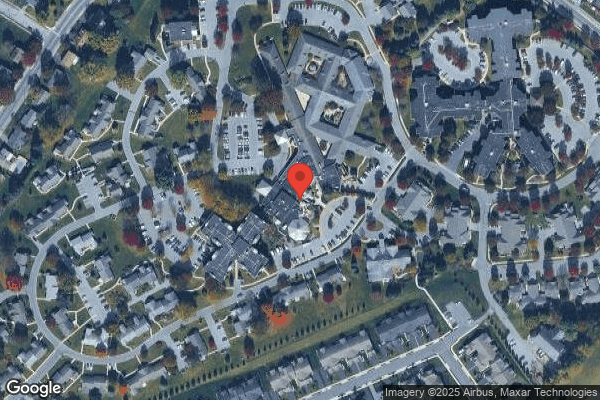
LUTHER ACRES MANOR

400 SAINT LUKE DR, LITITZ, PA 17543 (717) 626-6884
Non profit - Corporation 106 Beds Independent Data: November 2025
Trust Grade
80/100
#196 of 653 in PA
Last Inspection: December 2023

Within standard 12-15 month inspection cycle. Federal law requires annual inspections.

Overview

Luther Acres Manor has a Trust Grade of B+, which means it is recommended and above average among nursing homes. It ranks #196 out of 653 facilities in Pennsylvania, placing it in the top half, and #18 out of 31 in Lancaster County, indicating only a few local options are better. However, the facility is experiencing a worsening trend, with issues increasing from 1 in 2024 to 2 in 2025. Staffing is a concern, with a rating of 2 out of 5 stars and a turnover rate of 52%, which is average compared to the state. While there have been no fines, and RN coverage is below that of 90% of Pennsylvania facilities, there have been specific incidents, such as residents reporting long wait times for assistance and failure to provide prescribed wound care for some residents, which raise concerns about the quality of care. Overall, while Luther Acres Manor has some strengths, the issues noted should be carefully considered by families looking for a nursing home.

Trust Score
B+
80/100
In Pennsylvania
#196/653
Top 30%
Safety Record
Low Risk
No red flags
Inspections
Getting Worse
1 → 2 violations
Staff Stability
⚠ Watch
52% turnover. Above average. Higher turnover means staff may not know residents' routines.
Penalties
✓ Good
No fines on record. Clean compliance history, better than most Pennsylvania facilities.
Skilled Nurses
⚠ Watch
Each resident gets only 27 minutes of Registered Nurse (RN) attention daily — below average for Pennsylvania. Fewer RN minutes means fewer trained eyes watching for problems.
Violations
○ Average
9 deficiencies on record. Average for a facility this size. Mostly minor or procedural issues.
★★★★☆
4.0
Overall Rating
★★☆☆☆
2.0
Staff Levels
★★☆☆☆
2.0
Care Quality
★★★★☆
4.0
Inspection Score
Stable
2024: 1 issues
2025: 2 issues

The Good

  • Full Sprinkler Coverage · Fire safety systems throughout facility
  • No fines on record

Facility shows strength in fire safety.

The Bad

Staff Turnover: 52%

Near Pennsylvania avg (46%)

Higher turnover may affect care consistency

The Ugly 9 deficiencies on record

Aug 2025 2 deficiencies
CONCERN (E) 📢 Someone Reported This

A family member, employee, or ombudsman was alarmed enough to file a formal complaint

Potential for Harm - no one hurt, but risky conditions existed

ADL Care (Tag F0677)

Could have caused harm · This affected multiple residents

Based on review of observations and resident and staff interviews it was determined that the facility failed to provide activity of daily living (ADL) assistance for ten of eighteen residents (Residen...

Read full inspector narrative →
Based on review of observations and resident and staff interviews it was determined that the facility failed to provide activity of daily living (ADL) assistance for ten of eighteen residents (Residents R1, R3, R4, R5, R6, R7, R8, R9, R10, and R11).Findings include: During an observation on 8/7/25, at 10:38 a.m. when asked if she needed to wait an extended amount of time when she requests assistance with care, Resident R3 stated, Frequently on third shift. During an observation on 8/7/25, at 10:42 a.m. when asked if she needed to wait an extended amount to time when she requests assistance with care, Resident R4 stated, Depends on the aide. If we have agency people, then we wait. During an observation on 8/7/25, at 10:57 a.m. when asked if she felt the facility maintained an adequate number of staff, Resident R1 stated, Yes and no. I don't think there are enough of them in the evening. During an observation on 8/7/25, at 12:08 p.m. when asked if he needed to wait an extended amount to time when she requests assistance with care, Resident R4 stated, It takes a long time to get back into bed if you get out. Review of facility grievances filed in May 2025, through July 2025, revealed the following: -On 5/9/25, Resident R6 had voiced a concern that he had rung his call light on 5/8/25, at 6:00 a.m. and staff did not respond. Resident R6 stated that he had to use the bathroom unassisted. -On 5/19/25, Resident R7's family member had voiced a concern on third shift (overnight) and weekends the call bell response time was too slow, and that staff are verbally short when responding (on 3rd shift). She stated that he was offered a urinal to use despite not being able to use it without spilling. -On 5/23/25, Resident R8 had voiced a concern that on 5/22/25, his call bell was answered in excess of 1.5 hours. He stated that he activated his call bell at 6:50 a.m. and that he did not receive care until 8:30 a.m. -On 6/16/25, Resident R9's family member had voiced a concern that when she arrived on 6/14/25, she found her mother in the bathroom with bowel movement all over the floor, and no trashcan liner in the trash. She was here with her mother who was in the bathroom ringing to get off the toilet for 15 minutes. During that time, she stated there were many call bells on in the hallway in which she observed staff walking by the call bells and other staff sitting a the nurses stations. She stated she observed many staff sitting at the nurses' station all weekend not answering call bells. She also stated she addressed the call bell issue with (an employee) and he told her that her mother is not the only resident then chuckled. -On 7/7/25, Resident R10's family member had voiced a concern stating, that today her mom was ringing to go to the bathroom, and no one answered her call bell. Resident too herself to the bathroom and rang the bathroom bell as well to get out again and no one came. Daughter approached a woman in blue scrubs regarding the call bell and was told not to expect help when passing trays during mealtime. -On 7/14/25, Resident R11's family member had voiced a concern regarding the length of time it takes to get her call bell answered. This seems to be more of a problem on evening or nights. -On 7/14/25, Resident R9's family member had voiced a concern She was here visiting over the weekend on Saturday on 2nd shift, her mom was ringing her call bell to go to the bathroom. 30 minutes passed and no one came to assist her mother, so she ended up taking her mother to the bathroom herself. She was incontinent and completely soaked, through her clothes and the recliner chair. She stated she was here for 3 hours on Sunday and no one stopped in to even check on her mom in the 3 hours she was visiting. She has stated she is disappointed in the care her mother is currently getting versus the last stay here with us. Visiting family members have mentioned concern over the care she is currently getting. [Family member] stated that the nursing staff have time to sit and play on their phones or sit and mingle with each other but don't have time to care for her mother whom she has found completely saturated more than once now. During an interview on 8/7/25, at approximately 1:15 p.m. the Nursing Home Administrator confirmed the facility failed to provide activity of daily living assistance for ten of eighteen residents. 28 PA. Code:201.18(b)(2) Management. 28 PA. Code:201.29(a) Resident's Rights.
CONCERN (E) 📢 Someone Reported This

A family member, employee, or ombudsman was alarmed enough to file a formal complaint

Potential for Harm - no one hurt, but risky conditions existed

Quality of Care (Tag F0684)

Could have caused harm · This affected multiple residents

**NOTE- TERMS IN BRACKETS HAVE BEEN EDITED TO PROTECT CONFIDENTIALITY** Based on review of facility policy, clinical records, observations, and resident and staff interview, it was determined that the...

Read full inspector narrative →
**NOTE- TERMS IN BRACKETS HAVE BEEN EDITED TO PROTECT CONFIDENTIALITY** Based on review of facility policy, clinical records, observations, and resident and staff interview, it was determined that the facility failed to provide prescribed treatment and services related to the wounds for two of six residents (Resident R1 and R2). Findings Include: Review of the facility policy General Wound Management dated 7/22/25, indicated, Any resident with a wound receives treatment and services consistent with the resident's goals of treatment. Review of the clinical record revealed Resident R1 was admitted to the facility on [DATE]. Review of the Minimum Data Set (MDS, periodic assessment of resident care needs) dated 6/24/25, included diagnoses of heart failure (a progressive heart disease that affects pumping action of the heart muscles) and diabetes (a metabolic disorder in which the body has high sugar levels for prolonged periods of time). Review of a physician's order dated 7/25/25, indicated, Cleanse RLE (right lower extremity) skin tear with NSS (normal saline solution), apply calcium alginate (highly absorptive, non-occlusive dressings made of soft, non-woven calcium alginate fibers derived from brown seaweed or kelp) to wound bed and cover with foam dressing daily & PRN (as needed) every day shift. During an observation on 8/7/25, at 10:52 a.m. the dressing on Resident R1's right lower extremity was dated 8/5/25. Review of Resident R1's TAR (treatment administration record) revealed documentation that Resident R1's RLE dressing change was completed by Licensed Practical Nurse (LPN) Employee E1 on 8/6/25. Review of the clinical record revealed Resident R2 was admitted to the facility on [DATE]. Review of the MDS dated [DATE], included diagnoses of peripheral vascular disease (PVD, circulatory condition in which narrowed blood vessels reduce blood flow to the limbs) and history of a stroke. During an observation on 8/7/25, at 11:01 a.m. an undated dressing was noted on Resident R2's left lower leg. Review of a progress note dated 7/28/25, at 9:57 a.m. indicated, CNA (nurse aide) reported to this LPN that patient had open area on his L shin. Area measured 3 x 2.5 x 0.1 cm (centimeters). LPN applied xeroform (fine mesh gauze) and bordered foam dressing after cleansing. Further review of Resident R2's progress notes failed to reveal that the open area on his left shin was assessed by a provider. Review of Resident R2's physician orders failed to reveal a treatment order for Resident R2's left lower leg. During an interview on 8/7/25, at approximately 1:15 p.m. the Nursing Home Administrator confirmed that facility failed to provide prescribed treatment and services related to the wounds for two of six residents. 28 Pa. Code 201.18 (b)(1) Management28 Pa. Code 211.10 (c)(d) Resident care policies28 Pa. Code 211.12 (d)(1)(2)(3)(5) Nursing services
May 2024 1 deficiency
CONCERN (D) 📢 Someone Reported This

A family member, employee, or ombudsman was alarmed enough to file a formal complaint

Potential for Harm - no one hurt, but risky conditions existed

Deficiency F0604 (Tag F0604)

Could have caused harm · This affected 1 resident

Based on review of facility policy, clinical record review, facility documentation, and staff interview, it was determined that the facility failed to ensure one of three residents reviewed was free f...

Read full inspector narrative →
Based on review of facility policy, clinical record review, facility documentation, and staff interview, it was determined that the facility failed to ensure one of three residents reviewed was free from physical restraints (Resident 1). Findings include: Review of facility policy, Restraint Policy, undated, revealed: restraint use in our facility will only be considered to treat a medical symptom/condition that endangers the physical safety of the resident or other residents and under the following conditions: 1) as a last resort measure after a trial period where less restrictive measures have been undertaken and proven unsuccessful; 2) with a physician order; 3) with the consent of the resident or legal representative; 4) when the benefits of the restraint outweigh the identified risks. Review of facility orientation packet given to outside nursing staff and nursing students revealed: This is a restraint free facility. Review of nurse aide Employee E5's orientation packet revealed the employee signed acknowledgement of receipt and understanding of the orientation materials on October 7, 2023. Review of Resident 1's clinical record revealed the resident was admitted to the facility April 23, 2024, with diagnoses including Parkinson's (chronic and progressive movement disorder that causes tremors, stiffness or slowing of movement), severe dementia (general decline in cognitive abilities that impacts a person's ability to perform everyday activities. This typically involves problems with memory, thinking, behavior, and motor control) with psychotic disturbance, psychotic disorder with delusions, hallucinations, disorientation, unsteadiness on feet, unspecified abnormalities of gait and mobility, and cognitive communication deficit. Review of Resident 1's admission MDS (minimum data set - periodic assessment of resident care needs) dated April 28, 2024, revealed the resident had a BIMS (Brief Interview for Mental Status) score of 01, indicating severe cognitive impairment. Review of Resident 1's clinical record failed to reveal orders for any type of restraint. Interview with the recreation manager, Employee E3, on May 29, 2024, at approximately 9:50 a.m. revealed that the employee was made aware by the activity aide, Employee E4, on May 13, 2024, at 4:15 p.m., that Resident 1 had a gait belt (a device put on someone who has mobility issues to aid caregivers in moving them) wrapped around their waist and the wheelchair in the dining room. Employee E3 stated she then went to the dining room and saw the gait belt tied around Resident 1 and secured in the back of the wheelchair. Resident 1 was asleep at this time. Employee E3 informed nurse aide Employee E5 that the gait belt needed to be removed. Employee E3 stated that Employee E5 expressed understanding and stated they put the gait belt on Resident 1 because the resident had fallen a couple times that day. Employee E5 then removed the gait belt from around Resident 1 at approximately 4:30 p.m. Review of facility investigation revealed witness statements from staff Employees E5, E6, and E7, all stating that Resident 1 had a witnessed fall on May 13, 2024, at 4:00 p.m. when the resident tried to stand from the wheelchair. Interview with the Director of Nursing on May 29, 2024, at approximately 11:00 a.m. revealed because of the witnessed fall at 4:00 p.m., Resident 1 was estimated to have been restrained by the gait belt for approximately a half hour. Interview with the Nursing Home Administrator and Director of Nursing on May 29, 2024, at approximately 12:00 p.m. confirmed the facility does not use restraints and Employee E5 should not have wrapped the gait belt around Resident 1 and the wheelchair as a restraint. 28 Pa. Code: 211.8(d)(e)(f) Restraints 28 Pa. Code:211.10(d) Resident care policies 28 Pa. Code:211.12(d)(1)(5)Nursing services
Dec 2023 3 deficiencies
CONCERN (D)

Potential for Harm - no one hurt, but risky conditions existed

Deficiency F0578 (Tag F0578)

Could have caused harm · This affected 1 resident

**NOTE- TERMS IN BRACKETS HAVE BEEN EDITED TO PROTECT CONFIDENTIALITY** Based on clinical record review and staff interviews it was determined that the facility failed to ensure a resident's code stat...

Read full inspector narrative →
**NOTE- TERMS IN BRACKETS HAVE BEEN EDITED TO PROTECT CONFIDENTIALITY** Based on clinical record review and staff interviews it was determined that the facility failed to ensure a resident's code status for one out of 24 residents reviewed (Resident 71). Findings include: Review of the clinical record revealed Resident 71 was admitted to the facility on [DATE]. Review of Resident 71's clinical record revealed a POLST (Pennsylvania -Orders for Life Sustaining Treatment), signed on February 7, 2023, indicating the resident wanted life sustaining code status to be considered, Do Not Resuscitate (DNR). Review of the physician orders revealed the DNR was not current. Interview with the Social Service Director, Employee E3 December 7, 2023 at 10:30 a.m., confirmed the DNR order was not listed on the residents physician orders as Resident 71 intended as stated on the POLST form. The facility failed to ensure the resident's right to formulate an advance directive for Resident 71. 28 Pa. Code 211.5(f) Clinical records. 28 Pa. Code 201.29(j) Resident rights.
CONCERN (D)

Potential for Harm - no one hurt, but risky conditions existed

Investigate Abuse (Tag F0610)

Could have caused harm · This affected 1 resident

Based on clinical records review and staff interview, it was determined that the facility failed to investigate an allegation of being rough during care for one of the 18 residents reviewed (Resident ...

Read full inspector narrative →
Based on clinical records review and staff interview, it was determined that the facility failed to investigate an allegation of being rough during care for one of the 18 residents reviewed (Resident 8). Findings include: Review of Resident 8's diagnosis list includes Traumatic Brain Injury (TBI), and Anxiety (intense, excessive and persistent worry and fear about everyday situations). Review of Resident 8's Minimum Data Set (MDS- standardized assessment tool that measures health status in long-term care residents) dated September 14, 2023, revealed resident had moderate impairment with cognition and required extensive assistance with personal hygiene and dressing. Review of Resident 28's nursing progress notes dated October 16, 2023, at 2:56 p.m., revealed Resident 8 told the aide assisting her/him that she/he was being too rough. Another aide came to assist the resident then pulled the second aide's hair and said, Was that soft and gentle? Interview was conducted with the Director of Nursing (DON) on December 14, 2023, at 10:00 a.m. The DON reported a second aide came to assist the first aide after the allegation of being rough was made by the resident. The incident was reported to the nurse who then documented the incident to the EMR (Electronic Medical Record). The DON confirmed that Resident 8's allegation of the first aide being rough during care was not investigated. The facility failed to investigate Resident 8's allegation of staff being rough during care was conducted. 28 Pa. Code 211.12(c)(d)(1)(2)(5) Nursing Services 28 Pa. Code 201.29(j) Resident rights.
CONCERN (D)

Potential for Harm - no one hurt, but risky conditions existed

Quality of Care (Tag F0684)

Could have caused harm · This affected 1 resident

Based upon review of facility policy and procedure and clinical record review, it was determined the facility failed to follow physician orders for the administration of insulin for one of two residen...

Read full inspector narrative →
Based upon review of facility policy and procedure and clinical record review, it was determined the facility failed to follow physician orders for the administration of insulin for one of two residents reviewed (Resident 64). Findings include: Review of facility policy and procedure titled Insulin Administration, revised February 2015 revealed Check blood glucose per physician order or nursing protocol. Review of Resident 64's diagnosis list revealed diagnoses including Type 2 Diabetes Mellitus (failure of the body to produce insulin to enable sugar to pass from the blood stream to cells for nourishment). Review of Resident 64's physician orders revealed an order to check glucose with Libre 2 system three times per day before meals. Further review of Resident 64's physician orders revealed an order for Novolog Insulin, Inject 10 units twice daily morning and afternoon with meals. Hold for blood sugar less than 150 and to inject 5 units every evening with meals. Hold for blood sugar less than 150. Review of Resident 64's November 2023 Medication Administration Record (MAR) revealed on November 3, 2023, at 11:00 a.m. Resident 64 received Novolog Insulin for a blood sugar of 148; November 9, 2023 at 4:00 p.m. Resident 64 received Novolog Insulin for a blood sugar of 148; November 11, 2023 at 7:30 a.m. and 4:00 p.m. Resident 64 received Novolog Insulin for blood sugars of 111 and 115; November 14, 2023 at 4:00 p.m. Resident 64 received Novolog Insulin for a blood sugar of 124; November 16, 2023 at 11:00 a.m. Resident 64 received Novolog Insulin for a blood sugar of 134; November 17, 2023 at 7:30 a.m. and 11:00 a.m. Resident 64 received Novolog Insulin for blood sugars of 141 and 136; November 18, 2023 at 7:30 a.m., 11:00 a.m. and 4:00 p.m. Resident 64 received Novolog Insulin for blood sugars of 145, 138 and 145; and on November 23, 2023 at 11:00 a.m. Resident 64 received Novolog Insulin for a blood sugar of 90. Interview with the Director of Nursing on December 14, 2023, at 10:00 a.m. confirmed that Resident 64 received Novolog Insulin with blood sugars outside the parameters of Resident 64's physician orders. 28 Pa. Code 211.12(c)(d)(1)(2)(5) Nursing Services
Feb 2023 1 deficiency
CONCERN (D)

Potential for Harm - no one hurt, but risky conditions existed

Investigate Abuse (Tag F0610)

Could have caused harm · This affected 1 resident

Based upon review of facility policy and procedure and clinical record review, it was determined the facility failed to ensure a thorough investigation was completed for injuries of unknown origin for...

Read full inspector narrative →
Based upon review of facility policy and procedure and clinical record review, it was determined the facility failed to ensure a thorough investigation was completed for injuries of unknown origin for 2 of 18 residents reviewed (Resident 15 and Resident 28). Findings include: Review of facility policy and procedure titled Accident, Incident and Death Reporting/Investigation, revised 2019, revealed Any injury should be classified as an 'injury of unknown origin' when the following conditions are met: a) the origin of the injury was not observed by any person or the origin of the injury could not be explained by the resident; b) the injury is suspicious because of the extent of the injury, or the location of the injury (e.g. the injury is located in an area not generally vulnerable to trauma such as, but not limited to breast or groin area), or the number of injuries observed at one particular point in time (such as multiple bruises in a pattern resembling finger marks), or the incidence of the injuries over time and c) there is no reasonable determination as to how the injury occurred (e.g. a confused resident that self-propels a wheelchair and is known to occasionally bump into doorways, etc., and gets a large bruise on the back of the hand). Further review of this policy and procedure revealed In order to determine probable cause for injuries of unknown origin - statements shall be obtained from team members who were assigned to the resident within 24 hours (3 shifts) prior to becoming aware of the injury. Review of Resident 15's clinical progress notes dated February 14, 2023, revealed While CNA was providing am [morning] care, CNA noted multiple green/yellow bruises on left upper arm. No c/o [complaints of] pain was noted this shift. Resident was unable to explain how areas happened. POA was notified on bruises. Fax was prepared to update MD on bruises. Review of facility documentation revealed only one staff member's statement was obtained regarding Resident 15's bruises. Review of Resident 28's clinical progress notes dated February 16, 2023, revealed that the nurse aides, alerted the nurse that when they took the residents sock off they noticed a bruise at the residents right ankle. Slight swelling noted. The bruise is 10 cm [centimeter] in length and wraps around to the front of the lower rt leg. POA notified of bruise, MD [Medical Doctor] order for an x-ray. Review of facility documentation revealed one staff members statement was obtained regarding Resident 28's bruise. One staff member was interviewed regarding the resident's daily behaviors. Interview with Nursing Home Administrator and Director of Nursing on February 24, 2023, at 11:00 a.m. failed to provide evidence of further investigation or further staff statements regarding Resident 15's bruises and Resident 28's bruise on the ankle. This interview further revealed that a thorough and complete investigation was not conducted by the facility. The facility failed to ensure a complete and thorough investigation was conducted to determine the origin of Resident 15's upper arm bruises and Resident 28's ankle bruise. 483.13 - Resident Behavior and Facility Practices, 10-1-1998 edition 28 Pa. Code 201.18(b)(3)(e)(1) Management Previously cited 2/22/2022
Feb 2022 2 deficiencies
CONCERN (D)

Potential for Harm - no one hurt, but risky conditions existed

Free from Abuse/Neglect (Tag F0600)

Could have caused harm · This affected 1 resident

**NOTE- TERMS IN BRACKETS HAVE BEEN EDITED TO PROTECT CONFIDENTIALITY** Based on a review of the facility's policy, clinical records, and interviews with staff, it was determined that the facility fai...

Read full inspector narrative →
**NOTE- TERMS IN BRACKETS HAVE BEEN EDITED TO PROTECT CONFIDENTIALITY** Based on a review of the facility's policy, clinical records, and interviews with staff, it was determined that the facility failed to thoroughly investigate an injury of unknown origin for three of 17 residents reviewed (Resident 2, Resident 29, and Resident 66). Findings include: Review of the facility's policy and procedure titled Accident, Incident and Death Reporting/Investigation, with a most recent revision date of August 7, 2019; revealed that an injury should be classified as an injury of unknown origin when the origin of the injury was not observed by any person, or the origin of the injury could not be explained by the resident. The same policy revealed that the licensed nurse completing the Resident Incident Report is responsible for initiating the investigative process that includes interviewing the resident and team members and preparing written statements. Further review of the policy revealed that to determine probable cause for injuries of unknown origin-statements shall be obtained from team members who were assigned to the resident within 24 hours (three shifts) prior to becoming aware of the injury. Review of Resident 2's diagnosis list revealed Dementia (term used to describe a group of symptoms affecting memory, thinking, and social abilities severe enough to interfere with daily life). Review of Resident 2's Minimum Data Set (MDS- standardized assessment tool that measures health status in long-term care residents) dated February 11, 2021, revealed the resident had moderate cognitive impairment. Review of nursing progress notes dated April 4, 2021, revealed that while providing care, the nursing assistant (NA) observed a bruise on [Resident 2's] left shin with a measurement of 15 x 7 cm (centimeter) and a bruise to the left knee with a measurement of 4 x 3 cm. Family notified. Review of the facility's incident report, revealed a witness statement dated April 4, 2021, indicating per NA, she/he was informed by Resident 2 that she/he tripped from another resident's feet but did not fall. The statement failed to reveal that the incident was witnessed by the NA. The facility documentation failed to reveal further statements from other staff and residents. Additional review of the same documents revealed the probable cause of Resident 2's 15 x 7 cm bruise to the left shin was from banging against a bed frame. Review of Resident 29's diagnosis list revealed Dementia (term used to describe a group of symptoms affecting memory, thinking, and social abilities severe enough to interfere with daily life). Review of Resident 29's Minimum Data Set, dated [DATE], revealed that the resident had severe cognitive impairment. Review of the nursing progress notes dated December 17, 2021, at 8:30 p.m., revealed that after transferring the resident to the bed, a bruise was observed on Resident 29's left calf with a measurement of 6.0 x 6.0 cm. and right calf with a measurement of 5.0 x 5.0 cm. Review of the facility's documentation, incident report dated December 17, 2021, revealed that there was no witnesses to the incident. Documentations review failed to revealed statements from any staff. Review of Resident 29's nursing progress notes dated January 6, 2022, at 8:30 a.m., revealed that a 14 x 6.0 grey discoloration bruise was observed on the resident's right posterior calf while NA was providing morning care. Review of the facility's documentation, incident report dated January 6, 2022, revealed one statement from the NA who identified the bruise in the morning. Further review of documentation failed to reveal any additional staff witness statements. Review of Resident 66's diagnosis list revealed Cognitive communication deficit and Cerebral Infarct (stroke) Review of Resident 66's Minimum Data Set, dated [DATE], revealed that the resident had severe cognitive impairment. Review of Resident 66's nursing progress notes dated September 27, 2021, at 11:12 a.m., revealed a large bruise was observed on the resident's right anterior bicep during morning care. The bruise had a measurement of 4.0 x 6.0 cm. Review of the facility's documentation, incident report dated September 27, 2021, revealed that the resident was unable to identify possible cause of the bruise. The report revealed one statement from the staff who identified the bruise, no statements from other shifts were noted The above information was conveyed to the Nursing Home Administrator and Director of Nursing on February 22, 2022, at 1:30 p.m. The facility failed to conduct a thorough investigation for the bruise of unknown origin for Residents 2, 29, and 66. 28 Pa. Code 201.18(b)(3)(e)(1) Management Previously cited 2/26/21 28 Pa. Code 211.12(c) Nursing services Previously cited 2/26/21 28 Pa. Code 211.12(d)(1)(5) Nursing services Previously cited 2/26/21 28 Pa. Code 211.5(f) Clinical records
CONCERN (D)

Potential for Harm - no one hurt, but risky conditions existed

Pharmacy Services (Tag F0755)

Could have caused harm · This affected 1 resident

Based on a review of the facility ' s policy, clinical records review, pharmacy record review, and staff interview, it was determined that the facility failed to timely acquire and administer an emerg...

Read full inspector narrative →
Based on a review of the facility ' s policy, clinical records review, pharmacy record review, and staff interview, it was determined that the facility failed to timely acquire and administer an emergency-controlled medication for one of 17 residents reviewed (Resident 269). Findings include: Review of the facility policy titled, Dispensing Pharmacy Services, with a revision date of June 1, 1999, revealed that [Pharmacy] Services Pharmacy is responsible for rendering the required services in accordance with local, state, federal laws and regulations, facility policies and procedures, and community standards of practice. The pharmaceutical services include accurate dispensing of prescriptions based on authorized prescriber order; and providing, maintaining, and replenishing in a timely manner an emergency medication supply in a sealed and properly labeled container. Review of Resident 269's diagnosis list revealed Dementia with Lewy Body (A type of progressive dementia that leads to a decline in thinking, reasoning, and independent function due to abnormal microscopic deposits that damage brain cells over time). Review of Resident 269's nursing progress notes dated May 13, 2021, at 5:58 a.m., revealed that at 3:43 a.m., the resident was observed shaking, breathing heavy, non-responsive, the face was turned on the side with saliva coming out from the mouth. Vitals were taken, oxygen was administered, the physician was notified. The physician gave a verbal order at 3: 59 a.m., to administer Valium (A medication used for Anxiety, muscle spasm, and Seizure) 5mg via IM (intramuscular), may repeat after fifteen minutes if signs and symptoms of the Seizure (A sudden, uncontrolled electrical disturbances in the brain) do not resolve. A review of the same note revealed that the first dose of the Valium was administered to the right arm at 5:00 a.m., one hour after the verbal order was received from the physician. A second dose was administered at 5:26 a.m. the physician and the family was updated with the resident ' s condition. Review of the nursing progress notes dated May 13, 2021, at 7:05 a.m., revealed that the resident was reassessed, vitals monitored, kept on oxygen, resident was stable and not in distress. Further review of the same note revealed per the physician if residents' vitals are stable and jaw is no longer clenched, no other action needs to be taken. The family was notified of the physician's order. Review of the nursing progress notes dated May 13, 2021, at 8:06 a.m., revealed that the resident ' s family requested for the resident to be transferred to the hospital. Resident 269 was admitted to the hospital with a diagnosis of Seizure. Interview conducted on February 22, 2022, at 1:00 p.m. with licensed nurse Employee E3 indicated upon receiving a verbal order for a controlled medication from the physician, the order is to be faxed to the pharmacy, the physician will contact the pharmacy for prescriptions, the pharmacy will enter the order into the system and a profile will be created in the CUBEX (automated medication dispensing system). Employee E3 reported that the delay in the acquisition and administration of the medication Valium was due to an error made by the pharmacy. The pharmacy apparently entered into the CUBEX system; the medication under another resident's name. This error had prevented the nursing staff to acquire and administer the medication timely. Review of the facility documents dated May 13, 2021, revealed that the medication Valium was entered under another resident with the same last name as Resident 269. The error was corrected at 5:00 a.m. The above information was conveyed to the Nursing Home Administrator on February 22, 2022, at 1:15 p.m. The facility failed to timely acquire and administer an emergency-controlled medication for Resident 269. 28 Pa. Code 201.18(b)(3)(e)(1) Management Previously cited 2/26/21 28 Pa. Code 211.12(c) Nursing services Previously cited 2/26/21 28 Pa. Code 211.12(d)(1)(5) Nursing services Previously cited 2/26/21 28 Pa. Code 211.10 (c)(d) Resident care policies
Understanding Severity Codes (click to expand)
Life-Threatening (Immediate Jeopardy)
J - Isolated K - Pattern L - Widespread
Actual Harm
G - Isolated H - Pattern I - Widespread
Potential for Harm
D - Isolated E - Pattern F - Widespread
No Harm (Minor)
A - Isolated B - Pattern C - Widespread

Questions to Ask on Your Visit

  • "Can I speak with families of current residents?"
  • "What's your RN coverage like on weekends and overnight?"

Our Honest Assessment

Strengths
  • • Grade B+ (80/100). Above average facility, better than most options in Pennsylvania.
  • • No major safety red flags. No abuse findings, life-threatening violations, or SFF status.
  • • No fines on record. Clean compliance history, better than most Pennsylvania facilities.
Concerns
  • • No significant concerns identified. This facility shows no red flags across CMS ratings, staff turnover, or federal penalties.
Bottom line: Generally positive indicators. Standard due diligence and a personal visit recommended.

About This Facility

What is Luther Acres Manor's CMS Rating?

CMS assigns LUTHER ACRES MANOR an overall rating of 4 out of 5 stars, which is considered above average nationally. Within Pennsylvania, this rating places the facility higher than 99% of the state's 100 nursing homes. This rating reflects solid performance across the metrics CMS uses to evaluate nursing home quality.

How is Luther Acres Manor Staffed?

CMS rates LUTHER ACRES MANOR's staffing level at 2 out of 5 stars, which is below average compared to other nursing homes. Staff turnover is 52%, compared to the Pennsylvania average of 46%. RN turnover specifically is 67%, which is notably high. RNs provide skilled clinical oversight, so turnover in this role can affect medical care quality.

What Have Inspectors Found at Luther Acres Manor?

State health inspectors documented 9 deficiencies at LUTHER ACRES MANOR during 2022 to 2025. These included: 9 with potential for harm.

Who Owns and Operates Luther Acres Manor?

LUTHER ACRES MANOR is owned by a non-profit organization. Non-profit facilities reinvest revenue into operations rather than distributing to shareholders. The facility operates independently rather than as part of a larger chain. With 106 certified beds and approximately 82 residents (about 77% occupancy), it is a mid-sized facility located in LITITZ, Pennsylvania.

How Does Luther Acres Manor Compare to Other Pennsylvania Nursing Homes?

Compared to the 100 nursing homes in Pennsylvania, LUTHER ACRES MANOR's overall rating (4 stars) is above the state average of 3.0, staff turnover (52%) is near the state average of 46%, and health inspection rating (4 stars) is above the national benchmark.

What Should Families Ask When Visiting Luther Acres Manor?

Based on this facility's data, families visiting should ask: "Can you walk me through typical staffing levels on day, evening, and night shifts?" "Can I visit during a mealtime to observe dining assistance and food quality?" "How do you handle medical emergencies, and what is your hospital transfer rate?" "Can I speak with family members of current residents about their experience?" These questions are particularly relevant given the below-average staffing rating.

Is Luther Acres Manor Safe?

Based on CMS inspection data, LUTHER ACRES MANOR has a clean safety record: no substantiated abuse findings (meaning no confirmed cases of resident harm), no Immediate Jeopardy citations (the most serious violation level indicating risk of serious injury or death), and is not on the Special Focus Facility watch list (a federal program monitoring the lowest-performing 1% of nursing homes). The facility has a 4-star overall rating and ranks #1 of 100 nursing homes in Pennsylvania. While no facility is perfect, families should still ask about staff-to-resident ratios and recent inspection results during their visit.

Do Nurses at Luther Acres Manor Stick Around?

LUTHER ACRES MANOR has a staff turnover rate of 52%, which is 6 percentage points above the Pennsylvania average of 46%. Moderate turnover is common in nursing homes, but families should still ask about staff tenure and how the facility maintains care continuity when employees leave.

Was Luther Acres Manor Ever Fined?

LUTHER ACRES MANOR has no federal fines on record. CMS issues fines when nursing homes fail to meet care standards or don't correct problems found during inspections. The absence of fines suggests the facility has either maintained compliance or corrected any issues before penalties were assessed. This is a positive indicator, though families should still review recent inspection reports for the full picture.

Is Luther Acres Manor on Any Federal Watch List?

LUTHER ACRES MANOR is not on any federal watch list. The most significant is the Special Focus Facility (SFF) program, which identifies the bottom 1% of nursing homes nationally based on persistent, serious quality problems. Not being on this list means the facility has avoided the pattern of deficiencies that triggers enhanced federal oversight. This is a positive indicator, though families should still review the facility's inspection history directly.