MEADOW VIEW REHABILITATION & HEALTHCARE CENTER
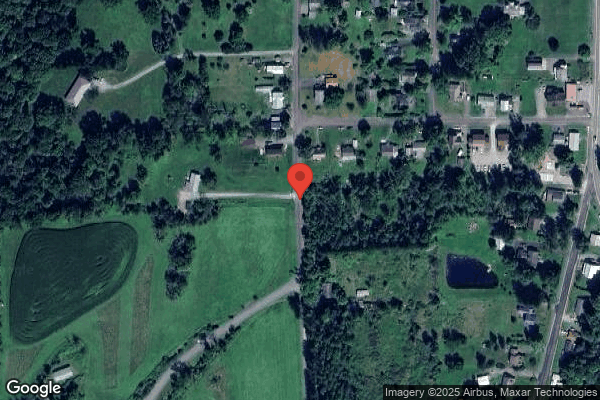
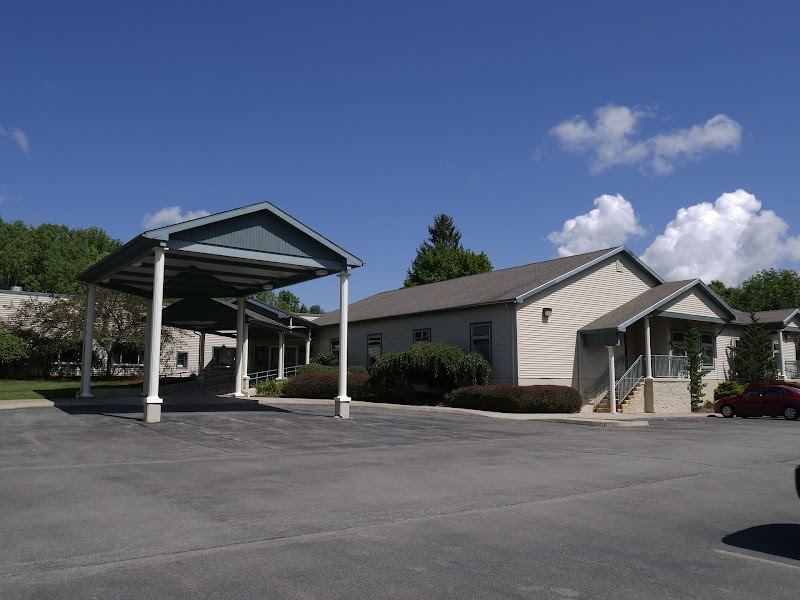
225 PARK STREET, MONTROSE, PA 18801 (570) 278-3836
For profit - Corporation 63 Beds CENTURY HEALTHCARE Data: November 2025
Trust Grade
30/100
#461 of 653 in PA
Last Inspection: November 2024

Within standard 12-15 month inspection cycle. Federal law requires annual inspections.

Overview

Meadow View Rehabilitation & Healthcare Center has received a Trust Grade of F, indicating significant concerns about the facility's care and operations. It ranks #461 out of 653 nursing homes in Pennsylvania, placing it in the bottom half, and #3 out of 3 in Susquehanna County, meaning there are no better local options. While the facility is improving, as it reduced issues from 12 in 2024 to 3 in 2025, there are still serious concerns, including $105,587 in fines, which is higher than 96% of facilities in the state. Staffing ratings are below average, with a 47% turnover rate, and an average amount of RN coverage. Specific incidents include a failure to provide adequate fall prevention for a resident with a history of falls, inadequate food safety practices risking foodborne illness, and a malfunctioning call bell system that could prevent residents from getting timely assistance. Overall, while there are some positive trends, the facility has significant weaknesses that families should consider carefully.

Trust Score
F
30/100
In Pennsylvania
#461/653
Bottom 30%
Safety Record
High Risk
Review needed
Inspections
Getting Better
12 → 3 violations
Staff Stability
⚠ Watch
47% turnover. Above average. Higher turnover means staff may not know residents' routines.
Penalties
✓ Good
$105,587 in fines. Lower than most Pennsylvania facilities. Relatively clean record.
Skilled Nurses
○ Average
Each resident gets 41 minutes of Registered Nurse (RN) attention daily — about average for Pennsylvania. RNs are the most trained staff who monitor for health changes.
Violations
⚠ Watch
44 deficiencies on record. Higher than average. Multiple issues found across inspections.
★★☆☆☆
2.0
Overall Rating
★★☆☆☆
2.0
Staff Levels
★★★★☆
4.0
Care Quality
★★☆☆☆
2.0
Inspection Score
Stable
2024: 12 issues
2025: 3 issues

The Good

  • 4-Star Quality Measures · Strong clinical quality outcomes
  • Full Sprinkler Coverage · Fire safety systems throughout facility
  • No fines on record

Facility shows strength in quality measures, fire safety.

The Bad

2-Star Overall Rating

Below Pennsylvania average (3.0)

Below average - review inspection findings carefully

Staff Turnover: 47%

Near Pennsylvania avg (46%)

Higher turnover may affect care consistency

Federal Fines: $105,587

Well above median ($33,413)

Significant penalties indicating serious issues

Chain: CENTURY HEALTHCARE

Part of a multi-facility chain

Ask about local staffing decisions and management

The Ugly 44 deficiencies on record

1 actual harm
Mar 2025 3 deficiencies
CONCERN (D) 📢 Someone Reported This

A family member, employee, or ombudsman was alarmed enough to file a formal complaint

Potential for Harm - no one hurt, but risky conditions existed

Resident Rights (Tag F0550)

Could have caused harm · This affected 1 resident

Based on a review of clinical records, resident council meeting minutes, grievances, resident and staff interviews, it was determined the facility failed to provide care in a manner that promotes each...

Read full inspector narrative →
Based on a review of clinical records, resident council meeting minutes, grievances, resident and staff interviews, it was determined the facility failed to provide care in a manner that promotes each resident's quality of life by failing to respond timely to residents' requests for assistance, including experiences reported by two residents out of 8 residents sampled (Residents 2 and 6). Findings include: A review of Resident Council meeting minutes dated March 5, 2025, revealed residents in attendance raised concerns regarding call bell response times. The residents indicated there was an issue with receiving staff assistance for toileting. Residents in attendance raised concerns indicating call bells are not answered when residents ring for assistance. A review of the facility grievances for the month of March 2025 revealed a grievance filed March 9, 2025 noting that residents are complaining of call bell response times. The grievance revealed the facility's plan to resolve this was to conduct call bell audits on all shifts. The results of the action taken was as follows: Day Shift: Average call bell times: 2-45 minutes Evening shift: 2-45 mins Night shift: 2-10 minutes. Per the grievance form, management reports the staff members were re-educated on the need to respond to call bells more timely. An interview with Resident 2 on March 19, 2025, at approximately 12:00 PM, revealed concerns regarding delayed call bell responses. The resident stated that response times can extend up to 45 minutes to an hour, with longer delays occurring at night. The resident further explained that if assistance is not provided in a timely manner, she may remain in a soiled brief for an extended period before staff is available to assist with hygiene needs. An interview with Resident 6 on March 19, 2025, at approximately 12:30 PM, revealed concerns regarding call bell response times. The resident stated that call bells often go unanswered for 45 minutes to an hour, attributing the delays to insufficient staffing. The resident further shared that, on some occasions, prolonged wait times have resulted in incontinence before assistance could be provided. During an interview on March 21, 2025, at approximately 9:30 AM, the Nursing Home Administrator (NHA) and Director of Nursing (DON) verified that all residents at the facility should be treated with dignity and respect and provided care in a manner that promotes each resident's quality of life. The NHA and DON were unable to explain why residents are reporting untimely staff responses to residents' requests for assistance and care. 28 Pa. Code 201.29 (a) Resident rights.
CONCERN (D) 📢 Someone Reported This

A family member, employee, or ombudsman was alarmed enough to file a formal complaint

Potential for Harm - no one hurt, but risky conditions existed

Incontinence Care (Tag F0690)

Could have caused harm · This affected 1 resident

**NOTE- TERMS IN BRACKETS HAVE BEEN EDITED TO PROTECT CONFIDENTIALITY** Based on review of clinical records, and staff interview, it was determined the facility failed to implement individualized appr...

Read full inspector narrative →
**NOTE- TERMS IN BRACKETS HAVE BEEN EDITED TO PROTECT CONFIDENTIALITY** Based on review of clinical records, and staff interview, it was determined the facility failed to implement individualized approaches for incontinence and provide maintenance care to the extent possible for two out of eight sampled residents (Resident 4 and 5). Findings include: A review of Resident 4's clinical record revealed the resident was admitted to the facility on [DATE], with diagnoses which included overactive bladder and muscle weakness. A review of Resident 4's quarterly Minimum Data Set assessment (MDS- a federally mandated standardized assessment process conducted periodically to plan resident care) dated December 6, 2024, revealed the resident was incontinent of bowel and bladder and was a poor candidate for retraining/scheduled toileting due to cognitive status. A review of the resident's care plan for Bladder and Bowel Incontinence, initiated on December 4, 2024, documented an intervention for the resident to be checked and changed every two hours and as needed (PRN). The term check and change refers to the routine monitoring and changing of a resident's incontinence products (such as adult briefs or absorbent pads) to maintain skin integrity, promote comfort, and prevent complications such as skin breakdown, moisture-associated skin damage (MASD), and urinary tract infections (UTIs). A review of the resident's Bowel and Bladder assessment dated [DATE], confirmed the resident was to be checked and changed every two hours. However, a review of the resident's clinical record did not reveal documented evidence the resident was checked and changed every two hours per the plan of care. An interview with the Nursing Home Administrator (NHA) on March 19, 2025, at approximately 1:45 PM, confirmed that the facility failed to provide documented evidence that incontinence care was provided to Resident 4. A review of Resident 5's clinical record revealed that the resident was admitted to the facility January 4, 2024, with diagnoses including dementia (decline in mental ability that interferes with daily life) and muscle weakness. A review of Resident 5's Bowel and Bladder Assessment dated November 26, 2024, revealed Resident 5 remained incontinent of bowel and bladder was not appropriate for retraining/scheduled toileting due to cognitive status. A review of the resident's care plan for Bladder and Bowel Incontinence, initiated on February 23, 2024, documented an intervention for the resident to be checked and changed every two hours and as needed (PRN). A review of Resident 5's progress notes revealed: January 15, 2025 - The resident experienced hematuria (blood in urine) while toileting at 5:00 PM. January 17, 2025 - A urine culture was obtained at 6:30 AM. January 18, 2025 - The resident was placed on an antibiotic due to a confirmed urinary tract infection (UTI) via lab results dated January 17, 2025. A review of the resident's January 2025 Documentation Survey Report revealed that on the following dates the resident was not checked every 2 hours per the care plan intervention recommendations A review of the resident's Documentation Survey Report for January, February, and March 2025 revealed multiple dates during various shift on which the resident was not checked and changed every two hours per the care plan intervention, including: January 4, 5, 7, 10, 17, 19, and 31, 2025 February 16, 20, and 23, 2025 March 14, 15, 16, and 17, 2025 An interview with the Nursing Home Administrator (NHA) on March 19, 2025, at approximately 1:45 PM, confirmed that the facility failed to carry out incontinence checks as planned for these residents to maintain or improve urinary continence and prevent incontinence related complications The facility failed to provide scheduled incontinence care as outlined in the residents' care plans. 28 Pa. Code 211.12(c)(d)(1)(3)(5) Nursing services
CONCERN (D) 📢 Someone Reported This

A family member, employee, or ombudsman was alarmed enough to file a formal complaint

Potential for Harm - no one hurt, but risky conditions existed

Pharmacy Services (Tag F0755)

Could have caused harm · This affected 1 resident

**NOTE- TERMS IN BRACKETS HAVE BEEN EDITED TO PROTECT CONFIDENTIALITY** Based on a review of clinical records and staff interviews it was determined the facility failed to implement procedures to to e...

Read full inspector narrative →
**NOTE- TERMS IN BRACKETS HAVE BEEN EDITED TO PROTECT CONFIDENTIALITY** Based on a review of clinical records and staff interviews it was determined the facility failed to implement procedures to to ensure the timely acquisition and administration of a prescribed medication to one of 7 sampled residents (Resident 1). Findings include: A review of Resident 1's clinical record revealed the resident was admitted to the facility on [DATE], with diagnoses which included hemiplegia (paralysis of one side of the body) following a cerebral infarction (a condition where blood flow to the brain is interrupted, causing brain tissue to die). A review of hospital discharge instructions revealed the resident was to receive diazepam 2mg (Valium an antianxiety medication) one tablet by mouth every night. A review of physician's orders dated February 6, 2025, revealed the physician prescribed diazepam 2mg one tablet by mouth at bedtime for anxiety beginning on February 6, 2025. A review of the Resident's MAR (medication administration record)) showed the diazepam was not administered on February 6 and 7, 2025, as ordered. There were no nurse signatures or documentation indicating the dose was given on those dates. A nursing progress note dated February 7, 2025, at 8:40 PM indicated the bedtime dose of diazepam was not given because the medication was unavailable. Further record review revealed the facility had not received the diazepam from the pharmacy in time for the scheduled doses on February 6 and 7, 2025. An interview with the Nursing Home Administrator on March 19, 2025, at approximately 1:45 PM acknowledged that the facility did not have adequate procedures in place to ensure medications were obtained and administered in a timely manner. 28 Pa. Code 211.12 (d)(1)(3)(5) Nursing services 28 Pa. Code 211.9 (f)(2) Pharmacy services
Nov 2024 8 deficiencies
CONCERN (D)

Potential for Harm - no one hurt, but risky conditions existed

Free from Abuse/Neglect (Tag F0600)

Could have caused harm · This affected 1 resident

**NOTE- TERMS IN BRACKETS HAVE BEEN EDITED TO PROTECT CONFIDENTIALITY** Based on a review of clinical records, information submitted by the facility and the facility's abuse prohibition policy, reside...

Read full inspector narrative →
**NOTE- TERMS IN BRACKETS HAVE BEEN EDITED TO PROTECT CONFIDENTIALITY** Based on a review of clinical records, information submitted by the facility and the facility's abuse prohibition policy, resident interviews, and staff interviews, it was determined the facility failed to ensure that one resident (Resident 24) was free from sexual abuse perpetrated by another resident (Resident 35) out of 15 sampled residents. Findings include: A review of the current facility policy titled Abuse Policy, last reviewed by the facility on August 27, 2024, indicated that residents have the right to be free from abuse, neglect, misappropriation of resident property, corporal punishment, and involuntary seclusion. The facility defined abuse as the willful infliction of injury, unreasonable confinement, intimidation, or punishment with resulting physical harm, pain, or mental anguish. Willful, as used in the definition of abuse, means the individual must have intended to inflict injury or harm. Sexual abuse is non-consensual sexual contact of any type with a resident, including sexual harassment, sexual coercion, or sexual assault. Sexual contact or assault that results from threats, force, or the inability of the person to give consent and involving a range of activities. Additionally, anytime the facility has reason to suspect that a resident may not have the capacity to consent to sexual activity, the facility must take steps to ensure that the resident is protected from abuse. Additionally, the facility policy indicated that abuse prevention included assessing, care planning, and monitoring residents with needs and behaviors that may lead to conflict or neglect. Assessing residents with signs and symptoms of behavior problems and developing and implementing care plans to address behavioral issues. The facility will strive to maintain adequate staffing on all shifts to ensure the needs of each resident are met. A review of Resident 35's clinical record revealed admission to the facility on June 1, 2022, with diagnoses that included muscular dystrophy (is a group of diseases that cause progressive weakness and loss of muscle mass. In muscular dystrophy, abnormal genes (mutations) interfere with the production of proteins needed to form healthy muscle) and major depressive disorder. Resident 35's comprehensive person-centered plan of care was initiated on February 23, 2024, and revised on April 11, 2024, and indicated the resident had behaviors related to inappropriate sexual behaviors (making sexually inappropriate statements to caregivers) and desires to be sexually active or show sexual expression. Planned interventions to manage sexual behaviors included to attempt to redirect the resident when exhibiting these behaviors and re-approach when the resident has deescalated, monitor and document episodes of inappropriate behaviors and notify physician/nurse practitioner/physician assistant when behaviors persist or won't deescalate, and to monitor behavior episodes and attempt to determine underlying cause with consideration of location, time of day, persons involved, and situations. Review of Resident 35's Quarterly MDS (Minimum Data Set - a federally mandated standardized assessment process conducted periodically to plan resident care) assessment dated [DATE], section C Cognitive Patterns revealed the resident had a BIMS score (Brief Interview for Mental Status is a tool used to evaluate cognitive impairment and assist with dementia diagnosis) of 12, which indicated the resident had moderate cognitive impairment. Additionally, the resident used an electric wheelchair for mobility. A review of Resident 24's clinical record revealed the resident was admitted to the facility on [DATE], with diagnoses that included Alzheimer's dementia (most common cause of dementia, a general term for memory loss and other cognitive abilities serious enough to interfere with daily life), anxiety (a feeling of fear, tension, or worry that occurs as a response to real or perceived threats), and major depressive disorder. Additionally, the resident had severe cognitive impairment and utilized a wheelchair for mobility as indicated by her quarterly MDS assessment dated [DATE] as evidenced by a BIMS score of 2 (score of 00-07 severe cognitive impairment). A review of nursing documentation on September 28, 2024, at 3:07 PM for Resident 35's revealed social services was alerted due to the resident caressing a nurse aide's (NA) arm while providing care, making her feel uncomfortable. However, Resident 35's clinical record failed to reveal documented evidence that social services followed up with the resident post the inappropriate sexual behavior toward the staff member and failed to reveal that his person-centered plan of care was reviewed and revised with new goals and approaches to manage his sexual behaviors. A review of a facility provided documentation completed by the Director of Nursing (DON), dated October 21, 2024, at 2:55 PM, revealed that Employee 1, a NA, alerted the IDT (Interdisciplinary Team) staff to resident Resident 35 who was in the activity area holding the hand of female Resident 24 and rubbing his private parts and top of thigh over clothing with Resident 24's hand. Three other residents were in the activity area at time of the incident. Resident 35's description of the incident, I didn't do anything. The report indicated the incident was unwitnessed with no injuries noted. Further review of the incident investigation report revealed the facility's immediate action taken was immediately removing the female resident, Resident 24, from the area and Resident 35 was sent back to his room. Resident 35 was placed on 1:1 (one-to-one staff supervision) while statements were obtained from involved parties in the area during the time of the incident. Resident 35 sat with a NA in the Social Services Department office while interviews were being conducted. The Department of Aging and State Police were notified and the responsible party (RP) of female resident Resident 24 was notified. The facility's immediate interventions were to replace Resident 35's motorized wheelchair for a manual wheelchair while awaiting a therapy evaluation and every fifteen-minute checks were also initiated while Resident 35 was OOB (out of bed). A review of Employee 1's, nurse aide witness statement dated October 21, 2024, no time specified, revealed that on Monday October 21, Employee 1 was walking down the north hall and observed Resident 35 holding Resident 24 by her wrist and rubbing his private area and the top of his leg. Employee 1 called out to Resident 35 who then removed his hand from Resident 24. Resident 24 was removed from the situation and Employee 1 asked Resident 35 to return to his room. The facility failed to protect and ensure that Resident 24 was free from sexual abuse from Resident 35 who had a known documented history of sexual inappropriate behaviors. Applying the reasonable person concept, in the case of Resident 24, who is unable to speak for herself, and the assessment of how most people would react to the situation of being sexually abused by Resident 35, Resident 24 would have suffered psychosocial harm and humiliation. An interview with the Director of Nursing (DON) and in the presence of Nursing Home Administrator (NHA) on November 7, 2024, 2024, at 1:05 PM, revealed that that they were not aware of Resident 8's history of sexually inappropriate encounters/behaviors with female staff and residents as noted in his person -centered plan of care and clinical record by staff and contracted psychiatric services. Further interview with the DON and NHA confirmed the facility failed ensure proper staff supervision of Resident 35, a resident with a known history of sexually inappropriate behaviors and ensure that Resident 24 was free from sexual abuse. The facility failed to fully investigate this incident of sexual abuse of Resident 24. The facility failed to develop and implement necessary interventions for a resident with a known history of sexual inappropriate behaviors to prevent the sexual abuse of Resident 24. The facility failed to develop and implement interventions after the sexual abuse occurred to prevent further incidents of sexual abuse. 28 Pa. Code 201.14(a) Responsibility of licensee 28 Pa. Code 201.18 (e)(1) Management 28 Pa. Code 201.29 (a)(c) Resident Rights 28 Pa. Code 211.12(c)(d)(5) Nursing Services
CONCERN (D)

Potential for Harm - no one hurt, but risky conditions existed

Investigate Abuse (Tag F0610)

Could have caused harm · This affected 1 resident

**NOTE- TERMS IN BRACKETS HAVE BEEN EDITED TO PROTECT CONFIDENTIALITY** Based on a review of clinical records, the facility's abuse prohibition policy, information provided by the facility, and reside...

Read full inspector narrative →
**NOTE- TERMS IN BRACKETS HAVE BEEN EDITED TO PROTECT CONFIDENTIALITY** Based on a review of clinical records, the facility's abuse prohibition policy, information provided by the facility, and resident and staff interviews, it was determined the facility failed to promptly conduct a thorough investigation to rule out abuse and implement the facility's established procedures and corrective action and submit the results of the completed investigation to the State Survey Agency within five working days of the incident as evidenced by one of 15 residents reviewed (Resident 35) Findings included: A review of the current facility policy titled Abuse Policy, last reviewed by the facility May 10, 2024, indicated that each resident has the right to be free from abuse, neglect, misappropriation of resident property, and exploitation as defined in the regulation. Residents must not be subjected to abuse by anyone, including but not limited to, facility staff, other residents, consultants or volunteers, staff or other agencies serving the resident, family members or legal guardians, friends, or other individuals. Each resident has the right to be free from mistreatment, neglect, and misappropriation of property. This includes the facility's identification of residents whose personal histories render them at risk for abusing residents, and development of intervention strategies to prevent occurrences, monitoring for changes that would trigger abusive behavior, and reassessment of the interventions on a regular basis. The Abuse Policy indicated the facility's abuse prevention/intervention program included training all staff and practitioners' and ways to resolve conflicts appropriately. Assessing, care planning, and monitoring residents with needs and behaviors that may lead to conflict or neglect and assessing residents with signs and symptoms of behavior problems and developing and implementing care plans to address behavioral issues. Additionally, the facility's response to abuse includes an assessment and assessment data will include injury assessment, signs of recent fall, pain assessment, current behavior, all current medications, vital signs, behaviors over the past 24-hours, all active diagnoses, and any recent labs. The nurse will report any findings to the physician. As a part of the initial assessment, the physician will help identify risk factors for abuse within the facility, for example, significant number of residents with unmanaged and problematic behaviors A review of a policy entitled Abuse Policy last reviewed by the facility on August 27, 2024, indicated that the facility will report alleged and substantiated incidents to the Pennsylvania Department of Health, additional state agencies and/or local authorities per federal and state requirements. The facility will analyze the occurrences to determine what changes are needed, of any, to policies and procedures to prevent further occurrences. Any report or allegations of abuse/neglect, misappropriation, or exploitation will be reported initially by the Administrator (NHA), Director of Nursing (DON), Assistant Director of Nursing (ADON), or delegated supervisor as follows: Within 24-hours of knowledge of the event to the Pennsylvania Department of Health through the electronic reporting system: Immediately to the Area Agency on Aging Local police department The Pennsylvania Department of Health will be notified of the reports of abuse involving the following and will be reported by the Administrator (NHA), Director of Nursing (DON), Assistant Director of Nursing (ADON), or delegated supervisor as required to The Pennsylvania Department of Aging for the following reasons: Serious bodily injury Serious physical injury Sexual abuse, assault, rape Suspicious death The appropriate agencies listed above will be notified of the results and outcomes of the investigation by the NHA or his/her designee. The mandatory reporting form will be submitted to the local Area Agency on Aging (AAA) with 48-hours, the NHA will complete the PB-22 within five (5) working days of the incident and any supplemental information to the AAA. If abuse is substantiated, the NHA and/or designee will notify the appropriate agencies and/or licensing board(s). A review of Resident 35 was admitted to the facility on [DATE], with diagnoses that included muscular dystrophy (is a group of diseases that cause progressive weakness and loss of muscle mass. In muscular dystrophy, abnormal genes (mutations) interfere with the production of proteins needed to form healthy muscle) and major depressive disorder. Resident 35's comprehensive person-centered plan of care was initiated on February 23, 2024, and revised on April 11, 2024, and indicated the resident had behaviors related to inappropriate sexual behaviors (making sexually inappropriate statements to caregivers) and desires to be sexually active or show sexual expression. Planned interventions to manage sexual behaviors included to attempt to redirect the resident when exhibiting these behaviors and re-approach when the resident has deescalated, monitor and document episodes of inappropriate behaviors and notify physician/nurse practitioner/physician assistant when behaviors persist or won't deescalate, and to monitor behavior episodes and attempt to determine underlying cause with consideration of location, time of day, persons involved, and situations. Review of Resident 35's Quarterly MDS (Minimum Data Set - a federally mandated standardized assessment process conducted periodically to plan resident care) assessment dated [DATE], section C Cognitive Patterns revealed that the resident had a BIMS score (Brief Interview for Mental Status is a tool used to evaluate cognitive impairment and assist with dementia diagnosis) of 12, which indicated that the resident had moderate cognitive impairment. Additionally, the resident used an electric wheelchair for mobility. A review of Resident 24's clinical record revealed that the resident was admitted to the facility on [DATE], with diagnoses that included Alzheimer's dementia (is the most common cause of dementia, a general term for memory loss and other cognitive abilities serious enough to interfere with daily life), anxiety (is a feeling of fear, tension, or worry that occurs as a response to real or perceived threats), and major depressive disorder. Additionally, the resident had severe cognitive impairment and utilized a wheelchair for mobility as indicated by her quarterly MDS assessment dated [DATE] as evidenced by a BIMS score of 2 (score of 00-07 severe cognitive impairment). A review of a facility provided documentation completed by the Director of Nursing (DON), dated October 21, 2024, at 2:55 PM, revealed that Employee 1, a NA, alerted the IDT (Interdisciplinary Team) staff to resident Resident 35 who was in the activity area holding the hand of female Resident 24 and rubbing his private parts and top of thigh over clothing with Resident 24's hand. Three other residents were in the activity area at time of the incident. Resident 35's description of the incident, I didn't do anything. The report indicated the incident was unwitnessed with no injuries noted. Further review of the incident investigation report revealed the facility's immediate action taken was immediately removing the female resident, Resident 24, from the area and Resident 35 was sent back to his room. Resident 35 was placed on 1:1 (one-to-one staff supervision) while statements were obtained from involved parties in the area during the time of the incident. Resident 35 sat with a NA in the Social Services Department office while interviews were being conducted. The Department of Aging and State Police were notified and the responsible party (RP) of female resident Resident 24 was notified. A review of Resident 24's clinical record failed to reveal documented evidence that she was thoroughly assessed by a RN after Resident 35 perpetrated sexual abuse on October 21, 2024. The RN failed to complete a thorough assessment of Resident 24 after Employee 1, a NA, observed Resident 35 holding Resident 24 by her wrist and rubbing his private area and top of his leg, as indicated in the facility's abuse policy. The facility failed ensure that their abuse policy was fully implemented by failing to ensure licensed nursing staff, a RN, completed a thorough assessment of a resident that was a victim sexual abuse perpetrated by another resident. The facility's immediate interventions in response to the alleged sexual act were to replace Resident 35's motorized wheelchair for a manual wheelchair while awaiting a therapy evaluation and every fifteen-minute checks were also initiated while Resident 35 was OOB (out of bed). The facility failed develop interventions that were pertinent to sexual abuse perpetrated by Resident 35 who had a documented history of sexually inappropriate behaviors. When interviewed on November 7, 2024 the Nursing Home Administrator confirmed the facility failed to provide evidence of timely and complete investigation to the alleged resident abuse and submission of a completed investigation to the State Survey Agency within five working days of the occurrence and failed to provide documented evidence that a thorough assessment was completed by a RN after an incident of sexual abuse inflicted by another resident and confirmed that the facility's failure to fully implement their abuse prohibition policy. 28 Pa. Code 201.14(a)(c) Responsibility of licensee. 28 Pa. Code 201.18(e)(1) Management. 28 Pa. Code 201.29 (a)(c)Resident Rights
CONCERN (E) 📢 Someone Reported This

A family member, employee, or ombudsman was alarmed enough to file a formal complaint

Potential for Harm - no one hurt, but risky conditions existed

Resident Rights (Tag F0550)

Could have caused harm · This affected multiple residents

**NOTE- TERMS IN BRACKETS HAVE BEEN EDITED TO PROTECT CONFIDENTIALITY** Based on a review of clinical records, and resident and staff interviews, it was determined the facility failed to provide care ...

Read full inspector narrative →
**NOTE- TERMS IN BRACKETS HAVE BEEN EDITED TO PROTECT CONFIDENTIALITY** Based on a review of clinical records, and resident and staff interviews, it was determined the facility failed to provide care in a manner and environment that promotes each resident's quality of life by failing to ensure that one resident (Resident 18) had the right to a dignified dining experience and failed to respond timely to residents' requests for assistance, as evidenced by experiences reported by seven out of the 15 residents sampled (Residents 18, 28, 15, 6, 5, 3, and 13) Findings include: A review of the clinical record revealed that Resident 18 was admitted to the facility on [DATE], with diagnoses to include amputation of the left leg above the knee, need for assistance with personal care, and muscle weakness. A quarterly Minimum Data Set assessment (MDS- standardized assessment completed at specific intervals to plan care) dated, September 9, 2024, indicated the resident had a BIMS score of 12 (Brief Interview for Mental Status-a tool to assess the resident's attention, orientation, and the ability to register and recall new information, a score of 8-12 equates to moderate cognitive impairment). Observation of Resident 18's room on November 5, 2024, at 11:35 AM revealed the resident's lunch tray, which consisted of a cheeseburger, cooked carrots, pudding and water, was delivered and placed on top of the resident's over-the-bed table tray. The resident's table tray was pushed against the wall to the right of the resident's bed, not within the resident's reach. The resident was awake and lying in bed on top of a mechanical lift sling (a hammock-type sling that connects to a mechanical device used to lift and transfers residents). Interview with Resident 18 at the time of the observation revealed that she was waiting for staff to come back to get her out of bed for lunch. The resident stated that her lunch tray was delivered a few minutes ago but no one offered to reposition her upright in bed or to get her out of bed into her wheelchair so that she can eat her lunch. Further observation revealed that the resident's call bell was wrapped around the left bed rail and out of reach of the resident. The resident stated that she was unable to locate or reach her call bell and was unable to notify staff that she needed assistance. Continued interview with Resident 18 revealed that when she does have access to the call bell, she frequently waits long periods of time, 45 minutes or more, for the call bell to be answered. She reported that she has urinated in her brief due to excessive wait times for staff to respond to her call for assistance. Continued observation revealed no staff member returned to Resident 18's room to get her out of bed or set her up with her lunch tray. The time was 12:15 PM, 40 minutes after the surveyor entered the room and approximately 45 minutes since her lunch tray was delivered. Interview with the Director of Nursing on November 5, 2024, at 12:16 PM confirmed that Resident 18 was not provided with her lunch meal in a dignified and timely manner and that her call bell was not within reach. During an interview with Resident 28 on November 5, 2024, at 1:20 PM the resident expressed concern and frustration with staff's response to call bells. He reported that sometimes he has to wait 30 minutes or more and reported that a few days ago, he waited almost two hours. He stated that he asked the staff why are you making me wait so long? and they responded you have to wait your turn. Resident 28 stated I can't hold my bowels that long; 10-15 minutes is okay but to wait almost two hours is not okay!. Observation during the time of the interview revealed Resident 28 did not have his call bell within reach. Resident 28 was seated in his wheelchair along the right side of his bed. The resident's call bell was located under the pillow and blankets and out of sight and reach of the resident. During an interview with Resident 28 at the time of the observation he stated, this isn't the first time I can't find my call bell, it happens from time to time. During a group interview with alert and oriented residents on November 6, 2024, at 11:00 AM, five out of the five residents in attendance indicated they rely on staff for care (Residents 15, 6, 5, 3, and 13). All five residents explained they experience long wait times for staff assistance. The residents in attendance indicated that concerns with staffing have been brought up during Resident Council meetings over the past few months, but the long wait times for care remain a problem at the facility. Resident 13 indicated that when she activates her call bell for staff assistance, staff come into her room, turn off the call bell, say that they will be right back, but never come back. She reported that it happens quite a lot. Residents 5 and 6 also indicated that they have waited 30 minutes or longer for staff assistance. Both residents expressed frustration over the long wait times especially when they need to go to the bathroom. Resident 5 further added the adult briefs are thin and when I have a wet diaper and have to wait even longer to be changed, I end up peeing again in my adult brief and then it's a mess. During an interview on November 6, 2024, at approximately 2:00 PM, the Nursing Home Administrator (NHA) and Director of Nursing (DON) verified all residents at the facility should be treated with dignity and respect. The NHA and DON were unable to explain why residents are reporting untimely staff responses to residents' requests for assistance and care which is negatively affecting their quality of life in the facility. 28 Pa. Code 201.18 (e)(1) Management 28 Pa. Code 201.29 (a) Resident Rights 28 Pa. Code 211.12 (c)(d)(4)(5) Nursing Services.
CONCERN (E)

Potential for Harm - no one hurt, but risky conditions existed

Deficiency F0558 (Tag F0558)

Could have caused harm · This affected multiple residents

Based on observation and resident and staff interviews, it was determined the facility failed to reasonably accommodate residents' need for call bell accessibility for three out of 15 residents sample...

Read full inspector narrative →
Based on observation and resident and staff interviews, it was determined the facility failed to reasonably accommodate residents' need for call bell accessibility for three out of 15 residents sampled (Residents 42, 18, and 28). Findings include: Observation on November 5, 2024, at 11:29 AM revealed that Resident 42 was seated on the left side of her bed, facing the wall. The call bell was observed draped over the headboard on the right side of the bed and not within the resident's reach. The resident was unable to locate or access her call bell to call for assistance. An interview with Employee 2 RN (registered nurse) on November 5, 2024, at 11:32 AM confirmed the observation and that Resident 42 did not have access to a call bell for staff assistance. Observation on November 5, 2024, at 11:35 AM revealed Resident 18 was lying in bed. The resident's call bell was wrapped around the left bed rail and out of reach of the resident. During an interview at the time of the observation, Resident 18 stated that she uses the call bell to alert staff to her needs for assistance and confirmed that her call bell was not accessible to her at the time of the observation. An interview with the Director of Nursing, on November 5, 2024, at 12:16 PM confirmed the observation that Resident 18 did not have access to a call bell to call for staff assistance if needed and verified that call bells are to be placed within reach of the residents at all times. Observation on November 5, 2024, at 1:30 PM revealed that Resident 28 was seated in a wheelchair along the right side of his bed. The resident's call bell was located under the pillow and blankets and out of sight and reach of the resident. During an interview with Resident 28 at the time of the observation he stated, this isn't the first time I can't find my call bell, it happens from time to time. An interview with Employee 3 (registered nurse) confirmed the observation that Resident 28 did not have access to a call bell to call for staff assistance. An interview with the Nursing Home Administrator on November 7, 2024, at approximately 10:30 AM verified that call bells are to be placed within reach of each resident at all times. 28 Pa. Code 211.12 (d)(1)(3)(5) Nursing Services. 28 Pa. Code 201.29 (a) Resident Rights
CONCERN (E) 📢 Someone Reported This

A family member, employee, or ombudsman was alarmed enough to file a formal complaint

Potential for Harm - no one hurt, but risky conditions existed

Accident Prevention (Tag F0689)

Could have caused harm · This affected multiple residents

**NOTE- TERMS IN BRACKETS HAVE BEEN EDITED TO PROTECT CONFIDENTIALITY** Based on review of clinical records and select resident incident/accident reports and staff interview, it was determined that th...

Read full inspector narrative →
**NOTE- TERMS IN BRACKETS HAVE BEEN EDITED TO PROTECT CONFIDENTIALITY** Based on review of clinical records and select resident incident/accident reports and staff interview, it was determined that the facility failed to implement effective interventions, timely re-evaluate the effectiveness of planned safety interventions and revise the resident's fall prevention plan to include the provision of supervision necessary to prevent falls for one of 15 residents sampled (Resident 46) and failed to assess resident's safety with the use of motorized wheelchairs for two (Resident 35 and Resident 25) residents out of 15 sampled residents. Findings include: A review of the clinical record revealed that Resident 46 was admitted to the facility on [DATE], with diagnoses to include dementia and a history of falls. A review of a quarterly Minimum Data Set Assessment (MDS - a federally mandated standardized assessment completed at specific times to identify resident care needs) dated May 27, 2024, revealed that the resident's cognition was severely impaired, and he was independent with ambulation with a BIMS score of 4 (Brief Interview for Mental Status. The BIMS test is used to get a quick snapshot of how well you are functioning cognitively at the moment. A score of 1-7 indicated severe cognitive impairment). A review of Resident 46's care plan, initiated May 21, 2024, revealed the resident was at risk for falls related to impaired cognition with decreased safety awareness, inability to use call light due to confusion, medications prescribed including psychoactive drug use and wandering. A care plan for activities of daily living dated September 9, 2024 revealed the resident required distant supervision when ambulating throughout facility. Additional Initial interventions included, Non-Skid Footwear, keep bed in lowest position, keep environment free of clutter, family education on resident's safety interventions and maintain call light within reach. A review of nursing documentation and incident reports dated between July 19, 2024, and October 28, 2024, revealed that Resident 46 incurred nineteen falls in the facility during that time period, one in July, two in August, six in September and ten in October. The interventions planned for fall prevention during this timeframe included, providing clear pathways, keep personal belongings within reach on left side of bed, assist resident with toileting every one hour while awake, maintain call light within reach and medication review related to frequent falls. A review of activity of daily living records for August through October 2024 did not indicate that every one hour toileting was attempted by nursing staff. A review of select incident reports during July 2024, and nursing documentation revealed the following: On July 19, 2024 at 7:10 AM, Resident 46 was found on the floor in his room. The resident had an increase in his antianxiety medication July 14, 2024. Select incident reports during August 2024, and nursing documentation revealed the following: On August 28, 2024 at 6:15 AM, Resident 46 was sitting on the side of his bed and slid to the floor. He was incontinent of urine at the time. New interventions at that time to prevent falls were to educate the resident's family regarding fall prevention, On August 28, 2024 at 11:55 P.M., the resident was found on the floor between the two beds with the room armchair tipped over underneath him. He was noted to be incontinent of urine at that time. He was placed back to bed by staff and non skid socks were applied at that time by staff. According to review of select incident reports and nursing documentation completed during September 2024, revealed the following: On September 1, 2024 at 8 AM, Resident 46 was found on the floor in his room. The arm chair again was tipped on its side next to him. He was incontinent of a large amount of urine at the time. No new interventions were put into place at that time to prevent falls. On September 3, 2024 at 7 A.M., the resident was found on the floor in his room. He was noted to be incontinent of urine at that time. His brief was noted to be saturated with urine and there was a pool of urine on the floor. There were no new interventions put into place at that time to prevent falling. On September 5, 2024 at 2 A.M., the resident was found on the floor in his room. He was noted to be incontinent of urine at that time. No new interventions put into place at that time, to prevent falling. On September 8, 2024 at 2:15 A.M., the resident was found on the floor in his room. He was noted to be incontinent of urine at that time. There was no indication that the facility devised new interventions to address the resident's frequent falls. On September 9, 2024 at 7:40 A.M., the resident was found on the floor in his room. He was again noted to be incontinent of urine at that time. A liquid was also identified on the floor at that time. There were no indication that new interventions were put into place at that time, to prevent falling. A new intervention was noted on the resident's care plan dated September 11, 2024, and consisted of assisting the resident with toileting every 1 hour while awake. On September 16, 2024 at 4:45 P.M., the resident was observed in the lobby area by staff. His shorts were falling down. The resident bent over to pick up his pants, lost his balance and fell to the floor. There were no new interventions put into place at that time to prevent falling. According to review of select incident reports and nursing documentation completed during October 2024, revealed the following: On October 14, 2024 at 5:30 PM, Resident 46 was found on the floor in his room in front of the heater. He stated I slid off the bed again. The resident slid off the bed when he leaned over to remove his sneakers. No new interventions were put into place at that time to prevent falls. On October 15, 2024 at 1:29 P.M., the resident was found on the floor in his room. He had been previously in his bed. The resident stated I slid off my bed again. There were no new interventions put into place at that time to prevent falling. On October 18, 2024 at 10:35 A.M., the resident was found on the floor in his room. The resident's bed linens were saturated at that time. A new intervention dated October 18, 2024 to conduct a medication review related to frequent falls, was put into place at that time. On October 19, 2024 at 9:32 AM, Resident 46 was found on the floor in his room. He stated I slid off the bed again. He was noted to have an 8 cm x 8 cm area bruise to his sacrum. No further description of this area was available at the time of the survey. The resident was noted to have a perimeter mattress (A bed mattress with bolsters, designed to minimize the risk of a fall by guiding the sleeper away from the side of the bed and toward the middle of the mattress) in place on top of his bed. He was noted to be incontinent of urine at the time of the fall. New interventions implemented at that time, to prevent falls included, replace underwear with disposable briefs for incontinence care. On October 22, 2024 at 11 A.M., the resident was found on the floor in his room. He was noted to be incontinent of urine at that time. There were no new interventions put into place at that time to prevent falling. On October 22, 2024 at 6:15 P.M., the resident was found on the floor in his room. Again the resident was noted to be incontinent of urine at that time. The only new intervention in response to that fall, was to order a urology consult in response to family concerns for increased incontinence. On October 24, 2024 at 7:15 A.M., the resident was found on the floor in his room. He was noted to be incontinent of urine at that time. There were no new interventions put into place at that time to prevent falling. The investigation concluded that the resident's perimeter mattress did not fit the bed frame properly, his bed was not made and he had on silky shorts. During an interview November 6, 2024 at 2 P.M., the Director of Nursing was unaware that Resident 46's perimeter mattress did not fit the residents bed as stated in the incident investigation. On October 27, 2024 at 9:30 A.M., the resident was found on the floor in his room. He was noted to be incontinent of urine at that time. At the time of the fall the resident was dressed in a brief and regular socks. He had been previously dressed by direct care staff. It was noted that the resident had taken his clothing off and he was incontinent of urine. The floor was noted to be wet with urine. When examined it was noted the resident sustained a 2 cm x 2 cm abrasion to his right elbow, a 9 cm x 6 cm ecchymotic (black and blue bruise) area to his right forearm and a 1 cm x 1 cm abrasion to his right knee. Interventions were limited to notification to the Physician and a treatment to the affected areas was ordered. On October 28, 2024 at 6:30 P.M., the resident was independently ambulating in the facility and was found laying on the floor by the main entrance. When interviewed related to the fall he stated that he was tired. The residents physican was notified. On October 29, 2024 at 4:40 PM, Resident 46 was found on the floor in his room on his side with the perimeter mattress flipped up on him on the floor. He was noted to be incontinent of urine. There was no indication that additional interventions were put into place at that time related to this additional fall. During an interview completed on November 6, 2024 at approximately 2 P.M., the Nursing Home Administrator and Director of Nursing confirmed that Resident 46 was incontinent of bladder. The NHA stated that this resident was a big man and nursing staff were intimidated by him. They confirmed that he wandered in the hallways and staff was often afraid to approach him to redirect or to toilet him. The NHA stated that the facility had been attempting to transfer him to a facility with a dedicated dementia unit in an attempt to provide him with the level of care he required. She confirmed that staff supervision was not attempted for this resident with repeated falls. The facility failed to provide effective interventions to include, supervison, a toileting program or a review of resident devices/ mattresses in an attempt to prevent the resident's repeated falls. The facility failed to timely revise the resident's safety plan and include the resident's need for increased staff supervision and a toileting program in response to the resident's known incontinence, behaviors and repeated falls. A review of Resident 35's clinical record revealed that the resident was admitted to the facility on [DATE], with diagnoses that included muscular dystrophy (is a group of diseases that cause progressive weakness and loss of muscle mass. In muscular dystrophy, abnormal genes (mutations) interfere with the production of proteins needed to form healthy muscle) and major depressive disorder. Resident 35's comprehensive person-centered plan of care was initiated on February 23, 2024, and revised on April 11, 2024, indicated that the resident had behaviors related to exhibiting behaviors related to unsafe choices such as operating motorized wheelchair at increased speed beyond manufacturers recommendations and failure to observe safe distances from peers. Planned interventions included to monitor and document episodes of inappropriate behaviors and notify physician/NP (nurse practitioner)/PA (physician's assistant) when behaviors persisted or when the resident resisted efforts to deescalate. Planned interventions included attempts to redirect resident when exhibiting behaviors; re-approach when resident deescalated, and offer psychologist/psychiatrist services as needed. Review of Resident 35 ' s Quarterly MDS (Minimum Data Set - a federally mandated standardized assessment process conducted periodically to plan resident care) assessment dated [DATE], section C Cognitive Patterns revealed that the resident had a BIMS score (Brief Interview for Mental Status is a tool used to evaluate cognitive impairment and assist with dementia diagnosis) of 12, which indicated that the resident had moderate cognitive impairment. Additionally, the resident used an electric wheelchair for mobility. A review of a Contractual License signed by Resident 35 on June 4, 2023, revealed that nursing or any member of the IDT (interdisciplinary team) may restrict driving privileges due to unsafe practices by the driver which include but not limited to: overall health, alertness, issues with vision, endangering other people in the facility, endangering oneself, excessive speed, failure to stop and ask for assistance when there are obstacles, reckless driving, and after causing an accident. Further review of the contractual license indicated the following actions related to unsafe operating practices with motorized wheelchair use included the following: • First offense - license will be suspended for up to three days until an interdisciplinary conference is conducted to determine the course of the offense and course of action. • Second offense - license will be suspended, and resident will be reassessed by therapy and finding reported to the IDT for course of action. • Third offense - license will be suspended, and therapy will re-evaluate the resident's ability to utilize motorized equipment and if deemed unsafe an alternative mode of transportation and least restrictive seating system would be evaluated. A review of a facility provided witnessed incident report completed by Employee 4, a Licensed Practical Nurse (LPN), dated June 21, 2024, at 11:20 PM, revealed that she heard another resident {Resident 12} yell ouch and looked down the hall and witnessed the resident {Resident 35} in his electric (motorized wheelchair) up against Resident 12 while trying to pass her in the fall. No injuries obtained. Resident 35 stated I didn't do it; she ran into me. The immediate action taken was to take away his motorized wheelchair for three days as per signed {signed by Resident 35} therapy agreement and for the IDT (interdisciplinary team) to address. Subsequently, Resident 35's clinical record failed to reveal that therapy services performed a thorough assessment of the resident's safety while using his personal motorized wheelchair. A review of Resident 25's clinical record revealed that the resident was admitted to the facility on [DATE], with diagnoses that included anxiety disorder, depression, and diabetes. Review of Resident 25 ' s Quarterly MDS (Minimum Data Set - a federally mandated standardized assessment process conducted periodically to plan resident care) assessment dated [DATE], section C Cognitive Patterns revealed that the resident had a BIMS score (Brief Interview for Mental Status is a tool used to evaluate cognitive impairment and assist with dementia diagnosis) of 15, which indicated that the resident was cognitively intact. Additionally, the resident used an electric wheelchair for mobility. A review of the resident's clinical record failed to reveal that Resident 25 had periodic safety assessments to evaluate safety while using a personal electric wheelchair. During an interview with the Director of Therapy Service on November 6, 2024, at 2:45 PM, revealed that Resident 35 received therapy services from May 16, 2024, through June 16, 2024, and from August 26, 2024, through September 20, 2024, and reported that treatments included operating and maneuvering his electric wheelchair. Additionally, the PT director reported that the facility did not have a specific policy for the use of motorized wheelchairs in the facility and indicated that therapy included their safety evaluation for safe use of motorized wheelchairs in the resident's therapy evaluations and treatment plan documentation. The facility could not provide documented evidence that periodic safety evaluations/demonstrations were completed with Resident 35 and Resident 25 that utilized motorized wheelchairs. cross refer F690 28 Pa. Code 211.12 (c)(d)(1)(5) Nursing services.
CONCERN (E) 📢 Someone Reported This

A family member, employee, or ombudsman was alarmed enough to file a formal complaint

Potential for Harm - no one hurt, but risky conditions existed

Incontinence Care (Tag F0690)

Could have caused harm · This affected multiple residents

**NOTE- TERMS IN BRACKETS HAVE BEEN EDITED TO PROTECT CONFIDENTIALITY** Based on review of select facility policy and clinical records, and staff interview, it was determined that the facility failed ...

Read full inspector narrative →
**NOTE- TERMS IN BRACKETS HAVE BEEN EDITED TO PROTECT CONFIDENTIALITY** Based on review of select facility policy and clinical records, and staff interview, it was determined that the facility failed to develop and implement an individualized plan to meet the resident's toileting needs, including timely staff assistance with toileting and incontinence management for four residents out of 15 sampled residents (Residents 16, 7, 28, 46 ). Findings include: A review of facility policy titled Urinary Continence and Incontinence - Assessment and Management last reviewed August 27, 2024, revealed that it was the policy of the facility to identify, assess, and provide the appropriate treatment and services to achieve or maintain as much normal urinary function as possible. A three-day bladder diary will be completed for every resident upon admission, readmission, and as needed to determine if the resident requires a toileting plan or a every two-hour check and change program. A review of Resident 16's clinical record revealed that she was admitted to the facility on [DATE], with diagnoses that included metachromatic leukodystrophy (a rare hereditary (genetic) disorder that causes fatty substances (lipids) to build up in cells, particularly in the brain, spinal cord and peripheral nerves and the brain and nervous system progressively lose function because the substance that covers and protects the nerve cells (myelin) is damaged) and muscle weakness. A review of the resident's quarterly Minimum Data Set assessment (MDS - a federally mandated standardized assessment process conducted periodically to plan resident care) dated August 9, 2024, revealed that the resident was cognitively intact, required substantial/extensive assistance from staff for bed mobility, transfers, and toileting, was always incontinent of urine, always incontinent of bowel, and was not on a toileting program. A review of a completed Bladder and Bowel assessment dated [DATE], revealed that Resident 16 was a candidate for scheduled toileting. However, the facility could not provide documented evidence that a scheduled bladder and bowel program was evaluated to determine a pattern of incontinence or to assess if more frequent check and changes should be offered to the resident to keep her dry. A review of documentation reports for August through October 2024, revealed no documented evidence that the facility implemented or offered the resident more frequent incontinence checks or incontinence care due to the resident consistently being incontinent. The facility completed a Bladder and Bowel Assessment on August 15, 2024, that indicated that Resident 16 was a candidate for scheduled toileting. However, the facility could not provide documented evidence that a scheduled bladder and bowel program was assessed to determine a pattern of incontinence or assess more frequent check and changes offered to resident to keep her dry. A reviewed of survey documentation reports (task record) dated August 2024, through October 2024, revealed no documented evidence that the facility implemented or offered the resident more frequent incontinence checks and incontinence care due to the resident always being incontinent. An interview with the Director of Nursing (DON) on November 7, 2024, at 11:15 AM, confirmed that the facility could not provide documented evidence that a scheduled bladder and bowel program evaluation was completed to determine a pattern of incontinence or to determine if more frequent check and changes were required tto keep the resident dry. A review of Resident 7's clinical record revealed that the resident was admitted to the facility on [DATE], with diagnoses that included urinary tract infections (UTI - is an infection in any part of the urinary system), major depressive disorder, and anxiety. A review of the resident's quarterly Minimum Data Set assessment (MDS - a federally mandated standardized assessment process conducted periodically to plan resident care) dated August 2, 2024, revealed that the resident had severe cognitively impairment, required substantial/extensive assistance from staff for bed mobility, transfers, and toileting, was always incontinent of urine, frequently incontinent of bowel, and was not on a toileting program. A review of Resident 7's person-centered plan of care that was initiated on January 5, 2024, and last revised on February 14, 2024, identified that the resident has episodes of bladder and bowel incontinence related to generalized weakness, prostate cancer, stress incontinence, unable to feel urge to have BM (bowel movement), and unable to verbalized need to be toilet. Noted resident goals included for the resident to be comfortable, clean, dry, and free from skin breakdown and that the resident would be at a reduced risk for complications from incontinence through next review. Planned interventions included to provide peri care after each incontinent episode and apply house barrier after incontinence care, periodically evaluate residents pattern of urination and episodes of incontinence, implement toileting schedule as indicated, and check and change every two hours and PRN (as needed). A review of Resident 7's most recent Bladder and Bowel Assessment completed on October 12, 2024, revealed that the resident was to be toileted every two hours and noted that the resident was consistently incontinent of bowel and bladder. The interventions included to continue to check and change every-two hours and apply barrier cream with after each incontinence. Further review of Resident 7's clinical record failed to reveal documented evidence that the planned incontinence management to check and change every-two hours and apply barrier cream with after each incontinence was consistently performed by staff. Additionally, the resident's [NAME] (a nursing information system used to obtain specific care information for each resident) failed to include the resident's incontinence management needs. An interview with the DON on November 7, 2024, at 11:15 AM, confirmed that the facility could not provide documented evidence that planned incontinence management to check and change every-two hours and apply barrier cream with after each incontinence was consistently performed by staff. A review of Resident 28's clinical record revealed that the resident was admitted to the facility on [DATE], with diagnoses to include hemiplegia (paralysis of one side of the body) and hemiparesis (weakness on one side of the body) following a cerebral infarction (stroke), and benign prostatic hyperplasia (prostate gland enlargement that can cause urination difficulty). A review of the quarterly Minimum Data Set assessment (MDS - a federally mandated standardized assessment process conducted periodically to plan resident care) dated August 8, 2024, revealed that the resident was moderately cognitively impaired, required extensive assistance from staff for bed mobility, transfers and toileting, was always incontinent of urine, frequently incontinent of bowel, and was not on a toileting program. A review of Resident 28's Quarterly Bowel and Bladder assessment dated [DATE], revealed that the resident voided appropriately without incontinence less than daily, was incontinent of stool daily, was immobile or required two person assist to transfer to the toilet, was forgetful but followed commands, was sometimes aware of the need to toilet, and had no redness of skin on private areas. The comment section stated, check and change 2qh (every two hours). The evaluation concluded that the resident was a potential candidate for a scheduled toileting program. A review of the resident's [NAME] (a nursing information system used to obtain specific care information for each resident) in effect at the time of the survey ending November 7, 2024, revealed the toileting plan was to monitor for bowel and bladder continence. There was no documented evidence on the [NAME] that staff were instructed to provide the resident with a two-hour check and change program. A review of the resident's plan of care in effect at the time of the survey ending November 7, 2024, revealed that the resident was identified as having episodes of bladder and bowel incontinence with interventions to monitor for signs and symptoms of a UTI (urinary tract infection), monitor peri-area for redness, irritation and skin excoriation/breakdown, provide peri-care after each incontinence episode, apply house barrier after incontinence care and report if resident has no output. There was no documented evidence that a two-hour check and change program was developed and implemented on the care plan. A review of the facility Documentation Survey Report v2 (general care nursing tasks completed for the resident) for the task of Monitor B&B Continence for October 2024, revealed Resident 28 was incontinent of urine 83 times out of the 87 documented episodes of bladder function for the month of October 2024. There was no evidence that the facility had developed and implemented a plan to address the resident's toileting needs based on an evaluation of the resident's habits and voiding patterns and assure timely care was provided to meet the resident's toileting needs and manage the resident's urinary incontinence to prevent extended periods of time without toileting, checking for incontinence and changing the resident. A review of the clinical record revealed that Resident 46 was admitted to the facility on [DATE], with diagnoses to include dementia and a history of falls. A review of a quarterly Minimum Data Set Assessment (MDS - a federally mandated standardized assessment completed at specific times to identify resident care needs) dated August 14, 2024, revealed that the resident's cognition was severely impaired, and he was independent with ambulation, with a BIMS score of 4 (BIMS stands for Brief Interview for Mental Status. The BIMS test is used to get a quick snapshot of how well you are functioning cognitively at the moment. A score of 1-7 indicated severe cognitive impairment) and was occasionally incontinent of bladder. A review of a care plan dated Resident has an ADL self-care performance deficit related to Alzheimer's dementia dated May 14, 2024, revealed, resident 46 had potential for episodes of incontinence related to cognitive impairment and generalized weakness. Interventions were to include, assist resident with toileting needs. His toileting plan was to, offer set-up help if needed. A review of a current care [NAME] ([NAME] is a documentation system that enables nurses to write, organize, and easily reference key patient information that shapes their nursing care plan) initiated May 14, 2024 revealed the resident to be independent for toileting, offer set-up help if needed. No bladder assessments were available at the time of the survey. There was no evidence of a three-day bladder diary (a bladder diary is kept by nursing for the resident over the course of three to seven days, and allows the healthcare provider to evaluate the patient ' s bladder function) completed for this resident upon admission, readmission, and as needed to determine if he required a toileting plan or a every two-hour check and change program. Further, there was no assessment and determination of the type of incontinence noted for this resident. A review of monthly ADL records dated August through October 2024 were inconclusive as many of the days noted in each month were blank. The urinary activity was not documented. Resident 46 was noted to have had 19 falls from July 2024 through October 2024. It was noted that in 14 of the 19 falls, Resident 46 was noted to incontinent of bladder. A review of a care plan meeting note dated August 28, 2024 at 3:19 P.M., an increase in the residents urinary incontinence was noted. This was to be evaluated by the RN nurse practioner (CRNP). There was no documented evidence at the time of the survey that the CRNP evaluated Resident 46's increase in urinary incontinence. A Physicians order dated August 30, 2024 at 11:46 A.M. revealed, Complete a bladder tracker (three day) and enter it in the electronic medical record. Record bladder function every 2 hours for 72 hours for fall prevention. There was no evidence at the time of the survey that this task was completed. There was no evidence at the time of the survey that Resident 46 was assessed for increasing bladder incontinence and a plan was implemented to maintain or improve his bladder function. Interview with the Nursing Home Administrator on November 7, 2024, at approximately 1:00 PM confirmed that the facility was unable to provide evidence that the facility had consistently provided timely care for the resident's toileting needs, including incontinence management, the type and frequency of physical assistance necessary to assist the resident's incontinence needs. 28 Pa. Code 211.12 (d)(1)(3)(5) Nursing services 28 Pa. Code 211.10(a)(d) Resident care policies
CONCERN (E) 📢 Someone Reported This

A family member, employee, or ombudsman was alarmed enough to file a formal complaint

Potential for Harm - no one hurt, but risky conditions existed

Deficiency F0744 (Tag F0744)

Could have caused harm · This affected multiple residents

**NOTE- TERMS IN BRACKETS HAVE BEEN EDITED TO PROTECT CONFIDENTIALITY** Based on a review of clinical records and staff interview, it was determined that the facility failed to develop and implement a...

Read full inspector narrative →
**NOTE- TERMS IN BRACKETS HAVE BEEN EDITED TO PROTECT CONFIDENTIALITY** Based on a review of clinical records and staff interview, it was determined that the facility failed to develop and implement an individualized person-centered plan to address a resident's dementia-related behavioral symptoms for one out of 15 residents reviewed (Resident 46) Findings include: A review of the clinical record revealed that Resident 46 was admitted to the facility on [DATE], with diagnoses to include dementia and a history of falls. A review of a quarterly Minimum Data Set Assessment (MDS - a federally mandated standardized assessment completed at specific times to identify resident care needs) dated May 27, 2024, revealed that the resident's cognition was severely impaired, and he was independent with ambulation. with a BIMS score of 4 (BIMS stands for Brief Interview for Mental Status. The BIMS test is used to get a quick snapshot of how well you are functioning cognitively at the moment. A score of 1-7 indicated severe cognitive impairment). A review of a care plan initiated on July 22, 2024, revealed behaviors related to wandering throughout facility with no sense of direction, expressions of delusions of needing an ambulance due to cancer, intentionally placing linens on floor to discard, exposing himself while urinating on the floor, exhibiting a failure to comply with safety measures (appropriate footwear) related to cognitive impairment, The resident's current care plan, in effect at the time of the survey of November 7, 2024, did not identify all of the resident's specific dementia related behaviors exhibited or individualized person-centered interventions to address each of these behaviors. Interventions were limited to include, administer medications per physician order. Monitor for effectiveness and side effects, apply non-skid socks after dinner, apply sock and sneakers upon resident arising in am, approach resident in a calm manner to avoid frustration and behavior escalation; If the resident becomes agitated and shows signs of escalation, re-approach later, attempt to redirect resident when exhibiting behaviors; re-approach when resident has deescalated, give non-judgmental support, if resistive to redirection: acknowledge resident's concerns, reassure that physician is updated as appropriate, Offer to contact support person (spouse), Offer preferred activities (discussing NY Nicks, snack of choice) Review of Resident 46's nursing progress notes during the months of May 2024 through the resident's discharge to another facility on November 6, 2024, revealed that the resident displayed increasing behaviors of verbal aggressiveness with staff, with seeking behavior and multiple falls in the facility. Resident 1 was the aggressor in all the verbal resident to staff incidents between May 14, 2024 and November 6, 2024. A nursing note dated May 15, 2024 at 08:50,A.M, revealed, Resident 46 came out of his room this AM around 0830 and walked straight to the main doors to exit. The social worker (SW)intervened when resident walked past her office door. Resident stated he wanted a soda. The SW redirected with soda options. The Resident went back out in the lobby heading towards the back door hallway within minutes after receiving the soda in his room. He told this writer he did not need anything and turned back to his room. A nursing note dated May 22, 2024 at 08:56 A.M., revealed, Resident 46 was hovering at nurses medication cart, expressing concerns that too many medications being given to other residents in the facility. He refused to take his medications. The Resident was exit seeking and pacing. A nurses note dated May 22, 2024 at 11:30 A.M. revealed, resident continued to pace and refuse medications, kept pacing around the facility. The therapy staff stated that Resident 46 was ambulating into the therapy department and hovering over the computer screens and making paranoid statements regarding residents in the room. He continued to pace the hallway towards the exit doors. A nurses note dated May 22, 2024, at 12:40 PM revealed, Resident 46 was pacing the hall again. When he approached the nurses station again he stated What is going on with the meds, I did not know there was a problem? He stated: Well look at that big box! pointing to the medication cart, Who needs that many meds?Nursing attempted to explain to the resident that the medication cart contained all the meds in the building for the residents. The resident stated I don't trust anyone! I am not taking those meds!Nursing staff reassured the resident that no one would force him to take medications. He then asked about the nail of the pointer finger on his left hand. He asked nursing staff, Do you have a tweezers, I want to pull this off! Nursing examined finger. The resident denied pain, but insisted that there is something in his finger. Nursing attempted to redirect the resident but he approached everyone in the hallway with the same issues. He was polite, and non-threatening. Yet, due to his size, and the tense stance, he appeared imposing. The staff was told to stay calm and not startle him. A nurses note dated June 12, 2024 at 08:56 A.M., revealed, resident became agitated and anxious this AM regarding his cancer and wanted to go to the hospital immediately. The resident did not have a cancer diagnosis and was fixated on same. The Physician was in and examined the resident and ordered Ativan (antianxiety medication) 1mg every 6 hours as needed for anxiety. A nurses note dated July 7, 2024 at 2:15 P.M. revealed, nurse aide reported that the resident was going through the food cart after lunch, and eating food discarded by other residents. The resident was pacing from his room to the lobby, fixated on his medications and other residents needs. A nursing note dated July 19, 2024 at 08:09 A.M., revealed, resident was noted sitting on the couch in the common area. At 0800 A.M. the resident stood up and walked down the hallway with his penis out and began urinating down the hallway. When attempting to redirect resident began squeezing his penis and yelling What?Resident replaced his penis back in his shorts and went to his room. A nurses note dated July 21, 2024 10:18 A.M., revealed, Resident 46 was extremely anxious and agitated and exit seeking. Nursing documentation dated July 21, 2024 at 1 P.M., revealed, Resident 46 attempted to follow a visitor out facility door, Nursing documentation dated July 21, 2024 at 3:10 P.M., revealed, Resident 46 raced towards the exit door again when visitor was leaving. Nursing stood in front of door and redirected the resident to stay in the facility. The resident then followed the nurse around. Resident 46 put his arm around the nurse twice. Nursing attempted to redirect the resident but he would refused to remove his arm from the nurse. The Resident then stood next to this nurse and put his hand down his pants. The nurse asked resident if he needed to urinate. Resident did not answer and just stared at the nurse. Nursing attempted to redirect the resident. He refused to respond and started manipulating his penis in the hall. Nursing redirected the resident and the involved nurse removed herself from the situation. The resident continued to exhibit behaviors in August and September 2024. A review of nursing documentation and incident reports dated between July 19, 2024, and October 28, 2024, revealed that Resident 46 incurred nineteen falls in the facility during that time period, one in July, 2 in August, 6 in September and 10 in October 2024. The facility was monitoring the resident's behavioral symptoms via nursing documentation during the months of May 2024 through November 2024, however, there was no documented evidence of the behavioral management or behavior modification interventions developed for use by staff to respond to the resident's dementia related behavioral symptoms. The facility failed to fully develop and implement an individualized person-centered plan to address, modify and manage the residents' dementia-related behaviors. The resident's care plan for behavioral symptoms failed to include individualized interventions based on an assessment of the resident's preferences, social/past life history, customary routines, and interests in an effort to manage the resident's dementia-related behavioral symptoms. Interview with Director of Nursing and the Nursing Home Administrator on November 6, 2024, at approximately 2 p.m., confirmed that the facility was unable to provide evidence of the development and implementation of an individualized person-centered plan to address dementia-related behaviors and consistent and accurate monitoring of the resident's dementia related behaviors and any approaches used to manage or modify those behaviors. cross refer F689 28 Pa Code 211.12 (d)(3)(5) Nursing services
CONCERN (E)

Potential for Harm - no one hurt, but risky conditions existed

Pharmacy Services (Tag F0755)

Could have caused harm · This affected multiple residents

Based on review of clinical records and controlled drug records, and staff interview, it was determined the facility failed to implement pharmacy procedures to promote accurate accounting of controlle...

Read full inspector narrative →
Based on review of clinical records and controlled drug records, and staff interview, it was determined the facility failed to implement pharmacy procedures to promote accurate accounting of controlled medications for one resident of 15 sampled (Resident 52). Finding include: A review of the clinical record revealed that Resident 52 had a physician order dated August 6, 2024, for Oxycodone HCl oral tablet 10 mg (an opioid pain medication used to treat moderate to severe pain), give one tablet by mouth every 8 hours as needed for moderate pain 5-7 (pain scale, 1-10, 1 equivalent to least pain and 10 most pain). A review of the controlled substance record accounting for the above narcotic medication revealed that on August 8, 2024, at 6:30 AM, and on August 10, 2024, at 1:43 AM, nursing staff signed out a dose of the resident's supply of Oxycodone 10 mg. However, the administration of the controlled medication to the resident was not recorded on the resident's Medication Administration Record (MAR) on those dates and times. During an interview on November 7, 2024, at approximately 12:45 PM, the Nursing Home Administrator confirmed the inconsistencies in the accounting and administration of the opioid pain medication for Resident 52 and indicated that the controlled substance record be documented clearly and accurately. 28 Pa Code 211.5 (f)(x) Medical records 28 Pa Code 211.12 (d)(1)(3)(5) Nursing services 28 Pa Code 211.9(a)(1)(k) Pharmacy services
Mar 2024 4 deficiencies
CONCERN (D) 📢 Someone Reported This

A family member, employee, or ombudsman was alarmed enough to file a formal complaint

Potential for Harm - no one hurt, but risky conditions existed

Deficiency F0574 (Tag F0574)

Could have caused harm · This affected 1 resident

Based on a review of clinical records, CMS guidance and facility documentation, and staff interviews, it was determined the facility failed to develop policies and procedures in accordance with CMS (C...

Read full inspector narrative →
Based on a review of clinical records, CMS guidance and facility documentation, and staff interviews, it was determined the facility failed to develop policies and procedures in accordance with CMS (Center for Medicare and Medicaid Services) guidance to protect residents from unacceptable practices of disenrolling residents from the Medicare Health Plans and to ensure all risks of disenrolling are fully explained, both verbally and in writing to the residents, and if applicable, the residents' representative. Finding include: A review of a CMS guidance titled Memo to Long Term Care (LTC) Facilities on Medicare Health Plan Enrollment dated October 2021 revealed CMS continues to hear reports of the unacceptable practice of nursing facilities or skilled nursing facilities (collectively, long-term care or LTC facilities) disenrolling beneficiaries from Medicare health plans (Medicare Advantage plans with and without Part D, Medicare-Medicaid plans, or Programs of All-Inclusive Care for the Elderly (PACE) without the beneficiary's or the beneficiary's representative's request, consent, knowledge, and/or complete understanding. Only a Medicare beneficiary, the beneficiary's authorized or designated representative, or the party authorized to act on behalf of the beneficiary under state law can request enrollment in or voluntary disenrollment from a Medicare health or drug plan. Further it is indicated changes in a beneficiary's health care coverage generally must be initiated by the beneficiary or their representative. If a beneficiary or their legal representative requests assistance from the LTC facility in changing the beneficiary's health care coverage, the LTC facility should take the following steps to help ensure changes to a beneficiary's health care coverage comply with regulations regarding enrollment/disenrollment and resident rights: 1) Explain orally and in writing the impact to the beneficiary if they change coverage (e.g., to a stand-alone prescription drug plan (PDP) and Original Medicare, or to a different Medicare health plan). 2) Develop written policies and procedures regarding the process of assisting beneficiaries with changing their health care coverage. At a minimum, information should include the circumstances under which the facility can assist a beneficiary with a plan change. The need to obtain a document signed by the beneficiary or representative that acknowledges that the specific information regarding the impact of a change in coverage was provided to them orally and in writing, and that that the beneficiary and/or the representative understand the information. The need to obtain an attestation signed by the facility staff member that assisted with the change in enrollment, attesting that the beneficiary or representative requested the change and that the beneficiary or representative (as applicable) received and understood the minimum required information listed above. In cases where beneficiaries request disenrollment from PACE, LTC facilities that are contracted with PACE organizations should work directly with the PACE organization and the participant's interdisciplinary team to ensure the PACE participant receives the information required under the PACE regulations and to coordinate the transition of care, including as specified in their contract requirements. According to the CMS memo if a LTC facility cannot provide documentation of a beneficiary's request to change enrollment, this may suggest that the enrollment action was not initiated by the beneficiary or their legal representative and therefore was not legally valid. Lastly, If the facility has the beneficiary sign documentation regarding their understanding of an enrollment change, CMS will expect to find that the beneficiary's assessed cognitive function also supports an ability to understand this type of information. If CMS becomes aware of enrollment actions that the beneficiary alleges were taken without their request, consent, knowledge, and/or complete understanding, CMS will expect the facility to provide the above noted documentation to support that it appropriately assisted the beneficiary with their choice to change coverage, including that the beneficiary's cognitive function supports such decision-making. Interview with the Nursing Home Administrator on March 15, 2024, at 1:18 PM, confirmed that the facility may initiate discussions about making changes in Medicare Health plans for its residents. The NHA was unable to provide established facility policies and procedures in place at the time of the survey, that outline the facility's process of assisting beneficiaries and their representatives with changing their Medicare health plans, and that assure that residents possess the cognitive ability to make such changes at the given time, and that these changes are initiated by the resident or their representative. 28 Pa. Code 201.29 (a)(c) Resident rights 28 Pa. Code 201.18 (b)(2)(c)(e)(1)(2) Management
CONCERN (D) 📢 Someone Reported This

A family member, employee, or ombudsman was alarmed enough to file a formal complaint

Potential for Harm - no one hurt, but risky conditions existed

Accident Prevention (Tag F0689)

Could have caused harm · This affected 1 resident

**NOTE- TERMS IN BRACKETS HAVE BEEN EDITED TO PROTECT CONFIDENTIALITY** Based on a review of clinical records and select investigation reports and staff interview, it was determined that the facility ...

Read full inspector narrative →
**NOTE- TERMS IN BRACKETS HAVE BEEN EDITED TO PROTECT CONFIDENTIALITY** Based on a review of clinical records and select investigation reports and staff interview, it was determined that the facility failed to implement effective fall prevention interventions including timely and necessary staff supervision of resident with a history of falls with injury, known unsafe restless behaviors that increased the resident's risk for falls, to prevent a fall with minor injury for one resident out of six sampled (Resident B1). Findings include: A review of the clinical record revealed that Resident B1 was admitted to the facility on [DATE], with diagnoses of dementia, muscle weakness and a history of repeated falls. An admission Minimum Data Assessment (MDS - a federally mandated standardized assessment conducted at specific intervals to plan resident care) dated February 23, 2024, revealed that the resident was severely cognitively impaired with a BIMS score of 2 and required extensive staff assistance with activities of daily living. The resident's care plan, initially dated February 9, 2024, indicated that the resident was at risk for falls related to a history of falling with planned interventions of the placement of an alarm to broda chair when out of bed, a bed alarm-check placement and function every shift, education on transfer and ambulation techniques, keep bed in lowest position, keep environment free of clutter, keep personal belongings within reach, low Bed, matt to floor next to both sides of bed when occupied, place alarm boxes out of resident reach and a PT/OT evaluation as needed Nursing documentation dated February 9, 2024, through February 11, 2024, revealed that the resident displayed restless behaviors, continuing attempts to stand up and out of the wheelchair, bending over while in the chair, displaying unsafe actions of leaning forward in the chair and episodes of agitation during all shifts of nursing duty. The resident was placed at the nurses' stations repeatedly for close staff observation according to nursing documentation, which included nursing entries dated February 10, 2024, at 11:31 AM when nursing noted that the Resident attempted to self transfer and bend over in wheelchair despite several attempts at redirecting, when attempting to redirect, resident becomes agitated and begins yelling, leave me alone, currently at nurses station. A nurses note dated February 11, 2024 at 10:50 PM revealed that the resident was at nurses station sitting in a wheelchair, stood up, the was alarm sounding, multiple staff members shouted for her to sit down as they ran toward her however she fell backwards onto floor striking occipital area of head on floor. She was laying on her right side crying and began rubbing her left groin and hip area. As a result of this fall from the wheelchair on February 11, 2024, when the resident was at the nurse's station for observation, she sustained a comminuted right introchanteric femur fracture (right hip fracture). Following hospitalization for treatment of the hip fracture, Resident B1 was readmitted to the facility on [DATE] at 12:05 PM. A nurses note dated February 16, 2024 at 6 PM, revealed that While resident was sitting in her Broda chair in the lobby by the nurses station, she leaned forward and the chair tipped over and she fell out landing on her L (left) side, hitting the left side of her forehead. Assessed for injuries. Large hematoma (similar to a bruise, but the damage that causes it occurs in larger blood vessels. It can lead to swelling, discoloration) L side of forehead seen. Clip alarm pulled off when she leaned forward and was not sounding. The physician was called and made aware of fall. new order noted to give Seroquel (an antipsychotic medication) 25 mg po now then Seroquel 25 mg po BID for anxiety/agitation. It was noted that Resident B1 just returned to the facility from the hospital this afternoon (February 16, 2024 at 12:05 PM). and that She is confused and not easily redirected. A nurses note dated February 16, 2024 at 6:41 PM, after the resident's fall with minor injury, revealed that the new interventions to prevent further falls implemented were the placement of a Pommel Cushion on the Broda chair along with front Anti-Tippers by maintenance man. Nursing noted that the resident was resting quietly at present under close observation. Along with a physician order dated February 16, 2024 at 5:15 PM, for Seroquel Oral Tablet, Give 25 mg by mouth two times a day for agitation/anxiety and Give 25 mg by mouth one time only for anxiety/agitation now. A review of a February Medication Administration Record revealed that Seroquel 25 mg was given to Resident B1 on February 16, 2024 at 7:04 PM, after the resident's fall. After the resident's fall on February 16, 2024, the resident's care plan was updated to include, Anti-Tippers to front of broda chair along with elevating leg rests and a pommel cushion The resident had a fall on February 11, 2024, while seated in a wheelchair at the nurse's station, which resulted in a fractured hip. Following hospitalization for treatment of the resident's hip fracture, and upon the resident's return to the facility on February 16, 2024, the resident was placed in a Broda chair, in the the lobby by the nurse's station, and sustained another fall resulting in a hematoma. The facility was aware that placing the resident at the nurse's station proved ineffective in preventing the resident's fall on February 11, 2024, but employed the same intervention on the day the resident returned to the facility on February 16, 2024, and the resident leaned forward in the chair and fell. The facility failed to demonstrate the provision of individualized effective fall prevention measures, including sufficient staff supervision, at the level and frequency required, to prevent another fall, with minor injury under similar circumstances as a prior recent fall. At the time of the survey ending March 15, 2024, the DON and NHA were unable to provide evidence that the facility had provided effective safety measures and staff supervision to prevent his resident's fall on February 16, 2024. 28 Pa. Code 211.12 (d)(5) Nursing services
CONCERN (D) 📢 Someone Reported This

A family member, employee, or ombudsman was alarmed enough to file a formal complaint

Potential for Harm - no one hurt, but risky conditions existed

Deficiency F0726 (Tag F0726)

Could have caused harm · This affected 1 resident

**NOTE- TERMS IN BRACKETS HAVE BEEN EDITED TO PROTECT CONFIDENTIALITY** Based on a review of clinical records, employee records, nurse staffing, and incident reports and staff interview, it was determ...

Read full inspector narrative →
**NOTE- TERMS IN BRACKETS HAVE BEEN EDITED TO PROTECT CONFIDENTIALITY** Based on a review of clinical records, employee records, nurse staffing, and incident reports and staff interview, it was determined that the facility failed to provide nursing staff with the necessary skills and competencies to fully assess and monitor a resident for signs of injury after an unwitnessed fall for one resident out of six sampled (Residents B2). Findings include: According to the Commonwealth of Pennsylvania, Pennsylvania code, Title 49. Professional and vocational standards, Chapter 21, State Board of Nursing, 21.145 functions of the LPN; (a) The LPN is prepared to function as a member of the health-care team by exercising sound nursing judgment based on preparation, knowledge, skills, understandings and past experiences in nursing situations. The LPN participates in the planning, implementation and evaluation of nursing care in settings where nursing takes place. A review of the clinical record revealed that Resident B2 was admitted to the facility on [DATE], with diagnoses of type 2 diabetes, hypertension and atrial fibrillation. A physician orders dated November 9, 2023, was noted for Eliquis (an anticoagulant medication) 2.5 mg by mouth twice a day for atrial fibrillation (a rapid, irregular heart rhythm) A review of the resident's quarterly minimum data set assessment (Minimum Data Set - a federally mandated standardized assessment conducted at specific intervals to plan resident care) dated December 22, 2023, revealed Resident B2 was cognitively intact with a BIMS score (The Brief Interview for Mental Status (BIMS) is a structured evaluation aimed at evaluating aspects of cognition in elderly patients) of 13, required limited assistance from staff for activities of daily living and utilized a walker for ambulation. A nursing note dated February 27, 2024, at 02:40 AM revealed that Staff heard a loud noise, nurse aide and writer (Employee 1, agency LPN) responded and found resident on the floor at the entrance of her room, lying on the floor with her head and left shoulder against the door blocking entrance to the room. On observation, no open areas, resident was awake and alert with episodes of confusion, not her baseline. Vital signs were obtained and emergency medical services was notified, order to transfer to ED obtained by MD, resident being monitored by staff while awaiting for EMS. A review of a SNF to hospital transfer form dated February 27, 2024 at 2:40 AM revealed that after the fall, Employee 1 (agency LPN) obtained vital signs but did not conduct neuro check data collection in response to an unwitnessed fall (assess an individual ' s neurological functions, motor and sensory response, and level of consciousness). An incident report dated February 27, 2024, at 2:40 AM, but noted as a late entry and completed February 28, 2024 at 1:17 PM by the DON revealed Staff heard a loud noise, nurse aide and Employee 1 (agency LPN) responded and found resident on the floor at the entrance of her room, lying on the floor with her head and left shoulder against the door blocking entrance to the room. On observation, no open areas, resident was awake and alert with episodes of confusion, not her baseline. Vital signs were obtained and EMS(emergency medical service) was notified, the Physician was notified. Resident being monitored by staff while awaiting for EMS. According to the incident investigation report, Employee 1, agency LPN, assessed Resident B2 for injury, complaints of left upper arm pain, and noted no dislocation, malformation or injury. The report noted that the resident's Neuros were intact but initially the resident appeared altered and actually appeared to pass out for a few minutes. The resident was transferred to the hospital for evaluation. There was no evidence at the time of the survey ending March 15, 2024, that neuro checks were conducted after Resident B2's unwitnessed fall until the time of transfer to the hospital or that a Registered Nurse had assessed the resident for potential injury and checked the resident's neurological status. Employee 1 contacted the director of nursing (DON) at the resident's time of the fall since the facility had no RN on duty during the night shift of duty. A review of facility nurse staffing documents revealed that two agency licensed practical nurses were on duty February 27, 2024 11 PM to 7 AM shift. The DON did not come to the facility to conduct a professional nursing assessment of the resident when Employee 1 contacted her regarding the resident's fall. Resident assessment is outside the scope of practice of an LPN, according to their practice act. A review of facility documentation, Agency staff orientation guidelines, revealed that Employee 1 (agency LPN) read and signed the form as reviewed and confirming orientation d on November 17, 2023, her first date of employment in the facility. A review of a licensed nurse skills competency checklist provided to the facility by the nurse staffing agency, dated January 20, 2024, indicated that Employee 1 (agency LPN) was proficient in nursing areas to include care of head injuries. There was no documented evidence at the time of the survey ending March 15, 2024, that Employee 1 had conducted neurological monitoring after the fall until the resident's transfer to the ED or that a registered nurse assessed the resident after the fall to include a neurological assessment after Resident B2's unwitnessed fall. An interview on March 15, 2024, at approximately 1:00 P.M. the Director of Nursing (DON) stated that Employee 1, an agency LPN, called her at the time of Resident B2's fall. The DON confirmed that there were two agency LPNs on duty on the 11 PM to 7AM shift when Resident B2 fell. The DON stated that she did not come into the facility to assess Resident B2 and stated that Employee 1 should have completed the neurological assessment, to include neuro checks and Employee 1 should also have completed the incident investigation. During an interview March 15, 2024, at approximately 1:15PM, The Nursing Home Administrator and Director of Nursing confirmed that Employee 1 failed to demonstrate competency regarding neurological data collection after an unwitnessed fall or that a professional nursing assessment of the resident was conducted after the fall. 28 Pa Code 211.12 (c)(d)(1)(3)(5) Nursing services
CONCERN (D) 📢 Someone Reported This

A family member, employee, or ombudsman was alarmed enough to file a formal complaint

Potential for Harm - no one hurt, but risky conditions existed

Medication Errors (Tag F0758)

Could have caused harm · This affected 1 resident

**NOTE- TERMS IN BRACKETS HAVE BEEN EDITED TO PROTECT CONFIDENTIALITY** Based on clinical record review and staff interviews, it was determined that the facility failed to demonstrate the clinical nec...

Read full inspector narrative →
**NOTE- TERMS IN BRACKETS HAVE BEEN EDITED TO PROTECT CONFIDENTIALITY** Based on clinical record review and staff interviews, it was determined that the facility failed to demonstrate the clinical necessity for initiation of an antipsychotic drug for one resident (Resident B1) out of six reviewed. Findings included: A review of the clinical record revealed that Resident B1 was admitted to the facility on [DATE], with diagnoses of dementia, muscle weakness and a history of repeated falls. An admission Minimum Data Assessment (MDS - a federally mandated standardized assessment conducted at specific intervals to plan resident care) dated February 23, 2024, revealed that the resident was severely cognitively impaired with a BIMS score of 2 and required extensive staff assistance with activities of daily living. A review of nursing documentation revealed that the resident displayed unsafe restless behaviors, repeatedly attempting to self-rise and leaning out of her wheelchair from the time of admission February 9, 2024, through the time the resident fell from her wheelchair sustaining a fractured hip on February 11, 2024. The resident was readmitted to the facility from the hospital on February 16, 2024 at 12:05 PM. The resident had another fall on February 16, 2024, at 5:44 PM falling from a Broda chair after again displaying unsafe leaning and attempted self rising. A physician order dated February 16, 2024, at 5:15 PM was noted for Seroquel Oral Tablet, give 25 mg by mouth two times a day for agitation/anxiety and give 25 mg by mouth one time only for anxiety/agitation now. A review of the resident's February 2024 Medication Administration Record revealed that Seroquel 25 mg was given to Resident B1 on February 16, 2024 at 7:04 PM and twice a day thereafter through the time of the survey. There was no documented evidence at the time of the survey ending March 15, 2024, of the clinical indicator, psychiatric diagnosis, or had been prescribed an antipsychotic medication prior to initiation of the antipsychotic drug on February 16, 2024, prescribed for anxiety and agitation. There was no physician documentation of a resident specific information which detailed the clinical justification for the use of the antipsychotic drug was clinically indicated. At the time of the survey ending March 15, 2024, there was no documented evidence of the clinical necessity or clinically supporting diagnosis for use of this antipsychotic medication prescribed for dementia with anxiety/agitation. 28 Pa. Code 211.9(a)(1)(d) Pharmacy services 28 Pa. Code 211.12 (d)(3)(5) Nursing Services 28 Pa. Code 211.2 (d)(8) Medical director 28 Pa. Code 211.5 (f) Medical records
Dec 2023 10 deficiencies 1 Harm
SERIOUS (G)

Actual Harm - a resident was hurt due to facility failures

Accident Prevention (Tag F0689)

A resident was harmed · This affected 1 resident

**NOTE- TERMS IN BRACKETS HAVE BEEN EDITED TO PROTECT CONFIDENTIALITY** Based on a review of clinical records and select investigation reports and staff interview, it was determined that the facility ...

Read full inspector narrative →
**NOTE- TERMS IN BRACKETS HAVE BEEN EDITED TO PROTECT CONFIDENTIALITY** Based on a review of clinical records and select investigation reports and staff interview, it was determined that the facility failed to implement effective fall prevention interventions including timely and necessary staff supervision of resident with a history of falls and known unsafe behaviors that increased the resident's risk for falls, to prevent a fall with serious injuries, facial and foot fractures, to one resident out of 13 sampled (Resident 46). Findings include: A review of the clinical record revealed that Resident 46 was admitted to the facility on [DATE], with diagnoses of dementia, protein anxiety and a history of repeated falls. A Quarterly Minimum Data Assessment (MDS - a federally mandated standardized assessment conducted at specific intervals to plan resident care) dated August 2, 2023, revealed that the resident was moderately cognitively impaired with a BIMS score of 6 and required extensive staff assistance with activities of daily living. The resident's care plan initially dated June 8, 2023, indicated that the resident was at risk for falls related to impaired decision making and impulsive movements, with initial planned interventions for the use of bed and chair alarms, bed bolsters, maintain needed items within reach, monitor for changes in mobility, take resident for short walks throughout the day, diversional activity items, camera in room for monitoring, and maintain call light within reach, and educate resident to use call light. A review of a facility investigation report dated June 22, 2023, at 3:05 AM, revealed that a nurse aide found the resident sitting on the floor of the resident's room at the end of his bed. The resident's bed alarm was on the bed but not sounding. No injury was sustained, and the resident was unable to state what had happened. Interventions implemented as the result of this fall included replacement of the bed alarm, bed bolsters applied to mattress, and a camera was placed in the resident's room for staff observation, as previously care planned on June 8, 2023. A review of a facility investigation report dated July 20, 2023, at 10 PM. revealed that the resident stood up from the chair and proceeded to walk. When the nurse aide heard the resident's chair alarm and went to help him back into the chair, the resident pushed staff away and fell to the floor. Interventions implemented in response to this fall were for staff to take resident for short walks as previously care planned on June 8, 2023. A review of a facility investigation report dated July 21, 2023, at 3 AM, revealed that Resident 46 was found on the floor in his room next to the foot of the bed lying on his left side in front of a puddle of urine. A large hematoma to the left side of his forehead was observed. The resident was unable to state what he was attempting to do. Bolsters were on the resident's bed and staff last checked the resident, a half hour prior, at 2:30 AM. The resident was sent to the emergency room for further evaluation. No injuries/concerns were identified during emergency room evaluation. Interventions implemented upon the resident's return to the facility was for toileting to be offered every hour while awake, a bedside commode to serve as a visual cue to use for meeting toileting needs and a new bed alarm was applied. Review of an employee witness statement dated July 21, 2023, indicated that a nurse aide heard a loud noise down the East hall while she was at the nurse's station completing computer work. The witness (nurse aide) found Resident 46 on the floor in his room, the (bed) alarm was not ringing, and he had nothing on. A review of a facility investigation report dated July 23, 2023, at 7:20 AM, revealed that another resident notified facility staff that Resident 46 was on the floor in the resident's room. Staff found Resident 46 on the floor next to the bed in his neighbor's room. No apparent injuries were identified. The resident's bed alarm was in place but did not sound. According to the facility's investigation, the bed alarm did not sound off, and the bolsters were on the resident's bed, but (the resident) was able to get around them/ Camera/ child monitor was monitored for safety; however, {the resident's}activity was not monitored when staff was completing assignments. Intervention implemented included placement of a sensor alarm (to the resident's bed). A review of a facility investigation report dated October 3, 2023, at 12:35 AM, revealed that facility staff witnessed Resident 46 walking down the hall, lose his footing, stumble, lose his balance and fall backward onto his bottom. According to investigation, the resident's nonskid socks were turned slightly, preventing the grips from functioning as intended. There was no documented evidence of the development and implementation of measures to prevent future similar falls while ambulating, including assuring the correct placement of the resident's non-skid socks or appropriate non-skid footwear or providing assistance with ambulation as required. Review of facility investigation report dated October 16, 2023, at 7:20 PM, revealed that Resident 46 attempted to sit in a wheelchair located in the hallway, but the wheels of the chair were not locked. The wheelchair rolled enough for the resident to fall, to a seated position on the floor between the leg rests of the wheelchair. No injuries were identified. The resident had been walking independently while being visualized by staff at the time of the fall, despite the resident's fall while independently ambulating that occurred on October 3, 2023. Interventions implemented as a result of this fall were to educate staff that vacant wheelchairs are to have the wheels locked. Review of a facility investigation report dated October 24, 2023, at 1:40 AM revealed that Resident 46 was found in the club room laying on his left side, still in a seated position, with the chair (he had been seated in) also laying on its side on the floor. The resident sustained a bloody nose, swelling to the left side of his forehead, his left eye, and left hand/wrist/fingers. The resident was sent to the emergency room for an evaluation. The findings of CT scan (diagnostic imaging studies) performed in the emergency room revealed a nondisplaced left orbital roof fracture (bones in the eye socket) extending into the anterior and middle cranial fossae and left frontal sinus, barely perceptible left frontal and subdural hematomas, large left periorbital and temporal scalp hematoma, and complex hemorrhagic collections in the left frontal ethmoid maxillary and sphenoid sinuses. Probable nondisplaced medial orbital and orbital floor fractures. Upon the resident's return to the facility on October 24, 2023, a follow-up CT scan was scheduled, along with an eye consultation. Interventions implemented to prevent additional falls as a result of the resident's fall on October 24, 2023, were completion of a therapy screen, a wheelchair alarm, and placing the resident on every 15 minute checks for monitoring of the resident. The resident's care planned interventions proved ineffective in preventing multiple falls, including alarms and in-room camera monitoring. However, the facility did not develop and implement measures to increase staff supervision and staff monitoring of the resident and the resident's activities out of the resident's room, until after the resident's fall with facial injuries on October 24, 2023. Review of facility investigation report dated November 6, 2023, at 6 PM, revealed that the resident was found laying on the floor, flat on his back in the west hallway, near the medication room. According to the investigation, the resident stated that he didn't fall, I just laid down. Staff assisted the resident to a sitting, then to a standing position, incontinence care was provided. Staff last saw the resident in the main lobby, sitting on couch at approximately 5:45 PM. Prior to that observation, at approximately 5:30 PM, staff observed the resident urinating in the hallway and refused to have his clothes changed. Review of a facility investigation report dated November 8, 2023, at 5:35 AM, revealed that the resident was found on the floor in the nurse's station. There was no documented evidence that staff were present in the nurse's station supervising the resident at the time of the resident's fall as it was noted that staff found the resident on the floor. According to the report, attempts were made throughout the night to place the resident in bed, but were unsuccessful and the resident was resistive/combative with care. According to the investigation dated November 8, 2023, Resident 46 had complained of left leg pain on November 7, 2023, after the unwitnessed incident on November 6, 2023. The physician ordered an x-ray of the left knee, fib/tib, ankle and foot. X-ray results noted a fracture involving the first MTP joint, (joint connects one of your toes (a phalangeal bone or a phalanx) to a long bone in your foot (a metatarsal bone), also noting that the resident had osteoporotic bones. The identified follow-up action included monitoring the resident for pain and medicated as needed and offered rest periods, but did not specifically address the resident's need for increased and direct supervision, and the frequency of the supervision the resident required to prevent repeated falls and injuries. During an interview December 7, 2023 at 1 P.M., the Nursing Home Administrator confirmed that the facility failed to demonstrate that staff consistently provided necessary staff supervision, at the level and frequency required, of resident with increased unsafe behaviors known to staff, and multiple falls, to prevent repeated falls with serious injuries. 28 Pa. Code 211.12 (d)(5) Nursing services
CONCERN (D)

Potential for Harm - no one hurt, but risky conditions existed

Deficiency F0552 (Tag F0552)

Could have caused harm · This affected 1 resident

**NOTE- TERMS IN BRACKETS HAVE BEEN EDITED TO PROTECT CONFIDENTIALITY** Based on a review of clinical records and staff interviews, it was determined that the facility failed to ensure a resident's ri...

Read full inspector narrative →
**NOTE- TERMS IN BRACKETS HAVE BEEN EDITED TO PROTECT CONFIDENTIALITY** Based on a review of clinical records and staff interviews, it was determined that the facility failed to ensure a resident's right to be fully informed of and participate in his or her treatment for one out of the 13 residents sampled (Resident 39). Findings include: Clinical record review revealed Resident 39 was admitted to the facility on [DATE], with diagnoses to include malignant neoplasm of lung and brain (cancer or abnormal cells that divide uncontrollably leading to tumors in the brain and lungs) and dementia (a condition characterized by the loss of cognitive functioning such as thinking, remembering, and reasoning to such an extent that it interferes with a person's daily life and activities). A review of the quarterly Minimum Data Set assessment (MDS - a federally mandated standardized assessment process conducted periodically to plan resident care) dated November 7, 2023, revealed that Resident 39 has severe cognitive impairment with a BIMS score of 4 (Brief Interview for Mental Status- a tool within the Cognitive Section of the MDS that is used to assess the resident's attention, orientation, and ability to register and recall new information; a score of 0-7 indicates cognition is severely impaired). A clinical record review revealed an Alleged Incapacitated Person Final Decree dated September 15, 2022, indicating that Resident 39 was adjudicated incapacitated and that Resident 39's guardian shall have the authority to authorize and consent to medical treatment and surgical procedures necessary for Resident 39's well-being. A physician order order was noted to consult with hospice dated December 7, 2023 A physician order initiated on December 7, 2023, to receive ceftriaxone sodium injection solution reconstituted 1 GM (antibiotic medication) with instructions to inject 1 gram intramuscularly every 24 hours for pneumonia for 5 days Documentation from the hospice provider, Form HOSP 3-004 Patient/Family Informed Consent, was signed on December 7, 2023 by Resident 39's guardian and noted that Patient and Family Role with Hospice: I understand that I may participate in making decisions regarding the type and frequency of services provided and included in the hospice plan of care. I further understand that the hospice team is not intended to take the place of the family but rather to support the primary caregiver and family in caring for the patient. I have also been encouraged to participate with the interdisciplinary team in the development and ongoing review of my hospice plan of care. On December 8, 2023, Resident 39's guardian elected to initiate Medicare hospice benefits through the hospice provider while the resident remained at the facility. Nursing noted on December 10, 2023, at 1:14 PM that hospice nurse states that the resident is actively dying, and this (ceftriaxone sodium injection) is providing no comfort. Physician aware of the same. Physician orders were noted to admit Resident 39 to hospice care on December 11, 2023. Further clinical record review failed to find evidence, at the time of the survey ending December 14, 2023, that Resident 39's legal guardian was afforded the opportunity to participate in the treatment decision regarding the discontinuation of the ceftriaxone sodium injection prior to the discontinuation of the antibiotic medication. A medication administration record for December 2023 indicated that Resident 39 did not receive ceftriaxone sodium injection solution reconstituted 1 GM on December 10, 2023. During an interview on December 14, 2023, at approximately 10:00 AM, the Regional Nurse Consultant and Nursing Home Administrator (NHA) were unable to provide evidence that Resident 39's legal representative was afforded the right to participate in the healthcare decision regarding discontinuation of the antibiotic. 28 Pa. Code 201.29 (a)(b) Resident rights. 28 Pa. Code 211.12 (d)(3)(5) Nursing services
CONCERN (D)

Potential for Harm - no one hurt, but risky conditions existed

MDS Data Transmission (Tag F0640)

Could have caused harm · This affected 1 resident

**NOTE- TERMS IN BRACKETS HAVE BEEN EDITED TO PROTECT CONFIDENTIALITY** Based on a review of the Resident Assessment Instrument Manual and clinical records, and staff interview, it was determined that...

Read full inspector narrative →
**NOTE- TERMS IN BRACKETS HAVE BEEN EDITED TO PROTECT CONFIDENTIALITY** Based on a review of the Resident Assessment Instrument Manual and clinical records, and staff interview, it was determined that the facility failed to timely submit Minimum Data Set (MDS) assessments to the required electronic system, the CMS Quality Improvement and Evaluation System (QIES) Assessment Submission and Processing (ASAP) System, for one of three closed resident records reviewed (Resident 51). Findings Include: The Long-Term Care Facility Resident Assessment Instrument (RAI) 3.0 User's Manual, which provides instructions and guidelines for completing the Minimum Data Set (MDS) dated [DATE], requires that discharge assessments-return anticipated (non-comprehensive) be completed no longer than the resident's discharge date + 14 calendar days. A clinical record review revealed that Resident 51 was transferred to the hospital on September 28, 2023. A progress note dated October 4, 2023, revealed that Resident 51 was not returning to the facility. An MDS discharge assessment-return anticipated (non-comprehensive) was not completed for Resident 51 until on November 22, 2023, (41 days overdue). During an interview on December 14, 2023, at approximately 10:30 AM, the Regional Nurse Consultant confirmed that Resident 51's discharge return anticipated MDS assessment was not submitted within the required timeframes. 28 Pa. Code 211.12 (d)(5) Nursing Services
CONCERN (D)

Potential for Harm - no one hurt, but risky conditions existed

Assessment Accuracy (Tag F0641)

Could have caused harm · This affected 1 resident

**NOTE- TERMS IN BRACKETS HAVE BEEN EDITED TO PROTECT CONFIDENTIALITY** Based on a review of clinical records and staff interviews, it was determined that the facility failed to ensure that the Minimu...

Read full inspector narrative →
**NOTE- TERMS IN BRACKETS HAVE BEEN EDITED TO PROTECT CONFIDENTIALITY** Based on a review of clinical records and staff interviews, it was determined that the facility failed to ensure that the Minimum Data Set Assessments (MDS - a federally mandated standardized assessment conducted at specific intervals to plan resident care) accurately reflected the status of two residents out of 16 sampled (Resident 20 and 52). Findings include: Resident 20's annual MDS assessment dated [DATE], indicated in Section O - Special Treatments, Procedures, and Programs (K1. Hospice care) that the resident received hospice care while a resident at the facility and within the last 14 days. However, a clinical record review failed to reveal evidence that Resident 20 had received hospice care. Resident 52's Discharge MDS assessment-return not anticipated, dated October 15, 2023, indicated in Section A2105. Discharge Status that the resident was discharged to a short-term general hospital (acute hospital). However, clinical record review revealed a progress note dated October 13, 2023, at 8:08 PM, which indicated that Resident 52 was discharged home with family as planned. A progress note dated October 15, 2023, at 12:34 PM indicated that Resident 52's discharge paperwork was signed and that the resident was transferred to a car by a family member. During an interview on October 14, 2023, at approximately 10:30 AM, the Nursing Home Administrator (NHA) and Regional Nurse Consultant (RNC) confirmed that Section O (K1. Hospice care) in Resident 20's annual comprehensive MDS assessment dated [DATE] was inaccurate and Section A2105. Discharge Status in Resident 52's discharge - return not anticipated MDS were inaccurate. 28 Pa. Code 211.12 (d)(3)(5) Nursing Services
CONCERN (D)

Potential for Harm - no one hurt, but risky conditions existed

Deficiency F0760 (Tag F0760)

Could have caused harm · This affected 1 resident

**NOTE- TERMS IN BRACKETS HAVE BEEN EDITED TO PROTECT CONFIDENTIALITY** Based on review of resident clinical records, select facility policy and medication error reports and staff interview it was rev...

Read full inspector narrative →
**NOTE- TERMS IN BRACKETS HAVE BEEN EDITED TO PROTECT CONFIDENTIALITY** Based on review of resident clinical records, select facility policy and medication error reports and staff interview it was revealed that the facility failed to assure that two of seven residents reviewed were free of significant medication errors (Resident 11 and 103). Findings include: A review of a current facility pharmacy policy, dated as reviewed June 20, 2023 revealed that medications are administered as prescribed in accordance with manufacturers' specifications, good nursing principles and practices and only by persons legally authorized to do so. Prior to administration, staff are to review and confirm medications for each individual resident on the medication administration record (MAR). Compare the medication and dosage schedule on the resident's MAR with the medication label Medications are administered according to written orders by the physician. A review of the clinical record revealed that Resident 11 was admitted to the facility on [DATE], with diagnosis to include, dementia, muscle weakness and unsteadiness on her feet. A review of an admission MDS assessment dated [DATE] (Minimum Data Set - a federally mandated standardized assessment conducted at specific intervals to plan resident care) revealed Resident 11 was severely cognitively impaired with a BIMS (Brief Interview for Mental Status, is a mandatory tool used to screen and identify the cognitive condition of residents upon admission into a long-term care facility) score of 7 ( a score of 0 to 7 indicated severe cognitive impairment) and required staff assistance for activities of daily living. A review of a facility medication error investigation report dated November 1, 2023 at 8 AM Employee 1 (LPN) erroneously administered the following medications to Resident 11, which were prescribed for Resident CR1: -Apixaban oral tablet 2.5 mg (an anticoagulant medication) for atrial fibrillation -Metoprolol Tartrate oral tablet 25 mg (a medication to treat high blood pressure) -Toresmide oral tablet 40 mg, give 40 MG ( a medication to lower high blood pressure) -Glimepiride oral tablet 1 mg, (a diabetic medication used to lower blood sugar levels) -Synthroid oral tablet 100 MCG ( a medication to treat hypothyroid disease) The investigation report indicated that the above noted medications were to be administered on November 1, 2023 at 7:30 A.M. to Resident CR1. Clinical record revealed that Resident CR1 was admitted to the facility on [DATE] with diagnosis to include, Hypothroidism, hypertension and diabetes. A review of Physicians orders dated October 22, 2023 revealed the following medications orders: -Apixaban oral tablet 2.5 mg by mouth two times a day -Toresmide oral tablet 40 mg by mouth in the morning Physicians orders dated October October 20, 2023 revealed; -Synthroid oral tablet 100 MCG by mouth in the morning -Metoprolol Tartrate oral tablet 25 mg by mouth two times a day Physicians orders dated October 21, 2023: -Glimepiride oral tablet 1 mg by mouth daily A review of nurses notes dated November 1, 2023 at 9:26 AM revealed that the nursing staff member (Employee 1 LPN) was passing medications in the south hall. Her medication cart was located outside of resident room S1 while she was dispensing medications for room S2-1. She stated that the prescriptions (packaged in blister packs with instructions and prescription on the label) cards were in the wrong room slot. Employee 1 (LPN) then went into room S-1 to help a nurse aide boost the resident in bed and picked up the medication that was dispensed for S2-1 (Resident CR1) and administered them to the resident in S-1 (Resident 11). The physician was notified and new orders noted to push fluids. RN was in to assess the resident. The physician directed staff that the resident's blood pressure and heart rate were to be taken every 30 minutes and staff to complete alert charting to monitor her blood pressure, heart rate and mentation. The resident was placed in Trendelenberg's position (In the Trendelenberg position, the body is lain supine, or flat on the back on a 15-30 degree incline with the feet elevated above the head. The reverse Trendelenberg position). A review of Resident 11's blood pressure readings post medication administration were noted as follows: November 1, 2023 at 9:15 A.M. 82/32 mmHg November 1, 2023 at 9:30 A.M. 77/29 mmHg November 1, 2023 at 10 A.M. 90/59 mmHg November 1, 2023 at 2 P.M. 90/51 mmHg November 1, 2023 at 3 P.M. 90/41 mmHg November 1, 2023 at 4:10 P.M. 90/56 mmHg November 1, 2023 at 7 P.M. 147/93 mmHg The last recorded blood pressure prior to the medication error was documented as October 26, 2023 at 9:41 PM 118 /66 mmHg. A medication error report dated November 24, 2023 at 9 AM revealed that Employee 1 (LPN) was passing medication in the east hall. Employee 1 pulled Lovenox (Lovenox is an anticoagulant that helps prevent the formation of blood clots) SQ (A subcutaneous injection uses a short needle to inject a mediation into the fatty tissue layer between the skin and muscle - or right under the skin) that was to be administered to Resident 153 and administered the Lovenox SQ to Resident 103. The physician was notified with new orders noted to hold the Resident 103's Xarelto 20 mg on November 24, 2023. A clinical record review revealed that Resident 103 was admitted to the facility on [DATE] with diagnosis to include, atrial fibrillation. Physician orders dated November 22, 2023, were noted for Xarelto 20 mg, give one tablet in the evening. Clinical record review revealed that Resident 153 was admitted to the facility on [DATE], with diagnosis to include, personal history of other venous thrombosis and embolism. Physicians order received November 23, 2023, for Enoxaparin (Lovenox) 40 mg/0.4 ml single use syringe, SQ daily for 5 days. Resident 153's November 2023 medication administration record indicated that Lovenox SQ was unavailable on November 23, 2023, and administered to the resident on November 24 through November 27, 2023, for a total of 4 doses of the medication, and not the physician ordered 5 doses of the injectable medication, Lovenox. Resident 153 missed a dose of Lovenox 40 mg/0.4 ml. During an interview December 13, 2023 at 1 P.M., the corporate Nurse Consultant confirmed that Employee 1 (LPN) administered the incorrect medications to Resident 11 on November 1, 2023, including 2 blood pressure reducing medications resulting in a decrease in the resident's blood pressure and administered an injectable anticoagulant medication incorrectly to Resident 103 on November 24, 2023. Cross refer F726, F755 28 Pa. Code 211.10(a)(c) Resident care policies 28 Pa. Code 211.12 (d)(5) Nursing Services. 28 Pa. Code 211.9 (a)(1)(d)(2) Pharmacy Services.
CONCERN (D)

Potential for Harm - no one hurt, but risky conditions existed

Deficiency F0925 (Tag F0925)

Could have caused harm · This affected 1 resident

Based on observations, a review of pest control treatment logs and manufacturer's product specifications, and resident and staff interview, it was determined that the facility failed to maintain an ef...

Read full inspector narrative →
Based on observations, a review of pest control treatment logs and manufacturer's product specifications, and resident and staff interview, it was determined that the facility failed to maintain an effective pest control program as evidenced by observations on one out of the four nursing units (South). Findings include: During a resident group interview on December 13, 2023, at 10:30 AM Resident 206 stated that she has ants in her bathroom in her room. She explained that she has told nursing staff, but the ants are still there. During an observation of resident room South 3 on December 13, 2023, at 11:25 AM, five brown ants were observed on the bathroom floor. A review of facility Pest and Application logs from June 2023 through November 2023 revealed the following: On June 26, 2023, at 10:56 AM, Room South 1 was treated for ants with a dime-sized amount of Maxforce Ant Bait. On June 30, 2023, at 12:59 PM, Room South 3 was treated for ants with a dime-sized amount of Maxforce Ant Bait. On June 30, 2023, at 4:15 PM, Room South 1 was treated for ants with a dime-sized amount of Maxforce Ant Bait. On July 20, 2023 (no time indicated), Room South 2 was treated for ants with a dime-sized amount of Maxforce Ant Bait. On August 31, 2023, at 5:18 PM, Room South 3 was treated for ants with a dime-sized amount of Maxforce Ant Bait. On September 7, 2023, at 11:35 AM, Room South 4 was treated for ants with a dime-sized amount of Maxforce Ant Bait. On October 4, 2023 (no time indicated), Room South 1 was treated for ants with a dime-sized amount of Maxforce Ant Bait. November 2023 Pest and Application Log indicated no application of product. A review of the facility's safety data sheet indicated that the product utilized for ant pest control was MAXFORCE FC Ant Bait Stations (SDS number 102000005016). A review of Maxforce Ant Bait Station label information revealed directions indicating indoor use: for normal infestations, you should use MAXFORCE FC Ant Bait Stations in an average-sized room. For heavier infestations, you will need additional bait stations in each room. If infestation persists beyond two weeks, replace all bait stations where the bait has been completely consumed and relocate bait stations that show no evidence of ant feeding. Inspect all bait stations and replace them as needed for continuous control of ants. A review of Pest and Application logs from June 2023 through November 2023 revealed no description of the ant activity to determine if the infestation was normal or heavy, and the logs contained no evidence that the Maxforce Ant Bait Stations were replaced and/or monitored as needed in accordance with the manufacturer's instructions for use. During an interview on December 14, 2023, at approximately 11:00 AM, the Nursing Home Administrator (NHA) indicated that the director of maintenance oversees the facility's pest control management program. The NHA was unable to provide written policies, procedures, or protocols, which the facility utilizes to maintain an effective pest control program. The NHA acknowledged that ants continued to be observed at the facility and that it is the facility' responsibility to maintain an effective pest management program 28 Pa. Code 201.18(e)(2.1) Management
CONCERN (E)

Potential for Harm - no one hurt, but risky conditions existed

Resident Rights (Tag F0550)

Could have caused harm · This affected multiple residents

Based on a review of grievances lodged with the facility and resident and staff interviews, it was determined that the facility failed to provide care in a manner and environment that promotes each re...

Read full inspector narrative →
Based on a review of grievances lodged with the facility and resident and staff interviews, it was determined that the facility failed to provide care in a manner and environment that promotes each resident's quality of life by failing to respond timely to residents' requests for assistance, including experiences reported by two of the 13 residents sampled (Residents 15 and 16) and four of the six residents interviewed during a resident group interview (Residents 2, 36, 45, and 206). Findings include: A review of grievances filed with the facility revealed a grievance dated October 19, 2023, lodged by a resident indicating that the resident rang her call bell prior to receiving lunch. A review of facility lunch times revealed that the latest lunch delivery time was scheduled for 12:00 PM. The grievance did not indicate what time the resident's lunch was delivered on this date, but noted that staff delivered lunch, encouraged the resident to eat, and then turned off the resident's call bell without addressing the needs. The resident indicated that she rang the call bell again; staff responded, and informed the resident that they would be back in 10 minutes to address her care needs. The grievance indicated that at 1:00 PM, the resident notified the social services department that she was still waiting for assistance from staff. A grievance was filed by a family member on behalf of a resident on October 23, 2023, indicating that her family member's call bell wasn't being answered in a timely manner. During an interview on December 12, 2023, at 9:40 AM, Resident 15 stated that it sometimes takes an hour for staff to respond to her call bell when she needs care. The resident explained that long wait times for care are especially a problem during the dayshift. Resident 15 indicated that she understands that the facility is understaffed and doesn't like to complain but the long waits negatively affect her quality of life in the facility. During an interview on December 12, 2023, at 9:55 AM, Resident 16 stated that it takes too long to get help when she rings her call bell for assistance. She explained that the wait times for staff to provide care are the longest in the afternoon before the residents eat. Resident 16 indicated that after she rings her call bell, staff come into her room, turn off her call bell light, and eventually come back, but it can take an hour before she is provided the care needed. During a resident group interview on December 13, 2023, at 10:30 a.m., four residents in attendance stated that they have concerns about the untimeliness of staff's response to residents' calls for assistance (Residents 2, 36, 45, and 206). During the resident group interview on December 13, 2023, at 10:30 AM, Resident 2 stated that it can take an hour or two hours for staff to respond to her call bell and provide assistance. Resident 2 explained that it is a problem because there are not enough nurse aides to provide timely resident care. During the resident group interview on December 13, 2023, at 10:30 AM, Resident 36 stated that staff do not respond quickly when she rings her call bell for assistance. Resident 36 explained that when certain nursing staff are working, it can take an hour before she is provided care when requested. During the resident group interview on December 13, 2023, at 10:30 AM, Resident 45 stated that nursing staff are busy during the morning and night shifts. She explained that the facility only has a few nurse aides to assist the residents, and it takes 20 to 30 minutes for staff to provide her care after she rings her call bell. During the resident group interview on December 13, 2023, at 10:30 AM, Resident 206 stated that she expects to wait at least an hour for staff assistance if she rings her call bell during lunch time. Resident 206 explained that the wait times for staff are the longest on the weekends. She stated that she needs assistance to use the bathroom, and when staff do not respond timely, she becomes incontinent. During an interview on December 14, 2023, at approximately 10:00 AM, the Nursing Home Administrator (NHA) and Regional Nurse Consultant (RNC) verified that all residents at the facility should be treated with dignity and respect for their personal needs. The NHA and RNC were unable to explain why residents are reporting untimely staff responses to residents' calls for assistance, which is negatively affecting their quality of life in the facility. 28 Pa. Code 211.12 (c) Nursing services 28 Pa. Code 201.29 (a) Resident Rights 28 Pa. Code 201.18 (e)(1) Management
CONCERN (E)

Potential for Harm - no one hurt, but risky conditions existed

Deficiency F0726 (Tag F0726)

Could have caused harm · This affected multiple residents

**NOTE- TERMS IN BRACKETS HAVE BEEN EDITED TO PROTECT CONFIDENTIALITY** Based on a review of clinical records, select facility policy, employee personnel files and facility investigative reports and s...

Read full inspector narrative →
**NOTE- TERMS IN BRACKETS HAVE BEEN EDITED TO PROTECT CONFIDENTIALITY** Based on a review of clinical records, select facility policy, employee personnel files and facility investigative reports and staff interview, it was determined that the facility failed to provide nursing staff with the necessary skills and competencies to accurately and safely perform medication administration to five residents out of 12 sampled (Residents 11, CR1, 32, 103 and 153) out of 12 sampled. Findings include: A review of the clinical record revealed that Resident 11 was admitted to the facility on [DATE], with diagnosis to include, dementia, muscle weakness and unsteadiness on her feet. A review of an admission MDS assessment dated [DATE] (Minimum Data Set - a federally mandated standardized assessment conducted at specific intervals to plan resident care) revealed Resident 11 was severely cognitively impaired with a BIMS (Brief Interview for Mental Status, is a mandatory tool used to screen and identify the cognitive condition of residents upon admission into a long-term care facility) score of 7 ( a score of 0 to 7 indicated severe cognitive impairment) and required staff assistance with activities of daily living. A review of a facility medication error investigation report dated November 1, 2023 at 8 A.M., Employee 1 (LPN) erroneously administered the follow medications, prescribed for Resident CR1's to Resident 11: -Apixaban oral tablet 2.5 mg (an anticoagulant medication) for atrial fibrillation -Metoprolol Tartrate oral tablet 25 mg (a medication to treat high blood pressure) -Toresmide oral tablet 40 mg, give 40 MG ( a medication to lower high blood pressure) -Glimepiride oral tablet 1 mg, (a diabetic medication used to lower blood sugar levels) -Synthroid oral tablet 100 MCG ( a medication to treat hypothyroid disease) -Allopurinol 100 mg (a medication for gout) -Calcium 600 mg ( a dietary supplement) -Cholecalciferol 1000 U ( a supplement for Vitamin D deficiency) -Loratadine 10 mg ( for seasonal allergy's) -Multi vitamin The investigation report indicated that Employee 1, LPN should have administered the above scheduled medications as prescribed for Resident CR1 on November 1, 2023 at 7:30 AM, Clinical record revealed that Resident CR1 was admitted to the facility on [DATE] with diagnosis to include, Hypothroidism, hypertension and diabetes. Resident CR1 had physicians order dated October 22, 2023 for following medications: -Apixaban oral tablet 2.5 mg by mouth two times a day -Toresmide oral tablet 40 mg by mouth in the morning Physicians orders dated October October 20, 2023 revealed; -Synthroid oral tablet 100 MCG by mouth in the morning -Metoprolol Tartrate oral tablet 25 mg by mouth two times a day Physicians orders dated October 21, 2023: -Glimepiride oral tablet 1 mg by mouth daily -Allopurinol 100 mg (a medication for gout) -Calcium 600 mg ( a dietary supplement) -Cholecalciferol 1000 U ( a supplement for Vitamin D deficiency) -Loratadine 10 mg ( for seasonal allergy's) -Multi vitamin At the time of the survey ending December 14, 2023, there was no documented evidence that the facility had evaluated Employee 1's medication administration skills and competencies, or provided re-education to the employee, following the above medication error that occurred on November 1, 2023. A review of a facility medication administration error investigation dated November 16, 2023 revealed that Resident' 32's visitor reported to facility nursing staff that medications were left in the resident's room, which was shared with Resident 11. The visitor inquired if Resident 32 needed to take the medications. Employee 1 (LPN) then informed the visitor that the medications were not for Resident 32. The report noted that Employee 1 (LPN) had recently committed a medication error in the facility (November 1, 2023). A witness statement dated November 23, 2023, from Employee 1 (LPN) revealed that the employee stated I pulled {Resident 11}'s Keflex (antibiotic ) medication, (which was placed in a plastic medication cup) and {Resident 32}'s carpilevadopa ( antiparkinsons medication, also placed in a plastic medication cup) and placed {Resident 11's} medication cup on {Resident 32's} dresser and gave Resident 32 her pill. {Resident 32's} grandaughter picked up {Resident 11's} medication cup off the dresser and said, I can give this to her (Resident 32) if you want, and I (Employee 1 LPN) said, 'No', its for someone else. The error resolution was noted as, No meds should be left at the bedside of any resident, only(one) residents meds are taken into the residents room (and administered to the resident). This creates a significant safety concern. A review of a facility employee corrective action form dated November 16, 2023 revealed that the facility gave Employee 1 a verbal warning for the infraction. A review of a medication error report dated November 24, 2023 at 9:09 A.M. revealed, Employee 1 (LPN) was passing medications in the east hall. According to the report Employee 1 removed Lovenox ( a blood thinning medication) injectable medication from the medication cart that was to be given to Resident 153 and administered the injectable medication to Resident 103. The physician was notified and new order noted to hold Resident 103's oral blood thinning medication (Xeralto) for that day. Clinical record review revealed that Resident 103 was admitted to the facility on [DATE], with diagnoses to include, atrial fibrillation. A physician orders dated November 22, 2023, was noted for Xarelto 20 mg, give one tablet in the evening. Resident 153 was admitted to the facility on [DATE], with diagnosis to include, personal history of other venous thrombosis and embolism. The resident had a physician order received November 23, 2023, for Enoxaparin (Lovenox) 40 mg/0.4 ml single use syringe, SQ daily for 5 days. A review of a facility employee corrective action form dated November 28, 2023, revealed that Employee 1 (LPN) was given a final written warning. The document stated that Employee 1 refused to sign the form. There was no evidence that any re education or medication administration competencies were completed with Employee 1 as a result of the medication error. A review of Employee 1's personnel file revealed that she was hired at the facility on September 10, 2022. A review of a yearly medication administration competency dated April 5, 2023, revealed the employee was noted as competent in med administration at that time. During an interview December 13, 2023 at 1 P.M., the Corporate Nurse Consultant confirmed that Employee 1 (LPN) failed to demonstrate competency in medication administration as evidenced by the multiple medication errors in November 2023. 28 Pa Code 211.12 (c)(d)(1)(3)(5) Nursing services 28 Pa. Code 211.9 (a)(1)(b)(d)(k) Pharmacy services
CONCERN (E)

Potential for Harm - no one hurt, but risky conditions existed

Pharmacy Services (Tag F0755)

Could have caused harm · This affected multiple residents

**NOTE- TERMS IN BRACKETS HAVE BEEN EDITED TO PROTECT CONFIDENTIALITY** Based on a review of clinical records and resident and staff interviews, it was determined that the facility failed to routine d...

Read full inspector narrative →
**NOTE- TERMS IN BRACKETS HAVE BEEN EDITED TO PROTECT CONFIDENTIALITY** Based on a review of clinical records and resident and staff interviews, it was determined that the facility failed to routine drugs and pharmaceuticals to ensure timely medication administration as prescribed for seven residents out of 13 sampled (Residents 20, 31, 39, 103, 153, 203, and 205). Findings include: A clinical record review revealed Resident 20 was admitted to the facility on [DATE], with diagnoses to include metachromatic leukodystrophy (a genetic disorder that leads to nervous system impairment), depression, and bipolar disorder. A clinical record review revealed Resident 20 had physician orders for Trazodone Hcl 50 MG (an antidepressant medication) by mouth in the evening for insomnia dated September 21, 2022. A review of Resident 20's May 2023 Medication Administration Record (MAR) dated revealed that staff did not administer Trazodone HCL 50 MG as ordered on May 31, 2023. The MAR noted to see nursing progress note on May 31, 2023, which indicated that the facility as awaiting delivery of Trazodone Hcl tablet 50 MG from pharmacy. A clinical record review revealed Resident 205 was admitted to the facility on [DATE], with diagnoses to include end stage renal disease (the final stage of kidney decline where the kidneys are no longer able to function to meet the body's needs) and gastro-esophageal reflux disease (GERD-a condition where stomach contents are regurgitated into the esophagus). Resident 205 had physician orders for Pantoprazole Sodium Oral Packet 40 MG 40 mg by mouth one time a day for GERD dated December 2, 2023. A review of Resident 205's December 2023 MAR revealed that staff did not administer Pantoprazole Sodium oral packet 40 mg on December 3, December 4, and December 7, 2023 as ordered. The December 2023 MAR noted to see nursing progress notes on December 3, December 4, and December 7, 2023, for the administration of Pantoprazole Sodium Oral Packet 40 MG. A nursing progress note dated December 4, 2023, at 7:50 AM, noted that pharmacy did not send medication (Pantoprazole Sodium Oral Packet 40 MG). Medication (is) not available in (the) e-box. (The) physician made aware. There were no nursing progress notes dated December 3, 2023, and December 7, 2023, addressing the failure to administer Pantoprazole Sodium Oral Packet 40 MG as ordered. Resident 39 was admitted to the facility on [DATE], with diagnoses to include malignant neoplasm of lung and brain (cancer or abnormal cells that divide uncontrollably leading to tumors in the brain and lungs) and dementia (a condition characterized by the loss of cognitive functioning such as thinking, remembering, and reasoning to such an extent that it interferes with a person's daily life and activities). The resident had a physician order for Ceftriaxone Sodium Injection Solution Reconstituted 1 GM (an antibiotic medication), inject 1 gram intramuscularly every 24 hours for pneumonia for five days, dated December 6, 2023. A review of Resident 39's December 2023 MAR indicated that staff did not administer ceftriaxone sodium injection solution reconstituted 1 GM on December 6, 2023. The MAR indicated to see nursing progress note dated December 6, 2023, which indicated that (Ceftriaxone Sodium Injection Solution Reconstituted 1 GM) held. New order, waiting for delivery. A clinical record review revealed Resident 203 was admitted to the facility on [DATE], at approximately 2:45 PM with diagnoses to include metabolic encephalopathy (a brain condition that impairs cognitive functioning) and asthma (a condition in which the airways to the lungs become inflamed or narrow making it difficult to breathe). A review of the facility's pharmacy delivery times revealed that the pharmacy scheduled delivery times were Monday through Friday between the hours of 3:30 pm to 6:30 pm and between the hours of 10:00 pm - 1:00 am and Saturday between the hours of 8 PM to 11 PM Saturday 8:00 pm - 11:00 pm. The facility's scheduled medication administration times during the 2 PM to 10 PM shift, during which Resident 203 was admitted , were noted as 2:30 PM, 5 PM, 7 PM, 8 PM and 9 PM. Resident 203 had physician orders for Ipratropium Bromide Solution 0.03% (bronchodilator-medication that is breathed in through the mouth to open up the airways to the lungs) spray in both nostrils two times a day for asthma, dated December 11, 2023. Resident 203's December 2023 MAR indicated that Ipratropium Bromide Solution 0.03% was not administered to the resident on December 11, 2023, or December 12, 2023. The MAR noted to see nursing progress dated December 11, 2023, and December 12, 2023, for the administration of Ipratropium Bromide Solution 0.03%, which noted that on December 11, 2023, and December 12, 2023, the facility was awaiting pharmacy delivery of Ipratropium Bromide Solution 0.03%. Resident 203 also had physician orders for Oxybutynin Chloride ER Oral Tablet Extended Release 24 Hour (an anticholinergic muscle relaxant medication used to help increase the volume of urine a bladder can hold) 10 mg by mouth in the evening for urinary antispasmodic, dated December 11, 2023. The resident's December 2023 MAR revealed that Oxybutynin Chloride ER Oral Tablet Extended Release 24 Hour was not administered on the evening of December 11, 2023. According to the MAR and nursing progress notes dated December 11, 2023, at 5:42 PM the medication was not given as the facility was awaiting pharmacy delivery. Resident 203 had a physician order for Montelukast Sodium Oral Tablet (a medication that prevents and treats the symptoms of asthma and allergies) 10 MG by mouth in the evening for asthma, dated December 11, 2023, which was not administered on the evening of December 11, 2023, as the facility was awaiting pharmacy delivery, according to the resident's December 2023 MAR and nursing progress notes dated December 11, 2023. Clinical record review revealed that Resident 153 was admitted to the facility on [DATE], with diagnosis of history of venous thrombosis and embolism and physicians orders received November 23, 2023, for Enoxaparin (Lovenox) 40 mg/0.4 ml single use syringe, SQ daily for 5 days. A review of the resident's November 2023 MAR indicated that the Lovenox SQ was unavailable on November 23, 2023, and administered to the resident November 24, 2023, through November 27, 2023, for a total of 4 doses of the medication and not the five doses of the injectable medication as ordered. During an interview December 14, 2023 at 1 PM, the Director of Nursing confirmed that Resident 153 did not receive all five does of injectable Lovenox as prescribed. Clinical record review revealed that Resident 31 was admitted to the facility on [DATE], with diagnoses to include neuropathy (nerve pain). The resident had a physician order dated August 23, 2023 for Gabapentin (Neurontin, a seizure medication sometimes used for nerve pain) 100 mg cap, one three times a day for neuropathy. A review of the resident's November MAR revealed that the resident did not receive Gabapentin as ordered on November 25, 2023 the 6:30 AM, 11 AM. and the 5 PM. because the medication was not available in the facility for administration to the resident as ordered. A review of nurses notes dated November November 25,2023 at 06:29 A.M. revealed electronic Mar - Orders Administration Note Gabapentin Oral Tablet, Medication unavailable. A nurses note dated November 25,2023 19:25 eMar - electronic Administration MAR Note Gabapentin Oral Tablet noted call placed to pharmacy, not available at this time. Physician made aware, verbal to hold order times dose. The November 2023 MAR indicated that on November 25, 2023, no doses of Gabapentin 100 mg were available at the facility for administration to the resident. During an interview on December 13, 2023 at 1 PM, the corporate nurse consultant was unable to state why there was no Gabapentin 100 mg available for administration to Resident 31 on November 25, 2023, or confirm that the resident's medication was refilled timely to assure availability for administration as prescribed. During an interview on December 14, 2023, at approximately 10:00 AM the Corporate Nurse Consultant and Nursing Home Administrator (NHA) were unable to provide evidence that the facility administered medication in accordance with physician orders for above residents. 28 Pa. Code 211.9 (a)(1)(k) Pharmacy services 28 Pa. Code 211.12 (d)(3)(5) Nursing Services
CONCERN (E)

Potential for Harm - no one hurt, but risky conditions existed

QAPI Program (Tag F0867)

Could have caused harm · This affected multiple residents

Based on review of the facility's plan of correction for the deficiencies cited during the survey of December 14, 2023, and the findings of the survey ending February 7, 2024, it was determined that t...

Read full inspector narrative →
Based on review of the facility's plan of correction for the deficiencies cited during the survey of December 14, 2023, and the findings of the survey ending February 7, 2024, it was determined that the facility's Quality Assurance Performance Improvement (QAPI) committee failed to develop and implement plans to correct quality deficiencies related to fall prevention and significant medication errors and to ensure that plans designed to improve the delivery of care and services were consistently implemented to effectively deter future quality deficiencies. Findings include: The facility's deficiencies and plan of correction for the survey ending December 14, 2023, revealed the facility developed a plan of correction that included quality assurance monitoring systems to ensure that solutions were sustained. This plan was to be functional by December 28, 2023. The results of the current survey ending February 7, 2024, identified repeat quality deficiencies related to fall prevention and significant medication errors. In response to the deficiency cited related to resident falls during the survey of December 14, 2023, the facility's plan of correction revealed that the plan included the DON (director of nursing) / designee will audit residents falls during the clinical meeting to verify if interventions were in place including necessary staff supervision to prevent further falls. The audits will be completed weekly for four weeks then monthly for two months thereafter. Results of the audits will be reviewed at Quality Assurance Committee and changes will be made as necessary. However, at the time of the revisit survey ending February 7, 2024, review of clinical records revealed Resident 1 fell in the facility on the morning of January 22, 2024 and again on the morning of January 25, 2024, with the second fall resulting in a fractured arm. sustaining There was no documented evidence the resident's clip alarm was checked for placement and functioning prior to the falls and the alarm was not sounding at the time of either fall. The resident removed the alarm at the time of the fall on January 22, 2024, and staff failed to timely toilet and/or check or change the resident for incontinence prior to the fall on January 25, 2024. In response to the deficiency cited related to significant medication errors during the survey of December 14, 2023, the facility's plan of correction revealed that the plan included the DON / designee will re-educate the licensed nursing staff on the Medication Administration policy including preventing medication errors. Further the DON / designee will conduct random medication competencies for 2 licensed nurses per week to verify they remain competent in medication administration. The competencies will be completed weekly for four weeks then monthly for two months thereafter. Results of the audits will be reviewed at Quality Assurance Committee and changes will be made as necessary. However, at the time of the revisit survey ending February 7, 2024, a review of clinical records revealed that Resident 2 had received Resident 3's Humalog insulin. Resident 2 received 25 units of Humalog insulin instead of the physician ordered 25 units of Levemir insulin. Employee 2 failed to follow facility policy despite being educated on the Medication Administration policy and the facility performing competencies in response to the prior deficiency cited on December 14, 2023, related to medication errors. The facility's QAPI committee failed to identify that the facility had failed to implement their plan of correction, in a manner consistent with the regulatory guidelines for the deficiencies cited, to ensure that solutions to the problem were sustained. 28 Pa. Code 211.12(c) Nursing services 28 Pa. Code 201.18(e)(1) Management.
Jan 2023 15 deficiencies
CONCERN (D)

Potential for Harm - no one hurt, but risky conditions existed

Deficiency F0567 (Tag F0567)

Could have caused harm · This affected 1 resident

Based on review of the financial and clinical records, staff and resident interview, it was revealed that the facility afford a resident and/or their legal representative the right to manage her own f...

Read full inspector narrative →
Based on review of the financial and clinical records, staff and resident interview, it was revealed that the facility afford a resident and/or their legal representative the right to manage her own financial affairs for one resident out of 15 sampled (Resident 28). Findings include: A review of the resident's clinical record revealed that the resident was cognitively intact. According to the MDS Assessment (Minimum Data Set Assessment - a federally mandated standardized assessment process conducted periodically to plan resident care) dated November 18, 2022, the resident's BIMS (brief interview for mental status - a tool to assess cognitive function) score was a 15, indicating that the resident's cognition was intact. Review of the form dated July 1, 2022, entitled Social Security Administration, Retirement, Survivors and Disability Insurance for the intent of informing the resident of his social security benefits, including the amount to be deposited into his bank account. In addition, the form informed Resident 28 that the resident could appoint a representative to manage his funds. The Social Security Administration must be notified of any change in writing. A review of a letter the facility wrote to Resident 28 dated January 18, 2022, revealed that the facility requested a response in 5 days to the letter. If the resident did not respond in 5 days, the facility will take the necessary steps to become representative payee (management of personal funds, person designated to receive Social Security benefit checks, who has a strong interest in the resident's well being, usually a family member or close friend) for Resident 28's Social Security payments and to have any other sources of income/pension sent to the facility. A review of a facility document entitled Resident Trust Fund Authorization dated January 18, 2022, revealed that The facility provides each resident with the opportunity to deposit his/her personal funds into a resident trust fund account. The resident's name was printed on the form and the former Nursing Home Administrator and the facility Business Office Manager signed the form, however the resident did sign the form. During an interview January 8, 2023, at approximately 10 AM, Resident 28 stated that he did not know why or how his money is not being deposited into his personal bank account. He stated that he did not sign an authorization form for the facility to manage his money. During an interview January 9, 2023, at approximately 12 P.M., the Business Office Manager confirmed that she and the previous Nursing Home Administrator signed the Resident Trust Fund Authorization and gained the authority to receive the resident's Social security funds and to manage his funds without his consent. When interviewed on January 10, 2022 at approximately 10 a.m., the current Nursing Home Administrator (NHA) was unable to provide any additional information to demonstrate that the facility had exhausted all options before becoming Resident 28's representative payee without the resident's permission. 28 Pa Code 201.18 (e)(1)(h) Management 28 Pa Code 201.29 (a)(c) Resident Rights
CONCERN (D)

Potential for Harm - no one hurt, but risky conditions existed

Deficiency F0660 (Tag F0660)

Could have caused harm · This affected 1 resident

**NOTE- TERMS IN BRACKETS HAVE BEEN EDITED TO PROTECT CONFIDENTIALITY** Based on a review of clinical records and staff interview it was determined that the facility failed to develop, re-evaluate and...

Read full inspector narrative →
**NOTE- TERMS IN BRACKETS HAVE BEEN EDITED TO PROTECT CONFIDENTIALITY** Based on a review of clinical records and staff interview it was determined that the facility failed to develop, re-evaluate and implement an individualized discharge plan for one resident out of three residents reviewed (Resident 43). Findings Include: A review of the clinical record of Resident 43's revealed admission to the facility on September 15, 2022, with diagnoses including Epilepsy, muscle weakness, and need for assistance with personal care. A review of Resident 43's admission MDS assessment dated [DATE], revealed that the resident's goal was to be discharged to the community. Review of Resident 43's comprehensive care plan revealed a focused area of discharge planning dated September 15, 2022, and the goal for discharge to the most appropriate level of care. Interventions planned were to evaluate care needs and the resident's potential for discharge. There was no documented evidence that the resident's discharge plan was reviewed and updated prior to the resident's discharge on [DATE], or the resident's needs and discharge plans at time of the resident's discharge to the community on October 12, 2022. During an interview on January 10, 2022, at approximately 12:00 p.m. Employee 3, the Director of Social Services, confirmed there was individualized discharge plan developed and implemented for Resident 43's discharge. 28 Pa. Code 201.25 Discharge policy 28 Pa. Code 211.11 (d)(e) Resident care plan 28 Pa. Code 201.29 (i)(j) Resident rights.
CONCERN (D)

Potential for Harm - no one hurt, but risky conditions existed

Deficiency F0687 (Tag F0687)

Could have caused harm · This affected 1 resident

**NOTE- TERMS IN BRACKETS HAVE BEEN EDITED TO PROTECT CONFIDENTIALITY** Based on observation, a review of clinical records and staff interview it was revealed that the facility failed to provide care ...

Read full inspector narrative →
**NOTE- TERMS IN BRACKETS HAVE BEEN EDITED TO PROTECT CONFIDENTIALITY** Based on observation, a review of clinical records and staff interview it was revealed that the facility failed to provide care consistent with professional standards of practice by failing to demonstrate consistent monitoring and assessment of a resident's foot concern and need for nail care for one resident out of 15 sampled (Resident 17). Findings include: According to the American Nurses Association Principles for Nursing Documentation, nurses document their work and outcomes and provide an integrated, real-time method of informing the health care team about the patient status. Timely documentation of the following types of information should be made and maintained in a patient ' s EHR (electronic health record) to support the ability of the health care team to ensure informed decisions and high quality care in the continuity of patient care: · Assessments · Clinical problems · Communications with other health care professionals regarding the patient · Communication with and education of the patient, family, and the patient ' s designated support person and other third parties. A review of clinical record revealed that Resident 17 was admitted to the facility on [DATE], and had diagnoses to include metachromatic leukodystrophy (a genetic disorder characterized by the toxic buildup of fats in the cells that affects the brain and the central nervous system), and depression. Further review Resident 17's clinical record revealed that she was last seen by podiatry in October 2022. Review of Resident 17's clinical record revealed nursing documentation dated January 3, 2023, noting that the resident complained of pain in her left great toe. According to documentation, a communication was left for podiatry. Documentation dated January 4, 2023, at 9:14 a.m. indicated that the resident's left great toe was slightly red, causing discomfort to resident. A physician order obtained for resident to be seen by an outside podiatrist. Documentation dated January 4, 2023, at 1:36 p.m. revealed that the resident was scheduled to see an outside podiatrist on January 30, 2023, for an infected left great toe. However, from January 4, 2023, through the time of the survey ending January 10, 2023, there was no documented evidence that nursing staff had assessed and monitored the resident's toe related to the progression of the signs/symptoms of infection, including redness, warmth, drainage, swelling, or pain. Observation of Resident 17's left great toe on January 10, 2023, at approximately 9 a.m. in the presence of Employee 1, licensed practical nurse, revealed that the resident's feet were covered with a top sheet, and her feet/toes were pressing against the footboard of the bed. The resident's left great toe was red and slightly swollen. The toenail was approximately a half an inch long and the cuticle bed was thick with a tan discoloration. The other 9 toenails were excessively long and jagged. Interview with Resident 17 at time of observation revealed that resident stated that her toe wasn't bothering her presently. Interview with Employee 1 at time of observation revealed that Employee 1 was the nurse that initially identified the resident's toe concern on January 3, 2023. Employee 1 further stated that on January 3, 2023, the resident's toe was red, swollen, and had some tan drainage. The resident was medicated for pain which was effective, and a communication was left for the podiatrist that comes into the facility. Employee 1 confirmed that there was no documented evidence that nursing staff had consistently assessed or monitored the resident's toe for infection. Additionally, Employee 1 confirmed that there were no interventions implemented to treat the potential infection or prevent worsening aside from consulting podiatry. An interview with the Director of Nursing on January 9, 2023, at 1:00 PM confirmed that there was no documented evidence that nursing staff had assessed and/or monitored the resident's toe for worsening while awaiting a podiatry visit which was approximately 3 weeks away from when concern was initially identified. The DON failed to provide documented evidence that person-centered care to ensure the appropriate treatment and monitoring was provided based on the identification of an infected toe. 28 Pa. Code 211.12 (a)(c)(d)(1)(3)(5) Nursing services. 28 Pa. Code 211.2 (a) Physician services
CONCERN (D)

Potential for Harm - no one hurt, but risky conditions existed

Respiratory Care (Tag F0695)

Could have caused harm · This affected 1 resident

Based on observation, review of select facility policy and staff and resident interview it was determined that the facility failed to maintain oxygen equipment in a functional and sanitary manner and ...

Read full inspector narrative →
Based on observation, review of select facility policy and staff and resident interview it was determined that the facility failed to maintain oxygen equipment in a functional and sanitary manner and obtain physician orders for oxygen therapy for one resident out of 15 residents sampled (Resident 9). Findings include: A review of the facility policy entitled Oxygen Administration last reviewed January 25, 2022, revealed that the nursing staff are to verify that there is a physician's order for the administration of oxygen. Review of Resident 9's clinical record revealed admission to the facility on May 26, 2022, with diagnoses which included chronic obstructive pulmonary disease (COPD), heart disease, and peripheral vascular disease. Observation of Resident 9's room on January 8, 2023, at approximately 10:30 a.m. revealed an oxygen concentrator next to the resident's bed. The humidification bottle, dated December 31, 2022 was empty and the nasal cannula tubing was dated January 6, 2023. Interview with Resident 9 on January 8, 2023, at approximately 12:30 p.m. revealed that he had been using oxygen at night for the past few weeks. Resident 9 stated that it helped him sleep better. Review of the clinical record failed to identify a physician order for the administration of oxygen. There were no orders related the amount of oxygen to be administered, how the oxygen was to be delivered, when the oxygen was to be delivered, or why the resident required oxygen. Interview with the Director of Nursing (DON) on January 9, 2023, at approximately 2 p.m. confirmed that there was no current physician order for Resident 9 to receive oxygen therapy. The DON further confirmed that there were no orders for the care and maintenance of oxygen therapy equipment for Resident 9. 28 Pa Code 211.12(a)(c)(d)(1)(3)(5) Nursing services 28 Pa. Code 211.10(a)(d) Resident care policies
CONCERN (D)

Potential for Harm - no one hurt, but risky conditions existed

Deficiency F0757 (Tag F0757)

Could have caused harm · This affected 1 resident

Based on a review of clinical records and staff interviews it was determined that the facility failed to ensure that the resident's drug regimen was free of unnecessary antibiotic drugs for two out of...

Read full inspector narrative →
Based on a review of clinical records and staff interviews it was determined that the facility failed to ensure that the resident's drug regimen was free of unnecessary antibiotic drugs for two out of five residents sampled (Residents 35 and 3). Findings included: A review of Resident 35's clinical record revealed a physician order dated November 4, 2022, to obtain a urine culture and sensitivity. A physician's order dated November 5, 2022, was noted for Macrobid 100 mg, twice a day for urinary tract symptoms (UTI) for 10 days A review of the resident's medication administration record for the month of November 2022, revealed that the resident received seven doses of Macrobid. A review of the laboratory test results, dated November 8, 2022, revealed the identified organism was resistant to treatment with Macrobid. A new order physician order dated November 9, 2022, was noted to discontinue Macrobid, and to start Amoxicillin 500 mg two times a day for 10 days for a UTI (urinary tract infection). A review of Resident 3's clinical record revealed a physicians order dated October 1, 2022, to obtain a urine culture and sensitivity. A physician's order, dated October 5, 2022, was noted for Macrobid 100 mg, twice a day for urinary tract symptoms (UTI) for 10 days A review of the resident's medication administration record for the month of October 2022, revealed that the resident received two doses of Macrobid. A review of laboratory test results, dated October 3, 2022, revealed the identified organism was resistant to treatment with Macrobid. The documentation revealed that the results were faxed to the attending Physician on October 6, 2022. A new order physician order, dated October 6, 2022, was noted to discontinue Macrobid, and to start Bactrim DS 180/160 mg two times a day for 7 days. There was no physician documentation to indicate the clinical necessity of initiating antibiotic treatment with Macrobid to treat the residents' urinary tract infections prior to receiving the results of the culture and sensitivity tests. During an interview with the DON and Nursing Home Administrator on January 10, 2023, at 12:45 PM, these staff members confirmed that the administration of Macrobid was not clinically justified for treatment of Residents 35 and 3's UTIs. 28 Pa. Code 211.2 (a) Physician services 28 Pa. Code 211.9 (k) Pharmacy Services 28 Pa. Code 211.5 (h) Clinical records
CONCERN (D)

Potential for Harm - no one hurt, but risky conditions existed

Deficiency F0761 (Tag F0761)

Could have caused harm · This affected 1 resident

**NOTE- TERMS IN BRACKETS HAVE BEEN EDITED TO PROTECT CONFIDENTIALITY** Based on observations, select facility policy review and staff interviews it was determined that the facility failed to discard ...

Read full inspector narrative →
**NOTE- TERMS IN BRACKETS HAVE BEEN EDITED TO PROTECT CONFIDENTIALITY** Based on observations, select facility policy review and staff interviews it was determined that the facility failed to discard a multi-dose medication by the use by/discard dates on one medication cart out of two medication carts observed. Findings include: According to the National Association of Boards of Pharmacy, Uniform Prescription Labeling Requirements, indicate that critical information on prescription labels include the Use by date, which is the Date by which medication should be used, not expiration date of medication or expiration date of prescription. Review of facility policy entitled: Specific Medication Administration Procedures, policy interpretations and implementation, indicates when opening a multi-dose container, the date opened is recorded on the container. Review of Pharmacy Storage Guidelines and shortened Expiration Dates indicated that the Ophthalmic medication Combigan (Brimonidine and Timolol), expiration date is 28 days after opening. Observation conducted on [DATE], at 9:15 a.m. of the medication cart revealed Combigan Solution 0.2-0.5%, belonging to Resident 34 with an initial open date of [DATE]. Interview with Employee 2, Licensed Practical Nurse, at this time, confirmed the medications was outdated and should been disposed of and not left in the cart for continued resident use. An interview with the Nursing Home Administrator on [DATE], at 2:30 PM confirmed that the Ophthalmic medication was expired and should have been removed from the medication cart and not remained available for possible use. 28 Pa. Code 211.9 (a)(1)(k) Pharmacy Services 28 Pa. Code 211.12 (a)(d)(3)(5) Nursing services
CONCERN (D) 📢 Someone Reported This

A family member, employee, or ombudsman was alarmed enough to file a formal complaint

Potential for Harm - no one hurt, but risky conditions existed

Deficiency F0806 (Tag F0806)

Could have caused harm · This affected 1 resident

**NOTE- TERMS IN BRACKETS HAVE BEEN EDITED TO PROTECT CONFIDENTIALITY** Based on a review of clinical records and planned menus, observations and staff and resident family interview, it was determined...

Read full inspector narrative →
**NOTE- TERMS IN BRACKETS HAVE BEEN EDITED TO PROTECT CONFIDENTIALITY** Based on a review of clinical records and planned menus, observations and staff and resident family interview, it was determined that the facility failed to ensure that a resident food allergy was accommodated for one of 15 sampled residents (Resident 96). Findings include: An observation during an environmental tour of the facility January 9, 2023, at 9 a.m. revealed that the daily meal menu and the always available menu were posted on the wall outside the main resident dining room and at the nurse's station. There were no additional menus posted in any other areas of the facility or in resident room. There were no weekly menus posted anywhere in the facility. Clinical record review revealed that Resident 96 was admitted to the facility on [DATE] with diagnoses to include CEREBRAL INFARCTION ( a stroke) with HEMIPLEGIA AND HEMIPARESIS (paralysis on one side of the body) FOLLOWING CEREBRAL INFARCTION AFFECTING RIGHT DOMINANT SIDE and diabetes. According to the MDS Assessment (Minimum Data Set Assessment - a federally mandated standardized assessment process conducted periodically to plan resident care) dated December 27, 2022, the resident's BIMS (brief interview for mental status - a tool to assess cognitive function) score was a 15, indicating that the resident's cognition was intact. A review of nursing assessment intake information received from the acute care hospital dated December 24, 2022, indicated that Resident 96 had no known allergies. Nursing sent a notification form to the facility dietary department dated December 24, 2022 at 4 P.M. indicating that the resident was prescribed a carbohydrate controlled diet with soft, bite sized texture. This form also noted that the resident had NKA (no known allergies). A review of an admission nutritional evaluation dated December 26, 2022, completed by the registered Dietitian (RD) revealed that this resident had an allergy to shellfish. There was no documented evidence that the facility's dietary department was promptly notified of the resident's food allergy to shellfish as noted by the RD on December 26, 2022. A review of the facility's weekly menu dated December 27, 2022, revealed that for the lunch meal crab cakes were the planned entree. During an interview on January 8, 2023, at approximately 12 P.M., the resident's daughter stated that her father was extremely allergic to shell fish and had been served crab cakes a few days ago. She stated that he has had severe reactions in the past upon consumption of shell fish. She stated that she is in the facility often during meals and items on her father's tray ticket are often crossed out and different items substituted. During an interview January 9, 2023 at approximately 10 A.M., the facility Certified Dietary Manager (CDM) confirmed that crab cakes were on the menu December 27, 2022 and served to Resident 96. She further confirmed that nursing sent a communication form upon Resident 96's admission to the facility December 24, 2022, indicating no known allergies. The CMD also verified that the dietary department did not receive any additional nursing or dietary communications indicating that Resident 96 had an allergy to shell fish. 28 Pa. Code: 211.6 (c)(d) Dietary services 28 Pa. Code 211.2 (a)(d)(3)(5) Nursing Services
CONCERN (E) 📢 Someone Reported This

A family member, employee, or ombudsman was alarmed enough to file a formal complaint

Potential for Harm - no one hurt, but risky conditions existed

Resident Rights (Tag F0550)

Could have caused harm · This affected multiple residents

Based on observation, interviews with residents, resident family members and staff and a review of clinical records it was was determined that the facility failed to provide care in an environment, wh...

Read full inspector narrative →
Based on observation, interviews with residents, resident family members and staff and a review of clinical records it was was determined that the facility failed to provide care in an environment, which promotes each resident's quality of life by failing to respond timely to residents' request for assistance as reported by four residents out of 15 sampled (Residents 28, 38, 95 and 96). Findings include: An observation on January 8, 2023, at approximately 9 A.M., revealed Resident 95, a cognitively intact resident was lying in bed. The resident's call bell was observed to be out of her reach. The resident informed the surveyor at that time that she needed to go to the bathroom. The resident explained that 30 minutes prior to this observation, two nursing staff members were in he room responding to her verbal call for assistance. These two nursing staff members informed the resident that she had to wait and they would be back to assist her, but a half hour later no staff members had returned to provide the needed assistance to the resident. A review of the clinical record revealed that Resident 96 was cognitively intact resident, but with verbal communication deficits due to diagnosis of a stroke. Interview with the resident's daughter on January 8, 2023 at 12 p.m. revealed that her father, Resident 96, reported that he has waited more than 30 minutes for staff to respond to his requests for assistance via the nurse call bell system. The resident relayed to his daughter that the waits may occur during any shift of nursing duty. Interview with Resident 28 on January 8, 2023, at 10 a.m. the resident stated that nursing staff could respond more timely to residents' requests for assistance. The resident stated that there are long waits at times for staff to respond, usually over 15 minutes, and the average wait for staff to respond and meet resident needs is at least 30 minutes. The resident stated that when staff do respond to the call bell, they tell him that they need to go get help (Resident 28 requires the assistance of two staff members) and it takes an additional 20 minutes for someone to show up if they even come back at all. Interview with Resident 38 on January 8, 2023, at 10 a.m. the resident stated that there are long waits for call bells to be answered by staff. The resident relayed that generally the waits for staff to respond and meet resident needs is more than 30 minutes. During an interview with the Director of Nursing on January, 2022 at 1:30 p.m. the DON was unable to demonstrate that the facility staff consistently responds to residents' requests for assistance and provides the necessary assistance timely to promote each residents' quality of life in the facility. The Nursing Home Administrator also confirmed that the facility call bell system was not functioning properly at the time of the survey to alert staff to resident requests. Refer F919 28 Pa Code 201.29 (i)(j) Resident rights 28 Pa Code 211.12 (a)(c)(d)(1)(5) Nursing services
CONCERN (E) 📢 Someone Reported This

A family member, employee, or ombudsman was alarmed enough to file a formal complaint

Potential for Harm - no one hurt, but risky conditions existed

Deficiency F0565 (Tag F0565)

Could have caused harm · This affected multiple residents

Based on review of select facility polity and the minutes from Resident Food Council Meeting and resident and staff interviews, it was determined that the facility to accurately record grievances brou...

Read full inspector narrative →
Based on review of select facility polity and the minutes from Resident Food Council Meeting and resident and staff interviews, it was determined that the facility to accurately record grievances brought forth at resident group meetings and the facility's response to these expressed grievances to demonstrate their response and rationale. Findings include: A review of facility policy entitled Grievances/Complaints, Filing with a policy review date of January 24, 2022, revealed that the residents and their representatives have the right to file grievances, either orally or in writing, to the facility staff or to the agency designated to hear grievances (e.g., the State Ombudsman). The policy indicated that All grievances, complaints or recommendations stemming from resident or family groups concerning issues of resident care in the facility will be considered. Actions on such issues will be responded to in writing, including a rationale for the response. A review of the minutes from the Food Council Meeting minutes held March 7, 2022, revealed that 6 residents attended the meeting. During that meeting the residents in attendance voiced concerns about apricots being too hard to eat and the mandarin oranges were bad and there was no color. There were no Food Council Meeting Minutes available for review for the meetings held during the months of April 2022 through July 2022. A review of the minutes from the Food Council Meeting minutes held August 8, 2022, revealed that 6 residents attended the meeting. During that meeting, resident voiced concerns over cold food on the [NAME] Hall, that they would like to go back to a light dinner, and one resident wanted peppers and onions removed from her meal items. A review of the minutes from the Food Council Meeting minutes held September 7, 2022, revealed that 10 residents attended the meeting. During that meeting, the residents in attendance expressed concerns about availability of soda, that they cannot get 8-ounce water cups, the brisket was too dark, vegetables overcooked, and the stuffed cabbage casserole didn't have any flavor. Additionally, one resident requested to see the kitchen's time schedule for meal service. A review of the minutes from the Food Council Meeting minutes held October 5, 2022, revealed that 8 residents attended the meeting. During that meeting, the residents in attendance voiced concerns that the pork chops were tough, BBQ beef was overcooked, lunch trays are late, the food was cold, vegetables not cooked, and one resident requested scrapple and grits. A review of the minutes from the Food Council Meeting minutes held November 7, 2022, revealed 8 residents attended the meeting. During that meeting, the residents voiced concerns that the pancakes were hard, and baked potatoes were hard. A review of the minutes from the Food Council Meeting minutes held December 5, 2022, revealed that 10 residents attended the meeting. During that meeting, resident continued to voice concerns that the pork chops were hard/ overdone, chicken was hard, fries were overdone, and lunch trays continue to be delivered late. Additionally, the residents requested soup spoons when they have soup. These meeting minutes lacked documented evidence that the facility had revisited these concerns during the next meeting to ensure that the areas had been satisfactorily addressed or remained problematic for the residents. The meeting minutes did include or address old business and new business to demonstrate the facility's efforts to resolve the residents' concerns and to evaluate resident satisfaction and assess improvement Review of the facility's grievance logs from February 2022 to present revealed no documented evidence of the residents' food concerns or complaints expressed in the residents' food committee meetings in order to assess improvement, monitor problem resolution efforts by the facility and evaluate resident satisfaction. Interview with three cognitively intact residents (Residents 17, 9, and 4) conducted during the survey ending January 10, 2023, revealed that the residents stated that the complaints and concerns they bring up during food council meeting minutes never seem to be addressed by the facility. The residents stated that the food committee meetings occur immediately after the resident council meetings, which are monthly. The residents interviewed during the survey ending January 10, 2023, continued to voice complaints about not receiving soda, the food continues to be overcooked, and lunch trays continue to be late. Interview with the Nursing Home Administrator on January 10, 2023, confirmed that the residents had continued complaints regarding late meal trays, overcooked food, and soda unavailability at the time of the survey ending January 10, 2023, and that the facility failed to demonstrate sufficient efforts to resolve the complaints voiced at the Food Committee Meetings. REFER F803 28 Pa. Code 201.18 (e)(1)(4) Management 28 Pa. Code 201.29 (i)(j) Resident Rights
CONCERN (E)

Potential for Harm - no one hurt, but risky conditions existed

Dental Services (Tag F0791)

Could have caused harm · This affected multiple residents

**NOTE- TERMS IN BRACKETS HAVE BEEN EDITED TO PROTECT CONFIDENTIALITY** Based on review of clinical records and staff interview, it was determined that the facility failed to offer routine annual dent...

Read full inspector narrative →
**NOTE- TERMS IN BRACKETS HAVE BEEN EDITED TO PROTECT CONFIDENTIALITY** Based on review of clinical records and staff interview, it was determined that the facility failed to offer routine annual dental services for two Medicaid payor sources out of 15 residents sampled (Resident 17 and 28) for dental services. Findings include: Review of Resident 17's clinical record indicated that the resident was admitted to the facility on [DATE], and that the resident's payor source was Medicaid. There was no documented evidence that the resident had been offered dental services in the past year. Review of Resident 17's clinical record revealed that the resident was last seen for an annual dental exam on October 29, 2019. According to the dental consult, the resident had several areas of decay and had no complaints. Clinical record review revealed that Resident 28 was admitted to the facility on [DATE] with diagnoses to include HEMIPLEGIA AND HEMIPARESIS (inability to use the affected side of the body) FOLLOWING CEREBRAL INFARCTION (stroke) AFFECTING LEFT NON-DOMINANT SIDE. A review of the resident's clinical record revealed that the resident was cognitively intact. According to the MDS Assessment (Minimum Data Set Assessment - a federally mandated standardized assessment process conducted periodically to plan resident care) dated November 18, 2022, the resident's BIMS (brief interview for mental status - a tool to assess cognitive function) score was a 15, indicating that the resident's cognition was intact. During an interview January 8, 2023 at approximately 10 A.M., Resident 28 stated that he has had a toothache for over one year. He stated that he constantly makes facility staff aware of this and wants to go to the dentist to get it taken care of. He stated that months ago, in the summertime, he went to the dentist office. He stated that he was unsure of the location of the office, but it was a long ride. He stated that when he arrived at the dentist office, his speciality wheelchair would not fit through the door to the exam room and he had to be returned to the facility without being treated. Resident 28 stated that the toothache is on the side of his mouth that was not affected by his stroke. He stated this causes him to chew on the affected side often resulting in biting his tongue and cheek causing bleeding. He stated that this is distressing to him. A review of nursing documentation dated June 29, 2022 at 11:51 A.M., Dental appointment for July 14, 2022 at 0900 A. M., for left sided mouth pain. Resident 28 notified- educated on distance being 1 1/2 hours away and need to be out of bed (OOB) in wheel chair for most of that day. A review of nursing documentation dated July 14, 2022 at 08:05 A.M. revealed that Resident 28 was unable to stay seated in his wheelchair to make the trip in the van for his dental appointment. Resident was complaining of discomfort. The van had to return to the facility because he was sliding out of the chair. Appointment cancelled and family to be notified. There was no evidence at the time of the survey that Resident 28 received dental services in response to his repeated claims of dental pain. Interview with the Director of Nursing on January 10, 2023 at 2:00 PM confirmed that there was no evidence that the facility had offered Resident 17 routine dental services in the past year. The DON further confirmed that Resident 28 had not seen the dentist despite continued complaints of tooth pain. 28 Pa. Code 211.12 (c)(d)(3)(5) Nursing services 28 Pa. Code 211.15(a) Dental services
CONCERN (E)

Potential for Harm - no one hurt, but risky conditions existed

Deficiency F0804 (Tag F0804)

Could have caused harm · This affected multiple residents

Based on observation, review of the facility's planned menus and resident and staff interviews it was determined that the facility failed to prepare foods by methods that conserve flavor and appearanc...

Read full inspector narrative →
Based on observation, review of the facility's planned menus and resident and staff interviews it was determined that the facility failed to prepare foods by methods that conserve flavor and appearance. Findings include: Interview with the Certified Dietary Manager (CDM) on January 8, 2023, at approximately 8:45 a.m. during a tour of the kitchen revealed that the facility cooks are not presently using the standard oven to prepare meal, but are using the use convection oven available (Standard heat transfer uses radiant heat, typically concentrated at the top and/or bottom of your oven. This is a gentler form of baking that allows a slow and longer bake time for your products. Convection heat transfer forces the hot air from your heating elements to move through the oven) Review of the resident Food Committee Meeting minutes held for the months of August 2022 through December 2022, revealed that the residents in attendance at these meetings expressed concerns with tough and overcooked meat, hard baked potatoes, and over cooked/ undercooked vegetables. Review of the facility's menu and diet manual revealed that there were no instructions for preparing the planned meals using the convection oven for meal preparation instead of the standard radiant bake oven. Interview with the CDM on January 9, 2023, at approximately 1 p.m. confirmed that the facility's current recipes do not include instruction for preparation using the convection oven. The CDM further stated that she independently decreases the recipe temperature by approximately 25 degrees and decreases the cooking time of the meal item when using the convection oven. The CDM further stated that the other facility cooks had been verbally instructed on adjusting the cooking temperatures and cooking time when using the convection oven instead of the regular oven as the recipe instructs. The facility failed to prepare meals according to facility provided recipes to ensure optimal flavor, appearance and nutritive value. Refer F565 28 Pa Code 211.6 (a)(b)(c)(d) Dietary services.
CONCERN (E)

Potential for Harm - no one hurt, but risky conditions existed

Deficiency F0847 (Tag F0847)

Could have caused harm · This affected multiple residents

Based on review of the facility's admission agreement packet and staff interview, it was determined that the facility failed to ensure that residents or their representatives are informed of the natur...

Read full inspector narrative →
Based on review of the facility's admission agreement packet and staff interview, it was determined that the facility failed to ensure that residents or their representatives are informed of the nature and implications of any proposed binding arbitration agreement, to inform their decision on whether or not to enter into such agreements. Findings include: Review of facility's admission Agreement packet contained the document Voluntary Arbitration Agreement indicates This Arbitration Agreement may be rescinded by written notice from the Resident if received by the Facility within thirty (30) days of execution of this Arbitration Agreement. If not rescinded within thirty (30) days of execution , this Arbitration Agreement shall remain in effect and shall apply to all past and future claims related, in any way, to Resident's care, treatment or residency at the Facility at any time (i.e., HIPAA violations, intentional torts, unfair trade practices, violations of the laws of the state in which the facility is located, etc.) and to all known and unknown injuries and/or damages. Moreover, if not rescinded within thirty (30) days, this Arbitration Agreement shall remain effect for all subsequent periods of residency by the Resident at the Facility, even if the Resident is discharged from and subsequently readmitted to the facility The facility's arbitration agreement failed to afford the resident the opportunity to agree to an Arbitration Agreement for subsequent admission or to continue to receive care at the facility if the resident is discharged and had agreed to one at a prior admission, in accordance with §483.70(n)(1). During an interview on January 10, 2023, at 2:30 p.m. Nursing Home Administrator confirmed the arbitration agreement remains in effect for all subsequent periods of residency by the resident even if the resident is discharged from and subsequently readmitted to the facility. The NHA verified that the resident is not afforded the opportunity to decide whether or not to enter into such agreements during subsequent admissions. 28 Pa. Code 201.14(a) Responsibility of Licensee 28 Pa. Code 201.18(b)(2) Management 28 Pa. Code 201.29(a)(j) Resident Rights
CONCERN (E)

Potential for Harm - no one hurt, but risky conditions existed

Deficiency F0848 (Tag F0848)

Could have caused harm · This affected multiple residents

**NOTE- TERMS IN BRACKETS HAVE BEEN EDITED TO PROTECT CONFIDENTIALITY** Based on review of the facility's admission agreement and staff interviews, it was determined that the facility failed to ensure...

Read full inspector narrative →
**NOTE- TERMS IN BRACKETS HAVE BEEN EDITED TO PROTECT CONFIDENTIALITY** Based on review of the facility's admission agreement and staff interviews, it was determined that the facility failed to ensure a neutral and fair arbitration process by ensuring both the resident or his or her representative, and the facility agree on the selection of a neutral arbitrator, and that the venue is convenient to both parties Findings include: Review of facility's admission Agreement packet, which contained the document Voluntary Arbitration Agreement, indicated that Any Arbitration proceeding initiated subsequent to the execution of the Arbitration Agreement shall be conducted at a location selected by the Facility, which may either be at the Facility, or a site within a reasonable distance of the Facility, with the costs of same being borne equally by both parties. Additionally, the Arbitration Agreement indicated that the parties agree that the [NAME] (Ret.) [the identified Arbitrator Name and Address are noted], shall administer and conduct the Arbitration. The facility's arbitration agreement failed to provide for the selection of a neutral arbitrator agreed upon by both parties as one is designated in the facility arbitration agreement, in accordance with §483.70(n)(2)(iii). The facility's arbitration agreement contained language that did not allow for selection of a venue that is convenient to both parties, in accordance with §483.70(n)(2)(iv). During an interview on January 10, 2023, at 2:30 PM Nursing Home Administrator confirmed the language of the arbitration agreement does not afford the selection of a neutral arbitrator and does not allow for a selection of a venue that is convenient to both parties. 28 Pa. Code 201.14(a) Responsibility of Licensee 28 Pa. Code 201.18(b)(2) Management 28 Pa. Code 201.29(a)(j) Resident Rights
CONCERN (F)

Potential for Harm - no one hurt, but risky conditions existed

Food Safety (Tag F0812)

Could have caused harm · This affected most or all residents

Based on observations during a tour of the dietary department and staff interview, it was determined that the facility failed to maintain acceptable practices for the storage and service of food to pr...

Read full inspector narrative →
Based on observations during a tour of the dietary department and staff interview, it was determined that the facility failed to maintain acceptable practices for the storage and service of food to prevent the potential for microbial growth in food, which increased the risk of food-borne illness. Findings include: Food safety and inspection standards for safe food handling indicate that everything that comes in contact with food must be kept clean and food that is mishandled can lead to foodborne illness. Safe steps in food handling, cooking, and storage are essential in preventing foodborne illness. You cannot always see, smell, or taste harmful bacteria that may cause illness according to the USDA (The United States Department of Agriculture, also known as the Agriculture Department, is the U.S. federal executive department responsible for developing and executing federal laws related to food). During a tour of the dietary department on January 8, 2023, at approximately, 8:45 a.m., with the Dietary Manager, the following sanitation issues, with the potential to introduce contaminants into food and increase the potential for food-borne illness, were identified: The walk-in freezer was negative 18 degrees and had frost accumulation along the bottom of the floor upon entrance. Thick ice accumulation was identified along the entire length of piping on the back wall beneath the fan. Ice accumulation was further noted on top of food storage boxes that were stored on the shelf along the back wall, and ice chips were identified on the floor. Interview with the Certified Dietary Manager on January 8, 2023, at 9:00 AM confirmed that the food and nutrition services department is to maintain acceptable practices for food storage and the department is to be maintained in a sanitary manner. 28 Pa. Code 211.6 (c)(f) Dietary services. 28 Pa Code 201.18(e)(6) Management
CONCERN (F) 📢 Someone Reported This

A family member, employee, or ombudsman was alarmed enough to file a formal complaint

Potential for Harm - no one hurt, but risky conditions existed

Deficiency F0919 (Tag F0919)

Could have caused harm · This affected most or all residents

Based on observation and staff interview, it was determined that the facility failed to ensure a functional and or fully functional call bell communication system on four of four units (North, South, ...

Read full inspector narrative →
Based on observation and staff interview, it was determined that the facility failed to ensure a functional and or fully functional call bell communication system on four of four units (North, South, East and West). Findings include: Observation on January 8, 2023, at 10:30 AM revealed the call light above North 5 entranceway was activated upon arrival to the unit. However, there was no audible sound nor was the master control panel (box at nurses station with each location identified that is to light up respectively to the room activated) light activated. Further observation on nursing units South, East and [NAME] rooms revealed that the light outside the entranceway would illuminate upon activation of the call bell and an audible sound at the nurses' station could be heard, but the master control panel did not register the location on the panel to ensure staff were aware of the respective resident room or location at which the call bell was activated. Interview with the Maintenance Director, Employee 4, on January 8, 2023, at 10:40 a.m., revealed the facility's call bell system is obsolete and the company he reached out to for possible repairs informed him that they no longer make parts for the system and it cannot be repaired. Additionally, Employee 4 stated that to date no one has come to the facility to provide an estimate for a system replacement. Interview with the Nursing Home Administrator on January 8, 2023, at approximately 11:30 AM, verified that the call bell system was not functioning correctly and lacked audible alerts on the North wing. The facility distributed tap call bells and implemented 15 minute rounds as a result of the lack of a fully functional call bell system. 28 Pa Code 207.2(a) Administrators responsibility 28 Pa Code 205.67 (k) Electric requirements for existing and new construction
Nov 2022 4 deficiencies
CONCERN (D) 📢 Someone Reported This

A family member, employee, or ombudsman was alarmed enough to file a formal complaint

Potential for Harm - no one hurt, but risky conditions existed

Pressure Ulcer Prevention (Tag F0686)

Could have caused harm · This affected 1 resident

**NOTE- TERMS IN BRACKETS HAVE BEEN EDITED TO PROTECT CONFIDENTIALITY** Based on a review of clinical records and select facility policy, and staff interviews it was determined that the facility faile...

Read full inspector narrative →
**NOTE- TERMS IN BRACKETS HAVE BEEN EDITED TO PROTECT CONFIDENTIALITY** Based on a review of clinical records and select facility policy, and staff interviews it was determined that the facility failed to consistently provide necessary care and services to prevent the worsening of a pressure sore for one resident (Resident CR1) out of eight sampled residents. Findings include: According to the US Department of Health and Human Services, Agency for Healthcare Research & Quality, the pressure ulcer best practice bundle incorporates three critical components in preventing pressure ulcers: Comprehensive skin assessment, Standardized pressure ulcer risk assessment and care planning and implementation to address areas of risk. ACP (The American College of Physicians is a national organization of internists, who specialize in the diagnosis, treatment, and care of adults. The largest medical-specialty organization and second-largest physician group in the United States) Clinical Practice Guidelines indicate that the treatment of pressure ulcers should involve multiple tactics aimed at alleviating the conditions contributing to ulcer development (i.e., support surfaces, repositioning and nutritional support); protecting the wound from contamination and creating and maintaining a clean wound environment; promoting tissue healing via local wound applications, debridement and wound cleansing; using adjunctive therapies; and considering possible surgical repair. Review of current facility policy entitled Prevention of Pressure Ulcer/Injuries, provided by the facility during the survey on November 2, 2022, revealed that residents are to be assessed upon admission for existing pressure ulcer/injury risk factors, repeat the risk assessment weekly, and upon any changes in condition. The policy noted that facility staff are to evaluate, report and document potential changes in the skin. A review of the clinical record revealed that Resident CR1 was admitted to the facility on [DATE], with diagnoses to include paraplegia, muscle weakness, and Stage IV pressure ulcers on the sacral region and left hip. A review of an admission Minimum Data Set assessment dated [DATE], (MDS - a federally mandated standardized assessment process completed periodically to plan resident care) revealed that the resident was cognitively intact, required extensive assistance with the assistance of two people with bed mobility (how the resident moves about in bed), was dependent on two staff members for transferring (how the resident moves between the bed and the chair), had two Stage I pressure areas (intact skin with non-blanchable redness of a localized area usually over a bony prominence), had two stage IV pressure areas (full thickness tissue loss with exposed bone, tendon, or muscle), and was at risk for developing pressure areas. Review of Resident CR1's admission skin evaluation dated October 4, 2022, revealed that the resident had a Stage IV pressure ulcer on the sacrum, which measured 3.5 c m x 3.5 cm x 2.5 cm, a Stage IV pressure ulcer on the left hip, which measured 4.5 cm x 3.5 cm x 1 cm, a Stage I pressure area on the right hip (no measurements noted), and Stage I pressure areas on both heels (no measurements noted). A review of the resident's plan of care for actual skin breakdown initially dated October 4, 2022, revealed planned interventions for staff to encourage and assist the resident as needed, to turn and reposition, application of a pressure reducing specialty mattress/cushion on bed/wheelchair, and to use pillows and/or positioning devices as needed. A review of nursing tasks for October 2022 revealed documentation on each shift that Resident CR1 was encouraged/assisted to turn and reposition every two hours or as needed. There was no documented evidence to demonstrate that the staff had turned and repositioned the resident every two hours. The staff failed to documented the occassions on which the resident was actually repositioned. There was also no documented evidence that pressure reducing devices were in place on the resident's bed and chair during the month of October 2022. A review of a treatment administration record (TAR) for the month of October 2022, revealed that licensed staff documented weekly that a pressure reducing device was in place on the resident's chair. Further review of the October TAR revealed that upon admission, there was a treatment ordered for the right hip (Stage I area identified upon admission) to apply foam dressing every evening shift for skin prevention. There was no documented evidence of consistent monitoring of the healing status of the pressure sore on the resident' right hip for worsening and/or improvement. Review of the consultant wound care physician documentation dated October 7, 2022, revealed no documentation related to the resident's right hip Stage I pressure ulcer. Review of facility wound evaluation dated October 12, 2022, at 10:20 AM revealed that the resident was found with a new wound. This new wound was noted as a facility acquired pressure ulcer on the resident's right hip. According to the report, the area was identified as a suspected deep tissue injury (purple or maroon localized area of discolored intact skin or blood-filled blister due to damage of underlying soft tissue from pressure and/or shear. The area measured 7 cm x 4 cm x 0 cm, there was no drainage, and was described as a large blood blister, surrounding tissue red, soft. The treatment ordered was to apply foam dressing, change daily, and off-load pressure. This was the same treatment that was ordered for treatment of the resident's right hip upon admission to the facility. There was no documented evidence that the facility had reviewed and revised the resident's pressure sore prevention measures for adequacy or that new interventions were implemented upon identification that the pressure sore on the resident's right hip was worsening. Review of wound care physician documentation dated October 14, 2022, revealed that Resident CR1 had a new wound to her right hip first discovered by staff during care on October 12, 2022, which was identified by the wound care physician as an unstageable pressure ulcer/injury due to deep tissue injury. The recommendation was to cleanse affected area with normal saline or wound cleanser, apply skin prep to area daily, cover with bordered foam dressing, monitor site for signs and symptoms of infection, off-load pressure to affected area, and continue repositioning in accordance to assessed needs. There was no documented evidence that the facility staff had consistently monitored the resident's right hip pressure ulcer for changes or signs of infection as directed by the wound care physician. Review of wound care physician documentation dated October 21, 2022, the right hip pressure ulcer measured 6.0 cm x 2.0 cm x 0.1 cm with 100% slough (necrotic/dead tissue), serous (clear) drainage, and no odor. Recommendations to cleanse affected area with normal saline solution only, apply skin prep around the wound daily, apply nickel thick Santyl (debridement agent) to the slough areas daily, cover with bordered foam dressing, and monitor for signs and symptoms of infection. There was no evidence that the facility staff had monitored the resident's right hip pressure ulcer for changes and/ or signs and symptoms of infection as directed by the wound care physician. The facility was unable to demonstrate that the worsening of the resident's right hip wound was unavoidable based on the lack of documented evidence of the complete assessment/documentation upon admission, monitoring the area for changes, consistent implementation of the planned preventative measures of turning and repositioning and pressure reducing devices. Interview with the Nursing Home Administrator and Director of Nursing on November 2, 2022, at approximately 2:45 PM confirmed the facility failed to demonstrate the consistent implementation of measures planned to prevent the worsening of pressure ulcers for resident with identified skin concerns and at risk for skin breakdown. 28 Pa. Code 211.12(a)(c)(d)(1)(3)(5) Nursing services. 28 Pa. Code 211.5(f)(g)(h) Clinical records.
CONCERN (F) 📢 Someone Reported This

A family member, employee, or ombudsman was alarmed enough to file a formal complaint

Potential for Harm - no one hurt, but risky conditions existed

Infection Control (Tag F0880)

Could have caused harm · This affected most or all residents

**NOTE- TERMS IN BRACKETS HAVE BEEN EDITED TO PROTECT CONFIDENTIALITY** Based on a review of clinical records, select facility policy, current CDC (Centers for Disease Control and Prevention) and PAHA...

Read full inspector narrative →
**NOTE- TERMS IN BRACKETS HAVE BEEN EDITED TO PROTECT CONFIDENTIALITY** Based on a review of clinical records, select facility policy, current CDC (Centers for Disease Control and Prevention) and PAHAN (Pennsylvania Health Alert Network) infection control guidance, observations and staff interview, it was determined the facility failed to consistently implement infection control precautions necessary to deter the spread of the COVID-19 virus in the facility as evidenced by seven residents out of seven residents requiring transmission based precautions. Findings include: A review of the Pennsylvania Department of Health 2022 - PAHAN - 663 - 10-04-UPD dated October 4, 2022, subject: UPDATE: Interim Infection Prevention and Control. Recommendations for Healthcare Settings during the COVID-19 Pandemic. This HAN Update provides comprehensive information regarding infection prevention and control for COVID-19 in healthcare settings based on changes made by CDC on September 23, 2022. Isolation for residents: The term isolations refer to the implementation of measures for a resident with COVID-19 infection during their infectious period, to prevent transmission to other residents, health care professionals, or visitors. Isolation in long term care facility residents includes the use of standard and transmission- based precautions for COVID-19 and a private room with a private bathroom or another resident with laboratory confirmed COVID-19, preferably in a COVID Care Unit and restrict the resident to their room with the door closed. (In some circumstances keeping the door closed may pose resident safety risks and the door might need to remain open. If the door remains open, work with facility engineers to implement strategies to minimize airflow into the hallway). An outbreak is considered one or more COVID-19 cases in a facility. If residents develop signs and symptoms of COVID-19 perform viral testing, implement isolation while tests are pending and place unvaccinated roommate(s) under quarantine immediately. Do not place a person with suspected COVID-19 into a COVID care unit prior to confirmation of infection by positive test result. Managing residents with exposure: to include use of standard and transmission- based precautions for COVID-19 and always maintain source control while around others; and be placed in a single room. If limited single rooms are available or if numerous residents are simultaneously identified to have known to have SARS-CoV-2 exposures or symptoms concerning for COVID-19, residents should shelter- in-place at their current location while being monitored for evidence of SARS-CoV-2; and restrict the resident to their room; and Quarantine for residents should extend 10 days from the date of the last exposure, regardless of the results of testing, unless the resident should become symptomatic or positive for SARS-CoV-2 during that period. A review of the facility policy entitled SARS-CoV-2 Management dated October 5, 2022, revealed that there was no instruction for placement (cohorting) or management for residents that tested positive for COVID-19. A tour of the facility during the survey [NAME] November 2, 2022, revealed that the facility has a licensed/certified bed capacity of 63 beds. The census at the time of the outbreak was 45, with 18 remaining available beds. Review of the facility's COVID-19 reporting revealed that a nurse aide tested positive on October 18, 2022, 5 staff members and 7 residents tested positive on October 19, 2022, and additional staff continued to test positive on October 20, 23, and 24th, 2022. During an interview with the Nursing Home Administrator on November 2, 2022, at approximately 9:30 a.m., the administrator stated that the facility did not move (cohort) those residents who tested positive for COVID-19 to a designated isolation area during this current outbreak. The administrator stated that those COVID positive residents remained in their assigned rooms with their COVID negative roommates until it was identified by LTC RISE (Long-term Care Resiliency Infrastructure Supports & Empowerment: a collaborative effort between multiple state agencies, counties, and local non-profits and community organizations, health care, and social services providers) on October 21, 2022, that the facility failed to implement guidelines provided by the Pennsylvania Department of Health for timely isolation and cohorting. It was not until October 21, 2022, and October 22, 2022, that the facility moved those residents that tested positive for COVID-19 to a designated isolation area and/or private room and implement additional infection control precautions as instructed in Pennsylvania Department of Health 2022 - PAHAN - 663. Interview with the Nursing Home Administrator on November 2, 2022, at approximately 3:00 p.m. confirmed that the facility failed to timely implement proper infection control practices in order to prevent the potential spread of COVID-19. 28 Pa. Code 211.12 (a)(c)(d)(1)(5) Nursing services 28 Pa. Code 201.18 (e)(1) Management 28 Pa. Code 211.10(a)(c)(d) Resident care policies
CONCERN (F)

Potential for Harm - no one hurt, but risky conditions existed

Deficiency F0885 (Tag F0885)

Could have caused harm · This affected most or all residents

Based on review of select facility policy and information provided by the facility, and staff interview, it was determined that the facility failed to ensure that residents representatives and familie...

Read full inspector narrative →
Based on review of select facility policy and information provided by the facility, and staff interview, it was determined that the facility failed to ensure that residents representatives and families were timely informed of cumulative, confirmed, and suspected COVID-19 infections in the facility. Findings include: A review of select facility policy entitled SARS-CoV-2 Management last updated October 5, 2022, revealed the facility will notify staff, residents, and their families promptly about the identification of SARS-CoV-2 (COVID-19) in the facility and maintain ongoing, frequent communication with staff, residents, and families with updates on the situation and facility actions. Interview with the Nursing Home Administrator on November 2, 2022, at approximately 8:50 AM revealed that the facility's practice for COVID notification is for the staff to call the residents' families when a new COVID-19 infection occurs and keep them updated with COVID-19 activity in the building. Review of facility information reported via the state Event Reporting System revealed that the facility had one staff member test positive for COVID-19 on October 18, 2022. On October 19, 2022, 5 additional staff members and 7 residents tested positive, and additional staff continued to test positive on October 20, 23, and 24th, 2022. There was no evidence that the facility had informed residents, their representatives, and families by 5:00 PM the next calendar day following the occurrence of a single confirmed infection of COVID-19 in response to this recent outbreak. Interview with the Nursing Home Administrator on November 2, 2022, at approximately 2:30 PM confirmed that the facility had failed to timely inform and update the residents, representatives, and families of confirmed COVID infections. 28 Pa. Code 201.14(a) Responsibility of Licensee 28 Pa. Code 201.18(e)(1)(2)(3) Management
CONCERN (F)

Potential for Harm - no one hurt, but risky conditions existed

Deficiency F0886 (Tag F0886)

Could have caused harm · This affected most or all residents

Based on a review of resident clinical records and CMS directives, observations and staff interviews it was determined that the facility failed to develop procedures to address resident and/or staff r...

Read full inspector narrative →
Based on a review of resident clinical records and CMS directives, observations and staff interviews it was determined that the facility failed to develop procedures to address resident and/or staff refusal of testing to mitigate the spread of COVID-19, timely conduct resident testing for COVID-19 and maintain accurate records of resident COVID-19 testing by failing to document in the resident clinical records that testing was offered, completed (as appropriate to the resident' s testing status), and the results of each test. Findings included: A review of the Pennsylvania Department of Health 2022 - PAHAN - 663 - 10-04-UPD dated October 4, 2022, subject: UPDATE: Interim Infection Prevention and Control. Recommendations for Healthcare Settings during the COVID-19 Pandemic. This HAN Update provides comprehensive information regarding infection prevention and control for COVID-19 in healthcare settings based on changes made by CDC on September 23, 2022. Perform SARS-CoV-2 Viral Testing: - Anyone with even mild symptoms of COVID-19, regardless of vaccination status, should receive a viral test as soon as possible - Asymptomatic patients with close contact with someone with SARS-CoV-2 infection, regardless of vaccination status, should have a series of three viral tests for SARS-CoV-2 infection. If the date of a discrete exposure is known, testing is recommended immediately (but not earlier than 24 hours after the exposure) and, if negative, again 48 hours after the first negative test and, if negative, again 48 hours after the second negative test. This will typically be at day 1, day 3, and day 5. Review of facility information submitted by the facility revealed that the facility had one staff member test positive for COVID-19 on October 18, 2022, which initiated outbreak testing. On October 19, 2022, 5 additional staff members and 7 residents tested positive for COVID-19, and staff continued to test positive on October 20, 23, and 24, 2022. There was no evidence that the facility immediately completed viral testing for those residents who were directly exposed to COVID-19 by their roommates that tested positive for COVID-19. There was no evidence that testing was performed on day 1, day 3, or day 5 for those residents that were directly exposed to COVID-19. According to the Centers for Medicare and Medicaid Services, Center for Clinical Standards and Quality/Survey & Certification Group QSO-Memo - 20-38-NH initially dated August 26, 2020, states that documentation of testing includes the following: for symptomatic residents and staff, document the date(s) and time(s) of the identification of signs or symptoms, when testing was conducted, when results were obtained, and the actions the facility took based on the results. Upon identification of a new COVID-19 case in the facility, document the date the case was identified, the date that other residents and staff are tested, the dates that staff and residents who tested negative are retested, and the results of all tests. For each instance of testing document in the resident records that testing was offered, completed (as appropriate to the resident's testing status), and the results of each test. A review of resident clinical records on November 2, 2022, revealed that the facility failed to document in the resident clinical records that testing was offered, completed, or refused (as appropriate to the resident's testing status), and the results of each test for each resident tested during outbreak testing for the month of October 2022. Interview with the Infection Preventionist (IP) on November 2, 2022, at approximately 10:30 a.m. revealed that the dates of testing and the results of each test, were documented on a resident room roster. The IP further confirmed that there was no evidence that resident testing or results of testing were consistently documented in the residents' clinical record. A review of the facility policy entitled SARS-CoV-2 Management dated October 5, 2022, revealed that there was no procedure for addressing residents or staff that refuse testing or are unable to be tested. The facility was unable to provide evidence that outbreak testing for COVID-19 was completed for each staff member. Observation of the staff testing area on November 2, 2022, at approximately 2:15 PM in the presence of the facility's Infection Preventionist revealed that staff are responsible for performing their own viral test. According to postings at the testing station, a PCR was to be done every Monday, a Rapid test was to be done every Thursday, and a reminder to staff to put the date you swab on the labels. According to the IP, staff perform their own viral testing, remove the label from the clip board with their name on it, and apply it to the specimen. If a staff member's label is still at the testing station, then testing was not performed. During observation of the testing station, there were 54 labels that remained on the clip board. There was no date on the labels to identify when testing was to be completed. Further observation revealed that there were several staff members that had more than one identification label on the clip board, which would indicate that testing had not performed more on more than one occasion. During an interview with the Nursing Home Administrator on November 2, 2022, it was confirmed that the facility failed to conduct resident and staff testing according to current guidelines and that resident clinical records were not accurately maintained to demonstrate compliance with testing requirements. The Nursing Home Administrator further confirmed during interview on November 2, 2022, that the current facility policy failed to include the necessary procedures to address resident or staff refusal of testing. 28 Pa. Code 211.12(c)(d)(1)(5) Nursing services 28 Pa. Code 211.10(a)(d) Resident care policies 28 Pa. Code 211.5(g)(h) Clinical records
Understanding Severity Codes (click to expand)
Life-Threatening (Immediate Jeopardy)
J - Isolated K - Pattern L - Widespread
Actual Harm
G - Isolated H - Pattern I - Widespread
Potential for Harm
D - Isolated E - Pattern F - Widespread
No Harm (Minor)
A - Isolated B - Pattern C - Widespread

Questions to Ask on Your Visit

  • "Can I speak with families of current residents?"
  • "What's your RN coverage like on weekends and overnight?"

Our Honest Assessment

Strengths
  • • Licensed and certified facility. Meets minimum state requirements.
Concerns
  • • Multiple safety concerns identified: 1 harm violation(s), $105,587 in fines, Payment denial on record. Review inspection reports carefully.
  • • 44 deficiencies on record, including 1 serious (caused harm) violation. Ask about corrective actions taken.
  • • $105,587 in fines. Extremely high, among the most fined facilities in Pennsylvania. Major compliance failures.
  • • Grade F (30/100). Below average facility with significant concerns.
Bottom line: Trust Score of 30/100 indicates significant concerns. Thoroughly evaluate alternatives.

About This Facility

What is Meadow View Rehabilitation & Healthcare Center's CMS Rating?

CMS assigns MEADOW VIEW REHABILITATION & HEALTHCARE CENTER an overall rating of 2 out of 5 stars, which is considered below average nationally. Within Pennsylvania, this rating places the facility higher than 0% of the state's 100 nursing homes. A rating at this level reflects concerns identified through health inspections, staffing assessments, or quality measures that families should carefully consider.
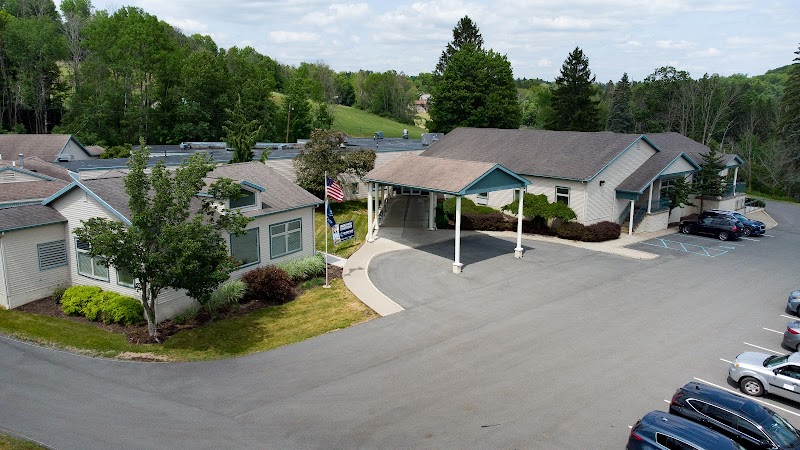
How is Meadow View Rehabilitation & Healthcare Center Staffed?

CMS rates MEADOW VIEW REHABILITATION & HEALTHCARE CENTER's staffing level at 2 out of 5 stars, which is below average compared to other nursing homes. Staff turnover is 47%, compared to the Pennsylvania average of 46%. RN turnover specifically is 57%, which is notably high. RNs provide skilled clinical oversight, so turnover in this role can affect medical care quality.

What Have Inspectors Found at Meadow View Rehabilitation & Healthcare Center?

State health inspectors documented 44 deficiencies at MEADOW VIEW REHABILITATION & HEALTHCARE CENTER during 2022 to 2025. These included: 1 that caused actual resident harm and 43 with potential for harm. Deficiencies causing actual harm indicate documented cases where residents experienced negative health consequences.
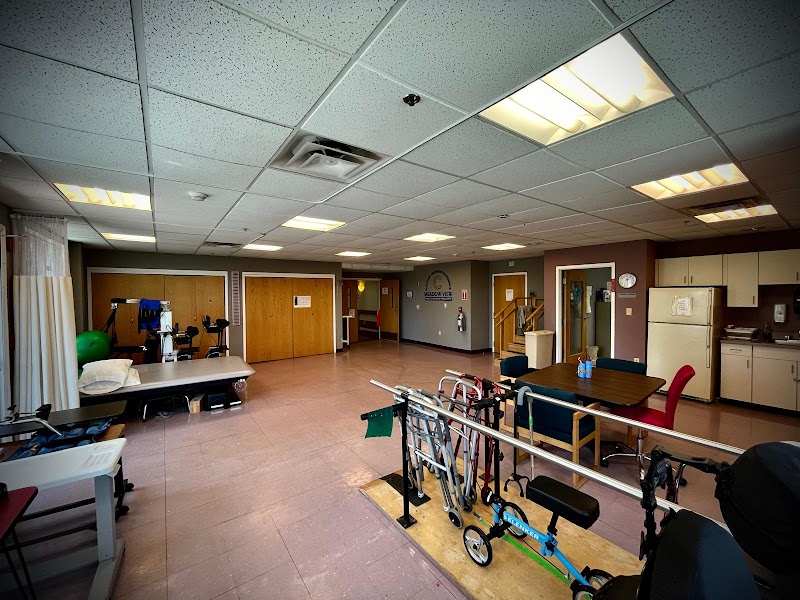
Who Owns and Operates Meadow View Rehabilitation & Healthcare Center?

MEADOW VIEW REHABILITATION & HEALTHCARE CENTER is owned by a for-profit company. For-profit facilities operate as businesses with obligations to shareholders or private owners. The facility is operated by CENTURY HEALTHCARE, a chain that manages multiple nursing homes. With 63 certified beds and approximately 54 residents (about 86% occupancy), it is a smaller facility located in MONTROSE, Pennsylvania.
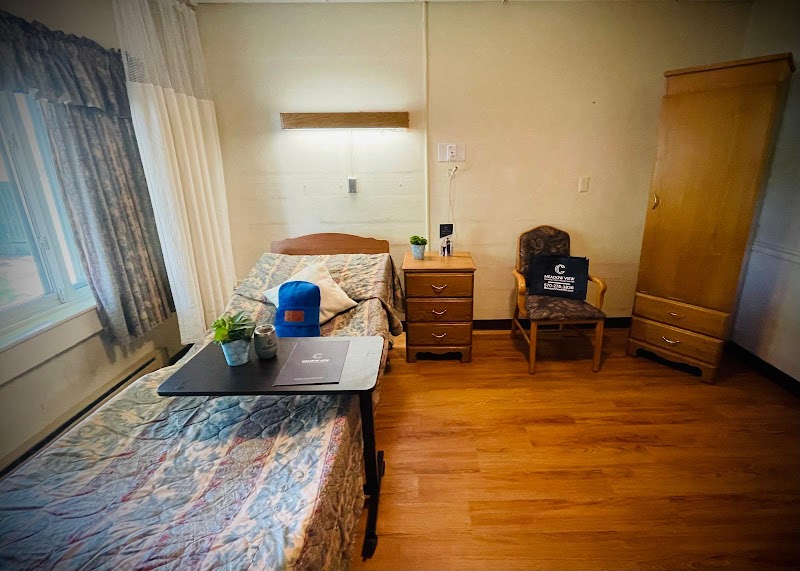
How Does Meadow View Rehabilitation & Healthcare Center Compare to Other Pennsylvania Nursing Homes?

Compared to the 100 nursing homes in Pennsylvania, MEADOW VIEW REHABILITATION & HEALTHCARE CENTER's overall rating (2 stars) is below the state average of 3.0, staff turnover (47%) is near the state average of 46%, and health inspection rating (2 stars) is below the national benchmark.

What Should Families Ask When Visiting Meadow View Rehabilitation & Healthcare Center?

Based on this facility's data, families visiting should ask: "Can you walk me through typical staffing levels on day, evening, and night shifts?" "Can I visit during a mealtime to observe dining assistance and food quality?" "How do you handle medical emergencies, and what is your hospital transfer rate?" "Can I speak with family members of current residents about their experience?" These questions are particularly relevant given the below-average staffing rating.

Is Meadow View Rehabilitation & Healthcare Center Safe?

Based on CMS inspection data, MEADOW VIEW REHABILITATION & HEALTHCARE CENTER has a clean safety record: no substantiated abuse findings (meaning no confirmed cases of resident harm), no Immediate Jeopardy citations (the most serious violation level indicating risk of serious injury or death), and is not on the Special Focus Facility watch list (a federal program monitoring the lowest-performing 1% of nursing homes). The facility has a 2-star overall rating and ranks #100 of 100 nursing homes in Pennsylvania. While no facility is perfect, families should still ask about staff-to-resident ratios and recent inspection results during their visit.

Do Nurses at Meadow View Rehabilitation & Healthcare Center Stick Around?

MEADOW VIEW REHABILITATION & HEALTHCARE CENTER has a staff turnover rate of 47%, which is about average for Pennsylvania nursing homes (state average: 46%). Moderate turnover is common in nursing homes, but families should still ask about staff tenure and how the facility maintains care continuity when employees leave.

Was Meadow View Rehabilitation & Healthcare Center Ever Fined?

MEADOW VIEW REHABILITATION & HEALTHCARE CENTER has been fined $105,587 across 1 penalty action. This is 3.1x the Pennsylvania average of $34,135. Fines at this level are uncommon and typically indicate a pattern of serious deficiencies, repeated violations, or failure to correct problems promptly. CMS reserves penalties of this magnitude for facilities that pose significant, documented risk to resident health or safety. Families should request specific documentation of what issues led to these fines and what systemic changes have been implemented.

Is Meadow View Rehabilitation & Healthcare Center on Any Federal Watch List?

MEADOW VIEW REHABILITATION & HEALTHCARE CENTER is not on any federal watch list. The most significant is the Special Focus Facility (SFF) program, which identifies the bottom 1% of nursing homes nationally based on persistent, serious quality problems. Not being on this list means the facility has avoided the pattern of deficiencies that triggers enhanced federal oversight. This is a positive indicator, though families should still review the facility's inspection history directly.