MORAVIAN HALL SQUARE HEALTH AND WELLNESS CENTER
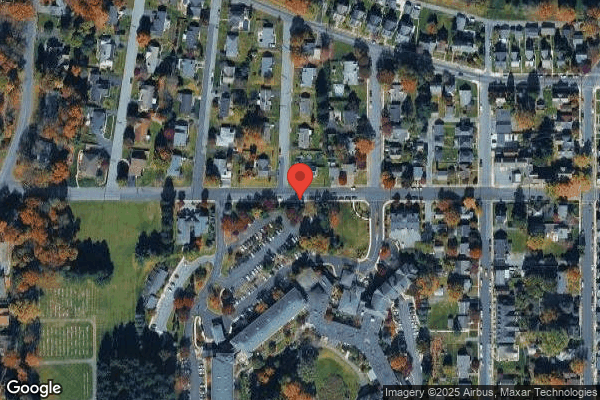
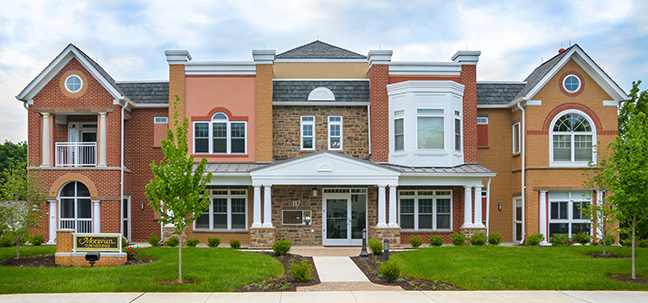
175 WEST NORTH STREET, NAZARETH, PA 18064 (610) 746-1000
Non profit - Corporation 61 Beds Independent Data: November 2025
Trust Grade
75/100
#202 of 653 in PA
Last Inspection: April 2025

Within standard 12-15 month inspection cycle. Federal law requires annual inspections.

Overview

Moravian Hall Square Health and Wellness Center has a Trust Grade of B, which means it is considered a good option for families seeking care. It ranks #202 out of 653 nursing homes in Pennsylvania, placing it in the top half of facilities statewide, but at #9 out of 12 in Northampton County, indicating there are only a few local options with better rankings. Unfortunately, the facility is worsening, with issues increasing from 1 in 2024 to 5 in 2025. Staffing is rated 4 out of 5 stars, but the 52% turnover rate is average and could impact continuity of care. Although there have been no fines, recent inspections revealed serious concerns, including a resident falling and sustaining head injuries due to safety lapses and incomplete assessments that failed to properly address two residents' needs for diabetes management and comprehensive care planning.

Trust Score
B
75/100
In Pennsylvania
#202/653
Top 30%
Safety Record
Moderate
Needs review
Inspections
Getting Worse
1 → 5 violations
Staff Stability
⚠ Watch
52% turnover. Above average. Higher turnover means staff may not know residents' routines.
Penalties
✓ Good
No fines on record. Clean compliance history, better than most Pennsylvania facilities.
Skilled Nurses
✓ Good
Each resident gets 43 minutes of Registered Nurse (RN) attention daily — more than average for Pennsylvania. RNs are trained to catch health problems early.
Violations
○ Average
9 deficiencies on record. Average for a facility this size. Mostly minor or procedural issues.
★★★★☆
4.0
Overall Rating
★★★★☆
4.0
Staff Levels
★★☆☆☆
2.0
Care Quality
★★★★☆
4.0
Inspection Score
Stable
2024: 1 issues
2025: 5 issues

The Good

  • 4-Star Staffing Rating · Above-average nurse staffing levels
  • Full Sprinkler Coverage · Fire safety systems throughout facility
  • No fines on record

Facility shows strength in staffing levels, fire safety.

The Bad

Staff Turnover: 52%

Near Pennsylvania avg (46%)

Higher turnover may affect care consistency

The Ugly 9 deficiencies on record

1 actual harm
Jun 2025 1 deficiency 1 Harm
SERIOUS (G) 📢 Someone Reported This

A family member, employee, or ombudsman was alarmed enough to file a formal complaint

Actual Harm - a resident was hurt due to facility failures

Accident Prevention (Tag F0689)

A resident was harmed · This affected 1 resident

Based on clinical record review, facility documentation review, and staff interview, it was determined that the facility failed to ensure resident safety and prevent an avoidable accident related to a...

Read full inspector narrative →
Based on clinical record review, facility documentation review, and staff interview, it was determined that the facility failed to ensure resident safety and prevent an avoidable accident related to a fall for one of four sampled residents which resulted in actual harm of a laceration (a traumatic wound caused by sharp objects or blunt trauma) to the head and a skin tear (a wound caused by blunt force, friction, and/or shear). (Resident 1) Findings include: Clinical record review revealed that Resident 1 had diagnoses that included dementia (a group of symptoms affecting memory, thinking, language, and behavior) and anxiety (condition that involves excessive and persistent worrying that interferes with daily life). The Minimum Data Set (MDS) assessment (a periodic evaluation of resident care needs) dated April 3, 2025, indicated that the resident was cognitively impaired, with a BIMs score (brief interview for mental status tool that is used to get a quick snapshot of how well one is functioning cognitively) of four (zero to seven indicates severe cognitive impairment). The assessment indicated that the resident had physical (hitting, kicking, etc.) and verbal (screaming, cursing, etc.) behavioral symptoms directed towards others. The care plan identified that Resident 1 had a mood and behavior problem related to dementia as evidenced by verbally aggressive behaviors and interventions included for staff to attempt redirection in a calm manner when he was agitated and to ensure resident safety. In addtion, the care plan noted that Resident 1 was at risk for falls related to confusion. On May 27, 2025, a nurse noted that the resident's behaviors began to escalate. The resident started tapping on the medication cart, grabbed the narcotic book (a record-keeping system to track the use of controlled substances such as narcotics) and attempted to throw it. The nurse backed up, grabbed the Dinamap (a device on wheels, designed for precise and reliable measurements of vital signs, including blood pressure, pulse, temperature, and oxygen saturation) and placed it in front of the resident. The resident grabbed the Dinamap and started shaking it. The nurse let go; the cart moved and the resident lost his balance, fell backwards, and hit his head on the closed doors. The nurse noted that the resident appeared to lose consciousness for three to five seconds, and sustained a laceration to the head and a skin tear to the right hand, resulting in a transfer to the hospital. The resident received five staples to close the wound to the back of the head and three Steri-Strips (thin, sticky bandages applied to small cuts or wounds to help them stay closed as they heal) to the right hand. According to facility documentation of the investigation, the nurse used the Dinamap to place in front of the resident, introducing a safety risk to Resident 1 resulting in an avoidable accident related to a fall. In an interview on June 23, 2025, at 1:00 p.m., the Director of Nursing confirmed the facility failed to prevent Resident 1 from an avoidable accident related to a fall, resulting in injury and transfer to the hospital. 483.25(d) Accidents. Previously cited 2/27/25. 28 Pa. Code 201.14(a) Responsibility of licensee. 28 Pa. Code 201.18(b)(1) Management. 28 Pa. Code 211.12(d)(1)(5) Nursing services.
Apr 2025 2 deficiencies
CONCERN (D)

Potential for Harm - no one hurt, but risky conditions existed

Assessment Accuracy (Tag F0641)

Could have caused harm · This affected 1 resident

**NOTE- TERMS IN BRACKETS HAVE BEEN EDITED TO PROTECT CONFIDENTIALITY** Based on clinical record review and staff interview, it was determined that the facility failed to ensure that the Minimum Data ...

Read full inspector narrative →
**NOTE- TERMS IN BRACKETS HAVE BEEN EDITED TO PROTECT CONFIDENTIALITY** Based on clinical record review and staff interview, it was determined that the facility failed to ensure that the Minimum Data Set (MDS) assessment was completed to accurately reflect the current status of two of 15 sampled residents. (Residents 47, 57) Findings include: Clinical record review revealed that Resident 47 had a diagnosis of diabetes. Section N of the MDS assessment dated [DATE], indicated that Resident 47 was injected with insulin once during the seven-day review period. Review of Resident 47's clinical record revealed that Resident 47 did not have a physician's order for and was not administered insulin during the seven-day review period, as inaccurately identified on the MDS assessment. Clinical record review revealed that Resident 57 was admitted to the facility on [DATE], for short term rehabilitation. A nursing note dated February 4, 2025, indicated the resident was discharged back to her home in a personal care setting with memory support. The MDS assessment dated [DATE], indicated the resident discharged to a long term care hospital. In an interview on April 3, 2025, at 9:11 a.m., the Nursing Home Administrator confirmed that Resident 47's and 57's MDS assessments were inaccurate.
CONCERN (D)

Potential for Harm - no one hurt, but risky conditions existed

Comprehensive Care Plan (Tag F0656)

Could have caused harm · This affected 1 resident

**NOTE- TERMS IN BRACKETS HAVE BEEN EDITED TO PROTECT CONFIDENTIALITY** Based on clinical record review and staff interview, it was determined that the facility failed to develop a comprehensive care ...

Read full inspector narrative →
**NOTE- TERMS IN BRACKETS HAVE BEEN EDITED TO PROTECT CONFIDENTIALITY** Based on clinical record review and staff interview, it was determined that the facility failed to develop a comprehensive care plan that addressed individual residents' needs as identified in the comprehensive assessment for two of 15 sampled residents. (Residents 20, 56) Findings include: Clinical record review revealed that Resident 20 had diagnoses that included legal blindness, hearing loss, difficulty walking, and an enlarged prostate. The Minimum Data Set (MDS) assessment dated [DATE], noted the resident had vision difficulties, communication issues due to his impaired hearing, and continence issues. The MDS Care Area Assessment (CAA) summary noted that the resident's vision, communication, and urinary incontinence issues were to be addressed in the care plan. There was no evidence that interventions to address Resident's 20's vision, communication, and urinary incontinence were addressed in the care plan. Clinical record review revealed that Resident 56 had diagnoses that included difficulty walking and heart failure. Resident 56's admission bowel and bladder assessment dated [DATE], indicated that the resident was occasionally incontinent. The MDS CAA summary dated March 20, 2025, noted that the resident's incontinence was to be addressed in the care plan. There was no evidence that interventions to address Resident's 56's urinary incontinence was included in the current care plan. In an interview on April 3, 2025, at 9:13 a.m., the Assistant Director of Nursing confirmed there was no documented evidence that the identified care areas were addressed in the care plans. 28 Pa. Code 211.12(d)(1)(5) Nursing services
Feb 2025 1 deficiency
CONCERN (D) 📢 Someone Reported This

A family member, employee, or ombudsman was alarmed enough to file a formal complaint

Potential for Harm - no one hurt, but risky conditions existed

Accident Prevention (Tag F0689)

Could have caused harm · This affected 1 resident

**NOTE- TERMS IN BRACKETS HAVE BEEN EDITED TO PROTECT CONFIDENTIALITY** Based on clinical record review and staff interview, it was determined that the facility failed to ensure that assessed safety i...

Read full inspector narrative →
**NOTE- TERMS IN BRACKETS HAVE BEEN EDITED TO PROTECT CONFIDENTIALITY** Based on clinical record review and staff interview, it was determined that the facility failed to ensure that assessed safety interventions with transfers was implemented for one of four residents sampled. (Resident R1) Findings include: Clinical record review revealed that Resident R1 was admitted to the facility on [DATE], with diagnoses that included a closed fracture of the left tibia/fibula, anemia and osteopenia. On January 25, 2025, the physical therapist and physician directed staff to transfer the resident with the assist of two staff members with any transfer from the bed to the wheelchair. A note by a nurse on February 4, 2025, following an orthopedic planned followup, revealed that the resident was transferred by one staff member from her bed to the wheelchair. The resident experienced discomfort after the transfer. In an interview on February 27, 2025, at 10:30 a.m., the Nursing Home Administrator confirmed that the nursing assistant did not follow the resident's plan of care. 28 Pa. Code 211.12 (d)(1)(5) Nursing services.
Jan 2025 1 deficiency
CONCERN (D) 📢 Someone Reported This

A family member, employee, or ombudsman was alarmed enough to file a formal complaint

Potential for Harm - no one hurt, but risky conditions existed

Deficiency F0552 (Tag F0552)

Could have caused harm · This affected 1 resident

**NOTE- TERMS IN BRACKETS HAVE BEEN EDITED TO PROTECT CONFIDENTIALITY** Based on policy review, clinical record review, and staff interview, it was determined that the facility failed to inform a resi...

Read full inspector narrative →
**NOTE- TERMS IN BRACKETS HAVE BEEN EDITED TO PROTECT CONFIDENTIALITY** Based on policy review, clinical record review, and staff interview, it was determined that the facility failed to inform a resident and (or) responsible party, in advance, of a treatment and (or) treatment options prior to receiving a vaccine for one of three sampled residents. (Resident 1) Review of the facility policy entitled, Covid-19 Vaccine Policy, dated January 4, 2025, revealed that before receiving any Covid-19 vaccine, the resident or legal representative shall receive information and education regarding the benefits and potential side effects of the vaccine and obtain consent. Clinical record review revealed that Resident 1 was admitted to the facility on [DATE], and had diagnoses that included dementia and muscle weakness. The Minimum Data Set assessment dated [DATE], indicated the resident had memory loss and required extensive assistance with activities of daily living. On September 17, 2024, the physician ordered for staff to administer an as needed Covid-19 vaccination in the event of an outbreak. On November 7, 2024, staff administered the Covid-19 vaccine. There was no documentation to support that the resident or the resident's responsible party was provided with information and education regarding the benefits and potential side effects of the vaccine or that consent was obtained prior to the administration of the Covid-19 vaccine. In an interview on January 17, 2025, at 1:30 p.m., the Director of Nursing confirmed that the resident and the resident's representative were not provided with informed consent prior to receiving the Covid-19 vaccine. 28. Pa. Code 211.12(d)(1) Nursing services.
Mar 2024 1 deficiency
CONCERN (D)

Potential for Harm - no one hurt, but risky conditions existed

Comprehensive Care Plan (Tag F0656)

Could have caused harm · This affected 1 resident

**NOTE- TERMS IN BRACKETS HAVE BEEN EDITED TO PROTECT CONFIDENTIALITY** Based on clinical record review and staff interview, it was determined that the facility failed to develop a comprehensive care ...

Read full inspector narrative →
**NOTE- TERMS IN BRACKETS HAVE BEEN EDITED TO PROTECT CONFIDENTIALITY** Based on clinical record review and staff interview, it was determined that the facility failed to develop a comprehensive care plan to meet each resident's needs identified in the comprehensive assessment for one of 16 sampled residents. (Resident 32) Findings include: Clinical record review revealed that Resident 32 was admitted to the facility on [DATE], and had diagnoses that included polyosteoarthritis and muscle weakness. The Minimum Data Set (MDS) Care Area Assessment (CAA) summary dated February 18, 2024, noted that the resident's urinary incontinence was to be addressed in the care plan. There was no documented evidence that interventions to address Resident 32's urinary incontinence were included in the current care plan. In an interview on March 21, 2024, at 9:21 a.m., the Corporate Compliance Officer confirmed there was no documented evidence that the identified care area (urinary incontinence) was addressed in Resident 32's current care plan. 28 Pa. Code 211.12(d)(1)(5) Nursing services.
Apr 2023 3 deficiencies
CONCERN (D)

Potential for Harm - no one hurt, but risky conditions existed

Pressure Ulcer Prevention (Tag F0686)

Could have caused harm · This affected 1 resident

**NOTE- TERMS IN BRACKETS HAVE BEEN EDITED TO PROTECT CONFIDENTIALITY** Based on clinical record review, observation, staff interview, and resident interview, it was determined that the facility faile...

Read full inspector narrative →
**NOTE- TERMS IN BRACKETS HAVE BEEN EDITED TO PROTECT CONFIDENTIALITY** Based on clinical record review, observation, staff interview, and resident interview, it was determined that the facility failed to implement interventions to prevent pressure ulcers for one of three sampled residents with pressure sores. (Resident 9) Findings include: Clinical record review revealed that Resident 9 had diagnoses that included generalized muscle weakness, arthritis of the right knee, and a pressure ulcer of the left heel. The Minimum Data Set assessment dated [DATE], indicated that the resident was oriented and required staff assistance with activities of daily living, including dressing. The care plan identified that the resident had the potential for skin breakdown related to immobility. Review of the consulting wound physician's report dated April 13, 2023, revealed that orders included that Resident 9 keep wearing Prevalon boots (boots with a cushioned bottom to prevent pressure) on both feet. Nursing documentation dated April 14, 2023, also noted that the resident was to wear Prevalon boots on both feet. Resident 9 was observed on April 19, 2023, at 2:11 p.m., and April 20, 2023, at 1:40 p.m. seated in the wheelchair wearing a pressure relieving boot on the left foot and only a sock on the right foot. Both feet were placed on and in contact with a wheelchair foot rest. In an interview on April 20, 2023, at 1:40 p.m., Resident 9 reported that staff do not always apply the boot for the right foot and that it was available in the closet. The resident denied refusing to wear the right boot. During an interview on April 20, 2023, at 1:47 p.m., the nurse aide (NA 1) reported that the resident had an order to wear a pressure relieving boot on the left foot only and stated that the resident had only one boot available. Observation on April 20, 2023, at 1:50 p.m., revealed that a second pressure relieving boot was in Resident 9's closet. 28 Pa. Code 211.12(d)(1)(5) Nursing services.
CONCERN (D)

Potential for Harm - no one hurt, but risky conditions existed

Incontinence Care (Tag F0690)

Could have caused harm · This affected 1 resident

**NOTE- TERMS IN BRACKETS HAVE BEEN EDITED TO PROTECT CONFIDENTIALITY** Based on clinical record review, and staff interview, it was determined that the facility failed to provide services to restore ...

Read full inspector narrative →
**NOTE- TERMS IN BRACKETS HAVE BEEN EDITED TO PROTECT CONFIDENTIALITY** Based on clinical record review, and staff interview, it was determined that the facility failed to provide services to restore bladder function as much as possible for one of 15 sampled residents. (Resident 2) Findings include: Clinical record review revealed that Resident 2 was admitted to the facility on [DATE], with diagnoses that included urinary tract infection and anxiety. The Minimum Data Set assessment dated [DATE], indicated that she was incontinent of urine and required extensive assistance from staff to use the toilet. According to a Continence Assessment, dated February 7, 2023, the resident was considered a candidate for a toileting program. The care plan identified that the resident had a problem with incontinence, however there was no documented intervention to restore bladder function such as a toileting program. In an interview on April 20, 2023, at 10:30 a.m., the Quality Assurance Coordinator stated that a toileting program was never initiated for Resident 2. 28 PA Code 211.12(d)(1)(5) Nursing services.
CONCERN (D)

Potential for Harm - no one hurt, but risky conditions existed

Deficiency F0804 (Tag F0804)

Could have caused harm · This affected 1 resident

**NOTE- TERMS IN BRACKETS HAVE BEEN EDITED TO PROTECT CONFIDENTIALITY** Based on clinical record review, policy review, and review of incident/accident reports, it was determined that the facility fai...

Read full inspector narrative →
**NOTE- TERMS IN BRACKETS HAVE BEEN EDITED TO PROTECT CONFIDENTIALITY** Based on clinical record review, policy review, and review of incident/accident reports, it was determined that the facility failed to ensure that hot liquids were served to residents at a safe temperature for one of 15 sampled residents. (Resident 2) Findings include: Review of the facility policy entitled, Hot Beverage Policy, implemented May 27, 2021, revealed that the temperature of hot beverages would be recorded by a designated staff member at the start of meal service. The temperature of hot liquids would not exceed 155 degrees Fahrenheit to prevent burns and scalding. Clinical record review revealed that Resident 2 had diagnoses that included spinal stenosis and anxiety. A Minimum Data Set assessment dated [DATE], identified that the resident needed only staff setup assistance to eat meals. A nurse noted on March 26, 2023, at 2:38 p.m. that Resident 2 spilt hot chocolate on herself during lunch. Follow-up documentation revealed that the resident's skin was assessed after the incident and had reddened areas to her chest and abdomen. Review of the facility's investigation into the incident revealed that the temperature of the hot chocolate was not taken by dietary staff prior to service to ensure a safe temperature. 28 Pa. Code: 201:18(b)(1) Management.
Understanding Severity Codes (click to expand)
Life-Threatening (Immediate Jeopardy)
J - Isolated K - Pattern L - Widespread
Actual Harm
G - Isolated H - Pattern I - Widespread
Potential for Harm
D - Isolated E - Pattern F - Widespread
No Harm (Minor)
A - Isolated B - Pattern C - Widespread

Questions to Ask on Your Visit

  • "Can I speak with families of current residents?"
  • "What's your RN coverage like on weekends and overnight?"

Our Honest Assessment

Strengths
  • • No fines on record. Clean compliance history, better than most Pennsylvania facilities.
Concerns
  • • 9 deficiencies on record, including 1 serious (caused harm) violation. Ask about corrective actions taken.
Bottom line: Generally positive indicators. Standard due diligence and a personal visit recommended.

About This Facility

What is Moravian Hall Square Health And Wellness Center's CMS Rating?

CMS assigns MORAVIAN HALL SQUARE HEALTH AND WELLNESS CENTER an overall rating of 4 out of 5 stars, which is considered above average nationally. Within Pennsylvania, this rating places the facility higher than 99% of the state's 100 nursing homes. This rating reflects solid performance across the metrics CMS uses to evaluate nursing home quality.

How is Moravian Hall Square Health And Wellness Center Staffed?

CMS rates MORAVIAN HALL SQUARE HEALTH AND WELLNESS CENTER's staffing level at 4 out of 5 stars, which is above average compared to other nursing homes. Staff turnover is 52%, compared to the Pennsylvania average of 46%.

What Have Inspectors Found at Moravian Hall Square Health And Wellness Center?

State health inspectors documented 9 deficiencies at MORAVIAN HALL SQUARE HEALTH AND WELLNESS CENTER during 2023 to 2025. These included: 1 that caused actual resident harm and 8 with potential for harm. Deficiencies causing actual harm indicate documented cases where residents experienced negative health consequences.
Who Owns and Operates Moravian Hall Square Health And Wellness Center?

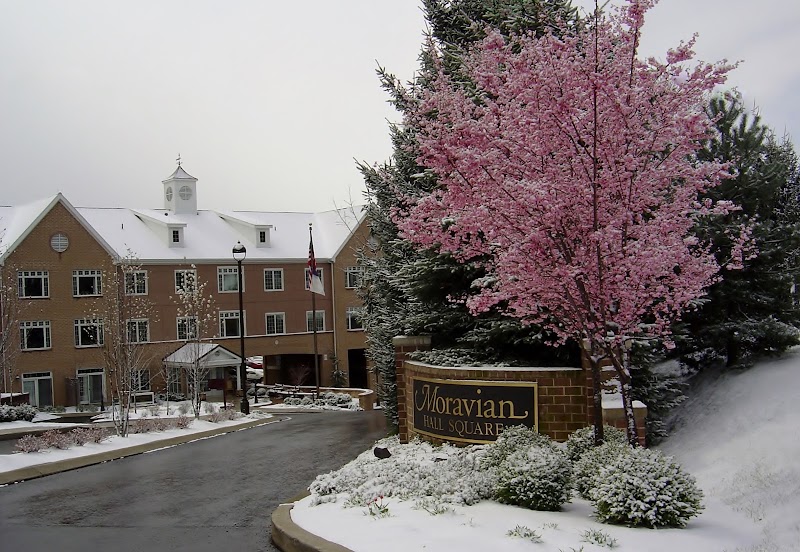
MORAVIAN HALL SQUARE HEALTH AND WELLNESS CENTER is owned by a non-profit organization. Non-profit facilities reinvest revenue into operations rather than distributing to shareholders. The facility operates independently rather than as part of a larger chain. With 61 certified beds and approximately 53 residents (about 87% occupancy), it is a smaller facility located in NAZARETH, Pennsylvania.
How Does Moravian Hall Square Health And Wellness Center Compare to Other Pennsylvania Nursing Homes?

Compared to the 100 nursing homes in Pennsylvania, MORAVIAN HALL SQUARE HEALTH AND WELLNESS CENTER's overall rating (4 stars) is above the state average of 3.0, staff turnover (52%) is near the state average of 46%, and health inspection rating (4 stars) is above the national benchmark.

What Should Families Ask When Visiting Moravian Hall Square Health And Wellness Center?

Based on this facility's data, families visiting should ask: "Can I visit during a mealtime to observe dining assistance and food quality?" "How do you handle medical emergencies, and what is your hospital transfer rate?" "Can I speak with family members of current residents about their experience?"

Is Moravian Hall Square Health And Wellness Center Safe?

Based on CMS inspection data, MORAVIAN HALL SQUARE HEALTH AND WELLNESS CENTER has a clean safety record: no substantiated abuse findings (meaning no confirmed cases of resident harm), no Immediate Jeopardy citations (the most serious violation level indicating risk of serious injury or death), and is not on the Special Focus Facility watch list (a federal program monitoring the lowest-performing 1% of nursing homes). The facility has a 4-star overall rating and ranks #1 of 100 nursing homes in Pennsylvania. While no facility is perfect, families should still ask about staff-to-resident ratios and recent inspection results during their visit.

Do Nurses at Moravian Hall Square Health And Wellness Center Stick Around?

MORAVIAN HALL SQUARE HEALTH AND WELLNESS CENTER has a staff turnover rate of 52%, which is 6 percentage points above the Pennsylvania average of 46%. Moderate turnover is common in nursing homes, but families should still ask about staff tenure and how the facility maintains care continuity when employees leave.

Was Moravian Hall Square Health And Wellness Center Ever Fined?

MORAVIAN HALL SQUARE HEALTH AND WELLNESS CENTER has no federal fines on record. CMS issues fines when nursing homes fail to meet care standards or don't correct problems found during inspections. The absence of fines suggests the facility has either maintained compliance or corrected any issues before penalties were assessed. This is a positive indicator, though families should still review recent inspection reports for the full picture.

Is Moravian Hall Square Health And Wellness Center on Any Federal Watch List?

MORAVIAN HALL SQUARE HEALTH AND WELLNESS CENTER is not on any federal watch list. The most significant is the Special Focus Facility (SFF) program, which identifies the bottom 1% of nursing homes nationally based on persistent, serious quality problems. Not being on this list means the facility has avoided the pattern of deficiencies that triggers enhanced federal oversight. This is a positive indicator, though families should still review the facility's inspection history directly.