GARDEN SPOT VILLAGE

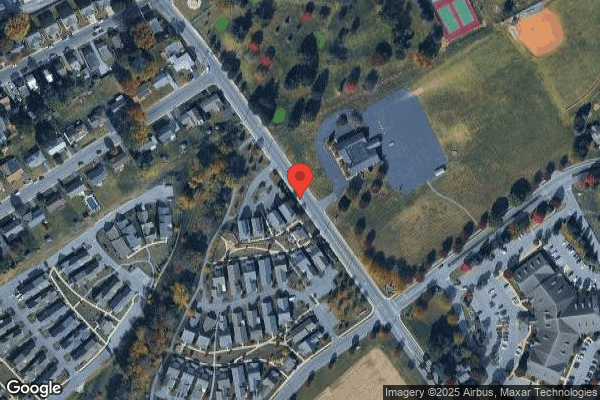
433 S KINZER AVENUE, NEW HOLLAND, PA 17557 (717) 355-6247
Non profit - Corporation 73 Beds Independent Data: November 2025
Trust Grade
83/100
#42 of 653 in PA
Last Inspection: December 2024

Within standard 12-15 month inspection cycle. Federal law requires annual inspections.

Overview

Garden Spot Village has a Trust Grade of B+, indicating it is above average and recommended for families seeking care. It ranks #42 out of 653 facilities in Pennsylvania, placing it in the top half, and #3 out of 31 in Lancaster County, showing that there are only two local options considered better. The facility is newly inspected, so there is no trend data available yet. Staffing is a strong point, rated 5 out of 5 stars, with a turnover rate of 40%, which is below the state average, meaning staff are more likely to stay long-term and build relationships with residents. However, the facility has faced some challenges, including a serious incident where a resident did not receive timely oxygen treatment, leading to hypoxia, and a concern over a nurse aide not completing required annual training. They also have average RN coverage, which means they meet the standard but may not have as much oversight as some other facilities. Overall, while Garden Spot Village has strengths in staffing and a good trust grade, families should be aware of the recent incidents that highlight areas needing improvement.

Trust Score
B+
83/100
In Pennsylvania
#42/653
Top 6%
Safety Record
Moderate
Needs review
Inspections
Too New
0 → 3 violations
Staff Stability
○ Average
40% turnover. Near Pennsylvania's 48% average. Typical for the industry.
Penalties
⚠ Watch
$8,018 in fines. Higher than 92% of Pennsylvania facilities. Major compliance failures.
Skilled Nurses
✓ Good
Each resident gets 64 minutes of Registered Nurse (RN) attention daily — more than 97% of Pennsylvania nursing homes. RNs are the most trained staff who catch health problems before they become serious.
Violations
✓ Good
Only 3 deficiencies on record. Cleaner than most facilities. Minor issues only.
★★★★★
5.0
Overall Rating
★★★★★
5.0
Staff Levels
★★★★☆
4.0
Care Quality
★★★★☆
4.0
Inspection Score
Stable
: 0 issues
2024: 3 issues

The Good

  • 5-Star Staffing Rating · Excellent nurse staffing levels
  • 4-Star Quality Measures · Strong clinical quality outcomes
  • Full Sprinkler Coverage · Fire safety systems throughout facility
  • No fines on record
  • Staff turnover below average (40%)

    8 points below Pennsylvania average of 48%

Facility shows strength in staffing levels, quality measures, fire safety.

The Bad

Staff Turnover: 40%

Near Pennsylvania avg (46%)

Typical for the industry

Federal Fines: $8,018

Below median ($33,413)

Minor penalties assessed

The Ugly 3 deficiencies on record

1 actual harm
Dec 2024 1 deficiency
CONCERN (D)

Potential for Harm - no one hurt, but risky conditions existed

Deficiency F0947 (Tag F0947)

Could have caused harm · This affected 1 resident

Based upon review of staffing records and inservice documentation, it was determined the facility failed to ensure nurse aides received required 12-hour annual re-training for one of five records revi...

Read full inspector narrative →
Based upon review of staffing records and inservice documentation, it was determined the facility failed to ensure nurse aides received required 12-hour annual re-training for one of five records reviewed. Findings Include: Review of five staffing records and inservice documentation revealed four nurse aides received the required 12-hour annual retraining. Further review of the staffing records and inservice documentation revealed one of the five records reviewed failed to reveal evidence of 12-hour annual retraining. Interview with the Nursing Home Administrator on December 13, 2024, at 10:00 a.m. confirmed one nurse aide did not complete the required 12-hour annual retraining within the appropriate timeframe. 28 Pa. Code 201.20(a)(c) Staff Development
Jan 2024 2 deficiencies 1 Harm
SERIOUS (G)

Actual Harm - a resident was hurt due to facility failures

Quality of Care (Tag F0684)

A resident was harmed · This affected 1 resident

Based on review of facility policy and clinical record review, it was determined that the facility failed to follow physician's orders and timely notify the physician of a significant change in condit...

Read full inspector narrative →
Based on review of facility policy and clinical record review, it was determined that the facility failed to follow physician's orders and timely notify the physician of a significant change in condition for one of 18 residents reviewed, resulting in actual harm of Hypoxia (the body is deprived of adequate oxygen supply at the tissue level) for Resident 8. Findings include: Review of facility policy, Notification of Condition Changes, last revised April 19, 2023, revealed the facility would notify the resident's provider when there is a significant change in the resident's condition, abnormal test results, and/or a need to alter treatment significantly. Review of Resident 8's physician's orders revealed an order dated November 20, 2023, for oxygen 3 liters (L) nasal cannula every shift for shortness of breath and hypoxia (low oxygen levels). The order further stated that nursing may titrate (adjust) oxygen to keep the resident's oxygen saturation above 90%. Review of Resident 8's progress notes revealed a nursing note dated November 20, 2023, (6:00 p.m.) which indicated: Resident's o2 [(oxygen)] read 78 [(normal is 95-100)] and resident refused to wear oxygen cannula. After dinner, resident's o2 read 57 and continue to refuse to wear cannula. Resident was convinced to wear it but stated she will remove it shortly. Additional review of Resident 8's clinical record failed to reveal any documented evidence the physician was notified of the resident's low oxygen saturation levels or the resident refusing to wear the oxygen cannula. There was no documented evidence that the facility attempted to titrate the resident's oxygen to maintain a level above 90%. Further review of Resident 8' progress notes revealed a nurse's note dated November 21, 2023, at 5:03 a.m. which indicated: Resident's [pulse oximetry] was 87% with o2 at 2L. Resident refused [head of bed] to be raised. Staff continues to educate resident about the [pulse oximetry] level she should be at and how to achieve that goal. Resident has audible wheezing and is [short of breath.] Will continue to follow plan of care. Further review of Resident 8's clinical record failed to reveal documented evidence the physician was notified of the resident's low oxygen saturation levels, wheezing, or shortness of breath. There was no documented evidence that the facility attempted to titrate the resident's oxygen to maintain a level above 90%. Review of Resident 8's clinical record revealed a nurse's note on November 22, 2023, at 5:46 a.m. which indicated: Resident found sitting in recliner leaning to the left with eyes closed without o2 cannula. At this position resident [pulse oximetry] was 67%. Resident difficult to arouse. When applying o2 cannula, [pulse oximetry] increased to 87% on 2L o2. A few minutes later resident woke up gasping with [shortness of breath,] frantic, and confused. Gave resident education about leaving o2 cannula on and explanation. Resident agreed to leave it on. Will continue to follow plan of care. Review of Resident 8's clinical record failed to reveal documented evidence the physician was notified of the resident's low oxygen saturation levels or shortness of breath. There was no evidence that the facility attempted to titrate the resident's oxygen to maintain a level above 90%. Further review of Resident 8's progress notes revealed a nurse's note on November 23, 2023, at 5:27 a.m. which stated: Resident lying in bed [pulse oximetry] was 65%. When [Resident 8] sat on the side of bed [pulse oximetry] increased to 83%. Resident was encouraged to take deep breaths and cough but no further improvement. Review of Resident 8's clinical record failed to reveal documented evidence the physician was notified of the resident's low oxygen saturation levels or shortness of breath. There was no evidence that the facility attempted to titrate the resident's oxygen to maintain a level above 90%. Further review of Resident 8's progress notes revealed a nurse's note on November 23, 2023, at 11:25 a.m. which stated: Resident away from home with family for thanksgiving dinner and left facility at 11:25. Resident's pulse ox was 83% on 3L of o2 via [nasal cannula.] Review of Resident 8's clinical record failed to reveal documented evidence the physician was notified of the resident's low oxygen saturation levels or shortness of breath. There was no evidence that the facility attempted to titrate the resident's oxygen to maintain a level above 90%. Further review of Resident 8's progress notes revealed a nurse's note date November 23, 2023, at 10:20 p.m. which indicated: Resident's o2 fluctuated throughout the shift. At one time it read 49% when returning from an outing with family. After o2 cannula placed on resident, [his/her] o2 raised to 84%. When checked at [bedtime,] resident's o2 read at 72%. Resident appears to only be mouth breathing and cannula is not being used correctly. Resident removes cannula periodically when left alone. Resident is reminded to breathe through nose. Review of Resident 8's clinical record failed to reveal documented evidence the physician was notified of the resident's low oxygen saturation levels or shortness of breath. There was no evidence that the facility attempted to titrate the resident's oxygen to maintain a level above 90%. Further review of Resident 8's progress notes revealed a nursing note dated November 24, 2023, at 5:00 a.m. which indicated: Resident noted using abdominal muscles for breathing and experiencing air hunger (difficulty breathing). Unable to raise oxygen saturation more than 83% @3L. The on-call [physician] gave orders to send the resident to [emergency room] for eval. Review of Resident 8's hospital discharge summary revealed the resident was hospitalized in the intensive care unit (ICU) from November 24, 2023 until December 3, 2023, with a diagnosis of acute respiratory failure with hypoxia and hypercapnia (high levels of carbon dioxide) and required BiPAP (machine that normalizes breathing by delivering pressurized air via face mask into the upper airway that leads to the lungs. Its bilevel design means that a BiPAP device provides two different levels of air pressure: one for breathing in and one for breathing out.) The facility's failure to follow Resident 8's physician's orders for oxygen at 3 liters and titrating to maintain oxygen levels above 90% as well as the failure to timely notify the physician of Resident 8's change in condition was discussed with the Nursing Home Administrator and Director of Nursing on January 5, 2023, at approximately 10:40 a.m. 28 Pa. Code 211.12(d)(1)(3)(5) Nursing services 28 Pa Code 211.5(f) Clinical Records 28 PA Code 211.10(a) Resident care policies
CONCERN (D)

Potential for Harm - no one hurt, but risky conditions existed

Assessment Accuracy (Tag F0641)

Could have caused harm · This affected 1 resident

Based on clinical record review and staff interview it was determined the facility failed to complete accurate assessments for one of 24 residents reviewed. (Resident 70) Findings Include: Review of ...

Read full inspector narrative →
Based on clinical record review and staff interview it was determined the facility failed to complete accurate assessments for one of 24 residents reviewed. (Resident 70) Findings Include: Review of Resident 70's clinical record inclusding progress notes revealed a nursing entry dated October 27, 2023 indicating Resident 70 went home with all of his belongings and medications. Review of Resident 70's discharge Minimum Data Set (MDS- periodic assessment of resident needs) dated October 27, 2023 revealed the assessment was coded as Resident 70 being discharged to a hospital. Interview with Licensed Nursing Employee E3 on January 5, 2023 at 10:00 a.m. confirmed Resident 70's discharge MDS of October 27, 2023 should have been coded as the resident being discharged to home not to a hospital. 28 Pa. Code 211.5(f) Clinical records 28 Pa. Code: 211.12(d)(1)(5) Nursing services
Understanding Severity Codes (click to expand)
Life-Threatening (Immediate Jeopardy)
J - Isolated K - Pattern L - Widespread
Actual Harm
G - Isolated H - Pattern I - Widespread
Potential for Harm
D - Isolated E - Pattern F - Widespread
No Harm (Minor)
A - Isolated B - Pattern C - Widespread

Questions to Ask on Your Visit

  • "Can I speak with families of current residents?"
  • "What's your RN coverage like on weekends and overnight?"

Our Honest Assessment

Strengths
  • • Grade B+ (83/100). Above average facility, better than most options in Pennsylvania.
  • • 40% turnover. Below Pennsylvania's 48% average. Good staff retention means consistent care.
Concerns
  • • 3 deficiencies on record, including 1 serious (caused harm) violation. Ask about corrective actions taken.
Bottom line: Generally positive indicators. Standard due diligence and a personal visit recommended.

About This Facility

What is Garden Spot Village's CMS Rating?

CMS assigns GARDEN SPOT VILLAGE an overall rating of 5 out of 5 stars, which is considered much above average nationally. Within Pennsylvania, this rating places the facility higher than 99% of the state's 100 nursing homes. This rating reflects solid performance across the metrics CMS uses to evaluate nursing home quality.

How is Garden Spot Village Staffed?

CMS rates GARDEN SPOT VILLAGE's staffing level at 5 out of 5 stars, which is much above average compared to other nursing homes. Staff turnover is 40%, compared to the Pennsylvania average of 46%. This relatively stable workforce can support continuity of care.

What Have Inspectors Found at Garden Spot Village?

State health inspectors documented 3 deficiencies at GARDEN SPOT VILLAGE during 2024. These included: 1 that caused actual resident harm and 2 with potential for harm. Deficiencies causing actual harm indicate documented cases where residents experienced negative health consequences.

Who Owns and Operates Garden Spot Village?

GARDEN SPOT VILLAGE is owned by a non-profit organization. Non-profit facilities reinvest revenue into operations rather than distributing to shareholders. The facility operates independently rather than as part of a larger chain. With 73 certified beds and approximately 68 residents (about 93% occupancy), it is a smaller facility located in NEW HOLLAND, Pennsylvania.

How Does Garden Spot Village Compare to Other Pennsylvania Nursing Homes?

Compared to the 100 nursing homes in Pennsylvania, GARDEN SPOT VILLAGE's overall rating (5 stars) is above the state average of 3.0, staff turnover (40%) is near the state average of 46%, and health inspection rating (4 stars) is above the national benchmark.

What Should Families Ask When Visiting Garden Spot Village?

Based on this facility's data, families visiting should ask: "Can I visit during a mealtime to observe dining assistance and food quality?" "How do you handle medical emergencies, and what is your hospital transfer rate?" "Can I speak with family members of current residents about their experience?"

Is Garden Spot Village Safe?

Based on CMS inspection data, GARDEN SPOT VILLAGE has a clean safety record: no substantiated abuse findings (meaning no confirmed cases of resident harm), no Immediate Jeopardy citations (the most serious violation level indicating risk of serious injury or death), and is not on the Special Focus Facility watch list (a federal program monitoring the lowest-performing 1% of nursing homes). The facility has a 5-star overall rating and ranks #1 of 100 nursing homes in Pennsylvania. While no facility is perfect, families should still ask about staff-to-resident ratios and recent inspection results during their visit.

Do Nurses at Garden Spot Village Stick Around?

GARDEN SPOT VILLAGE has a staff turnover rate of 40%, which is about average for Pennsylvania nursing homes (state average: 46%). Moderate turnover is common in nursing homes, but families should still ask about staff tenure and how the facility maintains care continuity when employees leave.

Was Garden Spot Village Ever Fined?

GARDEN SPOT VILLAGE has been fined $8,018 across 1 penalty action. This is below the Pennsylvania average of $33,159. While any fine indicates a compliance issue, fines under $50,000 are relatively common and typically reflect isolated problems that were subsequently corrected. Families should ask what specific issues led to these fines and confirm they've been resolved.

Is Garden Spot Village on Any Federal Watch List?

GARDEN SPOT VILLAGE is not on any federal watch list. The most significant is the Special Focus Facility (SFF) program, which identifies the bottom 1% of nursing homes nationally based on persistent, serious quality problems. Not being on this list means the facility has avoided the pattern of deficiencies that triggers enhanced federal oversight. This is a positive indicator, though families should still review the facility's inspection history directly.