MID-VALLEY HEALTH CARE CENTER
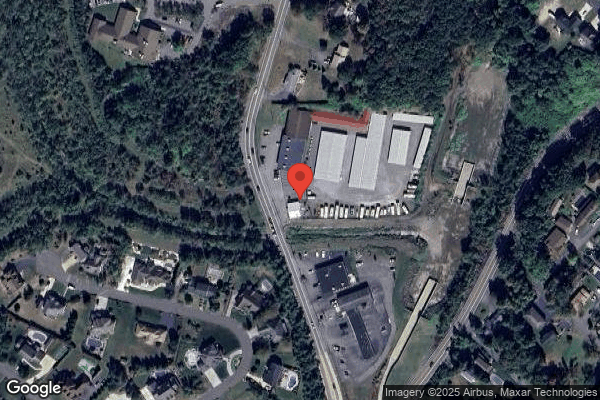

81 STURGES ROAD, PECKVILLE, PA 18452 (570) 383-7320
For profit - Corporation 38 Beds SABER HEALTHCARE GROUP Data: November 2025
Trust Grade
45/100
#316 of 653 in PA
Last Inspection: August 2025

Inspected within the last 6 months. Data reflects current conditions.

Overview

Mid-Valley Health Care Center has received a Trust Grade of D, indicating below-average performance with some concerns about care quality. It ranks #316 out of 653 facilities in Pennsylvania, placing it in the top half, and #9 out of 17 in Lackawanna County, meaning there are only a few local options that are better. The facility is on an improving trend, having reduced issues from 8 in 2024 to 5 in 2025. Staffing is a relative strength, with a 4/5 star rating and a turnover rate of 39%, which is below the state average, suggesting that staff are stable and familiar with the residents. However, it has concerning fines totaling $77,272, which are higher than 97% of facilities in Pennsylvania, indicating potential compliance issues. Specific incidents include failing to provide timely care for residents at risk of developing pressure sores, which resulted in serious injuries for two residents. Additionally, the facility did not conduct adequate assessments to ensure that nursing staff had the necessary training for intravenous therapy. While the nursing home has good RN coverage, more than 82% of state facilities, families should weigh these strengths against the significant concerns regarding care quality and compliance.

Trust Score
D
45/100
In Pennsylvania
#316/653
Top 48%
Safety Record
High Risk
Review needed
Inspections
Getting Better
8 → 5 violations
Staff Stability
○ Average
39% turnover. Near Pennsylvania's 48% average. Typical for the industry.
Penalties
○ Average
$77,272 in fines. Higher than 55% of Pennsylvania facilities. Some compliance issues.
Skilled Nurses
✓ Good
Each resident gets 57 minutes of Registered Nurse (RN) attention daily — more than average for Pennsylvania. RNs are trained to catch health problems early.
Violations
⚠ Watch
20 deficiencies on record. Higher than average. Multiple issues found across inspections.
★★★☆☆
3.0
Overall Rating
★★★★☆
4.0
Staff Levels
★★☆☆☆
2.0
Care Quality
★★★☆☆
3.0
Inspection Score
Stable
2024: 8 issues
2025: 5 issues

The Good

  • 4-Star Staffing Rating · Above-average nurse staffing levels
  • Full Sprinkler Coverage · Fire safety systems throughout facility
  • No fines on record
  • Staff turnover below average (39%)

    9 points below Pennsylvania average of 48%

Facility shows strength in staffing levels, fire safety.

The Bad

3-Star Overall Rating

Near Pennsylvania average (3.0)

Meets federal standards, typical of most facilities

Staff Turnover: 39%

Near Pennsylvania avg (46%)

Typical for the industry

Federal Fines: $77,272

Well above median ($33,413)

Moderate penalties - review what triggered them

Chain: SABER HEALTHCARE GROUP

Part of a multi-facility chain

Ask about local staffing decisions and management

The Ugly 20 deficiencies on record

2 actual harm
Aug 2025 5 deficiencies
CONCERN (D)

Potential for Harm - no one hurt, but risky conditions existed

Deficiency F0627 (Tag F0627)

Could have caused harm · This affected 1 resident

**NOTE- TERMS IN BRACKETS HAVE BEEN EDITED TO PROTECT CONFIDENTIALITY** Based on clinical record review and resident, and staff interview, it was determined that the facility failed to develop and imp...

Read full inspector narrative →
**NOTE- TERMS IN BRACKETS HAVE BEEN EDITED TO PROTECT CONFIDENTIALITY** Based on clinical record review and resident, and staff interview, it was determined that the facility failed to develop and implement a discharge planning process to align with the resident's goals for one of twelve residents reviewed (Resident 19). Findings Include: Review of the facility's Discharge Planning Policy last reviewed November 15, 2024, revealed the facility will identify discharge needs of residents and develop a discharge plan for each resident, including regular re-evaluation of residents to identify changes that require modification of the discharge plan. The discharge plan will be updated as needed to reflect these changes. Clinical record review revealed that Resident 19 was admitted to the facility on [DATE], with diagnoses to include congestive heart failure (a complex clinical syndrome characterized by the heart's inability to pump blood effectively due to structural or functional impairment). Review of an annual Minimum Data Set Assessment (MDS- a federally mandated standardized assessment process completed at specific intervals to plan resident care) dated May 21, 2025, indicated the resident had a BIMS (brief interview mental screener that aids in detecting cognitive impairment) score of 15 indicating she was cognitively intact. During a resident council meeting on August 27, 2025, at approximately 10:00 a.m., Resident 19 stated she was looking forward to being discharged home soon. A review of Resident 19's progress notes revealed a note dated August 21, 2025, indicating the resident stated during a care plan meeting she was eager to be discharged home. There was no follow up regarding this request until brought to the attention of the facility on August 27, 2025. A review of the residents nursing progress notes revealed no notes regarding the resident's discharge plans and goals since May 23, 2025. A review of the resident's comprehensive care plan, reviewed during the survey ending August 28, 2025, revealed a care plan, last revised on October 31, 2024, that the resident required long term care in the facility, there was no documented evidence that an individualized discharge plan was revised, as needed to reflect the resident's current desire for discharge or long-term placement at the facility. The facility failed to include regular re-evaluation of residents to identify changes that require modification of the discharge plan. The discharge plan must be updated, as needed, to reflect these changes. During an interview with the Nursing Home Administrator on August 28, 2025, at 12:00 PM confirmed there was no documented evidence of a current discharge goal and plan for this resident. 28 Pa. Code 201.18 (3)(e)(1) Management. 28 Pa. Code 211.10(a) Resident care policies.
CONCERN (D)

Potential for Harm - no one hurt, but risky conditions existed

Assessment Accuracy (Tag F0641)

Could have caused harm · This affected 1 resident

**NOTE- TERMS IN BRACKETS HAVE BEEN EDITED TO PROTECT CONFIDENTIALITY** Based on review of the Resident Assessment Instrument (RAI) Manual, a review of clinical records, resident observation, and staf...

Read full inspector narrative →
**NOTE- TERMS IN BRACKETS HAVE BEEN EDITED TO PROTECT CONFIDENTIALITY** Based on review of the Resident Assessment Instrument (RAI) Manual, a review of clinical records, resident observation, and staff interviews, it was determined that the facility failed to complete an accurate Minimum Data Set (MDS), for two of 12 residents sampled (Resident 10 and Resident 17).Findings include: The Long-Term Care Facility Resident Assessment Instrument (RAI) User's Manual, which provides instructions and guidelines for completing the Minimum Data Set (MDS a federally mandated standardized assessment conducted at specific intervals to plan resident care) dated October 2024, requires the assessment accurately reflects the resident's status, a registered nurse conducts or coordinates each assessment with the appropriate participation of health professionals, and the assessment process includes direct observation, as well as communication with the resident and direct care staff on all shifts. A clinical record review revealed Resident 10 was admitted to the facility on [DATE], with diagnoses to include Type 2 diabetes mellitus (body has trouble managing the amount of sugar/glucose in the blood) with diabetic neuropathy (nerve damage due to high blood sugar that lasts a long time), and major depressive disorder (mood disorder that causes a persistent feeling of sadness and loss of interest). A clinical record review states Resident 10 had an order for Divalproex tablet, 250 mg three times a day for seizure disorder (a sudden burst of electrical activity in the brain that can cause changes in behavior, movements, feelings and levels of consciousness) as a coded disease state.A clinical record review of the Medication Administration Record (MAR) dated August 2025 verified Resident 10 had received Divalproex tablet, delayed release 250 mg three times a day. A clinical record review revealed Resident 10 received care at an acute care facility from November 24, 2023, to November 28, 2023. The reason for admission and acute care included seizure disorder according to clinical records from the acute care provider. Discharge instructions to the skilled nursing facility dated November 28, 2023, included a medication list which included Divalproex Sodium 250 mg po (by mouth) three times a day. A clinical record review revealed Resident 10 had a care plan (last reviewed July 23, 2025), addressing Seizure Disorder. A clinical records review by the Psychiatric Mental Health Nurse Practitioner on May 29, 2025, noted Resident 10 received Divalproex 250mg for seizures. A quarterly MDS, section I (section intended to code diseases that have a direct relationship to the resident's current functional status, cognitive status, mood or behavior status, medical treatments, nurse monitoring, or risk of death) dated August 5, 2025, revealed Resident 10 did not have seizures indicated as a disease diagnosis. An interview on August 28, 2025, at 1:15 PM with the NHA and Employee 3 revealed the MDS did not accurately reflect Resident 10's diagnosis of seizure disorder. A clinical record review revealed Resident 17 was admitted to the facility on [DATE], with diagnoses to include nonrheumatic aortic (valve) stenosis (narrowing of the aortic valve, which restricts the flow of blood from the heart to the rest of the body) and cellulitis of left lower limb (spreading skin infection, most commonly of the lower leg and caused by bacteria entering through a break in the skin). Review of Resident 17's quarterly MDS revealed the assessment reference date (ARD the date that all the information in the MDS assessment is based on. It sets the time period the facility looks at when reporting a resident's health, abilities, behaviors, and needs. The facility must complete the MDS within a certain number of days after the ARD to meet federal requirements.) was May 14, 2025. The MDS completion date (Z0500B) was May 29, 2025, fifteen days after the ARD date. According to the RAI Manual (2024), the MDS completion date must be no later than 14 calendar days after the ARD (ARD + 14 calendar days). Interview on August 27, 2025, at 1:15 PM with the NHA and Employee 3 licensed practical nurse (LPN) revealed the MDS was not completed within the required time frame. A review of the above information was conducted with the Director of Nursing and NHA on August 27, 2025, at approximately 11:00 AM. The facility was unable to produce documentation to support incorrect MDS coding for Resident 10 and Resident 17. 28 Pa. Code 201.18(e)(1) Management. 28 Pa. Code 211.5(f)(iv) Medical records. 28 Pa. Code 211.12(c)(d)(1)(5) Nursing services.
CONCERN (D)

Potential for Harm - no one hurt, but risky conditions existed

Deficiency F0658 (Tag F0658)

Could have caused harm · This affected 1 resident

**NOTE- TERMS IN BRACKETS HAVE BEEN EDITED TO PROTECT CONFIDENTIALITY** Based on clinical record review, facility policy review and staff interview, it was determined the facility failed to ensure tha...

Read full inspector narrative →
**NOTE- TERMS IN BRACKETS HAVE BEEN EDITED TO PROTECT CONFIDENTIALITY** Based on clinical record review, facility policy review and staff interview, it was determined the facility failed to ensure that nursing services met professional standards of quality as required by the Pennsylvania Code Title 49, Professional and Vocational Standards, by failing to implement appropriate nursing practices for the administration of an intravenous (IV) medication via central venous catheter for one of 12 residents reviewed (Resident 44).Findings include: According to the Pennsylvania Code Title 49, Professional and Vocational Standards Department of State, Chapter 21 State Board of Nursing, Chapter 21.145 Functions of the LPN (Licensed Practical Nurse) require the following: The LPN is prepared to function as a member of the health care team by exercising sound nursing judgement based on preparations, knowledge, skills, understandings and past experiences in nursing situations. The LPN participates in the planning, implementation and evaluation of nursing care in settings where nursing takes place. (b) The LPN administers medication and carries out the therapeutic treatment ordered for the patient in accordance with the following: (d) The Board recognizes codes of behavior as developed by appropriate practical nursing associations as the criteria for assuring safe and effective practice. Chapter 21.145 b. IV therapy curriculum requirements:(f) An LPN may perform only the IV therapy functions for which the LPN possesses the knowledge, skill and ability to perform in a safe manner, except as limited under S 21.145 a (relating to prohibited acts), and only under supervision as required under paragraph (1).(1) An LPN may initiate and maintain IV therapy only under the direction and supervision of a licensed professional nurse or health care provider authorized to issue orders for medical therapeutic or corrective measures (such as aCRNP, physician, physician assistant, podiatrist or dentist).(g) An LPN who has met the education and training requirements of S 21.145 b (relating to IV therapy curriculum requirements) may perform the following IV therapy functions, except as limited under S 21.145 and only under supervision as required under subsection (f): (1) Adjustment of the flow rate on IV infusions. (2) Observation and reporting of subjective and objective signs of adverse reactions to any IV administration and initiation of appropriate interventions. (3) Administration of IV fluids and medications. (4) Observation of the IV insertion site and performance of insertion site care. (5) Performance of maintenance. Maintenance includes dressing changes, IV tubing changes, and saline or heparin flushes. (6) Discontinuance of a medication or fluid infusion, including infusion devices. (7) Conversion of a continuous infusion to an intermittent infusion. (8) Insertion or removal of a peripheral short catheter. (9) Maintenance, monitoring and discontinuance of blood, blood components and plasma volume expanders. (10) Administration of solutions to maintain patency of an IV access device via direct push or bolus route. (11) Maintenance and discontinuance of IV medications and fluids given via a patient-controlled administration system. (12) Administration, maintenance and discontinuance of parenteral nutrition and fat emulsion solutions. (13) Collection of blood specimens from an IV access device. A review of a facility policy titled ‘General Dose Preparation and Medication Administration', last reviewed by the facility on November 15, 2024, revealed the facility is to comply with all applicable laws when administering medications. Clinical record review revealed that Resident 44 was admitted to the facility on [DATE], with diagnosis to include sepsis (serious condition in which the body responds improperly to an infection), Methicillin resistant Staphylococcus aureus (MRSA) infection (type of bacteria resistant to many antibiotics, commonly causing skin infections but can also lead to serious health issues), and Pseudomonas aeruginosa (type of bacteria that can cause infections in the blood, lungs, and other parts of the body). Resident 44 was admitted to the facility with a PICC line (a peripherally inserted central catheter, a long catheter introduced through a vein in the arm and passed through to the larger veins into the heart). Physician orders dated August 19, 2025, revealed an order to administer Cefepime (antibiotic medication) 2 gram intravenously (IV) every 12 hours through the PICC line for treatment of Pseudomonas infection through September 21, 2025. Review of the Medication Administration Record (MAR) revealed that between August 19 and August 27, 2025, Employee 1 LPN and Employee 2 LPN documented administration of IV Cefepime to Resident 44 through the PICC line. The facility could not produce any documentation verifying that Employee 1 and Employee 2 had completed the IV therapy education and training required under S21.145(b). There was no evidence of current competency validation, supervision documentation, or internal training specific to PICC line administration. During an interview conducted on August 27, 2025, at approximately 1:45 PM, the Director of Nursing (DON) and Nursing Home Administrator (NHA) confirmed the facility had no documentation of required IV therapy education or competency for either LPN regarding administration of medications through PICC lines. The interview on August 27, 2025, also revealed the facility did not maintain a policy specific to PICC line medication administration and no documented competencies existed for RNs or LPNs regarding safe administration through PICC lines. 28 Pa. Code 201.20(a) Staff Development. 28 Pa Code 211.12(c)(d)(1)(2)(3)(5) Nursing services.
CONCERN (E)

Potential for Harm - no one hurt, but risky conditions existed

Deficiency F0838 (Tag F0838)

Could have caused harm · This affected multiple residents

**NOTE- TERMS IN BRACKETS HAVE BEEN EDITED TO PROTECT CONFIDENTIALITY** Based on review of the facility's written facility assessment, staff interviews, professional standards, and facility documentat...

Read full inspector narrative →
**NOTE- TERMS IN BRACKETS HAVE BEEN EDITED TO PROTECT CONFIDENTIALITY** Based on review of the facility's written facility assessment, staff interviews, professional standards, and facility documentation, it was determined the facility failed to conduct and document a comprehensive, evidence-based facility assessment to ensure licensed nursing staff possessed the required training and competencies necessary to provide care and services for residents requiring intravenous (IV) therapy through peripherally inserted central catheters (PICCs) or other central venous access devices. Findings include:Review of the Centers for Medicare and Medicaid Services Memorandum, Revised Guidance for Long-Term Care Facility Assessment Requirements (QSO-24-13-NH) dated June 18, 2024, revealed that the facility assessment must include an evaluation of diseases, conditions, physical or cognitive limitations of the resident population, acuity (the level of severity of residents' illnesses, physical, mental, and cognitive limitations, and conditions) and any other pertinent information about the resident population as a whole that may affect the services the facility must provide. Continued review revealed, The assessment of the resident population should drive staffing decisions and inform the facility about what skills and competencies staff must possess in order to deliver the necessary care required by the residents being served.The facility assessment dated [DATE], and provided during survey on August 27, 2025, identified that the facility provided specialized services for residents with PICC lines (a long, thin, flexible tube inserted into a vein in the arm and advanced to larger veins near the heart for long-term intravenous therapy) including administration of intravenous medications and routine PICC line care.The facility could not provide documented evidence that licensed nursing staff received initial or ongoing training or competency evaluations (the ability of staff to demonstrate, through education and skills validation, that they can safely and effectively perform specific clinical procedures) in accessing and administering medications through central venous access devices, as required by professional standards and the facility's own assessment.There was no documented policy or procedure in place to guide licensed nursing staff in the safe care and management of central venous access devices, including medication administration, dressing changes, or infection prevention measures.The Director of Nursing (DON) confirmed during an interview on August 27, 2025, that the facility did not have a contract with advanced PICC services, had no established training program for PICC line care, and could not provide documentation of staff competencies specific to PICC line management.The facility failed to ensure its facility assessment was operationalized through staff training, competency evaluation, and implementation of policies and procedures related to intravenous therapy via central venous access devices. As a result, the facility could not demonstrate that licensed nursing staff had the knowledge and skills necessary to provide safe care consistent with regulatory requirements and professional standards of practice. 28 Pa. Code 201.14(a) Responsibility of licensee. 28 Pa. Code 201.19 (6)(7) Personnel records. 28 Pa. Code 201.18 (b)(1)(3)(e)(1)(2) Management. 28 Pa. Code 211.12 (c)(d)(1)(5) Nursing Services.
CONCERN (E)

Potential for Harm - no one hurt, but risky conditions existed

Deficiency F0940 (Tag F0940)

Could have caused harm · This affected multiple residents

**NOTE- TERMS IN BRACKETS HAVE BEEN EDITED TO PROTECT CONFIDENTIALITY** Based on a review of clinical records, facility policies and procedures, and staff interviews it was determined the facility fai...

Read full inspector narrative →
**NOTE- TERMS IN BRACKETS HAVE BEEN EDITED TO PROTECT CONFIDENTIALITY** Based on a review of clinical records, facility policies and procedures, and staff interviews it was determined the facility failed to develop, implement, and maintain an effective training program for licensed nursing staff (Employees 1 and 2) to care for a resident with a peripherally inserted central catheter (PICC) and ensure staff possessed the skills and competencies necessary for one resident out of twelve residents reviewed (Resident 44).Findings included: Federal regulation requires that a facility develop, implement, and maintain an effective training program for all new and existing staff. The facility must use the facility assessment to determine the amount and types of training necessary to ensure staff competencies meet the needs of the residents as identified in their care plans and the facility assessment. Resident 44 was admitted to the facility on [DATE], with diagnoses including sepsis (a severe infection causing widespread inflammation that can lead to tissue damage or organ failure), bacteremia (the presence of bacteria in the bloodstream), pseudomonas aeruginosa infection (a bacterial infection commonly occurring in people with weakened immune systems), and cellulitis (a bacterial skin infection that causes redness, swelling, warmth, and pain). Physician orders dated August 19, 2025, required the administration of the antibiotic cefepime twice daily via a PICC line, with the line flushed with normal saline before and after each dose and weekly dressing changes. A PICC line is a thin, flexible tube inserted into a vein in the arm and advanced toward the heart so that medications can be delivered directly into the bloodstream. A review of Resident 44's August 2025 electronic Medication Administration Record (eMAR commonly referred to as a drug chart, is the report that serves as a legal record of the drugs administered to a patient at a facility by a health care professional), dated August 19 through August 27, 2025, revealed cefepime was administered nineteen times by the facility's licensed nursing staff through the PICC line. Further review of the Medication Administration Record (MAR) showed that on August 22, 2025, at 10:00 AM, Employee 1, a Licensed Practical Nurse (LPN), signed that cefepime was administered through the PICC line as prescribed. Additionally, Employee 2, an LPN, signed the MAR as administering cefepime on five occasions: August 20, 21, 25, 26, and 27, 2025. Review of Employee 1's personnel file revealed a hire date and orientation completion date of June 15, 2024, and an annual licensed nursing competency/skills review completed on June 30, 2025. The file did not contain documented evidence that Employee 1 received mandatory education for PICC line management prior to providing care for residents with PICC lines. Review of Employee 2's personnel file revealed a hire date and orientation completion date of July 1, 2014, and an annual licensed nursing competency/skills review completed on July 15, 2025. The file did not contain documented evidence that Employee 2 received mandatory education for PICC line management prior to providing care for residents with PICC lines. The facility's annual competency/skills review for licensed nurses did not include training related to PICC line care. During an interview on August 27, 2025, at 1:45 PM, the Director of Nursing (DON) was asked to provide training and competency records for licensed nursing staff who provided care to residents with PICC lines. The DON was unable to provide records through the conclusion of the survey on August 28, 2025. During a follow-up interview on August 28, 2025, at 11:00 AM, the DON and the Nursing Home Administrator (NHA) confirmed the facility had not developed or implemented a training program for PICC line care for licensed nurses and had not included PICC line management in annual licensed nursing competency/skills reviews. The NHA and DON further confirmed the facility should have developed, implemented, and maintained an effective training program, including topics such as PICC line management, based on the resident population and the facility assessment, prior to licensed nursing staff providing care for residents with PICC lines, and reviewed this training on an annual basis. Pennsylvania State Board of Nursing regulations (Title 49, Chapter 21) require that Registered Nurses (RNs) and Licensed Practical Nurses (LPNs) performing intravenous therapy, including PICC line care, complete a board-approved education program, receive supervised clinical instruction, and undergo ongoing competency assessments. LPNs may perform only those intravenous therapy functions for which they have documented knowledge, skills, and abilities under appropriate supervision. The facility did not provide documentation to demonstrate compliance with these requirements before licensed nursing staff accessed and administered IV medications through the PICC line. The facility failed to use its facility assessment to determine training needs and did not develop, implement, or maintain an effective training program to ensure licensed nursing staff possessed the skills and competencies required for PICC line care. 28 Pa. Code 201.20(a) Staff Development. 28 Pa Code 211.12(c)(d)(1)(2)(3)(5) Nursing services.
Oct 2024 5 deficiencies 1 Harm
SERIOUS (G) 📢 Someone Reported This

A family member, employee, or ombudsman was alarmed enough to file a formal complaint

Actual Harm - a resident was hurt due to facility failures

Pressure Ulcer Prevention (Tag F0686)

A resident was harmed · This affected 1 resident

**NOTE- TERMS IN BRACKETS HAVE BEEN EDITED TO PROTECT CONFIDENTIALITY** Based on a review of clinical records and staff and resident interviews it was determined the facility failed to develop and imp...

Read full inspector narrative →
**NOTE- TERMS IN BRACKETS HAVE BEEN EDITED TO PROTECT CONFIDENTIALITY** Based on a review of clinical records and staff and resident interviews it was determined the facility failed to develop and implement care and services, consistent with professional standards of practice, to prevent pressure ulcer development for one resident (Resident 89) and failed to assess and monitor facility acquired pressure injuries for two residents out of 14 sampled (Residents 18, and 8). Findings included: According to the US Department of Health and Human Services, Agency for Healthcare Research & Quality, the pressure ulcer best practice bundle incorporates three critical components in preventing pressure ulcers: Comprehensive skin assessment, Standardized pressure ulcer risk assessment and care planning and implementation to address the areas of risk. The American College of Physicians (ACP) is a national organization of internists, who specialize in the diagnosis, treatment, and care of adults. The largest medical-specialty organization and second-largest physician group in the United States) Clinical Practice Guidelines indicate that the treatment of pressure ulcers should involve multiple tactics aimed at alleviating the conditions contributing to ulcer development (i.e. support surfaces, repositioning and nutritional support); protecting the wound from contamination and creating and maintaining a clean wound environment; promoting tissue healing via local wound applications, debridement and wound cleansing; using adjunctive therapies; and considering possible surgical repair. A review of the clinical record revealed that Resident 89 was most recently admitted to the facility on [DATE], with diagnoses that included chronic foot drop (difficulty lifting the front part of the foot, which might cause foot to drag on the ground when walking) of the right lower extremity, cellulitis (a bacterial infection that affects the skin and underlying tissues) of the left lower limb, and after care for a fractured left tibia and fibula (leg). A review of hospital discharge orders dated September 6, 2024, revealed Orthopedic Instructions which instructed, strict elevation, compressive ace wrap, continue antibiotics, and keep upcoming appointment with Orthopedic surgeon. A review of Resident 89's admission physician orders dated September 6, 2024, indicated an appointment was scheduled for September 10, 2024, with the Orthopedic surgeon. There was no evidence that a compression ace wrap and/or strict elevation of the resident's surgically repaired left lower extremity was implemented as instructed in hospital discharge orders. A review of facility Admission/readmission observation dated September 6, 2024, indicated that Resident 89 had 2+ pitting edema (a grade given to swelling caused by fluid buildup in the body, where a slight indentation remains in the skin after pressure is applied and disappears within 15 seconds) of the left lower extremity. The left lower extremity had redness and discoloration (red and inflamed), weight bearing limitations, toe touch weight bearing of the left extremity, the resident complained of pain of the left lower extremity, alterations in skin integrity included surgical incisions of the left lower extremity and a pressure injury to the thoracic spine. Further review of the Admission/readmission Braden scale (a tool used to predict the risk of pressure ulcers) indicated the resident scored a 14 which indicated a moderate risk for development of pressure ulcers. A review of the facility's Wound Management Detail Report dated September 6, 2024, identified the following skin concerns upon Resident 89's return from the hospital: 1. Pressure ulcer to mid-upper back on the spine which measured 1cm x 1cm, and treatment was initiated. 2. Surgical incision to left knee over patellar (kneecap) region, no measurements and/or observation performed, site covered with surgical dressing. 3. Surgical incision to left shin median (inner) side which measured 2.5cm x 1cm, edges well approximated, and bruising noted. A dry sterile dressing was applied after incision was cleansed with normal saline solution. 4. Surgical incision to left shin with blood blisters present which measured 1.5cm x 0.1cm with edges well approximated, and five staples present, surrounding skin was warm. A dry sterile dressing was applied after observation. 5. Surgical incision to the left ankle just above the ankle medial side which measured 2cm x 1cm with four staples present, and surrounding skin was warm. No treatment initiated according to report. 6. Surgical incision to left shin lateral (outer) lower shin above the ankle which measured 1cm x 0.1cm with two staples present, surrounding skin was bruised, and a dry sterile dressing was applied after observation. An MDS Assessment (Minimum Data Set assessment - a federally mandated standardized assessment process conducted at specific intervals to plan resident care) dated September 10, 2024, revealed the resident was cognitively intact with a BIMS score of 15 (brief interview for mental status, a tool to assess the residents attention, orientation and ability to register and recall new information, a score of 13-15 equates to being cognitively intact), required substantial/maximal assistance from staff for toileting, showers, putting on/taking off footwear, and lower body dressing and was at risk for pressure ulcer development. A review of Resident 89's care plan failed to identify a focus area related to the resident's risk for development of pressure ulcers, therefore, there was no evidence that interventions were implemented to prevent the development of pressure ulcers. A review of nursing documentation dated September 6, 2024, indicated the nurse practitioner ordered to have an ultrasound doppler of the resident's left leg to rule out DVT (deep vein thrombosis formation of a blood clot in a deep vein). A review of nursing documentation dated September 10, 2024, revealed that a doppler study and ultrasound of Resident 89's left lower extremity was completed and was positive for a DVT. Further review of the documentation revealed the attending physician ordered changes to the resident's medication regimen and blood work due to the positive doppler results. A review of nursing documentation completed from September 6, 2024, through September 19, 2024, revealed that Resident 89 continued to be treated with antibiotic therapy for cellulitis of the left lower extremity, and had persistent mild edema. A review of documentation completed by Physical Therapy on September 19, 2024, indicated that Resident 89 had complained of pain in the left heel, nursing identified a DTI (deep tissue injury, is an injury underlying tissue below the skin's surface that results from prolonged pressure in an area of the body. Similar to a pressure sore, a deep tissue injury restricts blood flow in the tissue causing the tissue to die.) on left heel. Resident instructed in positioning in bed and pressure relieving techniques. Documentation dated September 19, 2024, at 11:56 p.m. indicated that Resident 89 had acquired a DTI (deep tissue injury) of the left heel which measured 2cm x 2cm x 0cm. According to the documentation, immediate keep safe intervention was implemented which included a treatment to the area, to offload the weight with pillows under her calf by wearing heel boots. A review of a facility Skin/Skin Integrity event report dated September 19, 2024, revealed that Resident 89 had acquired an unstageable DTI (deep tissue injury) to the left heel which measured 2cm x 2cm, was dark purple in color, and skin was intact. Interventions implemented at time of discovery were heel protectors to be worn at all times except while in therapy, pressure reduction device to bed and/or chair, and therapy consult. Review of a witness statement dated September 19, 2024, completed by the ADON (assistant director of nursing)/Wound care nurse revealed the ADON was informed of the area on Resident 89's heel by the Occupational Therapist and the therapist advised off-loading the heel with pillows under the calf and to use heel bows (heel protectors). Review of witness statement dated September 19, 2024, completed by Employee 5, a Nurse Aide (NA), indicated that Employee 5 was not aware the resident had a pressure sore on her heel due to the presence of a dressing on her heel. A review of the facility's Wound Management Report dated September 19, 2024, indicated that Resident 89 had a pressure injury to the left heel which measured 2cm x 2cm, and treatment orders for Santyl to the wound were initiated as ordered by the podiatrist. A review a wound care consultant documentation dated September 23, 2024, at 1:19 p.m. indicated that Resident 89's left heel DTI had evolved to an unstageable pressure ulcer (pressure ulcers covered with slough or eschar are by definition unstageable) which measured 3cm x 3cm x 0.1cm, 30% slough (moist dead tissue), and 70% eschar (dark, dry, firm dead tissue). Recommendations included to cleanse the ulcer with normal saline, apply betadine on area of eschar, apply Santyl (ointment used to remove damaged tissue from skin) to areas of slough to base of the wound, secure with bordered gauze, change daily and as needed, and float heels while in bed with use of Prevalon boots (device used to help prevent heel pressure ulcers by keeping the heel off of a surface like a bed). Review of clinical record revealed that on September 24, 2024, Resident 89 was transferred to the hospital for evaluation of worsening swelling of the left lower extremity, inability for resident to bend her knee, and increased tenderness of the leg. Resident 89 was admitted to the hospital with diagnosis of a bacterial skin infection. When reviewed at the time of the survey ending October 18, 2024, there was no documented evidence prior to the development of the unstageable left heel pressure ulcer, that nursing staff had implemented interventions to prevent the development of the ulcer despite the resident's numerous risk factors. The facility failed to demonstrate the timely and consistent implementation of specific measures designed to prevent pressure sores on the resident's heels. Interview with the Director of Nursing on October 18, 2024, at approximately 2:10 PM, confirmed that preventative interventions were not timely and consistently implemented to prevent the development of the left heel pressure ulcer for a resident at risk for skin breakdown. A review of the clinical record revealed Resident 18 was admitted to the facility on [DATE], with diagnoses to include symbolic dysfunction (a type of social communication and language disorder), chronic atrial fibrillation (an irregular, often rapid heart rate that commonly causes poor blood flow), arthritis, and protein-calorie malnutrition (a condition caused by not getting enough calories or the right amount of protein and nutrients needed for health). A review of the quarterly Minimum Data Set Assessment (MDS - a federally mandated standardized assessment completed at specific times to identify resident care needs) dated May 3, 2024, revealed that Resident 18 was at risk for a pressure ulcer development, had pressure reducing devices for her bed and chair, and was not on a turning/repositioning program. Further review revealed the resident was on hospice services (end of life care) and was dependent on staff for all activities of daily living (turning/repositioning, bed mobility, transfers, eating, bathing, toileting). A review of the resident's care plan, initiated May 4, 2024, revealed the facility identified the resident was at risk for skin breakdown related to decreased mobility and weakness. Interventions included to apply barrier cream to bilateral buttocks, keep skin clean and dry, monitor for skin breakdown, elevate heels off mattress, provide skin prep to bilateral heels, provide a pressure reducing mattress, and provide a pressure reducing cushion on the wheelchair. Review of a nurses note dated June 21, 2024, at 10:38 AM revealed the nurse was called to Resident 18's room during morning care by the certified nursing assistant who noticed an open area to her coccyx. The area measured 1.5 cm x 0.2 cm x 0.1 cm. The area was cleansed with normal saline solution and a hydrogel (wound dressing), and a dry dressing was applied. The resident was returned to bed after her meal and repositioned from side to side. The resident did not complain of pain. Call placed to physician, responsible party, and Hospice to make aware. Review of the Wound Consultation documentation dated June 26, 2024, at 11:48 AM indicated that Resident 18 had a Stage 3 pressure wound (a serious wound caused by pressure in which the wound has worn through all skin layers, exposing the fat) to the left inner buttock that measured 2 cm x 0.5 cm x 0.2 cm, exudate was moderate serosanguineous (wound drainage that contains both blood and a clear yellow liquid known as blood serum). Recommendations included: cleanse the wound with normal saline, apply Hydrogel to wound base and apply barrier cream to surrounding skin, the resident is to be out of bed for meals only, continue with pressure redistributing cushion to wheelchair, turning/repositioning precautions per protocol, ensure setting on low air-loss mattress (a mattress designed to distribute the resident's body weight over a broad surface area and help prevent skin breakdown) was maintained at appropriate levels, and continue ongoing interventions for incontinence management as resident is incontinent of urine and stool. A review of facility documentation Point of Care History (POC- general care nursing tasks completed for the resident) from May 1, 2024, through June 20, 2024, failed to identify that preventative measures were developed and implemented in order to prevent the development of a pressure ulcer. At the time of the survey ending October 18, 2024, the facility was unable to provide documented evidence that staff provided a turn and repositioning schedule and proper and timely incontinence care to prevent a pressure ulcer. Interview with the Director of Nursing on October 17, 2024, at 2:00 PM confirmed that there was no evidence the facility had implemented adequate interventions to prevent the development of Resident 18's pressure ulcer. A review of Resident 8's clinical record revealed the resident was admitted to the facility on [DATE], with diagnoses that included dementia (is a term used to describe a group of symptoms affecting memory, thinking and social abilities) with behavior disturbances, diabetes, congestive heart failure (CHF is a long-term condition that happens when the heart can't pump blood well enough to give the body a normal supply resulting in blood and fluids to collect in the lungs and legs over time and require medication), and anxiety (characterized by excessive, persistent and uncontrollable worry and fear about everyday situations). A clinical record review of Resident 8's admission/readmission observation assessment that was completed by Employee 1, a licensed practical nurse (LPN), dated May 27, 2024, at 1:27 PM, revealed the resident had no skin alterations, no abrasions, no bruises, no burns, no dermatitis, no skin grafts, no surgical incisions, or pressure injuries. Employee 1 commented that Resident 8 had a fluid filled blister (a small bubble on the skin filled with fluid caused by rubbing surfaces together) to the right heel. Additionally, the resident's Braden Scale Score (is a standardized, evidence-based assessment tool commonly used in health care to assess and document a client's risk for developing pressure injuries) was a thirteen 13 which indicated moderate risk of developing pressure injuries due to the risk factors related to very moist skin, bedfast (confined to bed), very limited mobility, friction and shearing (frequently slides down in bed or chair, requiring frequent repositioning with maximum assist). Interventions for skin ulcer/injury treatments such as a turning and repositioning program, pressure reducing device for chair, ointments/medications other than to feet, and applications of dressings to feet (with or without topical medication) was coded by Employee 1 as none of the above were provided. A review of the resident's pressure ulcer healing report completed by Employee 2, a Registered Nurse (RN), dated May 28, 2024, at 7:24 AM, indicated that Resident 8 had a serous (clear to yellow fluid) filled blister to the right heel (no measurements or description noted). Further review of Resident 8's clinical record revealed a functional abilities assessment completed by Employee 3, a RN, and dated May 28, 2024, at 7:38 PM, revealed the resident required substantial/maximal assistance (helper does more than half the effort. Helper lifts or holds trunk or limbs and provides more than half the effort) for bed mobility and was dependent (helper does all of the effort. Resident does none of the effort to complete the activity or requires the assistance of 2 or more helpers is required for the resident to complete the activity) for all activities of daily living such as toileting, hygiene/care needs, transfers, sit to standing, and all other ADLs (activities of daily living). On May 28, 2024, at 12:25 PM, the Assistant Director of Nursing (ADON) noted an observation of the blister measurements as 7.0 centimeters (cm) in length and 5.5 cm in width and commented the resident's podiatrist would follow up with the blister and does not want the facility wound care team to treat the resident. However, on May 29, 2024, at 9:02 AM, the Director of Nursing (DON) modified the documentation of the wound on the resident's wound history report and noted the right heel was a stage 2 pressure ulcer (is a shallow open wound, abrasions, or blisters due to partial thickness loss of the dermis) instead of a blister. Resident 8's clinical recorded revealed that the consulted podiatrist was at the facility on May 30, 2024, at 11:21 AM, and evaluated the right heel blister. A review of the podiatrist's consult dated May 30, 2024, and faxed to the facility on May 31, 2024, at 11:04 AM, revealed that Resident 8 had a diagnosis of peripheral vascular disease (PVD - is the buildup of plaque inside the artery wall. Plaque reduces the amount of blood flow to the limbs) and noted to continue skin prep and dry dressing to the right heel and air pillow heel protectors (cushion to elevate heels to prevent pressure) for bedtime. A review of a wound observation completed by Employee 4, an RN, on May 31, 2024, at 10:09 PM, revealed that Resident 8's intact blister to the right heel ruptured with a small amount serous drainage, no odor noted, and a red beefy moist base with blister shell cleared to one side of wound but still intact. No signs or symptoms of infection. Attending MD, responsible party (RP) and podiatry aware of changes. A review of a wound observation completed by the ADON on June 3, 2024, at 11:19 AM, revealed that Resident 8's right heel measurements were 7.0 cm in length by 8.0 cm in width and 0.2 cm in depth with a heavy amount of serous (clear) exudate and moderate odor from the discharge and noted that the area was at a stage 3 pressure ulcer (have gone through the second layer of skin into the fat tissue with symptoms that include a crater appearance, may have a foul odor, and may show signs of infection such as red edges, pus, odor, heat, and/or drainage with the tissue in or around the sore appearing black indicating dead tissue) with slough present and commented that a sterile border foam dressing was applied after cleaning with betadine. The facility could not provide documented evidence the attending physician, consulted podiatrist, or RP were notified of Resident 8's right heel deterioration from a stage 2 to stage 3 pressure ulcer. Additionally, there was no documented evidence that the area was evaluated to determine if alternate treatments or interventions were indicated to promote healing and prevent infection. Further review of a wound observation completed by the ADON on June 7, 2024, at 3:33 PM, revealed the resident's right heel wound exhibited further deterioration as evidence by changes in the appearance of the exudate from serous (clear) to serosanguineous (pale red to pink, thin and watery) with faint odor and covered with twenty percent necrotic (dead) tissue and irregular wound edges/margins. The area was measured at 7.0 cm in length by 8.0 cm in width with 0.2 cm depth. A review of Resident 8's clinical record revealed that on June 7, 2024, at 3:28 PM, the ADON completed a progress note that a message was left at the podiatrist's office to follow up with the wound as the area has black eschar in the wound bed. A review of the resident Medication Administration Summary report dated May 27, 2024, through June 10, 2024, revealed no documented evidence the facility timely developed and implemented pressure ulcer prevention measures that deterred Resident 8's right heel blister from deteriorating. Further review of the resident's record revealed that Employee 2 completed a progress note dated June 10, 2023, at 2:52 PM (four days later), revealed that the podiatrist was in to examine resident's right heel with new orders noted to change order to thin Duoderm (a flexible waterproof dressing used to cover burns and reduce infection) to the area and change every other day. Resident 8's clinical record failed to reveal documented evidence the resident's right heel blister was timely and thoroughly assessed by a registered nurse to develop and implement effective preventative measures to deter the area from evolving (worsening) from a blister to a stage 3 pressure ulcer. Additionally, Resident 8's clinical record failed to reveal the facility timely notified the resident's attending physician, consulted physician (podiatrist), of deterioration to the resident's right heel and failed to document applied treatments/interventions. An interview with the DON on October 18, 2024, at 2:00 PM, confirmed that upon admission to the facility Resident 8 failed to be timely and thoroughly assessed by an RN to ensure that effective preventative pressure relieving measures were timely implemented to deter the right heel blister from deteriorating to a Stage 3 pressure ulcer. Additionally, the DON confirmed the facility failed to timely notify the resident's attending physician or consultant physician (podiatrist), of Resident 8's deterioration to the resident's right heel and ensure that proper treatments/interventions were applied and documented timely and accurately in the resident's clinical record. 28 Pa. Code 211.5(f) Medical records 28 Pa. Code 211.12(c)(d)(1)(3)(5) Nursing services.
CONCERN (D)

Potential for Harm - no one hurt, but risky conditions existed

Deficiency F0699 (Tag F0699)

Could have caused harm · This affected 1 resident

**NOTE- TERMS IN BRACKETS HAVE BEEN EDITED TO PROTECT CONFIDENTIALITY** Based on a review of clinical records and staff interview, it was determined the facility failed to develop and implement an ind...

Read full inspector narrative →
**NOTE- TERMS IN BRACKETS HAVE BEEN EDITED TO PROTECT CONFIDENTIALITY** Based on a review of clinical records and staff interview, it was determined the facility failed to develop and implement an individualized person-centered plan to render trauma informed care to a resident with a diagnosis of Post-Traumatic Stress Disorder for one out of 14 residents reviewed (Resident 2). Findings include: A review of Resident 2s clinical record revealed the resident was admitted to the facility on [DATE], with diagnoses that included Post Traumatic Stress Disorder (PTSD a mental health condition that's caused by an extremely stressful or terrifying event, either being part of it or witnessing it. Symptoms may include flashbacks, nightmares, severe anxiety, and uncontrollable thoughts about the event). The resident's current care plan, in effect at the time of review on October 18, 2024, did not identify the resident's PTSD symptoms or triggers related to this diagnosis and resident specific interventions to meet the resident's needs for minimizing triggers and/or re-traumatization. The facility failed to develop and implement an individualized person-centered plan to address, this resident's diagnosis of PTSD according to standards of practice to promote the resident's emotional well-being and safety. Interview with the Director of Nursing on October 18, 2024, at 10:00 AM confirmed the facility was unable to demonstrate the facility provided culturally competent, trauma-informed care in accordance with professional standards of practice and accounting for resident's experiences and preferences to eliminate or mitigate triggers that may cause re-traumatization of the resident. 28 Pa Code 211.12 (d)(3)(5) Nursing services.
CONCERN (D)

Potential for Harm - no one hurt, but risky conditions existed

Deficiency F0757 (Tag F0757)

Could have caused harm · This affected 1 resident

**NOTE- TERMS IN BRACKETS HAVE BEEN EDITED TO PROTECT CONFIDENTIALITY** Based on clinical record and staff interview, it was determined the facility failed to ensure the presence of documented evidenc...

Read full inspector narrative →
**NOTE- TERMS IN BRACKETS HAVE BEEN EDITED TO PROTECT CONFIDENTIALITY** Based on clinical record and staff interview, it was determined the facility failed to ensure the presence of documented evidence of clinical necessity for administration of an antibiotic drug for one resident out of 14 sampled (Resident 8). Findings included: A review of Resident 8's clinical record revealed that the resident was admitted to the facility on [DATE], with diagnoses that included dementia (is a term used to describe a group of symptoms affecting memory, thinking and social abilities) with behavior disturbances, and CHF (congestive heart failure is a long-term condition that happens when the heart can't pump blood well enough to give the body a normal supply resulting in blood and fluids to collect in the lungs and legs (swelling) over time and require medication) and anxiety (characterized by excessive, persistent and uncontrollable worry and fear about everyday situations). A review of Resident 8's clinical record completed by Employee 2, a Registered Nurse (RN), dated September 9, 2024, at 2:25 PM, revealed that the contracted psychiatric CRNP was notified of ongoing behaviors such as constant calling out, crying, rambling speech, nervousness, wringing of hands, requesting that staff sit with her. New orders were received to obtain a UA (urinalysis) and C & S (culture and sensitivity) and attending physician and responsible party aware. A review of a physician order dated September 18, 2024, at 8:12 AM, revealed an order for Macrobid 100 milligrams (mg) give one capsule orally twice per day as prophylaxis (preventative) for UTI (urinary tract infection). A review of a progress note completed by the resident's attending physician dated October 1, 2024, at 8:02 PM, revealed that Resident 8 appeared very anxious with constant, nonstop, nonsensical rambling and was yelling at times and appeared in distress. There was no improvement with treatment of a urinary tract infection and had upper respiratory congestion and tested positive for COVID-19 and received prescribed antiviral medication to manage and currently stable from a COVID standpoint. Physical assessment completed and resident Afebrile (without a fever), blood pressure was 116/62, pulse 72, lungs CTA (clear to auscultation: a term used during physical examinations to indicate normal lung sounds), and edema stable. She had increased behaviors and urinalysis showed pyuria (increased urination) with clumps and was given Macrobid with daily prophylaxis after treatment. A review of Resident 8's Medication Administration Record (MAR) dated September 2024 revealed that Resident 8 received 25 doses of the antibiotic. An interview with the Assistant Director of Nursing (ADON)/Infection Preventionist (IP) on October 18, 2024, at 10:18 AM, it was reported that as a part of the facility's infection prevention program, to deter physician's from prescribing unnecessary/inappropriate antibiotic therapy, the nursing staff complete an assessment of the residents condition (SBAR) to determine if the McGreer's Criteria (a standard infection criteria tool) was met to determine if the resident's symptoms and laboratory data meet the criteria for the prescription of antibiotic therapy. Additionally, the ADON/IP also reported that she reported that Resident 8 did not have repeated urinalysis and culture and sensitivity or an SBAR completed due to the resident's attending physician insisting that the resident complete another round of antibiotic (Macrobid) due to the resident's continued escalating behaviors despite no results to justify prescribing continued use of an antibiotic. The facility failed to ensure that Resident 8's medication regimen was free from the use of unnecessary antibiotic (Macrobid) and did not meet the criteria for the use of the antibiotic for prophylaxis. During an interview with the Director of Nursing on October 18, 2024, at 11:00 AM, it was confirmed that the facility failed to ensure that Resident 8's medication regimen was free from an unnecessary medication. 28 Pa. Code 211.2 (3) Medical Director 28 Pa. Code 211.9 (k) Pharmacy Services 28 Pa. Code 211.12 (d)(1)(3) Nursing Services 28 Pa. Code 211.5 (f) (iv)(ix)Medical records
CONCERN (E)

Potential for Harm - no one hurt, but risky conditions existed

Quality of Care (Tag F0684)

Could have caused harm · This affected multiple residents

**NOTE- TERMS IN BRACKETS HAVE BEEN EDITED TO PROTECT CONFIDENTIALITY** Based on review of clinical records, select facility policy, and staff interview it was determined the facility failed to provid...

Read full inspector narrative →
**NOTE- TERMS IN BRACKETS HAVE BEEN EDITED TO PROTECT CONFIDENTIALITY** Based on review of clinical records, select facility policy, and staff interview it was determined the facility failed to provide nursing services consistent with professional standards of quality by failing to ensure that licensed nurses accurately administered prescribed medication to one of 14 sampled residents (Resident 18). Findings include: According to the Pennsylvania Code, Title 49, Professional and Vocational Standards, State Board of Nursing, 21.11 (a)(1)(2)(4) indicates that the registered nurse was to carry out nursing care actions that promote, maintain, and restore the well-being of individuals. The Pennsylvania Code, Title 49, Professional and Vocational Standards, State Board of Nursing, 21.145 Functions of the Licensed Practical Nurse (LPN) (a) The LPN is prepared to function as a member of the health-care team by exercising sound judgement based on preparation, knowledge, skills, understandings and past experiences in nursing situations. The LPN participates in the planning, implementation, and evaluation of nursing care in settings where nursing takes place. 21.148 Standards of nursing conduct (a) A licensed practical nurse shall: (5) Document and maintain accurate records. Review of the facility policy titled General Dose Preparation and Medication Administration last reviewed by the facility on January 8, 2024, revealed that prior to the administration of medication, facility staff should verify, each time a medication is administered, that it is the correct medication, at the correct dose, at the correct route, at the correct rate, at the correct time, and for the correct resident. Staff are to confirm that the MAR (Medication Administration Record) reflects the most recent medication order. A review of the clinical record revealed Resident 18 was admitted to the facility on [DATE], with diagnoses to include symbolic dysfunction (a type of social communication and language disorder), chronic atrial fibrillation (an irregular, often rapid heart rate that commonly causes poor blood flow), arthritis, and protein-calorie malnutrition (a condition caused by not getting enough calories or the right amount of protein and nutrients needed for health). A review of the facility document Consultation Report dated September 4, 2024, revealed the facility's consultant pharmacist conduced a Medication Record Review and reported that Resident 18 had received Lorazepam 0.5 mg PO (by mouth) BID (two times a day) since June 2024 for anxiety. The pharmacist recommended a gradual dose reduction (GDR) of Lorazepam to 0.25 mg PO BID (by mouth two times a day). A review of the physician's response to the pharmacist recommendation dated September 6, 2024, revealed the physician agreed with the recommendation for the GDR with the following modification: decrease Lorazepam to 0.25 mg for the AM dose and maintain 0.5 mg for the PM dose. A review of the physician's order dated June 7, 2024, revealed an order for Lorazepam tablet; administer 0.25 mg PO (by mouth) daily in the AM for anxiety related to end stage disease process. Once a day at 8:00 AM. A review of the physician's order dated June 7, 2024, revealed an order for Lorazepam tablet; administer 0.5 mg PO daily in the PM for anxiety related to end stage disease process. Once a day at 8:00 PM. Review of a nurses note dated September 24, 2024, at 3:39 PM identified that Resident 18 continued to receive the 0.5 mg dose of Lorazepam in the AM instead of the 0.25 mg dose as ordered on September 7, 2024. The nurses note indicated there was no change in the narcotic sheet (controlled medication utilization record- a detailed record that tracks the receipt, distribution, and administration of controlled substances), and no change noted on the medication card (sealed blister pack that contains a specific medication). The note continued to state that there was a failure to match the physician order in the eMAR (electronic Medication Administration Record) to the medication card. The pharmacy received the script for the 0.25 mg on time but did not send the 0.25 mg medication card because of insurance reasons. Nursing called the pharmacy to send the medication. The Director of Nursing, Nursing Home Administrator, Physician, and Resident Representative were notified. Review of the facility document Event Report dated September 24, 2024 at 2:01 PM revealed the facility administered 0.5 mg of Ativan (lorazepam) instead of 0.25 mg of Ativan for the morning dose. The Event Report classified the event as a Medication Error Review with the date of the error identified on September 24, 2024. The error had occurred since September 6, 2024, and was identified by the LPN (licensed practical nurse) working the medication cart. The description of the error revealed that Ativan was reduced from 0.5 mg in the morning to 0.25 mg. It was written in the physician orders and not on the medication card or narcotic record. It was administered as whole tablets to the resident (0.5 mg). The pharmacy was called to send the 0.25 mg medication card. The pharmacy said they received the script but did not send the medication card because of insurance reasons. The type of error was identified as 'incorrect dose, incorrect label, and medication not available. There were no adverse drug reactions identified for the resident. Medication competencies were completed for nursing staff and medication cart audits were completed. A review of the Controlled Medication Utilization Records for Lorazepam 0.5 mg tablet revealed that from September 8, 2024, through September 23, 2024, Resident 18 received 16 doses of Lorazepam 0.5 mg for the AM dose instead of the 0.25 mg dose as ordered by the physician on September 7, 2024. During an interview on October 17, 2024, at 1:00 PM the Director of Nursing (DON) confirmed that nursing staff failed to follow acceptable standards of nursing practice during medication administration resulting in a medication error and failed to administer the resident's Lorazepam as prescribed. 28 Pa. Code 211.9 (a)(1)(d) Pharmacy services 28 Pa. Code 211.12 (c)(d)(1)(3)(5) Nursing services 28 Pa. Code 211.5 (f)(i) Medical records
CONCERN (E)

Potential for Harm - no one hurt, but risky conditions existed

Pharmacy Services (Tag F0755)

Could have caused harm · This affected multiple residents

**NOTE- TERMS IN BRACKETS HAVE BEEN EDITED TO PROTECT CONFIDENTIALITY** Based on a review of pharmacy documentation, clinical records and staff interviews it was determined the facility failed to impl...

Read full inspector narrative →
**NOTE- TERMS IN BRACKETS HAVE BEEN EDITED TO PROTECT CONFIDENTIALITY** Based on a review of pharmacy documentation, clinical records and staff interviews it was determined the facility failed to implement procedures to assure timely acquiring and administration of medications to one of 14 sampled residents (Resident 18). Findings include: A review of the clinical record revealed Resident 18 was admitted to the facility on [DATE], with diagnoses to include symbolic dysfunction (a type of social communication and language disorder), chronic atrial fibrillation (an irregular, often rapid heart rate that commonly causes poor blood flow), arthritis, and protein-calorie malnutrition (a condition caused by not getting enough calories or the right amount of protein and nutrients needed for health). A review of the physician's response to the pharmacist recommendation dated September 6, 2024, revealed the physician agreed to decrease Lorazepam (an antianxiety medication) to 0.25 mg for the AM dose and maintain 0.5 mg for the PM dose. A review of the physician's order dated June 7, 2024, revealed an order for Lorazepam tablet, administer 0.25 mg PO (by mouth) daily in the AM once per day at 8:00 AM, for anxiety related to end stage disease process. A review of the physician's order dated June 7, 2024, revealed an order for Lorazepam tablet, administer 0.5 mg PO daily in the PM once per day at 8:00 PM, for anxiety related to end stage disease process. A review of a nurses note dated September 24, 2024, at 3:39 PM, identified that Resident 18 continued to receive the 0.5 mg dose of Lorazepam in the AM instead of the 0.25 mg dose as ordered on September 7, 2024, and noted that the pharmacy received the script for the 0.25 mg on time but did not send the 0.25 mg medication card because of insurance reasons. Additionally, it was noted that nursing called the pharmacy to send the medication and that the Director of Nursing, Nursing Home Administrator, Physician, and Resident Representative were notified. A review of the Controlled Medication Utilization Records for Lorazepam 0.5 mg tablet revealed that from September 8, 2024, through September 23, 2024, Resident 18 received sixteen doses of Lorazepam 0.5 mg for the AM dose instead of the 0.25 mg dose as ordered by the physician on September 7, 2024. A review of a facility document Event Report dated September 24, 2024, at 2:01 PM, revealed the facility administered 0.5 mg of Ativan (lorazepam) instead of 0.25 mg of Ativan for the morning dose and was classified by the facility as a medication error. The pharmacy indicated that they received the script but did not send the medication card because of insurance reasons. There was no documented evidence that the pharmacy communicated to the facility that the pharmacy received the new physician order on September 7, 2024, for the 0.25 mg Lorazepam and no documented evidence that the pharmacy communicated to the facility when the 0.25 mg of Lorazepam would be sent to the facility. Additionally, the pharmacy failed to assure timely allocation/delivery to the facility of a physician prescribed medication, Lorazepam. An interview with the Nursing Home Administrator on October 18, 2024, at 2:30 PM, revealed the facility failed to assure timely acquiring and administration of medications to provide medications as ordered to meet the needs of residents. Refer F684 28 Pa. Code 211.9 (a)(1)(d) Pharmacy services 28 Pa. Code 211.12 (c)(d)(1)(3)(5) Nursing services 28 Pa. Code 211.5 (f)(i) Medical records
Jan 2024 3 deficiencies 1 Harm
SERIOUS (G) 📢 Someone Reported This

A family member, employee, or ombudsman was alarmed enough to file a formal complaint

Actual Harm - a resident was hurt due to facility failures

Pressure Ulcer Prevention (Tag F0686)

A resident was harmed · This affected 1 resident

**NOTE- TERMS IN BRACKETS HAVE BEEN EDITED TO PROTECT CONFIDENTIALITY** Based on review of clinical records and select reports and staff interviews it was determined that the facility failed to consis...

Read full inspector narrative →
**NOTE- TERMS IN BRACKETS HAVE BEEN EDITED TO PROTECT CONFIDENTIALITY** Based on review of clinical records and select reports and staff interviews it was determined that the facility failed to consistently monitor a resident's skin integrity during use of a therapeutic device to prevent the development of multiple unstageable pressure sores and a Stage II pressure sore, for one resident (Resident 1) and failed to provide timely and necessary care to prevent the development of bilateral heel pressure sores, deep tissue injuries, for one resident (Resident 2) at risk for pressure sores out of three residents sampled. Findings include: According to the US Department of Health and Human Services, Agency for Healthcare Research & Quality, the pressure ulcer best practice bundle incorporates three critical components in preventing pressure ulcers: Comprehensive skin assessment, Standardized pressure ulcer risk assessment and care planning and implementation to address the areas of risk. The American College of Physicians (ACP) is a national organization of internists, who specialize in the diagnosis, treatment, and care of adults. The largest medical-specialty organization and second-largest physician group in the United States) Clinical Practice Guidelines indicate that the treatment of pressure ulcers should involve multiple tactics aimed at alleviating the conditions contributing to ulcer development (i.e. support surfaces, repositioning and nutritional support); protecting the wound from contamination and creating and maintaining a clean wound environment; promoting tissue healing via local wound applications, debridement and wound cleansing; using adjunctive therapies; and considering possible surgical repair. A review of the clinical record revealed that Resident 1 was most recently admitted to the facility on [DATE], with diagnoses that included dementia, diabetes and after care for a fractured left tibia. admission physician orders dated October 26, 2023, included an immobilizer brace to the resident's left lower extremity at all times, which staff may remove for hygeine and skin checks every shift. An MDS Assessment (Minimum Data Set assessment - a federally mandated standardized assessment process conducted at specific intervals to plan resident care) dated October 30, 2023, revealed that the resident was severely cognitively impaired, dependent on staff assistance for bed mobility, transfers, dressing, personal hygiene, and toilet use and was at risk for pressure sore development. Resident 1's care plan initiated October 27, 2023, revealed that the resident was at risk for skin breakdown related to decreased mobility, weakness, diagnosis of diabetes and an immobilizer in place to the resident's left lower extremity. The planned interventions were for nursing staff to assess the resident for increased edema when giving care, provide diet as ordered, incontinence products per routine and as needed, a pressure reducing surface to the resident's bed and chair, provide/assist/encourage resident to turn in bed frequently and prn (as needed), and to float heels intermittently as the resident allows. A nursing note dated October 27, 2023 at 9:31 PM revealed that the resident sustained an abrasion to the right inner ankle caused by bumping the immobilizer on left lower extremity. The RN assessed the abrasion on the resident's right inner ankle and treatment as provided. The immobilizer was padded to prevent further incident. The physician was updated and a referral made to Physical Therapy for evaluation of the immobilizer brace. When reviewed at the time of the survey ending January 17, 2024, there was no documented evidence that physical therapy had evaluated the resident's use of the immobilizer brace as noted following the abrasion to the resident's right ankle on October 27, 2023. Nursing noted on November 14, 2023, at 10:40 P.M. that three new pressure injuries were found on the resident's left lower leg under the immobilizer. Nursing noted that the resident was anxious with frequent moaning and calling out. Evidence of pain was noted to the resident's right foot, left lower legion, with verbal signs of pain noted. The resident's daughter was present when the new pressure injuries to left lower leg were found under the immobilizer. Wound care was provided and the physician was notified and a treatment was ordered. There was no nursing assessment of the three new pressure sores documented at the time of identification to include size and appearance. A review a skin and wound note dated November 15, 2023, at 11:50 AM revealed three pressure areas were found under Resident 1's left leg immobilizer/brace: -area #1, an unstageable pressure area on the left medial leg measuring 3 cm x 1.5 cm x 0.1 cm, covered in 100% slough ( dead skin, yellow/white in color) with scant amount of serous (Serous drainage is a clear to yellow fluid that leaks out of a wound with tissue damage) and a faint odor; -area #2, an unstageable pressure area on the left posterior lower leg, measuring 3.5 cm x 2 cm , covered in 100% eschar (Eschar, dead tissue that sheds or falls off from the skin. It ' s commonly seen with pressure ulcer wounds. Eschar is typically tan, brown, or black, and may be crusty); and -area #3, a stage 2 pressure area on the left posterior ankle measuring 2.5 cm x 2.5 cm x 0.1 cm with scant serous drainage. A review of a treatment administration record for October 2023 and November 2023 revealed nursing staff documented, once a shift, that the resident wore the Immobilizer Brace to Left Lower Extremity for the closed fracture of the left tibia at all times and that it may be removed for hygiene and skin checks, every shift, since October 26, 2023. However, there was no documented evidence at the time of the survey ending January 17, 2024, that prior to the development of the multiple pressure areas that nursing staff had consistently removed the left lower leg brace to inspect the resident's skin to timely identify skin impairments and prevent the development of the unstageable and stage 2 pressure sores under the brace. A review of facility provided information indicated that the root cause for the development of the pressure area was an ill fitting immobilizer had been provided to the resident prior to admission to the facility for her fractured left leg. There was no evidence at the time of the survey that the facility's therapy staff had assessed the resident's use of the immobilizer after the initial right ankle abrasion on October 27, 2023. During an interview on January 17, 2024 at approximately 2 PM the Nursing Home Administrator confirmed that the facility did not have evidence that nursing staff had removed Resident 1's immobilizer to conduct skin checks prior to the discovery of the three pressure areas on November 15, 2023. The NHA also confirmed that therapy had not conducted the evaluation of the resident's use of the brace as noted on October 27, 2023. Clinical record review revealed that Resident 2 was admitted to the facility on [DATE], with diagnoses of dementia and hypertension. A physician order was noted upon admission, dated January 2, 2024, to elevate the resident's heels off the bed, as tolerated, every shift for preventative measures to prevent skin breakdown. The resident's care plan noted that the resident was at risk for skin breakdown related to decreased mobility and weakness dated January 3, 2024, with interventions to keep the resident's skin clean and dry, monitor for skin breakdown and pressure reducing surface to bed and chair. The care plan did not specifically identify the physician order to elevate the resident's heels off the bed as tolerated, dated January 2, 2024. An MDS assessment dated [DATE], revealed that Resident 2 was cognitively impaired, required staff assistance for activities of daily living including transfers and bed mobility and was at risk for the development of pressure areas. A review of the resident's January 2024 TAR (treatment administration record) revealed that nursing staff documented completion of the task of elevating the resident's feet daily during each shift of nursing duty. A change in condition note dated January 10, 2024 at 02:59 AM revealed that The Change In Condition/s reported on this CIC Evaluation are/were: Change in skin color or condition, Noted drainage of right heel, blister of bottom of heel opened,with clear drainage noted. Area cleansed and a dressing applied. There was no documented evidence at the time of the survey ending January 17, 2024, of any additional nursing assessment, including the size of the pressure area documented in the resident's clinical record at the time of change in condition on January 10, 2024. A wound and skin note dated January 12, 2024, at 04:15 AM revealed that the resident had developed an additional pressure sore on the left heel. Pressure, a blister located on the left planter area of the foot (incorrect area noted in this entry, the pressure sore was actually located on the resident's left heel) measuring 0.3 cm x 0.4 cm, in house acquired. Wound bed appearance is pink, area is noted as a blood blister. The physician was contacted and a treatment as well as apply heel bows while in bed ordered. Skin impairment was not present on admission. During an interview January 17, 2024 at 11 AM the Director of Nursing confirmed that the wound and skin note was incorrect, as it noted that the Wound Location was the left plantar area of left foot and verified at the time of the interview that the pressure sore was a left heel blood blister. A review of a wound note dated January 12, 2024, at 07:51 AM revealed that on assessment, DTIs (deep tissue injuries) were noted to the resident's bilateral heels. Location: -LEFT HEEL Pressure, DTI, 2.5 cm x 2 cm x 0 cm. Calculated area is 5 sq cm. Wound Base: Localized area of maroon intact skin Wound Edges: Attached Periwound: Intact - RIGHT LATERAL HEEL Pressure Stage/Severity: DTI Wound Status: New Size: 3 cm x 4 cm x 0.1 cm. Wound Base: 1-24% epithelial , Localized area maroon skin - small opening with epithelial tissue exposed Wound Edges: Attached Periwound: Intact Exudate: Scant amount of Serous A review of a facility investigation report dated January 12, 2024, at 9:40 A.M. revealed that on January 10, 2024, a change in condition was completed for the identified blood blister to the resident's right heel that had opened and was draining serous fluid. The immediate action taken by the facility was that the nurse completed the change in condition form on January 10, 2024, notified the physician of the identified area and received an order for a treatment. An interdisciplinary meeting note dated January 12, 2024, revealed that the entry was status post identification of the area to resident's right heel on January 10, 2024, and the left heel on January 12, 2024. On January 10, 2024 a change in condition was completed for a blood blister to the right heel that opened and was draining serous fluid. On January 12, 2024, a report was completed for a blister on the left heel. Nursing noted an intact blister to the left plantar area measuring 0.3 cm x 0.4 cm. The wound care nurse practioner was in the facility and assessed both heels and documented that both were deep tissue injuries. The facility failed to demonstrate the timely and consistent implementation of specific measures designed to prevent pressure sores on the resident's heels. Interview with the Director of Nursing on January 17, 2024, at approximately 2:10 PM, confirmed that preventative interventions were not timely and consistently implemented to prevent the development of the bilateral heel pressure areas for a resident at risk for skin breakdown. 28 Pa. Code 211.12 (d)(3)(5) Nursing services. 28 Pa. Code 211.5 (f) Medical records
CONCERN (D) 📢 Someone Reported This

A family member, employee, or ombudsman was alarmed enough to file a formal complaint

Potential for Harm - no one hurt, but risky conditions existed

Deficiency F0602 (Tag F0602)

Could have caused harm · This affected 1 resident

**NOTE- TERMS IN BRACKETS HAVE BEEN EDITED TO PROTECT CONFIDENTIALITY** Based on a review of the facility's abuse prohibition policy, select investigative reports, clinical records, and staff intervie...

Read full inspector narrative →
**NOTE- TERMS IN BRACKETS HAVE BEEN EDITED TO PROTECT CONFIDENTIALITY** Based on a review of the facility's abuse prohibition policy, select investigative reports, clinical records, and staff interview, it was determined that the facility failed to ensure that one resident was free from misappropriation of resident property, medications, out of five residents sampled (Resident 3). Findings included: A review of the facility's abuse prohibition policy last reviewed by the facility August 30, 2023, revealed that the facility will not tolerate abuse, neglect, mistreatment, exploitation of residents, and misappropriation of resident property by anyone. Misappropriation is the deliberate misplacement, exploitation, or wrongful, temporary, or permanent use of a residents' belongings or money without the resident's consent. A review of the clinical record review revealed that Resident 3 was admitted to the facility on [DATE], with diagnoses which include hypertension and peripheral vascular disease. The resident was cognitively intact with a BIMS score of 14. The resident had a physician order initially dated January 13, 2023, for Oxycodone (a narcotic opioid pain medication) 5 mg, two tablets by mouth every 4 hours, as needed, for severe pain. On December 27, 2023, at approximately 7 PM the Director of Nursing was notified that a medication card containing 30 oxycodone 10 mg tablets belonging to Resident 3 was missing, along with the narcotic count sheet for that controlled drug dispensed for Resident 3. The pharmacy, physician, and the resident were made aware. The DEA, local police and the Area Agency on Aging were notified. The facility reimbursed the resident for the missing medication, noting that the facility would pay for the new drugs being delivered to the facility. The facility was obtaining staff statements and conducting drug testing of individuals that may have had access to the medication carts. At the current time the facility discovered the missing medication, the facility implemented the following to prevent recurrence of a similar episode of misappropriation of property: To identify like residents that have the potential to be affected the RN supervisor/designee counted all the narcotics in the medication carts and completed a cycle count of narcotics in the Omnicell (emergency medication supply), manifestation sheets going back 7 days to ensure all narcotics delivered to the facility were accounted for, interviewed capable residents to ensure they are receiving their pain medication and have no pain, incapable residents who receive pain medication were observed for signs and symptoms of pain. Education is being completed on the following: current staff on the abuse policy, with focus on misappropriation, on the chain of custody of receiving narcotics, and on the shift to shift count form. To monitor for ongoing compliance the following will occur: -interview 5 random capable residents weekly x 4 then monthly x 2 to ensure they are receiving their pain medication, observe 5 random incapable residents weekly x 4 then monthly x 2 to ensure residents who receive pain medication have no s/s of pain, audit the chain of custody documentation weekly x 4 then monthly x 2 to ensure the process is in place and being followed, and Audit the shift to shift count sheet weekly x 4 then monthly x 2 to ensure the form is filled out correctly to prevent drug diversions. Department of State will be updated. PB 22 investigation to follow. A local detective was in facility on January 2, 2024 to conduct investigation and interview staff. The Detective left facility to conduct interview with Employye 1 (LPN) at police headquarters where Employee 1 (LPN) confessed to stealing the resident's medications. A police report was pending completion. This LPN did have drug testing on file upon hire and was not noted to be or reported by staff to have shown signs or symptoms of intoxication during working hours. Employee 1 (LPN) was terminated by facility. A report with Department of State was submitted to reflect the updated information including LPN's confession. DEA representative to be in the facility on January 3, 2024. A review of Employee 1's emailed to the facility statement dated December 28, 2023, at 11:26 AM revealed that the nurse stated I worked short hall on December 25, 2023, from 7 AM to 3 PM. I do not recall seeing 10 mg card oxycodone for 9 w (Resident 3). There were 19 cards at the beginning of my shift. The sheet said 20 (cards of narcotics) due to a paper (narcotic record sign out sheet) that was zero' d out (all the pills adminstered from the card) on another shift by the ADON (assistant Director of Nursing) that was left in the (narcotic) book. When I counted the cards, I never changed the 20 (cards of narcotics) to 19 (cards of narcotics) before my shift ended. Five cards were taken out for a hospitalized resident and I zero' d out one card on my shift. There were 13 cards at the end of my shift. Employee 1 (LPN) subsequently confessed to taking the oxycodone 10 mg care and the narcotic utilization record during an interview with the local police on January 2, 2024. Upon conclusion of the facility's investigation, Employee 1 was terminated for misappropriation of Resident 3's narcotic medication oxycodone. An interview with the NHA on January 19, 2023, at approximately 11:30 AM confirmed the facility failed to ensure all residents were free from misappropriation of resident property, dispensed medications. This deficiency is cited as past non-compliance. The facility's corrective action plan included the following: To identify like residents that have the potential to be affected, -The DON/designee reviewed manifestation sheets going back 7 days to ensure all narcotic delivered to the facility were accounted for - The DON/designee interviewed capable residents who receive narcotic medication to ensure they are receiving their pain medication and have no pain. -to identify like residents that have the potential to be affected incapable residents who receive pain medication were observed for signs/symptoms of pain -the facility will develop and implement appropriate plans of action to correct deficiencies and regularly review and analyze data, including data collected under the QAPI program and data specifically related to controlled substance reconciliation. -The DON/designee educated current staff on the abuse policy, with focus on misappropriation, the chain of custody of receiving narcotics, educate licensed nurses on shift to shift count form -facility corporation staff will educate the Nursing Home Administrator and interdisciplinary team and Quality Assurance Performance Improvement (QAPI) Committee to ensure the facility's Quality Assurance Improvement Program, and its participants, implement effective systems to correct deficiencies. -the DON/designee will interview 5 random capable residents weekly x 4 then monthly x 2 to ensure residents are receiving their pin medications -DON/designee will observe 5 random incapable residents weekly x 4 then monthly x 2 to ensure residents who receive pain medication have no signs/symptoms of pain -the DON/designee will audit the chain of custody documentation, the shift to shift count sheet, weekly x 4 then monthly x 2 to ensure the process is in place and being followed. -the DON/designee will interview 5 employees on the abuse policy weekly x 4 then monthly x 2 with focus on misappropriation -the NHA/designee will audit ad hoc QAPI plans weekly x 4 then monthly x 2 related to pharmacy services (accountability of controlled substances), the results of the auditing and ongoing monitoring reviewed at the Quality Assurance Performance Improvement meetings will be reviewed by the corporate regional vice president of operation to ensure adequate implementation of QAPI plans to maintain ongoing compliance. This plan was completed by January 11, 2024. 28 Pa Code 211.12 (c)(d)(1)(3)(5) Nursing services 28 Pa. Code 201.18(e)(1) Management 28 Pa. Code 201.29 (a)(c) Resident rights
CONCERN (E) 📢 Someone Reported This

A family member, employee, or ombudsman was alarmed enough to file a formal complaint

Potential for Harm - no one hurt, but risky conditions existed

Pharmacy Services (Tag F0755)

Could have caused harm · This affected multiple residents

Based on review of controlled drug records and select facility policy and staff interview, it was determined that the facility failed to implement pharmacy procedures for reconciling controlled drugs ...

Read full inspector narrative →
Based on review of controlled drug records and select facility policy and staff interview, it was determined that the facility failed to implement pharmacy procedures for reconciling controlled drugs and records accounting for their administration for two of five residents sampled (Resident 3 and 4) . Finding include: A review of the clinical record revealed that Resident 3 had a physician order dated January 13, 2023, for Oxycodone (a narcotic opioid pain medication) 5 mg Tablet, 2 tablets every 4 hours, as needed for severe pain, pain scale 7-10 (a pain scale, 1-10, 1 least pain, 10 most pain). A review of the controlled substance record accounting for the above narcotic medication revealed that on December 20, 2023, at 8:30 P.M, December 21, 2023, at 4 P.M, December 21, 2023, at 8 P.M., December 22, 2023, at 5 P.M., December 23, 2023, at 5 P.M., nursing staff signed out a dose of the resident's supply of Oxycodone 5 mg . However, the administration of the controlled drug to the resident was not recorded on the resident's Medication Administration Record (MAR) on those dates and times. A review of a November 2023 MAR revealed that nursing signed out a dose of Resident 3's supply of Oxycodone 5 mg according to the MAR on the following dates: -November 18, 2023 at 11:50 A.M., November 19, 2023 at 07:56 A.M., November 25, 2023 at 08:03 A.M. and November 26, 2023 at 08:31 A.M. --October 1, 2023 at 8 A.M., October 1, 2023 at 12:20 P.M., October 3, 2023 at 8:08 A.M., October 3, 2023 at 1:30 P.M., October 4, 2023 at 5:50 P.M., October 5, 2023 at 4 P.M., October 5, 2023 at 9:30 P.M., October 10, 2023 at 8 A.M and October 10, 2023 at 1 P.M. --September 16, 2023 at 8 A.M., September 16, 2023 at 12:15 P.M., September 17, 2023 at 07:59 A.M., September 17, 2023 at 12:27 P.M., September 19, 2023 at 8:30 A.M., September 19, 2023 at 1:30 P.M., September 25, 2023 at 8:17 A.M. --August 5, 2023 at 08:01 A.M., August 5, 2023 at 12:25 P.M., August 6, 2023 at 07:39 A.M., August 6, 2023 at 1:05 P.M., August 8, 2023 at 07:36 A.M., August 8, 2023 at 1:01 P.M., August 10, 2023 at 4:43 P.M., August 15, 2023 at 08:31 A.M., August 16, 2023 at 08:08 A.M., August 16, 2023 at 1:31 P.M., August 17, 2023 at 5 P.M., August 17, 2023 at 9:01 P.M., August 22, 2023 at 1 P.M., August 24, 2023 at 08:11 A.M., August 24, 2023 at 1 P.M., August 29, 2023 at 07:51 A.M., August 29, 2023 at 1:04 P.M., August 30, 2023 at 3:20 P.M. There were no narcotic sign out records available at the time of the survey ending January 29, 2024, for the months of August 2023, September 2023, October 2023 and November 2023 to reconcile the accounting of the resident's supply of the controlled drug. According to the Medication Administration Records, Employee 1, LPN administered all the doses of Resident 3's prn Oxycodone 5 mg during August 2023, September 2023, October 2023 and November 2023 MARS During an interview, January 17, 2024, at approximately 2 PM the Director of Nursing confirmed the inconsistencies in the accounting and administration of the opioid pain medications for the above resident and confirmed the narcotic drug records were missing for the above months and not available to reconcile with the quantity dispensed for the resident and to verify administration to the resident on those date and times. A review of a facility investigation report dated January 9, 2024, at 3 P.M. revealed that on this date and time during shift to shift narcotic count, the day shift RN and the evening shift RN had noticed that one pill from Resident 4's supply of the medication Lacosamide ( a controlled substance, for seizure treatment) 200 mg pills was missing from the from the card and the nursing staff made the Director of Nursing (DON) aware. The DON visualized the controlled substance utilization record as well as the physical card of Lacosamide 200 mg. On the bubble pack in slot 25 there was no pill visible. Bubble packets 26, 27 and 28 were visibly removed and accounted for on the controlled substance utilization record. The remaining pockets were visualized and all pills accounted for. The DON contacted the pharmacy and spoke to the pharmacist to notify them of the incident. The missing pill was identified as a Pharmacy fill error. A review of a pharmacy order invoice revealed that Lacosamide 200 mg by mouth, give one tablet twice daily for seizures. The form indicated that 27 pills were dispensed and delivered to the facility. During an interview January 17, 2024, at 2:15 P.M., the DON confirmed the Pharmacy error and that the licensed nursing staff receiving the controlled medications did not ensure the correct count of the controlled meds upon receipt of the meds at the facility. He also confirmed that licensed nurses completing the shift to shift count of the meds did not ensure all the medications were in the card. 28 Pa Code 211.12 (d)(3)(5) Nursing services. 28 Pa Code 211.9(a)(1)(2)(k) Pharmacy services.
Nov 2023 5 deficiencies
CONCERN (D)

Potential for Harm - no one hurt, but risky conditions existed

Pharmacy Services (Tag F0755)

Could have caused harm · This affected 1 resident

Based on a review of select facility policy, controlled drug usage and medication administration records and staff interview it was determined the facility failed to implement procedures to promote ac...

Read full inspector narrative →
Based on a review of select facility policy, controlled drug usage and medication administration records and staff interview it was determined the facility failed to implement procedures to promote accurate records of controlled drug medication administration on one of two medication carts. Findings include: A review of the facility's pharmacy policy entitled Receiving Pharmacy Products and Services from Pharmacy dated October 13, 2023, revealed that the reconciliation of medications should be performed by two licensed nurses and both nurses should sign the reconciliation record during the time of the medication reconciliation. A review of the Controlled Substance Log on November 9, 2023, in the presence of Employee 1, LPN (licensed practical nurse), at approximately 7:44 AM, revealed that Employee 1 had signed the controlled substance log as oncoming nurse at the start of her shift at 7:00 AM on November 9, 2023, and had also signed as the off going nurse for this date at 3:00 PM, to indicate that she reconciled the count of controlled medications prior to the shift change that would occur later that day. Interview with Employee 1, LPN, confirmed she had already signed as the off going nurse for the end of her shift on November 9, 2023, prior to the completion of her shift and actually performing the count to confirm an accounting of the controlled medications in the presence of another licensed staff member. Interview with the director of nursing (DON) at approximately 11:30AM confirmed that expectation is the controlled substance records are to be signed by the licensed nurses at each change of shift. The DON confirmed Employee 1 failed to follow proper pharmacy procedure for reconciling controlled medications. 28 Pa. Code 211.19(a)(1)(k) Pharmacy services 28 Pa. Code 211.12 (d)(3)(5) Nursing services
CONCERN (D)

Potential for Harm - no one hurt, but risky conditions existed

Drug Regimen Review (Tag F0756)

Could have caused harm · This affected 1 resident

**NOTE- TERMS IN BRACKETS HAVE BEEN EDITED TO PROTECT CONFIDENTIALITY** Based on a review of clinical records and staff interview, it was determined that the physician failed to act upon pharmacist id...

Read full inspector narrative →
**NOTE- TERMS IN BRACKETS HAVE BEEN EDITED TO PROTECT CONFIDENTIALITY** Based on a review of clinical records and staff interview, it was determined that the physician failed to act upon pharmacist identified irregularities in the medication regimen of one out of five residents sampled for unnecessary medications (Resident 3). Findings include: A review of Resident 3's clinical record revealed that the resident was admitted to the facility on [DATE], with diagnoses that included dementia, bipolar disorder [is a serious mental illness characterized by extreme mood swings such as extreme excitement episodes or extreme depressive feelings], dysphagia (difficulty swallowing), and Parkinson's disease [is a chronic and progressive movement disorder that initially causes tremor in one hand, stiffness or slowing of movement.] A review of a Consultant Report conducted by the facility's consultant pharmacist dated June 30, 2023, revealed that the pharmacist made a recommendation to Resident 3's attending physician to attempt a gradual dose reduction (GDR) on the physician prescribed Zyprexa [s an antipsychotic medication that affects chemicals in the brain. Zyprexa is used to treat psychotic conditions such as schizophrenia and bipolar disorder (manic depression); however, is not approved for use in older adults with dementia] 5 mg daily for bipolar disorder in the presence of dementia. The pharmacist indicated that the resident's most recent GDR attempted was May 2020 and failed in July 2020. The pharmacist recommended an annual attempt at a GDR, or that the physician document clinical contraindication if the medication was to continue at the current dose, and requested that a resident-specific rationale describing why a GDR attempt may be likely to impair function or increase behavior in the resident be completed by the physician. There was no documented evidence that Resident 3's attending physician had acted upon the pharmacist identifed drug irregularity as of the time of the survey ending November 9, 2023. During an interview with the Director of Nursing (DON) on November 8, 2023, at 10:30 AM, confirmed that Resident 3's attending physician failed to respond to the consultant pharmacist's recommendation for an annual GDR or provide clinical justification to continue the current prescribed dose of Zyprexa, an antipsychotic medication. 28 Pa. Code 211.9 (k) Pharmacy services. 28 Pa. Code 211.12 (c) Nursing services. 28 Pa. Code 211.2 (d)(3) Medical Director
CONCERN (D)

Potential for Harm - no one hurt, but risky conditions existed

Medication Errors (Tag F0758)

Could have caused harm · This affected 1 resident

**NOTE- TERMS IN BRACKETS HAVE BEEN EDITED TO PROTECT CONFIDENTIALITY** Based on review clinical records and staff interviews, it was determined that the facility failed to ensure that a resident was ...

Read full inspector narrative →
**NOTE- TERMS IN BRACKETS HAVE BEEN EDITED TO PROTECT CONFIDENTIALITY** Based on review clinical records and staff interviews, it was determined that the facility failed to ensure that a resident was free from unnecessary psychoactive drugs by failing to ensure the presence of clinical rationale for the continued use of an as needed psychotropic medication for one of five residents reviewed (Resident 24). Findings include: Review of Resident 24's clinical record revealed that the resident was admitted to the facility on [DATE], with diagnoses including depression. Review of Resident 24's clinical record revealed a physician's order for Lorazepam (used to treat anxiety) tablet 0.5 MG give 1 tablet by mouth every 6 hours as needed for Anxiety with a start date of October 29, 2023, and an end date of December 27, 2023. Review of the November 2023 Medication Administration Records (MAR) revealed that the medication (Lorazepam) was not administered to the resident during the month of November 2023. Review of the physician's notes for the months of October 2023 and November 2023 revealed that the physician failed to document the clinical rationale for the continued use or identify the need for the extended duration for the prn (as needed) order for the psychoactive drug without re-evaluation of its necessity. An interview was conducted with the Director of Nursing on November 09, 2023, at approximately 12:30 p.m. verified that there was no physician documentation of the clinical rationale for the prn medication to be used more than 14 days. 28 Pa. Code 211.9 (k) Pharmacy services. 28 Pa. Code 211.12 (c) Nursing services. 28 Pa. Code 211.2 (d)(3) Medical Director
CONCERN (D)

Potential for Harm - no one hurt, but risky conditions existed

Deficiency F0761 (Tag F0761)

Could have caused harm · This affected 1 resident

**NOTE- TERMS IN BRACKETS HAVE BEEN EDITED TO PROTECT CONFIDENTIALITY** Based on observation, review of select facility policies, and staff interview, it was determined that the facility failed to ens...

Read full inspector narrative →
**NOTE- TERMS IN BRACKETS HAVE BEEN EDITED TO PROTECT CONFIDENTIALITY** Based on observation, review of select facility policies, and staff interview, it was determined that the facility failed to ensure adherence to medication use by/discard dates in one of one medication storage rooms, failed to store drugs a resident's medication in a safe manner, (Resident 236) and failed to ensure accurate receiving and storage of emergency medications. Findings include: Observation of the facility's medication storage room on [DATE], at 10:00 AM revealed stock medication located in a cabinet, one 16 fluid ounce bottle of Liquid Pain Reliever with an expiration date of [DATE], available for resident use. Employee 2, LPN, confirmed that the medication was expired and should have been discarded. In another cabinet in the medication room, five vials of injectable Vitamin B12 (Cobalamin)1000 mcg were observed stored in pill bottle containers with caps. The outside of the plastic pill bottles had remnants of adhesive prescription labels indicating the medication was once prescribed to specific residents, but then stored for future use. An interview with the director of nursing (DON) confirmed that vials of B12 were specifically prescribed to select residents and the remaining vials should have been discarded. An observation of the medication cart on [DATE], accompanied by Employee 1, LPN, at 7:40 AM revealed an unopened vial of Lispro Insulin 100 u in a box labeled by pharmacy stating Refrigerate until opened. The box contained a vial dated as dispensed [DATE]. Interview with Employee 1, LPN, indicated that the insulin should have been refrigerated until opened and not stored in the med care, which was confirmed by interview with Director of Nursing (DON). A review of the facility policy entitled Emergency Medication Supplies-Emergency Kits dated as reviewed by the facility [DATE], indicated that the emergency medication supply or kit should be stored in a known secured location per facility policy, with immediate access only by authorized facility personnel. Only authorized facility staff shall possess keys or codes to unlock the emergency kit. The facility staff breaking the lock or tamper evident seal on the emergency kit should replace the lock with a tamper-evident lock or seal provided by the pharmacy and located in the emergency kit. The facility staff may record the name of the nurse who accessed the emergency kit., the date and the time the emergency kit was accessed, the serial number of the tamper-evident lock or seal replaced on the emergency kit. To indicate the emergency kit was opened by facility staff and replacement of the box or replenishment of removed doses is needed, the tamper-evident lock or seals provided by the pharmacy may be a different color than the original one placed by the pharmacy. The facility should maintain a list of inventory in the emergency kit in a location easily retrievable for quick reference. An observation of the refrigerator located in the medication room on [DATE], at approximately 8 AM revealed two black boxes containing medications for emergency use. Employee 2, LPN, explained the boxes contained medications that required refrigeration for emergency use. One black box was sealed with green zip ties to indicate that it was not accessed and all the contents of the box should reflect the label on the box. One black box dated [DATE], however, was unsecured, and not locked according to emergency drug policy lacking tamper-evident seals. This unsecured box had a label that indicted it contained the following: Novolog Flexpen Insulin Pen 1 x 3ml Novolog 70/30 Flexpen Insulin Pen 1 x 3ml Levemir Flextouch Insulin Pen 1 x 3ml Lantus Solostar Insulin Pen 1 x 3ml Humalog kwikpen Insulin Pen 1 x 3ml Lorazepam 2mg/ml vial 2 x 2ml The label read refrigerate upon arrival and please return old box with driver upon arrival of new box. According the Employee 2, LPN, this box should have been sealed with a red zip tie/seal indicating that it had been opened. When observed, this box had no seal. Observation of the contents of this box, revealed a paper record indicating that on [DATE] one pen of Novolog 70/30 was removed for use. The contents also included one Levimer Flex Pen, one Novolog Flex Pen and one Humalog Kwik Pen, according to the inventory list. However, the inventory list indicated the box should have contained one Lantus Solostar Insulin Pen and two Lorazepam 2 mg/ml vials. Interview with Employee 2, LPN, at that time, revealed that the box should have been sealed and sent back when the second emergency box arrived on [DATE], as per directions on emergency box label and facility policy. Employee 2 and the DON stated during interview on [DATE], that they were unaware of the location of the Lantus Solostar Pen and the two vials of Ativan listed on the inventory list. During continued interview, the DON stated that pharmacy indicated that Ativan would not have been contained in the E-box due ot a shortage of the drug, despite the label on the box noting that it was in the box. The DON stated that nursing staff signs for the emergency box upon delivery to the facility and rely on the pharmacy label to verify its contents. The facility does not verify the contents of the e-box and it could not be determined if the two vials of Ativan and one pen of Lantus Solostar were missing or were not contained in the emergency box provided by pharmacy. The facility policy entitled Delivery and Receipt of Routine Deliveries dated [DATE] indicated that the facility was to exchange all emergency medication kits with the pharmacy driver, but does not included procedures to verify the contents of the boxes, which was confirmed by the Director of Nursing during interview on [DATE]. The facility failed to store and accurately receive medications according to facility policy. 28 Pa Code 211.9(k)(l)(1) Pharmacy services 28 Pa Code 211.12 (c)(d)(1)(3)(5) Nursing services
CONCERN (D)

Potential for Harm - no one hurt, but risky conditions existed

Smoking Policies (Tag F0926)

Could have caused harm · This affected 1 resident

**NOTE- TERMS IN BRACKETS HAVE BEEN EDITED TO PROTECT CONFIDENTIALITY** Based on a review of clinical records and the facility's smoking policy and staff interview, it was determined that the facility...

Read full inspector narrative →
**NOTE- TERMS IN BRACKETS HAVE BEEN EDITED TO PROTECT CONFIDENTIALITY** Based on a review of clinical records and the facility's smoking policy and staff interview, it was determined that the facility failed to implement established procedures to accurately assess residents for safe smoking ability for one resident out of one resident identified as a current smoker (Resident 19). Findings include: A review of the facility's policy entitled Resident Smoking Policy last revised by the facility February 2022, indicated that a smoking assessment would be completed with readmission, quarterly and with any significant change in resident's condition. During entrance conference on December 20, 2022, at 9:30 AM, the Nursing Home Administrator (NHA) provided a list of residents at the facility that currently smoke, which included one resident, Resident 19. Review of Resident 19's clinical record revealed that the resident was admitted to the facility on [DATE], with diagnoses to have included history of falling, alcohol abuse, and tremors. The most recently completed quarterly smoking assessment was dated May 5, 2023. Further review of the resident's clinical record failed to reveal that a smoking assessment was completed quarterly as indicated in the facility's resident smoking policy. There was no documented evidence that a quarterly resident smoking assessment was completed in August 2023. Interview with the NHA on November 8, 2023, at 1:45 PM, indicated that Resident 19 should have had a more recent quarterly smoking assessment conducted. The NHA confirmed that the facility failed to timely complete a quarterly smoking assessment for Resident 19 to ensure that smoking privileges remains safe and appropriate for the resident. 28 Pa. 209.3 (a)(b) Smoking.
May 2023 2 deficiencies
CONCERN (D) 📢 Someone Reported This

A family member, employee, or ombudsman was alarmed enough to file a formal complaint

Potential for Harm - no one hurt, but risky conditions existed

Notification of Changes (Tag F0580)

Could have caused harm · This affected 1 resident

Based on review of clinical records and select facility policy and staff interview, it was determined that the facility failed to timely consult with the physician and notify a resident's representati...

Read full inspector narrative →
Based on review of clinical records and select facility policy and staff interview, it was determined that the facility failed to timely consult with the physician and notify a resident's representative of an unwitnessed fall incurred by one resident out of nine sampled (Resident 1). Findings include: A review of facility policy entitled Resident Change in Condition Policy last reviewed by the facility July 2022, revealed that the licensed nurse will recognize and intervene in the event of a change in condition. The physician and responsible party will be notified as soon as the nurse has identified the change in condition. A review of the clinical record revealed that Resident 1 was admitted into the facility on June 23, 2022, with diagnoses which included cerebral infarction (damage to tissues in the brain due to a loss of oxygen to the area). A review of a nursing note dated for April 15, 2023, at 9:00 AM, but written on April 18, 2023, at 10:29 PM revealed that the resident had an unwitnessed fall and staff found the resident on the floor. A review of the resident's clinical record revealed no documented evidence the resident's attending physician or responsible party were notified of the resident's fall at the of the occurrence on April 5, 2023. An interview with the Nursing Home Administrator on May 24, 2023, at approximately 10:00 AM confirmed the facility failed to timely notify the resident's attending physician and the responsibility party of the resident's fall at the time of occurrence. This deficiency is cited as past non-compliance. The facility's corrective action plan included the following: o Resident 1 had an assessment completed by a nurse on April 17, 2023. The resident had pain on April 18, 2023, and the physician was notified and new orders were noted. o To identify other residents that have the potential to be affected, the Regional Director of Clinical Services (RDCS) or designee we'll review progress notes going back 30 days to identify if any events occurred that required an incident and accident report. If identified that one was not completed, it will be completed and the physician and responsible party will be notified. o to identify like residents that have the potential to be affected, the Social Worker (SW) or designee we'll interview capable residents to identify if they had fallen in the past 30 days. The facility will review the results of those audits and if a resident answered yes the facility will ensure that physician and responsible party notification was completed. o To prevent this from happening again the nursing home administrator or designee will educate the licensed nursing staff when a resident has a fall that an incident report must be completed, an RN must assess the resident, and the physician and responsible party must be notified. o To monitor and maintain ongoing compliance the social worker or designee will interview 5 capable residents weekly for 4 weeks then monthly for 2 months to identify if they had fallen in the past week. The RDCS or designee will review results of the audits to correlate a yes response to the incident and accident report being completed and to ensure that the physician and responsible party was notified. The result of the audit will be forwarded to the facilities quality assurance committee for further review. The completion date for this plan of correction was April 22, 2023. 28 Pa Code 211.12 (a)(c)(d)(3)(5)Nursing services 28 Pa. Code 211.10(a) Resident care policies
CONCERN (D) 📢 Someone Reported This

A family member, employee, or ombudsman was alarmed enough to file a formal complaint

Potential for Harm - no one hurt, but risky conditions existed

Quality of Care (Tag F0684)

Could have caused harm · This affected 1 resident

Based on review of clinical records and select incident reports, and staff interviews it was determined that the facility failed to provide nursing services consistent with professional standards of q...

Read full inspector narrative →
Based on review of clinical records and select incident reports, and staff interviews it was determined that the facility failed to provide nursing services consistent with professional standards of quality by failing to ensure a registered nurse timely assessed a resident after fall and provided necessary nursing care for one resident (Resident 1) out of 9 residents reviewed experiencing an unwitnessed fall. Findings included: According to the Pennsylvania Code, Title 49, Professional and Vocational Standards, State Board of Nursing, 21.11 (a)(1)(2)(4) indicates that the registered nurse was to collect complete ongoing data to determine nursing care needs, analyze the health status of individuals and compare the data with the norm when determining nursing care needs, and carry out nursing care actions that promote, maintain, and restore the well-being of individuals. The Pennsylvania Code, Title 49, Professional and Vocational Standards, State Board of Nursing, 21.145 Functions of the Licensed Practical Nurse (LPN) (a) The LPN is prepared to function as a member of the health-care team by exercising sound judgement based on preparation, knowledge, skills, understandings and past experiences in nursing situations. The LPN participates in the planning, implementation and evaluation of nursing care in settings where nursing takes place. 21.148 Standards of nursing conduct (a) A licensed practical nurse shall: (5) Document and maintain accurate records. A review of the clinical record revealed that Resident 1 was admitted into the facility on June 23, 2022, with diagnoses which included cerebral infarction (damage to tissues in the brain due to a loss of oxygen to the area). A review of a nursing note dated for April 15, 2023, at 9:00 AM, but entered into the clinical record late on April 18, 2023, at 10:29 PM revealed Resident 1 had an unwitnessed fall. According to this late entry nurse's note, nursing staff found the resident on the floor of the resident's room. Employee 1 LPN (license practical nurse) noted that she helped the resident up and evaluated him and noted there was no injury noted at that time. A review of the resident's clinical record revealed no documented evidence that Employee 1 notified the Registered Nurse on duty at the time of the resident's fall or documented evidence that a registered nurse had conducted an assessment of the resident after the unwitnessed fall. Interview with the Nursing Home Administrator on May 24, 2023, at approximately 10:00 AM confirmed there was no documented evidence in the resident's clinical record that the facility's professional nursing staff had timely assessed after a fall. This deficiency is cited as past non-compliance. The facility's corrective action plan included the following: o Resident 1 had an assessment completed by a nurse on April 17, 2023. The resident had pain on April 18, 2023, and the physician was notified, and new orders were noted. o To identify other residents that have the potential to be affected, the Regional Director of Clinical Services (RDCS) or designee will review incident and accident report going back 30 days to ensure a Registered Nurse assessment was completed o To identify like residents that have the potential to be affected, the Social Worker (SW) or designee will interview capable residents to identify if they had fallen in the past 30 days. The facility will review the results of those audits and if a resident answered yes, the facility will ensure that Registered nurse assessment was completed. o To prevent this from happening again the nursing home administrator or designee will educate the licensed nursing staff that when a resident has a fall that an incident report must be completed, an RN must assess the resident, and the physician and responsible party must be notified. o To monitor and maintain ongoing compliance Director of Nursing or designee will review incident and accident reports weekly for 4 weeks then monthly for 2 months to ensure the Registered Nurse assessment is completed. The result of the audit will be forwarded to the facilities quality assurance committee for further review. The facility's completion date for this plan of correction was April 22, 2023. 28 Pa. Code 211.12 (a)(c)(d)(1)(3)(5) Nursing Services 28 Pa. Code 211.5 (f)(g)(h) Clinical Records
Understanding Severity Codes (click to expand)
Life-Threatening (Immediate Jeopardy)
J - Isolated K - Pattern L - Widespread
Actual Harm
G - Isolated H - Pattern I - Widespread
Potential for Harm
D - Isolated E - Pattern F - Widespread
No Harm (Minor)
A - Isolated B - Pattern C - Widespread

Questions to Ask on Your Visit

  • "Can I speak with families of current residents?"
  • "What's your RN coverage like on weekends and overnight?"

Our Honest Assessment

Strengths
  • • 39% turnover. Below Pennsylvania's 48% average. Good staff retention means consistent care.
Concerns
  • • Multiple safety concerns identified: 2 harm violation(s), $77,272 in fines. Review inspection reports carefully.
  • • 20 deficiencies on record, including 2 serious (caused harm) violations. Ask about corrective actions taken.
  • • $77,272 in fines. Extremely high, among the most fined facilities in Pennsylvania. Major compliance failures.
  • • Grade D (45/100). Below average facility with significant concerns.
Bottom line: Trust Score of 45/100 indicates significant concerns. Thoroughly evaluate alternatives.

About This Facility

What is Mid-Valley Health's CMS Rating?

CMS assigns MID-VALLEY HEALTH CARE CENTER an overall rating of 3 out of 5 stars, which is considered average nationally. Within Pennsylvania, this rating places the facility higher than 0% of the state's 100 nursing homes. This mid-range rating indicates the facility meets federal standards but may have areas for improvement.

How is Mid-Valley Health Staffed?

CMS rates MID-VALLEY HEALTH CARE CENTER's staffing level at 4 out of 5 stars, which is above average compared to other nursing homes. Staff turnover is 39%, compared to the Pennsylvania average of 46%. This relatively stable workforce can support continuity of care.

What Have Inspectors Found at Mid-Valley Health?

State health inspectors documented 20 deficiencies at MID-VALLEY HEALTH CARE CENTER during 2023 to 2025. These included: 2 that caused actual resident harm and 18 with potential for harm. Deficiencies causing actual harm indicate documented cases where residents experienced negative health consequences.

Who Owns and Operates Mid-Valley Health?

MID-VALLEY HEALTH CARE CENTER is owned by a for-profit company. For-profit facilities operate as businesses with obligations to shareholders or private owners. The facility is operated by SABER HEALTHCARE GROUP, a chain that manages multiple nursing homes. With 38 certified beds and approximately 34 residents (about 89% occupancy), it is a smaller facility located in PECKVILLE, Pennsylvania.
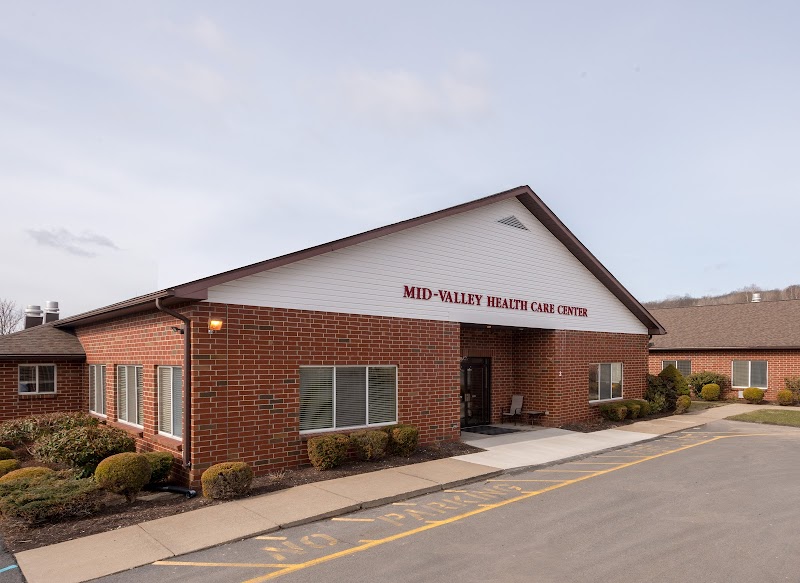
How Does Mid-Valley Health Compare to Other Pennsylvania Nursing Homes?

Compared to the 100 nursing homes in Pennsylvania, MID-VALLEY HEALTH CARE CENTER's overall rating (3 stars) matches the state average, staff turnover (39%) is near the state average of 46%, and health inspection rating (3 stars) is at the national benchmark.

What Should Families Ask When Visiting Mid-Valley Health?

Based on this facility's data, families visiting should ask: "Can I visit during a mealtime to observe dining assistance and food quality?" "How do you handle medical emergencies, and what is your hospital transfer rate?" "Can I speak with family members of current residents about their experience?"

Is Mid-Valley Health Safe?

Based on CMS inspection data, MID-VALLEY HEALTH CARE CENTER has a clean safety record: no substantiated abuse findings (meaning no confirmed cases of resident harm), no Immediate Jeopardy citations (the most serious violation level indicating risk of serious injury or death), and is not on the Special Focus Facility watch list (a federal program monitoring the lowest-performing 1% of nursing homes). The facility has a 3-star overall rating and ranks #1 of 100 nursing homes in Pennsylvania. While no facility is perfect, families should still ask about staff-to-resident ratios and recent inspection results during their visit.

Do Nurses at Mid-Valley Health Stick Around?

MID-VALLEY HEALTH CARE CENTER has a staff turnover rate of 39%, which is about average for Pennsylvania nursing homes (state average: 46%). Moderate turnover is common in nursing homes, but families should still ask about staff tenure and how the facility maintains care continuity when employees leave.

Was Mid-Valley Health Ever Fined?

MID-VALLEY HEALTH CARE CENTER has been fined $77,272 across 2 penalty actions. This is above the Pennsylvania average of $33,852. Fines in this range indicate compliance issues significant enough for CMS to impose meaningful financial consequences. Common causes include delayed correction of deficiencies, repeat violations, or care failures affecting resident safety. Families should ask facility leadership what changes have been made since these penalties.

Is Mid-Valley Health on Any Federal Watch List?

MID-VALLEY HEALTH CARE CENTER is not on any federal watch list. The most significant is the Special Focus Facility (SFF) program, which identifies the bottom 1% of nursing homes nationally based on persistent, serious quality problems. Not being on this list means the facility has avoided the pattern of deficiencies that triggers enhanced federal oversight. This is a positive indicator, though families should still review the facility's inspection history directly.