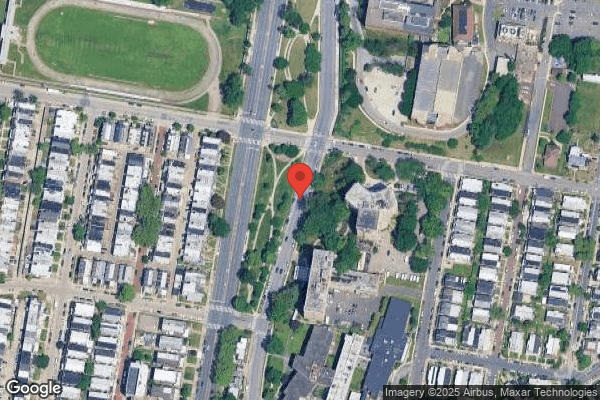
WILLOWCREST

ALBERT EINSTEIN MED CTR, PHILADELPHIA, PA 19141 (215) 456-8632
Non profit - Corporation 44 Beds Independent Data: November 2025
Trust Grade
95/100
#149 of 653 in PA
Last Inspection: January 2025

Within standard 12-15 month inspection cycle. Federal law requires annual inspections.

Overview

Willowcrest in Philadelphia has received an impressive Trust Grade of A+, indicating it is an elite facility, well-regarded for its quality of care. It ranks #149 out of 653 nursing homes in Pennsylvania, placing it in the top half of state facilities, and #7 out of 46 in Philadelphia County, which means there are only six local options rated higher. However, the facility's trend is concerning as the number of issues reported has increased from 1 in 2024 to 2 in 2025. Staffing is a strong point, with a 5/5 rating and a low turnover rate of 24%, significantly better than the state average of 46%. Notably, there have been no fines, suggesting compliance with regulations, and the facility offers more RN coverage than 84% of Pennsylvania facilities. Despite these strengths, there are some weaknesses to consider. Recent inspector findings revealed that grievance forms were not readily accessible to residents, making it difficult for them to voice concerns anonymously. Additionally, there were lapses in the infection control program, specifically regarding respiratory precautions for one resident, and a failure to follow medication administration orders for another resident. These incidents indicate areas where the facility needs to improve to ensure the highest standard of care for its residents.

Trust Score
A+
95/100
In Pennsylvania
#149/653
Top 22%
Safety Record
Low Risk
No red flags
Inspections
Getting Worse
1 → 2 violations
Staff Stability
✓ Good
24% annual turnover. Excellent stability, 24 points below Pennsylvania's 48% average. Staff who stay learn residents' needs.
Penalties
✓ Good
No fines on record. Clean compliance history, better than most Pennsylvania facilities.
Skilled Nurses
✓ Good
Each resident gets 96 minutes of Registered Nurse (RN) attention daily — more than 97% of Pennsylvania nursing homes. RNs are the most trained staff who catch health problems before they become serious.
Violations
✓ Good
Only 3 deficiencies on record. Cleaner than most facilities. Minor issues only.
★★★★★
5.0
Overall Rating
★★★★★
5.0
Staff Levels
★★★★★
5.0
Care Quality
★★★★☆
4.0
Inspection Score
Stable
2024: 1 issues
2025: 2 issues

The Good

  • 5-Star Staffing Rating · Excellent nurse staffing levels
  • 5-Star Quality Measures · Strong clinical quality outcomes
  • Low Staff Turnover (24%) · Staff stability means consistent care
  • Full Sprinkler Coverage · Fire safety systems throughout facility
  • No fines on record
  • Staff turnover is low (24%)

    24 points below Pennsylvania average of 48%

Facility shows strength in staffing levels, quality measures, staff retention, fire safety.

The Bad

No Significant Concerns Identified

This facility shows no red flags. Among Pennsylvania's 100 nursing homes, only 1% achieve this.

The Ugly 3 deficiencies on record

Jan 2025 2 deficiencies
CONCERN (D)

Potential for Harm - no one hurt, but risky conditions existed

Grievances (Tag F0585)

Could have caused harm · This affected 1 resident

Based on observation, resident group interview, and staff interview, it was determined that the facility failed to ensure that grievance forms were available and accessible to residents and failed to ...

Read full inspector narrative →
Based on observation, resident group interview, and staff interview, it was determined that the facility failed to ensure that grievance forms were available and accessible to residents and failed to provide an opportunity for anonymous grievances to be submitted for three of three residents reviewed. (Reisdents R76, R80 and R125) Findings include: Review of facility policy titled Grievance Policy for Residents and Resident Representatives, dated 2017, revealed each resident has the right to voice grievances and recommend changes for improvement to staff, administration, or outside representative of his/her choice, without discrimination or reprisal. Also, a prominent posting will be located in the lobby and 3rd floor with Grievance Official contact information. A resident group interview was conducted on January 28, 2025 at 11:04 a.m. with Residents R76, R80, R125, who were alert and orientated, and reported that they did not know how to file grievances anonymously and do not know where the grievance forms are located. Observation on the 3rd floor revealed no grievance forms or grievance box available or accessible to residents. Interview on January 28, 2025 at 12:50 p.m. with Employee 6, Unit Coordinator, revealed resident grievance forms were located in the filing cabinet that was only accessible to employees and there was no grievance box on unit for residents to submit grievances anonymously. 28 Pa. Code 201.18(b)(3) Management 28 Pa. Code 201.29(a) Resident rights
CONCERN (D)

Potential for Harm - no one hurt, but risky conditions existed

Infection Control (Tag F0880)

Could have caused harm · This affected 1 resident

**NOTE- TERMS IN BRACKETS HAVE BEEN EDITED TO PROTECT CONFIDENTIALITY** Based on observations, review of facility policies, review of facility documentation, clinical record review and interviews with...

Read full inspector narrative →
**NOTE- TERMS IN BRACKETS HAVE BEEN EDITED TO PROTECT CONFIDENTIALITY** Based on observations, review of facility policies, review of facility documentation, clinical record review and interviews with staff, it was determined that the facility failed to maintain an effective infection control program related to Respiratory Precautions for one resident on respiratory precaution of seven residents reviewed (Resident R122). Findings include: Review of facility policy on Enhance Respiratory Precaution reveled that under section PURPOSE: To prevent transmission of emerging or highly pathogenic infections spread by means of respiratory route. Under section POLICY: Any patient known or suspected to have an infection with an emerging or highly pathogenic organism that may be transmitted by means of the respiratory route shall be placed on Enhanced Respiratory Precaution. Section GENERAL SCOPE OF PRACTICE: #D. Personal Protective Equipment (PPE); Prior to entering the room, staff shall perform hand hygiene and then don appropriate respiratory protection (N95- a respiratory protective device designed to achieve a very close facial fit and very efficient filtration of airborne particles or PAPR-Powered Air Purifying Respirator), isolation gown, gloves and eye protection. prior to exiting the room, staff shall remove gown and gloves and perform hand hygiene. Review of Resident R122's clinical record revealed that Resident R122 was admitted to the facility on [DATE], with diagnoses of but not limited to: COVID+, Hemiplegia/Hemiparesis, Diabetes Mellitus. Medication observation conducted on January 29, 2025 at 8:55 a.m. with licensed nurse, Employee E3 for Resident R122 revealed that Resident R122 had a diagnoses of covid19 and was in and enhanced respiratory precaution. Further observation revealed that the door to Resident R122's room had a signage for Red Zone and Signage for Enhanced Respiratory Precaution with instructions on the signage as follow: hand Hygiene, N-95 or PAPR, Eye/Face protection, Gown and gloves, dedicated disposable equipment, disinfect reusable equipment. Further observation revealed that while outside Resident R122's room (Room # 305), Employee E3 donned, gown, gloves and N-95 mask, and proceeded to go inside Resident R22's room and spoke with Resident R122. Further observation revealed that Employee E3 came out of Resident R122's room wearing the N-95, gown and gloves. She proceeded to remove the gloves and discard it in the garbage bin attached to the medication cart which was parked outside of Resident R122's room. Further, Employee E3 did not remove the gown. Employee E3 then proceeded to prepare Resident R122's medication, while standing outside of Resident R122's room still wearing the PPE's that she wore inside Resident R122's room. Further observation revealed that after preparing the medications for Resident R122, Employee E3 then walked towards Room # 304 which was next to Resident R122's room, still wearing the same gown she wore inside resident R122's room and proceeded to take gloves which were in a bin on the wall located outside the door or Room # 304. Employee E3 then donned the gloves, walked back towards the medication cart, proceeded to take the medications that she prepared and went inside Resident R122's room and administered her medications. Interview with the Licensed nurse, Employee E3 conducted after she came out of the room confirmed that she did not remove and discard the gown when she entered Resident R122's room and that she continued to wear the same gown while prepping the medications and walking in the hallway to get a clean pair of gloves. Interview with Infection control manager, Employee E4 and Infection Control Nurse, Employee E5 conducted on January 29, 2025 at 10:26 am during infection control interview revealed that staff must don N-95 mask, eye protection, surgical gown and gloves prior to entering a room occupied by a patient on Enhanced Respiratory Precaution, and that staff must remove and discard the gown and gloves, before exiting the room. 28 Pa Code 201.14(a) Responsibility of licensee 28 Pa Code 201.18(d) Management
Feb 2024 1 deficiency
CONCERN (D) 📢 Someone Reported This

A family member, employee, or ombudsman was alarmed enough to file a formal complaint

Potential for Harm - no one hurt, but risky conditions existed

Quality of Care (Tag F0684)

Could have caused harm · This affected 1 resident

Based on review of facility policies, clinical record reviews and interviews with staff, it was determined that the facility failed to follow the physician orders related to medication administration ...

Read full inspector narrative →
Based on review of facility policies, clinical record reviews and interviews with staff, it was determined that the facility failed to follow the physician orders related to medication administration for one of 3 residents reviewed (Residents R1). Findings include: Review of Resident R1's clinical record indicated admission date January 29, 2024, and had diagnoses including ventricular tachcardi (is a type of abnormal heart rhythm (arrhythmia) characterized by a rapid heartbeat originating from the heart's lower chambers, the ventricles), coronary artery disease (cad) (condition characterized by the narrowing or blockage of the coronary arteries, which supply oxygen-rich blood to the heart muscle), heart failure, atrial fibrillation, (which is the most common type of heart arrhythmia). Review of physician orders indicated that Resident R1 was prescribed Melatonin 9 milligrams (mg) one a day in the evening on January 29, 2024 Interview conducted on February 8, 2024, at 10:12 a.m. with License nurse, unit manager, Employee E5 confirmed that the facility policy for medication administration was the following: Morning medication 9:00 a.m. and administered one hour prior or after. Afternoon medication 5:00 p.m. and could be administered one hour prior or after. Night Medications: 9:00 p.m. and could be administered one hour prior or after. Review of Resident R1's February 2024 Medication Administration Record with License nurse, unit manager Employee E5 revealed that Melatonin 9 mg was not administered to the resident during the evening shift on February 4, 2024, and there was no reason documented for not administering the medication. On February 8, 2024, at approximately 11:00 a.m. an interview was conducted with License nurse, Employee E4 who was assigned to Resident R1 on February 4, 2024, during the evening shift and reported that Melatonin medication was out, and she placed an order to the pharmacy. This was not documented in the clinical file. Facility receives medication on daily bases from the pharmacy to be administered for Resident R1. On February 20, 2024, at 2:48 p.m. a telephone interview was conducated with the pharmacist, Employee E6 who confirmed that the facility did not electronically request this medication on February 4, 2024. It further revealed that facility did have Accudose grab machine stored in their medication room on the unit which has frequent medication supply and Melatonin was one of the medications that pharmacy stores for Accudose grab machine. Further clinical records reviewed that Resident R1 had a physician order on January 30, 2024, to received Hydrolazine 50 mg every 8 hours. Review of January 2024 Medication Administration Report (MAR) revealed this medication was not given on January 31, 2024, at 1:00 p.m. License Nurse unit manager, Employee E3 reported on February 8, 2024 at approximately 11:00 a.m. that she was assigned to the cart and unsure why the medication was not administered. There was no documentation in the clinical record to document the reason for a missing medication. Further clinical record review indicated a physician order obtained January 29, 2024, for Amiodarone 200 mg daily once a day. This medication was administered on January 30, 2024, at 10:10 a.m. by the License nurse, Unit Manager, Employee E5 who had to step in as there was a call out on the cart; therefore, the medication was late. On February 8, 2024, at approximately 2:30 p.m. [NAME] President, Employee E1 and Medical Director, Employee E6 both confirmed above medications were not administered based on the physician order. 28 Pa Code 211.12(d)(5) Nursing services
Understanding Severity Codes (click to expand)
Life-Threatening (Immediate Jeopardy)
J - Isolated K - Pattern L - Widespread
Actual Harm
G - Isolated H - Pattern I - Widespread
Potential for Harm
D - Isolated E - Pattern F - Widespread
No Harm (Minor)
A - Isolated B - Pattern C - Widespread

Questions to Ask on Your Visit

  • "Can I speak with families of current residents?"
  • "What's your RN coverage like on weekends and overnight?"

Our Honest Assessment

Strengths
  • • Grade A+ (95/100). Above average facility, better than most options in Pennsylvania.
  • • No major safety red flags. No abuse findings, life-threatening violations, or SFF status.
  • • No fines on record. Clean compliance history, better than most Pennsylvania facilities.
  • • Only 3 deficiencies on record. Cleaner than most facilities. Minor issues only.
Concerns
  • • No significant concerns identified. This facility shows no red flags across CMS ratings, staff turnover, or federal penalties.
Bottom line: Generally positive indicators. Standard due diligence and a personal visit recommended.

About This Facility

What is Willowcrest's CMS Rating?

CMS assigns WILLOWCREST an overall rating of 5 out of 5 stars, which is considered much above average nationally. Within Pennsylvania, this rating places the facility higher than 99% of the state's 100 nursing homes. This rating reflects solid performance across the metrics CMS uses to evaluate nursing home quality.

How is Willowcrest Staffed?

CMS rates WILLOWCREST's staffing level at 5 out of 5 stars, which is much above average compared to other nursing homes. Staff turnover is 24%, compared to the Pennsylvania average of 46%. This relatively stable workforce can support continuity of care.

What Have Inspectors Found at Willowcrest?

State health inspectors documented 3 deficiencies at WILLOWCREST during 2024 to 2025. These included: 3 with potential for harm.

Who Owns and Operates Willowcrest?

WILLOWCREST is owned by a non-profit organization. Non-profit facilities reinvest revenue into operations rather than distributing to shareholders. The facility operates independently rather than as part of a larger chain. With 44 certified beds and approximately 33 residents (about 75% occupancy), it is a smaller facility located in PHILADELPHIA, Pennsylvania.

How Does Willowcrest Compare to Other Pennsylvania Nursing Homes?

Compared to the 100 nursing homes in Pennsylvania, WILLOWCREST's overall rating (5 stars) is above the state average of 3.0, staff turnover (24%) is significantly lower than the state average of 46%, and health inspection rating (4 stars) is above the national benchmark.

What Should Families Ask When Visiting Willowcrest?

Based on this facility's data, families visiting should ask: "Can I visit during a mealtime to observe dining assistance and food quality?" "How do you handle medical emergencies, and what is your hospital transfer rate?" "Can I speak with family members of current residents about their experience?"

Is Willowcrest Safe?

Based on CMS inspection data, WILLOWCREST has a clean safety record: no substantiated abuse findings (meaning no confirmed cases of resident harm), no Immediate Jeopardy citations (the most serious violation level indicating risk of serious injury or death), and is not on the Special Focus Facility watch list (a federal program monitoring the lowest-performing 1% of nursing homes). The facility has a 5-star overall rating and ranks #1 of 100 nursing homes in Pennsylvania. While no facility is perfect, families should still ask about staff-to-resident ratios and recent inspection results during their visit.

Do Nurses at Willowcrest Stick Around?

Staff at WILLOWCREST tend to stick around. With a turnover rate of 24%, the facility is 22 percentage points below the Pennsylvania average of 46%. Low turnover is a positive sign. It means caregivers have time to learn each resident's needs, medications, and personal preferences. Consistent staff also notice subtle changes in a resident's condition more quickly. Registered Nurse turnover is also low at 18%, meaning experienced RNs are available to handle complex medical needs.

Was Willowcrest Ever Fined?

WILLOWCREST has no federal fines on record. CMS issues fines when nursing homes fail to meet care standards or don't correct problems found during inspections. The absence of fines suggests the facility has either maintained compliance or corrected any issues before penalties were assessed. This is a positive indicator, though families should still review recent inspection reports for the full picture.

Is Willowcrest on Any Federal Watch List?

WILLOWCREST is not on any federal watch list. The most significant is the Special Focus Facility (SFF) program, which identifies the bottom 1% of nursing homes nationally based on persistent, serious quality problems. Not being on this list means the facility has avoided the pattern of deficiencies that triggers enhanced federal oversight. This is a positive indicator, though families should still review the facility's inspection history directly.