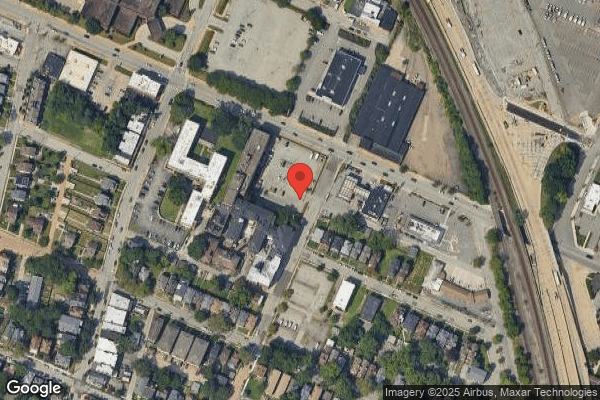

BURGH CARE CENTER

909 WEST STREET, PITTSBURGH, PA 15221 (412) 723-3662
For profit - Corporation 126 Beds WECARE CENTERS Data: November 2025 2 Immediate Jeopardy citations
Trust Grade
0/100
#537 of 653 in PA
Last Inspection: April 2025

Within standard 12-15 month inspection cycle. Federal law requires annual inspections.

Overview

Burgh Care Center has received a Trust Grade of F, indicating significant concerns about the quality of care provided. Ranked #537 out of 653 facilities in Pennsylvania, it falls in the bottom half, and at #34 of 52 in Allegheny County, only a few local options rank worse. The facility is worsening, with issues increasing from 29 in 2024 to 37 in 2025. While staffing has a good rating of 4 out of 5 stars, the turnover rate is average at 49%, and the facility has incurred $393,026 in fines, which is higher than 99% of facilities in the state, suggesting ongoing compliance problems. Specific incidents of concern include failures in administering tracheostomy care, leading to critical respiratory distress for two residents, and inadequate skin assessments that resulted in pressure injuries and infections for others, indicating serious lapses in care.

Trust Score
F
0/100
In Pennsylvania
#537/653
Bottom 18%
Safety Record
High Risk
Review needed
Inspections
Getting Worse
29 → 37 violations
Staff Stability
⚠ Watch
49% turnover. Above average. Higher turnover means staff may not know residents' routines.
Penalties
⚠ Watch
$393,026 in fines. Higher than 79% of Pennsylvania facilities, suggesting repeated compliance issues.
Skilled Nurses
✓ Good
Each resident gets 42 minutes of Registered Nurse (RN) attention daily — more than average for Pennsylvania. RNs are trained to catch health problems early.
Violations
⚠ Watch
81 deficiencies on record. Higher than average. Multiple issues found across inspections.
★☆☆☆☆
1.0
Overall Rating
★★★★☆
4.0
Staff Levels
★★★★☆
4.0
Care Quality
★☆☆☆☆
1.0
Inspection Score
Stable
2024: 29 issues
2025: 37 issues

The Good

  • 4-Star Staffing Rating · Above-average nurse staffing levels
  • 4-Star Quality Measures · Strong clinical quality outcomes
  • Full Sprinkler Coverage · Fire safety systems throughout facility
  • No fines on record

Facility shows strength in staffing levels, quality measures, fire safety.

The Bad

1-Star Overall Rating

Below Pennsylvania average (3.0)

Significant quality concerns identified by CMS

Staff Turnover: 49%

Near Pennsylvania avg (46%)

Higher turnover may affect care consistency

Federal Fines: $393,026

Well above median ($33,413)

Significant penalties indicating serious issues

Chain: WECARE CENTERS

Part of a multi-facility chain

Ask about local staffing decisions and management

The Ugly 81 deficiencies on record

2 life-threatening 2 actual harm
Apr 2025 1 deficiency 1 Harm
SERIOUS (G) 📢 Someone Reported This

A family member, employee, or ombudsman was alarmed enough to file a formal complaint

Actual Harm - a resident was hurt due to facility failures

Deficiency F0658 (Tag F0658)

A resident was harmed · This affected 1 resident

**NOTE- TERMS IN BRACKETS HAVE BEEN EDITED TO PROTECT CONFIDENTIALITY** Based on review of facility policy, job description, clinical record review, personnel records, resident and staff interviews, i...

Read full inspector narrative →
**NOTE- TERMS IN BRACKETS HAVE BEEN EDITED TO PROTECT CONFIDENTIALITY** Based on review of facility policy, job description, clinical record review, personnel records, resident and staff interviews, it was determined that the facility failed to provide care and services to meet the accepted standards of practice for one of four residents reviewed which resulted in actual harm requiring a transfer to the hospital (Resident R1). Findings include: The facility Skin breakdown policy last reviewed 9/18/24, indicated that the nurse staff and practitioner will assess and document an individual's significant risk factors. The physician will help identify factors contributing to skin breakdown. The physician will help identify medical interventions related to wound management, for example treating a soft tissue infection, removing necrotic tissue, and managing pain. The facility LPN Supervisor job description last reviewed 9/18/24, indicated to administer professional services such as applying and changing dressings. Supervision in this position must be in accordance with current federal, state, and local standards, guidelines and regulations. Review of Resident R1's admission record indicated she was originally admitted on [DATE]. Review of Resident R1's MDS assessment (MDS: Minimum Data Set assessment-a periodic assessment of resident care needs) dated 3/25/25, indicated she had diagnoses that included spinal stenosis (compression of nerves in the spinal cord causing pain and discomfort), anxiety disorder (a medical condition creating a sense of acute fear, restlessness, and worry), hypertension (a condition impacting blood circulation through the heart related to poor pressure), and hypothyroidism (decrease in production of thyroid hormone). Review of Resident R1's care plan dated 1/17/ 25, indicated Resident R1 had potential for skin impairment. Review of Resident R1's physician orders dated 2/17/25, indicated licensed nurse to perform skin head-to-toe checks and document. Physician orders on 4/18/25, indicated to administer Cephalexin (antibiotic) for infection. A physician order dated 4/20/25, indicated to cleanse area to upper back. The record did not indicate any physician orders to excise, debride or open any skin areas to Resident R1. Review of Resident R1's skin assessment on 4/17/25, indicated a new abscess measuring 4.5 cm x 4.0 cm x 0 cm. Review of Resident R1's clinical progress note dated 4/17/25, indicated Resident R1 alerted staff that she has abscess on her back, midline. 4.5 cm x 4 cm, redness noted and warm to touch. Some tenderness noted. Doctor notified. Verbal order obtained for antibiotic 500 mg four times a day for seven days, also vitals per shift. Resident R1 updated, verbalized understanding. Review of Resident R1's Nurse Practitioner note dated 4/18/25, indicated Resident R1 was seen for an abscess on her back. It was noticed yesterday, and she was started on antibiotic. She has had no fevers, other vitals stable per nursing, but Resident R1 reports the area is very tender. Nursing reportedly tried to drain the area earlier, unclear the procedure but concern for infection so patient was sent to Emergency Department. Review of Resident R1's discharge hospital records dated 4/19/25, indicated she was seen on 4/18/25 due to abscess. Facility documents submitted to the state dated 4/18/25, indicated that Resident R1 reported to 3-11 supervisor and her attending doctor that the daylight LPN excised a cyst to left midline scapula. Resident R1 stated that she felt that the LPN used some type of 'tool' to open her skin. Licensed Practical Nurse (LPN) Employee E1 provided statement via phone dated 4/18/25. He stated that Resident R1 requested if he could do something about the cyst on her back. He said he could. He stated he grabbed a couple of things such as alcohol wipes, 4 x 4 gauze. He then went to Resident R1's room, applied Lidocaine gel (pain reducing ointment) to try and numb the area before he squeezed the cyst. He stated he had tweezers but did not use them. Assistant Director of Nursing (ADON) Employee E2 provided statement dated 4/18/25. She stated she was getting report on the beginning of her shift. Licensed Practical Nurse (LPN) Employee E1 stated that Resident R1's cyst was coming to a head and he wanted to pop it. She told him wound team would look at it. Licensed Practical Nurse (LPN) Employee E1 later told her he took care of Resident R1's cyst and covered it with a bandage. Review of Licensed Practical Nurse (LPN) Employee E1's personnel record indicated he was hired on 3/24/25 and signed the LPN job description. His employment ended 4/23/25. During an interview on 4/28/25, at 9:24 a.m. Resident R1 stated the following: my back. Yes, a nurse operated on me. I think it was a male nurse Licensed Practical Nurse (LPN) Employee E1. He got instruments from a cart. The instruments were not sanitized. He used lidocaine cream to numb it. He lanced the cyst. When he cut it, it hurt. From one to ten, the pain was a ten. He did not use alcohol or anything on his instruments. Later on that night, a supervisor asked me to look at my back. And I had to go to the hospital. They had to cut it open at the hospital. During a phone interview on 4/28/25, at 11:15 a.m. Licensed Practical Nurse (LPN) Employee E1 stated the following: As I recall, yes it was on 4/18/25. Resident R1 told me she had uncomfortable cyst on back. There was a tiny white head on medial area. I had set of tweezers. They were blunt. I took two 4x4 gauze. She was already on an antibiotic. I applied some pressure, and there was a little bit of blood and pus. She said it comes back every 12 months or so. I did not have any tools that could have lanced it. I had alcohol. I do not carry a scalpel. It was larger than the little bit of pus came out. I was working the floor by myself that day. She had a lidocaine cream, and she asked me to apply it to her back. That belongs to the Resident R1. I cleaned the area with alcohol swab and put gauze over it. She said she felt better. When asked if there was an order to squeeze it or to perform any procedure, LPN Employee E1 stated no. During an interview on 4/28/25, at 11:57 a.m. Assistant Director of Nursing (ADON) Employee E2 stated: I did not see him with any tools. When I came on that Friday, I was getting report with him and another nurse. Resident R1 had abscess on her back. He mentioned he could squeeze it. I told him to leave that alone. That is not what we do. We do wound rounds, and I was going to mention it to the wound nurse. An LPN is not supposed to Lance anything. Never. There was no order. I told him not to do anything to that cite! During an interview on 4/28/25, at 12:10 p.m. Registered Nurse (RN) Employee E3 was asked about lancing resident if they have a abscess and she stated: never. Never. A nurse must contact a doctor. During an interview on 4/28/25, at 12:39 p.m. Registered Nurse (RN) Supervisor Employee E4 stated the following: I was doing a smoke break that evening. Resident R1's doctor who does rounds on the evenings was here. Resident R1 spoke to her doctor, and she brought it to my attention. I then spoke to the DON and NHA and made them aware of the concern. You do not lance as an RN or LPN. That is outside the scope of practice. During an interview on 4/28/25, at 3:25 p.m. information disseminated to the Nursing Home Administrator (NHA) and Director of Nursing) that the facility failed to provide care and services to meet the accepted standards of practice for Resident R1 which resulted in actual harm requiring a transfer to the hospital. 28 Pa. Code: 201.14(a) Responsibility of licensee. 28 Pa. Code 211.12(d)(1)(2)(3)(5) Nursing services.
Apr 2025 36 deficiencies 1 IJ
CRITICAL (J)

Immediate Jeopardy (IJ) - the most serious Medicare violation

Respiratory Care (Tag F0695)

Someone could have died · This affected 1 resident

**NOTE- TERMS IN BRACKETS HAVE BEEN EDITED TO PROTECT CONFIDENTIALITY** Based on observation, review of clinical record, review of facility policies, interview with staff and resident, it was determin...

Read full inspector narrative →
**NOTE- TERMS IN BRACKETS HAVE BEEN EDITED TO PROTECT CONFIDENTIALITY** Based on observation, review of clinical record, review of facility policies, interview with staff and resident, it was determined the facility failed provide tracheostomy care consistent with professional standards of practice for two of two residents. This failure resulted in an Immediate Jeopardy situation for Resident R32 and R34 who had a tracheostomy obstruction, experienced respiratory and emotional distress and potential death. (Resident R34) Findings include: Review of the facility policy Tracheostomy Care Protocol Licensed Staff last reviewed [DATE], indicates respiratory care must be provided per professional standards, physician orders are required for all aspects of tracheostomy (trach) care, including suctioning and oxygen use. Care plans must be resident-specific, updated upon condition change, and interdisciplinary. A baseline care plan must be developed within 48 hours of admission for all resident with a tracheostomy. Step by step tracheostomy care education for licensed staff includes but not inclusive to: A. Preparing for trach care: Review residents care plan and orders. B. Explaining the procedure C. Suctioning (if needed prior to cleaning) D. Inner Cannula care E. Stoma and skin care F. Dressing and ties G. Oxygen and humidification management H. Monitoring I. Emergency Preparedness J. Infection prevention K. Resident -centered considerations Tracheostomy monitoring and infection prevention: II. Signs and symptoms of tracheostomy infection III. How to obtain a trach culture IV. Documentation and reporting Review of the admission record indicated R32 was admitted to the facility on [DATE], with the diagnosis of respiratory failure (lungs have trouble loading your blood with oxygen), heart failure (heart doesn't pump the way it should), and tracheostomy (surgical hole in the windpipe that helps with breathing) status. Review of Resident R32's Minimum Data Set (MDS- assessment of resident's care needs) dated [DATE], section C0200 BIMS (Brief interview for mental status) revealed that Resident R32 scored 13 which indicated that Resident R32 was cognitively intact. Review of section O (Special treatments and procedures) 0110, C1 (oxygen therapy) and E1 (tracheostomy care) confirmed that Resident R32 received oxygen and tracheostomy care. Section D1 (suctioning) revealed suctioning completed. Review of Resident R32's care plan initiated [DATE], with revision on [DATE], indicated Respiratory: Resident has a tracheostomy related to impaired breathing mechanics; diagnosis of chronic obstructive pulmonary disease (COPD) and is dependent with oxygen since 2017. Resident is self-sufficient with trach care, including cleaning and changing inner cannula and suctioning as needed. Review of Resident R32's physician orders dated [DATE], indicated check stoma weekly as needed for diagnosis of tracheostomy status check stoma site for skin breakdown/maintenance, order was discontinued on [DATE], at 2:02 p.m. Review of Resident R32's physician orders dated [DATE], indicated tracheostomy care check stoma every evening shift for diagnosis of tracheostomy status check stoma site for skin breakdown, order was discontinued on [DATE], at 2:02 p.m. Review of Resident R32's physician order dated [DATE], indicated tracheostomy care - ensure clean ties daily every evening shift. clean ties daily, order was discontinued on [DATE], at 2:02 p.m. Review of Resident R32's physician orders dated [DATE], indicated tracheostomy care - ensure clean ties daily as needed for diagnosis of tracheostomy status clean ties for trach, orders were discontinued on [DATE], at 2:02 p.m. Review of Resident R32's physician orders dated [DATE], indicated change inner cannula daily Shiley XLT 6.0 every day shift for diagnosis of tracheostomy status, order was discontinued on [DATE], at 2:02 p.m. Review of Resident R32's physician orders dated [DATE], indicated oxygen 6 liters to maintain oxygen (02) sat greater than 92% via trach mask. every shift for oxygen dependency, order was discontinued on [DATE], at 2:02 p.m. Review of Resident R32's nursing progress notes dated [DATE], 2:29 p.m. indicated resident was discovered on floor face down in moderate amt pooled blood. Wound to head actively bleeding. No loss of consciousness noted. Resident remained alert and oriented to baseline throughout assessment. Complained of back, left leg and head pain. Unable to obtain VS due to position on floor. EMS called for emergency transport to hospital per Resident request. Physician notified. Review of Resident R32's nursing progress notes dated [DATE], 2:29 p.m. indicated resident was transferred to hospital. Review of Resident R32's nursing progress note dated [DATE] 6:18 p.m. resident admitted to hospital with diagnosis of encephalopathy. Review of Resident R32's nursing progress note dated [DATE], at 8:00 p.m. indicated Resident R32 returned from hospital. Alert and oriented X4 with no confusion. Admits to pain of 6. Pupils equal, round, reactive to light accommodation (Perrla). Diagnosis of urinary tract infection (UTI) now with 16F foley (tube inserted into the bladder) draining clear yellow urine without difficulties. Vital within in normal limits (wnl) of resident baseline. Trach intact with 6XLT Shiley. No noted fever. Pills whole, regular diet with thin liquids. bed in lowest position. Resident is able to make her needs known. call light within reach. will continue to monitor. Review of Resident R32's re-admission assessment dated [DATE], form V10.8 indicated tracheostomy present. Review of Resident R32's current physician orders on [DATE], failed to include current orders for tracheostomy care. Review of Resident R32's [DATE] medication administration record (MAR) indicated trach care discontinued on [DATE]. Review of Resident R32's [DATE] MAR indicated tracheostomy Care - Ensure clean ties daily was discontinued on [DATE]. Review of Resident R32's [DATE] MAR indicated Oxygen 6 liters to maintain 02 sat greater than 92% via trach mask. every shift for Oxygen Dependency was discontinued on [DATE]. Review of Resident R34's clinical record revealed that Resident R34 was admitted to the facility on [DATE], with diagnoses of tracheostomy (tube inserted through the neck to assist breathing) status, repeated falls, and hip fracture. Review of Resident R34's physician's order dated [DATE], indicated to administer 10 liters (L) of oxygen via trach mask every shift for oxygen dependency. Review of Resident R34's progress note dated [DATE], revealed the resident has a tracheostomy and was on three liters of oxygen. The facility failed to administer oxygen as ordered or notify physician of the change in oxygen demand. Review of Resident R34's progress note dated [DATE], indicated trach care was provided and Registered Nurse (RN), Employee E12 was unable to insert inner cannula. The resident was taken to the hospital for evaluation. Review of Resident R34's progress note dated [DATE], revealed Licensed Practical Nurse (LPN), Employee E13 went into the resident's room to answer her call light and the resident was found holding her trach in her hand and was unable to put it back in. The supervisor was notified and 911 was called. Review of Resident R34's Minimum Data Set (MDS- assessment of resident's care needs) dated [DATE], section C0200 BIMS (Brief interview for mental status) revealed that Resident R34 scored 13 which indicated that Resident R34 was cognitively intact. Review of section O (Special treatments and procedures) 0110, C1 (oxygen therapy) and E1 (tracheostomy care) confirmed that Resident R34 received oxygen and tracheostomy care. Section D1 (suctioning) revealed suctioning was not a treatment that was performed. Review of Section GG (Functional Abilities) reveled that Resident R34 required supervision or touching assistance in bed mobility and required substantial/maximal assistance with transfers. Review of Resident R34's baseline care plan dated [DATE], failed to include a care plan for suctioning, tracheostomy care, and isolations precautions. The facility failed to implement a baseline care plan within 48 hours of admission. Review of Resident R34's progress note dated [DATE], revealed the resident required significant assistance for ADL (activity of daily living) tasks. It was indicated nursing was working on trach care, the son was going to bring in cleaning supplies as resident completed this on her own before. Review of Certified Registered Nurse Practitioner, Employee E15 progress note dated [DATE], revealed the resident was assessed and the resident had a history of laryngeal cancer and had a permanent trach. It was indicated to have respiratory therapy as ordered. Review of Resident R34's progress note dated [DATE], revealed the RN Supervisor notified Assistant Director of Nursing, Employee E8 that Resident R34 was having respiratory difficulties intra cannula from trach was dislodged. The resident was transferred to the hospital. Review of Resident R34's progress note dated [DATE], indicated the resident's inner cannula was removed and staff were unable to reinsert. The resident stated she can breathe easier with the inner cannula out. RN, Supervisor, Employee E2 indicated the hospital discharge paperwork were reviewed to identify next steps. Review of Resident R34's physician order dated [DATE], indicated the resident was scheduled a tracheostomy evaluation on [DATE], at 10:00 a.m. Review of Resident R34's physician order dated [DATE], indicated to obtain a culture one time only for trach infection site on [DATE]. Review of Resident R34's [DATE] Treatment Administration Record (TAR) failed to indicate Resident R34's culture was obtained as ordered. Review of Resident R34's care plan dated [DATE], revealed the resident had a tracheostomy. The resident's goal was to have no signs and symptoms of infection. Interventions included to ensure trach ties are secure and monitor/document for restlessness, agitation, confusion, increased heart rate, and bradycardia. It was indicated to monitor/document respiratory rate, depth, and quality every shift/as ordered, and to suction as necessary. The care plan failed to include tracheostomy care including, cleaning and the size of the inner cannula. Review of Resident R34's physician order dated [DATE], indicated to administer one tablet of 100 milligram (mg) Doxycycline Hyclate (antibiotic that treat bacterial infections) by mouth, two times a day for infection for 10 days. Review of Certified Registered Nurse Practitioner, Employee E15 progress note dated [DATE], revealed Resident R34 had recent concerns for trach maintenance and care. Review of Resident R34's physician order dated [DATE], indicated to obtain a culture one time only for trach infection site. Review of Resident R34's office visit summary dated [DATE], revealed the resident was referred to see an otolaryngology (ear, nose, and throat, is a medical specialty that focuses on the diagnosis and treatment of conditions affecting the ears, nose, throat, and related structures of the head and neck) provider for a consultation for the resident's tracheostomy status. Resident R34 used a metal [NAME] tracheostomy tube. While a resident at a skilled nursing facility, Resident R34's inner cannula dislodge, and staff were unable to reinsert and the resident was sent to the hospital. Resident R34 was transferred to the hospital and underwent a laparoscopy (a surgical procedure in which a small incision is made through which a viewing tube is inserted) which showed some circumferential mucus making reinsertion challenging. A saline irrigation and suctioning was performed to remove the crusting, and then a new inner cannula was inserted. Resident R34 presented a month later, on [DATE], with the inability to place the inner cannula. The assessment revealed Resident R34's metal [NAME] tracheostomy has progressively gotten obstructed and with a biofilm. Redness was observed around the skin of Resident R34's tracheostomy. Upon examination, Resident R34 had a complete obstruction of the tracheostomy. An inner cannula was unable to placed. The tracheostomy tube was removed and the inside of both the trach and the inner cannula was extensively cleaned. Resident R34's trach was replaced and Resident R34 was observed to be clear and was able to breathe significantly better. Prior to this, Resident R34 had inspiratory stridor (a high-pitched sound that occurs when breathing through a narrow or obstructed airway, indicating difficulty in breathing. It can be a sign of an abnormality in the airway that may require medical attention). The plan was to start antibiotics for low grade tracheostomy infection, diligent trach care, 20 mg famotidine (medication that decreases stomach acid production), one tablet, for reflux symptoms, change 40 mg pantoprazole (use to treat certain stomach and esophagus problems), one tablet, to 30 minutes before dinner, and to follow up in one month. Review of Resident R34's physician order dated [DATE], indicated to administer one table of 875-125 mg Amoxicillin-Pot Clavulanate (a combination antibacterial medication used to treat various types of bacterial infections), one tablet by mouth every 12 hours for a tracheostomy bacterial infection for 10 days. Review of Resident R34's physician orders dated [DATE], indicated to administer 10 mg famotidine, one tablet by mouth, one time a day for reflux. The facility failed to ensure Resident R34 received 20 mg of famotidine as ordered by the provider at the office visit on [DATE]. Review of Resident R34's physician orders revealed multiple orders for pantoprazole. Resident R34 was ordered 40 mg pantoprazole, one tablet, once a day on [DATE], and 20 mg of pantoprazole, one tablet, once a day on [DATE]. Review of Resident R34's March MAR revealed Resident R34 received both orders of pantoprazole, a total of 60 mg on seven days. The facility failed to ensure Resident R34 received 40 mg pantoprazole before dinner as ordered by the provider at the office visit on [DATE]. Review of Resident R34's progress note dated [DATE], entered by LPN, Employee E13 indicated trach care was performed. The facility failed to have an order for trach care and the size of the inner cannula. During an interview on [DATE], at 10:08 a.m. Resident R34 was observed lying in bed, not wearing 10 liters of oxygen as ordered. The oxygen was observed across the room, turned off, without tubing, and not within reach of the resident. The resident stated I never had to wear oxygen. Resident R34 was tearful and stated staff do not know how to care for the tracheostomy. It was indicated prior to being admitted to the facility, the facility indicated staff can provide care for residents with a tracheostomy. An undated gallon of distilled water was observed open and on the floor. Resident R34 indicated the gallon of distilled water was used for trach care. During an interview on [DATE], at 11:26 a.m. LPN, Employee E1 was asked if they were trained on tracheostomy care. LPN, Employee E1 indicated it was their first day and the facility did not train or educate LPN, Employee E1 on tracheostomy care. LPN, Employee E1 confirmed they were assigned to Resident R34 and indicated they had experience in pediatric trach care. LPN, Employee E1 confirmed Resident R34 was not receiving oxygen as ordered. During an interview on [DATE], at 11:20 a.m. RN Supervisor, Employee E2 confirmed Resident R34's tracheostomy culture was not completed. It was indicated Resident R34 went out to an appointment and was placed on antibiotics. RN, Supervisor, Employee E2 stated Resident R34 was on doxycycline for the tracheostomy infection. It was indicated RN Supervisor, Employee E2 and licensed practical nurses provide care to Resident R34's trach. RN, Supervisor, Employee E2 confirmed Resident R34's office visit from [DATE], for the tracheostomy evaluation was not available and was not located in the resident's clinical record. RN, Supervisor Employee E2 stated Resident R34 was sent out to the hospital a few times due to the inability to reinsert the inner cannula. It was indicated the resident is monitored every shift and it should be documented in the Treatment Administration Record (TAR). During a phone interview on [DATE], at 11:47 a.m. with Resident R34's otolaryngology provider's office, it was confirmed Resident R34 was evaluated on [DATE], and had a follow up appointment scheduled for [DATE]. Review of Resident R34's clinical record on [DATE], at 11:52 a.m. failed to include an order to follow up with the otolaryngology provider on [DATE]. Review of Resident R34's physician orders failed to include orders for the resident's tracheostomy care, including cleaning, size of inner cannula, suctioning, enhanced barriers, and how often to change the neck ties on the resident's tracheostomy. The facility failed to include orders to monitor/document for restlessness, agitation, confusion, increased heart rate, and bradycardia as the resident's care plan indicated. There were no orders to monitor/document respiratory rate, depth, and quality. Review of 4 of 4 employee files (LPN, Employee E1, RN Supervisor, Employee E2, LPN, Employee E9 and LPN, Employee E11) on [DATE], failed to include evidence they were educated and competent on tracheostomy care. During an interview on [DATE], at 1:59 p.m. the Director of Nursing and Nursing Home Administrator confirmed the facility failed to implement interventions for residents with a tracheostomy, ensure residents have orders and care plans for trach care and suctioning, obtain trach cultures as ordered (Resident R34), and ensure staff were competent in tracheostomy care for two of two residents (Resident R32 and R34). Review of the facility assessment on [DATE], at 2:06 p.m. failed to include tracheostomy care. During an interview on [DATE], at 2:08 p.m. the Nursing Home Administrator confirmed tracheostomy care was not listed in the facility assessment. Based on the above findings an Immediate Jeopardy situation was identified to the Nursing Home Administrator and Director of Nursing on [DATE], at 3:47 p.m. for the failure of the facility to provide tracheostomy care to a resident in accordance with professional standards of practice for two of two residents (Resident R32 and R34). This failure resulted in Resident R34 having a complete tracheostomy obstruction and experiencing respiratory and emotional distress. An Immediate Jeopardy template was provided to the Nursing Home Administrator. On [DATE], at 5:41 p.m. the facility submitted a plan of correction. The plan was reviewed and it was rejected. The facility failed to contain a root cause analysis, who was responsible for the POC, how long the facility was to monitor. On [DATE], at 7:19 p.m. the facility's plan of correction was received and accepted which included the following interventions: The facility developed the following approved action plan: A root cause analysis was completed that determined the cause to be inconstant coverage of information in the clinical meetings due to not following a specific checklist that can be followed by other clinical team members when the DON is not able to be at the daily meeting. A specific checklist will be implemented on [DATE]. 1. Identified Residents -Resident 32 is not in the facility. She will be assessed and reevaluated upon return by the Director of Nursing or designee. R34 baseline care plan was completed on [DATE] by the DON. Order for enhanced barrier precautions obtained by the DON on [DATE]. Order for O2 discontinued for nonuse by the DON on [DATE]. Trach care orders obtained and updated by the DON on [DATE]. Care plan was updated by the MDS Nurse to reflect current status on [DATE]. 2. Like Residents -House review completed by DON and designee on [DATE]. 3. System Correction and Education's -The Director of Nursing and Regional Clinical Director reviewed the trach care policy on [DATE]. No updates were needed. -The licensed staff will be educated on the Trach Care Policy by the DON or designees on [DATE]. -Nursing will sign education signature sheet prior to their next worked shift, if they completed the Carefeed training. Training for all licensed nurses will be completed on [DATE]. -The facility assessment was updated to include trach care was update by the Administrator on [DATE]. 4. Monitor and Audit -An Ad Hoc QAPI meeting was held by Administer on [DATE]. -All new admissions and readmissions will be audited daily in the Clinical Meeting by the DON or designees utilizing a clinical checklist to include trach care, barrier precautions and care plans weekly for 4 weeks beginning on [DATE]. On [DATE], at 7:22 p.m. the NHA and DON were notified the facility was still in immediate jeopardy and in order to lift, the facility must provide evidence the plan of correction was implemented. The DON and NHA were notified staff must be interviewed to verify competency. On [DATE], 12:23 p.m. the NHA was asked if information related to the facility's plan of correction was available for review. It was indicated the facility was pulling stuff together. On [DATE], at 2:18 p.m. the Director of Clinical Operations, Employee E24 provided the education that the facility trained all their licensed staff for tracheostomy care. During an interview on [DATE], at 3:03 p.m. the Director of Clinical Operations, Employee E24, NHA, and DON were asked what professional standards of practice or guidance did the facility utilize to educate the facility's licensed nursing staff. It was indicated staff were educated using the policy and competency tool. The policy and competency tool failed to include what to do with the emergency tracheostomy kit, what emergency supplies must be available at the bedside, suctioning, enhanced barriers, physician orders and care plans. The DON stated it is not the facility's policy to have a smaller trach size available for emergencies. The DON stated an Ambu bag is located on the facility's crash cart located in the common area on each nursing unit. The DON indicated training for emergency care for a resident with a tracheostomy is no different than cleaning or changing the inner cannula when placing one in an emergency. All nurses are CPR certified and CPR training covers how to use an Ambu bag. During an interview on [DATE], at 3:30 p.m. the Nursing Home Administrator was asked to provide the education that was sent on care feed. On [DATE], at 3:36 p.m. the education that was provided on care feed was provided by the Director of Clinical Operations, Employee E24. On [DATE], at 3:52 p.m. a review of the documents provided by the facility for the plan of correction failed to include evidence staff were educated on what to do with the emergency tracheostomy kit, what emergency supplies must be available at the bedside, suctioning, enhanced barriers, physician orders and care plans. On [DATE], at 9:15 a.m. Director of Clinical Operations, Employee E24 provided the education that staff were trained on. The education included what to do with the emergency tracheostomy kit, what emergency supplies must be available at the bedside, trach care including, cleaning, suctioning, enhanced barriers, physician orders and care plans. On [DATE], at 9:22 a.m. Director of Regional Clinical Operations indicated the facility was reeducating all licensed nurses. The facility failed to ensure all licensed staff were educated prior to the start of their shift. During an interview and observation completed with Resident R32 on [DATE], at 9:31 am Resident R32 stated I have had a trach since 2016. No one changes my tracheostomy neck ties, I can't do that. The resident's suction machine was observed unplugged, on the side table to the left side of her bed. Resident R32 stated I have to stretch to reach it and they have to plug it in. A yellow/tannish substance was observed in the suction tubing and the cannister. The suction tubing was lying over the machine and was not stored properly in a bag. Resident R32 further stated, I have to pull my table over, change the suction catheter, then staff would have to plug it in. I have waited as long as 45 minutes for them to come in. Upon asking about hand hygiene, she replied I did have hand sanitizer in here, I can't find it. Three 6XL cuffed tracheostomy kits were observed at Resident R32's bedside. Resident R32 stated I am cuffless. Resident R32 stated the extra cannulas (2 in white bag in drawer) and the suction kit (on the overbed table) was provided from the hospital, I like them better. The ones they have here are really long. An expired gallon of distilled water dated [DATE], was observed at the resident's bedside. Resident R32 indicated the water was used for her tracheostomy care. A bag of trach ties was noted on the floor, a basin was on the floor that contained a humidifier bottle that was dated [DATE]. A bag was on the floor next to dresser that had some trach supplies in it. During an interview completed on [DATE], at 9:50 am, Registered Nurse (RN) Employee E2 confirmed the above observations. During an observation and interview on [DATE], at 10:13 a.m. Resident R34 indicated staff do not empty the suction canister, they leave it filled, let it go to the top. Resident R34 indicated suctioning is used daily. During an observation and interview on [DATE], at 10:26 a.m. Resident R34 had a sterile tracheostomy care tray with sterile gloves opened located on the bedside table. Resident R34's personal belongings (stress balls) were observed on top of the opened tracheostomy care tray. Distilled water was observed on the floor. The resident stated the water was used for her tracheostomy care. A used, opened tracheostomy kit with a dirty spoon in it was observed behind Resident R34's television. Pipe cleaners were observed lying on the resident's tv stand without a bag. The resident's suction catheter tubing was unbagged lying on the bedside dresser. A 7.5 inner cannula was observed in the resident's top drawer in her dresser and a 5.00 disposable inner cannula was observed under the resident's tv on the dresser. There was oxygen tubing, not store in a bag, located behind the resident's tv. There were no emergency supplies, including ambu bag, obturator, or one size smaller inner cannula at the resident's bedside. During an interview on [DATE], at 10:52 a.m. RN, Supervisor, Employee E2 confirmed the above observations. Review of Resident R34's clinical record on [DATE], at 11:20 a.m. revealed the facility failed to enter an order to change Resident R34's inner cannula and neck ties and include the size of the resident's inner cannula. Resident R34's care plan was not updated, last revised [DATE], and failed to include how often to change/clean the inner cannula and the size of the resident's tracheostomy. During an observation on [DATE], 12:05 p.m. the crash cart located on 4th floor the following was observed. -The cart was unlocked -Oxygen tank failed to have regulator attached (as the checklist located on top of the cart indicated) -No tubing or Yanker connected to suction canister (as the checklist located on top of the cart indicated) -An expired 250 ml 0.9% Normal Saline Solution IV fluid bag (expired 9/22) -Dressing kit tray expired [DATE] During an interview on [DATE], at 12:20 p.m. the DON confirmed the above findings. During interviews completed on [DATE], from 1:30 p.m. until 1:40 p.m. 4 of 4 licensed nurses failed to confirm they were educated on trach care, emergency care, how to obtain a trach culture, and how long to suction. During review of clinical records on [DATE], at 2:06 p.m. 2 of 2 residents failed to have an order for their inner cannula size, how often to clean/change the inner cannula and neck ties. 2 of 2 care plans failed to be individualized and have information related to how often trach care is performed (cleaning/changing inner cannula and neck ties) and the size of the resident's inner cannula. (Resident R32 and R34). The facility failed to implement their plan of correction. During an interview on [DATE], at 3:19 p.m. the Nursing Home Administrator and DON were notified the facility failed to implement their plan of correction. On [DATE], at 9:45 a.m. the NHA was asked if the facility was ready to verify education competency and if it was okay to re-interview staff. The NHA stated give us a minute and the DON said he already talked with staff. On [DATE], at 10:02 a.m. LPN, Employee E1 was interviewed to verify competency of the education the facility provided on Trach Care, Enhanced Barrier Precautions, and Care Plans. LPN, Employee E1 had the education provided by the facility available in front of him. LPN, Employee E1 failed to know what emergency supplies are readily available at the bedside. When asked what size inner cannulas should be available, LPN, Employee E1 stated 5, 7, 9 then stated Let me cheat for that one and then looked through the education provided from the facility and stated pretty sure size 5, 7, and 9. LPN, Employee E1 failed to indicate the size of the resident's inner cannula and a size smaller. LPN, Employee E1 asked what is an obturator? When asked what would you do if you were unable to reinsert trach tube if smaller cannula does is unsuccessful, LPN, Employee E1 stated Call, 911. and failed to know to cover the resident's stoma with sterile gauze and use a bag-valve mask over mouth and nose as the education provided by the facility revealed. LPN, Employee E1 failed to know how to obtain to culture of the tracheostomy and indicated a culture swab would be used to obtain it from the resident's inner cannula. The facility's education indicated a trach culture is obtained by using a suction catheter, then suctioning the airway secretions into a sterile container, then labeling the specimen with the resident info, date and time. The culture is then sent to the lab immediately. Review of Resident R34's clinical record on [DATE], at 10:40 a.m. failed to include an updated personalized care plan with interventions related trach care. Resident R34's care plan was not updated, last revised [DATE], and failed to include how often to change/clean the inner cannula and the size of the resident's tracheostomy. The facility failed have care plans for tracheostomy updated by the MDS Nurse to reflect current status on [DATE], as the facility plan of correction indicated. On [DATE], at 1:13 p.m. review of Resident R32 's clinical record revealed the resident returned to the facility on [DATE]. Orders and care plans were reviewed and updated to include individualized care for the resident's tracheostomy. Resident R34 's orders for trach care with size of trach tubes, emergency care, and suctioning were entered on [DATE]. The resident 's care plan was updated on [DATE], to include personalized center care for trach care, including size and suctioning. No other residents currently in-house were in need of trach care. On [DATE], at 1:22 p.m. review of the summary sheet provided for the electronic training (Caref[TRUNCATED]
SERIOUS (G)

Actual Harm - a resident was hurt due to facility failures

Free from Abuse/Neglect (Tag F0600)

A resident was harmed · This affected 1 resident

**NOTE- TERMS IN BRACKETS HAVE BEEN EDITED TO PROTECT CONFIDENTIALITY** Based on review of facility policy, facility documents, clinical records, resident interview, and staff interviews, it was deter...

Read full inspector narrative →
**NOTE- TERMS IN BRACKETS HAVE BEEN EDITED TO PROTECT CONFIDENTIALITY** Based on review of facility policy, facility documents, clinical records, resident interview, and staff interviews, it was determined that the facility failed to provide appropriate goods and services to prevent falls, resulting in neglect for one of five residents (Resident R32), which resulted in actual harm requiring a transfer to the hospital for evaluation of head trauma that resulted in an acute minimally depressed right orbital floor fracture for one of five residents (Resident R32). Findings include: Review of facility policy Protection from Abuse last reviewed 9/18/24, indicated that each resident has the right to be free from abuse, corporal punishment, involuntary seclusion, neglect and misappropriation of property. The facility shall have processes in place to include screening, reporting and response to allegations of potential or actual abuse and neglect. The facility management and staff will institute measures to address the needs of residents and minimize the possibility of abuse and neglect. Review of the facility policy Bed Safety and Bed Rails last reviewed 9/18/24, indicated consideration is given to the resident's safety, medical conditions, comfort, and freedom of movement, as well as input from the resident and family regarding previous sleeping habits and bed environment. Review of facility's current Nurse Aide (NA) job description indicated the primary purpose of your (NA) job is to provide each of your assigned residents with routine daily nursing care and services in accordance with the residents assessment and care plans as may be directed by supervisor in accordance with the requirements of the policies and procedures of this facility in accordance with federal, state, and local standards governing the facility. Review of the admission record indicated R32 was admitted to the facility on [DATE]. Review of Resident R32's Minimum Data Set (MDS- a periodic assessment of care needs) dated 3/19/25, indicated diagnoses of respiratory failure (lungs have trouble loading your blood with oxygen), heart failure (heart doesn't pump the way it should), and diabetes (high sugar in the blood). Section GG Roll left and right: The ability to roll from lying on back to left and right side and return to lying on back on the bed indicated resident is Partial/moderate assistance (helper does less than half the effort. Helper lifts, holds, or supports trunk or limbs, but provides less than half the effort). Review of Resident R32's physician order dated 3/24/25, indicated bilateral side rails. Review of Resident R32's care plan on 3/31/25, at 12:38 p.m. failed to include the use of side rails. Review of Resident R32's progress note dated 3/31/25, at 06:43 a.m. indicated resident fell out of bed while having care done aide with her resident has a big knot on right eye 911 called and sent to hospital at 645 am. Review of Resident R32's progress note dated 3/31/25, at 6:53 a.m. indicated resident fell out of bed during hygiene. Nurse Aid (NA) reports Resident went limp during care and rolled out of bed onto floor. Bed in high position prior to fall. Writer discovered Resident on floor next to bed moaning, complained of (c/o) left sided pain, pointed to hip. No internal or external rotation to either extremity noted. Redness noted to right elbow, purple hematoma noted to rt eye. Resident had difficultly remaining awake and alert during assessment, staff at bedside throughout entire event. MD notified; message left for Resident's daughter. Resident transferred to hospital for emergency evaluation. VS 96.7 82 20 170/83 pulse ox 99% on ordered O2. Review of Resident R32's progress note dated 4/1/25, at 1:50 a.m. indicated resident returned from hospital. No new orders at this time. Resident assisted into bed, call bell within reach. Bed in lowest position. During an interview and observation on 4/2/25, at 9:31 a.m. Resident R32 was in bed, no side rails observed to bed. Residents R32's eye was red, with bruising noted around her eye as well as her right neck. Upon asking resident R32 what happened she replied I have fallen out of bed, I have been asking for rails, I would be able to pull myself over and hold onto it. Upon further query Resident R32 stated they rearranged my furniture so there was nothing to hold onto. She rolled me away from her towards the window, I jerked like I was going to fall. They use one aid and roll me both ways I was dropped the bed was up. The residents bed side stand was noted to the left side of her bed against the walls as well as a stand on wheels closer to her bed and in reach of her left hand. Further interview completed Resident R32 stated I am waiting for my care as I have an appt at 12:00. This was not the first time rolling out I have fallen, no new intervention were put in place for me, I still don't have rails, they are rising me up for their backs. During an interview completed on 4/2/25 at 9:50 a.m. RN Employee E2 confirmed no side rails were on Resident R32's bed. During an interview completed on 4/3/25, at 10:00 a.m. upon asking Licensed Practical Nurse (LPN) Employee E11 concerning side rail placement she replied if I had someone that was ordered bed rails I would expect to see them as soon as possible, it has to be an order. During an observation and interview completed on 4/3/25, at 10:05 a.m. Resident had complaints of feeling dizzy, LPN Employee E11 stated that Resident R32 was not right at all and she is going to be sent out for a change in condition. During an interview completed on 4/3/25, at 11:58 a.m. LPN Employee E11 confirmed that Resident R32 was sent to the hospital for a change in her condition and stated that when the medics arrived for transfer resident was more alert and didn ' t want to go, but she did just have a head injury, you never know I take that very serious. During a telephonic interview completed on 4/3/25, at 10:54 a.m. upon asking Nurse Aid (NA) Employee E16 is she could recall the events that took place concerning Resident R32's fall from bed she replied, I do, I was changing her everything need to be changed. I had to position her on her side and there was no side rail she let go of her nightstand and [NAME]. She did not have rails she was holding on one the nightstand and her [NAME]. The [NAME] had wheels her nightstand was stationary one hand was on the [NAME] and one was one her nightstand. I just pulled her over and put her on her left side. I pull the sheet toward me and it helps the resident start to turn I turned her away from me. I did not witness her hitting her head because I was at the foot of the bed putting the bottom sheet on. We were having a conversation, I had to wake her up to complete care, she did not go limp she just got quite and then I heard a thump. I went out to get the nurse right away. I helped the medics making her more comfortable, she had no complaints of pain, she makes her needs know, she lets you know. During an interview completed on 4/3/25, at 11:39 a.m. upon asking Occupational Therapist (OT) Rehab director Employee E17 which way are resident should be turned in bed, she replied you are to roll them toward you. Upon asking Employee E 17 concerning side rails for Resident R32 she replied Ideally as soon as you get an order you should be able to put them on. It would be appropriate for a resident request. I don't remember ordering them or doing an assessment. The RN put them in (order) the order should have been placed when the assessment was completed. An RN can put them in and confirmed Resident R32 had an order for side rails. During a telephonic interview completed on 4/3/25, at 1:43 p.m. upon asking Registered Nurse (RN) Employee E12 about the process for side rails she replied I would expect them by the next morning, when I'm there no one from maintenance is there. We use an app to notify them, I do the assessment first, I can't always follow up, I did put in for Resident R32 and sent the request to maintenance. Review of Resident R32 ' s hospital records indicate on 4/3/25, at 2:08 p.m. a CT scan (imagining test that uses x-rays and a computer to create detailed images of bone) of the Maxillofacial (upper jaw bone part of facial and skull structure) or sinuses without contrast final result: 1. Acute minimally depressed right orbital floor fracture. 2. No acute cervical spine osseous abnormality. Orbital floor fracture Evident from CT head imaging on 3/31 Oral and Maxillofacial surgery consulted Review of nursing progress note dated 4/4/25, at 7:58 a.m. indicated Resident R32 was admitted to hospital with the diagnosis of altered mental status, ground level fall, encephalopathy (disease, damage or malfunction of the brain), and weakness. During an interview completed on 4/5/25, at 8:45 a.m. upon asking Nurse Aide (NA) Employee E18 which way a resident should be turned in bed, she replied I would ask them, or toward me. During an interview completed on 4/5/25, at 8:48 a.m. upon asking Nurse Aide (NA) Employee E19 which way are resident should be turned in bed, she replied towards you. During an interview completed on 4/5/25, at 8:55 a.m. upon asking RN Employee E2 concerning side rail placement she replied it should only take a day, it's through maintenance. During an interview completed on 4/5/25, at 9:00 a.m. upon asking Nurse Aide (NA) Employee E21 which way are resident should be turned in bed, she replied towards me. During an interview completed on 4/4/25, at 3:19 p.m. the Director of Nursing confirmed that the facility failed to provide appropriate goods and services to prevent falls, resulting in neglect for one of five residents (Resident R32), which resulted in actual harm requiring a transfer to the hospital for evaluation of head trauma for one of five residents (Resident R32). 28. Pa Code 201.18(b)(1)(e)(1) Management. 28. Pa. Code 211.12(d)(1)(5) Nursing services.
CONCERN (D)

Potential for Harm - no one hurt, but risky conditions existed

Safe Environment (Tag F0584)

Could have caused harm · This affected 1 resident

Based on facility policy review, observations, and resident and staff interviews, it was determined that the facility failed to maintain a safe, clean, and home-like environment for one of seven sampl...

Read full inspector narrative →
Based on facility policy review, observations, and resident and staff interviews, it was determined that the facility failed to maintain a safe, clean, and home-like environment for one of seven sampled residents (Resident R71). Findings include: The facility Homelike environment policy last reviewed 9/18/24, indicated that residents are provided with a safe, clean, comfortable and homelike environment with characteristics that include a sanitary and orderly environment. During observations on 4/3/25, at 2:27 p.m. observations of Resident R71 room was observed with chocolate milk on the floor, clear fluid on floor, cups, clothes on floor and one jacket on floor. During observations on 4/3/25, at at 2:53 p.m. observations of Resident R71 room was observed with chocolate milk on the floor, clear fluid on floor, cups, clothes on floor and one jacket on floor. Observations done with Nurse aide Employee E3 During an interview on 4/3/25, at 2:54 p.m. Nurse Aide Employee E3 stated: we will have housekeeping clean this. During observations on 4/5/25, at 9:32 a.m. observations of Resident R71 room found with white sheet on the floor, a pink blanket on the floor, botches of brown substance on floor, odor of urine, and white cup lid on the floor. During an interview on 4/5/25, at 10:04 a.m. information disseminated to the Nursing Home Administrator (NHA) that the facility failed to maintain a safe, clean, and home-like environment for Resident R71 as required. 28 Pa. Code 201.14(a) Responsibility of licensee 28 Pa. Code 201.18(b)(1)(3) Management
CONCERN (D)

Potential for Harm - no one hurt, but risky conditions existed

Abuse Prevention Policies (Tag F0607)

Could have caused harm · This affected 1 resident

**NOTE- TERMS IN BRACKETS HAVE BEEN EDITED TO PROTECT CONFIDENTIALITY** Based on review of facility documents, facility policy, clinical records, and resident staff interviews, it was determined that ...

Read full inspector narrative →
**NOTE- TERMS IN BRACKETS HAVE BEEN EDITED TO PROTECT CONFIDENTIALITY** Based on review of facility documents, facility policy, clinical records, and resident staff interviews, it was determined that the facility failed to implement written policies and procedures to prohibit and prevent abuse, neglect, and exploitation of residents for one of five residents (Resident R34). Finding include: Review of facility policy Abuse: Protection from Abuse dated 9/18/24, indicated neglect is defined as the failure of the facility, its employees or service providers to provide goods and services to a resident that are necessary to avoid physical harm, pain, mental anguish, or emotional distress. The facility must identify occurrences and patterns of potential mistreatment/abuse. Residents will be protected during the abuse investigation. Reporting and filing of accurate documents relative to incident must be completed, and regardless of how minor an accident or incident may be, it must be reported to the department supervisor as soon as such accident/incident is discovered or when such information is learned. An investigation is implemented and witness statements are obtained. Review of facility policy Abuse and Neglect Protocol dated 9/18/24, indicated staff will investigate abuse and neglect to clarify what happened and identify possible causes. The facility management and staff will institute measures to address the needs of residents and minimize the possibility of abuse and neglect. The staff will monitor individuals who have been abused to address any issues regarding their medical condition, mood, and function. Review of Resident R34's clinical record revealed that Resident R34 was admitted to the facility on [DATE], with diagnoses of tracheostomy (tube inserted through the neck to assist breathing) status, repeated falls, and hip fracture. Review of Resident R34's Minimum Data Set (MDS- assessment of resident's care needs) dated 2/28/25, indicated the diagnoses were current. Section C0200 BIMS (Brief interview for mental status) revealed that Resident R34 scored 13 which indicated that Resident R34 was cognitively intact. During an interview on 3/31/25, at 10:08 a.m. Resident R34 stated I wait five to six hours to be changed, I have sores on my buttocks due to not being changed. During an interview on 3/31/25, at 10:31 a.m. the Nursing Home Administrator was notified of the allegation of neglect Resident R34 reported. The NHA stated I already reported and submitted the investigation for Resident R34's allegation of neglect. Review of Resident R34's investigation on 3/31/25, revealed Resident R34 reported an allegation of neglect on 3/3/25, 18 days prior. Resident R34 reported not having her brief changed in a timely manner, staff come into her room and turn off the call light, and don't return for hours. A further review of the investigation failed to identify an alleged perpetrator, the facility failed to obtain witness statements from nursing staff, and the witness statements obtained from the DON and Medical Director were signed by the Nursing Home Administrator. The allegation was unsubstantiated and stated no perpetrator named. Resident's R34's bladder elimination report attached to the investigation revealed the resident's brief was only changed two to three times a day. During an interview on 4/3/25, at 9:54 a.m. Resident R34 stated, today at 6:00 a.m. I peed and no one ever changed my brief until 9:00 a.m. Resident R34 indicated the call light was on, and no one came. Resident R34 indicated the nurse aide does not want to her. Resident R34 expressed a fear of retaliation. During an interview on 4/3/25, at 10:40 a.m. the Nursing Home Administrator was notified of Resident R34's neglect allegation. During an interview on 4/4/25, at 11:22 a.m. the Nursing Home Administrator and Director of Nursing confirmed that the facility failed to implement written policies and procedures to prohibit and prevent abuse, neglect, and exploitation of residents as required for one of five residents (Resident R34). 28 Pa. Code 201.14(a) Responsibility of licensee.
CONCERN (D)

Potential for Harm - no one hurt, but risky conditions existed

Report Alleged Abuse (Tag F0609)

Could have caused harm · This affected 1 resident

**NOTE- TERMS IN BRACKETS HAVE BEEN EDITED TO PROTECT CONFIDENTIALITY** Based on review of facility policy, resident record, investigation documents and staff interview, it was determined that the fac...

Read full inspector narrative →
**NOTE- TERMS IN BRACKETS HAVE BEEN EDITED TO PROTECT CONFIDENTIALITY** Based on review of facility policy, resident record, investigation documents and staff interview, it was determined that the facility failed to report an allegation of neglect failed to report an allegation of neglect for one of five sampled residents (Resident R70). Findings include: The facility Protection from abuse policy dated 6/2023, last reviewed 9/18/24, indicated that each resident has the right to be free from abuse. Abuse means the willful infliction of injury, unreasonable confinement, intimidation or punishment resulting in physical harm, pain, or mental anguish. Neglect is defined as the failure to provide goods and services necessary to avoid physical harm, mental anguish, or mental illness. Neglect refers to failure through inattentiveness, carelessness or omission. The reporting and filing of accurate documents relative to incidents of abuse and reporting to state agencies as required include the Department of Health, Department of Aging, and Area Agency on Aging as appropriate. Review of Resident R70's admission record indicated she was admitted on [DATE]. Review of Resident R70's MDS assessment (MDS: Minimum Data Set assessment-a periodic assessment of resident care needs) dated 3/3/25, indicated she had diagnoses that included chronic obstructive pulmonary disease (COPD: a disease characterized by persistent respiratory symptoms involving breathlessness, coughing, and obstructed airflow to the lungs), history of alcohol abuse, diabetes (metabolic disorder impacting organ function related to glucose levels in the human body) and hypertension (a condition impacting blood circulation through the heart related to poor pressure). Review of Resident R70's grievance document dated 3/17/25, indicated that she went to the NHA office to file a grievance. She stated a nurse aide was mean to her and would not take care of her the morning of 3/17/25. Review of facility statement from Assistant Director of Nursing (ADON)/Infection Preventionist Employee E8 dated 3/17/25, indicated she heard the Resident R70 voice allegation that Nurse aide was rough with her while she was receiving care. Review of facility statements and reports to the local state field office did not include a report about Resident R70's neglect allegation. During an interview on 4/4/25, at 11:19 a.m. information was disseminated to the Nursing Home Administrator (NHA) that the facility failed to report an allegation of neglect failed to report an allegation of neglect for Resident R70 as required. 28 Pa Code: 201.18 (e)(1)(2) Management 28 Pa Code: 201.29 (a )(c) Resident Rights 28 Pa Code: 211.12 (c)(d)(1)(3)(5) Nursing services
CONCERN (D)

Potential for Harm - no one hurt, but risky conditions existed

Deficiency F0620 (Tag F0620)

Could have caused harm · This affected 1 resident

**NOTE- TERMS IN BRACKETS HAVE BEEN EDITED TO PROTECT CONFIDENTIALITY** Based on review of facility policy, resident records, admissions documentation and staff interview it was determined that the fa...

Read full inspector narrative →
**NOTE- TERMS IN BRACKETS HAVE BEEN EDITED TO PROTECT CONFIDENTIALITY** Based on review of facility policy, resident records, admissions documentation and staff interview it was determined that the facility failed to provide a comprehensive review of resident admission rights and maintain admission documentation for one out of four sampled records (Resident R69). Findings include: The facility Resident rights policy last reviewed 9/18/24, indicated that residents will be informed of their rights and responsiblities. Review of Resident R69's admission record indicated he was admitted on [DATE]. Review of Resident R69's MDS assessment (MDS: Minimum Data Set assessment-a periodic assessment of resident care needs) dated 12/20/24, indicated that he had diagnoses that included diabetes (metabolic disorder impacting organ function related to glucose levels in the human body) and dementia (a condition characterized by memory loss and progressive or persistent loss of intellectual functioning), and hypertension (a condition impacting blood circulation through the heart related to poor pressure). Review of Resident R69's Certified Registered Nurse Practitioner (CRNP) progress note dated 12/20/24, indicated that his sister is the surrogate decision maker. Review of Resident R69's clinical records, social service notes, and communications with family did not include an admissions packet or discussion upon admission that included patient portion liability, the daily rate cost structure, resident rights, representative/resident appeal rights, consent to receive treatment, Medicare process, Medicaid process, right to choose ancillary services, bed hold policy, and the consequences for failure to pay. During an interview on 4/1/25, at 12:01 p.m. Medical records personnel Employee E4 provided one sheet of Resident R69 admission record and stated: that is all we have on file. During an interview on 4/1/25, at 3:16 p.m. the Director of Nursing (DON) confirmed that the facility failed to provide a comprehensive review of resident admission rights and maintain admission documentation for Resident R69 as required. 28 Pa Code: 201.18 (b)(2) Management. 28 Pa Code: 201.24 (a) admission policy. 28 Pa Code: 201.19 (i) Resident rights.
CONCERN (D)

Potential for Harm - no one hurt, but risky conditions existed

Deficiency F0637 (Tag F0637)

Could have caused harm · This affected 1 resident

**NOTE- TERMS IN BRACKETS HAVE BEEN EDITED TO PROTECT CONFIDENTIALITY** Based on clinical record review and staff interview, it was determined that the facility failed to complete a significant change...

Read full inspector narrative →
**NOTE- TERMS IN BRACKETS HAVE BEEN EDITED TO PROTECT CONFIDENTIALITY** Based on clinical record review and staff interview, it was determined that the facility failed to complete a significant change Minimum Data Set (MDS- assessments completed indicating a change in condition of a resident requiring change in care) assessment for one of four residents reviewed (Residents R281). Findings include: Review of the Resident Assessment Instrument 3.0 User's Manual (reference used to complete an MDS) effective October 2024, indicated that the facility must conduct a comprehensive assessment of a resident within 14 days after the facility determines, or should have determined, that there has been a significant change in the resident's physical or mental condition. A significant change is a major decline or improvement in a resident's status that: 1. Will not normally resolve itself without intervention by staff or by implementing standard disease-related clinical interventions, the decline is not considered self-limiting; 2. Impacts more than one area of the resident's health status; and 3. Requires interdisciplinary review and/or revision of the care plan. Review of the clinical record indicated that Resident R281 was admitted to the facility on [DATE]. Review of Resident R281's Minimum Data Set (MDS- a periodic assessment of care needs) dated 1/31/25, indicates readmission on [DATE], with the diagnosis of hypertension (high blood pressure), malnutrition (lack of proper nutrition) and depression. Section K0510 Nutritional approaches feeding tube checked, indicating present. Review of the Nutrition Admit/Readmit/Annual/Sig Change V10 completed on 1/30/25, for re- admission indicates hospital placement of a percutaneous endoscopic gastrostomy tube (PEG tube - a flexible tube is inserted through the abdominal wall into the stomach). Review of Resident R281's physician orders 1/30/25, indicates enteral feed every shift for nutritional support. Review of resident R 281's care plan date 1/30/25, indicates Resident R281 requires tube feeding (PEG) related to weight loss and failure to thrive. The resident is dependent with tube feeding and water flushes. See physician orders for current feeding orders. Review of Resident R281's MDS assessments revealed a MDS significant change was not completed to include information of the new PEG tube. During an interview completed on 4/4/25, at 3:30 p.m. the Registered Nurse Assessment Coordinator (RNAC) confirmed a significant change MDS was not completed for resident R281, and stated we discussed it and felt it did not need to be completed and confirmed that the facility failed to complete a significant change Minimum Data Set (MDS- assessments completed indicating a change in condition of a resident requiring change in care) assessment for one of four residents reviewed (Residents R281). 28 Pa. Code: 211.5(f)(i)(ii)(iii)(iv)(v)(vi)(vii)(ix)(x)(xi) Medical Records
CONCERN (D)

Potential for Harm - no one hurt, but risky conditions existed

Comprehensive Care Plan (Tag F0656)

Could have caused harm · This affected 1 resident

**NOTE- TERMS IN BRACKETS HAVE BEEN EDITED TO PROTECT CONFIDENTIALITY** Based review of facility policy, clinical records, smoke observations and staff interviews, it was determined that the facility ...

Read full inspector narrative →
**NOTE- TERMS IN BRACKETS HAVE BEEN EDITED TO PROTECT CONFIDENTIALITY** Based review of facility policy, clinical records, smoke observations and staff interviews, it was determined that the facility failed to develop and implement comprehensive care plans for one of two sampled residents (Resident R283). Findings include: The facility Smoking policy last reviewed 9/18/24, indicated that the facility has established and maintain safe resident smoking practices. A resident smoke status is evaluated upon admission, quarterly and upon a significant change. Review of Resident R283's admission record indicated he was admitted on [DATE]. Review of Resident R283's new admission nurse evaluation dated 3/27/25, indicated he had diagnoses that included hypertension (a condition impacting blood circulation through the heart related to poor pressure), hyperlipidemia (elevated lipid levels within the blood), and history of alcohol abuse. Review of Resident R283's smoke evaluation dated 3/27/25, indicated that he was identified as a smoker, he must be supervised during smoking, and he must wear a smoke apron at all times during smoke breaks. Review of Resident R283's care plans dated 3/31/25, did not indicate that he was a smoker or took smoke breaks. During smoke break observations on 4/4/25, at 10:07 a.m. Resident R283 was observed smoking outside with eight other residents. Resident R283 was observed without a smoke apron. During an interview on 4/4/25, at 10:21 a.m Registered Nurse Assessment Coordinator (RNAC) Employee E23 confirmed that the facility failed to develop and implement comprehensive care plans 28 Pa.Code: 211.11 (a)(c)(d) Resident care plan.
CONCERN (D)

Potential for Harm - no one hurt, but risky conditions existed

Quality of Care (Tag F0684)

Could have caused harm · This affected 1 resident

**NOTE- TERMS IN BRACKETS HAVE BEEN EDITED TO PROTECT CONFIDENTIALITY** Based on review of facility policy, clinical record review, and staff interviews, it was determined that the facility failed to ...

Read full inspector narrative →
**NOTE- TERMS IN BRACKETS HAVE BEEN EDITED TO PROTECT CONFIDENTIALITY** Based on review of facility policy, clinical record review, and staff interviews, it was determined that the facility failed to make certain that residents were provided appropriate treatment and care for two of four residents (Resident R4 and R77). Findings include: Review of facility policy Administering Medications dated 2/12/25, indicated medications are administered in accordance with prescriber order, including any required time frame. Resident R4 was admitted to the facility on [DATE]. Review of Resident R4 MDS (minimum data set - a periodic assessment of resident needs) dated 2/26/25, had diagnosis of atrial fibrillation (irregular and often very rapid heart rhythm), neoplasm of breast (kind of breast cancer that begins in the cells of of the breast tissue) and osteoarthritis (joint disease in which tissues break down over time). Review of Resident R4 clinical record included hospital discharge record with physician order for a pureed diet. Review of resident R4 clinical record physician orders failed to include a pureed diet until 2/24/25 - three days after Resident R4 was admitted . During an interview on 4/5/25, at 12:12 p.m. DON (Director of Nursing) confirmed that the physician orders for the facility failed ot include the purred diet until three days after Resident R4 admit and the facility failed to provided appropriate treatment and services for Resident R4. Review of the clinical record indicated Resident R77 was admitted to the facility on [DATE], with diagnoses of respiratory failure, immunodeficiency, and kidney transplant rejection. Review of Resident R77's hospital Discharge summary dated [DATE], revealed the resident's 10-325 mg Hydrocodone-Acetaminophen (combination medication used to relieve moderate to severe pain), one tablet by mouth every 6 hours as needed for pain was discontinued. Review of a physician order dated 3/4/25, indicated to administer 10-325 mg Hydrocodone-Acetaminophen Oral, one tablet by mouth every 6 hours as needed for pain. Review of Resident R77's Minimum Data Set (MDS - a periodic assessment of care needs) dated 3/7/25, indicated diagnoses were current. Review of Resident R77's March 2025 Medication Administration Record revealed the resident received 10-325 mg Hydrocodone-Acetaminophen, one tablet by mouth every 6 hours as needed for pain a total of 19 times in March. During an interview on 4/1/25, at 11:50 a.m. Registered Nurse Supervisor, Employee E2 confirmed Resident R77's 10-325 mg Hydrocodone-Acetaminophen, one tablet by mouth every 6 hours as needed for pain should have not be ordered and was discontinued at the hospital. RN Supervisor, Employee E2 confirmed the facility failed to make certain that residents were provided appropriate treatment and care for one of four residents (Resident R77). During an interview on 4/5/25, at 4:45 p.m. the Director of Nursing and Nursing Home Administrator confirmed the facility failed to make certain that residents were provided appropriate treatment and care for two of four residents (Resident R4 and R77). 28 Pa. Code 201.18 (b)(1) Management. 28 Pa. Code 211.10 (c)(d) Resident Care policies. 28 Pa. Code 211.12 (d)(1)(2)(3)(5) Nursing services.
CONCERN (D)

Potential for Harm - no one hurt, but risky conditions existed

Deficiency F0685 (Tag F0685)

Could have caused harm · This affected 1 resident

**NOTE- TERMS IN BRACKETS HAVE BEEN EDITED TO PROTECT CONFIDENTIALITY** Based on review of facility documents, clinical records, and resident and staff interviews, it was determined that the facility ...

Read full inspector narrative →
**NOTE- TERMS IN BRACKETS HAVE BEEN EDITED TO PROTECT CONFIDENTIALITY** Based on review of facility documents, clinical records, and resident and staff interviews, it was determined that the facility failed to ensure that residents had proper assistive devices to maintain adequate hearing for one of two residents reviewed (Resident 34). Findings include: Review of the facility Hearing Impaired Resident, Care of dated 9/18/24, revealed staff will assist hearing impaired residents to maintain effective communication with clinician, caregivers, other residents and visitors. Staff will assist the resident (or representative) with locating available resources, scheduling appointments, and arranging transportation to obtain needed services. Staff must assist residents with the care and maintenance of hearing devices, and help those who have lost or damaged hearing devices in obtaining services to replace devices. Review of Resident R34's clinical record revealed that Resident R34 was admitted to the facility on [DATE], with diagnoses of tracheostomy (tube inserted through the neck to assist breathing) status, repeated falls, and gastro-esophageal reflux disease without esophagus (also known as GERD, occurs when stomach acid frequently flows back into the esophagus, leading to irritation and discomfort.) Review of Resident 34's MDS (Minimum Data Set, periodic assessment of resident care needs) dated 2/28/25, indicated diagnoses were current. During an interview on 3/31/25, at 10:08 a.m. Resident R34 was observed to be hard of hearing. Resident R34 indicated she did not have her hearing aids with her. Review of Resident R34's clinical record on 3/31/25, failed to include a care plan and interventions related to the resident being hard of hearing. During an interview on 4/5/25, at 11:16 a.m. Registered Nurse Supervisor, Employee E2 confirmed Resident R34 is hard of hearing and the facility does not have the resident's hearing aids, the family does. RN Supervisor, Employee E2 stated to communicate with Resident R34, staff must stand in front of the resident and talk loudly. RN Supervisor, Employee E2 confirmed Resident R34 was not care planned for being hard of hearing. During an interview on 4/5/25, at 11:19 a.m. the Director of Nursing confirmed the facility failed to ensure that residents had proper assistive devices to maintain adequate hearing for one of two residents reviewed (Resident 34). 28 Pa. Code 201.29(j) Residents Rights. 28 Pa. Code 211.12(d)(3)(5) Nursing Services.
CONCERN (D)

Potential for Harm - no one hurt, but risky conditions existed

Pressure Ulcer Prevention (Tag F0686)

Could have caused harm · This affected 1 resident

**NOTE- TERMS IN BRACKETS HAVE BEEN EDITED TO PROTECT CONFIDENTIALITY** Based on review of facility policy, clinical records, and staff interviews, it was determined that the facility failed to make c...

Read full inspector narrative →
**NOTE- TERMS IN BRACKETS HAVE BEEN EDITED TO PROTECT CONFIDENTIALITY** Based on review of facility policy, clinical records, and staff interviews, it was determined that the facility failed to make certain that residents received the necessary services and ensure wound care recommendations were implemented timely for one of four residents (Resident R16). Findings include: Review of the facility Pressure Injury Risk Assessment dated 9/18/23, indicated risk factors that increase a resident's susceptibility to develop or not heal pressure injuries include impaired/decreased mobility and exposure of skin to urinary and fecal incontinence or other sources of moisture. Review of the facility Pressure Ulcers/Skin Breakdown policy dated 9/18/24, indicated staff and practitioner will assess and document an individual's significant risk factors for developing pressure ulcers. The physician will order pertinent wound treatments, including application of topical treatments. Review of the facility Care Plans, Comprehensive Person-Centered policy dated 9/18/24, revealed a comprehensive, person-centered care plan that includes measurable objectives and timetables to meet the resident's physical, psychosocial and functional needs in developed and implemented for each resident. Review of the admission record indicated Resident R16 was admitted to the facility on [DATE], and readmitted on [DATE], with diagnoses of cerebral infarction (occurs when the blood supply to part of the brain is blocked or reduced), hemiplegia (paralysis that affects only one side of the body) following affecting the left non-dominate side, and anxiety. Review of Resident R16's progress note dated 2/10/25, revealed the resident was evaluated for a partial thickness sacrum moisture associated skin damage wound. The wound reopened and measured 3.5 centimeters (cm) x 0.4 cm x 0.2 cm. Recommendation indicated to cleanse wound with soap and water, apply medical grade honey to base of wound, secure with bordered gauze, and change daily and as needed. Ensure treatment and dressings are applied daily. Review of Resident R16's Minimum Data Set (MDS - periodic assessment of care needs) dated 3/18/25, indicated the diagnoses were current. Review of Resident R16's wound care note dated 3/24/25, indicated the resident's wound to the sacrum was resolved. Recommendations indicated to continue use of Triad paste twice a day for skin protection. The resident was at risk for skin breakdown related to decreased mobility, comorbidities, incontinence of urine and stool. Review of Resident R16's care plan dated 3/24/25, indicated the resident needs a pressure redistribution to protect skin while in bed due to small pressure ulcer on buttocks area. Review of Resident R16's clinical record on 4/1/25, at 10:38 a.m. failed to include an active physician order for the barrier cream as recommended by the facility's wound care provider on 3/24/25. During an interview on 4/1/25, at 10:40 a.m. Nurse Aide, Employee E25 stated Resident R16 was changed and their buttock was excoriated. It was indicated the resident told NA, Employee E25 how itchy it was. During an interview on 4/1/25, at 10:41 a.m. Licensed Practical Nurse, Employee E1 confirmed Resident R16 did not have an order for barrier cream as recommended by the wound care provider. During an interview on 4/3/25, at 2:22 p.m. Wound Care Nurse Practitioner, Employee E14 stated Triad paste was recommended for Resident R16 and it is expected facility staff implement wound care recommendations the next day if the product is available. If wound care supplies are not available, the wound care provider should be notified and a new order can implemented until the supplies arrive. During an interview on 4/3/25, at 3:21 p.m. the Director of Nursing confirmed the facility failed to make certain that residents received the necessary services and ensure wound care recommendations were implemented timely for one of four residents (Resident R16). 28 Pa. Code: 201.29(a) Resident Rights. 28 Pa. Code 211.10(c)(d) Resident Care Policies. 28 Pa. Code 211.12(d)(1)(3)(5) Nursing services.
CONCERN (D)

Potential for Harm - no one hurt, but risky conditions existed

Incontinence Care (Tag F0690)

Could have caused harm · This affected 1 resident

**NOTE- TERMS IN BRACKETS HAVE BEEN EDITED TO PROTECT CONFIDENTIALITY** Based on facility policy, clinical record review, and interview, the facility failed to have physician order specifications rela...

Read full inspector narrative →
**NOTE- TERMS IN BRACKETS HAVE BEEN EDITED TO PROTECT CONFIDENTIALITY** Based on facility policy, clinical record review, and interview, the facility failed to have physician order specifications relating to size of indwelling catheter (a thin, flexible tube inserted into the bladder through the urethra to drain urine) and balloon inflation amount (secures catheter to bladder) for one of three residents (Resident R48). Findings include: Review of the facility policy Catheter Care, Urinary dated 9/18/25, indicated the purpose of this procedure is to prevent urinary catheter associated complications including urinary tract infections. Review the residents care plan to assess for any special needs of the resident. Review of admission record indicated Resident R48 was admitted to the facility on [DATE]. Review of Resident R48's Minimum Data Set (MDS- a periodic assessment of care needs) dated 2/14/25, indicated diagnoses of obstructive uropathy (blockage of the urinary flow), hypertension (high blood pressure) and heart failure (the heart doesn't pump the way it should). Section H0100 indicated indwelling foley catheter use. Review of resident R48's physician order dated 2/14/25, indicated ensure foley catheter care is done every shift and ensure catheter is secured to leg. Review of Resident R48's physician orders dated 2/14/25, indicated apply drainage bag when in bed every evening and night shift for foley bag Review of Resident R48's physician order dated 3/30/25, indicated enhanced barrier precautions for foley catheter. Review of Resident R48's physician orders on 4/4/25, failed to include specifications for size and balloon inflation amount for the indwelling foley catheter. Interview on 4/4/25, at 2:28 p.m. the Director of Nursing confirmed Resident R48's clinical record failed to provide specifications for size and balloon inflation amount of the indwelling catheter and that the facility failed to have physician order specifications relating to size of an indwelling catheter and balloon inflation amount for one of three residents (Resident R48). 28 Pa. Code 201. 18(b)(1) Management. 28 Pa code:211.10(c)(d) Resident care policies. 28 Pa Code:211.12(c)(d)(1)(2)(5) Nursing services.
CONCERN (D)

Potential for Harm - no one hurt, but risky conditions existed

Deficiency F0692 (Tag F0692)

Could have caused harm · This affected 1 resident

**NOTE- TERMS IN BRACKETS HAVE BEEN EDITED TO PROTECT CONFIDENTIALITY** Based on review of facility policy, clinical record review, and staff interviews, it was determined that the facility failed to ...

Read full inspector narrative →
**NOTE- TERMS IN BRACKETS HAVE BEEN EDITED TO PROTECT CONFIDENTIALITY** Based on review of facility policy, clinical record review, and staff interviews, it was determined that the facility failed to ensure a resident received sufficient fluid intake to maintain proper hydration and health for one of four residents (Residents R20) and address a significant weight loss for one of four residents (Resident R68). Findings include: Review of facility policy Weighting and Measuring the Resident dated 9/18/24, indicated weights will be obtained to provide a baseline and an ongoing record of the resident's body weight as an indicator of the nutritional status and medical condition of the resident. The weight and all assessment data obtained while weighing the resident must be documented in the resident's medical record. Report significant weight loss/ weight gain to the nurse supervisor. The threshold of significant unplanned and undesired weight loss for one month is 5%, greater than 5% is severe. Review of facility policy Nutritional Assessment dated 9/18/24, revealed the dietician, in conjunction with nursing staff and healthcare practitioners will conduct a nutritional assessment for each resident as indicated by a change in condition that places the resident at risk for impaired nutrition. The dietician will assess whether the resident's current intake is adequate to meet his or her nutritional needs. Usual body weight, current height and weight, a history of progressive weight loss, and food restrictions will be included in nutritional assessments. Review of the clinical record indicated Resident R20 was admitted to the facility on [DATE]. Review of Resident R20's care plan dated 2/6/25, revealed the resident was on a fluid restriction. A 1500 milliliters (ml) total fluid restriction, 1080 ml/day for dietary and 420 ml for nursing. Interventions included to provide, serve diets ordered and to monitor intake and record every meal. Weigh as same time of day and record. Review of Resident R20's Minimum Data Set (MDS - a periodic assessment of care needs) dated 2/10/25, indicated diagnoses of dependence on renal dialysis (acts like an artificial kidney, removes waste and fluid from the body), end stage renal disease (the final stage of chronic kidney disease where the kidney can no longer filter waste and excess flids from the blood effectively), and heart failure (a condition where the heart muscle doesn't pump blood as well as it should). Review of Resident R20's physician order dated 2/7/25, revealed the resident was on a 1500 ml fluid restriction in 24 hours. The resident was ordered a fluid restriction of 275 ml for the daylight and evening shift, and a 100 ml for the night shift for nursing. The resident was ordered a 750 ml fluid restriction for dietary. Review of Resident R20's active physician order dated 3/31/25, revealed the resident was on a 1500 milliliters (ml) fluid restriction in 24 hours. The resident was ordered a fluid restriction of 160 ml for the daylight and evening shift, and a 100 ml for the night shift for nursing. The resident was ordered 1080 ml fluid restriction for dietary. Review of Resident R20's active physician order dated 3/31/25, indicated to administer Nepro with Carb Steady (a therapeutic nutrition specifically designed to help meet the needs of people on dialysis) one time a day at lunch. Review of Resident R20's clinical record on 4/4/25, at 1:52 p.m. failed to include evidence the facility documented the total amount of fluids the resident consumed each shift. A further review of the resident's physician orders failed to include an order to weigh the resident at the same time daily as the care plan indicated. During an observation and interview on 4/4/25, at 2:01 p.m. Resident R20 was observed to have a 16 ounce (equivalent to 473 ml) Styrofoam cup of water at the bedside. The resident already consumed the cup of water and stated I drink about two of those a day. Resident R20 stated I always get protein drinks, I love them. A 4 ounce carton of apple juice was observed on the resident's bedside table. Resident R20's breakfast meal ticket dated 4/4/25, was located on the resident's bedside table. It indicated Resident R20 was on a fluid restriction, No orange juice or other fluids. A further review of Resident R20's meal ticket revealed the resident received a 8 oz milk, 4 oz juice, and 8 oz tea. During an interview on 4/4/25, at 2:05 p.m. the Director of Nursing confirmed that the facility failed to document the amount of fluid intake to ensure the resident received their fluid restriction as ordered. During an interview on 4/4/25, at 3:24 p.m. the DON and Nursing Home Administrator confirmed the facility failed to provide care and services to maintain acceptable parameters of nutritional status for Resident R20. Review of the clinical record indicated Resident R68 was admitted to the facility on [DATE], and readmitted on [DATE]. Review of Resident R68's care plan revealed the resident had a tube feed. Interventions included to have registered dietician evaluate and make tube feed/flush recommendations as needed, weigh at same time of day and record. Review of Resident R68's Minimum Data Set (MDS - a periodic assessment of care needs) dated 2/9/25, indicated diagnoses of high blood pressure, dementia he loss of cognitive functioning- thinking, remembering, and reasoning to such an extent that it interferes with a person's daily life and activities.), and end stage renal disease (the final stage of chronic kidney disease where the kidney can no longer filter waste and excess flids from the blood effectively). Review of Resident R68's clinical record revealed the following weight recorded. 3/6/25-181.2 pounds (lbs) 4/1/25- 155 lbs (Significant weight loss of 14.46% in less than one month) During an interview on 4/5/25, at 9:13 a.m. Director of Clinical Operations, Employee E24 indicated if a resident has a significant weight loss, another weight should be obtained to ensure accurately. A review of Resident R68's clinical record on 4/1/25, at 9:17 a.m. failed to include evidence the resident was reweighed or the dietician addressed the resident's significant weight loss. During an interview on 4/5/25, at 9:23 a.m. the Director of Nursing stated if a resident has weight loss, staff are expected reweigh the resident and notify the Director of Nursing, then consult the dietician. Registered Dietician, Employee E7 comes into the facility every Thursday and reviews all the residents who had weight loss. The DON stated he was aware of Resident R68's significant weight loss and confirmed the facility failed to evaluate and address resident R68's weight loss. During a phone interview on 4/5/25, at 9:52 a.m. Registered Dietician, Employee E7 stated residents who have a significant weight loss must be reweighed to ensure accuracy. A weekly meeting is conducted with the DON, every Thursday to review resident's with weight loss. Registered Dietician, Employee E7 indicated he was unaware of Resident R68's weight loss. During an interview on 4/5/25, at 4:45 p.m. the Director of Nursing and Nursing Home Administrator confirmed the facility failed to ensure a resident received sufficient fluid intake to maintain proper hydration and health for one of four residents (Residents R20) and address a significant weight loss for one of four residents (Resident R68). 28 Pa. Code 211.10(c)(d) Resident Care Policies. 28 Pa. Code 211.12(d)(1)(3)(5) Nursing services.
CONCERN (D)

Potential for Harm - no one hurt, but risky conditions existed

Tube Feeding (Tag F0693)

Could have caused harm · This affected 1 resident

**NOTE- TERMS IN BRACKETS HAVE BEEN EDITED TO PROTECT CONFIDENTIALITY** Based on review of facility policy, clinical record review, observation, and staff interview, it was determined that the facilit...

Read full inspector narrative →
**NOTE- TERMS IN BRACKETS HAVE BEEN EDITED TO PROTECT CONFIDENTIALITY** Based on review of facility policy, clinical record review, observation, and staff interview, it was determined that the facility failed to ensure that residents with an enteral feeding tube (PEG - a tube inserted in the stomach through the abdomen) received appropriate treatment and services to prevent potential complications for one of two residents (Residents R281). Findings include: Review of facility policy Enteral Nutrition last reviewed 9/18/24, indicated adequate nutritional support through enteral nutrition is provided to residents as ordered. The use of enteral nutrition is based on the results of the comprehensive nutritional assessment, and is consistent with current standards of practice, the resident's advance directives, treatment goals and facility policy. Review of the clinical record indicated that Resident R281 was admitted to the facility on [DATE]. Review of Resident R281's Minimum Data Set (MDS- a periodic assessment of care needs) dated 1/31/25, indicates readmission on [DATE], with the diagnosis of hypertension (high blood pressure), malnutrition (lack of proper nutrition) and depression. Section K0510 Nutritional approaches feeding tube checked, indicating present. Review of the Nutrition Admit/Readmit/Annual/Sig Change V10 completed on 1/30/25, for re- admission indicates hospital placement of a percutaneous endoscopic gastrostomy tube (PEG tube a flexible tube is inserted through the abdominal wall into the stomach). Review of Resident R281's physician orders dated 1/30/25, indicate Enteral Feed every shift for Nutritional Support Nutren 2.0-start 10 cubic centimetre (cc) per hour (hr) via PEG Tube and increase 10cc every (q) 12 hrs to goal rate of 40cc/hr x 20 hrs per day- allow 1 hour off before and after Synthroid administration for a total volume of 800cc. Review of resident R 281's care plan date 1/30/25, initiated Resident R281 requires tube feeding (PEG) related to weight loss and failure to thrive. The resident is dependent with tube feeding and water flushes. See physician orders for current feeding orders. Review of Resident R281's physician orders dated 2/17/25, indicate regular diet, puree texture, thin consistency diet. During an observation on 4/1/25, at 9:21 a.m. Resident R281 was sitting in her chair in the 4th floor common area across from the nursing station, her tube feed pump (device used to deliver liquid nutrition through the feeding tube at a controlled rate) was alarming with a beeping sound and was placed on hold. During an observation on 4/1/25, at 10:13 a.m. the tube feeding pump was in the 4th floor common area the delivery tubbing was disconnected from the resident and the end connection port was uncapped allowing the formula to drip onto the floor. During an interview completed on 4/1/25, at 10:16 a.m. Licensed Practical Nurse (LPN) Employee E9 indicated Resident R281 had been returned to her room for care. LPN Employee E9 confirmed the delivery tubing was uncapped allowing formula to drip onto the floor. LPN Employee further commented I will reconnect it after her care is completed, I will just wash it off (end connection port). Upon asking what the current formula rate is LPN Employee E9 stated it is on 40 cc/hr. During an interview completed on 4/3/25, at 2:01 p.m. upon asking Registered Dietician (RD) Employee E7 how to determine the current rate of delivery for Resident R281 he replied you would look at the pump further inquiry concerning the physician orders RD Employee E7 stated R281's tube feeding should be set at 40 cc/hr , I have no idea why the order was not changed to show the current running rate, it was supposed to be tapered up and the PEG was new, it should have been spelled out per day starting at 10cc/hr, increasing the next day to 20 cc/hr, then next day 30 cc/hr, until it reached 40 cc/hr. It doesn't look like any way to identify the current rate of the feeding. Upon asking if Resident R281 is also receiving meals per oral intake and if the feeding should be shut off during this time. RD Employee E7 stated she can be off for at least two meals the time allowed would be for four hours, lunch time should be off and confirmed the current orders did not include the parameters for the tube feeding down time to allow for the oral intake. During an interview completed on 4/5/25, at 9:25 a.m. the Director of Nursing (DON) confirmed the tube feeding orders were up not updated to the current run rate. Upon review of the current care plan the DON stated the care plan indicated to see physician orders for current feeding orders, I see the orders says goal rate, I can't figure it out and confirmed that the facility failed to ensure that residents with an enteral feeding tube ( PEG a tube inserted in the stomach through the abdomen) received appropriate treatment and services to prevent potential complications for one of two residents (Residents R281). 28 Pa. Code: 201.18(b)(1) Management. 28 Pa. Code: 211.10(c) Resident care policies. 28 Pa. Code: 211.12(d)(1) Nursing services.
CONCERN (D)

Potential for Harm - no one hurt, but risky conditions existed

Deficiency F0694 (Tag F0694)

Could have caused harm · This affected 1 resident

Based on review of facility policy, observations, and staff interviews, it was determined that the facility failed to implement a care plan for intravenous therapy for one residents of two residents (...

Read full inspector narrative →
Based on review of facility policy, observations, and staff interviews, it was determined that the facility failed to implement a care plan for intravenous therapy for one residents of two residents (Resident R24). Findings include: Review of the facility Care Plans, Comprehensive Person-Centered policy dated 9/18/24, revealed a comprehensive, person-centered care plan that includes measurable objectives and timetables to meet the resident's physical, psychosocial and functional needs in developed and implemented for each resident. Review of Resident R24's clinical record indicates an admission date of 2/25/25, with the diagnosis of high blood pressure, cellulitis (bacterial infection of skin) of left lower limb, and sepsis (a serious condition that occurs when the body has extreme reaction to an infection). Review of Resident R24's Minimum Data Set (MDS - a periodic assessment of care needs) dated 3/2/25, indicated diagnoses were current. Review of physician orders dated 2/25/25, indicated to change Resident R24's PICC line (thin tube that's inserted through a vein in your arm and passed through to the larger veins near your heart) dressing weekly on night shift using sterile technique. Review of Resident R24's clinical record on 4/5/25, at 10:48 a.m. failed to include a care plan for the resident's PICC line. During an observation on 4/5/25, at 10:51 a.m. Resident R24 was observed with a PICC line intact. During an interview on 4/5/25, at 10:55 a.m. Director of Nursing confirmed the facility failed to implement a care plan for intravenous therapy for one residents of two residents (Resident R24). 28 Pa. Code: 211.12(d)(1)(3)(5) Nursing services. 28 Pa. Code 201.14(a) Responsibility of licensee.
CONCERN (D)

Potential for Harm - no one hurt, but risky conditions existed

Deficiency F0699 (Tag F0699)

Could have caused harm · This affected 1 resident

**NOTE- TERMS IN BRACKETS HAVE BEEN EDITED TO PROTECT CONFIDENTIALITY** Based on review of facility policy, resident record review, and staff interview, it was determined that the facility failed to d...

Read full inspector narrative →
**NOTE- TERMS IN BRACKETS HAVE BEEN EDITED TO PROTECT CONFIDENTIALITY** Based on review of facility policy, resident record review, and staff interview, it was determined that the facility failed to develop care plans with identified triggers for residents with the diagnosis of Post Traumatic Stress Disorder (PTSD - a mental and behavioral disorder that develops related to a terrifying event) to prevent re-traumatization for three of three sampled residents (Resident R33, R38, and R42). Findings include: The facility Trauma informed care policy dated [DATE], indicated all staff are provided in-services about trauma and trauma informed care. Trauma results from an event, series of events, or circumstance that is experienced by an individual and has lasting adverse effects. A trigger is a stimulus that prompts recall of a previous traumatic event. Care plans that address past trauma identify and decrease exposure to triggers. Review of Resident R33's admission record indicated she was admitted on [DATE]. Review of Resident R33's MDS assessment (MDS: Minimum Data Set assessment-a periodic assessment of resident care needs) dated [DATE], indicate the diagnosis of hypertension (high blood pressure), cerebrovascular accident (CVA-stroke blood flow to part of brain is stopped), and non-Alzheimer's dementia (memory impairment). Review of Resident R33's care plan dated [DATE] indicated I experienced a traumatic event in my life as evidenced by the assessment for adults (TAA) /PTSD. The traumatic event I experienced was: Parents died within months of each other when she was 10. Grandma was caregiver, then passed. Went to live with Aunt and was sexually molested. (Information given by daughter, she said her mother will be very upset if anyone tries to talk to her about this, just wanted us to be aware, in case any behaviors/anxiety). Review of Resident R32's care plans did not include triggers related to post-traumatic stress disorder. During an interview completed on [DATE], at 11:45 a.m. Social Service Employee E10 confirmed that Resident R32's care plan did not include triggers related to post-traumatic stress disorder. Review of Resident R38's admission record indicated he was originally admitted [DATE]. Review of Resident R38's MDS assessment dated [DATE], indicated he had diagnoses that included Post-Traumatic Stress Disorder (PTSD - a mental and behavioral disorder that develops related to a terrifying event), chronic kidney disease (a loss of kidney function resulting in the swelling of feet, fatigue, high blood pressure and changes in urination), and repeated falls. The diagnoses were the most recent upon review. Review of Resident R38's care plans dated [DATE], indicated that Resident R38 experienced a traumatic event in his life as evidenced by a trauma assessment. The traumatic event was a life-threatening illness. Review of Resident R38's care plans did not include triggers related to post-traumatic stress disorder. During an interview on [DATE], at 11:06 a.m. the Director of Nursing (DON) confirmed that the facility failed to develop care plan for resident with PTSD and document identified behavioral triggers that may cause re-traumatization for Resident R38. Review of R42's admission record indicated she was originally admitted [DATE]. Review of Resident R42's MDS assessment dated [DATE], indicate the diagnosis of Post-Traumatic Stress Disorder (PTSD - a mental and behavioral disorder that develops related to a terrifying event), diabetes (high sugar in the blood) and anemia (low iron in the blood) Review of Resident R42's care plans did not include a focus or triggers related to post-traumatic stress disorder During an interview completed on [DATE], at 11:25 a.m. the Director on Nursing (DON) confirmed that the facility failed to develop a care plan for resident R42 and that the facility failed to develop care plans with identified triggers for residents with the diagnosis of Post Traumatic Stress Disorder (PTSD - a mental and behavioral disorder that develops related to a terrifying event) to prevent re-traumatization for three of three sampled residents (Resident R33, R38, and R42). 28 Pa. Code: 201.14(a) Responsibility of licensee. 28 Pa. Code: 201.18(b)(1) Management.
CONCERN (D)

Potential for Harm - no one hurt, but risky conditions existed

Drug Regimen Review (Tag F0756)

Could have caused harm · This affected 1 resident

**NOTE- TERMS IN BRACKETS HAVE BEEN EDITED TO PROTECT CONFIDENTIALITY** Based on review of the pharmacy recommendations, clinical record, and staff interview, it was determined that the facility faile...

Read full inspector narrative →
**NOTE- TERMS IN BRACKETS HAVE BEEN EDITED TO PROTECT CONFIDENTIALITY** Based on review of the pharmacy recommendations, clinical record, and staff interview, it was determined that the facility failed to act on the pharmacy medication recommendations in a timely manner for one of five sampled residents (Resident R38). Findings include: The facility Medication regimen review policy dated 9/14/24, indicated that the drug regimen of each resident is reviewed at least once a month by a licensed pharmacist. Facility staff shall act upon all recommendations according to procedures for addressing medication regimen review irregularities. Review of Resident R38's admission record indicated he was originally admitted [DATE]. Review of Resident R38's MDS assessment (MDS: Minimum Data Set assessment-a periodic assessment of resident care needs) dated 9/4/24, indicated he had diagnoses that included Post-Traumatic Stress Disorder (PTSD - a mental and behavioral disorder that develops related to a terrifying event), chronic kidney disease (a loss of kidney function resulting in the swelling of feet, fatigue, high blood pressure and changes in urination), and repeated falls. The diagnoses were the most recent upon review. Review of Resident R38's care plans dated 9/16/24, indicated to administer medications as ordered. Review of Resident R38's physician orders dated 12/24/24, indicated to administer two tablets of Melatonin 5mg by mouth for insomnia as needed. Review of Resident R38's pharmacy medication regimen review (MRR) dated 1/10/25 requested clarification for Melatonin order. Melatonin order has as needed and does not include a frequency of administration (once a day , twice a day, three times a day). Resident R38's Physician signed the MRR/pharmacy recommendation on 1/15/25, stating to add frequency of administration. Review of Resident R38's Melatonin medication order dated 12/24/24 indicated it was still active and was not modified to include the frequency of administration. During an interview on 4/4/25, at 3:20 p.m. information was disseminated to the Nursing Home Administrator (NHA), Director of Nursing (DON), and the Director of Clinical Operations Employee E24 that the facility failed to act on the pharmacy medication recommendations in a timely manner for Resident R38 as required. 28 Pa.Code: 211.12(d)(1)(3)(5) Nursing services.
CONCERN (D)

Potential for Harm - no one hurt, but risky conditions existed

Medication Errors (Tag F0758)

Could have caused harm · This affected 1 resident

**NOTE- TERMS IN BRACKETS HAVE BEEN EDITED TO PROTECT CONFIDENTIALITY** Based on facility policy, clinical record review, and staff interview it was determined the facility failed to ensure PRN orders...

Read full inspector narrative →
**NOTE- TERMS IN BRACKETS HAVE BEEN EDITED TO PROTECT CONFIDENTIALITY** Based on facility policy, clinical record review, and staff interview it was determined the facility failed to ensure PRN orders for psychotropic drugs are limited to 14 days for one of five residents (Resident R12), failed to identify a diagnosed specific condition for treatment, and failed to monitor the effectiveness or adverse consequences of psychotropic medication use for one of five residents (Resident R82) reviewed. Findings Include: Review of facility policy Psychotropic Medication Use dated 9/18/24, indicated residents will not recieve medications that are not clinically indicated to treat a specific condition. As needed (PRN) psychotropics will be limited to 14 days. PRN orders cannot be reordered unless the physican pr prescirber evaluates the resident and documents the appropraiteness of the medication. Review of the clinical record indicated Resident R68 was admitted to the facility on [DATE], readmitted on [DATE], with diagnoses of high blood pressure, dementia he loss of cognitive functioning- thinking, remembering, and reasoning to such an extent that it interferes with a person's daily life and activities.), and end stage renal disease (the final stage of chronic kidney disease where the kidney can no longer filter waste and excess flids from the blood effectively). Review of Resident R68's Minimum Data Set (MDS - a periodic assessment of care needs) dated 2/9/25, indicated diagnoses were current. Review of Resident R68's physician order dated 1/28/25, indicated to administer 0.5 milligram (mg) lorazepam, one tablet as needed for agitation every Tuesday, Thursday, and Saturday, one hour prior to dialysis. The order was discontinued on 3/7/25. During an interview on 4/5/25, at 9:29 a.m. the Director of Nursing confirmed the facility failed to ensure PRN orders for psychotropic drugs are limited to 14 days for one of two residents (Resident R68). 28 Pa Code 211.5(f) Medical records 28 Pa code 211.10(c) Resident care policies 28 Pa. 211.12(c)(d)(1)(3)(5) Nursing services
CONCERN (D)

Potential for Harm - no one hurt, but risky conditions existed

Deficiency F0760 (Tag F0760)

Could have caused harm · This affected 1 resident

**NOTE- TERMS IN BRACKETS HAVE BEEN EDITED TO PROTECT CONFIDENTIALITY** Based on review of facility policy, clinical record review, and staff interview it was determined that the facility failed to ma...

Read full inspector narrative →
**NOTE- TERMS IN BRACKETS HAVE BEEN EDITED TO PROTECT CONFIDENTIALITY** Based on review of facility policy, clinical record review, and staff interview it was determined that the facility failed to make certain that residents are free from significant medication errors for two of six residents (R6 and R77). Findings: Review of facility policy Administering Medications dated 2/12/25, indicated medications are administered in accordance with prescriber order, including any required time frame. Review of the clinical record indicated Resident R6 was admitted to the facility on [DATE], and readmitted on [DATE], with diagnoses of Influenza A, hypoxemia (abnormally low levels of oxygen in the blood), and sleep apnea (a sleep disorder where breathing is interrupted repeatedly during sleep characterized by loud snoring and episodes of stop breathing). Review of Resident R6's Minimum Data Set (MDS - a periodic assessment of care needs) dated 2/7/25, indicated diagnoses were current. Review of Resident R6's physician order dated 2/1/25, indicated starting on 2/3/25, to administer one capsule on Tamiflu one time a day every Monday ,Wednesday, and Friday until 2/7/25. Review of Resident R6's progress note dated 2/3/25, indicated the resident's Tamiflu was not available from pharmacy and the medication was discontinued. During an interview on 4/4/25, at 11:22 a.m. the Director of Nursing and Nursing Home Administrator confirmed the facility failed to provide Resident R6's Tamiflu as ordered. Review of the clinical record indicated Resident R77 was admitted to the facility on [DATE], with diagnoses of respiratory failure, immunodeficiency, and kidney transplant rejection. Review of Resident R77's Hospital Discharge summary dated [DATE], indicated to administer 125 milligrams (mg) cyclosporine (immunosuppressive agent used to treat organ rejection post-transplant), one capsule by mouth every 12 hours. Review of a physician order dated 3/4/25, until 3/19/25, indicated to administer 100 mg cyclosporine, one capsule by mouth two times a day for supplement. The facility failed to ensure Resident R77 received 125 mg cyclosporine as order as ordered for a total of 14 days. Review of Resident R77's Minimum Data Set (MDS - a periodic assessment of care needs) dated 3/7/25, indicated diagnoses were current. During an interview on 4/1/25, at 11:50 a.m. Registered Nurse Supervisor, Employee E2 confirmed Resident R77 did not receive cyclosporine as ordered from 3/10/25, through 3/18/25. RN, Supervisor Employee E2 stated whoever enters the orders upon admission is responsible for entering them in correctly. During an interview on 4/5/25, at 4:45 p.m. the Director of Nursing and Nursing Home Administrator confirmed the facility failed to make certain that residents are free from significant medication errors for two of six residents (Resident R6 and R77). 28 Pa. Code 201.4(a) Responsibility of licensee 28 Pa. Code 201.18(b)(1)( e)(1)Management
CONCERN (D)

Potential for Harm - no one hurt, but risky conditions existed

Deficiency F0761 (Tag F0761)

Could have caused harm · This affected 1 resident

Based on review of facility policy, observations and staff interview it was determined that the facility failed to properly store medical supplies and biologicals in one of four medication carts (4th ...

Read full inspector narrative →
Based on review of facility policy, observations and staff interview it was determined that the facility failed to properly store medical supplies and biologicals in one of four medication carts (4th floor north hall medication cart) and one of two medication rooms (4th floor medication room). Findings include: A review of the facility policy Storage of Medications last reviewed 9/18/24, indicates the facility stores all drugs and biologicals in a safe, secure and orderly manner. A review of the facility policy Administering Medications last reviewed 9/18/24, indicated when opening a multi-dose container, the date opened is recorded on the container. During an observation on 4/4/25, at 9:44 a.m. of the 4th floor North medication cart contained the following: . 1 tube zinc oxide . 1 box lidocaine patches . 1 tube skin protectant . 1 60 cc flush piston with the expiration date of 8/2/.24 During an observation on 4/4/25, at 9:56 a.m. the 4th floor Medication room contained the following: . A box containing four opened wound vac kits. The area under the sink contained: . A Box of opened gloves . An Air compressor . A bag of depends . A giant eagle bag that contained a can of coffee The medication room refrigerator contained: . 1 bags vancomycin labeled do not use beyond 2/3/25. . 1 bags vancomycin labeled do not use beyond 2/5/25. . 1 tubersol vial opened and not dated . 1 novolog flex pen in fridge not stored in a bag. . 2 lantus insulin pens in fridge not stored in a bag During an interview completed on 4/4/25, at 10:29 a.m. Licensed Practical Nurse (LPN) Employee E25 confirmed the above observations. During an interview completed on 4/4/25, at 10:56 a.m. the Director of Nursing confirmed that the facility failed to properly store medical supplies and biologicals in one of four medication carts (4th floor north hall medication cart) and one of two medication rooms (4th floor medication room). 28 Pa. Code:211.12(d)(1)(2)(3)(5) Nursing services. 28 Pa. Code: 211.9(a)(1)(h)(k)(l)(1) Pharmacy services. 28 Pa. Code: 211.10(c) Resident care policies.
CONCERN (D)

Potential for Harm - no one hurt, but risky conditions existed

Deficiency F0806 (Tag F0806)

Could have caused harm · This affected 1 resident

Based on review of facility policy, meal tray observations, staff and resident interviews, it was determined that the facility failed to provide menu selections according to the resident's preference ...

Read full inspector narrative →
Based on review of facility policy, meal tray observations, staff and resident interviews, it was determined that the facility failed to provide menu selections according to the resident's preference for one of seven sampled residents (Resident R56). Findings include: The faciliity Food and nutritional services policy last reviewed 9/18/24, indicated that reasonable efforts will be made to accomodate residents' choices and preferences. During meal tray observations on 4/2/25, at 11:27 a.m. Second floor observations of first meal cart was being passed and lunch included the following: chicken a la king, peas, chilled peaches, a biscuit, coffee/juice. During meal tray observations on 4/2/25, at 11:36 a.m. Resident R56 lunch tray was observed with a single portion of protein. Resident R56 lunch ticket read to provide Double portion. During an interview on 4/2/25, at . 11:37 a.m. Resident R56 stated: the double portion is missing. During an interview on 4/2/25, at 12:41 p.m. information dissemenitated to Nursing Home Administrator (NHA) that the facility failed to provide menu selections according to the resident's preference for Resident R56. 28 Pa Code: 211.6(a) Dietary service.
CONCERN (D)

Potential for Harm - no one hurt, but risky conditions existed

Deficiency F0809 (Tag F0809)

Could have caused harm · This affected 1 resident

Based on review of facility policy, facility scheduled mealtimes, meal delivery observations, resident council group interviews, resident and staff interviews it was determined that the facility faile...

Read full inspector narrative →
Based on review of facility policy, facility scheduled mealtimes, meal delivery observations, resident council group interviews, resident and staff interviews it was determined that the facility failed to ensure that meals were served at regularly scheduled times for one of three meal observations (4/1/25-breakfast). Findings include: The facility Food and nutritional services policy last reviewed 9/18/24, indicated that meals will be provided within 45 minutes of scheduled meal time. During observation on 3/31/25, meal time posting stated the following meal time (breakfast arrives at 7:30 a.m.; lunch arrives at 11:30 a.m.; and dinner arrives at 5:30 p.m.). During an interview on 3/31/25, at 2:40 p.m. Resident R44 stated: the food is cold because it sits upstairs and then one hour later the trays are passed. During meal observations on 4/1/25, at 8:54 a.m. breakfast tray carts were observed on the Second floor. During an interview on 4/1/25, at 8:56 a.m. the Director of Nursing (DON) stated about tray time arrivals: the tray carts arrived 15 minutes ago. During an interview on 4/1/25, at 3:15 p.m. information was disseminated to Director of Nursing (DON) and Nursing Home Administrator (NHA) that the facility failed to ensure that meals were served at regularly scheduled times for breakfast on 4/1/25 as required. 28 Pa. Code: 201.14(a) Responsibility of licensee. 28 Pa. Code: 201.18(b)(1) Management. 28 Pa Code 211.6(a) - Dietary Services
CONCERN (D)

Potential for Harm - no one hurt, but risky conditions existed

Deficiency F0840 (Tag F0840)

Could have caused harm · This affected 1 resident

**NOTE- TERMS IN BRACKETS HAVE BEEN EDITED TO PROTECT CONFIDENTIALITY** Based on review of clinical records, facility documents, and staff interviews, it was determined that the facility failed to sch...

Read full inspector narrative →
**NOTE- TERMS IN BRACKETS HAVE BEEN EDITED TO PROTECT CONFIDENTIALITY** Based on review of clinical records, facility documents, and staff interviews, it was determined that the facility failed to schedule an appointment for outside services in a timely manner for two of two residents reviewed (Resident R34 and R77). Findings include: Review of Resident R34's clinical record revealed that Resident R34 was admitted to the facility on [DATE], with diagnoses of tracheostomy (tube inserted through the neck to assist breathing) status, repeated falls, and gastro-esophageal reflux disease without esophagus (also known as GERD, occurs when stomach acid frequently flows back into the esophagus, leading to irritation and discomfort.) Review of Resident 34's MDS (Minimum Data Set, periodic assessment of resident care needs) dated 2/28/25, indicated diagnoses were current. Review of Resident R34's physician order dated 3/11/25, indicated the resident was scheduled a tracheostomy evaluation on 3/19/25, at 10:00 a.m. Review of Resident R34's clinical record on 3/31/25, at 11:32 a.m. failed to reveal the resident went to the scheduled appointment as ordered. During a phone interview on 3/31/25, at 11:47 a.m. with Resident R34's otolaryngology provider's office, it was confirmed Resident R34 was evaluated on 3/19/25, and had a follow up appointment scheduled for 4/16/25. Review of Resident R34's clinical record on 3/31/25, at 11:57 a.m. failed to include evidence the facility was aware of the follow up appointment scheduled 4/16/25. During an interview on 3/31/25, at 1:59 p.m. the Director of Nursing and Nursing Home Administrator confirmed the facility failed to schedule an appointment for outside services in a timely manner for one of three residents reviewed (Resident R34). Review of the clinical record indicated Resident R77 was admitted to the facility on [DATE], with diagnoses of respiratory failure, immunodeficiency, and kidney transplant rejection. Review of Resident R77's Hospital Discharge summary dated [DATE], indicated to follow up with the resident's transplant surgery office within three weeks. Call to schedule follow up appointment. Review of Resident R77's Minimum Data Set (MDS - a periodic assessment of care needs) dated 3/7/25, indicated diagnoses were current. Review of Resident R77's clinical record on 4/1/25, at 11:44 a.m. failed to include a physician order or evidence Resident R77 followed up with the transplant surgery office as ordered. During an interview on 4/1/25, at 11:50 a.m. Registered Nurse Supervisor, Employee E2 confirmed Resident R77's appointment was not scheduled. During an interview on 4/5/25, at 4:45 p.m. the Director of Nursing and Nursing Home Administrator confirmed the facility failed to schedule an appointment for outside services in a timely manner for two of two residents reviewed (Resident R34 and R77). 28 Pa. Code 211.12(d)(3) Nursing services.
CONCERN (D)

Potential for Harm - no one hurt, but risky conditions existed

QAPI Program (Tag F0867)

Could have caused harm · This affected 1 resident

Based on review of facility documentation and previous surveys and results of the current survey, it was determined that the facility Quality Assurance Performance Improvement (QAPI) committee failed ...

Read full inspector narrative →
Based on review of facility documentation and previous surveys and results of the current survey, it was determined that the facility Quality Assurance Performance Improvement (QAPI) committee failed to correct quality deficiencies and ensure that plans to improve the delivery of care and services effectively addressed deficiencies. Findings include: The facility deficiencies and plans of corrections for a State Survey and Certification (Department of Health) survey ending March 13, 2025, revealed that the facility developed plans of correction that included quality assurance systems to ensure that the facility maintained compliance with cited nursing home regulations. Findings of the current survey ending April 5, 2025, included deficiencies that were repeated from previous surveys and were new that reached of harm and potential harm (F600 as repeated and F695 as current). An interview on April 5, 2025, with Nursing Home Administrator confirmed that the facility had a previous deficiency on March 13,2025 and current deficiencies for F600 and F695, failed to correct quality deficiencies and ensure that plans to improve the delivery of care services effectively addressed deficiencies. Refer F600 and F695 28 Pa. Code 201.18( e) (1)Management 28 Pa. Code211.12(c )(d)(3) Nursing services
CONCERN (E)

Potential for Harm - no one hurt, but risky conditions existed

Deficiency F0679 (Tag F0679)

Could have caused harm · This affected multiple residents

Based on review of facility documentation, interview with residents and observations the facility failed to implement an activites program that met residents needs for four of six residents (Resident ...

Read full inspector narrative →
Based on review of facility documentation, interview with residents and observations the facility failed to implement an activites program that met residents needs for four of six residents (Resident R300, R301, R302 and R303). Findings include: During resident interviews on 4/1/25 and 4/2/25 residents indicated that they did not feel the activities were meeting their needs. Resident R300, R301, R302, and R303 indicated they would like to have different types of activities, more variety, outside activities, to include if you don't smoke being able to go outside, creative and challenging activities, that keep them interested in things. They feel like there aren't sufficient activities to keep them interested. Review of the resident activity calendars from: January with facility activities ending at 2pm in Janaury of 2025 For February of 2025 activities ending at 3pm on 4 days of the month (the other activities ending at 2pm. March activities ending at 3pm. Review of the resident activity calendar indicated that independent activites included word searches, board games, reading, puzzles, television, and games. Review of activity calendar for March indicated bingo was held at the same time as smoking with over 15 residents smoking who would not be able to attend the bingo activity. Review of the activity calendars failed to indicate which nursing unit the activities were being held on and where. Review of clinical records for two residents failed to include any documentation of residents attending activities. Review of two other residents included one note of residents involvement in activities from January to April and October to April. During an interview on 4/5/25, at 2:14p.m. NHA confirmed that the activities program failed ot have documentation showing involvement from residents in the current activity program and the activity program failed to meet resident needs. 28 Pa. Code: 201.18(b)(3) Management. 28 Pa. Code : 211.10 (d) Resident care policies.
CONCERN (E)

Potential for Harm - no one hurt, but risky conditions existed

Deficiency F0680 (Tag F0680)

Could have caused harm · This affected multiple residents

Based on review of facility documentation and staff interview it was determined that the facility failed to employed a qualified activities director from October of 2024 to April of 2025. Findings inc...

Read full inspector narrative →
Based on review of facility documentation and staff interview it was determined that the facility failed to employed a qualified activities director from October of 2024 to April of 2025. Findings include: Federal Regulation indicates the following: §483.24(c)(2) The activities program must be directed by a qualified professional who is a qualified therapeutic recreation specialist or an activities professional who- (i) Is licensed or registered, if applicable, by the State in which practicing; and (ii) Is: (A) Eligible for certification as a therapeutic recreation specialist or as an activities professional by a recognized accrediting body on or after October 1, 1990; or (B) Has 2 years of experience in a social or recreational program within the last 5 years, one of which was full-time in a therapeutic activities program; or (C) Is a qualified occupational therapist or occupational therapy assistant; or (D) Has completed a training course approved by the State. Review of Activity Director Employee E25 file failed to include any of the above documentation or information. During an interview on 4/4/25, at 2:28 p.m. Activity Director Employee E25 indicated that they did not have any of the above requirements. During an interview on 4/5/25, at 2:15 p.m. Nursing Home Administrator confirmed that the facility failed to have a qualified Activity Director. 28 Pa. Code 201.18 (b)(3)(e ) (6) Management.
CONCERN (E)

Potential for Harm - no one hurt, but risky conditions existed

Deficiency F0698 (Tag F0698)

Could have caused harm · This affected multiple residents

**NOTE- TERMS IN BRACKETS HAVE BEEN EDITED TO PROTECT CONFIDENTIALITY** Based on review of facility policy, clinical record, and staff interviews, it was determined that the facility failed to maintai...

Read full inspector narrative →
**NOTE- TERMS IN BRACKETS HAVE BEEN EDITED TO PROTECT CONFIDENTIALITY** Based on review of facility policy, clinical record, and staff interviews, it was determined that the facility failed to maintain a complete record of pre and post dialysis assessments for three out of five sampled resident records (Resident R20, R38, and R233). Findings include: The facility Hemodialysis care policy 9/18/24, indicated that hemodialysis (a treatment for advanced kidney failure that filters wastes, salts, and fluid from your blood) devices may only be accessed by personnel who have received training and demonstrated clinical competency. Review of Resident R20's clinical record revealed, the resident was admitted to the facility on [DATE], with diagnoses of dependence on renal dialysis (acts like an artificial kidney, removes waste and fluid from the body), end stage renal disease (the final stage of chronic kidney disease where the kidney can no longer filter waste and excess fluids from the blood effectively), and heart failure (a condition where the heart muscle doesn't pump blood as well as it should). Review of Resident R20's care plan 2/5/25, indicated the resident needs dialysis due to renal failure. Interventions included to encourage the resident to go to scheduled dialysis appointments on Tuesday, Thursday, and Saturday. Review of Resident R20's physician order dated 2/7/25, indicated the resident is scheduled to have dialysis three times a week on Tuesday, Thursday, and Saturday. The facility failed to timely enter Resident R20's order for dialysis. Review of Resident R20's progress note dated 2/8/24, at 7:27 p.m. stated the resident missed dialysis on Thursday and today. Review of Resident R20's progress note dated 2/8/25, at 7:37 p.m. revealed the physician was notified the resident missed dialysis on Thursday and Saturday. The physician ordered to send the resident out to the hospital for dialysis. Recommendations included to send patient to dialysis on dialysis days. Review of Resident 20's MDS (Minimum Data Set, periodic assessment of resident care needs) dated 2/10/25, indicated diagnoses were current. Review of Resident R20's Emergency Department Evaluation report dated 2/8/25, revealed the resident was presenting to the emergency room due to missed dialysis. The plan was to obtain screening labs, EKG, and assess for any emergent dialysis, and return to the skilled nursing facility and have outpatient dialysis. Review of Resident R20's Hospital Discharge summary dated [DATE], revealed at 9:09 p.m. the resident had a critical venous oxyhaemoglobin level (percentage of hemoglobin that is bound to oxygen) of 21 (Reference range: 70-80). Review of Resident R20's progress note dated 2/9/25, at 5:10 a.m. revealed the resident returned to the facility with no new orders. Review of facility documents dated on 4/4/25, dated 2/6/25, and 2/8/25, failed to reveal Resident R20 went on a leave of absence to dialysis on 2/6/25, and 2/8/25, as ordered. Review of Resident R20's dialysis communication binder on 4/4/25, at 1:00 p.m. failed to include any completed dialysis communication forms. During an interview on 4/4/25, at 10:53 a.m. the DON was asked who is responsible for entering physician orders and stated it is the responsibility of the RN Supervisor. During an interview on 4/4/25, at 1:11 p.m. Registered Nurse, Employee E2 stated the RN Supervisor is responsible for scheduling resident appointments, coordinating with providers, entering admission orders, completing daily assessments forms, assist the nurses on the cart, and to respond to resident's change in condition. RN Supervisor, Employee E2 confirmed Resident R20's order for dialysis was not entered timely. During an interview on 4/4/25, at 1:57 p.m. the Nursing Home Administrator confirmed the facility failed to ensure Resident R20 received dialysis as ordered. Review of Resident R38's admission record indicated he was originally admitted [DATE]. Review of Resident R38's MDS assessment (MDS: Minimum Data Set assessment-a periodic assessment of resident care needs) dated 9/4/24, indicated he had diagnoses that included Post traumatic stress disorder (PTSD: a mental and behavioral disorder that develops related to a terrifying event), chronic kidney disease (a loss of kidney function resulting in the swelling of feet, fatigue, high blood pressure and changes in urination), and repeated falls. The diagnoses were the most recent upon review. Review of Resident R38's care plans dated 3/12/25, indicated that Resident R38 needs hemodialysis, his dialysis is schedule Tuesday, Thursday and Saturday, and he will not signs of any complications from dialysis. Review of Resident R38's physician order dated 3/27/25, indicated to obtain vitals pre and post dialysis visits on Tuesday, Thursday and Saturday. Review of Resident R38's clinical nurse notes, certified nurse practitioner documents, and dialysis communication forms indicated no updated dialysis communication forms since 8/15/24. During an interview on 4/2/25, at 11:06 a.m. the Director of Nursing (DON) confirmed that the facility failed to maintain a complete record of pre and post dialysis assessments for Resident R38 as required. Review of Resident R233's clinical record revealed, the resident was admitted to the facility on [DATE], with diagnoses of dependence on renal dialysis, end stage renal disease, and adult failure to thrive. Review of Resident R233's progress note dated 3/25/25, revealed the resident was admitted to the facility and had a central catheter present in the left jugular area for dialysis. Review of Resident R233's care plan dated 3/27/25, revealed the resident required hemodialysis due to renal failure. Interventions included to monitor/document/report as needed any signs and symptoms of infection to access site such as redness, swelling, warmth, or drainage. During an observation on 3/31/25, at 9:54 a.m. Resident R233 was observed lying in bed and his right upper chest tesio port (a type of central venous catheter specifically designed for hemodialysis access) was observed uncovered, open to air, with no dressing. During an interview on 3/31/25, at 9:55 a.m. LPN, Employee E1 confirmed Resident R233 central line failed to have a dressing. LPN, Employee E1 stated Infection Preventionist, Employee E8 was in Resident R233's room earlier. Review of Resident R233's physician orders dated 3/31/25, indicated the resident attends dialysis every Tuesday, Thursday, and Saturday. The order for dialysis was entered four days after the resident was admitted to the facility. The facility failed to timely enter an order for Resident R233's dialysis. During an interview on 3/31/25, at 2:07 p.m. the Nursing Home Administrator and Director of Nursing confirmed the facility failed to provide dialysis care and services to meet the needs of Resident R233. During an observation on 4/4/25, at 12:42 p.m. Resident R233's dialysis communication binder failed to have any completed communication sheets. During an observation 4/4/25, at 12:39 p.m. a letter from the resident's dialysis center dated 12/3/24, was reviewed that stated In order to ensure we are providing the best possible care for our patients, we need to know our patient's vaccination status. Please let us know if the following residents have received their influenza vaccine or declined it: Resident R38 and R233. During a phone interview on 4/4/25, at 12:47 p.m. Dialysis Registered Nurse, Employee E26 confirmed the facility failed to coordinate care for Resident R233. The facility failed to provide Resident R233's influenza vaccination status. When asked if resident's with tesio ports need a dressing covered at all times, Dialysis RN, Employee E26 stated most definitely. During an interview on 4/4/25, at 1:03 p.m. the Nursing Home Administrator and DON confirmed the facility failed to ensure residents who require dialysis treatment receive such services, timely and consistent with professional standards of practice, and maintain an ongoing communication and assessment of the resident's condition and monitoring for complications before, during, and after dialysis treatments for two of four dialysis resident's reviewed (Resident R20, R38 and R233). 28 Pa. Code: 201.14(a) Responsibility of licensee. 28 Pa. Code: 201.18 (b)(1)(e)(1) Management. 28 Pa. Code: 211.10(d) Resident care policies. 28 Pa. Code: 211.12 (d)(1)(5) Nursing services.
CONCERN (E)

Potential for Harm - no one hurt, but risky conditions existed

Deficiency F0725 (Tag F0725)

Could have caused harm · This affected multiple residents

**NOTE- TERMS IN BRACKETS HAVE BEEN EDITED TO PROTECT CONFIDENTIALITY** Based on review of facility policy, resident observations, resident and staff interviews, and grievance review, it was determine...

Read full inspector narrative →
**NOTE- TERMS IN BRACKETS HAVE BEEN EDITED TO PROTECT CONFIDENTIALITY** Based on review of facility policy, resident observations, resident and staff interviews, and grievance review, it was determined that the facility failed to have sufficient nursing staff to provide nursing and related services to attain or maintain the highest practicable physical, mental, and psychosocial well-being of two of two residents (Residents R20 and R77). Findings Include: The job description for the Nursing Home Administrator dated 10/29/24, specified the primary purpose of the job is to manage the facility in accordance with current applicable, federal, state, and local standards, guidelines, and regulations the govern long-term care facilities. It is the NHA job to follow all facility policies and to ensure the highest degree of quality care is provided to the residents at all times. The job description for the Director of Nursing dated 9/16/24, specified it is the responsibility of the DON to organize, develop, and direct the overall operations of the Nursing Service Department in accordance with current federal, state and local standards, guidelines and regulations that govern the facility. Review of Resident R20's clinical record revealed, the resident was admitted to the facility on [DATE], with diagnoses of dependence on renal dialysis (acts like an artificial kidney, removes waste and fluid from the body), end stage renal disease (the final stage of chronic kidney disease where the kidney can no longer filter waste and excess flids from the blood effectively), and heart failure (a condition where the heart muscle doesn't pump blood as well as it should). Review of Resident R20's care plan 2/5/25, indicated the resident needs dialysis due to renal failure. Interventions included to encourage the resident to go to scheduled dialysis appointments on Tuesday, Thursday, and Saturday. Review of Resident R20's physician order dated 2/7/25, indicated the resident is scheduled to have dialysis three times a week on Tuesday, Thursday, and Saturday. The facility failed to timely enter Resident R20's order for dialysis. Review of Resident R20's progress note dated 2/8/24, at 7:27 p.m. stated the resident missed dialysis on Thursday and today. Review of Resident R20's progress note dated 2/8/25, at 7:37 p.m. revealed the physician was notified the resident missed dialysis on Thursday and Saturday. The physician ordered to send the resident out to the hospital for dialysis. Recommendations included to send patient to dialysis on dialysis days. Review of Resident 20's MDS (Minimum Data Set, periodic assessment of resident care needs) dated 2/10/25, indicated diagnoses were current. Review of Resident R20's Emergency Department Evaluation report dated 2/8/25, revealed the resident was presenting to the emergency room due to missed dialysis. The plan was to obtain screening labs, EKG, and assess for any emergent dialysis, and return to the skilled nursing facility and have outpatient dialysis. Review of Resident R20's Hospital Discharge summary dated [DATE], revealed at 9:09 p.m. the resident had a critical venous oxyhaemoglobin level (percentage of haemoglobin that is bound to oxygen) of 21 (Reference range: 70-80). Review of Resident R20's progress note dated 2/9/25, at 5:10 a.m. revealed the resident returned to the facility with no new orders. Review of facility documents dated on 4/4/25, dated 2/6/25, and 2/8/25, failed to reveal Resident R20 went on a leave of absence to dialysis on 2/6/25, and 2/8/25, as ordered. Review of the clinical record indicated Resident R77 was admitted to the facility on [DATE], with diagnoses of respiratory failure, immunodeficiency, and kidney transplant rejection. Review of Resident R77's Hospital Discharge summary dated [DATE], indicated to follow up with the resident's transplant surgery office within three weeks. Call to schedule follow up appointment. Review of Resident R77's Minimum Data Set (MDS - a periodic assessment of care needs) dated 3/7/25, indicated diagnoses were current. Review of Resident R77's clinical record on 4/1/25, at 11:44 a.m. failed to include a physician order or evidence Resident R77 followed up with the transplant surgery office as ordered. During an interview on 3/31/25, at 9:55 a.m. Licensed Practical Nurse, Employee E1 indicated it was their first day on the job. During an interview on 4/1/25, at 11:50 a.m. Registered Nurse Supervisor, Employee E2 confirmed Resident R77's appointment was not scheduled. RN Supervisor, Employee E2 The RN Supervisor is responsible for all appointments, what happens is it is delayed due to staffing. During an interview on 4/1/25, at 11:53 a.m. Licensed Practical Nurse, Employee E1 revealed it was their second day working in the facility. The first day their assignment was on the second floor and today it was on the fourth floor. LPN, Employee E1 confirmed they were not assigned a preceptor or mentor. During an observation and interview on 4/2/25, at 10:25 a.m. RN Supervisor, Employee E2 was observed on a medication cart, passing medications. RN, Supervisor, Employee E2 confirmed they were the RN Supervisor. During an interview on 4/4/25, at 10:53 a.m. the DON was asked who is responsible for entering physician orders and stated it is the responsibility of the RN Supervisor. During an interview and observation on 4/4/25, at 12:32 p.m. RN Supervisor was observed passing medications and was asked if she was still functioning as RN Supervisor. RN Supervisor, Employee E2 responded yes and stated It didn't last that long, all good things must come to an end. During an interview on 4/4/25, at 1:11 p.m. RN Supervisor, Employee E2 stated the RN Supervisor is responsible for scheduling appointments, coordinating with the providers, completing admission and discharge paperwork, performing daily assessments, assessing resident's change in condition, notifying the family and physician, and assist with medication administrations when needed. The Director of Nursing was asked if the facility has a concern for sufficient staffing and responded no. The DON stated the facility has nurses call off two to three times a week. It was confirmed the facility does not utilize agency nurses. During an interview on 4/4/25, at 1:30 p.m. RN Supervisor, Employee E2 stated the reason for staffing issue is not call offs, it's because no one is scheduled, there is not enough staff. Review of the facility's projected daily staffing sheet for 4/5/25, on 4/4/25, at 2:00 p.m. failed to include any Licensed Practical Nurses scheduled to work on the 2nd floor. The only nurse assigned to the second floor was the RN supervisor. Review of the facility's daily staffing sheet dated 4/5/25, revealed the Director of Nursing was the RN supervisor. During an interview on 4/5/25, at 4:45 p.m. the Director of Nursing and Nursing Home Administrator confirmed that the facility failed to have sufficient nursing staff to provide nursing and related services to attain or maintain the highest practicable physical, mental, and psychosocial well-being of two of two residents. (Residents R20 and R77). 28 Pa. Code: 201.14(a) Responsibility of licensee. 28 Pa. Code 201.18(e)(6) Management. 28 Pa. Code: 201.20(a) Staff development. 28 Pa. Code: 211.12(c)(d)(1)(2)(3)(4) Nursing services.
CONCERN (E)

Potential for Harm - no one hurt, but risky conditions existed

Deficiency F0726 (Tag F0726)

Could have caused harm · This affected multiple residents

Based on review of facility policy, Nursing staff personnel records, nurse training documentation and staff interview, it was determined that the facility failed to ensure the facility had sufficient ...

Read full inspector narrative →
Based on review of facility policy, Nursing staff personnel records, nurse training documentation and staff interview, it was determined that the facility failed to ensure the facility had sufficient nursing staff with the appropriate competencies and skills sets to provide tracheostomy care for four of four staff members (Licensed Practical Nurse, Employee E1, Registered Nurse Supervisor E2, LPN, Employee E9 and LPN, Employee E11). Findings include: During an interview on 3/31/25, at 11:26 a.m. LPN, Employee E1 was asked if they were trained on tracheostomy care. LPN, Employee E1 indicated it was their first day and the facility did not train or educate LPN, Employee E1 on tracheostomy care. LPN, Employee E1 confirmed they were assigned to Resident R34 and indicated they had experience in pediatric trach care. Review of 4 of 4 employee files (LPN, Employee E1, RN Supervisor, Employee E2, LPN, Employee E9 and LPN, Employee E11) on 3/31/25, failed to include evidence they were educated and competent on tracheostomy care. Review of the facility assessment on 3/31/25, at 2:06 p.m. failed to include tracheostomy care. During an interview on 3/31/25, at 2:08 p.m. the Nursing Home Administrator confirmed tracheostomy care was not listed in the facility assessment and the facility provides care for two of two residents who require tracheostomy care (Residents R32 and R34). During an interview on 3/31/24, at 1:59 p.m. the Director of Nursing and Nursing Home Administrator confirmed that the facility failed to ensure the facility had sufficient nursing staff with the appropriate competencies and skills sets to provide tracheostomy care for four of four staff members (Licensed Practical Nurse, Employee E1, Registered Nurse Supervisor E2, LPN, Employee E9 and LPN, Employee E11). 28 Pa Code: 201.14(a) Responsibility of licensee 28 Pa Code:201.18(b)(1) Management
CONCERN (E)

Potential for Harm - no one hurt, but risky conditions existed

Deficiency F0730 (Tag F0730)

Could have caused harm · This affected multiple residents

Based on review of facility policy, personnel records, and staff interview it was determined that the facility failed to complete annual performance evaluations for three out of five nurse aides (NA) ...

Read full inspector narrative →
Based on review of facility policy, personnel records, and staff interview it was determined that the facility failed to complete annual performance evaluations for three out of five nurse aides (NA) (NA Employee E26, E27, and E29). Findings include: Review of nurse aide performance evaluations completed by the facility failed to include a performance evaluation for Nurse Aide Employee E26, with a hire date of 8/21/07. Review of nurse aide performance evaluations completed by the facility failed to include a performance evaluation for Nurse Aide Employee E27, with a hire date of 11/1/19. Review of nurse aide performance evaluations completed by the facility failed to include a performance evaluation for Nurse Aide Employee E29, with a hire date of 7/19/22. During an interview 4/4/25, at 2:30 p.m. Human Resource (HR) Employee E30 confirmed that the facility failed to complete annual performance evaluations for three of five nurse aides as required. 28 Pa Code: 201.20 (a)(b)(d) Staff development. 28 Pa Code: 201.14 (a) Responsibility of licensee.
CONCERN (E)

Potential for Harm - no one hurt, but risky conditions existed

Pharmacy Services (Tag F0755)

Could have caused harm · This affected multiple residents

**NOTE- TERMS IN BRACKETS HAVE BEEN EDITED TO PROTECT CONFIDENTIALITY** Based on review of facility documentation, clinical records and staff interview it was determined that the facility failed to co...

Read full inspector narrative →
**NOTE- TERMS IN BRACKETS HAVE BEEN EDITED TO PROTECT CONFIDENTIALITY** Based on review of facility documentation, clinical records and staff interview it was determined that the facility failed to correctly label medication for two of four residents (Resident R2 and Resident R17) and failed to implement pharmaceutical services to ensure accurate provision of medications for two of four residents (Resident R4 and Resident R77). Findings include: Review of the facility policy, Medication Regimen Review dated 9/18/24, indicated the Medication Regimen Review (MRR) or Drug Regimen Review, is a thorough evaluation of the medication regimen of a resident, with the goal of promoting positive outcomes and minimize adverse consequences and potential risks associated with medication. The MRR includes a review of the medical record in order to prevent, identify, report, and resolve medication related problems, medication errors, or other irregularities. Review of facility policy, Emergency Drug Services dated 9/18/24, indicated Pharmacy will provide any prescriptions and supplies requested by the facility for patients on an emergency basis or stat (statim) basis. This emergency service will be provided twenty - four (24) hours per day, seven (7) days per week. In the event Pharmacy cannot timely furnish an ordered medication due to circumstances beyond their control, Pharmacy will make arrangements with another pharmacy to provide Pharmacy product to a facility. During a medication room observation completed on 4/5/25, at 10:47 a.m. the fourth-floor medication room it was discovered that the medication refrigerator contained 2 unbagged Lantus insulin pens, the pens were identified as belonging to resident R2 and R17, further observation revealed that both pens were labeled with the incorrect names. The residents last names were misspelled and labeled using the second letter of the residents ' last name. During an interview completed on 4/4/25, at 10:29 a.m. Licensed Practical Nurse (LPN) Employee E25 confirmed that the insulin pens were labeled with misspelled last names. During an interview on 4/4/25, at 10:56 a.m. the Director of Nursing (DON) confirmed that the facility failed to implement pharmaceutical services to ensure accurate provision of medications for four of four residents. Resident R4 was admitted to the facility on [DATE]. Review of Resident R4 MDS (minimum data set - a periodic assessment of resident needs) dated 2/26/25, had diagnosis of atrial fibrillation (irregular and often very rapid heart rhythm), neoplasm of breast (kind of breast cancer that begins in the cells of of the breast tissue) and osteoarthritis (joint disease in which tissues break down over time). Review of Resident R4 physician orders indicated: 2/25/2025 21:18 Orders - Administration Note Note Text: Lidocaine Viscous HCl Mouth/Throat Solution 2 % Give 100 ml by mouth before meals and at bedtime for oral pain awaiting delivery 2/25/2025 16:10 Orders - Administration Note Note Text: Kool 'N Fit Spray (Camphor/Menthol/Methyl Salicylate) Apply to bil shoulders topically two times a day for pain not being filled by pharmacy During an interview on 4/5/25, at 12: 12 p.m. DON confirmed that the facility failed to implement pharmaceutical services to ensure accurate provision of medication for Resident R4. Resident R77 was admitted to the facility on [DATE]. Resident R77 MDS dated [DATE], with diagnosis of Acute Respiratory Failure with hypoxia ( not enough oxygen in blood), and kidney transplant rejection (body doesn't accept the new kidney and fights against it). Review of Resident R77 clinical record physician orders indicated: Repatha Subcutaneous Solution Prefilled Syringe 140 MG/ML (Evolocumab) Inject 1 ml subcutaneously in the morning every 14 day(s) for HLD -Start Date03/10/2025 0800 -D/C Date03/19/2025 1904 -Biotin Forte Oral Tablet 5 MG (Biotin) Give 2 tablet by mouth one time a day for Supplement -Start Date03/04/2025 1400 -D/C Date03/19/2025 1904 During an interview on 4/1/25, at 11:50 a.m. Registered Nurse Employee E2 confirmed that Repatha Subcutaneous Solution Prefilled Syringe and Biotin Forte Oral were not given a s ordered and the facility failed to implement pharmaceutical services to ensure accurate provision of medications. 28 Pa. Code 201.14 (a) Responsibility of licensee. 28 Pa. Code 211.9 (a)(1)(k)(l)(1)(2)(3)(4) Pharmacy services 28 Pa. Code 211.10 (c) Resident care policies. 28 Pa. Code 211.12 (d)(1)(5) Nursing services.
CONCERN (F)

Potential for Harm - no one hurt, but risky conditions existed

Menu Adequacy (Tag F0803)

Could have caused harm · This affected most or all residents

Based on a review of facility policies, four week cycle menu, and staff interviews it was determined that the facility failed to have a Registered Dietitian review and approve the four week cycle menu...

Read full inspector narrative →
Based on a review of facility policies, four week cycle menu, and staff interviews it was determined that the facility failed to have a Registered Dietitian review and approve the four week cycle menu and nutritional substitutes prior to implementation for ten out of ten months (June 2024 to December 2024; January 2025 to March 2025). Findings include: The facility Food and nutritional services policy last reviewed 9/18/24, indicated each resident is provided with a nourishing, well-balanced diet that meets his or her daily nutritional and special dietary needs. Review of the facility four week cycle menu and nutritional substitutes did not include a signed review from June 2024 to March 2025 by Registered Dietitian Employee E7. During an interview on 4/1/25, at 1:41 p.m. the Nursing Home Administrator (NHA) confirmed that the facility failed to have a Registered Dietitian review and approve the three week cycle menu and nutritional substitutes prior to implementation from June 2024 to March 2025 as required. 28 Pa Code: 211.6(a) Dietary services.
CONCERN (F)

Potential for Harm - no one hurt, but risky conditions existed

Infection Control (Tag F0880)

Could have caused harm · This affected most or all residents

Based on review of facility policy, observations, and staff interviews, it was determined that the facility failed to prevent cross contamination during a dressing change for one of three residents (R...

Read full inspector narrative →
Based on review of facility policy, observations, and staff interviews, it was determined that the facility failed to prevent cross contamination during a dressing change for one of three residents (Resident R22) failed to prevent cross contamination during a medication pass for two of three residents (Resident R9 and R12) and failed to ensure an infection control surveillance plan was implemented and staff and residents were tested in accordance with national standards. Findings include: Review of the facility policy Administering Medication last reviewed 9/18/24, indicate staff follows established facility infection control procedures (e.g., handwashing, antiseptic technique, gloves, isolation precaution, etc.) for the application if medications. Review of the facility policy Handwashing/Hand Hygiene last reviewed 9/18/24, indicate the facility considers hand hygiene the primary means to prevent the spread of infection. All personnel shall follow the handwashing/hand hygiene procedures to help prevent the spread of infections to other personal, residents, and visitors. Review of the CDC (Center for disease control) Fact Sheet Enhanced Barrier Precaution indicates everyone must clean their hands, including before entering and when leaving the room. Providers and staff must also wear gloves and a gown for the following high contact activities including but not inclusive to providing hygiene, changing briefs or assisting with toileting, device care or use: central line, urinary catheter, feeding tube, tracheostomy and wound care: any skin opening requiring a dressing. Review of the Respiratory Virus Outbreak Toolkit dated 11/14/25, indicated sick health care personnel should stay home until they are fever free for 24 hours without fever-reducing medication. Test anyone showing signs or symptoms of a respiratory illness. Droplet precautions should be implemented for a resident diagnosed with influenza. An outbreak is considered over' when 14 days have passed since the last resident tested positive or became symptomatic (if no positive test). Any new infections in a resident would restart the 14-day countdown. Upon identification of an outbreak, a line list is completed to collect information about all ill cases (residents and staff). Each ill resident or staff member's information should be entered and information should be updated daily during the outbreak for all cases. Review of the facility policy Coronavirus Disease (COVID-19) - Identification and Management of Ill Residents dated 9/18/24, revealed the infection preventionist is responsible for establishing and overseeing screening and monitoring efforts. All surveillance findings are collected and reviewed daily by the infection preventionist. Review of the facility policy Coronavirus Disease (COVID-19) - Testing Staff dated 9/18/24, staff are instructed to report symptoms of COVID-19 for further management and test as soon as possible. During an outbreak testing approaches may consist of contact tracing or facility-wide testing. During an observation completed on 4/2/25, at 12:38 p.m. during a dressing change for Resident R22 the following cross contamination opportunities were observed. Upon entering Resident R22's room Licensed Practical Nurse (LPN) Employee E11 placed a garbage bag on the over bed tray table, she exited the room and returned with a yellow disposable gown retrieved from the over the door bin and placed it on the dresser in front of Resident R22's TV. LPN Employee E11 placed the dressing supplies on top of it. LPN Employee E11 then donned her personal protective equipment (PPE). LPN Employee E11 removed the soiled dressing and placed into the garbage bag on the over bed table, she then removed her gown and gloves placed into garbage bag, washed her hands applied new gloves and continued to cleanse the wound without utilizing any other PPE. LPN Employee E11 placed the soiled supplies into the garbage bag removed her gloves washed her hands and again donned her PPE to complete the dressing change. Upon completion of dressing change LPN Employee E11 removed her PPE placed into the garbage bag, rolled up the gown from the TV stand and also placed into the garbage bag. LPN Employee E11 exited the room and failed to clean the bedside table or the TV stand. During an interview completed on 4/2/25, at 1:00 p.m. LPN Employee E11 confirmed not cleaning the overbed table or dresser surfaces utilized in the dressing change prior to or after. Using a yellow gown as a clean field and failing to utilize PPE during the complete dressing change. During a medication pass completed on 4/1/25, at 8:57 a.m. LPN Employee E9 was preparing medications for Resident R7, LPN Employee E9 was utilizing a washcloth that appeared to be wet for hand hygiene. The washcloth was in a side compartment of the medication cart. LPN Employee E9 indicated the washcloth had hand sanitizer on it. Resident R7 requested to hold her senna for this day. LPN Employee E9 removed the senna from the medication cup using her bare hands and handed the cup to the resident. After administering Resident R7's eye drops LPN Employee E9 utilized the washcloth to perform hand hygiene and returned it to the side compartment of the medication cart. During an interview completed on 4/1/25, at 9:13 a.m. LPN Employee E9 confirmed she removed Resident R7's senna with her bare hands and competed hand hygiene by wiping her hands with washcloth drenched in hand sanitizer and returning the washcloth to the side of the medication cart. During a medication pass completed on 4/1/25 at 9:24 a.m. LPN Employee E1 was preparing medications for Resident R9, LPN Employee 1 was utilizing the residents medication punch cards, LPN Employee E1 punched the medication into his bare hands prior to placing it into the medication cup. While preparing medications for Resident R12, LPN Employee E1 removed a bottle of Iron supplement from the stock medications. While removing the lid, it was dropped to the floor he picked the lid of the floor and placed it back onto the bottle and stored in the medication cart, no hand hygiene was observed and LPN Employee E1 continue to prepare the remaining medications for Resident R12. During an interview completed on 4/1/25, at 10:07 a.m. LPN Employee E1 confirmed placing medications into his bare hands, placing the lid back on the bottle after it had fallen to the floor and not completing hand hygiene. Review of information submitted to the Department of Health on 1/3/25, revealed Resident R281 tested positive for COVID-19. It was indicated the resident returned on 1/4/25, with isolation protocol in place. Review of Resident R281's clinical record failed to include an order for isolation for COVID-19. During an interview on 4/4/25, at 8:54 a.m., the IP, Employee E8 stated, I am still just learning what to do. IP Employee E8 started this role in January 2025. IP, Employee E8 became certified as of 3/27/25. IP, Employee E8 stated the facility has not had an outbreak of COVID since 1/1/25, until now. When asked during an outbreak, how often are tests completed, IP, Employee E8 stated I got the dates written down, I don't want to guess. When asked how do you determine when the facility is no longer in an outbreak for COVID, IP, Employee E8 stated I think 21 days is the timeframe. A review of facility documentation on 4/4/25, at 9:04 a.m. failed to include a line listing for COVID-19 and Influenza. During an interview on 4/5/25, at 9:25 a.m. Director of Clinical Operations, Employee E24, confirmed the facility failed to implement COVID and Influenza monitoring, tracking, and testing in accordance with state and federal guidance. During an observation an interview on 4/4/25, at 9:56 a.m. LPN, Employee E28 was observed coughing and stated I was up all night coughing, all my joints are aching. LPN, Employee E28 stated I told HR Employee E27 and the DON and they did not tell me to test for COVID, I can do it now. During an interview on 4/5/25, at 11:22 a.m. the DON was asked which days the facility conducts testing during a COVID outbreak and stated there are no specific days, twice a week. When asked how does the facility determine when the facility is no longer in an outbreak for COVID, it was indicated the completion of negative testing, unless they extend past day 10. If positive after day 10, then testing is extended if showing signs and symptoms of infection. During an interview on 4/5/25, at 4:45 p.m. the Director of Nursing and Nursing Home Administrator confirmed that the facility failed to ensure an infection control surveillance plan was implemented and staff and residents were tested in accordance with national standards. 28 Pa. Code 201.14(a) Responsibility of Licensee. 28 Pa. Code 201.18(b)(1)(e)(1) Management. 28 Pa. Code 211.12 (d)(1)(2)(3) Nursing Services.
CONCERN (F)

Potential for Harm - no one hurt, but risky conditions existed

Antibiotic Stewardship (Tag F0881)

Could have caused harm · This affected most or all residents

Based on review of the facility's infection control policies and procedures and staff interview, it was determined that the facility failed to implement an antibiotic stewardship program for ten of te...

Read full inspector narrative →
Based on review of the facility's infection control policies and procedures and staff interview, it was determined that the facility failed to implement an antibiotic stewardship program for ten of ten months (June 2024 through February 2025). Findings include: Review of facility policy Antibiotic Stewardship Program Policy dated 9/18/24, indicated the purpose of the facility's antimicrobial stewardship program is to monitor the use of antibiotics in the residents. If an antibiotic is ordered the indications for use will be included. Review of the facility's Infection Control surveillance for October 2024 through February 2025, failed to include documentation to indicate that antibiotic monitoring was completed. During an interview on 4/4/25, at 8:51 a.m., the IP (infection preventionist) Employee E8 was unable to provide antibiotic monitoring from June 2024 until September 2024. October 2024 through February 2024 failed to include documentation including diagnoses and responses to indicate that antibiotic monitoring was completed. IP, Employee E8 stated, I am still just learning what to do. IP Employee E8 started this role in January 2025. During an interview on 4/4/25, at 11:22 a.m. the Nursing Home Administrator and Director of Nursing (DON) confirmed that the facility failed to implement an antibiotic stewardship program for ten of ten months (June 2024 through February 2025). 28 Pa. Code: 211.10(c)(d) Resident care policies. 28 Pa. Code: 211.12(d)(1)(2)(3)(5) Nursing services.
CONCERN (F)

Potential for Harm - no one hurt, but risky conditions existed

Deficiency F0882 (Tag F0882)

Could have caused harm · This affected most or all residents

Based on a review of select facility policy and staff interview, it was determined the facility failed to designate a qualified individual(s) onsite, who is responsible for implementing programs and a...

Read full inspector narrative →
Based on a review of select facility policy and staff interview, it was determined the facility failed to designate a qualified individual(s) onsite, who is responsible for implementing programs and activities to prevent and control infections (January 2025 to March 2025). Findings included: The Centers for Medicare and Medicaid Services regulation §483.80(b)(3) states the facility must designate one or more individuals as the infection preventionist who are responsible for the facility's Infection Prevention and Control Program. The IP (infection preventionist) must work at least part-time at the facility, physically work onsite in the facility, have primary professional training in nursing, medical technology, microbiology, epidemiology, or other related field, cannot be an off-site consultant or perform the IP work at a separate location. During an interview on 4/4/25, at 8:51 a.m., the IP, Employee E8 stated, I am still just learning what to do. IP Employee E8 started this role in January 2025. IP, Employee E8 became certified as of 3/27/25. During an interview on 4/4/25, at 11:22 a.m. the Nursing Home Administrator and Director of Nursing (DON) confirmed the facility failed to designate a qualified individual(s) onsite, who is responsible for implementing programs and activities to prevent and control infections (January 2025 to March 2025). 28 Pa. Code 211.12 (d)(1)(3)(5) Nursing services. 28 Pa. Code 201.14(a) Responsibility of licensee. 28 Pa. Code 201.18(b)(1) Management.
CONCERN (F)

Potential for Harm - no one hurt, but risky conditions existed

Deficiency F0944 (Tag F0944)

Could have caused harm · This affected most or all residents

Based on review of facility policy, facility documents, and staff interview, it was determined that the facility failed to provide training on Quality Assurance and Performance Improvement (QAPI) for ...

Read full inspector narrative →
Based on review of facility policy, facility documents, and staff interview, it was determined that the facility failed to provide training on Quality Assurance and Performance Improvement (QAPI) for five of five staff members (Employee E21, E26, E27, E28, and E29). Findings include: Review of facility education documents for the year 2024, revealed the following concerns: Review of Nurse Aide (NA) Employee E21's facility provided information did not include training on QAPI. Review of NA Employee E26's facility provided information did not include training on QAPI. Review of NA Employee E27's facility provided information did not include training on QAPI. Review of NA Employee E28's facility provided information did not include training on QAPI. Review of NA Employee E29's facility provided information did not include training on QAPI. During an interview 4/4/25, at 2:30 p.m. Human Resource (HR) Employee E30 confirmed that the facility failed to provide training on Quality Assurance and Performance Improvement (QAPI) for five of five staff members. (Employee E21, E26, E27, E28, and E29). 28 Pa Code: 201.14 (a) Responsibility of licensee. 28 Pa Code: 201.18 (b)(1) Management. 28 Pa Code: 201.20 (a) Staff development.
Oct 2024 6 deficiencies
CONCERN (D) 📢 Someone Reported This

A family member, employee, or ombudsman was alarmed enough to file a formal complaint

Potential for Harm - no one hurt, but risky conditions existed

Deficiency F0572 (Tag F0572)

Could have caused harm · This affected 1 resident

**NOTE- TERMS IN BRACKETS HAVE BEEN EDITED TO PROTECT CONFIDENTIALITY** Based on record review and staff interviews, it was determined that the facility failed to ensure that residents were provided a...

Read full inspector narrative →
**NOTE- TERMS IN BRACKETS HAVE BEEN EDITED TO PROTECT CONFIDENTIALITY** Based on record review and staff interviews, it was determined that the facility failed to ensure that residents were provided a written notice of his or her rights and services provided, as well as all rules and regulations governing resident conduct and responsibilities during their stay in the facility prior to or upon admission for two of four residents (Residents R2 and R3). Findings include: Review of the facility provided admission Packet included: application for admission, personal information, legal representation, choice of funeral home, income information, provision of services, charges and billing, Medicare/Medicaid programs, personal finances, transfers, bed holds, resident responsibilities, personal properly, notice of privacy practices, authorization of treatment, grievance procedures, and the facility arbitration agreement. Review of resident records conducted on 10/1/24, revealed the following: Resident R2 was admitted on [DATE], with no signed admission agreement, or authorization to treat until 8/21/24. Resident R3 was admitted on [DATE], with no signed admission agreement, or authorization to treat present in resident record. During an interview on 10/1/24, at 3:33 p.m. the Nursing Home Administrator confirmed that the facility failed to ensure that residents were provided a written notice of his or her rights and services provided, as well as all rules and regulations governing resident conduct and responsibilities during their stay in the facility prior to or upon admission for two of four residents. 28 Pa. Code: 201.29(a)(c)(e) Resident rights.
CONCERN (D) 📢 Someone Reported This

A family member, employee, or ombudsman was alarmed enough to file a formal complaint

Potential for Harm - no one hurt, but risky conditions existed

Notification of Changes (Tag F0580)

Could have caused harm · This affected 1 resident

**NOTE- TERMS IN BRACKETS HAVE BEEN EDITED TO PROTECT CONFIDENTIALITY** Based on review of facility policy, clinical record review, and staff interviews, it was determined that the facility failed to ...

Read full inspector narrative →
**NOTE- TERMS IN BRACKETS HAVE BEEN EDITED TO PROTECT CONFIDENTIALITY** Based on review of facility policy, clinical record review, and staff interviews, it was determined that the facility failed to ensure the physician was appropriately notified of a change in condition for one of three residents reviewed (Resident R1). Findings include: Review of facility policy Acute Condition Changes - Clinical Protocol dated [DATE], indicated before contacting a physician about someone with an acute change of condition, the nursing staff will collect pertinent details to report to the physician. Phone calls to attending or on-call physicians should be made by an adequately prepared nurse who has collected and organized pertinent information, including the resident/patient's current symptoms and status. The nursing staff will contact the physician based on the urgency of the situation. For emergencies, they will call or page the physician and request a prompt response (within approximately one-half hour or less). Review of facility policy Management of Hypoglycemia dated [DATE], indicated symptoms of hypoglycemia (low blood sugar level) may include: - Weakness, dizziness, or fainting - Restlessness and/or muscle twitching - Increased heart rat - Pale, cool, moist skin - Excessive sweating - Irritability or bizarre changes in behavior - Blurred or impaired vision - Headaches - Numbness of the tongue and the lips/thick speech More severe symptoms include: - Stupor (a state of near-unconsciousness), unconsciousness and/or convulsions (sudden uncontrolled electrical disturbances in the brain which can cause changes in behavior, movements, feelings, and consciousness) - Coma (a state of prolonged unconsciousness where the patient cannot respond to external stimuli). Classification of hypoglycemia: - Level 1 hypoglycemia: blood glucose less than 70 mg/dL (milligrams per deciliter) but greater than 54 mg/dL; - Level 2 hypoglycemia: blood glucose is less than 54 mg/dL and; - Level 3 hypoglycemia: altered mental status and/or physician status requiring assistance for treatment of hypoglycemia Treatments for hypoglycemia levels include: - For Level 1 hypoglycemia, give the resident an oral form of rapidly absorbed glucose (15-20 grams), notify the provider immediately, remain with the resident, and recheck blood glucose in 15 minutes. - For Level 2 hypoglycemia, administer glucagon (a medication used to increase blood sugar levels) (intranasal [via the nose], intramuscular [into a muscle], or as provided), notify the provider immediately, remain with the resident, place resident in a comfortable and safe place, monitor vital signs, and recheck blood glucose in 15 minutes. - For Level 3 hypoglycemia and is unresponsive, call 911, administer glucagon (intranasal, intramuscular, or as provided), notify the provider immediately, remain with the resident, place the resident in a safe place, and monitor vital signs. Review of the clinical record indicated Resident R1 was admitted to the facility on [DATE]. Review of Resident R1's Minimum Data Set (MDS - a periodic assessment of care needs) dated [DATE], indicated diagnoses of muscle weakness, anemia (too little iron in the blood) and diabetes (a metabolic disorder in which the body has high sugar levels for prolonged periods of time). Review of a Nursing Note dated [DATE], at 8:09 a.m. completed by Licensed Practical Nurse (LPN) Employee E2 stated, Called to resident's room by Nurse Aide. Resident not responding appropriately and foam coming from nose and mouth. Vital signs as follows: blood pressure: 148/66, temperature: 98.2 degrees Fahrenheit, heart rate: 90, respirations: 20. Blood glucose 46 mg/dL. Glucose gel (a medication given orally to increase blood sugar). Supervisor aware. Review of a Nursing Note dated [DATE], at 8:30 a.m. completed by LPN Employee E2 stated, Resident's blood glucose rechecked 99 mg/dL. Resident continues to have foam coming from mouth and nose. Not responding appropriately. Supervisor aware. Review of a Nursing Note dated [DATE], at 9:30 a.m. completed by LPN Employee E2 stated, Resident blood glucose checked again 46 mg/dL, more glucose gel given. Supervisor informed. Resident continues to have foam from mouth and nose. Review of a Nursing Note dated [DATE], at 10:24 a.m. completed by LPN Employee E2 stated, Rechecked blood glucose it is 42 mg/dL. Glucose gel given. Supervisor aware. Review of a Nursing Note dated [DATE], at 10:45 a.m. completed by LPN Employee E2 stated, Resident's blood glucose rechecked 33 mg/dL. Review of a Nursing Note dated [DATE], at 10:48 a.m. completed by LPN Employee E2 stated, Gave resident glucagon subcutaneously (an injection given into the fatty tissue layer between skin and muscle) in left deltoid (a muscle in the shoulder). Per supervisor order was obtained. Review of a Nursing Note dated [DATE], at 10:50 a.m. completed by Registered Nurse (RN) Employee E3 stated, At 10:50 a.m. I was notified by nursing staff that the resident wasn't responding to most questions being asked. Physician, Nursing Home Administrator, and Director of Nursing were made aware of resident's condition. Nursing stated that resident's blood sugar was 46 mg/dL. Nursing was asked if resident seemed to be lethargic. Upon entering room, resident was cold to touch, no pulse, and no rise to the chest was noted. Code Blue and emergency medical service (EMS) was called immediately. CPR (cardiopulmonary resuscitation) was initiated by Supervisor until EMS arrived and they continued with chest compression. CPR continued until resident CTB (ceased to breathe) at 12:03 p.m. which was called by EMS. Review of a Nursing Note dated [DATE], at 11:00 a.m. completed by LPN Employee E2 stated, Called to residents room by supervisor. Resident without pulse. This writer left room to obtain oxygen. Returned to room. Supervisor doing compressions on mattress. EMS arrived and moved resident to the floor. Review of a Nursing Note dated [DATE], at 12:34 p.m. completed by LPN Employee E2 stated, EMS provide care. ROSC (return of spontaneous circulation - resumption of a sustained heart rhythm that circulates blood throughout the body) obtained for 10 minutes. Then returned to asystole (heart's electrical system fails and stops beating). EMS called time of death 12:03 p.m. During an interview on [DATE], at 11:31 a.m. LPN Employee E2 stated, On [DATE], the aides were delivering breakfast trays and yelled for me to come. Resident R1 was not responding appropriately and was foaming from her mouth. I yelled for an aide to call the RN Supervisor on the supervisor phone. I took her vitals, and her blood sugar level was very low. The RN Supervisor came up and assessed her and I asked the Supervisor to please obtain an order for glucagon when she spoke to the physician. I gave Resident R1 oral glucose gel, her blood sugar came up. She was still foaming from the mouth and nose and still not responding appropriately. I told the Supervisor and asked her about talking to the physician, the Supervisor stated she had not spoken to the physician yet. Resident R1's blood sugar dropped again, and I told the Supervisor we should probably send her to the hospital. I'm not sure when or if the Supervisor spoke to the physician. The Supervisor called me to the desk at 10:45 a.m. and had the physician on speaker phone. The physician was asking me questions and wanted to know what was going on. The physician gave an order to send Resident R1 to the hospital and an order for glucagon. She had already had several doses of the oral glucose gel. I gave her the glucagon. The Supervisor went into Resident R1's room and saw the resident was without a pulse and respirations. I came out for the crash cart and oxygen, when I came back in the room EMS was putting the resident on the floor. On [DATE], at 10:33 a.m. when asked how long it took the RN Supervisor to initially respond and assess Resident R1, LPN Employee E2 stated, It took a while for the supervisor to come, I'd say about 20 minutes. State Agency (SA) attempted to call RN Employee E3 to obtain a statement on [DATE], at 11:55 a.m. RN Employee E3 did not return a phone call to SA. During an interview on [DATE], at 12:17 p.m. the Director of Nursing (DON) stated, That situation was a mess, I was made aware of it last week. The notification time is horrendous, I don't understand why they didn't jump straight to administering glucagon. I spoke with the physician, and she stated she was not made aware of the severity of the situation until around 10:40 a.m. During an interview on [DATE], at 12:17 p.m. the DON confirmed that the facility failed to ensure the physician was appropriately notified of a change in condition as required. 28 Pa. Code 201.18(b)(1) Management. 28 Pa. Code 201.29 (a) Resident rights.
CONCERN (D) 📢 Someone Reported This

A family member, employee, or ombudsman was alarmed enough to file a formal complaint

Potential for Harm - no one hurt, but risky conditions existed

Deficiency F0658 (Tag F0658)

Could have caused harm · This affected 1 resident

**NOTE- TERMS IN BRACKETS HAVE BEEN EDITED TO PROTECT CONFIDENTIALITY** Based on review of facility policy, job descriptions, clinical record review, and staff interviews, it was determined that the f...

Read full inspector narrative →
**NOTE- TERMS IN BRACKETS HAVE BEEN EDITED TO PROTECT CONFIDENTIALITY** Based on review of facility policy, job descriptions, clinical record review, and staff interviews, it was determined that the facility failed to provide care and services to meet the accepted standards of practice for one of five residents reviewed (Resident R1). Findings include: Review of the facility's Licensed Practical Nurse (LPN) Supervisor job description indicated the LPN will prepare and administer medications as ordered by the physician. Review of facility policy Administering Medications dated 3/27/24, indicated the individual administering the medication checks the label THREE (3) times to verify the right resident, right medication, right dosage, right time, and right method (route) of administration before giving the medication. Review of facility policy Intramuscular Injections dated 3/27/24, indicated an intramuscular (a technique used to deliver a medication deep into the muscles, allowing the bloodstream to absorb the medication quickly) injection can be administered in the following sites: - Vastus lateralis (the outside muscle of the thigh) - Ventrogluteal (an area of the muscle on the side of the hip) - Dorsogluteal (an area of the muscle in the upper buttocks) - Deltoid (a muscle in the shoulder) Review of facility policy Management of Hypoglycemia dated 3/27/24, indicated symptoms of hypoglycemia (low blood sugar level) may include: - Weakness, dizziness, or fainting - Restlessness and/or muscle twitching - Increased heart rat - Pale, cool, moist skin - Excessive sweating - Irritability or bizarre changes in behavior - Blurred or impaired vision - Headaches - Numbness of the tongue and the lips/thick speech More severe symptoms include: - Stupor (a state of near-unconsciousness), unconsciousness and/or convulsions (sudden uncontrolled electrical disturbances in the brain which can cause changes in behavior, movements, feelings, and consciousness) - Coma (a state of prolonged unconsciousness where the patient cannot respond to external stimuli). Classification of hypoglycemia: - Level 1 hypoglycemia: blood glucose less than 70 mg/dL (milligrams per deciliter) but greater than 54 mg/dL; - Level 2 hypoglycemia: blood glucose is less than 54 mg/dL and; - Level 3 hypoglycemia: altered mental status and/or physician status requiring assistance for treatment of hypoglycemia Treatments for hypoglycemia levels include: - For Level 1 hypoglycemia, give the resident an oral form of rapidly absorbed glucose (15-20 grams), notify the provider immediately, remain with the resident, and recheck blood glucose in 15 minutes. - For Level 2 hypoglycemia, administer glucagon (intranasal [via the nose], intramuscular [into a muscle], or as provided), notify the provider immediately, remain with the resident, place resident in a comfortable and safe place, monitor vital signs, and recheck blood glucose in 15 minutes. - For Level 3 hypoglycemia and is unresponsive, call 911, administer glucagon (a medication used to increase blood sugar levels) (intranasal, intramuscular, or as provided), notify the provider immediately, remain with the resident, place the resident in a safe place, and monitor vital signs. Review of the clinical record indicated Resident R1 was admitted to the facility on [DATE]. Review of Resident R1's Minimum Data Set (MDS - a periodic assessment of care needs) dated 8/28/24, indicated diagnoses of muscle weakness, anemia (too little iron in the blood) and diabetes (a metabolic disorder in which the body has high sugar levels for prolonged periods of time). Review of a Nursing Note dated 9/2/24, at 8:09 a.m. completed by LPN Employee E2 stated, Called to resident's room by Nurse Aide. Resident not responding appropriately and foam coming from nose and mouth. Vital signs as follows: blood pressure: 148/66, temperature: 98.2 degrees Fahrenheit, heart rate: 90, respirations: 20. Blood glucose 46 mg/dL. Glucose gel (a medication given orally to increase blood sugar). Supervisor aware. Review of a Nursing Note dated 9/2/24, at 8:30 a.m. completed by LPN Employee E2 stated, Resident's blood glucose rechecked 99 mg/dL. Resident continues to have foam coming from mouth and nose. Not responding appropriately. Supervisor aware. Review of a Nursing Note dated 9/2/24, at 9:30 a.m. completed by LPN Employee E2 stated, Resident blood glucose checked again 46 mg/dL, more glucose gel given. Supervisor informed. Resident continues to have foam from mouth and nose. Review of a Nursing Note dated 9/2/24, at 10:24 a.m. completed by LPN Employee E2 stated, Rechecked blood glucose it is 42 mg/dL. Glucose gel given. Supervisor aware. Review of a Nursing Note dated 9/2/24, at 10:45 a.m. completed by LPN Employee E2 stated, Resident's blood glucose rechecked 33 mg/dL. Review of a Nursing Note dated 9/2/24, at 10:48 a.m. completed by LPN Employee E2 stated, Gave resident glucagon subcutaneously (an injection given into the fatty tissue layer between skin and muscle) in left deltoid. Per supervisor order was obtained. During an interview on 10/1/24, at 11:31 a.m. when asked if it is appropriate to give a resident, who is visibly foaming at the mouth and not responding appropriately, an oral medication, LPN Employee E2 stated, I was rubbing the glucose gel in her gums and cheeks, I wasn't dumping it in her mouth to choke her. During an interview on 10/1/24, at 11:31 a.m. when asked how she administered the glucagon, LPN Employee E2 stated, I gave it subcutaneously, I thought that's how it was supposed to be given. During an interview on 10/1/24, at 12:17 p.m. the Director of Nursing (DON) stated that he would expect a resident, who was visibly foaming at the mouth and not responding appropriately, would not have anything placed in their mouth. The DON confirmed that per facility policy, Glucagon is to be administered intranasal, intramuscular, or as provided. During an interview on 10/1/24, at 12:17 p.m. the DON confirmed that the facility failed to provide care and services to meet the accepted standards of practice as required. 28 Pa. Code: 201.14(a) Responsibility of licensee. 28 Pa. Code 211.12(d)(1)(2)(3)(5) Nursing services.
CONCERN (D) 📢 Someone Reported This

A family member, employee, or ombudsman was alarmed enough to file a formal complaint

Potential for Harm - no one hurt, but risky conditions existed

Quality of Care (Tag F0684)

Could have caused harm · This affected 1 resident

**NOTE- TERMS IN BRACKETS HAVE BEEN EDITED TO PROTECT CONFIDENTIALITY** Based on review of facility policy, clinical record review, and staff interviews, it was determined that the facility failed to ...

Read full inspector narrative →
**NOTE- TERMS IN BRACKETS HAVE BEEN EDITED TO PROTECT CONFIDENTIALITY** Based on review of facility policy, clinical record review, and staff interviews, it was determined that the facility failed to make certain that residents were provided appropriate treatment and care by failing to implement the facility's hypoglycemia protocol and failing to notify the physician timely of a change in condition for one of five residents reviewed (Resident R1). Findings include: Review of facility policy Acute Condition Changes - Clinical Protocol dated [DATE], indicated before contacting a physician about someone with an acute change of condition, the nursing staff will collect pertinent details to report to the physician. Phone calls to attending or on-call physicians should be made by an adequately prepared nurse who has collected and organized pertinent information, including the resident/patient's current symptoms and status. The nursing staff will contact the physician based on the urgency of the situation. For emergencies, they will call or page the physician and request a prompt response (within approximately one-half hour or less). Review of facility policy Management of Hypoglycemia dated [DATE], indicated symptoms of hypoglycemia (low blood sugar level) may include: - Weakness, dizziness, or fainting - Restlessness and/or muscle twitching - Increased heart rat - Pale, cool, moist skin - Excessive sweating - Irritability or bizarre changes in behavior - Blurred or impaired vision - Headaches - Numbness of the tongue and the lips/thick speech More severe symptoms include: - Stupor (a state of near-unconsciousness), unconsciousness and/or convulsions (sudden uncontrolled electrical disturbances in the brain which can cause changes in behavior, movements, feelings, and consciousness) - Coma (a state of prolonged unconsciousness where the patient cannot respond to external stimuli). Classification of hypoglycemia: - Level 1 hypoglycemia: blood glucose less than 70 mg/dL (milligrams per deciliter) but greater than 54 mg/dL; - Level 2 hypoglycemia: blood glucose is less than 54 mg/dL and; - Level 3 hypoglycemia: altered mental status and/or physician status requiring assistance for treatment of hypoglycemia Treatments for hypoglycemia levels include: - For Level 1 hypoglycemia, give the resident an oral form of rapidly absorbed glucose (15-20 grams), notify the provider immediately, remain with the resident, and recheck blood glucose in 15 minutes. - For Level 2 hypoglycemia, administer glucagon (intranasal [via the nose], intramuscular [into a muscle], or as provided), notify the provider immediately, remain with the resident, place resident in a comfortable and safe place, monitor vital signs, and recheck blood glucose in 15 minutes. - For Level 3 hypoglycemia and is unresponsive, call 911, administer glucagon (a medication used to increase blood sugar levels) (intranasal, intramuscular, or as provided), notify the provider immediately, remain with the resident, place the resident in a safe place, and monitor vital signs. Review of the clinical record indicated Resident R1 was admitted to the facility on [DATE]. Review of Resident R1's Minimum Data Set (MDS - a periodic assessment of care needs) dated [DATE], indicated diagnoses of muscle weakness, anemia (too little iron in the blood) and diabetes (a metabolic disorder in which the body has high sugar levels for prolonged periods of time). Review of a Nursing Note dated [DATE], at 8:09 a.m. completed by Licensed Practical Nurse (LPN) Employee E2 stated, Called to resident's room by Nurse Aide. Resident not responding appropriately and foam coming from nose and mouth. Vital signs as follows: blood pressure: 148/66, temperature: 98.2 degrees Fahrenheit, heart rate: 90, respirations: 20. Blood glucose 46 mg/dL. Glucose gel (a medication given orally to increase blood sugar). Supervisor aware. Review of a Nursing Note dated [DATE], at 8:30 a.m. completed by LPN Employee E2 stated, Resident's blood glucose rechecked 99 mg/dL. Resident continues to have foam coming from mouth and nose. Not responding appropriately. Supervisor aware. Review of a Nursing Note dated [DATE], at 9:30 a.m. completed by LPN Employee E2 stated, Resident blood glucose checked again 46 mg/dL, more glucose gel given. Supervisor informed. Resident continues to have foam from mouth and nose. Review of a Nursing Note dated [DATE], at 10:24 a.m. completed by LPN Employee E2 stated, Rechecked blood glucose it is 42 mg/dL. Glucose gel given. Supervisor aware. Review of a Nursing Note dated [DATE], at 10:45 a.m. completed by LPN Employee E2 stated, Resident's blood glucose rechecked 33 mg/dL. Review of a Nursing Note dated [DATE], at 10:48 a.m. completed by LPN Employee E2 stated, Gave resident glucagon subcutaneously (an injection given into the fatty tissue layer between skin and muscle) in left deltoid (a muscle in the shoulder). Per supervisor order was obtained. Review of a Nursing Note dated [DATE], at 10:50 a.m. completed by Registered Nurse (RN) Employee E3 stated, At 10:50 a.m. I was notified by nursing staff that the resident wasn't responding to most questions being asked. Physician, Nursing Home Administrator, and Director of Nursing were made aware of resident's condition. Nursing stated that resident's blood sugar was 46 mg/dL. Nursing was asked if resident seemed to be lethargic. Upon entering room, resident was cold to touch, no pulse, and no rise to the chest was noted. Code Blued and emergency medical service (EMS) was called immediately. CPR (cardiopulmonary resuscitation) was initiated by Supervisor until EMS arrived and they continued with chest compression. CPR continued until resident CTB (ceased to breathe) at 12:03 p.m. which was called by EMS. Review of a Nursing Note dated [DATE], at 11:00 a.m. completed by LPN Employee E2 stated, Called to residents room by supervisor. Resident without pulse. This writer left room to obtain oxygen. Returned to room. Supervisor doing compressions on mattress. EMS arrived and moved resident to the floor. Review of a Nursing Note dated [DATE], at 12:34 p.m. completed by LPN Employee E2 stated, EMS provide care. ROSC (return of spontaneous circulation - resumption of a sustained heart rhythm that circulates blood throughout the body) obtained for 10 minutes. Then returned to asystole (heart's electrical system fails and stops beating). EMS called time of death 12:03 p.m. During an interview on [DATE], at 11:31 a.m. LPN Employee E2 stated, On [DATE], the aides were delivering breakfast trays and yelled for me to come. Resident R1 was not responding appropriately and was foaming from her mouth. I yelled for an aide to call the RN Supervisor on the supervisor phone. I took her vitals, and her blood sugar level was very low. The RN Supervisor came up and assessed her and I asked the Supervisor to please obtain an order for glucagon when she spoke to the physician. I gave Resident R1 oral glucose gel, her blood sugar came up. She was still foaming from the mouth and nose and still not responding appropriately. I told the Supervisor and asked her about talking to the physician, the Supervisor stated she had not spoken to the physician yet. Resident R1's blood sugar dropped again, and I told the Supervisor we should probably send her to the hospital. I'm not sure when or if the Supervisor spoke to the physician. The Supervisor called me to the desk at 10:45 a.m. and had the physician on speaker phone. The physician was asking me questions and wanted to know what was going on. The physician gave an order to send Resident R1 to the hospital and an order for glucagon. She had already had several doses of the oral glucose gel. I gave her the glucagon. The Supervisor went into Resident R1's room and saw the resident was without a pulse and respirations. I came out for the crash cart and oxygen, when I came back in the room EMS was putting the resident on the floor. On [DATE], at 10:33 a.m. when asked how long it took the RN Supervisor to initially respond and assess Resident R1, LPN Employee E2 stated, It took a while for the supervisor to come, I'd say about 20 minutes. State Agency (SA) attempted to call RN Employee E3 to obtain a statement on [DATE], at 11:55 a.m. RN Employee E3 did not return a phone call to SA. During an interview on [DATE], at 12:17 p.m. the Director of Nursing (DON) stated, That situation was a mess, I was made aware of it last week. The notification time is horrendous, I don't understand why they didn't jump straight to administering glucagon. I spoke with the physician, and she stated she was not made aware of the severity of the situation until around 10:40 a.m. During an interview on [DATE], at 12:17 p.m. the DON confirmed that the facility failed to make certain that residents were provided appropriate treatment and care by failing to implement the facility's hypoglycemia protocol and failing to notify the physician timely of a change in condition as required. 28 Pa. Code 201.18 (b)(1) Management. 28 Pa. Code 201.29(d) Resident Rights. 28 Pa. Code 211.10 (c)(d) Resident Care policies. 28 Pa. Code 211.12 (d)(1)(2)(3)(5) Nursing services.
CONCERN (D) 📢 Someone Reported This

A family member, employee, or ombudsman was alarmed enough to file a formal complaint

Potential for Harm - no one hurt, but risky conditions existed

Deficiency F0760 (Tag F0760)

Could have caused harm · This affected 1 resident

**NOTE- TERMS IN BRACKETS HAVE BEEN EDITED TO PROTECT CONFIDENTIALITY** Based on review of facility policy, clinical record review, and interviews with staff, it was determined that the facility faile...

Read full inspector narrative →
**NOTE- TERMS IN BRACKETS HAVE BEEN EDITED TO PROTECT CONFIDENTIALITY** Based on review of facility policy, clinical record review, and interviews with staff, it was determined that the facility failed to ensure that residents are free of significant medication errors for one of five residents reviewed (Resident R1). Findings include: Review of the facility's Licensed Practical Nurse (LPN) Supervisor job description indicated the LPN will prepare and administer medications as ordered by the physician. Review of facility policy Administering Medications dated 3/27/24, indicated the individual administering the medication checks the label THREE (3) times to verify the right resident, right medication, right dosage, right time, and right method (route) of administration before giving the medication. Review of facility policy Intramuscular Injections dated 3/27/24, indicated an intramuscular (a technique used to deliver a medication deep into the muscles, allowing the bloodstream to absorb the medication quickly) injection can be administered in the following sites: - Vastus lateralis (the outside muscle of the thigh) - Ventrogluteal (an area of the muscle on the side of the hip) - Dorsogluteal (an area of the muscle in the buttocks) - Deltoid (a muscle in the shoulder) Review of facility policy Management of Hypoglycemia dated 3/27/24, indicated classification of hypoglycemia (low blood sugar level) include: - Level 1 hypoglycemia: blood glucose less than 70 mg/dL (milligrams per deciliter) but greater than 54 mg/dL; - Level 2 hypoglycemia: blood glucose is less than 54 mg/dL and; - Level 3 hypoglycemia: altered mental status and/or physician status requiring assistance for treatment of hypoglycemia Treatments for hypoglycemia levels include: - For Level 1 hypoglycemia, give the resident an oral form of rapidly absorbed glucose (15-20 grams), notify the provider immediately, remain with the resident, and recheck blood glucose in 15 minutes. - For Level 2 hypoglycemia, administer glucagon (a medication used to increase blood sugar levels) (intranasal [via the nose], intramuscular [into a muscle], or as provided), notify the provider immediately, remain with the resident, place resident in a comfortable and safe place, monitor vital signs, and recheck blood glucose in 15 minutes. - For Level 3 hypoglycemia and is unresponsive, call 911, administer glucagon (intranasal, intramuscular, or as provided), notify the provider immediately, remain with the resident, place the resident in a safe place, and monitor vital signs. Review of the clinical record indicated Resident R1 was admitted to the facility on [DATE]. Review of Resident R1's Minimum Data Set (MDS - a periodic assessment of care needs) dated 8/28/24, indicated diagnoses of muscle weakness, anemia (too little iron in the blood) and diabetes (a metabolic disorder in which the body has high sugar levels for prolonged periods of time). Review of a physician's order dated 8/24/24, indicated to administer Lantus (a long-acting insulin) inject 1 unit subcutaneously (an injection given into the fatty tissue layer between skin and muscle) at bedtime for diabetes. Review of Resident R1's August 2024 Medication Administration Record (MAR) indicated Lantus was not administered as ordered on 8/28/24, at 9:00 p.m. Review of Resident R1's September 2024 MAR indicated Lantus was not administered as ordered on 9/1/24, at 9:00 p.m. Review of a Nursing Note dated 9/2/24, at 8:09 a.m. completed by LPN Employee E2 stated, Called to resident's room by Nurse Aide. Resident not responding appropriately and foam coming from nose and mouth. Vital signs as follows: blood pressure: 148/66, temperature: 98.2 degrees Fahrenheit, heart rate: 90, respirations: 20. Blood glucose 46 mg/dL. Glucose gel (a medication given orally to increase blood sugar). Supervisor aware. Review of a Nursing Note dated 9/2/24, at 8:30 a.m. completed by LPN Employee E2 stated, Resident's blood glucose rechecked 99 mg/dL. Resident continues to have foam coming from mouth and nose. Not responding appropriately. Supervisor aware. Review of a Nursing Note dated 9/2/24, at 9:30 a.m. completed by LPN Employee E2 stated, Resident blood glucose checked again 46 mg/dL, more glucose gel given. Supervisor informed. Resident continues to have foam from mouth and nose. Review of a Nursing Note dated 9/2/24, at 10:24 a.m. completed by LPN Employee E2 stated, Rechecked blood glucose it is 42 mg/dL. Glucose gel given. Supervisor aware. Review of a Nursing Note dated 9/2/24, at 10:45 a.m. completed by LPN Employee E2 stated, Resident's blood glucose rechecked 33 mg/dL. Review of a Nursing Note dated 9/2/24, at 10:48 a.m. completed by LPN Employee E2 stated, Gave resident glucagon subcutaneously in left deltoid. Per supervisor order was obtained. During an interview on 10/1/24, at 11:31 a.m. when asked how she administered the glucagon, LPN Employee E2 stated, I gave it subcutaneously, I thought that's how it was supposed to be given. During an interview on 10/1/24, at 12:17 p.m. the Director of Nursing (DON) confirmed that per facility policy, Glucagon is to be administered intranasal, intramuscular, or as provided. The DON also confirmed that Lantus was not documented as administered. During an interview on 10/1/24, at 12:17 p.m. the DON confirmed that the facility failed to ensure that residents are free of significant medication errors as required. 28 Pa. Code: 211.12(d)(1)(3)(5)Nursing services. 28 Pa. Code: 201.29(b)(d)(j) Resident rights. 28 Pa. Code 211.10(c)(d) Resident care policies. 28 Pa. Code 211.9 (k)(l)(1)(2) Pharmacy services.
CONCERN (D) 📢 Someone Reported This

A family member, employee, or ombudsman was alarmed enough to file a formal complaint

Potential for Harm - no one hurt, but risky conditions existed

Infection Control (Tag F0880)

Could have caused harm · This affected 1 resident

Based on review of facility policy, observation and staff interview it was determined that the facility failed to ensure infection control and prevention practices were implemented on one of two nursi...

Read full inspector narrative →
Based on review of facility policy, observation and staff interview it was determined that the facility failed to ensure infection control and prevention practices were implemented on one of two nursing units observed (3rd floor). Findings include: Review of facility policy Infection Control Plan dated 12/11/23, indicated the facility would ensure that the highest standards of Infection Control Practices are met. During an observation on 10/1/24, at 12:30 p.m., revealed urine soaked linens on Resident R4's bed during lunch service. Resident R4 stated that NA's would be back after lunch to get them. During an interview on 10/1/24 at 2:15 p.m., Nursing Home Administrator and Director of Nursing confirmed that the facility failed to properly maintain infection control practices for the 3rd floor. 28 Pa. Code 207.2(a) Administrators Responsibility 28 Pa. Code 211.10(c)(d) Resident care policies
Aug 2024 3 deficiencies
CONCERN (D) 📢 Someone Reported This

A family member, employee, or ombudsman was alarmed enough to file a formal complaint

Potential for Harm - no one hurt, but risky conditions existed

Free from Abuse/Neglect (Tag F0600)

Could have caused harm · This affected 1 resident

**NOTE- TERMS IN BRACKETS HAVE BEEN EDITED TO PROTECT CONFIDENTIALITY** Based on review of clinical records, facility documentation, and staff interviews, it was determined that the facility failed to...

Read full inspector narrative →
**NOTE- TERMS IN BRACKETS HAVE BEEN EDITED TO PROTECT CONFIDENTIALITY** Based on review of clinical records, facility documentation, and staff interviews, it was determined that the facility failed to protect a resident from neglect by not providing appropriate assistance with transfers using a mechanical lift for one of four residents (Resident R1). Findings include: Review of facility policy Abuse and Neglect dated 3/27/24, indicated neglect is defined as the failure of the facility, its employees or service providers to provide goods and services to a resident that are necessary to avoid physical harm, pain, mental anguish, or emotional distress. Review of facility policy Lifting Machine, Using a Mechanical dated 3/27/24, indicated a least two (2) nursing assistants are needed to safely move a resident with a mechanical lift. Mechanical lifts may be used for tasks that [NAME] transferring a resident from bed to chair. Review of the clinical record indicated Resident R1 was admitted to the facility on [DATE]. Review of Resident R1's Minimum Data Set (MDS - a periodic assessment of care needs) dated 7/3/24, indicated diagnoses of high blood pressure, hemiplegia (paralysis on one side of the body), and muscle weakness. Review of Resident R1's physician orders dated 5/30/24 indicated Resident R1 transfers assist x 2 via mechanical lift. Review of Resident R1's care plan dated 5/31/24, indicated Resident R1 requires assist x 2 for transfers via mechanical lift. Review of a progress note dated 7/30/24, completed by Certified Registered Nurse Practitioner (CRNP) Employee E7 stated, Resident R1 complains of right rib pain stating this occurred when staff members attempted to lift her from wheelchair and placed her back into bed. She states they did not use the Hoyer (a mechanical lift) lift. She heard something pop on her right side and has had pain since. This happened 3 days ago. Review of Resident R1's physician orders dated 7/30/24 indicated to perform an x-ray of right and left ribs for pain. Review of Resident R1' Radiology Report dated 7/30/24, indicated the results, There is mild osteoporosis (a condition when the bones become brittle and fragile), there are residuals (remaining) of old healed fractures of the rib cage bilaterally (both sides). There is no acute fracture. Review of a witness statement dated 7/27/24, completed by Nurse Aide (NA) Employee E1 stated, Resident R1 was almost slid out of the wheelchair at around 5:30 p.m. during dinner time. I quickly helped the patient into bed by using the mechanical lift since she had the sling behind her. I safely put the patient into bed and the patient did not complaint about anything. I then reported the incident to my nurse. Review of a witness statement dated 7/27/24, completed by Licensed Practical Nurse (LPN) Employee E2 stated, I was working as nurse on the fourth floor when one of the NAs found one resident almost falling out of her wheelchair. NA told me, I went to the room and held resident so she wouldn't fall/slide from wheelchair. I call for extra help. The male NA, when he came I lower the bed to the lowest level for safety purpose. But the male NA said he could do it without help. Reason I wait in the room observing how he did it and he successfully put he in bed without problem because resident didn't complain of any pain. During an interview on 8/14/24, at 10:31 a.m. NA Employee E3 stated, Two people are needed when using a mechanical lift and I would not use a lift myself, I would never take that chance. During an interview on 8/14/24, at 10:45 a.m. NA Employee E4 stated, Two people are needed when you are using a mechanical lift. I would not use a lift by myself. During an interview on 8/14/24, at 10:50 a.m. NA Employee E5 stated, At least two people are needed when using a mechanical lift. I would not use a lift by myself. During an interview on 8/14/24, at 11:02 a.m. NA Employee E6 stated, Two people are required when using a mechanical lift and I would not use a lift by myself. During a telephonic interview on 8/14/24, at 12:14 p.m. NA Employee E1 stated, What happened that day was we passed all dinner trays and I was feeding a patient who is a feed. I saw a call light go on and heard someone crying, so that's when I ran to the room and found her [Resident R1] slouched over and almost out of the wheelchair. I hooked her up to the mechanical lift and after I got her into the bed, she told me she wanted to be on the floor. I put her nicely in bed and after putting her in bed, I asked if she needed anything. She was giving me a face, she was looking at me so intense, that's when I said I think I need to tell someone about this. I reported it to my nurse and my supervisor. I asked if I could write an incident report and my nurse asked if she was having pain or fell on the floor. I said no and the nurse told me that I didn't have to do an incident report because the patient wasn't having pain and didn't fall on the floor. I did use the mechanical lift by myself. I know I am supposed to have a second person, but I was afraid she would fall on the floor if I left to find help. During an interview on 8/14/24, at 1:40 p.m. the Nursing Home Administrator and Director of Nursing confirmed that the facility failed to protect a resident from neglect by not providing appropriate assistance with transfers using a mechanical lift as required. 28 Pa. Code 201.14: (a) Responsibility of licensee. 28 Pa. Code 201.18: (b)(1) (e)(1) Management. 28 Pa. Code: 201.18: (d)(1)(3) Nursing services.
CONCERN (D) 📢 Someone Reported This

A family member, employee, or ombudsman was alarmed enough to file a formal complaint

Potential for Harm - no one hurt, but risky conditions existed

Abuse Prevention Policies (Tag F0607)

Could have caused harm · This affected 1 resident

**NOTE- TERMS IN BRACKETS HAVE BEEN EDITED TO PROTECT CONFIDENTIALITY** Based on review of facility documents, facility policy, clinical records, and staff interviews, it was determined that the facil...

Read full inspector narrative →
**NOTE- TERMS IN BRACKETS HAVE BEEN EDITED TO PROTECT CONFIDENTIALITY** Based on review of facility documents, facility policy, clinical records, and staff interviews, it was determined that the facility failed to implement written policies and procedures to prohibit and prevent abuse, neglect, and exploitation of residents for one of four residents (Resident R1). Finding include: Review of facility policy Abuse and Neglect dated 3/27/24, indicated neglect is defined as the failure of the facility, its employees or service providers to provide goods and services to a resident that are necessary to avoid physical harm, pain, mental anguish, or emotional distress. Review of facility policy Abuse, Neglect, Exploitation or Misappropriation - Reporting and Investigating dated 3/27/24, indicated if resident abuse, neglect, exploitation, misappropriation of resident property or injury of unknown source is suspected, the suspicion must be reported immediately to the administrator and to other officials according to state law. Review of the clinical record indicated Resident R1 was admitted to the facility on [DATE]. Review of Resident R1's Minimum Data Set (MDS - a periodic assessment of care needs) dated 7/3/24, indicated diagnoses of high blood pressure, hemiplegia (paralysis on one side of the body), and muscle weakness. Review of Resident R1's physician orders dated 5/30/24 indicated Resident R1 transfers assist x 2 via mechanical lift. Review of Resident R1's care plan dated 5/31/24, indicated Resident R1 requires assist x 2 for transfers via mechanical lift. Review of a progress note dated 7/30/24, completed by Certified Registered Nurse Practitioner (CRNP) Employee E7 stated, Resident R1 complains of right rib pain stating this occurred when staff members attempted to lift her from wheelchair and placed her back into bed. She states they did not use the Hoyer (a mechanical lift) lift. She heard something pop on her right side and has had pain since. This happened 3 days ago. During an interview on 8/14/24, at 1:10 p.m. the Director of Nursing (DON) stated that she was not made aware of Resident R1's allegation of neglect until 8/2/24. During this interview, the DON stated, I would have expected the CRNP to report an allegation of neglect to me. During an interview on 8/14/24, at 1:10 p.m. the DON confirmed that the facility failed to implement written policies and procedures to prohibit and prevent abuse, neglect, and exploitation of residents as required. 28 Pa. Code 201.14(a) Responsibility of licensee. 28 Pa. Code 201.18(e)(1) Management.
CONCERN (D) 📢 Someone Reported This

A family member, employee, or ombudsman was alarmed enough to file a formal complaint

Potential for Harm - no one hurt, but risky conditions existed

Investigate Abuse (Tag F0610)

Could have caused harm · This affected 1 resident

**NOTE- TERMS IN BRACKETS HAVE BEEN EDITED TO PROTECT CONFIDENTIALITY** Based on review of facility policy, clinical record review, investigation documentations, and staff interviews, it was determine...

Read full inspector narrative →
**NOTE- TERMS IN BRACKETS HAVE BEEN EDITED TO PROTECT CONFIDENTIALITY** Based on review of facility policy, clinical record review, investigation documentations, and staff interviews, it was determined that the facility failed to conduct a thorough investigation to rule out neglect for one of four residents (Resident R1). Findings include: Review of facility policy Abuse and Neglect dated 3/27/24, indicated neglect is defined as the failure of the facility, its employees or service providers to provide goods and services to a resident that are necessary to avoid physical harm, pain, mental anguish, or emotional distress. Review of facility policy Abuse, Neglect, Exploitation or Misappropriation - Reporting and Investigating dated 3/27/24, indicated all reports of resident abuse, neglect, exploitation, or theft/misappropriation of resident property are reported to local, state, and federal agencies and thoroughly investigated by facility management. Review of facility policy Lifting Machine, Using a Mechanical dated 3/27/24, indicated a least two (2) nursing assistants are needed to safely move a resident with a mechanical lift. Mechanical lifts may be used for tasks that [NAME] transferring a resident from bed to chair. Review of the clinical record indicated Resident R1 was admitted to the facility on [DATE]. Review of Resident R1's Minimum Data Set (MDS - a periodic assessment of care needs) dated 7/3/24, indicated diagnoses of high blood pressure, hemiplegia (paralysis on one side of the body), and muscle weakness. Review of Resident R1's physician orders dated 5/30/24 indicated Resident R1 transfers assist x 2 via mechanical lift. Review of Resident R1's care plan dated 5/31/24, indicated Resident R1 requires assist x 2 for transfers via mechanical lift. Review of a progress note dated 7/30/24, completed by Certified Registered Nurse Practitioner (CRNP) Employee E7 stated, Resident R1 complains of right rib pain stating this occurred when staff members attempted to lift her from wheelchair and placed her back into bed. She states they did not use the Hoyer (a mechanical lift) lift. She heard something pop on her right side and has had pain since. This happened 3 days ago. Review of Resident R1's physician orders dated 7/30/24 indicated to perform an x-ray of right and left ribs for pain. Review of Resident R1's Radiology Report dated 7/30/24, indicated the results, There is mild osteoporosis (a condition when the bones become brittle and fragile), there are residuals (remaining) of old healed fractures of the rib cage bilaterally (both sides). There is no acute fracture. Review of a witness statement dated 7/27/24, completed by Nurse Aide (NA) Employee E1 stated, Resident R1 was almost slid out of the wheelchair at around 5:30 p.m. during dinner time. I quickly helped the patient into bed by using the mechanical lift since she had the sling behind her. I safely put the patient into bed and the patient did not complaint about anything. I then reported the incident to my nurse. Review of a witness statement dated 7/27/24, completed by Licensed Practical Nurse (LPN) Employee E2 stated, I was working as nurse on the fourth floor when one of the NAs found one resident almost falling out of her wheelchair. NA told me, I went to the room and held resident so she wouldn't fall/slide from wheelchair. I call for extra help. The male NA, when he came I lower the bed to the lowest level for safety purpose. But the male NA said he could do it without help. Reason I wait in the room observing how he did it and he successfully put he in bed without problem because resident didn't complain of any pain. During a telephonic interview on 8/14/24, at 12:14 p.m. NA Employee E1 stated, What happened that day was we passed all dinner trays and I was feeding a patient who is a feed. I saw a call light go on and heard someone crying, so that's when I ran to the room and found her [Resident R1] slouched over and almost out of the wheelchair. I hooked her up to the mechanical lift and after I got her into the bed, she told me she wanted to be on the floor. I put her nicely in bed and after putting her in bed, I asked if she needed anything. She was giving me a face, she was looking at me so intense, that's when I said I think I need to tell someone about this. I reported it to my nurse and my supervisor. I asked if I could write an incident report and my nurse asked if she was having pain or fell on the floor. I said no and the nurse told me that I didn't have to do an incident report because the patient wasn't having pain and didn ' t fall on the floor. I did use the mechanical lift by myself. I know I am supposed to have a second person, but I was afraid she would fall on the floor if I left to find help. During an interview on 8/14/24, at 12:29 p.m. the Regional Clinical Director Employee E8 confirmed that NA Employee E1 and LPN Employee E2 wrote conflicting witness statements regarding the incident that occurred on 7/27/24. During an interview on 8/14/24, at 1:10 p.m. the Director of Nursing (DON) confirmed that she did not request additional statements from NA Employee E1 and LPN Employee E2. During an interview on 8/14/24, at 1:40 p.m. the Nursing Home Administrator and DON confirmed that the facility failed to conduct a thorough investigation to rule out neglect as required. 28 Pa. Code: 201.14 (a) Responsibility of licensee. 28 Pa. Code: 201.14 (c)(e) Responsibility of licensee. 28 Pa. Code: 201.18 (e)(1) Management.
May 2024 19 deficiencies
CONCERN (D)

Potential for Harm - no one hurt, but risky conditions existed

Safe Environment (Tag F0584)

Could have caused harm · This affected 1 resident

**NOTE- TERMS IN BRACKETS HAVE BEEN EDITED TO PROTECT CONFIDENTIALITY** Based on review of facility policy, observations and staff interviews it was determined that the facility failed to provide a cl...

Read full inspector narrative →
**NOTE- TERMS IN BRACKETS HAVE BEEN EDITED TO PROTECT CONFIDENTIALITY** Based on review of facility policy, observations and staff interviews it was determined that the facility failed to provide a clean, safe, comfortable, and homelike environment for one of five resident rooms (Resident R58). Findings include: Review of the facility policy Homelike Environment dated 3/27/24, indicated residents are provided with a safe, clean, comfortable, and homelike environment. Review of the admission record indicated Resident R58 was admitted to the facility on [DATE]. Review of Resident R58's Minimum Data Set (MDS - a periodic assessment of care needs) dated 3/21/24, indicated the diagnoses of Parkinson's Disease (disorder of the nervous system that results in tremors), bipolar disorder (a disorder associated with episodes of mood swings ranging from depressive lows to manic highs), and myasthenia gravis (a weakness and rapid fatigue of muscles under voluntary control). Observation on 5/20/24, at 10:35 a.m. Resident R58's room indicated a bifold closet door detached from closet and propped against the wall behind the room's door. The bedside dresser was missing the top drawer which was in the corner of the room, on the floor, with the face and sides broken into two separate pieces. Interview on 5/20/24, at 10:55 a.m. Licensed Practical Nurse (LPN) Employee E4 confirmed the observation. Interview on 5/24/24, at 11:30 a.m. the Nursing Home Administrator confirmed that the facility failed to provide a clean, comfortable homelike environment for one of five resident rooms (Resident R58). 28 Pa. Code: 201.14(a) Responsibility of licensee. 28 Pa. Code: 201.18(b)(1) Management. 28 Pa. Code 201.29(a)(c)(d) Resident rights.
CONCERN (D)

Potential for Harm - no one hurt, but risky conditions existed

Abuse Prevention Policies (Tag F0607)

Could have caused harm · This affected 1 resident

Based on review of facility policy, newly hired personnel records and staff interview it was determined that the facility failed to properly screen an employee by completing a State background check p...

Read full inspector narrative →
Based on review of facility policy, newly hired personnel records and staff interview it was determined that the facility failed to properly screen an employee by completing a State background check prior to hire for one out of five personnel records (Dietary Aide Employee E6). Findings include: The facility Background screening investigations policy last reviewed 3/27/24, indicated that the facility conducts employment background screening checks, reference checks and criminal conviction investigation checks on all applications for positions. Background and criminal checks are initiated within two days of an offer of employment or contract agreement and completed prior to employment. Review of Dietary Aide Employee E6's personnel record indicated she was hired 3/22/24. Review of Dietary Aide Employee E6's punch detail report (a form showing when the employee clocks in and out of work) indicated that she worked on 3/26/24 for six hours. Review of Dietary Aide Employee E6's State background check was requested on 3/27/24, five days after the date of hire. During an interview on 5/21/24, at 2:10 p.m. the Human Resources Employee E3 confirmed that the facility failed to properly screen Dietary Aide Employee E6 by completing a State background check prior to hire as required. 28 Pa. Code 201.14 (a) Responsibility of licensee. 28 Pa Code 201.18(b)(1)(2)(e)(1) Management.
CONCERN (D)

Potential for Harm - no one hurt, but risky conditions existed

Investigate Abuse (Tag F0610)

Could have caused harm · This affected 1 resident

**NOTE- TERMS IN BRACKETS HAVE BEEN EDITED TO PROTECT CONFIDENTIALITY** Based on review of facility policy, clinical record reviews and staff interviews, it was determined that the facility failed to ...

Read full inspector narrative →
**NOTE- TERMS IN BRACKETS HAVE BEEN EDITED TO PROTECT CONFIDENTIALITY** Based on review of facility policy, clinical record reviews and staff interviews, it was determined that the facility failed to initiate a thorough investigation for incidents or accidents for two of three residents (Residents R71 and R4). Findings include: The facility Reporting Suspicion of a Crime policy dated 3/27/24, indicated all accidents of incidents involving residents, employees, visitors, vendors, etc., occurring on our premises shall be investigated and reported to the administrator. Review of clinical record indicated Resident R71 was admitted [DATE], with diagnoses which included chronic obstructive pulmonary disease, bipolar disorder, and major depressive disorder. A review of Resident R71's Minimum Data Set (MDS-a periodic assessment of resident care needs), dated 2/20/24, indicated diagnoses remained current. Review of Resident R71 nurse progress notes dated 2/23/24, at 10:56 p.m. revealed that the resident was able to escape the floor and make it to the 5th floor. Review of Resident R71 nurse progress notes dated 2/25/24, at 2:28 p.m. revealed resident was found on the 3rd floor. He went down the back steps. During an interview on 5/22/24, at 2:45 p.m. Director of Nursing (DON) confirmed the facility did not conduct an elopement investigation on Resident R71 as required. Review of Resident R4's MDS dated [DATE], indicated reentry date of 3/2/2024, with diagnoses of anemia (low red blood cells), hypertension (high blood pressure), and diabetes (high sugar in the blood). Review of progress notes dated 2/20/24, at 9:29 p.m. revealed called to residents' room to assess for a fall in the elevator. Resident sitting in wheelchair (w/c) complaining of (c/o) light headiness and pain on left forehead and where there is a small knot noted, also c/o right shoulder pain. Resident states aide was pushing her into elevator, and she slid out of the wheelchair and went face forward to the floor hitting her head. Vitals 99-96-18-166/94 96% on room air. Physcian wants her to be evaluated, cousin notified. During an interview on 5/23/24, at 10:32a.m. the DON confirmed the facility did not conduct a fall investigation on Resident R4 as required. 28 Pa. Code: 201.14(a) Responsibility of licensee 28 Pa. Code: 201.18(b)(1)(3) Management 28 Pa. Code: 211. 10(d) Resident care policies 28 Pa. Code: 211.12(d)(3) Nursing services
CONCERN (D)

Potential for Harm - no one hurt, but risky conditions existed

Pressure Ulcer Prevention (Tag F0686)

Could have caused harm · This affected 1 resident

**NOTE- TERMS IN BRACKETS HAVE BEEN EDITED TO PROTECT CONFIDENTIALITY** Based on facility policy, observation, clinical record, and staff interview it was determined that the facility failed to ensure...

Read full inspector narrative →
**NOTE- TERMS IN BRACKETS HAVE BEEN EDITED TO PROTECT CONFIDENTIALITY** Based on facility policy, observation, clinical record, and staff interview it was determined that the facility failed to ensure that residents receive necessary treatment and services to promote healing of a pressure ulcer (PU/PIs- injuries to skin and underlying tissue resulting from prolonged pressure on the skin) for one of four residents (Resident R17). Findings include: Review of the facility policy Dressings - Dry/Clean dated 3/27/24, indicated to verify that there is a physician order for the procedure. Review the resident's care plan, current orders, and diagnoses to determine if there are special resident needs. Review of the admission record indicated Resident R17 admitted to the facility on [DATE]. Review of Resident R17's Minimum Data Set (MDS- a periodic assessment of care needs) dated 4/20/24, indicated the diagnoses of atrial fibrillation (irregular heart rhythm), heart failure (heart doesn't pump blood as well as it should), and coronary artery disease (narrow arteries decreasing blood flow to heart). Section M indicated. Unstageable - Slough and/or eschar (Known but not stageable due to coverage of wound bed by slough and/or eschar (dead tissue). Review of Resident R17's Wound Assessment Report dated 5/16/24, indicated a pressure ulcer to the right lateral ankle with a severity of unstageable. Review of Resident R17's physician order dated 3/15/24, indicated to apply Medihoney and Calcium Alginate (wound treatments) to right outer ankle every morning. Review of Resident R17's current care plan dated 2/9/24, failed to include a care plan for skin prevention and right outer ankle pressure ulcer. Review of the Treatment Administration Record (TAR) dated May 2024, indicated that on 5/18/24, and 5/19/24 the treatment was administered. Observation of Resident R17 on 5/20/24, at 10:55 a.m. revealed a dressing to the right outer ankle dated 5/17/24. Interview on 5/20/24, at 11:00 a.m. Licensed Practical Nurse (LPN) Employee E4 confirmed the dressing was dated for 5/17/24, and was not changed daily as ordered since she completed it three days prior on 5/17/24. Interview on 5/24/24, at 9:42 a.m. Regional Nurse Employee E10 confirmed the care plan failed to include a plan for skin prevention and right outer ankle pressure ulcer. Interview on 5/24/24, at 11:30 a.m. the Director of Nursing confirmed the facility failed to ensure that residents receive necessary treatment and services to promote healing of a pressure ulcer for one of four residents (Resident R17). 28. Pa. Code 211.12(d)(1)(5) Nursing services. 28 Pa. Code 201.29(a)(c)(d) Resident rights.
CONCERN (D)

Potential for Harm - no one hurt, but risky conditions existed

Deficiency F0688 (Tag F0688)

Could have caused harm · This affected 1 resident

**NOTE- TERMS IN BRACKETS HAVE BEEN EDITED TO PROTECT CONFIDENTIALITY** Based on facility policy, observation, clinical record review, and staff interview, it was determined that the facility failed t...

Read full inspector narrative →
**NOTE- TERMS IN BRACKETS HAVE BEEN EDITED TO PROTECT CONFIDENTIALITY** Based on facility policy, observation, clinical record review, and staff interview, it was determined that the facility failed to provide treatment and services to prevent further decrease in range of motion for two of two residents (Residents R39 and R58). Findings include: Review of the facility policy Assistive Devices and Equipment dated 3/27/24, indicated the facility maintains and supervises the use of assistive devices and equipment for residents. Devices and equipment are maintained on schedule and staff are required to demonstrate competency on the use of devices and equipment. Review of the admission record indicated R39 was admitted to the facility on [DATE]. Review of Resident R39's Minimum Data Set (MDS - a periodic assessment of care needs) dated 3/19/24, indicated the diagnoses of colon cancer, dementia (a general term for loss of memory, language, problem solving and other thinking abilities that are severe enough to interfere with daily life), and high blood pressure. Review of Resident R39's current physician orders on 5/21/24, indicated resident to wear left resting hand splint for four hours each shift, remove for hygiene and exercise, check skin integrity pre and post application. Wear every shift for trigger fingers (makes bending and straightening fingers difficult) four hours on, and four hours off. Review of Resident R39's current care plan on 5/21/24, failed to include a plan for management and wearing of the left resting hand splint. Observations of Resident R39 indicated the following: -5/20/24, at 9:40 a.m. and 2:30 p.m. the left resting hand splint was in place. -5/21/24, at 8:50 a.m. and 2:00 p.m. the left resting hand splint was in place. -5/23/24, at 11:57 a.m. Nurse Aide (NA) Employee E11 indicated I don't know his schedule because I'm usually not down this side, but he has it on now. -5/23/24, at 2:40 p.m. the left resting hand splint was in place. Interview with Licensed Practical Nurse (LPN) Employee E4 on 5/23/24, at 1:00 p.m. indicated the hand splint was in place and there was not a way to determine when the four hours started or ended as per physician orders. Review of admission record indicated Resident R58 was admitted to the facility on [DATE]. Review of Resident R58's Minimum Data Set MDS dated [DATE], indicated the diagnoses of Parkinson ' s Disease (disorder of the nervous system that results in tremors), bipolar disorder (a disorder associated with episodes of mood swings ranging from depressive lows to manic highs), and myasthenia gravis (a weakness and rapid fatigue of muscles under voluntary control). Review of Resident R58's physician order dated 4/4/24, indicated resident to utilize left hand carrot splint for four hours during all shifts-check skin integrity pre and post application, may remove for hygiene and exercise. Review of Resident R58's care plan dated 4/10/24, indicated resident to wear left hand carrot splint for four hours each shift. Remove for hygiene/exercise. Observations of Resident R58 indicated the following: -5/20/24, at 9:38 a.m. and 2:25 p.m. the left-hand carrot splint was in place. -5/21/24, at 8:53 a.m. and 2:05 p.m. the left-hand carrot splint was in place. -5/23/24, at 9:10 a.m. the left-hand carrot splint was in place. -5/23/24, at 2:43 p.m. Resident R58 was not in the room. NA Employee E12 indicated she was outside with her family. -5/23/24, at 2:45 p.m. Resident R58 was outside on the front patio with her family and the left-hand carrot splint was in place. Family indicated she always has it on. Interview on 5/23/24, at 2:50 p.m. the Director of Nursing confirmed there was not a way to determine when the four hours started or ended as per physician orders for Resident R58. Interview on 5/24/24, at 11:30 a.m. the Director of Nursing confirmed the facility failed to provide treatment and services to prevent further decrease in range of motion for two of two residents (Residents R39 and R58). 28. Pa. Code 211.12(d)(1)(5) Nursing services. 28 Pa. Code 201.29(a)(c)(d) Resident rights.
CONCERN (D)

Potential for Harm - no one hurt, but risky conditions existed

Incontinence Care (Tag F0690)

Could have caused harm · This affected 1 resident

Based on review of resident clinical records and staff interviews it was determined that the facility failed to make certain that appropriate treatment and services were ordered and/or provided for on...

Read full inspector narrative →
Based on review of resident clinical records and staff interviews it was determined that the facility failed to make certain that appropriate treatment and services were ordered and/or provided for one of three residents with a urinary catheter (Resident R3). Findings include: Review of the facility policy Catheter Care, Urinary last reviewed 3/27/24, indicate check the resident frequently to be sure he or she is not lying on the catheter and to keep the catheter tubing free of kinks, position the drainage bag lower than the bladder at all times to prevent urine from flowing back into the urinary bladder. Review of Resident R3's Minimum Data Set (MDS - a periodic assessment of care needs) dated 2/15/24, indicated admission date of 9/22/21, with diagnoses of heart failure (heart can't pump blood as well as it should), hypertension (high blood pressure), neurogenic bladder (lack of bladder control). Review of Resident R3 physician orders dated 5/14/24, indicate foley catheter size sixteen french with 10cc balloon. Observation 5/20/24, at 11:06 a.m. Resident R3 was sitting in his wheelchair, unable to visualize foley catheter bag, Licensed Practical Nurse (LPN) Employee E4 revealed Resident R3 was sitting on his foley catheter bag, and the bag did not have a privacy cover on it. Interview 05/20/24, at 11:06 a.m. LPN Employee E4 confirmed the foley catheter bag was not placed below the bladder and did not have a dignity cover. 28 Pa Code: 201.14 (a) Responsibility of licensee. 28 Pa code: 211.10 (c)(d) Resident care policies. 28 Pa. Code 211.12(d)(1)(3)(5) Nursing services.
CONCERN (D)

Potential for Harm - no one hurt, but risky conditions existed

Drug Regimen Review (Tag F0756)

Could have caused harm · This affected 1 resident

**NOTE- TERMS IN BRACKETS HAVE BEEN EDITED TO PROTECT CONFIDENTIALITY** Based on clinical record review, facility policy review, and staff interviews, it was determined that the facility failed to ens...

Read full inspector narrative →
**NOTE- TERMS IN BRACKETS HAVE BEEN EDITED TO PROTECT CONFIDENTIALITY** Based on clinical record review, facility policy review, and staff interviews, it was determined that the facility failed to ensure Medication Regimen Reviews were completed by a consultant pharmacist at least monthly for one out of six sampled resident records (Resident R14). Findings include: The facility Consultant pharmacist services provider agreement policy last reviewed 3/27/24, indicated that regular and reliable consultant pharmacist services are provided to residents. The consultant pharmacist provides consultation on all aspects of the provision of pharmacy services in the facility. Specific activities that the pharmacist performs includes the medication regiment review of each resident at least monthly. The facility Medication regiment review policy last reviewed 3/27/24, indicated that the drug regiment of each resident is reviewed at least monthly by a licensed pharmacists and includes a reivew of the resident's medical chart. Review of Resident R14's admission record indicated he was initially admitted on [DATE], and he was readmitted on [DATE]. Review of Resident R14's MDS assessment (Minimum Data Set assessment: MDS -a periodic assessment of resident care needs) dated 4/5/24, indicated his diagnoses included dementia (a condition characterized by memory loss and progressive or persistent loss of intellectual functioning), Atrial fibrillation (irregular heartbeat), schizophrenia (a mental disorder characterized by delusions, hallucinations, disorganized thoughts and disordered behaviors impacting daily functioning), and a history of alcohol abuse. The assessment indicated that these diagnoses were still current upon review. Review of Resident R14's care plan dated 2/15/24, indicated to consult with pharmacy. Review of Resident R14's physician orders dated October 2023 and November 2023, indicated he was on a number of psychotropic medications (medications that alter mood) which included: Lexapro 20mg for depression Trazodone 50mg for insomnia Risperidone 1mg for Schizophrenia Review of Resident R14's clinical progress notes, medication regimen reviews and physician orders did not include medication regimen reviews completed by the pharmacy consultant for October 2023 and November 2023. During an interview on 5/23/24, at 1:17 p.m. Medical Records Employee E2 confirmed that the facility failed to ensure Medication Regimen Reviews were completed by a consultant pharmacist at least monthly for Resident R14 as required. 28 Pa Code: 201.14 (a ) Responsibility of licensee. 28 Pa. Code 211.5(f) Clinical records. 28 Pa. Code 211.9 (k) Pharmacy services.
CONCERN (D)

Potential for Harm - no one hurt, but risky conditions existed

Deficiency F0761 (Tag F0761)

Could have caused harm · This affected 1 resident

Based on review of facility policies, observations, and staff interviews it was determined that the facility failed to accurately label and date open medications for one of two medication carts (third...

Read full inspector narrative →
Based on review of facility policies, observations, and staff interviews it was determined that the facility failed to accurately label and date open medications for one of two medication carts (third floor medication cart) and failed to properly store medical supplies and biologicals in one of two medication rooms (third floor medication room). Findings include: The facility Storage of medications dated 3/27/24, indicated that the facility stores all drugs and biologicals in a safe, secure, and orderly manner. Drugs and biologicals are stored in the packaging, containers, or other dispensing systems in which they are received. Drug containers that have missing, incomplete, improper, or incorrect labels are returned to the pharmacy for proper labeling before storing. Discontinued, outdated or deteriorated drugs or biologicals are returned to the dispensing pharmacy or destroyed. During an observation of the third floor medication cart on 5/21/24, at 11:47 a.m. the following was observed: One bottle of ketorolac eye drops no packaging, name, or date opened. One bottle of prednisone eye drops no packaging, name or date opened. One Trelegy Ellipta inhaler belonging to Resident R3 no date opened. During an interview on 5/21/24, at 11:55 a.m. Licensed Practical Nurse (LPN) Employee E4 confirmed the facility failed to properly store, accurately label, and date open medications. During an observation of the Third Floor Medication Room on 05/21/24, at 12:01 p.m. the following was observed under the sink: · A gallon container of hand sanitizer. · Two empty spray bottles · 2 liquid soap containers · One roll of garbage bags During an interview on 5/21/24, at 12:01 p.m. LPN Employee E4 confirmed the above observations. 28 Pa. Code 211.9(a)(1) Pharmacy services. 28 Pa. Code 211.12(d)(1)(5) Nursing services.
CONCERN (D)

Potential for Harm - no one hurt, but risky conditions existed

Menu Adequacy (Tag F0803)

Could have caused harm · This affected 1 resident

Based on menu, observations, and staff interviews, it was determined that the facility failed to follow the menu for one of one lunch meal (lunch meal Monday 5/20/24). Findings include: A review of th...

Read full inspector narrative →
Based on menu, observations, and staff interviews, it was determined that the facility failed to follow the menu for one of one lunch meal (lunch meal Monday 5/20/24). Findings include: A review of the menu indicated that the posted lunch menu was as follows: Liver,onions Mashed potatoes, gravy Green Bean Apple Cobbler During observation of lunch meal on the 4th floor on 5/20/24, at 12:05 p.m., it was revealed that all of the residents had the following instead: Liver,onions Mashed potatoes, gravy Corn or Carrots Apple Cobbler During an interview on 5/20/24, at 12:30 p.m. Dietary [NAME] Employee E9 confirmed a different lunch menu. He stated We did not have green beans. During an interview 5/21/24, at 2:30 p.m. Director of Dietary Employee E8 confirmed the Registered Dietitian did not approve the menu substitution and the posted menu's were not updated to reflect the change as required. 28 Pa. Code: 211.6(a)(b)Dietary services.
CONCERN (E)

Potential for Harm - no one hurt, but risky conditions existed

Assessment Accuracy (Tag F0641)

Could have caused harm · This affected multiple residents

**NOTE- TERMS IN BRACKETS HAVE BEEN EDITED TO PROTECT CONFIDENTIALITY** Based on review of the Resident Assessment Instrument User's Manual, resident clinical records, and staff interview, it was dete...

Read full inspector narrative →
**NOTE- TERMS IN BRACKETS HAVE BEEN EDITED TO PROTECT CONFIDENTIALITY** Based on review of the Resident Assessment Instrument User's Manual, resident clinical records, and staff interview, it was determined that the facility failed to make certain that Minimum Data Set assessments were completed accurately for three out of six sampled resident records (Resident R20, R39, and R40). Findings include: Review of Resident R20's admission record indicated admission date of 9/22/2020, with diagnoses that included end stage renal disease (kidneys can no longer work as they should), diabetes (high sugar in the blood), hypertension (high blood pressure). Review of Resident R20's Minimum Data Setyt (MDS- a periodic assessment of care needs) dated 3/18/24, section O, failed to include the treatment of dialysis. During an interview on 5/23/24, at 10:00 a.m. the Director of Nursing confirmed Resident R20's MDS assessment was not completed accurately as required. Review of the admission record indicated R39 was admitted to the facility on [DATE]. Review of Resident R39's MDS dated [DATE], indicated the diagnoses of colon cancer, dementia (a general term for loss of memory, language, problem solving and other thinking abilities that are severe enough to interfere with daily life), and high blood pressure. Review of physician order dated 1/12/24, indicated Resident R39 was admitted to hospice services. Review of care plan dated 1/11/24, indicated Resident R39 has a terminal prognosis related to colon cancer and is on hospice as of 1/10/24. Review of Resident R39's MDS dated [DATE], Section O failed to indicate hospice services were received. Interview with Registered Nurse Assessment Coordinator (RNAC) Employee E1 on 5/21/24, at 2:00 p.m. confirmed hospice services were not marked on the MDS as required. Review of Resident R40's admission record he was originally admitted on [DATE]. Review of Resident R40's MDS assessment dated [DATE], indicated that he had diagnoses that included diabetes, hyperlipidemia (elevated lipid levels within the blood), schizoaffective disorder (a mental disorder characterized by delusions, hallucinations, disorganized thoughts, and disordered behaviors impacting daily functioning), and a history of falls. Review of Resident R40's wound assessments dated 3/28/24, indicated that he had a right lateral malleolus (right ankle) unstageable pressure area wound measuring .90 cm x 1.00 cm x .10 cm. Review of Resident R40's wound assessments dated 4/4/24, indicated that he still had the right lateral malleolus (right ankle) unstageable pressure area. Review of Resident R40's MDS assessment dated [DATE], Section M-Skin conditions coded a 0 for the unstageable pressure areas. During an interview on 5/23/24, at 12:59 p.m. Registered Nurse Assessment Coordinator (RNAC) Employee E1 confirmed that the facility failed to make certain that Resident R40's MDS assessment was completed accurately as required. During an interview on 5/24/24, at 11:30 a.m. the Director of Nursing confirmed the facility failed to make certain that Minimum Data Set assessments were completed accurately for three out of six sampled resident records (Resident R20, R39, and R40). 28 Pa. Code: 211.5(f) Clinical records 28 Pa. Code 211.12(d)(5) Nursing services
CONCERN (E)

Potential for Harm - no one hurt, but risky conditions existed

Quality of Care (Tag F0684)

Could have caused harm · This affected multiple residents

**NOTE- TERMS IN BRACKETS HAVE BEEN EDITED TO PROTECT CONFIDENTIALITY** Based on review of facility policy, clinical records, medication administration records, resident and staff interview it was det...

Read full inspector narrative →
**NOTE- TERMS IN BRACKETS HAVE BEEN EDITED TO PROTECT CONFIDENTIALITY** Based on review of facility policy, clinical records, medication administration records, resident and staff interview it was determined that the facility failed to provide glucose monitoring as per physician's order for two out of four sampled resident records (Resident R40 and Resident R53) and failed to have a physician orders to provide pacemaker monitoring for one of two sampled resident records (Resident R32). Findings include: The facility Diabetes-clinical protocol policy last reviewed 3/27/24, inidcated that the physician and staff will summarize factors that are contributing to the resident's diabetes or glucose tolerance. The physician will order appropriate lab test, for example periodic finger stick test, and adjust treatments based on these results and other parameters. Examples of blood glucose monitoring include monitoring glucose levels at least twice weekly, monitoring blood glucose levels twice to four times daily, and monitoring three to four times a day if intensive insulin therapy or sliding-scale insulin is used. The facility Nursing care for older adults with diabetes policy last reviewed 3/27/24, indicated to use a glucometer for a capillary blood sampling to measure current blood glucose levels. The provider will order the frequency of glucose monitoring and establish appropriate targets for individual residents. Review of Resident R40's admission record indicated he was originally admitted on [DATE]. Review of Resident R40's MDS assessment (Minimum Data Set assessment: MDS -a periodic assessment of resident care needs) dated 4/13/24, indicated that he had diagnoses that included diabetes (metabolic disorder impacting organ function related to glucose levels in the human body), hyperlipidemia (elevated lipid levels within the blood),, schizoaffective disorder (a mental disorder characterized by delusions, hallucinations, disorganized thoughts and disordered behaviors impacting daily functioning), and a history of falls. The assessment indicated that the diagnoses were current upon review. Review of Resident R40's care plan dated 2/9/24, indicated to monitor, document and report muscle weakness, diabetes, and medication side effects. Review of Resident R40's physician orders dated 1/10/24 and 2/3/24, indicated to administer insulin (Humalog solution) subcutaneously three times a day before meals via insulin pen using blood glucose monitoring and the following protocol: 70-140=0 units 141-180=1 units 181-220=2 units 221-260=3 units 261-300=4 units 301-340=5 units Blood glucose greater than 340 and above give 6 units and call the physician. Review of Resident R40's blood glucose vital records did not include accuchecks (blood glucose monitoring) for the following dates: 1/30/24,1/31/24, 2/1/24, 2/2/24, 2/3/24, and 4/1/24. Review of Resident R40's clinical nurse progress notes and physican notes did not indicate refusals for accuchecks on 1/30/24, 1/31/24, 2/1/24, 2/2/24, 2/3/24, and 4/1/24. Review of Resident R53's admission record indicated he was admitted on [DATE]. Review of Resident R53's MDS assessment dated [DATE], indicated that he had diagnoses that included diabetes, hypertension (a condition impacting blood circulation through the heart related to poor pressure), history of falling, and adult failure to thrive. The assessment indicated that the diagnoses were current upon review. Review of Resident R53's care plan dated 1/2/24, indicated that he is diabetic and will have no complications related to diabetes. Review of Resident R53's physician orders dated 9/25/23, indicated to provide accuchecks every night shift related to diabetes. Review of Resident R53's physician orders dated 3/28/24, indicated to provide accuchecks one time a day every Monday related to diabetes. Review of Resident R53's blood glucose vital records did not include accuchecks for the following dates: 1/20/24, 1/21/24, 1/26/24, 2/1/24, 2/7/24, 2/13/24, 2/23/24, 2/29/24, and 3/14/24. Review of Resident R53's clinical nurse progress notes and physican notes did not indicate refusals for accuchecks on 1/20/24, 1/21/24, 1/26/24, 2/1/24, 2/7/24, 2/13/24, 2/23/24, 2/29/24, and 3/14/24. During an interview on 5/20/24, at 12:14 p.m. Resident R53 stated that his insulin is not checked every day. During an interview on 5/22/24, at 9:58 a.m. Licensed Practical Nurse (LPN) Employee E7 stated that Resident R40's physician order says to complete accuchecks three times a day. Staff will have to check his blood sugar before meals and before insulin is given each time. Review of Resident R32's admission record he was originally admitted on [DATE]. Review of Resident R32's MDS assessment dated [DATE], indicated that she had diagnoses that included diabetes mellitus, presence of cardiac pacemaker (artificial device for stimulating the heart muscle and regulating its contractions), and congestive heart failure (chronic condition in which the heart doesn't pump blood as well as it should). The assessment indicated that the diagnoses were current upon review. Review of Resident R32's care plan dated 2/13/24, indicated to assess for chest pain and enforce the need to call for assistance as pain starts. Review of Resident R32's physician orders dated 4/18/24, revealed no order to monitor pacemaker. During an interview on 5/23/24, at 12:32 p.m. the Director of Nursing (DON) confirmed that the facility failed to provide glucose monitoring as per physician's order for Resident R40 and Resident R53 as required and failed to provide and order for pacemaker monitoring for Resident R32 as required. 28 Pa. Code: 211.10(c)(d)Resident care policies. 28 Pa. Code: 211.12(d)(1)(2)(3)(5) Nursing services.
CONCERN (E)

Potential for Harm - no one hurt, but risky conditions existed

Respiratory Care (Tag F0695)

Could have caused harm · This affected multiple residents

**NOTE- TERMS IN BRACKETS HAVE BEEN EDITED TO PROTECT CONFIDENTIALITY** Based on facility policy review, observations, and staff interviews, it was determined that the facility failed to maintain sani...

Read full inspector narrative →
**NOTE- TERMS IN BRACKETS HAVE BEEN EDITED TO PROTECT CONFIDENTIALITY** Based on facility policy review, observations, and staff interviews, it was determined that the facility failed to maintain sanitary conditions of respiratory equipment for three of six residents reviewed (Resident R7, R274, and R30) and failed to obtain physician orders for one resident with a tracheostomy (Resident R30). Findings include: Review of the facility policy Procedures for changing oxygen tubing update 5/2024, indicated this procedure is to ensure the storage and change of respiratory equipment to meet infection control requirements. 1. The nursing staff will change all oxygen and nebulizer tubing weekly per the facility guidelines. 2. The tubing will be dated and labeled. 3. When not in use it will be stored in a plastic bag. Review of the facility policy Tracheostomy Care dated 3/27/24 indicates the purpose of this procedure is to guide tracheostomy care and the cleaning of reusable tracheostomy cannulas. Check physician orders. Review of Resident R7's Minimum Data Set (MDS - a periodic assessment of care needs) dated 5/9/24, indicated reentry to facility on 3/31/24, with the diagnoses of hypertension (high blood pressure), hyperlipidemia (high fat in the blood), chronic obstructive pulmonary disease (COPD - makes breathing hard). Review of Resident R7's physician order dated 3/31/24, indicated oxygen via nasal canula (n/c -oxygen applied to nose), at one liter per minute (lpm) at sleep, two lpm at rest and three lpm with activity. Observation of Resident R7 on 5/20/24, at 9:12 a.m. Observation indicated use of oxygen via nasal cannula. The cannula failed to be labeled with a date. Interview on 5/20/24, at 9:25 a.m. Licensed Practical Nurse (LPN) Employee E4 confirmed Resident R7's nasal cannula failed to be labeled with a date. Review of the clinical record indicated Resident R274 was re-admitted to the facility on [DATE], with the diagnosis of chronic obstructive pulmonary disease (COPD - makes breathing hard), diabetes (high sugar in the blood), and heart failure (heart can ' t pump blood as it should). Review of Resident R274's orders dated 5/16/24, indicate oxygen at 3 lpm via n/c every shift. Observation of Resident R274 on 5/20/24, at 10:28 a.m. indicated use of oxygen via nasal cannula. The cannula failed to be labeled with a date. Interview on 5/20/24, at 10:48 a.m. Licensed Practical Nurse (LPN) Employee E4 confirmed Resident R274's nasal cannula failed to be labeled with a date. Review of Resident R30's Minimum Data Set (MDS - a periodic assessment of care needs) dated 5/9/24, indicated reentry to facility on 2/21/24, with the diagnoses of chronic respiratory failure (lungs cannot get enough oxygen into the blood), hypertension (high blood pressure), hyperlipidemia (high fat in the blood). Review of Resident R30's physician orders dated 2/17/24, indicate oxygen at 6 lpm to maintain oxygen saturation greater than ninety percent via trach mask (a device that delivers oxygen to a patient with a tracheostomy tube) Ipratropium-albuterol solution inhaled four times a day. Further review revealed no physician orders for tracheostomy care. Observation 05/20/24 10:35 a.m. indicated resident R30's oxygen tubing to tracheostomy mask was not labeled with a date. Further observation revealed a nebulizer machine (machine that creates a mist to deliver medication into the lungs), sitting on top of a dresser. The nebulizer failed to be in a bag or labeled with a date. Interview 5/20/24 at 10:35 a.m. Resident R30 stated I do my own tracheostomy care; I have been doing this for over eight years. Interview on 5/20/24, at 10:53 a.m. Licensed Practical Nurse (LPN) Employee E4 confirmed Resident R30's tracheostomy mask tubing failed to be labeled with a date and that the nebulizer failed to be in a bag or labeled with a date. Interview 5/23/24, at 10:26 a.m. the Director of Nursing confirmed the facility failed to obtain physician orders for Resident R30's tracheostomy care and the facility failed to maintain sanitary conditions of respiratory equipment for three of six residents reviewed (Resident R7, R274, R30). 28 Pa. Code: 211.10(c)(d) Resident care policies. 28 Pa. Code: 211.12(d)(1)(2)(3)(5) Nursing services.
CONCERN (E)

Potential for Harm - no one hurt, but risky conditions existed

Deficiency F0698 (Tag F0698)

Could have caused harm · This affected multiple residents

**NOTE- TERMS IN BRACKETS HAVE BEEN EDITED TO PROTECT CONFIDENTIALITY** Based on review of resident clinical records, facility policy and staff interview it was determined the facility failed to provi...

Read full inspector narrative →
**NOTE- TERMS IN BRACKETS HAVE BEEN EDITED TO PROTECT CONFIDENTIALITY** Based on review of resident clinical records, facility policy and staff interview it was determined the facility failed to provide care and treatments related to dialysis care for one of six residents (Resident R22) and failed to provide consistent and complete communication with the dialysis center for four of six residents (Resident R20, R22, R32, and R61). Findings include: Review of the facility policy Care of a Resident With End Stage Renal Disease (kidney failure) dated 3/27/24, indicated education and training of staff includes the handling of grafts (a synthetic tubing to connect the artery and vein) and fistulas (arteriovenous fistula - a connection made by a surgeon of an artery to a vein for vascular access for dialysis), and agreements will identify how information will be exchanged between facilities. Review of the facility policy Hemodialysis Access Care dated 3/27/24, indicated the general medical nurse should document in the resident's record very shift as follows: location of the catheter, condition of the dressing (if needed), if dialysis was completed during the shift, any part of report from dialysis post dialysis being given and observations post dialysis. Review of clinical record indicated Resident R32 was admitted to the facility on [DATE]. Review of Resident R32's MDS dated [DATE], indicated the diagnoses of End Stage Renal Disease (kidneys cease to function on a permanent basis leading to the need for a regular course of long-term dialysis or a kidney transplant to maintain life), diabetes mellitus (disease in which the body ' s ability to produce or respond to the hormone insulin is impaired) and chronic kidney disease. Review of Resident R32's physician orders on 1/22/24, indicated dialysis Tuesday, Thursday, and Saturdays, send dialysis book to dialysis center. Interview on 5/20/24 at 12:00 p.m. with Licensed Practical Nurse (LPN) Employee E13 confirmed Resident R32 dialysis book was missing. Review of the clinical record indicated Resident R22 was admitted to the facility on [DATE]. Review of Resident R22's MDS dated [DATE], indicated the diagnoses of End Stage Renal Disease (kidneys cease to function on a permanent basis leading to the need for a regular course of long-term dialysis or a kidney transplant to maintain life), chronic obstructive pulmonary disease (COPD- a group of diseases that block airflow and make it hard to breathe), and seizures (a person experiences abnormal behaviors, symptoms and sensations, sometimes including loss of consciousness). Section O-0100 J indicated dialysis while a resident. Review of Resident R22's physician orders on 1/22/24, indicated dialysis Tuesday, Thursday, and Saturdays. Physician orders failed to include an order for monitoring the right chest tessio catheter (graft used for dialysis). Review of Resident R22's care plan dated 12/14/23, failed to include a plan for the right chest tessio catheter. Review of Resident R22's Hemodialysis Communication Records indicated hemodialysis communication sheets were incomplete either prior to leaving the facility, entries during care at the dialysis center, and assessments upon return to the facility on six separate occasions 5/16/24, 5/11/24, 5/9/24, and two days that were not dated. Observation of Resident R22's right chest on 5/20/24, at 9:13 a.m. indicated the presence of a tessio catheter to the right chest. Interview on 5/20/24, at 2:300 p.m. the Director of Nursing confirmed the six Hemodialysis Communication Records for Resident R22 were incomplete and that there was not a physician order or care plan for the graft. Review of clinical record indicated Resident R61 was admitted to the facility on [DATE]. Review of Resident R61's MDS dated [DATE], indicated the diagnoses of End Stage Renal Disease (kidneys cease to function on a permanent basis leading to the need for a regular course of long-term dialysis or a kidney transplant to maintain life), dependence on renal dialysis and chronic kidney disease. Review of Resident R61's physician orders on 5/15/24, indicated dialysis Tuesday, Thursday, and Saturdays. Interview on 5/20/24 at 12:00 p.m. with Licensed Practical Nurse (LPN) Employee E13 confirmed Resident R61 dialysis book was incomplete for the following dates: 4/20/24, 5/2/24, 5/14/24. Review of Resident R20's admission record indicated admission date of 9/22/2020, with diagnosis that included end stage renal disease (kidneys can no longer work as they should), diabetes (high sugar in the blood), hypertension (high blood pressure). Review of physician orders dated 3/14/23, indicated send dialysis book to dialysis center, physician orders dated 1/22/24, indicates dialysis Tuesday, Thursday, and Saturday. Interview 5/20/24, at 10:40 a.m. Licensed Practical Nurse (LPN) Employee E4 was not able to produce Resident R20's dialysis book. LPN Employee E4 stated this is a frequent problem; dialysis does not send book back with residents upon return. LPN Employee E4 confirmed there was not a dialysis book for Resident R20. Interview with the Director of Nursing on 5/24/24, at 11:30 a.m. confirmed the facility failed to provide care and treatments related to dialysis care for one of six residents (Resident R22) and failed to provide consistent and complete communication with the dialysis center for four of six residents (Resident R20, R22, R32, and R61). 28 Pa. Code: 211.12 (d)(1)(2)(5) Nursing services. 28 Pa. Code 211.10 (c) Resident Care policies
CONCERN (E)

Potential for Harm - no one hurt, but risky conditions existed

Deficiency F0726 (Tag F0726)

Could have caused harm · This affected multiple residents

**NOTE- TERMS IN BRACKETS HAVE BEEN EDITED TO PROTECT CONFIDENTIALITY** Based on review of facility policy, nursing staff personnel records, nurse training documentation and staff interview, it was de...

Read full inspector narrative →
**NOTE- TERMS IN BRACKETS HAVE BEEN EDITED TO PROTECT CONFIDENTIALITY** Based on review of facility policy, nursing staff personnel records, nurse training documentation and staff interview, it was determined that the facility failed to ensure that nursing staff received annual in-service education for five of five nursing personnel (Nurse Aide (NA) Employees E13, E14, and E15, Licensed Practical Nurse (LPN) Employee E16, and Registered Nurse Supervisor (RN) Employee E17). Findings include: The facility In-service training policy dated 3/27/24, indicated that the facility will provide in-service training for all personnel. All mandatory in-service requirements must be completed annually as a condition of continued employment. Training topics include residents ' rights, abuse, neglect and exploitation, behavioral health, infection control, compliance and ethics, effective communication, and quality assurance and performance improvement. Review of NA Employee E13's personnel record indicated she was hired to the facility on [DATE]. Review of NA Employee E13's personnel record did not include annual in-services on infection prevention and control, fire prevention and safety, disaster preparedness, resident confidential information, resident psychosocial needs, restorative nursing techniques, resident rights, cultural competency, and communication. Review of NA Employee E14's personnel record indicated she was hired to the facility on [DATE]. Review of NA Employee E14's personnel record did not include annual in-services on fire prevention and safety, disaster preparedness, resident confidential information, resident psychosocial needs, restorative nursing techniques, resident rights, communication, and cultural competence. Review of NA Employee E15s personnel record indicated she was hired to the facility on [DATE]. Review of NA Employee E15's personnel record did not include annual in-services on infection prevention and control, fire prevention and safety, disaster preparedness, resident confidential information, resident psychosocial needs, restorative nursing techniques, resident rights, communication, and cultural competence. Review of LPN Employee E16's personnel record indicated he was hired to the facility on 6/2/23. Review of LPN Employee E16's personnel record did not include annual in-services on infection prevention and control, fire prevention and safety, disaster preparedness, resident confidential information, resident psychosocial needs, restorative nursing techniques, resident rights, communication, and cultural competence. Review of RN Employee E17's personnel record indicated he was hired on 3/12/07. Review of RN Employee E17's personnel record did not include annual in-services on fire prevention and safety, disaster preparedness, resident confidential information, resident psychosocial needs, restorative nursing techniques, resident rights, communication, and cultural competence. Interview on 5/23/24, at 1:05 p.m. Human Employee E3 confirmed the annual in-services were not present as listed above. Interview on 5/24/24, at 11:30 a.m. the Nursing Home Administrator confirmed the facility failed to ensure that nursing staff received annual in-service education for five of five nursing personnel NA Employees E13, E14, and E15, LPN Employee E16, and RN Employee E17). 28 Pa Code: 201.14(a) Responsibility of licensee 28 Pa Code:201.18(a)(3) Management
CONCERN (E)

Potential for Harm - no one hurt, but risky conditions existed

Deficiency F0730 (Tag F0730)

Could have caused harm · This affected multiple residents

Based on review of facility policy, personnel files and staff interview it was determined that the facility failed to complete annual nurse aid employee evaluations for two of three sampled records (N...

Read full inspector narrative →
Based on review of facility policy, personnel files and staff interview it was determined that the facility failed to complete annual nurse aid employee evaluations for two of three sampled records (Nurse aide (NA) Employees E13 and E14). Findings include: Review of facility policy In-Service Training dated 3/27/24, indicated the facility completes a performance review of nurse aides at least every 12 months. Review of NA Employee E13's personnel record indicated she was hired on 10/28/20. Review of NA Employee E13's personnel record indicated the last performance review was 5/3/22. Review of NA Employee E14's personnel record indicated she was hired on 12/8/20. Review of NA Employee E14's personnel record indicated the last performance review was 5/2/22. Interview on 5/23/24, at 1:05 p.m. Human Employee E3 confirmed the facility failed to complete annual nurse aid employee evaluations as required. 28 Pa. Code: 201.18(b)(1) Management.
CONCERN (E)

Potential for Harm - no one hurt, but risky conditions existed

Infection Control (Tag F0880)

Could have caused harm · This affected multiple residents

**NOTE- TERMS IN BRACKETS HAVE BEEN EDITED TO PROTECT CONFIDENTIALITY** Based on facility policy, clinical record review, observation, and staff interview, it was determined that the facility failed t...

Read full inspector narrative →
**NOTE- TERMS IN BRACKETS HAVE BEEN EDITED TO PROTECT CONFIDENTIALITY** Based on facility policy, clinical record review, observation, and staff interview, it was determined that the facility failed to implement an infection control program that included a system of surveillance to identify possible communicable diseases or infections for 11 of 12 months (June 2023 - May 2024), and failed to implement enhance barrier precautions for five of five residents (Residents R3, R20, R22, R32, and R61 ) and failed to disinfect equipment, failed to perform hand hygiene between care for one of three residents (Resident R24), and failed to prevent cross contamination during a dressing change for one of three residents (Resident R17). Findings include: Review of facility policy Infection Control Plan dated 3/27/24, indicated the facility will monitor and identify trends or patterns of infection. To provide strategies to mitigate infection control risks while maintaining the quality of life of its residents. Review of facility policy Enhanced Barrier Precautions dated 3/27/24, indicated enhanced barrier precautions (EBP) are in place for residents with an infection or colonization of a multi-drug resistant organism (MDRO) wounds and/or indwelling medical devices, such as an indwelling catheter, trach/vent, central line, and feeding tube. Gowns and gloves are to be on before entering residents' rooms and used when providing high contact care with a resident who is in EBP. Review of the facility policy Cleaning and Disinfection of Resident- Care Items and equipment dated 3/24/24, indicate resident care equipment, including reusable items and durable medical equipment will be cleaned and disinfected according to current center for disease control (CDC) recommendations for disinfection and the Occupational Safety and Health Administration (OSHA) bloodborne pathogen standard. Review of the facility policy Dressings, Dry/Clean dated 3/27/24, indicated clean the bedside stand, establish a clean field. Place the clean equipment on the clean field. Review of the facility's Infection Control documentation for the previous 12 months (June 2023 - May 2024), failed to reveal surveillance for tracking infections for residents for months June 2023 through April 2024. During an interview on 5/23/24, at 9:35 a.m. Registered Nurse Assessment Coordinator (RNAC) Employee E1 indicated she took over the Infection Control Program last month when former Interim Director of Nursing Employee (DON) E18 left. She produced tracking for the month of May 2024, and indicated this is the documentation that she had. During an interview on 5/23/24, at 9:45 a.m. the DON confirmed that the facility failed to implement an infection control program that included a system of surveillance to identify possible communicable diseases or infections for 11 of 12 months and was unable to produce the tracking records from June 2023 - April 2024. Review of Resident R3's Minimum Data Set (MDS - a periodic assessment of care needs) dated 2/15/24, indicated admission date of 9/22/2021, with diagnoses of heart failure (heart can't pump blood as well as it should), hypertension (high blood pressure), neurogenic bladder (lack of bladder control). Review of Resident R3 physician orders dated 5/14/24, indicated foley catheter (indwelling tube in the bladder to drain urine) size sixteen French with 10cc balloon. Review of physician orders and care plan for R3 failed to indicate EBP relating to the indwelling catheter. Review of Resident R20's admission record indicated admission date of 9/22/2020, with diagnosis that included end stage renal disease (kidneys can no longer work as they should), diabetes (a long-term condition in which the body has trouble controlling blood sugar and using it for energy), and hypertension. Review of Resident R20's current physician orders indicated left upper extremity AV fistula. Review of Resident R20's physician orders and care plan failed to indicate EBP relating to indwelling medical device. Review of Resident R22's MDS dated [DATE], indicated admission date of 11/3/23, with the diagnoses of End Stage Renal Disease, chronic obstructive pulmonary disease (COPD- a group of diseases that block airflow and make it hard to breathe), and seizures (a person experiences abnormal behaviors, symptoms, and sensations, sometimes including loss of consciousness). Observation of Resident R22's right chest on 5/20/24, at 9:13 a.m. indicated the presence of a tessio catheter to the right chest. Review of Resident R22's physician orders and care plan failed to indicate EBP relating to central line. Review of Resident R32's MDS dated [DATE], indicated admission date of 7/25/26, with the diagnoses of End Stage Renal Disease, diabetes mellitus, and chronic kidney disease. Review of Resident R32's current physician orders indicated right chest hemodialysis catheter. Review of Resident R32's physician orders and care plan failed to indicate EBP relating to central line. Review of Resident R61's MDS dated [DATE], indicated admission on [DATE], with the diagnoses of End Stage Renal Disease, dependence on renal dialysis, and chronic kidney disease. Review of Resident R61's current physician orders indicated AV shunt left forearm. Review of Resident R61's physician orders and care plan failed to indicate EBP relating to indwelling medical device. During an interview on 5/23/24, at 9:30 a.m. the DON confirmed the facility failed to implement enhance barrier precautions for five of five residents (Residents R3, R20, R22, R32, and R61 ). Review of Resident R24's MDS dated [DATE], indicated admission date of 1/10/22, with the diagnosis of diabetes, hyperlipidemia, and depression. During an observation 5/22/24, at 8:33 a.m. Licensed Practical Nurse (LPN) Employee E7 was completing a blood pressure check prior to medication administration on Resident R24. LPN Employee E7 did not clean off the blood pressure cuff before or after use and also failed to complete hand hygiene before or after medication pass for resident R24. During an interview 05/22/24, at 09:02 a.m. LPN Employee E7 confirmed the failure to clean reusable resident equipment before and after use and failed to complete hand hygiene. Review of Resident R17's MDS dated [DATE], indicated admission date of 6/11/21, with the diagnosis of atrial fibrillation (abnormal heartbeat), coronary artery disease (limits blood flow in arteries), heart failure (heart can't pump enough blood). Review of Residents R17's physician orders indicate to apply Medi- honey and calcium alginate (wound treatments) dressing to right outer ankle every morning. During an observation on 5/22/24, at 9:30 a.m.LPN Employee E7 did not clean off Resident R17's bedside stand prior to placing clean dressings, and failed to clean the bedside stand after completion. During an interview on 05/22/24, at 09:45 a.m. LPN Employee E7 confirmed the failure to cleanse bedside stand surface before or after dressing change. 28 Pa. Code: 211.10(d) Resident Care Policies. 28 Pa. Code: 211.12(d)(1)(5) Nursing Services.
CONCERN (E)

Potential for Harm - no one hurt, but risky conditions existed

Antibiotic Stewardship (Tag F0881)

Could have caused harm · This affected multiple residents

Based on review of the facility's infection control policies and procedures and staff interview, it was determined that the facility failed to implement an antibiotic stewardship program for 11 of 12 ...

Read full inspector narrative →
Based on review of the facility's infection control policies and procedures and staff interview, it was determined that the facility failed to implement an antibiotic stewardship program for 11 of 12 months (June 2023 - April 2024). Findings include: Review of facility policy Antibiotic Stewardship dated 3/27/24, indicated antibiotics will be prescribed and administered to residents under the guidance of the facility's antibiotic stewardship program. The purpose of the antibiotic stewardship program is to monitor the use of antibiotics in the residents. Review of the facility's Infection Control surveillance for June 2023 - May 2024, failed to include documentation to indicate that antibiotic monitoring was completed for 11 months (June 2023 - April 2024). During an interview on 5/23/24, at 9:45 a.m. the Director of Nursing confirmed that the facility failed to implement an antibiotic stewardship program that included a system of surveillance to monitor antibiotic use and lab correlation for infections for 11 of 12 months and was unable to produce the tracking records from June 2023 - April 2024. 28 Pa. Code: 211.10(c)(d) Resident care policies. 28 Pa. Code: 211.12(d)(1)(2)(3)(5) Nursing services.
CONCERN (E)

Potential for Harm - no one hurt, but risky conditions existed

Deficiency F0882 (Tag F0882)

Could have caused harm · This affected multiple residents

Based on review of facility records and staff interviews, it was determined that the facility failed to have a designated qualified Infection Preventionist (IP) working at least part time in the facil...

Read full inspector narrative →
Based on review of facility records and staff interviews, it was determined that the facility failed to have a designated qualified Infection Preventionist (IP) working at least part time in the facility for six of 12 months June 2023 to November 2023 . Findings include: Review of the regulation 483.80(b) requires the facility to have a designated Qualified Infection Preventionist working at least part time at the facility. Review of former Interim Director of Nursing Employee E18's education records, she completed the required infection control certification on 11/15/23. Review of Registered Nurse Assessment Coordinator (RNAC) Employee E1's education records, she completed the required infection control certification on 11/14/22. During an interview on 5/23/24, at 9:35 a.m. Registered Nurse Assessment Coordinator (RNAC) Employee E1 indicated she took over the Infection Control Program last month (April 2024) when former Interim Director of Nursing Employee (DON) E18 left. Interview with the Director of Nursing on 5/23/24, at 2:13 p.m. confirmed the facility failed to have a designated qualified Infection Preventionist (IP) working at least part time in the facility for six of 12 months June 2023 to November 2023. 28 Pa Code: 201.14(a) Responsibility of licensee. 28 Pa Code:201.18(a)(3) Management.
CONCERN (F)

Potential for Harm - no one hurt, but risky conditions existed

Food Safety (Tag F0812)

Could have caused harm · This affected most or all residents

Based on a review of policy, observation and staff interview, it was determined that the facility failed to properly maintain kitchen equipment in a sanitary condition and failed to properly label and...

Read full inspector narrative →
Based on a review of policy, observation and staff interview, it was determined that the facility failed to properly maintain kitchen equipment in a sanitary condition and failed to properly label and date food products in the walk in cooler creating the potential for unsafe conditions and the potential for cross contamination in the main kitchen. Findings include: A review of the facility Preventing Foodborne Illness-Employee Hygiene and Sanitary Practices policy dated 3/27/24, Food and nutrition services employee will follow appropriate sanitary procedures to prevent the spread of foodborne illness. During an observation of the main designated kitchen on 5/20/24, at 8:50 a.m. the following was observed: - 4 bags of buns-no label or date During an observation of the main designated kitchen on 5/20/24, at 9:15 a.m. the following was observed: -inside of ice machine brown debris During an interview on 5/21/24 at 2:35 p.m. Director of Dietary Employee E8 confirmed the facility failed to properly label and date food products and maintain kitchen equipment as required. 28 Pa. Code: 201.18(b)(1) Management. 28 Pa. Code: 211.6(c)Dietary services. 28 Pa. Code: 201.14(a) Responsibility of licensee.
Jan 2024 1 deficiency
CONCERN (D) 📢 Someone Reported This

A family member, employee, or ombudsman was alarmed enough to file a formal complaint

Potential for Harm - no one hurt, but risky conditions existed

Transfer Requirements (Tag F0622)

Could have caused harm · This affected 1 resident

Based on a review of clinical records and staff interview it was determined that the facility failed to ensure the presence of necessary documentation supporting the specific reason for discharge of o...

Read full inspector narrative →
Based on a review of clinical records and staff interview it was determined that the facility failed to ensure the presence of necessary documentation supporting the specific reason for discharge of one of six residents reviewed (Resident R1). Findings include: A review of the clinical record revealed that Resident R1 signed out AMA (Against Medical Advice) of the faciliy on December 1, 2023. Review of the resident's Discharge Summary revealed that the reason for the resident's discharge was for 30 day notice non payment and resident choice. Docmentation provided by the facility indicated the most current Notice of Proposed Involuntary Discharge or Transfer provided was dated September 25, 2023. Inteview with the Nursing Home Administrator on January 10, 2024, at 2:00 p.m. confirmed that the resident's was not provided a current notice for non payment prior to discharging AMA. 28 Pa. Code: 201.29(a)(c) Resident rights
Nov 2023 1 deficiency
CONCERN (D) 📢 Someone Reported This

A family member, employee, or ombudsman was alarmed enough to file a formal complaint

Potential for Harm - no one hurt, but risky conditions existed

Quality of Care (Tag F0684)

Could have caused harm · This affected 1 resident

**NOTE- TERMS IN BRACKETS HAVE BEEN EDITED TO PROTECT CONFIDENTIALITY** Based on a review of facility policies, documents, observations, and resident and staff interviews, it was determined that the f...

Read full inspector narrative →
**NOTE- TERMS IN BRACKETS HAVE BEEN EDITED TO PROTECT CONFIDENTIALITY** Based on a review of facility policies, documents, observations, and resident and staff interviews, it was determined that the facility failed to follow a physician order, provide comprehensive skin assessments for a resident with sutures, and failed to coordinate post surgical appointments for one of three residents with skin impairment (Resident R1). Findings include: The facility Consult/outside appointment policy dated 1/1/23, indicated that the facility will obtain consultations and assist with resident transport to outside appointments on a timely basis in order to assist each resident with attaining and maintaining the individuals highest practicable well-being. All residents will be evaluated on Admission, Re-admission, monthly and as needed by the Primary Care Physician to determine the individual resident need for consultation services. Services not provided onsite at the facility shall be arranged in the community for continuity of care. The facility Wound care policy dated 11/2016, indicated that the facility will provide wound care treatments and services based on evidence-based standards of care under the direction of a physician. The clinician, in conjunction with the patient and caregiver, will develop an appropriate plan of care based on the patient ' s needs and the assessment findings. Each patient will be evaluated and treated using an individualized care plan based on the patient's unique medical condition. At each visit the patient ' s skin will be assessed. At each dressing change the wound will be assessed and documentation will include a description of the wound bed, drainage, signs and symptoms of infection, healing and peri wound skin condition. Include a full set of vital signs including temperature. At least every week, the wound assessment and documentation will include measurement of length, width, depth and undermining and tunneling if present. Skin Risk Assessment Tool will be completed every 60 days and with a change in condition. Prevention interventions will be initiated as indicated by the tool or based on risk factors assessed by the clinician. Review of the Resident Assessment Instrument 3.0 User's Manual effective October 2019, indicated that a Brief Interview for Mental Status (BIMS) is a screening test that aides in detecting cognitive impairment. The BIMS total score suggests the following distributions: 13-15: cognitively intact 8-12: moderately impaired 0-7: severe impairment Review of Resident R1's admission record indicated she was admitted on [DATE], and re-admitted on [DATE], with diagnoses that included diabetes (a metabolic disorder impacting organ function related to glucose levels in the human body), peripheral vascular disease (a progressive narrowing of the blood vessels impacting blood flow to the limbs), schizophrenia (a serious mental condition of a type involving a breakdown in the relation between thought, emotion, and behavior leading to a faulty perception inappropriate action and feelings, withdrawal from reality and personal relationships into fantasy and delusion)and a history of alcohol abuse. Review of Resident R1's MDS assessments (Minimum Data Set assessment: MDS -a periodic assessment of resident care needs) dated 3/26/23 and 9/15/23, indicated that these diagnoses were current upon review. Review of Resident R1's comprehensive MDS assessment 3/26/23, Review of Section C: Cognitive Patterns, Questions C0500 BIMS Summary Score revealed Resident R1's score to be 03-Severe impairment. Review of Resident R1's admission assessment dated [DATE], on page eight, indicated that Resident R1 had a left great toe amputation with 12 sutures. Review of Resident R1's Discharge note from hospital dated 8/1/20, indicated resident had necrotic toes and toe infection to left hallux (left big toe). Discharge order to see attending physician/surgeon and consulting podiatrist/surgeon within two weeks. Follow up with attending physician/surgeon and consulting podiatrist/surgeon was mandatory. Consulting physicians contact information was provided on the discharge record. Review of Resident R1's physician orders on file to see attending physician/surgeon dated 9/14/20 , and the order was discontinued 9/11/22, two years after the surgery. Resident R1's physician orders 6/26/23 and 9/18/23 indicated to complete skin assessments. Review of Resident R1's care plan dated 5/18/22, indicated that she is at risk of skin alteration and to observe for changes in skin condition. Further review of Resident R1's record did not indicate that the mandatory consultations took place after the surgery. Review of Resident R1's podiatrist assessments on 11/11/21 and 10/6/22, indicated Resident R1 had a non-traumatic amputation to left toe. However, the assessment did not indicate any sutures to Resident R1's left big toe. Review of Certified Registered Nurse Practitioner (CRNP) Employee E2's clinical assessment dated [DATE], indicated Resident R1 was seen as per family request and discolored left second toe and great toe. Resident R1 had mild pain. Resident R1 was observed with a cluster of black raised tissue revealing three blue sutures. The three blue sutures were removed. Review of Resident R1's review of nursing clinical notes, Physician assistant notes, physician notes, skin assessments, and nurse aide notes did not indicate any findings of blue sutures to the left toe or the removal of all twelve sutures taking place. During an interview on 11/21/23, at 8:57 a.m. Licensed Practical Nurse (LPN) Employee E1 stated: a resident stitches may have a follow up appointment for removal. Sometimes the stitches are removed here. The stitches may not be dissolvable. During an interview on 11/21/23, at 10:35 a.m. Certified Registered Nurse Practitioner (CRNP) Employee E2 stated that she recalled seeing Resident R1, she believes she saw Resident R1's left foot, Certified Registered Nurse Practitioner (CRNP) Employee E2 stated Resident R1 had an amputation some time ago. She had blue suture nylon sutures and she removed the sutures. The sutures were not dissolvable. During an interview on 11/21/23, at 10:57 a.m. the Director of Nursing (DON) stated: podiatry saw Resident R1 this morning. None of the staff I spoke to knew anything about the Resident R1 sutures in her foot. During an interview on 11/21/23, at at 1:42 p.m. the DON stated: skin assessment was done on readmission. All wounds are resolved. During an electronic communication on 11/22/23, the DON stated: Resident R1 skin was assessed by Wound Nurse and no mention of sutures in toe. So many medical professionals saw this Resident both in the hospital and facility that did not identify sutures. During an interview on 11/22/23, at 1:21 p.m. information provided to Nursing Home Administrator (NHA) and DON that the facility failed to follow a physician order, provide comprehensive skin assessments for a resident with sutures, and failed to coordinate post surgical appointments for Resident R1. 28 Pa. Code 201.18(b)(1) Management 28 Pa. Code: 211.10(c)(d)Resident care policies 28 Pa. Code: 211.12(d)(1)(2)(3)(5) Nursing services
Aug 2023 2 deficiencies
CONCERN (D) 📢 Someone Reported This

A family member, employee, or ombudsman was alarmed enough to file a formal complaint

Potential for Harm - no one hurt, but risky conditions existed

Report Alleged Abuse (Tag F0609)

Could have caused harm · This affected 1 resident

**NOTE- TERMS IN BRACKETS HAVE BEEN EDITED TO PROTECT CONFIDENTIALITY** Based on review of facility policy, facility submitted documentation, clinical records, and staff interview, it was determined t...

Read full inspector narrative →
**NOTE- TERMS IN BRACKETS HAVE BEEN EDITED TO PROTECT CONFIDENTIALITY** Based on review of facility policy, facility submitted documentation, clinical records, and staff interview, it was determined that the facility failed to make certain allegations of abuse and neglect are thoroughly investigated and report the results of all investigations to the administrator or his or her designated representative and to other officials in accordance with State law, including to the State Survey Agency, within five working days of the incident to describe the results of the investigation, for one of two residents. (Resident R1). A review of facility policy Abuse and Neglect - Clinical Protocol, dated 1/18/23, indicated that facility management and staff will institute measures to address the needs of the residents and minimize the possibility of abuse and neglect. The management and staff, with physician support, will address situations of suspected or identified abuse and report them in a timely manner to appropriate agencies, consistent with applicable laws and regulations. A review of the clinical record revealed that Resident R1 was admitted to the facility on [DATE], with diagnoses Alzheimer's disease (a type of brain disorder that causes problems with memory, thinking and behavior; this is a gradually progressive condition), unspecified dementia with agitation (agitation in dementia is distressed affect that leads to poor moods and often aggression toward other people, such as family members and other caregivers), and cognitive communication deficit (difficulties with thinking and using language that occur after neurological damage that may affect social language skills, attention, reasoning, judgement, and memory). A review of Resident R1's MDS assessment (MDS-Minimum Data Set assessment: periodic assessment of resident care needs) dated 6/27/23, indicated that diagnoses remain current. A review of incident report dated 7/13/23, indicated that Resident R1 was observed with a male resident's hand down her brief and up her shirt. A review of facility submitted documentation on 7/13/23, identified a reportable incident, Event Type: Other. A review of facility provided documents revealed that the initial submission on 7/13/23, was rejected, requesting that event be resubmitted under sexual abuse. Further review of facility provided documents revealed that facility submitted documents were rejected and additional two times on 7/25/23, and 7/28/23, both times requesting the submission of mandatory abuse/neglect reporting form. Mandatory abuse/neglect reporting form was submitted 8/1/23, while surveyor was on-site. During an interview on 8/1/23, at 10:50 a.m., Director of Nursing (DON) revealed that she has been unable to submit the Mandatory abuse/neglect reporting form until surveyor support was provided on-site, for she did not understand the initial rejection request to resubmit the event under sexual abuse, which then provides the event reporter the Mandatory abuse/neglect reporting form to complete. During an interview on 8/2/23, at 11:15 a.m., Nursing Home Administrator confirmed that the facility failed to make certain allegations of abuse and neglect, are thoroughly investigated and reported the results of all investigations to the administrator or his or her designated representative and to other officials in accordance with State law, including to the State Survey Agency, within five working days of the incident to describe the results of the investigation, for one of two residents. (Resident R1). 28 Pa. Code: 201.14 (a) Responsibility of licensee. 28 Pa. Code 201.18(b)(1) Management. 28 Pa. Code: 201.18 (e)(1) Management. 28 Pa. Code: 211.12(d)(1) Nursing services. 28 Pa. Code: 211.12(d)(5) Nursing services.
CONCERN (D) 📢 Someone Reported This

A family member, employee, or ombudsman was alarmed enough to file a formal complaint

Potential for Harm - no one hurt, but risky conditions existed

Comprehensive Care Plan (Tag F0656)

Could have caused harm · This affected 1 resident

**NOTE- TERMS IN BRACKETS HAVE BEEN EDITED TO PROTECT CONFIDENTIALITY** Based on review of facility policies, clinical records and staff interviews, it was determined that the facility failed to devel...

Read full inspector narrative →
**NOTE- TERMS IN BRACKETS HAVE BEEN EDITED TO PROTECT CONFIDENTIALITY** Based on review of facility policies, clinical records and staff interviews, it was determined that the facility failed to develop a comprehensive care plan for one of five residents (Resident R1). Findings include: A review of facility policy Care Plans, Comprehensive Person-Centered dated 1/18/23, indicated a comprehensive, person-centered care plan that includes measurable objectives and timetables to meet the resident's physical, psychosocial and functional needs is developed and implemented for each resident. The care plan interventions are derived from a thorough analysis of the information gathered as part of the comprehensive assessment. A review of the clinical record revealed that Resident R1 was admitted to the facility on [DATE], with diagnoses Alzheimer's disease (a type of brain disorder that causes problems with memory, thinking and behavior; this is a gradually progressive condition), unspecified dementia with agitation (agitation in dementia is distressed affect that leads to poor moods and often aggression toward other people, such as family members and other caregivers), and cognitive communication deficit (difficulties with thinking and using language that occur after neurological damage that may affect social language skills, attention, reasoning, judgement, and memory). A review of Resident R1's admission MDS assessment (MDS-Minimum Data Set assessment: periodic assessment of resident care needs) dated 6/27/23, indicated that diagnoses remain current. Further review of Resident R1's admission MDS assessment dated [DATE], Section N0410, Medication Received, Subsection A. Antipsychotic, indicated that the number of days the resident received the medication during the last 7 days or since admission was coded as 7. A review of physician's orders recapitalization since admission date of 6/20/23, stated that on 6/20/23, Resident R1 was ordered Olanzapine (anti-psychotic medication) oral tablet 7.5 milligram (MG) by mouth at bedtime. Further review of physician's order recapitalization indicated that on 7/18/23, Olanzapine was increased to 10 MG tablet by mouth at bedtime. Further review of Resident R1's admission MDS assessment dated [DATE], Section C1000, Cognitive Skills for Daily Decision Making is coded as 3, severely impaired - never/rarely made decisions. Section V0200, CAA's (Care Area Assessment) and Care Planning, Subsection 2, Cognitive Loss/Dementia and Subsection 17, Psychotropic Drug Use are both coded with X for A. Care Area Triggered and B. Care Planning Decision. Review of Resident R1's current plan of care failed to reveal goals and interventions related to the use of anti-psychotic medication and for Cognitive Loss/Dementia. During an interview on 8/2/23, at 11:00 a.m., Director of Nursing (DON) confirmed that R1's care plan did not reflect the use of anti-psychotic medication Olanzapine and did not reflect interventions for Cognitive Loss/Dementia. During an interview on 8/2/23, at 11:15 a.m., Nursing Home Administrator (NHA) confirmed that the facility failed to develop a comprehensive care plan for Resident R1.
Jun 2023 12 deficiencies 1 IJ (1 affecting multiple)
CRITICAL (K)

Immediate Jeopardy (IJ) - the most serious Medicare violation

Pressure Ulcer Prevention (Tag F0686)

Someone could have died · This affected multiple residents

**NOTE- TERMS IN BRACKETS HAVE BEEN EDITED TO PROTECT CONFIDENTIALITY** Based on review of facility policy, observations, clinical record reviews, facility documentation, and interviews, it was determ...

Read full inspector narrative →
**NOTE- TERMS IN BRACKETS HAVE BEEN EDITED TO PROTECT CONFIDENTIALITY** Based on review of facility policy, observations, clinical record reviews, facility documentation, and interviews, it was determined the facility failed to implement interventions to prevent pressure ulcer and injury (PU/PIs- injuries to skin and underlying tissue resulting from prolonged pressure on the skin.) development for residents who were admitted without PU/PIs, but who had multiple co-morbidities; and failed to provide ongoing skin assessments for four of four residents (Resident R5, R63, R68, and R231) that resulted in deterioration of one or more PU/PIs for two of four residents (R5 and R63) and infection for one of four (R68), which resulted in an immediate jeopardy situation for four of 74 residents. Findings: Review of the facility's Pressure Injury Risk Assessment policy dated 1/18/23, stated the purpose of this procedure was to provide guidelines for the structured assessment and identification of residents at risk of developing new pressure injuries or worsening of existing pressure injuries. It was indicated a pressure ulcer risk assessment using the facility's approved tool must be conducted. When a comprehensive skin assessment is completed, the findings are documented on the facility's approved skin assessment tool. If a new skin alteration is noted, a (pressure or non-pressure) form related to the type of alteration in skin must be completed. It stated a care plan and interventions based on risk factors identified in the assessments, the condition of the skin, and the resident's overall clinical condition, and the resident's stated wishes and goals must be developed. Review of the facility's Pressure Injuries Overview policy dated 1|/18/23, stated the purpose of this policy was to provide information regarding the definitions and clinical features of pressure injuries. It was indicated avoidable means a resident developed a pressure ulcer of injury and that one or more of the following was not completed: -Evaluation of the resident's clinical condition and risk factors. -Definition or implementation of interventions that are consistent with resident needs, resident goals, and professional standards of practice. -Monitoring or evaluation of the impact of the interventions; or -Revision of the interventions as appropriate. Review of the facility's Wound Care policy dated 1/18/23, stated the purpose of this policy was to provide guidelines for the care of wounds to promote healing. It stated a physician order must be verified and the care plan must be reviewed to assess for any special needs of the resident. The following should be recorded in the resident's medical record: -The type of wound care given. -The date and time the wound care was given. -All assessment data (i.e., wound bed color, size, drainage, etc.) obtained when inspecting the wound. -If the resident refused the treatment and the reason(s) why. Review of Resident R5's clinical record indicated an admission date of 12/22/21, with diagnoses that included malignant neoplasm of the skin (skin cancer), diabetes, muscle weakness, and dementia (a group of symptoms that affects memory, thinking and interferes with daily life.) Review of Resident R5's physician order dated 12/22/21, indicated Resident R5 may be seen by a wound specialist. Review of Resident R5's physician order dated 3/9/22, indicated a weekly skin assessment must be completed every Wednesday. Review of Resident R5's Braden Scale for Predicating Pressure Sore Risk assessment dated [DATE], identified the resident was at risk with a score of 15. No further Braden Scale Assessments were completed until 6/4/23. The facility's Braden Scale for Predicting Pressure Score Risk assessment instructions indicated assessments are completed when admitted and every quarter. Review of Resident R5's MDS dated [DATE], Section M Skin Conditions, indicated the resident was at risk for developing PU/PIs and the resident did not have one or more unhealed PU/PIs. Review of Resident R5's care plan from 4/7/23 through 5/29/23, failed to include a care plan for pressure ulcers. Review of Resident R5's NG-Weekly Skin Inspection assessment dated [DATE], failed to indicate any abnormalities observed on the resident's skin. It was documented the resident had no skin issues. Review of Resident R5's progress note dated 4/26/23, entered by Licensed Practical Nurse (LPN), Employee E4, indicated the resident had developed a new reddish, purple bruise on left hip that measured 5 cm x 2.5 cm and two new dime-sized reddish, purple areas on the side of left foot. It was indicated the registered nurse supervisor was notified, and that care was provided in accordance with the resident's care plan. Review of Resident R5's care plan dated 4/26/23, failed to include care interventions related to the resident's pressure injury. Measurements for the left foot pressure injury were not documented. Review of the resident's clinical record on 4/26/23, failed to include documentation of the findings on the facility's approved skin assessment tool. Review of Resident R5's progress note dated 4/26/23, entered by wound care consultant, Nurse Practitioner (NP), Employee E5, indicated she was requested by facility staff to have Resident R5's newly discovered deep tissue injuries (DTIs- persistent non-blanchable deep red, purple or maroon areas of intact skin, non-intact skin or blood-filled blisters caused by damage to the underlying soft tissues) to the left hip, left foot, and sacrum evaluated. It was indicated Resident R5 was malnourished, incontinent of urine and feces, and had bilateral lower extremity contractures (a permanent tightening of the muscles, tendons, skin, and surrounding tissues that causes the joints to shorten and stiffen.) It was also indicated Resident R5 was on a regular mattress. The following wounds were documented for Resident R5: -Newly discovered left hip acute DTI that measured 1.9 cm x 3.3 cm. -Newly discovered left lateral foot acute DTI that measured 2.1 cm x 1.6 cm. -Newly discovered left proximal lateral foot acute DTI that measured 1cm x 1cm. -Newly discovered sacral acute DTI that measured 1 cm x 0.7 cm. Review of wound care consultant, NP, Employee E5, progress note dated 4/26/23, indicated Resident R5's DTIs were ordered skin prep and left open to air. Additional orders as of 4/26/23, included pressure relief and offloading, the facility's pressure ulcer prevention protocol, and a pressure redistribution mattress. It was indicated the plan of care and education was discussed with facility staff. Review of Resident R5's physician orders from 4/26/23 through 5/2/23, failed to include the ordered treatment for Resident R5's left hip, left foot, and sacral PU/PIs. Review of the clinical record revealed no evidence that the physician orders were completed. Review of Resident R5's physician order dated 4/27/23, indicated to turn and reposition as tolerated. Review of Resident R5's April 2023 electronic Treatment Administration Record (eTAR), failed to include documentation that Resident R5 was turned and repositioned as ordered. During an interview on 5/31/23 at 8:32 a.m., the DON, confirmed the order for Resident R5 to be turned and repositioned was entered incorrectly, and there was no way to confirm the resident was turned and repositioned as ordered. Review of Resident R5's NG-Weekly Skin Inspection assessment dated [DATE], failed to indicate any abnormalities observed on the resident's skin, and it was documented the resident's skin was clear and intact. Review of Resident R5's clinical record indicated the facility staff failed to complete weekly skin assessments from 5/1/23-5/31/23. Review of Resident R5's progress note dated 5/3/23, entered by wound care consultant, NP, Employee E5, documented the following for Resident R5: -Left hip acute DTI that measured 1.5 cm x 3 cm. -Left lateral foot acute DTI that measured 1.7cm x 1.3 cm. -Left proximal lateral foot acute DTI that measured 1 cm x 1 cm. -Sacral acute stage two pressure injury that measured 1 cm x 0.7 cm x 0.1 cm. Review of wound care consultant, NP, Employee E5, progress note dated 5/3/23, indicated Resident R5's DTIs were ordered skin prep and left open to air. Additional orders as of 5/3/23, included pressure relief and offloading, the facility's pressure ulcer prevention protocol, and a pressure redistribution mattress. It was indicated the plan of care and education was discussed with facility staff. A further review of Resident R5's physician orders from 5/3/23 through 5/19/23, failed to include the ordered treatment for Resident R5's left hip, left foot, and sacral PU/PIs. Review of Resident R5's physician orders dated 5/16/23, indicated she was admitted to hospice. Review of Resident R5's progress note dated 5/17/23, entered by wound care consultant, NP, Employee E5, documented the following for Resident R5: -Left hip acute DTI that measured 2.9 cm x 3.9 cm. with sloughing of the epithelium (the protective layer of the skin). The wound worsened. -Left lateral foot acute DTI that measured 1.7 cm x 1.3 cm with no measurable depth. -Left proximal lateral foot acute DTI that measured 1cm x 1 cm with no measurable depth. -A newly discovered left medial foot DTI that measured 1.2 cm x 1.2 cm with no measurable depth and had eschar (a collection of dry, dead tissue within a wound). -Sacral acute stage pressure injury that received an outcome of resolved. Review of wound care consultant, NP, Employee E5, progress note dated 5/17/23, indicated Resident R5 was ordered Medihoney (wound gel that helps speed the healing time of existing wounds and reduces pain) to the left hip and covered with a foam dressing and changed daily. On 5/17/23, wound care consultant, NP, Employee E5, ordered skin prep to be applied over the Resident R5's left foot DTIs. Additional orders as of 5/17/23, included the facility's pressure ulcer prevention protocol, side to side offloading every two to three hours while in bed, offloading heels, and a pressure redistribution mattress. On 5/17/23, wound care consultant, NP, Employee E5, also ordered Resident R5 soft heel boots (designed to offload pressure from the heel of a non-ambulatory individual to help prevent the development of pressure ulcers) that were always to be worn, aside from ambulation. It was indicated the plan of care and education was discussed with facility staff. Review of Resident R5's clinical record indicated the facility failed to update Resident R5's physician orders. A further review of Resident R5's physician orders from 5/17/23 through 5/19/23, failed to include the ordered treatment for Resident R5's left hip and left foot PU/PIs. Review of Resident R5's physician order dated 5/19/23, failed to include the ordered treatment wound consultant, Employee E5, ordered to the residents left foot on 5/17/23. It indicated skin prep was to be applied to the left hip and covered with foam dressing, daily, starting 5/20/23. It was indicated this order was discontinued on 5/30/23. A further review of the physician order dated 5/19/23, indicated the resident's right hip was to be cleansed with Dakin's, patted dry, Medihoney and alginate applied, and covered with foam dressing, daily, starting 5/20/23. It was indicated this order was discontinued on 5/30/23. A further review of Resident R5's physician orders from 5/19/23 through 5/29/23, failed to include the ordered treatment for Resident R5's left lateral, proximal, and medial foot PU/PIs. Review of Resident R5's May 2023 eTAR, failed to include documentation that Resident R5 was turned and repositioned as ordered. A further review of Resident R5's May 2023 eTAR, failed to include documentation from 5/1/23 through 5/30/23, that care was provided as ordered to the resident's left hip, left foot, and sacral PU/PIs. During an interview on 5/31/23 at 8:32 a.m., the Director of Nursing (DON), confirmed the orders for Resident R5 were entered incorrectly for the left and right hip from 5/19/23 through 5/30/23, and there was no way that confirmed the resident received treatment to her PU/PIs as ordered. During an interview with Resident R5's family at bedside on 5/30/23 at 9:49 a.m., it was indicated Resident R5 was recently admitted to hospice on 5/16/23 and was given pressure relieving boots on 5/17/23. It was stated Resident R5's pressure relieving boots went missing after the first day she received them and Resident R5's feet have not been offloaded. During an observation, it was observed Resident R5's feet were not offloaded. Resident R5's granddaughter stated she visits daily and expressed concern with the treatment of Resident R5's pressure ulcers. Resident R5's dressing to her left hip was dated 5/28/23, with a large amount of drainage noted on the dressing. During an interview on 5/30/23 at 10:07 a.m., Registered Nurse (RN), Employee E6, confirmed Resident R5's dressing was dated 5/28/23 and was not changed on 5/29/23 and 5/30/2023. Registered Nurse, Employee E6, also confirmed Resident R5 did not have soft heel protector boots in place and stated they have been missing for over a week. During this interview, RN, Employee E6, confirmed that all weekly skin assessments are documented in the clinical record using the facility's skin assessment tool and if a resident refused, it is documented in the clinical record. During an observation of Resident R5's left hip wound dressing change on 5/30/23 at 11:05 a.m., RN, Employee E6, incorrectly applied the prescribed Medihoney to the wound. RN, Employee E6, confirmed she only applied the Medihoney to the border of the wound. During the dressing change RN, Employee E6, failed to wash her hands in between removing the old dressing and applying a new one. During an interview with the Director of Nursing (DON) on 5/30/23 at 11:53 a.m., the DON, stated that Resident R5's wounds were not considered pressure ulcers although documented in the clinical record as PU/PIs by wound care consultant, NP, Employee E5. During an interview and observation on 5/31/23 at 12:35 p.m., RN, Employee E7, confirmed Resident R5's heels were not offloaded and stated she was aware that Resident R5 should have had pressure relieving boots on. RN, Employee E7, stated I was the one that recommended the boots. Review of Resident R5's progress note dated 5/31/23, entered by wound care consultant, NP, Employee E5, documented the following for Resident R5: -Left hip acute unstageable full-thickness skin and tissue loss (extends beyond the first two layers of the skin and may reveal subcutaneous (fatty) tissue, muscle, tendon, or even bone) pressure injury that measured 5.3 cm x 6.5 cm that had a small amount of serous drainage (a thin, watery, and clear type of fluid that comes out of a wound that had tissue damage.) It was indicated the wound deteriorated. -Left lateral foot acute DTI that measured 1.9 cm x 1.2 cm. -Left proximal lateral foot acute DTI that measured 1cm x 1cm. -Left medial foot DTI that measured 1.2 cm x 1.2 cm with eschar. -Sacral pressure ulcer that received a status of not healed. No documentation of the sacral wound measurements or description of wound bed were provided. -A newly discovered right hip DTI that measured 4.1 cm x 5.4 cm that had a purple base and two small blisters filled with serous drainage. It was documented no drainage was observed. Review of wound care consultant, NP, Employee E5, progress note dated 5/31/23, documented Resident R5's left hip was ordered to be cleansed with 0.125% Dakin's Solution (wound cleanser), Medihoney and calcium alginate applied to the wound bed, and covered with a foam dressing, changed daily. On 5/31/23, wound care consultant, NP, Employee E5 ordered Resident R5 skin prep to be applied over the resident's right hip and left foot DTIs and left open to air. On 5/31/23, wound care consultant, NP, Employee E5, ordered Resident R5's sacral pressure ulcer to be cleansed with normal saline (wound irrigation solution) and zinc (helps fight infection and heal wounds) and a foam dressing was applied, and the dressing was to be changed daily. Additional orders as of 5/31/23, included the facility's pressure ulcer prevention protocol, side to side offloading every two to three hours while in bed, offload heels, and a pressure redistribution mattress. On 5/31/23, wound care consultant, NP, Employee E5, also ordered Resident R5 soft heel boots (designed to offload pressure from the heel of a non-ambulatory individual to help prevent the development of pressure ulcers) that were to be always worn aside from ambulation. It was indicated the plan of care and education was discussed with facility staff. Review of Resident R5's clinical record indicated the facility failed to update Resident R5's physician orders for Resident R5's left lateral, medial, and proximal foot DTIs as of 6/1/23. During an observation on 6/1/23 at 8:37 a.m., Resident R5 was observed lying in bed without pressure relieving boots and her heels were not offloaded. During an interview on 6/1/23 at 2:07 p.m., the DON confirmed the facility failed to implement pressure ulcer interventions and treatments as ordered to prevent the newly developed and deteriorated pressure ulcers for Resident R5. Review of Resident R63's clinical record indicated an admission date of 2/23/22, diagnoses included osteoarthritis (Inflammation of one or more joints), viral hepatitis (an infection that causes liver inflammation and damage.), and anemia (deficiency of healthy red blood cells in the blood). Review of Resident R63's physician order on admission dated 2/23/22, indicated Resident R63 may been seen by a wound specialist. Review of Resident R63's physician order dated 2/23/22, indicated a weekly skin assessment must be completed every Wednesday. Review of Resident R63's Braden Scale for Predicating Pressure Sore Risk assessment dated [DATE], did not identify the resident as a risk at the time of admission, with a score of 19. No further Braden Scale Assessments were completed as of 5/30/23. The facility's Braden Scale for Predicting Pressure Score Risk assessment instructions indicated assessments are completed on admission for four weeks and then quarterly thereafter. Review of Resident R63's MDS dated [DATE], indicated the above-mentioned diagnoses were current. Review of Resident R63's MDS dated [DATE], Section M Skin Conditions, indicated the resident was at risk for developing PU/PIs and the resident had a stage three pressure ulcer. Review of Resident R63's care plan from 3/22/23 through 5/29/23, indicated the resident was at risk for alteration in skin integrity related to incontinence, decreased physical mobility. Interventions included for the resident to be repositioned, observe for skin conditions and report abnormalities, pressure reduction device on bed and chair, and to provide barrier cream to perineal area and buttocks after each incontinent episode and as needed. The facility staff failed to update the resident ' s care plan to include care interventions to treat the resident ' s pressure ulcer. Include that the care plan still says at risk when resident had an actual PU Review of Resident R63's progress note dated 3/22/23, entered by wound care consultant, Nurse Practitioner (NP), Employee E5, documented the resident was complaining of mild pain and burning. The following pressure ulcer was documented for Resident R63: -Left buttock acute stage two pressure ulcer that measured 3.1 cm x 2.1 cm x 0.1 cm. There was a small amount of serous drainage noted. Review of Resident R63's March 2023 eTAR indicated the resident's treatment order to the coccyx pressure ulcer was to be cleansed with normal saline, Medihoney and have calcium alginate applied, and dressed with a border gauze daily and as needed for soil and dislodgement was left blank and not signed off for completion on 3/23/23 and 3/24/23. A further review of Resident R63's progress note dated 3/23/23 and 3/24/23 failed to include a reason Resident R63's dressing was not changed as ordered. Review of Resident R63's progress note dated 3/27/23, documented that a dressing was performed and moderate amounts of pale yellow and greenish drainage from three small dime sized openings was observed. Review of Resident R63's clinical record indicated the facility staff failed to complete weekly skin assessments from 3/27/23-4/10/23. Review of Resident R63's April 2023 eTAR, indicated the resident's treatment order to the coccyx pressure ulcer was to be cleansed with normal saline, Medihoney and have calcium alginate applied, and dressed with a border gauze daily and as needed for soil and dislodgement was left blank and not signed off for completion on 4/2/23 and 4/7/23. A further review of Resident R63's progress note dated 4/2/23 and 4/7/23, failed to include a reason Resident R63's dressing was not changed as ordered. Review of Resident R63's NG-Weekly Skin Inspection assessment dated [DATE], failed to document any abnormalities observed on the resident's skin, however it was documented in the comments section that the resident had area to buttocks, wound care orders in place, will continue to monitor. The facility failed to document size wound size, stage, and description. Review of Resident R63's progress note dated 4/12/23, entered by wound care consultant, Nurse Practitioner (NP), documented the following for Resident R63's left buttock pressure ulcer: -Left buttock acute stage two pressure ulcer that measured 2.1 cm x 3.8 cm x 0.2 cm. There was a small amount of serous drainage noted and slough. The wound deteriorated and increased in size. Review of wound care consultant, NP, Employee E5 progress note dated 4/12/23, indicated Resident R63's left buttock pressure ulcer was ordered to have it cleansed with normal saline and Santyl applied to base with a calcium alginate and bordered gauze dressing daily and as needed. Additional orders as of 4/12/23, included side to side offloading every two hours with wedge. It was indicated the plan of care and education was discussed with facility staff. Review of Resident R63's physician orders from 4/12/23 through 5/25/23, failed to include the order to change the resident's left buttock pressure ulcer as needed, which was ordered by wound care, NP Employee E5. Review of Resident R63's April 2023 eTAR, indicated the resident's treatment order to the left buttock pressure ulcer was to be cleansed with Dakin's, Santyl and have calcium alginate applied, and dressed with a border gauze daily was left blank and not signed off for completion on 4/20/23. A further review of Resident R63's progress note dated 4/20/23, failed to include a reason Resident R63's dressing was not changed as ordered. Review of Resident R63's April 2023 eTAR, failed to include an order to offload the resident from side to side with a wedge. Review of the resident's clinical record failed to include documentation the resident was offloaded as ordered. Review of Resident R63's clinical record indicated the facility staff failed to complete weekly skin assessments from 4/13/23-5/8/23. Review of Resident R63's NG-Weekly Skin Inspection assessment dated [DATE], failed to document any abnormalities observed on the resident's skin, however it was documented in the comments section that the resident had area to buttocks, wound care orders in place, will continue to monitor. Review of Resident R63's progress note dated 5/10/23, entered by wound care consultant, NP, Employee E5, documented three wounds measured as one which indicated a new wound developed. The following pressure ulcer was documented for Resident R63: -Left buttock acute stage three pressure ulcer that measured 1.6 cm x 3.9 cm x 0.1 cm. There was a small amount of serous drainage noted. The wound had slough. A debridement was performed at bedside that removed the slough. Post debridement measurements remained the same, and measured 1.6 cm x 3.9 cm x 0.1 cm. Review of wound care consultant, NP, Employee E5, progress note dated 5/10/23, indicated Resident R63's left buttock pressure ulcer was ordered to have it cleaned with normal saline and Santyl applied to the base with a calcium alginate, and it covered with bordered gauze, daily and as needed. Additional orders as of 5/10/23, included side to side offloading every two hours with wedge. It was indicated the plan of care and education was discussed with facility staff. Review of Resident R63's clinical record indicated the facility staff failed to complete weekly skin assessments from 5/8/23-5/24/23. Review of Resident R63's progress note dated 5/24/23, entered by wound care consultant, Nurse Practitioner (NP), Employee E5, documented left buttock and sacrum have separated enough now considered two different wounds. The following pressure ulcer was documented for Resident R63: -Left buttock acute stage three pressure ulcer that measured 1 cm x 0.5 cm x 0.1 cm. There was a small amount of serous drainage noted. -Sacral chronic stage three pressure ulcer that measured 1.4 cm x 1.4 cm x 0.1 cm. Review of wound care consultant, NP, Employee E5, progress note dated 5/24/23, indicated Resident R63's left buttock wound was to be cleaned with normal saline and calcium alginate applied to the wound base, and covered with a border gauze daily and as needed. As of 5/24/23, the resident's sacral pressure ulcer was ordered to have it cleansed with normal saline and Santyl applied to base with a calcium alginate and bordered gauze dressing daily and as needed. Additional orders as of 5/24/23, included side to side offloading every two hours with wedge. It was indicated the plan of care and education was discussed with facility staff. Review of Resident R63's physician orders from 5/24/23 through 5/30/23, failed to include an order to change the resident's left buttock pressure and sacral pressure ulcer as needed, which was ordered by wound care, NP Employee E5. Review of Resident R63's NG-Weekly Skin Inspection assessment dated [DATE], failed to document any abnormalities observed on the resident's skin, however it was documented in the comments section that the resident had area to buttocks, wound care orders in place, will continue to monitor. The facility failed to document size wound size, stage, and description. Review of Resident R63's Corner View Skin Observation Tool (Licensed Nurses) dated 5/27/23, indicated the resident had a left rear thigh nickel size greenish yellow pus-filled cyst. No measurements were documented. Resident R63's left buttock's pressure ulcer was not documented. The instructions state to Document any open area. If NO open area; no documentation required. Complete Braden Scale. Review of Resident R68's assessments dated 5/27/23, failed to include a completed Braden Scale assessment. Review of Resident R63's progress note dated 5/30/23, indicated the resident's dressing was changed due to soilage and moderate amount of greenish yellow drainage was observed. Review of the clinical record failed to include interventions that addressed the signs and symptoms of infection of Resident R63's pressure ulcer. During an interview on 6/1/23 at 2:07 p.m., the DON confirmed the facility failed to follow physician orders, complete timely assessments, and update the resident's care plan to include PU/PIs for Resident R63. As a result of the facility's extensive noncompliance in multiple areas of pressure ulcer care, Resident R63 developed recurrent and/or multiple, avoidable Stage III pressure ulcer(s), and signs and symptoms of infection. Review of Resident R231's MDS dated [DATE], indicated an initial admission date of 6/11/22 and a reentry date of 11/25/22. It was indicated the resident had peripheral vascular disease, diabetes, and a hip fracture. Review of Resident R231's MDS dated [DATE], Section M, Skin Conditions, indicated the resident was at risk for developing PU/PIs and indicated the resident did not have a pressure ulcer. Review of Resident R231's Census List from 12/1/22 through 5/24/23, indicated the resident had multiple transfers to the hospital. The resident went on an unpaid hospital leave on 12/31/22 and returned to the facility on 1/17/23, then went on an unpaid hospital leave on 1/23/23, was discharged on 2/7/23, and returned to the facility on 3/16/23. The resident then went on an unpaid hospital leave on 3/29/23 until 4/10/23, and on 5/11/23 and returned 5/24/23. Review of Resident R231's NG-Admission/readmission Evaluation dated 12/1/22, indicated the resident was at risk for developing pressure ulcer with a score of 14, and it was documented there was skin breakdown present. It was documented in the comment section, that there were areas to the right outer foot, left heel, and lower extremity. The facility failed to document measurements and the types of wounds with staging and a description. Review of Resident R231's clinical record indicated the facility staff failed to complete weekly assessments from 12/1/22-12/13/22. Review of Resident R231's NG-Weekly Skin Inspection assessment dated [DATE], documented the resident had mushy areas to the left heel. No documentation was provided on the resident ' s right outer foot or lower extremity. Mushy is a descriptive term that is an indicator of a DTI. Review of Resident R231's clinical record indicated the facility staff failed to complete weekly assessments from 12/15/22-12/28/22. Review of Resident R231's NG-Weekly Skin Inspection assessment dated [DATE], documented the resident had mushy area to the left heel. No documentation was provided on the resident ' s right outer foot or lower extremity previously documented on 12/1/22. Review of Resident R231's progress note dated 12/28/22, entered by wound care consultant, NP, Employee E5, the resident was being seen for the first time as a consultation for evaluation of the resident ' s wounds. It stated the resident was bedridden and complained of moderate pain with wound care. The following was documented for Resident R231: -Left heel full thickness venous ulcer (A sore caused by poor circulation in the veins. They usually develop on the inside of the leg, just above the ankle.) that measured 3.5 cm x 3.7 and the depth could not be determined due to the presence of eschar. There was a small amount of serous-sanguineous drainage (discharge that contains both blood and a clear yellow liquid known as blood serum) present. PU/PIs are usually located over a bony prominence, such as the sacrum, heel, or ankle. PU/PIs on the sacrum and heel are most common. Review of wound care consultant, NP, Employee E5, progress note dated 12/28/22, indicated Resident R231's left heel was ordered to have it cleaned with normal saline and Medihoney applied to the base with a calcium alginate, and it covered with ABD gauze and wrapped in Kerlex. Additional orders as of 12/28/22, included pressure relief and offloading. Review of Resident R231's progress note dated 12/31/22, indicated the resident was admitted to the hospital with hyperglycemia. Review of Resident R231's progress note dated 1/17/23, indicated the resident returned from the hospital. It was documented the resident had bilateral heel pressure ulcers that were unstageable due to the presence of eschar. A right foot pressure ulcer, unstageable due to eschar, and a pressure ulcer on the scrotum. It was documented the resident was on IV antibiotics due to osteomyelitis. Review of Resident R231's[TRUNCATED]
CONCERN (D)

Potential for Harm - no one hurt, but risky conditions existed

Investigate Abuse (Tag F0610)

Could have caused harm · This affected 1 resident

Based on review of facility documents, clinical records, and staff interview, it was determined that the facility failed to investigate choking incidents for one of four residents (Resident R63). Fin...

Read full inspector narrative →
Based on review of facility documents, clinical records, and staff interview, it was determined that the facility failed to investigate choking incidents for one of four residents (Resident R63). Findings include: A review of the facility Accident and Incidents-Investigating and Reporting policy dated 1/18/23, indicated that all accidents or incidents involving residents, employees, visitors, vendors, etc., must be investigated and reported to the administrator. It was indicated the nurse supervisor or the department director must promptly initiate and document an investigation of the accident or incident. A Report of Incident/Accident form must be completed, and the original copy must be submitted to the Director of Nursing (DON) within 24 hours of the incident or accident. Review of Resident R63's clinical record indicated an admission date of 2/23/22, diagnoses included cognitive communication deficit, viral hepatitis (an infection that causes liver inflammation and damage.), and anemia (deficiency of healthy red blood cells in the blood). Review of Resident R63's progress note dated 4/13/23, indicated that Licensed Practical Nurse (LPN), Employee E11, was called to the resident's room, and found the resident choking. It stated the Heimlich maneuver was performed, and chocolate ensure and mucus came up. The supervisor, physician, and family were notified. Review of Resident R63's progress note dated 4/15/23, entered by Licensed Practical Nurse (LPN), Employee E12, stated the resident was observed coughing while drinking. The resident's appetite was poor. Review of Resident R63's progress note dated 5/1/23, indicated LPN, Employee E12, documented that staff was alerted that the resident was choking on her lunch. It stated the resident was wheezing and their lips were turning blue. The Heimlich maneuver was initiated without success. A nurse aide arrived on the scene, secured resident, and proceeded to do the Heimlich maneuver again, without success. The staff member then reached into her mouth and did a sweep and dislodged an entire piece of shrimp. Review of the facility's incidents and accidents for April 2023 and May 2023, failed to include Resident R63's choking incidents. During an interview on 5/31/23, at 2:30 p.m., the DON confirmed the facility failed to complete an investigation for Resident R63's choking incident that occurred on 4/13/23 and 5/1/23. 28 Pa. Code 201.14(a) Responsibility of licensee. 28 Pa. Code 201.29(a)(c)(d) Resident rights. 28 Pa. Code 211.10(d) Resident care policies. 28 Pa. Code 211.12(d)(1)(2)(5) Nursing services.
CONCERN (D)

Potential for Harm - no one hurt, but risky conditions existed

Deficiency F0637 (Tag F0637)

Could have caused harm · This affected 1 resident

**NOTE- TERMS IN BRACKETS HAVE BEEN EDITED TO PROTECT CONFIDENTIALITY** Based on review of the Minimum Data Set (MDS-periodic assessment of resident care needs) User's Manual, clinical record, and sta...

Read full inspector narrative →
**NOTE- TERMS IN BRACKETS HAVE BEEN EDITED TO PROTECT CONFIDENTIALITY** Based on review of the Minimum Data Set (MDS-periodic assessment of resident care needs) User's Manual, clinical record, and staff interview, it was determined that the facility failed to complete a comprehensive assessment after a significant change in condition for three of five residents receiving hospice services (Resident R5, R35, and R53). Findings include: The Long-Term Care Facility Resident Assessment Instrument (RAI) User's Manual, which provides instructions and guidelines for completing Minimum Data Set (MDS) assessments (mandated assessments of a resident's abilities and care needs), dated October 2019, indicated that a significant change in status assessment is required to be performed when a terminally ill resident enrolls in a hospice program and remains a resident at the nursing home. The Assessment Reference Date (ARD) must be within 14-days from effective date of the hospice election. A review of Resident R5's clinical record revealed an admission date of 12/22/21, with diagnoses that included malignant neoplasm of the skin (skin cancer), diabetes, muscle weakness, and dementia (a group of symptoms that affects memory, thinking and interferes with daily life.) A review of Resident R5's MDS assessment (MDS-Minimum Data Set assessment: periodic assessment of resident care needs) dated 4/7/23, indicated that diagnoses remain current upon review. A review of the clinical record revealed a physician's order, dated 5/16/23, indicating that hospice services were initiated for Resident R5. Further review of Resident R5's clinical record failed to indicate documented evidence that a significant change MDS with an ARD was completed within 14-days from when Resident R5 was admitted to hospice A review of Resident R53's clinical record revealed an admission date of 11/23/22 with diagnoses that included dementia, hyperlipidemia (abnormally high levels of fats in the blood), and diabetes. A review of Resident R53's MDS assessment (MDS-Minimum Data Set assessment: periodic assessment of resident care needs) dated 2/17/23, indicated that diagnoses remain current upon review. A review of the clinical record revealed a physician's order, dated 3/12/23, indicating that hospice services were initiated for Resident R53. Further review of Resident R53's clinical record failed to indicate documented evidence that a significant change MDS with an ARD was completed within 14-days from when Resident R53 was admitted to hospice care. During an interview on 5/31/23, at 2:30 p.m., the DON confirmed that the facility failed to complete a comprehensive assessment after a significant change in condition for Resident R5 and Resident R53 receiving hospice services. A review of Resident R35's clinical record revealed an admission date of 4/7/23, with diagnoses that included Parkinson's disease (a progressive disorder that affects the nervous system and the parts of the body controlled by the nerves), dysphagia (a condition with difficulty in swallowing food or liquid), and diabetes mellitus (a disorder of carbohydrate metabolism characterized by impaired ability of the body to produce or respond to insulin and thereby maintain proper levels of sugar (glucose) in the blood). A review of Resident R35's MDS assessment dated [DATE], indicated that diagnoses remain current upon review. A review of the clinical record revealed a physician's order, dated 5/6/23, indicating that hospice services were initiated for Resident R35. Further review of the clinical record failed to indicate documented evidence that a significant change MDS with an ARD was completed within 14-days from when Resident R35 was admitted to hospice. During an interview on 6/2/23, at 10:00 a.m., Corporate QA Nurse, Employee E1, confirmed that the facility failed to complete a comprehensive assessment after a significant change in condition for Resident R35 receiving hospice services. During an interview on 6/4/23, at 2:20 p.m., Nursing Home Administrator (NHA) confirmed that the facility failed to complete a comprehensive assessment after a significant change in condition for three of five residents that recieved hospice services (Resident R5, R35, and R53). 28 Pa. Code 201.14(a) Responsibility of licensee 28 Pa. Code 211.5(f) Clinical Records 28 Pa. Code 211.12(d)(1)(5) Nursing services.
CONCERN (D)

Potential for Harm - no one hurt, but risky conditions existed

Assessment Accuracy (Tag F0641)

Could have caused harm · This affected 1 resident

**NOTE- TERMS IN BRACKETS HAVE BEEN EDITED TO PROTECT CONFIDENTIALITY** Based on review of facility clinical records and staff interview, it was determined that the facility failed to make certain tha...

Read full inspector narrative →
**NOTE- TERMS IN BRACKETS HAVE BEEN EDITED TO PROTECT CONFIDENTIALITY** Based on review of facility clinical records and staff interview, it was determined that the facility failed to make certain that resident assessments were accurate for one of eighteen residents (Resident R39). Findings include: A review of the Resident Assessment Instrument (RAI) Manual (provides instructions and guidelines for completing a Minimum Data Set Section (MDS-periodic assessment of care needs) dated October 2019, Section O: Special Treatments, Procedures, and Programs; Question O 0100 K: Hospice Care indicates residents identified as being in a hospice (special model of care for patients who are in the late phase of an incurable illness and wish to receive end-of-life care)program for terminally ill persons. Review of clinical records indicated that Resident R39 was admitted [DATE], with diagnoses that include multiple sclerosis (a disease that affects the central nervous system), protein-calorie malnutrition, and depression. Review of Resident R39's MDS assessment (MDS-Minimum Data Set assessment: periodic assessment of resident care needs) dated 5/4/23, indicated that diagnoses remain current upon review. A review of a physician's order dated 10/29/21, indicated Resident R39 was admitted to hospice services. Further review of the clinical record indicated Resident R39 continues to receive hospice care. A review of Annual MDS dated [DATE], failed to indicate Resident R39 was receiving hospice services. A review of Quarterly MDS dated [DATE], failed to indicate Resident R39 was receiving hospice services. During an interview on 6/2/23, at 12:48 p.m. Corporate QA Nurse Employee E1 confirmed the facility failed to make certain that resident assessments was accurate for Resident R39. 28 Pa. Code: 211.12 (d)(1)(2)(5) Nursing services.
CONCERN (D)

Potential for Harm - no one hurt, but risky conditions existed

Deficiency F0642 (Tag F0642)

Could have caused harm · This affected 1 resident

**NOTE- TERMS IN BRACKETS HAVE BEEN EDITED TO PROTECT CONFIDENTIALITY** Based on review of clinical records and Minimun Data Set (MDS-mandated assessments of a resident's abilities and care needs) ass...

Read full inspector narrative →
**NOTE- TERMS IN BRACKETS HAVE BEEN EDITED TO PROTECT CONFIDENTIALITY** Based on review of clinical records and Minimun Data Set (MDS-mandated assessments of a resident's abilities and care needs) assessments, and a staff interview, it was determined that the facility failed to timely certify the completion of the MDS assessments of one of three sampled residents (Resident 33). Findings include: The Long-Term Care Facility Resident Assessment Instrument (RAI) User's Manual, which provides instructions and guidelines for completing required MDS assessments, dated October 2019, indicated that the MDS Completion Date must be no later than 14 days after the Assessment Reference Date. Review of the admission record indicated Resident 33 was admitted to the facility on [DATE]. Review of Resident 33's physician orders dated 12/21/22, indicated the resident was discharged home with family. Review of Resident R33's MDS indicated that the facility failed to complete a discharge assessment as of 6/2/23. Interview with the Director of Nursing on 6/2/23, at 9:04 a.m. confirmed the above MDS assessment was not certified as completed as of 6/2/23, making it 148 days overdue. 28 Pa. Code: 211.12 (d)(1)(5) Nursing services.
CONCERN (D)

Potential for Harm - no one hurt, but risky conditions existed

Deficiency F0657 (Tag F0657)

Could have caused harm · This affected 1 resident

**NOTE- TERMS IN BRACKETS HAVE BEEN EDITED TO PROTECT CONFIDENTIALITY** Based on review of facility policies, clinical records and staff interviews, it was determined that the facility failed to revis...

Read full inspector narrative →
**NOTE- TERMS IN BRACKETS HAVE BEEN EDITED TO PROTECT CONFIDENTIALITY** Based on review of facility policies, clinical records and staff interviews, it was determined that the facility failed to revise care plans as information about residents, and the resident's condition changed for two of eighteen residents (Resident R36 and R231.) Findings include: A review of facility policy Care Plans, Comprehensive Person-Centered dated 1/8/23, indicated a comprehensive, person-centered care plan that includes measurable objectives and timetables to meet the resident's physical, psychosocial and functional needs is developed and implemented for each resident. It was documented that assessments of residents are ongoing and care plan must be revised as information about the residents and the resident's condition change. Review of the United States National Library of Medicine guidance dated May 2011, defined anemia as blood hemoglobin values of less than 13 g/dl (grams per deciliter) in men and 12 g/dl in women. Review of the clinical record indicated R36 was admitted to the facility on [DATE]. Review of the MDS dated [DATE], indicated diagnoses of diabetes (a metabolic disorder in which the body has high sugar levels for prolonged periods of time), history of a stroke, and chronic kidney disease (gradual loss of kidney function). Review of Resident R36 's progress notes indicated the diagnosis of anemia on 8/31/22, 9/29/22, 10/27/22, 11/21/22, 12/1/22, 1/12/23, 2/6/23, 2/15/23, 3/13/23, 4/27/23, 4/28/23, 5/2/23, 5/4/23, and 5/22/23. Review of Resident R36's hemoglobin levels indicated the following: 8/23/22: 9.2 g/dl 4/20/23: 6.5 g/dl 5/23/23: 8.0 g/dl Review of a progress note dated 4/20/23, at 4:03 p.m. indicated that Resident R36 was admitted to the hospital to rule out a gastrointestinal bleed, and for low H&H (hemoglobin and hematocrit level). Review of hospital discharge documentation dated 4/21/23, Resident R36 received treatment for anemia while in the hospital, intravenous iron sucrose (Venofer, intravenous iron sucrose replaces iron in the blood to foster red blood cell production in patients with chronic kidney disease). Review of Resident R36's care plan from 8/31/22 through 5/22/23 failed to reveal the development of a plan of care addressing Resident R36's anemia. Review of Resident R231's admission record indicated the resident was admitted to the facility initially on 6/11/22, and readmitted [DATE]. Reviewof Resident R231's MDS dated [DATE], included diagnoses of nutritional deficiency, muscle weakness, and malnutrition. Review of a physician's order dated 4/12/23, indicated to change Resident R231's foley catheter monthly and as needed. Review of Resident 231's care plan from 4/12/23 through 5/29/23, failed to include goals and interventions related to the resident's foley catheter. During an interview on 6/4/23, at 2:20 p.m., Nursing Home Administrator (NHA) confirmed that the facility failed to revise care plans as information about residents and the resident's condition changed for two of eighteen residents (Resident R36 and R231.) 28 Pa. Code 211.11(d) Resident care plan.
CONCERN (D)

Potential for Harm - no one hurt, but risky conditions existed

Deficiency F0691 (Tag F0691)

Could have caused harm · This affected 1 resident

**NOTE- TERMS IN BRACKETS HAVE BEEN EDITED TO PROTECT CONFIDENTIALITY** Based on facility policy review, clinical record review, resident, and staff interviews, it was determined that the facility fai...

Read full inspector narrative →
**NOTE- TERMS IN BRACKETS HAVE BEEN EDITED TO PROTECT CONFIDENTIALITY** Based on facility policy review, clinical record review, resident, and staff interviews, it was determined that the facility failed to provide ileostomy care and services consistent with professional standards of practice for one of eight residents reviewed (Resident R67). Findings include: The facility policy Activities of Daily Living (ADLs), Supporting dated 1/18/23, indicated residents are to be provided with care, treatment and services as appropriate to maintain or improve their ability to carry out ADLs. It was documented the residents are to receive appropriate support and assistance with elimination (toileting). Review of Resident R67's admission record indicated the resident was admitted to the facility on [DATE]. Review of Resident R67's Minimum Data Set (MDS, periodic assessment of care needs) dated 4/21/23, included diagnoses of ileostomy, muscle weakness, and adult failure to thrive. Review of Resident R67's MDS, Section H Bladder and Bowel, documented the resident had a ostomy. Review of Resident R67's physician orders from 4/12/23 through 5/29/23, failed to specify how often the ostomy pouch should be changed and the need to monitor and assess the stoma and surrounding tissues for irritation/infection, discoloration. Review of Resident R67's [NAME] failed to include care interventions to manage the resident's ileostomy. Review of Resident 67's care plan from 4/21/23 through 5/29/23, failed to include goals and interventions related to the care of the resident's ileostomy. A further review of Resident R67's care plan documented a focus initiated on 5/21/23 that indicated the resident uses a psychotropic drug due to schizophrenia and stated he pulls off his colostomy bag. Interventions for the resident removing his ostomy bag included to monitor the resident and document the occurrence of behavior symptoms. It was indicated anti-psychotropic medications were to be administered as ordered and for the resident to be monitored for safety. Review of Resident R67's progress note dated 5/18/23 documented the resident was frequently pacing throughout the room and hallway, moving bed around and pulling curtains back and forth. It was indicated he also was frequently yelling out and going into bathroom. It was stated the resident removed his ostomy appliance twice and lots of excoriation was noted around the stoma. During an interview on 5/30/23 at 10:16 a.m., Resident R67 stated the facility staff refused to help him with his ostomy. Resident R67 stated the daylight nurses tell me to leave my ostomy bag alone, and the evening nurses tell me to do it myself. He indicated he is neglected, and left lying in poop. He stated his bag is not changed until it's full and has leaked everywhere. The resident was observed lying in bed with no clothes on. He indicated his ostomy bag leaked all over him the night prior and he was cleaned up that morning. During an interview on 5/31/23, atm 2:30 p.m., the Director of Nursing and Corporate QA Nurse, Employee E1 confirmed that the facility failed to ensure that Resident R67 received proper ileostomy care in accordance with professional standards of practice. 28 Pa code 201.14(a) Responsibility of Licensee 28 Pa code 201.18 (b)(1) Management 28 Pa. Code 211.12(d)(1)(3)(5) Nursing services.
CONCERN (D)

Potential for Harm - no one hurt, but risky conditions existed

Deficiency F0699 (Tag F0699)

Could have caused harm · This affected 1 resident

**NOTE- TERMS IN BRACKETS HAVE BEEN EDITED TO PROTECT CONFIDENTIALITY** Based on review of facility policy, resident record review, resident interview, and staff interviews, it was determined to facil...

Read full inspector narrative →
**NOTE- TERMS IN BRACKETS HAVE BEEN EDITED TO PROTECT CONFIDENTIALITY** Based on review of facility policy, resident record review, resident interview, and staff interviews, it was determined to facility failed to provide a trauma survivor with trauma informed care to eliminate or mitigate triggers that may cause re-traumatization of the resident for one of two residents (Resident R28). Findings include: Review of facility policy titled Trauma Informed Care dated 1/18/23, indicated staff will provide appropriate and compassionate care specific to individuals who have experienced trauma. Review of Resident R28's record indicated the resident was admitted on [DATE]. Review of the Minimum Data Set (MDS, periodic assessment of resident care needs) dated 4/17/23, included diagnoses of post-traumatic stress disorder (PTSD - a psychiatric disorders that may occur in persons that have witnessed a traumatic event causing intense, disturbing thoughts and feelings related to the experience), Alzheimer ' s disease (a type of brain disorder that causes problems with memory, thinking and behavior), traumatic brain injury (a disruption in the normal function of the brain), anxiety, and depression. Review of physician orders dated 7/1/22, included orders for Lexapro and Bupropion (both antidepressant medications) for recurrent major depressive disorder, Prazosin (blood pressure medication used psychiatric purposes also) for nightmares, and Seroquel (an antipsychotic medication) for vascular dementia. Review of Resident R28's care plan most recently updated 3/266/23, did not include a plan of care developed with goals and interventions related to post-traumatic stress disorder. During an interview on 6/2/23, at 2:20 p.m. the Nursing Home Administrator confirmed the facility failed to provide a trauma survivor with trauma informed care to eliminate or mitigate triggers that may cause re-traumatization. 28 Pa. Code: 201.14(a) Responsibility of licensee. 28 Pa. Code: 201.18(b)(1) Management.
CONCERN (D)

Potential for Harm - no one hurt, but risky conditions existed

Deficiency F0760 (Tag F0760)

Could have caused harm · This affected 1 resident

**NOTE- TERMS IN BRACKETS HAVE BEEN EDITED TO PROTECT CONFIDENTIALITY** Based on review a of facility policy, clinical record, and staff interviews, it was determined that the facility failed to make ...

Read full inspector narrative →
**NOTE- TERMS IN BRACKETS HAVE BEEN EDITED TO PROTECT CONFIDENTIALITY** Based on review a of facility policy, clinical record, and staff interviews, it was determined that the facility failed to make certain that residents are free of significant medication errors for one of four residents (Resident R56.) Findings include: Review of the facility's Medication Order policy dated 1/18/23, indicated this policy's purpose is to establish uniform guidelines in the receiving and recording medication orders. It stated physician orders and progress notes must be signed and dated every 30 days (Note: This may be changed to every 60 days after the first 90 days of the resident's admission, provided it is approvied by the Attending Physicianand Utilization Review Commitee). Review of Resident R56's MDS dated [DATE], indicated the resident was initially admitted to the facility on [DATE] and was readmitted on [DATE], with diagnoses that included end stage kidney failure, high blood pressure, and muscle weakness. Review of the Resident's MDS dated [DATE], Section O: Special Treatments, Procedures, and Programs, indicated the resident received dialysis. Review of Resident R56's physician order dated 8/19/22, indicated the resident received dialysis on Monday, Wednesday and Friday at DaVita. A review of Resident R56's active order dated 3/29/23 indicated the resident received dialysis on Monday, Wednesday, and Friday at DCI Oakland. Review of Resident R56's physician orders dated 9/11/22 through 1/23/23 indicated one tablet of 30 mg of Cinacalcet was to be administered one time a day related to end stage renal disease. Review of Resident R56's September 2022 eMAR indicated the resident received Cinacalcet a total of 18 of 20 times. Review of Resident R56's October 2022 eMAR indicated the resident received Cinacalcet a total of 28 of 31 times. Review of Resident R56's November 2022 eMAR indicated the resident received Cinacalcet a total of 29 of 30 times. Review of Resident R56's December 2022 eMAR indicated the resident received Cinacalcet a total of 31 of 31 times. Review of Resident R56's physician orders dated 1/18/23 through 6/1/23 indicated one tablet of 30 mg of Cinacalcet was to be administered one time a day related to end stage renal disease. Review of Resident R56's January 2023 eMAR indicated the resident received Cinacalcet a total of 14 of 14 times. Review of Resident R56's February 2023 eMAR indicated the resident received Cinacalcet a total of 25 of 28 times. Review of Resident R56's March 2023 eMAR indicated the resident received Cinacalcet a total of 28 of 31 times. Review of Resident R56's April 2023 eMAR indicated the resident received Cinacalcet a total of 29 of 30 times. Review of Resident R56's May 2023 eMAR indicated the resident received Cinacalcet a total of 30 of 31 times. During Resident R56's medication pass observation completed on 5/31/23 at 8:05 a.m., LPN, Employee E14, asked the Registered Nurse Supervisor for clarification on how often the resident's ordered Cinacalcet should be administered. During an interview on 5/31/23 at 8:30 a.m., LPN, Employee E14, stated the resident should have only received Cinacalcet on dialysis days and the order was discontinued. LPN, Employee E14 confirmed the facility failed to make certain that residents are free of significant medication errors for one of four residents. 28 Pa. Code: 211.10(c)(d) Resident care policies. 28 Pa. Code: 211.12(d)(1)(5) Nursing services.
CONCERN (D)

Potential for Harm - no one hurt, but risky conditions existed

Deficiency F0761 (Tag F0761)

Could have caused harm · This affected 1 resident

**NOTE- TERMS IN BRACKETS HAVE BEEN EDITED TO PROTECT CONFIDENTIALITY** Based on observations and staff interviews, it was determined that the facility failed to properly store biologicals and medicat...

Read full inspector narrative →
**NOTE- TERMS IN BRACKETS HAVE BEEN EDITED TO PROTECT CONFIDENTIALITY** Based on observations and staff interviews, it was determined that the facility failed to properly store biologicals and medications securely on one of two units (Second floor) for six residents (Residents R6, R8, R35, R50, R57, and R58). Findings include: Review of the facility policy Storage of Medications dated 1/18/23, states that drugs and biologicals used in the facility are stored in locked compartments under proper temperature, light and humidity controls. Only persons authorized to prepare and administer medications have access to locked medications. During an observation on 6/2/23, at 9:30 a.m. the medication cart for the 213 hallway, was noted to be sitting unlocked and unattended in front of the nurses station. The medication cart also had six medication cups stacked on top of each other each containing medications. Review of the admission record indicated Resident R6 was admitted to the facility on [DATE]. Review of Resident R6's Minimum Data Set (MDS - a periodic assessment of care needs) dated 4/15/23, indicated the diagnoses of heart failure (heart doesn ' t pump blood as well as it should), diabetes (too much sugar in the blood), and peripheral vascular disease (PVD - a condition in which narrowed blood vessels reduce blood flow to the limbs). Review of Resident R6's physician orders indicated the morning medications for Resident R6 included the following: Plavix (antiplatelet medication), celexa (antidepressant), Lasix (water pill), lisinopril (blood pressure), lyrica (narcotic that treats pain), potassium chloride (a supplement to water pill), Prilosec (stomach acid), Carvedilol (treats heart failure), and MS Contin (narcotic that treats pain). During an interview on 6/2/23, at 9:30 a.m., License Practical Nurse (LPN), Employee E2, confirmed the cart was unlocked and accessible to unauthorized personnel and confirmed the above named nine medications were unsecure and unlabeled. Review of the admission record indicated Resident R8 was admitted to the facility on [DATE]. Review of Resident R8's MDS dated [DATE], indicated the diagnoses of renal insufficiency (condition where the kidneys lose the ability to remove waste and balance fluids), high blood pressure, and spinal cancer. Review of Resident R8's physician orders indicated the morning medications for Resident R8 included the following: atorvastatin calcium (lowers high cholesterol), cetirizine (allergies), Plavix, escitalopram (antidepressant), ferrous sulfate (iron supplement), lisinopril, metformin (diabetes), pantoprazole (stomach acid), Mirapex (Parkinson's disease), and Tylenol (pain). During an interview on 6/2/23, at 9:30 a.m., LPN, Employee E2, confirmed the above named nine medications were unsecure and unlabeled. Review of the admission record indicated Resident R35 was admitted to the facility on [DATE]. Review of Resident R35's MDS dated [DATE], indicated the diagnoses of Parkinson's Disease (disorder of the nervous system that results in tremors), atrial fibrillation (irregular heart rhythm), and coronary artery disease (narrow arteries decreasing blood flow to heart). Review of R35's physician orders indicated the morning medications for Resident R35 included the following: carbidopa-levodopa (Parkinson's disease), metoprolol (heart failure), and Senna (stool softener). During an interview on 6/2/23, at 9:30 a.m. , LPN, Employee E2, confirmed the above named three medications were unsecure and unlabeled. Review of the admission record indicated Resident R50 was admitted to the facility on [DATE]. Review of Resident R50's MDS dated [DATE], indicated the diagnoses of Parkinson's Disease, high blood pressure, and diabetes. Review of Resident R50's physician orders indicated the morning medication for Resident R50 included the following: Norvasc (high blood pressure), Aspirin (antiplatelet), Plavix, lisinopril, metformin, omeprazole, Zoloft (antidepressant), carvedilol, and amantadine (Parkinson's disease). During an interview on 6/2/23, at 9:30 a.m. , LPN, E2 confirmed the above named nine medications were unsecure and unlabeled. Review of the admission record indicated Resident R57 was admitted to the facility on [DATE]. Review of Resident R57's MDS dated [DATE], indicated the diagnoses of high blood pressure, heart failure and asthma (airways become inflamed making it difficult to breathe). Review of Resident R57's physician orders indicated the morning medication for Resident R57 included the following: amlodipine (high blood pressure), cetirizine, levothyroxine (hypothyroidism), losartan (high blood pressure), metoprolol, multivitamin, omeprazole, and senna. During an interview on 6/2/23, at 9:30 a.m. , LPN, E2, confirmed the above named eight medications were unsecure and unlabeled. Review of the admission record indicated Resident R58 was admitted to the facility on [DATE]. Review of Resident R58's MDS dated [DATE], indicated the diagnoses of high blood pressure, anxiety, and osteoarthritis of the hips (brittle bones). Review of Resident R58's physician orders indicated the morning medication for Resident R58 included the following: Aspirin, lisinopril, carvedilol, and Ativan (narcotic to treat anxiety). During an interview on 6/2/23, at 9:30 a.m., LPN, E2 confirmed the above named four medications were unsecure and unlabeled. During an interview on 6/2/23, at 9:35 a.m. Regional Nurse Coach Employee E3 confirmed the facility failed to properly store biologicals and medications securely on one of two units (Second floor) for six residents (Residents R6, R8, R35, R50, R57, and R58). 28 Pa. Code 207.2(a) Administrator's responsibility. 28 Pa. Code: 211.10(c) Resident care policies. 28 Pa. Code: 211.10(d) Resident care policies. 28 Pa. Code: 211.12(d)(1)(5) Nursing services.
CONCERN (D)

Potential for Harm - no one hurt, but risky conditions existed

Infection Control (Tag F0880)

Could have caused harm · This affected 1 resident

Based on review of facility policy, observation, and staff interviews it was determined that the facility failed to follow proper infection control technique during a dressing change for (Resident R5)...

Read full inspector narrative →
Based on review of facility policy, observation, and staff interviews it was determined that the facility failed to follow proper infection control technique during a dressing change for (Resident R5). Findings include: Review of the facility's Wound Care policy dated 1/18/23, indicated after removal of the soiled dressing, hands must be washed and dried thoroughly prior to a new treatment and dressing applied. Review of Resident R5's clinical record indicated an admission date of 12/21/21, with diagnosis of malignant neoplasm of the skin (skin cancer), diabetes, muscle weakness, and dementia (a group of symptoms that affects memory, thinking and interferes with daily life.) Review of Resident R5's physician order dated 5/30/23, indicated the resident's left hip was to be cleaned with Dakin's, patted dry, Medihoney and alginate applied and covered with a border dressing every day. During an observation of Resident R5's dressing change to her left hip on 5/30/23, at 11:10 a.m., Registered Nurse (RN), Employee E6, failed to perform hand hygiene after she removed the resident's soiled dressing and applied the new ordered treatment and dressing. During an interview on 5/30/23, at 11:22 a.m. RN, Employee E6 confirmed she failed to follow proper infection control technique during a dressing change for Resident R5. 483.13 - Resident Behavior and Facility Practices, 10-1-1998 edition 28 Pa. Code: 211.10(d) Resident Care Policies. 28 Pa. Code: 211.12(d)(1)(5) Nursing Services.
CONCERN (E)

Potential for Harm - no one hurt, but risky conditions existed

Comprehensive Care Plan (Tag F0656)

Could have caused harm · This affected multiple residents

**NOTE- TERMS IN BRACKETS HAVE BEEN EDITED TO PROTECT CONFIDENTIALITY** Based on review of facility policies, clinical records and staff interviews, it was determined that the facility failed to devel...

Read full inspector narrative →
**NOTE- TERMS IN BRACKETS HAVE BEEN EDITED TO PROTECT CONFIDENTIALITY** Based on review of facility policies, clinical records and staff interviews, it was determined that the facility failed to develop a comprehensive care plan for three of eighteen residents (Resident R67, R74 and R79). Findings include: A review of facility policy Care Plans, Comprehensive Person-Centered dated 1/8/23, indicated a comprehensive, person-centered care plan that includes measurable objectives and timetables to meet the resident's physical, psychosocial and functional needs is developed and implemented for each resident. The care plan interventions are derived from a thorough analysis of the information gathered as part of the comprehensive assessment. Review of the clinical record indicated R79 was admitted to the facility on [DATE]. Review of the MDS dated [DATE], indicated diagnoses of chronic obstructive pulmonary disease (COPD, a group of progressive lung disorders characterized by increasing breathlessness), cancer, and high blood pressure. Section O: Special Treatments, Procedures, and Programs, indicated Resident R79 received care for a tracheostomy. Review of Resident R79's physician orders dated 3/18/23, indicated for Resident R79 to have tracheostomy care, to change tracheostomy ties and collar, and provided information on tracheostomy size. Review of Resident R79's care plan failed to reveal the development of a plan of care related to the presence of a tracheostomy. Review of Resident R67's admission record indicated the resident was admitted to the facility on [DATE]. Review of Resident R67's MDS dated [DATE], included diagnoses of ileostomy, muscle weakness, and adult failure to thrive. Section H: Bladder and Bowel, indicated Resident R67 had an ostomy. Review of Resident 67's care plan from 4/21/23 through 5/29/23, failed to include goals and interventions related to the resident's ostomy. During an interview on 5/31/23, at 2:30 p.m., Corporate QA Nurse Employee E1 confirmed that the facility failed to develop and implement an individualized plan of care to address Resident R67's ostomy. Review of Resident R74's admission record indicated the resident was admitted to the facility on [DATE]. Review of the MDS dated [DATE], included diagnoses of Parkinson's disease (a progressive disorder that affects the nervous system and the parts of the body controlled by the nerves), bipolar disorder (a mental health condition that causes extreme mood swings that include emotional highs and lows), and high blood pressure. Review of a physician's order dated 5/4/23, stated Resident R74 is to receive Haldol (an anti-psychotic medication) one tablet by mouth, two times a day. Review of Resident R74's current plan of care failed to reveal goals and interventions related to the use of anti-psychotic medication. During an interview on 6/2/23, at 10:30 a.m., Corporate QA Nurse Employee E1 confirmed that the facility failed to develop and implement an individualized plan of care to address Resident R74's use of anti-psychotic medication. During an interview on 6/4/23, at 2:20 p.m., Nursing Home Administrator (NHA) confirmed that the facility failed to develop a comprehensive care plan for three of eighteen residents (Resident R67, R74 and R79.). 28 Pa. Code 211.11(d) Resident care plan.
Understanding Severity Codes (click to expand)
Life-Threatening (Immediate Jeopardy)
J - Isolated K - Pattern L - Widespread
Actual Harm
G - Isolated H - Pattern I - Widespread
Potential for Harm
D - Isolated E - Pattern F - Widespread
No Harm (Minor)
A - Isolated B - Pattern C - Widespread

Questions to Ask on Your Visit

  • "What changes have you made since the serious inspection findings?"
  • "What safeguards are in place to prevent abuse and neglect?"
  • "Can I speak with families of current residents?"
  • "What's your RN coverage like on weekends and overnight?"

Our Honest Assessment

Strengths
  • • Licensed and certified facility. Meets minimum state requirements.
Concerns
  • • Multiple safety concerns identified: Federal abuse finding, 2 life-threatening violation(s), Special Focus Facility, 2 harm violation(s), $393,026 in fines, Payment denial on record. Review inspection reports carefully.
  • • 81 deficiencies on record, including 2 critical (life-threatening) violations. These warrant careful review before choosing this facility.
  • • $393,026 in fines. Extremely high, among the most fined facilities in Pennsylvania. Major compliance failures.
  • • Grade F (0/100). Below average facility with significant concerns.
Bottom line: This facility has a substantiated abuse finding. Extreme caution advised. Explore alternatives.

About This Facility

What is Burgh's CMS Rating?

CMS assigns BURGH CARE CENTER an overall rating of 1 out of 5 stars, which is considered much below average nationally. Within Pennsylvania, this rating places the facility higher than 0% of the state's 100 nursing homes. A rating at this level reflects concerns identified through health inspections, staffing assessments, or quality measures that families should carefully consider.

How is Burgh Staffed?

CMS rates BURGH CARE CENTER's staffing level at 4 out of 5 stars, which is above average compared to other nursing homes. Staff turnover is 49%, compared to the Pennsylvania average of 46%. RN turnover specifically is 60%, which is notably high. RNs provide skilled clinical oversight, so turnover in this role can affect medical care quality.

What Have Inspectors Found at Burgh?

State health inspectors documented 81 deficiencies at BURGH CARE CENTER during 2023 to 2025. These included: 2 Immediate Jeopardy (the most serious level, indicating potential for serious harm or death), 2 that caused actual resident harm, and 77 with potential for harm. Immediate Jeopardy findings are rare and represent the most serious regulatory concerns. They require immediate corrective action.

Who Owns and Operates Burgh?

BURGH CARE CENTER is owned by a for-profit company. For-profit facilities operate as businesses with obligations to shareholders or private owners. The facility is operated by WECARE CENTERS, a chain that manages multiple nursing homes. With 126 certified beds and approximately 72 residents (about 57% occupancy), it is a mid-sized facility located in PITTSBURGH, Pennsylvania.

How Does Burgh Compare to Other Pennsylvania Nursing Homes?

Compared to the 100 nursing homes in Pennsylvania, BURGH CARE CENTER's overall rating (1 stars) is below the state average of 3.0, staff turnover (49%) is near the state average of 46%, and health inspection rating (1 stars) is much below the national benchmark.

What Should Families Ask When Visiting Burgh?

Based on this facility's data, families visiting should ask: "What changes have been made since the serious inspection findings, and how are you preventing similar issues?" "What safeguards and monitoring systems are in place to protect residents from abuse or neglect?" "Can I visit during a mealtime to observe dining assistance and food quality?" "How do you handle medical emergencies, and what is your hospital transfer rate?" These questions are particularly relevant given the facility's Immediate Jeopardy citations and the substantiated abuse finding on record.

Is Burgh Safe?

Based on CMS inspection data, BURGH CARE CENTER has documented safety concerns. The facility has 1 substantiated abuse finding (meaning confirmed case of resident harm by staff or other residents). Inspectors have issued 2 Immediate Jeopardy citations (the most serious violation level indicating risk of serious injury or death). The facility is currently on the Special Focus Facility watch list (a federal program monitoring the lowest-performing 1% of nursing homes nationwide). The facility has a 1-star overall rating and ranks #100 of 100 nursing homes in Pennsylvania. Families considering this facility should ask detailed questions about what corrective actions have been taken since these incidents.

Do Nurses at Burgh Stick Around?

BURGH CARE CENTER has a staff turnover rate of 49%, which is about average for Pennsylvania nursing homes (state average: 46%). Moderate turnover is common in nursing homes, but families should still ask about staff tenure and how the facility maintains care continuity when employees leave.

Was Burgh Ever Fined?

BURGH CARE CENTER has been fined $393,026 across 4 penalty actions. This is 10.6x the Pennsylvania average of $37,009. Fines at this level are uncommon and typically indicate a pattern of serious deficiencies, repeated violations, or failure to correct problems promptly. CMS reserves penalties of this magnitude for facilities that pose significant, documented risk to resident health or safety. Families should request specific documentation of what issues led to these fines and what systemic changes have been implemented.

Is Burgh on Any Federal Watch List?

BURGH CARE CENTER is currently an SFF Candidate, meaning CMS has identified it as potentially qualifying for the Special Focus Facility watch list. SFF Candidates have a history of serious deficiencies but haven't yet reached the threshold for full SFF designation. The facility is being monitored more closely — if problems continue, it may be added to the official watch list. Families should ask what the facility is doing to address the issues that led to this status.