ALLIED SERVICES SKILLED NURSING CENTER
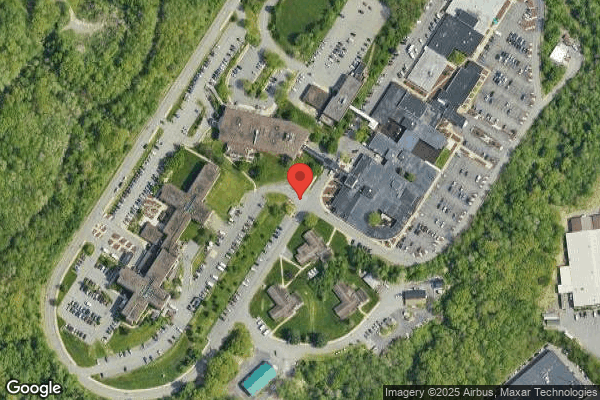
303 SMALLACOMBE DRIVE, SCRANTON, PA 18501 (570) 348-1424
Non profit - Corporation 327 Beds Independent Data: November 2025
Trust Grade
65/100
#152 of 653 in PA
Last Inspection: July 2025

Inspected within the last 6 months. Data reflects current conditions.

Overview

Allied Services Skilled Nursing Center in Scranton, Pennsylvania, has a Trust Grade of C+, indicating it is decent and slightly above average compared to other facilities. It ranks #152 out of 653 in the state, placing it in the top half, and #5 out of 17 in Lackawanna County, meaning only four local options are better. The facility is showing improvement, reducing its issues from 10 in 2024 to 5 in 2025. Staffing is a strength, with a rating of 4 out of 5 stars and a turnover rate of 39%, which is below the Pennsylvania average of 46%. Notably, there have been no fines recorded, which is a positive sign. However, there were serious concerns regarding nursing practices, including a failure to administer intravenous medication correctly for several residents, and documentation issues related to a resident at risk for pressure sores. While there are evident strengths, families should weigh these concerns carefully.

Trust Score
C+
65/100
In Pennsylvania
#152/653
Top 23%
Safety Record
Moderate
Needs review
Inspections
Getting Better
10 → 5 violations
Staff Stability
○ Average
39% turnover. Near Pennsylvania's 48% average. Typical for the industry.
Penalties
✓ Good
No fines on record. Clean compliance history, better than most Pennsylvania facilities.
Skilled Nurses
✓ Good
Each resident gets 46 minutes of Registered Nurse (RN) attention daily — more than average for Pennsylvania. RNs are trained to catch health problems early.
Violations
⚠ Watch
32 deficiencies on record. Higher than average. Multiple issues found across inspections.
★★★★☆
4.0
Overall Rating
★★★★☆
4.0
Staff Levels
★★★★★
5.0
Care Quality
★★★☆☆
3.0
Inspection Score
Stable
2024: 10 issues
2025: 5 issues

The Good

  • 4-Star Staffing Rating · Above-average nurse staffing levels
  • 5-Star Quality Measures · Strong clinical quality outcomes
  • Full Sprinkler Coverage · Fire safety systems throughout facility
  • No fines on record
  • Staff turnover below average (39%)

    9 points below Pennsylvania average of 48%

Facility shows strength in staffing levels, quality measures, fire safety.

The Bad

Staff Turnover: 39%

Near Pennsylvania avg (46%)

Typical for the industry

The Ugly 32 deficiencies on record

1 actual harm
Jul 2025 5 deficiencies
CONCERN (D) 📢 Someone Reported This

A family member, employee, or ombudsman was alarmed enough to file a formal complaint

Potential for Harm - no one hurt, but risky conditions existed

Accident Prevention (Tag F0689)

Could have caused harm · This affected 1 resident

**NOTE- TERMS IN BRACKETS HAVE BEEN EDITED TO PROTECT CONFIDENTIALITY** Based on a review of clinical records, facility-provided investigation reports, staff interviews, and facility policies, it was ...

Read full inspector narrative →
**NOTE- TERMS IN BRACKETS HAVE BEEN EDITED TO PROTECT CONFIDENTIALITY** Based on a review of clinical records, facility-provided investigation reports, staff interviews, and facility policies, it was determined the facility failed to implement and monitor planned fall prevention interventions for one of 32 sampled residents (Resident 70), resulting in multiple falls. Clinical record review revealed that Resident 70 was admitted to the facility on [DATE], with diagnosis to include, end stage COPD (Chronic Obstructive Pulmonary Disease, a progressive lung disease), and was receiving hospice services.A review of a five-day admission Minimum Data Set (MDS a federally required standardized assessment) dated June 16, 2025, documented a Brief Interview for Mental Status (BIMS a cognitive assessment tool) score of 13 (a score of 13 to 15 indicates the resident is cognitively intact). The MDS also identified that the resident had an indwelling Foley catheter (a plastic tube inserted into the bladder to drain urine) and required staff assistance with activities of daily living.A care plan-initiated June 10, 2025, identified the resident as being at risk for falls. Interventions included maintaining a hazard-free environment, ensuring bed in the lowest locked position, call bell and needed items within reach, reinforcing call bell use, and use of non-slip footwear. The care plan also addressed the resident's indwelling Foley catheter.A review of facility investigative documentation dated June 11, 2025, at 7:35 AM, Resident 70 documented that the resident was found kneeling on the floor on the right side of her bed. She stated she was reaching to get something off the floor. She sustained a skin tear to the right elbow area. The Physician was notified. She had an indwelling foley catheter in place at that time and was noted to be wearing non-skid socks. New interventions after the fall interventions included referrals to occupational and physical therapy and issuance of a reacher device.A review of a nurse's note dated June 26, 2025, 12:57 P.M. indicated the hospice nurse assigned to the resident made the recommendation to discontinue the foley catheter and complete a voiding trial (removal of the urethral catheter and an assessment of the patient's ability to urinate without it). The Physician was contacted and the foley catheter was removed June 26, 2025, at 2:18 PM. However, the nursing staff failed to complete a bladder assessment or initiate the voiding trial, as recommended.On June 29, 2025, at 12:45 AM, the resident was found on the floor between the beds in her room. She stated, I had to go to the bathroom. The intervention put in place post-fall was to offer toileting and out-of-bed assistance on the 11:00 PM to 7:00 AM shift. There was no documented evidence that a bladder assessment or voiding trial had been completed to support the appropriateness of this intervention.A review of a witness statement by Employee 1 (nursing assistant) dated June 29, 2025, at 2:00 AM, documented that the resident had been awake and sitting up in bed earlier that shift and declined assistance, including toileting. A review of a facility investigation dated July 1, 2025, at 7:30 AM revealed Resident 70 was again found on the floor in her room, between the two beds. She had been sitting on the edge of the bed. She stated, I was trying to get to the bathroom. New interventions implemented at the time of the fall included implementing a bowel and bladder tracker (assessment of bowel and bladder function in order to identify elimination issues and to formulate a plan to maintain or improve elimination continence).On July 2, 2025, at 12:30 PM, the resident was found seated on the floor outside of the bathroom door. She stated, I was going to do something. The planned intervention was to educate the resident on call bell use, and to continue the previously ordered bladder tracker. However, at the time of the survey, there was no documented evidence that this intervention had been implemented.There was no evidence at the time of the survey that the facility implemented and monitored the effectiveness of the planned interventions, including toileting schedules, elimination tracking, and post-catheter care, to prevent repeated falls.During an interview July 17, 2025, at 1:00 P.M., the Director of Nursing confirmed that planned interventions were not timely implemented to prevent falls for Resident 70.Cross refer F 69028 Pa Code 211.12 (d)(1)(3)(5) Nursing services.
CONCERN (D)

Potential for Harm - no one hurt, but risky conditions existed

Incontinence Care (Tag F0690)

Could have caused harm · This affected 1 resident

**NOTE- TERMS IN BRACKETS HAVE BEEN EDITED TO PROTECT CONFIDENTIALITY** Based on clinical record review, facility policy review, and staff interviews, it was determined that the facility failed to eva...

Read full inspector narrative →
**NOTE- TERMS IN BRACKETS HAVE BEEN EDITED TO PROTECT CONFIDENTIALITY** Based on clinical record review, facility policy review, and staff interviews, it was determined that the facility failed to evaluate the clinical necessity of an indwelling urinary catheter and failed to follow its own policies for catheter removal and bladder assessment for one of 35 sampled residents (Resident 70).A review of the facility's policy titled Urinary Catheter Insertion, Care, Irrigation, and Removal, last reviewed August 2024, indicated that indwelling bladder catheterization may only be used to relieve urinary retention not treatable by other means or to collect a urine specimen when a resident is unable to provide one midstream. The facility will attempt catheter removal, if medically able, and establish a toileting plan to address incontinence or urinary frequency. The indwelling catheter assessment tool will be used to determine whether the resident has a clinical condition which indicates the need for the indwelling catheter. If the criteria are not met, nursing staff are to notify the physician for either an order to remove the catheter or rationale for its continued use. Discuss with the Physician alternate methods of continence management including intermittent catheterization, or a toileting plan. The procedure for removal of the indwelling catheter included, after catheter removal, a licensed nurse must complete a bladder assessment within three to seven days to determine whether the resident is a candidate for a toileting plan. Clinical record review revealed that Resident 70 was admitted to the facility on [DATE], with diagnosis to include, end stage COPD (Chronic Obstructive Pulmonary Disease, a progressive lung disease). The clinical record noted the presence of an indwelling Foley catheter at the time of admission. A review of a five-day, admission minimum data set assessment (Minimum Data Set a federally mandated standardized assessment conducted at specific intervals to plan resident care) dated June 16, 2025, revealed a BIMS score (Brief Interview for Mental Status an assessment tool to assess cognitive function) of 13 (a score of 13 to 15 indicates the resident is cognitively intact). The assessment confirmed the presence of a Foley catheter (a plastic tube inserted into the bladder with an associated collection bag to collect urine) and indicated that the resident required assistance with activities of daily living and was receiving hospice care. A review of a nursing bladder assessment dated [DATE], indicated the resident had an indwelling Foley catheter but did not include a documented diagnosis or clinical rationale to support its continued use. A subsequent post-admission bladder assessment dated [DATE], documented no change in the resident's urinary status, and the indwelling catheter remained in place. There was still no documented clinical justification for its continued use. A review of the resident's care plan dated June 9, 2025, under Activities of Daily Living, included toileting with the assistance of one staff member. A nursing progress note dated June 26, 2025, at 12:57 PM, documented that the resident's hospice nurse recommended discontinuing the Foley catheter and initiating a voiding trial (the process of removing the urethral catheter and monitoring for spontaneous urination). The physician was contacted, and the Foley catheter was removed at 2:18 PM the same day. However, there was no documentation that nursing staff completed a bladder assessment or initiated a voiding trial following catheter removal, as required by facility policy. Following the removal of the Foley catheter, Resident 70 experienced three documented falls while attempting to get to the bathroom:June 29, 2025-fall from bed while attempting to get to the bathroomJuly 1, 2025-fall from bed while attempting to get to the bathroomJuly 2, 2025-fall from bed while attempting to get to the bathroom A bladder assessment dated [DATE], noted the resident exhibited mixed urinary continence and included a plan to offer toileting before and after meals, at bedtime (HS), and when awake during overnight (11 PM to 7 AM) rounds. However, there was no documented bladder tracker to support this continence pattern or care plan. During an interview conducted on July 18, 2025, at 11:00 AM, the Director of Nursing (DON) indicated Resident 70 had been admitted to the facility with a Foley catheter. She confirmed there was no documented diagnosis or clinical justification for the catheter and acknowledged the facility's policy for catheter removal and follow-up bladder assessment had not been followed.Cross refer F 68928 Pa Code 211.12 (d)(1)(3)(5) Nursing services.
CONCERN (D)

Potential for Harm - no one hurt, but risky conditions existed

Deficiency F0692 (Tag F0692)

Could have caused harm · This affected 1 resident

**NOTE- TERMS IN BRACKETS HAVE BEEN EDITED TO PROTECT CONFIDENTIALITY** Based on review of clinical records, select facility policy, and staff interviews, it was determined the facility failed to comp...

Read full inspector narrative →
**NOTE- TERMS IN BRACKETS HAVE BEEN EDITED TO PROTECT CONFIDENTIALITY** Based on review of clinical records, select facility policy, and staff interviews, it was determined the facility failed to complete a comprehensive nutritional assessment and monitor resident weights consistently and accurately to timely identify changes in nutritional status and implement appropriate interventions to address weight loss for one of thirty-five residents reviewed for nutritional status and weight loss. (Resident 75).A review of the facility policy titled Weighing Residents/Reporting Significant Weight Changes, last reviewed in March 2025, indicated that when a resident experiences a weight change of 5% or more in one month, nursing and/or the dietitian will reweigh the resident within 48 hours to verify the change. If verified, the dietitian is expected to reassess the resident's energy and hydration needs, adjust the care plan as necessary, and document the assessment and interventions in the electronic medical record.A review of Resident 75's clinical record revealed the resident was admitted to the facility on [DATE], with diagnoses including moderate calorie-protein malnutrition (a condition in which the body does not receive or absorb enough nutrients to function properly) and dementia (a group of symptoms that affect memory, reasoning, and daily functioning).A review of Resident 75's documented weights showed the following:04/02/2025: 96.8 lbs.05/05/2025: 90.5 lbs.This reflects a 6.5% weight loss over a 33-day period, meeting the facility's threshold for significant weight loss requiring reweigh, reassessment, and possible care plan revision.However, a review of the resident's comprehensive person-centered care plan, initiated on June 20, 2022, and last revised on March 25, 2025, revealed no updates or revisions to reflect the significant weight loss noted on May 5, 2025. The plan of care already identified the resident as at risk for nutritional deficits due to her diagnoses and history of weight loss. Interventions included periodic weight monitoring and notification to the registered dietitian (RD), physician, and family in the event of significant changes. Despite this, there was no evidence of reassessment, documented physician notification, or implementation of revised nutritional interventions following the documented May 5, 2025, weight.Further review revealed the Registered Dietitian did not document the resident's significant weight loss until July 17, 2025, over two months after the weight loss occurred. The July 17 RD note acknowledged the weight change from April to May but did not recommend new interventions, stating that weight had been stable since May, and that the current plan of care would be continued. This delay in identifying and responding to the resident's nutritional decline is inconsistent with the facility's policy and fails to demonstrate timely reassessment or mitigation of nutritional risk.In an interview conducted on July 19, 2025, the above findings were reviewed with the Nursing Home Administrator.28 Pa Code 211.10 (c) Resident care policies.28 Pa. Code 211.12 (c)(d)(3)(5) Nursing services.
CONCERN (D)

Potential for Harm - no one hurt, but risky conditions existed

Deficiency F0697 (Tag F0697)

Could have caused harm · This affected 1 resident

**NOTE- TERMS IN BRACKETS HAVE BEEN EDITED TO PROTECT CONFIDENTIALITY** Based on select facility policy, clinical record review and staff interview, it was determined the facility failed to attempt no...

Read full inspector narrative →
**NOTE- TERMS IN BRACKETS HAVE BEEN EDITED TO PROTECT CONFIDENTIALITY** Based on select facility policy, clinical record review and staff interview, it was determined the facility failed to attempt non-pharmacological interventions to alleviate pain prior to the administration of a narcotic pain medication prescribed on an as needed basis and failed to ensure the physician orders were followed for one residents (Resident 166) of 35 residents reviewed. A review of the clinical record revealed that Resident 166 was admitted to the facility on [DATE], with diagnoses to include malignant neoplasm of the lung (a form of cancer affecting lung tissue). The resident had a current physician order initially dated June 4, 2025, for hydrocodone-acetaminophen ( a narcotic pain medication) 10-325 mg tablet one tablet every four hours as needed, for moderate pain, defined in the order as pain rated between 5 and 7 on a pain scale (a numeric rating tool commonly used in healthcare to measure a resident's self-reported level of pain. 0 indicates no pain and 10 indicates the worst possible pain).A review of the resident's June 2025 Medication Administration Record (MAR) revealed staff administered the narcotic pain medication 19 times for the month of June. Documentation showed that non-pharmacological interventions were not attempted or documented prior to any of these 19 administrations, as required by standard nursing practice and pain management guidelines.Additionally, the MAR documented the narcotic pain medication was administered outside the parameters of the physician's order on the following dates:June 5, 2025, administered for a pain level of 9 (which is categorized as severe pain, not moderate).June 17, 2025, administered for a pain level of 0 (indicating no pain).June 18, 2025, administered for a pain level of 2 (mild pain).A review of the resident's July 2025 MAR revealed staff administered the narcotic pain medication five times for the month of June. Again, none of the documented administrations included evidence that non-pharmacological interventions were attempted or proven ineffective prior to medication use.These findings were reviewed with the Nursing Home Administrator during an interview conducted on July 18, 2025, at approximately 2:00 PM. The review confirmed that the facility failed to ensure pain medications were administered in accordance with physician orders and that non-pharmacological interventions were not consistently attempted or documented prior to the administration of as-needed narcotic pain medications.28 Pa. Code 211.12(c)(d)(1)(5) Nursing Services.
CONCERN (D)

Potential for Harm - no one hurt, but risky conditions existed

Infection Control (Tag F0880)

Could have caused harm · This affected 1 resident

Based on observation, review of select facility policy, and staff interviews, it was determined the facility failed to ensure staff followed appropriate infection control practices during the administ...

Read full inspector narrative →
Based on observation, review of select facility policy, and staff interviews, it was determined the facility failed to ensure staff followed appropriate infection control practices during the administration of medications for two of four residents observed during the administration of medications. (Residents 26 and 99) on the One North nursing unit. A review of facility policy titled Infection Control Policy and Procedure last reviewed by the facility on August 12, 2024, indicated the Infection Control Intervention Protocol is established and maintained for the detection, control and prevention healthcare associated infections. The elements of the protocol consist of infection criteria, standard and transmission-based precautions, hand hygiene, surveillance, infection control and prevention. On July 17, 2025, at 8:14 AM, an observation revealed that Employee 2, a Licensed Practical Nurse (LPN), was administering morning medications to Resident 99. While removing Vitamin D2 (1.25 mg capsule) from a medication package, the capsule fell onto the medication cart. Employee 2 picked up the capsule with his bare hand, without washing his hands or putting on gloves, and placed it into the resident's medication cup. The same observation revealed that a Senna 8.6 mg tablet fell onto the cart while being dispensed from a stock bottle. Employee 2 again picked up the tablet with his bare hand and placed it into the medication cup, without first washing his hands or using gloves. Lastly, Employee 2 pushed a Lorazepam 0.5 mg tablet from the medication card directly into his bare hand and placed it in the resident's medication cup, again without hand hygiene or glove use, before administering the medications to Resident 99. A subsequent observation at 8:35 AM revealed that Employee 2 was administering medications to Resident 26. A Furosemide 20 mg tablet fell onto the medication cart during preparation. Employee 2 picked up the tablet with his bare hand, without washing his hands or wearing gloves, and placed it into Resident 26's medication cup prior to administration. An interview was conducted with the Nursing Home Administrator (NHA) on July 17, 2025, at approximately 11:15 AM. The above findings related to Employee 2's failure to follow proper infection control practices during medication administration were reviewed at that time.28 Pa. Code 211.12 (c)(d)(1)(5) Nursing services.28 Pa. Code 211.10(c)(d) Resident care policies.
Sept 2024 8 deficiencies
CONCERN (D)

Potential for Harm - no one hurt, but risky conditions existed

Deficiency F0660 (Tag F0660)

Could have caused harm · This affected 1 resident

Based on clinical record review and resident and staff interview it was determined the facility failed to develop and implement an individualized discharge plan for one of 25 residents sampled (Reside...

Read full inspector narrative →
Based on clinical record review and resident and staff interview it was determined the facility failed to develop and implement an individualized discharge plan for one of 25 residents sampled (Resident 251). Findings Include: A review of the clinical record of Resident 251 revealed admission to the facility on February 24, 2024, with diagnoses including heart disease. A quarterly Minimum Data Set Assessment (MDS- standardized assessment process conducted at periodic intervals to plan resident care) dated August 1, 2024, revealed the resident had a BIMS (brief interview to aid in detecting cognitive impairment) score of 15, indicating that her cognition was intact. Interview with Resident 251 on September 18, 2024, revealed the resident was hoping to return to the community to live independently. Review of Resident 251's comprehensive care plan revealed a focus area dated February 29, 2024, indicating the resident has been identified as a potential discharge to home and will require resident and/or caregiver training and instruction to assist with transitioning to home. This discharge plan was not revised or updated as of the time of the survey on September 20, 2024. A review of social service notes between Resident 251's admission February 29, 2024, and end of survey September 20, 2024, revealed no documented evidence that social services was working with the resident on a discharge plan to the community as the resident desired. There was no documented evidence the resident's discharge plan was updated with new goals and interventions for the resident to be discharged to the community. Interview with the Nursing Home Administrator on September 20, 2024, at approximately 1:30 PM confirmed the facility failed to revise and implement a discharge plan based on the resident's expressed desire to discharge to the community. 28 Pa. Code 201.25 Discharge policy.
CONCERN (D)

Potential for Harm - no one hurt, but risky conditions existed

Respiratory Care (Tag F0695)

Could have caused harm · This affected 1 resident

**NOTE- TERMS IN BRACKETS HAVE BEEN EDITED TO PROTECT CONFIDENTIALITY** Based on review of clinical records, observation, and staff interview, it was determined the facility failed to follow physician...

Read full inspector narrative →
**NOTE- TERMS IN BRACKETS HAVE BEEN EDITED TO PROTECT CONFIDENTIALITY** Based on review of clinical records, observation, and staff interview, it was determined the facility failed to follow physician orders for oxygen therapy and failed to to maintain oxygen equipment in a functional and sanitary manner for two residents out of 35 sampled (Residents 227 and 176). Findings include: Review of Resident 227's clinical record revealed the resident was admitted to the facility on [DATE], with diagnoses to include respiratory failure (not enough oxygen passes from the lungs to the blood, making it difficult to breath), and dependence on supplemental oxygen (treatment that provides extra oxygen to breathe). The resident had a current physician's order, initially dated August 28, 2024, for continuous oxygen therapy administration via nasal canula (flexible plastic tubing with small prongs inserted into the nostrils to deliver supplemental oxygen) at three (3) liters per minute. An observation conducted on September 17, 2024, at 1:20 PM revealed that Resident 227 was lying in bed with supplemental oxygen in place via an oxygen concentrator (bedside machine that concentrates ambient air to supply an oxygen-rich gas stream) with the liter flow set at 2 liters per minute. An additional observation made on September 18, 2024, at 12:40 PM revealed that Resident 227 was lying in bed with supplemental oxygen in place via an oxygen concentrator with the liter flow set at 2 liters per minute. Interview with Employee 1 (licensed practical nurse) at the time of the observation on September 18, at 12:40 PM confirmed that Resident 227 was prescribed three (3) liters of oxygen continuously, but the resident was currently receiving 2 liters of oxygen per minute. Review of Resident 176's clinical record revealed the resident was admitted the facility on June 24, 2020, with diagnoses to include acute respiratory failure, and pneumonia (infection that inflames air sacs in one or both lungs, which may fill with fluid or pus and cause breathing difficulties). The resident had a physician's order, initially dated August 26, 2024, for Ipratropium-Albuterol Solution 0.5-2.5 (3) MG/3ML (medication inhaled into the lungs using a nebulizer machine which is a small machine that turns liquid medicine into a mist that can be inhaled into the lungs) inhale orally via nebulizer four times a day for expiratory wheeze for 7 days. The physician's order end date for the nebulizer treatment was September 2, 2024. An observation conducted on September 17, 2024, at 1:46 PM revealed that Resident 176 was awake and lying in bed. The resident's nebulizer machine, including the tubing and mouthpiece, were placed on the bedside nightstand. Also present on the bedside nightstand were opened beverages and snack containers, pepper packets, toiletries, a reacher (adaptive device used to assist with picking up objects) and a telephone. The nebulizer mouthpiece was uncovered and not bagged. Interview with the Director of Nursing (DON) on September 19, 2024, at 10:14 AM confirmed that residents' respiratory equipment and supplies should be bagged when not in use to prevent contamination. The facility failed to maintain oxygen delivery equipment in a sanitary manner. 28 Pa. Code 211.12 (d)(1)(3)(5) Nursing services. 28 Pa. Code 211.10 (a)(c) Resident Care Policies.
CONCERN (D)

Potential for Harm - no one hurt, but risky conditions existed

Deficiency F0699 (Tag F0699)

Could have caused harm · This affected 1 resident

**NOTE- TERMS IN BRACKETS HAVE BEEN EDITED TO PROTECT CONFIDENTIALITY** Based on a review of clinical records and staff interview, it was determined that the facility failed to develop and implement a...

Read full inspector narrative →
**NOTE- TERMS IN BRACKETS HAVE BEEN EDITED TO PROTECT CONFIDENTIALITY** Based on a review of clinical records and staff interview, it was determined that the facility failed to develop and implement an individualized person-centered plan to render trauma informed care to a resident with a diagnosis of Post-Traumatic Stress Disorder for one out of 35 residents reviewed (Resident 156). Findings include: A review of the clinical record revealed Resident 156 was admitted to the facility on [DATE], with diagnoses that included Post Traumatic Stress Disorder (PTSD). The resident's current care plan, in effect at the time of review on September 20, 2024, did not identify the resident's PTSD (a mental and behavioral disorder that develops related to a terrifying event) symptoms or triggers related to this diagnosis and resident specific interventions to meet the resident's needs for minimizing triggers and/or re-traumatization. The facility failed to develop and implement an individualized person-centered plan to address, this resident's diagnosis of PTSD according to standards of practice to promote the resident's emotional well-being and safety. Interview with the Director of Nursing on September 20, 2024, at 10:00 AM confirmed the facility was unable to demonstrate the facility provided culturally competent, trauma-informed care in accordance with professional standards of practice and accounting for resident's experiences and preferences to eliminate or mitigate triggers that may cause re-traumatization of the resident. 28 Pa Code 211.12 (d)(3)(5) Nursing services.
CONCERN (D)

Potential for Harm - no one hurt, but risky conditions existed

Infection Control (Tag F0880)

Could have caused harm · This affected 1 resident

**NOTE- TERMS IN BRACKETS HAVE BEEN EDITED TO PROTECT CONFIDENTIALITY** Based on observations and staff interview, it was determined the facility failed to maintain infection control practices to prev...

Read full inspector narrative →
**NOTE- TERMS IN BRACKETS HAVE BEEN EDITED TO PROTECT CONFIDENTIALITY** Based on observations and staff interview, it was determined the facility failed to maintain infection control practices to prevent the spread of infection for one of 35 sampled residents. (Resident 337) Findings include: An observation September 18, 2024 at 9:20 AM revealed Resident 337 lying in bed. His supra pubic (a medical device that drains urine from the bladder through a small incision in your abdomen into a plastic bag) and tubing was directly on the floor. Observation September 17, 2024 at 11:11 AM, revealed a soiled brief was on top of the clean linen cart located outside of room [ROOM NUMBER]-N. The brief was malodorous. Observation September 19, 2024 at 9:05 AM, in room [ROOM NUMBER]-N, seven clean briefs were directly on the floor next to the residents bedside table. In room [ROOM NUMBER], three heel lift boots were directly on the floor behind the residents bedside table. There was a box of tube feeding bottles directly on the floor next to the bedside table. In room [ROOM NUMBER]-N there were four boxes of briefs and bed pads directly on the floor. Two of the boxes were noted to be open with the bags of clean briefs and bed pads open to the air. In room [ROOM NUMBER]-N there were three open boxes of briefs directly on the floor and two opened plastic bags with clean briefs on top of the boxes. During an interview with the Director of Nursing on September 19, 2023, at 10 AM, it was confirmed that resident care equipment should be stored in a sanitary manner. 28 Pa. Code 211.12 (5) Nursing services 28 Pa. Code 201.18 (1) Management.
CONCERN (E)

Potential for Harm - no one hurt, but risky conditions existed

Comprehensive Care Plan (Tag F0656)

Could have caused harm · This affected multiple residents

**NOTE- TERMS IN BRACKETS HAVE BEEN EDITED TO PROTECT CONFIDENTIALITY** Based on review of clinical records and staff interview it was determined the facility failed to develop and implement a compreh...

Read full inspector narrative →
**NOTE- TERMS IN BRACKETS HAVE BEEN EDITED TO PROTECT CONFIDENTIALITY** Based on review of clinical records and staff interview it was determined the facility failed to develop and implement a comprehensive person-centered care plan that included specific and individualized interventions to address the resident's needs for adaptive equipment to ensure the prevention of the development of potential skin impairment for one out 35 residents sampled. (Resident 250). Findings include: Clinical record review revealed Resident 250 was admitted to the facility on [DATE], with diagnoses which included down syndrome (a genetic disorder caused by the presence of all or part of a third copy of chromosome 21. It is usually associated with developmental delays, mild to moderate intellectual disability, and characteristic physical features), seizure disorder and severe intellectual disorder. A quarterly Minimum Data Set Assessment (MDS - a federally mandated standardized assessment conducted at specific intervals to plan resident care) dated July 13, 2024, revealed. the resident was severly, cognitively impaired, and unable to complete a BIMS test (Brief Interview for Mental Status a tool to assess the resident's attention, orientation, and ability to register and recall new information), requires extensive staff assistance for activities of daily living, and was at risk for pressure sores. Nursing documentation indicated Resident 250 had a history of a deep tissue injury, (a deep tissue injury, DTI, is a type of pressure ulcer that affects the subcutaneous tissues under intact skin) on April 15, 2024. Interventions to prevent pressure injury included skin prep (a protective barrier film) applied to heels as well as to apply a Truvue boot (TruVue Heel Protector is a fabric pressure care boot that mirrors the natural shape of the leg. It securely holds the leg and foot in place while allowing for full range of motion. It provides support to the foot and lower limb for pressure care and comfort, helping to reduce the risk of pressure injuries by lifting the heel off the bed and minimizing the risk of pressure injury caused by rubbing against sheets) to both heels at all times, remove every shift for a skin check. The resident's bilateral heel DTI injuries were noted to be healed on May 9, 2024. A review of Physicians orders dated April 15, 2024 revealed off loading (suspending the heels in the air by placing on a pillow or other device to prevent pressure), Purvue boots to bilateral lower extremities (feet) at all times, and remove the boots on every shift for skin checks. A review of the residents care plane dated January 4, 2024 revealed the resident was to comply with the therapeutic regimen including preventative measures to prevent the potential for skin breakdown. The intervention for the bilateral TruVue boots to be worn at all times, was not noted on the care plan at the time of the survey. A corresponding nurse aide [NAME] (an electronic summary of the residents care utilized by nursing staff to provide appropriate care and services to residents. It lists all the important information to get a quick summary of the resident needs) did not include the daily application of the TruVue boots. An observation September 18, 2024 at 9 AM revealed Resident 250 was lying in bed. The bilateral Purvue boots were not on the resident's feet. The boots were noted to be on the floor, behind his bed. During an interview September 18, 2024 at 9:15 AM Employee 4, a nurse aide, stated she was unaware that Resident 250 was to have the Purvue boots on his feet at all times. She stated she gave Resident 250 AM care prior to this interview and put nonskid socks on the resident. She stated that she does not work on this unit very often and is not familiar with the care required for this resident. She stated at the start of the shift, she looks at the resident's [NAME] to receive care instructions for the resident. She stated the Purvue boots intervention was not on the resident's [NAME] at the start of the shift. During an interview September 18, 2024 at 9:20 AM the assistant Director of Nursing confirmed that Resident 250's pressure sore preventative intervention, the bilateral Purvue boots were not put on to his care plan at the time of the Physicians order and it was not currently on the care plan. The failed to provide documented evidence the facility developed and implemented a care plan to assure this dependent resident is provided the necessary care to prevent the potential for skin impairment. 28 Pa Code 211.12 (d)(5) Nursing services.
CONCERN (E)

Potential for Harm - no one hurt, but risky conditions existed

Deficiency F0658 (Tag F0658)

Could have caused harm · This affected multiple residents

**NOTE- TERMS IN BRACKETS HAVE BEEN EDITED TO PROTECT CONFIDENTIALITY** Based on clinical record review, facility policy review and staff interview, it was determined the facility failed to ensure tha...

Read full inspector narrative →
**NOTE- TERMS IN BRACKETS HAVE BEEN EDITED TO PROTECT CONFIDENTIALITY** Based on clinical record review, facility policy review and staff interview, it was determined the facility failed to ensure that nursing services met professional standards of quality according to the Pennsylvania Code Title 49, Professional and Vocational Standards, by failing to implement nursing practices for the administration of an intravenous medication via central venous catheter for three of six residents reviewed (Resident 334, 105 and 270). Findings include: According to the Pennsylvania Code Title 49, Professional and Vocational Standards Department of State, Chapter 21 State Board of Nursing, Chapter 21.145 Functions of the LPN (Licensed Practical Nurse) requires the following: The LPN is prepared to function as a member of the health care team by exercising sound nursing judgement based on preparations, knowledge, skills, understandings and past experiences in nursing situations. The LPN participates in the planning, implementation and evaluation of nursing care in settings where nursing takes place. (b) The LPN administers medication and carries out the therapeutic treatment ordered for the patient in accordance with the following: (d) The Board recognizes codes of behavior as developed by appropriate practical nursing associations as the criteria for assuring safe and effective practice. Chapter 21.145b. IV therapy curriculum requirements; (f) An LPN may perform only the IV therapy functions for which the LPN possesses the knowledge, skill and ability to perform in a safe manner, except as limited under § 21.145a (relating to prohibited acts), and only under supervision as required under paragraph (1). (1) An LPN may initiate and maintain IV therapy only under the direction and supervision of a licensed professional nurse or health care provider authorized to issue orders for medical therapeutic or corrective measures (such as a CRNP, physician, physician assistant, podiatrist or dentist). (g) An LPN who has met the education and training requirements of § 21.145b (relating to IV therapy curriculum requirements) may perform the following IV therapy functions, except as limited under § 21.145a and only under supervision as required under subsection (f): (1) Adjustment of the flow rate on IV infusions. (2) Observation and reporting of subjective and objective signs of adverse reactions to any IV administration and initiation of appropriate interventions. (3) Administration of IV fluids and medications. (4) Observation of the IV insertion site and performance of insertion site care. (5) Performance of maintenance. Maintenance includes dressing changes, IV tubing changes, and saline or heparin flushes. (6) Discontinuance of a medication or fluid infusion, including infusion devices. (7) Conversion of a continuous infusion to an intermittent infusion. (8) Insertion or removal of a peripheral short catheter. (9) Maintenance, monitoring and discontinuance of blood, blood components and plasma volume expanders. (10) Administration of solutions to maintain patency of an IV access device via direct push or bolus route. (11) Maintenance and discontinuance of IV medications and fluids given via a patient-controlled administration system. (12) Administration, maintenance and discontinuance of parenteral nutrition and fat emulsion solutions. (13) Collection of blood specimens from an IV access device. A review of a facility policy for LPN's-starting/discontinuing IV's; Administering/withdrawal of IV fluids revealed, Licensed Practical Nurses who have satisfactorily completed a Board approved educational program to start and discontinue an Intravenous infusion, administer and withdraw intravenous fluids may with a written physician's order, start and discontinue an IV, administer, and withdraw IV fluids. The LPN may not administer or withdraw fluids via a venous central line (PICC line). The LPN (who has completed the Board certified educational program) will attend a yearly in-service of administration of intravenous fluids and medications. Clinical record review revealed that Resident 334 was admitted to the facility on [DATE] with diagnosis to include, orthopedic aftercare and infection, and was admitted to the facility with a PICC line (a peripherally inserted central catheter a long catheter introduced through a vein in the arm and passed through to the larger veins into the heart). Physicians orders dated September 11, 2024 revealed, administer Vancomycin HCl (antibiotic medication) Solution Reconstituted 750 MG, intravenously (IV) one time a day for MRSA (a type of staphylococcus bacteria that is resistant to many antibiotics) until October 18, 2024. A review of a September 2024 Medication Administration Record (MAR) revealed that between September 11 through September 19, 2024, Employee 26, LPN, Employee 4, LPN and Employee 6, LPN signed the MAR as administering the IV antibiotic medication to Resident 334 through the PICC line. Clinical record review revealed that Resident 105 was admitted to the facility on [DATE] with diagnosis to include a MRSA infection. The resident was admitted with a PICC line. Physicians orders dated August 22, 2024 revealed, Vancomycin HCl Intravenous Solution 1000 MG/10ML, 1750 mg intravenously every 12 hours for osteomyelitis (infection of the bone) until September, 12, 2024. A review of a September 2024 Medication Administration Record (MAR) revealed that between September 1 through September 12, 2024, Employee 7, LPN, Employee 8 LPN Employee 9 LPN, Employee 10 LPN, Employee 11 LPN , Employee 12 LPN, Employee 13, LPN, Employee 14, LPN, Employee 15, LPN, Employee 16, LPN, and Employee 3, LPN signed the MAR as administering the IV antibiotic medication to Resident 105. Clinical record review revealed that Resident 270 was admitted to the facility on [DATE] with diagnosis to include, Osteomyelitis (an infection in the bone), admitted to the facility with PICC line. Physicians orders dated August 15, 2024 revealed, Zosyn (an antibiotic medication Intravenous Solution 4-0.5 GM/100 ML, administer 4.5 gram intravenously every 8 hours for osteomyelitis for 32 Days A review of a August 2024 Medication Administration Record (MAR) revealed that between August 15 through August 31, 2024, Employee 3 LPN, Employee 17 LPN Employee 14 LPN, Employee 18 LPN, Employee 19 LPN , Employee 20 LPN, Employee 10 LPN, Employee 21 LPN, Employee 22 LPN, Employee 12 LPN, Employee 23 LPN Employee 24 LPN, Employee 15 LPN, and Employee 8 LPN signed the MAR as administering the IV antibiotic medication to Resident 270. Interview on September 18, 2024, at approximately 10 a.m. with Employee 11 an LPN, stated she never administered medications through residents' PICC lines at the facility. She confirmed she was never educated on the administration of medications through the PICC line. She stated she would call the RN to administer the IV through the resident's PICC line. She stated she, the LPN, would sign out on the MAR that she had administered the medication when the RN actually administered the IV medication through the resident's PICC line. There was no evidence of any education or supervision regarding IV administration as well as PICC line usage for any LPNs working at the facility. During an interview on September 20, 2024, at approximately 9:30 AM the director of nursing confirmed that LPN's in the facility did not receive education regarding the administration of medications through PICC lines. She further confirmed that as per the facility policy, only RN's were allowed to administer medications through PICC lines. The DON further confirmed the facility policy indicates the nurse administering the medications are to sign the MAR indicating it was administered. 28 Pa. Code 201.20(a) Staff Development. 28 Pa Code 211.12(5) Nursing services.
CONCERN (E)

Potential for Harm - no one hurt, but risky conditions existed

Deficiency F0694 (Tag F0694)

Could have caused harm · This affected multiple residents

**NOTE- TERMS IN BRACKETS HAVE BEEN EDITED TO PROTECT CONFIDENTIALITY** Based on observations, review of select facility policy and clinical records, and staff interviews it was determined the facilit...

Read full inspector narrative →
**NOTE- TERMS IN BRACKETS HAVE BEEN EDITED TO PROTECT CONFIDENTIALITY** Based on observations, review of select facility policy and clinical records, and staff interviews it was determined the facility failed to provide person-centered care as prescribed to meet the current clinical needs, and failed to follow physician orders for management of a PICC line for two residents out of 35 sampled (Residents 270, and 105). Findings include: Review of the facility policy titled Central Venous Catheter/PICC Care/Flush/Medication Administration last reviewed by the facility on July 24, 2024, revealed that it is the policy to provide dressing changes, medication and flushes to residents with a central venous catheter (CVC) or peripherally inserted central catheter (PICC a long catheter introduced through a vein in the arm, then through the subclavian vein into the superior vena cava or right atrium of the heart to administer parenteral fluids). Dressing changes are to be done weekly and PRN (as needed) with the extension tubing, stabilization device and cap change unless ordered otherwise by the physician. The dressing change is to be done by a Registered Nurse. During all dressing changes, assess the external length of the catheter to determine if migration (movement out of position) of the catheter has occurred. PICC external length is measured on admission or at the time of insertion, if after admission and documented on the care plan. Migration of any PICC line requires physician notification. A review of the clinical record revealed Resident 270 was admitted to the facility on [DATE], with diagnoses to include osteomyelitis (inflammation of the bone caused by an infection), and immunodeficiency (failure or absence of elements of the immune system to fight infectious diseases). Review of Resident 270's hospital record dated August 8, 2024, revealed the resident underwent a procedure for a single lumen PICC placement in his left arm. The catheter (tubing) total length was 42 cm (no external catheter length was noted in the hospital records provided by the facility). The reason indicated for the PICC line was IV therapy for antibiotics. A review of physician orders dated August 15, 2024, revealed an order to change the PICC dressing weekly to include site care/extension tubing change/cap change/stabilization device every 7 days during day shift. The external length of catheter was to be measured during the dressing change or as needed (an increase in the external catheter length may indicate a problem with the PICC line). A review of Resident 270's plan of care, initially dated August 15, 2024, indicated that the resident required a PICC line. The PICC line external length measured 0 (zero) cm. Review of Resident 270's Medication Administration Record (MAR) for August 16, 2024, revealed nursing staff documented an X for the external catheter length measurement and documented a 7 above the nurse initials (according to the MAR coding, a 7 is not applicable). On August 20, 2024, nursing staff documented an external catheter length of 2 cm. Review of Resident 270's MAR for September 2, 2024, revealed that nursing staff documented an external catheter length of 1.5 cm. There was no documented evidence in the MAR or progress notes for the months of August and September 2024, that a weekly dressing change and external catheter length measurement was performed weekly as ordered. There was no documented evidence the physician was notified of the change in the measurement of the external catheter length from 0 cm on August 15, 2024, to 2 cm on August 20, 2024, and to 1.5 cm on September 2, 2024. Interview with the Director of Nursing on September 20, 2024, at approximately 9:40 AM was unable to provide documented evidence the facility performed weekly PICC dressing changes and measurement of the external catheter length as ordered by the physician. The DON confirmed there was no documented evidence that the physician was notified of the change in the external catheter length documented on August 20, 2024, and September 2, 2024. A review of Resident 105's clinical record revealed the resident was readmitted to the facility on [DATE], with diagnoses that include right AKA (above the knee) amputation (is a removal of all or a portion of a limb due to chronic disease or a traumatic injury), osteomyelitis (bone infection) right distal femur (thigh bone above the knee), and sepsis (is a potentially life-threatening condition that arises when the body's response to infection causes injury to its own tissues and organs). A review of Resident 105's readmission nursing evaluation completed by Employee 16, a licensed practical nurse (LPN), dated August 22, 2024, at 2:20 PM, revealed the resident returned to the facility with a peripherally inserted central catheter line in the right arm that was clean, dry, and intact. A review of physician's orders dated August 22, 2024, at 4:24 PM, indicated to change PICC dressing weekly with site care ,extension tubing change, cap change and stabilization device. May change dressing PRN (as needed) every day shift every 7 day(s) and measure the external length of catheter. A review of the resident's comprehensive person-centered plan of care that was initiated on August 23, 2024, identified the resident required a PICC line to the right upper arm, length: 46 cm, exposure: 0 cm(zero) with a resident goal it will remain patent and free of complications through next review. Planned interventions included to change dressing per policy or as ordered by physician and measure PICC line length if removing. A review of Resident 105's Medication Administration Record (MAR) dated August 22, 2024, through survey ending September 20, 2024, revealed the physician ordered weekly PICC line dressing changes and site care and external catheter length measurement were blank (no recorded documentation by staff) on August 23, 2024, and August 30, 2024, and September 6, 2024. The facility could not provide documented evidence that nursing staff completed physician ordered PICC line treatments or measurements as ordered. An interview with the Director of Nursing (DON) on September 20, 2024, at 9:40 AM, confirmed the facility could not provide documented evidence that PICC line treatments were performed and that the external catheter length was measured as ordered by Resident 105's prescribing physician. 28 Pa. Code 211.12 (c)(d)(1)(3)(5) Nursing services.
CONCERN (E)

Potential for Harm - no one hurt, but risky conditions existed

Deficiency F0761 (Tag F0761)

Could have caused harm · This affected multiple residents

Based on review of select facility policy, observation, and staff interview it was determined the facility failed to store drugs and pharmacy supplies in a safe manner and failed to remove medications...

Read full inspector narrative →
Based on review of select facility policy, observation, and staff interview it was determined the facility failed to store drugs and pharmacy supplies in a safe manner and failed to remove medications awaiting final disposition in a timely manner in three medication storage rooms out of five medication storage rooms first floor, second floor, north, and third floor, south. Findings include: Review of facility policy titled Disposition of Medications: Discontinued Medications last reviewed by the facility July 24, 2024, indicated that medications discontinued by physician order, a resident is transferred or discharged and does not take the medication with him/her, or in the event of resident's death, the medications are marked as discontinued with a label closure. If a prescriber discontinues a medication, the medication container is marked appropriately (e.g. with a stop drug sticker) and the date of discontinuation is indicated along with the name of the nurse. Medications awaiting disposal or return are stored in a locked secure area designated for that purpose until destroyed or picked up for destruction by the pharmacy. Observation of the first floor medication storage room conducted on September 18, 2024, at 11:04 AM, in the presence of Employee 2 (registered nurse) revealed a clear storage bin on the countertop overflowing with discontinued resident prescription medication cards, pill packages, nebulizer treatments, vials of medications (heparin), IV bags, bottles of liquid medication, and insulin pens that were left unsecured. Interview with Employee 2 on September 18, 2024, at 11:15 AM, confirmed the prescription medications in the bin were discontinued medications removed from the medication carts and awaiting pharmacy pickup. Employee 2 was unsure of the procedure or frequency for pharmacy pickup. Observation of the second floor (2 North) medication storage room conducted on September 18, 2024, at 11:54 AM, revealed a clear storage bin, on the floor behind the door, with discontinued resident prescriptions of medication cards, pill packages, nebulizer treatments, and an IV bags that were left unsecured. An interview with Employee 27, a registered nurse (RN), on September 18, 2024, at 11:57 AM, confirmed the medications in the bin were discontinued medications awaiting pickup from the pharmacy. Observation of the third floor medication storage room (3 South) conducted on September 18, 2024, at 1:00 PM revealed a blue storage bin on the countertop overflowing with discontinued resident prescriptions lidocaine patches, medication cards, pill packages, nebulizer treatments, IV bags, bottles of liquid medication, and prescription lotions that were left unsecured. Interview with Employee 3 (licensed practical nurse) on September 18, 2024, at 1:15 PM confirmed the medications in the bin were discontinued medications awaiting pickup from pharmacy. During an interview with the Director of Nursing (DON) on September 19, 2024, at 10:20 AM she confirmed that discontinued medications should have been returned to pharmacy in a timely manner and the medications should have been stored in a secured manner to prevent unauthorized access and the potential for drug diversion. 28 Pa. Code 211.9 (a)(1)(k) Pharmacy Services 28 Pa. Code 211.12 (d)(3)(5) Nursing services.
Apr 2024 2 deficiencies
CONCERN (D) 📢 Someone Reported This

A family member, employee, or ombudsman was alarmed enough to file a formal complaint

Potential for Harm - no one hurt, but risky conditions existed

Comprehensive Care Plan (Tag F0656)

Could have caused harm · This affected 1 resident

**NOTE- TERMS IN BRACKETS HAVE BEEN EDITED TO PROTECT CONFIDENTIALITY** Based on a review of clinical records and staff interview, it was determined that the facility failed to develop and implement a...

Read full inspector narrative →
**NOTE- TERMS IN BRACKETS HAVE BEEN EDITED TO PROTECT CONFIDENTIALITY** Based on a review of clinical records and staff interview, it was determined that the facility failed to develop and implement a person-centered plan to address one resident's surgically implanted device to treat chronic pain for one of five sampled residents (Resident 1) to ensure the resident's needs for pain control and device management are met. Findings include Clinical record review revealed Resident 1 was admitted to the facility on [DATE], with diagnoses to include below the knee amputation and chronic lower back pain. An admission MDS (Minimum Data Set - a federally mandated standardized assessment conducted at specific intervals to plan resident care) dated November 29, 2023, revealed that Resident 15 was cognitively intact, independent for activities of daily living and received opioid pain medication. admission documentation dated November 22, 2023, indicated that the resident was admitted with a Dorsal root ganglion (DRG) stimulation therapy unit (a surgically implanted neurostimulation therapy unit, designed to manage difficult-to-treat chronic pain). The DRG stimulation therapy system is made up of parts that are designed to work together to help manage pain: Generator: A small device that sends out mild electrical pulses and that contains a battery. This is implanted in your body. Leads: Thin insulated wires that carry the electrical pulses from the generator to your dorsal root ganglia. These are placed in your body in the area of the DRG. Patient controller: A handheld remote control that allows you to adjust the strength and location of stimulation or even turn stimulation off. A review of the resident's care plan initiated November 22, 2023, and discontinued with the resident's AMA (against medical advice) discharge January 6, 2024, revealed that during the resident's stay the resident's care plan did not address the resident's DRG stimulation unit or the required care and services associated with the device. Interview with the Nursing Home Administrator, on July 30, 2024, at approximately 2 PM, confirmed the facility failed to develop and or implement a person-centered plan to address Resident 1 Dorsal root ganglion (DRG) stimulation therapy unit. 28 Pa Code 211.12 (d)(3)(5) Nursing Services.
CONCERN (E) 📢 Someone Reported This

A family member, employee, or ombudsman was alarmed enough to file a formal complaint

Potential for Harm - no one hurt, but risky conditions existed

Pharmacy Services (Tag F0755)

Could have caused harm · This affected multiple residents

**NOTE- TERMS IN BRACKETS HAVE BEEN EDITED TO PROTECT CONFIDENTIALITY** Based on review of controlled drug records and select facility policy and staff interview, it was determined that the facility f...

Read full inspector narrative →
**NOTE- TERMS IN BRACKETS HAVE BEEN EDITED TO PROTECT CONFIDENTIALITY** Based on review of controlled drug records and select facility policy and staff interview, it was determined that the facility failed to implement pharmacy procedures for reconciling controlled drugs and records accounting for their administration for one of five residents sampled (Resident 1 ). Finding include: Clinical record review revealed Resident 1 was admitted to the facility on [DATE], with diagnoses to include below the knee amputation and chronic lower back pain. An admission MDS (Minimum Data Set - a federally mandated standardized assessment conducted at specific intervals to plan resident care) dated November 29, 2023, revealed that Resident 15 was cognitively intact, independent for activities of daily living and received opioid pain medication. The resident had a physician order dated November 22, 2023, for Hydrocodone/Acetaminophen 5-325 mg ( a narcotic opiod pain medication) one, by mouth every 4 hours as needed for moderate pain rated 5-7) and give 2 tabs by mouth every 4 hours as needed for severe pain (pain rated 8-10) on a scale of 1 {least pain} to 10 {worst pain}). The resident's November 2023 and December 2023 individual resident controlled substance record accounting for Resident 1's supply of the controlled drug, and nursing staff's removal of doses for administration of Hydrocodone/Acetaminophen 5-325 mg revealed that nursing staff signed out doses of the controlled drug for administration to the resident on the following dates and times: November 23, 2023, at 9 PM November 25, 2023, - 4 PM November 26, 2023, - 8 AM November 26, 2023, - 4:40 PM November 26, 2023, - 8:44 PM November 27, 2023, - 8:12 PM November 28, 2023, - 9 AM November 29, 2023, - 4 PM November 30, 2023, - 8 PM December 1, 2023, - 6 AM December 2, 2023, - 10 AM December 2, 2023, - 2 PM December 4, 2023, - 4 PM December 4, 2023, - 8 PM December 5, 2023, - 8 AM December 13, 2023, - 9:30 AM December 13, 2023, - 1:30 PM December 13, 2023, - 10 PM December 14, 2023, - 6 PM December 15, 2023, - 8 AM December 15, 2023 - 12 PM December 15, 2023, - 8 PM December 16, 2023 - 8 AM December 16, 2023, - 8 PM December 18, 2023 - 10:45 PM December 21, 2023, - 12:45 AM December 22, 2023 - 9 PM December 26, 2023 - 4:15 PM December 29, 2023 - 12 PM December 30, 2023 - 8 PM December 31, 2023 - 4:45 AM December 31, 2023 - 5 PM December 31, 2023 - 11:40 PM A review of Resident 1's medication administration records for November 2023 and December 2023 revealed that the above doses of the Hydrocodone/Acetaminophen 5-325 mg were not documented as given to the resident on those dates and times. During an interview April 30, 2024 at 2 P.M., the Director of Nursing confirmed that the above inconsistencies between the controlled drug records and medication administration records. 28 Pa Code 211.12 (d)(3)(5) Nursing services. 28 Pa Code 211.9 (a)(1)(j.1)(4)(k) Pharmacy services.
Oct 2023 11 deficiencies
CONCERN (D)

Potential for Harm - no one hurt, but risky conditions existed

Resident Rights (Tag F0550)

Could have caused harm · This affected 1 resident

Based on resident and staff interviews, it was determined that the facility failed to provide care in a manner and environment that promotes each resident's quality of life and assures that each resid...

Read full inspector narrative →
Based on resident and staff interviews, it was determined that the facility failed to provide care in a manner and environment that promotes each resident's quality of life and assures that each resident is treated with dignity by failing to respond timely to residents' requests for assistance, as evidenced by experiences reported by one of 35 residents sampled (Resident 240) and three of the six residents interviewed during a group meeting (Residents 61, 160, and 171). Findings include: During interview with Resident 240 on October 11, 2023, at 8:25 AM the resident stated that she often waits an extended period (greater than 15 minutes) for the call bell to be answered or that staff answer the call bell, turn the call bell off stating that they will be back soon, but then forget to come back to provide the needed assistance. Resident 240 stated that she rang the call bell at 8:00 AM on this date due to a need for the bed pan. Resident 240 further stated that staff responded, turned off the call bell, and stated they would be back shortly but had still not come back to provide the needed assistance. Interview with employee 2 (nurse aide) on October 11, 2023, at approximately 8:35 AM confirmed that call bells should not be turned off until the resident's need is met. Employee 2 (nurse aide) then provided the needed assistance to Resident 240. During a resident group interview on October 11, 2023, at 10:00 a.m. with six alert and oriented residents, three residents (Residents 61, 160, and 171) stated that they often experience long wait times for staff to respond to their requests for assistance. Residents 61, 160, and 171 also stated that on the night shift and weekend shifts, the wait times are longer. During interview on October 11, 2023, at 10:00 a.m., Resident 61 stated that it often takes 20 minutes or longer before a staff member responds to a request for assistance. Resident 61 stated that it can be embarrassing waiting to be changed after soiling a brief. During the interview on October 11, 2023, at 10:00 a.m., Resident 171 stated that it often takes 25 to 30 minutes or longer for a staff member to respond to a call for assistance. Resident 171 stated that he or she is independent but sometimes needs assistance with activities of daily life. Resident 171 indicated that recently he waited over an hour for a nurse to provide Tylenol when requested. During the interview on October 11, 2023, at 10:00 a.m., Resident 160 stated that it often takes 20 minutes or longer before a staff member responds to a call for assistance. Resident 160 indicated that he needs staff for assistance with activities of daily living such as transferring to the toilet. During an interview on October 13, 2023, at 9:00 a.m., the Nursing Home Administrator (NHA) confirmed that the facility staff is responsible for addressing the needs of residents in a manner that promotes each resident's quality of life and assures that each resident is treated with dignity. The NHA confirmed that call bells were to be timely answered and that the call bell should not be turned off until the resident's need is met. 28 Pa. Code 201.29(a) Resident Rights 28 Pa. Code 201.18 (e)(1) Management 28 Pa. Code 211.12 (c)(d)(4)(5) Nursing services
CONCERN (D)

Potential for Harm - no one hurt, but risky conditions existed

Safe Environment (Tag F0584)

Could have caused harm · This affected 1 resident

**NOTE- TERMS IN BRACKETS HAVE BEEN EDITED TO PROTECT CONFIDENTIALITY** Based on observations and staff interview, it was determined that the facility failed to provide housekeeping services to mainta...

Read full inspector narrative →
**NOTE- TERMS IN BRACKETS HAVE BEEN EDITED TO PROTECT CONFIDENTIALITY** Based on observations and staff interview, it was determined that the facility failed to provide housekeeping services to maintain a sanitary environment on one of the six resident units (Units 2 North) Findings include: Observation of room [ROOM NUMBER]P on October 10, 2023, at approximately 10:40 AM revealed that the wall to the right of the head of the resident's bed was heavily coated with a brown substance, which resembled enteral feeding formula. The resident's nightstand was heavily soiled with a creamy white substance and dust. These observations were confirmed by Employee 3, licensed practical nurse. Employee 3 further confirmed that the resident in the bed was dependent on facility staff for all activities of daily living. 28 Pa. Code 201.18 (e)(2.1) Management
CONCERN (D)

Potential for Harm - no one hurt, but risky conditions existed

MDS Data Transmission (Tag F0640)

Could have caused harm · This affected 1 resident

Based on review of the Resident Assessment Instrument Manual and clinical records and staff interview, it was determined that the facility failed to timely submit Minimum Data Set (MDS) assessments to...

Read full inspector narrative →
Based on review of the Resident Assessment Instrument Manual and clinical records and staff interview, it was determined that the facility failed to timely submit Minimum Data Set (MDS) assessments to the required electronic system, the CMS Quality Improvement and Evaluation System (QIES) Assessment Submission and Processing (ASAP) System, for two of 35 residents reviewed (Residents 78 and 166). Findings include: The Long-Term Care Facility Resident Assessment Instrument (RAI) User's Manual, which provides instructions and guidelines for completing Minimum Data Set (MDS) assessments (mandated assessments of a resident's abilities and care needs), dated October 2019, indicated that comprehensive assessments must be transmitted electronically within 14 days of the Care Plan Completion Date (Section V0200C2 + 14 days), and all other assessments must be submitted within 14 days of the MDS Completion Date (Section Z0500B + 14 days). A Quarterly MDS assessment of Resident 78 with an ARD (assessment reference date) of August 26, 2023, was not transmitted/submitted until October 12, 2023, and was noted to be 32 days late. A Discharge Return not Anticipated MDS assessment of Resident 78 with an ARD of August 30, 2023, was not transmitted/submitted until October 12, 2023, and was noted to be 28 days overdue. A Quarterly MDS assessment of Resident 166 with an ARD of August 30, 2023, was not submitted until October 12, 2023, and was noted to be 28 days late. Interview with the administrator on October 12, 2023 at 9:00 AM confirmed the above MDS's were not submitted within the required time frame.
CONCERN (D)

Potential for Harm - no one hurt, but risky conditions existed

Assessment Accuracy (Tag F0641)

Could have caused harm · This affected 1 resident

**NOTE- TERMS IN BRACKETS HAVE BEEN EDITED TO PROTECT CONFIDENTIALITY** Based on a review of clinical records and staff interview, it was determined that the facility failed to ensure that the Minimum...

Read full inspector narrative →
**NOTE- TERMS IN BRACKETS HAVE BEEN EDITED TO PROTECT CONFIDENTIALITY** Based on a review of clinical records and staff interview, it was determined that the facility failed to ensure that the Minimum Data Set Assessments (MDS - a federally mandated standardized assessment conducted at specific intervals to plan resident care) accurately reflected the status of two residents out of 35 sampled (Resident 209 and 252). Findings include: A review of Resident 209's Quarterly MDS assessment dated [DATE], revealed in Section P0100. Physical Restraints, Part A through H, that the resident used restraints less than daily. A review of Resident 209's clinical record revealed that the resident did not require the use of restraints nor did the resident use restraints daily/less than daily. A review of Resident 252's Discharge MDS assessment dated [DATE], revealed in Section A2100. Discharge Status, that the resident was discharged to an acute hospital. A review of Resident 252's clinical record revealed that the resident did not discharge to an acute hospital but was transferred to another nursing home. Interview with the Nursing Home Administrator (NHA) on October 13, 2023, at 2:20 PM confirmed that the Discharge MDS Assessment Section A2100. Discharge Status and Restraint Status were inaccurate.
CONCERN (D)

Potential for Harm - no one hurt, but risky conditions existed

Deficiency F0655 (Tag F0655)

Could have caused harm · This affected 1 resident

**NOTE- TERMS IN BRACKETS HAVE BEEN EDITED TO PROTECT CONFIDENTIALITY** Based on clinical record reviews and resident and staff interviews, it was determined that the facility failed to provide two of...

Read full inspector narrative →
**NOTE- TERMS IN BRACKETS HAVE BEEN EDITED TO PROTECT CONFIDENTIALITY** Based on clinical record reviews and resident and staff interviews, it was determined that the facility failed to provide two of the 35 residents sampled with summary of their baseline care plan (Residents 47 and 457) Findings: A clinical record review revealed that Resident 457 was admitted to the facility on [DATE], with diagnoses including epilepsy (a chronic brain disorder in which groups of nerve cells, or neurons, in the brain sometimes send the wrong signals and cause seizures) and diabetes (a chronic disease that occurs either when the pancreas does not produce enough insulin or when the body cannot effectively use the insulin it produces). The resident's baseline care summary form dated September 26, 2023, included the resident's anticipated length of stay, physician orders, and goals. The form indicated that the resident was not provided a baseline care plan summary due to the resident being transferred to the hospital. According to the resident's clinical record Resident 457 was transferred to the hospital for evaluation on September 28, 2023, at approximately 2:45 p.m. and returned to the facility on the same date at approximately 6:28 p.m. A second baseline care summary form dated October 3, 2023, for Resident 457 revealed no indication that the summary of the resident's baseline plan of care had been reviewed with the resident. The form was not signed as completed. A review of an admission comprehensive Minimum Data Set assessment (MDS - a federally mandated standardized assessment process conducted periodically to plan resident care) dated October 10, 2023 revealed that Resident 457 was cognitively intact with a BIMS score of 15 (Brief Interview for Mental Status- a tool to assess cognitive function; a score of 13-15 indicates cognition is intact). During an interview on October 10, 2023, at 10:40 a.m., Resident 457 stated that the lack of communication about his care and facility services was upsetting. Resident 457 stated that the facility did not provide him a summary of his initial (baseline) care plan. At the time of the interview, Resident 457 indicated that he was not aware of his initial care plan goals and was not yet provided with care plan summary during his stay at the facility A clinical record review revealed that Resident 47 was admitted to the facility on [DATE], with diagnoses that included sepsis (a condition in which the body has an overactive and extreme response to an infection) and a urinary tract infection (an infection in part of the urinary system). A baseline care plan summary form dated September 22, 2023, for Resident 47 included the resident's stated goals, physician orders, and anticipated length of stay. The form was blank in the area indicating the signature of the resident and the date and time the resident received the baseline care summary. A review of an admissions comprehensive Minimum Data Set assessment dated [DATE] revealed that Resident 47 is cognitively intact with a BIMS score of 13. During an interview on October 10, 2023, at 11:30 a.m., Resident 47 stated that she was frustrated because the facility was not providing her information about her care, treatment, and services. Resident 47 stated that the facility did not provide or review with her an initial care summary or plan for her services. At the time of the interview, Resident 47 indicated that she was not aware of her initial care plan goals, discharge plans, or an individualized schedule of facility treatment services and care. During an interview on October 12, 2023, at approximately 1:00 p.m., the Nursing Home Administrator was unable to provide evidence that the facility provided Residents 47 and 457 with a summary of their individualized baseline care plans. 28 Pa Code 211.12 (c)(d)(3)(5) Nursing Services.
CONCERN (D)

Potential for Harm - no one hurt, but risky conditions existed

Quality of Care (Tag F0684)

Could have caused harm · This affected 1 resident

**NOTE- TERMS IN BRACKETS HAVE BEEN EDITED TO PROTECT CONFIDENTIALITY** Based on a review of select facility policy/protocols and clinical records and resident and staff interview it was determined th...

Read full inspector narrative →
**NOTE- TERMS IN BRACKETS HAVE BEEN EDITED TO PROTECT CONFIDENTIALITY** Based on a review of select facility policy/protocols and clinical records and resident and staff interview it was determined that the facility failed to provide nursing services consistent with professional standards of practice by failing to follow physician orders for bowel protocol for one resident out of 35 sampled (Resident 118) to promote normal bowel activity to the extent practicable. Findings include: According to the American Academy of Family Physicians {The American Academy of Family Physicians is one of the largest medical organizations in the US founded to promote the science and art of family medicine}the primary goal of constipation management should be symptom improvement, and the secondary goal should be the passage of soft, formed stool without straining at least three times per week). The facility policy titled Bowel Elimination Protocol, last reviewed by the facility, August 20, 2023, indicated the purpose is to maintain regular bowel movements using dietary fiber and bowel medications. Any resident who has not had a bowel movement in three (3) days will be given Milk of Magnesia (MOM)/Lactulose on the 11-7 shift (in the AM of the fourth day). If no bowel movement by the end of day shift, a Dulcolax suppository will be given at the end of shift. If suppository is not effective, a Fleets enema will be given by 3-11 shift. If no results from enema, the physician will be informed. A review of the clinical record revealed that Resident 118 was admitted to the facility on [DATE], with diagnoses to include, cerebral infarction (stroke), diseases of the digestive system, and chronic obstructive pulmonary disease. The resident had physician orders dated July 29, 2019, for the following bowel regimen: - Lactulose Solution 20 GM/30 ML, give 30 ml by mouth as needed for constipation if no BM in 3 days. -Bisacodyl Suppository 10 MG, insert 1 suppository rectally as needed for constipation if Lactulose is ineffective by end of day shift, give suppository by 3:00 PM. -Fleet Bisacodyl Enema 7-19 GM/118 ML (Sodium Phosphates), Insert 1 unit rectally as needed for constipation. Administer on evening shift of day 4, if Dulcolax suppository is ineffective. Review of Resident 118's report of bowel activity from the Documentation Survey Report v2 for September 2023, revealed that the resident did not have a bowel movement on September 27, 28, 29, and 30, 2023. Review of Resident 118's Medication Administration Record (MAR) for September 2023, revealed no documented evidence that staff implemented and administered the prescribed bowel protocol as prescribed during the above time period without a bowel movement to promote bowel activity. A further review of Resident 118's clinical record, progress notes, failed to reveal the physician was notified of the four (4) consecutive days without a bowel movement. During an interview with the Director of Nursing (DON) on October 13, 2023, at 8:40 AM, the DON was unable to provide evidence that physician ordered bowel protocol was followed for resident 118 during the period without bowel activity stated above, nor that the physician was notified. 28 Pa. Code 211.12 (d)(1)(3)(5) Nursing services 28 Pa. Code 211.5(f) Clinical records
CONCERN (D)

Potential for Harm - no one hurt, but risky conditions existed

Pressure Ulcer Prevention (Tag F0686)

Could have caused harm · This affected 1 resident

**NOTE- TERMS IN BRACKETS HAVE BEEN EDITED TO PROTECT CONFIDENTIALITY** Based on a review of clinical records and select facility incident reports, observation and resident and staff interview it was ...

Read full inspector narrative →
**NOTE- TERMS IN BRACKETS HAVE BEEN EDITED TO PROTECT CONFIDENTIALITY** Based on a review of clinical records and select facility incident reports, observation and resident and staff interview it was determined that the facility failed to consistently provide care and services to prevent the development and promote healing of a pressure sore for one of six residents sampled (Resident 246). Findings include: According to the US Department of Health and Human Services, Agency for Healthcare Research & Quality, the pressure ulcer best practice bundle incorporates three critical components in preventing pressure ulcers: Comprehensive skin assessment, Standardized pressure ulcer risk assessment and care planning and implementation to address areas of risk. ACP (The American College of Physicians is a national organization of internists, who specialize in the diagnosis, treatment, and care of adults. The largest medical-specialty organization and second-largest physician group in the United States) Clinical Practice Guidelines indicate that the treatment of pressure ulcers should involve multiple tactics aimed at alleviating the conditions contributing to ulcer development (i.e., support surfaces, repositioning and nutritional support); protecting the wound from contamination and creating and maintaining a clean wound environment; promoting tissue healing via local wound applications, debridement and wound cleansing; using adjunctive therapies; and considering possible surgical repair. Interview with Resident 246 on October 10, 2023, at 11:30 AM revealed that she had some discomfort due to a sore on her left heel. Observation at this time revealed that heel booties were in place. A review of the clinical record revealed that Resident 246 was admitted to the facility on [DATE], with diagnoses to include a right femur fracture (break in the thigh bone). The resident's most recent Braden scale (a tool for predicting pressure sore risk, scores range 6 to 23) dated September 13, 2023 indicated the resident's score was 18 (score 15 to 18 low risk) and was a low risk for pressure sores. A review of an admission Minimum Data Set assessment dated [DATE], (MDS - a federally mandated standardized assessment process completed periodically to plan resident care) revealed that the resident required extensive assistance of two people with bed mobility (how the resident moves about in bed), and one person physical assistance with dressing, toilet use, and transfers (how the resident moves between the bed and the chair), had no pressure sores, was at risk for developing pressure sores, and current interventions included a pressure reducing device for the bed and chair. A nurses note dated September 22, 2023, indicated that the resident was complaining of pain to heels when taking socks her off. A blister was found on the resident's second toe on right foot. Bilateral (both) heels were pink and boggy as well. Treatment of Skin Prep (a skin protective wipe) and Allevyn dressing (protective covering) were applied to the blister. Heel pillows were applied while in bed. Physician and resident representative made aware. The resident's Dermatological Flow Sheet dated September 22, 2023, noted that the blister to the resident's right toe measured 0.5 cm x 0.5 cm x 0 cm. An incident report dated September 22, 2023, at 12:00 PM noted that a blister was present on the resident's right second toe and bilateral heels were pink. Immediate interventions included skin prep to the heels and applied heel pillows. Allevyn dressing applied to blister until evaluation (by wound nurse). Assessed footwear and it was noted that the shoes were rubbing on the toe and slightly tight. Float heels was noted to be in place at time of incident. A wound nurse assessment dated [DATE], indicated that upon assessment of the resident's right second toe, Allevyn dressing removed and no area present, flesh tone. Upon assessment of bilateral heels both flesh tone and intact. Will continue heel pillows for protection. Further review of the resident's clinical record revealed no further documented monitoring of the resident's heels after the resident's blister and heel skin impairments had healed. Interview with the director of nursing (DON) on October 12, 2023, at approximately 12:00 PM confirmed there was no documented evidence of further monitoring of the resident's heels by licensed nursing staff to timely identify any similar impairments. A skin/wound note dated October 12, 2023, at 4:17 PM indicated that the resident was evaluated, as per nursing request, and a left heel deep tissue injury (intact skin with localized area of persistent non-blanchable deep red, maroon, purple discoloration due to damage of underlying soft tissue. This area may be preceded by tissue that is painful, firm, mushy, boggy, warmer or cooler as compared to adjacent tissue) 2 cm x 3.8 cm x 0 cm dark purple discoloration with flesh tone surrounding was found. The resident denies pain or discomfort to same. A physician order dated October 12, 2023, was noted for a left heel suspension boot in bed. Remove for skin checks and hygiene every shift. A physician order dated October 13, 2023 noted an order for Skin Prep to left heel every shift for wound healing. During an interview on October 13, 2023, at approximately 11:00 AM the director of nursing (DON) was unable to provide documented evidence that the facility had consistently conducted effective skin monitoring, assessment, and implemented timely interventions and treatment to prevent the deep tissue injury to Resident 246's left heel. 28 Pa. Code 211.5 (f) Medical records 28 Pa. Code 211.12 (c)(d)(1)(3)(5) Nursing services
CONCERN (D)

Potential for Harm - no one hurt, but risky conditions existed

Respiratory Care (Tag F0695)

Could have caused harm · This affected 1 resident

Based on review of clinical records, observation, and staff interview, it was determined that the facility failed to follow physician orders for oxygen therapy and failed to maintain oxygen equipment ...

Read full inspector narrative →
Based on review of clinical records, observation, and staff interview, it was determined that the facility failed to follow physician orders for oxygen therapy and failed to maintain oxygen equipment in a functional and sanitary manner for two residents out of 35 sampled (Residents 73 and 193). Findings include: Clinical record review revealed that Resident 73 had a current physician's order, initially dated July 13, 2023, for continuous oxygen therapy administration via nasal cannula (flexible plastic tubing with small prongs inserted into the nostrils to deliver supplemental oxygen) at four liters per minute. An observation conducted on October 10, 2023, at 10:08 AM revealed that Resident 73 was lying in bed with supplemental oxygen in place via an oxygen concentrator (bedside machine that concentrates ambient air to supply an oxygen-rich gas stream) with the liter flow set at 2.5 liters per minute. Further observation revealed Resident 73's oxygen concentrator vent was visibly covered with dust. Clinical record review revealed that Resident 193 had a current physician's order, initially dated October 4, 2023, for continuous oxygen therapy administration via nasal cannula at two liters per minute. An observation conducted on October 10, 2023, at 10:40 AM, revealed that Resident 193 was lying in bed with supplemental oxygen in place via an oxygen concentrator with the liter flow set at 3.0 liters per minute. Further observation revealed Resident 193's oxygen concentrator vent was visibly covered with dust. Interview with Employee 1 (licensed practical nurse) on October 10, 2023, at 10:45 AM confirmed that Resident 73 was prescribed four liters of oxygen continuously, but the resident was currently receiving 2.5 liters per minute. Employee 1 confirmed that Resident 73's oxygen concentrator vent was covered with dust. Employee 1 also confirmed that Resident 193 was prescribed two liters of oxygen continuously, but the resident was currently receiving 3.0 liters per minute. Employee 1 confirmed Resident 193's oxygen concentrator vent was covered with dust. Interview with Nursing Home Administrator on October 12, 2023, at 11:30 AM confirmed the facility failed to follow physician orders for the administration of oxygen and that the condition of the oxygen concentrators were not consistent with facility policy for maintenance of oxygen delivery equipment. 28 Pa. Code 211.12 (d)(1)(3)(5) Nursing services 28 Pa. Code 211.10 (a)(c) Resident Care Policies
CONCERN (D)

Potential for Harm - no one hurt, but risky conditions existed

Food Safety (Tag F0812)

Could have caused harm · This affected 1 resident

Based on observation it was determined that the facility failed to maintain sanitary practices for the storage of food in the resident pantry on one of six resident units (second floor south). Finding...

Read full inspector narrative →
Based on observation it was determined that the facility failed to maintain sanitary practices for the storage of food in the resident pantry on one of six resident units (second floor south). Findings included: An observation conducted on October 10, 2023, at 12 PM revealed that inside the refrigerator in the Second Floor South Resident Pantry an undated/unlabeled, clear plastic container covered by a blue lid containing orange-yellow fruit that was covered with blue-green mold-like spots. An undated/unlabeled clear plastic container covered by a blue lid containing red fruit. Large yellow stains, dried yellow liquid, and food debris was observed on the interior base of the refrigerator. Black and gray stains, food pieces, and dried yellow-stained paper that had adhered to the shelf was observed on the bottom shelf of the refrigerator. Hair, brown stains, and an undated/unlabeled clear plastic container that contained a frozen tan substance was observed on shelf of freezer door. An unlabeled Medline white ice pack with strings was observed on the freezer door shelf. A circular brown stain, food debris, broken Styrofoam pieces, and gray dust were observed on the freezer base An interview with the Nursing Home Administrator on October 13, 2023, at approximately 9:00 a.m. confirmed that the refrigerator in the resident pantry should be maintained in a sanitary manner. 28 Pa. Code 201.18 (e)(2.1) Adminstrator responsibility
CONCERN (D)

Potential for Harm - no one hurt, but risky conditions existed

Deficiency F0849 (Tag F0849)

Could have caused harm · This affected 1 resident

**NOTE- TERMS IN BRACKETS HAVE BEEN EDITED TO PROTECT CONFIDENTIALITY** Based on clinical record review, and staff interview, it was determined that the facility failed to ensure coordination of Hospi...

Read full inspector narrative →
**NOTE- TERMS IN BRACKETS HAVE BEEN EDITED TO PROTECT CONFIDENTIALITY** Based on clinical record review, and staff interview, it was determined that the facility failed to ensure coordination of Hospice services with facility services to meet the resident's needs on a daily basis for one out of two residents reviewed receiving hospice services (Resident 139). Findings include: A review of the clinical record revealed that Resident 139 was admitted to the facility on [DATE], with diagnoses of alzheimer's disease. The resident was admitted to hospice services on July 3, 2023 for end stage Alzheimer's disease. Review of Resident 139's plan of care, during the survey ending October 13, 2023, revealed that the resident's plan of care did not include the hospice care plan, to assure that nursing home staff coordinate and monitor the delivery of resident care in conjunction with the hospice provider services to meet the resident's needs. There was no evidence that the hospice and the nursing home collaborated in the development of a coordinated plan of care for each resident receiving hospice services to identify the provider responsible for performing each or any specific services/functions that have been agreed upon and the location of the necessary plans. During interview with the Nursing Home Administrator (NHA) on October 12, 2023, at 2:00PM she confirmed that hospice care plans was not in place for Resident 139. 28 Pa. Code 211.12 (d)(3)(5) Nursing services
CONCERN (D)

Potential for Harm - no one hurt, but risky conditions existed

Infection Control (Tag F0880)

Could have caused harm · This affected 1 resident

Based on observations and staff interview, it was determined that the facility failed to maintain infection control practices to prevent spread of infection for two of 35 sampled residents. (Residents...

Read full inspector narrative →
Based on observations and staff interview, it was determined that the facility failed to maintain infection control practices to prevent spread of infection for two of 35 sampled residents. (Residents 146 and 111) Findings include: A review of the clinical record revealed that Resident 146 had a physician order dated September 29, 2023, for staff to apply Santyl ointment to the right dorsal foot area topically every evening shift. Apply nickel thick Santyl (an ointment that removes dead tissue from wounds so they can start to heal) to right dorsal foot area, cover with gauze, and wrap with kerlix. Observation of Resident 146's room on October 10, 2023, at approximately 10:40 AM revealed that there was a 4 x 4 piece of gauze on the overbed table. The gauze had a nickel size amount of clear ointment in the center. Next to the gauze, there was a piece of kling and tape. The tape was dated October 9, 2023, and timed for the 3 PM to 11 PM shift. Observation of Resident 146's foot wound at that time revealed that a treatment was in place and was dated October 10, 2023, and timed for the 11 PM to 7 AM shift. Employee 3, licensed practical nurse, confirmed that the treatment supplies left on the overbed table were not maintained in a sanitary manner and should have been discarded. A review of the clinical record revealed that Resident 111 had a physician order dated September 27, 2023, for staff to cleanse sacral ulcer and right ischial with NSS (normal saline solution), apply Santyl, and cover with damp gauze and ABD (dressing used to absorb fluids from heavily draining wounds). Observation of Resident 111's room on October 10, 2023, at approximately 11 AM revealed that there were three opened and undated bottles of sterile normal saline solution. Further observation revealed that there were opened packages of sterile 4 x 4 gauze with the gauze out and on top of the packaging. Interview with Employee 4, registered nurse, on October 10, 2023, at 11:15 AM confirmed that the sterile normal saline solutions should have been dated when opened and will need to be discarded. Employee 4 further confirmed that Resident 111's wound care supplies were not maintained in a sanitary manner. During an interview with the Nursing Home Administrator and Director of Nursing on October 13, 2023, at 2 PM, it was confirmed that infection control practices were not followed for resident wound care supplies. 28 Pa. Code 211.10 (a)(d) Resident care policies 28 Pa. Code 211.12 (d)(1)(2)(5) Nursing Services.
May 2023 3 deficiencies 1 Harm
SERIOUS (G) 📢 Someone Reported This

A family member, employee, or ombudsman was alarmed enough to file a formal complaint

Actual Harm - a resident was hurt due to facility failures

Accident Prevention (Tag F0689)

A resident was harmed · This affected 1 resident

Deficiency Text Not Available

Read full inspector narrative →
Deficiency Text Not Available
CONCERN (D) 📢 Someone Reported This

A family member, employee, or ombudsman was alarmed enough to file a formal complaint

Potential for Harm - no one hurt, but risky conditions existed

Assessment Accuracy (Tag F0641)

Could have caused harm · This affected 1 resident

**NOTE- TERMS IN BRACKETS HAVE BEEN EDITED TO PROTECT CONFIDENTIALITY** Based on a review of clinical records and the Resident Assessment Instrument and staff interviews, it was determined that the fa...

Read full inspector narrative →
**NOTE- TERMS IN BRACKETS HAVE BEEN EDITED TO PROTECT CONFIDENTIALITY** Based on a review of clinical records and the Resident Assessment Instrument and staff interviews, it was determined that the facility failed to ensure that the Minimum Data Set Assessments (MDS - a federally mandated standardized assessment conducted at specific intervals to plan resident care) accurately reflected the status of one resident out of six sampled (Residents 1). Findings include: According to the RAI User's Manual, Section J1700, Fall History, items in this section assesses, prior fall history, fractures from falls in the past month and prior to admission to the facility. A review of Resident 1's admission MDS assessment dated [DATE], revealed that in section J1700 the resident had no fall or fracture from a fall prior to admission to the facility in the last 2-6 months. However, a review of hospital documentation revealed that the resident had a new thoracic-8 superior end plate compression fracture from a fall at home on April 3, 2023. Interview with the NHA (Nursing Home Administrator) on May 23, 2023, at approximately 2:30 PM confirmed that Resident 1's MDS assessment was not accurate with respect to fall and fracture prior to admission. 28 Pa. Code 211.5(g)(h) Clinical records 28 Pa. Code 211.12(c)(d)(1)(5) Nursing services
CONCERN (D) 📢 Someone Reported This

A family member, employee, or ombudsman was alarmed enough to file a formal complaint

Potential for Harm - no one hurt, but risky conditions existed

Drug Regimen Review (Tag F0756)

Could have caused harm · This affected 1 resident

**NOTE- TERMS IN BRACKETS HAVE BEEN EDITED TO PROTECT CONFIDENTIALITY** Based on a review of clinical records and pharmacist drug regimen reviews and staff interview it was determined that the pharmac...

Read full inspector narrative →
**NOTE- TERMS IN BRACKETS HAVE BEEN EDITED TO PROTECT CONFIDENTIALITY** Based on a review of clinical records and pharmacist drug regimen reviews and staff interview it was determined that the pharmacist failed to identify an irregularity in the drug regimen of one resident (Resident A1) out of five residents reviewed. Findings include: Regulatory guidance indicates that a drug irregularity includes, but is not limited to, use of medications without adequate indication, without adequate monitoring, in excessive doses, and/or in the presence of adverse consequences, as well as the identification of conditions that may warrant initiation of medication therapy. The guidance further notes that a Medication Regimen Review (MRR) or Drug Regimen Review is a thorough evaluation of the medication regimen of a resident, with the goal of promoting positive outcomes and minimizing adverse consequences and potential risks associated with medication. The MRR includes review of the resident's medical record in order to prevent, identify, report, and resolve medication-related problems, medication errors, or other irregularities A review of Resident A1's clinical record revealed that the resident was admitted to the facility on [DATE], with diagnoses, which included hemiplegia (paralysis on one side of the body) and hemiparesis (weakness on one side of the body) following stroke affecting left non-dominant side and hypertensive chronic kidney disease (chronic kidney disease due to chronic high blood pressure). A physician progress note completed upon the resident's admission to the facility revealed that the resident was prescribed Metoprolol 25 mg twice a day for hypertension with a goal (to maintain the resident's blood pressure) below 140/90. (Diastolic blood pressure is the pressure on the blood vessels when the heart muscle relaxes. The diastolic pressure is always lower than the systolic pressure. Blood pressure is measured in units of millimeters of mercury (mmHg). The readings are always given in pairs, with the upper (systolic) value first, followed by the lower (diastolic) value). Review of Resident 1's Medication Administration Records dated September 2022 through April 2023, and clinical record revealed no documented evidence that the resident's blood pressure was monitored to evaluate the effectiveness of the antihypertensive medication and to achieve the physician established goal for the resident's blood pressure to be maintained below 140/90 A physician progress note dated April 25, 2023, indicated that the physician noted that the resident complained of visual changes, difficulty reading, and experiencing a tension headache that would come and go. The physician performed a physical exam, revealing that the blood pressure was 166/88, heart rate was 75, and the resident was not in acute distress. The physician ordered an increase in the resident's blood pressure medication. The entry noted that on April 25, 2023, the physician increased the resident's Metoprolol (antihypertensive medication) to 50 mg two times per day with a blood pressure goal below 140/90. Review of Resident A1's Medication Administration Record (MAR) and clinical record dated April 2023 revealed that there was no documented evidence that the resident's blood pressure was monitored to evaluate the effectiveness of the increase in antihypertensive medication and that the resident's blood pressure goal below 140/90 was met. A review of the monthly Medication Regimen Clinical Reviews conducted by the pharmacist from October 2022 through April 2023, revealed no indication that the pharmacist identified that the resident's blood pressure was not being monitored in conjunction with the administration of antihypertensive medication to meet the established goal for maintaining the resident's blood pressure below 140/90. An interview with the Nursing Home Administrator and Director of Nursing on May 3, 2023, at approximately 2:15 PM, confirmed that there was no documented evidence that the pharmacist had identified the lack of blood pressure monitoring being conducted for Resident A1 in coordination with the administration of the antihypertensive drug and established goal for maintaining the resident's blood pressure levels. 28 Pa. Code 211.9 (k) Pharmacy services. 28 Pa. Code 211.12 (c) Nursing services. 28 Pa. Code 211.2(a) Physician services 28 Pa. Code 211.5(h) Clinical records
Mar 2023 1 deficiency
CONCERN (E) 📢 Someone Reported This

A family member, employee, or ombudsman was alarmed enough to file a formal complaint

Potential for Harm - no one hurt, but risky conditions existed

Incontinence Care (Tag F0690)

Could have caused harm · This affected multiple residents

**NOTE- TERMS IN BRACKETS HAVE BEEN EDITED TO PROTECT CONFIDENTIALITY** Based on review of clinical records, select investigative reports and facility policy, resident and staff interview and observat...

Read full inspector narrative →
**NOTE- TERMS IN BRACKETS HAVE BEEN EDITED TO PROTECT CONFIDENTIALITY** Based on review of clinical records, select investigative reports and facility policy, resident and staff interview and observations, it was determined that the facility failed to ensure that residents are provided necessary services to maintain bowel and bladder continence to the extent possible and prevent further decline in continence for two residents out of seven sampled (Residents CR3 and 4). Findings include: A review of a current facility policy and procedure for continence management dated as reviewed by the facility June 2022 revealed that it is the facility policy to prevent, improve and/or manage incontinence. The facility will check that the resident, who is incontinent of bladder, receives appropriate treatment and services to prevent urinary tract infections and to restore continence to the extent possible. For a resident with fecal incontinence, based on the resident's comprehensive assessment, the facility will ensure that a resident who is incontinent of bowel receives appropriate treatment and services to restore as much normal bowel function as possible. The facility policy indicated the types of incontinence (i.e. urge incontinence, stress/outlet incontinence, mixed incontinence, overflow incontinence and functional incontinence) and toileting programs available at the facility, but did not include procedures for nursing staff to implement to assess and identify the type of incontinence displayed by the resident and developing and implementing individualized toileting plans and restorative programs. Clinical record review revealed that Resident CR3 was admitted to the facility on [DATE], with a diagnoses of dementia and Parkinsons disease ( a progressive neurological disease) and discharged to another facility on March 18, 2023. A review of an admission nursing assessment and a bowel and bladder assessment dated [DATE], indicated that Resident CR3 was continent of both bowel and bladder. The resident's baseline care plan dated June 6, 2022, indicated that the resident was on an every 2 hour check and change program, despite the resident being identified as continent of both bowel and bladder upon admission. An admission MDS (Minimum Data Set - a federally mandated standardized assessment conducted at specific intervals to plan resident care) dated June 7, 2022, revealed that Resident CR3 was moderately cognitively impaired, required staff assistance with activities of daily living and was continent of bowel and bladder and not currently on a bladder/bowel training program. The resident's care plan for ADL care, initiated June 14, 2022, revealed that Resident CR3 was dependent on staff for ADL care to include toileting. Interventions planned were to keep stress at a minimum to decrease incontinence and check for incontinence and offer toileting every 2 hours while awake. A review of the resident's activities of daily living records for bladder/bowel activity dated June 6, 2022, through August 16, 2022, revealed daily documentation indicating the resident was occasionally incontinent of bladder and bowel. A review of a facility investigation report dated August 16, 2022, at 7:15 AM revealed that Resident CR3's roommate alerted nursing staff that Resident CR3 was on the floor in her bathroom, sitting on the floor next to the sink. Resident CR3 stated that she had toileted herself, stood up to walk back to her bed, lost her balance and fell in the bathroom of the resident's room. No injuries were noted at that time. The report stated that Resident CR3 was last toileted by staff at 6:30 AM, however there was no documentation in the clinical record of the last time the resident was toileted prior to her fall. The facility's response to the resident's fall, that occurred during a self-toileting attempt, was to complete a urinary assessment and to track the resident's bowel and bladder activity. A review of an every 1 hour toileting record dated from August 16, 2022, through August 22 revealed that the resident had both incontinent and continent episodes. There was no documented evaluation of the bowel and bladder tracking data to identify potential habits or patterns to develop and implement an individualized retraining program for the resident to restore normal bowel and bladder function. The resident's care plan was not updated at that time. A review of a urinary assessment dated [DATE], 7 days after the resident's fall, revealed Resident CR3 displayed daily episodes of urinary incontinence, but had some bladder control. The intervention planned was every 2 hour toileting according to the care plan. A quarterly MDS assessment dated [DATE], revealed that Resident CR3 bowel and bladder status had decreased to frequently incontinent. There was no documented evidence in the resident's clinical record that a bowel/bladder assessment, bowel and bladder tracking and evaluation conducted upon the facility's identification of the resident's decline in bowel and bladder function. A review of ADL documentation dated September 2022 indicated that Resident CR3 was occasionally incontinent of bowel and bladder. A review of ADL documentation dated October 2022 through March 2023 revealed that Resident CR3 was now always incontinent of bowel and bladder. A review of a quarterly MDS assessment dated [DATE], revealed that the resident was now always incontinent of bowel/bladder. There was no documented evidence at the time of the survey ending March 30, 2023, that the facility provided the necessary individualized care and services to maintain normal bladder and bowel function and in response to the resident's decline in bowel and bladder function. The resident was continent of both bowel and bladder upon admission to the facility June 2022 and always incontinent of bowel and bladder since October 2022, through the time of the survey ending March 2023. Clinical record review revealed that Resident 4 was admitted to the facility on [DATE], with diagnoses to include after care from recent abdominal surgery and acute and chronic kidney failure. An admission MDS assessment dated [DATE], revealed that the resident was moderately cognitively impaired, required assistance for activities of daily living, including toileting and was frequently incontinent of bowel and bladder. A review of the resident' care plan for urinary incontinence dated March 2, 2023, revealed interventions to include, keep stress to a minimum to decrease incontinence and check for incontinence and offer toileting every 2 hours. An admission bladder assessment dated [DATE] revealed Resident 4 was continent of bladder and bowel. A review of ADL records dated March 2, 2023, through March 5, 2023, revealed Resident 4 was mostly continent of urine with 2 to 3 incidents of urinary incontinence. The resident's urinary incontinence increased and the resident was mostly incontinent from March 6, 2023, through March 30, 2023. There was no documented evidence that the facility had fully assessed and acted upon the resident's increase in urinary incontinence and addressed the resident's decline in bladder function. During an interview March 30, 2023 at approximately 1 PM, Resident 4 stated that prior to admission to the facility, she was continent of urine. She stated that she uses the call bell to alert staff that she needs to use the bedside commode to void, but has had to wait too long for staff assistance, recently over a half an hour and she cannot hold it that long. As a result of not being provide timely toileting assistance she urinated in her brief because she could not wait any longer for staff assistance to transfer her to the bedside commode. She stated that staff are not toileting her every 2 hours as per her care plan. During an interview March 30, 2023 at 1:30 PM, Employee 1 (LPN) stated that she is responsible for resident bowel and bladder assessments on the 4 south resident unit. She stated that the assessments would be completed on admission, readmission and with quarterly, annual and significant change assessments. She stated that the type of incontinence was not identified, an evaluation of the collected incontinence data, as well as a corresponding toileting plan to maintain or restore continence was not implemented. There was no documented evidence that the facility had acted upon the resident's decline in urinary incontinence from admission, March 6, 2023 to March 30, 2023. The facility failed to provide documented evidence that the facility evaluated the resident's voiding patterns or bladder habits to develop and implement an individualized toileting plan. The facility failed to implement planned toileting to restore Resident 2's urinary continence to the extent practicable. The facility failed to ensure the resident was provided with timely staff assistance to meet the resident's toileting needs to prevent incontinence episodes and failed to follow the resident's care plan for at least every two hours toileting. Interview with the Director of Nursing (DON) on March 30, 2023, at 2 PM, confirmed that the facility failed to address residents with declines in urinary continence and develop individualized plans in an effort to restore continence to the extent practicable for these residents. 28 Pa. Code 211.10(a)(d) Resident care policies 28 Pa. Code: 211.12(a)(c)(d)(1)(3)(5) Nursing Services 28 Pa. Code 211.11(d) Resident care plan
Feb 2023 2 deficiencies
CONCERN (D) 📢 Someone Reported This

A family member, employee, or ombudsman was alarmed enough to file a formal complaint

Potential for Harm - no one hurt, but risky conditions existed

Deficiency F0661 (Tag F0661)

Could have caused harm · This affected 1 resident

**NOTE- TERMS IN BRACKETS HAVE BEEN EDITED TO PROTECT CONFIDENTIALITY** Based on a review of clinical records and staff interview it was determined that the facility failed to include a recapitulation...

Read full inspector narrative →
**NOTE- TERMS IN BRACKETS HAVE BEEN EDITED TO PROTECT CONFIDENTIALITY** Based on a review of clinical records and staff interview it was determined that the facility failed to include a recapitulation of the residents' stay in the discharge summary of two of five closed records reviewed (Resident's 1 and 2). Findings include: A review of the closed clinical record revealed that Resident 1 was admitted to the facility on [DATE], with diagnoses to include Parkinsons disease (a progressive, neurological disease). The resident was discharged to another skilled facility on January 13, 2023. A nursing note dated January 13, 2023 at 9:48 AM revealed that Resident 1 was discharging to skilled nursing at this time. Report called to admission nurse. Resident leaving in good condition. Accompanied and transported by daughter. Taking all belongings at this time. There was no documented evidence of a recapitulation of the resident's stay to include, nursing discharge instructions, a review of therapy services received while a resident at the facility, and a discharge summary, dietary discharge instructions, social services summery while a resident at the facility and corresponding discharge instructions, any upcoming physicians appointments and a summary of activities noted during the stay at the facility. A review of the closed clinical record revealed that Resident 2 was admitted to the facility on [DATE], with diagnoses to include schizophrenia (a mental disorder), chronic obstructive pulmonary disease ( a chronic respiratory disorder) and diabetes. The resident was discharged to an assisted living facility on February 6, 2023. There was no documented evidence of a recapitulation of the resident's stay to include, nursing discharge instructions, a review of therapy services received while a resident at the facility, and a discharge summary, dietary discharge instructions, social services summery while a resident at the facility and corresponding discharge instructions, any upcoming physician's appointments and a summary of activities noted during the stay at the facility. An interview with the Nursing Home Administrator on February 9, 2023 at approximately 2 p.m., confirmed that a recapitulation of Residents 1 and 2 stay had not been completed. 28 Pa. Code 211.5 (f) Clinical records. 28 Pa. Code 201.25 Discharge policy
CONCERN (D) 📢 Someone Reported This

A family member, employee, or ombudsman was alarmed enough to file a formal complaint

Potential for Harm - no one hurt, but risky conditions existed

Quality of Care (Tag F0684)

Could have caused harm · This affected 1 resident

**NOTE- TERMS IN BRACKETS HAVE BEEN EDITED TO PROTECT CONFIDENTIALITY** Based on clinical record review and staff interview, it was determined that the facility failed to provide person-centered care ...

Read full inspector narrative →
**NOTE- TERMS IN BRACKETS HAVE BEEN EDITED TO PROTECT CONFIDENTIALITY** Based on clinical record review and staff interview, it was determined that the facility failed to provide person-centered care according to professional standards of practice to assure accurate medication administration to one resident out of five sampled (Resident 1). Findings include: A review of the closed clinical record revealed that Resident 1 was admitted to the facility on [DATE], with diagnoses to include Parkinsons disease (a progressive, neurological disease). The resident was discharged to another skilled facility on January 13, 2023. A review of a facility medication error report dated January 12, 2023, revealed that upon admission Employee 1 (RN), noted that physician ordered dosage of Carbidopa/Levodopa tablet 25-100 mg ( an antiparkinson medication) was transcribed as 1 tablet three times a day. The report stated that the dose should have been transcribed as 3 tablets, three times a day. A review of Residetn 1's January 2023 Medication administration report (MAR) revealed that the incorrect dose of Carbidopa/Levodopa 25-100 mg, 1 tablet, three times a day, was given to Resident 1 from January 5, 2023, 8 PM dose through January 12, 2023, 8 AM dose for a total of 23 doses of the incorrect dose. The medication error was discovered January 12, 2023. The resident was discharged to another skilled facility January 13, 2023. Interview with the director of nursing on January 9, 2023, at approximately 2 p.m. confirmed that nursing staff failed to transcribe medication orders correctly and as a result the resident received the incorrect dose. 28 Pa Code 211.12 (a)(c)(d)(1)(3)(5) Nursing services.
Understanding Severity Codes (click to expand)
Life-Threatening (Immediate Jeopardy)
J - Isolated K - Pattern L - Widespread
Actual Harm
G - Isolated H - Pattern I - Widespread
Potential for Harm
D - Isolated E - Pattern F - Widespread
No Harm (Minor)
A - Isolated B - Pattern C - Widespread

Questions to Ask on Your Visit

  • "Can I speak with families of current residents?"
  • "What's your RN coverage like on weekends and overnight?"

Our Honest Assessment

Strengths
  • • No fines on record. Clean compliance history, better than most Pennsylvania facilities.
  • • 39% turnover. Below Pennsylvania's 48% average. Good staff retention means consistent care.
Concerns
  • • 32 deficiencies on record, including 1 serious (caused harm) violation. Ask about corrective actions taken.
Bottom line: Mixed indicators with Trust Score of 65/100. Visit in person and ask pointed questions.

About This Facility

What is Allied Services Skilled Nursing Center's CMS Rating?

CMS assigns ALLIED SERVICES SKILLED NURSING CENTER an overall rating of 4 out of 5 stars, which is considered above average nationally. Within Pennsylvania, this rating places the facility higher than 99% of the state's 100 nursing homes. This rating reflects solid performance across the metrics CMS uses to evaluate nursing home quality.
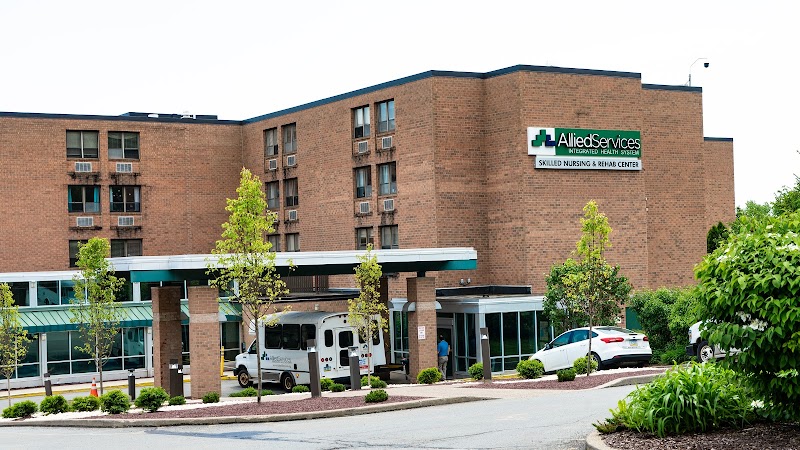
How is Allied Services Skilled Nursing Center Staffed?

CMS rates ALLIED SERVICES SKILLED NURSING CENTER's staffing level at 4 out of 5 stars, which is above average compared to other nursing homes. Staff turnover is 39%, compared to the Pennsylvania average of 46%. This relatively stable workforce can support continuity of care.

What Have Inspectors Found at Allied Services Skilled Nursing Center?

State health inspectors documented 32 deficiencies at ALLIED SERVICES SKILLED NURSING CENTER during 2023 to 2025. These included: 1 that caused actual resident harm and 31 with potential for harm. Deficiencies causing actual harm indicate documented cases where residents experienced negative health consequences.
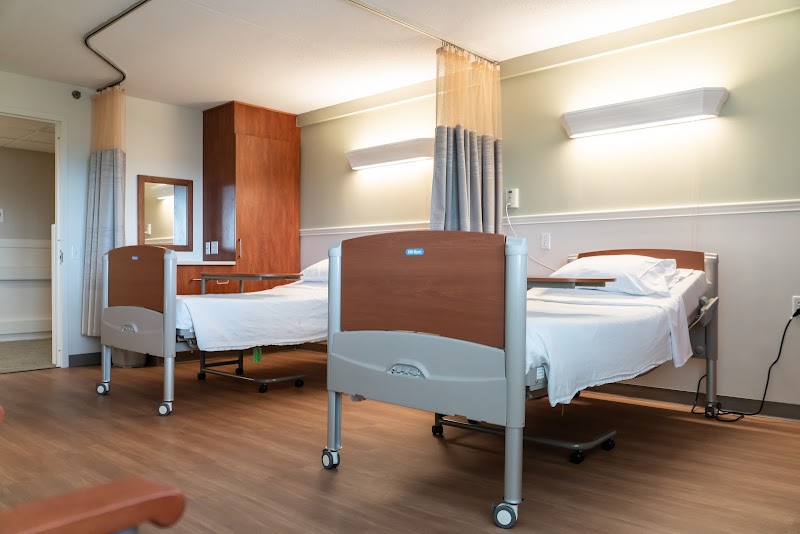
Who Owns and Operates Allied Services Skilled Nursing Center?

ALLIED SERVICES SKILLED NURSING CENTER is owned by a non-profit organization. Non-profit facilities reinvest revenue into operations rather than distributing to shareholders. The facility operates independently rather than as part of a larger chain. With 327 certified beds and approximately 272 residents (about 83% occupancy), it is a large facility located in SCRANTON, Pennsylvania.

How Does Allied Services Skilled Nursing Center Compare to Other Pennsylvania Nursing Homes?

Compared to the 100 nursing homes in Pennsylvania, ALLIED SERVICES SKILLED NURSING CENTER's overall rating (4 stars) is above the state average of 3.0, staff turnover (39%) is near the state average of 46%, and health inspection rating (3 stars) is at the national benchmark.

What Should Families Ask When Visiting Allied Services Skilled Nursing Center?

Based on this facility's data, families visiting should ask: "Can I visit during a mealtime to observe dining assistance and food quality?" "How do you handle medical emergencies, and what is your hospital transfer rate?" "Can I speak with family members of current residents about their experience?"

Is Allied Services Skilled Nursing Center Safe?

Based on CMS inspection data, ALLIED SERVICES SKILLED NURSING CENTER has a clean safety record: no substantiated abuse findings (meaning no confirmed cases of resident harm), no Immediate Jeopardy citations (the most serious violation level indicating risk of serious injury or death), and is not on the Special Focus Facility watch list (a federal program monitoring the lowest-performing 1% of nursing homes). The facility has a 4-star overall rating and ranks #1 of 100 nursing homes in Pennsylvania. While no facility is perfect, families should still ask about staff-to-resident ratios and recent inspection results during their visit.

Do Nurses at Allied Services Skilled Nursing Center Stick Around?

ALLIED SERVICES SKILLED NURSING CENTER has a staff turnover rate of 39%, which is about average for Pennsylvania nursing homes (state average: 46%). Moderate turnover is common in nursing homes, but families should still ask about staff tenure and how the facility maintains care continuity when employees leave.

Was Allied Services Skilled Nursing Center Ever Fined?

ALLIED SERVICES SKILLED NURSING CENTER has no federal fines on record. CMS issues fines when nursing homes fail to meet care standards or don't correct problems found during inspections. The absence of fines suggests the facility has either maintained compliance or corrected any issues before penalties were assessed. This is a positive indicator, though families should still review recent inspection reports for the full picture.

Is Allied Services Skilled Nursing Center on Any Federal Watch List?

ALLIED SERVICES SKILLED NURSING CENTER is not on any federal watch list. The most significant is the Special Focus Facility (SFF) program, which identifies the bottom 1% of nursing homes nationally based on persistent, serious quality problems. Not being on this list means the facility has avoided the pattern of deficiencies that triggers enhanced federal oversight. This is a positive indicator, though families should still review the facility's inspection history directly.