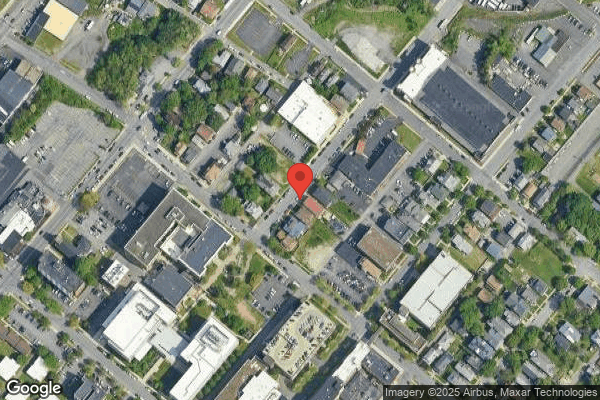

EMBASSY OF SCRANTON

824 ADAMS AVENUE, SCRANTON, PA 18510 (570) 346-5704
For profit - Limited Liability company 139 Beds EMBASSY HEALTHCARE Data: November 2025
Trust Grade
13/100
#556 of 653 in PA
Last Inspection: July 2025

Inspected within the last 6 months. Data reflects current conditions.

Overview

Embassy of Scranton has received a Trust Grade of F, indicating significant concerns about the quality of care provided. Ranking #556 out of 653 facilities in Pennsylvania places it in the bottom half, and #15 out of 17 in Lackawanna County means that only one local option is better. While the facility shows a trend of improvement in reducing issues from 34 in 2024 to 16 in 2025, it still has a high staff turnover rate of 66%, which is concerning compared to the Pennsylvania average of 46%. There were several alarming incidents noted during inspections, including a failure to properly update a resident's fall prevention plan after they suffered a serious head injury, and a lack of consistent access to fresh drinking water for some residents. Additionally, there were concerns about food storage practices which could lead to contamination and foodborne illnesses. While the facility has some strengths, such as average RN coverage, these serious issues highlight significant weaknesses that families should consider.

Trust Score
F
13/100
In Pennsylvania
#556/653
Bottom 15%
Safety Record
High Risk
Review needed
Inspections
Getting Better
34 → 16 violations
Staff Stability
⚠ Watch
66% turnover. Above average. Higher turnover means staff may not know residents' routines.
Penalties
✓ Good
$18,769 in fines. Lower than most Pennsylvania facilities. Relatively clean record.
Skilled Nurses
○ Average
Each resident gets 33 minutes of Registered Nurse (RN) attention daily — about average for Pennsylvania. RNs are the most trained staff who monitor for health changes.
Violations
⚠ Watch
78 deficiencies on record. Higher than average. Multiple issues found across inspections.
★☆☆☆☆
1.0
Overall Rating
★★☆☆☆
2.0
Staff Levels
★★★☆☆
3.0
Care Quality
★☆☆☆☆
1.0
Inspection Score
Stable
2024: 34 issues
2025: 16 issues

The Good

  • Full Sprinkler Coverage · Fire safety systems throughout facility
  • No fines on record

Facility shows strength in fire safety.

The Bad

1-Star Overall Rating

Below Pennsylvania average (3.0)

Significant quality concerns identified by CMS

Staff Turnover: 66%

20pts above Pennsylvania avg (46%)

Frequent staff changes - ask about care continuity

Federal Fines: $18,769

Below median ($33,413)

Minor penalties assessed

Chain: EMBASSY HEALTHCARE

Part of a multi-facility chain

Ask about local staffing decisions and management

Staff turnover is elevated (66%)

18 points above Pennsylvania average of 48%

The Ugly 78 deficiencies on record

1 actual harm
Jul 2025 14 deficiencies
CONCERN (D)

Potential for Harm - no one hurt, but risky conditions existed

Safe Environment (Tag F0584)

Could have caused harm · This affected 1 resident

Based on observations and staff interview, it was determined the facility failed to provide housekeeping services necessary to maintain a clean and sanitary environment and resident care equipment for...

Read full inspector narrative →
Based on observations and staff interview, it was determined the facility failed to provide housekeeping services necessary to maintain a clean and sanitary environment and resident care equipment for one of two residents receiving enteral tube feeding. (Resident101)Findings include: Observations conducted in Resident 101's room on July 22, 2025, at 11:00 A.M. and 1:30 P.M., and again on July 23, 2025, at 8:30 A.M. and 1:00 P.M., revealed dried tube feeding residue in multiple locations within the resident's room. Specifically, dried nutritional formula was observed on the base of the resident's tube feeding pole, on the fall mat placed on the floor to the right side of the bed, and on the surface of the resident's bedside table. During an interview July 24, 2025, at 10 A.M., the Nursing Home Administrator confirmed the resident's tube feeding pole and surrounding areas in his room should be free from liquid tube feed.28 Pa code 201.18 (b)(1) Management
CONCERN (D)

Potential for Harm - no one hurt, but risky conditions existed

Free from Abuse/Neglect (Tag F0600)

Could have caused harm · This affected 1 resident

**NOTE- TERMS IN BRACKETS HAVE BEEN EDITED TO PROTECT CONFIDENTIALITY** Based on observation, clinical record review, facility policy review, and staff interview, it was determined the facility failed...

Read full inspector narrative →
**NOTE- TERMS IN BRACKETS HAVE BEEN EDITED TO PROTECT CONFIDENTIALITY** Based on observation, clinical record review, facility policy review, and staff interview, it was determined the facility failed to protect one of 23 sampled residents (Resident 9) from neglect. Findings include: A review of the facility policy titled Abuse Policy last reviewed by the facility on October 21, 2024, revealed it is the facility's policy that a resident has the right to be free from abuse, neglect, misappropriation of resident property, and exploitation. The policy defines neglect as the failure of the facility, its employees, or service providers to provide goods and services to a resident that are necessary to avoid physical harm, pain, mental anguish, or emotional distress.A clinical record review revealed that Resident 9 was admitted to the facility on [DATE]. 2025, with diagnoses that included below-the-knee right and left leg amputations, generalized weakness, and need for personal assistance. A review of a quarterly Minimum Data Set assessment (MDS - a federally mandated standardized assessment process conducted periodically to plan resident care) dated June 30, 2025, revealed Resident 9 was cognitively intact with a BIMS score of 15 (Brief Interview for Mental Status- a tool within the Cognitive Section of the MDS that is used to assess the resident's attention, orientation, and ability to register and recall new information; a score of 13-15 indicates cognition is intact). The resident's Kardex (a nursing tool used to communicate individualized care instructions) initiated on March 5, 2025, indicated Resident 9 required the assistance of two staff members for all transfers. The resident's care plan, initiated on February 14, 2025, specified that transfers were to be performed with two staff members using a sliding board. A sliding board is a smooth, rigid board used as a transfer aid to bridge the gap between two surfaces, allowing a resident to slide from one location to another (e.g., bed to wheelchair), typically used for residents with limited mobility or amputations. A review of the facility's internal incident documentation revealed that Resident 9 experienced falls on February 26, 2025, and March 5, 2025. There was no documented evidence that new interventions were implemented following these incidents to prevent recurrence. A review of a progress note dated March 17, 2025, at 2:48PM revealed on March 15, 2025, at 6:50PM, a nurse aide (facility unable to identify which employee) was transferring Resident 9 from the bed to the wheelchair using a sliding board when the resident fell. The facility's fall investigation revealed that only one staff member was present during the transfer, contrary to the resident's documented need for a two-person assist. In addition, the investigation revealed that the staff member failed to lock the wheelchair prior to initiating the transfer. This failure to follow the established transfer protocol including the use of two-person assistance and securing mobility equipment, resulted in the resident falling and landing on the site of his right leg amputation. Although the facility initiated an internal investigation, the documentation lacked witness statements, staff interviews, and a complete written account of the event. The facility failed to identify or hold accountable the staff member who had performed the unauthorized solo transfer. As a result, the investigation was incomplete and did not demonstrate appropriate follow-up or corrective action. Additionally, a review of the clinical record and accident logs revealed that Resident 9 experienced three additional falls after the incident on March 15, 2025. During an interview on July 24, 2025, at approximately 09:30AM the Director of Nursing revealed the facility was unable to provide any further documentation or details related to the March 15, 2025, incident. 28 Pa. Code 201.14 (a) Responsibility of licensee. 28 Pa. Code 201.18 (e)(1) Management. 28 Pa. Code 201.29 (a) Resident Rights. 28 Pa. Code 211.10 (d) Resident care policies. 28 Pa. Code 211.12 (d)(1)(5) Nursing Services.
CONCERN (D)

Potential for Harm - no one hurt, but risky conditions existed

Investigate Abuse (Tag F0610)

Could have caused harm · This affected 1 resident

**NOTE- TERMS IN BRACKETS HAVE BEEN EDITED TO PROTECT CONFIDENTIALITY** Based on a review of clinical records, the facility's abuse neglect and exploitation policy, information provided by the facilit...

Read full inspector narrative →
**NOTE- TERMS IN BRACKETS HAVE BEEN EDITED TO PROTECT CONFIDENTIALITY** Based on a review of clinical records, the facility's abuse neglect and exploitation policy, information provided by the facility, and staff interviews, it was determined that the facility failed to promptly conduct a thorough investigation to rule out abuse and implement corrective action for one of 22 residents reviewed (Resident 9).Findings include: A facility policy entitled Abuse, Neglect and Exploitation, last reviewed by the facility on October 21, 2024, indicated an immediate investigation is warranted when suspicion of abuse, neglect or exploitation occurs. The policy further indicated the investigation is to include identifying and interviewing all involved persons, including the alleged victim, alleged perpetrator, witnesses, and others who might have knowledge of the allegations. The policy further indicated the result of the investigation should include analyzing the occurrence to determine why neglect occurred and what changes are needed to prevent further occurrences. The facility is to define how care provisions will be changed or improved to protect resident receiving services, identify staff responsible for implementing corrective actions, and the expected date for implementation. A clinical record review revealed that Resident 9 was admitted to the facility on [DATE]. 2025, with diagnoses that included below-the-knee right and left leg amputation, weakness, and need for personal assistance. A quarterly Minimum Data Set assessment (MDS - a federally mandated standardized assessment process conducted periodically to plan resident care) dated June 30, 2025, revealed Resident 9 was cognitively intact with a BIMS score of 15 (Brief Interview for Mental Status- a tool within the Cognitive Section of the MDS that is used to assess the resident's attention, orientation, and ability to register and recall new information; a score of 13-15 indicates cognition is intact). The resident's Kardex (a nursing tool used to communicate individualized care instructions) initiated on March 5, 2025, indicated Resident 9 required the assistance of two staff members for all transfers. The resident's care plan, initiated on February 14, 2025, specified that transfers were to be performed with two staff members using a sliding board. A sliding board is a smooth, rigid board used as a transfer aid to bridge the gap between two surfaces, allowing a resident to slide from one location to another (e.g., bed to wheelchair), typically used for residents with limited mobility or amputations. A review of clinical records and accident logs revealed the resident had experienced falls on February 26 and March 5, 2025. No new interventions were implemented following those events. A progress note dated March 17, 2025, documented that on March 15, 2025, at 6:50 PM, Resident 9 was transferred from bed to wheelchair using a sliding board by a single staff member, contrary to the resident's documented need for two-person assistance. The resident fell during the transfer and landed on his right amputated leg. The facility's investigative report dated March 15, 2025, confirmed that the resident was transferred by one staff member and that the wheelchair had not been locked prior to the transfer. Despite this, the facility's documentation did not include witness statements, staff interviews, or any documentation indicating that the alleged neglect was fully investigated. The identity of the staff member involved was not determined. On July 24, 2025, at approximately 9:30 AM, when the surveyor asked to review documentation of the completed investigation related to the March 15, 2025, incident, the Director of Nursing (DON) was unable to provide any evidence that a thorough investigation was completed. The DON confirmed that the staff working on the evening of March 15, 2025, were not interviewed, that no documentation existed to demonstrate who had performed the transfer, and that no interviews were conducted with the resident or any potential witnesses. The DON also confirmed the facility did not implement any new corrective actions following the fall and did not complete an analysis to determine the root cause or prevent future occurrences. During a follow-up interview on July 24, 2025, at approximately 12:00 PM, the DON reiterated that no documentation existed to show the facility had conducted an investigation consistent with facility policy. The facility failed to promptly investigate a potential incident of neglect involving improper transfer technique and lack of staff adherence to care plan instructions. The investigation was not initiated in a timely manner, was incomplete, and lacked required elements including staff identification, interviews, and corrective planning. As a result, the facility failed to ensure that the circumstances surrounding the neglectful event were appropriately examined and addressed. 28 Pa. Code 201.14 (c) Responsibility of licensee. 28 Pa. Code 201.18 (b)(1) Management. 28 Pa. Code 201.29 (a) Resident rights. 28 Pa. Code 211.10(d) Resident care policies.
CONCERN (D)

Potential for Harm - no one hurt, but risky conditions existed

Deficiency F0692 (Tag F0692)

Could have caused harm · This affected 1 resident

**NOTE- TERMS IN BRACKETS HAVE BEEN EDITED TO PROTECT CONFIDENTIALITY** Based on clinical record review and select facility policy, staff interview, and review of facility documentation, it was determ...

Read full inspector narrative →
**NOTE- TERMS IN BRACKETS HAVE BEEN EDITED TO PROTECT CONFIDENTIALITY** Based on clinical record review and select facility policy, staff interview, and review of facility documentation, it was determined the facility failed to ensure that a resident who is unable to maintain adequate nutrition and hydration status received appropriate nutritional support, physician notification, and timely interdisciplinary assessment to prevent further nutritional decline for one of 21 residents reviewed (Resident 76). Findings include: A review of the clinical record revealed that Resident 76 was admitted on [DATE], with diagnoses that included multiple sclerosis (MS), a chronic, progressive disease of the central nervous system, and dysphagia (difficulty swallowing), related to MS. A physician's order dated January 31, 2025, directed that the resident receive a regular diet with pureed texture and honey/moderately thick consistency liquids, fortified foods with all meals, and a frozen nutritional treat (120 ml) twice daily with lunch and dinner, with intake percentages to be recorded. These interventions were intended to support nutritional intake. The resident's care plan, initiated October 14, 2022, identified him as being at risk for nutritional and hydration imbalances due to a history of significant weight loss. Interventions included honoring food preferences, providing the prescribed diet, offering fortified foods, and monitoring weight per facility policy. Per that policy, significant weight changes are to be reported to the physician and the resident's responsible party (RP). A review of the facility's policy titled Weight Monitoring, revised October 1, 2024, indicated that, based on each resident's comprehensive assessment, the facility is to ensure residents maintain acceptable parameters of nutritional status such as usual body weight or desirable weight range, unless the resident's clinical condition or preferences dictate otherwise. The policy defines significant weight loss as:5% in one month (30 days),7.5% in three months (90 days), or10% in six months (180 days). The policy also states that the physician should be informed of significant weight changes and may order nutritional interventions. Additionally, meal consumption should be documented and may be used by the interdisciplinary team in care planning. The registered dietitian or dietary manager should be consulted to assist with interventions, and all actions are to be recorded in the nutritional progress notes. A review of the resident's weight record showed the following:May 12, 2025: 122.0 lbs.May 20, 2025: 118.8 lbs.June 2, 2025: 115.4 lbs. (a 6.6 lb. loss; 5.41% in three weeks meeting the facility's definition of significant weight loss)June 4, 2025: 115.8 lbs. (reweigh)July 3, 2025: 113.6 lbs.Total weight loss between May 12 and July 3, 2025: 8.4 lbs. (6.89% over seven weeks) A review of meal intake records from May and June 2025 showed the resident typically consumed between 50% and 75% of meals, without documented use of additional oral nutritional supplements beyond the twice-daily frozen nutritional treat, which was reportedly consumed in full. Despite the observed weight loss on June 2, 2025, the clinical record did not contain documentation the physician or responsible party were notified. Additionally, there was no documentation of a nutritional assessment, no new interventions implemented, and no care plan revisions to address the weight loss at that time or following the continued decline noted on July 3, 2025. The first documented response to the weight loss occurred on July 8, 2025, when a dietary note identified the weight of 113.6 lbs., acknowledged the weight loss as significant, and indicated that the resident had existing pressure areas. At that time, an assessment was completed, and dietary interventions were implemented for weight stabilization and wound healing. During an interview on July 24, 2025, at approximately 2:00 PM, the facility's registered dietitian (RD) stated that she is present in the facility only once per week. She was unable to recall whether she was present on the dates when the resident was weighed, confirmed that she had not evaluated the resident following the weight loss on June 2 or July 3, 2025, and acknowledged that the nutritional regimen was not reviewed or revised until July 8, 2025. There was no documented evidence that the resident's nutritional status was reassessed by the interdisciplinary team or that the weight loss was addressed in a timely manner 28 Pa Code 211.12 (d)(3)(5) Nursing services. 28 Pa Code 211.10 (d) Resident care policies.
CONCERN (D)

Potential for Harm - no one hurt, but risky conditions existed

Deficiency F0699 (Tag F0699)

Could have caused harm · This affected 1 resident

**NOTE- TERMS IN BRACKETS HAVE BEEN EDITED TO PROTECT CONFIDENTIALITY** Based on a review of clinical records and staff interview, it was determined the facility failed to develop and implement an ind...

Read full inspector narrative →
**NOTE- TERMS IN BRACKETS HAVE BEEN EDITED TO PROTECT CONFIDENTIALITY** Based on a review of clinical records and staff interview, it was determined the facility failed to develop and implement an individualized person-centered care plan to render trauma informed care to a resident with a diagnosis of Post-Traumatic Stress Disorder (PTSD) for one out of 22 residents reviewed. (Resident 90)A review of Resident 90's clinical record revealed the resident was admitted to the facility on [DATE], with diagnoses that included metabolic encephalopathy (ME brain dysfunctions due to problems with metabolism, or the body's chemical processes that turn food into energy and filter out harmful toxins), major depressive disorder (mood disorder that causes a persistent feeling of sadness and loss of interest, and it affects how one feels, thinks and behaves and can lead to a variety of emotional and physical problems), and post-traumatic stress disorder (PTSD a mental health condition that's caused by an extremely stressful or terrifying event, either being part of it or witnessing it. Symptoms may include flashbacks, nightmares, severe anxiety, and uncontrollable thoughts about the event). The resident's current care plan, in effect at the time of review on July 22, 2025, did not identify the resident's PTSD triggers related to this diagnosis and resident specific interventions to meet the resident's needs for minimizing triggers and/or re-traumatization. The facility failed to develop and implement an individualized person-centered plan to address, this resident's diagnosis of PTSD according to standards of practice to promote the resident's emotional well-being and safety. During an interview with the Nursing Home Administrator (NHA) on July 24, 2025, at 1:52 PM, reviewed the above information and was unable to demonstrate the facility provided culturally competent, trauma-informed care in accordance with professional standards of practice and accounting for resident's experiences and preferences to eliminate or mitigate triggers that may cause re-traumatization of the resident.28 Pa Code 211.12 (d)(3)(5) Nursing services.
CONCERN (E)

Potential for Harm - no one hurt, but risky conditions existed

Deficiency F0565 (Tag F0565)

Could have caused harm · This affected multiple residents

**NOTE- TERMS IN BRACKETS HAVE BEEN EDITED TO PROTECT CONFIDENTIALITY** Based on a review of select facility policy, facility grievance forms, resident interviews, staff interviews, and observations i...

Read full inspector narrative →
**NOTE- TERMS IN BRACKETS HAVE BEEN EDITED TO PROTECT CONFIDENTIALITY** Based on a review of select facility policy, facility grievance forms, resident interviews, staff interviews, and observations it was determined the facility failed to make ongoing efforts to resolve grievances and provide timely follow up with residents regarding the status update on the resolution process of call bell response times for 8 of 22 residents interviewed (Resident 5, 9,13 ,21 , 30, 45 ,65,78).Findings include: A review facility policy entitled Resident and Family Concerns last reviewed by the facility on October 21, 2024, indicated that it is the grievance official's responsibility to receive and track all grievances through to their conclusion. The policy further indicated the grievance official is responsible to provide a copy of the grievance policy to the resident. The policy further revealed it is the grievance officer's responsibility to issue written grievance decisions to the residents. A Resident Council meeting was conducted on July 23, 2025, at 10:00AM with six alert and oriented residents. The interview revealed six out of six residents (Residents 21,30, 5, 65, 9, 78) have experienced call bell wait times exceeding 1 hour. A review of a grievance filed on February 13, 2025, revealed a complaint from resident 30 indicating the resident waited over an hour for a response to her call bell. The grievance form further revealed the staff was educated and disciplined. A review of a grievance filed on May 29, 2025, revealed Resident 13 and Resident 45 filed a grievance indicating the residents were not changed at any time during day and evening shift. The grievance indicated the residents reported they were left to sit in their own urine-soaked beds for an extensive amount of time. Further review of the grievance indicated the staff was unaware of the resident's incontinent status and the residents were not changed during these shifts. Interview with Resident 30 on July 23, 2025, at approximately 11:00AM revealed Resident 30 has not received a response from the grievance official confirming a resolution to her call bell wait times as of July 24, 2025. Residents 13 and 45 were unavailable for interview. Interview with Employee 1 (Social services) on July 24, 2025, at 12:32PM confirmed Employee 1 sometimes meets with residents to review the resolution of grievances filed, but it is not a consistent pattern she follows. Employee 1 was unable to provide any information the resolution was provided to Residents 13, 30, and 45. The interview further confirmed Employee 1 does not have a system in place to track filed and resolved grievances as indicated in the policy. Observations on July 23, 2025, at approximately 1:00PM located on the third floor, revealed a call bell tracking system with a call bell going unresolved for 47 minutes from room [ROOM NUMBER]C. Observation of the area revealed no staff present, responding to the call bell. Further observation of room [ROOM NUMBER]C revealed a foul odor of feces emanating from the room. Interview with the Nursing Home Administrator on July 24, 2025, revealed the facility was unable to provide any documentation that a resolution to the call bell response time was provided to residents regardless of the filed grievances about the ongoing response time issue. 28 Pa. Code 201.14(a) Responsibility of licensee.
CONCERN (E)

Potential for Harm - no one hurt, but risky conditions existed

Deficiency F0628 (Tag F0628)

Could have caused harm · This affected multiple residents

**NOTE- TERMS IN BRACKETS HAVE BEEN EDITED TO PROTECT CONFIDENTIALITY** Based on clinical record reviews and staff interviews, it was determined that the facility failed to ensure that a discharge sum...

Read full inspector narrative →
**NOTE- TERMS IN BRACKETS HAVE BEEN EDITED TO PROTECT CONFIDENTIALITY** Based on clinical record reviews and staff interviews, it was determined that the facility failed to ensure that a discharge summary, including a recapitulation of the resident's stay, were completed for two of three discharged residents reviewed (Residents 96, and 98). A review of Resident 96's clinical record revealed that he was admitted to the facility on [DATE], with diagnoses that included metabolic encephalopathy (ME) are brain dysfunctions due to problems with metabolism, or the body's chemical processes that turn food into energy and filter out harmful toxins), transient cerebral ischemic attacks (TIA - is a short period of symptoms similar to those of a stroke and caused by a brief blockage of blood flow to the brain), and weakness. A nursing note for Resident 96, dated June 10, 2025, at 5:45 PM, revealed that the resident was slumped over in his wheelchair drooling, responded to painful stimuli but when speaking words were garbled and not making sense. Nurse Practitioner (NP) updated and order to send to the emergency room (ER) for evaluation due to history of TIA. Family aware and agree with plan to transfer to ER. Emergency Medical Services (EMS) called and arrived at facility. Additionally, Resident 96's clinical record revealed a nurses' progress note dated June 10, 2025, at 6:11 AM, revealed that the resident was admitted to the hospital with altered mental status. A nurse's progress note dated June 19, 2025, at 11:16 AM, indicated the Director of Nursing contacted Area Agency on Aging (AAA) was called and informed of patient being send to the hospital on 6/10/2025 and will not be returning to embassy of [NAME]. Uncertain of discharge plan. As of June 25, 2025, there was no documented evidence that a discharge summary that included a recapitulation of the resident's stay was completed for Resident 96. A review of Resident 98's clinical record revealed that he was admitted to the facility on [DATE], with diagnoses that spinal stenosis (happens when the space inside the backbone is too small and places pressure on spinal cord and nerves that travel through the spine and happens most often in the lower back and the neck) and anxiety disorder (frequently have intense, excessive and persistent worry and fear about everyday situations and involve repeated episodes of sudden feelings of intense anxiety and fear or terror that reach a peak within minutes (panic attacks). A review of Resident 98's nursing progress notes dated June 7, 2025, at 5:12 PM, indicated the resident and spouse requested to be discharged home the Director of Nursing (DON) and MD was notified and orders were obtained for discharge. The resident and spouse gathered all belongings and was discharged to home at that time. As of June 25, 2025, there was no documented evidence a discharge summary that included a recapitulation of the resident's stay was completed for Resident 98. During an interview conducted with the Director of Nursing, in the presence of the Nursing Home Administrator on July 25, 2025, at 12:30 PM, the above findings were reviewed. At that time, no additional documented evidence was provided to demonstrate the attending physician had completed a discharge summary that included a recap of stays for Resident 96 or Resident 98 during their admissions to the facility. 28 Pa. Code 211.5(d) Clinical Records.
CONCERN (E)

Potential for Harm - no one hurt, but risky conditions existed

Accident Prevention (Tag F0689)

Could have caused harm · This affected multiple residents

**NOTE- TERMS IN BRACKETS HAVE BEEN EDITED TO PROTECT CONFIDENTIALITY** Based on observations, a review of clinical records, review of facility policies, and facility provided investigative documentat...

Read full inspector narrative →
**NOTE- TERMS IN BRACKETS HAVE BEEN EDITED TO PROTECT CONFIDENTIALITY** Based on observations, a review of clinical records, review of facility policies, and facility provided investigative documentation, and staff interviews, it was determined the facility failed to provide adequate staff supervision to a resident identified at risk of elopement to prevent unsupervised exits from the facility for one resident (Resident 74) and failed to provide supervision to prevent a fall for one resident ( Resident 35) out of 22 residents sampled.Findings included: A review of a facility policy entitled Elopement and Wandering Residents last reviewed by the facility on October 21, 2025, indicated the facility ensures that residents who exhibit wandering behavior and/or are at risk for elopement receive adequate supervision to prevent accidents and receive care in accordance with their person-centered plan of care addressing the unique factors contributing to wandering and elopement risk. The facility is equipped with door locks/alarms to help avoid elopements but are not a replacement for necessary supervision. Additionally, monitoring and managing residents at risk for elopement or unsafe wandering include residents will be assessed upon admission and throughout their stay by the interdisciplinary care plan team for elopement or unsafe wandering and identify unique factors contributing to risk in order to develop a person-centered plan of care. Interventions to increase staff awareness of the resident's risk, modified behavior, or to minimize risk associated with hazards will be added to the resident's care plan and communicated to appropriate staff. Adequate supervision will be provided to help prevent accidents or elopements. The effectiveness of interventions will be evaluated, and changes will be made as needed. Any changes or new interventions will be communicated to relevant staff. A review of Resident 74's clinical record revealed he was admitted to the facility on [DATE], with diagnoses that included hemiplegia ( a symptom that involves one-sided paralysis and affects either the right or left side of the body) and hemiparesis (one-sided muscle weakness because of disruptions in the brain, spinal cord or the nerves that connect to the affected muscles) following cerebral infarction (also known as stroke, is the process that results in an area of dead tissue in the brain) affecting right dominant side, aphasia (disorder that affects how one communicates and can impact speech and written language), alcohol use, and cognitive communication deficit (a common consequence of brain injuries that affects a person's ability to communicate effectively and these deficits arise when the brain's cognitive functions, such as attention, memory, reasoning, and problem-solving, are impaired, impacting communication). A review of the resident's quarterly MDS (Minimum Data Set - a federally mandated standardized assessment process conducted periodically to plan resident care) assessment dated [DATE], section C Cognitive Patterns revealed the resident had a BIMS score (Brief Interview for Mental Status is a tool used to evaluate cognitive impairment and assist with dementia diagnosis) of 15, which indicated that the resident was cognitively intact. Additionally, the resident independently walked with the use of cane or used a wheelchair to ambulate. A clinical record review revealed an assessment completed by the facility's Director of Nursing (DON) entitled Elopement Evaluation dated January 18, 2025, indicated the resident had a history of elopement while at home and exhibited wandering behaviors and identified the resident was at risk of wandering/elopement. A review of a nursing behavior note completed by Employee 1, a Registered Nurse (RN), dated March 31, 2025, at 9:20 PM, revealed Resident 74 was exit seeking and staff were unable to redirect. Resident was educated on the safety protocols of the facility and refused to comply. Further review of Resident 74's clinical record progress completed by the DON dated May 8, 2025, at 5:18 PM, documented that the resident exited the back of the building and as observed by the Nursing Supervisor, who was outside smoking, when asked what he was doing, the resident stated, I'm coming to smoke. The DON was notified immediately, and the door code was changed. The resident was reminded of the facility's nonsmoking policy but was allowed to smoke as requested. The resident then requested to stay outside and get some fresh air.Staff were alternating observations of the resident until 7:30 PM, when the DON asked the resident what he wanted, and he requested a pizza in order to return inside. The DON ordered a pizza and delivered it to the resident's room At the time of survey ending July 25, 2025, the facility could not provide documented evidence that facility completed an investigation related to the above incident, elopement, and develop and implement person-centered interventions to address Resident 74's wandering/exit seeking behaviors. A review of a facility provided investigation for an elopement completed by Employee 2, RN, dated June 21, 2025, at 10:00 AM, indicated the writer (Employee 2) was informed that resident was not in his room or the common area. Thorough search of the premises and surrounding area were done, and resident was not found. The nursing supervisor notified the DON at 11:56 AM, and DON suggested broadening the search to adjacent streets and instructed to call the police while the search continued. At 1:25 PM, the DON received a call from the nursing supervisor that Resident 74 was located 0.4 miles away from the facility. Upon arriving on location, The NHA noted three staff members Employee 3, a Licensed Practical Nurse (LPN), Employee 4, a Nurse Aide (NA), and Employee 5, NA, arrived at the location and tried to convince the resident to return to the facility. NHA called 911 and requested a police officer to help convince the resident to come back to the facility. Resident 74 interviewed and stated he left through the front door and knew the code to the door and refused to tell anyone how he got the code, or who gave him the code. The immediate action taken by the facility was upon return to the building, the resident was assessed with no injuries noted, skin intact and clear, required agencies notified of incident. Resident was placed on one to one (1:1) supervision all night and was seen by the Certified Nurses Practitioner (CRNP) and assessed the resident with no injuries noted. A review of an investigative document in Resident 74's clinical record, dated June 21, 2025, at 3:45 a.m. and completed by Employee 3, Licensed Practical Nurse (LPN), documented that the resident exited the facility without staff authorization or assistance. The resident was observed off the facility premises, seated in a wheelchair, and was escorted back to the facility. The documentation noted that local authorities were informed, and the resident was placed on one-to-one (1:1) supervision at that time. A review of a written witness statement completed by Employee 2, Registered Nurse (RN) and Supervisor, on June 21, 2025 (time not indicated), revealed that Employee 3 was assigned as Resident 74's nurse for that shift. According to Employee 2, Employee 3 was observed administering a pill to the resident at approximately 8:00 a.m., per the electronic Medication Administration Record (eMAR), which is a digital log used to document medications administered and is part of the resident's electronic health record (EHR). Employee 2 further noted that around 11:00 a.m., Employee 3 was seen in the lobby searching for the resident and reported to Employee 2 that the resident was missing. At that time, Employee 2 joined the search. Employee 2's statement noted that it was unclear when or where the resident had last been observed and that staff were not aware of whether the resident had exhibited exit-seeking behavior prior to the incident. A separate witness statement completed by Employee 3, LPN, dated June 21, 2025, at 12:00 p.m., stated that at approximately noon, she was notified the resident was not in his room. Employee 3 reported searching the building and surrounding outdoor areas, and then left the facility in her personal vehicle to continue the search. She reported locating the resident standing on a nearby street corner. Employee 3 contacted the facility to report the resident's location and was later joined by other staff and the Nursing Home Administrator (NHA). The resident was subsequently returned to the facility. A review of a witness statement from Employee 4, Nurse Aide (NA), dated June 21, 2025 (no time indicated), revealed that she had not delivered breakfast to Resident 74 nor retrieved his meal tray that morning. She stated that during lunch service, she noticed the resident had not eaten and was not in his room or the bathroom. The statement did not indicate the last time she observed the resident or whether she noticed any unusual behaviors before the incident. A witness statement completed by Employee 5, NA, also dated June 21, 2025 (no time indicated), indicated that the nursing supervisor was informed that Resident 74 was missing from the facility. Employee 5 stated that the building was searched before it was determined the resident had eloped. Employee 3 contacted the supervisor after locating the resident. Employee 5 and Employee 4 drove to the resident's location at 1:26 p.m., and shortly thereafter, the NHA arrived to speak with the resident and ensure he was not injured. Employee 5 stated that the resident initially refused to return to the facility, prompting the NHA to contact 911. Employee 5's statement did not include observations of the resident earlier in the day or indicate whether exit-seeking behavior had been noted prior to the incident. A review of Resident 74's comprehensive person-centered care plan revealed that a care plan addressing elopement risk was not developed or implemented until June 21, 2025, the same day the resident exited the facility without supervision. The record did not contain documented interventions to mitigate elopement risk prior to this incident, despite prior documentation identifying the resident's history of wandering and elopement risk. During an interview with the DON and NHA on July 25, 2025, at approximately 11:15 a.m., the DON stated that the facility had previously attempted to use a wander guard device (a wearable bracelet with a door-monitoring sensor designed to alert staff if a resident at risk for elopement exits the building). However, the device was discontinued after the resident removed it. The DON and NHA confirmed that no alternate interventions were developed, implemented, or communicated to staff to mitigate the known elopement risk. The aforementioned information was reviewed with the DON and NHA however, they were unable to provide additional documentation to demonstrate that an individualized care plan addressing elopement risk had been developed prior to the resident's unsupervised exit from the facility on June 21, 2025. The facility was also unable to provide documentation verifying that adequate supervision had been provided to Resident 74 to prevent unsupervised exits from the facility. Clinical record review revealed that Resident 35 was admitted to the facility on [DATE], with diagnosis to include, seizure disorder, cerebral palsy (a neurological condition that affects movement and muscle coordination), and mild cognitive impairment. A Quarterly Minimum Data Set assessment (Minimum Data Set - a federally mandated standardized assessment conducted at specific intervals to plan resident care) dated April 8, 2025 revealed Resident 35 to be with a BIMS score (Brief Interview for Mental Status- an assessment tool that is used to assess the resident's attention, orientation, and ability to register and recall new information of 9, a score of 8 to 13 indicated moderate cognitive impairment. The resident required assistance with activities of daily living. A review of the resident's person-centered care plan, under the problem area of Self-Care Performance Deficit, last revised October 1, 2021, revealed the resident required one staff member for supervision during bathing or showering, with care typically offered around 5:30 a.m. An update to the care plan on January 6, 2021, included an intervention directing staff to remain within the resident's visual field if he became agitated during showers. An additional care plan, initiated September 11, 2020, addressed the resident's risk for falls, identifying risk factors such as cerebral palsy, impulsive behaviors, resistance to care, and seizure disorder. A review of a facility investigation report dated June 17, 2025, revealed that Resident 35 sustained an unwitnessed fall in the shower room at approximately 5:45 a.m. The documentation indicated that the resident may have experienced a seizure prior to the fall. The resident was found with an actively bleeding laceration to the top of his head. A review of a nursing progress note dated June 17, 2025, at 6:16 a.m., indicated Resident 35 approached Employee 11, Registered Nurse (RN with blood running down his face. The resident appeared confused and unable to recall what had happened. The laceration measured 3 cm x 1 cm x 0.1 cm, with active bleeding observed. The RN directed an aide to check the shower room, where blood was noted near the toilet. The nurse practitioner was contacted, and the resident was transferred to the emergency department for further evaluation and treatment. A witness statement, written by the Director of Nursing (DON) after a telephone call with an unidentified staff member on June 17, 2025, at approximately 6:00 a.m., indicated that the staff member was newly off orientation and not familiar with the resident's care routines. The staff member's name was handwritten on the statement but was illegible. During an interview July 23, 2025, at 11 A.M., the Director of Nursing (DON) could not identify the staff member noted on the witness statement. She further confirmed that at the time of the investigation she did not interview the staff responsible for Resident 35's care on that shift. During an interview conducted on July 23, 2025, at 11:00 a.m., the DON confirmed that she was unable to identify the staff member referenced in the witness statement. She further acknowledged that she did not conduct interviews with the staff responsible for Resident 35's care at the time of the incident. At the time of the survey, the facility could not provide documentation demonstrating that staff were aware of Resident 35's location at 5:45 a.m., when the fall occurred. There was also no documented evidence that staff were present to provide supervision during the resident's shower activity, despite the known history of seizures, falls, and existing care plan interventions requiring direct supervision during bathing. 28 Pa. Code 201.18(b)(1) Management. 28 Pa. Code 211.10(d) Resident care policies. 28 Pa. Code 211.12(d)(3)(5) Nursing services.
CONCERN (E)

Potential for Harm - no one hurt, but risky conditions existed

Drug Regimen Review (Tag F0756)

Could have caused harm · This affected multiple residents

**NOTE- TERMS IN BRACKETS HAVE BEEN EDITED TO PROTECT CONFIDENTIALITY** Based on a review of clinical records and staff interview, it was determined the physician failed to act upon pharmacist identif...

Read full inspector narrative →
**NOTE- TERMS IN BRACKETS HAVE BEEN EDITED TO PROTECT CONFIDENTIALITY** Based on a review of clinical records and staff interview, it was determined the physician failed to act upon pharmacist identified irregularities in the medication regimen for one of twenty-two residents sampled (Resident 30).Findings include: A review of a facility policy Consulting Pharmacist Monthly Drug Review last reviewed by the facility on October1, 2024, revealed the resident's attending physician must document in the medical record that the identified pharmacist recommendation has been reviewed, and what, if any action has been taken to address it. The policy further stated if there is to be no change in the medication, the attending physician must document his or her rationale in the resident's medical record. A review of the clinical record revealed that Resident 30 was admitted to the facility on [DATE], and had diagnoses that included depressive disorder (condition characterized by persistent low mood, loss of interest, and other symptoms that significantly interfere with daily life), and weakness. A review of an April 2025 Medication Regimen Review revealed the consultant pharmacist indicated the resident's order for Sertraline 25mg (antidepressant medication) was to be reviewed for a gradual dose reduction. The resident's attending physician failed to document in the resident's clinical record the rational and justification for the continued use of Sertraline and a reason for the rejection of the gradual dose reduction. In an interview with the Director of Nursing (DON) conducted July 24, 2025, at approximately 09:00 AM, the DON revealed the facility has identified an ongoing issue with obtaining documentation from the attending physician. The DON stated that the attending physician has been previously notified via fax of the gradual dose recommendation but as of survey date July 24, 2025, the physician has not responded. 28 Pa. Code 211.9 (k) Pharmacy services. 28 Pa. Code 211.12 (c) Nursing services. 28 Pa. Code 211.2 (d)(3) Medical Director
CONCERN (E)

Potential for Harm - no one hurt, but risky conditions existed

Deficiency F0757 (Tag F0757)

Could have caused harm · This affected multiple residents

**NOTE- TERMS IN BRACKETS HAVE BEEN EDITED TO PROTECT CONFIDENTIALITY** Based on a review of clinical records, and staff interviews, it was determined the facility failed to ensure that a resident's d...

Read full inspector narrative →
**NOTE- TERMS IN BRACKETS HAVE BEEN EDITED TO PROTECT CONFIDENTIALITY** Based on a review of clinical records, and staff interviews, it was determined the facility failed to ensure that a resident's drug regimen was free of unnecessary antibiotics for one out of 22 residents sampled (Resident 8).Findings include:A review of a facility policy Antibiotic Stewardship Program last reviewed by the facility on October 1, 2024, revealed it is the facility's responsibility to utilize McGeer criteria (a standardized set of definitions for identifying infections in long term care facilities) to define infections. The policy further revealed the Loeb Minimum criteria (a set of minimum clinical criteria designed to help clinicians in long-term care facilities determine when to initiate antibiotic therapy for suspected infections, particularly urinary tract infections, even before diagnostic test results are available) may be used to determine where to treat an infection with antibiotics. A review of Resident 8's clinical record revealed the resident was admitted to the facility on [DATE], with diagnoses including atrial fibrillation (a heart condition characterized by an irregular and often rapid heart rate) and generalized weakness. A nursing progress note dated May 6, 2025, at 4:51 PM, documented that Resident 8 complained of discomfort in the penis and had slightly cloudy urine. A subsequent note dated May 8, 2025, at 11:17 AM, revealed the resident had no urinary complaints, and the urine was described as clear and yellow. Despite the absence of consistent clinical signs or symptoms meeting McGeer or Loeb criteria, a physician's order dated May 8, 2025, directed administration of ceftriaxone sodium (an antibiotic) intramuscularly (injection into a muscle) in the evening for a diagnosis of UTI (urinary tract infection), to be continued for 7 days.Review of the resident's clinical record failed to show documentation that either McGeer or Loeb criteria had been met to justify initiating antibiotic therapy on May 8, 2025. Further review of a laboratory report dated May 11, 2025, indicated that the urine culture grew Klebsiella pneumoniae (a bacterium commonly associated with healthcare-related infections, particularly in individuals with compromised immune systems). The culture showed bacterial growth exceeding 100,000 colonies/mL. However, the report also confirmed the prescribed antibiotic, ceftriaxone, was resistant to the identified bacteria, rendering the medication ineffective. A review of the May 2025 Medication Administration Record (MAR) revealed Resident 8 received one dose of ceftriaxone prior to receiving the culture and sensitivity (C & S culture and sensitivity- A urine culture is a method to grow and identify bacteria that may be in the urine. The sensitivity test helps select the best medicine to treat the infection) report. Therefore, the antibiotic was administered without justification and did not align with evidence-based practice standards. During an interview with the Director of Nursing (DON) on July 24, 2025, at approximately 1:15 PM, the DON acknowledged that the facility was unable to provide any additional documentation or justification supporting the clinical decision to initiate antibiotic therapy for Resident 8. 28 Pa. Code 211.2(d)(3)(5) Medical Director 28 Pa. Code 211.12(d)(3)(5) Nursing services
CONCERN (E)

Potential for Harm - no one hurt, but risky conditions existed

Room Equipment (Tag F0908)

Could have caused harm · This affected multiple residents

Based on observations, and staff and resident interviews, it was determined the facility failed to ensure that essential equipment, it was determined that essential equipment for the mechanical prepar...

Read full inspector narrative →
Based on observations, and staff and resident interviews, it was determined the facility failed to ensure that essential equipment, it was determined that essential equipment for the mechanical preparation of ice was not being maintained in a safe operating condition.Findings include: During a resident group interview on July 23, 2025, at 10:30 AM, six of six alert and oriented residents in attendance (Residents 78, 21, 30, 5, 65, and 9) voiced concerns that fresh ice water was only consistently provided during all shift due to the facility's ice machine being broken. The residents in attendance reported that they were purchasing their own bags of ice through an online website and had them delivered to the facility. An interview with Employee 8, a Nurse Aide (NA), stated the facility's ice machine had been broken for the past two weeks and confirmed the residents did not consistently receive fresh water that shift due to the lack of ice. Interview with the Nursing Home Administrator (NHA) on July 22, 2025, at 1:00 PM, reported the only ice machine in the facility had been in operatable for approximately two weeks and awaiting an estimate for repairs. The NHA reported purchasing bags of ice for staff to fill unit ice chests and complete ice water passes to the residents. The NHA provided an estimate for ice machine repairs dated July 22, 2025, and determined that the cost of repairs was not feasible and decided to purchase a new ice machine for the facility. During on-site survey, the NHA provided a purchase order dated July 23, 2025, for a new ice machine. Refer F804 28 Pa. Code 201.14(a) Responsibility of licensee 28 Pa. Code 201.18 (b)(1)(3)(e)(1)(2.1) Management
CONCERN (F)

Potential for Harm - no one hurt, but risky conditions existed

Deficiency F0807 (Tag F0807)

Could have caused harm · This affected most or all residents

**NOTE- TERMS IN BRACKETS HAVE BEEN EDITED TO PROTECT CONFIDENTIALITY** Based on a review of select facility policy and resident and staff interviews, it was determined the facility failed to ensure t...

Read full inspector narrative →
**NOTE- TERMS IN BRACKETS HAVE BEEN EDITED TO PROTECT CONFIDENTIALITY** Based on a review of select facility policy and resident and staff interviews, it was determined the facility failed to ensure that fresh drinking water was consistently readily accessible to residents to promote adequate hydration, meet resident preferences, and maintain their comfort for six of 22 residents reviewed (Residents 78, 21, 30, 5, 65, and 9).Findings include: A review of the facility policy titled Hydration/Fresh Water and Fluids last reviewed by the facility on May 1, 2025, indicated the facility will provide a fresh supply of drinking water. Residents will be provided fresh water to residents each shift and repeat [NAME] delivery as needed throughout the shift and upon request for fresh water. During an environmental tour of the Third-Floor Pantry conducted on July 23, 2025, at approximately 10:00 AM, observations of the unit's ice chest contained approximately 5 inches of stagnant water with visible strands of hair and dead insects inside and the resident's freezer had a tray with six 6 oz plastic cups each containing frozen water and labeled with resident names and two filled ice cube trays. The above observations were confirmed by Employee 8, NA (nurse aide), who stated during the observation that she was unaware residents had been filling plastic cups with water and storing them in the freezer. She stated the facility's ice machine had been broken for the past two weeks and confirmed the residents did not receive fresh water that shift due to the lack of ice. During a resident group interview on July 23, 2025, at 10:30 AM, six of six alert and oriented residents in attendance (Residents 78, 21, 30, 5, 65, and 9) voiced concerns that fresh ice water was not consistently provided during all shift due to the facility's ice machine being out of service. All residents in attendance reported the facility was purchasing bags of ice, but staff were not consistently re-filling the units ice chest. Also, residents reported that they purchased extra ice and made their own ice with plastic cups filled with water and placing in the resident freezers.Residents reported that they enjoy ice water especially on a hot day and asked staff but were told that they didn't have any ice and were told the ice machine was broken. Resident 5 stated that she enjoys drinking fresh ice water but was not provided with fresh water during the day or evening unless she asks staff to provide it. Resident 78 reported that the facility was purchasing bags of ice and storing it inside the ice machine in dietary, but staff don't always refill the unit's ice chest because they have to leave the unit. All residents in attendance confirmed Resident 78's report. On July 23, 2025, at 12:05 PM, a tour of the Second-Floor Resident Pantry revealed an ice chest that contained approximately 0.25 inches of standing water, with small flies floating in it. During an interview with the Nursing Home Administrator (NHA) on July 24, 2025, at 10:45 AM, confirmed that the facility ice machine wasn't working and provided receipts that ice was being purchased for residents. However, could not explain why ice water wasn't consistently being provided to the residents upon their requests. 28 Pa. Code 211.12 (d)(3)(5) Nursing services. 28 Pa. Code 211.10 (a)(d) Resident care policies.
CONCERN (F)

Potential for Harm - no one hurt, but risky conditions existed

Food Safety (Tag F0812)

Could have caused harm · This affected most or all residents

Based on observation and staff interview, it was determined the facility failed to maintain acceptable practices for the storage and service of food to prevent the potential for contamination and micr...

Read full inspector narrative →
Based on observation and staff interview, it was determined the facility failed to maintain acceptable practices for the storage and service of food to prevent the potential for contamination and microbial growth in food, which increased the risk of food-borne illness in the dietary department and in two out of two resident pantry areas located on second and third floor.Findings include: Food safety and inspection standards for safe food handling indicate that everything that comes in contact with food must be kept clean and food that is mishandled can lead to foodborne illness. Safe steps in food handling, cooking, and storage are essential in preventing foodborne illness. You cannot always see, smell, or taste harmful bacteria that may cause illness according to the USDA (The United States Department of Agriculture, also known as the Agriculture Department, is the U.S. federal executive department responsible for developing and executing federal laws related to food). A review a facility policy entitled Use and Storage of Food Brought in by Family or Visitors last reviewed by the facility on October 21, 2024, indicated it was the right of the residents to have food brought in by family or other visitors, and must be handled in a way to ensure the safety of the residents. All food items already prepared by family or visitors must be labeled with content and date. The facility may refrigerate labeled and dated prepared items in the nourishment refrigerator; the food must be consumed by the resident within three days. If not consumed within three days, food will be thrown away by facility staff. The facility staff will assist residents in accessing and consuming food that is brought in by residents and family or visitors if the resident is not able to do so on their own. An initial tour of the dietary department was conducted on June 28, 2025, at 10:41 AM, and confirmed with the facility's Certified Dietary Manager (CDM). Observations revealed unsanitary conditions in the dishwashing area, including brown and white-colored splatter on the ceiling tiles and light fixtures above the dish machine. Inside the janitor's closet, a dirty mop was left soaking in a mop bucket, and a broom was stored alongside it, contributing to an environment not conducive to sanitation. In the kitchen, a large plastic bulk container of flour was observed with an unsecured and visibly soiled lid, which contained debris particles, creating a risk for food contamination. On July 23, 2025, at 12:05 PM, a tour of the Second-Floor Resident Pantry revealed a utility cart holding the unit's ice chest and two dirty breakfast trays. The inside of the ice chest contained approximately 0.25 inches of standing water, which had small flies floating in it. The pantry floor was sticky and coated in a black substance along the perimeter and corners. During an environmental tour of the Third-Floor Pantry conducted on July 23, 2025, at approximately 10:00 AM, additional unsanitary conditions were observed. The floor contained visible dirt, dried food, paper, and plastic debris. It was also sticky and stained with dried liquid. The baseboards and lower walls were smeared with dried food and liquids. The metal threshold between the pantry and hallway was missing and the gap had a buildup of dirt and dried food particles. Cabinets inside the pantry were visibly soiled with food crumbs, dirt, and trash. The ceiling air vent was covered in dust and dirt, and a red, unidentified substance was adhered to a ceiling tile above the refrigerator. Multiple dead insects were seen in the ceiling light. The unit's ice chest contained approximately 5 inches of stagnant water with visible strands of hair and dead insects inside. The freezer had a tray with six 6 oz plastic cups each containing frozen water and labeled with resident names, along with six zip-lock bags of cooked meat, five labeled July 2025 and one labeled August 2025. Additionally, there was a package of 12 ice cream sandwiches and 12 single-serving ice cream cups with no identifying information, name or date. There was an opened, unlabeled bag of raw green beans (from a grocery store) stored on the freezer door. The freezer interior had visible dirt and liquid residue. Two filled ice cube trays were located beneath the aforementioned items. The refrigerator contained unclean surfaces with visible dirt and stains. Two pitchers of juice and a jar of potato salad were present without labels or discard dates. Three open containers of thickened juice were not dated. There were three bags with takeout food items present, with no resident names or dates of receipt on it. A plastic bag containing cold cuts and cheese bore a discard date of July 17, 2025. An opened container of mayonnaise had no open date. These items emitted a strong offensive odor. The above observations were confirmed by Employee 8, NA (nurse aide), who stated during the observation that she was unaware residents had been filling plastic cups with water and storing them in the freezer. She stated the facility's ice machine had been broken for the past two weeks. She confirmed the residents did not receive fresh water that shift due to the lack of ice. During an interview with the Nursing Home Administrator (NHA) on July 23, 2025, at 1:45 PM, the above observations were reviewed. The NHA acknowledged the dietary department and resident pantry areas should be maintained in a clean and sanitary manner. 28 Pa. Code 201.18 (e) (2.1) Management 28 Pa. Code 211.6 (f) Dietary Services
MINOR (B)

Minor Issue - procedural, no safety impact

Deficiency F0582 (Tag F0582)

Minor procedural issue · This affected multiple residents

Based on clinical record review, facility provided documentation and staff interviews, it was determined the facility failed to timely provide the required Skilled Nursing Facility Advance Beneficiary...

Read full inspector narrative →
Based on clinical record review, facility provided documentation and staff interviews, it was determined the facility failed to timely provide the required Skilled Nursing Facility Advance Beneficiary Notice of Non-Coverage (SNF-ABN) to notify one of three residents reviewed (Resident CR-1) that Medicare Part A coverage for skilled nursing services was ending.Findings Include: A review of Resident CR-1's clinical record revealed admission to the facility on February 12, 2025, with diagnoses to include weakness and need for personal assistance. Review of the resident's Medicare coverage documentation revealed the last day of covered Medicare Part A services was February 18, 2025. Further review revealed the facility did not issue the Skilled Nursing Facility Advance Beneficiary Notice of Non-Coverage (SNF-ABN) form to Resident CR-1 until February 18, 2025, on the date of Medicare Part A coverage ending. An interview conducted with the director of nursing on July 23, 2025, at approximately 11:00 a.m., confirmed the resident had exhausted Medicare Part A benefits as of February 18, 2025, and acknowledged that the SNF-ABN form had not been provided until the day of coverage ending. The facility's failed to issue the required notice prior to the end of coverage. 28 Pa. Code 201.14 (a) Responsibility of licensee.
Apr 2025 2 deficiencies
CONCERN (D) 📢 Someone Reported This

A family member, employee, or ombudsman was alarmed enough to file a formal complaint

Potential for Harm - no one hurt, but risky conditions existed

Safe Environment (Tag F0584)

Could have caused harm · This affected 1 resident

Based on observation and staff interview, it was determined the facility failed to maintain a safe, clean, and homelike environment in two areas of the facility (the kitchen entrance door and the laun...

Read full inspector narrative →
Based on observation and staff interview, it was determined the facility failed to maintain a safe, clean, and homelike environment in two areas of the facility (the kitchen entrance door and the laundry room entrance door), affecting the safety and security of the environment for both staff and residents. Findings include: On April 1, 2025, at 10:00 A.M. in the presence of the of the Dietary Manager, an observation of the kitchen's dishwasher entrance revealed the double entrance doors were broken. The doors could not be properly closed or locked. When attempting to open the doors, they swung off the hinges, making it difficult to completely open them for tray carts to pass through. This entryway was used for transporting both clean and soiled food carts. The door locks were inoperable, and instead, two sliding locks located at the top inside of the doors were used at night to secure the area. Staff would exit the kitchen through alternate doors. During an interview at the time of the observation, the Dietary Manager stated she was hired in December 2024 and that the doors were already broken at that time. She was unable to confirm how long the doors had been in disrepair. On April 1, 2025, at 1:00 P.M., an observation revealed that the laundry room entrance door was also broken. The door would not fully close and could not be secured with a lock. A document review of a repair quote dated August 21, 2024, showed the facility had received pricing for replacement and installation of both the kitchen and laundry room doors. However, there was no evidence presented during the survey that the facility had acted on the quote or made repairs to either door. An interview April 1, 2025, at 2 P.M., the Nursing Home Administrator confirmed that both the kitchen and laundry room doors were broken. 28 Pa. Code 201.14(a) Responsibility of licensee 28 Pa. Code 201.18(b)(1)(e)(2) Management
CONCERN (E) 📢 Someone Reported This

A family member, employee, or ombudsman was alarmed enough to file a formal complaint

Potential for Harm - no one hurt, but risky conditions existed

Deficiency F0804 (Tag F0804)

Could have caused harm · This affected multiple residents

Based on observation, review of facility policy, test tray results, and interviews with staff and residents, the facility failed to serve meals that were palatable and maintained at a safe and appetiz...

Read full inspector narrative →
Based on observation, review of facility policy, test tray results, and interviews with staff and residents, the facility failed to serve meals that were palatable and maintained at a safe and appetizing temperature for 6 of 10 residents sampled (Residents 2, 3, 5, 6, 7, and 8). Findings include: According to the federal regulatory guidance at 483.60(i)-(2) Food safety requirements - the definition of Danger Zone, found under the Definitions section, is food temperatures above 41 degrees Fahrenheit and below 135 degrees Fahrenheit that allow rapid growth of pathogenic microorganisms that can cause foodborne illness. On April 1, 2025, at 8:20 a.m., an observation was made of a breakfast cart on the second floor, positioned directly across from the elevator with no staff present to distribute trays. Upon re-observation at 8:45 a.m., the cart remained in the same location, and staff were just beginning to pass trays at that time. A test tray evaluation was conducted on the last tray from the same cart at 8:48 a.m. The regular diet meal included waffles, ham, hot cereal, and coffee. Food temperatures were as follows: Waffles: 100.3°F Ham: 89.2°F Hot cereal: 115.3°F Coffee: 156°F The waffles were soggy and mushy, the ham was cold, and the cereal was not palatable, all due to being served below the required 135°F minimum. These temperatures fall within the Danger Zone, defined as above 41°F and below 135°F, which allows the rapid growth of harmful bacteria. An interview with Resident 2, a cognitively intact resident, on April 1, 2025, at 9:30 a.m., revealed the facility's food was served cold most times and that the food was not palatable. An interview with Resident 3, a cognitively intact resident, on April 1, 2025, at 9:40 a.m., revealed the facility's food was often served cold and the food was not palatable. An interview with Resident 5, a cognitively intact resident, on April 1, 2025, at 9:50 a.m., revealed the facility's food was often served cold. An interview with Resident 6, a cognitively intact resident, on April 1, 2025, at 10:00 a.m., revealed the facility's food was often served cold and not palatable. An interview with Resident 7, a cognitively intact resident, on April 1, 2025, at 10:40 a.m., reported food was cold due to delays in tray passing, as carts often remained in hallways. An interview with Resident 8, a cognitively intact resident, on April 1, 2025, at 10:45 a.m., revealed the facility's food was often served cold and she stated, it has been getting worse lately. An interview with the Nursing Home Administrator on April 1, 2025, at approximately 12:20 p.m. confirmed that food must be palatable and served at safe and appetizing temperatures. The dietary manager acknowledged the test tray results did not meet regulatory or facility standards. The facility failed to maintain appropriate food temperatures which resulted in meals that were not safe, appetizing, or palatable, affecting resident satisfaction and increasing the risk of foodborne illness. 28 Pa. Code 201.18 (e)(3) Management
Sept 2024 19 deficiencies
CONCERN (D)

Potential for Harm - no one hurt, but risky conditions existed

Resident Rights (Tag F0550)

Could have caused harm · This affected 1 resident

Based on review of select facility policy, and resident and staff interviews, it was determined the facility failed to provide an environment, which promotes each resident's quality of life by failing...

Read full inspector narrative →
Based on review of select facility policy, and resident and staff interviews, it was determined the facility failed to provide an environment, which promotes each resident's quality of life by failing to accommodate cognitively intact resident's snack cart for four residents out of four sampled residents (Residents 46, 57, 16, and 35). Findings include: A group meeting conducted with four residents (Residents 46, 57, 16, and 35) on September 5, 2024, at 10:30 a.m. revealed the residents reported being very upset that a resident run snack cart had been abruptly taken away from them. The residents reported Activities staff would buy items and residents would go around facility and resell these snacks to other residents. Any profit from this snack cart was to be used for activity purposes i.e. pizza parties, bingo prizes etc. The residents stated they were not given any reason for the snack cart being taken from them, they were only informed they had to use the facility vending machines. The residents were very unhappy and stated the snack cart was not only a way to make money for extra activities, but also a way to socialize with residents who didn't get out of their rooms, which they already missed. A review of resident council meeting minutes for the last three months June, July, and August 2024, revealed no indication the resident run snack cart was being ended and no explanation was provided as to why this was being taken from the resident per these resident council minutes. An interview with the Nursing Home Administrator (NHA) and Director of Nursing (DON) on September 6, 2024, at 12:30 p.m., confirmed the snack cart had been taken away because they had concerns with the auditing of the money, they also confirmed they did not discuss this with the residents and did not discuss alternatives. 28 Pa. Code 201.29(c) Resident Rights
CONCERN (D)

Potential for Harm - no one hurt, but risky conditions existed

Deficiency F0655 (Tag F0655)

Could have caused harm · This affected 1 resident

**NOTE- TERMS IN BRACKETS HAVE BEEN EDITED TO PROTECT CONFIDENTIALITY** Based on clinical record review and staff interview it was determined the facility failed to include, in the resident's baseline...

Read full inspector narrative →
**NOTE- TERMS IN BRACKETS HAVE BEEN EDITED TO PROTECT CONFIDENTIALITY** Based on clinical record review and staff interview it was determined the facility failed to include, in the resident's baseline plan of care, minimum standards of care to fully address the resident's immediate needs upon admission for one resident out 6 sampled (Resident B1). Findings include: A review of a facility policy entitled Resident admission Procedure (no date of policy development) that was provided by the facility on November 1, 2024, indicated the upon a resident's admission to the facility the nurse was to measure and record the resident's temperature, pulse, respiration, blood pressure, weight, and height. The nurse was to observe the general condition of the resident's skin (i.e., wounds, rashes, burns, bruises, scars, or surgical incisions), as well as his or her reaction to the admission. Additionally, the nurse was to notify the administrator, Director of Nursing (DON), attending/other involved physicians of the admission and acute issues such as respiratory or other distress, wounds, etc. that may need immediate attention. Determine if follow-up or other appointments are needed and complete the admission assessment and documentation. A review of Resident B1's clinical record revealed the resident was admitted to the facility on [DATE], with a cutaneous abscess (cavity filled with puss) of the buttocks, colostomy, Fournier gangrene (a type of necrotizing fasciitis, a flesh-eating disease that affects the scrotum, penis, or perineum), diabetes, and a scrotal abscess. A review of nursing progress notes in Resident B1's clinical record revealed a general progress note completed by Employee 1, a Registered Nurse (RN), dated October 29, 2024, at 9:28 PM, revealed the resident was alert and oriented to person, place and time, able to make his needs known and denied pain. Resident has a colostomy to left lower abdomen, scrotal wound measuring 6 cm x 3 cm x 5cm and a sacrum wound with 100% slough measuring 7 cm x 4 cm 1cm with a catheter for sacral wound irrigation. The resident utilized a PICC Line (a peripherally inserted central catheter, is a long, thin tube that's inserted through a vein in the arm and passed through to the larger veins near the heart and is used to deliver medications and other treatments directly to the large central veins near the heart) to right upper arm with double lumen. Further review of Resident B1's baseline care plan (required to be developed within the first 48-hours of admission) failed to identify the resident's multiple skin impairments that required specific care and services and a PICC line to administer IV (intravenous) antibiotics. Additionally, the care plan failed to identify any goals and objectives and failed to include interventions that address the resident's current needs related to his medical conditions. Interview with the Director of Nursing on November 1, 2024, at 4:26 PM, confirmed the facility failed to sufficiently address the care and management of Resident B1 on the resident's baseline plan of care. 28 Pa. Code 211.12 (c)(d)(3)(5) Nursing services.
CONCERN (D)

Potential for Harm - no one hurt, but risky conditions existed

Deficiency F0657 (Tag F0657)

Could have caused harm · This affected 1 resident

Based on review of select facility policy and interviews with residents and staff, it was determined the facility failed to review and revise the resident's plan of care in response to a significant w...

Read full inspector narrative →
Based on review of select facility policy and interviews with residents and staff, it was determined the facility failed to review and revise the resident's plan of care in response to a significant weight loss for one resident out 18 residents (Resident 66). Findings include: Review of the clinical record of Resident 66 revealed admission to the facility on September 20, 2023, with diagnoses to include anoxic brain damage (brain damage from a lack of oxygen to the brain). On August 20, 2024, the resident weighed 81 pounds which was a 14.7% weight loss in 180 days. A nutritional note dated August 22, 2024, revealed that the dietitian has continued to implement interventions to address the residents weight loss, however a review of residents care plan, dated as last revised on May 30, 2024, revealed he resident was nutritionally at risk related to cardiovascular disease, diabetes, renal disease, respiratory disease, swallowing problems, NPO (nothing by mouth) requiring tube feeding, hypernatremia (high sodium levels in the blood), and hyperglycemia (high sugar levels in the blood). Upon review during the days of the survey, September 4-6, 2024, there were no updates or revisions to this resident's care plan related to the resident's nutritional risk and weight status since May 30, 2024. There was no documented evidence that Resident 66's care plan had been reviewed and revised related to current individualized interventions to address the resident's significant weight loss and continued need to monitor the resident's weights. Interview on September 5, 2024, at 2:30 p.m. the Nursing Home Administrator (NHA) confirmed the facility failed to review and revise Resident 66's plan of care to accurately reflect the resident's current status and needs. 28 Pa. Code 211.11(d) Resident care plan. 28 Pa. Code 211.12(d)(5) Nursing services.
CONCERN (D)

Potential for Harm - no one hurt, but risky conditions existed

Quality of Care (Tag F0684)

Could have caused harm · This affected 1 resident

Based on clinical record review, observation, and staff interviews, it was determined the facility failed to ensure care and services are provided in accordance with professional standards of practice...

Read full inspector narrative →
Based on clinical record review, observation, and staff interviews, it was determined the facility failed to ensure care and services are provided in accordance with professional standards of practice that will meet each resident's physical, mental, and psychosocial needs for one of 16 residents reviewed (Residents 51). Findings include: According to the Pennsylvania Code, Title 49, Professional and Vocational Standards, State Board of Nursing, 21.11 (a)(1)(2)(4) indicates that the registered nurse was to collect complete ongoing data to determine nursing care needs, analyze the health status of individuals and compare the data with the norm when determining nursing care needs, and carry out nursing care actions that promote, maintain, and restore the well-being of individuals. Review of Resident 51's clinical record revealed admission to the facility on October 3, 2020, with diagnoses that included chronic obstructive pulmonary disease (COPD-type of obstructive lung disease characterized by long-term poor airflow. The main symptoms include shortness of breath and cough with sputum production). Review of facility investigative documentation dated August 24, 2024, indicated the resident had an unwitnessed fall, the resident was assessed without injury. Review of resident 51's nursing progress notes revealed a noted dated August 27, 2024, that Resident 51 had told the nurse on duty, an LPN, (licensed practical nurse) that his right hand was hurting him. The nurse noted the resident's hand was reddened and indicated she would inform the nursing supervisor. Review of the resident's clinical record during survey ending September 6, 2024, revealed no documented evidence that any further follow up or nursing assessment was completed until brought to the attention of the facility on September 6, 2024. Further review of the resident's clinical record revealed the resident received Tylenol 325 mg two tablets for mild pain three times between August 27, 2024, and September 5, 2024. Resident 51's record revealed on September 6, 2024, an X-ray was completed of the resident's right hand and no injury was noted. There was no documented evidence the facility staff timely assessed the resident's right hand after complaint of pain following a fall. An interview with the Nursing Home Administrator, and the Director of Nursing on September 6, 2024, at 11:10 AM, confirmed the facility failed to timely assess the resident's right hand after a fall and residents complaint of pain. 28 Pa. Code 201.18(b)(1) Management 28 Pa. Code 211.12(d)(1)(3)(5) Nursing services
CONCERN (D)

Potential for Harm - no one hurt, but risky conditions existed

Accident Prevention (Tag F0689)

Could have caused harm · This affected 1 resident

**NOTE- TERMS IN BRACKETS HAVE BEEN EDITED TO PROTECT CONFIDENTIALITY** Based on observation, select facility policy review and staff interview it was determined the facility failed to maintain an env...

Read full inspector narrative →
**NOTE- TERMS IN BRACKETS HAVE BEEN EDITED TO PROTECT CONFIDENTIALITY** Based on observation, select facility policy review and staff interview it was determined the facility failed to maintain an environment free of potential accident hazards during medication administration on one of two resident care units. (second floor) for one of two residents observed. Findings include: A review of facility policy entitled Medication Administration, provided by the facility on September 6, 2024, indicated the nurse preparing the medication for administration is to observe resident consumption of medication. An observation on the second floor on September 6, 2024, at 9:26 a.m. during observation of medication administration revealed there were medications located on overbed table in room [ROOM NUMBER]. Two white tablets were observed in a clear plastic medication cup on Resident 32's overbed table. During an interview with Resident 32, who resides in room [ROOM NUMBER] on September 6, 2024, at 9:27 a.m. the resident stated the nurse left the medications on his table for him to take during breakfast, but he didn't want to take them. Review of Resident 32's Medication Administration Record (MAR) dated September 2024, revealed the resident was scheduled to receive Amlodipine Besylate 10mg for hypertension, and Meloxicam (nonsteroidal anti-inflammatory) 15 mg for spinal stenosis (narrowing of the spine), daily at 9:00 a.m. Interview with Employee 2, licensed practical nurse (LPN), on September 6, 2024, at 9:28 a.m. confirmed she left the medications at Resident 32's bedside. Employee 2 further stated she leaves the resident's medications scheduled to be taken with breakfast and will she will observe the resident fro the hallway to ensure he consumed his medications. Employee 2 confirmed that resident medications were not to be left at the bedside, and the nurse is to observe each resident take their medications. During an interview with the Director of Nursing (DON) on September 6, 2024, at approximately 1:40 PM confirmed the medications should not have been left at the bedside and created a potential accident hazard if accidently injected by another resident. 28 Pa. Code 211.9 (a)(1) Pharmacy services. 28 Pa Code 211.12 (c)(d)(5) Nursing services 28 Pa. Code 201.18 (e)(2.1) Management
CONCERN (D)

Potential for Harm - no one hurt, but risky conditions existed

Incontinence Care (Tag F0690)

Could have caused harm · This affected 1 resident

**NOTE- TERMS IN BRACKETS HAVE BEEN EDITED TO PROTECT CONFIDENTIALITY** Based on a review of select facility policy, and clinical records, and staff interview, it was determined the facility failed to...

Read full inspector narrative →
**NOTE- TERMS IN BRACKETS HAVE BEEN EDITED TO PROTECT CONFIDENTIALITY** Based on a review of select facility policy, and clinical records, and staff interview, it was determined the facility failed to thoroughly assess and evaluate bowel function and implement individualized approaches to restore normal bowel function to the extent possible for one out of 6 sampled residents (Resident A2). Findings include: A review of the facility policy for incontinence management reviewed September 30, 2024 revealed, the facility will assess residents for their continence status, potential contributing factors and if incontinent, provide interventions to attempt to maintain or attain their highest level of continence. The procedure includes: A resident's continence status will be assessed within 2 weeks of admission, routinely and upon significant change in continence status, If a resident is incontinent, the type of continence will be determined if able, Interventions and treatment will be provided to help residents restore or improve bowel and or bladder function and prevent urinary tract infections to the extent possible. A review of the clinical record revealed that Resident A 2 was admitted to the facility on [DATE], with diagnoses to include, dementia (a condition in which a person loses the ability to think, remember, learn, make decisions, and solve problems), and atrial fibrillation (an abnormal heartbeat). A review of a significant change MDS, Minimum Data Set assessment (MDS- a federally mandated standardized assessment process conducted periodically to plan resident care) dated July 31, 2024 indicated the resident was frequently incontinent of bowel. A review of Resident A 2'S quarterly Minimum Data Set assessment dated [DATE], revealed that the resident was always incontinent of bowel. A review of the resident's plan of care dated August 23, 2024 revealed that the resident is incontinent of bowel at times. The residents plan of care dated October 17, 2024 revealed that the resident is incontinent of bowel. Planned interventions to include, assist resident to toilet as needed and identify an incontinence pattern and establish a toileting plan accordingly. A review of toileting records dated October 13, 2024 through November 1, 2024 (past 18 days) indicted the resident was noted to be continent on one of the days and incontinent of bowel on the remaining days. The facility failed to initiate a three day bowel activity assessment in order to determine the resident's pattern of incontinence in response to the documented resident's decline in bowel function. Further, the facility failed to identify the resident's habits or patterns of incontinence to develop an individualized toileting plan to restore bowel function to the extent possible for the resident. Interview with the Director of Nursing on November 1, 2024, at approximately 6:00 PM confirmed the facility failed to thoroughly assess the resident's bowel and bladder function to identify the resident's habits, patterns and develop a plan to meet the residents' toileting needs to decrease incontinence to the extent possible. 28 Pa. Code 211.12 (d)(5) Nursing services
CONCERN (D)

Potential for Harm - no one hurt, but risky conditions existed

Pharmacy Services (Tag F0755)

Could have caused harm · This affected 1 resident

**NOTE- TERMS IN BRACKETS HAVE BEEN EDITED TO PROTECT CONFIDENTIALITY** Based on a review of clinical records, observations and staff interviews it was determined that the facility failed to provide p...

Read full inspector narrative →
**NOTE- TERMS IN BRACKETS HAVE BEEN EDITED TO PROTECT CONFIDENTIALITY** Based on a review of clinical records, observations and staff interviews it was determined that the facility failed to provide pharmacy services, routine drugs and pharmaceuticals, to ensure timely medication administration as prescribed for one resident out of 18 sampled (Resident 180) and maintain accurate narcotic administration records for one resident out of 18 sampled (Resident 18). Findings include: A review of the clinical record revealed that Resident 180 was admitted to the facility on [DATE], with diagnoses, which included human immunodeficiency virus (HIV), Type 2 diabetes, and Alzheimer's disease. Resident 180 had admission physician orders for Miralax oral powder 17 GM/scoop one scoop daily for constipation, Mirtazapine 15mg daily for depression, Symtuza (Darunavir-Cobicistat-Emtricitabine-Tenofovir Alafenamide) daily for HIV, Tamsulosin HCL 0.4mg daily for BPH (benign prostatic hyperplasia), Zyprexa 2.5mg daily for psychosis, and Namenda 10mg twice a day for Alzheimer's disease. During observation of medication administration for Resident 180 on September 6, 2024, at 9:15 a.m. with Employee 2, licensed practical nurse, the resident's Symtuza medication was not available in medication cart for administration. A review of Resident 180's Medication Administration Record (MAR) dated September 2024, revealed that the medication was last administered on September 4, 2024, at 9:00 a.m. There was no evidence that the medication was administered on September 5, 2024, at 9:00 a.m. An interview with Employee 1 (LPN), on September 6, 2024, at 9:30 a.m. revealed that the medication was not available for administration on September 5, 2024, at 9:00 a.m., and that Employee 1 had made the Director of Nursing (DON) aware. During an interview with the Director of Nursing on September 6, 2024, at approximately 10:00 a.m. she confirmed that the medication was not available from pharmacy. According to the DON's phone conversation with pharmacy on September 6, 2024, at approximately 10:15 a.m., the resident's payer source was questioned by pharmacy and an email was sent to the DON to get approval to dispense the medication. The DON stated that she did not receive the email and confirmed that the resident had not received the medication since admission on [DATE], a total of 3 days. A review of Resident 180's clinical record failed to provide evidence that the resident's representative or the resident's physician was made aware that the medication to treat HIV was not available from pharmacy and was not administered as ordered. Interview with the DON on September 6, 2024, at approximately 11:00 a.m., confirmed that the facility failed to ensure availability of and provide prescribed medications for Resident 180. The DON further confirmed that documentation on September 4, 2024, at 9:00 a.m. that the Symtuza was administered was not accurate due to medication not being available from pharmacy and that the facility failed to notify the resident's representative and physician. A review of the clinical record revealed that Resident 18 was admitted to the facility on [DATE], with diagnoses, which included type 2 diabetes, hypertension (high blood pressure), and history of falls with fractures. An interview conducted with Resident 18 on September 4, 2024, at approximately 10 a.m. revealed that the resident had concerns about the administration of her prn (as needed) narcotic pain medications. According to Resident 18, there was a day that the facility ran out of her pain medication, and the resident stated that someone took what pills were left. The resident felt that her medication had been stolen. A review of Resident 18's physician orders revealed an order dated August 2, 2024, for Oxycodone HCL 5mg every 12 hours as needed for pain for 14 days. The order was revised on August 7, 2024, to discontinue the order for Oxycodone 5mg every 12 hours as needed for pain and a new order for Oxycodone 5mg every 8 hours as needed for pain was noted. Further review of Resident 18's physician orders revealed an order dated August 14, 2024, to discontinue the order for Oxycodone 5mg every 8 hours as needed for pain and a new order for Oxycodone 5mg every 6 hours as needed for pain was noted. A review of the resident's controlled substance records accounting for the above narcotic medication revealed on the following dates the nursing staff signed out a dose of the resident's supply of Oxycodone 5 mg. August 4, 2024, at 11:00 a.m. August 7, 2024, at 2:20 p.m. August 9, 2024, at 3:30 a.m. August 10, 2024, at 8:40 a.m. August 11, 2024, at 8:00 a.m. August 11, 2024, at 5:00 p.m. August 12, 2024, at 8:00 p.m. August 14, 2024, at 8:00 a.m. August 14, 2024, at 5:00 p.m. August 15, 2024, at 12:00 p.m. August 18, 2024, at 9:35 a.m. August 19, 2024, at 10:30 p.m. August 20, 2024, at 9:00 a.m. August 22, 2024, at 7:10 p.m. August 23, 2024, at 9:00 a.m. August 24, 2024, at 9:00 a.m. August 25, 2024, at 12:00 p.m. August 26, 2024, at 10:00 a.m. August 26, 2024, at 8:00 p.m. August 27, 2024, at 8:00 p.m. August 28, 2024, at 9:00 a.m. August 30, 2024, no time indicated August 31, 2024, at 8:06 a.m. September 1, 2024, at 4:30 p.m. However, the administration of the controlled drug to the resident was not recorded on the resident's Medication Administration Record on those dates and times. There was no evidence that Resident 18's medication had been stolen as initially stated by resident. An interview on September 6, 2024, at approximately 1:40 p.m. the Director of Nursing confirmed the inconsistencies in the accounting and administration of the opioid pain medications for Resident 18. 28 Pa Code 211.12 (d)(1)(3)(5) Nursing services 28 Pa Code 211.9 (a)(1)(c)(2)(4)(k) Pharmacy services
CONCERN (D)

Potential for Harm - no one hurt, but risky conditions existed

QAPI Program (Tag F0867)

Could have caused harm · This affected 1 resident

**NOTE- TERMS IN BRACKETS HAVE BEEN EDITED TO PROTECT CONFIDENTIALITY** Based on a review clinical record, facility provided documents, the facility's plan of correction from the surveys ending on Aug...

Read full inspector narrative →
**NOTE- TERMS IN BRACKETS HAVE BEEN EDITED TO PROTECT CONFIDENTIALITY** Based on a review clinical record, facility provided documents, the facility's plan of correction from the surveys ending on August 9, 2024, and on September 6, 2024, and the outcome of the activities of the facility's quality assurance committee it was determined the facility failed to develop and implement a quality assurance plan, which was able to identify, and correct ongoing quality deficiencies related to the assessment and implementation of bowel and bladder programs for one of 6 residents sampled (Resident A2). Findings included: During survey ending August 9, 2024 deficient facility practice was identified related to the facility's failure to assess and implement a program to maintain or restore this same resident's bowel function. The facility developed a plan of correction that included, The bowel and bladder documentation will be assumed by the nursing staff. The documentation will be audited daily by the nursing supervisor to ensure completion. The nursing staff will be educated on the new process for managing the facility bowel and bladder program. The bowel and bladder programs will be audited weekly for 4 weeks and then monthly to ensure the deficient practice does not recur. A review of the clinical record revealed that Resident A2 was admitted to the facility on [DATE], with diagnoses to include, dementia (a condition in which a person loses the ability to think, remember, learn, make decisions, and solve problems), and atrial fibrillation (an abnormal heartbeat). A review of Resident A 2's quarterly Minimum Data Set assessment dated [DATE], revealed that the resident was always incontinent of bowel. A review of the resident's plan of care dated August 23, 2024 revealed the resident is incontinent of bowel at times. The residents plan of care dated October 17, 2024 revealed that the resident is incontinent of bowel. Planned interventions to include, assist resident to toilet as needed and identify an incontinence pattern and establish a toileting plan accordingly. A review of toileting records dated October 13, 2024 through November 1, 2024 (past 18 days) indicted the resident was noted to be continent on one of the days and incontinent of bowel on the remaining days. The facility failed to initiate a three day bowel activity assessment in order to determine the resident's pattern of incontinence in response to the documented resident's decline in bowel function. Further, the facility failed to identify the resident's habits or patterns of incontinence to develop an individualized toileting plan to restore bowel function to the extent possible for the resident. The facility's QAPI committee failed to identify the facility's corrective action plan was not developed and/or implemented in a manner consistent with the regulatory guidelines for the deficiency cited, to ensure that solutions to the problem was sustained. Cross refer F690 28 Pa. Code 211.12 (d)(1)(5) Nursing Services. 28 Pa. Code 201.18 (e)(1)(3) Management.
CONCERN (E)

Potential for Harm - no one hurt, but risky conditions existed

Deficiency F0565 (Tag F0565)

Could have caused harm · This affected multiple residents

Based on a review of facility policy, the minutes from facility Resident Council meetings, and grievances lodged with the facility, and resident and staff interviews, it was determined the facility fa...

Read full inspector narrative →
Based on a review of facility policy, the minutes from facility Resident Council meetings, and grievances lodged with the facility, and resident and staff interviews, it was determined the facility failed to put forth sufficient efforts to promptly resolve continued resident complaints and grievances expressed during Resident Council meetings and verbal grievances, including those voiced by four residents attending a resident group meeting (Residents 46, 57, 16, and 35) and failed to keep the residents apprised of the status of the facility's decisions and efforts toward grievance resolution. Findings include: A review of the facility's Grievance Policy, last revised on June 1, 2024, indicated the facility has a system in place to ensure the resident's right to prompt efforts to resolve grievances that they may have. A review of the minutes from the Residents' Council meeting dated June 2024 indicated the residents in attendance at that meeting reported call bells were not being answered timely. A review of the minutes from the Residents' Council meeting dated July 2024 revealed the residents in attendance at this meeting complained that snacks are not distributed to residents consistently in the evenings before bed and continued to express concerns with timely call bell response. A review of the minutes from the Residents' Council meeting dated August 2024 revealed the residents in attendance at this meeting continued to complain that snacks are not distributed to residents consistently in the evenings before bed and continued concerns with timely call bell response. A group meeting conducted with five residents (Residents 46, 57, 16, and 35) on September 5, 2024, at 10:30 a.m. revealed all residents reported the facility was not addressing their complaints regarding the lack of consistent distribution of snacks and call bell response times. The facility was unable to provide documented evidence at the time of the survey ending September 6, 2024, the facility had determined if the residents' felt that their complaints or grievances had been resolved through any efforts taken by the facility in response to the residents not receiving snacks and call bell timeliness. During an interview with the Nursing Home Administrator (NHA) and Director of Nursing (DON) on September 06, 2024, at 9:10 a.m., the NHA and DON were unable to provide documented evidence that resident grievances raised at resident group meetings were timely addressed and the residents informed of the facility's efforts to resolve their complaints 28 Pa. Code 201.14 (a) Responsibility of licensee 28 Pa. Code 201.18 (e)(1)(4) Management 28 Pa. Code 201.29(a) Resident rights
CONCERN (E)

Potential for Harm - no one hurt, but risky conditions existed

Grievances (Tag F0585)

Could have caused harm · This affected multiple residents

Based on observations, review of select facility policy, and staff interviews, it was determined the facility failed to develop a comprehensive grievance policy and ensure the necessary information fo...

Read full inspector narrative →
Based on observations, review of select facility policy, and staff interviews, it was determined the facility failed to develop a comprehensive grievance policy and ensure the necessary information for filing a grievance was posted and/or provided/available to residents or their representatives. Findings include: A review of the facility's policy entitled Resident and Family Grievances (last revised June 1, 2024) indicated it is the facility's policy that all grievances and complaints filed will be investigated and corrective actions will be taken to resolve the grievance. The policy failed to include procedures designed to support the resident's right to file a grievance anonymously, and failed to identify the current grievance official. Observations of the nursing units conducted on September 5, 2024, revealed a posting regarding the facility's grievance policy, which failed to include procedural information to include: where the grievance forms are located, how to file anonymously with the contact information of the grievance official with whom a grievance can be filed; to include a business address (mailing and email) and a business phone number; the right to obtain a written decision regarding his or her grievance; and a reasonable expected time frame for completing the review of the grievance. During an interview on September 6, 2024 at 10:00 AM with the Nursing Home Administrator and Director of Nursing, acknowledged the facility failed to post or provide residents the necessary details of the grievance process to include procedures to identify the grievance official and the procedure for filing an anonymous grievance including the locations of boxes to place anonymous grievances. 28 Pa. Code 201.18(b)(2) Management 28 Pa. Code 201.29(a)(i) Resident rights
CONCERN (E)

Potential for Harm - no one hurt, but risky conditions existed

Deficiency F0658 (Tag F0658)

Could have caused harm · This affected multiple residents

**NOTE- TERMS IN BRACKETS HAVE BEEN EDITED TO PROTECT CONFIDENTIALITY** Based on clinical record review, facility policy review and staff interview, it was determined the facility failed to ensure tha...

Read full inspector narrative →
**NOTE- TERMS IN BRACKETS HAVE BEEN EDITED TO PROTECT CONFIDENTIALITY** Based on clinical record review, facility policy review and staff interview, it was determined the facility failed to ensure that nursing services met professional standards of quality according to the Pennsylvania Code Title 49, Professional and Vocational Standards, by failing to implement nursing practices for the administration of an intravenous medication via central venous catheter for one of 6 residents reviewed. (Resident A1). Findings include: According to the Pennsylvania Code Title 49, Professional and Vocational Standards Department of State, Chapter 21 State Board of Nursing, Chapter 21.145 Functions of the LPN (Licensed Practical Nurse) requires the following: The LPN is prepared to function as a member of the health care team by exercising sound nursing judgement based on preparations, knowledge, skills, understandings and past experiences in nursing situations. The LPN participates in the planning, implementation and evaluation of nursing care in settings where nursing takes place. (b) The LPN administers medication and carries out the therapeutic treatment ordered for the patient in accordance with the following: (d) The Board recognizes codes of behavior as developed by appropriate practical nursing associations as the criteria for assuring safe and effective practice. Chapter 21.145b. IV therapy curriculum requirements; (f) An LPN may perform only the IV therapy functions for which the LPN possesses the knowledge, skill and ability to perform in a safe manner, except as limited under § 21.145a (relating to prohibited acts), and only under supervision as required under paragraph (1). (1) An LPN may initiate and maintain IV therapy only under the direction and supervision of a licensed professional nurse or health care provider authorized to issue orders for medical therapeutic or corrective measures (such as a CRNP, physician, physician assistant, podiatrist or dentist). (g) An LPN who has met the education and training requirements of § 21.145b (relating to IV therapy curriculum requirements) may perform the following IV therapy functions, except as limited under § 21.145a and only under supervision as required under subsection (f): (1) Adjustment of the flow rate on IV infusions. (2) Observation and reporting of subjective and objective signs of adverse reactions to any IV administration and initiation of appropriate interventions. (3) Administration of IV fluids and medications. (4) Observation of the IV insertion site and performance of insertion site care. (5) Performance of maintenance. Maintenance includes dressing changes, IV tubing changes, and saline or heparin flushes. (6) Discontinuance of a medication or fluid infusion, including infusion devices. (7) Conversion of a continuous infusion to an intermittent infusion. (8) Insertion or removal of a peripheral short catheter. (9) Maintenance, monitoring and discontinuance of blood, blood components and plasma volume expanders. (10) Administration of solutions to maintain patency of an IV access device via direct push or bolus route. (11) Maintenance and discontinuance of IV medications and fluids given via a patient-controlled administration system. (12) Administration, maintenance and discontinuance of parenteral nutrition and fat emulsion solutions. (13) Collection of blood specimens from an IV access device. There was no facility policy and procedure provided to the survey team at the time of the survey. The Director of Nursing stated to the survey team on November 1, 2024 at 5:00 PM that LPNs may not administer or withdraw fluids via a venous central line (PICC line). Clinical record review revealed that Resident A1 was admitted to the facility on [DATE] with diagnosis to include, bilateral lower extremity wounds, sepsis (an infection of the blood stream resulting in a cluster of symptoms such as drop in a blood pressure, increase in heart rate and fever) and was admitted to the facility with a PICC line (a peripherally inserted central catheter a long catheter introduced through a vein in the arm and passed through to the larger veins into the heart). Physicians orders dated October 10, 2024 revealed, administer Cefepime HCL (intravenous antibiotic) 2 grams IV (intravenously) every 8 hours for bilateral lower extremity wounds with no discontinuation date indicated. A review of the October 2024 Medication Administration Record (MAR) revealed that between October 10, 2024 through October 31, 2024, Employee 2, LPN, Employee 3, LP, Employee 4, LPN, Employee 5, LPN, Employee 6, LPN, Employee 7, LPN, Employee 8, LPN and Employee 9, LPN signed the MAR as administering the IV antibiotic medication to Resident A1 through the PICC line. Interview on November 1, 2024, at approximately 5:00 PM with Employee 10, LPN, stated he never administered medications through any resident's PICC lines at the facility. He confirmed he was never educated on the administration of medications through the PICC line. He stated he would call the RN to administer the IV through the resident's PICC line. He stated he, the LPN, would sign out on the MAR that he had administered the medication when the RN actually administered the IV medication through the resident's PICC line. There was no evidence of any current education or supervision regarding IV administration as well as PICC line usage for any LPNs working at the facility. During an interview on November 1, 2024, at approximately 5:30 PM the director of nursing (DON) stated that in the past several years that a few LPN's in the facility received education regarding the administration of medications through PICC lines. She could not provide evidence of the initial education or any yearly education regarding the PICC line medication administration for the facility or agency LPN's working in the facility. The DON confirmed the nurse administering the medications are to sign the MAR indicating the medication was administered. There was no evidence The LPN (who has completed the Board certified educational program) attends a yearly in-service of administration of intravenous fluids and medications. 28 Pa. Code 201.20(a) Staff Development. 28 Pa Code 211.12(5) Nursing services.
CONCERN (E)

Potential for Harm - no one hurt, but risky conditions existed

Deficiency F0697 (Tag F0697)

Could have caused harm · This affected multiple residents

**NOTE- TERMS IN BRACKETS HAVE BEEN EDITED TO PROTECT CONFIDENTIALITY** Based on a review of clinical records and select facility policy and staff interview, it was determined the facility failed to t...

Read full inspector narrative →
**NOTE- TERMS IN BRACKETS HAVE BEEN EDITED TO PROTECT CONFIDENTIALITY** Based on a review of clinical records and select facility policy and staff interview, it was determined the facility failed to timely respond to a resident's increased level of pain and provide an effective pain management to alleviate pain for four residents of 18 residents sampled (Residents 17, 3, 41, and 18). Findings include: Review of facility policy entitled Pain Management (no date indicated as when it was last reviewed) provided by the facility on September 5, 2024, revealed based upon the evaluation, the facility, in collaboration with the attending physician/prescriber, other health care professionals, and the resident and /or resident's representative will develop, implement, monitor, and revise as necessary interventions to prevent or manage each individual resident's pain beginning on admission. For residents with an addiction history or opioid use disorder, the facility should use strategies to relieve pain while also considering opioid use addiction history. These strategies may include continuation of medication assisted treatment, if appropriate, non-opioid pain medications, and non-pharmacological approaches. A review of Resident 17's clinical record revealed the resident was admitted to the facility on [DATE], with diagnoses that included chronic pain, panic disorder, and major depressive disorder. A review of Resident 17's physician's orders dated July 5, 2024, revealed an order for Tramadol HCL (an opioid pain medication) 50 mg tablet mouth every 8 hours as needed for moderate to severe pain. A review of Resident 17's Medication Administration Record (MAR) dated July 2024, revealed the Tramadol, was administered on thirty-eight occasions for the month of July without any documented evidence that licensed nursing staff attempted non-pharmacological interventions prior to its administration. A review of Resident 17's August 2024 MAR revealed the Tramadol was administered on thirty-eight occasions for the month of August without any documented evidence that licensed nursing staff attempted non-pharmacological interventions prior to administration. A review of Resident 3's clinical record revealed that the resident was admitted to the facility on [DATE], with diagnoses that included chronic pressure ulcer (wound caused by increased pressure to an area on the body) to the sacrum and right heel and peripheral vascular disease (PVD - is a condition that narrows blood vessels away from the heart or brain, causing pain and discomfort in the arms and legs). A review of Resident 3's physician's orders dated July 15, 2024, revealed an order for Hydrocodone-Acetaminophen (an opioid pain medication) 5-325 tablet give 2 tablets by mouth every 8 hours as needed (PRN) for Pain Scale 1-5. A review of Resident 3's Medication Administration Record dated July 15, 2024, through August 2024, revealed the Hydrocodone-Acetaminophen was administered outside of the prescriber's orders on the following dates and times: July 23, 2024, at 12:17 p.m., for a reported pain level of 8 July 24, 2024, at 8:52 a.m., for a reported pain level of 7 August 1, 2024, at 6:46 a.m., for a reported pain level of 7 August 4, 2024, at 7:32 a.m., for a reported pain level of 8 August 4, 2025, at 5:53 p.m., for a reported pain level of 8 August 6, 2024, at 9:16 a.m., for a reported pain level of 8 August 7, 2024, at 8:23 a.m., for a reported pain level of 8 August 8, 2024, at 4:44 a.m., for a reported pain level of 8 August 9, 2024, at 8:25 a.m., for a reported pain level of 8 August 10, 2024, at 7:55 a.m., for a reported pain level of 7 August 12, 2024, at 2:11 a.m., for a reported pain level of 7 August 13, 2024, at 5:30 p.m., for a reported pain level of 7 August 15, 2024, at 9:57 a.m., for a reported pain level of 7 August 17, 2024, at 11:01 p.m., for a reported pain level of 9 August 18, 2024, at 6:07 p.m., for a reported pain level of 6 August 20, 2024, at 6:11 a.m., for a reported pain level of 7 August 21, 2024, at 8:54 a.m., for a reported pain level of 8 August 23, 2024, at 5:23 p.m., for a reported pain level of 8 August 24, 2024, at 9:07 a.m., for a reported pain level of 8 August 25, 2024, at 12:13 p.m., for a reported pain level of 8 August 27, 2024, at 3:57 a.m., for a reported pain level of 7 August 27, 2024, at 12:26 p.m., for a reported pain level of 8 August 31, 2024, at 3:54 a.m., for a reported pain level of 8 Further review of Resident 3's clinical record revealed licensed nursing staff failed to attempt non-pharmacological interventions prior to administering the resident's Hydrocodone-Acetaminophen as indicated above. A review of Resident 41's clinical record revealed that the resident was admitted to the facility on [DATE], with diagnoses that included chronic pressure ulcers to the sacrum, right buttocks, and left buttocks (stage 3-4) and paraplegia (is a form of paralysis that affects the legs due to damage to the brain or spinal cord). A review of Resident 41's physician's orders dated July 15, 2024, revealed an order for Oxycodone HCl (narcotic medication) 5 mg give 2 capsules by mouth every 8 hours as needed for moderate to severe pain (7-10). A review of Resident 41's MAR dated July 15, 2024, through August 2024, revealed the resident's Oxycodone was administered outside of the prescriber's orders on the following dates and times: July 19, 2024, at 1:43 a.m., for a reported pain level of 5 July 29, 2024, at 5:49 a.m., for a reported pain level of 5 August 8, 2024, at 2:28 a.m., for a reported pain level of 6 August 18, 2024, at 6:15 p.m., for a reported pain level of 6 August 21, 2024, at 6:58 a.m., for a reported pain level of 4 August 26, 2024, at 8:32 a.m., for a reported pain level of 5 A review of the clinical record revealed that Resident 18 was admitted to the facility on [DATE], with diagnoses, which included type 2 diabetes, hypertension (high blood pressure), and history of falls with fractures. A review of Resident 18's physician orders revealed an order dated August 2, 2024, for Oxycodone HCL 5mg every 12 hours as needed for pain for 14 days. The order was revised on August 7, 2024, to discontinue the order for Oxycodone 5mg every 12 hours as needed for pain and a new order for Oxycodone 5mg every 8 hours as needed for pain was noted. Further review of Resident 18's physician orders revealed an order dated August 14, 2024, to discontinue the order for Oxycodone 5mg every 8 hours as needed for pain and a new order for Oxycodone 5mg every 6 hours as needed for pain was noted. A review of Resident 18's August 2024 MAR revealed that Oxycodone was administered 35 times for the month of August. Further licensed nursing staff failed to attempt non-pharmacological interventions prior to administering the resident's pain medication. An interview with the Director of Nursing on September 6, 2024, at 11:35 a.m., confirmed the facility failed to provide non-pharmacological interventions and proved ineffective prior to administration of a as needed pain medication and failed to follow physician's orders for administration of pain medication. 28 Pa. Code 211.5(f) Medical records 28 Pa. Code 211.12 (c)(d)(1)(5) Nursing Services
CONCERN (E)

Potential for Harm - no one hurt, but risky conditions existed

Deficiency F0761 (Tag F0761)

Could have caused harm · This affected multiple residents

Based on observation and staff interview, it was determined the facility failed to ensure adherence to medication expiration/use by dates on two of four medication carts (Second Floor - Long hall and ...

Read full inspector narrative →
Based on observation and staff interview, it was determined the facility failed to ensure adherence to medication expiration/use by dates on two of four medication carts (Second Floor - Long hall and Short hall). Findings include: Observation of the medication cart on Second Floor identified as the Long Hall cart, on September 5, 2024, at 11:27 a.m., in the presence of Employee 1, Licensed Practical Nurse (LPN) revealed one multidose vial of Humalog insulin opened and not dated to when it was opened, and one multidose vial of Humalog insulin not opened or dated and labeled refrigerate. Interview with Employee 1, LPN revealed that multidose vials of Humalog insulin should be discarded 28 days after being opened and dated when opened. Employee 1, LPN further confirmed that unopened multidose insulin should remain refrigerated until needed. Observation of an additional medication cart on the Second floor (short hall) on September 5, 2024, at approximately 11:45 a.m. revealed a Novolog insulin pen that was opened and not dated. Further review of the cart revealed an opened and undated bottle of Simbrinza eye drops, and an opened undated bottle of Latanoprost eye drops. According to manufacturer instructions, Simbrinza eye drops should not be used more than 125 days after opening the bottle, and Latanoprost eye drops should be discarded 6 weeks after being opened. Employee 1 confirmed during observation of the Short Hall medication cart, that the insulin pen and eye drops were to be dated when opened. During an interview with the DON (Director of Nursing) on September 6, 2024, at approximately 1:00 PM it was confirmed that the multidose vials of insulin and eye drops should have been dated when opened to determine expiration/use by date. 28 Pa. Code 211.9 (a)(1)(k) Pharmacy Services 28 Pa. Code 211.12 (d)(3)(5) Nursing services
CONCERN (E)

Potential for Harm - no one hurt, but risky conditions existed

Deficiency F0804 (Tag F0804)

Could have caused harm · This affected multiple residents

Based on observations, resident and staff interview, and test tray results, it was determined the facility failed to serve meals that are palatable, attractive, and at safe and appetizing temperature ...

Read full inspector narrative →
Based on observations, resident and staff interview, and test tray results, it was determined the facility failed to serve meals that are palatable, attractive, and at safe and appetizing temperature for two of the 18 residents sampled (Resident 44 and 6) and including experiences reported by 4 out of four residents during a group interview (Residents 46, 57, 16, and 35). Findings include: According to the federal regulation 483.60(i)-(2) Food safety requirements - the definition of Danger Zone, found under the Definitions section, is food temperatures above 41 degrees Fahrenheit and below 135 degrees Fahrenheit that allow rapid growth of pathogenic microorganisms that can cause foodborne illness. During a group resident council meeting conducted with four cognitively intact residents revealed at times the meals were not consistently served at palatable temperatures. An interview with Resident 44, a cognitively intact resident, on September 4, 2024, at 10:30 a.m., revealed the facility's food was served cold most times and that the food was not palatable. A review of the facility's posted menu for Thursday, September 5, 2024, was popcorn chicken, potato wedges, creamy cole slaw, and gelatin. During the lunch meal observations on Unit 3 on September 5, 2024, at 12:50 p.m., observed the first meal cart arrived on the unit and staff did not begin to initiate the lunch tray service until 1:03 p.m. A test tray was performed with Resident 3's lunch tray on September 5, 2024, at 1:09 p.m., revealed the resident's tray card (helps manage resident nutritional profiles to ensure that food placed on the tray corresponds to the diet ordered) consistent carbohydrate and no added salt (CCHO NAS a therapeutic diet that provides a consistent and balanced amount of carbohydrates to manage blood glucose levels of diabetics and limits added salt for individuals with cardiovascular conditions) diet, regular texture, thin consistency. Additionally, the tray card noted that the resident required built up utensils an inner lip plate. Results of the test tray as follows; popcorn chicken (received 6-pieces) 98 degrees Fahrenheit, potato wedges (4 pieces) 108.5 degrees Fahrenheit, cole slaw 54.5 degrees Fahrenheit, lime gelatin - 54.1 degrees Fahrenheit, and milk 46.9 degrees Fahrenheit. The food on the plate was sparse and unappealing. All main meal items were white colored and bland. The built-up fork's prongs were bent. Additionally observed, the staff passing the meals ran out of mugs for hot beverages and clear plastic cups for cold beverages. Staff reported that dietary should send enough cups for hot and cold beverages for each meal, but often they had to substitute with disposable cups to timely serve the meals. An interview with Resident 6 on September 5, 2024, at 1:30 p.m., revealed he refused his meal tray and reported the meal was bland, cold, and not enough food for him and that he always had to request something else when this particular meal was served. A review of a facility policy entitled Nutrition Services that was provided by the facility on September 6, 2024, at 11:15 a.m., indicated the facility would provide meals for each resident, with preferences accommodated, timely meal services, and assist with eating as needed. To minimize the risk of foodborne illness, the time that potentially hazardous foods remain in the danger zone (41 degrees Fahrenheit to 135 degrees Fahrenheit) will be kept to a minimum. Foods left out without a source of heat (for hot foods), or refrigeration (for cold foods) longer than two hours will be discarded. The facility failed to provide meals that were visually appealing and met resident preferences and palatability and failed to ensure timely meal delivery that resulted in unpalatable food temperatures. During an interview with the food service manager on September 6, 2024, at 11:30 a.m., confirmed that meals should be visually appealing, served timely, palatable and served at safe and appetizing temperatures food temperatures to meet resident's preferences. 28 Pa. Code: 211.6 (f) Dietary Services.
CONCERN (E)

Potential for Harm - no one hurt, but risky conditions existed

Deficiency F0808 (Tag F0808)

Could have caused harm · This affected multiple residents

**NOTE- TERMS IN BRACKETS HAVE BEEN EDITED TO PROTECT CONFIDENTIALITY** Based on a review of clinical records and the facility's planned cycle menu, observation and staff and resident interviews it wa...

Read full inspector narrative →
**NOTE- TERMS IN BRACKETS HAVE BEEN EDITED TO PROTECT CONFIDENTIALITY** Based on a review of clinical records and the facility's planned cycle menu, observation and staff and resident interviews it was determined that the facility failed to provide therapeutic diets prescribed by resident's attending physician for two residents out of 18 sampled (Resident 3 and 44). Findings include: A review of a facility policy entitled Therapeutic Diets provided by the facility on September 5, 2024, indicated that the facility provides therapeutic diets per need and resident preference. Therapeutic diets are prescribed by the Physician or Dietitian and used to balance medical needs of the resident with their preferences. A review of the facility's approved diet manual (serves as a guide in prescribing diets, and an aid in planning regular and therapeutic diet menus, and as a reference for developing recipes and preparing diets) dated June 2015, indicated that the facility's carbohydrate consistent diet/consistent carbohydrate diet was used to help diabetic resident manage blood glucose levels. The diet provides three meals and one bedtime snack daily and carbohydrate servings are equally distributed across breakfast, lunch, and dinner (75 - 105 grams per meal), with a smaller amount provided at the bedtime snack (25-30 grams per snack). A review of Resident 44's clinical record revealed that the resident was admitted to the facility on [DATE], with diagnoses that included type two diabetes (is a condition that happens because of a problem in the way the body regulates and uses sugar (glucose) as a fuel and the long-term condition results in too much sugar circulating in the blood that may lead to disorders of the circulatory, nervous and immune systems) and diabetic foot ulcer (is a debilitating and severe manifestation of uncontrolled and prolonged diabetes that presents as ulceration, usually located on the plantar aspect of the foot), and was cognitively intact. A review of Resident 44's physician's orders dated October 21, 2019, at 11:18 a.m., revealed that the resident was ordered a Consistent Carbohydrate Diet with regular texture. During an interview with Resident 44 on September 4, 2024, at 10:15 a.m., revealed that he was supposed to follow a diabetic diet and that the facility does not offer residents a diabetic diet. He reported most of the meals served are all carbs. During meal round observations September 5, 2024, at 12:50 p.m., revealed that the planned meal was popcorn chicken, potato wedges, creamy [NAME] slaw, and gelatin. An observation of Resident 3's lunch tray on September 5, 2024, at the time of meal round observation above revealed his tray card indicated that he was ordered a consistent carbohydrate and no added salt (CCHO NAS a therapeutic diet that provides a consistent and balanced amount of carbohydrates to manage blood glucose levels of diabetics and limits added salt for individuals with cardiovascular conditions) diet, regular texture, thin consistency. Further Resident 3's provided diabetic meal consisted of six popcorn chicken bites, four potato wedges, half cup of creamy [NAME] slaw, and lime gelatin. An observation of Resident 44's lunch tray on September 5, 2024, revealed the resident was served the same diabetic meal as Resident 3. A review of the facility's four-week Spring/Summer 2024 menu cycle that was approved by the Registered Dietitian (RD) Consultant on June 19, 2024, revealed that throughout the meal cycle therapeutic spread sheet for the facility's consistent carbohydrate or low concentrated sweet diet were marked with an x. During an interview with the facility's RD consultant on September 6, 2024, at 10:00 a.m., revealed that the facility's regular diet was adapted to adhere to physician prescribed therapeutic diets. However, the RD consultant was not able to provide a nutrient analysis (is the description of the method used to determine the amounts of these nutrients in a food and used to assess the nutritional adequacy in menu planning) for a consistent carbohydrate diet/diabetic diet. Additionally, the RD consultant indicated that the x noted on the therapeutic spread sheet indicated that the planned meal wasn't included for that meal and confirmed that the facility did not offer a consistent carbohydrate diet/diabetic diet to accommodate diabetic resident's needs. An interview with the facility's food service manager on September 6, 2024, at 10:25 a.m., confirmed that the planned meals served for lunch on September 5, 2024, was mostly starchy, high carbohydrate foods and lacked sufficient protein, and confirmed that the regular menu was used for the consistent carbohydrate diets. 28 Pa. Code 211.12 (d)(3)(5) Nursing services 28 Pa. Code 211.6 (a) Dietary services
CONCERN (E)

Potential for Harm - no one hurt, but risky conditions existed

Deficiency F0868 (Tag F0868)

Could have caused harm · This affected multiple residents

Based on review of facility QAPI meeting attendance records and staff interviews, it was determined the facility failed to ensure that the required committee members met at least quarterly for one qua...

Read full inspector narrative →
Based on review of facility QAPI meeting attendance records and staff interviews, it was determined the facility failed to ensure that the required committee members met at least quarterly for one quarter out of three reviewed. Findings include: An interview was conducted with the Nursing Home Administrator (NHA) on September 6, 2024, at approximately 11:30 AM, revealed that facility's QA/QAPI committee members included the NHA, Director of Nursing (DON), Medical Director, and department heads. The NHA reported that the committee meets at least quarterly. Review of the facility's QA/QAPI committee attendance sheets revealed the committee met in April 2024 and July 2024. Further review of the QA/QAPI committee attendance sheets revealed there was no documented evidence the Medical Director attended the meeting held July 2024. Interview with the NHA on September 6, 2024, at approximately 11:35 AM, confirmed the facility's QA/QAPI committee failed to provide documented evidence that the facility's Medical Director consistently attended/participated in the meetings at least quarterly. 28 Pa. Code 201.18(e)(1)(2)(3) Management.
CONCERN (E)

Potential for Harm - no one hurt, but risky conditions existed

Infection Control (Tag F0880)

Could have caused harm · This affected multiple residents

Based on a review of select facility policy, review of Center for Medicare and Medicaid services memo, a review of ASHRAE guidelines for Legionella, review of facility documentation, and staff intervi...

Read full inspector narrative →
Based on a review of select facility policy, review of Center for Medicare and Medicaid services memo, a review of ASHRAE guidelines for Legionella, review of facility documentation, and staff interviews it was determined that the facility failed to maintain a comprehensive program for water management to monitor the potential development and spread of Legionella and failed to implement control measures for Legionella within the facility for twelve of twelve months (August 2023 through August 2024). Findings Include: Review of Department of Health and Human services, Centers for Medicare and Medicaid services (CMS) memo Requirement to Reduce Legionella Risk in Healthcare Facility Water Systems to Prevent Cases and Outbreaks of Legionnaires' Disease (LD) dated July 6, 2018, revealed facilities must develop and adhere to policies and procedures that inhibit microbial growth in building water systems that reduce the risk of growth and spread of Legionella and other opportunistic pathogens in water. This policy memorandum applies to Hospitals, Critical Access Hospitals, and Long-Term Care. Facilities must have water management plans and documentation that, at a minimum, ensure each facility conducts a facility risk assessment to identify where Legionella could grow and spread in the facility water system. Facilities must develop and implement a water management program that considers the ASHRAE (American Society of Heating, Refrigerating, and Air Conditioning Engineers) industry standard and the CDC toolkit. Facilities must specify testing protocols and acceptable ranges for control measures and document the results of testing and corrective actions taken when control limits are not maintained. Review of the ASHRAE guidance Managing the Risk of Legionellosis Associated with Building Water Systems dated December 2020, indicated the most commonly used supplemental disinfection methods are treatment with chlorine, chlorine dioxide, copper -silver ions, and monochloramine. The guidance further indicated the recommended levels of residual chlorine are 0.50 - 3.00 ppm (parts per million). Review of the facility provided water management information failed to include specific testing protocols and acceptable ranges for control measures along with a description of the facility's water system using a flow diagram. Review of the Water Management Program Control Measures did not contain a log for Point of Use Disinfectant (the level of chlorine concentration in the water) indicated to measure and record hot water and cold water chlorine concentration as point of use, and to note that chlorine concentration below 0.5 ppm and above 4.0 ppm as outside the control limits. During an interview on September 6, 2024, at approximately 11:40 a.m. the Director of Nursing confirmed that the facility failed to maintain a comprehensive program for water management to monitor the potential development and spread of Legionella and failed to implement control measures for Legionella within the facility. 28 Pa. code: 201.14 (a) Responsibility of licensee. 28 Pa. Code: 201.18 (b) (1) (e) (1) Management.
CONCERN (E)

Potential for Harm - no one hurt, but risky conditions existed

Deficiency F0882 (Tag F0882)

Could have caused harm · This affected multiple residents

Based on review of regulations, facility policy review, and staff interviews, it was determined that the facility failed to have an Infection Preventionist (IP) that worked at least part time at the f...

Read full inspector narrative →
Based on review of regulations, facility policy review, and staff interviews, it was determined that the facility failed to have an Infection Preventionist (IP) that worked at least part time at the facility. Findings Include: The Centers for Medicare and Medicaid Services regulation §483.80(b)(3) states the facility must designate one or more individuals as the infection preventionist who are responsible for the facility's Infection Prevention and Control Program. The IP must work at least part-time at the facility, physically work onsite in the facility, cannot be an off-site consultant, or perform the IP work at a separate location. During an interview with the Nursing Home Administrator (NHA) and Director of Nursing (DON) on September 5, 2024, at 11:40 AM, they stated that the prior IP left the role in the beginning of August 2024, and there was currently no designated IP. Further they stated the facility has hired two new Registered Nurses, but neither had completed the required IP training. In an interview on September 6, 2024, at 9:47 a.m., the Director of Nursing confirmed that the facility had no staff that were credentialed infection preventionists. 28 Pa. Code 211.12 (d)(1)(3)(5) Nursing services. 28 Pa. Code 201.14(a) Responsibility of licensee 28 Pa. Code 201.18(b)(1) Management
MINOR (C)

Minor Issue - procedural, no safety impact

Staffing Information (Tag F0732)

Minor procedural issue · This affected most or all residents

Based on observation and staff interview, it was determined the facility failed to correctly post nurse staffing information. Findings include: During an observation on September 4, 2024, at approxima...

Read full inspector narrative →
Based on observation and staff interview, it was determined the facility failed to correctly post nurse staffing information. Findings include: During an observation on September 4, 2024, at approximately 8:15 AM the facility's current posted nursing hours were dated August 29, 2024. Further observation revealed that the posted nursing time dated August 29, 2024, was not completed for each shift. The facility failed to post the daily nurse staffing data as required. The facility failed to post the nursing time on a daily basis and failed to include the required information. 28 Pa. Code 201.18 (b)(3) Management 28 Pa. Code 211.12 (d)(1)(3)(4) Nursing services
Aug 2024 5 deficiencies
CONCERN (D) 📢 Someone Reported This

A family member, employee, or ombudsman was alarmed enough to file a formal complaint

Potential for Harm - no one hurt, but risky conditions existed

Notification of Changes (Tag F0580)

Could have caused harm · This affected 1 resident

**NOTE- TERMS IN BRACKETS HAVE BEEN EDITED TO PROTECT CONFIDENTIALITY** Based on review of clinical records and staff interview, it was determined the facility failed to timely notify the resident's r...

Read full inspector narrative →
**NOTE- TERMS IN BRACKETS HAVE BEEN EDITED TO PROTECT CONFIDENTIALITY** Based on review of clinical records and staff interview, it was determined the facility failed to timely notify the resident's responsible representative of a change in condition for one resident out of 6 sampled (Resident 5). Findings include: A review of the clinical record revealed that Resident 5 was admitted to the facility on [DATE], with diagnoses which included diabetes mellitus (commonly referred to as diabetes, is a group of metabolic diseases in which there are high blood sugar levels over a prolonged period) and dementia (a condition in which a person loses the ability to think, remember, learn, make decisions, and solve problems). A review of a nurses note dated June 24, 2024 at 1:08 P.M. revealed, Resident 5 was complaining of right upper extremity pain and edema (swelling) and the CRNP(certified registered nurse practioner) was made aware. A new order noted for Doppler study (Doppler ultrasound is a noninvasive test that can be used to measure the blood flow through the blood vessels. It works by bouncing high-frequency sound waves off red blood cells that are circulating in the bloodstream. A regular ultrasound uses sound waves to produce images, but can't show blood flow) of the resident's left upper extremity(LUE) A review of a nurses note dated June 24, 2024 at 8:36 P.M. revealed, Venous doppler results received for LUE due to edema and pain results showed no DVT (deep vein thrombosis, is a condition in which blood clots (or thrombi) form in deep veins in the legs or other areas of the body. Veins are the blood vessels that carry blood from the body's tissues to the heart. Deep veins are located deep in the body, away from the skin's surface) and a large hematoma (collection of blood) of the resident's left forearm. A nurses note dated June 25, 2024 at 12:44 P.M. revealed, Resident 5's LUE remains swollen, the resident denied pain at this time and was seen by CRNP. A nurses note dated June 27, 2024 at 06:32 A.M. revealed, Resident 5 woke up this morning crying and yelling at staff and complained of left arm pain. The resident refused any pain medications. A review of a CRNP note dated June 27,2024 at 11:04 A.M. revealed, Resident 5 was seen for medical follow up re: left forearm edema/pain, panful but ice to arm helping. Resident does not want to keep taking Tylenol. States today that she is unable to use left hand due to pain, she will not perform active ROM ( range of motion) or hand flexion/extension. According to this CRNP note te resident's left forearm is without bruising, redness, wounds. +1 non pitting edema (pitting edema is graded on a scale from 1 to 4, which is based on both the depth the pit leaves and how long the pit remains. A score of 1 has edema that is slight (roughly 2 mm in depth) and disappears rapidly present at forearm). Good radial pulse but the resident is unable to fully extend and contract her left hand. The CRNP was unable to assess the resident's strength due to this edema. The resident has bruising noted into her phalanges (fingers). Documentation dated June 27, 2024 at 2:06 P.M. revealed, new orders to obtain an X-Ray of the resident's left arm, forearm & wrist regarding swelling. A nurses note dated June 28, 2024 at 10:43 A.M. revealed the resident's left arm remains swollen and firm and she complained of numbness in her left hand, with no discoloration. A new order by CRNP, indicated send the resident to the emergency room for evaluation. The note indicated the resident and te responsible representative is aware. A nurses note dated June 29, 2024 at 12:50 A.M. revealed, the Resident was admitted to the hospital with compartment syndrome ( a condition in which increased pressure within one of the body's anatomical compartments results in insufficient blood supply to tissue within that space. Compartments of the leg or arm are most commonly involved). There was no documented evidence that the resident's resident representative was informed of the changed in the residents condition until she was admitted to the hospital on [DATE]. The resident's responsible representative was not made aware of the resident's reports of pain and swelling when initially began on June 24, 2024 requiring assessment and testing. An interview with the director of nursing on August 9, 2024, at approximately 2:00 PM confirmed the facility failed to notify the resident's representative in a timely manner of the change in condition of the residents left arm, swelling and pain and numbness. 28 Pa Code 211.12 (c)(d)(3)(5) Nursing services
CONCERN (E) 📢 Someone Reported This

A family member, employee, or ombudsman was alarmed enough to file a formal complaint

Potential for Harm - no one hurt, but risky conditions existed

Free from Abuse/Neglect (Tag F0600)

Could have caused harm · This affected multiple residents

**NOTE- TERMS IN BRACKETS HAVE BEEN EDITED TO PROTECT CONFIDENTIALITY** Based on a review of clinical records, select facility policy facility documentation, and staff interview, it was determined the...

Read full inspector narrative →
**NOTE- TERMS IN BRACKETS HAVE BEEN EDITED TO PROTECT CONFIDENTIALITY** Based on a review of clinical records, select facility policy facility documentation, and staff interview, it was determined the facility failed to ensure that three residents out of 6 sampled were free from physical abuse (Residents 2, 3 and 4). Findings include: A review of facility policy entitled Abuse Reporting and Investigation (no revision date available) revealed, the facility will thoroughly investigate all reports of suspected or alleged abuse. Clinical record review revealed Resident 2 was admitted to the facility on [DATE] with diagnosis to include but not limited to, psychosis, mood disorder, intermittant explosive disorder and seizure disorder. An annual minimum data set assessment (Minimum Data Set - a federally mandated standardized assessment conducted at specific intervals to plan resident care) dated May 3, 2024 indicated he was moderately, cognitively impaired with a BIMS score of 9 (Brief Interview for Mental Status. The BIMS test is used to get a quick snapshot of how well you are functioning cognitively at the moment 8 to 12 points suggests moderate cognitive impairment) and required assistance from staff for activities of daily living. A review of the resident's care plan dated January 22, 2024, indicated the resident has the potential to demonstrate physical/verbal abusive behaviors towards peers and staff, it is noted he has a history of kicking, punching and slapping peers, throwing things, kicking other residents wheelchairs, holding scissors and pointing them at staff with refusal of giving up the scissors all related to intermittent explosive disorder. The documented interventions for these behaviors include: When the resident becomes agitated: Intervene before agitation escalates; Guide the resident away from source of distress; Engage the resident in calm conversation; If the resident's response is aggressive, staff are to walk calmly away and approach the resident at a later time;. Assess the resident's coping skills and support system; Analyze the residents behaviors for key times, places, circumstances, triggers, and what de-escalates the resident's behavior and include documentation of the resident's behaviors. A review of a facility investigation documentation dated May 9, 2024 at 11:00 A.M., revealed Resident 3( cognitively intact with a BIMS score of 15) was self propelling in the hallway on her way to the activity room. As she approached the end of the hallway, Resident 2 was sitting outside of his room and attempted to block Resident 3 from passing him (which she needed to do in order to get to the activity area). When Resident 3 asked Resident 2 to move, Resident 2 wiggled the handles of her wheelchair. Resident 2's physical touch to Resident 3's wheelchair was witnessed by the activity assistant. A housekeeper heard residents shouting and responded and witnessed Resident 2 kick the back of Resident 3's wheelchair as he began began cursing at her. The staff immediately separated the residents. Resident 3 reported to staff that Resident 2 hit me on my arms and kicked me. Resident 2 stated as documented indicated, I did it because I could. I did not kick her, I shook her chair. New interventions to prevent this behavior for Resident 2 include a psychiatric evaluation and a change of his room. A nurses note dated June 2, 2024 at 3:45 P.M. revealed, Resident 2 was angry with Resident 4 and almost went physical but was separated by the staff and sent to his room, Resident 2 issued threats to this Resident 4 by telling him it's not over, hence keeping an eye on him. On June 3, 2024 at 8:30 A.M., Resident 4 was seated in his wheelchair at the nurses station, taking his medication and accidently spilled his drink on the floor. Resident 2 came out of his room and started yelling at Resident 4 stating you are a scum bag and you pissed on the floor. Nursing staff separated the residents and redirected both to their rooms. At 9:00 A.M. both residents were in the hallway. Resident 2 stood up from his wheelchair and hit Resident 4 in the face with a closed fist. Resident 2 stated to Resident 4 that he is going to continue going after him because he can and no one is going to stop him!. The staff separated the residents. Resident 4 was noted with a nose bleed and received treatment and was sent to the hospital for an evaluation. A nurses note dated June 3, 2024 at 2:38 P.M., revealed due to te physical altercation between Resident 2 and Resident 4, Resident 2 was a 302 commitment ( A 302 commitment in Pennsylvania is an involuntary commitment for psychiatric placement at an inpatient psychiatric unit) to a local hospital and then transferred to an out of area (Philadelphia PA) psychiatric hospital for treatment. A Nursing Note dated June 12, 2024 at 5:25 PM revealed, Resident 2 returned to facility around 2:55 PM from the hospital. Interventions dated June 14, 2024 to prevent re occurrence of Resident 2's behavior include, hospitalization for noted behaviors and redirection from any interaction with Resident 4. There was no evidence that effective interventions were put into place after the physical altercation initiated by Resident 2 on Resident 3 on May 9, 2024 in an attempt to prevent any future altercations initiated by Resident 2, resulting in an additional physical altercation between Resident 2 and Resident 4 and causing injury, a bloody nose. During an interview on August 9, 2024, at approximately 11:00 AM, the DON (director of nursing) and NHA (nursing home administrator) confirmed the facility failed to protect the above residents from physical abuse perpetrated by Resident 2. The DON and NHA confirmed that residents have the right to be free from abuse, including physical abuse perpetrated by other residents. 28 Pa. Code 201.14 (a) Responsibility of licensee 28 Pa. Code 201.18(e)(1) Management 28 Pa. Code 201.29(a) Resident Rights 28 Pa. Code 211.12(d)(5) Nursing Services
CONCERN (E) 📢 Someone Reported This

A family member, employee, or ombudsman was alarmed enough to file a formal complaint

Potential for Harm - no one hurt, but risky conditions existed

Safe Transfer (Tag F0626)

Could have caused harm · This affected multiple residents

Based on review of clinical records, facility policy provided to residents upon transfer from the facility, and interview with facility staff revealed the facility failed to demonstrate the implementa...

Read full inspector narrative →
Based on review of clinical records, facility policy provided to residents upon transfer from the facility, and interview with facility staff revealed the facility failed to demonstrate the implementation of specifically delineated procedures for Medicaid payor source bed holds and the provision of notices of the facility's bed hold policy in an understandable language that allow a resident to return to the facility after a transfer to the emergency room for one resident out of six reviewed. (Resident 5). Findings include: A review of a facility policy, Discharge/Transfer Letter Policy and Bed Hold Notices for bed-holds and returns, (policy review date unavailable at the time of the survey), revealed, prior to transfers and therapeutic leaves, residents or resident representatives will be informed in writing of the bed-hold and return policy. The policy revealed the residents may return to and resume residence in the facility after hospitalization or therapeutic leave as outlined in this policy. Prior to a transfer, written information will be given to the residents and the resident representatives that explain in detail: -the rights and limitations of the resident regarding bed-holds -the reserve bed payment policy as indicated by the state plan (Medicaid) -the facility per diem rate required to hold a bed(non-Medicaid residents), or to hold a bed beyond the state bed-hold period (Medicaid residents) and -the details of the transfer (per the notice of transfer). If a Medicaid resident exceeds the state bed-hold limit and/or non-Medicaid residents who request a bed-hold are responsible for the facility's basic per diem rate while his or her bed is held. A review of Resident 5's clinical record revealed the resident was under managed care Medicaid insurance at the time of the transfer to the hospital on July 5, 2024, due to a change in clinical condition. A review of the copy of the facility's bed hold policy form prepared for Resident 5's transfer by the facility staff revealed that a vacant bed will be held while the resident is at the hospital or on therapeutic leave, Medicaid will pay the following: Hospitalization 15 days and Therapeutic leave 30 days. During this time, the resident is permitted to return and resume residence in the facility. If the hospitalization or therapeutic leave exceeds the number of days indicated above, the resident will be readmitted immediately upon the first availability of a vacant bed in a semi-private room if: the resident requires the services provided by the facility, and if the resident is eligible for Medicaid nursing facility services. If the resident is transferred with the expectation that he or she will return, but it is determined that the resident cannot return, that resident will be formally discharged . The resident will be permitted to return to an available bed in the location of the facility that he or she previously resided. If there is not an available bed in that part, the resident will be given the option to take an available bed in another distinct part of the facility and return to the previous part of the facility when a bed becomes available. A review of a facility form for Resident 5 entitled Notification of Transfer, Emergency dated July 5, 2024, as per the facility's admission agreement, the facility shall transfer/discharge a resident, when the facility determines that such action is appropriate to meet the resident's needs for health care or other services. This is to inform the resident that, (no resident name indicated on the form) will be transferred/discharged to the hospital on July 5,2024 for the following reasons, psychiatric behaviors. This form was not signed by a facility staff member and was noted to be mailed. There was no evidence at the time of the survey the resident or her responsible party received the bed hold/transfer form. A review of a care plan dated April 13, 2024 revealed, Resident 5 has exhibited increased behavioral symptoms-verbal/ physical abuse: racial slurs, yelling, hitting, throwing items at staff, cursing, shouting orders, talking down to her roommate, making discriminatory statements towards staff, accusatory statements towards staff, refusing to remove stored food from her room, and accusing others of stealing from her and placing calls to 911. Interventions implemented include Resident 5 prefers not to have African American staff provide care to her. A review of nursing documentation dated July 5, 2024 at 10:10AM revealed that Resident 5 was delusional, making racial slurs to African American staff, the resident kicked a nurse aide in the stomach, and continues to accuse room mate of stealing her belongings and money and threatens to hurt her. The resident spit on the nursing supervisor and stated I will kick you in the face. The Director of Nursing made the decision to send the resident to the hospital for an evaluation. A review of a nursing documentation dated July 5, 2024 at 10:40 AM revealed the resident agreed to go to the hospital for an evaluation, but she refused to go to a psychiatric facility. Resident 5 was then transferred to the emergency room of the hospital for an evaluation. A review of a nurses note written by the Director of Nursing, dated July 8, 2024 at 7:13 PM revealed, the facility received a call from the hospital on Sunday July 7, 2024 regarding the resident, inquiring if she is a bed hold or not. The hospital social worker stated that resident 5 was admitted to the hospital for a UTI(urinary tract infection). This nurse (DON) informed social worker that resident 5 was not sent to the hospital for a UTI, she was sent to the hospital for a psychiatric evaluation. She is know to have a bipolar (a serious mental illness characterized by extreme mood swings, a mood disorder that causes radical emotional changes and mood swings, from manic, restless highs to depressive, listless lows. Most bipolar individuals experience alternating episodes of mania and depression) diagnosis and the resident's daughter is refusing to put her on (psychoactive )medication. The condition for Resident 5's readmission to the facility, according to the DON, is for the resident and her daughter to agree to start treatment of behavior medication. At this time the facility is unable to meet the residents needs due to verbal abuse of staff and other residents. The DON will inform MD. There was no evidence at the time of the survey of any additional information regarding Resident 5's readmission to the facility. There was no discharge plan for this resident at the time of her admission to the hospital. There was no documented evidence at the time of the survey ending August 9, 2024, that Resident 5 was afforded the opportunity to return to the facility after a stay in the hospital for a UTI. During an interview August 9, 2024, the DON stated that Resident 5 and her daughter refused to accept psychoactive medications. She stated that Resident 5 did not want certain nursing staff members taking care of her. The DON stated that there were not enough staff that the resident would allow to care for her. The DON stated that because of this, the facility could not meet this residents needs. The facility had evaluated the resident's ability to return to the facility based on her past behavior, when originally transferred to the hospital and the resident's clinical record failed to show that the facility made efforts to work with the hospital to ensure the resident's condition and needs were able to be met by the facility. The facility was unable to provide documented evidence of the resident's or the resident's representative decision to decline or accept the bed hold. 28 Pa. Code 201.29 (a)(c) Resident rights
CONCERN (E) 📢 Someone Reported This

A family member, employee, or ombudsman was alarmed enough to file a formal complaint

Potential for Harm - no one hurt, but risky conditions existed

Incontinence Care (Tag F0690)

Could have caused harm · This affected multiple residents

**NOTE- TERMS IN BRACKETS HAVE BEEN EDITED TO PROTECT CONFIDENTIALITY** Based on a review of select facility policy, and clinical records, and staff interview, it was determined the facility failed to...

Read full inspector narrative →
**NOTE- TERMS IN BRACKETS HAVE BEEN EDITED TO PROTECT CONFIDENTIALITY** Based on a review of select facility policy, and clinical records, and staff interview, it was determined the facility failed to thoroughly assess and evaluate bowel function and implement individualized approaches to restore normal bowel function to the extent possible for one out of 6 sampled residents (Resident 1). Findings include: A review of the facility policy entitled Continence Status Guidelines (no date as reviewed provided at the time of the survey), revealed residents admitted to the facility will be assessed to determine their level of bowel and bladder continence and appropriate interventions put into place when indicated. Guidelines to include: Residents will be assessed within two weeks of admission, upon significant change in status on incontinence and routinely, to determine their continence status; After an assessment residents will be placed in one of the following categories for bowel and bladder: Continent-resident is continent of bowel and bladder. Residents will be provided products and assistance per request. Bowel and Bladder program-Resident is occasionally or frequently incontinent but is cognitively able to assume more responsibility for being continent over time with staff assistance and reminders. May involve being reminded to use bathroom at specific times, assistance to use the bathroom, etc. Resident will be placed on an individual program to be reminded to use the bathroom, bedside commode or bedpan with assistance as needed. Check and change-a resident that would not benefit from a bowel and bladder program due to a cognitive level (such as not recognizing why being placed on a commode, dementia, etc.), a physical condition that makes the use of the bathroom, bedside commode or bedpan difficult or painful, or the resident's unwillingness to participate in a program. Resident will wear the appropriate incontinence product, be checked by staff routinely about every 2 hours and prn and changed when needed. A review of the clinical record revealed that Resident 1 was admitted to the facility on [DATE], with diagnoses to include, dementia (a condition in which a person loses the ability to think, remember, learn, make decisions, and solve problems), and atrial fibrillation (an abnormal heartbeat). A review of Resident 1's Minimum quarterly Data Set assessment (MDS- a federally mandated standardized assessment process conducted periodically to plan resident care) dated March 5, 2024, revealed that the resident was continent of bowel. A bladder/bowel assessment dated [DATE] indicated that Resident 1 was continent of bladder and bowel. A review of nursing documentation indicated the resident was hospitalized on [DATE] and was readmitted to the facility on [DATE]. A review of a quarterly MDS dated [DATE] indicated the resident was now frequently incontinent of bowel. A review of Resident 1's clinical record revealed the facility failed to initiate a bowel assessment after the residents decline in bowel function. A review of toileting records dated July 13, 2024 through August 9, 2024 (past 30 days) indicted the resident was noted to be continent on three of the days and incontinent of bowel on the remaining days. The facility failed to initiate a three day bowel activity assessment in order to determine the resident's pattern of incontinence in response to the documented resident's decline in bowel function. Further, the facility failed to identify the resident's habits or patterns of incontinence to develop an individualized toileting plan to restore bowel function to the extent possible for the resident. A review of the resident's current plan of care dated March 15, 2024 revealed that the resident is incontinent of bowel at times. Interventions to include, assist to toilet as needed and to identify incontinence pattern and establish a toileting plan accordingly. Interview with the Director of Nursing on August 9, 2024, at approximately 2:00 PM confirmed the facility failed to thoroughly assess the resident's bowel and bladder function to identify each resident's habits, patterns and plan to meet the residents' toileting needs and decrease incontinence. 28 Pa. Code 211.12 (d)(5) Nursing services
CONCERN (E) 📢 Someone Reported This

A family member, employee, or ombudsman was alarmed enough to file a formal complaint

Potential for Harm - no one hurt, but risky conditions existed

Deficiency F0943 (Tag F0943)

Could have caused harm · This affected multiple residents

Based on staff interviews and a review of employee personnel records it was determined that the facility failed to provide abuse prevention training to four employee out of four reviewed. (Employees 1...

Read full inspector narrative →
Based on staff interviews and a review of employee personnel records it was determined that the facility failed to provide abuse prevention training to four employee out of four reviewed. (Employees 1,2,3, and 4). Findings include: During an interview with Employee 1 (agency Licensed Practical Nurse) on August 9, 2024 at 9:45 AM she stated that she worked at the facility on and off for the past four months. Employee 1 stated that she was never trained on the facility's abuse prohibition policy prior to assuming her duties today. During an interview with Employee 2 (agency registered nurse) on August 9, 2024 at 9:55 AM she stated this is the fourth shift she had worked at the facility and stated she was never trained on the facility's abuse prohibition policy prior to assuming her duties today. During an interview with Employee 3 (agency nurse aide) on August 9, 2024 at 10:00 AM she stated that she worked at the facility on and off for the past 6 months. Employee 3 stated she was never trained on the facility's abuse prohibition policy prior to assuming her duties today. During an interview with Employee 4 (agency nurse aide) on August 9, 2024 at 10:05 AM she stated that she worked at the facility on and off for the past 4 months. Employee 4 stated that she was never trained on the facility's abuse prohibition policy prior to assuming her duties today. There was no documentation that Employee 1 (agency licensed practical nurse), 2 (agency registered nurse), 3 (agency nurse aide) and 4 (agency nurse aide) was trained on the facility's abuse prohibition policies and procedures as part of staff orientation and training on the prohibition of all forms of abuse, neglect, and exploitation prohibition. Interview with the Director of Nursing (DON) on August 9, 2024 at 2:00 PM., confirmed the facility had no written records to show that Employee 1,2,3,and 4, all agency employees, were trained on the facility's policy and procedures on as part of staff orientation and training before assuming their job duties. The DON further stated that agency employees are not inserviced on the facility abuse policy prior to working at the facility. 28 Pa. Code 201.20 (a)(b) Staff development 28 Pa. Code 201.19 (6)(7) Personnel policies and procedures
Feb 2024 2 deficiencies
CONCERN (E) 📢 Someone Reported This

A family member, employee, or ombudsman was alarmed enough to file a formal complaint

Potential for Harm - no one hurt, but risky conditions existed

Comprehensive Care Plan (Tag F0656)

Could have caused harm · This affected multiple residents

Based on a review of clinical records and select facility reports and staff interviews it was determined that the facility failed to develop and implement a person-centered care plan that fully addres...

Read full inspector narrative →
Based on a review of clinical records and select facility reports and staff interviews it was determined that the facility failed to develop and implement a person-centered care plan that fully addressed a resident's behavior management, included repeated non-compliance with the facility's leave of absence policy, to consistently meet the resident's safety needs for one resident out of 10 sampled (Resident A1). Findings included: A review of Resident A1's clinical record revealed admission to the facility on April 14, 2023, with diagnoses including diabetes, depression and a history of falling. Resident A1's quarterly Minimum Data Set (MDS - a federally mandated assessment of a resident's abilities and care needs) dated December 13, 2023, revealed that the resident was cognitively intact with a BIMS score of 15 (Brief Interview for Mental Status Score - a tool to assess cognitive function). A review of Resident A1's care plan, initially dated April 21, 2023, indicated that Resident A1 has potential to exhibit increased behaviors as evidenced by ineffective coping and increased anxiety. Interventions planned were to document on Behavior Monitoring form each episode, Elicit family input for best approaches for resident, Keep schedules routine & predictable, remove resident from public area when behavior is disruptive/ unacceptable. Talk with resident in a low pitch, calm voice to decrease/eliminate undesired behavior and Praise/ reward resident for demonstrating consistent desired/ acceptable behavior. The care plan also noted that the resident exhibits increased behaviors as evidenced by inappropriate behavior; resistive to treatment/care (Refuses: medications/treatments, insulin, wound treatment changes, labs, wound vac (removes wound vac himself), non-compliant with therapy transfer recommendation; non-compliant with leave of absence facility policy, related to Anxiety diagnosis, initiated May 1, 2023. A review of a nurses note dated June 5, 2023, at 2:25 P.M revealed that the resident was out of the facility in wheelchair, with family to celebrate his birthday. A review of a nurses note dated June 6, 2023, at 12:27 AM revealed called {Resident A1} several times, about 4 or 5 times, he finally picks up and said he is with his friend and that his friend threw him a party. He also stated that he called the facility around 8:30 PM and left a voice mail. I advised he cannot be out passed midnight if he did not already state that he would be out that long. He understood and said he is coming back. A review of a nurse's note dated June 6, 2023, at 12:51 AM revealed called {Resident A1) again at 12:51 AM resident stated he is on his way, the person driving him had to stop for gas. A review of a nurses note dated June 6, 2023, at 01:09 AM called resident again, resident states he is 15 minutes away. Nursing noted on June 6, 2023, at 01:37 AM revealed that Resident A1 was now back to facility and in room. A nurse's note dated August 4, 2023, at 5 PM revealed that Resident A1 was on LOA with family. Nursing noted on August 4, 2023, at 11:03 PM revealed nurse reported to this RN that resident isn't back to the facility. I advised calling him and when nurse called resident stated he is 15 minutes away. A nurses note dated August 5, 2023 at 02:00 AM revealed Nurse reported to this RN that resident isn't back to the facility. I advised calling him and when nurse called resident stated he is 15 min away. A review of a nurses note dated August 5, 2023, at 02:59 A.M. revealed that Resident A1 was back to facility now A nurses note dated August 19, 2023, at 4 PM revealed, Resident LOA with friends to clean a house. A review of a nurses note dated August 20, 2023 at 12:14 AM revealed Resident not yet back in the facility, gave him a call and he said he was coming. A review of a nurse's note dated August 20, 2023, at 04:01 AM revealed gave Resident a call and he confirmed he would be here shortly. Nursing noted on August 20, 2023 at 06:22 AM revealed that the resident not yet back from his evening out. A review of nursing documentation dated August 20, 2023 at 07:05 AM, revealed Resident telephone line not recharged, voice mail left on the sister's phone. A nurses note dated August 20, 2023 at 08:28 AM revealed that the resident returned back to the facility. A review of a nurse's note dated September 20, 2023, at 6:08 P.M. revealed Resident LOA to a friend's house. Resident stated he'll be back some time tonight. A review of a nurses note dated September 20, 2023, at 11:39 PM revealed Resident called the facility to let this Nurse know that he was waiting for his ride and he would be back to the facility in about an hour. The resident was educated about coming back to the faculty on time. A review of a nurses note dated September 21, 2023 at 1:32 A.M. revealed Resident called the facility at 1:30 A.M. to let this Nurse know that he was still waiting for his ride. RN Supervisor made aware. A review of a nurses note dated September 21, 2023, at 4:22 AM revealed that the resident had yet to return to the facility. A review of a nurses note dated September 21, 2023, at 07:09 AM revealed Resident LOA from facility for the tour of the shift. Spoke to resident several times during the night which he stated that he was waiting for a ride home. RN Supervisor made aware of the resident status. Will report to on boarding Nurse. A review of a nurses note dated September 21, 2023 at 08:42 A.M. revealed that the resident had returned to facility from LOA. The resident had been out of the facility from September 20, 2023, until September 21, 2023, at 8:42 AM. A review of a facility investigation dated February 2, 2024, at 6:41 PM revealed that on February 1, 2024, at 2:05 PM Resident A1 left the facility with a friend. He had verbalized to nursing staff at approximately 12:45 PM that he would not be needing lunch as he would be going out. The report noted that the resident did have an LOA (leave of absence) physician order and was aware of the facility policy to sign out with nursing prior to leaving the facility. However, the resident left the facility without signing out according to the facility LOA policy. The report further indicated that nursing staff attempted to contact the resident via his personal cell phone at approximately 4:38 AM on February 2, 2024, as the resident had yet to return to the facility. The resident did not answer his cell phone. Staff contacted the resident's emergency contact #2 and she did not know where the resident was at that time. The RN charge nurse was made aware per a nurses note in the clinical record. The Nursing Home Administrator (NHA) arrived at the facility at 7 AM on February 2, 2024. After reading the clinical nursing shift report, the NHA asked nursing staff if Resident A1 had returned to the facility as there was no documentation of the same in the resident's clinical record. Nursing staff, at that time had reported to the NHA that Resident A1 was still on leave of absence since 2:05 PM on February 1, 2024. The immediate action noted was the NHA attempted to contact the resident via his personal cell phone three times, but the resident did not answer. A facility and ground search was conducted. All hospitals in the county were contacted for possible hospital admission. The local police department was contacted and a missing person report was filed. On the facility security camera system, the NHA was able to identify the license plate number of the resident's friend who had left the facility with the resident. The resident was located at a local hotel with a friend by the local police department. The resident was deemed safe by the police and offered him a ride back to the facility by the facility van. Resident A1 refused, he reported to the NHA that he would be returning to the facility via his friend's car as soon as possible. Resident A1 returned to the facility February 2, 2024 at 12:48 PM. The care plan was not updated until February 2, 2024, to include the following {Resident A1} was made aware by the nursing home administrator and social services director, regarding facility policy of leave of absence and expresses understanding of same. During an interview on February 14, 2024, at approximately 2:00 p.m., the Nursing Home Administrator (NHA) confirmed that the facility failed to timely address the resident's repeated behavior of leaving the facility for extended periods of time without the facility's knowledge of his whereabouts and continued non-compliance with the facility's leave of absence policy to ensure resident safety. 28 Pa. Code 211.12 (d)(3)(5) Nursing services
CONCERN (E) 📢 Someone Reported This

A family member, employee, or ombudsman was alarmed enough to file a formal complaint

Potential for Harm - no one hurt, but risky conditions existed

Deficiency F0725 (Tag F0725)

Could have caused harm · This affected multiple residents

Based on observation and a review of clinical records and staff and resident interviews it was determined that the facility failed to efficiently deploy sufficient nursing staff to consistently provid...

Read full inspector narrative →
Based on observation and a review of clinical records and staff and resident interviews it was determined that the facility failed to efficiently deploy sufficient nursing staff to consistently provide timely quality of care and services to maintain the physical and mental well-being of the residents in the facility, including experiences reported by four out of 10 residents sampled (Residents B1, B2, B3, and B4). Findings include: During interview with Resident B1, a cognitively intact resident, on February 14, 2024, at 12:40 PM the resident stated that nursing staff do not answer call bells timely and residents must wait times more than 15 minutes. Resident B1 stated that staff are busy and today and as result morning hygiene care was not provided as of 12:40 PM. Resident B1 stated that the facility has also reduced showers from twice per week to just once per week because of insufficient nurse staffing to provide showers twice a week. During interview with Resident B2, a cognitively intact resident, on February 14, 2024, at 12:50 PM the resident stated when she rings for nursing staff assistance on the night shift for a brief change, the wait time for nursing staff to respond is often more than 30 minutes. Resident B2 stated that the facility is now only offering one shower per week because of staffing, and that she prefers two showers per week. Observation on February 14, 2024, at 1:05 PM revealed that Resident B3 was in bed wearing a hospital gown. During interview with Resident B3, a cognitively intact resident, at this time the resident stated that he is one of the last residents to get care in the morning. Resident B3 stated that he does not like to complain, but staff say they will get to me but it's 1:05 PM and the resident was still in bed, and not up and dressed for the day. Resident B3 stated that his preferred time to get up is between 10:00 AM and 10:30 AM. Resident B3 stated that his brief was last changed between 5:00 AM and 6:00 AM that morning, and it was now 1:05 PM. Resident B3 stated that ringing the call bell to request assistance from nursing staff is a joke because nursing staff do not answer. Resident B3 stated that he feels the facility is short on nursing staff because of the lack of response to call bells and untimely care. Interview with Employee 1 (agency nurse aide) on February 14, 2024, at 1:10 PM confirmed that when she works at this facility residents frequently complain about call bells not being answered and timely care not being provided. During interview with Resident B4 on February 14, 2024, at 1:15 PM, revealed that the resident stated that her preferred time for morning care is 10:00 AM. Resident B4 stated that she rang the call bell for nursing staff assistance at 10:45 AM, this morning, because nursing staff had not come in yet to change her brief and provide care. Resident B4 stated that that Employee 2 (agency nurse aide) answered the call bell but was then was called out of the room to go to do resident weights. Resident B4 stated that Employee 2 (agency nurse aide) did not return and provide care until approximately 11:30 AM. Interview with Employee 2 (agency nurse aide) at approximately 1:30 PM confirmed that at approximately 11:00 AM she entered Resident B4's room to answer the resident's call bell and provide morning care but was called out of the room to obtain residents' weights which further delayed Resident B4's care by approximately 10 minutes. During interview on February 14, 2024, at approximately 2:45 PM the administrator confirmed that facility does not consistently have sufficient nurse staffing to provide more than one shower per week to residents. The administrator failed to provide evidence that the facility consistently deploys sufficient nursing staff in a manner to provide timely quality of care and services to residents as desired by residents. 28 Pa. Code 211.12 (c)(d)(1)(2)(5) Nursing services 28 Pa. Code 201.18 (b)(e)(1)(3) Management
Jan 2024 8 deficiencies
CONCERN (D) 📢 Someone Reported This

A family member, employee, or ombudsman was alarmed enough to file a formal complaint

Potential for Harm - no one hurt, but risky conditions existed

Free from Abuse/Neglect (Tag F0600)

Could have caused harm · This affected 1 resident

**NOTE- TERMS IN BRACKETS HAVE BEEN EDITED TO PROTECT CONFIDENTIALITY** Based on a review of clinical records, the facility's abuse prohibition policy, select facility incident reports, and informatio...

Read full inspector narrative →
**NOTE- TERMS IN BRACKETS HAVE BEEN EDITED TO PROTECT CONFIDENTIALITY** Based on a review of clinical records, the facility's abuse prohibition policy, select facility incident reports, and information submitted by the facility, and staff interview, it was determined that the facility failed to ensure that one resident out of 12 residents sampled were free from physical abuse (Resident A9). Findings include: A review the facility's Abuse Protection policy dated as reviewed by the facility September 2022 revealed that The resident has the right to be free from verbal, physical and mental abuse, corporal punishment, involuntary seclusion, neglect and misappropriation of property. The facility shall have processes in place to include screening, training, prevention, identification, protection, investigation, reporting and response to allegations of potential or actual abuse. Clinical record review revealed that Resident A8 had diagnoses, which included depression. According to the resident's clinical record the resident had a history of verbal and physical aggression with other residents, including an incident on November 18, 2023. The resident's care plan revealed a problem area of physical/verbal aggression with peers last revised by the facility August 22, 2022. A quarterly Minimum Data Set Assessment (MDS - a federally mandated standardized assessment conducted at specific intervals to plan resident care) dated November 3, 2023, revealed that the resident was moderately cognitively impaired with a BIMS score of 12 (is used as an initial assessment tool to identify a resident' s cognitive function changes (a score of 8-12 indicates moderate cognitive impairment). Clinical record review revealed that Resident A9 had diagnoses, which included diabetes. A quarterly MDS assessment dated [DATE], revealed that the resident was cognitively intact and required staff assistance for activities of daily living. A review of a facility incident report and information dated December 19, 2023, submitted by the facility revealed that at 10:10 a.m. on December 19, 2023, Resident A9 was attempting to exit her room. Resident A8 was observed kicking Resident A9's shin as he self-propelled down the hallway. Staff immediately separated the residents. Interventions, which the facility noted were developed to prevent reoccurrence, was a new psych consult for Resident A8. A review of the psych consult dated December 20, 2023, revealed new intervention was to increase resident's Seroquel, an antipsychotic drug. The resident's care plan in place at time of survey on January 4, 2024, revealed no revisions had been made to resident's care plan to address the problem of physical aggression towards other residents following the incident on December 19, 2023, during which Resident A8 kicked Resident A9, as the previous care plan dated August 2022, was ineffective in preventing physical abuse of Resident A9. The facility failed to protect Resident A9 from physical abuse perpetrated by Resident A8. Interview with the administrator on January 4, 2024, at 2:00 PM confirmed that the facility failed to effectively manage and supervise Resident A8's behavior to prevent physical abuse of Resident A9. 28 Pa. Code 201.18 (e)(1)(3) Management. 28 Pa. Code 201.29 (a)(c) Resident Rights. 28 Pa. Code 211.12 (c)(d)(3)(5) Nursing Services.
CONCERN (D) 📢 Someone Reported This

A family member, employee, or ombudsman was alarmed enough to file a formal complaint

Potential for Harm - no one hurt, but risky conditions existed

Deficiency F0692 (Tag F0692)

Could have caused harm · This affected 1 resident

**NOTE- TERMS IN BRACKETS HAVE BEEN EDITED TO PROTECT CONFIDENTIALITY** Based on clinical record review and staff interview, it was determined that the facility failed to accurately monitor a fluid re...

Read full inspector narrative →
**NOTE- TERMS IN BRACKETS HAVE BEEN EDITED TO PROTECT CONFIDENTIALITY** Based on clinical record review and staff interview, it was determined that the facility failed to accurately monitor a fluid restriction prescribed to address a resident's clinical condition and maintain fluid balance and adequate hydration status for one resident (Resident B3) out of 12 sampled. Findings include: Review of education provided to the facility licensed nursing staff dated November 15, 2023, indicated that all resident fluid} intakes and outputs need to have a task entered in POC (Point of Care) for accurate totaling. A review of the clinical record revealed that Resident B3 was admitted to the facility on [DATE], with diagnoses which included hypertension, chronic obstructive pulmonary disease, and malignant neoplasm (cancer) of the throat. A physician's order dated December 21, 2023, was noted for the resident to be maintained on a 1500 cc fluid restriction with the following breakdown of the fluid distribution: 7:00 AM - 3:00 PM shift nursing 240 mL and dietary 600 mL. 3:00 PM - 11:00 PM shift nursing 240 mL and dietary 240 mL. 11:00 PM - 7:00 AM. shift nursing 120 cc A review of the resident's December 2023 and January 2024 Documentation Survey Report failed to provide evidence of an accurate recording and/or accounting of the amount of fluids the resident consumed each day to assess compliance with physician ordered fluid restriction and hydration needs. An interview with the Nursing Home Administrator on January 4, 2024, at 2:15 PM confirmed that the facility failed to calculate resident's daily fluid intake. The facility was unable to confirm the amount of fluid consumed by the resident daily and if that amount of fluid consumed exceeded the physician prescribed fluid restriction or was sufficient to maintain adequate hydration. The facility was unable to provide documented evidence that this fluid restriction was maintained in accordance with physician orders. 28 Pa. Code: 211.12 (c)(d)(3)(5) Nursing services 28 Pa. Code 211.5(f) Medical records
CONCERN (E) 📢 Someone Reported This

A family member, employee, or ombudsman was alarmed enough to file a formal complaint

Potential for Harm - no one hurt, but risky conditions existed

Deficiency F0725 (Tag F0725)

Could have caused harm · This affected multiple residents

**NOTE- TERMS IN BRACKETS HAVE BEEN EDITED TO PROTECT CONFIDENTIALITY** Based on a review of nursing staffing hours and ratios, observations and resident, family and staff interviews it was determined...

Read full inspector narrative →
**NOTE- TERMS IN BRACKETS HAVE BEEN EDITED TO PROTECT CONFIDENTIALITY** Based on a review of nursing staffing hours and ratios, observations and resident, family and staff interviews it was determined that the facility failed to provide sufficient nursing staff to consistently provide timely quality of care and services to maintain the physical and mental well-being of the residents, in accordance with the resident's plan of care, including Resident 2. Findings include: Clinical record review revealed that Resident 2 was admitted to the facility on [DATE] with diagnosis to include diabetes, contractures of the right and left ankles, depression and anxiety and was cognitively intact. The resident's care plan revealed a problem/need of ADL deficit initiated May 30, 2022 and revised November 12, 2023, with an intervention dated August 16, 2023, for a bowel and bladder toileting program, 5 times a day at 6 AM 10 AM, 2 PM, 6 PM and 10 PM During an interview conducted on January 4, 2024 at 1:20 P.M. Resident 2 stated that nursing staff on the 11 PM to 7 AM shift provided her care, including incontinence care at approximately 6 AM that morning. The resident further stated that she received her breakfast and lunch tray, but did not receive any hygienic care prior to either meal or after those meals. She stated that she had been sitting in the same incontinence brief since 6 A.M. that morning and was currently incontinent of urine. Resident 2 stated that nursing staff do not provide care consistently and timely to meet her needs for assistance with activities of daily living, such as toileting and personal hygiene. She stated that she is unable to ambulate to the bathroom and relies on nursing staff for her incontinence care. She stated that she would like to be toileted more frequently, as per her plan of care. A review of nurse aide electronic toileting information on the day of the survey ending January 4, 2024, which had been completed as of the time of the interview with Resident 2, revealed no no documented evidence that Resident 2 was toileted at the frequency noted on her care plan. During an interview January 4, 2024 at 1:30 P.M., Employee 1, a nurse aide employed by a staffing agency, confirmed that Resident 2 had not yet received any care from staff on the dayshift. She stated that she was the only nurse aide on the floor and was working as a pair with Employee 3, (agency LPN), to provide direct care to all the residents on the third floor. She confirmed that Resident 3 had not received any care as of the time from either Employee 3 or Employee 1 as of the time of the interview. There were 40 residents residing on the third floor of the facility at the time of the survey. Staffing data revealed 3 LPNs and 1 nurse aide on duty for the 7 AM to 3 PM shift the day of the survey. One LPN, Employee 3, and the nurse aide, Employee 1, were both performing nurse aide duties for the shift. During the time period of November 2, 2023, through November 13, 2023, the facility provided an average of 2.84 hours of general nursing care per resident failing to meet the minimum state regulatory requirement for nursing time. 28 Pa. Code 211.12 (c)(d)(1)(2)(5) Nursing services 28 Pa. Code 201.18 (1)(3) Management
CONCERN (E) 📢 Someone Reported This

A family member, employee, or ombudsman was alarmed enough to file a formal complaint

Potential for Harm - no one hurt, but risky conditions existed

Menu Adequacy (Tag F0803)

Could have caused harm · This affected multiple residents

**NOTE- TERMS IN BRACKETS HAVE BEEN EDITED TO PROTECT CONFIDENTIALITY** Based on a review of clinical records and the facility's planned cycle menu, observation and staff and resident interviews it wa...

Read full inspector narrative →
**NOTE- TERMS IN BRACKETS HAVE BEEN EDITED TO PROTECT CONFIDENTIALITY** Based on a review of clinical records and the facility's planned cycle menu, observation and staff and resident interviews it was determined that the facility failed to prepare, in advance, a nutritionally adequate menu, reflecting cultural and ethnic needs of one resident (Resident C1) and failed to follow planned menus, including the lunch meals observed served to two residents (Residents C2 and C3) out of 15 residents sampled (Resident C1). Findings include: A review of the clinical record revealed that Resident C1, was severely cognitively impaired, admitted to the facility on [DATE], with diagnoses that included dementia, muscle weakness, and vitamin deficiency. The resident dietary preferences indicated that he was a vegetarian. A review of the resident' meal tray card dated January 4, 2024, revealed that Resident C1 was to receive a regular diet and vegetarian preferences. Observation of Resident C1's lunch meal on January 4, 2024, revealed he was served mashed potatoes, mixed vegetables, pasta, peas and cut-p fruit. There were no beverages served to this resident with this lunch meal. The regular meal for the day was linguini, meatballs and jello. There was no comparable complete protein/combined protein served at this resident's lunch meal to replace the protein source, meatballs, planned for the regular diet. A review of a clinical progress note completed by the Registered Dietitian (RD) dated December 1, 2023, at 10:47 AM (last preference update) revealed that the RD Spoke with resident's grandson regarding his food preferences for a vegetarian diet. Updated food preferences in Blueprint (computer system to which the Nursing Home Administrator and the registered Dietitian RD solely have access) menu system. Family brings resident in food daily. He likes rice and bean, tofu and rice, veggie burgers, milk, cheese and peanut butter. No eggs or fish. A review of the current facility approved diet manual dated as reviewed October 2023 revealed that the diet manual did not include a pre-planned vegetarian diet. None of the resident's preferences that were identified in the RD's progress note of December 1, 2023, were provided on his lunch meal tray for protein, such as milk, beans/rice, tofu, cheese or peanut butter or cottage cheese. A review of the facility's plan of correction from the survey of October 20, 2023, regarding Resident C1's food preferences dated November 17, 2023 and November 24, 2023 revealed that Resident C1 was to receive whole milk with all meals An interview with Employee 1, a nurse aide, at the time of the lunch meal observation on January 4, 2024, revealed that Resident 1 refused his lunch tray. Employee 1 stated that he never accepted the meals served at the facility due to preferring vegetarian ethnic foods. Employee 1 stated that the resident often refused his meal trays because he stated that they did not offer variety and mentioned that his family brought in vegetarian friendly foods to accommodate his preferences when they visit. Further observations of lunch meal services January 4, 2024, at 1:05 PM, revealed that Resident C1 was not offered alternatives/a meal substitute to reasonably accommodate his cultural preferences, or any nutritional supplements. A review of a dietary note dated January 4, 2024, at 12:51 P.M. revealed Weight Change Note Resident 1's weight on January 3, 2023 was 140.1#, a -3.0% change from last weight [ Comparison Weight 12/24/2023, 145.4#, -3.6%, -5.3#] Triggered for a weight loss in 10 days. Tolerating a regular, vegetarian diet. Will accept milk, milk products, eggs, veggie burgers, (try/offer yogurt, quinoa for variety). By mouth intake fluctuates from 0 to 25 to 76 to 100% depending what is on tray and what responsible party (RP) brings. RP brings resident supper meals daily (when able) consisting of vegetarian Indian foods including curry, rice, beans. He likes the home cooking and the company of family. He does like our food as well per RP. Receives ProHeal 30 ml's (a liquid protein supplement) BID, intake averages 59% over the past week and Boost liquid nutritional supplement 4 oz BID, average intake over the past week 79%. Interventions: Regular vegetarian diet. Monthly weights. ProHeal 30 ml BID Boost 4 oz BID. Add 4 oz nutritional dessert cup BID. Honor food preferences. Monitor: PO intake, weights and labs. The facility failed to provide a regular pre-planned nutritionally balanced vegetarian diet and failed to reasonably accommodate the resident's food preferences. During an interview on January 4, 2023 at 1:30 PM the facility's RD stated that the facility corporation informed her at the time of the facility's submitted plan of correction for the deficiency cited under the requirement for pre-planned menus during October 20, 2023 survey that the facility's diet manual did not have a diet exchange for vegetarian diet. She further stated that for the noted plan of correction, she had made up a 7 day vegetarian meal plan that included suggested meals. She confirmed that the facility's dietary department was not following the suggested meals. She further stated that she could not determine the resident's protein intake based on his meal intake to ensure adequate nutritional intake because she was unaware of the foods the resident's actually consumed and what he was served varied. She confirmed that Resident 1 continued to have weight loss. An interview on January 4, 2024 at 1:45 PM Employee 2 (cook) stated that there are no menus to follow for Resident 1's vegetarian meals. She stated that she just puts non-meat items that are being served at the meal on his trays. She stated that his family brings in food from home for him and he doesn't eat the food on his meal trays. An interview on January 4, 2024, at 2 P.M., the Nursing Home Administrator (NHA) confirmed that the facility diet manual did not contain a vegetarian preference planned diet exchange that had been developed to assure nutritionally adequacy and for staff in the dietary department to reference when serving the resident's meals. The NHA confirmed that the facility failed to plan, in advance, a nutritionally complete vegetarian diet to meet Resident 1's nutritional needs with real food versus daily reliance on family supplied food items. Clinical record review also revealed that Resident 1 continued to have weight loss in one month (December 2023 - January 2024). Observation January 4, 2023 at 12 PM on the third floor hallway, the wall on the outside the resident dining room, the posted weekly resident menu (regular diet) was dated for Thursday January 11, 2024, indicating the menu for lunch as follows: chicken vegetable stew over noodles, dinner roll, margarine, chocolate brownie, 2% milk, coffee or hot tea. A review of the menu, week one, (regular diet) dated January 4, 2024, (the day of the survey) lunch meal revealed chicken tenders, dipping sauce, french fries, whole kernel corn, blushing peaches, 2% milk and coffee and hot tea were to be served at the lunch meal. An observation January 4, 2024 at 11:45 A.M. in the facility kitchen, revealed that the lunch meal being served was linguini with tomato sauce, meatballs in tomato sauce, mixed vegetables and orange jello. Clinical record review revealed Resident C2 was admitted to the facility on [DATE] and had a physicians order dated November 19, 2022 for a 2 gram sodium, regular texture diet. A review of the resident's current lunch tray ticket dated January 4, 2024 revealed Resident C2 was to receive apple juice, 2 % milk, 8 fluid ounces, chicken tenders, french fried potaotes, whole kernel corn, coffee/hot tea and dipping sauce. An observation January 4, 2023 at 1:10 P.M., revealed that the resident was served linguini with tomato sauce, meatballs, orange jello, a cup or apple juice and 8 ounces of whole milk. Clinical record review revealed that Resident C3 was admitted to the facility on [DATE], with a diagnosis of stage 4 chronic kidney disease. The resident a current physician order dated December 7, 2023, for a liberal renal diet, regular texture. An observation January 4, 2023 at 1:14 PM revealed that the the resident was served linguini with tomato sauce, meatballs, orange jello and 8 ounces of whole milk. A review of Resident C3's lunch tray ticket dated January 4, 202, that the resident was to have received blushing peaches, fruit punch (8 ounces), chicken tenders, 1/2 cup rice or noodles, whole kernel corn, coffee or hot tea and dipping sauce. A review of the facility diet manual for the planned liberal renal diet, revealed that at the meal during which linguini/meatball entree was planned at lunch the following (based on the food items cooked for the lunch meal on January 4, 2024) menu should have been served to Resident C3: Meatballs (no tomato sauce) noodles. Further review of the diet manual, menus for the fall/winter 2023-2024 schedule indicated that the entire lunch meal was planned as: meatballs/noodles garden salad with dressing garlic bread sherbet fruit punch and coffee /tea The facility failed to serve the correct planned therapeutic diet to Resident C3 at lunch on January 4, 2024. A review of the facility dietary substitution log revealed an entry dated January 4, 2024, cycle date, week 1, lunch meal. The original meal item was noted as chicken tenders. The noted substitution was linguini with meatballs and the reason for the substitution was noted as didn't come in order. The substitution log revealed no additional menu substitution since August 22, 2019. During an interview January 4, 2024 at 2 PM Employee 2 (cook) stated that she does the food ordering and the food order is delivered to the facility on Thursdays. She stated that the food for the today's lunch meal would have been ordered on last week's order. She stated that the chicken tenders did not come in the order that day and she decided to make linguini and meatballs for the lunch meal today. She was unable to state why the additional planned menu items, sides and desserts, were not served with the lunch meal. Employee 2 (cook) stated that there have been many food substitutions made over the past few months. She stated that she did not know that food substitutions were to recorded on a substitution log to maintain a record of the foods actually served to residents. Refer F 801 28 Pa. Code 211.6 (a) Dietary services
CONCERN (E) 📢 Someone Reported This

A family member, employee, or ombudsman was alarmed enough to file a formal complaint

Potential for Harm - no one hurt, but risky conditions existed

Deficiency F0804 (Tag F0804)

Could have caused harm · This affected multiple residents

Based on observation, resident and staff interview, test tray results, and a review of select facility policy, it was determined that the facility failed to provide meals that are served at safe and p...

Read full inspector narrative →
Based on observation, resident and staff interview, test tray results, and a review of select facility policy, it was determined that the facility failed to provide meals that are served at safe and palatable temperatures. The findings include: Review of the current facility policy entitled Temperatures indicated that all hot food items must be held and served at a temperature of at least 135 degrees Fahrenheit and cold food items must be maintained at served at a temperature of 41 degrees Fahrenheit or below. A test tray was performed on the third floor on January 4, 2024, at 1:15 PM. Observation revealed that the lunch tray delivery cart arrived on the unit at 12:27 PM and nursing staff began passing lunch trays at 12:38 PM. The final tray was passed at 12:43 PM, a test tray was tested. Acceptable temperature for hot foods should be >/= 135 degrees Fahrenheit and cold food should be </= 41 degrees Fahrenheit. The test tray food temperatures results were as follows: linguini was at 120 degrees Fahrenheit, meatballs were at 100 degrees Fahrenheit, mixed vegetables were at 110 degrees Fahrenheit, and jello with whipped topping was at 85 degrees Fahrenheit. When tasted, the hot items were lukewarm and tasted bland without seasoning/flavor. The whipped topping was running down the sides jello as it was not sufficiently chilled and not served at a palatable temperature. An interview January 4, 2024 at 1:20 P.M., Resident 2 stated that the food served in the facility was lousy and bad. She stated that the hot food it is often cold. She stated that she is to get cold cereal on all her trays and did not receive any on her lunch tray for the lunch meal during the observation. She stated that she often does not receive the items noted on her meal ticket. Interview with the Nursing Home Administrator on January 4, 2024, at 2 PM, confirmed that the above food and beverage temperatures were not served at acceptable temperature parameters or at palatable temperatures.
CONCERN (E) 📢 Someone Reported This

A family member, employee, or ombudsman was alarmed enough to file a formal complaint

Potential for Harm - no one hurt, but risky conditions existed

QAPI Program (Tag F0867)

Could have caused harm · This affected multiple residents

Based on observations, review of the statement of deficiencies from the survey ending October 20, 2023, and the activities of facility's quality assurance committee and staff interviews it was determi...

Read full inspector narrative →
Based on observations, review of the statement of deficiencies from the survey ending October 20, 2023, and the activities of facility's quality assurance committee and staff interviews it was determined that the facility failed to implement effective plans to correct quality deficiencies in food and nutrition services, including planned nutritionally adequate menus, sufficient qualified staff, food temperature and taste, and hydration to ensure that corrective action plans designed to improve the delivery of care and services were consistently implemented to correct and deter future quality deficiencies. Findings included: During the survey ending October 20, 2023, quality deficiencies were cited under the requirements for nutrition/hydration, qualified dietary staff, planned menus, taste, and temperature and appearance of food. In response to these deficiencies, the facility developed plans of correction to correct the deficient practices that included quality assurance monitoring plans to assure solutions were sustained. These corrective plans were to be completed and functioning by December 12, 2023. However, during this revisit survey completed on January 4, 2024, continued deficiencies were identified under these same requirements. According to the facility's plan of correction for the deficiency cited under qualified dietary staff during the survey of October 20, 2023, the facility hired a part-time RD effective 10/23/23. The facility was actively seeking a full-time Dietary Manager through the centralized recruitment team and advertising. NHA will continue to interview potential candidates for the Dietary Manager Position. Completion (of the plan of correction ) once full time Dietary Manager is hired by December 12, 2023. The part time RD became full time at the facility on December 12, 2023 and at the time of the survey there was no qualified certified dietary manager. An interview with the Employee 2, AM cook, on January 4, 2024, at 11 AM, revealed that there was no qualified dietary manager in the facility and that although the facility employed a full-time Registered Dietitian (RD) for the past 2 weeks the RD provided no oversight of the facility's food service operations and dietary department. She stated that the RD was not providing oversight of the dietary department. Employee 2 (cook) stated that the current full-time RD only provided clinical nutrition services to residents and was working full-time until the facility hired someone qualified to oversee the dietary department. In response to the deficiency cited under failing to pre-plan and follow menus, the facility's plan of correction noted that that the RD was to develop pre planned written menu for vegetarian diets. RD will assist residents with meal selections/menus to meet individual preferences. RD to complete facility wide nutritional audit to ensure all residents are receiving adequate nutrition in line with resident personal preferences. Audits to be submitted to QAPI for review and recommendations. At the time of this revisit survey, continued deficient practice was identified under this same requirement whereas the facility failed failed to provide a pre-planned nutritionally adequate menu for the same resident and those desiring a vegetarian diet. The facility also failed to serve planned menus for the regular and renal diets according to the planned menu. In response to the deficiency cited during the October 20, 2023, survey in the area of food temperatures and palatability the facility's plan of correction was that the NHA was currently seeking repairs and replacement equipment quotes as necessary. Nursing staff to be re-inserviced on timely passing of resident trays once tray carts on the units. RD to in-service dietary staff on the appropriate preparation and appearance of food items. Facility dept. heads to continue food cart audits to ensure timely passing of trays once food carts on are the units. RD to monitor and audit food preparation techniques by dietary personnel three times per week for four weeks, weekly for four weeks, and monthly for two months. Audits to be submitted to QAPI for review and recommendations. At the time of this revisit survey, continued deficient practice was identified under food temperature and palpability. The facility failed to serve meals at safe and palatable temperatures. In response to the deficiency cited under hydration at the time of the survey ending October 20, 2023, the facility's plan of correction indicated that PCC (point click-care) was updated to reflect Resident #67's documentation of fluid intake by licensed staff. RN/LPN to document amount of fluid intake in POC q shift for all residents with fluids restrictions. For Resident # 48 and Resident # 5, if there is a weight discrepancy noted on scheduled weight, a reweight will be immediately obtained by CNA and RN/LPN. RD or designee will initiate staff education, to nursing staff, on facility weight protocol and discrepancies. DON or designee will educate licensed nursing staff on MD/RR dietary notifications/recommendations. 4. RD or designee will perform audit of fluid intakes, weight protocols/discrepancies, and MD/RR notifications three times per week for four weeks, weekly for four weeks, and monthly for two months. Audits will be submitted to QAPI monthly for review and recommendations. Completion Date: However, at the time of this revisit survey ending January 4, 2024, it was determined that the facility failed to accurately monitor a fluid restriction prescribed to address a resident's clinical condition and maintain fluid balance and adequate hydration status for one resident (Resident B3) out of 12 sampled. The facility's quality assurance monitoring plans failed to identify these ongoing deficient practices and continued quality deficiencies. The facility's QAPI committee failed to identify that the facility's corrective action plans were not developed and/or implemented in a manner consistent with the regulatory guidelines for these deficiencies cited, to ensure that solutions to the problems were sustained. Refer F801, F803, F804, F692 28 Pa. Code 211.12 (c) Nursing services 28 Pa. Code 201.18 (e)(1)(3) Management.
CONCERN (F) 📢 Someone Reported This

A family member, employee, or ombudsman was alarmed enough to file a formal complaint

Potential for Harm - no one hurt, but risky conditions existed

Deficiency F0801 (Tag F0801)

Could have caused harm · This affected most or all residents

Based on staff interviews and observations it was determined that the facility failed to employ sufficient staff qualified staff to provide oversight of the food and nutrition services department. Fin...

Read full inspector narrative →
Based on staff interviews and observations it was determined that the facility failed to employ sufficient staff qualified staff to provide oversight of the food and nutrition services department. Findings include: An interview with the Employee 2, AM cook, on January 4, 2024, at 11 AM, revealed that there was no qualified dietary manager in the facility and that the facility had employed a full-time Registered Dietitian (RD) for the past 2 weeks. However, she stated that the RD was not providing oversight of the food service and dietary department, but only performing clinical nutrition duties. Employee 2 (cook) stated that the current full-time RD only provided clinical nutrition services until the facility hired someone qualified to oversee the food service and dietary department. Observation January 4, 2023 at 12 P.M. on the third floor hallway, on the wall on the outside the resident dining room, revealed that the posted weekly resident menu (regular diet) was dated for Thursday January 11, 2024, indicating the menu for lunch was as follows; chicken vegetable stew over noodles, dinner roll, margarine, chocolate brownie, 2% milk, coffee or hot tea. A review of the menu, week one, (regular diet) dated January 4, 2024, the day of the survey, at the day's lunch was chicken tenders, dipping sauce, french fries, whole kernel corn, blushing peaches, 2% milk and coffee and hot tea. An observation January 4, 2024 at 11:45 A.M. in the facility kitchen, revealed that the lunch meal was linguini with tomato sauce, meatballs in tomato sauce, mixed vegetables and orange jello. According to the 28 Pa Code 211.6 Dietary services, records of menus and foods actually served shall be retained for 30 days. When changes in the menu are necessary, substitutions shall provide equal nutritive value. A review of the facility's dietary substitution log revealed an entry dated January 4, 2024, cycle date, week 1, lunch meal. The original meal item was noted as chicken tenders with the noted substitution as linguini with meatballs. The reason for the substitution was noted as didn't come in order. Further review of the substitution log revealed no additional food item substitutions were noted in the log. The previous noted substitution was noted to have occurred on August 22, 2019. During an interview January 4, 2024 at 2 PM Employee 2 (cook) stated that she does the food ordering and the food order comes in on Thursdays. She stated that the meal for today would have been ordered on last week's order. She stated that the chicken tenders did not come in the order that day and she decided to make linguini and meatballs for the lunch meal today. She was unable to state why the additional planned menu items, sides and desserts, were not included in the lunch meal according to the menu. Employee 2 (cook) stated that there have been many food substitutions made over the past few months. She stated that she did not know that food substitutions were to be documented in the substitution log and was only informed that day after the survey agency requested the dietary food substitution log. During an interview with the Nursing Home Administrator (NHA) on January 4, 2024, at approximately 1:15 P.M., the NHA confirmed that the lack of a qualified staff providing oversight of the food service and dietary department and verified that the RD did not provide oversight of the kitchen, despite being employed full-time at the facility. The NHA confirmed that at the time of the survey the facility did not have a qualified dietary manager or food service supervisor. Refer F803 28 Pa Code 201.18 (e)(6) Management. 28 Pa. Code 211.6 (a) Dietary services
CONCERN (F) 📢 Someone Reported This

A family member, employee, or ombudsman was alarmed enough to file a formal complaint

Potential for Harm - no one hurt, but risky conditions existed

Room Equipment (Tag F0908)

Could have caused harm · This affected most or all residents

Based on observation and staff interview, it was determined the facility failed to maintain necessary electrical equipment in safe operating condition in the kitchen. Findings include: A tour of the f...

Read full inspector narrative →
Based on observation and staff interview, it was determined the facility failed to maintain necessary electrical equipment in safe operating condition in the kitchen. Findings include: A tour of the facility's kitchen on January 4, 2024, at approximately 10:00 AM revealed the steam table (a table having openings to hold containers of cooked food over steam or hot water circulating beneath them) was not fully functional. An interview at the time of the observation, Employee 1 (cook) stated that the steam table had been broken for months. She stated that it was operable, but if the temperature dial was placed to 8 ( the temperature was noted on the dial as 1, least hot to 10, most hot for holding food) whenever the steam table was in use the steam table would short out. She stated that the dial should be placed on 10 to provide the optimal heating capacity to keep hot foods at a safe temperature while in serving pans in the table and plating resident meals. Employee 1 (cook) stated that if the temperature was placed over 8 it would short out the table (electricity cut off). She further stated that pre-service food temperatures were taken when the food was placed in the steam table, but the temperatures were not monitored throughout the meal plating during meal service to ensure adquate food temperatures was maintained due to the malfunctioning steam table. An interview with the Nursing Home Administrator (NHA) on January 4, 2024, at 2 PM revealed NHA confirmed that the steam table had been broken since October 2023. The NHA also confirmed that she was unaware of any plan for monitoring food temperatures during meal plating service in the kitchen to ensure adequate hot food temperatures were maintained. 28 Pa. Code 201.18 (e)(2.1) Management
Oct 2023 23 deficiencies
CONCERN (D) 📢 Someone Reported This

A family member, employee, or ombudsman was alarmed enough to file a formal complaint

Potential for Harm - no one hurt, but risky conditions existed

Free from Abuse/Neglect (Tag F0600)

Could have caused harm · This affected 1 resident

**NOTE- TERMS IN BRACKETS HAVE BEEN EDITED TO PROTECT CONFIDENTIALITY** Based on a review of clinical records, the facility's abuse prohibition policy, select facility incident reports, and informatio...

Read full inspector narrative →
**NOTE- TERMS IN BRACKETS HAVE BEEN EDITED TO PROTECT CONFIDENTIALITY** Based on a review of clinical records, the facility's abuse prohibition policy, select facility incident reports, and information submitted by the facility, and staff interview, it was determined that the facility failed to ensure that one resident out of 12 residents sampled were free from physical abuse (Resident A9). Findings include: A review the facility's Abuse Protection policy dated as reviewed by the facility September 2022 revealed that The resident has the right to be free from verbal, physical and mental abuse, corporal punishment, involuntary seclusion, neglect and misappropriation of property. The facility shall have processes in place to include screening, training, prevention, identification, protection, investigation, reporting and response to allegations of potential or actual abuse. Clinical record review revealed that Resident A8 had diagnoses, which included depression. According to the resident's clinical record the resident had a history of verbal and physical aggression with other residents, including an incident on November 18, 2023. The resident's care plan revealed a problem area of physical/verbal aggression with peers last revised by the facility August 22, 2022. A quarterly Minimum Data Set Assessment (MDS - a federally mandated standardized assessment conducted at specific intervals to plan resident care) dated November 3, 2023, revealed that the resident was moderately cognitively impaired with a BIMS score of 12 (is used as an initial assessment tool to identify a resident' s cognitive function changes (a score of 8-12 indicates moderate cognitive impairment). Clinical record review revealed that Resident A9 had diagnoses, which included diabetes. A quarterly MDS assessment dated [DATE], revealed that the resident was cognitively intact and required staff assistance for activities of daily living. A review of a facility incident report and information dated December 19, 2023, submitted by the facility revealed that at 10:10 a.m. on December 19, 2023, Resident A9 was attempting to exit her room. Resident A8 was observed kicking Resident A9's shin as he self-propelled down the hallway. Staff immediately separated the residents. Interventions, which the facility noted were developed to prevent reoccurrence, was a new psych consult for Resident A8. A review of the psych consult dated December 20, 2023, revealed new intervention was to increase resident's Seroquel, an antipsychotic drug. The resident's care plan in place at time of survey on January 4, 2024, revealed no revisions had been made to resident's care plan to address the problem of physical aggression towards other residents following the incident on December 19, 2023, during which Resident A8 kicked Resident A9, as the previous care plan dated August 2022, was ineffective in preventing physical abuse of Resident A9. The facility failed to protect Resident A9 from physical abuse perpetrated by Resident A8. Interview with the administrator on January 4, 2024, at 2:00 PM confirmed that the facility failed to effectively manage and supervise Resident A8's behavior to prevent physical abuse of Resident A9. 28 Pa. Code 201.18 (e)(1)(3) Management. 28 Pa. Code 201.29 (a)(c) Resident Rights. 28 Pa. Code 211.12 (c)(d)(3)(5) Nursing Services.
CONCERN (D) 📢 Someone Reported This

A family member, employee, or ombudsman was alarmed enough to file a formal complaint

Potential for Harm - no one hurt, but risky conditions existed

Investigate Abuse (Tag F0610)

Could have caused harm · This affected 1 resident

**NOTE- TERMS IN BRACKETS HAVE BEEN EDITED TO PROTECT CONFIDENTIALITY** Based on a review of clinical records and select facility policies and resident and staff interviews, it was determined that the...

Read full inspector narrative →
**NOTE- TERMS IN BRACKETS HAVE BEEN EDITED TO PROTECT CONFIDENTIALITY** Based on a review of clinical records and select facility policies and resident and staff interviews, it was determined that the facility failed to timely and thoroughly investigate injuries of unknown source to rule out abuse, neglect or mistreatment for one of the 19 residents sampled (Resident 31). The findings include: A review of the facility's policy Abuse Policy that was last reviewed by the facility on October 1, 2023, indicated that a timely and thorough investigations of all reports and allegations of abuse to include injuries of unknown origin. An alleged violation of abuse, neglect, exploitation or mistreatment (including injuries of unknown sources, misappropriation of resident property) and reasonable suspicion of a crime resulting in bodily injury will be reported immediately, but not later than two (2) hours if the alleged violation involves abuse OR has resulted in serious bodily injury; or twenty-four (24) if the alleged does not involve abuse AND has not resulted in serious bodily injury. The facility policy entitled Accidents and Incidents - Investigating and Reporting that was last reviewed by the facility on October 1, 2023, indicated that the Nurse Supervisor/Charge Nurse and/or the department director or supervisor shall promptly initiate and document investigation of the accident or incident. The following data shall be included on the Report of Incident/Accident form: the nature of the injury/illness (e.g., bruise); circumstances surrounding the incident; where the accident took place; the name(s) of the witnesses and their accounts of the accident or incident; the time the injured person's Attending Physician was notified, as well as the time the physician responded and his/her instructions; the date and time the injured person's family was notified; the condition of the injured person, including his/her vital signs; any corrective action taken; follow-up information; other pertinent data as necessary or required. The Nurse Supervisor/Charge Nurse and/or the department director or supervisor shall complete a Report of Incident/Accident form and submit the original to the Director of Nursing within 24-hours of the incident or accident. A review of Resident 31's clinical record revealed that the resident was admitted to the facility on [DATE], with diagnoses that included unspecified dementia with agitation, recurrent depressive disorder, dysphasia (difficulty swallowing), lack of coordination and steadiness on feet. Review of Resident 31's quarterly Minimum Data Set (MDS - federally mandated standardized assessment process completed periodically to plan resident care), dated September 6, 2023, revealed that the resident had severe cognitive impairment. A review of an Occurrence/Event Witness Statement Form completed by Employee 2, a nurse aide on September 28, 2023, revealed that Employee 2 stated that when she {Employee 2} went to do rounds around 10:15 PM, that she noticed bruising in between Resident 31's legs and reported her observations to the nurse on duty and that the resident did not exhibit any behaviors prior to the occurrence. A review of an Occurrence/Event Witness Statement Form completed by Employee 3, a licensed practical nurse (LPN), dated September 28, 2023, no time noted, indicated that she {Employee 3} was notified by a nurse aide {Employee 2} that Resident 31 had discolored areas on her inner thighs. Employee 3 observed the area and notified Employee 4, registered nurse (RN) supervisor. Employee 3 also stated that the resident did not exhibit any behaviors prior to occurrence. Employee 4's witness statement completed on September 28, 2023, described the occurrence/event as bruises on the resident's bilateral inner thighs. Employee 4 indicated that Employee 3, LPN, notified her {Employee 4} of Employee 2, the nurse aide, finding multiple bruises to Resident 31's inner thighs. Employee 4 stated that upon assessment that she found several bruises on both upper inner thighs and that Resident 31 was unable to describe what happened. Witness statements were taken from all staff on the unit, and the Director of Nursing (DON) was notified. A witness statement completed by the DON on September 29, 2023, no time noted, indicated the details of the occurrence that she {DON} examined resident's {Resident 31} skin of her bilateral inner thighs. The DON indicated that the resident had patchy red colored areas. Intact skin, no drainage, and noted that the resident had been seen by a dermatologist multiple times and was diagnosed with eczematous dermatitis. Stable chronic illness, xerosis (skin condition), leukocytoclastic (increased white blood cells that may be indicative of an infection) pruritis (irritation of the skin that is uncomfortable and results in scratching) chronic condition with exacerbation, disorder of sebaceous gland (microscopic glands found in your hair follicles that secrete sebum to protect the skin from drying out). Locations noted from consult with dermatology that included legs and back, left foot, face, neck, chest, abdomen, and arms. Dermatology ordered treatments for same, and the resident was using Calmoseptine ointments, triamcinolone cream, calamine lotion, and Aveeno moisturizing bar. The facility failed to implement its established procedures in response to injuries of unknown origin, bruises, identified by Employees 2, 3, and 4, and failed to initiate and complete a thorough investigation to rule out potential abuse or abuse and mistreatment of the resident as a potential cause. The facility failed to notify Resident 31's attending physician and interested representative of the bruising reported by nursing personnel. Interview with the DON on October 18, 2023, at approximately 10:15 AM, revealed that she did not instruct Employee 4, RN Supervisor, to initiate and complete an investigation because she didn't think the discolored areas between the resident's legs were related to abuse. The DON stated that Resident 31 had been seen by dermatology numerous times back in 2022 and when she looked at the reported areas of skin on September 29, 2023, (the day after they were initially identified by Employee 2) the areas appeared to be eczema [a common skin condition that causes itchiness, rashes, dry patches, and infection] and not bruises. An interview with the Nursing Home Administrator (NHA) on October 19, 2023, at 9:47 AM, confirmed that the facility could not provide documented evidence that the facility timely and fully investigated Resident 31's areas of unknown origin (bruising to bilateral upper thighs). 28 Pa. Code 201.18 (e)(1) Management 28 Pa. Code 201.29 (a)(c) Resident rights 28 Pa. Code 201.14 (a) Responsibility of Licensee
CONCERN (D) 📢 Someone Reported This

A family member, employee, or ombudsman was alarmed enough to file a formal complaint

Potential for Harm - no one hurt, but risky conditions existed

Deficiency F0655 (Tag F0655)

Could have caused harm · This affected 1 resident

**NOTE- TERMS IN BRACKETS HAVE BEEN EDITED TO PROTECT CONFIDENTIALITY** Based on clinical record review and staff interview it was determined that the baseline care plan of one of 19 residents sampled...

Read full inspector narrative →
**NOTE- TERMS IN BRACKETS HAVE BEEN EDITED TO PROTECT CONFIDENTIALITY** Based on clinical record review and staff interview it was determined that the baseline care plan of one of 19 residents sampled (Resident 237) failed to fully address the resident's immediate needs upon admission. Findings: A review of Resident 's 237 clinical record revealed that the resident was admitted to the facility on [DATE], with diagnoses that included hemiplegia (paralysis of one side of the body) and hemiparesis (weakness on one side of the body) following a cerebral infarction (occurs because of disrupted blood flow to the brain due to problems with the blood vessels that supply it. A lack of adequate blood supply to brain cells deprives them of oxygen and vital nutrients which can cause parts of the brain to die off.) and cutaneous abscess (a localized collection of pus in the skin and may occur on any skin surface) of the abdominal wall. Review of the Resident 237's baseline care plan revealed that the it failed to identify the wounds the resident had at the time of admission due the cutaneous abscess to his abdominal wall. The resident's baseline care plan failed to identify interventions to address his current needs related to wound care and the wound vac in place on his wound at the time of admission. Interview with the Director of Nursing on October 20, 2023, at approximately 2:15 PM confirmed that the facility failed to ensure that the resident's baseline care plan included the minimum healthcare information necessary to properly care for Resident 237 immediately upon admission, which would address resident-specific health concerns. 28 Pa Code 211.12 (d)(1)(5) Nursing Services.
CONCERN (D)

Potential for Harm - no one hurt, but risky conditions existed

Deficiency F0660 (Tag F0660)

Could have caused harm · This affected 1 resident

**NOTE- TERMS IN BRACKETS HAVE BEEN EDITED TO PROTECT CONFIDENTIALITY** Based on a review of clinical records and staff interviews it was determined that the facility failed to develop and implement a...

Read full inspector narrative →
**NOTE- TERMS IN BRACKETS HAVE BEEN EDITED TO PROTECT CONFIDENTIALITY** Based on a review of clinical records and staff interviews it was determined that the facility failed to develop and implement an individualized discharge plan for one of 19 residents reviewed (Resident 61) to reflect the resident's discharge goals. Findings Include: Clinical record review revealed that Resident 61 was admitted to the facility on [DATE], with diagnoses to include attention deficit hyperactivity disorder. Review of a quarterly Minimum Data Set Assessment (MDS- a federally mandated standardized assessment process completed at specific intervals to plan resident care) dated September 27, 2023, indicated that the resident was cognitively intact with a BIMS (brief interview mental screener that aids in detecting cognitive impairment) score of 15 (a score of 13 to 15 indicated that the resident was cognitively intact) and independent with all activities of daily living. Review of a social service progress note dated December 20, 2021, revealed that the resident was a long-term placement in the facility. As of review on October 20, 2023, there was no further documentation regarding the resident remaining long term or if the resident had any desire of discharging to the community or lesser level of care. A review of the resident's comprehensive care plan, reviewed during the survey ending October 20, 2023, revealed no documented evidence that an individualized discharge plan was developed, and revised, as needed to reflect the resident's current desire for discharge or long-term placement at the facility. During an interview with the Director of Nursing on October 20, 2023, at 12:00 PM confirmed that there was no documented evidence of a current discharge goal and plan for this resident.
CONCERN (D)

Potential for Harm - no one hurt, but risky conditions existed

Deficiency F0697 (Tag F0697)

Could have caused harm · This affected 1 resident

**NOTE- TERMS IN BRACKETS HAVE BEEN EDITED TO PROTECT CONFIDENTIALITY** Based on a review of clinical records and select facility policy and staff interview, it was determined that facility failed to ...

Read full inspector narrative →
**NOTE- TERMS IN BRACKETS HAVE BEEN EDITED TO PROTECT CONFIDENTIALITY** Based on a review of clinical records and select facility policy and staff interview, it was determined that facility failed to accurately assess a resident's pain and plan effective individualized pain management plans for one of two residents sampled (Resident 54). Findings include: Clinical record revealed that Resident 54 was admitted to the facility on [DATE], with diagnosis to include back pain. A review of the resident's Minimum Data Set assessment (Minimum Data Set - a federally mandated standardized assessment conducted at specific intervals to plan resident care) dated August 3, 2023, revealed Resident 54 required staff assistance for activities of daily living and had almost constant pain that often limited her day-to-day activities. A review the resident's initial care plan for pain management dated June 12, 2023, revealed that staff were to administer pain medication as ordered and notify physician if the resident's pain frequency/intensity is worsening or if the current analgesia regimen becomes ineffective. Resident 54 had current physician orders dated August 13, 2023, for Acetaminophen Tablet 325 MG Give 2 tablet by mouth every 4 hours as needed for Mild Pain (1-3); and for Hydrocodone-Acetaminophen Oral Tablet 5-325 MG (Hydrocodone-Acetaminophen). Give 1 tablet by mouth every 6 hours as needed for moderate pain scale rated 4-6 (on a scale of 0-10, with 0 being no pain and 10 the most severe pain). A review of medication administration records dated September 2023 and October 2023 revealed staff administered the prn acetaminophen tablet 325 MG prescribed for mild pain 3 times in September 2023, once for a pain level of 8, and twice for a pain level of 8, and twice during the month of October 2023 as of the time of the survey ending October 20, 2023. Staff administered the prn hydrocodone-Acetaminophen Oral Tablet 5-325 MG five times in September 2023 and three times in October 2023 as of the time of the survey ending October 20, 2023. There was no medication prescribed for severe pain assessed/rated at pain level of 7-10. A review of pain assessments dated June 12, 2023, and September 26, 2023 both indicated the resident had a pain level of 0 on a scale of 1-10 with ten being the highest level of pain. These quarterly pain assessments did not match the resident's indications of almost daily pain captured on her quarterly MDS assessments. There was no evidence at the time of the survey that an accurate evaluation of the resident's pain had been conducted consistent with the comprehensive assessment and plan of care to provide effective pain relief for the resident. During an interview October 20, 2023, at 10:00 a.m., the Director of Nursing (DON) that Resident 54's pain and pain management regimen had been comprehensively evaluated to effectively manage the resident's daily pain. 28 Pa Code 211.12 (c)(d)(1)(3)(5) Nursing services 28 Pa. Code 211.10 (a)(d) Resident care policies
CONCERN (D) 📢 Someone Reported This

A family member, employee, or ombudsman was alarmed enough to file a formal complaint

Potential for Harm - no one hurt, but risky conditions existed

Pharmacy Services (Tag F0755)

Could have caused harm · This affected 1 resident

**NOTE- TERMS IN BRACKETS HAVE BEEN EDITED TO PROTECT CONFIDENTIALITY** Based on clinical record review, and staff interview, it was determined that the facility failed to implement pharmacy procedure...

Read full inspector narrative →
**NOTE- TERMS IN BRACKETS HAVE BEEN EDITED TO PROTECT CONFIDENTIALITY** Based on clinical record review, and staff interview, it was determined that the facility failed to implement pharmacy procedures to promote accurate controlled medication records for one resident (Resident 86) out of 19 residents sampled. Finding include: A review of the clinical record revealed that Resident 86 was admitted to the facility on [DATE], and discharged on July 20, 2023, with diagnoses of depression and anxiety. The resident had a physician order dated from July 4, 2023 to July 20, 2023 for Klonopin (used to prevent and treat anxiety disorders) 1 milligram (mg) orally every 8 hours as needed for for anxiety. Review of the Controlled Drug Record for the resident's supply of Klonopin indicated that it was administered to the resident on July 13, 2023 at 8:00 a.m. July 18, 2023 at 8:00 a.m. July 18, 2023 at 5:00 p.m. and July 20, 2023 at 8:30 a.m. However, a review of the resident's Medication Administration Record (MAR) for July 2023 revealed no documented evidence that nursing staff had administered the drug to the resident on those dates and times. Interview with the Administrator on October 19, 2023 at 1:45 p.m. confirmed that the the Controlled Drug Record did not correspond with the MAR. 28 Pa Code 211.12 (c)(d)(1)(3)(5) Nursing services. 28 Pa Code 211.9(a)(1)(k) Pharmacy services.
CONCERN (D)

Potential for Harm - no one hurt, but risky conditions existed

Deficiency F0757 (Tag F0757)

Could have caused harm · This affected 1 resident

Based on a review of clinical records and staff interviews it was determined that the facility failed to ensure that one resident's drug regimen was free of unnecessary antibiotic drugs for one out of...

Read full inspector narrative →
Based on a review of clinical records and staff interviews it was determined that the facility failed to ensure that one resident's drug regimen was free of unnecessary antibiotic drugs for one out of 19 residents sampled (Resident 68). Findings included: A review of the clinical record revealed that Resident 68 was admitted into the facility on May 6, 2022, and has diagnoses including Type 2 diabetes, morbid obesity, and obstructive and reflex uropathy (occurs when urine cannot drain through the urinary tract. Urine backs up into the kidney and causes it to become swollen) and heart failure. A review of physician/nurse practitioner note dated August 21, 2023, at 12:28 PM revealed that the resident indicated that she had a small amount of hematuria (blood in urine) but denied any other symptoms of a UTI (urinary tract infection). A review of Resident 68's clinical record revealed a physician's order dated August 21, 2023, for a urine analysis and culture and sensitivity (microscopic study of the urine culture performed to determine the presence of pathogenic bacteria in patients with suspected urinary tract infection). Further review of the resident's clinical record revealed that the resident did not complain or display further symptoms of a possible UTI after the urine sample was obtained. A review of McGeer's Criteria dated August 21, 2023, indicated the resident had a single symptom of hematuria and no other symptoms of a UTI and the UTI criteria was not met to treat for a UTI. However, a physician's orders, initially dated August 24, 2023, was noted Macrobid (nitrofurantoin) 100 MG give one capsule four times a day for a UTI. A review of laboratory test results, dated August 26, 2023, revealed the resident's urine culture indicated the resident had a UTI with greater than 100,000 colonies of Escherichia coli (E. coli {bacteria}) and 10,000 to 100,000 colonies of Pseudomonas aeruginosa. The urine culture indicated Macrobid (nitrofurantoin) was resistant to the bacteria found in the resident's urine and would not be an effective treatment. A review of the resident's medication administration record (MAR) for the month of August 2023, revealed the antibiotic was not discontinued after the results of the culture identified that the medication would not effectively treat the resident's infection and the resident received 17 doses of Macrobid. An interview with the Nursing Home Administrator on October 20, 2023, at approximately 2:15 PM, confirmed that the administration of Macrobid was not clinically justified, and the resident received medication that was unnecessary. 28 Pa. Code 211.2(d)(3)(5) Medical Director
CONCERN (D)

Potential for Harm - no one hurt, but risky conditions existed

Deficiency F0849 (Tag F0849)

Could have caused harm · This affected 1 resident

**NOTE- TERMS IN BRACKETS HAVE BEEN EDITED TO PROTECT CONFIDENTIALITY** Based on clinical record review, and staff interview, it was determined that the facility failed to ensure coordination of Hospi...

Read full inspector narrative →
**NOTE- TERMS IN BRACKETS HAVE BEEN EDITED TO PROTECT CONFIDENTIALITY** Based on clinical record review, and staff interview, it was determined that the facility failed to ensure coordination of Hospice services with facility services to meet the resident's needs on a daily basis for one out of two resident reviewed receiving hospice services (Resident 9). Findings include: A review of the clinical record revealed that Resident 9 was admitted to the facility on [DATE], with diagnoses of epilepsy. The resident was admitted to hospice services on September 15, 2023, for end stage Alzheimer's disease. Review of Resident 9's plan of care, conducted during the survey ending October 20, 2023, revealed the plan of care was not integrated with hospice services and the current measures planned to assure that nursing home staff coordinate and monitor the delivery of resident care in conjunction with the hospice provider services to meet the resident's daily needs. There was no evidence that the hospice and the nursing home collaborated in the development of a coordinated plan of care for each resident receiving hospice services to identify the provider responsible for performing each or any specific services/functions that have been agreed upon and the location of the necessary plans. During interview with the Nursing Home Administrator (NHA) on October 19, 2023, at 2:00PM she confirmed that hospice care plans were not integrated with the facility plans of care. 28 Pa. Code 211.12 (d)(3)(5) Nursing services
CONCERN (E) 📢 Someone Reported This

A family member, employee, or ombudsman was alarmed enough to file a formal complaint

Potential for Harm - no one hurt, but risky conditions existed

Deficiency F0565 (Tag F0565)

Could have caused harm · This affected multiple residents

Based on review of select facility policy and minutes from Resident Council meetings and resident and staff interviews it was determined that the facility failed to put forth sufficient efforts to pro...

Read full inspector narrative →
Based on review of select facility policy and minutes from Resident Council meetings and resident and staff interviews it was determined that the facility failed to put forth sufficient efforts to promptly resolve continued resident complaints/grievances expressed during Resident Council Meetings including those voiced by four of four residents attending a resident group meeting (Residents 55, 63, 61, and 40) Findings include: Review of the facility's current Grievance policy indicated that it is the facility's policy to provide an opportunity for residents to express concerns at any time. The facility's goal is to resolve resident and family concerns in a timely basis. Review of the minutes from the Resident Council meetings held between June 2023 through September 2023, revealed that residents in attendance at these resident group meetings voiced their concerns regarding facility services during the meetings. During the August 2023 Resident Council meeting the residents in attendance relayed concerns with staff responding their requests for assistance via the nurse call bell system in a timely manner. During the September 2023, Resident Council meeting the residents relayed concerns with staff failing to respond to their requests timely. During a group meeting held on October 18, 2023, at 10:00 a.m., with four (4) alert and oriented residents, four of four residents (Residents 55, 63, 61, and 40) stated that they often wait longer than 25-30 minutes for staff assistance after they ring their call bells. The residents stated that they have repeatedly brought this particular complaint to the facility's attention without resolution to date. The facility was unable to provide documented evidence at the time of the survey ending October 20, 2023, that the facility had determined if the residents' felt that their complaints/grievances had been resolved through any efforts taken by the facility in response to the residents' expressed concerns regarding untimely call bell response time. During an interview with the Nursing Home Administrator (NHA) on October 19, 2022, at 11:00 a.m. the NHA was unable to provide documented evidence that the facility had followed-up with the residents to ascertain the effectiveness of the facility's efforts in resolving their complaints regarding call bell timeliness. 28 Pa. Code 201.18 (e)(1)(4) Management 28 Pa. Code 201.29(a) Resident Rights
CONCERN (E) 📢 Someone Reported This

A family member, employee, or ombudsman was alarmed enough to file a formal complaint

Potential for Harm - no one hurt, but risky conditions existed

Safe Environment (Tag F0584)

Could have caused harm · This affected multiple residents

**NOTE- TERMS IN BRACKETS HAVE BEEN EDITED TO PROTECT CONFIDENTIALITY** Based on observations and staff interview, it was determined that the facility failed to provide housekeeping services to mainta...

Read full inspector narrative →
**NOTE- TERMS IN BRACKETS HAVE BEEN EDITED TO PROTECT CONFIDENTIALITY** Based on observations and staff interview, it was determined that the facility failed to provide housekeeping services to maintain a clean and orderly environment in resident areas on two of three resident units (Second and Third Floor Nursing Units) Findings include: Observations on at 11:47 AM on October 17, 2023, of the Second Floor Nursing Unit revealed in dirt, debris, and food particles on the floor and under the bed in resident room [ROOM NUMBER]. Dirt, debris and food particles were observed on the floor in resident room [ROOM NUMBER]. The drawer of the dresser in the room was broken. The door frame was cracked and peeling. There was a dried brown substance on the wall by the light switch. There was toilet paper and a wash basin on the bathroom floor. [NAME] and red spots and stains were observed on the privacy curtains. Brown spots and dried liquid drips on the wall of resident room [ROOM NUMBER]. There was a dried sticky area on the floor, with paper debris, dust and dirt, stuck to the spot. A dried brown substance was also observed on the floor. Multiple ceiling tiles were stained in the resident bathroom. The dry wall in the bathroom was damaged and peeling. A dried brown substance, dirt and debris were observed on the floor of resident room [ROOM NUMBER]. Stains were observed on the privacy curtains. There was a thick dried substance on the wall with hair and dust stuck to it. In the resident bathroom there was a wash basin on the floor. In the hallway throughout the second floor unit, there were vinyl floor planks lifting from the floor and multiple holes and gouges in the flooring. Observations at 10:17 AM on October 18, 2023, of the Third Floor Nursing Unit revealed: gouges and holes in the drywall in the hallway. Dried red spots, dust, debris and food particles were observed on the floor of resident room [ROOM NUMBER]. There were spots and stains on the privacy curtains. The wooden rail that was behind the beds in the room was chipped and broken wood was coming off the surface. Dust, dirt, debris, including used medication cups were observed on the floor of resident room [ROOM NUMBER]. There was a sticky areas on the floor with dust and hair stuck to them. Interview with the Nursing Home Administrator and Director of Nursing on October 20, 2023, at approximately 2:15 PM confirmed the facility is to be maintained daily to provide a clean and sanitary living environment for the residents. 28 Pa. Code 201.18 (e)(2.1) Management
CONCERN (E) 📢 Someone Reported This

A family member, employee, or ombudsman was alarmed enough to file a formal complaint

Potential for Harm - no one hurt, but risky conditions existed

Quality of Care (Tag F0684)

Could have caused harm · This affected multiple residents

**NOTE- TERMS IN BRACKETS HAVE BEEN EDITED TO PROTECT CONFIDENTIALITY** Based on review of clinical records and select facility policy, and staff and resident interviews it was determined that the fac...

Read full inspector narrative →
**NOTE- TERMS IN BRACKETS HAVE BEEN EDITED TO PROTECT CONFIDENTIALITY** Based on review of clinical records and select facility policy, and staff and resident interviews it was determined that the facility failed to provide nursing services consistent with professional standards by failing to timely and fully assess wounds for two residents (Resident 237 and 52) and to timely administer prescribed medications for one resident (Resident 237) out of 19 residents sampled. The findings include: According to the Pennsylvania Code, Title 49, Professional and Vocational Standards, State Board of Nursing, 21.11 (a)(1)(2)(4) indicates that the registered nurse was to carry out nursing care actions that promote, maintain, and restore the well-being of individuals. The Pennsylvania Code, Title 49, Professional and Vocational Standards, State Board of Nursing, 21.145 Functions of the Licensed Practical Nurse (LPN) (a) The LPN is prepared to function as a member of the health-care team by exercising sound judgement based on preparation, knowledge, skills, understandings, and past experiences in nursing situations. The LPN participates in the planning, implementation, and evaluation of nursing care in settings where nursing takes place. 21.148 Standards of nursing conduct (a) A licensed practical nurse shall: (5) Document and maintain accurate records. According to the American Nurses Association Principles for Nursing Documentation, nurses document their work and outcomes and provide an integrated, real-time method of informing the health care team about the patient status. Timely documentation of the following types of information should be made and maintained in a patient's EHR (electronic health record) to support the ability of the health care team to ensure informed decisions and high-quality care in the continuity of patient care including Medication Records. A review of facility policy entitled Skin and Wound Management System last reviewed by the facility October 2023, indicated that it is the policy of the facility to identify and assess residents with wounds. Ongoing monitoring and evaluation is then provided to ensure optimal healing. Residents with identified skin impairments will have appropriate interventions, treatments, and services implemented to promote healing. Wound location, characteristics, and physician orders for treatment are documented in the medical record. Wound status will be evaluated and documented in the electronic health record on the wound evaluation flow sheet. A review of Resident 237's clinical record revealed that the resident was admitted to the facility on [DATE], with diagnoses that included hemiplegia (paralysis of one side of the body) and hemiparesis (weakness on one side of the body) following a cerebral infarction (occurs because of disrupted blood flow to the brain due to problems with the blood vessels that supply it. A lack of adequate blood supply to brain cells deprives them of oxygen and vital nutrients which can cause parts of the brain to die off.) and cutaneous abscess (a localized collection of pus in the skin and may occur on any skin surface) of the abdominal wall. A nursing note dated September 26, 2023, at 7:09 PM revealed the resident has three open areas on his abdomen and to see the nurse eval for details. A review an admission nursing evaluation dated September 26, 2023, at 10:04 PM revealed that the resident had an open area to his left abdomen measuring 11 cm x 5.5 cm x 1.5 cm, and area to his mid abdomen measuring 5.3 cm x 3 cm x 0.3 cm, and an open area to his mid lower abdomen measuring 2 cm x 1.5 cm x 0.3 cm. No other assessment was completed to the wounds to describe the type of wounds, the appearance of the wounds, surrounding skin and wound bed, or the presence of any drainage noted. There was no documentation that the resident had a wound vac, and on which wound the wound vac was placed. There was no documented evidence of a thorough assessment of the resident's wounds conducted by the licensed professional nursing staff upon the resident's admission to the facility. A review of Resident 237 admission physician orders initially dated September 26, 2023, revealed that the resident was to receive the following medications scheduled for administration at at 9:00 AM: Proscar Oral Tablet 5 MG Levetiracetam Oral Tablet 1000 MG Lidocaine External Patch 4 % Omeprazole Oral Capsule Delayed Release 20 MG Lisinopril Oral Tablet 40 MG Desitin External Paste 40 % Famotidine Oral Tablet 20 MG Amlodipine Besylate Oral Tablet 10 MG Quetiapine Fumarate Tablet 50 MG 60 ml tube feeding flush. On September 30, 2023, the medications listed above were administered at 12:09 PM four hours and nine minutes after the physician ordered time. An interview with the Nursing Home Administrator on October 20, 2023, at 2:15 PM confirmed the facility failed to fully assess the resident's wound on admission and failed to timely administer the resident's medications. A review of Resident 52's clinical record revealed that the resident was admitted to the facility on [DATE], with diagnoses that included peripheral vascular disease (a circulatory condition in which narrowed blood vessels reduce blood flow to the limbs), Type II diabetes, and hypertension (high blood pressure). A review of physician orders initially dated August 16, 2023, and revised August 23, 2023, revealed the resident was to go to the hospital for wound care every Tuesday at 1:00 PM. A review of the resident's clinical record on August 16, 2023, revealed no documentation the resident had a wound at that time and no nursing assessments of any wounds present. A review of a wound consult dated August 22, 2023, revealed the resident had a diabetic ulcer on his left foot measuring 0.5 cm x 0.5 cm. The wound had sero-sanguineous drainage (thin and watery fluid that is pink in color due to the presence of small amounts of red blood cells), no odor, and contained granulation tissue. Further it was indicated the resident had a venous ulcer on his right lateral tibia (lower leg) The wound measured 1.5 cm x 0.8 cm. The wound was noted to have sero-sanguineous drainage. No other characteristics were noted. Further reviews of wound consultant reports revealed the resident received weekly wound care every Tuesday from August 29, 2023, through the end of the survey on October 20, 2023. The wound consults did not identify the resident's wounds, if any of the wounds had healed or the development of any additional wounds. The wound consults did not provide a documented assessment of each wound at the time of consultation, to include the size, drainage, odor, or the appearance of the wound, peri-wound, and wound bed. A review of Resident 52's clinical record revealed no documented evidence the facility maintained ongoing monitoring and evaluation of the resident's wound to identify the types of wounds the resident had, the location of the wounds, or the size and characteristics of the wounds to reflect healing status or decline. An interview with the Director of Nursing on October 20, 2023, at 2:15 PM confirmed the facility failed to provide appropriate assessments, and ongoing monitoring to Resident 237 and Resident 52's wounds. 28 Pa. Code 211.12 (c)(d)(1)(5) Nursing services 28 Pa. Code 211.5(f) Medical records
CONCERN (E)

Potential for Harm - no one hurt, but risky conditions existed

Deficiency F0692 (Tag F0692)

Could have caused harm · This affected multiple residents

**NOTE- TERMS IN BRACKETS HAVE BEEN EDITED TO PROTECT CONFIDENTIALITY** Based on clinical record review and staff interview, it was determined that the facility failed to accurately monitor a fluid re...

Read full inspector narrative →
**NOTE- TERMS IN BRACKETS HAVE BEEN EDITED TO PROTECT CONFIDENTIALITY** Based on clinical record review and staff interview, it was determined that the facility failed to accurately monitor a fluid restriction prescribed to address a resident's clinical condition and maintain fluid balance and adequate hydration status for one resident (Resident 67) and failed to timely implement a nutritional support regimen to meet the nutritional needs and prevent weight loss for two residents out of 19 sampled (Resident 48 and Resident 5) . Findings include: A review of the clinical record revealed that Resident 67 was admitted to the facility on [DATE], with diagnoses which included end stage renal disease treated with dialysis (the process of removing excess water, solutes, and toxins from the blood in those whose kidneys have lost the ability to perform these functions in a natural way) three times a week. A physician's order dated September 16, 2023, was noted for the resident to be maintained on a 1000 cc fluid restriction with the following breakdown of the fluid distribution: 7:00 AM - 3:00 PM shift nursing 120 cc and dietary 480 cc. 3:00 PM - 11:00 PM shift nursing 120 cc and dietary 220 cc. 11:00 PM - 7:00 AM. shift nursing 60 cc A review of the resident's September 2023 and October 2023 Medication Administration Record (MAR) revealed no documented evidence of an accurate accounting of the amount of fluids the resident consumed each day to assess compliance with physician ordered fluid restriction. An interview with the Nursing Home Administrator on October 20, 2023, at 2:15 PM confirmed that the facility did not calculate resident's daily fluid intake. The facility was unable to confirm the amount of fluid consumed by the resident daily and if that amount of fluid consumed exceeded the physician prescribed fluid restriction or was sufficient to maintain adequate hydration. The facility was unable to provide documented evidence that this fluid restriction was maintained in accordance with physician orders. A review of a facility policy Weight Assessment and Intervention last reviewed by the facility October 2023, indicated that the multidisciplinary team would strive to prevent, monitor, and intervene for undesirable weight loss for the facility's residents. Any weight change of five-pounds or more since the last weight assessment will be retaken for confirmation and if a change of five-pounds or more was confirmed that nursing would notify the Physician and Dietitian. Further review of the policy indicated that the dietitian and/or Certified Dietary Manager (CDM) would review the individuals weight record to follow trends over time, make recommendations as appropriate, and negative trends would be evaluated for on whether or not the criteria for significant weight change had been met (one month - 5% weight loss significant, three months - 7.5% weight loss significant, and six months - 10% weight loss significant). Review of Resident 48's clinical record revealed that the resident was admitted to the facility on [DATE], with diagnoses to include dementia and muscle weakness. Review of Resident 48's resident's weight record revealed: September 30, 2023 142.0 pounds October 1, 2023 142.4 pounds October 2, 2023 134.6 pounds and a 7.8 pound 5.47% significant weight loss October 2, 2023 (reweight) 135.0 pounds confirming the 7.4 pound 5.19% significant weight loss in one month There was no indication the facility acted upon the weight loss and had determined if nutrional support interventions were necessary. There also was no indication that the physician and resident representative were informed of the significant weight loss. A review of Resident 5's clinical record revealed that he was admitted to the facility on [DATE], with diagnoses that included alcoholic induced persistent dementia [ is a form of dementia caused by long-term, excessive consumption of alcoholic beverages, resulting in neurological damage and impaired cognitive function], depression, and anxiety disorder. A review of Resident 5's plan of care initiated July 5, 2023, and last revised August 23, 2023, identified that the resident may be nutritionally at risk related to depression, diabetes, acute illness, altered mental status, ETOH (alcohol) use with a history of elevated ammonia (increased level can result in confusion and often a result of long-term alcohol abuse) and lactulose (a medication used to help expel the buildup of ammonia levels in the body), dementia, intellectual disabilities, and weight loss. The resident's goal was to consume greater than 50% at all meals with interventions to honor food preferences, record, and monitor weights, and to monitor for changes in the amount of food consumed. Resident 5's weight record indicated the following recorded weights: 6/26/2023 at 10:23 PM 174.8-pounds (admission Weight) 7/3/2023 at 5:35 PM 197.4-pounds 7/3/2023 at 5:51 PM 197.4-pounds 8/2/2023 at 10:29 PM 193.2-pounds 8/4/2023 at 2:44 PM 179.2-pounds 8/9/2023 at 5:19 PM 179.2-pounds 8/15/2023 at 9:19 PM 179.2-pounds 8/16/2023 at 8:17 PM 179.2-pounds 8/20/2023 at 7:34 PM 181.4-pounds (lined out out as incorrect documentation) 8/20/2023 at 8:39 PM 173.4-pounds A review of the resident's survey documentation report [a computer-generated report that records the data that nurse aides enter for meal consumption and other care tasks performed] dated July 2023, revealed that from July 1, 2023, through July 18, 2023, Resident 5 was consuming approximately 75-100% of his meals. However, on 11 occasions staff failed to record the resident's meal consumption during that time. Further review of the survey documentation report revealed that Resident 5 had a decline in meal consumption to approximately 28-39.6% from July 18, 2023, through August 2, 2023 (out of 48 meals served, 14 meals were blank/not recorded by staff, 4 noted meal refusals, and 1 noted not applicable). Resident 5's weight record revealed that on August 2, 2023, at 10:29 PM, the resident weighed 193.2-pounds, and then her weight on August 4, 2023, at 2:44 PM, the resident weighed 179.2-pounds, showing a 14-pound weight loss in 48-hours. A Dietary Note completed by the RD dated August 7, 2023, 4:23 PM, revealed that the Registered Dietitian (RD) was aware of the resident's current weight and that the resident will would need a re-weight due to a greater than 5-pound difference from the previous weight. Further review of the resident's weight record revealed that a reweight was obtained on August 9, 2023, at 5:19 PM, at 179.2-pounds and confirmed that Resident 31 had a significant weight loss of 14-pounds in one week, and a significant of weight loss of 9.2% in one month. A Dietary Note completed by the RD dated August 14, 2023 (five days after the re-weight was obtained and 10 days after the initial significant weight loss), at 1:03 PM, revealed that the resident's current weight was at 179.2-pounds and the resident had a significant weight change of 9.1% or 18-pounds in over thirty days. The RD noted that the resident presented with a significant weight loss over 30 days and that his appetite was poor. Meal intakes varied 25-75% with multiple refusals. No edema per noted. Additionally, the RD noted that the weights recorded on July 3, 2023, and August 2, 2023, were inaccurate and that the resident was on lactulose with weight fluctuations expected. RD recommended to initiate Glucerna 8-once (a nutritional supplement designed for blood glucose control) daily at lunch and to monitor weights to obtain a more accurate weight baseline and follow with risk management. A review of Resident 5's Medication Administration (MAR) dated August 2023 revealed that the supplement,Glucerna 8 oz, was not initiated until August 18, 2023 (four days after the RD's recommendation and 14 days after the initial significant weight loss with decreased meal intakes). The facility failed to timely identify Resident 5's decreased meal intakes and implement nutritional support to prevent further weight loss. There was also no evidence that the facility had timely notified the resident's attending physician and interested representative of the significant weight loss. Additionally, the facility failed to timely address Resident 5's significant weight loss and timely implement interventions to improve oral intakes and nutritional status. Interview with the Nursing Home Administrator (NHA) on October 19, 2023, at 1:25 PM, confirmed that the facility failed to timely identify, address, and implement weight loss interventions to improve resident's nutritional status. 28 Pa. Code: 211.12 (c)(d)(3)(5) Nursing services 28 Pa. Code 211.5(f) Medical records
CONCERN (E) 📢 Someone Reported This

A family member, employee, or ombudsman was alarmed enough to file a formal complaint

Potential for Harm - no one hurt, but risky conditions existed

Deficiency F0725 (Tag F0725)

Could have caused harm · This affected multiple residents

**NOTE- TERMS IN BRACKETS HAVE BEEN EDITED TO PROTECT CONFIDENTIALITY** Based on a review of nursing staffing hours and ratios, observations and resident, family and staff interviews it was determined...

Read full inspector narrative →
**NOTE- TERMS IN BRACKETS HAVE BEEN EDITED TO PROTECT CONFIDENTIALITY** Based on a review of nursing staffing hours and ratios, observations and resident, family and staff interviews it was determined that the facility failed to provide sufficient nursing staff to consistently provide timely quality of care and services to maintain the physical and mental well-being of the residents, in accordance with the resident's plan of care, including Resident 2. Findings include: Clinical record review revealed that Resident 2 was admitted to the facility on [DATE] with diagnosis to include diabetes, contractures of the right and left ankles, depression and anxiety and was cognitively intact. The resident's care plan revealed a problem/need of ADL deficit initiated May 30, 2022 and revised November 12, 2023, with an intervention dated August 16, 2023, for a bowel and bladder toileting program, 5 times a day at 6 AM 10 AM, 2 PM, 6 PM and 10 PM During an interview conducted on January 4, 2024 at 1:20 P.M. Resident 2 stated that nursing staff on the 11 PM to 7 AM shift provided her care, including incontinence care at approximately 6 AM that morning. The resident further stated that she received her breakfast and lunch tray, but did not receive any hygienic care prior to either meal or after those meals. She stated that she had been sitting in the same incontinence brief since 6 A.M. that morning and was currently incontinent of urine. Resident 2 stated that nursing staff do not provide care consistently and timely to meet her needs for assistance with activities of daily living, such as toileting and personal hygiene. She stated that she is unable to ambulate to the bathroom and relies on nursing staff for her incontinence care. She stated that she would like to be toileted more frequently, as per her plan of care. A review of nurse aide electronic toileting information on the day of the survey ending January 4, 2024, which had been completed as of the time of the interview with Resident 2, revealed no no documented evidence that Resident 2 was toileted at the frequency noted on her care plan. During an interview January 4, 2024 at 1:30 P.M., Employee 1, a nurse aide employed by a staffing agency, confirmed that Resident 2 had not yet received any care from staff on the dayshift. She stated that she was the only nurse aide on the floor and was working as a pair with Employee 3, (agency LPN), to provide direct care to all the residents on the third floor. She confirmed that Resident 3 had not received any care as of the time from either Employee 3 or Employee 1 as of the time of the interview. There were 40 residents residing on the third floor of the facility at the time of the survey. Staffing data revealed 3 LPNs and 1 nurse aide on duty for the 7 AM to 3 PM shift the day of the survey. One LPN, Employee 3, and the nurse aide, Employee 1, were both performing nurse aide duties for the shift. During the time period of November 2, 2023, through November 13, 2023, the facility provided an average of 2.84 hours of general nursing care per resident failing to meet the minimum state regulatory requirement for nursing time. 28 Pa. Code 211.12 (c)(d)(1)(2)(5) Nursing services 28 Pa. Code 201.18 (1)(3) Management
CONCERN (E)

Potential for Harm - no one hurt, but risky conditions existed

Drug Regimen Review (Tag F0756)

Could have caused harm · This affected multiple residents

**NOTE- TERMS IN BRACKETS HAVE BEEN EDITED TO PROTECT CONFIDENTIALITY** Based on a review of clinical records and staff interview, it was determined that the physician failed to act upon pharmacist id...

Read full inspector narrative →
**NOTE- TERMS IN BRACKETS HAVE BEEN EDITED TO PROTECT CONFIDENTIALITY** Based on a review of clinical records and staff interview, it was determined that the physician failed to act upon pharmacist identified irregularities in the medication regimen of five residents (Residents 13, 31, 23, 73, 5) and the pharmacist failed to identify drug irregularities in the drug regimen of one out of 19 residents (Resident 31) Findings include: A review of Resident 13's clinical record revealed that the resident was admitted to the facility on [DATE], with diagnoses that included bipolar disorder and major depressive disorder. A review of a Pharmacy Review conducted by the facility's consultant pharmacist revealed that on May 10, 2023, an irregularity was reported to Resident 13's attending physician to attempt a gradual dose reduction (GDR) of Bupropion [(Wellbutrin) is an antidepressant medicine that is thought to work in the brain and nerves on the chemical messengers to treat major depressive disorder]. There was no documented evidence that Resident 13's attending physician had acted upon the pharmacist's identified irregularity, lack of a GDR attempt for Wellbutrin, as of the time of the survey ending October 20, 2023. A review of Resident 31's clinical record revealed that the resident was admitted to the facility on [DATE], with diagnoses that included unspecified dementia with agitation, recurrent depressive disorder, dysphasia (difficulty swallowing), lack of coordination and steadiness on feet. A review Resident 31's physician's orders dated December 8, 2023, at 9:00 AM, revealed an order for Lexapro [an antidepressant used to treat depression] 10 mg give one tablet per day for recurrent depressive disorder] and an order for Remeron [an antidepressant used to treat depression] 7.5 mg give one tab by mouth at bedtime for antidepressant. A review of the resident's Medication Administration Record (MAR) for the months December 2022, January 2023, February 2023, March 2023, April 2023, May 2023, June 2023, and July 2023, revealed that the resident consistently received dual antidepressant drug therapy. The pharmacy consultant failed to timely identify dual antidepressant therapy that was prescribed and administered to Resident 31 for approximately eight months. A review of a Pharmacy Review conducted by the facility's consultant pharmacist revealed that on July 4, 2023, the pharmacist identified irregularities in the physician's orders for Remeron 7.5 mg give one tab by mouth at bedtime for antidepressant and Lexapro 10 mg give one tablet per day for recurrent depressive disorder and recommended to attempt a GDR and address the appropriate response. The attending physician responded to the recommendation on July 14, 2023, and indicated other and noted no changes. However, the physician failed to include documented individualized resident specific rationale for declining the the GDR attempt. A review of Resident 23's clinical record revealed that the resident was admitted to the facility on [DATE], with diagnoses that included diabetes, sleep apnea [is a potentially serious sleep disorder in which breathing repeatedly stops and starts], and major depressive disorder. A review of a Pharmacy Review conducted by the facility's consultant pharmacist revealed on April 13, 2023, revealed that the pharmacist identified an irregularity in the physician orders for melatonin [is a supplement that has been used for short-term treatment of trouble sleeping (insomnia) due to sleep cycle disorders and time changes (jet lag)] 10 mg give one tab by mouth at bedtime for sleep and recommended that the physician add or change the diagnosis/reason for the use to nutritional supplement, melatonin deficiency, or neuroprotection. The pharmacist noted that if the medication was being used for sleep that the medication may fall into the category of a hypnotic [is a medication that depress the limbic system of the brain, which regulates emotional and behavioral responses, and reticular formation which regulates sleep and consciousness]. The attending physician responded to the recommendation on April 14, 2023, and indicated other and noted no changes. However, the physician failed to document the supporting resident specific rationale for the decision to make no changes in the resident's drug regimen related to the use of melatonin. A review of a Pharmacy Review conducted by the facility's consultant pharmacist revealed that on September 2, 2023, the pharmacist made a recommendation for the resident and indicated to review the clinical pharmacy report. However, at the time of the survey ending October 20, 2023, the facility was unable to provide documented evidence of the pharmacy recommendation and the physician's response to the recommendation. A review of the clinical record revealed that Resident 73 was admitted to the facility on [DATE], and had diagnoses that included dementia with behavioral disturbances (a chronic or persistent disorder of the mental processes caused by brain disease or injury and marked by memory disorders, personality changes, and impaired reasoning). A review of a Pharmacy Review conducted by the facility's consultant pharmacist revealed that on May 10, 2023, the pharmacist made a recommendation for the resident's drug regimen and indicated to review the clinical pharmacy report. However, at the time of the survey ending October 20, 2023, the facility was unable to provide documented evidence of the pharmacy recommendation and the physician's response to the recommendation. A review of a Pharmacy Review conducted by the facility's consultant pharmacist revealed on June 5, 2023, the pharmacist made a recommendation for the resident and indicated to review the clinical pharmacy report. However, at the time of the survey ending October 20, 2023, the facility was unable to provide documented evidence of the pharmacy recommendation and the physician's response to the recommendation. A review of a Pharmacy Review conducted by the facility's consultant pharmacist revealed on September 2, 2023, the pharmacist made a recommendation for the resident and indicated review the clinical pharmacy report. However, at the time of the survey ending October 20, 2023, the facility was unable to provide documented evidence of the pharmacy recommendation and the physician's response to the recommendation. A review of Resident 5's clinical record revealed that he was admitted to the facility on [DATE], with diagnoses that included alcoholic induced persistent dementia [ is a form of dementia caused by long-term, excessive consumption of alcoholic beverages, resulting in neurological damage and impaired cognitive function], depression, and anxiety disorder. A review of a Pharmacy Review conducted by the facility's consultant pharmacist revealed on July 4, 2023, revealed that the pharmacist identified an irregularity in the physician orders for Zyprexa [an antipsychotic medication that affects chemicals in the brain and used to treat psychotic conditions such as schizophrenia and bipolar disorder (manic depression) in adults] 2.5 mg every 8 hours PRN (as needed) for a diagnosis of anxiety and identified that an antipsychotic should have a 14-day limitation on all PRN orders and requested for the physician to provide a clinical rationale for continuation of the medication. The attending physician responded to the recommendation on July 9, 2023, and indicated other and noted no changes. The physician provided no documented evidence for the clinical rationale for failing to act on the pharmacist's identified drug irregularity with resident specific details, and solely noting no changes in the prn antipsychotic, prescribed in a manner inconsistent with regulatory guidelines. A Pharmacy Review dated August 2, 2023, the pharmacist further identified the irregular use of the physician orders for Zyprexa 2.5 mg every 8 hours PRN (as needed) for a diagnosis of anxiety and identified that an antipsychotic should have a 14-day limitation on all PRN orders and requested for the physician to provide a clinical rationale for continuation of the medication. A review of the attending physician's response to the consultant pharmacist recommendation on August 6, 2023, and indicated other and continued to note no changes. The physician provided no documented evidence for the clinical rationale for failing to act on the pharmacist's identified drug irregularity with resident specific details, and solely noting no changes in the prn antipsychotic, prescribed in a manner inconsistent with regulatory guidelines. The attending physician failed to document individualized appropriate clinical rationale for the resident's use of a PRN antipsychotic drug. In an interview with the Nursing Home Administrator, on October 20, 2023, at approximately 10:00 AM revealed the facility was unable to locate the pharmacy recommendations and confirmed that there was no documentation that the physician had acted upon the pharmacist recommendations. 28 Pa. Code 211.9 (k) Pharmacy services. 28 Pa. Code 211.12 (c) Nursing services. 28 Pa. Code 211.2 (d)(3) Medical Director
CONCERN (E)

Potential for Harm - no one hurt, but risky conditions existed

Medication Errors (Tag F0758)

Could have caused harm · This affected multiple residents

**NOTE- TERMS IN BRACKETS HAVE BEEN EDITED TO PROTECT CONFIDENTIALITY** Based on clinical record review and staff interviews, it was determined that the facility failed to ensure the presence of physi...

Read full inspector narrative →
**NOTE- TERMS IN BRACKETS HAVE BEEN EDITED TO PROTECT CONFIDENTIALITY** Based on clinical record review and staff interviews, it was determined that the facility failed to ensure the presence of physician documentation of the clinical rationale for the continued administration of duplicate drug therapy for depression and prn antipsychotic drugs for two residents out of 19 sampled residents (Resident 31 and Resident 5). Findings include: A review of Resident 31's clinical record revealed that the resident was admitted to the facility on [DATE], with diagnoses that included unspecified dementia with agitation, recurrent depressive disorder, dysphasia (difficulty swallowing), lack of coordination and steadiness on feet. Physician's orders dated December 8, 2023, at 9:00 AM, were noted for Lexapro [an antidepressant used to treat depression] 10 mg give one tablet per day for recurrent depressive disorder] and an order for Remeron [an antidepressant used to treat depression] 7.5 mg give one tab by mouth at bedtime for antidepressant. A review of the resident's Medication Administration Record (MAR) for the months December 2022, January 2023, February 2023, March 2023, April 2023, May 2023, June 2023, and July 2023, revealed that the resident consistently received dual antidepressant drug therapy for the treatment of depression. A review of a Pharmacy Review conducted by the facility's consultant pharmacist revealed that on July 4, 2023, the pharmacist identified irregularities in the physician's orders for Remeron 7.5 mg give one tab by mouth at bedtime for antidepressant and Lexapro 10 mg give one tablet per day for recurrent depressive disorder and recommended that the physician attempt a GDR and address the appropriate response. The attending physician responded to the recommendation on July 14, 2023, and indicated solely other and noted no changes. Resident 31's clinical record failed to reveal that the attending physician provided acceptable individualized clinical justification for the continued use of dual antidepressant therapy and lack of GDR. A review of Resident 5's clinical record revealed that he was admitted to the facility on [DATE], with diagnoses that included alcoholic induced persistent dementia [ is a form of dementia caused by long-term, excessive consumption of alcoholic beverages, resulting in neurological damage and impaired cognitive function], depression, and anxiety disorder. A review of a Pharmacy Review conducted by the facility's consultant pharmacist revealed on July 4, 2023, the pharmacist identified an irregularity in the physician orders for Zyprexa [an antipsychotic medication that affects chemicals in the brain and used to treat psychotic conditions such as schizophrenia and bipolar disorder (manic depression) in adults] 2.5 mg every 8 hours PRN (as needed) for a diagnosis of anxiety and identified that an antipsychotic should have a 14-day limitation on all PRN orders and requested for the physician to provide a clinical rationale for continuation of the medication. Further review of the pharmacy review conducted by the consultant pharmacist revealed that the attending physician responded to the recommendation on July 9, 2023, and indicated other and noted no changes. The resident's attending physician failed to document individualized supporting clinical rationale for the use of a PRN antipsychotic. A Pharmacy Review dated August 2, 2023, revealed that the pharmacist again identified the irregular use of the physician orders for Zyprexa 2.5 mg every 8 hours PRN (as needed) for a diagnosis of anxiety and identified that an antipsychotic should have a 14-day limitation on all PRN orders and requested for the physician to provide a clinical rationale for continuation of the medication. The attending physician's response to the consultant pharmacist recommendation on August 6, 2023, by noting no changes. The resident's attending physician failed to document individualized supporting clinical rationale for the continued use of a PRN antipsychotic. In an interview with the Nursing Home Administrator (NHA), on October 20, 2023, at approximately 10:00 AM, confirmed that the attending physicians failed to document clinical justification/rationale for the continued administration of duplicate antidepressant drug and prn antipsychotics 28 Pa. Code 211.9 (a)(1)(k) Pharmacy services. 28 Pa. Code 211.2 (d)(3) Medical Director 28 Pa. Code 211.5 (f) Medical records
CONCERN (E)

Potential for Harm - no one hurt, but risky conditions existed

Deficiency F0761 (Tag F0761)

Could have caused harm · This affected multiple residents

**NOTE- TERMS IN BRACKETS HAVE BEEN EDITED TO PROTECT CONFIDENTIALITY** Based on observation, review of select facility policy and staff interview, it was determined that the facility failed to ensure...

Read full inspector narrative →
**NOTE- TERMS IN BRACKETS HAVE BEEN EDITED TO PROTECT CONFIDENTIALITY** Based on observation, review of select facility policy and staff interview, it was determined that the facility failed to ensure adherence to medication use by/discard dates on one medication storage room of three units (Second Floor) and failed to identify use by/discard dates for multidose insulin pens for four of 35 residents sampled (Residents 31, 72, 23, and 33). Findings include: A review of the facility's policy and procedure entitled Vials and Ampules of Injectable Medications last reviewed [DATE] revealed medication in multidose vials maybe used for 28 days if inspection reveals no problems. Observations of the second floor medication room on [DATE], at 12:10 PM revealed one bottle of Xalantan 0.005% eye drops that expired on [DATE]; one unopened Semglee Insulin Pen 100 units/ml that expired [DATE]; two vials Tubersol that were both opened and in use, one vial was dated [DATE], and should have been discarded [DATE], and the other vial was not dated when opened and did not have a discard date. An interview with Employee 6 LPN (license practical nurse) on [DATE], at 12:17 PM confirmed the medications were expired/or exceeded their discard date and should have been discarded. An observation of the second floor nursing unit medication cart on [DATE], at approximately 12:20 PM revealed Resident 31's Levemir Flex Pen 100 units/ml (insulin) and Novolog Flex Pen 100 units/ml (insulin) were opened and in use; Resident 72's Insulin Glargine Pen 100 units/ml (insulin) was opened and in use; Resident 23's Victoza Flex Pen 100 units/ml (insulin) was opened and in use; and Resident 33's two Novolog Flex Pen 100 units/ml (insulin) was opened and in use. These multi-dose medications were not dated when initially opened and put into use to identify the discard date. An interview with Employee 5 LPN (license practical nurse) on [DATE], at approximately 12:20 PM revealed that Employee 5 stated all multi-dose insulins should be dated when first opened and discarded in 28 days and those observed were not dated when opened. 28 Pa Code 211.12 (d)(3)(5) Nursing services 28 Pa Code 211.9 (a)(1)(k) Pharmacy services
CONCERN (E) 📢 Someone Reported This

A family member, employee, or ombudsman was alarmed enough to file a formal complaint

Potential for Harm - no one hurt, but risky conditions existed

Deficiency F0802 (Tag F0802)

Could have caused harm · This affected multiple residents

Based on observation, resident and staff interviews and a review of meal service delivery schedule and the minutes from resident food committee meetings it was determined that the facility failed to c...

Read full inspector narrative →
Based on observation, resident and staff interviews and a review of meal service delivery schedule and the minutes from resident food committee meetings it was determined that the facility failed to consistently maintain sufficient staffing in the dietary department to effectively and efficiently carry out the functions of the food and nutrition service department. Findings include: A review of the minutes from the resident food committee meeting dated June 26, 2023, at 2:00 PM, revealed that residents in attendance at this meeting voiced concerns that their meals were arriving late and were cold by the time they received them. The identified resolution noted by the facility was for staff to conduct food delivery audits to ensure that meals arrive to the units on time and that the nursing staff passes the meals in a timely fashion. A review of resident food committee meeting minutes dated July 25, 2023, at 2:00 PM, revealed that residents in attendance continued to voice concerns with their food arriving cold. The noted facility resolution was for staff to conduct food delivery audits to ensure that meals arrive to the units on time and that the nursing staff passes the meals in a timely fashion. Review of resident food committee meeting minutes dated August 17, 2023, at 1:00 PM, indicated that the soup was cold when served. The resident food committee meeting minutes dated October 3, 2023, at 2:00 PM, indicated that the residents in attendance at this meeting again expressed concerns that frequently the food served was cold when it arrived and that food was often tasteless and bland. Residents reported that the kitchen staff didn't always serve what was written on their tray cards. An interview with the Employee 1, AM cook, on October 17, 2023, at 9:55 AM, revealed that the dietary department did not currently have a dietary manager to oversee the day-to-day operations of the dietary department since the previous full-time registered dietitian resigned approximately one month ago. Employee 1 stated that there were some days that the dietary department was short staffed due to call-offs and that available kitchen staff had to take on additional tasks to fulfill the needs in the department. During a group meeting conducted with four cognitively intact residents (Residents 55, 63, 61, and 40) during survey ending October 20, 2023, the residents voiced complaints about untimely delivery of meal trays, cold food, and recipes not being followed. Review of the facility's Food Cart Delivery Schedule revealed that lunch trays were expected to arrive on the second floor: cart #1 at 12:00 PM, and cart #2 at 12:22 PM and expected to arrive on the third floor: cart #1 at 12:09 PM and cart #2, at 12:38 PM. Observation of the third-floor lunch service conducted October 17, 2023, revealed that the first meal cart arrived on the unit at 12:40 PM and was approximately thirty-one minutes later than scheduled. Observations of second-floor lunch service conducted on October 18, 2023, revealed that the first lunch cart arrived on the unit at 12:30 PM and was approximately thirty-minutes later than scheduled. Observations of the third-floor lunch service conducted on October 18, 2023, revealed that the first lunch cart arrived on the unit at 12:40 PM and was approximately thirty-one minutes later than scheduled. Further observations of the third-floor lunch service conducted on October 19, 2023, revealed that the first lunch cart arrived on the unit at 12:47 PM and was approximately thirty-eight minutes later than schedule. Interview with Employee 7, a nurse aide (NA), confirmed that the lunch trays were frequently late and that many residents didn't get their lunches until after 1:00 PM. Additionally, Employee 7 reported that the residents have complaints regarding late meals and cold food. In an interview conducted with the Nursing Home Administrator (NHA) on October 19, 2023, at 2:00 PM, the NHA confirmed that late meals have been reported by residents during both food committee and resident council meetings. The NHA confirmed that the observed meals services were served later than scheduled. Refer F801 28 Pa. Code 201.18 (e)(6) Management
CONCERN (E)

Potential for Harm - no one hurt, but risky conditions existed

Menu Adequacy (Tag F0803)

Could have caused harm · This affected multiple residents

**NOTE- TERMS IN BRACKETS HAVE BEEN EDITED TO PROTECT CONFIDENTIALITY** Based on a review of clinical records and the facility's planned cycle menu, observation and staff and resident interviews it wa...

Read full inspector narrative →
**NOTE- TERMS IN BRACKETS HAVE BEEN EDITED TO PROTECT CONFIDENTIALITY** Based on a review of clinical records and the facility's planned cycle menu, observation and staff and resident interviews it was determined that the facility failed to ensure a pre-planned nutritionally adequate menu for one resident out of 19 residents sampled (Resident 48). Findings include: A review of the clinical record revealed that Resident 48, was severely cognitively impaired, admitted to the facility on [DATE], with diagnoses that included dementia, muscle weakness, and vitamin deficiency. The resident dietary preferences indicated that he was a vegetarian. A review of the resident' meal tray card dated October 19, 2023, revealed that Resident 48 was to receive a regular diet and vegetarian preferences. Observation of Resident 48's lunch meal on October 19, 2023, revealed he was served mashed potatoes, noodles, and spinach. The regular meal for the day was beef vegetable stew, noodles, and a dinner roll. There was no comparable complete protein/combined protein served at this lunch meal to replace the beef planned for the regular diet. A review of a clinical progress note completed by the Register Dietitian (RD) dated November 9, 2022 (last preference update completed), indicated that Resident 48 received milk three times per day and that he liked eggs and should be receiving them. Additionally, the resident received his protein sources from the facility's meals from a combination of beans/legumes, and rice, etc. and from oral supplementation such as Pro-Heal (a high protein supplement and lower in calories and sugar), Magic Cup (a supplement high in calories and protein). A review of the facility diet manual dated as reviewed October 2023 revealed that the diet manual did not include a planned vegetarian diet. During a meal observation conducted on October 19, 2023, at 1:00 PM, revealed that Resident 48's tray card indicated vegetarian preferences and consisted of mashed potatoes, noodles, spinach, and brownie cake. The resident's tray card noted that Resident 48 was also to be served dinner roll and ice cream at this lunch meal, but those items were not included on his meal tray. None of the preferences that were identified in the RD's progress note of November 9, 2022, were provided on his lunch meal tray for protein, such as milk, eggs, beans/rice, magic cup supplement, etc. An interview with Employee 7, a nurse aide, at the time of the lunch meal observation on October 19, 2023, revealed that Resident 48 refused his lunch tray and stated that he never accepted the meals served at the facility due to preferring vegetarian ethnic foods. Employee 7 stated that the resident often refused his meal trays because he stated that they did not offer variety and mentioned that his family brought in vegetarian friendly foods to accommodate his preferences when they visit. Further observations of lunch meal services October 19, 2023, at 1:05 PM, revealed that Resident 48 was not offered alternatives/a meal substitute to accommodate his preferences, or the nutritional supplements planned to be given with his lunch meal. An interview with the Nursing Home Administrator (NHA) on October 20, 2023, at 9:30 AM, revealed that the remote RD reported that Resident 48 was provided nutritional supplements with his meals and during medication administration pass to meet his protein requirements. The remote RD also stated that Resident 48 received milk three times per day and that he liked eggs and should be receiving them, and again reiterated that the resident received his protein sources from the facility's meals from a combination of beans/legumes, and rice, etc. and from the oral nutrition supplements that he received approximately 73 grams of protein. However, this RD worked solely remotely and had not observed tray line or resident meal service or had interviewed residents for meal/food preferences. The NHA confirmed that the facility failed to plan, in advance, a nutritionally complete vegetarian diet to meet Resident 48's nutritional needs with real food versus reliance on commercial nutritional supplements at meals. Clinical record review also revealed that Resident 48 had a significant weight loss in one month (September 2023 - October 2023). Refer F692
CONCERN (E)

Potential for Harm - no one hurt, but risky conditions existed

Deficiency F0804 (Tag F0804)

Could have caused harm · This affected multiple residents

Based on observation, resident and staff interview, test tray results, and a review of select facility policy, and minutes from the Resident Food committee meetings it was determined that the facility...

Read full inspector narrative →
Based on observation, resident and staff interview, test tray results, and a review of select facility policy, and minutes from the Resident Food committee meetings it was determined that the facility failed to provide meals that are served at safe and palatable temperatures. The findings include: Review of the current facility policy entitled Temperatures indicated that all hot food items must be held and served at a temperature of at least 135 degrees Fahrenheit and cold food items must be maintained at served at a temperature of 41 degrees Fahrenheit or below. A review of the minutes from the Resident Food Committee meeting dated June 26, 2023, at 2:00 PM, revealed that the residents in attendance at this meeting reported that their meals were arriving late and were cold by the time they are served. The facility's noted resolution was for staff to conduct food delivery audits to ensure that meals arrive to the units on time and that the nursing staff passes the meals in a timely fashion. A review of the minutes from the Resident Food Committee meeting dated July 25, 2023, at 2:00 PM, revealed that the resident continued to voice concerns that their (hot) food was served cold. The facility's noted resolution was again for staff to conduct food delivery audits to ensure that meals arrive to the units on time and that the nursing staff passes the meals in a timely fashion. According to the Resident Food Committee meeting minutes dated August 17, 2023, at 1:00 PM, the residents indicated that the {hot} soup was cold when served to the residents. During a group meeting conducted with four cognitively intact residents (Residents 55, 63, 61, and 40) during survey ending October 20, 2023, the residents voice complaints that the hot food is frequently cold at the point of service to the residents. A test tray was performed on the third floor on October 19, 2023, 2023, at 1:00 PM. Observation revealed that the lunch tray delivery cart arrived on the unit at 12:47 PM and nursing staff began passing lunch trays at 12:49 PM. The final tray was passed at 12:59 PM, and Resident 48's tray was the final tray to be passed and was selected for a test tray, Acceptable temperature for hot foods should be >/= 135 degrees Fahrenheit and cold food should be </= 41 degrees Fahrenheit. Resident 48's tray card indicated vegetarian preferences and consisted of mashed potatoes, noodles, spinach, and brownie cake. The resident's tray card noted that Resident 48 was also to receive a dinner roll and ice cream with his lunch, but those food items were not included with his lunch tray. Observations of Resident 48's lunch tray revealed dried food debris adhered to the surface of the flatware utensils that were on the resident's tray. The mashed potatoes and noodles were the same color and served along side, the appearance and dark green color of the spinach, the meal did not have an appetizing appearance. The test tray food temperatures results were as follows: mashed potatoes were at 126.1 degrees Fahrenheit, noodles were at 118.2 degrees Fahrenheit, spinach was at 133.5 degrees Fahrenheit, and brownie chocolate cake with whipped topping was at 67.8 degrees Fahrenheit. When tasted, the hot items were lukewarm and tasted bland without seasoning/flavor. The whipped topping was running down the sides of the brownie chocolate cake as it was not sufficiently chilled and not served at a palatable temperature Employee 7, a nurse aide, confirmed the test tray temperatures and observations of the appearance of the food. Interview with the Nursing Home Administrator on October 19, 2023, at 1:25 PM, confirmed that the above food and beverage temperatures were not served at acceptable temperature parameters or at palatable temperatures. 28 Pa. Code 211.6 (f) Dietary Services
CONCERN (E)

Potential for Harm - no one hurt, but risky conditions existed

Antibiotic Stewardship (Tag F0881)

Could have caused harm · This affected multiple residents

Based on a review of the facility's infection control policies and procedures and clinical records and staff interview, it was determined the facility failed to fully develop and implement an antibiot...

Read full inspector narrative →
Based on a review of the facility's infection control policies and procedures and clinical records and staff interview, it was determined the facility failed to fully develop and implement an antibiotic stewardship program and maintain a system to effectively monitor antibiotic usage for one of 19 sampled residents (Resident 68). Findings include: A review of facility policy entitled Infection Prevention, Control, and Antibiotic Stewardship last reviewed October 2023, revealed the infection prevention and control plan is a comprehensive process that addresses preventing, identifying, reporting, investigating, and controlling infections and communicable diseases and monitoring judicious use of antibiotics in individuals. Further it is indicated to reduce a residence risk of adverse drug reactions and preserve drug efficiency in the face of rising multi drug resistant pathogens the facility will ensure staff expertise to develop and manage an antibiotic stewardship program to improve antibiotic use and the frequency in which they are used and places expectations on nurses to assure cultures are performed before starting antibiotics. An interview with the infection preventionist on October 20, 2023, at approximately 11:00 AM, the infection preventionist stated that the facility uses McGeer's criteria to identify infections and appropriate treatment. At the time of the survey ending October 20, 2023, the facility failed to demonstrate their actions designed to optimize the treatment of infections through improving antibiotic prescribing, administration, and management practices thus reducing inappropriate use. A review of Resident 68's clinical record revealed a physician's order dated August 21, 2023, for a urine analysis and culture and sensitivity (microscopic study of the urine culture performed to determine the presence of pathogenic bacteria in patients with suspected urinary tract infection). A review of McGeer's Criteria dated August 21, 2023, indicated the resident had one symptom of hematuria (blood in the urine) and no other symptoms of a UTI and UTI (urinary tract infection) criteria was not met to treat for a UTI. A review of physician's orders, initially dated August 24, 2023, revealed the physician ordered Macrobid (nitrofurantoin) 100 MG give one capsule four times a day for a UTI. A review of laboratory test results, dated August 26, 2023, revealed the resident's urine culture indicated the resident had a UTI with greater than 100,000 colonies of Escherichia coli (E. coli {bacteria}) and 10,000 to 100,000 colonies of Pseudomonas aeruginosa. The urine culture indicated Macrobid (nitrofurantoin) was resistant to the bacteria found in the resident's urine and would not be an effective treatment. A review of the resident's medication administration record (MAR) for the month of August 2023, revealed the antibiotic was not discontinued after receiving the culture results indicating that the medication would not be effective to treat the infection. Resident received 17 doses of Macrobid at that time. An interview with the Director of Nursing on October 20, 2023, at approximately 2:15 PM confirmed the facility failed to demonstrate a functioning antibiotic stewardship program. Refer F757 28 Pa. Code 211.12 (c)(d)(1)(3)(5) Nursing services 28 Pa. Code 211.2(d)(3)(5) Medical Director 28 Pa. Code 211.10(a)(d) Resident care policies
CONCERN (F)

Potential for Harm - no one hurt, but risky conditions existed

Deficiency F0801 (Tag F0801)

Could have caused harm · This affected most or all residents

Based on staff interviews, observations, and a review of employee credentials, it was determined that the facility failed to employ a full-time qualified dietary services manager in the absence of a f...

Read full inspector narrative →
Based on staff interviews, observations, and a review of employee credentials, it was determined that the facility failed to employ a full-time qualified dietary services manager in the absence of a full-time qualified dietitian. Findings include: An interview with the Employee 1, AM cook, on October 17, 2023, at 9:55 AM, revealed that the previous qualified dietary manager resigned sometime in 2022 and that the full-time Registered Dietitian (RD) was providing oversight of the dietary department. Employee 1 stated that approximately one month ago, the full-time RD resigned and was only providing as needed coverage for clinical nutrition services remotely until the facility hired someone qualified to oversee the dietary department. During an interview with the Nursing Home Administrator (NHA) on October 18, 2023, at approximately 10:15 AM, confirmed that the facility's full-time RD resigned and was working one to two days per week remotely to provide limited coverage of the clinical nutrition needs of the facility residents that could be performed offsite. The NHA confirmed that at the time of the survey the facility did not have a qualified dietary manager or full time qualified dietitian to provide oversight of the facility's food and nutrition services department. Cross Ref. F812 28 Pa Code 201.18 (e)(6) Management.
CONCERN (F)

Potential for Harm - no one hurt, but risky conditions existed

Food Safety (Tag F0812)

Could have caused harm · This affected most or all residents

Based on observation and staff interview, it was determined that the facility failed to maintain acceptable practices for the storage and service of food to prevent the potential for contamination and...

Read full inspector narrative →
Based on observation and staff interview, it was determined that the facility failed to maintain acceptable practices for the storage and service of food to prevent the potential for contamination and microbial growth in food, which increased the risk of food-borne illness in the food and nutrition services department and one of two resident pantries. Findings include: Food safety and inspection standards for safe food handling indicate that everything that comes in contact with food must be kept clean and food that is mishandled can lead to foodborne illness. Safe steps in food handling, cooking, and storage are essential in preventing foodborne illness. You cannot always see, smell, or taste harmful bacteria that may cause illness according to the USDA (The United States Department of Agriculture, also known as the Agriculture Department, is the U.S. federal executive department responsible for developing and executing federal laws related to food). The initial tour of the kitchen was conducted with Employee 1, the facility's cook, on October 17, 2023, at 9:45AM, and revealed unsanitary practices with the potential to introduce contaminants into food and increase the potential for food-borne illness and the following concerns were identified and observations confirmed by the cook: Observations of the dish machine area and in front of the microwave unit, revealed that the there was a missing drain cover, near the grease trap in the floor, that left an opening in the floor and the drain exposed. Ceiling tiles above the cook's area were covered with brownish-red splatter. A similar splatter was observed on the ceiling tiles above the hanging utensil rack. Observations of the white air conditioning unit, above a 3-compartment sink, revealed that it was dripping a clear liquid onto two tubes of ground meat that were inside of the sink. The cook stated that the tubes of ground meat were set in the sink to be prepared for the meatloaf that was being served at lunch. A red cleaning bucket containing a dirty rag was observed inside the compartment of the sink. Inside the walk-in cooler an opened bag of mozzarella cheese was not dated. Inside the walk-in freezer there were seven cases of frozen food products that were stored at least six inches from the floor. Employee 1 stated that a food order was delivered yesterday, and staff didn't have time to put the frozen food away and up onto the shelves. Inside the dry storage area there were four opened pasta packages that were were not dated. A gallon zip-lock bag containing greenish blue colored shavings, which were identified by the cook as shredded colored coconut, were not labeled or dated. Four plastic storage containers of assorted cereals were not dated. During observations of the second-floor resident pantry storage area on October 17, 2023, at 12:05 PM, it red-colored stains on the shelving inside the refrigerator. An open bottle of flavored coffee cream, two gallons of whole milk, and two containers of thickened liquids were not dated when opened. Observation of the second-floor freezer revealed a buildup of crumbs and other food debris adhered to the sides. A gallon pitcher filled with a frozen brown liquid was not labeled or dated, a small bottle of lemon-lime soda was half consumed and frozen and a half-consumed container with a plastic spoon left in the container that was not covered, labeled or dated. Observation in the second-floor resident pantry room revealed that two dirty breakfast trays were stored on the same cart as an ice chest filled with clean ice. There was a dirty breakfast tray observed on top of the microwave. The hot water handle did not function properly resulting in the water not turning off completely. During an interview with the Nursing Home Administrator (NHA) on October 19, 2023, at 1:30 PM, confirmed that the dietary department and resident pantry areas were to be maintained in a sanitary manner. 28 Pa. Code 201.18 (e)(2.1) Management 28 Pa. Code 211.6 (f) Dietary Services
MINOR (B)

Minor Issue - procedural, no safety impact

Transfer Notice (Tag F0623)

Minor procedural issue · This affected multiple residents

Based on clinical record reviews and staff interviews, it was determined that the facility failed to ensure that a written notice regarding facility-initiated transfer to the hospital was provided to ...

Read full inspector narrative →
Based on clinical record reviews and staff interviews, it was determined that the facility failed to ensure that a written notice regarding facility-initiated transfer to the hospital was provided to the resident and resident's representative, and was written in a language and manner easily understood for two residents out of three residents sampled (Resident 18 and 39). Findings include: A review of the clinical record revealed that Resident 18 was transferred to the hospital on April 25, 2023 and returned to the facility on April 26, 2023. According to the transfer documentation the reason for the facility initiated transfer was a CVA. (cardiovascular accident - stroke). The facility failed to identify the reason for the resident's transfer to the hospital written in a language and manner easily understood by the resident and their representative. Resident 18 was again transferred to the hospital on July 10, 2023 and returned to the facility on July 14, 2023. The transfer documentation indicated the reason for the resident's transfer was hematuria (blood in the urine). The facility failed to identify the reason for the resident's transfer to the hospital written in a language and manner easily understood by the resident and their representative. A review of Resident 39's clinical record revealed that the resident was transferred to the hospital on July 7, 2023 and returned to the facility on July 14, 2023. There was no documentation that a written notice regarding the facility initiated transfer to the hospital was provided to the resident's representative Interview with the Administrator on October 19, 2023, at approximately 10:30 a.m. confirmed that the reason for Resident 18's transfers were not written in an easily understandable language and there was no evidence that a written notice was provided Resident 39's transfer on July 7, 2023. 28 Pa. Code 201.29 (c.3)(2)Resident Rights.
Aug 2023 1 deficiency 1 Harm
SERIOUS (G) 📢 Someone Reported This

A family member, employee, or ombudsman was alarmed enough to file a formal complaint

Actual Harm - a resident was hurt due to facility failures

Accident Prevention (Tag F0689)

A resident was harmed · This affected 1 resident

**NOTE- TERMS IN BRACKETS HAVE BEEN EDITED TO PROTECT CONFIDENTIALITY** Based on review of clinical records and select resident incident/accident reports and staff interview, it was determined that th...

Read full inspector narrative →
**NOTE- TERMS IN BRACKETS HAVE BEEN EDITED TO PROTECT CONFIDENTIALITY** Based on review of clinical records and select resident incident/accident reports and staff interview, it was determined that the facility failed to timely re-evaluate the effectiveness of planned safety interventions and revise the resident's fall prevention plan to include the provision of supervision necessary to prevent falls and serious injury, a closed head injury with intracranial bleeding, to one of two residents sampled (Resident 1). Findings include: A review of the clinical record revealed that Resident 1 was admitted to the facility on [DATE], with diagnoses to include vascular dementia , muscle weakness, diabetes and repeated falls. A review of a quarterly Minimum Data Set Assessment (MDS - a federally mandated standardized assessment completed at specific times to identify resident care needs) dated [DATE], revealed that the resident's cognition was severely impaired, the resident was hard of hearing, Spanish was her primary language and she required staff assistance with ambulation. A review of Resident 1's care plan, initiated February 1, 2023, revealed that the resident was at risk for falls due to ambulatory dysfunction, impaired cognition, weakness and multiple falls with fracture with interventions to apply a bed sensor pad alarm, chair alarm and a motion sensor pad. The resident's care plan, dated [DATE], also noted that the resident was at risk for falls; non -compliance with transfer status - self transfers, is transfer assist x 1. Resident has the behavior of playing with the bed remote and placing bed on its wheels. Resident has behavior of unplugging bed/chair alarms, turning off wall motion sensor. A review of nursing documentation and incident reports dated between [DATE], and [DATE], revealed that Resident 1 incurred eight falls in the facility, without injuries, during that time period. The interventions planned for fall prevention during this timeframe were the application of a clip alarm in the resident's bed and wheelchair, a motion sensor alarm placed in the resident's room, the resident's bed in the lowest position and dycem (a non slip material used to prevent sliding out of the chair) to the resident's wheelchair according to these incident reports and the resident's care plan. Select incident reports during [DATE], and [DATE], and nursing documentation revealed the following: On [DATE] at 10 AM, Resident 1 was found on the floor in front of her bathroom. The bed and wheelchair alarms were not sounding and found to been turned off. On [DATE] at 10:15 AM, Resident 1 was found on the floor outside her bathroom. The clip alarm was off the resident and had been placed on her bed. On [DATE] at 8:05 PM., Resident 1 was found on the floor in her room. The chair alarm was not working and the motion sensor was not turned on. On [DATE] at 3:04 PM, Resident 1 was found on the floor in her room. The resident removed her chair alarm and placed it in her dresser drawer. A review of an incident report dated [DATE] at 8:33 AM revealed Resident 1's roommate alerted nursing staff that Resident 1 needed assistance. Resident 1 was found on the floor of the bathroom in the resident's room. Her wheelchair was in the locked position, located next to her bed. The bed sensor pad on the bed, as well as, the motion sensor were not sounding. The facility's report noted that the resident has been known to shut off the alarms. The report further indicated that upon (staff) entering the resident's bathroom, the resident was observed with her head at the bottom of the tub and her legs stretched out. The resident self-transferred with no adaptive equipment and no socks and shoes on her feet. The resident was alert and oriented and able to follow commands. A neuro assessment was performed and within normal limits per baseline with no complaints of pain. The resident had a large, closed head injury on the back of her skull. One plus edema (swelling) noted in her hands and feet bilaterally. The physician was contacted and the resident was sent to the hospital. A review of nursing documentation dated [DATE] at 3:47 PM revealed that Resident 1 was admitted to the hospital with a diagnosis subdural hematoma (occurs when a blood vessel in the space between the skull and the brain (the subdural space) is damaged. Blood escapes from the blood vessel, leading to the formation of a blood clot (hematoma) that places pressure on the brain and damages it). A review of hospital documentation dated [DATE], at 9:50 PM revealed that Resident 1 presented to the emergency department for evaluation after a fall. She states that she had a misstep, striking the posterior right side of the back of her head when she fell backwards. A review of CT scan (diagnostic imaging study) of the head and brain completed at the hospital on [DATE], revealed critical results of a large acute hemorrhagic contusion in the anterolateral right frontal lobe, contusion likely represents hyperacute hemorrhage; additional hemorrhagic contusions in the right posterior frontal lobe and right temporal lobe, acute thin hematohygroma in the anterior right frontal convexity, scattered acute subarachnoid hemorrhages in the right cerebral convexity and scalp hematoma in the left parietal temporal region. Resident 1 was admitted to the hospital from the ER with subarachnoid hemorrhage from a closed head injury. The hospital documentation summary indicated that Resident 1 presented to the hospital on [DATE], after a fall. The patient was found to have the injuries noted above. The patient was admitted to trauma and acute care surgery. The patient had consultations from a neurosurgery. The patient became increasingly lethargic and had worsening acute respiratory failure. Resident 1 was pronounced deceased on [DATE] at 2:41 P.M. The hospital discharge death summary dated [DATE], revealed the following DISCHARGE DIAGNOSES: Subarachnoid hemorrhage following injury, no loss of consciousness; Contusion of right cerebral hemisphere; Subdural hematoma; Acute respiratory failure; Shock; Brain compression. PRELIMINARY CAUSE OF DEATH: Traumatic Brain Injury; Acute Respiratory Failure During an interview [DATE] at approximately 3 P.M., the Nursing Home Administrator confirmed that Resident 1 had known repeated behaviors of removing and turning off her alarms. The NHA also verified that Resident 1 often attempted to self ambulate to the bathroom. The NHA confirmed that the facility staff was aware of the resident's unsafe behaviors of self-ambulating and removing and turning off her safety alarms. The facility was aware that the use of the alarms proved ineffective in preventing the resident's repeated falls. The facility failed to timely revise the resident's safety plan and include the resident's need for increased staff supervision in response to the resident's known behaviors and repeated falls, which resulted in the resident's fall with serious head injury. 28 Pa. Code 211.12 (c)(d)(1)(5) Nursing services.
Nov 2022 4 deficiencies
CONCERN (D) 📢 Someone Reported This

A family member, employee, or ombudsman was alarmed enough to file a formal complaint

Potential for Harm - no one hurt, but risky conditions existed

Resident Rights (Tag F0550)

Could have caused harm · This affected 1 resident

Based on observation and resident and staff interview, it was determined that the facility failed to promote each resident's quality of life in the facility by failing to respond timely to a resident'...

Read full inspector narrative →
Based on observation and resident and staff interview, it was determined that the facility failed to promote each resident's quality of life in the facility by failing to respond timely to a resident's request for assistance for one resident out of 20 sampled (Resident 12). Findings included: During interview with Resident 12 on November 8, 2022, at 12:20 PM the resident stated that he often waits a long time (greater than an hour) for staff to meet his needs after ringing the call bell to request staff assistance. Resident 12 stated that he requested staff change him at approximately 6:30 AM this morning after he had a loose bowel movement and needed to be changed. However, Resident 12 stated that he was not changed until approximately 10:00 AM when Employee 1(registered nurse) and the consultant wound-care physician, who visits weekly, came in to provide wound care. Resident 12 further stated during interview that staff often tell him that assistance cannot be provided during resident meals when staff are busy passing meal trays and assisting residents with eating. Interview and observation of Resident 12 on November 10, 2022, at 11:10 AM revealed that he had not yet been provided with morning hygiene care and a fresh hospital gown (which he prefers to wear in place of personal clothing). Resident 12 stated that he preferred morning hygiene care before 11:00 AM. Interview with the nursing home administrator (NHA) on November 10, 2022, at approximately 1:00 PM confirmed that facility staff were to answer call bells and assist residents in a timely manner to promote their quality of life in the facility. 28 Pa. Code 211.12 (a)(c)(d)(1)(3)(5) Nursing services. 28 Pa. Code 201.18 (e)(1)(4) Management. 28 Pa. Code 201.29 (i)(j) Resident rights.
CONCERN (D) 📢 Someone Reported This

A family member, employee, or ombudsman was alarmed enough to file a formal complaint

Potential for Harm - no one hurt, but risky conditions existed

Notification of Changes (Tag F0580)

Could have caused harm · This affected 1 resident

**NOTE- TERMS IN BRACKETS HAVE BEEN EDITED TO PROTECT CONFIDENTIALITY** Based on a review of clinical records and staff interview, it was determined that the facility failed to timely consult with a r...

Read full inspector narrative →
**NOTE- TERMS IN BRACKETS HAVE BEEN EDITED TO PROTECT CONFIDENTIALITY** Based on a review of clinical records and staff interview, it was determined that the facility failed to timely consult with a resident's physcian regarding a change in condition or need to alter treatment for two residents out of 20 sampled (Resident's 175 and 71 ). Findings include: Clinical record revealed that Resident 175 was admitted to the facility on [DATE], at 11:44 A.M and left the facility against medical advice (AMA) on November 5, 2022 at 11 P.M. She was admitted with diagnoses that included alcoholic cirrhosis of the liver (damage from repeated and excessive alcohol abuse leads to alcoholic liver cirrhosis) and Hepatic Encephalopathy (A loss of brain function as a result of failure in the removal of toxins from the blood due to liver damage). An admission nurses note dated November 5, 2022 11:51 AM revealed No discharge instructions sent with patient (from the hospital ). Called the hospital; spoke with charge nurse; requested to be sent as soon as possible. Verified medications with charge nurse with medication administration record from the hospital for continuity of care. A review of a nurses note dated November 5,2022 at 11 P.M. revealed {Resident 175} reports I'm going back to the hospital; my sodium is low. Patient refused nursing assessment. Patient choosing to leave AMA. Transferred to ambulance litter with supervision/ limited assist of two staff. Transferred from facility via ambulance litter and two attendants back to per her request. the hospital. A nurses note dated November 5, 2022 at 11 P.M. revealed, Resident 175 left against medical advice, she called the ambulance herself. There was no documented evidence at the time of the survey that Resident 175's physician was notified of the resident's admission to the facility, to verify admission physicians orders and medications and the resident's desire to leave the facility against medical advice. Interview with the Director of Nursing and the Nursing Home Administrator on November 10, 2018, at 1:30 p.m. confirmed that the facility failed to consult with the physician regarding the resident's admission orders and AMA discharge. A review of the clinical record of Resident 71 was admitted to the facility on [DATE] with diagnoses to include diabetes and rehab services following a fall at home. An admission minimum Data Set assessment (Minimum Data Set - a federally mandated standardized assessment conducted at specific intervals to plan resident care) dated May 17, 2022 revealed Resident 71 was cognitively intact and required minimal assistance with activities of daily living. A social services note dated August 15, 2022 at 9:34 A.M. revealed that Resident 71's mother contacted the social services director requesting a discharge for the resident. Worker informed Resident 71's mother that the interdisciplinary team is recommending waiver program to be in place before Resident 71's discharges home to the community. A previous discharge was unsuccessful and Resident 71 requires the extra assistance. Resident 71's mother disagreed with this recommendation and stated that Resident 71 is going to be discharged from facility against medical advice on Friday August 19, 2022. Social worker reviewed risks vs benefits of Resident 71 leaving facility against medical advice with both Resident 71 and his mother but informed them that leaving against medical advice is well within Resident 71's rights as he is alert and oriented. Interdisciplinary team was aware of above noted information. Social services will continue to visit to address needs plan. Nursing documentation dated August 19, 2022 at 12:42 P.M. revealed, Resident 71 was discharged from facility against medical advice. There was no documented evidence a the time of the survey ending November 10, 2022, that the resident's physician was consulted regarding the resident's representative's plan for discharge against medical advice and that the resident had left the facility AMA 4 days later. This failure to consult with the physician regarding the potential need to alter treatment was confirmed during interview with the DON on November 11, 2022 at 9 A.M 28 Pa. Code 211.12 (a)(c)(d)(1)(3)(5) Nursing services
CONCERN (E) 📢 Someone Reported This

A family member, employee, or ombudsman was alarmed enough to file a formal complaint

Potential for Harm - no one hurt, but risky conditions existed

Accident Prevention (Tag F0689)

Could have caused harm · This affected multiple residents

**NOTE- TERMS IN BRACKETS HAVE BEEN EDITED TO PROTECT CONFIDENTIALITY** Based on a review of clinical records and select facility investigation reports, and staff interview it was determined that the ...

Read full inspector narrative →
**NOTE- TERMS IN BRACKETS HAVE BEEN EDITED TO PROTECT CONFIDENTIALITY** Based on a review of clinical records and select facility investigation reports, and staff interview it was determined that the facility failed to provide adequate supervision to prevent a fall for one resident out of 20 residents sampled (Resident 54). Findings include: A review of the clinical record revealed that Resident 54 was admitted to the facility on [DATE], with diagnoses, which included dementia (a chronic or persistent disorder of the mental processes caused by brain disease or injury and marked by memory disorders, personality changes, and impaired reasoning) and depression. A review of a quarterly Minimum Data Set assessment (MDS - a federally mandated standardized assessment process conducted periodically to plan resident care) dated June 14, 2022, revealed that the resident had a BIMS (brief interview screening tool to assess cognitive ability) score of 12 (a score of 8 to 12 indicates moderately cognitively impaired) and was moderately cognitively impaired, and required assistance of one staff for transfers and ambulation. A physician order dated June 15, 2022, was noted for the resident to be on one-to-one supervision for safety measure. A nurses note dated July 25, 2022 at 3:53 PM revealed that the resident was on the floor in the dining room on his knees next to piano and wheelchair. Neurochecks within normal limits. A 2 cm by 2 cm red, abraded area was noted to his forehead. He denies any pain or discomfort. Another resident witnessed the fall and stated that Resident 12 fell forward out of his chair hitting his head on the piano. The Director of Nursing was made aware and assessed the resident. RP and MR made aware. The plan was to continue with neurochecks and monitoring of the resident. Review of the facility incident report dated July 25, 2022 at 3:07 PM indicated that the predisposing physiological factors to the incident included impaired memory, history of a recent fall, and non-compliant with safety instructions. Review of employee 7's (nurse aide) statement revealed that she got up to see who was relieving her (from the one-to-one supervision of Resident 54) and when she turned around Resident 54 was on his knees. Employee 7 noted that she had seen the resident two minutes prior sleeping in his chair. The facility failed to consistently provide the one to one supervision of the resident as ordered to prevent this fall. Interview with the administrator on November 10, 2022 at approximately 10:00 AM confirmed that one-to- one supervision requires being within reach of the resident and that the resident was not consistently provided with the one to one supervision planned to prevent the fall. 28 Pa. Code 211.12(a)(c)(d)(3)(5) Nursing Services 28 Pa. Code 211.11(d) Resident care plan
CONCERN (E) 📢 Someone Reported This

A family member, employee, or ombudsman was alarmed enough to file a formal complaint

Potential for Harm - no one hurt, but risky conditions existed

QAPI Program (Tag F0867)

Could have caused harm · This affected multiple residents

**NOTE- TERMS IN BRACKETS HAVE BEEN EDITED TO PROTECT CONFIDENTIALITY** Based on review of the facility's plan of correction from the survey ending November 10, 2022, and the findings of the revisit s...

Read full inspector narrative →
**NOTE- TERMS IN BRACKETS HAVE BEEN EDITED TO PROTECT CONFIDENTIALITY** Based on review of the facility's plan of correction from the survey ending November 10, 2022, and the findings of the revisit survey ending January 4, 2023, it was determined that the facility's Quality Assurance Performance Improvement (QAPI) committee failed to assure that effective plans are developed and implemented to correct identified quality deficiencies in accident prevention, bowel and bladder incontinence, and competent nursing staff. Findings include: The facility's deficiencies and plan of correction for the survey ending November 10, 2022, revealed the facility developed a plan of correction that included quality assurance monitoring systems to ensure that solutions were sustained. The results of the current survey ending January 4, 2023, identified continued quality deficiencies related to accident prevention, bowel and bladder and competencies of nursing staff. Additionally, it was identified that the facility failed to implement their plan of correction for the deficiency cited related to misappropriation of resident property. The facility's plan of correction for the deficiency cited under misappropriation of resident property during the survey ending November 10, 2022, revealed that licensed nursing staff would receive inservice education on the responsibilities for the administration, securing of narcotic medications and the documentation per policy. The Director of Nursing /designee will conduct audits and report the results of the audits to the QAPI committee for review. However, at the time of the revisit survey ending January 4, 2023, a review of a current facility policy forcontrolled substances revealed, controlled substances (medications) upon delivery to the facility the nurse receiving the medication, along with the person delivering the medication, must count the controlled substances together. Both individuals must sign the designated controlled substance record. If the count is correct, an individual resident controlled substance record must be made (by the receiving facility licensed nurse) for each resident who will be receiving a controlled substance. Do not enter more than one (1) prescription per page. This record must contain: a. Name of the resident b. Name and strength of the medication c. Quantity received d. Number on hand e. Name of the Physician f. Prescription number g. Name of the issuing pharmacy. h. Date and time received i. Time of administration j. method of administration k. Signature of person receiving medication and l. Signature of nurse administering the medication. During an interview January 4, 2023 at approximately 1 P.M., the Director of nursing confirmed the facility's Plan of Correction required licensed nurses at the facility to be reeducated on the facility's controlled substance policy. She further confirmed that the policy on which staff were educated did not contain the actual procedures regarding controlled substance delivery and labeling. The DON stated that when controlled medications are received at the facility, the delivery person does not count the number of pills with the receiving facility nurse. She further confirmed that a pre filled medication labeled count sheet (with the above noted required information on it) is created by the pharmacy and included with the delivered medication. She confirmed that facility licensed staff do not create this form. She stated that the current facility policy is from a pre printed policy manual adopted by the facility and does not reflect the current procedures conducted at the facility by licensed nursing staff. The facility's quality assurance monitoring plan failed to identify the Licensed nursing staff receive in-service education to regarding the facility Abuse Policy with focus of misappropriation of resident property along with the importance and their responsibilities for the administration, securing of medications (narcotics) and the documentation per policy. In response to the deficiency cited related to bowel incontinency cited during the survey ending November 10, 2022, the facility's plan of correction revealed that residents receiving bowel incontinence care will be evaluated to ensure that they have the appropriate individualized program. A review of the audits conducted as part of the facility's quality assurance monitoring plan that revealed that the only bowel assessment completed as part of the facility's plan of correction was the resident cited in the initial report of deficient practice dated November 10, 2022. There was no evidence of any additional bowel assessment completed at the time of this revisit survey. At the time of this revisit survey ending January 4, 2023, it was determined that the facility failed to demonstrate efforts to improve bowel continence for one of one residents sampled with bowel continence (Resident B1). During an interview January 4, 2023 at approximately 12:15 P.M., Employee 2 (RNAC) confirmed that she did not complete any bowel assessments as stated in facility's plan of correction. She stated that she did not assess any residents' bowel function for the need for bowel retraining as noted in the plan of correction. Interview on January 4, 2023 at 12:30 PM the Nursing Home Administrator (NHA) confirmed that no residents were assessed as per the facility plan of correction. The facility's QAPI committee failed to identify that the facility had failed to implement their plan of correction, in a manner consistent with the regulatory guidelines for the deficiency cited, to ensure that solutions to the problem were sustained. The facility's plan of correction for the deficiency cited under competent nursing services to ensure safe medication administration during the survey ending November 10, 2022, revealed that residents will have their prescribed medications administered in accordance with medication administration guidelines, licensed nursing staff/agency staff have received re-education regarding their nursing responsibilities for the administration of medication, obtaining PCC access, and use of backup EMAR system. DON/designee will perform random audits of completion of medication administration by the nursing staff. However, at the time of the revisit survey ending January 4, 2023, a review of a current facility policy for Administering Medications , last reviewed October 25, 2022, indicated that medications must be administered within one (1) hour of their prescribed time, unless otherwise specified (for example, before and after meal orders). During an observation of the 3rd floor, short, medication cart on January 4, 2023, at approximately 10:45 AM, Employee 3, a Licensed Practical Nurse (LPN) was observed to have pre-poured the medications, scheduled for administration at 1 PM, for Residents A1 and A2 because it was close to the medication time. Interview on January 4, 2023, at approximately 11:20 AM with the Nursing Home Administrator (NHA) confirmed that pre-pouring medication was not consistent with her expectations and standards of nursing practice. Interview on January 4, 2023, at approximately 11:20 AM with the Nursing Home Administrator (NHA) confirmed that pre-pouring medication was not consistent with her expectations and standards of nursing practice. A review of the clinical record revealed that Resident B3 was admitted to the facility on [DATE], with diagnoses to include Neurotrophic keratitis (a degenerative disease of the cornea caused by damage of the trigeminal nerve,[1] which results in impairment of corneal sensitivity, spontaneous corneal epithelium breakdown, poor corneal healing and development of corneal ulceration, melting and perforation). The resident had a physician order dated December 21, 2022, for Oxervate (an opthalmic {eye drop} medication is used to treat a certain eye disorder (neurotrophic keratitis) that causes a loss of nerve function to a certain part of your eye {cornea}) one drop, right eye, every four hours, to start upon delivery. A review of a Medication Administration Record (MAR) for December 2022 revealed that Resident B3's Oxervate eye drops were scheduled for day shift, evening shift and night shift. Nursing staff consistently signed the resident's MAR indicating that the Oxervate eye drops were administered to Resident B3 daily from December 21, 2022 through January 4, 2022. However, the Oxervate eye drops were never available in the facility for administration to the resident on these dates. A review of a facility medication error report dated January 2, 2023, revealed that from December 21, 2022 through January 2, 2023, 60 doses of the Oxervate eye drops were not administered to Resident B3 because the medication was not available in the facility, however, licensed nursing staff documented that the eye drops were administered to the resident on daily basis. During an interview January 4, 2023 at 1 P.M., the Director of Nurses confirmed that Resident B3 did not receive Oxervate eye drops from December 21, 2022 through January 4, 2022, but nursing documented that the resident received the medication. The DON confirmed that the the resident's attending Physician was not notified that the medication was not delivered to the facility or administered to the resident. In response to the deficiency cited under accidents and supervision during the survey of November 10, 2022, the facility's plan of correction indicated that: Residents requiring supervision as an intervention will remain safe and free of injury. 3. In-service education will be provided to staff performing supervised assignments of the importance of following the policy to remain with the resident and directives for being relieved from the assignment. 4. DON/designee will perform random audits ensuring residents are being supervised consistently by staff as ordered. 5. Audits will be submitted and reviewed at the monthly QA meeting for further recommendations. However, during this revisit survey ending January 4, 2023, a review of clinical records, select facility policy and investigative reports it was determined that the facility failed to provide necessary staff supervision to prevent accidents and failed to fully identify contributing factors and evaluate the circumstances surrounding resident falls and accidents to plan preventative care accordingly for two residents out of four sampled (Residents A3 and B2). The facility's QAPI committee failed to identify that the facility had failed to implement their plan of correction, in a manner consistent with the regulatory guidelines for the deficiencies cited, to ensure that solutions to the problem were sustained and to improve the delivery of care to residents. Refer F689, F690 and F726 28 Pa. Code 211.12(c) Nursing services 28 Pa. Code 201.18(e)(1) Management.
Understanding Severity Codes (click to expand)
Life-Threatening (Immediate Jeopardy)
J - Isolated K - Pattern L - Widespread
Actual Harm
G - Isolated H - Pattern I - Widespread
Potential for Harm
D - Isolated E - Pattern F - Widespread
No Harm (Minor)
A - Isolated B - Pattern C - Widespread

Questions to Ask on Your Visit

  • "What safeguards are in place to prevent abuse and neglect?"
  • "Why is there high staff turnover? How do you retain staff?"
  • "Can I speak with families of current residents?"
  • "What's your RN coverage like on weekends and overnight?"

Our Honest Assessment

Strengths
  • • Licensed and certified facility. Meets minimum state requirements.
Concerns
  • • Multiple safety concerns identified: Federal abuse finding, 1 harm violation(s), Payment denial on record. Review inspection reports carefully.
  • • 78 deficiencies on record, including 1 serious (caused harm) violation. Ask about corrective actions taken.
  • • $18,769 in fines. Above average for Pennsylvania. Some compliance problems on record.
  • • Grade F (13/100). Below average facility with significant concerns.
Bottom line: This facility has a substantiated abuse finding. Extreme caution advised. Explore alternatives.

About This Facility

What is Embassy Of Scranton's CMS Rating?

CMS assigns EMBASSY OF SCRANTON an overall rating of 1 out of 5 stars, which is considered much below average nationally. Within Pennsylvania, this rating places the facility higher than 0% of the state's 100 nursing homes. A rating at this level reflects concerns identified through health inspections, staffing assessments, or quality measures that families should carefully consider.

How is Embassy Of Scranton Staffed?

CMS rates EMBASSY OF SCRANTON's staffing level at 2 out of 5 stars, which is below average compared to other nursing homes. Staff turnover is 66%, which is 20 percentage points above the Pennsylvania average of 46%. High turnover can affect care consistency as new staff learn residents' individual needs. RN turnover specifically is 75%, which is notably high. RNs provide skilled clinical oversight, so turnover in this role can affect medical care quality.

What Have Inspectors Found at Embassy Of Scranton?

State health inspectors documented 78 deficiencies at EMBASSY OF SCRANTON during 2022 to 2025. These included: 1 that caused actual resident harm, 74 with potential for harm, and 3 minor or isolated issues. Deficiencies causing actual harm indicate documented cases where residents experienced negative health consequences.

Who Owns and Operates Embassy Of Scranton?

EMBASSY OF SCRANTON is owned by a for-profit company. For-profit facilities operate as businesses with obligations to shareholders or private owners. The facility is operated by EMBASSY HEALTHCARE, a chain that manages multiple nursing homes. With 139 certified beds and approximately 88 residents (about 63% occupancy), it is a mid-sized facility located in SCRANTON, Pennsylvania.

How Does Embassy Of Scranton Compare to Other Pennsylvania Nursing Homes?

Compared to the 100 nursing homes in Pennsylvania, EMBASSY OF SCRANTON's overall rating (1 stars) is below the state average of 3.0, staff turnover (66%) is significantly higher than the state average of 46%, and health inspection rating (1 stars) is much below the national benchmark.

What Should Families Ask When Visiting Embassy Of Scranton?

Based on this facility's data, families visiting should ask: "What safeguards and monitoring systems are in place to protect residents from abuse or neglect?" "How do you ensure continuity of care given staff turnover, and what is your staff retention strategy?" "Can you walk me through typical staffing levels on day, evening, and night shifts?" "Can I visit during a mealtime to observe dining assistance and food quality?" These questions are particularly relevant given the substantiated abuse finding on record, the facility's high staff turnover rate, and the below-average staffing rating.

Is Embassy Of Scranton Safe?

Based on CMS inspection data, EMBASSY OF SCRANTON has documented safety concerns. The facility has 1 substantiated abuse finding (meaning confirmed case of resident harm by staff or other residents). The facility has a 1-star overall rating and ranks #100 of 100 nursing homes in Pennsylvania. Families considering this facility should ask detailed questions about what corrective actions have been taken since these incidents.

Do Nurses at Embassy Of Scranton Stick Around?

Staff turnover at EMBASSY OF SCRANTON is high. At 66%, the facility is 20 percentage points above the Pennsylvania average of 46%. Registered Nurse turnover is particularly concerning at 75%. RNs handle complex medical decisions and coordinate care — frequent RN changes can directly impact care quality. High turnover means new staff may not know residents' individual needs, medications, or preferences. It can also be disorienting for residents, especially those with dementia who rely on familiar faces. Families should ask: What is causing the turnover? What retention programs are in place? How do you ensure care continuity during staff transitions?

Was Embassy Of Scranton Ever Fined?

EMBASSY OF SCRANTON has been fined $18,769 across 1 penalty action. This is below the Pennsylvania average of $33,267. While any fine indicates a compliance issue, fines under $50,000 are relatively common and typically reflect isolated problems that were subsequently corrected. Families should ask what specific issues led to these fines and confirm they've been resolved.

Is Embassy Of Scranton on Any Federal Watch List?

EMBASSY OF SCRANTON is not on any federal watch list. The most significant is the Special Focus Facility (SFF) program, which identifies the bottom 1% of nursing homes nationally based on persistent, serious quality problems. Not being on this list means the facility has avoided the pattern of deficiencies that triggers enhanced federal oversight. This is a positive indicator, though families should still review the facility's inspection history directly.