UPMC NORTHWEST TRANSITIONAL CARE UNIT
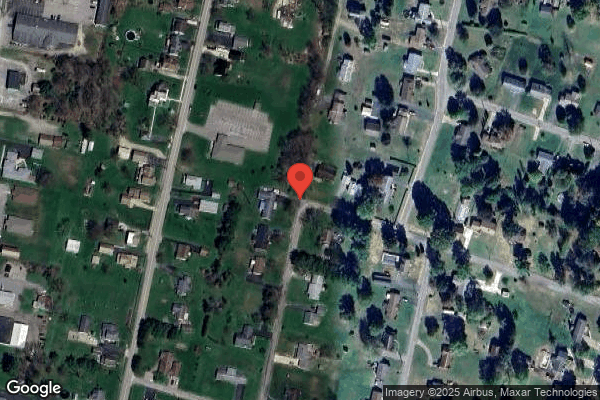
100 FAIRFIELD DRIVE, SENECA, PA 16346 (814) 678-4642
Non profit - Corporation 16 Beds UPMC SENIOR COMMUNITIES Data: November 2025
Trust Grade
90/100
#137 of 653 in PA
Last Inspection: August 2025

Inspected within the last 6 months. Data reflects current conditions.

Overview

UPMC Northwest Transitional Care Unit has received an excellent Trust Grade of A, which indicates that it is highly recommended. It ranks #137 out of 653 facilities in Pennsylvania, placing it in the top half, and is the best option among 5 local facilities in Venango County. The facility's trend is stable, with 2 reported issues in both 2024 and 2025, and it has a strong staffing rating of 5 stars, with a turnover rate of 42%, lower than the state average. Notably, there have been no fines, and it has more RN coverage than 99% of Pennsylvania facilities, which is a significant advantage for resident care. However, there are some concerns. The facility failed to provide a clinical rationale for continuing psychotropic medications beyond 14 days without exploring non-drug alternatives for two residents, and there were issues with outdated medications not being discarded properly. Additionally, there was a failure to administer oxygen according to physician orders for one resident, which raises concerns about adherence to care protocols. Overall, while there are commendable strengths, families should be aware of these specific incidents that indicate room for improvement in care practices.

Trust Score
A
90/100
In Pennsylvania
#137/653
Top 20%
Safety Record
Low Risk
No red flags
Inspections
Holding Steady
2 → 2 violations
Staff Stability
○ Average
42% turnover. Near Pennsylvania's 48% average. Typical for the industry.
Penalties
✓ Good
No fines on record. Clean compliance history, better than most Pennsylvania facilities.
Skilled Nurses
✓ Good
Each resident gets 213 minutes of Registered Nurse (RN) attention daily — more than 97% of Pennsylvania nursing homes. RNs are the most trained staff who catch health problems before they become serious.
Violations
✓ Good
Only 5 deficiencies on record. Cleaner than most facilities. Minor issues only.
★★★★★
5.0
Overall Rating
★★★★★
5.0
Staff Levels
★★★★★
5.0
Care Quality
★★★★★
5.0
Inspection Score
Stable
2024: 2 issues
2025: 2 issues

The Good

  • 5-Star Staffing Rating · Excellent nurse staffing levels
  • 5-Star Quality Measures · Strong clinical quality outcomes
  • Full Sprinkler Coverage · Fire safety systems throughout facility
  • No fines on record
  • Staff turnover below average (42%)

    6 points below Pennsylvania average of 48%

Facility shows strength in staffing levels, quality measures, fire safety.

The Bad

Staff Turnover: 42%

Near Pennsylvania avg (46%)

Typical for the industry

Chain: UPMC SENIOR COMMUNITIES

Part of a multi-facility chain

Ask about local staffing decisions and management

The Ugly 5 deficiencies on record

Aug 2025 2 deficiencies
CONCERN (D)

Potential for Harm - no one hurt, but risky conditions existed

Deficiency F0605 (Tag F0605)

Could have caused harm · This affected 1 resident

Based on review of facility policy, clinical records, and staff interview, it was determined that the facility failed to provide a clinical rationale for the continued use of an as needed (PRN) psycho...

Read full inspector narrative →
Based on review of facility policy, clinical records, and staff interview, it was determined that the facility failed to provide a clinical rationale for the continued use of an as needed (PRN) psychotropic (mind altering) medication beyond 14 days and failed to provide evidence that non-pharmacological interventions (interventions attempted to calm a resident other than medication) were attempted prior to the administration of a PRN psychotropic medication for two of six residents reviewed (Residents R17 and R29).Findings include: A facility policy entitled Psychotropic Drug Management dated 4/21/25, revealed PRN orders for psychotropic medications will be limited to 14 days unless the physician identifies the rationale to extend the medication beyond 14 days. Identify non-pharmacological interventions that can be utilized to use the lowest possible dose and to work in conjunction with the goal of reduction or discontinuation. Documentation will reflect attempts to implement care-planned, non-pharmacological approaches and ongoing effectiveness of these interventions. Resident R17's clinical record revealed an admission date of 7/25/25, with diagnoses that included hypertension (high blood pressure), congestive heart failure (the inability of the heart to maintain an adequate supply of blood to organs and tissues), and obstructive sleep apnea (a condition when a person repeatedly stops and starts breathing when they are sleeping). A physician's order dated 7/25/25, identified to administer clonazepam (anti-anxiety medication) 0.5 milligrams (mg) by mouth two times a day PRN for anxiety, this order was discontinued on 8/6/25. A new physician's order dated 8/6/25, identified to administer clonazepam 0.5 mg by mouth two times a day PRN for anxiety and lacked the required clinical rationale for continued use beyond 14 days. Review of Resident R17's July 2025 and August 2025 Medication Administration Records (MAR) revealed that the PRN clonazepam was used on 7/30/25, 7/31/25, 8/3/25, 8/4/25, 8/7/25, 8/8/25, 8/9/25, 8/10/25, and 8/11/25. The clinical record lacked evidence of non-pharmacological interventions being attempted prior to the administration of the PRN clonazepam for two administrations in July 2025 and for eight administrations in August 2025. Resident R29's clinical record revealed an admission date of 8/7/25, with diagnoses that included respiratory failure, heart failure, and chronic kidney disease. A physician's order dated 8/7/25, identified to administer clonazepam 3 mg by mouth PRN for restlessness at bedtime. Review of the August 2025 MAR for Resident R29 revealed that the PRN clonazepam was used on 8/7/25, 8/9/25, 8/10/25, and 8/11/25. The clinical record lacked evidence of non-pharmacological interventions being attempted prior to the administration of the PRN clonazepam for four administrations in August 2025. During an interview on 8/12/25, at 2:10 p.m. Registered Nurse Employee E1 confirmed that Resident R17's clonazepam lacked the required stop date within 14 days or a clinical rationale for continued use beyond 14 days and that Resident R17's and Resident R29's clinical records lacked evidence that non-pharmacological interventions were being attempted prior to administering the PRN clonazepam. 28 Pa. Code 211.12(d)(1)(3)(5) Nursing services
CONCERN (D)

Potential for Harm - no one hurt, but risky conditions existed

Deficiency F0761 (Tag F0761)

Could have caused harm · This affected 1 resident

Based on review of facility policies, observations, and staff interviews, it was determined that the facility failed to appropriately discard outdated medications for one of one medication carts revie...

Read full inspector narrative →
Based on review of facility policies, observations, and staff interviews, it was determined that the facility failed to appropriately discard outdated medications for one of one medication carts reviewed.Review of facility policy entitled Multi Dose Medication-A dated 4/21/25, indicated all multiple use (multi-dose) medications should be labeled by the facility with the date first use so that expiration dates or date for last use can be determined, and discard any vial found opened without being dated. Review of facility policy entitled Expiration Dates dated 4/21/25, indicated injectable diabetes product storage recommendations, Humalog insulin pen opened expires in 28 days. Review of manufacturer's guidelines revealed that an open pen of Humalog Insulin must be used within 28 days after opening or be discarded, even if the vial still contained insulin. Observation of drug storage on 8/11/25, at 3:55 p.m. of the medication cart revealed an open Humalog Insulin pen with no resident name or date indicating when the insulin pen was opened. During an interview on 8/11/25, at the time of observation Licensed Practical Nurse (LPN) Employee E2 confirmed that the open Humalog insulin pen lacked a resident name and an open date, and staff were unable to determine the discard date. LPN Employee E2 also confirmed that the insulin pen should have been discarded. 28 Pa. Code 201.18(b)(1) Management 28 Pa. Code 211.9(a)(1) Pharmacy services 28 Pa. Code 211.12(d)(1) Nursing services
Sept 2024 2 deficiencies
CONCERN (D)

Potential for Harm - no one hurt, but risky conditions existed

Respiratory Care (Tag F0695)

Could have caused harm · This affected 1 resident

Based on review of facility policy and clinical records, observations, and staff interview, it was determined that the facility failed to provide oxygen according to physician's orders for one of one ...

Read full inspector narrative →
Based on review of facility policy and clinical records, observations, and staff interview, it was determined that the facility failed to provide oxygen according to physician's orders for one of one residents reviewed for respiratory services (Resident R1). Findings include: Review of facility policy dated 8/2024, entitled Oxygen Administration indicated that Verify physician order for desired oxygen saturation and oxygen flow rate. And do not change the oxygen flow rate on fixed flow orders or titrate outside ordered parameters without contacting the physician and obtaining appropriate orders. Resident R1's clinical record revealed an admission date of 8/16/24, with diagnoses that included chronic obstructive pulmonary disease (condition when your lungs do not have adequate air flow), and hypertension (high blood pressure). Review of Resident R1's clinical record revealed a physician's order dated 8/16/24, for Oxygen via Nasal Cannula (a thin tube with two prongs that fit into the resident's nostrils to deliver oxygen) 3 lpm (liters per minute) at all times. Observation on 9/4/24, at 10:30 a.m. revealed Resident R1 laying in his/her bed with supplemental oxygen in place and the liter flow rate set at 2 lpm. Observation on 9/4/24, at 12:25 p.m. revealed Resident R1 laying in his/her bed with supplemental oxygen in place and liter flow rate set at 2 lpm. Observation on 9/5/24, at 8:50 a.m. revealed Resident R1 laying in his/her bed with supplemental oxygen in place and the liter flow rate set at 2 lpm. During an interview on 9/5/24, at 12:50 p.m. Registered Nurse Employee E2 confirmed that Resident R1's supplemental oxygen was on and set at 2 lpm and the provision of their respiratory services was not consistent with the physician's order dated 8/16/24, for oxygen at 3 lpm. 28 Pa. Code 211.10(c) Resident care policies 28 Pa. Code 211.12(d)(1)(5) Nursing services
CONCERN (D)

Potential for Harm - no one hurt, but risky conditions existed

Deficiency F0761 (Tag F0761)

Could have caused harm · This affected 1 resident

Based on review of facility policy, observation, and staff interviews, it was determined that the facility failed to store controlled schedule II-V medications (medications that may be abused or cause...

Read full inspector narrative →
Based on review of facility policy, observation, and staff interviews, it was determined that the facility failed to store controlled schedule II-V medications (medications that may be abused or cause addiction that are closely monitored due to high risk of diversion) in a separately locked, permanently affixed compartment in the medication refrigerator. Findings include: A facility policy entitled, Management of Controlled Drugs dated 8/2024, revealed, Storage and maintenance of Controlled drugs: Store and maintain controlled drugs properly according to federal, state, or local regulations. Observation on 9/4/24, at 1:05 p.m. of the medication room refrigerator revealed several vials of controlled scheduled II-V medications in a separately locked container that was attached to a removable shelf, therefore it was not permanently affixed to the refrigerator, this was witnessed and confirmed by the Licensed Practical Nurse Employee E1. Interview with the Director of Nursing on 9/4/24, at approximately 1:30 p.m. confirmed that the controlled scheduled II-V medications should be stored in a separately locked permanently affixed compartment, and not attached to a removable shelf. 28 Pa. Code 201.14(a) Responsibility of licensee 28 Pa. Code 201.18(b)(1) Management 28 Pa. Code 201.18(e)(1) Management
Oct 2023 1 deficiency
CONCERN (D)

Potential for Harm - no one hurt, but risky conditions existed

Medication Errors (Tag F0758)

Could have caused harm · This affected 1 resident

Based on review of facility policy, clinical records, and staff interview, it was determined that the facility failed to provide evidence that non-pharmacological interventions (interventions attempte...

Read full inspector narrative →
Based on review of facility policy, clinical records, and staff interview, it was determined that the facility failed to provide evidence that non-pharmacological interventions (interventions attempted to calm a resident other than medication) were attempted prior to the administration of an as needed (PRN) psychotropic (mind altering) medication for one of five residents reviewed for unnecessary medications (Resident R63). Findings include: Review of facility policy entitled, Psychotropic Drug Management dated 6/2023, states If antipsychotic medications are prescribed, documentation must clearly show indication for the medication, multiple attempts to implement care-planned, non-pharmacological approaches and ongoing evaluation of the effectiveness of these interventions. Review of Resident R63's clinical record revealed an admission date of 9/16/23, with diagnoses that included physical deconditioning, Diabetes type II, hypertension (high blood pressure), and anxiety. The clinical record revealed that on 9/16/2023, Resident R63's physician ordered Lorazepam (medication ordered to treat anxiety) one milligram (mg) three times a day PRN for anxiety. Review of the September 2023 and October 2023 Medication Administration Record (MAR) for Resident R63 revealed that the PRN Lorazepam was used on 9/16/23, 9/17/23, 9/22/23, 9/23/23, 9/24/23, 9/25/23, 9/27/23, 9/29/23, 9/30/23, 10/1/23, 10/2/23, and 10/3/23. Review of September 2023 and October 2023 MAR, clinical records, and progress notes revealed that there was no evidence of non-pharmacological interventions being attempted prior to the administration of the PRN Lorazepam for the nine administrations in September 2023 and the three administrations in October 2023. During an interview on 10/04/2023, at 10:25 a.m. Registered Nurse Employee E1 confirmed that R63's clinical record lacked evidence that non-pharmacological interventions were attempted prior to the PRN administration of psychotropic medications. 28 Pa. Code 211.12(d)(1)(3)(5) Nursing services
Understanding Severity Codes (click to expand)
Life-Threatening (Immediate Jeopardy)
J - Isolated K - Pattern L - Widespread
Actual Harm
G - Isolated H - Pattern I - Widespread
Potential for Harm
D - Isolated E - Pattern F - Widespread
No Harm (Minor)
A - Isolated B - Pattern C - Widespread

Questions to Ask on Your Visit

  • "Can I speak with families of current residents?"
  • "What's your RN coverage like on weekends and overnight?"

Our Honest Assessment

Strengths
  • • Grade A (90/100). Above average facility, better than most options in Pennsylvania.
  • • No major safety red flags. No abuse findings, life-threatening violations, or SFF status.
  • • No fines on record. Clean compliance history, better than most Pennsylvania facilities.
  • • Only 5 deficiencies on record. Cleaner than most facilities. Minor issues only.
Concerns
  • • No significant concerns identified. This facility shows no red flags across CMS ratings, staff turnover, or federal penalties.
Bottom line: Generally positive indicators. Standard due diligence and a personal visit recommended.

About This Facility

What is Upmc Northwest Transitional Care Unit's CMS Rating?

CMS assigns UPMC NORTHWEST TRANSITIONAL CARE UNIT an overall rating of 5 out of 5 stars, which is considered much above average nationally. Within Pennsylvania, this rating places the facility higher than 99% of the state's 100 nursing homes. This rating reflects solid performance across the metrics CMS uses to evaluate nursing home quality.

How is Upmc Northwest Transitional Care Unit Staffed?

CMS rates UPMC NORTHWEST TRANSITIONAL CARE UNIT's staffing level at 5 out of 5 stars, which is much above average compared to other nursing homes. Staff turnover is 42%, compared to the Pennsylvania average of 46%. This relatively stable workforce can support continuity of care. RN turnover specifically is 60%, which is notably high. RNs provide skilled clinical oversight, so turnover in this role can affect medical care quality.

What Have Inspectors Found at Upmc Northwest Transitional Care Unit?

State health inspectors documented 5 deficiencies at UPMC NORTHWEST TRANSITIONAL CARE UNIT during 2023 to 2025. These included: 5 with potential for harm.

Who Owns and Operates Upmc Northwest Transitional Care Unit?

UPMC NORTHWEST TRANSITIONAL CARE UNIT is owned by a non-profit organization. Non-profit facilities reinvest revenue into operations rather than distributing to shareholders. The facility is operated by UPMC SENIOR COMMUNITIES, a chain that manages multiple nursing homes. With 16 certified beds and approximately 13 residents (about 81% occupancy), it is a smaller facility located in SENECA, Pennsylvania.

How Does Upmc Northwest Transitional Care Unit Compare to Other Pennsylvania Nursing Homes?

Compared to the 100 nursing homes in Pennsylvania, UPMC NORTHWEST TRANSITIONAL CARE UNIT's overall rating (5 stars) is above the state average of 3.0, staff turnover (42%) is near the state average of 46%, and health inspection rating (5 stars) is much above the national benchmark.

What Should Families Ask When Visiting Upmc Northwest Transitional Care Unit?

Based on this facility's data, families visiting should ask: "Can I visit during a mealtime to observe dining assistance and food quality?" "How do you handle medical emergencies, and what is your hospital transfer rate?" "Can I speak with family members of current residents about their experience?"

Is Upmc Northwest Transitional Care Unit Safe?

Based on CMS inspection data, UPMC NORTHWEST TRANSITIONAL CARE UNIT has a clean safety record: no substantiated abuse findings (meaning no confirmed cases of resident harm), no Immediate Jeopardy citations (the most serious violation level indicating risk of serious injury or death), and is not on the Special Focus Facility watch list (a federal program monitoring the lowest-performing 1% of nursing homes). The facility has a 5-star overall rating and ranks #1 of 100 nursing homes in Pennsylvania. While no facility is perfect, families should still ask about staff-to-resident ratios and recent inspection results during their visit.

Do Nurses at Upmc Northwest Transitional Care Unit Stick Around?

UPMC NORTHWEST TRANSITIONAL CARE UNIT has a staff turnover rate of 42%, which is about average for Pennsylvania nursing homes (state average: 46%). Moderate turnover is common in nursing homes, but families should still ask about staff tenure and how the facility maintains care continuity when employees leave.

Was Upmc Northwest Transitional Care Unit Ever Fined?

UPMC NORTHWEST TRANSITIONAL CARE UNIT has no federal fines on record. CMS issues fines when nursing homes fail to meet care standards or don't correct problems found during inspections. The absence of fines suggests the facility has either maintained compliance or corrected any issues before penalties were assessed. This is a positive indicator, though families should still review recent inspection reports for the full picture.

Is Upmc Northwest Transitional Care Unit on Any Federal Watch List?

UPMC NORTHWEST TRANSITIONAL CARE UNIT is not on any federal watch list. The most significant is the Special Focus Facility (SFF) program, which identifies the bottom 1% of nursing homes nationally based on persistent, serious quality problems. Not being on this list means the facility has avoided the pattern of deficiencies that triggers enhanced federal oversight. This is a positive indicator, though families should still review the facility's inspection history directly.