OAK RIDGE REHABILITATION & HEALTHCARE CENTER
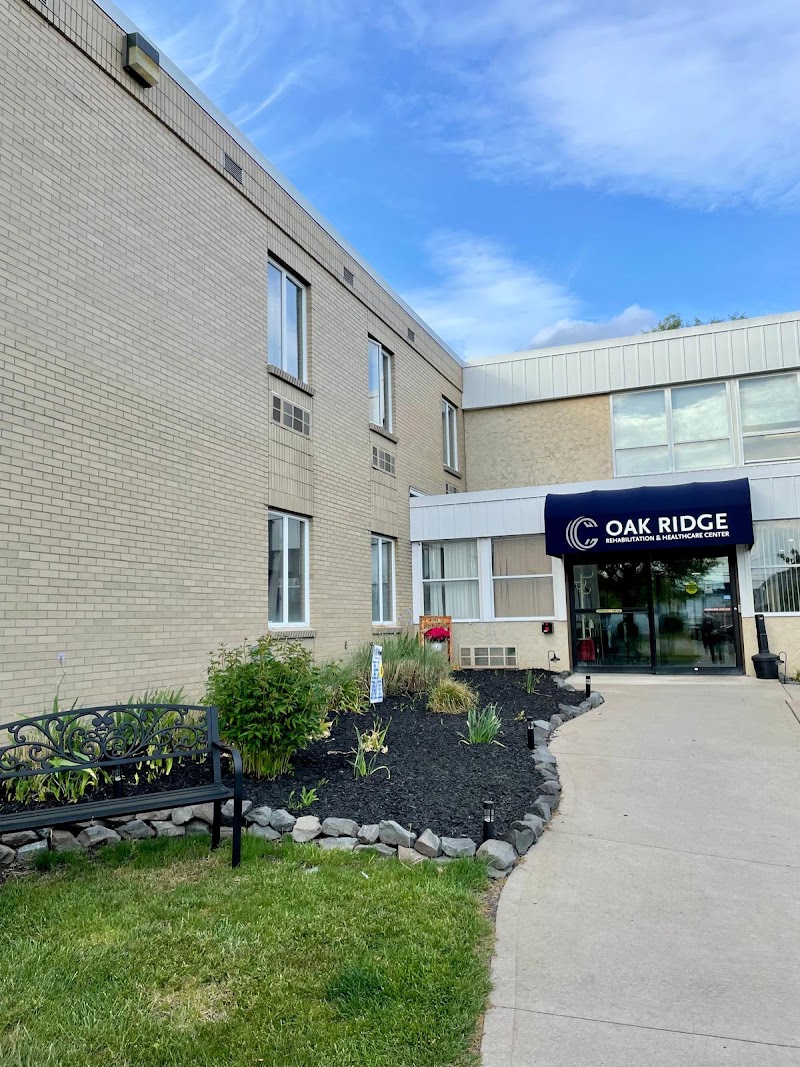
500 WEST HOSPITAL STREET, TAYLOR, PA 18517 (570) 562-2102
For profit - Corporation 142 Beds CENTURY HEALTHCARE Data: November 2025 1 Immediate Jeopardy citation
Trust Grade
0/100
#617 of 653 in PA
Last Inspection: April 2025

Within standard 12-15 month inspection cycle. Federal law requires annual inspections.

Overview

Oak Ridge Rehabilitation & Healthcare Center has received a Trust Grade of F, indicating significant concerns about the facility’s overall quality and care. Ranked #617 out of 653 facilities in Pennsylvania places it in the bottom half, and as #17 out of 17 in Lackawanna County, it suggests that only one other local option is better. Although the facility appears to be improving with issues decreasing from 33 in 2024 to 10 in 2025, it still has serious weaknesses, including $113,058 in fines, which is higher than 91% of Pennsylvania facilities. Staffing is below average with a rating of 2 out of 5 stars and a 50% turnover rate, while RN coverage is concerning, being less than 89% of facilities in the state. Specific incidents highlighted by inspectors include a critical failure to store perishable foods safely, putting 102 of 103 residents at risk for foodborne illnesses, and serious issues such as a resident sustaining a fractured hip due to inadequate management of dementia-related behaviors. Additionally, another resident experienced a fall with serious injuries because necessary safety interventions were not implemented in time. Overall, while there are some signs of improvement, families should weigh these serious concerns when considering Oak Ridge for their loved ones.

Trust Score
F
0/100
In Pennsylvania
#617/653
Bottom 6%
Safety Record
High Risk
Review needed
Inspections
Getting Better
33 → 10 violations
Staff Stability
⚠ Watch
50% turnover. Above average. Higher turnover means staff may not know residents' routines.
Penalties
✓ Good
$113,058 in fines. Lower than most Pennsylvania facilities. Relatively clean record.
Skilled Nurses
⚠ Watch
Each resident gets only 22 minutes of Registered Nurse (RN) attention daily — below average for Pennsylvania. Fewer RN minutes means fewer trained eyes watching for problems.
Violations
⚠ Watch
74 deficiencies on record. Higher than average. Multiple issues found across inspections.
★☆☆☆☆
1.0
Overall Rating
★★☆☆☆
2.0
Staff Levels
★★★★☆
4.0
Care Quality
★☆☆☆☆
1.0
Inspection Score
Stable
2024: 33 issues
2025: 10 issues

The Good

  • 4-Star Quality Measures · Strong clinical quality outcomes
  • Full Sprinkler Coverage · Fire safety systems throughout facility
  • No fines on record

Facility shows strength in quality measures, fire safety.

The Bad

1-Star Overall Rating

Below Pennsylvania average (3.0)

Significant quality concerns identified by CMS

Staff Turnover: 50%

Near Pennsylvania avg (46%)

Higher turnover may affect care consistency

Federal Fines: $113,058

Well above median ($33,413)

Significant penalties indicating serious issues

Chain: CENTURY HEALTHCARE

Part of a multi-facility chain

Ask about local staffing decisions and management

The Ugly 74 deficiencies on record

1 life-threatening 3 actual harm
Sept 2025 1 deficiency
CONCERN (D) 📢 Someone Reported This

A family member, employee, or ombudsman was alarmed enough to file a formal complaint

Potential for Harm - no one hurt, but risky conditions existed

Investigate Abuse (Tag F0610)

Could have caused harm · This affected 1 resident

**NOTE- TERMS IN BRACKETS HAVE BEEN EDITED TO PROTECT CONFIDENTIALITY** Based on clinical record review, review of facility policy, investigative documentation, and staff interviews, it was determined...

Read full inspector narrative →
**NOTE- TERMS IN BRACKETS HAVE BEEN EDITED TO PROTECT CONFIDENTIALITY** Based on clinical record review, review of facility policy, investigative documentation, and staff interviews, it was determined the facility failed to thoroughly investigate an incident involving a resident being left unattended while at an outside medical appointment to determine whether neglect occurred for one of 22 sampled residents (Resident 1).Findings include: A review of the facility policy titled Abuse Policy last reviewed by the facility on April 8, 2025, revealed it is the facility's policy that residents have the right to be free from abuse and neglect. The policy indicated it is the expectation that any allegation of abuse or neglect is to be reported to the Nursing Home Administrator and other officials. The policy further indicates that an investigation into the allegation will be initiated immediately and include complete statements and interviews from staff and residents involved in the allegation within time frames required by federal regulations. A review of Resident 1's clinical record revealed the resident was admitted to the facility on [DATE], with diagnoses including dementia (conditions that cause a decline in cognitive abilities, such as memory, thinking, reasoning, and problem-solving, severe enough to interfere with daily life, and heart failure (a condition in which the heart does not pump blood effectively, leading to fatigue and difficulty with daily activities). A review of a quarterly Minimum Data Set assessment (MDS-a federally mandated standardized assessment process conducted periodically to plan resident care) dated August 22, 2025, revealed that Resident 1 had severely impaired cognition with a BIMS score of 4 (Brief Interview for Mental Status-a tool within the Cognitive Section of the MDS that is used to assess the resident's attention, orientation, and ability to register and recall new information; (a score of 0-7 indicates severe cognitive impairment). A review of the resident's comprehensive person-centered care plan initiated on August 25, 2025, revealed Resident 1 was identified as at risk for elopement (leaving the facility without staff awareness or supervision). The care plan directed that Resident 1 would not leave the facility unattended. An interview with Employee 1NA (Nurse Aide) conducted September 24,2025, at 9:39AM, revealed on September 12, 2025, revealed that on September 12, 2025, she accompanied Resident 1 to an outside cardiology appointment. Employee 1 stated that after the appointment, she wheeled the resident to a lobby area, closed the door, and went to use the restroom, leaving the resident unattended. Employee 1 stated that when she exited the restroom, Resident 1 was no longer in the lobby. She reported she then ran outside and observed Resident 1 with a [NAME] driver, who was questioning the resident about where her caregiver was. The interview further revealed that upon return to the facility, Employee 1 verbally reported the incident to Employee 2, an LPN (licensed practical nurse). Employee 1 stated that Employee 2 provided her education not to leave residents who were identified as elopement risks unattended at any time. An interview with Employee 2, conducted on September 24, 2025, at 9:58 AM, confirmed that Employee 1 NA reported the incident. Employee 2 LPN stated she verbally educated Employee 1NA and wrote a witness statement, which she provided to Employee 3, an RN (registered nurse) Supervisor. Employee 2 LPN stated she followed her chain of command. An interview with Employee 3, RN Supervisor, conducted on September 24, 2025, at 10:35 AM, confirmed she was the RN Supervisor on duty on September 12, 2025. Employee 3 stated she was told about the incident by Employee 4, the transportation driver, later that evening at the end of her working shift around 7:00PM). Employee 3 stated she believed the information was a rumor and did not report it to the Nursing Home Administrator (NHA) or the Director of Nursing (DON). Employee 3 further stated she was not directly informed by Employee 2 about the incident. An interview with Employee 4 (Transportation Driver) conducted September 24, 2025, at 11:16 AM revealed on September 12, 2025, Employee 4 arrived at the outside cardiology facility to transport Resident 1 back to her facility. Employee 4 stated upon arrival at the cardiology office he witnessed Resident 1, Employee 1 NA, and the [NAME] driver outside of the facility. Employee 4 stated the [NAME] driver informed him Resident 1 was witnessed to be propelling herself out of the facility when the [NAME] driver asked her where she was going. While the [NAME] driver was questioning the resident, Employee 1 NA came running out of the building to the resident. The [NAME] driver stated Employee 1 NA was using the restroom when the resident began to wheel herself out of the facility but was stopped. Employee 4, transportation driver further stated upon return to the facility he told Employee 3 RN Supervisor about the incident but did not report the information to the NHA or the DON. An interview with the DON on September 24, 2025, at 11:30 AM, revealed she was not made aware of the incident involving Resident 1 until the survey team's investigation. Despite staff interviews and statements, the facility failed to implement its written abuse policy by not ensuring the incident was reported to administration, by not initiating an immediate investigation, and by not collecting statements from all parties involved. The failure to investigate whether neglect (defined as the failure to provide goods and services necessary to avoid physical harm, mental anguish, or emotional distress) occurred placed Resident 1 at risk for further neglect, elopement, or harm. 28 Pa. Code 201.14 (a)(c) Responsibility of licensee 28 Pa. Code 201.18(e)(1) Management 28 Pa. Code 201.29 (a)(c) Resident Rights 28 Pa. Code 211.10(c)(d) Resident Care policies. 28 Pa. Code 211.12 (c)Nursing Services
Aug 2025 1 deficiency
CONCERN (D) 📢 Someone Reported This

A family member, employee, or ombudsman was alarmed enough to file a formal complaint

Potential for Harm - no one hurt, but risky conditions existed

Deficiency F0582 (Tag F0582)

Could have caused harm · This affected 1 resident

Based on clinical record review, interview, and policy review, it was determined the facility failed to provide residents and/or their representatives with the required written notice of Medicare cove...

Read full inspector narrative →
Based on clinical record review, interview, and policy review, it was determined the facility failed to provide residents and/or their representatives with the required written notice of Medicare coverage termination, including an explanation of the Skilled Nursing Facility Advance Beneficiary Notice of Non-Coverage (SNF-ABN) and the right to appeal, prior to the end of Medicare Part A services for two of three sampled residents reviewed for Medicare coverage notices (Resident 1 and Resident 2).Findings Include: A review of Resident 1's clinical record revealed admission to the facility on May 14, 2025, with diagnoses to include Parkinsons disease (a progressive, neurological disease), muscle weakness and diabetes. Review of the resident's Medicare coverage documentation revealed the last day of covered Medicare Part A services was June 5, 2025. Further review of the Skilled Nursing Facility Advance Beneficiary Notice of Non-Coverage (SNF-ABN) form dated June 3, 2025, which is a standardized written notice that facilities are required to issue to a Medicare beneficiary when services are expected to end or coverage will be denied. The notice must explain the reason for non-coverage; the date coverage will end and inform the resident or their representative of their right to appeal the decision. The form indicated Resident 1 requested the form be reviewed with her responsible party, her daughter. The facility social worker documented the responsible party's name and telephone number, the date June 3, 2025, and noted no appeal. There was no evidence that the resident or her responsible party received the notice, reviewed the form, or were informed of the opportunity to appeal the coverage termination. During a telephone interview conducted on August 12, 2025, at 12:00 P.M., Resident 1's daughter stated that the facility did not contact her regarding the SNF-ABN and that she was not advised of her right to appeal the denial of coverage. A review of Resident 2's clinical record revealed admission to the facility on July 14, 2025, with diagnoses to include Parkinson's disease (a progressive, neurological disease) and a history of falls. The clinical record indicated the resident was his own responsible party. A review of an admission minimum data set assessment (MDS a federally mandated standardized assessment conducted at specific intervals to plan resident care) dated July 17, 2025 revealed a BIMS score of 10 (Brief Interview for Mental Status a tool within the Cognitive Section of the MDS that is used to assess the resident's attention, orientation, and ability to register and recall new information. A score between 8 and 12 indicates moderate cognitive impairment). Review of the resident's Medicare coverage documentation revealed the last day of covered Medicare Part A services was July 31, 2025. Further review of the SNF-ABN form dated July 29, 2025, revealed the resident signed the form, and the social worker documented no appeal. There was no evidence that the resident was provided with an explanation of the form or informed of the right to appeal. During an interview on August 12, 2025, at 12:30 P.M., Resident 2 stated that he was asked by someone to sign the form. He stated he was not given an explanation about the SNF-ABN and was not advised that he could appeal the denial of coverage. An interview with the Nursing Home Administrator (NHA) on August 12, 2025, at 1:30 PM the aforementioned information was reviewed with the NHA. The NHA acknowledged the information which was provided by the surveyor. 28 Pa. Code 201.14 (a) Responsibility of licensee. 28 Pa. Code 201.18(e)(1) Management. 28 Pa. Code 201.29(a) Resident Rights.
Apr 2025 8 deficiencies
CONCERN (D)

Potential for Harm - no one hurt, but risky conditions existed

Abuse Prevention Policies (Tag F0607)

Could have caused harm · This affected 1 resident

Based on a review of the facility's abuse prohibition policy, employee personnel files and staff interviews, it was determined the facility failed to fully develop and implement its established abuse ...

Read full inspector narrative →
Based on a review of the facility's abuse prohibition policy, employee personnel files and staff interviews, it was determined the facility failed to fully develop and implement its established abuse prohibition procedures by not adequately screening two of five employees for employment (Employee 2 and 3). Findings include: A review of the facility's Resident Abuse policy last reviewed by the facility April 2025, revealed the requirement for screening potential employees included obtaining references from the most recent or previous employer. Review of employee personnel files revealed the following: Employee 2 (Dietary Manager): Hired on March 3, 2025. The application listed previous employers, but there was no documentation showing the facility had contacted the most recent former employer. Employee 3 (Housekeeping): Hired on January 10, 2025. The application listed prior employers, yet no evidence was found to verify that the facility obtained references or employment information from previous employers. Interview with the Nursing Home Administrator (NHA) on April 25, 2025, at 12:15 p.m. the NHA verified there was no evidence that previous employers were contacted for information regarding the employees' past work history. The facility failed to follow its own abuse prohibition policy by not verifying previous employment for two out of five new hires. 28 Pa. Code 201.18 (e)(1) Management 28 Pa. Code 201.29 (a)(c)Resident Rights 28 Pa. Code 201.14(a) Responsibility of Licensee 28 Pa. Code 201.19 (1) Personnel records
CONCERN (D)

Potential for Harm - no one hurt, but risky conditions existed

Deficiency F0637 (Tag F0637)

Could have caused harm · This affected 1 resident

**NOTE- TERMS IN BRACKETS HAVE BEEN EDITED TO PROTECT CONFIDENTIALITY** Based on a review of clinical records and the Resident Assessment Instrument (RAI) and staff interviews, it was determined the f...

Read full inspector narrative →
**NOTE- TERMS IN BRACKETS HAVE BEEN EDITED TO PROTECT CONFIDENTIALITY** Based on a review of clinical records and the Resident Assessment Instrument (RAI) and staff interviews, it was determined the facility failed to conduct a significant change Minimum Data Set Assessments (MDS - a federally mandated standardized assessment process conducted at specific intervals to plan resident care) for one of 27 residents reviewed (Resident 76). Findings include: According to the RAI User's Manual dated October 2023 a Significant Change in Status MDS assessment is required within 14 days of the determination of the significant change when: A resident enrolls in a hospice program; or A resident changes hospice providers and remains in the facility; or A resident receiving hospice services discontinues those services; or A resident experiences a consistent pattern of changes, with either two or more areas of decline or two or more areas of improvement, from baseline (as indicated by comparison of the resident's current status to the most recent CMS-required MDS). A review of the clinical record revealed that Resident 76 was admitted to the facility on [DATE], with diagnoses that included Alzheimer's dementia and hyperlipidemia. A review of the clinical record revealed that Resident 76 had experienced a significant decline in condition and elected Hospice Services/Care (a type of care and philosophy of care that focuses on the palliation of a chronically ill, terminally ill or seriously ill patient's pain and symptoms, attending to their emotional and spiritual needs) on July 1, 2024. There was no documented evidence a significant change MDS was completed to reflect that Resident 76's hospice services were initiated. Interview with the Director of Nursing on April 24, 2025, at approximately 1:45 PM, confirmed that a comprehensive significant change MDS assessment was not completed as required. 28 Pa. Code 211.12(c)(d)(3)(5) Nursing services
CONCERN (D)

Potential for Harm - no one hurt, but risky conditions existed

Deficiency F0658 (Tag F0658)

Could have caused harm · This affected 1 resident

**NOTE- TERMS IN BRACKETS HAVE BEEN EDITED TO PROTECT CONFIDENTIALITY** Based on observation, a review of select facility policy, review of clinical records and staff and resident interviews it was de...

Read full inspector narrative →
**NOTE- TERMS IN BRACKETS HAVE BEEN EDITED TO PROTECT CONFIDENTIALITY** Based on observation, a review of select facility policy, review of clinical records and staff and resident interviews it was determined the facility failed to provide nursing services consistent with professional standards of quality to ensure that licensed nurses follow physician's orders and ensure accurate medication administration as prescribed for one resident (Resident 31) out of one sampled. Findings include: The Pennsylvania Code, Title 49, Professional and Vocational Standards, State Board of Nursing 21.11 (a)(1)(2)(4) indicated the registered nurse is responsible for assessing human responses and plans, implementing nursing care, analyzing/comparing data with the norm in determining care needs, and carrying out nursing care actions that promote, maintain and restore the well-being of individuals. According to the Pennsylvania Code Title 49, Professional and Vocational Standards Department of State, Chapter 21 State Board of Nursing, Chapter 21.14 Functions of the RN (Registered Nurse) requires the following: The RN is prepared to function as a member of the health care team by exercising sound nursing judgement based on preparations, knowledge, skills, understandings and past experiences in nursing situations. The RN participates in the planning, implementation and evaluation of nursing care in settings where nursing takes place. (a) A licensed RN may administer a drug ordered for a patient in the dosage and manner prescribed in accordance with the following: (d) The Board recognizes codes of behavior as developed by appropriate practical nursing associations as the criteria for assuring safe and effective practice. A review of Facility Policy Labeled Administering Medications last reviewed on April 8, 2025, revealed insulin pens are clearly labeled with the resident's name and other identifying information. Prior to administering insulin with an insulin pen, the nurse is to verify the correct pen is used for that resident. A clinical record review revealed Resident 31 was admitted to the facility on [DATE], with diagnosis to include Type 2 Diabetes Mellitus (a condition in which the body does not use insulin normally and therefore cannot control the amount of sugar in the blood) and parkinsonism (a neurological condition causing movement problems). A review of a quarterly Minimum Data Set assessment (MDS- a federally mandated standardized assessment process conducted periodically to plan resident care) dated February 15, 2025, revealed Resident 31 is cognitively intact with a BIMS score of 14 (Brief Interview for Mental Status- a tool within the Cognitive Section of the MDS that is used to assess the resident's attention, orientation, and ability to register and recall new information; a score of 13-15 indicates cognition is intact). On April 24, 2025, at 8:10 AM, during a medication administration observation, Employee 1, Registered Nurse (RN), checked Resident 31's blood sugar, which registered 169 mg/dL. Employee 1 then administered 10 units of Novolog Flex Pen Reli On (insulin aspart), a short-acting insulin which replaces the insulin that is normally produced by the body by helping move sugar from the blood into other body tissues where it is used for energy), to Resident 31. Review of physician orders revealed an active order dated March 19, 2025, for Basaglar Kwik Pen (insulin glargine a long-acting insulin) to be administered 10 units subcutaneously once daily. Additionally, a separate sliding scale order for Novolog dated December 8, 2024, required administration only when blood glucose readings exceeded 200 mg/dL (201-250 = 2 units; 251-300 = 4 units, 301-350= inject 6 units; 351-400= inject 8 units). Resident 31's blood glucose of 169 mg/dL did not meet criteria for Novolog administration under the physician's sliding scale. The insulin administered was not the ordered long-acting Basaglar, nor was it indicated by the blood glucose reading. At 11:15 AM on April 24, 2025, inspection of the facility medication cart revealed Basaglar insulin was not available for Resident 31 for the daily scheduled injection. A medication usage analysis of the Novolog Flex Pen, opened on March 19, 2025, showed that 64 units had been administered, without qualifying blood sugar levels per the sliding scale order. During an interview with Employee 1 at approximately 12:00 PM on April 24, 2025, the RN stated she administered Novolog insulin, but documented Basaglar was given. She acknowledged failing to verify the medication type against the physician's orders prior to administration. An interview with the Director of Nursing (DON) on April 25, 2025, at approximately 9:00 AM, confirmed that Employee 1 failed to verify the insulin type, administered an incorrect medication, and failed to provide nursing services in accordance with professional standards of practice. 28 Pa. Code 211.12(d)(1)(3)(5) Nursing Services
CONCERN (D)

Potential for Harm - no one hurt, but risky conditions existed

Deficiency F0697 (Tag F0697)

Could have caused harm · This affected 1 resident

**NOTE- TERMS IN BRACKETS HAVE BEEN EDITED TO PROTECT CONFIDENTIALITY** Based on clinical record and select facility policy review and staff interview, it was determined the facility failed to attempt...

Read full inspector narrative →
**NOTE- TERMS IN BRACKETS HAVE BEEN EDITED TO PROTECT CONFIDENTIALITY** Based on clinical record and select facility policy review and staff interview, it was determined the facility failed to attempt non-pharmacological interventions to alleviate pain prior to the administration of a narcotic pain medication prescribed on an as needed (PRN) basis for one resident out of twenty-seven sampled (Resident 52). Findings include: Review of the facility policy titled Pain Assessment and Management, last reviewed by the facility on April 8, 2025, revealed non-pharmacological interventions may be appropriate alone or in conjunction with medications to manage pain. Examples of non-pharmacological interventions included environmental adjustments (such as adjusting room temperature or providing pressure-reducing surfaces), physical interventions (such as ices packs or warm compresses), exercise (such as range of motion exercises), and cognitive or behavioral strategies (such as relaxation techniques, music, or diversional activities). The policy indicated that while pharmacological interventions (such as analgesics) may be prescribed to manage pain, they do not usually address the underlying cause of the pain and can have adverse effects on the resident, including drowsiness, increased risk of falling, and loss of appetite. A clinical record review revealed Resident 52 was admitted to the facility on [DATE], with diagnoses that included osteoarthritis of the right knee (a chronic joint disease that causes the breakdown of cartilage). A review of a Quarterly Minimum Data Set assessment (MDS-a federally mandated standardized assessment process conducted periodically to plan resident care) dated February 25, 2025, revealed Resident 52 is cognitively intact with a BIMS score of 15 (Brief Interview for Mental Status- a tool within the Cognitive Section of the MDS that is used to assess the resident's attention, orientation, and ability to register and recall new information; a score of 13-15 indicates cognition is intact. Review of physician's orders dated March 19, 2025, revealed an order for Oxycodone HCl Capsule 5 MG, give 1 tablet by mouth every 8 hours as needed for moderate to severe pain 4-10 (pain scale of 1-10 indicates 1 no pain and 10 as worst amount of pain). A review the resident's medication administration record (MAR) dated March 1, 2025, through April 24, 2025, revealed Oxycodone HCL Oral Tablet 5mg, give 1 tablet by mouth every 8 hours as needed (PRN) for pain - Moderate (4-6) or Severe (7-10) was administered without documented attempts of nonpharmacological interventions on the following dates as follows: March 26, 2025, at 08:15 AM, administered an opioid PRN pain medication for a reported pain level at 6 (moderate pain) without attempted nonpharmacological interventions. March 28, 2025, at 01:42 AM, administered an opioid PRN pain medication for a reported pain level at 7 (severe pain) without attempted nonpharmacological interventions. March 29, 2025, at 09:11AM, administered an opioid PRN pain medication for a reported pain level at 5 (moderate pain) without attempted nonpharmacological interventions. March 30, 2025, at 03:02 AM, administered an opioid PRN pain medication for a reported pain level at 6 (moderate pain) without attempted nonpharmacological interventions. March 31, 2025, at 08:00PM, administered an opioid PRN pain medication for a reported pain level at 6 (moderate pain) without attempted nonpharmacological interventions. April 1, 2025, at 11:00AM, administered an opioid PRN pain medication for a reported pain level at 4 (moderate pain) without attempted nonpharmacological interventions. April 2, 2025, at 02:02 AM, administered an opioid PRN pain medication for a reported pain level at 7 (severe pain) without attempted nonpharmacological interventions. April 2, 2025, at 10:00AM, administered an opioid PRN pain medication for a reported pain level at 5 (moderate pain) without attempted nonpharmacological interventions. April 3, 2025, at 08:59 AM, administered an opioid PRN pain medication for a reported pain level at 6 (moderate pain) without attempted nonpharmacological interventions. April 4, 2025, at 3:26 PM, administered an opioid PRN pain medication for a reported pain level at 5 (moderate pain) without attempted nonpharmacological interventions. April 5, 2025, at 12:10AM, administered an opioid PRN pain medication for a reported pain level of 9 (severe pain) without attempted nonpharmacological interventions. April 8, 2025, at 09:37 AM, administered an opioid PRN pain medication for a reported pain level of 6 (moderate pain) without attempted nonpharmacological interventions. April 12, 2025, at 09:43AM, administered an opioid PRN pain medication for a reported pain level of 5 (moderate pain) without attempted nonpharmacological interventions. April 13, 2025, at 11:48PM, administered an opioid PRN pain medication for a reported pain level of 8(severe pain) without attempted nonpharmacological interventions. April 14, 2025, at 5:23 PM, administered an opioid PRN pain medication for a reported pain level of 5 (moderate pain) without attempted nonpharmacological interventions. April 15, 2025, at 01:49 AM, administered an opioid PRN pain medication for a reported pain level of 5 (moderate pain) without attempted nonpharmacological interventions. April 16, 2025, at 12:55 AM, administered an opioid PRN pain medication for a reported pain level of 7 (severe pain) without attempted nonpharmacological interventions. April 17, 2025, at 5:51 PM, administered an opioid PRN pain medication for a reported pain level of 8 (severe pain) without attempted nonpharmacological interventions. April 18, 2025, at 02:07 AM, administered an opioid PRN pain medication for a reported pain level of 8 (severe pain) without attempted nonpharmacological interventions. April 18, 2025, at 3:48PM, administered an opioid PRN pain medication for a reported pain level of 5 (moderate pain) without attempted nonpharmacological interventions. April 19, 2025, at 03:30AM, administered an opioid PRN pain medication for a reported pain level of 6 (moderate pain) without attempted nonpharmacological interventions. April 20, 2025, at 08:42 AM, administered an opioid PRN pain medication for a reported pain level of 4(moderate pain) without attempted nonpharmacological interventions. April 20, 2025, at 9:40PM, administered an opioid PRN pain medication for a reported pain level of 7(severe pain) without attempted nonpharmacological interventions. April 21, 2025, at 08:23 AM, administered an opioid PRN pain medication for a reported pain level of 4(moderate pain) without attempted nonpharmacological interventions. April 22, 2025, at 1:07 PM, administered an opioid PRN pain medication for a reported pain level of 7 (severe pain) without attempted nonpharmacological interventions. April 23, 2025, at 09:51 AM, administered an opioid PRN pain medication for a reported pain level of 8 (severe pain) without attempted nonpharmacological interventions. An interview with the Director of Nursing (DON) on April 24, 2025, at 11:00 AM, confirmed there was no documented evidence that non-pharmacological interventions were attempted prior to the administration of opioid pain medication to Resident 52. 28 Pa. Code 211.5(f)(ix) Medical records 28 Pa. Code 211.12 (c)(d)(1)(5) Nursing Services
CONCERN (D)

Potential for Harm - no one hurt, but risky conditions existed

Deficiency F0744 (Tag F0744)

Could have caused harm · This affected 1 resident

**NOTE- TERMS IN BRACKETS HAVE BEEN EDITED TO PROTECT CONFIDENTIALITY** Based on a review of clinical records and staff interview, it was determined the facility failed to develop and implement an ind...

Read full inspector narrative →
**NOTE- TERMS IN BRACKETS HAVE BEEN EDITED TO PROTECT CONFIDENTIALITY** Based on a review of clinical records and staff interview, it was determined the facility failed to develop and implement an individualized person-centered plan to address a resident's dementia-related behavioral symptoms for one out of 27 residents (Resident 115). Findings include: A review of Resident 115's clinical record revealed the resident was admitted to the facility on [DATE], with diagnoses which included dementia (a chronic or persistent disorder of the mental processes caused by brain disease or injury and marked by memory disorders, personality changes, and impaired reasoning). A review of Resident 115's Quarterly Minimum Data Set Assessment (MDS - a federally mandated standardized assessment conducted at specific intervals to plan resident care) dated April 2, 2025, revealed the resident was severely cognitively impaired. A review of Resident 115's nursing progress notes for the month of April 2025, revealed the resident had increased behaviors, almost daily, of self rising and increased anxiety and restlessness. A review of the resident's current care plan, initially dated March 15, 2024, last revised June 20, 2024 revealed these new and increased behaviors were not addressed in the her care plan there were no new interventions to address these mood and behavioral concerns . Further review revealed no documented evidence the facility had developed an individualized person-centered plan for the resident's dementia care, while maximizing the resident's dignity, autonomy, privacy, socialization, independence, choice, and safety and using individualized, non-pharmacological approaches to care, including purposeful and meaningful activities that address the resident's customary routines, interests, preferences, and choices to enhance the resident's well-being. The facility failed to develop and implement an individualized person-centered plan to address, modify and manage this resident's dementia-related behaviors. The resident's care plan for dementia failed to include individualized interventions based on an assessment of the resident's preferences, social/past life history, customary routines, and interests in an effort to manage, modify or decrease the resident's dementia-related behavioral symptoms. Interview with Nursing Home Administrator on April 25, 2025, at approximately 10:00 AM, confirmed the facility was unable to provide evidence of the development and implementation of an individualized person-centered plan to address the resident's dementia care. 28 Pa Code 211.12 (d)(3)(5) Nursing services
CONCERN (D)

Potential for Harm - no one hurt, but risky conditions existed

Medication Errors (Tag F0758)

Could have caused harm · This affected 1 resident

**NOTE- TERMS IN BRACKETS HAVE BEEN EDITED TO PROTECT CONFIDENTIALITY** Based on clinical record review and staff interview, the facility failed to ensure that non-pharmacological interventions were a...

Read full inspector narrative →
**NOTE- TERMS IN BRACKETS HAVE BEEN EDITED TO PROTECT CONFIDENTIALITY** Based on clinical record review and staff interview, the facility failed to ensure that non-pharmacological interventions were attempted by staff prior to administering a PRN antianxiety medication, for Resident 129. Findings include: A review of Resident 129's clinical record revealed that the resident was admitted to the facility on [DATE], with diagnoses that included dementia (a group of symptoms affecting memory, thinking and social abilities and symptoms interfere with activities in daily lives), anxiety (a feeling of worry, nervousness, or unease, typically about an imminent event or something with an uncertain outcome), and insomnia (a common sleep disorder that can make it hard to fall asleep or stay asleep). A review of Resident 129's clinical record revealed a progress note dated April 2, 2025, at 3:15 PM, completed by the facility's contracted psychiatric Certified Registered Nurse Practitioner (CRNP). The note indicated that the resident's behaviors may have been associated with underlying depression and/or anxiety. The CRNP documented that SSRI medications (Selective Serotonin Reuptake Inhibitors, a class of antidepressants that increase levels of Serotonin in the brain and typically require several weeks to become effective) had been prescribed but required time to achieve therapeutic effect. As an interim measure, the CRNP recommended short-term use of hydroxyzine 25 mg by mouth every 8 hours PRN for anxiety, to be used for 21 days, with subsequent reevaluation of its effectiveness. The CRNP also documented that hydroxyzine should be used cautiously due to the resident's high risk for falls and only if non-pharmacological interventions (NPIs) had first been attempted without success. The CRNP further indicated a plan to collaborate with staff to develop appropriate NPIs for the target behaviors. A review of Resident 129's clinical record revealed a progress note dated April 2, 2025, at 3:15 PM, completed by the facility's contracted psychiatric Certified Registered Nurse Practitioner (CRNP). The note indicated that the resident's behaviors may have been associated with underlying depression and/or anxiety. The CRNP documented that SSRI medications (Selective Serotonin Reuptake Inhibitors, a class of antidepressants that increase levels of Serotonin in the brain and typically require several weeks to become effective) had been prescribed but required time to achieve therapeutic effect. As an interim measure, the CRNP recommended short-term use of hydroxyzine 25 mg by mouth every 8 hours PRN for anxiety, to be used for 21 days, with subsequent reevaluation of its effectiveness. The CRNP also documented that hydroxyzine should be used cautiously due to the resident's high risk for falls and only if non-pharmacological interventions (NPIs) had first been attempted without success. The CRNP further indicated a plan to collaborate with staff to develop appropriate NPIs for the target behaviors. A review of the resident's physician orders revealed a corresponding order dated April 3, 2025, at 1:15 AM, for hydroxyzine HCL 25 mg orally every 8 hours PRN for anxiety, with a stop date of April 23, 2025. Hydroxyzine HCL is an antihistamine medication approved for the treatment of anxiety, nausea, sleep disturbances, itching, and allergic conditions. Review of the resident's electronic Medication Administration Record (eMAR) (a legal record documenting drug administration and part of the resident's permanent medical chart ) revealed that hydroxyzine was administered 12 times out of 43 documented PRN opportunities during April 2025. The PRN doses were given on the following dates and times without corresponding documentation of attempted non-pharmacological interventions: April 3 at 5:21 PM April 4 at 3:38 PM April 6 at 5:58 AM April 7 at 5:07 PM April 8 at 8:21 PM April 14 at 6:56 AM April 15 at 8:18 AM April 17 at 7:45 PM April 19 at 10:50 PM April 21 at 12:50 AM April 21 at 10:53 PM April 22 at 11:08 PM April 24 at 12:27 AM The clinical record lacked documented evidence that non-pharmacological interventions were implemented prior to the administration of PRN hydroxyzine on the dates noted above, contrary to facility expectations and regulatory requirements. During an interview with the Director of Nursing (DON) on April 24, 2025, at 1:15 PM, the DON confirmed that the facility's policy requires staff to utilize and document nonpharmacological approaches such as diversion, comfort measures, prior to the administration of PRN antianxiety medications. The DON acknowledged that no documentation of such interventions was available for Resident 129 before the administration of hydroxyzine. 28 Pa. Code 211.12 (c)(d)(1)(3)(5) Nursing Services 28 Pa. Code 211.9(a) (1) Pharmacy Services
CONCERN (D)

Potential for Harm - no one hurt, but risky conditions existed

Deficiency F0760 (Tag F0760)

Could have caused harm · This affected 1 resident

**NOTE- TERMS IN BRACKETS HAVE BEEN EDITED TO PROTECT CONFIDENTIALITY** Based on observation, clinical record review, and staff interviews, it was determined that the facility failed to ensure proper ...

Read full inspector narrative →
**NOTE- TERMS IN BRACKETS HAVE BEEN EDITED TO PROTECT CONFIDENTIALITY** Based on observation, clinical record review, and staff interviews, it was determined that the facility failed to ensure proper labeling and storage of medications and failed to prevent significant medication errors for one resident (Resident 31) out of 27 residents sampled. Specifically, a registered nurse administered a medication that was both expired and not prescribed, resulting in a significant medication error. Findings include: A clinical record review revealed that Resident 31 was admitted to the facility on [DATE], with diagnoses including Type 2 Diabetes Mellitus (a condition in which the body does not use insulin normally and cannot control blood glucose levels) and parkinsonism (a neurological disorder that affects movement and muscle control). A review of a quarterly Minimum Data Set (MDS) assessment dated [DATE], identified that Resident 31 was cognitively intact with a Brief Interview for Mental Status (BIMS) score of 14. A BIMS score of 13-15 indicates intact cognition, meaning the resident is capable of reporting symptoms and recognizing errors. Review of facility policy titled Administering Medications, last reviewed on [DATE], indicated that nurses are required to verify medication labels for expiration dates prior to administration. The policy further stated that insulin pens must be clearly labeled and verified against physician orders before use. On [DATE], at 8:10 AM, an observation of medication administration revealed that Employee 1, a registered nurse, checked Resident 31's blood sugar, which measured 169 mg/dL. Employee 1 then administered 10 units of Novolog Flex Pen ReliOn Subcutaneous Solution Pen Injector 100 unit/mL (insulin aspart a short-acting insulin which replaces the insulin that is normally produced by the body by helping move sugar from the blood into other body tissues where it is used for energy) to Resident 31. Inspection of the Novolog Flex Pen revealed it had been opened on [DATE], and exceeded the manufacturer-recommended usage period, which states the pen should be discarded 28 days after opening. Therefore, the pen had expired as of [DATE]. Further review of physician orders revealed: An active order dated [DATE], for Basaglar Kwik Pen Subcutaneous Solution 100 unit/mL (insulin glargine a long-acting insulin) to be administered 10 units once daily. A separate order dated [DATE], for Novolog FlexPen to be administered per a sliding scale, 201-250= inject 2 units; 251-300= inject 4 units; 301-350= inject 6 units; 351-400= inject 8 units. Resident 31's blood glucose at the time of administration (169 mg/dL) did not meet the threshold for Novolog per the sliding scale. In addition, no Basaglar insulin was available on the medication cart as required for the scheduled daily injection. A reconciliation of documentation revealed that 64 units of Novolog insulin had been administered to Resident 31 between [DATE] and [DATE], without corresponding elevated blood sugar readings as defined in the physician's sliding scale order. An interview with Employee 1, RN, conducted on [DATE], at approximately 12:00 PM, revealed she documented that Basaglar insulin was administered, but admitted to having administered Novolog insulin instead. She further acknowledged not checking the expiration date on the pen. An interview with the Director of Nursing (DON) confirmed that Employee 1 administered the incorrect insulin, failed to verify the medication expiration date, and did not follow the physician's order, resulting in a significant medication error. 28 Pa. Code 211.12 (c)(d)(1)(3)(5) Nursing services.
CONCERN (E)

Potential for Harm - no one hurt, but risky conditions existed

Comprehensive Care Plan (Tag F0656)

Could have caused harm · This affected multiple residents

**NOTE- TERMS IN BRACKETS HAVE BEEN EDITED TO PROTECT CONFIDENTIALITY** Based on review of clinical records and select facility investigative reports and staff interview it was determined the facility...

Read full inspector narrative →
**NOTE- TERMS IN BRACKETS HAVE BEEN EDITED TO PROTECT CONFIDENTIALITY** Based on review of clinical records and select facility investigative reports and staff interview it was determined the facility failed to fully develop and implement person-centered comprehensive care plans to meet the individualized toileting and safety needs of two residents (Residents 18 and 11) out of 27 sampled. Findings included: A review of Resident 18's clinical record revealed the resident was admitted to the facility on [DATE], with diagnoses that included hemiplegia (paralysis on one side of the body) and hemiparesis (one-sided muscle weakness that occurs due to disruptions in brain, spinal cord, or the nerves that connect to the affected muscles) following cerebral infarction (also known as an ischemic stroke, is the pathologic process that results in an area of necrotic tissue in the brain (cerebral infarct) that is caused by disrupted blood supply (ischemia) and restricted oxygen supply), abnormalities of gait (walking [NAME]) and mobility, lack of coordination, and narcolepsy (a neurological condition that disturb the sleep wake cycles and characterized by excessive sleepiness in the daytime and may also suddenly fall asleep during any activity). A review of a Resident 18's quarterly-Day MDS (Minimum Data Set - a federally mandated standardized assessment process conducted periodically to plan resident care) dated November 9, 2024, revealed the resident was cognitively intact, used a wheelchair as primary mobility devise, required supervision or touching assistance with transfers and toilet use, and required partial to moderate assistance with walking on the unit. Additionally, the resident's assessment indicated the resident was occasionally incontinent of bowel and bladder without a toileting program. The resident's care plan, initiated on November 10, 2023, and revised on January 13, 2025, indicated the resident was at risk for falls related CVA with left hemiparesis/hemiplegia, decreased strength and endurance, history of falls, impaired cognition with decreased safety awareness, and gait dysfunction. Planned fall prevention/safety interventions were to educate the resident and family to call for assistance before transferring and add visual reminders and implement preventative fall interventions/devices. Additionally, Resident 18's care plan also indicated the resident had episodes of bladder and bowel incontinence with planned interventions to assist the resident with toileting needs, periodically evaluate resident's pattern of urination and episodes of incontinence, and scheduled toileting upon rising, after meals, and at 10:00 PM. A review of Resident 18's clinical record revealed that the resident had a fall in the bathroom on October 29, 2025, at 10:36 PM, and sustained a laceration to the left forehead. The resident was placed on temporary every fifteen minute checks and neurological checks. On January 13, 2025, at 4:50 AM, nurse aides found Resident 18 sitting on the floor of her bathroom. The resident stated that she went to the bathroom on her own while trying to get back into her chair. No injuries. Further review of the clinical record for Resident 18 revealed documentation of a fall in the resident's bathroom, during which the resident was found seated on the floor in front of the toilet. A small hematoma was noted to the back of the head. Documentation indicated that the resident reported falling while attempting to stand and pull up pants after toileting. Fall interventions noted at that time included a reminder for the resident to call for staff assistance and to initiate a three-day bowel and bladder tracking assessment. Further review of the clinical record failed to reveal documentation that the three-day bowel and bladder assessment had been completed or implemented following the fall. Review of the resident's person-centered plan of care failed to reveal timely revisions to reflect post-fall interventions or the inclusion of bowel and bladder assessment results. An interview conducted with the Director of Nursing (DON) on April 24, 2025, at 9:45 AM confirmed the fall-related interventions, including the three-day bowel and bladder assessment, were not implemented and that the comprehensive care plan was not revised in a timely manner to address the post-fall needs of Resident 18. A review of the clinical record revealed Resident 11 was admitted to the facility on [DATE], with diagnoses to include Diabetes Mellitus (a metabolic disorder in which the body has high sugar levels for prolonged periods of time, and Congestive heart failure (a long-term condition where the heart cannot pump blood effectively causing a build up of fluid in the lungs and legs). A review of the clinical record revealed Resident 11's quarterly Minimum Data Set assessment (MDS - a federally mandated standardized assessment process conducted periodically to plan resident care) dated for January 31,2025, revealed Resident 11 had a BIMS (Brief Interview for Mental Status- a tool within the Cognitive Section of the MDS that is used to assess the resident's attention, orientation, and ability to register and recall new information) score of 12 (a score of 8 to 12 indicates moderate cognitive impairment). A review of the clinical record reveals a progress note dated for January 24,2025, revealed documentation of a fall with injuries in the resident room while trying to go to the bathroom. A review of Resident 11's care plan initiated on November 9,2023 and revised on January 24,2025, revealed Resident 11 was at risk for falls related to bladder and bowel incontinence, decreased strength and endurance, generalized weakness, history of self-transfers, history of falls, obesity, pain and unsteady gait. Planned interventions were to educate resident to call for assistance prior to transferring, a 3-day bowel and bladder tracking assessment and a bed alarm to alert staff of unsafe transfers. Further review of the clinical record failed to reveal the facility completed the implemented fall intervention to complete a 3-day bowel and bladder assessment. An interview with the Director of Nursing on April 25 ,2025, at approximately 10:50 AM confirmed the facility failed to implement the planned fall interventions and 3-day bowel and bladder assessment for Resident 11. 28 Pa Code 211.12 (d)(1)(5) Nursing services
May 2024 22 deficiencies
CONCERN (D)

Potential for Harm - no one hurt, but risky conditions existed

Resident Rights (Tag F0550)

Could have caused harm · This affected 1 resident

**NOTE- TERMS IN BRACKETS HAVE BEEN EDITED TO PROTECT CONFIDENTIALITY** Based on a review of clinical records and select facility policy, observation and staff and resident interviews it was determine...

Read full inspector narrative →
**NOTE- TERMS IN BRACKETS HAVE BEEN EDITED TO PROTECT CONFIDENTIALITY** Based on a review of clinical records and select facility policy, observation and staff and resident interviews it was determined that the facility failed to provide care in a manner that maintains the personal dignity, privacy and quality of life of two residents out of 23 sampled (Resident 49 and 90). Findings include: A facility policy entitled Dignity with a review date of November 27, 2023, revealed that residents are always treated with dignity and respect. The facility culture supports dignity and respect for resident's by honoring resident goals, choices, preferences values, and beliefs. This begins on admission and continues throughout the resident's facility stay. Demeaning practices and standards of care that compromise dignity are prohibited staff are expected to promote dignity and assist residents by helping to promptly response to a resident's request for toileting assistance. An observation on May 8, 2024 at 9 AM, revealed no curtains, shades or blinds on the windows in resident room [ROOM NUMBER], occupied by Resident 49. The window in this resident room is at ground level facing the street and the resident and the interior of his room were clearly visible from the outside of the building Clinical record review revealed Resident 49 was admitted to the facility on [DATE], with diagnosis to include dementia and exhibited behaviors including moving the furniture in his room and removing window coverings as observed during the survey on May 8, 2024. During an interview May 8, 2024 at 1 PM, the acting Director of Nursing stated that in the past Resident 49 had removed the window coverings in his room and the facility had never replaced them or explored alternative window coatings or coverings that would maintain the resident's privacy and that he wouldn't be able to remove. During an interview conducted May 7, 2024, at 10:11 AM with Resident 90, who was cognitively intact, alert, and oriented, the resident stated that a nurse aide who works on the 11:00 PM to 7:00 AM shift failed to assist her with care when the resident rang her call bell. The aide responded after approximately 45 minutes to say, I will be right back and then never returned leaving the resident incontinent of bowel and bladder for 15 hours. The resident stated that when she initially arrived at the facility she was man handled during transfers using a mechanical lift causing her increased anxiety, as she recently had a traumatizing experience with a transfer that led to her breaking her leg and requiring surgery. During an interview with the Nursing Home Administrator (NHA) and Director of Nursing (DON) on May 10, 2024, at approximately 12:45 PM revealed that the facility failed to demonstrate that residents are consistently treated with dignity and respect, including timely response to their requests for assistance to promote their quality of life in the facility. 28 Pa. Code 211.12 (c)(d)(5) Nursing services 28 Pa. Code 201.18 (e)(1) Management 28 Pa. Code 201.29 (a) Resident Rights
CONCERN (D)

Potential for Harm - no one hurt, but risky conditions existed

Free from Abuse/Neglect (Tag F0600)

Could have caused harm · This affected 1 resident

**NOTE- TERMS IN BRACKETS HAVE BEEN EDITED TO PROTECT CONFIDENTIALITY** Based on review of clinical records, select facility policy and investigative reports resident and staff interview, it was deter...

Read full inspector narrative →
**NOTE- TERMS IN BRACKETS HAVE BEEN EDITED TO PROTECT CONFIDENTIALITY** Based on review of clinical records, select facility policy and investigative reports resident and staff interview, it was determined that the facility failed to ensure that one resident was free from physical abuse out of 23 sampled residents (Resident 85). Findings including A review of the current facility policy titled Abuse Policy, last reviewed by the facility November 27, 2023, revealed that residents have the right to be free from abuse. Abuse is defined as the willful infliction of injury, unreasonable confinement, intimidation, or punishment with resulting in physical harm, pain, or mental anguish. Willful, as used in this definition of abuse, means the individual must have acted deliberately, not that the individual must have intended to inflict injury or harm. The facility's goal is to achieve and maintain an abuse-free environment. A review of Resident 85's clinical record revealed that she was admitted to the facility on [DATE], with diagnoses that included Alzheimer's disease [is a gradually progressive type of brain disorder that causes problems with memory, thinking and behavior], symbolic dysfunction [is a concept that refers to the breakdown in communication caused by misinterpretation or misunderstanding of symbols that can significantly impact the ability to effectively communicate and understand one another] , and moderate depressive disorder [is a mental health disorder having episodes of psychological depression]. A quarterly Minimum Data Set (MDS) assessment dated [DATE], indicated that the resident was severely cognitively impaired with a BIMS (brief interview for mental status - a tool to assess cognitive status) score of 4. Resident 85's plan of care initiated June 1, 2023, identified that the resident had behaviors related to Alzheimer's dementia, bipolar disorder, major depressive disorder. The resident was noted as physically aggressive toward others, verbally aggressive toward others, verbally aggressive towards staff when being redirected, and liked to incite chaos/[NAME] other peers. The resident's goal was to be free of harming self or others during periods of combativeness, display fewer episodes of behavior problems, remain injury free related to behaviors, and have no adverse effects related to behaviors. Planned interventions were to encourage the resident to stay in dayroom for increased supervision and activity, keep the resident safe during episodes of behaviors and attempt to redirect, provide a calm safe environment when the patient's frustrations escalate and allow time to voice feelings, and behavior tracking even fifteen minutes checks. A review of Resident 60's clinical record revealed that the resident was admitted to the facility on [DATE], with diagnoses that included encephalopathy [is a medical term used to describe a disease that affects brain structure or function and causes altered mental state and confusion], amnesia (a condition characterized by the inability of a person to recall facts or previous experiences), and cerebrovascular disease [is a term for conditions that affect blood flow to your brain that can result in stroke, brain bleed, aneurysm (a bulge in the wall of an artery that can rupture and cause bleeding inside the body and often leads to death)]. A quarterly MDS assessment dated [DATE], indicated that the resident was severely cognitively impaired with a BIMS score of 5. Resident 60's plan of care dated August 23, 2023, identified that the resident has behaviors such as increased agitation as evidence by banging on door, delusional thoughts, accusatory towards others, exit seeking, combativeness, and physically aggressive with peers. The resident's goal was to be free of harming self or others during periods of combativeness and would have no adverse effects related to behaviors. Planned interventions were to approach the resident in a calm manner to avoid frustration and behavior escalation, attempt distraction during behavioral episodes (offering to watch sports, engaging in conversation about pets, offering music), Attempt to redirect resident when exhibiting behaviors, provide a calm safe environment when the patient's frustrations escalate. Additionally, when Resident 60's behavior escalates and unable to be redirected, assure safety, and attempt to remove other residents surrounding the resident. Nursing progress notes in Resident 60's clinical record completed by Employee 4, a licensed practical nurse (LPN) dated April 22, 2024, at 2:33 p.m., revealed that the resident {Resident 60} had been pacing about nurses' station with clothes in hand and demanding that the door be opened for her to go home. Staff attempted to redirect with calls to the resident's sister, change in environment to a quiet area, and encouraged the resident to participate in activities with effect. Resident 60 was seated in the resident's room at this time. An incident report completed by the Director of Nursing (DON) dated April 22, 2024, at 8:15 p.m., revealed that Resident 60 and Resident 85 were seated at different tables in the Dementia Unit Dayroom. Staff witnessed Resident 85 saying something to Resident 60 as she walked by her table, but staff did not hear what Resident 85 said to Resident 60. Resident 60 {perpetrator} was witnessed pulling Resident 85 by her hair. Staff intervened by separating and removing the residents from the dining dayroom. RN assessment completed with no injuries noted to either resident. Both residents offered no complaints of pain/injury and the responsible parties (RPs) and physicians for both residents notified. A review of an Employee Statement form completed by Employee 6, a nurse aide (NA), dated April 22, 2024, (no time noted), revealed that she last observed Resident 60 in the dining room at 8:00 p.m. and prior this incident Resident 60 was observed packing up her clothes and kept insisting that she {Resident 60} was going home, staff redirected to her room. Employee 6 indicated that the incident occurred at 8:15 p.m. in the dining room where she observed Resident 85 arguing with another resident. Resident 60 went over to Resident 85 and began yelling at her. Resident 85 had a plate in her hand and as I {Employee 6} went over to split the residents up, Resident 60 {perpetrator} grabbed Resident 85 by her hair and drug her to the ground. I separated both residents and got nurses. Employee 6's witness statement indicated that Resident 85 was on the floor after being released from the grip of Resident 60's hand on her hair. A review of an Employee Statement form completed by Employee 5, a LPN, dated April 22, 2024, (no time noted), revealed that she last observed Resident 60 at 8:10 p.m. sitting in the dining room eating snacks. Prior to the incident, Employee 5 indicated that the resident {Resident 60} had been constantly insisting that she was going home, and her clothes were packed by the door and resident redirected back to her room. Further review of employee witness statements of the resident-to resident altercation completed by Employee 8, a NA, dated April 22, 2024, revealed that she last saw Resident 85 at 8:15 p.m. in the dayroom sitting in a chair. Employee 8 noted that another resident {Resident 60} pulled her by the fair and the resident went to the floor. A progress note in the clinical record completed by Employee 5, a LPN, dated April 22, 2024, at 10:04 p.m., revealed that residents {Resident 60 and Resident 85} were sitting at different tables in the dayroom. The resident {Resident 85}, was sitting at a table with another resident and one of the aides, disagreeing with a resident not involved in the incident. This was when the aggressor {Resident 60} came over to table and was yelling at the resident {Resident 85} before the aide {Employee 6} could get there to intervene and separate. She {Resident 60} pulled the resident {Resident 85} by the hair to the ground. Nurse aide immediately separated residents. The resident {Resident 85} went to her room. Responsible party (RP) and physician made aware. Further review of Resident 60's clinical record of a nursing progress note completed by Employee 9, a Registered Nurse (RN), dated April 22, 2024, at 10:10 p.m., revealed that she was made aware of a resident-to-resident incident that occurred at 8:15 p.m. RN came to floor to see the two residents involved separated and resident {Resident 85} who had hair pulled sitting by the nurse's station. The resident aggressor {Resident 60} was in her room pacing with no signs of being a harm to self or others. Residents assessed by RN, no signs of injury or distress noted. Vital signs within normal limits. Resident (victim) {Resident 85} stated in follow up that she feels safe in her environment and doesn't recall the incident events. Both families were called and notified. MD made aware with no new orders. The local police department was called, and a report was made, as well as the Aging Agency notified. The facility failed to protect and ensure that Resident 85 was safe and free from physical abuse perpetrated by Resident 60. The facility was aware Resident 60 behaviors had escalated prior to incident and it was known that Resident 60 has a history of physical aggression. During an interview with the Director of Nursing (DON) on May 9, 2024, at 1:15 p.m., confirmed that the facility was aware of Resident's 60's behaviors and that the facility failed toe ensure that Resident 85 was from physical abuse perpetrated by Resident 60, a resident with known aggressive behaviors and escalated behaviors prior to incident that occurred on April 22, 2024, at 8:15 p.m. 28 Pa. Code 201.29(a)(c)(d) Resident rights 28 Pa. Code 201.14(a) Responsibility of Licensee 28 Pa. Code 201.18(e)(1) Management
CONCERN (D)

Potential for Harm - no one hurt, but risky conditions existed

Abuse Prevention Policies (Tag F0607)

Could have caused harm · This affected 1 resident

Based on a review of the facility's abuse prevention policy and clinical records and staff interview, it was determined that the facility failed to implement their established abuse prohibition policy...

Read full inspector narrative →
Based on a review of the facility's abuse prevention policy and clinical records and staff interview, it was determined that the facility failed to implement their established abuse prohibition policy and procedures for responding to incidents of resident abuse for one resident out of 23 sampled (Resident 85). Findings include: A review of the current facility policy titled Abuse Policy, last reviewed by the facility November 27, 2023, revealed that the facility's abuse prevention/intervention program included training all staff and practitioners' ways to resolve conflicts appropriately. Assessing, care planning, and monitoring residents with needs and behaviors that may lead to conflict or neglect and assessing residents with signs and symptoms of behavior problems and developing and implementing care plans to address behavioral issues. The facility's response to abuse includes an assessment and assessment data will include injury assessment, signs of recent fall, pain assessment, current behavior, all current medications, vital signs, behaviors over the past 24-hours, all active diagnoses, and any recent labs. The nurse will report any findings to the physician. As a part of the initial assessment, the physician will help identify risk factors for abuse within the facility, for example, significant number of residents with unmanaged and problematic behaviors. An incident report completed by the Director of Nursing (DON) dated April 22, 2024, at 8:15 p.m., revealed that Resident 60 and Resident 85 were seated at different tables in the Dementia Unit Dayroom. Staff witnessed Resident 85 saying something to Resident 60 as she walked by her table, but staff did not hear what Resident 85 said to Resident 60. Resident 60 {perpetrator} was witnessed pulling Resident 85 by her hair. Staff intervened by separating and removing the residents from the dining dayroom. and removed both residents from the dayroom. RN assessment complete with no injuries noted. Both residents offered no complaints of pain/injury and the responsible parties (RPs) and physicians for both residents notified. A review of an Employee Statement form completed by Employee 6, a nurse aide (NA), dated April 22, 2024, (no time noted), revealed that she last observed Resident 60 in the dining room at 8:00 p.m. and prior this incident Resident 60 was observed packing up her clothes and kept insisting that she {Resident 60} was going home staff redirected to her room. Employee 6 indicated that the incident occurred at 8:15 p.m. in the dining room where she observed Resident 85 arguing with another resident. Resident 60 went over to Resident 85 and began yelling at her. Resident 85 had a plate in her hand and as I {Employee 6} went over to split the residents up, Resident 60 {perpetrator} grabbed Resident 85 by her hair and drug her to the ground. I separated both residents and got nurses. Employee 6 stated that Resident 85 was on the floor after being released from the grip of Resident 60's hand on her hair. A review of a nursing progress note in Resident 60's clinical record that was completed by Employee 9, a Registered Nurse (RN), dated April 22, 2024, at 10:10 p.m., revealed that she was made aware of a resident-to-resident incident that occurred at 8:15 p.m. RN came to floor to see the two residents involved separated and resident {Resident 85} who had hair pulled sitting by the nurse's station. The resident aggressor {Resident 60} was in her room pacing with no signs of being a harm to self or others. Residents assessed by RN, no signs of injury or distress noted. Vital signs within normal limits. Resident (victim) {Resident 85} stated in a follow up that she feels safe in her environment and doesn't recall the incident events. Both families were called and notified. MD made aware with no new orders. The local police department was called, and a report was made, as well as the Aging Agency notified. There was no documented evidence that the RN conducted and documented the results of a thorough physical assessment of Resident 85 after she was pulled to the ground by her hair by Resident 60 as indicated in the facility's Abuse Policy, to include documenting the results of the applicable assessment data, pain assessment, the resident's current behavior, all current medications, behaviors over the past 24-hours, all active diagnoses, and any recent labs. The nurse will report any findings to the physician. The RN solely noted no signs of injury or distress and vital signs within normal limits, and the resident feels safe in her environment. The facility failed ensure that their Abuse Policy was fully implemented by licensed nursing staff, a RN, as evidenced by the Employee 9's failure to conduct a thorough assessment of Resident 85, a victim of physical abuse. During an interview with the Director of Nursing (DON) on May 9, 2024, at 1:15 p.m., revealed that the facility failed to provide documented evidence that a thorough physical assessment was completed by a RN after an incident of physical abuse of Resident 85 as noted in the response procedures in their abuse prohibition policy. 28 Pa. Code 211.12 (c)(d)(1) Nursing services 28 Pa. Code 211.5 (f) Medical records
CONCERN (D)

Potential for Harm - no one hurt, but risky conditions existed

Investigate Abuse (Tag F0610)

Could have caused harm · This affected 1 resident

**NOTE- TERMS IN BRACKETS HAVE BEEN EDITED TO PROTECT CONFIDENTIALITY** Based on a review of clinical records, select facility incident reports, and the facility's abuse prohibition policy and staff i...

Read full inspector narrative →
**NOTE- TERMS IN BRACKETS HAVE BEEN EDITED TO PROTECT CONFIDENTIALITY** Based on a review of clinical records, select facility incident reports, and the facility's abuse prohibition policy and staff interview it was determined that the facility failed to thoroughly investigate potential neglect of five residents out of 23 sampled (Residents 99, 43, 17, 46, and 97). Findings included: A review of the facility's policy, entitled Abuse Policy last reviewed by the facility November 2023, indicated that a complete investigation will be conducted. Neglect is defined as the failure of the facility, its employees or service providers to provide goods and services to a resident that necessary to avoid physical harm, pain, mental anguish or emotional distress. Neglect occurs when the facility is aware of or should have been aware of goods or services that a resident requires but the facility fails to provide them to the resident, that has resulted in or may result in physical harm, pain, mental anguish, or emotional distress. A review of medication errors in the facility for the month of April 2024, revealed that on April 27, 2024, Employee 10 (RN) left her shift at approximately 8:00 p.m. It was subsequently discovered, after Employee 10 left the facility, that the nurse did not administer all scheduled medications to five residents, (Residents 99, 43, 17, 46, and 97), during medication pass approximately between 4 PM - 5:30 PM on that date. Employee 10 signed the residents' Medication Administration Records indicating that all medications had been administered to the residents as scheduled but they were not administered as noted on the MAR as they were located in the medication cart. Further review of these medication errors from April 27, 2024, revealed: Resident 99, who was admitted to the facility on [DATE], with diagnoses to include dementia, did not receive two medications, atorvastatin 80 mg tab and metropolol tartrate 25 mg ½ tab, that Employee 10 signed out at 1700 (5 PM), the resident's medications were discovered in medication cart by other staff approximately between 8:00 and 9:00 p.m. Resident 43, who was admitted to the facility on [DATE], with diagnoses to include diabetes, did not receive one medication Sevelamer 800 mg 3 tabs, which was signed out at 1630 (4:30 PM) by Employee 10 and were discovered in medication cart between approximately 8:00 PM and 9:00 PM. Resident 17, who was admitted to the facility on [DATE], with diagnoses to include dementia, did not receive three medications: dipyridamole 25/100mg, atorvastatin 40 mg, and memantine 10 mg that Employee 10 signed out at 1700 (5 PM) and were later discovered in medication cart between approximately 8:00 PM and 9:00 pm. Resident 46, who was admitted to the facility on [DATE], with diagnoses to include cerebral infarction, did not receive three medications atorvastatin 40 mg, and Eliquis 5 mg that Employee 10 signed out at 1700 (5 PM), and hydroxyzine 25 mg Employee 10 signed out at 1800 (6 PM), and were discovered in remaining in the medication cart between approximately 8:00 PM and 9:00 PM. Resident 97, who was admitted to the facility on [DATE], with diagnoses to include diabetes, did not receive three medications Eliquis 5 mg, metformin 500 mg, and Toresmide 20 mg signed out at 1700 (5 PM) by Employee 10 were discovered in medication cart between approximately 8:00 PM and 9:00 PM on April 27, 2024. Review of above residents' clinical records revealed there was no documentation in any of the above resident records indicating that the residents did not receive their medications as prescribed and scheduled on April 27, 2024. At the time of the survey ending May 10, 2024, there was no documented evidence that the facility had investigated the potential neglect of these residents by Employee 10. The facility did not obtain any witness statements from staff working the evening in question or from cognitively intact residents. Interview with the administrator and director of nursing on May 10, 2024, at 10:00 a.m., were unable to provide evidence that the facility completed a thorough investigation to rule out neglect of Residents 99, 43, 17, 46, and 97. 28 Pa. Code 201.14 (a) Responsibility of licensee 28 Pa. Code 201.18(e)(1) Management 28 Pa. Code 201.29(a)(c) Resident Rights 28 Pa. Code 211.12 (c)(d)(1)(5) Nursing Services
CONCERN (D)

Potential for Harm - no one hurt, but risky conditions existed

Comprehensive Care Plan (Tag F0656)

Could have caused harm · This affected 1 resident

Based on observation, clinical record review and staff interview, it was determined that the facility failed to identify a resident's need for monitoring of the resident's respiratory status and oxyge...

Read full inspector narrative →
Based on observation, clinical record review and staff interview, it was determined that the facility failed to identify a resident's need for monitoring of the resident's respiratory status and oxygen use on the resident's comprehensive care plan for one resident out of 23 sampled (Resident 102). Findings include: According to the American Thoracic Society, oxygen (O2) is a medication that requires a prescription from a healthcare provider. The provider will prescribe your O2 at a specific flow rate and a specific number of hours per day. It is very important that O2 is used as prescribed. Using too little O2 may put a strain on the heart and brain, causing heart failure, fatigue, or memory loss. Using too much O2 can also be a problem. For some patients, using too much O2 can cause them to slow their breathing to dangerously low levels. It is important to wear O2 as your provider ordered it. If the patient starts to experience headaches, confusion, or increased sleepiness after using supplemental O2, the patient may be getting too much. A review of the clinical record of Resident 102 revealed admission to the facility on June 22, 2023, with diagnoses, which included shortness of breath ([SOB]labored breathing) and urinary retention (inability to voluntarily empty the bladder completely or partially). A review of the resident's plan of care, initially dated July 6, 2023, revealed that the resident has behaviors related to yelling out, verbally aggressive with care, taking oxygen off, unplugging oxygen, attempting to climb out of bed, attempts to wheel wheelchair down hall carrying oxygen, refuses treatments and strikes out at others. Interventions included administer medications per physician's orders, approach the resident in a calm manner, attempt to redirect, encourage the resident to ask questions when concerned with their medical condition, give support, keep safe, monitor and document episodes of inappropriate behaviors and notify the physician, observe and report changes in mental status caused by situational stressors, offer assistance, offer psychologist/psychiatric services as needed, offer choices to promote self-worth. However, the resident's care plan did not include interventions planned to monitor the resident's respiratory status related to his behaviors of unplugging the and removing the oxygen, such as observing for signs and symptoms of respiratory distress, checking the resident's oxygen saturation level (measurement of oxygen in blood normal limits are 95%-100%) or when to notify the nurse when the resident removes his oxygen therapy or turns off the concentrator. A quarterly Minimum Data Set assessment (MDS - a federally mandated standardized assessment process conducted at specific intervals to plan resident care) dated February 7, 2024, revealed that the resident was severely cognitively impaired. A physician order was noted April 18, 2024, at 2:25 AM for humidified oxygen liters, at four liters per minute via nasal cannula, continuous every shift related to SOB. During an observation on May 7, 2024, at approximately 8:49 AM revealed the resident sitting in his wheelchair in his room sleeping wearing nasal cannula with the oxygen concentrator turned off. Employee 2 Registered Nurse (RN) confirmed this observation and stated that the resident will continuously turn the oxygen concentrator off. During an observation on May 8, 2024, at approximately 12:40 PM the resident was seated in a wheelchair in the dayroom sleeping. The resident was wearing a nasal cannula, but the oxygen concentrator was turned off. Staff were present in this area, but were not observed to attempt to turn the concentrator back on to deliver continuous O2 as ordered. Employee 3, Licensed Practical Nurse (LPN), confirmed this observation. During an interview May 10, 2024, at 12:30 PM, the Director of Nursing (DON) and Nursing Home Administration (NHA) confirmed that the resident's care plan failed to include planned measures for monitoring the resident's respiratory status and continuous oxygen usage. 28 Pa Code 211.12 (c)(d)(1)(3)(5) Nursing services
CONCERN (D)

Potential for Harm - no one hurt, but risky conditions existed

Respiratory Care (Tag F0695)

Could have caused harm · This affected 1 resident

Based on observation, clinical record review and staff interview it was determined that the facility failed to consistently administer oxygen (O2) as ordered for one out of 23 sampled residents (Resid...

Read full inspector narrative →
Based on observation, clinical record review and staff interview it was determined that the facility failed to consistently administer oxygen (O2) as ordered for one out of 23 sampled residents (Resident 7). Findings included: According to the American Thoracic Society, O2 is a medication that requires a prescription from a healthcare provider. The provider will prescribe your O2 at a specific flow rate and a specific number of hours per day. It is very important that O2 is used as prescribed. Using too little O2 may put a strain on the heart and brain, causing heart failure, fatigue, or memory loss. Using too much O2 can also be a problem. For some patients, using too much O2 can cause them to slow their breathing to dangerously low levels. It is important to wear O2 as your provider ordered it. If the patient starts to experience headaches, confusion, or increased sleepiness after using supplemental O2, the patient may be getting too much. A review of the clinical record of Resident 7 revealed admission to the facility on October 14, 2020, with diagnoses that include a history of falling, hemiplegia/paresis (severe or complete loss of strength or paralysis on one side of the body) following a cerebral infarction (stroke) affecting the left non-dominant side. The resident had a current physician order dated October 14, 2021, at 5:31 PM for O2 therapy at 2 liters per minute (L/min) via nasal cannula as needed for shortness of breath. A modified annual Minimum Data Set assessment (MDS - a federally mandated standardized assessment process conducted at specific intervals to plan resident care) dated February 7, 2024, revealed that the resident was severely cognitively impaired, requiring extensive assistance with activities of daily living (ADL). An observation on May 7, 2024, at 10:00 AM revealed Resident 7's O2 concentrator (machine delivering oxygen therapy) was turned on and running at 3 L/min which was not consistent with physician's orders. An observation on May 9, 2024, at 11:46 AM revealed Resident 7's O2 concentrator was turned on and again running at 3 L/min failing to follow physician's orders. Employee 2 Licensed Practical Nurse (LPN) confirmed this observation. Interview with the Nursing Home Administrator (NHA) and Director of Nursing (DON) on May 10, 2024, at approximately 12:45 PM, confirmed that the physician's order for supplemental O2 was not followed for Resident 7. 28 Pa. Code 211.12 (d)(1)(3)(5) Nursing services
CONCERN (D)

Potential for Harm - no one hurt, but risky conditions existed

Deficiency F0698 (Tag F0698)

Could have caused harm · This affected 1 resident

**NOTE- TERMS IN BRACKETS HAVE BEEN EDITED TO PROTECT CONFIDENTIALITY** Based on review of clinical records and select facility policy, observations, and staff interviews it was determined that the fa...

Read full inspector narrative →
**NOTE- TERMS IN BRACKETS HAVE BEEN EDITED TO PROTECT CONFIDENTIALITY** Based on review of clinical records and select facility policy, observations, and staff interviews it was determined that the facility failed to provide person-centered care and coordination of individualized resident services for one of one residents sampled receiving hemodialysis (Resident 51). Findings include: A review of a facility policy entitled Care of a Resident with End-Stage Renal Disease that was last reviewed by the facility on November 27, 2023, indicated that a resident's compressive care plan would reflect the resident's needs related to end stage renal disease [(ESRD) is a condition where the kidney reaches advanced state of loss of function. This causes changes in urination, fatigue, swelling of feet, high blood pressure, and loss of appetite]. A review of Resident 51's clinical record revealed that he was most recently admitted to the facility on [DATE], with diagnoses that included end stage renal disease with hemodialysis [is a procedure where a dialysis machine and a special filter called an artificial kidney, or a dialyzer, are used to clean blood] and dementia [is the loss of cognitive functioning, thinking, remembering, and reasoning, to such an extent that it interferes with a person's daily life and activities]. A review of Resident 51's plan of care dated April 10, 2024, indicated that the resident has an impaired genitourinary status related to end-stage renal disease (ESRD) and planned interventions included to coordinate resident's care in collaboration with the dialysis center Monday, Wednesday, and Friday at 4:30 AM, monitor dialysis access site and report to physician of signs or symptoms of bleeding or signs of infection: redness, swelling, local warmth, tenderness. A physician order dated April 10, 2024, indicated that the resident's scheduled dialysis time is 4:00 a.m., on Monday, Wednesday, and Friday, and the resident's wife may transport the resident. However, the resident's care plan did not include the resident's specific schedule preferences and provisions to meet Resident 51's care needs related to transportation plans and meal schedule related to dialysis schedule. During an interview with the facility's Director of Nursing (DON) on May 9, 2024, at 10:00 a.m., confirmed that Resident 51's care plan of care failed to include preferred transportation and meal accommodations required for dialysis schedule and daily routine on dialysis days. 28 Pa. Code 211.12 (d)(3)(5) Nursing Services
CONCERN (D)

Potential for Harm - no one hurt, but risky conditions existed

Medical Records (Tag F0842)

Could have caused harm · This affected 1 resident

**NOTE- TERMS IN BRACKETS HAVE BEEN EDITED TO PROTECT CONFIDENTIALITY** Based on review of clinical records, observation and staff interviews it was determined that the facility failed to maintain and...

Read full inspector narrative →
**NOTE- TERMS IN BRACKETS HAVE BEEN EDITED TO PROTECT CONFIDENTIALITY** Based on review of clinical records, observation and staff interviews it was determined that the facility failed to maintain and accurate and complete clinical records for two out of 23 residents reviewed. Findings included: The Pennsylvania Code, Title 49, Professional and Vocational Standards, State Board of Nursing, 21.145 Functions of the Licensed Practical Nurse (LPN) (a) The LPN is prepared to function as a member of the health-care team by exercising sound judgement based on preparation, knowledge, skills, understandings, and past experiences in nursing situations. The LPN participates in the planning, implementation, and evaluation of nursing care in settings where nursing takes place. 21.148 Standards of nursing conduct (a) A licensed practical nurse shall: (5) Document and maintain accurate records. According to the American Nurses Association Principles for Nursing Documentation, nurses document their work and outcomes and provide an integrated, real-time method of informing the health care team about the patient status. Timely documentation of the following types of information should be made and maintained in a patient's EHR (electronic health record) to support the ability of the health care team to ensure informed decisions and high-quality care in the continuity of patient care: · Assessments · Clinical problems · Communications with other health care professionals regarding the patient · Communication with and education of the patient, family, and the patient ' s designated support person and other third parties. A review of the clinical record of Resident 7 revealed admission to the facility on October 14, 2020, with diagnoses that included a history of falling, hemiplegia/paresis (severe or complete loss of strength or paralysis on one side of the body) following a cerebral infarction (stroke) affecting the left non-dominant side. A modified annual Minimum Data Set assessment (MDS - a federally mandated standardized assessment process conducted at specific intervals to plan resident care) dated February 7, 2024, revealed that the resident was severely cognitively impaired, requiring extensive assistance with activities of daily living (ADL). During an observation on May 7, 2024, at 10:30 AM the resident was observed sleeping in a wheelchair with her legs elevated. A scabbed area, was observed on the resident's left lower extremity, measuring approximately 5.0 x 0.5 centimeters (cm) without drainage, open to air. A review of the resident's clinical record conducted during the survey ending May 10, 2024, revealed no documented evidence of this skin injury, a nursing assessment of the resident's injury or the cause of the injury. During an interview with the Director of Nursing (DON) on May 7, 2024, at 11:00 AM confirmed there was no evidence of any documentation of an assessment on Resident 102's injury on the left lower leg. A review of the clinical record of Resident 43 revealed admission to the facility on July 8, 2023, with diagnoses that include type 2 diabetes mellitus ([T2DM] a condition resulting in insufficient production of insulin causing high blood sugar) and explosion and rupture of boil (red, swollen, painful and pus-filled area under the skin). A quarterly MDS dated [DATE], revealed that the resident was cognitively intact, requiring extensive assistance from staff with ADLs. A review of progress notes dated March 7, 2024, at 10:00 AM revealed that the resident stated that she has a history of boils, and was complaining of a boil to her left inner labia majora (the larger outer folds of the female external genitals). Upon staff inspection, of the area it was noted to be open and appeared to have burst. The physician was made aware with orders to clean the area with soap and water every shift and as needed with changes and peri-care. A physician's order dated March 8, 2024, at 10:51 AM indicated Ichthammol External Ointment (a topical salve medication) 20% apply to affected area topically two times a day related to explosion and rupture of boil. A review of the Treatment Administration Record (TAR) for the month of March 2024 revealed that that staff administered the prescribed treatment of Ichthammol Ointment prescribed from March 9, 2024, until March 19, 2024. A review of documents titled Skin Inspection dated March 18, 2024, at 9:39 AM revealed that there were no new observed skin issues. A review of the resident's clinical record conducted during the survey ending May 10, 2024, revealed no documented evidence of the healing progress, status or condition of the resident's boil, or the date it had resolved. There was no evidence of documentation provided that an ongoing assessment, wound tracking, or resolution of Resident 43's skin boil was performed. Interview with the DON and Nursing Home Administrator (NHA) on May 10, 2024, at approximately 12:45 PM confirmed there was no nursing documentation in the resident's clinical record tracking the healing and resolution of the resident's boil. 28 Pa. Code 211.12 (c)(d)(1)(5) Nursing Services 28 Pa. Code 211.5 (f) Medical records
CONCERN (D)

Potential for Harm - no one hurt, but risky conditions existed

Deficiency F0919 (Tag F0919)

Could have caused harm · This affected 1 resident

**NOTE- TERMS IN BRACKETS HAVE BEEN EDITED TO PROTECT CONFIDENTIALITY** Based on observation and staff interviews it was determined that the facility failed to ensure call bells were accessible to one...

Read full inspector narrative →
**NOTE- TERMS IN BRACKETS HAVE BEEN EDITED TO PROTECT CONFIDENTIALITY** Based on observation and staff interviews it was determined that the facility failed to ensure call bells were accessible to one of 23 residents sampled (Resident 52). Findings include: Observation on May 9, 2024, at 9 AM revealed that in resident room [ROOM NUMBER], in which Resident 52, a severely, cognitively impaired resident resided, but was not in the room at the time of the observation there was no call bell connected to the wall outlet or anywhere these in the room. There was no alternate method for use as a call bell, such as a tap bell noted in the resident's room. There were 2 plugs placed into the wall outlet call bell unit. The plugs were utilized to circumvent the alarm when the outlet is unplugged. Interview with Employee 4 (licensed practical nurse) on May 9, 2024, at 9:05 AM confirmed the observation that Resident 52 did not have access to a call bell to summon staff assistance while in bed and verified that call bells are to be placed within reach of the residents and each resident's bedside. Interview with the Nursing Home Administrator on May 9, 2024, at approximately 1 PM, verified that call bells are to be placed at each resident's bedside. 28 Pa. Code 205.67 (j) Electric Requirements for existing and new construction
CONCERN (D)

Potential for Harm - no one hurt, but risky conditions existed

Smoking Policies (Tag F0926)

Could have caused harm · This affected 1 resident

**NOTE- TERMS IN BRACKETS HAVE BEEN EDITED TO PROTECT CONFIDENTIALITY** Based on observation, review of select facility policy and clinical records, and staff interview, it was determined that the fac...

Read full inspector narrative →
**NOTE- TERMS IN BRACKETS HAVE BEEN EDITED TO PROTECT CONFIDENTIALITY** Based on observation, review of select facility policy and clinical records, and staff interview, it was determined that the facility failed to implement established procedures to assure safe smoking ability for one resident out of one resident identified as a current smoker (Resident 34). Findings include: During an onsite survey beginning May 7, 2024, a policy was observed on facility bulletin board indicating that the facility was a non-smoking facility that smoking is not permitted within the facility or on facility grounds. During entrance conference on May 7, 2024, at 9:30 a.m. the Nursing Home Administrator stated that one resident, Resident 34 was a current smoker. Review of Resident 34's clinical record revealed that the resident was admitted to the facility on [DATE], with diagnoses to have included chronic obstructive pulmonary disease (COPD). Review of Resident 34's plan of care, reviewed during the survey ending May 10, 2024, revealed no care plan to address the resident's smoking until surveyor inquiry on May 8, 2024. The facility did not have a smoking policy to address the decision to allow Resident 34 to smoke at the non-smoking facility and grounds until brought to the facility's attention during survey ending May 10, 2024. Interview with the Nursing Home Administrator and Director of Nursing on May 09, 2024 at 9:15 a.m. were unable to provide evidence that Resident 34's smoking was addressed in a care plan and a revised smoking policy was created. 28 Pa. Code 209.3 (a)(c) Smoking.
CONCERN (E)

Potential for Harm - no one hurt, but risky conditions existed

Safe Environment (Tag F0584)

Could have caused harm · This affected multiple residents

**NOTE- TERMS IN BRACKETS HAVE BEEN EDITED TO PROTECT CONFIDENTIALITY** Based on observation and staff interview, it was determined that the facility failed to provide housekeeping services to maintai...

Read full inspector narrative →
**NOTE- TERMS IN BRACKETS HAVE BEEN EDITED TO PROTECT CONFIDENTIALITY** Based on observation and staff interview, it was determined that the facility failed to provide housekeeping services to maintain a clean environment on one of three resident units (third floor dementia unit). Findings include: An observation May 8, 2024, at 10 AM in the large dining room floor on the third floor dementia unit revealed that the floor was sticky, dirty and soiled with dried liquid stains. Dirt, dried liquid stains and food crumbs were observed on the window sills in the dining room. The floor in resident room [ROOM NUMBER] was dirty and sticky. A strong urine odor emanated from the resident's mattress. In resident room [ROOM NUMBER] B, there was a broken floor tile under the resident's bed. On the wall next to the door was damaged with deep gouges in the surface and the wallpaper was heavily soiled. The floor in resident room [ROOM NUMBER] was dirty and sticky. The floor in resident room [ROOM NUMBER], was dirty, with dirt accumulated around the perimeter of the room. During an interview May 9, 2024, the interim Nursing Home Administrator stated that resident rooms and dining/activity areas should be maintained in a clean and sanitary manner. 28 Pa. Code 201.18 (e)(2.1) Management
CONCERN (E)

Potential for Harm - no one hurt, but risky conditions existed

Grievances (Tag F0585)

Could have caused harm · This affected multiple residents

**NOTE- TERMS IN BRACKETS HAVE BEEN EDITED TO PROTECT CONFIDENTIALITY** Based on a review of clinical records and grievances filed with the facility and resident and staff interviews, it was determine...

Read full inspector narrative →
**NOTE- TERMS IN BRACKETS HAVE BEEN EDITED TO PROTECT CONFIDENTIALITY** Based on a review of clinical records and grievances filed with the facility and resident and staff interviews, it was determined that the facility failed to demonstrate timely and adequate efforts to resolve resident grievances including those voiced by two out of 23 residents sampled (Residents 76 and 90). The findings include: A review of clinical record revealed that Resident 76 was admitted to the facility on [DATE], with diagnoses that include gastroesophageal reflux disease ([GERD] occurs when stomach acid frequently flows back into the esophagus) with esophagitis (inflammation or irritation of esophagus, the pipe that carries food from mouth to stomach) and muscle weakness. An annual Minimum Data Set assessment (MDS - a federally mandated standardized assessment process conducted at specific intervals to plan resident care) dated February 14, 2024, revealed that the resident was cognitively intact, requiring moderate assistance with activities of daily living (ADL). A Grievance/Concern Form filed by Resident 76's guardian on May 3, 2024, on behalf of the resident revealed that the resident would like to talk to dietary staff about her current preferences. The facility's noted results and findings of the grievance were that the dietary manager went to discuss the resident's preferences. The facility resolution was that the dietary manager reviewed preferences with the resident, guardian and resident were informed. During an interview with Resident 76 on May 7, 2024, at 9:44 AM the resident stated that she was on a full liquid diet, and she was tired of the food/beverages the facility provided her to eat on this diet. She stated that she never receives a bedtime snack because of this diet, and she wanted to discuss her preferences with someone that could help her with this problem. During a follow-up interview with Resident 76 on May 9, 2024, at 11:10 AM the resident stated that no facility staff had yet visited her to discuss anything related to her food preferences with her, and she was upset. A review of clinical record revealed that Resident 90 was admitted to the facility on [DATE], with diagnoses that include irritable bowel syndrome - diarrhea ([IBS-D] frequent episodes of diarrhea with abdominal pain) and need for assistance with personal care. A quarterly MDS dated [DATE], revealed that the resident was cognitively intact, requiring extensive assistance ADLs. During an interview with Resident 90 on May 7, 2024, at 10:10 AM the resident stated that she had filed a grievance with the facility related to staff's failure to answer her call bell on the 11:00 PM to 7:00 AM shift three weeks ago. She stated that staff came in after about 45 minutes, after she initially rang the call bell, and said they would be right back, but never returned leaving her incontinent of bowel and bladder for 15 hours. The resident stated that to date she has not heard anything back from staff related to this grievance filed. There was no indication that the facility had timely evaluated the resident's complaints regarding untimely call bell response and improper incontinence care. There was no documented evidence at the time of the survey ending May 10, 2024, that the resident's grievance was addressed or investigated by the facility. At the time of the survey ending May 10, 2024, the facility was unable to provide documented evidence that it had determined if the residents' felt that their complaints or grievances had been resolved through any efforts taken by the facility in response to the residents' expressed concerns regarding food preferences, untimely call bell response and proper incontinence care. During an interview with the Nursing Home Administrator (NHA) and Director of Nursing (DON) on May 10, 2024, at 12:30 PM, were unable to provide documented evidence that the facility had followed up with the residents to ascertain the effectiveness of the facility's efforts in resolving their complaints regarding dietary and nursing services. 28 Pa. Code 201.18 (e)(1)(2) Management 28 Pa. Code 201.29 (a)(c) Resident rights 28 Pa. Code 211.12 (c)(d)(3)(5) Nursing services
CONCERN (E)

Potential for Harm - no one hurt, but risky conditions existed

Incontinence Care (Tag F0690)

Could have caused harm · This affected multiple residents

**NOTE- TERMS IN BRACKETS HAVE BEEN EDITED TO PROTECT CONFIDENTIALITY** Based on a review of clinical records, select facility policy and investigative reports and staff interviews it was determined t...

Read full inspector narrative →
**NOTE- TERMS IN BRACKETS HAVE BEEN EDITED TO PROTECT CONFIDENTIALITY** Based on a review of clinical records, select facility policy and investigative reports and staff interviews it was determined that the facility failed to assess and implement individualized measures planned to meet the toileting needs of one resident out of three residents sampled with a decline in continence (Resident 27). Findings included: A review of a facility policy entitled Urinary Incontinence - Clinical Protocol that was last reviewed by the facility on November 27, 2023, indicated that as part of the initial assessment, the physician will help identify individuals with impaired urinary continence. The staff and physician will review the progress of individuals with impaired continence until continence is restored or improved as much as possible, or if it is identified that further improvement is unlikely. This should include documentation of a resident's response to attempt interventions such as scheduled toileting, prompted voiding, or medications used to treat incontinence. A review of Resident 27's clinical record revealed that the resident was admitted to the facility on [DATE], and readmitted following a hospitalization on February 24, 2024, with diagnoses that included congestive heart failure [is a progressive heart disease that affects pumping action of the heart muscles that causes fatigue, shortness of breath], abnormal gait (changes in walking patterns) and mobility, and dysphasia (difficulty swallowing). The resident's plan of care, dated February 5, 2024, identified that the resident was incontinent of bowel and bladder and was at risk for impaired skin integrity related to impaired mobility and incontinence with planned interventions to periodically evaluate the resident's pattern of urination and episodes of incontinence, apply barrier cream post incontinent episodes, and assist of two-person with toileting. A 5-day Minimum Data Set (MDS) assessment dated [DATE], indicated that the resident was moderately cognitive impaired with a BIMS (brief interview for mental status - a tool to assess cognitive status) of 12, was occasionally incontinent of bladder and frequently incontinent of bowel and was not on a bladder or bowel retraining program. Resident 27's readmission MDS assessment dated [DATE], revealed that the resident had a decline in bladder continence from occasionally incontinent to frequently incontinent with no bladder or bowel retraining program in place. A review of the resident's clinical record revealed that a wound care consultant progress note was completed by the Nurse Practitioner dated March 20, 2024, noting that Resident 27 had developed a small stage 2 pressure ulcer [partial-thickness skin loss into but no deeper than the dermis and includes intact or ruptured blisters] to the right buttocks. A review of the resident's Survey Documentation Reports (a summary report of staff's task/intervention completion) dated for the months of February 2024, March 2024, and April 2024 revealed no evidence that the facility had developed and implemented interventions to address the resident's decline in urinary incontinence in an attempt to restore normal bladder function to the extent possible for this resident, which would also prevent incontinence related complications, such as skin breakdown. During an interview with the Director of Nursing (DON) on May 9, 2024, at 9:45 a.m., confirmed that the facility was unable to provide evidence of the facility's response to the decline in urinary continence and the implementation of measures designed to decrease urinary incontinency and prevent incontinence related complications. 28 Pa. Code 211.12 (d)(5) Nursing services 28 Pa. Code 211.10 (a)(d) Resident care policies
CONCERN (E)

Potential for Harm - no one hurt, but risky conditions existed

Deficiency F0740 (Tag F0740)

Could have caused harm · This affected multiple residents

**NOTE- TERMS IN BRACKETS HAVE BEEN EDITED TO PROTECT CONFIDENTIALITY** Based on review of clinical records and resident and staff interview it was determined that the facility failed to ensure each r...

Read full inspector narrative →
**NOTE- TERMS IN BRACKETS HAVE BEEN EDITED TO PROTECT CONFIDENTIALITY** Based on review of clinical records and resident and staff interview it was determined that the facility failed to ensure each resident was provided with the necessary behavioral health care and services to meet the needs of two residents out of 23 sampled (Residents 90 and 28) to maintain the residents' highest practicable physical, mental, and psychosocial well-being). Findings include: A review of clinical record revealed that Resident 90 was admitted to the facility on [DATE], with diagnoses that include adjustment disorder (a short-term condition arising due to difficulty in managing stressful changes that can lead to significant impairment in functioning) with mixed anxiety, depression (mood disorder with experiences of persistent symptoms of sadness), major depressive disorder (mental health disorder having episodes of depression that can be dangerous or life threatening if untreated), and acute stress reaction (occurs after an unexpected life crisis or traumatic event). A quarterly Minimum Data Set assessment (MDS - a federally mandated standardized assessment process conducted at specific intervals to plan resident care) dated March 13, 2024, revealed that the resident was cognitively intact, requiring extensive assistance with activities of daily living (ADL). A review of Resident 90's Psychological Services Supportive Care progress note dated February 20, 2024, revealed that the resident reported she has been struggling for a while with health issues. The resident stated that a few months ago she was receiving rehab therapy to strengthen her legs and was unable to stand, called an ambulance and when they arrived she endured a traumatizing experience that led to her braking two bones in her leg requiring surgery. She stated that she is struggling in therapy now at this facility due to this experience and grows very anxious when the therapists are helping her to stand. The progress note indicated that the Clinician will continue to work with the patient to develop a rapport and learn patients' history, recommend follow-up as needed. During an interview with Resident 90 on May 7, 2024, at 10:10 AM the resident stated that she has not seen psychiatric services since approximately February 2024 and has not been given any explanation as to why. The resident continued to explain that when she was provided these services, they were tele-health (over the phone) and she did not feel as though the psychologist was listening to her as evidenced by their child making loud noises in the background causing distractions and being agreeable by saying yeah, sure after everything the resident said. She stated that she did not feel comfortable during these telephone consultations but really felt that she needed for services because she has been having nightmares of a recent traumatizing event that happened leading her to this facility with the inability to walk. She stated that she is sad all the time and wonders if this is how she will have to spend the rest of her retirement, laying in a bed for the rest of her life. She feels as though she would benefit from therapy and would prefer it to be in person. There was no documented evidence that Resident 90 was provided follow-up psych services treatment between February 20, 2024, through the time of the survey ending May 10, 2024, and that the facility had evaluated the appropriateness and effectiveness of the telehealth services provided to support this resident's mental health needs. Review of the clinical record revealed that Resident 28 was admitted to the facility on [DATE], and had diagnoses, which included schizoaffective disorder (a mental health disorder that is marked by a combination of schizophrenia symptoms, such as hallucinations or delusions, and mood disorder symptoms, such as depression or mania). Review of Resident 28's clinical record revealed she was deemed a PASRR (Pennsylvania preadmission screening resident review) level II, with specialized mental health services to be provided by the facility. Review of a Psychological evaluation dated October 19, 2023, indicated that Resident 28 had increased anxiety symptoms. Recommendations included individual psychotherapy follow up in four weeks to monitor residents symptoms. Further review of the resident's clinical record conducted during survey ending May 10, 2024, revealed the resident was not seen by psychological services until March 25, 2024. During an interview with the Director of Nursing (DON) and Nursing Home Administrator (NHA), on May 10, 2024, at approximately 12:40 PM the NHA confirmed that Resident 90 had not received psychological/psychiatric services as recommended for follow-up during the period of February 20, 2024 and May 10, 2024 and Resident 28 had not received services between October 19, 2023 and March 25, 2024. 28 Pa. Code 201.29 (a) Resident rights
CONCERN (E) 📢 Someone Reported This

A family member, employee, or ombudsman was alarmed enough to file a formal complaint

Potential for Harm - no one hurt, but risky conditions existed

Deficiency F0744 (Tag F0744)

Could have caused harm · This affected multiple residents

**NOTE- TERMS IN BRACKETS HAVE BEEN EDITED TO PROTECT CONFIDENTIALITY** Based on a review of clinical records and select incident reports, observations, and staff interviews, it was determined that th...

Read full inspector narrative →
**NOTE- TERMS IN BRACKETS HAVE BEEN EDITED TO PROTECT CONFIDENTIALITY** Based on a review of clinical records and select incident reports, observations, and staff interviews, it was determined that the facility failed to ensure that staff possessed the necessary skills and competencies to implement person-centered dementia care approaches planned to decrease the potential for further escalation of dementia-related behaviors for one resident out of six residents sampled with dementia (Resident A1). Findings include: A review of Resident A1's clinical record revealed that the resident was admitted to the facility on [DATE], with diagnoses that included encephalopathy [is a medical term used to describe a disease that affects brain structure or function and causes altered mental state and confusion], amnesia (a condition characterized by the inability of a person to recall facts or previous experiences), and cerebrovascular disease [is a term for conditions that affect blood flow to your brain that can result in stroke, brain bleed, aneurysm (a bulge in the wall of an artery that can rupture and cause bleeding inside the body and often leads to death)]. A quarterly Minimum Data Set (MDS) assessment dated [DATE], indicated that the resident had severe cognitive impaired with a BIMS (brief interview for mental status - a tool to assess cognitive status) of 6. Resident A1's plan of care, dated August 23, 2023, identified that the resident had behaviors of increased agitation, banging on doors, delusional thoughts, accusatory towards others, exit seeking, combativeness, and physically aggressive with peers. The established goal was for the resident to be free of harming self or others during periods of combativeness and would have no adverse effects related to behaviors. Planned interventions included to approach resident in a calm manner to avoid frustration and behavior escalation, attempt distraction during behavioral episodes (offering to watch sports, engaging in conversation about pets, offering music), Attempt to redirect resident when exhibiting behaviors, provide a calm safe environment when the patient's frustrations escalate. The resident's care plan also indicated that when behaviors escalate, and staff are unable to redirect the resident to remove other residents surrounding the resident. Resident B2's clinical record revealed admission to the facility on June 30, 2023, with diagnoses of alcohol induced dementia (is a severe form of alcohol-related brain damage caused by many years of heavy drinking and can lead to dementia-like symptoms, including memory loss, erratic mood, and poor judgment), major depressive disorder, and insomnia. An MDS assessment dated [DATE], indicated that the resident had severe cognitive impaired with a BIMS score of 4. Resident B2's plan of care, dated March 19, 2024, and revised June 27, 2024, identified that the resident had an impaired psychiatric/mood status related to dementia, depression, and behaviors due to a history of wandering into other resident's room and removes items, exit seeking behaviors and packing clothes, making false accusations towards others, and irritability. The resident's goal was to be free of signs and symptoms of distress, depression, anxiety, and sad mood and express effective coping mechanisms. Planned interventions were to monitor for signs and symptoms of mood changes or distress, provide a calm and safe environment when patient is emotional or frustrated and allow to voice feelings, every fifteen-minute checks while awake, and approach resident in a calm manner to avoid frustration and behavior escalation. An incident report of a staff witnessed resident-to-resident physical aggression at the 3rd floor nurses station completed by Employee A1, a Registered Nurse (RN), on July 8, 2024, at 6:15 p.m., revealed that this writer {Employee A1} was informed that Resident B2 made aggressive physical contact with Resident A1, who attempted the initial contact. Resident B2 stated that she was swung at Resident A1 with a folded fist while she was having a conversation with a nurse at the nursing station and swung back. Resident {Resident B2} was redirected to a safe area and offered and accepted snacks and placed on 1:1 safety observation. No injuries were observed at the time of incident. An incident report of a staff witnessed resident-to-resident physical aggression at the 3rd floor nurses station completed by Employee 3, a Licensed Practical Nurse (LPN), on July 8, 2024, at 10:31 p.m., related to the event that occurred at 6:15 p.m. that evening, revealed that Resident A1 became agitated and started to exit seek. After making futile attempts to leave the unit, the resident lashed out at Resident B2, who was standing at the nurses station, at the same time. She {Resident A1} swung a folded fist at Resident B2, but did not make contact. Resident B2 swung back, touching the resident {Resident A1} on the back between the shoulder blades, while she was moving away. No injuries were noted. Employee 3 asked the resident to describe the incident and Resident A1 stated that she didn't want to talk about it. The immediate action was one-to-one (1:1) monitoring of Resident A1 with several attempts to calm her down. Resident A1 calmed down after speaking to her friend. A review of an employee witness statement completed by Employee 2, a Licensed Practical Nurse (LPN), dated July 8, 2024, indicated that at 6:15 p.m., next to the 3rd floor nurses station an altercation occurred between Resident A1 and Resident B2. Resident A1 called Resident B2 a fat b*tch and tried to make physical contact with Resident B2 and the resident {Resident B2} ducked and slapped Resident A1's right shoulder. A review of a witness statement completed by Employee 4, a Nurse Aide (NA), dated July 8, 2024, indicated that at 6:15 p.m., at nurses station an altercation occurred between Resident A1 and Resident B2. Resident B2 was at the nurses station talking to a nurse. While Resident A1 was leaving another resident's room Employee 4 saw Resident A1 turn around to punch Resident B2. Resident B2 ducked down and struck Resident A1 in her back. Employee 4 stated that prior to this incident Resident A1 attempted to exit seek at the unit doors and was screaming that she wanted to leave while kicking, punching, and running at the doors. When she same over to yell at the nurse was when the incident occurred. During an interview with the facility's Director of Nursing (DON) on July 24, 2024, at approximately 11 AM the DON confirmed that there was no evidence that the staff had implemented planned dementia care interventions required to maintain resident safety and ensure a safe and calm environment during episodes of escalating resident behaviors. An incident report completed by the Director of Nursing (DON) on July 8, 2024, at 6:45 p.m., for verbal aggression received revealed that Resident A1 was attempting to leave the 3rd floor exit when Employee 1, a dietary aide, attempted to block her from exiting by pushing the resident away from the door and was then witnessed by other staff to be shouting at the resident causing further escalation in her current upset emotional state. Staff {Employee 2, a Licensed Practical Nurse (LPN)} that was present immediately intervened to deescalate the incident. The noted resident description was exit seeking and demanding to get out. The immediate action taken was noted for staff to continue one-to-one (1:1) support to monitor the resident's safety and provide ongoing emotional support. No injuries observed at the time of incident. The report indicated that the resident was oriented to person, but was angry and upset that she could not go home. Predisposing physiological factors included the resident's impaired memory and predisposing situational factors included that the resident was an active exit seeker and behavioral. A review an employee witness statement dated July 8, 2024, no time noted, completed by Employee 2, LPN, revealed that Resident A1 was walking around the unit and going to the doors trying to open them. When she heard the door open, she tried to push her way past an employee {Employee 1} coming through the door. The dietary aide {Employee 1} was coming in the door and was pushing the resident back away from the doorway. Resident A1 and Employee 1 had words and she went after the dietary aide because he challenged her, and I {Employee 2} immediately stepped in and separated Resident A1 from the situation and the employee {Employee 1} left. A review of an employee witness statement completed by Employee 3, a LPN, dated July 9, 2024, no time noted, revealed that Resident A1 was in her sundowning mode and right after she ate her dinner, she wanted to exit the unit. I {Employee 3} was on the phone and as I hung up the phone, I heard commotion at the door exit. Resident A1 was in an altercation with Employee 1. They {Resident A1 and Employee 1} were both screaming get off me and Employee 2 got in between both and separated them and I {Employee 3} notified the supervisor of what happened. A review of an employee witness statement completed by Employee 4, a nurse aide (NA), dated July 9, 2024, no time noted, revealed that when the dietary aide {Employee 1} came through the door, he yelled at Resident A1, don't ever put your f*king hands on me. A staff person told him not to talk like that and he turned around and left the unit and that was all I heard. An employee witness statement completed by Employee 1, dietary aide, on July 9, 2024, no time noted, revealed that it was his second day back from his vacation and was unaware that I needed to ring the doorbell on the third floor dementia unit prior to entering the floor. Upon entering the floor, there was a visitor behind me, and I moved to the left to get out of the way and for the door to shut. Resident A1 then grabbed my left forearm and push through me. I then pulled myself back from the situation. Nurses and staff then fame to see what was going on. I became overwhelmed and from that moment forward I don't remember my reaction. To my knowledge, I did not physically harm the resident. During an interview with the Director of Nursing on July 24, 2024, at approximately 1:15 p.m., the DON stated that the facility implemented a new procedure for staff to ring the doorbell prior to entering the 3rd floor Dementia Care Unit to deter exit seeking residents from experiencing increased distress and behaviors and Employee 1 was terminated due to inappropriately responding to Resident A1's behaviors. The facility failed to ensure that all staff required to enter the 3rd floor were educated on new procedures to enter the unit to deter exit seeking residents from experiencing increased distress and behaviors. The facility failed to ensure that all staff were sufficiently trained to demonstrate the competencies, skills, and understanding of residents exhibiting dementia related behaviors to implement individualized approaches to manage care by preventing, relieving, and/or accommodating a resident's distress to prevent escalation in resident behaviors and further emotional distress to residents. Further interview with the DON on July 24, 2024, at 2:00 p.m., confirmed that the facility failed to ensure that all staff performing tasks on the dementia unit posed necessary skills to implement effective dementia care related interventions to prevent escalation in resident behaviors and emotional distress. 28 Pa Code 211.12 (c)(d)(3)(5) Nursing services 28 Pa. Code 201.20 (a)(6) Staff Development
CONCERN (E)

Potential for Harm - no one hurt, but risky conditions existed

Medication Errors (Tag F0758)

Could have caused harm · This affected multiple residents

**NOTE- TERMS IN BRACKETS HAVE BEEN EDITED TO PROTECT CONFIDENTIALITY** Based on clinical record review and staff interviews, it was determined that the facility failed to attempt a gradual dose reduc...

Read full inspector narrative →
**NOTE- TERMS IN BRACKETS HAVE BEEN EDITED TO PROTECT CONFIDENTIALITY** Based on clinical record review and staff interviews, it was determined that the facility failed to attempt a gradual dose reduction of psychoactive medications for two residents out of 23 sampled (Resident 52 and 77). Findings include: A review of Resident 52's clinical record revealed the resident was admitted to the facility on [DATE], with diagnoses to include dementia. The resident had a physician order initially dated April 25, 2018, for Trazadone 100 mg (antidepressant) by mouth at hour of sleep (HS) for insomnia. The resident also had a physician order dated dated April 28, 2018, for Lexapro 10 mg (antidepressant) one time a day for depression . A review of a pharmacist consult to the physician dated December 1, 2023 reveled a request for a gradual dose reduction (GDR) for the Lexapro and Trazadone. There was no physician documentation of the clinical necessity of the duplicate antidepressant drug therapy. The physician's response was solely to disagree with the recommendation with no explanation of the individualized clinical rationale. The facility was unable to provide documented evidence to support the continued use of the current dose of Lexapro and Trazadone or evidence that a gradual dose reduction attempt of the psychoactive medications conducted in the past year. A review of Resident 77's clinical record revealed admission to the facility on March 6, 2021, with diagnoses to include dementia with unspecified severity without behavioral, psychotic, mood disturbance and anxiety, and bipolar disorder. A physician order dated March 3, 2023, at 1:47 PM for Depakote Extended Release (ER) 250 milligrams (mg) (medication used to treat seizures and some psychiatric disorders) by mouth at bedtime for bipolar disorder and an additional order for Depakote ER 500 mg by mouth at bedtime to equal 750 mg for bipolar disorder. The resident also had a physician order dated July 18, 2023, at 6:01 PM for Olanzapine 2.5 mg (antipsychotic drug) by mouth daily for bipolar disorder. A physician order dated October 23, 2023, at 8:24 AM was also noted for Escitalopram Oxalate 10 mg (antidepressant) by mouth daily for major depressive disorder, recurrent severe with psychotic symptoms. A review of Consultant Pharmacist Recommendation to Prescriber dated February 28, 2024, revealed that the pharmacist recommended that the physician consider a dose reduction of the resident's Olanzapine to determine the minimal effective dose. The physician's response was no gradual dose reduction (GDR) at this time (elaborate) clinical deterioration, no behaviors noted. A review of Consultant Pharmacist Recommendation to Prescriber dated February 28, 2024, revealed a recommendation for the physician to consider a dose reduction of the resident's Depakote to determine the minimal effective dose. The physician's response was the same, noting no GDR at this time (elaborate) stable clinical deterioration possible no behaviors noted. A review of Consultant Pharmacist Recommendation to Prescriber dated April 16, 2024, revealed a recommendation for the physician to consider a dose reduction of the resident's Escitalopram Oxalate to determine the minimal effective dose. The physician's response was to disagree with the recommendation, indicating that this dose works well for this patient. A review of the resident's clinical record, including progress notes dated from January 2024 through May 2024, revealed no documented evidence of behaviors. The facility was unable to provide documented evidence to support the continued use of the current dosages of Olanzapine, Escitalopram Oxalate, and Depakote, or evidence that a GDR of the psychoactive medication's for Resident 77 was conducted in the past year. During an interview with the Nursing Home Administrator (NHA) and Director of Nursing (DON) on May 10, 2024, at approximately 12:45 PM, confirmed the lack of GDR attempts for the psychoactive drugs prescribed for Resident 52 and 77. 28 Pa. Code 211.9 (a)(1)(k) Pharmacy Services 28 Pa. Code 211.2 (d)(3)(9) Medical Director 28 Pa. Code 211.5 (f) Clinical records
CONCERN (E)

Potential for Harm - no one hurt, but risky conditions existed

Deficiency F0761 (Tag F0761)

Could have caused harm · This affected multiple residents

Based on a review of select facility policy and manufacturer's directions for use, observations, and staff interview, it was determined that the facility failed to ensure adherence to pharmacy supplie...

Read full inspector narrative →
Based on a review of select facility policy and manufacturer's directions for use, observations, and staff interview, it was determined that the facility failed to ensure adherence to pharmacy supplies expiration/use by dates on two of three resident units (First and Second Floor). Findings include: A review of facility policy entitled Storage of Medications with a review date of November 27, 2023, revealed that medications and biologicals are stored in the packaging and nursing staff is responsible for maintaining medication storage and preparation areas in a clean, safe and sanitary manner. If the facility has discontinued, outdated, or deteriorated medications or biologicals the dispensing pharmacy is contacted for instructions regarding returning or destroying these items. Medication refrigeration are stored in a refrigerator located in the medication room at the nurse's station or other secured location separately from food with temperature ranges 36 degrees Fahrenheit to 46 degrees Fahrenheit. Multi-dose vials that have been opened or accessed are dated and discarded within 28 days unless the manufacturer specifies a shorter or longer date for the open vial. A review of facility policy entitled Irrigation Solutions with a review date of November 27, 2023, revealed irrigation solutions are labeled with a date and time immediately upon opening. Observations on May 9, 2024, at 9:00 AM of the facility's second floor medication room revealed the following: Snap secure Foley catheter securement device that expired on January 31, 2024. There was no resident name or instructions on an opened tube of Santyl Collagenase 30 grams (gm) observed in the treatment cart. A box of 27 povidone/iodine swab stick antiseptic expired on October 2023. An opened 100 milliliter (ml) and 250 ml bottle of Normal Saline Irrigation Solution 0.9% (NSS) without a date when it was opened. An opened 16 fluid ounce bottle of alcohol 70% without a date. An opened 16 fluid ounce bottle of hydrogen peroxide 3% without a date. Two 16 fluid ounce bottles of hydrogen peroxide 3% that expired July 2021. There were 17 BD Eclipse Needle 25-gauge by one inch that expired on January 31, 2024. There were 14 needleless sterile (germ free) connectors that expired on the following dates: March 2023, April 2023, June 2023, July 2023. Two bottles of 100 count Assure Platinum Blood Glucose testing strips that expired on February 23, 2024. There were five 24-gauge by 0.55-inch safety needle that expired on April 1, 2024. One central line tray with chloro-prep that included two masks, gloves, towel, tape, antiseptic skin prep, film dressing, two gauze, measuring device, and forceps that expired on October 31, 2021. Three Opti foam heel wound dressing that expired October 2023. Ten urostomy pouches 2.5 inches expired January 2023. An opened sterile foley catheter insertion tray. Urine BD vacutainer culture and sensitivity transfer straw kit preservative 4.0 ml expired February 2024. Sterile urine cups expired February 2023 and January 2024. Comfort foam Ag wound dressing with soft silicone adhesive and silver four inches by five inches expired April 12, 2024. 20 Bisacodyl medicated laxative suppositories expired January 2023. An opened multi-vial bottle of Apisol injection (intradermal solution used to diagnose tuberculosis) 5 units/0.1 ml without a date of when it was opened failing to follow facility policy for multidose medications. The medication refrigerator was observed to have a thick layer of ice in the freezer area with scattered dark colored substances and a pile of frozen paper towels. This medication refrigerator held medications and vaccines. There was no evidence of documented temperatures monitoring as noted in facility policy. Employee 1 Licensed Practical Nurse (LPN) confirmed the observed findings above. During an interview with the Nursing Home Administrator (NHA) and Director of Nursing (DON) on May 10, 2024, at approximately 12:30 PM confirmed expired pharmacy products should have been removed from the storage room and discarded, the Apisol solution and Bisacodyl medication should have been sent back to the pharmacy and the medication refrigerator should have been defrosted and cleaned with temperatures being monitored and documented. 28 Pa. Code 211.9 (a)(1)(k) Pharmacy Services 28 Pa. Code 211.12 (d)(3)(5) Nursing services
CONCERN (E)

Potential for Harm - no one hurt, but risky conditions existed

Deficiency F0809 (Tag F0809)

Could have caused harm · This affected multiple residents

Based on observation, review of facility scheduled meal times and select facility policy, and resident and staff interviews the facility failed to ensure the provision of a nourishing (satisfying to t...

Read full inspector narrative →
Based on observation, review of facility scheduled meal times and select facility policy, and resident and staff interviews the facility failed to ensure the provision of a nourishing (satisfying to the resident) evening snack when greater than 14 hours elapsed from the supper meal to breakfast the next day for residents including four residents of 23 sampled (Residents 72, 5, 64, and 41). Findings include: Review of the facility's Snacks Policy last reviewed by the facility February 2024, indicated that it is the facility policy to provide the resident with adequate nutrition. Review of the facility's scheduled (not exact times may fluctuate +/- 15 minutes) meal times revealed 15 hours between the evening meal and the next day's breakfast meal. During a group interview with six alert and oriented residents on May 8, 2024, at 10:00 AM, all four residents (Residents 72, 5, 64, and 41) in attendance stated that snacks are not routinely offered to them in the evenings. The residents stated they would like to receive an evening/bedtime snack. Residents reported that when they have requested a snack, one is provided for them but if they do not ask, then none is offered or received. Residents residing on the Dementia unit also have a 15 hour time gap between dinner and breakfast, but there was no evidence that these residents are offered a nourishing snack at bedtime. During an interview on May 9, 2024, at approximately 11:00 AM the administrator failed to provide documented evidence that residents were routinely offered and provided with a bedtime/evening snack. 28 Pa. Code 211.12 (d)(3)(5) Nursing Services
CONCERN (E)

Potential for Harm - no one hurt, but risky conditions existed

Deficiency F0838 (Tag F0838)

Could have caused harm · This affected multiple residents

Based on staff interviews and a review of documentation provided by the facility, it was determined that the facility failed to timely review and update its facility wide assessment in order to identi...

Read full inspector narrative →
Based on staff interviews and a review of documentation provided by the facility, it was determined that the facility failed to timely review and update its facility wide assessment in order to identify the specific personnel and resources presently available and/or required, which are necessary to care for its current resident population. Findings include: At the time of the survey ending May 10, 2024, the facility had reviewed its facility assessment on April 15, 2024, to determine the specific and unique needs of its resident population and the available and accessible resources to meet these needs on a daily basis and during emergent situations. The facility provided a facility assessment tool to the survey team on May 7, 2024. There was no documentation on the form that identified and addressed the needs of the locked third floor unit, Dementia/Memory care unit. The form did not include any focus on the care and needs of the 61 residents with documented diagnosis of Dementia/Alzheimers disease and 43 residents residing on the locked dementia unit. A review of the results of surveys completed by the state survey agency on January 25, 2024 and February 27, 2024, revealed deficient facility practice was identified related to the facility's failure to provide adequate dementia care and behavioral health care services for residents with dementia or behavioral symptoms to meet their psychosocial needs and maintain resident safety. Instances of resident to resident abuse were also cited during both surveys. During this current survey ending May 10, 2024, the facility was also cited for failing to provide behavioral health services to meet the mental health needs of a resident with a diagnosed mental disorder. There was no evidence that the facility updated its facility-wide assessment in a timely manner to address available, and necessary, resources for making staffing and operating budget decisions while managing the resident census to ensure that the facility had the necessary staff resources, with the necessary skills and competencies, to care for its current resident population in a manner that met minimum licensure and certification standards. The facility assessment presented to the survey team during the survey ending May 10, 2024, did not include updated comprehensive data with respect to its current resident population and updated resources necessary to competently and safely care for the residents in the facility with dementia, behaviors and mental health needs. Refer F740 28 Pa. Code 201.14(a) Responsibility of licensee 28 Pa. Code 201.18 (b)(e)(1)(3) Management
CONCERN (F)

Potential for Harm - no one hurt, but risky conditions existed

Food Safety (Tag F0812)

Could have caused harm · This affected most or all residents

Based on a review of select facility policy, observation, and staff interview, it was determined that the facility failed to maintain acceptable practices for the storage and service of food to preven...

Read full inspector narrative →
Based on a review of select facility policy, observation, and staff interview, it was determined that the facility failed to maintain acceptable practices for the storage and service of food to prevent the potential for contamination and microbial growth in food, which increased the risk of food-borne illness, in the dietary department and the second floor and Memory Care Unit resident food storage areas. Findings include: Food safety and inspection standards for safe food handling indicate that everything that comes in contact with food must be kept clean and food that is mishandled can lead to foodborne illness. Safe steps in food handling, cooking, and storage are essential in preventing foodborne illness. You cannot always see, smell, or taste harmful bacteria that may cause illness according to the USDA (The United States Department of Agriculture, also known as the Agriculture Department, is the U.S. federal executive department responsible for developing and executing federal laws related to food). A review of a facility policy entitled Food Storage and was last reviewed by the facility on November 27, 2023, indicated that items shall be stored by using appropriate methods to ensure the highest level of food safety. Pantry or kitchenette areas will be cleaned and sanitized daily by dining service staff. Dining services staff will discard outdated items. The initial tour of the dietary department was conducted with the facility's food services manager on May 7, 2024, at 9:40 a.m., revealed the following unsanitary practices with the potential to introduce contaminants into food and increase the potential for food-borne illness, were identified: An observation of the dietary department's beverage station revealed that the juice and thickened juice dispensing guns were dangling by their hoses and in contact with bulk juice boxes that were on metal wire shelves. Additionally, the juice dispensing guns had a buildup of a red, gel like substance inside of the nozzle. Observations of the dry storage room revealed that there was clean resident dishware, plastic bins, and beverage pitchers that were not covered. Observations of dietary staff performing dish room duties revealed that there were several racks of thermal bowls and cups, identified as cleaned by the CDM, that were placed directly next to carts of dirty dishes and pans. Observations inside of the dish room revealed that there was a large metal wire storage rack with cleaned cooking equipment and supplies placed directly next to dirty carts and dirty items. Several small black flies (three or more) were observed flying around the dish room and the CDM confirmed that drain flies were commonly observed in the area due to damp and wet conditions. Observations of the 2nd floor dining area on May 9, 2024, at 9:57 a.m., revealed food particles and debris on the floor underneath the dining tables. A accumulation of dirt was observed on the floor around perimeter of the room and in the corners and an accumulation of dust and debris on the windowsills. On entry to the dining room, on the right side there was a brown substance spilled down the wall and a dead large-winged bug on the floor under a wheelchair. Inside of the meal service area dried food was observed stuck to the side of the plate warmers and dirt and debris on the floor collected behind the equipment. Further observations of the 2nd floor dining area and resident food storage room revealed that inside of the refrigerator there were nine 4-ounce chocolate shakes that were not dated. Once defrosted, shakes should be used within 14-days as per the manufacturers' instructions and thaw dates could not be determined. Small black dead bugs were observed inside of the ceiling light cover. During observations of the Memory Care Unit's pantry/kitchenette area on May 9, 2024, at 10:50 a.m., a build-up of dirt and debris was observed on the floor under the cabinets and in the corners of the room. The outside of stainless-steel reach-in refrigeration door was splattered with food and felt sticky. Observations of the Memory Care dining area revealed that there was a tray of cleaned thermal mugs placed on a tray that was stained and visibly dirty. During an interview with the Nursing Home Administrator (NHA) on May 9, 2024, at 1:45 p.m., confirmed that the facility failed to ensure that the dietary department and resident pantry/kitchenette food storage were maintained in a sanitary manner and foods were to be labeled and dated to prevent the potential of food-borne illness. 28 Pa. Code 201.18 (e) (2.1) Management 28 Pa. Code 211.6 (f) Dietary Services
CONCERN (F)

Potential for Harm - no one hurt, but risky conditions existed

Deficiency F0868 (Tag F0868)

Could have caused harm · This affected most or all residents

Based on review of facility documents and staff interviews, it was determined that the facility failed to ensure that the Medical Director or designee was in attendance at monthly Quality Assurance Pr...

Read full inspector narrative →
Based on review of facility documents and staff interviews, it was determined that the facility failed to ensure that the Medical Director or designee was in attendance at monthly Quality Assurance Process Improvement (QAPI) Committee meetings for four of four months (January 2024 through April 2024) Findings include: A review of QAPI Committee meeting sign-in sheets for the period of January 2024 through April 2024, revealed that the Medical Director or other physician was not in attendance, virtually or in-person, at the QA meetings held from January 2024 through April 2024, missing 4 monthly meetings (January 2024 through April 2024). Interview with the administrator on May 9, 2024, at 12:00 PM confirmed that the a physician failed to attend the facility's QAPI meetings on a monthly/quarterly basis. 28 Pa. Code 211.2(d)(5)(6)(7)(8)(10) Medical director 28 Pa. Code 201.18 (e)(2)(3)(4) Management.
CONCERN (F)

Potential for Harm - no one hurt, but risky conditions existed

Deficiency F0925 (Tag F0925)

Could have caused harm · This affected most or all residents

Based on observation, facility pest service records and resident and staff interview, it was determined that the facility failed to maintain an effective pest control program. Findings include: During...

Read full inspector narrative →
Based on observation, facility pest service records and resident and staff interview, it was determined that the facility failed to maintain an effective pest control program. Findings include: During the initial tour of the kitchen that was conducted on May 7, 2024, at 9:40 a.m., inside of the dish room several small black flies (three or more) were observed flying around a large metal wire storage rack of clean cooking equipment and supplies. The CDM confirmed the observations and stated that drain flies are frequently observed in the area due to the damp environment. Observations of the 2nd floor dining area on May 9, 2024, at 9:57 a.m., revealed small dead black bugs on floor, on the windowsills, and the air-conditioning units. The windowsill was loose and gaps to the outside were present. A dead, large-winged insect was observed on the floor below an unoccupied wheelchair. An interview with the facility's Director of Maintenance on May 9, 2024, at 10:40 a.m., revealed that pest treatments were performed to floor drains in the dietary department, but the employee was unable to provide documented evidence that regular treatments were performed to deter pest activity in the kitchen area. During an interview Resident 90, a cognitively intact resident, on May 9, 2024, at approximately 1:15 p.m., revealed that there were small dark insects flying around the resident. Resident 90 stated that it was a normal occurrence to see insects flying around the facility and that it bothered them when eating meals. A review of the facility's most recent monthly pest control report dated April 5, 2024, at 12:09 p.m., revealed that routine pest control was performed for rodent and insects. The pest control technician noted that door gap/damage to cafeteria double main doors leading out to courtyard need repair and that cracks or damage along the building's exterior allowed pest access and need to be secured, such as loose air conditioning covers. Further interview with the maintenance director on May 9, 2024, confirmed that the facility was not able to provide evidence that the facility acted upon the issues identified by the facility's pest control company and that the facility performed routine and preventative measures to deter entrance and reduce and eliminate the presence of the pests in the facility 28 Pa. Code 201.18 (e)(2.1) Management
Feb 2024 5 deficiencies
CONCERN (D) 📢 Someone Reported This

A family member, employee, or ombudsman was alarmed enough to file a formal complaint

Potential for Harm - no one hurt, but risky conditions existed

Free from Abuse/Neglect (Tag F0600)

Could have caused harm · This affected 1 resident

Based on a review of facility's abuse policy, clinical records, and select reports and staff interviews it was determined that the facility failed to assure that one resident (Resident 18) out of four...

Read full inspector narrative →
Based on a review of facility's abuse policy, clinical records, and select reports and staff interviews it was determined that the facility failed to assure that one resident (Resident 18) out of four sampled was free from sexual abuse perpetrated by another resident (Resident 19). Findings included: A review of the current facility policy titled Abuse Policy, provided by the facility during the survey of February 27, 2024, revealed it is the policy of the facility that the residents have the right to be free from abuse, neglect, misappropriation of resident property, corporal punishment and involuntary seclusion. Sexual abuse is defined as non-consensual, sexual harassment, sexual coercion, contact or sexual assault. Residents have the right to engage in consensual sexual activity. However, anytime the facility has reason to suspect that a resident may not have the capacity to consent to sexual activity, the facility must take steps to ensure that the resident is protected from abuse. These steps should include evaluating whether the resident has the capacity to consent to sexual activity. As part of the resident abuse prevention program, the administration will protect the residents from abuse by anyone including, but not necessarily limited to facility staff, other residents, consultants, volunteers, staff from other agencies, family members, legal representatives, friends, visitors, or any other individual. The current policy titled Identifying Sexual Abuse and Capacity to Consent provided by the facility during the survey of February 27, 2024, revealed that sexual contact is non-consensual if the resident appears to want the contact to occur, but lacks the cognitive ability to consent. A review of Resident 19's clinical record revealed admission to the facility on December 18, 2023, with diagnoses to include Parkinsonism (conditions that cause slowed movements, stiffness and tremors), dementia, adult failure to thrive (a syndrome of decline in older adults that affects their physical, mental, and social well-being), anxiety and depression. An admission Minimum Data Set assessment (a federally mandated standardized assessment completed periodically to plan resident care) dated December 25, 2023, indicated that the resident was severely cognitively impaired with a BIMS (brief interview to assess cognitive status) score of 5 (0-7 represents severe cognitive impairment). A review of a nursing documentation dated January 17, 2024, at 3:48 PM revealed Resident 19 was walking in the hallway holding hands and kissing a cognitively impaired female resident. Resident 19 became verbally aggressive when staff redirected him away from the other resident. A review of Resident 19's current care plan dated December 18, 2023, and revised January 1, 2024, revealed that the resident had the potential for complications with psychiatric/mood status due to dementia. Interventions planned were to encourage the resident to stay in the dayroom for increased supervision, administer medications as prescribed, encourage resident to ask questions, talk calmly when agitated, offer choices, and provide a calm, safe environment when he is emotional or frustrated. The resident's care plan did not identify any sexual behaviors, or physical affection towards other residents, that the resident exhibited, and the interventions designed to address those behaviors as observed on January 17, 2024. A review of a nursing documentation dated February 14, 2024, at 3:10 PM revealed that a nurse aide alerted the nurse that Resident 19 and a female resident. Resident 18, were sitting side by side on Resident 19's bed, fully clothed, and engaged in a kiss. The nurse aide separated both residents. No signs or symptoms of anxiety or agitation were noted before or after the incident. The residents were pleasant and cooperative with all care. Both residents were placed on 15-minute checks. A review of Resident 18's clinical record revealed that the resident was severely cognitively impaired with a BIMS score of 6. Resident 18 did not possess the mental capacity to consent to sexual contact and activity. Review of a Pennsylvania Dept of Aging/Dept of Human Services Mandatory Abuse Report dated February 14, 2024, at 11:00 (no AM or PM indicated) indicated that the abuse type was sexual abuse, and noted that Employee 4 (nurse aide) was making her rounds on the unit and saw Resident 18 (a female resident with severe cognitive impairment) in Resident 19's room, sitting on the side of the bed next to each other. Resident 19 kissed Resident 18. Both residents were fully clothed, and there no signs or symptoms (s/s) of being unwanted. Neither resident experiencing signs or symptoms of distress at the time when observed or after the incident. No otherwise inappropriate/intimate physical contact or interaction of sexual nature occurring. Employee 4 separated both residents safely and both were cooperative with staff. Physician, Responsible Party, Area Agency on Aging, and Police notified. Intervention was to place both residents on 15-minute checks, Social Services supportive visits to ensure no negative effects, and to interview all capable residents in the facility to rule out unwanted advanced from related peers. The Nursing Home Administrator (NHA) confirmed during an interview on February 27, 2024, at approximately 1:20 PM, that Resident 18 (the victim) was severely cognitively impaired and did not possess the cognitive ability to consent to sexual activity. She confirmed that the facility substantiated the resident abuse of Resident 18 and verified that the facility failed to ensure that Resident 18 was free from sexual harrassment perpetrated by Resident 19. Refer F744 28 Pa. Code 201.29 (a)(c) Resident rights 28 Pa. Code 201.18 (e)(1) Management
CONCERN (D) 📢 Someone Reported This

A family member, employee, or ombudsman was alarmed enough to file a formal complaint

Potential for Harm - no one hurt, but risky conditions existed

Deficiency F0605 (Tag F0605)

Could have caused harm · This affected 1 resident

Based on review of clinical records and staff interview it was determined that the facility failed to ensure that one resident out of 21 sampled was free of chemical restraints used to most readily co...

Read full inspector narrative →
Based on review of clinical records and staff interview it was determined that the facility failed to ensure that one resident out of 21 sampled was free of chemical restraints used to most readily control the resident's behavior and not required to treat the resident's medical symptoms (Resident 19). Findings include: A review of Resident 19's clinical record revealed admission to the facility on December 18, 2023, with diagnoses to include Parkinsonism (brain conditions that cause slowed movements, stiffness and tremors), dementia with behavioral disturbances (a condition characterized by progressive or persistent loss of intellectual functioning, especially with impairment of memory and abstract thinking, and often with personality change) and adult failure to thrive (a syndrome of decline in older adults that affects their physical, mental, and social well-being). An admission Minimum Data Set assessment (a federally mandated standardized assessment completed periodically to plan resident care) dated December 25, 2023, indicated that the resident was severely cognitively impaired with a BIMS (brief interview to assess cognitive status) score of 5 (0-7 represents severe cognitive impairment). A review of the resident's clinical record revealed that the resident was prescribed Quetiapine Fumarate 25 mg (Seroquel, an antipsychotic drug used to treat certain mental/mood disorders, such as schizophrenia, bipolar disorder, sudden episodes of mania or depression associated with bipolar disorder) on December 18, 2023. A nursing note dated January 17, 2024, at 3:48 PM revealed that staff observed Resident 19 was walking in the hallway holding hands and kissing a female resident. Resident 19 became verbally aggressive when staff redirected him away from the female resident. The CRNP (certified registered nurse practitioner) from supportive care saw the resident and a new order to increase Resident 19's dose of Seroquel (Quetiapine Fumarate) from 25 mg to 75 mg was discussed. In response to nursing's notification of the physician regarding the above incident, a physician order was received January 18, 2024, at 9:00 PM for Quetiapine Fumarate (Seroquel, a psychotropic medication) 75 mg by mouth daily at bedtime for diagnosis of dementia. At the time of the survey ending February 27, 2024, the facility failed to provide physician documentation of the clinical rationale for increasing the dosage of the antipsychotic drug, Seroquel, from 25 mg to 75 mg following Resident 19's behavior of becoming verbally aggressive when staff redirected him away from the female resident on on January 17, 2024. The facility failed to show evidence that a less restrictive alternative treatment was attempted based on an appropriate assessment, care planning by the interdisciplinary team, and physician documentation of the medical symptoms. The resident's clinical record failed to contain evidence that the facility staff and/or physician had identified, to the extent possible, and addressed the potential underlying causes of Resident 19's behavior such as environmental factors, such as over stimulation. During an interview with the Director of Nursing (DON) on February 27, 2024, at 1:50 PM, the DON confirmed that the facility failed to provide documented evidence that the antipsychotic drug was not increased to most readily control the resident's behavior following the incident on January 17, 2024, and failed to provide physician documentation that the antipsychotic drug was required to treat the resident's medical symptoms. Refer F600 28 Pa. Code 211.8 (c.1)(1)(e) Use of Restraints. 28 Pa. Code 211.5 (f) Medical records
CONCERN (E) 📢 Someone Reported This

A family member, employee, or ombudsman was alarmed enough to file a formal complaint

Potential for Harm - no one hurt, but risky conditions existed

Deficiency F0574 (Tag F0574)

Could have caused harm · This affected multiple residents

**NOTE- TERMS IN BRACKETS HAVE BEEN EDITED TO PROTECT CONFIDENTIALITY** Based on a review of clinical records, guidance issued by the Centers for Medicare and Medicaid Services and facility documentat...

Read full inspector narrative →
**NOTE- TERMS IN BRACKETS HAVE BEEN EDITED TO PROTECT CONFIDENTIALITY** Based on a review of clinical records, guidance issued by the Centers for Medicare and Medicaid Services and facility documentation, and staff interview, it was determined that the facility failed to develop and implement policies and procedures designed to protect residents from unacceptable practices of disenrolling residents from their Medicare health plans by ensuring all risks of disenrolling are explained, both verbally and in writing, and the residents are found to be competent to make informed decisions for four of four reviewed disenrolled from Medicare health plans (Resident 11, 16.17, 21). Finding include: A review of a CMS guidance entitled Memo to Long Term Care (LTC) Facilities on Medicare Health Plan Enrollment dated October 2021 revealed that CMS continues to hear reports of the unacceptable practice of nursing facilities or skilled nursing facilities (collectively, long-term care or LTC facilities) disenrolling beneficiaries from Medicare health plans (Medicare Advantage plans with and without Part D, Medicare-Medicaid plans, or Programs of All-Inclusive Care for the Elderly {PACE}) without the beneficiary's or the beneficiary's representative's request, consent, knowledge, and/or complete understanding. CMS guidance noted that Only a Medicare beneficiary, the beneficiary's authorized or designated representative, or the party authorized to act on behalf of the beneficiary under state law can request enrollment in or voluntary disenrollment from a Medicare health or drug plan. Changes in a beneficiary's health care coverage generally must be initiated by the beneficiary or their representative. If a beneficiary or their legal representative requests assistance from the LTC facility in changing the beneficiary's health care coverage, the LTC facility should take the following steps to help ensure changes to a beneficiary's health care coverage comply with regulations regarding enrollment/disenrollment and resident rights: 1) Explain orally and in writing the impact to the beneficiary if they change coverage (e.g., to a stand-alone prescription drug plan (PDP) and Original Medicare, or to a different Medicare health plan). 2) Develop written policies and procedures regarding the process of assisting beneficiaries with changing their health care coverage. At a minimum, information should include the circumstances under which the facility can assist a beneficiary with a plan change. The need to obtain a document signed by the beneficiary or representative that acknowledges that the specific information regarding the impact of a change in coverage was provided to them orally and in writing, and that that the beneficiary and/or the representative understand the information. The need to obtain an attestation signed by the facility staff member that assisted with the change in enrollment, attesting that the beneficiary or representative requested the change and that the beneficiary or representative (as applicable) received and understood the minimum required information listed above. In cases where beneficiaries request disenrollment from PACE, LTC facilities that are contracted with PACE organizations should work directly with the PACE organization and the participant's interdisciplinary team to ensure the PACE participant receives the information required under the PACE regulations and to coordinate the transition of care, including as specified in their contract requirements. If a LTC facility cannot provide documentation of a beneficiary's request to change enrollment, this may suggest that the enrollment action was not initiated by the beneficiary or their legal representative and therefore was not legally valid. Lastly If the facility has the beneficiary sign documentation regarding their understanding of an enrollment change, CMS will expect to find that the beneficiary's assessed cognitive function also supports an ability to understand this type of information. If CMS becomes aware of enrollment actions that the beneficiary alleges were taken without their request, consent, knowledge, and/or complete understanding, CMS will expect the facility to provide the above noted documentation to support that it appropriately assisted the beneficiary with their choice to change coverage, including that the beneficiary's cognitive function supports such decision-making. A review of Resident 11's clinical record revealed the resident was admitted to the facility on [DATE], with diagnoses which included type 2 diabetes and chronic kidney disease. An admission Minimum Data Set assessment (MDS - a federally mandated standardized assessment process conducted at specific intervals to plan resident care) dated January 3, 2024, revealed that the resident was cognitively intact with a BIMS score of 13 (Brief Interview for Mental Status - a tool to assess cognitive function - a score of 13-15 indicates cognitively intact). Upon admission the resident's primary insurance payer was noted to be United Health Care Medicare Advantage Plan. On January 1, 2024, the resident's primary insurance payer was changed to traditional Medicare. A review of a facility form entitled Medicare Advantage Disenrollment Form dated December 29, 2023, revealed a request to disenroll the resident from the resident's Medicare Advantage plan so that the resident may be covered under original Medicare benefits. A review of Resident 11's clinical record revealed no documented evidence of the date or time the resident initiated the want or desire to disenroll from her Medicare Advantage Plan. Further there was no documentation that the facility had assessed her cognitive abilities and function before explaining and having the resident sign the disenrollment form to identify the resident's ability to understand this type of health insurance information. The resident's cognitive function was not assessed until January 3, 2024. A review of Resident 16's clinical record revealed that the resident was admitted to the facility on [DATE], with diagnoses which included schizophrenia and cerebral infarction (stroke). A Significant Change Minimum Data Set assessment dated [DATE], revealed that the resident was moderately cognitively impaired with a BIMS score of 10 (Brief Interview for Mental Status - a tool to assess cognitive function - a score of 8-12 indicates moderately cognitively impaired). A review of the resident's primary insurance payer revealed Blue Cross Blue Shield of PA Medicare Advantage Plan was the resident's insurance plan on October 13, 2023. On January 1, 2024, the resident's Medicare Advantage plan was changed to traditional Medicare. A review of a facility form entitled Medicare Advantage Disenrollment Form dated December 29, 2023, revealed a request to disenroll the resident from the resident's Medicare Advantage plan so that the resident may be covered under original Medicare benefits. The form was sign by the resident despite the resident being assessed as moderately cognitively impaired. A review of Resident 16's clinical record revealed no documented evidence of the date or time the resident, or his health care decision maker listed in his clinical record as his daughter, initiated their wish or desire to disenroll from his Medicare Advantage Plan. The resident was moderately cognitively impaired at the time of the disenrollment and there was no documentation that the resident's health care decision maker, his daughter, was made aware of this disenrollment and been provided, in writing an explanation of the risks of disenrollment and agreed to the change in the resident's Medicare health plan. A review of Resident 17's clinical record revealed that the resident was admitted to the facility on [DATE], with diagnoses which included a history of traumatic brain injury and hypertension (high blood pressure). A Significant Change Minimum Data Set assessment dated [DATE], revealed that the resident was cognitively intact with a BIMS score of 15. A review of the resident's primary insurance payer revealed [NAME] Quality Options Medicare Advantage Plan was the resident's insurance plan on December 5, 2023. On January 1, 2024, the resident's Medicare Advantage plan was changed to traditional Medicare. A review of a facility form entitled Medicare Advantage Disenrollment Form dated December 29, 2023, revealed a request to disenroll the resident from the resident's Medicare Advantage plan so that the resident may be covered under original Medicare benefits. A review of Resident 17's clinical record revealed no documented evidence of the date or time the resident initiated a request, wish or desire to disenroll from his Medicare Advantage Plan. A review of Resident 21's clinical record was admitted to the facility on [DATE], with diagnoses which included dementia (a condition characterized by progressive or persistent loss of intellectual functioning, especially with impairment of memory and abstract thinking, and often with personality change, resulting from organic disease of the brain). A Quarterly Minimum Data Set assessment dated [DATE], revealed that the resident was moderately cognitively impaired with a BIMS score of 11. A review of the resident's insurance payer revealed Humana Medicare Advantage Plan. On February 1, 2024, the resident's Medicare Advantage plan was changed to traditional Medicare. A review of a facility form entitled Medicare Advantage Disenrollment Form dated January 31, 2024, revealed a request to disenroll the resident from the resident's Medicare Advantage plan so that the resident may be covered under original Medicare benefits. The form was sign by the resident despite being moderately cognitively disabled. A review of Resident 21's clinical record revealed no documented evidence of the date or time the resident, or his responsible party listed in his clinical record, as his daughter, initiated the request, wish or desire, to disenroll from his Medicare Advantage Plan. The resident was assessed as moderately cognitively impaired on November 8, 2023, and there was no documented evidence that the facility had assessed his current cognitive function before having the resident sign the disenrollment form to accurately identify the resident's ability to understand this type of information. The resident was moderately cognitively impaired and there was no documentation that the resident's responsible party was made aware of this disenrollment and was explained the risks of disenrollment and agreed to the change in the resident's Medicare plan. An interview with Employee 2, Business Office Manager, on February 27, 2024, at 10:50 AM revealed that she, the Admissions Director, and the Nursing Home Administrator go around to the residents to discuss their Medicare Advantage Plans and tell them that straight Medicare might cover more therapy if they shall need it and ask the residents if they would like to change their Medicare Advantage Plan. When asked why the facility was initiating these changes, and asking residents if they would like to switch, Employee 2 stated that Managed Medicare Plans make the determination on what the resident may receive under their coverage. Employee 2 stated she only deals with switching plans for long term residents and the admission Director and Nursing Home Administrator (NHA) oversee talking with short term residents about changing their Medicare health plans. An interview with Employee 3, admission Director, and the Nursing Home Administrator on February 27, 2024, at 10:55 AM revealed Employee 3 stated she has never asked any resident to switch their insurance plan, but the Nursing Home Administrator verified that she does go around to the short term residents to discuss their Medicare Advantage Plans. When asked why she was approaching residents about changing their Medicare Advantage Plans, the NHA stated to keep them informed of their options. A telephone interview was conducted with the Director of Nursing on February 29, 2024, at 3:15 PM, verified that that facility did not have any policies or procedures in place that outline the process of assisting beneficiaries and their representatives with changing their Medicare health plans. She confirmed the facility failed to assure a current assessment of the residents' cognitive abilities prior to asking the residents to sign the document to disenroll to ensure the residents were fully capable of making an informed decision, and possessed the functional abilities to understand the potential implications of disenrolling from their Medicare Advantage plans. The DON also verified that the facility did not contact the representatives of Residents 16 and 21, who were assessed as cognitively impaired. 28 Pa. Code 201.29 (a)(c) Resident rights
CONCERN (E) 📢 Someone Reported This

A family member, employee, or ombudsman was alarmed enough to file a formal complaint

Potential for Harm - no one hurt, but risky conditions existed

Deficiency F0744 (Tag F0744)

Could have caused harm · This affected multiple residents

**NOTE- TERMS IN BRACKETS HAVE BEEN EDITED TO PROTECT CONFIDENTIALITY** Based on a review of clinical records and select reports, observations, and staff interview, it was determined that the facility...

Read full inspector narrative →
**NOTE- TERMS IN BRACKETS HAVE BEEN EDITED TO PROTECT CONFIDENTIALITY** Based on a review of clinical records and select reports, observations, and staff interview, it was determined that the facility failed to develop and implement individualized plans to manage residents' dementia related behavioral symptoms to promote resident safety and the residents' highest practicable physical and mental well-being for two residents (Resident 14 and 19) out of 21 sampled. Findings include: A review of the clinical record revealed that Resident 14 was admitted to the facility on [DATE], with a diagnoses of dementia (irreversible, progressive degenerative disease of the brain, resulting in loss of reality contact and functioning ability), behavioral disturbance (globally described as agitation, wandering, and hoarding), unsteadiness on feet and lack of coordination (refers to abnormal motor planning and execution, disturbed negotiation with obstacles or the environment), and had a history of falls. A quarterly Minimum Data Set assessment (Minimum Data Set - a federally mandated standardized assessment conducted at specific intervals to plan resident care) dated January 31, 2024, revealed that the resident was severely cognitively impaired. A review of the resident's current care plan dated November 1, 2023, for the problem of impaired cognition revealed interventions in place to provide the resident with simple activities and provide one-to-one sessions. The resident's plan of care for activities revealed planned interventions to provide the resident with activities such as music and crime television shows, reminisce about memories, offer outside activity weather permitting, offer pet visits especially with dogs and polish her nails. Also, the care plan noted for staff to offer one-to-one activity as needed. A review of progress notes dated January 16, 2024, at 7:30 PM revealed that the resident was witnessed pushing the dayroom doors closed, which caused minor bruising to her finger, which was between the door frame and the door. The facility noted that the resident had poor safety awareness. A review of a facility incident report dated February 5, 2024, at 6:37 AM revealed that staff were called into another resident's room and upon entering, found Resident 14 positioned against the wall in an upward position. The resident hit her head on the wall. The resident was unable to give a description of what occurred. Witness statements revealed that another resident, residing in that room, grabbed Resident 14's wrists to guide her out of her room into which she had wandered. At that time, Resident 14 was guided back and fell. The immediate actions that were implemented was to assess the resident and place a stop sign to the doorway to prevent Resident 14 from entering other residents' rooms. A facility incident report dated February 5, 2024, at 12:00 PM indicated, that the resident had an unwitnessed fall and was found on the floor in front of another resident's Geri chair on her buttocks without any injuries. The immediate action taken was to initiate 15-minute safety checks of Resident 14. The resident immediately started ambulating without difficulty after three staff assisted her from the floor. The possible contributing factor to this fall was noted as dementia. A review of a facility incident report dated February 13, 2024, at 10:45 AM indicated, that the resident had a witnessed fall in the dayroom. Staff observed the resident attempting to sit on a chair and she missed the seat, landing on her buttocks. A medication review and adjustment would be conducted in response, no injuries were noted and neurological checks were within normal limits. Resident 14 remained on 15-minute safety checks at this time. A review of Resident 14's current care plan dated February 13, 2024, identified that the resident wanders into other residents' rooms and with planned interventions to utilize distractions to help decrease wandering such as watching a crime show, music, and search word puzzles. A review of the resident's current care plan that was dated on February 13, 2024, with revision on February 16, 2024, identified that the resident has wandering/pacing behavior and noted interventions were to attempt to minimize excess stimulation, provide redirection and encourage rest periods by sitting with the patient and encouraging to drink fluids. A review of a facility incident report dated February 16, 2024, at 8:30 AM indicated, that Resident 14 had another unwitnessed fall in the dayroom and was found on the floor (prior unwitnessed fall in the dayroom, was 3 days earlier on 2/13/24). The predisposing factors noted that led to this fall were related to the resident's impaired memory, confusion, and wanderering. The resident remained on 15-minute safety checks at this time, which proved ineffective in preventing the two unwitnessed falls in the dayroom. There was no evidence of the implementation of the diversional activities, noted in the resident's care plan, to distract this resident while the resident was in the dayroom. A review of a facility incident report dated February 17, 2024, at 3:40 AM indicated that the resident had an unwitnessed fall in her bedroom. Staff found the resident on the floor with a laceration measuring 3.0 cm x 0.1 cm x 0.1 cm above her right eyebrow and a bruise to the top of right shoulder measuring 3.0 cm x 3.0 cm. The resident was bleeding and pressure was applied to the site. The resident was wearing non-skid socks and the call bell was not activated. The resident required assistance from a mechanical lift to transfer from the floor. The resident was transported to the hospital for evaluation. Witness statements revealed that the resident was last seen at 3:30 AM in bed. The resident was found on the floor at 3:38 AM after an alarm sounded. The resident received four sutures above her right eyebrow and a computed tomography (CT) scan of the head (diagnostic imaging procedure used to produce images inside the body) revealing no intracranial bleeding or fractures. She returned to the facility at 11:45 AM. 15-minute safety checks continued at this time, despite the ineffectiveness in preventing repeated falls which were attributed to the resident's dementia related behaviors. A review of a facility incident report dated February 19, 2024, at 7:00 AM indicated that staff found the resident lying on the floor in the hall in front of another resident's room without injury. The immediate action taken was to place the resident on one-to-one supervision until an audit of all alarms were performed to ensure function and education would be provided to staff related to the resident's doors be kept open. A predisposing factor related to this fall was noted that the resident was incontinent and ambulating without assistance. A witness statement revealed that staff observed Resident 14 ambulating out of her room going into another room. The staff attempted to reach her before the resident tripped over a blanket and fell. The bed alarm was not sounding. The staff member stated that the bed alarm was checked and is functioning. A review of progress notes dated February 21, 2024, at 1:30 PM revealed that the resident exhibits poor impulse control but is easily redirectable. The resident has the impulse to walk continuously but exhibits periods where she will sit in inappropriate places. The resident is an assist of two staff for transferring and utilizes a wheelchair. Resident was placed on one-to-one safety supervision and provided a stuffed bunny for redirection, distraction, and comfort to remain seated. The resident will be encouraged to remain in the dayroom while awake for engagement and supervision. The facility decreased the resident's level of supervision to 15-minute safety check supervision at this time and while awake will be offered walks during periods of increased anxiety or restlessness. Observations On February 27, 2024, at approximately 1:06 PM revealed Resident 14 was seated in a wheelchair in the dayroom at a table by herself. The resident appeared confused and was unable to communicate with the surveyor. The resident had a stuffed bunny sitting on the table in front of her. The resident was not provided any other diversional activities as outlined in the resident's dementia care plan at the time of the observation. An interview with Employee 1 CNA (certified nurse aide) verified that individualized diversional activities were not provided to Resident 14 as care planned. Employee 1 stated that prior to Resident 14 receiving her stuffed bunny a few days ago there was nothing specific staff would with her. Employee 1 stated that the resident likes to walk around mostly in the dayroom, that she never sat down, she was constantly moving around but that direct care staff did not use specific interventions to redirect the resident or for diversional activities. There was no documented evidence at the time of the survey ending February 27, 2024, to demonstrate that facility staff had implemented the specific interventions planned for diversional activities as outlined in her plan of care to manage the resident's dementia related behavioral symptoms. A review of Resident 19's clinical record revealed admission to the facility on December 18, 2023, with diagnoses to include Parkinsonism (a term that refers to brain conditions that cause slowed movements, stiffness and tremors), dementia with behavioral disturbances and adult failure to thrive (a syndrome of decline in older adults that affects their physical, mental, and social well-being). An admission Minimum Data Set assessment dated [DATE], indicated that the resident was severely cognitively impaired with a BIMS (brief interview to assess cognitive status) score of 5 (0-7 represents severe cognitive impairment). A review of a nursing note dated December 22, 2023, at 6:49 PM revealed that Resident 19 was continuously going in and out of everyone's room, rooting through other residents belongings. A review of a nursing note dated January 17, 2024, at 3:48 PM revealed Resident 19 was walking in the hallway holding hands and kissing a female resident. Resident 19 became verbally aggressive when redirected away from the other resident. Review of a nursing note dated February 14, 2024, at 3:10 PM revealed that a nurse aide alerted the nurse that Resident 19 and a female resident, Resident 18, were sitting side by side on Resident 19's bed, fully clothed, and engaged in a kiss. Nurse aide separated both residents. No signs or symptoms of anxiety or agitation were noted before or after the incident. Resident pleasant and cooperative with all care. Residents were placed on 15-minute checks. Review of the Pennsylvania Dept of Aging/Dept of Human Services Mandatory Abuse Report dated February 14, 2024, at 11:00 (no AM or PM indicated) indicated that the abuse type was sexual abuse and revealed that Employee 4 (nurse aide) was making her rounds on the unit and saw Resident 18, a female resident with severe cognitive impairment, in Resident 19's room, sitting on the side of the bed next to each other. Resident 19 kissed Resident 18. Both residents were noted to be fully clothed, occurrence noted with no signs or symptoms (s/s) of being unwanted. Neither resident experiencing s/s of distress at the time when observed or after the incident. No otherwise inappropriate/intimate physical contact or interaction of sexual nature occurring. Employee 4 separated both residents safely and both were cooperative with staff. Physician, Responsible Party, Area Agency on Aging, and Police notified. Intervention was to place both residents on 15-minute checks, Social Services supportive visits to ensure no negative effects, and to interview all capable residents in the facility to rule out unwanted advanced from related peers. Resident 19's current care plan, in effect at the time of the survey ending February 27, 2024, included a focus area of the potential for complications with psychiatric/mood status due to dementia. Interventions planned were to encourage the resident to stay in the dayroom for increased supervision, administer medications as prescribed, encourage resident to ask questions, talk calmly when agitated, offer choices, and provide a calm, safe environment when he is emotional or frustrated. The resident's care plan related to dementia did not identify the specific behaviors of intrusive wandering and the sexual behaviors that the resident exhibited, and the interventions designed for staff to employ in response to those behaviors. The facility failed to develop and implement an individualized person-centered interdisciplinary plan to address, modify and manage this resident's dementia-related behaviors. An interview with the Nursing Home Administrator (NHA) and Director of Nursing (DON) on February 27, 2024, at approximately 2:35 PM confirmed that the facility failed to demonstrate timely and consistent implementation of interdisciplinary person-centered individualized dementia care plans to address the residents' ongoing behaviors and multi-disciplinary development and implementation individualized person-centered plans to address dementia-related behaviors. 28 Pa. Code 211.12 (d)(3)(5) Nursing services 28 Pa. Code 201.18 (e)(1) Management 28 Pa. Code 201.29 (a) Resident rights
CONCERN (E) 📢 Someone Reported This

A family member, employee, or ombudsman was alarmed enough to file a formal complaint

Potential for Harm - no one hurt, but risky conditions existed

QAPI Program (Tag F0867)

Could have caused harm · This affected multiple residents

Based on review of the facility's plan of correction from the survey of January 25, 2024, and the findings of the survey ending February 27, 2024, it was determined that the facility's Quality Assuran...

Read full inspector narrative →
Based on review of the facility's plan of correction from the survey of January 25, 2024, and the findings of the survey ending February 27, 2024, it was determined that the facility's Quality Assurance Performance Improvement (QAPI) committee failed to correct quality deficiencies related to abuse and dementia care and to ensure that plans designed to improve the delivery of care and services were consistently implemented to effectively deter future quality deficiencies. Findings include: A review of the facility's plan of correction for the deficiencies cited under abuse and dementia care during the survey ending January 25, 2024, revealed the facility developed a plan of correction that included quality assurance monitoring systems to ensure that solutions were sustained, which were to be functional by December 12, 2024. The results of the current survey ending February 27, 2024, identified repeat quality deficiencies in prevention of resident abuse and dementia care. In response to the deficiency cited related to resident abuse during the survey of January 25, 2024, the facility's plan of correction revealed that the NHA (nursing home administrator) or designee educated all facility staff on caring for individuals with dementia and managing difficult behaviors including preventing escalation in behaviors with managing external stimuli and promoting appropriate environment, as well as early identification of escalation of behaviors and appropriate interventions to prevent resident to resident altercations. Further it was indicated The DON (director of nursing), or designee will audit progress notes 5 days per week for 4 weeks, then monthly for 2 months to residents exhibiting signs and symptoms of escalation of behaviors had appropriate steps taken to ensure appropriate environment and interventions attempted. However, at the time of the revisit survey ending February 27, 2024, review of clinical records revealed on January 17, 2024, at 3:48 PM Resident 19 was walking in the hallway holding hands and kissing a cognitively impaired female resident. Resident 19 became verbally aggressive when redirected. Resident 19 was again found kissing Resident 18, a severely cognitively impaired female resident, on February 14, 2024. The facility failed to revise Resident 19's care plan to address this type of behavior to protect other residents in the facility from sexual abuse and harrassment. In response to the deficiency cited related to dementia care during the survey of January 25, 2024, the facility's plan of correction revealed that the plan indicated that the NHA or designee educated all facility staff on caring for individuals with dementia and managing difficult behaviors including preventing escalation in behaviors with managing external stimuli and promoting appropriate environment, as well as early identification of escalation of behaviors and appropriate, personalized interventions to prevent resident to resident altercations. Further it was indicated The NHA, or designee will audit front line behavior management meeting minutes to ensure it is taking place and residents with challenging dementia related behavioral/mood issues are discussed as well as person centered approaches weekly for 4 weeks, then monthly for 2 months. However, at the time of the revisit survey ending February 27, 2024, review of clinical records revealed Resident 14 had six falls in the month of February 2024 related to her dementia related behaviors. The facility failed to implement individualized interdisciplinary plans designed to manage resident's dementia related behavioral symptoms to promote resident safety. Further review of clinical records revealed on January 17, 2024, at 3:48 PM Resident 19 was walking in the hallway holding hands and kissing a cognitively impaired female resident. Resident 19 became verbally aggressive when redirected. Resident 19 was again found kissing a female cognitively impaired resident, Resident 18, on February 14, 2024. The facility failed to identify, develop, and implement an individualized person-centered plan to address the resident's dementia-related behavioral symptoms. The facility's QAPI committee failed to identify these ongoing quality deficiencies and failed to develop plans of actions to sustain correction of these quality deficiencies. Refer F600 and F744 28 Pa. Code 211.12(c) Nursing services 28 Pa. Code 201.18(e)(1) Management.
Jan 2024 6 deficiencies 1 Harm
SERIOUS (G) 📢 Someone Reported This

A family member, employee, or ombudsman was alarmed enough to file a formal complaint

Actual Harm - a resident was hurt due to facility failures

Deficiency F0744 (Tag F0744)

A resident was harmed · This affected 1 resident

**NOTE- TERMS IN BRACKETS HAVE BEEN EDITED TO PROTECT CONFIDENTIALITY** Based on a review of clinical records, information submitted by the facility, and select incident reports and staff interview, i...

Read full inspector narrative →
**NOTE- TERMS IN BRACKETS HAVE BEEN EDITED TO PROTECT CONFIDENTIALITY** Based on a review of clinical records, information submitted by the facility, and select incident reports and staff interview, it was determined that the facility failed to develop and implement an individualized person-centered plan to address a resident's dementia-related behavioral symptoms displayed by one resident (Resident CR1) which, resulted in one resident (Resident 4) out of 6 residents sampled sustaining a serious injury, a fractured hip, caused by Resident CR1's dementia-related behavioral symptoms. Findings include: A review of the clinical record revealed that Resident CR1 was admitted to the facility on [DATE], with diagnoses to include dementia (irreversible, progressive degenerative disease of the brain, resulting in loss of reality contact and functioning ability). An admission MDS Assessment (Minimum Data Set - a federally mandated standardized assessment completed periodically to plan resident care) dated November 22, 2023, revealed that the resident was severely cognitively impaired. A review of the resident's current plan of care initially dated November 15, 2023, revealed a care plan in place for behaviors related to care, wandering into resident's rooms, refusal of care, yelling out or striking staff, resistive to going to the bathroom, cursing at staff, residents, and inanimate objects, striking out at others, and initiating arguments revealed interventions such as attempt to redirect when resident is experiencing behaviors and keep resident safe during episodes of behaviors. However, the resident's plan of care failed to address person specific interventions designed to address the resident's aggressive behaviors and the approaches staff should implement to deescalate the resident's behaviors to maintain the safety of both the resident, and other residents residing on the unit. A review of a nursing note dated November 15, 2023, at 9:49 PM revealed the resident self ambulates up and down the hallways in the facility. Staff redirected the resident back to her room, several times, but she will not lay down. The nursing documentation did not identify the approaches used to re-direct the resident or that staff had attempted other diversional activities designed for the resident to manage the resident's wandering behavior. A nursing note dated November 17, 2023, at 10:13 PM revealed that the resident became aggressive when staff was providing care. Staff were able to complete the task but with difficulty. This nursing documentation did not identify the approaches used by staff to de-escalate the resident's aggressive behaviors and to allow the staff to safely provide the nursing care. Nursing notes dated November 18, 2023, at 2:52 AM indicated that the resident was pacing the halls of the nursing unit and attempting to enter other resident rooms. Nursing noted that the interventions offered were snacks and toileting, which the resident refused. A nursing note dated November 21, 2023, at 4:45 AM revealed that the resident was combative with staff. The resident was kicking, hitting, scratching, and yelling at staff. The entry did not identify the behavior modification or management interventions staff attempted in response to the resident's combative behavior. A nursing note dated December 18, 2023, at 5:59 PM indicated that the resident was ambulating in the hallways of the unit, yelling, swearing, and getting into other residents' personal space. Resident CR1 was raising her fists to other residents and staff. There was no documented evidence of the individual person centered non-pharmacological interventions attempted to divert the resident's attention and redirect her from her intrusive wandering and aggressive behavior towards other residents. The facility administered a dose of Ativan (anti-anxiety medication) to manage her behavior. A nursing note dated December 19, 2023, at 2:32 PM revealed that the resident was ambulating in the hallways of the nursing unit and was verbally aggressive towards staff. Nursing noted that staff tried to redirect the resident with food and fluids with no effect. This intervention was attempted on November 18, 2023, and was ineffective in diverting the resident's behavior at that time as well. Nursing noted on December 26, 2023, at 5:54 PM that the resident was continually walking up and down the hallways, stopping and yelling at the residents, yelling I'll f**k you up. The resident would walk away from one resident, and then approach another resident yelling at them. Staff noted that the resident was observed clenching her fist, motioning at another resident. Nursing noted that attempts were made to redirect the resident but the resident then continued to pace the hallways and dining room yelling at other residents. A review of a nursing note dated December 27, 2023, at 4:34 AM revealed that the resident saw staff in the bathroom of the resident's room, with her roommate. The resident blocked the doorway of the bathroom and began punching towards staff members. Staff stood in front of the resident's roommate who was sitting on the toilet at that time. Nursing indicated that they tried to redirect the resident, which was ineffective. The entry did not identify the interventions used in an attempt to redirect the resident. The resident began to seek out any person in the halls or in rooms and tried to {physically} attack anyone within her reach. A medication administration note dated December 31, 2023, at 1:00 AM indicated that staff administered Ativan to the resident in response to resident's pacing, up and down the halls, cursing under her breath. The resident was observed, stopping at any person, residents and staff, in the common area and tell them to, F**k off. The entry noted that staff continued to redirect the resident but she continued to pace the hallways of the unit. A review of a nursing note dated December 31, 2023, at 3:01 AM revealed the resident was ambulating in the hallway and approached a male resident sitting in a chair at the nursing station who was yelling and agitated. The resident began yelling at the male resident in the hallway and the male resident swung at Resident CR1. The facility failed to identify, address and/or obtain necessary services for the dementia care needs of this resident and develop and implement a person-centered care plan that included and supported the dementia care needs. The facility failed to develop individualized interventions related to the resident's aggressive behaviors, including designing specialized activities and/or environmental modifications in an attempt to manage, modify or respond to the resident's behaviors. A review of the clinical record revealed that Resident 4 was admitted to the facility on [DATE], with diagnoses to include dementia. An admission MDS assessment dated [DATE], revealed that the resident was severely cognitively impaired. A nursing note dated January 2, 2024, at 2:07 AM reveled that Resident CR1 was ambulating in the hallways cursing at any person she came in contact with. At approximately 1:00 PM Resident CR1 was yelling out obscenities directed towards Resident 4 who was yelling out for help. Staff responded and found Resident 4 lying on the floor and Resident CR1 yelling at her. According to information dated January 3, 2024, submitted by the facility upon RN assessment, Resident 4 noted with external rotation to lower extremity. Neuro checks WNL. MD/RP made aware. Orders received to send to ER for eval and treatment for suspected injury. Investigation into unwitnessed incident immediately initiated. Per staff, a thump and yelling out was heard. When staff arrived on the scene around the corner, {Resident 4 -BIMs 00} was on the ground. {Resident 4} was transported to the hospital due to external rotation of RLE upon discovery and assessment. {Resident CR1 - BIMs 2} was witnessed to be wandering hall in vicinity at the time of incident exhibiting behaviors and was also transferred to the hospital for change in mental status. Facility investigation completed. Investigation revealed {Resident CR1} had quickly approached {Resident 4} and pushed her to the ground. Staff interviewed states {Resident CR1} was agitated per her norm, and made multiple attempts to redirect and provide safe environment. Resident CR1 was on q 15 minute checks related to behaviors, which were maintained without concerns. Staff was observing and redirecting residents throughout time prior to incident. Staff interviewed denies any circumstances at the time that Resident CR1 turned and approached Resident 4 that would have been a trigger. AAA, PDA and [NAME] PD made aware. MDs and RPs made aware of incident and updated on investigation. Resident CR1 returned to the facility at approximately 9:10AM 1/2/24 with no recommendations from ER visit. Resident received follow-up visit from NP and Psychiatric CRNP, with recommendations noted and implemented. Resident CR1 was placed on 1:1 supervision and placed in a private room due to behaviors. Resident 4 was admitted with right hip fx, and had surgical repair to same on 1/2/24. A review of a facility incident report dated January 2, 2024, revealed Resident CR1 was seen wandering the hallways exhibiting aggressive behaviors. Staff heard a thud and screaming. Resident 4 was found lying on the floor in pain with her right lower extremity externally rotated. Both residents were transferred out to the hospital for evaluations. Further review of the facility investigation revealed a security camera timeline of the incident. which was indicated that at 12:06 AM through 12:09 AM {on January 2, 2024}. Resident CR1 and Resident 4 were seen on camera passing by each other on multiple occasions. At 12:07 AM Employee 6, a nurse aide, walked down the hall and interacted with the residents out of camera view. At 12:09 AM Employee 6 was observed walking up the hall with both Resident CR1 and Resident 4 in view. At 12:11 AM Resident CR1 was walking down the hall from the nursing station. At 12:16 AM Resident 4 walks into her room then comes out of her room and begins walking down the hall during the nursing station. At 12:16 AM Resident CR1 walked directly towards Resident 4 and then pushes Resident 4, and Resident 4 falls to the floor. A review of Employee 6's witness statement dated January 6, 2023, revealed prior to the incident Resident CR1 was being aggressive, pacing the halls, and wandering into other resident rooms. A written statement from Employee 7, a nurse aide, dated January 2, 2024, revealed the employee stated she was not assigned Resident CR1 on that date. The employee stated prior to the incident Resident CR1 was agitated during the shift. When asked what the staff do for the resident when she is like that, the employee stated they attempt to redirect her. When asked what redirect means the employee stated to give her something to eat or drink and direct her in another direction. The employee stated that resident will still swing out after those attempts are made however. An undated follow up statement was obtained from Employee 6, which revealed that the employee checked in with both Resident CR1 and Resident 4 multiple times leading up to the incident. Employee 6 stated that prior to the incident Resident CR1 had been yelling at Resident 4 and she had approached the residents to redirect them. The employee further indicated that as soon as Resident CR1 got out of bed, she she began yelling and every time she walked past Resident 4, she would yell at her and yell into other resident rooms. Employee 6 indicated that she tried to redirect her, but she was just angry. Employee 6 indicated that she went around the nursing station, and Employee 7 went to the bathroom, and at that time, Resident CR1 was unsupervised and hit Resident 4. A review of Resident 4's hospital documentation dated January 2, 2024, revealed that Resident 4 had sustained an impacted femoral neck fracture (broken hip) as a result of Resident CR1 pushing the resident, which caused Resident 4 to fall to the floor. The facility failed to develop and implement interventions to effectively address Resident CR1's dementia care needs and behaviors. Resident CR1 seriously injured Resident 4 during an altercation, initiated by Resident CR1. An interview with the Nursing Home Administrator on January 25, 2024 at approximately 3:10 PM failed to provide evidence that an effective individualized person-centered plan was developed and implemented to address and manage the resident's dementia-related behaviors. 28 Pa. Code 211.12 (d)(3)(5) Nursing services 28 Pa. Code 201.18 (e)(1) Management 28 Pa. Code 201.29 (a) Resident rights
CONCERN (D) 📢 Someone Reported This

A family member, employee, or ombudsman was alarmed enough to file a formal complaint

Potential for Harm - no one hurt, but risky conditions existed

Free from Abuse/Neglect (Tag F0600)

Could have caused harm · This affected 1 resident

**NOTE- TERMS IN BRACKETS HAVE BEEN EDITED TO PROTECT CONFIDENTIALITY** Based on review of select facility policy, clinical records, and investigative reports, and staff interview, it was determined t...

Read full inspector narrative →
**NOTE- TERMS IN BRACKETS HAVE BEEN EDITED TO PROTECT CONFIDENTIALITY** Based on review of select facility policy, clinical records, and investigative reports, and staff interview, it was determined that the facility failed to ensure that two residents (Resident 1 and 2) out of six sampled were free from physical abuse perpetrated by other residents, Residents 2 and 3). Findings include: A review of the current facility policy entitled Abuse Prevention Program, last reviewed by the facility June 6, 2023, revealed it is the policy of the facility that the residents have the right to be free from abuse, neglect, misappropriation of resident property and exploitation. Abuse is defined as the willful infliction of injury, unreasonable confinement, intimidation, or punishment with resulting physical harm, pain, or mental anguish. As part of the resident abuse prevention program, the administration will protect the residents from abuse by anyone including, but not necessarily limited to facility staff, other residents, consultants, volunteers, staff from other agencies, family members, legal representatives, friends, visitors, or any other individual. A review of Resident 1's clinical record revealed that the resident was admitted to the facility on [DATE], with diagnoses, which included alcohol induced dementia (a chronic or persistent disorder of the mental processes caused by brain disease or injury and marked by memory disorders, personality changes, and impaired reasoning. A review of the resident's Quarterly Minimum Data Set Assessment (MDS - a federally mandated standardized assessment conducted at specific intervals to plan resident care) dated December 22, 2023, revealed that the resident was severely cognitively impaired based on the resident's Brief Interview for Mental Status (BIMS section of the MDS which assesses cognition). A review of Resident 2's clinical record revealed that the resident was admitted to the facility on [DATE], with diagnoses, which included schizoaffective disorder (a mental health disorder that is marked by a combination of schizophrenia symptoms, such as hallucinations or delusions, and mood disorder symptoms, such as depression or mania) and traumatic brain injury. A review of the resident's Quarterly Minimum Data Set assessment dated [DATE], revealed that the resident was severely cognitively impaired. A review of Resident 3's clinical record revealed that the resident was admitted to the facility on [DATE], with diagnoses, which included dementia. A review of the resident's Quarterly Minimum Data Set assessment dated [DATE], revealed that the resident was severely cognitively impaired. A review of a facility investigation dated January 23, 2024, revealed Resident 2 was in the hallway in front of the dayroom near the nursing station. Staff heard yelling and reported a noisy environment. Staff witnessed Resident 2 open handed slap Resident 1 in the face. Resident 2 attempted to punch Resident 1 in the face after the slap, but staff intervened and separated the residents. At that time Resident 2 reported that everyone was yelling, and he was afraid Resident 1 was going to hurt the staff, so he hit her. Resident 3 witnessed the interaction between Resident 1 and Resident 2. Resident 3 then slapped Resident 2 in the face. Resident 3 stated at that time, He hit my friend. A review of a witness statement from Employee 1, a nurse aide, dated January 23, 2024, revealed that the Employee 1 was standing in the dayroom doorway. The employee stated she heard a lot of yelling behind her. The employee indicated that when she turned around, she saw Resident 2 hit Resident 1. The employee went to intervene, and she stated at that time Resident 3 then slapped Resident 2. Further Employee 1 stated that she and Employee 2, a nurse aide, got into a verbal altercation about showering residents prior to the incident. Employee 1 indicated that she told Employee 2 whatever has gotten you in a bad mood, don't take it out on me. A review of a witness statement from Employee 2, a nurse aide, dated January 23, 2024, indicated that she did not see the incident because she was in the shower room. A review of a witness statement from Employee 3, LPN (license practical nurse), dated January 23, 2024, indicated that prior to the escalation of behaviors and the incident, residents were loud in the dayroom. Employee 3 indicated that Employee 1 told Employee 3 that Employee 2 had dismissed Employee 1 after a verbal disagreement. Employee 3 then indicated that Employee 2 appeared angry and was slamming things on the counter on the unit. A review of a witness statement from Employee 4, LPN, dated January 23, 2024, revealed that employee heard Resident 1 saying why did he hit me? At that time Employee 4 saw Resident 2 picking his glasses up off the floor. The employee asked Resident 3 what happened and he replied he hit my friend and she is a woman, so I hit him. Employee 4 indicated she then asked Resident 2 what happened and he replied I was afraid she was going to hurt you guys. Everyone was yelling. Employee 4 indicated that immediately prior to this incident Employee 2 was upset and opened the shower room door and began yelling that Employee 1 needs to start cleaning up after herself and slammed the shower room door shut, which created more noise and sensory stimulation. A follow up telephone interview was completed with Employee 4 on January 24, 2024. The telephone interview indicated that Employee 4 stated that on January 23, 2024, from 4:15 PM to 6:15 PM the mood on the unit was tense. Employee 2 was saying a lot of things under her breath. She was slamming things and every time she walked by staff, she would be mumbling things. Employee 4 stated the entire afternoon was very tense. Employee 4 stated prior to the incident occurring, a resident was banging on the door and was upset. At that same time Employee 2 opened the shower room door and started yelling that Employee 1 needs to start cleaning up after herself and that Employee 2 was sick of towels being everywhere and slammed the shower door behind her. Employee 4 stated that at the same time there was another resident that was upset and crying and when she turned around the incident between Residents 1, 2, and 3 had occurred. Employee 4 stated after the incident she did voice to the staff that they need to get along and work together and be professional especially on the unit they were working because the residents feel the tension and it triggers their behaviors. The facility concluded from their investigation that the energy and environment was determined to be a contributing factor to Resident 2 hitting Resident 1 and in return Resident 3 hitting Resident 2. An interview with the Nursing Home Administrator and Director of Nursing on January 25, 2024, at approximately 3:10 PM confirmed the facility failed to ensure that Resident 1 and 2 was free from physical abuse perpetrated by Resident 2 and Resident 3. 28 Pa. Code 201.14(a) Responsibility of licensee 28 Pa. Code 201.18(e)(1) Management 28 Pa. Code 201.29 (a) Resident Rights 28 Pa. Code 211.12 (c)(d)(1)(5) Nursing Services
CONCERN (D) 📢 Someone Reported This

A family member, employee, or ombudsman was alarmed enough to file a formal complaint

Potential for Harm - no one hurt, but risky conditions existed

Food Safety (Tag F0812)

Could have caused harm · This affected 1 resident

Based on observation and staff interview, it was determined that the facility failed to maintain acceptable practices for the storage and service of food to prevent the potential for contamination and...

Read full inspector narrative →
Based on observation and staff interview, it was determined that the facility failed to maintain acceptable practices for the storage and service of food to prevent the potential for contamination and microbial growth in food, which increased the risk of food-borne illness on one of three resident pantries areas (3rd Resident Pantry/ Kitchenette). Findings include: Food safety and inspection standards for safe food handling indicate that everything that comes in contact with food must be kept clean and food that is mishandled can lead to foodborne illness. Safe steps in food handling, cooking, and storage are essential in preventing foodborne illness. You cannot always see, smell, or taste harmful bacteria that may cause illness according to the USDA (The United States Department of Agriculture, also known as the Agriculture Department, is the U.S. federal executive department responsible for developing and executing federal laws related to food). During a tour of the 3rd Unit Resident Pantry/Kitchenette on January 25, 2024, at 9:17 AM, observation of the inside of the resident freezer revealed a brownish colored substance frozen to the bottom and the back panel of the freezer. A can of cola was observed to be frozen and the can had busted open with frozen liquid on the can and interior freezer surface. Two dead small flies were observed inside of the ice storage bin. The ice scoop was stored inside the storage bin. Debris was observed inside the microwave adhering to the top and back surfaces. Upon opening refrigerator, small insects flew out of the refrigerator and were observed on the resident food items and beverages stored inside. During an interview with the Food Service Manager on January 25, 2024, at 1:00 PM, the employee confirmed the the observations of the 3rd unit pantry/kitchenette area and that the area was not maintained in a sanitary manner. 28 Pa. Code 201.18 (e) (2.1) Management 28 Pa. Code 211.6 (f) Dietary Services
CONCERN (E) 📢 Someone Reported This

A family member, employee, or ombudsman was alarmed enough to file a formal complaint

Potential for Harm - no one hurt, but risky conditions existed

Deficiency F0741 (Tag F0741)

Could have caused harm · This affected multiple residents

**NOTE- TERMS IN BRACKETS HAVE BEEN EDITED TO PROTECT CONFIDENTIALITY** Based on observations, a review of clinical records, facility investigations, and staff interview, it was determined that the fa...

Read full inspector narrative →
**NOTE- TERMS IN BRACKETS HAVE BEEN EDITED TO PROTECT CONFIDENTIALITY** Based on observations, a review of clinical records, facility investigations, and staff interview, it was determined that the facility failed to provide sufficient staff, providing direct services to residents, who possess the necessary competencies and skills sets to provide nursing and related services to assure resident safety and attain or maintain the highest practicable physical, mental, and psychosocial well-being of each resident as evidenced by five residents out of six sampled (Residents 1, 2, 3, 4 and CR1). Findings include: A review of Resident 1's clinical record revealed that the resident was admitted to the facility on [DATE], with diagnoses, which included alcohol induced dementia (a chronic or persistent disorder of the mental processes caused by brain disease or injury and marked by memory disorders, personality changes, and impaired reasoning. A review of the resident's Quarterly Minimum Data Set Assessment (MDS - a federally mandated standardized assessment conducted at specific intervals to plan resident care) dated December 22, 2023, revealed the Brief Interview for Mental Status (BIMS section of the MDS which assesses cognition) indicated the resident cognition was severely impaired. A review of Resident 2's clinical record revealed that the resident was admitted to the facility on [DATE], with diagnoses, which included schizoaffective disorder (a mental health disorder that is marked by a combination of schizophrenia symptoms, such as hallucinations or delusions, and mood disorder symptoms, such as depression or mania) and traumatic brain injury. A review of the resident's Quarterly Minimum Data Set assessment dated [DATE], revealed the Brief Interview for Mental Status indicated the resident cognition was severely impaired. A review of Resident 3's clinical record revealed that the resident was admitted to the facility on [DATE], with diagnoses, which included dementia. A review of the resident's Quarterly Minimum Data Set assessment dated [DATE], revealed the Brief Interview for Mental Status indicated the resident cognition was severely impaired. A review of a facility investigation dated January 23, 2024, revealed Resident 2 was in the hallway in front of the dayroom near the nursing station. Staff heard yelling and reported a noisy environment. Staff witnessed Resident 2 open hand slap Resident 1 in the face. Resident 2 was attempted to punch Resident 1 in the face after the slap, but staff intervened and separated the residents. At that time Resident 2 indicated that everyone was yelling, and he was afraid Resident 1 was going to hurt the staff, so he hit her. Resident 3 witnessed the interaction between Resident one and Resident 2. Resident 3 then slapped Resident 2 in the face. Resident 3 stated at that time, He hit my friend. A review of a witness statement from Employee 1 NA (nurse aide) dated January 23, 2024, revealed the employee was standing in the dayroom doorway. The employee stated she heard a lot of yelling behind her. The employee indicated when she turned around, she saw Resident 2 hit Resident 1. The employee went to intervene, and she stated at that time Resident 3 then slapped Resident 2. Further Employee 1 stated that her and Employee 2 NA and gotten into a verbal altercation about showering residents prior to the incident. Employee 1 indicated that she told Employee 2 whatever has gotten you in a bad mood, don't take it out on me. A review of a witness statement from Employee 2 NA dated January 23, 2024, indicate she did not see the incident because she was in the shower room. A review of a witness statement from Employee 3 LPN (license practical nurse) dated January 23, 2024, indicated prior to the escalation of behaviors and the incident residents were loud in the dayroom. Further the Employee indicated that Employee 1 told Employee 3 that Employee 2 had dismissed Employee 1 after a verbal disagreement. Employee 3 then indicated that Employee 2 appeared angry and slamming things on the counter on the unit. A review of a witness statement from Employee 4 LPN dated January 23, 2024, revealed the employee heard Resident 1 saying why did he hit me. The employee at that time saw Resident 2 picking his glasses up off the floor. The employee asked Resident 3 what happened in which he stated, he hit my friend and she is a woman, so I hit him. The employee indicated she then asked Resident 2 what happened in which he stated, I was afraid she was going to hurt you guys. Everyone was yelling. Employee 4 further indicated right prior to this incident Employee 2 was upset and opened the shower room door and began yelling that Employee 1 needs to start cleaning up after herself and slammed the shower room door shut. A follow up telephone interview was completed with Employee 4 on January 24, 2024. The telephone interview indicated Employee 4 stated on January 23, 2024, from 4:15 PM to 6:15 PM the unit was tense. Employee 2 was saying a lot of things under her breath. She was slamming things and every time she walked by staff, she would be mumbling things. Employee 4 stated the entire afternoon was very tense. Employee 4 stated prior to the incident occurring a resident was banging on the door and upset. At that same time Employee 2 had opened the shower room door and started yelling that Employee 1 needs to start cleaning up after herself and that Employee 2 was sick of towels being everywhere and slammed the shower door behind her. Employee 4 indicated at the same time there was another resident that was upset and crying and when she turned around the incident between Residents 1,2, and 3 had occurred. Employee 4 indicated after the incident she did voice to the staff that they need to get along and work together and be professional especially on the unit they were working because the residents feel the tension and it triggers their behaviors. The facility concluded from their investigation that the energy and environment determined to be a contributing factor to Resident 2 hitting Resident 1 and in return Resident 3 hitting Resident 2. A review of the clinical record revealed that Resident CR1 was admitted to the facility on [DATE], with diagnoses to include dementia (irreversible, progressive degenerative disease of the brain, resulting in loss of reality contact and functioning ability). An admission MDS Assessment (Minimum Data Set - a federally mandated standardized assessment completed periodically to plan resident care) dated November 22, 2023, revealed the resident was severely cognitively impaired. A review of the clinical record revealed that Resident 4 was admitted to the facility on [DATE], with diagnoses to include dementia. An admission MDS Assessment (Minimum Data Set - a federally mandated standardized assessment completed periodically to plan resident care) dated October 23, 2023, revealed the resident was severely cognitively impaired. A review of a nursing note dated January 2, 2024, at 2:07 AM reveled Resident CR1 was ambulating in the hallways cursing at any person she came in contact with. At approximately 1:00 PM Resident CR 1 was yelling out obscenities towards Resident 4 who was yelling out for help. Staff noted Resident 4 lying on the floor and Resident CR1 yelling at her. A review of a facility incident report dated January 2, 2024 revealed Resident CR1 was seen wandering the hallways exhibiting aggressive behaviors. Staff heard a thud and screaming. Resident 4 was found lying on the floor in pain with her right lower extremity externally rotated. Both residents were transferred out to the hospital for evaluations. Further review of the facility investigation revealed a security camera timeline of the incident. It was indicated at 12:06 AM through 12:09 AM The resident were seen on camera passing by each other on multiple occasions. At 12:07 AM Employee 6 NA (nurse aide) walks down the hall and interacts with the residents out of camera view. At 12:09 Am Employee 6 was observed walking up the hall with both Resident CR1 and Resident 4. At 12:11 AM Resident CR1 was walking down the hall from the nursing station. At 12:16 AM Resident 4 walks into her room the comes out of her room and begins walking down the hall during the nursing station. At 12:16:40 Resident CR1 walks directly towards Resident 4 and makes contact with (hits) Resident 4. A review of Employee 6's witness statement dated January 6, 2023, revealed prior to the incident Resident CR1 was being aggressive, pacing the halls, and wandering into rooms. A statement from Employee 7 NA dated January 2, 2024, revealed the employee state she was not assigned Resident CR1. The employee stated prior to the incident Resident CR1 was agitated during the shift. When asked what the staff do for the resident when she is like that the employee stated they attempt to redirect her. When asked what redirect means the employee stated to give her something to eat or drink and direct her in another direction. The employee stated that resident will still swing out after those attempts are made. A follow up statement was obtained from Employee 6. The statement was not dated. The follow-up statement revealed the employee was witnessed to have checked in with Resident CR1 and Resident 4 multiple times leading up to the incident. Employee 6 stated that prior to the incident Resident CR1 has been yelling at Resident 4 and she had approached the residents to redirect them. The employee further indicated that as soon as Resident CR1 had gotten out of bed she began yelling and every time she walked past Resident 4, she would yell at her and into other resident rooms. Employee 6 indicated she tried to redirect her, but she was just angry. Employee 6 revealed that she went around the nursing station and Employee 7 went to the bathroom when Resident CR1 was unsupervised and hit Resident 4. The facility staff failed to implement effective individualized interventions or increase supervision to manage the aggressive behaviors of Resident CR1 who was actively seeking out and engaging with Resident 4 resulting in the physical abuse of Resident 4 causing a fractured hip. Observations of the facility's second floor on January 25, 2024, at 12:03 PM, revealed that Resident C3 was walking with Employee 5, a nurse aide (NA) assigned to provide 1:1 supervision to Resident C3, and stopped at the nurses station. Resident C3 was observed engaging in a conversation with another employee and asked if she could come along with her. Employee 5 was heard to comment rudely why don't you take her with you and began to loudly vocalize that she was upset that she didn't get to take a break from her duties yet. Employee 5 proceeded to walk away from Resident C3 and went behind the nurses desk to search for the staff break schedule and was not within one arm reach of the resident. Further observations of Resident C3 on January 25, 2024, revealed that she was walking with Employee 5 down the hallway and became agitated. Resident C3 put her arms up to strike Employee 5, and Employee 5 put her hands on the resident to stop her from striking her. Employee 5 then walked away from Resident C3 and was leaning up against the hallway wall and proceeded to look at her phone and with an earbud present in her ear and was not paying attention to Resident C3. Interview with the Nursing Home Administrator on January 25, 2024, at approximately 3:10 PM confirmed that the facility failed to employ sufficient staff with the necessary competencies and skills sets to provide nursing and related services to assure resident safety and attain or maintain the highest practicable physical, mental, and psychosocial well-being. Refer F600 and F744 28 Pa Code 211.12 (d)(3)(4)(5) Nursing services 28 Pa. Code 201.18 (e)(1)(3) Management 28 Pa. Code 201.20 (a)(6) Staff development
CONCERN (E) 📢 Someone Reported This

A family member, employee, or ombudsman was alarmed enough to file a formal complaint

Potential for Harm - no one hurt, but risky conditions existed

Deficiency F0804 (Tag F0804)

Could have caused harm · This affected multiple residents

Based on observations, resident and staff interview, a review of grievances lodged with the facility, and test tray results, it was determined that the facility failed to provide meals that are served...

Read full inspector narrative →
Based on observations, resident and staff interview, a review of grievances lodged with the facility, and test tray results, it was determined that the facility failed to provide meals that are served at safe and palatable temperatures for a test tray completed during the lunch meal for in-room tray service. Findings include: According to the federal regulation 483.60(i)-(2) Food safety requirements - the definition of Danger Zone, found under the Definitions section, is food temperatures above 41 degrees Fahrenheit and below 135 degrees Fahrenheit that allow rapid growth of pathogenic microorganisms that can cause foodborne illness. A review of a Grievance/Concern Form completed by on behalf of Resident A1's by her spouse dated January 18, 2024, at 12:15 PM, revealed that the resident complains of cold food during lunch. A review of a Grievance/Concern Form completed during Resident B2's care plan meeting held on January 19, 2024, no time noted, revealed that the resident complained that his food was often cold. During on-site survey ending January 25, 2024, a test tray was conducted, on the second floor, at 12:31 PM, at the time the last resident began eating (Resident A1), revealed the following: The lunch meal consisted of a mushroom hamburger steak with gravy, garlic mashed potatoes, buttered corn, gelatin, and yogurt. The first cart, second floor cart left the kitchen at 12:12 PM and arrived on the unit at 12:15 PM and the last tray served was at 12:30 PM and the test tray was pulled to obtain temperatures. The test tray was conducted in the presence of the facility's Certified Dietary Manager (CDM) and results were as follows: mushroom hamburger steak with gravy 116.3 degrees Fahrenheit, garlic mashed potatoes with gravy 135 degrees Fahrenheit, buttered corn 122.8 degrees Fahrenheit, and gelatin 51.4 degrees Fahrenheit, and yogurt 57. The foods that were to be served hot were lukewarm and the foods to be served cold were cool-lukewarm and not served at palatable temperatures. Interview with the Nursing Home Administrator on January 25, 2024, at 1:25 PM, confirmed that the above food temperatures were not served at acceptable temperature parameters or at palatable temperatures.
CONCERN (E) 📢 Someone Reported This

A family member, employee, or ombudsman was alarmed enough to file a formal complaint

Potential for Harm - no one hurt, but risky conditions existed

Deficiency F0925 (Tag F0925)

Could have caused harm · This affected multiple residents

Based on observation, a review of facility pest service records and staff interview, it was determined that the facility failed to maintain an effective pest control program. Findings include: A revie...

Read full inspector narrative →
Based on observation, a review of facility pest service records and staff interview, it was determined that the facility failed to maintain an effective pest control program. Findings include: A review of the facility's contracted pest control report dated January 8, 2024, at 2:37 PM, revealed that during a common inspection that the third-floor kitchenette floor drain had build up of organic matter that allowed drain flies to breed and noted that the drain needed to be cleaned to prevent unsanitary conditions and attractions of pests. Drain flies were found in the third-floor kitchenette and that sealing an open drain would resolve the fly problem. During a tour of the 3rd Unit Resident Pantry/Kitchenette on January 25, 2024, at 9:17 AM, revealed that inside of the ice scoop storage container there were two small black flies floating in the pooled water on the bottom of the container. Further observations revealed that upon opening the stainless-steel refrigerator, there were several small black flies that flew out and there small flying insects on the resident food items and beverages stored inside. Additionally, there were several black flies observed flying around the panty/kitchenette area that was adjoining to the 3rd floor main dining area. Interview with the Nursing Home Administrator on January 25, 2023, at 2:00 PM, reported that maintenance staff was going to seal the open drain that was identified by the contracted pest company in the 3rd Unit Pantry/Kitchenette area as a source of breeding flies, but didn't get to it yet. The NHA confirmed that the facility failed to adhere to the contracted pest control's recommendations to manage pests. 28 Pa. Code 201.18 (e)(2.1) Management
Dec 2023 15 deficiencies 1 Harm
SERIOUS (G) 📢 Someone Reported This

A family member, employee, or ombudsman was alarmed enough to file a formal complaint

Actual Harm - a resident was hurt due to facility failures

Accident Prevention (Tag F0689)

A resident was harmed · This affected 1 resident

**NOTE- TERMS IN BRACKETS HAVE BEEN EDITED TO PROTECT CONFIDENTIALITY** Based on a review of clinical records, select investigative reports and information submitted by the facility and staff intervie...

Read full inspector narrative →
**NOTE- TERMS IN BRACKETS HAVE BEEN EDITED TO PROTECT CONFIDENTIALITY** Based on a review of clinical records, select investigative reports and information submitted by the facility and staff interview, it was determined that the facility failed to timely implement effective safety interventions including necessary staff supervision of resident with known unsafe behaviors that increased the resident's risk for falls to prevent a fall with serious injuries, a fractured hip and tail bone, for one resident out of six sampled (Resident 365). Findings include: Clinical record revealed that Resident 365 was admitted to the facility on [DATE], with diagnoses including history of falls, lack of coordination, muscle weakness, unsteadiness on feet, senile degeneration of the brain, and dementia. A review of an admission/readmission evaluation dated July 18, 2023, indicated that the resident was at moderate risk for falls. A review of the resident's baseline care plan initiated July 18, 2023, indicated that the resident was at risk for falls related to not paying attention while ambulating, with planned interventions to include the placement of bed and chair alarms, non-skid footwear, a low bed, clutter- free environment, and the resident's call bell within reach. An admission Minimum Data Assessment (MDS - a federally mandated standardized assessment conducted at specific intervals to plan resident care) dated July 21, 2023, revealed that the resident was severely cognitively impaired with a BIMS score of 05 and required staff supervision with bed mobility, transferring, walking in his room, toileting, and limited assistance with dressing. A review of a nurses note dated July 19, 2023, at 2: 44 AM revealed that the resident was walking into other residents' rooms and throughout halls for first part of shift. Nursing noted that the resident was easily redirected and put back to bed after several times of redirecting resident back to bed. A nurses note dated July 23, 2023, at 4:25 PM revealed that nursing placed a call to resident's family related to increase in the resident's agitation and that the resident was demanding to walk home. A physician order was noted August 4, 2023, for the resident to transfer and ambulate independently on unit and with supervision off unit. Nursing noted on August 13, 2023, at 1:41 PM that the resident was exit seeking this day and stating he is going home. Nursing progress notes dated August 21, 2023, at 4:33 AM revealed that the resident was awake most of this shift, pacing hallways and attempting to close other residents doors. According to the entry, close supervision was provided and the resident was redirected, as needed, with short term effect . Nursing documentation dated September 1, 2023, at 4:31 AM revealed that the resident was awake thus far this shift, and pacing the hallway off and on throughout tour. A nurse's note dated September 19, 2023, at 1:55 AM revealed that the resident's bed alarm was sounding and the resident was found sitting upright on the side of his bed attempting to self-transfer to the bathroom, staff assisted. Staff identified that the resident had an unsteady gait. According to the resident's clinical record and select reports the resident incurred six falls, occurring on August 26, and 31, 2023, and September 15, 16, 17, and 27, 2023, which resulted in no serious injury. A review of a fall risk evaluation dated September 27, 2023, indicated that the resident was now at high risk for falls. Nursing documentation dated from October 11, 2023, through November 4, 2023, revealed that the resident continued to display, on an almost daily basis, increased restlessness, agitation, and anxious behaviors, with numerous and repeated attempts to self-rise from the chair and bed. Nursing also noted that the interventions attempted by staff were ineffective. A late entry, dated October 20, 2023, at 5:30 PM, and incident report dated October 20, 2023, at 5:07 PM revealed that as the nurse turned around, the nurse witnessed the resident stand up while leaning on a table. He grabbed another resident's wheelchair and lowered himself to the floor. The resident did not hit his head with no injuries noted upon assessment. Non-skid socks were in place. The resident stated that he unclipped his chair alarm because he did not want it on him. MD and RP made aware. The resident's chair alarm was changed a clip alarm to a pad alarm. A review of a nurses note dated October 20, 2023, at 7:01 PM revealed that the resident's family expressed concern with resident's increased anxiety. In response the physician ordered 0.5 alprazolam (antianxiety medication) three times a day (TID) as needed (PRN). A review of a fall occurrence note dated October 21, 2023, at 3:50 PM and incident report dated October 21, 2023, at 3:45 PM revealed that the resident was in day the room. Staff heard the alarm on the resident's broda chair sound and found the resident on the floor in the supine position (lying on their back, with their face and abdomen facing upwards). No injuries were noted. The planned intervention was to change the resident's medication administration time. On October 23, 2023, the physician discontinued the order for the resident to transfer and ambulate independently on unit and with supervision off unit. A review of a nurses note dated November 4, 2023, at 3:35 AM revealed that the RN was called to the unit for a fall the resident incurred. Staff observed the resident lying on right side between the bathroom and his neighbor's door. The resident stated that he was going to the bathroom and lost balance. Non-skid socks were in place. The resident's call bell was not activated, but staff reported that the resident's bed alarm was sounding when they found him. The resident complained of pain to the right thigh and was medicated with Tylenol for pain. Skin tears were noted to the resident's right elbow and right hand. Q 15 minute safety checks were now initiated as a result of this fall. The physician ordered xrays of the resident's right hip, femur, tibia, and fibula (leg bones). An incident report dated November 4, 2023, 3:30 AM, indicated that a predisposing factor contributing to the event was the resident's confusion, gait imbalance, and impaired memory. The planned intervention was a 3 - day bowel and bladder upon the resident's return from the hospital. Nursing documentation dated November 4, 2023, at 4:14 PM revealed that the xrays revealed that additional diagnostic testing, a nuclear scan, was recommended. The physician ordered that the resident be sent to the ER for evaluation. Subsequent nursing documentation dated November 4, 2023, at 9:33 PM revealed that the resident was admitted to the hospital with a fracture of his right femur (leg bone). An Employee Statement, dated November 4, 2023, from Employee 5, Nurse Aide indicated the the employee had last seen the resident prior to the fall at 1:30 AM, and he was sleeping. A further follow-up interview with Employee 5, revealed that the employee observed the resident in bed, sleeping at 1:30 AM. According to the employee she offered him toileting, and he accepted, then afterwards went back to bed without incident. A review of information dated November 4, 2023, submitted by the facility and hospital documentation dated November 4, 2023, indicated that the resident sustained a mildly displaced comminuted fractures of the coccygeal bones (tail bone), and comminuted displaced fracture of the right greater trochanter bone (leg-hip) as a result of the fall. The facility's information noted that a nurse aide saw the resident at 1:30 AM, approximately 2 hours prior to the fall, and provided bathroom -toileting assistance. A review of hospital Discharge summary dated [DATE], indicated that based on the location of the fracture and discussion with the resident and family, it was decided to not pursue surgery and the resident returned to the facility on November 7, 2023 Nursing documentation dated November 8, 2023, at 10:23 PM revealed that the resident exhibited numerous attempts to self rise after dinner, redirected and interventions were ineffective. A nurse's note dated November 10, 2023, at 4:30 AM revealed that the resident's bed alarm was sounding and staff found the resident seated upright on the floor in front of bathroom door in the resident's room. According to this nursing documentation, staff conducted rounds shortly before and the resident denied needing care or the bathroom. The resident was brought to nursing station to sit with staff as a safety intervention and noted that staff will continue to monitor the resident with the safety measures in place. The resident was admitted to the facility with a history of falls, was identified to be at risk for falls, incurred multiple falls without injury, and the facility was aware of the resident's ongoing displays of unsafe, anxious and restless behaviors beginning August 2023 and regularly documented throughout the months of September 2023, and October 2023. Nursing repeatedly documented the resident's displays of anxiety, anxiousness, confusion and lack of safety awareness and ineffective interventions, occurring prior to the resident's fall with multiple fractures on November 4, 2023. The facility did not initiate every 15 minute checks of the resident until after the resident's fall with serious injury on November 4, 2023. During an interview December 15, 2023, at approximately 10:30 AM, the Nursing Home Administrator confirmed that the facility was aware that Resident 365 displayed restless behaviors, anxiety, confusion and lack of safety awareness and falls in the two months leading up to the resident's fall with fractures and there was no documented evidence that the facility had increased the level and frequency of staff supervision of the resident until after the resident's fall with serious injuries occurred on November 4, 2023. 28 Pa Code 211.12(a)(c)(d)(3)(5) Nursing Services
CONCERN (D)

Potential for Harm - no one hurt, but risky conditions existed

Grievances (Tag F0585)

Could have caused harm · This affected 1 resident

Based on a review of select facility policy and grievances lodged, family, and staff interviews, it was determined that the facility failed to demonstrate timely response and efforts to resolve reside...

Read full inspector narrative →
Based on a review of select facility policy and grievances lodged, family, and staff interviews, it was determined that the facility failed to demonstrate timely response and efforts to resolve resident complaints/grievances for one out of four sampled (resident 77). Findings include: A review of the facility policy Grievances/Complaints, Filing last reviewed by the facility June 6, 2023, indicated that residents and their representatives have the right to file grievances. The administrator and staff will make prompt efforts to resolve grievances to the satisfaction of the resident and/or representative. The resident, or person filing the grievance and/or complaint on behalf of the resident, will be informed verbally and in writing of the findings of the investigation and the actions that will be taken to correct any identified problems. The administrator, or his or her designee, will make such reports orally within, (left blank) working days of the filing of the grievance or complaint with the facility. During an interview on December 13, 2023, at approximately 12:20 PM, Resident 77's daughter, who is identified as the resident's second emergency contact, stated she has filed numerous grievances with the facility on behalf of the resident, but has not heard or received any response from the facility. She further stated indicated the grievances related to the resident's falls, supervision, and care plan meetings. During the survey ending December 15, 2023, a review of grievances submitted to facility revealed that on September 21, 2023, Resident 77, daughter filed a grievance/concern indicating a delay in the resident's transfer to the hospital after a fall. The facility's findings indicated that Resident 77 is on hospice services, with no hospitalization. The resident was sent to the hospital after communication with the physician, and the resident's primary representative (who is not the resident's daughter). The resolution noted on the grievance was that an audit was completed facility wide to track the transfer process to ensure compliance. However, the resolution date, and if the resident/interested party were notified of the results and the date were not completed and that area of the form was blank. At the time of the survey ending December 15, 2023, there was no indication that the facility had informed Resident 77's daughter of the results of the grievance. Interview with the Nursing Home Administrator on December 14, 2023, at approximately 11:30 a.m., was unable to provide evidence of the facility's efforts to ascertain resident family awareness and/or satisfaction with any actions taken by the facility to resolve or respond to the complaints and concerns raised by the resident's family member on behalf of the resident. 28 Pa. Code 201.29 (a) Resident Rights 28 Pa. Code 201.18 (e)(1) Management
CONCERN (D)

Potential for Harm - no one hurt, but risky conditions existed

Free from Abuse/Neglect (Tag F0600)

Could have caused harm · This affected 1 resident

**NOTE- TERMS IN BRACKETS HAVE BEEN EDITED TO PROTECT CONFIDENTIALITY** Based on a review of facility's abuse prohibition policy, clinical records, information submitted by the facility, and select in...

Read full inspector narrative →
**NOTE- TERMS IN BRACKETS HAVE BEEN EDITED TO PROTECT CONFIDENTIALITY** Based on a review of facility's abuse prohibition policy, clinical records, information submitted by the facility, and select investigative reports and staff interviews it was determined that the facility failed to assure that one resident (Resident 77) out of four sampled was free from physical abuse perpetrated by another resident (Resident 63). Findings included: A review of the current facility policy titled Abuse Prevention Program, last reviewed by the facility June 6, 2023, revealed it is the policy of the facility that the residents have the right to be free from abuse, neglect, misappropriation of resident property and exploitation. Abuse is defined as the willful infliction of injury, unreasonable confinement, intimidation, or punishment with resulting physical harm, pain or mental anguish. As part of the resident abuse prevention program, the administration will protect the residents from abuse by anyone including, but not necessarily limited to facility staff, other residents, consultants, volunteers, staff from other agencies, family members, legal representatives, friends, visitors, or any other individual. A review of Resident 63's clinical record revealed admission to the facility on June 30, 2023, with diagnoses to include alcohol dependence with alcohol-induced persisting dementia (alcohol-related brain damage marked by memory disorders, personality change and impaired reasoning), mood disorder, anxiety disorder and major depressive disorder. The resident's initial care plan dated July 3, 2023, and revised September 12, 2023, indicated that the resident was an independent ambulator on the secure nursing memory unit in the facility. According to the resident's care plan she exhibits behaviors of exit seeking, agitation, verbal and physical aggression towards staff, swinging her fist at staff and screaming when attempting to redirect. The resident wanders into other residents' rooms and takes their belongings. The planned interventions were to approach the resident in a calm manner, attempt to redirect, offer choices, and monitor and document episodes of inappropriate behaviors. An admission Minimum Data Set assessment (MDS-standardized assessment completed at specific intervals to identify specific resident care needs) dated July 7, 2023, indicated that the resident was severely cognitively impaired with a BIMS (brief interview to assess cognitive status) score of 5 (0-7 represents severe cognitive impairment). A review of Resident 77's clinical record revealed admission to the facility on April 9, 2021, with diagnoses to include malignant neoplasm of the lung (lung cancer), anxiety and depression. A significant change in status Minimum Data Set assessment dated [DATE], indicated that the resident was severely cognitively impaired with a BIMS score of 3. The resident's care plan dated September 10, 2023, indicated that the resident ambulates with supervision on the secure nursing memory unit. She exhibits verbal and physical aggression, cursing at staff and other residents, has a history of resident-to-resident altercations, is combative with care, and throws food and drinks at others. Interventions planned were to approach the resident in a calm manner, attempt to redirect, provide close supervision when needed for extreme aggravation, provide 15 checks if aggression begins and place on 1:1 supervision. A review of a facility investigation report dated July 22, 2023, at 5:45 PM revealed a nurse aide observed Resident 77 grab Resident 63's arm. Resident 63 responded with don't touch me and slapped Resident 77 with an open hand/palm on the left side of Resident 77's neck. Staff separated the residents and the event was immediately reported to RN supervisor who completed a full body assessment. No new skin issues found, no complaints of pain reported. Interventions immediately put in place was to place both residents on a 1:1 supervision. The Nursing Home Administrator, Director of Nursing, Area Agency on Aging, police, medical doctor and responsible party were notified and an abuse report (PB22) filed with the State Survey Agency. Review of Resident 77's clinical record revealed that Resident 77 was transferred to the second-floor nursing unit on July 26, 2023, four days after the incident of resident-to-resident abuse with Resident 63, with a new order for Q15-minute checks (visibly check on resident every 15 minutes) and a Wander Guard bracelet (a monitoring device that triggers alarms and can lock monitored doors to prevent a resident from exiting a building unattended). Further review of Resident 77's clinical record revealed that between July 26, 2023, and October 9, 2023, while a residing on the second-floor nursing unit, the resident experienced several falls, exhibited an increase in exit seeking behaviors and made an elopement attempt. Review of physician orders, dated September 21, 2023, revealed an order for Resident 77 to be placed on Q15-minute safety checks to monitor for psychosocial changes. On October 10, 2023, the facility moved Resident 77 back onto the secure nursing memory unit, where she had previously resided. A review of ACT-13 Mandatory Abuse Report dated October 26, 2023, at 10:00 AM revealed a nurse aide witnessed Resident 63 punch Resident 77 in the face. The residents were separated and assessed by RN with no injuries noted. Resident 63 reported that Resident 77 was making aggressive statements and wound up to strike Resident 63 but Resident 63 punched Resident 77 first. Interventions to prevent reoccurrence was to increase supervision and provide diversion. Psych evaluation requested for both residents. MD and responsible party notified. A review of Employee 8's (nurse aide) witness statement dated October 26, 2023, (no time indicated) revealed that the time of the incident was 10:00 AM and location of the incident was at the nurses station. According to the employee 8's witness statement, Resident 63 was walking down the hallway and Resident 77 was at the nurse's station. Employee 8 indicated she witnessed the incident but did not provide additional information detailing the event. There were no witness statements from Employee 9 (nurse aide) who was assigned to conduct the Q15-minute checks of Resident 77 in effect at the time of the incident as ordered by the physician on September 21, 2023. At the time of the October 26, 2023, incident, Resident 77 was already on Q15-minute watches when Resident 63 physically abused Resident 77. Review of nursing note dated October 26, 2023, at 6:34 PM and a review of facility provided documentation, Q15-minute check log, revealed that Resident 63 was placed on Q15-minute checks following the incident of physical abuse of Resident 77 on that date. There was no documented evidence that the Q15-minute checks were included in Resident 63's care plan. A review of Act 13- Mandatory Abuse Report dated November 11, 2023, at 10:20 PM revealed that Resident 63 and Resident 77 were in a verbal disagreement at 9:00 PM (although multiple witness statements report the incident occurred at 7:35 PM). Resident 63 walked over to Resident 77 and pushed her to the ground and kicked her in the right calf before staff were able to respond. No injuries or complaints reported. Interventions were to separate residents from the common area and place each resident in their bedroom with Q15-minute visual checks as well as separate times and areas for public access. Q-15-minute watches continued to be in place for Resident 63 and Resident 77 at the time of this incident on November 11, 2023. A review of an Employee 10's (nurse aide) witness statement dated November 12, 2023, (no time indicated) revealed that the time of the incident was 7:35 PM and location of the incident was in the dining room. According to the employee's witness statement I heard two voices yelling. I turned around to see what was happening and I saw (Resident 77) being pushed to the ground. A review of Employee 11's (nurse aide) witness statement dated November 12, 2023, (no time indicated) revealed the time of the incident was 7:35 PM and the location of the incident was in the dining room. The last time the employee saw Resident 77 was at 7:30 PM when she was in the dining room eating a snack. Further review of Resident 77's Q15-minute watch log indicated however, that the resident was in the bathroom and/or her bedroom at the time of the incident on November 11, 2023. The Q15-minute watch log did not place Resident 77 in the dining room during the time of the abuse incident. There were no witness statements from Employee 12 (nurse aide) and Employee 13 (nurse aide) the employees assigned to conduct the Q15-minute watches of Residents 63 and 77 respectively, at the time of the incident. There was no evidence at the time of the survey ending December 15, 2023, that the Q15-minute watches of Residents 63 and 77 were consistently and accurately completed by staff and were effective in preventing Resident 63 from physically abusing Resident 77. There was no evidence that the Q15-minute watch logs were being conducted accurately. This failure to prevent the physical abuse of Residents 77 perpetrated by Resident 63 was confirmed during an interview with the Nursing Home Administrator on December 15, 2023, at 8:30 AM. The facility failed to prevent the physical abuse of Resident 77 perpetrated by Resident 63, which resulted in a punch to the face, being pushed to the ground and kicked to the lower leg. The facility was aware of the physically aggressive behavior of Resident 63 but failed to demonstrate sufficient supervisory measures of this resident to monitor her whereabouts to prevent the physical abuse of another resident. 28 Pa. Code 201.14(a) Responsibility of licensee 28 Pa. Code 201.18 (e)(1) Management 28 Pa. Code 201.29 (c) Resident rights 28 Pa. Code 211.10(d) Resident care policies 28 Pa. Code 211.12 (d)(5) Nursing services
CONCERN (D)

Potential for Harm - no one hurt, but risky conditions existed

Deficiency F0638 (Tag F0638)

Could have caused harm · This affected 1 resident

Based on review of the Resident Assessment Instrument User's Manual, clinical records, and staff interview, it was determined that the facility failed to ensure that a Quarterly Minimum Data Set asses...

Read full inspector narrative →
Based on review of the Resident Assessment Instrument User's Manual, clinical records, and staff interview, it was determined that the facility failed to ensure that a Quarterly Minimum Data Set assessment was completed within the required timeframe for one of 23 residents reviewed (Resident 8). Findings include: The Long-Term Care Facility Resident Assessment Instrument (RAI) User's Manual, which provides instructions and guidelines for completing required Minimum Data Set (MDS) assessments (mandated assessments of residents' abilities and care needs), dated October 2023, indicated that the completion date for a quarterly assessment is the Assessment Reference Date (ARD - the last day of an assessment's look-back period) plus 14 days. A Quarterly MDS assessment for Resident 8, with an ARD of November 9, 2023, should have been completed by November 23, 2023. However, the MDS was not signed as completed until December 11, 2023. Interview with the administrator on December 15, 2023, at 10:00 AM confirmed the resident's quarterly MDS was not timely completed as required.
CONCERN (D)

Potential for Harm - no one hurt, but risky conditions existed

Quality of Care (Tag F0684)

Could have caused harm · This affected 1 resident

Based on observation, a review of clinical record, and staff interview it was determined that the facility failed to provide nursing services consistent with professional standards of quality by faili...

Read full inspector narrative →
Based on observation, a review of clinical record, and staff interview it was determined that the facility failed to provide nursing services consistent with professional standards of quality by failing to carry out a physician's treatment for one of 23 sampled residents (Resident 30). Findings include: According to the Pennsylvania Code, Title 49, Professional and Vocational Standards, State Board of Nursing, 21.11 (a)(1)(2)(4) indicates that the registered nurse was to collect complete ongoing data to determine nursing care needs, analyze the health status of individuals and compare the data with the norm when determining nursing care needs, and carry out nursing care actions that promote, maintain, and restore the well-being of individuals. The Pennsylvania Code, Title 49, Professional and Vocational Standards, State Board of Nursing, 21.145 Functions of the Licensed Practical Nurse (LPN) (a) The LPN is prepared to function as a member of the health-care team by exercising sound judgement based on preparation, knowledge, skills, understandings and past experiences in nursing situations. The LPN participates in the planning, implementation, and evaluation of nursing care in settings where nursing takes place. 21.148 Standards of nursing conduct (a) A licensed practical nurse shall: (5) Document and maintain accurate records. According to the American Nurses Association Principles for Nursing Documentation, nurses document their work and outcomes and provide an integrated, real-time method of informing the health care team about the patient status. Timely documentation of the following types of information should be made and maintained in a patient's EHR (electronic health record) to support the ability of the health care team to ensure informed decisions and high quality care in the continuity of patient care: · Assessments · Clinical problems · Communications with other health care professionals regarding the patient · Communication with and education of the patient, family, and the patient ' s designated support person and other third parties. A review of the clinical record revealed Resident 30 had diagnoses, which which included diabetes mellitus. A physician order dated November 30, 2023, was noted that nursing staff may remove the resident's PICC line (long, thin tube that is inserted through a vein in the arm and passed through to the larger veins near the heart) and apply a pressure dressing to the resident's left upper extremity for 72 hours. Monitor for bleeding. Staff were to notify the physician if bleeding occurs every shift for PICC line removal for three days. A nurses note dated November 30, 2023, at 1:07 PM noted that the resident's PICC line left upper extremity was removed using sterile technique and a pressure dressing was applied. Observation on December 15, 2023, at 10:00 AM revealed that the pressure dressing was still in place on Resident 30's upper arm. During an interview on December 15, 2023, at approximately 11:00 AM the assistant director of nursing confirmed that Resident 30's pressure dressing was not timely removed in accordance with the physician's order. 28 Pa. Code 211.5 (f) Medical Records 28 Pa. Code 211.12 (c)(d)(1)(3)(5) Nursing Services
CONCERN (D)

Potential for Harm - no one hurt, but risky conditions existed

Dental Services (Tag F0791)

Could have caused harm · This affected 1 resident

Based on review of clinical records and resident and staff interview, it was determined that the facility failed to provide emergency dental services for one resident out of 23 Residents sampled (Resi...

Read full inspector narrative →
Based on review of clinical records and resident and staff interview, it was determined that the facility failed to provide emergency dental services for one resident out of 23 Residents sampled (Resident 38). Findings include: According to federal guidelines under §483.55 Dental Services the facility must assist residents in obtaining routine and 24-hour emergency dental care. Under these guidelines emergency dental services includes services needed to treat an episode of acute pain in teeth, gums, or palate; broken, or otherwise damaged teeth, or any other problem of the oral cavity that required immediate attention by a dentist. For Medicaid residents, the facility must provide all emergency dental services and those routine dental services to the extent covered under the Medicaid state plan. The facility must inform the resident of the deduction for the incurred medical expense available under the Medicaid State plan and must assist the resident in applying for the deduction. If any Resident is unable to pay for dental services, the facility should attempt to find alternative funding sources or delivery systems so that the resident may receive the services needed to meet their dental needs and maintain his/her highest practicable level of well-being. This can include finding other providers of dental services, such as a dental school or the provision of dental hygiene services on site at a facility. During an interview with Resident 38 on December 12, 2023, at approximately 12:20 PM the resident reported that she has been having tooth pain and that she required teeth extraction, but no oral surgery appointment had been made despite the resident being agreeable to the extractions. A review of Resident 38's clinical record revealed diagnoses which included spina bifida (a birth defect that occurs when the spine and spinal cord do not form properly). A nurses note dated November 25, 2023, indicated that the resident complained of tooth pain and the physician was made aware. A dental consultation dated November 28, 2023, revealed a new order for Amoxicillin (antibiotic) 500 mg by mouth every eight hours for seven days related to tooth abscess (infection) and extraction of teeth four, five, 14, 15, 16, 20 and 32 by an oral surgeon and teeth seven, eight, nine and 10 are recommended to have root canal treatment with crowns. A physician order dated November 28, 2023, was noted for oral analgesic gel, 10% Benzocaine (a topical analgesic gel applied to the teeth and gums in response to mouth/tooth pain). At the time of the survey ending December 15, 2023, there was no documented evidence that an appointment with an oral surgeon had been made for the resident. Interview with the Nursing Home Administrator (NHA) on December 14, 2023, at 2:00 PM confirmed that the facility had timely arranged for the resident to received treatment from an oral surgeon for tooth extractions. 28 Pa. Code 211.12 (d)(3)(5) Nursing services 28 Pa. Code 211.15 Dental services
CONCERN (D)

Potential for Harm - no one hurt, but risky conditions existed

Deficiency F0806 (Tag F0806)

Could have caused harm · This affected 1 resident

Based on observation, a review of facility's planned menus and resident and staff interview it was determined that the facility failed to accommodate individual food preferences, to the extent possibl...

Read full inspector narrative →
Based on observation, a review of facility's planned menus and resident and staff interview it was determined that the facility failed to accommodate individual food preferences, to the extent possible, to increase resident satisfaction with meals for residents which included two residents of 23 residents reviewed (Residents 98 and 72). Findings include: An interview with Resident 98 on December 12, 2023, at approximately 12:50 PM revealed that she has not been receiving her food preferences of no red meat and discussed this concern at her last care plan meeting. The resident stated that when she does receive her food substitution it is always the same thing, a sandwich and she is tired of them (sandwiches). An observation of the resident's lunch meal tray ticket on December 14, 2023, at approximately 1:00 PM revealed that Resident 98's meal ticket identified that the resident preferred, no red meat, with a substitution of a sandwich for this meal. Observation revealed that resident received beef stew, which failed to accommodate her preference for no red meat. The resident did not receive the substitution of a sandwich for this meal, as listed on her meal ticket. Interview with Resident 72 on December 14, 2023, at 12:30 PM revealed that at lunch on this date she requested a turkey sandwich instead of the the hot roasted turkey but the sandwich was not provided as requested. Review of the planned menu revealed that roasted turkey was the planned meal. Review of available alternates revealed that a deli sandwich was on the list of available alternates for this lunch meal. Interview with the food service director on December 14, 2023, at approximately 12:45 PM confirmed that deli turkey was available and that Resident 72 should have been provided a turkey sandwich as per her preference. Interview with the Nursing Home Administrator (NHA) on December 15, 2023, at approximately 10:00 AM confirmed that the dietary staff failed to accommodate the residents' preferences. 28 Pa. Code 211.6 (a) Dietary services
CONCERN (D)

Potential for Harm - no one hurt, but risky conditions existed

Deficiency F0883 (Tag F0883)

Could have caused harm · This affected 1 resident

**NOTE- TERMS IN BRACKETS HAVE BEEN EDITED TO PROTECT CONFIDENTIALITY** Based on review of select facility policy and clinical records, and staff interview, it was determined that the facility failed ...

Read full inspector narrative →
**NOTE- TERMS IN BRACKETS HAVE BEEN EDITED TO PROTECT CONFIDENTIALITY** Based on review of select facility policy and clinical records, and staff interview, it was determined that the facility failed to offer and/or provide the pneumococcal immunization, unless the immunization was medically contraindicated or the resident has already been immunized, to two of five residents reviewed (Residents 34 and 48). Findings include: A review of facility policy titled Pneumococcal Vaccine last reviewed June 6, 2023, revealed prior to or upon admission, residents will be assessed for eligibility to receive the pneumococcal vaccine. When indicated, the vaccine will be offered and be administered within 30 days of admission. Assessments of pneumococcal vaccination status are conducted within five working days of the resident's admission if not conducted prior to admission. A review of Resident 34's clinical record revealed that the resident was admitted to the facility on [DATE], with diagnoses to include diabetes and dementia (the impaired ability to remember, think, or make decisions that interferes with doing everyday activities). Further review of the resident's clinical record revealed no documented evidence that Resident 34 received the pneumococcal vaccine prior to admission to the facility. A review of Resident 48's clinical record revealed that the resident was admitted to the facility on [DATE], with diagnoses to include metabolic encephalopathy (chemical imbalance in the blood that affects the brain which can cause loss of memory and difficulty coordinating motor tasks) and chronic obstructive pulmonary disease (lung disease that blocks airflow and makes it difficult to breathe). Further review of the resident's clinical record revealed no documented evidence that Resident 48 received the pneumococcal vaccine prior to admission to the facility. The facility was unable to provide documented evidence that pneumococcal immunizations were offered/provided to the residents upon admission as per facility policy or that the residents had previously received the vaccine or that the vaccine was clinically contraindicated. Interview with the Nursing Home Administrator on December 15, 2023, at approximately 8:25 AM confirmed that the facility failed to offer and provide pneumococcal immunizations to Residents 34 and 48. 28 Pa. Code 211.10(a)(d) Resident care policies 28 Pa Code 211.5 (f) Medical records 28 Pa code 211.12 (c)(d)(1)(5) Nursing Services
CONCERN (E) 📢 Someone Reported This

A family member, employee, or ombudsman was alarmed enough to file a formal complaint

Potential for Harm - no one hurt, but risky conditions existed

Resident Rights (Tag F0550)

Could have caused harm · This affected multiple residents

Based on a review of grievances lodged with the facility and the minutes from Residents' Council meetings and resident and staff interviews, it was determined that the facility failed to provide care ...

Read full inspector narrative →
Based on a review of grievances lodged with the facility and the minutes from Residents' Council meetings and resident and staff interviews, it was determined that the facility failed to provide care in a manner and environment that promotes each resident's quality of life by failing to respond timely to residents' requests for assistance as reported by seven alert and oriented residents out of 15 interviewed (Residents 7, 27, 38, 47, 72, 98, and 14). Findings include: A review of the minutes from the Resident Council meeting on October 26, 2023, revealed that the residents in attendance voiced concerns that staff do not answer their requests for assistance, via the nurse the call bell system, in a timely manner. A review of grievances lodged with the facility revealed a grievance filed anonymously on November 2, 2023, on behalf of a resident, indicating that the resident's call bell was on for an extended period of time with no response from staff. A grievance was filed on November 4, 2023, on behalf of 12 residents, indicating that their call bells were not being answered timely by staff. During an interview with Resident 38 on December 12, 2023, at approximately 12:40 PM the resident stated that she often waits long periods of time for staff to provide needed assistance after ringing the call bell. The resident was unsure exactly how long she waits, but stated that sometimes they (staff) do not come at all. During an interview with Resident 98 on December 12, 2023, at approximately 11:00 AM the resident stated that she is dependent on staff for all care and has feels that the facility does not have enough staff to provide timely care to residents for a while now. The resident reported that she often waits up to 45 minutes for assistance from staff when requested. The resident stated that she is normally continent of bowel and bladder but when having to wait long periods of time for staff to answer her call bell and provide toileting assistance when needed, the resident feared that she will become incontinent of bowel and bladder. During an interview with Resident 14 on December 12, 2023, at 11:15 AM the resident stated she often waits longer than 15 minutes staff to answer her call bell and meet her needs for assistance. Resident 14 stated that at times she gets frustrated waiting for staff to respond to the call bell. During a resident group interview on December 13, 2023, at 11:00 AM, four of four alert and oriented residents in attendance (Residents 7, 27, 47, and 72) voiced concerns that staff did not respond to their request for assistance, via the nurse call bell system, and meet their needs, in a timely manner. These four residents resided on the first and second floor nursing units. The residents stated they experience waits of 30 minutes or longer, and up to 1.5 hours, for staff to respond to their call bell and provide requested care. During the group interview on December 13, 2023, Resident 7 stated that he has often waited 45 minutes to receive care from staff when requested over the past few weeks. During the group interview on December 13, 2023, Resident 27 stated that she frequently waited 30-45 minutes for staff to answer her call bell. She added that staff will initially come into her room to ask what she needs, then turn off her call light but do not provide the care needed. During the group interview on December 13, 2023, Resident 47 stated that he has recently waited 1.5 hours for staff to respond after he rings his call bell for assistance. He said it is especially a problem if you need assistance during mealtimes. During the group interview on December 13, 2023, Resident 72 stated that she can perform many tasks for herself but that she utilized her call bell to request help from staff for her roommate. She reported her roommate recently required the use of an inhaler and her roommate waited 45 minutes for staff assistance. Resident 72 explained I rang the buzzer and they said they'd let the nurse know but the nurse never came. I had to ring the buzzer again. During an interview on December 15, 2023, at approximately 8:35 AM, the Nursing Home Administrator (NHA) verified that all residents at the facility should be treated with dignity and respect. The NHA was unable to explain why residents are reporting untimely staff responses to residents' requests for assistance, which is negatively affecting their quality of life in the facility. 28 Pa. Code 201.18 (e)(1) Management 28 Pa. Code 201.29 (a) Resident Rights 28 Pa. Code 211.12 (c)(d)(4)(5) Nursing Services.
CONCERN (E)

Potential for Harm - no one hurt, but risky conditions existed

Pharmacy Services (Tag F0755)

Could have caused harm · This affected multiple residents

**NOTE- TERMS IN BRACKETS HAVE BEEN EDITED TO PROTECT CONFIDENTIALITY** Based on review of select facility policy, observation, and controlled drug shift count records and staff interview, it was dete...

Read full inspector narrative →
**NOTE- TERMS IN BRACKETS HAVE BEEN EDITED TO PROTECT CONFIDENTIALITY** Based on review of select facility policy, observation, and controlled drug shift count records and staff interview, it was determined that the facility failed to implement pharmacy procedures for the timely disposition of controlled medications for one resident (Resident 108) and reconciliation of controlled drugs on five of five medication carts (1st East/West, 2nd East, 2nd West, 3rd East, 3rd Center). Finding include: A review of the facility policy Disposal of Medications and Medication - Related Supplies last reviewed by the facility [DATE], indicated that medications included in the Drug Enforcement Administration (DEA) classification as controlled substances are subject to special handling, storage, disposal, and recordkeeping in the facility in accordance with federal and state laws and regulations. All controlled substances remaining in the facility after a resident has been discharged , or the order is discontinued, are disposed of within 72 hours from the resident's discharge or discontinuation of the medication. Clinical record revealed that Resident 108 was admitted to the facility on [DATE], with diagnoses including history of falls, left wrist/hand, left femur (leg bone) fractures, lack of coordination, muscle weakness, unsteadiness on feet, and dementia. A physician order dated [DATE], was noted for Norco (Hydrocodone-Acetaminophen) (an opioid pain medication) Oral Tablet 5-325 milligram, give 1 tablet by mouth every 6 hours as needed for moderate/severe pain for 14 days. Observation of medication administration pass, on [DATE], at approximately 8:50 AM, revealed Employee 7, Licensed Practical Nurse (LPN), on the 2nd Floor East medication cart. After, reviewing the controlled drug count records, it was discovered that Resident 108's supply of Norco (Hydrocodone-Acetaminophen) 5-325 milligram tablets were in a locked box with a hand written note D/C written on both the blister pack card containing 22 remaining pills, along with the controlled substance record. During interview at that time Employee 7 LPN, stated that the resident's order for Norco (Hydrocodone-Acetaminophen) orders expired on [DATE], (11 days ago), but remained in the medication cart. A review of the Release and Acceptance of Narcotic Inventory sheet for [DATE], for the 2nd Floor [NAME] medication cart on [DATE], at approximately 9:25 AM, revealed that the on-coming nurse and/or off-going nurse failed to sign the sheets during shift change on the following date to verify completion of the task to count the controlled drugs in the respective medication cart: [DATE], 4, 5, 8, 9, 10, 11, and 13, 2023. A review of the Release and Acceptance of Narcotic Inventory sheet for [DATE], for the 2nd Floor East medication cart on [DATE], at approximately 8:50 AM, revealed that the on-coming nurse and/or off-going nurse failed to sign the sheets during shift change on the following date to demonstrate that the procedure to count the controlled drugs in the respective medication cart was completed on [DATE]. A review of the Release and Acceptance of Narcotic Inventory sheet for [DATE], for the 3rd Floor East medication cart on [DATE], revealed that the on-coming nurse and/or off-going nurse failed to sign the sheets during shift change on the following date to verify that staff completed the task of counting the controlled drugs in the respective medication cart: [DATE], 13, 14, and 30, 2023. A review of the Release and Acceptance of Narcotic Inventory sheet for [DATE], for the 3rd Floor center hall medication cart on [DATE], revealed that the on-coming nurse and/or off-going nurse failed to sign the sheets during shift change on the following date to verify that nursing staff counted the controlled drugs in the respective medication cart: [DATE], 10, 19, 20, 24, and 25, 2023. A review of the Release and Acceptance of Narcotic Inventory sheet for [DATE], unit, floor medication cart not identified, on [DATE], revealed that the on-coming nurse and/or off-going nurse failed to sign the sheets during shift change on the following date to verify completion of the counts of the controlled drugs in the respective medication cart: [DATE], 5, 6, 16, 20, 21, 23, 24, 27, and 30, 2023. A review of the Release and Acceptance of Narcotic Inventory sheet for [DATE], unit, floor medication cart not identified, (a 2nd inventory sheet not identified as to the location - medication cart) on [DATE], revealed that the on-coming nurse and/or off-going nurse failed to sign the sheets during shift change on the following date to verify completion of the counts of controlled drugs in the respective medication cart: [DATE], 14, 15, 22, 27, and 30, 2023. On [DATE], at approximately 11:55 AM, a request for the 5th medication cart, Release and Acceptance of Narcotic Inventory for [DATE], was requested but the facility was unable to provide the inventory sheet. Interview with the Director of Nursing (DON) on [DATE], at approximately 12:50 PM, revealed that the facility was unable to produce the 5th Control Substance log, Release and Acceptance of Narcotic Inventory, for [DATE], for med cart on the remaining floor unit, and that the controlled drug sheets should be properly labeled - identified. In addition, the DON was unable to explain why Resident 108's supply of Norco (Hydrocodone-Acetaminophen), had remained in the medication cart, beyond the 72 hours of discontinuation, as stated in the facility policy. Interview with the DON on [DATE], at approximately 1:10 PM, confirmed that it is her expectation that nursing staff signs the Control Substance logs, Release and Acceptance of Narcotic Inventory, at change of shift to demonstrate that they completed the count of the controlled drugs to identify potential discrepancies and that the facility failed to implement procedures reconciliation and accurate controlled drug medication records. 28 Pa. Code 211.19(a)(1)(k) Pharmacy services 28 Pa. Code 211.12 (d)(3)(5) Nursing services
CONCERN (E)

Potential for Harm - no one hurt, but risky conditions existed

Drug Regimen Review (Tag F0756)

Could have caused harm · This affected multiple residents

**NOTE- TERMS IN BRACKETS HAVE BEEN EDITED TO PROTECT CONFIDENTIALITY** Based on a review of clinical records and staff interview it was determined that the facility failed to ensure that the pharmaci...

Read full inspector narrative →
**NOTE- TERMS IN BRACKETS HAVE BEEN EDITED TO PROTECT CONFIDENTIALITY** Based on a review of clinical records and staff interview it was determined that the facility failed to ensure that the pharmacist conducted medication regimen reviews at least monthly for three residents out of five sampled (Resident 34, 48 and 104) and the physician acted upon the pharmacist identified irregularities in the medication regimen of one resident out of 23 sampled (Resident 100). Findings include: A review of Resident 34's clinical record revealed that the resident was admitted to the facility on [DATE], with diagnoses to include diabetes and dementia (the impaired ability to remember, think, or make decisions that interferes with doing everyday activities). A review of Resident 34's clinical record conducted at the time of the survey ending December 15, 2023, revealed no evidence that the pharmacist had conducted drug regimen reviews at least once a month between August 2023 and November 2023. A review of Resident 48's clinical record revealed that the resident was admitted to the facility on [DATE], with diagnoses to include metabolic encephalopathy (chemical imbalance in the blood that affects the brain which can cause loss of memory and difficulty coordinating motor tasks) and chronic obstructive pulmonary disease (lung disease that blocks airflow and makes it difficult to breathe). A review of Resident 48's clinical record conducted at the time of the survey ending December 15, 2023, revealed no evidence at the time of the survey that the pharmacist had conducted drug regimen reviews at least once a month between August 2023 and November 2023. A review of Resident 104's clinical record revealed that the resident was admitted to the facility on [DATE], with diagnosis to include dementia(the impaired ability to remember, think, or make decisions that interferes with doing everyday activities) and chronic obstructive pulmonary disease (lung disease that blocks airflow and makes it difficult to breathe). A review of Resident 104's clinical record conducted at the time of the survey ending December 15, 2023, revealed no evidence at the time of the survey that the pharmacist had conducted drug regimen reviews at least once a month between August 2023 and November 2023. During an interview with Employee 4 (corporate registered nurse) on December 14, 2023, at approximately 11:35 AM, it was confirmed that there was no evidence the pharmacist conducted monthly medication regimen reviews as required for Residents 34, 48 and 104. A review of the Resident 100's clinical record revealed that the resident was admitted to the facility on [DATE], with a diagnosis of dementia with behavioral disturbances. The resident had a physician's order, dated June 15, 2023, for Haloperidol (Haldol) tablet (antipsychotic medication) 5 mg (by mouth) daily for anxiety. A review of a hospital history and physical completed by the physician dated June 15, 2023, noted in the impression and plan that the resident's active problems included dementia. He had been receiving Haldol since hospitalization June 13, 2023, prior to admission to the long term care nursing facility. A review of Resident 100's Medication Regimen Review, conducted by the facility's consultant pharmacist dated August 1, 2023, revealed that the pharmacist identified that federal guidelines are to avoid antipsychotic medications in dementia residents unless treating psychosis and schizophrenia related disorders. The pharmacist also identified that antipsychotic medications are contraindicated with dementia due to increase death. The pharmacist noted that this resident was recently admitted with an order for Haldol 5 mg by mouth for anxiety. On August 2, 2023, the indication for use was changed from anxiety to dementia with behavioral disturbances. There was no documented evidence at the time of the survey ending December 15, 2023, that the physician acted upon the pharmacist's recommendation and included clinical record documentation of the physician's evaluation of this resident's continued use of the antipsychotic medication, Haldol, and its clinical necessity in the resident's treatment. In an interview with the Director of Nursing on December 15, 2023, at approximately 2:30 PM, she confirmed that there was no documentation that the physician had acted upon the pharmacist recommendation or had documented an evaluation of the resident's continued need and use of the antipsychotic medication. 28 Pa. Code 211.9(a)(1)(k) Pharmacy services. 28 Pa. Code 211.5 (f) Medical records 28 Pa. Code 211.2 (d)(9) Medical director
CONCERN (E)

Potential for Harm - no one hurt, but risky conditions existed

Deficiency F0757 (Tag F0757)

Could have caused harm · This affected multiple residents

**NOTE- TERMS IN BRACKETS HAVE BEEN EDITED TO PROTECT CONFIDENTIALITY** Based on a review of clinical records and staff interviews it was determined that the facility failed to ensure that the residen...

Read full inspector narrative →
**NOTE- TERMS IN BRACKETS HAVE BEEN EDITED TO PROTECT CONFIDENTIALITY** Based on a review of clinical records and staff interviews it was determined that the facility failed to ensure that the resident's drug regimen was free of unnecessary antibiotic drugs for two out of two residents sampled receiving antibiotic medications (Resident 27, and 42). Findings include: A review of the clinical record revealed that Resident 27 was admitted to the facility on [DATE], with diagnoses to include chronic obstructive pulmonary disease (COPD), muscle weakness (generalized), need for assistance with personal care, hypertension (high blood pressure), chronic congestive heart failure, chronic kidney disease stage four (severe). Nursing documentation dated September 15, 2023, at 05:38 AM, indicated that urology requested lab studies be conducted prior to the resident's upcoming appointment scheduled September 21, 2023. The urologist requested a urinalysis (U/A) and culture & sensitivity (C&S). (A urine culture test can identify bacteria or yeast causing a urinary tract infection (UTI). If bacteria multiply, an antibiotic sensitivity test can identify the antibiotic most likely to kill those particular bacteria). At 10:52 AM, on September 15, 2023, a urine sample was obtained and sent to the lab. A nursing note dated September 16, 2023, at 06:07 AM revealed that results of the urinalysis were received and faxed to the physician. At 07:22 AM a new physician's order was noted for Cipro (antibiotic medication) 500 milligrams (mg) by mouth for five days was ordered for a urinary tract infection (UTI). Resident 27's clinical record, failed to include physician documentation of the clinical necessity of initiating antibiotic therapy with Cipro, prior to receiving the results of the culture & sensitivity test. Review of the U/A and C & S report dated September 19, 2023, revealed that the urine culture growth was greater than 100,000 colonies of E coli, and not susceptible to treatment with Cipro. A nursing note dated September 18, 2023, at 8:20 PM, indicated that the results of the C&S were received and the physician was made aware. A new physician order was received discontinue Cipro, and start Nitrofurantoin (antibiotic medication) 100 mg by mouth two times a day for seven days for UTI. Resident's power of attorney (POA) made aware. Review of the resident's September 2023 Medication Administration Record (MAR) revealed that Resident 27 received three doses of Cipro for treatment of the UTI. During an interview with Employee 6, Licensed Practical Nurse (LPN), Infection Preventionist (IP), on December 14, 2023, at approximately 10:30 AM, the facility was unable to provide documented evidence of the clinical necessity for initiating the antibiotic Cipro, and that Resident 27 had received three unnecessary doses antibiotic drug, Cipro. A review of the clinical record revealed that Resident 42 was admitted to the facility on [DATE], with diagnoses to include diabetes, end stage renal disease, dependence on renal dialysis, peripheral vascular disease, and acquired absence right leg below the knee. Nursing documentation dated September 18, 2023, at 3:17 AM, indicated that a urine sample was obtained to complete a U/A C&S. Nursing noted on September 18, 2023, at 8:40 PM, that the results of the urinalysis were received and reviewed with the physician with no new orders noted. Nursing documentation dated September 21, 2023, at 2:32 PM, noted a new physician order to start cephalexin (Keflex - an antibiotic medication) 500 mg by mouth twice daily for seven days for E. Coli in urine. The physician order dated September 21, 2023, was noted for Cephalexin (Keflex) 500 mg, give 1 tablet by mouth two times a day for E coli in urine for 7 days. Review of the U/A and C&S results dated September 23, 2023, revealed that the culture growth is greater than 100,000 colonies of E coli. However, the antibiotic cephalexin (Keflex), was not tested for treatment efficacy, as interpreted by Employee 6, Licensed Practical Nurse (LPN), Infection Preventionist (IP), on December 14, 2023, at approximately 10:20 AM. Nursing noted on September 22, 2023, at 4:13 PM, that the resident's urine was positive for ESBL {(Extended Spectrum Beta Lactamase) an enzyme produced by some bacteria}in urine. The physician was made aware and a new order noted to discontinue Keflex and start Macrobid 100 mg for 10 days and contact isolation. The physician order dated September 22, 2023, was noted for Nitrofurantoin Macrocrystal (Macrobid) 100 mg, give 1 capsule by mouth every 12 hours for UTI ESBL for 10 days. Review of the resident's September 2023 MAR revealed that Resident 42 received 2 doses of Keflex for treatment of the UTI, which was not identified as a treatment to which the identified bacteria was susceptible. During an interview with Employee 2, (LPN - IP), on December 14, 2023, at approximately 10:30 AM, the facility was unable to provide physician documentation of the clinical necessity for initiating the antibiotic Keflex, and confirmed that that Resident 42 had received 2 unnecessary doses of the antibiotic drug, Keflex. During an interview December 14, 2023, at approximately 11:10 AM, the Nursing Home Administrator (NHA)confirmed that the facility had no documentation of the clinical justification of the use of the antibiotic for Resident 27 and 42. 28 Pa. Code 211.2 (3) Medical Director 28 Pa. Code 211.9 (k) Pharmacy Services 28 Pa. Code 211.5 (f) Clinical records
CONCERN (E)

Potential for Harm - no one hurt, but risky conditions existed

Deficiency F0807 (Tag F0807)

Could have caused harm · This affected multiple residents

Based on observation, review of select facility procedures, and resident and staff interviews, it was determined that the facility failed to ensure fresh water was consistently readily accessible to r...

Read full inspector narrative →
Based on observation, review of select facility procedures, and resident and staff interviews, it was determined that the facility failed to ensure fresh water was consistently readily accessible to residents to promote adequate hydration, preference and comfort for five out of 23 residents reviewed (Residents 7, 27, 47, 72, 167). Findings include: Review of the facility procedure titled Serving Drinking Water, last reviewed by the facility on June 6, 2023, indicated that the purpose is to provide residents with a fresh supply of drinking water and to provide fluids for the resident daily and as needed. During a resident group interview on December 13, 2023, at 10:00 AM, four of four alert and oriented residents in attendance (Residents 7, 27, 47, and 72) raised concerns that staff only provide fresh ice water on third shift (11 PM to 7AM) and not during any other shift of nursing duty unless they specifically ask staff for it (fresh water). During the group interview on December 13, 2023, Resident 7 stated that he enjoys drinking fresh ice water but he is not provided with fresh water during the day unless he asks staff to provide it. During the group interview on December 13, 2023, Resident 27 stated that staff only provide fresh ice water at midnight. She stated what good is fresh ice water to me when I'm sleeping, I need it when I'm awake and ready to drink something. By the time I wake up, the ice is melted and it's warm. Resident 27 added that staff do not provide fresh ice water throughout the day unless she asks for it. During the group interview on December 13, 2023, Resident 47 stated that he does not receive fresh ice water throughout the day unless he asks for it. He stated that staff come in when I'm sleeping to provide a fresh cup of water but I don't drink it in the middle of the night, I'd like a cup of cold water during the day when I'm awake and thirsty. During the group interview on December 13, 2023, Resident 72 stated that the only time we get water passed is at midnight. There's no water pass during the first or second shift unless we ask for it. Interview with Resident 167 on December 15, 2023, at 9:30 AM revealed that she needs staff to provide fresh ice water more frequently. Resident 167 stated that she prefers her water cold with ice. Resident 167 stated that fresh water is usually only passed once per day, on the night shift. Interview with the Nursing Home Administrator (NHA) on December 13, 2023, at approximately 1:30 PM stated that it is her understanding and expectation that the water pass is to be conducted once per shift and as needed. The NHA confirmed the facility failed to demonstrate that fresh ice water was readily accessible as preferred by residents to promote adequate and hydration and comfort for residents. 28 Pa. Code 211.12 (c)(d)(3)(5) Nursing services.
CONCERN (E)

Potential for Harm - no one hurt, but risky conditions existed

Deficiency F0809 (Tag F0809)

Could have caused harm · This affected multiple residents

Based on review of select facility policy, minutes from Residents' Council meetings, and grievances lodged with the facility, and resident and staff interviews, it was determined that the facility fai...

Read full inspector narrative →
Based on review of select facility policy, minutes from Residents' Council meetings, and grievances lodged with the facility, and resident and staff interviews, it was determined that the facility failed to routinely offer evening snacks as desired including to six residents out of 23 sampled (Residents 7, 27, 29, 47, 72 and 98). Findings include: Review of the facility's Frequency of Meals Policy last reviewed June 6, 2023, indicated that residents will be offered nourishing snacks if the time span between the evening meal and the next day's breakfast meal exceeds 14 hours. Nourishing snacks are items from the basic food groups, offered either separately or with each other. Review of the facility's scheduled meal times revealed that there was a greater than 14 hour lapse between dinner and breakfast the next day. A review of the minutes from the Resident Council meeting held on October 26, 2023, revealed that the residents in attendance voiced concerns that staff do not always pass out evening snacks. A grievance was filed October 26, 2023, on behalf of a resident, indicating that the resident voiced concern that staff are not passing snacks. He stated snacks come up (to the unit) and he sees the cart, but he is not offered a snack. A review of minutes from the Resident Council meeting dated November 30, 2023, revealed that the residents in attendance continued to complain that they are not receiving their snacks at night. A grievance was filed on November 30, 2023, on behalf of the residents attending Resident Council meetings reporting that not everyone is offered a bedtime snack. An interview with Resident 29 on December 12, 2023, at approximately 11:07 AM, revealed that the resident stated that there used to be a snack cart in the evening for bedtime snack with options, but not anymore. She stated that often she does not receive a bedtime snack, if she does receive a snack, it is because certain staff are working. The resident stated that this is why she is so hungry in the morning, due to not having a bedtime snack. An interview with Resident 98 on December 12, 2023, at approximately 12:50 PM revealed that resident stated she does not receive a bedtime snack unless she requests one. The resident stated that she is a diabetic and concerned about her blood sugar levels being affected if she does not eat something prior to bed. During a group interview with four alert and oriented residents on December 13, 2023, at 11:00 AM, all four residents (Residents 7, 27, 47, and 72 ) in attendance stated that snacks are not routinely offered to them in the evenings. The residents stated they would like to receive an evening/bedtime snack. Resident 27 and 47 reported that on the second-floor nursing unit, residents are never offered a snack. The resident stated that they only receive an evening snack if they ask staff for one, they are not offered. Resident 27 added that when she has asked for a snack, staff frequently say they do not have any snacks to provide. During an interview with the Nursing Home Administrator on December 13, 2023, at approximately 2:00 PM she was unable to explain why the residents were not routinely offered and provided with a bedtime/evening snack. 28 Pa. Code 211.12 (d)(3)(5) Nursing Services
CONCERN (E) 📢 Someone Reported This

A family member, employee, or ombudsman was alarmed enough to file a formal complaint

Potential for Harm - no one hurt, but risky conditions existed

Food Safety (Tag F0812)

Could have caused harm · This affected multiple residents

Based on observation and staff interview, it was determined that the facility failed to maintain acceptable practices for the storage and service of food to prevent the potential for contamination and...

Read full inspector narrative →
Based on observation and staff interview, it was determined that the facility failed to maintain acceptable practices for the storage and service of food to prevent the potential for contamination and microbial growth in food, which increased the risk of food-borne illness in the food and nutrition services department and two of three resident pantries. Findings include: Food safety and inspection standards for safe food handling indicate that everything that comes in contact with food must be kept clean and food that is mishandled can lead to foodborne illness. Safe steps in food handling, cooking, and storage are essential in preventing foodborne illness. You cannot always see, smell, or taste harmful bacteria that may cause illness according to the USDA (The United States Department of Agriculture, also known as the Agriculture Department, is the U.S. federal executive department responsible for developing and executing federal laws related to food). During the initial tour of the food and nutrition services department conducted on December 12, 2023, at 9:00 AM revealed a build-up of dirt and debris accumulated along the perimeter of the floor throughout the main area of the kitchen. During observation of the food and nutrition services department on December 14, 2023, at 11:30 AM the additional unsanitary practices with the potential to introduce contaminants into food and increase the potential for food-borne illness were identified: There was no trash can liner in the garbage can next to the handwashing sink. The interior surface of the trash can was visibly soiled. There was a thick layer of dust on the fins of the air conditioner unit located in the dry storage room. There was an accumulation of debris in the floor drain located in the janitor closet. Observation of the first-floor nursing unit pantry on December 14, 2023, at 12:00 PM revealed a thick accumulation of ice in the freezer compartment of the refrigerator. Observation of the second-floor nursing unit pantry on December 14, 2023, at 12:30 PM revealed an accumulation of debris in the ceiling light. Observation at this time also revealed three partially eaten resident breakfast trays on a dining room table located adjacent to the resident pantry. Interview with the foodservice director on December 14, 2023, at approximately 12:45 PM confirmed that the food and nutrition services department and resident pantry areas were to be maintained in a sanitary manner to prevent potential contamination of food and maintain acceptable practices for food storage items. 28 Pa. Code 201.18 (e)(2.1) Management 28 Pa. Code 211.6 (f) Dietary Services
Sept 2023 2 deficiencies 1 Harm
SERIOUS (G) 📢 Someone Reported This

A family member, employee, or ombudsman was alarmed enough to file a formal complaint

Actual Harm - a resident was hurt due to facility failures

Accident Prevention (Tag F0689)

A resident was harmed · This affected 1 resident

**NOTE- TERMS IN BRACKETS HAVE BEEN EDITED TO PROTECT CONFIDENTIALITY** Based on review of clinical records, select facility policy and incident reports and staff interview it was determined that the ...

Read full inspector narrative →
**NOTE- TERMS IN BRACKETS HAVE BEEN EDITED TO PROTECT CONFIDENTIALITY** Based on review of clinical records, select facility policy and incident reports and staff interview it was determined that the facility failed to provide necessary supervision and assistance with activities of daily living for a resident with known unsafe behaviors and poor safety awareness to prevent repeated falls and serious injury, a fractured hip, for one resident out of eight sampled residents (Resident 4). Findings include: Review of the current facility policy entitled Falls and Fall Risk, Managing provided during the survey ending September 20, 2023, (no facility review date noted on the policy) indicated that based on previous evaluations and current data, the staff will identify interventions related to the resident's specific risks and causes to try to prevent the resident from falling and to try to minimize complications from falling. Resident conditions that may contribute to the risk of falls include cognitive impairment and incontinence. The staff, with the input of the attending physician, will implement a resident-centered fall preventions plan to reduce the specific risk factor(s) of fall for each resident at risk or with a history of falls. If falling recurs despite initial interventions, staff will implement additional or different interventions, or indicate why the current approach remains relevant. If underlying causes cannot be readily identified or corrected, staff will try various interventions, based on assessment of the nature or category of fall, until falling is reduced or stopped, or until the reason for the continuation of the falling is identified as unavoidable. If the resident continues to fall, staff will re-evaluate the situation and whether it is appropriate to continue or change interventions. As needed, the attending physician will help the staff reconsider possible causes that may not previously have identified. A review of Resident 4's clinical record revealed that the resident was admitted to the facility on [DATE], with diagnoses that included malignant neoplasm of the pancreas [cancer of pancreas, an organ which is behind the lower part of the stomach], adult failure to thrive [occurs when an older adult has a loss of appetite, eats and drinks less than usual, loses weight, and is less active than normal]. The resident was noted to be unsteady on feet, lacking coordination and had a history of falling according to the admission documentation. Review of Resident 4's annual Minimum Data Set (MDS - federally mandated standardized assessment process completed periodically to plan resident care), dated August 6, 2023, revealed that the resident was moderately cognitively impaired, required extensive assistance with support of one-person physical assistance for bed mobility, transfers, dressing, toilet use, and personal hygiene, required limited assistance of one-person physical assistance for walking in room, walking in corridor, and for locomotion on the unit and was unsteady and only able to stabilize with staff assistance when moving from a seated to a standing position, surface-to-surface to surface transfers. Resident 4 used both a walker and wheelchair for mobility according to the assessment. A review of Resident 4's plan of care initiated August 19, 2022, and revised on August 20, 2023, identified that the resident was at risk for falls due to impaired mobility with a goal to minimize risk for injury related to falls with planned interventions to have call bell in reach, maintain bed in low position, non-skid shoes/slippers, provide assistance to transfer and ambulate as needed, and to reinforce the need to call for assistance. An incident report dated August 17, 2023, at 11:27 PM, revealed that a nurse aide (NA) and the licensed practical nurse (LPN) noticed that the resident's shoes were not fitted correctly and found Resident 4 with a bump on her left forehead and dried blood. Resident 4 stated I fell in the bathroom and hit my head. Predisposing physiological factors were identified as gait imbalance and impaired memory. Immediate actions taken were that the supervisor was notified and a full resident assessment completed. No additional fall prevention measures were noted. A nursing progress note completed by Employee 1, RN, dated August 17, 2023, at 11:30 PM, revealed that a nurse aide observed Resident 4 sitting in bed with blood-tinged shirt. When questioned, the resident stated she wiped her blood on her shirt after she fell in the bathroom. The nurse aide then observed a bruise and small open area to the resident's left forehead and the LPN provided wound care. RN assessed the resident, whose vital signs were within normal limits and neurological assessment intact. The resident had no complaints of pain with vital signs stable. The resident stated that she tripped coming out of the bathroom but was ok now. The attending physician and resident representative notified. Nursing noted that the resident's call bell was in reach, bed in a low position, and the resident was educated on calling for assistance and not self-ambulating. The entry noted that the resident care plan was updated, and staff would continue to monitor. Review of a witness statement completed by Employee 3, a nurse aide, dated August 17, 2023, no time indicated, revealed that the last time she saw the resident at 10:30 PM and the resident was laying in her bed. Employee 3 indicated that the resident toilets self with no documented time that the resident {assist of 1 person for toileting} was last toileted by staff. The resident was assessed to require extensive assistance with support of one-person physical assistance for bed, toilet use, required limited assistance of one-person physical assistance for walking in room, walking in corridor, and for locomotion on the unit and was unsteady and only able to stabilize with staff assistance when moving from a seated to a standing position, surface-to-surface to surface transfers according to the resident's annual MDS dated [DATE], but there was no evidence that staff were consistently providing the resident the assistance needed with transfers and toileting to promote the resident's safety, prevent falls and deter the resident's attempts at self-transfers, unassisted ambulation and unassisted toileted A review of a Fall Risk Evaluation dated August 18, 2023, at 9:43 AM, indicated that Resident 4's assessed Morse Fall Scoring [(MFS) is a rapid and simple method of assessing a resident's likelihood of falling] indicated that the resident was at high risk for falling. A progress note dated August 18, 2023, at 9:47 AM, revealed that the interdisciplinary team (IDT) reviewed Resident 4's fall of August 17, 2023, and noted that the resident had non-skid socks in place and the resident's bed was in the lowest position and locked. It was noted it was observed that the resident's bed alarm was not sounding as it had been unplugged and that the resident was non-compliant with use of her call bell. The resident was also noted to have been non-compliant with transfer status of assistance of one-person and was educated related to the use of call bell as an immediate intervention to prevent further falls. IDT team recommends placing a reminder picture to utilize call bell and the resident's bed alarm was discontinued. The resident was receiving therapy services. The resident's attending physician and responsible party, her daughter, were made aware of fall, assessment, and the interventions. An incident report completed by Employee 2, a LPN, dated August 31, 2023, at 9:14 PM, revealed Employee 2 was alerted by the resident's roommate that resident {Resident 4} needed help. Upon entering room, Employee 2 found Resident 4 lying on the floor, on the resident's left side, near the doorway in between the bed and door. RN supervisor was made aware, and the resident was assessed immediately. Resident 4 stated that she was on her way back from her closet trying to get a red sweater. The resident stated that she turned off the bed alarm while getting up from bed (noted as discontinued after the IDT review of the resident's fall of August 17, 2023, but still in use). The facility noted that the predisposing physiological factors for the resident's fall included confused, gait imbalance, impaired memory, and that the resident was non-compliant with treatment/transfers/overall care. Further follow-up actions were noted to initiate staff education on anticipating the resident's needs due to impaired cognitive status and to complete a 3-day bowel and bladder assessment. A witness statement completed by Employee 3, a nurse aide, dated August 31, 2023, no time noted, indicated that she found the resident lying on her floor in her room and that she last saw the resident at 8:35 PM. Resident 4 was assessed and complained of pain rated 7 out of 10 to right hip. No noted internal or external rotation. Hip was in normal alignment. PRN (as needed) pain medication given as ordered. Neuro checks started and within normal limits and vital signs stable. The attending physician was made aware and new orders noted for a STAT (immediate) x-ray to the right hip. The resident's responsible party was made aware. Nursing progress notes dated September 1, 2023, at 1:06 AM, revealed that the x-ray result was positive for fracture and the physician ordered the resident to be sent to the hospital for an evaluation and treatment. A review of hospital records dated September 1, 2023, revealed that the resident sustained a right displaced femoral neck fracture with need of surgical repair. A review of the clinical record revealed that Resident 4 was readmitted to the facility on [DATE], at approximately 1:00 PM, post fall and sustaining a right hip fracture with surgical repair. Upon returning from the hospital, fall interventions included bed clip alarm and staff were to check function and placement each shift and as needed and bilateral fall mats. There was no documented evidence that the facility had conducted the 3-day bowel and bladder assessment as noted as a follow-up measure after the resident's fall. The facility also continued the use of the bed alarm, which proved ineffective in preventing the resident's falls and alerting staff of the resident's unassisted transfers as the resident was known to turn the alarms off. An incident report completed by Employee 4, a RN, dated September 18, 2023, at 5:00 PM, revealed that they were called to the resident's room and found the resident on the left side of her bed, on the floor on her left side, with her legs straight out in front of her. Her bed alarm was sounding, non-skid socks in place, continent at the time of fall, and her bed was in the lowest position. Her call bell was in reach, but not activated. The resident denied pain and no injuries were assessed, or deformity, full range of motion (ROM), and the resident was assisted times 3 staff back into bed. Resident 4 stated I gently plopped myself on the floor to get my jewelry out of my bag. While resident was lying on the floor she was dipping in two bags that were on the floor but there wasn't any jewelry inside of the bags. The attending physician and RP were notified and X-rays of both hips and pelvis were obtained with negative results. The facility failed to provide Resident 4 with the necessary supervision, at the level and frequency required and failed to consistently provide the resident with necessary staff assistance with activities of daily living, transfers, ambulation and toileting, to prevent repeated falls and injury to the resident. Interview with the Nursing Home Administrator (NHA) on September 20, 2023, at approximately 2:00 pm, confirmed that the facility failed to provide Resident 4 with adequate supervision and assistance, and sufficient efforts to meet and anticipate her needs as care planned to prevent falls and serious injury, a right hip fracture. 28 Pa. Code 211.12 (d)(1)(3)(5) Nursing services
CONCERN (D) 📢 Someone Reported This

A family member, employee, or ombudsman was alarmed enough to file a formal complaint

Potential for Harm - no one hurt, but risky conditions existed

Deficiency F0776 (Tag F0776)

Could have caused harm · This affected 1 resident

**NOTE- TERMS IN BRACKETS HAVE BEEN EDITED TO PROTECT CONFIDENTIALITY** Based on clinical record review and interviews with staff, it was determined that the facility failed to provide and/or obtain r...

Read full inspector narrative →
**NOTE- TERMS IN BRACKETS HAVE BEEN EDITED TO PROTECT CONFIDENTIALITY** Based on clinical record review and interviews with staff, it was determined that the facility failed to provide and/or obtain radiology/diagnostic services to meet the needs of one of eight residents' clinical record reviewed (Resident 2). Findings include: Review of Resident 2's clinical record revealed that the resident was admitted to the facility on [DATE], with the diagnoses to include unspecified dementia. Review of Resident 2's clinical record revealed a progress note dated August 26, 2023, indicating the resident had a fall and was complaining of left wrist pain after the fall. An x-ray was completed in the facility on August 27, 2023, and no fracture was noted. Progress notes revealed that the resident continued to have pain in the left wrist another x-ray was completed on August 28, 2023, and the results of this x-ray were inconclusive, and the radiology report recommended that resident see a hand specialist and receive a CT scan (diagnostic imaging test that uses several X-ray images and computer processing to create cross sectional images to determine if the resident's left wrist was broken. Resident 2's clinical record revealed a physician's order dated September 6, 2023, for the resident to receive a CT scan. The resident was sent to urgent care on September 7, 2023, for the purpose of obtaining a CT scan as ordered by the physcian. Resident 2 was taken to an urgent care center on September 7, 2023, but the urgent care center was unable to complete a CT scan due to not having the equipment to perform that type of diagnostic imaging at an urgent care center. As of review of the resident's clinical record conducted during the survey on September 20, 2023, revealed that Resident 2 had not yet received a CT scan of the left wrist and it was not yet scheduled as of the time of the survey. During an interview on September 20, 2023, at approximately 1:30 p.m., the Director of Nursing confirmed the CT scan was not completed as ordered. 28 Pa. Code 211.12(d)(1)(3)(5) Nursing services
Aug 2023 3 deficiencies 1 IJ (1 affecting multiple)
CRITICAL (K) 📢 Someone Reported This

A family member, employee, or ombudsman was alarmed enough to file a formal complaint

Immediate Jeopardy (IJ) - the most serious Medicare violation

Food Safety (Tag F0812)

Someone could have died · This affected multiple residents

Based on observations, staff interviews, and select facility policy and documentation it was determined the facility failed to consistently store perishable (foods likely to spoil, decay or become uns...

Read full inspector narrative →
Based on observations, staff interviews, and select facility policy and documentation it was determined the facility failed to consistently store perishable (foods likely to spoil, decay or become unsafe to consume if not kept refrigerated at 40 °F or below, or frozen at 0 °F or below. Examples of foods that must be kept refrigerated for safety include meat, poultry, fish, dairy products, some fruits and vegetables and all cooked leftovers) and potentially hazardous foods (Potentially Hazardous Food (PHF) or Time/Temperature Control for Safety (TCS) Food means food that requires time/temperature control for safety to limit the growth of pathogens, such as bacterial or viral organisms capable of causing a disease or toxin formation) at safe temperatures to prevent potential food borne illness. This food safety failure placed 102 of 103 residents residing (one resident NPO) in the facility in immediate jeopardy due to their risk for serious complications from potential foodborne illness as a result of their compromised health status. Findings included: Food safety and inspection standards for safe food handling indicate that everything that comes in contact with food must be kept clean and food that is mishandled can lead to foodborne illness. Safe steps in food handling, cooking, and storage are essential in preventing foodborne illness. You cannot always see, smell, or taste harmful bacteria that may cause illness according to the USDA (The United States Department of Agriculture, also known as the Agriculture Department, is the U.S. federal executive department responsible for developing and executing federal laws related to food). Regulatory guidance defines a Danger Zone meaning temperatures above 41 degrees Fahrenheit (F) and below 135 degrees F that allow the rapid growth of pathogenic microorganisms that can cause foodborne illness. Potentially Hazardous Foods (PHF) or Time/Temperature Control for Safety (TCS) Foods held in the danger zone for more than 4 hours (if being prepared from ingredients at ambient temperature) or 6 hours (if cooked and cooled) may cause a foodborne illness outbreak if consumed. A review of the facility's undated Refrigerator Temperature Logs policy revealed the procedure that an internal hanging thermometer is placed inside the refrigeration cooler and the temperature is to be maintained at 40 degrees Fahrenheit or below. It is the facility policy to insure all Time/Temperature Control for Safety (TCS), frozen and refrigerated food items, will be appropriately stored in accordance with guidelines of the FDA Food Code. The Dining Services Director/Cook(s) ensures that all perishable foods will be maintained at temperature of 41 F or below except during necessary periods of preparation and service. The Dining Services Direct/Cook(s) monitors that all frozen foods will be stored at temperature to maintain frozen state, target temperature is 10 F or below. The Dining Services Director/Cook(s) insures that an accurate thermometer will be kept in each refrigerator and freezer. A written record of daily temperatures is recorded. The Dining Services Director/ Cook(s) insures that all food items are stored properly in covered containers, labeled and dated and arranged in a manner to prevent cross contamination. Observation upon arrival at the facility on August 7, 2023, at 9:45 AM revealed a 16 foot refrigerated truck running in the facility parking lot. A tour of the facility's dietary department and kitchen on August 7, 2023, at approximately 9:50 a.m. with Employee 1, dietary manager, revealed one thermometer inside the walk-in refrigerator, which registered a temperature of 62 degrees Fahrenheit. Employee 1 stated that this walk-in cooler was out of order since July 25, 2023. However, continued observation revealed that foods intended for service to the residents were stored inside this non-functioning refrigerated cooler to include the following: approximately 48 souffle cups of butter slices, 3 packages of pancakes (6 pancakes in each), 3 packages of 12 slices of French toast dated as opened 7/31/2023 along with an unknown quantity of plastic wrapped French toast slices dated as opened 8/4/2023, a box, which read keep frozen containing 3 large center cut pork loins, a cart containing one gallon of milk, multiple small cartons of individual milk cartons, 7 pitchers containing various juices/juice blends, one opened 28 ounce container of mustard, one gallon of teriyaki marinade sauce with half remaining in container, a two quart container of low sodium soy sauce with approximately half left for use, one opened cardboard box containing approximately 19 one pound blocks of margarine, one gallon container of Italian dressing opened on 7/14/2023 with approximately one quarter left, plastic bin containing loose onions, a 29 ounce bottle of opened barbecue sauce, a 6.5 lb container of 6.5 of sliced strawberries, a metal pan containing cooked pierogi dated 8/6/2023 (menu indicated served for dinner on 8/6/2023), a half a case of liquid whole eggs and a case of cabbage in a box with the instructions to keep refrigerated at 33 degrees Fahrenheit to 40 degrees Fahrenheit. Interview with Employee 1 during this tour revealed she was unaware that these potentially hazardous and perishable foods were stored in the non-functioning cooler in the dietary department. Employee 1 stated that dietary staff were to store all food items requiring refrigeration in the refrigerated truck located in the parking lot. According to facility provided documentation a quote was obtained from a vendor on July 25, 2023, for replacement of the entire cooling system of the main walk in cooler in the dietary department. The quote was approved by the facility's corporation on July 27, 2023. A review of the rental agreement for the refrigerated truck revealed that it was obtained by the facility at 12:20 PM on July 27, 2023. The dietary manager, Employee 1, stated during interview on August 7, 2023, at approximately 10 AM that the food stored in the in the walk-in cooler between July 25, 2023 and July 27, 2023 was disposed of, but she was unable to state the specific foods and beverages that were discarded. Interviews with facility maintenance staff on August 7, 2023, at approximately 10:20 AM revealed the refrigerated truck ran out of gas on August 3, 2023. The maintenance staff employee stated that on that date he had to obtain gas in a container to restart the truck and then it was driven to gas station to fill. The facility was unable to provide evidence as to the time the truck ran out of gas, how long the truck was not running and the temperature of the unit. The facility had not developed a functional procedure to ensure consistent monitoring of the fuel status and temperatures inside refrigerated truck to ensure perishable food items were stored at safe temperatures. Interview with Employee 2 on August 7, 2023, revealed that the refrigerated truck was not running on the morning of Sunday August 6, 2023. Employee 2 stated he went to the truck to retrieve an item at approximately 4:00 PM and the truck was not running and the inside of the truck was hot. The food items stored inside the truck were not chilled. Employee 2 retrieved margarine and liquid eggs in an attempt to remove them from the warm environment, but placed them in the non working cooler, where they were observed by the surveyor on August 7, 2023. Employee 2 stated that the broken walk-in color was at least not has warm as the truck. Employee 2 stated that Employee 1, the dietary manager and the lead dietary assistant obtained fuel for the truck at approximately 10 PM on August 6, 2023. A review of the walk-in cooler refrigerator temperature log for July 2023 revealed temperatures between 34 degrees to 38 degrees Fahrenheit. Temperatures noted from July 26, 2023 through August 7, 2023, were for the refrigerated truck in the parking lot which were between 34 degrees Farenheit and 35 degrees Fahrenheit. The refrigerated truck temperature was set at 36 degree Fahrenheit when observed during the survey. An observation of the contents of the truck at 10:09 AM on August 7, 2023, reveled very few items such as box of lemons, box of diced potatoes, bag of onions, box of fresh vegetables and a bag of Tater tots. After observing the contents of the truck for approximately five minutes of keeping the door open, the truck temperature rose to 40 degrees Fahrenheit The facility failed to ensure that perishable foods were consistently stored at refrigerated temperatures below 41 degrees Fahrenheit. When the facility's walk-in cooler became non-functional on July 25, 2023, and the facility obtained a refrigerated truck for cold food storage as interim measure until the unit was repaired/replaced, the facility failed to establish procedures to ensure staff consistently monitored the the fuel status and temperatures inside the unit to assure proper temperatures for safe cold food storage. This failure placed residents in immediate jeopardy to their health due to the risk of food borne illness. The facility was notified of the Immediate Jeopardy on August 7, 2023 at 11:15 AM and the IJ template provided to the facility at 11:29 AM. An immediate plan of correction was requested and received on August 7, 2023. The plan included: Food from the non-operable cooler in the dietary department was discarded immediately. Sign placed on cooler door to notify staff that cooler is non-operable. Refrigerated Truck gas was filled on 8/6/23. Refrigerated Truck temperature checked at 36 degrees at 12:45 pm Food stored in refrigerated truck temperature checked at 37.4 degrees at 12:45 pm. Interruption of refrigerator cooler reported to the Department of Health on 8/7/23. Dietary staff in-serviced on 8/7/23 by Dietary Manager to store perishable food items in the refrigerated truck, completing temperature logs on perishable food three times a day, monitoring the fuel levels in the refrigerated truck three times a day and refueling the truck at or before a quarter tank of fuel remains. Dietary staff members not on the schedule will be in-serviced prior to beginning their next scheduled shift. The Immediate Jeopardy was lifted on August 7, 2023 at 3:15 PM when completion of the implementation of the plan of correction was verified. Refer F800 28 Pa. Code 201.18 (e)(1)(2)(2.1) Management 28 Pa. Code 211.6 (f) Dietary Services
CONCERN (E) 📢 Someone Reported This

A family member, employee, or ombudsman was alarmed enough to file a formal complaint

Potential for Harm - no one hurt, but risky conditions existed

Deficiency F0804 (Tag F0804)

Could have caused harm · This affected multiple residents

Based on observation and test tray results it was determined that the facility failed to serve food and beverages at palatable, safe and appetizing temperatures. Findings include: According to the fed...

Read full inspector narrative →
Based on observation and test tray results it was determined that the facility failed to serve food and beverages at palatable, safe and appetizing temperatures. Findings include: According to the federal regulation 483.60(i)-(2) Food safety requirements - the definition of Danger Zone, found under the Definitions section, is food temperatures above 41 degrees Fahrenheit and below 135 degrees Fahrenheit that allow rapid growth of pathogenic microorganisms that can cause foodborne illness. A test tray was conducted, on August 7, 2023, on third floor, at 12:36 PM, at the time the last resident began eating, revealed the following: The lunch meal consisted of meat loaf with gravy, stuffed tomatoes, mashed potatoes with gravy, tomato soup, brownie, milk, and coffee. The food temperatures that were obtained in the kitchen tray-line prior to service that began at 11:45 AM were as follows: meatloaf 200 degrees Fahrenheit, mashed potatoes 182 degrees Fahrenheit and broiled half tomato 180 degrees Fahrenheit. The last cart, third floor cart left the kitchen at 12:30 PM and arrived on the unit at 12:31 PM and the last tray served was at 12:40 PM and the test tray was pulled to obtain temperatures. The test tray temperatures obtained with facility thermometer were as follows: meat loaf with gravy 119.4 degrees Fahrenheit (acceptable temperature >/= 135 degrees Fahrenheit), mashed potatoes with gravy 133.6 degrees Fahrenheit, stuffed tomato 117.5 degrees Fahrenheit. The test tray also had mechanically altered meatloaf with gravy that measured 117.3 degrees Fahrenheit. A carton of milk obtained from the container in the dining room on the third floor was 45.1 degrees Fahrenheit. The foods and beverages were lukewarm and not at a palatable temperature. A review of the tray line temperatures from the breakfast meal on August 7, 2023 and the dinner meal on August 6, 2023 were not available as they had not been recorded in the temperature log. Interview with the cook on August 7, 2023, revealed he was unaware that temperatures were to be obtained prior to each meal. Refer F800
CONCERN (F) 📢 Someone Reported This

A family member, employee, or ombudsman was alarmed enough to file a formal complaint

Potential for Harm - no one hurt, but risky conditions existed

Deficiency F0800 (Tag F0800)

Could have caused harm · This affected most or all residents

Based on observations, staff and resident interviews and a review planned menus, dietary staffing credentials, hours and job descriptions, it was determined that the facility failed to ensure effectiv...

Read full inspector narrative →
Based on observations, staff and resident interviews and a review planned menus, dietary staffing credentials, hours and job descriptions, it was determined that the facility failed to ensure effective management and execution of the duties and responsibilities of the facility's food and nutrition department to provide consistent planned meals and professional dietary and nutritional services to meet the nutritional needs of each resident. Findings include: An observation of the facility's main kitchen on August 7, 2023, at 9:50 AM revealed that the facility failed to maintain acceptable practices for the storage and service of food to prevent the potential for contamination and microbial growth in food, which increased the risk of food-borne illness. The main walk-in refrigerator cooler was observed to be inoperable since July 25, 2023, as confirmed during interviews with Employee 1, Dietary Manager. When observed at the time of the survey on August 7, 2023, perishable food items were stored at a temperature of 61 degrees Fahrenheit, available for resident consumption, in this non-functioning cooler to include: butter slices, French toast, pancakes, pork loins, milk, marinade, dressing, juices, blocks of margarine, barbecue sauce, sliced strawberries, cooked pierogi, liquid eggs, and cabbage. Observation of the lunch meal service on August 7, 2023, revealed that the planned written menu indicated that buns were to be served with the meatloaf, but none were available in the facility to follow the written planned menu. [NAME] bread was later substituted for the buns. Employee 1 the dietary manger subsequently went to a local store at 2:30 PM to purchase buns. The corporate dietary manger also reported that he was going to the grocery store at a later time to purchase cabbage for the dinner meal scheduled for August 8, 2023, since the cabbage stored in the inoperable cooler was subsequently disposed of following surveyor observation. Observation of the binder documenting the food temperatures on the tray line obtained prior to meal service revealed that staff failed to obtain the temperatures for the breakfast meal on August 7, 2023, or the dinner meal on August 6, 2023. Interview with the cook on August 7, 2023, who was hired within the last two weeks, stated that he had not been trained and informed of the duty of obtaining tray line temperatures prior to meal service. The newly hired cook also stated during interview on August 7, 2023, that he was not aware where gloves were kept at the facility so he brought his own to work for his use. At the time of the survey ending August 7, 2023, the facility's dietary manager was not qualified, but the facility's corporate administrator stated that the facility had a full time registered dietitian to head the food and nutrition services department. However, a review of this employee's time card and hours revealed that the RD worked only remotely offsite and was not present onsite to provide onsite oversight of the operations, staff training, supervision of dietary staff and observations and interviews with residents as part of the nutritional assessment process. The newly hired cook was unaware of who the registered dietitian was and stated that he has never met her. Continued interview with the newly hired cook during the survey on August 7, 2023, revealed that on August 3, 2023, the newly hired cooked dropped a pan of shredded chicken on the floor. The lead assistant cook, Employee 3, reportedly instructed the new cook to place the chicken in a colander and rinse it off and serve it to the residents. Interview with a dietary aide on August 7, 2023, revealed that the incident was reported to administration and the chicken was thrown away and not served. During tray line observation at the lunch meal on August 7, 2023, the dietary staff were not using the thermal pellet system (insulated ware to include plate, heater, underliner and insulated dome to hold temperatures from 60 to 90 minutes). The cook stated that he did not know what the system was or that he should be using it. Interview with the dietary manager Employee 1 at that time revealed that the pellet system was not functioning at the time of observation and did not know how long it was inoperable. During an observation of a test tray during the lunch meal on August 7, 2023 at 12:35 PM on the third floor the food temperatures for the lunch meal were not palatable and luke warm: stuffed tomato 117.5 degrees Fahrenheit, regular meatloaf and gravy 119.4 degrees Fahrenheit, mechanically altered meatloaf with gravy 117.3 degrees Fahrenheit (acceptable temperature >/= 135 degrees Fahrenheit) and milk at 45.1 degrees Fahrenheit (acceptable temperature </= 41 degrees Fahrenheit). Interview with alert and oriented Resident 1 at 1:00 PM on August 7, 2023, revealed that she does not like meatloaf and usually gets two soups with lunch. Observation of her lunch tray revealed she received meatloaf on her tray and did not get any soup. Resident 1 asked the staff at the nurse's desk to contact the dietary department to obtain the food items the resident requested. A review of the facility's Registered Dietitian's (RD) time worked from July 1, 2023 through August 1, 2023 revealed she worked five days a week all home. A review of the RD's job description signed May 5, 2023 indicated No weekend work and eligible for hybrid work, 3 days onsite and 2 remote. The job responsibilities also indicated that the RD would provide education that ensures compliance with food safety, sanitation and overall workplace standards When interviewed during the survey the dietary staff were unable to recall the last time the RD was onsite. Employee 1 the dietary manager, confirmed that she not qualified for her position thus requiring a full time RD to run the food and nutrition services department. The facility failed to ensure that the dietary department was effectively managed to ensure dietary staff was properly trained and had qualified staff to oversee the overall operations and management of the food and nutrition services department. Refer F804 & F812 28 Pa. Code 201.18 (b)(3)(e)(2)(2.1)(3)(6) Management 28 Pa. Code 211.6 (f) Dietary Services
Jul 2023 2 deficiencies
CONCERN (D) 📢 Someone Reported This

A family member, employee, or ombudsman was alarmed enough to file a formal complaint

Potential for Harm - no one hurt, but risky conditions existed

Notification of Changes (Tag F0580)

Could have caused harm · This affected 1 resident

Based on review of clinical records and staff interview, it was determined that the facility failed to timely consult with the physician and notify the resident's interested representative of a change...

Read full inspector narrative →
Based on review of clinical records and staff interview, it was determined that the facility failed to timely consult with the physician and notify the resident's interested representative of a change in condition for one resident out of 10 sampled (Resident CR1). Findings include: A review of the clinical record revealed that Resident CR1 had diagnoses, which included dementia (impaired ability to remember, think, or make decisions that interferes with doing everyday activities) and diabetes mellitus. A review of a late entry nursing note dated July 3, 2023, for June 14, 2023, at 2:54 PM revealed that Resident CR1 vomited several times after breakfast. The entry noted that the resident's vitals were stable, but the resident's oxygen saturation (the amount of oxygen in the blood, normal saturation is 95-100%) was low, 77% on room air and supplemental oxygen was applied at 2 liters/minutes via nasal cannula. Nursing noted that the resident had congestion. A new order for two x-ray views was obtained from the physician. An order was received from the physician to obtain a urine sample for a Urinalysis and culture and sensitivity, which was sent. This late nursing documentation, noted that the resident's responsible party was notified of both pending labs. The physician made aware. The resident was resting in bed at this time. The resident's responsible party was made aware of pending labs (for the urinalysis and culture and sensitivity of the urine), but there was no documented evidence that the resident's representative was informed of Resident CR1's vomiting after breakfast, decreased oxygen saturation rate, congestion, and new order for an x-ray. An interview with the Director of Nursing (DON) on July 19, 2023, at approximately 2:30 PM confirmed that both the physician and responsible party would be notified timely whenever a change in condition is identified. The DON failed to provide documented evidence that the facility notified the resident's representative in a timely manner of the resident's change in condition on July 3, 2023, including multiple episodes of vomiting following breakfast, decreased oxygen saturation rate which required oxygen to be administered, congestion, and physician order for an x-ray. 28 Pa Code 211.12 (c)(d)(3)(5) Nursing services
CONCERN (D) 📢 Someone Reported This

A family member, employee, or ombudsman was alarmed enough to file a formal complaint

Potential for Harm - no one hurt, but risky conditions existed

Quality of Care (Tag F0684)

Could have caused harm · This affected 1 resident

Based on review of clinical records and interview with facility staff, it was determined that the facility failed to consistently monitor and assess a resident's clinical status to promptly identify i...

Read full inspector narrative →
Based on review of clinical records and interview with facility staff, it was determined that the facility failed to consistently monitor and assess a resident's clinical status to promptly identify individual resident care needs and provide timely and necessary care and services to address a resident's change in condition and timely honor the resident representative's request for transfer to the hospital related to a change in condition for one resident out of 10 residents sampled (Resident CR1). Findings include: According to the American Nurses Association Principles for Nursing Documentation, nurses document their work and outcomes and provide an integrated, real-time method of informing the health care team about the patient status. Timely documentation of the following types of information should be made and maintained in a patient ' s EHR (electronic health record) to support the ability of the health care team to ensure informed decisions and high-quality care in the continuity of patient care: · Assessments · Clinical problems · Communications with other health care professionals regarding the patient · Communication with and education of the patient, family, and the patient's designated support person and other third parties. A review of the clinical record revealed that Resident CR1 had diagnoses which included dementia (impaired ability to remember, think, or make decisions that interferes with doing everyday activities) and diabetes mellitus. A review of a nursing note dated July 3, 2023 for June 14, 2023, at 2:54 PM revealed that Resident CR1 vomited several times after breakfast, vitals stable, oxygen saturation (the amount of oxygen in the blood, normal saturation is 95-100%) 77% on room air, oxygen applied at 2 liters/minutes via nasal cannula. Congestion noted. New order for two view x-ray. Urinalysis and culture and sensitivity obtained and sent. Responsible party notified of both pending labs. Physician made aware. Resting in bed at this time. Review of an x-ray report dated July 3, 2023 at 6:12 PM, revealed the impression of a right lung infiltrate concerning for pneumonia. A nurses note dated July 3, 2023, at 8:33 PM that the x-ray results were received and the resident had an infiltrate. Nursing noted Sent results to physician. Waiting on orders at this time. A nurses note dated July 3, 2023 at 9:13 PM indicated a new physician order for Levaquin (an antibiotic) 500 mg once daily by mouth for seven days for right lung infiltrate concerning for pneumonia. Pharmacy was made aware. A nurses note dated July 3, 2023 at 9:21 PM indicated that a voice mail notification to responsible party. Registered nurse supervisor aware. Further review of the clinical record revealed no documented assessment by the registered nurse supervisor (the only registered nurse on duty for the shift) of the resident's status and condition A nurses note dated July 3, 2023, at 10:38 PM indicated that the facility received a call from the resident's responsible party who was requesting that the resident be sent to the emergency department. The resident's physician was made aware. A change in condition note dated July 3, 2023, at 10:43 PM indicated that the resident had pneumonia. Oxygen saturation was 92% with oxygen via nasal cannula (no rate or physician order for oxygen noted at that time). The change in condition note indicated that Physician/provider response was completed and noted send if needed (to hospital). Family/Resident representative response was completed as family wants resident to be sent out. Additional notes included physician aware of resident's condition and ordered Levaquin 500 mg daily for seven days. A nurses note dated July 4, 2023 at 2:08 AM (approximately 3 hours and 30 minutes after the responsible party's initial request) noted to send the resident to emergency room for evaluation and treatment (per family's request). A nurses note dated July 4, 2023 at 2:27 AM noted that the ambulance attendants were in the facility at this time to transport the resident to the emergency room. A nurses note dated July 4, 2023 at 2:45 AM noted that the resident's responsible party was notified of the resident's transfer to the emergency room. A nurses noted dated July 4, 2023 at 5:05 PM noted that the resident was admitted to the hospital with a diagnosis of sepsis (life-threatening complication of an infection) and currently on comfort measures. Interview with the Nursing Home Administrator and Director of Nursing on July 19, 2023, at 2:30 PM failed to provide documented evidence that the facility provided adequate assessment, monitoring, and the timely transfer of Resident CR1 to the hospital per the resident's representative's request and physician approval to prevent a delay in care for the resident to the extent possible. 28 Pa. Code: 211.12 (d)(1)(3)(5) Nursing Services. 28 Pa. Code 211.5 (f)(ii)(iii) Medical records
Jun 2023 1 deficiency
CONCERN (D) 📢 Someone Reported This

A family member, employee, or ombudsman was alarmed enough to file a formal complaint

Potential for Harm - no one hurt, but risky conditions existed

Accident Prevention (Tag F0689)

Could have caused harm · This affected 1 resident

**NOTE- TERMS IN BRACKETS HAVE BEEN EDITED TO PROTECT CONFIDENTIALITY** Based on review of clinical records and select resident incident/accident reports and staff interview, it was determined that th...

Read full inspector narrative →
**NOTE- TERMS IN BRACKETS HAVE BEEN EDITED TO PROTECT CONFIDENTIALITY** Based on review of clinical records and select resident incident/accident reports and staff interview, it was determined that the facility failed to ensure that interventions planned to prevent falls and injuries were consistently implemented for one resident out of three sampled. (Resident 3) Findings include: A review of the clinical record revealed that Resident 3 was admitted to the facility on [DATE], with diagnoses to include vascular dementia and anxiety disorder. A review of a quarterly Minimum Data Set Assessment (MDS - a federally mandated standardized assessment completed at specific times to identify resident care needs) dated February 27, 2023, revealed that the resident's cognition was severely impaired and the resident was independent with ambulation. A review of resident incident/accident report revealed that the resident had a fall on May 12, 2023, and sustained a fractured hip. Following that incident, the facility initiated the use of a sensor alarm on the resident's bed. The resident was readmitted to the facility, following treatment for the hip fracture, on May 18, 2023, and was assessed to be at high risk for falls. A review of Resident 3's current care plan, conducted during the survey ending June 7, 2023, revealed that the resident was at risk for falls due to ambulatory dysfunction, impaired cognition, weakness and a fall with fracture to left hip status post left hip arthroplasty on May 12, 2023, with an intervention to apply a bed sensor pad alarm date initiated on May 14, 2023. A review of resident incident/accident report revealed Resident 3 had a fall from bed on May 23, 2023, resulting in 2 skin tears on her left elbow measuring 1.5 x 0.5 x 0.1 and 1 x 0.3 x 0.1. According to the incident report, staff heard the resident calling for help. The report failed to indicate if the resident's bed sensor alarm was sounding or if the planned safety device was in place at the time of the resident's fall as care planned. A review of accompanying employee witness statements also failed to indicate if the resident's bed alarm was sounding or present and functional at the time of the resident's fall from bed. Interview with the Director of Nursing on June 7, 2023 confirmed there was no documented evidence the sensor bed alarm, planned for Resident 3's use since May 14, 2023, had been in place and functioning at the time of the resident's fall from bed on May 23, 2023, to alert staff to the resident's activities and prevent falls. 28 Pa. Code 211.12 (a)(c)(d)(1)(3)(5) Nursing services. 28 Pa. Code 211.11 (d) Resident care plan
May 2023 4 deficiencies
CONCERN (D) 📢 Someone Reported This

A family member, employee, or ombudsman was alarmed enough to file a formal complaint

Potential for Harm - no one hurt, but risky conditions existed

Transfer Requirements (Tag F0622)

Could have caused harm · This affected 1 resident

**NOTE- TERMS IN BRACKETS HAVE BEEN EDITED TO PROTECT CONFIDENTIALITY** Based on clinical record review and staff interview, it was determined that the facility failed to ensure the necessary medical ...

Read full inspector narrative →
**NOTE- TERMS IN BRACKETS HAVE BEEN EDITED TO PROTECT CONFIDENTIALITY** Based on clinical record review and staff interview, it was determined that the facility failed to ensure the necessary medical information, including all special instructions and precautions, is communicated to the receiving health care provider for one resident out of nine sampled (Resident CR1) Findings include: A review of the clinical record revealed that Resident CR1 was admitted to the facility on [DATE], following a hospital stay, with diagnoses to congestive heart failure, an implantable cardioverter defibrillator (An ICD is a battery-powered device placed under the skin that keeps track of your heart rate. Thin wires connect the ICD to your heart. If an abnormal heart rhythm is detected the device will deliver an electric shock to restore a normal heartbeat) diabetes and intellectual disability. A review of a hospital history and physical document dated April 19, 2023, and hospital discharge information dated April 26, 2023, revealed that upon discharge from the hospital, Resident CR1 had a diagnosis of cardiomyopathy ( a disease of the heart muscle that makes it harder for the heart to pump blood to the rest of the body. Cardiomyopathy can lead to heart failure) with an ICD. A review of facility nurses notes dated April 28, 2023 at 11:36 A.M. revealed that an activities aide alerted the nursing supervisor that Resident CR1 was found sitting on the floor in front of his chair next to his bed. The resident was approached and assessed. At this time the resident was sitting in a upright position and denied any pain or discomfort. The nurses note indicated that Resident CR1 was on 15 minute checks and neuro checks were implemented. A nurses note dated April 29, 2023 at 06:11 AM revealed that Resident CR1 was having a change of mental status. The resident's vital signs were noted as blood pressure 80/60, temperature 100.0, pulse 41, respirations 24, spo2 88%. Oxygen via n/c (nasal cannula) at 2 L in place. The resident had audible wheezing. Eyes open, fixed and did not respond to staff. Call placed to 911 for transfer to hospital. Call placed to physician to make aware of change of condition of resident and a new order received to send to emergency room for evaluation and treatment. A nurses note dated April 29, 2023 at 06:31 A.M. revealed All necessary paperwork sent with resident: Medication administration record/Treatment administration record, face sheet, transfer/discharge form, bed hold, and care plan. A review of the noted facility transfer/discharge form dated April 29, 2023 at 5:25 A.M failed to include the following information: -resident diagnosis -resident allergies -respiratory information -current medications -the area noted asinternal defibrillator was not indicated -the resident's recent fall, less than 24 hours prior, was not noted on the transfer form and -the resident's status at the time of the transfer was not listed on the transfer form. The resident's baseline care plan dated April 26, 2023, did not include the model and brand of the ICD or directions for monitoring. There was no evidence of any of the above noted information regarding the resident was included in the transfer information sent to the hospital. During an interview on May 11, 2023, at approximately 1 PM, the Director of Nursing provided a check list of documents sent with Resident CR1 upon transfer to the hospital. She confirmed that the transfer record was incomplete at the time of transfer. The DON stated that the resident's transfer occurred on a weekend and the employee responsible for sending the transfer letters did not work on the weekends. 28 Pa. Code 201.29 (f) Resident rights 28 Pa. Code 201.25 Discharge Policy 28 Pa. 211. 12 (d)(3)(5) Nursing services
CONCERN (D) 📢 Someone Reported This

A family member, employee, or ombudsman was alarmed enough to file a formal complaint

Potential for Harm - no one hurt, but risky conditions existed

Deficiency F0655 (Tag F0655)

Could have caused harm · This affected 1 resident

**NOTE- TERMS IN BRACKETS HAVE BEEN EDITED TO PROTECT CONFIDENTIALITY** Based on clinical record review and staff interview, it was determined that the facility failed to ensure a resident's baseline ...

Read full inspector narrative →
**NOTE- TERMS IN BRACKETS HAVE BEEN EDITED TO PROTECT CONFIDENTIALITY** Based on clinical record review and staff interview, it was determined that the facility failed to ensure a resident's baseline care plan timely and adequately addressed the resident's needs upon admission related to the use of an implantable Cardioverter defibrillator for one of one new admissions sampled (Residents CR1) Findings include: A review of the clinical record revealed that Resident CR1 was admitted to the facility on [DATE], following a hospital stay, with diagnoses to congestive heart failure, an implantable cardioverter defibrillator (An ICD is a battery-powered device placed under the skin that keeps track of your heart rate. Thin wires connect the ICD to your heart. If an abnormal heart rhythm is detected the device will deliver an electric shock to restore a normal heartbeat) diabetes and intellectual disability. A review of a hospital history physical document dated April 19, 2023 and hospital discharge information dated April 26, 2023, revealed that upon discharge from the hospital, Resident CR1 had diagnosis to include cardiomyopathy ( a disease of the heart muscle that makes it harder for the heart to pump blood to the rest of the body. Cardiomyopathy can lead to heart failure) with an ICD (a signifcant difference between an ICD and pacemaker is that an ICD continually monitors heart rhythm and can send low- or high-energy electrical pulses to correct an abnormal heart rhythm. ICDs will initially send low-energy pulses to restore heart rhythm, but switch to high-energy pulses when the low-energy shocks are ineffective). A review of the resident's baseline care plan dated April 26, 2023 revealed diagnosis of Cardiac disease with a pacemaker (A pacemaker is a small device that's placed (implanted) in your chest to help control your heartbeat. It's used to prevent your heart from beating too slowly, the key difference between ICD and pacemaker is that ICD is an implantable device that sends out a shock when the heart beats too fast rate while pacemaker is an implantable device that sends out electrical pulses when the heart beats too slow) The intervention planned was to conduct a pacemaker check as ordered. The model and brand of the ICD was not included on the care plan. There was no staff or resident directions for care, monitoring or documenting any associated cardiac events related to the potential firing of the device. An interview conducted with the Director of Nursing on May 11, 2018 at 11:30 AM confirmed that there was no documented evidence that Resident CR1's baseline care plan fully addressed the resident's ICD and resident and staff indications for care/monitoring. 28 Pa Code 211.11(e) Resident care plan 28 Pa. Code 211.12 (c)(d)(1) Nursing services
CONCERN (E) 📢 Someone Reported This

A family member, employee, or ombudsman was alarmed enough to file a formal complaint

Potential for Harm - no one hurt, but risky conditions existed

Abuse Prevention Policies (Tag F0607)

Could have caused harm · This affected multiple residents

Based on a review of select facility policy and select investigative reports and staff interviews, it was determined that the facility failed to fully develop an abuse prohibition policy with correspo...

Read full inspector narrative →
Based on a review of select facility policy and select investigative reports and staff interviews, it was determined that the facility failed to fully develop an abuse prohibition policy with corresponding written procedures directing staff on how to carry out established tasks to fulfill the policy statements. Findings include: A review of the facility policy statement entitled Abuse Prevention Policy updated by the facility April 30, 2023 revealed that Our residents have the right to be free from abuse, neglect, misappropriation of resident property and exploitation. This include but is ot limited to freedom from corporal punishment, involuntary seclusion, verbal, mental, sexual or physical abuse, and physical or chemical restraint not required to treat the resident's symptoms. The policy guidelines were noted as: 1. Protect our residents from abuse by anyone including, but not necessarily limited to: facility staff, other residents, consultants, volunteers, staff from other agencies, family members, legal representatives, friends, visitors, or any other individual. 2. Conduct employee background checks and will not knowingly employ or otherwise engage any individual who has: a. been found guilty of abuse, neglect, exploitation, misappropriation of property, or mistreatment by a court of law; b. had a finding entered into State nurse aide registry concerning abuse, neglect, exploitation, mistreatment of residents or misappropriation of property, of their property; c. a disciplinary action in effort against his or her professional license by a state licensure body as a result of a finding of abuse, neglect, exploitation, mistreatment of residents or misappropriation of resident property. 3. Develop and implement policies and procedures to aid our facility in preventing abuse, neglect or mistreatment of our residents. 4. Require staff training/orientation programs that include such topics as abuse prevention, identification and reporting of abuse, stress management, and handling verbally or physically aggressive resident behavior. 5. Implement measures to address factors that may lead to abusive situations 6. Identify and assess all possible incidents of abuse 7. Investigate and report any allegations of abuse within timeframes as required by federal requirements 8. Protect residents during abuse investigations. At the time of the survey ending May 11, 2023, there were no written procedures for staff to follow to meet the above policy statements to timely investigate allegations of abuse, detailing timeframes for the steps to conduct an investigation and reporting the allegation and investigation results and outline of the staff training requirements. During an interview May 11, 2023, at approximately 2 PM, the NHA stated that the on May 1, 2021, the facility was acquired by a new ownership company and their abuse policy was adopted as written prior to the acquisition of the facility. However, the NHA verified that all the required components for the abuse policy were not included in the current policy and there were no written procedures to carry out the steps noted on the guidelines checklist to assure timely and consistent implementation by staff. 483.13 - Resident Behavior and Facility Practices, 10-1-1998 edition 28 Pa. Code 201.14(a)(c)(e) Responsibility of Licensee 28 Pa. Code 201.18(e)(1) Management 28 Pa. Code 201.29(a)(c)(d) Resident rights
CONCERN (E) 📢 Someone Reported This

A family member, employee, or ombudsman was alarmed enough to file a formal complaint

Potential for Harm - no one hurt, but risky conditions existed

Deficiency F0726 (Tag F0726)

Could have caused harm · This affected multiple residents

**NOTE- TERMS IN BRACKETS HAVE BEEN EDITED TO PROTECT CONFIDENTIALITY** Based on review of facility investigation reports, employee personnel records, nurse staffing deployment, and clinical records a...

Read full inspector narrative →
**NOTE- TERMS IN BRACKETS HAVE BEEN EDITED TO PROTECT CONFIDENTIALITY** Based on review of facility investigation reports, employee personnel records, nurse staffing deployment, and clinical records and staff interviews, it was determined that the facility failed to ensure that nursing staff possessed the necessary competencies and skills to provide care in accordance with the resident's care plan and individual needs to promote resident safety and comfort during care for three residents out of nine sampled (Residents 2, 3 and 4). Findings included: Clinical record review revealed that Resident 4 was admitted to the facility on [DATE], with diagnosis of cerebral infarction affecting the left side (stroke) and left sided hemiplegia (paralysis). A review of an annual MDS assessment dated [DATE], revealed that the resident was moderately cognitively impaired and required maximum assistance of two staff for activities of daily living including bed mobility and transfers. A review of facility employment records revealed that Employee 2, a nurse aide, was hired by the facility on March 14, 2023. A certified nursing assistant orientation check list was signed as completed on March 15, 2023. A review of a facility investigation dated April 17, 2023, revealed that at 4 PM Employee 2, a nurse aide, wheeled Resident 4 to a licensed nurse and reported that the resident's leg was bleeding. Employee 2 informed the nurse that he did not know how this incident happened, but that she {Resident 4} must have scratched herself. Employee 2 stated he saw the resident's leg after he noticed the resident's blood on his right upper arm. The licensed nurse assessed the resident's wound on the right lower leg, which was bleeding and measured 1 cm x 1 cm x 0.1 cm. The physician was contacted and the area cleaned and dressed. A review of an employee witness statement dated April 17, 2023, at 4 PM revealed that Employee 2 stated I found a skin tear on Resident 4 during care. I changed her and transferred her alone to the wheelchair. A review of an employee witness statement dated April 17, 2023, at 4 PM revealed that Employee 5, a nurse aide, stated that Resident 4 told that Employee 2 was rough with her. The resident stated that He (Employee 2) spun her into the chair and hurt her arms. A review of an employee witness statement dated April 17, 2023, no time indicated revealed that Employee 3 (RN) stated at approximately 4 PM I went to the second floor. I was called down the hall by Employees 4 (LPN) and 5 (nurse aide). They were standing by Resident 4's wheelchair. Employees 4 and 5 stated that Resident 4 had a skin tear on her right outer, lower leg. Both employees stated that Resident 4 said this happened because Employee 2 was being rough with her. Resident 4 pointed to Employee 2 and she said that's him. Employee 3 (RN) asked Employee 2 what happened. He said that he changed the resident and transferred her to the wheelchair. He said when he bent down, his arm brushed the resident's leg and he noticed blood on his arm. He also said the resident's hand was by the area and he told her to move her hand from it. I asked Employee 2 if he bumped her leg during the transfer and he said no, he found it that way. Employee 3 (RN) also asked Employee 2 who was assisting him with the transfer because this resident is an assist of two persons. Employee 2 stated that he transferred Resident 4 alone, without the assistance of second person as the resident required. Employee 3 (RN) then spoke to Resident 4 to ask her what happened. Resident 4 stated that Employee 2 was being rough with her. She couldn't recall how the skin tear occurred, but said he (Employee 2) grabbed her arms. Resident 4 was worried because she said she didn't want to get anyone into trouble. Employee 3 (RN) contacted the assistant Director of Nursing and the Nursing Home Administrator and was directed to suspend Employee 2 and the aide was sent home at that time. The facility's investigative conclusion was that Resident 4 reported that Employee 2 was rough with her and hurt her during a transfer. Employee 2 transferred Resident 4 by himself, without the assistance of another staff member when the resident's care plan reflects that she requires staff assistance of two for transfers and the resident sustained a skin tear to the lower leg. An interview May 11, 2023 at 1 P.M., the Director of Nursing confirmed that Employee 2 was suspended for an allegation of abuse of Resident 4 and confirmed that following Employee 2's suspension the employee would be placed back on an orientation period. Clinical record review revealed that Resident 2 was admitted to the facility on [DATE], with diagnoses to include diabetes and morbid obesity. A quarterly MDS (Minimum Data Set - a federally mandated standardized assessment conducted at specific intervals to plan resident care) dated March 4, 2023, revealed that Resident 2 was cognitively intact and required extensive assistance of two staff for activities of daily living including bed mobility and transfers. A review of a facility investigation dated March 22, 2023, 3 PM to 11 PM shift (no time indicated) revealed It was brought to my attention (Employee 1 RN Supervisor) by Resident 2 that a male care giver (Employee 2, a nurse aide) was snotty with her when she rang for care to be provided. Resident 2 said he (Employee 2) was a little rough while rolling her. She said she was not hurt during care, but she is not used to this (referring to Employee 2's treatment). She was assured that it will be addressed. The Director of Nursing conducted on an interview on March 22, 2023, (no time indicated) with Resident 2 regarding the resident's care concern that occurred during the 3 PM to 11 PM shift on March 21, 2023, with the results written. Resident 2 informed the DON of her concern that Employee 2 responded sarcastically when the resident told him she needed to be changed. Resident 2 denied any harm or injury during care, but did not like Employee 2's rushed demeanor. The resident stated that she felt like she was inconveniencing him by asking for assistance. A review of documented activities of daily living nurse aide tasks for March 21, 2023 on the 3 PM to 11 PM revealed that Resident 2 was provided ADL care with the assistance of one staff member, not two staff as required. Clinical record review revealed that Resident 3 was admitted to the facility on [DATE], with diagnoses to include heart failure and a history of falls. A review of an admission MDS assessment dated [DATE] revealed Resident 3 was e moderately cognitively impaired and required maximum assistance of two staff for ADLS, including bed mobility and transfers. A review of a facility investigation dated March 22, 2023, 3 PM to 11 PM shift (no time indicated) revealed Employee 1 (RN Supervisor) stated It was brought to my attention that Resident 3 had some concerns about care that was rendered to him on March 21, 2023, on the 3 PM to 11 PM shift by a male nurse aide (Employee 2). Resident 3 stated that he was rolled around during care and felt that the nurse aide was a bit rough with him, but doesn't want to cause any problems. A review of a resident interview the DON conducted with Resident 3 revealed that the DON noted I spoke with Resident 3 regarding a care concern related to Employee 2. Resident 3 stated that on the 3 PM to 11 PM shift on March 21, 2023, Employee 2 was assisting Resident 3 get ready for bed. Resident 3 stated that Employee 2 responded sarcastically when he told him to be careful. Resident 3 denied any harm or injury during care but, did not like his rushed demeanor. Resident 3 stated that he felt Employee 2 was in too much of a hurry and was going too fast. Resident 3 stated that when he told Employee 2 to be careful, the aide responded with I'm always careful. A review of documented activities of daily living nurse aide tasks for March 21, 2023, on the 3 PM to 11 PM shift revealed that Resident 3 received assistance of one staff member for care, although the resident required the assistance of two staff with ADLs. A review of staffing records indicated that on March 22, 2023, during the 3 PM to 11 PM, the second floor nurses aide schedule revealed that five (5) nurses aides were assigned to the second floor Four of the five nurse aides assigned to the second floor were agency nursing staff. The facility employed nurse aide assigned to the second floor was Employee 2 and he was noted to be on orientation at the time of these incidents/complaints from residents. A review of Employee 2 personnel employee file revealed that his hire date was March 14, 2023, and nursing staff signed off on his orientation check list as completed on March 15, 2023. During an interview May 11, 2023 at 2 P.M. the Director of Nursing (DON) confirmed that Residents 2, 3, and 4 did not receive care consistent with their care plans and needs. She further confirmed that Employee 2 was on orientation at the time of the incidents/complaints and that he should not have been assigned to provide resident care by himself. A review of Employee 2's personnel file revealed a competency evaluation or skills verification completed on March 15, 2023. However, this employee was still on orientation at the time of the incidents and was permitted to provide care independently. Additionally the other nurse aide staff on the unit were employed by a staffing agency and not directly employed by the facility, potentially limiting their familiarity with the residents' individualized care needs. 28 Pa. Code 201.19 Personnel policies and procedures 28 Pa. Code 201.20 (b) Staff Development 28 Pa. Code 211.11(d) Resident care plan 28 Pa. Code 201.29 (c)(j) Resident Rights. 28 Pa. Code 211.12 (a)(c)(d)(4)(5) Nursing Services.
Nov 2022 4 deficiencies
CONCERN (E) 📢 Someone Reported This

A family member, employee, or ombudsman was alarmed enough to file a formal complaint

Potential for Harm - no one hurt, but risky conditions existed

Safe Environment (Tag F0584)

Could have caused harm · This affected multiple residents

**NOTE- TERMS IN BRACKETS HAVE BEEN EDITED TO PROTECT CONFIDENTIALITY** Based on observation and staff interview, it was determined that the facility failed to maintain a clean and orderly environment...

Read full inspector narrative →
**NOTE- TERMS IN BRACKETS HAVE BEEN EDITED TO PROTECT CONFIDENTIALITY** Based on observation and staff interview, it was determined that the facility failed to maintain a clean and orderly environment in resident areas and in resident rooms on the 200 and 300 halls. Findings include: Observations made November 8, 2022, at 10:20 AM, on the 200s Hall, revealed that across from the nurse's station there was a used 2 x 4 gauze pad on the floor, and an accummulation of papers and debris on the floor in the halls. Inside of the 200s Hall clean linen supply room that there were dirt and debris underneath the shelving and linens and resident care supplies were observed on the floor. Observations made November 8, 2022, at 10:30 AM, on the 300s Hall, revealed that across from the nurse's station paint was scraped off the wall and there were black scuff marks on the wall. Inside of the 300's Hall clean linen supply room, the floor was visibly stained and there was a fork on the floor along with several pieces of linens on the floor and underneath the shelving. At 11:45 AM on November 8, 2022, two garbage cans were observed inside resident room [ROOM NUMBER] that were overflowing with garbage. Interview with the Nursing Home Administrator (NHA) on November 8, 2022, at 2:30 PM, confirmed that the residents' environment should be maintained in a clean and orderly manner. 28 Pa Code 207.2(a) Administrators responsibility.
CONCERN (E) 📢 Someone Reported This

A family member, employee, or ombudsman was alarmed enough to file a formal complaint

Potential for Harm - no one hurt, but risky conditions existed

Deficiency F0804 (Tag F0804)

Could have caused harm · This affected multiple residents

Based on observation, resident and staff interview, test tray results, and a review of minutes from the facility's food committee meeting, it was determined that the facility failed to provide meals t...

Read full inspector narrative →
Based on observation, resident and staff interview, test tray results, and a review of minutes from the facility's food committee meeting, it was determined that the facility failed to provide meals that are palatable, and at a safe and appetizing temperature. Findings include: According to the federal regulatory guidelines under 483.60(i)-(2) Food safety requirements - the definition of Danger Zone, found under the Definitions section, is food temperatures above 41 degrees Fahrenheit and below 135 degrees Fahrenheit that allow rapid growth of pathogenic microorganisms that can cause foodborne illness. During interviews conducted on November 8, 2022, at 10:37 AM, with Residents 9, 23, and 24, the residents stated that the hot food served in the facility was frequently served cold, tasted bland, and unappealing. Residents 23 and 24 stated during interview on November 8, 2022, at 10:45 AM that hot plates (a metal plate that goes underneath the dinner plate to aid in keeping hot food hot) were not consistently used at meals. The planned main entrée for the lunch meal was lemon pepper fish, parslied white rice, and seasoned asparagus. A test tray was conducted, on November 8, 2022, on the 300's Hall, at 12:33 PM, at the time the last resident began eating, and revealed the following temperature results: The food temperatures that were obtained at the start of tray-line, at 12:00 PM, in the kitchen, were as follows: lemon pepper fish was 168 degrees Fahrenheit, parslied white rice was at 170 degrees Fahrenheit, and seasoned asparagus was at 170 degrees Fahrenheit. The test tray left the kitchen at 12:22 PM and arrived on the 300's Hall at 12:25 PM. Nursing staff immediately began passing meal trays in dining room and the final tray was passed at 12:33 PM, and the test tray was pulled. Temperatures were as follows: lemon pepper fish was at 105 degrees Fahrenheit, parslied white rice was at 107 degrees Fahrenheit, and seasoned asparagus was at 108 degrees Fahrenheit. These food items tasted lukewarm and were not palatable at the temperatures served. Test tray temperatures were confirmed by the facility's Assistant Director of Nursing (ADON). The plate of hot foods lacked visual appeal due to the fish and rice being similar colors. When tasted the fish and rice were lukewarm, very dry, and tasted very bland. Excess water was on the plate of asparagus. Interview with the Nursing Home Administrator (NHA) on November 8, 2022, at 2:35 PM, confirmed that the lunch meal lacked visual appeal and that items were not not served at palatable temperatures. 28 Pa. Code 201.29(j) Resident rights. 28 Pa. Code 211.6(c) Dietary services.
CONCERN (E) 📢 Someone Reported This

A family member, employee, or ombudsman was alarmed enough to file a formal complaint

Potential for Harm - no one hurt, but risky conditions existed

Deficiency F0807 (Tag F0807)

Could have caused harm · This affected multiple residents

Based on observation, review of select facility procedures, and resident and staff interviews, it was determined that the facility failed to reasonably accommodate resident preferences for beverages t...

Read full inspector narrative →
Based on observation, review of select facility procedures, and resident and staff interviews, it was determined that the facility failed to reasonably accommodate resident preferences for beverages to promote adequate resident hydration including two of six residents sampled (Residents 23 and 24). Findings include: During interviews conducted on November 8, 2022, at approximately 10:15 AM, Residents 23 and 24 stated that the facility does not provide their preferred beverages choices as they had in the past. Residents 23 and 24 stated that the facility once offered a variety of soda, but a few months ago stopped serving soda due to the lack of nutritional value. The facility replaced the soda with juice. Resident 24 also stated juice has just as much sugar as regular soda! and still provides liquid hydration. Resident interviews also revealed that the residents do not like to drink juice with their lunch and dinner meals and would normally enjoy soda at these meals. Residents reported that juice was fine at breakfast, but with the lunch and dinner meal they would prefer soda. The residents stated that the facility will only provide regular or diet ginger ale if they were not feeling well. Resident 23 stated that she only likes cola and has to purchase her own soda from the facility's vending machine, however accessing the vending machine is not always easy for residents. Interview with the facility's dietary account manager on November 8, 2022, at 1:45 PM, revealed that soda was discontinued because it lacked nutrient value and juice was offered instead. He reported that ginger ale was available if residents were not feeling well. Interview with the Nursing Home Administrator on November 8, 2022, at approximately 2:50 PM, confirmed that soda was no longer offered and confirmed that the facility failed to accommodate resident beverage preferences to promote hydration. 28 Pa. Code 211.6 (d) Dietary Manager 28 Pa. Code 201.29(j) Resident rights
CONCERN (F) 📢 Someone Reported This

A family member, employee, or ombudsman was alarmed enough to file a formal complaint

Potential for Harm - no one hurt, but risky conditions existed

Food Safety (Tag F0812)

Could have caused harm · This affected most or all residents

Based on observation, review of select facility policy and staff interview, it was determined that the facility failed to maintain acceptable practices for the storage and service of food to prevent t...

Read full inspector narrative →
Based on observation, review of select facility policy and staff interview, it was determined that the facility failed to maintain acceptable practices for the storage and service of food to prevent the potential for contamination and microbial growth in food, which increased the risk of food-borne illness. Findings include: Food safety and inspection standards for safe food handling indicate that everything that comes in contact with food must be kept clean and food that is mishandled can lead to foodborne illness. Safe steps in food handling, cooking, and storage are essential in preventing foodborne illness. You cannot always see, smell, or taste harmful bacteria that may cause illness according to the USDA (The United States Department of Agriculture, also known as the Agriculture Department, is the U.S. federal executive department responsible for developing and executing federal laws related to food). Review of a facility policy entitled Food Receiving and Storage revealed that foods shall be received and stored in a manner that complies with safe food handling practices. Food Services, or other designated staff will maintain clean food storage areas at all times. All foods stored in the refrigerator or freezer will be covered, labeled, and dated (use by date). The initial tour of the kitchen was conducted with the contracted dietary account manager, on November 8, 2022, at 9:40 AM, revealing the following unsanitary practices with the potential to introduce contaminants into food and increase the potential for food-borne illness, were identified: Observation of the inside of the milk cooler, there was a spilled white substance on the bottom of the cooler and significant ice crystal build-up on the right side. 10 outdated half-gallons of chocolate milk were observed on the ground near the milk coolers. Observation revealed missing ceiling tiles above the milk coolers that exposed insulation and the lighting units were left loosely hanging. There were also ceiling tiles, near a ventilation vent, that had brown colored stains. Observation in the tray line serving area, revealed uncovered storage containers with serving utensils stored with accumulated debris scattered inside the containers. Near the beverage/juice station there was an uncovered trash can that was filled with trash. Splattered food and debris was observed covering the outside of the trash can. Observation revealed debris near the drain and floor tiles underneath the beverage/juice station. The equipment for the beverage/juice station was splattered with debris and there was a bag of beverage mix directly on the floor with the tubing connected to the dispenser. Observation of the 300's Hall kitchenette/serving area revealed spills splattered on the stainless-steel refrigerator. Inside of the refrigerator, 4-ounce plastic containers of fruit that were not labeled or dated and pitchers of beverages that were not labeled or dated were observed. On the top of the steamtable, that was used to serve the residents meals, there was a dirty breakfast tray left on top of the steamtable. Food debris was splattered and employee clothing/items were stored on the steamtable. Around the doorway leading to the resident pantry area, a reddish-brown substance was observed splattered around the doorway. Observation in the resident pantry revealed an opened bag of candy on top of the refrigerator. Within in the refrigerator there were several undated and unlabeled food items. An accummulation of dead bugs and food debris was observed on the bottom of the refrigerator. Employee 1 confirmed the observations made on the 300's Hall kitchenette and pantry areas. Interview with the Nursing Home Administrator (NHA) on November 8, 2022, at 2:45 PM, confirmed that the confirmed that the dietary department and resident pantry areas were to be maintained in a sanitary manner. 28 Pa. Code 207.2(a) Administrator's responsibility 28 Pa Code 211.6(c) Dietary services
Understanding Severity Codes (click to expand)
Life-Threatening (Immediate Jeopardy)
J - Isolated K - Pattern L - Widespread
Actual Harm
G - Isolated H - Pattern I - Widespread
Potential for Harm
D - Isolated E - Pattern F - Widespread
No Harm (Minor)
A - Isolated B - Pattern C - Widespread

Questions to Ask on Your Visit

  • "What changes have you made since the serious inspection findings?"
  • "Can I speak with families of current residents?"
  • "What's your RN coverage like on weekends and overnight?"

Our Honest Assessment

Strengths
  • • Licensed and certified facility. Meets minimum state requirements.
Concerns
  • • Multiple safety concerns identified: 1 life-threatening violation(s), 3 harm violation(s), $113,058 in fines, Payment denial on record. Review inspection reports carefully.
  • • 74 deficiencies on record, including 1 critical (life-threatening) violation. These warrant careful review before choosing this facility.
  • • $113,058 in fines. Extremely high, among the most fined facilities in Pennsylvania. Major compliance failures.
  • • Grade F (0/100). Below average facility with significant concerns.
Bottom line: Trust Score of 0/100 indicates significant concerns. Thoroughly evaluate alternatives.

About This Facility

What is Oak Ridge Rehabilitation & Healthcare Center's CMS Rating?

CMS assigns OAK RIDGE REHABILITATION & HEALTHCARE CENTER an overall rating of 1 out of 5 stars, which is considered much below average nationally. Within Pennsylvania, this rating places the facility higher than 0% of the state's 100 nursing homes. A rating at this level reflects concerns identified through health inspections, staffing assessments, or quality measures that families should carefully consider.
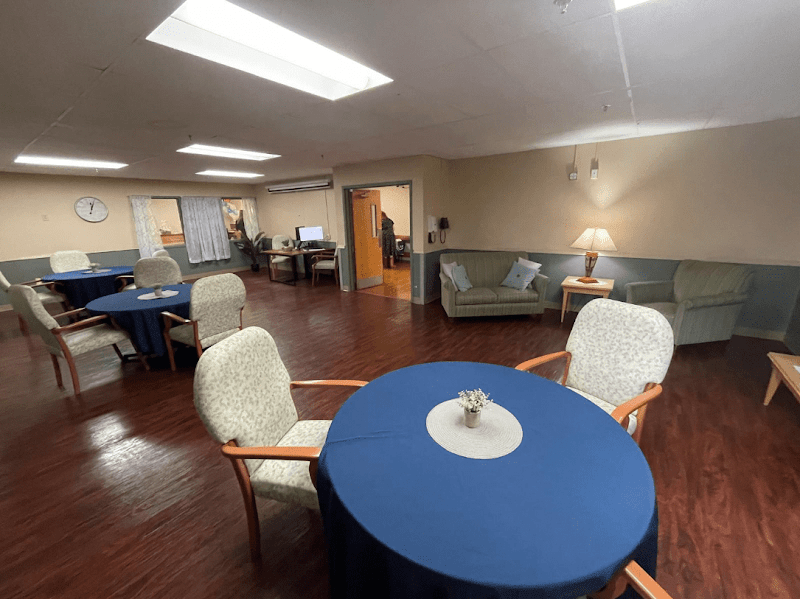
How is Oak Ridge Rehabilitation & Healthcare Center Staffed?

CMS rates OAK RIDGE REHABILITATION & HEALTHCARE CENTER's staffing level at 2 out of 5 stars, which is below average compared to other nursing homes. Staff turnover is 50%, compared to the Pennsylvania average of 46%. RN turnover specifically is 70%, which is notably high. RNs provide skilled clinical oversight, so turnover in this role can affect medical care quality.

What Have Inspectors Found at Oak Ridge Rehabilitation & Healthcare Center?

State health inspectors documented 74 deficiencies at OAK RIDGE REHABILITATION & HEALTHCARE CENTER during 2022 to 2025. These included: 1 Immediate Jeopardy (the most serious level, indicating potential for serious harm or death), 3 that caused actual resident harm, and 70 with potential for harm. Immediate Jeopardy findings are rare and represent the most serious regulatory concerns. They require immediate corrective action.
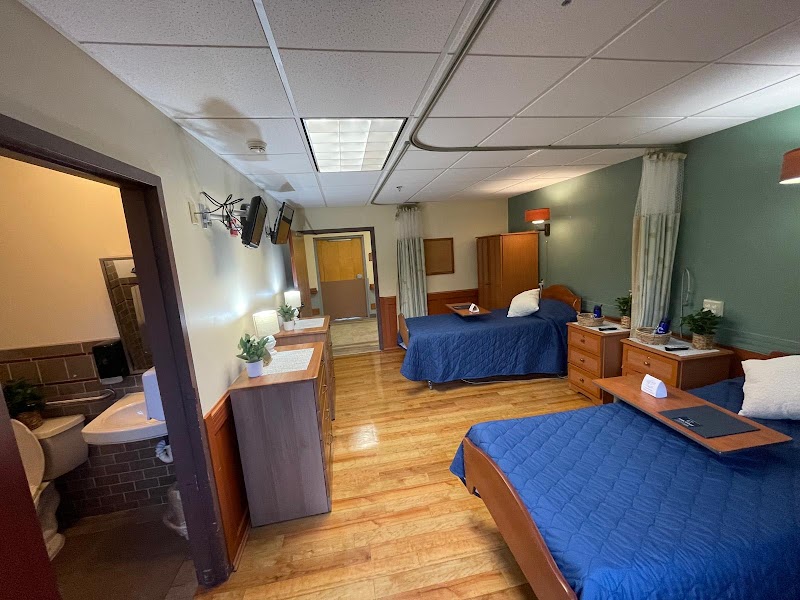
Who Owns and Operates Oak Ridge Rehabilitation & Healthcare Center?

OAK RIDGE REHABILITATION & HEALTHCARE CENTER is owned by a for-profit company. For-profit facilities operate as businesses with obligations to shareholders or private owners. The facility is operated by CENTURY HEALTHCARE, a chain that manages multiple nursing homes. With 142 certified beds and approximately 134 residents (about 94% occupancy), it is a mid-sized facility located in TAYLOR, Pennsylvania.
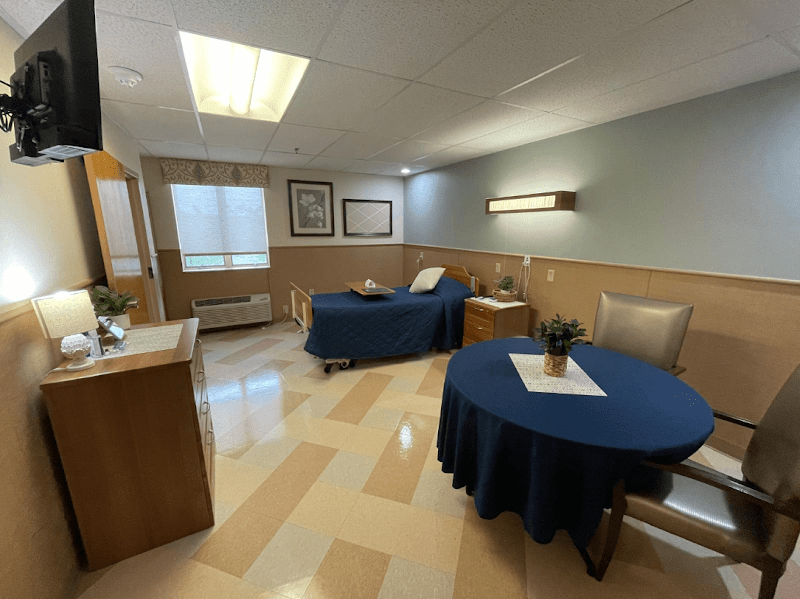
How Does Oak Ridge Rehabilitation & Healthcare Center Compare to Other Pennsylvania Nursing Homes?

Compared to the 100 nursing homes in Pennsylvania, OAK RIDGE REHABILITATION & HEALTHCARE CENTER's overall rating (1 stars) is below the state average of 3.0, staff turnover (50%) is near the state average of 46%, and health inspection rating (1 stars) is much below the national benchmark.

What Should Families Ask When Visiting Oak Ridge Rehabilitation & Healthcare Center?

Based on this facility's data, families visiting should ask: "What changes have been made since the serious inspection findings, and how are you preventing similar issues?" "Can you walk me through typical staffing levels on day, evening, and night shifts?" "Can I visit during a mealtime to observe dining assistance and food quality?" "How do you handle medical emergencies, and what is your hospital transfer rate?" These questions are particularly relevant given the facility's Immediate Jeopardy citations and the below-average staffing rating.

Is Oak Ridge Rehabilitation & Healthcare Center Safe?

Based on CMS inspection data, OAK RIDGE REHABILITATION & HEALTHCARE CENTER has documented safety concerns. Inspectors have issued 1 Immediate Jeopardy citation (the most serious violation level indicating risk of serious injury or death). The facility has a 1-star overall rating and ranks #100 of 100 nursing homes in Pennsylvania. Families considering this facility should ask detailed questions about what corrective actions have been taken since these incidents.

Do Nurses at Oak Ridge Rehabilitation & Healthcare Center Stick Around?

OAK RIDGE REHABILITATION & HEALTHCARE CENTER has a staff turnover rate of 50%, which is about average for Pennsylvania nursing homes (state average: 46%). Moderate turnover is common in nursing homes, but families should still ask about staff tenure and how the facility maintains care continuity when employees leave.

Was Oak Ridge Rehabilitation & Healthcare Center Ever Fined?

OAK RIDGE REHABILITATION & HEALTHCARE CENTER has been fined $113,058 across 3 penalty actions. This is 3.3x the Pennsylvania average of $34,209. Fines at this level are uncommon and typically indicate a pattern of serious deficiencies, repeated violations, or failure to correct problems promptly. CMS reserves penalties of this magnitude for facilities that pose significant, documented risk to resident health or safety. Families should request specific documentation of what issues led to these fines and what systemic changes have been implemented.

Is Oak Ridge Rehabilitation & Healthcare Center on Any Federal Watch List?

OAK RIDGE REHABILITATION & HEALTHCARE CENTER is not on any federal watch list. The most significant is the Special Focus Facility (SFF) program, which identifies the bottom 1% of nursing homes nationally based on persistent, serious quality problems. Not being on this list means the facility has avoided the pattern of deficiencies that triggers enhanced federal oversight. This is a positive indicator, though families should still review the facility's inspection history directly.