ROBERT PACKER HOSPITAL SKILLED CARE AND REHABILIT

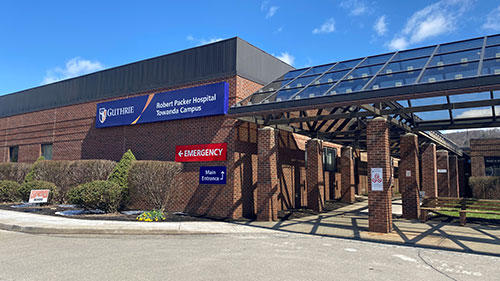
91 HOSPITAL DRIVE, TOWANDA, PA 18848 (570) 268-2239
Non profit - Corporation 68 Beds Independent Data: November 2025
Trust Grade
38/100
#485 of 653 in PA
Last Inspection: February 2025

Within standard 12-15 month inspection cycle. Federal law requires annual inspections.

Overview

Robert Packer Hospital Skilled Care and Rehabilitation in Towanda, Pennsylvania, has received a Trust Grade of F, indicating significant concerns and a poor overall rating. The facility ranks #485 out of 653 in Pennsylvania, placing it in the bottom half of all nursing homes in the state, although it is the top option out of four in Bradford County. While the facility's trend is improving, with issues decreasing from seven in 2024 to three in 2025, there are still serious weaknesses; for example, they failed to provide adequate care for a resident whose condition worsened, resulting in hospitalization and death. Staffing is a relative strength, with a 4/5 star rating and a turnover rate of 30%, which is better than the state average. However, the facility has incurred $50,046 in fines, which is concerning and suggests ongoing compliance problems. Additionally, there have been issues with food safety and neglect incidents that were not thoroughly investigated, raising further red flags for potential residents and their families.

Trust Score
F
38/100
In Pennsylvania
#485/653
Bottom 26%
Safety Record
Moderate
Needs review
Inspections
Getting Better
7 → 3 violations
Staff Stability
✓ Good
30% annual turnover. Excellent stability, 18 points below Pennsylvania's 48% average. Staff who stay learn residents' needs.
Penalties
✓ Good
$50,046 in fines. Lower than most Pennsylvania facilities. Relatively clean record.
Skilled Nurses
✓ Good
Each resident gets 50 minutes of Registered Nurse (RN) attention daily — more than average for Pennsylvania. RNs are trained to catch health problems early.
Violations
⚠ Watch
27 deficiencies on record. Higher than average. Multiple issues found across inspections.
★★☆☆☆
2.0
Overall Rating
★★★★☆
4.0
Staff Levels
★☆☆☆☆
1.0
Care Quality
★★★☆☆
3.0
Inspection Score
Stable
2024: 7 issues
2025: 3 issues

The Good

  • 4-Star Staffing Rating · Above-average nurse staffing levels
  • Low Staff Turnover (30%) · Staff stability means consistent care
  • Full Sprinkler Coverage · Fire safety systems throughout facility
  • No fines on record
  • Staff turnover is low (30%)

    18 points below Pennsylvania average of 48%

Facility shows strength in staffing levels, staff retention, fire safety.

The Bad

2-Star Overall Rating

Below Pennsylvania average (3.0)

Below average - review inspection findings carefully

Federal Fines: $50,046

Above median ($33,413)

Moderate penalties - review what triggered them

The Ugly 27 deficiencies on record

1 actual harm
Feb 2025 2 deficiencies
CONCERN (D)

Potential for Harm - no one hurt, but risky conditions existed

Deficiency F0744 (Tag F0744)

Could have caused harm · This affected 1 resident

Based on clinical record review and staff interview, it was determined that the facility failed to develop and implement an individualized person-centered care plan to address dementia and cognitive l...

Read full inspector narrative →
Based on clinical record review and staff interview, it was determined that the facility failed to develop and implement an individualized person-centered care plan to address dementia and cognitive loss displayed by one of three residents reviewed (Resident 61). Findings include: Clinical record review for Resident 61 revealed the facility admitted her on January 2, 2025, with diagnosis of Dementia (loss of memory, language, problem-solving, and other thinking abilities that interfere with daily life). A review of Resident 61's admission Minimum Data Set Assessment (MDS, a form completed at specific intervals to determine care needs) dated January 8, 2025, indicated that the facility assessed Resident 61 as having a diagnosis of dementia. The facility determined that a care plan for dementia and cognitive loss would be developed. A review of Resident 61's care plan entitled, psychosocial needs initiated January 4, 2025, revealed that there was no indication that the facility had developed and implemented a person-centered care plan to address the resident's dementia and cognitive loss. Resident 61's clinical record also had a care plan entitled, Anxiety-Cognitive, initiated on January10, 2025, that failed to address individualized person-centered approaches to address Resident 61's dementia and cognitive loss. The findings were reviewed with the Nursing Home Administrator on February 12, 2025, at 12:10 PM and she confirmed that Resident 61 did not have an individualized care plan for dementia and cognitive loss. 483.40(b)(3) Dementia Treatment and Services Previously cited 3/8/2024
CONCERN (F)

Potential for Harm - no one hurt, but risky conditions existed

Food Safety (Tag F0812)

Could have caused harm · This affected most or all residents

Based on observation and staff interview, it was determined that the facility failed to store food and maintain food service equipment in accordance with professional standards for food service safety...

Read full inspector narrative →
Based on observation and staff interview, it was determined that the facility failed to store food and maintain food service equipment in accordance with professional standards for food service safety in the facility's main kitchen. Findings include: Observation of the facility's main kitchen on February 9, 2025, at 10:15 AM with Employee 1, dietary supervisor, revealed the following: The lower shelf of the food preparation table beside the steamer was observed with a large clear plastic container with a white powdery substance filling half of the container. The exterior of the contained had dried food on it, was dusty, and sticky to touch. The container was labeled with a sticker indicating flour was in the bin, and dated August 4, 2024, with a use by date of January 4, 2025. An additional large clear plastic container beside the flour also with a dirty exterior on the sides and lid of the container with dried food, and dust, partially filled with rice labeled with a May 21, 2024, as to when it was placed in the bin, with a use by date of November 4, 2024. The exterior side of the steamer was observed with dried food splatter. A white plastic pipe extending from behind the ice machine along the wall behind a preparation table was dirty and dusty and dried food debris was observed collected between the pipe and the wall. The open area behind the steamers, oven, and stove, was observed with dust and debris buildup. A large metal rack was observed hanging from the ceiling over a food preparation table. Multiple pans, ladles, spoons and whisks were observed hanging from the rack with food contact surfaces stored open to air, with no cover. The ceiling tiles directly above the rack contained dried food splatter. The exterior base of the food warmer contained a buildup of dried food particles and dust. Two white potholders were observed on a preparation table significantly stained and blackened. A small upright cooler by the food service tray line contained dried food and liquid on the exterior. The lower shelves in the walk-in cooler were soiled with debris and dried food and liquid spots. Review of the main kitchen's temperature monitoring log for the walk-in freezer, walk-in cooler salad refrigerator, line refrigerator, cooks' refrigerator, and juice refrigerator, revealed no documented temperature monitoring for February 6, 7, 8, or as of the time of observation on February 9, 2025. The last documented temperatures for the items were listed as February 5, 2025. The above information was reviewed with the Nursing Home Administrator and Director of Nursing on February 11, 2025, at 2:10 PM. 28 Pa. Code 201.14 (a) Responsibility of Licensee
Jan 2025 1 deficiency 1 Harm
SERIOUS (G) 📢 Someone Reported This

A family member, employee, or ombudsman was alarmed enough to file a formal complaint

Actual Harm - a resident was hurt due to facility failures

Quality of Care (Tag F0684)

A resident was harmed · This affected 1 resident

**NOTE- TERMS IN BRACKETS HAVE BEEN EDITED TO PROTECT CONFIDENTIALITY** Based on closed clinical record review and staff interview, it was determined that the facility failed to provide the highest pr...

Read full inspector narrative →
**NOTE- TERMS IN BRACKETS HAVE BEEN EDITED TO PROTECT CONFIDENTIALITY** Based on closed clinical record review and staff interview, it was determined that the facility failed to provide the highest practicable care for a resident's change in condition that resulted in hospitalization and death for one of three residents reviewed causing actual harm (Resident CR1). Findings include: Closed clinical record review for Resident CR1 revealed that the facility admitted her on [DATE]. A physician's order dated [DATE], instructed staff to administer Lactulose (laxative used to treat chronic constipation and brain abnormalities due to liver failure) three times a day and hold for loose stools. A review of bowel movement history documentation (electronic documentation completed by nurse aide staff of residents' bowel movements) revealed that Resident CR1 was continent of bowel movements on [DATE] and 30, 2024; and [DATE]. Staff documented that these bowel movements were soft or formed. Documentation on [DATE], at 11:32 AM noted that Resident CR1 had two occurrences of incontinence of a large amount of loose stool. Nurse aide staff documented on [DATE], at 2:12 PM, 7:12 PM, and 11:30 PM, an additional seven occurrences of loose stool. Review of Resident CR1's medication administration record (MAR, electronic documentation by licensed nursing staff of the administration of medications) revealed that licensed staff documented the administration of the Lactulose medication on [DATE], at 2:00 PM and 10:00 PM (despite Resident CR1's loose stools). Nurse aide staff continued to document on [DATE], at 1:30 AM, 3:51 AM, 2:10 PM, and 6:28 PM, that Resident CR1 had a total of 10 incontinent episodes of stool with mucous present. The staff documented specifically that the stool was loose on two of the occasions. The staff did not include an assessment of the stool consistency for the other eight occurrences. Review of Resident CR1's MAR indicated that licensed staff documented the administration of the Lactulose medication on [DATE], at 8:00 AM, 2:00 PM, and 8:00 PM (despite Resident CR1's loose stools). Nurse aide staff documented that Resident CR1 had five incontinent episodes of yellow stool on [DATE], at 6:14 AM. The staff did not document the consistency of the stool for those five episodes. Nurse aide staff documented an additional three occurrences of watery stool with mucous present on [DATE], at 1:34 PM. Review of Resident CR1's MAR indicated that licensed staff documented the administration of the Lactulose medication on [DATE], at 8:00 AM and 2:00 PM (despite Resident CR1's eight episodes of bowel incontinence on this date). A physician's progress note dated [DATE], at 6:05 PM documented that Resident CR1 was negative for constipation, diarrhea, and nausea. There was no evidence in Resident CR1's clinical record that nurse aide staff informed licensed staff of Resident CR1's numerous loose stools or that licensed staff notified the physician of this change in Resident CR1's condition. There was no evidence that licensed staff reviewed the nurse aide documentation regarding the loose stools prior to administering the lactulose. Nurse aide staff continued to document a total of seven incontinent episodes of loose stools with mucous present on [DATE], at 9:44 PM and 11:46 PM and [DATE], at 5:16 AM. Licensed staff documented the administration of the Lactulose medication on [DATE], at 8:00 PM and [DATE], at 8:00 AM, 2:00 PM, and 8:00 PM. Nurse aide staff documented a total of 11 occurrences of incontinent loose or watery stools from [DATE], at 1:34 PM, to [DATE], at 2:21 PM. Licensed staff documented the administration of the Lactulose medication three times daily from [DATE], at 8:00 AM, through [DATE], at 2:00 PM. Nursing documentation dated [DATE], at 6:15 PM revealed that Resident CR1 had increased lethargy (decrease in consciousness and altered mental abilities) and confusion. Previous assessment, resident was alert and able to answer questions. Resident CR1 had significant abdominal distention and increased swelling to her lower extremities. The documentation noted that, Resident moving bowels; however, did not note the numerous episodes of loose stools over the previous seven days. Staff contacted emergency medical services to send Resident CR1 to the hospital emergency room. A laboratory report dated [DATE], at 11:26 PM indicated Resident CR1's stool specimen was positive for C. difficile toxin (bacterial infection of the colon that produces toxins that damage the cells of the intestinal lining causing inflammation (colitis) and causes symptoms that range from diarrhea to life-threatening damage to the colon). Hospital emergency department physician documentation dated [DATE], noted that laboratory testing of Resident CR1's stool was positive for C. difficile toxin, that she had a severely elevated white blood cell count (the immune system is stimulated by conditions such as infection, inflammation, or injury), and that her abdominal CT (medical scan that uses x-rays to create images of the abdominal organs) showed extensive colitis (intestinal inflammation). The final impression documented by the provider was, C. difficile colitis. Clinical impressions included C. difficile colitis and sepsis (infection detected in the bloodstream) with acute organ dysfunction (severe injury to an organ) without septic shock (most severe stage of sepsis that often includes multiple organ failure). A history and physical assessment by the hospital physician dated [DATE], at 1:20 PM documented Resident CR1's diagnoses as toxic megacolon (serious complication of severe colitis that is characterized by a very dilated colon) secondary to C. difficile colitis and acute metabolic encephalopathy (brain dysfunction caused by an underlying condition) secondary to the previous (toxic megacolon secondary to C. difficile colitis) and decompensated cirrhosis (liver damage). Death report documentation by the hospital physician certified that Resident CR1 died on [DATE], at 2:13 PM due to cardiopulmonary arrest (the stopping of effective breathing and blood circulation) as a consequence of septic shock because of colitis. The surveyor reviewed concerns that nurse aide staff did not inform licensed nursing staff of Resident CR1's change in condition (numerous loose stools) during interviews with the Nursing Home Administrator on [DATE], at 2:40 PM and 3:13 PM. The interview also reported the surveyor's concerns that there was no evidence that nursing staff notified Resident CR1's physician of the change in Resident CR1's condition. Interview with the Nursing Home Administrator and the Director of Nursing on [DATE], at 3:33 PM confirmed the above findings for Resident CR1. 483.25 Quality of Care Previously cited deficiency [DATE] 28 Pa. Code 211.12(d)(1)(3)(5) Nursing services
Mar 2024 7 deficiencies
CONCERN (D)

Potential for Harm - no one hurt, but risky conditions existed

Deficiency F0568 (Tag F0568)

Could have caused harm · This affected 1 resident

Based on review of resident personal fund accounting, clinical record review, and resident and staff interview, it was determined that the facility failed to provide a resident fund quarterly statemen...

Read full inspector narrative →
Based on review of resident personal fund accounting, clinical record review, and resident and staff interview, it was determined that the facility failed to provide a resident fund quarterly statement for one of two residents reviewed for personal fund concerns (Resident 40). Findings include: Clinical record review for Resident 40 revealed an MDS assessment (Minimum Data Set, an assessment tool completed at specific intervals to determine resident care needs) dated January 30, 2024, that assessed Resident 40 as able to make himself understood, had clear comprehension when understanding others, and had a BIMS (Brief Interview for Mental Status, an assessment tool to determine cognitive deficits) score of 15 (indicating no cognitive deficits). Review of a, Resident Trust Fund Authorization Form, (document that the facility utilized to obtain a resident/resident representative authorization to hold money for the resident) signed by Resident 40 on May 26, 2020, revealed that Resident 40 did not designate another person to manage his personal funds. The document stipulated that a, .full and complete separate accounting of all financial transactions made on his/her behalf will be maintained and made available to the Resident and/or Power-of-Attorney/Guardian at least quarterly and upon request. Interview with Resident 40 on March 5, 2024, at 10:20 AM, revealed that he did not receive any financial statements pertaining to his personal fund account. Resident 40 denied that he had any family or individuals who assisted him to manage his finances. Interview with the Director of Nursing and the Nursing Home Administrator on March 7, 2024, at 2:19 PM, confirmed that the facility had no evidence that Resident 40 received a statement of his personal fund account at least quarterly. 483.10(f)(10)(iii) Accounting and Records Previously cited deficiency 4/7/23 28 Pa. Code 201.14(a) Responsibility of licensee 28 Pa. Code 201.18(b)(2)(3)(e)(1)(f) Management 28 Pa. Code 201.29(a) Resident rights 28 Pa. Code 211.12(d)(3) Nursing services
CONCERN (D)

Potential for Harm - no one hurt, but risky conditions existed

Deficiency F0582 (Tag F0582)

Could have caused harm · This affected 1 resident

Based on clinical record review and staff interview it was determined that the facility failed to provide the correct required notification to a resident whose payment coverage changed for two of thre...

Read full inspector narrative →
Based on clinical record review and staff interview it was determined that the facility failed to provide the correct required notification to a resident whose payment coverage changed for two of three residents reviewed (Residents 18 and 60). Findings include: A review of the form Instructions for the Notice of Medicare Non-Coverage (NOMNC) CMS-10123, (a notice that informs the recipient when care received from the skilled nursing facility is ending; and how to contact a Quality Improvement Organization (QIO) to appeal) revealed instructions that a Medicare provider must ensure that the notice is delivered at least two calendar days before Medicare covered services end. A review of the Form Instructions Skilled Nursing Facility (SNF) Advanced Beneficiary Notice of Non-coverage (SNFABN) Form CMS-10055 revealed that examples of the common reasons why an extended care stay, or services may not be covered under Medicare might include the beneficiary no longer requires daily skilled care for a medical condition but wants to continue residing in the skilled nursing facility (SNF). The SNF enters a good faith estimate of the cost of the corresponding care that may not be covered by Medicare. In the blank that follows Beginning on ., the skilled nursing facility enters the date on which the beneficiary may be responsible for paying for care that Medicare is not expected to cover. The beneficiary selects an option box to indicate a desire to continue to receive the care or not to continue to receive the care and if there is a desire to have the bill submitted to Medicare for consideration. The beneficiary or their authorized representative must sign the signature box to acknowledge that they read and understood the notice. The SNF must issue this notice when there is a termination of all Medicare Part A services for coverage reasons. If after issuing the NOMNC, the SNF expects the beneficiary to remain in the facility in a non-covered stay, the SNFABN must be issued to inform the beneficiary of potential liability for the non-covered stay. Clinical record review for Resident 18 revealed ADT (Admit, Discharge, Transfer) Event documentation that indicated Resident 18's care changed from skilled to non-skilled on November 23, 2023. A review of a CMS-10123 form provided by the facility confirmed that Resident 18's last covered day of Medicare A services ended November 22, 2023. The facility did not provide a CMS-10055 form for Resident 18 who remained in the facility for services that would not be covered by Medicare Part A. The facility provided a CMS-R-131 (Advance Beneficiary Notice of Noncoverage (ABN) used to notify beneficiaries of the discontinuation of Medicare Part B services) form which was signed by Resident 18's Power-of-Attorney on November 21, 2023. There were no comments or information provided on the form to indicate a reason that the notice was not given at least two days before a change in Resident 18's payment source. The graph on the CMS website (Beneficiary Notices Initiative) stipulates that the provider types for the CMS-R-131 form use include independent laboratories, home health agencies, hospices, physicians, practitioners, and providers paid under Medicare Part B. The same graph instructs that skilled nursing facilities are to use the CMS-10055 form. Interview with the Nursing Home Administrator on March 8, 2024, at 10:21 AM, confirmed that the facility provided the incorrect Medicare notice to Resident 18's Power-of-Attorney which was dated less than two days from the date the payment source for her care changed. Clinical record review for Resident 60 revealed that the coverage for his skilled nursing care ended December 9, 2023. A review of a CMS-10123 form provided by the facility confirmed that Resident 60's last covered day of Medicare A services ended December 9, 2023. The facility did not provide a CMS-10055 form for Resident 60 who remained in the facility for services that would not be covered by Medicare Part A. The facility provided a CMS-R-131 form which was signed by Resident 60's daughter on December 5, 2023. Interview with the Nursing Home Administrator on March 8, 2024, at 10:21 AM, confirmed that the facility provided the incorrect Medicare notice to Resident 60's representative when the payment source for his care changed. 483.10(g)(17)(18)(i)-(v) Medicaid/medicare Coverage/liability Notice Previously cited deficiency 4/7/23 28 Pa. Code 201.18(b)(2)(e)(1) Management 28 Pa. Code 201.29(a) Resident rights
CONCERN (D)

Potential for Harm - no one hurt, but risky conditions existed

Quality of Care (Tag F0684)

Could have caused harm · This affected 1 resident

Based on clinical record review and resident and staff interview, it was determined that the facility failed to provide the highest practicable care related to physician ordered bowel management medic...

Read full inspector narrative →
Based on clinical record review and resident and staff interview, it was determined that the facility failed to provide the highest practicable care related to physician ordered bowel management medications for one of 17 residents reviewed (Resident 26). Findings include: Interview with Resident 26 on March 5, 2024, at 12:08 PM, revealed that she needs MOM (Milk of Magnesia, liquid medication used to stimulate a bowel movement) or a suppository (Bisacodyl/Dulcolax, medication inserted into the rectum to stimulate a bowel movement) occasionally. Resident 26 believed that she had a bowel movement approximately every three days. Clinical record review for Resident 26 revealed the following active physician ordered bowel protocol medications dated as initiated on November 2, 2022: Magnesium Hydroxide 400 mg (milligrams) per 5 ml (milliliters) oral suspension (Milk of Magnesia, MOM) 30 ml daily as needed if no bowel movement every second and third day Bisacodyl 10 mg rectal suppository daily as needed on the fourth day of no bowel movement Fleet enema 7-19 gm (grams) per 118 ml daily as needed if suppository ineffective (liquid medication instilled through the rectum to stimulate a bowel movement) Review of Resident 26's Bowel Movement History documentation (electronic documentation used by staff to record episodes and descriptions of residents' bowel movements) dated January and February 2024 revealed the following: Did not have a bowel movement between January 2, 2024, at 2:51 PM, and January 8, 2024, at 2:26 PM Did not have a bowel movement between January 14, 2024, at 6:57 AM and January 19, 2024, at 7:09 AM. Did not have a bowel movement between January 30, 2024, at 1:40 PM and February 4, 2024, at 10:53 PM. Review of Resident 26's MAR (Medication Administration Record, electronic system used by staff to document the administration of medications) dated January and February 2024 revealed that staff administered the MOM medication on the following dates: January 5, 2024, at 6:46 AM January 8, 2024, at 1:33 AM January 17, 2024, at 9:46 PM February 3, 2024, at 7:21 AM Resident 26's clinical record did not contain evidence that staff attempted to administer the bowel management medications as ordered per the following: MOM medication on January 4, 2024; the Dulcolax on January 6, 2024; or the Fleet enema following an ineffective suppository after January 6, 2024. MOM medication on January 16, 2024, or the Dulcolax on January 18, 2024 MOM medication on February 1 or 2, 2024 The surveyor reviewed the above findings during an interview with the Nursing Home Administrator on March 8, 2024, at 9:35 AM. 28 Pa. Code 211.12(d)(1)(5) Nursing services
CONCERN (D)

Potential for Harm - no one hurt, but risky conditions existed

Deficiency F0744 (Tag F0744)

Could have caused harm · This affected 1 resident

Based on clinical record review and staff interview, it was determined that the facility failed to develop and implement an individualized person-centered care plan to address dementia and cognitive l...

Read full inspector narrative →
Based on clinical record review and staff interview, it was determined that the facility failed to develop and implement an individualized person-centered care plan to address dementia and cognitive loss displayed by one of three residents reviewed (Resident 29). Findings include: Clinical record review for Resident 29 revealed the facility admitted her on May 12, 2023, with diagnosis including Dementia (loss of memory, language, problem-solving, and other thinking abilities that interfere with daily life). A review of Resident 29's admission Minimum Data Set Assessment (MDS, a form completed at specific intervals to determine care needs) dated May 18, 2023, indicated that the facility assessed Resident 29 as having a diagnosis of dementia. The facility determined that a care plan for dementia and cognitive loss would be developed. A review of Resident 29's care plan dated May 25, 2023 revealed that there was no indication that the facility had developed and implemented a person-centered care plan to address the resident's dementia and cognitive loss, which should reflect family involvement in development. The facility indicated that Resident 29's goal would be for Resident 29 to return to her previous cognitive status which would be impossible. The findings were reviewed with the Administrator and Director of Nursing on March 6, 2024, at 1:15 PM, and confirmed that Resident 29 did not have an individualized care plan for dementia and cognitive loss. 483.40(b)(3) Dementia Treatment and Services Previously cited 4/7/23 28 Pa Code 211.12 (d)(1)(3)(5) Nursing services
CONCERN (D)

Potential for Harm - no one hurt, but risky conditions existed

Medication Errors (Tag F0758)

Could have caused harm · This affected 1 resident

Based on clinical record review, and staff interview, it was determined that the facility failed to ensure a resident's medication regime was free from potentially unnecessary medications for one of f...

Read full inspector narrative →
Based on clinical record review, and staff interview, it was determined that the facility failed to ensure a resident's medication regime was free from potentially unnecessary medications for one of five residents reviewed (Resident 29). Findings include: Review of Resident 29's clinical record revealed a physician order dated January 15, 2024, for staff to administer Haldol (typical used to treat schizophrenia or Tourette's syndrome) .5 mg (milligrams) every four hours as needed for behaviors. The facility stopped and restarted the same Haldol order on January 25, 2024, February 7, 2024, February 23, 2024, February 29, 2024, and March 8, 2024, making it a continuous as needed order. The most recent physician order for Haldol dated March 8, 2024, continues until April 7, 2024, making it almost a month of as needed usage for Resident 29. There was no documented evidence in Resident 29's clinical record to justify the continued use of the as needed Haldol for almost a four-month period. A pharmacy recommendation dated January 20, 2024, indicated that the pharmacist identified that Resident 29's as needed Haldol order did not have a 14 day stop date. The pharmacist recommended that Resident 29's physician provide the stop date for her Haldol usage. There was no response from Resident 29's physician to indicate a stop date or a rationale for using the Haldol as needed past 14 days. Interview with the Director of Nursing on March 8, 2024, at 12:40 PM, confirmed the above findings for Resident 29. 28 Pa. Code 211.9(k) Pharmacy services 28 Pa. Code 211.12(c)(d)(1)(3)(5) Nursing services
CONCERN (D)

Potential for Harm - no one hurt, but risky conditions existed

Antibiotic Stewardship (Tag F0881)

Could have caused harm · This affected 1 resident

Based on clinical record review and staff interview, it was determined that the facility failed to monitor antibiotic use for one of three residents reviewed for antibiotics (Resident 48). Findings in...

Read full inspector narrative →
Based on clinical record review and staff interview, it was determined that the facility failed to monitor antibiotic use for one of three residents reviewed for antibiotics (Resident 48). Findings include: Clinical record review for Resident 48 revealed a nurse's note dated February 21, 2024, at 1:09 PM noting Resident 48 had a new order for Cipro, (Ciprofloxacin, a medication used to treat bacterial infections in many different parts of the body), 500 milligrams for 10 days, and that a urinalysis with culture and sensitivity was ordered, also noting the resident had thick, tan, purulent urine. Further review of Resident 48's clinical record revealed Resident 48 did have a physician's order to start Ciprofloxacin HCL 500 mg twice a day to start February 21 and end on March 1, 2024, as indicated for a urinary tract infection. Review of Resident 48's lab reports revealed a urine specimen was collected on February 22, 2024, and resulted the same day showing greater than 100,000 CFU/mL, (colony forming unit per milliliter), normal urogenital flora and no further workup was needed. A review of Resident 48's medication administration record revealed the resident was administered the Ciprofloxacin twice a day from February 21 through March 1, 2024, as ordered. There was no evidence Resident 48's physician was contacted to review the use of the antibiotic after the urinalysis revealed no need for a culture and sensitivity workup or any physician documentation indicating an explanation as to why the antibiotic was ordered prior to urinalysis results, or as to why it continued after the urinalysis results were available. In an interview with the Nursing Home Administrator, Director of Nursing, and employee 1, infection control, on March 8, 2024, at 12:49 PM it was confirmed an antibiotic was started on Resident 48 for a urinary tract infection prior to the urinalysis being completed, the antibiotic continued after no culture and sensitivity was indicated, and there was no evidence of communication with the physician regarding the continued antibiotic use or documentation to indicate as to why the antibiotic continued to be administered until March 1, 2024 as ordered. 28 Pa. Code 211.10(d) Resident care policies 28 Pa. Code 211.12(d)(1)(3)(5) Nursing services
CONCERN (E)

Potential for Harm - no one hurt, but risky conditions existed

Abuse Prevention Policies (Tag F0607)

Could have caused harm · This affected multiple residents

**NOTE- TERMS IN BRACKETS HAVE BEEN EDITED TO PROTECT CONFIDENTIALITY** Based on review of select facility policies and procedures, clinical record review, employee personnel records, and family and s...

Read full inspector narrative →
**NOTE- TERMS IN BRACKETS HAVE BEEN EDITED TO PROTECT CONFIDENTIALITY** Based on review of select facility policies and procedures, clinical record review, employee personnel records, and family and staff interview, it was determined that the facility failed to thoroughly investigate and report to the appropriate agencies incidents of potential resident neglect for two of four residents reviewed for accident concerns (Residents 4 and 48); and the facility failed to implement its abuse prohibition policy pertaining to newly hired employee training for two of five newly hired employees reviewed (Employees 4 and 5). Findings include: The facility policy entitled, Resident Abuse and Neglect Prevention Program, last reviewed without changes on February 28, 2024, revealed that the facility has a plan in place to assure appropriate steps are taken to protect each resident from mistreatment, neglect, abuse, and misappropriation of property. Every complaint or allegation of resident abuse or neglect shall be promptly reported to the immediate supervisor of the area and the Administrator and/or his/her designee. Each report shall be treated promptly and with discretion with priorities that include the compliance with pertinent laws and regulations. The interpretation of the definition of neglect noted, Neglect refers to failure through inattentiveness, carelessness, or omission to provide timely, consistent, safe, adequate, and appropriate services, treatment and care, including but not limited to nutrition, medication, therapies, and activities of daily living. The absence of reasonable accommodations of individual needs and preferences may result in resident neglect. Section I, Abuse and Neglect Prevention included that employees are expected to immediately report any event, incident, or other concern that may be related to potential abuse or neglect. Negligence or willful inattention to resident needs or preferences as specified in the plan of care is unacceptable. Immediately upon discovery of an allegation of abuse or situation with the potential for abuse or harm, the facility will take all reasonable measures to separate the alleged perpetrator from access to the alleged victim. Upon receiving a report of abuse or alleged abuse, the registered nurse supervisor, Director or Nursing or assistant director of nursing or Administrator will begin the investigation. Any employee identified as the alleged perpetrator will be placed on immediate automatic suspension pending the outcome of the investigation. The facility will report alleged and substantiated incidents to the Pennsylvania Department of Health, additional state agencies and/or local authorities per federal and state requirements. Any report or allegation of abuse/neglect will be reported initially by the Administrator, Director of Nursing, assistant director of nursing, or delegated supervisor within 24-hours of knowledge of the event through the electronic event reporting system and use of the PB-22 (Provider Bulletin 22, document used to outline a facility's investigation of potential abuse/neglect, appropriate agency notifications, and corrective actions); Area Agency on Aging, and (if required) Protective Services, the local police, and the Pennsylvania Department of Aging. The investigative team's investigation will include interviews/statements from any witnesses to the incident, interview/statements from staff members having contact with the resident during the time of the alleged incident, and a review of all circumstances surrounding the incident. The Administrator or his/her designee will complete the PB-22 within five working days of the incident. The Employee Abuse Prevention and Training procedure included that all new employees are required to attend an orientation program which includes a minimum of two hours of training related to Abuse and Neglect Prevention, Identification/Reporting of Abuse, and Techniques for Care for the Cognitively Impaired Resident. The employee signs a statement of receipt of education once completed, which is then maintained in the employee file. Interview with Resident 4's daughter on March 5, 2024, at 2:12 PM, revealed that her mother was, dropped, by staff during a shower on the Thursday before Christmas while one staff member attempted to provide care. Resident 4's daughter indicated that her mother was to have two staff present for care; however, only one staff was present when they attempted to transfer her. Resident 4's daughter stated that her mother sustained a large skin tear to her arm and that she struck her head which caused bruising and swelling. Clinical record review for Resident 4 revealed physical therapy documentation dated January 21, 2022, that indicated an evaluation of surface transfers for safety. The documentation indicated that Resident 4 required a Hoyer lift (mechanical device used to move a resident from one surface to another via a sling requiring no participation or weight bearing by the resident) for all transfers. The documentation stipulated that Resident 4 could, transfer between surfaces in the big bathroom with the assistance of two staff. Review of a quarterly MDS (Minimum Data Set, an assessment tool completed at specific intervals to determine resident care needs) dated July 25, 2023, continued to assess Resident 4 as dependent upon the extensive physical assistance of two staff for transfers and toileting. An annual MDS assessment dated [DATE], assessed Resident 4 as dependent (helper does all of the effort, the resident does none of the effort to complete the activity) for chair/bed-to-chair transfers and toileting hygiene. Tub/shower and toilet transfers were not attempted due to medical condition or safety concerns. A quarterly MDS assessment dated [DATE], assessed Resident 4 as dependent for transfers (toilet transfer, chair/bed-to-chair, tub/shower transfer), toileting hygiene, and shower/bathing. Nursing documentation dated December 21, 2023, at 9:49 AM, revealed that the registered nurse was called to the big bathroom on Resident 4's nursing unit where she noted Resident 4 on the floor in front of her wheelchair. Resident 4 had a hematoma (swelling and discoloration caused by pooling of blood under the skin) to the middle of her forehead and a skin tear to her right forearm that measured 4.5 centimeters (cm) by 2 cm. Nursing documentation dated December 24, 2023, at 7:47 AM, revealed that Resident 4 had moderate pain of her right forearm, which was red, warm, and swollen. The staff notified Resident 4's physician who provided orders for an x-ray and an antibiotic for cellulitis (skin infection) and UTI (urinary tract infection). Nursing documentation dated December 27, 2023, at 1:57 PM, revealed that the physician assessed Resident 4's skin tear and provided new orders to culture the wound drainage (which was described as excessive and with an odor). Review of the facility's Incident/Accident Report and Investigation of Resident 4's fall on December 21, 2023, identified that Resident 4's mobility status per her plan of care prior to the occurrence was, Hoyer/2 (two) assist surface transfer in big BR (bathroom); and that care plan interventions for transfer were not carried out as care planned. The report specifically noted, only 1 (one) staff member assisting. Although the report indicated that Resident 4 was correctly transferred into a chair via a Hoyer lift before a nurse aide transferred her into the bathroom alone, the investigation did not include a statement or interview notes with a second staff person who was present during the Hoyer lift. The statement from the nurse aide present during the fall stipulated that she was assisting Resident 4 to stand to transfer her into her wheelchair from the shower chair when Resident 4 sat back down on the edge of the shower chair and slid off. Interview with the Nursing Home Administrator on March 8, 2024, at 10:20 AM, confirmed that the facility did not identify Resident 4's fall as an incident of potential resident neglect although the required level of staff assistance was not present during the transfer. The facility submitted an event report to the Department and initiated a PB-22 report following the surveyor's questioning. Review of Employee 4's (nurse aide) personnel record revealed that the facility hired her on January 2, 2024. Employee 4's time sheet revealed that she worked January 8, 9, 11, 15, 16, 18, 22, 23, 26, 29, and 31, 2024; and February 1, 2, 5, 6, and 7, 2024. Review of Employee 5's (nurse aide) personnel record revealed that the facility hired her on January 3, 2024. Employee 5's time sheet revealed that she worked January 3, 5, 6, and 9, 2024. Interview with Employee 2 (associate vice president) and Employee 3 (regulatory specialist) on March 7, 2024, at 12:23 PM, revealed that a review of Employee 4's and Employee 5's personnel records provided no evidence that their orientation programs included the training related to abuse and neglect prevention. Interview with the Director of Nursing on March 7, 2024, at 1:05 PM, revealed that Employee 4 completed abuse prevention training on February 7, 2024. The interview also confirmed that Employee 5 did not complete abuse prevention training until January 9, 2024. The interview confirmed that Employees 4 and 5 did not receive their abuse orientation training before their presence on the nursing units. In an interview with Resident 48 and a family member of the resident on March 5, 2024, at 11:49 AM, the family member indicated they had been notified on a few occasions recently that Resident 48 required being lowered to the floor by staff. Clinical record review for Resident 48 revealed a nursing noted dated December 2, 2023, at 6:27 PM noting the resident was being taken to the bathroom assisted by staff, needed to rest, just tried to sit, and staff assisted the resident to the floor. Review of Resident 48's physician's orders revealed an order dated November 29, 2023, which indicated the resident may stand pivot transfer with one assist and rolling walker and was ambulatory with a rolling walker with two assist. This order was active at the time of the December 2, 2023, incident. Review of facility documents investigating Resident 48's incident of being lowered to the floor on December 2, 2023, noted again the resident was walking to the bathroom with staff when she started to sit and the staff member lowered the resident to the floor, and Resident 48's mobility status was two assist with a rolling walker and only one staff member was assisting the resident and the staff member was not aware of the changed status for the resident. An attached statement from employee 6, nurse aide, dated December 2, 2023, indicated she was walking the Resident 48 to the bathroom and was going by her paper as to what the resident's status was. The facility document also indicated the staff member was educated for resident changes in status. Further clinical record review for Resident 48 revealed a nurse's note dated January 19, 2024, at 1:10 PM noting while staff was assisting the resident to the bathroom at 7:20 AM the resident's knees buckled and the resident was lowered to the floor in the bathroom. A review of Resident 48's physician's order dated December 29, 2023, for Resident 48's transfer/ambulation status was to utilize a two wheeled walker and two assist. This order was active at the time of the January 19, 2024, incident. Review of facility documents regarding Resident 48's incident on January 19, 2024, revealed staff assisted the resident to and from the bathroom with one assist, and the resident was ordered two assist for transfers/ambulation and noted staff education was completed. An attached statement from employee 7, licensed practical nurse, dated January 19, 2024, noted employee 7 was walking Resident 48 to the restroom when she stated her legs were giving out and she lowered her to a safe seat on the floor. Clinical record review for Resident 48 revealed a nurses note dated February 20, 2024, at 7:42 AM which noted again Resident 48 became weak during transfer and was assisted to the floor. Review of physician orders for Resident 48 revealed an order dated February 3, 2024, for Resident to transfer with a two wheeled walker and two assist. This order was active at the time of the February 20, 2024, incident. Review of Resident 48's care plan revealed the resident had an active plan of care for the potential for falls in which an intervention was added on December 12, 2023, which indicated the resident was to have a gait belt for transfers, and transfers, ambulation with two assist and two wheeled walker with staff education 1/21/24 for fall, noted beside it. Review of a facility document investigating Resident 48's incident on February 20, 2024, occurred at 5:30 AM and revealed the resident was assisted to the floor when she became weak during transfer from her bed to her recliner, and the resident was being transferred with one assist and her mobility plan of care was two assist with two wheeled walker and her transfer plan of care was two assist. An attached statement from employee 8, nurse aide, indicated after assisting Resident 48 to the bathroom the resident sat in the recliner and then decided to go to bed and got weak and slid off the chucks while getting up. Another attached statement from employee 9, licensed practical nurse, noted the resident wanted to go from the bathroom to the recliner, to bed and became weak and we lowered her to the floor, although the facility document indicated staff education was to be completed to prevent reoccurrence as the resident to be assisted by two using a two wheeled walker. There was no other documentation to indicate a second staff member was present. There was no evidence the incidents for Resident 48 that occurred on December 2, 2023, January 19, 2024, and February 20, 2024, all resulting in the resident being lowered to the floor during ambulation/transfer without the ordered/appropriate level of assistance were reported to the Department of Health event reporting system or investigated as alleged neglect for not following the resident's orders/plan of care resulting in falls for the resident. Resident 48 did not sustain any injuries from the incidents. In an interview with the Nursing Home Administrator and Director of Nursing on March 8, 2024, the above findings were reviewed for Resident 48. The Director of Nursing confirmed the incidents were not reviewed or investigated as potential neglect. 28 Pa. Code 201.18(e)(1) Management 28 Pa. Code 201.19(6)(8) Personnel policies and procedures 28 Pa. Code 211.12(d)(1)(3)(5) Nursing services
Apr 2023 17 deficiencies
CONCERN (D)

Potential for Harm - no one hurt, but risky conditions existed

Deficiency F0578 (Tag F0578)

Could have caused harm · This affected 1 resident

**NOTE- TERMS IN BRACKETS HAVE BEEN EDITED TO PROTECT CONFIDENTIALITY** Based on clinical record review and staff interview it was determined that the facility failed to ensure resident's/resident's r...

Read full inspector narrative →
**NOTE- TERMS IN BRACKETS HAVE BEEN EDITED TO PROTECT CONFIDENTIALITY** Based on clinical record review and staff interview it was determined that the facility failed to ensure resident's/resident's responsible party's participation in the development of end-of-life treatment wishes for two of eight residents reviewed for advance directive concerns (Residents 20 and 52). Findings include: Clinical record review for Resident 20 revealed an electronic physician's order dated [DATE], that indicated Resident 20 desired full code treatment (CPR: chest compressions and artificial breathing assistance upon a medical emergency and/or death). Review of Resident 20's physical chart revealed an undated POLST (Physician Orders for Life-Sustaining Treatment, portable medical order form that records patients' treatment wishes so that emergency personnel know what treatments the patient wants in the event of a medical emergency) form, signed by Resident 20, that indicated she wanted CPR; however, with limited additional interventions. Resident 20's wishes specified that she did not want intubation or advanced airway interventions used if she had a pulse and/or was breathing. Resident 20's desire to forego intubation or advanced airway interventions was not incorporated into the electronic physician's order for her emergency care. The surveyor reviewed the above concern regarding the inconsistency in Resident 20's advance life support wishes during an interview with the Nursing Home Administrator, the Director of Nursing, and Employee 1 (occupational therapy assistant, infection control preventionist coordinator) on [DATE], at 2:00 PM, and [DATE], at 2:00 PM. Clinical record review for Resident 20 revealed that staff modified her active physician orders on [DATE], at 5:39 PM (following the surveyor's questioning) to include the elimination of intubation instructions. Clinical record review for Resident 52 revealed a cancelled (not an active) electronic physician's order dated [DATE], that Resident 52 desired full code treatment in the event of a medical emergency. Review of Resident 52's physical chart revealed a POLST form that stipulated Resident 20 desired CPR and full treatment. The surveyor questioned the lack of an active electronic physician's order that provided emergency care instructions for Resident 52 during an interview with the Director of Nursing, the Nursing Home Administrator, and Employee 1 on [DATE], at 2:00 PM. Clinical record review for Resident 52 revealed that staff modified his active physician orders on [DATE], at 5:00 PM (following the surveyor's questioning), to initiate physician orders to provide full code treatment. 483.10(c)(6)(8)(g)(12)(i)-(v) Request/Refuse/Discontinue Trmnt; Formulate Adv Dir Previously cited deficiency [DATE] 28 Pa. Code 211.5(f) Clinical records 28 Pa. Code 211.12(d)(1)(3)(5) Nursing services
CONCERN (D)

Potential for Harm - no one hurt, but risky conditions existed

Deficiency F0582 (Tag F0582)

Could have caused harm · This affected 1 resident

Based on clinical record review and staff interview, it was determined that the facility failed to provide timely notification to a resident whose payment coverage changed for one of three residents r...

Read full inspector narrative →
Based on clinical record review and staff interview, it was determined that the facility failed to provide timely notification to a resident whose payment coverage changed for one of three residents reviewed (Resident 164). Findings include: A review of the form Instructions for the Notice of Medicare Non-Coverage (NOMNC) CMS-10123, (a notice that informs the recipient when care received from the skilled nursing facility is ending; and how to contact a Quality Improvement Organization (QIO) to appeal) revealed instructions that a Medicare provider must ensure that the notice is delivered at least two calendar days before Medicare covered services end. The provider must ensure that the beneficiary or their representative signs and dates the NOMNC to demonstrate that the beneficiary or their representative received the notice and understands the termination of services can be disputed. If the provider is personally unable to deliver a NOMNC to a person acting on behalf of an enrollee, then the provider should telephone the representative to advise him or her when the enrollee's services are no longer covered. Confirm the telephone contact by written notice mailed on that same date. Clinical record review for Resident 164 revealed social services discharge progress note documentation dated October 10, 2022, at 7:56 AM that October 12, 2022, between 3:00 PM and 4:00 PM, was an anticipated, planned, date of discharge to home. Nursing documentation dated October 11, 2022, at 5:53 PM reiterated that there was a plan to discharge Resident 164 to home the following day at approximately 4:00 PM. Occupational therapy discharge documentation dated October 11, 2022, at 2:39 PM reiterated that there was a plan to discharge Resident 164 to home on October 12, 2022. Review of a CMS-10123 form provided by the facility for Resident 164 revealed that the effective date his coverage of skilled services would end was October 12, 2022. Additional information on the notice indicated that facility staff spoke with Resident 164 on October 12, 2022, and made him aware that his last covered day would be October 12, 2022. Resident 164 signed the CMS-10123 notice on October 12, 2022 (the date of his discharge). The facility did not provide the CMS-10123 notice at least two days in advance of Resident 164's planned discharge. Interview with the Nursing Home Administrator on April 7, 2023, at 9:56 AM confirmed the above findings for Resident 164. 28 Pa. Code 201.18(b)(2)(e)(1) Management 28 Pa. Code 201.29(a) Resident rights
CONCERN (D)

Potential for Harm - no one hurt, but risky conditions existed

Safe Environment (Tag F0584)

Could have caused harm · This affected 1 resident

Based on observation and resident and staff interview, it was determined that the facility failed to provide a clean, comfortable, homelike environment, and maintain resident rooms free of disrepair o...

Read full inspector narrative →
Based on observation and resident and staff interview, it was determined that the facility failed to provide a clean, comfortable, homelike environment, and maintain resident rooms free of disrepair on one of two nursing units (Short Hall, Residents 10, 22, 29, 31, and 40). Findings include: Observation of Resident 29's room on April 4, 2023, at 12:27 PM revealed a baseball sized area of damaged paint next to the window. Observation of Resident 10's room on April 5, 2023, at 9:38 AM revealed a damaged and marred wall behind the head of the bed. There were also multiple areas of damaged paint above the closet at the front of the room. A concurrent interview with the resident noted a concern related to multiple pinholes on the wall next to the resident's bed. Observation of Resident 40's room on April 5, 2023, at 9:40 AM revealed a six-inch by six-inch damaged and marred wall behind the head of the bed. A concurrent interview revealed the damage has, been here since I came. Clinical record review for Resident 40 revealed an admission date of December 14, 2022. Observation of Resident 22's bedside table on April 5, 2023, at 10:10 AM revealed damage to most of the perimeter. Some areas were cracked and exposed a porous surface underneath. Observation of Resident 31's room on April 6, 2023, at 11:50 AM revealed a damaged and marred wall behind the head of the bed. The above information was reviewed during an interview with the Nursing Home Administrator and Director of Nursing on April 6, 2023, at 2:15 PM. 483.10(i)(1)-(7) Safe/clean/comfortable/homelike Environment Previously cited 04/29/22 28 Pa. Code 201.18 (b) (1) (3) Management 28 Pa. Code 207.2 (a) Administrator's responsibility
CONCERN (D)

Potential for Harm - no one hurt, but risky conditions existed

Deficiency F0657 (Tag F0657)

Could have caused harm · This affected 1 resident

**NOTE- TERMS IN BRACKETS HAVE BEEN EDITED TO PROTECT CONFIDENTIALITY** Based on observation, clinical record review, and resident and staff interview, it was determined that the facility failed to de...

Read full inspector narrative →
**NOTE- TERMS IN BRACKETS HAVE BEEN EDITED TO PROTECT CONFIDENTIALITY** Based on observation, clinical record review, and resident and staff interview, it was determined that the facility failed to develop and revise resident plans of care for two of 17 residents reviewed (Residents 13 and 52). Findings include: Clinical record review for Resident 13 revealed diagnoses that included renal failure with hemodialysis treatment (ineffective functioning of the kidneys that requires medical treatment to artificially remove excess fluids and waste from the blood). Interview with Resident 13 on April 4, 2023, at 2:20 PM confirmed that she required hemodialysis treatment three times a week and that she had a fistula (an enlarged vessel under the skin connecting an artery and a vein that is accessed during the hemodialysis process) in her left bicep that was used as an access site for the hemodialysis treatment. Observation of Resident 13's room on the date and time of the interview revealed no signage or directive to restrict use of her left arm for treatments such as blood pressure assessments or venipuncture for blood testing. Clinical record review of plans of care developed by the facility for Resident 13 revealed no directive that restricted the use of the left arm for blood pressures or venipuncture for bloodwork. Interview with the Nursing Home Administrator, the Director of Nursing, and Employee 1 (occupational therapy assistant/infection preventionist) on April 5, 2023, at 2:00 PM revealed no evidence that the facility implemented an intervention to protect Resident 13's left arm (with the fistula) from inadvertent injury or complication (e.g., restrict staff use of arm for purposes of bloodwork and/or blood pressure assessments). Interview with Employee 3 (licensed practical nurse) on April 6, 2023, at 12:34 PM confirmed that the intervention to not use Resident 13's left arm for bloodwork or blood pressures was not added to Resident 13's plans of care until April 5, 2023 (after the surveyor's questioning). Clinical record review for Resident 52 revealed that the facility admitted him on December 21, 2022, with diagnoses that included cerebral vascular accident (stroke, bleeding or blood clotting in the brain that causes brain injury). Interview with Resident 52 on April 5, 2023, at 10:51 AM confirmed that he was admitted to the facility because he had a stroke in November 2022. Resident 52 stated that he had a clot (not bleed) and that his heart was diseased. Observation of Resident 52 on the date and time of the interview revealed that he had a left upper chest dressing in place. Resident 52 stated, .it's a loop, just got it yesterday, during his consult with a cardiologist (doctor that specializes in heart disease and abnormal heart rhythms). Review of a cardiology Discharge summary dated [DATE], confirmed that Resident 52 had an elective placement of a subcutaneous loop recorder (a heart-monitoring device that is placed just under the skin of the chest to record the heart rhythm during daily activities). Review of the plans of care developed by the facility for Resident 52 revealed no reference to an inplanted loop recorder. Interview with Employee 3 on April 6, 2023, at 10:39 AM confirmed that Resident 52's plans of care did not include the placement of the recorder device or what signs or symptoms staff should monitor to detect potential complications from this device or his heart arrythmia diagnosis. Care plan progress note documentation by the registered nurse dated April 6, 2023, at 10:58 AM (following the surveyor's questioning) revealed that staff created a plan of care to include an atrial fibrillation diagnosis (heart arrythmia that results in ineffective heart pumping, blood pooling, and potential blood clot formation) with implanted loop recorder for Resident 52. Review of active physician orders for Resident 52 revealed instructions to continuously transfer an eye patch from the left eye to the right eye every hour while awake (dated January 5, 2023). Observation of Resident 52 on April 5, 2023, at 10:51 AM, and April 6, 2023, at 12:00 PM, revealed that he did not wear an eye patch. Interview with Resident 52 and observation of his room on April 6, 2023, at 12:00 PM revealed that there was no eye patch readily accessible to him in his room, on his person, or in the storage bag on his wheelchair. Resident 52 stated that he utilized an eye patch along with, a little pill, for vertigo (dizziness) that he experienced secondary to his stroke. Resident 52 stated that he did not know where the patch was, but he stated that he would potentially use it while receiving skilled therapy if he started to get dizzy. Review of Resident 52's active physician orders revealed instructions to administer a routine dose of 12.5 milligrams of Meclizine (Antivert, antihistamine that is used to prevent and treat nausea, vomiting, and dizziness caused by motion sickness) three times daily for dizziness. Review of Resident 52's plans of care revealed no interventions regarding the use of the eye patch. Interview with the Nursing Home Administrator, Director of Nursing, and Employee 1 on April 6, 2023, at 2:00 PM reviewed the above concerns regarding Resident 52's eye patch intervention. 28 Pa. Code 211.11(d) Resident care plan 28 Pa. Code 211.12(d)(1)(3)(5) Nursing services
CONCERN (D)

Potential for Harm - no one hurt, but risky conditions existed

Deficiency F0744 (Tag F0744)

Could have caused harm · This affected 1 resident

Based on clinical record review, observation, and staff interview, it was determined that the facility failed to develop and implement person-centered plans to address dementia-related behavioral symp...

Read full inspector narrative →
Based on clinical record review, observation, and staff interview, it was determined that the facility failed to develop and implement person-centered plans to address dementia-related behavioral symptoms displayed by two of three residents sampled (Residents 3 and 44). Findings included: During an interview with the Nursing Home Administrator and Director of Nursing on April 6, 2023, at 2:20 PM the surveyor asked for behavioral related care plans for Residents 3 and 44 that addressed the behaviors requiring antipsychotic (medications to treat schizophrenia and bipolar disorder) medications. Neither Resident 3 or 44 had these primary psychiatric disorders and had a form of dementia (group of symptoms affecting intellectual and social abilities severely enough to interfere with daily functioning). Clinical record review revealed that Resident 3 had diagnoses, which included Lewy Body Dementia (a disease associated with abnormal deposits of a protein in the brain, which can cause problems with thinking, movement, behavior, and mood). Review of physician orders for Resident 3 revealed that the resident was prescribed Seroquel (an antipsychotic medication to treat schizophrenia and bipolar disorder) 25 mg (milligrams) orally twice daily for behavioral disorders associated with dementia. Review of a neurology (physician specialist who treats diseases of the brain and spinal cord) consultation for Resident 3 dated September 29, 2022, revealed that a family member was concerned that the Seroquel was reduced in the past and concerned for the resident having a return of hallucinations (a perception of having seen, heard, touched, tasted, or smelled something that wasn't there). Clinical record review for Resident 3 revealed a care plan for mood/behaviors dated December 16, 2021, that indicated the resident's goal was to show improved mood/agitation/repetitive speech. There were no target behaviors describing the resident's hallucinations or interventions related to hallucinations identified in the care plan. Clinical record review revealed that Resident 44 had diagnoses, which included Dementia with behavioral disturbances. Review of physician orders for Resident 44 revealed that the resident was prescribed Abilify (an antipsychotic medication used to treat manic-depression, major depressive disorder, and schizophrenia) 10 mg orally at bedtime for Dementia with behavioral disturbances. Review of Resident 44's care plan for cognitive loss/dementia dated January 3, 2022, revealed the resident will return to previous cognitive status, demonstrate orientation times three (aware of person, place, and time), participate in decisions/actions of ADL, be able to communicate needs to staff/family, and to participate in activities. There were no target behaviors identified in the care plan. During an interview with Employee 3, licensed practical nurse, on April 7, 2023, at 12:56 PM it was confirmed that the care plans for Residents 3 and 44 did not address target behaviors in treating residents with dementia. The above findings were reviewed with the Director of Nursing on April 7, 2023, at 1: 05 PM. 28 Pa Code 211.12 (d)(1)(3)(5) Nursing services 28 Pa Code 211.11(d) Resident care plan
CONCERN (D)

Potential for Harm - no one hurt, but risky conditions existed

Drug Regimen Review (Tag F0756)

Could have caused harm · This affected 1 resident

Based on clinical record review and staff interview it was determined that the facility failed to ensure a consultant pharmacist reviewed a resident's medication regime at least monthly and failed to ...

Read full inspector narrative →
Based on clinical record review and staff interview it was determined that the facility failed to ensure a consultant pharmacist reviewed a resident's medication regime at least monthly and failed to ensure an appropriate physician response to consultant pharmacist recommendations for one of five residents reviewed for potentially unnecessary medications (Resident 13). Findings include: Clinical record review for Resident 13 on April 7, 2023, at 11:51 AM revealed a Drug Regimen Review form (document that the facility utilizes to record the monthly consultant pharmacist review) dated 2022 that indicated no further consultant pharmacist services after June 9, 2022. Interview with the Director of Nursing and Employee 6 (registered nurse) on the date and time of the clinical record review confirmed that available evidence in the facility did not indicate that a consultant pharmacist completed Resident 13's medication regime review after June 2022. Interview with Employee 6 on April 7, 2023, at 11:54 AM revealed that the Nursing Home Administrator informed her that the facility contacted the consultant pharmacist to request documentation (that was not available in Resident 13's medical record) to provide evidence that Resident 13 received consultant pharmacist services at least monthly. A review of the consultant pharmacist documentation obtained following the surveyor's questioning indicated that monthly consultant pharmacist reviews recommenced on a non-specific day in September 2022. The available documentation did not provide evidence that a consultant pharmacist reviewed Resident 13's medication regime for the months of July or August 2022. A Note to Attending Physician/Prescriber form (document that the consultant pharmacist utilizes to convey medication regime recommendations) dated May 12, 2022, requested a review of the concurrent use of the antidepressants Celexa and Doxepin for Resident 13 due to the potential for increased side effects with two or more similar agents used for the same condition. An undated physician response checked the available box for, Disagree; however, there was no clinical rationale for the declination. A Medication Risk/Benefit Documentation form (document that the facility utilizes to review continuing medication therapy and recommendations for gradual dose reductions) dated September 23, 2022, indicated that the interdisciplinary behavior management team met and recommended no gradual dose reductions in Resident 13's antidepressant Citalopram or Resident 13's Lorazepam (antianxiety medication). Although a certified registered nurse practitioner provided a dated signature on October 11, 2022, the practitioner did not indicate an agreement to accept or decline the recommendation to attempt a gradual dose reduction. There was no clinically contraindicated rationale provided (e.g., previous attempts failed with resulting increased target behaviors). The document did not include a dated signature by a consulting pharmacist to indicate that this was a consultant pharmacist review. A Medication Risk/Benefit Documentation form dated January 11, 2023, indicated that the interdisciplinary behavior management team met and again recommended no gradual dose reductions in Resident 13's Citalopram or Lorazepam. Although the form indicated an initial for a licensed prescriber signature dated January 24, 2023, a practitioner did not indicate an agreement to accept or decline the recommendation to attempt a gradual dose reduction. There was no clinically contraindicated rationale provided to forego gradual dose reductions of the medications. The document included another signature dated January 24, 2023, as, noted by; however, there was no clear indication that this was a consultant pharmacist review. The consultant pharmacist documentation (initially unavailable but obtained following the surveyor's questioning) indicated that the consultant pharmacist had no recommendations for the months of September 2022 and January 2023. The surveyor reviewed the above concerns regarding Resident 13's monthly medication regime reviews during an interview with the Nursing Home Administrator on April 7, 2023, at 12:15 PM. 28 Pa. Code 211.2(a) Physician services 28 Pa. Code 211.5(f) Clinical records 28 Pa. Code 211.9(k) Pharmacy services 28 Pa. Code 211.12(d)(1)(3)(5) Nursing services
CONCERN (D)

Potential for Harm - no one hurt, but risky conditions existed

Dental Services (Tag F0791)

Could have caused harm · This affected 1 resident

Based on clinical record review and staff and resident representative interview, it was determined that the facility failed to assist a resident in obtaining routine dental care for one of four reside...

Read full inspector narrative →
Based on clinical record review and staff and resident representative interview, it was determined that the facility failed to assist a resident in obtaining routine dental care for one of four residents reviewed for dental concerns (Resident 9). Findings include: Interview with Resident 9's daughter on April 4, 2023, at 12:14 PM revealed that she believed that her mother had, .a few natural teeth and wears dentures but she's not real cooperative with Poligrip (substance used to adhere dentures to the gum line to limit undesirable movement during wear). Resident 9's daughter stated that, .if they (the facility) know of someone who would come in for her, (they, the family) would absolutely want that done. Clinical record review for Resident 9 revealed that the facility admitted her on January 9, 2023. The clinical record did not contain evidence of consulting dental services. The clinical record did not contain evidence that Resident 9's responsible party declined the provision of routine dental services. The surveyor requested evidence that the facility assisted Resident 9 in obtaining routine dental care per her or her daughter's preference during an interview with the Nursing Home Administrator, Director of Nursing, and Employee 1 (occupational therapy assistant/infection preventionist) on April 5, 2023, at 2:00 PM. The facility provided a consent form for the facility's contracted dental provider that indicated Resident 9's daughter signed consent to accept podiatry, dental, and audiology services on April 5, 2023. Interview with the Nursing Home Administrator, the Director of Nursing, and Employee 1 on April 6, 2023, at 2:00 PM, confirmed that the facility is to obtain the resident and/or resident representative's consent for or declination of outside resources for dental, vision, auditory, and podiatry services upon admission; however, the facility did not do this for Resident 9. The facility presented Resident 9's daughter the opportunity for services (and obtained her consent) following the surveyor's questioning. 28 Pa. Code 211.12(d)(3) Nursing services 28 Pa. Code 211.15(a) Dental
CONCERN (D)

Potential for Harm - no one hurt, but risky conditions existed

Medical Records (Tag F0842)

Could have caused harm · This affected 1 resident

Based on clinical record review and staff interview it was determined that the facility failed to ensure complete, accurately documented, and readily accessible clinical records within acceptable prof...

Read full inspector narrative →
Based on clinical record review and staff interview it was determined that the facility failed to ensure complete, accurately documented, and readily accessible clinical records within acceptable professional standards and practices for two of 17 residents reviewed (Residents 13 and 30). Findings include: Clinical record review for Resident 30 revealed Wound Care Specialist documentation dated March 20, 2023. The practitioner noted green drainage and a strong odor in the documentation of the wound's examination. The treatment plan documented by the practitioner noted, VAC (wound vac, medical device that provides continuous suctioning over a wound to promote an optimal environment for wound healing) hold. Irrigate wound with 1/2 (one-half) strength betadine (povidone-iodine, used to help prevent infection in wounds) BID (twice daily). Wound Care Specialist documentation dated April 3, 2023, continued the treatment plan to, Irrigate wound with 1/2 strength betadine BID at all dressing changes. The plan continued to omit any directive to pack the wound. Active physician orders in Resident 30's electronic medical record dated March 20, 2023, included a discontinuation of the wound vac and instructions to pack Resident 30's wound with one-half strength betadine-soaked gauze twice daily. The physician orders did not include directives regarding irrigating the wound as per the consulting wound specialist's plan. The physician orders included a directive to pack the wound with half-strength betadine gauze although this was not listed in the practitioner's treatment plan. The surveyor reviewed the above concerns regarding Resident 30's wound treatment directions during an interview with the Nursing Home Administrator and the Director of Nursing on April 6, 2023, at 2:00 PM. On the morning of April 7, 2023, the facility provided the same Wound Care Specialist documentation noted above dated April 3, 2023, however, it now documented the treatment plan as, Irrigate wound with saline and continue with 1/2 strength betadine moist dressings BID at all dressing changes. This revised version of The Wound Care Specialist documentation dated April 3, 2023, no longer included the instructions in the treatment plan to, Irrigate wound with 1/2 strength betadine BID at all dressing changes. The document did not include the date and time (recorded from the computer's internal clock) the entries were altered. There was no indication on the document that the entry was changed days after it was originally recorded or by whom. Interview with the Nursing Home Administrator and Employee 3 (licensed practical nurse) on April 7, 2023, at 9:30 AM confirmed that the active physician orders for treatment did not reflect the original wound specialist's documented treatment plan of March 20, 2023. The interview confirmed that staff did not seek clarification from the wound care specialist practitioner until following the surveyor's questioning. The interview confirmed that after the surveyor's questioning, the facility contacted the wound specialist practitioner who altered the original documentation dated April 3, 2023, of Resident 30's treatment plan. The interview confirmed that besides the one word, Addendum, at the top of the document, there was no indication on the documentation that the document was altered after it had been signed on April 3, 2023. The interview indicated that the facility staff would have to pull another report to extract the revision history of the document, which would still not reflect the exact verbiage changed. The facility failed to ensure that the electronic medical record had safeguards in place to prevent changes in recorded documentation without the date, time, and identification of the author of those changes. Clinical record review for Resident 13 on April 7, 2023, at 11:51 AM revealed a Drug Regimen Review form (document that the facility utilizes to record the monthly consultant pharmacist review) dated 2022 that indicated no further consultant pharmacist services after June 9, 2022. Interview with the Director of Nursing and Employee 6 (registered nurse) on the date and time of the clinical record review confirmed that available evidence in the facility did not indicate that a consultant pharmacist completed Resident 13's medication regime review after June 2022. Interview with Employee 6 on April 7, 2023, at 11:54 AM revealed that the Nursing Home Administrator informed her that the facility contacted the consultant pharmacist to request documentation (that was not available in Resident 13's medical record) to provide evidence that Resident 13 received consultant pharmacist services at least monthly. Interview with the Director of Nursing on April 7, 2023, at 12:15 PM confirmed that the facility contacted the consultant pharmacist to provide evidence of monthly drug regime reviews for Resident 13 that were not available in the facility. A review of the handwritten consultant pharmacist documentation obtained following the surveyor's questioning indicated that monthly consultant pharmacist reviews for the months of September 2022 through February 2023 had no specific date of those months that the consultant pharmacist attested to completing the medication regime reviews. The facility failed to ensure that readily accessible medical record documentation was completely and accurately documented. 28 Pa. Code 211.5(f) Clinical records 28 Pa. Code 211.12(d)(1)(3)(5) Nursing services
CONCERN (D)

Potential for Harm - no one hurt, but risky conditions existed

Deficiency F0886 (Tag F0886)

Could have caused harm · This affected 1 resident

Based on standards established by the Centers for Medicare and Medicaid Services (CMS) and the Centers for Disease Control (CDC), review of the facility's COVID-19 staff testing, and staff interview, ...

Read full inspector narrative →
Based on standards established by the Centers for Medicare and Medicaid Services (CMS) and the Centers for Disease Control (CDC), review of the facility's COVID-19 staff testing, and staff interview, it was determined that the facility failed to conduct COVID-19 testing of staff for one of five staff selected for COVID-19 review (Employee 9). Findings include: Review of the CMS Center for Clinical Standards and Quality/Survey & Certification Group, Ref: QSO-20-38-NH dated September 23, 2022, indicated that facilities are required to test residents and staff for COVID-19 based on parameters set forth by the HHS Secretary (Health and Human Services). Upon a newly identified COVID-19 positive staff or resident in a facility that is unable to identify close contacts, the facility is to test all staff, regardless of vaccination status, facility wide or at a group level if staff are assigned to a specific location where the new case occurred (e.g., unit, floor, or other specific area(s) of the facility). An outbreak investigation is initiated when a single new case of COVID-19 occurs among residents or staff to determine if others have been exposed. If a facility does not have the expertise, resources, or ability to identify all close contacts, they should instead investigate the outbreak at a facility-wide or group-level. For further information on contact tracing and broad-based testing, including frequency of repeat testing, see CDC guidance Interim Infection Prevention and Control Recommendations for Healthcare Personnel During the Coronavirus Disease 2019 (COVID-19) Pandemic. The CDC guidance Interim Infection Prevention and Control Recommendations for Healthcare Personnel During the Coronavirus Disease 2019 (COVID-19) Pandemic, instructs that healthcare facilities should have a plan for how SARS-CoV-2 exposures in a healthcare facility will be investigated and managed and how contact tracing will be performed. Guidance for outbreak response in nursing homes is described in setting-specific considerations. When nursing homes are responding to a newly identified SARS-CoV-2-infected HCP or resident, a single new case of SARS-CoV-2 infection in any HCP or resident should be evaluated to determine if others in the facility could have been exposed. The approach to an outbreak investigation could involve either contact tracing or a broad-based approach; however, a broad-based (e.g., unit, floor, or other specific area(s) of the facility) approach is preferred if all potential contacts cannot be identified or managed with contact tracing or if contact tracing fails to halt transmission. Perform testing for all residents and HCP (health care professionals) identified as close contacts or on the affected unit(s) if using a broad-based approach, regardless of vaccination status. Testing is recommended immediately (but not earlier than 24 hours after the exposure) and, if negative, again 48 hours after the first negative test and, if negative, again 48 hours after the second negative test. This will typically be at day 1 (where day of exposure is day 0), day 3, and day 5. If additional cases are identified, strong consideration should be given to shifting to the broad-based approach if not already being performed and implementing quarantine for residents in affected areas of the facility. As part of the broad-based approach, testing should continue on affected unit(s) or facility-wide every 3-7 days until there are no new cases for 14 days. If antigen testing is used, more frequent testing (every 3 days), should be considered. Review of the facility's COVID-19 line listing of positive staff and resident cases dated August 24, 2022, through April 5, 2023, revealed that a staff member tested positive on August 24, 2022, and a resident tested positive on August 28, 2022. A notation on the line listing indicated that the facility began broad-based testing following the resident case on August 28, 2022. The line listing indicated that the facility continued to have at least one staff or resident COVID-19 positive result, at a frequency of no less than at least every 13 days, through November 4, 2022. The facility did not have 14 days elapse without a new case during that time. The line listing indicated that the facility experienced 23 new staff cases and 24 new resident cases from August 24, 2022, through November 4, 2022. Review of COVID-19 testing provided by the facility for Employee 9 (licensed practical nurse) revealed results for the following dates: August 30, 2022, negative September 16, 2022, negative October 14, 2022, negative October 24, 2022, negative December 29, 2022, positive The testing results provided for Employee 9 indicated that the facility failed to conduct weekly testing from August 28, 2022, through November 10, 2022. Interview with Employee 1 (occupational therapy assistant/infection preventionist) on April 7, 2023, at 10:03 AM revealed that Employee 1 could not provide evidence that the facility completed testing based on the broad-based approach, every 3-7 days, until there were no new cases for 14 days following Employee 9's COVID-19 positive result on October 28, 2022. Interview with Employee 9 on April 7, 2023, at 10:38 AM confirmed that she was already participating in facility outbreak testing weekly when she experienced a personal exposure to COVID-19. Employee 9 confirmed that she had a positive COVID-19 test on October 28, 2022, and October 31, 2022. Employee 9 confirmed that she worked with residents in the therapy department while she waited for results from her COVID-19 testing, which, eventually, yielded a positive result. Employee 9 estimated that she worked two days while waiting for her results. The surveyor reviewed the above QSO and CDC resource information above during an interview with Employee 1 on April 7, 2023, at 1:06 PM. Employee 1 confirmed that the facility ceased outbreak testing for staff, the week of, November 1, 2022; however, Employee 1 failed to provide the facility's testing schedule (e.g., the dates of testing conducted) during the outbreak period beginning August 28, 2022. The interview confirmed that, if counted 14 days since the last known case (October 28, 2022), the 14th day of the outbreak period would have been no earlier than November 10, 2022. The interview confirmed that the facility failed to ensure Employee 9 participated in COVID-19 testing at least weekly through November 10, 2022. The interview confirmed that the notation on the line listing that staff and residents tested negative during testing on November 1, 2022; therefore, the facility considered the outbreak ended and source control was reduced to surgical masks, would not have adhered to CDC and CMS directives reviewed. 28 Pa. Code: 201.14(a) Responsibility of licensee 28 Pa. Code: 201.18(b)(1)(e)(1) Management 28 Pa. Code 211.12(c) Nursing services
CONCERN (D)

Potential for Harm - no one hurt, but risky conditions existed

Deficiency F0888 (Tag F0888)

Could have caused harm · This affected 1 resident

**NOTE- TERMS IN BRACKETS HAVE BEEN EDITED TO PROTECT CONFIDENTIALITY** Based on a review of the Centers for Medicare and Medicaid directives, employee vaccination data, and staff interview, it was de...

Read full inspector narrative →
**NOTE- TERMS IN BRACKETS HAVE BEEN EDITED TO PROTECT CONFIDENTIALITY** Based on a review of the Centers for Medicare and Medicaid directives, employee vaccination data, and staff interview, it was determined the facility failed to ensure that all staff were fully vaccinated for COVID-19, except for those granted exemption status as recommended by the Centers for Disease Control and Prevention (CDC) and Centers for Medicare and Medicaid Services (CMS) guidelines (Employee 2). Findings include: The Center for Clinical Standards and Quality/Quality, Safety and Oversight Group, CMS, QSO-23-02 memo, dated October 26, 2022, stated that Medicare and Medicaid-certified facilities are expected to comply with all applicable regulatory requirements; and that CMS expects all providers' and suppliers' staff to have received the appropriate number of doses of the primary vaccine series unless exempted as required by law, or delayed as recommended by the CDC. Facility staff vaccination rates under 100 percent constitute noncompliance under the rule. Review of CDC's vaccination information available at (https://www.cdc.gov/coronavirus/2019-ncov/vaccines/stay-up-to-date.html) revealed that for adults [AGE] years of age and older, the Pfizer COVID-19 primary series consists of one injection followed by the second dose three to eight weeks after the first dose. Review of the facility's employee vaccination status information revealed that as of April 5, 2023, there were two staff that had not been fully vaccinated and without an appropriate exemption; the information indicated that these employees were newly hired. A review of Employee 2's (nurse aide) COVID-19 Employee Vaccine Administration documentation revealed that she received the first dose of the Pfizer COVID-19 vaccination on January 10, 2023. Interview with the Nursing Home Administrator, the Director of Nursing, and Employee 1 (occupational therapist/infection preventionist) on April 6, 2023, at 2:00 PM confirmed that the facility's vaccination information for Employee 2 indicated that she was only partially vaccinated, without an approved exemption, at the time of the onsite survey. The interview confirmed that the only information that the facility could provide was that Employee 2 received the first dose of a Pfizer COVID-19 vaccine on January 10, 2023; and that, although the approved schedule for vaccination per the CDC guidance indicated Employee 2 should have received a second dose any time after March 7, 2023, (eight weeks following the first dose), the facility had no evidence that Employee 2 completed the vaccination series. 28 Pa. Code 201.14(a) Responsibility of Licensee 28 Pa. Code 201.18(b)(1)(3)(d)(e)(1) Management
CONCERN (E)

Potential for Harm - no one hurt, but risky conditions existed

Deficiency F0583 (Tag F0583)

Could have caused harm · This affected multiple residents

Based on review of select facility policy and procedures, observations, and staff interview, it was determined that the facility failed to ensure confidentiality of personal health information and res...

Read full inspector narrative →
Based on review of select facility policy and procedures, observations, and staff interview, it was determined that the facility failed to ensure confidentiality of personal health information and resident's right to privacy in the main kitchen on one of two nursing units (Kitchen, Short Hall, and Residents 5 and 162). Findings include: A review of the policy titled General Safeguards to Protect PHI (Protected Health Information), last reviewed without changes on February 8, 2023, revealed that the policy establishes guidelines to help safeguard protected health information from being seen by those who are not authorized to see it. A section of the policy titled Computers revealed the following information: computer screens at each workstation should be positioned so that only authorized users at that workstation can read the display. Workstations and applications should be locked or secured when not being actively used. A section of the policy titled Disposal of paper with PHI revealed the following information: Paper documents containing PHI must be shredded when no longer needed. If retained for a commercial shredder, they should be kept in a secure bin. Blue recycle bins are not for PHI. Use only secure LOCKED containers for disposal of PHI. Observation in the facility's main kitchen on April 4, 2023, at 10:00 AM revealed an overflowing knee-high, plastic garbage bin overfilled with papers in the dishwashing area. The bin was easily accessible to anyone passing by. Further review of the bin revealed pieces of paper that included menus and dietary information for residents. The surveyor pulled out a piece of paper that noted a menu for Resident 162 that indicated the resident's full name, the current location in the facility, and a notation that the resident was on a regular diet. A concurrent interview with Employee 5, dietary manager, revealed that the papers are supposed to be placed in the HIPAA (Health Insurance Portability and Accountability Act) bin. The bin was located three feet away. Observation in the Short Hall section of the facility on April 4, 2023, at 1:45 PM revealed a computer on the wall that was logged into Resident 5's medical record. There were no observed staff members around at the time and the resident's PHI was easily viewable by anyone passing in the hallway. Employee 7, nurse aide, was then observed returning to the computer after coming out of a resident's room. It was unknown how long the resident's chart was left unsecured and easily viewable in the hallway. Observation in the Short Hall section of the facility on April 4, 2023, at 2:10 PM revealed a black clipboard that was upside down on a blue canvas cart in the hallway with no staff members around and easily accessible to anyone passing by. Upon further review by the surveyor, the clipboard contained documents for residents in the facility that included multiple instances of protected health information for each resident. An interview on April 4, 2023, at 2:16 PM with Employee 7 revealed the clipboard belonged to another staff member and that it is an assignment sheet. Employee 7 further reported that it was kept in the hallway because there is nowhere to keep it. The main nurse's station for that hallway was located only three rooms away at the end of the hall. Employee 7 further stated the staff were told it was ok because it was upside down. The above information was reviewed with the Nursing Home Administrator and Director of Nursing on April 5, 2023, at 2:22 PM. Regarding the PHI left on the blue canvas cart, the Nursing Home Administrator further revealed that the expectation would be for staff to not leave this information on the cart in a public hallway. 28 Pa. Code 201.29(j) Resident rights 28 Pa. Code 211.12(d)(1) Nursing services
CONCERN (E)

Potential for Harm - no one hurt, but risky conditions existed

Pressure Ulcer Prevention (Tag F0686)

Could have caused harm · This affected multiple residents

Based on clinical record review, observation, and staff and resident interview, it was determined that the facility failed to appropriately implement interventions to maintain skin integrity for two o...

Read full inspector narrative →
Based on clinical record review, observation, and staff and resident interview, it was determined that the facility failed to appropriately implement interventions to maintain skin integrity for two of four residents reviewed for pressure ulcer risk (Residents 17 and 22) and failed to provide the highest practical care to promote pressure ulcer healing for one of four sampled residents (Resident 30). Findings include: A review of the current physician orders for Resident 17 dated March 23, 2023, instructed staff to float (elevate) the resident's heels while in bed and another order to elevate the resident's legs. A review of the current care plan for Resident 17 revealed a problem associated with skin integrity. The care plan indicated the resident has a history of skin tears and moisture associated skin damage (MASD) to the legs and buttocks. The resident remains at risk for further breakdown due to decreased mobility, incontinence, oxygen tubing, an indwelling catheter, age, and a history of chronic disease. Interventions dated March 22, 2023, instructed staff to implement precautions to protect skin integrity and implement measures to reduce friction, skin shear, and tissue load. Interventions dated April 1, 2023, instructed staff to elevate the resident's legs as much as tolerated, and to float the heels when in bed. An observation of Resident 17 on April 4, 2023, at 12:01 PM revealed the resident was in bed and in the semi-Fowler's position (head of bed elevated). The resident's legs were not elevated and there was no intervention employed to relieve the pressure on the resident's heels as directed. An observation of Resident 17 on April 5, 2023, at 1:56 PM revealed the resident was supine (lying face up) in bed. The resident's legs were not elevated and there was no intervention employed to relieve the pressure on the resident's heels as directed. An interview with Employee 4, licensed practical nurse, on April 5, 2023, at 1:58 PM confirmed Resident 17's heels or legs were not elevated or being floated and proceeded to place a pillow under the resident's legs. The above findings for Resident 17 were reviewed in a meeting with the Nursing Home Administrator and Director of Nursing on April 5, 2023, at 2:15 PM. A review of the current physician orders for Resident 22 dated March 3, 2023, instructed staff to apply bilateral Prevalon boots (cushioned boots that help to relieve pressure on the heel). A review of the current care plan for Resident 22 revealed a problem with MASD, skin excoriation, and concerns with the resident's heels. The care plan further indicated that the resident is at risk for further skin breakdown due to decreased mobility, an indwelling catheter, diet, and a history of chronic disease. Interventions dated March 2, 2023, included Prevalon boots to the resident's bilateral feet when in bed and to float heels (suspend in the air, usually with pillows) when in the bed. An observation of Resident 22 on April 5, 2023, at 10:15 AM revealed Resident 22 was in bed. The Prevalon boots were not on, and the resident's heels were not elevated. Observation of Resident 22 on April 6, 2023, at 8:50 AM revealed the resident was in bed. The Prevalon boots were not on, and the resident's heels were not elevated. An interview with Employee 4 on April 6, 2023, at 9:08 AM confirmed Resident 22 did not have the bilateral boots on, and the resident's heels were not elevated as directed by the physician order and the care plan. When Employee 4 searched the room, the boots were found in the resident's closet. Employee 4 proceeded to apply Resident 22's boots. The above findings for Resident 22 were reviewed in a meeting with the Nursing Home Administrator and Director of Nursing on April 6, 2023, at 2:30 PM. Interview with Resident 30 on April 5, 2023, at 9:48 AM revealed that she was admitted to the facility with, a spot at the bottom of (her) spine near (her) butt that has a tunnel (an invisible wound tract that extends beyond the visible wound under the skin). Resident 30 indicated that she is receiving services from consulting wound specialists. Clinical record review for Resident 30 revealed nursing documentation dated March 20, 2023, at 11:38 AM that indicated Resident 30 had a wound care appointment that day, and the treatment orders changed. The documentation indicated that staff were to discontinue the wound vac (medical device that provides continuous suctioning over a wound to promote an optimal environment for wound healing), and implement a new treatment for packing the wound with gauze soaked with half-strength betadine (povidone-iodine, used to help prevent infection in wounds) twice daily. Review of the Wound Care Specialist documentation dated March 20, 2023, revealed that the provider documented that nursing staff noted increased green drainage and a strong odor (abnormal wound assessments that often indicate infection) from Resident 30's wound. The practitioner also noted green drainage and a strong odor in the documentation of the wound's examination. The treatment plan documented by the practitioner noted, VAC hold. Irrigate wound with 1/2 (one-half) strength betadine BID (twice daily). Active physician orders in Resident 30's electronic medical record dated March 20, 2023, included a discontinuation of the wound vac and instructions to pack Resident 30's wound with one-half strength betadine soaked gauze twice daily. The physician orders did not include directives regarding irrigating the wound as per the consulting wound specialist's plan. The physician orders included a directive to pack the wound with half-strength betadine gauze although this was not listed in the practitioner's treatment plan. Wound Care Specialist documentation dated April 3, 2023, continued the treatment plan to, Irrigate wound with 1/2 strength betadine BID at all dressing changes. The plan continued to omit any directive to pack the wound. Observation of Resident 30's wound care treatment with Employee 6 (registered nurse) and Employee 3 (licensed practical nurse) on April 6, 2023, at 10:49 AM revealed Employee 3 mixed betadine and sterile water to achieve a one-half strength solution. After removing the soiled dressings from a pressure ulcer at the bottom of Resident 30's spine, Employee 3 utilized a syringe of normal sterile saline (NSS) to irrigate the invisible tract extending proximally from the wound. Employee 3 utilized the one-half strength betadine solution to soak sterile gauze to pack the tract and wound after the irrigation with NSS. The surveyor reviewed the above concerns regarding Resident 30's wound treatment during an interview with the Nursing Home Administrator, the Director of Nursing, and Employee 1 (occupational therapy assistant/infection preventionist) on April 6, 2023, at 2:00 PM. Interview with the Nursing Home Administrator and Employee 3 on April 7, 2023, at 9:30 AM confirmed that the active physician orders for treatment did not reflect the wound specialist's documented treatment plan of March 20, 2023. The interview confirmed that staff did not seek clarification from the wound care specialist practitioner until after the surveyor's questioning. 28 Pa. Code 211.12(d)(1)(3)(5) Nursing services
CONCERN (E)

Potential for Harm - no one hurt, but risky conditions existed

Food Safety (Tag F0812)

Could have caused harm · This affected multiple residents

Based on observation and staff interview, it was determined that the facility failed to store food items in a safe and sanitary manner and maintain equipment in a safe and sanitary condition in the ma...

Read full inspector narrative →
Based on observation and staff interview, it was determined that the facility failed to store food items in a safe and sanitary manner and maintain equipment in a safe and sanitary condition in the main kitchen. Findings include: Initial tour of the facility's main kitchen on April 4, 2023, from 9:55 AM to 10:40 AM with Employee 5, Dietary Manager, revealed the following: An accumulation of debris on the bottom inside of a cooler against the perimeter wall. A damaged wall in the dirty tray return room. A door had a large softball sized piece of concrete broken off the wall under the bottom hinge of the door. The concrete piece was located on the floor. Under a sink in the dishwashing room was a square metal box that Employee 5 identified as a device to try and prevent the pipes from clogging. The drain from the sink emptied into the top of this box through a pipe that stopped just above a round hole in the top of the box. There was a covering on the top of the box that was heavily soiled with a rust-colored substance and had a significant accumulation of food debris. A fly was seen landing on the covering. A container of white pepper had a use by date of March 7, 2023. There was a significant dust accumulation on the top of several appliances identified by Employee 5 as the hot holding cabinet, the oven, and an air curtain refrigerator. An area directly behind the oven and fryer in the center of the kitchen had a significant accumulation of dust and greasy debris on the wall, pipes, and two electrical junction boxes. The dry goods storage area had a large bag of heavy wall elbow macaroni that was open with no noted opened date. Employee 5 was unable to determine when the bag was opened. The dry goods storage area had two walls with multiple dime-sized to quarter-sized holes in them. Just inside the entry/exit door to the dry goods storage area there was a six-inch by three-inch piece of ceiling tile that appeared broken and completely stained brown. There were brownish to black colored spots on the tee rail of the suspended ceiling above the door. A fire extinguisher, drain treatment box, and walls adjacent to the multi-compartment sink had an accumulation of multiple dried, brown-colored stains. There were multiple containers holding various dishes in the dishwashing area that Employee 5 identified as being cleaned and extra. At least three of the containers had large debris on the bottom of them and were left uncovered. The above findings were discussed in an interview on April 5, 2023, at 2:00 PM with the Nursing Home Administrator and Director of Nursing. 483.60 Food Procure, Store/Prepare/Serve - Sanitary Previously cited 04/29/22 28 Pa. Code 211.6 (c) Dietary services
CONCERN (E)

Potential for Harm - no one hurt, but risky conditions existed

Infection Control (Tag F0880)

Could have caused harm · This affected multiple residents

Based on observation and staff interview, it was determined that the facility failed to ensure that resident personal laundry processing prevented the potential spread of infection in the main laundry...

Read full inspector narrative →
Based on observation and staff interview, it was determined that the facility failed to ensure that resident personal laundry processing prevented the potential spread of infection in the main laundry department. Findings include: Observation of the facility's laundry department with the Nursing Home Administrator on April 7, 2023, at 12:05 PM revealed two top-loading washing machines utilized for processing laundry. The observation indicated that the facility utilized two chemicals to launder residents' personal laundry: Tide laundry detergent and a liquid fabric softener. Interview with the Nursing Home Administrator on the date and time of the observation indicated no evidence that the facility was aware of the washing machines' maximum load capacity (e.g., 35 pounds or 50 pounds) or had a method of loading the machines to ensure proper agitation. The Nursing Home Administrator confirmed that the facility had no mechanism in place (e.g., a scale) to verify the weight of a laundry load before processing it in the washing machines. Interview with the Nursing Home Administrator indicated that the facility did not utilize hot water temperatures or chemical sanitizing agents to hygienically clean laundry; therefore, would be dependent upon appropriate agitation with detergents to ensure laundry was hygienically clean to the extent possible to prevent the potential spread of infection. The interview confirmed that the facility could not provide any policy or procedure utilized to prevent potential overloading of the washing machines to ensure appropriate agitation for thorough cleaning of the laundry. 28 Pa. Code 201.18(d)(e)(1) Management
MINOR (B)

Minor Issue - procedural, no safety impact

Deficiency F0568 (Tag F0568)

Minor procedural issue · This affected multiple residents

**NOTE- TERMS IN BRACKETS HAVE BEEN EDITED TO PROTECT CONFIDENTIALITY** Based on clinical record review and resident and staff interview, it was determined that the facility failed to provide a reside...

Read full inspector narrative →
**NOTE- TERMS IN BRACKETS HAVE BEEN EDITED TO PROTECT CONFIDENTIALITY** Based on clinical record review and resident and staff interview, it was determined that the facility failed to provide a resident fund quarterly statement for one of two residents reviewed for personal fund concerns (Resident 26). Findings include: Clinical record review for Resident 26 revealed a quarterly MDS (Minimum Data Set, an assessment tool completed at specific intervals to determine resident care needs) dated November 22, 2022, and an annual MDS dated [DATE], that indicated that the resident had a BIMS (Brief Interview for Mental Status, assessment that scores a resident's response to memory questions; a score of 13-15 indicates intact cognitive response) of 15. Interview with Resident 26 on April 5, 2023, at 39:24 AM revealed that the facility's business office holds money for her; however, Resident 26 said that she doesn't always receive a quarterly statement and would like to receive a statement as she doesn't know how much is in her account. During an interview with the Nursing Home Administrator on April 7, 2023, at 8:25 AM the surveyor was informed that there was no proof that the resident received a copy of the quarterly statement as the statement was sent to her son who is the Power of Attorney. 28 Pa. Code 201.18(b)(2)(e)(1)(h) Management 28 Pa. Code 201.29(a) Resident rights 28 Pa. Code 211.12(d)(3) Nursing services
MINOR (C)

Minor Issue - procedural, no safety impact

Staffing Information (Tag F0732)

Minor procedural issue · This affected most or all residents

Based on observation and staff interview, it was determined that the facility failed to post at the beginning of each shift the nurse staffing information in a prominent place readily accessible to re...

Read full inspector narrative →
Based on observation and staff interview, it was determined that the facility failed to post at the beginning of each shift the nurse staffing information in a prominent place readily accessible to residents and visitors. Findings include: Observation of the facility's main entrance and the facility's two nursing units on April 4, 2023, at 9:35 AM and on April 5, 2023, at 9:00 AM revealed no readily visible information regarding nurse staffing information to include the facility name, current date, total number, and the actual hours worked by licensed and unlicensed nursing staff, and the resident census. During an interview with the Director of Nursing on April 5, 2023, at 9:03 AM the surveyor asked where the nurse staffing information was posted. The Director of Nursing confirmed that the nurse staffing information has not been posted recently. The surveyor reviewed the above findings with the Nursing Home Administrator on April 5, 2023, at 10:25 AM. 28 Pa. Code 201.18(b)(3) Management 28 Pa. Code 211.12(d)(3) Nursing services
MINOR (C)

Minor Issue - procedural, no safety impact

Garbage Disposal (Tag F0814)

Minor procedural issue · This affected most or all residents

Based on observation and staff interview, it was determined that the facility failed to properly contain and dispose of garbage. Findings include: Observation of the facility's main dumpster on April ...

Read full inspector narrative →
Based on observation and staff interview, it was determined that the facility failed to properly contain and dispose of garbage. Findings include: Observation of the facility's main dumpster on April 4, 2023, at 10:45 AM revealed a significant build-up of dried stains under the access door to the dumpster. There was a hair net balled up and discarded on a rail of the dumpster. A dried bun-like piece of debris was also noted on the rail of the dumpster. A large accumulation of glass (possibly from broken fluorescent light bulbs) was noted on the ground near the access door to the dumpster. The surveyor reviewed the above findings with Employee 5, dietary manager, at the time of the findings. The above findings were also reviewed in an interview on April 5, 2023, at 2:00 PM with the Nursing Home Administrator and Director of Nursing. 28 Pa. Code: 201.18 (b)(3) Management 28 Pa. Code 207.2 (a) Administrator's responsibility
Understanding Severity Codes (click to expand)
Life-Threatening (Immediate Jeopardy)
J - Isolated K - Pattern L - Widespread
Actual Harm
G - Isolated H - Pattern I - Widespread
Potential for Harm
D - Isolated E - Pattern F - Widespread
No Harm (Minor)
A - Isolated B - Pattern C - Widespread

Questions to Ask on Your Visit

  • "Can I speak with families of current residents?"
  • "What's your RN coverage like on weekends and overnight?"

Our Honest Assessment

Strengths
  • • 30% annual turnover. Excellent stability, 18 points below Pennsylvania's 48% average. Staff who stay learn residents' needs.
Concerns
  • • 27 deficiencies on record, including 1 serious (caused harm) violation. Ask about corrective actions taken.
  • • $50,046 in fines. Extremely high, among the most fined facilities in Pennsylvania. Major compliance failures.
  • • Grade F (38/100). Below average facility with significant concerns.
Bottom line: Trust Score of 38/100 indicates significant concerns. Thoroughly evaluate alternatives.

About This Facility

What is Robert Packer Hospital Skilled Care And Rehabilit's CMS Rating?

CMS assigns ROBERT PACKER HOSPITAL SKILLED CARE AND REHABILIT an overall rating of 2 out of 5 stars, which is considered below average nationally. Within Pennsylvania, this rating places the facility higher than 0% of the state's 100 nursing homes. A rating at this level reflects concerns identified through health inspections, staffing assessments, or quality measures that families should carefully consider.

How is Robert Packer Hospital Skilled Care And Rehabilit Staffed?

CMS rates ROBERT PACKER HOSPITAL SKILLED CARE AND REHABILIT's staffing level at 4 out of 5 stars, which is above average compared to other nursing homes. Staff turnover is 30%, compared to the Pennsylvania average of 46%. This relatively stable workforce can support continuity of care.

What Have Inspectors Found at Robert Packer Hospital Skilled Care And Rehabilit?

State health inspectors documented 27 deficiencies at ROBERT PACKER HOSPITAL SKILLED CARE AND REHABILIT during 2023 to 2025. These included: 1 that caused actual resident harm, 23 with potential for harm, and 3 minor or isolated issues. Deficiencies causing actual harm indicate documented cases where residents experienced negative health consequences.

Who Owns and Operates Robert Packer Hospital Skilled Care And Rehabilit?

ROBERT PACKER HOSPITAL SKILLED CARE AND REHABILIT is owned by a non-profit organization. Non-profit facilities reinvest revenue into operations rather than distributing to shareholders. The facility operates independently rather than as part of a larger chain. With 68 certified beds and approximately 64 residents (about 94% occupancy), it is a smaller facility located in TOWANDA, Pennsylvania.

How Does Robert Packer Hospital Skilled Care And Rehabilit Compare to Other Pennsylvania Nursing Homes?

Compared to the 100 nursing homes in Pennsylvania, ROBERT PACKER HOSPITAL SKILLED CARE AND REHABILIT's overall rating (2 stars) is below the state average of 3.0, staff turnover (30%) is significantly lower than the state average of 46%, and health inspection rating (3 stars) is at the national benchmark.

What Should Families Ask When Visiting Robert Packer Hospital Skilled Care And Rehabilit?

Based on this facility's data, families visiting should ask: "Can I visit during a mealtime to observe dining assistance and food quality?" "How do you handle medical emergencies, and what is your hospital transfer rate?" "Can I speak with family members of current residents about their experience?"

Is Robert Packer Hospital Skilled Care And Rehabilit Safe?

Based on CMS inspection data, ROBERT PACKER HOSPITAL SKILLED CARE AND REHABILIT has a clean safety record: no substantiated abuse findings (meaning no confirmed cases of resident harm), no Immediate Jeopardy citations (the most serious violation level indicating risk of serious injury or death), and is not on the Special Focus Facility watch list (a federal program monitoring the lowest-performing 1% of nursing homes). The facility has a 2-star overall rating and ranks #100 of 100 nursing homes in Pennsylvania. While no facility is perfect, families should still ask about staff-to-resident ratios and recent inspection results during their visit.

Do Nurses at Robert Packer Hospital Skilled Care And Rehabilit Stick Around?

Staff at ROBERT PACKER HOSPITAL SKILLED CARE AND REHABILIT tend to stick around. With a turnover rate of 30%, the facility is 16 percentage points below the Pennsylvania average of 46%. Low turnover is a positive sign. It means caregivers have time to learn each resident's needs, medications, and personal preferences. Consistent staff also notice subtle changes in a resident's condition more quickly. Registered Nurse turnover is also low at 14%, meaning experienced RNs are available to handle complex medical needs.

Was Robert Packer Hospital Skilled Care And Rehabilit Ever Fined?

ROBERT PACKER HOSPITAL SKILLED CARE AND REHABILIT has been fined $50,046 across 1 penalty action. This is above the Pennsylvania average of $33,579. Fines in this range indicate compliance issues significant enough for CMS to impose meaningful financial consequences. Common causes include delayed correction of deficiencies, repeat violations, or care failures affecting resident safety. Families should ask facility leadership what changes have been made since these penalties.

Is Robert Packer Hospital Skilled Care And Rehabilit on Any Federal Watch List?

ROBERT PACKER HOSPITAL SKILLED CARE AND REHABILIT is not on any federal watch list. The most significant is the Special Focus Facility (SFF) program, which identifies the bottom 1% of nursing homes nationally based on persistent, serious quality problems. Not being on this list means the facility has avoided the pattern of deficiencies that triggers enhanced federal oversight. This is a positive indicator, though families should still review the facility's inspection history directly.