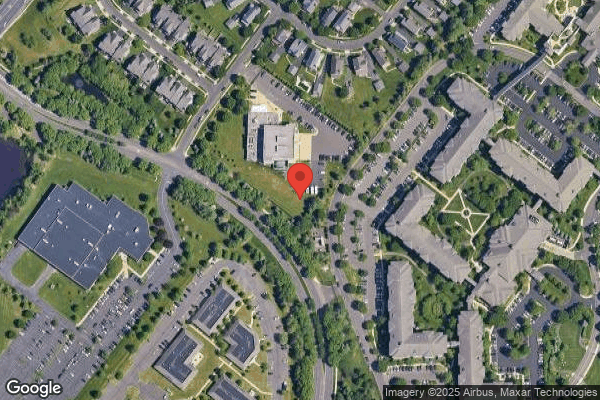
ANN'S CHOICE

16000 ANN'S CHOICE WAY, WARMINSTER, PA 18974 (215) 443-3900
Non profit - Corporation 66 Beds ERICKSON SENIOR LIVING Data: November 2025
Trust Grade
90/100
#2 of 653 in PA
Last Inspection: August 2025

Inspected within the last 6 months. Data reflects current conditions.

Overview

Ann's Choice in Warminster, Pennsylvania, has an impressive Trust Grade of A, indicating it is an excellent facility that is highly recommended for care. It ranks #2 out of 653 nursing homes in Pennsylvania, placing it in the top tier of facilities, and is the best option out of 29 homes in Bucks County. The facility is on an improving trend, with reported issues decreasing from five in 2024 to four in 2025. Staffing is a significant strength, as it boasts a 5-star rating with only a 22% turnover rate, well below the state average. However, there are some concerns to consider. The facility has had 15 issues identified, none of which were life-threatening or serious, but some included failing to inform nine residents of their rights upon admission and not allowing anonymous grievance filing for residents. Additionally, food service safety was a concern due to improper food storage practices observed during inspections. Overall, while Ann's Choice has many strengths in staffing and quality ratings, families should be aware of these specific areas needing improvement.

Trust Score
A
90/100
In Pennsylvania
#2/653
Top 1%
Safety Record
Low Risk
No red flags
Inspections
Getting Better
5 → 4 violations
Staff Stability
✓ Good
22% annual turnover. Excellent stability, 26 points below Pennsylvania's 48% average. Staff who stay learn residents' needs.
Penalties
✓ Good
No fines on record. Clean compliance history, better than most Pennsylvania facilities.
Skilled Nurses
✓ Good
Each resident gets 73 minutes of Registered Nurse (RN) attention daily — more than 97% of Pennsylvania nursing homes. RNs are the most trained staff who catch health problems before they become serious.
Violations
⚠ Watch
15 deficiencies on record. Higher than average. Multiple issues found across inspections.
★★★★★
5.0
Overall Rating
★★★★★
5.0
Staff Levels
★★★★★
5.0
Care Quality
★★★★☆
4.0
Inspection Score
Stable
2024: 5 issues
2025: 4 issues

The Good

  • 5-Star Staffing Rating · Excellent nurse staffing levels
  • 5-Star Quality Measures · Strong clinical quality outcomes
  • Low Staff Turnover (22%) · Staff stability means consistent care
  • Full Sprinkler Coverage · Fire safety systems throughout facility
  • No fines on record
  • Staff turnover is low (22%)

    26 points below Pennsylvania average of 48%

Facility shows strength in staffing levels, quality measures, staff retention, fire safety.

The Bad

Chain: ERICKSON SENIOR LIVING

Part of a multi-facility chain

Ask about local staffing decisions and management

The Ugly 15 deficiencies on record

Aug 2025 4 deficiencies
CONCERN (D)

Potential for Harm - no one hurt, but risky conditions existed

Deficiency F0572 (Tag F0572)

Could have caused harm · This affected 1 resident

**NOTE- TERMS IN BRACKETS HAVE BEEN EDITED TO PROTECT CONFIDENTIALITY** Based on review of clinical record, facility documentation, and interviews with staff, it was determined that the facility faile...

Read full inspector narrative →
**NOTE- TERMS IN BRACKETS HAVE BEEN EDITED TO PROTECT CONFIDENTIALITY** Based on review of clinical record, facility documentation, and interviews with staff, it was determined that the facility failed to ensure that residents/resident representatives were provided facility rules in writing related to private companions unable to provide direct care for residents while in the facility, one of two resident reviewed for falls (Resident R6). Findings incldue: Review of facility policy Resident Rights, dated 2023, revealed the facility will promote and protect the rights of each resident and places a strong emphasis on individual dignity and self-determination. A written description of a Resident's Rights will be provided to the resident upon admission to the facility and upon request. The facility will adhere to state and federal regulatory requirements pertaining to Resident Rights. Review of clinical record revealed Resident R6 was admitted to the facility on [DATE], with a diagnosis that included dementia (the loss of cognitive functioning that interferes with daily life), hypertension (high blood pressure), and atrial fibrillation (abnormal heart rhythm). Review of Resident R6's clinical record revealed on April 12, 2025, Resident R6 had a fall in his/her room. Review of Resident R6's incident report revealed on April 12, 2025 Resident had a private 1:1 Aide in room to sit with resident 7a-7p; this aide walked outside the resident's room to ask the nurse to help pull the resident up, (thinking the resident needed pulled up to his bed). The nurse entered the room and found the resident laying on the floor matt to the right side of his bed and his head resting on his wheelchair wheel. The 1:1 Aide stated that she was transferring the resident from bed to wheelchair and then she lowered the resident softly to the floor. Further review of Resident R6's incident report revealed The 1:1 aide stated she transferred the resident earlier in the day without any trouble. The nurse told the 1:1 aide that the resident has dementia and needs a 2 person transfer. Interview on August 14, 2025, at 10:30 a.m. with Employee E2, Director of Nursing, confirmed the facility provides verbal information regarding private aides not being allowed to directly care for resident in the facility to residents/resident representatives, but does not provide the information in written format. 28 Pa. Code 201.29 (e) Resident rights
CONCERN (D)

Potential for Harm - no one hurt, but risky conditions existed

Deficiency F0638 (Tag F0638)

Could have caused harm · This affected 1 resident

Based on review of the Resident Assessment Instrument Manual and clinical records, as well as staff interviews, it was determined that the facility failed to ensure that quarterly Minimum Data Set ass...

Read full inspector narrative →
Based on review of the Resident Assessment Instrument Manual and clinical records, as well as staff interviews, it was determined that the facility failed to ensure that quarterly Minimum Data Set assessments were completed within the required timeframe for one of 16 residents reviewed (Residents 47).Findings include:The Long-Term Care Facility Resident Assessment Instrument (RAI) User's Manual, which provides instructions and guidelines for completing Minimum Data Set (MDS) assessments (mandated assessments of a resident's abilities and care needs), dated October 2023, indicated that the assessment reference date (ARD - the last day of the assessment's look-back period) of a quarterly MDS assessment must be no more than 92 days after the ARD of the most recent assessment of any type, and the assessment was to be completed no later than the ARD plus 14 calendar days. An admission MDS assessment for Resident 47, with an ARD of March 31, 2025, was completed on April 4, 2025. A quarterly MDS assessment for Resident 47, was due to be completed within 90 days from March 31, 2025. There was no evidence that the MDS assessment was completed by the facility as required. Interview with the RNAC (registered Nurse Assessment Coordinator) on August 14, 2025, at 11:14 a.m. confirmed that the quarterly MDS assessments for Residents 47, was not completed as required. 28 Pa. Code 211.5(f) Clinical Records.
CONCERN (D)

Potential for Harm - no one hurt, but risky conditions existed

Assessment Accuracy (Tag F0641)

Could have caused harm · This affected 1 resident

Based on clinical record review and interviews with staff, it was determined that the facility failed to accurately complete a resident assessment for one of 16 residents reviewed (Resident R33). Find...

Read full inspector narrative →
Based on clinical record review and interviews with staff, it was determined that the facility failed to accurately complete a resident assessment for one of 16 residents reviewed (Resident R33). Findings include:Review of Resident R33's discharge Minimum Data Set (MDS- assessment of resident care needs) dated April 29, 2025, revealed that the resident was discharged . Further review of the MDS revealed that the social security number for the resident was coded incorrectly in the MDS assessment. Interview with the Registered Nurse Assessment Coordinator, conducted on August 14, 2025, at 11:14 a.m. confirmed that social security number was coded incorrectly for Resident R33.28 Pa. Code 201.14(a) Responsibility of licensee28 Pa. Code 211.5(f) Clinical Records.
CONCERN (D)

Potential for Harm - no one hurt, but risky conditions existed

Deficiency F0947 (Tag F0947)

Could have caused harm · This affected 1 resident

Based on review of facility documents and staff interview, it was determined that the facility failed to provide training on QAPI (Quality Assurance and Performance Improvement) for three of three emp...

Read full inspector narrative →
Based on review of facility documents and staff interview, it was determined that the facility failed to provide training on QAPI (Quality Assurance and Performance Improvement) for three of three employees reviewed (Employees E4, E5 and E6).Findings include:Review of facility policy titled Health Services- Education and Training dated April 2023, revealed All health services employees will be required to complete a specific number of continuing education topics commensurate with their job classification, certification and license at the time of hire, annually, or more frequently per state/federal regulations for the service level/ department which they are assigned. Review of facility policy titled Quality Assurance Performance Improvement (QA/PI) Committee dated April 2025, revealed Education regarding this policy and procedure will be completed with appropriate personnel as needed. Ongoing training and education will be provided on an as needed basis, as determined by the employee's direct supervisor/ manager. Employee E4, Certified Nursing Assistant, had a hire date of February 16, 2021, failed to have QAPI in-service education between August 13, 2024-August 13, 2025.Employee E5, Certified Nursing Assistant, had a hire date of August 22, 2022, failed to have QAPI in-service education between August 13, 2024-August 13, 2025.Employee E6, Certified Nursing Assistant, had a hire date of June 10, 2015, failed to have QAPI in-service education between August 13, 2024-August 13, 2025.Interview with Employee E1, Assistant Nursing Home Administrator, August 15, 2025, at 9:00 am, confirmed that the facility failed to provide training on QAPI for three of three employees reviewed (Employees E4, E5 and E6).28 Pa Code: 201.14 (a) Responsibility of licensee.28 Pa Code: 201.18 (b)(1) Management.28 Pa Code: 201.20 (a)(6)(d) Staff development.
Oct 2024 5 deficiencies
CONCERN (D)

Potential for Harm - no one hurt, but risky conditions existed

Transfer Notice (Tag F0623)

Could have caused harm · This affected 1 resident

**NOTE- TERMS IN BRACKETS HAVE BEEN EDITED TO PROTECT CONFIDENTIALITY** Based on review of clinical record, review of policy and procedure and interview with staff, it was determined that the facility...

Read full inspector narrative →
**NOTE- TERMS IN BRACKETS HAVE BEEN EDITED TO PROTECT CONFIDENTIALITY** Based on review of clinical record, review of policy and procedure and interview with staff, it was determined that the facility failed to notify the Office of the State Long-Term Care Ombudsman of initiated emergency transfers and dischargers for three of four residents reviewed (Residents R59, R111, R60) Findings include: A review of the policy titled skilled nursing initiated transfer/discharge date d June, 2021 revealed that it was the responsibility of the facility staff to send a timely copy of the notice of facility initiated resident transfers or discharges to the Ombudsman or other State required agencies. Clinical record review for Resident R60 revealed she was re-admitted to facility on August 19, 2024 status post hospitalization for hypotension (high blood pressure) and heart failure. Clinical record review for Resident R59 revealed he was hospitalized on [DATE] with septic shock. Clinical record review for Resident R111 revealed that this resident was atmitted to the hospital on August 1, 2024 with osteopenia and fracture involving the left femoral neck (hip) with mild displacement. Interview with the social worker, Employee E13 and the director of nursing, Employee E2 at 1:30 p.m., on October 10, 2024 confirmed that the facility was unable to provide a list of facility-initiated transfer and discharge notices to the State Long-term Care Ombudsman for Residents R59, R111, R60 upon request, on October 10, 2024. 28 Pa Code 201.14(a) Responsibility of licensee 28 Pa Code 201.18(b)(2) Management
CONCERN (D)

Potential for Harm - no one hurt, but risky conditions existed

Comprehensive Care Plan (Tag F0656)

Could have caused harm · This affected 1 resident

**NOTE- TERMS IN BRACKETS HAVE BEEN EDITED TO PROTECT CONFIDENTIALITY** Based on review of facility policy, review of facility documentation, and review of clinical records, it was determined that the...

Read full inspector narrative →
**NOTE- TERMS IN BRACKETS HAVE BEEN EDITED TO PROTECT CONFIDENTIALITY** Based on review of facility policy, review of facility documentation, and review of clinical records, it was determined that the facility failed to develop a person-center, comprehensive care plan related to respiratory care for one of 16 residents reviewed (Resident R1). Findings Include: Review of facility policy Care/Service Plans, undated 9/2012, revealed each guest/resident will have an individualized Care/Service plan developed. Care/Service Plans will included guest/resident preferences, strengths, routines, personal and cultural preferences and choices as well as clinical needs. Review of the admission record indicated Resident R1 was admitted to the facility on [DATE] with the following diagnoses hypertension (high blood pressure), stage 1 through stage 4 chronic kidney disease, chronic systolic (congestive) heart failure (a condition where the heart's ability to pump blood efficiently is impaired due to weakened or damaged heart muscle, leading to a buildup of fluid in the lungs or other parts of the body), paroxysmal atrial fibrillation (a type of irregular heart rhythm), atherosclerotic heart disease of native coronary artery without angina pectoris, mild cognitive impairment of uncertain. Review of Resident R1's current physician order dated, September 23, 2024 indicated oxygen L/min (2) intranasal administer via NC nasal cannula @ HS (night). During an interview on Ocotber 7, 2024 at 7:03 a.m., Registered Nurse (RN) Unit Manager, Employee E15, confirmed that Resident R1 had an oxygen level set at 4 liters. Review of Resident R1's care plan revealed no documented evidence the facility developed or implemented a person-centered, comprehensive care plan with measurable objectives and timetables to address the resident's respiratory care. During an interview on 10/09/24 at 2:17 p.m. Registered Nurse (RN) Unit Manager, Employee E15, confirmed that Resident R1 did not have a person-centered, comprehensive care plan with measurable objectives and timetables to address the resident's respiratory care. 28 Pa. Code 211.10 (d) Resident care policies. 28 Pa. Code 211.12(d)91) Nursing services
CONCERN (D)

Potential for Harm - no one hurt, but risky conditions existed

Accident Prevention (Tag F0689)

Could have caused harm · This affected 1 resident

**NOTE- TERMS IN BRACKETS HAVE BEEN EDITED TO PROTECT CONFIDENTIALITY** Based on review of facility documentation, review of closed clinical record, and staff interviews, it was determined that the fa...

Read full inspector narrative →
**NOTE- TERMS IN BRACKETS HAVE BEEN EDITED TO PROTECT CONFIDENTIALITY** Based on review of facility documentation, review of closed clinical record, and staff interviews, it was determined that the facility failed to provide adequate supervision which resulting in an elopement for one of 4 residents reviewed (Resident R161). Findings Include: Review of facility policy Elopement Risk Assessment , undated June 2012, revealed The Elopement Risk Assessment assists in the identification of residents with a potential risk of elopement from the facility. The assessment is completed at the time of admission, re-admission, and every six-months and/or with any significant change in a resident's condition potentially impacting their risk of elopement. Review of the clinical record indicated Resident R45 was admitted to the facility on [DATE], and had diagnoses including unspecified dementia, moderate with psychotic disturbance, mild cognitive impairment of uncertain or unknown etiology as of April 13, 2022. Review of Resident R161's admission MDS (Minimum Data Set - a mandatory periodic resident assessment tool), dated December 20, 2023, revealed a Brief Interview for Mental Status (BIMS) is a screening test that aides in detecting cognitive impairment indicated a score of 4 which revealed that the resident was severe impaired. Review of a facility submitted report dated December 18, 2023, indicated that Resident R161 eloped on December 18, 2023, at 3:31 p.m. from the facility and was safely located in the parking lot in front of the building and redirected at 3:40 p.m same day. Review of Resident R161's comprehensive care plan dated December 14, 2023, revealed the Resident R161 had a goal of I will be able to explore my neighborhood I will have someone walk with me when able outside I will be safe while exploring. On October 10, 2024, at 9:31 a.m., during an interview with the Director of Nursing, Employee E2, it was revealed that Resident R161 had a holistic assessment upon admission on [DATE], which included an elopement risk section. The holistic assessment did not indicate that Resident R161 exhibited elopement behaviors upon admission, though it did document a prior history of such behaviors while residing in the Assisted Living Program from July 2023 to December 6, 2023. Based on this assessment, Resident R161 was not deemed an elopement risk at the time of admission, and therefore, a WanderGuard (device place on the wrist or ankle that automatically lock designated doors) was not initiated. Employee E2 confirmed a specific Elopement Risk Assessment was not completed because Resident R161 was not rated as at risk for elopement. Further review indicated that R161 had been residing in the facility's Assisted Living Program and did have a WanderGuard due to being an elopement risk. However, during his hospitalization, the WanderGuard was removed and was not considered upon his admission to the Skilled Nursing Unit. It was also revealed that Resident R161 had a documented history of exit-seeking behaviors. According to the internal investigation on December 18, 2023, at 4:59 p.m., the receptionist, Employee E17, noted that he apparently didn't have his WanderGuard on since returning from the hospital on [DATE]. I did not hear or see him as he exited the building. Employee E2 further explained that upon admission, Resident R161was not highly ambulatory and did not display exit-seeking behaviors, which led the facility to conclude that he was not a high elopement risk. In an interview on October 10, 2024, at 10:39 a.m., Receptionist Employee E17, who was on duty at the front desk on December 18, 2023, stated, On Monday, December 18, 2023, I was in a conference room meeting with my manager, but the door was open so I could see the front desk and hear the phone. Resident R161 must have walked past the front desk and exited the building about ten minutes after I entered the conference room. He was not wearing a WanderGuard at the time, and I don't believe he was supposed to have one. I keep a list of all the residents with WanderGuards. I only know that he was found outside in front of the building and brought back inside. Employee E17 further explained, When [Resident R161] lived in assisted living, he would often come to the front desk asking where his car was, saying he had an appointment. He used to wear a WanderGuard during that time. However, after [Resident R161] was hospitalized , the WanderGuard was removed, and I didn't realize it wasn't put back on when he returned. On October 10, 2024, at 11:36 a.m., during an interview with the Director of Nursing, Employee E2, it was further revealed that Resident R161 had been a resident in the Assisted Living Program and had temporarily worn a WanderGuard for safe supervision until transitioning to the Memory Care Unit. According to the Assisted Living Program records, Resident R161 had a WanderGuard from July 2023 until his hospitalization on December 6, 2023. Resident R161 was then admitted to the Skilled Nursing Unit on December 14, 2023, eloped on December 18, 2023, and passed away on December 21, 2023. In an interview on October 10, 2024, at 1:18 p.m. with the Administrator, Employee E1, and the Director of Nursing, Employee E2, it was confirmed that Resident R161 had a prior history of elopement behavior and had previously worn a WanderGuard, which should have qualified him as an elopement risk. 28 Pa. Code 211.10(d) Resident care policies 28 Pa. Code 211.12 (d)(5) Nursing services
CONCERN (D)

Potential for Harm - no one hurt, but risky conditions existed

Incontinence Care (Tag F0690)

Could have caused harm · This affected 1 resident

**NOTE- TERMS IN BRACKETS HAVE BEEN EDITED TO PROTECT CONFIDENTIALITY** Based on clinical record review and interviews with staff, it was determined that the facility failed to obtain orders for urina...

Read full inspector narrative →
**NOTE- TERMS IN BRACKETS HAVE BEEN EDITED TO PROTECT CONFIDENTIALITY** Based on clinical record review and interviews with staff, it was determined that the facility failed to obtain orders for urinary catherization for one of 16 residents reviewed (Resident R45). Findings include: Review of facility policy Urinary Catheters, undated July 2012, revealed to provide urinary catheter care for a guest/resident in accordance with nursing standards of practice and minimize the spread of infection. Review of the clinical record indicated Resident R45 was admitted to the facility on [DATE] and had diagnoses including tubule-interstitial nephritis (kidney disorder characterized by inflammation of the tubules and surrounding interstitial tissue), aftercare following joint replacement surgery, presence of left artificial knee join, sepsis, other abnormalities of gait and mobility, spinal stenosis , vascular dementia, retention of urine, urinary tract infection. Review of Resident R45's admission MDS (Minimum Data Set - a mandatory periodic resident assessment tool), dated September 16, 2024, revealed a Brief Interview for Mental Status (BIMS- is a screening test that aides in detecting cognitive impairment indicated a score of 3 which revealed that the resident was severe impaired. On October 8, 2024, at 10:11 a.m. an observation/interview revealed Resident R45 had an indwelling urinary catheter in place. The urinary catheter dignity bag on the side of the bed which was facing the window, and it was emptied. A review of the clinical record for Resident R45 revealed that there was no order physician order for the resident to have an indwelling urinary catheter. On October 10, 2024, at 1:27 p.m. an interview with the license nurse, Employee E16 confirmed that Resident R45 does not have a physician order for an indwelling urinary catheter. On October 10, 2024, at 1:34 p.m. an observation with Employee E16 revealed that Resident R45 continued to have an indwelling urinary catheter in place. On October 10, 2024, at 1:36 p.m., during an interview with Licensed Nurse Unit Manager Employee E15, it was confirmed that Resident R45 did not have a physician's order for the indwelling catheter. Employee E15 stated, I can't be here 24 hours, and was unable to provide an explanation for the lack of a physician's order, other than the facility's failure to obtain one for the urinary catheter. 28 Pa Code 211.12(d)(5) Nursing services
CONCERN (D)

Potential for Harm - no one hurt, but risky conditions existed

Respiratory Care (Tag F0695)

Could have caused harm · This affected 1 resident

**NOTE- TERMS IN BRACKETS HAVE BEEN EDITED TO PROTECT CONFIDENTIALITY** Based on review of facility policy, observations, interviews, and clinical record review, it was determined that the facility fa...

Read full inspector narrative →
**NOTE- TERMS IN BRACKETS HAVE BEEN EDITED TO PROTECT CONFIDENTIALITY** Based on review of facility policy, observations, interviews, and clinical record review, it was determined that the facility failed to provide oxygen level in accordance with physician's orders for one of two residents (Residents R1). Findings include: Review of the admission record indicated Resident R1 was admitted to the facility on [DATE] with the following diagnoses hypertension (high blood pressure), stage 1 through stage 4 chronic kidney disease, chronic systolic (congestive) heart failure (a condition where the heart's ability to pump blood efficiently is impaired due to weakened or damaged heart muscle, leading to a buildup of fluid in the lungs or other parts of the body), paroxysmal atrial fibrillation (a type of irregular heart rhythm), atherosclerotic heart disease of native coronary artery without angina pectoris, mild cognitive impairment of uncertain. Review of Resident R1's current physician order dated, September 23, 2024 indicated oxygen L/min (2) intranasal administer @2L via NC (nasal cannula) @ HS (night). During an observation on October 7, 2024 at 7:03 a.m. Resident R1 was observed to have 4-liter oxygen level. During an interview on October 7, 2024 at 7:03 a.m., Registered Nurse (RN) Unit Manager, Employee E15, confirmed that Resident R1 had an oxygen level set at 4 liters. During an interview with the Administrator, Employee E1 and Director of Nursing, Employee E2 on October 7, 2024 at approximately 2:30 p.m. it was confirmed that facility did not ensure Resident R1 had an appropriate oxygen rate. 28 Pa. Code: 201.14(a) Responsibility of licensee. 28 Pa. Code: 211.10(c)(d) Resident care policies. 28 Pa. Code 211.12(d)(1)(2)(3)(5) Nursing services.
Dec 2023 6 deficiencies
CONCERN (D)

Potential for Harm - no one hurt, but risky conditions existed

Safe Environment (Tag F0584)

Could have caused harm · This affected 1 resident

Based on observation, and interviews with staff, it was determined that the facility failed to ensure that enterl feeding equipment was maintin clean for one of one resident observed. (Resident R57) F...

Read full inspector narrative →
Based on observation, and interviews with staff, it was determined that the facility failed to ensure that enterl feeding equipment was maintin clean for one of one resident observed. (Resident R57) Findings include: Observation conducted on December 12, 2023, at 9:40 a.m. of Resident R57's room revealed that there was a feeding tube stand close to the resident's bed. The base of the feeding tube stand and the floor surrounding the base of the feeding tube-stand, were covered with hardened thick brownish liquid spill. Interview conducted on December 12, 2023, at 9:44 a.m., with Licensed Nurse, Employee E14, confirmed the above findings. 28 Pa.Code 201.14 Responsibility of licensee
CONCERN (D)

Potential for Harm - no one hurt, but risky conditions existed

ADL Care (Tag F0677)

Could have caused harm · This affected 1 resident

**NOTE- TERMS IN BRACKETS HAVE BEEN EDITED TO PROTECT CONFIDENTIALITY** Based on clinical record review, observations, and interviews with residents and staff, it was determined that the facility fail...

Read full inspector narrative →
**NOTE- TERMS IN BRACKETS HAVE BEEN EDITED TO PROTECT CONFIDENTIALITY** Based on clinical record review, observations, and interviews with residents and staff, it was determined that the facility failed to ensure that adequate personal hygiene and grooming was maintain related to nail care for one out of 24 residents reviewed (Resident R4). Findings include: A review of Resident R4's clinical record revealed that the resident was admitted to the facility on [DATE], with diagnoses to include Displaced Spiral Fracture Shaft of Right Femur (The femur is the thigh bone), Multiple Fracture of Ribs, and Parkinson's Disease (A disorder of the central nervous system that affects movement, often including tremors). Review of Resident R4's admission Minimal Data Set (MDS- assessment of resident care needs) dated December 5, 2023 revealed that the resident was assessed as cognitively intact and required substantial/ maximum assist with personal hygiene. Observation of Resident R4 on December 12, 2023, at 10:09 a.m., revealed the Resident R4 had long, jagged fingernails with dark substance under the fingernails. Resident R4 communicated during interviewe at the time of the observation that no staff had offered to trim her nails. Interview with Licensed nurse, Employee E14, on December 12, 2023 at 10:15 a.m. confirmed that the resident's nails needed to be trim. 28 Pa Code:201.29(j) Resident rights. 28 Pa Code: 211.11(d)(1)(5) Nursing services.
CONCERN (D)

Potential for Harm - no one hurt, but risky conditions existed

Quality of Care (Tag F0684)

Could have caused harm · This affected 1 resident

**NOTE- TERMS IN BRACKETS HAVE BEEN EDITED TO PROTECT CONFIDENTIALITY** Based on observations, reviews of resident clinical records, review of mediication documentation and interviews with staff, it w...

Read full inspector narrative →
**NOTE- TERMS IN BRACKETS HAVE BEEN EDITED TO PROTECT CONFIDENTIALITY** Based on observations, reviews of resident clinical records, review of mediication documentation and interviews with staff, it was determined that the facility failed to follow physician orders for one out of three residents' medication administration reviewed. (Resident R9) Findings include: Review of literature, published in the National Library of Medicine(https://www.ncbi.nlm.nih.gov/pmc/articles/PMC3236147) revealed; chewable tablets are quickly broken down in the mouth before swallowing, the chewable aspirin formulation achieved the most rapid rate of absorption. Delayed Release (DR) medications are medications that are designed to release the active ingredient(s) later after taking it, which can help control where it is released in the body (e.g., small intestines). Many people at risk for heart disease take daily low-dose aspirin to help prevent blood clots. Since Delayed Release Aspirin has to wait until it gets to the small intestines to be absorbed into the bloodstream, its effects can take longer than regular aspirin, which is quickly absorbed in the stomach. Review of Resident R9's clinical record revealed that the resident was admitted to the facility on [DATE], with diagnosis including Type 2 Diabetes Mellitus (A chronic condition that affects the way the body processes blood sugar (glucose; with Type 2 Diabetes, the body either doesn't produce enough insulin, or it resists insulin), and Long-Term Use of Aspirin (Aspirin also lowers the risk of heart attack, stroke or blood clot). Review of physician order dated May 12, 2023, for Resident R9, revealed an order for Aspirin 81 milligrams, delayed release, by mouth, daily. Observation conducted on December 13, 2023, at 9:11a.m., during medication administration to Resident R9, it was observed that a Licensed Nurse, Employee E19, administered Aspirin chewable tablet 81 milligrams to Resident R9 and not delayed release as ordered by the physician. Interview with Licensed nurse, Employee E19, at the time of the findings confirmed these observation. 28 Pa. Code 211.10(c) Resident care policies 28 Pa. Code 211.12(d)(1) Nursing services
CONCERN (E)

Potential for Harm - no one hurt, but risky conditions existed

Deficiency F0572 (Tag F0572)

Could have caused harm · This affected multiple residents

**NOTE- TERMS IN BRACKETS HAVE BEEN EDITED TO PROTECT CONFIDENTIALITY** Based on review of facility residents record, review of facility documentation, and interviews with staff, it was determined tha...

Read full inspector narrative →
**NOTE- TERMS IN BRACKETS HAVE BEEN EDITED TO PROTECT CONFIDENTIALITY** Based on review of facility residents record, review of facility documentation, and interviews with staff, it was determined that the facility failed to inform residents of their rights, rules, regulations, and responsibilities prior to and/or upon the resident's admission for nine out of 34 residents reviewed. (R1, R2, R6, R7, R10, R18, R35, R36, R37) Findings Include: Review of facility documentation given to residents titled, Your Rights and Protections as a Nursing Home Resident undated revealed What are my rights in a nursing home? As a nursing home resident, you have certain rights and protections under Federal and state law that help ensure you get the care and services you need. You have the right to be informed, make your own decisions, and have your personal information kept private. The nursing home must tell you about these rights and explain them in writing in a language you understand. They must explain in writing how you should act and what you're responsible for while you're in a the nursing home. This must be done before or at the time you're admitted , as well as during your stay. You must acknowledge in writing that you got this information. Review of Residents R1, R2, R6, R7, R10, R18, R35, R36, R37's clinical records revealed no documented evidence that the resident rights and resident conduct and responsibilities were reviewed during the residents' stay as follows: Review of thirty-four resident records revealed one out of thirty-four did not have resident rights reviewed upon admission. (R1) Review of Resident R1's clinical record revealed that the resident was admitted on [DATE]. There was no documented evidence that the resident rights not reviewed until December 14, 2023 with Resident R1's wife. Review of Resident R36's clinical record revealed an admission date of June 24, 2018. There was no documented evidence that the resident rights were reviewed again with the resident until December 14, 2023. Review of Resident R10's clinical record revealed an admission date of November 18, 2021. There was no document evidence that the resident rights were reviewed again with the resident until December 14, 2023. Review of Reisdent R37's clinical record revealed an admission date of October 14, 2020. There was no document evidence that the resident rights were reviewed again with the resident until December 14, 2023. Review of Resident R2's clinicial record revealed an admission date of December 14, 2021. There was no document evidence that the resident rights were reviewed again with the resident until December 14, 2023. Review of Resident R7's clinicial record revealed an admission date of June 9, 2021. There was no document evidence that the resident rights were reviewed again with the resident until December 14, 2023. Review of Resident R18's clinicial record revealed an admission date of February 28, 2020. There was no document evidence that the resident rights were reviewed again with the resident until December 14, 2023. Review of Resident R35's clinicial record revealed an admission date of May 10, 2019. There was no document evidence that the resident rights were reviewed again with the resident until December 14, 2023. Review of Resident R6's clinicial record revealed an admission date of February 28, 2020. There was no document evidence that the resident rights were reviewed again with the resident until December 14, 2023. Review of resident council minutes from the last six months (June, July, August, September, October, November) show no resident rights reviewed during resident council. On December 15, 2023 at 10:10 a.m. an interview was held with Nursing Home Administrator, Employee E1 confirmed that the resident rights have not been being reviewed periodically with residents during their stay. 28 Pa. Code 201.29 (e) Resident rights
CONCERN (E)

Potential for Harm - no one hurt, but risky conditions existed

Grievances (Tag F0585)

Could have caused harm · This affected multiple residents

Based on review of facility policy, interviews with residents and staff, and observation, it was determined that the facility did not allow the ability to form anonymous grievances for all residents o...

Read full inspector narrative →
Based on review of facility policy, interviews with residents and staff, and observation, it was determined that the facility did not allow the ability to form anonymous grievances for all residents on two of two nursing units. (1st and 2nd floor) Findings Include: Review of facility policy titled Grievance/Concern Investigations and Resolutions- CC with a version date of July 2023 stated, Continuing Care (CC) resident have the right to voice grievances to either the facility or other entities/agencies that hears grievances without fear of discrimination or reprisal. Grievances may be filed orally or in writing and can be filed anonymously. The facility will acknowledge the grievance and actively work towards prompt resolution with an investigation completed within 30 days or sooner in accordance with state regulations. During a group interview conducted on December 13, 2023 at 10:00 a.m. with five alert and oriented residents (Residents R27, R5, R13, R57, R217) the residents stated that they were unaware of how to file a grievance with the facility anonymously. Interview held with Director of Social Services, Employee E8 on December 12, 2023 at 10:42 a.m. revealed that the facility did not have grievance forms readily accessible to resident without having to ask. When asked where the residents are able to access forms Social Services Director Employee E8 stated that residents have the ability to ask for the grievance forms from the front desk, the social worker, or nurse manager. Interview held with front desk receptionist, Employee E18 and she was unaware of where the grievance forms were located. After looking through her desk drawer she stated she did not have any. Observation of two units (first and second floor) and the main lobby area revealed no area with grievance forms or a grievance box visible and available to residents to access. 28 Pa. Code 201.29 (b) Resident rights
CONCERN (E)

Potential for Harm - no one hurt, but risky conditions existed

Food Safety (Tag F0812)

Could have caused harm · This affected multiple residents

Based on observations and interviews with staff, it was determined that the facility did not ensure that food was stored, prepared, distributed and served in accordance with professional standards for...

Read full inspector narrative →
Based on observations and interviews with staff, it was determined that the facility did not ensure that food was stored, prepared, distributed and served in accordance with professional standards for food service safety. Findings include: A tour of the Food Service Department was conducted on December 12, 2023, at 6:30 a.m. with Employee E11, morning cook, revealed the following concerns: Observations in the walk-in cooler revealed trash on the floor and under the shelving units including onion skins, celery, lemon wedges, paper and an accumulation of dust and dirt. Observations in the hot production area revealed a convection oven with dark burned on food spatters on the inside of the glass doors. Observation and interview held with Dietary aide, Employee E7 on December 12, 2023 at 9:54 am. during the interview there was observation made of the nourishment refrigerator which appeared to be dirty in the refrigerator side. The inside of the refrigerator and freezer did not have a thermometer. The refrigerator had Caesar salad labeled with a date of December 16, 2023 todays and a use by date of December 16, 2023. When asked Employee E7 stated that it was brought in today and it was labeled incorrectly. Further observation into the kitchenette on the second floor revealed more concerns regarding food storage. In the kitchenette refrigerator there was a pack of seven hot dogs with a today's date label on November 28, 2023. There was no use by date on the label. When asked Dietary aide, Employee E7 stated that the hot dogs would usually be kept a couple of days. Inside the kitchenette fridge was an opened container of prune juice with a today's date opened August 3, 2023. When asked how long opened prune juice would be kept, Dietary aide, Employee E7 stated that juice would be kept for three days. Observation of the kitchenette freezer revealed a Ziploc bag of frozen hamburgers with no label (no today's date and no use by date). There were two paper cups of ice cream covered in plastic wrap were also found in the freezer unlabeled. Two ceramic dish cups of ice cream were found uncovered and unlabeled exposed to freezer burn in the freezer. Further review of the second-floor kitchenette revealed grape jelly not refrigerated with a date of November 24, 2023. The container did not have a label with today's date and a use by date. Peanut butter was also found with a date of October 17, 2023. The container did not have a label with today's date and a use by date. Tour and observation was made on the first floor kitchenette on December 12, 2023 at 10:28 am with dietary aide Employee E10. Observation of the first floor kitchenette revealed inside the kitchenette refrigerator there was grape jelly with a date of November 24, 2023. The jelly did not have a label with a today's date and use by date. There was cinnamon butter with today's date label November 25, 2023 and a use by date of November 28, 2023. Horseradish with today's date label November 8, 2023 and a use by date of December 8, 2023. Hot dogs were found in the freezer with today's October 10, 2023 and no use by date. When asked how long they store hot dogs for Employee E10 stated, we would keep them about a week. Observations during a follow-up visit to the kitchen with the Dining Services General Manager (DSGM), Employee E26, on December 14, 2023, at 11:45 a.m. revealed open boxes of omelets and meatballs with the inner plastic bag open to the circulating air in the walk-in freezer. Further observations in the second-floor food pantry and serving area revealed a reach-in cooler with a build of food particles and dirt around the door frame and splashed on the back wall behind the drop in food pans. Interview with the DSGM on December 14, 2023, at 12:10 p.m. confirmed the above findings. 28 Pa. Code 201.14(a) Responsibility of licensee
Understanding Severity Codes (click to expand)
Life-Threatening (Immediate Jeopardy)
J - Isolated K - Pattern L - Widespread
Actual Harm
G - Isolated H - Pattern I - Widespread
Potential for Harm
D - Isolated E - Pattern F - Widespread
No Harm (Minor)
A - Isolated B - Pattern C - Widespread

Questions to Ask on Your Visit

  • "Can I speak with families of current residents?"
  • "What's your RN coverage like on weekends and overnight?"

Our Honest Assessment

Strengths
  • • Grade A (90/100). Above average facility, better than most options in Pennsylvania.
  • • No major safety red flags. No abuse findings, life-threatening violations, or SFF status.
  • • No fines on record. Clean compliance history, better than most Pennsylvania facilities.
  • • 22% annual turnover. Excellent stability, 26 points below Pennsylvania's 48% average. Staff who stay learn residents' needs.
Concerns
  • • 15 deficiencies on record. Higher than average. Multiple issues found across inspections.
Bottom line: Generally positive indicators. Standard due diligence and a personal visit recommended.

About This Facility

What is Ann'S Choice's CMS Rating?

CMS assigns ANN'S CHOICE an overall rating of 5 out of 5 stars, which is considered much above average nationally. Within Pennsylvania, this rating places the facility higher than 99% of the state's 100 nursing homes. This rating reflects solid performance across the metrics CMS uses to evaluate nursing home quality.

How is Ann'S Choice Staffed?

CMS rates ANN'S CHOICE's staffing level at 5 out of 5 stars, which is much above average compared to other nursing homes. Staff turnover is 22%, compared to the Pennsylvania average of 46%. This relatively stable workforce can support continuity of care.

What Have Inspectors Found at Ann'S Choice?

State health inspectors documented 15 deficiencies at ANN'S CHOICE during 2023 to 2025. These included: 15 with potential for harm.

Who Owns and Operates Ann'S Choice?

ANN'S CHOICE is owned by a non-profit organization. Non-profit facilities reinvest revenue into operations rather than distributing to shareholders. The facility is operated by ERICKSON SENIOR LIVING, a chain that manages multiple nursing homes. With 66 certified beds and approximately 61 residents (about 92% occupancy), it is a smaller facility located in WARMINSTER, Pennsylvania.

How Does Ann'S Choice Compare to Other Pennsylvania Nursing Homes?

Compared to the 100 nursing homes in Pennsylvania, ANN'S CHOICE's overall rating (5 stars) is above the state average of 3.0, staff turnover (22%) is significantly lower than the state average of 46%, and health inspection rating (4 stars) is above the national benchmark.

What Should Families Ask When Visiting Ann'S Choice?

Based on this facility's data, families visiting should ask: "Can I visit during a mealtime to observe dining assistance and food quality?" "How do you handle medical emergencies, and what is your hospital transfer rate?" "Can I speak with family members of current residents about their experience?"

Is Ann'S Choice Safe?

Based on CMS inspection data, ANN'S CHOICE has a clean safety record: no substantiated abuse findings (meaning no confirmed cases of resident harm), no Immediate Jeopardy citations (the most serious violation level indicating risk of serious injury or death), and is not on the Special Focus Facility watch list (a federal program monitoring the lowest-performing 1% of nursing homes). The facility has a 5-star overall rating and ranks #1 of 100 nursing homes in Pennsylvania. While no facility is perfect, families should still ask about staff-to-resident ratios and recent inspection results during their visit.

Do Nurses at Ann'S Choice Stick Around?

Staff at ANN'S CHOICE tend to stick around. With a turnover rate of 22%, the facility is 24 percentage points below the Pennsylvania average of 46%. Low turnover is a positive sign. It means caregivers have time to learn each resident's needs, medications, and personal preferences. Consistent staff also notice subtle changes in a resident's condition more quickly.

Was Ann'S Choice Ever Fined?

ANN'S CHOICE has no federal fines on record. CMS issues fines when nursing homes fail to meet care standards or don't correct problems found during inspections. The absence of fines suggests the facility has either maintained compliance or corrected any issues before penalties were assessed. This is a positive indicator, though families should still review recent inspection reports for the full picture.

Is Ann'S Choice on Any Federal Watch List?

ANN'S CHOICE is not on any federal watch list. The most significant is the Special Focus Facility (SFF) program, which identifies the bottom 1% of nursing homes nationally based on persistent, serious quality problems. Not being on this list means the facility has avoided the pattern of deficiencies that triggers enhanced federal oversight. This is a positive indicator, though families should still review the facility's inspection history directly.