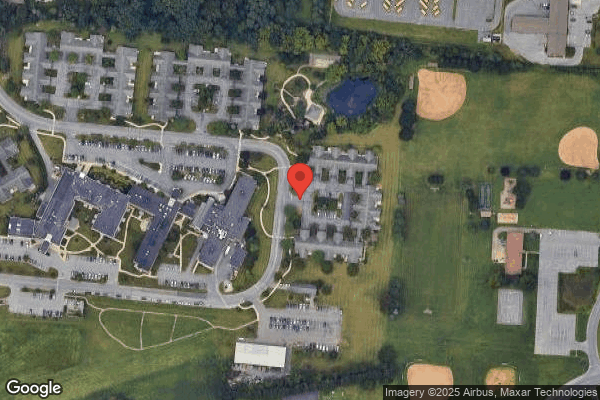



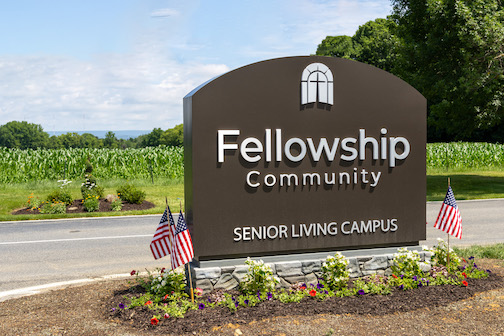
FELLOWSHIP MANOR

3000 FELLOWSHIP DRIVE, WHITEHALL, PA 18052 (610) 799-3000
Non profit - Corporation 121 Beds Independent Data: November 2025
Trust Grade
90/100
#37 of 653 in PA
Last Inspection: June 2025

Inspected within the last 6 months. Data reflects current conditions.

Overview

Fellowship Manor in Whitehall, Pennsylvania has earned a Trust Grade of A, indicating it is highly recommended and provides excellent care. It ranks #37 out of 653 facilities in Pennsylvania, placing it in the top half, and #2 out of 16 in Lehigh County, meaning only one nearby facility is rated higher. However, the facility's trend is worsening, with issues increasing from 1 in 2022 to 3 in 2025. Staffing is a strong point, with a 5-star rating and a turnover rate of 37%, which is below the state average of 46%. Notably, there have been no fines against the facility, and it has better RN coverage than 86% of Pennsylvania facilities, which helps ensure quality care. On the downside, the facility has had some concerning incidents. One resident was not assessed properly for their ability to self-administer medications, which violates their care plan. Additionally, another resident who had a history of falls was not adequately monitored, leading to nine falls over a few months, indicating potential neglect in fall prevention measures. There was also a concern regarding the use of anti-anxiety medication without proper documentation on when to stop its administration, raising potential issues with chemical restraint. Overall, while there are significant strengths, the noted concerns should be carefully considered.

Trust Score
A
90/100
In Pennsylvania
#37/653
Top 5%
Safety Record
Low Risk
No red flags
Inspections
Getting Worse
1 → 3 violations
Staff Stability
○ Average
37% turnover. Near Pennsylvania's 48% average. Typical for the industry.
Penalties
✓ Good
No fines on record. Clean compliance history, better than most Pennsylvania facilities.
Skilled Nurses
✓ Good
Each resident gets 75 minutes of Registered Nurse (RN) attention daily — more than 97% of Pennsylvania nursing homes. RNs are the most trained staff who catch health problems before they become serious.
Violations
✓ Good
Only 4 deficiencies on record. Cleaner than most facilities. Minor issues only.
★★★★★
5.0
Overall Rating
★★★★★
5.0
Staff Levels
★★★★☆
4.0
Care Quality
★★★★☆
4.0
Inspection Score
Stable
2022: 1 issues
2025: 3 issues

The Good

  • 5-Star Staffing Rating · Excellent nurse staffing levels
  • 4-Star Quality Measures · Strong clinical quality outcomes
  • Full Sprinkler Coverage · Fire safety systems throughout facility
  • No fines on record
  • Staff turnover below average (37%)

    11 points below Pennsylvania average of 48%

Facility shows strength in staffing levels, quality measures, fire safety.

The Bad

Staff Turnover: 37%

Near Pennsylvania avg (46%)

Typical for the industry

The Ugly 4 deficiencies on record

Jun 2025 3 deficiencies
CONCERN (D)

Potential for Harm - no one hurt, but risky conditions existed

Deficiency F0554 (Tag F0554)

Could have caused harm · This affected 1 resident

Based on policy review, observation, clinical record review, and resident and staff interview, it was determined that the facility failed determine a resident's capability to self administer their med...

Read full inspector narrative →
Based on policy review, observation, clinical record review, and resident and staff interview, it was determined that the facility failed determine a resident's capability to self administer their medications for one of one sampled residents. (Resident 77) Findings include: Review of facility policy entitled, Self Administration of Medications and Bedside Storage, last reviewed June 2025, revealed that if a resident indicated a desire to self administer medications, a member of the interdisciplinary team was to conduct a skills assessment form with the resident to determine the resident's ability to self-administer medications. Once the form was completed, the assessment was to be kept in the resident's medical record. Once determined safe to self administer, the physician/provider was to be notified and self-administration status was to be reflected in the resident's EHR (electronic health record). Bedside storage was to be permitted if the medication was able to be kept out of reach of other residents, could be kept in the original container and the nurse was able to verify and document use. Clinical record review revealed that Resident 77 had a diagnosis of end-stage renal disease for which they received hemodialysis. Review of the Minimum Data Set (MDS) assessment, dated March 20, 2025, revealed that Resident 77's cognitive ability was intact. Observations on June 24, 2025, at 10:00 a.m., and on June 25, 2025, at 11:00 a.m., revealed that there were two bottles of Velphoro (a medication used to control phosphorus levels in the blood) unsecured on the bedside table and on top of the dresser in the Resident 77's room. Additionally, there was one bottle of lidocaine spray and two tubes of lidocaine gel (medications used for numbing the skin) observed unsecured on the bedside table and on top of the dresser in Resident 77's room during the observation periods. In an interview on June 24, 2025, at 10:00 a.m., Resident 77 stated that the Lidocaine was to be applied prior to leaving for dialysis. There was no documentation to indicate that the facility had assessed Resident 77 for the ability to self-administer the Velphoro or the Lidocaine gel. There was no security of the medications in her room. In an interview on June 26, 2025, at 8:45 a.m., the Director of Nursing confirmed that Resident 77 was not assessed to self-administer the medications as per the facility policy. 28 Pa. Code 211.12(d)(1)(3)(5) Nursing Services.
CONCERN (D)

Potential for Harm - no one hurt, but risky conditions existed

Deficiency F0605 (Tag F0605)

Could have caused harm · This affected 1 resident

**NOTE- TERMS IN BRACKETS HAVE BEEN EDITED TO PROTECT CONFIDENTIALITY** Based on clinical record review and staff interview, it was determined that the facility failed to ensure that residents were fr...

Read full inspector narrative →
**NOTE- TERMS IN BRACKETS HAVE BEEN EDITED TO PROTECT CONFIDENTIALITY** Based on clinical record review and staff interview, it was determined that the facility failed to ensure that residents were free from potential chemical restraints for one of five sampled residents who were ordered psychotropic medications. (Resident 78) Findings include: Clinical record review revealed that Resident 78 had diagnoses that included Alzheimer's disease, dementia and anxiety. Review of the Minimum Data Set assessment dated [DATE], revealed that the resident was cognitively impaired and had been administered an anti-anxiety medication. On June 12, 2025, a physician ordered for staff to administer an anti-anxiety medication, (Ativan), every five hours as needed for agitated behaviors. There was no date in the order that indicated when staff was to stop administering the as needed medication. Review of the Medication Administration Record for June 2025, revealed that staff had administered the Ativan on June 12, 13, 14, 15 and 22, 2025, for a total of five times. There was no documented evidence that the physician had re-evaluated continued use beyond 14 days of the as needed anti-anxiety medication. In an interview on June 25, 2025, at 3:00 p.m., the Assistant Director of Nursing stated that there had been no date added to the order that indicated when staff was to stop administering the anti-anxiety medication. 28 Pa. Code 211.12(d)(1)(5) Nursing services.
CONCERN (D)

Potential for Harm - no one hurt, but risky conditions existed

Accident Prevention (Tag F0689)

Could have caused harm · This affected 1 resident

**NOTE- TERMS IN BRACKETS HAVE BEEN EDITED TO PROTECT CONFIDENTIALITY** Based on clinical record review and review of incident reports it was determined that the facility failed to ensure that staff p...

Read full inspector narrative →
**NOTE- TERMS IN BRACKETS HAVE BEEN EDITED TO PROTECT CONFIDENTIALITY** Based on clinical record review and review of incident reports it was determined that the facility failed to ensure that staff provided adequate supervision in order to prevent falls for one of nine sampled residents who were at risk for falls. (Resident 78) Findings include: Clinical record review revealed that Resident 78 was admitted on [DATE], and had diagnoses that included Alzheimer's disease, dementia and anxiety. Review of a fall risk evaluation dated February 23, 2025, indicated that he was at a high risk for falls. The Minimum Data Set assessment dated [DATE], indicated that the resident had a memory problem. A review of the care plan revealed that the resident was at risk for falls due to poor safety awareness, impulsivity, a history of falling and confusion. Review of nursing documentation and incident reports revealed that Resident 78 fell nine times between February 23, 2025, through May 9, 2025. He fell five times out of bed and four times out of his wheelchair. Six of the falls were between the hours of 6:00 a.m. and 1:00 p.m., and three of the falls were between the hours of 7:00 p.m. and 12:00 a.m. Nursing documentation dated February 23, 2025, indicated that the resident was nearly falling out of his wheelchair and had been crawling out of bed. On February 26, 2025, March 3, and March 4, 2025, nursing staff documented that the resident was awake all night, confused, was trying to either get out of bed or out of his wheelchair, making frequent attempts to stand on his own, and was not following any kind of direction from staff. Review of an incident report dated March 7, 2025, at 7:15 p.m., revealed that the resident was found on the floor in his room next to his bed. The incident report further indicated that the resident tries to get up and can not on his own. Nursing documentation dated March 18, 2025, at 2:46 a.m., revealed that the resident was restless and making several attempts to get up from his chair. Review of an incident report dated March 18, 2025, at 9:20 a.m., revealed that staff found the resident lying on his back in front of his wheelchair in the hallway. The report further indicated that he was displaying increased restlessness around the time of the incident. Nursing documentation dated March 21, 2025, at 6:28 a.m., revealed that the resident had been awake, anxious and restless all night. He was also making several attempts to get up from his chair to stand unassisted. Review of an incident report dated March 21, 2025, at 1:00 p.m., revealed that the resident was found in the hallway lying on the floor in front of his wheelchair. Review of incident reports dated March 24, 2025, and March 29, 2025, revealed that the resident had two more falls out of his wheelchair. Review of an incident report dated April 6, 2025, revealed that the resident had fallen out of bed. Nursing documentation dated April 23, 2025, revealed that the resident had been sitting on the edge of his bed and attempting to stand up. He was transferred to a chair and continued to attempt to stand up unassisted. Review of an incident report dated April 29, 2025, at 6:33 a.m., revealed that the resident had fallen out of bed. Nursing documentation dated May 5, 2025, revealed that the resident was climbing out of bed. The note further indicated that the resident was not put back to bed as it is unsafe. Review of an incident report dated May 6, 2025, at 11:09 p.m., revealed that the resident had again fallen out of bed. Nursing documentation dated May 8, 2025, at 3:23 a.m., revealed that the resident had been confused and had multiple times attempted to stand up from his chair unassisted. Review of an incident report dated May 9, 2025, at 9:20 a.m., revealed that the resident had again fallen out of bed. There was no documented evidence that the facility had provided adequate supervision at the aforementioned times when the resident was frequently exhibiting behaviors specifically attempts to get out of his bed our wheelchair or to stand unassisted by staff in order to prevent falls. 28 Pa. Code 211.12(d)(1)(5) Nursing services.
Aug 2022 1 deficiency
CONCERN (D)

Potential for Harm - no one hurt, but risky conditions existed

Abuse Prevention Policies (Tag F0607)

Could have caused harm · This affected 1 resident

Based on review of facility policy, review of personnel files, and staff interview, it was determined that the facility failed to initiate an employee criminal background check for one of five sampled...

Read full inspector narrative →
Based on review of facility policy, review of personnel files, and staff interview, it was determined that the facility failed to initiate an employee criminal background check for one of five sampled newly hired employees. (Employee DE 1) Findings include: Review of the facility policy entitled Prevention from Abuse/Neglect/Involuntary Seclusion and Misappropriation of Resident Property, dated July 2022, revealed that if the facility determined an applicant eligible to be hired, a state police background check would be conducted to reduce the risk of hiring an employee likely to abuse residents. Employee DE 1 had been working at the facility since May 28, 2022. Review of DE1's employee file revealed that the Pennsylvania State Police background check had not been completed until August 12, 2022. In an interview conducted on August 12, 2022, at 9:40 a.m., the Nursing Home Administrator confirmed that DE1's employment screening had not been completed until August 12, 2022. CFR 483.12(b)(1) Prohibit and prevent abuse, neglect, and exploitation of residents and misappropriation of resident property. Previously cited 9/24/21 28 Pa.Code 201.14(a)Responsibility of licensee 28 Pa.Code 201.19 Personnel policies and procedures
Understanding Severity Codes (click to expand)
Life-Threatening (Immediate Jeopardy)
J - Isolated K - Pattern L - Widespread
Actual Harm
G - Isolated H - Pattern I - Widespread
Potential for Harm
D - Isolated E - Pattern F - Widespread
No Harm (Minor)
A - Isolated B - Pattern C - Widespread

Questions to Ask on Your Visit

  • "Can I speak with families of current residents?"
  • "What's your RN coverage like on weekends and overnight?"

Our Honest Assessment

Strengths
  • • Grade A (90/100). Above average facility, better than most options in Pennsylvania.
  • • No major safety red flags. No abuse findings, life-threatening violations, or SFF status.
  • • No fines on record. Clean compliance history, better than most Pennsylvania facilities.
  • • Only 4 deficiencies on record. Cleaner than most facilities. Minor issues only.
Concerns
  • • No significant concerns identified. This facility shows no red flags across CMS ratings, staff turnover, or federal penalties.
Bottom line: Generally positive indicators. Standard due diligence and a personal visit recommended.

About This Facility

What is Fellowship Manor's CMS Rating?

CMS assigns FELLOWSHIP MANOR an overall rating of 5 out of 5 stars, which is considered much above average nationally. Within Pennsylvania, this rating places the facility higher than 99% of the state's 100 nursing homes. This rating reflects solid performance across the metrics CMS uses to evaluate nursing home quality.

How is Fellowship Manor Staffed?

CMS rates FELLOWSHIP MANOR's staffing level at 5 out of 5 stars, which is much above average compared to other nursing homes. Staff turnover is 37%, compared to the Pennsylvania average of 46%. This relatively stable workforce can support continuity of care.

What Have Inspectors Found at Fellowship Manor?

State health inspectors documented 4 deficiencies at FELLOWSHIP MANOR during 2022 to 2025. These included: 4 with potential for harm.

Who Owns and Operates Fellowship Manor?

FELLOWSHIP MANOR is owned by a non-profit organization. Non-profit facilities reinvest revenue into operations rather than distributing to shareholders. The facility operates independently rather than as part of a larger chain. With 121 certified beds and approximately 114 residents (about 94% occupancy), it is a mid-sized facility located in WHITEHALL, Pennsylvania.

How Does Fellowship Manor Compare to Other Pennsylvania Nursing Homes?

Compared to the 100 nursing homes in Pennsylvania, FELLOWSHIP MANOR's overall rating (5 stars) is above the state average of 3.0, staff turnover (37%) is near the state average of 46%, and health inspection rating (4 stars) is above the national benchmark.

What Should Families Ask When Visiting Fellowship Manor?

Based on this facility's data, families visiting should ask: "Can I visit during a mealtime to observe dining assistance and food quality?" "How do you handle medical emergencies, and what is your hospital transfer rate?" "Can I speak with family members of current residents about their experience?"

Is Fellowship Manor Safe?

Based on CMS inspection data, FELLOWSHIP MANOR has a clean safety record: no substantiated abuse findings (meaning no confirmed cases of resident harm), no Immediate Jeopardy citations (the most serious violation level indicating risk of serious injury or death), and is not on the Special Focus Facility watch list (a federal program monitoring the lowest-performing 1% of nursing homes). The facility has a 5-star overall rating and ranks #1 of 100 nursing homes in Pennsylvania. While no facility is perfect, families should still ask about staff-to-resident ratios and recent inspection results during their visit.

Do Nurses at Fellowship Manor Stick Around?

FELLOWSHIP MANOR has a staff turnover rate of 37%, which is about average for Pennsylvania nursing homes (state average: 46%). Moderate turnover is common in nursing homes, but families should still ask about staff tenure and how the facility maintains care continuity when employees leave.

Was Fellowship Manor Ever Fined?

FELLOWSHIP MANOR has no federal fines on record. CMS issues fines when nursing homes fail to meet care standards or don't correct problems found during inspections. The absence of fines suggests the facility has either maintained compliance or corrected any issues before penalties were assessed. This is a positive indicator, though families should still review recent inspection reports for the full picture.

Is Fellowship Manor on Any Federal Watch List?

FELLOWSHIP MANOR is not on any federal watch list. The most significant is the Special Focus Facility (SFF) program, which identifies the bottom 1% of nursing homes nationally based on persistent, serious quality problems. Not being on this list means the facility has avoided the pattern of deficiencies that triggers enhanced federal oversight. This is a positive indicator, though families should still review the facility's inspection history directly.