WINDBER WOODS SENIOR LIVING & REHABILITATION CTR
277 HOFFMAN AVENUE, WINDBER, PA 15963 (814) 467-5505
Non profit - Corporation 127 Beds Independent Data: November 2025
Trust Grade
33/100
#516 of 653 in PA
Last Inspection: March 2025

Within standard 12-15 month inspection cycle. Federal law requires annual inspections.

Overview

Windber Woods Senior Living & Rehabilitation Center has a Trust Grade of F, indicating poor performance with significant concerns. Ranked #516 out of 653 facilities in Pennsylvania, they fall in the bottom half of all nursing homes, and #5 out of 6 in Somerset County, meaning there is only one local facility that performs worse. Although the facility is improving-reducing issues from 19 in 2024 to 12 in 2025-it still has serious staffing concerns, with less RN coverage than 86% of state facilities, despite a good staffing rating of 4 out of 5 stars and a lower-than-average turnover rate of 38%. The facility has faced concerning incidents, including a medication error that resulted in a resident needing medical intervention for dangerously low blood sugar, and a fall that required sutures after staff failed to transport a resident safely in a wheelchair. While there are strengths in staffing and quality measures, the overall performance and specific incidents raise significant red flags for potential residents and their families.

Trust Score
F
33/100
In Pennsylvania
#516/653
Bottom 21%
Safety Record
High Risk
Review needed
Inspections
Getting Better
19 → 12 violations
Staff Stability
○ Average
38% turnover. Near Pennsylvania's 48% average. Typical for the industry.
Penalties
✓ Good
$24,670 in fines. Lower than most Pennsylvania facilities. Relatively clean record.
Skilled Nurses
○ Average
Each resident gets 31 minutes of Registered Nurse (RN) attention daily — about average for Pennsylvania. RNs are the most trained staff who monitor for health changes.
Violations
⚠ Watch
53 deficiencies on record. Higher than average. Multiple issues found across inspections.
★★☆☆☆
2.0
Overall Rating
★★★★☆
4.0
Staff Levels
★★★★★
5.0
Care Quality
★☆☆☆☆
1.0
Inspection Score
Stable
2024: 19 issues
2025: 12 issues

The Good

  • 4-Star Staffing Rating · Above-average nurse staffing levels
  • 5-Star Quality Measures · Strong clinical quality outcomes
  • Full Sprinkler Coverage · Fire safety systems throughout facility
  • No fines on record
  • Staff turnover below average (38%)

    10 points below Pennsylvania average of 48%

Facility shows strength in staffing levels, quality measures, fire safety.

The Bad

2-Star Overall Rating

Below Pennsylvania average (3.0)

Below average - review inspection findings carefully

Staff Turnover: 38%

Near Pennsylvania avg (46%)

Typical for the industry

Federal Fines: $24,670

Below median ($33,413)

Minor penalties assessed

The Ugly 53 deficiencies on record

3 actual harm
Mar 2025 12 deficiencies 1 Harm
SERIOUS (G)

Actual Harm - a resident was hurt due to facility failures

Deficiency F0760 (Tag F0760)

A resident was harmed · This affected 1 resident

Based on review of manufacturer's directions for use, facility policies, and clinical records, as well as staff interviews, it was determined that the facility failed to follow the manufacture's direc...

Read full inspector narrative →
Based on review of manufacturer's directions for use, facility policies, and clinical records, as well as staff interviews, it was determined that the facility failed to follow the manufacture's direction for use, resulting in a significant medication error for one of 44 residents reviewed (Resident 85), which resulted in Resident 85 requiring medical intervention to correct a critically low blood sugar. Findings include: The manufacturer's direction for use for Insulin Lispro (a rapid acting insulin), dated July 2023, indicated to administer the dose of Insulin Lispro within 15 minutes before a meal or immediately after a meal. The facility's policy regarding medication administration, dated December 20, 2024, indicated that medications are to be administered in a safe and legal manner. Medications given need to follow the 5 Rights: right resident, right time, right drug, right frequency, and right route. Pour the medication reading each order on the computer screen and comparing the directions on each medication box. That manufacturer's guidelines will be followed for all rapid, short, intermediate, and long-acting insulin. An admission Minimum Data Set (MDS) assessment (a mandated assessment of a resident's abilities and care needs) for Resident 85, dated February 3, 2025, revealed that the resident was understood, could understand others, and had a diagnosis which included diabetes. A care plan for the resident, dated February 24, 2025, revealed that the resident has diabetes with hyperglycemic (high blood sugar) and hypoglycemic (low blood sugar) readings. Physician's orders for Resident 85, dated February 6, 2025, included an order for the resident to receive 22 units of Insulin Lispro in the evening for diabetes. Information provided by the facility revealed that the first meal cart was delivered to Resident 85's unit at 5:15 p.m. and the second meal cart was delivered to the unit at 5:20 p.m. A nursing note for Resident 85, dated February 17, 2025, at 5:00 p.m. completed by Registered Nurse 1 revealed that the resident's accu-check at 5:00 p.m. was 35 milligrams per deciliter (mg/dL) (a normal range is generally considered to be 70 to 100 mg/dL). The resident is lethargic (feeling tired, lacking energy, and sluggish) and diaphoretic (profuse sweating, or being covered in sweat). The resident will open eyes and respond minimally verbally. The resident was administered Glucagon (used along with emergency medical treatment to treat very low blood sugar) and per the physician, recheck the resident's accu-check in 15 minutes. The rechecked accu-check was 49 mg/dL. The resident was given another administration of Glucagon. The accu-check was checked again in 15 minutes and was 59 mg/dL. At this time the resident was awake and alert and becoming more to her baseline. The resident was being fed by staff at this time. A Medication Administration Audit Report for Resident 85, dated February 17, 2025, revealed that Licensed Practical Nurse 2 administered the 22 units of Insulin Lispro to the resident at 4:05 p.m. (more than one hour prior to the meal delivery). The physician was advised that prior to the hypoglycemic episode, the resident received 22 units of her Insulin Lispro, and that the resident had not eaten within 15 minutes to 30 minutes of receiving her insulin. Registered Nurse 1 stated that a rule of thumb is to not administer the resident their insulin until the trays hit the hall, especially if they are unfamiliar with the resident to avoid this in the future. Interview with the Nursing Home Administrator on March 26, 2025, at 1:55 p.m. confirmed that per the manufacturer's instructions, Licensed Practical Nurse 2 should have waited until 15 minutes before the meal or until immediately after the meal to give the 22 units of Insulin Lispro to Resident 85. 28 Pa. Code 211.9(a)(1) Pharmacy Services. 28 Pa. Code 211.12(d)(1)(3)(5) Nursing Services.
CONCERN (D)

Potential for Harm - no one hurt, but risky conditions existed

Comprehensive Care Plan (Tag F0656)

Could have caused harm · This affected 1 resident

Based on review of facility policies, clinical records, and staff interviews, it was determined that the facility failed to develop a comprehensive care plan that included specific and individualized ...

Read full inspector narrative →
Based on review of facility policies, clinical records, and staff interviews, it was determined that the facility failed to develop a comprehensive care plan that included specific and individualized interventions to address care needs for one of 44 residents reviewed (Resident 60). Findings include: A facility policy for care plans, dated December 20, 2024, indicated that resident care plans will have multiple focuses, goals, and interventions according to their needs, level of care, and capabilities. A quarterly Minimum Data Set (MDS) assessment (a mandated assessment of a resident's abilities and care needs) for Resident 60, dated February 7, 2025, indicated that the resident was cognitively impaired, required assistance from staff for daily care needs, and diagnoses that included high blood pressure and diabetes. Observations of Resident 60 on March 26, 2025, at 8:35 a.m. revealed that he had two containers of smokeless tobacco and an empty milk carton that he was using as a spittoon. There was no documented evidence that a care plan was developed to address the resident's use of smokeless tobacco. An interview with the Nursing Home Administrator on March 26, 2025, at 9:30 a.m. confirmed that there was no documented evidence that a care plan was developed for Resident 60 to address his use of smokeless tobacco/chew. 28 Pa. Code 211.12(d)(5) Nursing Services.
CONCERN (D)

Potential for Harm - no one hurt, but risky conditions existed

Deficiency F0657 (Tag F0657)

Could have caused harm · This affected 1 resident

Based on review of facility policies and clinical records, as well as observations and staff interviews, it was determined that the facility failed to ensure that care plans were updated/revised to re...

Read full inspector narrative →
Based on review of facility policies and clinical records, as well as observations and staff interviews, it was determined that the facility failed to ensure that care plans were updated/revised to reflect specific care needs for three of 44 residents reviewed (Residents 48, 90, 94). Findings include: A facility policy for care plans, dated December 20, 2024, indicated that resident care plans will have multiple focuses, goals, and interventions according to their needs level of care and capabilities. A quarterly Minimum Data Set (MDS) assessment (a mandated assessment of a resident's care needs and abilities) for Resident 48, dated March 5, 2025, revealed that the resident had moderate cognitive impairment and was occasionally incontinent of urine. Physician's orders for Resident 48, dated January 16, 2025, included orders for the resident to receive 70 milligrams (mg) of Gentamicin Sulfate intramuscularly one time a day for three days for a urinary tract infection and contact isolation precautions (used to prevent the spread of infections that can be transmitted through direct or indirect contact with a patient or their environment, requiring healthcare workers and visitors to wear gloves and gowns) due to ESBL (Extended-Spectrum Beta-Lactamase, an enzyme produced by some bacteria that makes them resistant to certain antibiotics) in the urine. Observations of Resident 48 on March 24, 2025, at 10:28 a.m. revealed that signage was posted outside of the resident's room indicating that contact isolation precautions were in place. A care plan, dated February 22, 2025, indicated that the resident had ESBL of the urine; however, there was no documented evidence that the care plan included contact isolation precautions. Interview with the Director of Nursing on March 26, 2025, at 9:44 a.m. confirmed that Resident 48's care plan did not include contact isolation precautions for ESBL. A quarterly MDS assessment for Resident 90, dated February 3, 2025, revealed that the resident was cognitively impaired, had adequate vision, and did not use corrective lenses. The current care plan for Resident 90 indicated that the she required glasses; however, they were lost on January 18, 2025, and were not in her possession. Observations of Resident 90 on March 26, 2025, at 9:30 a.m. revealed that the resident had glasses in her possession. Interview with the Nursing Home Administrator on March 26, 2025, at 9:44 a.m. confirmed that Resident 90's glasses were not lost and that her care plan should have been updated to reflect that the resident was in possession of her glasses. An admission MDS assessment for Resident 94, dated February 3, 2025, revealed that the resident was rarely understood, rarely understood others, and was dependent on staff for care. A care plan for Resident 94, dated December 15, 2025, indicated that the resident was on Bumex (a medication that increases urination). A review of Resident 94's clinical record revealed no documented evidence that the resident was currently receiving Bumex. Interview with the Nursing Home Administrator on March 26, 2025, at 2:36 p.m. confirmed that Resident 94's care plan should have been updated to reflect that the resident was no longer receiving Bumex. 28 Pa. Code 211.12(d)(5) Nursing Services.
CONCERN (D)

Potential for Harm - no one hurt, but risky conditions existed

Pressure Ulcer Prevention (Tag F0686)

Could have caused harm · This affected 1 resident

Based on review of policies and clinical records, as well as staff interviews, it was determined that the facility failed to ensure that pressure ulcer dressing changes were completed as ordered to pr...

Read full inspector narrative →
Based on review of policies and clinical records, as well as staff interviews, it was determined that the facility failed to ensure that pressure ulcer dressing changes were completed as ordered to prevent skin breakdown for one of 44 residents reviewed (Resident 106). Findings include: A facility policy regarding treatment of wounds, dated December 20, 2024, revealed that the facility had a no touch care policy and that staff were to clean and dry a wound and surrounding skin with gauze without letting any unsterile item touch the wound. An admission Minimum Data assessment Set (MDS) (a mandated assessment of a resident's abilities and care needs) for Resident 106, dated March 13, 2025, revealed that the resident was understood; could sometimes understand; was dependent on staff for turning, transfers, and lower body care; had diagnoses that included a stroke; and had one unstageable pressure ulcer (unable to determine the depth of the wound due to slough or eschar) that was present on admission. A care plan for Resident 106, dated March 6, 2025, revealed that she had an unstageable ulcer of the left heel and a diabetic foot ulcer of the right plantar heel that was at risk for further skin breakdown. Staff were to provide treatments a ordered. Physician's orders for Resident 106, dated March 7, 2025, included an order to cleanse the left heel with wound cleanser, then apply medical grade honey (a wound treatment), and cover with a bordered foam dressing once a day and as needed. Physician's orders for Resident 106, dated March 11, 2025, included an order to cleanse the right plantar heel with wound cleanser and cover with a bordered foam dressing once a day and as needed Observations of Resident 106 on March 24, 2025, at 9:39 a.m. revealed that Licensed Practical Nurse 4 entered the room with two bordered gauze dressings in her hand. One had a brown substance on it. Licensed Practical Nurse 4 donned gloves and then picked up Resident 106's left ankle and placed the bordered gauze with the brown substance on the left heel, then picked up the right ankle and placed bordered gauze on the right heel. Both of Resident 106's heels were in direct contact with a red blanket. Licensed Practical Nurse 4 said at that time, she was cleaned up earlier, I am just putting on her dressings. Interview with Licensed Practical Nurse 4 on March 24, 2025, confirmed that she did not use wound cleanser to cleanse Resident 106's right and left heels prior to putting on the dressings, and she assumed that the resident was cleaned when the nurse aide provided morning care. A bottle of wound cleanser was available in the cart. Interview with the Nursing Home Administrator on March 24, 2025, at 2:29 p.m. confirmed that Resident 106's wound treatments should have been completed as ordered by the physician. 28 Pa. Code 201.18(e)(1) Management. 28 Pa. Code 211.12(d)(1)(5) Nursing Services.
CONCERN (D)

Potential for Harm - no one hurt, but risky conditions existed

Accident Prevention (Tag F0689)

Could have caused harm · This affected 1 resident

Based on review of clinical records, as well as observations and staff interviews, it was determined that the facility failed to ensure that the residents' environment remained free of accident hazard...

Read full inspector narrative →
Based on review of clinical records, as well as observations and staff interviews, it was determined that the facility failed to ensure that the residents' environment remained free of accident hazards for one of 44 residents reviewed (Resident 90) who resides on the alarmed unit. Findings include: A quarterly Minimum Data Set (MDS) assessment (a mandated assessment of a resident's abilities and care needs) for Resident 90, dated February 3, 2025, indicated that the resident was cognitively impaired, was understood and could sometimes understand others, and was ambulatory with a walker or wheelchair. The current care plan for resident 90 revealed that she self-propels in the facility and will take herself to and from activities A nursing note for Resident 90, dated November 2, 2025, at 2:23 p.m. revealed that the resident was found in the basement of the facility. A progress note for Resident 90, dated November 4, 2025, at 10:59 a.m. revealed that the resident was alert to person only, does not follow commands, and was found in the basement over the weekend. Interview with the Director of Therapy on March 25, 2025, at 11:15 a.m. revealed that Resident 90 liked to wander around the unit and was able to propel herself in her broda chair. As of March 25, 2025, there was no documented evidence in Resident 90's clinical record to indicate that interventions were put in place to prevent her from further elopements from her unit. Interview with the Director of Nursing on March 25, 2025, at 12:13 p.m. revealed that they did not consider the incident an elopement since the resident did not leave the building. She stated that the resident left the second floor and was found in the basement. 28 Pa. Code 201.14(a) Responsibility of Licensee. 28 Pa. Code 201.18(b)(1)(e)(1) Management. 28 Pa. Code 211.10(d) Resident Care Policies. 28 Pa. Code 211.12(d)(5) Nursing Services.
CONCERN (D)

Potential for Harm - no one hurt, but risky conditions existed

Pharmacy Services (Tag F0755)

Could have caused harm · This affected 1 resident

Based on review of policies and clinical records, as well as staff interviews, it was determined that the facility failed to maintain a complete and accurate accounting of controlled medications (medi...

Read full inspector narrative →
Based on review of policies and clinical records, as well as staff interviews, it was determined that the facility failed to maintain a complete and accurate accounting of controlled medications (medications with the potential to be abused) for one of 33 residents reviewed (Resident 46). Findings include: The facility's policy regarding medication administration, dated December 20, 2024, indicated that medications are to be administered in a safe and legal manner. Medications given need to follow the 5 Rights, right resident, right time, right drug, right frequency, and right route. Recently a sixth right was implemented, the right documentation. Staff must sign out the narcotic on the controlled drug record prior to administration of the medication and electronically record their signature in the resident's Medication Administration Record (MAR) after the resident takes the medication. A quarterly Minimum Data Set (MDS) assessment (a mandated assessment of a resident's care needs and abilities) for Resident 102, dated March 5, 2025, revealed that the resident was cognitively intact, was understood, could understand others, and was receiving an opioid (a controlled substance) medication for pain. Physician's orders for Resident 102, dated February 10, 2025, included an order for the resident to receive one 5-235 milligram (mg) tablet of Oxycodone-Acetaminophen (a controlled substance to treat pain). The resident's controlled drug records for February and March 2025 indicated that 5-325 mg Oxycodone-Acetaminophen was signed out on February 23, 2025, at 8:00 p.m. and March 1, 2025, at 7:25 p.m.; however, there was no documented evidence in the resident's MAR that the medication was administered. Interview with the Director of Nursing on March 27, 2025, at 11:21 a.m. confirmed that there was no documented evidence that the signed-out doses of Oxycodone-Acetaminophen for Resident 102 were administered on the above dates and times. 28 Pa. Code 211.9(h) Pharmacy Services. 28 Pa. Code 211.12(d)(1)(5) Nursing Services.
CONCERN (D)

Potential for Harm - no one hurt, but risky conditions existed

Deficiency F0761 (Tag F0761)

Could have caused harm · This affected 1 resident

Based on review of facility policies, manufacturer's instructions, and clinical records, as well as observations and staff interviews, it was determined that the facility failed to store unopened (unu...

Read full inspector narrative →
Based on review of facility policies, manufacturer's instructions, and clinical records, as well as observations and staff interviews, it was determined that the facility failed to store unopened (unused) multi-dose containers of insulin according to manufacturer's instructions for two of 44 residents reviewed (Residents 74, 85), and failed to label multi-dose containers of medications with the date they were opened in one of two medication carts observed (First-Floor medication cart). Findings include: The facility's policy regarding medication labeling and storage, dated December 20, 2024, revealed that multi-dose vials that have been opened or accessed were to be dated and discarded within 28 days unless the manufacturer specifies a shorter or longer date for the open vial. Manufacturer's directions for the use of Lantus insulin (a long-acting insulin used to lower blood sugar levels), dated September 2023, revealed that unused Lantus should be stored in a refrigerator between 36 degrees F to 46 degrees F. After initial use it may be kept at temperatures below 86 degrees F for up to 28 days. Physician's orders for Resident 74, dated December 5, 2024, included an order for the resident to receive 14 units of Lantus insulin one time a day for diabetes. Observations of the Spruce back medication cart on March 27, 2025, at 9:03 a.m. revealed an opened and undated pen injector of Lantus insulin for Resident 74. Interview with Licensed Practical Nurse 5 at the time of observation confirmed that the pen injector of Lantus insulin for Resident 74 was not dated with the date it was opened and it should have been. Manufacturer's directions for the use of Humalog/Lispro insulin (a fast-acting insulin used to lower blood sugar levels), dated July 2023, revealed that unused Humalog/Lispro should be stored in a refrigerator between 36 degrees F to 46 degrees F. After initial use it may be kept at temperatures below 86 degrees F for up to 28 days. Throw away all opened vials after 28 days of use, even if there is insulin left in the vial. Physician's orders for Resident 85, dated February 18, 2025, included an order for the resident to receive 12 units of Lispro insulin three times a day for diabetes. Observations of the Maple medication cart on March 27, 2025, at 9:35 a.m. revealed an opened and undated Lispro Kwik pen for Resident 85. Interview with Licensed Practical 6 at the time of observation confirmed that the opened Lispro Kwik pen for Resident 85 was not dated with the date it was opened and it should have been. Manufacturer's directions for use of Aplisol (tuberculin purified protein derivative), dated March 2016, indicated that the vials in use more than 30 days should be discarded due to possible oxidation and degradation, which may affect potency. Observations of the medication refrigerator in the nursing supervisors office on March 27, 2025, at 9:27 a.m. revealed an opened and undated bottle of Aplisol solution. Interview with Registered Nurse 7 at the time of observation confirmed that the opened bottle of Aplisol solution should have been labeled with the date it was opened. Interview with the Nursing Home Administrator on March 27, 2025, at 10:04 a.m. confirmed that the opened pen injector of Lantus insulin, Lispro Kwik pen, and bottle of Aplisol solution should have been dated when they were opened. Manufacturer's directions for Trelegy Ellipta (a combination medication used to treat chronic obstructive pulmonary disease (COPD) and asthma), dated January 7, 2019, indicated that Trelegy Ellipta should be stored inside the unopened moisture-protective foil tray and only removed from the tray immediately before initial use. Discard Trelegy Ellipta six weeks after opening the foil tray or when the counter reads 0, whichever comes first. Write the Tray opened and Discard dates on the inhaler label. The Discard date is six weeks from the date you open the tray. Physician's orders for Resident 120, dated March 20, 2025, included an order for the resident to receive one 100-62.5-25 microgram (mcg)/activation puff from the Trelegy Ellipta inhaler once a day. Observations of the First-Floor medication cart on March 27, 2025, at 1:01 p.m. revealed that the 100-62.5-25 mcg/activation Trelegy Ellipta inhaler for Resident 120 was opened and not dated with the date that it was opened. Interview with Licensed Practical Nurse 8 at the time of observation confirmed that the inhaler for Resident 120 was opened and not dated with the date it was opened, and it should have been dated. 28 Pa. Code 211.9(h) Pharmacy Services. 28 Pa. Code 211.12(d)(1) Nursing Services.
CONCERN (D)

Potential for Harm - no one hurt, but risky conditions existed

Deficiency F0773 (Tag F0773)

Could have caused harm · This affected 1 resident

Based on review of facility policies and clinical records, as well as staff interviews, it was determined that the facility failed to obtain laboratory studies as ordered by the physician for one of 4...

Read full inspector narrative →
Based on review of facility policies and clinical records, as well as staff interviews, it was determined that the facility failed to obtain laboratory studies as ordered by the physician for one of 44 residents reviewed (Resident 1), and failed to obtain a physician's order for an invasive procedure to collect a specimen for a laboratory test for two of 44 residents reviewed (Residents 6, 41). Findings include: An admission Minimum Data Set (MDS) assessment (a mandated assessment of a resident's care needs and abilities) for Resident 1, dated March 5, 2025, revealed that the resident was cognitively intact, was understood and understood others, and had a diagnosis of atrial fibrillation (an abnormal heart rhythm). The resident's care plan, dated March 5, 2025, indicated that she was at risk for bleeding due to anticoagulant therapy (providing medication to thin the blood), and she was to have blood tests and medications as ordered by the physician and was to be observed for any bruising or bleeding. Physician's orders for Resident 1, dated March 17, 2025, included an order for the resident to receive 5.0 milligrams (mg) of Coumadin (medication that thins the blood) daily. The resident was also ordered to have blood drawn for prothrombin time and international normalized ratio (PT/INR - blood tests that determine how long it takes the blood to clot) to monitor the therapeutic levels (appropriate range) of Coumadin to be completed on March 24, 2025. There was no documented evidence that the PT/INR tests were completed on March 24, 2025, as ordered by the physician. Interview with Nursing Home Administrator on March 27, 2025, at 1:20 p.m. confirmed that the PT/INR tests ordered by the physician for March 24, 2025, were missed and were never obtained. The facility's policy regarding catheter insertion (insertion of a plastic tube into the bladder), dated December 20, 2024, revealed that staff were to verify the physician's order. A quarterly MDS assessment for Resident 6, dated February 2, 2025, revealed that the resident was understood, could understand others, and had diagnoses that included renal insufficiency (a condition where the kidneys do not function properly, leading to a decreased ability to filter waste products and excess fluid from the blood). Physician's orders for Resident 6, dated March 3, 2025, included an order for a urinalysis and culture and sensitivity (UA/C&S tests to determine if there is a urinary infection and which antibiotics will work to treat it). A progress note for Resident 6, dated March 3, 2025, revealed that the urine was collected via straight catheterization (intermittently inserting a plastic tube into the bladder to drain urine). There was no documented evidence that staff obtained a physician's order to obtain Resident 6's urine specimen via straight catheterization. Interview with the Director of Nursing on March 27, 2025, at 11:42 a.m. confirmed that there was no documented evidence that a physician's order was obtained for Resident 6 to be straight catheterized in order to obtain the urine specimen. A quarterly MDS assessment for Resident 41, dated December 23, 2024, revealed that the resident was understood, could usually understand others, and had diagnoses that included renal insufficiency. Physician's orders for Resident 41, dated March 22, 2025, included an order for a UA/C&S. A progress note for Resident 41, dated March 23, 2025, revealed that the writer attempted to obtain the UA/C&S via straight catheterization due to resident being incontinent two times, once at 1:30 a.m. and again at 3:30 a.m. Did not get enough urine to send to the lab, and the resident refused the third straight catheterization at this time. There was no documented evidence that staff obtained a physician's order to obtain Resident 41's urine specimen via straight catheterization. Interview with the Nursing Home Administrator on March 26, 2025, at 9:15 a.m. confirmed that there was no documented evidence that a physician's order was obtained for Resident 41 to be straight catheterized in order to obtain the urine specimen. 28 Pa. Code 211.12(d)(1)(3)(5) Nursing Services.
CONCERN (D)

Potential for Harm - no one hurt, but risky conditions existed

QAPI Program (Tag F0867)

Could have caused harm · This affected 1 resident

Based on review of the facility's plans of correction for previous surveys, and the results of the current survey, it was determined that the facility's Quality Assurance Performance Improvement (QAPI...

Read full inspector narrative →
Based on review of the facility's plans of correction for previous surveys, and the results of the current survey, it was determined that the facility's Quality Assurance Performance Improvement (QAPI) committee failed to correct quality deficiencies and ensure that plans to improve the delivery of care and services effectively addressed recurring deficiencies. Findings include: The facility's deficiencies and plans of corrections for a State Survey and Certification (Department of Health) survey ending April 18, 2024, and a complaint investigation survey ending October 23, 2024, revealed that the facility developed plans of correction that included quality assurance systems to ensure that the facility maintained compliance with cited nursing home regulations. The results of the current survey, ending March 27, 2025, identified repeated deficiencies related to revision of care plans, accident hazards, and pharmacy procedures, services, and records. The facility's plan of correction for a deficiency regarding a failure to update residents' care plans, cited during the survey ending April 18, 2024, revealed that the facility developed a plan of correction that included completing audits and reporting the results of the audits to the QAPI committee for review. The results of the current survey, cited under F657, revealed that the facility's QAPI committee failed to successfully implement their plan to ensure ongoing compliance with regulations regarding updating residents' care plans. The facility's plan of correction for a deficiency regarding accident hazards, cited during the surveys ending on April 18, 2024, and October 23, 2024, revealed that the facility would complete audits and report the results of the audits to the QAPI committee for review. The results of the current survey, cited under F689, revealed that the facility's QAPI committee failed to successfully implement their plan to ensure ongoing compliance with regulations regarding accident hazards. The facility's plan of correction for a deficiency regarding pharmacy procedures, services, and records, cited during the survey ending April 18, 2024, revealed that the facility developed a plan of correction that included completing audits and reporting the results of the audits to the QAPI committee for review. The results of the current survey, cited under F755, revealed that the facility's QAPI committee failed to successfully implement their plan to ensure ongoing compliance with regulations regarding pharmacy procedures, services, and records. Refer to F657, F689, F755. 28 Pa. Code 201.14(a) Responsibility of Licensee. 28 Pa. Code 201.18(e)(1) Management.
CONCERN (D)

Potential for Harm - no one hurt, but risky conditions existed

Infection Control (Tag F0880)

Could have caused harm · This affected 1 resident

Based on review of established infection control guidelines, facility policy, and residents' clinical records, as well as observations and staff interviews, it was determined that the facility failed ...

Read full inspector narrative →
Based on review of established infection control guidelines, facility policy, and residents' clinical records, as well as observations and staff interviews, it was determined that the facility failed to follow infection control guidelines from the Centers for Medicare/Medicaid Services (CMS) and the Centers for Disease Control (CDC) to reduce the spread of infections and prevent cross-contamination for three of 36 residents reviewed (Residents 47, 106). Findings include: CDC guidance on isolation precautions and Implementation of Personal Protective Equipment (PPE) use in Nursing Homes to Prevent Spread of Multidrug-Resistant Organisms (MDRO's - bacteria that have become resistant to certain antibiotics, and these antibiotics can no longer be used to control or kill the bacteria), dated July 12, 2022, indicates that MDRO transmission is common in skilled nursing facilities, contributing to substantial resident morbidity and mortality and increased healthcare costs. Enhanced Barrier Precautions (EBP) are an infection control intervention designed to reduce transmission of resistant organisms that employs targeted gown and glove use during high contact resident care activities. CMS updated its infection prevention and control guidance effective April 1, 2024. The recommendations now include the use of EBP during high-contact care activities for residents with chronic wounds or indwelling medical devices, regardless of their MDRO status, in addition to residents who have an infection or colonization with a CDC-targeted or other epidemiologically important MDRO when contact precautions do not apply. The facility's policy regarding EBP, dated December 20, 2024, referred to the use of gown and gloves for use during high contact resident care activities for residents known to be colonized or infected with MDRO as well as those at increased risk of MDRO acquisition (e.g. residents with wounds or indwelling medical devices). Clear signage would be posted on the door or wall outside of the resident room indicating the type of precautions, required PPE, and the high contact resident care activities that require the use of gowns and gloves. An orange-colored sticker would be placed on the resident name on the door to alert staff of EBP. A quarterly Minimum Data Set (MDS) assessment (a mandated assessment of a resident's abilities and care needs) for Resident 47, dated February 24, 2025, revealed that the resident was cognitively impaired, required assistance from staff with care, and had pressure sores. Physician's orders for Resident 47, dated February 18, 2025, included orders for the resident to have the wound on her sacrum cleaned with wound cleanser and hydrogel applied daily. A wound note, dated March 25, 2025, revealed that the resident had a Stage 3 pressure ulcer (involves full-thickness skin loss, extending into the subcutaneous tissue layer, but not exposing bone, tendon, or muscle) of the sacrum. Observation of Resident 47 on March 24, 2025, at 8:50 a.m. revealed that the resident was in bed, and there was no sign to indicate the resident was on EBP or PPE supplies outside of her door. Interview with the Nursing Home Administrator on March 25, 2025, at 3:03 p.m. revealed that the resident did not have EBP in place and should have due to having a pressure sore. An admission MDS for Resident 106, dated March 13, 2025, revealed that the resident was cognitively impaired, required assistance from staff with care, and had one unstageable pressure ulcer (unable to determine the depth of the wound due to slough or eschar) present on admission. A care plan for Resident 106, dated March 6, 2025, revealed that she had a left heel unstageable ulcer and right plantar heel diabetic foot ulcer that was at risk for further skin breakdown. Staff were to provide treatments a ordered. Physician's orders for Resident 106, dated March 7, 2025, included an order to cleanse the left heel with wound cleanser, then apply medical grade honey (a wound treatment), and cover with a border foam dressing, changed once a day and as needed. Physician's orders for Resident 106, dated March 11, 2025, included an order to cleanse the right plantar heel with wound cleanser and apply with a border foam dressing, changed once a day and as needed Observation of Resident 106's on March 24, 2025, at 9:30 a.m. revealed that the resident was in bed, and there was no signage to indicate the resident was on EBP or PPE supplies outside of her door. Observations of Resident 106 on March 24, 2025, at 9:39 a.m. revealed that Licensed Practical Nurse 4 entered the room with two dressings in her hand. Licensed Practical Nurse 4 put on gloves but did not put on a gown to complete the wound care. Interview with the Nursing Home Administrator on March 24, 2025, at 2:29 p.m. revealed that the resident did not have EBP in place and should have due to having a pressure sore, and staff should have worn a gown while performing wound care. 28 Pa. Code 211.12(d)(1)(5) Nursing Services.
CONCERN (E)

Potential for Harm - no one hurt, but risky conditions existed

Quality of Care (Tag F0684)

Could have caused harm · This affected multiple residents

Based on review of facility policy and clinical records, as well as staff interviews, it was determined that the facility failed to ensure that residents received care and treatment in accordance with...

Read full inspector narrative →
Based on review of facility policy and clinical records, as well as staff interviews, it was determined that the facility failed to ensure that residents received care and treatment in accordance with professional standards of practice, by failing to ensure that physician's orders were followed for four of 44 residents reviewed (Residents 19, 41, 60, 102), and failed to ensure that bowel protocols were followed as ordered by the physician for two of 44 residents reviewed (Residents 52, 82). Findings include: The facility's policy regarding medication administration, dated December 20, 2024, indicated that medications are to be administered in a safe and legal manner. Medications given need to follow the 5 Rights, right resident, right time, right drug, right frequency, and right route. Recently a sixth right was implemented. The right documentation. Pour the medication reading each order on the computer screen and comparing the directions on each medication box. After the resident takes the medication, electronically record your signature. Any narcotic medication given must be signed off in the narcotic book at the time the medication is given. Physician's orders for Resident 19, dated February 11, 2025, included an order for the resident to receive one 25 milligram (mg) tablet of Metoprolol (used alone or in combination with other medications to treat high blood pressure) two times a day. Staff was to hold the medication if the resident's systolic blood pressure (the top number) was less than 100 millimeters of mercury (mmHg) or for a heart rate less than 60 beats per minute (BPM). A care plan for Resident 19, dated May 16, 2024, revealed that the resident had an altered cardiovascular status related to hypertension (high blood pressure) and staff was to administer the resident's medications as per the physician's order. Staff was also to monitor the resident's vital signs as per the physician's orders, and as needed. Review of the Medication Administration Records (MARs) for Resident 19, dated February and March 2025, revealed that staff administered a 25 mg dose of Metoprolol at 8:00 a.m. on March 12 and 19, 2025, and at 8:00 p.m. on February 12, 15, 16, 20, 24, and 25, 2025, and March 6, 16, and 19, 2025; however, there was no documented evidence that staff obtained the resident's blood pressure and heart rate as ordered prior to the medication administration on the dates and times listed. Interview with the Nursing Home Administrator on March 25, 2025, at 11:57 a.m. confirmed that there was no documented evidence that staff obtained Resident 19's blood pressure and heart rate prior to the 25 mg tablet of Metoprolol being administered to determine if the medication should have been held on the above dates. Physician's orders for Resident 41, dated September 22, 2024, included an order for the resident to receive one 240 mg tablet of Verapamil (used to treat high blood pressure) at bedtime for hypertension. Staff was to hold the medication if the resident's systolic blood pressure was less than 100 mmHg. A care plan for Resident 41, dated October 9, 2024, revealed that the resident had hypertension, and staff was to administer the resident's anti-hypertensive medications as per the physician's order. Staff was also to obtain the resident's blood pressure as per the physician's orders, as well as needed. Review of the MARs for Resident 41, dated February and March 2025, revealed that staff administered the 240 mg tablet of Verapamil at 9:00 p.m. on February 12, 15, 16, and 20, 2025, and on March 6, 16, 19, and 20, 2025; however, there was no documented evidence that staff obtained the resident's blood pressure prior to the medication being administered to determine if the medication should have been held. Interview with the Nursing Home Administrator on March 26, 2025, at 9:15 a.m. confirmed that there was no documented evidence that staff obtained Resident 41's blood pressure prior to the medication being administered to determine if the medication should have been held on the above dates. A quarterly Minimum Data Set (MDS) assessment (a mandated assessment of a resident's abilities and care needs) for Resident 60, dated February 7, 2025, indicated that the resident was cognitively impaired, required assistance from staff for daily care needs, and had diabetes (body does not use insulin effectively or does not produce enough insulin). A care plan for Resident 60, dated September 23, 2023, revealed that the resident had diabetes and staff were to obtain labs and accu checks (a blood glucose monitor that tests the level of sugar in the bloodstream) as physician ordered. Physician's orders for Resident 60, dated December 9, 2024, included an order for the resident to receive accu checks before breakfast and in the evening two times a day; call the physician if the reading is less than 70 milligrams per deciliter (mg/dL) or above 450 mg/dL. Review of the MAR for Resident 60, dated March 2025, revealed that staff did not obtain an accu check on March 13 and 19, 2025, per physician's orders. Interview with the Director of Nursing on March 26, 2025, at 2:38 p.m. and a statement signed by Licensed Practical Nurse 3 confirmed that there was no documented evidence that accu checks were obtained per physician's orders for the dates listed above. The facility's policy regarding medication administration, dated December 20, 2024, indicated that the bowel protocol was implemented with a physician's order upon admission to the facility or when the resident experienced constipation unless otherwise indicated. The facility's bowel protocol policy, dated December 20, 2024, included orders for the resident to receive 30 cubic centimeters (cc) of Prune whip (remedy for constipation) as needed for constipation if no bowel movement by the second day and one Glycerin suppository (a laxative inserted rectally) as needed if no bowel movement by the third day, and one soaps suds enema (a liquid inserted rectally to stimulate a bowel movement) as needed for constipation if no bowel movement by the fourth day. Physician's orders for Resident 52, dated May 9, 2022, included orders for the resident to receive 30 cubic centimeters (cc) of Prune whip (remedy for constipation) as needed for constipation if no bowel movement by the second day and one Glycerin suppository (a laxative inserted rectally) as needed if no bowel movement by the third day. Physician's orders, dated October 14, 2024, included orders for one soaps suds enema (a liquid inserted rectally to stimulate a bowel movement) as needed for constipation if no bowel movement by the fourth day. Resident 52's bowel records for February 2025 revealed that the resident did not have a bowel movement from February 1-8, 2025. The MAR's revealed that staff did not administer any laxative on February 4 and 5, 2025. Resident 52's bowel records for March 2025 revealed that the resident did not have a bowel movement from March 1-6, 2025. The MAR's revealed that staff did not administer a soaps suds enema on March 4, 2025, and did not administer any laxative on March 5, 2025. Resident 52's bowel records for March 2025 revealed that the resident did not have a bowel movement from March 12-23, 2025. The MAR's revealed that staff did not administer a soaps suds enema on March 4, 2025, and did not administer any laxative on March 13, 15, and 16, 2025. Interview with the Director of Nursing on March 27, 2025, confirmed that Resident 52's physician's orders for bowel medications were not followed. A quarterly MDS assessment for Resident 102, dated March 5, 2025, revealed that the resident was cognitively intact, was understood and understood others, and was receiving opioid (a controlled substance) medication for pain. Physician's orders for Resident 102, dated February 10, 2025, included an order for the resident to receive one 5-325 milligram (mg) tablet of Oxycodone-Acetaminophen (a controlled substance to treat pain) every six hours as needed for pain. The resident's MAR for February 2025 indicated that a dose of Oxycodone-Acetaminophen was administered to the resident on February 5, 2025, at 8:32 a.m. and 3:59 p.m.; February 6, 2025 at 10:15 a.m.; and February 14, 2025, at 6:00 p.m. and 8:00 p.m. However, according to Resident 102's controlled medication record for February 2025 there was no documented evidence that the doses of Oxycodone-Acetaminophen were signed out at these times, indicating that 5-325 mg Oxycodone-Acetaminophen was not administered as documented on the MAR. Interview with the Director of Nursing on March 27, 2025, at 11:21 a.m. confirmed that there was no documented evidence of the removal of 5-325 mg Oxycodone-Acetaminophen for Resident 102 on the controlled medication record; therefore, the 5-325 mg Oxycodone-Acetaminophen could not have been administered to the resident at the above times. 28 Pa. Code 211.12(d)(1)(5) Nursing Services.
CONCERN (E)

Potential for Harm - no one hurt, but risky conditions existed

Deficiency F0694 (Tag F0694)

Could have caused harm · This affected multiple residents

Based on review of policies and clinical records, as well as staff interviews, it was determined that the facility failed to ensure that physician's orders were followed for the care and maintenance o...

Read full inspector narrative →
Based on review of policies and clinical records, as well as staff interviews, it was determined that the facility failed to ensure that physician's orders were followed for the care and maintenance of intravenous catheters and failed to ensure that intravenous catheters were flushed according to facility policy for three of 44 residents reviewed (Residents 1, 45, 255). Findings include: The facility's policy regarding intravenous fluid/medication administration, dated December 20, 2024, indicated that if administering only, flush before and after each infusion or per protocol for the access device. An admission Minimum Data Set (MDS) assessment (a mandated assessment of a resident's care needs and abilities) for Resident 1, dated February 26, 2025, revealed that the resident was cognitively intact, was understood, could understand others, and was receiving intravenous (IV-into the vein) medications. Physician's orders for Resident 1, dated February 20, 2025, included an order for the resident to receive a 10 milliliter (ml) flush with normal saline every shift for 12 days for IV patency. Physician's orders for Resident 1, dated February 28, 2025, included an order for the resident to receive one gram (gm) of Vancomycin (an antibiotic) IV in the morning. Resident 1's Medication Administration Record (MARs) for February and March 2025 revealed that staff administered the IV Vancomycin on February 28, 2025, through March 4, 2025. Physician's orders for Resident 1, dated March 4, 2025, included an order for the resident to receive 750 milligrams (mg) of Vancomycin intravenously in the morning. Resident 1's MAR for March 2025 revealed that staff administered the Vancomycin on March 5 and 6, 2025; March 8, 9, and 10, 2025; and March 14, 15, and 16, 2025. Physician's orders for Resident 1, dated March 19, 2025, included an order for the resident to receive one gram Vancomycin intravenously every other day. Resident 1's MAR for March 2025 revealed that staff administered the Vancomycin on March 19 and 21, 2025. Physician's orders for Resident 1, dated March 22, 2025, included an order for the resident to receive 1250 mg of Vancomycin intravenously every other day. Resident 1's MAR for March 2025 revealed that staff administered the Vancomycin on March 22, 26, and 27, 2025. Physician's orders for Resident 1, dated March 27, 2025, included an order for the resident to receive 1500 mg Vancomycin every other day. Resident 1's MAR for March 2025 revealed that the staff administered the Vancomycin on March 27, 2025. There was no documented evidence that staff flushed the Resident 1's peripherally inserted central catheter (PICC - a long, thin, flexible tube inserted into a vein in the upper arm and threaded to a large vein near the heart, used for long-term IV access, medication administration, and blood draws) with normal sterile saline solution before and after the administration of the Vancomycin on the above dates. Interview with the Nursing Home Administrator on March 27, 2025, at 12:50 p.m. confirmed that there was no documented evidence that Resident 1's PICC was flushed with the 10 ml of normal saline before and after the administration of the Vancomycin. Physician's orders for Resident 45, dated February 20, 2025, included an order for the resident to receive a 10 ml normal saline flush every shift for IV patency. Resident 45's MARs for March 2025 revealed that there was no document evidence that staff administered the 10 ml normal saline flush during the dayshift on March 3, 4, 7, 11, 12, and 13, 2025; during the evening shift on March 7, 2025; and during the night shift on March 13 and 19, 2025. Physician's orders for Resident 45, dated February 22, 2025, included an order for the resident to receive two gm of Ceftriaxone (an antibiotic) intravenously in the afternoon. Resident 45's MARs for February and March 2025 revealed that staff administered the IV Ceftriaxone on February 22 through 28, 2025, and on March 1, 2, 8 through 10, and 14 through 26, 2025. However, there was no documented evidence that staff flushed the resident's PICC with normal sterile saline solution before and after the administration of the Ceftriaxone. Interview with the Nursing Home Administrator on March 27, 2025, at 8:50 a.m. confirmed that there was no documented evidence that Resident 45's PICC was flushed with the 10 ml of normal saline during the dayshift on March 3, 4, 7, 11, 12,and 13, 2025; during the evening shift on March 7, 2025; and during the night shift on March 13 and 19, 2025, and that there was no documented evidence that the resident's PICC was flushed with normal sterile saline solution before and after the administration of the Ceftriaxone. An admission noted, dated March 23, 2025, at 9:50 a.m., indicated that Resident 255 was admitted to the facility with a right knee infection and was to continue IV Rocephin (antibiotic medication), and he had a single lumen PICC line in place. Physician's orders for Resident 255, dated March 23, 2025, included an order for the resident to receive a 10 ml normal saline flush every shift for IV patency. Physician's orders for Resident 255, dated March 24, 2025, included an order for the resident to receive two gm of Ceftriaxone intravenously in the afternoon for a septic right knee joint. Resident 255's MAR March 2025 revealed that staff administered the IV Ceftriaxone on March 24 through 26, 2025. However, there was no documented evidence that staff flushed the resident's PICC with normal sterile saline solution before and after the administration of the Ceftriaxone. Interview with the Nursing Home Administrator on March 27, 2025, at 12:08 p.m. confirmed that that there was no documented evidence that the Resident 255's PICC was flushed with normal sterile saline solution before and after the administration of the Ceftriaxone 28 Pa. Code 211.12(d)(1)(5) Nursing Services.
Nov 2024 2 deficiencies
CONCERN (D) 📢 Someone Reported This

A family member, employee, or ombudsman was alarmed enough to file a formal complaint

Potential for Harm - no one hurt, but risky conditions existed

Notification of Changes (Tag F0580)

Could have caused harm · This affected 1 resident

Based on review of policies and clinical records, as well as staff interviews, it was determined that the facility failed to ensure that the physician was notified timely about a change in condition f...

Read full inspector narrative →
Based on review of policies and clinical records, as well as staff interviews, it was determined that the facility failed to ensure that the physician was notified timely about a change in condition for one of five residents reviewed (Resident 1). The facility's policy regarding changes in condition, dated December 14, 2023, indicated that the nurse would notify the resident's physician when there was a change in the resident's condition. A quarterly Minimum Data Set (MDS) assessment (a mandated assessment of a resident's abilities and care needs) for Resident 1, dated August 19, 2024, revealed that the resident was severely cognitively impaired and had diagnoses that included dementia, depression, and Alzheimer's disease. A health status note for Resident 1, dated September 13, 2024, at 9:30 p.m., revealed that the nurse aide updated the licensed practical nurse, who in turn updated the registered nurse supervisor, that the resident was more confused than usual and that the resident's daughter was in to visit earlier in the evening and left early due to the resident swearing and yelling at her. Staff reported similar conduct when providing evening care and stated that this was not the resident's normal behavior. The nurse also reported that the resident had dark-colored, foul-smelling urine. The resident was reported to be afebrile at this time. A health status note for Resident 1, dated September 14, 2024, at 5:24 p.m., revealed that the resident's daughter was visiting and stated that her mother seemed different and more confused. The daughter commented that she felt her mother may have a urinary tract infection. The physician was then notified and a urine culture was ordered. There was no documented evidence that the physician was notified on September 13, 2024, at 9:30 p.m. regarding the resident's change in mental status and of the dark-colored, foul-smelling urine. The physician was not notified until the next day, September 14, 2024, at 5:24 p.m., approximately twenty hours later. Interview with the Nursing Home Administrator on November 5, 2024, at 3:31 p.m. confirmed that the physician was not notified in a timely manner of Resident 1's change in mental and physical condition, and he should have been. 28 Pa. Code 211.12(d)(3)(5) Nursing Services.
CONCERN (D) 📢 Someone Reported This

A family member, employee, or ombudsman was alarmed enough to file a formal complaint

Potential for Harm - no one hurt, but risky conditions existed

Deficiency F0658 (Tag F0658)

Could have caused harm · This affected 1 resident

Based on review of Pennsylvania's Nursing Practice Act, facility policies, and clinical records, as well as staff interviews, it was determined that the facility failed to ensure that an assessment wa...

Read full inspector narrative →
Based on review of Pennsylvania's Nursing Practice Act, facility policies, and clinical records, as well as staff interviews, it was determined that the facility failed to ensure that an assessment was completed by a professional (registered) nurse after a change in condition occurred for one of five residents reviewed (Resident 1). Findings include: The Pennsylvania Code, Title 49, Professional and Vocational Standards, State Board of Nursing, 21.11 (a)(1)(2)(4) indicated that the registered nurse was to collect complete and ongoing data to determine nursing care needs, analyze the health status of individuals and compare the data with the norm when determining nursing care needs, and carry out nursing care actions that promote, maintain, and restore the well-being of individuals. The facility's policy for change in condition, dated December 14, 2024, indicated that if a resident has a change in condition, it is the registered nurse's responsibility to assess, chart on, and update the physician regarding that resident's altered condition. A quarterly Minimum Data Set (MDS) assessment (a mandated assessment of a resident's abilities and care needs) for Resident 1, dated August 19, 2024, revealed that the resident was severely cognitively impaired and had diagnoses that included dementia, depression, and Alzheimer's disease. A health status note for Resident 1, dated September 13, 2024, at 9:30 p.m., revealed that the nurse aide updated the licensed practical nurse, who in turn updated the registered nurse supervisor, that the resident was more confused than usual and that the resident's daughter was in to visit earlier in the evening and left early due to the resident swearing and yelling at her. Staff reported similar conduct when providing evening care and stated that this was not the resident's normal behavior. The nurse also reported that the resident had dark-colored, foul-smelling urine. The resident was reported to be afebrile at this time. There was no documented evidence in Resident 1's clinical record to indicate that she was assessed by a registered nurse regarding the resident's change in demeanor, mental status, and dark-colored, foul-smelling urine. A health status note for Resident 1, dated September 14, 2024, at 5:24 p.m., revealed that the resident's daughter was visiting and stated that her mother seemed different and more confused. The daughter commented that she felt her mother may have a urinary tract infection. The physician was notified and a urine culture was ordered. Interview with the Nursing Home Administrator on November 5, 2024, at 3:31 p.m. confirmed that there was no documented registered nurse assessment regarding Resident 1's change in mental and physical condition on September 13, 2024, at 9:30 p.m., and there should have been. 28 Pa. Code 211.12(d)(1)(3)(5) Nursing Services.
Oct 2024 2 deficiencies 2 Harm
SERIOUS (G) 📢 Someone Reported This

A family member, employee, or ombudsman was alarmed enough to file a formal complaint

Actual Harm - a resident was hurt due to facility failures

Free from Abuse/Neglect (Tag F0600)

A resident was harmed · This affected 1 resident

Based on review of facility policies, investigation reports, clinical records, and staff education records, as well as staff interviews, it was determined that the facility failed to ensure that resid...

Read full inspector narrative →
Based on review of facility policies, investigation reports, clinical records, and staff education records, as well as staff interviews, it was determined that the facility failed to ensure that residents were free from abuse or neglect caused by staff failing to properly transport a resident in a wheelchair with leg rests, which led to a resident fall that required sutures for a laceration for one of two residents reviewed (Resident 2). This deficiency was cited as past noncompliance. Findings include: The facility's abuse policy, dated December 14, 2023, indicated that staff will be educated on identifying and preventing resident abuse, neglect, mistreatment, and misappropriation of resident property; staff members will be required at orientation and forward on a yearly basis to attend in-servicing related to abuse, neglect, mistreatment, and misappropriation of resident property. Nurse Aide 1 was educated on the facility's abuse policy on May 9, 2024. The facility's policy on wheelchair safety, dated December 14, 2023, indicated that the residents will be encouraged to self-propel if physically able. If the resident needs to be transported long distances, leg rests will be applied for safety. A quarterly Minimum Data Set (MDS) assessment (required assessments of a resident's abilities and care needs) for Resident 2, dated September 20, 2024, indicated that the resident was cognitively impaired, required assistance from staff for daily care needs, and had diagnoses that included anxiety and lumbar disc degeneration (breakdown of discs in spine). A nursing note for Resident 2, dated August 28, 2024, at 12:00 p.m., indicated that the resident had a fall out of her wheelchair and fell forward, hitting her head off the floor in the solarium. The resident had a 2-centimeter (cm) laceration on the left side of her head and her right eye was beginning to bruise. The physician was notified and ordered the resident to be transported to the local emergency room. A nursing note for Resident 2, dated August 28, 2024, at 3:35 p.m., revealed that the resident had no fractures but had received four sutures to the laceration on the left side of her head. An incident report for Resident 2, dated August 29, , at 1:43 pm., revealed that the resident had fallen asleep in her wheelchair and was being assisted to her room in her wheelchair without leg rests by Nurse Aide 1. The resident fell forward and hit her head on the floor in the solarium. A witness statement by Nurse Aide 2, dated August 28, 2024, revealed that she witnessed Nurse Aide 1 pushing Resident 2 in her wheelchair, while the resident was sleeping, with no leg rests on the wheelchair, and the resident fell forward hitting her head on the solarium floor. Interview with the Nursing Home Administrator on October 23, 2024, at 12:12 p.m. confirmed that Nurse Aide 1 should have had leg rests on Resident 2's wheelchair while she was transporting her. A review of the facility's plan of correction included the following: Reeducation on transporting residents in wheelchairs with leg rests completed for all nursing staff, including agency and hospice staff, activities, therapy and dietary staff. Audits of residents that require leg rests when being transported. Audits completed weekly on all staff transporting residents in wheelchairs. Interviews with nursing staff on October 23, 2024, revealed that they had been educated on transporting residents safely with legs rests. A review of the facility's corrective actions revealed that they were in compliance with F600 on October 16, 2024. Interview with the Nursing Home Administrator on October 23, 2024, at 12:22 p.m. revealed that staff education was completed and ongoing audits will be discussed monthly during the Quality Assurance (QA) meeting. 28 Pa. Code 201.14(a) Responsibility of Licensee. 28 Pa. Code 201.18(e)(1) Management. 28 Pa. Code 211.12(d)(1)(3)(5) Nursing Services.
SERIOUS (G) 📢 Someone Reported This

A family member, employee, or ombudsman was alarmed enough to file a formal complaint

Actual Harm - a resident was hurt due to facility failures

Accident Prevention (Tag F0689)

A resident was harmed · This affected 1 resident

Based on review of investigation documents and residents' clinical records, as well as staff interviews, it was determined that the facility failed to maintain a safe environment for one of two reside...

Read full inspector narrative →
Based on review of investigation documents and residents' clinical records, as well as staff interviews, it was determined that the facility failed to maintain a safe environment for one of two residents reviewed (Resident 2), resulting in a fall that required four sutures. This deficiency was cited as past non-compliance. Findings include: The facility's policy on wheelchair safety, dated December 14, 2023, indicated that the residents will be encouraged to self-propel if physically able. If the resident needs to be transported long distances, leg rests will be applied for safety. A quarterly Minimum Data Set (MDS) assessment (required assessments of a resident's abilities and care needs) for Resident 2, dated September 20, 2024, indicated that the resident was cognitively impaired, required assistance from staff for daily care needs, and had diagnoses that included anxiety and lumbar disc degeneration (breakdown of discs in spine). A nursing note for Resident 2, dated August 28, 2024, at 12:00 p.m., indicated that the resident had a fall out of her wheelchair and fell forward, hitting her head off the floor in the solarium. The resident had a 2-centimeter (cm) laceration on the left side of her head and her right eye was beginning to bruise. The physician was notified and ordered the resident to be transported to the local emergency room. A nursing note for Resident 2, dated August 28, 2024 at 3:35 p.m., revealed that the resident had no fractures but had received four sutures to the laceration on the left side of her head. An incident report for Resident 2, dated August 29, 2024 at 1:43 pm., revealed that the resident had fallen asleep in her wheelchair and that Nurse Aide 1 was transporting her to her room without leg rests on the wheelchair. The resident fell forward and hit her head on the floor in the solarium. A witness statement by Nurse Aide 2, dated August 28, 2024, revealed that she witnessed Nurse Aide 1 pushing Resident 2 (who was asleep) in her wheelchair without egress, and the resident fell forward out of the wheelchair, hitting her head on the solarium floor. Interview with the Nursing Home Administrator on October 23, 2024, at 12:12 p.m. confirmed that Nurse Aide 1 should have had put the leg rests on Resident 2's wheelchair while she was transporting her. A review of the facility's plan of correction included the following: Reeducation on transporting residents in wheelchairs with leg rests completed for all nursing staff, including agency and hospice staff, activities, therapy, and dietary staff. Audits of residents that require leg rests when being transported. Audits completed weekly on all staff transporting residents in wheelchairs. Interviews with nursing staff on October 23, 2024, revealed that they had been educated on transporting residents safely with legs rests. A review of the facility's corrective actions revealed that they were in compliance with F689 on October 16, 2024. Interview with the Nursing Home Administrator on October 23, 2024, at 12:22 p.m. revealed that staff education was completed, and ongoing audits will be discussed monthly during the Quality Assurance (QA) meeting. 28 Pa. Code 201.14(a) Responsibility of Licensee. 28 Pa. Code 201.18(e)(1) Management. 28 Pa. Code 211.12(d)(1)(3)(5) Nursing Services.
Jul 2024 1 deficiency
CONCERN (D) 📢 Someone Reported This

A family member, employee, or ombudsman was alarmed enough to file a formal complaint

Potential for Harm - no one hurt, but risky conditions existed

Accident Prevention (Tag F0689)

Could have caused harm · This affected 1 resident

Based on observations and staff interviews, it was determined that the facility failed to ensure the environment remained as free of accident hazards as possible for one resident (Resident 7) who had ...

Read full inspector narrative →
Based on observations and staff interviews, it was determined that the facility failed to ensure the environment remained as free of accident hazards as possible for one resident (Resident 7) who had a fall. Findings include: A quarterly Minimum Data Set (MDS) assessment (a mandated assessment of a resident's abilities and care needs) for Resident 7, dated May 20, 2024, revealed that the resident was cognitively impaired, required extensive assistance with personal hygiene, and had diagnoses that included Alzheimer's disease and anxiety. Review of Resident 7's clinical record indicated that on June 19, 2024, the resident was found lying on her right side on the floor with the mattress completely off the bed behind her back. Interview with the Nursing Home Administrator on July 3, 2024, at 12:30 p.m. revealed that Resident 7's room was cleaned and that the housekeeper did not secure the mattress to the bed with the straps as it should have been. 28 Pa. Code 201.14(a) Responsibility of Licensee. 28 Pa. Code 201.18(b)(1)(e)(1) Management. 28 Pa. Code 211.12(d)(1)(5) Nursing Services.
Apr 2024 8 deficiencies
CONCERN (D)

Potential for Harm - no one hurt, but risky conditions existed

Safe Environment (Tag F0584)

Could have caused harm · This affected 1 resident

Based on review of policies, as well as observations and staff interviews, it was determined that the facility failed to maintain a clean and homelike environment for one of 32 residents reviewed (Res...

Read full inspector narrative →
Based on review of policies, as well as observations and staff interviews, it was determined that the facility failed to maintain a clean and homelike environment for one of 32 residents reviewed (Resident 7). Findings include: The facility's policy regarding cleaning and disinfecting, dated December 14, 2023, indicated that housekeeping was to remove visible debris from surfaces and that proper cleaning was necessary to provide a healthy environment. A quarterly Minimum data Set (MDS) assessment (a mandated assessment of a resident's abilities and care needs) for Resident 7, dated March 12, 2024, revealed that the resident was cognitively impaired, required extensive assistance from staff for daily care needs, had diagnoses that included pulmonary embolism (a blood clot that stops blood flow to the lung) and anemia (not enough red blood cells to carry oxygen to the tissues). A care plan, dated March 14, 2024, indicated that Resident 7 had a potential for altered respiratory status related to her pulmonary embolism and was to receive oxygen as needed at 2 to 4 liters per minute via nasal cannula (tube that delivers oxygen into the nostrils). Observations on April 15, 2024, at 11:54 a.m. revealed that the resident was lying in her bed with a fan sitting on her over-bed table. The fan was blowing directly on her. The fan was noted to have a moderate amount of visible dirt and debris accumulated on the blade cover. Observations on April 16, 2024, at 9:07 a.m. revealed that the resident was sitting in her chair with a fan sitting on her dresser. The fan was blowing directly on the resident. The fan was noted to have a moderate amount of visible dirt and debris accumulated on the blade cover. Interviews with Housekeeper 1 and Licensed Practical Nurse 2 on April 16, 2024, at 11:04 a.m. confirmed that the fan was blowing directly on the resident, it had a moderate amount of dirt and debris accumulated on the blade cover, and that it should have been clean and it was not. Interview with the Nursing Home Administrator on April 16, 2024, at 1:55 p.m. confirmed that Resident 7's fan cover should be clean, and it was not. 28 Pa. Code 207.2(a) Administrator's Responsibility. 28 Pa. Code 211.12(d)(5) Nursing Services.
CONCERN (D)

Potential for Harm - no one hurt, but risky conditions existed

Deficiency F0657 (Tag F0657)

Could have caused harm · This affected 1 resident

Based on review of clinical records and observations, as well as resident and staff interviews, it was determined that the facility failed to ensure that care plans were updated to reflect changes in ...

Read full inspector narrative →
Based on review of clinical records and observations, as well as resident and staff interviews, it was determined that the facility failed to ensure that care plans were updated to reflect changes in care needs for one of 32 residents reviewed (Resident 51). Findings include: An annual Minimum Data Set (MDS) assessment (a mandated assessment of a resident's abilities and care needs) for Resident 51, dated February 2, 2024, revealed that the resident was cognitively intact, required assistance with daily care needs, and had diagnoses that included obstructive and reflux uropathy (a disorder of the urinary tract that occurs due to obstructed urinary flow). A care plan for Resident 51, revised on February 16, 2024, indicated that the resident had an indwelling foley catheter (tube that is inserted into the bladder allowing urine to drain in to a collection bag) size 16 French, 10 cc balloon. Physician's orders, dated February 2, 2024, included an order to change the size of the indwelling foley catheter to an 18 French, 10 cc balloon. There was no documented evidence in Resident 51's clinical record to indicate that her care plan was revised when the size of the indwelling foley catheter was changed. Interview with the Nursing Home Administrator on April 17, 2024, at 3:10 p.m. confirmed that Resident 51's care plan should have been revised when the size of the indwelling foley catheter was changed. 28 Pa. Code 211.12(d)(5) Nursing Services.
CONCERN (D)

Potential for Harm - no one hurt, but risky conditions existed

Accident Prevention (Tag F0689)

Could have caused harm · This affected 1 resident

Based on clinical record reviews, observations, and staff interviews, it was determined that the facility failed to ensure that the residents' environment remained as free of accident hazards as possi...

Read full inspector narrative →
Based on clinical record reviews, observations, and staff interviews, it was determined that the facility failed to ensure that the residents' environment remained as free of accident hazards as possible by transporting a resident without leg rests for one of 32 residents reviewed (Resident 70), and failed to conduct thorough investigations for one of 32 residents reviewed (Resident 84) by using photocopied witness statements for fall investigations. Findings include: An annual Minimum Data Set (MDS) assessment (a federally-mandated assessment of a resident's abilities and care needs) for Resident 70, dated February 21, 2024, revealed that the resident was cognitively intact, required extensive assistance for all of her care, and used a wheelchair. Observations on April 16, 2024, at 12:47 p.m. revealed that Licensed Practical Nurse 3 pushed Resident 70 in a wheelchair without leg rests around other residents who were waiting at the elevator, through the hallway, and into the common area while the resident elevated her feet. The leg rests were in a bag hanging off the back of the wheelchair. An interview with Licensed Practical Nurse 3 on April 16, 2024, at 12:51 p.m. revealed that she was aware that leg rests were to be used when transporting Resident 70 in her wheelchair. An interview with the Director of Nursing on April 16, 2024, at 1:27 p.m. confirmed that staff should be using leg/footrests on wheelchairs when residents are being transported in their wheelchairs. An accident/incident policy, dated December 14, 2023, revealed that every witness to an incident is to complete a paper witness statement form. A quarterly MDS assessment for Resident 84, dated February 15, 2024, revealed that the resident was cognitively impaired, required extensive assistance for daily care needs, and had a history of falls. Nursing notes for Resident 84 revealed that the resident had unwitnessed falls on August 12, 2023; September 9, 2023; and October 11, 2023. Witness statements for the incident with Resident 84 on August 23, 2023, all stated, Bed alarm sounded when staff responded, resident was observed lying on right side of bottom of bed on the floor, resident continent at this time, slipper socks on, call bell within reach, not on. Resident stated she hit her head, no injury noted by registered nurse. The witness statement was photocopied and each witness signed an exact copy. There was no evidence to indicate that a thorough investigation was conducted. Witness statements for the incident with Resident 84 on September 9, 2023, all stated, Resident noted to be in a 'praying position' in her room. Her upper body was on the bed, and she was kneeling on the floor. Alarm did not sound due to her upper body still being on it. She stated she didn't know what happened. The witness statement was photocopied, and all witnesses signed an exact copy. There was no evidence to indicate that a thorough investigation was conducted. Witness statements for incident with Resident 84 on October 11, 2023, all stated, Bed alarm sounding, noted resident sitting upright on floor beside her bed. Resident denies pain and denies hitting head, she stated she was 'getting outta here.' Registered nurse in to assess, resident's roommate stated, 'She slid right onto her butt.' The witness statement was photocopied, and all witnesses signed an exact copy. There was no evidence to indicate that a thorough investigation was conducted. There was no documented evidence that witnesses completed individual witness statements for the above incidents with Resident 84, and no evidence to indicate that a thorough investigation was conducted for each. Interview with the Nursing Home Administrator on April 16, 2024, at 3:14 p.m. confirmed that there was no individualized witness statements for the above incidents, and that the witnesses needed to write statements in their own words, not just sign a photocopy of someone else's statement. 28 Pa. Code 211.12(d)(5) Nursing Services.
CONCERN (D)

Potential for Harm - no one hurt, but risky conditions existed

Respiratory Care (Tag F0695)

Could have caused harm · This affected 1 resident

Based on review of policies and clinical records, as well as observations and staff interviews, it was determined that the facility failed to ensure that a no smoking/oxygen-in-use sign was in place f...

Read full inspector narrative →
Based on review of policies and clinical records, as well as observations and staff interviews, it was determined that the facility failed to ensure that a no smoking/oxygen-in-use sign was in place for one of 32 residents reviewed (Resident 7). Findings include: The facility's policy regarding oxygen therapy, dated December 14, 2023, indicated that a sign would be in place indicating that oxygen was in use. A quarterly Minimum data Set (MDS) assessment (a mandated assessment of a resident's abilities and care needs) for Resident 7, dated March 12, 2024, revealed that the resident was cognitively impaired, required extensive assistance from staff for daily care needs, had diagnoses that included pulmonary embolism (a blood clot that stops blood flow to the lung ) and anemia (not enough red blood cells to carry oxygen to the tissues). Physician's orders, dated September 27, 2023, included orders for the resident to receive oxygen as needed at a flow rate of 2 to 4 liters per minute by nasal cannula (tubes that deliver oxygen into the nostrils). The resident's care plan, revised March 14, 2024, revealed that she has a potential for altered respiratory status related to a pulmonary embolism. Observations of Resident 7 on April 15, 2024, at 11:54 a.m. and April 16, 2024, at 9:07 a.m. revealed that the resident was in her room with oxygen in place via nasal cannula at 2 liters per minute. There was no signage on Resident 7's door frame indicating that oxygen was in use. An interview with Licensed Practical Nurse 4 on April 16, 2024, at 10:28 a.m. confirmed that Resident 7 was receiving oxygen at 2 liters per minute, and there was no signage in place on her door indicating that oxygen was in use, and there should have been. An interview with the Nursing Home Administrator on April 16, 2024, at 1:55 a.m. confirmed that Resident 7 was receiving oxygen at 2 to 4 liters per minute, and there was no signage in place on her door frame indicating that oxygen was in use, and there should have been. 28 Pa. Code 211.12(d)(3)(5) Nursing Services.
CONCERN (D)

Potential for Harm - no one hurt, but risky conditions existed

Pharmacy Services (Tag F0755)

Could have caused harm · This affected 1 resident

Based on review of policies and clinical records, as well as staff interviews, it was determined that the facility failed to maintain accountability for controlled medications (drugs with the potentia...

Read full inspector narrative →
Based on review of policies and clinical records, as well as staff interviews, it was determined that the facility failed to maintain accountability for controlled medications (drugs with the potential to be abused) for one of 33 residents reviewed (Resident 64). Findings include: The facility's policy regarding narcotic patches, dated December 14, 2023, indicated that all narcotic patches should be placed immediately in a sharps container when discarding and require a double signature. An admission Minimum Data Set (MDS) assessment (a mandated assessment of a resident's abilities and care needs) for Resident 64, dated January 2, 2024, revealed that the resident was cognitively intact, received routine pain medication, received an opioid (a controlled pain medication), and had diagnoses that included a fracture. Physician's orders for Resident 64, dated January 4, 2024, included an order for the resident to receive a 12 micrograms (mcg) Fentanyl (a narcotic pain patch) patch to be applied every three days for pain. The Medication Administration Record (MAR) and a controlled drug count record (tracks each dose of a controlled medication) for Resident 64 dated January, February and March 2024 revealed that a new Fentanyl patch was applied to the resident on the following dates: January 9, 2024; January 12, 2024; January 15, 2024; January 18, 2024; January 21, 2024; January 24, 2024; February 20, 2024; February 29, 2024; March 3, 2024; March 6, 2024; March 9, 2024; March 11, 2024; March 14, 2024; March 17, 2024; and March 20, 2024. There was no documented evidence of two signatures when the old Fentanyl patch was removed and discarded on the above dates. Interview with the Nursing Home Administrator on April 17, 2024, at 10:13 a.m. confirmed that there were not two witness signatures for the destruction of Fentanyl patches for the above dates in January 2024, February 2024, and March 2024, and there should have been. 28 Pa. Code 211.9(a)(h) Pharmacy Services. 28 Pa. Code 211.12(d)(1)(5) Nursing Services.
CONCERN (D)

Potential for Harm - no one hurt, but risky conditions existed

QAPI Program (Tag F0867)

Could have caused harm · This affected 1 resident

Based on review of the facility's plans of correction for previous surveys, and the results of the current survey, it was determined that the facility's Quality Assurance Performance Improvement (QAPI...

Read full inspector narrative →
Based on review of the facility's plans of correction for previous surveys, and the results of the current survey, it was determined that the facility's Quality Assurance Performance Improvement (QAPI) committee failed to correct quality deficiencies and ensure that plans to improve the delivery of care and services effectively addressed recurring deficiencies. Findings include: The facility's deficiencies and plans of corrections for State Survey and Certification (Department of Health) survey ending March 16, 2023, and March 12, 2024, revealed that the facility developed plans of correction that included quality assurance systems to ensure that the facility maintained compliance with cited nursing home regulations. The results of the current survey, ending April 18, 2024, identified repeated deficiencies related to free of accident hazards/supervision/devices, respiratory care, pharmacy services/procedures/records, and food procurement storage/prepare/serve-sanitary. The facility's plan of correction for a deficiency regarding free of accident hazards/supervision/devices, cited during the survey ending March 12, 2024, revealed that free of accident hazards/supervision/devices would be monitored by QAPI. The results of the current survey, cited under F689, revealed that the QAPI committee was ineffective in maintaining compliance with the regulation regarding free of accident hazards supervision devices. The facility's plan of correction for a deficiency regarding respiratory care, cited during the survey ending March 16, 2023, revealed that respiratory care would be monitored by QAPI. The results of the current survey, cited under F695, revealed that the QAPI committee was ineffective in maintaining compliance with the regulation regarding respiratory care. The facility's plan of correction for a deficiency regarding pharmacy services/procedures/records, cited during the survey ending March 16, 2023, revealed that pharmacy services/procedures/records would be monitored by QAPI. The results of the current survey, cited under F755, revealed that the QAPI committee was ineffective in maintaining compliance with regulation regarding pharmacy services/procedures/records. The facility's plan of correction for a deficiency regarding food procurement, storage/prepare/serve-sanitary, cited during the survey ending March 16, 2023, revealed that food procurement, storage/prepare/serve-sanitary would be monitored by QAPI. The results of the current survey, cited under F812, revealed that the QAPI committee was ineffective in maintaining compliance with food procurement, storage/prepare/serve-sanitary. Refer to F689, F695, F755, F812 28 Pa. Code 201.14(a) Responsibility of Licensee. 28 Pa. Code 201.18(e)(1) Management.
CONCERN (D)

Potential for Harm - no one hurt, but risky conditions existed

Deficiency F0925 (Tag F0925)

Could have caused harm · This affected 1 resident

Based on observations, a review of clinical records, as well as staff interviews, it was determined that the facility failed to maintain an effective pest control program. Findings include: The facili...

Read full inspector narrative →
Based on observations, a review of clinical records, as well as staff interviews, it was determined that the facility failed to maintain an effective pest control program. Findings include: The facility's policy on pest control, dated December 14, 2023, indicated that the facility will maintain a pest control program and that treatment will be rendered as required to control insects. Observations of the handwashing sink in the kitchen on April 15, 2024, at 8:36 a.m. revealed a large number of ants on the sink around the faucet area, as well as on the wall directly behind the sink. There were also several gnats in the area as well as a gnat trap on the sink by the faucet. Interview with Dietary Manager on April 15, 2024, at 8:38 a.m. revealed that he did not realize that the ants were there. However, he was aware of some gnats in the sink area, as there was a small red container on the sink to catch gnats. He stated that the ants and gnats should not be around the handwashing sink in the kitchen. Interview with Maintenance Director on April 17, 2024, at 9:39 a.m. revealed that the pest control company was last there on February 27, 2024, and that they were due to come again on April 24, 2024. They are scheduled to come four times a year and anytime the facility calls them. He stated they have a good working relationship with them. He went on to say that because of all the recent rain that the ants and spiders are getting pushed out of their burrows and coming more to the surface. He stated it can be a constant battle, especially in the spring. He indicated that he has placed ant traps and frequently sprays the perimeter of the facility. He stated that the ants and gnats should not be around the handwashing sink in the kitchen. Interview with the Nursing Home Administrator on April 18, 2024, at 9:26 a.m. confirmed that ants and gnats should not be in the kitchen. 28 Pa. Code 207.2(a) Administrator's Responsibility. 28 Pa. Code 201.18(e)(2)(3) Management.
CONCERN (F)

Potential for Harm - no one hurt, but risky conditions existed

Food Safety (Tag F0812)

Could have caused harm · This affected most or all residents

Based on review of policies, observations, and staff interviews, it was determined that the facility failed to ensure that food stored in the kitchen was labeled, dated and secured. Findings include:...

Read full inspector narrative →
Based on review of policies, observations, and staff interviews, it was determined that the facility failed to ensure that food stored in the kitchen was labeled, dated and secured. Findings include: The facility policy regarding food storage, dated December 14, 2023, revealed that any food that has been opened must be labeled, dated and secured in such a way that the food item is air tight. Observations in the walk-in freezer on April 15, 2024, at 8:35 a.m. revealed that there was one bag containing six chicken tenders that was not labeled, dated or secured and one bag containing five chicken patties that was dated but unsecured. Observations in the cook's cooler on April 15, 2024, at 8:40 a.m. revealed that there was approximately eighteen sausage patties in a box that was dated but the bag holding the sausage patties was open and unsecured. Interview with the Dietary Manager on April 15, 2024, at 8:45 a.m. confirmed that all food items in the kitchen should be labeled, dated and secured. Interview with the Nursing Home Administrator on April 15, 2024, at 10:26 a.m. confirmed that all food items in the kitchen should be labeled, dated and secured. 28 Pa. Code 211.6(f) Dietary Services.
Mar 2024 2 deficiencies
CONCERN (D) 📢 Someone Reported This

A family member, employee, or ombudsman was alarmed enough to file a formal complaint

Potential for Harm - no one hurt, but risky conditions existed

Deficiency F0583 (Tag F0583)

Could have caused harm · This affected 1 resident

Based on review of facility policies, information provided to staff upon hire, investigation documents, and clinical records, as well as staff interviews, it was determined that the facility failed to...

Read full inspector narrative →
Based on review of facility policies, information provided to staff upon hire, investigation documents, and clinical records, as well as staff interviews, it was determined that the facility failed to ensure that each resident's personal privacy was maintained for one of three residents reviewed (Resident 2). Findings include: The facility's abuse policy, dated December 14, 2023, included policies and procedures related to training, preventative measures, identifying, investigating, reporting, and protecting residents from exposure to abuse, neglect, mistreatment, and misappropriation. The facility's cell phone usage policy, dated December 14, 2023, indicated that cell phones were not to be used in resident care units or carried on one's body while the employee was working. No staff member was allowed to photograph a resident or their surroundings and post it on social media of any kind. Even if a resident consented, and regardless of the resident's cognitive status, abuse will be presumed and investigated whenever there was a photograph or recording of a resident, or the manner that it was used (if it demeaned or humiliated a resident). An admission Minimum Data Set (MDS) assessment (a mandated assessment of a resident's abilities and care needs) for Resident 2, dated March 14, 2024, indicated that the resident was cognitively impaired, had verbal behaviors, was frequently incontinent of bowel and bladder, and had diagnoses that included dementia. Review of information submitted by the facility, dated March 17, 2024, indicated that Nurse Aide 1 took a picture of Resident 2 on her cell phone while Resident 2 was sitting on the toilet with his pants pulled up almost the entire way, exposing a small portion of his upper leg. The picture of the resident was from the waist down and the resident's face was not in the picture. The picture showed the resident sitting on the commode with his pants pulled almost all the way up, exposing a small portion of his upper leg. The picture of the resident was then posted on social media. Investigative interview statements from Nurse Aide 1, dated March 17, 2024, confirmed that she took a picture of Resident 2 while he was on the toilet. Investigative interview statements from Nurse Aide 2, dated March 17, 2024, confirmed that she saw the picture on social media that Nurse Aide 1 took of Resident 2 sitting on the toilet. Interview with the Nursing Home Administrator on March 27, 2024, at 11:04 a.m. confirmed that Nurse Aide 1 took a picture of Resident 2 on the toilet and posted it on social media, and revealed that employees were not to take any pictures of residents on their cell phones. 28 Pa. Code 201.14(a) Responsibility of Licensee. 28 Pa. Code 201.18(b)(1)(e)(1) Management. 28 Pa. Code 201.29(j) Resident Rights.
CONCERN (D) 📢 Someone Reported This

A family member, employee, or ombudsman was alarmed enough to file a formal complaint

Potential for Harm - no one hurt, but risky conditions existed

Free from Abuse/Neglect (Tag F0600)

Could have caused harm · This affected 1 resident

Based on review of facility policies, clinical records and investigation documents, as well as staff interviews, it was determined that the facility failed to ensure that residents were free from ment...

Read full inspector narrative →
Based on review of facility policies, clinical records and investigation documents, as well as staff interviews, it was determined that the facility failed to ensure that residents were free from mental abuse for one of three residents reviewed (Resident 2). Findings include: The facility's abuse policy, dated December 14, 2023, included policies and procedures related to training, preventative measures, identifying, investigating, reporting, and protecting residents from exposure to abuse, neglect, mistreatment, and misappropriation. The facility's cell phone usage policy, dated December 14, 2023, indicated that cell phones were not to be used in resident care units or carried on one's body while the employee was working. No staff member was allowed to photograph a resident or their surroundings and post it on social media of any kind. Even if a resident consented, and regardless of the resident's cognitive status, abuse will be presumed and investigated whenever there was a photograph or recording of a resident, or the manner that it was used (if it demeaned or humiliated a resident). An admission Minimum Data Set (MDS) assessment (a mandated assessment of a resident's abilities and care needs) for Resident 2, dated March 14, 2024, indicated that the resident was cognitively impaired, had verbal behaviors, was frequently incontinent of bowel and bladder, and had diagnoses that included dementia. Review of information submitted by the facility, dated March 17, 2024, indicated that Nurse Aide 1 took a picture of Resident 2 on her cell phone while Resident 2 was sitting on the toilet with his pants pulled almost all the way up. The picture of the resident was from the waist down and the resident's face was not in the picture. The picture showed the resident sitting on the commode with his pants pulled up almost the entire way, exposing a small portion of his upper leg. The picture of the resident was then posted on social media. Investigative interview statement from Nurse Aide 1, dated March 17, 2024, confirmed that she took a picture of Resident 2 while he was on the toilet. Investigative interview statement from Nurse Aide 2, dated March 17, 2024, confirmed that she saw the picture on social media that Nurse Aide 1 took of Resident 2 sitting on the toilet. Interview with the Nursing Home Administrator on March 27, 2024, at 11:04 a.m. confirmed that Nurse Aide 1 took a picture of Resident 2 on the toilet and posted it on social media, and revealed that employees were not to take any pictures of residents on their cell phones. 28 Pa. Code 201.14(a) Responsibility of Licensee. 28 Pa. Code 201.18(b)(1)(e)(1) Management. 28 Pa. Code 201.29(j) Resident Rights.
Mar 2024 4 deficiencies
CONCERN (D) 📢 Someone Reported This

A family member, employee, or ombudsman was alarmed enough to file a formal complaint

Potential for Harm - no one hurt, but risky conditions existed

Deficiency F0658 (Tag F0658)

Could have caused harm · This affected 1 resident

Based on review of Pennsylvania's Nursing Practice Act, residents' clinical records, personnel files, and the licensed practical nurse job description, as well as staff interviews, it was determined t...

Read full inspector narrative →
Based on review of Pennsylvania's Nursing Practice Act, residents' clinical records, personnel files, and the licensed practical nurse job description, as well as staff interviews, it was determined that the facility failed to ensure that the nurse documented treatments accurately for one of 10 residents reviewed (Resident 6). This deficiency was cited as past non-compliance. Findings include: The Pennsylvania Code, Title 49, Professional and Vocational Standards, State Board of Nursing, 21.148. Standards of nursing conduct (a)(5)(8) indicated that the licensed practical nurse was to document and maintain accurate records. Not to falsify or knowingly make incorrect entries into the patient's record or other related documents. The facility's licensed practical nurse job description, dated May 8, 2018, revealed that the licensed practical nurse was to chart nurses' notes in an informative and descriptive manner that reflects the care provided to the resident, as well as the resident's response to the care, and perform routine charting duties as required and in accordance with the facility's established charting and documentation policies and procedures. Physician's order for Resident 6, dated January 10, 2024, revealed that staff were to cleanse the resident's left shin with wound cleanser, then apply Xeroform gauze (a sterile, non-adhering protective dressing consisting of absorbent, fine-mesh gauze impregnated with a petrolatum), and secure with border foam dressing (a highly absorbent self-adherent silicone foam dressing) every other day and as needed on dayshift for an abrasion (an area damaged by scraping or wearing away). A review of Resident 6's January 2024 Treatment Administration Record (TAR) revealed that Licensed Practical Nurse 1 documented as having completed the treatment to Resident 6's left shin on January 14, 2024. However, a review of Licensed Practical Nurse 1's personnel file revealed a disciplinary action, dated January 15, 2024, indicating that on the morning of January 15, 2024, as the wound nurse was completing treatments on Resident 6 and it was noted that the resident had an intact dressing on the left lower leg dated January 12, 2024. According to physician's orders, the treatment to Resident 6's left lower leg wound was ordered for every other day, on day shift (7:00 a.m. to 3:00 p.m.) and should have been completed on January 14, 2024. However, as noted by the intact dressing, this treatment was not performed since January 12, 2024. Upon further investigation, Resident 6's TAR indicated that the treatment had been completed by Licensed Practical Nurse 1 on January 14, 2024. Interview with the Nursing Home Administrator on March 11, 2024, at 4:00 p.m. confirmed that Licensed Practical Nurse 1 did not complete Resident 6's treatment as ordered on January 14, 2024, and confirmed that she documented the treatment as being completed on the resident's TAR. Following the investigation on January 15, 2024, the facility's corrective actions included: Licensed Practical Nurse 1 was re-educated on professional standards related to completing treatments as ordered and accurate documentation. A whole-house wound treatment assessment was completed on residents to identify any issues. Staff education on the completion of treatments as ordered and documentation was completed. Audits were being completed to identify any wound treatment/documentation issues. The results of these audits will be brought to Quality Assurance Performance Improvement committee for further analysis and corrective actions if necessary. Review of the facility's corrective actions revealed that they were in compliance with F658 on March 4, 2024. 28 Pa. Code 211.12(d)(1)(5) Nursing Services.
CONCERN (D) 📢 Someone Reported This

A family member, employee, or ombudsman was alarmed enough to file a formal complaint

Potential for Harm - no one hurt, but risky conditions existed

Quality of Care (Tag F0684)

Could have caused harm · This affected 1 resident

Based on review of clinical records and personnel files, as well as staff interviews, it was determined that the facility failed to ensure that residents received care and treatment in accordance with...

Read full inspector narrative →
Based on review of clinical records and personnel files, as well as staff interviews, it was determined that the facility failed to ensure that residents received care and treatment in accordance with professional standards of practice by failing to ensure that physician's orders were followed for two of 10 residents reviewed (Residents 4, 6). Findings include: A physician's progress note, dated January 25, 2024, revealed that Resident 4 was seen for a rash on his back that began suddenly and was itchy and red. The plan was to apply 0.025 percent Triamcinolone cream to the rash twice a day; however, there was no physician's order that included the recommended treatment. A review of Resident 4's Treatment Administration Record (TAR) for January and February 2024 revealed that there was no documented evidence that Triamcinolone cream was applied to the resident's rash as recommended by the physician. Interview with Registered Nurse 2 on March 11, 2024, at 2:58 p.m. confirmed that she missed the physician's order and did not enter it into the electric medical record. Interview with the Nursing Home Administrator on March 11, 2024, at 2:50 p.m. confirmed that Resident 4 did not receive Triamcinolone to the rash on his back as recommended by the physician on January 25, 2024. A care plan for Resident 6, dated January 31, 2024, revealed that the resident had a potential for pressure ulcer (areas of damage to the skin and the tissue underneath) development and staff were to complete treatments as ordered. Physician's orders for Resident 6, dated January 10, 2024, revealed that staff were to cleanse the resident's left shin with wound cleanser, then apply Xeroform gauze (a sterile, non-adhering protective dressing consisting of absorbent, fine-mesh gauze impregnated with a petrolatum), and secure with border foam dressing (a highly absorbent self-adherent silicone foam dressing) every other day and as needed on dayshift for an abrasion (an area damaged by scraping or wearing away). Review of Licensed Practical Nurse 1's personnel file revealed a disciplinary action, dated January 15, 2024, which indicated that on the morning of January 15, 2024, as the wound nurse was completing treatments on Resident 6, it was noted that the resident had an intact dressing on the left lower leg with a noted date of January 12, 2024. According to the physician's orders, the treatment to Resident 6's left lower leg wound was ordered for every other day on the day shift (7:00 a.m. to 3:00 p.m.) and should have been completed on January 14, 2024. However, as noted by the intact dressing, the treatment was not performed since January 12, 2024, per to the physician's order. Interview with the Nursing Home Administrator on March 11, 2024, at 4:00 p.m. confirmed that Licensed Practical Nurse 1 did not complete Resident 6's treatment as ordered on January 14, 2024. 28 Pa. Code 211.12(d)(1)(5) Nursing Services.
CONCERN (D) 📢 Someone Reported This

A family member, employee, or ombudsman was alarmed enough to file a formal complaint

Potential for Harm - no one hurt, but risky conditions existed

Accident Prevention (Tag F0689)

Could have caused harm · This affected 1 resident

Based on review of clinical records and investigation reports, as well as staff interviews, it was determined that the facility failed to provide an environment that was free of accident hazards to re...

Read full inspector narrative →
Based on review of clinical records and investigation reports, as well as staff interviews, it was determined that the facility failed to provide an environment that was free of accident hazards to residents who were at risk for falls for one of 10 residents reviewed (Resident 6), resulting in a fall. This deficiency was cited as past non-compliance. Findings include: A significant change in condition Minimum Data Set (MDS) assessment (a mandated assessment of a resident's abilities and care needs) for Resident 6, dated December 28, 2023, revealed that the resident was understood and could understand. The resident's care plan, dated November 2, 2023, revealed that he was at risk for falls related to weakness/balance problems and poor safety awareness, and required assistance but does not always ask for assistance with transfers/ambulation (walking). Physician's orders for Resident 6, dated November 20, 2023, included an order for the resident to always have bed and chair alarms. Staff was to check the function and placement every shift. A nursing note for Resident 6, dated November 22, 2023, at 11:55 a.m. revealed that the writer was called to the unit by staff stating that the resident had fallen. Upon entering the resident's room, the resident was found sitting on the floor on his buttocks beside his wheelchair with his back against the bed and his legs outstretched in front of him. The chair alarm was not on the resident's wheelchair at the time of the fall. The resident stated he slid out of the wheelchair. The resident was assessed for injury and was found to have no injuries. A nursing note at 12:11 p.m. revealed that the writer heard the resident hollering and found the resident on the floor in front of his wheelchair. No alarm was sounding, and there was not an alarm present. The resident was transferred out of his recliner by therapy and the alarm was not placed on his wheelchair. A fall investigation report for Resident 6, dated November 22, 2023, revealed that upon investigation the resident's chair alarm was not under him as therapy transferred the resident into his wheelchair. Therapy was educated on the importance of ensuring that when they are transferring residents their alarms are in place. Interview with the Nursing Home Administrator on March 11, 2024, at 5:05 p.m. confirmed that therapy transferred Resident 6 from his recliner and into his wheelchair without placing the chair alarm on the resident's wheelchair. She indicated that therapy should have placed the chair alarm on the resident's wheelchair. Following the investigation on November 22, 2023, the facility's corrective actions included: Therapy staff was re-educated on ensuring the placement of alarms. A whole-house assessment was completed on residents with alarms to identify any issues. Staff education on ensuring alarms are present was completed. Audits were being completed to identify any issues with alarm placement. The results of these audits will be brought to Quality Assurance Performance Improvement committee for further analysis and corrective actions if necessary. Review of the facility's corrective actions revealed that they were in compliance with F689 on March 1, 2024. 28 Pa. Code 201.14(a) Responsibility of Licensee. 28 Pa. Code 201.18(b)(1)(e)(1) Management. 28 Pa. Code 201.24(e)(4) admission Policy. 28 Pa. Code 211.12(d)(1)(5) Nursing Services.
CONCERN (D) 📢 Someone Reported This

A family member, employee, or ombudsman was alarmed enough to file a formal complaint

Potential for Harm - no one hurt, but risky conditions existed

Medical Records (Tag F0842)

Could have caused harm · This affected 1 resident

Based on review of residents' clinical records, personnel files, the licensed practical nurse job description, as well as staff interviews, it was determined that the facility failed to ensure that re...

Read full inspector narrative →
Based on review of residents' clinical records, personnel files, the licensed practical nurse job description, as well as staff interviews, it was determined that the facility failed to ensure that residents' clinical records were complete and accurately documented for one of 10 residents reviewed (Resident 6). This deficiency was cited as past non-compliance. Findings include: The facility's licensed practical nurse job description, dated May 8, 2018, revealed that the licensed practical nurse was to chart nurses' notes in an informative and descriptive manner that reflects the care provided to the resident, as well as the resident's response to the care. Perform routine charting duties as required and in accordance with the facility's established charting and documentation policies and procedures. Physician's order for Resident 6, dated January 10, 2024, revealed that staff was to cleanse the resident's left shin with wound cleanser, then apply Xeroform gauze (a sterile, non-adhering protective dressing consisting of absorbent, fine-mesh gauze impregnated with a petrolatum) and secure with border foam dressing (a highly absorbent self-adherent silicone foam dressing) every other day and as needed on dayshift for an abrasion (an area damaged by scraping or wearing away). A review of Resident 6's January 2024 Treatment Administration Record (TAR) revealed that Licensed Practical Nurse 1 documented as having completed the treatment to Resident 6's left shin on January 14, 2024. However, a review of Licensed Practical Nurse 1's personnel file revealed a disciplinary action, dated January 15, 2024, indicating that on the morning of January 15, 2024, as the wound nurse was completing treatments on Resident 6, it was noted that the resident had an intact dressing on the left lower leg dated January 12, 2024. According to physician's orders, the treatment to Resident 6's left lower leg wound was ordered for every other day on day shift(7:00 a.m. to 3:00 p.m.) and should have been completed on January 14, 2024. However, as noted by the intact dressing, this treatment was not performed since January 12, 2024. Upon further investigation, Resident 6's TAR indicated that the treatment had been completed by Licensed Practical Nurse 1 on January 14, 2024 Interview with the Nursing Home Administrator on March 11, 2024, at 4:00 p.m. confirmed that Licensed Practical Nurse 1 did not complete Resident 6's treatment as ordered on January 14, 2024, and confirmed that she documented the treatment as being completed on the resident's TAR. Following the investigation on January 15, 2024, the facility's corrective actions included: Licensed Practical Nurse 1 was re-educated on accurate documentation. A whole-house assessment was completed on residents with wound treatments to identify any issues. Staff education on the completion of treatments as ordered and documentation was completed. Audits were being completed to identify any wound treatment/documentation issues. The results of these audits will be brought to Quality Assurance Performance Improvement committee for further analysis and corrective actions if necessary. Review of the facility's corrective actions revealed that they were in compliance with F842 on March 4, 2024. 28 Pa. Code 211.5(f) Clinical Records.
Oct 2023 2 deficiencies
CONCERN (D) 📢 Someone Reported This

A family member, employee, or ombudsman was alarmed enough to file a formal complaint

Potential for Harm - no one hurt, but risky conditions existed

Deficiency F0625 (Tag F0625)

Could have caused harm · This affected 1 resident

Based on review of clinical records, as well as staff interviews, it was determined that the facility failed issue a bed-hold notice at the time of an anticipated leave of absence from the facility fo...

Read full inspector narrative →
Based on review of clinical records, as well as staff interviews, it was determined that the facility failed issue a bed-hold notice at the time of an anticipated leave of absence from the facility for one of four residents reviewed (Resident 2). Findings include: A discharge with return anticipated Minimum Data Set (MDS) assessment (a mandated assessment of a resident's abilities and care needs) for Resident 2, dated August 5, 2023, required supervision with personal hygiene needs, required extensive assistance with toileting and dressing, and had diagnoses that included osteoarthritis of the left hip. Nurse's notes for Resident 2, dated September 5, 2023, at 6:02 a.m. revealed that the resident was transferred to the hospital for a scheduled surgery. There was no documented evidence that the resident and/or the responsible party was notified about the facility's bed-hold policy at the time of this transfer to the hospital. Interview with the Nursing Home Administrator on October 23, 2023, at 11:11 a.m. confirmed that there was no documented evidence that a bed-hold notice was issued to Resident 2 or her responsible party at the time of the transfer to the hospital. 28 Pa. Code 201.29(d) Resident rights. 28 Pa. Code 211.5(f) Clinical records.
CONCERN (D) 📢 Someone Reported This

A family member, employee, or ombudsman was alarmed enough to file a formal complaint

Potential for Harm - no one hurt, but risky conditions existed

Safe Transfer (Tag F0626)

Could have caused harm · This affected 1 resident

**NOTE- TERMS IN BRACKETS HAVE BEEN EDITED TO PROTECT CONFIDENTIALITY** Based on clinical record reviews and staff interviews, it was determined that the facility failed to permit the readmission of a...

Read full inspector narrative →
**NOTE- TERMS IN BRACKETS HAVE BEEN EDITED TO PROTECT CONFIDENTIALITY** Based on clinical record reviews and staff interviews, it was determined that the facility failed to permit the readmission of a hospitalized resident without providing evidence that the facility was not able to meet the resident's needs for one of four residents reviewed (Resident 2). Findings include: admission information for Resident 2 revealed that the resident was admitted to the facility on [DATE], with diagnoses that included osteoarthritis of the left hip and dementia. A nursing note, dated July 18, 2023, indicated that the resident was scheduled for hip surgery on September 5, 2023. A nurse's note, dated September 5, 2023, at 6:02 a.m. revealed that the resident was transferred to the hospital for a scheduled surgery. Interview with the Nursing Home Administrator on October 23, 2023, at 11:11 a.m. revealed that the facility decided not to allow Resident 2 to return to the facility because her responsible party refused to pay for a bed hold and the resident had a bill for room and board that was not being paid. There was no documented evidence that a bed-hold notice was provided to the resident or her responsible party. 28 Pa. Code 201.14(a) Responsibility of licensee. 28 Pa. Code 201.18(b)(1)(b)(3) Management.
Sept 2023 1 deficiency
CONCERN (D) 📢 Someone Reported This

A family member, employee, or ombudsman was alarmed enough to file a formal complaint

Potential for Harm - no one hurt, but risky conditions existed

Infection Control (Tag F0880)

Could have caused harm · This affected 1 resident

Based on review of facility policies, as well as observations and staff interviews, it was determined that the facility failed to ensure the consistent implementation of infection control procedures d...

Read full inspector narrative →
Based on review of facility policies, as well as observations and staff interviews, it was determined that the facility failed to ensure the consistent implementation of infection control procedures designed to prevent the spread of infection. Findings include: Facility policy for handwashing, dated December 14, 2022, included that all personnel shall follow the handwashing/hand hygiene procedures to help prevent the spread of infection to other personnel, residents, and visitors. Hand hygiene should be performed before applying gloves and after removing and discarding gloves. Observations on the Maple nursing unit on September 20, 2023, at 11:20 a.m. revealed that Nurse Aide 1 was wearing gloves as she pushed a resident in a wheelchair. After placing the resident in front of a table in the center common area of the unit, Nurse Aide 1 removed her gloves, discarded them in a garbage receptacle and picked up a plastic cup from the medication cart in the hallway. The nurse aide then put water in the cup, opened the wrapper of a straw, and placed the straw in the water and gave it to the resident. Nurse Aide 1 did not perform any hand hygiene after removing her gloves and prior to giving the resident water. An interview with Nurse Aide 1 at that time confirmed that she did not perform hand hygiene after removing her gloves and knew that she should have. Interview with the Nursing Home Administrator on September 20, 2023, at 12:27 p.m. confirmed that Nurse Aide 1 should have performed hand hygiene after removing gloves and before providing water to the resident. 28 Pa. Code 211.12(d)(1)(5) Nursing services.
Mar 2023 2 deficiencies
CONCERN (D) 📢 Someone Reported This

A family member, employee, or ombudsman was alarmed enough to file a formal complaint

Potential for Harm - no one hurt, but risky conditions existed

Free from Abuse/Neglect (Tag F0600)

Could have caused harm · This affected 1 resident

Based on review of policies, clinical records, and investigation documents, as well as staff interviews, it was determined that the facility failed to ensure that residents were free from physical abu...

Read full inspector narrative →
Based on review of policies, clinical records, and investigation documents, as well as staff interviews, it was determined that the facility failed to ensure that residents were free from physical abuse for one of five residents reviewed (Resident 2). Findings include: The facility's abuse policy, dated December 14, 2022, indicated that residents were not to be exposed to abuse, neglect, mistreatment and misappropriation, A quarterly Minimum Data Set (MDS) assessment (a mandated assessment of a resident's abilities and care needs) for Resident 2, dated February 20, 2023, revealed that the resident could usually be understood and understand others, had moderately impaired cognition, had no behaviors, required extensive assistance from staff for hygiene, was dependent on staff for bathing, and had diagnoses that included a stroke, anxiety and depression. A nursing note for Resident 2, dated March 19, 2023, at 2:00 p.m. revealed that he was hitting a staff member and the staff member was yelling at the resident and holding the resident's arm against his chest. The staff member was also noted to be washing the resident's face with vigor. The resident continued to hit the staff member and the staff member held the resident's arm behind his head to prevent from getting hit further. The facility's investigation, dated March 20, 2023, revealed that Nurse Aide 1 went to administer care to Resident 2 and when Nurse Aide 1 attempted to take off the resident's gown, the resident began hitting him. Nurse Aide 1 told him to stop but Resident 2 continued to hit him and Nurse Aide 1 placed his hand across his chest to prevent the resident from hitting him. Nurse Aide 1 began to bathe the resident and again Resident 2 started to hit him. Nurse Aide 1 then took the wash cloth and violently washed the resident's face and dried his face with a towel. Resident 2 continued to hit Nurse Aide 1 and Nurse Aide 1 grabbed the resident's right ear and pulled up on his head. Nurse Aide 1 also pinned Resident 2's left arm behind his head and repeatedly said, Don't hit me. I'm tired of this. This will be the last thing you do. A witness interview from Nurse Aide 1, dated March 19, 2023, revealed that he and Nurse Aide 2 went in to do care on Resident 2. Resident 2 started to hit Nurse Aide 1 and he told him to stop. The resident continued to hit Nurse Aide 1 so he placed his hand on him to try to keep him from hitting him. Nurse Aide 1 continued to try and do care. When Nurse Aide 1 was questioned as to weather he pinned the resident's hand, he stated that he tried to block him from hitting him. He did admit to screaming and yelling at Resident 2. A witness interview from Nurse Aide 2, dated March 19, 2023, revealed that Nurse Aide 1 asked him to help with Resident 2. As Nurse Aide 1 came out of the bathroom, Resident 2 said he was going to hit him, and Resident 2 started to punch Nurse Aide 1's chest. Nurse Aide 1 then grabbed Resident 2's arm and got in his face and said Don't hit me. Nurse Aide 1 then released Resident 2 and Resident 2 started to hit him again, and Nurse Aide 1 did the same thing again. After Nurse Aide 1 released Resident 2, he grabbed a rag with soap, shoved it in his face, and violently, more than was necessary, washed his face. Resident 2 started to hit Nurse Aide 1 again and Nurse Aide 1 pinned Resident 2's arm behind his head and told him to get out of it. Interview with the the Director of Nursing on March 27, 2023, at 1:40 p.m. confirmed that Nurse Aide 1 pulled Resident 2's ear, washed his face violently, and pinned his arm behind his head, and that physicial abuse was substantiated. 42 CFR 483.13 Resident Behavior and Facility Practices, 10-1-1998 Edition. 28 Pa. Code 201.14(a) Responsibility of licensee. 28 Pa. Code 201.18(e)(1) Management. 28 Pa. Code 201.29(a)(j) Resident rights. 28 Pa. Code 211.12(d)(5) Nursing services.
CONCERN (D) 📢 Someone Reported This

A family member, employee, or ombudsman was alarmed enough to file a formal complaint

Potential for Harm - no one hurt, but risky conditions existed

Deficiency F0742 (Tag F0742)

Could have caused harm · This affected 1 resident

Based on review of policies and clinical records, as well as staff interviews, it was determined that the facility failed to ensure that a resident who displayed mental or psychosocial adjustment diff...

Read full inspector narrative →
Based on review of policies and clinical records, as well as staff interviews, it was determined that the facility failed to ensure that a resident who displayed mental or psychosocial adjustment difficulties received appropriate treatment and services to correct the problem for one of five residents reviewed (Resident 2). Findings include: The facility's behavior policy, dated December 14, 2022, revealed that the facility was to identify behaviors that may be care related, or include belief systems or interpersonal relationships. The facility would care plan measures that would ensure safe and comfortable measures for a high quality of life for the residents and those interacting with them. A quarterly Minimum Data Set (MDS) assessment (a mandated assessment of a resident's abilities and care needs) for Resident 2, dated February 20, 2023, revealed that the resident could usually be understood and understand others, had moderately impaired cognition, had no behaviors, required extensive assistance from staff for hygiene, was dependent on staff for bathing, and had diagnoses that included a stroke, anxiety and depression. Resident 2's care plan, dated December 7, 2022, revealed that the resident displayed verbal behaviors towards staff, threatening to hit staff during care, and being physical towards staff during care. When the resident became agitated staff were to intervene before the agitation escalated, guide away from the source of distress, and engage calmly in conversation. If the response was aggressive, staff were to calmly walk away and approach later. A nursing note, dated March 19, 2023, at 2:00 p.m. revealed that the resident was hitting a staff member and the staff member was yelling at the resident and holding the resident's arm against his chest. The staff member was also noted to be washing the residents face with vigor. The resident continued to hit the staff member and the staff member held the resident's arm behind his head to prevent from getting hit again. The facility's investigation, dated March 20, 2023, revealed that Nurse Aide 1 went to administer care to Resident 2 and when Nurse Aide 1 attempted to take off the resident's gown, the resident began hitting him. Nurse Aide 1 told him to stop but Resident 2 continued to hit him, and Nurse Aide 1 placed his hand across his chest to prevent the resident from hitting him. Nurse Aide 1 began to bathe the resident and again Resident 2 started to hit him. Nurse Aide 1 then took the wash cloth and violently washed the resident's face and dried his face with a towel. Resident 2 continued to hit Nurse Aide 1 and Nurse Aide 1 grabbed the resident's right ear and pulled up on his head. Nurse Aide 1 also pinned Resident 2's left arm behind his head and repeatedly said Don't hit me. I'm tired of this. This will be the last thing you do. Interviews with Nurse Aide 3 and Nurse Aide 4 on March 27, 2023, at 12:56 p.m. revealed that Resident 2 had behaviors of hitting, grabbing and being aggressive with care. They indicated that when he exhibited these behaviors they were to walk away, report it, and re-approach later or have someone else provide care. Interview with the Director of Nursing on March 27, 2023, at 1:40 p.m. revealed that Nurse Aide 1 did not follow the resident's behavior care plan and should have walked away when Resident 2 started hitting him and should not have continued to provide care. 28 Pa. Code 201.18(b)(1) Management. 28 Pa. Code 211.12(d)(3)(5) Nursing services.
Mar 2023 14 deficiencies
CONCERN (D)

Potential for Harm - no one hurt, but risky conditions existed

Assessment Accuracy (Tag F0641)

Could have caused harm · This affected 1 resident

Based on a review of the Resident Assessment Instrument User's Manual and clinical records, as well as staff interviews, it was determined that the facility failed to complete accurate Minimum Data Se...

Read full inspector narrative →
Based on a review of the Resident Assessment Instrument User's Manual and clinical records, as well as staff interviews, it was determined that the facility failed to complete accurate Minimum Data Set assessments for three of 38 residents reviewed (Residents 6, 14, 35). Findings include: The Long-Term Care Facility Resident Assessment Instrument (RAI) User's Manual, which provides guidance and instructions for the completion of Minimum Data Set (MDS) assessments (mandated assessments of a resident's abilities and care needs), dated October 2019, indicated that the intent of Section N was to record the number of days, during the seven days of the assessment period, that any type of injection, insulin, and/or select medications were received by the resident. Section N0300 was to be coded with the number of days the resident received an injection. Section N0350 was to be coded with the number of days the resident received insulin. Section P0200 was to record the number of days that alarms were used during the seven days of the assessment period. Section P0200A was to be coded as (0) not used, (1) used less than daily, or (2) used daily if a bed alarm was used, and Section P0200B was to be coded as (0) not used, (1) used less than daily, or (2) used daily if a chair alarm was used. Physician's orders for Resident 6, dated February 3, 2023, included orders for the resident to receive Humalog (a fast-acting insulin) insulin subcutaneously (injection under the skin) per sliding scale (dose varies based on blood sugar levels) orders and also for the resident to use bed and chair alarms. Physician's orders, dated February 6, 2023, included an order for the resident to receive 0.75 milligrams (mg) of Trulicity subcutaneously every Monday for diabetes. Review of a fall risk care plan for Resident 6, dated February 3, 2023, indicated that the resident was to use bed and chair alarms. Review of the Medication Administration Record (MAR) for Resident 6, dated February, 2023, revealed that the resident was administered a Trulicity injection on February 6, 2023, at 8:00 a.m., and the resident was administered Humalog insulin on February 4, 2023, at 11:00 a.m. and on February 6, 2023, at 11:00 a.m. Observation of Resident 6 on March 13, 2023, revealed that the resident was being transferred by wheelchair to her room by the therapy department. Her wheelchair and her bed were both observed to have alarms on them. An admission Minimum Data Set (MDS) assessment (a mandated assessment of a resident's abilities and care needs) for Resident 6, dated February 8, 2023, revealed that the resident was cognitively impaired, required limited assist with daily care needs, and had diagnoses that included diabetes. Section N0300 was coded (0), and Section N0350 was coded (0), indicating that the resident did not receive any injections or insulin during the look-back period, and Section P0200A was coded (0) and Section P0200B was coded (0), indicating that the resident did not use bed or chair alarms during the look-back period. Interview with the Nursing Home Administrator on March 16, 2023, at 12:42 p.m. confirmed that the MDS for Resident 6, dated February 8, 2023, should have been coded to include the injections and insulin that the resident received and for using bed and chair alarms, but was not. The RAI User's Manual, dated October 2019, revealed that if a wander/elopement alarm was used, then Section P0200E was to be coded as (0) not used, (1) used less than daily, or (2) used daily. Physician's orders for Resident 14, dated February 12, 2022, included orders for the resident to use a wanderguard (alarm that sounds when approaching exits) at all times for safety, and the resident's Treatment Administration Record (TAR) for December 2022 revealed that a wander/elopement alarm was used December 1-31, 2022. However, a quarterly MDS assessment for Resident 14, dated December 23, 2022, revealed that Section P0200E was coded with a (0), indicating that the resident did not use a wander/elopement alarm. Physician's orders for Resident 35, dated April 27, 2021, included orders for the resident to use a wanderguard (alarm that sounds when approaching exits) at all times, and the resident's Treatment Administration Record (TAR) for January 2023 revealed that a wander/elopement alarm was used during January 1-31, 2023. However, an annual MDS assessment for Resident 35, dated January 12, 2023, revealed that Section P0200E was coded with a (0), indicating that the resident did not use a wander/elopement alarm. Interview with the Nursing Home Administrator on March 16, 2023, at 2:53 p.m. confirmed that the quarterly MDS for Resident 14, dated December 23, 2022, and the annual MDS assessment for Resident 35, dated January 12, 2023, should have been coded to include the use of a wanderguard but did not. 28 Pa. Code 211.5(f) Clinical records.
CONCERN (D)

Potential for Harm - no one hurt, but risky conditions existed

Comprehensive Care Plan (Tag F0656)

Could have caused harm · This affected 1 resident

Based on a review of clinical records, as well as staff interviews, it was determined that the facility failed to ensure that care plans were implemented for one of 38 residents reviewed (Resident 68)...

Read full inspector narrative →
Based on a review of clinical records, as well as staff interviews, it was determined that the facility failed to ensure that care plans were implemented for one of 38 residents reviewed (Resident 68) who had falls. Findings include: An annual Minimum Data Set (MDS) assessment (a mandated assessment of a resident's abilities and care needs) for Resident 68, dated February 21, 2023, revealed that the resident was cognitively intact, required extensive assistance with daily care needs, and had diagnoses that included above-the-knee amputations of both legs, anxiety, depression, and a history of recurrent falls. A nursing note for Resident 68, dated May 5, 2022, at 10:17 a.m., indicated that the resident had fallen and was sent to the hospital for treatment. The resident then returned later that day. The facility indicated that they would provide the resident with a bariatric bed (bigger bed) and a bed alarm in an attempt to prevent further falls. A nursing note for Resident 68, dated May 5, 2022, at 11:15 p.m., indicated that the resident rolled out of bed. The resident did not have the bariatric bed or the bed alarm that were to be implemented to prevent further falls. Interview with the Nursing Home Administrator on March 16, 2023, at 3:09 p.m. confirmed that Resident 68's care-planned interventions to prevent further falls were not implemented and the resident had another fall. 28 Pa. Code 211.11(d) Resident care plan.
CONCERN (D)

Potential for Harm - no one hurt, but risky conditions existed

Respiratory Care (Tag F0695)

Could have caused harm · This affected 1 resident

Based on clinical record reviews, observations, and staff interviews, it was determined that the facility failed to ensure that there was a physician's order for oxygen therapy for one of 38 residents...

Read full inspector narrative →
Based on clinical record reviews, observations, and staff interviews, it was determined that the facility failed to ensure that there was a physician's order for oxygen therapy for one of 38 residents reviewed (Resident 28). Findings include: A quarterly Minimum Data Set (MDS) assessment (a mandated assessment of a resident's abilities and care needs) for Resident 28, dated January 3, 2023, revealed that the resident was alert and oriented, required extensive assistance or was dependent on staff with daily care tasks, and had diagnoses that included heart failure. A care plan, dated February 19, 2023, indicated that Resident 28's oxygen was to be administered as ordered. There was no documented evidence that a physician's order was obtained for Resident 28 to use oxygen. Observations of Resident 28 on March 14, 2023, at 8:50 a.m. revealed that the resident had oxygen in use at a flow rate of 2 liters per minute via nasal cannula. Medication Administration Records (MAR's) and Treatment Administration Records (TAR's) for February and March 2023 revealed that there was no documented evidence that Resident 28 used oxygen. Interview with the Director of Nursing on March 15, 2023, at 1:04 p.m. confirmed that there should have been a physician's order for Resident 28's use of oxygen, including an order for the flow rate. 28 Pa. Code 211.12(d)(3)(5) Nursing services.
CONCERN (D)

Potential for Harm - no one hurt, but risky conditions existed

Unnecessary Medications (Tag F0759)

Could have caused harm · This affected 1 resident

Based on review of manufacturer's instructions, facility policies and residents' clinical records, as well as observations and staff interviews, it was determined that the facility failed to maintain ...

Read full inspector narrative →
Based on review of manufacturer's instructions, facility policies and residents' clinical records, as well as observations and staff interviews, it was determined that the facility failed to maintain a medication administration error rate of less than five percent. Findings include: Observations during medication administration on March 15, 2023, revealed that two medication administration errors were made during 38 opportunities for error, resulting in a medication administration error rate of 5.26 percent. Manufacturer's instructions for Humalog insulin (a fast-acting insulin used to lower blood sugar levels), revised April 2020, indicated that Humalog should be administered 15 minutes before a meal or immediately after a meal. Physician's orders for Resident 45, dated February 25, 2023, included an order for the resident to receive Humalog insulin according to a sliding scale (the amount of insulin is based on the result of a fingerstick blood sugar test) before meals and at bedtime. The order included that the resident was to receive 2 units of Humalog insulin for a blood sugar of 201 to 250 milligrams per deciliter (mg/dL). The facility's current meal schedule revealed that the meal carts for the breakfast meal would be delivered to the Fifth Station Unit on the first floor between 7:28 and 7:33 a.m. Observations during medication administration on March 15, 2023, at 7:55 a.m. revealed that Licensed Practical Nurse 1 prepared and administered 2 units of Humalog insulin to the resident, whose blood sugar result obtained earlier was 217 mg/dL. The resident was eating her breakfast meal when she received her insulin. Interview with Licensed Practical Nurse 1 on March 15, 2023, at 8:14 a.m. confirmed that Resident 45's inulin should have been given before her breakfast meal. Manufacturer's instructions for Trelegy Ellipta (an inhaled medication used to reduce inflammation in the lungs), revised December 2022, indicated that after inhalation, the resident was to rinse his/her mouth with water without swallowing to reduce the risk of getting thrush (fungal infection of the mouth). Physician's orders for Resident 45, dated February 21, 2023, included orders for the resident to receive one puff of 100-62.5-25 micrograms of Trelegy Ellipta inhaler daily for COPD (chronic obstructive pulmonary disease - a group of diseases that cause airflow blockage and breathing-related problems). Observations during medication administration on March 15, 2023, at 7:55 a.m. revealed that Licensed Practical Nurse 1 handed Resident 45 the Trelegy Ellipta inhaler and the resident put the device up to her mouth and inhaled but did not rinse her mouth without swallowing after using the inhaler, and the nurse did not instruct the resident to do so. Interview with Licensed Practical Nurse 1 on March 15, 2023, at 8:14 a.m. revealed that she did not have Resident 45 rinse her mouth and spit after using the Trelegy Ellipta inhaler because it was not part of the physician's order. Interview with the Nursing Home Administrator on March 16, 2023, at 2:53 p.m. confirmed that Resident 45's fast-acting insulin should have been administered before breakfast and that she should have rinsed her mouth and spit after using the Trelegy Ellipta inhaler. 28 Pa. Code 211.12(d)(1)Nursing services. 28 Pa. Code 211.12(d)(5) Nursing services
CONCERN (D)

Potential for Harm - no one hurt, but risky conditions existed

Menu Adequacy (Tag F0803)

Could have caused harm · This affected 1 resident

Based on review of written meal plans, as well as staff interviews, it was determined that the facility failed to follow an individual resident's meal plan for one of 38 residents reviewed (Resident 1...

Read full inspector narrative →
Based on review of written meal plans, as well as staff interviews, it was determined that the facility failed to follow an individual resident's meal plan for one of 38 residents reviewed (Resident 12). Findings include: A quarterly Minimum Data Set (MDS) assessment (a mandated assessment of a resident's abilities and care needs) for Resident 12, dated January 11, 2023, revealed that the resident was cognitively impaired, required extensive assistance from staff for some daily care needs including eating, and had diagnosis that included Parkinson's (brain disorder that causes unintended or uncontrollable movements) disease. Current physician's orders for Resident 12 included an order for the resident to receive a regular diet with ground texture and no thick buns or rolls. Review of the facility's Consistency Census Report, dated March 14, 2023, revealed that Resident 12's diet was regular with ground consistency, and the dietary note included that the resident should have extra gravy or sauces for meats and no buns or rolls, bread only. Observations of Resident 12 on March 16, 2023, at 11:58 a.m. revealed that she was in bed with her head elevated and her lunch tray, which had been set up by staff, was on the overbed table in front of her. Her tray contained a ground hot dog on a whole hot dog bun. The meal ticket on her tray indicated that the resident should not be given buns. Interview with Licensed Practical Nurse 4 on March 16, 2023, at 11:59 a.m. confirmed that Resident 12 should not have been given a hot dog bun with her meal. Interview with the Director of Nursing on March 16, 2023, at 12:00 p.m. confirmed that Resident 12 should not have been given a hot dog bun because her meal ticket indicated that the resident should not have them. 28 Pa. Code 211.6(a) Dietary services.
CONCERN (D)

Potential for Harm - no one hurt, but risky conditions existed

QAPI Program (Tag F0867)

Could have caused harm · This affected 1 resident

Based on review of the facility's plans of correction for previous surveys, and the results of the current survey, it was determined that the facility's Quality Assurance Performance Improvement (QAPI...

Read full inspector narrative →
Based on review of the facility's plans of correction for previous surveys, and the results of the current survey, it was determined that the facility's Quality Assurance Performance Improvement (QAPI) committee failed to correct quality deficiencies and ensure that plans to improve the delivery of care and services effectively addressed recurring deficiencies. Findings include: The facility's deficiencies and plans of corrections for State Survey and Certification (Department of Health) surveys ending April 21, 2022; November 1, 2022; and November 14, 2022, revealed that the facility developed plans of correction that included quality assurance systems to ensure that the facility maintained compliance with cited nursing home regulations. The results of the current survey, ending March 16, 2023, identified repeated deficiencies related to development/implementation of care plans, quality of care, oxygen, food preperation and storage, and complete and accurate medical records. The facility's plan of correction for a deficiency regarding notification of changes, cited during the survey ending April 21, 2022, revealed that the development and implementation of care plans would be monitored by QAPI. The results of the current survey, cited under F656, revealed that the QAPI committee was ineffective in maintaining compliance with regulation regarding the development and implementation of care plans. The facility's plan of correction for a deficiency regarding quality of care cited during the surveys ending April 12, 2022, and November 14, 2022, revealed that quality of care would be monitored by QAPI. The results of the current survey, cited under F684, revealed that the QAPI committee was ineffective in maintaining compliance with regulation regarding quality of care. The facility's plan of correction for a deficiency regarding oxygen cited during the survey ending April 21, 2022, revealed that oxygen would be monitored by QAPI. The results of the current survey, cited under F695, revealed that the QAPI committee was ineffective in maintaining compliance with regulation regarding oxygen. The facility's plan of correction for a deficiency regarding food procurement, store/prepare/serve-sanitary cited during the survey ending April 21, 2022, revealed that food procurement, store/prepare/serve-sanitary would be monitored by QAPI. The results of the current survey, cited under F812, revealed that the QAPI committee was ineffective in maintaining compliance with regulation food procurement, store/prepare/serve-sanitary. The facility's plan of correction for a deficiency regarding complete and accurate medical records cited during the survey ending November 1, 2022, revealed that complete and accurate medical records would be monitored by QAPI. The results of the current survey, cited under F842, revealed that the QAPI committee was ineffective in maintaining compliance with complete and accurate medical records. Refer to F656, F684, F695, F812, and F842. 28 Pa. Code 201.14(a) Responsibility of licensee. 28 Pa. Code 201.18(e)(1) Management.
CONCERN (D)

Potential for Harm - no one hurt, but risky conditions existed

Infection Control (Tag F0880)

Could have caused harm · This affected 1 resident

Based on review of policies and clinical records, as well as observations and staff interviews, it was determined that the facility failed to ensure that proper infection control practices were follow...

Read full inspector narrative →
Based on review of policies and clinical records, as well as observations and staff interviews, it was determined that the facility failed to ensure that proper infection control practices were followed during the administration of medications for one of 38 residents reviewed (Resident 53). Findings include: The facility's policy regarding medication administration, dated December 14, 2022, indicated that staff were not to touch the medication with their bare hands. Physician's orders for Resident 53, dated June 8, 2022, included an order for the resident to receive 12.5 milligrams (mg) of metoprolol (used to treat high blood pressure) daily. Observations during medication administration on March 15, 2023, at 8:20 a.m. revealed that Licensed Practical Nurse 7 dropped the tablet of metoprolol on the medication cart, then picked it up with her bare hand. She then placed it in a cup on the medication cart and administered it to the resident. Interview with Licensed Practical Nurse 7 on March 15, 2023, at 8:20 a.m. confirmed that she should not have touched the resident's medication with her bare hand. Interview with the Director of Nursing on March 15, 2023, at 8:30 a.m. confirmed that nurses were not to touch medications with their bare hands. 28 Pa. Code 211.12(d)(1)(5) Nursing services.
CONCERN (E)

Potential for Harm - no one hurt, but risky conditions existed

Quality of Care (Tag F0684)

Could have caused harm · This affected multiple residents

Based on review of clinical records, as well as staff interviews, it was determined that the facility failed to ensure that physician's orders for medications were followed for two of 38 residents rev...

Read full inspector narrative →
Based on review of clinical records, as well as staff interviews, it was determined that the facility failed to ensure that physician's orders for medications were followed for two of 38 residents reviewed (Residents 6, 57) and failed to notify the physician regarding a change in condition, which resulted in a delay in treatment, for one of 38 residents reviewed (Resident 73). Findings include: An admission Minimum Data Set (MDS) assessment (a mandated assessment of a resident's abilities and care needs) for Resident 6, dated February 8, 2023, revealed that the resident was cognitively impaired, required limited assist with daily care needs, had diagnosis that included diabetes, and was receiving as-needed pain medication. Physician's orders for Resident 6, dated February 2, 2023, included an order for the resident to receive 2 milligrams (mg) of hydromorphone (a narcotic pain medication) every six hours as needed for moderate to severe pain. Review of the Medication Administration Record (MAR) for Resident 25, dated February 2023, revealed that hydromorphone was administered to the resident on February 11, 2023, at 10:13 a.m. However, a review of Resident 6's controlled medication accountability record (a form that accounts for each tablet/pill/dose of a controlled drug), dated February 2023, revealed no documented evidence that the hydromorphone was administered on February 11, 2023, at 10:13 a.m. An interview with the Nursing Home Administrator on March 16, 2023, at 1:01 p.m. confirmed that there was no documented evidence on the resident's controlled medication accountability records that would indicate that Resident 6 was administered hydromorphone on the above date and time as indicated on the MAR. A quarterly MDS for Resident 57, dated February 22, 2023, revealed that the resident was cognitively impaired, was independent with daily care needs, had diagnoses that included non-Alzheimer's dementia, and was receiving as-needed pain medication. Physician's orders for Resident 57, dated January 12, 2023, included an order for the resident to receive 10mg/325 mg of Norco (a narcotic pain medication) every four hours as needed for moderate to severe pain. Review of the MAR for Resident 57, dated February 2023, revealed that Norco was administered to the resident on February 12, 2023, at 9:52 a.m. and on February 18, 2023, at 11:07 a.m. However, a review of Resident 57's controlled medication accountability record, dated February 2023, revealed no documented evidence that the Norco was administered on February 12, 2023, at 9:52 a.m. or on February 18, 2023, at 11:07 a.m. An interview with the Nursing Home Administrator on March 16, 2023, at 1:01 p.m. confirmed that there was no documented evidence on the resident's controlled medication accountability records that would indicate that Resident 57 was administered Norco on the above dates and times as indicated on the MAR. A quarterly Minimum Data Set (MDS) assessment (a mandated assessment of a resident's abilities and care needs) for Resident 73, dated December 20, 2022, revealed that the resident was cognitively impaired, was independent with daily care tasks, required supervision with ambulation (walking), and had recent falls. A nursing note for Resident 73, dated January 29, 2023, at 12:35 a.m. revealed that the resident was found sitting on her buttocks on the ground. She was self-ambulating (walking) to the bathroom without assistance and was not using her wheeled walker or wheelchair. The physician was notified of the fall and a new order was received for a portable (in-house) x-ray of the left hip and knee. Physician's orders, dated January 29, 2023, included an order for a stat (immediately) x-ray of the left hip and knee due to pain following a fall. A nursing note, dated January 29, 2023, at 12:48 a.m. revealed that staff were unable to reach the x-ray company. There was no documented evidence that the physician was notified. A nursing note, dated January 29, 2023, at 3:58 a.m. revealed that the x-ray company was called two more times and they had not called back or responded. Resident 73 complained of leg stiffness only and was moving her foot around without difficulty. There was no documented evidence that the physician was notified that they were unable to reach the x-ray company. A nursing note for Resident 73, dated January 29, 2023, at 6:05 a.m. revealed that the x-ray company was called at 5:00 a.m. and 6:00 a.m. with no answer. Resident 73 complained of left knee pain and had facial grimacing noted with movement. There was no documented evidence that the physician was notified of the resident's pain with movement and that they were unable to reach the x-ray company. A nursing note, dated January 29, 2023, at 7:59 a.m. revealed that the x-ray company was called and acknowledged that they received the x-ray order but were unable to give a time when they could obtain the x-ray. The nurse asked them to find out and informed the x-ray company that it was a stat order from nearly eight hours ago. A nursing note, dated January 29, 2023, at 8:54 a.m. revealed that Resident 73 complained of pain to her left hip/pelvic area and left knee when at rest. She had significant pain to her left hip with movement and her left leg appeared to be shorted and externally rotated (outward). The physician was notified and an order was received to transfer the resident to the hospital for evaluation and treatment. A nursing note, dated January 29, 2023, at 11:05 a.m revealed that Resident 73 was being admitted to the hospital with a fractured left femur (large bone of the leg). Interview with the Nursing Home Administrator on March 16, 2023, at 8:12 a.m. confirmed that the physician was not notified when the facility could not obtain a stat x-ray for Resident 73, or that the resident complained of left knee pain and had facial grimacing with movement at 6:05 a.m., and should have been notified. 28 Pa. Code 211.12(d)(1)(5) Nursing services.
CONCERN (E)

Potential for Harm - no one hurt, but risky conditions existed

Pharmacy Services (Tag F0755)

Could have caused harm · This affected multiple residents

Based on review of policies and clinical records, as well as staff interviews, it was determined that the facility failed to maintain accountability for controlled medications (drugs with the potentia...

Read full inspector narrative →
Based on review of policies and clinical records, as well as staff interviews, it was determined that the facility failed to maintain accountability for controlled medications (drugs with the potential to be abused) for six of 38 residents reviewed (Residents 6, 13, 18, 28, 57, 68). Findings include: The facility's policy regarding documentation of medication management, dated December 14, 2022, indicated that a nurse should document all medications administered to each resident on the resident's medication administration record when administered. An admission Minimum Data Set (MDS) assessment (a mandated assessment of a resident's abilities and care needs) for Resident 6, dated February 8, 2023, revealed that the resident was cognitively impaired, required limited assist with daily care needs, had diagnoses that included diabetes, and was receiving as-needed pain medication. Physician's orders for Resident 6, dated February 2, 2023, and March 5, 2023, included an order for the resident to receive 2 milligrams (mg) of hydromorphone (a narcotic pain medication) every six hours as needed for moderate to severe pain. A review of the controlled drug record (a form that accounts for each tablet/pill/dose of a controlled drug) for Resident 6, dated February and March 2023, indicated that a hydromorphone dose was administered on February 6, 2023, at 10:15 a.m. and March 5, 2023, at 10:15 a.m. However, the resident's clinical record, including the Medication Administration Record (MAR) and nursing notes, contained no documented evidence that the signed-out doses of hydromorphone were administered to the resident on these dates and times. An interview with the Nursing Home Administrator on March 16, 2023, at 1:01 p.m. confirmed that there was no documented evidence that the staff administered the hydromorphone that was signed out on the controlled drug record on the above dates and times. A comprehensive MDS for Resident 13, dated January 7, 2023, indicated that the resident was cognitively intact and frequently had pain. Physician's orders for Resident 13, dated February 24, 2023, included an order for the resident to receive one 5-325 milligram (mg) tablet of Percocet (combination narcotic pain medication) every four hours as needed for pain. Resident 13's controlled drug log indicated that a dose of Percocet was signed out on March 1, 2023, at 4:40 a.m. and March 1, 2023 at 10:10 p.m. However, there was no documented evidence in the resident's clinical record, including on the MAR and nursing notes, that the signed-out dose of Percocet was actually administered to the resident on those dates. Physician's orders for Resident 13, dated December 31, 2022, and February 11, 2023, included an order for the resident to receive one 5 mg tablet of oxycodone (narcotic) every six hours as needed for pain. A review of Resident 13's controlled drug log, dated February 2023, indicated that a dose of oxycodone was signed out on February 18, 2023, at 11:20 a.m. and February 22, 2023, at 10:15 p.m. However, there was no documented evidence in the resident's clinical record, including on the MAR and nursing notes, that the signed-out dose of oxycodone was actually administered to the resident on those dates. A quarterly MDS for Resident 18, dated December 1, 2022, indicated that the resident was cognitively intact and received pain medication as needed for pain. Physician's orders for Resident 18, dated December 31, 2022, and January 5, 2023, included an order for the resident to receive 0.5 milligrams (mg) of lorazepam (used to treat anxiety) every eight hours as needed for anxiety. Resident 18's controlled drug log for January, February, and March 2023 indicated that a dose of lorazepam was signed out on January 3, 2023, at 3:50 a.m.; January 5, 2023, at 9:56 a.m. and 7:30 p.m.; January 18, 2023, at 7:00 p.m.; February 19, 2023, at 12:45 p.m.; and March 11, 2023, at 11:30 p.m. However, there was no documented evidence in the resident's clinical record, including on the Medication Administration Record (MAR) and nursing notes, that the signed-out dose of lorazepam was actually administered to the resident on those dates. Physician's orders for Resident 18, dated January 28, 2023, included an order for the resident to receive one 5-325 mg tablet of Norco (combination narcotic) every six hours as needed for pain. Resident 18's controlled drug log for January, February, and March 2023 indicated that a dose of Norco was signed out on January 4, 2023, at 11:30 p.m.; January 8, 2023, at 1:00 p.m.; January 10, 2023, at 2:50 a.m.; January 14, 2023, at 3:15 p.m.; January 19, 2023, at 3:46 p.m.; February 5, 2023, at 1:47 p.m.; February 16, 2023, at 10:05 p.m.; February 17, 2023, at 4:13 a.m.; Feburary 17, 2023, at 11:16 a.m.; February 5, 2023, at 5:30 a.m.; February 9, 2023, at 2:30 p.m.; and March 5, 2023, at 8:00 p.m. However, there was no documented evidence in the resident's clinical record, including on the MAR and nursing notes, that the signed-out dose of Norco was actually administered to the resident on those dates. Interview with the Director of Nursing on March 16, 2023, at 1:33 p.m. confirmed that there was no documented evidence that Residents 13 and 18 received the narcotic medications on the above mentioned dates. A quarterly MDS assessment for Resident 28, dated January 3, 2023, revealed that the resident was alert and oriented, received pain medication as needed, had pain frequently, and received an opioid (a controlled pain medication). Physician's orders, dated March 5, 2023, included orders for the resident to receive 5-325 milligrams (mg) of Norco (a narcotic pain medication) every six hours as needed for moderate pain for 14 days. Controlled drug logs/accountability record for Resident 28 for February 2023 indicated that staff signed out doses of Norco for administration to the resident on February 8 at 10:00 p.m., February 11 at 11:59 p.m., and February 27 at 11:30 p.m. However, there was no documented evidence on the clinical record, including in the nursing notes and MAR's, that staff actually administered the doses of oxycodone-acetaminophen at these times. Interview with the Nursing Home Administrator on March 16, 2023, at 8:12 a.m. confirmed that there was no documented evidence that staff administered the above doses of Norco that they signed out for Resident 28. A quarterly MDS for Resident 57, dated February 22, 2023, revealed the resident was cognitively impaired, independent with daily care needs, had diagnoses that included non-Alzheimer's dementia, and was receiving as needed pain medication. Physician's orders for Resident 57, dated January 12, 2023, included an order for the resident to receive one 10-325 mg tablet of Norco (a narcotic pain medication) every four hours as needed for moderate to severe pain. A review of the controlled drug record for Resident 6 for January and February 2023 indicated that one Norco dose was administered on January 20, 2023, at 8:54 p.m.; January 25, 2023, at 7:25 p.m.; January 26, 2023, at 7:00 p.m.; February 2, 2023, at 8:00 p.m.; February 7, 2023, at 7:36 p.m.; February 12, 2023, at 2:00 p.m.; and February 13, 2023, at 8:00 a.m. However, the resident's clinical record, including the nursing notes and MAR's, contained no documented evidence that the signed-out doses of Norco were administered to the resident on these dates and times. An interview with the Nursing Home Administrator on March 15, 2023, at 12:35 p.m. confirmed that there was no documented evidence that the staff administered the Norco that was signed out on the controlled drug record on the above dates and times. A comprehensive MDS for Resident 68, dated February 21, 2023, indicated that the resident was cognitively intact and had frequent complaints of pain. Physician's orders for Resident 68, dated February 16, 2023, included an order for the resident to receive one 5 mg tablet of oxycodone every six hours as needed for moderate/severe pain. Review of Resident 68's controlled drug record for February and March 2023 revealed that staff signed out a dose of oxycodone for administration to the resident on February 19, 2023, at 11:15 p.m.; February 24, 2023, at 6:00 a.m.; February 24, 2023, at 11:00 p.m.; March 3, 2023, at 11:30 p.m.; March 5, 2023, at 2:00 a.m.; March 11, 2023 at 11:00 p.m.; and March 13, 2023, at 1:00 a.m. However, there was no documented evidence in the resident's clinical record, including on the MAR's and nursing notes, that the signed-out dose of oxycodone was actually administered to the resident on those dates. Physician's orders for Resident 68, dated February 16, 2023, included an order for the resident to receive one 10 milligram (mg) tablet of oxycontin (a controlled narcotic) two times a day for pain. Review of Resident 68's controlled drug record for February 2023 revealed that staff signed out a dose of oxycontin for administration to the resident on February 20, 2023, at 8:00 a.m. and February 22, 2023, at 8:00 a.m. However, there was no documented evidence in the resident's clinical record, including on the MAR and nursing notes, that the signed-out dose of oxycontin was actually administered to the resident. Interview with the Director of Nursing on March 16, 2023, at 9:36 a.m. confirmed that controlled drugs were to be signed out on the controlled drug log, administered to the resident, and then signed as administered on the MAR. The Director of Nursing also confirmed that there was no documented evidence in Resident 68's clinical records to indicate that the signed-out doses of controlled medications were actually administered to the residents. 28 Pa. Code 211.9(h) Pharmacy services. 28 Pa. Code 211.12(d)(1) Nursing services. 28 Pa. Code 211.12(d)(5) Nursing services.
CONCERN (E)

Potential for Harm - no one hurt, but risky conditions existed

Deficiency F0760 (Tag F0760)

Could have caused harm · This affected multiple residents

Based on clinical records reviews, observations, and staff interviews, it was determined that the facility failed to ensure that physician's orders for medications were followed, resulting in a signif...

Read full inspector narrative →
Based on clinical records reviews, observations, and staff interviews, it was determined that the facility failed to ensure that physician's orders for medications were followed, resulting in a significant medication error for one of 38 residents reviewed (Resident 46). Findings include: An admission Minimum Data Set (MDS) assessment (a mandated assessment of a resident's abilities and care needs) for Resident 46, dated January 11, 2023, revealed that the resident was cognitively intact, required extensive assist with toileting and dressing and supervision with personal hygiene, and had diagnoses that included end-stage heart failure. Physician's orders for Resident 46, dated February 5, 2021, included orders for the resident to receive 0.125 milligrams (mg) of digoxin (treats heart failure and irregular heartbeats) daily, and to hold the medication if the resident's pulse was less than 60 beats per minute (bpm). A care plan for the use of digoxin for Resident 46, initiated April 26, 2022, included an intervention to administer digitalis medications as ordered by the physician, monitor for side effects and effectiveness, and to report to the physician if the resident's pulse falls below 60 bpm or rises above 110 bpm. Review of the Medication Administration Records (MAR) for Resident 46, dated February and March 2023, revealed no documented evidence that nurses obtained a pulse prior to administering digoxin to the resident daily. Interview with the Nursing Home Administrator on March 14, 2023, at 2:38 p.m. confirmed that nurses should have obtained a pulse before administering digoxin to Resident 46 and that there was no documentation to indicate that this was done. 28 Pa. Code 211.12(d)(1) Nursing services. 28 Pa. Code 211.12(d)(5) Nursing services.
CONCERN (E)

Potential for Harm - no one hurt, but risky conditions existed

Deficiency F0761 (Tag F0761)

Could have caused harm · This affected multiple residents

Based on observations and clinical record reviews, as well as staff interviews, it was determined that the facility failed to ensure that medications were labeled and dated according to the manufactur...

Read full inspector narrative →
Based on observations and clinical record reviews, as well as staff interviews, it was determined that the facility failed to ensure that medications were labeled and dated according to the manufacturer's instructions in three medication carts reviewed. Findings include: The facility's policy regarding medication storage, dated December 14, 2022, revealed that medications were to be stored in medication carts that were to be locked at all times and medications would be dated when opened. Manufacturer's instructions for Fluorometholone eye drops, dated May 2021, revealed that the eye drops were to be discarded four weeks after being opened. Physician's orders for Resident 45, dated February 21, 2023 included an order for the resident to receive 1 drop of Fluorometholone Suspension in both eyes two times a day. Observations of the 100 Maple Wing medication cart on March 15, 2023, at 2:38 p.m. revealed that eye drops for Resident 45 were opened and not dated. Interview with Licensed Practical Nurse 1 on March 15, 2023, at 2:38 p.m. confirmed that Resident 45's eye drops were not dated when opened. Interview with the Director of Nursing on March 16, 2023, at 9:37 a.m. confirmed that eye drops were to be labeled with the dates that they were opened, and discarded in accordance with manufacturer's instructions. Manufacturer's instructions for Lantus/lispro insulin, dated March 2013, revealed that the insulin pen was to be discarded 28 days after it was opened. Manufacturer's instructions for Aspart insulin, dated February 2016, revealed that the insulin pen was to be discarded 28 days after it was opened. Physician's orders for Resident 6, dated March 7, 2023, included an order for the resident to receive Lispro insulin three times per day. Physician's orders for Resident 43, dated April 9, 2020, included an order for the resident to receive Lantus insulin daily. Physician's orders for Resident 45, dated February 21, 2023, included an order for the resident to receive Lantus insulin daily. Physician's orders for Resident 28, dated November 22, 2022, included an order for the resident to receive Lantus insulin daily. Physician's orders for Resident 73, dated February 1, 2023, included an order for the resident to receive Aspart insulin daily. Physician's orders for Resident 69, dated March 10, 2023, included an order for the resident to receive Lantus insulin two times per day. Observations of the 100 Maple Wing medication cart on March 15, 2023, at 2:38 p.m. revealed that the Lantus/lispro and Aspart insulin pens for Resident 6, 43, and 45 were opened and not dated. Interview with Licensed Practical Nurse 1 on March 15, 2:38 p.m. confirmed that the insulin pens for Residents 6, 43, and 45 were not dated when opened to indicate the date they expire and should have been. Observations on the 200 medication cart on March 15, 2023, at 2:49 p.m. revealed that the Lantus/lispro and Aspart insulin pens for Residents 28 and 73 were opened and not dated. Interview with Registered Nurse 2 on March 15, 2023, at 2:49 p.m. confirmed that the insulin pens for Residents 28 and 73 were not dated when opened. Observations of the 100 Skilled wing medication cart on March 15, 2023, at 2:54 p.m. revealed that Lantus insulin pen for Resident 69 was opened and not dated. Interview with Licensed Practical Nurse 3 on March 15, 2023, at 2:54 p.m. confirmed that Resident 69's insulin pen was not dated when opened. Interview with the Director of Nursing on March 16, 2023, at 9:37 a.m. confirmed that all insulin pens were to be labeled with the dates that they were opened and discarded in accordance with manufacturer's instructions. 28 Pa. Code 211.9(h) Pharmacy services. 28 Pa. Code 211.12(d)(1) Nursing services.
CONCERN (E)

Potential for Harm - no one hurt, but risky conditions existed

Deficiency F0804 (Tag F0804)

Could have caused harm · This affected multiple residents

Based on review of facility policies, resident interviews, observations, and staff interviews, it was determined that the facility failed to serve food items at palatable temperatures. Findings includ...

Read full inspector narrative →
Based on review of facility policies, resident interviews, observations, and staff interviews, it was determined that the facility failed to serve food items at palatable temperatures. Findings include: The facility's policy regarding hot foods, dated December 14, 2022, revealed that dietary staff will serve all hot foods at 135 degrees Fahrenheit (F) or above. An interview with a group of residents on March 14, 2023, at 10:25 a.m. revealed that the food served by the facility is sometimes bland and is sometimes served cold. Observations of the lunch meal service in the main kitchen on March 15, 2023, revealed that the Spruce unit cart containing a test tray left the main kitchen at 11:07 a.m. and arrived on Spruce unit at 11:09 p.m. Trays were passed to the residents that were in their rooms, in the common area at the end of the hall, and in a common area in the middle of the unit. The last resident was served at 11:46 a.m. The test tray was removed from the cart at 11:46 a.m. and the temperature of the iced tea was 39.5 degrees F, the coffee was 124 degrees F, the tater tots were 95 degrees F, the Philly cheesesteak on a roll was 110 degrees F. The Philly cheese steak on a roll and the tater tots were lukewarm and not at a palatable or appetizing temperature. Interview with the Dietary Director on March 15, 2023, at 11:45 a.m. confirmed that the food on the test tray was not at an appetizing temperature. 28 Pa. Code 201.18(b)(1)(2)(e) Management. 28 Pa. Code 211.6(c) Dietary services.
CONCERN (E)

Potential for Harm - no one hurt, but risky conditions existed

Food Safety (Tag F0812)

Could have caused harm · This affected multiple residents

Based on review of policies, as well as observations and staff interviews, it was determined that the facility failed to serve food in accordance with professional standards for food service safety, b...

Read full inspector narrative →
Based on review of policies, as well as observations and staff interviews, it was determined that the facility failed to serve food in accordance with professional standards for food service safety, by failing to ensure that dietary staff wore hair coverings that completely covered their hair during food handling. Findings include: The facility's dietary policy regarding personal hygiene, dated December 14, 2022, revealed that staff were to cover all hair and facial hair with restraint, either with a hairnet, cap or hat. Observations in the kitchen on March 15, 2023, at 11:00 a.m. revealed dietary staff preparing meal trays for delivery to the units for the resident's lunch. Dietary Aide 5 was observed with approximately four to five inches of hair tendrils falling down the nape of her neck onto her collar, not contained within her hairnet. Dietary Aide 6 was observed with approximately two to three inches of hair falling onto her forehead, not contained within her hairnet. Interview with the Dietary Director on March 15, 2023, at 11:00 a.m. confirmed that the two aides mentioned did not have all their hair covered with a restraint and that they should have. 28 Pa. Code 211.6(f) Dietary services.
CONCERN (E)

Potential for Harm - no one hurt, but risky conditions existed

Medical Records (Tag F0842)

Could have caused harm · This affected multiple residents

Based on review of clinical records, as well as resident and staff interviews, it was determined that the facility failed to maintain clinical records that were complete and accurately documented for ...

Read full inspector narrative →
Based on review of clinical records, as well as resident and staff interviews, it was determined that the facility failed to maintain clinical records that were complete and accurately documented for two of 38 residents reviewed (Residents 31, 35). Findings include: An annual Minimum Data Set (MDS) assessment (a mandated assessment of a resident's abilities and care needs) for Resident 31, dated December 20, 2022, revealed that the resident was cognitively intact, was independent with daily care needs, and had diagnoses that included chronic congestive heart failure (weakened heart condition that causes fluid buildup in the body). Physician's orders for Resident 31, dated December 18, 2021, included an order for the resident to be restricted to 1500 milliliters (ml) of fluids in every 24-hour period. Review of Medication Administration Records (MAR) for Resident 31 for March 2023, documented by licensed staff, revealed fluid intakes on March 7, 2023, totaling 960 ml; March 8, 2023, totaling 1070 ml; March 9, 2023, totaling 550 ml; March 10, 2023, totaling 840 ml; March 11, 2023, totaling 960 ml; March 12, 2023, totaling 960 ml; and March 13, 2023, totaling 960 ml. Review of fluid intake records for Resident 31, dated March 2023, documented by nursing assistants, revealed fluid intakes on March 7, 2023, totaling 960 ml; March 8, 2023, totaling 960 ml; March 9, 2023, totaling 960 ml; March 10, 2023, totaling 840 ml; March 11, 2023, totaling 1080 ml; March 12, 2023, totaling 720 ml; and March 13, 2023, totaling 960 ml. The fluid intakes for Resident 31, documented by licensed staff and nursing assistants together, revealed totals on March 7, 2023, of 1920 ml; March 8, 2023, 2030 ml; March 9, 2023, 1510 ml; March 10, 2023, 2200 ml; March 11, 2023, 2040 ml; March 12, 2023, 1620 ml; and March 13, 2023, 1920 ml., making the daily fluid intake higher than the 1500 ml ordered by the physician. An interview with the Director of Nursing on March 14, 2023, at 3:07 p.m. revealed that the fluid intake totals for Resident 31 were wrong because licensed staff and nursing assistants have been documenting the same fluid intake in different locations at times, making it appear that Resident 31 is consuming more than her daily limit of 1500 ml, but she is not. An annual MDS assessment for Resident 35, dated January 12, 2023, indicated that the resident was cognitively impaired, had physical and verbal behaviors, wandered, received anti-psychotic medications, and had diagnoses that included dementia. A psychiatric consult, dated February 2, 2023, revealed that Resident 35 was seen to evaluate her mental status and adjust her medications for behavioral disturbances and agitation. She was currently receiving Seroquel (anti-psychotic medication) 25 mg (milligrams) at bedtime. An order was received to increase the Seroquel to 37.5 mg at bedtime. The consult indicated that they need to be cautious with medications since she is fully ambulatory and therefore a greater fall risk. Physician's orders for Resident 35, dated February 8, 2023, included and order for the resident to receive 25 mg of Seroquel in the morning for behaviors. There was no documented evidence in the clinical record to justify the additional dose of Seroquel. A communication to the Certified Registered Nurse Practitioner (CRNP) via e-mail on February 7, 2023, revealed that Resident 35 was seen by the dentist and punched the dentist in the eye. The CRNP responded with an e-mail that they could add 25 mg of Seroquel in the morning for Resident 35. However, there was no documentation in the clinical record regarding Resident 35 punching the dentist or notification of the CRNP. Interview with the Nursing Home Administrator on March 16, 2023, at 2:53 p.m. confirmed that there was no documentation in the clinical record regarding Resident 35 punching the dentist or notification of the CRNP, and that there should have been. 28 Pa Code 211.5(f) Clinical records 28 Pa. Code 211.12(d)(5) Nursing services
Jan 2023 2 deficiencies
CONCERN (D) 📢 Someone Reported This

A family member, employee, or ombudsman was alarmed enough to file a formal complaint

Potential for Harm - no one hurt, but risky conditions existed

Accident Prevention (Tag F0689)

Could have caused harm · This affected 1 resident

Based on a review of facility policies, clinical records, and facility reports, as well as staff interviews, it was determined that the facility failed to ensure that a resident's environment remained...

Read full inspector narrative →
Based on a review of facility policies, clinical records, and facility reports, as well as staff interviews, it was determined that the facility failed to ensure that a resident's environment remained as free of accident hazards as possible, by failing to complete a thorough investigation to determine if physician-ordered and care-planned interventions were followed at the time of a fall for one of four residents reviewed (Resident 3). Findings include: The facility's policies regarding risk management reporting and accident/incident protocols for abuse investigation, dated December 14, 2022, revealed that all injuries/incidents were required to be reported through risk management in the electronic medical record. The risk management report was the actual investigation into the cause of the injury or incident and was to rule out abuse. The registered nurse unit managers, and/or the registered nurse supervisors, were to collect witness statements for any accident/injury entered into the risk management system and forward them to the Director of Nursing and/or the Assistant Director of Nursing the same day as the report was entered into the risk management system. All witness statements were to be reviewed by the Director of Nursing and/or the Assistant Director of Nursing, and the registered nurse was to follow-up with the investigation by questioning caregivers and residents and looking at equipment and surroundings. A quarterly Minimum Data Set (MDS) assessment (a mandated assessment of a resident's abilities and care needs) for Resident 3, dated November 25, 2022, revealed that the resident was sometimes understood, sometimes understands, required limited assistance from staff for her daily care tasks, was not steady and could only stabilize herself with staff assistance. A care plan for the resident, dated June 1, 2022, and revised December 20, 2022, revealed that she had an ADL self-care performance deficit. The resident was a staff assist of one for all of her toileting needs using a wheeled walker and a gait belt (an assistive device which can be used to help safely transfer a person from a bed to a wheelchair, assist with sitting, and standing) for all transfers and ambulation in her room. A care plan, dated June 1, 2022, and revised December 18, 2022, revealed that the resident was at risk for falls related to rising unassisted. The resident was to utilize a bed and chair alarm. Physician's orders for Resident 3, dated December 1, 2022, included an order for the resident to have a bed alarm. Physician's orders for Resident 3, dated December 16, 2022, included an order for the resident to have a chair alarm. A progress note for Resident 3, dated December 23, 2022, at 8:04 p.m. revealed that the writer was called to assess the resident related to a fall. Resident 3 was on the floor lying on her left side outside of her bathroom door. She was alert and complained of pain in her left shoulder and her left hip. The resident's daughter was called and made aware. The physician was called and a new order was received to send the resident to the emergency department to be evaluated. Witness statements completed by staff, dated December 23, 2022, indicated that the maintenance man was fixing something on the unit and informed them of Resident 3 being on the floor. However, there was no documented evidence that the investigation had determined if the resident's chair and/or bed alarm was functioning at the time of the fall or not. Interview with the Director of Nursing on January 3, 2022, at 4:05 p.m. confirmed that she has no documented evidence regarding the function of the bed alarm with the incident on December 23, 2022, and confirmed that there was no documented evidence that the investigation determined if Resident 3's chair and/or bed alarm was or was not functioning at the time of the fall. 28 Pa. Code 201.18(e)(1) Management. 28 Pa. Code 211.12(d)(5) Nursing services.
CONCERN (D) 📢 Someone Reported This

A family member, employee, or ombudsman was alarmed enough to file a formal complaint

Potential for Harm - no one hurt, but risky conditions existed

Deficiency F0692 (Tag F0692)

Could have caused harm · This affected 1 resident

Based on review of policies and clinical records, as well as staff interviews, it was determined that the facility failed to monitor a resident's weight as recommended by the dietician for one of four...

Read full inspector narrative →
Based on review of policies and clinical records, as well as staff interviews, it was determined that the facility failed to monitor a resident's weight as recommended by the dietician for one of four residents reviewed (Resident 1). Findings include: The facility's policy regarding weight loss, dated December 14, 2022, revealed that any resident with a weight change of five or more pounds in one week or month will be re-weighed per the dietician's recommendation. A quarterly admission Minimum Data Set (MDS) assessment (a mandated assessment of a resident's abilities and care needs) for Resident 1, dated November 2, 2022, revealed that the resident was cognitively impaired, required extensive assistance from staff with daily care tasks, required supervision with eating, had a weight loss, and had diagnoses that included dementia and stroke. A dietician note and physician communication form, dated October 13, 2022, revealed the resident's weight on September 14, 2022, was 136 pounds and on October 12, 2022, was 127 pounds, which was a 7.0 percent weight loss. It was recommended to add weekly weights for additional monitoring. Resident 1's weight records revealed that she was weighed on October 12, 2022; however, there was no documented evidence that weekly weights were obtained as recommended for the weeks of October 19 and 26; November 16, 23, and 30; and December 7 and 14, 2022. An interview with the Director of Nursing on January 3, 2023, at 11:30 a.m. confirmed that Resident 1 was not weighed according to the dietician's recommendations 28 Pa. Code 211.12(d)(3)(5) Nursing services.
Nov 2022 1 deficiency
CONCERN (D) 📢 Someone Reported This

A family member, employee, or ombudsman was alarmed enough to file a formal complaint

Potential for Harm - no one hurt, but risky conditions existed

Quality of Care (Tag F0684)

Could have caused harm · This affected 1 resident

Based on review of facility policies and clinical records, as well as staff interviews, it was determined that physician's orders were not followed for one of five residents reviewed (Resident 2) who ...

Read full inspector narrative →
Based on review of facility policies and clinical records, as well as staff interviews, it was determined that physician's orders were not followed for one of five residents reviewed (Resident 2) who was diagnosed with a fracture. Findings include: The facility's policy regarding physician's orders, dated December 14, 2021, revealed that the registered nurse would receive an order from the physician and transcribe it electronically. The order would then be sent to the appropriate department at the receiving facility. A quarterly MDS assessment for Resident 2, dated October 14, 2022, revealed that the resident was cognitively impaired, required extensive to total assistance from staff for daily care needs, and had diagnoses that included dementia. A nursing note for Resident 2, dated October 24, 2022, revealed that the nurse aide found the resident on the floor on her back with her legs stretched out in front of her. Her face was puffy and swollen and she could not describe what happened. There were no injuries noted, and she was assisted back to bed. A care plan for the resident, initiated December 18, 2019, revealed that the resident was identified as a fall risk due to not always being aware of her limitations. A nursing note for Resident 2, dated October 31, 2022, at 6:25 a.m. revealed that the resident was having significant pain when her left leg was touched and moved. Her left thigh and labia (female genitalia) were swollen, and she screamed in pain when trying to move her left leg. Her foot was rotated away from her core. The facility would ask the Certified Registered Nurse Practitioner (CRNP-an advanced practice nurse with prescriptive authority) to see the resident for her increased pain and swelling. A nursing note for Resident 2, dated October 31, 2022, at 8:26 a.m. revealed that when staff went to move the blanket to assess her left leg she became very fearful and started to cry and begging not to move her left leg. There was swelling from above the knee to the hip and she had tenderness with palpation (the process of using one's hand to check the body) noted. Staff were unable to straighten the resident's leg due to the pain. A physician's order, dated October 31, 2022, at 9:03 a.m. included an order for an x-ray of the left lower extremity (leg) for pain and swelling. A CRNP note for Resident 2, dated October 31, 2022, revealed that the resident was seen for pain and swelling of the left thigh. The plan was to send the resident to the hospital for an x-ray to rule out a fracture. A hospital x-ray report, dated October 31, 2022, indicated that an x-ray of the left hip and pelvis revealed no acute fracture; however, there was no documented evidence that the x-ray of the left lower extremity was obtained. A CRNP note, dated Wednesday, November 2, 2022, revealed that Resident 2 was seen for leg pain and swelling. The resident was still stating that her leg hurt and her thigh was puffy. Previous x-rays were negative for a fracture. The plan was to repeat the x-ray and an administer Tylenol (used to treat mild to moderate pain) as needed. A nursing note, dated November 2, 2022, at 1:41 p.m. revealed that a repeat x-ray of the left lower extremity was to be obtained on Monday, November 7, 2022. A nursing note for Resident 2, dated November 2, 2022, at 10:14 p.m. revealed that the resident's entire left lower extremity remained swollen, and the resident screamed out in pain when staff attempted to straighten her leg. At 11:30 p.m. the resident's left lower extremity was swollen and painful to touch. She yelled when attempting to assess the area. The physician was to be notified in the morning for increased pain and swelling of the left lower extremity. A nursing note for Resident 2, dated November 3, 2022, at 7:00 a.m., revealed that the report was received from the night shift registered nurse regarding the resident's increased pain and swelling of the left lower extremity. The physician was notified of the resident's change in swelling and pain, and an order was received to send the resident to the hospital for evaluation and treatment. At 7:30 a.m. the hospital physician called and notified the facility that Resident 2 had a distal femur fracture. A hospital report, dated November 3, 2022, revealed that the resident had left leg pain and swelling for one week and x-rays of the left femur (large leg bone) revealed that the resident had an acute (recent) displaced (out of line) fracture of the distal (furthest away from the body) femur. Interview with the Nursing Home Administrator on November 11, 2022, at 3:53 p.m. revealed that x-rays of the left hip and pelvis were obtained on October 31, 2022, but the x-ray of the left lower extremity was not obtained as ordered and they did not realize that they were not obtained. 28 Pa. Code 211.12(d)(1)(3)(5) Nursing services.
Understanding Severity Codes (click to expand)
Life-Threatening (Immediate Jeopardy)
J - Isolated K - Pattern L - Widespread
Actual Harm
G - Isolated H - Pattern I - Widespread
Potential for Harm
D - Isolated E - Pattern F - Widespread
No Harm (Minor)
A - Isolated B - Pattern C - Widespread

Questions to Ask on Your Visit

  • "Can I speak with families of current residents?"
  • "What's your RN coverage like on weekends and overnight?"

Our Honest Assessment

Strengths
  • • 38% turnover. Below Pennsylvania's 48% average. Good staff retention means consistent care.
Concerns
  • • Multiple safety concerns identified: 3 harm violation(s). Review inspection reports carefully.
  • • 53 deficiencies on record, including 3 serious (caused harm) violations. Ask about corrective actions taken.
  • • $24,670 in fines. Higher than 94% of Pennsylvania facilities, suggesting repeated compliance issues.
  • • Grade F (33/100). Below average facility with significant concerns.
Bottom line: Trust Score of 33/100 indicates significant concerns. Thoroughly evaluate alternatives.

About This Facility

What is Windber Woods Senior Living & Rehabilitation Ctr's CMS Rating?

CMS assigns WINDBER WOODS SENIOR LIVING & REHABILITATION CTR an overall rating of 2 out of 5 stars, which is considered below average nationally. Within Pennsylvania, this rating places the facility higher than 0% of the state's 100 nursing homes. A rating at this level reflects concerns identified through health inspections, staffing assessments, or quality measures that families should carefully consider.
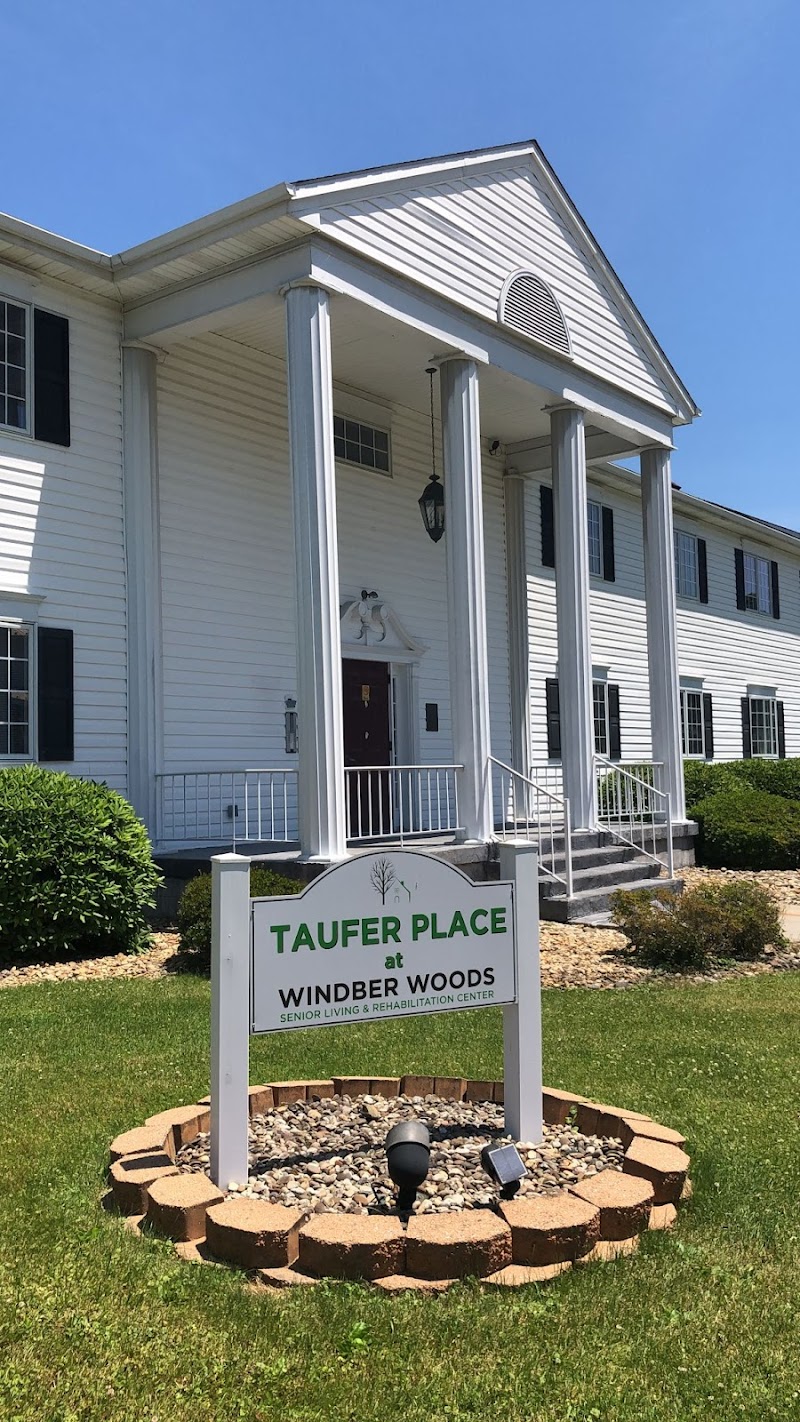
How is Windber Woods Senior Living & Rehabilitation Ctr Staffed?

CMS rates WINDBER WOODS SENIOR LIVING & REHABILITATION CTR's staffing level at 4 out of 5 stars, which is above average compared to other nursing homes. Staff turnover is 38%, compared to the Pennsylvania average of 46%. This relatively stable workforce can support continuity of care.

What Have Inspectors Found at Windber Woods Senior Living & Rehabilitation Ctr?

State health inspectors documented 53 deficiencies at WINDBER WOODS SENIOR LIVING & REHABILITATION CTR during 2022 to 2025. These included: 3 that caused actual resident harm and 50 with potential for harm. Deficiencies causing actual harm indicate documented cases where residents experienced negative health consequences.
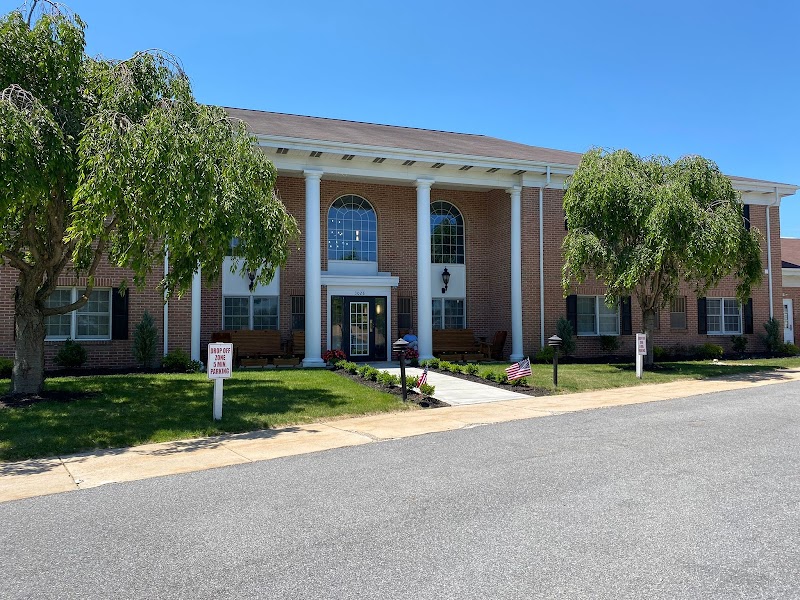
Who Owns and Operates Windber Woods Senior Living & Rehabilitation Ctr?

WINDBER WOODS SENIOR LIVING & REHABILITATION CTR is owned by a non-profit organization. Non-profit facilities reinvest revenue into operations rather than distributing to shareholders. The facility operates independently rather than as part of a larger chain. With 127 certified beds and approximately 111 residents (about 87% occupancy), it is a mid-sized facility located in WINDBER, Pennsylvania.
How Does Windber Woods Senior Living & Rehabilitation Ctr Compare to Other Pennsylvania Nursing Homes?

Compared to the 100 nursing homes in Pennsylvania, WINDBER WOODS SENIOR LIVING & REHABILITATION CTR's overall rating (2 stars) is below the state average of 3.0, staff turnover (38%) is near the state average of 46%, and health inspection rating (1 stars) is much below the national benchmark.

What Should Families Ask When Visiting Windber Woods Senior Living & Rehabilitation Ctr?

Based on this facility's data, families visiting should ask: "Can I visit during a mealtime to observe dining assistance and food quality?" "How do you handle medical emergencies, and what is your hospital transfer rate?" "Can I speak with family members of current residents about their experience?"

Is Windber Woods Senior Living & Rehabilitation Ctr Safe?

Based on CMS inspection data, WINDBER WOODS SENIOR LIVING & REHABILITATION CTR has a clean safety record: no substantiated abuse findings (meaning no confirmed cases of resident harm), no Immediate Jeopardy citations (the most serious violation level indicating risk of serious injury or death), and is not on the Special Focus Facility watch list (a federal program monitoring the lowest-performing 1% of nursing homes). The facility has a 2-star overall rating and ranks #100 of 100 nursing homes in Pennsylvania. While no facility is perfect, families should still ask about staff-to-resident ratios and recent inspection results during their visit.

Do Nurses at Windber Woods Senior Living & Rehabilitation Ctr Stick Around?

WINDBER WOODS SENIOR LIVING & REHABILITATION CTR has a staff turnover rate of 38%, which is about average for Pennsylvania nursing homes (state average: 46%). Moderate turnover is common in nursing homes, but families should still ask about staff tenure and how the facility maintains care continuity when employees leave.

Was Windber Woods Senior Living & Rehabilitation Ctr Ever Fined?

WINDBER WOODS SENIOR LIVING & REHABILITATION CTR has been fined $24,670 across 2 penalty actions. This is below the Pennsylvania average of $33,326. While any fine indicates a compliance issue, fines under $50,000 are relatively common and typically reflect isolated problems that were subsequently corrected. Families should ask what specific issues led to these fines and confirm they've been resolved.

Is Windber Woods Senior Living & Rehabilitation Ctr on Any Federal Watch List?

WINDBER WOODS SENIOR LIVING & REHABILITATION CTR is not on any federal watch list. The most significant is the Special Focus Facility (SFF) program, which identifies the bottom 1% of nursing homes nationally based on persistent, serious quality problems. Not being on this list means the facility has avoided the pattern of deficiencies that triggers enhanced federal oversight. This is a positive indicator, though families should still review the facility's inspection history directly.