ROUSE WARREN COUNTY HOME
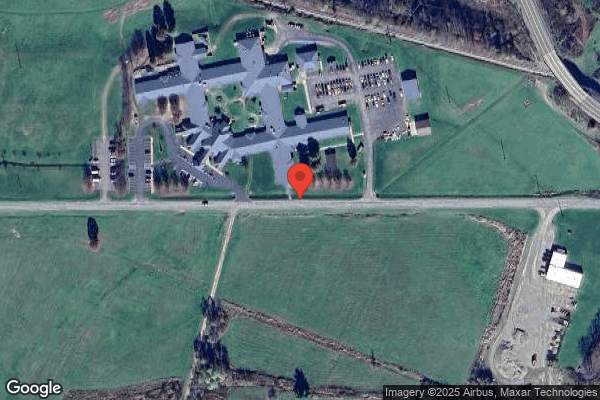
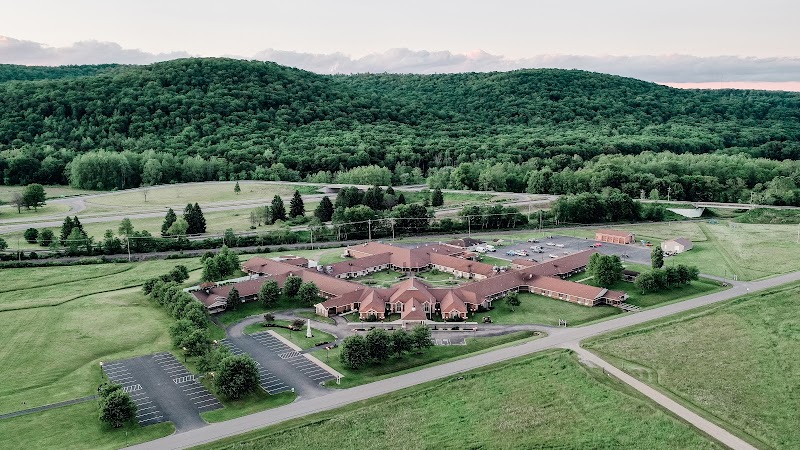
701 ROUSE AVENUE, YOUNGSVILLE, PA 16371 (814) 563-7565
Government - County 176 Beds Independent Data: November 2025
Trust Grade
53/100
#351 of 653 in PA
Last Inspection: August 2025

Inspected within the last 6 months. Data reflects current conditions.

Overview

Rouse Warren County Home in Youngsville, Pennsylvania, has a Trust Grade of C, which means it is average and falls in the middle of the pack of nursing homes. Ranked #351 out of 653 facilities in Pennsylvania, it is in the bottom half, but it is the best option among the three nursing homes in Warren County. The facility is improving, showing a decrease in reported issues from six in 2024 to four in 2025. Staffing is a strength, with a 4/5 star rating and a turnover rate of 44%, which is slightly below the state average, indicating that staff generally remain long-term. However, there are concerns, as the facility has faced nearly $23,000 in fines, which is higher than many others in the state, and serious incidents have occurred, including a lack of supervision that led to two residents experiencing a physical altercation, resulting in one needing emergency treatment for a laceration. Additionally, there were issues with maintaining respiratory care equipment, which could increase the risk of infection.

Trust Score
C
53/100
In Pennsylvania
#351/653
Bottom 47%
Safety Record
Moderate
Needs review
Inspections
Getting Better
6 → 4 violations
Staff Stability
○ Average
44% turnover. Near Pennsylvania's 48% average. Typical for the industry.
Penalties
○ Average
$22,967 in fines. Higher than 51% of Pennsylvania facilities. Some compliance issues.
Skilled Nurses
○ Average
Each resident gets 38 minutes of Registered Nurse (RN) attention daily — about average for Pennsylvania. RNs are the most trained staff who monitor for health changes.
Violations
⚠ Watch
20 deficiencies on record. Higher than average. Multiple issues found across inspections.
★★★☆☆
3.0
Overall Rating
★★★★☆
4.0
Staff Levels
★☆☆☆☆
1.0
Care Quality
★★★★☆
4.0
Inspection Score
Stable
2024: 6 issues
2025: 4 issues

The Good

  • 4-Star Staffing Rating · Above-average nurse staffing levels
  • Full Sprinkler Coverage · Fire safety systems throughout facility
  • No fines on record
  • Staff turnover below average (44%)

    4 points below Pennsylvania average of 48%

Facility shows strength in staffing levels, fire safety.

The Bad

3-Star Overall Rating

Near Pennsylvania average (3.0)

Meets federal standards, typical of most facilities

Staff Turnover: 44%

Near Pennsylvania avg (46%)

Typical for the industry

Federal Fines: $22,967

Below median ($33,413)

Minor penalties assessed

The Ugly 20 deficiencies on record

2 actual harm
Aug 2025 3 deficiencies
CONCERN (D)

Potential for Harm - no one hurt, but risky conditions existed

Deficiency F0761 (Tag F0761)

Could have caused harm · This affected 1 resident

**NOTE- TERMS IN BRACKETS HAVE BEEN EDITED TO PROTECT CONFIDENTIALITY** Based on review of facility policy, observations and staff interviews, it was determined that the facility failed to appropriate...

Read full inspector narrative →
**NOTE- TERMS IN BRACKETS HAVE BEEN EDITED TO PROTECT CONFIDENTIALITY** Based on review of facility policy, observations and staff interviews, it was determined that the facility failed to appropriately discard outdated medications for one of three medication carts reviewed (700 cart). Findings include: Review of facility policy entitled Medication Cart, Cleaning of dated [DATE], indicated the Registered Nurse (RN) and/or Licensed Practical Nurse (LPN) is to check expiration date and dispose of medications that are expired. Insulin expiration is 28 days after opening and is to be dated accordantly; this supersedes the manufacturer expiration date. Review of manufacturer's guidelines revealed that an open NovoLog (type of Insulin) FlexPen (pre-filled syringe) must be used within 28 days after opening or be discarded, even if the vial still contains insulin. Observation of drug storage on [DATE], at 1:46 p.m. of Unit 700 medication cart revealed an open NovoLog FlexPen with an open date of [DATE], which was beyond the 28 days after opening. During an interview at the time of observation, LPN Employee E7 confirmed that the open date on the NovoLog FlexPen was beyond the 28 days and it should have been discarded. 28 Pa. Code 201.18(b)(1) Management 28 Pa. Code 211.9(a)(1) Pharmacy services 28 Pa. Code 211.12(d)(1) Nursing services
CONCERN (E)

Potential for Harm - no one hurt, but risky conditions existed

Respiratory Care (Tag F0695)

Could have caused harm · This affected multiple residents

Based on review of clinical records and facility policy, observations, and staff interview, it was determined that the facility failed to appropriately maintain respiratory care equipment and promote ...

Read full inspector narrative →
Based on review of clinical records and facility policy, observations, and staff interview, it was determined that the facility failed to appropriately maintain respiratory care equipment and promote cleanliness and help prevent the spread of infection regarding respiratory care equipment according to physician's orders for three of 25 residents reviewed (Resident R22, R55, and R120).Findings include: A facility policy entitled Oxygen dated 1/08/25, indicated that the humidifier (bottle of distilled water that adds moisture to the dry oxygen flow, preventing irritation and promoting comfort during inhalation) and tubing (tubing that connects the oxygen source (like a concentrator or tank), which then delivers the oxygen to the patient) will be changed and the concentrator (medical device that draws in room air, filters out nitrogen, and provides a concentrated stream of oxygen) filter will be cleaned every two weeks and as needed, and would be labeled with the date every time the humidifier/tubing is changed. Review of Resident R22's clinical record revealed an admission date of 2/19/24, with diagnoses that included respiratory failure, stroke with left-sided weakness, and metabolic encephalopathy (form of brain dysfunction caused by systemic illnesses, infections, toxins, or imbalances in the body's chemicals that affect brain function). Further review of Resident R22's clinical record revealed a physician's order dated 7/18/25, to administer ipratropium-albuteral solution (medication that relaxes and opens the air passages to the lungs to make breathing easier) through a nebulizer (small machine that turns liquid medicine into a mist that can be easily inhaled) by mouth three times a day for cough was discontinued on 7/20/25. Observation on 8/19/25, at 10:27 a.m. revealed a nebulizer machine on Resident R22's bedside stand and a nebulizer mask dated 7/26/25, lying on the floor between the bed and bedside stand. During an interview at that time, the Director of Nursing confirmed that the nebulizer mask and machine should have been removed from Resident R22's room upon the nebulizer order being discontinued. Resident R55's clinical record revealed an admission date of 6/12/23, with diagnoses that included heart failure, long-term kidney disease, and Type 2 Diabetes (condition where the body cannot use insulin correctly and sugar builds up in the blood). Further review of Resident R55's clinical record revealed a physician's order dated 12/30/23, to administer oxygen through a nasal cannula (thin, flexible tube that goes around your head with two prongs that go inside your nostrils that deliver the oxygen) to maintain blood oxygen saturations between 88-92%; a physician's order dated 3/18/24, to change oxygen tubing, water (humidifier) bottle, and clean the filter every two weeks. Review of Resident R55's treatment administration record (TAR) revealed that he/she received supplemental oxygen routinely. Observation on 8/19/25, at 10:50 a.m. revealed Resident R55's tubing bag was dated 8/05/25, the humidifier bottle was dated 8/11, there was no date on the oxygen tubing, and the external concentrator filter was covered with a copious amount of white fluffy substance. During an interview at that time, Licensed Practical Nurse (LPN) Employee E5 confirmed that the tubing bag and humidifier bottle should have been changed, the tubing should have been dated; and that the filter was dirty and needed cleaned/replaced. Resident R120's clinical record revealed an admission date of 2/17/23, with diagnoses that included emphysema (lung disease leading to difficulty breathing), heart failure, and chronic obstructive pulmonary disease (COPD- a progressive group of lung diseases causing airflow obstruction and breathing problems). Further review of Resident R120's clinical record revealed a physician's order dated 5/13/25, to administer oxygen through a nasal cannula to maintain blood oxygen saturations between 88-92%; a physician's order dated 3/18/24, to change oxygen tubing, water bottle, and clean the filter every two weeks. Review of Resident R120's TAR revealed he/she received supplemental oxygen routinely. Observation on 8/19/25, at 10:40 a.m. revealed Resident R120's oxygen concentrator external concentrator filter was covered with a copious amount of white fluffy substance. During an interview at that time LPN Employee E6 confirmed that the filter was dirty and needed to be cleaned. 28 Pa. Code 201.18(b)(1) Management28 Pa. Code 201.14(a) Responsibility of licensee28 Pa. Code 211.12(d)(1)(5) Nursing services
CONCERN (E)

Potential for Harm - no one hurt, but risky conditions existed

Food Safety (Tag F0812)

Could have caused harm · This affected multiple residents

Based on review of a facility policy, observations and staff interviews, it was determined that the facility failed to safely store food containers in the main kitchen and ensure that food was stored ...

Read full inspector narrative →
Based on review of a facility policy, observations and staff interviews, it was determined that the facility failed to safely store food containers in the main kitchen and ensure that food was stored in accordance with standards for food safety in pantry refrigerators on two of three nursing units observed (100 Unit and 700 Unit).Findings include: A facility policy entitled Cleaning-Dishes with Dish Machine dated 1/08/25, indicated that staff are to allow dishes to dry on racks, do not dry with towels, and do not put any dishes away wet. A facility policy entitled Handling and Storage of Food brought in by Family or Friends dated 1/08/25, indicated that food should se stored with the name of the resident and date brought in, a refrigerator is available on B-side of the building for storage of Family/Friend delivered perishable food, perishable food or beverages brought in to residents from outside are not co-mingled with main facility refrigerators, and food handled safely will be held for 72 hours. Observation in the main kitchen on 8/18/25, at 11:05 a.m. revealed a moderate amount of clear liquid and a small amount of moist food particles between metal stacked steam table trays. Interview at that time with Dietary Manager Employee E2 confirmed that the metal trays were stacked wet and that they would have to be rewashed and dried properly. Observation in the main kitchen on 8/19/25, at 10:20 a.m. revealed a moderate amount of clear liquid between metal stacked steam table trays. During an interview at that time Dietary Aide Employee E1 confirmed the wet stacking between metal steam table trays. Observation on 8/18/25, at 12:36 p.m. of the 700 Unit pantry refrigerator revealed unknown food item wrapped in foil lacked name and/or date, facility side salad lacked a date, and a white foam cup containing ham salad that lacked name/date. During interview at that time, Dietary Employee E3 confirmed that the above listed items were in the facility unit pantry and lacked labels for names and dates. Observation on 8/18/25, at 12:49 p.m. of the 100 Unit pantry refrigerator revealed the following: 1/2 of a bologna and cheese sandwich in an open baggie and lacked a date; three 1/2 cup clear containers with red lids (2 containing gray tinted sauerkraut, one containing unidentifiable food item) and the containers were labeled with an unknown name and lacked a date; and one white oblong container with clear lid containing two pieces of blueberry cake/muffins and lacked a name and date. Interview at that time Dietary Employee E4 confirmed that food items need to be dated and labeled with resident names. During an interview on 8/19/25, at approximately 12:45 p.m. the Director of Nursing confirmed that there is a specific refrigerator for families to use when they bring items into the facility and that the refrigerators in the unit pantries are only for dietary staff to use during mealtimes. 28 Pa. Code 201.14(a) Responsibility of licensee28 Pa. Code 201.18(b)(1)(3) Management28 Pa. Code 211.6(f) Dietary services
Jul 2025 1 deficiency
CONCERN (D) 📢 Someone Reported This

A family member, employee, or ombudsman was alarmed enough to file a formal complaint

Potential for Harm - no one hurt, but risky conditions existed

Safe Environment (Tag F0584)

Could have caused harm · This affected 1 resident

**NOTE- TERMS IN BRACKETS HAVE BEEN EDITED TO PROTECT CONFIDENTIALITY** Based on review of facility policies and grievances, observations, and staff interviews, it was determined that the facility fai...

Read full inspector narrative →
**NOTE- TERMS IN BRACKETS HAVE BEEN EDITED TO PROTECT CONFIDENTIALITY** Based on review of facility policies and grievances, observations, and staff interviews, it was determined that the facility failed to maintain a clean and sanitary environment on two of seven units observed (100 and 200 units). Findings include: A facility policy entitled, Daily Room Cleaning dated 1/8/25, revealed To maintain a clean environment that is odor free . Pull the garbage and replace the bag .Sweep the floor and clean up .Mop the floor . A facility policy entitled, Room Completes dated 1/8/25, revealed Room completes are to be done on each hall daily .Pull Trash clean trash can replace liner .Sweep floor from corner to corner .Mop entire room from corner to corner . Review of Grievances from June 2025 revealed concerns with the cleanliness of a resident room and bathroom on the 200 unit. Observations made at approximately 11:30 a.m. on 7/2/25, revealed resident room [ROOM NUMBER] and the 200-unit break/storage area behind the nurse's station had thick dry spots from what appeared to be a spilled liquid, there was debris, straw wrappers, and napkins on the floors, fuzzy dust and food crumbs on the floor, and trash that needed to be emptied. Staff interviews conducted on all units throughout the visit on 7/2/25, revealed Employees E1, E2, E3, E4, E5, E6, E7, E8, E9, E10, and E11 all had concerns related to housekeeping, especially on the 100-unit, 200-unit, and 300-unit. During an interview and tour with the Nursing Home Administrator at approximately 12:30 p.m. on 7/2/25, he/she confirmed the dirty conditions in Resident room [ROOM NUMBER] and in the 200-unit break/storage area behind the nurse's station. 28 Pa. Code 201.18 (b)(1)(3) Management
Sept 2024 6 deficiencies
CONCERN (D)

Potential for Harm - no one hurt, but risky conditions existed

Deficiency F0655 (Tag F0655)

Could have caused harm · This affected 1 resident

**NOTE- TERMS IN BRACKETS HAVE BEEN EDITED TO PROTECT CONFIDENTIALITY** Based on review of facility policy and clinical record, and staff interview, it was determined that the facility failed to provi...

Read full inspector narrative →
**NOTE- TERMS IN BRACKETS HAVE BEEN EDITED TO PROTECT CONFIDENTIALITY** Based on review of facility policy and clinical record, and staff interview, it was determined that the facility failed to provide a written summary of the baseline care plan and order summary to the resident and/or representative for one of 24 residents reviewed (Resident R55). Findings include: A facility policy entitled, 48-Hour Care Plan dated 1/06/24, revealed It is the policy of Rouse [NAME] County Home to provide the resident and family with baseline care plan that includes the instructions needed to provide effective and person-centered care of the resident that meet professional standards of quality care. Procedure: RNAC (Registered Nurse Assessment Coordinator) 6. Reviews 48-hour care plan for completion and provides copy to resident/family in resident room. Document in record that resident was given copy. Review of Resident R55's clinical record revealed an admission date of 5/22/24, with diagnoses that included dementia (a disease that affects short term memory and the ability to think logically), hypertension (high blood pressure), and hypothyroidism (a condition when the thyroid produces low amounts of thyroid hormones). Review of R55's clinical record lacked evidence that a written summary of the baseline care plan and order summary was provided to Resident R55 and/or his/her representative. During an interview on 9/26/24, at 2:00 p.m. the Director of Nursing (DON) confirmed that the clinical record for Resident R55 lacked evidence that a written summary of the baseline care plan and order summary was provided to the resident and/or his/her representative upon admission to the facility. 28 Pa. Code 211.10(c) Resident care policies
CONCERN (D)

Potential for Harm - no one hurt, but risky conditions existed

Deficiency F0661 (Tag F0661)

Could have caused harm · This affected 1 resident

Based on review of facility policy and clinical record, and staff interview, it was determined that the facility failed to include reconciliation of all pre-discharge medications with the resident's p...

Read full inspector narrative →
Based on review of facility policy and clinical record, and staff interview, it was determined that the facility failed to include reconciliation of all pre-discharge medications with the resident's post-discharge medications in the resident's discharge summary, for one of two closed records reviewed (Closed Record Resident CR122). Findings include: Review of a facility policy entitled, Discharge of Resident dated 1/06/24, revealed that discharge medications will be listed in the Discharge Planning & Instructions assessment section medications. This will include the name of medication, dose, directions for use and quantity. Review of Resident CR122's clinical record revealed an admission date of 10/09/23, with diagnoses that included, dementia (a disease that affects short term memory and the ability to think logically), high blood pressure, depression, anxiety, and weakness. Resident CR122's clinical record also revealed a discharge date of 8/03/24. Review of the discharge summary lacked evidence of reconciliation of discharge medications on discharge. Review of nursing documentation lacked evidence of the type or number of medications sent home with Resident CR122 on discharge. During an interview on 9/27/24, at 11:30 a.m. the Director of Nursing (DON) confirmed there was no documentation of what medications or number of medications that were sent home with Resident CR122. The DON also confirmed that discharge medications should have a reconciliation of type of medication and amount of medications on the discharge summary. 28 Pa. Code 211.9(j.4) Pharmacy services 28 Pa. Code 211.5(f)(x) Medical records
CONCERN (D)

Potential for Harm - no one hurt, but risky conditions existed

Deficiency F0761 (Tag F0761)

Could have caused harm · This affected 1 resident

Based on review of facility policyand manufacturer's guidelines, observations, and staff interview, it was determined that the facility failed to ensure that medications were properly dated when opene...

Read full inspector narrative →
Based on review of facility policyand manufacturer's guidelines, observations, and staff interview, it was determined that the facility failed to ensure that medications were properly dated when opened and discarded in a timely manner in one of four medication rooms reviewed (central medication storage room). Findings include: Review of a facility policy entitled Medication Administration General Guidelines dated 1/06/24, revealed, When opening a new multi-dose bottle, the bottle must be dated and initialed. Manufacturer's guidelines for Tubersol PPD (solution used for tuberculosis testing upon admission and for employment), indicated that vials which are entered and in use for 30 days should be discarded. Observations of drug storage on 9/25/24, at approximately 9:26 a.m. in the central medication storage room refrigerator revealed two opened vials of Tubersol without an open date, therefore the staff were unable to determine the discard date. During an interview at that time Licensed Practical Nurse Employee E1 confirmed that the two opened Tubersol vials lacked an open date and staff were unable to determine the discard date. 28 Pa. Code 211.9(a)(1) Pharmacy services 28 Pa. Code 211.10(c) Resident care policies 28 Pa. Code 211.12(d)(1)(3)(5) Nursing services
CONCERN (D)

Potential for Harm - no one hurt, but risky conditions existed

Medical Records (Tag F0842)

Could have caused harm · This affected 1 resident

Based on review of facility policy and clinical records, and staff interview, it was determined that the facility failed to maintain accurate clinical records for two of 24 residents reviewed (Residen...

Read full inspector narrative →
Based on review of facility policy and clinical records, and staff interview, it was determined that the facility failed to maintain accurate clinical records for two of 24 residents reviewed (Residents R48 and R116). Findings include: A facility policy entitled, admission Policy dated 1/06/24, revealed that medical records from the referring agencies and discharge orders are given to the Medical Records office at the Rouse Home and uploaded to the resident chart. Review of Resident R48's clinical record revealed an admission date of 4/17/24, with diagnoses that included heart failure, diabetes, dysphagia (difficulty swallowing), depression and anxiety. Review of Resident R48's clinical record diagnoses list revealed that on 3/06/24, a diagnosis of Post Traumatic Stress Disorder (PTSD-a psychiatric disorder that may occur in people who have experienced or witnessed a traumatic event, series of events or set of circumstances) was added Further review of Resident R48's clinical record revealed psychiatric consult notes from 3/06/24, 5/22/24 and 8/22/24, all which lacked evidence of a diagnosis of PTSD. During interview on 9/27/24, at 10:30 a.m. the Director of Nursing confirmed that Resident R48's clinical record had no evidence of a diagnosis of PTSD from a licensed practitioner. Resident R116's clinical record revealed an admission date of 4/26/24, with diagnoses that included diverticulosis (condition where small pouches, or diverticuli, form in the walls of the gastrointestinal tract) of the large intestine, urinary tract infection, heart disease, dementia, and PTSD. Further review revealed that Resident R116's clinical record erroneously contained pre-admission information from a referring agency for another potential resident. During an interview on 9/27/24, at 9:29 a.m. the Director of Social Services confirmed that Resident R116's clinical record contained information for another potential resident and should not have been uploaded into Resident R116's clinical record. 28 Pa. Code 211.12(d)(1) Nursing Services 28 Pa. Code 211.5(f)(v) Medical records
CONCERN (E)

Potential for Harm - no one hurt, but risky conditions existed

Deficiency F0625 (Tag F0625)

Could have caused harm · This affected multiple residents

Based on review of facility policy and clinical records, and staff interview it was determined that the facility failed to provide the resident and/or resident representative with a written notice of ...

Read full inspector narrative →
Based on review of facility policy and clinical records, and staff interview it was determined that the facility failed to provide the resident and/or resident representative with a written notice of the facility bed-hold policy (explanation of how long a bed can be held during a leave of absence and the cost per day) upon transfer for three of 24 residents reviewed (Residents R30, R88 and R114). Findings include: Review of the facility policy entitled Bed Hold Policy dated 1/06/24, indicated At the time of transfer, the Admissions office will send out the Notice of Involuntary Discharge, Transfer and Bed Hold letter. Review of Resident R30's clinical record revealed an admission date of 8/21/23, with diagnoses that included chronic obstructive pulmonary disease (condition when your lungs do not have adequate air flow), vascular dementia (a disease that affects short term memory and the ability to think logically), and hypotension (low blood pressure). Review of Resident R30's progress note dated 5/31/24, revealed the resident was transferred to the hospital. The clinical record lacked documentation that Resident R30 and/or their representative was provided with a copy of the facility bed-hold policy. Review of Resident R88's clinical record revealed an initial admission date of 8/11/21, with diagnoses that included dementia (memory loss that interferes with daily living), anxiety, hyperlipidemia (high cholesterol), and feeding difficulties. Review of Resident R88's progress note dated 8/16/24, revealed the resident was transferred to the hospital. The clinical record lacked documentation that Resident R88 and/or their representative was provided with a copy of the facility bed-hold policy. Review of Resident R114's clinical record revealed an initial admission date of 4/15/24, with diagnoses that included dementia, difficulty walking, hyperlipidemia, and anxiety. Review of Resident R114's progress note dated 9/02/24, revealed the resident was transferred to the hospital. The clinical record lacked documentation that Resident R114 and/or their representative was provided with a copy of the facility bed-hold policy. During an interview on 9/27/24, at 10:00 a.m. the Nursing Home Administrator confirmed that there was no evidence that the residents listed above and/or their representatives were provided with a copy of the facility bed-hold policy and also confirmed that the bed-hold policy should have been provided upon transfer. 28 Pa. Code 201.18(e)(1) Management 28 Pa. Code 201.29(c.3) (2) Resident rights
CONCERN (E)

Potential for Harm - no one hurt, but risky conditions existed

Assessment Accuracy (Tag F0641)

Could have caused harm · This affected multiple residents

Based on review of clinical records, the Long-Term Care Facility Resident Assessment Instrument (RAI) 3.0 User's Manual, and staff interview, it was determined that the facility failed to ensure that ...

Read full inspector narrative →
Based on review of clinical records, the Long-Term Care Facility Resident Assessment Instrument (RAI) 3.0 User's Manual, and staff interview, it was determined that the facility failed to ensure that the Minimum Data Set (MDS - a federally mandated standardized assessment conducted at specific intervals to plan resident care) accurately reflected the status of three of 24 residents reviewed (Residents R78, R72, and R99). Findings include: Review of Section O0110 of the RAI User's Manual entitled Special Treatments, Procedures, and Programs directs staff to Check all of the following treatments, procedures, and programs that were performed (a) on admission- days one through three, (b) while a resident- within the last 14 days, (c) at discharge- last three days of the resident's stay. Review of Section I of the RAI User's Manual entitled Active Diagnoses in the Last 7 days directs staff to Check the following information sources in the medical record for the last 7 days to identify active diagnoses: transfer documents, physician progress notes, recent history and physical, recent discharge summaries, nursing assessments, nursing care plans, medication sheets, doctor's orders, consults and official diagnostic reports, and other sources as available. Resident R78's clinical record revealed an admission date of 5/05/21, with diagnoses that included arthritis, neuropathy (nerve damage outside the brain and spinal cord that causes pain or numbness), depression, anxiety, hearing loss, difficulty swallowing, and injury of the facial nerve. Review of R78's Quarterly MDS with an Assessment Reference date (ARD) of 6/10/24, revealed Section O0110E1 (tracheostomy care- a surgical procedure that creates an opening in the neck into the windpipe (trachea) to allow air to flow into the lungs) was coded b (while a resident) therefore indicating Resident R78 had a tracheostomy. Observation on 9/25/24, at 9:58 a.m. revealed Resident R78 lacked visual evidence of a tracheostomy, and during an interview at that time Resident R78 confirmed that he/she never had a tracheostomy. Resident R72's clinical record revealed an admission date of 4/27/20, with diagnoses that included muscle weakness, anxiety, dementia (memory loss that interferes with daily living), and difficulty walking. Review of R72's Comprehensive MDS with an ARD of 7/01/24, revealed that Section I5950 Psychotic Disorder (other than schizophrenia) was incorrectly marked as an active diagnosis for Resident R72. Resident R99's clinical record revealed an admission date of 11/22/22, with diagnoses that included weakness, dementia, and hyperlipidemia (high cholesterol). Review of R99's Quarterly MDS with an ARD of 7/29/24, revealed Section I5950 Psychotic Disorder (other than schizophrenia) was incorrectly marked as an active diagnosis for Resident R99. During an interview on 9/26/24, at 10:02 a.m. the Registered Nurse Assessment Coordinator (RNAC) confirmed that Resident R78's 6/10/24, quarterly MDS Section O0110E1 was coded incorrectly and during an interview on 9/27/24, at 10:36 a.m. the RNAC confirmed that Resident R72's comprehensive MDS section I5950 and R99's quarterly MDS section I5950 were also coded incorrectly. 28 Pa. Code 201.14(a) Responsibility of licensee 28 Pa. Code 211.12(d)(1)(5) Nursing services
Oct 2023 9 deficiencies 2 Harm
SERIOUS (G)

Actual Harm - a resident was hurt due to facility failures

Free from Abuse/Neglect (Tag F0600)

A resident was harmed · This affected 1 resident

**NOTE- TERMS IN BRACKETS HAVE BEEN EDITED TO PROTECT CONFIDENTIALITY** Based on review of facility policies, clinical records, and facility investigation, and staff interviews, it was determined that...

Read full inspector narrative →
**NOTE- TERMS IN BRACKETS HAVE BEEN EDITED TO PROTECT CONFIDENTIALITY** Based on review of facility policies, clinical records, and facility investigation, and staff interviews, it was determined that the facility failed to implement adequate safeguards in the locked dementia care unit to protect residents from abuse and physical altercation for two of 17 residents (Residents R25 and R94) resulting in actual harm of a laceration to the thumb and transport to the emergency room for treatment of sutures (stitches) for one Resident R94. Findings include: Review of the facility policy entitled, Staffing - [NAME] Lane dated 1/6/23, indicated that there will always be a minimum of two nursing staff on the hall when at least one resident is there. Review of facility policy entitled Resident Abuse, Neglect and Misappropriation of Property dated 1/6/23, indicated that it is the facility policy to prevent, report and investigate any and all allegations of abuse and neglect relative to all residents in the facility's care. The policy also revealed, that the definition of abuse will be defined per the CFR 488.301, 488.355 and the HCFA State Operations Manual Appendix P which defines abuse means the willful infliction of injury, .with resulting physical harm, pain, or mental anguish. Willful as used in the definition of abuse, means the individual must have acted deliberately, not that the individual must have intended to inflict injury or harm. Review of CMS Guidelines 483.12 (a)(1) Freedom from Abuse, Neglect and Exploitation defines abuse as the willful infliction of injury, unreasonable confinement, intimidation, or punishment with resulting physical harm, pain or mental anguish.Instances of abuse of all residents, irrespective of any mental or physical condition, cause physical harm, pain or mental anguish. It includes .physical abuse . Also under the guidance under Abuse: Sections 1819 and 1919 of the Social Security Act provide that each resident has the right to be free from, among other things, physical or mental abuse and corporal punishment. The facility must provide a safe resident environment and protect residents from abuse. Review of Resident R25's clinical record revealed an admission date of 7/24/12, with diagnoses that included dementia (condition of impaired ability to remember, think, or make decisions that interferes with everyday activities), with behavioral disturbance, anxiety, depression and alcohol, cannabis and inhalant dependence, in remission. Review of Resident R25's Annual Minimum Data Set (MDS-a periodic assessment of resident care needs), dated 8/9/23, revealed under Section C: cognitive patterns, questions from C0500 BIMS Summary Score: Resident R25 scored a 9, indicating cognitive impairment. Review of a nursing note, dated 3/10/23, at 4:07 p.m. documented that Resident R25 had hands on another resident ripping the resident's shirt. Review of a nursing note, dated 7/23/23, at 8:20 p.m., revealed Resident R25 grabbed ahold of another resident's sweatshirt. Review of a nursing note, dated 8/16/23, at 7:00 p.m., revealed Resident R25 was noted holding a closed fist and yelling at roommate in hallway. Review of Resident R25's clinical record revealed a nursing note, dated 8/19/23, revealed that Nurse Aide (NA) Employee E3 had come out of a resident room to find Resident R25 engaged in an altercation with Resident R94. Resident R25 was seated in the wheelchair and Resident R94 standing in front of Resident R25, both residents had grabbed each other's shirts with Resident R25's one hand held back as if preparing to punch Resident R94. NA Employee E3 was unable to separate the residents and called for assistance. Resident R25 had swelling and bleeding to inner right lower lip. Review of Resident R94's clinical record revealed an admission date of 5/1/22, with diagnoses that included dementia (condition of impaired ability to remember, think, or make decisions that interferes with everyday activities), with behavioral disturbance, depression, cognitive impairment and high blood pressure. Review of Resident R94's Quarterly MDS, dated [DATE], revealed under Section C: cognitive patterns, questions from C0500 BIMS Summary Score: Resident R94 scored a 6, indicating severe cognitive impairment. Review of a nursing note, dated 7/7/23, at 5:04 p.m. revealed a NA observed Resident R94 strike another resident while ambulating beside the resident, punched with a closed fist to the other residents left upper arm. Review of a nursing note, dated 7/26/23, at 4:02 a.m. revealed that Resident R94 was having increased agitation tonight with another resident and staff. Resident refusing care yelling at staff and being confrontational with other residents in hallway. Review of Resident R94's clinical record revealed a nursing note, dated 8/19/23 at 10:58 p.m. that NA Employee E3 had come out of a resident room to find Resident R25 engaged in an altercation with Resident R94. Resident R25 was seated in the wheelchair and Resident R94 standing in front of Resident R25, both residents had grabbed each other's shirt's with Resident R25's one hand held back as if preparing to punch Resident R94, NA Employee E3 was unable to separate the residents and called for assistance. When assistance arrived they were able to separate the residents and Resident R94 stepped backward and fell onto his/ her buttocks. Review of information submitted by facility dated 8/20/23, revealed that on 8/19/23, Resident R25 had a physical altercation with Resident R94. When staff intervened to separate the residents, Resident R94 fell backwards onto their buttocks. Resident R25 had a split lip with bleeding and swelling to right lower lip. Resident R94 was taken to the emergency room for evaluation after the altercation with Resident R25. Review of a facility incident report, dated 8/19/23, revealed that Resident R94 was sent to the emergency room at 9:30 p.m. due to complaints of a two centimeter laceration to the right thumb, and received three sutures for the laceration, right side of face was red with superficial abrasions to bridge of nose, right temple and right upper eyelid. Resident R94's right eye was reddened and complained of pain to the right eye. Review of the facility investigation notes revealed that it was determined that staff left the hall and went to an adjoining unit for approximatley three and a half to four minutes, leaving the residents unattended. Upon return to the hall, this staff member intervened in the altercation. The staff member provided a witness statement with false information resulting in termination. During an interview on 10/19/23, at 11:00 a.m. the Nursing Home Administrator and Director of Nursing confirmed that NA Employee E3 willfully left the 300 hall (Willow Lane) without any staff on 8/19/23, for approximatley three and a half to four minutes when Resident R25 and Resident R94 were engaged in a physical altercation. The facility failed to implement adequate safeguards to ensure residents are free from abuse for cognitively impaired residents in a locked dementia care unit resulting in actual harm of a laceration with sutures to Resident R94. 28 Pa. Code 201.14(a) Responsibility of licensee 28 Pa. Code 201.18(b)(1)(3) Management 28 Pa. Code 201.18(e)(1) Management 28 Pa. Code 211.12(d)(3)(4)(5)Nursing services 28 Pa. Code 211.12(f.1)(1) Nursing services
SERIOUS (G)

Actual Harm - a resident was hurt due to facility failures

Accident Prevention (Tag F0689)

A resident was harmed · This affected 1 resident

**NOTE- TERMS IN BRACKETS HAVE BEEN EDITED TO PROTECT CONFIDENTIALITY** Based on review of facility policies, clinical records, and facility documentation, and staff interviews, it was determined that...

Read full inspector narrative →
**NOTE- TERMS IN BRACKETS HAVE BEEN EDITED TO PROTECT CONFIDENTIALITY** Based on review of facility policies, clinical records, and facility documentation, and staff interviews, it was determined that the facility failed to provide a safe environment by not providing adequate supervision to protect residents from injury during a resident to resident altercation between two of 17 residents (Residents R25 and R94), that resulted in actual harm of a laceration to the thumb and transport to the emergency room for treatment of sutures (stitches) for one resident (Resident R94). Findings include: Review of the facility policy entitled, Staffing - [NAME] Lane dated 1/6/23, indicated that there will always be a minimum of two nursing staff on the hall when at least one resident is there. Review of facility policy entitled Resident Abuse, Neglect and Misappropriation of Property dated 1/6/23, indicated that it is the facility policy to prevent, report and investigate any and all allegations of abuse and neglect relative to all residents in the facility's care. The policy also revealed, that the definition of abuse will be defined per the CFR 488.301, 488.355 and the HCFA State Operations Manual Appendix P which defines abuse means the willful infliction of injury, .with resulting physical harm, pain, or mental anguish. Willful as used in the definition of abuse, means the individual must have acted deliberately, not that the individual must have intended to inflict injury or harm. Review of Resident R25's clinical record revealed an admission date of 7/24/12, with diagnoses that included dementia (condition of impaired ability to remember, think, or make decisions that interferes with everyday activities), with behavioral disturbance, anxiety, depression and alcohol, cannabis and inhalant dependence, in remission. Review of Resident R25's Annual Minimum Data Set (MDS-a periodic assessment of resident care needs), dated 8/9/23, revealed under Section C: cognitive patterns, questions from C0500 BIMS Summary Score: Resident R25 scored a 9, indicating cognitive impairment. Review of a nursing note, dated 3/10/23, at 4:07 p.m. documented that Resident R25 had hands on another resident ripping the resident's shirt. Review of a nursing note, dated 7/23/23, at 8:20 p.m. revealed Resident R25 grabbed ahold of another resident's sweatshirt. Review of a nursing note, dated 8/16/23, at 7:00 p.m. revealed Resident R25 was noted holding a closed fist and yelling at roommate in hallway. Review of a nursing note, dated 8/19/23, revealed that Nurse Aide (NA) Employee E3 had come out of a resident room to find Resident R25 engaged in an altercation with Resident R94. Resident R25 was seated in the wheelchair and Resident R94 standing in front of Resident R25, both residents had grabbed each other's shirt's with Resident R25's one hand held back as if preparing to punch Resident R94. NA Employee E3 was unable to separate the residents and called for assistance. Resident R25 had swelling and bleeding to inner right lower lip. Review of Resident R94's clinical record revealed an admission date of 5/1/22, with diagnoses that included dementia (condition of impaired ability to remember, think, or make decisions that interferes with everyday activities), with behavioral disturbance, depression, cognitive impairment and high blood pressure. Review of Resident R94's Quarterly MDS, dated [DATE], revealed under Section C: cognitive patterns, questions from C0500 BIMS Summary Score: Resident R94 scored a 6, indicating severe cognitive impairment. Review of a nursing note, dated 7/7/23, at 5:04 p.m. revealed a NA observed Resident R94 strike another resident while ambulating beside the resident, punched with a closed fist to the other residents left upper arm. Review of a nursing note, dated 7/26/23 at 4:02 a.m. revealed that Resident R94 was having increased agitation tonight with another resident and staff. Resident refusing care yelling at staff and being confrontational with other residents in hallway. Review of Resident R94's clinical record revealed a nursing note, dated 8/19/23 at 10:58 p.m. that NA Employee E3 had come out of a resident room to find Resident R25 engaged in an altercation with Resident R94. Resident R25 was seated in the wheelchair and Resident R94 standing in front of Resident R25, both residents had grabbed each other's shirt's with Resident R25's one hand held back as if preparing to punch Resident R94, NA Employee E3 was unable to separate the residents and called for assistance. When assistance arrived they were able to separate the residents and Resident R94 stepped backward and fell onto his/ her buttocks. Review of information submitted by facility dated 8/20/23, revealed that on 8/19/23, Resident R25 had a physical altercation with Resident R94. When staff intervened to separate the residents, Resident R94 fell backwards onto their buttocks. Resident R25 had a split lip with bleeding and swelling to right lower lip. Resident R94 was taken to the emergency room for evaluation after the altercation with Resident R25. Review of a facility incident report, dated 8/19/23, revealed that Resident R94 was sent to the emergency room at 9:30 p.m. due to complaints of a two centimeter laceration to the right thumb, and received three sutures for the laceration, right side of face was red with superficial abrasions to bridge of nose, right temple and right upper eyelid. Resident R94's right eye was reddened and complained of pain to the right eye. Review of the facility investigation notes revealed that it was determined that staff left the hall and went to an adjoining unit for approximatley three and a half to four minutes, leaving the residents unattended. Upon return to the hall, this staff member intervened in the altercation. The staff member provided a witness statement with false information resulting in termination. During an interview on 10/19/23, at 11:00 a.m. the Nursing Home Administrator and Director of Nursing confirmed that NA Employee E3 left the 300 hall (Willow Lane) unsupervised without any staff on 8/19/23, for approximatley three and a half to four minutes when Resident R25 and Resident R94 were engaged in an altercation. The facility failed to implement adequate supervision to protect cognitively impaired residents from a physical altercation in a locked dementia care unit resulting in actual harm of a laceration requiring sutures to Resident R94. 28 Pa. Code 201.14(a) Responsibility of licensee 28 Pa. Code 201.18(b)(1)(3) Management 28 Pa. Code 201.18(e)(1) Management 28 Pa. Code 211.12(d)(3)(4)(5)Nursing services 28 Pa. Code 211.12(f.1)(1) Nursing services
CONCERN (D)

Potential for Harm - no one hurt, but risky conditions existed

Safe Environment (Tag F0584)

Could have caused harm · This affected 1 resident

Based on review of facility policy, observation, and staff interview, it was determined that the facility failed to maintain a clean homelike environment for two of six units (100 hall and 300 hall). ...

Read full inspector narrative →
Based on review of facility policy, observation, and staff interview, it was determined that the facility failed to maintain a clean homelike environment for two of six units (100 hall and 300 hall). Findings include: Review of facility policy entitled Wheelchair Washer dated 1/6/23, indicated It is the policy of the Rouse home to ensure that sanitary conditions are maintained on facility equipment to prevent the spread of infections and disease to other residents, visitors, and staff. Review of schedule entitled Assistive Device Cleaning Schedule by Unit revealed that wheelchairs are scheduled to be cleaned weekly. Observation on 10/18/23, at 10:57 a.m. revealed Resident R81's wheelchair cushion's front edge was worn very thin and was in poor condition. Observation also revealed that Resident R81's actual wheelchair seat in front of the wheelchair cushion and under the wheelchair cushion contained dried spilled substances and debris. During an interview on 10/18/23, at 10:59 a.m. Licensed Practical Nurse Employee E1 confirmed that Resident R81's wheelchair cushion was in poor condition and the wheelchair seat and under the wheelchair cushion contained dried spilled substance and debris. Observation on 10/17/23, at 2:56 p.m. revealed Resident R28's Broda chair (special positioning chair) seat and front left side had a spilled dried brown substance on the legs and seat. Observation on 10/18/23, at 3:03 p.m. revealed Resident R28's Broda chair seat had dried crumbs and front left side had the same spilled dried brown substance on the legs and seat. During an interview on 10/18/23, at 3:05 p.m. with Nurse Aide Employee E5 confirmed that Resident R28's Broda chair and seat contained a dried brown substance and crumbs and required cleaning. 28 Pa. Code 201.18(b)(1) Management
CONCERN (D)

Potential for Harm - no one hurt, but risky conditions existed

Assessment Accuracy (Tag F0641)

Could have caused harm · This affected 1 resident

Based on review of Minimum Data Set (MDS - federally mandated standardized assessment conducted at specific intervals to plan resident care), clinical records, and staff interview, it was determined t...

Read full inspector narrative →
Based on review of Minimum Data Set (MDS - federally mandated standardized assessment conducted at specific intervals to plan resident care), clinical records, and staff interview, it was determined that the facility failed to ensure that MDS assessments accurately reflected the status for one of 24 residents reviewed (Resident R36). Findings include: Review of MDS instructions for H0300 Urinary Continence indicated that urinary continence is to be coded as not rated if during the seven-day look-back period the resident had an indwelling bladder catheter (tubing from the bladder to drain urine into a bag), condom catheter, ostomy, or no urine output for the entire seven days. Review of Resident R36's clinical record revealed an admission date of 7/27/15, with diagnoses that included high blood pressure, diabetes, and pressure ulcer to the right buttocks. Review of Resident R36's clinical record revealed a physician's order dated 7/27/2023, for Foley Catheter to straight drainage. Resident R36's significant change MDS with an Assessment Reference Date of 8/18/23, was coded as always incontinent for urinary continence, although Resident R36 had an indwelling catheter for the entire seven-day look-back period. During an interview on 10/20/23, at 10:57 a.m. Registered Nurse Assessment Coordinator Employee E2 confirmed that the 8/18/23, MDS was coded inaccurately regarding urinary continence status for Resident R36. 28 Pa. Code 201.14(a) Responsibility of licensee 28 Pa. Code 211.5(f)(ix) Medical Records
CONCERN (D)

Potential for Harm - no one hurt, but risky conditions existed

Comprehensive Care Plan (Tag F0656)

Could have caused harm · This affected 1 resident

Based on review of facility policy and clinical records, and staff interview, it was determined that the facility failed to develop an individualized comprehensive care plan to accurately reflect the ...

Read full inspector narrative →
Based on review of facility policy and clinical records, and staff interview, it was determined that the facility failed to develop an individualized comprehensive care plan to accurately reflect the resident's current condition for one of 24 residents reviewed (Resident R36). Findings include: Review of facility policy entitled Resident Care Plan dated 1/6/23, indicated that The Residents care plan must be kept current at all times and the approach / plan would include Individualized care for the unique needs of the resident. Review of Resident R36's clinical record revealed an admission date of 7/27/15, with diagnoses that included high blood pressure, diabetes, and pressure ulcer to the right buttocks. Review of Resident R36's clinical record revealed a physician's order dated 7/27/2023, for foley catheter (tubing inserted into the bladder to drain urine into a bag) to straight drainage. Review of Resident R36's comprehensive care plan revealed interventions for both an indwelling catheter and a suprapubic catheter (tube inserted surgically through the abdominal wall directly into the bladder to drain urine). During an interview on 10/20/23, at 10:57 a.m. Registered Nurse Assessment Coordinator Employee E2 confirmed that the care plan lacked individualized accurate interventions for the current catheter for Resident R36. 28 Pa. Code 201.14(a) Responsibility of licensee 28 Pa. Code 211.10(c) Resident care policies 28 Pa. Code 211.12(d)(3)(5) Nursing services
CONCERN (D)

Potential for Harm - no one hurt, but risky conditions existed

Deficiency F0657 (Tag F0657)

Could have caused harm · This affected 1 resident

**NOTE- TERMS IN BRACKETS HAVE BEEN EDITED TO PROTECT CONFIDENTIALITY** Based on review of clinical records, facility documentation, and staff interview, it was determined that the facility failed to ...

Read full inspector narrative →
**NOTE- TERMS IN BRACKETS HAVE BEEN EDITED TO PROTECT CONFIDENTIALITY** Based on review of clinical records, facility documentation, and staff interview, it was determined that the facility failed to update the resident care plan with new interventions regarding physical behaviors for two of 24 residents (Residents R25 and Resident R94). Findings include: Review of information submitted by facility dated 8/20/23, revealed that on 8/19/23, Resident R25 had a physical altercation with Resident R94. When staff intervened to separate the residents, Resident R94 fell backwards onto their buttocks. Resident R25 had a split lip with bleeding and swelling to right lower lip. Resident R94 was taken to the emergency room for evaluation after the altercation with Resident R25. Review of a facility incident report, dated 8/19/23, revealed that Resident R94 was sent to the emergency room at 9:30 p.m. due to complaints of a two centimeter laceration to the right thumb, and received three sutures for the laceration, right side of face was red with superficial abrasions to bridge of nose, right temple and right upper eyelid. Resident R94's right eye was reddened and complained of pain to the right eye. Review of Resident R25's clinical record revealed an admission date of 7/24/12, with diagnoses that included dementia (condition of impaired ability to remember, think, or make decisions that interferes with everyday activities), with behavioral disturbance, anxiety, depression and alcohol, cannabis and inhalant dependence, in remission. Review of Resident R25's Annual Minimum Data Set (MDS-a periodic assessment of resident care needs), dated 8/9/23, revealed under Section C: cognitive patterns, questions from C0500 BIMS Summary Score: Resident R25 scored a 9, indicating cognitive impairment. Review of a nursing note, dated 3/10/23, at 4:07 p.m. documented that Resident R25 had hands on another resident ripping the resident's shirt. Review of a nursing note, dated 7/23/23, at 8:20 p.m., revealed Resident R25 grabbed ahold of another resident's sweatshirt. Review of a nursing note, dated 8/16/23, at 7:00 p.m., revealed Resident R25 was noted holding a closed fist and yelling at roommate in hallway. Review of Resident R25's clinical record revealed a nursing note, dated 8/19/23, revealed that Nurse Aide (NA) Employee E3 had come out of a resident room to find Resident R25 engaged in an altercation with Resident R94. Resident R25 was seated in the wheelchair and Resident R94 standing in front of Resident R25, both residents had grabbed each other's shirts with Resident R25's one hand held back as if preparing to punch Resident R94. NA Employee E3 was unable to separate the residents and called for assistance. Resident R25 had swelling and bleeding to inner right lower lip. Review of Resident R94's clinical record revealed an admission date of 5/1/22, with diagnoses that included dementia (condition of impaired ability to remember, think, or make decisions that interferes with everyday activities), with behavioral disturbance, depression, cognitive impairment and high blood pressure. Review of Resident R94's Quarterly MDS, dated [DATE], revealed under Section C: cognitive patterns, questions from C0500 BIMS Summary Score: Resident R94 scored a 6, indicating severe cognitive impairment. Review of a nursing note, dated 7/7/23, at 5:04 p.m. revealed a NA observed Resident R94 strike another resident while ambulating beside the resident, punched with a closed fist to the other residents left upper arm. Review of a nursing note, dated 7/26/23, at 4:02 a.m. revealed that Resident R94 was having increased agitation tonight with another resident and staff. Resident refusing care yelling at staff and being confrontational with other residents in hallway. Review of Resident R94's clinical record revealed a nursing note, dated 8/19/23 at 10:58 p.m. that NA Employee E3 had come out of a resident room to find Resident R25 engaged in an altercation with Resident R94. Resident R25 was seated in the wheelchair and Resident R94 standing in front of Resident R25, both residents had grabbed each other's shirt's with Resident R25's one hand held back as if preparing to punch Resident R94, NA Employee E3 was unable to separate the residents and called for assistance. When assistance arrived they were able to separate the residents and Resident R94 stepped backward and fell onto his/ her buttocks. Review of care plans for Resident R25 revealed a care plan focus issue resident has potential to demonstrate physical and verbal behaviors towards other residents that wander into his/her room and invade his/her personal space, dated 12/31/19, revealed interventions to guide away from source of distress, find resident a space to sit and monitor the environment away from intrusion, keep other residents away from residents room and communication , encourage seeking out staff member when agitated. Review of care plans for Resident R94 revealed care plan focus issue Behavior Care Plan resident will refuse care and has demonstrated physical and verbal aggression towards staff and other residents dated 9/27/23, revealed interventions of assist me to develop more appropriate methods of coping and interaction by redirection away from situations, staff or residents that may cause aggressive reactions. Review of the care plans lacked any new interventions related to the incident between Resident R25 and Resident R94 that occurred on 8/19/23 until 9/3/23 for Resident R25 (15 days later) and 9/27/23 for Resident R94 (39 days later). During an interview on 10/20/23, at 11:00 a.m. Social Worker Employee E4 confirmed that Residents R25 and Resident R94's careplans were not updated after the physical altercation. 28 Pa Code 201.14(a) Responsibility of licensee 28 Pa Code 201.18(b)(1)(3) Management 28 Pa Code 201.18(e)(1) Management 28 Pa Code 211.12(d)(3)(4)(5)Nursing services
CONCERN (D)

Potential for Harm - no one hurt, but risky conditions existed

Quality of Care (Tag F0684)

Could have caused harm · This affected 1 resident

Based on review of clinical records and facility policy, observations, and staff interviews, it was determined that the facility failed to ensure an oxygen humidifier container was filled and changed ...

Read full inspector narrative →
Based on review of clinical records and facility policy, observations, and staff interviews, it was determined that the facility failed to ensure an oxygen humidifier container was filled and changed according to facility policy and physician's order. Findings include: Review of a facility policy entitled Oxygen Concentrators, most recently reviewed on 1/6/23, stated that Oxygen tubing and humidifier bottles must be changed every 14 days and PRN [as needed]. Review of Resident R1's clinical record revealed an admission date of 9/18/23, with diagnoses that included pneumonia, lung disease, kidney failure, high blood pressure and respiratory failure. Review of a physician's order dated 9/18/23, directed that Resident R41's oxygen tubing and humidifier be changed every two weeks, on Mondays. Observations on 10/17/23, at 2:47 p.m. revealed that Resident R41's disposable oxygen humidifier container was noted to be empty with a date of 10/3/23. The oxygen was in use at the time of the observation. At the time of the above observation, Licensed Practical Nurse Employee E10 confirmed that the humidifier container was empty and should have been previously changed. 28 Pa. Code 211.10(d) Resident care policies 28 Pa. Code 211.12(d)(1)(5) Nursing services
CONCERN (D)

Potential for Harm - no one hurt, but risky conditions existed

Incontinence Care (Tag F0690)

Could have caused harm · This affected 1 resident

Based on review of policy and clinical records, observations and staff interview, it was determined that the facility failed to provide appropriate care and services regarding a urinary catheter (a tu...

Read full inspector narrative →
Based on review of policy and clinical records, observations and staff interview, it was determined that the facility failed to provide appropriate care and services regarding a urinary catheter (a tube placed into the bladder to drain urine into a bag) for one of 24 residents reviewed (Resident R29). Findings include: Review of facility policy regarding indwelling urinary catheters dated January 6, 2023, indicated to properly position catheter drainage bag below level of the bladder and it must not touch the floor. Review of Resident R29's Significant Change Minimum Data Set (MDS-a mandated assessment of a residents abilities and care needs) assessment, dated August 30, 2023, revealed that the resident was cognitivly impaired, unable to make their needs known, required extensive assistance for daily care, and had an indwelling urinary catheter. Observations in Resident R29's room on October 18, 2023, at 10:20 a.m. revealed that the resident's urinary drainage bag and tubing were lying on the floor without a cover over the drainage bag. During an interview on October 18, 2023, at 10:40 a.m. the Director of Nursing on confirmed that Resident R29's urinary drainage bag and tubing should not have been on the floor and should have a cover over the drainage bag. 28 Pa. Code 211.12(d)(1)(5) Nursing services 28 Pa. Code 211.10(c)(d) Resident care policies
CONCERN (D) 📢 Someone Reported This

A family member, employee, or ombudsman was alarmed enough to file a formal complaint

Potential for Harm - no one hurt, but risky conditions existed

Deficiency F0887 (Tag F0887)

Could have caused harm · This affected 1 resident

Based on review of facility policy, facility documentation, clinical records and staff interview it was determined that the facility failed to provide accurate and timely documentation related to offe...

Read full inspector narrative →
Based on review of facility policy, facility documentation, clinical records and staff interview it was determined that the facility failed to provide accurate and timely documentation related to offering the COVID-19 vaccine and providing education for one of five residents reviewed for immunizations (Resident R55). Findings include: Review of facility policy entitled Immunizations (Resident) with a review date of 4/19/2023, revealed, all residents (families/POA's, etc.) will be given education about the vaccine being offered that will be directly from the CDC. This education will include benefits and potential side effects. Review of Resident R55's clinical record revealed there was no evidence of education provided to the Power of Attorney (POA) regarding immunization related to the COVID-19 vaccine in the immunization portion of the clinical record. Review of Resident R55's clinical record revealed that the Resident's POA refused the COVID-19 vaccine for the resident. There was no evidence of education documented of the positive and adverse affects of the COVID-19 vaccine in Resident R55's record. During an interview on 10/20/2023, at 11:09 a.m. the Infection Preventionist confirmed that there was no education documented in Resident R55's clinical record. 28 Pa. Code 201.14(a) Responsibility of Licensee 28 Pa. Code 211.10(c) Resident care policies 28 Pa. Code 201.18(b)(1)(e)(1) Management
Mar 2023 1 deficiency
CONCERN (D) 📢 Someone Reported This

A family member, employee, or ombudsman was alarmed enough to file a formal complaint

Potential for Harm - no one hurt, but risky conditions existed

Notification of Changes (Tag F0580)

Could have caused harm · This affected 1 resident

Based on review of facility policy and clinical records, it was determined that the facility failed to notify the resident's representative of a change in condition and/or treatment for one of five re...

Read full inspector narrative →
Based on review of facility policy and clinical records, it was determined that the facility failed to notify the resident's representative of a change in condition and/or treatment for one of five residents reviewed with facility acquired pressure ulcers (Resident R2). Findings include: Review of the facility policy entitled Change in Resident Status, Physician and Responsible Party Notification dated 1/6/23, stated to ensure timely notification of the resident's physician and responsible party in the event of a change in status or incident. Review of Resident R2's clinical record revealed that on 1/2/23, Resident R2 complained of heel pain and was assessed, discoloration was noted, the heels were offloaded, and skin prep was applied: the RN supervisor was notified of this change and noted staff will continue to monitor. On 1/6/23, Resident R2 started with on-site wound care, new orders were put in place and weekly evaluations were conducted by a certified wound nurse practitioner. Wound care orders, interventions, and dietary supplements were adjusted appropriately to help promote healing. The clinical record lacked evidence that Resident R2's representative was notified of the change in condition and/or treatment. 28 Pa. Code 201.14(a)(c) Responsibility of licensee 28 Pa. Code 201.18(b)(1) Management 28 Pa. Code 211.12 (d)(1)(5) Nursing services
Understanding Severity Codes (click to expand)
Life-Threatening (Immediate Jeopardy)
J - Isolated K - Pattern L - Widespread
Actual Harm
G - Isolated H - Pattern I - Widespread
Potential for Harm
D - Isolated E - Pattern F - Widespread
No Harm (Minor)
A - Isolated B - Pattern C - Widespread

Questions to Ask on Your Visit

  • "Can I speak with families of current residents?"
  • "What's your RN coverage like on weekends and overnight?"

Our Honest Assessment

Strengths
  • • 44% turnover. Below Pennsylvania's 48% average. Good staff retention means consistent care.
Concerns
  • • 20 deficiencies on record, including 2 serious (caused harm) violations. Ask about corrective actions taken.
  • • $22,967 in fines. Higher than 94% of Pennsylvania facilities, suggesting repeated compliance issues.
  • • Grade C (53/100). Below average facility with significant concerns.
Bottom line: Mixed indicators with Trust Score of 53/100. Visit in person and ask pointed questions.

About This Facility

What is Rouse Warren County Home's CMS Rating?

CMS assigns ROUSE WARREN COUNTY HOME an overall rating of 3 out of 5 stars, which is considered average nationally. Within Pennsylvania, this rating places the facility higher than 0% of the state's 100 nursing homes. This mid-range rating indicates the facility meets federal standards but may have areas for improvement.

How is Rouse Warren County Home Staffed?

CMS rates ROUSE WARREN COUNTY HOME's staffing level at 4 out of 5 stars, which is above average compared to other nursing homes. Staff turnover is 44%, compared to the Pennsylvania average of 46%. This relatively stable workforce can support continuity of care.

What Have Inspectors Found at Rouse Warren County Home?

State health inspectors documented 20 deficiencies at ROUSE WARREN COUNTY HOME during 2023 to 2025. These included: 2 that caused actual resident harm and 18 with potential for harm. Deficiencies causing actual harm indicate documented cases where residents experienced negative health consequences.

Who Owns and Operates Rouse Warren County Home?

ROUSE WARREN COUNTY HOME is owned by a government entity. Government-operated facilities are typically run by state, county, or municipal agencies. The facility operates independently rather than as part of a larger chain. With 176 certified beds and approximately 122 residents (about 69% occupancy), it is a mid-sized facility located in YOUNGSVILLE, Pennsylvania.

How Does Rouse Warren County Home Compare to Other Pennsylvania Nursing Homes?

Compared to the 100 nursing homes in Pennsylvania, ROUSE WARREN COUNTY HOME's overall rating (3 stars) matches the state average, staff turnover (44%) is near the state average of 46%, and health inspection rating (4 stars) is above the national benchmark.

What Should Families Ask When Visiting Rouse Warren County Home?

Based on this facility's data, families visiting should ask: "Can I visit during a mealtime to observe dining assistance and food quality?" "How do you handle medical emergencies, and what is your hospital transfer rate?" "Can I speak with family members of current residents about their experience?"

Is Rouse Warren County Home Safe?

Based on CMS inspection data, ROUSE WARREN COUNTY HOME has a clean safety record: no substantiated abuse findings (meaning no confirmed cases of resident harm), no Immediate Jeopardy citations (the most serious violation level indicating risk of serious injury or death), and is not on the Special Focus Facility watch list (a federal program monitoring the lowest-performing 1% of nursing homes). The facility has a 3-star overall rating and ranks #1 of 100 nursing homes in Pennsylvania. While no facility is perfect, families should still ask about staff-to-resident ratios and recent inspection results during their visit.

Do Nurses at Rouse Warren County Home Stick Around?

ROUSE WARREN COUNTY HOME has a staff turnover rate of 44%, which is about average for Pennsylvania nursing homes (state average: 46%). Moderate turnover is common in nursing homes, but families should still ask about staff tenure and how the facility maintains care continuity when employees leave.

Was Rouse Warren County Home Ever Fined?

ROUSE WARREN COUNTY HOME has been fined $22,967 across 1 penalty action. This is below the Pennsylvania average of $33,309. While any fine indicates a compliance issue, fines under $50,000 are relatively common and typically reflect isolated problems that were subsequently corrected. Families should ask what specific issues led to these fines and confirm they've been resolved.

Is Rouse Warren County Home on Any Federal Watch List?

ROUSE WARREN COUNTY HOME is not on any federal watch list. The most significant is the Special Focus Facility (SFF) program, which identifies the bottom 1% of nursing homes nationally based on persistent, serious quality problems. Not being on this list means the facility has avoided the pattern of deficiencies that triggers enhanced federal oversight. This is a positive indicator, though families should still review the facility's inspection history directly.