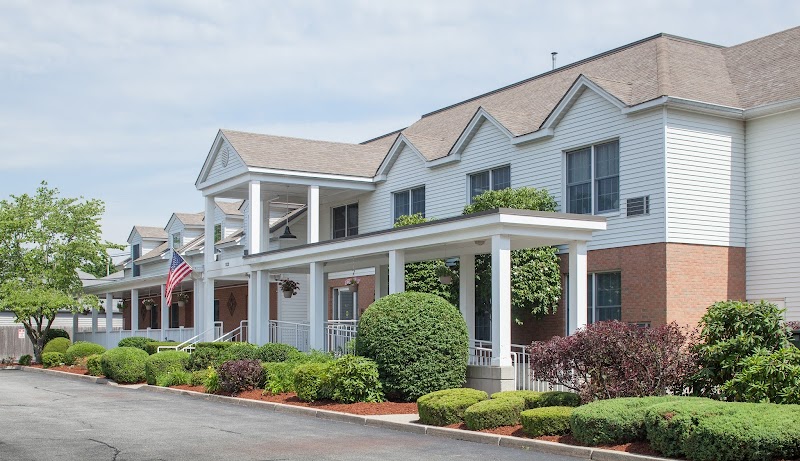


Greenwood Center

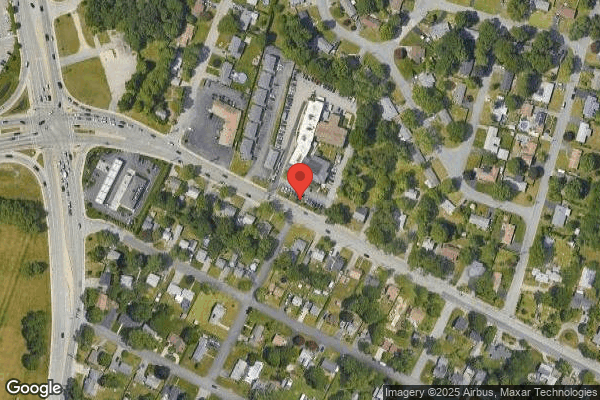
1139 Main Avenue, Warwick, RI 02886 (401) 739-6600
For profit - Corporation 130 Beds GENESIS HEALTHCARE Data: November 2025 1 Immediate Jeopardy citation
Trust Grade
23/100
#51 of 72 in RI
Last Inspection: March 2025

Within standard 12-15 month inspection cycle. Federal law requires annual inspections.

Overview

Greenwood Center in Warwick, Rhode Island has received a Trust Grade of F, indicating significant concerns about the quality of care. Ranking #51 out of 72 facilities in the state places it in the bottom half, and #8 out of 11 in Kent County suggests there are only a few local options that might be better. The facility's situation appears to be worsening, with reported issues increasing from 13 in 2024 to 16 in 2025. Staffing is a relative strength, with a 3 out of 5 rating and a turnover rate of 38%, which is lower than the state average. However, the facility also faces challenges, including $41,022 in fines and serious incidents such as failing to manage water temperatures safely, which poses a burn risk, and not providing adequate care for residents with pressure ulcers.

Trust Score
F
23/100
In Rhode Island
#51/72
Bottom 30%
Safety Record
High Risk
Review needed
Inspections
Getting Worse
13 → 16 violations
Staff Stability
○ Average
38% turnover. Near Rhode Island's 48% average. Typical for the industry.
Penalties
✓ Good
$41,022 in fines. Lower than most Rhode Island facilities. Relatively clean record.
Skilled Nurses
✓ Good
Each resident gets 60 minutes of Registered Nurse (RN) attention daily — more than 97% of Rhode Island nursing homes. RNs are the most trained staff who catch health problems before they become serious.
Violations
⚠ Watch
36 deficiencies on record. Higher than average. Multiple issues found across inspections.
★★☆☆☆
2.0
Overall Rating
★★★☆☆
3.0
Staff Levels
★★★☆☆
3.0
Care Quality
★★☆☆☆
2.0
Inspection Score
Stable
2024: 13 issues
2025: 16 issues

The Good

  • Full Sprinkler Coverage · Fire safety systems throughout facility
  • No fines on record
  • Staff turnover below average (38%)

    10 points below Rhode Island average of 48%

Facility shows strength in fire safety.

The Bad

2-Star Overall Rating

Below Rhode Island average (3.1)

Below average - review inspection findings carefully

Staff Turnover: 38%

Near Rhode Island avg (46%)

Typical for the industry

Federal Fines: $41,022

Above median ($33,413)

Moderate penalties - review what triggered them

Chain: GENESIS HEALTHCARE

Part of a multi-facility chain

Ask about local staffing decisions and management

The Ugly 36 deficiencies on record

1 life-threatening 2 actual harm
Sept 2025 2 deficiencies
CONCERN (D) 📢 Someone Reported This

A family member, employee, or ombudsman was alarmed enough to file a formal complaint

Potential for Harm - no one hurt, but risky conditions existed

Free from Abuse/Neglect (Tag F0600)

Could have caused harm · This affected 1 resident

**NOTE- TERMS IN BRACKETS HAVE BEEN EDITED TO PROTECT CONFIDENTIALITY** Based on record review, and resident and staff interviews, it has been determined that the facility failed to keep residents fre...

Read full inspector narrative →
**NOTE- TERMS IN BRACKETS HAVE BEEN EDITED TO PROTECT CONFIDENTIALITY** Based on record review, and resident and staff interviews, it has been determined that the facility failed to keep residents free from physical and verbal abuse for 2 of 4 residents reviewed, Resident ID #s 2 and 3.Findings are as follows:Review of a facility policy titled, Abuse Prohibition, last updated 10/24/2022, states in part, Centers prohibit abuse, mistreatment, neglect, misappropriation of resident/patient property, and exploitation for all patients.Abuse is defined as the willful infliction of injury, unreasonable confinement, intimidation, or punishment with resulting physical harm, injury, or mental anguish.verbal abuse is any use of oral, written, or gestured language that willfully includes disparaging and derogatory terms to patients or their families, or within their hearing distance, regardless of their age, ability to comprehend, or disability.Review of a facility reported incident submitted to the Rhode Island Department of Health on 9/5/2025 revealed that Certified Nursing Assistant (CNA), Staff A, appeared to be intoxicated and unfit for duty. Additionally, the incident report revealed that Staff A was witnessed being verbally abusive to residents and was rough with them while performing care.1. Record review revealed that Resident ID #2 was readmitted to the facility in May of 2023 with diagnoses including, but not limited to, schizophrenia and bipolar disorder.Record review revealed a Brief Interview for Mental Status (BIMS) Evaluation dated 9/5/2025 with a score of 99 indicating severe cognitive impairment.Review of a progress note dated 9/4/2025 authored by the Director of Nursing Services (DNS), states in part, Resident complained and calling out in pain during ADL [activities of daily living] care. [Staff A] was witnessed by [CNA, Staff B] being rough while performing ADL care. CNA assisted with care and reported event to supervisor .Resident screaming out 'You're hurting me' during care.During a surveyor interview on 9/11/2025 at 12:41 PM via telephone with CNA, Staff B, she revealed that she witnessed Staff A being aggressive while changing the resident, she pushed the resident onto his/her side in a rough manner and the resident was yelling, you're hurting me. Additionally, she revealed that another staff member, Licensed Practical Nurse (LPN), Staff C, came into the room while Staff A was being rough. Staff B further revealed that Staff A said to the resident, [Resident ID #2] you're too heavy, you need to stop eating.During a surveyor interview on 9/11/2025 at 1:30 PM with LPN, Staff C, she revealed that she witnessed Staff A, being aggressive and manhandling Resident ID #2 during a transfer and then again while changing him/her. Additionally, she revealed that Resident ID #2 was heard yelling ow you're hurting me.2. Record review revealed that Resident ID #3 was readmitted to the facility in January of 2025 with diagnoses including, but not limited to, stroke and anxiety.Review of a Minimum Data Set assessment dated [DATE] revealed a BIMS score of 15, indicating intact cognition.Review of a progress note dated 9/4/2025 authored by the DNS revealed that Staff B witnessed Staff A, verbally abusing Resident ID #3 stating s/he is a disgusting b*tch.During a surveyor interview on 9/11/2025 at 11:40 AM with Resident ID #3, s/he revealed that Staff A was not nice to him/her and refused to help him/her when s/he asked.Review of a facility provided statement authored by Registered Nurse (RN) Staff D, dated 9/5/2025 states in part, [Staff A] told [Resident #3] she wasn't changing [him/her] calling [him/her] a b*tch and that [s/he] is disgusting.During a surveyor interview on 9/11/2025 at 1:30 PM with LPN, Staff C, she revealed that she witnessed Staff A walk out of Resident ID #3's room and stated, that stupid b*tch. Additionally, she revealed that Staff A refused to assist Resident ID #3 with care.During a surveyor interview on 9/11/2025 at 1:26 PM with the DNS she was unable to provide evidence that Resident ID #s 2 and 3 were kept free from abuse.
CONCERN (D) 📢 Someone Reported This

A family member, employee, or ombudsman was alarmed enough to file a formal complaint

Potential for Harm - no one hurt, but risky conditions existed

Investigate Abuse (Tag F0610)

Could have caused harm · This affected 1 resident

**NOTE- TERMS IN BRACKETS HAVE BEEN EDITED TO PROTECT CONFIDENTIALITY** Based on record review and staff interview, it has been determined that the facility failed to immediately put effective measure...

Read full inspector narrative →
**NOTE- TERMS IN BRACKETS HAVE BEEN EDITED TO PROTECT CONFIDENTIALITY** Based on record review and staff interview, it has been determined that the facility failed to immediately put effective measures in place to prevent further potential abuse, neglect or mistreatment of residents from occurring, following incidents where staff members observed another staff member verbally and/or physically abuse residents for 2 of 2 residents reviewed who were subjects of abuse by a staff member, Resident ID #s 2 and 3.Findings are as follows:Review of a facility policy titled, Abuse Prohibition last updated 10/24/2022 states in part, .Anyone who witnesses an incident of suspected abuse, neglect, involuntary seclusion, injuries of unknown origin, or misappropriation of patient property is to tell the abuser to stop immediately and report the incident to his/her supervisor immediately.The employee alleged to have committed the act of abuse will be immediately removed from duty, pending investigation.Review of a facility policy titled, Substance Abuse and Alcohol Misuse Prevention and Testing last updated 7/1/2022 states in part, .Genesis and its affiliates are committed to achieving a safe and healthy work environment, free from drug and alcohol abuse. Company policy strictly prohibits.drugs.alcohol, or controlled substances while on the job or on company property. Violation of such is a dischargeable offense.Review of a facility reported incident submitted to the Rhode Island Department of Health on 9/5/2025 revealed that Certified Nursing Assistant (CNA), Staff A, appeared to be intoxicated and unfit for duty. Additionally, the incident revealed that Staff A was witnessed being verbally abusive to residents and was rough while performing care.1. Record review revealed that Resident ID #2 was readmitted to the facility in May of 2023 with diagnoses including, but not limited to, schizophrenia and bipolar disorder.Record review revealed a Brief Interview for Mental Status (BIMS) Evaluation dated 9/5/2025 with a score of 99 indicating severe cognitive impairment.Review of a progress note dated 9/4/2025 authored by the Director of Nursing Services (DNS), states in part, Resident complained and calling out in pain during ADL [activities of daily living] care. [Staff A] was witnessed by [CNA, Staff B] being rough while performing ADL care. CNA assisted with care and reported event to supervisor .Resident screaming out 'You're hurting me' during care.During a surveyor interview on 9/11/2025 at 12:41 PM via telephone with CNA, Staff B, she revealed that Staff A appeared to be confused at the beginning of the shift and was unable to understand what patient assignment she was responsible for. Additionally, she revealed that after Staff A went on her lunch break between 7:00 PM and 8:00 PM when she returned, she appeared to be intoxicated, yelling in the hallways, talking to herself and nodding off. Staff B also revealed that she witnessed Staff A being aggressive while changing Resident ID #2. Furthermore, she revealed that she witnessed Staff A push Resident ID #2 on his/her side in a rough manner. Additionally, the resident was yelling, you're hurting me. She revealed that another staff member, Licensed Practical Nurse (LPN), Staff C, came into the room while Staff A was being rough with the resident. Staff B further revealed that Staff A said to the resident, [Resident ID #2] you're too heavy, you need to stop eating. Staff B revealed that she reported this incident to Registered Nurse, Staff D however, Staff A did not leave the unit until close to the end of her scheduled shift (11:00 PM).During a surveyor interview on 9/11/2025 at 1:30 PM with LPN, Staff C, she revealed that she observed Staff A at the beginning of the shift (3:00 PM), and she appeared off and as the shift went on, she began acting out including, losing her balance, nodding off and walking up and down the hallway slapping her hands on her hips. Staff C further revealed that she witnessed Staff A, being aggressive and manhandling Resident ID #2 during a transfer and then again while changing him/her. Additionally, she revealed that Resident ID #2 was heard yelling ow you're hurting me. Staff C acknowledged that she reported this incident to RN, Staff D; however, Staff A did not leave the unit until near the end of her scheduled shift.2. Record review revealed that Resident ID #3 was readmitted to the facility in January of 2025 with diagnoses including, but not limited to, stroke and anxiety.Review of a Minimum Data Set assessment dated [DATE] revealed a BIMS score of 15, indicating intact cognition.Review of a progress note dated 9/4/2025 authored by the DNS revealed that Staff B witnessed Staff A, verbally abusing Resident ID #3 stating s/he is a disgusting b*tch.During a surveyor interview on 9/11/2025 at 11:40 AM with Resident ID #3, s/he revealed that Staff A was not nice to him/her and refused to help him/her when s/he asked.During a surveyor interview on 9/11/2025 at 1:30 PM with LPN, Staff C, she revealed that she witnessed Staff A walk out of Resident ID #3's room and she said, that stupid b*tch and refused to perform care on him/her.Review of a facility provided statement authored by Registered Nurse (RN) Staff D, dated 9/5/2025 revealed that it was reported to her by Staff B that Staff A was heard calling residents names including, b*tch, disgusting and fat. Additionally, she revealed that it was reported to her that Staff A was aggressive with residents during care. The statement further revealed that at approximately 9:30 PM Staff A yelled that she was quitting her job and then she told Staff A to leave. Staff A was then found on a different floor and was again asked to leave.Record review of Staff A's time sheet revealed that she punched out of the facility at 10:55 PM, indicating that she was in the facility for an hour and 25 minutes after being told to leave.During a surveyor interview on 9/11/2025 at 12:31 PM with Staff D, she revealed that Staff A displayed erratic behaviors throughout her shift on 9/4/2025, indicating that she called herself Superman and was flexing her muscles and dancing with a broom. Staff D further revealed that Staff A's behavior was increasingly bad following her lunch break. Staff D acknowledged that she did not tell Staff A to leave following her lunch break even though she appeared to be intoxicated. Additionally, Staff D revealed that she called the police to escort Staff A off of the property because she was hanging around the facility and was found on different units.During a surveyor interview on 9/11/2025 at 10:03 AM with LPN, Staff E, she revealed that when she came into the facility for her 11:00 PM to 7:00 AM shift she found Staff A at the time clock. Additionally, she revealed that she assisted Staff A with collecting her belongings and escorted her out of the building.During a surveyor interview on 9/11/2025 at 1:26 PM with the DNS she acknowledged that although staff had identified that Staff A appeared to be intoxicated and was witnessed being verbally and physically abusive to residents she was not told to leave immediately.
Sept 2025 2 deficiencies
CONCERN (E) 📢 Someone Reported This

A family member, employee, or ombudsman was alarmed enough to file a formal complaint

Potential for Harm - no one hurt, but risky conditions existed

Deficiency F0658 (Tag F0658)

Could have caused harm · This affected multiple residents

Based on record review and staff interview, it has been determined that the facility failed to meet professional standards of quality relative to following a physician's order for 1 of 1 resident revi...

Read full inspector narrative →
Based on record review and staff interview, it has been determined that the facility failed to meet professional standards of quality relative to following a physician's order for 1 of 1 resident reviewed with orders to check blood sugars, Resident ID #2.Findings are as follows:According to Mosby's 4th Edition, Fundamentals of Nursing, page 314 which states in part, .The physician is responsible for directing medical treatment, nurses are obligated to follow physician's orders unless they believe the orders are in error or would harm the clients .Record review revealed the resident was admitted to the facility in July of 2025 with a diagnosis including, but not limited to, type 2 diabetes mellitus with diabetic nephropathy (nerve damage that affects people with diabetes).Record review revealed an active physician's order with a start date of 7/29/2025, that states, check blood sugar four times a day for type 2 diabetes.Record review of the resident's care plan, dated 7/29/2025, revealed the resident was insulin dependent with an intervention to assess and record his/her blood glucose levels as ordered.Record review failed to reveal evidence that the resident's blood sugar had been checked four times daily between 7/29/2025 through 9/4/2025.Further record review of the resident's EMR of the recorded vitals, revealed that the resident's sugar was not obtained for 137 out of 152 opportunities.During a surveyor interview on 9/4/2025 at 10:50 AM with Registered Nurse, Staff A, she indicated that if a resident's blood sugars had been checked, it would be recorded in the resident's Electronic Medical Record (EMR) under the vitals section. She indicated that she was unaware of the physician's order. She further acknowledged that there was no record Resident ID #2's blood sugar had been checked per the physician's order. During a surveyor interview on 9/4/2025 at 1:09 PM with the Director of Nursing Services, she was unable to provide evidence that the physician's order to check the resident's blood sugar four times a day had been followed. During a surveyor interview on 9/4/2025 at 3:04 PM the Nurse Practitioner, Staff B, she indicated it was her expectation that the physician's order would have been followed.
CONCERN (E) 📢 Someone Reported This

A family member, employee, or ombudsman was alarmed enough to file a formal complaint

Potential for Harm - no one hurt, but risky conditions existed

Medical Records (Tag F0842)

Could have caused harm · This affected multiple residents

Based on record review and staff interview it has been determined that the facility failed to ensure that the resident's medical was accurate in accordance with accepted professional standards and pra...

Read full inspector narrative →
Based on record review and staff interview it has been determined that the facility failed to ensure that the resident's medical was accurate in accordance with accepted professional standards and practices, for 1 of 1 resident reviewed with an order for routine blood sugar monitoring, Resident ID #2.Findings are as follows:Record review revealed the resident was admitted to the facility in July of 2025 with a diagnosis including, but not limited to, type 2 diabetes mellitus with diabetic nephropathy (nerve damage that affects people with diabetes).Record review revealed an active physician's order with a start date of 7/29/2025, that states, check blood sugar four times a day for type 2 diabetes.Record review of the resident's care plan dated 7/29/2025 revealed the resident was insulin dependent with an intervention to assess and record his/her blood glucose levels as ordered.Record review failed to reveal evidence that the resident's blood sugar had been checked four times daily between 7/29/2025 through 9/4/2025.Further record review of the resident's Electronic Medical Record (EMR) revealed that the resident's blood sugar was not obtained for 137 out of 152 opportunities.During a surveyor interview on 9/4/2025 at 10:50 AM with Registered Nurse, Staff A, she indicated that she was unaware that the resident had a physician's order to monitor his/her blood sugar. Staff A acknowledged that there was an order in the system, but it did not populate on the resident's Treatment Administration Record. During a surveyor interview on 9/4/2025 at 1:09 PM with the Director of Nursing Services, she indicated that the order had been transcribed incorrectly into the resident's (EMR). Additionally, the DNS indicated that the order to check the resident's blood sugar four times a day had been transcribed as an ancillary order and not as a treatment, which is why the order failed to populate as a treatment.
Aug 2025 1 deficiency
CONCERN (D) 📢 Someone Reported This

A family member, employee, or ombudsman was alarmed enough to file a formal complaint

Potential for Harm - no one hurt, but risky conditions existed

Deficiency F0757 (Tag F0757)

Could have caused harm · This affected 1 resident

**NOTE- TERMS IN BRACKETS HAVE BEEN EDITED TO PROTECT CONFIDENTIALITY** Based on record review and staff interview, it has been determined that the facility failed to ensure that the resident's drug r...

Read full inspector narrative →
**NOTE- TERMS IN BRACKETS HAVE BEEN EDITED TO PROTECT CONFIDENTIALITY** Based on record review and staff interview, it has been determined that the facility failed to ensure that the resident's drug regimen is free from unnecessary medication for 1 of 6 residents reviewed for medication administration, Resident ID #1. Findings are as follows:Record review of a community reported complaint submitted to the Rhode Island Department on Health on 8/13/2025 alleged, that a Medication Technician administered Resident ID #1 medications that are prescribed to his/her roommate, Resident ID #2. The medications administered were noted to be Donepezil (a medication prescribed to treat dementia associated with Alzheimer's disease), Namenda (medication prescribed to treat moderate-to-severe Alzheimer's disease), Senna (a stimulant laxative), and Plavix (a medication prescribed to prevent blood clots).Record review revealed Resident ID #1 was admitted to the facility in September of 2021 with diagnoses including, but not limited to, chronic kidney disease stage 3 (a moderate loss of kidney function), anemia (a blood disorder in which the blood has a reduced ability to carry oxygen), essential hypertension (persistently high blood pressure) and unspecified dementia with anxiety.Record review of a Minimum Data Set assessment dated [DATE] revealed a Brief Interview of Mental Status score of 4 out of 15, indicating a severe cognitive impairment.Review of Resident ID #1's MAR failed to reveal evidence of physician's orders for Donepezil, Namenda, Senna, and Plavix.Record review of Resident ID #2's August 2025 MAR revealed in part, the following prescribed medications were signed off as administered on 8/12/2025: Donepezil 10 mg one time a day at 4:00 PM. Namenda 10mg 10 mg by one time at 4:00 PM. Plavix 75 mg one time a day at 4:00 PM initiated. Record review of Resident ID #1's electronic medical record revealed a progress note dated 8/13/2025 at 2:03 AM, authored by Registered Nurse, Staff B, revealed in part, Medication Technician, Staff A, had administered Resident ID #1 the prescribed evening medications intended to his/her roommate, Resident ID #2. Following the incident Residents ID#1's medical provider was contacted; a recommendation was made to monitor Resident ID #1's condition for 72 hours.During a surveyor interview with Registered Nurse, Staff B, on 8/14/2025 at 12:14 PM, she revealed that on the evening of 8/12/2025, she handed a medication cup containing Donepezil 10mg, Namenda 10mg, 2 senna tablets, and Plavix 75 mg, the prescribed evening doses of medication for the residents roommate to Staff A, with instructions to administer to them to the resident in the bed by the window. Staff B further stated that following the administration, Staff A revealed that she had administered the above medications to the resident in the bed by the door.During a surveyor interview on 8/14/2025 at 12:34 PM, the Director of Nurses acknowledged that Resident ID #1 had received unnecessary medications on the evening of 8/12/2025.
Mar 2025 11 deficiencies
CONCERN (D) 📢 Someone Reported This

A family member, employee, or ombudsman was alarmed enough to file a formal complaint

Potential for Harm - no one hurt, but risky conditions existed

Deficiency F0578 (Tag F0578)

Could have caused harm · This affected 1 resident

**NOTE- TERMS IN BRACKETS HAVE BEEN EDITED TO PROTECT CONFIDENTIALITY** Based on record review and staff interview, it has been determined that the facility failed to ensure that residents' advance di...

Read full inspector narrative →
**NOTE- TERMS IN BRACKETS HAVE BEEN EDITED TO PROTECT CONFIDENTIALITY** Based on record review and staff interview, it has been determined that the facility failed to ensure that residents' advance directives were consistent with the resident's electronic medical record (EMR) for 2 of 2 residents reviewed in which their advance directive copies did not match the EMR, Resident ID #s 16 and 154. Findings are as follows: 1. Record review revealed Resident ID #16 was readmitted to the facility in October of 2024 with a diagnosis including, but not limited to, acute respiratory failure. Record review revealed a Medical Orders for Life Sustaining Treatment (MOLST) form signed by the resident's representative and dated [DATE] which indicates, Do Not Attempt Resuscitation/DNR Allow Natural Death . Record review of a document titled Clinical Resident Profile states in part, .Code Status: Advance Directive/Full Code [Cardiopulmonary Resuscitation/CPR is to be performed if there is no pulse and respiration]. Review of Resident ID #16's care plan dated [DATE] revealed the resident is a full code. During a surveyor interview with Registered Nurse, Staff B, on [DATE] at 9:08 AM, she acknowledged that the resident's EMR was not consistent with the advance directive documented on the MOLST form. Additionally, Staff B indicated that if there was an emergency, she would treat the resident as a full code. 2. Record review revealed Resident ID #154 was admitted to the facility in February of 2025 with a diagnosis including, but not limited to, acute respiratory failure. Record review revealed a MOLST form signed by the resident and dated [DATE] which indicates, Attempt Resuscitation/CPR. Record review of a physician's order dated [DATE] revealed the resident is a DNR. Review of Resident ID #154's care plan dated [DATE] revealed the resident is a DNR. Record review failed to reveal evidence that the resident had changed his/her code status to a DNR after s/he had signed the MOLST form on [DATE], indicating s/he wants to be a full code. During a surveyor interview on [DATE] at 9:50 AM, with the Nurse Practitioner (NP) who had signed the MOLST form dated [DATE], she acknowledged that Resident ID #154 had signed the MOLST form as a full code. The NP acknowledged that the resident had not changed his/her code status to a DNR, as indicated in the physician's order dated [DATE]. During surveyor interviews with the Director of Nursing Services (DNS) on [DATE] at 11:47 AM and on [DATE] at 9:38 AM, she indicated that she would expect the residents' MOLST forms reflecting the residents' wishes to be consistent with the EMR. Additionally, the DNS was unable to provide evidence why there were inconsistencies in the residents' records.
CONCERN (D) 📢 Someone Reported This

A family member, employee, or ombudsman was alarmed enough to file a formal complaint

Potential for Harm - no one hurt, but risky conditions existed

Accident Prevention (Tag F0689)

Could have caused harm · This affected 1 resident

Based on surveyor observation, record review, and staff interview, it has been determined that the facility failed to ensure that the residents' environment remains free from accident hazards relative...

Read full inspector narrative →
Based on surveyor observation, record review, and staff interview, it has been determined that the facility failed to ensure that the residents' environment remains free from accident hazards relative to appropriately disposing of hazardous materials for 1 of 2 medication carts observed, One-North medication cart. Findings are as follows: Review of the facility's policy titled Safety and Health Policies and Procedures: Needle Handling and Sharps Injury Prevention dated 4/15/2024, states in part, .Sharps Disposals: Contaminated sharps [are medical devices with sharp points or edges that can puncture or cut skin such as needles, syringes, lancets] will be discarded immediately in appropriate disposal containers . During a surveyor observation of the One-North medication cart on 3/4/2025 the following was revealed: - At 10:25 AM-10:30 AM, two used lancets (a small needle device used to prick the skin to draw blood for testing) and a glass vial were observed on the top surface of a biohazardous waste container (a specialized container designed for the safe storage and disposal of materials that pose a threat of infection or contamination) which were visible and accessible to residents. - At 11:38 AM -11:47 AM, three used lancets, a used syringe with a needle attached, and a glass vial were observed on the top surface of the biohazardous waste container which were visible and accessible to residents. During these observations, there were no staff at the medication cart or in proximity of the cart. Multiple residents were observed in proximity to the cart. During a surveyor observation and interview on 3/4/2025 at approximately 11:50 AM with Registered Nurse, Staff D, she acknowledged the 3 lancets, a syringe with a needle attached, and a glass vial were on the top of the biohazardous waste container. Staff D acknowledged the above-mentioned items were not disposed appropriately. During a surveyor interview on 3/4/2025 at 1:43 PM with the Director of Nursing Services, she indicated that she would expect all sharps material including the above-mentioned items to be disposed of in the biohazardous waste container and not on the top surface, as observed.
CONCERN (D) 📢 Someone Reported This

A family member, employee, or ombudsman was alarmed enough to file a formal complaint

Potential for Harm - no one hurt, but risky conditions existed

Respiratory Care (Tag F0695)

Could have caused harm · This affected 1 resident

Based on surveyor observation, record review, and staff interview, it has been determined that the facility failed to provide respiratory care consistent with professional standard of practice for 2 o...

Read full inspector narrative →
Based on surveyor observation, record review, and staff interview, it has been determined that the facility failed to provide respiratory care consistent with professional standard of practice for 2 of 3 residents reviewed for oxygen use, Resident ID #s 24 and 154. Findings are as follows: According to Lippincott Nursing Procedure Ninth Edition 2023, page 621, states in part, .Verify the practitioner's order for the oxygen therapy, because oxygen is considered a medication or therapy and should be prescribed . Review of a facility policy titled, Oxygen: Nasal Cannula [a device used to deliver oxygen through a tube in the nose] dated 8/7/2023, states in part, .Verify order .Humidifying device [a bottle that infuses the normal flow of oxygen with water droplets to reduce the sensations of dryness in the upper airway] if liter flow greater than or equal to four liters . 1. Record review revealed Resident ID #24 was admitted to the facility in September of 2024 with a diagnosis including, but not limited to, emphysema (a chronic lung disease that causes progressive damage to the air sacs in the lungs). Record review revealed a physician's order dated 2/15/2025 to administer oxygen at 5-7 liters (L) via nasal cannula, as tolerated. Surveyor observations revealed the resident was receiving 8 liters of oxygen instead of 5-7 L, as ordered, on the following dates and times: - 3/4/2025 at 9:26 AM, 12:45 PM, and 3:30 PM. - 3/5/2025 at 10:45 AM. Additional surveyor observations of the resident revealed the oxygen tubing was not connected to the humidifier bottle on the concentrator (a medical device that delivers oxygen-enriched air to people who have breathing difficulties) on the following dates and times: - 3/4/2025 at 9:26 AM, 12:45 PM, and 3:30 PM - 3/5/2025 at 10:45 AM During a surveyor interview on 3/4/2025 at 3:30 PM with Licensed Practical Nurse, Staff E, she was unable to provide evidence that the resident was receiving 5-7 L of oxygen, as ordered. Additionally, she was unable to provide evidence that the humidifier was connected to the concentrator. During a surveyor interview on 3/5/2025 at 10:26 AM, with Resident ID #24, s/he revealed s/he does not adjust the liter flow of the oxygen and indicated that the nurses adjust the liter flow of oxygen s/he receives. Additionally, the resident revealed s/he was aware the humidifier was not connected and that s/he does get nosebleeds. Additional surveyor observation of Resident ID #24 immediately following the above-mentioned interview, revealed a blood-tinged napkin that was in a cup on his/her bedside table. During a surveyor interview on 3/5/2025 at 11:25 AM with the Director of Nursing Services, she indicated that she would expect Resident ID #24 to receive the liters of oxygen, as ordered. 2. Record review revealed Resident ID #154 was admitted to the facility in February of 2025 with a diagnosis including, but not limited to, chronic obstructive pulmonary disease (a lung disease that causes restricted airflow and breathing problems). During surveyor observations on the following dates and times, Resident ID #154 was observed receiving 3 (L) of oxygen via a nasal cannula: - 3/3/2025 at 10:31 AM - 3/4/2025 at 9:35 AM, 9:58 AM, 11:54 AM, and 12:20 PM. Record review failed to reveal evidence of a physician's order for oxygen as indicated in the facility's policy. During a surveyor interview on 3/4/2025 at 12:25 PM with Registered Nurse, Staff C, she acknowledged that the resident was receiving 3 L of oxygen. Staff C further acknowledged that the resident did not have a physician's order for the oxygen s/he was receiving. During a surveyor interview on 3/4/2025 at 1:34 PM with the Director of Nursing Services, she indicated that she would expect the staff to have obtained a physician's order for the oxygen being administered to Resident ID #154.
CONCERN (D) 📢 Someone Reported This

A family member, employee, or ombudsman was alarmed enough to file a formal complaint

Potential for Harm - no one hurt, but risky conditions existed

Deficiency F0698 (Tag F0698)

Could have caused harm · This affected 1 resident

**NOTE- TERMS IN BRACKETS HAVE BEEN EDITED TO PROTECT CONFIDENTIALITY** Based on surveyor observation, record review, resident and staff interviews, it has been determined that the facility failed to ...

Read full inspector narrative →
**NOTE- TERMS IN BRACKETS HAVE BEEN EDITED TO PROTECT CONFIDENTIALITY** Based on surveyor observation, record review, resident and staff interviews, it has been determined that the facility failed to ensure that residents who require dialysis (a life-sustaining treatment that is used to remove waste products and excess fluid from the blood when a person's kidneys are no longer functioning) receive such services, consistent with professional standards of practice for 1 of 1 resident reviewed for fluid restriction and on a renal diet (a dietary plan specifically designed for people with kidney disease), Resident ID #77. Findings are as follows: Review of a facility diet manual titled, Diet and Nutritional Care Manual: Renal Dialysis Diet states in part, .Foods to limit/avoid .oranges/orange juice . Review of the facility's policy titled, Nutrition/Hydration Care and Services dated 2/1/2023, states in part, .When a physician/APP [Advanced Practice Practitioner]orders a fluid restriction due to specific clinical condition: Orders must include volume of fluid permitted during a 24-hour period . Record review revealed the resident was admitted to the facility in January 2025 with diagnoses including, but not limited to, end stage renal disease (a severe medical condition where the kidneys have permanently lost their ability to function properly) and dependence on renal dialysis. Review of an admission Minimum Data Set assessment dated [DATE], revealed a Brief Interview for Mental Status Score of 15 out of 15, indicating intact cognitive function. Review of a physician's order dated 1/30/2025 revealed to monitor daily fluid restriction with a total of 1000 milliliter (ML) a day. Review of a physician's order dated 2/1/2025 revealed the resident receives outpatient dialysis three times a week on Tuesday, Thursday, and Saturday. Record review failed to reveal evidence that the resident's fluid intake was monitored and documented over a 24-hour period, as indicated in the facility's policy. During a surveyor interview on 3/6/2025 at 9:14 AM with Registered Nurse, Staff C, she acknowledged that the resident is on a 1000 ML/day fluid restriction. Staff C indicated that she only documents fluids that she provides to the resident and does not keep track of all fluids the resident receives. Additionally, Staff C was unable to provide evidence why the resident was served orange juice or who had given him/her the orange juice. During a surveyor observation on 3/6/2025 at 9:19 AM, the resident was observed with a coffee mug (holds 240 ML of fluids) that had approximately 30 ML of orange juice in it. During a surveyor interview on 3/6/2025 at approximately 9:20 AM with the resident, s/he acknowledged that a staff member had served him/her orange juice and s/he had drank it. The resident further acknowledged that s/he should not be drinking orange juice because of his/her renal diet. During a surveyor interview on 3/6/2025 at 9:32 AM with the Director of Nursing Services (DNS), she indicated that she would expect the staff to follow all physician's orders relating to the resident's diet and fluid restriction. Additionally, the DNS was unable to provide evidence that the resident's total fluid intake was being monitored and documented, per the facilities policy. During a surveyor interview on 3/6/2025 at 10:06 AM with the Registered Dietitian (RD), she acknowledged that the resident is on a renal diet and should not have been served orange juice. Additionally, the RD indicated that the resident's diet slip did not indicate the resident should not be receiving orange juice.
CONCERN (D) 📢 Someone Reported This

A family member, employee, or ombudsman was alarmed enough to file a formal complaint

Potential for Harm - no one hurt, but risky conditions existed

Deficiency F0757 (Tag F0757)

Could have caused harm · This affected 1 resident

Based on record review and staff interview, it has been determined that the facility failed to ensure that the resident's drug regimen is free from unnecessary drugs for 1 of 1 resident reviewed for a...

Read full inspector narrative →
Based on record review and staff interview, it has been determined that the facility failed to ensure that the resident's drug regimen is free from unnecessary drugs for 1 of 1 resident reviewed for a medication with parameters, Resident ID #77. Findings are as follows: Record review revealed the resident was admitted to the facility in January 2025 with diagnoses including, but not limited to, end stage renal disease (a severe medical condition where the kidneys have permanently lost their ability to function properly) and dependence on renal dialysis (a life-sustaining treatment that is used to remove waste products and excess fluid from the blood when a person's kidneys are no longer functioning). Review of a physician's order dated 1/31/2025 revealed Isosorbide Mononitrate 60 milligram, two times a day (morning and evening) for high blood pressure with parameters to hold the medication if the systolic blood pressure (SBP; top number in a blood pressure reading) is less than 120. Review of the February and March 2025 Medication Administration Records (MAR) revealed that the resident was administered the Isosorbide Mononitrate when his/her SBP indicated it should be held based on the parameters on the following dates and times: - 2/1/2025- morning BP: 97/57, 105/68, evening BP: 107/66 - 2/3/2025- morning BP: 110/47 - 2/5/2025- evening BP: 108/51 - 2/6/2025- morning BP: 112/61 - 2/7/2025- morning BP: 106/50 - 2/8/2025- evening BP: 111/62 - 2/10/2025-morning BP: 111/58 - 2/11/2025-morning BP: 113/66 and evening BP 114/69 - 2/12/2025-evening BP: 99/52 - 2/14/2025- evening BP:112/56 - 2/17/2025- morning BP: 102/60 - 2/19/2025-evening BP: 112/62 - 2/22/2025- morning BP: 112/65 - 2/23/2025- morning BP: 114/60 - 2/24/2025- morning BP: 117/66 - 2/25/2025- morning BP: 109/60 - 2/27/2025- morning BP:108/61 - 2/28/2025- evening BP: 100/62 - 3/3/2025- morning BP: 97/56 and evening BP: 102/65 - 3/4/2025-evening blood pressure (BP): 98/69 During a surveyor interview on 3/5/2025 at 9:56 AM with the Nurse Practitioner, she indicated that she would expect the resident's Isosorbide Mononitrate to have been held on the above-mentioned dates and times when his/her SBP was lower than 120, as ordered. During a surveyor interview on 3/5/2025 at 11:54 AM with the Director of Nursing Services, she was unable to provide evidence that the staff followed the physician's order for administering the Isosorbide Mononitrate.
CONCERN (D) 📢 Someone Reported This

A family member, employee, or ombudsman was alarmed enough to file a formal complaint

Potential for Harm - no one hurt, but risky conditions existed

Deficiency F0761 (Tag F0761)

Could have caused harm · This affected 1 resident

**NOTE- TERMS IN BRACKETS HAVE BEEN EDITED TO PROTECT CONFIDENTIALITY** Based on surveyor observation, resident, and staff interview, it has been determined that the facility failed to store and label...

Read full inspector narrative →
**NOTE- TERMS IN BRACKETS HAVE BEEN EDITED TO PROTECT CONFIDENTIALITY** Based on surveyor observation, resident, and staff interview, it has been determined that the facility failed to store and label drugs and biological's in accordance with currently accepted professional standards for 2 of 4 medication carts observed, and 1 of 1 resident's room observed with medication at the bedside, Resident ID #99. Findings are as follows: Review of a facility policy titled, Medication Administration dated 1/2025, states in part, .Medications are to be administered at the time they are prepared . 1) Record review revealed Resident ID #99 was admitted to the facility in February of 2025 with diagnoses including, but not limited to, displaced intertrochanteric fracture of the left femur (a break in the upper thigh bone) and pain in the left hip. Record review of a Minimum Data Set (MDS) assessment dated [DATE] revealed a Brief Interview for Mental Status score of 15 out of 15, indicating intact cognition. Review of a physician's order dated 2/18/2025 revealed to apply a Lidoderm patch 5% to the left hip in the morning for pain. During surveyor observations on the following dates and times, an opened package of a Lidoderm patch was observed on the resident's nightstand: - 3/3/2024 at 11:15 AM - 3/4/2025 at 9:45 AM - 3/5/2025 at 8:59 AM During a surveyor interview on 3/3/2025 at 11:16 AM with the resident, s/he indicated that the Lidoderm patch was left on the nightstand by a staff member a few days prior. During a surveyor observation on 3/5/2025 at 9:00 AM in the presence of Registered Nurse (RN), Staff F, she acknowledged that the opened package of a Lidoderm patch was observed on the resident's nightstand. Staff F indicated that she was unaware who had placed the patch on the nightstand. During a surveyor interview on 3/5/2025 at 11:49 AM with the Director of Nursing Services (DNS), she was unable to provide evidence as to why the opened Lidoderm patch was left on the resident's nightstand. Additionally, the DNS indicated that it is not the facility's practice to leave medications at a resident's bedside. 2a) During a surveyor observation on 3/4/2025 at 1:42 PM of the first floor, East Unit medication cart, with RN, Staff D during the medication administration task, she removed a clear medication cup without any labels containing 2 orange tablets from the medication cart to administer to a resident. During a surveyor interview with Staff D immediately following the above-mentioned observation, she revealed that she pre-poured the medication to administer to a resident. She acknowledged that the medication cup was unlabeled and revealed that it is not her usual practice to pre-pour medication for a resident. 2b) During a surveyor observation on 3/5/2025 at approximately 9:45 AM of the first floor, South Unit medication cart, in the presence of Staff D, revealed a clear medication cup with the label 23 written in marker containing 1 white tablet. During a surveyor interview with Staff D immediately following the above-mentioned observation, she revealed that the medication cup containing the white tablet was in the medication cart when she assumed care of the unit from the nurse prior, and was unaware of what the medication was or who it was for. She further revealed that the medication should be discarded. During a surveyor interview on 3/4/2025 at 3:56 PM with the DNS, she revealed that she would expect staff not to pre-pour medication and store it in a medication cart. Additionally, she would expect staff to administer medication to a resident at the time it was prepared.
CONCERN (D) 📢 Someone Reported This

A family member, employee, or ombudsman was alarmed enough to file a formal complaint

Potential for Harm - no one hurt, but risky conditions existed

Deficiency F0805 (Tag F0805)

Could have caused harm · This affected 1 resident

Based on surveyor observation, record review, and staff interview, it has been determined that the facility failed to prepare food and drink in a form designed to meet individual needs for 1 of 1 resi...

Read full inspector narrative →
Based on surveyor observation, record review, and staff interview, it has been determined that the facility failed to prepare food and drink in a form designed to meet individual needs for 1 of 1 resident observed during the medication administration task that requires honey thickened liquids (liquid consistency that should flow like honey pouring off a spoon), Resident ID #69. Findings are as follows: Record review revealed the resident was admitted to the facility in August of 2024 with diagnoses including, but not limited to, dysphagia (difficulty swallowing) and aspiration (when something that is supposed to enter your stomach accidentally enters your airway) of fluid. During a surveyor observation on 3/5/2025 at approximately 9:30 AM, Registered Nurse, Staff D, was observed administering liquid Ativan (medication for anxiety) orally via a syringe to Resident ID #69. Staff D then provided the resident with a cup of clear, thin liquid which the resident took small sips of through a straw and began to cough after consuming it. Staff D then prepared liquid morphine (medication for pain relief) and administered it to the resident orally via a syringe. Staff D, again, provided the resident with cup of clear, thin liquid in which the resident took several sips of through a straw and began to cough. Record review in the presence of Staff D, revealed that the resident is prescribed a modified diet due to dysphagia and requires honey thickened liquids. During a surveyor interview immediately following the above observation on 3/5/2025 with Staff D, she revealed that she was unsure of the resident's prescribed diet and had to reference his/her record. Additionally, she acknowledged that the resident requires honey thickened liquids and revealed that she had administered the resident water that was not a honey thick consistency, as prescribed. Record review of the resident's care plan revealed a focus area dated 9/25/2024 indicating that s/he is at nutritional risk related to difficulty swallowing with an intervention that includes to provide him/her with honey thickened liquids, as ordered. Additionally, it revealed that s/he requires honey thickened liquids for all liquids. Record review of a progress note dated 3/5/2025 at 10:13 AM authored by Staff D, revealed that the resident experienced a change in condition with his/her respiratory status and was coughing following the administration of thin liquids with his/her medication. During surveyor interviews on 3/5/2025 at 12:53 PM and 2:28 PM with the Director of Nursing Services, she revealed that she would expect that staff would provide the resident with honey thickened liquids, as ordered, and to check his/her diet order prior to administering food or drinks.
CONCERN (D) 📢 Someone Reported This

A family member, employee, or ombudsman was alarmed enough to file a formal complaint

Potential for Harm - no one hurt, but risky conditions existed

Infection Control (Tag F0880)

Could have caused harm · This affected 1 resident

Based on surveyor observation, record review, and staff interview, it has been determined that the facility failed to maintain an infection prevention and control program to help prevent the transmiss...

Read full inspector narrative →
Based on surveyor observation, record review, and staff interview, it has been determined that the facility failed to maintain an infection prevention and control program to help prevent the transmission of communicable diseases and infections relative to Enhanced Barrier Precautions (EBP; involves using a gown and gloves during high-contact resident care activities) 1 of 1 resident reviewed with a suprapubic tube (SPT; a tube that drains urine from your bladder through a small incision in your abdomen), Resident ID #37 and for 1 of 1 resident observed for medication administration via a peripherally inserted central catheter (PICC; a long, thin tube inserted through a vein in your arm that extends to your heart), Resident ID #51. Findings are as follows: Review of a facility policy titled, .Enhanced Barrier Precautions last reviewed 12/16/2024 states in part, .Enhanced Barrier Precautions (EBP) .employs targeted personal protective equipment (PPE) use during high contact patient/resident .activities .Implementation of EBP .Has a .indwelling medical device .Yes . 1. Review of a facility policy titled, Catheter: Indwelling Urinary-Care last reviewed on 2/1/2023 states in part, Perform catheter care twice a day and PRN [as needed] .Gather equipment (PPE), as indicated .Put on gloves and other PPE as indicated .Secure catheter tubing to keep the drainage bag below the level of the patient's bladder and off the floor . Record review revealed Resident ID #37 was readmitted to the facility in November of 2019 with a diagnosis including, but not limited to, neuromuscular dysfunction of the bladder. a) Record review revealed that the resident has an SPT. Additionally, s/he is on EBP due to having an SPT. Review of the EBP sign posted near the resident's door states in part, .Enhanced Barrier Precautions .Attention: Caregivers, Staff .Wear Gown and Gloves prior to these activities .Providing hygiene .Changing briefs or assisting with toileting .Device care or use of a device that is .urinary catheters . During surveyor observations on the following dates and times the resident's SPT collection bag was noted to be resting on the floor next to the resident's bed: -3/4/2025 at 9:05 AM, 10:28 AM, 12:04 PM, and 12:32 PM -3/5/2025 at 10:07 AM and 10:15 AM During a surveyor interview on 3/5/2025 immediately after the above observation at 10:15 AM with Registered Nurse (RN), Staff A, she acknowledged that the resident's SPT collection bag was resting on the floor and indicated that it should not be. b) During a surveyor observation on 3/3/2025 at 12:39 PM, Nursing Assistant, Staff G, was observed providing hygiene care for the resident after assisting him/her with toileting without wearing a gown. During a surveyor interview immediately following the above observation, Staff G acknowledged that she did not wear a gown while assisting the resident with toileting and providing hygiene care. Additionally, she revealed that she was aware that she required a gown. During a surveyor interview on 3/5/2025 at 2:14 PM with the Director of Nursing Services (DNS), she revealed that she would have expected staff to wear a gown while assisting a resident on EBP with toileting and providing hygiene. Additionally, the DNS revealed that she would have expected the resident's SPT collection bag to be off of the floor. 2. Record review revealed Resident ID #51 was admitted to the facility in June of 2014 with a diagnosis including, but not limited to, osteomyelitis (an infection in a bone). Record review revealed that the resident has a PICC line. Review of the resident's care plan revealed that s/he is on EBP due to his/her PICC line with an intervention dated 1/23/2025 that includes to use EBP with the use of a device such as a central line. Review of a physician's order dated 1/16/2025 revealed to administer Ertapenem (an antibiotic) 1 gram, intravenously (IV), every 24 hours for osteomyelitis. Review of the EBP sign posted near the resident's door states in part, .Enhanced Barrier Precautions .Attention: Caregivers, Staff .Wear Gown and Gloves prior to these activities .Device care or use of a device .central lines . During a surveyor observation on 3/4/2025 at 1:29 PM during the medication administration task revealed Staff A, access the resident's PICC line and began infusing his/her IV antibiotic without wearing a gown. During a surveyor interview immediately following the above observation with Staff A, she acknowledged that the resident is on EBP and that the use of a gown is required when accessing his/her PICC line. She further acknowledged that she did not wear a gown, and should have. During a surveyor interview on 3/4/2025 at 3:56 PM with the DNS, she revealed that she would expect the nurse to wear a gown when administering IV antibiotics via a PICC line for a resident on EBP.
CONCERN (D) 📢 Someone Reported This

A family member, employee, or ombudsman was alarmed enough to file a formal complaint

Potential for Harm - no one hurt, but risky conditions existed

Safe Environment (Tag F0921)

Could have caused harm · This affected 1 resident

**NOTE- TERMS IN BRACKETS HAVE BEEN EDITED TO PROTECT CONFIDENTIALITY** Based on surveyor observation, resident and staff interviews, it has been determined that the facility failed to maintain a safe...

Read full inspector narrative →
**NOTE- TERMS IN BRACKETS HAVE BEEN EDITED TO PROTECT CONFIDENTIALITY** Based on surveyor observation, resident and staff interviews, it has been determined that the facility failed to maintain a safe, functional, and comfortable environment for residents, staff, and the public relative to resident rooms and furnishings in disrepair on 2 of 6 units observed, affecting Resident ID #s 14, 70, 73, and 79. Findings are as follows: 1a) Record review revealed Resident ID #14 was admitted to the facility in May of 2021 with a diagnosis including, but not limited to, heart failure. Additionally, s/he resides on the second floor, South Unit. Review of a Minimum Data Set assessment dated [DATE] revealed a Brief Interview for Mental Status score of 15 out of 15, indicating intact cognition. Review of the resident's care plan revealed that s/he prefers to sleep in his/her recliner. During a surveyor observation on 3/3/2024 at 10:37 AM of the resident, s/he was seated in his/her recliner in his/her room. Additionally, the cloth upholstery to the right arm of the recliner was torn exposing the foam cushioning beneath. During a surveyor interview immediately following the above observation with the resident, s/he revealed that his/her recliner has been in the condition as described above for approximately a few weeks and that the facility is aware. S/he further revealed that the ripped upholstery bothers him/her. Additionally, the resident revealed that the recliner was provided to him/her by the facility. Additional surveyor observations on the following dates and times revealed the resident's recliner in the same condition as described above: -3/4/2025 at 12:28 PM -3/5/2025 at 10:15 AM -3/6/2025 at 9:55 AM During a surveyor interview immediately following the above observation on 3/6/2025 with Maintenance Assistant, Staff H, he acknowledged that the recliner was in disrepair and revealed that he was unaware of its condition. Additionally, he acknowledged he could provide the resident with another recliner if one is available or attempt to repair the current one. 1b) Record review revealed Resident ID #79 was admitted to the facility in February of 2024 with a diagnosis including, but not limited to, anxiety disorder. Additionally, s/he resides on the second floor, South Unit. During a surveyor interview on 3/3/2025 at 10:27 AM with the resident, s/he revealed that his/her room has a draft because the left side of the window is missing weather stripping, as a result, the room is colder when it is windy. S/he further revealed that it is bothersome to him/her. Additionally, the resident revealed that the window has been in that condition since s/he has been at the facility, and that the facility is aware. Additional surveyor observations on the following dates and times revealed the resident's window in the same condition as described above: -3/4/2025 at 3:31 PM -3/5/2025 at approximately 10:15 AM -3/6/2025 at 10:00 AM During a surveyor interview immediately following the above observation on 3/6/2025 with Staff H, he revealed that the window could use weather stripping. Additionally, he revealed that he was unaware of the condition of the window. 1c) Record review revealed Resident ID #73 was admitted to the facility in August of 2024 with a diagnosis including, but not limited to, encounter for palliative care (specialized medical care that provides comfort and relief for individuals with serious or progressive illnesses). Additionally, s/he resides on the second floor, East Unit. Surveyor observations on the following dates and times revealed a large, unpainted area of the wall measuring approximately 4 feet by 4 feet next to the resident's bed: -3/3/2025 at 11:00 AM -3/4/2025 at 12:26 PM -3/5/2025 at approximately 10:13 AM -3/6/2025 at 10:03 AM During a surveyor interview on 3/6/2025 at 9:46 AM with the resident's Hospice Aide, Staff I, she revealed that the resident's wall has been unpainted for several months and the resident expresses to her that it bothers him/her. She further revealed that the resident talks about it all the time. During a surveyor interview following the above observation on 3/6/2025 at 10:03 AM with Staff H, he acknowledged the large, unpainted area of the wall area by the resident's bedside. He revealed that approximately 2-3 months prior, he had repaired the damaged wall in the residents room but had not painted it. 1d) Record review revealed Resident ID #70 was admitted to the facility in January of 2024 with a diagnosis including, but not limited to, Parkinson's disease. Additionally, s/he resides on the second floor, East Unit. Surveyor observations on the following dates and times revealed a large, unpainted area of the wall with several gouges measuring approximately 4 feet by 5 feet behind the resident's bed: -3/3/2025 at 11:10 AM -3/4/2025 at 12:24 PM -3/5/2025 at 10:14 AM -3/6/2025 at 10:04 AM During a surveyor interview following the above observation on 3/6/2025 with Staff H, he acknowledged the large, unpainted area and gouges in the wall behind the resident's bed. He revealed that he was unaware that the resident's wall was in disrepair and indicated that nursing staff should utilize the facility's system called Tels to communicate with maintenance, which is something he checks daily. During a surveyor interview on 3/6/2025 at approximately 12:00 PM with the Administrator, he was unable to provide evidence that the facility maintained a safe, functional, and comfortable environment for the above-mentioned residents. During a surveyor interview on 3/6/2025 at 12:30 PM with the Maintenance Director, he revealed that he would expect staff to utilize the Tels system to notify the Maintenance Department of anything that requires their attention so they can address it. Additionally, he revealed that he would have expected Staff H to have repainted Resident ID #73's wall within a week of when it had been repaired.
CONCERN (E) 📢 Someone Reported This

A family member, employee, or ombudsman was alarmed enough to file a formal complaint

Potential for Harm - no one hurt, but risky conditions existed

Resident Rights (Tag F0550)

Could have caused harm · This affected multiple residents

Based on surveyor observation, record review, staff and resident representative interviews, it has been determined that the facility failed to ensure that a resident's right to communication and acces...

Read full inspector narrative →
Based on surveyor observation, record review, staff and resident representative interviews, it has been determined that the facility failed to ensure that a resident's right to communication and access to persons and services inside and outside the facility to promote a dignified existence was promoted for 2 of 2 residents reviewed whose primary language is not English, Resident ID #s 16 and 52. Findings are as follows: Review of the Facility Assessment document states in part, .[the facility's] nursing team takes a resident-centered approach that respects cultural, ethnic, and linguistic preferences, ensuring that each resident receives care tailored to their identity and values. This includes .Linguistic support .[the facility] accommodates residents with limited English proficiency .by providing .support for multiple languages .The Recreation Department .continuously adapted to reflect the changing demographics and cultural preferences of the residents .to ensure inclusivity and meaningful engagement for all residents . 1a) Record review revealed Resident ID #16 was admitted to the facility in July of 2024 with a diagnosis including, but not limited to, dementia. Additionally, s/he resides on the second floor, East Unit. Review of his/her care plan revealed a focus area dated 7/26/2024 indicating that s/he has impaired communication due to a language barrier. Additionally, it failed to indicate what the resident's primary language is. During a surveyor observation on 3/5/2025 at approximately 10:30 AM, staff members of the Activities Department were observed distributing a newsletter written in English titled, THE DAILY CHRONICLE to the residents on the second floor, East Unit. Resident ID #16 was not observed to have received a copy of the newsletter. During a surveyor interview on 3/5/2025 at 11:11 AM with Registered Nurse, Staff A, she revealed that the Activities Department distributes the newsletter daily to the residents. During a surveyor interview on 3/5/2025 at 11:15 AM with the Activity Director, she revealed that Resident ID #16's primary language is Khmer (a dialect of Cambodian). She further revealed that the newsletter is only available in English, Spanish, and French. She was unable to provide evidence that Resident ID #16 received the newsletter, or received the newsletter in a language that s/he understands. b) Record review revealed Resident ID #52 was admitted to the facility in May of 2023 with a diagnosis including, but not limited to, dementia. Additionally, s/he resides on the second floor, East Unit. Review of his/her care plan revealed a focus area dated 6/6/2023 indicating that his/her primary language is Chinese. During a surveyor observation on 3/5/2025 at approximately 10:30 AM, staff members of the Activities Department were observed distributing a newsletter written in English titled, THE DAILY CHRONICLE to the residents on the second floor, East Unit. Resident ID #52 was not observed to have received a copy of the newsletter. During a surveyor interview on 3/5/2025 at 11:15 AM with the Activity Director, she was unable to provide evidence that Resident ID #52 received the newsletter, or received the newsletter in a language that s/he can fully understand. During a surveyor interview on 3/5/2025 at 11:31 AM with Resident ID #52's representative, who is fluent in both English and Resident ID #52's primary language, s/he revealed that the resident speaks Mandarin (a dialect of Chinese). Utilizing Resident ID #52's representative as a mode to communicate, Resident ID #52 indicated that s/he does not understand the staff and has difficulty communicating because the staff only use English. Additionally, the resident revealed that s/he would like to receive the newsletter in a language that s/he can understand. During a surveyor interview on 3/5/2025 at 3:34 PM with the Director of Nursing Services, she revealed that Resident ID #s 16 and 52 sometimes receive the newsletter, but in English. Additionally, she revealed that she would expect that all residents receive the newsletter in a language that they can fully understand. During a subsequent interview on 3/6/2025 at 10:52 AM with the Activity Director and Resident ID #52's representative, in the presence of Resident ID #52, the Activity Director revealed that she was able to translate the newsletter into the resident's primary language and indicated that the resident received a copy after the concern was brought to the facility's attention by the surveyor. Additionally, Resident ID #52's representative revealed that the resident was happy to receive the newsletter, and was able to fully understand it.
CONCERN (F) 📢 Someone Reported This

A family member, employee, or ombudsman was alarmed enough to file a formal complaint

Potential for Harm - no one hurt, but risky conditions existed

Food Safety (Tag F0812)

Could have caused harm · This affected most or all residents

**NOTE- TERMS IN BRACKETS HAVE BEEN EDITED TO PROTECT CONFIDENTIALITY** Based on surveyor observation, record review, and staff interview, it has been determined that the facility failed to store, pre...

Read full inspector narrative →
**NOTE- TERMS IN BRACKETS HAVE BEEN EDITED TO PROTECT CONFIDENTIALITY** Based on surveyor observation, record review, and staff interview, it has been determined that the facility failed to store, prepare, distribute, and serve food in accordance with professional standards for food service safety, relative to the main kitchen and the main dining room. Findings are as follows: 1. The Rhode Island Food Code 2018 Edition 4-601.11 states in part, .Nonfood contact surfaces shall be kept free of an accumulation of dirt, dust, food residue, and other debris . During a surveyor observations on 3/3/2025 at 8:25 AM of the main kitchen during the initial tour revealed the following: - Grease accumulation along the inner rim of the hood over the stove - Ice machine dispenser cover was held with black masking tape, which is not a cleanable surface area - Utility cart with a wooden handle; a porous surface not able to be washed and sanitized - 10 food meal delivery carts with grease and grime accumulation along the lower edges and wheels 2. The Rhode Island Food Code 2018 Edition 3.501.16 states in part, .Time/Temperature Control for Safety Food, Hot and Cold Holding .shall be maintained at .5 degrees C [Celsius] (41 degrees Fahrenheit [F]) or less . Record review of the facility menu for the lunch meal on 3/6/2025 revealed the following: - Italian Sub Sandwich - Creamy Coleslaw - Snickerdoodle Cookies During a surveyor observation on 3/6/2025 at approximately 11:45 AM of the lunch meal being served from the main kitchen revealed the following: - Cold holding temperature reading of the Italian Sub Sandwich 48 degree F. - Cold holding temperature reading of Coleslaw was 45 degrees F. -Cold holding temperature of the Ground textured Italian Sub Sandwich was 45 degrees F. During a surveyor interview immediately following the above-mentioned observations, the Food Service Director (FDS) acknowledged the cold holding temperatures of the above-mentioned food items were not within the acceptable parameters. 3. The Rhode Island Food Code 2018 Edition 4-601.11 states in part, .food contact surfaces shall be cleaned to sight . During a surveyor observation on 3/3/2025 at approximately 8:25 AM of the ice machine, revealed the lower portion of the ice chute [dispenser] had an accumulation of black particles. 4. The [NAME] Food Code 2018 Edition 3-302-12 Food Storage Containers, Identified with Common Name of Food states in part, .Except for containers holding Food that can be readily and unmistakably recognized .working containers holding Food or Food ingredients that are removed from their original packages for use .shall be identified with the common name of the Food . During a surveyor observation on 3/3/2025 at approximately 8:25 AM of the walk-in refrigerator in the main kitchen revealed the following: - 1-quart clear container with a brown colored liquid substance that did not have a food identifier - 1-quart clear container with a tan colored product that did not have a food identifier - 1-quart clear container with slices of a white colored product that did not have a food identifier 5. Record review of the manufacturer's label for a Vital Cuisine Mighty Shake states in part, .use within 14 days of thawing . During a surveyor observation on 3/3/2025 at 8:25 AM of the walk-in refrigerator in the main kitchen revealed the following: - sixty 4 ounce (oz) of Vital Cuisine Mighty Shakes without a use by date to identify when the product was thawed. 6. Record review of a facility policy titled, Labeling and Dating states in part the following: .Ready to eat foods will be labeled and dated with a prepped date (Day 1) and a use by date (Day 7) During a surveyor observation on 3/4/2025 at 8:25 AM of the walk-in refrigerator in the main kitchen revealed the following: - 1-quart container of egg salad with a date of 2/29 (28 days in February) and a use by date of 3/2/2025. During a surveyor interview on 3/6/2025 at 1:15 PM with the FSD, she acknowledged the rim of the hood over the stove, the ice chute and the lower rims of the food delivery carts need cleaning. She further acknowledged the above-mentioned food items stored in the walk-in refrigerator were beyond their used by dates and did not have labeled identifiers. Additionally, the FSD acknowledged that the Vital Cuisine Mighty Shakes were not labeled with a used by date, as required.
Mar 2024 13 deficiencies 1 IJ (1 affecting multiple)
CRITICAL (K)

Immediate Jeopardy (IJ) - the most serious Medicare violation

Accident Prevention (Tag F0689)

Someone could have died · This affected multiple residents

Based on surveyor observation, record review, resident, and staff interview, it has been determined that the facility failed to ensure that the residents' environment remained as free of accident haza...

Read full inspector narrative →
Based on surveyor observation, record review, resident, and staff interview, it has been determined that the facility failed to ensure that the residents' environment remained as free of accident hazards as possible, relative to maintaining safe water temperatures on 5 of 6 units. Findings are as follows: According to the State Operation Manual Appendix PP- Guidance to Surveyors for Long Term Care Facilities, last revised 2/3/2023, states in part, .Water may reach hazardous temperatures in hand sinks, showers, tubs, and any other source or location where hot water is accessible to a resident. Burns related to hot water/liquids may also be due to spills and/or immersion. Many residents in long-term care facilities have conditions that may put them at increased risk for burns caused by scalding .The degree of injury depends on factors including the water temperature, the amount of skin exposed, and the duration of exposure . Per the State Operations Manual, for Long Term Care Facilities, (rev. 2-3-23), .Some States have regulations regarding allowable maximum water temperature . According to TITLE 216 - DEPARTMENT OF HEALTH, CHAPTER 40 - PROFESSIONAL LICENSING AND FACILITY REGULATION, SUBCHAPTER 10 - FACILITIES REGULATION, PART 1 - Licensing of Nursing Facilities, .In resident areas, hot water temperatures shall not be less than one-hundred degrees Fahrenheit (100 ºF) nor exceed one-hundred- and eighteen-degrees Fahrenheit (118 ºF). Thermometers [accuracy of which can be plus or minus two degrees Fahrenheit (±2 ºF)] shall be provided in each residential area to check water temperature periodically on that unit and at each site where residents are immersed or showered . Record review of a facility document titled, F 689-Water Temps .Testing and logging Water Temperatures, states in part, .1. For burn prevention, federal guidelines advise that you keep domestic water temperatures below 120 degrees Fahrenheit, although this temp can still cause burns if exposure reaches five minutes. Many states have stricter standards that set maximum temperatures lower than 120 degrees Fahrenheit .2. Test temperature in shower areas . Record review of a facility document titled, LOGBOOK Documentation .Water Temps, revealed the most recent shower room water temperature was documented on 12/1/2023. During a surveyor observation on 3/19/2024 at approximately 1:00 PM, on the second-floor East Unit, shower room sink revealed the hot water being warm when first turned on. After a short time, the water became very hot to touch, reddening skin and steam was not rising from the sink. Following this observation, the water temperature was obtained using a digital thermometer and recorded at a temperature of 129.0 °F. During surveyor observations on the following dates and times the water temperatures were found to exceed 120 degrees °F: 3/19/2024- First Floor -1:08 PM: South Unit, room S25, sink 122.1°F -1:09 PM: East Unit, shower room, shower 126.1 °F -1:10 PM: South Unit, room S26, sink 122.1 °F -1:15 PM: South Unit, shower room, shower 126.1 °F -1:20 PM: Dining room, restroom sink, 126.5 °F 3/19/2024- Second Floor -1:10 PM: South Unit, shower room, shower 127.8 °F -1:13 PM: Dining room, restroom sink 125.8 °F -1:13 PM: East Unit, shower room, shower 127.8 °F -1:15 PM: East Unit, shower room, sink 129.0 °F 3/20/2024- First Floor -2:23 PM: South Unit, room S9, sink 135.1 °F -2:29 PM: North Unit, room N8, sink 120.2 °F -2:35 PM: East Unit, room E2, sink 129.5 °F -2:37 PM: East Unit, room E5, sink 127.2 °F -2:39 PM: East Unit, room E11, sink 126.7 °F -2:41 PM: East Unit, room E6, sink 127.0 °F -2:45 PM: East Unit, shower room, sink and tub 124.1°F 3/20/2024- Second Floor 8:07 AM: North Unit, room N2, sink 123.6 °F 8:57 AM: East Unit, shower room, sink 129.0 °F 9:10 AM: East Unit, shower room, shower 129.0 °F 11:38 AM: East Unit, room E3, sink 125.8 °F 2:30 PM: East Unit, room E1, sink 126.2 °F 2:32 PM: East Unit, room E7, sink 122.6 °F 2:39 PM: East Unit, room E2, sink 128.1 °F 2:45 PM: North Unit, room N12, sink 123.6 °F 2:48 PM: North Unit, room N8, sink 121.4 °F 2:50 PM: North Unit, room N5, sink 122.6 °F 2:54 PM: South Unit, room S6, sink 123.0 °F During a surveyor interview and observation on 3/19/2024 at 1:04 PM, with Resident ID #15, s/he revealed that the water gets very hot and requires to be mixed with cold water. S/he stated I feel like, I could burn my hands. Further observation revealed the water temperature of the resident's sink was recorded at 122.1 °F. Record review of a facility document dated 3/9/2024-3/22/2024 titled, Task: GG-Bathing for Resident ID #15, revealed s/he was documented by staff as independent for bathing and does not require staff assistance. During a surveyor interview on 3/20/2024 at 9:10 AM, with Nursing Assistant (NA) Staff L, she revealed that the water does get hot and she has to mix the water and use her hand to ensure a comfortable temperature prior to providing resident care. She further revealed that she does not use a thermometer to check the water temperature and is unaware of what the appropriate temperatures should be. During a surveyor interview on 3/20/2024 at 9:18 AM, with NA, Staff G, he acknowledged that the shower on the first-floor East Unit water temperature registered at 124.1°F. He further revealed that he would check the water temperature with his hand and let the resident feel the water prior to placing them in the shower. He indicated that he does not use a thermometer to check for water temperatures. During a surveyor observation on 3/20/2024 at 11:34 AM, of Resident ID #34, s/he was observed washing his/her face and hands using the sink in his/her room independently. During a subsequent interview following this observation s/he stated, The water does get very hot, and you need to be careful. Further observation revealed the water temperature of the sink in the resident's room was recorded at 125.8 °F. Record review of a facility document dated 3/9/2024-3/22/2024 titled, Task: GG-Bathing for Resident ID #34, revealed s/he was documented by staff as independent for bathing and does not require staff assistance During a surveyor interview on 3/20/2024 at approximately 2:21 PM, with the Administrator in the presence of the Director of Nursing Services, he revealed that the water system recently had significant repairs and acknowledged the water temperatures were extremely high and should not exceed 120 °F. Additionally, they were unable to provide evidence to ensure that the resident environment remained as free of accident hazards as possible. The facility's failure to maintain safe water temperatures had the potential to cause serious harm, impairment or death to the residents of the affected units.
SERIOUS (G)

Actual Harm - a resident was hurt due to facility failures

Pressure Ulcer Prevention (Tag F0686)

A resident was harmed · This affected 1 resident

**NOTE- TERMS IN BRACKETS HAVE BEEN EDITED TO PROTECT CONFIDENTIALITY** Based on surveyor observation, record review, resident, and staff interview, it has been determined that the facility failed to ...

Read full inspector narrative →
**NOTE- TERMS IN BRACKETS HAVE BEEN EDITED TO PROTECT CONFIDENTIALITY** Based on surveyor observation, record review, resident, and staff interview, it has been determined that the facility failed to ensure that residents with pressure ulcers receive necessary treatment and services, consistent with professional standards of practice, to promote healing, prevent infection and prevent new ulcers from developing for 1 of 2 residents reviewed with facility acquired pressure ulcers (injuries to the skin and the tissue below the skin that are due to pressure on the skin for a long time) Resident ID #33. Findings are as follows: According to the State Operations Manual Appendix PP - Guidance to Surveyors for Long Term Care Facilities last revised on 2/3/2023 states in part, .Stage 2 Pressure Ulcer [PU]: Partial-thickness loss .of skin with exposed dermis, presenting as a shallow open ulcer. The wound bed is viable, pink or red, moist, and may also present as an intact or open/ruptured blister . Record review revealed the resident was admitted to the facility in May of 2023 with diagnoses including, but not limited to, hemiplegia and hemiparesis (weakness and paralysis of one side of the body) and type 2 diabetes. Record review of a Minimum Data Set assessment dated [DATE], revealed a Brief Interview for Mental Status score of 14 out of 15, indicating the resident's cognition was intact. Further review revealed that the resident was dependent on two staff members for bed mobility, including rolling from the left to the right side while laying in bed. Record review of a care plan dated 5/22/2023 revealed the resident is dependent for Activities of Daily Living, including bed mobility, with interventions including, but not limited to, monitor for pain and complications of immobility and/or pressure ulcers. Further review revealed the resident is at risk for skin breakdown with interventions including, but not limited to, assist in turning and repositioning every 2-3 hours. Record review of a Braden Scale for Predicting Pressure Sore Risk dated 3/19/2024, revealed a score of 15, indicating the resident was at risk for developing pressure ulcers. Record review of a Skin Check dated 3/19/2024, revealed redness was noted to the resident's coccyx (tailbone/buttocks) area. Further review revealed this skin impairment was noted to be a pressure injury. Additional record review failed to reveal that any open areas were identified. During a surveyor interview on 3/21/2024 at 8:27 AM with the resident, s/he indicated that s/he asked a staff member for assistance with repositioning in bed between 5:00 AM to 6:00 AM. Additionally, the resident complained of pain to his/her buttocks however the resident was told that s/he had to wait until the next shift to be repositioned. Furthermore, the resident indicated that s/he was in pain at that time of the surveyor interview and the surveyor indicated that s/he should use his/her call light for assistance. During a surveyor observation on 3/21/2024 at 8:48 AM, two Nursing Assistants entered the resident's room to perform incontinence care and reposition the resident. At this time, the surveyor observed an open area to the resident's coccyx area. The resident expressed that s/he was much more comfortable and that his/her bottom feels much better after s/he was repositioned. During a surveyor interview on 3/21/2024 at 9:39 AM with Nursing Assistant, Staff I, who repositioned the resident in the above mentioned observation indicated that she had not repositioned the resident since the start of her shift at 7:00 AM. During a surveyor interview and observation on 3/21/2024 at 9:42 AM with the resident, the Wound Nurse, Staff J and Registered Nurse, Staff B, acknowledged that the area to the resident's coccyx was a new open area. Staff J then measured the wound and applied a protective dressing. The resident stated to Staff B that his/her pain was an 8 out of 10 to his/her coccyx area. During a surveyor interview on 3/21/2024 at 2:40 PM with Nursing Assistant, Staff K, she indicated that at approximately 6:15 AM on 3/21/2024, the resident requested to be repositioned in bed. She further indicated that she attempted to reposition the resident by herself however did not have help from another staff member at that time and told the resident s/he would have to wait to be repositioned. Additionally, she indicated that the resident complained of pain to his/her buttocks area however, she did not notify the nurse of the resident's pain. Furthermore, she indicated that she did not notice an open wound to the resident's buttocks when she provided incontinence care at that time. Record review revealed the resident was administered Tylenol 650 milligrams (mg) for coccyx pain of 8 out 10 on 3/21/2024 at 10:22 AM. Further review revealed Tylenol 650 mg was administered a second time for pain of 4 out of 10 on 3/21/2024 at 2:28 PM. Record review revealed a note dated 3/21/2024 at 11:31 AM by Staff J, indicating a new Stage 2 pressure ulcer was noted to the resident's right upper buttocks measuring 0.7 centimeters (cm) by 0.3 cm. Further review revealed a physician's recommendation to .cleanse with cleanser of choice, apply thin layer of zguard (zinc ointment) and cover with protective foam dressing daily and PRN [as needed]. Encourage OOB [out of bed] and repositioning to offload from coccyx/buttocks areas. Dietitian consulted [name redacted] and will consider adding protein supplement . During a surveyor interview on 3/21/2024 at approximately 3:00 PM with the Director of Nursing Services, she indicated that she would expect staff to request help when needed to reposition a resident who is in pain and is in need of repositioning. Additionally, she was unable to provide evidence that the resident's pain was addressed in a timely manner or that the facility ensured the necessary treatment and services, consistent with professional standards of practice, to prevent new ulcers from developing was provided.
CONCERN (D)

Potential for Harm - no one hurt, but risky conditions existed

Assessment Accuracy (Tag F0641)

Could have caused harm · This affected 1 resident

**NOTE- TERMS IN BRACKETS HAVE BEEN EDITED TO PROTECT CONFIDENTIALITY** Based on record review and staff interview, it has been determined that the facility failed to ensure that the assessment accura...

Read full inspector narrative →
**NOTE- TERMS IN BRACKETS HAVE BEEN EDITED TO PROTECT CONFIDENTIALITY** Based on record review and staff interview, it has been determined that the facility failed to ensure that the assessment accurately reflected the resident's status for 2 of 2 residents reviewed for behavioral assessments, Resident ID #'s 109 and 113. Findings are as follows: 1. Record review revealed that Resident ID #109 was re-admitted to the facility in February of 2024 with diagnoses including, but not limited to, dementia and anxiety disorder. Record review of the hospital discharge paperwork dated 2/28/2024, revealed a hospital problem listed including, but not limited to, Alzheimer's Disease with late onset and dementia with moderate agitation. Record review of the progress notes revealed the following entries: -2/29/2024 at 11:13 PM - the resident was admitted to the facility and was experiencing verbal and combative behaviors. A new order for olanzapine/ Zyprexa (antipsychotic medication) was provided by psychiatry services. -3/1/2024 at 1:04 PM - a new order was received from the nurse practitioner for olanzapine (antipsychotic medication) 2.5 milligrams (mg) in the early morning and olanzapine 1.5 mg daily as needed at bedtime. -3/1/2024 at 12:00 AM- the resident experiences physical and verbal behaviors, directed towards others daily or almost daily. -3/2/2024 at 8:01 PM -the resident was non-compliant with care and medications. Additionally, s/he was noted with verbal and combative behaviors. -3/3/2024 at 5:34 PM- the resident was non-compliant with care and medications. Additionally, s/he was noted to be verbally abusive. Record review of the Comprehensive Minimum Data Set Assessment (MDS) dated [DATE] revealed the resident was documented as having no behaviors, including, but not limited to, physical and or verbal behavioral symptoms directed toward others and rejection of care including medication or treatment. During a surveyor interview on 3/22/2024 at approximately 10:20 AM with the Director of Nursing Services (DNS), she was unable to provide evidence that the MDS assessment for Resident ID #109 was completed accurately, specific to his/her behaviors. 2. Record review revealed that Resident ID #113 was re-admitted to the facility in January of 2024 with diagnoses including, but not limited to, dementia and anxiety disorder. Review of an Optum Behavioral Health APC Follow up note revealed that on 1/16/2024 the resident was being followed by psychiatric services for delirium, major depressive disorder, and dementia with agitation. Further review of the documentation revealed that the resident presented at the time of their visit with delusions. It was further revealed that the resident was hospitalized recently due to physical aggression. Record review of the progress notes revealed the following entries: -1/12/2024 at 6:27 PM - that physical and verbal behaviors, directed towards others occurs daily or almost daily. It further revealed that other behaviors, NOT directed towards others occurs up to 5 days a week, rejection of care occurs daily or almost daily and wandering occurs up to 5 days a week. The progress notes further revealed that the behaviors pose significant risk and/or is intruding on others. It revealed that the resident was experiencing hallucinations and delusions. -1/13/2024 at 4:31 AM - the resident was administered Haldol, an antipsychotic medication for agitation. -1/13/2024 at 4:31 AM - the resident was administered trazodone, an antidepressant medication for agitation. -1/13/2024 at 10:29 PM - the resident refused to wear his/her sling for a right clavicle (collarbone) fracture. -1/14/2024 at 1:48 AM - the resident refused to wear his/her sling for a right clavicle fracture. -1/15/2024 at 12:51 PM - the baseline, Person-Centered Care Plan was developed within 48 hours and was reviewed at the Post admission Patient/Family Conference and given to the resident and/or resident representative and updated as indicated. It further revealed that the resident is a re-admission having been sent out for behavioral services. -1/15/2024 at 1:29 PM - the resident refused to wear his/her sling for a right clavicle fracture. -1/16/2024 9:10 PM - the resident was administered risperidone, an antipsychotic medication for agitation. -1/16/2024 at 2:21 PM - the resident was walking the hallways looking for a way out stating that s/he needed to get home. -1/16/2024 at 8:46 PM- the resident refused to wear his/her sling for a right clavicle fracture. -1/16/2024 at 8:50 PM - that wandering occurs daily or almost daily and poses significant risk and/or is intruding on others. It further revealed that the resident is experiencing anxiety about surroundings and is exit seeking. -1/16/2024 at 9:09 PM - that the resident was wandering, exit seeking and that the resident is noncompliant with sling to his/her right upper extremity. It further revealed that the resident was noncompliant with isolation in room related to testing positive for COVID-19 despite attempts to redirect. -1/16/2024 at 11:42 PM - that the resident was experiencing psychosis: trying to elope out of building, setting off exit alarm stating, let me the hell out of here, I want to go home and was unable to be redirected. S/he continued to roam the hallways looking for an exit while carrying his/her belongings. -1/17/2024 at 12:39 AM - the resident was at the back to door, kicking the exit door, stating I want to get out of here. -1/17/2024 at 1:01 AM - the resident had returned to the exit door and was kicking and trying to force open the door to elope. It further revealed the staff were unable to redirect the resident. Record review of the discharge MDS assessment dated [DATE] revealed the resident was documented as having no behaviors. The discharge MDS Assessment did not reflect the resident's documented physical and behavioral symptoms directed toward others, rejection of care including medication or treatment, or wandering. During a surveyor interview on 3/22/2024 at 10:53 AM with the DNS, she acknowledged that the MDS Assessment was not documented accurately to reflect the resident's status. Additionally, she was unable to provide evidence that the MDS assessment for Resident ID #113 was completed accurately, specific to his/her behaviors.
CONCERN (D)

Potential for Harm - no one hurt, but risky conditions existed

Deficiency F0655 (Tag F0655)

Could have caused harm · This affected 1 resident

**NOTE- TERMS IN BRACKETS HAVE BEEN EDITED TO PROTECT CONFIDENTIALITY** Based on record review and staff interview, it has been determined that the facility failed to develop and implement a baseline ...

Read full inspector narrative →
**NOTE- TERMS IN BRACKETS HAVE BEEN EDITED TO PROTECT CONFIDENTIALITY** Based on record review and staff interview, it has been determined that the facility failed to develop and implement a baseline care plan for each resident within 48 hours of a resident's admission, that includes the instructions needed to provide effective and person-centered care for 3 of 3 newly admitted residents reviewed, Resident ID #s 109, 366, and 317. Findings are as follows: According to the State Operations Manual, Appendix PP- Guidance to Surveyors for Long Term Care Facilities, revised on 2/3/2023, §483.21(a)(1) The facility must develop and implement a baseline care plan for each resident that includes the instructions needed to provide effective and person-centered care of the resident that meet professional standards of quality care. The baseline care plan must- (i) Be developed within 48 hours of a resident's admission. (ii) Include the minimum healthcare information necessary to properly care for a resident including, but not limited to- (A) Initial goals based on admission orders. (B) Physician orders. (C) Dietary orders. (D) Therapy services. (E) Social services. (F) PASARR recommendation, if applicable . 1. Record review revealed Resident ID #109 was admitted to the facility on [DATE] for short term rehabilitation, with a diagnosis including, but not limited to, dementia with moderate agitation. Record review of the resident's progress notes dated 2/29/2024 through 3/3/2024 revealed the resident experienced verbal and physical behaviors directed at others. Additionally, the resident was noted with rejection of care, medications and treatments. During a surveyor interview on 3/20/2024 at 10:07 AM with the resident's family member, she revealed that the resident's goal was to discharge home after short term rehabilitation was completed. Record review failed to reveal evidence that a baseline care plan had been initiated for the resident's behaviors to include the minimum healthcare information necessary to properly care for the resident as well as discharge planning per the residents initial goals, within 48 hours of his/her admission. 2. Record review revealed Resident ID #366 was admitted to the facility in March of 2024 with diagnoses including, but not limited to, abdominal pain and malaise (fatigue). During a surveyor interview on 3/19/2024 at approximately 10:00 AM the resident revealed s/he would like a shower and s/he was not able to get out of bed independently. Record review failed to reveal a physician's order for the resident's transfer status. Record review failed to reveal evidence that a baseline care plan included the minimum healthcare information necessary to properly care for the resident with interventions for staff to implement related to his/her decreased ability to perform activities of daily living including, but not limited to, transfer status. 3. Record review revealed Resident ID #317 was admitted to the facility in March of 2024 with diagnoses including, but not limited to, complex regional pain syndrome, disease of spinal cord injury and cervicalgia (pain in the neck and shoulders). Record review of a progress note dated 3/21/2024 authored by the resident's physician revealed that on 1/16/2024 the patient underwent placement of an intrathecal baclofen pump (a device that delivers muscle relaxant medication directly into the spinal canal) prior to his/her admission. Record review failed to reveal evidence that a baseline care plan that included instructions needed to provide effective and person-centered care for the baclofen pump. During a surveyor interview on 3/22/2024 at 10:27 AM and 10:48 AM with the Director of Nursing Services, she acknowledged that Resident ID #317's baseline care plan had not been completed to include the baclofen pump and it should have. Furthermore, she was unable to provide evidence that a baseline care plan was developed for Resident ID #s 109, 317 and 366 within 48 hours of admission, to include instructions needed to provide effective and person-centered care.
CONCERN (D)

Potential for Harm - no one hurt, but risky conditions existed

ADL Care (Tag F0677)

Could have caused harm · This affected 1 resident

**NOTE- TERMS IN BRACKETS HAVE BEEN EDITED TO PROTECT CONFIDENTIALITY** Based on surveyor observation, record review, resident, and staff interview, it has been determined that the facility failed to ...

Read full inspector narrative →
**NOTE- TERMS IN BRACKETS HAVE BEEN EDITED TO PROTECT CONFIDENTIALITY** Based on surveyor observation, record review, resident, and staff interview, it has been determined that the facility failed to provide the necessary services to a resident who is unable to carry out activities of daily living (ADLs), for 1 of 1 resident reviewed relative to transfers, Resident ID #366 and 1 of 3 residents reviewed relative to assistance with meals, Resident ID #88. Findings are as follows: Record review revealed Resident ID #366 was admitted to the facility in March of 2024 with diagnoses including, but not limited to, anemia and malaise (fatigue). Record review of a Brief Interview for Mental Status assessment dated [DATE] revealed a score of 15 out of 15, indicating intact cognition. Record review of a lift transfer evaluation dated 3/14/2024 indicated that the resident transfers independently or with supervision without using a device. Record review of a care plan with a start date of 3/15/2024, revealed s/he is at risk for a decrease in the ability to perform ADL's specific to transfers due to his/her recent hospitalization, which resulted in fatigue, activity intolerance and increased tremors. Additional record review failed to reveal a focus area indicating the level of assistance that the resident required for transfers or interventions related to his/her fatigue, activity intolerance and increased tremors. Record review revealed the resident's transfer status was documented as not applicable on the following dates and times: 3/15/2024 at 2:59 PM 3/16/2024 at 12:04 AM, 12:33 PM and 7:23 PM 3/17/2024 at 6:57 AM, 10:54 AM and 7:31 PM 3/18/2024 at 6:00 AM and 11:51 AM 3/19/2024 at 3:53 AM, 11:03 AM and 4:28 PM 3/20/2024 at 2:47 AM and 5:45 PM 3/21/2024 at 4:04 AM Further record review revealed that the resident's transfer status was documented as not occurring on 3/15/2024 at 4:43 PM and 3/19/2024 at 4:28 PM. During a surveyor interview with the resident on 3/19/2024 at approximately 10:00 AM, the resident revealed that s/he would like to receive a shower and s/he is unable to get out of bed independently. Additionally, s/he revealed that staff had not offered to get him/her out of bed regularly since his/her admission. During a surveyor interview with Nursing Assistant (NA), Staff C, on 3/21/2024 at 9:42 AM, she revealed she was unaware of the level of assistance that the resident required for transfers. Additionally, she revealed that nursing does not transfer the resident out of bed because therapy performs his/her transfers. During a surveyor interview with NA, Staff D and Staff E, on 3/21/2024 at approximately 4:30 PM, they revealed that they were assigned to provide care for the resident on that shift. Additionally, they revealed that they were unaware of the level of assistance the resident required for transfers, had not received report from the nurse, and would need to ask the nurse how the resident transfers. During a surveyor interview with Licensed Practical Nurse, Staff F, on 3/21/2024 at approximately 4:35 PM, she revealed that she was unaware of the level of assistance the resident required for transfers. Additionally, after reviewing the resident's progress notes, she indicated that the resident required the assistance of one staff member for transfers. During a surveyor interview on 3/22/2024 at approximately 10:00 AM with the Director of Rehabilitation, she revealed that the resident required a Hoyer lift (a device designed to assist caregivers in safely transferring residents) for transfers with nursing due to safety. Additionally, she indicated that she was unaware if this information was communicated to nursing and indicated that it should have been. During a surveyor interview with the Director of Nursing Services (DNS) on 3/22/2024 at 10:27 AM, she revealed that the lift transfer evaluation was incorrect and that a new evaluation should have been completed. Additionally, she acknowledged the care plan did not reflect the level of assistance the resident required for transfers. Further, she revealed that it was not communicated to nursing from therapy that the resident required a Hoyer lift for transfers due to safety. 2. Record review revealed Resident ID #88 was admitted to the facility in February of 2024, with diagnoses including, but not limited to, dysphagia (difficulty swallowing) and aphasia (an impairment in comprehension or the formulation of language) following a cerebral infarction (stroke). Record review of a Comprehensive Minimum Data Set assessment dated [DATE] revealed a Brief Interview for Mental Status score of 7 out of 15, indicating severe cognitive impairment. Further review revealed the resident required partial to moderate assistance with eating. Further record review revealed the resident has a care plan for nutritional risk dated 2/26/2024 that indicates, the resident is at nutritional risk due to poor intakes with an intervention including, but not limited to, supervise, cue and support with 1:1 feeding as needed. Record review of the electronic medical record revealed the resident required one to one feeding assistance with meals. During a surveyor observation at 3/19/2024 at 12:41 PM of the lunch meal, the tray was observed to be placed on a dresser across the resident's room by NA, Staff G. Additionally, Staff G, failed to assist the resident with eating. Furthermore the meal itself had not been uncovered and was untouched. During a surveyor observation on 3/19/2024 at 12:58 PM, the lunch meal tray was observed to be removed from the room by NA, Staff G. Additionally, the meal itself had not been uncovered and was untouched. During a surveyor observation on 3/20/2024 at approximately 12:40 PM the lunch meal tray was observed on a dresser across the room from the resident. Additionally, the meal itself had not been uncovered and was untouched. During a surveyor interview on 3/20/2024 at approximately 1:20 PM with Staff, G, he acknowledged that the resident requires assistance with meals and that he had not assisted him/her. He further acknowledged that he did not bring the meal tray to the bedside and did not attempt to assist the resident during the above surveyor observations. During a surveyor interview on 3/20/2024 immediately following the above interview, with Licensed Practical Nurse, Staff F, she acknowledged that the meal tray for the resident was left on the dresser and meal was not uncovered and had not been touched. Additionally, she acknowledged the resident required one-to-one feeding assistance for all meals. Furthermore, she revealed that she would expect the meal tray to be presented to the resident at the bedside as the resident requires physical assistance and cues with his/her meals. During a surveyor interview on 3/22/2024 at 10:10 AM with Registered Nurse, Staff H, she revealed that it is the expectation for staff to physically assist the resident with his/her meals. During a surveyor interview on 3/22/2024 at 10:23 AM with the DNS, she acknowledged that the resident required one-to-one feeding assistance and she would expect staff to physically assist and/or cue the resident during his/her meals.
CONCERN (D)

Potential for Harm - no one hurt, but risky conditions existed

Deficiency F0698 (Tag F0698)

Could have caused harm · This affected 1 resident

Based on record review and staff interview, it has been determined that the facility failed to ensure that residents who require dialysis receive such services, consistent with professional standards ...

Read full inspector narrative →
Based on record review and staff interview, it has been determined that the facility failed to ensure that residents who require dialysis receive such services, consistent with professional standards of practice, for 1 of 1 resident reviewed receiving dialysis, Resident ID #164. Findings are as follows: 1a. Record review of a facility policy titled, Dialysis: Hemodialysis (HD)-External Catheter Evaluation and Maintenance last revised on 12/1/2021 states in part, .Avoid treatment or procedures in the accessed extremity .If the sterile dressing [a dressing that is used to cover a wound and prevent infection] becomes compromised (wet, loose, or soiled), the licensed nurse may change the dressing with a physician/APP [advanced practice provider] order . Record review revealed Resident ID #164 was admitted to the facility in January of 2023, and re-admitted in March of 2024, with diagnoses including, but not limited to, end stage renal disease (severe kidney dysfunction). Record review revealed the resident receives hemodialysis (a procedure where a dialysis machine and a special filter, called an artificial kidney, are used to clean the blood) through a central venous catheter (indwelling device inserted into a large, central vein that empties into the heart to help receive drugs, fluids, or blood) access site located to his/her left chest wall. Record review revealed a physician's order dated 3/9/2024, which indicates not to obtain blood pressure measurements on the left arm. Record review of the blood pressure documentation, from 3/9/2024 through 3/20/2024, revealed that blood pressure measurements were obtained on the resident's left arm on the following dates: - 3/12/2024 - 3/16/2024, twice - 3/17/2024 - 3/18/2024 - 3/20/2024 During a surveyor interview on 3/20/2024 at 1:39 PM with Registered Nurse (RN), Staff P, she was unable explain why she did not follow the physician's order when she took the resident's blood pressure on 3/20/2024. . 1b. Record review of the March 2024 notes revealed on 3/10/2024 RN, Staff Q, documented that she changed the sterile dressing over the dialysis site because the old one was peeling off. Record review failed to reveal evidence of a physician's order for a dressing change to the dialysis site. During a surveyor interview on 3/20/2024 at 4:12 PM with Staff Q, she acknowledged changing the sterile dressing without obtaining a physician order. 1c. Review of the plan of care, revised on 3/6/2024, revealed that the resident is at risk for impaired renal function and complications related to hemodialysis with interventions to send the communication sheet to dialysis and review upon return. Review of a document titled, Hemodialysis Communication Record dated 3/6/2024, revealed in part, .Start Patient on Sensipar (cinacalcet) [decreases levels of parathyroid hormone (PTH), calcium, and phosphorous in the body] 60 mg (milligram) daily . Review of an additional dialysis communication sheet, dated 3/15/2024, revealed in part, .Please make sure Pt [patient] is getting sensipar (cinacalcet) 60 mg daily (give with a meal). D/C [discontinue] Vit [vitamin] D3 please. Lanthanum [used to lower high blood phosphate levels in people who are on dialysis] should only be given with dinner not all meals . Record review failed to reveal evidence that the above-mentioned dialysis recommendations were communicated to the provider. During a surveyor interview with the Director of Nursing Services on 3/22/2024 at 1:10 PM, she indicated that her expectation would be that the order to restrict blood pressure measurements on the left arm would be followed, an order would be obtained prior to changing a sterile dressing, and the recommendations from dialysis would have been communicated to the provider.
CONCERN (D)

Potential for Harm - no one hurt, but risky conditions existed

Medication Errors (Tag F0758)

Could have caused harm · This affected 1 resident

Based on record review and staff interview, it has been determined that the facility failed to ensure a resident's drug regimen is free from unnecessary psychotropic drugs for 1 of 3 residents reviewe...

Read full inspector narrative →
Based on record review and staff interview, it has been determined that the facility failed to ensure a resident's drug regimen is free from unnecessary psychotropic drugs for 1 of 3 residents reviewed for psychotropic medications, Resident ID #43. Findings are as follows: Review of a facility policy titled, Psychotropic Medication Use, states in part, .Psychotropic medications may be used to address behaviors only if non-drug approaches and interventions were attempted prior to their use . Record review revealed the resident was admitted to the facility in February of 2016 with a diagnoses including, but not limited to, anxiety disorder. Review of the order summary report revealed an order dated 6/26/2019 that non-pharmacological intervention(s) are to be used before as needed (PRN) anti-anxiety medications are administered and document by number: 1. Reposition for comfort 2. Massage 3. Involve in activity/alternative activity to divert 4. Provide quiet setting with reduced stimuli as needed 5. Relaxation technique 6. Music 7. Remove from area 8. Direction/distraction 9. Toilet 10. Ambulate 11. Provide food/drink 12. Educated 13. one to one 14. other-add to the description Additional review of the order summary report revealed the following physician orders: - starting 2/29/2024 and discontinued on 3/6/2024- give one tablet of Lorazepam 0.5 milligrams (mg), by mouth every eight hours as needed (PRN) for anxiety. Further review of the orders revealed s/he received PRN Lorazepam between 2/29/2024 and 3/6/2024. - 3/7/2024- give one tablet of Lorazepam 0.5 mg, every eight hours by mouth PRN for anxiety. Further review of the orders revealed s/he received PRN Lorazepam between 3/7/2024 and 3/18/2024. Review of the March 2024 Medication and Treatment Administration Records (MAR and TAR) revealed s/he received the Lorazepam 27 times between 3/1/2024 and 3/20/2024. Further review of the record failed to reveal evidence that any non-pharmacological interventions were attempted prior to administering the medication. During a surveyor interview on 3/20/2024 at 1:52 PM with Registered Nurse, Staff P, she indicated that when the resident requests the medication she gives it to him/her without implementing non-pharmacological interventions as ordered. During a surveyor interview on 3/22/2024 at 1:10 PM with the Director of Nursing Services, she was unable to provide evidence that the orders and facility policy were followed.
CONCERN (D)

Potential for Harm - no one hurt, but risky conditions existed

Deficiency F0761 (Tag F0761)

Could have caused harm · This affected 1 resident

**NOTE- TERMS IN BRACKETS HAVE BEEN EDITED TO PROTECT CONFIDENTIALITY** Based on surveyor observation, record review and staff interview, it has been determined that the facility failed to store and l...

Read full inspector narrative →
**NOTE- TERMS IN BRACKETS HAVE BEEN EDITED TO PROTECT CONFIDENTIALITY** Based on surveyor observation, record review and staff interview, it has been determined that the facility failed to store and label drugs and biological's in accordance with currently accepted professional principles for 1 of 3 medication rooms and 2 of 4 medication carts observed. Findings are as follows: Review of a policy titled, Storage and Expiration Dating of Medications, Biological's states in part, .Once any medication .is opened, Facility should follow manufacturer/supplier guidelines with respect to expiration dates for opened medications. Facility staff should record the date opened on the primary medication container (vial, bottle, inhaler) when the medication has a shortened expiration date once opened .If a multi-dose vial of an injectable medication has been opened or accessed (e.g., needle punctured), the vial should be dated and discarded within 28 days . Further review of the policy revealed, .Facility should destroy and reorder medications and biological's with soiled, illegible, worn, makeshift, incomplete, damaged or missing labels . Record review of the State Operations Manual Appendix PP-Guidance to Surveyors for Long Term Care Facilities revealed in part, .Labeling of medications and biological's dispensed by the pharmacy must be consistent with applicable federal and State requirements .Although medication delivery and labeling systems may vary the medication label at a minimum includes .the expiration date .the resident's name . 1. Surveyor observation of the first-floor South Unit medication storage room in the presence of Registered Nurse (RN), Staff B, on [DATE] at 8:30 AM revealed three Humalog [insulin used to manage high blood sugar levels in patients with diabetes] kwikpens,100 units/milliliters (u/mL), dated 12/2022. During a surveyor interview with Staff B, at the time of the above observation, she acknowledged that the insulin pens were expired and indicated that they should have been discarded. 2. Surveyor observation of the 2nd floor East Unit medication cart in the presence of Licensed Practical Nurse (LPN), Staff M, on [DATE] at 9:45 AM revealed two Lantus SoloStar [long-acting insulin to treat diabetes] subcutaneous solution pen injectors, 100u/mL. Both were opened, in use, and not dated. Manufacturer's instructions indicate to discard the medication after 28 days after opening. During a surveyor interview with Staff M, at the time of the above observation, she acknowledged that the insulin pens were in use and not dated. 3. Surveyor observation of the 2nd floor North Unit medication cart in the presence of RN, Staff P, on [DATE] at 10:15 AM revealed two multi-dose 10 mL vials of Insulin Lispro injection, 100 u/mL, for a resident who was discharged from the facility on [DATE]. One vial was ¼ full, opened, and not dated and the other was opened with an illegible date. During a surveyor interview with Staff P, at the time of the observation, she was unable to decipher the date when the vial was opened and acknowledged the other vial was opened and not dated. During an additional surveyor observation of the 2nd floor North Unit medication cart, a 10 mL multidose vial of Insulin Lispro injection was observed without a resident identifier, approximately ¾ full, dated [DATE] on the box and [DATE] on the vial and one Lantus kwik pen, with a room number written in marker, opened with an illegible date. Manufacturer's instructions indicate to discard medication 28 days after opening. During a surveyor interview with Staff P, at the time of the above observation, she acknowledged the Lantus and Insulin Lispro were opened but was unable to determine the dates. Furthermore, she was unable to identify which resident the Lantus kwik pen belonged to. During a surveyor interview on [DATE] at 1:34 PM with the Director of Nursing Services, she indicated that she would expect the facility policy to be followed and that the above-mentioned insulin's would be discarded per manufacturer's instructions. Additionally, she would expect that the Lantus would include the a resident's name for identification.
CONCERN (D)

Potential for Harm - no one hurt, but risky conditions existed

Deficiency F0790 (Tag F0790)

Could have caused harm · This affected 1 resident

**NOTE- TERMS IN BRACKETS HAVE BEEN EDITED TO PROTECT CONFIDENTIALITY** Based on surveyor observation, record review, staff, resident and family interview, it has been determined that the facility fai...

Read full inspector narrative →
**NOTE- TERMS IN BRACKETS HAVE BEEN EDITED TO PROTECT CONFIDENTIALITY** Based on surveyor observation, record review, staff, resident and family interview, it has been determined that the facility failed to provide or obtain from an outside resource, dental services for 1 of 1 resident reviewed for dental services, Resident ID #55. Findings are as follows: Record review revealed the resident was admitted to the facility in May of 2021 with a diagnosis including, but not limited to, dysphagia, oropharyngeal phase (swallowing impairment). Record review of the Minimum Data Set assessment dated [DATE], revealed a Brief Interview for Mental Status score of 8 out of 15, indicating moderately impaired cognition. Record review revealed the resident had a regular textured diet ordered. During a surveyor interview on 3/19/2024 at 11:43 AM with the resident and the resident's family member, the family member indicated that the resident has had difficulty eating hard foods that are often provided by the facility because s/he does not have any dentures. He further indicated that the resident lost his/her dentures while at the hospital just before his/her admission to the facility, and has not been seen by a dentist in years. The resident indicated that s/he would like to have dentures and felt that it was not good to go for so long without them. During a surveyor observation and interview on 3/21/2024 at 12:45 PM, the resident was unsuccessfully attempting to eat a sliced ham sandwich on a sandwich roll. The resident indicated that s/he could not eat the sandwich because s/he was without dentures. Record review of a HealthDrive Dental Group document dated 4/25/2022 revealed that the resident had lost his/her full upper dentures with a plan to .pretreat replacement and begin upon approval . Record review failed to reveal evidence that the resident received any further dental exams or treatments after 4/25/2022. During a surveyor interview on 3/22/2024 at approximately 12:30 PM with the Director of Nursing Services, she could not provide evidence that the resident was provided routine dental services or that his/her dentures were replaced as outlined in the HealthDrive Dental Group document.
CONCERN (E)

Potential for Harm - no one hurt, but risky conditions existed

Deficiency F0658 (Tag F0658)

Could have caused harm · This affected multiple residents

Based on surveyor observation, record review and staff interview, it has been determined that the facility failed to ensure that services provided meet professional standards of quality relative to th...

Read full inspector narrative →
Based on surveyor observation, record review and staff interview, it has been determined that the facility failed to ensure that services provided meet professional standards of quality relative to the use of a baclofen pump for 1 of 1 resident reviewed, Resident ID #317 and 1 of 7 residents medication reviewed during the medication administration task, Resident ID #103. Findings are as followed: 1. According to SynchrinMed II Drug Infusion Pump SELECT WARNINGS AND PRECAUTIONS, states in part, .It is mandatory that all patients, caregivers, and treating physicians receive adequate information regarding the risks of the mode of treatment. Instruction Abrupt discontinuation of intrathecal baclofen, regardless of the cause, has resulted in sequelae [secondary result] that include high fever, altered mental status, exaggerated rebound spasticity, and muscle rigidity, that in rare cases has advanced to rhabdomyolysis [breakdown of skeletal muscle], multiple organ-system failure and death. Prevention of abrupt discontinuation of intrathecal baclofen requires careful attention to programming and monitoring of the infusion system, refill scheduling and procedures, and pump alarms. Patients and caregivers should be advised of the importance of keeping scheduled refill visits and should be educated on the early symptoms of baclofen withdrawal. Special attention should be given to patients at apparent risk (e.g. spinal cord injuries at T-6 or above, communication difficulties, history of withdrawal symptoms from oral or intrathecal baclofen) . Record review revealed Resident ID #317 was admitted to the facility in March of 2024 with diagnoses including, but not limited to, disease of the spinal cord and the presence of other specified devices. Review of a Continuity of Care Form- Post Acute Facility dated 3/19/2024 revealed that the resident has a SynchrinMed II Drug Infusion Pump. Record review revealed a progress note dated 3/21/2024 at 10:54 AM which revealed the resident has an intrathecal baclofen pump (a device that delivers muscle relaxant medication directly into the spinal canal). Record review of the physician orders failed to reveal documentation of the pump or what the facility would do to manage the pump including, when to refill the baclofen pump, symptoms of baclofen withdrawal, monitoring for alarms, or what to do if an alarm was to sound per the manufacturer's guidance. During a surveyor interview on 3/22/2024 at 9:56 AM with Registered Nurse (RN), Staff A, she was unaware that the resident had a baclofen pump. During a surveyor interview on 3/22/2024 at 10:48 AM with the Director of Nursing Services (DNS), she acknowledged that there were no orders pertaining to the resident's baclofen pump, including when to refill the baclofen pump, symptoms of baclofen withdrawal, monitoring for alarms, or what to do if an alarm was to sound per the manufacturer's guidance. 2. Record review revealed Resident ID #103 was admitted to the facility in December of 2023 with diagnoses including, but are not limited to, traumatic subdural hemorrhage (brain bleed) and compression of the brain. Record review revealed a physician order dated 2/28/2024, ordered by Third Eye Health, for diphenhydramine (Benadryl) 25 milligrams (mg) tablet, give one tablet by mouth every 6 hours as needed for itching/rash. During a surveyor observation on 3/22/2024 at 8:00 AM with RN, Staff B, during the medication administration task, she administered the resident diphenhydramine 25 mg tablet as a scheduled order. Review of the physician's orders revealed that the order was transcribed as a scheduled order and not as an as needed order on 2/29/2024 and was administered every 6 hours from 2/29/2024 through 3/22/2024 resulting in the resident receiving 97 doses of the medication, until it was brought to the facility's attention by a surveyor. During a surveyor interview with the DNS on 3/22/2024 at 10:51 AM she revealed that she would expect the facility to follow the physician's order provided by Third Eye Health to administer the diphenhydramine as needed and not as a scheduled order. Additionally, she was unable to provide evidence that the facility followed the physician's order for Resident ID #103.
CONCERN (E)

Potential for Harm - no one hurt, but risky conditions existed

Incontinence Care (Tag F0690)

Could have caused harm · This affected multiple residents

Based on record review and staff interview, it has been determined that the facility failed to provide appropriate treatment and services for 4 of 6 residents reviewed with an indwelling catheter (a f...

Read full inspector narrative →
Based on record review and staff interview, it has been determined that the facility failed to provide appropriate treatment and services for 4 of 6 residents reviewed with an indwelling catheter (a flexible tube that collects urine from the bladder and leads to a drainage bag), Resident ID #s 1, 25, 69, and 104. Findings are as follows: According to Brunner & Suddarth's Textbook of Medical-Surgical Nursing Volume 2, 10th Edition, page 1282 states, For patients with indwelling catheters, the nurse assesses the drainage system to ensure that it provides adequate urinary drainage. The color, odor, and volume of urine are also monitored. An accurate record of fluid intake and urine output provides essential information about the adequacy of renal function and urinary drainage. Review of a facility policy titled Catheter: Urinary- Justification for Use states in part, .If patient's situation meets any of the indwelling catheter criteria, obtain physician's order, include in care plan . 1. Record review revealed that Resident ID #1 was readmitted to the facility in December of 2021 with diagnoses including, but not limited to, obstructive and reflux uropathy (a blockage of urinary flow), chronic kidney disease stage 3 (mild to moderate damage to the kidneys which may lead to fluid build up) and acute kidney failure. Review of a care plan dated 5/14/2021 revealed the resident requires an indwelling foley catheter due to obstructive uropathy with interventions including, but not limited to, monitor urine for sediment, cloudiness, odor, blood, and amount. Record review failed to reveal evidence that the care plan was being followed for Resident ID #1 as the record lacked evidence that his/her urine was being consistently monitored for sediment, cloudiness, odor, blood, and amount. During a surveyor interview on 3/22/2024 at 10:10 AM with Registered Nurse (RN), Staff B, she was unable to provide evidence Resident ID #1's urine was being consistently monitored for sediment, cloudiness, odor, blood, and amount. 2. Record review revealed that Resident ID #25 was readmitted to the facility in December of 2022 with diagnoses including, but not limited to, neuromuscular dysfunction of the bladder (damage to the nervous system that affects bladder control) and retention of urine. Record review revealed the resident has a supra pubic catheter (a flexible rubber or plastic tube inserted into the bladder via a surgical opening in the abdomen). Review of a care plan last revised 2/1/2021 revealed the resident is at risk of infection related to the supra pubic catheter with interventions including, but not limited to, monitor urine for sediment, cloudiness, odor, blood, and amount. Record review failed to reveal evidence that the care plan was being followed for Resident ID #25 as the record lacked evidence that his/her urine was being consistently monitored for sediment, cloudiness, odor, blood, and amount. During a surveyor interview on 3/22/2024 at 10:45 AM with Licensed Practical Nurse (LPN), Staff M, she was unable to provide evidence that Resident ID #25's urine was being consistently monitored for sediment, cloudiness, odor, blood, and amount. During a surveyor interview on 3/22/2024 at 11:45 AM with the Director of Nursing Services (DNS), she was unable to provide evidence that Resident ID #25's urine was being consistently monitored for sediment, cloudiness, odor, blood, and amount. 3. Record review revealed that Resident ID #69 was admitted to the facility in August of 2023 with a diagnosis including, but not limited to, heart failure. Review of the care plan, revised on 1/23/2024, revealed s/he requires an indwelling foley catheter due to wounds affected by incontinence with interventions to monitor the amount of urine. Record review failed to evidence that the amount of his/her urine was being consistently monitored. During a surveyor interview on 3/22/2024 at 12:55 PM with the DNS, she was unable to provide evidence that the amount of Resident ID #69's urine was being consistently monitored. 4. Record review revealed that Resident ID #104 was admitted to the facility in February of 2024 with diagnoses including, but not limited to, hydronephrosis with renal and ureteral calculous obstruction (dilatation and distension of the renal collecting system of one or both kidneys due to obstruction of urine outflow), dependence on renal dialysis and chronic kidney disease stage 4 (severe). Review of a care plan dated 2/9/2024 revealed the resident requires an indwelling (foley catheter and PCN (percutaneous nephrostomy- tube that drains urine directly from the kidney) with interventions including, but not limited to, record output. Record review failed to reveal evidence that the amount of his/her urine was being consistently monitored from the indwelling foley catheter. During a surveyor interview on 3/22/2024 at 12:55 PM with the DNS, she was unable to provide evidence that Resident ID #104's urine output was being consistently monitored and recorded from his/her indwelling foley catheter.
CONCERN (E)

Potential for Harm - no one hurt, but risky conditions existed

Infection Control (Tag F0880)

Could have caused harm · This affected multiple residents

Based on surveyor observation, record review and staff interview, it has been determined that the facility failed to maintain an infection prevention and control program to help prevent the transmissi...

Read full inspector narrative →
Based on surveyor observation, record review and staff interview, it has been determined that the facility failed to maintain an infection prevention and control program to help prevent the transmission of communicable diseases and infections for 5 of 5 residents reviewed relative to Multidrug Resistant Organisms (MDRO), Resident ID #'s 1, 77, 105, 318 and 372. Findings are as follows: 1. Review of a policy title Enhanced Barrier Precautions last revised on 1/8/2024 states in part, Post the appropriate Enhanced Barrier Precautions (EBP) sign on the patient's room door .Enhanced Barrier Precautions (EBP) are to be utilized for the duration of the patients stay .All patients with any of the following: Infection or colonization with an MDRO when Contact Precautions do not apply .PPE Used for These Situations .During high contact patient care activities: Dressing .bathing/showering .transferring .providing hygiene .changing linens .changing briefs or assisting with toileting .device care or use, central line, urinary catheter, enteral feeding . 1a. Record review revealed Resident ID #1 was re-admitted to the facility in December of 2021 with diagnoses including, but not limited to, retention of urine and benign prostatic hyperplasia (when the flow of urine is blocked due to the enlargement of the prostate gland) without lower urinary tract symptoms. Review of Resident ID #1's discharge Continuity of Care form dated 12/30/2021 revealed that the resident was positive for the following MDRO's: Methicillin-resistant Staphylococcus Aureus (MRSA), Vancomycin-Resistant Enterococcus (VRE), and Extended-Spectrum Beta-Lactamases (ESBL) and required isolation precautions. Record review revealed the resident has an indwelling catheter. Review of a urinalysis obtained 2/15/2024 revealed the resident was positive for ESBL. Further review revealed the resident was administered antibiotics for the positive urinalysis. Surveyor observations on 3/19, 3/20, and 3/21/2024 failed to reveal evidence that the resident was on precautions relative to the diagnoses of MDROs. During a surveyor interview on 3/21/2024 at 10:27 AM, with the Infection Preventionist he revealed that the resident should be on enhanced barrier precautions. 1b. Record review revealed that Resident ID #77 was re-admitted to the facility in February of 2024 with diagnoses including, but not limited to, anemia and gastrointestinal hemorrhage. Review of Resident ID #77's discharge Continuity of Care form dated 2/13/2024 revealed that the resident was positive for the following MDRO's: Methicillin-resistant Staphylococcus aureus (MRSA) and Vancomycin-Resistant Enterococcus (VRE) and required isolation precautions. Surveyor observations on 3/19, 3/20, and 3/21/2024 failed to reveal evidence that the resident was on any precautions relative to the diagnoses of MDROs. During a surveyor interview on 3/21/2024 at 10:27 AM, with the Infection Preventionist he revealed that the resident should be on enhanced barrier precautions. 1c. Record review revealed that Resident ID #105 was re-admitted to the facility in February of 2024 with a diagnosis including, but not limited to, colon cancer. Review of Resident ID #105's discharge Continuity of Care form dated 2/1/2024 revealed that the resident was positive for MRSA and required isolation precautions. During surveyor observations on 3/19, 3/20, 3/21 and 3/22/2024 failed to reveal evidence the resident was on precautions relative to the diagnoses of MRSA. During a surveyor interview on 3/22/2024 at 10:59 AM, with the Director of Nursing Services (DNS) she revealed that the resident should be placed on enhanced barrier precautions due to his/her diagnosis of MRSA. 2. Review of a facility policy titled Clostridioides difficile infection states in part, .Maintain stringent hand washing and explain precautions and proper hand washing to patient and visitors. Do not use alcohol-based hand rub for hand hygiene . Record review revealed that Resident ID #318 was admitted to the facility in March of 2024 with a diagnosis including, but is not limited to, enterocolitis due to clostridium difficile (C-Diff, bacterium that causes an infection of the colon). Record review revealed the resident was on contact precautions related to a C-Diff infection. During a surveyor observation on 3/21/2024 at 10:10 AM revealed Registered Nurse, Staff R, in Resident ID #318's room, she removed her gown and gloves, exited the room, and utilized alcohol hand rub to provide hand hygiene. She then approached the medication cart and proceeded to touch the mouse and the cart. During a surveyor interview immediately following the above-mentioned observation, Staff R acknowledged that she did not wash her hands with soap and water. She further revealed that she should have washed her hands and not used alcohol-based hand rub for hand hygiene for C-Diff. During a surveyor interview on 3/21/2024 at 10:21 AM with the DNS, she revealed that when someone is on precautions for C-Diff that she would expect the staff to wash their hands with soap and water and not use alcohol-based hand rub. 3. Review of a facility policy titled Contact Precautions states in part, .before exiting room, remove and bag gown and gloves [Personal protective equipment, PPE] and wash hands upon exiting room . Record review revealed that Resident ID #372 was admitted to the facility in March of 2024 with a diagnosis including, but not limited to, MRSA. Record review revealed the resident was on contact precautions related to the diagnosis of MRSA. During a surveyor observation on 3/19/2024 at 12:33 PM revealed a Physical Therapist Assistant coming out of Resident ID #372's room with her gown and gloves on. Upon further observation she removed her PPE in the hallway and disposed of it outside the room. During a surveyor interview with the Physical Therapy Assistant on 3/19/2024 at 12:37 PM, she acknowledged that she removed her PPE outside of the resident's room and not inside the room. During a surveyor observation on 3/19/2024 at 12:51 PM revealed Nursing Assistant, Staff G, entering Resident ID #372's room to deliver his/her lunch tray. While in the room, the staff member touched the bedside table, removed two Styrofoam cups from the resident's bedside table and exited the resident's room with his gown and gloves on. He proceeded to remove his gown outside the resident's room. He further failed to remove his gloves or perform hand hygiene. He was then observed to walked down the hallway and enter another resident's room. He then proceeded to exit the second resident's room with the same pair of gloves on. Following this observation, he then removed his gloves in the hallway entered a third resident's room to dispose of the gloves. He failed to perform hand hygiene after the removal of the gloves. During a surveyor interview on 3/19/2024 at 1:00 PM with Staff G, he acknowledged the above observations. During a surveyor interview on 3/21/2024 at 10:21 AM with the DNS she revealed that she would have expected the staff member to have washed his hands following the removal of PPE. During a surveyor interview on 3/22/2024 at 10:59 AM with the Director of Nursing Services (DNS), she indicated that she would expect that the appropriate precautions to be in place for a resident who had a MDRO. Additionally, she revealed she would expect staff to follow their policies relative to the removal of PPE and hand hygiene. Furthermore, she was unable to provide evidence that the facility maintained an infection prevention and control program to help prevent the transmission of communicable diseases.
CONCERN (E)

Potential for Harm - no one hurt, but risky conditions existed

Safe Environment (Tag F0921)

Could have caused harm · This affected multiple residents

**NOTE- TERMS IN BRACKETS HAVE BEEN EDITED TO PROTECT CONFIDENTIALITY** Based on surveyor observations and staff interview, it has been determined that the facility failed to maintain a sanitary and c...

Read full inspector narrative →
**NOTE- TERMS IN BRACKETS HAVE BEEN EDITED TO PROTECT CONFIDENTIALITY** Based on surveyor observations and staff interview, it has been determined that the facility failed to maintain a sanitary and comfortable environment relative to 2 of 2 kitchenettes observed and 2 of 6 units reviewed relative to residents rooms. Findings are as follows: 1. During a surveyor observation on 3/19/2024 at 11:56 AM of the 1st floor kitchenette revealed the following: -black matter in the ice machine along the edging of the grates where the ice is formed, pink film along the edge of the water trough and around the top of the ice thickness and harvest float sensors. -a microwave with multiple colors of food matter on the inside of the microwave. -a toaster oven with a buildup of food debris in the bottom of the toaster oven During a surveyor observation on 3/19/2024 at 12:07 PM of the 2nd floor kitchenette revealed the following: - The drainage hose was routed incorrectly which resulted in an uphill flow of water verses a downward slope flow of water via gravity. This resulted in stagnant water sitting in the tubing flowing into the back of the ice machine and back out. The observation further revealed a buildup of black matter inside the tubing where the stagnant water was sitting. -a toaster oven with a buildup of food debris in the bottom of the toaster oven During a surveyor interview on 3/19/2024 at 12:41 PM with the District Manager he acknowledged the above-mentioned observations and acknowledged that they needed to be cleaned. Furthermore, he was unable to provide evidence that the facility has maintained a sanitary and comfortable environment for residents relative to the kitchenettes. 2. Surveyor observations on 3/19/2024 through 3/22/2024 of the room [ROOM NUMBER] on the South Unit revealed approximately 6.5-7 feet of the wall chair rail molding on the side of the resident's bed, which was pulled away from the wall, exposing two nails sticking out approximately ½ inch from the wall. During a surveyor interview on 3/22/2024 at 11:07 AM with the Acting Maintenance Director, he acknowledged that the chair rail molding was falling off of the wall with nails exposed by the resident's bed. Additionally, he pulled the molding off of the wall by hand with ease, exposing more nails that he then removed from the wall. During a surveyor interview on 3/22/2024 at 11:20 AM with the Administrator, he indicated that the facility has had past issues with the chair rail moldings falling off and that he would expect the resident rooms to be in maintained in good condition. 3. During surveyor observations on 3/19/2024 through 3/22/2024 of room [ROOM NUMBER] on the East Unit, revealed the following in the resident bathroom: -black and brown matter on the walls -baseboard molding detached from the wall -bubbling of paint on the left wall During a surveyor interview on 3/19/2024 at 10:44 AM with a housekeeper, Staff S, she acknowledged the above-mentioned observations and revealed that the bathroom had been in that condition for at least a month. The above mentioned environmental concerns were not addressed during this survey, despite Staff S's notification on 3/19/2024. During a surveyor interview on 3/22/2024 at 11:31 AM with the Acting Maintenance Director, he acknowledged the above mentioned concerns.
Nov 2023 1 deficiency 1 Harm
SERIOUS (G) 📢 Someone Reported This

A family member, employee, or ombudsman was alarmed enough to file a formal complaint

Actual Harm - a resident was hurt due to facility failures

Quality of Care (Tag F0684)

A resident was harmed · This affected 1 resident

Based on record review and staff interview if has been determined that the facility failed to promptly identify and intervene for an acute change in condition of a resident's for 1 of 1 resident revie...

Read full inspector narrative →
Based on record review and staff interview if has been determined that the facility failed to promptly identify and intervene for an acute change in condition of a resident's for 1 of 1 resident reviewed for new seizure activity and physician notification, Resident ID #1. Record review of a facility reported incident submitted to the Rhode Island Department of Health on 11/17/2023 revealed in part, that Resident ID #1 experienced two seizures on 11/15/2023. Record review of a facility policy titled seizure precautions states that after full return to baseline of consciousness .notify physician/advanced practice provider (APP) and family .document: where the movement began and the body parts involve d .involuntary behavior that occurred at the onset (smacking lips, chewing movements, hand or eye movements) .patterns to activity, eye deviation, pupil changes, teeth clenching, incontinence, vomiting or salivation during the seizure .patient's response and reaction after seizure .notification of physician/APP and response .[N]otification of patient representative . Closed record review revealed that the resident was readmitted to the facility in November of 2023 with diagnoses including, but not limited to, chronic systolic heart failure (condition that occur when part of the heart cannot pump blood effectively), Hyponatremia (disorder where the level of sodium decreases in the blood), Enterocolitis (inflammation of the digestive tract due to clostridium difficile (bacteria that causes infection of the large intestine)). Record review failed to reveal evidence that the resident had a history of seizures. Record review of a nursing progress note dated 11/15/2023 at 7:50 AM reveals that the resident was working with an occupational therapist and was observed to have experienced seizure like activity that lasted 10-15 seconds. S/he was alert and oriented right after s/he experienced the seizure like activity and his/her vital signs were normal except for his/her blood pressure. The resident's blood pressure was documented as 177/72 (normal range 120/80). Record review failed to reveal evidence that the facility called the provider to alert them of the new seizure activity or increased blood pressure. Record review also fails to reveal evidence that the facility followed their own policy relative to seizures. Further record review revealed a progress note dated 11/15/2023 at 10:00 AM which indicates that Licensed Practical Nurse, Staff A was administering medications to Resident ID #1 when s/he began experiencing seizure like activity for a second time that morning. The resident became unresponsive, was not breathing and did not have a pulse. The facility initiated cardiopulmonary resuscitation and the resident was sent to the hospital via 911. Record review reveals the resident was admitted to the hospital with diagnoses of splenic infract, sepsis, acute encephalopathy and severe Clostridium difficile colitis. During a surveyor interview on 11/21/2023 at 2:03 PM with Registered Nurse, Staff B, she revealed that the resident experienced a seizure on 11/15/2023 at approximately 6:35 AM. She acknowledged that she did not call the provider about the resident experiencing new seizure activity or the increased blood pressure on 11/15/2023 at approximately 6:35 AM. During a surveyor interview on 11/21/2023 at 10:35 AM with the Physician she revealed that she was not made aware of the resident's new seizure activity noted on the morning of 11/15/2023. Additionally, she revealed that if she had been made aware of this new seizure activity for the resident who had no known history of seizures, she would have ordered the resident to be sent to the hospital for an evaluation.
Aug 2023 1 deficiency
CONCERN (D) 📢 Someone Reported This

A family member, employee, or ombudsman was alarmed enough to file a formal complaint

Potential for Harm - no one hurt, but risky conditions existed

Safe Environment (Tag F0584)

Could have caused harm · This affected 1 resident

**NOTE- TERMS IN BRACKETS HAVE BEEN EDITED TO PROTECT CONFIDENTIALITY** Based on surveyor observation, record review and staff interview, it has been determined that the facility failed to maintain a ...

Read full inspector narrative →
**NOTE- TERMS IN BRACKETS HAVE BEEN EDITED TO PROTECT CONFIDENTIALITY** Based on surveyor observation, record review and staff interview, it has been determined that the facility failed to maintain a safe, clean, comfortable and homelike environment for 1 of 3 units observed, the South 2 unit. Findings are as follows: Record review of a community reported complaint submitted to the Rhode Island Department of Health on 8/3/2023, alleges that the facility failed to repair Resident ID #1's broken foot board on his/her bed and the tiles around his/her toilet. Record review of the resident revealed that s/he was readmitted to the facility in November of 2022 with diagnoses including, but not limited to, cognitive communication deficit, acute respiratory failure, dysphagia, and muscle weakness. Review of the resident's quarterly Minimum Data Set assessment dated [DATE] revealed a Brief Interview for Mental Status score of 12 out of 15, indicating his/her cognition is moderately impaired. Review of the resident's care plan initiated on 10/24/2022 states in part, [resident] is at risk for falls: impaired mobility. 1. During a surveyor observation on 8/4/2023 at approximately 9:30 AM, the resident was observed in bed sleeping with his/her feet dangling off of the bed. An additional observation revealed that the foot board to his/her bed was placed horizontally between 2 bureaus and leaning against the wall. Further observation on 8/4/2023 at 9:34 AM of Resident ID # 1's bathroom revealed that there were 6 loose tiles on the floor, an unidentifiable gray matter approximately 36 inches in length between the tiles behind the toilet and a yellow/brown matter scattered on the shower floor. During a surveyor interview on 8/4/2023 at 9:53 AM with Registered Nurse, Staff A, she indicated that she was unaware that the resident's foot board was not attached to his/her bed. During a surveyor interview on 8/4/2023 at 10:00 AM with Housekeeper, Staff B, she acknowledged the above observations made of the resident's bathroom and indicated that the bathroom needed to be cleaned. 2. During a surveyor observation of additional rooms on the unit on 8/4/2023 at approximately 10:10 AM, the following were observed: - room [ROOM NUMBER]'s bathroom floor had two loose tiles in front of the shower stall and an accumulation of black matter next to and behind the toilet - room [ROOM NUMBER]'s bathroom had a hole in the ceiling, approximately 12 inches x 12 inches with exposed wires hanging down - room [ROOM NUMBER]'s bathroom had 2 loose tiles ajacent to the right hand corner of the toilet During a surveyor interview on 8/4/2023 at approximately 11:30 AM with the Administrator, he acknowledged all of the above observations. He further revealed that the facility currently does not have a Maintenance Director or an Assistant Maintenance Director.
Feb 2023 4 deficiencies
CONCERN (F)

Potential for Harm - no one hurt, but risky conditions existed

Accident Prevention (Tag F0689)

Could have caused harm · This affected most or all residents

**NOTE- TERMS IN BRACKETS HAVE BEEN EDITED TO PROTECT CONFIDENTIALITY** Based on surveyor observation, record review, and staff and resident interviews, it has been determined that the facility failed...

Read full inspector narrative →
**NOTE- TERMS IN BRACKETS HAVE BEEN EDITED TO PROTECT CONFIDENTIALITY** Based on surveyor observation, record review, and staff and resident interviews, it has been determined that the facility failed to ensure that each resident receive adequate supervision and assistive devices to prevent accidents for 1 of 1 resident reviewed for smoking, Resident ID #15. Findings are as follows: Record review of the facility's policy titled, Smoking revealed in part, .We strongly advocate for a smoke-free policy in Centers . Centers that choose to have a smoke-free building or campus .Smoking in any form .is prohibited .For Centers that allow smoking .smoking will be permitted in designated areas only. Patients/Residents (hereinafter patient) will be assessed on admission .for the ability to smoke safely and, if necessary, will be supervised .1. For Centers that wish to be smoke-free .The patient/patient representative will sign the Smoke-Free Center Acknowledgement Form .The Acknowledgement Form will be placed with the admissions paperwork .2. For Centers that allow smoking .Smoking (including e-cigarettes) will only be allowed in designated areas .Ashtrays made of non-combustible materials and safe design, and metal containers with self-closing covers into which ashtrays can be emptied, shall be provided in all designated smoking areas as well as at all entrances .The admitting nurse will perform a Smoking Evaluation on each patient who chooses to smoke . Record review revealed the resident was admitted to the facility in September of 2022 with diagnoses including, but not limited to, tobacco use and unspecified intellectual disabilities. Review of the Minimum Data Set assessment dated [DATE] revealed that s/he had a Brief Interview for Mental Status score of 14 out of 15, indicating intact cognition. During a surveyor interview with the Director of Nursing Services (DNS) on 1/30/2023 at 10:54 AM, during the entrance conference, she revealed that the facility did not have any smokers as they are a non-smoking facility. During a surveyor observation on 1/30/2023 at 3:21 PM, the resident was seen smoking unsupervised on the front porch of the facility approximately 5 feet from the main entrance. Additional observations of the area where the resident was smoking failed to reveal any ashtrays made of non-combustible materials and safe design per the facility's policy. There were also approximately 50 discarded cigarettes butts in the mulch area next to the porch. Record review revealed the following progress notes indicating the resident was observed smoking at the facility: - 10/11/2022 at 10:36 AM, .Pt [patient] looking for lighter so [s/he] can go outside and smoke . - 10/26/2022 at 1:08 PM, Patient was outside sitting in patio .patient was smoking . - 10/26/2022 at 1:18 PM, SW [Social worker] was informed by floor nurse, [the resident], r/t [related to] [Name Redacted] smoking outside in the back sitting area. SW met [the resident], outside and [s/he] did have a cigarette lite . - 10/30/2022 at 3:25 PM, .pt was caught smoking outside the building again . - 11/4/2022 at 2:36 PM, pt obs [observed] 2in [inches] from the rode [road] smoking . - 11/5/2022 at 12:12 PM, .Pt s/p [status post] smoking on 11/4 . - 11/6/2022 at 2:49 PM, pt's visitor wants to sign out patient for cigarette break . - 12/4/2022 at 7:42 PM, pt seen smoking outside on front porch twice today . - 12/6/2022 at 6:08 PM, received report that pt was seen smoking cigarette outside by the front door . - 12/18/2022 at 10:34 AM, 12/17/22 approx 1500, CNA [certified nursing assistant] reported to this writer that resident smoking by the front door entrance . During a surveyor interview on 1/30/20230 at approximately 3:23 PM with the resident, s/he revealed that they go outside unsupervised several times a day to smoke. Record review failed to reveal evidence that the resident had signed a Smoke-Free Center Acknowledgement Form or that the facility had completed a Smoking Evaluation per the facility policy until it was brought to the facility's attention by the surveyor. During a surveyor interview on 1/30/2023 at 3:27 PM, with the DNS, she revealed she was unaware that the resident was smoking as the facility is a non-smoking facility and does not have a designated smoking area. Additional record review revealed a Smoking Evaluation was completed on 1/31/2023 which indicates the resident must be supervised while smoking. During a surveyor interview on 2/1/2023 at 8:58 AM with Licensed Practical Nurse Staff C, in the presence of the Assistant Director of Nursing Services, revealed he was aware the resident has been smoking since admission to the facility. He was unable to provide evidence the resident was assessed for smoking previously and revealed that the resident should have been supervised while smoking. During a surveyor interview on 2/1/2023 at 11:22 AM with the DNS and the Administrator, they acknowledged that the facility did not have a designated smoking area, the resident did not have a signed Smoke-Free Center Acknowledgement Form, and that a Smoking Evaluation had not been performed until it was brought to the facility's attention by the surveyor.
CONCERN (F)

Potential for Harm - no one hurt, but risky conditions existed

Food Safety (Tag F0812)

Could have caused harm · This affected most or all residents

Based on surveyor observation and staff interview, it has been determined that the facility failed to ensure that food is served in accordance with professional standards for food service safety, rela...

Read full inspector narrative →
Based on surveyor observation and staff interview, it has been determined that the facility failed to ensure that food is served in accordance with professional standards for food service safety, relative to the main kitchen and 1 of 2 kitchenettes. Findings are as follows: The State of Rhode Island Food Code 2018 edition, titled 4-601.11 Equipment, Food-Contact Surfaces, Non-Food-Contact Surfaces, and Utensils states in part, .(C) Nonfood-contact surfaces of equipment shall be kept free of an accumulation of dust, dirt, food residue, and other debris. 1) During a surveyor observation on 1/30/2023 at approximately 8:45 AM of the main kitchen revealed the following: - An accumulation of grease on the metal slats within the exhaust hood. During a surveyor interview following the above observation, [NAME] Staff D, acknowledged that the slats needed to be cleaned. -4 sheet pans stacked in top of each other were stored wet. During a surveyor interview following the above observation, Dietary Aide Staff E, acknowledged the pans were stored wet. -19 ready to use coffee mugs with a scrapeable brown film accumulation on the inside of the mugs. During a surveyor interview following the above observation, Staff E, acknowledged the brown film in the coffee mugs and further acknowledged that the mugs were going to be used for service. -Corn Flakes stored in a container with the scoop lying on top of the container. During a surveyor interview following the above observation, Assistant Food Service Director acknowledged that the scoop should not be stored on top of the container. 2) During a surveyor observation on 1/31/2023 at 1:11 PM of the 2 East Kitchenette revealed the following: - One opened jar of concord grape jelly sitting out on the counter for at least an hour. The jar reads refrigerate after opening. - Built up brown and black debris found stuck to the inside of the toaster. - A dented 8 ounce can of gingerale in the refrigerator. - 9 ready to use coffee mugs with scrapeable brown matter accumulation on the inside of the mugs. During a surveyor interview with Registered Nurse Staff F, on 1/31/2023 at approximately 1:20 PM she acknowledged the above observations. During a surveyor interview with the Food Service Director on 2/2/2023 at approximately 11:00 AM, she observed the jar of jelly on the counter and acknowledged the jelly should be stored in the refrigerator when not in use.
CONCERN (F)

Potential for Harm - no one hurt, but risky conditions existed

Infection Control (Tag F0880)

Could have caused harm · This affected most or all residents

**NOTE- TERMS IN BRACKETS HAVE BEEN EDITED TO PROTECT CONFIDENTIALITY** Based on surveyor observation, record review, resident and staff interview, it has been determined that the facility failed to e...

Read full inspector narrative →
**NOTE- TERMS IN BRACKETS HAVE BEEN EDITED TO PROTECT CONFIDENTIALITY** Based on surveyor observation, record review, resident and staff interview, it has been determined that the facility failed to establish and maintain an infection prevention and control program designed to provide a safe and sanitary environment to help prevent the transmission of communicable diseases and infections relative to the disposal of used/contaminated non-retractable lancets (small needle used to pierce skin) for 1 of 1 residents reviewed, Resident ID #43. Findings are as follows: Record review of a facility procedure titled FINGERSTICK GLUCOSE MEASUREMENT reviewed 6/15/2022 states in part, .18. Discard supplies and waste according to infection control procedure . Record review of the facility document titled Occupational Exposure to BloodBorne Pathogens .Exposure Control Plan revised March 2014, states in part, .4.5 NEEDLES HANDLING AND SHARPS INJURY PREVENTION .must dispose of contaminated needles of sharps immediately after use in approved sharps containers . Record review revealed the resident was admitted to the facility in November of 2019 with a diagnosis including, but not limited to, diabetes mellitus. Review of a quarterly Minimum Data Set assessment dated [DATE] revealed a Brief Interview for Mental Status score of 15 out of 15, indicating intact cognition. Record review revealed a physician order dated 11/3/2022 for the resident to self-check blood sugar and self-administer insulin. During a surveyor interview on 1/30/2023 at 12:15 PM with the resident, s/he revealed that for the past month s/he self-checks his/her blood sugar. Additionally, s/he disposes of the used, non-retractable lancets in his/her trash container. Surveyor observation during the above interview revealed a box of lancets on the resident's bedside table. Further surveyor observation revealed two non-retractable lancets in the resident's trash container. During a follow-up surveyor interview on 1/30/2023 at 1:48 PM with the resident, s/he revealed that s/he checks his/her blood sugar levels four times daily and disposes of the used lancets in the trash container in his/her room as well as in the dining room trash container. S/he further revealed that staff did not inform him/her how to dispose of the lancets or provide a sharps container. During a surveyor interview on 1/30/2023 at 3:02 PM with the Director of Nursing Services, she revealed that the resident had an order to self-check his/her blood sugar. She acknowledged there were two non-retractable lancets in the resident's trash container. Additionally, she was unable to explain why the lancets were not disposed of in a sharps container after being used.
CONCERN (F)

Potential for Harm - no one hurt, but risky conditions existed

Safe Environment (Tag F0921)

Could have caused harm · This affected most or all residents

Based on surveyor observation and staff interview, it has been determined that the facility failed to provide a safe, functional, sanitary, and comfortable environment for residents, staff, and the pu...

Read full inspector narrative →
Based on surveyor observation and staff interview, it has been determined that the facility failed to provide a safe, functional, sanitary, and comfortable environment for residents, staff, and the public for 2 of 2 kitchenettes observed. Findings are as follows: Surveyor observation on 2/2/2023 at 10:45 AM of the ice machine in the 2 East Kitchenette revealed a thick buildup of brownish-black matter with hairlike strands within the ice machine drain pipe and floor drain. Additionally, the accumulation of the brownish-black matter connected from the floor drain into the opening of the drain pipe of the ice machine, which was approximately 2 inches above the floor drain. Surveyor observations of the ice machine in the 1 East Kitchenette revealed an accumulation of brown and black matter within the ice machine drain pipe and floor drain on the following dates and times: -1/31/2023 at 1:26 PM -2/2/2023 at 10:48 AM During a surveyor interview on 2/2/2023 at 12:20 PM with the Maintenance Director he acknowledged the above observations.
Jan 2023 1 deficiency
CONCERN (E) 📢 Someone Reported This

A family member, employee, or ombudsman was alarmed enough to file a formal complaint

Potential for Harm - no one hurt, but risky conditions existed

Deficiency F0658 (Tag F0658)

Could have caused harm · This affected multiple residents

Based on record review and staff interview, it has been determined that the facility failed to meet professional standards of quality relative to 2 of 3 residents reviewed, Resident ID #s 1 and 2. Fin...

Read full inspector narrative →
Based on record review and staff interview, it has been determined that the facility failed to meet professional standards of quality relative to 2 of 3 residents reviewed, Resident ID #s 1 and 2. Findings are as follows: Review of a community reported incident submitted to the Rhode Island Department of Health on 12/5/2022 alleges that the facility failed to give Resident ID #1 his/her Abilify (a medication used to treat mental health/mood disorders) and Cymbalta (antidepressant medication) in November of 2022. Mosby's 4th Edition, Fundamentals of Nursing, page 314 states, The physician is responsible for directing medical treatment. Nurses are obligated to follow a physician's order unless they believe the orders are in error or would harm the clients. 1. Record review for Resident ID #1 revealed that s/he was admitted to the facility in February of 2020 with diagnoses including, but not limited to, anxiety disorder, bipolar disorder, and schizoaffective disorder (a mental health disorder in which a person may experience hallucinations, delusions, and mood swings). Record review revealed the following physician orders: -Abilify Oral Tablet 15 MG [milligrams] .Give 7.5 mg by mouth in the morning for anxiety . -DULOXETINE [Cymbalta] .20MG CAPSULE .Give 2 capsule by mouth in the morning for depression . -Lidocaine [pain reliever] Patch 4% Apply .in the morning for Pain . Review of the November 2022 Medication Administration Record (MAR) failed to reveal evidence that the resident received the above listed medications as ordered on the following dates: -Abilify on 11/18/2022 -Lidocaine patch on 11/19/2022 -Duloxetine on 11/27/2022 2. Record review for Resident ID #2 revealed that s/he was admitted to the facility in April of 2011 with diagnoses including, but not limited to, rheumatoid arthritis (a chronic inflammatory disease that affects the joints) and major depressive disorder. Record review revealed the following physician orders: -Alendronate Sodium [medication that helps prevent and treat bone loss] Tablet 70 MG Give 1 tablet by mouth .every Sat [Saturday] -Atorvastatin Calcium [cholesterol medication] Tablet 20 MG Give 20 mg by mouth at bedtime . -Cholestyramine [cholesterol medication] Packet 4 GM [grams] Give 1 packet by mouth at bedtime . -Gabapentin [nerve pain medication] Capsule 300 MG Give 300 mg by mouth .at bedtime for nerve pain . -Gabapentin Capsule 400 MG Give 400 mg by mouth .at bedtime . -Lasix [diuretic medication] Tablet .Give 40 mg by mouth .at bedtime . -Pentoxifylline [medication to improve blood flow] ER [extended release] Tablet .400 MG Give 400 mg .at bedtime . Review of the December 2022 MAR failed to reveal evidence that the resident received the above listed medications as ordered on the following dates: -Alendronate Sodium on 12/3/2022 and 12/10/2022 -Atorvastatin calcium, gabapentin, Lasix, pentoxifylline, and cholestyramine on 12/30/2022 During a surveyor interview on 1/5/2023 at 2:40 PM with the Director of Nursing Services, she was unable to provide evidence that the Resident ID #1 and 2 received the above listed medications as ordered.
Understanding Severity Codes (click to expand)
Life-Threatening (Immediate Jeopardy)
J - Isolated K - Pattern L - Widespread
Actual Harm
G - Isolated H - Pattern I - Widespread
Potential for Harm
D - Isolated E - Pattern F - Widespread
No Harm (Minor)
A - Isolated B - Pattern C - Widespread

Questions to Ask on Your Visit

  • "What changes have you made since the serious inspection findings?"
  • "Can I speak with families of current residents?"
  • "What's your RN coverage like on weekends and overnight?"

Our Honest Assessment

Strengths
  • • 38% turnover. Below Rhode Island's 48% average. Good staff retention means consistent care.
Concerns
  • • Multiple safety concerns identified: 1 life-threatening violation(s), 2 harm violation(s), $41,022 in fines. Review inspection reports carefully.
  • • 36 deficiencies on record, including 1 critical (life-threatening) violation. These warrant careful review before choosing this facility.
  • • $41,022 in fines. Higher than 94% of Rhode Island facilities, suggesting repeated compliance issues.
  • • Grade F (23/100). Below average facility with significant concerns.
Bottom line: Trust Score of 23/100 indicates significant concerns. Thoroughly evaluate alternatives.

About This Facility

What is Greenwood Center's CMS Rating?

CMS assigns Greenwood Center an overall rating of 2 out of 5 stars, which is considered below average nationally. Within Rhode Island, this rating places the facility higher than 0% of the state's 100 nursing homes. A rating at this level reflects concerns identified through health inspections, staffing assessments, or quality measures that families should carefully consider.

How is Greenwood Center Staffed?

CMS rates Greenwood Center's staffing level at 3 out of 5 stars, which is average compared to other nursing homes. Staff turnover is 38%, compared to the Rhode Island average of 46%. This relatively stable workforce can support continuity of care.

What Have Inspectors Found at Greenwood Center?

State health inspectors documented 36 deficiencies at Greenwood Center during 2023 to 2025. These included: 1 Immediate Jeopardy (the most serious level, indicating potential for serious harm or death), 2 that caused actual resident harm, and 33 with potential for harm. Immediate Jeopardy findings are rare and represent the most serious regulatory concerns. They require immediate corrective action.

Who Owns and Operates Greenwood Center?

Greenwood Center is owned by a for-profit company. For-profit facilities operate as businesses with obligations to shareholders or private owners. The facility is operated by GENESIS HEALTHCARE, a chain that manages multiple nursing homes. With 130 certified beds and approximately 108 residents (about 83% occupancy), it is a mid-sized facility located in Warwick, Rhode Island.

How Does Greenwood Center Compare to Other Rhode Island Nursing Homes?

Compared to the 100 nursing homes in Rhode Island, Greenwood Center's overall rating (2 stars) is below the state average of 3.1, staff turnover (38%) is near the state average of 46%, and health inspection rating (2 stars) is below the national benchmark.

What Should Families Ask When Visiting Greenwood Center?

Based on this facility's data, families visiting should ask: "What changes have been made since the serious inspection findings, and how are you preventing similar issues?" "Can I visit during a mealtime to observe dining assistance and food quality?" "How do you handle medical emergencies, and what is your hospital transfer rate?" "Can I speak with family members of current residents about their experience?" These questions are particularly relevant given the facility's Immediate Jeopardy citations.

Is Greenwood Center Safe?

Based on CMS inspection data, Greenwood Center has documented safety concerns. Inspectors have issued 1 Immediate Jeopardy citation (the most serious violation level indicating risk of serious injury or death). The facility has a 2-star overall rating and ranks #100 of 100 nursing homes in Rhode Island. Families considering this facility should ask detailed questions about what corrective actions have been taken since these incidents.

Do Nurses at Greenwood Center Stick Around?

Greenwood Center has a staff turnover rate of 38%, which is about average for Rhode Island nursing homes (state average: 46%). Moderate turnover is common in nursing homes, but families should still ask about staff tenure and how the facility maintains care continuity when employees leave.

Was Greenwood Center Ever Fined?

Greenwood Center has been fined $41,022 across 3 penalty actions. The Rhode Island average is $33,489. While any fine indicates a compliance issue, fines under $50,000 are relatively common and typically reflect isolated problems that were subsequently corrected. Families should ask what specific issues led to these fines and confirm they've been resolved.

Is Greenwood Center on Any Federal Watch List?

Greenwood Center is not on any federal watch list. The most significant is the Special Focus Facility (SFF) program, which identifies the bottom 1% of nursing homes nationally based on persistent, serious quality problems. Not being on this list means the facility has avoided the pattern of deficiencies that triggers enhanced federal oversight. This is a positive indicator, though families should still review the facility's inspection history directly.