Richard M Campbell Veterans Nursing Home

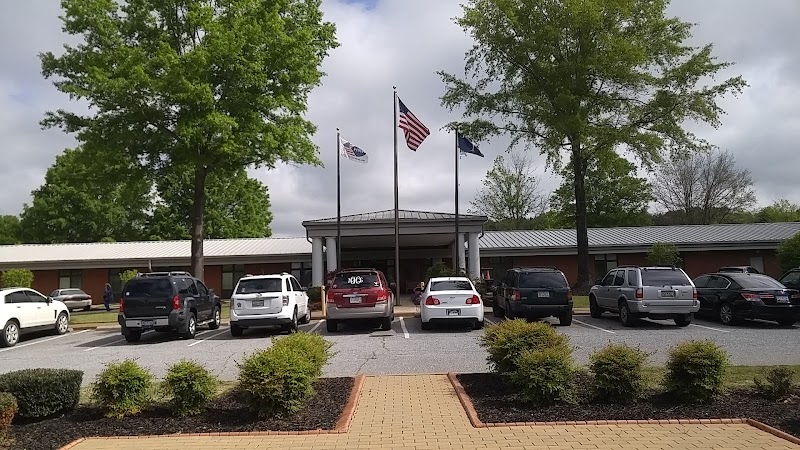
4605 Belton Highway, Anderson, SC 29621 (864) 261-6734
Government - State 220 Beds Independent Data: November 2025 1 Immediate Jeopardy citation
Trust Grade
61/100
#56 of 186 in SC
Last Inspection: September 2024

Within standard 12-15 month inspection cycle. Federal law requires annual inspections.

Overview

Richard M Campbell Veterans Nursing Home has a Trust Grade of C+, which means it is slightly above average but not exceptional. It ranks #56 out of 186 facilities in South Carolina, placing it in the top half, and #2 out of 5 in Anderson County, indicating only one local facility is better. However, the trend is concerning as the number of issues reported has worsened from 1 in 2023 to 3 in 2024. Staffing is a strength with a rating of 4 out of 5 stars and a turnover rate of 37%, which is better than the state average, but it has less RN coverage than 80% of state facilities, which can impact care quality. Recent inspection findings revealed serious issues including a resident who eloped from the facility without staff knowledge, putting them at risk of harm, and another incident where a resident sustained a fractured finger due to a resident-to-resident altercation. While there are strengths in staffing and overall ratings, families should be aware of these significant weaknesses.
Trust Score
C+
61/100
In South Carolina
#56/186
Top 30%
Safety Record
High Risk
Review needed
Inspections
Getting Worse
1 → 3 violations
Staff Stability
○ Average
37% turnover. Near South Carolina's 48% average. Typical for the industry.
Penalties
○ Average
$8,193 in fines. Higher than 62% of South Carolina facilities. Some compliance issues.
Skilled Nurses
⚠ Watch
Each resident gets only 24 minutes of Registered Nurse (RN) attention daily — below average for South Carolina. Fewer RN minutes means fewer trained eyes watching for problems.
Violations
○ Average
6 deficiencies on record. Average for a facility this size. Mostly minor or procedural issues.
★★★★☆
4.0
Overall Rating
★★★★☆
4.0
Staff Levels
★★★★☆
4.0
Care Quality
★★★★☆
4.0
Inspection Score
Stable
2023: 1 issues
2024: 3 issues

The Good

  • 4-Star Staffing Rating · Above-average nurse staffing levels
  • 4-Star Quality Measures · Strong clinical quality outcomes
  • Full Sprinkler Coverage · Fire safety systems throughout facility
  • No fines on record
  • Staff turnover below average (37%)

    11 points below South Carolina average of 48%

Facility shows strength in staffing levels, quality measures, fire safety.

The Bad

Staff Turnover: 37%

Near South Carolina avg (46%)

Typical for the industry

Federal Fines: $8,193

Below median ($33,413)

Minor penalties assessed

The Ugly 6 deficiencies on record

1 life-threatening 1 actual harm
Sept 2024 3 deficiencies
CONCERN (D)

Potential for Harm - no one hurt, but risky conditions existed

Incontinence Care (Tag F0690)

Could have caused harm · This affected 1 resident

**NOTE- TERMS IN BRACKETS HAVE BEEN EDITED TO PROTECT CONFIDENTIALITY** Based on facility policy, observation, record review and interview, the facility failed to ensure standards of practice for Resi...

Read full inspector narrative →
**NOTE- TERMS IN BRACKETS HAVE BEEN EDITED TO PROTECT CONFIDENTIALITY** Based on facility policy, observation, record review and interview, the facility failed to ensure standards of practice for Resident (R)62's suprapubic catheter care, were followed for 1 of 2 residents reviewed for catheter care. Findings include: Review of the facility policy dated June 2024, titled, Suprapubic Catheter Care stated under the policy, Remove old dressing around suprapubic catheter if applicable, remove gloves and wash or sanitize your hands. Review of R62's Face Sheet revealed he was admitted to the facility on [DATE], with diagnoses including but not limited to: Parkinson's, chronic kidney disease, dysphagia, Diabetes Type 2, unspecified dementia, and chronic obstructive pulmonary disease. Review of R62's Physician Orders revealed an order dated 04/24/24, Suprapubic Catheter Care Daily and as needed (PRN) one time a day and every 24 hours as needed. During an observation of catheter care on 09/19/24 at 11:02 AM, with Certified Nursing Assistant (CNA)1 and CNA2. Both CNA's washed their hands and applied a gown and gloves. CNA1 repositioned R62, elevated his bed up, removed gloves and donned another set of gloves. CNA2 setup the table with prep pad and placed the disposable wipes and a towel on the table. CNA2 donned another set of gloves without washing her hands. CNA2 assisted R62 up in the bed. Both CNAs removed gloves, sanitized hands, and donned another pair of gloves. Both CNAs uncovered R62 and placed a towel over the groin area. CNA1 unfastened the brief. A dressing, split sponge dated 09/19/24 was removed by CNA1. Using the same gloves, CNA1 cleaned around the suprapubic catheter, then used 3 wipes, cleaned from the tip of the catheter from abdomen outward three times. During an interview on 09/19/24 at 11:15 AM, CNA1 stated, We should have changed our gloves after removing the dressing and sanitized after removing the gloves. During an interview on 09/19/24 at 12:38 PM, LPN6 stated, We change [R62's] dressing every day. I change it in the morning. After I remove a soiled dressing, I remove my gloves, and I sanitize and apply new gloves. The CNAs should removed their gloves after they removed his dressing. During an interview of 09/19/24 at 3:00 PM, the Director of Nursing (DON) stated, They need to change gloves after you touch something soiled, then sanitize and apply new gloves. Going in, sanitize, apply gloves, setup supplies. Position resident, remove gloves, hand sanitize, don [put on] new gloves, perform task, remove gloves and sanitize. If removing the dressing, remove gloves, sanitize, apply new gloves.
CONCERN (D)

Potential for Harm - no one hurt, but risky conditions existed

Tube Feeding (Tag F0693)

Could have caused harm · This affected 1 resident

**NOTE- TERMS IN BRACKETS HAVE BEEN EDITED TO PROTECT CONFIDENTIALITY** Based on observation, interview, and facility policy review, the facility failed to prevent complications with Resident (R)95's ...

Read full inspector narrative →
**NOTE- TERMS IN BRACKETS HAVE BEEN EDITED TO PROTECT CONFIDENTIALITY** Based on observation, interview, and facility policy review, the facility failed to prevent complications with Resident (R)95's feeding tube, by not flushing the tube prior to the administration of medications. Findings include: Review of the facility's policy titled, Gastrostomy Tube Flush (G-Tube) revised date June 2024, revealed, Gastrostomy tube flush to be administered per physician's order. To provide hydration to resident and maintain G-Tube patency . 16. Fill 60cc syringe with ordered amount of flush. Review of R95's Face Sheet revealed R95 was admitted to the facility on [DATE], with diagnoses including but not limited to: COVID-19, dysphagia, vascular dementia, unspecified severity without behavioral disturbance, psychotic disturbance, mood disturbance, anxiety, and adult failure to thrive. Review of R95's Quarterly Minimum Data Set (MDS) with an Assessment Reference Date (ARD) of 08/30/24, revealed a Brief Interview for Mental Status (BIMS) score of 5 out of 15, indicating R95 had severe cognitive impairment. Review of R95's Physician Orders with a start date of 05/02/24 documented, TF: Flush Peg with approximately 30ml water before and after medication administration every shift. During an observation on 09/19/24 at 8:20 AM, Registered Nurse (RN)2 did not flush the feeding tube after checking placement and prior to administering medication. During an interview on 09/19/24 at 8:25 AM, RN2 stated, I should have flushed prior to giving the medication. It is always good to have extra flush. During an interview on 09/19/24 at 9:00 AM, the Director of Nursing (DON) stated, [RN2] gets very nervous during observations and skill check off. She is a very good nurse. She came and discussed the observation afterwards with me. We will continue to do education to make sure tube feedings are flushed before and after administration of medications.
CONCERN (D)

Potential for Harm - no one hurt, but risky conditions existed

Deficiency F0761 (Tag F0761)

Could have caused harm · This affected 1 resident

**NOTE- TERMS IN BRACKETS HAVE BEEN EDITED TO PROTECT CONFIDENTIALITY** Based on review of the facility policy, observation and interviews, the facility failed to ensure medications and biological's, ...

Read full inspector narrative →
**NOTE- TERMS IN BRACKETS HAVE BEEN EDITED TO PROTECT CONFIDENTIALITY** Based on review of the facility policy, observation and interviews, the facility failed to ensure medications and biological's, that were expired, were removed from 1 of 3 medication storage rooms. The findings include: Review of the facility policy, effective date [DATE], titled, Storage of Medications states, medications and biologicals are stored safely, securely, and properly, following manufacturer's provider pharmacy recommendations, or those of the supplier to maintain their integrity. The medication supply is accessible only to licensed nursing personnel, pharmacy personnel, or staff members lawfully authorized to administer medications . Q. Outdated, contaminated, or deteriorated medications and those in containers that are cracked, soiled, or without secure closures are immediately removed from stock, disposed of according to procedures for medication disposal (See Section 5 Disposal of Mediations, Syringes and Needles), and reordered from the pharmacy if a current order exists. During an observation on [DATE] at 4:00 PM, the Medication Storage Room on 200 Hall revealed Fibracol Plus collagen wound dressing with alginate 10.2 cm x 11.1 cm (4 in x 4 3/8 in) x 3; Reference # 2982, Lot ## 2237V[DATE]/1 Expired 2024-08-31. Further observation of the Medication Storage Room on 200 Hall revealed GelRite instant hand sanitizer with Vitamin E Manufacturer DermaRite 118 ml (4 fl oz) Lot# 00793A Expires 07/2022. During an interview on [DATE] at 6:36 PM, Licensed Practical Nurse (LPN)3 stated, At some point we do the checking for expired items and the unit clerk goes through the storage rooms too. During an interview on [DATE] at 4:16 PM, Registered Nurse (RN)2 stated, They have assigned duties for each nurse. I am sure it is listed somewhere of who checks the medication storage room. During an interview on [DATE] at 5:00 PM, the Director of Nursing (DON) stated, It is every nurse responsibility to check for expired items in the medication storage room. I did speak with the pharmacist concerning the labeling system and how it shows a discrepancy versus the filled date for the expiration dates.
Jul 2023 1 deficiency 1 IJ
CRITICAL (J) 📢 Someone Reported This

A family member, employee, or ombudsman was alarmed enough to file a formal complaint

Immediate Jeopardy (IJ) - the most serious Medicare violation

Accident Prevention (Tag F0689)

Someone could have died · This affected 1 resident

**NOTE- TERMS IN BRACKETS HAVE BEEN EDITED TO PROTECT CONFIDENTIALITY** Based on review of facility policy, interview, observation, and record review, the facility failed to protect Resident (R)2 from...

Read full inspector narrative →
**NOTE- TERMS IN BRACKETS HAVE BEEN EDITED TO PROTECT CONFIDENTIALITY** Based on review of facility policy, interview, observation, and record review, the facility failed to protect Resident (R)2 from accidents/accident hazards related to elopement. Specifically, on 07/02/23 at approximately 2:15 PM, R2 was found outside the facility in the back parking lot. R2 was last seen by staff at approximately 1:55 PM in the courtyard of the facility. Due to R2 being outside the facility, without staff knowledge or supervision, R2 was placed at increased risk of serious harm or death. On 07/06/23 at approximately 12:00 PM, the State Agency (SA) determined that the facility's non-compliance with one or more federal health, safety, and/or quality regulations has caused or was likely to cause serious injury, serious harm, serious impairment, or death. On 07/06/23 at approximately 12:00 PM the Administrator was notified that the failure to prevent a successful elopement of a resident constituted Immediate Jeopardy (IJ) at F689. On 07/06/23 at 3:52 PM the facility presented an acceptable plan of removal of the IJ. The survey team validated that the immediacy of the IJ was removed on 07/06/2023 at 5:00 PM following the facility's implementation of the plan of removal of the immediate jeopardy. The facility remained out of compliance at F689 at a lower scope and severity of D (isolated with potential for more than minimal harm) following removal of the IJ. An extended survey was conducted in conjunction with the Complaint Survey for non-compliance at F689, constituting substandard quality of care. After a Quality Assurance Review on 07/17/23, the SA determined the IJ at F689 is at Past-Noncompliance. Review of the facility's removal plan and supporting documentation revealed good faith efforts were put into place prior to the beginning of the survey and the immediacy of the IJ was removed as of 07/02/23. Findings include: Review of facility policy titled Elopement with a last revised date of October 2012 revealed, .the facility will provide a secure environment to residents at risk for elopement. Review of R2's Face Sheet revealed R2 was admitted to the facility on [DATE] with diagnoses including, but not limited to; alcohol dependence, Alzheimer's disease, type 2 diabetes mellitus, anemia, and depression. Review of R2's annual Minimum Data Set (MDS) with an Assessment Reference Date (ARD) of 05/05/23, revealed R2 scored a Brief Interview for Mental Status (BIMS) of 3 out of 15, indicating R2 was severely cognitively impaired. Review of R2's Elopement Risk Screen dated 05/08/23, revealed R2 was screened as an elopement risk and given a secure bracelet. Review of R2's Adverse Incident Report dated 07/03/23, revealed R2 was found on 07/02/23 at 2:15 PM in the back parking lot. His secure bracelet was in place and functioning. Review of Registered Nurse (RN)1's witness statement, to the facility, written on 07/02/23, revealed RN1 saw R2 in the courtyard between units 2 and 3 at approximately 1:55 PM. When alerted that he was in the back parking lot, she assisted him inside and performed a body audit - revealing no injury. He was offered a snack and water and given a sitter. During an interview and observation with RN1 on 07/06/23 at approximately 11:45 AM, confirmed her statement to the facility. RN1 stated R2 was sitting in the courtyard at 1:55 PM. RN1 was then alerted at around 2:15 PM that R2 was in the back parking lot. RN1 further stated the weather was warm and sunny. R2 was found approximately 100 feet away from the facility. R2 was approximately three parking spaces away from the facility. R2 would have had to cross the parking throughway around the facility, Review of Certified Nursing Assistant (CNA)2's witness statement, to the facility, written on 07/04/23, revealed CNA2 was providing care to another resident, when CNA2 saw R2 in the back parking lot. CNA2 then alerted the nurses. During an interview with CNA2 on 07/06/23 at approximately 11:50 AM, confirmed her statement to the facility. CNA2 was providing care to another resident when she saw R2 in the back parking lot through the window. CNA2 was assigned to R2 that day and did not know that he was outside the facility. CNA2 stated she alerted the staff but could not assist R2 since she was in the middle of care with another resident. Review of Licensed Practicing Nurse (LPN)1's statement, to the facility, on 07/02/23, revealed LPN1 was made aware by a CNA that R2 was outside in the back parking lot. While redirected the resident back inside, LPN1 noted the lock on the courtyard's gate was broken. During an interview with LPN1 on 07/06/23 at approximately 11:55 AM, confirmed her statement to the facility. LPN1 stated she was with another resident when a CNA shouted R2 was in the back parking lot. LPN1 went with a CNA and the nurse supervisor to take in the resident. R2 was a few cars back into the lot - past the throughway around the facility. LPN1 did not know he had exited the facility prior to being made aware by the CNA. When they brought the resident in, they noted the lock on the courtyard's gate was broken. Review of CNA1's statement, to the facility, written on 07/02/23, revealed she was notified by the nurse that R2 was in the parking lot and brought him back to the facility. During an interview with CNA1 on 07/06/23 at approximately 12:00 PM, confirmed her statement to the facility. CNA1 was notified that R2 was in the parking lot and went to retrieve him, accompanied by the nurse and nurse supervisor. CNA1 stated she did not know the resident was outside the facility prior to being made aware by CNA2, who saw the resident outside the window. CNA1 further stated the weather was sunny and hot that day. CNA1 concluded, they later discovered R2 had eloped through the courtyard gate, which was broken. Review of R2's Care Plan dated 09/02/20, revealed R2 was care planned for wandering with an intervention for a secure device. Review of R2's Orders dated 05/03/23 revealed, a secure device was ordered. Review of R2's July Treatment Administration Record (TAR) revealed the secure care bracelet function was checked at 6:00 AM the day of the elopement. Review of timeanddate.com revealed the weather in [NAME], South Carolina at approximately 1:56 PM was 88 degrees Fahrenheit and sunny. During an interview with the Maintenance Director (MD) on 07/06/23 at 1:30 PM, revealed the MD was not aware the gate was broken prior to the elopement, and that maintenance checks gates weekly per policy. During a follow up interview with the MD on 07/06/23 at approximately 4:00 PM, revealed the reason the courtyard gate's magnetic lock failed was because it lost power which disabled the lock. The facility's removal plan included the following: R2 was assessed by RN1 on 07/02/2023, with no injuries noted. R2's secure care bracelet was in place and functioning at time of incident. The physician and resident representative were notified on 07/02/2023. Social services assessed R2 on 07/03/2023. The resident was placed on 1:1 staff supervision on 07/02/2023. R2's Care Plan was reviewed and updated on 07/03/2023. R2 was assessed by the nurse practitioner on 07/03/2023. Unit managers completed a 100% head count of all residents on 07/02/2023. Nursing administration obtained statements from staff working on the unit on 07/02/2023. Nursing administration completed an audit of secure bracelets for placement, function, and expiration date on 07/02/2023. Maintenance audited all gates and doors for functioning on 07/02/2023. Facility staff were re-educated on facility Elopement policy beginning on 07/03/2023 and completed by 07/06/2023. This will include licensed, non-licensed, and contract staff. Staff will receive education prior to their next shift. Newly hired staff will receive this education during orientation by the Staff Development Coordinator. Maintenance staff will conduct facility rounds to inspect door and gate security weekly x 4 weeks and monthly x 2 months. The results of the audit will be reviewed at the facility QAPI meetings for 3 months.
Aug 2022 2 deficiencies 1 Harm
SERIOUS (G)

Actual Harm - a resident was hurt due to facility failures

Free from Abuse/Neglect (Tag F0600)

A resident was harmed · This affected 1 resident

**NOTE- TERMS IN BRACKETS HAVE BEEN EDITED TO PROTECT CONFIDENTIALITY** Based on observations, record review, facility policy review, and staff interviews, the facility failed to ensure 1 out of 7 Res...

Read full inspector narrative →
**NOTE- TERMS IN BRACKETS HAVE BEEN EDITED TO PROTECT CONFIDENTIALITY** Based on observations, record review, facility policy review, and staff interviews, the facility failed to ensure 1 out of 7 Residents, (R)59, reviewed for abuse out of a total sample of 39 residents, was free from abuse. A resident-to-resident altercation resulted in harm to R59 when he sustained a fractured finger. Findings include: Review of the facility's revised November 2019 policy titled, Abuse, indicated, Each resident has the right to be free from abuse .Residents must not be subjected by anyone, including, but not limited to facility staff, other residents .Abuse is defined as the willful infliction of injury .with resulting in physical harm, pain, or mental anguish. Willful: The individual must have acted deliberately, not that the individual must have intended to inflict injury of harm .Physical abuse includes but is not limited to hitting, slapping, pinching, and kicking . Review of the facility's revised January 2017 Abuse policy titled, Prevention, indicated, It is the policy of the facility to provide residents an environment free from abuse through prevention .The facility will identify residents whose personal histories, aggressive behaviors, and/or communication needs render them at risk for abuse and/or abusing other residents .The facility will monitor residents for changes that could trigger abusive behavior . Review of the facility's revised January 2017 Abuse policy titled, Protection, indicated, It is the policy of the facility to provide residents an environment free from abuse through protection .With resident-to-resident abuse, the residents will immediately be separated. The behaviors and physical condition of the residents will be evaluated with appropriated interventions identified to address the behaviors . Review of the facility's revised September 2017 Abuse policy titled, Investigation, indicated, It is the policy of the facility to thoroughly investigate .any allegations of abuse that include Physical Abuse .Allegation of Abuse: 1. The resident(s) will be evaluated for any physical, emotional, and/or cognitive changes. 2. Identify: if possible, the date of the alleged abuse and immediately begin an investigation. 3. Interview the resident. 4. Interview and obtain written statements from the person(s) reporting the allegation .7. Obtain written statements from individuals identified as possibly having any knowledge of the allegation. At the conclusion of the investigation, the Administrator and Director of Nursing (DON) and designated staff will review all evidence and reach a conclusion if abuse has been substantiated, and any corrective actions to be taken . Review of the facility's revised October 2012 policy titled, Administration Policy and Procedure Directives-Memory Care Unit, indicated, It is the policy of this facility to provide each resident who is diagnosed with dementia, a safe and structured environment in the State Veterans Home that meets their physical, emotional, social .needs throughout the disease's progression. Review of an undated Face Sheet provided by the facility revealed R59 was admitted to the facility on [DATE] with diagnoses to include Alzheimer's disease, dementia, and Post-Traumatic stress disorder. Review of R59's Minimum Data Set (MDS) provided by the facility with an Assessment Reference Date (ARD) of 06/03/22 indicated a Brief Interview for Mental Status (BIMS) score of 7 out of 15, which indicated R59 had severe cognitive impairment. Review of an undated Face Sheet located in R92's electronic medical record (EMR) under the Profile tab revealed R92 was admitted to the facility on [DATE] with diagnoses to include Alzheimer's disease, malignant neoplasm of the brain, and dementia. Review of R92's quarterly MDS provided by the facility with an ARD of 04/29/22 indicated a BIMS score of 4 out of 15, which indicated R92 had severe cognitive impairment. Review of an Accident/Incident Reporting Form Bureau of Health Facilities Licensing, 24-report provided by the facility and dated 06/01/22, indicated a resident-to-resident altercation took place between R59 and R92 on 06/01/22. It indicated no witnesses present. The 24-report indicated, On 06/01/22 at approximately 9:00 am, resident [R59] (BIMS-8) approached the nurse and reported he broke my finger. Upon assessment, the left 4th finger appears displaced and bent toward the left 3rd finger with slight redness and blue discoloration beginning to form at the base of the finger. When asked what happened, resident [R59] stated, he [referring to R92] came in my bathroom and attacked me. He hit me in my jaw and bent my finger. A 1cm (centimeter) red area was noted on his right cheek. [Name of R59] then pointed to resident [R92] (BIMS-4) and identified him as the person who hurt him. When [name of R92] was asked what happened, he reported words were exchanged and that he whooped him. Resident [R92] had a 1 cm pink area observed on the bridge of his nose. Both residents were separated, assessed, neuro checks completed and were within normal limits for both residents. An order was given to send R59 to the emergency room for evaluation of his finger. R92 was sent to the hospital for psychiatric evaluation. Review of the 06/01/22 hospital X-ray results provided by the facility for R59, indicated, Findings-There is marked degenerative changes of the first carpometacarpal joint. There is a comminuted slightly displaced fracture at the base of the proximal phalanx of the fourth digit. The X-ray results indicated, Impression: Comminuted slightly displaced fracture at the base of the proximal phalanx of the left fourth digit. Degenerative changes of the left hand. Review of a Psychosocial Visit dated 06/01/22 provided by the facility, indicated, Met with [name of R59] for psychosocial visit .was asked to start at the beginning. He said, It was one of those things. Asked him what happened. He said, I don't know really. He went on to say, He was in the bathroom. My finger got in the way. Asked [name of R59] if he hit the man [referring to R92]. He said, No. Asked him if he was upset. He said, No. I asked if the man hit him. He said, No. Review of a Departmental Note dated 06/01/22 provided by the facility, indicated, Resident [R59] approached this nurse [Licensed Nurse (LN)2] stated, He broke my finger. Resident [59] wearing boxers and a collared shirt and socks. Noted left 4th finger displaced, bend [sic] toward left 3rd finger with slight redness at first (after body audit noted blue discoloration beginning to form at base of finger) .body audit completed. Noted another resident [referring to R92] walking in the same hallway. This resident [R59] pointed at the other resident [R92] and stated, that's him. Other resident [R92] stated, He shouldn't have been running his mouth that way. This nurse [(LN)2] asked the other resident [R92] what happened. The other resident [R92] stated, I was getting comfortable in the bathroom, and he [R59] came in and ask [sic] if I thought I could whoop him. I told him yes and I did. Review of a Nurse Practitioner Note dated 06/02/22 provided by the facility, indicated, [R59] assessed in r/t [related to] altercation with another resident resulting in a fx [fracture] of 4th finger. [R59] was sent to the ER for evaluation of hand .splint was placed and was re-x-rayed in ER which showed: Mild improved alignment of the fourth proximal phalanx fracture. When asked what happened, resident [R59] stated, He got me in the bathroom. I probably hit him and didn't even know it after he hit me in the eye. [R59] denies any c/o [complaints of] pain. Able to move thumb, index, and middle finger of L [left] hand with complaints. Able to move all extremities. No discoloration to face/cheek/eye. Review of a second Accident/Incident Reporting Form Bureau of Health Facilities Licensing document 5-day report, dated 06/06/22 and provided by the facility, indicated a summary of events as was indicated in the 24-hour report and, [name of R59] sent to the emergency room where a finger reduction took place and the Xray revealed mild improvement alignment and a fracture of the fourth proximal phalanx. A finger splint has been put in place. Will be assessed by an Orthopedist on 06/06/22. Review of a Hospital Occupational Therapy Visit-OT Evaluation dated 06/06/22, indicated, This is an .male patient who was in an altercation with another demented resident at the nursing home where he resides resulting in the injury to the ring finger .Type of Splint- prefabricated, custom. Purpose of Splint- Provide protection and safe healing position. Treatment- Tolerated well. Patient was educated in proper wear and care. Further review of the document indicated, The patient is experiencing no tenderness .Comments: Gross swelling about 4th and 5th digit with ecchymosis (bruising) present. Assessment: He was referred to occupational therapy for a custom splint. Review of a hospital Orthopedic Surgery Office Visit dated 06/06/22, indicated, New patient-left ring finger. Pt. [patient] got into an altercation with another resident at the VA [Veterans] last week. Pt [patient] has a splint on today .He went to the ED [emergency department] and had a fractured proximal phalanx of the 4th digit which was displaced and reduced in the ED. He has a splint, but his daughter stated he has been taking it off. He denies pain . Review of a Physician Order dated 07/05/22, provided by the facility, indicated, D/C [discontinue] tx [treatment] to L [left] 4th finger. Res [resident] non-compliant with brace. During an observation and interview on 08/17/22 at 11:04 AM, R59 was observed in his room lying down. During interview regarding the resident-to-resident altercation that took place on 06/01/22 between R59 and R92, R59 stated, All I really recall is a guy was winding up his fist. It's been about 9-10 weeks ago. When asked what happened, R59 stated, I wasn't paying no attention and I put my hand on the shoulder of a guy in front of me. I put my finger on the shoulder of a guy. He said, I'm winding up and it happened a pretty good while ago. I don't remember a lot of stuff. It wasn't that bad of a fight. I went to the hospital, but they didn't do anything. It was a stupid fight. All I did was to karate chop him with my hand and that was the end of that. I think I hit him, but I don't remember where. I can't recall it. At this time R59 could not recall any specifics of the resident-to-resident altercation. During an observation of R92 on 08/17/22 at 2:00 PM, R92 was observed in his room. During this time, R92 was not interviewable and when asked about any incidents could not recall. During an interview on 08/17/22 at 4:00 PM, the Social Services Director (SSD) stated, With [name of R59], he has a history of being territorial. He has a pattern of cursing at other residents if they come in his room. He startles easily. He has PTSD [Post Traumatic Stress Disorder] related to his time in war. Regarding the resident-to-resident altercation that occurred between R59 and R92, the SSD stated, The private room adjacent from [R59] was vacant. There is a bathroom that connects both rooms. From what we could determine, [R92] came in that vacant room and went to the bathroom. [R59] was sitting on the toilet and from we could determine, [R92] said [R59] yelled at him, and [R92] must have grabbed [R59's] hand. [R59] told us that He hit me in the face and broke my finger. During an interview with the Assistant Director of Nursing (ADON) on 08/18/22 at 2:03 PM, the ADON stated she did the 5-day follow up investigation. The ADON stated, They were not roommates at the time of this incident. From what [R59] reported, he approached [LN2] and reported, he broke my finger. [LN2] noticed some deformity to the left finger. [R59] pointed to [R92] who was walking down hallway and said he was the one. It occurred around 9:00 AM, so staff were finishing breakfast, cleaning up trays, starting to give showers, etc. Both families were notified. Prior to this there were no altercations between these two residents. None of their demeanors had changed and neither recalled the details of the incident. Since then, these two residents have had no altercations with one another. They pretty much keep to themselves and have no history of seeking out one another. During an interview on 08/19/22 at 10:18 AM, regarding the resident-to-resident altercation between R59 and R92, the SSD stated, We are going off what R59 reported to staff, we think R92 may have stood up from the toilet and attempted to hit R59 in the face because R59 was pointing his finger at R92 when sitting on the toilet. In an effort to try to block R92 from being hit in the face, grabbed R59's his hand/finger and that is how R59's finger got broken. The SSD stated, Staff heard the commotion and went in the room and [R59] reported to staff. The SSD stated, R59 reported to the nurse, he came into my bathroom, hit me in the jaw and broke my finger. During an interview on 08/19/22 at 6:19 PM with the Administrator and Director of Nursing (DON), the Administrator stated, With [name of R59] he may not have struck out. He was in a private room and is very territorial and thinks that is his bathroom. Per the DON, [name of R59] came up to the nurse and told the nurse what happened, but we couldn't say for sure that [name of 92] broke R59's finger. [name of R59] could have hit his finger on the door, sink, wall. We can't say for sure that [name of R92] intentionally intended to break a person's finger or [name of R59] finger. We can't say that it was willful, sought out abuse by R92. We just can't. We only have to report what was being reported to us by [name of R59] which we did. With it being unwitnessed, we cannot say [name of R92] broke his finger. We are not substantiating abuse in any way. We are simply saying there was some sort of resident-to-resident altercation that occurred, but not abuse.
CONCERN (D)

Potential for Harm - no one hurt, but risky conditions existed

Assessment Accuracy (Tag F0641)

Could have caused harm · This affected 1 resident

**NOTE- TERMS IN BRACKETS HAVE BEEN EDITED TO PROTECT CONFIDENTIALITY** Based on observation, record review, staff interviews, and review of the Resident Assessment Instrument (RAI) Manual, the facili...

Read full inspector narrative →
**NOTE- TERMS IN BRACKETS HAVE BEEN EDITED TO PROTECT CONFIDENTIALITY** Based on observation, record review, staff interviews, and review of the Resident Assessment Instrument (RAI) Manual, the facility failed to ensure the accuracy of the Minimum Data Set (MDS) assessment for 1 of 2 residents (Resident (R) 59) receiving hospice services out of a total sample of 39 residents. Specifically, the facility failed to accurately code the MDS for hospice services for R59 in which the MDS indicated the resident no longer had a terminal prognosis of less than six months but was also coded as receiving hospice services. By not ensuring the accuracy of the MDS, these failures placed the resident at risk for unmet care needs and/or provision of care needs of residents. Findings include: Review of the MDS-3.0 R-A-I Manual-v1.17.1 under Section J1400 Prognosis: indicated, Definition: Condition or chronic disease that may result in a life expectancy of less than 6 months; In the physician's judgement, the resident has a diagnosis or combination of clinical conditions that have advanced or will continue to advance to a point that the average resident with that level of illness would not be expected to survive more than 6 months. This judgement should be substantiated by a physician note. Steps for Assessment: 1. Review the medical record for documentation by the physician that the resident's condition or chronic disease may results in a life expectancy of less than 6 months, or that they have a terminal illness. 2. If the physician states that the resident's life expectancy may be less than 6 months, request that he or she document this in the medical record .3. Review the medical record to determine whether the resident is receiving hospice services. Coding Instructions: Code 0, no: if the medical record does not contain physician documentation that the resident is terminally ill and the resident is not receiving hospice services. Code 1, yes: if the medical record includes physician documentation: 1) that the patient is terminally ill; or 2) the resident is receiving hospice services .Terminally ill means that the individual has a medical prognosis that his or her life expectancy is 6 months or less if the illness runs its normal course. Section O0100: Special Treatments, Procedure, and Programs: O0100K, Hospice care: Code residents identified as being in a hospice program for terminally ill persons .is provided . During an observation on 08/17/22 at 11:04 AM, R59 was observed alone in his room lying in bed. At this time when asked about hospice services, R59 was not able to communicate if he was receiving hospice services or not. Review of R59's undated Face Sheet, provided by the facility, indicated diagnoses to include Alzheimer's, dementia, and generalized anxiety disorder. Review of a Physician Orders List, provided by the facility and dated 01/22/21, indicated Admit to [name of Hospice company] r/t [related to] Alzheimer's Disease as of 01/21/21. Review of a Medicare Hospice Election Statement, dated 01/21/21 and provided by the Hospice company as part of R59's medical record indicated, R59 chose to elect the Medicare Hospice benefits and receive Hospice services to begin on 01/21/21. Review of a Nursing Facility Notification of Hospice admission or Discharge document, dated 01/21/21 and provided by the Hospice company as part of R59's medical record, indicated R59 was admitted to [name of Hospice company] on 1/21/21 with diagnosis of: Alzheimer's disease. Review of Hospice Physician Orders/Plan of Care, dated 07/21/21 to 09/17/21 and provided by the Hospice company as part of R59's medical record, indicated admitted [DATE]. Diagnosis Alzheimer's dementia late onset (primary) diagnosis. The patient is being re-certified in our program. The document signed by the hospice medical director on 07/21/21 indicated, I certify that this patient has a medical prognosis that limits life expectancy to 6 months or less (if the disease follows as normal course) and this is considered terminally ill and eligible for hospice services. Review of the Notice of Medicare Non-Coverage document provided by the Hospice company as part of R59's medical record, indicated, The effective date coverage of your current Hospice services will end: 09/16/21. Review of a Physician Orders List, provided by the facility, indicated Hospice services discontinued 09/21/21. Review of a significant change MDS revealed an Assessment Reference Date (ARD) of 09/24/21, and completed by the MDS Coordinator (MDSC) on 09/24/21. The MDS was coded as R59 had no terminal prognosis of less than 6 months, but, was also coded as still receiving hospice services. Hospice services were discontinued as of 09/21/21. Review of a quarterly MDS revealed an ARD date of 12/17/21. It was completed by the MDSC on 12/17/21. The MDS was coded as R59 had no terminal prognosis of less than 6 months, but was also coded as still receiving hospice services. Hospice services had been discontinued as of 09/21/21. Review of an additional quarterly MDS revealed an ARD date of 03/11/22, and completed by the MDSC on 03/16/22. The MDS indicated R59 with no terminal diagnosis of less than 6 months, but was also coded as still receiving hospice services. Hospice services had been discontinued as of 09/21/21. Review of an additional significant change MDS revealed an ARD date of 06/03/22, and completed by the MDSC on 06/07/22. The MDS indicated R59 with no terminal diagnosis of less than 6 months, however, the MDS was coded that R59 was receiving hospice services. Hospice services had been discontinued as of 09/21/21. Review of a Care Plan, dated 01/22/21, indicated, Resident is approaching end of life. Resident's preferences regarding care at end of life will be honored. This care plan was resolved on 09/30/21, as R59 was no longer receiving hospice services. During an interview on 08/17/22 at 9:30 AM, when Licensed Nurse (LN) 2 was asked if R59 was receiving hospice services, LN2 stated, No, he is not receiving hospice services. After reviewing the medical record of R59 and identifying a discrepancy with the MDS regarding R59 no longer receiving hospice services, during a second interview on 08/18/22 at 3:00 PM, (LN)2 was again asked if R59 was receiving hospice services. LN2 stated, No, he is not receiving any type of hospice services. No. I think he was on it at some point, then was taken off hospice services. During an interview on 08/18/22 at 3:14 PM, regarding the MDS for R59, the MDSC stated, Our process is, when they are started on hospice services, we have 14 days to do a significant change MDS, and I would be the one to be doing that. We get all the consents signed, family is aware, then I will code it on the MDS under the prognosis section they have less than 6 months of life and they are now on hospice. When the MDSC was asked when did R59 come off hospice services, the MDSC stated, He is not on hospice services anymore. He went on Hospice January 21, 2021, and stayed on it, then came off of hospice on 09/16/21. The MDSC verified that she completed the Sig. change MDS dated [DATE]. The MDSC stated, I took off a terminal prognosis on the life expectancy of less than 6 months section because he came off hospice services on 09/16/21. However, when the MDS was verified the MDS was still showing as R59 receiving hospice services and was coded incorrectly. The MDSC verified she completed the next quarterly MDS dated [DATE]. She indicated, He did not have a terminal diagnosis of less than 6 months and was not receiving hospice services. However, when the 12/17/21 quarterly MDS was reviewed with the MDSC as being coded as still receiving hospice services, she stated, I see that it is still there as he is receiving hospice services. It was checked inadvertently. I will need to do a correction on that. The MDSC verified she completed the next quarterly MDS dated [DATE]. She indicated, There is no terminal prognosis of less than 6 months, but it still says he is on hospice. I'm seeing hospice is checked. There was no reason for that one as well. The MDSC verified she completed the next significant change MDS dated [DATE]. She indicated, He does not have a terminal diagnosis of less than 6 months, but yes, I'm still seeing that it is checked for him receiving hospice services. I'm the one that did it. There was no reason for it, and it should not be checked. The MDSC stated, her process is, Once we get the physician order that they have been put on hospice, I review everything in the chart. I review their hospice notebooks, all hospice documentation and IDT (interdisciplinary notes). I have access to all of that. I follow the RAI manual. All I can do is get it corrected and I'm thinking it may have just been pulled over from one MDS to the next. During an interview on 08/18/22 at 3:47 PM, the Administrator stated, He [referring to R59] was d/c [discontinued] from hospice services on 09/16/21 and was no longer considered terminal and no longer needing hospice services. During an interview on 08/18/22 at 4:07 PM, Hospice Licensed Nurse (HLN)1 stated, He [referring to R59] is currently not on hospice services. This resident came onto hospice services on 01/21/21 and was discharge from hospice on 09/16/21 and has not been receiving any further hospice services since 09/16/21.
Understanding Severity Codes (click to expand)
Life-Threatening (Immediate Jeopardy)
J - Isolated K - Pattern L - Widespread
Actual Harm
G - Isolated H - Pattern I - Widespread
Potential for Harm
D - Isolated E - Pattern F - Widespread
No Harm (Minor)
A - Isolated B - Pattern C - Widespread

Questions to Ask on Your Visit

  • "What changes have you made since the serious inspection findings?"
  • "Can I speak with families of current residents?"
  • "What's your RN coverage like on weekends and overnight?"

Our Honest Assessment

Strengths
  • • 37% turnover. Below South Carolina's 48% average. Good staff retention means consistent care.
Concerns
  • • Multiple safety concerns identified: 1 life-threatening violation(s), 1 harm violation(s). Review inspection reports carefully.
  • • 6 deficiencies on record, including 1 critical (life-threatening) violation. These warrant careful review before choosing this facility.
Bottom line: Mixed indicators with Trust Score of 61/100. Visit in person and ask pointed questions.

About This Facility

What is Richard M Campbell Veterans Nursing Home's CMS Rating?

CMS assigns Richard M Campbell Veterans Nursing Home an overall rating of 4 out of 5 stars, which is considered above average nationally. Within South Carolina, this rating places the facility higher than 99% of the state's 100 nursing homes. This rating reflects solid performance across the metrics CMS uses to evaluate nursing home quality.
How is Richard M Campbell Veterans Nursing Home Staffed?
CMS rates Richard M Campbell Veterans Nursing Home's staffing level at 4 out of 5 stars, which is above average compared to other nursing homes. Staff turnover is 37%, compared to the South Carolina average of 46%. This relatively stable workforce can support continuity of care.

What Have Inspectors Found at Richard M Campbell Veterans Nursing Home?

State health inspectors documented 6 deficiencies at Richard M Campbell Veterans Nursing Home during 2022 to 2024. These included: 1 Immediate Jeopardy (the most serious level, indicating potential for serious harm or death), 1 that caused actual resident harm, and 4 with potential for harm. Immediate Jeopardy findings are rare and represent the most serious regulatory concerns. They require immediate corrective action.

Who Owns and Operates Richard M Campbell Veterans Nursing Home?

Richard M Campbell Veterans Nursing Home is owned by a government entity. Government-operated facilities are typically run by state, county, or municipal agencies. The facility operates independently rather than as part of a larger chain. With 220 certified beds and approximately 209 residents (about 95% occupancy), it is a large facility located in Anderson, South Carolina.

How Does Richard M Campbell Veterans Nursing Home Compare to Other South Carolina Nursing Homes?

Compared to the 100 nursing homes in South Carolina, Richard M Campbell Veterans Nursing Home's overall rating (4 stars) is above the state average of 2.9, staff turnover (37%) is near the state average of 46%, and health inspection rating (4 stars) is above the national benchmark.

What Should Families Ask When Visiting Richard M Campbell Veterans Nursing Home?

Based on this facility's data, families visiting should ask: "What changes have been made since the serious inspection findings, and how are you preventing similar issues?" "Can I visit during a mealtime to observe dining assistance and food quality?" "How do you handle medical emergencies, and what is your hospital transfer rate?" "Can I speak with family members of current residents about their experience?" These questions are particularly relevant given the facility's Immediate Jeopardy citations.

Is Richard M Campbell Veterans Nursing Home Safe?

Based on CMS inspection data, Richard M Campbell Veterans Nursing Home has documented safety concerns. Inspectors have issued 1 Immediate Jeopardy citation (the most serious violation level indicating risk of serious injury or death). The facility has a 4-star overall rating and ranks #1 of 100 nursing homes in South Carolina. Families considering this facility should ask detailed questions about what corrective actions have been taken since these incidents.

Do Nurses at Richard M Campbell Veterans Nursing Home Stick Around?

Richard M Campbell Veterans Nursing Home has a staff turnover rate of 37%, which is about average for South Carolina nursing homes (state average: 46%). Moderate turnover is common in nursing homes, but families should still ask about staff tenure and how the facility maintains care continuity when employees leave.

Was Richard M Campbell Veterans Nursing Home Ever Fined?

Richard M Campbell Veterans Nursing Home has been fined $8,193 across 1 penalty action. This is below the South Carolina average of $33,161. While any fine indicates a compliance issue, fines under $50,000 are relatively common and typically reflect isolated problems that were subsequently corrected. Families should ask what specific issues led to these fines and confirm they've been resolved.

Is Richard M Campbell Veterans Nursing Home on Any Federal Watch List?

Richard M Campbell Veterans Nursing Home is not on any federal watch list. The most significant is the Special Focus Facility (SFF) program, which identifies the bottom 1% of nursing homes nationally based on persistent, serious quality problems. Not being on this list means the facility has avoided the pattern of deficiencies that triggers enhanced federal oversight. This is a positive indicator, though families should still review the facility's inspection history directly.