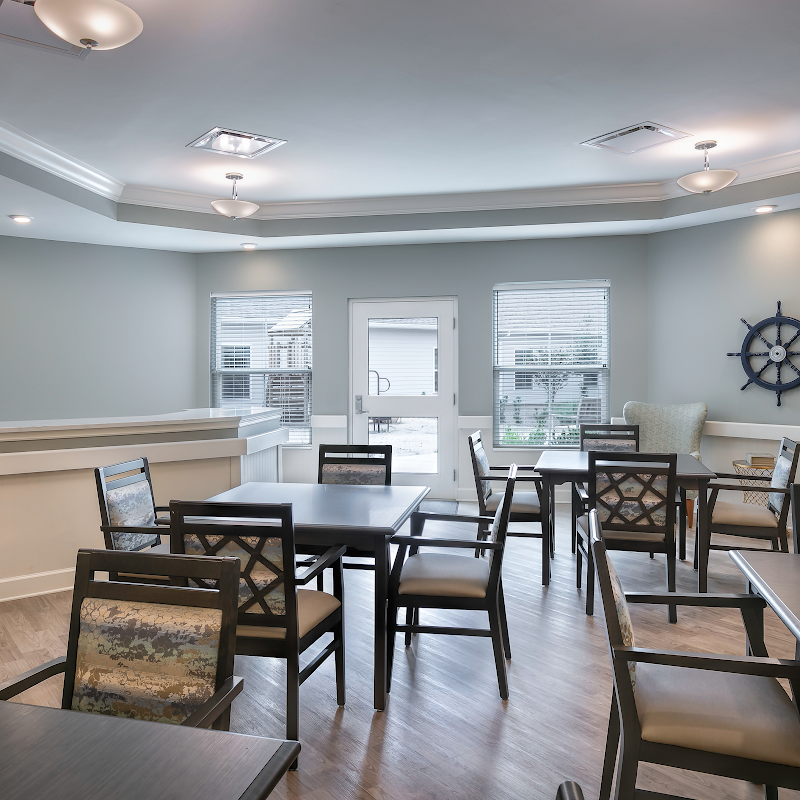
Sprenger Healthcare of Bluffton

60 Okatie Village Drive, Bluffton, SC 29909 (843) 548-2500
For profit - Corporation 60 Beds SPRENGER HEALTH CARE SYSTEMS Data: November 2025 1 Immediate Jeopardy citation
Trust Grade
73/100
#26 of 186 in SC
Last Inspection: October 2024

Within standard 12-15 month inspection cycle. Federal law requires annual inspections.

Overview

Sprenger Healthcare of Bluffton has a Trust Grade of B, indicating it is a good choice for families seeking care, as it falls into the solid middle range. The facility ranks #26 of 186 in South Carolina, placing it in the top half of nursing homes in the state, and #1 of 2 in Jasper County, meaning it is the best option in the area. The trend is improving, with issues decreasing from five in 2022 to none in 2024, which is encouraging. However, staffing is a concern, with a rating of 2/5 stars and a high turnover rate of 66%, significantly above the state average. On the positive side, the facility has more RN coverage than 80% of South Carolina facilities, which is beneficial for catching potential health issues. There have been specific incidents that raise concerns, including a critical finding where infection control protocols were not properly followed, risking the health of residents. For example, nurses failed to clean multi-use glucometers after each use and did not follow proper hand hygiene when obtaining blood samples. Additionally, there were issues with securing controlled medications properly and maintaining food safety standards, such as failing to label and date opened food containers. Balancing these strengths and weaknesses is crucial for families considering this facility.

Trust Score
B
73/100
In South Carolina
#26/186
Top 13%
Safety Record
High Risk
Review needed
Inspections
Getting Better
5 → 0 violations
Staff Stability
⚠ Watch
66% turnover. Above average. Higher turnover means staff may not know residents' routines.
Penalties
✓ Good
No fines on record. Clean compliance history, better than most South Carolina facilities.
Skilled Nurses
○ Average
Each resident gets 40 minutes of Registered Nurse (RN) attention daily — about average for South Carolina. RNs are the most trained staff who monitor for health changes.
Violations
○ Average
10 deficiencies on record. Average for a facility this size. Mostly minor or procedural issues.
★★★★★
5.0
Overall Rating
★★☆☆☆
2.0
Staff Levels
★★★★★
5.0
Care Quality
★★★★☆
4.0
Inspection Score
Stable
2022: 5 issues
2024: 0 issues

The Good

  • 5-Star Quality Measures · Strong clinical quality outcomes
  • Full Sprinkler Coverage · Fire safety systems throughout facility
  • No fines on record

Facility shows strength in quality measures, fire safety.

The Bad

Staff Turnover: 66%

20pts above South Carolina avg (46%)

Frequent staff changes - ask about care continuity

Chain: SPRENGER HEALTH CARE SYSTEMS

Part of a multi-facility chain

Ask about local staffing decisions and management

Staff turnover is elevated (66%)

18 points above South Carolina average of 48%

The Ugly 10 deficiencies on record

1 life-threatening
Nov 2022 5 deficiencies 1 IJ
CRITICAL (J)

Immediate Jeopardy (IJ) - the most serious Medicare violation

Infection Control (Tag F0880)

Someone could have died · This affected 1 resident

**NOTE- TERMS IN BRACKETS HAVE BEEN EDITED TO PROTECT CONFIDENTIALITY** Based on observations, interviews, record review, manufacturer's instructions, and facility policy review, the facility failed t...

Read full inspector narrative →
**NOTE- TERMS IN BRACKETS HAVE BEEN EDITED TO PROTECT CONFIDENTIALITY** Based on observations, interviews, record review, manufacturer's instructions, and facility policy review, the facility failed to establish and maintain an infection prevention and control program designed to provide a safe, sanitary, and comfortable environment and to help prevent the development and transmission of communicable diseases and infections. Specifically, the facility failed to: - Ensure multi-use glucometers were cleaned and disinfected after each use by 2 of 3 nurses observed during medication pass, which had the potential to affect 10 residents with orders for blood glucose monitoring. - Ensure proper hand hygiene and glove use when obtaining blood for glucose monitoring by 1 of 3 nurses observed during medication pass. - Ensure staff did not touch medications with their bare hands and use medications that were dropped on an unclean surface by 2 of 3 nurses observed during medication pass - Properly clean and store nebulizer equipment after use for Resident (R)29, which had the potential to affect 5 resident's receiving respiratory therapy - Ensure indwelling urinary catheter drainage tubing was kept off the floor for R18 and R268, which had the potential to affect 6 residents with indwelling catheters. It was determined the facility's noncompliance with one or more requirements of participation caused, or was likely to cause, serious injury, harm, impairment, or death to residents. The Immediate Jeopardy (IJ) was related to State Operations Manual, Appendix PP, 483.80 (Infection Control) at a scope and severity of J. The IJ began on 11/16/22 at 11:46 AM when Registered Nurse (RN)1 failed to clean and disinfect the glucometer between R33 and R269 and was observed putting the dirty glucometer in her pocket when leaving the resident's rooms. The Administrator and Director of Nursing (DON) were notified of the IJ on 11/18/22 at 5:10 PM and provided the IJ Template on 11/18/22 at 5:12 PM. A Removal Plan was requested. The Removal Plan was accepted by the State Survey Agency (SSA) on 11/19/22 at 12:48 PM. The IJ was removed on 11/19/22 at 1:15 PM after the survey team performed onsite verification that the Removal Plan had been implemented. Noncompliance remained at the lower scope and severity of isolated, no actual harm with potential for more than minimal harm that was not immediate jeopardy for F880. Findings include: 1. A review of the Assure Prism Multi Blood Glucose Monitoring System manual, dated 04/2015, revealed, Before performing a blood glucose test, observe the following safety precautions: All components that come into contact with blood samples should be considered to be biohazards capable of transmitting viral diseases between patients and healthcare professionals. Before testing each patient, a new pair of clean gloves should be worn by the user. Wash hands thoroughly with soap and water before putting on a new pair of gloves and performing the next patient test. Use only an auto-disabling, single-use lancing device for each patient. After use on each patient, the meter should be cleaned and disinfected. The manual also indicated, To minimize the risk of transmitting blood-borne pathogens, the cleaning and disinfecting procedure should be performed as recommended in the instructions below. The meter should be cleaned and disinfected after use on each patient. The Assure Prism Multiuser Blood Glucose Monitoring System may only be used for testing multiple patients when standard precautions and the manufacturer's disinfecting procedures are followed. The cleaning procedure is needed to clean dirt, blood, and other bodily fluids off the exterior of the meter before performing the disinfection procedure. The disinfection procedure is needed to prevent the transmission of blood-borne pathogens. A variety of the most commonly used EPA-registered wipes have been tested and approved for cleaning and disinfecting the Assure Prism Multi Blood Glucose Monitoring System. The disinfectant wipes listed below have been shown to be safe for use with this meter: Clorox Germicidal Wipes, Dispatch Hospital Cleaner Disinfectant Towels and Bleach, PDI Super Sani-Cloth Germicidal Disposable Wipe, and CaviWipes1. The manual indicated the following procedure for cleaning and disinfecting, Cleaning Step 1: Wear appropriate protective gear such as disposable gloves. Step 2: Open the towelette container and pull out 1 [one] towelette and close the lid. Step 3: Wipe the entire surface of the meter 3 [three] times horizontally and 3 [three] times vertically using 1 [one] towelette to clean blood and other body fluids. Step 4: Dispose of the used towelette in a trash bin. Disinfecting (The meter should be cleaned prior to disinfection.) Step 5: Open the towelette container and pull out 1 [one] towelette and close the lid. Step 6: Wipe the entire surface of the meter 3 [three] times horizontally and 3 [three] times vertically to remove blood-borne pathogens. Step 7: Dispose of the used towelette in a trash bin. Step 8: Allow exteriors to remain wet for the appropriate contact time and then wipe the meter using a dry cloth. A table of disinfectant brand names and contact times revealed the contact time for CaviWipes1 was two minutes. The manual continued, Step 9: After disinfection, the user's gloves should be removed and thrown away. Wash hands before proceeding to the next patient. Review of a facility policy titled, Handwashing Policy, dated 10/22, specified, It is the policy of [the facility] to reduce potential for spread for unknown pathogens that health care workers may be exposed to when performing daily tasks. Hands will be washed with soap and water or decontaminated using an approved alcohol-based band sanitizer: Before and after each work shift, Before and after contact with each resident, Before dispensing medications, After handling contaminated items, After using the restroom, blowing nose, etc [et cetera], Before and after using PPE [Personal Protective Equipment], Before eating, drinking, and handling food, After contact with inanimate objects in patient care environments. Hands must be washed with soap and water when visibly soiled. During a medication administration observation on 11/16/22 at 11:38 AM, Registered Nurse (RN)1 was observed obtaining a blood glucose level from R33 with a glucometer and then placed the dirty glucometer in her pocket when she walked out of the room. RN1 placed the dirty glucometer in the top drawer of the medication cart. RN1 then removed the glucometer out of the drawer of the medication cart and used it to obtain a blood glucose level from R269 at 11:46 AM. After obtaining the sample, RN1 placed the dirty glucometer in her pocket when she walked out of the room and placed the dirty glucometer in the top drawer of the medication cart. The glucometer machine was not cleaned or disinfected before, after, or in between the residents. During an interview on 11/16/22 at 11:38 AM, RN1 stated the glucometer was cleaned daily with Cavi-1 wipes. During an interview on 11/16/22 at 4:04 PM, Licensed Practical Nurse (LPN)2 stated the glucometer was cleaned daily with sanitizing wipes. An observation on 11/17/22 at 8:47 AM revealed RN2 failed to wash or sanitize her hands or apply gloves before obtaining blood from R268's right middle finger for a blood glucose check. After obtaining the sample, RN2 placed the dirty glucometer in her pocket when leaving the resident's room and placed it in the top drawer of the medication cart without cleaning or disinfecting it. During an interview on 11/17/22 at 11:49 AM, LPN1 stated when obtaining a blood glucose level, she would wash her hands and put gloves on to get the sample. LPN1 stated the glucometer was cleaned carefully with alcohol after every use. During an interview on 11/17/22 at 12:02 PM, RN2 stated the glucometer was cleaned once a day with Cavi-1 wipes. She stated gloves should be worn when obtaining a blood glucose level. During an interview on 11/17/22 at 12:16 PM, RN1 stated the gloves should be worn when obtaining blood glucose levels and giving insulin and the glucometer was cleaned every shift with the Cavi-1 wipes. During an interview on 11/17/22 at 2:44 PM, the Assistant Director of Nursing (ADON) stated when the nurse was checking a resident's blood sugar, they should wash their hands and wear gloves. The ADON stated the glucometer should be cleaned after each use but was unsure how it was cleaned. During an interview on 11/18/22 at 11:10 AM, the Director of Nursing (DON) stated when the nurse was obtaining a blood glucose level, they should wash their hands and wear gloves. The DON stated the glucometer should be cleaned before and after each use with Cavi-1 wipes and the nurse should not be putting the glucometer in their pockets. During an interview on 11/19/22 at 11:50 AM, the Administrator stated he expected the nurses to follow manufacturers recommendations and the facility's policy for cleaning of the glucometer. He stated he expected the staff to wash their hands or sanitize and use gloves, as per their policy. 2. Observations on 11/16/22 at 11:51 AM revealed Registered Nurse (RN)1 prepping and administering medications for R3. She was attempting to pour a pill out of a bottle of iron pills into a plastic medication cup and poured out too many. RN1 reached into the medication cup with her bare fingers and pulled out the extra pill and placed it back into the medication bottle. Observations on 11/17/22 at 9:02 AM revealed RN2 prepping and administering medications for R21. RN2 accidentally dropped three pills out of the prepackaged pills from the pharmacy onto the top of the medication cart. RN2 picked up the pills with her bare fingers and placed the pills in the plastic medication cup and administered them to the resident. During an interview on 11/17/22 at 11:49 AM, Licensed Practical Nurse (LPN)1 stated if the nurse dropped pills onto the medication cart, they should have been thrown away. She stated medications should not be touched with bare hands. During an interview on 11/17/22 at 12:02 PM, RN2 stated general nursing would tell her that if medications were dropped or needed to be removed from a medication cup, they probably should not be used. She stated she would have to look up the facility's policy on that. During an interview on 11/17/22 at 2:44 PM, the Assistant Director of Nursing (ADON) stated medications that have been dropped on top of the medication cart should be discarded and medications should not be touched with bare hands when removing from the cup. During an interview on 11/18/22 at 11:10 AM, the Director of Nursing (DON) stated pills should not be touched with bare hands and the pills that were dropped should have been discarded. During an interview on 11/19/22 at 11:50 AM, the Administrator stated the nurse should not be touching pills with their bare fingers and the medications that were dropped should have been discarded. 3. Review of a facility policy titled, Oxygen/Respiratory Therapy, dated 03/2019, specified, Nebulizer sets will be changed weekly. Tubing not in use, when orders are PRN [as needed] or at specific times of the day will be stored in a plastic bag. A review of an admission Record indicated the facility admitted R29 with diagnoses that included chronic respiratory failure with hypoxia (a deficiency in the amount of oxygen reaching the tissues) and chronic obstructive pulmonary disease (COPD). The quarterly Minimum Data Set (MDS), dated [DATE], revealed R29 had a Brief Interview for Mental Status (BIMS, a structured evaluation for cognition) score of 6, which indicated the resident had severe cognitive impairment. The resident required extensive to total assistance with all activities of daily living (ADLs). The resident was receiving oxygen therapy while at the facility. Review of R29's care plan, with a target goal date of 12/20/22, revealed interventions related to the resident's altered respiratory status directed staff to assess the resident's respiratory status, assess breath sounds, position to facilitate breathing and comfort, suction as needed (PRN), administer oxygen as ordered, and assist with respiratory devices as ordered. A review of R29's Order Summary Report revealed orders included: - Change oxygen tubing every week on day shift every Friday, ordered 06/02/22. - Oxygen at 2-5 liters per minute via nasal cannula to maintain pulse ox above 92% as needed if the resident had signs and symptoms or complaints of shortness of breath, ordered 06/02/22. - Ipratropium-Albuterol Solution 0.5-2.5 (3) milligrams (mg)/3 milliliters (mL), inhale 3 ml orally three times a day for nebulization therapy, ordered 06/02/22. There were no orders to change the nebulizer equipment. Observations on 11/14/22 at 2:34 PM revealed R29's nebulizer machine on the mattress at the head of Resident #29's bed with the tubing and mask connected and hanging on the handle on the side of the over the bed table. Observations on 11/15/22 at 12:34 PM revealed R29's nebulizer machine on the over the bed table with the tubing and mask lying on the table next to the machine. Dried debris was seen on the mask. The mask had not been rinsed out or stored. Observations on 11/16/22 at 10:01 AM revealed R29's nebulizer machine was on the over the bed table with a partially full urinal next to it with the mask hanging on the handle on the side of the table. Dried debris was seen on the mask. The oxygen tubing and humidifier bottle on the concentrator were not dated. During an interview on 11/17/22 at 11:49 AM, Licensed Practical Nurse (LPN)1 stated the nebulizer mask or canister should be cleaned, rinsed out, and stored in a bag after every time it was used. She stated the tubing was changed every three days with the date put on the tubing. During an interview on 11/17/22 at 12:02 PM, Registered Nurse (RN)2 stated nebulizer equipment should be rinsed with hot water, dried, and put in a bag. She stated she did not know how often the oxygen tubing or nebulizer equipment was supposed to be changed and would have to look at the policy. During an interview on 11/17/22 at 12:16 PM, RN1 stated after a resident completed a nebulizer treatment, the equipment should be wiped down and the tubing should be wrapped up and put on the machine. She stated the oxygen and nebulizer tubing was changed weekly. During an interview on 11/17/22 at 2:44 PM, the Assistant Director of Nursing (ADON) stated after a resident completed a nebulizer treatment, the nurse should wipe down the equipment, rinse it out and let it air dry then store it in a plastic bag at the bedside. She stated she was unsure of the policy on how often the oxygen tubing and nebulizer equipment was to be changed. During an interview on 11/18/22 at 11:10 AM, the Director of Nursing (DON) stated nebulizer equipment, the mask, tubing, and canister, needed to be cleaned and stored appropriately. She stated the bag the equipment was stored in, and the equipment should be changed once a week and dated. During an interview on 11/19/22 at 11:50 AM, the Administrator stated he expected the nurses to follow manufactures recommendations and the facility policy for cleaning nebulizers. 4. Review of an undated facility policy titled, Catheter Care Policy, indicated the policy did not reveal any guidance on managing the catheter bag or the catheter tubing when in use by the resident. A review of an admission Record indicated the facility admitted R18 with diagnoses that included Alzheimer's disease, lupus, adult failure to thrive, sacral pressure ulcer, and diverticulum of bladder. The quarterly Minimum Data Set (MDS), dated [DATE], revealed R18 had a Brief Interview for Mental Status (BIMS, a structured evaluation for cognition) score of 15, which indicated the resident was cognitively intact. R18 required extensive assistance with bed mobility, transfers, dressing, toilet use, personal hygiene, and bathing. The resident had an indwelling catheter. A review of R18's care plan, initiated 02/03/22, revealed interventions related to the resident's indwelling urinary catheter directed staff to provide catheter care per policy and to keep the catheter bag covered and below the level of the bladder. There were no interventions to keep the catheter bag or drainage tubing off the floor. On 11/15/22 at 11:43 AM, R18 was observed self-propelling a wheelchair in the hallway. The resident's urinary catheter bag was observed filled with urine, hanging from the bottom of the wheelchair. The drainage tubing was dragging on the floor beneath the resident's feet. On 11/15/22 at 2:33 PM, R18 was observed riding a recumbent bike in the therapy gym. The urinary catheter bag was observed hanging on the wheelchair positioned beside the resident. The drainage tubing, attached to the catheter bag, was on the floor. On 11/16/22 at 9:08 AM, R18 was observed seated in the wheelchair in their room. The drainage tubing attached to the urinary catheter bag was on the floor beneath the wheelchair. During an interview on 11/17/22 at 9:18 AM, Certified Nursing Assistant (CNA)2 stated the catheter tubing had to be straight and without kinks. The CNA indicated there were no other instructions related to the management of the drainage tubing or the catheter bags. During an interview on 11/17/22 at 9:45 AM, Registered Nurse (RN)1 stated the drainage tubing and the catheter bag should never be on the floor. During an interview on 11/17/22 at 9:55 AM, CNA3 stated the catheter bag and drainage tubing should not touch the floor. The CNA stated, It's not sanitary. During an interview on 11/17/22 at 10:06 AM, RN2 stated the drainage tubing and catheter bag should not be on the floor. RN2 further stated she would refer to the facility policy for clarification. During an interview on 11/17/22 at 10:22 AM, CNA4 stated the catheter bags and drainage tubing should never be on the floor. During an interview on 11/18/22 at 9:14 AM, the Director of Nursing stated the catheter bag and drainage tubing should never touch the floor. It was her expectation that if a staff member observed the catheter bag/tubing to be on the floor they would intervene. During an interview on 11/19/22 at 11:51 AM, the Administrator stated it was his expectation that catheter bags and drainage tubing were never on the floor. 5. A review of an admission Record indicated the facility admitted R268 with diagnoses that included chronic kidney disease, benign prostatic hyperplasia with lower urinary tract symptoms, and retention of urine. R268 did not have a completed Minimum Data Set (MDS) assessment, as the resident was newly admitted . A review of R18's care plan, initiated 11/11/22, revealed interventions related to the resident's indwelling urinary catheter directed staff to provide catheter care per policy and keep the catheter bag covered and below the level of the bladder. There were no interventions to keep the catheter bag or drainage tubing off the floor. On 11/14/22 at 12:08 PM, R268 was observed in their room lying in the bed. The urinary catheter bag and drainage tubing were lying on the floor. On 11/14/22 at 2:13 PM, R268 was observed seated on the side of the bed. The urinary catheter drainage bag was hung on the side of the bed rail, and the tubing was on the floor by the resident's feet. During an interview on 11/17/22 at 9:18 AM, CNA2 stated the catheter tubing had to be straight and without kinks. The CNA indicated there were no other instructions related to the management of the drainage tubing or the catheter bags. During an interview on 11/17/22 at 9:45 AM, RN1 stated the drainage tubing and the catheter bag should never be on the floor. During an interview on 11/17/22 at 9:55 AM, CNA3 stated the catheter bag and drainage tubing should not touch the floor. The CNA stated, It's not sanitary. During an interview on 11/17/22 at 10:06 AM, RN2 stated the drainage tubing and catheter bag should not be on the floor. RN #2 further stated she would refer to the facility policy for clarification. During an interview on 11/17/22 at 10:22 AM, CNA4 stated the catheter bags and drainage tubing should never be on the floor. During an interview on 11/18/22 at 9:14 AM, the Director of Nursing stated the catheter bag and drainage tubing should never touch the floor. It was her expectation that if a staff member observed the catheter bag/tubing to be on the floor they would intervene. During an interview on 11/19/22 at 11:51 AM, the Administrator stated it was his expectation that catheter bags and drainage tubing were never on the floor. Removal Plan: The Removal Plan regarding not cleaning or disinfecting the glucometer between residents was accepted by the State Survey Agency (SSA) on 11/19/22 at 12:48 PM. The Removal Plan included, 1. Immediately on 11/18/22 at 5:45 PM all glucometers were cleaned and disinfected according to manufacturer's instruction by the Director of Nursing; this process involved Cleaning: 1. Donning Gloves, 2. Opening the towelette container and pulling out one towelette and closing the lid, 3. wiping the entire surface of the meter 3 times horizontally and three times vertically, 4. disposing of the used towelette in a trash bin) and disinfecting the meter, which included: 1. Opening the towelette container and pulling out one towelette and closing the lid, 2. wiping the entire surface of the meter 3 times horizontally and three times vertically, 3. Disposing of the used towelette in a trash bin, 4. Allow exteriors to remain wet for the appropriate amount of time and then wipe the meter using a dry cloth, 5. removing of and discarding gloves) 2. Immediately on 11/18/22 at 5:56 PM the physician of R33, R269, and R268, and 7 other residents with orders for blood glucose monitoring were notified by the facility Director of Nursing of the alleged deficient practice. The Director of Nursing made the Medical Director aware of the allegation on 11/18/22. R33, R269, and R268, and other residents receiving blood glucose monitoring and their responsible parties were notified by the Director of Nursing or designee on 11/18/22. 3. In-services: On 11/18/22 prior to 7:30 PM, all licensed nursing staff were educated on the proper cleaning for glucometers, blood borne pathogen transmission, infection control, glove wearing and hand washing. On 11/18/22 at 7:15 PM education and return demonstration was successfully completed for licensed nurses on the scheduled day and night shift of 11/18/22. Education was provided by the Director of Nursing to each Licensed Nurse. All Licensed Nurses not immediately available in the facility at this time, were educated via phone and will be expected to sign the in-service sheet and complete return demonstration in-person at the start of their next scheduled shift or on the next business day, whichever comes first, by the Director of Nursing or RN Designee. Licensed Nurses were educated to always follow manufacture's guidelines for glucometer cleaning and disinfection as provided by manufacturer of Assure Prism Glucometer; this includes the process of cleaning (1. Donning Gloves, 2. Opening the towelette container and pulling out one towelette and closing the lid, 3. Wiping the entire surface of the meter 3 times horizontally and three times vertically, 4. disposing of the used towelette in a trash bin) and disinfecting the meter (1. Opening the towelette container and pulling out one towelette and closing the lid, 2. wiping the entire surface of the meter 3 times horizontally and three times vertically,3. Disposing of the used towelette in a trash bin, 4. Allow exteriors to remain wet for the appropriate amount of time and then wipe the meter using a dry cloth, 5. removing of and discard gloves). This process was demonstrated by the Director of Nursing and was repeated by each nurse during education. 4. On 11/18/22 prior to 7:30 PM, The director of Nursing educated all Licensed Nurses on the policy for Handwashing and Blood Glucose Testing. 5. Audits will be conducted by the Director of Nursing and/or Designee by observation of blood glucose monitoring by licensed nurses on 4 to 5 residents a week for four weeks, and then randomly thereafter for a total of four months to ensure compliance with cleaning and disinfection of glucometers. Results of audits will be reviewed by the QAPI [Quality Assurance and Performance Improvement] committee monthly to ensure compliance for four months. All corrections were completed on [11/18/22]. The immediacy of the IJ was removed on [11/19/22]. Onsite Verification of Removal Plan: The IJ was removed on 11/19/22 at 1:15 PM after the survey team conducted an onsite verification that the Removal Plan had been implemented. The survey team verified the facility identified 10 residents that could be affected by the deficient practice and verified each resident, the resident's primary care physician, and responsible parties were notified of the potential infection control breach and allegation. The education the facility provided to the nurses was reviewed and included the manufacturer's directions for cleaning and disinfecting the glucometers, the facility's policy on blood glucose testing protocol and handwashing, and Relias training on standard precautions and bloodborne pathogens. A review of the in-service sign in sheet compared with the facility's list of nursing staff revealed all nursing staff had been educated on cleaning and use of the glucometer, handwashing, and glove use either in person or by phone. This was verified with interviews with three nurses onsite at the facility and two nurses by phone. Return demonstration was completed with all nurses at the facility by the DON, and this was confirmed with interviews. The DON stated all nurses would perform a return demonstration prior to working the floor.
CONCERN (D)

Potential for Harm - no one hurt, but risky conditions existed

ADL Care (Tag F0677)

Could have caused harm · This affected 1 resident

**NOTE- TERMS IN BRACKETS HAVE BEEN EDITED TO PROTECT CONFIDENTIALITY** Based on observations, interviews, record review, and facility policy review, the facility failed to provide assistance for a de...

Read full inspector narrative →
**NOTE- TERMS IN BRACKETS HAVE BEEN EDITED TO PROTECT CONFIDENTIALITY** Based on observations, interviews, record review, and facility policy review, the facility failed to provide assistance for a dependent resident with activities of daily living (ADLs) for 1 (Resident (R)261) of 13 residents reviewed for ADL care. Specifically, the facility failed to ensure R261 received showers and was shaved as needed. Findings include: Review of a facility policy titled, ADL's (Activities of Daily Living), dated 10/19, specified, It is the policy of [facility] licensed and certified staff to provide assistance to the residents for care that they are no longer able to perform on their own. We will encourage as much self-care as the resident is able to perform and assist with the completion of tasks unable to complete. All residents will be provided assistance in the following areas as requested, needed, and as indicated on the care plan: bathing, and general hygiene to include trimming and cleaning fingernails, shaving as desired. The level of assistance and self-care will be resident specific. A review of an admission Record indicated the facility admitted Resident #261 with diagnoses that included orthopedic aftercare for a left femur fracture, muscle weakness, lack of coordination, and need for assistance with personal care. The admission Minimum Data Set (MDS), dated [DATE], revealed Resident #261 had a Brief Interview for Mental Status (BIMS, a structured evaluation for cognition) score of 13, which indicated the resident was cognitively intact. The resident required extensive assistance with all activities of daily living (ADLs). The resident required physical help to transfer only with the support of one person for bathing. A review of R261's care plan, with a goal target date of 11/17/22, revealed the resident had an ADLs and self care deficit. Interventions directed staff to assist with ADLs as needed, encourage participation in ADLs, and encourage to do for self as able. Observations on 11/14/22 at 1:55 PM revealed R261 was sitting up in a wheelchair in the resident's room. The resident's hair was disheveled, and the resident had approximately one quarter inch growth of facial hair. Observations on 11/15/22 at 2:10 PM revealed R261 lying in bed. The resident's hair was disheveled, and the resident continued to have several days' worth of facial hair growth. Observations on 11/16/22 at 9:59 AM revealed R261 lying in bed. The resident's hair was combed, but the resident's facial hair continued to be long like the previous two days. Observations on 11/17/22 at 10:10 AM revealed R261 lying in bed. The resident was clean shaven, and the resident's hair was combed. Resident #261 stated three staff came in that morning and gave them a good bed bath and shaved them. The resident stated it felt good and stated the resident did not like letting their facial hair get so long. A review of R261's Visual/Bedside [NAME] Report (used by the Certified Nurse Aides [CNAs] to guide care) as of 11/17/22 indicated the resident's bath/shower scheduled was on Wednesday and Saturday evenings. A review of R261's Task: Bath/Shower Wednesday and Saturday evening report for the last 30 days from 11/17/22 indicated the resident received three baths, on 10/29/22, 11/05/22, and 11/17/22. A review of R261's Shower Sheets revealed the resident received a shower on 11/02/22, 11/05/22, and 11/12/22. A review of R261's record revealed the resident received five out of nine bathing opportunities. There was no documented refusals for showers by the resident. During an interview on 11/17/22 at 11:49 AM, Licensed Practical Nurse (LPN)1 stated residents were bathed every three days. She stated if the residents refused then they would encourage them, offer a shower later, try to find out the reason why they were refusing and fix the problem, and offer them a sponge bath instead. She stated residents were shaved depending on the resident preference but every two to three days at the most. During an interview on 11/17/22 at 12:02 PM, Registered Nurse (RN)2 stated the CNAs did the bathing, but if the resident refused, then the CNA should tell the nurse so they could find out why the resident was refusing and fix the issue. She stated she would have to check with the Director of Nursing (DON) to see what the schedule was for shaving residents. During an interview on 11/17/22 at 12:16 PM, RN1 stated showers were done by the CNAs and occupational therapists (OT), and she was not aware of their schedule. She stated the residents should be shaved but was unfamiliar with the schedule. During an interview on 11/17/22 at 2:44 PM, the Assistant Director of Nursing (ADON) stated the residents were scheduled for a shower two to three times a week and stated the residents had the right to refuse a shower, but it should be documented. She stated she was unsure about the protocol for shaving residents. During an interview on 11/17/22 at 3:05 PM, CNA1 stated the residents had scheduled shower days, but she gave the residents a bed bath every day. She stated it was the resident's right to refuse showers, and R261 would refuse their showers. CNA1 stated she would shave the residents whenever they looked like they needed to be shaved, usually in about a week. During an interview on 11/18/22 at 11:10 AM, the Director of Nursing (DON) stated the residents were scheduled for a bath twice a week and as needed, and it was documented in the CNA charting system. She stated residents should be shaved upon request and at least offered when they were showered. During an interview on 11/19/22 at 11:50 AM, the Administrator stated residents were asked upon admission what their bathing preferences were, and then they were reviewed and adjusted if needed, such as when they saw trends of refusals. He stated if a resident refused their shower, the staff should try to find out why and fix the concern if they were able. He stated the shower should be re-offered and documented if they continued to refuse. The Administrator stated she expected the staff to offer showers twice a week and the residents should be shaved to maintain good hygiene.
CONCERN (D)

Potential for Harm - no one hurt, but risky conditions existed

Deficiency F0760 (Tag F0760)

Could have caused harm · This affected 1 resident

**NOTE- TERMS IN BRACKETS HAVE BEEN EDITED TO PROTECT CONFIDENTIALITY** Based on observations, record review, interviews, and facility policy review, it was determined that the facility failed to ensu...

Read full inspector narrative →
**NOTE- TERMS IN BRACKETS HAVE BEEN EDITED TO PROTECT CONFIDENTIALITY** Based on observations, record review, interviews, and facility policy review, it was determined that the facility failed to ensure no significant medication errors occurred for 1 (Resident (R)33) of 2 residents reviewed for insulin use. Specifically, the facility failed to ensure nursing staff were aware to prime the insulin pen-injector prior to use, which had the potential to cause the nurse to administer the wrong dose of insulin. This had the potential to affect five residents in the facility that received insulin through a pen-injector. Findings included: On 11/18/22 at 11:10 AM, the Director of Nursing (DON) stated the facility did not have a specific policy for insulin administration but stated they followed the medication administration policy. A review of the facility policy titled, Medication Administration Policy, dated 03/22, indicated, It is the policy of [the facility] to ensure medications are administered in a safe and sanitary manner. A review of manufacturer's instructions for Insulin Aspart FlexPen by Novo Nordisk, last revised 11/19, specified the following: Giving the air shot before each injection- Before each injection small amount of air may collect in the cartridge during normal use. To avoid injecting air and to ensure proper dosing: E. Turn the dose selector to select 2 units. F. Hold your Insulin Aspart FlexPen with the needle pointing up. Tap the cartridge gently with your finger a few times to make any air bubbles collect at the top of the cartridge. G. Keep the needle pointing upwards, press the push-button all the way in. The dose selector returns to 0. A drop of insulin should appear at the needle tip. If not, change the needle and repeat the procedure no more than six [6] times. If you do not see a drop of insulin after six [6] times, do not use the Insulin Aspart FlexPen and contact [the manufacturer]. The policy also indicated, Giving the injection: I. Inject the needle into your skin. Inject the dose by pressing the push-button all the way in until the 0 lines up with the pointer. Be careful only to push the button when injecting. J. Keep the needle in the skin for at least six [6] seconds and keep the push-button pressed all the way in until the needle has been pulled out from the skin. This will make sure that the full dose has been given. A review of an admission Record indicated the facility admitted R33 with a diagnosis that included type 2 diabetes mellitus. The quarterly Minimum Data Set (MDS), dated [DATE], revealed R33 had a Brief Interview for Mental Status (BIMS, a structured evaluation for cognition) score of 2, which indicated the resident had severe cognitive impairment. The resident required extensive assistance with all activities of daily living (ADLs). The resident received insulin injections daily. A review of R33's care plan, undated, revealed the resident had diabetes mellitus. Interventions directed staff to check blood glucose per the physician orders and administer insulin per the physician's orders. A review of R33's Order Summary Report indicated the resident orders included Novolog Solution (Insulin Aspart) 100 unit/milliliter (ml). This was started 08/31/22. The order directed staff to inject as per sliding scale: if 150 - 199 = 2 units; 200 - 249 = 4 units; 250 - 299 = 6 units; 300 - 349 = 8 units; 350 - 399 = 10 units; 400 - 450 = 12 units over 450 call the provider, subcutaneously (SQ) every shift. Observations during medication pass on 11/16/22 at 11:38 AM revealed Registered Nurse (RN)1 obtained a blood glucose reading of 167 and dialed up two units on the Insulin Aspart Pen and administered it in R33's left upper abdomen, leaving the needle in for only a couple of seconds. RN1 failed to prime the insulin needle with two units of insulin prior to dialing up the ordered dose and administering it to the resident and failed to hold the needle in place for at least six seconds to ensure all insulin was administered. During an interview on 11/16/22 at 4:04 PM, Licensed Practical Nurse (LPN)2 stated she was not aware an insulin pen needle needed to be primed with two units or that the needle needed to stay in the skin for at least six seconds. During an interview on 11/17/22 at 11:49 AM, LPN1 stated insulin pens should be primed with two units prior to dialing up the ordered dose and after pushing in the medication, the needle should remain for up to 10 seconds. During an interview on 11/17/22 at 12:02 PM, RN2 stated she did not know the insulin pen needle needed to be primed prior to use or that the needle needed to remain in the skin for a certain amount of time. She stated she usually waited a second or two. During an interview on 11/17/22 at 12:16 PM, RN1 stated she did not know the insulin pen had to be primed first or that the needle needed to be held in the skin for a certain time. During an interview on 11/17/22 at 2:44 PM, the Assistant Director of Nursing (ADON) stated she did not know an insulin pen needle needed to be primed or that it needed to be held in the skin for a specific amount of time. During an interview on 11/18/22 at 11:10 AM, the DON stated she was not aware the insulin pen needle needed to be primed prior to use or that it should be held in the skin for a least six seconds. During an interview on 11/18/22 at 11:50 AM, the Administrator stated he expected medications to be given as per physician orders and for the nurses to follow manufacturers' recommendations for insulin use.
CONCERN (E)

Potential for Harm - no one hurt, but risky conditions existed

Unnecessary Medications (Tag F0759)

Could have caused harm · This affected multiple residents

Based on observations, record review, interviews, document review, and facility policy review, the facility failed to have a medication error rate of 5% or less. The facility had 7 errors out of 28 ob...

Read full inspector narrative →
Based on observations, record review, interviews, document review, and facility policy review, the facility failed to have a medication error rate of 5% or less. The facility had 7 errors out of 28 observations for a medication error rate of 25%. This affected 3 out of 7 residents reviewed during the medication observation task. Findings included: 1. On 11/18/22 at 11:10 AM, the Director of Nursing (DON) stated the facility did not have a specific policy for insulin administration but stated they followed the medication administration policy. A review of the facility policy titled, Medication Administration Policy, dated 03/22, indicated, It is the policy of [the facility] to ensure medications are administered in a safe and sanitary manner. A review of manufacturer's instructions for Insulin Aspart FlexPen by Novo Nordisk, last revised 11/2019, specified the following: Giving the air shot before each injection- Before each injection small amounts of air may collect in the cartridge during normal use. To avoid injecting air and to ensure proper dosing: E. Turn the dose selector to select 2 units. F. Hold your Insulin Aspart FlexPen with the needle pointing up. Tap the cartridge gently with your finger a few times to make any air bubbles collect at the top of the cartridge. G. Keep the needle pointing upwards, press the push-button all the way in. The dose selector returns to 0. A drop of insulin should appear at the needle tip. If not, change the needle and repeat the procedure no more than six [6] times. If you do not see a drop of insulin after six [6] times, do not use the Insulin Aspart FlexPen and contact [the manufacturer]. The policy also indicated, Giving the injection: I. Inject the needle into your skin. Inject the dose by pressing the push-button all the way in until the 0 lines up with the pointer. Be careful only to push the button when injecting. J. Keep the needle in the skin for at least six [6] seconds and keep the push-button pressed all the way in until the needle has been pulled out from the skin. This will make sure that the full dose has been given. A review of Resident (R)33's Order Summary Report indicated the resident orders included Novolog Solution (Insulin Aspart) 100 unit/milliliter (ml). This was started 08/31/22. The order directed staff to inject as per sliding scale: if 150 - 199 = 2 units; 200 - 249 = 4 units; 250 - 299 = 6 units; 300 - 349 = 8 units; 350 - 399 = 10 units; 400 - 450 = 12 units over 450 call the provider, subcutaneously (SQ) every shift. Observations during medication pass on 11/16/22 at 11:38 AM revealed Registered Nurse (RN)1 obtained a blood glucose reading of 167 and dialed up two units on the Insulin Aspart Pen and administered it in R33's left upper abdomen, leaving the needle in for only a couple of seconds. RN1 failed to prime the insulin needle with two units of insulin prior to dialing up the ordered dose and administering it to the resident and failed to hold the needle in place for at least six seconds to ensure all insulin was administered. During an interview on 11/16/22 at 4:04 PM, Licensed Practical Nurse (LPN)2 stated she was not aware an insulin pen needle needed to be primed with two units or that the needle needed to stay in the skin for at least six seconds. During an interview on 11/17/22 at 11:49 AM, LPN1 stated insulin pens should be primed with two units prior to dialing up the ordered dose and after pushing in the medication, the needle should remain for up to 10 seconds. During an interview on 11/17/22 at 12:02 PM, RN2 stated she did not know the insulin pen needle needed to be primed prior to use or that the needle needed to remain in the skin for a certain amount of time. She stated she usually waited a second or two. During an interview on 11/17/22 at 12:16 PM, RN1 stated she did not know the insulin pen had to be primed first or that the needle needed to be held in the skin for a certain time. During an interview on 11/17/22 at 2:44 PM, the Assistant Director of Nursing (ADON) stated she did not know an insulin pen needle needed to be primed or that it needed to be held in the skin for a specific amount of time. During an interview on 11/18/22 at 11:10 AM, the Director of Nursing (DON) stated he was not aware the insulin pen needle needed to be primed prior to use or that it should be held in the skin for a least six seconds. During an interview on 11/18/22 at 11:50 AM, the Administrator stated he expected medications to be given as per physician orders and for the nurses to follow manufacturers' recommendations for insulin use. 2. A review of the facility's policy titled, Medication Administration Policy, dated 03/22, indicated, Licensed nurses will ensure the 6 medication rights are followed: right resident, right drug, right dose, right time, right route, and right documentation. The policy also indicated, Medications are not signed off in the EMAR [electronic medication administration record] until they are observed to be consumed by the resident. A review of R21's Order Summary Report indicated orders included: - Aspirin Tablet Delayed Release 81 milligrams (mg), ordered 09/14/22. The order directed staff to give one tablet by mouth in the morning. - Bimatoprost Solution 0/01%, ordered 09/14/22. The order directed staff to instill one drop in both eyes in the morning - Megestrol Acetate Suspension 400 mg/10 milliliter (ml), ordered 10/13/22. The order directed staff to give 10 ml by mouth one time a day - MiraLax Powder 17 gram/scoop, ordered 09/14/22. The order directed staff to give one scoop by mouth in the morning A review of R21's November 22 Medication Administration Record [MAR] revealed the Megestrol was scheduled to be administered at 8:00 AM and the aspirin, Bimatoprost, and MiraLax were scheduled to be administered after breakfast. Observations during medication pass on 11/17/22 at 9:02 AM revealed Registered Nurse (RN)2 preparing medications for R21. RN2 did not prepare or administer the aspirin, Megestrol, MiraLax, or Bimatoprost eye drops for R21. During an interview on 11/17/22 at 11:49 AM, Licensed Practical Nurse (LPN)1 stated to ensure all medications were given, the nurse should check the medications on the MAR one by one, and if one was not given, the reason why should be documented, and the physician notified if needed. During an interview on 11/17/22 at 12:02 PM, RN2 stated that when administering medications, the nurse should ensure all medications were being administered by matching the medications on the MAR with what was being pulled from the medication cart. RN2 stated she was nervous and did not realize she missed some of Resident #21's medications. During an interview on 11/17/22 at 12:16 PM, RN1 stated that when giving medications, she looked at the MAR and verified the medications in the packet matched the medications on the MAR. During an interview on 11/17/22 at 2:44 PM, the Assistant Director of Nursing (ADON) stated that in order to ensure all medications ordered were administered, the nurse should review the MAR and it should correspond with the medications available in the box from the pharmacy. She stated all medications should be verified with the MAR. During an interview on 11/18/22 at 11:10 AM, the Director of Nursing (DON) stated the nurses should be following the six rights of medication administration which included following the MAR while getting the medications prepared and then comparing again when documenting they were administered. During an interview on 11/18/22 at 11:50 AM, the Administrator stated he expected medications to be given as per physician orders. 3. A review of the facility policy titled, Medication Administration Policy, dated 03/22, indicated, It is the policy of [the facility] to ensure medications are administered in a safe and sanitary manner. On 11/16/22 at 11:51 AM, observations were made of Registered Nurse (RN)1 prepping and administering medication for R3, whose orders included Artificial Tears. R3 was sitting up in their wheelchair with a head rest. RN1 put three drops of solution in the left eye and touched the inside of the resident's right eye with the tip of the eye drop bottle when attempting to put the drops into the resident's eye. RN1 failed to position R3 with their head tilted back. RN1 was not wearing gloves during the procedure. A review of R3's Order Summary Report indicated orders included Artificial Tears Solution 1%, ordered 01/03/22. The order directed staff to instill one drop in both eyes three times a day for dry eyes. During an interview on 11/17/22 at 11:49 AM, Licensed Practical Nurse (LPN)1 stated that when she administered eye drops, she would put on gloves, lean the resident back, instill the drop on the outside of the eye, and never touch the tip of the bottle to the eye. During an interview on 11/17/22 at 12:02 PM, RN2 stated she would position the resident at 30 degrees or below but would have to refer to the facility's policy on how to administer the drops. She stated generally they would not touch the tip of the bottle to the resident's eye. During an interview on 11/17/22 at 12:16 PM, RN1 stated she should have leaned R2 back or waited until the resident was in the bed to give the drops, and the tip of the bottle should not touch the resident's eye. She did not believe she had touched R2's eye with the tip of the bottle. During an interview on 11/17/22 at 2:44 PM, the Assistant Director of Nursing (ADON) stated that when administering eye drops, the nurse should have the resident lie back, pull down the eye lid with their clean hand, and administer the drop. The ADON stated the tip of the bottle should not touch the eye. During an interview on 11/18/22 at 11:10 AM, the Director of Nursing (DON) stated the nurse should position the resident appropriately, so their head was back to properly administer eye drops. The DON stated the nurse should pull the eye lid apart and put the drop in the outer corner of the eye, and the tip of the bottle should not touch the eye. During an interview on 11/18/22 at 11:50 AM, the Administrator stated he expected medications to be given as per physician orders.
CONCERN (E)

Potential for Harm - no one hurt, but risky conditions existed

Deficiency F0761 (Tag F0761)

Could have caused harm · This affected multiple residents

Based on observations, interviews, and facility policy review, the facility failed to ensure 2 (300 Hall and 100 Hall) of 4 medication carts were locked when required. This had the potential to affect...

Read full inspector narrative →
Based on observations, interviews, and facility policy review, the facility failed to ensure 2 (300 Hall and 100 Hall) of 4 medication carts were locked when required. This had the potential to affect 35 residents residing on the three main hallways in the facility. Findings included: A review of the facility's policy titled, Medication Administration Policy, dated 03/22, indicated, Medication Carts are locked when unattended. Continuous observations on 11/14/22 from 12:33 PM until 12:52 PM revealed the medication cart on the 300 Hall was left unlocked (the lock was sticking out), and the nurse was not in the vicinity. Multiple staff and residents passed by the unlocked medication cart until an unidentified staff person walked by the cart at 12:52 PM and locked the cart. Continuous observations on 11/15/22 from 12:27 PM until 12:43 PM revealed the medication cart on the 100 Hall by the day room was unlocked (the lock was sticking out), and the nurse was not in the vicinity. Multiple staff, residents, and visitors were in the area. A female visitor was in the hallway standing by the cart. At 12:43 PM, the Assistant Director of Nursing (ADON) was approached by the surveyor and told to lock the cart. The ADON stated she was not on the cart that day, but it should have been locked, and she would notify the nurse that was assigned to the cart that day. During an interview on 11/16/22 at 4:04 PM, Licensed Practical Nurse (LPN)2 stated the medication cart should be locked whenever the nurse walked away from it. During an interview on 11/17/22 at 11:49 AM, LPN1 stated the medication cart should be locked whenever she walked away from it. During an interview on 11/17/22 at 12:02 PM, Registered Nurse (RN)2 stated the medication cart should be locked when the nurse was not in front of it. During an interview on 11/17/22 at 12:16 PM, RN1 stated the medication cart should be locked when the nurse was not around it. During an interview on 11/17/22 at 2:44 PM, the ADON stated the medication cart should be locked when the nurse was not present. During an interview on 11/18/22 at 11:10 AM, the Director of Nursing (DON) stated the medication cart should be locked whenever the nurse was not getting medications out of it, even if they were just standing in front of it. During an interview on 11/18/22 at 11:50 AM, the Administrator stated the medication cart should be locked any time the nurse was away from it.

Jul 2021 5 deficiencies
CONCERN (D)

Potential for Harm - no one hurt, but risky conditions existed

Comprehensive Care Plan (Tag F0656)

Could have caused harm · This affected 1 resident

**NOTE- TERMS IN BRACKETS HAVE BEEN EDITED TO PROTECT CONFIDENTIALITY** Based on observation, record review, interview, and review of facility policy, the facility failed to implement the Care Plan fo...

Read full inspector narrative →
**NOTE- TERMS IN BRACKETS HAVE BEEN EDITED TO PROTECT CONFIDENTIALITY** Based on observation, record review, interview, and review of facility policy, the facility failed to implement the Care Plan for three (3) of 14 residents of the sample, Residents #16, Resident #29, and Resident #32. 1. Resident #16 had a history of falls and the facility did not provide the alarms, hipsters, and Dycem as care planned. 2. Resident #29 had a pressure ulcer and staff did not provide the air mattress and heel protectors as care planned. 3. Resident #32 had a pressure ulcer and staff did not provide the air mattress as care planned. Findings include: Review of the facility policy titled: Fall Management and Incident Intervention Protocol dated 12/2013 revealed, the facility will develop and implement a comprehensive plan of care related to fall risk. Review of the facility policy titled: Advanced Care Planning dated 11/2017 did not address the implementation of the care plan. Interview on 7/30/21 at 8:49 a.m. with Certified Nursing Assistant (CNA) #4 stated the facility used a [NAME] system that told the CNAs what care the resident required. Interview on 7/30/21 at 10:40 a.m. with the Minimum Data Set (MDS) Coordinator revealed he/she was responsible for adding new interventions to the care plan. But also stated the Director of Nursing or the Wound Care Nurse had access to the care plan so they could add interventions also. The MDS Coordinator also stated if an intervention was discontinued, he/she would find out on the Physician's Order Report and would discontinue it on the Care Plan. 1. Review of Resident #16's clinical record revealed an admission date of 4/13/2020 and the diagnoses included: Parkinson's Disease; History of Transient Ischemic Attack; Cerebral Infarction; Diabetes Mellitus; and Malignant Neoplasm of Colon. Review of Resident #16's admission MDS assessment dated [DATE] revealed a Brief Interview for Mental Status (BIMS) score of 15 out of 15 indicating intact cognition. The resident had adequate vision with glasses and required limited assistance of one (1) staff with all activities of daily living (ADLs) except for eating which required supervision and set-up. The MDS revealed the resident was not steady and only able to stabilize with staff assistance when moving from a seated to standing position, walking, turning around, moving on and off the toilet, and surface to surface transfers. The resident had no limitation in range of motion (ROM) and utilized a walker. The resident had the history of a fall in the last month and the last two (2) to six (6) months prior to admission, but no falls since admission. Review of the Fall Investigations and Care Plans for Resident #16 revealed: 4/24/2020 at 12:22 a.m. - staff found the resident in bed after responding to the call light. The resident stated he/she fell after adjusting the window blinds. A hematoma was noted to the forehead. Staff added the intervention for a sensor alarm to the bed but did not add it to the care plan until 6/30/20. 5/26/2020 at 9:00 p.m. - staff found the resident on the floor in front of the toilet. Review of the witness statement, from the staff member who found him/her, revealed the alarm was not on and did not sound. 6/4/2020 at 10:55 p.m. - staff found the resident on the floor leaning against the restroom door. Review of the investigation and Nurses' Notes lacked evidence the sensor alarm sounded. Review of the care plan revealed the staff added the sensor alarm to the bed and chair on 6/30/2020. 8/28/2020 at 1:55 a.m. - staff found the resident on the floor between the bed and the bathroom with the bed alarm unplugged. 9/3/2020 at 11:10 a.m. - the nurse found the resident sitting in a chair with blood on his/her face and chest. Blood was on the floor trailing from the doorway to the chair. The resident had laceration to the right temporal lobe, a skin tear to the right elbow and the resident complained of right shoulder and hip pain. The Investigation lacked documentation that the bed or chair sensor alarms were in place and sounded. 10/10/2020 at 9:29 a.m. - staff found the resident on the floor between the bathroom and the bedroom. The investigation lacked evidence the bed or chair alarms sounded. 2/11/21 at 7:45 a.m. - staff found the resident sitting on the floor with an injury to the left side of his/her head. The investigation lacked documentation that the bed and chair alarms were in place. Staff added the intervention for a low-profile mat on the exit side of the bed and added it to the care plan on 2/17/21. 2/14/21 at 4:00 a.m. - staff found the resident sitting on the floor by his/her bed. The resident reopened a previous skin tear to the left forehead. The investigation lacked evidence the bed and chair alarms were in place. 4/22/21 at 11:00 - the CNA heard a thump and found the resident on the floor inside the door carrying linens. Staff added the intervention for non-skid strips to the floor in the room by the doorway. The investigation lacked evidence the alarms were on and sounding. 4/29/21 at 8:57 a.m. - staff found the resident sitting on the floor in his/her room. The investigation revealed the floor matt was in place, but the alarms did not sound. Staff added the intervention for anti-rollbacks to the wheelchair. 5/8/21 at 2:44 a.m. - CNA heard a thump and found the resident on the floor, bleeding from his/her forehead. The bed alarm was on but not sounding. Staff documented the resident knew how to turn off the bed alarm. Staff added the intervention for hip protectors/hipsters at all times. The facility ordered the hipsters, and they should be here on 5/19/21. The staff added the hipsters to the care plan on 5/10/21. 5/26/21 at 4:37 a.m. - staff found the resident on the floor. The investigation revealed the alarms were on but not sounding and the floor mat was not in place. Review of the Care Plan dated 7/21/21 included the interventions for a Dycem to the wheelchair and hip protectors/hipsters at all times. Review of the [NAME], (which was used by the CNAs and nursing staff to ensure staff were aware of fall risk interventions for Resident #16). As of 7/29/21 listed the fall interventions: anti-rollbacks to wheelchair; bilateral bed bar; encourage non-skid footwear at all times; Guardian Angel Program; hand rails to toilet for increased safety; keep personal items within reach; low profile mat to exit side of bed; motion sensor alarm in room, on shelf under tv; nonskid strips to floor by doorway; non-skid strips to floor on exit side of bed to bathroom; Reacher for safety; hip protectors/hipsters at all times, report on compliance to Charge Nurse; and Dycem to wheel chair. The [NAME] also documented scheduled toileting program of upon arising, before and after meals, at bedtime, at 11:00 p.m. and then every two hours or per request. The [NAME] also included the intervention to check and change the resident every two (2) hours. Observation and interview with CNA #3 and LPN #2 on 7/29/21 at 8:53 a.m. revealed the resident did not have hipsters on. LPN #2 at that time stated the resident refused the hipsters sometimes. Review of the clinical record lacked documentation regarding the resident refusing the hipsters. Observation of resident #16 on 7/30/21 at 8:46 a.m. revealed the resident lying in a low bed with bilateral transfers bars on the top end of the bed. There was a floor mat on the left side of the bed. The night-stand dresser was positioned on the top end of the bed on the right side of the bed. Bilateral handles were noted on the commode and floor strips leading from the bed to the bathroom and from the entrance door of his/her room. The motion sensor alarm was sitting on the overbed table at the foot of the bed and sounded when activated. The resident's wheelchair had antiroll backs present but no Dycem in the wheelchair. Interview on 7/30/21 at 8:49 a.m. with CNA #4 revealed Resident #16 should have a Dycem in his/her wheelchair. Interview with LPN #2 on 7/30/21 at 9:05 a.m. stated the resident should have a Dycem in the wheelchair. LPN reported later he/she found the Dycem in the resident's bathroom. 2. Review of Resident #29's clinical record revealed an admission date of 4/15/21 and the diagnoses included: Palliative Care; Fractured Hip; Fractured Femur; and Dementia. Review of Resident #29's Quarterly MDS dated [DATE] revealed the BIMS score of four (4), which indicated severe cognitive impairment. The resident required extensive assistance of one (1) person for bed mobility, required extensive assistance of two (2) people with transfers, and did not walk. The resident had one (1) deep tissue injury, was on a pressure relieving mattress and received Hospice services. Review of Resident #29's care plan dated 4/16/21 listed an intervention for a low air loss mattress with the start date of 5/26/21 and heel protectors to the right foot while in bed with the start date of 6/10/21. Review of the [NAME], As of 7/29/21 listed the resident had a low air loss mattress and heel protectors to the right foot while in bed. Observation on 7/27/21 at 10:42 a.m. revealed Resident #29 lying in bed on an air mattress. Further observation revealed the air mattress was not turned on. Observation on 7/28/21 at 9:16 a.m. revealed Resident #29 lying in bed on the air mattress, but the air mattress was not turned on. Further observation revealed the resident did not have the heel protector on the right foot. Interview with CNA #2 on 7/28/21 at 9:25 a.m. confirmed the resident did not have the heel protectors on and the air mattress was not turned on. The surveyor asked Licensed Practical Nurse (LPN) #2 to come into Resident #29's room. LPN #2 stated he/she did not know why the mattress was turned off. LPN #2 turned the air mattress controls to the on position. Review of the Weight List revealed the resident weighed 90.6 pounds on 7/12/21. Observation on 7/28/21 at 11:46 a.m. revealed the air mattress was set at 450 pounds. Observation on 7/29/21 a 8:41 a.m. revealed the air mattress was set at 450 pounds. Interview with LPN #2 on 7/29/21 at 9:24 a.m. revealed the hospice set-up the air mattress for Resident #29 but did not know if they documented the setting anywhere. Interview with the Wound Nurse/Unit Manager (WN/UM) on 7/30/21 at 8:20 a.m. revealed the air mattress should be set to the resident's weight and should be turned on. Interview with the Acting Director of Nursing on 7/29/21 at 10:03 a.m. revealed Hospice provided the air mattress for Resident #29 and the nurse should check the settings every shift. 3. Review of Resident #32's clinical record revealed an admission date of 6/25/21. The Resident's diagnoses included: Chronic Kidney Disease Stage Four (4); Alzheimer's Disease; and Cerebrovascular Disease. Review of Resident #32's admission MDS dated [DATE] revealed the resident had a BIMS score of 12, which indicated moderately impaired cognition. The resident required extensive assistance of two (2) people with bed mobility, transfers, locomotion, dressing, and toilet use. The MDS revealed the resident was always incontinent of bowel and bladder. The MDS identified the resident had one (1) stage three (3) pressure ulcer on admission and had a pressure relieving device on the bed. Review of the Physician Orders for Resident #32 revealed an order for a low air loss mattress with the start date of 6/28/21. Review of Resident #32's care plan dated 6/26/21 revealed the intervention for a low air loss mattress. Review of the [NAME], As of 7/29/2021 listed the resident had a low air loss mattress. Observation on 7/28/21 at 9:34 a.m. revealed that Resident #32 did not have an air mattress on his/her bed. Observation on 7/29/21 at 8:55 a.m. revealed the resident did not have an air mattress on his/her bed. Interview with Wound Care/Unit Manager (WC/UM) on 7/29/21 at 8:55 a.m. revealed when an air mattress was ordered, he/she would send a request to maintenance to set up the air mattress.
CONCERN (D)

Potential for Harm - no one hurt, but risky conditions existed

Pressure Ulcer Prevention (Tag F0686)

Could have caused harm · This affected 1 resident

**NOTE- TERMS IN BRACKETS HAVE BEEN EDITED TO PROTECT CONFIDENTIALITY** Based on observation, record review, interviews, and review of facility policy, the facility failed to have the air mattress in ...

Read full inspector narrative →
**NOTE- TERMS IN BRACKETS HAVE BEEN EDITED TO PROTECT CONFIDENTIALITY** Based on observation, record review, interviews, and review of facility policy, the facility failed to have the air mattress in the on position and failed to set the air mattress per the resident's weight and have the heel protector on for Resident #29 and failed to provide an air mattress as ordered for Resident #32. The sample included two (2) residents that had pressure ulcers. Findings include: Review of the policy titled; Wound Prevention and Management Policy dated 11/2013, revealed an appropriate treatment would be implemented for any existing skin breakdown. The policy did not include interventions regarding the use of an air mattress. Review of the Operator's Manual for, Med Aire Plus ten (10) [inches] Alternating Pressure and Low Air Loss Bariatric Mattress Replacement System revealed the Weight Setting Buttons could be used to adjust the pressure of the inflated cells based on the resident's weight. 1. Review of Resident #29's clinical record revealed an admission date of 4/15/21 and the diagnoses included: Palliative Care; Fractured Hip; Fractured Femur; and Dementia. Review of Resident #29's Quarterly Minimum Data Set (MDS) dated [DATE] revealed the Brief Interview for Mental Status (BIMS) score of four (4), with a zero (0) to eight (8) indicating severe cognitive impairment. The resident required extensive assistance of one (1) person for bed mobility, required extensive assistance of two (2) people with transfers, and did not walk. The resident had one (1) deep tissue injury, was on a pressure relieving mattress and received Hospice services. Reviewed of Resident #29's Physician Orders revealed an order dated 5/26/21 for a low air loss mattress and for heel protectors to the right foot while in bed with the start date of 6/2/21. The orders did not specify the settings for the low air loss mattress. Review of Resident #29's Care Plan dated 4/16/21 listed the intervention for a low air loss mattress with the start date of 5/26/21 and heel protectors to the right foot while in bed. The Care Plan did not specify the settings for the low air loss mattress. Review of the [NAME] (identified as the care plan for the Certified Nursing Assistants (CNAs), As of 7/29/2021 listed the resident had a low air loss mattress and heel protectors to the right foot while in bed. Review of Resident #29's Treatment Administration Record (TAR) from 7/1/21 to 7/29/21 revealed the intervention for the air mattress. Further review revealed the nurses signed off every shift for the use of the air mattress. Review of the Resident #29's Wound Track dated 6/2/21 revealed the resident had developed an unstageable deep tissue injury to the right heel. Observation on 7/27/21 at 10:42 a.m. revealed Resident #29 lying in bed on an air mattress. Further observation revealed the air mattress was not turned on. Observation on 7/28/21 at 9:16 a.m. revealed Resident #29 lying in bed on the air mattress, but the air mattress was not turned on. Further observation revealed the resident did not have the heel protector on the right foot Interview with CNA #2 on 7/28/21 at 9:25 a.m. confirmed the resident did not have the heel protectors on and the air mattress was not turned on. The surveyor asked Licensed Practical Nurse (LPN) #2 to come into Resident #29's room. LPN #2 stated he/she did not know why the mattress was turned off. LPN #2 turned the air mattress controls to the on position. Review of the Weight List revealed the resident weighed 90.6 pounds on 7/12/21. Observation on 7/28/21 at 11:46 a.m. revealed the air mattress was set at 450 pounds. Observation on 7/29/21 a 8:41 a.m. revealed the air mattress was set at 450 pounds. Interview with Licensed Practical Nurse (LPN) #2 on 7/29/21 at 9:24 a.m. revealed hospice set-up the air mattress for Resident #29 but did not know if they documented the setting anywhere. Interview with the Wound Nurse/Unit Manager (WN/UM) on 7/30/21 at 8:20 a.m. revealed the air mattress should be set to the resident's weight and should be turned on. The WN/UM stated he/she tried to check the setting of the air mattress once weekly. The WN/UM further stated the nurses document every shift that they checked the air mattress functioning. Interview with the Acting Director of Nursing on 7/29/21 at 10:03 a.m. revealed Hospice provided the air mattress for Resident #29 and the nurse should check the settings every shift. 2. Review of Resident #32's clinical record revealed an admission date of 6/25/21 and the diagnoses included: Chronic Kidney Disease, Stage Four (4); Alzheimer's Disease; and Cerebrovascular Disease. Review of Resident #32's admission Minimum Data Set (MDS) dated [DATE] revealed the resident had a Brief Interview for Mental Status (BIMS) score of 12, with a score of eight (8) to 12 indicating moderately impaired cognition. The resident required extensive assistance of two (2) people with bed mobility, transfers, locomotion, dressing, toilet use and bathing. The MDS identified the resident had one (1) stage three (3) pressure ulcer on admission and had a pressure relieving device on the bed. Review of Resident #32's Physician Orders revealed an order for a low air loss mattress with the start date of 6/28/21. The orders did not specify the settings for the low air loss mattress. Review of Resident #32's Care Plan dated 6/26/21 revealed the intervention for a low air loss mattress with the start date of 6/28/21. The Care Plan did not specify the settings for the low air loss mattress. Review of the [NAME] (identified as the care plan for the Certified Nursing Assistants (CNAs), As of 7/29/2021 listed the resident had a low air loss mattress. Review of the Wound Track dated 7/21/21 revealed the resident had a Stage four (4) to the right heel that measured 0.3 by 0.5 by 0.1 centimeters (cm). Observation on 7/28/21 at 9:34 a.m. revealed the Resident #32 did not have an air mattress on his/her bed. Observation on 7/29/21 at 8:55 a.m. revealed the resident did not have an air mattress on his/her bed. Interview with Wound Care/Unit Manager (WC/UM) on 7/29/21 at 8:55 a.m. revealed Resident #32's wound heeled yesterday. The WC/UM stated he/she did not know if the resident would still receive an air mattress. The WC/UM stated she would ask the Wound Doctor. The WC/UM stated when an air mattress was ordered, she would send a request to maintenance to set up the air mattress. WC/UM further stated she had sent a request to maintenance to set-up the air mattress for Resident #32 and did not know why maintenance had not set-up the air mattress. Interview with the Acting Director of Nursing on 7/29/21 at 10:03 a.m. revealed the air mattress was usually set up my maintenance and the Wound Nurse followed-up to make sure they were set at the right weight settings.
CONCERN (D)

Potential for Harm - no one hurt, but risky conditions existed

Accident Prevention (Tag F0689)

Could have caused harm · This affected 1 resident

**NOTE- TERMS IN BRACKETS HAVE BEEN EDITED TO PROTECT CONFIDENTIALITY** Based on observation, record review, interviews and review of facility policy, the facility failed to provide interventions as c...

Read full inspector narrative →
**NOTE- TERMS IN BRACKETS HAVE BEEN EDITED TO PROTECT CONFIDENTIALITY** Based on observation, record review, interviews and review of facility policy, the facility failed to provide interventions as care planned for chair and bed alarms and a Dycem for the prevention of falls for one (1) of three (3) residents reviewed for accidents, Resident #16. Findings include: Review of the policy titled Fall Management and Incident Intervention Protocol dated 12/2013 revealed, Interventions will be implemented and evaluated to decrease the incidence of resident incident's including falls as well as to minimize the risk of resident injury. The residents would be reassessed for fall risk at least quarterly to coincide with the Minimum Data Set (MDS), status post fall and with evidence of a significant change in the resident's condition. The plan of care would be reviewed and updated with new intervention(s), or change in intervention, as appropriate. All falls would be reviewed by the Fall Focus Group. Members would review events of the incident and discuss possible recommendations and alterations to the resident's plan of care. Review of the facility policy titled; Guardian Angel Protocol dated 7/2014 revealed the purpose was to assist in safeguarding residents at risk for falls. Review of Resident #16's clinical record revealed an admission date of 4/13/2020. The resident's diagnoses included: Parkinson's Disease; History of Transient Ischemic Attack; Cerebral Infarction; Diabetes Mellitus;, and Malignant Neoplasm of Colon. Review of Resident #16's admission MDS assessment dated [DATE] revealed a Brief Interview for Mental Status (BIMS) score of 15 out of 15 indicating intact cognition. The resident had adequate vision with glasses and required limited assistance of one (1) staff with all activities of daily living (ADLs) except for eating which required supervision and set-up. The MDS revealed the resident was not steady and only able to stabilize with staff assistance when moving from a seated to standing position, walking, turning around, moving on and off the toilet, and surface to surface transfers. The resident had no limitation in range of motion (ROM) and utilized a walker for ambulation. Resident #16 had the history of a fall in the last month and the last two (2) to six (6) months prior to admission. But the resident had no falls since admission. Resident #16 received Physical Therapy (PT) and Occupational Therapy (OT) since admission to the facility. He/she also received an antidepressant seven (7) days of the seven (7) day observation period. Review of Resident #16's annual MDS assessment dated [DATE] revealed a BIMS score of 14 out of 15 indicating intact cognition. The resident's vision was impaired and wore glasses. The MDS revealed the resident required limited assistance with bed mobility and transfers. S/he required extensive assistance with locomotion, dressing, and toilet use. Resident #16 walked only once or twice during the lookback period. The MDS revealed the resident was not steady and only able to stabilize with staff assistance when moving from a seated to standing position, walking, turning around, moving on and off the toilet, and surface to surface transfers. Resident #16 was frequently incontinent of urine and bowel. The resident had no limitation in range of motion (ROM). S/he utilized a wheelchair for locomotion on the unit. Since the previous Quarterly MDS assessment the resident had one (1) fall with no injuries, one (1) non-major injury fall, and one (1) fall with major injury. The resident received an antidepressant seven (7) days of the seven (7) day observation period. The resident received OT for one (1) day and utilized a bed alarm, chair alarm, and motion sensor alarm daily. Review of the Fall Investigations, Nurses' Notes, and Care Plans for Resident #16 revealed: The Fall Risk Assessments completed after each fall dated indicated that Resident #16 was a high risk for falls. 4/23/2020 at 6:53 p.m. - staff found the resident on the floor next to the bed. Staff added the intervention for personal items within reach. The Physician and Responsible were notified. 4/24/2020 at 12:22 a.m. - staff found the resident in bed after responding to the call light. The resident stated he/she fell after adjusting the window blinds. A hematoma was noted to the forehead. Staff added the intervention for a sensor alarm to the bed. The Physician and Responsible were notified. 5/26/2020 at 9:00 p.m. - staff found the resident on the floor in front of the toilet. Review of the witness statement, from the staff member who found the resident, revealed the alarm was not on and did not sound. The investigation documented the resident as confused. Staff initiated scheduled toileting, as the resident was using the restroom and stated he/she will not use the call light. The resident was sent to the hospital for a Computer Tomography (CT) scan but was admitted for a possible lesion in the colon. The Physician and Responsible were notified. 6/4/2020 at 10:55 p.m. - staff found the resident on the floor leaning against the restroom door. Review of the investigation and Nurses' Notes lacked evidence the sensor alarm sounded. Staff added the intervention to adjust the toileting schedule. The Physician and Responsible were notified. 8/26/2020 at 6:30 p.m. - staff found the resident on the floor, self-transferring from the chair. The investigation revealed the sensor alarm sounded and the resident had confusion. Staff added the intervention for a sensor alarm to the chair. The Physician and Responsible were notified. 8/28/2020 at 1:55 a.m. - staff found the resident on the floor between the bed and the bathroom with the bed alarm unplugged. The resident was alert but slightly confused and received a skin tear to the right elbow. Staff instructed the resident not to fiddle with the alarm box (the resident was found two (2) times trying to mess with the alarm box after being in bed). The Physician and Responsible were notified. 9/3/2020 at 11:10 a.m. - staff alerted the nurse to come to the resident's room. The nurse found the resident in a chair with blood on his/her face and chest. Blood was on the floor trailing from the doorway to the chair. The resident had a laceration to the right temporal lobe, a skin tear to the right elbow and the resident complained of right shoulder and hip pain. The staff sent the resident to the hospital and the resident returned with a diagnosis of Urinary Tract Infection (UTI). The Investigation lacked documentation the bed or chair sensor alarms were in place and sounded. The Physician and Responsible were notified. 10/10/2020 at 9:29 a.m. - staff found the resident on the floor between the bathroom and the bedroom. The staff assessed the resident to be very confused. The resident sustained a gash on the right side of the head which was bleeding. The staff sent the resident to the hospital and added an alarming floor mat to the exit side of the bed. The resident returned from the hospital after being seen in the Emergency Room. The investigation lacked evidence the bed or chair alarms sounded. The Physician and Responsible were notified. Review of the Physician's Orders revealed an order revised on 10/21/2020 to remove the staples in ten days after placement with the date of 10/30/2020. The Physician and Responsible were notified. 10/24/2020 at 6:30 p.m. - the resident was sitting in the dining room eating his/her dinner. The staff heard a thump on the floor behind him/her and then the sensor alarm sounded. The resident was assessed as drowsy with confusion. The staff sent the resident to the hospital and added a Dycem/Nonskid surface to the wheelchair. The Physician and Responsible were notified. 10/27/2020 at 11:00 a.m. - staff found the resident on the floor in his/her room. The resident had sustained a skin tear on the right side of his/her face. The sensor alarm and floor mat alarm sounded. The staff added bilateral bed (transfer) bars. The Physician and Responsible were notified. Review of the Physician Progress Note dated 10/28/2020 revealed the physician was completing a follow-up from the hospital. The physician documented Resident #16 had multiple falls and sustained a maxillary (upper jaw) and zygomatic fracture and a nondisplaced fracture of the mandibular condyle. The resident was treated with antibiotics. The Physician and Responsible were notified. 11/24/2020 at 6:20 a.m. - Certified Nursing Assistant (CNA) was helping the resident get dressed and the resident slid to the floor. Staff added the intervention to make sure the resident was always wearing non-skid socks. The Physician and Responsible were notified. 12/2/2020 at 3:25 p.m. - staff found the resident on the floor the resident was trying to self-transfer from the recliner. Staff noted the alarms were in place and sounding. Staff added the intervention for orthostatic blood pressures for three days. The Physician and Responsible were notified. Review of the Physician's Orders dated 1/5/21 for Resident #16 revealed the alarming floor mat was discontinued. The Physician and Responsible were notified. 2/7/21 at 11:15 a.m. - staff responded to the alarm sounding and witnessed the resident falling to the floor. The resident stated he/she was trying to get out of bed and into his/her chair. The resident was sent to the hospital and returned with stitches (but did not specify how many stitches) and an antibiotic for diagnosis of UTI. A medication review was recommended. Review of the medication review revealed a new order for Cranberry Tablet two (2) times a day for UTI prevention. The Physician and Responsible were notified. 2/11/21 at 7:45 a.m. - staff found the resident sitting on the floor with an injury to the left side of his/her head. The investigation lacked documentation that the bed and chair alarms were in place and sounding. Staff added the intervention for a low-profile mat on the exit side of the bed. The Physician and Responsible were notified. 2/14/21 at 4:00 a.m. - staff found the resident sitting on the floor by his/her bed. The resident reopened a previous skin tear to the left forehead. The investigation lacked evidence the bed and chair alarm were in place. Staff educated the resident on using the call light and a motion sensor alarm was added but discontinued the next day as documented on the care plan. The Physician and Responsible were notified. 3/7/21 at 2:10 a.m. - staff found the resident on the floor between the bed and the window. Staff noted a gash in the middle of the residents' head. The facility sent the resident to the hospital. The resident had a moderate hematoma to the right side of the forehead and a small hematoma with a laceration on top of the scalp. The resident returned from the hospital with three staples to the forehead. The investigation lacked evidence the alarms were in place and working. Staff added the intervention to put the bed against the wall. The Physician and Responsible were notified. 3/31/21 at 1:30 a.m. - a CNA notified the nurse the resident fell trying to go to the bathroom. The resident was educated about using the call light and staff obtained a urine for culture and sensitivity (C/S). The C/S dated 4/3/21 revealed no growth after one (1) day. The Physician and Responsible were notified. 4/22/21 at 11:00 a.m. - the CNA heard a thump and found the resident on the floor inside the door of his/her room carrying linens. The resident was confused on why he/she was so weak and could not walk. The resident stated he/she was going to find a place to write a letter to his/her child. Staff added the intervention for non-skid strips to the floor in the room by the doorway. The investigation lacked evidence the alarms were on and sounding. The Physician and Responsible were notified. 4/29/21 at 8:57 a.m. - staff found the resident sitting on the floor in his/her room. The investigation revealed the floor matt was in place and the alarms did not sound. Staff added the intervention for anti-rollbacks to the wheelchair. The Physician and Responsible were notified. 5/8/21 at 2:44 a.m. - CNA heard a thump and found the resident on the floor, bleeding from his/her forehead. The bed alarm was on but not sounding. The staff documented the resident knew how to turn off the bed alarm. Staff added the intervention for hip protectors/hipsters at all times. Staff documented they ordered the hipsters, and they would arrive on 5/19/21. The resident was transferred to the hospital and returned with steri strips to the face with orders to remove them in three (3) days. The Physician and Responsible were notified. 5/11/21 at 10:02 p.m. - staff found the resident on the bathroom floor with a skin tear to the right elbow. A medication review was completed, and the Physician increased the Seroquel (antipsychotic) from 12.5 milligrams (mg) at night to 25 mg at night on 5/18/21. The Physician and Responsible were notified. Review of the clinical record revealed the staff transferred the resident to the Special Care Unit on 5/21/21. 5/26/21 at 4:37 a.m. - staff found the resident on the floor. The resident kept saying his/her child was ill and was concerned. The investigation revealed the alarms were on but not sounding and the floor mat was not in place. The staff were educated to check on rounds, that the bed alarm was connected and working, floor mats were beside the bed and toilet the resident. On 6/2/21 the alarms to the bed and chair were discontinued as the resident was witnessed turning them off and a motion sensor alarm was added. OT also evaluated the resident and would provide services for the resident. The Physician and Responsible were notified. 7/2/21 at 4:20 p.m. - staff heard a crash and found the resident on the floor in his/her room. The resident had a laceration with a small hematoma over his/her right ear with blood on his/her head. The resident was sent to the hospital. The investigation revealed the resident was attempting to get out of her wheelchair to move the tray table in his/her doorway. The investigation revealed the resident's alarm was on but did not sound and floor mats were not in place. Staff added the intervention to keep frequently used items within reach (already in place on 4/23/2020). The Physician and Responsible were notified. Review of the Care Plan dated 7/21/21for Resident #16 for fall interventions indicated: anti-rollbacks to wheelchair; Dycem to wheelchair; encourage non-skid footwear at all times; Guardian Angel Program; hand rails to toilet; hip protectors/hipsters at all times, report on compliance to Charge Nurse; keep personal items within reach as able; Low Profile Mat to exit side of bed; motion sensor alarm in room, on shelf under tv; non-skid strips to floor in room by doorway; non-skid strips to floor on exit side of bed to bathroom; Reacher; call light within reach and encourage to ask/use call light for assistance. Review of the [NAME] As of 7/29/21 listed the fall interventions: anti-rollbacks to wheelchair; bilateral bed bar; encourage non-skid footwear at all times; Guardian Angel Program; hand rails to toilet for increased safety; keep personal items within reach; low profile mat to exit side of bed; motion sensor alarm in room, on shelf under tv; nonskid strips to floor by doorway; nonskid strips to floor on exit side of bed to bathroom; Reacher for safety; hip protectors/hipsters at all times, report on compliance to Charge Nurse; and Dycem to wheel chair. The [NAME] also documented scheduled toileting program of upon arising, before and after meals, at bedtime, at 11:00 p.m. and then every two (2) hours or per request. Also included the intervention for check and change every two (2) hours. Observation of Resident #16 on 7/28/21 at 9:31 a.m. revealed the resident lying in bed on his/her back with their eyes closed. The resident had bilateral transfer bars at the top of the bed, floor mat on the left side of the bed and a motion detector alarm on the shelf under the TV. Observation of Resident #16's room on 7/29/21 at 8:43 a.m. revealed non-skid strips by the room door and the bathroom leading to the left side of the bed. The commode had bilateral handles. There were bilateral transfer bars at the top of the bed. Observation of Resident #16 on 7/29/21 at 8:48 a.m. revealed the resident seated at a dining room table in a wheelchair with anti-roll backs on the wheelchair. Observation and interview with CNA #3 and Licensed Practical Nurse (LPN) #2 on 7/29/21 at 8:53 a.m. revealed Resident #16 without hipsters on. LPN #2 stated the resident refused the hipsters sometimes. Review of the clinical record revealed no documentation that Resident #16 refused to wear hipsters. Observation of Resident #16 on 7/30/21 at 8:46 a.m. revealed the resident lying in a low bed with bilateral transfers bars on the top end of the bed. There was a floor mat on the left side of the bed. The nightstand dresser was positioned between the wall and the top end of the bed on the right side of the bed, so the bed was not against the wall. Bilateral handles were noted on the commode and floor strips leading from the bed to the bathroom and from the entrance door of his/her room. The motion sensor alarm was sitting on the overbed table at the foot of the bed and sounded when activated. The resident's wheelchair had antiroll backs present but no Dycem in the seat of the wheelchair. Interview with Resident #16 on 7/29/21 at 8:47 a.m. when asked about his/her falls, he/she stated, that was an understatement. The resident stated he/she thought they were being careful and then they would fall. He/she also stated, maybe I lose my balance. Interview with LPN #2 on 7/29/21 at 9:24 a.m. revealed the Guardian Angel Program consisted of the management team checking the residents on fall precautions to make sure they had all their fall interventions in place Monday through Friday. The Management team referred to the [NAME] to know which fall interventions should be in place. Interview with Resident #16's family member on 7/29/21 at 8:51 p.m. revealed the family member thought the resident fell due to having vision problems because the resident did not have double vision but saw 1-1/2 times of things. The resident also had glaucoma, balance issues, Parkinson's Disease that was increasing his/her Dementia and the resident was hallucinating. He/she also stated the resident took small steps and if the resident turned or reached for something, he/she would lose their balance. The family member stated the facility had tried many interventions to prevent the falls. Interview on 7/30/21 at 8:49 a.m. with CNA #4 revealed Resident #16 should have a Dycem in his/her wheelchair. CNA #4 also stated Resident #16 had a lot of confusion. The resident forgot he/she could no longer do certain things. The staff could put the call light on his/her chest and the resident would not remember to use it. CNA #4 stated the facility used [NAME]'s that the CNAs referred to, to tell us what care the resident required. He/she further stated the MDS Coordinator would update the [NAME], or the Unit Manager would do it if not completed by the MDS Coordinator. Interview with LPN #2 on 7/30/21 at 9:05 a.m. revealed after a fall the nurse was expected to put a new intervention in place. Resident #16's contributing factors to his/her falls were, the resident thought they were independent, but they were not, his/her decrease in cognition was a problem for him/her and the resident was very quick. LPN #2 stated the resident should have a Dycem in the wheelchair and Resident #16's balance varied and depended on the day. Interview with the Physical Therapy Assistant (PTA) on 7/30/21 at 9:15 a.m. revealed Resident#16 had a long history of falls. The resident's safety awareness was very impaired and his/her balance was really bad. The resident had worked with PT in the past. The PTA stated after every fall a therapy screen was completed and a decision was made as to whether therapy would benefit the resident. Interview with Unit Manager (UM) on 7/30/21 at 9:20 a.m. revealed all residents received non-skid socks on admission into the facility. The nurse performed Fall Risk Assessments and if a resident was scored as a high fall risk the facility would usually add an intervention to the care plan, to put items within reach. If the resident had a fall, the staff would look at what the resident was doing when they fell and put interventions in place to address the fall. If the resident was no longer ambulatory, staff would put the bed in the low position. The UM stated the facility used alarms as a last resort. The UM stated the Fall Investigations including statements from all staff working on the unit at the time of the fall were discussed at the morning meeting held Monday through Friday. At the morning meeting they made sure the intervention the nurse put in at the time of the fall was appropriate and the Physician's Orders for the interventions were written. The UM also stated the term sensor alarm referred to a pad alarm that went under the resident. The pad alarm was based on weight and Resident #16 was so light, the sensor pad did not always pick up on the resident moving. The UM stated weekly the facility had a FOCUS meeting where the participants went over the falls and made sure the [NAME]'s' were up to date. The FOCUS team looked to see if the interventions for the prevention of falls was working and they all signed off on the Fall Report Review. The UM stated Resident #16 was admitted from Assisted Living to the facility alert and oriented, had the diagnosis of Parkinson's Disease and ambulated on his/her own using a rollator walker. But now the resident's safety awareness was not good. The resident knew what to do but did not remember to do it. Resident #16 had hallucinations that may be related to his/her Parkinson's and had a history of chronic UTIs. Sometimes Resident #16 would say he/she was dizzy when he/she stood up. His/her blood pressure would bottom out at times. Resident #16 would turn off the alarms. When the Special Care Unit opened, the staff talked with the resident and the family and they agreed to move the resident to the unit. Interview with the Administrator on 7/30/21 at 9:57 a.m. revealed every Monday through Friday during our morning meeting, the Administrator, Nursing and Therapy reviewed the falls and worked together to evaluate the new intervention for the prevention of additional falls. The Administrator stated the FOCUS meeting met every week and consisted of the Administrator, Dietician, Certified Dietary Manager (CDM), Director of Nursing, MDS Nurse, and Unit Manager. At the FOCUS meeting we went over the falls and decided what could be done to prevent additional falls.
CONCERN (F)

Potential for Harm - no one hurt, but risky conditions existed

Deficiency F0761 (Tag F0761)

Could have caused harm · This affected most or all residents

**NOTE- TERMS IN BRACKETS HAVE BEEN EDITED TO PROTECT CONFIDENTIALITY** Based on observation, interview and record review, the facility failed to double lock and secure Scheduled IV controlled medicat...

Read full inspector narrative →
**NOTE- TERMS IN BRACKETS HAVE BEEN EDITED TO PROTECT CONFIDENTIALITY** Based on observation, interview and record review, the facility failed to double lock and secure Scheduled IV controlled medications in a permanently affixed compartment in two (2) of 2 medication rooms. The medication room refrigerator had no locking device to secure three (3) Lorazepam (Ativan) syringes and thirty-five compound syringes of Ativan (Lorazepam), Benadryl, Haldol (ABH) gel. Findings: The facility did not provide a Controlled Drug policy. On 7/29/21 at 8:49 a.m., observation of the Memory Care medication storage room refrigerator with Licensed Practical Nurse (LPN) #2, revealed the medication room had a locked entry door. However, the refrigerator inside the medication room was unlocked. The unlocked refrigerator had thirty-five syringes of a compound medications which included Ativan, Benadryl, and Haldol (ABH) and were not in a permanently affixed compartment. Interview was conducted in the Memory Care medication room on 7/29/21 at 8:55 a.m., with the LPN #2 revealed being knowledgeable of need to double lock controlled medications. The LPN stated the ABH medication not being permanently affix could lead to misuse of a controlled medication. During the interview a narcotic count was conducted, which revealed the accurate count for ABH syringes. On 7/29/21 at 9:30 a.m., observation of 100, 200, and 300 medication storage room refrigerators with LPN #1, revealed the medication room had a locked entry door. However, the refrigerator had no locking device with three (3) [NAME] of Lorazepam 2mg/ml. The Lorazepam was locked hard shell clear container. However, the container was not permanently affixed to prevent the potential for misuse or abuse. Interview conducted during the observation revealed LPN #1 was knowledgeable that the controlled medications needed to be doubled locked. S/he also indicated the facility's Acting Director of Nursing (DON) was aware that controlled substances needed to be doubled locked. But had no knowledge of the need to be permanently affixed to prevent misuse-controlled medications. Phone interview was conducted with the facility's Pharmacist on 7/29/21 at 3:54 p.m., revealed ABH was a Scheduled IV medication due to, Ativan being one of the compound properties. Therefore, the medication should be secured accordantly to regulations. On 7/29/21 at 4:09 p.m., with the Acting Director of Nursing revealed being made aware during morning meeting, that the controlled medications were not doubled locked. S/he revealed the purpose of double locking and having a permanently affixed compartment was to prevent misuse of controlled medications.
CONCERN (F)

Potential for Harm - no one hurt, but risky conditions existed

Food Safety (Tag F0812)

Could have caused harm · This affected most or all residents

Based on observation, interviews, record review, and review of facility policy, the facility failed to label and date food containers when opened, failed to close the food packages/boxes when opened, ...

Read full inspector narrative →
Based on observation, interviews, record review, and review of facility policy, the facility failed to label and date food containers when opened, failed to close the food packages/boxes when opened, failed to air dry the steam table pans, failed to change gloves when touching food and failed to handle the plates and bowls in a sanitary manner. Findings include: Review of the facility policy titled; Food Storage dated 2018 documented: 1.d. To ensure freshness, store opened and bulk items in tightly covered containers. All containers must be labeled and dated. 1.e. Store scoops covered in a protected area near the food containers. 3.e. Store frozen foods in moisture-proof wrap or containers that are labeled and dated. Review of the facility policy titled; Food Preparation and Handling dated 2018 revealed, 1.a. Use clean, sanitized surfaces, equipment, and utensils. Review of the facility policy titled; Manual Cleaning and Sanitizing of Utensils and Portable Equipment dated 2018 revealed, 11. Air-dry the utensils or equipment. Make certain all equipment is dry before putting in into storage. During the initial observation of the kitchen on 7/27/21 beginning at 9:22 a.m. with the Certified Dietary Manager (CDM) revealed: a scoop laying in the container of rice; 21 of 39 steam table pans with water and/or dried food particles stacked together; walk-in freezer with a bag of hamburger patties opened to the air and a box of boneless pork chops opened to the air; and 41 containers of spices opened and not dated. Observation on 7/29/21 from 11:26 a.m. to 11:30 a.m. while Dietary [NAME] (DC) #1 took the temperatures of the food on the steam table revealed he/she laid over the steam table shelf containing a serving scoop. Further observation revealed DC#1's bare forearms and clothing touched the steam table shelf and the serving scoop. Observation revealed DC# 2 placed the scoop into a steam table pan containing food. Observation on 7/29/21 of the meal service from 11:32 a.m. to 12:01 p.m. revealed DC #2 with gloved hands, touched the steam table pans, the lids that covered the steam table pans, the plastic over the steam table pans, the plates, scoops, the oven handle, and a bread sack, and then used the same gloved hands to touch the lemon slices while placing them on the salmon and held the salmon while he/she cut the salmon into pieces. DC #2 was also observed placing his/her fingers onto the plate where the food was placed. Further observation revealed DC #3 placed his/her fingers all the way into the soup bowls prior to pouring the soup into the bowl. DC #3 was also observed to open three (3) packages of jelly, put the lids in the trash and then used a spoon and touched the bread, spread the jelly on the bread, without washing his/her hands after opening the jelly packages. Follow-up observation of the kitchen on 7/29/21 at 12:10 p.m. with the CDM revealed, three (3) stacked steam pans with water between them and a box of hot dogs in the walk-in freezer opened to the air. Interview with the CDM on 7/29/21 at 12:12 p.m. regarding the training of the kitchen staff received, CDM stated there was a module that he/she went over with them. The CDM stated it covered, washing pots and pans, sanitizing, and could not remember the other items. The CDM confirmed staff should not lay over the steam table shelf while taking the food temperatures, should not put their fingers on the plates or in the bowls where the food went, and should not touch the food with their hands if they had touched other items. Interview with DC #2 on 7/29/21 at 12:19 p.m. revealed he/she was trained by the CDM and DC #1. He/she further stated he/she received training on following the recipes, taking food temperatures, documentation of the food temperatures, serving times, how to serve the food so it looked appetizing, sanitization and changing mop buckets. Interview with DC #1 on 7/29/21 at 12:22 p.m. confirmed he/she helped with the training of the new cooks. He/she stated they went over pureed diets, recipes, cutting up the food and ground food. He/she further stated they could not remember what else was covered. Review of the, New Team Member Checklist included hand washing and glove policy when handling food and label and dating in the refrigerator/freezer,
Understanding Severity Codes (click to expand)
Life-Threatening (Immediate Jeopardy)
J - Isolated K - Pattern L - Widespread
Actual Harm
G - Isolated H - Pattern I - Widespread
Potential for Harm
D - Isolated E - Pattern F - Widespread
No Harm (Minor)
A - Isolated B - Pattern C - Widespread

Questions to Ask on Your Visit

  • "What changes have you made since the serious inspection findings?"
  • "Why is there high staff turnover? How do you retain staff?"
  • "Can I speak with families of current residents?"
  • "What's your RN coverage like on weekends and overnight?"

Our Honest Assessment

Strengths
  • • No fines on record. Clean compliance history, better than most South Carolina facilities.
Concerns
  • • Multiple safety concerns identified: 1 life-threatening violation(s). Review inspection reports carefully.
  • • 10 deficiencies on record, including 1 critical (life-threatening) violation. These warrant careful review before choosing this facility.
  • • 66% turnover. Above average. Higher turnover means staff may not know residents' routines.
Bottom line: Mixed indicators with Trust Score of 73/100. Visit in person and ask pointed questions.

About This Facility

What is Sprenger Healthcare Of Bluffton's CMS Rating?

CMS assigns Sprenger Healthcare of Bluffton an overall rating of 5 out of 5 stars, which is considered much above average nationally. Within South Carolina, this rating places the facility higher than 99% of the state's 100 nursing homes. This rating reflects solid performance across the metrics CMS uses to evaluate nursing home quality.

How is Sprenger Healthcare Of Bluffton Staffed?

CMS rates Sprenger Healthcare of Bluffton's staffing level at 2 out of 5 stars, which is below average compared to other nursing homes. Staff turnover is 66%, which is 20 percentage points above the South Carolina average of 46%. High turnover can affect care consistency as new staff learn residents' individual needs. RN turnover specifically is 70%, which is notably high. RNs provide skilled clinical oversight, so turnover in this role can affect medical care quality.

What Have Inspectors Found at Sprenger Healthcare Of Bluffton?

State health inspectors documented 10 deficiencies at Sprenger Healthcare of Bluffton during 2021 to 2022. These included: 1 Immediate Jeopardy (the most serious level, indicating potential for serious harm or death) and 9 with potential for harm. Immediate Jeopardy findings are rare and represent the most serious regulatory concerns. They require immediate corrective action.

Who Owns and Operates Sprenger Healthcare Of Bluffton?

Sprenger Healthcare of Bluffton is owned by a for-profit company. For-profit facilities operate as businesses with obligations to shareholders or private owners. The facility is operated by SPRENGER HEALTH CARE SYSTEMS, a chain that manages multiple nursing homes. With 60 certified beds and approximately 54 residents (about 90% occupancy), it is a smaller facility located in Bluffton, South Carolina.

How Does Sprenger Healthcare Of Bluffton Compare to Other South Carolina Nursing Homes?

Compared to the 100 nursing homes in South Carolina, Sprenger Healthcare of Bluffton's overall rating (5 stars) is above the state average of 2.9, staff turnover (66%) is significantly higher than the state average of 46%, and health inspection rating (4 stars) is above the national benchmark.

What Should Families Ask When Visiting Sprenger Healthcare Of Bluffton?

Based on this facility's data, families visiting should ask: "What changes have been made since the serious inspection findings, and how are you preventing similar issues?" "How do you ensure continuity of care given staff turnover, and what is your staff retention strategy?" "Can you walk me through typical staffing levels on day, evening, and night shifts?" "Can I visit during a mealtime to observe dining assistance and food quality?" These questions are particularly relevant given the facility's Immediate Jeopardy citations, the facility's high staff turnover rate, and the below-average staffing rating.

Is Sprenger Healthcare Of Bluffton Safe?

Based on CMS inspection data, Sprenger Healthcare of Bluffton has documented safety concerns. Inspectors have issued 1 Immediate Jeopardy citation (the most serious violation level indicating risk of serious injury or death). The facility has a 5-star overall rating and ranks #1 of 100 nursing homes in South Carolina. Families considering this facility should ask detailed questions about what corrective actions have been taken since these incidents.

Do Nurses at Sprenger Healthcare Of Bluffton Stick Around?

Staff turnover at Sprenger Healthcare of Bluffton is high. At 66%, the facility is 20 percentage points above the South Carolina average of 46%. Registered Nurse turnover is particularly concerning at 70%. RNs handle complex medical decisions and coordinate care — frequent RN changes can directly impact care quality. High turnover means new staff may not know residents' individual needs, medications, or preferences. It can also be disorienting for residents, especially those with dementia who rely on familiar faces. Families should ask: What is causing the turnover? What retention programs are in place? How do you ensure care continuity during staff transitions?

Was Sprenger Healthcare Of Bluffton Ever Fined?

Sprenger Healthcare of Bluffton has no federal fines on record. CMS issues fines when nursing homes fail to meet care standards or don't correct problems found during inspections. The absence of fines suggests the facility has either maintained compliance or corrected any issues before penalties were assessed. This is a positive indicator, though families should still review recent inspection reports for the full picture.

Is Sprenger Healthcare Of Bluffton on Any Federal Watch List?

Sprenger Healthcare of Bluffton is not on any federal watch list. The most significant is the Special Focus Facility (SFF) program, which identifies the bottom 1% of nursing homes nationally based on persistent, serious quality problems. Not being on this list means the facility has avoided the pattern of deficiencies that triggers enhanced federal oversight. This is a positive indicator, though families should still review the facility's inspection history directly.