Kempton Of Charleston
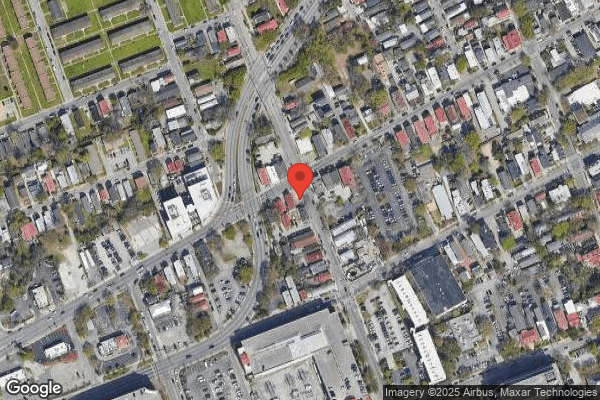

194 Spring St, Charleston, SC 29403 (315) 576-5726
For profit - Corporation 23 Beds Independent Data: November 2025
Trust Grade
83/100
#10 of 186 in SC
Last Inspection: May 2025

Inspected within the last 6 months. Data reflects current conditions.

Overview

Kempton of Charleston has received a Trust Grade of B+, indicating it is above average and recommended for potential residents. It ranks #10 out of 186 facilities in South Carolina, placing it in the top half, and #2 out of 11 in Charleston County, which means only one local option is rated higher. The facility is improving, with reported issues decreasing from three in 2024 to just one in 2025. Staffing is rated at 4 out of 5 stars, which is good, but the 58% turnover rate is concerning compared to the state average of 46%. There have been fines totaling $21,528, which is higher than 95% of South Carolina facilities, suggesting repeated compliance issues. On a positive note, Kempton has excellent RN coverage, surpassing 93% of other facilities in the state, ensuring that registered nurses can identify potential problems that certified nursing assistants might miss. However, there have been specific concerns, such as failures to properly label and store food items, which raises food safety issues, and a lack of effective infection control regarding urinary catheters, potentially increasing the risk of urinary tract infections. Additionally, medication storage issues were noted, with some expiration dates obscured, indicating a need for better management in this area. Overall, while there are commendable strengths, families should weigh these alongside the identified weaknesses.

Trust Score
B+
83/100
In South Carolina
#10/186
Top 5%
Safety Record
Low Risk
No red flags
Inspections
Getting Better
3 → 1 violations
Staff Stability
⚠ Watch
58% turnover. Above average. Higher turnover means staff may not know residents' routines.
Penalties
⚠ Watch
$21,528 in fines. Higher than 99% of South Carolina facilities. Major compliance failures.
Skilled Nurses
✓ Good
Each resident gets 76 minutes of Registered Nurse (RN) attention daily — more than 97% of South Carolina nursing homes. RNs are the most trained staff who catch health problems before they become serious.
Violations
✓ Good
Only 4 deficiencies on record. Cleaner than most facilities. Minor issues only.
★★★★★
5.0
Overall Rating
★★★★☆
4.0
Staff Levels
★★★★★
5.0
Care Quality
★★★★☆
4.0
Inspection Score
Stable
2024: 3 issues
2025: 1 issues

The Good

  • 4-Star Staffing Rating · Above-average nurse staffing levels
  • 5-Star Quality Measures · Strong clinical quality outcomes
  • Full Sprinkler Coverage · Fire safety systems throughout facility
  • No fines on record

Facility shows strength in staffing levels, quality measures, fire safety.

The Bad

Staff Turnover: 58%

12pts above South Carolina avg (46%)

Frequent staff changes - ask about care continuity

Federal Fines: $21,528

Below median ($33,413)

Minor penalties assessed

Staff turnover is elevated (58%)

10 points above South Carolina average of 48%

The Ugly 4 deficiencies on record

May 2025 1 deficiency
CONCERN (D)

Potential for Harm - no one hurt, but risky conditions existed

Infection Control (Tag F0880)

Could have caused harm · This affected 1 resident

**NOTE- TERMS IN BRACKETS HAVE BEEN EDITED TO PROTECT CONFIDENTIALITY** Based on record review, observations, and interviews, the facility failed to maintain an effective infection control and prevent...

Read full inspector narrative →
**NOTE- TERMS IN BRACKETS HAVE BEEN EDITED TO PROTECT CONFIDENTIALITY** Based on record review, observations, and interviews, the facility failed to maintain an effective infection control and prevention program for one of three residents (Resident (R) 14) reviewed for indwelling urinary catheters out of 12 sampled residents. This failure placed the resident at an increased risk of developing an urinary tract infection (UTI). Findings include: Review of R14's undated admission Record, found in the resident's electronic medical record (EMR) under the Admissions tab revealed the resident was admitted to the facility on [DATE] with diagnoses which included urinary retention. Review of R14's admission Minimum Data Set (MDS) with an Assessment Reference (ARD) Date of 04/05/25 and found in the EMR under the MDS tab indicated the facility assessed the resident to have a Brief Interview for Mental Status (BIMS) score of four out of 15 which indicated the resident was severely cognitively impaired. The assessment indicated R14 had a urinary catheter in place in his bladder. Review of R14's Physicians Order, dated 04/03/25and found in the EMR under the Orders tab revealed an order for the resident to have a Foley Catheter Size 16 French with 10cc (cubic Centimeter) Balloon in his bladder to allow him to urinate. Review or R14's Indwelling Catheter Care Plan, dated 04/04/25 and found in the EMR under the Care Plan tab revealed R14 had an indwelling urinary catheter. The care plan goal indicated R14 would show no signs or symptoms of urinary infection through the next review date. Observation on 05/04/25 at 1:57 PM revealed R14 was lying in bed. The resident's catheter tubing was lying directly on the floor. Observation on 05/05/25 at 11:27 AM revealed R14 was sitting in his wheelchair. The resident's catheter tubing was directly touching the floor. Observation on 05/05/25 at 12:00 PM revealed R14 was transferred from his wheelchair to his bed. The catheter tubing was directly touching the floor during the transfer. Observation and interview with Certified Nursing Assistant (CNA)1 and Licensed Practical Nurse (LPN)1 on 05/06/25 at 8:29 AM revealed R14 was lying in bed, and his catheter tubing was directly touching the floor. CNA1 and LPN1 both observed catheter tubing on the floor and stated the tubing should remain off the floor to prevent potential UTIs. During an interview on 05/06/25 at 11:34 AM, the Director of Nursing (DON) stated it was her expectation R14's catheter tubing would have never been in contact with the floor in order to prevent potential urinary tract infections.
Feb 2024 3 deficiencies
CONCERN (D)

Potential for Harm - no one hurt, but risky conditions existed

Pharmacy Services (Tag F0755)

Could have caused harm · This affected 1 resident

Based on review of the facility policy, observation, and interview, the facility failed to ensure that the pharmacy had properly labeled medication to ensure medication expiration dates where visable ...

Read full inspector narrative →
Based on review of the facility policy, observation, and interview, the facility failed to ensure that the pharmacy had properly labeled medication to ensure medication expiration dates where visable for 2 medications stored in the medication room. Findings include: Review of the undated facility policy, titled Medication Storage in the Facility revealed. Medications and biologicals are stored safely, securely and properly, following manufacturer's recommendations or those of the supplier. The pharmacy dispenses medications in containers that meet legal requirements .Medications are kept in these containers. Outdated medications and those in containers are immediately removed from stock . An observation on 2/28/2024 at 10:15 AM of the Medication Room revealed 2 medications observed with the expiration date obscured. Fluticasone Nasal Spray lot number and expiration date were not seen as the label was partially peeled off. Vitamin B 12 1000 micrograms (mcg) label was also peeled off. The Unit Manager attempted to remove the Pharmacy label that was added to the original label of the Vitamin B-12, but was unable to remove sufficiently to see the manufacturer's expiration date. On 2/28/2024 at 10:25 AM, an interview with the Unit Manager revealed, I will throw away the nasal spray since both the date and LOT number are missing. She confirmed she could not locate the expiration date on the Vitamin B-12 bottle because the pharmacy label covered it.
CONCERN (D)

Potential for Harm - no one hurt, but risky conditions existed

Deficiency F0761 (Tag F0761)

Could have caused harm · This affected 1 resident

**NOTE- TERMS IN BRACKETS HAVE BEEN EDITED TO PROTECT CONFIDENTIALITY** Based on observation, interview and facility policy, the facility failed to ensure that medication and biologicals that were out...

Read full inspector narrative →
**NOTE- TERMS IN BRACKETS HAVE BEEN EDITED TO PROTECT CONFIDENTIALITY** Based on observation, interview and facility policy, the facility failed to ensure that medication and biologicals that were outdated or without proper labeling were removed from the medication room and resident room for 1 of 1 medication rooms and 1 of 12 resident rooms. Findings include: Review of the undated facility policy, titled Medication Storage in the Facility revealed, Medications and biologicals are stored safely, securely and properly, following manufacturer's recommendations or those of the supplier. The pharmacy dispenses medications in containers that meet legal requirements .Medications are kept in these containers. Outdated medications and those in containers are immediately removed from stock . An observation on [DATE] at 10:15 AM of the Medication Room revealed 2 medications observed with the expiration date obscured. Fluticasone Nasal Spray lot number and expiration date were not seen as the label was partially peeled off. Vitamin B 12 1000 micrograms (mcg) label was also peeled off. The Unit Manager attempted to remove the Pharmacy label that was added to the original label, but was unable to remove sufficiently to see the manufacturer's expiration date. An observationon on [DATE] at 10:20 AM revealed seven (7) dressing change trays with an expiration date of [DATE]. During an interview on [DATE] at 10:25 AM, the Unit Manager stated, I will throw away the nasal spray since both the date and LOT number are missing. She confirmed she could not locate the expiration date on the Vitamin B-12 bottle because the pharmacy label covered it. She stated, All the dressing change kits had expired on [DATE], we will discard those. An interview on [DATE] at 2:53 PM with the Director of Nurses revealed, 'We discarded the wound kits, I'm not sure where they came from. An observation on [DATE] at 8:20 AM revealed an unknown substance at the bedside of Resident (R)1. The appearance was of white, thick creamy substance in a 30 milliliter (ml) medication cup without a label or date. There was a 4x4 beside it. During an interview on [DATE] at 8:30 AM, Licensed Practical Nurse (LPN)1 said, It looks like Zinc, I'm not sure. He has an order for Zinc Oxide, I'll discard it. She said, It should not be in the room, it should have been used and discarded.
CONCERN (F)

Potential for Harm - no one hurt, but risky conditions existed

Food Safety (Tag F0812)

Could have caused harm · This affected most or all residents

**NOTE- TERMS IN BRACKETS HAVE BEEN EDITED TO PROTECT CONFIDENTIALITY** Based on review of the facility policy, observation and interview, the facility failed to properly label and store food items in...

Read full inspector narrative →
**NOTE- TERMS IN BRACKETS HAVE BEEN EDITED TO PROTECT CONFIDENTIALITY** Based on review of the facility policy, observation and interview, the facility failed to properly label and store food items in the kitchen. Furthermore, the facility failed to ensure cold foods were held at an appropriate temperature of 41 degrees Fahrenheit or lower to prevent the potential of food borne illness. Findings include: Review of the facility policy titled, Dietary Storage, (Revised 10/2017) stated, left over foods are properly covered, labeled, dated and refrigerated immediately. Leftovers are discarded after 72 hours unless otherwise indicated. Review of the facility policy titled, Dietary Services, (Revised 11/2020) stated, All foods will be stored, prepared, and served at temperatures that prevent bacterial growth. Hot foods will be maintained at 135 F or higher and cold foods will be maintained at 41 F or below. Review of the facility policy titled, Dietary Safe Food Temps, (Revised 10/2017) stated, Food is cooked to its minimum internal cooking temperature or higher. Quality will not be sacrificed. Hot foods is to be held at 135 F or above. Cold foods will be held at 41 F or lower. Food temperatures at the point of services to the resident should be at least 120 F for hot foods at 50 F for cold foods and must be delivered within 30 minutes of leaving the kitchen. Review of the facility policy titled Food Safety: Employee Personal Hygiene, (Revised 11/2016) stated, All Food service workers, male and female, are to wear hair nets covering all of their hair while in the production, service and ware washing areas, Employees with long hair are to secure their hair up off their neck/back. Employees with very short hair/ bald may wear a cap, that covers all the hair instead of a hair net. [NAME] guards will be worn covering facial hair. Observation on 02/27/2024 at 10:25 AM revealed hot dogs opened and partly used with no open date in the kitchen. Observation on 02/27/2024 at 10:25 AM revealed in the refrigerator, two quart cartons of half and half, expired on 02/01/2024. During an interview, the Head Chef (HC) stated, they are supposed to discard by used date. Observation on 02/27/2024 at 10:25 AM revealed an opened, unlabeled and undated package of [NAME] jack cheese and mozzarella cheese. In the freezer, there was a half bag of opened bacon bits, unlabeled and undated. The HC stated, Items that are open should have an open date. Observation on 02/27/2024 at 10:37 AM revealed the freezer reading a temperature of 5 degrees Fahrenheit. Observation on 02/28/2024 at 11:00 AM showed the following food temperatures: Gravy 159 F Green Beans 179 F Tomato Base 204 F Cold Carrot Salad 57 F, re-temp @ 11:18 AM, reading 70 F Pureed burger 118 F Pureed green beans 104 F During an interview on 02/28/2024 at 11:21 AM, [NAME] 1 stated that he had training to cooking temperatures and the steam line. He stated, The Hot Box has been broken for approximately 8 months and that is why we have an internal temperature. The HC stated, The Hot Box is not broken, The HC stated that they check the temperatures three times a day and provided logs. The Chef did state the 10:20 AM temp was not recorded for today. During an observation on 02/28/2024 at 11:27 AM, the kitchen staff placed the cold carrot salad on top of the transport warmer cart. During an observation on 02/28/2024 at 11:38 AM, the HC re-tested the cold carrot salad on top of the warmer prior to transporting. The temperatures were #1 50 F #2 50 F #3 55 F #4 56 F #5 54 F During an observation on 02/28/2024 at 11:37 AM, the HC replaced the carrot salad with coleslaw. The Coleslaw temperature read 37 F. During an observation on 02/28/2024 at 11:00 AM, 3 of 3 men (HC, [NAME] 1, kitchen staff) in the kitchen were observed without beard guard mask. During a telephone interview on 02/29/2024 at 12:04 PM, the Registered Dietitian (RD) stated, I do an inspection with the HC once a month. The last inspection was on 02/06/2024. The RD stated, I usually look at sanitation, labels, refrigerators, dry storage, temperature logs, check test strips, and the pantry to see if it is rotated properly. I know the HC was working on getting in-service records in place. Every month, the Chef conducts an in-service for new employees, after I do the monthly walk through, he gives a re-education for the other employees of findings. During an interview with the HC on 02/29/2024 at 2:54 PM, the in-service sign in sheet dated 02/09/2024 on Sanitation, Procedure for Kitchen Improvements, Dietary Safe Food Temps, & Dietary Storage was reviewed. HC stated, Cook 1 was not in attendance.
Understanding Severity Codes (click to expand)
Life-Threatening (Immediate Jeopardy)
J - Isolated K - Pattern L - Widespread
Actual Harm
G - Isolated H - Pattern I - Widespread
Potential for Harm
D - Isolated E - Pattern F - Widespread
No Harm (Minor)
A - Isolated B - Pattern C - Widespread

Questions to Ask on Your Visit

  • "Why is there high staff turnover? How do you retain staff?"
  • "Can I speak with families of current residents?"
  • "What's your RN coverage like on weekends and overnight?"

Our Honest Assessment

Strengths
  • • Grade B+ (83/100). Above average facility, better than most options in South Carolina.
  • • No major safety red flags. No abuse findings, life-threatening violations, or SFF status.
  • • Only 4 deficiencies on record. Cleaner than most facilities. Minor issues only.
Concerns
  • • $21,528 in fines. Higher than 94% of South Carolina facilities, suggesting repeated compliance issues.
  • • 58% turnover. Above average. Higher turnover means staff may not know residents' routines.
Bottom line: Generally positive indicators. Standard due diligence and a personal visit recommended.

About This Facility

What is Kempton Of Charleston's CMS Rating?

CMS assigns Kempton Of Charleston an overall rating of 5 out of 5 stars, which is considered much above average nationally. Within South Carolina, this rating places the facility higher than 99% of the state's 100 nursing homes. This rating reflects solid performance across the metrics CMS uses to evaluate nursing home quality.

How is Kempton Of Charleston Staffed?

CMS rates Kempton Of Charleston's staffing level at 4 out of 5 stars, which is above average compared to other nursing homes. Staff turnover is 58%, which is 12 percentage points above the South Carolina average of 46%. High turnover can affect care consistency as new staff learn residents' individual needs.

What Have Inspectors Found at Kempton Of Charleston?

State health inspectors documented 4 deficiencies at Kempton Of Charleston during 2024 to 2025. These included: 4 with potential for harm.

Who Owns and Operates Kempton Of Charleston?

Kempton Of Charleston is owned by a for-profit company. For-profit facilities operate as businesses with obligations to shareholders or private owners. The facility operates independently rather than as part of a larger chain. With 23 certified beds and approximately 20 residents (about 87% occupancy), it is a smaller facility located in Charleston, South Carolina.

How Does Kempton Of Charleston Compare to Other South Carolina Nursing Homes?

Compared to the 100 nursing homes in South Carolina, Kempton Of Charleston's overall rating (5 stars) is above the state average of 2.9, staff turnover (58%) is significantly higher than the state average of 46%, and health inspection rating (4 stars) is above the national benchmark.

What Should Families Ask When Visiting Kempton Of Charleston?

Based on this facility's data, families visiting should ask: "How do you ensure continuity of care given staff turnover, and what is your staff retention strategy?" "Can I visit during a mealtime to observe dining assistance and food quality?" "How do you handle medical emergencies, and what is your hospital transfer rate?" "Can I speak with family members of current residents about their experience?" These questions are particularly relevant given the facility's high staff turnover rate.

Is Kempton Of Charleston Safe?

Based on CMS inspection data, Kempton Of Charleston has a clean safety record: no substantiated abuse findings (meaning no confirmed cases of resident harm), no Immediate Jeopardy citations (the most serious violation level indicating risk of serious injury or death), and is not on the Special Focus Facility watch list (a federal program monitoring the lowest-performing 1% of nursing homes). The facility has a 5-star overall rating and ranks #1 of 100 nursing homes in South Carolina. While no facility is perfect, families should still ask about staff-to-resident ratios and recent inspection results during their visit.

Do Nurses at Kempton Of Charleston Stick Around?

Staff turnover at Kempton Of Charleston is high. At 58%, the facility is 12 percentage points above the South Carolina average of 46%. High turnover means new staff may not know residents' individual needs, medications, or preferences. It can also be disorienting for residents, especially those with dementia who rely on familiar faces. Families should ask: What is causing the turnover? What retention programs are in place? How do you ensure care continuity during staff transitions?

Was Kempton Of Charleston Ever Fined?

Kempton Of Charleston has been fined $21,528 across 7 penalty actions. This is below the South Carolina average of $33,294. While any fine indicates a compliance issue, fines under $50,000 are relatively common and typically reflect isolated problems that were subsequently corrected. Families should ask what specific issues led to these fines and confirm they've been resolved.

Is Kempton Of Charleston on Any Federal Watch List?

Kempton Of Charleston is not on any federal watch list. The most significant is the Special Focus Facility (SFF) program, which identifies the bottom 1% of nursing homes nationally based on persistent, serious quality problems. Not being on this list means the facility has avoided the pattern of deficiencies that triggers enhanced federal oversight. This is a positive indicator, though families should still review the facility's inspection history directly.