Life Care Center Of Columbia
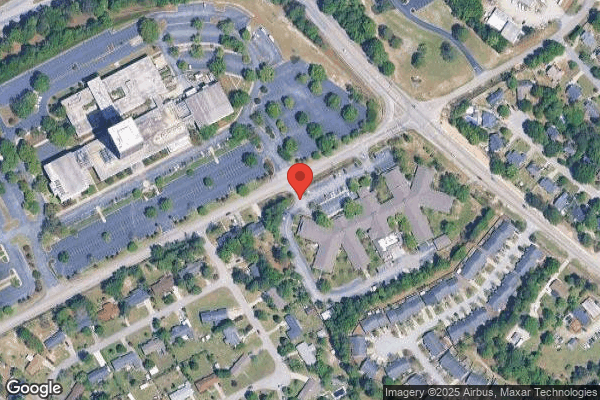
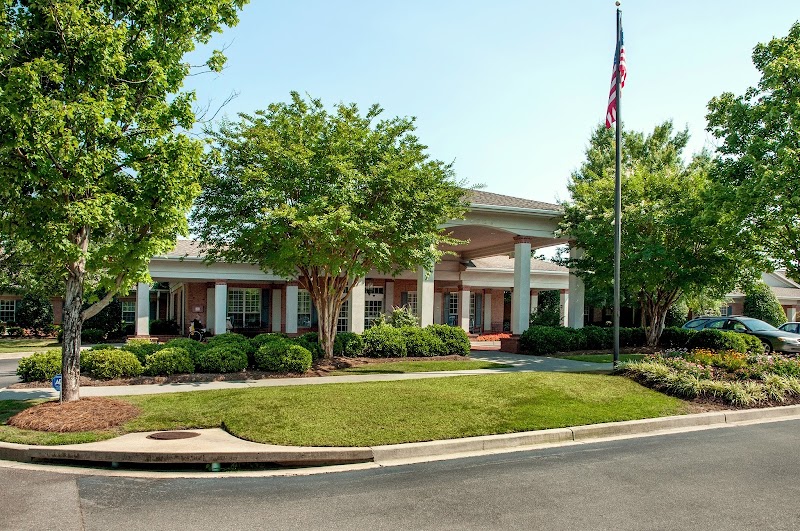
2514 Faraway Drive, Columbia, SC 29223 (803) 865-1999
For profit - Corporation 179 Beds LIFE CARE CENTERS OF AMERICA Data: November 2025
Trust Grade
50/100
#119 of 186 in SC
Last Inspection: June 2025

Inspected within the last 6 months. Data reflects current conditions.

Overview

Life Care Center of Columbia has a Trust Grade of C, indicating it is average and in the middle of the pack among nursing homes. It ranks #119 out of 186 facilities in South Carolina, placing it in the bottom half, and #7 out of 14 in Richland County, meaning there are only a few better options nearby. The facility's trend is improving, with a decrease in issues from 8 in 2024 to 4 in 2025. Staffing is rated 2 out of 5 stars, with a turnover rate of 54%, which is average for the state, but it suggests some instability among staff. There have been no fines reported, which is a positive sign, and the facility has average RN coverage, meaning residents receive a decent level of nursing care. However, there are some concerning incidents. One resident experienced severe pain during pressure ulcer treatment, indicating a failure to manage pain appropriately. Additionally, the facility did not complete necessary assessments for 17 residents, which could affect their care plans. Food safety issues were also noted, as some food items were not stored or labeled properly, posing a risk to residents. Overall, while there are strengths in the facility's safety record and an improving trend, these specific incidents raise valid concerns for families considering this nursing home.

Trust Score
C
50/100
In South Carolina
#119/186
Bottom 37%
Safety Record
Moderate
Needs review
Inspections
Getting Better
8 → 4 violations
Staff Stability
⚠ Watch
54% turnover. Above average. Higher turnover means staff may not know residents' routines.
Penalties
✓ Good
No fines on record. Clean compliance history, better than most South Carolina facilities.
Skilled Nurses
⚠ Watch
Each resident gets only 25 minutes of Registered Nurse (RN) attention daily — below average for South Carolina. Fewer RN minutes means fewer trained eyes watching for problems.
Violations
⚠ Watch
15 deficiencies on record. Higher than average. Multiple issues found across inspections.
★★☆☆☆
2.0
Overall Rating
★★☆☆☆
2.0
Staff Levels
★★★★☆
4.0
Care Quality
★★☆☆☆
2.0
Inspection Score
Stable
2024: 8 issues
2025: 4 issues

The Good

  • 4-Star Quality Measures · Strong clinical quality outcomes
  • Full Sprinkler Coverage · Fire safety systems throughout facility
  • No fines on record

Facility shows strength in quality measures, fire safety.

The Bad

2-Star Overall Rating

Below South Carolina average (2.8)

Below average - review inspection findings carefully

Staff Turnover: 54%

Near South Carolina avg (46%)

Higher turnover may affect care consistency

Chain: LIFE CARE CENTERS OF AMERICA

Part of a multi-facility chain

Ask about local staffing decisions and management

The Ugly 15 deficiencies on record

1 actual harm
Jun 2025 4 deficiencies
CONCERN (D)

Potential for Harm - no one hurt, but risky conditions existed

Deficiency F0637 (Tag F0637)

Could have caused harm · This affected 1 resident

**NOTE- TERMS IN BRACKETS HAVE BEEN EDITED TO PROTECT CONFIDENTIALITY** Based on review of the Resident Assessment Instrument (RAI) Manual, record review, interview and facility policy, the facility f...

Read full inspector narrative →
**NOTE- TERMS IN BRACKETS HAVE BEEN EDITED TO PROTECT CONFIDENTIALITY** Based on review of the Resident Assessment Instrument (RAI) Manual, record review, interview and facility policy, the facility failed to complete and submit a significant change Minimum Data Set (MDS) within 14 days after the facility determined that there had been a significant change in Resident (R55)'s physical or mental condition for 1 of 17 residents reviewed for completion of comprehensive assessment after a significant change. Findings include: Review of the facility policy titled Resident Assessment Instrument and Care Plan Development, with a revision date of 09/05/24, documents, Policy: The facility will follow the procedures set forth in the Resident Assessment Instrument (RAI) Users Manual 3.0 when completing the MDS, Care Area Assessment, and Comprehensive Care Plan. Procedure: The Resident Assessment Instrument is composed of the MDS, Care Area Assessments, and Utilization Guidelines. 2. MDS assessments are completed at a minimum upon admission, quarterly, annually, and with a significant change in patient status. 3a. The instructions for completing the RAI are found in the Centers for Medicare & Medicaid Services Long - Term Care Facility Resident Assessment Instrument User's Manual 3.0. 8. The information identified using the MDS and Care Area Assessment process's is used to develop an individualized person - centered Care Plan that includes the patient's voice, the patient's goals while residing in the facility and for discharge that assist the patient to attain and/or maintain their highest practicable level of well - being. 9. The RAI is not all inclusive therefore other sources of information are to be included when developing an individualized person - centered care plan for each patient that is reviewed by the interdisciplinary team with each assessment including the patient and other participants as the patient desires. Review of R55's Face Sheet revealed that R55 was admitted to the facility on [DATE], with diagnoses including but not limited to: metabolic encephalopathy, Alzheimer's disease, depression, anxiety disorder and type 2 diabetes mellitus. Review of R55's Significant Change MDS with an Assessment Reference Date (ARD) of 04/01/25, revealed the assessment was still in progress and was not submitted. Review of R55's Quarterly MDS with an ARD of 05/13/25, revealed the assessment was still in progress and was not submitted. During an interview with MDS Coordinator 1 on 06/18/25 at 6:20 PM revealed that the time frame for submission of a MDS assessment according to the RAI is 14 days, the facility's expectation is 5 days for a Medicare assessment and 14 days for all other assessments. MDS Coordinator 1 stated there is no documentation of this expectation, I received that information from the previous regional. The MDS schedule is reviewed every morning in stand up meeting at 9 AM. The clinical dashboard in PCC (electronic medical record) indicates when an assessment is due. Everyone has access, it is expected to be reviewed each morning. This facility has a chronic or historic issue of submitting assessments late, the number is not an accurate representation of what is truly late, being that information was behind when I first took the position. I am currently not up to date. During an interview with the Director of Nursing (DON) and the Administrator on 06/19/25 at 9:16 AM, revealed, the Administrator was notified yesterday regarding MDS assessments that are late. The DON revealed that she was notified regarding the late MDS assessments this morning. The DON revealed that her expectations are for the late assessments to be completed. The MDS nurses should communicate with her the departments that are behind completing the MDS so that she can make sure those departments complete the assessments in a timely manner. The Administrator revealed his expectations are that we go over the MDS calendar in morning meeting and review each MDS that is due. Each MDS should be completed timely and verified with me daily. During an interview with MDS Registered Nurse (RN)2 on 06/19/25 at 2:54 PM revealed, the significant change MDS on 04/01/25 was due to a wound greater than a stage 2. We give the wound 14 days to heal if facility acquired. We were waiting on section F which is the activities section. MDS RN2 stated I don't know how floor staff would know how to take care of a resident if the MDS is not submitted and the care plan is not updated. MDS assessments that are due are also gone over during morning meeting. The MDS team will also give department heads a list of patients with MDS assessments which needs to be completed by department heads and the dates that assessments are due and required dates that the assessments need to be submitted. The CNAs on the floor would not know any new care plan interventions for a resident if the MDS is not completed and submitted because the care plan would not be updated and the kardex would then not be updated.
CONCERN (D)

Potential for Harm - no one hurt, but risky conditions existed

Assessment Accuracy (Tag F0641)

Could have caused harm · This affected 1 resident

**NOTE- TERMS IN BRACKETS HAVE BEEN EDITED TO PROTECT CONFIDENTIALITY** Based on observation, interview, record review, and review of facility policy, the facility failed to accurately code the quarte...

Read full inspector narrative →
**NOTE- TERMS IN BRACKETS HAVE BEEN EDITED TO PROTECT CONFIDENTIALITY** Based on observation, interview, record review, and review of facility policy, the facility failed to accurately code the quarterly Minimum Data Set (MDS) assessment for Resident (R)105, specifically coding a glucagon-like peptide receptor agonist (GLP-1) as insulin for 1 out of 17 residents reviewed for resident assessments. Findings include: Review of the facility policy titled Certification of Accuracy of the MDS revised on 04/22/25, states, The assessment must represent an accurate picture of the resident's status during the observation period of the MDS. The Observation Period (also known as the Look-back period) is the time frame over which the resident's condition or status is captured by the MDS assessment and ends at 11:59 p.m. on the day of the Assessment Reference Date (ARD). Review of R105's Face Sheet revealed R105 was admitted to the facility on [DATE], with diagnoses including, but not limited to, type 2 diabetes mellitus. Review of R105's Quarterly MDS with an ARD of 02/24/25 and a completion date of 02/25/25, revealed a 1 coded for the number of days that insulin injections were received during the last seven days of the look back period. Review of R105's Quarterly MDS with an ARD of 05/27/25 and a completion date of 06/10/25, revealed a 1 coded for the number of days that insulin injections were received during the last seven days of the look back period. Review of R105's Orders with a start date of 12/25/24, revealed an order for, Trulicity Subcutaneous Solution Auto-injector 1.5 MG/0.5ML (Dulaglutide) Inject 1.5 mg subcutaneously one time a day every Wed for DM. Further review of the Orders did not reveal an order for insulin. Review of R105's Medication Administration Record (MAR) for 02/25 and 05/25, revealed no order for insulin and no administration of insulin. During an interview with MDS Coordinator 1 and MDS Coordinator 2 on 06/18/25 at 6:45 PM, MDS Coordinator 1 confirmed Trulicity is a GLP-1 medication and not insulin. MDS Coordinator 2 questioned whether Trulicity was insulin. MDS Coordinator 1 stated they were trained by the prior regional MDS Director, who is no longer with the company, to code Trulicity as insulin in the MDS. Both were unable to provide documentation to support this. During an interview with the Administrator on 06/19/25 at 5:33 PM, revealed he has begun to put a plan in place to correct the MDS errors. The Administrator stated the new Director of Nursing, who takes over Monday, has also begun putting controls in place regarding the MDS process.
CONCERN (F)

Potential for Harm - no one hurt, but risky conditions existed

MDS Data Transmission (Tag F0640)

Could have caused harm · This affected most or all residents

**NOTE- TERMS IN BRACKETS HAVE BEEN EDITED TO PROTECT CONFIDENTIALITY** Based on review of the Resident Assessment Instrument (RAI) Manual, record review, interviews and review of facility policy, the...

Read full inspector narrative →
**NOTE- TERMS IN BRACKETS HAVE BEEN EDITED TO PROTECT CONFIDENTIALITY** Based on review of the Resident Assessment Instrument (RAI) Manual, record review, interviews and review of facility policy, the facility failed to ensure comprehensive assessments were initiated, completed, submitted, or exported for 17 out of 17 residents reviewed for resident assessments, Resident (R)65, R28, R96, R46, R106, R91, R30, R31, R15, R88, R62, R75, R37, R9, R105, R50 and R55. Findings include: Review of the facility policy titled Resident Assessment Instrument and Care Plan Development, with a revision date of 09/05/24, documented, Policy: The facility will follow the procedures set forth in the Resident Assessment Instrument (RAI) Users Manual 3.0 when completing the MDS, Care Area Assessment, and Comprehensive Care Plan. Procedure: The Resident Assessment Instrument is composed of the MDS, Care Area Assessments, and Utilization Guidelines. 2. MDS assessments are completed at a minimum upon admission, quarterly, annually, and with a significant change in patient status. 3a. The instructions for completing the RAI are found in the Centers for Medicare & Medicaid Services Long - Term Care Facility Resident Assessment Instrument User's Manual 3.0. 8. The information identified using the MDS and Care Area Assessment process is used to develop an individualized person - centered Care Plan that includes the patient's voice, the patient's goals while residing in the facility and for discharge that assist the patient to attain and/or maintain their highest practicable level of well - being. 9. The RAI is not all inclusive therefore other sources of information are to be included when developing an individualized person - centered care plan for each patient that is reviewed by the interdisciplinary team with each assessment including the patient and other participants as the patient desires. Review of the RAI Version 2.0 Manual, Chapter 5: Submission and Correction of the MDS Assessments documented, MDS assessments are edited to verify that clinical responses are within valid ranges, dates are reasonable, and assessments are consistent with the previous assessments completed for the same resident. The facility is notified of the results of this evaluation on the Initial Feedback Report or the Final Validation Report. Timeliness Criteria: Assessment Transmission: Comprehensive assessments must be transmitted electronically within 31 days of the Care Plan Completion Date (VB4). All other MDS or MPAF assessments must be submitted within 31 days of the MDS Completion Date (R2b). Review of R65's Face Sheet revealed that R65 was admitted to the facility on [DATE], with diagnoses including but not limited to: traumatic hemorrage of cerebrum, occipital condyle fracture, dementia and type 2 diabetes mellitus. Review of R65's Quarterly Minimum Data Set (MDS) with an Assessment Reference Date (ARD) of 05/10/25, revealed the assessment was not initiated and was 25 days overdue. Review of R28's Face Sheet revealed that R28 was admitted to the facility on [DATE], with diagnoses including but not limited to: other complications of gastrostomy, type 2 diabetes mellitus with diabetic neuropathy, dementia and chronic lymphocytic leukemia of B-cell type. Review of R28's Quarterly MDS with an ARD of 05/08/25, revealed the assessment was still in progress, not submitted and 27 days overdue. Review of R96's Face Sheet revealed that R96 was admitted to the facility on [DATE], with diagnoses including but not limited to: Parkinson's Disease without dyskenesia without mentions of fluctuations, dementia, type 2 diabetes mellitus and bipolar disorder. Review of R96's Quarterly MDS with an ARD of 05/03/25, revealed the assessment was still in progress and not submitted. The assessment was 32 days overdue. Review of R46's Face Sheet revealed that R46 was admitted to the facility on [DATE], with diagnoses including but not limited to: nondisplaced fracture of seventh cervical vertebra, type 2 diabetes mellitus, late onset dementia and adjustment disorder with mixed disturbance of emotions and conduct. Review of R46's Quarterly MDS with an ARD of 05/14/25, revealed the assessment was still in progress and not submitted. The assessment was 21 days overdue. Review of R106's Face Sheet revealed that R106 was admitted to the facility on [DATE], with diagnoses including but not limited to: type 2 diabetes mellitus, schizophrenia, anxiety disorder and depression. Review of R106's Quarterly MDS with an ARD of 04/19/25, revealed the assessment was still in progress and was not submitted. The assessment was 46 days overdue. Review of R91's Face Sheet revealed that R91 was admitted to the facility on [DATE], with diagnoses including but not limited to: fracture of head and neck of right femur, nontramatic subarachnoid hemmorage, cerebral infarction due to embolism of left cerebral middle artery and type 2 diabetes mellitus. Review of R91's Quarterly MDS with an ARD of 05/04/25, revealed the assessment was still in progress and was not submitted. The assessment 31 days overdue. Review of R30's Face Sheet revealed that R30 was admitted to the facility on [DATE], with diagnoses including but not limited to: cerebral infarction, flaccid hemiplegia affecting right dominant side, aphasia and type 2 diabetes mellitus. Review of R30's Quarterly MDS with an ARD of 04/19/25, revealed the assessment was still in progress and was not submitted. The assessment 46 days overdue. Review of R31's Face Sheet revealed that R31 was admitted to the facility on [DATE], with diagnoses including but not limited to: sequelae of cerebral infarction, type 2 diabetes mellitus, hypovolemic shock and peripheral vascular disease. Review of R31's Quarterly MDS with an ARD of 05/05/25, revealed the assessment was still in progress and was not submitted. The assessment was 30 days overdue. Review of R15's Face Sheet revealed that R15 was admitted to the facility on [DATE], with diagnoses including but not limited to: lobar pneumonia, schizoaffective disorder, chronic viral hepatitis C and hypertension. Review of R15's admission MDS with an ARD of 12/11/23, revealed the assessment was not initiated and was 557 days overdue. Review of R88's Face Sheet revealed that R88 was admitted to the facility on [DATE], with diagnoses including but not limited to: severe protein-calorie malnutrition, dementia, major depressive disorder and latent tuberculosis. Review of R88's Quarterly MDS with an ARD of 04/06/25, revealed the assessment was still in progress and was not submitted. The assessment was 59 days overdue. Review of R62's Face Sheet revealed that R62 was admitted to the facility on [DATE], with diagnoses including but not limited to: acute embolism and throbosis of left femoral vein, Alzheimer's disease, sick sinus syndrome and long QT syndrome. Review of R62's Annual MDS with an ARD of 03/31/25, revealed the assessment was completed but not exported. The assessment remained in the que and was ready for export on 03/31/25, however was not exported. Review of R75's Face Sheet revealed that R75 was admitted to the facility on [DATE], with diagnoses including but not limited to: non-ST, elevation myocardial infarction, type 2 diabetes mellitus, asthma and anxiety disorder. Review of R75's Quarterly MDS with an ARD of 04/14/25, revealed the assessment was still in progress and was not submitted. The assessment was 15 days overdue. Review of R37's Face Sheet revealed that R37 was admitted to the facility on [DATE], with diagnoses including but not limited to: atherosclerotic heart disease of native coronary artery without angina pectoris, hypertensive heart disease without heart failure, dysphagia and depression. Review of R37's Quarterly MDS with an Assessment Reference Date (ARD) of 04/17/25, was still in progress and was not submitted. The assessment was 48 days overdue. Review of R9's Face Sheet revealed that R9 was admitted to the facility on [DATE], with diagnoses including but not limited to: spinal stenosis, acute respiratory failure, paranoid schizophrenia and Alzheimer's disease early onset. Review of R9's Quarterly MDS with an ARD of 05/14/25, revealed the assessment was still in progress and was not submitted. The assessment was 14 days overdue. Review of R105's Face Sheet revealed that R105 was admitted to the facility on [DATE], with diagnoses including but not limited to: displaced intertrochanteric fracture of left femur, pulmonary fibrosis, emphysema, and type 2 diabetes. Review of R105's Quarterly MDS with an ARD of 05/14/25, revealed the assessment was still in progress and was not submitted. The assessment was 114 days overdue. Review of R50's Face Sheet revealed that R50 was admitted to the facility on [DATE], with diagnoses including but not limited to: cerebral infarction, vascular dementia, chronic kidney disease stage 3 and type 2 diabetes mellitus. Review of R50's Quarterly MDS with an ARD of 05/06/25, revealed the assessment was not started. The assessment was 43 days overdue. Review of R55's Face Sheet revealed that R55 was admitted to the facility on [DATE], with diagnoses including but not limited to: metabolic encephalopathy, Alzheimer's disease, depression, anxiety disorder and type 2 diabetes mellitus. Review of R55's Significant Change MDS with an ARD of 04/01/25, was still in progress and was not submitted. Further review of R55's Quarterly MDS with an ARD of 05/13/25, revealed the assessment was still in progress and was not submitted. The assessment was 44 days overdue. During an interview with the MDS Coordinator on 06/18/25 at 6:20 PM, revealed that the time frame for submission of a MDS assessment according to the RAI is 14 days, the facility's expectation is 5 days for a Medicare assessment and 14 days for all other assessments. There is no documentation of this expectation, I received that information from the previous regional. The MDS Coordinator stated the MDS schedule is reviewed every morning in stand up meeting at 9 AM. The clinical dashboard in PCC (electronic medical record) indicates when an assessment is due. Everyone has access, it is expected to be reviewed each morning. The Executive Director (ED) and DON are notified if a part of the MDS is not completed in a timely manner. This facility has a chronic or historic issue of submitting assessments late, the number is not an accurate representation of what is truly late, being that information was behind when I first took the position. I am currently not up to date. The MDS Coordinator further stated, there is someone that is overseeing the area until someone is hired. We are not able to complete and submit the MDS because we are restricted by other areas. If the MDS is ready for export and not exported, it means its just sitting in the que, but nothing should be sitting in the que since March. During an interview with the Director of Nursing (DON) and the Administrator on 06/19/25 at 9:16 AM, revealed, the Administrator was notified yesterday regarding MDS assessments that are late. The DON revealed that she was notified regarding the late MDS assessments this morning. The MDS department reports to the DON. The DON revealed that her expectations are for the late assessments to be completed. The MDS nurses should communicate with her the departments that are behind completing the MDS so that she can make sure those departments complete the assessments in a timely manner. The MDS nurses should be showing us the calendar so that we are aware of what assessments are due. The Administrator revealed his expectations are that we go over the MDS calendar in morning meeting and review each MDS that is due. Each MDS should be completed timely and verified with me daily. During an interview on 06/19/25 at 9:57 AM, the Activities Director revealed, I do complete the Activities portion of the MDS. The MDS woman [name] will tell me when an assessment is due. I have not received a calendar. I am behind on assessments. I got behind on the last couple of days since you all have been here. The MDS is for Medicaid clearance. My section is important to make sure we are doing what we should do for the residents. The admission MDS is due three days after the resident's admission. I don't know when the assessments are due after that. I'm just given a date that I need to complete it. During an interview on 06/19/25 at 10:59 AM, the Director of Social Work revealed, Yes, I complete part of the MDS. One way I know when an MDS is due is by the MDS print off. Another way is a calendar but that has not been distributed in 2 or 3 weeks. The calendar comes from MDS. I saw it in the morning meeting and I liked it and asked for a copy. I received it twice and then have not seen it again. I have gotten behind but we do try to catch up. I know when an MDS is due by the MDS nurse telling me, Point Click Care (electronic medical record) and by printing off the MDS list. I am sure that there are some sections that need to be caught up and we will catch them up. The MDS is submitted to whomever and that is how we get paid. The MDS is also how we look at the overall functioning of the residents and how to care for the residents. Assessments are important for the overall functioning of the resident as well as communicating the status of a resident. In the future, my assistant and I will complete the MDS by the end of the day. During an interview with MDS Registered Nurse (RN) on 06/19/25 at 2:54 PM, revealed we were waiting on section F which is the activities section. The MDS RN stated, I don't know how floor staff would know how to take care of resident if the MDS is not submitted and the care plan is not updated. The MDS RN revealed that the MDS team emails department heads about outstanding MDS assessments that need be completed. MDS assessments that are due are also gone over during morning meeting. The MDS team will also give department heads a list of patients with MDS assessments which needs to be completed by department heads and the dates that assessments are due and required dates that the assessments need to be submitted. The Certified Nursing Assistants on the floor would not know any new care plan interventions for a resident if the MDS is not completed and submitted because the care plan would not be updated and the kardex would then not be updated.
CONCERN (F)

Potential for Harm - no one hurt, but risky conditions existed

Food Safety (Tag F0812)

Could have caused harm · This affected most or all residents

Based on observation, interview, and facility policy review, the facility failed to ensure foods that were are stored in the freezer, coolers, and dry food storage were appropriately sealed, labeled, ...

Read full inspector narrative →
Based on observation, interview, and facility policy review, the facility failed to ensure foods that were are stored in the freezer, coolers, and dry food storage were appropriately sealed, labeled, dated, and/or discarded after the manufacturer's expiration date in 1 of 1 walk in freezer, 1 of 1 walk in cooler, and 1 of 1 dry storage room. This had the potential to affect all residents who received meals from the kitchen. Findings include: Review of the facility policy, revised on 04/26/23, titled, Food Safety, revealed, food is stored and maintained in a clean, safe and sanitary manner following federal, state and local guidelines to minimize contamination and bacterial growth. Food Safety Policy Food is stored and maintained in a clean, safe and sanitary manner following federal, state and local guidelines to minimize contamination and bacterial growth. 2. Pre-packaged food is placed in a leak-proof, pest-proof, non-absorbent, sanitary (NSF) container with a tight-fitting lid. The container is labeled with the name of the contents and date (when the item is transferred to the new container). 'Use by Date' is noted on the label or product when applicable. 3. The 'use by date' guide is easily accessible to all associates involved with resident for storage. 6. Dented, leaky, rusted and swelling cans that could affect food safety are returned to the vendor but stored in a designated area away from other food. These items will not be used. Dry Storage 2. Opened packages of food are resealed tightly to prevent contamination of the food item and 'use by date' will be used when applicable. Review of the facility policy, revised on 04/30/23, tiled Safe Food Handling revealed, all food purchased, stored and distributed is handled with accepted food-handling practice and per federal, state and local requirements. 5. Food that is not stored, prepared, handled and/or consumed in any area which food may be contaminated . Review of the facility undated policy, titled, Use by Date revealed, The following guide can be used to determine a use by date for labeling food (opened or unopened) that should be used within a certain time frame. All opened containers of food in the dry storage area should be placed in an enclosed container, labeled, and dated with the open date and the use by date. Any unopened cans/packages should be marked with the date received. After opening, the above guideline is followed regarding opened containers of food. During an initial observation on 06/17/25 at 9:30 AM, the Dry Storage Room revealed the following: 1 - 62 ounce (oz) can mushroom pieces and stems- dented on rack for use. 1 - gallon jug Worcestershire sauce was open with no open date or use by date. 1 - 10 pound (lb) bag rainbow sprinkles with no open date. 1 - 7.5 lb jug Old Bay seasoning with the top covered with white debris, labeled in 04/08/25 out 05/08/25, no clear expiration or best by date. At 9:56 AM the walk in cooler revealed the following: 1 - box of bacon strips open on top shelf, labeled shelf life 6/17 use by 6/24 and not properly sealed. 1 - gallon dill pickle chips with an open date of 05/03/25 and a use by date of 05/03/25. 1 - gallon jug sliced jalapeno peppers with no open or use by date. 1 - gallon jug container mayonnaise, marked R (received) 6/5 no open or used by date. 1 - gallon barbeque sauce, marked R date 6/5 no open or use by date. 1 - 8.44 lb container mild chunky salsa dates 4/24 use by 5/24. 1 - 5 lb container sour cream with a best by date of 06/04/2, no open or use by date. 1 - 5 lb container low fat cottage cheese with a best by date of 05/10/25, no open date. 1 - 48 oz block cream cheese with a best by date of 05/27/25. 1 - 5 lb container ricotta cheese with a best by date of 03/20/25. 2 - 5 lb container ricotta cheese with a best by date of 05/01/25; 1 - bag fresh cut vegetables/cabbage with no open or use by date. 1 - bag iceburg lettuce with a use by date of 06/14/25 with no open date. At 10:20 AM the freezer revealed the following: 1 - bag French fries was opened with no open date and not sealed properly. During an interview on 06/18/25 at 4:45 PM, the Dietitian revealed that she does a monthly walk through of the kitchen and once it's complete she provides a report to the Executive Director, the Dietary Manager and the Director of Nursing. The Dietitian stated that during her walk through she is looking for anything that may be expired, that the walk-in refrigerator and freezer temperature are at the right temperature, that the logs are properly completed, that items are properly dated with an open and use by date, check for the cleanliness of the floors, ceilings and that the staff are performing proper sink sanitation. The Dietitian further stated that she has provided a printout of a use by guide for staff to refer to for properly dating food items, and she advises them to memorize it because it is a daily task. The Dietitian further explains that for any food items in the area past its use by date it should be discarded, and if items are opened and dated and past the use by date, items should be discarded. The Dietitian concluded that her expectation is that any items open should be labeled with an open date and a use by date. During an interview on 06/18/25 at 5:06 PM, the Dietary Manager (DM) revealed that items are labeled with received date, when they are delivered to the facility, and then when an item is opened staff will put a tag on it marking it with a prep/open date and an expiration/use by date. That date will vary depending on the item. The DM stated that the use by date and expiration date are determined by a national data base, use by recommendation and the facility policy. The DM further stated that all items should be discarded if opened and not labeled with an open/use by label for dry storage, coolers and freezers, and any items beyond the use by date needs to be discarded immediately. The DM concluded that he does a daily walk through of the kitchen and if he is not here, the walk through should be done by his assistant or chef on duty. During an interview on 06/18/25 at 5:41 PM, the Administrator revealed that the DM oversees the kitchen, however he does walk through the kitchen once a week and sometimes more. The Administrator stated that during the walk through he checks the vents, the sprinklers to make sure there is no build up on them, checks the rinse area, temperature logs, makes sure there are no fall hazards, check the three compartment sink, the freezer and cooler to make sure everything is labeled properly, checks to ensure that there is nothing too close to the ceiling. The Administrator stated he walked through the kitchen about a week ago and did not notice anything in the walk-in cooler. The Administrator further revealed that his expectation is that if items are beyond the use by date they should be discarded and he expects that the kitchen is clean.
May 2024 8 deficiencies
CONCERN (D) 📢 Someone Reported This

A family member, employee, or ombudsman was alarmed enough to file a formal complaint

Potential for Harm - no one hurt, but risky conditions existed

Deficiency F0553 (Tag F0553)

Could have caused harm · This affected 1 resident

**NOTE- TERMS IN BRACKETS HAVE BEEN EDITED TO PROTECT CONFIDENTIALITY** Based on review of the facility policy titled, Person Centered Care Planning, record reviews and interviews, the facility failed...

Read full inspector narrative →
**NOTE- TERMS IN BRACKETS HAVE BEEN EDITED TO PROTECT CONFIDENTIALITY** Based on review of the facility policy titled, Person Centered Care Planning, record reviews and interviews, the facility failed to ensure Resident (R)53 was afforded the right to participate in the development and implementation of her person-centered comprehensive plan of care for 1 of 1 residents that verbalized they were not included in the care planning process, but would like to be included. Findings include: Review of the facility policy titled, Person Centered Care Planning, Issued 08/16/2022 and Reviewed 08/22/2023 and states the, Person-centered care - means to focus on the resident as the locus of control and support the resident in making their own choices and having control over their daily lives. Number 4 under procedure states: The facility will include the resident and if applicable resident representative participation in developing the person-centered plan. a. Reflective of residents right to make informed choices regarding treatments and services, b. Reflective of the residents' cultural preferences, values and practices, and c. For those residents with a history of trauma, the care plan will include the interventions for care and accounting for the residents' experiences and preferences in order to eliminate or mitigate triggers that may cause additional trauma for the resident. Number 7 states, The care plan will be developed and implemented to ensure consistency with implementation across all shifts. The facility admitted R53 on 04/13/2022 with diagnoses including, but not limited to, repeated falls, fracture of right tibia, dementia, depression and adult failure to thrive. R53 has a BIMS (Brief Interview for Mental Status) of 15 out of 15 on the quarterly MDS (minimum data set) assessment dated [DATE], indicating that she is not cognitively impaired and is able to make her own decisions. R53 is understood and understands verbal content. During an interview on 05/07/2024 at 11:02 AM, R53 stated, I have not been invited to a careplan meeting since admission. R53 also stated, I do not know if my plan of care is being followed. Review of the medical record on 05/08/2024 at 2:26 PM revealed a form dated 03/12/2024. The form was notifying the personal representative of R53 of a care plan conference. No documentation could be found in the medical record for R53, electronically or the hard chart to indicate that R53 was invited and included in the care planning process or if a care plan conference had been conducted. During an interview with the Social Services Assistant on 05/08/2024 at 02:30 PM, she stated that the care plan invitation was sent to the personal representative for R53 on 03/12/2024, and that she had not heard back from them. She stated that when the form is mailed to the personal representative, a copy is hand delivered to the resident. She stated she has no documentation to ensure R53 received a copy of the invitation to attend the care plan conference. The Social Services Assistant could not verify a care plan conference was conducted for R53. Review on 05/08/2024 at 03:35 PM of the facility, admission Packet, Section II: Resident Rights: #14. The resident has the right to be informed of, and participate in, his or her treatment, including the right to be fully informed in a language that he or she can understand of his or her total health status, including but not limited to, his or her medical condition: the right to participate in the development and implementation of his or her person-centered plan of care. #15. The resident has the right to participate in the planning process, including the right to identify individuals or roles to be including in the care planning process, the right to request meetings and the right to request revisions to the person-centered plan of care. #16. The resident has the right to participate in establishing the expected goals and outcomes of care, the type, amount, frequency, and duration of care, and any other factors related to the effectiveness of the plan of care. #17. The resident has the right to be informed, in advance, of changes to the plan of care. #18. The resident has the right to receive the services and/or items included in the plan of care. #19. The resident has the right to see the care plan, including the right to sign after significant changes to the plan of care.
CONCERN (D)

Potential for Harm - no one hurt, but risky conditions existed

Report Alleged Abuse (Tag F0609)

Could have caused harm · This affected 1 resident

**NOTE- TERMS IN BRACKETS HAVE BEEN EDITED TO PROTECT CONFIDENTIALITY** Based on interviews, record reviews, and facility policy, the facility failed to report an allegation of abuse to the state agen...

Read full inspector narrative →
**NOTE- TERMS IN BRACKETS HAVE BEEN EDITED TO PROTECT CONFIDENTIALITY** Based on interviews, record reviews, and facility policy, the facility failed to report an allegation of abuse to the state agency in the required time frame, for 1 of 3 residents (R)101, reviewed for alleged abuse. Findings Include: Review of the facility policy, Incident and Reportable Event Management, with a revision date of 08/15/23 revealed, Ensure that all alleged violations involving abuse, neglect, exploitation or mistreatment, including injuries of unknown source and misappropriation of resident property, are reported immediately, but not later than 2 hours after the allegations is made, if the events that cause the allegation involve abuse or result in serious bodily injury, or not later than 24 hours if the events that cause the allegation do not involve abuse and do not result in serious bodily injury, to the administrator of the facility and to other officials (including to the State Survey Agency and adult protective services where state law provides for jurisdiction in long-term care facilities) in accordance with State law through established procedures. Review of R101's Face Sheet revealed he was admitted to the facility on [DATE] with diagnoses including, but not limited to, hemiplegia, hemiparesis, asthma, congestive heart failure, muscle weakness, chest pain on breathing, and end stage renal disease. Review of R101's Five - Day Minimum Data Set (MDS) with an Assessment Reference Date (ARD) of 04/15/24 revealed R101has a Brief Interview of Mental Status (BIMS) score of 15 of 15, indicating that he is cognitively intact. R101 requires substantial/maximal assistance for toileting, showering, and lower body dressing. Partial/moderate assistance is needed for upper body dressing and putting on and taking off footwear. Review of R101's Care Plan revealed that 04/15/24 a care plan was developed, indicating that R101 is at risk for falls and ADL assistance and therapy services are needed to maintain or attain the highest level of functions. Review of a Concern and Comment Form, dated 05/04/24 at 12:15 PM revealed that the Rehab Director submitted a concern on behalf of R101 that stated that nursing staff from the night was Snatching and pulling on him, when transferring him back in bed using a hoyer lift and nursing staff was rude when speaking to him. This was reported to the Administrator at 12:05 PM. There was no time or date provided for contact with R101. Review of the 2-hour Initial report to the State Agency revealed the incident was reported at 05/07/24, investigation initiated with 5-day to follow. During an interview with R101 on 05/07/24 at 12:45 PM revealed he was attempting to move from his bed and the overbed table got away from him and he fell to the floor. He positioned himself so that he could ring the call bell and receive assistance from the nurse. R101 states there were two nurses that came in and they began laughing at him and asking why he was on the floor. After 15 minutes of back-and-forth conversation about the incident, the nurses used the Hoyer lift to get him back in bed. During the positioning in the Hoyer lift, he states the nurses were talking rudely and were very rough handling him, pushing and shoving him in the sling. The nurse asked if he was alright and if he was hurting and he told them that he had a little pain and he may need to go to the emergency room. The lady nurse told him if he left to go to the hospital that they were going to give his room away and he would no longer have a private room to himself. He included that she went and called 911 and when she returned, he told her he didn't want to leave because he did not want to lose his room. The nurse stated they were coming anyway, from that point he began to cry and asked her to cancel the call for 911. When the Emergency Medical Service (EMS) arrived, R101, told them what was going on and stated they were aware of the conversation about him losing his room if he left with them. R101 refused to go with EMS and told the nurse he would go to dialysis instead so he would not lose his room. He stated that he reported this to the day shift nurse on Saturday morning when he returned from dialysis, but no one has come in and inquired about the situation since then. During an interview with the Social Services Director (SSD) on 05/08/24 at 3:29 PM revealed that she has been educated on the abuse procedures and she would immediately review the definition of abuse, make sure resident is in safe environment, if physical harm has taken place, then the proper protocol for vitals and such would occur if she was presented with an abuse situation. She includes on Monday, 05/06/24, R101 reported to another staff that the nurse had done him wrong. This information was provided on a blue card and presented in the departmental meeting, which are held every morning. The blue card is completed by whomever is provided the information that there is a concern. Monday morning discussion did not define any form of abuse, it was more of Were there any concerns that she [Administrator] was not aware of? During an interview with the Executive Directive (ED) on 05/08/24 at 3:42 PM revealed she was included in abuse training within the last six months and multiple times since she has been employed here. The ED stated her expectations of her staff in regard to abuse is reporting immediately. The ED is the coordinator, and staff should know they have to protect residents and all aspects of policy, investigation, and timelines. The ED includes that a blue card was presented concerning a night shift nurse relating to poor customer service for R101. R101 stated the nurse was jerking, pulling, and threatening him about him losing his room. The ED stated she thought this was reported to her yesterday by a male surveyor, and this was when she learned of this situation. The Monday meeting did not include any information about any residents being verbally abused and she did not speak with R101. During an interview with the Director of Nursing (DON) on 05/08/24 at 3:59 PM revealed that all staff are in-serviced on hire, annually, and as needed for abuse. If any form of abuse is detected, they should notify the DON or ED, whether it is verbal, physical or injury of unknown origin. She states her expectation is for staff to be educated enough to identify signs of abuse and report it immediately. The DON included she interviewed R101 yesterday, and that is when she learned of the situation, that was initially reported to the surveyor. She received a call on Saturday morning, 05/04/24, from the nurse on duty and stated that R101 had a disagreement with her, he had a fall and wanted to go to the hospital, when the Emergency Medical Services (EMS) arrived, he refused to go. The DON states she did not follow up with the resident to determine why he refused to go to the hospital, as other residents refuse all the time. During an interview with Licensed Practical Nurse (LPN)2 on 05/09/24 at 8:47 AM, revealed that he was made aware of the alleged abuse incident from R101 on Saturday morning, 05/04/24. LPN2 proceeded to get the manager on duty, Director of Rehab, and she went to the resident's room and took a statement from him. He includes that he has attended approximately 10-15 in-services about abuse within the last six months. He is required to report abuse to the abuse coordinator, which is the ED and then complete a report/statement and from there an investigation would pursue. During an interview with the Director of Rehab (DOR) on 05/09/24 at 9:48AM revealed she was the manager on duty and R101 had dialysis and had fallen, she asked him about the fall, and he went through the story. R101 stated when the nurse picked him up off the floor she was pulling and snatching on him, and he felt like he was abused. She informed R101 that was a strong word to use, so she called the ED and wrote the information on a blue card and slid the card under the SSD's door, Saturday around 12:40 PM, and she realized that they wouldn't get this until Monday, 05/06/24. She contacted the abuse coordinator, ED, and the ED thanked her and told her she would follow up on this incident. The DOR went back to speak with R101 to ensure he was comfortable and safe, and he stated that he was. DOR explained that a blue card is completed any time a resident has any problems or concerns. If someone reports abuse, they document it on a blue card, give to social services and then an investigation is started. She makes sure the resident is safe and then reaches out to the abuse coordinator, which is the ED. During an interview with the ED on 5/09/24 at 11:07 AM, revealed that she wanted to clarify that she was aware of the alleged abuse concern on Saturday. She had also received a previous concern earlier that week with the same nurse and resident, in reference to poor customer service. Based on that concern the DON should have had a consult with the nurse. The ED included she counseled the DON for not counseling the nurse prior to her returning to duty with the same resident. She explains that she started an investigation immediately after the DOR called her on Saturday and she had the nurse leave a statement with the DON. The accused nurse was suspended due to the nature of the concern on Saturday via telephone. The ED also includes that concerns don't have to be reported as abuse and that was viewed as a concern and that is why it was not reported to the State Agency.
CONCERN (D)

Potential for Harm - no one hurt, but risky conditions existed

Transfer Notice (Tag F0623)

Could have caused harm · This affected 1 resident

Based on the facility policy titled, Notice of Transfers and Discharges, interviews and record reviews, the facility failed to ensure Resident (R)37 personal representative received notice of discharg...

Read full inspector narrative →
Based on the facility policy titled, Notice of Transfers and Discharges, interviews and record reviews, the facility failed to ensure Resident (R)37 personal representative received notice of discharge to the hospital in writing and in a language they could understand of the reason for discharge to the hospital for 1 of 2 residents reviewed for hospitalization. Findings include: Review on 05/08/2024 at 12:38 PM of the facility policy titled, Notice of Transfers and Discharges, states as the policy: The facility will provide notice to the resident and/or representative in situations where the facility initiates a transfer or discharge, including discharges that occur while the resident remains in the hospital after emergency transfer. Before a facility transfers or discharges a resident, the facility must: 1) Notify the resident and the resident's representative of the transfer or discharge and the reasons for the move in writing and in a language and manner they understand. 2) Record the reasons for the transfer or discharge in the resident's medical record. Timing of Notice. 2) Notice must be made as soon as practicable before transfer or discharge. Contents of Notice. The written notice must include: 1) The reason for transfer or discharge. 2) The effective date of transfer or discharge. 3) The location to which the resident is transferred or discharged . The Procedure: 1) The facility ensures that systems are implemented to provide written notification to the resident and representatives prior to transfer. This written notification is provided on the,Notice of Resident or Transfer Form. The facility admitted R37 on 09/29/2021 with diagnoses including, but not limited to, sepsis, cerebrovascular accident, major depressive disorder, and a neurogenic bladder. Review of the medical record for R37 revealed a hospital stay starting 03/08/2024 and returning on 03/28/2024. A second hospital stay starting on 04/03/2024 and returning on 04/09/2024. No documentation in the electronic medical record or the hard chart to ensure the notice of transfer was completed and provided for R37 and her personal representative. During an interview on 05/08/2024 at 02:20 PM with the Social Services Assistant (SSA), confirmed that a Notice of Discharge or Transfer, was not completed and provided to the resident and the responsible party in a timely manner. The SSA stated, that when a resident is sent out to the hospital the facility will call the personal representative, but nothing is mailed out.
CONCERN (D)

Potential for Harm - no one hurt, but risky conditions existed

Deficiency F0625 (Tag F0625)

Could have caused harm · This affected 1 resident

Based on the facility policy titled, Bed-Hold Policy, record reviews and interviews, the facility failed to ensure Resident (R)37 or her personal representative received written information on the dur...

Read full inspector narrative →
Based on the facility policy titled, Bed-Hold Policy, record reviews and interviews, the facility failed to ensure Resident (R)37 or her personal representative received written information on the duration of the bed hold, and the reserve bed payment in a timely manner for 1 of 2 residents reviewed for hospitalization. Findings include: Review of the facility policy titled, Bed-Hold Policy, states: The Bed-hold policy should be given upon admission, upon transfer of a resident to the hospital (if in an emergency within 24 hours), or the resident goes on therapeutic leave of absence. The facility will provide written information to the resident or resident representative the nursing facility policy on bed-hold periods and the residents return to the facility to ensure that residents are made aware of the facility's bed-hold and reserve bed payment policy before and upon transfer to a hospital or when taking therapeutic leave of absence from the facility. The procedure states: 1) The facility is obligated to provide two notices related to bed-holds. a. The first notice is given on admission well in advance of any transfer. b. The second notice must be provided to the resident and if applicable the resident's representative, at the time of transfer, or in cases of emergency transfer, within 24 hours. It is expected that facilities will document multiple attempts to reach the resident's representative in cases where the facility was unable to notify the representative. The facility admitted R37 on 09/29/2021 with diagnoses including, but not limited to, sepsis, cerebrovascular accident, major depressive disorder, and a neurogenic bladder. Review of the medical record for R37 revealed a hospital stay starting 03/08/2024 and returning on 03/28/2024. A second hospital stay starting on 04/03/2024 and returning on 04/09/2024. No documentation in the electronic medical record or the hard chart to ensure the bed-hold notice was provided for R37 and/or her personal representative. During an interview on 05/08/2024 at 02:20 PM with the Social Services Assistant she stated, that there is no documentation in the medical record that the bed-hold policy was provided to R37, nor her personal representative. The Social Services Assistant states, the the personal representative is called the next day with the bed-hold payment amount, should the resident exhaust the 10 days. She also confirmed that there was no documentation for the phone call. During an interview on 05/08/2024 at 02:35 PM with the Admissions Coordinator (AC), she stated that the personal representative signed the bed-hold on admission and then when the resident goes to the hospital, we call the personal representative with the number of days the bed will be held and the amount for each day after the 10 days. The AC also stated that no documents were mailed out.
CONCERN (D)

Potential for Harm - no one hurt, but risky conditions existed

ADL Care (Tag F0677)

Could have caused harm · This affected 1 resident

**NOTE- TERMS IN BRACKETS HAVE BEEN EDITED TO PROTECT CONFIDENTIALITY** Based on interviews, record reviews, and facility policy, the facility failed to provide Activities of Daily Living (ADL) Care, ...

Read full inspector narrative →
**NOTE- TERMS IN BRACKETS HAVE BEEN EDITED TO PROTECT CONFIDENTIALITY** Based on interviews, record reviews, and facility policy, the facility failed to provide Activities of Daily Living (ADL) Care, specifically showers, for 1 of 1 resident (R) 104, reviewed for ADL care. Findings Include: Review of the facility policy, Activities of Daily Living, with a revision date of 02/12/24 revealed, The resident will receive assistance as needed to complete activities of daily living (ADLs). A resident who is unable to carry out activities of daily living receives the necessary services to maintain good nutrition, grooming, and personal and oral hygiene. Review of R104's Face Sheet revealed he was admitted to the facility on [DATE] with diagnoses including, but not limited to, acute respiratory failure with hypoxia, hypertension, muscle weakness, need for assistance with personal care, and other lack of coordination. Review of R104's five-day Minimum Data Set (MDS) with an Assessment Reference Date (ARD) of 03/01/24 revealed R104 has a Brief Interview of Mental Status (BIMS) score of 15 of 15, indicating that he is cognitively intact. R104 is dependent for toileting, showering, upper body dressing, lower body dressing, and putting on and taking off footwear. Review of R104's Care Plan, with a revision date of 03/12/24, revealed that R104 is dependent on staff for meeting emotional, intellectual, physical, and social needs due to immobility, physical limitations. The Care Plan also states that R104 needs assistance with activities of daily living as required during the activity. Review of the Follow Up Question Report dated 05/09/24 revealed within a 30-day time frame from 04/09/24- 05/09/24, that R104 received a bed bath on two days, 04/18/24 and 04/24/24. Review of Shower Sheets dated 04/27/24, and 05/02/24 revealed that resident received a shower on those respective dates. There were not any other shower sheets that could be provided for R104. A review of a Witness Interview/Statement Form dated 05/09/24 revealed that Certified Nursing Assistant (CNA)2, verbally stated that he gives R104 showers on Tuesdays, Wednesdays, and Thursdays. During an interview with R104's family member on 05/07/24 at 11:21 AM revealed that R104 did not receive showers on the weekends, and it was hard to get staff to comply with that request. During an interview with Licensed Practical Nurse (LPN)2 on 05/09/24 at 8:58 AM, revealed that R104's family is very involved in his care. LPN2 stated showers are provided by room number. If a resident requests a shower, a shower is given. R104 gets majority of bed baths because transfers increase his pain level, and his pain is so bad. His shower days are Tuesdays, Thursdays and Saturdays from 7AM - 3PM. R104 doesn't want to be transferred in the Hoyer lift. LPN2 includes that the resident and representatives are aware of the schedules. An interview with CNA1 on 05/09/24 at 11:24 AM revealed based on the documentation for ADL tasks, if the not applicable column is checked, that indicates that a bath or shower was not provided, and the tasks on the electronic health record (EHR) indicate he was only bathed one day. CNA1 stated residents should receive bed baths every day, even if that is not their shower day.
CONCERN (E)

Potential for Harm - no one hurt, but risky conditions existed

Deficiency F0679 (Tag F0679)

Could have caused harm · This affected multiple residents

**NOTE- TERMS IN BRACKETS HAVE BEEN EDITED TO PROTECT CONFIDENTIALITY** Based on the facility policy titled, Therapeutic Activities Program, record reviews and interviews, the facility failed to provi...

Read full inspector narrative →
**NOTE- TERMS IN BRACKETS HAVE BEEN EDITED TO PROTECT CONFIDENTIALITY** Based on the facility policy titled, Therapeutic Activities Program, record reviews and interviews, the facility failed to provide an ongoing resident centered program for Resident (R)37 and R53 designed to meet the resident's interests, hobbies and cultural preferences to promote physical, mental and psychosocial well-being for 2 of 2 residents reviewed for activities. Findings include: Review of the facility policy titled, Therapeutic Activites Program, states: The facility should implement an ongoing resident centered program that incorporates the resident's interests, hobbies and cultural preferences which is integral to maintaining and or improving a resident's physical, mental and psychosocial well-being and independence. To create opportunities for each resident to have a meaningful life by supporting his/her domains of wellness (security, autonomy, growth, connectedness, identity, joy and meaning). The facility admitted R37 on 09/29/2021 with diagnoses including, but not limited to, sepsis, cerebrovascular accident, major depressive disorder, and a neurogenic bladder. R37 is on contact isolation, is non verbal and is receiving tube feeding continuous. The facility admitted R53 on 04/13/2022 with diagnoses including, but not limited to, repeated falls, fracture of right tibia, dementia, depression and adult failure to thrive. R53 has a Brief Interview for Mental Status (BIMS) of 15 out of 15 on the quarterly Minimum Data Set (MDS) assessment dated [DATE], indicating that she is not cognitively impaired and is able to make her own decisions. R53 is understood and understands verbal content. Review of the medical record for R37 on 05/08/2024 at 12:38 PM revealed a form titled, Record of One-To-One Activities. After requesting 3 months of attendance sheets, the facility provided one sheet dated 03/20/2024 in which R37 was read to from the Bible for 20 minutes. No other documentation could be found to ensure R37 was receiving any type of activities. R37 is bed bound, on contact isolation, and receives a continuous tube feeding. Review of the medical record for R53 on 05/08/2024 at 03:52 PM revealed, no activity attendance sheets for one- to-one activities or any group activities documented for the last 3 months. During an interview on 05/08/2024 at 03:15 PM with Activity Director, she stated, that she has been going into the rooms to speak with the residents, but had not documented any of the time spent with them and had no records to ensure activities were offered to R37 and R53.
CONCERN (F)

Potential for Harm - no one hurt, but risky conditions existed

Deficiency F0761 (Tag F0761)

Could have caused harm · This affected most or all residents

**NOTE- TERMS IN BRACKETS HAVE BEEN EDITED TO PROTECT CONFIDENTIALITY** Based on observation, interview and review of the facility policy, the facility failed to ensure that medication and biologicals...

Read full inspector narrative →
**NOTE- TERMS IN BRACKETS HAVE BEEN EDITED TO PROTECT CONFIDENTIALITY** Based on observation, interview and review of the facility policy, the facility failed to ensure that medication and biologicals that were outdated or without proper labeling were removed from the medication cart for 3 of 3 medication treatment carts. Findings include: Review of the facility policy dated October 2018, titled ID1: Storage of Medications states medication and biologicals are stored safely, securely, and properly, following manufacturer's recommendations or those of the supplier. The medication supply is accessible only to licensed nursing personnel, pharmacy personnel, or staff members lawfully authorized to administer medications. Procedures: H. Outdated, contaminated, or deteriorated medications and those in containers that are cracked, soiled, or without secure closures are immediately removed from inventory, disposed of according to procedures for medication disposal (see Section IE: DISPOSAL OF MEDICATIONS AND MEDICATION-RELATED SUPPLIES), AND REORDERED FROM THE PHARMACY (See IC3: ORDERING AND RECEIVING NON-CONTROLLED MEDICATIONS FROM THE DISPENSING PHARMACY), if a current order exists. During an observation on 05/09/2024 at 07:40 AM, reviewed Unit 300 Treatment Cart with Licensed Practical Nurse (LPN)2 revealed the following biologicals: -Two tubes of Regenecare Wound Gel 3 oz, manufacturer MPM Medical and an expiration date of 02/29/2023. -Three Curity Idofoam Packing Strips (sterile container open) Manufacturer Covidien Ref # 7831, Lot # 22E066362, Expires 04/30/2024. -Two Bottles Packing Strip Plain ¼' x 5 yards. No expiration date. Lot# E23309, Manufacturer 61-59120. -Statlock PICC Plus Expiration Date 12-28-2023, Lot# JUEZ0814, Reference # VPPCSP -Dressing change tray with Giva expiration date 02/09/2024, Lot # 222451393 During observation on 05/09/2024 at 08:00 AM, all expired treatment medication were validated by LPN2. During an observation on 05/09/2024 at 09:00 AM, reviewed Unit 200 treatment cart with Registered Nurse (RN)1 revealed the following biologicals: -Ammonium Lactate 12%, apply to face topically two times a day for rash for 7 days. Original date 09/26/2022. Dispense date 10/01/2022. Manufactured by [NAME]-[NAME]. -One dressing change tray with Giva Lot# 21255700, expired 01/31/2023. -Surgical lubricant sterile bacteriostatic, reference # 281020537, Manufacturer HR Pharmaceuticals, Inc, expired 09/30/2023. -Mupirocin Ointment USP 2% 22g, Manufacturer Taro Pharmaceuticals, Inc, Lot# AC82185, SN 1000112223491, expired 02/2024. -Promogran Prism Matrix Ag Count 10, Lot# 2009V001, Ref MA028, expired 01/31/2022. -Promogran Prism Matrix Ag Count 4, Lot# 2009V001, Ref MA028, expired 01/31/2022. -Ascend silver Sulfate Cream, Lot# X0141, manufacturer Ascend laboratories, expired 02/2023. All expiration medications verified at 09:17 AM by RN1 and removed from cart. On 05/09/2024 at 09:52 AM, an interview with LPN3 (unit manager) stated we need to educate our staff on not to open sterile dressing and use partial pieces. LPN3 stated the wound nurse change the dressings during the week. All the nurses are trained to change dressings, but it is usually changed by the wound nurse during the week. We have two wound nurses. RN2 and LPN6. On 05/09/2024 at 10:12 AM, during an interview with RN2 stated we will need to find a better way to deal with open sterile dressings. We train by implementing ongoing training for the nurses. I come occasionally on the weekend to manage a wound vac dressing. We teach the Certified Nursing Assistants (CNA)s on how to position to best help promote wound healing for the residents. During an observation on 05/09/2024 at 11:45 AM, reviewed with RN1 the Medication Cart II revealed: -Two Bottles-Enulose (Lactulose Solution) USP 10g/15ml expired 04/2024 Lot# 17221831, Manufactured Fresenius Kabi AustraGMbH. During an interview with RN1 at 11:46 AM on 05/09/2024, she stated All nurses should check for expired medications. During an observation on 05/09/2024 at 12:45 PM, reviewed with LPN4 the 100 Hall Medication Treatment Cart revealed: -Clobestasol Propionate Topical Solution USP 0.005% Manufacturer Glenmark Pharmaceutical, Lot# 05212310, expired 05/2023. -Tretinoin gel 0.05% Lot#8134394, Manufacturer Oceanside Pharmaceutical, expired 02/2024. -Three tubes of Clotimazole & Betamethasone Dipropionte Cream USP, 1% / 0.05% , Manufacturer Glenmark, Lot# 05211663, expired 08/2023. -Two tubes of Tretinoin Cream USP, 0.05%, Lot# A088800, Manufacturer Taro, expired 01/2023. -Clindamycin Phosphate Topical Lotion, Lot# AC 71471, manufacturer Taro Pharmaceutical, expired 11/2023. -Nystatin Ointment 100,000 units per gram, Lot# A111051, expired 10/2023. -Hypodermic Safety Needle 18G, 1 2/3 expired 04/30/2024. -Mupirocin Ointment USP 2% (no top) Lot # AC699985, Manufacturer Taro, expired 10/2023. -Neosporin, Lot# 0002LZ/2, Manufacturer Johnson & Johnson, expired 11/2023. -Hydrocortisone Ointment 1%, Lot# KY8483, Manufacturer Fougera Pharmaceuticals, SN 10000000127148, expired 01/2024. -Triamcinolone acetonide Cream USP 0.1%, Lot# 1MT0423, Manufacturer [NAME], expired 11/2023. LPN4 confirmed the findings.
CONCERN (F)

Potential for Harm - no one hurt, but risky conditions existed

Room Equipment (Tag F0908)

Could have caused harm · This affected most or all residents

Review of the policy titled, Sanitation and Maintenance with a complete revision date of 04/26/23, states: The director of Food and Nutrition Services is responsible for ensuring that the department i...

Read full inspector narrative →
Review of the policy titled, Sanitation and Maintenance with a complete revision date of 04/26/23, states: The director of Food and Nutrition Services is responsible for ensuring that the department is maintained according to the standards of sanitation and in compliance with federal, state, and local requirements. During observation on 05/07/24 at 2:02 PM revealed two sinks; one sink with hot water, constantly running and sink 2 had water dripping into a small silver pan on the floor that had black slime floating in the pan. During an interview on 05/09/24 at 2:23 PM, the Maintenance Director stated Usually, I get word of mouth or a work order form that has three copies attached, about the request and who is requesting the work order. We have three nursing stations that has a pouch with the work order forms and I check on them several times per day. I prioritize most important to something that can wait. Right now, I have a back order, which is not a lot. We try to take care of orders as soon as possible. I have a couple of work orders that are no more than a couple days old. With the freezer issue, I'm waiting on the compressor to replace the old one for the walk-in freezer. We have a leaking faucet that probably needs a washer. The Maintenance Director stated he was not aware of the water drainage issue. He took a walk to the kitchen to see the hot water running in the sink. The kitchen worker stated that the sink has been running for two months and the Maintenance Director stated he wasn't aware of it. He also acknowledged the leaking sink with the silver pan with black slime floating in it, on the floor. Based on the facility policy titled, Utilities Management Program, and instructions/steps for lint removal, observations and interviews, the facility failed to ensure an excessive amount of lint was removed from 3 of 3 clothes dryers and from behind the clothes dryers. The facility further failed to ensure 2 of 2 sinks in the kitchen were working properly. Specifically, the 2 sinks were leaking water into containers placed on the floor below the sinks in 1 of 1 main kitchen. Findings include: Review of the facility policy, Utilities Management Program, Purpose: The maintenance department will design, implement, and maintain the Utilities Management Program. The program will help assure the operational reliability, assess the special risks, and respond to failures of the utility systems that support the resident care environment. Review of the instructions/steps for lint removal, Confirm that the list is removed from the stack and inside the dryer. It is a fire hazard and a code violation if this is not maintained. Inside and Behind Dryer and Drum -Be sure to blow/suck all of the lint away from the burners and motors. -Be sure all vents leading out of the dryer are clean. -Pull the front covers off of the dryers and clean around drums. -Pull the back cover off the dryers and clean entire area. -A shop vac or air compressor works best for this task. Lint Catch/Screens -Lint catchers should be cleaned AFTER EACH LOAD. -Every few months, remove the lint catch and with a bristle brush, wash the screen clean. -A fine layer of lint can from across the screen and the stop the flow of clean air out of the dryer, hampering the speed of drying items. An observation on 05/09/2024 at 08:10 AM revealed 3 of 3 clothes dryers with excessive lint build up on top of the lint baskets, on the wiring and on the 3 upper sides of the clothes dryers above the lint basket. During an interview on 05/09/2024 at 08:30 AM with the Housekeeping Supervisor confirmed the excessive lint in the clothes dryers. She stated that the laundry workers clean the floor of the dryers and the Maintenance Department cleans the lint baskets, the upper 3 sides and the backs of the dryers. No lint removal logs were provided. During an interview on 05/09/2024 at 08:35 AM with the Maintenance Director, he stated that the upper inside of the dryers and behind the dryers are cleaned weekly. This surveyor brought to his attention a red sign with white lettering outside the door that leads to the backs of the clothes dryers. The sign states, Clean the Dryers of Lint Daily. He was not aware of the sign on the door.
Mar 2022 3 deficiencies 1 Harm
SERIOUS (G)

Actual Harm - a resident was hurt due to facility failures

Deficiency F0697 (Tag F0697)

A resident was harmed · This affected 1 resident

**NOTE- TERMS IN BRACKETS HAVE BEEN EDITED TO PROTECT CONFIDENTIALITY** Based on observation, interview, and record review, the facility failed to manage the resident's pain during a pressure ulcer tr...

Read full inspector narrative →
**NOTE- TERMS IN BRACKETS HAVE BEEN EDITED TO PROTECT CONFIDENTIALITY** Based on observation, interview, and record review, the facility failed to manage the resident's pain during a pressure ulcer treatment to support the highest practicable level of physical and mental well-being for one of six sampled residents (Resident (R)1) reviewed for pressure ulcers. This failure caused the resident to experience severe pain during a pressure ulcer treatment. Findings include: Review of R1's Face Sheet located in the electronic medical record (EMR) under the Profile tab revealed R1 was admitted to the facility on [DATE] with diagnoses that included bipolar disorder, diabetes mellitus, and osteoarthritis. Review of the significant change Minimum Data Set (MDS) located in the EMR under the MDS tab with an Assessment Reference Date (ARD) of 03/04/22 revealed the resident had a Brief Interview for Mental Status (BIMS) score of six out of 15, which indicated the resident had moderate cognitive impairment, required extensive assistance of two for bed mobility, and had a stage four pressure ulcer (The most severe category of pressure ulcers. It may involve muscles and ligaments. Generally large and deep, often exposing muscle and bone. Other common symptoms of a stage four pressure ulcer include extreme pain). Review of the Care Plan located in the EMR under the Care Plan tab revealed the resident had a pressure ulcer to the coccyx and buttock with potential for additional pressure ulcer development related to decreased mobility, weakness, incontinence, refusal to reposition frequently, and disease process. Further review of the care plan revealed the resident expressed pain/discomfort due to migraines and osteoarthritis. Interventions included to anticipate the resident's need for pain relief and respond immediately to any complaint of pain, observe for probable cause of each pain episode and remove/limit causes where possible, and give pain meds as ordered. Review of R1's Physician Orders located in the EMR under the Orders tab revealed an order dated 5/21/21 for Tramadol HCl 50 milligram (mg) tablet give 1 tablet by mouth every 6 hours as needed for right shoulder pain. The Physician Orders dated 3/18/22 indicated to irrigate the wound on the coccyx with normal saline, apply gauze moistened with full strength Dakin's solution (a solution that fights bacteria and is used to treat or prevent infections caused by pressure ulcers), cover with gauze, ABD (abdominal dressing) pad, secure with tape two times a day. Continued review of R1's orders revealed no orders for pain assessment in conjunction with wound treatment, or the availability of as needed pain medications aside from the Tramadol ordered for shoulder pain. Review of R1's Medication Administration Record (MAR) located under the Orders tab of the EMR revealed the resident had received an as needed dose of Tramadol on only four occasions during March 2022, and none of those doses were administered as preventive pain control for wound care. Review of the Wound Consultant Evaluation dated 03/22/22 and provided by the Director of Nursing (DON), documented R1's coccyx pressure ulcer was a stage four wound with length of 7.5 centimeters (cm), width of 6.5 cm, and depth of 3.9 cm. Total undermining length was 105 cm and total undermining width was 135 cm. The wound bed had excessive necrotic (dead) and yellow tissue. Further review of the Wound Consultant Evaluation revealed no assessment of the R1's pain levels during wound care. An observation was conducted on 03/29/22 at 9:50 AM of R1's wound treatment with the Consultant wound Nurse Practitioner (NP) and the facility wound treatment Registered Nurse (RN)2. After RN2 set up the wound care supplies, the NP removed the old dressing, and the wound was exposed. The area had slough (necrotic tissue) in the wound bed and bone was visible. The NP confirmed the bone was exposed and stated that the resident had osteomyelitis (an infection of the bone, with common symptoms of swelling or inflammation of the bone and pain). NP opened a package that contained a debriding tool and said she was going to debride the wound (a process to remove necrotic material from a wound that is not healing well on its own). NP told the resident she was going to spray a medicine to numb the area (Lidocaine spray). Immediately after spraying the Lidocaine to the wound, NP held the debriding tool (a sharp blade used to perform an invasive procedure to remove the necrotic tissue, known to cause severe pain) to the wound bed and exposed bone. Neither the NP nor RN2 assessed R1 for pain prior to placing the debridement tool to the wound bed. The surveyor stopped the NP and asked what the resident's pain level was, which prompted the NP to ask R1 if she was in pain, and R1 responded, yes. NP asked R1 the level of pain using the pain scale of one to ten, with ten being the most severe. R1 stated her pain was nine out of ten. RN2 rang R1's call bell and asked for the nurse to bring in pain medication for R1. NP told R1 she would wait until the next visit to debride the wound. RN2 continued the remainder of the wound treatment, which included cleaning the wound bed and tunneled areas normal saline. During the treatment, Licensed Practical Nurse (LPN)1 entered the room at 10:25 AM (35 minutes after the treatment began) and administered 50 mg of as needed Tramadol using the order for shoulder pain. Immediately after the pain medication was administered, RN2 packed the wound with Dakin's solution-soaked gauze, applied two ABD pads, and taped the pads in place. When RN2 finished the treatment, R1 was asked if she was in pain. R1 stated, yes. R1 stated her pain level was nine out of ten. The resident stated, I hurt. When asked where she hurt, the resident stated, my butt (buttocks). RN2, in an interview on 03/29/22 at 10:15 AM, stated that she did not obtain a pain assessment prior to conducting R1's pressure ulcer treatment. RN2 stated that she did not ask the charge nurse if R1 was pre-medicated with pain medication before going in to provide the pressure ulcer treatment. RN2 was unable to explain why, when she knew R1 was in severe pain, she did not wait for the administered pain medication to take effect before completing the pressure ulcer treatment. LPN1, in an interview on 3/29/22 at 10:25 AM, stated that she was not asked by NP or RN2 to administer the as needed pain medication to R1 prior to the pressure ulcer treatment. LPN1 stated RN2 asked her to bring in pain medication because R1 stated she was in pain because of the pressure ulcer treatment. The NP, in an interview on 3/29/22 at 10:30 AM, stated that with the type of pressure ulcer R1 has, pain medication should be administered 30 minutes prior to the treatment. NP could not explain why R1 did not have an order to administer pain medication prior to conducting the pressure ulcer treatment. Review of the Wound Observation Tool dated 03/29/22 located in the EMR under the Assessment tab documented a stage four pressure ulcer on the coccyx with length of 7.5 cm, width of 9.0 cm, and depth of 2.5 cm. Total undermining length of 101 cm and total undermining width of 130 cm. R1 voiced pain during the treatment. The resident was seen by the medical nurse practitioner for pain management and pain medication order was changed. Review of the facility policy titled, Pain Assessment and Management reviewed 05/05/20 and revised 07/17/21 documented, .Pain Management. The facility must ensure that pain management is provided to residents who require such services; consistent with professional standards of practice, the comprehensive person-centered care plan, and the residents' goals and preferences . Review of the facility policy titled, Documentation and Assessment of Wounds reviewed on 10/03/19 and revised on 08/23/21 documented, .Premedicate the resident for pain 30 minutes to 1 hour before the procedure, as needed and prescribed, to promote comfort during the procedure. Coordinate with the medication nurse, if needed.
CONCERN (D)

Potential for Harm - no one hurt, but risky conditions existed

Deficiency F0655 (Tag F0655)

Could have caused harm · This affected 1 resident

**NOTE- TERMS IN BRACKETS HAVE BEEN EDITED TO PROTECT CONFIDENTIALITY** Based on observation, interview, record review, and review of facility policy, the facility failed to develop a person-centered ...

Read full inspector narrative →
**NOTE- TERMS IN BRACKETS HAVE BEEN EDITED TO PROTECT CONFIDENTIALITY** Based on observation, interview, record review, and review of facility policy, the facility failed to develop a person-centered baseline care plan within 48 hours of admission to ensure the resident's care needs would be met. This had the potential to affect one Resident (R) 230 of eighteen sampled residents. Findings include: Review of the facility's policy titled Baseline Car Plan revised 05/19/21 revealed that the purpose of the policy was, To develop a baseline care plan within 48 hours of admission to direct the care team while a comprehensive care plan is developed that incorporates the resident's goals, preferences, and services that are to be furnished to attain or maintain resident's highest practicable physical, mental, and psychosocial well-being. The policy further provided that, A baseline care plan will be developed for every resident within 48 hours of admission to provide an initial set of instructions needed to provide effective and person-centered care of the resident that meet professional standards of care. Review of R230's Face Sheet located in the electronic medical record (EMR) under the Profile tab revealed R230 was admitted to the facility on [DATE] under hospice care with diagnoses that included senile degeneration of brain, dementia with behavioral disturbance, and major depressive disorder. Review of R230's orders located under the Orders tab in the EMR revealed medical doctor (MD) order dated 03/11/22 (admission date) for, Catheter care every shift - Keep catheter bag placed below the level of the bladder. Review of nursing progress notes dated 03/12/22 at 6:55 AM, located in R230's EMR under the Progress Notes tab, revealed R230 was alert with some confusion and had pulled out her indwelling urinary catheter. Review of nursing progress note dated 03/22/22 revealed that R230's catheter had been replaced the previous day and had once again been pulled out by resident. Review of R128's initial baseline Care Plan, located on the Care Plan tab of the EMR initiated on 03/14/22, failed to reveal a focus area or intervention for R230's need for an indwelling urinary catheter, nor did the care plan address R230's confusion and removal of indwelling catheter. During an interview on 03/28/22 at 2:07 PM LPN3 stated that R230 was admitted with an indwelling urinary catheter but that she kept pulling it out. During an interview with the MDS coordinator (MDSC) on 03/30/22 at 10:48 AM, she confirmed R230 was admitted with a catheter and that nursing staff were responsible for developing the initial baseline care plan. MDSC further stated that nursing staff should be updating the resident's care plan with anything going on acutely on the nursing floor with the resident.
CONCERN (D)

Potential for Harm - no one hurt, but risky conditions existed

Medication Errors (Tag F0758)

Could have caused harm · This affected 1 resident

Based on interview and record review the facility failed to ensure that one resident of six Resident (R) R230) reviewed for unnecessary medications was free from as needed (PRN) psychotropic medicatio...

Read full inspector narrative →
Based on interview and record review the facility failed to ensure that one resident of six Resident (R) R230) reviewed for unnecessary medications was free from as needed (PRN) psychotropic medication. Specifically, R230 had an order for a PRN anxiolytic medication without a stop date. Findings include: Review of the facility's policy # 3.8 entitled Psychotropic Medication Use effective date 12/1/07, last review date 1/1/22 revealed, . A psychotropic drug is any medication that affects brain activities associated with mental processes and behavior . PRN psychotropic medications should be ordered for no more than 14 days. Each resident who is taking a PRN psychotropic drug will have his or her prescription reviewed by the physician or prescribing practitioner every 14 days and also by a pharmacist every month . For psychotropic medications, excluding antipsychotics, that the attending physician believes a PRN order for longer than 14 days is appropriate, the attending physician can extend the prescription beyond 14 days for the resident by documenting their rationale in the resident's medical record . The facility should not extend PRN antipsychotic orders beyond 14 days . Facility should comply with the Psychopharmacologic Dosage Guidelines created by the Centers for Medicare and Medicaid Services (CMS), the State Operations Manual, and all other Applicable Law relating to the use of psychopharmacologic medications including gradual dose reductions . Review of the physician order dated 03/11/22 located on the Orders tab in the Electronic Medical Record (EMR) revealed an order for Alprazolam Tablet (anxiolytic medication) one milligram (mg) tablet by mouth every 4 hours as needed for restlessness and agitation. Review of R230's Medication Administration Record (MAR) accessed through the EMR revealed R230 received Alprazolam Tablet 1 MG on 3/11/22, 3/12/22, 3/13/22, 3/14/22, 3/15/22, 3/16/22, 3/17/22, 3/18/22, 3/19/22, 3/20/22, and two doses on 3/27/22. In an interview with the Regional Director of Clinical Services (RN3) on 03/30/22 at 11:04 AM, she stated the expectation is that nursing would review the resident's orders to determine if there are as needed psychotropics and notify the physician to clarify the order. She also stated the after 14 days the physician should reassess the resident for continued need for the as needed medication. RN3 stated that the as needed medication should not have gone beyond 14 days before being reviewed. RN3 further stated that as needed psychotropics and anxiolytics fall under the same rule.
Understanding Severity Codes (click to expand)
Life-Threatening (Immediate Jeopardy)
J - Isolated K - Pattern L - Widespread
Actual Harm
G - Isolated H - Pattern I - Widespread
Potential for Harm
D - Isolated E - Pattern F - Widespread
No Harm (Minor)
A - Isolated B - Pattern C - Widespread

Questions to Ask on Your Visit

  • "Can I speak with families of current residents?"
  • "What's your RN coverage like on weekends and overnight?"

Our Honest Assessment

Strengths
  • • No fines on record. Clean compliance history, better than most South Carolina facilities.
Concerns
  • • 15 deficiencies on record, including 1 serious (caused harm) violation. Ask about corrective actions taken.
  • • Grade C (50/100). Below average facility with significant concerns.
Bottom line: Mixed indicators with Trust Score of 50/100. Visit in person and ask pointed questions.

About This Facility

What is Life Care Center Of Columbia's CMS Rating?

CMS assigns Life Care Center Of Columbia an overall rating of 2 out of 5 stars, which is considered below average nationally. Within South Carolina, this rating places the facility higher than 0% of the state's 100 nursing homes. A rating at this level reflects concerns identified through health inspections, staffing assessments, or quality measures that families should carefully consider.

How is Life Care Center Of Columbia Staffed?

CMS rates Life Care Center Of Columbia's staffing level at 2 out of 5 stars, which is below average compared to other nursing homes. Staff turnover is 54%, compared to the South Carolina average of 46%.

What Have Inspectors Found at Life Care Center Of Columbia?

State health inspectors documented 15 deficiencies at Life Care Center Of Columbia during 2022 to 2025. These included: 1 that caused actual resident harm and 14 with potential for harm. Deficiencies causing actual harm indicate documented cases where residents experienced negative health consequences.

Who Owns and Operates Life Care Center Of Columbia?

Life Care Center Of Columbia is owned by a for-profit company. For-profit facilities operate as businesses with obligations to shareholders or private owners. The facility is operated by LIFE CARE CENTERS OF AMERICA, a chain that manages multiple nursing homes. With 179 certified beds and approximately 108 residents (about 60% occupancy), it is a mid-sized facility located in Columbia, South Carolina.

How Does Life Care Center Of Columbia Compare to Other South Carolina Nursing Homes?

Compared to the 100 nursing homes in South Carolina, Life Care Center Of Columbia's overall rating (2 stars) is below the state average of 2.8, staff turnover (54%) is near the state average of 46%, and health inspection rating (2 stars) is below the national benchmark.

What Should Families Ask When Visiting Life Care Center Of Columbia?

Based on this facility's data, families visiting should ask: "Can you walk me through typical staffing levels on day, evening, and night shifts?" "Can I visit during a mealtime to observe dining assistance and food quality?" "How do you handle medical emergencies, and what is your hospital transfer rate?" "Can I speak with family members of current residents about their experience?" These questions are particularly relevant given the below-average staffing rating.

Is Life Care Center Of Columbia Safe?

Based on CMS inspection data, Life Care Center Of Columbia has a clean safety record: no substantiated abuse findings (meaning no confirmed cases of resident harm), no Immediate Jeopardy citations (the most serious violation level indicating risk of serious injury or death), and is not on the Special Focus Facility watch list (a federal program monitoring the lowest-performing 1% of nursing homes). The facility has a 2-star overall rating and ranks #100 of 100 nursing homes in South Carolina. While no facility is perfect, families should still ask about staff-to-resident ratios and recent inspection results during their visit.

Do Nurses at Life Care Center Of Columbia Stick Around?

Life Care Center Of Columbia has a staff turnover rate of 54%, which is 8 percentage points above the South Carolina average of 46%. Moderate turnover is common in nursing homes, but families should still ask about staff tenure and how the facility maintains care continuity when employees leave.

Was Life Care Center Of Columbia Ever Fined?

Life Care Center Of Columbia has no federal fines on record. CMS issues fines when nursing homes fail to meet care standards or don't correct problems found during inspections. The absence of fines suggests the facility has either maintained compliance or corrected any issues before penalties were assessed. This is a positive indicator, though families should still review recent inspection reports for the full picture.

Is Life Care Center Of Columbia on Any Federal Watch List?

Life Care Center Of Columbia is not on any federal watch list. The most significant is the Special Focus Facility (SFF) program, which identifies the bottom 1% of nursing homes nationally based on persistent, serious quality problems. Not being on this list means the facility has avoided the pattern of deficiencies that triggers enhanced federal oversight. This is a positive indicator, though families should still review the facility's inspection history directly.