Medford Nursing Center
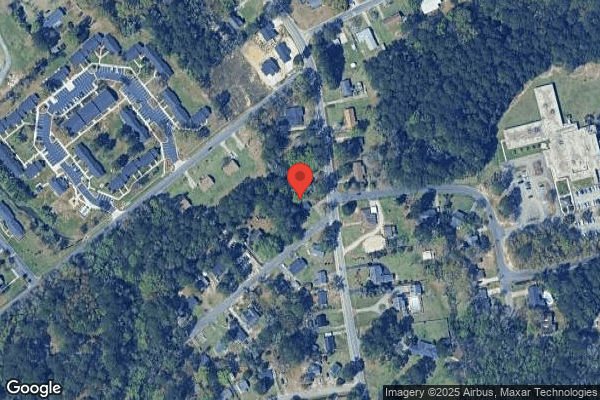

105 Medford Drive, Darlington, SC 29532 (843) 398-7000
For profit - Corporation 88 Beds Independent Data: November 2025
Trust Grade
80/100
#47 of 186 in SC
Last Inspection: February 2025

Within standard 12-15 month inspection cycle. Federal law requires annual inspections.

Overview

Medford Nursing Center in Darlington, South Carolina, has a Trust Grade of B+, indicating it is recommended and above average compared to other facilities. It ranks #47 out of 186 in the state, placing it in the top half, but is #3 out of 4 in the county, meaning only one nearby option is better. The facility is currently worsening, with issues increasing from 1 in 2023 to 2 in 2025. Staffing is rated average at 3/5 stars, with a turnover rate of 50%, which is similar to the state average, suggesting some staff stability but also room for improvement. Notably, there have been specific concerns, such as a failure to provide continuous oxygen therapy for a resident, a lack of proper infection control practices during care, and not following hand hygiene protocols, which could increase the risk of complications for residents. Despite these weaknesses, the facility does not have any fines on record, which is a positive sign. Overall, families should weigh these strengths and weaknesses when considering Medford Nursing Center for their loved ones.

Trust Score
B+
80/100
In South Carolina
#47/186
Top 25%
Safety Record
Low Risk
No red flags
Inspections
Getting Worse
1 → 2 violations
Staff Stability
⚠ Watch
50% turnover. Above average. Higher turnover means staff may not know residents' routines.
Penalties
✓ Good
No fines on record. Clean compliance history, better than most South Carolina facilities.
Skilled Nurses
⚠ Watch
Each resident gets only 27 minutes of Registered Nurse (RN) attention daily — below average for South Carolina. Fewer RN minutes means fewer trained eyes watching for problems.
Violations
✓ Good
Only 3 deficiencies on record. Cleaner than most facilities. Minor issues only.
★★★★☆
4.0
Overall Rating
★★★☆☆
3.0
Staff Levels
★☆☆☆☆
1.0
Care Quality
★★★★★
5.0
Inspection Score
Stable
2023: 1 issues
2025: 2 issues

The Good

  • Full Sprinkler Coverage · Fire safety systems throughout facility
  • No fines on record

Facility shows strength in fire safety.

The Bad

Staff Turnover: 50%

Near South Carolina avg (46%)

Higher turnover may affect care consistency

The Ugly 3 deficiencies on record

Feb 2025 2 deficiencies
CONCERN (D)

Potential for Harm - no one hurt, but risky conditions existed

Respiratory Care (Tag F0695)

Could have caused harm · This affected 1 resident

Based on observation, interview, and record review, the facility failed to provide continuous oxygen therapy for one (Resident (R)62) of one resident reviewed for respiratory. This failure could poten...

Read full inspector narrative →
Based on observation, interview, and record review, the facility failed to provide continuous oxygen therapy for one (Resident (R)62) of one resident reviewed for respiratory. This failure could potentially cause R62's condition to exacerbate. Findings include: Review of R62's significant change Minimum Data Set (MDS) with an Assessment Reference Date (ARD) date of 12/18/24, located in the MDS tab of the electronic medical record (EMR), revealed an admission date of 07/16/24 and had a Brief Interview for Mental Status (BIMS) of 10 out of 15, indicating moderate cognition impairment. R62 had diagnoses of acute and chronic respiratory failure, unspecified whether with hypoxia or hypercapnia, shortness of breath, wheezing, and received oxygen therapy. Review of R62's order, dated 09/10/24, located in the EMR under the Order tab revealed Oxygen: Oxygen at 2L[liter]/mins[minutes] via NC[nasal cannula] continuously, every shift. Review of R62's care plan, revised 01/13/24, located in the EMR under the Care Plan, revealed The resident has risk for altered respiratory status/difficulty breathing r/t [related to] dx [diagnosis] of Respiratory Failure with oxygen dependence. Hx [history] of COVID-19, hx of pneumonia. An intervention included Administer oxygen as ordered. Assist resident with positioning nasal cannula as tolerated. On 02/06/25 at 10:42 AM, R62's door was closed, and a green dot was noted on the door frame. The surveyor knocked on the door and did not receive a response. The door was opened, and Certified Nurse Aide (CNA)1 was observed at R62's bedside performing personal care. After care was completed on 02/06/25 at 10:54 AM, R62 was observed laying on her back with the bed flat with no pillow or blanket and R62 asking for her oxygen. R62 then pointed to her nasal cannula out of R62's reach that was located on the right side of the bed. During an interview on 02/06/25 at 10:56 AM, CNA1 was informed R62 was requesting her oxygen via the nasal cannula. CNA1 stated when she gets R62 in the wheelchair R62 will put in on. On 02/06/25 at 1:18 PM, R62 was in her room in the wheelchair eating lunch and wearing a nasal cannula. R62 was in no distress. R62 was asked if she had her oxygen on when CNA1 was providing incontinent care earlier that morning. R62 stated, No, CNA1 took it off. R62 was asked if she took it off and R62 stated, No the CNA did. R62 was asked if she was okay with the oxygen being off during her personal care and R62 stated, No, she would rather have it on. R62 stated some girls keep it on and some take it off, but she would rather have it on as it makes her feel better. During a follow up interview on 02/06/25 at 1:23 PM, CNA1 confirmed she took R62's nasal cannula off during incontinent care because R62 gets moved back and forth and CNA1 didn't want to tug on the tubing. CNA1 was asked why the oxygen wasn't put back on R62 after she had completed her incontinent care and R62 was laying on the bed waiting for CNA1 to retrieve the mechanical left and to transfer her into the wheelchair as 18 minutes had passed without oxygen. CNA1 did not comment. During an interview on 02/06/25 at 1:31 PM, the Director of Nursing (DON) was asked about CNA1 taking off R62's oxygen nasal cannula during incontinent care and what her expectation was. The DON stated, CNA1 should have kept it on during care unless R62 takes it off or refuses, but R62 didn't. The DON stated an oxygen policy would be provided. At the time of the exit, no policy was provided.
CONCERN (D)

Potential for Harm - no one hurt, but risky conditions existed

Infection Control (Tag F0880)

Could have caused harm · This affected 1 resident

Based on observation, interview, and record review, the facility failed to utilize Enhanced Barrier Precautions (EBP) while performing incontinent care for one (Resident (R)62) of two residents review...

Read full inspector narrative →
Based on observation, interview, and record review, the facility failed to utilize Enhanced Barrier Precautions (EBP) while performing incontinent care for one (Resident (R)62) of two residents reviewed for infection control. This deficient practice could potentially lead to increased risk of infection and complications for R62 with an open gastrostomy stoma. Findings include: Review of the facility policy titled Enhanced Barrier Precautions, revised 03/24, provided by the facility revealed It is the policy of this facility to implement enhanced barrier precautions for the prevention of transmission of multidrug-resistant organisms. Enhanced barrier precautions (EBP) refer to an infection control intervention designed to reduce transmission of multidrug-resistant organisms that use targeted gown and gloves during high contact resident care activities. b. PPE [personal protection equipment] for enhanced barrier precautions is only necessary when performing high-contact care activities and may not need to be donned prior to entering the resident's room. 4. High-contact resident care activities include: .d. Providing hygiene . f. Changing briefs or assisting with toileting. Review of R62's significant change Minimum Data Set (MDS) with an Assessment Reference Date (ARD) date of 12/18/24, located in the MDS tab of the electronic medical record (EMR), revealed an admission date of 07/16/24 and had a Brief Interview for Mental Status (BIMS) of 10 out of 15, indicating moderate cognition impairment, was incontinent of bowel and bladder, and had diagnoses of dementia, gastrostomy status, and cutaneous abscess of abdominal wall. Review of R62's order, dated 02/05/25, located in the EMR under the Order tab revealed Enhanced Barrier Precautions every shift related to Encounter for Attention to Gastrostomy; Encounter for Prophylactic Measures, unspecified. Review of R62's care plan, revised 08/16/24, located in the EMR under the Care Plan tab revealed The resident requires assistance with ADLs [activities of daily living] related to dx [diagnoses] of AFIB [atrial fibrillation], dementia, HTN [hypertension], DM [diabetes mellitus], malnutrition, dysphagia, PEG [percutaneous endoscopic gastrostomy] tube placement, and limited mobility. An intervention included Enhanced Barrier Precautions. On 02/06/25 at 10:42 AM, R62's door was closed, and a green dot was noted on the door frame. The surveyor knocked on the door and did not receive a response. The door was opened, and Certified Nurse Aide (CNA)1 was observed at R62's bedside performing personal care without wearing the appropriate gown. On 02/06/25 at 10:52 AM, CNA1 was observed leaving R62's room. CNA1 was asked if she was supposed to wear PPE while providing personal care for R62. CNA1 stated, Yes, and confirmed she did not have a gown on and the green dot on R62's door meant Enhanced Barrier Protection (EBP). During an interview on 02/06/25 at 11:31 AM, the Infection Preventionist (IP) was asked if R62 was under EBP. The IP stated, Yes, and R62 had the green dot on her door that identified to staff R62 was under EBP. The IP stated R62 was under EBP due to R62's gastrostomy site being still open. The IP stated once the site was closed, the EBP would be removed. The IP was asked should the nurse aides wear PPE during R62's personal care. The IP stated, Yes. The IP was informed CNA1 did not utilize PPE during R62's incontinent care on 02/06/25 at 10:42 AM. The IP stated maybe CNA1 was confused about the EBP and thought it wasn't necessary. The IP was informed CNA1 confirmed she did not use PPE but should have. The IP stated that more education was necessary. During an interview on 02/06/25 at 1:27 PM, the Director of Nursing (DON) was asked about CNA1 not wearing PPE during R62's incontinent care and what her expectation was. The DON stated CNAs should wear PPE and they have been educated on it.
Jun 2023 1 deficiency
CONCERN (D)

Potential for Harm - no one hurt, but risky conditions existed

Infection Control (Tag F0880)

Could have caused harm · This affected 1 resident

Based on review of facility policy, observations, and interviews, the facility failed to follow appropriate infection control practices for hand hygiene and glove wearing for one resident (Resident (R...

Read full inspector narrative →
Based on review of facility policy, observations, and interviews, the facility failed to follow appropriate infection control practices for hand hygiene and glove wearing for one resident (Resident (R)57) observed during wound care out of a total sample of 19 residents. Findings include: Review of the facility's policy titled Handwashing/Hand Hygiene dated 2/18 revealed, Policy: Staff will wash hands use hand sanitizer to aide in the prevention of the transmission Of infection .Purpose: To provide guidelines to employees for appropriate hand washing and hand sanitation .Procedure Hand washing: 1.Wet hands. 2. Apply soap and lather your hands by rubbing them together with the soap. 3. Scrub surfaces of hands for 20 seconds. 4. Rinse hands. 5. Dry hands with a clean paper towel and discard or air-dry hands. Hand Sanitizer: 1. Place sufficient amount of hand sanitizer cleanser on hands. 2. Rub hands together until hands feel dry (This should take around 20 seconds) . During an observation with Registered Nurse (RN)1 on 06/07/23 at 1:20 PM revealed, RN1 donned a pair of gloves as she prepared items on a treatment tray, ready to perform wound care on R57. At 1:21 PM, RN1 removed her gloves, touched R57's bedside table and bed, raising the bed up to a height for wound care. RN1 did not perform hand hygiene after removing her gloves. At 1:22 PM, RN1 donned another pair of gloves without performing hand hygiene. RN1 proceeded to the bathroom to get a bowl of water and returned still wearing the same gloves. At 1:23 PM, RN1 removed her gloves, did not perform hand hygiene, and donned another pair of gloves. RN1 cleansed R57's left toe wound. RN1 moved to R57's right heel wound without changing gloves and wrapped the heel wound in a clean bandage. RN1 removed the gloves and performed hand hygiene. On 06/07/23 at 1:35 PM, RN1 was told of the foregoing observations of several glove changes without performing hand hygiene. RN1 stated, ok. During an interview with the Director of Nursing on 06/08/23 at 9:16 AM, the DON stated it was her expectation that RN1 use hand sanitizer between glove changes every single time.
Understanding Severity Codes (click to expand)
Life-Threatening (Immediate Jeopardy)
J - Isolated K - Pattern L - Widespread
Actual Harm
G - Isolated H - Pattern I - Widespread
Potential for Harm
D - Isolated E - Pattern F - Widespread
No Harm (Minor)
A - Isolated B - Pattern C - Widespread

Questions to Ask on Your Visit

  • "Can I speak with families of current residents?"
  • "What's your RN coverage like on weekends and overnight?"

Our Honest Assessment

Strengths
  • • Grade B+ (80/100). Above average facility, better than most options in South Carolina.
  • • No major safety red flags. No abuse findings, life-threatening violations, or SFF status.
  • • No fines on record. Clean compliance history, better than most South Carolina facilities.
  • • Only 3 deficiencies on record. Cleaner than most facilities. Minor issues only.
Concerns
  • • No significant concerns identified. This facility shows no red flags across CMS ratings, staff turnover, or federal penalties.
Bottom line: Generally positive indicators. Standard due diligence and a personal visit recommended.

About This Facility

What is Medford Nursing Center's CMS Rating?

CMS assigns Medford Nursing Center an overall rating of 4 out of 5 stars, which is considered above average nationally. Within South Carolina, this rating places the facility higher than 99% of the state's 100 nursing homes. This rating reflects solid performance across the metrics CMS uses to evaluate nursing home quality.

How is Medford Nursing Center Staffed?

CMS rates Medford Nursing Center's staffing level at 3 out of 5 stars, which is average compared to other nursing homes. Staff turnover is 50%, compared to the South Carolina average of 46%.

What Have Inspectors Found at Medford Nursing Center?

State health inspectors documented 3 deficiencies at Medford Nursing Center during 2023 to 2025. These included: 3 with potential for harm.

Who Owns and Operates Medford Nursing Center?

Medford Nursing Center is owned by a for-profit company. For-profit facilities operate as businesses with obligations to shareholders or private owners. The facility operates independently rather than as part of a larger chain. With 88 certified beds and approximately 78 residents (about 89% occupancy), it is a smaller facility located in Darlington, South Carolina.

How Does Medford Nursing Center Compare to Other South Carolina Nursing Homes?

Compared to the 100 nursing homes in South Carolina, Medford Nursing Center's overall rating (4 stars) is above the state average of 2.9, staff turnover (50%) is near the state average of 46%, and health inspection rating (5 stars) is much above the national benchmark.

What Should Families Ask When Visiting Medford Nursing Center?

Based on this facility's data, families visiting should ask: "Can I visit during a mealtime to observe dining assistance and food quality?" "How do you handle medical emergencies, and what is your hospital transfer rate?" "Can I speak with family members of current residents about their experience?"

Is Medford Nursing Center Safe?

Based on CMS inspection data, Medford Nursing Center has a clean safety record: no substantiated abuse findings (meaning no confirmed cases of resident harm), no Immediate Jeopardy citations (the most serious violation level indicating risk of serious injury or death), and is not on the Special Focus Facility watch list (a federal program monitoring the lowest-performing 1% of nursing homes). The facility has a 4-star overall rating and ranks #1 of 100 nursing homes in South Carolina. While no facility is perfect, families should still ask about staff-to-resident ratios and recent inspection results during their visit.

Do Nurses at Medford Nursing Center Stick Around?

Medford Nursing Center has a staff turnover rate of 50%, which is about average for South Carolina nursing homes (state average: 46%). Moderate turnover is common in nursing homes, but families should still ask about staff tenure and how the facility maintains care continuity when employees leave.

Was Medford Nursing Center Ever Fined?

Medford Nursing Center has no federal fines on record. CMS issues fines when nursing homes fail to meet care standards or don't correct problems found during inspections. The absence of fines suggests the facility has either maintained compliance or corrected any issues before penalties were assessed. This is a positive indicator, though families should still review recent inspection reports for the full picture.

Is Medford Nursing Center on Any Federal Watch List?

Medford Nursing Center is not on any federal watch list. The most significant is the Special Focus Facility (SFF) program, which identifies the bottom 1% of nursing homes nationally based on persistent, serious quality problems. Not being on this list means the facility has avoided the pattern of deficiencies that triggers enhanced federal oversight. This is a positive indicator, though families should still review the facility's inspection history directly.