Powdersville Post-Acute
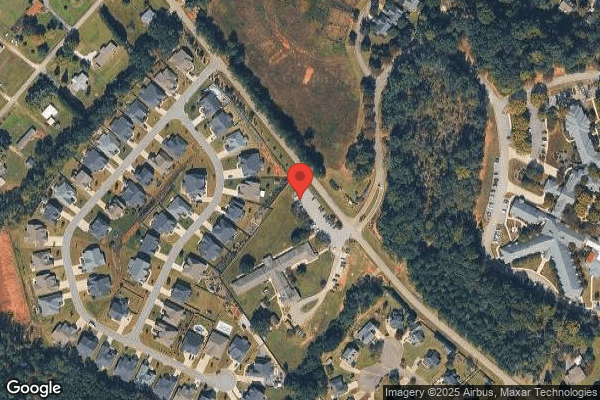

1850 Crestview Road, Easley, SC 29642 (864) 859-3236
For profit - Limited Liability company 60 Beds PACS GROUP Data: November 2025
Trust Grade
43/100
#165 of 186 in SC
Last Inspection: July 2024

Within standard 12-15 month inspection cycle. Federal law requires annual inspections.

Overview

Powdersville Post-Acute in Easley, South Carolina has a Trust Grade of D, indicating below-average performance with some notable concerns. It ranks #165 out of 186 facilities in the state, placing it in the bottom half, and #5 out of 5 in Pickens County, meaning there are no better local options available. The facility is worsening, with issues increasing from 1 in 2022 to 9 in 2024. Staffing is a significant concern, with a poor rating of 1 out of 5 stars and a high turnover of 67%, well above the state average. Recent inspections revealed serious shortcomings, including the failure to ensure food was stored at safe temperatures and staff not wearing required personal protective equipment during a COVID-19 outbreak, which raises serious health risks for residents. However, the quality measures rating is a bit more positive at 4 out of 5 stars, indicating some strength in that area.

Trust Score
D
43/100
In South Carolina
#165/186
Bottom 12%
Safety Record
Low Risk
No red flags
Inspections
Getting Worse
1 → 9 violations
Staff Stability
⚠ Watch
67% turnover. Above average. Higher turnover means staff may not know residents' routines.
Penalties
○ Average
$7,138 in fines. Higher than 61% of South Carolina facilities. Some compliance issues.
Skilled Nurses
⚠ Watch
Each resident gets only 28 minutes of Registered Nurse (RN) attention daily — below average for South Carolina. Fewer RN minutes means fewer trained eyes watching for problems.
Violations
○ Average
10 deficiencies on record. Average for a facility this size. Mostly minor or procedural issues.
★☆☆☆☆
1.0
Overall Rating
★☆☆☆☆
1.0
Staff Levels
★★★★☆
4.0
Care Quality
★★☆☆☆
2.0
Inspection Score
Stable
2022: 1 issues
2024: 9 issues

The Good

  • 4-Star Quality Measures · Strong clinical quality outcomes
  • Full Sprinkler Coverage · Fire safety systems throughout facility
  • No fines on record

Facility shows strength in quality measures, fire safety.

The Bad

1-Star Overall Rating

Below South Carolina average (2.8)

Significant quality concerns identified by CMS

Staff Turnover: 67%

20pts above South Carolina avg (46%)

Frequent staff changes - ask about care continuity

Federal Fines: $7,138

Below median ($33,413)

Minor penalties assessed

Chain: PACS GROUP

Part of a multi-facility chain

Ask about local staffing decisions and management

Staff turnover is elevated (67%)

19 points above South Carolina average of 48%

The Ugly 10 deficiencies on record

Jul 2024 9 deficiencies
CONCERN (D)

Potential for Harm - no one hurt, but risky conditions existed

PASARR Coordination (Tag F0644)

Could have caused harm · This affected 1 resident

**NOTE- TERMS IN BRACKETS HAVE BEEN EDITED TO PROTECT CONFIDENTIALITY** Based on review of facility policy, record review, and interview, the facility failed to refer Resident (R)2 for a Preadmission ...

Read full inspector narrative →
**NOTE- TERMS IN BRACKETS HAVE BEEN EDITED TO PROTECT CONFIDENTIALITY** Based on review of facility policy, record review, and interview, the facility failed to refer Resident (R)2 for a Preadmission Screening and Resident Review (PASARR) Level II, after the resident received a new diagnosis of a severe mental illness, for 1 of 2 residents reviewed for PASARR. Findings include: Review of the facility policy titled, admission Criteria with a revised date of March 2019, documented under Policy Interpretation and Implementation, 9. b. If the level I screen indicates that the individual may meet the criteria for a MD, ID, or RD, he or she is referred to the state PASRR representative for the Level II (evaluation and determination) screening process. (1) The admitting nurse notifies the social services department when a resident is identified as having a possible (or evident) MD, ID or RD. (2) The social worker is responsible for making referrals to the appropriate state-designated authority. Review of R2's Face Sheet revealed the resident was initially admitted to the facility on [DATE] and readmitted to the facility on [DATE]. R2 was admitted with diagnoses including but not limited to: hypothyroidism, morbid obesity, other psychoactive substance use, schizophrenia, bipolar disorder, and post-traumatic stress disorder (PTSD). Review of R2's Medical Diagnoses revealed the following: psychoactive substance use dated 02/14/23, schizophrenia dated 05/15/24, bipolar disorder dated 09/22/20, and post-traumatic stress disorder dated 09/22/20. Review of R2's Quarterly Minimum Data Set (MDS) with an Assessment Reference Date (ARD) of 05/08/24, revealed R2 had a Brief Interview for Mental Status score of 13 out of 15, indicating R2 was cognitively intact. Further review of the MDS revealed R2 showed behaviors of delusions (misconceptions or beliefs that are firmly held, contrary to reality), verbal behavioral symptoms directed toward others (e.g., threatening others, screaming at others, cursing at others), and rejection of evaluation or care (e.g., bloodwork, taking medications, ADL assistance). Review of R2's PASARR - Level I dated 09/22/20, indicated R2's initial PASARR was a Skilled Nursing Facility (SNF) transfer dated 03/25/19. The Level I PASARR also indicated Depression was the only mental illness listed and R2 required no further evaluation, but indicators were present. Review of R2's PASARR - Level I dated 06/31/24, indicated R2 had the following mental illness: bipolar disorder, PTSD, anxiety disorder, major depressive disorder, and schizophrenia. Further review under comments, indicated, Resident noted to be uncooperative during cares, isolating herself from facility activities and disrupting other residents due to yelling/loud talking. The PASARR - Level I also indicated R2 was recommended for further evaluation based on mental illness indicators. Review of R2's Care Plan documented the following problem areas: Resident is non-factual in relating happenings and situations between self and other residents/staff and conversations initiated on 04/23/19, Resident has been exposed to a traumatic event. Resident has had physical/sexual abuse in the past initiated on 01/13/20, and Psychosocial- Behavior: Exhibits or is at risk for behavioral symptoms: yelling out without any causes, hollering at staff due, attempting to kick male CNA in privates, belittling staff, refusing for psych NP to visit with resident to: anxiety, Bipolar disorder, depression, Post-Traumatic Stress Disorder (PTSD) initiated on 05/10/24. Review of R2's Psych Progress Notes dated 03/18/22, documented, Major depressive disorder, recurrent, severe with psychotic features is substantiated . patient endorses little interest or pleasure in doing things, feeling down, depressed, or hopeless, feeling tired of having little energy, overeating, trouble concentrating, and thoughts of being better off dead, psychotic features, delusions present . Patient endorses feeling nervous, anxious, or on edge, not being able to control worry and worrying about many different things, trouble relaxing, restlessness, easily annoy or irritated, feeling afraid something awful might happen. During an interview on 07/25/24 at 11:32 AM, the Social Services Director (SSD) revealed R2's mood and behavior varies by day and by staff that work with her. R2 received psychosocial visits from me and activities department offer her activities. The SSD stated, I did a level II screening and I am waiting on the physician and psych to finish their portions. I am not sure if we get the Department of Health and Human Services (DHHS) involved for a Level II. Level II screening is all done inhouse. We contract our physicians through physician services group to complete the PASARRs. During an interview on 07/25/24 at 5:00 PM, the Director of Nursing (DON) stated, I am not familiar with the PASARR process, that's the Social Worker. During an interview on 07/26/24 at 2:06 PM, the Administrator stated, I would have to look in to that (referring to the PASARR). I had the Social Worker look into that and do an audit. During an interview on 07/26/24 at 2:36 PM, the Administrator and the SSD revealed there was a miscommunication and a Level II PASARR will be sent off and completed for the resident.
CONCERN (D)

Potential for Harm - no one hurt, but risky conditions existed

Deficiency F0655 (Tag F0655)

Could have caused harm · This affected 1 resident

**NOTE- TERMS IN BRACKETS HAVE BEEN EDITED TO PROTECT CONFIDENTIALITY** Based on review of facility policy, observation, record review, and interview, the facility failed to complete a Baseline Care P...

Read full inspector narrative →
**NOTE- TERMS IN BRACKETS HAVE BEEN EDITED TO PROTECT CONFIDENTIALITY** Based on review of facility policy, observation, record review, and interview, the facility failed to complete a Baseline Care Plan for Resident (R)309 in a timely manner. Furthermore, the facility failed to address R309's need for oxygen therapy in the Baseline Care Plan, for 1 of 4 residents reviewed for Care Plan. Findings include: Review of the facility policy titled, Care Plans - Baseline with a revised date of August 2022, documented, A person-centered baseline care plan of care to meet the resident's immediate needs shall be developed for each resident within forty eight (48) hours of admission. 1. To assure that the resident's immediate care needs are met and maintained, a baseline care plan will be developed within forty-eight (48) hours of the resident's admission. Review of R309's Face Sheet, revealed R309 was admitted to the facility on [DATE], with diagnoses including but not limited to: acute and chronic respiratory failure with hypoxia, chronic obstructive pulmonary disease (COPD), dementia, and acute kidney failure. Review of R309's Physician Orders revealed the following, O2 at 4l via NC, continuously. every day and night shift for acute hypoxemic respiratory failure/chronic heart failure with a start date of 07/10/24. Review of R309's Electronic Medical Record (EMR) under the Evaluations Tab, revealed a Baseline Care Plan dated 07/03/24, with a status of In progress. Further review revealed, Next Evaluation Due: *Baseline Care Plan Person-Centered Care Planning - V3.1 : 21 days overdue - 7/3/2024. Review of R309's Baseline Care Plan dated 07/03/24, did not indicate R309's need for oxygen therapy. Further review revealed, Physician Orders 1. A printed summary of physician orders and instructions including medications, treatments, and dietary orders provided was not checked Yes or No as being included. During an observation on 07/23/24 at 11:25 AM, R309 was not receiving oxygen. The oxygen machine was stored in the opposite corner of the room, away from the resident. During an interview on 07/25/24 at 4:46 PM, the Director of Nursing (DON) stated, MDS [Minimum Data Set] completes the Baseline Care Plan, I am not familiar with the policy. The MDS Coordinator was not available for interview.
CONCERN (D)

Potential for Harm - no one hurt, but risky conditions existed

Comprehensive Care Plan (Tag F0656)

Could have caused harm · This affected 1 resident

Based on review of facility policy, record review, observation, and interview, the facility failed to implement interventions outlined in the care plan for Resident (R)31, for 1 of 1 residents reviewe...

Read full inspector narrative →
Based on review of facility policy, record review, observation, and interview, the facility failed to implement interventions outlined in the care plan for Resident (R)31, for 1 of 1 residents reviewed for comprehensive care plan. Findings include: Review of the facility policy titled, Care Plans, Comprehensive Person-Centered dated March 2022, revealed under the policy, A comprehensive, person-centered care plan that includes measurable objectives and timetables to meet the resident's physical, psychosocial and functional needs is developed and implemented for each resident. Review of R31's Face Sheet revealed the facility admitted R31 on 09/11/23, with diagnoses including but not limited to: epilepsy, heart disease, hypertension, cerebral infarction, hemiplegia and hemiparesis affecting left non dominant side, bipolar disorder, schizophrenia, sickle cell disease, and absence of left and right leg above knee. Review of R31's Electronic Medical Record (EMR) revealed a report dated 06/24/24, which documented, staff reported R31 on the floor, was assisted back to bed and denied striking her head and no injuries observed. R31 stated the pad in her wheelchair (W/C) caused her to slip and fall. Review of R31's Care Plan dated 10/13/23, revealed R31 is at risk for falls with or without injury due to impaired mobility, incontinence, med use, anxiety, pain and bilateral AKA. A new intervention directing staff to add Dycem under wheelchair cushion was added to the care plan on 06/24/24. During an observation on 07/24/24 at 4:23 PM, R31 was in bed eating. Her W/C was at bedside. There was no non skid device or Dycem in her W/C. During an observation and interview on 07/25/24 at 3:32 PM, R31 was in her room, receiving therapy with an Occupational Therapist Assistant (OTA). An observation of R31's W/C cushion revealed Dycem was not beneath her W/C cushion. R31 stated, I told the CNA [Certified Nursing Assistant] about it, it's been missing for 3 weeks. The OTA confirmed there was no Dycem in R31's W/C. During an interview on 07/24/24 at 4:40 PM, Certified Nurse Assistant (CNA)1 stated, I heard she had a fall. I don't put anything in her wheelchair cushion unless she asks me to. During an observation and interview on 07/25/24 at 3:45 PM, the OTA returned with Dycem in a box. The OTA stated, I have Dycem and I'm going to add it to [R31's] wheelchair. During an interview on 07/25/24 at 4:04 PM, the Maintenance Director stated, We don't modify the wheelchair cushions in any way. I don't add anything to them at all. My assistant would not add anything to the wheelchair cushions either. During an interview on 07/25/24 at 10:41 AM, the Director of Nurses (DON) stated, The Dycem was a recommendation post fall and should have been in her wheelchair. The DON agreed the plan of care should have been implemented.
CONCERN (D)

Potential for Harm - no one hurt, but risky conditions existed

Pressure Ulcer Prevention (Tag F0686)

Could have caused harm · This affected 1 resident

Based on review of facility policy, observation, and interview, the facility failed to follow proper Infection Control (IC) practices during wound care of Resident (R)53, for 1 of 1 resident reviewed ...

Read full inspector narrative →
Based on review of facility policy, observation, and interview, the facility failed to follow proper Infection Control (IC) practices during wound care of Resident (R)53, for 1 of 1 resident reviewed for pressure ulcers. Findings include: Review of the facility policy titled, Non Sterile dressing Change dated September 2013, revealed under the policy, The purpose of this procedure is to provide guidelines for the application of dry, clean dressings . 6. Put on clean gloves, loosen tape and remove soiled dressing . 7. Pull glove over dressing and discard into plastic or biohazard bag . 8. Wash and dry your hands thoroughly . discard disposable items . Review of R53 Face Sheet revealed the facility admitted R53 on 06/24/24, with diagnoses including but not limited to: collapsed vertebra, cord compression, malnutrition, Alzheimer's disease, paraplegia, chronic kidney disease, anemia, hyperlipidemia and sarcopenia. During an observation on 07/25/24 at 12:46 PM, of R53's sacral wound dressing change with the physician (MD) and Wound Nurse. After verbal consent from R53, to observe the dressing change, both the Wound Nurse and MD washed hands, gowned, and donned gloves. All ordered items were on the overbed table barrier, including Dakin's solution bottle, a package of Calcium Alginate and a bottle of wound cleanser. The Wound Nurse removed the soiled dressing. After the MD debrided the sacral wound, she removed the gown and gloves, washed her hands, took her supplies and exited the room. The Wound Nurse failed to remove soiled gloves. The Wound Nurse than poured Dakin's solution straight from the bottle onto a 4x4 gauze. The Wound Nurse applied skin prep to outer perimeter of wound. She applied medi-honey with a sterile q-tip, then packed with calcium alginate that she cut with her scissors. An outer dressing was applied. The Wound Nurse dated the dressing, removed her gloves and cleaned her scissors with an alcohol prep pad before she washed her hands. The Wound Nurse than picked up the wound cleanser, Dakin's bottle, and opened alginate and placed on overbed table after removing the towel barrier. The Wound Nurse gathered the trash and bagged it all. She then removed her disposable gown, washed her hands, picked up items from the table, then exited the room with the contaminated items and placed the Dakin's solution, wound cleanser, and opened package of calcium alginate back into treatment cart without cleaning them. During an interview on 07/25/24 at approximately 1:15 PM, the Wound Nurse confirmed she did not remember changing her gloves during the treatment. She also confirmed the soiled items of wound cleanser, calcium alginate and Dakins solution were not wiped down before she placed the items back into the treatment cart. The Wound Nurse confirmed she used an alcohol prep pad to clean her scissors before placing them in her pocket. During an interview on 07/25/24 at 1:21 PM, the Director of Nurses (DON) stated, We use bleach wipes or sani wipes to clean scissors, but not with an alcohol prep pad. The nurse should have washed her hands after removing the soiled dressing and remove her gloves. She should not have placed the items directly onto the overbed table, then she should have cleaned the bottles and the foil package before placing them directly into the treatment cart.
CONCERN (D)

Potential for Harm - no one hurt, but risky conditions existed

Tube Feeding (Tag F0693)

Could have caused harm · This affected 1 resident

Based on review of facility policy, observation, record review, and interview, the facility failed to manage and notify the physician of Resident (R)162's complications related to feeding tube, for 1 ...

Read full inspector narrative →
Based on review of facility policy, observation, record review, and interview, the facility failed to manage and notify the physician of Resident (R)162's complications related to feeding tube, for 1 of 1 resident reviewed for tube feeding. Findings include: Based on review of facility policy titled, Enteral Tube Feeding via Continuous Pump dated 2018, revealed, If anything suggests improper tube positioning, do not administer feeding or medication, notify the charge nurse or physician. Monitor resident for signs and symptoms of feeding intolerance. Review of R162's Face sheet revealed the facility admitted R162 on 07/05/24, with diagnoses including, but not limited to: malignant neoplasm of nasal cavity, acute pancreatitis, dysphagia, dysarthria, multiple sclerosis, type 2 diabetes, anemia, gastrostomy, acute embolism jugular vein and obstructive sleep apnea. During an observation of R162 on 07/25/24 at 7:40 AM, R162 was lying in bed, awake. Her gastrostomy tube was exposed. Her tube feeding was disconnected. The feeding pole was located across the room. Hanging from the pole was a Glucerna enteral feeding, with no name or rate, and was dated 07/24/24. There was 700 milliliters (ml) remaining in the bottle. Written on the label was a time of 2200 (10:00 PM). Review of R162's Physician Orders revealed an order dated 07/22/24, which indicated, In the evening for nutrition, Glucerna 1.5 @ 55 mL/hour x12 hours starting at 8:00 PM, continuous feeding via pump, one time a day. Stop Glucerna 1.5 feeding at 8:00 AM. Review of R162's Registered Dietician (RD) note dated 07/22/24 at 9:56 AM, revealed, Evaluation do to enteral feed & blood sugars: Glucerna 1.5 @110ml/hr for 12 hours (start at 8pm; off 8am). This provides 1980 calories/day; 109 grams protein; 1001ml from formula + 1050cc from FWF for a total of 2051cc/day. Glucose high, Blood sugars x 24 hours: 340-513mg/dL. By mouth intake varies 25-100% per nursing. RD spoke with Nurse Practitioner about blood sugars and tube feeding regimen. Medications were adjusted. RD recommends decreasing tube feeding to a lower rate to help with blood sugars and allow for hunger. Patient is eager to eat orally. RD recommends glucerna 1.5 55ml/hr for 12 hours. This provides 990kcal/day; 55 g protein; 500cc from formula + 1140cc/day for a total of 1640cc/day. This will meet 50% of kcal and 59% of protein. Can adjust pending weights, labs, and tolerance. During an interview on 07/24/24 at 4:59 PM, Licensed Practical Nurse (LPN)1 stated, [R162] eats puree food. She also receives tube feeding. She gets Glucerna 1.5 for 12 hours at 55 ml/hour x 12 hours. Turned off at 8:00 AM. She just started the puree food recently. During an interview on 07/25/24 at 7:43 AM, LPN3 stated, I came in at 11:00 PM last night. The feeding was already hung. I observed the Glucerna bottle and confirmed a time of 2200, that would be 10:00 PM. LPN3 confirmed 700 ml remained in the bottle. LPN3 stated she just turned off R162's feeding a little while ago because R162 was complaining of a stomach ache. LPN3 concluded, I haven't notified anyone, I gave her pain medication. During an interview on 07/25/24 at 8:00 AM, R162's husband, who was at bedside, stated, Her feeding is supposed to hang from 8:00 PM to 8:00 AM every night. During an interview on 07/25/24 at 11:00 AM, LPN4 stated, I worked 7p-11p last night. [R162's] husband brought [R162] back around 7:00-7:30 PM from on pass. I hung the tube feeding at 2200. I did not notify the MD for hanging her feeding late. Her blood sugar was 450, I held off on her feeding. Sometime after 8:00 PM I gave her 10 units of insulin. I went back later and checked her blood sugar, it was over 100 points less, so I decided to go ahead and hang the tube feeding. I did not record that I rechecked her blood sugar. During an interview on 07/25/24 at 9:34 AM, the Nurse Practitioner (NP) stated, I would want to know if [R162's] tube feeding is being turned on late or cut off early. The nurses should be documenting this and informing me. If her blood sugar is running high, I would have liked to have known that, I need to know that. She's had multiple abdominal surgeries in the past, something may be going on with her stomach that I need to be aware of. I've not been made aware she is having stomach pain either. During an interview on 07/26/24 at 2:20 PM, the Director of Nurses (DON) confirmed the nurse should have notified the MD if the feeding is held for various reasons, including the blood sugars being very high as R162 is a complex resident, as well as notifying him if they take the feeding down early because of pain.
CONCERN (D)

Potential for Harm - no one hurt, but risky conditions existed

Respiratory Care (Tag F0695)

Could have caused harm · This affected 1 resident

**NOTE- TERMS IN BRACKETS HAVE BEEN EDITED TO PROTECT CONFIDENTIALITY** Based on review of facility policy, observation, record review and interview, the facility failed to follow physician orders reg...

Read full inspector narrative →
**NOTE- TERMS IN BRACKETS HAVE BEEN EDITED TO PROTECT CONFIDENTIALITY** Based on review of facility policy, observation, record review and interview, the facility failed to follow physician orders regarding oxygen therapy for Resident (R)5 and R309, for 2 of 2 residents reviewed for respiratory therapy. Findings include: Review of the facility policy titled, Physicians Orders dated November 2017, documented, The purpose of the physicians orders is to communicate the medical care that the resident is to receive. Adhere to physicians medication orders including strength, specific dose of the medication, mode of administration, reason for administration . Review of the facility policy titled, Oxygen Administration with a revised date of October 2018, documented, Preparation 1. Verify that there is a physician's order for this procedure. Review the physician's orders for oxygen administration . Reporting 1. Notify the supervisor if the resident refuses the procedure. 2. Report other information in accordance with facility policy and professional standards of practice. 1. Review of R5's Face sheet revealed the facility admitted R5 on 12/08/23, with diagnosis including but not limited to; cerebral infarction, hemiplegia affecting right dominant side, peripheral vascular disease, human immunodeficiency virus, anxiety and depression. Review of R5's Physicians Orders dated 06/25/24, revealed an order for oxygen at 2 liters/minute via nasal cannula every shift. During an observation on 07/23/24 at 3:34 PM, R5's oxygen concentrator was not on or plugged in. During an interview on 07/24/24 at 12:15 PM, Licensed Practical Nurse (LPN)1 stated, [R5] has an order for oxygen every shift. LPN1 confirmed the oxygen was not on or plugged in. During an observation on 07/25/24 at 2:00 PM, R5's oxygen was at bedside, but not plugged in. During an interview on 07/25/24 at 4:48 PM, the Director of Nursing (DON) stated, [R5's] order for oxygen at 2 Liters every shift isn't clear, so I would have to say it should be on at all times, just missing the word, continuous. During an interview on 07/26/24 at 11:20, LPN1 stated, [R5's] oxygen read 2 Liters every shift, it needed to be clarified because it did not say continuous. 2. Review of R309's Face Sheet, revealed R309 was admitted to the facility on [DATE], with diagnoses including but not limited to: acute and chronic respiratory failure with hypoxia, chronic obstructive pulmonary disease (COPD), dementia, and acute kidney failure. Review of R309's Physician Orders revealed the following, O2 at 4l via NC, continuously. every day and night shift for acute hypoxemic respiratory failure/chronic heart failure with a start date of 07/10/24. Review of R309's 5 Day Minimum Data Set (MDS) with an Assessment Reference Date (ARD) of 07/05/24, revealed R309 had a Brief Interview for Mental Status (BIMS) score of 3 out of 15, indicating R309 had severe cognitive impairment. Further review of the MDS revealed R309 did not exhibit behaviors of rejection of care, R309 suffered from shortness of breath with exertion and lying flat. Under the section Special Treatments revealed, R309 was receiving oxygen therapy on admission and indicated continuous on admission. Oxygen therapy while a resident, was blacked out. Review of R309's Care Plan revealed a problem area indicating, The resident has altered respiratory status/difficulty breathing r/t COPD, CHF, and Respiratory Failure with an initiated date of 07/20/24 and revised on 07/20/24. The Care Plan directed staff to, Administer medication/puffers as ordered. Monitor for effectiveness and side effects. Oxygen Settings: O2 via nasal prongs @ 4L as tolerated. Review of R309's Progress Notes, revealed the following notes: 7/20/2024 20:24 eMar - Medication Administration Note Note Text: O2 at 4l via NC, continuously. every day and night shift for acute hypoxemic respiratory failure/chronic heart failure. 7/11/2024 13:47 eMar - Medication Administration Note Note Text: Chest xray 2 views STAT for CHF, decreased oxygen saturation, increased oxygen needs Placed STAT order online at imaging website. Conf received as #43124152. 7/10/2024 11:30 Nurse's Note Note Text: Assessed resident, Resident resting in bed with head of bed elevated . swallow breathing noted, encouraged resident to take a deep breath, difficulty getting oxygen sat . Oxygen sat at 69% on 2 Liter via NC. Increased Oxygen to 4l via N/C. Resident oxygen increased to 88%. Will continue to monitor. Notified NP of assessment. New orders to increase oxygen to 4L liters via N/C. Waiting on labs to resultsfrom this am. 7/10/2024 08:40 Nurse Practitioner Note Note Text: Patient's oxygen saturation has progressively decreased throughout rehab course, currently 90% on 2 L NC O2, pulse 118. He is AO to self and situation. He is noted with somewhat shallow breathing and slightly diminished lung sounds bilaterally on today's exam. During an observation on 07/23/24 at 11:25 AM, R309 was not receiving oxygen. The oxygen machine was stored in the opposite corner of the room, away from the resident. During an observation on 07/23/24 at 2:35 PM, R309 was in his room and not receiving oxygen. The oxygen machine was stored in the opposite corner of the room, away from the resident. During an observation on 07/24/24 at 8:42 AM, R309 was sitting up in bed and not receiving oxygen. The oxygen machine was stored in the opposite corner of the room, away from the resident. During an observation and interview on 07/24/24 at 3:48 PM, R309 was moved to room [ROOM NUMBER]. R309 was laying in bed, not receiving oxygen. Observation revealed there was no oxygen machine in the room. R309 states, he has not been receiving oxygen and has a lot of problems breathing. R309 further states he is breathing ok right now. During an interview on 07/25/24 at 9:53 AM, the Nurse Practitioner (NP) stated, she expects if the order is continuous the oxygen should be on and monitored. The NP further stated, If I know they are taking it off, I will educate the staff about it. During an interview on 07/25/24 at 9:56 AM, R309 revealed he is unsure how long they keep the oxygen on. R309 further stated, The nurses take it off, it doesn't make me uncomfortable. During an interview on 07/25/24 at 4:46 PM, the Director of Nursing (DON) revealed, the oxygen should be worn continuous, unless the resident takes it off. The DON stated, we would let the physician know if the resident is not receiving the oxygen continuous. The DON further stated, That order should have been discontinued, physical therapy had him up and walking. During an interview on 07/26/24 at 2:06 PM, the Administrator stated, I would want to review the order. Staff should be following orders, sometimes the residents will pull off the oxygen. We can encourage all we want. Notify and consult the physician to see if the order needs to be changed
CONCERN (E)

Potential for Harm - no one hurt, but risky conditions existed

Deficiency F0761 (Tag F0761)

Could have caused harm · This affected multiple residents

**NOTE- TERMS IN BRACKETS HAVE BEEN EDITED TO PROTECT CONFIDENTIALITY** Based on review of facility policy, observation, and interview, the facility failed to ensure expired medications and biological...

Read full inspector narrative →
**NOTE- TERMS IN BRACKETS HAVE BEEN EDITED TO PROTECT CONFIDENTIALITY** Based on review of facility policy, observation, and interview, the facility failed to ensure expired medications and biologicals were removed and discarded from storage in 1 of 1 medication room and 2 of 3 treatment carts. Findings include: Review of the facility policy titled Storage of Medications revised on November 2020, states, The facility stores all drugs and biologicals in a safe, secure, and orderly manner . Discontinued, outdated, or deteriorated drugs or biologicals are returned to the dispensing pharmacy or destroyed. During an observation on 07/24/24 at 03:35 PM, of Medication room [ROOM NUMBER], revealed the following: Medline Suture Removal Tray (6 of 6) Ref DYND70900 LOT # 22BBA923 Expires 2024-05-31. Influenza Vaccine Flucelvax SN 3PDRRNA5WW LOT# AU3130B Expires 2024-06-20. During an interview on 07/24/24 at 3:35 PM, Licensed Practical Nurse (LPN)7 verified the expired medications/biologicals, and stated, All expired medications should be discarded in a timely manner. LPN7 than disposed the expired medications/biologicals. During an observation on 07/25/24 at 11:03 AM, of the 100 Hall Medication Cart revealed the following: Medline Evencare G2 Glucose Control Solutions Ref# MPH 1560 08327-0062-83 Lot# 16822052102 Expired 2024-05-09. During an interview on 07/25/24 at 11:20 AM, LPN5 stated, We discard all expired medications. LPN5 verified and discarded the expired medication/biological. During an observation on 07/25/24 at 1:47 PM, of the 300 Hall Medication Cart revealed the following: Acetaminophen suppositories USP, 650 mg ([NAME]) Lot # 1G0377 Expires 06/2024. LPN7 verified and discarded the expired medication/biological.
CONCERN (F)

Potential for Harm - no one hurt, but risky conditions existed

Deficiency F0800 (Tag F0800)

Could have caused harm · This affected most or all residents

**NOTE- TERMS IN BRACKETS HAVE BEEN EDITED TO PROTECT CONFIDENTIALITY** Based on review of facility policy, observation, and interview, the facility failed to hold cold foods at a safe temperature in ...

Read full inspector narrative →
**NOTE- TERMS IN BRACKETS HAVE BEEN EDITED TO PROTECT CONFIDENTIALITY** Based on review of facility policy, observation, and interview, the facility failed to hold cold foods at a safe temperature in 1 of 1 kitchen. Findings include: Review of the facility policy titled, Food: Quality and Palatability with a revised date of 02/2023, documented, Food will be palatable, attractive and served at a safe and appetizing temperature. Review of the facility policy titled, Food: Preparation with a revised date of 02/2023, documented, All foods are prepared in accordance with the FDA Code. 13. All foods will be held at appropriate temperatures . and less than 41 [degrees] for cold food holding. During an observation on 07/25/24 at 11:41 AM, of the lunch service food temperatures, performed by Cook1 revealed the following: Green bean salad (cold) 53 degrees Fahrenheit. Potato Salad (cold) initial temp 84.7 degrees Fahrenheit, retemp 77 degrees Fahrenheit. Salad (cold) 54.5 degrees Fahrenheit. Caesar salad (cold) 61.6 degrees Fahrenheit. During an observation and interview on 07/25/24 at 12:15 PM, Cook1 was observed plating an egg salad sandwich, that was not temped. This surveyor asked Cook1 if the egg salad sandwich was tempted and Cook1 responded, No. The Food Service Director (FSD)1 stepped in and temped the sandwich. The egg salad sandwich temped at 43.2 degrees Fahrenheit. The FSD1 placed the sandwich back in the refrigerator and stated, Cold foods has to temp below 41. During an observation on 07/25/24 at 12:13 PM, the green bean salad, potato salad, salad, and Caesar salad was retemped and was still not in a safe range. The FSD1 instructed staff to place the cold food items in the freezer. After approximately 30 minutes, all cold foods temped in a safe range. During an interview on 07/26/24 at approximately 1:30 PM, the District Manager for Healthcare Services stated, Both our [NAME] freezer and refrigerator did not seem to recover from our truck delivery this morning due to constant entering and exiting while putting away new inventory. During an interview on 07/26/24 at 1:34 PM, FSD1 stated, If food is above 41, we usually put it in an ice bath and place it in the freezer to help it cool down. She (Cook1) should have temped the food before placing it in the hotbox and on the tray. During an interview on 07/26/24 at 1:43 PM, Cook1 stated, I didn't temp them [egg salad sandwiches] because my assumption was that the sandwiches and potato salad had already been temped because it was ice cold when it was made. During an interview on 07/26/24 at 2:06 PM, the Administrator stated, They need to be at appropriate temps and when they come out on the floor, needs to be at safe temps to prevent bacteria growth.
CONCERN (F)

Potential for Harm - no one hurt, but risky conditions existed

Food Safety (Tag F0812)

Could have caused harm · This affected most or all residents

**NOTE- TERMS IN BRACKETS HAVE BEEN EDITED TO PROTECT CONFIDENTIALITY** Based on review of facility policy, observation, and interview, the facility failed to properly store food in 1 of 1 main kitche...

Read full inspector narrative →
**NOTE- TERMS IN BRACKETS HAVE BEEN EDITED TO PROTECT CONFIDENTIALITY** Based on review of facility policy, observation, and interview, the facility failed to properly store food in 1 of 1 main kitchen. Findings include: Review of the facility policy titled, Food Storage: Cold Foods with a revised date of 2/2023, documented, All Time/Temperature Control for Safety (TCS) foods, frozen and refrigerated, will be appropriately stored in accordance with guidelines of the FDA Food Code . 5. All foods will be stored wrapped or in covered containers, labeled and dated . Review of the facility policy titled, Food Storage: Dry Goods with a revised date of 2/2023, documented,All dry goods will be appropriately stored in accordance with the FDA Food Code . 5. All packaged and canned food items will be kept clean, dry, and properly sealed. During an observation on 07/23/24 at 10:21 AM, of the [NAME] refrigerator, revealed the following: 1 case of cucumbers, the cucumbers were covered with grayish/white fuzzy substance, which appeared to be mold. 1 6 pound can of peaches, labeled pears, and not properly sealed. During an observation on 07/23/24 at 10:35 AM, of a standalone refrigerator, revealed the following: Unidentified food items wrapped in aluminum foil, not labeled or dated. During an observation on 07/23/24 at 10:40 AM, of cabinets located in the main kitchen, revealed the following: 1 24 ounce bag of opened [NAME] Gravy mix, in original package, placed in a ziploc bag, not sealed. 1 23 ounce bag of opened [NAME] Sugar, in original package, placed in a ziploc bag, not sealed. During an interview on 07/23/24 at approximately 11:00 AM, the Food Service Director (FSD) verified the concerns with food storage and proceeded to remove the identified food items, and properly seal the dry food items.
Mar 2022 1 deficiency
CONCERN (F)

Potential for Harm - no one hurt, but risky conditions existed

Infection Control (Tag F0880)

Could have caused harm · This affected most or all residents

**NOTE- TERMS IN BRACKETS HAVE BEEN EDITED TO PROTECT CONFIDENTIALITY** Based on observations, interviews, policy review, and review of Centers for Disease Control and Prevention (CDC) guidance, the f...

Read full inspector narrative →
**NOTE- TERMS IN BRACKETS HAVE BEEN EDITED TO PROTECT CONFIDENTIALITY** Based on observations, interviews, policy review, and review of Centers for Disease Control and Prevention (CDC) guidance, the facility failed to ensure staff wore required Personal Protective Equipment (PPE) due to the facility being in an outbreak status. Specifically, four of four residents Residents (R) 149, R150, R255, and R256 were under quarantine as new admissions, and facility staff failed to wear the required PPE to include: N95 mask, eye protection, gowns, and gloves prior to entering the rooms of residents on transmission based precautions (TBP). This failure had the potential to increase the risk of transmission of COVID-19 to all 52 residents living in the facility. Findings include: Review of CDC guidance, Interim Infection Prevention and Control Recommendations for Healthcare Personnel During the Coronavirus Disease 2019 (COVID-19) Pandemic, updated 02/02/22, revealed . Residents who are not up to date with all recommended COVID 19 vaccine doses and who have had close contact with someone with COVID should be placed in quarantine and healthcare personnel should use full PPE (gowns, gloves, eye protection and N95 or higher-level respirator . Place a patient with suspected or confirmed SARS-CoV-2 infection in a single-person room. The door should be kept closed (if safe to do so). The patient should have a dedicated bathroom . Only patients with the same respiratory pathogen should be housed in the same room. Source control and physical distancing (when physical distancing is feasible and will not interfere with provision of care) are recommended for everyone in a healthcare setting. This is particularly important for individuals . who . are not up to date with all recommended COVID-19 vaccine doses . and . NIOSH-approved N95 or equivalent or higher-level respirators can also be used by HCP . if healthcare-associated SARS-CoV-2 transmission is identified and universal respirator use by HCP working in affected areas is not already in place. Eye protection (i.e., goggles or a face shield that covers the front and sides of the face) should be worn during all patient care encounters . Review of facility policy titled, Coronavirus Disease (COVID-19) - Identification and Management of Residents, revised July 2020, revealed For residents who are tested prior to hospital discharge and COVID 19 negative, admit and cohort (in rooms or wings) with other residents of similar status . and . all residents who are not up to date with all recommended COVID 19 vaccine doses and are new admissions and readmissions should be placed in quarantine, even if they have a negative test upon admissions . Review of this facility policy revealed no guidance on PPE required during an outbreak. During an interview on 03/21/22 at 9:30 AM, the Assistant Director of Nursing (ADON), who also serves as the facility Infection Preventionist (IP), stated there were four residents on quarantine due to being a new admission with an unknown COVID status. Observation on 03/21/22 at 10:00 AM, revealed R149, R150, R255, and R256 in their rooms with signage observed on the door Droplet Precautions for R149 and R150 and a cart outside of the room with PPE. No signage was observed on the room for R255 and R256, but an isolation cart was outside the room. During an interview on 03/21/22 at 12:30 PM, the IP stated facility staff and residents were being tested twice a week since 03/10/22 when the facility went into outbreak status when a Licensed Practical Nurse (LPN) who had a religious exemption and a dietary employee who was up to date with all recommended COVD 19 vaccine doses, tested positive for COVID-19 on 03/08/22. The IP also stated during the same interview on 03/21/22, that on 03/10/22 a Certified Nursing Assistant (CNA) tested positive, who had a religious exemption. On 03/11/22, two residents tested positive and on 03/17/22, three additional residents tested positive. Four of the five residents were transferred to a sister facility, which has a COVID positive unit, and one resident was cleared to discharge home. The IP stated that staff were 100% vaccinated (105 employees up to date with all recommended COVID-19 vaccine doses (including booster doses, if eligible) and 39 with granted religious exemptions) and no employees had tested positive since 03/10/22. No new residents had tested positive since 03/17/22. The IP verified that the facility remained in outbreak status until no other staff or residents tested positive for two weeks. The IP stated R149, R255, R256 were tested on [DATE] (due to the outbreak status) and were negative. R150 had a history in the last 90 days of testing positive, and the facility was going by the symptom-based strategy instead of testing for determination of potential positive status. Review of R149's Resident Face Sheet, undated, located in the electronic medical record (EMR) under the Profile tab, indicated R149 was admitted to the facility on [DATE] with a negative COVID-19 test, dated 03/08/22. R149 was not up to date with all recommended COVID-19 vaccine doses. Review of R150's Resident Face Sheet, undated, located in the EMR under the Profile tab, indicated R150 was admitted to the facility on [DATE] with a negative COVID-19 test, dated 03/04/22. R150 was up to date with all recommended COVID-19 vaccine doses. Review of R255's Resident Face Sheet, undated, located in the EMR under the Profile tab, indicated R255 was admitted to the facility on [DATE] with a negative COVID-19 test, dated 02/27/22. R255 was not up to date with all recommended COVID-19 vaccine doses. Review of R256's Resident Face Sheet, undated, located in the EMR under the Profile tab, indicated R256 was admitted to the facility on [DATE] with a negative COVID-19 test, dated 03/13/22. R256 was not up to date with all recommended COVID-19 vaccine doses. Observation on 03/21/22 at 10:20 AM of the shared room of R255 and R256, who were on droplet isolation for being new admissions who were not up to date with all recommended COVID-19 vaccine doses (both residents had refused COVID-19 vaccination), revealed Certified Nursing Assistant (CNA) 1 did not use required PPE (N95 face mask, gown, gloves, and eye protection ) for care, only a surgical mask. During an interview on 03/21/22 at 10:25 AM with CNA 1, who has a religious exemption, CNA1 stated R256 was no longer in quarantine and didn't need additional PPE and stated the weekend shift forgot to remove the PPE from outside the door. During an interview with Licensed Practical Nurse (LPN) 3 on 03/21/22 at 10:43 AM, who was only wearing a surgical mask and has a religious exemption, stated the whole room (R255 and R256's) was on isolation, . as you can't necessarily match up residents on isolation, so if residents are in a shared room, the whole room is on isolation . No isolation signage was observed on the door. During an interview on 03/21/22 at 4:00 PM, LPN 2 stated she has received education on wearing PPE. LPN 2 was observed wearing a KN-95 mask under a N95 mask with eye protection on and the N-95 face mask was observed not worn properly. The N-95 mask was observed placed on top of the KN95 mask with the straps of the N-95 face mask placed on the nose of both masks. Observation on 03/21/22 at 9:30 AM, revealed facility staff throughout the building wearing surgical masks, no N95 mask or face shield. Observation on 03/21/22 at 2:00 PM, revealed facility staff throughout the building wearing surgical masks, no N95 mask or face shield. Observation on 03/21/22 at 3:30 PM, revealed facility staff throughout the building wearing surgical masks, no N95 mask or face shield. During an interview on 03/21/22 at 12:30 PM, the IP verified that residents (R149, R150, R255 and R256) were under quarantine for 10 days and staff was to wear all required PPE. The IP stated they follow the CDC guidelines for new admissions and cohorting residents that are not up to date with all recommended COVID-19 vaccine doses (including booster doses, if eligible). Further interview revealed the IP referenced the CDC guidance Interim Infection Prevention and Control Recommendations for Healthcare Personnel During the Coronavirus Disease 2019 (COVID-19) Pandemic, updated 02/02/22, that states . Residents who are not up to date with all recommended COVID 19 vaccine doses and who have had close contact with someone with COVID should be placed in quarantine and healthcare personnel should use full PPE (gowns, gloves, eye protection and N95 or higher-level respirator . Place a patient with suspected or confirmed SARS-CoV-2 infection in a single-person room. The door should be kept closed (if safe to do so). The patient should have a dedicated bathroom . Only patients with the same respiratory pathogen should be housed in the same room . After review of the CDC guidance, the IP acknowledge that the CDC guidance had been misinterpreted to allow cohorting of new admissions that are not up to date with all recommended COVID-19 vaccine doses (including booster doses, if eligible). During an interview on 03/21/22 at 4:30 PM with the Administrator and DON, both verified that all facility staff, regardless of vaccination status, are required to wear an N95 and eye protection during an outbreak status.
Understanding Severity Codes (click to expand)
Life-Threatening (Immediate Jeopardy)
J - Isolated K - Pattern L - Widespread
Actual Harm
G - Isolated H - Pattern I - Widespread
Potential for Harm
D - Isolated E - Pattern F - Widespread
No Harm (Minor)
A - Isolated B - Pattern C - Widespread

Questions to Ask on Your Visit

  • "Why is there high staff turnover? How do you retain staff?"
  • "Can I speak with families of current residents?"
  • "What's your RN coverage like on weekends and overnight?"

Our Honest Assessment

Strengths
  • • No major safety red flags. No abuse findings, life-threatening violations, or SFF status.
Concerns
  • • Grade D (43/100). Below average facility with significant concerns.
  • • 67% turnover. Above average. Higher turnover means staff may not know residents' routines.
Bottom line: Trust Score of 43/100 indicates significant concerns. Thoroughly evaluate alternatives.

About This Facility

What is Powdersville Post-Acute's CMS Rating?

CMS assigns Powdersville Post-Acute an overall rating of 1 out of 5 stars, which is considered much below average nationally. Within South Carolina, this rating places the facility higher than 0% of the state's 100 nursing homes. A rating at this level reflects concerns identified through health inspections, staffing assessments, or quality measures that families should carefully consider.

How is Powdersville Post-Acute Staffed?

CMS rates Powdersville Post-Acute's staffing level at 1 out of 5 stars, which is much below average compared to other nursing homes. Staff turnover is 67%, which is 20 percentage points above the South Carolina average of 46%. High turnover can affect care consistency as new staff learn residents' individual needs. RN turnover specifically is 73%, which is notably high. RNs provide skilled clinical oversight, so turnover in this role can affect medical care quality.

What Have Inspectors Found at Powdersville Post-Acute?

State health inspectors documented 10 deficiencies at Powdersville Post-Acute during 2022 to 2024. These included: 10 with potential for harm.

Who Owns and Operates Powdersville Post-Acute?

Powdersville Post-Acute is owned by a for-profit company. For-profit facilities operate as businesses with obligations to shareholders or private owners. The facility is operated by PACS GROUP, a chain that manages multiple nursing homes. With 60 certified beds and approximately 54 residents (about 90% occupancy), it is a smaller facility located in Easley, South Carolina.

How Does Powdersville Post-Acute Compare to Other South Carolina Nursing Homes?

Compared to the 100 nursing homes in South Carolina, Powdersville Post-Acute's overall rating (1 stars) is below the state average of 2.8, staff turnover (67%) is significantly higher than the state average of 46%, and health inspection rating (2 stars) is below the national benchmark.

What Should Families Ask When Visiting Powdersville Post-Acute?

Based on this facility's data, families visiting should ask: "How do you ensure continuity of care given staff turnover, and what is your staff retention strategy?" "Can you walk me through typical staffing levels on day, evening, and night shifts?" "Can I visit during a mealtime to observe dining assistance and food quality?" "How do you handle medical emergencies, and what is your hospital transfer rate?" These questions are particularly relevant given the facility's high staff turnover rate and the below-average staffing rating.

Is Powdersville Post-Acute Safe?

Based on CMS inspection data, Powdersville Post-Acute has a clean safety record: no substantiated abuse findings (meaning no confirmed cases of resident harm), no Immediate Jeopardy citations (the most serious violation level indicating risk of serious injury or death), and is not on the Special Focus Facility watch list (a federal program monitoring the lowest-performing 1% of nursing homes). The facility has a 1-star overall rating and ranks #100 of 100 nursing homes in South Carolina. While no facility is perfect, families should still ask about staff-to-resident ratios and recent inspection results during their visit.

Do Nurses at Powdersville Post-Acute Stick Around?

Staff turnover at Powdersville Post-Acute is high. At 67%, the facility is 20 percentage points above the South Carolina average of 46%. Registered Nurse turnover is particularly concerning at 73%. RNs handle complex medical decisions and coordinate care — frequent RN changes can directly impact care quality. High turnover means new staff may not know residents' individual needs, medications, or preferences. It can also be disorienting for residents, especially those with dementia who rely on familiar faces. Families should ask: What is causing the turnover? What retention programs are in place? How do you ensure care continuity during staff transitions?

Was Powdersville Post-Acute Ever Fined?

Powdersville Post-Acute has been fined $7,138 across 2 penalty actions. This is below the South Carolina average of $33,150. While any fine indicates a compliance issue, fines under $50,000 are relatively common and typically reflect isolated problems that were subsequently corrected. Families should ask what specific issues led to these fines and confirm they've been resolved.

Is Powdersville Post-Acute on Any Federal Watch List?

Powdersville Post-Acute is not on any federal watch list. The most significant is the Special Focus Facility (SFF) program, which identifies the bottom 1% of nursing homes nationally based on persistent, serious quality problems. Not being on this list means the facility has avoided the pattern of deficiencies that triggers enhanced federal oversight. This is a positive indicator, though families should still review the facility's inspection history directly.